US9246104B2 - Fullerene derivative, method of manufacturing fullerene derivative and solar cell - Google Patents
Fullerene derivative, method of manufacturing fullerene derivative and solar cell Download PDFInfo
- Publication number
- US9246104B2 US9246104B2 US14/036,189 US201314036189A US9246104B2 US 9246104 B2 US9246104 B2 US 9246104B2 US 201314036189 A US201314036189 A US 201314036189A US 9246104 B2 US9246104 B2 US 9246104B2
- Authority
- US
- United States
- Prior art keywords
- group
- fullerene
- fullerene derivative
- derivative according
- substituted
- Prior art date
- Legal status (The legal status is an assumption and is not a legal conclusion. Google has not performed a legal analysis and makes no representation as to the accuracy of the status listed.)
- Active, expires
Links
- 0 [1*]C1(C)C=CC(C)(N([2*])[3*])C(C)=C1C Chemical compound [1*]C1(C)C=CC(C)(N([2*])[3*])C(C)=C1C 0.000 description 10
Images



Classifications
-
- C—CHEMISTRY; METALLURGY
- C07—ORGANIC CHEMISTRY
- C07D—HETEROCYCLIC COMPOUNDS
- C07D217/00—Heterocyclic compounds containing isoquinoline or hydrogenated isoquinoline ring systems
- C07D217/02—Heterocyclic compounds containing isoquinoline or hydrogenated isoquinoline ring systems with only hydrogen atoms or radicals containing only carbon and hydrogen atoms, directly attached to carbon atoms of the nitrogen-containing ring; Alkylene-bis-isoquinolines
- C07D217/04—Heterocyclic compounds containing isoquinoline or hydrogenated isoquinoline ring systems with only hydrogen atoms or radicals containing only carbon and hydrogen atoms, directly attached to carbon atoms of the nitrogen-containing ring; Alkylene-bis-isoquinolines with hydrocarbon or substituted hydrocarbon radicals attached to the ring nitrogen atom
-
- H—ELECTRICITY
- H10—SEMICONDUCTOR DEVICES; ELECTRIC SOLID-STATE DEVICES NOT OTHERWISE PROVIDED FOR
- H10K—ORGANIC ELECTRIC SOLID-STATE DEVICES
- H10K85/00—Organic materials used in the body or electrodes of devices covered by this subclass
- H10K85/20—Carbon compounds, e.g. carbon nanotubes or fullerenes
- H10K85/211—Fullerenes, e.g. C60
- H10K85/215—Fullerenes, e.g. C60 comprising substituents, e.g. PCBM
-
- H01L51/0047—
-
- C—CHEMISTRY; METALLURGY
- C07—ORGANIC CHEMISTRY
- C07C—ACYCLIC OR CARBOCYCLIC COMPOUNDS
- C07C229/00—Compounds containing amino and carboxyl groups bound to the same carbon skeleton
- C07C229/46—Compounds containing amino and carboxyl groups bound to the same carbon skeleton having amino or carboxyl groups bound to carbon atoms of rings other than six-membered aromatic rings of the same carbon skeleton
-
- C—CHEMISTRY; METALLURGY
- C07—ORGANIC CHEMISTRY
- C07D—HETEROCYCLIC COMPOUNDS
- C07D295/00—Heterocyclic compounds containing polymethylene-imine rings with at least five ring members, 3-azabicyclo [3.2.2] nonane, piperazine, morpholine or thiomorpholine rings, having only hydrogen atoms directly attached to the ring carbon atoms
- C07D295/04—Heterocyclic compounds containing polymethylene-imine rings with at least five ring members, 3-azabicyclo [3.2.2] nonane, piperazine, morpholine or thiomorpholine rings, having only hydrogen atoms directly attached to the ring carbon atoms with substituted hydrocarbon radicals attached to ring nitrogen atoms
- C07D295/08—Heterocyclic compounds containing polymethylene-imine rings with at least five ring members, 3-azabicyclo [3.2.2] nonane, piperazine, morpholine or thiomorpholine rings, having only hydrogen atoms directly attached to the ring carbon atoms with substituted hydrocarbon radicals attached to ring nitrogen atoms substituted by singly bound oxygen or sulfur atoms
- C07D295/096—Heterocyclic compounds containing polymethylene-imine rings with at least five ring members, 3-azabicyclo [3.2.2] nonane, piperazine, morpholine or thiomorpholine rings, having only hydrogen atoms directly attached to the ring carbon atoms with substituted hydrocarbon radicals attached to ring nitrogen atoms substituted by singly bound oxygen or sulfur atoms with the ring nitrogen atoms and the oxygen or sulfur atoms separated by carbocyclic rings or by carbon chains interrupted by carbocyclic rings
-
- C—CHEMISTRY; METALLURGY
- C07—ORGANIC CHEMISTRY
- C07D—HETEROCYCLIC COMPOUNDS
- C07D295/00—Heterocyclic compounds containing polymethylene-imine rings with at least five ring members, 3-azabicyclo [3.2.2] nonane, piperazine, morpholine or thiomorpholine rings, having only hydrogen atoms directly attached to the ring carbon atoms
- C07D295/04—Heterocyclic compounds containing polymethylene-imine rings with at least five ring members, 3-azabicyclo [3.2.2] nonane, piperazine, morpholine or thiomorpholine rings, having only hydrogen atoms directly attached to the ring carbon atoms with substituted hydrocarbon radicals attached to ring nitrogen atoms
- C07D295/14—Heterocyclic compounds containing polymethylene-imine rings with at least five ring members, 3-azabicyclo [3.2.2] nonane, piperazine, morpholine or thiomorpholine rings, having only hydrogen atoms directly attached to the ring carbon atoms with substituted hydrocarbon radicals attached to ring nitrogen atoms substituted by carbon atoms having three bonds to hetero atoms with at the most one bond to halogen, e.g. ester or nitrile radicals
- C07D295/155—Heterocyclic compounds containing polymethylene-imine rings with at least five ring members, 3-azabicyclo [3.2.2] nonane, piperazine, morpholine or thiomorpholine rings, having only hydrogen atoms directly attached to the ring carbon atoms with substituted hydrocarbon radicals attached to ring nitrogen atoms substituted by carbon atoms having three bonds to hetero atoms with at the most one bond to halogen, e.g. ester or nitrile radicals with the ring nitrogen atoms and the carbon atoms with three bonds to hetero atoms separated by carbocyclic rings or by carbon chains interrupted by carbocyclic rings
-
- C—CHEMISTRY; METALLURGY
- C07—ORGANIC CHEMISTRY
- C07C—ACYCLIC OR CARBOCYCLIC COMPOUNDS
- C07C2604/00—Fullerenes, e.g. C60 buckminsterfullerene or C70
-
- Y—GENERAL TAGGING OF NEW TECHNOLOGICAL DEVELOPMENTS; GENERAL TAGGING OF CROSS-SECTIONAL TECHNOLOGIES SPANNING OVER SEVERAL SECTIONS OF THE IPC; TECHNICAL SUBJECTS COVERED BY FORMER USPC CROSS-REFERENCE ART COLLECTIONS [XRACs] AND DIGESTS
- Y02—TECHNOLOGIES OR APPLICATIONS FOR MITIGATION OR ADAPTATION AGAINST CLIMATE CHANGE
- Y02E—REDUCTION OF GREENHOUSE GAS [GHG] EMISSIONS, RELATED TO ENERGY GENERATION, TRANSMISSION OR DISTRIBUTION
- Y02E10/00—Energy generation through renewable energy sources
- Y02E10/50—Photovoltaic [PV] energy
- Y02E10/549—Organic PV cells
-
- Y—GENERAL TAGGING OF NEW TECHNOLOGICAL DEVELOPMENTS; GENERAL TAGGING OF CROSS-SECTIONAL TECHNOLOGIES SPANNING OVER SEVERAL SECTIONS OF THE IPC; TECHNICAL SUBJECTS COVERED BY FORMER USPC CROSS-REFERENCE ART COLLECTIONS [XRACs] AND DIGESTS
- Y02—TECHNOLOGIES OR APPLICATIONS FOR MITIGATION OR ADAPTATION AGAINST CLIMATE CHANGE
- Y02P—CLIMATE CHANGE MITIGATION TECHNOLOGIES IN THE PRODUCTION OR PROCESSING OF GOODS
- Y02P70/00—Climate change mitigation technologies in the production process for final industrial or consumer products
- Y02P70/50—Manufacturing or production processes characterised by the final manufactured product
Definitions
- the present invention relates to a fullerene derivative, a method of manufacturing a fullerene derivative and a solar cell.
- Fullerenes prepared first in 1985, are a third carbon allotrope in which 60 or more carbon atoms are bonded in a spherical shape.
- Fullerenes typically as C 60 , C 70 , C 76 , C 78 , C 82 , C 84 or the like, have been marked as new functional materials for electronic components, drugs, cosmetics or the like because of their specific molecular shapes.
- fullerenes For methods of manufacturing fullerenes, arc discharging, resistance heating, laser vaporization, a combustion method, thermal decomposition or the like are known. By any methods, soot including fullerenes are generated.
- the fullerenes capable of being dissolved in organic solvent such as C 60 , C 70 , C 76 , C 78 , C 82 , C 84 or the like are obtained by extracting the soot by the organic solvent. Further, by chemically-modifying these fullerenes to obtain fullerene derivatives, it is possible to improve solubility of the fullerene derivatives to organic solvent or water.
- fullerene derivatives modified with a substituent group such as a hydrocarbon group or the like have been reported.
- fullerene derivatives modified with an amino group are very interesting materials expected to be applicable for various materials because they have a high solubility to organic solvent or the like and it is possible to directly control an electron accepting function of the fullerene.
- Patent Document 1 disclose a method of manufacturing fullerene derivatives modified with amino groups by adding amine compounds to a fullerene. However, according to the method disclosed in non Patent Document 1, a fullerene derivative added with six amino groups and six hydrogen atoms is obtained. Further, according to the method disclosed in Patent Document 1, only a fullerene derivative modified with four amino groups and one epoxy group, and a fullerene derivative modified with five amino groups and one hydroxyl group are obtained.
- the number of substituent groups may be two in order to retain original characteristics of fullerenes such as an electron accepting function or an electron transporting function. Further, it is desirable to introduce not only an amino group but also another substituent group to fullerenes in order to precisely control the electron accepting function of the fullerenes.
- Patent Document 2 discloses a method of manufacturing a fullerene derivative including a phenyl group and a phenylamino group by applying aniline to fullerenol as a source material.
- the obtained fullerene derivative includes an aryl group such as a phenyl group, a tolyl group or the like.
- the fullerene derivative substituted by the aryl group has a low solubility.
- Patent Document 3 discloses a method of manufacturing a fullerene derivative including an alkyl group and an amino group.
- the alkyl group and the amino group are limited to be provided at 1,2 position and it was impossible to manufacture a fullerene derivative in which the alkyl group and the amino group are provided at 1,4 position. It means that a degree of freedom in a molecular design was limited.
- 1,4-difunctionalized fullerene derivatives possessing two identical or unsymmetrical functional groups on 1,4-position of a fullerene core such as C 60 or the like are expected to offer various functional properties.
- Patent Document 1 Japanese Laid-open Patent Publication No. 2002-88075
- Patent Document 2 US2011/0313189
- Patent Document 3 WO2009/002203 (CA2687557)
- the present invention is made in light of the above problems, and provides a 1,4-fullerene derivative having a monoamino addend synthesized under a mild reaction condition.
- R 1 represents an optionally substituted C 1 -C 24 alkyl group or an optionally substituted C 7 -C 24 aralkyl group
- R 2 and R 3 independently represent a hydrogen atom or an optionally substituted C 1 -C 24 hydrocarbon group but excluding a case where both of R 2 and R 3 are hydrogen atoms, and R 2 and R 3 may combine together to form a ring.
- a method of manufacturing a fullerene derivative represented by the following formula (1) including reacting a fullerene derivative represented by the following formula (3) and an amine compound represented by the following formula (4) in the presence of a Cu-based catalyst and oxygen:
- R 1 represents an optionally substituted C 1 -C 24 alkyl group or an optionally substituted C 7 -C 24 aralkyl group
- R 2 and R 3 independently represent a hydrogen atom or an optionally substituted C 1 -C 24 hydrocarbon group but excluding a case where both of R 2 and R 3 are hydrogen atoms, and R 2 and R 3 may combine together to form a ring.
- a solar cell including a substrate; a first electrode; an active layer; and a second electrode, stacked in this order, wherein the active layer includes an electron donor compound, and an electron acceptor compound including a fullerene derivative represented by the following formula (1):
- R 1 represents an optionally substituted C 1 -C 24 alkyl group or an optionally substituted C 7 -C 24 aralkyl group
- R 2 and R 3 independently represent a hydrogen atom or an optionally substituted C 1 -C 24 hydrocarbon group but excluding a case where both of R 2 and R 3 are hydrogen atoms, and R 2 and R 3 may combine together to form a ring.
- FIG. 1 is a view illustrating an example of a scheme of the reaction mechanism of the embodiment
- FIG. 2 is a view illustrating an example of an equation between a source fullerene derivative and an amine compound to form a fullerene derivative of the embodiment
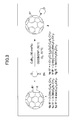
- FIG. 3 is a view illustrating an example of an equation between a source fullerene derivative and an amine compound to form a fullerene derivative of the embodiment.
- FIG. 4 is a cross-sectional view illustrating an example of a structure of a photoelectric converter.
- 1,4-Difunctionalized fullerene derivatives possessing two identical or unsymmetrical functional groups on 1,4-position of a fullerene core such as C 60 or the like are expected to offer a tunable energy level, solubility, and packing structure through wide structural variations (reference (1)).
- the 1,4-difunctional fullerene derivatives may exhibit higher absorption extinction coefficient in the visible region, that makes them attractive as n-type materials for high performance organic photovoltaics.
- 1,4-bisadducts with an amine addend directly substituted to a fullerene core such as C 60 or the like are expected to exhibit the various functional properties compared to those dialkyl and diaryl 1,4-bisadducts, only one example of monoamine functionalized 1,4-bisadducts has been reported (reference (2b)).
- LUMO unoccupied molecular orbital
- fullerene mono radical can be readily formed from mono-functionalized hydrofullerenes catalyzed by Cu(OAc) 2 oxidant or NaOH base under air atmosphere, affording single-bonded fullerene dimers in high yields (references (5a) and (5b)).
- the present inventors surprisingly found that the monoamine substituted 1,4-bisadducts were formed as the major product instead of the fullerene dimer.
- the present inventors report a novel C—H amination of monosubstituted hydrofullerenes with various amines to afford a new series of monoamine functionalized 1,4-bisadducts in good to high yields.
- a fullerene derivative including a fullerene core; and a first functional group represented by R 1 and a second functional group represented by NR 2 R 3 provided on 1,4-position of the fullerene core is provided.
- a fullerene derivative 3′ which is a monoamine functionalized 1,4-bisadduct fullerene derivative, represented by the following formula (1) is provided by a reaction represented by the following formula (2).
- R 1 represents an optionally substituted C 1 -C 24 alkyl group or an optionally substituted C 7 -C 24 aralkyl group.
- the substituent group may be a C 1 -C 10 hydrocarbon group (for example, methyl, ethyl, propyl, butyl, phenyl, naphthyl, indenyl, tolyl, xylyl, benzyl or the like), a C 1 -C 10 alkoxy group (for example, a methoxy group, an ethoxy group, a propoxy group, a butoxy group, a benzyloxy group or the like), a C 6 -C 12 aryloxy group (for example, phenyloxy, naphthyloxy, biphenyloxy or the like), a C 1 -C 10 acyloxy group (for example, an acetoxy group or the like), an al
- two or more of the substituent groups may be provided on R 1 (the alkyl group or the aralkyl group).
- R 1 the alkyl group or the aralkyl group
- two to four of the substituent groups may be provided on substitutable positions of the alkyl group or the aralkyl group.
- the substituent groups may be the same or different.
- R 1 may be a benzyl group without a substituent group, or with a substituent group(s) on a position(s) of the benzene ring selected from a group including a C 1 -C 10 hydrocarbon group (for example, methyl, ethyl, propyl, butyl, phenyl, naphthyl, indenyl, tolyl, xylyl, benzyl or the like), a C 1 -C 10 alkoxy group (for example, a methoxy group, an ethoxy group, a propoxy group, a butoxy group, a benzyloxy group or the like) and a C 1 -C 10 oxycarbonyl group (for example, a methoxycarbonyl group, a hexyloxycarbonyl group or the like).
- a C 1 -C 10 hydrocarbon group for example, methyl, ethyl, propyl, butyl, phenyl, naph
- R 1 may be a benzyl group without a substituent group, or with a substituent group(s) on a position(s) of the benzene ring selected from a group including a methoxy group, and a methoxycarbonyl group.
- R 1 is a benzyl group having at least one substituent group on a position of the benzene ring selected from a group including a methoxycarbonyl group, a hexyloxycarbonyl group, a methoxy group and the like, or an alkyl group having at least one substituent group selected from a benzyloxy group and the like.
- R 2 and R 3 independently represent a hydrogen atom or an optionally substituted C 1 -C 24 hydrocarbon group but excluding a case where both of R 2 and R 3 are hydrogen atoms, and R 2 and R 3 may combine together to form a ring.
- the hydrocarbon group may be, for example, an alkyl group such as a methyl group, an ethyl group, a propyl group or the like, an aromatic group such as a phenyl group, an indenyl group, a naphthyl group, an anthracenyl group, a phenanthrenyl group, a fluorenyl group, a pyrenyl group or the like, or an aralkyl group such as a benzyl group, a 2-phenylethyl group, a 1-phenylethyl group, a 3-phenylpropyl group or the like.
- an alkyl group such as a methyl group, an ethyl group, a propyl group or the like
- an aromatic group such as a phenyl group, an indenyl group, a naphthyl group, an anthracenyl group, a phenanthrenyl group, a fluorenyl group
- R 2 and R 3 combine together to form a ring
- a part of the ring may be substituted by an atom such as oxygen, nitrogen, sulfur, silicon or the like, and the ring may be further condensed with another ring.
- the substituent group may be a C 1 -C 10 hydrocarbon group (for example, methyl, ethyl, propyl, butyl, phenyl, naphthyl, indenyl, tolyl, xylyl, benzyl or the like), a C 1 -C 10 alkoxy group (for example, a methoxy group, an ethoxy group, a propoxy group, a butoxy group or the like), a C 6 -C 12 aryloxy group (for example, phenyloxy, naphthyloxy, biphenyloxy or the like), a C 1 -C 10 acyloxy group (for example, an acetoxy group or the like), an aldehyde group, a C 1 -C 10 oxy
- two or more of the substituent groups may be provided on the hydrocarbon group.
- two to four of the substituent groups may be provided on substitutable positions of the hydrocarbon group.
- the substituent groups may be the same or different.
- R 2 R 3 N— may be a methylamino group, an ethylamino group, a n-propylamino group, an isopropylamino group, a n-butylamino group, an isobutylamino group, a n-hexylamino group, a benzylamino group, a phenylamino group, a tolylamino group, a dimethylamino group, a diethylamino group, a di(n-propyl)amino group, a diisopropylamino group, a di(n-butyl)amino group, a diisobutylamino group, a di(n-hexyl)amino group, a dibenzylamino group, a diphenylamino group, a ditolylamino group, a methylphenylamino group, a piperidino group,
- “FLN” represents a fullerene core.
- the fullerene core represented by “FLN” may be a single fullerene core selected from a group including C 60 , C 70 , C 76 , C 78 , C 82 , C 84 and the like, or a mixture of two or more of fullerene cores selected from the group including C 60 , C 70 , C 76 , C 78 , C 82 , C 84 and the like.
- the fullerene core represented by “FLN” may be C60, C70 or a mixture thereof. More preferably, the fullerene core represented by “FLN” may be C60.
- a source fullerene derivative 1′ which is a mono-functionalized hydro-fullerene derivative, represented by the following formula (3) and an amine compound 2 represented by the following formula (4) are reacted in the presence of a catalyst and oxygen.
- a Cu-based catalyst may be used.
- Cu(II) species such as CuBr 2 , Cu(OTf) 2 , CuCl 2 or the like, and Cu(I) species such as Cu 2 O, CuCl, CuBr, CuI or the like may be used.
- CuBr 2 may be used as the Cu-based catalyst.
- the solvent used in the reaction represented by the formula (2) there is no limitation as long as the source fullerene derivative 1′ and the amine compound 2 are soluble, however, aromatic series solvent (benzene, toluene, o-xylene, m-xylene, p-xylene, 1,3,5-trimethyl benzene, 1,2,4-trimethyl benzene, 1-methyl naphthalene, tetralin, anisole, chlorobenzene, 1,2-dichlorobenzene) or carbon disulfide are preferable because solubility of the source fullerene derivative 1′ is high and productivity is also high. Among them, 1,2-dichlorobenzene is particularly preferable.
- a mixture of two or more solvent may be used.
- aprotic polar solvent such as acetonitrile (CH 3 CN), acetone, tetrahydrofuran (THF), dimethylformamide (DMF), dimethylacetamide, dimethyl sulfoxide, N-methyl-2-pyrrolidone or the like may be used.
- DMF dimethylformamide
- the ratio of the aromatic series solvent and the aprotic polar solvent are not specifically limited, however, preferably, 99:1 to 20:80, and more preferably, 90:10 to 50:50.
- the source fullerene derivative 1 is represented by the above described formula (3). R 1 may be described as above.
- FIG. 2 examples of the source fullerene derivative 1 are illustrated in FIG. 2 . and FIG. 3 .
- the amine compound 2 is represented by the above described formula (4).
- R 2 and R 3 may be described as above.
- examples of the amine compound 2 are illustrated in FIG. 2 .
- a variety of acyclic amines such as dibenzylamine 2a, benzylamine 2b, N-methylaniline 2c, diethylamine 2d and dibutylamine 2e may be exemplified as the amine compound 2.
- a variety of cyclic amines such as tetrahydroisoquinoline 2f, thiomorpholine 2g, morpholine 2h, piperidine 2i and 1-phenylpiperazine 2j may be exemplified as the amine compound 2.
- the amine compound 2 acts as a base to promote the dimerization of the monobenzyl hydrofullerene 1a in the presence of oxygen. It is also implied that the present amination might proceed through the dimerization of the monobenzyl hydrofullerene 1a to form a single-bonded fullerene dimer 4a (hereinafter, simply referred to as a “dimer 4a”, see formula (5), which will be explained later) by the amine base followed by amination of the dimer 4a by the Cu-based catalyst to form the fullerene derivative 3a.
- FIG. 1 is a view illustrating an example of a scheme of the reaction mechanism of the embodiment.
- CuBr 2 is regenerated by oxidation of CuBr under an oxygen atmosphere and in the presence of HBr.
- a novel and selective Cu-catalyzed C—H amination of a mono-functionalized hydro-fullerene derivative with various amines is provided.
- a variety of a monoamine functionalized 1,4-bisadduct fullerene derivatives are obtained in good to high yields.
- This methodology provides a valuable and general synthetic tool for the synthesis of various monoamine functionalized 1,4-bisadduct fullerene derivatives that are expected to be useful in electronic device applications.
- a fullerene derivative in which an alkyl group (or an aralkyl group) and an amino group are provided at 1,4-position of a fullerene core such as C 60 , C 70 , C 76 , C 78 , C 82 , C 84 or the like is effectively manufactured.
- various fullerene derivatives in which an alkyl group and an amino group are directly bonded to a fullerene core such as C 60 , C 70 , C 76 , C 78 , C 82 , C 84 or the like are obtained under a moderate condition by applying a specific metal compound (as the catalyst), oxygen and an amine compound to a mono-functionalized hydro-fullerene derivative.
- the fullerene derivative 3 represented by the formula (1) is made to have a high solubility to various solvents due to the introduction of the alkyl group (or the aralkyl group) and the amino group and the degree of solubility can also be easily controlled.
- the fullerene derivative according to the embodiment can be used as an intermediate for various reactions.
- the fullerene derivative may be easily formed into a film by coating so that it is possible to manufacture a diode such as an organic thin film solar cell or the like using the film.
- the fullerene derivative of the embodiment may be used as new functional materials for electronic components, drugs, cosmetics or the like.
- the fullerene derivative of the embodiment is adaptable for a diode such as an organic thin film solar cell or the like.
- the fullerene derivative of the embodiment may be used as a material of an organic thin film solar cell.
- FIG. 4 is a cross-sectional view illustrating an example of a structure of a photoelectric converter 100 , which is an example of a solar cell, of the embodiment.
- the photoelectric converter 100 includes a substrate 101 , a first electrode 102 , an active layer 104 , and a second electrode 106 . At least one of the first electrode 102 and the second electrode 106 is a transparent electrode.
- the active layer 104 includes at least the fullerene derivative of the embodiment, which is an electron acceptor, and an electron donor compound, and is provided between the first electrode 102 and the second electrode 106 .
- Materials for the first electrode 102 and the second electrode 106 are not limited as long as having electrical conductivity. However, for example, it is preferable to use a combination of a material having a high work function such as ITO, tin oxide, zinc oxide, Au, Co, Ni, Pt or the like, and a material such as Al, Ag, Li, In, Ca, Mg, LiF or the like for the first electrode 102 and the second electrode 106 .
- a material having a high work function such as ITO, tin oxide, zinc oxide, Au, Co, Ni, Pt or the like
- Al Ag, Li, In, Ca, Mg, LiF or the like
- ITO, tin oxide, zinc oxide or the like may be used for the transparent electrode.
- a method of manufacturing the electrodes and the thickness of the electrode may be appropriately selected based on a known technology.
- any compounds known as an electron donor compound may be used.
- a conjugated polymer compound, a porphyrin compound, a phthalocyanine compound or the like may be used as the electron donor compound.
- the conjugated polymer compound for example, polythiophene, polypyrrole, polyaniline, polyfuran, polypyridine, polycarbazole, polyphenylene vinylene or the like may be used.
- the fullerene derivative of the embodiment may be used. Further, another electron acceptor compound may be used in addition to the fullerene derivative of the embodiment.
- the other electron acceptor compound may be another fullerene derivative, a quinolinol derivative metal complex such as a 8-hydroxyquinoline aluminum, a condensed ring tetracarboxylic diimide such as naphthalene tetracarboxylic diimide, perylene tetracarboxylic diimide or the like, a terpyridine metal complex, a tropolone metal complex, a flavonol metal complex, a perinone derivative, a benzimidazole derivative, a benzoxazole derivative, a benzothiazole derivative, an oxadiazole derivative, a thiadiazole derivative, a triazole derivative, an aldazine derivative, a bisstyryl derivative, a pyrazine derivative, a phenanthroline derivative
- the electron acceptor compound including the fullerene derivative of the embodiment, and the electron donor compound may form a mixed layer or a stacked layer structure in which a layer including the electron acceptor compound and a layer including the electron donor compound are stacked.
- the mixed layer is not limited as long as it includes the electron donor compound and the electron acceptor compound.
- the electron donor compound and the electron acceptor compound a single kind of compound may be used, or two or more kinds of compounds of an arbitral combination and ratio may be used, respectively.
- the mixed layer may include another compound that does not function as an electron donor or an electron acceptor.
- the thickness of the mixed layer is not specifically limited, but may be 0.1 to 5000 nm, preferably, 1 to 1000 nm, and more preferably 20 to 500 nm.
- each of the layers is not limited as long as that includes the electron donor compound or the electron acceptor compound.
- the electron donor compound and the electron acceptor compound a single kind of compound may be used, or two or more kinds of compounds of an arbitral combination and ratio may be used, respectively.
- the stacked layer structure may include another layer including another compound that does not function as an electron donor or an electron acceptor.
- the thickness of each of the layers is not specifically limited, but may be 0.05 to 2500 nm, preferably 0.5 to 500 nm, and more preferably, 10 to 250 nm. The thickness of the layers may be the same or different.
- a method of manufacturing the active layer is not specifically limited, but for example, the active layer may be formed by a wet process such as spin-coating, ink-jet printing, roll-to-roll printing or the like, a dry process such as vapor deposition or the like, or a combination thereof.
- Me represents CH 3 —
- Et represents C 2 CH 5 —
- Bu represents C 4 H 9 —
- Bn represents a benzene ring
- Ph represents an phenyl group
- Ac represents CH 3 CO—
- Tf represents CF 3 SO 2 —.
- HPLC high-performance liquid chromatography
- LC-2000 Plus instrument equipped with a Buckyprep column (4.6 mm ⁇ 250 mm, nakarai Tesque).
- HPLC analysis was performed using toluene as an elution at 0.6 ml/min flow rate, whereby detection was at 320 nm at 16° C.
- Column chromatography was carried out employing silica gel 60 N (spherical, neutral, 40 to 100 m, KANTO Chemical Co.).
- Aldrich Anhydrous 1,2-dichlorobenzene (Aldrich), toluene, carbon disulfide, DMF (WAKO), Cu-based catalysts (Aldrich), C 60 (Aldrich), and amines (Aldrich) were purchased and used as received.
- Mono-functionalized hydro-fullerene derivatives 1a to 1g were prepared following the references (7) and (3b).
- the dimer 4a was prepared following the reference (5a).
- example 1-1 the monobenzyl hydrofullerene 1a as described above was used as the source fullerene derivative 1, dibenzylamine 2a was used as the amine compound 2, and CuBr 2 was used as the catalyst (see FIG. 2 ).
- reaction was monitored by TLC and HPLC analysis, and the reaction mixture was purified directly through a silica gel chromatography using toluene as an eluent to isolate the corresponding fullerene derivative 3.
- the obtained product was washed by methanol and dried, affording the fullerene derivative 3a in 71% yield as a dark brown solid (75.6 mg).
- the monobenzyl hydrofullerene 1a was used as the source fullerene derivative 1 and CuBr 2 was used as the catalyst while the kinds of amine compound 2 were varied as illustrated in FIG. 2 and Table 1.
- reaction conditions were: 1a (0.1 mmol), 2 (2b to 2j) (0.2 mmol), CuBr 2 (10 mol %) and ODCB/DMF (10:1, 10 ml), oxygen ballon, 70° C.
- Yields of the isolated products, obtained similarly as example 1-1, are illustrated in Table 1.
- the yields of the corresponding fullerene derivatives 3b to 3e were 54 to 64%. Further, yields of the corresponding fullerene derivatives 3f to 3j were increased, and in particular, the yield of 3j was up to 96% by using 2j.
- the yields of the dimers 4a are determined by HPLC by using C 70 as an internal standard.
- the formed fullerene derivative 3 showed high solubility in chloroform, toluene, and ODCB.
- reaction was further examined by using various source fullerene derivatives 1 and morpholine 2h under the standard conditions (FIG. 3 and Table 2).
- reaction conditions were: 1 (1b to 1g) (0.1 mmol), 2h (0.2 mmol), CuBr 2 (10 mol %) and ODCB/DMF (10:1, 10 ml), oxygen ballon, 70° C.
- Yields of the isolated products, obtained similarly as example 1-1, are illustrated in Table 2.
- the yields of the corresponding fullerene derivatives 3k to 3m were in good yields.
- the yields of the corresponding fullerene derivatives 3n and 3o were also tolerated, in 72% and 71% yields, respectively.
- the yield of the corresponding fullerene derivative 3p obtained under a longer reaction time was in 73%.
- Table S1 illustrates UV-vis absorption of the fullerene derivatives 3a to 3p.
- the UV-vis absorption spectra of the fullerene derivatives 3a to 3p exhibit a characteristic broad absorption band around 450 nm, which further supports the 1,4-bisadduct structure of 3 (references (2a) to (4)).
- the low symmetry of the fullerene derivatives 3a to 3p showed an increased absorption in the visible region compared to [6,6]-phenyl-C 61 -butyric acid methyl ester (PC 61 bM) which is a well-used benchmark acceptor in bulk hetero-junction solar cells (reference (1)), for example, the extinction coefficient of the fullerene derivatives 3a and 3i are 7000 mol ⁇ 1 cm ⁇ 1 at 444 nm and 447 nm, respectively, which are approximately 2.5 times larger than that of PC 61 bM (2800 mol ⁇ 1 cm ⁇ 1 at 431 nm) (Table S1).
- Table S2 illustrates electrochemical cyclic voltammetry (CV) in ODCB of the fullerene derivatives 3a, 3d, 3f and 3h to 3p.
- the LUMO energy levels of the fullerene derivative 3 were estimated by the electrochemical cyclic voltammetry (CV) in ODCB.
- the fullerene derivatives 3g, 3h and 3j having thiomorpholine, morpholine or 1-phenylpiperazine group on C 60 core exhibit the LUMO energy levels of ⁇ 3.67 eV, ⁇ 3.66 eV, and 3.71 eV respectively, while the fullerene derivatives 3a and 3e having dibenzylamine or dibutylamine substituent group showed slightly higher LUMOs of ⁇ 3.64 eV and ⁇ 3.63 eV, respectively.
- THF was used as a co-solvent instead of DMF.
- CH 3 CN was used as a co-solvent instead of DMF.
- a reaction condition was: 1a (0.1 mmol), 2a (0.2 mmol), Cu-based catalyst (10 mol %), ODCB/co-solvent (10 mL), oxygen ballon, 70° C. for 18 h.
- ODCB was used as a single solvent.
- a reaction condition was: 1a (0.1 mmol), 2a (0.2 mmol), Cu-based catalyst (10 mol %), ODCB (10 mL), oxygen ballon, 70° C. for 18 h.
- the ODCB and DMF ratio was changed from 100:1 to 10:1.
- example 3-13 the reaction was conducted under an air atmosphere. Further in examples 3-14 and 3-15, Cu-based catalyst was not added. Further, in example 3-15, the reaction was conducted under an argon atmosphere. Reaction conditions not particularly mentioned were the same as those of example 3-1.
- the yields of the fullerene derivative 3a and the dimer 4a were determined by HPLC analysis using C 70 as an internal standard.
- the yield of the fullerene derivative 3a isolated by silica gel chromatography is shown in parentheses. In examples 3-11, 3-13 and 3-15, the monobenzyl hydrofullerene 1a was recovered in 56% yield, 23% yield and 90% yield, respectively.
- a certain amount of the fullerene derivative 3a was obtained by using the Cu(II) species such as Cu(OTf) 2 , CuCl 2 , and CuBr 2 as the Cu-based catalyst (examples 3-2 to 3-5).
- CuBr 2 obviously increased the yield of the fullerene derivative 3a up to 67% yield together with a 20% yield of the dimer 4a (examples 3-4).
- Cu(OAc) 2 catalyst which was the most sufficient catalyst for dimerization of the monobenzyl hydrofullerene 1a, exhibited low catalytic activity for producing the fullerene derivative 3a, instead, the dimer 4a was obtained in high yield (example 3-1).
- Cu(I) species such as Cu 2 O, CuCl, CuBr, and CuI were also active (examples 3-6 to 3-8) although the yields of the fullerene derivative 3a are lower than that with CuBr 2 (example 3-4).
- the dimer 4a was treated with dibenzylamine 2a in the presence of CuBr 2 and oxygen.
- a reaction condition was: a mixture of meso and racemic dimer 4a (0.1 mmol), 2a (0.4 mmol), CuBr 2 (10 mol %), ODCB/DMF (10:1, 10 mL), oxygen ballon, 70° C. for 18 h.
- This reaction is represented by the following formula (5).
- example 4-2 the reaction was conducted under an argon atmosphere. Further, in example 4-3, Cu-based catalyst was not added. Reaction conditions not particularly mentioned were the same as those of example 4-1.
- the yields of the fullerene derivative 3a and the dimer 4a were determined by HPLC analysis using C 70 as an internal standard.
- the fullerene derivative 3a was obtained in 77% yield, while the reaction produced the fullerene derivative 3a in a very poor yield of 9% under an argon atmosphere (example 4-2). Further, the reaction did not proceed without CuBr 2 (example 4-3).
- the dimer 4a was treated with anisole under the standard CuBr 2 -catalyzed reaction condition in the absence of amines. However, the reaction did not produce any anisole-substituted 1,2- or 1,4-bisadducts and the dimer 4a was recovered in over 90% yield. This result indicated that the present amination is unable to generate the fullerene cationic species from the fullerene radical.
Landscapes
- Chemical & Material Sciences (AREA)
- Organic Chemistry (AREA)
- Engineering & Computer Science (AREA)
- Materials Engineering (AREA)
- Nanotechnology (AREA)
- Organic Low-Molecular-Weight Compounds And Preparation Thereof (AREA)
Abstract

-
- wherein “FLN” represents a fullerene core, R1 represents an optionally substituted C1-C24 alkyl group or an optionally substituted C7-C24 aralkyl group, R2 and R3 independently represent a hydrogen atom or an optionally substituted C1-C24 hydrocarbon group but excluding a case where both of R2 and R3 are hydrogen atoms, and R2 and R3 may combine together to form a ring.
Description


(Catalyst)
| TABLE 1 | |||||
| EXAMPLE | 2 | TIME (h) | 3 | YIELD (%) | 4a (%) |
| 1-2 | 2b | 16 | 3b | 64 | 7 |
| 1-3 | 2c | 20 | 3c | 54 | 7 |
| 1-4 | 2d | 16 | 3d | 64 | 6 |
| 1-5 | 2e | 29 | 3e | 61 | 10 |
| 1-6 | 2f | 36 | 3f | 73 | 10 |
| 1-7 | 2g | 55 | 3g | 70 | 9 |
| 1-8 | 2h | 12 | 3h | 86 | 6 |
| 1-9 | 2i | 13 | 3i | 85 | 0 |
| 1-10 | 2j | 17 | 3j | 96 | 0 |
| TABLE 2 | ||||||
| EXAMPLE | 1 | TIME (h) | 3 | YIELD (%) | ||
| 2-1 | 1b | 13 | 3k | 58 | ||
| 2-2 | 1c | 13 | 3l | 74 | ||
| 2-3 | 1d | 24 | 3m | 41 | ||
| 2-4 | 1e | 13 | 3n | 72 | ||
| 2-5 | 1f | 13 | 3o | 71 | ||
| 2-6 | 1g | 42 | 3p | 73 | ||
(Analytic Data of Fullerene Derivatives 3)
(UV-Vis Spectra)
| TABLE S1 | |||
| COMPOUND | λmax/nm (ε mol−1cm−1) | ||
| 3a | 259, 327, 447 (7000) | ||
| 3d | 259, 327, 443 (6400) | ||
| 3f | 258, 327, 445 (6500) | ||
| 3h | 258, 325, 445 (5300) | ||
| 3i | 260, 328, 444 (7000) | ||
| 3j | 258, 329, 446 (6000) | ||
| 3k | 259, 328, 443 (6200) | ||
| 3l | 259, 328, 446 (6000) | ||
| 3m | 259, 327, 446 (5800) | ||
| 3o | 258, 329, 446 (6300) | ||
| 3p | 258, 328, 452 (6500) | ||
| PC61bM | 260, 329, 431 (2800) | ||
(CV)
| TABLE S2 | ||||||
| COMPOUND | E1/2 1/V | E1/2 2/V | E1/2 3/V | LUMO/eV | ||
| 3a | −1.155 | −1.65 | −2.11 | −3.645 | ||
| 3e | −1.175 | −1.65 | −2.14 | −3.625 | ||
| 3g | −1.125 | −1.645 | −2.11 | −3.675 | ||
| 3h | −1.15 | −1.64 | −2.11 | −3.65 | ||
| 3j | −1.09 | −1.565 | −2.0 | −3.71 | ||
| PC61bM | −1.205 | −1.595 | −2.11 | −3.595 | ||
| TABLE 3 | ||||
| EXAMPLE | CATALYST | SOLVENT (100:1) | 3a (%) | 4a (%) |
| 3-1 | Cu(OAc)2 | ODCB/DMF | 5 | 85 |
| 3-2 | Cu(OTf)2 | ODCB/DMF | 38 | 38 |
| 3-3 | CuCl2 | ODCB/DMF | 37 | 54 |
| 3-4 | CuBr2 | ODCB/DMF | 67 | 20 |
| 3-5 | Cu2O | ODCB/DMF | 40 | 54 |
| 3-6 | CuCl | ODCB/DMF | 34 | 60 |
| 3-7 | CuBr | ODCB/DMF | 58 | 34 |
| 3-8 | CuI | ODCB/DMF | 21 | 70 |
| 3-9 | CuBr2 | ODCB/THF | 40 | 39 |
| 3-10 | CuBr2 | ODCB/CH3CN | 38 | 39 |
| 3-11 | CuBr2 | ODCB | 27 | 13 |
| 3-12 | CuBr2 | ODCB/DMF (10:1) | 75(71) | 0 |
| 3-13 | CuBr2 | ODCB/DMF (10:1) | 43 | 0 |
| 3-14 | none | ODCB/DMF (10:1) | 0 | 90 |
| 3-15 | none | ODCB/DMF (10:1) | 0 | trace |

| TABLE 4 | ||||
| EXAMPLE | CATALYST | OXIDANT | 3a (%) | 4a (%) |
| 4-1 | CuBr2 | O2 | 77 | trace |
| 4-2 | CuBr2 | argon | 9 | 80 |
| 4-3 | none | O2 | 0 | 90 |
- (1) Li, C.-Z.; Yip, H.-L.; Jen, A. K.-Y., Functional fullerenes for organic photovoltaics, J. Mater. Chem. 2012, 22, 4161.
- (2a) Zhang, Y.; Matsuo, Y.; Li. C.-Z.; Tanaka, H.; Nakamura, E., A Scalable Synthesis of Methano[60]fullerene and Congeners by the Oxidative Cyclopropanation Reaction of Silylmethylfullerene, J. Am. Chem. Soc. 2011, 133, 8086.
- (2b) Varotto, A.; Treat, N. D.; Jo, J.; Shuttle, C. G.; Batara, N. A.; Brunetti, F. G.; Seo, J. H.; Chabinyc, M. L.; Hawker, C. J.; Heeger, A. J.; Wudl, F., 1,4-Fullerene Derivatives: Tuning the Properties of the Electron Transporting Layer in Bulk-Heterojunction Solar Cells, Angew. Chem. Int. Ed. 2011, 50, 5166.
- (3a) Fukuzumi, S.; Suenobu, T.; Hirasaka, T.; Arakawa, R.; Kadish, K. M., Formation of C60 Adducts with Two Different Alkyl Groups via Combination of Electron Transfer and
S N2 Reactions, J. Am. Chem. Soc. 1998, 120, 9220. - (3b) Matsuo, Y.; Iwashita, A.; Abe, Y.; Li, C. Z.; Matsuo, K.; Hashiguchi, M.; Nakamura, E., Regioselective Synthesis of 1,4-Di(organo) [60]fullerenes through DMF-assisted Monoaddition of Silylmethyl Grignard Reagents and Subsequent Alkylation Reaction, J. Am. Chem. Soc. 2008, 130, 15429.
- (4) Murata, Y.; Cheng, F.; Kitagawa, T.; Komatsu, K., Generation of Fullerenyl Cation (EtO)2P+(OH) CH2—C60 + from RC60—H and from RC60—C60R (R═CH2P(O) (OEt)2), J. Am. Chem. Soc. 2004, 126, 8874.
- (5a) Lu, S.; Jin, T.; Kwon, E.; Bao, M.; Yamamoto, Y., Highly Efficient Cu(OAc)2-Catalyzed Dimerization of Monofunctionalized Hydrofullerenes Leading to Single-Bonded [60]Fullerene Dimers, Angew. Chem. Int. Ed. 2012, 51, 802.
- (5b) Lu, S.; Jin, T.; Bao, M.; Yamamoto, Y., NaOH-Catalyzed Dimerization of Monofunctionalized Hydrofullerenes: Transition-Metal-Free, General, and Efficient Synthesis of Single-Bonded [60]Fullerene Dimers, Org. Lett. 2012, 14, 3466.
- (6) Hirsch, A.; Li, Q.; Wudl, F., Globe-trotting Hydrogens on the Surface of the Fullerene Compound C60H6(N(CH2CH2)2O)6 , Angew. Chem. Int. Ed. Engl. 1991, 30, 1309.
- (7) Lu, S.; Jin, T.; Bao, M.; Yamamoto, Y., Cobalt-Catalyzed Hydroalkylation of [60]Fullerene with Active Alkyl Bromides: Selective Synthesis of Monoalkylated Fullerenes, J. Am. Chem. Soc. 2011, 133, 12842.
- (8) Zhang, Y.; Matsuo, Y.; Nakamura, E., Regiocontrolled Synthesis of 1,2-Di(organo)fullerenes via Copper-Assisted 1,4-Aryl Migration from Silicon to Carbon, Org. Lett. 2011, 13, 6058.
Claims (11)

Priority Applications (1)
| Application Number | Priority Date | Filing Date | Title |
|---|---|---|---|
| US14/036,189 US9246104B2 (en) | 2013-09-25 | 2013-09-25 | Fullerene derivative, method of manufacturing fullerene derivative and solar cell |
Applications Claiming Priority (1)
| Application Number | Priority Date | Filing Date | Title |
|---|---|---|---|
| US14/036,189 US9246104B2 (en) | 2013-09-25 | 2013-09-25 | Fullerene derivative, method of manufacturing fullerene derivative and solar cell |
Publications (2)
| Publication Number | Publication Date |
|---|---|
| US20150083223A1 US20150083223A1 (en) | 2015-03-26 |
| US9246104B2 true US9246104B2 (en) | 2016-01-26 |
Family
ID=52689877
Family Applications (1)
| Application Number | Title | Priority Date | Filing Date |
|---|---|---|---|
| US14/036,189 Active 2034-02-20 US9246104B2 (en) | 2013-09-25 | 2013-09-25 | Fullerene derivative, method of manufacturing fullerene derivative and solar cell |
Country Status (1)
| Country | Link |
|---|---|
| US (1) | US9246104B2 (en) |
Families Citing this family (1)
| Publication number | Priority date | Publication date | Assignee | Title |
|---|---|---|---|---|
| JP6546602B2 (en) * | 2014-03-31 | 2019-07-17 | メルク パテント ゲゼルシャフト ミット ベシュレンクテル ハフツングMerck Patent Gesellschaft mit beschraenkter Haftung | Fused bisarylfullerene derivative |
Citations (4)
| Publication number | Priority date | Publication date | Assignee | Title |
|---|---|---|---|---|
| JP2002088075A (en) | 2000-09-07 | 2002-03-27 | Eiichi Nakamura | Aminated fullerene derivative |
| WO2009002203A1 (en) | 2007-06-19 | 2008-12-31 | Institut Problem Khimicheskoi Fiziki Rossiiskoi Akademii Nauk (Ipkhf Ran) | Polyfunctional fullerene c60 aminoacid derivatives |
| US20100317767A1 (en) * | 2006-12-27 | 2010-12-16 | Frontier Carbon Corporation | Fullerene film and fullerene polymer both produced from fullerene derivative and processes for producing these |
| US20110313189A1 (en) | 2010-06-18 | 2011-12-22 | Allesandro Varotto | 1.4-fullerene addends in photovoltaic cells |
-
2013
- 2013-09-25 US US14/036,189 patent/US9246104B2/en active Active
Patent Citations (5)
| Publication number | Priority date | Publication date | Assignee | Title |
|---|---|---|---|---|
| JP2002088075A (en) | 2000-09-07 | 2002-03-27 | Eiichi Nakamura | Aminated fullerene derivative |
| US20100317767A1 (en) * | 2006-12-27 | 2010-12-16 | Frontier Carbon Corporation | Fullerene film and fullerene polymer both produced from fullerene derivative and processes for producing these |
| WO2009002203A1 (en) | 2007-06-19 | 2008-12-31 | Institut Problem Khimicheskoi Fiziki Rossiiskoi Akademii Nauk (Ipkhf Ran) | Polyfunctional fullerene c60 aminoacid derivatives |
| CA2687557A1 (en) | 2007-06-19 | 2008-12-31 | Institute Of Problems Of Chemical Physics Ras (Ipcp Ras) | Polyfunctional fullerene c60 amino acid derivatives |
| US20110313189A1 (en) | 2010-06-18 | 2011-12-22 | Allesandro Varotto | 1.4-fullerene addends in photovoltaic cells |
Non-Patent Citations (11)
| Title |
|---|
| Alessandro Varotto at al., 1,4-Fullerene Derivatives: Tuning the Properties of the Electron Transporting Layer in Bulk-Heterojunction Solar Cells, Angew. Chem. Int. Ed. 2011, 50, pp. 5166-5169. |
| Andreas Hirsch et al., Globe-trotting Hydrogens on the Surface of the Fullerene Compound C60H6(N(CH2CH2)2O)6, Angew. Chem. Int. Ed. Engl. 30, No. 10, 1991, pp. 1309-1310. |
| Chang-Zhi Li et al., Functional fullerenes for organic photovoltaics, J. Mater. Chem., 2012, 22, pp. 4161-4177. |
| Shirong Lu at al., Highly Efficient Cu(OAc)2-Catalyzed Dimerization of Monofunctionalized Hydrofullerenes Leading to Single-Bonded [60]Fullerene Dimers, Angew. Chem. Int. Ed. 2012, 51, pp. 802-806. |
| Shirong Lu at al., NaOH-Catalyzed Dimerization of Monofunctionalized Hydrofullerenes: Transition-Metal-Free, General, and Efficient Synthesis of Single-Bonded [60]Fullerene Dimers, Org. Lett., vol. 14, No. 13, 2012, pp. 3466-3469. |
| Shirong Lu et al., Cobalt-Catalyzed Hydroalkylation of [60]Fullerene with Active Alkyl Bromides: Selective Synthesis of Monoalkylated Fullerenes, J. Am, Chem. Soc. 2011, 133, pp. 12842-12848. |
| Shunichi Fukuzumi et al., Formation of C60 Adducts with Two Different Alkyl Groups via Combination of Electron Transfer and SN2 Reactions, J. Am. Chem. Soc., vol. 120, No. 36, 1998, pp. 9220-9227. |
| Yasujino Murata et al., Generation of Fullerenyl Cation (EtO)2P+(OH)CH2-C60 + from RC60-H and from RC60-C60R (R= CH2P(O)(OEt)2), J. Am. Chem. Soc. vol. 126, No. 29, 2004, pp. 19674-8875. |
| Ying Zhang et al., A Scalable Synthesis of Methano[60]fullerene and Congeners by the Oxidative Cyclopropanation Reaction of Silylmothylfullerene, J. Am. Chem. Soc. 2011, 133, pp. 8086-8089. |
| Ying Zhang et al., Regiocontrolled Synthesis of 1,2-Di(organo)fullerenes via Copper-Assisted 1,4-Aryl Migration from Silicon to Carbon, Org. Lett., vol. 13, No. 22, 2011, pp. 6058-6061. |
| Yutaka Matsuo et al., Regioselective Synthesis of 1,4-Di(organo)[60]fullerenes through DMF-assisted Monoaddition of Silylmethyl Grignard Reagents and Subsequent Alkylation Reaction, J. Am. Chem. Soc. 2008, 130, pp. 15429-15436. |
Also Published As
| Publication number | Publication date |
|---|---|
| US20150083223A1 (en) | 2015-03-26 |
Similar Documents
| Publication | Publication Date | Title |
|---|---|---|
| US20210043845A1 (en) | Inert solution-processable molecular chromophores for organic electronic devices | |
| EP2666768B1 (en) | Condensed-cyclic compound and organic light-emitting diode comprising the same | |
| EP3018723B1 (en) | Compound for organic photoelectric device and organic photoelectric device image sensor, and electronic device including the same | |
| US9673403B2 (en) | Heterocyclic compound and organic light emitting device using the same | |
| KR101511115B1 (en) | Novel organic semiconductor compounds, preparation method of the same, and organic semiconductor compositions, organic semiconductor thin films and devices including the same | |
| KR101202347B1 (en) | A condensed-cyclic compound and an organic light emitting diode employing an organic layer comprising the same | |
| KR102233924B1 (en) | Photoactive organic material for optoelectronic components | |
| EP2980182A1 (en) | Condensed cyclic compound and organic light-emitting device including the same | |
| CN110981899B (en) | Polycyclic organoboron derivatives and electronic devices | |
| Bin et al. | Hydrogen bond modulation in 1, 10-phenanthroline derivatives for versatile electron transport materials with high thermal stability, large electron mobility and excellent n-doping ability | |
| KR102025834B1 (en) | Novel organic emitting compound, and organic light emitting diode comprising the same | |
| KR102023028B1 (en) | Condensed compound and organic light emitting diode comprising the same | |
| TW200903877A (en) | Material for organic electroluminescence device and organic electroluminescence device utilizing the same | |
| KR101607740B1 (en) | Heterocyclic compound and organic light emitting device using the same | |
| Han et al. | Cyclobutadiene–C60 Adducts: N‐Type Materials for Organic Photovoltaic Cells with High VOC | |
| Chi et al. | Donor-acceptor small molecule with coplanar and rigid π-bridge for efficient organic solar cells | |
| KR102745427B1 (en) | Semiconducting material and naphtofurane matrix compound for it | |
| KR102086546B1 (en) | Compound for organic light emitting device and organic light emitting device comprising the same | |
| KR101881081B1 (en) | Heterocyclic compound, organic light-emitting diode comprising the same and flat display device | |
| Freudenberg et al. | How to stabilize large soluble (hetero-) acenes | |
| Zhang et al. | Dipolar 1, 3, 6, 8-tetrasubstituted pyrene-based blue emitters containing electro-transporting benzimidazole moieties: syntheses, structures, optical properties, electrochemistry and electroluminescence | |
| EP2963010B1 (en) | Electronic device and compound | |
| EP3133665B1 (en) | Organic electroluminescent device | |
| Kim et al. | Novel perylene diimides for improved photophysical and electrochemical properties | |
| US9246104B2 (en) | Fullerene derivative, method of manufacturing fullerene derivative and solar cell |
Legal Events
| Date | Code | Title | Description |
|---|---|---|---|
| AS | Assignment |
Owner name: SHOWA DENKO K.K., JAPAN Free format text: ASSIGNMENT OF ASSIGNORS INTEREST;ASSIGNORS:JIN, TIENAN;SI, WEILI;YAMAMOTO, YOSHINORI;AND OTHERS;REEL/FRAME:031276/0338 Effective date: 20130919 Owner name: TOHOKU UNIVERSITY, JAPAN Free format text: ASSIGNMENT OF ASSIGNORS INTEREST;ASSIGNORS:JIN, TIENAN;SI, WEILI;YAMAMOTO, YOSHINORI;AND OTHERS;REEL/FRAME:031276/0338 Effective date: 20130919 |
|
| STCF | Information on status: patent grant |
Free format text: PATENTED CASE |
|
| AS | Assignment |
Owner name: SHOWA DENKO K.K., JAPAN Free format text: ASSIGNMENT OF ASSIGNORS INTEREST;ASSIGNOR:SHOWA DENKO K.K.;REEL/FRAME:041016/0731 Effective date: 20170118 Owner name: MITSUBISHI CORPORATION, JAPAN Free format text: ASSIGNMENT OF ASSIGNORS INTEREST;ASSIGNOR:SHOWA DENKO K.K.;REEL/FRAME:041016/0731 Effective date: 20170118 |
|
| MAFP | Maintenance fee payment |
Free format text: PAYMENT OF MAINTENANCE FEE, 4TH YEAR, LARGE ENTITY (ORIGINAL EVENT CODE: M1551); ENTITY STATUS OF PATENT OWNER: LARGE ENTITY Year of fee payment: 4 |
|
| AS | Assignment |
Owner name: RESONAC CORPORATION, JAPAN Free format text: CHANGE OF NAME;ASSIGNOR:SHOWA DENKO K.K.;REEL/FRAME:064082/0513 Effective date: 20230623 |
|
| MAFP | Maintenance fee payment |
Free format text: PAYMENT OF MAINTENANCE FEE, 8TH YEAR, LARGE ENTITY (ORIGINAL EVENT CODE: M1552); ENTITY STATUS OF PATENT OWNER: LARGE ENTITY Year of fee payment: 8 |
|
| AS | Assignment |
Owner name: RESONAC CORPORATION, JAPAN Free format text: CHANGE OF ADDRESS;ASSIGNOR:RESONAC CORPORATION;REEL/FRAME:066599/0037 Effective date: 20231001 |