US9229348B2 - System for optimizing ink usage on a 5 colorant capable printer - Google Patents
System for optimizing ink usage on a 5 colorant capable printer Download PDFInfo
- Publication number
- US9229348B2 US9229348B2 US14/025,967 US201314025967A US9229348B2 US 9229348 B2 US9229348 B2 US 9229348B2 US 201314025967 A US201314025967 A US 201314025967A US 9229348 B2 US9229348 B2 US 9229348B2
- Authority
- US
- United States
- Prior art keywords
- colorant combination
- combination
- candidate
- colorant
- toner
- Prior art date
- Legal status (The legal status is an assumption and is not a legal conclusion. Google has not performed a legal analysis and makes no representation as to the accuracy of the status listed.)
- Expired - Fee Related, expires
Links
Images





Classifications
-
- G—PHYSICS
- G03—PHOTOGRAPHY; CINEMATOGRAPHY; ANALOGOUS TECHNIQUES USING WAVES OTHER THAN OPTICAL WAVES; ELECTROGRAPHY; HOLOGRAPHY
- G03G—ELECTROGRAPHY; ELECTROPHOTOGRAPHY; MAGNETOGRAPHY
- G03G15/00—Apparatus for electrographic processes using a charge pattern
- G03G15/01—Apparatus for electrographic processes using a charge pattern for producing multicoloured copies
- G03G15/0105—Details of unit
- G03G15/0121—Details of unit for developing
Definitions
- the present disclosure relates to a system for optimizing toner usage on a printer device capable of rendering output using a fifth colorant housing.
- the disclosure is also capable of determining a colorant combination considering five colorants and can be adapted to generate modified colorant separation information.
- CMYK cyan, magenta, yellow, and black
- Conventional devices utilize these four particular colorants because, traditionally, different CMYK combinations can produce the greatest number of colors using the least amount of toner. This benefit caused the CMYK printing process, using subtractive color mixing, to become the standard in the printing industry.
- Recent printer devices are configured to support a fifth colorant housing.
- the extra housing can contain a toner for a fifth color different from CMYK, such as, for example, ‘red’, or a magnetic ink used in Magnetic Ink Character Recognition (“MICR”) printing.
- CMYK complementary metal-oxide-semiconductor
- MICR Magnetic Ink Character Recognition
- PDL Page Description Language
- Color separation is the act of decomposing a digital image into single color layers (s.a., in four basic CMYK toner colors) for rendering the image in an offset printing process. Each single color layer is printed separately, one on top of the other, to collectively give the impression of a desired color.
- CMYKX For the recently developed printer devices capable of utilizing five colorant housings (herein referred to as “CMYKX”), a desired color previously rendered using a select combination of CMYK colorants may also be achieved using different combinations of two, three, or four CMYKX colorants, each including the fifth colorant X.
- the ideal combination of the five colorants CMYKX is not known.
- the ideal combination in one embodiment, can be the combination of colorants that consumes the least amount of toner. In another embodiment, the ideal combination can be the one that renders the closest matching color in appearance. In yet another embodiment, the ideal combination can be the one that is associated with the least expensive toner costs.
- the color separation included in the PDL file does not consider the toner usage, toner cost or accuracy (hereinafter referred to as “factors”). Nor does the color separation information define a separation for a fifth colorant housing.
- a method and a system is desired for reducing toner usage by rendering a print job using a colorant combination that requires the least amount of toner.
- a desired method and system determines a combination of CMYKX colorants that consumes the least toner. Furthermore, the desired method and system can determine the best combination for rendering each object within the file by considering combinations including at least the fifth colorant X. In this manner, certain objects can be rendered with less toner or less expensive toner than using standard CMYK colorant combinations.
- the selected colorant combination can also translate to lower costs, absorbed by the user (printer and/or the customer), for rendering the document.
- One embodiment of the disclosure relates to a method for optimizing toner usage on an output device capable of rendering in five or more colorants.
- the method includes receiving a print job for rendering a print job.
- the method includes generating at least one candidate colorant combination using multiple colorants.
- the method includes determining at least one factor including (i) a toner usage, (ii) a toner cost, and (iii) an accuracy of the at least one candidate colorant combination for rendering a select object of the print job.
- the method further includes selecting an ideal candidate colorant combination based on a comparison of the at least one factor with one of a second candidate colorant combination and an original CMYK colorant combination.
- the system includes a colorant determination device having a memory which stores modules and a hardware processor in communication with the memory configured to execute the modules.
- the device includes a colorant combination generation module configured to generate at least one candidate colorant combination in response to receiving a print job for rendering a print job.
- the device includes a toner usage determination module configured to determine an amount of toner needed for the at least one colorant combination to render the print job.
- the device includes an accuracy determination module configured to determine an accuracy of the at least one candidate colorant combination at representing a desired color.
- the device further includes a selection module configured to select to select an ideal colorant combination based on at least one factor including the toner usage, a toner cost, and the accuracy.
- the selection module is operative to compare the at least one factor of the at least one candidate colorant combination with at least a similarly computed factor of a second candidate colorant combination.
- FIG. 1 is a flow chart illustrating a method for optimizing toner usage on an output device capable of rendering in five or more colorants according to the disclosure.
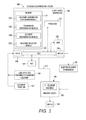
- FIG. 2 is a schematic illustration of a system in one aspect of the exemplary embodiment.
- FIG. 3 is a flow chart illustrating a process for generating candidate colorant combination(s) using multiple colorants according to the exemplary method.
- FIG. 4 is a flow chart illustrating a process for analyzing factors of toner usage and accuracy of each candidate colorant combination generated in FIG. 3 according to the exemplary method.
- FIG. 5 is a flow chart illustrating a process for selecting a colorant combination based on results of the toner usage analysis of FIG. 4 according to the exemplary method.
- FIG. 6 is a flow chart illustrating a process for selecting a colorant combination based on results of the toner accuracy analysis of FIG. 4 according to the exemplary method.
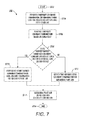
- FIG. 7 is a flowchart showing a process for selecting the ideal colorant combination based on the lowest toner cost.
- FIG. 8 is a flow chart illustrating a process for selecting a colorant combination based weighting percentages used in a multi-factor analysis.
- the disclosure relates to a method and a system for determining colorant combination using five colorants, yet requiring the least amount of toner while providing a closest match to the desired color appearance.
- the method and system determines the best combination for rendering each object within a file by considering combinations including at least the fifth colorant X.
- FIG. 1 is a flow chart illustrating an overview of the present method for optimizing toner usage on an output device capable of rendering in five or more colorants.
- the method starts at S 10 .
- the system receives a print job instruction at S 12 for rendering output.
- the system pre-flights the received print job to determine candidate colorant combinations using the additional/fifth color at S 14 .
- the preflight operation determines if the printer device and color separation information is defined within the print job file.
- the system analyzes toner consumption for each object using a potential fifth colorant housing at S 18 .
- the system analyzes toner consumption using various options of additional colors beyond CMYK.
- the fifth color that uses the least amount of toner is selected as an optimal fifth colorant housing at S 20 .
- the system can display the optimal fifth colorant for the user to load.
- the system determines if the number of color separations is greater than one at S 22 . In response to only one color separation, i.e., beyond CMYK, being present (NO at S 22 ), the system uses the fifth color in the later-described processing. In response to more than one color separation being present (YES at S 22 ), the system provides the user with options on a display for the additional colorant and receives a user-selection for the desired fifth colorant to be used for processing at S 26 .
- the system then analyzes each object within the file to determine which color combinations of CMYKX renders the closest match to the desired color while consuming the lowest amount of toner.
- the system first determines candidate colorant combinations for the object at S 28 . These combinations generally include three or four CMYK colorants and the fifth color.
- the toner usage is analyzed for each candidate colorant combination at S 30 .
- the toner usage is analyzed by applying the candidate colorants in a low resolution RIP operation and determining which colorant combination requires the lowest number of pixels within the three-/four-planes used to generate the object.
- the system determines the objects having a four-colorant print combination at S 32 .
- the method ends at S 34 .
- FIG. 2 is a schematic illustration of a system 100 for optimizing toner usage on a five-colorant capable printer, according to one aspect of the exemplary embodiment.
- the system 100 may include a colorant determination system 102 , hosted by a client computing device 104 , such as a digital front end (“DFE”) or controller, and an image forming apparatus or printer device 106 , including a marking engine or similar rendering device 108 , which are linked together by communication links 110 , referred to herein as a network.
- DFE digital front end
- FIG. 2 is a schematic illustration of a system 100 for optimizing toner usage on a five-colorant capable printer, according to one aspect of the exemplary embodiment.
- the system 100 may include a colorant determination system 102 , hosted by a client computing device 104 , such as a digital front end (“DFE”) or controller, and an image forming apparatus or printer device 106 , including a marking engine or similar rendering device 108 , which are linked together by communication links 110 ,
- the client device 104 illustrated in FIG. 2 includes a processor 112 , which controls the overall operation of the colorant determination system 102 by execution of processing instructions, which are stored in memory 114 connected to the processor 112 .
- the toner-reducing colorant combination determination and selection operation disclosed herein is performed by the processor 112 according to the instructions stored in the memory 114 .
- the memory 114 stores a colorant combination generation module 116 , which generates candidate colorant combinations; a toner usage determination module 118 , which determines a percentage of each colorant in a candidate colorant combination needed to render an object; an accuracy determination module 120 , which determines the candidate colorant combination having the lowest number of pixels outside boundaries of the desired color gamut; and, a colorant selection module 122 , which selects a colorant combination from the candidate colorant combinations based on the determined factors.
- These modules 116 - 122 will be later described with reference to the exemplary method.
- the modules 116 - 120 take an instruction and document 134 , received as input for rendering the document, and consider a user-selection optionally received for a fifth housing colorant 136 , for providing a selected colorant combination 138 to the printer device 106 for rendering the output 140 .
- the client device 104 includes one or more communication interfaces (I/O), such as network interfaces 126 for communicating with external devices, such as printer device 106 .
- I/O communication interfaces
- the various hardware components 112 , 114 , (random access memory “RAM”) 128 of the client device 104 may all be connected by a bus 130 .
- the client device 104 is communicatively linked to a user interface device (GUI) 132 via a wired and/or wireless link.
- GUI user interface device
- the user interface device 132 may include one or more of a display device, for displaying information to users, and a user input device, such as a keyboard or touch or writable screen, for inputting instructions and/or receiving status information, and/or a cursor control device, such as a mouse, trackball, or the like, for communicating user input information and command selections to the processor 112 .
- the user interface device 132 includes at least one of an input device and an output device, both of which include hardware, and which are communicatively linked with the client device 104 via wired and/or wireless link(s).
- the client device 104 of the colorant determination system 102 is communicatively linked with the printer 106 via link 110 . While the client device 104 may be linked to as few as one printer 106 , in general, it can be linked to a fleet of printers.
- the exemplary printers 106 may each include the marking engine 108 , which applies marking medium, such as ink or toner, to a substrate, such as paper, using, for example, a laser, inkjet, thermal, or other transfer process.
- the printer 106 renders images on print media, such as paper, and can be a copier, laser printer, bookmaking machine, facsimile machine, or a multifunction machine (which includes one or more functions such as scanning, printing, archiving, emailing, and faxing).
- the memory 114 , 128 may represent any type of tangible computer readable medium such as random access memory (RAM), read only memory (ROM), magnetic disk or tape, optical disk, flash memory, or holographic memory. In one embodiment, the memory 114 , 128 may each comprise a combination of random access memory and read only memory.
- the digital processor 112 can be variously embodied, such as by a single-core processor, a dual-core processor (or more generally by a multiple-core processor), a digital processor and cooperating math coprocessor, a digital controller, or the like.
- the digital processors 112 in addition to controlling the operation of the colorant determination system 102 , executes instructions stored in the modules 116 - 122 for performing the parts of the method outlined below.
- the software modules 116 - 122 as used herein, are intended to encompass any collection or set of instructions executable by the system 100 so as to configure the system to perform the task that is the intent of the software.
- the term “software” as used herein is intended to encompass such instructions stored in storage medium such as RAM, a hard disk, optical disk, or so forth, and is also intended to encompass so-called “firmware” that is software stored on a ROM or so forth.
- Such software may be organized in various ways, and may include software components organized as libraries, Internet-based programs stored on a remote server or so forth, source code, interpretive code, object code, directly executable code, and so forth. It is contemplated that the software may invoke system-level code or calls to other software residing on the server or other location to perform certain functions.
- the communication interfaces 126 may include, for example, a modem, a router, a cable, and/or Ethernet port, etc.
- colorant determination system 102 and printer 106 are illustrated by way of example, the system 100 may be hosted by fewer or more linked computing devices.
- Each computing device may include, for example, a server computer, desktop, laptop, or tablet computer, smartphone or any other computing device capable of implementing the method described herein.
- the colorant determination system 102 selects an ideal colorant combination for rendering each object in the print job.
- Object may refer to a partial segment in a full, multi-color image, a full (single-color) image on a page, a page/sheet (e.g., in a single color), or the entire document which the analysis is performed on. For example, embodiments are contemplated where the analysis can be performed on a page or document basis.
- Each “object” is associated with a desired color included in or added into the job data, which is provided with the print instruction. The method described in FIGS. 3-5 are repeated for each object in the print job.
- the colorant determination system 102 generates at least one candidate colorant combination using multiple colorants.
- a process 300 for determining candidate colorant combinations using a fifth colorant is shown in FIG. 3 .
- the method starts at S 302 .
- the system 102 receives a print job instruction at S 304 .
- the system 102 can use a predetermined fifth colorant based on the fifth colorant housing located in the printer device 106 .
- the system can contemporaneously receive a user-selection for a select fifth colorant housing where there are six or more colorant housings at S 306 .
- embodiments of printer devices are contemplated as including more than five colorant housings.
- the method disclosed herein is equally applicable to printer devices housing six or more colorants.
- a user can select the fifth colorant X from multiple colorants which differ from CMYK.
- embodiments are contemplated where no color separation information is present within the print job.
- the system can analyze multiple additional colorant housings (using the below-described method) to determine an ideal fifth colorant to load for minimal ink usage.
- the colorant combination generation module 116 determines possible colorant combinations that can be generated using the five colorants CMYKX at S 308 .
- the desired color can be defined as a percent of each of CMYK in the CMYK color space.
- the desired color can be defined as [0, 0.75, 0.5, 1], however there is no limitation to the percent representations.
- possible colorant combinations can be generated to include, inter alia, CYK+Red, CMK+Red, and CMYK, etc. The possible combinations are determined based on the percentages of CMYK. Because magenta M and yellow Y separations only partially make up the desired color, one or more of these colors are considered for being replaced (or the percentages adjusted) using the fifth colorant housing.
- a color gamut for each of the possible CMYKX colorant combinations is generated at S 310 .
- the module 116 represents a color gamut for the desired color in a device independent color space (e.g., CIELAB) at S 312 .
- the module 116 compares the possible combination gamut with the desired color gamut at S 314 to determine where the possible color combination falls within the desired device independent color space.
- the module 116 associates the possible colorant combination as a candidate colorant combination at S 316 .
- the module 116 determines if the candidate combination being analyzed is the last combination at S 318 . Similarly, after associating a processed possible colorant combination as the candidate colorant combination at S 216 , the module 116 determines if the candidate colorant combination being analyzed is the last combination at S 318 . In response to the candidate combination not being the last combination (NO at S 318 ), the module 116 does not treat the possible colorant combination as a candidate colorant combination, and the process repeats for the next possible combination starting at S 310 . In response to the candidate combination being the last combination analyzed (YES at S 318 ), the method ends at S 320 .
- FIG. 4 is a flowchart showing the analyses 400 performed for each candidate colorant combination being considered for the select object.
- the method starts at S 402 .
- a raster image processor (“RIP”) performs color separations on the object at S 404 .
- the object is raster image processed (RIPped) multiple times at low resolution using the select candidate color combination.
- the toner usage determination module 118 determines an amount of toner needed for rendering the object with the select colorant combination at S 406 . In other words, the module determines what percentage of each colorant in the colorant candidate combination is needed to generate the individual object.
- the resulting color separation is saved for each resolution at S 408 .
- the number of pixels required to print the object are counted for each saved color separation at S 410 .
- the color separation associated with the lowest number of pixels is selected for the full resolution RIPping at S 412 .
- the amount of toner needed to render the pixels in the color separation is associated with the select colorant combination and saved in the memory at S 414 .
- the accuracy determination module 120 determines an accuracy of the select candidate colorant combination at representing the desired color at S 416 .
- the module determines a color gamut for the desired color at S 418 (or refers to the gamut previously determined at S 312 ).
- the module 120 maps the pixels of the object to the desired color gamut at S 420 .
- the module 120 determines a number of pixels of the object that lie outside the boundaries of the desired color gamut at S 422 .
- the determined number of pixels of the object that lie outside the boundaries of the desired color gamut is associated with the select colorant combination and saved in the memory at S 424 .
- the modules determine whether the select candidate colorant combination analyzed under processes S 404 and S 416 was the last candidate combination at S 426 . In response to the select candidate colorant combination not being the last candidate colorant combination (NO at S 426 ), the process is repeated for the next candidate colorant combination. In response to the select candidate colorant combination being the last candidate colorant combination (YES at S 426 ), the method ends at S 428 .
- FIGS. 5-7 is a flowchart showing a process 500 for selecting the ideal colorant combination using results of the factor analyses performed on each candidate colorant combination and generated in FIG. 4 .
- FIG. 5 is a flow chart illustrating a process for selecting a colorant combination based on results of the toner usage analysis of FIG. 4 .
- the colorant selection module S 122 selects a colorant combination corresponding with the lowest toner usage for rendering the print job.
- the method starts at S 502 .
- the module 122 determines the toner usage for rendering the output using the fifth colorant in each candidate combination at S 504 .
- the toner usage information was computed at S 406 and can be transmitted from the toner usage determination module 118 to the colorant selection module 122 .
- this amount of toner is based on the number of pixels counted for rendering the object at the full resolution.
- Each candidate colorant combination is ranked based on the lowest toner usage to highest toner cost at S 506 .
- the module 122 determines whether the highest ranking (i.e., lowest amount of toner usage needed to render the object) candidate colorant combination reduces the toner usage over the original CMYK colorant combination at S 508 .
- the toner usage module 118 determines the amount of toner needed to render an object using the original CMYK colorant combination.
- the original CMYK colorant combination is selected as the colorant combination for associating with the object in the rendering process at S 510 .
- the candidate colorant combination having the highest rank is selected as the ideal colorant combination for associating with the object in the rendering process at S 512 .
- the selected one of the ideal or original colorant combination can be saved in the memory and applied to the corresponding object at the time of RIPping and/or printing at S 514 .
- the method ends at S 516 .
- the candidate colorant combinations can be ranked according to the results of the toner usage analysis, whereby the candidates are ranked from lowest toner consuming combination to highest toner consuming combination. Objects rendered with lower toner usages may not be the most accurate. That is, the lowest toner consuming colorant combination may not always provide a close or substantially close match to the desired color. Therefore, in one embodiment, the L*a*b values of the object in a profile connection space (“PCS”) can be compared to the L*a*b values of a potential “optimal” 4/3 color combination, after the potential combination is converted. An outcome of the toner consumption analysis is compared to a predetermined threshold. In response to the toner consumption exceeding the threshold, an error occurs. In response to the error, a second candidate colorant combination can be selected as the ideal colorant combination. In response to the toner consumption not exceeding the threshold, the candidate colorant combination is associated with the ideal colorant combination.
- PCS profile connection space
- FIG. 6 is a flow chart illustrating a process for selecting a colorant combination based on results of the toner accuracy analysis of FIG. 4 .
- the colorant selection module S 122 selects a colorant combination that most accurately represents the desired color for rendering the print job. In other words, the module 122 can determine the colorant combination with the lowest number of pixels lying outside the boundaries of the desired color gamut as being the most accurate combination.
- the method starts at S 602 . For each candidate colorant combination, the module 122 determines how accurate the candidate colorant combination is at representing a desired color at S 604 .
- the accuracy information was computed at S 416 and can be transmitted from the accuracy determination module 120 to the colorant selection module 122 .
- Each candidate colorant combination is ranked based on the most accurate to the least accurate, i.e., from lowest number of pixels lying outside the desired color gamut to highest number of pixels lying outside the desired color gamut, at S 606 .
- the module 122 determines whether the highest ranking candidate colorant combination more accurately represents the desired color over the original CMYK colorant combination at S 608 .
- the accuracy determination module 120 determines an accuracy of the original CMYK colorant combination in a same operation performed for each candidate colorant combination at S 416 .
- the original CMYK colorant combination is selected as the colorant combination for associating with the object in the rendering process at S 610 .
- the candidate colorant combination having the highest rank i.e., the lowest number of pixels outside the boundary
- the selected one of the ideal or original colorant combination can be saved in the memory and applied to the corresponding object at the time of RIPping and/or printing at S 614 .
- the method ends at S 616 .
- the colorant selection module S 122 can select the ideal colorant combination based on the lowest toner cost. For example, instances are contemplated where the cost of a particular fifth colorant is relatively expensive, even where little colorant is needed. Accordingly, the module 122 can determine whether the user will incur a savings using a candidate colorant combination including a fifth colorant.
- FIG. 6 is a flowchart showing a process 600 for selecting the ideal colorant combination based on the lowest toner cost. The method starts at S 702 . The module 122 determines the toner cost for rendering the output using the fifth colorant in each candidate combination at S 704 .
- This cost can be computed, for example, by calculating the number of pixels needed to render the job using the fifth colorant by a corresponding cost per pixel.
- a toner cost module (not shown) can determine the toner cost.
- the toner usage module 118 can determine the cost after determining the toner usage information.
- the module can determine the toner cost for using the original CMYK colorant combination.
- Each candidate colorant combination is ranked based on the lowest toner cost to highest toner cost at S 706 .
- the module 122 determines whether the highest ranking (i.e., lowest costing), candidate colorant combination reduces the toner cost over the original CMYK colorant combination at S 708 .
- the original CMYK colorant combination is selected as the colorant combination for associating with the object in the rendering process at S 710 .
- the candidate colorant combination having the highest rank is selected as the ideal colorant combination for associating with the object in the rendering process at S 712 .
- the ideal and/or original colorant combination can be saved in the memory and applied to the corresponding object at the time of RIPping and/or printing at S 704 .
- the method ends at S 716 .
- FIG. 8 is a flow chart illustrating a process for selecting a colorant combination based weighting percentages used in a multi-factor analysis.
- the method starts at S 802 .
- the colorant selection module 122 receives predetermined weight percentages for each factor (e.g., toner usage, toner cost, and accuracy) to be considered in rendering output using the fifth colorant at S 804 .
- These weight percentages can be received as user-input, or they can be pre-designated. These weight percentages are based on the importance each factor is given in the final selection of a colorant combination. For example, for a particular print job, the desired color accuracy may be more important to the user than the toner usage, and therefore the former is given greater consideration when compared to the latter. In different type print jobs, in another example, minimizing the costs may be of highest importance and the accuracy is less important.
- the module 122 assigns each received weight percentage to a corresponding factor at S 806 .
- a score is calculated using the weighted factors at S 808 .
- the candidate colorant combinations are ranked based on respective scores at S 810 .
- the toner usage, toner cost, and accuracy information is determined for rendering the object using the original CMYK colorant combination at S 812 .
- a CMYK score is calculated by applying the weighting percentages to the CMYK factors at S 814 .
- the module 122 determines whether the highest ranking candidate colorant combination score is better than the CMYK score of the original CMYK colorant combination at S 816 .
- the original CMYK colorant combination is selected as the colorant combination for associating with the object in the rendering process at S 818 .
- the candidate colorant combination having the highest rank is selected as the ideal colorant combination for associating with the object in the rendering process at S 820 .
- the selected ideal or original colorant combination can be saved in the memory and applied to the corresponding object at the time of RIPping and/or printing at S 822 .
- the method ends at S 824 .
- the process described in FIGS. 3-8 can be performed (i.e., repeated) for each additional colorant housing greater than CMYK located, or adapted to be loaded, in the printer device.
- the system can be adapted to select the ideal fifth colorant to use when multiple separations are within a job. The selection can be based on frequency, cost of colorants, toner consumption and/or savings between colorants, and a combination of the above.
- One aspect of the present disclosure is the lowering of print costs.
- Another aspect of the present disclosure is the determination of the ideal colorant combination on a desired object basis, thus further lowering toner consumption and overall printing costs.
- the illustrated methods and other methods of the disclosure may be implemented in hardware, software, or combinations thereof, in order to provide the control functionality described herein, and may be employed in any system including but not limited to the above illustrated system 100 , wherein the disclosure is not limited to the specific applications and embodiments illustrated and described herein.
Landscapes
- Physics & Mathematics (AREA)
- General Physics & Mathematics (AREA)
- Color Image Communication Systems (AREA)
- Facsimile Image Signal Circuits (AREA)
Abstract
Description
Claims (19)
Priority Applications (1)
| Application Number | Priority Date | Filing Date | Title |
|---|---|---|---|
| US14/025,967 US9229348B2 (en) | 2013-09-13 | 2013-09-13 | System for optimizing ink usage on a 5 colorant capable printer |
Applications Claiming Priority (1)
| Application Number | Priority Date | Filing Date | Title |
|---|---|---|---|
| US14/025,967 US9229348B2 (en) | 2013-09-13 | 2013-09-13 | System for optimizing ink usage on a 5 colorant capable printer |
Publications (2)
| Publication Number | Publication Date |
|---|---|
| US20150078774A1 US20150078774A1 (en) | 2015-03-19 |
| US9229348B2 true US9229348B2 (en) | 2016-01-05 |
Family
ID=52668070
Family Applications (1)
| Application Number | Title | Priority Date | Filing Date |
|---|---|---|---|
| US14/025,967 Expired - Fee Related US9229348B2 (en) | 2013-09-13 | 2013-09-13 | System for optimizing ink usage on a 5 colorant capable printer |
Country Status (1)
| Country | Link |
|---|---|
| US (1) | US9229348B2 (en) |
Cited By (1)
| Publication number | Priority date | Publication date | Assignee | Title |
|---|---|---|---|---|
| US10942690B2 (en) | 2017-05-25 | 2021-03-09 | Xerox Corporation | System and method for implementing a color shift security feature in a print job |
Families Citing this family (2)
| Publication number | Priority date | Publication date | Assignee | Title |
|---|---|---|---|---|
| US9699357B1 (en) | 2016-05-03 | 2017-07-04 | Xerox Corporation | Printing devices and methods for rendering a surface using different color modes and profiles |
| US11660875B1 (en) * | 2021-10-28 | 2023-05-30 | Kyocera Document Solutions Inc. | Methods and system for granular ink estimation for printing operations |
Citations (5)
| Publication number | Priority date | Publication date | Assignee | Title |
|---|---|---|---|---|
| US5987168A (en) * | 1997-03-25 | 1999-11-16 | International Business Machines Corporation | System, method, and program for converting three dimensional colorants to more than three dimensional colorants |
| US20040109180A1 (en) * | 2002-12-04 | 2004-06-10 | Eastman Kodak Company | Color gamut mapping using a cost function |
| US20050094171A1 (en) * | 2003-10-31 | 2005-05-05 | Canon Kabushiki Kaisha | Color processing device and method of processing color |
| US20090303556A1 (en) * | 2008-06-09 | 2009-12-10 | Xerox Corporation | 4+ color management using a virtual cmyk color paradigm |
| US20100026740A1 (en) * | 2008-08-04 | 2010-02-04 | Seiko Epson Corporation | Print control apparatus, print control method, and program therefor |
-
2013
- 2013-09-13 US US14/025,967 patent/US9229348B2/en not_active Expired - Fee Related
Patent Citations (5)
| Publication number | Priority date | Publication date | Assignee | Title |
|---|---|---|---|---|
| US5987168A (en) * | 1997-03-25 | 1999-11-16 | International Business Machines Corporation | System, method, and program for converting three dimensional colorants to more than three dimensional colorants |
| US20040109180A1 (en) * | 2002-12-04 | 2004-06-10 | Eastman Kodak Company | Color gamut mapping using a cost function |
| US20050094171A1 (en) * | 2003-10-31 | 2005-05-05 | Canon Kabushiki Kaisha | Color processing device and method of processing color |
| US20090303556A1 (en) * | 2008-06-09 | 2009-12-10 | Xerox Corporation | 4+ color management using a virtual cmyk color paradigm |
| US20100026740A1 (en) * | 2008-08-04 | 2010-02-04 | Seiko Epson Corporation | Print control apparatus, print control method, and program therefor |
Cited By (1)
| Publication number | Priority date | Publication date | Assignee | Title |
|---|---|---|---|---|
| US10942690B2 (en) | 2017-05-25 | 2021-03-09 | Xerox Corporation | System and method for implementing a color shift security feature in a print job |
Also Published As
| Publication number | Publication date |
|---|---|
| US20150078774A1 (en) | 2015-03-19 |
Similar Documents
| Publication | Publication Date | Title |
|---|---|---|
| US9377742B2 (en) | Print control apparatus, and method, for selecting a control mode for use in printing image data | |
| US9992380B2 (en) | Color verification system and computer-readable recording medium storing program | |
| US8412055B2 (en) | Automatic paper management and color profile utilization | |
| US10430698B2 (en) | Image processing system, method of controlling image processing system, and storage medium | |
| KR101810285B1 (en) | Image processing apparatus, image processing method, and computer program | |
| CN111343359A (en) | Information processing apparatus and storage medium | |
| JP6210319B2 (en) | Printing method and printing system | |
| US10447892B2 (en) | Generation of samples for a print job that include resource usage estimates | |
| CN112748889A (en) | Printing system, image forming apparatus, printing method, and storage medium | |
| US10048900B2 (en) | Image generation-output control apparatus, method of controlling image generation-output control apparatus, and storage medium | |
| US9036202B2 (en) | Image processing device and image processing method performing image process according to attribute information of image object | |
| US20090303530A1 (en) | Image processing apparatus and image processing method | |
| US9204013B2 (en) | System to enable development and usage of fifth color separation forms | |
| US9061523B2 (en) | Image forming apparatus, control method thereof, and computer readable information recording medium | |
| JP6083323B2 (en) | Image forming method, image forming apparatus, image forming program, and recording medium | |
| US20150078774A1 (en) | System for optimizing ink usage on a 5 colorant capable printer | |
| JP4804443B2 (en) | Judgment image printing source data generation device | |
| US10942690B2 (en) | System and method for implementing a color shift security feature in a print job | |
| KR101945581B1 (en) | Image processing apparatus, image processing method, and storage medium | |
| US20170236040A1 (en) | Image quality adjustment apparatus, image quality adjustment method, and non-transitory computer readable medium | |
| US11956405B2 (en) | Information processing apparatus, image forming system, method of controlling total-amount restriction, and non-transitory recording medium | |
| JP7600567B2 (en) | Information processing device, program, and information processing system | |
| US9229407B1 (en) | System and method for optimal ink limiting on multi-pass clear jobs | |
| US9925794B2 (en) | Print data generation apparatus performing color replacement on image data | |
| JP6292061B2 (en) | Information processing apparatus and program |
Legal Events
| Date | Code | Title | Description |
|---|---|---|---|
| AS | Assignment |
Owner name: XEROX CORPORATION, CONNECTICUT Free format text: ASSIGNMENT OF ASSIGNORS INTEREST;ASSIGNORS:ROBINSON, DAVID C.;LOJ, KATHERINE;REEL/FRAME:031199/0236 Effective date: 20130911 |
|
| FEPP | Fee payment procedure |
Free format text: PAYOR NUMBER ASSIGNED (ORIGINAL EVENT CODE: ASPN); ENTITY STATUS OF PATENT OWNER: LARGE ENTITY |
|
| ZAAA | Notice of allowance and fees due |
Free format text: ORIGINAL CODE: NOA |
|
| ZAAB | Notice of allowance mailed |
Free format text: ORIGINAL CODE: MN/=. |
|
| STCF | Information on status: patent grant |
Free format text: PATENTED CASE |
|
| MAFP | Maintenance fee payment |
Free format text: PAYMENT OF MAINTENANCE FEE, 4TH YEAR, LARGE ENTITY (ORIGINAL EVENT CODE: M1551); ENTITY STATUS OF PATENT OWNER: LARGE ENTITY Year of fee payment: 4 |
|
| AS | Assignment |
Owner name: CITIBANK, N.A., AS AGENT, DELAWARE Free format text: SECURITY INTEREST;ASSIGNOR:XEROX CORPORATION;REEL/FRAME:062740/0214 Effective date: 20221107 |
|
| AS | Assignment |
Owner name: XEROX CORPORATION, CONNECTICUT Free format text: RELEASE OF SECURITY INTEREST IN PATENTS AT R/F 062740/0214;ASSIGNOR:CITIBANK, N.A., AS AGENT;REEL/FRAME:063694/0122 Effective date: 20230517 |
|
| AS | Assignment |
Owner name: CITIBANK, N.A., AS COLLATERAL AGENT, NEW YORK Free format text: SECURITY INTEREST;ASSIGNOR:XEROX CORPORATION;REEL/FRAME:064760/0389 Effective date: 20230621 |
|
| FEPP | Fee payment procedure |
Free format text: MAINTENANCE FEE REMINDER MAILED (ORIGINAL EVENT CODE: REM.); ENTITY STATUS OF PATENT OWNER: LARGE ENTITY |
|
| AS | Assignment |
Owner name: JEFFERIES FINANCE LLC, AS COLLATERAL AGENT, NEW YORK Free format text: SECURITY INTEREST;ASSIGNOR:XEROX CORPORATION;REEL/FRAME:065628/0019 Effective date: 20231117 |
|
| LAPS | Lapse for failure to pay maintenance fees |
Free format text: PATENT EXPIRED FOR FAILURE TO PAY MAINTENANCE FEES (ORIGINAL EVENT CODE: EXP.); ENTITY STATUS OF PATENT OWNER: LARGE ENTITY |
|
| STCH | Information on status: patent discontinuation |
Free format text: PATENT EXPIRED DUE TO NONPAYMENT OF MAINTENANCE FEES UNDER 37 CFR 1.362 |
|
| AS | Assignment |
Owner name: XEROX CORPORATION, CONNECTICUT Free format text: TERMINATION AND RELEASE OF SECURITY INTEREST IN PATENTS RECORDED AT RF 064760/0389;ASSIGNOR:CITIBANK, N.A., AS COLLATERAL AGENT;REEL/FRAME:068261/0001 Effective date: 20240206 Owner name: CITIBANK, N.A., AS COLLATERAL AGENT, NEW YORK Free format text: SECURITY INTEREST;ASSIGNOR:XEROX CORPORATION;REEL/FRAME:066741/0001 Effective date: 20240206 |
|
| FP | Lapsed due to failure to pay maintenance fee |
Effective date: 20240105 |