US9226211B2 - Centralized partitioning of user devices in a heterogeneous wireless network - Google Patents
Centralized partitioning of user devices in a heterogeneous wireless network Download PDFInfo
- Publication number
- US9226211B2 US9226211B2 US14/129,197 US201314129197A US9226211B2 US 9226211 B2 US9226211 B2 US 9226211B2 US 201314129197 A US201314129197 A US 201314129197A US 9226211 B2 US9226211 B2 US 9226211B2
- Authority
- US
- United States
- Prior art keywords
- ccs
- user devices
- rat
- utility
- rats
- Prior art date
- Legal status (The legal status is an assumption and is not a legal conclusion. Google has not performed a legal analysis and makes no representation as to the accuracy of the status listed.)
- Expired - Fee Related, expires
Links
- 238000000638 solvent extraction Methods 0.000 title claims description 26
- 238000000034 method Methods 0.000 claims abstract description 20
- 238000005192 partition Methods 0.000 claims description 55
- 238000005259 measurement Methods 0.000 claims description 43
- 238000005516 engineering process Methods 0.000 claims description 11
- 230000007774 longterm Effects 0.000 claims description 7
- 238000005457 optimization Methods 0.000 description 18
- 230000006870 function Effects 0.000 description 5
- 230000003068 static effect Effects 0.000 description 5
- 238000004891 communication Methods 0.000 description 3
- 239000000203 mixture Substances 0.000 description 3
- 230000002093 peripheral effect Effects 0.000 description 3
- 241000700159 Rattus Species 0.000 description 2
- 230000005540 biological transmission Effects 0.000 description 2
- 230000001413 cellular effect Effects 0.000 description 2
- 230000001419 dependent effect Effects 0.000 description 2
- 230000009977 dual effect Effects 0.000 description 2
- 230000003993 interaction Effects 0.000 description 2
- 239000000463 material Substances 0.000 description 2
- 238000012544 monitoring process Methods 0.000 description 2
- 229920009204 Methacrylate-butadiene-styrene Polymers 0.000 description 1
- 230000006978 adaptation Effects 0.000 description 1
- 230000007613 environmental effect Effects 0.000 description 1
- 238000009472 formulation Methods 0.000 description 1
- 239000004973 liquid crystal related substance Substances 0.000 description 1
- 239000000126 substance Substances 0.000 description 1
Images




Classifications
-
- H—ELECTRICITY
- H04—ELECTRIC COMMUNICATION TECHNIQUE
- H04W—WIRELESS COMMUNICATION NETWORKS
- H04W12/00—Security arrangements; Authentication; Protecting privacy or anonymity
- H04W12/04—Key management, e.g. using generic bootstrapping architecture [GBA]
-
- H—ELECTRICITY
- H04—ELECTRIC COMMUNICATION TECHNIQUE
- H04W—WIRELESS COMMUNICATION NETWORKS
- H04W36/00—Hand-off or reselection arrangements
- H04W36/16—Performing reselection for specific purposes
- H04W36/22—Performing reselection for specific purposes for handling the traffic
-
- H—ELECTRICITY
- H04—ELECTRIC COMMUNICATION TECHNIQUE
- H04L—TRANSMISSION OF DIGITAL INFORMATION, e.g. TELEGRAPHIC COMMUNICATION
- H04L5/00—Arrangements affording multiple use of the transmission path
- H04L5/003—Arrangements for allocating sub-channels of the transmission path
- H04L5/0032—Distributed allocation, i.e. involving a plurality of allocating devices, each making partial allocation
- H04L5/0035—Resource allocation in a cooperative multipoint environment
-
- H—ELECTRICITY
- H04—ELECTRIC COMMUNICATION TECHNIQUE
- H04B—TRANSMISSION
- H04B7/00—Radio transmission systems, i.e. using radiation field
- H04B7/02—Diversity systems; Multi-antenna system, i.e. transmission or reception using multiple antennas
- H04B7/04—Diversity systems; Multi-antenna system, i.e. transmission or reception using multiple antennas using two or more spaced independent antennas
- H04B7/0413—MIMO systems
- H04B7/0417—Feedback systems
-
- H—ELECTRICITY
- H04—ELECTRIC COMMUNICATION TECHNIQUE
- H04B—TRANSMISSION
- H04B7/00—Radio transmission systems, i.e. using radiation field
- H04B7/02—Diversity systems; Multi-antenna system, i.e. transmission or reception using multiple antennas
- H04B7/04—Diversity systems; Multi-antenna system, i.e. transmission or reception using multiple antennas using two or more spaced independent antennas
- H04B7/0413—MIMO systems
- H04B7/0456—Selection of precoding matrices or codebooks, e.g. using matrices antenna weighting
-
- H—ELECTRICITY
- H04—ELECTRIC COMMUNICATION TECHNIQUE
- H04J—MULTIPLEX COMMUNICATION
- H04J3/00—Time-division multiplex systems
-
- H—ELECTRICITY
- H04—ELECTRIC COMMUNICATION TECHNIQUE
- H04L—TRANSMISSION OF DIGITAL INFORMATION, e.g. TELEGRAPHIC COMMUNICATION
- H04L1/00—Arrangements for detecting or preventing errors in the information received
- H04L1/12—Arrangements for detecting or preventing errors in the information received by using return channel
- H04L1/16—Arrangements for detecting or preventing errors in the information received by using return channel in which the return channel carries supervisory signals, e.g. repetition request signals
- H04L1/18—Automatic repetition systems, e.g. Van Duuren systems
- H04L1/1812—Hybrid protocols; Hybrid automatic repeat request [HARQ]
-
- H—ELECTRICITY
- H04—ELECTRIC COMMUNICATION TECHNIQUE
- H04L—TRANSMISSION OF DIGITAL INFORMATION, e.g. TELEGRAPHIC COMMUNICATION
- H04L1/00—Arrangements for detecting or preventing errors in the information received
- H04L1/12—Arrangements for detecting or preventing errors in the information received by using return channel
- H04L1/16—Arrangements for detecting or preventing errors in the information received by using return channel in which the return channel carries supervisory signals, e.g. repetition request signals
- H04L1/18—Automatic repetition systems, e.g. Van Duuren systems
- H04L1/1867—Arrangements specially adapted for the transmitter end
- H04L1/1887—Scheduling and prioritising arrangements
-
- H—ELECTRICITY
- H04—ELECTRIC COMMUNICATION TECHNIQUE
- H04L—TRANSMISSION OF DIGITAL INFORMATION, e.g. TELEGRAPHIC COMMUNICATION
- H04L43/00—Arrangements for monitoring or testing data switching networks
- H04L43/08—Monitoring or testing based on specific metrics, e.g. QoS, energy consumption or environmental parameters
-
- H—ELECTRICITY
- H04—ELECTRIC COMMUNICATION TECHNIQUE
- H04L—TRANSMISSION OF DIGITAL INFORMATION, e.g. TELEGRAPHIC COMMUNICATION
- H04L5/00—Arrangements affording multiple use of the transmission path
- H04L5/003—Arrangements for allocating sub-channels of the transmission path
- H04L5/0048—Allocation of pilot signals, i.e. of signals known to the receiver
- H04L5/0051—Allocation of pilot signals, i.e. of signals known to the receiver of dedicated pilots, i.e. pilots destined for a single user or terminal
-
- H—ELECTRICITY
- H04—ELECTRIC COMMUNICATION TECHNIQUE
- H04L—TRANSMISSION OF DIGITAL INFORMATION, e.g. TELEGRAPHIC COMMUNICATION
- H04L5/00—Arrangements affording multiple use of the transmission path
- H04L5/003—Arrangements for allocating sub-channels of the transmission path
- H04L5/0053—Allocation of signalling, i.e. of overhead other than pilot signals
- H04L5/0055—Physical resource allocation for ACK/NACK
-
- H—ELECTRICITY
- H04—ELECTRIC COMMUNICATION TECHNIQUE
- H04L—TRANSMISSION OF DIGITAL INFORMATION, e.g. TELEGRAPHIC COMMUNICATION
- H04L5/00—Arrangements affording multiple use of the transmission path
- H04L5/003—Arrangements for allocating sub-channels of the transmission path
- H04L5/0053—Allocation of signalling, i.e. of overhead other than pilot signals
- H04L5/0057—Physical resource allocation for CQI
-
- H—ELECTRICITY
- H04—ELECTRIC COMMUNICATION TECHNIQUE
- H04L—TRANSMISSION OF DIGITAL INFORMATION, e.g. TELEGRAPHIC COMMUNICATION
- H04L5/00—Arrangements affording multiple use of the transmission path
- H04L5/003—Arrangements for allocating sub-channels of the transmission path
- H04L5/0058—Allocation criteria
- H04L5/0062—Avoidance of ingress interference, e.g. ham radio channels
-
- H—ELECTRICITY
- H04—ELECTRIC COMMUNICATION TECHNIQUE
- H04L—TRANSMISSION OF DIGITAL INFORMATION, e.g. TELEGRAPHIC COMMUNICATION
- H04L5/00—Arrangements affording multiple use of the transmission path
- H04L5/0091—Signalling for the administration of the divided path, e.g. signalling of configuration information
- H04L5/0092—Indication of how the channel is divided
-
- H—ELECTRICITY
- H04—ELECTRIC COMMUNICATION TECHNIQUE
- H04L—TRANSMISSION OF DIGITAL INFORMATION, e.g. TELEGRAPHIC COMMUNICATION
- H04L5/00—Arrangements affording multiple use of the transmission path
- H04L5/0091—Signalling for the administration of the divided path, e.g. signalling of configuration information
- H04L5/0096—Indication of changes in allocation
-
- H—ELECTRICITY
- H04—ELECTRIC COMMUNICATION TECHNIQUE
- H04L—TRANSMISSION OF DIGITAL INFORMATION, e.g. TELEGRAPHIC COMMUNICATION
- H04L5/00—Arrangements affording multiple use of the transmission path
- H04L5/14—Two-way operation using the same type of signal, i.e. duplex
- H04L5/1469—Two-way operation using the same type of signal, i.e. duplex using time-sharing
-
- H—ELECTRICITY
- H04—ELECTRIC COMMUNICATION TECHNIQUE
- H04L—TRANSMISSION OF DIGITAL INFORMATION, e.g. TELEGRAPHIC COMMUNICATION
- H04L5/00—Arrangements affording multiple use of the transmission path
- H04L5/22—Arrangements affording multiple use of the transmission path using time-division multiplexing
-
- H—ELECTRICITY
- H04—ELECTRIC COMMUNICATION TECHNIQUE
- H04L—TRANSMISSION OF DIGITAL INFORMATION, e.g. TELEGRAPHIC COMMUNICATION
- H04L63/00—Network architectures or network communication protocols for network security
- H04L63/04—Network architectures or network communication protocols for network security for providing a confidential data exchange among entities communicating through data packet networks
- H04L63/0428—Network architectures or network communication protocols for network security for providing a confidential data exchange among entities communicating through data packet networks wherein the data content is protected, e.g. by encrypting or encapsulating the payload
-
- H—ELECTRICITY
- H04—ELECTRIC COMMUNICATION TECHNIQUE
- H04L—TRANSMISSION OF DIGITAL INFORMATION, e.g. TELEGRAPHIC COMMUNICATION
- H04L63/00—Network architectures or network communication protocols for network security
- H04L63/30—Network architectures or network communication protocols for network security for supporting lawful interception, monitoring or retaining of communications or communication related information
-
- H—ELECTRICITY
- H04—ELECTRIC COMMUNICATION TECHNIQUE
- H04L—TRANSMISSION OF DIGITAL INFORMATION, e.g. TELEGRAPHIC COMMUNICATION
- H04L65/00—Network arrangements, protocols or services for supporting real-time applications in data packet communication
- H04L65/1066—Session management
- H04L65/1101—Session protocols
- H04L65/1104—Session initiation protocol [SIP]
-
- H—ELECTRICITY
- H04—ELECTRIC COMMUNICATION TECHNIQUE
- H04L—TRANSMISSION OF DIGITAL INFORMATION, e.g. TELEGRAPHIC COMMUNICATION
- H04L65/00—Network arrangements, protocols or services for supporting real-time applications in data packet communication
- H04L65/60—Network streaming of media packets
- H04L65/61—Network streaming of media packets for supporting one-way streaming services, e.g. Internet radio
- H04L65/611—Network streaming of media packets for supporting one-way streaming services, e.g. Internet radio for multicast or broadcast
-
- H—ELECTRICITY
- H04—ELECTRIC COMMUNICATION TECHNIQUE
- H04L—TRANSMISSION OF DIGITAL INFORMATION, e.g. TELEGRAPHIC COMMUNICATION
- H04L65/00—Network arrangements, protocols or services for supporting real-time applications in data packet communication
- H04L65/60—Network streaming of media packets
- H04L65/65—Network streaming protocols, e.g. real-time transport protocol [RTP] or real-time control protocol [RTCP]
-
- H—ELECTRICITY
- H04—ELECTRIC COMMUNICATION TECHNIQUE
- H04L—TRANSMISSION OF DIGITAL INFORMATION, e.g. TELEGRAPHIC COMMUNICATION
- H04L65/00—Network arrangements, protocols or services for supporting real-time applications in data packet communication
- H04L65/60—Network streaming of media packets
- H04L65/75—Media network packet handling
- H04L65/762—Media network packet handling at the source
-
- H—ELECTRICITY
- H04—ELECTRIC COMMUNICATION TECHNIQUE
- H04L—TRANSMISSION OF DIGITAL INFORMATION, e.g. TELEGRAPHIC COMMUNICATION
- H04L65/00—Network arrangements, protocols or services for supporting real-time applications in data packet communication
- H04L65/80—Responding to QoS
-
- H—ELECTRICITY
- H04—ELECTRIC COMMUNICATION TECHNIQUE
- H04L—TRANSMISSION OF DIGITAL INFORMATION, e.g. TELEGRAPHIC COMMUNICATION
- H04L67/00—Network arrangements or protocols for supporting network services or applications
- H04L67/01—Protocols
- H04L67/02—Protocols based on web technology, e.g. hypertext transfer protocol [HTTP]
-
- H—ELECTRICITY
- H04—ELECTRIC COMMUNICATION TECHNIQUE
- H04W—WIRELESS COMMUNICATION NETWORKS
- H04W12/00—Security arrangements; Authentication; Protecting privacy or anonymity
- H04W12/02—Protecting privacy or anonymity, e.g. protecting personally identifiable information [PII]
-
- H—ELECTRICITY
- H04—ELECTRIC COMMUNICATION TECHNIQUE
- H04W—WIRELESS COMMUNICATION NETWORKS
- H04W12/00—Security arrangements; Authentication; Protecting privacy or anonymity
- H04W12/04—Key management, e.g. using generic bootstrapping architecture [GBA]
- H04W12/043—Key management, e.g. using generic bootstrapping architecture [GBA] using a trusted network node as an anchor
- H04W12/0431—Key distribution or pre-distribution; Key agreement
-
- H—ELECTRICITY
- H04—ELECTRIC COMMUNICATION TECHNIQUE
- H04W—WIRELESS COMMUNICATION NETWORKS
- H04W12/00—Security arrangements; Authentication; Protecting privacy or anonymity
- H04W12/06—Authentication
-
- H—ELECTRICITY
- H04—ELECTRIC COMMUNICATION TECHNIQUE
- H04W—WIRELESS COMMUNICATION NETWORKS
- H04W16/00—Network planning, e.g. coverage or traffic planning tools; Network deployment, e.g. resource partitioning or cells structures
- H04W16/24—Cell structures
- H04W16/32—Hierarchical cell structures
-
- H—ELECTRICITY
- H04—ELECTRIC COMMUNICATION TECHNIQUE
- H04W—WIRELESS COMMUNICATION NETWORKS
- H04W24/00—Supervisory, monitoring or testing arrangements
- H04W24/02—Arrangements for optimising operational condition
-
- H—ELECTRICITY
- H04—ELECTRIC COMMUNICATION TECHNIQUE
- H04W—WIRELESS COMMUNICATION NETWORKS
- H04W24/00—Supervisory, monitoring or testing arrangements
- H04W24/10—Scheduling measurement reports ; Arrangements for measurement reports
-
- H—ELECTRICITY
- H04—ELECTRIC COMMUNICATION TECHNIQUE
- H04W—WIRELESS COMMUNICATION NETWORKS
- H04W28/00—Network traffic management; Network resource management
- H04W28/02—Traffic management, e.g. flow control or congestion control
- H04W28/0231—Traffic management, e.g. flow control or congestion control based on communication conditions
-
- H—ELECTRICITY
- H04—ELECTRIC COMMUNICATION TECHNIQUE
- H04W—WIRELESS COMMUNICATION NETWORKS
- H04W36/00—Hand-off or reselection arrangements
- H04W36/0005—Control or signalling for completing the hand-off
- H04W36/0055—Transmission or use of information for re-establishing the radio link
- H04W36/0066—Transmission or use of information for re-establishing the radio link of control information between different types of networks in order to establish a new radio link in the target network
-
- H—ELECTRICITY
- H04—ELECTRIC COMMUNICATION TECHNIQUE
- H04W—WIRELESS COMMUNICATION NETWORKS
- H04W36/00—Hand-off or reselection arrangements
- H04W36/0005—Control or signalling for completing the hand-off
- H04W36/0055—Transmission or use of information for re-establishing the radio link
- H04W36/0069—Transmission or use of information for re-establishing the radio link in case of dual connectivity, e.g. decoupled uplink/downlink
-
- H—ELECTRICITY
- H04—ELECTRIC COMMUNICATION TECHNIQUE
- H04W—WIRELESS COMMUNICATION NETWORKS
- H04W36/00—Hand-off or reselection arrangements
- H04W36/0005—Control or signalling for completing the hand-off
- H04W36/0055—Transmission or use of information for re-establishing the radio link
- H04W36/0069—Transmission or use of information for re-establishing the radio link in case of dual connectivity, e.g. decoupled uplink/downlink
- H04W36/00692—Transmission or use of information for re-establishing the radio link in case of dual connectivity, e.g. decoupled uplink/downlink using simultaneous multiple data streams, e.g. cooperative multipoint [CoMP], carrier aggregation [CA] or multiple input multiple output [MIMO]
-
- H—ELECTRICITY
- H04—ELECTRIC COMMUNICATION TECHNIQUE
- H04W—WIRELESS COMMUNICATION NETWORKS
- H04W4/00—Services specially adapted for wireless communication networks; Facilities therefor
- H04W4/06—Selective distribution of broadcast services, e.g. multimedia broadcast multicast service [MBMS]; Services to user groups; One-way selective calling services
-
- H—ELECTRICITY
- H04—ELECTRIC COMMUNICATION TECHNIQUE
- H04W—WIRELESS COMMUNICATION NETWORKS
- H04W48/00—Access restriction; Network selection; Access point selection
- H04W48/08—Access restriction or access information delivery, e.g. discovery data delivery
-
- H—ELECTRICITY
- H04—ELECTRIC COMMUNICATION TECHNIQUE
- H04W—WIRELESS COMMUNICATION NETWORKS
- H04W48/00—Access restriction; Network selection; Access point selection
- H04W48/08—Access restriction or access information delivery, e.g. discovery data delivery
- H04W48/10—Access restriction or access information delivery, e.g. discovery data delivery using broadcasted information
-
- H—ELECTRICITY
- H04—ELECTRIC COMMUNICATION TECHNIQUE
- H04W—WIRELESS COMMUNICATION NETWORKS
- H04W48/00—Access restriction; Network selection; Access point selection
- H04W48/16—Discovering, processing access restriction or access information
-
- H—ELECTRICITY
- H04—ELECTRIC COMMUNICATION TECHNIQUE
- H04W—WIRELESS COMMUNICATION NETWORKS
- H04W48/00—Access restriction; Network selection; Access point selection
- H04W48/20—Selecting an access point
-
- H—ELECTRICITY
- H04—ELECTRIC COMMUNICATION TECHNIQUE
- H04W—WIRELESS COMMUNICATION NETWORKS
- H04W52/00—Power management, e.g. Transmission Power Control [TPC] or power classes
- H04W52/02—Power saving arrangements
- H04W52/0209—Power saving arrangements in terminal devices
- H04W52/0251—Power saving arrangements in terminal devices using monitoring of local events, e.g. events related to user activity
-
- H—ELECTRICITY
- H04—ELECTRIC COMMUNICATION TECHNIQUE
- H04W—WIRELESS COMMUNICATION NETWORKS
- H04W56/00—Synchronisation arrangements
- H04W56/001—Synchronization between nodes
-
- H—ELECTRICITY
- H04—ELECTRIC COMMUNICATION TECHNIQUE
- H04W—WIRELESS COMMUNICATION NETWORKS
- H04W68/00—User notification, e.g. alerting and paging, for incoming communication, change of service or the like
- H04W68/02—Arrangements for increasing efficiency of notification or paging channel
-
- H—ELECTRICITY
- H04—ELECTRIC COMMUNICATION TECHNIQUE
- H04W—WIRELESS COMMUNICATION NETWORKS
- H04W72/00—Local resource management
-
- H—ELECTRICITY
- H04—ELECTRIC COMMUNICATION TECHNIQUE
- H04W—WIRELESS COMMUNICATION NETWORKS
- H04W72/00—Local resource management
- H04W72/02—Selection of wireless resources by user or terminal
-
- H04W72/0413—
-
- H04W72/042—
-
- H—ELECTRICITY
- H04—ELECTRIC COMMUNICATION TECHNIQUE
- H04W—WIRELESS COMMUNICATION NETWORKS
- H04W72/00—Local resource management
- H04W72/04—Wireless resource allocation
- H04W72/044—Wireless resource allocation based on the type of the allocated resource
- H04W72/0446—Resources in time domain, e.g. slots or frames
-
- H—ELECTRICITY
- H04—ELECTRIC COMMUNICATION TECHNIQUE
- H04W—WIRELESS COMMUNICATION NETWORKS
- H04W72/00—Local resource management
- H04W72/04—Wireless resource allocation
- H04W72/044—Wireless resource allocation based on the type of the allocated resource
- H04W72/046—Wireless resource allocation based on the type of the allocated resource the resource being in the space domain, e.g. beams
-
- H—ELECTRICITY
- H04—ELECTRIC COMMUNICATION TECHNIQUE
- H04W—WIRELESS COMMUNICATION NETWORKS
- H04W72/00—Local resource management
- H04W72/12—Wireless traffic scheduling
-
- H—ELECTRICITY
- H04—ELECTRIC COMMUNICATION TECHNIQUE
- H04W—WIRELESS COMMUNICATION NETWORKS
- H04W72/00—Local resource management
- H04W72/12—Wireless traffic scheduling
- H04W72/1263—Mapping of traffic onto schedule, e.g. scheduled allocation or multiplexing of flows
-
- H—ELECTRICITY
- H04—ELECTRIC COMMUNICATION TECHNIQUE
- H04W—WIRELESS COMMUNICATION NETWORKS
- H04W72/00—Local resource management
- H04W72/20—Control channels or signalling for resource management
-
- H—ELECTRICITY
- H04—ELECTRIC COMMUNICATION TECHNIQUE
- H04W—WIRELESS COMMUNICATION NETWORKS
- H04W72/00—Local resource management
- H04W72/20—Control channels or signalling for resource management
- H04W72/21—Control channels or signalling for resource management in the uplink direction of a wireless link, i.e. towards the network
-
- H—ELECTRICITY
- H04—ELECTRIC COMMUNICATION TECHNIQUE
- H04W—WIRELESS COMMUNICATION NETWORKS
- H04W72/00—Local resource management
- H04W72/20—Control channels or signalling for resource management
- H04W72/23—Control channels or signalling for resource management in the downlink direction of a wireless link, i.e. towards a terminal
-
- H—ELECTRICITY
- H04—ELECTRIC COMMUNICATION TECHNIQUE
- H04W—WIRELESS COMMUNICATION NETWORKS
- H04W74/00—Wireless channel access
-
- H04W76/021—
-
- H04W76/023—
-
- H04W76/046—
-
- H04W76/048—
-
- H—ELECTRICITY
- H04—ELECTRIC COMMUNICATION TECHNIQUE
- H04W—WIRELESS COMMUNICATION NETWORKS
- H04W76/00—Connection management
- H04W76/10—Connection setup
- H04W76/11—Allocation or use of connection identifiers
-
- H—ELECTRICITY
- H04—ELECTRIC COMMUNICATION TECHNIQUE
- H04W—WIRELESS COMMUNICATION NETWORKS
- H04W76/00—Connection management
- H04W76/10—Connection setup
- H04W76/14—Direct-mode setup
-
- H—ELECTRICITY
- H04—ELECTRIC COMMUNICATION TECHNIQUE
- H04W—WIRELESS COMMUNICATION NETWORKS
- H04W76/00—Connection management
- H04W76/20—Manipulation of established connections
- H04W76/27—Transitions between radio resource control [RRC] states
-
- H—ELECTRICITY
- H04—ELECTRIC COMMUNICATION TECHNIQUE
- H04W—WIRELESS COMMUNICATION NETWORKS
- H04W8/00—Network data management
- H04W8/005—Discovery of network devices, e.g. terminals
-
- H—ELECTRICITY
- H04—ELECTRIC COMMUNICATION TECHNIQUE
- H04W—WIRELESS COMMUNICATION NETWORKS
- H04W84/00—Network topologies
- H04W84/02—Hierarchically pre-organised networks, e.g. paging networks, cellular networks, WLAN [Wireless Local Area Network] or WLL [Wireless Local Loop]
- H04W84/10—Small scale networks; Flat hierarchical networks
- H04W84/12—WLAN [Wireless Local Area Networks]
-
- H—ELECTRICITY
- H04—ELECTRIC COMMUNICATION TECHNIQUE
- H04W—WIRELESS COMMUNICATION NETWORKS
- H04W88/00—Devices specially adapted for wireless communication networks, e.g. terminals, base stations or access point devices
- H04W88/02—Terminal devices
- H04W88/06—Terminal devices adapted for operation in multiple networks or having at least two operational modes, e.g. multi-mode terminals
-
- H—ELECTRICITY
- H04—ELECTRIC COMMUNICATION TECHNIQUE
- H04W—WIRELESS COMMUNICATION NETWORKS
- H04W88/00—Devices specially adapted for wireless communication networks, e.g. terminals, base stations or access point devices
- H04W88/08—Access point devices
-
- H—ELECTRICITY
- H04—ELECTRIC COMMUNICATION TECHNIQUE
- H04L—TRANSMISSION OF DIGITAL INFORMATION, e.g. TELEGRAPHIC COMMUNICATION
- H04L1/00—Arrangements for detecting or preventing errors in the information received
- H04L1/12—Arrangements for detecting or preventing errors in the information received by using return channel
- H04L1/16—Arrangements for detecting or preventing errors in the information received by using return channel in which the return channel carries supervisory signals, e.g. repetition request signals
- H04L1/18—Automatic repetition systems, e.g. Van Duuren systems
-
- H—ELECTRICITY
- H04—ELECTRIC COMMUNICATION TECHNIQUE
- H04L—TRANSMISSION OF DIGITAL INFORMATION, e.g. TELEGRAPHIC COMMUNICATION
- H04L2209/00—Additional information or applications relating to cryptographic mechanisms or cryptographic arrangements for secret or secure communication H04L9/00
- H04L2209/24—Key scheduling, i.e. generating round keys or sub-keys for block encryption
-
- H—ELECTRICITY
- H04—ELECTRIC COMMUNICATION TECHNIQUE
- H04L—TRANSMISSION OF DIGITAL INFORMATION, e.g. TELEGRAPHIC COMMUNICATION
- H04L2209/00—Additional information or applications relating to cryptographic mechanisms or cryptographic arrangements for secret or secure communication H04L9/00
- H04L2209/80—Wireless
-
- H—ELECTRICITY
- H04—ELECTRIC COMMUNICATION TECHNIQUE
- H04L—TRANSMISSION OF DIGITAL INFORMATION, e.g. TELEGRAPHIC COMMUNICATION
- H04L5/00—Arrangements affording multiple use of the transmission path
- H04L5/003—Arrangements for allocating sub-channels of the transmission path
- H04L5/0058—Allocation criteria
- H04L5/0076—Allocation utility-based
-
- H—ELECTRICITY
- H04—ELECTRIC COMMUNICATION TECHNIQUE
- H04L—TRANSMISSION OF DIGITAL INFORMATION, e.g. TELEGRAPHIC COMMUNICATION
- H04L5/00—Arrangements affording multiple use of the transmission path
- H04L5/0091—Signalling for the administration of the divided path, e.g. signalling of configuration information
- H04L5/0094—Indication of how sub-channels of the path are allocated
-
- H—ELECTRICITY
- H04—ELECTRIC COMMUNICATION TECHNIQUE
- H04L—TRANSMISSION OF DIGITAL INFORMATION, e.g. TELEGRAPHIC COMMUNICATION
- H04L5/00—Arrangements affording multiple use of the transmission path
- H04L5/14—Two-way operation using the same type of signal, i.e. duplex
-
- H—ELECTRICITY
- H04—ELECTRIC COMMUNICATION TECHNIQUE
- H04L—TRANSMISSION OF DIGITAL INFORMATION, e.g. TELEGRAPHIC COMMUNICATION
- H04L9/00—Cryptographic mechanisms or cryptographic arrangements for secret or secure communications; Network security protocols
- H04L9/14—Cryptographic mechanisms or cryptographic arrangements for secret or secure communications; Network security protocols using a plurality of keys or algorithms
-
- H—ELECTRICITY
- H04—ELECTRIC COMMUNICATION TECHNIQUE
- H04W—WIRELESS COMMUNICATION NETWORKS
- H04W12/00—Security arrangements; Authentication; Protecting privacy or anonymity
- H04W12/50—Secure pairing of devices
-
- H—ELECTRICITY
- H04—ELECTRIC COMMUNICATION TECHNIQUE
- H04W—WIRELESS COMMUNICATION NETWORKS
- H04W76/00—Connection management
- H04W76/20—Manipulation of established connections
- H04W76/28—Discontinuous transmission [DTX]; Discontinuous reception [DRX]
-
- H—ELECTRICITY
- H04—ELECTRIC COMMUNICATION TECHNIQUE
- H04W—WIRELESS COMMUNICATION NETWORKS
- H04W84/00—Network topologies
- H04W84/02—Hierarchically pre-organised networks, e.g. paging networks, cellular networks, WLAN [Wireless Local Area Network] or WLL [Wireless Local Loop]
- H04W84/04—Large scale networks; Deep hierarchical networks
- H04W84/042—Public Land Mobile systems, e.g. cellular systems
- H04W84/045—Public Land Mobile systems, e.g. cellular systems using private Base Stations, e.g. femto Base Stations, home Node B
-
- Y—GENERAL TAGGING OF NEW TECHNOLOGICAL DEVELOPMENTS; GENERAL TAGGING OF CROSS-SECTIONAL TECHNOLOGIES SPANNING OVER SEVERAL SECTIONS OF THE IPC; TECHNICAL SUBJECTS COVERED BY FORMER USPC CROSS-REFERENCE ART COLLECTIONS [XRACs] AND DIGESTS
- Y02—TECHNOLOGIES OR APPLICATIONS FOR MITIGATION OR ADAPTATION AGAINST CLIMATE CHANGE
- Y02B—CLIMATE CHANGE MITIGATION TECHNOLOGIES RELATED TO BUILDINGS, e.g. HOUSING, HOUSE APPLIANCES OR RELATED END-USER APPLICATIONS
- Y02B70/00—Technologies for an efficient end-user side electric power management and consumption
- Y02B70/30—Systems integrating technologies related to power network operation and communication or information technologies for improving the carbon footprint of the management of residential or tertiary loads, i.e. smart grids as climate change mitigation technology in the buildings sector, including also the last stages of power distribution and the control, monitoring or operating management systems at local level
-
- Y—GENERAL TAGGING OF NEW TECHNOLOGICAL DEVELOPMENTS; GENERAL TAGGING OF CROSS-SECTIONAL TECHNOLOGIES SPANNING OVER SEVERAL SECTIONS OF THE IPC; TECHNICAL SUBJECTS COVERED BY FORMER USPC CROSS-REFERENCE ART COLLECTIONS [XRACs] AND DIGESTS
- Y02—TECHNOLOGIES OR APPLICATIONS FOR MITIGATION OR ADAPTATION AGAINST CLIMATE CHANGE
- Y02D—CLIMATE CHANGE MITIGATION TECHNOLOGIES IN INFORMATION AND COMMUNICATION TECHNOLOGIES [ICT], I.E. INFORMATION AND COMMUNICATION TECHNOLOGIES AIMING AT THE REDUCTION OF THEIR OWN ENERGY USE
- Y02D30/00—Reducing energy consumption in communication networks
- Y02D30/70—Reducing energy consumption in communication networks in wireless communication networks
Definitions
- Embodiments of the present invention relate generally to the field of wireless communications, and more particularly, to central control of a wireless network.
- HetNets Wireless networks are becoming increasingly heterogeneous (HetNets) and may consist of a mix of infrastructure elements and user devices capable of interacting over multiple radio access technologies (RATs).
- Some HetNet architectures may be characterized as a multi-tier, multi-RAT HetNet, where a tier of small cell stations, supporting multiple RATs, may be overlaid on top of a conventional macro cellular deployment to augment capacity of the HetNet.
- the small cells may integrate both cellular air interfaces and WiFi interfaces.
- Association of a user device with a cell and RAT of a HetNet may be performed by the user device which may determine downlink carrier signal strengths and signal-to-noise-ratios (SNRs) of nearby cell stations. Based upon this information the user device may determine which base station and RAT with which to associate. This type of association is limited to the information available to the individual user device and cannot account for the number and mix of other user devices on the base station and RAT.
- SNRs signal-to-noise
- FIG. 1 schematically illustrates a heterogeneous wireless network in accordance with various embodiments of the present disclosure.
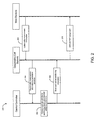
- FIG. 2 illustrates a method of partitioning user devices of a heterogeneous wireless network in accordance with various embodiments of the present disclosure.
- FIG. 3 illustrates another method of partitioning user devices of a heterogeneous wireless network in accordance with various embodiments of the present disclosure.
- FIG. 4 schematically illustrates a user device, cooperating cell station and central controller in accordance with various embodiments of the present disclosure.
- FIG. 5 schematically depicts an example system in accordance with various embodiments of the present disclosure.
- Illustrative embodiments of the present disclosure include, but are not limited to, methods, computer-readable media and apparatuses for central control of a heterogeneous wireless network. Embodiments described may improve upon one or more utility metrics of the heterogeneous network.
- a and/or B means (A), (B), or (A and B).
- the phrases “A/B” and “A or B” mean (A), (B), or (A and B), similar to the phrase “A and/or B.”
- module refers to, is part of, or includes hardware components such as an Application Specific Integrated Circuit (ASIC), an electronic circuit, a logic circuit, a processor (shared, dedicated, or group) and/or memory (shared, dedicated, or group) that are configured to provide the described functionality.
- ASIC Application Specific Integrated Circuit
- the module may execute one or more software or firmware programs to provide at least some of the described functionality.
- FIG. 1 schematically illustrates a heterogeneous wireless network (HetNet) 100 in accordance with various embodiments.
- HetNet 100 may include a macro base station (MBS) 102 which may be, for example, a Node B or Evolved Node B.
- MBS 102 may be wirelessly coupled with cooperating cell stations (CCSs) 106 - 110 .
- CCSs may include, for example, picocells, femtocells, microcells, or any combination thereof.
- CCSs may also include macro cell stations, such as MBS 102 ; however, for ease of description, MBS 102 is referred to separately from CCSs 106 - 110 .
- CCSs 106 - 110 may support a number of radio access technologies (RATs), such as, for example, 4G, Long-term evolution (LTE), WiFi, 3G, or any combination thereof.
- RATs radio access technologies
- MBS 102 may, by way of CCSs 106 - 110 , provide user devices 112 - 124 with a connection to a core network, not depicted herein.
- HetNet 100 may include central controller 104 .
- Central controller 104 may be configured to receive utility measurements related to one or more utility metrics of the HetNet.
- CCSs 106 - 110 may be configured to collect and transmit the utility measurements to central controller 104 .
- Central controller 104 may utilize the utility measurements to determine an overall utility of HetNet 100 and may further utilize the utility measurements to determine a partitioning of user devices 112 - 124 across HetNet 100 that may improve upon the overall utility of HetNet 100 .
- Central controller 104 may then transmit partition information via CCSs 106 - 110 to the user devices to accomplish the determined partitioning.
- partition information may include a specific CCS and RAT assignment for the user devices.
- partition information may include network-assisting information configured to enable the user devices to enable the user devices to accomplish the determined partitioning.
- the partitioning of the user devices is discussed in greater detail in reference to FIGS. 2 and 3 , below.
- the one or more utility metrics may include, but are not limited to, channel quality, loading and/or congestion level, quality of service (QoS) requirements, or any combination thereof.
- central controller 104 may be incorporated into MBS 102 , the core network, or other suitable portion of a telecommunications network.
- HetNet 100 may be a macro-assisted HetNet, such as a 3rd Generation Partnership Project (3GPP) macro-assisted HetNET.
- 3GPP 3rd Generation Partnership Project
- utility management may be performed by MBS 102 and, as a result, MBS 102 may transmit partition information directly to the user devices while cell stations, such as CCSs 106 - 110 , may be utilized for data offloading and high-data rate transmission.
- HetNet 100 may be considered a cooperating set.
- the set of user devices to be served by stations within the cooperating set may be denoted as S sys .
- the set of user devices served by station k may be denoted as S k and the set of user devices served by the r th RAT of station k may be denoted as S k,r .
- Overall utility of the cooperating set may be represented as a function of utilities from all stations within the cooperating set, all RATs of the cooperating cell stations, or all user devices served by the cooperating set.
- the overall utility as a function of utilities across all cell stations is represented by f c
- the overall utility as a function of utilities across all RATs is represented by f r
- f r is not depicted here, however, one of ordinary skill in the art would readily be able to determine f r utilizing the equations above and taking into account the RATs supported in the cooperating set.
- FIG. 2 illustrates a method 200 of partitioning user devices of a heterogeneous wireless network (HetNet) in accordance with various embodiments.
- the method may begin at block 202 where cooperating cell stations (CCSs) of a cooperating set, e.g., CCSs 106 - 110 of FIG. 1 , may collect utility measurement information from user devices, e.g., user devices 112 - 124 of FIG. 1 .
- the collection of the utility measurement information may be accomplished by monitoring a radio link between the CCS and the user device.
- the CCSs may be configured to collect, for example, the utility measurement information at predetermined intervals, upon receiving a request from the central controller, and/or upon occurrence of an event, such as a connection to or disconnection from a user device.
- the user devices may be configured to collect utility measurement information and report the utility measurement information to the CCS to which the user device is connected.
- the user devices may be configured to transmit the utility measurement information at predetermined intervals, upon receiving a request from the CCS, and/or when a utility measurement drops below a certain threshold.
- there may be overhead associated with the collection of utility measurement information which may include the period of time it may take to collect the actual utility measurement information, in addition to the period of time it may take to transmit the appropriate messages to the central controller.
- This overhead may increase as the number of RATs and/or number of CCSs increases.
- this overhead may be reduced by allowing only the strongest CCS of one rat to collect the RAT measurement for each user device. Therefore, a user device may only report to one CCS for each RAT it supports which may reduce the amount of time and number of messages to collect the utility measurement information.
- the CCSs may report the collected utility measurement information to a central controller.
- This utility measurement information may be utilized by the central controller to determine the overall utility of the cooperating set.
- the central controller may then utilize the utility measurement information to determine a partitioning of the user devices across the CCSs and available RATs to improve upon one or more utility metrics of the cooperating set.
- the central controller may calculate an optimized distribution which would result in an optimization of the utility metric, as opposed to simply an improvement.
- the user device partitioning determination may be based on maximizing sum log throughput in static network.
- the utility objective may be expressed as:
- each user device being assigned to one single RAT of a cell station can be relaxed by introducing the variable x i,(k,r) representing the percentage of resources the r th RAT of cell station k assigns to user device i.
- Another example would be to maximize the per user throughput in a static network.
- the network user partitioning decision may be based on maximizing the minimum of per user throughput in a static network.
- the utility objective can be expressed as:
- each user device may only be assigned to one single RAT of a cell station by introducing the variable x i,(k,r) representing the percentage of resource the r th RAT of cell station K assigns to user device i.
- the optimization problem may then be written as:
- the central controller may transmit the optimal partitioning information, derived, for example, through the optimization problems above, to the CCSs which may in turn transmit the CCS and RAT assignment to the individual user devices in block 210 .
- the individual user devices would then use this assignment to establish a wireless connection with the assigned CCS on the assigned RAT.
- FIG. 3 illustrates a method 300 of partitioning user devices of a heterogeneous wireless network (HetNet) in accordance with various embodiments of the present disclosure.
- the method begins by carrying out monitoring and reporting of utility measurement information in blocks 302 and 304 , these processes may be carried out in the same manner as that described in reference to blocks 202 and 204 of FIG. 2 , respectively.
- the central controller may then utilize the utility measurement information to determine a partitioning of the user devices across the CCSs and available RATs of the HetNet to improve upon one or more utility metrics of the cooperating set.
- the central controller may calculate an optimized distribution and determine network-assisting information to enable the user devices of the cooperating set to carry out the optimized partitioning.
- network-assisting info may be a price associated with RATs supported by a cooperating cell station. It will be appreciated that price is used herein merely as an example and that any other preference indicator may be utilized such as, but not limited to, a weight or priority.
- the price indicator of the RAT may be dependent upon the utility sought to be improved.
- the optimization problem may be represented in the same manner as it was above:
- R i , ( k , r ) ⁇ ( k , r ) for all RATs may be used as the metric for cell/RAT selection.
- ⁇ (k,r) may be used as the network-assisting information for the r th RAT of cell station k. This network-assisting information is the ratio of the optimal load on each cell.
- the optimization problem may be represented as:
- ⁇ (k,r) the network-assisting information for the r th RAT of CCS k.
- network-assisting information such as that discussed above, has been determined, it may be broadcast by the central controller to the CCSs in block 308 .
- the network assisting information for the RATs of the respective CCSs may then be transmitted to the user devices in block 310 .
- the user devices may utilize the network assisting information to determine an appropriate CCS and RAT with which to connect and may, in block 314 , notify the determined CCS of the selected RAT.
- FIG. 4 schematically illustrates a user device 400 , CCS 408 and central controller 416 in accordance with various embodiments of the present disclosure.
- User device 400 may include transceiver 402 coupled with selection module 404 .
- Selection module 404 may be configured with logic to perform any of the processes described herein with respect to a user device.
- CCS 408 may include transceiver 410 coupled with partition module 412 .
- Partition module 412 may be configured with logic to perform any of the processes described herein with respect to a CCS.
- Central controller 416 may include transceiver 418 coupled with central control module 420 .
- Central control module 420 may be configured with logic to perform any of the processes described herein with respect to a central controller.
- Selection module 404 , partition module 412 , and central control module 420 may include hardware, software, and/or firmware components that may or may not be explicitly shown in FIG. 4 .
- FIG. 5 illustrates, for one embodiment, an example system 500 comprising one or more processor(s) 504 , system control logic 508 coupled with at least one of the processor(s) 504 , system memory 512 coupled with system control logic 508 , non-volatile memory (NVM)/storage 516 coupled with system control logic 508 , a network interface 520 coupled with system control logic 508 , and input/output (I/O) devices 532 coupled with system control logic 508 .
- processor(s) 504 system control logic 508 coupled with at least one of the processor(s) 504
- system memory 512 coupled with system control logic 508
- NVM non-volatile memory
- storage 516 coupled with system control logic 508
- network interface 520 coupled with system control logic 508
- I/O input/output
- the processor(s) 504 may include one or more single-core or multi-core processors.
- the processor(s) 504 may include any combination of general-purpose processors and dedicated processors (e.g., graphics processors, application processors, baseband processors, etc.).
- System control logic 508 may include any suitable interface controllers to provide for any suitable interface to at least one of the processor(s) 504 and/or to any suitable device or component in communication with system control logic 508 .
- System control logic 508 may include one or more memory controller(s) to provide an interface to system memory 512 .
- System memory 512 may be used to load and store data and/or instructions, e.g., selection module 524 .
- System memory 512 for one embodiment may include any suitable volatile memory, such as suitable dynamic random access memory (DRAM), for example.
- DRAM dynamic random access memory
- NVM/storage 516 may include one or more tangible, non-transitory computer-readable media used to store data and/or instructions, e.g., selection module 524 .
- NVM/storage 516 may include any suitable non-volatile memory, such as flash memory, for example, and/or may include any suitable non-volatile storage device(s), such as one or more hard disk drive(s) (HDD(s)), one or more compact disk (CD) drive(s), and/or one or more digital versatile disk (DVD) drive(s), for example.
- HDD hard disk drive
- CD compact disk
- DVD digital versatile disk
- the NVM/storage 516 may include a storage resource physically part of a device on which the system 500 is installed or it may be accessible by, but not necessarily a part of, the device.
- the NVM/storage 516 may be accessed over a network via the network interface 520 and/or over Input/Output (I/O) devices 532 .
- I/O Input/Output
- the selection module 524 may include instructions that, when executed by one or more of the processors 504 , cause the system 500 to perform the methods described in reference to FIGS. 2 and 3 above.
- the selection module 524 may include hardware, software, and/or firmware components that may or may not be explicitly shown in system 500 .
- Network interface 520 may have a transceiver 522 to provide a radio interface for system 500 to communicate over one or more network(s) and/or with any other suitable device.
- the transceiver 522 may be integrated with other components of system 500 .
- the transceiver 522 may include a processor of the processor(s) 504 , memory of the system memory 512 , and NVM/Storage of NVM/Storage 516 .
- Network interface 520 may include any suitable hardware and/or firmware.
- Network interface 520 may include a plurality of antennas to provide a multiple input, multiple output radio interfaces.
- Network interface 520 for one embodiment may include, for example, a wired network adapter, a wireless network adapter, a telephone modem, and/or a wireless modem.
- At least one of the processor(s) 504 may be packaged together with logic for one or more controller(s) of system control logic 508 .
- at least one of the processor(s) 504 may be packaged together with logic for one or more controllers of system control logic 508 to form a System in Package (SiP).
- SiP System in Package
- at least one of the processor(s) 504 may be integrated on the same die with logic for one or more controller(s) of system control logic 508 .
- at least one of the processor(s) 504 may be integrated on the same die with logic for one or more controller(s) of system control logic 508 to form a System on Chip (SoC).
- SoC System on Chip
- the I/O devices 532 may include user interfaces designed to enable user interaction with the system 500 , peripheral component interfaces designed to enable peripheral component interaction with the system 500 , and/or sensors designed to determine environmental conditions and/or location information related to the system 500 .
- the user interfaces could include, but are not limited to, a display (e.g., a liquid crystal display, a touch screen display, etc.), speakers, a microphone, one or more cameras (e.g., a still camera and/or a video camera), a flashlight (e.g., a light emitting diode flash), and a keyboard.
- a display e.g., a liquid crystal display, a touch screen display, etc.
- speakers e.g., a microphone
- one or more cameras e.g., a still camera and/or a video camera
- a flashlight e.g., a light emitting diode flash
- the peripheral component interfaces may include, but are not limited to, a non-volatile memory port, a universal serial bus (USB) port, an audio jack, and a power supply interface.
- a non-volatile memory port may include, but are not limited to, a non-volatile memory port, a universal serial bus (USB) port, an audio jack, and a power supply interface.
- USB universal serial bus
- the sensors may include, but are not limited to, a gyro sensor, an accelerometer, a proximity sensor, an ambient light sensor, and a positioning unit.
- the positioning unit may also be part of, or interact with, the network interface 520 to communicate with components of a positioning network, e.g., a global positioning system (GPS) satellite.
- GPS global positioning system
- system 500 may be a mobile computing device such as, but not limited to, a laptop computing device, a tablet computing device, a netbook, a smartphone, etc. In various embodiments, system 500 may have more or less components, and/or different architectures.
- Example 1 is an apparatus comprising: a wireless transceiver; and a control module coupled with the wireless transceiver, the control module to: receive utility measurements from a plurality of cooperating cell stations (CCSs) of a heterogeneous wireless network, wherein the utility measurements are associated with a plurality of user devices that wirelessly connect to the plurality of CCSs; determine, based upon the utility measurements, partition information that results in a partitioning of the user devices across the plurality of CCSs and a plurality of radio access technologies (RATs) associated with the plurality of CCSs to improve one or more utility metrics of the heterogeneous wireless network; and transmit the partition information to the user devices to partition the user devices.
- CCSs cooperating cell stations
- RATs radio access technologies
- Example 2 may include the subject matter of Example 1, wherein the partition information comprises assignment of each user device to a CCS and an associated RAT.
- Example 3 may include the subject matter of Example 2, wherein the control module is to transmit the partition information to the user devices, through the plurality of CCSs, to partition the user devices.
- Example 4 may include the subject matter of Example 1, wherein the partition information comprises network-assisting information to enable individual user devices to select a CCS and an associated RAT to partition the user devices in accordance with the partitioning.
- the partition information comprises network-assisting information to enable individual user devices to select a CCS and an associated RAT to partition the user devices in accordance with the partitioning.
- Example 5 may include the subject matter of Example 4, wherein the network-assisting information includes a cost associated with each CCS and each associated RAT.
- Example 6 may include the subject matter of Example 1, wherein the one or more utility metrics are associated with one or more of channel quality, loading level, congestion level, and quality of service (QoS) requirements.
- the one or more utility metrics are associated with one or more of channel quality, loading level, congestion level, and quality of service (QoS) requirements.
- QoS quality of service
- Example 7 may include the subject matter of Example 1, wherein the one or more utility metrics are associated with increasing sum log throughput or increasing the minimum per user device throughput.
- Example 8 may include the subject matter of Example 1, wherein the CCSs are selected from a group consisting of a picocell, femtocell, microcell, or macrocell.
- Example 9 may include the subject matter of Example 1, wherein the RATs are selected from a group consisting of 4G, Long-term evolution (LTE), WiFi, and 3G.
- the RATs are selected from a group consisting of 4G, Long-term evolution (LTE), WiFi, and 3G.
- Example 10 is a computer-implemented method comprising: transmitting, by a controller, a wireless signal to instruct a plurality of cooperating cell stations (CCS) of a heterogeneous wireless network to gather utility measurements associated with a plurality of user devices wirelessly connected to the plurality of CCS; receiving, by the controller, the utility measurements from the plurality of CCSs; determining, by the controller, based upon the utility measurements, assignments of the plurality of user devices to respective CCSs and associated radio access technologies (RATs) to improve one or more utility metrics of the heterogeneous wireless network; and transmitting, by the controller, the assignments to the plurality of user devices.
- CCS cooperating cell stations
- RATs radio access technologies
- Example 11 may include the subject matter of Example 10, wherein the one or more utility metrics are associated with one or more of channel quality, loading level, congestion level, and quality of service (QoS) requirements.
- the one or more utility metrics are associated with one or more of channel quality, loading level, congestion level, and quality of service (QoS) requirements.
- QoS quality of service
- Example 12 may include the subject matter of Example 10, wherein the one or more utility metrics are associated with increasing sum log throughput or increasing the minimum per user device throughput.
- Example 13 may include the subject matter of Example 10, wherein the CCSs are selected from a group consisting of a picocell, femtocell, microcell, and macrocell.
- Example 14 may include the subject matter of Example 10, wherein the RATs are selected from a group consisting of 4G, Long-term evolution (LTE), WiFi, and 3G.
- the RATs are selected from a group consisting of 4G, Long-term evolution (LTE), WiFi, and 3G.
- Example 15 is a cooperating cell station (CCS) comprising: a wireless transceiver; and a partition module coupled with the wireless transceiver, the partition module to: collect utility measurement information from one or more user devices wirelessly connected to the CCS via one or more radio access technologies (RATs), the utility measurement information associated with one or more utility metrics of a heterogeneous wireless network (HetNet) to which the CCS is wirelessly connected; transmit the utility measurements to a controller of the HetNet to be combined with utility measurements from one or more other CCSs of the HetNet; receive, from the controller, partition information associated with the one or more user devices wirelessly connected to the CCS, the partition information configured to improve one or more utility metrics of the HetNet; and forward the partition information to the one or more user devices.
- RATs radio access technologies
- HetNet heterogeneous wireless network
- Example 16 may include the subject matter of Example 15, wherein the CCS is further to monitor one or more radio links respectively connecting the CCS to the one or more user devices to enable the collection of utility measurements.
- Example 17 may include the subject matter of Example 15, wherein the partition information comprises assignment of the one or more user devices to a CCS and an associated RAT of the heterogeneous network.
- Example 18 may include the subject matter of Example 15, wherein the partition information comprises network-assisting information to enable the one or more user devices to select a CCS and an associated RAT to partition the user devices in accordance with the partitioning.
- the partition information comprises network-assisting information to enable the one or more user devices to select a CCS and an associated RAT to partition the user devices in accordance with the partitioning.
- Example 19 may include the subject matter of Example 18, wherein the network-assisting information includes a cost associated with each CCS and each associated RAT.
- Example 20 may include the subject matter of Example 15, wherein the CCS is one of a picocell, femtocell, microcell, or macrocell.
- Example 21 may include the subject matter of Example 15, wherein the RATs are selected from a group consisting of 4G, Long-term evolution (LTE), WiFi, and 3G.
- the RATs are selected from a group consisting of 4G, Long-term evolution (LTE), WiFi, and 3G.
- Example 22 is one or more computer-readable media having instructions embodied thereon, which, when executed by one or more processors of a user device provides the user device with a selection module to: receive partition information from a controller of a heterogeneous wireless network, wherein the partition information is calculated to improve one or more utility metrics of the heterogeneous wireless network; select, based at least in part upon the partition information, a cooperating cell station (CCS) and corresponding radio access technology (RAT) with which to connect to the heterogeneous wireless network; and establish a connection with the selected CCS via the corresponding RAT.
- CCS cooperating cell station
- RAT radio access technology
- Example 23 may include the subject matter of Example 22, wherein the partition information comprises assignment of the user device to a CCS and an associated RAT.
- Example 24 may include the subject matter of Example 22, wherein the partition information comprises network-assisting information to enable the user devices to select a CCS and an associated RAT.
- Example 25 may include the subject matter of Example 24, wherein the network-assisting information includes a cost associated with each CCS and each associated RAT of the heterogeneous network.
- Example 26 is an apparatus comprising: means for receiving partition information from a controller of a heterogeneous wireless network, wherein the partition information is calculated to improve one or more utility metrics of the heterogeneous wireless network; means for selecting, based at least in part upon the partition information, a cooperating cell station (CCS) and corresponding radio access technology (RAT) with which to connect to the heterogeneous wireless network; and means for establishing a connection with the selected CCS via the corresponding RAT.
- CCS cooperating cell station
- RAT radio access technology
- Example 27 may include the subject matter of Example 26, wherein the partition information comprises assignment of the user device to a CCS and an associated RAT.
- Example 28 may include the subject matter of Example 26, wherein the partition information comprises network-assisting information to enable the user devices to select a CCS and an associated RAT.
- Example 29 may include the subject matter of Example 28, wherein the network-assisting information includes a cost associated with each CCS and each associated RAT of the heterogeneous network.
Landscapes
- Engineering & Computer Science (AREA)
- Signal Processing (AREA)
- Computer Networks & Wireless Communication (AREA)
- Computer Security & Cryptography (AREA)
- Multimedia (AREA)
- Computing Systems (AREA)
- Computer Hardware Design (AREA)
- General Engineering & Computer Science (AREA)
- Databases & Information Systems (AREA)
- Technology Law (AREA)
- Business, Economics & Management (AREA)
- General Business, Economics & Management (AREA)
- Environmental & Geological Engineering (AREA)
- Mobile Radio Communication Systems (AREA)
Abstract
Description
Here TPi represents to the throughput of user device i. All other variables are discussed above in reference to
The problem above is a convex problem and may be solved via convex optimization toolboxes to determine the optimal partitioning of user devices across the HetNet.
This problem is a linear optimization problem and may be solved utilizing linear programming to determine the optimal partitioning of user devices across the HetNet.
From this problem the Lagrange dual may be represented as:
Where λ(k,r) is the Lagrange multiplier which corresponds to the constraint
Σi=1xi,(k,r)≦1, and μi is the Lagrange multiplier which corresponds with the constraint
Σk=1 KΣr=1 r
for all RATs may be used as the metric for cell/RAT selection. For two (cell, RAT) pairs with
we can conclude that xi,(k,r)=0 since
Therefore, λ(k,r) may be used as the network-assisting information for the rth RAT of cell station k. This network-assisting information is the ratio of the optimal load on each cell.
-
- max Rmin
- such that
From this optimization problem the Lagrange dual problem may be represented as:
Note, that the same KKT conditions as in the max sum log rate example above also hold here. Therefore we can also use λ(k,r) as the network-assisting information for the rth RAT of CCS k.
Claims (25)
Priority Applications (1)
| Application Number | Priority Date | Filing Date | Title |
|---|---|---|---|
| US14/129,197 US9226211B2 (en) | 2013-01-17 | 2013-08-26 | Centralized partitioning of user devices in a heterogeneous wireless network |
Applications Claiming Priority (3)
| Application Number | Priority Date | Filing Date | Title |
|---|---|---|---|
| US201361753914P | 2013-01-17 | 2013-01-17 | |
| PCT/US2013/056666 WO2014113072A1 (en) | 2013-01-17 | 2013-08-26 | Centralized partitioning of user devices in a heterogeneous wireless network |
| US14/129,197 US9226211B2 (en) | 2013-01-17 | 2013-08-26 | Centralized partitioning of user devices in a heterogeneous wireless network |
Publications (2)
| Publication Number | Publication Date |
|---|---|
| US20150201374A1 US20150201374A1 (en) | 2015-07-16 |
| US9226211B2 true US9226211B2 (en) | 2015-12-29 |
Family
ID=91081896
Family Applications (1)
| Application Number | Title | Priority Date | Filing Date |
|---|---|---|---|
| US14/129,197 Expired - Fee Related US9226211B2 (en) | 2013-01-17 | 2013-08-26 | Centralized partitioning of user devices in a heterogeneous wireless network |
Country Status (3)
| Country | Link |
|---|---|
| US (1) | US9226211B2 (en) |
| EP (1) | EP2946587A4 (en) |
| WO (1) | WO2014113072A1 (en) |
Cited By (2)
| Publication number | Priority date | Publication date | Assignee | Title |
|---|---|---|---|---|
| US10798656B2 (en) | 2016-05-13 | 2020-10-06 | Fujitsu Limited | Information transmission apparatus and method and communication system |
| US12375919B2 (en) | 2019-05-29 | 2025-07-29 | Kyocera Corporation | Communication control method for communicating with public and non-public cellular networks |
Families Citing this family (7)
| Publication number | Priority date | Publication date | Assignee | Title |
|---|---|---|---|---|
| US9332504B2 (en) * | 2010-09-13 | 2016-05-03 | Blinq Wireless Inc. | System and method for self-optimized uplink power control in a fixed wireless backhaul network |
| US9699800B2 (en) | 2014-10-23 | 2017-07-04 | Intel IP Corporation | Systems, methods, and appartatuses for bearer splitting in multi-radio HetNet |
| FR3035763A1 (en) * | 2015-04-28 | 2016-11-04 | Commissariat Energie Atomique | METHOD OF ASSOCIATING TERMINALS WITH CELLS IN A HETEROGENEOUS NETWORK |
| GB2539243A (en) * | 2015-06-11 | 2016-12-14 | Fujitsu Ltd | A method in a terminal, a method in a communications system, a terminal and a communications system |
| CN106685500B (en) | 2015-11-05 | 2019-11-12 | 中国移动通信集团公司 | A CSI-RS indication method, base station and user equipment |
| KR20200091449A (en) | 2017-12-04 | 2020-07-30 | 광동 오포 모바일 텔레커뮤니케이션즈 코포레이션 리미티드 | Deploy multiple resource sets |
| CN110191476B (en) * | 2019-04-18 | 2020-07-14 | 浙江大学 | Reconfigurable antenna array-based non-orthogonal multiple access method |
Citations (24)
| Publication number | Priority date | Publication date | Assignee | Title |
|---|---|---|---|---|
| US20020059434A1 (en) * | 2000-06-28 | 2002-05-16 | Jeyhan Karaoguz | Multi-mode controller |
| US20050176440A1 (en) * | 2004-02-06 | 2005-08-11 | Nec Laboratories America, Inc. | Load-aware handoff and site selection scheme |
| US7403505B2 (en) * | 2002-12-31 | 2008-07-22 | Telefonaktiebolaget Lm Ericsson (Publ) | Resource granting in multi-carrier CDMA systems |
| US20090069004A1 (en) * | 2007-09-11 | 2009-03-12 | Mustafa Ergen | Method and apparatus for load balancing in a wireless communication network |
| US20090098861A1 (en) * | 2005-03-23 | 2009-04-16 | Janne Kalliola | Centralised Management for a Set of Network Nodes |
| US20090323530A1 (en) * | 2008-06-26 | 2009-12-31 | Reverb Networks | Dynamic load balancing |
| US20100029282A1 (en) | 2008-07-31 | 2010-02-04 | Qualcomm Incorporated | Resource partitioning in heterogeneous access point networks |
| US20100075682A1 (en) * | 2008-09-25 | 2010-03-25 | Del Rio-Romero Juan Carlos | Load Balancing for Capacity Improvement in Mobile Wireless Communication Networks |
| US20100220630A1 (en) * | 2003-03-24 | 2010-09-02 | Strix Systems, Inc. | Self-configuring, self-optimizing wireless local area network system |
| US20100238884A1 (en) | 2009-03-19 | 2010-09-23 | Qualcomm Incorporated | Adaptive association and joint association and resource partitioning in a wireless communication network |
| US20110058478A1 (en) * | 2009-03-03 | 2011-03-10 | Avaya, Inc. | Proactive load distribution for 802.111-based wireless lans |
| US20110252477A1 (en) * | 2010-04-08 | 2011-10-13 | Kamakshi Sridhar | Dynamic Load Balancing In An Extended Self Optimizing Network |
| US20120076025A1 (en) | 2010-04-13 | 2012-03-29 | Qualcomm Incorporated | Reporting of channel properties in heterogeneous networks |
| US20120088516A1 (en) | 2010-04-13 | 2012-04-12 | Qualcomm Incorporated | Heterogeneous network (hetnet) user equipment (ue) radio resource management (rrm) measurements |
| US20120201158A1 (en) | 2011-02-03 | 2012-08-09 | Qualcomm Incorporated | Peer-to-peer / wan association control and resource coordination for mobile entities using aggregate neighborhood utility metrics |
| US20120236717A1 (en) * | 2011-03-15 | 2012-09-20 | At&T Mobility Ii Llc | Dynamic control of cell reselection parameters |
| US8285291B2 (en) * | 2010-02-02 | 2012-10-09 | Clearwire Ip Holdings Llc | System and method for multimode device handover |
| US20130217407A1 (en) * | 2010-11-05 | 2013-08-22 | Alcatel Lucent | Method for deciding on a potential load balancing operation in a wireless network and network element for a wireless network |
| US20130324076A1 (en) * | 2010-02-25 | 2013-12-05 | Eden Rock Communications, Llc | Method & system for cellular network load balance |
| US20140162661A1 (en) * | 2012-12-12 | 2014-06-12 | At&T Intellectual Property I, Lp | Long Term Evolution Integrated Radio Access Network System Leverage Proactive Load Balancing Policy Enforcement |
| US20140162629A1 (en) * | 2012-12-10 | 2014-06-12 | At&T Intellectual Property I, L.P. | Dynamic steering of traffic across radio access networks |
| US20140213277A1 (en) * | 2013-01-29 | 2014-07-31 | Telefonaktiebolaget L M Ericsson (Publ) | Inter-rat systems access network (an) load balance and congestion control mechanism |
| US20140274101A1 (en) * | 2013-03-14 | 2014-09-18 | Alcatel-Lucent Usa Inc. | Methods and systems for load balancing and interference coordination in networks |
| US20150087325A1 (en) * | 2012-03-25 | 2015-03-26 | Intucell Ltd. | System and method for optimizing performance of a communication network |
Family Cites Families (3)
| Publication number | Priority date | Publication date | Assignee | Title |
|---|---|---|---|---|
| US8391206B2 (en) * | 2008-08-07 | 2013-03-05 | Alcatel Lucent | Method of joint resource allocation and clustering of base stations |
| US10187859B2 (en) * | 2011-02-14 | 2019-01-22 | Qualcomm Incorporated | Power control and user multiplexing for heterogeneous network coordinated multipoint operations |
| WO2012149968A1 (en) * | 2011-05-04 | 2012-11-08 | Nokia Siemens Networks Oy | Pathloss-based access node wake-up control |
-
2013
- 2013-08-26 EP EP13872102.2A patent/EP2946587A4/en not_active Withdrawn
- 2013-08-26 WO PCT/US2013/056666 patent/WO2014113072A1/en not_active Ceased
- 2013-08-26 US US14/129,197 patent/US9226211B2/en not_active Expired - Fee Related
Patent Citations (24)
| Publication number | Priority date | Publication date | Assignee | Title |
|---|---|---|---|---|
| US20020059434A1 (en) * | 2000-06-28 | 2002-05-16 | Jeyhan Karaoguz | Multi-mode controller |
| US7403505B2 (en) * | 2002-12-31 | 2008-07-22 | Telefonaktiebolaget Lm Ericsson (Publ) | Resource granting in multi-carrier CDMA systems |
| US20100220630A1 (en) * | 2003-03-24 | 2010-09-02 | Strix Systems, Inc. | Self-configuring, self-optimizing wireless local area network system |
| US20050176440A1 (en) * | 2004-02-06 | 2005-08-11 | Nec Laboratories America, Inc. | Load-aware handoff and site selection scheme |
| US20090098861A1 (en) * | 2005-03-23 | 2009-04-16 | Janne Kalliola | Centralised Management for a Set of Network Nodes |
| US20090069004A1 (en) * | 2007-09-11 | 2009-03-12 | Mustafa Ergen | Method and apparatus for load balancing in a wireless communication network |
| US20090323530A1 (en) * | 2008-06-26 | 2009-12-31 | Reverb Networks | Dynamic load balancing |
| US20100029282A1 (en) | 2008-07-31 | 2010-02-04 | Qualcomm Incorporated | Resource partitioning in heterogeneous access point networks |
| US20100075682A1 (en) * | 2008-09-25 | 2010-03-25 | Del Rio-Romero Juan Carlos | Load Balancing for Capacity Improvement in Mobile Wireless Communication Networks |
| US20110058478A1 (en) * | 2009-03-03 | 2011-03-10 | Avaya, Inc. | Proactive load distribution for 802.111-based wireless lans |
| US20100238884A1 (en) | 2009-03-19 | 2010-09-23 | Qualcomm Incorporated | Adaptive association and joint association and resource partitioning in a wireless communication network |
| US8285291B2 (en) * | 2010-02-02 | 2012-10-09 | Clearwire Ip Holdings Llc | System and method for multimode device handover |
| US20130324076A1 (en) * | 2010-02-25 | 2013-12-05 | Eden Rock Communications, Llc | Method & system for cellular network load balance |
| US20110252477A1 (en) * | 2010-04-08 | 2011-10-13 | Kamakshi Sridhar | Dynamic Load Balancing In An Extended Self Optimizing Network |
| US20120088516A1 (en) | 2010-04-13 | 2012-04-12 | Qualcomm Incorporated | Heterogeneous network (hetnet) user equipment (ue) radio resource management (rrm) measurements |
| US20120076025A1 (en) | 2010-04-13 | 2012-03-29 | Qualcomm Incorporated | Reporting of channel properties in heterogeneous networks |
| US20130217407A1 (en) * | 2010-11-05 | 2013-08-22 | Alcatel Lucent | Method for deciding on a potential load balancing operation in a wireless network and network element for a wireless network |
| US20120201158A1 (en) | 2011-02-03 | 2012-08-09 | Qualcomm Incorporated | Peer-to-peer / wan association control and resource coordination for mobile entities using aggregate neighborhood utility metrics |
| US20120236717A1 (en) * | 2011-03-15 | 2012-09-20 | At&T Mobility Ii Llc | Dynamic control of cell reselection parameters |
| US20150087325A1 (en) * | 2012-03-25 | 2015-03-26 | Intucell Ltd. | System and method for optimizing performance of a communication network |
| US20140162629A1 (en) * | 2012-12-10 | 2014-06-12 | At&T Intellectual Property I, L.P. | Dynamic steering of traffic across radio access networks |
| US20140162661A1 (en) * | 2012-12-12 | 2014-06-12 | At&T Intellectual Property I, Lp | Long Term Evolution Integrated Radio Access Network System Leverage Proactive Load Balancing Policy Enforcement |
| US20140213277A1 (en) * | 2013-01-29 | 2014-07-31 | Telefonaktiebolaget L M Ericsson (Publ) | Inter-rat systems access network (an) load balance and congestion control mechanism |
| US20140274101A1 (en) * | 2013-03-14 | 2014-09-18 | Alcatel-Lucent Usa Inc. | Methods and systems for load balancing and interference coordination in networks |
Non-Patent Citations (1)
| Title |
|---|
| International Search Report and Written Opinion mailed Dec. 13, 2013 from International Application No. PCT/US2013/056666. |
Cited By (2)
| Publication number | Priority date | Publication date | Assignee | Title |
|---|---|---|---|---|
| US10798656B2 (en) | 2016-05-13 | 2020-10-06 | Fujitsu Limited | Information transmission apparatus and method and communication system |
| US12375919B2 (en) | 2019-05-29 | 2025-07-29 | Kyocera Corporation | Communication control method for communicating with public and non-public cellular networks |
Also Published As
| Publication number | Publication date |
|---|---|
| WO2014113072A1 (en) | 2014-07-24 |
| EP2946587A1 (en) | 2015-11-25 |
| US20150201374A1 (en) | 2015-07-16 |
| EP2946587A4 (en) | 2016-09-28 |
Similar Documents
| Publication | Publication Date | Title |
|---|---|---|
| US9226211B2 (en) | Centralized partitioning of user devices in a heterogeneous wireless network | |
| US11388644B2 (en) | Apparatus and method for load balancing in wireless communication system | |
| US9554283B2 (en) | Carrier aggregation using unlicensed frequency bands | |
| US9713014B2 (en) | Communication control apparatus, communication control method, program, and terminal apparatus | |
| US9264968B2 (en) | Device to device communications with carrier aggregation | |
| US10455427B2 (en) | Frequency allocation method and device for unauthorized frequency band | |
| WO2022151005A1 (en) | Beam failure recovery for user equipment communicating with multiple transmission and reception points | |
| US10454654B2 (en) | Systems and methods for non-cellular based radio access in a radio access network | |
| TWI706637B (en) | Beam interpolation in massive mimo systems | |
| EP3720221A1 (en) | Resource allocation methods and equipments for device to device signal transmission | |
| US8958799B2 (en) | Wireless device based inter radio access technology handover initiation | |
| EP3057352B1 (en) | Communication control device, communication control method, wireless communication device, wireless communication method, and wireless communication system | |
| WO2020250433A1 (en) | Terminal | |
| US11102685B2 (en) | Method of switching measurement mode and device thereof | |
| EP3209045B1 (en) | Communications control device, base station, and communication control method | |
| US9572186B2 (en) | Intracell device-to-device communication control | |
| WO2015020641A1 (en) | Distributed small-cell search | |
| US20140302868A1 (en) | Radio communication system, base station, user terminal, and communication control method | |
| CN115150851A (en) | Method, apparatus, storage medium and computer program product for cell selection | |
| US20140274101A1 (en) | Methods and systems for load balancing and interference coordination in networks | |
| US20180287943A1 (en) | Combining Multiple Data Streams at a Receiver for QoS Balance in Asymmetric Communications | |
| RU2651577C1 (en) | Wireless communication device, wireless communication method and wireless communication system | |
| CN115696475A (en) | Cell selection method, device and system | |
| US20160286430A1 (en) | Optimizing applications behavior in a device for power and performance | |
| EP3525540B1 (en) | Method and device for transmitting buffer state report |
Legal Events
| Date | Code | Title | Description |
|---|---|---|---|
| AS | Assignment |
Owner name: INTEL CORPORATION, CALIFORNIA Free format text: ASSIGNMENT OF ASSIGNORS INTEREST;ASSIGNORS:YEH, SHU-PING;HIMAYAT, NAGEEN;TALWAR, SHILPA;SIGNING DATES FROM 20130820 TO 20130830;REEL/FRAME:031275/0831 |
|
| AS | Assignment |
Owner name: INTEL IP CORPORATION, CALIFORNIA Free format text: CORRECTIVE ASSIGNMENT TO CORRECT THE NAME OF THE ASSIGNEE FROM INTEL CORPORATION TO INTEL IP CORPORATION PREVIOUSLY RECORDED ON REEL 031275 FRAME 0831. ASSIGNOR(S) HEREBY CONFIRMS THE CORRECT NAME OF THE ASSIGNEE IS INTEL IP CORPORATION;ASSIGNORS:YEH, SHU-PING;HIMAYAT, NAGEEN;TALWAR, SHILPA;SIGNING DATES FROM 20130820 TO 20130830;REEL/FRAME:031433/0971 |
|
| FEPP | Fee payment procedure |
Free format text: PAYOR NUMBER ASSIGNED (ORIGINAL EVENT CODE: ASPN); ENTITY STATUS OF PATENT OWNER: LARGE ENTITY |
|
| STCF | Information on status: patent grant |
Free format text: PATENTED CASE |
|
| MAFP | Maintenance fee payment |
Free format text: PAYMENT OF MAINTENANCE FEE, 4TH YEAR, LARGE ENTITY (ORIGINAL EVENT CODE: M1551); ENTITY STATUS OF PATENT OWNER: LARGE ENTITY Year of fee payment: 4 |
|
| AS | Assignment |
Owner name: INTEL CORPORATION, CALIFORNIA Free format text: CONFIRMATORY ASSIGNMENT;ASSIGNOR:INTEL IP CORPORATION;REEL/FRAME:053066/0388 Effective date: 20200529 |
|
| AS | Assignment |
Owner name: APPLE INC., CALIFORNIA Free format text: ASSIGNMENT OF ASSIGNORS INTEREST;ASSIGNOR:INTEL CORPORATION;REEL/FRAME:053062/0703 Effective date: 20191130 |
|
| FEPP | Fee payment procedure |
Free format text: MAINTENANCE FEE REMINDER MAILED (ORIGINAL EVENT CODE: REM.); ENTITY STATUS OF PATENT OWNER: LARGE ENTITY |
|
| LAPS | Lapse for failure to pay maintenance fees |
Free format text: PATENT EXPIRED FOR FAILURE TO PAY MAINTENANCE FEES (ORIGINAL EVENT CODE: EXP.); ENTITY STATUS OF PATENT OWNER: LARGE ENTITY |
|
| STCH | Information on status: patent discontinuation |
Free format text: PATENT EXPIRED DUE TO NONPAYMENT OF MAINTENANCE FEES UNDER 37 CFR 1.362 |
|
| FP | Lapsed due to failure to pay maintenance fee |
Effective date: 20231229 |