US9163002B2 - Methodology for the synthesis of xanthones - Google Patents

Methodology for the synthesis of xanthones Download PDF

Info

Publication number
US9163002B2
US9163002B2 US14/049,809 US201314049809A US9163002B2 US 9163002 B2 US9163002 B2 US 9163002B2 US 201314049809 A US201314049809 A US 201314049809A US 9163002 B2 US9163002 B2 US 9163002B2
Authority
US
United States
Prior art keywords
group
reaction
aryl
nitro
halide
Prior art date
Legal status (The legal status is an assumption and is not a legal conclusion. Google has not performed a legal analysis and makes no representation as to the accuracy of the status listed.)
Expired - Fee Related
Application number
US14/049,809
Other versions
US20140107354A1 (en
Inventor
Qian Wang
Jun Hu
Current Assignee (The listed assignees may be inaccurate. Google has not performed a legal analysis and makes no representation or warranty as to the accuracy of the list.)
University of South Carolina
Original Assignee
University of South Carolina
Priority date (The priority date is an assumption and is not a legal conclusion. Google has not performed a legal analysis and makes no representation as to the accuracy of the date listed.)
Filing date
Publication date
Application filed by University of South Carolina filed Critical University of South Carolina
Priority to US14/049,809 priority Critical patent/US9163002B2/en
Assigned to UNIVERSITY OF SOUTH CAROLINA reassignment UNIVERSITY OF SOUTH CAROLINA ASSIGNMENT OF ASSIGNORS INTEREST (SEE DOCUMENT FOR DETAILS). Assignors: HU, JUN, WANG, QIAN
Publication of US20140107354A1 publication Critical patent/US20140107354A1/en
Application granted granted Critical
Publication of US9163002B2 publication Critical patent/US9163002B2/en
Expired - Fee Related legal-status Critical Current
Anticipated expiration legal-status Critical

Links

Images

Classifications

    • CCHEMISTRY; METALLURGY
    • C07ORGANIC CHEMISTRY
    • C07DHETEROCYCLIC COMPOUNDS
    • C07D311/00Heterocyclic compounds containing six-membered rings having one oxygen atom as the only hetero atom, condensed with other rings
    • C07D311/02Heterocyclic compounds containing six-membered rings having one oxygen atom as the only hetero atom, condensed with other rings ortho- or peri-condensed with carbocyclic rings or ring systems
    • C07D311/78Ring systems having three or more relevant rings
    • C07D311/80Dibenzopyrans; Hydrogenated dibenzopyrans
    • C07D311/82Xanthenes
    • C07D311/84Xanthenes with hetero atoms or with carbon atoms having three bonds to hetero atoms with at the most one bond to halogen, e.g. ester or nitrile radicals, directly attached in position 9
    • C07D311/86Oxygen atoms, e.g. xanthones

Definitions

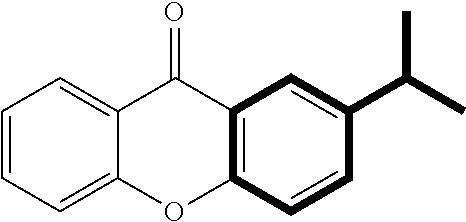
  • Xanthones are important structural units in organic chemistry and widely presented in natural products, and their derivatives were reported to show diverse physicochemical and pharmacological properties such as antioxidants, antiinflammatory, antineoplastic, and vasodilator. Albeit many methods are available for their syntheses, most of them either require advanced starting materials, involve multistep transformations, or exotic reaction conditions, more frequently, via the Friedel-Crafts reactions. There were only a few one-step synthesis of xanthones existed in literature. For example, Larock et al. reported the one-pot synthesis of xanthones by the tandem coupling-cyclization of arynes and salicylates.
  • Methods are generally provided for forming a xanthone derivative via reacting a 2-substituted benzaldehyde with a phenol derivative to form the xanthone derivative.
  • the 2-substituted benzaldehyde has a structure:
  • R 1 , R 2 , R 3 , and R 4 are, independently, H, an aryl group, an alkyl group, an alkoxy group, a halide group, an amine group, a hydroxyl group, a nitro group, or a cyano group; and where R 5 is F, Cl, Br, I, a nitro group, or an alkoxy group.
  • the phenol derivative in one particular embodiment, has a structure:
  • R 6 , R 7 , R 8 , and R 9 are, independently, H, an aryl group, an alkyl group, an alkoxy group, a halide group, an amine group, a hydroxyl group, a nitro group, or a cyano group; and X is O, S, or NH.
  • FIG. 1 shows a general schematic of a reaction for ortho-acylation of phenols with aryl aldehydes
  • FIG. 2 shows a general schematic of different reaction methods for one step synthesis of xanthone derivatives
  • FIG. 3 shows a general schematic of an exemplary reaction method for one step synthesis of a xanthone derivative
  • FIG. 4 shows a general schematic of an exemplary reaction method for one step synthesis of a xanthone derivative
  • FIG. 5 shows a general schematic of an exemplary intermolecular ortho-acylation reaction of phenols with aryl aldehydes
  • FIG. 6 shows a general schematic of an exemplary reaction method for one step synthesis of a xanthone derivative
  • FIGS. 7A-7T show exemplary xanthone derivatives formed according to the Examples.
  • the present disclosure is directed to a novel ortho-acylation reaction which can be realized with excellent yields under mild conditions.
  • This method can be used to synthesize the xanthone derivatives.
  • xanthone derivative includes any molecule that has the base structure of xanthone, with or without substitutions.
  • xanthone derivative may include xanthone unless otherwise specified.
  • FIG. 1 and Table 1 show, collectively, a few examples demonstrating the reaction scope of this reaction with various phenols and aryl aldehydes.
  • the results showed that regardless of the substitution of aryl aldehydes, electron withdrawing or donating, all compounds furnished the desired ortho-acylation products in almost similar yields when reacted with the same phenol (70%-91% entries 1-7; 63%-94% entries 8-12; 42%-78% entries 13-16); even the 4-nitrobenzaldehyde produced a 70% yield (entry 12).
  • the ring-closed xanthone products are achieved via the ortho-acylation of phenols with 2-substituted aryl aldehydes first, and then under a basic condition, the ortho-substituents of aldehydes serving as leaving groups lead to the final ring-closed xanthones.
  • R 1 , R 2 , R 3 , and R 4 are, independently, H, an aryl group, an alkyl group, an alkoxy group, a halide group, an amine group, a hydroxyl group, a nitro group, or a cyano group; and where R 5 is F, Cl, Br, I, a nitro group, or an alkoxy group.
  • R 5 is a nitro group, and/or at least three of R 1 , R 2 , R 3 , and R 4 are H (i.e., leaving only a single organic group extending from the ring).
  • R 1 , R 2 , R 3 , and R 4 are H (i.e., leaving only a single organic group extending from the ring).
  • R 1 is H, an aryl group, an alkyl group, an alkoxy group, a halide group, an amine group, a hydroxyl group, a nitro group, or a cyano group.
  • R 6 , R 7 , R 8 , and R 9 are, independently, H, an aryl group, an alkyl group, an alkoxy group, a halide group, an amine group, a hydroxyl group, a nitro group, or a cyano group; and X is O, S, or NH.
  • X is O, and/or at least three of R 6 , R 7 , R 8 , and R 9 are H (i.e., leaving only a single organic group extending from the ring).
  • R 6 , R 7 , R 8 , and R 9 are H (i.e., leaving only a single organic group extending from the ring).
  • R 10 is H, an aryl group, an alkyl group, an alkoxy group, a halide group, an amine group, a hydroxyl group, a nitro group, or a cyano group.
  • the molar ratio of aldehydes to phenols can be about 1:1 to about 1:5, such as about 1.25 to about 1.35 (e.g., about 1:1.3).
  • the triphenylphosphine is used as a ligand to the catalyst.
  • the 2-substituted benzaldehyde is reacted with the phenol derivative in the presence of a catalyst system including a palladium catalyst (e.g., PdCl 2 , Pd(OAc) 2 , etc.) and a copper catalyst (e.g., CuCl 2 ).
  • the ratio of these catalysts to the phenol can be about 2 mol % to about 10 mol % (e.g., about 5 mol %)
  • the K 3 PO 4 is used as the base for deportonation. All these experiments were carried out in an inert atmosphere (e.g., under the protection of nitrogen).
  • R 1 , R 2 , R 3 , R 4 , R 6 , R 7 , R 8 , and R 9 remain unchanged from their parent compounds described above (i.e., the 2-substituted benzaldehyde of Formula I and the phenol derivative of Formula III).
  • FIGS. 7A-7T show particularly suitable xanthone derivatives that can be formed (with “Me” representing a methyl group, as is commonly used in the art).
  • Phenols/Thiophenol (1.3 equiv), aldehydes (1 equiv.), K 3 PO 4 (2.2 equiv.), CuCl 2 , PdCl 2 or Pd(OAc) 2 (5 mol %) and PPh 3 (7.5 mol %) were added in 3 mL toluene, and then the reaction stirred at 110° C. for 24 h. The mixture was extracted with DCM, washed by water, brine, and then the combined organic layer was dried by anhydrous Na 2 SO 4 . After evaporation of solvents, the crude product was purified by flash chromatography to afford ortho-acylation derivatives.
  • Xanthone derivatives having the general structures shown in FIGS. 7A-7T were made according to the above described method. Each structure was confirmed by 1 HNMR, 13 C NMR, and MS data.

Landscapes

  • Chemical & Material Sciences (AREA)
  • Organic Chemistry (AREA)
  • Organic Low-Molecular-Weight Compounds And Preparation Thereof (AREA)
  • Low-Molecular Organic Synthesis Reactions Using Catalysts (AREA)

Abstract

Methods are provided for forming a xanthone derivative via reacting a 2-substituted benzaldehyde with a phenol derivative to form the xanthone derivative.

Description

PRIORITY INFORMATION
The present application claims priority to U.S. Provisional Patent Application Ser. No. 61/795,215 of Wang, et al. filed on Oct. 12, 2012, the disclosure of which is incorporated by reference herein.
BACKGROUND
Direct acylation of phenolic C—H bond usually attracts much attention since phenols are one of the most important aromatic compounds in nature and industry. Two major categories of pathways can be followed in this transformation, namely, the most well-known powerful Lewis acid-catalyzed Friedel-Crafts acylation pathway, and the transition-metal-catalyzed C—H activation pathway. However, Friedel-Crafts acylation reaction is usually difficult to control the regio- and/or mono-selectivity if no directing group is present in the benzene ring, and it often suffers from the harsh reaction condition, usage of air/water sensitive Lewis acid and incompatibility with many functional groups. Meanwhile, although transition-metal-catalyzed C—H activation can direct converting carbon-hydrogen bond into carbon-oxygen, carbon-nitrogen, carbon-halide, carbon-sulfur, or carbon-carbon bonds, till now, there is no report about C—H activation in acylation reaction of unprotected phenols. To our knowledge, only one work has been published reporting the acylation of 1-naphthol with benzaldehyde catalyzed by Pd(OAc)2 in the presence of triphenylphosphine. In that paper, Miura and coworkers didn't carry out an in-depth investigation of the reaction scope, and the reaction conditions were not optimized, while they just used this reaction as a control when they synthesized benzofuran-2(3H)-ones.
Xanthones are important structural units in organic chemistry and widely presented in natural products, and their derivatives were reported to show diverse physicochemical and pharmacological properties such as antioxidants, antiinflammatory, antineoplastic, and vasodilator. Albeit many methods are available for their syntheses, most of them either require advanced starting materials, involve multistep transformations, or exotic reaction conditions, more frequently, via the Friedel-Crafts reactions. There were only a few one-step synthesis of xanthones existed in literature. For example, Larock et al. reported the one-pot synthesis of xanthones by the tandem coupling-cyclization of arynes and salicylates. The same group also reported a C—H activation approach where an arylated imidoyl palladium intermediate promoted the intramolecular arylation resulted in xanthone skeletons. Another elegant work from Li group showed that 2-aryloxybenzaldehyde can undergo an intramolecular cross-dehydrogenative coupling reaction to form xanthones smoothly.
SUMMARY
Objects and advantages of the invention will be set forth in part in the following description, or may be obvious from the description, or may be learned through practice of the invention.
Methods are generally provided for forming a xanthone derivative via reacting a 2-substituted benzaldehyde with a phenol derivative to form the xanthone derivative. In one embodiment, the 2-substituted benzaldehyde has a structure:
Figure US09163002-20151020-C00001

where R1, R2, R3, and R4 are, independently, H, an aryl group, an alkyl group, an alkoxy group, a halide group, an amine group, a hydroxyl group, a nitro group, or a cyano group; and where R5 is F, Cl, Br, I, a nitro group, or an alkoxy group.
The phenol derivative, in one particular embodiment, has a structure:
Figure US09163002-20151020-C00002

where R6, R7, R8, and R9 are, independently, H, an aryl group, an alkyl group, an alkoxy group, a halide group, an amine group, a hydroxyl group, a nitro group, or a cyano group; and X is O, S, or NH.
Other features and aspects of the present invention are discussed in greater detail below.
BRIEF DESCRIPTION OF THE DRAWINGS
A full and enabling disclosure of the present invention, including the best mode thereof to one skilled in the art, is set forth more particularly in the remainder of the specification, which includes reference to the accompanying figures, in which:
FIG. 1 shows a general schematic of a reaction for ortho-acylation of phenols with aryl aldehydes;
FIG. 2 shows a general schematic of different reaction methods for one step synthesis of xanthone derivatives;
FIG. 3 shows a general schematic of an exemplary reaction method for one step synthesis of a xanthone derivative;
FIG. 4 shows a general schematic of an exemplary reaction method for one step synthesis of a xanthone derivative;
FIG. 5 shows a general schematic of an exemplary intermolecular ortho-acylation reaction of phenols with aryl aldehydes;
FIG. 6 shows a general schematic of an exemplary reaction method for one step synthesis of a xanthone derivative; and
FIGS. 7A-7T show exemplary xanthone derivatives formed according to the Examples.
Repeat use of reference characters in the present specification and drawings is intended to represent the same or analogous features or elements of the present invention.
DETAILED DESCRIPTION
Reference now will be made to the embodiments of the invention, one or more examples of which are set forth below. Each example is provided by way of an explanation of the invention, not as a limitation of the invention. In fact, it will be apparent to those skilled in the art that various modifications and variations can be made in the invention without departing from the scope or spirit of the invention. For instance, features illustrated or described as one embodiment can be used on another embodiment to yield still a further embodiment. Thus, it is intended that the present invention cover such modifications and variations as come within the scope of the appended claims and their equivalents. It is to be understood by one of ordinary skill in the art that the present discussion is a description of exemplary embodiments only, and is not intended as limiting the broader aspects of the present invention, which broader aspects are embodied exemplary constructions.
Generally speaking, the present disclosure is directed to a novel ortho-acylation reaction which can be realized with excellent yields under mild conditions. This method can be used to synthesize the xanthone derivatives. As used herein, the term “xanthone derivative” includes any molecule that has the base structure of xanthone, with or without substitutions. As such, the term “xanthone derivative” may include xanthone unless otherwise specified.
I. Acylation of Phenols with Aryl Aldehydes
In the presence of triphenylphosphine, copper (II) chloride can catalyze an intermolecular ortho-acylation reaction of phenols with aryl aldehydes. To investigate the optimized reaction protocol, a systematic screening of catalysts, ligands, and bases was carried out. Finally, we chose 1 mmol aldehyde, 1.3 mmol phenol in toluene at 110° C. in the presence of 5 mol % of CuCl2, 7.5 mol % PPh3 and K3PO4 (2.2 equiv.) as the standard reaction condition. However, similar reactions can also be applied.
FIG. 1 and Table 1 show, collectively, a few examples demonstrating the reaction scope of this reaction with various phenols and aryl aldehydes. The results showed that regardless of the substitution of aryl aldehydes, electron withdrawing or donating, all compounds furnished the desired ortho-acylation products in almost similar yields when reacted with the same phenol (70%-91% entries 1-7; 63%-94% entries 8-12; 42%-78% entries 13-16); even the 4-nitrobenzaldehyde produced a 70% yield (entry 12). The stronger electron-donating group phenols possessed, the more effective the acylation reactions were.
TABLE 1
Ortho-acylation of phenols with aryl aldehydes (see FIG. 1)
Yield
entry R1 R2 product (%)
 1 1a 3-OCH3 2a OCH3 3aa  91b
(79)c
 2 1b 4-CH 3 2a OCH3 3ba 70
(60)
 3 1c H 2a OCH3 3ca 79
(64)
 4 1d 3-Cl 2a OCH3 3da 83
(70)
 5 1e 4-F 2a OCH3 3ea 84
(73)
 7 1f 2,6- 2a OCH3 3fa 77
OCH3 (65)
 8 1a 3-OCH3 2b i-Pr 3ab 94
(82)
 9 1b 4-CH3 2b i-Pr 3bb 73
(60)
10 1c H 2b i-Pr 3cb 63
(48)
11 1d 3-Cl 2b i-Pr 3db 92
(79)
12 1g 4-NO2 2b i-Pr 3gb 70
(58)
13 1a 3-OCH3 2c H 3ac 56
(47)
14 1b 4-CH3 2c H 3bc 64
(50)
15 1d 3-Cl 2c H 3dc 78
(67)
16 1g 4-NO2 2c H 3gc 42
(31)
17d 1g 4-NO2 2d I 3gd 62
(51)
18 1a 3-OCH3 2e NO2
a1 mmol aldehyde and 1.3 mmol phenol;
b 1H NMR yield;
cIsolated yield;
dCross-coupling reaction between iodine and hydroxyl was observed besides the ortho-acylation reaction.
II. One Step Synthesis of Xanthone Derivatives
It was found that when 2-substituted aryl aldehyde (1h-j) reacted with phenols, xanthones were obtained with high-yield in one step (see, FIG. 3 and Table 2, collectively). Albeit many methods are available for the synthesis of xanthones, most of them either require advanced starting materials, exotic reaction conditions, or involve multistep transformations. There are only a few one-step synthesis of xanthones existing in literature. Hence, the presently disclosed method offers a concise and straightforward strategy to construct xanthones directly without the preactivation of aldehydes (see FIG. 2).
A. Exemplary Reactions
As shown in FIG. 3 and Table 2, 2-methoxybenzaldehyde (1h) and 2-nitrobenzaldehyde (1i) produced the corresponding xanthones in excellent yields (entries 1, 2, 4, 6 and 8), while with 2-bromobenzaldehyde (1j) as the starting material, lower yields were observed, likely due to the cross-coupling reaction between bromo and hydroxyl groups ( entries 3, 5 and 7, yields are listed in the footnote). It is believed that the ring-closed xanthone products are achieved via the ortho-acylation of phenols with 2-substituted aryl aldehydes first, and then under a basic condition, the ortho-substituents of aldehydes serving as leaving groups lead to the final ring-closed xanthones.
TABLE 2
One-step ortho-acylation of phenols with 2-substituted benzaldehydes
to afford xanthonesa (see FIG. 3)
entry R1 R2 product Yield %
1 1h OCH 3 2a OCH3 4a 85b (71)c
2 1i NO2 2a OCH 3 4a 87 (74)
3d 1j Br 2a OCH 3 4a 68 (52)
4 1i NO2 2b i-Pr 4b 92 (81)
5d 1j Br 2b i-Pr 4b 64 (56)
6 1i NO2 2c H 4c 81 (70)
7d 1j Br 2c H 4c 55 (43)
8 1i NO2 2d I 4d 73 (62)
a1 mmol 2-substitued aldehydes and 1.3 mmol phenol;
b 1H NMR yield;
cIsolated yield;
dCross-coupling reaction between bromo and hydroxyl was observed in entries 3 (17%), 5 (14%) and 7 (13%) besides the ortho-acylation reaction.
Since nitro group gave better results than other leaving groups, the reaction substrates of 2-nitrobenzaldehydes and phenols were investigated (FIG. 4 and Table 3, collectively). It showed that alkoxy, alkyl, aryl and halide substituents were tolerated on the phenols to furnish the desired xanthones affording moderate to excellent yields. While electron-donating groups on phenols can promote the reaction, electron-withdrawing groups (NO2 or CN) will block the reaction completely (data not shown). If the substituted group was at the para position of the phenol, the yield was higher than it was at ortho position, possibly due to the steric effect (4d vs 4e, 4g vs 4h). The steric effect can also explain the excellent regioselectivity of this reaction (e.g. 4i was the sole product) as was as the sluggish reactivity of ortho-t-butylphenol (no product was observed). Disubstituted and trisubstituted xanthones could also be prepared via this copper-catalyzed ortho-acylation reaction affording moderate yields (4m-p and 4t).
TABLE 3
Scope of reaction of 2-nitrobenzaldehydes with phenols to
prepare xanthonesa
Yield
Product (%)
4a
Figure US09163002-20151020-C00003
87b(74)c
4b
Figure US09163002-20151020-C00004
92(81)
4c
Figure US09163002-20151020-C00005
81(70)
4d
Figure US09163002-20151020-C00006
77(62)
4e
Figure US09163002-20151020-C00007
73(62)
4f
Figure US09163002-20151020-C00008
72(59)
4g
Figure US09163002-20151020-C00009
82(73)
4h
Figure US09163002-20151020-C00010
76(60)
4i
Figure US09163002-20151020-C00011
70(58)
4j
Figure US09163002-20151020-C00012
71(55)
Yieldb
Product (%)
4k
Figure US09163002-20151020-C00013
69(55)
4l
Figure US09163002-20151020-C00014
43(30)
4m
Figure US09163002-20151020-C00015
75(64)
4n
Figure US09163002-20151020-C00016
84(72)
4o
Figure US09163002-20151020-C00017
90(80)
4p
Figure US09163002-20151020-C00018
73(61)
4q
Figure US09163002-20151020-C00019
83(70)
4r
Figure US09163002-20151020-C00020
82(70)
4s
Figure US09163002-20151020-C00021
80(69)
4t
Figure US09163002-20151020-C00022
68(57)
a1 mmol 2-nitrobenzaldehydes, 1.3 mmol phenols;
b1H NMR yield;
cIsolated yield.
B. Extension of Reaction Methods to Other Synthesis
As show in FIG. 5, through the optimization of the reaction condition, we chose the system of 5 mol % of CuCl2, PdCl2, or Pd(OAc)2, 7.5 mol % PPh3, K3PO4 (2.2 equiv.) and the substrates in toluene at 110° C. as our standard reaction condition. However, this condition can be adjusted based on the structural diversity of different substrates. Using this system, a series of ortho-acylation derivatives of phenols and xanthone derivatives have been synthesized with high yields (FIGS. 5 and 6).
In conclusion, we have demonstrated the catalytic intermolecular ortho-acylation of phenols with various aryl aldehydes using copper/palladium as the catalyst in presence of the triphenyl-phosphine ligand, and it can be used to synthesize xanthone derivatives in one step with high yields.
Our reaction condition is considerably mild, and it offers an alternative to the widely used Lewis acid-catalyzed Friedel-Crafts acylation reaction that often suffers from the harsh reaction condition, usage of air/water sensitive Lewis acid and incompatibility with many functional groups.
C. 2-Substituted Benzaldehydes
In view of the above discussion, particularly suitable 2-substituted benzaldehydes have a structure of Formula I below:
Figure US09163002-20151020-C00023

where R1, R2, R3, and R4 are, independently, H, an aryl group, an alkyl group, an alkoxy group, a halide group, an amine group, a hydroxyl group, a nitro group, or a cyano group; and where R5 is F, Cl, Br, I, a nitro group, or an alkoxy group.
In particular embodiments, R5 is a nitro group, and/or at least three of R1, R2, R3, and R4 are H (i.e., leaving only a single organic group extending from the ring). Such a benzaldehyde compound is shown in Formula II:
Figure US09163002-20151020-C00024

where R1 is H, an aryl group, an alkyl group, an alkoxy group, a halide group, an amine group, a hydroxyl group, a nitro group, or a cyano group.
D. Phenol Derivatives
Particularly suitable phenol derivatives have a structure of Formula III below:
Figure US09163002-20151020-C00025

where R6, R7, R8, and R9 are, independently, H, an aryl group, an alkyl group, an alkoxy group, a halide group, an amine group, a hydroxyl group, a nitro group, or a cyano group; and X is O, S, or NH.
In particular embodiments, X is O, and/or at least three of R6, R7, R8, and R9 are H (i.e., leaving only a single organic group extending from the ring). Such a compound is shown in Formula IV:
Figure US09163002-20151020-C00026

where R10 is H, an aryl group, an alkyl group, an alkoxy group, a halide group, an amine group, a hydroxyl group, a nitro group, or a cyano group.
E. Reaction Conditions
The molar ratio of aldehydes to phenols can be about 1:1 to about 1:5, such as about 1.25 to about 1.35 (e.g., about 1:1.3). Generally, the triphenylphosphine is used as a ligand to the catalyst. In certain embodiments, the 2-substituted benzaldehyde is reacted with the phenol derivative in the presence of a catalyst system including a palladium catalyst (e.g., PdCl2, Pd(OAc)2, etc.) and a copper catalyst (e.g., CuCl2). The ratio of these catalysts to the phenol can be about 2 mol % to about 10 mol % (e.g., about 5 mol %) Generally, the K3PO4 is used as the base for deportonation. All these experiments were carried out in an inert atmosphere (e.g., under the protection of nitrogen).
F. Xanthone Derivatives
Generally, the reaction of the 2-substituted benzaldehyde of Formula I with the phenol derivative of Formula III results in the formation of a xanthone derivative having the structure of Formula V:
Figure US09163002-20151020-C00027

where R1, R2, R3, R4, R6, R7, R8, and R9 remain unchanged from their parent compounds described above (i.e., the 2-substituted benzaldehyde of Formula I and the phenol derivative of Formula III).
FIGS. 7A-7T show particularly suitable xanthone derivatives that can be formed (with “Me” representing a methyl group, as is commonly used in the art).
EXAMPLES General One-Pot Experimental Procedure for Synthesis of Ortho-Acylation Products
Phenols/Thiophenol (1.3 equiv), aldehydes (1 equiv.), K3PO4 (2.2 equiv.), CuCl2, PdCl2 or Pd(OAc)2 (5 mol %) and PPh3 (7.5 mol %) were added in 3 mL toluene, and then the reaction stirred at 110° C. for 24 h. The mixture was extracted with DCM, washed by water, brine, and then the combined organic layer was dried by anhydrous Na2SO4. After evaporation of solvents, the crude product was purified by flash chromatography to afford ortho-acylation derivatives.
General One-Pot Experimental Procedure for Synthesis of Xanthone Derivatives
2-nitro/halides/alkoxy substituted-Phenols/Thiophenol (1.3 equiv), aldehydes (1 equiv.), K3PO4 (2.2 equiv.), CuCl2, PdCl2 or Pd(OAc)2 (5 mol %) and PPh3 (7.5 mol %) were added in 3 mL toluene, and then the reaction stirred at 110° C. for 24 h. The mixture was extracted with DCM, washed by water, brine, and then the combined organic layer was dried by anhydrous Na2SO4. After evaporation of solvents, the crude product was purified by flash chromatography to afford xanthone derivatives.
Xanthone derivatives having the general structures shown in FIGS. 7A-7T were made according to the above described method. Each structure was confirmed by 1HNMR, 13C NMR, and MS data.
These and other modifications and variations to the present invention may be practiced by those of ordinary skill in the art, without departing from the spirit and scope of the present invention, which is more particularly set forth in the appended claims. In addition, it should be understood the aspects of the various embodiments may be interchanged both in whole or in part. Furthermore, those of ordinary skill in the art will appreciate that the foregoing description is by way of example only, and is not intended to limit the invention so further described in the appended claims.

Claims (13)

The invention claimed is:
1. A method of forming a xanthone derivative, the method comprising: reacting a 2-substituted benzaldehyde with a phenol derivative in the presence of a catalyst system including a palladium catalyst and a copper catalyst to form the xanthone derivative;
wherein the 2-substituted benzaldehyde has a structure;
Figure US09163002-20151020-C00028
where R1, R2, R3, and R4 are, independently, H, an aryl group, an alkyl group, an alkoxy group, a halide group, an amine group, a hydroxyl group, a nitro group, or a cyano group; and where R5 is F, Cl, Br, I, a nitro group, or an alkoxy group; and
wherein the phenol derivative has a structure:
Figure US09163002-20151020-C00029
where R5, R7, R3, and R9 are, independently, H, an aryl group, an alkyl group, an alkoxy group, a halide group, an amine group; a hydroxyl group, a nitro group, or a cyano group; and X is O, S, or NH, and
wherein the xanthone derivative formed has a structure:
Figure US09163002-20151020-C00030
where R1, R2, R3, R4, R6, R7, R8, R9 are as defined above.
2. The method of claim 1, wherein R5 is a nitro group.
3. The method of claim 1, wherein at least three of R1, R2, R3, and R4 are H.
4. The method of claim 3, wherein only three of R1, R2, R3 and R4 are H and the only one that is not H is selected from an aryl group, an alkyl group, an alkoxy group, a halide group, an amine group, a hydroxyl group, a nitro group, or a cyano group.
5. The method of claim 1, wherein the 2-substituted benzaldehyde has a structure:
Figure US09163002-20151020-C00031
where R1 is H, an aryl group, an alkyl group, an alkoxy group, a halide group, an amine group, a hydroxyl group, a nitro group, or a cyano group.
6. The method of claim 5, wherein R1 is an aryl group, an alkyl group, an alkoxy group, a halide group, an amine group, a hydroxyl group, a nitro group, or a cyano group.
7. The method of claim 1, wherein at least three of R6, R7, R8, and R9 are H.
8. The method of claim 7, wherein only three of R6, R7, R8 and R9 are H and the only one that is not H is selected from an aryl group, an alkyl group, an alkoxy group, a halide group, an amine group, a hydroxyl group, a nitro group, or a cyano group.
9. The method of claim 1, wherein X is O.
10. The method of claim 1, wherein the phenol derivative has a structure:
Figure US09163002-20151020-C00032
where R10 is H, an aryl group, an alkyl group, an alkoxy group, a halide group, an amine group, a hydroxyl group, a nitro group, or a cyano group.
11. The method of claim 10, wherein R10 is an aryl group, an alkyl group, an alkoxy group, a halide group, an amine group, a hydroxyl group, a nitro group, or a cyano group.
12. The method of claim 1, wherein the 2-substituted benzaldehyde is reacted with the phenol derivative in the presence of triphenylphosphine.
13. The method of claim 1, wherein the xanthene derivative is selected from the group consisting of:
Figure US09163002-20151020-C00033
Figure US09163002-20151020-C00034
US14/049,809 2012-10-12 2013-10-09 Methodology for the synthesis of xanthones Expired - Fee Related US9163002B2 (en)

Priority Applications (1)

Application Number Priority Date Filing Date Title
US14/049,809 US9163002B2 (en) 2012-10-12 2013-10-09 Methodology for the synthesis of xanthones

Applications Claiming Priority (2)

Application Number Priority Date Filing Date Title
US201261795215P 2012-10-12 2012-10-12
US14/049,809 US9163002B2 (en) 2012-10-12 2013-10-09 Methodology for the synthesis of xanthones

Publications (2)

Publication Number Publication Date
US20140107354A1 US20140107354A1 (en) 2014-04-17
US9163002B2 true US9163002B2 (en) 2015-10-20

Family

ID=50475924

Family Applications (1)

Application Number Title Priority Date Filing Date
US14/049,809 Expired - Fee Related US9163002B2 (en) 2012-10-12 2013-10-09 Methodology for the synthesis of xanthones

Country Status (1)

Country Link
US (1) US9163002B2 (en)

Families Citing this family (4)

* Cited by examiner, † Cited by third party
Publication number Priority date Publication date Assignee Title
US9446019B2 (en) 2013-09-13 2016-09-20 University Of South Carolina Sparstolonin B based pharmaceutical agent for neuroblastoma treatment
CN110799598B (en) 2017-06-30 2022-03-29 科腾聚合物有限责任公司 Light-colored rosin ester composition and preparation method thereof
CN109776558B (en) * 2019-01-25 2021-10-19 海南师范大学 A kind of tandem cyclization synthesis method of large sterically hindered xanthone and derivatives thereof
CN111662265A (en) * 2020-06-19 2020-09-15 河北中科金辉药业有限公司 Synthetic method of 5, 6-dimethylxanthenone-4-acetic acid

Citations (1)

* Cited by examiner, † Cited by third party
Publication number Priority date Publication date Assignee Title
CN102180858A (en) * 2011-04-08 2011-09-14 华东师范大学 Mono-substituted or di-substituted xanthone compound and synthetic method thereof

Patent Citations (1)

* Cited by examiner, † Cited by third party
Publication number Priority date Publication date Assignee Title
CN102180858A (en) * 2011-04-08 2011-09-14 华东师范大学 Mono-substituted or di-substituted xanthone compound and synthetic method thereof

Non-Patent Citations (56)

* Cited by examiner, † Cited by third party
Title
Bedford et al., "The development of palladium catalysts for C-C and C-heteroatom bond forming reactions of aryl chloride substrates", Coordination Chemistry Reviews 248, 2004, 2283-2321.
Campeau et al., "Site-Selective sp2 and Benzylic sp3 Palladium-Catalyzed Direct Arylation", J. Am. Chem. Soc. 130, 2008, 3266-3267.
Chen et al., "Cu(II)-Catalyzed Functionalizations of Aryl C-H Bonds Using O2 as an Oxidant" J. Am. Chem. Soc. 128, 2006, 6790-6791.
Chen et al., Tetrahedron 68 (2012) 8905-8907). *
Davies et al., "C-H Functionalization in organic synthesis", Chem, Soc. Rev. 40, 2011, 1855-1856.
Deng et al., "Ruthenium-Catalyzed Oxidative Cross-Coupling of Chelating Arenes and Cycloalkanes", Angew. Chem. Ed.47, 2008, 6278-6282.
Desai et al., "Insights into Directing Group Ability in Palladium-Catalyzed C-H Bond Functionalization", J. Am. Chem. Soc. 130, 2008, 13285-13293.
Dick et al., "A Highly Selective Catalytic Method for the Oxidative Functionalization of C-H Bonds", J. Am. Chem. Soc, 126, 2004, 2300-2301.
Dick et al., "Carbon-Nitrogen Bond-Forming Reactions of Palladacycles with Hypervalent Iodine Reagents", Organometallics 26, 2007, 1365-1370.
Familoni et al., Intramolecular Anionic Friedel-Crafts Equivalents. A General Regiospecific Route to Substituted and Naturally Occurring Xanthn-9-ones. University of Waterloo P., Ontario, Sep. 1997, p. 1081-1083.
Finkelstein et al., "Tricyclic Cyanoguanidines: Synthesis, Site of Action and Insecticidal Activity of a Novel Class of Reversible Acetylcholinesterase Inhibitors", Bioorganic & Medicinal Chemistry 10, 2002, 599-613.
Gan et al., "Structure-activity analysis of 2-modified cinnamaldehyde analogues as potential anticancer agents", Biochemical and Biophysical Research Communications 387, 2009, 741-747.
Giri et al., "Synthesis of 1,2- and 1,3-Dicarboxylic Acids via Pd(II)-Catalyzed Carboxylation of Aryl and Vinyl C-H Bonds", J. Am. Chem. Soc. 130, 2008, 14082-14083.
Grover et al., "Xanthones, Part IV.* A New Synthesis of Hydroxyxanthones and Hydroxybenzophenones", J. Sci, Ind, Res., India, 13, 175, 3982-3985.
Guo et al., "Iron-Catalyzed ortho-Selective Functionalization of Phenols: A Straightforward Strategy towards the 2′-Hydroxphenyl-1,2-dione Skeleton", Eur. J. Org. Chem. 2010, 5787-5790.
Guo et al., "Iron-Catalyzed ortho-Selective Functionalization of Phenols: A Straightforward Strategy towards the 2'-Hydroxphenyl-1,2-dione Skeleton", Eur. J. Org. Chem. 2010, 5787-5790.
Hara et al. (Heterocycles (1992), 33; p. 219-228). *
Hassall et al., "The Biosynthesis of Phenols, Part III. Oxidative Coupling leading to Geodoxin and Related Compounds", J. Chem Soc. 1961, 2312-2315.
Hu et al. (Chem. Comm., 2012, 48, 11256-11258). *
Huang et al,, "Transition-metal-catalyzed C-C bond formation through the fixation of carbon dioxide", Chem. Soc. Rev. 40, 2011, 2435-2452.
Inamoto et al., "Palladium-catalysed direct synthesis of benzo[b]thiophenes from thioenols", Chem. Commun. 2008, 5529-5531.
Inamoto et al., "Palladium-Catalyzed Synthesis of 2-Substituted Benzothiazoles via a C-H Functionalization/Intramolecular C-S Bond Formation Process", Organic Letters, vol. 10, No. 22, 2008, 5147-5150.
Jackson et al., "Design, Synthesis, and Pharmacological Evaluation of Potent Xanthone Dicarboxylic Acid Leukotriene B4 Receptor Antagonists", J. Med. Chem. 36, 1993, 1726-1734.
Joyce et al., "Heterocycle Formation via Palladium-Catalyzed Intramolecular Oxidative C-H Bond Functionalization: An Efficient Strategy for the Synthesis of 2-Aminobenzothiazoles", Org, Lett., vol. 11. No. 13, 2009, 2792-2795.
Kalyani et al, "A Simple Cataiytic Method for the Regioselective Halogenation of Arenes", Organic Letters vol. 8, No. 12, 2006. 2523-2526.
Kalyani et al., "Oxidative C-H Activation/C-C Bond Forming Reactions: Synthetic Scope and Mechanistic Insights", J. Am. Chem. Soc. 127, 2005, 7330-7331.
Koehler et al., "Thyroid Receptor Ligands. 6. A High Affinity "Direct Antagonist" Selective for the Thyroid Hormone Receptor", J. Med. Chem. 49, 2006, 6635-6637.
Lewis et al., "Catalytic C-C Bond Formation via Ortho-Metalated Complexes", J. Am. Chem. Soc. 108, 1986, 2728-2735.
Liang et al., "Characterization of Sparstolonin B, a Chinese Herb-derived Compound, as a Selective Toll-like Receptor Antagonist with Potent Anti-inflammatory Properties", The Journal of Biological Chemistry, vol. 286, No. 30, Jul. 29, 2011, p. 26470-26479.
Lyons et al., "Palladium-Catalyzed Ligand-Directed C-H Functionalization Reactions", Chem. Rev. 110, 2010, 1147-1169.
Matsumoto et al., "Xanthones induce cell-cycle arrest and apoptosis in human colon cancer DLD-1 cells", Bioorganic & Medicinal Chemistry 13, 2005, 6064-6069.
Mei et al., "Pd11-Catalyzed Monoselective ortho Halogenation of C-H Bonds Assisted by Counter Cations: A Complementary Method to Directed ortho Lithiation", Angew. Chem. Int. Ed. 47, 2008, 5215-5219.
Oi et al., "Rhodium-HMPT-catalyzed direct ortho arylation of phenols with aryl bromides", Tetrahedron Letters 44, 2003, 8665-8668.
Okuma et al., "Reaction of Benzyne with Salicylaldehydes: General Synthesis of Xanthenes, Xanthones, and Xanthols", Organic Letters, Vol. 11, No. 1, 2009, 169-171.
Pedro et al., "Xanthones as Inhibitors of Growth of Human Cancer Cell Lines and Their Effects on the Proliferation of Human Lymphocytes In Vitro", Bioorganic & Medicinal Chemistry 10, 2002, 3725-3730.
Racowski et al., "C-H Bond Activation at Pailadium(IV) Centers", J. Am. Chem. Soc. 133, 2011, 18022-18025.
Rappoport, Z., "The Chemistry of Phenols", Wiley-VCH, Weinheim, 2003.
Ritleng et al., "Ru-, Rh-, and Pd-Catalyzed C-C Bond Formation Involving C-H Activation and Addition on Unsaturated Substrates: Reactions and Mechanistic Aspects", Chem. Rev. 102, 2002, 1731-1769.
Satoh et al., "Palladium-catalyzed cross-carbonylation of phenolic compounds with aldehydes to give benzofuran-2(3H)-one derivatives", Journal of Molecular Catalysis A: Chemical 143, 1999, 203-210.
Schwaebe et al., "Total synthesis of psorospermin", Tetrahedron Letters 46, 2005, 827-829.
Sengupta et al., "Recent Advances in Asymmetric Gold Catalysis", ChemCatChem 2, 2010, 609-619.
Thu et al., "Intermolecular Amidation of Unactivated sp2 and sp3 C-H Bonds via Palladium-Catalyzed Cascade C-H Activation/Nitrene Insertion", J. Am. Chem. Soc. 128, 2006, 9048-9049.
Tsai at al., "Asymmetric Synthesis of (-)-Incarvillateine Employing an Intramolecular Alkylation via Rh-Catalyzed Olefinic C-H Bond Activation", J. Am. Chem. Soc. 130, 2008, 6316-6317.
Tyman, J.H.P., "Synthetic and Natural Phenols", Elsevier, New York, 1996.
Wan et al., "Highly Selective C-H Functionalization/Halogenation of Acetanilide", J. Am. Chem. Soc. 128, 2006, 7416-7417.
Wang et al., "One-step preparation of xanthones via Pd-catalyzed annulation of 1,2-dibromoarenes and salicylaldehydes" Chem. Commun. 2009, 6469-6471.
Wang et al., "Rhodium-Catalyzed Xanthone Formation from 2-Aryloxybenzaldehydes via Cross-Dehydrogenative Coupling (CDC)", Organic Letters, vol. 14, No. 3, 2012, 902-905.
Weber et al., "Phenol", Ullmann's Encyclopedia of Industrial Chemistry, Wiley-VCH, Weinheim, 2004.
Woo at al., "Synthesis of new zanthone analogues and their biological activity test-Cytotoxicity, topoisomerase II inhibition, and DNA cross-linking study", Bioorg. Med. Chem. Lett. 17, 2007, 1163-1166.
Wu et al., "Pailadium-Catalyzed Oxidative C-H Bond Coupling of Steered Acetanilides and Aldehydes: A Facile Access to ortho-Acylacetanilides", Organic Letters vol. 13, No. 12, 2011, 3258-3261.
Zhang et al., "Combining Gold(I)/Gold(III) Catalysis and C-H Functionalization: A Formal Intramolecular [3+2] Annulation towards Tricyclic Indolines and Mechanistic Studies", Angew. Chem. Int. Ed. 50, 2011, 4450-4454.
Zhao et al., "An Aryl to Imidoyl Palladium Migration Process Involving Intramolecular C-H Activation", J. Am. Chem. Soc. 129, 2007, 5288-5295.
Zhao et al., "One-Pot Synthesis of Xanthones and Thioxanthones by the Tandem Coupling-Cyclization of Arynes and Salicylates", Organic Letters, vol. 7, No. 19, 4273-4275.
Zhao et al., "Palladium-Catalyzed C-H Bond Functionalization with Arylsulfonyl Chlorides", J. Am. Chem. Soc. 131, 2009, 3466-3467.
Zhao et al., "Rhodium-Catalyzed Regioselective C-H Functionalization via Decarbonylation of Acid Chlorides and C-H Bond Activation under Phosphine-Free Conditions", J. Am, Chem. Soc. 130, 2008, 8136-8137.
Zhao et al., "Synthesis of Xanthones, Thioxanthones, and Acridones by the Coupling of Arynes and Substituted Benzoates", J. Org. Chem. 72, 2007, 583-588.

Also Published As

Publication number Publication date
US20140107354A1 (en) 2014-04-17

Similar Documents

Publication Publication Date Title
US9163002B2 (en) Methodology for the synthesis of xanthones
Hu et al. Copper-catalyzed ortho-acylation of phenols with aryl aldehydes and its application in one-step preparation of xanthones
Hasaninejad et al. P2O5/SiO2 as an efficient, mild, and heterogeneous catalytic system for the condensation of indoles with carbonyl compounds under solvent-free conditions
CN105777593B (en) A kind of preparation method of the sulfone compound of β arone base substitution
CN102770420B (en) Novel process for the manufacture of dronedarone
WO2019113874A1 (en) Phosphine ligand compound based on tetramethyl spirobiindane skeleton, and intermediate thereof, preparation method therefor and use thereof
Zhang et al. Asymmetric organocatalytic N-nitroso-aldol reaction of oxindoles
Song et al. Copper and l-sodium ascorbate catalyzed hydroxylation and aryloxylation of aryl halides
Wu et al. Chiral Brønsted acid-catalyzed alkylation of C3-substituted indoles with o-hydroxybenzyl alcohols: highly enantioselective synthesis of diarylindol-2-ylmethanes and evaluation on their cytotoxicity
Saha et al. Efficient access to triarylmethanes through decarboxylation
CN113372201A (en) Preparation method of biphenol compound and derivatives thereof
Lu et al. Palladium-catalyzed dearomative allylation of indoles with cyclopropyl acetylenes: access to indolenine derivatives
Jiang et al. FeCl 3 and ether mediated direct intramolecular acylation of esters and their application in efficient preparation of xanthone and chromone derivatives
Shan et al. Synthesis and application of a new chiral monodentate spiro phosphoramidite ligand based on hexamethyl-1, 1′-spirobiindane backbone in asymmetric hydroamination/arylation of alkenes
CN110256451A (en) A kind of synthetic method of benzofuro[2,3-b]quinoline derivatives
FI68222B (en) FOERFARANDE FOER O-METYLERING AV HYDROXIAPORFINER
WO2014073003A1 (en) Single-step process for the preparation of aryl olefins
CN111423351A (en) Chiral copper complex and its preparation method and application
JP2014084289A (en) Method for producing fluorene derivative
KR20160026872A (en) Novel phenyl napthol derivative
CN105384690B (en) Pentaerythrite support chiral imidazolidinone and its production and use
Mąkosza et al. Vicarious nucleophilic substitution of hydrogen in nitrophenyl toluenesulfonates
CN119977871B (en) 1, 2-Dibromo-6-tert-butyl-9- (4-tert-butylphenyl) -9H-carbazole and synthesis method thereof
US20080119662A1 (en) One Spot Synthesis of Citalopram from 5-Cyanophthalide
JP4461048B2 (en) Enantioselective synthesis

Legal Events

Date Code Title Description
AS Assignment

Owner name: UNIVERSITY OF SOUTH CAROLINA, SOUTH CAROLINA

Free format text: ASSIGNMENT OF ASSIGNORS INTEREST;ASSIGNORS:WANG, QIAN;HU, JUN;SIGNING DATES FROM 20131222 TO 20131224;REEL/FRAME:031852/0161

STCF Information on status: patent grant

Free format text: PATENTED CASE

MAFP Maintenance fee payment

Free format text: PAYMENT OF MAINTENANCE FEE, 4TH YR, SMALL ENTITY (ORIGINAL EVENT CODE: M2551); ENTITY STATUS OF PATENT OWNER: SMALL ENTITY

Year of fee payment: 4

FEPP Fee payment procedure

Free format text: MAINTENANCE FEE REMINDER MAILED (ORIGINAL EVENT CODE: REM.); ENTITY STATUS OF PATENT OWNER: SMALL ENTITY

LAPS Lapse for failure to pay maintenance fees

Free format text: PATENT EXPIRED FOR FAILURE TO PAY MAINTENANCE FEES (ORIGINAL EVENT CODE: EXP.); ENTITY STATUS OF PATENT OWNER: SMALL ENTITY

STCH Information on status: patent discontinuation

Free format text: PATENT EXPIRED DUE TO NONPAYMENT OF MAINTENANCE FEES UNDER 37 CFR 1.362

FP Lapsed due to failure to pay maintenance fee

Effective date: 20231020