US9162988B2 - Therapeutic or prophylactic agent for allergic dermatitis - Google Patents
Therapeutic or prophylactic agent for allergic dermatitis Download PDFInfo
- Publication number
- US9162988B2 US9162988B2 US13/711,783 US201213711783A US9162988B2 US 9162988 B2 US9162988 B2 US 9162988B2 US 201213711783 A US201213711783 A US 201213711783A US 9162988 B2 US9162988 B2 US 9162988B2
- Authority
- US
- United States
- Prior art keywords
- pent
- phenyl
- dichlorobenzamido
- pyrimidin
- enoic acid
- Prior art date
- Legal status (The legal status is an assumption and is not a legal conclusion. Google has not performed a legal analysis and makes no representation as to the accuracy of the status listed.)
- Expired - Fee Related
Links
- 0 [1*]*N([2*])C([4*])[Ar]C(=O)N([3*])C([5*])([6*])CC Chemical compound [1*]*N([2*])C([4*])[Ar]C(=O)N([3*])C([5*])([6*])CC 0.000 description 34
- VUALBHOKPYSOSX-SZKNIZGXSA-N COC(=O)C(C/C=C/C1=CC=C([Y])C=C1)CC(=O)C1=C(Cl)C=CC=C1Cl Chemical compound COC(=O)C(C/C=C/C1=CC=C([Y])C=C1)CC(=O)C1=C(Cl)C=CC=C1Cl VUALBHOKPYSOSX-SZKNIZGXSA-N 0.000 description 6
- DRCSWJZWOASNDE-UHFFFAOYSA-N BrC1=CC=C(N(CC2=CSC=N2)C2=NC=CC=N2)C=C1 Chemical compound BrC1=CC=C(N(CC2=CSC=N2)C2=NC=CC=N2)C=C1 DRCSWJZWOASNDE-UHFFFAOYSA-N 0.000 description 2
- KSDAOFUHINUMDS-UHFFFAOYSA-N CC(C)=CCN(C1=NC=CC=N1)C(C)C Chemical compound CC(C)=CCN(C1=NC=CC=N1)C(C)C KSDAOFUHINUMDS-UHFFFAOYSA-N 0.000 description 2
- XUWIXDMDHOHGHO-UHFFFAOYSA-N CC(C)C1(O)CCOCC1 Chemical compound CC(C)C1(O)CCOCC1 XUWIXDMDHOHGHO-UHFFFAOYSA-N 0.000 description 2
- CWMRVTVIBXINPO-UHFFFAOYSA-N CC(C)CN(C1=NC=CC=N1)C(C)C Chemical compound CC(C)CN(C1=NC=CC=N1)C(C)C CWMRVTVIBXINPO-UHFFFAOYSA-N 0.000 description 2
- GFUQIFVMMPUUKB-UHFFFAOYSA-N CC(C)N(C)C1=NC=CC=N1 Chemical compound CC(C)N(C)C1=NC=CC=N1 GFUQIFVMMPUUKB-UHFFFAOYSA-N 0.000 description 2
- XVKKHXBPVCEPIF-ZZXKWVIFSA-N CC(C)N(C1=CC=C(/C=C/CC(CC(=O)C2=C(Cl)C=CC=C2Cl)C(=O)O)C=C1)C1=NC=CC=N1 Chemical compound CC(C)N(C1=CC=C(/C=C/CC(CC(=O)C2=C(Cl)C=CC=C2Cl)C(=O)O)C=C1)C1=NC=CC=N1 XVKKHXBPVCEPIF-ZZXKWVIFSA-N 0.000 description 2
- XVKKHXBPVCEPIF-MTGFJVSHSA-N CC(C)N(C1=CC=C(/C=C/C[C@H](CC(=O)C2=C(Cl)C=CC=C2Cl)C(=O)O)C=C1)C1=NC=CC=N1 Chemical compound CC(C)N(C1=CC=C(/C=C/C[C@H](CC(=O)C2=C(Cl)C=CC=C2Cl)C(=O)O)C=C1)C1=NC=CC=N1 XVKKHXBPVCEPIF-MTGFJVSHSA-N 0.000 description 2
- SGTCIGJHBWJBTR-VHXXQBJYSA-M CC(C)N(C1=CC=C(/C=C/C[C@H](CC(=O)C2=C(Cl)C=CC=C2Cl)C(=O)O[Na])C=C1)C1=NC=CC=N1 Chemical compound CC(C)N(C1=CC=C(/C=C/C[C@H](CC(=O)C2=C(Cl)C=CC=C2Cl)C(=O)O[Na])C=C1)C1=NC=CC=N1 SGTCIGJHBWJBTR-VHXXQBJYSA-M 0.000 description 2
- KBYGSYKZSYRQLD-UHFFFAOYSA-N CC(C)N(C1=CC=CC=C1)C1=NC=CC=N1 Chemical compound CC(C)N(C1=CC=CC=C1)C1=NC=CC=N1 KBYGSYKZSYRQLD-UHFFFAOYSA-N 0.000 description 2
- RJIFHEAIGCPRPO-UHFFFAOYSA-N CC(C)N(C1=NC=CC=N1)C(C)C Chemical compound CC(C)N(C1=NC=CC=N1)C(C)C RJIFHEAIGCPRPO-UHFFFAOYSA-N 0.000 description 2
- AYKGOJDLDLDOQP-UHFFFAOYSA-N CC(C)N(C1=NC=CC=N1)C1CCOCC1 Chemical compound CC(C)N(C1=NC=CC=N1)C1CCOCC1 AYKGOJDLDLDOQP-UHFFFAOYSA-N 0.000 description 2
- FJVFOGGUVXXVDV-UHFFFAOYSA-N CC(C)N(CC1=CC=CC=C1)C1=NC=CC=N1 Chemical compound CC(C)N(CC1=CC=CC=C1)C1=NC=CC=N1 FJVFOGGUVXXVDV-UHFFFAOYSA-N 0.000 description 2
- TYNBHDNICFPUAO-UHFFFAOYSA-N CC(C)N(CC1=CC=NC=C1)C1=NC=CC=N1 Chemical compound CC(C)N(CC1=CC=NC=C1)C1=NC=CC=N1 TYNBHDNICFPUAO-UHFFFAOYSA-N 0.000 description 2
- JKODXRRUOWNNRO-UHFFFAOYSA-N CC(C)N(CC1=CN=CC=C1)C1=NC=CC=N1 Chemical compound CC(C)N(CC1=CN=CC=C1)C1=NC=CC=N1 JKODXRRUOWNNRO-UHFFFAOYSA-N 0.000 description 2
- GHCZDZNMDGVSFU-UHFFFAOYSA-N CC(C)N(CC1=CSC=N1)C1=NC=CC=N1 Chemical compound CC(C)N(CC1=CSC=N1)C1=NC=CC=N1 GHCZDZNMDGVSFU-UHFFFAOYSA-N 0.000 description 2
- CMYDCAFTYCKEET-UHFFFAOYSA-N CC(C)N(CC1=NC=CC=C1)C1=NC=CC=N1 Chemical compound CC(C)N(CC1=NC=CC=C1)C1=NC=CC=N1 CMYDCAFTYCKEET-UHFFFAOYSA-N 0.000 description 2
- FFAGUQMZQKNHPU-UHFFFAOYSA-N CC(C)N(CC1CC1)C1=NC=CC=N1 Chemical compound CC(C)N(CC1CC1)C1=NC=CC=N1 FFAGUQMZQKNHPU-UHFFFAOYSA-N 0.000 description 2
- STYAOADYMOOXLW-UHFFFAOYSA-N CC(C)N(CCC#N)C1=NC=CC=N1 Chemical compound CC(C)N(CCC#N)C1=NC=CC=N1 STYAOADYMOOXLW-UHFFFAOYSA-N 0.000 description 2
- FKDNPZHPGHSSGY-UHFFFAOYSA-N CC(C)OC1=NC=CC=N1 Chemical compound CC(C)OC1=NC=CC=N1 FKDNPZHPGHSSGY-UHFFFAOYSA-N 0.000 description 2
- BBOUPROSQGYNHV-UHFFFAOYSA-N CC1=CC(C)=NC(OC(C)C)=N1 Chemical compound CC1=CC(C)=NC(OC(C)C)=N1 BBOUPROSQGYNHV-UHFFFAOYSA-N 0.000 description 2
- ORZHUNYLOKJZLA-WEVVVXLNSA-N CC1=CC=CC(C)=C1C(=O)CC(C/C=C/C1=CC=C(N(C)C2=NC=CC=N2)C=C1)C(=O)O Chemical compound CC1=CC=CC(C)=C1C(=O)CC(C/C=C/C1=CC=C(N(C)C2=NC=CC=N2)C=C1)C(=O)O ORZHUNYLOKJZLA-WEVVVXLNSA-N 0.000 description 2
- NCGSPIBIQZBLCG-QPJJXVBHSA-N CC1=CC=CC(Cl)=C1C(=O)CC(C/C=C/C1=CC=C(N(C)C2=NC=CC=N2)C=C1)C(=O)O Chemical compound CC1=CC=CC(Cl)=C1C(=O)CC(C/C=C/C1=CC=C(N(C)C2=NC=CC=N2)C=C1)C(=O)O NCGSPIBIQZBLCG-QPJJXVBHSA-N 0.000 description 2
- FUNSHQPPLCNMOS-UHFFFAOYSA-N CCC1=CN=C(OC(C)C)N=C1 Chemical compound CCC1=CN=C(OC(C)C)N=C1 FUNSHQPPLCNMOS-UHFFFAOYSA-N 0.000 description 2
- VQNQNFAPYMFKON-UHFFFAOYSA-N CCCCN(C1=NC=CC=N1)C(C)C Chemical compound CCCCN(C1=NC=CC=N1)C(C)C VQNQNFAPYMFKON-UHFFFAOYSA-N 0.000 description 2
- HYARGSCGNVVMPN-UHFFFAOYSA-N CCCN(C1=NC=CC=N1)C(C)C Chemical compound CCCN(C1=NC=CC=N1)C(C)C HYARGSCGNVVMPN-UHFFFAOYSA-N 0.000 description 2
- DZXMVFLSVSFOAO-UHFFFAOYSA-N CCN(C1=NC=CC=N1)C(C)C Chemical compound CCN(C1=NC=CC=N1)C(C)C DZXMVFLSVSFOAO-UHFFFAOYSA-N 0.000 description 2
- HKUGAAQOAGOPPH-UHFFFAOYSA-N CCOC1(C(C)C)CCOCC1 Chemical compound CCOC1(C(C)C)CCOCC1 HKUGAAQOAGOPPH-UHFFFAOYSA-N 0.000 description 2
- NPPJBFVVNHQRQH-GORDUTHDSA-N CN(C1=CC=C(/C=C/CC(CC(=O)C2=C(Cl)C=CC=C2F)C(=O)O)C=C1)C1=NC=CC=N1 Chemical compound CN(C1=CC=C(/C=C/CC(CC(=O)C2=C(Cl)C=CC=C2F)C(=O)O)C=C1)C1=NC=CC=N1 NPPJBFVVNHQRQH-GORDUTHDSA-N 0.000 description 2
- VQHYGBACWZHYTB-GORDUTHDSA-N CN(C1=CC=C(/C=C/CC(CC(=O)C2=C(F)C=CC=C2F)C(=O)O)C=C1)C1=NC=CC=N1 Chemical compound CN(C1=CC=C(/C=C/CC(CC(=O)C2=C(F)C=CC=C2F)C(=O)O)C=C1)C1=NC=CC=N1 VQHYGBACWZHYTB-GORDUTHDSA-N 0.000 description 2
- OCORIADKSYVXKZ-WAUBUAMCSA-N CN(C1=CC=C(/C=C/C[C@H](CC(=O)C2=C(Cl)C=CC=C2Cl)C(=O)O)C=C1)C1=NC=CC=N1 Chemical compound CN(C1=CC=C(/C=C/C[C@H](CC(=O)C2=C(Cl)C=CC=C2Cl)C(=O)O)C=C1)C1=NC=CC=N1 OCORIADKSYVXKZ-WAUBUAMCSA-N 0.000 description 2
- KZHIYVFHDVBDMB-ONEOBUPZSA-M CN(C1=CC=C(/C=C/C[C@H](CC(=O)C2=C(Cl)C=CC=C2Cl)C(=O)O[Na])C=C1)C1=NC=CC=N1 Chemical compound CN(C1=CC=C(/C=C/C[C@H](CC(=O)C2=C(Cl)C=CC=C2Cl)C(=O)O[Na])C=C1)C1=NC=CC=N1 KZHIYVFHDVBDMB-ONEOBUPZSA-M 0.000 description 2
- QIKOQJMYWJJUDY-UXBLZVDNSA-N COC(=O)C(C/C=C/C1=CC=C(N(C)C2=NC=CC=N2)C=C1)CC(=O)C1=C(C)C=CC=C1C Chemical compound COC(=O)C(C/C=C/C1=CC=C(N(C)C2=NC=CC=N2)C=C1)CC(=O)C1=C(C)C=CC=C1C QIKOQJMYWJJUDY-UXBLZVDNSA-N 0.000 description 2
- YOHWLFHEUXAITB-VMPITWQZSA-N COC(=O)C(C/C=C/C1=CC=C(N(C)C2=NC=CC=N2)C=C1)CC(=O)C1=C(Cl)C=CC=C1C Chemical compound COC(=O)C(C/C=C/C1=CC=C(N(C)C2=NC=CC=N2)C=C1)CC(=O)C1=C(Cl)C=CC=C1C YOHWLFHEUXAITB-VMPITWQZSA-N 0.000 description 2
- MPPJZMBONPKZMD-ZZXKWVIFSA-N COC(=O)C(C/C=C/C1=CC=C(N(C)C2=NC=CC=N2)C=C1)CC(=O)C1=C(Cl)C=CC=C1F Chemical compound COC(=O)C(C/C=C/C1=CC=C(N(C)C2=NC=CC=N2)C=C1)CC(=O)C1=C(Cl)C=CC=C1F MPPJZMBONPKZMD-ZZXKWVIFSA-N 0.000 description 2
- WMTOFJSAZJFXGV-ZZXKWVIFSA-N COC(=O)C(C/C=C/C1=CC=C(N(C)C2=NC=CC=N2)C=C1)CC(=O)C1=C(F)C=CC=C1F Chemical compound COC(=O)C(C/C=C/C1=CC=C(N(C)C2=NC=CC=N2)C=C1)CC(=O)C1=C(F)C=CC=C1F WMTOFJSAZJFXGV-ZZXKWVIFSA-N 0.000 description 2
- RAWBIMZDKZXFHL-QHHAFSJGSA-N COC(=O)C(C/C=C/C1=CC=C(N(CCC#N)C2=NC=CC=N2)C=C1)CC(=O)C1=C(F)C=CC=C1F Chemical compound COC(=O)C(C/C=C/C1=CC=C(N(CCC#N)C2=NC=CC=N2)C=C1)CC(=O)C1=C(F)C=CC=C1F RAWBIMZDKZXFHL-QHHAFSJGSA-N 0.000 description 2
- GAAKLKFUMNVVHM-UHFFFAOYSA-N COC(=O)C(CC#CC1=CC=C(NC2=NC=CC=N2)C=C1)CC(=O)C1=C(Cl)C=CC=C1Cl Chemical compound COC(=O)C(CC#CC1=CC=C(NC2=NC=CC=N2)C=C1)CC(=O)C1=C(Cl)C=CC=C1Cl GAAKLKFUMNVVHM-UHFFFAOYSA-N 0.000 description 2
- NSCXKLMWEVOMGD-UHFFFAOYSA-N COC(=O)C(CC#CC1=CC=C(OC2=NC=CC=N2)C=C1)CC(=O)C1=C(Cl)C=CC=C1Cl Chemical compound COC(=O)C(CC#CC1=CC=C(OC2=NC=CC=N2)C=C1)CC(=O)C1=C(Cl)C=CC=C1Cl NSCXKLMWEVOMGD-UHFFFAOYSA-N 0.000 description 2
- HOLJTPTVXBKWJN-MEDHRJKHSA-N COC(=O)[C@H](C/C=C/C1=CC=C(C2(OC)CCOCC2)C=C1)CC(=O)C1=C(Cl)C=CC=C1Cl Chemical compound COC(=O)[C@H](C/C=C/C1=CC=C(C2(OC)CCOCC2)C=C1)CC(=O)C1=C(Cl)C=CC=C1Cl HOLJTPTVXBKWJN-MEDHRJKHSA-N 0.000 description 2
- CRJLNPSEQGQMIC-HNSSHINMSA-N COC(=O)[C@H](C/C=C/C1=CC=C(N(C)C2=NC=CC=N2)C=C1)CC(=O)C1=C(Cl)C=CC=C1Cl Chemical compound COC(=O)[C@H](C/C=C/C1=CC=C(N(C)C2=NC=CC=N2)C=C1)CC(=O)C1=C(Cl)C=CC=C1Cl CRJLNPSEQGQMIC-HNSSHINMSA-N 0.000 description 2
- JHMRQAWNMGXCAV-WWPOYFSUSA-N COC(=O)[C@H](C/C=C/C1=CC=C(N(C2=NC=CC=N2)C(C)C)C=C1)CC(=O)C1=C(Cl)C=CC=C1Cl Chemical compound COC(=O)[C@H](C/C=C/C1=CC=C(N(C2=NC=CC=N2)C(C)C)C=C1)CC(=O)C1=C(Cl)C=CC=C1Cl JHMRQAWNMGXCAV-WWPOYFSUSA-N 0.000 description 2
- FFYIHPCMNILRCR-UHFFFAOYSA-N COC1(C(C)C)CCCOCC1 Chemical compound COC1(C(C)C)CCCOCC1 FFYIHPCMNILRCR-UHFFFAOYSA-N 0.000 description 2
- YFPSGGVGYXERAK-UHFFFAOYSA-N COC1(C(C)C)CCOCC1 Chemical compound COC1(C(C)C)CCOCC1 YFPSGGVGYXERAK-UHFFFAOYSA-N 0.000 description 2
- QQVVIQWHCICGLR-ROVVAWJSSA-N COC1(C2=CC=C(/C=C/C[C@H](CC(=O)C3=C(Cl)C=CC=C3Cl)C(=O)O)C=C2)CCOCC1 Chemical compound COC1(C2=CC=C(/C=C/C[C@H](CC(=O)C3=C(Cl)C=CC=C3Cl)C(=O)O)C=C2)CCOCC1 QQVVIQWHCICGLR-ROVVAWJSSA-N 0.000 description 2
- JMLKSQLRKXGOPW-HESVPAKGSA-M COC1(C2=CC=C(/C=C/C[C@H](CC(=O)C3=C(Cl)C=CC=C3Cl)C(=O)O[Na])C=C2)CCOCC1 Chemical compound COC1(C2=CC=C(/C=C/C[C@H](CC(=O)C3=C(Cl)C=CC=C3Cl)C(=O)O[Na])C=C2)CCOCC1 JMLKSQLRKXGOPW-HESVPAKGSA-M 0.000 description 2
- WXYFRXDYJCDHGF-UHFFFAOYSA-N COC1=CC(OC)=NC(N(C)C(C)C)=N1 Chemical compound COC1=CC(OC)=NC(N(C)C(C)C)=N1 WXYFRXDYJCDHGF-UHFFFAOYSA-N 0.000 description 2
- DBHXXVBPYYJHEJ-UHFFFAOYSA-N COC1=CC(OC)=NC(N(C)C2=CC=C(I)C=C2)=N1 Chemical compound COC1=CC(OC)=NC(N(C)C2=CC=C(I)C=C2)=N1 DBHXXVBPYYJHEJ-UHFFFAOYSA-N 0.000 description 2
- FAKHXDUHTQQWKD-UHFFFAOYSA-N COC1=CC(OC)=NC(OC(C)C)=N1 Chemical compound COC1=CC(OC)=NC(OC(C)C)=N1 FAKHXDUHTQQWKD-UHFFFAOYSA-N 0.000 description 2
- WQBRFVSYPRDHGZ-UHFFFAOYSA-N COC1=CC=C(CN(C2=NC=CC=N2)C(C)C)C=C1 Chemical compound COC1=CC=C(CN(C2=NC=CC=N2)C(C)C)C=C1 WQBRFVSYPRDHGZ-UHFFFAOYSA-N 0.000 description 2
- GLFAKBKMXZABND-UHFFFAOYSA-N COC1=CC=NC(N(C)C(C)C)=N1 Chemical compound COC1=CC=NC(N(C)C(C)C)=N1 GLFAKBKMXZABND-UHFFFAOYSA-N 0.000 description 2
- JMBQTRCNMIHDSX-UHFFFAOYSA-N COC1=CC=NC(OC(C)C)=N1 Chemical compound COC1=CC=NC(OC(C)C)=N1 JMBQTRCNMIHDSX-UHFFFAOYSA-N 0.000 description 2
- IXXPHSLISMEVLX-UHFFFAOYSA-N COCC1(C(C)C)CCOCC1 Chemical compound COCC1(C(C)C)CCOCC1 IXXPHSLISMEVLX-UHFFFAOYSA-N 0.000 description 2
- IJOQZAVFIPNIDF-UHFFFAOYSA-N COCCN(C1=NC=CC=N1)C(C)C Chemical compound COCCN(C1=NC=CC=N1)C(C)C IJOQZAVFIPNIDF-UHFFFAOYSA-N 0.000 description 2
- TWVPCXKIBAEHTE-ORCRQEGFSA-N N#CCCN(C1=CC=C(/C=C/CC(CC(=O)C2=C(F)C=CC=C2F)C(=O)O)C=C1)C1=NC=CC=N1 Chemical compound N#CCCN(C1=CC=C(/C=C/CC(CC(=O)C2=C(F)C=CC=C2F)C(=O)O)C=C1)C1=NC=CC=N1 TWVPCXKIBAEHTE-ORCRQEGFSA-N 0.000 description 2
- XJPOLAYKKFVZIJ-UHFFFAOYSA-M O=C(CC(CC#CC1=CC=C(NC2=NC=CC=N2)C=C1)C(=O)O[Na])C1=C(Cl)C=CC=C1Cl Chemical compound O=C(CC(CC#CC1=CC=C(NC2=NC=CC=N2)C=C1)C(=O)O[Na])C1=C(Cl)C=CC=C1Cl XJPOLAYKKFVZIJ-UHFFFAOYSA-M 0.000 description 2
- IFCZSTQKRHBYBX-UHFFFAOYSA-M O=C(CC(CC#CC1=CC=C(OC2=NC=CC=N2)C=C1)C(=O)O[Na])C1=C(Cl)C=CC=C1Cl Chemical compound O=C(CC(CC#CC1=CC=C(OC2=NC=CC=N2)C=C1)C(=O)O[Na])C1=C(Cl)C=CC=C1Cl IFCZSTQKRHBYBX-UHFFFAOYSA-M 0.000 description 2
- IFYCUEQOZUFBEM-UHFFFAOYSA-N BrC1=CC=C(N(C2=CC=CC=C2)C2=NC=CC=N2)C=C1 Chemical compound BrC1=CC=C(N(C2=CC=CC=C2)C2=NC=CC=N2)C=C1 IFYCUEQOZUFBEM-UHFFFAOYSA-N 0.000 description 1
- IFAZKMBJYAQJHJ-UHFFFAOYSA-N BrC1=CC=C(N(CC2=CN=CC=C2)C2=NC=CC=N2)C=C1 Chemical compound BrC1=CC=C(N(CC2=CN=CC=C2)C2=NC=CC=N2)C=C1 IFAZKMBJYAQJHJ-UHFFFAOYSA-N 0.000 description 1
- AUBOUHTXGOHZQV-UHFFFAOYSA-N BrC1=CC=C(NC2=NC=CC=N2)C=C1 Chemical compound BrC1=CC=C(NC2=NC=CC=N2)C=C1 AUBOUHTXGOHZQV-UHFFFAOYSA-N 0.000 description 1
- LUASOFPLURLJBW-UHFFFAOYSA-N C#CCC(CC(=O)C1=C(Cl)C=CC=C1Cl)C(=O)OC Chemical compound C#CCC(CC(=O)C1=C(Cl)C=CC=C1Cl)C(=O)OC LUASOFPLURLJBW-UHFFFAOYSA-N 0.000 description 1
- LAYAISDYLQTYLC-UHFFFAOYSA-N C.CC1=CC=CC(C)=C1C(=O)Cl.CCC(CC(=O)C1=C(C)C=CC=C1C)C(=O)O.CCC(N)C(=O)O.CI.ICI Chemical compound C.CC1=CC=CC(C)=C1C(=O)Cl.CCC(CC(=O)C1=C(C)C=CC=C1C)C(=O)O.CCC(N)C(=O)O.CI.ICI LAYAISDYLQTYLC-UHFFFAOYSA-N 0.000 description 1
- ZAPXHKJKNAMAAC-UHFFFAOYSA-N C=CCC(CC(=O)C1=C(Cl)C=CC=C1Cl)C(=O)OC Chemical compound C=CCC(CC(=O)C1=C(Cl)C=CC=C1Cl)C(=O)OC ZAPXHKJKNAMAAC-UHFFFAOYSA-N 0.000 description 1
- BMHIGMSGTFKXOK-UHFFFAOYSA-N C=CCC(CC(=O)C1=C(F)C=CC=C1F)C(=O)OC Chemical compound C=CCC(CC(=O)C1=C(F)C=CC=C1F)C(=O)OC BMHIGMSGTFKXOK-UHFFFAOYSA-N 0.000 description 1
- ZAPXHKJKNAMAAC-SECBINFHSA-N C=CC[C@H](CC(=O)C1=C(Cl)C=CC=C1Cl)C(=O)OC Chemical compound C=CC[C@H](CC(=O)C1=C(Cl)C=CC=C1Cl)C(=O)OC ZAPXHKJKNAMAAC-SECBINFHSA-N 0.000 description 1
- JIEGAJBVMQYQTQ-UHFFFAOYSA-N CC(=O)OC1=CC=C(CN(C2=CC=C(I)C=C2)C2=NC=CC=N2)C=C1 Chemical compound CC(=O)OC1=CC=C(CN(C2=CC=C(I)C=C2)C2=NC=CC=N2)C=C1 JIEGAJBVMQYQTQ-UHFFFAOYSA-N 0.000 description 1
- LTDZTTZDADMNOI-ZIKNSQGESA-M CC(C)=CCN(C1=CC=C(/C=C/CC(CC(=O)C2=C(Cl)C=CC=C2Cl)C(=O)O[Na])C=C1)C1=NC=CC=N1 Chemical compound CC(C)=CCN(C1=CC=C(/C=C/CC(CC(=O)C2=C(Cl)C=CC=C2Cl)C(=O)O[Na])C=C1)C1=NC=CC=N1 LTDZTTZDADMNOI-ZIKNSQGESA-M 0.000 description 1
- KISYIDYZJHAJMW-UHFFFAOYSA-N CC(C)=CCN(C1=CC=C(I)C=C1)C1=NC=CC=N1 Chemical compound CC(C)=CCN(C1=CC=C(I)C=C1)C1=NC=CC=N1 KISYIDYZJHAJMW-UHFFFAOYSA-N 0.000 description 1
- GKTGNKKASANHCE-ZIKNSQGESA-M CC(C)CN(C1=CC=C(/C=C/CC(CC(=O)C2=C(Cl)C=CC=C2Cl)C(=O)O[Na])C=C1)C1=NC=CC=N1 Chemical compound CC(C)CN(C1=CC=C(/C=C/CC(CC(=O)C2=C(Cl)C=CC=C2Cl)C(=O)O[Na])C=C1)C1=NC=CC=N1 GKTGNKKASANHCE-ZIKNSQGESA-M 0.000 description 1
- OMKOZTLQZZTLDF-UHFFFAOYSA-N CC(C)CN(C1=CC=C(I)C=C1)C1=NC=CC=N1 Chemical compound CC(C)CN(C1=CC=C(I)C=C1)C1=NC=CC=N1 OMKOZTLQZZTLDF-UHFFFAOYSA-N 0.000 description 1
- RJQNUYSCJSOTBF-UHFFFAOYSA-N CC(C)N(C1=CC=C(I)C=C1)C1=NC=CC=N1 Chemical compound CC(C)N(C1=CC=C(I)C=C1)C1=NC=CC=N1 RJQNUYSCJSOTBF-UHFFFAOYSA-N 0.000 description 1
- RLIPQQBZWXDRLL-UHFFFAOYSA-N CC(C)N(CC1=CC=C(O)C=C1)C1=NC=CC=N1 Chemical compound CC(C)N(CC1=CC=C(O)C=C1)C1=NC=CC=N1 RLIPQQBZWXDRLL-UHFFFAOYSA-N 0.000 description 1
- MWKOVYBCAZIOAH-UHFFFAOYSA-N CC(N(C)c1ncccn1)SC Chemical compound CC(N(C)c1ncccn1)SC MWKOVYBCAZIOAH-UHFFFAOYSA-N 0.000 description 1
- STMNBHCTMYDSLC-HWKANZROSA-N CC1=CC(C)=NC(OC2=CC=C(/C=C/CC(CC(=O)C3=C(Cl)C=CC=C3Cl)C(=O)O)C=C2)=N1 Chemical compound CC1=CC(C)=NC(OC2=CC=C(/C=C/CC(CC(=O)C3=C(Cl)C=CC=C3Cl)C(=O)O)C=C2)=N1 STMNBHCTMYDSLC-HWKANZROSA-N 0.000 description 1
- GHIXXEBEDWUBQJ-UHFFFAOYSA-N CC1=CC(C)=NC(OC2=CC=C(I)C=C2)=N1 Chemical compound CC1=CC(C)=NC(OC2=CC=C(I)C=C2)=N1 GHIXXEBEDWUBQJ-UHFFFAOYSA-N 0.000 description 1
- XBQLBRYUCZFSLK-UHFFFAOYSA-N CC1=CC=C(N(C2=NC=CC=N2)C2CCOCC2)C=C1 Chemical compound CC1=CC=C(N(C2=NC=CC=N2)C2CCOCC2)C=C1 XBQLBRYUCZFSLK-UHFFFAOYSA-N 0.000 description 1
- MUQJMCXBBCGVRM-UHFFFAOYSA-N CC1=CC=CC(C)=C1C(=O)CC(C[V]C1=CC=C([Y])C=C1)C(=O)O Chemical compound CC1=CC=CC(C)=C1C(=O)CC(C[V]C1=CC=C([Y])C=C1)C(=O)O MUQJMCXBBCGVRM-UHFFFAOYSA-N 0.000 description 1
- NHRRLBBZVGHUFC-GQCTYLIASA-N CCC1=CN=C(OC2=CC=C(/C=C/CC(CC(=O)C3=C(Cl)C=CC=C3Cl)C(=O)OC)C=C2)N=C1 Chemical compound CCC1=CN=C(OC2=CC=C(/C=C/CC(CC(=O)C3=C(Cl)C=CC=C3Cl)C(=O)OC)C=C2)N=C1 NHRRLBBZVGHUFC-GQCTYLIASA-N 0.000 description 1
- XADWIJALBYGIPB-WGCWOXMQSA-M CCC1=CN=C(OC2=CC=C(/C=C/CC(CC(=O)C3=C(Cl)C=CC=C3Cl)C(=O)O[Na])C=C2)N=C1 Chemical compound CCC1=CN=C(OC2=CC=C(/C=C/CC(CC(=O)C3=C(Cl)C=CC=C3Cl)C(=O)O[Na])C=C2)N=C1 XADWIJALBYGIPB-WGCWOXMQSA-M 0.000 description 1
- GKVWBUSFJGDHCG-UHFFFAOYSA-N CCC1=CN=C(OC2=CC=C(I)C=C2)N=C1 Chemical compound CCC1=CN=C(OC2=CC=C(I)C=C2)N=C1 GKVWBUSFJGDHCG-UHFFFAOYSA-N 0.000 description 1
- ZOSBICLHCBWSMQ-VMPITWQZSA-N CCCCN(C1=CC=C(/C=C/CC(CC(=O)C2=C(Cl)C=CC=C2Cl)C(=O)OC)C=C1)C1=NC=CC=N1 Chemical compound CCCCN(C1=CC=C(/C=C/CC(CC(=O)C2=C(Cl)C=CC=C2Cl)C(=O)OC)C=C1)C1=NC=CC=N1 ZOSBICLHCBWSMQ-VMPITWQZSA-N 0.000 description 1
- PFFUZSOUDAASOT-KQGICBIGSA-M CCCCN(C1=CC=C(/C=C/CC(CC(=O)C2=C(Cl)C=CC=C2Cl)C(=O)O[Na])C=C1)C1=NC=CC=N1 Chemical compound CCCCN(C1=CC=C(/C=C/CC(CC(=O)C2=C(Cl)C=CC=C2Cl)C(=O)O[Na])C=C1)C1=NC=CC=N1 PFFUZSOUDAASOT-KQGICBIGSA-M 0.000 description 1
- NKTKHLNQVOBWIL-UHFFFAOYSA-N CCCCN(C1=CC=C(Br)C=C1)C1=NC=CC=N1 Chemical compound CCCCN(C1=CC=C(Br)C=C1)C1=NC=CC=N1 NKTKHLNQVOBWIL-UHFFFAOYSA-N 0.000 description 1
- XUKDQBBOMTVPJE-ZZXKWVIFSA-N CCCN(C1=CC=C(/C=C/CC(CC(=O)C2=C(Cl)C=CC=C2Cl)C(=O)O)C=C1)C1=NC=CC=N1 Chemical compound CCCN(C1=CC=C(/C=C/CC(CC(=O)C2=C(Cl)C=CC=C2Cl)C(=O)O)C=C1)C1=NC=CC=N1 XUKDQBBOMTVPJE-ZZXKWVIFSA-N 0.000 description 1
- ZPZVCIAZXQSDNB-QPJJXVBHSA-N CCCN(C1=CC=C(/C=C/CC(CC(=O)C2=C(Cl)C=CC=C2Cl)C(=O)OC)C=C1)C1=NC=CC=N1 Chemical compound CCCN(C1=CC=C(/C=C/CC(CC(=O)C2=C(Cl)C=CC=C2Cl)C(=O)OC)C=C1)C1=NC=CC=N1 ZPZVCIAZXQSDNB-QPJJXVBHSA-N 0.000 description 1
- LREXKMFBGSIAKV-UHFFFAOYSA-N CCCN(C1=CC=C(I)C=C1)C1=NC=CC=N1 Chemical compound CCCN(C1=CC=C(I)C=C1)C1=NC=CC=N1 LREXKMFBGSIAKV-UHFFFAOYSA-N 0.000 description 1
- UTFHCMBLTGCBEH-ZZXKWVIFSA-N CCN(C1=CC=C(/C=C/CC(CC(=O)C2=C(Cl)C=CC=C2Cl)C(=O)O)C=C1)C1=NC=CC=N1 Chemical compound CCN(C1=CC=C(/C=C/CC(CC(=O)C2=C(Cl)C=CC=C2Cl)C(=O)O)C=C1)C1=NC=CC=N1 UTFHCMBLTGCBEH-ZZXKWVIFSA-N 0.000 description 1
- OWGUXTOJNGLFAN-QPJJXVBHSA-N CCN(C1=CC=C(/C=C/CC(CC(=O)C2=C(Cl)C=CC=C2Cl)C(=O)OC)C=C1)C1=NC=CC=N1 Chemical compound CCN(C1=CC=C(/C=C/CC(CC(=O)C2=C(Cl)C=CC=C2Cl)C(=O)OC)C=C1)C1=NC=CC=N1 OWGUXTOJNGLFAN-QPJJXVBHSA-N 0.000 description 1
- VBWRSXRSBOUMQI-UHFFFAOYSA-N CCN(C1=CC=C(I)C=C1)C1=NC=CC=N1 Chemical compound CCN(C1=CC=C(I)C=C1)C1=NC=CC=N1 VBWRSXRSBOUMQI-UHFFFAOYSA-N 0.000 description 1
- ADEWOODVAMLMBT-HWKANZROSA-N CCOC1(C2=CC=C(/C=C/CC(CC(=O)C3=C(Cl)C=CC=C3Cl)C(=O)O)C=C2)CCOCC1 Chemical compound CCOC1(C2=CC=C(/C=C/CC(CC(=O)C3=C(Cl)C=CC=C3Cl)C(=O)O)C=C2)CCOCC1 ADEWOODVAMLMBT-HWKANZROSA-N 0.000 description 1
- TXUBNHWPCNMMHE-GQCTYLIASA-N CCOC1(C2=CC=C(/C=C/CC(CC(=O)C3=C(Cl)C=CC=C3Cl)C(=O)OC)C=C2)CCOCC1 Chemical compound CCOC1(C2=CC=C(/C=C/CC(CC(=O)C3=C(Cl)C=CC=C3Cl)C(=O)OC)C=C2)CCOCC1 TXUBNHWPCNMMHE-GQCTYLIASA-N 0.000 description 1
- ACSDMRBHWCBGEN-UHFFFAOYSA-N CCOC1(C2=CC=C(I)C=C2)CCOCC1 Chemical compound CCOC1(C2=CC=C(I)C=C2)CCOCC1 ACSDMRBHWCBGEN-UHFFFAOYSA-N 0.000 description 1
- OCORIADKSYVXKZ-GORDUTHDSA-N CN(C1=CC=C(/C=C/CC(CC(=O)C2=C(Cl)C=CC=C2Cl)C(=O)O)C=C1)C1=NC=CC=N1 Chemical compound CN(C1=CC=C(/C=C/CC(CC(=O)C2=C(Cl)C=CC=C2Cl)C(=O)O)C=C1)C1=NC=CC=N1 OCORIADKSYVXKZ-GORDUTHDSA-N 0.000 description 1
- ZGTGMVVUIGNTQG-DUXPYHPUSA-N CN(C1=CC=C(/C=C/CC(CC(=O)C2=CC=C(CNCC3=CC(Cl)=CC(Cl)=C3)C=C2)C(=O)O)C=C1)C1=NC=CC=N1 Chemical compound CN(C1=CC=C(/C=C/CC(CC(=O)C2=CC=C(CNCC3=CC(Cl)=CC(Cl)=C3)C=C2)C(=O)O)C=C1)C1=NC=CC=N1 ZGTGMVVUIGNTQG-DUXPYHPUSA-N 0.000 description 1
- MLNUQCMBOBZSCO-UHFFFAOYSA-N CN(C1=CC=C(I)C=C1)C1=NC=CC=N1 Chemical compound CN(C1=CC=C(I)C=C1)C1=NC=CC=N1 MLNUQCMBOBZSCO-UHFFFAOYSA-N 0.000 description 1
- YLNUHVMIVZJNSX-GQCTYLIASA-N CN(c1ccc(/C=C/CC(C(O)=O)NC(c(c(Cl)ccc2)c2Cl)=O)cc1)c1nc(OC)cc(OC)n1 Chemical compound CN(c1ccc(/C=C/CC(C(O)=O)NC(c(c(Cl)ccc2)c2Cl)=O)cc1)c1nc(OC)cc(OC)n1 YLNUHVMIVZJNSX-GQCTYLIASA-N 0.000 description 1
- ZKQVWGWBOWLLFL-GORDUTHDSA-N CN(c1ccc(/C=C/CC(C(O)=O)NC(c(c(Cl)ccc2)c2Cl)=O)cc1)c1ncccn1 Chemical compound CN(c1ccc(/C=C/CC(C(O)=O)NC(c(c(Cl)ccc2)c2Cl)=O)cc1)c1ncccn1 ZKQVWGWBOWLLFL-GORDUTHDSA-N 0.000 description 1
- WBCGTNIMVXULES-GORDUTHDSA-N CN(c1ccc(/C=C/CC(C(O)=O)NC(c(c(Cl)ccc2)c2F)=O)cc1)c1ncccn1 Chemical compound CN(c1ccc(/C=C/CC(C(O)=O)NC(c(c(Cl)ccc2)c2F)=O)cc1)c1ncccn1 WBCGTNIMVXULES-GORDUTHDSA-N 0.000 description 1
- SQTJQZUARNAOAK-DUXPYHPUSA-N COC(=O)C(C/C=C/C1=CC=C(C2(O)CCOCC2)C=C1)CC(=O)C1=C(Cl)C=CC=C1Cl Chemical compound COC(=O)C(C/C=C/C1=CC=C(C2(O)CCOCC2)C=C1)CC(=O)C1=C(Cl)C=CC=C1Cl SQTJQZUARNAOAK-DUXPYHPUSA-N 0.000 description 1
- UWNHGPIHOXTQDP-ZZXKWVIFSA-N COC(=O)C(C/C=C/C1=CC=C(C2(OC)CCCOCC2)C=C1)CC(=O)C1=C(Cl)C=CC=C1Cl Chemical compound COC(=O)C(C/C=C/C1=CC=C(C2(OC)CCCOCC2)C=C1)CC(=O)C1=C(Cl)C=CC=C1Cl UWNHGPIHOXTQDP-ZZXKWVIFSA-N 0.000 description 1
- HOLJTPTVXBKWJN-HWKANZROSA-N COC(=O)C(C/C=C/C1=CC=C(C2(OC)CCOCC2)C=C1)CC(=O)C1=C(Cl)C=CC=C1Cl Chemical compound COC(=O)C(C/C=C/C1=CC=C(C2(OC)CCOCC2)C=C1)CC(=O)C1=C(Cl)C=CC=C1Cl HOLJTPTVXBKWJN-HWKANZROSA-N 0.000 description 1
- FFEVGLJPQDQBDJ-FNORWQNLSA-N COC(=O)C(C/C=C/C1=CC=C(N(C)C2=NC(OC)=CC(OC)=N2)C=C1)CC(=O)C1=C(Cl)C=CC=C1Cl Chemical compound COC(=O)C(C/C=C/C1=CC=C(N(C)C2=NC(OC)=CC(OC)=N2)C=C1)CC(=O)C1=C(Cl)C=CC=C1Cl FFEVGLJPQDQBDJ-FNORWQNLSA-N 0.000 description 1
- SKAPMHQUENORCI-GQCTYLIASA-N COC(=O)C(C/C=C/C1=CC=C(N(C)C2=NC=CC(OC)=N2)C=C1)CC(=O)C1=C(Cl)C=CC=C1Cl Chemical compound COC(=O)C(C/C=C/C1=CC=C(N(C)C2=NC=CC(OC)=N2)C=C1)CC(=O)C1=C(Cl)C=CC=C1Cl SKAPMHQUENORCI-GQCTYLIASA-N 0.000 description 1
- CRJLNPSEQGQMIC-ZZXKWVIFSA-N COC(=O)C(C/C=C/C1=CC=C(N(C)C2=NC=CC=N2)C=C1)CC(=O)C1=C(Cl)C=CC=C1Cl Chemical compound COC(=O)C(C/C=C/C1=CC=C(N(C)C2=NC=CC=N2)C=C1)CC(=O)C1=C(Cl)C=CC=C1Cl CRJLNPSEQGQMIC-ZZXKWVIFSA-N 0.000 description 1
- NFAMEJRVJFIXLX-VMPITWQZSA-N COC(=O)C(C/C=C/C1=CC=C(N(C2=CC=CC=C2)C2=NC=CC=N2)C=C1)CC(=O)C1=C(Cl)C=CC=C1Cl Chemical compound COC(=O)C(C/C=C/C1=CC=C(N(C2=CC=CC=C2)C2=NC=CC=N2)C=C1)CC(=O)C1=C(Cl)C=CC=C1Cl NFAMEJRVJFIXLX-VMPITWQZSA-N 0.000 description 1
- JHMRQAWNMGXCAV-QPJJXVBHSA-N COC(=O)C(C/C=C/C1=CC=C(N(C2=NC=CC=N2)C(C)C)C=C1)CC(=O)C1=C(Cl)C=CC=C1Cl Chemical compound COC(=O)C(C/C=C/C1=CC=C(N(C2=NC=CC=N2)C(C)C)C=C1)CC(=O)C1=C(Cl)C=CC=C1Cl JHMRQAWNMGXCAV-QPJJXVBHSA-N 0.000 description 1
- RTXHASQNQPLWJT-GORDUTHDSA-N COC(=O)C(C/C=C/C1=CC=C(N(C2=NC=CC=N2)C2CCOCC2)C=C1)CC(=O)C1=C(Cl)C=CC=C1Cl Chemical compound COC(=O)C(C/C=C/C1=CC=C(N(C2=NC=CC=N2)C2CCOCC2)C=C1)CC(=O)C1=C(Cl)C=CC=C1Cl RTXHASQNQPLWJT-GORDUTHDSA-N 0.000 description 1
- LBNGMLFPRJJGMA-QPJJXVBHSA-N COC(=O)C(C/C=C/C1=CC=C(N(CC(C)C)C2=NC=CC=N2)C=C1)CC(=O)C1=C(Cl)C=CC=C1Cl Chemical compound COC(=O)C(C/C=C/C1=CC=C(N(CC(C)C)C2=NC=CC=N2)C=C1)CC(=O)C1=C(Cl)C=CC=C1Cl LBNGMLFPRJJGMA-QPJJXVBHSA-N 0.000 description 1
- GGEBBGZSHBYTIO-ZZXKWVIFSA-N COC(=O)C(C/C=C/C1=CC=C(N(CC2=CC=C(OC)C=C2)C2=NC=CC=N2)C=C1)CC(=O)C1=C(Cl)C=CC=C1Cl Chemical compound COC(=O)C(C/C=C/C1=CC=C(N(CC2=CC=C(OC)C=C2)C2=NC=CC=N2)C=C1)CC(=O)C1=C(Cl)C=CC=C1Cl GGEBBGZSHBYTIO-ZZXKWVIFSA-N 0.000 description 1
- JHGDPWYOOKHLBJ-BJMVGYQFSA-N COC(=O)C(C/C=C/C1=CC=C(N(CC2=CC=CC=C2)C2=NC=CC=N2)C=C1)CC(=O)C1=C(Cl)C=CC=C1Cl Chemical compound COC(=O)C(C/C=C/C1=CC=C(N(CC2=CC=CC=C2)C2=NC=CC=N2)C=C1)CC(=O)C1=C(Cl)C=CC=C1Cl JHGDPWYOOKHLBJ-BJMVGYQFSA-N 0.000 description 1
- YMWZKNMPJFYWSE-GORDUTHDSA-N COC(=O)C(C/C=C/C1=CC=C(N(CC2=CC=NC=C2)C2=NC=CC=N2)C=C1)CC(=O)C1=C(Cl)C=CC=C1Cl Chemical compound COC(=O)C(C/C=C/C1=CC=C(N(CC2=CC=NC=C2)C2=NC=CC=N2)C=C1)CC(=O)C1=C(Cl)C=CC=C1Cl YMWZKNMPJFYWSE-GORDUTHDSA-N 0.000 description 1
- BOEUQCJTGXILQH-QHHAFSJGSA-N COC(=O)C(C/C=C/C1=CC=C(N(CC2=CN=CC=C2)C2=NC=CC=N2)C=C1)CC(=O)C1=C(Cl)C=CC=C1Cl Chemical compound COC(=O)C(C/C=C/C1=CC=C(N(CC2=CN=CC=C2)C2=NC=CC=N2)C=C1)CC(=O)C1=C(Cl)C=CC=C1Cl BOEUQCJTGXILQH-QHHAFSJGSA-N 0.000 description 1
- SOUMGBZSQDYBKD-GORDUTHDSA-N COC(=O)C(C/C=C/C1=CC=C(N(CC2=CSC=N2)C2=NC=CC=N2)C=C1)CC(=O)C1=C(Cl)C=CC=C1Cl Chemical compound COC(=O)C(C/C=C/C1=CC=C(N(CC2=CSC=N2)C2=NC=CC=N2)C=C1)CC(=O)C1=C(Cl)C=CC=C1Cl SOUMGBZSQDYBKD-GORDUTHDSA-N 0.000 description 1
- IBXPVVZOEZJIIZ-QPJJXVBHSA-N COC(=O)C(C/C=C/C1=CC=C(N(CC2=NC=CC=C2)C2=NC=CC=N2)C=C1)CC(=O)C1=C(Cl)C=CC=C1Cl Chemical compound COC(=O)C(C/C=C/C1=CC=C(N(CC2=NC=CC=C2)C2=NC=CC=N2)C=C1)CC(=O)C1=C(Cl)C=CC=C1Cl IBXPVVZOEZJIIZ-QPJJXVBHSA-N 0.000 description 1
- CQBPLAXHWCHDJW-GORDUTHDSA-N COC(=O)C(C/C=C/C1=CC=C(N(CC2CC2)C2=NC=CC=N2)C=C1)CC(=O)C1=C(Cl)C=CC=C1Cl Chemical compound COC(=O)C(C/C=C/C1=CC=C(N(CC2CC2)C2=NC=CC=N2)C=C1)CC(=O)C1=C(Cl)C=CC=C1Cl CQBPLAXHWCHDJW-GORDUTHDSA-N 0.000 description 1
- DTKMXUMEPJMZGY-QPJJXVBHSA-N COC(=O)C(C/C=C/C1=CC=C(N(CC=C(C)C)C2=NC=CC=N2)C=C1)CC(=O)C1=C(Cl)C=CC=C1Cl Chemical compound COC(=O)C(C/C=C/C1=CC=C(N(CC=C(C)C)C2=NC=CC=N2)C=C1)CC(=O)C1=C(Cl)C=CC=C1Cl DTKMXUMEPJMZGY-QPJJXVBHSA-N 0.000 description 1
- RXGKRUNJXMSWLM-QHHAFSJGSA-N COC(=O)C(C/C=C/C1=CC=C(N(CCC#N)C2=NC=CC=N2)C=C1)CC(=O)C1=C(Cl)C=CC=C1Cl Chemical compound COC(=O)C(C/C=C/C1=CC=C(N(CCC#N)C2=NC=CC=N2)C=C1)CC(=O)C1=C(Cl)C=CC=C1Cl RXGKRUNJXMSWLM-QHHAFSJGSA-N 0.000 description 1
- CBNBUYYTEUYOMH-GQCTYLIASA-N COC(=O)C(C/C=C/C1=CC=C(OC2=NC(C)=CC(C)=N2)C=C1)CC(=O)C1=C(Cl)C=CC=C1Cl Chemical compound COC(=O)C(C/C=C/C1=CC=C(OC2=NC(C)=CC(C)=N2)C=C1)CC(=O)C1=C(Cl)C=CC=C1Cl CBNBUYYTEUYOMH-GQCTYLIASA-N 0.000 description 1
- IDAHDODWDKRNME-GQCTYLIASA-N COC(=O)C(C/C=C/C1=CC=C(OC2=NC(OC)=CC(OC)=N2)C=C1)CC(=O)C1=C(Cl)C=CC=C1Cl Chemical compound COC(=O)C(C/C=C/C1=CC=C(OC2=NC(OC)=CC(OC)=N2)C=C1)CC(=O)C1=C(Cl)C=CC=C1Cl IDAHDODWDKRNME-GQCTYLIASA-N 0.000 description 1
- CXBMKGJJESKUMM-HWKANZROSA-N COC(=O)C(C/C=C/C1=CC=C(OC2=NC=CC(OC)=N2)C=C1)CC(=O)C1=C(Cl)C=CC=C1Cl Chemical compound COC(=O)C(C/C=C/C1=CC=C(OC2=NC=CC(OC)=N2)C=C1)CC(=O)C1=C(Cl)C=CC=C1Cl CXBMKGJJESKUMM-HWKANZROSA-N 0.000 description 1
- TUGWDPCFJUMGHJ-GORDUTHDSA-N COC(=O)C(C/C=C/C1=CC=C(OC2=NC=CC=N2)C=C1)CC(=O)C1=C(Cl)C=CC=C1Cl Chemical compound COC(=O)C(C/C=C/C1=CC=C(OC2=NC=CC=N2)C=C1)CC(=O)C1=C(Cl)C=CC=C1Cl TUGWDPCFJUMGHJ-GORDUTHDSA-N 0.000 description 1
- JJFSFMDZYURYGU-HWKANZROSA-N COC(=O)C(N)C/C=C/C1=CC=C(N(C)C2=NC=CC=N2)C=C1 Chemical compound COC(=O)C(N)C/C=C/C1=CC=C(N(C)C2=NC=CC=N2)C=C1 JJFSFMDZYURYGU-HWKANZROSA-N 0.000 description 1
- GAKLBBYAHLVRMG-GORDUTHDSA-N COC(C(C/C=C/c(cc1)ccc1N(C1CCOCC1)c1ncccn1)NC(c(c(Cl)ccc1)c1Cl)=O)=O Chemical compound COC(C(C/C=C/c(cc1)ccc1N(C1CCOCC1)c1ncccn1)NC(c(c(Cl)ccc1)c1Cl)=O)=O GAKLBBYAHLVRMG-GORDUTHDSA-N 0.000 description 1
- VBJYBJQYMKFBFH-QHHAFSJGSA-N COC(C(C/C=C/c(cc1)ccc1N(CCC#N)c1ncccn1)NC(c(c(Cl)ccc1)c1Cl)=O)=O Chemical compound COC(C(C/C=C/c(cc1)ccc1N(CCC#N)c1ncccn1)NC(c(c(Cl)ccc1)c1Cl)=O)=O VBJYBJQYMKFBFH-QHHAFSJGSA-N 0.000 description 1
- YPYQTZFTNRTXMY-GORDUTHDSA-N COC(C(C/C=C/c(cc1)ccc1N(Cc1c[s]cn1)c1ncccn1)NC(c(c(Cl)ccc1)c1Cl)=O)=O Chemical compound COC(C(C/C=C/c(cc1)ccc1N(Cc1c[s]cn1)c1ncccn1)NC(c(c(Cl)ccc1)c1Cl)=O)=O YPYQTZFTNRTXMY-GORDUTHDSA-N 0.000 description 1
- HVVKRFGKUFGSQO-VMPITWQZSA-N COC(C(C/C=C/c(cc1)ccc1N(c1ccccc1)c1ncccn1)NC(c(c(Cl)ccc1)c1Cl)=O)=O Chemical compound COC(C(C/C=C/c(cc1)ccc1N(c1ccccc1)c1ncccn1)NC(c(c(Cl)ccc1)c1Cl)=O)=O HVVKRFGKUFGSQO-VMPITWQZSA-N 0.000 description 1
- QQVVIQWHCICGLR-DUXPYHPUSA-N COC1(C2=CC=C(/C=C/CC(CC(=O)C3=C(Cl)C=CC=C3Cl)C(=O)O)C=C2)CCOCC1 Chemical compound COC1(C2=CC=C(/C=C/CC(CC(=O)C3=C(Cl)C=CC=C3Cl)C(=O)O)C=C2)CCOCC1 QQVVIQWHCICGLR-DUXPYHPUSA-N 0.000 description 1
- XKBQVSBFWSEIAA-DPZBITMOSA-M COC1(C2=CC=C(/C=C/CC(CC(=O)C3=C(Cl)C=CC=C3Cl)C(=O)O[Na])C=C2)CCCOCC1 Chemical compound COC1(C2=CC=C(/C=C/CC(CC(=O)C3=C(Cl)C=CC=C3Cl)C(=O)O[Na])C=C2)CCCOCC1 XKBQVSBFWSEIAA-DPZBITMOSA-M 0.000 description 1
- QFLRGIUSLWJENQ-UHFFFAOYSA-N COC1(C2=CC=C(I)C=C2)CCCOCC1 Chemical compound COC1(C2=CC=C(I)C=C2)CCCOCC1 QFLRGIUSLWJENQ-UHFFFAOYSA-N 0.000 description 1
- AJBCKNCICUBBDY-ZFDYTMOGSA-N COC1(CCOCC1)c1ccc(/C=C/C[C@@H](C(O)=O)NC(c(c(Cl)ccc2)c2Cl)=O)cc1 Chemical compound COC1(CCOCC1)c1ccc(/C=C/C[C@@H](C(O)=O)NC(c(c(Cl)ccc2)c2Cl)=O)cc1 AJBCKNCICUBBDY-ZFDYTMOGSA-N 0.000 description 1
- XLRNAGLHCGMCGT-GQCTYLIASA-N COC1=CC(OC)=NC(N(C)C2=CC=C(/C=C/CC(CC(=O)C3=C(Cl)C=CC=C3Cl)C(=O)O)C=C2)=N1 Chemical compound COC1=CC(OC)=NC(N(C)C2=CC=C(/C=C/CC(CC(=O)C3=C(Cl)C=CC=C3Cl)C(=O)O)C=C2)=N1 XLRNAGLHCGMCGT-GQCTYLIASA-N 0.000 description 1
- WCLDHDXMYDKYJJ-HWKANZROSA-N COC1=CC(OC)=NC(OC2=CC=C(/C=C/CC(CC(=O)C3=C(Cl)C=CC=C3Cl)C(=O)O)C=C2)=N1 Chemical compound COC1=CC(OC)=NC(OC2=CC=C(/C=C/CC(CC(=O)C3=C(Cl)C=CC=C3Cl)C(=O)O)C=C2)=N1 WCLDHDXMYDKYJJ-HWKANZROSA-N 0.000 description 1
- AOILWUTWVHFTRW-UHFFFAOYSA-N COC1=CC(OC)=NC(OC2=CC=C(I)C=C2)=N1 Chemical compound COC1=CC(OC)=NC(OC2=CC=C(I)C=C2)=N1 AOILWUTWVHFTRW-UHFFFAOYSA-N 0.000 description 1
- SIXRWEHNLYNKAY-DPZBITMOSA-M COC1=CC=C(CN(C2=CC=C(/C=C/CC(CC(=O)C3=C(Cl)C=CC=C3Cl)C(=O)O[Na])C=C2)C2=NC=CC=N2)C=C1 Chemical compound COC1=CC=C(CN(C2=CC=C(/C=C/CC(CC(=O)C3=C(Cl)C=CC=C3Cl)C(=O)O[Na])C=C2)C2=NC=CC=N2)C=C1 SIXRWEHNLYNKAY-DPZBITMOSA-M 0.000 description 1
- GQYBGDYLCULFLN-UHFFFAOYSA-N COC1=CC=C(CN(C2=CC=C(Br)C=C2)C2=NC=CC=N2)C=C1 Chemical compound COC1=CC=C(CN(C2=CC=C(Br)C=C2)C2=NC=CC=N2)C=C1 GQYBGDYLCULFLN-UHFFFAOYSA-N 0.000 description 1
- QQEZBTIDJLAZCH-UHFFFAOYSA-N COC1=CC=NC(N(C)C2=CC=C(I)C=C2)=N1 Chemical compound COC1=CC=NC(N(C)C2=CC=C(I)C=C2)=N1 QQEZBTIDJLAZCH-UHFFFAOYSA-N 0.000 description 1
- FDHKDTDEAQMISQ-UHFFFAOYSA-N COC1=CC=NC(OC2=CC=C(I)C=C2)=N1 Chemical compound COC1=CC=NC(OC2=CC=C(I)C=C2)=N1 FDHKDTDEAQMISQ-UHFFFAOYSA-N 0.000 description 1
- MWDOEWMYNVPUEW-HWKANZROSA-N COC1=NC(N(C)C2=CC=C(/C=C/CC(CC(=O)C3=C(Cl)C=CC=C3Cl)C(=O)O)C=C2)=NC=C1 Chemical compound COC1=NC(N(C)C2=CC=C(/C=C/CC(CC(=O)C3=C(Cl)C=CC=C3Cl)C(=O)O)C=C2)=NC=C1 MWDOEWMYNVPUEW-HWKANZROSA-N 0.000 description 1
- RGLFUTCPTQQHAA-DUXPYHPUSA-N COC1=NC(OC2=CC=C(/C=C/CC(CC(=O)C3=C(Cl)C=CC=C3Cl)C(=O)O)C=C2)=NC=C1 Chemical compound COC1=NC(OC2=CC=C(/C=C/CC(CC(=O)C3=C(Cl)C=CC=C3Cl)C(=O)O)C=C2)=NC=C1 RGLFUTCPTQQHAA-DUXPYHPUSA-N 0.000 description 1
- ZCZOWNWLJGHHAP-HWKANZROSA-N COCC1(C2=CC=C(/C=C/CC(CC(=O)C3=C(Cl)C=CC=C3Cl)C(=O)OC)C=C2)CCOCC1 Chemical compound COCC1(C2=CC=C(/C=C/CC(CC(=O)C3=C(Cl)C=CC=C3Cl)C(=O)OC)C=C2)CCOCC1 ZCZOWNWLJGHHAP-HWKANZROSA-N 0.000 description 1
- QZESOFOSWMFHMP-VEELZWTKSA-M COCC1(C2=CC=C(/C=C/CC(CC(=O)C3=C(Cl)C=CC=C3Cl)C(=O)O[Na])C=C2)CCOCC1 Chemical compound COCC1(C2=CC=C(/C=C/CC(CC(=O)C3=C(Cl)C=CC=C3Cl)C(=O)O[Na])C=C2)CCOCC1 QZESOFOSWMFHMP-VEELZWTKSA-M 0.000 description 1
- SZABPTRAVKUGOZ-UHFFFAOYSA-N COCC1(C2=CC=C(Br)C=C2)CCOCC1 Chemical compound COCC1(C2=CC=C(Br)C=C2)CCOCC1 SZABPTRAVKUGOZ-UHFFFAOYSA-N 0.000 description 1
- ZLVJDVCLHMMKCG-ZZXKWVIFSA-N COCCN(C1=CC=C(/C=C/CC(CC(=O)C2=C(Cl)C=CC=C2Cl)C(=O)OC)C=C1)C1=NC=CC=N1 Chemical compound COCCN(C1=CC=C(/C=C/CC(CC(=O)C2=C(Cl)C=CC=C2Cl)C(=O)OC)C=C1)C1=NC=CC=N1 ZLVJDVCLHMMKCG-ZZXKWVIFSA-N 0.000 description 1
- XFLAYPIDUKJYQM-DPZBITMOSA-M COCCN(C1=CC=C(/C=C/CC(CC(=O)C2=C(Cl)C=CC=C2Cl)C(=O)O[Na])C=C1)C1=NC=CC=N1 Chemical compound COCCN(C1=CC=C(/C=C/CC(CC(=O)C2=C(Cl)C=CC=C2Cl)C(=O)O[Na])C=C1)C1=NC=CC=N1 XFLAYPIDUKJYQM-DPZBITMOSA-M 0.000 description 1
- GEIISFUWPZCVRT-UHFFFAOYSA-N COCCN(C1=CC=C(I)C=C1)C1=NC=CC=N1 Chemical compound COCCN(C1=CC=C(I)C=C1)C1=NC=CC=N1 GEIISFUWPZCVRT-UHFFFAOYSA-N 0.000 description 1
- SFITWUBYKFOOPF-SQQVDAMQSA-M COCCOC1=CC=C(/C=C/CC(CC(=O)C2=CC=C(CNCC3=CC(Cl)=CC(Cl)=C3)C=C2)C(=O)O[Na])C=C1 Chemical compound COCCOC1=CC=C(/C=C/CC(CC(=O)C2=CC=C(CNCC3=CC(Cl)=CC(Cl)=C3)C=C2)C(=O)O[Na])C=C1 SFITWUBYKFOOPF-SQQVDAMQSA-M 0.000 description 1
- RPAABWBANOTIMB-UHFFFAOYSA-N COc1ccc(CN(c2ncccn2)SS)cc1 Chemical compound COc1ccc(CN(c2ncccn2)SS)cc1 RPAABWBANOTIMB-UHFFFAOYSA-N 0.000 description 1
- KEVRHVMWBKFGLO-UHFFFAOYSA-N COc1nc(OC)ncc1 Chemical compound COc1nc(OC)ncc1 KEVRHVMWBKFGLO-UHFFFAOYSA-N 0.000 description 1
- BGWAVUYZDOAPDS-UHFFFAOYSA-N IC1=CC=C(N(CC2=CC=CC=C2)C2=NC=CC=N2)C=C1 Chemical compound IC1=CC=C(N(CC2=CC=CC=C2)C2=NC=CC=N2)C=C1 BGWAVUYZDOAPDS-UHFFFAOYSA-N 0.000 description 1
- QMYKWFRIRMJRRN-UHFFFAOYSA-N IC1=CC=C(N(CC2=CC=NC=C2)C2=NC=CC=N2)C=C1 Chemical compound IC1=CC=C(N(CC2=CC=NC=C2)C2=NC=CC=N2)C=C1 QMYKWFRIRMJRRN-UHFFFAOYSA-N 0.000 description 1
- ATRATIGCQGCMDX-UHFFFAOYSA-N IC1=CC=C(N(CC2=NC=CC=C2)C2=NC=CC=N2)C=C1 Chemical compound IC1=CC=C(N(CC2=NC=CC=C2)C2=NC=CC=N2)C=C1 ATRATIGCQGCMDX-UHFFFAOYSA-N 0.000 description 1
- LQVCVSWBLNLMGR-UHFFFAOYSA-N IC1=CC=C(N(CC2CC2)C2=NC=CC=N2)C=C1 Chemical compound IC1=CC=C(N(CC2CC2)C2=NC=CC=N2)C=C1 LQVCVSWBLNLMGR-UHFFFAOYSA-N 0.000 description 1
- IYXLMKGOBQIJGM-UHFFFAOYSA-N IC1=CC=C(NC2=NC=CC=N2)C=C1 Chemical compound IC1=CC=C(NC2=NC=CC=N2)C=C1 IYXLMKGOBQIJGM-UHFFFAOYSA-N 0.000 description 1
- ACTXYGJBAXDKAS-UHFFFAOYSA-N IC1=CC=C(OC2=NC=CC=N2)C=C1 Chemical compound IC1=CC=C(OC2=NC=CC=N2)C=C1 ACTXYGJBAXDKAS-UHFFFAOYSA-N 0.000 description 1
- MKGDPZUGZKTERR-YXIJECNZSA-M N#CCCN(C1=CC=C(/C=C/CC(CC(=O)C2=C(Cl)C=CC=C2Cl)C(=O)O[Na])C=C1)C1=NC=CC=N1 Chemical compound N#CCCN(C1=CC=C(/C=C/CC(CC(=O)C2=C(Cl)C=CC=C2Cl)C(=O)O[Na])C=C1)C1=NC=CC=N1 MKGDPZUGZKTERR-YXIJECNZSA-M 0.000 description 1
- FHQMVHMHQMFKQT-UHFFFAOYSA-N N#CCCN(C1=CC=C(I)C=C1)C1=NC=CC=N1 Chemical compound N#CCCN(C1=CC=C(I)C=C1)C1=NC=CC=N1 FHQMVHMHQMFKQT-UHFFFAOYSA-N 0.000 description 1
- BCLUNULWUUEHRF-UHFFFAOYSA-N N#CCCN(c1ncccn1)S Chemical compound N#CCCN(c1ncccn1)S BCLUNULWUUEHRF-UHFFFAOYSA-N 0.000 description 1
- LHKQBAYPLXCDJW-HNQUOIGGSA-N O=C(CC(C/C=C/C1=CC=C(C2(O)CCOCC2)C=C1)C(=O)O)C1=C(Cl)C=CC=C1Cl Chemical compound O=C(CC(C/C=C/C1=CC=C(C2(O)CCOCC2)C=C1)C(=O)O)C1=C(Cl)C=CC=C1Cl LHKQBAYPLXCDJW-HNQUOIGGSA-N 0.000 description 1
- ZNIYYPGPECZKJZ-KQGICBIGSA-M O=C(CC(C/C=C/C1=CC=C(N(C2=CC=CC=C2)C2=NC=CC=N2)C=C1)C(=O)O[Na])C1=C(Cl)C=CC=C1Cl Chemical compound O=C(CC(C/C=C/C1=CC=C(N(C2=CC=CC=C2)C2=NC=CC=N2)C=C1)C(=O)O[Na])C1=C(Cl)C=CC=C1Cl ZNIYYPGPECZKJZ-KQGICBIGSA-M 0.000 description 1
- PBWYRWXGDXPMFI-DYVSEJHDSA-M O=C(CC(C/C=C/C1=CC=C(N(C2=NC=CC=N2)C2CCOCC2)C=C1)C(=O)O[Na])C1=C(Cl)C=CC=C1Cl Chemical compound O=C(CC(C/C=C/C1=CC=C(N(C2=NC=CC=N2)C2CCOCC2)C=C1)C(=O)O[Na])C1=C(Cl)C=CC=C1Cl PBWYRWXGDXPMFI-DYVSEJHDSA-M 0.000 description 1
- FUCNVHGYACIJHU-DAFODLJHSA-N O=C(CC(C/C=C/C1=CC=C(N(CC2=CC=C(O)C=C2)C2=NC=CC=N2)C=C1)C(=O)O)C1=C(Cl)C=CC=C1Cl Chemical compound O=C(CC(C/C=C/C1=CC=C(N(CC2=CC=C(O)C=C2)C2=NC=CC=N2)C=C1)C(=O)O)C1=C(Cl)C=CC=C1Cl FUCNVHGYACIJHU-DAFODLJHSA-N 0.000 description 1
- BGQJUIHXDOBUJD-JOKMOOFLSA-M O=C(CC(C/C=C/C1=CC=C(N(CC2=CC=CC=C2)C2=NC=CC=N2)C=C1)C(=O)O[Na])C1=C(Cl)C=CC=C1Cl Chemical compound O=C(CC(C/C=C/C1=CC=C(N(CC2=CC=CC=C2)C2=NC=CC=N2)C=C1)C(=O)O[Na])C1=C(Cl)C=CC=C1Cl BGQJUIHXDOBUJD-JOKMOOFLSA-M 0.000 description 1
- SKTJOWYHMSOENL-DAFODLJHSA-N O=C(CC(C/C=C/C1=CC=C(N(CC2=CC=NC=C2)C2=NC=CC=N2)C=C1)C(=O)O)C1=C(Cl)C=CC=C1Cl Chemical compound O=C(CC(C/C=C/C1=CC=C(N(CC2=CC=NC=C2)C2=NC=CC=N2)C=C1)C(=O)O)C1=C(Cl)C=CC=C1Cl SKTJOWYHMSOENL-DAFODLJHSA-N 0.000 description 1
- JTDLBYRQKZPTTL-YXIJECNZSA-M O=C(CC(C/C=C/C1=CC=C(N(CC2=CN=CC=C2)C2=NC=CC=N2)C=C1)C(=O)O[Na])C1=C(Cl)C=CC=C1Cl Chemical compound O=C(CC(C/C=C/C1=CC=C(N(CC2=CN=CC=C2)C2=NC=CC=N2)C=C1)C(=O)O[Na])C1=C(Cl)C=CC=C1Cl JTDLBYRQKZPTTL-YXIJECNZSA-M 0.000 description 1
- QMQIRLYHALURIJ-DYVSEJHDSA-M O=C(CC(C/C=C/C1=CC=C(N(CC2=CSC=N2)C2=NC=CC=N2)C=C1)C(=O)O[Na])C1=C(Cl)C=CC=C1Cl Chemical compound O=C(CC(C/C=C/C1=CC=C(N(CC2=CSC=N2)C2=NC=CC=N2)C=C1)C(=O)O[Na])C1=C(Cl)C=CC=C1Cl QMQIRLYHALURIJ-DYVSEJHDSA-M 0.000 description 1
- VEPVRIZJFKJCGD-ZZXKWVIFSA-N O=C(CC(C/C=C/C1=CC=C(N(CC2=NC=CC=C2)C2=NC=CC=N2)C=C1)C(=O)O)C1=C(Cl)C=CC=C1Cl Chemical compound O=C(CC(C/C=C/C1=CC=C(N(CC2=NC=CC=C2)C2=NC=CC=N2)C=C1)C(=O)O)C1=C(Cl)C=CC=C1Cl VEPVRIZJFKJCGD-ZZXKWVIFSA-N 0.000 description 1
- RLCIRLNAEORKAJ-DYVSEJHDSA-M O=C(CC(C/C=C/C1=CC=C(N(CC2CC2)C2=NC=CC=N2)C=C1)C(=O)O[Na])C1=C(Cl)C=CC=C1Cl Chemical compound O=C(CC(C/C=C/C1=CC=C(N(CC2CC2)C2=NC=CC=N2)C=C1)C(=O)O[Na])C1=C(Cl)C=CC=C1Cl RLCIRLNAEORKAJ-DYVSEJHDSA-M 0.000 description 1
- WBCKPHCDSVUZTB-DAFODLJHSA-N O=C(CC(C/C=C/C1=CC=C(OC2=NC=CC=N2)C=C1)C(=O)O)C1=C(Cl)C=CC=C1Cl Chemical compound O=C(CC(C/C=C/C1=CC=C(OC2=NC=CC=N2)C=C1)C(=O)O)C1=C(Cl)C=CC=C1Cl WBCKPHCDSVUZTB-DAFODLJHSA-N 0.000 description 1
- OJFWLEQTPRFAEX-DAFODLJHSA-N OC(C(C/C=C/c(cc1)ccc1N(Cc1ccncc1)c1ncccn1)NC(c(c(Cl)ccc1)c1Cl)=O)=O Chemical compound OC(C(C/C=C/c(cc1)ccc1N(Cc1ccncc1)c1ncccn1)NC(c(c(Cl)ccc1)c1Cl)=O)=O OJFWLEQTPRFAEX-DAFODLJHSA-N 0.000 description 1
- AEKYIFCENVDWIT-UHFFFAOYSA-N OC1(C2=CC=C(I)C=C2)CCOCC1 Chemical compound OC1(C2=CC=C(I)C=C2)CCOCC1 AEKYIFCENVDWIT-UHFFFAOYSA-N 0.000 description 1
Classifications
-
- C—CHEMISTRY; METALLURGY
- C07—ORGANIC CHEMISTRY
- C07D—HETEROCYCLIC COMPOUNDS
- C07D239/00—Heterocyclic compounds containing 1,3-diazine or hydrogenated 1,3-diazine rings
- C07D239/02—Heterocyclic compounds containing 1,3-diazine or hydrogenated 1,3-diazine rings not condensed with other rings
- C07D239/24—Heterocyclic compounds containing 1,3-diazine or hydrogenated 1,3-diazine rings not condensed with other rings having three or more double bonds between ring members or between ring members and non-ring members
- C07D239/28—Heterocyclic compounds containing 1,3-diazine or hydrogenated 1,3-diazine rings not condensed with other rings having three or more double bonds between ring members or between ring members and non-ring members with hetero atoms or with carbon atoms having three bonds to hetero atoms with at the most one bond to halogen, directly attached to ring carbon atoms
- C07D239/32—One oxygen, sulfur or nitrogen atom
- C07D239/42—One nitrogen atom
-
- A—HUMAN NECESSITIES
- A61—MEDICAL OR VETERINARY SCIENCE; HYGIENE
- A61K—PREPARATIONS FOR MEDICAL, DENTAL OR TOILETRY PURPOSES
- A61K31/00—Medicinal preparations containing organic active ingredients
- A61K31/33—Heterocyclic compounds
- A61K31/335—Heterocyclic compounds having oxygen as the only ring hetero atom, e.g. fungichromin
-
- A—HUMAN NECESSITIES
- A61—MEDICAL OR VETERINARY SCIENCE; HYGIENE
- A61K—PREPARATIONS FOR MEDICAL, DENTAL OR TOILETRY PURPOSES
- A61K31/00—Medicinal preparations containing organic active ingredients
- A61K31/33—Heterocyclic compounds
- A61K31/335—Heterocyclic compounds having oxygen as the only ring hetero atom, e.g. fungichromin
- A61K31/35—Heterocyclic compounds having oxygen as the only ring hetero atom, e.g. fungichromin having six-membered rings with one oxygen as the only ring hetero atom
- A61K31/351—Heterocyclic compounds having oxygen as the only ring hetero atom, e.g. fungichromin having six-membered rings with one oxygen as the only ring hetero atom not condensed with another ring
-
- A—HUMAN NECESSITIES
- A61—MEDICAL OR VETERINARY SCIENCE; HYGIENE
- A61K—PREPARATIONS FOR MEDICAL, DENTAL OR TOILETRY PURPOSES
- A61K31/00—Medicinal preparations containing organic active ingredients
- A61K31/33—Heterocyclic compounds
- A61K31/395—Heterocyclic compounds having nitrogen as a ring hetero atom, e.g. guanethidine or rifamycins
- A61K31/495—Heterocyclic compounds having nitrogen as a ring hetero atom, e.g. guanethidine or rifamycins having six-membered rings with two or more nitrogen atoms as the only ring heteroatoms, e.g. piperazine or tetrazines
- A61K31/505—Pyrimidines; Hydrogenated pyrimidines, e.g. trimethoprim
-
- A—HUMAN NECESSITIES
- A61—MEDICAL OR VETERINARY SCIENCE; HYGIENE
- A61K—PREPARATIONS FOR MEDICAL, DENTAL OR TOILETRY PURPOSES
- A61K31/00—Medicinal preparations containing organic active ingredients
- A61K31/33—Heterocyclic compounds
- A61K31/395—Heterocyclic compounds having nitrogen as a ring hetero atom, e.g. guanethidine or rifamycins
- A61K31/495—Heterocyclic compounds having nitrogen as a ring hetero atom, e.g. guanethidine or rifamycins having six-membered rings with two or more nitrogen atoms as the only ring heteroatoms, e.g. piperazine or tetrazines
- A61K31/505—Pyrimidines; Hydrogenated pyrimidines, e.g. trimethoprim
- A61K31/506—Pyrimidines; Hydrogenated pyrimidines, e.g. trimethoprim not condensed and containing further heterocyclic rings
-
- A—HUMAN NECESSITIES
- A61—MEDICAL OR VETERINARY SCIENCE; HYGIENE
- A61P—SPECIFIC THERAPEUTIC ACTIVITY OF CHEMICAL COMPOUNDS OR MEDICINAL PREPARATIONS
- A61P1/00—Drugs for disorders of the alimentary tract or the digestive system
- A61P1/04—Drugs for disorders of the alimentary tract or the digestive system for ulcers, gastritis or reflux esophagitis, e.g. antacids, inhibitors of acid secretion, mucosal protectants
-
- A—HUMAN NECESSITIES
- A61—MEDICAL OR VETERINARY SCIENCE; HYGIENE
- A61P—SPECIFIC THERAPEUTIC ACTIVITY OF CHEMICAL COMPOUNDS OR MEDICINAL PREPARATIONS
- A61P17/00—Drugs for dermatological disorders
-
- A—HUMAN NECESSITIES
- A61—MEDICAL OR VETERINARY SCIENCE; HYGIENE
- A61P—SPECIFIC THERAPEUTIC ACTIVITY OF CHEMICAL COMPOUNDS OR MEDICINAL PREPARATIONS
- A61P17/00—Drugs for dermatological disorders
- A61P17/02—Drugs for dermatological disorders for treating wounds, ulcers, burns, scars, keloids, or the like
-
- A—HUMAN NECESSITIES
- A61—MEDICAL OR VETERINARY SCIENCE; HYGIENE
- A61P—SPECIFIC THERAPEUTIC ACTIVITY OF CHEMICAL COMPOUNDS OR MEDICINAL PREPARATIONS
- A61P17/00—Drugs for dermatological disorders
- A61P17/04—Antipruritics
-
- A—HUMAN NECESSITIES
- A61—MEDICAL OR VETERINARY SCIENCE; HYGIENE
- A61P—SPECIFIC THERAPEUTIC ACTIVITY OF CHEMICAL COMPOUNDS OR MEDICINAL PREPARATIONS
- A61P29/00—Non-central analgesic, antipyretic or antiinflammatory agents, e.g. antirheumatic agents; Non-steroidal antiinflammatory drugs [NSAID]
-
- A—HUMAN NECESSITIES
- A61—MEDICAL OR VETERINARY SCIENCE; HYGIENE
- A61P—SPECIFIC THERAPEUTIC ACTIVITY OF CHEMICAL COMPOUNDS OR MEDICINAL PREPARATIONS
- A61P37/00—Drugs for immunological or allergic disorders
- A61P37/08—Antiallergic agents
-
- C—CHEMISTRY; METALLURGY
- C07—ORGANIC CHEMISTRY
- C07D—HETEROCYCLIC COMPOUNDS
- C07D239/00—Heterocyclic compounds containing 1,3-diazine or hydrogenated 1,3-diazine rings
- C07D239/02—Heterocyclic compounds containing 1,3-diazine or hydrogenated 1,3-diazine rings not condensed with other rings
- C07D239/24—Heterocyclic compounds containing 1,3-diazine or hydrogenated 1,3-diazine rings not condensed with other rings having three or more double bonds between ring members or between ring members and non-ring members
- C07D239/28—Heterocyclic compounds containing 1,3-diazine or hydrogenated 1,3-diazine rings not condensed with other rings having three or more double bonds between ring members or between ring members and non-ring members with hetero atoms or with carbon atoms having three bonds to hetero atoms with at the most one bond to halogen, directly attached to ring carbon atoms
- C07D239/32—One oxygen, sulfur or nitrogen atom
- C07D239/34—One oxygen atom
-
- C—CHEMISTRY; METALLURGY
- C07—ORGANIC CHEMISTRY
- C07D—HETEROCYCLIC COMPOUNDS
- C07D239/00—Heterocyclic compounds containing 1,3-diazine or hydrogenated 1,3-diazine rings
- C07D239/02—Heterocyclic compounds containing 1,3-diazine or hydrogenated 1,3-diazine rings not condensed with other rings
- C07D239/24—Heterocyclic compounds containing 1,3-diazine or hydrogenated 1,3-diazine rings not condensed with other rings having three or more double bonds between ring members or between ring members and non-ring members
- C07D239/28—Heterocyclic compounds containing 1,3-diazine or hydrogenated 1,3-diazine rings not condensed with other rings having three or more double bonds between ring members or between ring members and non-ring members with hetero atoms or with carbon atoms having three bonds to hetero atoms with at the most one bond to halogen, directly attached to ring carbon atoms
- C07D239/46—Two or more oxygen, sulphur or nitrogen atoms
- C07D239/47—One nitrogen atom and one oxygen or sulfur atom, e.g. cytosine
-
- C—CHEMISTRY; METALLURGY
- C07—ORGANIC CHEMISTRY
- C07D—HETEROCYCLIC COMPOUNDS
- C07D239/00—Heterocyclic compounds containing 1,3-diazine or hydrogenated 1,3-diazine rings
- C07D239/02—Heterocyclic compounds containing 1,3-diazine or hydrogenated 1,3-diazine rings not condensed with other rings
- C07D239/24—Heterocyclic compounds containing 1,3-diazine or hydrogenated 1,3-diazine rings not condensed with other rings having three or more double bonds between ring members or between ring members and non-ring members
- C07D239/28—Heterocyclic compounds containing 1,3-diazine or hydrogenated 1,3-diazine rings not condensed with other rings having three or more double bonds between ring members or between ring members and non-ring members with hetero atoms or with carbon atoms having three bonds to hetero atoms with at the most one bond to halogen, directly attached to ring carbon atoms
- C07D239/46—Two or more oxygen, sulphur or nitrogen atoms
- C07D239/52—Two oxygen atoms
-
- C—CHEMISTRY; METALLURGY
- C07—ORGANIC CHEMISTRY
- C07D—HETEROCYCLIC COMPOUNDS
- C07D239/00—Heterocyclic compounds containing 1,3-diazine or hydrogenated 1,3-diazine rings
- C07D239/02—Heterocyclic compounds containing 1,3-diazine or hydrogenated 1,3-diazine rings not condensed with other rings
- C07D239/24—Heterocyclic compounds containing 1,3-diazine or hydrogenated 1,3-diazine rings not condensed with other rings having three or more double bonds between ring members or between ring members and non-ring members
- C07D239/28—Heterocyclic compounds containing 1,3-diazine or hydrogenated 1,3-diazine rings not condensed with other rings having three or more double bonds between ring members or between ring members and non-ring members with hetero atoms or with carbon atoms having three bonds to hetero atoms with at the most one bond to halogen, directly attached to ring carbon atoms
- C07D239/46—Two or more oxygen, sulphur or nitrogen atoms
- C07D239/60—Three or more oxygen or sulfur atoms
-
- C—CHEMISTRY; METALLURGY
- C07—ORGANIC CHEMISTRY
- C07D—HETEROCYCLIC COMPOUNDS
- C07D309/00—Heterocyclic compounds containing six-membered rings having one oxygen atom as the only ring hetero atom, not condensed with other rings
- C07D309/02—Heterocyclic compounds containing six-membered rings having one oxygen atom as the only ring hetero atom, not condensed with other rings having no double bonds between ring members or between ring members and non-ring members
- C07D309/04—Heterocyclic compounds containing six-membered rings having one oxygen atom as the only ring hetero atom, not condensed with other rings having no double bonds between ring members or between ring members and non-ring members with only hydrogen atoms, hydrocarbon or substituted hydrocarbon radicals, directly attached to ring carbon atoms
- C07D309/06—Radicals substituted by oxygen atoms
-
- C—CHEMISTRY; METALLURGY
- C07—ORGANIC CHEMISTRY
- C07D—HETEROCYCLIC COMPOUNDS
- C07D309/00—Heterocyclic compounds containing six-membered rings having one oxygen atom as the only ring hetero atom, not condensed with other rings
- C07D309/02—Heterocyclic compounds containing six-membered rings having one oxygen atom as the only ring hetero atom, not condensed with other rings having no double bonds between ring members or between ring members and non-ring members
- C07D309/08—Heterocyclic compounds containing six-membered rings having one oxygen atom as the only ring hetero atom, not condensed with other rings having no double bonds between ring members or between ring members and non-ring members with hetero atoms or with carbon atoms having three bonds to hetero atoms with at the most one bond to halogen, e.g. ester or nitrile radicals, directly attached to ring carbon atoms
- C07D309/10—Oxygen atoms
-
- C—CHEMISTRY; METALLURGY
- C07—ORGANIC CHEMISTRY
- C07D—HETEROCYCLIC COMPOUNDS
- C07D313/00—Heterocyclic compounds containing rings of more than six members having one oxygen atom as the only ring hetero atom
- C07D313/02—Seven-membered rings
- C07D313/04—Seven-membered rings not condensed with other rings
-
- C—CHEMISTRY; METALLURGY
- C07—ORGANIC CHEMISTRY
- C07D—HETEROCYCLIC COMPOUNDS
- C07D401/00—Heterocyclic compounds containing two or more hetero rings, having nitrogen atoms as the only ring hetero atoms, at least one ring being a six-membered ring with only one nitrogen atom
- C07D401/02—Heterocyclic compounds containing two or more hetero rings, having nitrogen atoms as the only ring hetero atoms, at least one ring being a six-membered ring with only one nitrogen atom containing two hetero rings
- C07D401/12—Heterocyclic compounds containing two or more hetero rings, having nitrogen atoms as the only ring hetero atoms, at least one ring being a six-membered ring with only one nitrogen atom containing two hetero rings linked by a chain containing hetero atoms as chain links
-
- C—CHEMISTRY; METALLURGY
- C07—ORGANIC CHEMISTRY
- C07D—HETEROCYCLIC COMPOUNDS
- C07D405/00—Heterocyclic compounds containing both one or more hetero rings having oxygen atoms as the only ring hetero atoms, and one or more rings having nitrogen as the only ring hetero atom
- C07D405/02—Heterocyclic compounds containing both one or more hetero rings having oxygen atoms as the only ring hetero atoms, and one or more rings having nitrogen as the only ring hetero atom containing two hetero rings
- C07D405/12—Heterocyclic compounds containing both one or more hetero rings having oxygen atoms as the only ring hetero atoms, and one or more rings having nitrogen as the only ring hetero atom containing two hetero rings linked by a chain containing hetero atoms as chain links
-
- C—CHEMISTRY; METALLURGY
- C07—ORGANIC CHEMISTRY
- C07D—HETEROCYCLIC COMPOUNDS
- C07D417/00—Heterocyclic compounds containing two or more hetero rings, at least one ring having nitrogen and sulfur atoms as the only ring hetero atoms, not provided for by group C07D415/00
- C07D417/02—Heterocyclic compounds containing two or more hetero rings, at least one ring having nitrogen and sulfur atoms as the only ring hetero atoms, not provided for by group C07D415/00 containing two hetero rings
- C07D417/12—Heterocyclic compounds containing two or more hetero rings, at least one ring having nitrogen and sulfur atoms as the only ring hetero atoms, not provided for by group C07D415/00 containing two hetero rings linked by a chain containing hetero atoms as chain links
Definitions
- the present invention relates to a therapeutic or prophylactic agent for allergic dermatitis comprising as an effective ingredient a glycine derivative or a pharmaceutically acceptable salt thereof.
- Allergic dermatitis is a recurrent eczematous lesion with chronic strong itching. Eruption is likely to occur on face, neck, flexural area such as elbow or knee, and in some cases eruption is exacerbated to spread systemically. Due to the environment with increased various allergens, the change in dietary life and the like, the number of patients suffering from allergic dermatitis is increasing and their symptoms tend to be more serious.
- Patent Literature 1 discloses a use of the compounds represented by the below-described Formula:
- Ar represents substituted phenylene or the like, L represents —S(O) 2 — or the like, X represents a bond or the like, Z represents COOH or the like, R 2 , R 3 and R 4 represent hydrogen or the like, R 5 represents —C 2-10 alkenyl-aryl-NRdRe-heteroaryl- (Rd, Re represent hydrogen or C 1-10 alkyl) or the like, R 6 represents hydrogen or the like), which may be considered to be structurally similar to the compounds contained as an effective ingredient in the present invention, for the therapy of asthma, allergic rhinitis, multiple sclerosis, arteriosclerosis, and inflammatory bowel disease.
- the compounds whose use mentioned above is disclosed in the publication are structurally different from the compounds in the present invention in that the disclosed compounds are characterized in that Ar in the Formula is substituted with aminoalkyl structure (R 1 LN(R 2 )CHR 4 —: R 1 represents substituted aryl or the like).
- Ar in the Formula is substituted with aminoalkyl structure (R 1 LN(R 2 )CHR 4 —: R 1 represents substituted aryl or the like).
- R 1 represents substituted aryl or the like.
- the therapeutic or prophylactic effect on allergic dermatitis according to the present invention is not disclosed at all.
- practical data which demonstrate the therapeutic effect on asthma, allergic rhinitis, multiple sclerosis, arteriosclerosis, and inflammatory bowel disease are not described, therefore the publication fails to fully disclose that the compounds really have the effect mentioned therein.
- Patent Literature 4 which was published after the priority date of the present application, discloses a compound contained as an effective ingredient in the present invention and use thereof for therapy of inflammatory bowel disease. However, the therapeutic or prophylactic effect on allergic dermatitis according to the present invention is not disclosed at all.
- an object of the present invention is to provide a therapeutic or prophylactic agent for allergic dermatitis comprising as an effective ingredient a low molecular compound or a pharmaceutically acceptable salt thereof which is useful as a pharmaceutical.
- the present inventors intensively studied to discover that the glycine derivatives represented by Formula (I) and pharmaceutically acceptable salts thereof have high oral absorbability and excellent in vivo stability, and are effective for the therapy or prophylaxis of allergic dermatitis, to complete the present invention.
- the present invention provides a therapeutic or prophylactic agent for allergic dermatitis comprising as an effective ingredient a compound of the Formula (I):
- R 1 represents hydrogen or C 1 -C 5 alkyl
- Xs independently represent fluoro, chloro, bromo, iodo or C 1 -C 3 alkyl
- V represents —CH ⁇ CH— or —C ⁇ C—
- Y represents Formula (II) or Formula (III):
- R 2 represents C 1 -C 5 alkyl or C 1 -C 3 alkoxy;
- R 3 represents hydrogen or C 1 -C 5 alkyl;
- m represents an integer of 0 to 3;
- n represents 0 or 1;
- p represents an integer of 0 to 2;
- W represents —O— or —N(R 4 )— (wherein R 4 represents hydrogen, C 1 -C 5 alkyl, C 3 -C 6 alkenyl, phenyl, benzyl, benzyl substituted with one or two R 5 s, tetrahydropyranyl, —(CH 2 ) q —O—CH 3 , pyridylmethyl, —(CH 2 ) q —CN, C 4 -C 7 cycloalkylmethyl or thiazol-4-ylmethyl;
- R 5 represents hydroxy or C 1 -C 3 alkoxy; and q represents an integer of 1 to 3)
- R 5 represents
- the present invention also provides a use of the compound of the Formula (I) or the pharmaceutically acceptable salt thereof according to the present invention described above for the production of a therapeutic or prophylactic agent for allergic dermatitis.
- the present invention further provides a therapeutic or prophylactic method for allergic dermatitis, comprising administering to a patient an effective amount of the compound of the Formula (I) or the pharmaceutically acceptable salt thereof according to the present invention described above.
- the therapeutic or prophylactic agents for allergic dermatitis according to the present invention have excellent oral absorbability and in vivo stability, and therefore exhibit high therapeutic or prophylactic effects.
- alkyl means a straight or branched hydrocarbon chain. Examples of alkyl include methyl, ethyl, propyl, isopropyl, butyl and isobutyl.
- alkoxy means an oxygen atom having an alkyl substituent. Examples of alkoxy include methoxy, ethoxy, propoxy, isopropoxy and butoxy.
- alkenyl means a straight or branched hydrocarbon chain having one or more carbon-carbon double bond. Examples of alkenyl include vinyl, allyl, isopropenyl, butenyl and pentenyl.
- cycloalkyl means a monocyclic saturated hydrocarbon ring.
- examples of cycloalkyl include cyclopropyl, cyclobutyl, cyclopentyl and cyclohexyl.
- cycloalkylmethyl means a methyl group having a cycloalkyl group.
- examples of cycloalkylmethyl include cyclopropylmethyl, cyclobutylmethyl, cyclopentylmethyl and cyclohexylmethyl.
- R 1 hydrogen, methyl or tert-butyl is preferred, and hydrogen is especially preferred.
- R 2 when it exists, methyl, ethyl or methoxy is preferred, and methyl is especially preferred.
- R 3 hydrogen or C 1 -C 3 alkyl (e.g., methyl, ethyl or propyl) is preferred, and methyl is especially preferred.
- C 1 -C 3 alkyl e.g., methyl, ethyl, propyl or isopropyl
- cyanoethyl, tetrahydropyranyl or phenyl is preferred, and methyl or isopropyl is especially preferred.
- m an integer of 0 to 2 is preferred, and 0 is especially preferred.
- V is —CH ⁇ CH—
- R 1 is hydrogen
- W is —N(R 4 )— and R 4 is C 1 -C 3 alkyl, cyanoethyl, tetrahydropyranyl or phenyl;
- n is 0 and R 3 is C 1 -C 3 alkyl
- Xs are independently chloro or methyl
- V is trans form —CH ⁇ CH—
- Examples of the pharmaceutically acceptable salts of the compounds represented by Formula (I) include, for acidic group(s) such as carboxylic group in the formula, ammonium salt; salts of alkaline metals such as sodium and potassium; salts of alkaline earth metals such as calcium and magnesium; aluminum salt; zinc salt; salts of organic amines or the like such as triethylamine, ethanolamine, morpholine, piperidine and dicyclohexylamine; and salts of basic amino acids such as arginine and lysine.
- acidic group(s) such as carboxylic group in the formula, ammonium salt
- salts of alkaline metals such as sodium and potassium
- salts of alkaline earth metals such as calcium and magnesium
- aluminum salt such as aluminum salt
- zinc salt salts of organic amines or the like such as triethylamine, ethanolamine, morpholine, piperidine and dicyclohexylamine
- salts of basic amino acids such as argin
- examples of the pharmaceutically acceptable salts of the compounds include, for the basic group(s), salts of inorganic acids such as hydrochloric acid, sulfuric acid, nitric acid, hydrobromic acid and phosphoric acid; salts of organic carboxylic acids such as acetic acid, lactic acid, citric acid, maleic acid, benzoic acid, oxalic acid, glutaric acid, malic acid, tartaric acid, fumaric acid, mandelic acid and succinic acid; and salts of organic sulfonic acids such as methanesulfonic acid, p-toluenesulfonic acid and camphor sulfonic acid.
- inorganic acids such as hydrochloric acid, sulfuric acid, nitric acid, hydrobromic acid and phosphoric acid
- organic carboxylic acids such as acetic acid, lactic acid, citric acid, maleic acid, benzoic acid, oxalic acid, glutaric acid, malic acid, tartaric acid, fum
- the structure represented by Formula (I) includes optical isomers represented by Formula (IV) and (V) based on the asymmetric carbon atom, the present invention includes these isomers and mixtures thereof. Further, in the structure represented by Formula (I), in cases where Y has an asymmetric carbon atom, the present invention include the isomers based on the asymmetric carbon atom and mixtures thereof.
- ingredients of the therapeutic or prophylactic agents for allergic dermatitis include compounds represented by Formula (Ia) or (Ib). Specific examples of the compounds represented by Formula (Ia) or (Ib) are shown in Tables 1 to 5.
- the symbol “- t Bu” shown in Tables 4 and 5 represents tert-butyl group; the symbol “- n Pr” shown in Tables 1, 3 and 4 represents normal propyl group; and the symbol “- i Pr” shown in Tables 1, 3 and 4 represents isopropyl group.
- the compounds shown in Tables 1 to 5 include pharmaceutically acceptable salts thereof.
- preferred ingredients also include compounds represented by Formula (Ic) or (Id). Specific examples of the compounds represented by Formula (Ic) or (Id) are shown in Tables 6 and 7.
- the symbol “- t Bu” shown in Table 7 represents tert-butyl group, and the symbol “bond” shown in Tables 6 and 7 represents valence bond.
- the compounds shown in Tables 6 and 7 include pharmaceutically acceptable salts thereof.
- a pharmaceutically acceptable salt thereof can be attained by a conventional method using a base (inorganic base such as sodium hydroxide; organic base such as triethylamine; or basic amino acid such as lysine) or an acid (acetic acid; inorganic acid such as nitric acid or sulfuric acid; organic acid such as acetic acid or maleic acid; organic sulfonic acid such as p-toluenesulfonic acid; acidic amino acid such as aspartic acid).
- a base inorganic base such as sodium hydroxide; organic base such as triethylamine; or basic amino acid such as lysine
- an acid acetic acid; inorganic acid such as nitric acid or sulfuric acid; organic acid such as acetic acid or maleic acid; organic sulfonic acid such as p-toluenesulfonic acid; acidic amino acid such as aspartic acid.
- the compounds of Formula (VI) can be obtained by converting the esterified carboxyl group CO 2 R 16 of a compound of the Formula (VII):
- R 16 represents C 1 -C 5 alkyl, and other symbols have the same meanings as described above] to carboxyl group.
- Conversion of the esterified carboxyl group CO 2 R 16 to carboxyl group may be attained by a conventional method such as hydrolysis using a base (alkaline metal hydroxide such as lithium hydroxide, sodium hydroxide, barium hydroxide) or an acid (such as hydrochloric acid), or acid (e.g. trifluoroacetic acid) treatment.
- a base alkaline metal hydroxide such as lithium hydroxide, sodium hydroxide, barium hydroxide
- an acid such as hydrochloric acid
- acid e.g. trifluoroacetic acid
- the amount of the base used is usually 0.9 to 100 equivalents, preferably 0.9 to 10.0 equivalents with respect to the compound of Formula (VII).
- the amount of the acid used is usually 1.0 equivalent with respect to the compound of Formula (VII) to an excess amount used as a solvent, preferably 1.0 to 100 equivalents with respect to the compound of Formula (VII).
- the solvent examples include aprotic bipolar solvents such as DMF and DMSO; ether solvents such as diethyl ether, THF and DME; alcoholic solvents such as methanol and ethanol; halogen-containing solvents such as dichloromethane, chloroform, carbon tetrachloride and 1,2-dichloroethane; water; and mixtures thereof.
- aprotic bipolar solvents such as DMF and DMSO
- ether solvents such as diethyl ether, THF and DME
- alcoholic solvents such as methanol and ethanol
- halogen-containing solvents such as dichloromethane, chloroform, carbon tetrachloride and 1,2-dichloroethane
- water and mixtures thereof.
- DMF, THF, methanol, ethanol or water is preferably used.
- the reaction temperature is thought to be ⁇ 30° C. to 200° C. In case of hydrolysis using a base, the reaction temperature is preferably
- the reaction temperature is preferably 0° C. to 180° C., more preferably 0° C. to 100° C.
- the reaction time may appropriately be selected depending on the conditions such as reaction temperature, and satisfactory results are usually obtained by selecting a reaction time between about 1 minute and hours.
- the compounds of Formula (VII) may be synthesized by the following method (Method A or Method B) depending on the structure of “V” (V has the same meaning as described above) in Formula (I):
- Z 1 represents a leaving group such as halogen atom or trifluoromethanesulfonyloxy group, and the other symbols have the same meanings as described above]
- the compounds of Formula (VIIa) can be synthesized by coupling a compound of Formula (VIIIa) with a compound of Formula (IX).
- the coupling reaction is carried out in the presence of a palladium catalyst and a base, and in the presence or absence of a phosphine ligand, in an appropriate solvent.
- the compound of Formula (IX) is used in an amount of 1.0 to 10 equivalents, preferably 1.0 to 4.0 equivalents with respect to the compound of Formula (VIIIa).
- the palladium catalyst examples include palladium acetate, tetrakis(triphenylphosphine)palladium, bis(triphenylphosphine)palladium dichloride, palladium(I) chloride, bis(dibenzylideneacetone)palladium, and bis(diphenylphosphino) ferrocene palladium dichloride.
- palladium acetate, tetrakis(triphenylphosphine)palladium or bis(dibenzylideneacetone)palladium is preferably used.
- the amount of the palladium catalyst used is 0.001 to 1 equivalent, preferably 0.01 to 0.2 equivalents with respect to the compound of Formula (VIIIa).
- Examples of the base include potassium carbonate, potassium phosphate, cesium carbonate, sodium hydroxide, potassium hydroxide, sodium-tert-butoxide, triethylamine, diisopropylamine, diisopropylethylamine and n-butylamine.
- potassium carbonate or potassium phosphate is preferably used.
- the amount of the base used is 1 to 10 equivalents, preferably 1 to 4 equivalents with respect to the compound of Formula (VIIIa).
- Examples of the phosphine ligand include triphenylphosphine, tris(2-methylphenyl)phosphine, tributylphosphine, triethylphosphine, tri-tert-butylphosphine, 2,2′-bis(diphenylphosphino)-1,1′-biphenyl, 2-(di-tert-butylphosphino)-1,1′-binaphthyl, 2-(dicyclohexylphosphino)diphenyl and 9,9-dimethyl-4,5-bis(diphenylphosphino)xanthene.
- tributylphosphine tris(2-methylphenyl)phosphine or 9,9-dimethyl-4,5-bis(diphenylphosphino)xanthene is preferably used.
- the amount of the phosphine ligand used is 0.001 to 1 equivalent, preferably 0.01 to 0.2 equivalents with respect to the compound of Formula (VIIa).
- the solvent examples include aprotic bipolar solvents such as DMF, DMSO and NMP; ether solvents such as THF, DME and dioxane; alcoholic solvents such as methanol and ethanol; halogen-containing solvents such as dichloromethane, chloroform, carbon tetrachloride and 1,2-dichloroethane; aromatic solvents such as benzene, toluene and xylene; and water.
- aprotic bipolar solvents such as DMF, DMSO and NMP
- ether solvents such as THF, DME and dioxane
- alcoholic solvents such as methanol and ethanol
- halogen-containing solvents such as dichloromethane, chloroform, carbon tetrachloride and 1,2-dichloroethane
- aromatic solvents such as benzene, toluene and xylene
- water water.
- the reaction temperature is thought to be 0° C. to 200°
- the compounds of Formula (VIIb) can be synthesized by the coupling reaction between a compound of Formula (VIIIb) and a compound of Formula (IX).
- the coupling reaction is carried out in the presence of a palladium catalyst, a base, and a copper catalyst, in the presence or absence of a phosphine ligand, in an appropriate solvent.
- the compound of Formula (IX) is used in an amount of 1.0 to 10 equivalents, preferably 1.0 to 4.0 equivalents with respect to the compound of Formula (VIIIb).
- the palladium catalyst examples include palladium acetate, tetrakis(triphenylphosphine)palladium, bis(triphenylphosphine)palladium dichloride, palladium(II) chloride, bis(dibenzylideneacetone)palladium, and bis(diphenylphosphino) ferrocene palladium dichloride.
- tetrakis(triphenylphosphine)palladium or bis(triphenylphosphine)palladium dichloride is preferably used.
- the amount of the palladium catalyst used is 0.001 to 1 equivalent, preferably 0.005 to 0.2 equivalents with respect to the compound of Formula (VIIIb).
- Examples of the base include potassium carbonate, potassium phosphate, cesium carbonate, sodium hydroxide, potassium hydroxide, sodium-tert-butoxide, diethylamine, triethylamine, diisopropylamine, diisopropylethylamine and n-butylamine. Among these, diethylamine, triethylamine, diisopropylamine or diisopropylethylamine is preferably used.
- the amount of the base used is 1 equivalent with respect to the compound of Formula (VIIIb) to an excess amount used as a solvent, preferably 4 equivalents with respect to the compound of Formula (VIIIb) to an excess amount.
- the copper catalyst examples include copper powder, copper iodide and copper bromide, and copper iodide is preferably used.
- the copper catalyst is used in an amount of 0.001 to 0.5 equivalents, preferably 0.01 to 0.4 equivalents with respect to the compound of Formula (VIIIb).
- phosphine ligand examples include triphenylphosphine, tris(2-methylphenyl)phosphine, tetrakis(triphenyl)phosphine, tributylphosphine, triethylphosphine, tri-tert-butylphosphine, 2,2′-bis(diphenylphosphino)-1,1′-biphenyl, 2-(di-tert-butylphosphino)-1,1′-binaphthyl, 2-(dicyclohexylphosphino)diphenyl and 9,9-dimethyl-4,5-bis(diphenylphosphino)xanthene.
- no phosphine ligand is used, or tris(2-methylphenyl)phosphine or tetrakis(triphenyl)phosphine is preferably used.
- the amount thereof is 0.001 to 0.5 equivalents, preferably 0.005 to 0.4 equivalents with respect to the compound of Formula (VIIIb).
- the solvent examples include aprotic bipolar solvents such as DMF, DMSO and NMP; ether solvents such as THF, DME and dioxane; alcoholic solvents such as methanol and ethanol; halogen-containing solvents such as dichloromethane, chloroform, carbon tetrachloride and 1,2-dichloroethane; aromatic solvents such as benzene, toluene and xylene; organic amine solvents such as diethylamine, triethylamine and diisopropylamine; and water; as well as mixtures thereof.
- aprotic bipolar solvents such as DMF, DMSO and NMP
- ether solvents such as THF, DME and dioxane
- alcoholic solvents such as methanol and ethanol
- halogen-containing solvents such as dichloromethane, chloroform, carbon tetrachloride and 1,2-dichloroethane
- aromatic solvents such as benz
- the reaction temperature is thought to be ⁇ 40° C. to 200° C., and is preferably ⁇ 20° C. to 100° C., more preferably ⁇ 10° C. to 60° C.
- the reaction time may appropriately be selected depending on the conditions such as reaction temperature, and satisfactory results are usually obtained by selecting a reaction time between about 1 minute and 30 hours.
- the compounds of Formula (VIIIa) and the compounds of Formula (VIIIb) can be synthesized by the following method:
- the compounds of Formula (VIIIa) and the compounds of Formula (VIIIb) can be synthesized by the following methods (Method C, Method D or Method E):
- the compounds can be synthesized by condensing a compound of Formula (X) with R 16 —OH (wherein R 16 represents the same meaning as described above).
- the condensation reaction may be carried out in the presence of a condensing agent, in the presence or absence of a base, in an appropriate solvent.
- the condensing agent include dicyclohexylcarbodiimide, BOP reagent and EDC.
- EDC or BOP reagent is used.
- examples of the base include triethylamine, diisopropylethylamine, pyridine, 4-dimethylaminopyridine and N-methylmorpholine.
- triethylamine, 4-dimethylaminopyridine or diisopropylethylamine is used.
- the amount of R 16 —OH used is 1.0 to 100 equivalents, preferably 1.0 to 4.0 equivalents with respect to the compound of Formula (X).
- the condensing agent is used in an amount of 1.0 to 20 equivalents, preferably 1.0 to 5.0 equivalents with respect to the compound of Formula (X).
- the base is used in an amount of 1.0 to 100 equivalents, preferably 1.0 to 40 equivalents with respect to the compound of Formula (X).
- the solvent examples include aprotic bipolar solvents such as DMF, DMSO and NMP; ether solvents such as THF, DME and dioxane; and halogen-containing solvents such as dichloromethane, chloroform and 1,2-dichloroethane.
- aprotic bipolar solvents such as DMF, DMSO and NMP
- ether solvents such as THF, DME and dioxane
- halogen-containing solvents such as dichloromethane, chloroform and 1,2-dichloroethane.
- THF or dichloromethane is used.
- the reaction temperature is thought to be ⁇ 40° C. to 100° C., and is preferably 0° C. to 60° C.
- the reaction time may appropriately be selected depending on the conditions such as reaction temperature, and satisfactory results are usually obtained by selecting a reaction time between about 1 minute and 30 hours.
- the compounds can be synthesized by condensing a reactive derivative of a compound of Formula (X) with R 16 —OH (wherein R 16 represents the same meaning as described above) in the presence of a base.
- the reactive derivative of the compound of Formula (X) include acid halides (such as acid chloride).
- the base include organic amine bases such as triethylamine, pyridine and diisopropylethylamine; and inorganic bases such as sodium carbonate, potassium carbonate and sodium hydrogen carbonate.
- triethylamine, pyridine or diisopropylethylamine is used.
- the amount of R 16 —OH is 1.0 to 100 equivalents, preferably 1.0 to 20 equivalents with respect to the compound of Formula (X).
- the base is used in an amount of 1.0 to 100 equivalents, preferably 1.0 to 4.0 equivalents with respect to the compound of Formula (X).
- the solvent examples include aprotic bipolar solvents such as DMF, DMSO and NMP; ether solvents such as THF, DME and dioxane; halogen-containing solvents such as dichloromethane, chloroform and 1,2-dichloroethane; and aromatic solvents such as benzene and toluene.
- aprotic bipolar solvents such as DMF, DMSO and NMP
- ether solvents such as THF, DME and dioxane
- halogen-containing solvents such as dichloromethane, chloroform and 1,2-dichloroethane
- aromatic solvents such as benzene and toluene.
- dichloromethane or THF is used.
- the reaction temperature is thought to be ⁇ 10° C. to 100° C., and is preferably 0° C. to 40° C.
- the reaction time may appropriately be selected depending on the conditions such as reaction temperature, and satisfactory results are usually obtained by selecting a reaction time
- the compounds can be synthesized by adding a compound of Formula (X) to a mixture of methanol or ethanol and thionyl chloride.
- the amount of methanol or ethanol used is usually 1.0 equivalent with respect to the compound of Formula (X) to an excess amount used as a solvent, and is preferably 10 equivalents with respect to the compound of Formula (X) to an excess amount used as a solvent.
- the amount of thionyl chloride used is usually 1 equivalent with respect to the compound of Formula (X) to an excess amount used as a solvent.
- the reaction temperature is thought to be ⁇ 50° C. to 60° C., and is preferably ⁇ 20° C. to 40° C.
- the reaction time may appropriately be selected depending on the conditions such as reaction temperature, and satisfactory results are usually obtained by selecting a reaction time between about 1 minute and 60 hours.
- the compounds of Formula (X) can be synthesized by the following method:
- the compounds can be synthesized by condensing a compound of Formula (XI) with a compound of Formula (XII) in the presence of a base in an appropriate solvent.
- the compounds of Formulae (XI) and (XII) are normally available materials.
- the compound of Formula (XII) is used in an amount of 1.0 to 20 equivalents, preferably 1.0 to 4.0 equivalents with respect to the compound of Formula (XI).
- the base examples include organic amine bases such as triethylamine, pyridine and diisopropylethylamine; and inorganic bases such as sodium hydroxide, potassium hydroxide, sodium carbonate, potassium carbonate and sodium hydrogen carbonate.
- organic amine bases such as triethylamine, pyridine and diisopropylethylamine
- inorganic bases such as sodium hydroxide, potassium hydroxide, sodium carbonate, potassium carbonate and sodium hydrogen carbonate.
- triethylamine, pyridine, diisopropylethylamine, sodium hydroxide or potassium hydroxide is used.
- the base is used in an amount of 1.0 to 100 equivalents, preferably 1.0 to 50 equivalents with respect to the compound of Formula (XI).
- the solvent examples include aprotic bipolar solvents such as DMF, DMSO and NMP; ether solvents such as THF, DME and dioxane; halogen-containing solvents such as dichloromethane, chloroform and 1,2-dichloroethane; and water, as well as mixtures thereof.
- aprotic bipolar solvents such as DMF, DMSO and NMP
- ether solvents such as THF, DME and dioxane
- halogen-containing solvents such as dichloromethane, chloroform and 1,2-dichloroethane
- water as well as mixtures thereof.
- dichloromethane, THF, dioxane, water or a mixture thereof is used.
- the reaction temperature is thought to be ⁇ 10° C. to 100° C., and is preferably 0° C. to 40° C.
- the reaction time may appropriately be selected depending on the conditions such as reaction temperature, and satisfactory results are usually obtained by selecting a reaction time between about
- the compounds of Formula (XV) may be synthesized by condensing a compound of Formula (XIII) and a compound of Formula (XIV) in the presence of an acid in an appropriate solvent.
- the acid include acetic acid, trifluoroacetic acid, methanesulfonic acid, p-toluenesulfonic acid and camphor sulfonic acid.
- acetic acid is used.
- the compounds of Formula (XIII) are normally available materials and the compounds of Formula (XIV) are normally available materials or may be synthesized by a known method.
- the compound of Formula (XIV) is used in an amount of 1.0 to 10 equivalents, preferably 1.0 to 4.0 equivalents with respect to the compound of Formula (XIII).
- the acid is used in an amount of 1.0 equivalent to an excess amount used as a solvent, preferably in an amount of 1.0 to 20 equivalents.
- the solvent examples include ether solvents such as THF, DME and dioxane; halogen-containing solvents such as dichloromethane and carbon tetrachloride; aromatic solvents such as benzene, toluene and xylene; and aprotic bipolar solvents such as DMF and DMSO.
- ether solvents such as THF, DME and dioxane
- halogen-containing solvents such as dichloromethane and carbon tetrachloride
- aromatic solvents such as benzene, toluene and xylene
- aprotic bipolar solvents such as DMF and DMSO.
- DME or dioxane is used.
- the reaction temperature is thought to be 0° C. to 160° C., and is preferably 40° C. to 100° C.
- the reaction time may appropriately be selected depending on the conditions such as reaction temperature, and satisfactory results are usually obtained by selecting a reaction time between about 1 hour and 30 hours.
- the compounds of Formula (IXa) can be synthesized by adding a base to a compound of Formula (XV) in an appropriate solvent and further adding R 4 —Z 1 (wherein the symbols have the same meanings as described above) to conduct condensation.
- the compound of R 4 —Z 1 is used in an amount of 1.0 to 10 equivalents, preferably 1.0 to 4.0 equivalents with respect to the compound of Formula (XV).
- the base examples include metal hydrides such as sodium hydride and potassium hydride; inorganic bases such as potassium carbonate, sodium carbonate and cesium carbonate; organic metals such as butyllithium; and organic amines such as DBU, diisopropylethylamine and triethylamine.
- metal hydrides such as sodium hydride and potassium hydride
- inorganic bases such as potassium carbonate, sodium carbonate and cesium carbonate
- organic metals such as butyllithium
- organic amines such as DBU, diisopropylethylamine and triethylamine.
- DBU diisopropylethylamine and triethylamine
- the solvent examples include ether solvents such as THF, DME and dioxane; halogen-containing solvents such as dichloromethane and carbon tetrachloride; aromatic solvents such as benzene, toluene and xylene; and aprotic bipolar solvents such as DMF and DMSO.
- ether solvents such as THF, DME and dioxane
- halogen-containing solvents such as dichloromethane and carbon tetrachloride
- aromatic solvents such as benzene, toluene and xylene
- aprotic bipolar solvents such as DMF and DMSO.
- DMF or THF is used.
- the reaction temperature is thought to be ⁇ 78° C. to 160° C., and is preferably ⁇ 20° C. to 40° C.
- the reaction time may appropriately be selected depending on the conditions such as reaction temperature, and satisfactory results are usually obtained by selecting a reaction time between about 15 minutes and 30 hours.
- the compounds can be synthesized by condensing a compound of Formula (XVI) and a compound of Formula (XIV) in the presence of a base in an appropriate solvent.
- the compounds of Formula (XVI) are normally available materials.
- the amount of the compound of Formula (XIV) used is 1.0 to 10 equivalents, preferably 1.0 to 4.0 equivalents with respect to the compound of Formula (XVI).
- the base examples include metal hydrides such as sodium hydride and potassium hydride; inorganic bases such as potassium carbonate, sodium carbonate and cesium carbonate; organic metals such as butyllithium; and organic amines such as DBU, diisopropylethylamine and triethylamine.
- metal hydrides such as sodium hydride and potassium hydride
- inorganic bases such as potassium carbonate, sodium carbonate and cesium carbonate
- organic metals such as butyllithium
- organic amines such as DBU, diisopropylethylamine and triethylamine.
- potassium carbonate or sodium carbonate is used.
- the amount of the base used is 1.0 to 50 equivalents, preferably 1.0 to 20 equivalents with respect to the compound of Formula (XVI).
- the solvent examples include ether solvents such as THF, DME and dioxane; halogen-containing solvents such as dichloromethane and carbon tetrachloride; aromatic solvents such as benzene, toluene and xylene; and aprotic bipolar solvents such as DMF and DMSO.
- ether solvents such as THF, DME and dioxane
- halogen-containing solvents such as dichloromethane and carbon tetrachloride
- aromatic solvents such as benzene, toluene and xylene
- aprotic bipolar solvents such as DMF and DMSO.
- DMF is used.
- the reaction temperature is thought to be 0° C. to 200° C., and is preferably 20° C. to 140° C.
- the reaction time may appropriately be selected depending on the conditions such as reaction temperature, and satisfactory results are usually obtained by selecting a reaction time between about 30 minutes and 30 hours.
- a compound of Formula (XVII) By lithiation of a compound of Formula (XVII) in an appropriate solvent, a compound of Formula (XVIII) is obtained. By subsequently reacting this compound without isolation with a compound of Formula (XIX), a compound of Formula (XX) is obtained.
- the compounds of Formula (XVII) are normally available materials.
- the lithiating agent include lithium, n-butyllithium, sec-butyllithium and tert-butyllithium. Preferably, n-butyllithium is used.
- the amount of the lithiating agent used is 1.0 to 4.0 equivalents, preferably 1.0 to 2.2 equivalents with respect to the compound of Formula (XVII).
- the compounds of Formula (XIX) are normally available materials.
- the amount of the compound of Formula (XIX) used is 1.0 to 10 equivalents, preferably 1.0 to 4.0 equivalents with respect to the compound of Formula (XVII).
- the solvent examples include ether solvents such as ether, dioxane and THF, and preferably, THF is used.
- the reaction temperature in Step 1 is thought to be ⁇ 100° C. to 0° C., and is preferably ⁇ 78° C. to 0° C.
- the reaction temperature in Step 2 is thought to be ⁇ 100° C. to 40° C., and is preferably ⁇ 78° C. to 40° C.
- the reaction time may appropriately be selected depending on the conditions such as reaction temperature, and in Step 1, about 5 minutes to 2 hours is usually appropriate, and in Step 2, satisfactory results are usually obtained by selecting a reaction time between about 5 minutes and 24 hours.
- the compounds of Formula (IXc) can be synthesized by adding a base to a compound of Formula (XX) in an appropriate solvent, and subsequently adding R 3 —Z 1 (wherein the symbols have the same meanings as described above) to conduct condensation.
- the compounds represented by R 3 —Z 1 are normally available materials.
- the amount of R 3 —Z 1 used is 1.0 to 20 equivalents, preferably 1.0 to 4.0 equivalents with respect to the compound of Formula (XX).
- the base examples include metal hydrides such as sodium hydride and potassium hydride; inorganic bases such as potassium carbonate, sodium carbonate and cesium carbonate; organic metals such as butyllithium; and organic amines such as DBU, diisopropylethylamine and triethylamine.
- metal hydrides such as sodium hydride and potassium hydride
- inorganic bases such as potassium carbonate, sodium carbonate and cesium carbonate
- organic metals such as butyllithium
- organic amines such as DBU, diisopropylethylamine and triethylamine.
- sodium hydride is used.
- the amount of the base used is 1.0 to 50 equivalents, preferably 1.0 to 20 equivalents with respect to the compound of Formula (XX).
- the solvent examples include ether solvents such as THF, DME and dioxane; halogen-containing solvents such as dichloromethane and carbon tetrachloride; aromatic solvents such as benzene, toluene and xylene; and aprotic bipolar solvents such as DMF and DMSO.
- ether solvents such as THF, DME and dioxane
- halogen-containing solvents such as dichloromethane and carbon tetrachloride
- aromatic solvents such as benzene, toluene and xylene
- aprotic bipolar solvents such as DMF and DMSO.
- DMF or THF is used.
- the reaction temperature is thought to be ⁇ 78° C. to 100° C., and is preferably ⁇ 20° C. to 40° C.
- the reaction time may appropriately be selected depending on the conditions such as reaction temperature, and satisfactory results are usually obtained by selecting a reaction time between about 15 minutes and 30 hours.
- each step in the synthesis of the compounds represented by Formula (I) or pharmaceutically acceptable salts thereof can be carried out by an ordinary method. That is, as the workup, separation extraction, filtration or the like may be employed. As the purification, column chromatography, thin layer chromatography, recrystallization, reprecipitation, distillation or the like may be employed.
- the therapeutic or prophylactic agents for allergic dermatitis have a glycine structure substituted with an allyl group or propargyl group, a substructure represented by Formula (II) or (III), and the 2,6-di-substituted benzoyl structure shown in Formula (I). These compounds have more excellent oral absorbability and in vivo stability than those disclosed in WO099/26923 mentioned in Background Art, and therefore exhibit therapeutic or prophylactic effects on allergic dermatitis.
- the oral absorbability and in vivo stability of the therapeutic or prophylactic agents of the present invention may be confirmed by using as an index bioavailability (BA) and clearance of the compound administered to an animal, but the method for confirmation is not restricted thereto.
- BA index bioavailability
- the excellent effect of the therapeutic or prophylactic agents of the present invention on allergic dermatitis may be evaluated based on the activity to inhibit the swelling response caused by an antigen by using the method described in the literature [Inflamm. Res., 47, 506-511 (1998)]. It is known that the dermatitis reaction observed in this model is similar to the swelling response observed when an antigen is applied to a human patient suffering from allergic dermatitis. This method is also used as an animal model of atopic dermatitis. However, the evaluation method is not restricted thereto.
- the therapeutic or prophylactic agents according to the present invention inhibit allergic dermatitis induced by an antigen in an animal model, and therefore can be used for ameliorating allergic dermatitis induced by an antigen, more specifically, diffuse neurodermatitis, atopic eczema, atopic neurodermatitis, Besnier's prurigo, acute infantile eczema, flexural eczema, infantile eczema on the limbs, infantile atopic eczema, infantile xerotic eczema, infantile eczema, adult atopic dermatitis, endogenic eczema, infantile dermatitis, chronic infantile eczema and the like.
- antigens mentioned herein include mite allergens ( Dermatophagoides farinae, Dermatophagoides pteronyssinus and the like), food allergens (albumen, milk, wheat, soy bean, rice, corn, sesame, buckwheat and the like), pollen allergens (ragweed, Artemisia , Solidago (goldenrod), vernal grass, orchard grass, Bermuda grass, timothy, reed and the like), fungus allergens ( Candida, Penicillium, Cladosporium, Aspergillus, Alternaria and the like), animal epithelium allergens (cat, dog), and hapten antigens (DNFB, DNP, TNP and the like).
- mite allergens Dermatophagoides farinae, Dermatophagoides pteronyssinus and the like
- food allergens albumen, milk, wheat, soy bean, rice, corn, sesame, buckwheat
- the therapeutic or prophylactic agents according to the present invention may be used for ameliorating the symptoms accompanied by allergic dermatitis, for example, erythema, papule, scale, incrustation, lichenification, xerosis (dry skin), pruritus, xeroderma, chilitis, keratosis follicular, darkening of eyelids, facial pallor, pityriasis alba, food intolerance, white dermographism, and delayed blanch response.
- allergic dermatitis for example, erythema, papule, scale, incrustation, lichenification, xerosis (dry skin), pruritus, xeroderma, chilitis, keratosis follicular, darkening of eyelids, facial pallor, pityriasis alba, food intolerance, white dermographism, and delayed blanch response.
- the effect of the therapeutic or prophylactic agents according to the present invention on allergic dermatitis can be explained by the inhibition of leukocyte functions (e.g., adhesion and growth of cells) and inhibition of production of inflammatory mediators (e.g., cytokines and chemical mediators) by leukocytes.
- leukocytes neutrophils, monocytes, lymphocytes, which are originated from peripheral blood, or established cell lines thereof, are used.
- inflammatory mediators e.g., cytokines and chemical mediators
- the therapeutic or prophylactic agents for allergic dermatitis according to the present invention can be used as a pharmaceutical for mammals (e.g., mouse, rat, hamster, rabbit, dog, monkey, bovine, ovine, human and the like).
- mammals e.g., mouse, rat, hamster, rabbit, dog, monkey, bovine, ovine, human and the like.
- the drug When using the compound clinically, the drug may be the free compound or a salt thereof per se, or an additive(s) such as a vehicle, stabilizer, preservative, buffering agent, solubilizer, emulsifier, diluent and/or isotonic agent, may be admixed appropriately.
- the drug may be produced by a conventional method by appropriately using these pharmaceutical carriers.
- the administration mode include oral preparations such as tablets, capsules, granules, powders and syrups; parenteral preparations such as inhalants, injection solutions, suppositories and liquids; and topical preparations such as ointments, creams and patches. Further, known sustained-release preparations are also included.
- the therapeutic or prophylactic agent for allergic dermatitis preferably contains the above-described effective ingredient in an amount of 0.001 to 90% by weight, more preferably 0.01 to 70% by weight.
- the dose may be selected depending on the symptoms, age, body weight, sex, administration method and the like, in case of an injection solution, a dose of 0.01 mg to 25 g, preferably 0.1 mg to 10 g, in case of an oral preparation, a dose of 0.1 mg to 50 g, preferably 1 mg to 20 g, and in case of a topical preparation, a dose of 0.0001 to 10%, preferably 0.001 to 5%, in terms of the effective ingredient, respectively, may be administered to an adult per day in one time or dividedly in several times.
- Examples of the pharmaceutically acceptable carrier or diluent include binders (syrups, gelatin, gum Arabic, sorbitol, polyvinyl chloride, tragacanth and the like), vehicles (sucrose, lactose, corn starch, calcium phosphate, sorbitol, glycine and the like), lubricants (magnesium stearate, polyethylene glycol, talc, silica and the like).
- the therapeutic or prophylactic agent for allergic dermatitis according to the present invention may be used alone, or may be blended with or used together with other drug(s) for therapy or prophylaxis of the disease, or for alleviation or suppression of symptoms, or for complementation or enhancement of the prophylactic or therapeutic effect, or for decreasing the dose.
- drugs which may be used together include steroids (prednisolone, methylprednisolone, hydrocortisone, betamethasone and the like), immunosuppressants (cyclosporin, tacrolimus and the like), vaseline, urea ointments, zinc oxide ointments, antihistamines (chlorpheniramine and the like), antiallergic drugs (sodium cromoglycate), Th2 cytokine inhibitors (suplatast and the like), NF ⁇ B decoy DNAs, adhesion molecule inhibitors, active oxygen scavengers, active oxygen production inhibitors, antibiotics (metronidazole and the like), antibacterial agents and the like.
- steroids prednisolone, methylprednisolone, hydrocortisone, betamethasone and the like
- immunosuppressants cyclosporin, tacrolimus and the like
- vaseline urea ointments
- zinc oxide ointments zinc
- EDC 1-ethyl-3-(3-dimethylaminopropyl)carbodiimide hydrochloride
- N-(4-iodophenyl)-N-ethylpyrimidin-2-amine 264 mg.
- N-(4-iodophenyl)-N-(2-methoxyethyl)pyrimidin-2-amine 233 mg.
- N-(4-iodophenyl)pyrimidin-2-amine 75 mg was added to a suspension of sodium hydride (16 mg) in anhydrous DMF (3 ml), and the resulting mixture was stirred at room temperature for 30 minutes.
- the reaction solution was cooled to 0° C. and benzyl bromide (0.039 ml) was added thereto, followed by stirring the resulting mixture at room temperature for 1 hour.
- Saturated brine was added to the reaction solution and the resulting mixture was extracted 3 times with ethyl acetate. Organic layers were washed 3 times with water and dried over anhydrous sodium sulfate. After removing anhydrous sodium sulfate by filtration, the filtrate was concentrated.
- N-(4-bromophenyl)pyrimidin-2-amine 75 mg was added to a suspension of sodium hydride (16 mg) in anhydrous DMF (3 ml), and the resulting mixture was stirred at room temperature for 30 minutes.
- the reaction solution was cooled to 0° C. and 4-methoxybenzyl chloride (0.045 ml) was added thereto, followed by stirring the resulting mixture at room temperature for 1 hour.
- Saturated brine was added to the reaction solution and the resulting mixture was extracted 3 times with ethyl acetate. Organic layers were washed 3 times with water and once with saturated brine, and dried over anhydrous sodium sulfate.
- N-(4-bromophenyl)pyrimidin-2-amine 160 mg was added to a suspension of sodium hydride (33 mg) in anhydrous DMF (3 ml), and the resulting mixture was stirred at room temperature for 30 minutes.
- the reaction solution was cooled to 0° C. and n-butyl iodide (0.080 ml) was added thereto, followed by stirring the resulting mixture at room temperature for 1 hour, Saturated brine was added to the reaction solution and the resulting mixture was extracted 3 times with ethyl acetate. Organic layers were washed 3 times with water and once with saturated brine, and dried over anhydrous sodium sulfate.
- N-(4-bromophenyl)pyrimidin-2-amine 200 mg was added to a suspension of sodium hydride (48 mg) in anhydrous DMF (8 ml), and the resulting mixture was stirred at room temperature for 30 minutes.
- the reaction solution was cooled to 0° C., and 3-chloromethylpyridine hydrochloride (600 mg) and triethylamine (1.00 ml) were added thereto, followed by stirring the resulting mixture at room temperature for 2 hours.
- Saturated brine was added to the reaction solution and the resulting mixture was extracted 3 times with ethyl acetate. Organic layers were washed 3 times with water and once with saturated brine, and dried over anhydrous sodium sulfate.
- N-(4-bromophenyl)pyrimidin-2-amine 200 mg was added to a suspension of sodium hydride (48 mg) in anhydrous DMF (8 ml), and the resulting mixture was stirred at room temperature for 30 minutes.
- the reaction solution was cooled to 0° C., and thiazoylmethyl chloride hydrochloride (816 mg) and triethylamine (1.00 ml) were added thereto, followed by stirring the resulting mixture at room temperature for 2 hours.
- Saturated brine was added to the reaction solution and the resulting mixture was extracted 3 times with ethyl acetate. Organic layers were washed 3 times with water and once with saturated brine, and dried over anhydrous sodium sulfate.
- N-(4-iodophenyl)-4-methoxypyrimidin-2-amine 46 mg.
- N-(4-iodophenyl)-4-methoxypyrimidin-2-amine 46 mg
- N-(4-iodophenyl)-4-methoxypyrimidin-2-amine 46 mg
- Methyl iodide 0.0096 ml was added dropwise to the reaction solution, and the resulting mixture was stirred at room temperature for 23 hours.
- Trifluoromethanesulfonic acid 4-[pyrimidin-2-yl-(tetrahydropyran-4-yl)amino]phenyl ester
- N-(4-iodophenyl)pyrimidin-2-amine 150 mg
- 1-bromo-3-methyl-2-butene 90 mg
- N-(4-iodophenyl)pyrimidin-2-amine 150 mg
- cyclopropylmethyl bromide 82 mg
- N-(4-iodophenyl)pyrimidin-2-amine 150 mg
- isobutyl bromide 83 mg
- N-(4-iodophenyl)pyrimidin-2-amine 300 mg
- propyl bromide 0.11 ml
- N-(4-iodophenyl)pyrimidin-2-amine 300 mg
- 4-bromomethylpyridine hydrobromide 307 mg
- N-(4-iodophenyl)pyrimidin-2-amine 300 mg
- 2-bromomethylpyridine hydrobromide 307 mg
- N-Boc-allylglycine (3.09 g).
- Trimethylsilyldiazomethane (2N, in hexane) (12 ml) was added dropwise to a solution of N-Boc-allylglycine (3.09 g) in dichloromethane/methanol (2/1) mixture (30 ml), and the resulting mixture was stirred at room temperature for 3 hours.
- Each compound was dissolved in PBS or PBS containing 10% PEG, thereby preparing 0.5 mg/mL dosing solution.
- the compound was administered orally or intravenously to male SD rats (7 to 9 weeks old). Blood was collected with time from the tail vein at time points up to 8 hours after the administration, and obtained blood was centrifuged to collect blood plasma. The blood plasma was pretreated by using the solid-phase extraction method, and the concentration of the compound was analyzed with LC/MS/MS (ESI negative mode).
- the therapeutic or prophylactic agents for allergic dermatitis according to the present invention showed excellent bioavailabilities and low total clearance values compared to the Comparative Compound. Therefore, the agents have the excellent effects when they are administered orally, and the effects are sustained because of their excellent in vivo stability.
- Jurkat cells which are a cell line originated from human acute T cell lymphoma were allowed to react with BCECF-AM at 37° C. for 20 minutes to fluorescently label the cells.
- the fluorescently labelled Jurkat cells were allowed to react with ligand-expressing cells or with a ligand-immobilized plate at 37° C. for 30 minutes.
- 1% NP40 was added to lyse the adherent cells, and fluorescence intensity was measured with Cytofluor 2300 (Millipore). From the obtained fluorescence intensity, the number of adherent cells was calculated.
- Each test compound was reacted with the Jurkat cells before the beginning of the adhesion reaction.
- Table 18 the IC 50 of each compound (i.e. the concentration at which the number of adherent cells is reduced by 50%) is shown.
- the therapeutic or prophylactic agents of the present invention clearly inhibit functions of leukocytes involved in the development of allergic dermatitis, so that they exhibit therapeutic and/or prophylactic actions against allergic dermatitis.
- the therapeutic or prophylactic agents of the present invention inhibit production of inflammatory mediators by leukocytes involved in the development of allergic dermatitis, so that they exhibit therapeutic and/or prophylactic actions against allergic dermatitis.
- mouse IgE anti-DNP antibody 2.5 mg/kg, SEIKAGAKU CORPORATION
- DNFB 2,4-dinitrofluorobenzene
- Ear Swelling Ratio (%) ( A ⁇ B )/ B ⁇ 100
- test compound was dissolved in phosphate buffered saline and orally administered at a dose of 50 mg/kg before the induction.
- Example 4 As a result, the compounds described in Example 4, Example 6, Example 22, Example 28, Example 77, Example 78, Example 80, Example 81, Example 83, and Example 84 inhibited the swelling response of the auricle induced by applying the antigen for 24 hours after administration when they were orally administered (Inhibition ratio: 79.8%, 91.2%, 84.7%, 98.5%, 85.8%, 62.5%, 86.3%, 97.9%, 57.4%, 66.9%).
- the therapeutic or prophylactic agents of the present invention have an excellent and sustained inhibitory effect on allergic dermatitis when orally administered.
- the glycine derivatives or pharmaceutically acceptable salts thereof can be used as therapeutic or prophylactic agents for allergic dermatitis.
Landscapes
- Chemical & Material Sciences (AREA)
- Organic Chemistry (AREA)
- Health & Medical Sciences (AREA)
- Pharmacology & Pharmacy (AREA)
- Veterinary Medicine (AREA)
- Public Health (AREA)
- General Health & Medical Sciences (AREA)
- Animal Behavior & Ethology (AREA)
- Medicinal Chemistry (AREA)
- Life Sciences & Earth Sciences (AREA)
- Epidemiology (AREA)
- Chemical Kinetics & Catalysis (AREA)
- Nuclear Medicine, Radiotherapy & Molecular Imaging (AREA)
- General Chemical & Material Sciences (AREA)
- Bioinformatics & Cheminformatics (AREA)
- Engineering & Computer Science (AREA)
- Dermatology (AREA)
- Rheumatology (AREA)
- Pain & Pain Management (AREA)
- Immunology (AREA)
- Pulmonology (AREA)
- Pharmaceuticals Containing Other Organic And Inorganic Compounds (AREA)
- Plural Heterocyclic Compounds (AREA)
- Pyrane Compounds (AREA)
- Medicines Containing Material From Animals Or Micro-Organisms (AREA)
Abstract

Description

(wherein Ar represents substituted phenylene or the like, L represents —S(O)2— or the like, X represents a bond or the like, Z represents COOH or the like, R2, R3 and R4 represent hydrogen or the like, R5 represents —C2-10 alkenyl-aryl-NRdRe-heteroaryl- (Rd, Re represent hydrogen or C1-10 alkyl) or the like, R6 represents hydrogen or the like), which may be considered to be structurally similar to the compounds contained as an effective ingredient in the present invention, for the therapy of asthma, allergic rhinitis, multiple sclerosis, arteriosclerosis, and inflammatory bowel disease. However, the compounds whose use mentioned above is disclosed in the publication are structurally different from the compounds in the present invention in that the disclosed compounds are characterized in that Ar in the Formula is substituted with aminoalkyl structure (R1LN(R2)CHR4—: R1 represents substituted aryl or the like). Moreover, the therapeutic or prophylactic effect on allergic dermatitis according to the present invention is not disclosed at all. Furthermore, practical data which demonstrate the therapeutic effect on asthma, allergic rhinitis, multiple sclerosis, arteriosclerosis, and inflammatory bowel disease are not described, therefore the publication fails to fully disclose that the compounds really have the effect mentioned therein.
X—Y—Z-Aryl-A-B
(wherein X represents a 6-membered aromatic ring comprising two nitrogen atoms or the like, Y represents —C0-6 alkylene-NC1-10 alkyl-C0-6 alkylene- or the like, Z represents a bond or the like, Aryl represents a 6-membered aromatic ring, A represents —(CH2)C═C(CH2)n— (wherein n=0-6) or the like, B represents —CH (substituted aryl-carbonylamino) CO2H or the like), which includes the compounds in the present invention, as a bone resorption inhibitor and platelet aggregation inhibitor is described. However, the compounds in the present invention are not definitively described in the publications. The use disclosed therein is also totally different from that of the present invention. The therapeutic or prophylactic effect on allergic dermatitis according to the present invention is not suggested at all.
- Patent Literature 1: WO 99/26923
- Patent Literature 2: WO 95/32710
- Patent Literature 3: WO 94/12181
- Patent Literature 4: WO 2006/068213

[wherein
R1 represents hydrogen or C1-C5 alkyl;
Xs independently represent fluoro, chloro, bromo, iodo or C1-C3 alkyl;
V represents —CH═CH— or —C≡C—;
Y represents Formula (II) or Formula (III):

(wherein
R2 represents C1-C5 alkyl or C1-C3 alkoxy;
R3 represents hydrogen or C1-C5 alkyl;
m represents an integer of 0 to 3;
n represents 0 or 1;
p represents an integer of 0 to 2;
W represents —O— or —N(R4)—
(wherein
R4 represents hydrogen, C1-C5 alkyl, C3-C6 alkenyl, phenyl, benzyl, benzyl substituted with one or two R5s, tetrahydropyranyl, —(CH2)q—O—CH3, pyridylmethyl, —(CH2)q—CN, C4-C7 cycloalkylmethyl or thiazol-4-ylmethyl;
R5 represents hydroxy or C1-C3 alkoxy; and
q represents an integer of 1 to 3))]
or a pharmaceutically acceptable salt thereof. The present invention also provides a use of the compound of the Formula (I) or the pharmaceutically acceptable salt thereof according to the present invention described above for the production of a therapeutic or prophylactic agent for allergic dermatitis. The present invention further provides a therapeutic or prophylactic method for allergic dermatitis, comprising administering to a patient an effective amount of the compound of the Formula (I) or the pharmaceutically acceptable salt thereof according to the present invention described above.

| TABLE 1 |
| (Ia) |
 |
| (Ib) |
 |
| R6 | R7 | R8 | R9 | R10 | R11 |
| —Cl | —Cl | —H | —Me | —H | —H |
| —Cl | —Me | —H | —Me | —H | —H |
| —Me | —Me | —H | —Me | —H | —H |
| —Cl | —Cl | —H | —Me | —H | —Me |
| —Cl | —Me | —H | —Me | —H | —Me |
| —Me | —Me | —H | —Me | —H | —Me |
| —Cl | —Cl | —H | —Me | —Me | —Me |
| —Cl | —Me | —H | —Me | —Me | —Me |
| —Me | —Me | —H | —Me | —Me | —Me |
| —Cl | —Cl | —H | —Et | —H | —H |
| —Cl | —Me | —H | —Et | —H | —H |
| —Me | —Me | —H | —Et | —H | —H |
| —Cl | —Cl | —H | —Et | —H | —Me |
| —Cl | —Me | —H | —Et | —H | —Me |
| —Me | —Me | —H | —Et | —H | —Me |
| —Cl | —Cl | —H | —Et | —Me | —Me |
| —Cl | —Me | —H | —Et | —Me | —Me |
| —Me | —Me | —H | —Et | —Me | —Me |
| —Cl | —Cl | —H | —nPr | —H | —H |
| —Cl | —Me | —H | —nPr | —H | —H |
| —Me | —Me | —H | —nPr | —H | —H |
| —Cl | —Cl | —H | —nPr | —H | —Me |
| —Cl | —Me | —H | —nPr | —H | —Me |
| —Me | —Me | —H | —nPr | —H | —Me |
| —Cl | —Cl | —H | —nPr | —Me | —Me |
| —Cl | —Me | —H | —nPr | —Me | —Me |
| —Me | —Me | —H | —nPr | —Me | —Me |
| —Cl | —Cl | —H | —iPr | —H | —H |
| —Cl | —Me | —H | —iPr | —H | —H |
| —Me | —Me | —H | —iPr | —H | —H |
| —Cl | —Cl | —H | —iPr | —H | —Me |
| —Cl | —Me | —H | —iPr | —H | —Me |
| —Me | —Me | —H | —iPr | —H | —Me |
| —Cl | —Cl | —H | —iPr | —Me | —Me |
| —Cl | —Me | —H | —iPr | —Me | —Me |
| —Me | —Me | —H | —iPr | —Me | —Me |
| TABLE 2 |
| (Ia) |
 |
| (Ib) |
 |
| R6 | R7 | R8 | R9 | R10 | R11 |
| —Cl | —Cl | —H | —(CH2)2CN | —H | —H |
| —Cl | —Me | —H | —(CH2)2CN | —H | —H |
| —Me | —Me | —H | —(CH2)2CN | —H | —H |
| —Cl | —Cl | —H | —(CH2)2CN | —H | —Me |
| —Cl | —Me | —H | —(CH2)2CN | —H | —Me |
| —Me | —Me | —H | —(CH2)2CN | —H | —Me |
| —Cl | —Cl | —H | —(CH2)2CN | —Me | —Me |
| —Cl | —Me | —H | —(CH2)2CN | —Me | —Me |
| —Me | —Me | —H | —(CH2)2CN | —Me | —Me |
| —Cl | —Cl | —H | 4-tetrahydropyranyl | —H | —H |
| —Cl | —Me | —H | 4-tetrahydropyranyl | —H | —H |
| —Me | —Me | —H | 4-tetrahydropyranyl | —H | —H |
| —Cl | —Cl | —H | 4-tetrahydropyranyl | —H | —Me |
| —Cl | —Me | —H | 4-tetrahydropyranyl | —H | —Me |
| —Me | —Me | —H | 4-tetrahydropyranyl | —H | —Me |
| —Cl | —Cl | —H | 4-tetrahydropyranyl | —Me | —Me |
| —Cl | —Me | —H | 4-tetrahydropyranyl | —Me | —Me |
| —Me | —Me | —H | 4-tetrahydropyranyl | —Me | —Me |
| —Cl | —Cl | —Me | —Me | —H | —H |
| —Cl | —Me | —Me | —Me | —H | —H |
| —Me | —Me | —Me | —Me | —H | —H |
| —Cl | —Cl | —Me | —Me | —H | —Me |
| —Cl | —Me | —Me | —Me | —H | —Me |
| —Me | —Me | —Me | —Me | —H | —Me |
| —Cl | —Cl | —Me | —Me | —Me | —Me |
| —Cl | —Me | —Me | —Me | —Me | —Me |
| —Me | —Me | —Me | —Me | —Me | —Me |
| —Cl | —Cl | —Me | —Et | —H | —H |
| —Cl | —Me | —Me | —Et | —H | —H |
| —Me | —Me | —Me | —Et | —H | —H |
| —Cl | —Cl | —Me | —Et | —H | —Me |
| —Cl | —Me | —Me | —Et | —H | —Me |
| —Me | —Me | —Me | —Et | —H | —Me |
| —Cl | —Cl | —Me | —Et | —Me | —Me |
| —Cl | —Me | —Me | —Et | —Me | —Me |
| —Me | —Me | —Me | —Et | —Me | —Me |
| TABLE 3 |
| (Ia) |
 |
| (Ib) |
 |
| R6 | R7 | R8 | R9 | R10 | R11 |
| —Cl | —Cl | —Me | —nPr | —H | —H |
| —Cl | —Me | —Me | —nPr | —H | —H |
| —Me | —Me | —Me | —nPr | —H | —H |
| —Cl | —Cl | —Me | —nPr | —H | —Me |
| —Cl | —Me | —Me | —nPr | —H | —Me |
| —Me | —Me | —Me | —nPr | —H | —Me |
| —Cl | —Cl | —Me | —nPr | —Me | —Me |
| —Cl | —Me | —Me | —nPr | —Me | —Me |
| —Me | —Me | —Me | —nPr | —Me | —Me |
| —Cl | —Cl | —Me | —iPr | —H | —H |
| —Cl | —Me | —Me | —iPr | —H | —H |
| —Me | —Me | —Me | —iPr | —H | —H |
| —Cl | —Cl | —Me | —iPr | —H | —Me |
| —Cl | —Me | —Me | —iPr | —H | —Me |
| —Me | —Me | —Me | —iPr | —H | —Me |
| —Cl | —Cl | —Me | —iPr | —Me | —Me |
| —Cl | —Me | —Me | —iPr | —Me | —Me |
| —Me | —Me | —Me | —iPr | —Me | —Me |
| —Cl | —Cl | —Me | —(CH2)2CN | —H | —H |
| —Cl | —Me | —Me | —(CH2)2CN | —H | —H |
| —Me | —Me | —Me | —(CH2)2CN | —H | —H |
| —Cl | —Cl | —Me | —(CH2)2CN | —H | —Me |
| —Cl | —Me | —Me | —(CH2)2CN | —H | —Me |
| —Me | —Me | —Me | —(CH2)2CN | —H | —Me |
| —Cl | —Cl | —Me | —(CH2)2CN | —Me | —Me |
| —Cl | —Me | —Me | —(CH2)2CN | —Me | —Me |
| —Me | —Me | —Me | —(CH2)2CN | —Me | —Me |
| —Cl | —Cl | —Me | 4-tetrahydropyranyl | —H | —H |
| —Cl | —Me | —Me | 4-tetrahydropyranyl | —H | —H |
| —Me | —Me | —Me | 4-tetrahydropyranyl | —H | —H |
| —Cl | —Cl | —Me | 4-tetrahydropyranyl | —H | —Me |
| —Cl | —Me | —Me | 4-tetrahydropyranyl | —H | —Me |
| —Me | —Me | —Me | 4-tetrahydropyranyl | —H | —Me |
| —Cl | —Cl | —Me | 4-tetrahydropyranyl | —Me | —Me |
| —Cl | —Me | —Me | 4-tetrahydropyranyl | —Me | —Me |
| —Me | —Me | —Me | 4-tetrahydropyranyl | —Me | —Me |
| TABLE 4 |
| (Ia) |
 |
| (Ib) |
 |
| R6 | R7 | R8 | R9 | R10 | R11 |
| —Cl | —Cl | —tBu | —Me | —H | —H |
| —Cl | —Me | —tBu | —Me | —H | —H |
| —Me | —Me | —tBu | —Me | —H | —H |
| —Cl | —Cl | —tBu | —Me | —H | —Me |
| —Cl | —Me | —tBu | —Me | —H | —Me |
| —Me | —Me | —tBu | —Me | —H | —Me |
| —Cl | —Cl | —tBu | —Me | —Me | —Me |
| —Cl | —Me | —tBu | —Me | —Me | —Me |
| —Me | —Me | —tBu | —Me | —Me | —Me |
| —Cl | —Cl | —tBu | —Et | —H | —H |
| —Cl | —Me | —tBu | —Et | —H | —H |
| —Me | —Me | —tBu | —Et | —H | —H |
| —Cl | —Cl | —tBu | —Et | —H | —Me |
| —Cl | —Me | —tBu | —Et | —H | —Me |
| —Me | —Me | —tBu | —Et | —H | —Me |
| —Cl | —Cl | —tBu | —Et | —Me | —Me |
| —Cl | —Me | —tBu | —Et | —Me | —Me |
| —Me | —Me | —tBu | —Et | —Me | —Me |
| —Cl | —Cl | —tBu | —nPr | —H | —H |
| —Cl | —Me | —tBu | —nPr | —H | —H |
| —Me | —Me | —tBu | —nPr | —H | —H |
| —Cl | —Cl | —tBu | —nPr | —H | —Me |
| —Cl | —Me | —tBu | —nPr | —H | —Me |
| —Me | —Me | —tBu | —nPr | —H | —Me |
| —Cl | —Cl | —tBu | —nPr | —Me | —Me |
| —Cl | —Me | —tBu | —nPr | —Me | —Me |
| —Me | —Me | —tBu | —nPr | —Me | —Me |
| —Cl | —Cl | —tBu | —iPr | —H | —H |
| —Cl | —Me | —tBu | —iPr | —H | —H |
| —Me | —Me | —tBu | —iPr | —H | —H |
| —Cl | —Cl | —tBu | —iPr | —H | —Me |
| —Cl | —Me | —tBu | —iPr | —H | —Me |
| —Me | —Me | —tBu | —iPr | —H | —Me |
| —Cl | —Cl | —tBu | —iPr | —Me | —Me |
| —Cl | —Me | —tBu | —iPr | —Me | —Me |
| —Me | —Me | —tBu | —iPr | —Me | —Me |
| TABLE 5 |
| (Ia) |
 |
| (Ib) |
 |
| R6 | R7 | R8 | R9 | R10 | R11 |
| —Cl | —Cl | —tBu | —(CH2)2CN | —H | —H |
| —Cl | —Me | —tBu | —(CH2)2CN | —H | —H |
| —Me | —Me | —tBu | —(CH2)2CN | —H | —H |
| —Cl | —Cl | —tBu | —(CH2)2CN | —H | —Me |
| —Cl | —Me | —tBu | —(CH2)2CN | —H | —Me |
| —Me | —Me | —tBu | —(CH2)2CN | —H | —Me |
| —Cl | —Cl | —tBu | —(CH2)2CN | —Me | —Me |
| —Cl | —Me | —tBu | —(CH2)2CN | —Me | —Me |
| —Me | —Me | —tBu | —(CH2)2CN | —Me | —Me |
| —Cl | —Cl | —tBu | 4-tetrahydropyranyl | —H | —H |
| —Cl | —Me | —tBu | 4-tetrahydropyranyl | —H | —H |
| —Me | —Me | —tBu | 4-tetrahydropyranyl | —H | —H |
| —Cl | —Cl | —tBu | 4-tetrahydropyranyl | —H | —Me |
| —Cl | —Me | —tBu | 4-tetrahydropyranyl | —H | —Me |
| —Me | —Me | —tBu | 4-tetrahydropyranyl | —H | —Me |
| —Cl | —Cl | —tBu | 4-tetrahydropyranyl | —Me | —Me |
| —Cl | —Me | —tBu | 4-tetrahydropyranyl | —Me | —Me |
| —Me | —Me | —tBu | 4-tetrahydropyranyl | —Me | —Me |
| TABLE 6 |
| (Ic) |
 |
| (Id) |
 |
| R12 | R13 | R14 | R15 | A | B |
| —Cl | —Cl | —H | —Me | —CH2— | bond |
| —Cl | —Me | —H | —Me | —CH2— | bond |
| —Me | —Me | —H | —Me | —CH2— | bond |
| —Cl | —Cl | —H | —Me | —CH2—CH2— | bond |
| —Cl | —Me | —H | —Me | —CH2—CH2— | bond |
| —Me | —Me | —H | —Me | —CH2—CH2— | bond |
| —Cl | —Cl | —H | —Me | —CH2— | —CH2— |
| —Cl | —Me | —H | —Me | —CH2— | —CH2— |
| —Me | —Me | —H | —Me | —CH2— | —CH2— |
| —Cl | —Cl | —H | —Me | —CH2—CH2— | —CH2— |
| —Cl | —Me | —H | —Me | —CH2—CH2— | —CH2— |
| —Me | —Me | —H | —Me | —CH2—CH2— | —CH2— |
| —Cl | —Cl | —H | —Et | —CH2— | bond |
| —Cl | —Me | —H | —Et | —CH2— | bond |
| —Me | —Me | —H | —Et | —CH2— | bond |
| —Cl | —Cl | —H | —Et | —CH2—CH2— | bond |
| —Cl | —Me | —H | —Et | —CH2—CH2— | bond |
| —Me | —Me | —H | —Et | —CH2—CH2— | bond |
| —Cl | —Cl | —H | —Et | —CH2— | —CH2— |
| —Cl | —Me | —H | —Et | —CH2— | —CH2— |
| —Me | —Me | —H | —Et | —CH2— | —CH2— |
| —Cl | —Cl | —H | —Et | —CH2—CH2— | —CH2— |
| —Cl | —Me | —H | —Et | —CH2—CH2— | —CH2— |
| —Me | —Me | —H | —Et | —CH2—CH2— | —CH2— |
| —Cl | —Cl | —Me | —Me | —CH2— | bond |
| —Cl | —Me | —Me | —Me | —CH2— | bond |
| —Me | —Me | —Me | —Me | —CH2— | bond |
| —Cl | —Cl | —Me | —Me | —CH2—CH2— | bond |
| —Cl | —Me | —Me | —Me | —CH2—CH2— | bond |
| —Me | —Me | —Me | —Me | —CH2—CH2— | bond |
| —Cl | —Cl | —Me | —Me | —CH2— | —CH2— |
| —Cl | —Me | —Me | —Me | —CH2— | —CH2— |
| —Me | —Me | —Me | —Me | —CH2— | —CH2— |
| —Cl | —Cl | —Me | —Me | —CH2—CH2— | —CH2— |
| —Cl | —Me | —Me | —Me | —CH2—CH2— | —CH2— |
| —Me | —Me | —Me | —Me | —CH2—CH2— | —CH2— |
| TABLE 7 |
| (Ic) |
 |
| (Id) |
 |
| R12 | R13 | R14 | R15 | A | B |
| —Cl | —Cl | —Me | —Et | —CH2— | bond |
| —Cl | —Me | —Me | —Et | —CH2— | bond |
| —Me | —Me | —Me | —Et | —CH2— | bond |
| —Cl | —Cl | —Me | —Et | —CH2—CH2— | bond |
| —Cl | —Me | —Me | —Et | —CH2—CH2— | bond |
| —Me | —Me | —Me | —Et | —CH2—CH2— | bond |
| —Cl | —Cl | —Me | —Et | —CH2— | —CH2— |
| —Cl | —Me | —Me | —Et | —CH2— | —CH2— |
| —Me | —Me | —Me | —Et | —CH2— | —CH2— |
| —Cl | —Cl | —Me | —Et | —CH2—CH2— | —CH2— |
| —Cl | —Me | —Me | —Et | —CH2—CH2— | —CH2— |
| —Me | —Me | —Me | —Et | —CH2—CH2— | —CH2— |
| —Cl | —Cl | —tBu | —Me | —CH2— | bond |
| —Cl | —Me | —tBu | —Me | —CH2— | bond |
| —Me | —Me | —tBu | —Me | —CH2— | bond |
| —Cl | —Cl | —tBu | —Me | —CH2—CH2— | bond |
| —Cl | —Me | —tBu | —Me | —CH2—CH2— | bond |
| —Me | —Me | —tBu | —Me | —CH2—CH2— | bond |
| —Cl | —Cl | —tBu | —Me | —CH2— | —CH2— |
| —Cl | —Me | —tBu | —Me | —CH2— | —CH2— |
| —Me | —Me | —tBu | —Me | —CH2— | —CH2— |
| —Cl | —Cl | —tBu | —Me | —CH2—CH2— | —CH2— |
| —Cl | —Me | —tBu | —Me | —CH2—CH2— | —CH2— |
| —Me | —Me | —tBu | —Me | —CH2—CH2— | —CH2— |
| —Cl | —Cl | —tBu | —Et | —CH2— | bond |
| —Cl | —Me | —tBu | —Et | —CH2— | bond |
| —Me | —Me | —tBu | —Et | —CH2— | bond |
| —Cl | —Cl | —tBu | —Et | —CH2—CH2— | bond |
| —Cl | —Me | —tBu | —Et | —CH2—CH2— | bond |
| —Me | —Me | —tBu | —Et | —CH2—CH2— | bond |
| —Cl | —Cl | —tBu | —Et | —CH2— | —CH2— |
| —Cl | —Me | —tBu | —Et | —CH2— | —CH2— |
| —Me | —Me | —tBu | —Et | —CH2— | —CH2— |
| —Cl | —Cl | —tBu | —Et | —CH2—CH2— | —CH2— |
| —Cl | —Me | —tBu | —Et | —CH2—CH2— | —CH2— |
| —Me | —Me | —tBu | —Et | —CH2—CH2— | —CH2— |

(wherein the symbols have the same meanings as described above):
to a pharmaceutically acceptable salt thereof can be attained by a conventional method using a base (inorganic base such as sodium hydroxide; organic base such as triethylamine; or basic amino acid such as lysine) or an acid (acetic acid; inorganic acid such as nitric acid or sulfuric acid; organic acid such as acetic acid or maleic acid; organic sulfonic acid such as p-toluenesulfonic acid; acidic amino acid such as aspartic acid).

[wherein R16 represents C1-C5 alkyl, and other symbols have the same meanings as described above]
to carboxyl group.

[wherein Z1 represents a leaving group such as halogen atom or trifluoromethanesulfonyloxy group, and the other symbols have the same meanings as described above]

[wherein the symbols have the same meanings as described above]

[wherein Z2 represents —CH═CH2 or —C≡CH, and the other symbols have the same meanings as described above]

[wherein the symbols have the same meanings as described above]

[wherein the symbols have the same meanings as described above]
the compounds of Formula (IX) can be synthesized by the following method:

[wherein the symbols have the same meanings as described above]
Step 1:

[wherein the symbols have the same meanings as described above]
the compounds of Formula (IX) can be synthesized by the following method:

[wherein the symbols have the same meanings as described above]

[wherein the symbols have the same meanings as described above]
the compounds of Formula (IX) can be synthesized by the following method:

[wherein the symbols have the same meanings as described above]
Steps 1 and 2:


(1) Under an argon atmosphere, sodium hydride (60 wt %) (240 mg) was added to a solution of 2-(4-bromophenyl)acetic acid methyl ester (916 mg) in anhydrous DMF (20 ml) at 0° C., and the resulting mixture was stirred at 0° C. for 30 minutes. To the reaction solution, bis(2-bromoethyl)ether (0.70 mL) was added, and the resulting mixture was stirred at 0° C. for 1 hour. Sodium hydride (60 wt %) (240 mg) was added thereto and the resulting mixture was further stirred at 0° C. for 1 hour. Saturated aqueous ammonium chloride solution was added thereto, and the resulting mixture was extracted with ethyl acetate. Organic layer was washed once with saturated brine, and dried over anhydrous sodium sulfate. After removing anhydrous sodium sulfate by filtration, the filtrate was concentrated. The residue was purified by column chromatography (silica gel, eluent: hexane/ethyl acetate=4/1) to obtain 4-(4-bromophenyl)-tetrahydro-2H-pyran-4-carboxylic acid methyl ester (472 mg).
(2) Under an argon atmosphere, a solution of 4-(4-bromophenyl)-tetrahydro-2H-pyran-4-carboxylic acid methyl ester (472 mg) obtained in (1) in anhydrous THF (8.7 mL) was added to a 1.0 M solution of diisobutylaluminum hydride in hexane (8.7 mL) at 0° C., and the resulting mixture was stirred at 0° C. for 30 minutes. After adding methanol (2.1 ml) to the reaction solution, 1N hydrochloric acid (8.7 mL) was added thereto and the resulting mixture was extracted 4 times with diethyl ether. Organic layers were washed with saturated brine, and dried over anhydrous sodium sulfate. After removing anhydrous sodium sulfate by filtration, the filtrate was concentrated to obtain (4-(4-bromophenyl)-tetrahydro-2H-pyran-4-yl)methanol (405 mg).
(3) Under an argon atmosphere, sodium hydride (60 wt %) (88 mg) was added to a solution of (4-(4-bromophenyl)-tetrahydro-2H-pyran-4-yl)methanol (397 mg) obtained in (2) in anhydrous DMF (1.5 mL) at 0° C., and the resulting mixture was stirred at 0° C. for 30 minutes. Methyl iodide (0.13 ml) was added dropwise to the reaction solution, and the resulting mixture was stirred at room temperature for 2 hours. Saturated brine was added thereto and the resulting mixture was extracted 3 times with ethyl acetate. Organic layers were washed with saturated brine and dried over anhydrous sodium sulfate. After removing anhydrous sodium sulfate by filtration, the filtrate was concentrated. The residue was purified by column chromatography (silica gel, eluent: hexane/ethyl acetate=5/1) to obtain 4-(4-bromophenyl)-tetrahydro-4-(methoxymethyl)-2H-pyran (399 mg).

(1) Under an argon atmosphere, a solution of n-butyllithium (1.50 M, in hexane) (0.5 ml) was added dropwise to a solution of 1,4-diiodobenzene (250 mg) in anhydrous THF (3 ml) at −78° C., and the resulting mixture was stirred at −78° C. for 30 minutes. Oxepan-4-one (151 mg) was added to the reaction solution, and the resulting mixture was stirred at −78° C. for 1 hour. Saturated aqueous ammonium chloride solution was added thereto, and the resulting mixture was extracted with ethyl acetate. Organic layer was washed with saturated brine, and dried over anhydrous sodium sulfate. After removing anhydrous sodium sulfate by filtration, the filtrate was concentrated. The residue was purified by column chromatography (silica gel, eluent: hexane/ethyl acetate=5/1) to obtain 4-(4-iodophenyl)oxepan-4-ol (89 mg).
(2) Under an argon atmosphere, a solution of 4-(4-iodophenyl)oxepan-4-ol (86 mg) obtained in (1) in anhydrous DMF (1.0 mL) was added to a suspension of sodium hydride (60 wt %) (16 mg) in anhydrous DMF (1.0 ml) at 0° C., and the resulting mixture was stirred at 0° C. for 30 minutes. Methyl iodide (0.025 ml) was added dropwise to the reaction solution, and the resulting mixture was stirred at room temperature for 10 hours. Saturated brine was added thereto, and the resulting mixture was extracted 3 times with ethyl acetate. Organic layers were washed with saturated brine and dried over anhydrous sodium sulfate. After removing anhydrous sodium sulfate by filtration, the filtrate was concentrated. The residue was purified by column chromatography (silica gel, eluent: hexane/ethyl acetate=6/1) to obtain 4-(4-iodophenyl)-4-methoxyoxepane (63 mg).


(1) Under an argon atmosphere, phosphorus oxychloride (2 ml) was added to 4,6-dimethyl-2-hydroxypyrimidine (400 mg), and the resulting mixture was stirred for 1 hour while heating the mixture to reflux. The reaction solution was cooled to room temperature, and the cooled solution was added in small portions to water. After adding sodium hydrogen carbonate in small portions to the resulting mixture to neutralize it, the mixture was extracted with ethyl acetate. Organic layer was washed twice with water and once with saturated brine, and dried over anhydrous sodium sulfate. After removing anhydrous sodium sulfate by filtration, the filtrate was concentrated to obtain 2-chloro-4,6-dimethylpyrimidine (350 mg).
(2) In the same manner as in Reference Example 8, 4-iodophenol (223 mg) and 2-chloro-4,6-dimethylpyrimidine (157 mg) were reacted by using sodium hydride to obtain 2-(4-iodophenoxy)-4,6-dimethylpyrimidine (226 mg),


(1) Under an argon atmosphere, sodium hydride (100 mg) was added to a solution of 4-iodoaniline (220 mg) and 2-chloro-4-methoxypyrimidine (145 mg) in anhydrous DMF (10 ml), and the resulting mixture was stirred at 125° C. for 21 hours. The reaction solution was cooled to room temperature and water was added thereto, followed by extracting the resulting mixture with ethyl acetate. Organic layer was washed twice with water and once with saturated brine, and dried over anhydrous sodium sulfate. After removing anhydrous sodium sulfate by filtration, the filtrate was concentrated. The residue was purified by column chromatography (silica gel, eluent: hexane/ethyl acetate=10/1) to obtain N-(4-iodophenyl)-4-methoxypyrimidin-2-amine (46 mg).
(2) Under an argon atmosphere, N-(4-iodophenyl)-4-methoxypyrimidin-2-amine (46 mg) was added to a suspension of sodium hydride (11 mg) in anhydrous DMF (5 ml), and the resulting mixture was stirred at room temperature for 5 minutes. Methyl iodide (0.0096 ml) was added dropwise to the reaction solution, and the resulting mixture was stirred at room temperature for 23 hours. Water was added thereto and the resulting mixture was extracted with ethyl acetate. Organic layer was washed twice with water and once with saturated brine, and dried over anhydrous sodium sulfate. After removing anhydrous sodium sulfate by filtration, the filtrate was concentrated. The residue was purified by column chromatography (silica gel, eluent: hexane/ethyl acetate=3/1) to obtain N-(4-iodophenyl)-4-methoxy-N-methylpyrimidin-2-amine (46 mg).

(1) In the same manner as in Reference Example 24-(1), 4-iodoaniline (220 mg) and 2-chloro-4,6-dimethoxypyrimidine (200 mg) were reacted in the presence of sodium hydride to obtain N-(4-iodophenyl)-4,6-dimethoxypyrimidin-2-amine (141 mg).
(2) In the same manner as in Reference Example 24-(2), sodium hydride (16 mg), N-(4-iodophenyl)-4,6-dimethoxypyrimidin-2-amine (140 mg) and methyl iodide (0.024 ml) were reacted to obtain N-(4-iodophenyl)-4,6-dimethoxy-N-methylpyrimidin-2-amine (118 mg).


(1) Acetic acid (0.856 ml) was added to a solution of p-anisidine (1.23 g) and 2-chloropyrimidine (1.72 g) in dioxane (20 ml), and the resulting mixture was stirred overnight while heating the mixture to reflux. After cooling the reaction solution to room temperature, 1 N aqueous sodium hydroxide solution was added thereto and the resulting mixture was extracted 3 times with chloroform, followed by drying the organic layers over anhydrous sodium sulfate. After removing anhydrous sodium sulfate by filtration, the filtrate was concentrated. The residue was reprecipitated from chloroform/hexane mixed solvent to obtain N-(4-methoxyphenyl)pyrimidin-2-amine (1.39 g).
(2) Under an argon atmosphere, p-toluenesulfonyl chloride (3.82 g) was added to a solution of tetrahydro-2H-pyran-4-ol (2.00 g) in pyridine (50 ml) at 0° C., and the resulting mixture was stirred at room temperature overnight. After adding 1 N hydrochloric acid thereto, the resulting mixture was extracted 3 times with ethyl acetate. Organic layers were washed 3 times with water and dried over anhydrous sodium sulfate. After removing anhydrous sodium sulfate by filtration, the filtrate was concentrated. The residue was purified by column chromatography (silica gel, eluent: ethyl acetate/hexane=1/6) to obtain tetrahydro-2H-pyran-4-yl-4-methylbenzenesulfonate (2.92 g).
(3) Under an argon atmosphere, N-4-(methoxyphenyl)pyrimidin-2-amine (402 mg) was added to a suspension of sodium hydride (120 mg) in anhydrous DMF (15 ml), and the resulting mixture was stirred at room temperature for 30 minutes. A solution of tetrahydro-2H-pyran-4-yl-4-methylbenzenesulfonate (2.92 g) in anhydrous DMF (10 ml) was added to the reaction solution, and the resulting mixture was stirred at 50° C. for 24 hours. Sodium hydride (120 mg) was further added to the reaction solution, and the resulting mixture was stirred at 50° C. for 24 hours. The solution was cooled to room temperature, and saturated brine was added thereto, followed by extracting the resulting mixture 3 times with ethyl acetate. Organic layers were washed 3 times with water and dried over anhydrous sodium sulfate. After removing anhydrous sodium sulfate by filtration, the filtrate was concentrated. The residue was purified by column chromatography (silica gel, eluent: ethyl acetate/hexane=1/3) to obtain N-(tetrahydro-2H-pyran-4-yl)-N-(4-methoxyphenyl)pyrimidin-2-amine (342 mg).
(4) A mixture of N-(tetrahydro-2H-pyran-4-yl)-N-(4-methoxyphenyl)pyrimidin-2-amine (342 mg) and pyridine hydrochloride (2.00 g) was heated to 170° C. and stirred for 1 hour. Pyridine hydrochloride (1.00 g) was further added to the reaction solution, and the resulting mixture was stirred at 170° C. for 1 hour. The reaction solution was allowed to cool to room temperature and saturated brine was added thereto, followed by extracting the resulting mixture 3 times with ethyl acetate. Organic layers were washed 3 times with water and dried over anhydrous sodium sulfate. After removing anhydrous sodium sulfate by filtration, the filtrate was concentrated. To a suspension of the obtained residue and potassium carbonate (498 mg) in THF (15 ml), N-phenylbis(trifluoromethanesulfonimide) (514 mg) was added, and the resulting mixture was stirred at room temperature for 5 hours. Saturated brine was added to the reaction solution, and the resulting mixture was extracted 3 times with ethyl acetate, followed by drying the organic layers over anhydrous sodium sulfate. After removing anhydrous sodium sulfate by filtration, the filtrate was concentrated. The residue was purified by column chromatography (silica gel, eluent: ethyl acetate/hexane=1/5) to obtain trifluoromethanesulfonic acid 4-[pyrimidin-2-yl-(tetrahydropyran-4-yl)amino]phenyl ester (228 mg). NMR (H1, CDCl3): δ 1.52-1.61 (2H, m), 1.83-1.87 (2H, m), 3.57 (2H, dt, J=12.0, 1.6 Hz), 4.00 (2H, dd, J=11.6, 4.8 Hz), 4.97-5.03 (1H, m), 6.59 (1H, t, J=4.8 Hz), 7.19-7.23 (2H, m), 7.34-7.37 (2H, m), 8.29 (2H, d, J=4.8 Hz)

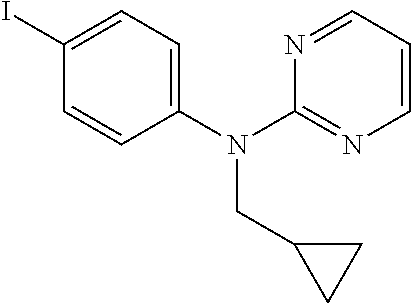


(1) Allylglycine (1.82 g) was dissolved in 1N aqueous sodium hydroxide solution (60 ml), and di-tert-butyl dicarbonate (4.15 g) was added thereto, followed by stirring the resulting mixture at room temperature for 11 hours. Di-tert-butyl dicarbonate (4.15 g) was further added to the reaction solution and the resulting mixture was stirred at room temperature overnight. After adding water to the reaction solution and washing it with ether, the solution was acidified with 3N hydrochloric acid. The solution was extracted twice with ethyl acetate. Organic layers were washed with saturated brine and dried over anhydrous sodium sulfate. After removing anhydrous sodium sulfate by filtration, the filtrate was concentrated. The residue was recrystallized from hexane/ethyl acetate mixed solvent to obtain N-Boc-allylglycine (3.09 g).
(2) Trimethylsilyldiazomethane (2N, in hexane) (12 ml) was added dropwise to a solution of N-Boc-allylglycine (3.09 g) in dichloromethane/methanol (2/1) mixture (30 ml), and the resulting mixture was stirred at room temperature for 3 hours. After concentrating the reaction solution, the residue was purified by column chromatography (silica gel, eluent: cyclohexane/ethyl acetate=20/1→10/1) to obtain N-Boc-allylglycine methyl ester (3.11 g). NMR (H1, CDCl3): δ 2.43-2.55 (2H, m), 3.72 (3H, s), 4.34-4.39 (1H, brm), 5.02 (1H, brs), 5.09-5.13 (2H, m), 5.62-5.72 (1H, m)
(3) Under an argon atmosphere, palladium acetate (54 mg) and tris(2-methylphenyl)phosphine (70 mg) were added to a suspension of N-Boc-allylglycine methyl ester (1.03 g), N-(4-iodophenyl)-N-methylpyrimidin-2-amine (1.40 g) and potassium carbonate (933 mg) in DMF (15 ml), and the resulting mixture was stirred at 80° C. overnight. The reaction solution was allowed to cool to room temperature and ethyl acetate was added thereto. The solution was washed 3 times with water and once with saturated brine, and dried over anhydrous sodium sulfate. After removing anhydrous sodium sulfate by filtration, the filtrate was concentrated. The residue was purified by column chromatography (silica gel, eluent: cyclohexane/ethyl acetate=20/1→4/1). The obtained solid was recrystallized from hexane/ethyl acetate mixed solvent to obtain 2-tert-butoxycarbonylamino-5-[4-(methyl-pyrimidin-2-ylamino)phenyl]pent-4-enoic acid methyl ester (976 mg).
(4) Trifluoroacetic acid (2 ml) was added to a solution of 2-tert-butoxycarbonylamino-5-[4-(methyl-pyrimidin-2-ylamino)phenyl]pent-4-enoic acid methyl ester (976 mg) in dichloromethane (20 ml), and the resulting mixture was stirred at room temperature for 4.5 hours. Water was added to the reaction solution, and sodium hydrogen carbonate was added thereto in small portions to neutralize it, followed by extracting the resulting solution twice with chloroform. Organic layers were washed with saturated brine and dried over anhydrous sodium sulfate. After removing anhydrous sodium sulfate by filtration, the filtrate was concentrated to dryness to obtain 2-amino-5-[4-(methyl-pyrimidin-2-ylamino)phenyl]pent-4-enoic acid methyl ester (599 mg). NMR (H1, CDCl3): δ 2.58-2.64 (2H, brm), 3.48-3.58 (1H, brm), 3.52 (3H, s), 3.75 (3H, s), 6.07-6.14 (1H, m), 6.49 (1H, d, J=5.6 Hz), 6.57 (1H, t, J=4.6 Hz), 7.26 (2H, d, J=8.1 Hz), 7.38 (2H, d, J=8.3 Hz), 8.34 (2H, d, J=4.6 Hz)

(1) Allylglycine (10.11 g) was dissolved in a mixed solvent of 2N aqueous sodium hydroxide solution (176 ml) and dioxane (175 ml), and 2,6-dichlorobenzoyl chloride (15.10 ml) was added dropwise thereto, followed by stirring the resulting mixture at room temperature for 10 hours. After concentrating the reaction solution to remove dioxane, water (150 ml) was added thereto and the resulting solution was washed with ether. Aqueous layer was acidified by adding 3N hydrochloric acid in small portions thereto, and extracted 3 times with ethyl acetate. Organic layers were washed with saturated brine and dried over anhydrous sodium sulfate. After removing anhydrous sodium sulfate by filtration, the filtrate was concentrated. The residue was recrystallized from hexane/ethyl acetate mixed solvent to obtain 2-(2,6-dichlorobenzamido)pent-4-enoic acid (23.48 g).
(2) Under an argon atmosphere, a solution of 2-(2,6-dichlorobenzamido)pent-4-enoic acid (23.48 g) in methanol (250 ml) was cooled to 0° C. Thionyl chloride (10.70 ml) was added dropwise to the solution while keeping the reaction temperature not higher than 10° C., and thereafter the resulting mixture was stirred at room temperature for 5.5 hours. Water was added to the reaction solution, and sodium hydrogen carbonate was added thereto in small portions to neutralize it. After concentrating the reaction solution to remove methanol, aqueous layer was extracted twice with ethyl acetate. Organic layers were washed 3 times with water and once with saturated brine, and dried over anhydrous sodium sulfate. After removing anhydrous sodium sulfate by filtration, the filtrate was concentrated. The residue was recrystallized from hexane/ethyl acetate mixed solvent to obtain 2-(2,6-dichlorobenzamido)pent-4-enoic acid methyl ester (21.70 g). NMR (H1, CDCl3): δ 2.55-2.61 (1H, m), 2.68-2.75 (1H, m), 3.72 (3H, s), 4.88 (1H, td, J=7.8, 5.4 Hz), 5.06-5.13 (2H, m), 5.64-5.74 (1H, m), 6.33 (1H, brd, J=7.1 Hz), 7.17-7.26 (3H, m)

(1) In the same manner as in Reference Example 35-(1), allylglycine (285 mg) was reacted with 2,6-difluorobenzoyl chloride (0.374 ml) to obtain 2-(2,6-difluorobenzamido)pent-4-enoic acid (471 mg).
(2) In the same manner as in Reference Example 35-(2), thionyl chloride (0.242 ml) was reacted with a solution of 2-(2,6-difluorobenzamido)pent-4-enoic acid (471 mg) in methanol (20 ml) to obtain 2-(2,6-difluorobenzamido)pent-4-enoic acid methyl ester (430 mg).

(1) Propargylglycine (5.00 g) was dissolved in a mixed solvent of 2N aqueous sodium hydroxide solution (100 ml) and dioxane (100 ml), and 2,6-dichlorobenzoyl chloride (9.45 ml) was added dropwise thereto at 0° C., followed by stirring the resulting mixture at room temperature overnight. Water was added to the reaction solution, and the solution was washed with ether. Aqueous layer was acidified by adding 3N hydrochloric acid in small portions thereto and extracted with ethyl acetate, and organic layer was dried over anhydrous sodium sulfate. After removing anhydrous sodium sulfate by filtration, the filtrate was concentrated to dryness to obtain 2-(2,6-dichlorobenzamido)pent-4-ynoic acid.
(2) Under an argon atmosphere, a solution of thionyl chloride (5.25 ml) in absolute methanol (200 ml) was cooled to 0° C. To the solution, a solution of 2-(2,6-dichlorobenzamido)pent-4-ynoic acid obtained in (1) in methanol (50 ml) was added dropwise, and the resulting mixture was stirred at room temperature overnight. Water was added to the reaction solution, and the solution was extracted with ethyl acetate. Organic layer was washed with saturated aqueous sodium hydrogen carbonate solution and dried over anhydrous sodium sulfate. After removing anhydrous sodium sulfate by filtration, the filtrate was concentrated. A mixed solvent of ethyl acetate/ether (1/1) (300 ml) was added to the residue, and insoluble matter was removed by filtration. The filtrate was concentrated and the residue was recrystallized twice from hexane/ethyl acetate mixed solvent to obtain 2-(2,6-dichlorobenzamido)pent-4-ynoic acid methyl ester (9.61 g).

(1) In a mixed solvent of 2N aqueous sodium hydroxide solution (27.4 ml) and THF (55 ml), L-allylglycine (5.22 g) was dissolved, and 2,6-dichlorobenzoyl chloride (7.79 ml) was added dropwise thereto, followed by stirring the resulting mixture at room temperature for 1 hour. After concentrating the reaction solution to remove methanol, water (100 ml) was added thereto and the resulting mixture was washed with ether. Aqueous layer was acidified by adding 3N hydrochloric acid in small portions thereto, and extracted 3 times with ethyl acetate. Organic layers were washed with saturated brine and dried over anhydrous sodium sulfate. After removing anhydrous sodium sulfate by filtration, the filtrate was concentrated. The residue was recrystallized from hexane/ethyl acetate mixed solvent to obtain (S)-2-(2,6-dichlorobenzamido)pent-4-enoic acid (11.65 g). NMR (H1, CDCl3): δ 2.66-2.73 (1H, m), 2.80-2.86 (1H, m), 4.99 (1H, td, J=7.6, 5.6 Hz), 5.18-5.25 (2H, m), 5.76-5.86 (1H, m), 6.39 (1H, brd, J=7.6 Hz), 7.25-7.34 (3H, m)
(2) Under an argon atmosphere, a solution of (S)-2-(2,6-dichlorobenzamido)pent-4-enoic acid (11.46 g) in methanol (120 ml) was cooled to 0° C. Thionyl chloride (5.22 ml) was added dropwise to the solution while keeping the reaction temperature not higher than 10° C., and thereafter the resulting mixture was stirred at room temperature for 3 hours. Water was added to the reaction solution, and sodium hydrogen carbonate was added thereto in small portions to neutralize it. After concentrating the reaction solution to remove methanol, aqueous layer was extracted twice with ethyl acetate. Organic layers were washed 3 times with water and once with saturated brine, and dried over anhydrous sodium sulfate. After removing anhydrous sodium sulfate by filtration, the filtrate was concentrated. The residue was recrystallized from hexane/ethyl acetate mixed solvent to obtain (S)-2-(2,6-dichlorobenzamido)pent-4-enoic acid methyl ester (11.68 g). NMR (H1, CDCl3): δ 2.62-2.69 (1H, m), 2.76-2.83 (1H, m), 3.79 (3H, s), 4.96 (1H, td, J=7.8, 5.4 Hz), 5.14-5.21 (2H, m), 5.72-5.82 (1H, m), 6.42 (111, brd, J=6.8 Hz), 7.25-7.34 (3H, m)


(1) In the same manner as in Example 1,2-(2,6-dichlorobenzamido)pent-4-enoic acid methyl ester (45.6 mg) was reacted with (4-iodophenyl)-(4-acetoxybenzyl)pyrimidin-2-ylamine (67.4 mg) to obtain (E)-2-(2,6-dichlorobenzamido)-5-[4-((4-acetoxy-benzyl)-pyrimidin-2-ylamino)phenyl]pent-4-enoic acid methyl ester (61.7 mg). Column chromatography (silica gel, eluent: ethyl acetate/hexane=1/3→3/1) and thin layer chromatography (silica gel, mobile phase: cyclohexane/ethyl acetate=1/5) were used for purification.
(2) To a solution of (E)-2-(2,6-dichlorobenzamido)-5-[4-((4-acetoxy-benzyl)-pyrimidin-2-ylamino)phenyl]pent-4-enoic acid methyl ester (61.7 mg) in THF (3.0 ml), 0.1N aqueous sodium hydroxide solution (3.0 ml) was added, and the resulting mixture was stirred at room temperature for 2 hours. Water (50 ml) was added to the reaction solution and the resulting mixture was washed with ether. Aqueous layer was acidified by adding 1N hydrochloric acid thereto and extracted twice with ethyl acetate. Organic layers were washed with saturated brine and dried over anhydrous sodium sulfate. After removing anhydrous sodium sulfate by filtration, the filtrate was concentrated to dryness to obtain (E)-2-(2,6-dichlorobenzamido)-5-[4-((4-hydroxy-benzyl)-pyrimidin-2-ylamino)phenyl]pent-4-enoic acid (43 mg).


| TABLE 8 |
 |
| Ex No. | Y | M | ESI-MS | NMR (H1) chemical shift |
| 1 |
 |
Me | 478 (M + H)+ | CDCl3, δ 1.62-1.67 (2H, m), 2.11-2.19 (2H, m), 2.79-2.97 (2H, m), 3.81 (3H, s), 3.84-3.95 (4H, m), 5.01-5.05 (1H, m), 6.13-6.17 (1H, m), 6.50-6.54 (2H, m), 7.24-7.34 (5H, m), 7.42 (2H, d, J = 8.1 Hz) |
| 2 |
 |
H | 462 (M − H)− | CDCl3, δ 1.66 (4H, m), 2.82 (1H, m), 2.98 (1H, m), 3.86 (4H, m), 4.95 (1H, m), 6.22 (1H, m), 6.56 (1H, m), 7.24-7.40 (7H, m) |
| 3 |
 |
Me | 492 (M + H)+ | CDCl3, δ 1.92 (4H, br), 2.77-2.84 (1H, m), 2.94-2.96 (4H, brm), 3.73-3.80 (7H, brm), 5.03 (1H, dd, J = 12.9, 5.6 Hz), 6.12- 6.20 (1H, m), 6.52 (1H, d, J = 15.6 Hz), 6.73-6.75 (1H, br), 7.22- 7.45 (7H, m) |
| 4 |
 |
H | 476 (M − H)− | dmso-d6, δ 1.87-1.90 (4H, m), 2.56-2.63 (1H, m), 2.68-2.74 (1H, m), 2.84 (3H, s), 3.66-3.68 (4H, m), 4.55-4.58 (1H, brm), 6.30 (1H, td, J = 15.9, 7.1 Hz), 6.50 (1H, d, J = 15.9 Hz), 7.31-7.50 (7H, m), 9.10 (1H, brs), 12.77 (1H, brs) |
| 5 |
 |
Me | 506 (M + H)+ | CDCl3, δ 1.14 (3H, t, J = 7.1 Hz), 1.92-2.04 (4H, m), 2.80-2.98 (2H, m), 3.05-3.11 (2H, dd, J = 14.2, 7.1 Hz), 3.81 (3H, s), 3.74- 3.92 (4H, m), 5.02-5.06 (1H, m), 6.13-6.17 (1H, m), 6.48 (1H, d, J = 7.6 Hz), 6.52 (1H, d, J = 15.9 Hz), 7.25-7.34 (7H, m) |
| 6 |
 |
H | 490 (M − H)− | CDCl3, δ 1.13 (3H, t, J = 6.8 Hz), 1.95 (4H, m), 2.87 (1H, m), 3.04 (1H, m), 3.07 (2H, q, J = 7.1 Hz), 3.89 (4H, m), 5.03 (1H, m), 6.22 (1H, m), 6.57 (2H, m), 7.23-7.32 (7H, m) |
| 7 |
 |
Me | 506 (M + H)+ | |
| 8 |
 |
Na | 490 (M − Na)− | dmso-d6, δ 1.80-1.86 (2H, m), 1.97-2.01 (2H, m), 2.59-2.66 (1H, m), 2.75-2.79 (1H, m), 3.11 (3H, s), 3.29-3.34 (4H, m), 3.64-3.67 (2H, m), 4.01 (1H, brd, J = 5.9 Hz), 6.19-6.27 (1H, m), 6.36 (1H, d, J = 16.1 Hz), 7.24-7.47 (7H, m), 7.69 (1H, d, J = 6.1 Hz) |
| 9 |
 |
Me | 506 (M + H)+ | |
| 10 |
 |
Na | 490 (M − Na)− | dmso-d6, δ 1.85-1.94 (2H, m), 2.03-2.51 (4H, m), 2.59-2.66 (1H, m), 2.75-2.82 (1H, m), 2.88 (3H, s), 3.52-3.72 (4H, m), 3.99 (1H, dd, J = 11.0, 5.4 Hz), 6.21-6.28 (1H, m), 6.37 (1H, d, J = 15.9 Hz), 7.28 (4H, s), 7.34-7.43 (1H, m), 7.46 (2H, d, J = 7.1 Hz), 7.67 (1H, d, J = 5.6 Hz) |
| TABLE 9 |
 |
| Ex. No | Y | M | ESI-MS | NMR (H1) chemical shift |
| 11 |
 |
Me | 472 (M + H)+ | CDCl3, δ 2.71-2.78 (1H, m), 2.86-2.92 (1H, m), 3.73 (3H, s), 4.93-4.98 (1H, m), 5.99-6.07 (1H, m), 6.45 (1H, d, J = 15.9 Hz), 6.52 (1H, br), 6.95 (1H, t, J = 4.9 Hz), 7.05 (2H, d, J = 8.5 Hz), 7.08-7.25 (3H, m), 7.30 (2H, d, J = 8.5 Hz), 8.47 (2H, d, J = 4.9 Hz) |
| 12 |
 |
H | 456 (M − H)− | dmso-d6, δ 2.57-2.64 (1H, m), 2.71-2.76 (1H, m), 4.57- 4.62 (1H, m), 6.24-6.31 (1H, m), 6.53 (1H, d, J = 15.9 Hz), 7.14 (2H, d, J = 8.5 Hz), 7.25 (1H, t, J = 4.9 Hz), 7.35-7.49 (5H, m), 8.63 (2H, d, J = 4.9 Hz), 9.14 (1H, d, J = 8.1 Hz), 12.78 (1H, brs) |
| 13 |
 |
Me | 500 (M + H)+ | |
| 14 |
 |
Na | 484 (M − Na)− | CDCl3, δ 1.25 (3H, t, J = 7.6 Hz), 2.62 (2H, dd, J = 7.6, 4.2 Hz), 2.86 (1H, m), 2.92 (1H, m), 4.96 (1H, m), 6.10 (1H, dt, J = 15.9, 7.6 Hz), 6.47 (1H, d, J = 15.9 Hz), 6.62 (1H, d, J = 7.3 Hz), 7.02 (2H, d, J = 8.6 Hz), 7.30 (5H, m), 8.42 (2H, s) |
| 15 |
 |
Me | 502 (M + H)+ | |
| 16 |
 |
H | 486 (M − H)− | CDCl3, δ 2.83 (1H, m), 2.98 (1H, m), 3.82 (3H, s), 5.04 (1H, dd, J = 5.4 and 13.0 Hz), 6.10 (1H, m), 6.45-6.55 (2H, m), 7.07-7.48 (7H, m), 8.17 (1H, d, J = 5.6 Hz) |
| 17 |
 |
Me | 532 (M + H)+ | |
| 18 |
 |
H | 516 (M − H)− | CDCl3, δ 2.80 (1H, m), 2.93 (1H, m), 3.81 (6H, s), 5.03 (1H, m), 5.97 (1H, m), 6.42-6.46 (2H, m), 6.84 (2H, d, J = 12.0 Hz), 7.24-7.38 (5H, m) |
| 19 |
 |
Me | 502 (M + H)+ | |
| 20 |
 |
H | 484 (M − H)− | CDCl3, δ 2.40 (6H, s), 2.84 (1H, m), 2.97 (1H, m), 5.05 (1H, m), 6.09 (1H, m), 6.46-6.55 (2H, m), 6.76 (2H, s), 7.07-7.35 (5H, m) |
| TABLE 10 |
 |
| Ex No. | Y | M | ESI-MS | NMR (H1) chemical shift |
| 21 |
 |
Me | 485 (M + H)+ | CDCl3, δ 2.78-2.85 (1H, m), 2.91-2.98 (1H, m), 3.49 (3H, s), 3.79 (3H, s), 4.99-5.04 (1H, m), 6.04-6.12 (1H, m), 6.43 (1H, d, J = 7.8 Hz), 6.50 (1H, d, J = 15.9 Hz), 6.55 (1H, t, J = 4.6 Hz), 7.22-7.35 (7H, m), 8.31 (2H, d, J = 4.6 Hz) |
| 22 |
 |
H | 469 (M − H)− | dmso-d6, δ 2.57-2.64 (1H, m), 2.69-2.73 (1H, m), 3.43 (3H, s), 4.58 (1H, dd, J = 13.4, 8.3 Hz), 6.27 (1H, td, J = 16.1, 7.3 Hz), 6.51 (1H, d, J = 16.1 Hz), 6.72 (1H, t, J = 4.9 Hz), 7.27 (2H, d, J = 8.3 Hz), 7.35 (2H, d, J = 8.5Hz), 7.39-7.49 (3H, m), 8.34-8.36 (2H, m), 9.14 (1H, d, J = 8.3 Hz), 12.76 (1H, s) |
| 23 |
 |
Me | 499 (M + H)+ | CDCl3, δ 1.23 (3H, t, J = 6.8 Hz), 2.81-3.00 (2H, m), 3.82 (3H, s), 4.01 (2H, q, J = 6.8 Hz), 5.04 (1H, dt, J = 5.1, 7.8 Hz), 6.11 (1H, dt, J = 7.8, 15.4 Hz), 6.45 (1H, d, J = 7.8 Hz), 6.53 (1H, t, J = 4.9 Hz), 6.45 (1H, d, J = 15.4 Hz), 7.19- 7.38 (7H, m), 8.31 (2H, d, J = 4.9 Hz). |
| 24 |
 |
H | 483 (M − H)− | dmso-d6, δ 1.12 (3H, t, J = 6.8 Hz), 2.57-2.75 (2H, m), 3.95 (2H, q, J = 6.8 Hz), 4.58 (1H, dt, J = 5.1, 8.3 Hz), 6.28 (1H, dt, J = 7.1, 15.6 Hz), 6.52 (1H, d, J = 15.6 Hz), 6.68 (1H, t, J = 4.9 Hz), 7.19-7.49 (7H, m), 8.32 (2H, d, J = 4.9 Hz), 9.13 (1H, d, J = 8.3 Hz). |
| 25 |
 |
Me | 529 (M + H)+ | CDCl3, δ 2.81-3.00 (2H, m), 3.32 (3H, s), 3.63 (2H, t, J = 5.9 Hz), 3.82 (3H, s), 4.15 (2H, t, J = 5.9 Hz), 5.04 (1H, dt, J = 5.1, 7.8 Hz), 6.11 (1H, dt, J = 7.3, 15.4 Hz), 6.45 (1H, d, J = 7.8 Hz), 6.53 (1H, d, J = 15.4 Hz), 6.55 (1H, t, J = 4.9 Hz), 7.24-7.37 (7H, m), 8.31 (2H, d, J = 4.9 Hz). |
| 26 |
 |
Na | 513 (M − Na)− | dmso-d6, δ 2.60-2.82 (2H, m), 3.19 (3H, s), 3.51 (2H, t, J = 6.1 Hz), 4.01-4.06 (3H, m), 6.23 (1H, dt, J = 7.1, 15.6 Hz), 6.38 (1H, d, J = 15.6 Hz), 6.69 (1H, t, J = 4.9 Hz), 7.18- 7.46 (7H, m), 7.70-7.72 (1H, m), 8.32 (2H, d, J = 4.9 Hz) |
| 27 |
 |
Me | 513 (M + H)+ | CDCl3, δ 1.15 (6H, d, J = 6.8 Hz), 2.82-3.01 (2H, m), 3.83 (3H, s), 5.05 (1H, dt, J = 5.1, 7.6 Hz), 5.15 (1H, dq, J = 6.6, 6.8 Hz), 6.14 (1H, dt, J = 7.6, 15.9 Hz), 6.47 (1H, d, J = 7.6 Hz), 6.48 (1H, t, J = 4.9 Hz), 6.55 (1H, d, J = 15.9 Hz), 7.06-7.40 (7H, m), 8.28 (2H, d, J = 4.9 Hz). |
| 28 |
 |
H | 497 (M − H)− | dmso-d6, δ 1.06 (3H, s), 1.08 (3H, s), 2.59-2.66 (1H, m), 2.70-2.76 (1H, m), 4.60 (1H, td, J = 8.3, 5.1 Hz), 5.06 (1H, td, J = 13.4, 6.6 Hz), 6.31 (1H, td, J = 14.9, 7.1 Hz), 6.54 (1H, d, J = 15.9 Hz), 6.62 (1H, t, J = 4.9 Hz), 7.05 (2H, d, J = 8.3 Hz), 7.38-7.43 (3H, m), 7.48 (2H, d, J = 8.5 Hz), 8.34-8.36 (2H, m), 9.15 (1H, d, J = 8.3 Hz), 12.77(1H, s) |
| 29 |
 |
H | 561 (M − H)− | CDCl3, δ 2.62 (2H, m), 4.74 (1H, dd, J = 7.6, 4.6 Hz), 5.01 (1H, brs), 5.08 (1H, dd, J = 25.9, 15.4 Hz), 5.84 (1H, dt, J = 15.9, 8.1 Hz), 6.16 (1H, d, J = 15.9 Hz), 6.35 (1H, d, J = 7.3 Hz), 6.66 (3H, m), 6.98 (1H, brs), 7.05 (4H, m), 7.25 (5H, m), 8.41 (2H, d, J = 4.9 Hz) |
| 30 |
 |
Me | 524 (M + H)+ | CDCl3, δ 2.81 (2H, t, J = 6.8 Hz), 2.81-3.02 (2H, m), 3.82 (3H, s), 4.25 (2H, t, J = 6.8 Hz), 5.04 (1H, dt, J = 5.4, 7.8 Hz), 6.14 (1H, dt, J = 7.6, 15.6 Hz), 6.48 (1H, d, J = 7.8 Hz), 6.53 (1H, d, J = 15.6 Hz), 6.65 (1H, t, J = 4.9 Hz), 7.22- 7.41 (7H, m), 8.34 (2H, d, J = 4.9 Hz). |
| TABLE 11 |
 |
| Ex No. | Y | M | ESI-MS | NMR (H1) chemical shift |
| 31 |
 |
Na | 508 (M − Na)− | dmso-d6, δ 2.60-2.82 (2H, m), 2.83 (2H, t, J = 6.8 Hz), 4.00-4.06 (1H, m), 4.17 (2H, t, J = 6.8 Hz), 6.25 (1H, dt, J = 7.1, 15.6 Hz), 6.40 (1H, d, J = 15.6 Hz), 6.76 (1H, t, J = 4.9 Hz), 7.21-7.46 (7H, m), 7.66-7.73 (1H, m), 8.37 (2H, d, J = 4.9 Hz) |
| 32 |
 |
Me | 561 (M + H)+ | |
| 33 |
 |
Na | 545 (M − Na)− | CD3OD, δ 2.73 (1H, m), 2.91 (1H, m), 4.58 (1H, dd, J = 6.6, 4.9 Hz), 5.22 (2H, brs), 6.31 (1H, dt, J = 15.6, 7.1 Hz), 6.49 (1H, d, J = 15.6 Hz), 6.69 (1H, t, J = 4.9 Hz), 7.09 (2H, d, J = 8.5 Hz), 7.19 (6H, m), 7.34 (5H, m), 8.30 (2H, d, J = 4.9 Hz) |
| 34 |
 |
Me | 591 (M + H)+ | |
| 35 |
 |
Na | 575 (M − Na)− | CD3OD, δ 2.73 (1H, m), 2.90 (1H, m), 3.72 (3H, s), 4.60 (1H, m), 5.14 (2H, brs), 6.32 (1H, dt, J = 15.9, 7.3 Hz), 6.49 (1H, d, J = 15.9 Hz), 6.67 (1H, t, J = 4.9 Hz), 6.77 (2H, d, J = 8.8 Hz), 7.04 (2H, d, J = 8.3 Hz), 7.12 (2H, d, J = 8.8 Hz), 7.35 (5H, m), 8.29 (2H, d, J = 4.9 Hz) |
| 36 |
 |
Me | 527 (M + H)+ | |
| 37 |
 |
Na | 511 (M − Na)− | CD3OD, δ 0.91 (3H, t, J = 7.3 Hz), 1.31 (2H, m), 1.58 (2H, td, J = 7.3, 4.9 Hz), 2.75 (1H, m), 2.92 (1H, m), 3.94 (2H, t, J = 7.3 Hz), 4.60 (1H, dd, J = 7.6, 4.9 Hz), 6.35 (1H, dt, J = 15.6, 7.3 Hz), 6.54 (1H, d, J = 15.6 Hz), 6.62 (1H, t, J = 4.9 Hz), 7.14 (2H, d, J = 8.6 Hz), 7.37 (5H, m), 8.25 (1H, d, J = 4.9 Hz) |
| 38 |
 |
Me | 562 (M + H)+ | |
| 39 |
 |
Na | 546 (M − Na)− | CD3OD, δ 2.73 (1H, m), 2.91 (1H, m), 4.58 (1H, dd, J = 6.6, 4.9 Hz), 5.27 (2H, s), 6.31 (1H, dt, J = 15.6, 7.3 Hz), 6.50 (1H, d, J = 15.6 Hz), 6.73 (1H, t, J = 4.9 Hz), 7.12 (2H, d, J = 8.3 Hz), 7.35 (6H, m), 7.73 (1H, d, J = 7.8 Hz), 8.31 (2H, d, J = 4.9 Hz), 8.36 (1H, d, J = 4.4 Hz), 8.50 (1H, brs) |
| 40 |
 |
Me | 568 (M + H)+ | |
| TABLE 12 |
 |
| Ex No. | Y | M | ESI-MS | NMR (H1) chemical shift |
| 41 |
 |
Na | 552 (M − Na)− | CD3OD, δ 2.64 (1H, m), 2.82 (1H, m), 4.48 (1H, dd, J = 6.6, 4.6 Hz), 5.28 (2H, brs), 6.23 (1H, dt, J = 15.9, 6.9 Hz), 6.40 (1H, d, J = 15.9 Hz), 6.62 (1H, 1, J = 4.9 Hz), 7.10 (2H, d, J = 8.6 Hz), 7.29 (7H, m), 8.21 (2H, d, J = 4.9 Hz), 8.81 (1H, d, J = 2.0 Hz) |
| 42 |
 |
Me | 515 (M + H)+ | |
| 43 |
 |
H | 499 (M − H)− | CDCl3, δ 2.83 (1H, m), 2.97 (1H, m), 3.52 (3H, s), 3.82 (3H, s), 5.04 (1H, m), 6.10 (1H, m), 6.44-6.54 (2H, m), 7.07-7.35 (7H, m), 8.07 (1H, d, J = 5.6 Hz). |
| 44 |
 |
Me | 545 (M + H)+ | |
| 45 |
 |
H | 529 (M − H)− | CDCl3, δ 2.82 (1H, m), 2.97 (1H, m), 3.52 (3H, s), 3.79 (6H, s), 5.05 (1H, dd, J = 5.6 and 13.4 Hz), 6.11 (1H, m), 6.49 (2H, m), 7.24-7.34 (7H, m). |
| 46 |
 |
Me | 547 (M + H)+ | |
| 47 |
 |
Na | 531 (M − Na)− | CD3OD, δ 2.73 (1H, m), 2.92 (1H, m), 4.60 (1H, dd, J = 6.4, 4.6 Hz), 6.32 (1H, dt, J = 15.9, 7.3 Hz), 6.50 (1H, d, J = 15.9 Hz), 6.81 (1H, t, J = 4.9 Hz), 7.12 (2H, d, J = 8.6 Hz), 7.20 (3H, m), 7.36 (8H, m), 8.30 (2H, d, J = 4.9 Hz) |
| 48 |
 |
Me | 555 (M + H)+ | |
| 49 |
 |
Na | 539 (M − Na)− | CD3OD, δ 1.48 (1H, dd, J = 12.5, 4.6 Hz), 1.54 (1H, dd, J = 12.5, 4.6 Hz), 1.83 (2H, m), 2.75 (1H, m), 2.93 (1H, m), 3.52 (2H, m), 4.00 (2H, m), 4.61 (1H, dd, J = 6.6, 4.9 Hz), 4.53-4.97 (1H, m), 6.38 (1H, dt, J = 15.6, 7.1 Hz), 6.57 (1H, d, J= 15.6 Hz), 6.61 (1H, t, J = 4.9 Hz), 7.02 (2H, d, J = 8.3 Hz), 7.38 (3H, m), 7.45 (2H, d, J = 15.6 Hz), 8.23 (2H, d, J = 4.9 Hz) |
| 50 |
 |
Me | 539 (M + H)+ | |
| 51 |
 |
Na | 523 (M − Na)− | dmso-d6, δ 1.52 (3H, s), 1.63 (3H, s), 2.60-2.68 (1H, m), 2.76-2.83 (1H, m), 4.04-4.10 (1H, m), 4.51-4.53 (2H, m), 5.26- 5.34 (1H, m), 6.20-6.27 (1H, m), 6.39 (1H, d, J = 15.9 Hz), 6.68 (1H, t, J = 4.6 Hz), 7.15-7.75 (7H, m), 8.32-8.45 (3H, m) |
| TABLE 13 |
 |
| Ex No. | Y | M | ESI-MS | NMR (H1) chemical shift |
| 52 |
 |
Me | 525 (M + H)+ | |
| 53 |
 |
Na | 509 (M − Na)− | dmso-d6, δ 0.08-0.16 (2H, m), 0.35-0.41 (2H, m), 1.04-1.12 (1H, m), 2.62-2.68 (1H, m), 2.77-2.84 (1H, m), 3.80 (2H, d, J = 6.8 Hz), 4.11 (1H, dd, J = 11.2, 5.4 Hz), 6.22-6.29 (1H, m), 6.41 (1H, d, J = 15.9 Hz), 6.67 (1H, t, J = 4.6 Hz), 7.18-7.46 (7H, m), 7.78 (1H, d, J = 6.4 Hz), 8.30 (2H, d, J = 4.6 Hz) |
| 54 |
 |
Me | 527 (M + H)+ | |
| 55 |
 |
Na | 511 (M − Na)− | dmso-d6, δ 0.85 (6H, d, J = 6.8 Hz), 1.83-1.92 (1H, m), 2.60-2.67 (1H, m), 2.76-2.83 (1H, m), 3.83 (2H, d, J = 7.3 Hz), 4.02 (1H, dd, J = 11.2, 5.1 Hz), 6.20-6.27 (1H, m), 6.39 (1H, d, J = 15.6 Hz), 6.66 (1H, t, J = 4.6 Hz), 7.19-7.47 (7H, m), 7.70 (1H, d, J = 6.1 Hz), 8.30 (2H, d, J = 4.6 Hz) |
| 56 |
 |
Me | 525 (M + H)+ | CDCl3, δ 0.91 (3H, t, J = 7.6 Hz), 1.66 (2H, dd, J = 15.4, 7.6 Hz), 2.49-2.87 (1H, m), 2.93-2.98 (1H, m), 3.82 (3H, s), 3.91 (2H, t, J = 7.6 Hz), 5.04 (1H, td, J = 7.8, 5.1 Hz), 6.07-6.14 (1H, m), 6.46 (1H, d, J = 7.6 Hz), 6.52 (1H, t, J = 4.6 Hz), 6.53 (1H, d, J = 15.9 Hz), 7.16-7.37 (7H, m), 8.29 (2H, d, J = 4.6 Hz) |
| 57 |
 |
H | 509 (M − H)− | CDCl3, δ 0.91 (3H, t, J = 7.3 Hz), 1.66 (2H, s, J = 7.6 Hz), 2.66 (2H, brm), 3.81~3.97 (2H, m), 4.75 (1H, dt, J = 7.3, 5.1 Hz), 5.92 (1H, ddd, J = 15.1, 7.6, 7.6 Hz), 6.21(1H, d, J = 15.9 Hz), 6.29(1H, d, J = 7.3 Hz), 6.62 (1H, t, J = 4.9 Hz), 7.20 (2H, d, J = 8.3 Hz), 7.28~7.37 (5H, m), 8.41 (2H, d, J = 4.9 Hz) |
| 58 |
 |
Me | 562 (M + H)+ | CDCl3, δ 2.80-2.98 (2H, m), 3.81 (3H, s), 5.00- 5.04 (1H, m), 5.23 (2H, s), 6.08-6.12 (1H, m), 6.45 (1H, d, J = 7.6 Hz), 6.49 (1H, d, J = 15.4 Hz), 6.64 (1H, t, J = 4.6 Hz), 7.20 (2H, d, J = 7.1 Hz), 7.25-7.38 (7H, m), 8.34 (2H, d, J = 4.9 Hz), 8.50 (2H, d, J = 4.6 Hz) |
| 59 |
 |
H | 546 (M − H)− | CDCl3, δ 2.90~3.07 (2H, m), 4.92 (1H, brdd), 5.26 (2H, dd, J = 18.8, 16.8 Hz), 6.12 (1H, ddd, J = 15.3, 7.6, 7.6 Hz), 6.49 (1H, d, J = 15.6 Hz), 6.66~6.70 (2H, m), 7.12 (2H, d, J = 8.3 Hz), 7.22~7.34 (7H, m), 8.35 (2H, d, J = 4.9 Hz), 8.51 (2H, d, J = 5.6 Hz) |
| 60 |
 |
Me | 562 (M + H)+ | CDCl3, δ 2.80-2.96 (2H, m), 3.80 (3H, s), 5.00- 5.04 (1H, s), 5.37 (2H, s), 6.03-6.10 (1H, m), 6.44 (1H, d, J = 8.1 Hz), 6.49 (1H, d, J = 5.9 Hz), 6.62 (1H, t, J = 4.6 Hz), 7.13 (1H, dd, J = 6.6, 4.6 Hz), 7.24-7.36 (8H, m), 7.57-7.61 (1H, m), 8.34 (2H, d, J = 4.9 Hz), 8.53 (1H, d, J = 3.9 Hz) |
| 61 |
 |
H | 546 (M − H)− | CDCl3, δ 2.71~2.81 (2H, m), 4.83 (1H, ddd, J = 6.3, 4.8, 4.8 Hz), 5.38 (2H, d, J = 4.3 Hz), 6.02 (1H, ddd, J = 15.3, 7.6, 7.6 Hz), 6.32 (1H, d, J = 15.9 Hz), 6.51 (1H, d, J = 7.3 Hz), 6.65 (1H, dd, J = 4.8, 4.8 Hz), 7.43~7.15 (9H, m), 7.69 (1H, ddd, J = 7.8, 7.8, 1.7 Hz), 8.37 (2H, d, J = 4.9 Hz), 8.56(1H, d, J = 4.2 Hz) |
| TABLE 14 | |||
| Ex No. | ESI-MS | NMR (H1) chemical shift | |
| 62 |
 |
453 (M + H)+ | |
| 63 |
 |
437 (M − H)− | dmso-d6, δ 2.56-2.63 (1H, m), 2.68-2.73 (1H, m), 3.43 (3H, s), 4.52-4.57 (1H, m), 6.23 (1H, td, J = 15.6, 7.3 Hz), 6.50 (1H, d, J = 16.1 Hz), 6.72 (1H, t, J = 5.1 Hz), 7.14 (2H, t, J = 8.1 Hz), 7.27 (2H, d, J = 8.1 Hz), 7.35 (2H, d, J = 8.3 Hz), 7.50 (1H, t, J = 7.8 Hz), 8.34 (2H, d, J = 4.9 Hz), 9.12 (1H, d, J = 8.1 Hz), 12.80 (1H, brs) |
| 64 |
 |
469 (M + H)+ | |
| 65 |
 |
453 (M − H)− | dmso-d6, δ 2.60 (1H, m), 2.70 (1H, m), 3.44 (3H, s), 4.57 (1H, m), 6.26 (1H, td, J = 7.1, 15.6 Hz), 6.51 (1H, d, J = 15.6 Hz), 6.74 (1H, t, J = 4.6 Hz), 7.27-7.37 (6H, m), 7.47 (1H, td, J = 8.0, 6.1 Hz), 8.36 (2H, d, J = 4.6 Hz), 9.16 (1H, d, J = 8.0 Hz) |
| 66 |
 |
465 (M + H)+ | |
| 67 |
 |
449 (M − H)− | dmso-d6, δ 2.28 (3H, s), 2.61 (1H, m), 2.71 (1H, m), 3.44 (3H, s), 4.55 (1H, m), 6.30 (1H, td, J = 7.5, 15.9 Hz), 6.51 (1H, d, J = 15.9 Hz), 6.74 (1H, t, J = 4.4 Hz), 7.20-7.37 (7H, m), 8.36 (2H, d, J = 4.4 Hz), 8.93 (1H, d, J = 7.5 Hz) |
| 68 |
 |
445 (M + H)+ | |
| TABLE 15 | |||
| Ex No. | ESI-MS | NMR (H1) chemical shift | |
| 69 |
 |
429 (M − H)− | dmso-d6, δ 2.21 (6H, s), 2.59 (1H, m), 2.72 (1H, m), 3.44 (3H, s), 4.55 (1H, m), 6.28 (1H, td, J = 7.1, 15.6 Hz), 6.50 (1H, d, J = 15.6 Hz), 6.74 (1H, t, J = 4.9 Hz), 7.01 (2H, d, J = 7.5 Hz), 7.15 (1H, t, J = 7.5 Hz), 7.28 (2H, d, J = 8.5 Hz), 7.36 (2H, d, J = 8.5 Hz), 8.36 (2H, d, J = 4.9 Hz), 8.70 (1H, d, J = 8.0 Hz), 12.7 (1H, s) |
| 70 |
 |
492 (M + H)+ | |
| 71 |
 |
476 (M − H)− | CDCl3, δ 2.82 (1H, m), 2.22-2.99 (3H, m), 3.64 (2H, t, J = 4.0 Hz), 5.01 (1H, m), 6.10 (1H, m), 6.53 (1H, d, J = 16.0 Hz), 6.63 (1H, d, J = 8.0 Hz), 6.96 (2H, t, J = 8.0 Hz), 7.22-7.41 (5H, m), 8.12 (1H, d, J = 4.0 Hz), 8.61 (1H, d, J = 2.2 Hz). |
| 72 |
 |
472 (M + H)+ | CDCl3, δ 3.10 (1H, dd, J = 4.6, 17.1 Hz), 3.25 (1H, dd, J = 4.6, 17.1 Hz), 3.86 (3H, s), 5.06 (1H, dt, J = 4.6, 7.8 Hz), 6.72-6.74 (1H, m), 7.05 (1H, t, J = 4.6 Hz), 7.10-7.43 (7H, m), 8.56 (2H, d, J = 4.6 Hz). |
| 73 |
 |
454 (M − Na)− | dmso-d6, δ 2.86 (1H, dd, J = 4.9, 16.6 Hz), 3.10 (1H, dd, J = 4.9, 16.6 Hz), 4.01-4.08 (1H, m), 7.14-7.48 (8H, m), 7.85-7.90 (1H, m), 8.63 (2H, d, J = 4.6 Hz) |
| 74 |
 |
467 (M + H)+ | |
| 75 |
 |
453 (M − Na)− | dmso-d6, δ 2.85 (1H, dd, J = 16.9, 4.4 Hz), 3.09 (1H, dd, J = 16.9, 4.8 Hz), 3.98 (1H, m), 6.84 (1H, t, J = 4.6 Hz), 7.21 (2H, d, J = 8.6 Hz), 7.39 (1H, t, J = 6.8 Hz), 7.46 (2H, d, J = 6.8 Hz), 7.71 (2H, d, J = 8.6 Hz), 7.81 (1H, brs), 8.48 (2H, d, J = 4.6 Hz), 9.75 (1H, brs) |
| 76 |
 |
492 (M + H)+ | CDCl3, δ 1.92 (4H, br), 2.77-2.84 (1H, m), 2.94- 2.96 (4H, brm), 3.73-3.80 (7H, brm), 5.03 (1H, dd, J = 12.9, 5.6 Hz), 6.12-6.20 (1H, m), 6.52 (1H, d, J = 15.6 Hz), 6.73-6.75 (1H, br), 7.22-7.45 (7H, m) |
| TABLE 16 | |||
| Ex No. | ESI-MS | NMR (H1) chemical shift | |
| 77 |
 |
476 (M − H)− | dmso-d6, δ 1.88-1.90 (4H, m), 2.56-2.63 (1H, m), 2.68-2.74 (1H, m), 2.84 (3H, s), 3.66-3.68 (4H, m), 4.55-4.60 (1H, brm), 6.30 (1H, td, J = 15.9, 7.1 Hz), 6.50 (1H, d, J = 15.9 Hz), 7.31-7.48 (7H, m), 9.12 (1H, brs), 12.77 (1H, brs) |
| 78 |
 |
476 (M − Na)− | dmso-d6, δ 1.87-1.89 (4H, m), 2.61-2.66 (1H, m), 2.75-2.82 (1H, m), 2.84 (3H, s), 3.65-3.67 (4H, m), 4.07 (1H, dd, J = 11.5, 5.4 Hz), 6.22-6.30 (1H, m), 6.38 (1H, d, J = 15.9 Hz), 7.30 (4H, s), 7.32-7.45 (3H, m), 7.76 (1H, d, J = 6.6 Hz) |
| 79 |
 |
485 (M + H)+ | CDCl3, δ 2.80-2.87 (1H, m), 2.93-3.00 (1H, m), 3.51 (3H, s), 3.81 (3H, s), 5.01-5.06 (1H, m), 6.06- 6.14 (1H, m), 6.47 (1H, d, J = 7.8 Hz), 6.52 (1H, d, J = 15.6 Hz), 6.58 (1H, t, J = 4.9 Hz), 7.24-7.37 (7H, m), 8.34 (2H, d, J = 4.9 Hz) |
| 80 |
 |
469 (M − H)− | CDCl3, δ 2.60-2.64 (1H, m), 2.74-2.81 (1H, m), 3.51 (3H, s), 4.69-4.73 (1H, m), 5.94 (1H, dd, J = 15.6, 6.1 Hz), 6.35 (1H, d, J = 15.6 Hz), 6.45 (1H, d, J = 7.3 Hz), 6.65 (1H, t, J = 4.9 Hz), 7.23-7.27 (3H, m), 7.30 (1H, s), 7.32 (1H, d, J = 2.2 Hz), 7.38 (2H, d, J = 8.3 Hz), 8.42 (2H, d, J = 4.9 Hz) |
| 81 |
 |
469 (M − Na)− | dmso-d6, δ 2.60-2.66 (1H, m), 2.76-2.82 (1H, m), 3.42 (3H, s), 4.04 (1H, dd, J = 11.0, 5.1 Hz), 6.22 (1H, td, J = 15.9, 7.1 Hz), 6.38 (1H, d, J = 15.9 Hz), 6.71 (1H, t, J = 4.6 Hz), 7.23 (2H, d, J = 8.5 Hz), 7.29 (2H, d, J = 8.5 Hz), 7.37 (1H, dd, J = 9.3, 6.8 Hz), 7.44 (2H, d, J = 7.6 Hz), 7.72 (1H, d, J = 6.1 Hz), 8.34 (2H, d, J = 4.6 Hz) |
| 82 |
 |
513 (M + H)+ | CDCl3, δ 1.12 (3H, s), 1.14 (3H, s), 2.81-2.88 (1H, m), 2.94-3.01 (1H, m), 3.82 (3H, s), 5.05 (1H, td, J = 7.8, 5.4 Hz), 5.12-5.18 (1H, m), 6.10-6.18 (1H, m), 6.47-6.50 (2H, m), 6.55 (1H, d, J = 15.6 Hz), 7.07 (2H, d, J = 8.3 Hz), 7.25-7.34 (3H, m), 7.39 (2H, d, J = 8.3 Hz), 8.27 (2H, d, J = 4.6 Hz) |
| 83 |
 |
497 (M − H)− | CDCl3, δ 1.13 (3H, s), 1.16 (3H, s), 2.60-2.64 (1H, m), 2.71-2.78 (1H, m), 4.68 (1H, td, J = 7.3, 4.6 Hz), 5.20 (1H, td, J = 13.7, 6.6 Hz), 5.97 (1H, dd, J = 15.9, 6.1 Hz), 6.35 (1H, d, J = 15.9 Hz), 6.45 (1H, d, J = 7.3 Hz), 6.60 (1H, t, J = 4.9 Hz), 7.12 (2H, d, J = 8.5 Hz), 7.24-7.33 (3H, m), 7.41 (2H, d, J = 8.3 Hz), 8.38 (2H, d, J = 4.9 Hz) |
| 84 |
 |
497 (M − Na)− | dmso-d6, δ 1.07 (3H, s), 1.09 (3H, s), 2.63-2.67 (1H, brm), 2.78-2.80 (1H, brm), 4.04 (1H, brm), 5.04-5.08 (1H, m), 6.25-6.29 (1H, m), 6.42 (1H, d, J = 15.9 Hz), 6.61 (1H, t, J = 4.6 Hz), 7.02 (2H, d, J = 8.1 Hz), 7.33 (2H, d, J = 8.1 Hz), 7.37-7.41 (1H, m), 7.46 (2H, d, J = 7.6 Hz), 7.72 (1H, brs), 8.27 (2H, d, J = 4.4 Hz) |
| TABLE 17 | ||
| Example No. | BA(%) | CLtot (ml/hr/kg) |
| 4 | 55.0 | 607 |
| 6 | 68.5 | 1185 |
| 22 | 61.7 | 306 |
| 24 | 42.3 | 756 |
| 28 | 80.6 | 895 |
| 70 | 63.4 | 532 |
| 77 | 20.0 | 962 |
| 78 | 26.1 | 996 |
| 80 | 47.6 | 906 |
| 81 | 50.9 | 966 |
| 83 | 40.0 | 1087 |
| 84 | 58.5 | 1178 |
| Comparative Compound | 1.7 | 1284 |
[“BA” in Table 17 means bioavailability, and “CLtot” means total clearance.]

| TABLE 18 | |||
| Example No. | IC50 (μM) | ||
| 4 | 0.247 | ||
| 5 | 0.100 | ||
| 8 | 0.069 | ||
| 10 | 0.220 | ||
| 12 | 0.220 | ||
| 22 | 0.160 | ||
| 24 | 0.220 | ||
| 26 | 0.036 | ||
| 28 | 0.056 | ||
| 29 | 0.041 | ||
| 31 | 0.041 | ||
| 35 | 0.088 | ||
| 37 | 0.160 | ||
| 39 | 0.071 | ||
| 41 | 0.950 | ||
| 45 | 0.890 | ||
| 47 | 0.930 | ||
| 49 | 0.079 | ||
| 51 | 0.100 | ||
| 53 | 0.120 | ||
| 55 | 0.420 | ||
| 57 | 0.110 | ||
| 59 | 0.043 | ||
| 61 | 0.033 | ||
| 67 | 0.280 | ||
| 69 | 0.530 | ||
| 77 | 0.049 | ||
| 78 | 0.054 | ||
| 80 | 0.095 | ||
| 81 | 0.082 | ||
| 83 | 0.017 | ||
| 84 | 0.030 | ||
| TABLE 19 | |||
| Example No. | IC50 (μM) | ||
| 4 | 52.3 | ||
| 6 | 5.63 | ||
| 22 | 176 | ||
| 28 | 7.40 | ||
| 33 | 16.3 | ||
| 67 | 30.0 | ||
Ear Swelling Ratio (%)=(A−B)/B×100

Claims (4)


Priority Applications (1)
| Application Number | Priority Date | Filing Date | Title |
|---|---|---|---|
| US13/711,783 US9162988B2 (en) | 2006-06-14 | 2012-12-12 | Therapeutic or prophylactic agent for allergic dermatitis |
Applications Claiming Priority (5)
| Application Number | Priority Date | Filing Date | Title |
|---|---|---|---|
| JP2006164520 | 2006-06-14 | ||
| JPJP2006-164520 | 2006-06-14 | ||
| PCT/JP2007/062017 WO2007145282A1 (en) | 2006-06-14 | 2007-06-14 | Therapeutic or prophylactic agent for allergic dermatitis |
| US30496408A | 2008-12-15 | 2008-12-15 | |
| US13/711,783 US9162988B2 (en) | 2006-06-14 | 2012-12-12 | Therapeutic or prophylactic agent for allergic dermatitis |
Related Parent Applications (3)
| Application Number | Title | Priority Date | Filing Date |
|---|---|---|---|
| PCT/JP2007/062017 Continuation WO2007145282A1 (en) | 2006-06-14 | 2007-06-14 | Therapeutic or prophylactic agent for allergic dermatitis |
| US12/304,964 Continuation US20090093508A1 (en) | 2006-06-14 | 2007-06-14 | Therapeutic or prophylactic agent for allergic dermatitis |
| US30496408A Continuation | 2006-06-14 | 2008-12-15 |
Publications (2)
| Publication Number | Publication Date |
|---|---|
| US20130150390A1 US20130150390A1 (en) | 2013-06-13 |
| US9162988B2 true US9162988B2 (en) | 2015-10-20 |
Family
ID=38831796
Family Applications (2)
| Application Number | Title | Priority Date | Filing Date |
|---|---|---|---|
| US12/304,964 Abandoned US20090093508A1 (en) | 2006-06-14 | 2007-06-14 | Therapeutic or prophylactic agent for allergic dermatitis |
| US13/711,783 Expired - Fee Related US9162988B2 (en) | 2006-06-14 | 2012-12-12 | Therapeutic or prophylactic agent for allergic dermatitis |
Family Applications Before (1)
| Application Number | Title | Priority Date | Filing Date |
|---|---|---|---|
| US12/304,964 Abandoned US20090093508A1 (en) | 2006-06-14 | 2007-06-14 | Therapeutic or prophylactic agent for allergic dermatitis |
Country Status (10)
| Country | Link |
|---|---|
| US (2) | US20090093508A1 (en) |
| EP (1) | EP2042171B1 (en) |
| JP (1) | JP5115478B2 (en) |
| KR (1) | KR101353707B1 (en) |
| CN (1) | CN101472580B (en) |
| AT (1) | ATE508741T1 (en) |
| AU (1) | AU2007259715B2 (en) |
| CA (1) | CA2655286C (en) |
| ES (1) | ES2363174T3 (en) |
| WO (1) | WO2007145282A1 (en) |
Families Citing this family (2)
| Publication number | Priority date | Publication date | Assignee | Title |
|---|---|---|---|---|
| CA2837453C (en) | 2011-06-30 | 2017-04-11 | Toray Industries, Inc. | Crystals of glycine derivative and pharmaceutical use thereof |
| WO2014051056A1 (en) * | 2012-09-28 | 2014-04-03 | 東レ株式会社 | Crystals of glycine derivative and pharmaceutical use thereof |
Citations (7)
| Publication number | Priority date | Publication date | Assignee | Title |
|---|---|---|---|---|
| WO2001070670A1 (en) | 2000-03-23 | 2001-09-27 | Ajinomoto Co., Inc. | Novel phenylalanine derivative |
| US20020013298A1 (en) | 1996-12-02 | 2002-01-31 | William L. Hunter | Compositions and methods for treating or preventing inflammatory diseases |
| WO2003010135A1 (en) | 2001-07-26 | 2003-02-06 | Ajinomoto Co., Inc. | Novel phenylpropionic acid derivatives |
| WO2003053926A1 (en) | 2001-12-13 | 2003-07-03 | Ajinomoto Co.,Inc. | Novel phenylalanine derivative |
| JP2003321358A (en) | 2002-02-27 | 2003-11-11 | Tanabe Seiyaku Co Ltd | Pharmaceutical composition |
| US20060123501A1 (en) | 2004-12-06 | 2006-06-08 | Korneluk Robert G | Method for treating inflammatory disorders |
| WO2006068213A1 (en) | 2004-12-24 | 2006-06-29 | Toray Industries, Inc. | Glycine derivative and use thereof |
Family Cites Families (4)
| Publication number | Priority date | Publication date | Assignee | Title |
|---|---|---|---|---|
| JPH08504194A (en) | 1992-12-01 | 1996-05-07 | メルク エンド カンパニー インコーポレーテッド | Fibrinogen receptor antagonist |
| JPH10501222A (en) | 1994-05-27 | 1998-02-03 | メルク エンド カンパニー インコーポレーテッド | Compounds for inhibiting osteoclast-mediated bone resorption |
| DE69817760T2 (en) * | 1997-06-09 | 2004-08-05 | KURARAY CO., LTD, Kurashiki | POLYMERIZABLE COMPOSITION FOR DENTAL APPLICATIONS |
| AU1411499A (en) | 1997-11-20 | 1999-06-15 | Merck & Co., Inc. | Para-aminomethylaryl carboxamide derivatives |
-
2007
- 2007-06-14 CN CN2007800223239A patent/CN101472580B/en not_active Expired - Fee Related
- 2007-06-14 ES ES07745274T patent/ES2363174T3/en active Active
- 2007-06-14 AT AT07745274T patent/ATE508741T1/en not_active IP Right Cessation
- 2007-06-14 US US12/304,964 patent/US20090093508A1/en not_active Abandoned
- 2007-06-14 CA CA2655286A patent/CA2655286C/en not_active Expired - Fee Related
- 2007-06-14 AU AU2007259715A patent/AU2007259715B2/en not_active Ceased
- 2007-06-14 JP JP2008521251A patent/JP5115478B2/en not_active Expired - Fee Related
- 2007-06-14 WO PCT/JP2007/062017 patent/WO2007145282A1/en not_active Ceased
- 2007-06-14 KR KR1020097000646A patent/KR101353707B1/en not_active Expired - Fee Related
- 2007-06-14 EP EP07745274A patent/EP2042171B1/en not_active Not-in-force
-
2012
- 2012-12-12 US US13/711,783 patent/US9162988B2/en not_active Expired - Fee Related
Patent Citations (11)
| Publication number | Priority date | Publication date | Assignee | Title |
|---|---|---|---|---|
| US20020013298A1 (en) | 1996-12-02 | 2002-01-31 | William L. Hunter | Compositions and methods for treating or preventing inflammatory diseases |
| WO2001070670A1 (en) | 2000-03-23 | 2001-09-27 | Ajinomoto Co., Inc. | Novel phenylalanine derivative |
| US20030130320A1 (en) | 2000-03-23 | 2003-07-10 | Ajinomoto Co. Inc | Phenylalanine derivatives |
| WO2003010135A1 (en) | 2001-07-26 | 2003-02-06 | Ajinomoto Co., Inc. | Novel phenylpropionic acid derivatives |
| US20040236147A1 (en) | 2001-07-26 | 2004-11-25 | Ajinomoto Co. Inc | Phenylpropionic acid derivatives |
| WO2003053926A1 (en) | 2001-12-13 | 2003-07-03 | Ajinomoto Co.,Inc. | Novel phenylalanine derivative |
| US20040235848A1 (en) | 2001-12-13 | 2004-11-25 | Ajinomoto Co., Inc. | Phenylalanine derivatives |
| JP2003321358A (en) | 2002-02-27 | 2003-11-11 | Tanabe Seiyaku Co Ltd | Pharmaceutical composition |
| US20060123501A1 (en) | 2004-12-06 | 2006-06-08 | Korneluk Robert G | Method for treating inflammatory disorders |
| WO2006068213A1 (en) | 2004-12-24 | 2006-06-29 | Toray Industries, Inc. | Glycine derivative and use thereof |
| EP1840121A1 (en) | 2004-12-24 | 2007-10-03 | Toray Industries, Inc. | Glycine derivative and use thereof |
Non-Patent Citations (9)
| Title |
|---|
| Ardizzone S, Ianchi Porro G, "Inflammatory bowel disease: new insights into pathogenesis and treatment", J Intern Med. Dec. 2002, 252(6):475-96. |
| Baeumer W et al: AWD 12-281, "A highly selective phosphodiesterase 4 inhibitor, is effective in the prevention and treatment of inflammatory reactions in a model of allergic dermatitis" Journal of Pharmacy and Pharmacology, Royal Pharmaceutical society of Great Britain, GB, vol. 55, No. 8, Aug. 1, 2003, pp. 1107-1114, XP009019412 ISSN: 0022-3573. |
| Hanifin JM, Chan S, "Biochemical and immunologic mechanisms in atopic dermatitis: new targets for emerging therapies", J Am Acad Dermatol, Jul. 1999, 41(1):72-7. |
| Honda, Tetsuya, et al., "Update of Immune Events in the Murine Contact Hypersensitivity Model: Toward the Understanding of Allergic Contact Dermatitis", Journal of Investigative Dermatology, 2013, vol. 133, pp. 303-315. |
| Ludviksson, et al., Journal of Immunology, 1999, vol. 162, pp. 4975-4982. |
| Ohmatsu, et al., Journal of Allergy Clinical Immunology, Dec. 2010, vol. 126, pp. 1267-1276. |
| Supplemental European Search Report in related application EP 07 74 5274 mailed Nov. 25, 2009. |
| Wittig, B, et al. "Functional Activity of Murine CD44 Variant Isoforms in Allergic and Delayed Type Hypersensitivity", Immunology Letters, 1997, vol. 57, pp. 217-223. |
| Wittig, Bianca, et al., "Cutting Edge: Curative Treatment of an Experimentally Induced Coitis by a CD44 Variant V7-Specific Antibody", The Journal of Immunology, 1998, vol. 161, pp. 1069-1073. |
Also Published As
| Publication number | Publication date |
|---|---|
| CA2655286C (en) | 2014-02-25 |
| CN101472580B (en) | 2011-08-24 |
| KR101353707B1 (en) | 2014-01-20 |
| EP2042171B1 (en) | 2011-05-11 |
| JP5115478B2 (en) | 2013-01-09 |
| CA2655286A1 (en) | 2007-12-21 |
| US20130150390A1 (en) | 2013-06-13 |
| EP2042171A1 (en) | 2009-04-01 |
| WO2007145282A1 (en) | 2007-12-21 |
| CN101472580A (en) | 2009-07-01 |
| JPWO2007145282A1 (en) | 2009-11-12 |
| US20090093508A1 (en) | 2009-04-09 |
| AU2007259715B2 (en) | 2011-12-08 |
| KR20090029801A (en) | 2009-03-23 |
| EP2042171A4 (en) | 2010-01-06 |
| ES2363174T3 (en) | 2011-07-22 |
| AU2007259715A1 (en) | 2007-12-21 |
| ATE508741T1 (en) | 2011-05-15 |
Similar Documents
| Publication | Publication Date | Title |
|---|---|---|
| US7879837B2 (en) | Therapeutic or prophylactic agent for multiple sclerosis | |
| US7566724B2 (en) | Glycine derivative and use thereof | |
| US9162988B2 (en) | Therapeutic or prophylactic agent for allergic dermatitis | |
| US7893046B2 (en) | Therapeutic or prophylactic agent for leukemia |
Legal Events
| Date | Code | Title | Description |
|---|---|---|---|
| AS | Assignment |
Owner name: TORAY INDUSTRIES, INC., JAPAN Free format text: ASSIGNMENT OF ASSIGNORS INTEREST;ASSIGNORS:KAINO, MIE;MEGURO, HIROYUKI;REEL/FRAME:029451/0177 Effective date: 20121210 |
|
| STCF | Information on status: patent grant |
Free format text: PATENTED CASE |
|
| CC | Certificate of correction | ||
| MAFP | Maintenance fee payment |
Free format text: PAYMENT OF MAINTENANCE FEE, 4TH YEAR, LARGE ENTITY (ORIGINAL EVENT CODE: M1551); ENTITY STATUS OF PATENT OWNER: LARGE ENTITY Year of fee payment: 4 |
|
| FEPP | Fee payment procedure |
Free format text: MAINTENANCE FEE REMINDER MAILED (ORIGINAL EVENT CODE: REM.); ENTITY STATUS OF PATENT OWNER: LARGE ENTITY |
|
| LAPS | Lapse for failure to pay maintenance fees |
Free format text: PATENT EXPIRED FOR FAILURE TO PAY MAINTENANCE FEES (ORIGINAL EVENT CODE: EXP.); ENTITY STATUS OF PATENT OWNER: LARGE ENTITY |
|
| STCH | Information on status: patent discontinuation |
Free format text: PATENT EXPIRED DUE TO NONPAYMENT OF MAINTENANCE FEES UNDER 37 CFR 1.362 |
|
| FP | Lapsed due to failure to pay maintenance fee |
Effective date: 20231020 |