US9145553B2 - Method for isolating nucleic acids - Google Patents
Method for isolating nucleic acids Download PDFInfo
- Publication number
- US9145553B2 US9145553B2 US13/918,201 US201313918201A US9145553B2 US 9145553 B2 US9145553 B2 US 9145553B2 US 201313918201 A US201313918201 A US 201313918201A US 9145553 B2 US9145553 B2 US 9145553B2
- Authority
- US
- United States
- Prior art keywords
- nucleic acids
- nucleic acid
- sample
- sodium phosphate
- lysis
- Prior art date
- Legal status (The legal status is an assumption and is not a legal conclusion. Google has not performed a legal analysis and makes no representation as to the accuracy of the status listed.)
- Expired - Fee Related, expires
Links
- 150000007523 nucleic acids Chemical class 0.000 title claims abstract description 213
- 238000000034 method Methods 0.000 title claims abstract description 212
- 102000039446 nucleic acids Human genes 0.000 title claims abstract description 211
- 108020004707 nucleic acids Proteins 0.000 title claims abstract description 211
- 230000007613 environmental effect Effects 0.000 claims abstract description 58
- 230000008569 process Effects 0.000 claims abstract description 26
- 239000000203 mixture Substances 0.000 claims abstract description 15
- 238000000605 extraction Methods 0.000 claims description 113
- 239000000243 solution Substances 0.000 claims description 92
- 230000009089 cytolysis Effects 0.000 claims description 80
- 239000004927 clay Substances 0.000 claims description 79
- 239000002689 soil Substances 0.000 claims description 42
- 239000013049 sediment Substances 0.000 claims description 41
- IJGRMHOSHXDMSA-UHFFFAOYSA-N Atomic nitrogen Chemical compound N#N IJGRMHOSHXDMSA-UHFFFAOYSA-N 0.000 claims description 38
- 239000008188 pellet Substances 0.000 claims description 35
- FAPWRFPIFSIZLT-UHFFFAOYSA-M Sodium chloride Chemical compound [Na+].[Cl-] FAPWRFPIFSIZLT-UHFFFAOYSA-M 0.000 claims description 34
- 239000006228 supernatant Substances 0.000 claims description 34
- 239000000463 material Substances 0.000 claims description 33
- 239000003795 chemical substances by application Substances 0.000 claims description 32
- 238000005406 washing Methods 0.000 claims description 32
- 229910000162 sodium phosphate Inorganic materials 0.000 claims description 30
- LFQSCWFLJHTTHZ-UHFFFAOYSA-N Ethanol Chemical compound CCO LFQSCWFLJHTTHZ-UHFFFAOYSA-N 0.000 claims description 27
- 238000005119 centrifugation Methods 0.000 claims description 27
- 210000004027 cell Anatomy 0.000 claims description 22
- 239000003599 detergent Substances 0.000 claims description 20
- KCXVZYZYPLLWCC-UHFFFAOYSA-N EDTA Chemical group OC(=O)CN(CC(O)=O)CCN(CC(O)=O)CC(O)=O KCXVZYZYPLLWCC-UHFFFAOYSA-N 0.000 claims description 19
- 229910052757 nitrogen Inorganic materials 0.000 claims description 19
- KFZMGEQAYNKOFK-UHFFFAOYSA-N Isopropanol Chemical compound CC(C)O KFZMGEQAYNKOFK-UHFFFAOYSA-N 0.000 claims description 18
- 239000007788 liquid Substances 0.000 claims description 18
- 239000011780 sodium chloride Substances 0.000 claims description 17
- 239000000872 buffer Substances 0.000 claims description 15
- RYFMWSXOAZQYPI-UHFFFAOYSA-K trisodium phosphate Chemical compound [Na+].[Na+].[Na+].[O-]P([O-])([O-])=O RYFMWSXOAZQYPI-UHFFFAOYSA-K 0.000 claims description 15
- 239000001488 sodium phosphate Substances 0.000 claims description 14
- LENZDBCJOHFCAS-UHFFFAOYSA-N tris Chemical compound OCC(N)(CO)CO LENZDBCJOHFCAS-UHFFFAOYSA-N 0.000 claims description 14
- DVLFYONBTKHTER-UHFFFAOYSA-N 3-(N-morpholino)propanesulfonic acid Chemical group OS(=O)(=O)CCCN1CCOCC1 DVLFYONBTKHTER-UHFFFAOYSA-N 0.000 claims description 13
- 239000004202 carbamide Substances 0.000 claims description 13
- 239000002738 chelating agent Substances 0.000 claims description 13
- XSQUKJJJFZCRTK-UHFFFAOYSA-N urea group Chemical group NC(=O)N XSQUKJJJFZCRTK-UHFFFAOYSA-N 0.000 claims description 13
- 239000007983 Tris buffer Substances 0.000 claims description 11
- 239000007993 MOPS buffer Substances 0.000 claims description 10
- 230000003196 chaotropic effect Effects 0.000 claims description 10
- 239000004570 mortar (masonry) Substances 0.000 claims description 10
- 238000012360 testing method Methods 0.000 claims description 10
- XLYOFNOQVPJJNP-UHFFFAOYSA-N water Substances O XLYOFNOQVPJJNP-UHFFFAOYSA-N 0.000 claims description 10
- 108010071390 Serum Albumin Proteins 0.000 claims description 9
- 102000007562 Serum Albumin Human genes 0.000 claims description 9
- 229910001868 water Inorganic materials 0.000 claims description 9
- ISWSIDIOOBJBQZ-UHFFFAOYSA-N Phenol Chemical compound OC1=CC=CC=C1 ISWSIDIOOBJBQZ-UHFFFAOYSA-N 0.000 claims description 8
- 238000002156 mixing Methods 0.000 claims description 7
- 150000003839 salts Chemical class 0.000 claims description 7
- JKMHFZQWWAIEOD-UHFFFAOYSA-N 2-[4-(2-hydroxyethyl)piperazin-1-yl]ethanesulfonic acid Chemical compound OCC[NH+]1CCN(CCS([O-])(=O)=O)CC1 JKMHFZQWWAIEOD-UHFFFAOYSA-N 0.000 claims description 6
- 230000001580 bacterial effect Effects 0.000 claims description 6
- 238000000227 grinding Methods 0.000 claims description 5
- ZRALSGWEFCBTJO-UHFFFAOYSA-N guanidine group Chemical group NC(=N)N ZRALSGWEFCBTJO-UHFFFAOYSA-N 0.000 claims description 4
- 239000011534 wash buffer Substances 0.000 claims description 4
- 239000007995 HEPES buffer Substances 0.000 claims description 3
- CHJJGSNFBQVOTG-UHFFFAOYSA-N N-methyl-guanidine Natural products CNC(N)=N CHJJGSNFBQVOTG-UHFFFAOYSA-N 0.000 claims description 2
- SWSQBOPZIKWTGO-UHFFFAOYSA-N dimethylaminoamidine Natural products CN(C)C(N)=N SWSQBOPZIKWTGO-UHFFFAOYSA-N 0.000 claims description 2
- 210000003527 eukaryotic cell Anatomy 0.000 claims description 2
- 230000002538 fungal effect Effects 0.000 claims description 2
- 210000004962 mammalian cell Anatomy 0.000 claims description 2
- BAVYZALUXZFZLV-UHFFFAOYSA-N Methylamine Chemical compound NC BAVYZALUXZFZLV-UHFFFAOYSA-N 0.000 claims 1
- 235000014121 butter Nutrition 0.000 claims 1
- 230000001376 precipitating effect Effects 0.000 claims 1
- 239000002245 particle Substances 0.000 abstract description 31
- 238000002955 isolation Methods 0.000 abstract description 20
- 238000001179 sorption measurement Methods 0.000 abstract description 18
- 238000012163 sequencing technique Methods 0.000 abstract description 10
- 150000002500 ions Chemical class 0.000 abstract description 8
- 238000004458 analytical method Methods 0.000 abstract description 5
- 239000000523 sample Substances 0.000 description 119
- 239000012064 sodium phosphate buffer Substances 0.000 description 71
- 108020004414 DNA Proteins 0.000 description 65
- XEEYBQQBJWHFJM-UHFFFAOYSA-N Iron Chemical compound [Fe] XEEYBQQBJWHFJM-UHFFFAOYSA-N 0.000 description 57
- 239000003153 chemical reaction reagent Substances 0.000 description 29
- 229910052742 iron Inorganic materials 0.000 description 28
- 108090000623 proteins and genes Proteins 0.000 description 24
- PHTQWCKDNZKARW-UHFFFAOYSA-N isoamylol Chemical compound CC(C)CCO PHTQWCKDNZKARW-UHFFFAOYSA-N 0.000 description 20
- 239000008363 phosphate buffer Substances 0.000 description 19
- 241000894007 species Species 0.000 description 19
- 108091032973 (ribonucleotides)n+m Proteins 0.000 description 18
- HEDRZPFGACZZDS-UHFFFAOYSA-N Chloroform Chemical compound ClC(Cl)Cl HEDRZPFGACZZDS-UHFFFAOYSA-N 0.000 description 18
- 230000000813 microbial effect Effects 0.000 description 18
- 102000004169 proteins and genes Human genes 0.000 description 17
- 238000003795 desorption Methods 0.000 description 16
- 238000000746 purification Methods 0.000 description 16
- AJPJDKMHJJGVTQ-UHFFFAOYSA-M sodium dihydrogen phosphate Chemical compound [Na+].OP(O)([O-])=O AJPJDKMHJJGVTQ-UHFFFAOYSA-M 0.000 description 16
- -1 Al3+ Chemical class 0.000 description 15
- 241000566145 Otus Species 0.000 description 15
- JEIPFZHSYJVQDO-UHFFFAOYSA-N ferric oxide Chemical compound O=[Fe]O[Fe]=O JEIPFZHSYJVQDO-UHFFFAOYSA-N 0.000 description 15
- 229940016590 sarkosyl Drugs 0.000 description 15
- 108700004121 sarkosyl Proteins 0.000 description 15
- KSAVQLQVUXSOCR-UHFFFAOYSA-M sodium lauroyl sarcosinate Chemical compound [Na+].CCCCCCCCCCCC(=O)N(C)CC([O-])=O KSAVQLQVUXSOCR-UHFFFAOYSA-M 0.000 description 15
- UQSXHKLRYXJYBZ-UHFFFAOYSA-N iron oxide Inorganic materials [Fe]=O UQSXHKLRYXJYBZ-UHFFFAOYSA-N 0.000 description 14
- 238000011084 recovery Methods 0.000 description 14
- DGVVWUTYPXICAM-UHFFFAOYSA-N β‐Mercaptoethanol Chemical compound OCCS DGVVWUTYPXICAM-UHFFFAOYSA-N 0.000 description 14
- 230000006037 cell lysis Effects 0.000 description 13
- 235000019441 ethanol Nutrition 0.000 description 13
- 239000012634 fragment Substances 0.000 description 13
- 235000013980 iron oxide Nutrition 0.000 description 13
- BNIILDVGGAEEIG-UHFFFAOYSA-L disodium hydrogen phosphate Chemical compound [Na+].[Na+].OP([O-])([O-])=O BNIILDVGGAEEIG-UHFFFAOYSA-L 0.000 description 12
- 229910000397 disodium phosphate Inorganic materials 0.000 description 12
- 239000004021 humic acid Substances 0.000 description 12
- 239000002253 acid Substances 0.000 description 11
- 238000001556 precipitation Methods 0.000 description 11
- 239000000047 product Substances 0.000 description 11
- 241000192125 Firmicutes Species 0.000 description 10
- DBMJMQXJHONAFJ-UHFFFAOYSA-M Sodium laurylsulphate Chemical compound [Na+].CCCCCCCCCCCCOS([O-])(=O)=O DBMJMQXJHONAFJ-UHFFFAOYSA-M 0.000 description 10
- 241000894006 Bacteria Species 0.000 description 9
- 150000001768 cations Chemical class 0.000 description 9
- 229910019142 PO4 Inorganic materials 0.000 description 8
- 239000011536 extraction buffer Substances 0.000 description 8
- 239000000499 gel Substances 0.000 description 8
- 229960004198 guanidine Drugs 0.000 description 8
- PJJJBBJSCAKJQF-UHFFFAOYSA-N guanidinium chloride Chemical compound [Cl-].NC(N)=[NH2+] PJJJBBJSCAKJQF-UHFFFAOYSA-N 0.000 description 8
- 239000010452 phosphate Substances 0.000 description 8
- SCVFZCLFOSHCOH-UHFFFAOYSA-M potassium acetate Chemical compound [K+].CC([O-])=O SCVFZCLFOSHCOH-UHFFFAOYSA-M 0.000 description 8
- 108020004465 16S ribosomal RNA Proteins 0.000 description 7
- OKTJSMMVPCPJKN-UHFFFAOYSA-N Carbon Chemical compound [C] OKTJSMMVPCPJKN-UHFFFAOYSA-N 0.000 description 7
- 238000010296 bead milling Methods 0.000 description 7
- 229910052799 carbon Inorganic materials 0.000 description 7
- NBIIXXVUZAFLBC-UHFFFAOYSA-K phosphate Chemical compound [O-]P([O-])([O-])=O NBIIXXVUZAFLBC-UHFFFAOYSA-K 0.000 description 7
- 238000003752 polymerase chain reaction Methods 0.000 description 7
- 238000012175 pyrosequencing Methods 0.000 description 7
- LZZYPRNAOMGNLH-UHFFFAOYSA-M Cetrimonium bromide Chemical compound [Br-].CCCCCCCCCCCCCCCC[N+](C)(C)C LZZYPRNAOMGNLH-UHFFFAOYSA-M 0.000 description 6
- 230000003321 amplification Effects 0.000 description 6
- 230000001413 cellular effect Effects 0.000 description 6
- 238000001962 electrophoresis Methods 0.000 description 6
- ZMMJGEGLRURXTF-UHFFFAOYSA-N ethidium bromide Chemical compound [Br-].C12=CC(N)=CC=C2C2=CC=C(N)C=C2[N+](CC)=C1C1=CC=CC=C1 ZMMJGEGLRURXTF-UHFFFAOYSA-N 0.000 description 6
- 229960005542 ethidium bromide Drugs 0.000 description 6
- 239000000284 extract Substances 0.000 description 6
- YQOKLYTXVFAUCW-UHFFFAOYSA-N guanidine;isothiocyanic acid Chemical compound N=C=S.NC(N)=N YQOKLYTXVFAUCW-UHFFFAOYSA-N 0.000 description 6
- 238000010438 heat treatment Methods 0.000 description 6
- 230000003993 interaction Effects 0.000 description 6
- 230000007935 neutral effect Effects 0.000 description 6
- 238000003199 nucleic acid amplification method Methods 0.000 description 6
- 239000007787 solid Substances 0.000 description 6
- 108091093088 Amplicon Proteins 0.000 description 5
- 150000007513 acids Chemical group 0.000 description 5
- 239000011543 agarose gel Substances 0.000 description 5
- FFYPMLJYZAEMQB-UHFFFAOYSA-N diethyl pyrocarbonate Chemical compound CCOC(=O)OC(=O)OCC FFYPMLJYZAEMQB-UHFFFAOYSA-N 0.000 description 5
- 239000005447 environmental material Substances 0.000 description 5
- 239000003550 marker Substances 0.000 description 5
- 239000012528 membrane Substances 0.000 description 5
- 239000000126 substance Substances 0.000 description 5
- QJZYHAIUNVAGQP-UHFFFAOYSA-N 3-nitrobicyclo[2.2.1]hept-5-ene-2,3-dicarboxylic acid Chemical compound C1C2C=CC1C(C(=O)O)C2(C(O)=O)[N+]([O-])=O QJZYHAIUNVAGQP-UHFFFAOYSA-N 0.000 description 4
- 238000007400 DNA extraction Methods 0.000 description 4
- 108090000790 Enzymes Proteins 0.000 description 4
- 102000004190 Enzymes Human genes 0.000 description 4
- 238000004422 calculation algorithm Methods 0.000 description 4
- 230000000694 effects Effects 0.000 description 4
- 229940088598 enzyme Drugs 0.000 description 4
- 229910052751 metal Inorganic materials 0.000 description 4
- 239000002184 metal Substances 0.000 description 4
- 239000011368 organic material Substances 0.000 description 4
- 235000011056 potassium acetate Nutrition 0.000 description 4
- 238000002360 preparation method Methods 0.000 description 4
- QTBSBXVTEAMEQO-UHFFFAOYSA-N Acetic acid Chemical compound CC(O)=O QTBSBXVTEAMEQO-UHFFFAOYSA-N 0.000 description 3
- 241000193403 Clostridium Species 0.000 description 3
- 241000195493 Cryptophyta Species 0.000 description 3
- OKKJLVBELUTLKV-UHFFFAOYSA-N Methanol Chemical compound OC OKKJLVBELUTLKV-UHFFFAOYSA-N 0.000 description 3
- GRYLNZFGIOXLOG-UHFFFAOYSA-N Nitric acid Chemical compound O[N+]([O-])=O GRYLNZFGIOXLOG-UHFFFAOYSA-N 0.000 description 3
- 241000700605 Viruses Species 0.000 description 3
- 238000003916 acid precipitation Methods 0.000 description 3
- 125000003178 carboxy group Chemical group [H]OC(*)=O 0.000 description 3
- 230000015556 catabolic process Effects 0.000 description 3
- 239000003245 coal Chemical group 0.000 description 3
- 230000002860 competitive effect Effects 0.000 description 3
- 238000006731 degradation reaction Methods 0.000 description 3
- 238000011161 development Methods 0.000 description 3
- 238000010586 diagram Methods 0.000 description 3
- 238000005516 engineering process Methods 0.000 description 3
- 230000002255 enzymatic effect Effects 0.000 description 3
- DEFVIWRASFVYLL-UHFFFAOYSA-N ethylene glycol bis(2-aminoethyl)tetraacetic acid Chemical compound OC(=O)CN(CC(O)=O)CCOCCOCCN(CC(O)=O)CC(O)=O DEFVIWRASFVYLL-UHFFFAOYSA-N 0.000 description 3
- 238000011156 evaluation Methods 0.000 description 3
- 210000003608 fece Anatomy 0.000 description 3
- 238000013467 fragmentation Methods 0.000 description 3
- 238000006062 fragmentation reaction Methods 0.000 description 3
- 239000002509 fulvic acid Substances 0.000 description 3
- 229910052500 inorganic mineral Inorganic materials 0.000 description 3
- VBMVTYDPPZVILR-UHFFFAOYSA-N iron(2+);oxygen(2-) Chemical class [O-2].[Fe+2] VBMVTYDPPZVILR-UHFFFAOYSA-N 0.000 description 3
- LIKBJVNGSGBSGK-UHFFFAOYSA-N iron(3+);oxygen(2-) Chemical compound [O-2].[O-2].[O-2].[Fe+3].[Fe+3] LIKBJVNGSGBSGK-UHFFFAOYSA-N 0.000 description 3
- 230000000670 limiting effect Effects 0.000 description 3
- 239000010871 livestock manure Substances 0.000 description 3
- 230000002934 lysing effect Effects 0.000 description 3
- 239000011707 mineral Substances 0.000 description 3
- 238000012986 modification Methods 0.000 description 3
- 230000004048 modification Effects 0.000 description 3
- 229910017604 nitric acid Inorganic materials 0.000 description 3
- 108090000765 processed proteins & peptides Proteins 0.000 description 3
- 238000011002 quantification Methods 0.000 description 3
- 230000010076 replication Effects 0.000 description 3
- 230000002441 reversible effect Effects 0.000 description 3
- 230000001523 saccharolytic effect Effects 0.000 description 3
- 239000004576 sand Substances 0.000 description 3
- QKNYBSVHEMOAJP-UHFFFAOYSA-N 2-amino-2-(hydroxymethyl)propane-1,3-diol;hydron;chloride Chemical compound Cl.OCC(N)(CO)CO QKNYBSVHEMOAJP-UHFFFAOYSA-N 0.000 description 2
- 229920000936 Agarose Polymers 0.000 description 2
- 239000004254 Ammonium phosphate Substances 0.000 description 2
- 241000186074 Arthrobacter globiformis Species 0.000 description 2
- 241000194106 Bacillus mycoides Species 0.000 description 2
- 235000014469 Bacillus subtilis Nutrition 0.000 description 2
- 241000606126 Bacteroidaceae Species 0.000 description 2
- FERIUCNNQQJTOY-UHFFFAOYSA-N Butyric acid Chemical compound CCCC(O)=O FERIUCNNQQJTOY-UHFFFAOYSA-N 0.000 description 2
- 102000053602 DNA Human genes 0.000 description 2
- 238000007399 DNA isolation Methods 0.000 description 2
- 241000588921 Enterobacteriaceae Species 0.000 description 2
- 241000588724 Escherichia coli Species 0.000 description 2
- 241000233866 Fungi Species 0.000 description 2
- SIKJAQJRHWYJAI-UHFFFAOYSA-N Indole Chemical compound C1=CC=C2NC=CC2=C1 SIKJAQJRHWYJAI-UHFFFAOYSA-N 0.000 description 2
- 241000124008 Mammalia Species 0.000 description 2
- WAEMQWOKJMHJLA-UHFFFAOYSA-N Manganese(2+) Chemical compound [Mn+2] WAEMQWOKJMHJLA-UHFFFAOYSA-N 0.000 description 2
- 241001465754 Metazoa Species 0.000 description 2
- 241000191938 Micrococcus luteus Species 0.000 description 2
- 241000588656 Neisseriaceae Species 0.000 description 2
- 108091034117 Oligonucleotide Proteins 0.000 description 2
- 239000002202 Polyethylene glycol Substances 0.000 description 2
- 241000219000 Populus Species 0.000 description 2
- 241000947836 Pseudomonadaceae Species 0.000 description 2
- 239000012507 Sephadex™ Substances 0.000 description 2
- 108020004682 Single-Stranded DNA Proteins 0.000 description 2
- 239000007984 Tris EDTA buffer Substances 0.000 description 2
- JLCPHMBAVCMARE-UHFFFAOYSA-N [3-[[3-[[3-[[3-[[3-[[3-[[3-[[3-[[3-[[3-[[3-[[5-(2-amino-6-oxo-1H-purin-9-yl)-3-[[3-[[3-[[3-[[3-[[3-[[5-(2-amino-6-oxo-1H-purin-9-yl)-3-[[5-(2-amino-6-oxo-1H-purin-9-yl)-3-hydroxyoxolan-2-yl]methoxy-hydroxyphosphoryl]oxyoxolan-2-yl]methoxy-hydroxyphosphoryl]oxy-5-(5-methyl-2,4-dioxopyrimidin-1-yl)oxolan-2-yl]methoxy-hydroxyphosphoryl]oxy-5-(6-aminopurin-9-yl)oxolan-2-yl]methoxy-hydroxyphosphoryl]oxy-5-(6-aminopurin-9-yl)oxolan-2-yl]methoxy-hydroxyphosphoryl]oxy-5-(6-aminopurin-9-yl)oxolan-2-yl]methoxy-hydroxyphosphoryl]oxy-5-(6-aminopurin-9-yl)oxolan-2-yl]methoxy-hydroxyphosphoryl]oxyoxolan-2-yl]methoxy-hydroxyphosphoryl]oxy-5-(5-methyl-2,4-dioxopyrimidin-1-yl)oxolan-2-yl]methoxy-hydroxyphosphoryl]oxy-5-(4-amino-2-oxopyrimidin-1-yl)oxolan-2-yl]methoxy-hydroxyphosphoryl]oxy-5-(5-methyl-2,4-dioxopyrimidin-1-yl)oxolan-2-yl]methoxy-hydroxyphosphoryl]oxy-5-(5-methyl-2,4-dioxopyrimidin-1-yl)oxolan-2-yl]methoxy-hydroxyphosphoryl]oxy-5-(6-aminopurin-9-yl)oxolan-2-yl]methoxy-hydroxyphosphoryl]oxy-5-(6-aminopurin-9-yl)oxolan-2-yl]methoxy-hydroxyphosphoryl]oxy-5-(4-amino-2-oxopyrimidin-1-yl)oxolan-2-yl]methoxy-hydroxyphosphoryl]oxy-5-(4-amino-2-oxopyrimidin-1-yl)oxolan-2-yl]methoxy-hydroxyphosphoryl]oxy-5-(4-amino-2-oxopyrimidin-1-yl)oxolan-2-yl]methoxy-hydroxyphosphoryl]oxy-5-(6-aminopurin-9-yl)oxolan-2-yl]methoxy-hydroxyphosphoryl]oxy-5-(4-amino-2-oxopyrimidin-1-yl)oxolan-2-yl]methyl [5-(6-aminopurin-9-yl)-2-(hydroxymethyl)oxolan-3-yl] hydrogen phosphate Polymers Cc1cn(C2CC(OP(O)(=O)OCC3OC(CC3OP(O)(=O)OCC3OC(CC3O)n3cnc4c3nc(N)[nH]c4=O)n3cnc4c3nc(N)[nH]c4=O)C(COP(O)(=O)OC3CC(OC3COP(O)(=O)OC3CC(OC3COP(O)(=O)OC3CC(OC3COP(O)(=O)OC3CC(OC3COP(O)(=O)OC3CC(OC3COP(O)(=O)OC3CC(OC3COP(O)(=O)OC3CC(OC3COP(O)(=O)OC3CC(OC3COP(O)(=O)OC3CC(OC3COP(O)(=O)OC3CC(OC3COP(O)(=O)OC3CC(OC3COP(O)(=O)OC3CC(OC3COP(O)(=O)OC3CC(OC3COP(O)(=O)OC3CC(OC3COP(O)(=O)OC3CC(OC3COP(O)(=O)OC3CC(OC3COP(O)(=O)OC3CC(OC3CO)n3cnc4c(N)ncnc34)n3ccc(N)nc3=O)n3cnc4c(N)ncnc34)n3ccc(N)nc3=O)n3ccc(N)nc3=O)n3ccc(N)nc3=O)n3cnc4c(N)ncnc34)n3cnc4c(N)ncnc34)n3cc(C)c(=O)[nH]c3=O)n3cc(C)c(=O)[nH]c3=O)n3ccc(N)nc3=O)n3cc(C)c(=O)[nH]c3=O)n3cnc4c3nc(N)[nH]c4=O)n3cnc4c(N)ncnc34)n3cnc4c(N)ncnc34)n3cnc4c(N)ncnc34)n3cnc4c(N)ncnc34)O2)c(=O)[nH]c1=O JLCPHMBAVCMARE-UHFFFAOYSA-N 0.000 description 2
- 150000001298 alcohols Chemical class 0.000 description 2
- 229910052782 aluminium Inorganic materials 0.000 description 2
- 125000000539 amino acid group Chemical class 0.000 description 2
- 229910000148 ammonium phosphate Inorganic materials 0.000 description 2
- 235000019289 ammonium phosphates Nutrition 0.000 description 2
- BFNBIHQBYMNNAN-UHFFFAOYSA-N ammonium sulfate Chemical compound N.N.OS(O)(=O)=O BFNBIHQBYMNNAN-UHFFFAOYSA-N 0.000 description 2
- 229910052921 ammonium sulfate Inorganic materials 0.000 description 2
- 235000011130 ammonium sulphate Nutrition 0.000 description 2
- 239000006227 byproduct Substances 0.000 description 2
- 125000002091 cationic group Chemical group 0.000 description 2
- 230000009920 chelation Effects 0.000 description 2
- 238000006243 chemical reaction Methods 0.000 description 2
- 238000010367 cloning Methods 0.000 description 2
- 239000002361 compost Substances 0.000 description 2
- 239000013078 crystal Substances 0.000 description 2
- KXGVEGMKQFWNSR-UHFFFAOYSA-N deoxycholic acid Natural products C1CC2CC(O)CCC2(C)C2C1C1CCC(C(CCC(O)=O)C)C1(C)C(O)C2 KXGVEGMKQFWNSR-UHFFFAOYSA-N 0.000 description 2
- 230000001419 dependent effect Effects 0.000 description 2
- MNNHAPBLZZVQHP-UHFFFAOYSA-N diammonium hydrogen phosphate Chemical compound [NH4+].[NH4+].OP([O-])([O-])=O MNNHAPBLZZVQHP-UHFFFAOYSA-N 0.000 description 2
- 230000029087 digestion Effects 0.000 description 2
- 238000010790 dilution Methods 0.000 description 2
- 239000012895 dilution Substances 0.000 description 2
- 239000006185 dispersion Substances 0.000 description 2
- 238000010494 dissociation reaction Methods 0.000 description 2
- 230000005593 dissociations Effects 0.000 description 2
- 239000012154 double-distilled water Substances 0.000 description 2
- 239000000428 dust Substances 0.000 description 2
- 238000000855 fermentation Methods 0.000 description 2
- 230000004151 fermentation Effects 0.000 description 2
- 230000002068 genetic effect Effects 0.000 description 2
- 239000001257 hydrogen Substances 0.000 description 2
- 229910052739 hydrogen Inorganic materials 0.000 description 2
- 238000010921 in-depth analysis Methods 0.000 description 2
- 238000010348 incorporation Methods 0.000 description 2
- 150000002632 lipids Chemical class 0.000 description 2
- 239000006249 magnetic particle Substances 0.000 description 2
- 238000005259 measurement Methods 0.000 description 2
- 229910021645 metal ion Inorganic materials 0.000 description 2
- 239000002362 mulch Substances 0.000 description 2
- 238000001821 nucleic acid purification Methods 0.000 description 2
- 239000002773 nucleotide Substances 0.000 description 2
- 125000003729 nucleotide group Chemical group 0.000 description 2
- 210000003463 organelle Anatomy 0.000 description 2
- 239000005416 organic matter Substances 0.000 description 2
- 229920003023 plastic Polymers 0.000 description 2
- 239000004033 plastic Substances 0.000 description 2
- BASFCYQUMIYNBI-UHFFFAOYSA-N platinum Chemical compound [Pt] BASFCYQUMIYNBI-UHFFFAOYSA-N 0.000 description 2
- 229920001223 polyethylene glycol Polymers 0.000 description 2
- 238000011165 process development Methods 0.000 description 2
- 230000002797 proteolythic effect Effects 0.000 description 2
- 238000011160 research Methods 0.000 description 2
- 210000003705 ribosome Anatomy 0.000 description 2
- 239000011435 rock Substances 0.000 description 2
- 239000012898 sample dilution Substances 0.000 description 2
- 238000005070 sampling Methods 0.000 description 2
- 238000000926 separation method Methods 0.000 description 2
- 239000000758 substrate Substances 0.000 description 2
- 239000000725 suspension Substances 0.000 description 2
- 230000008685 targeting Effects 0.000 description 2
- BHQCQFFYRZLCQQ-UHFFFAOYSA-N (3alpha,5alpha,7alpha,12alpha)-3,7,12-trihydroxy-cholan-24-oic acid Natural products OC1CC2CC(O)CCC2(C)C2C1C1CCC(C(CCC(O)=O)C)C1(C)C(O)C2 BHQCQFFYRZLCQQ-UHFFFAOYSA-N 0.000 description 1
- IHPYMWDTONKSCO-UHFFFAOYSA-N 2,2'-piperazine-1,4-diylbisethanesulfonic acid Chemical compound OS(=O)(=O)CCN1CCN(CCS(O)(=O)=O)CC1 IHPYMWDTONKSCO-UHFFFAOYSA-N 0.000 description 1
- ODWNBAWYDSWOAF-UHFFFAOYSA-N 2,4,4-trimethylpentan-2-yloxybenzene Chemical compound CC(C)(C)CC(C)(C)OC1=CC=CC=C1 ODWNBAWYDSWOAF-UHFFFAOYSA-N 0.000 description 1
- WXHLLJAMBQLULT-UHFFFAOYSA-N 2-[[6-[4-(2-hydroxyethyl)piperazin-1-yl]-2-methylpyrimidin-4-yl]amino]-n-(2-methyl-6-sulfanylphenyl)-1,3-thiazole-5-carboxamide;hydrate Chemical compound O.C=1C(N2CCN(CCO)CC2)=NC(C)=NC=1NC(S1)=NC=C1C(=O)NC1=C(C)C=CC=C1S WXHLLJAMBQLULT-UHFFFAOYSA-N 0.000 description 1
- DUIOKRXOKLLURE-UHFFFAOYSA-N 2-octylphenol Chemical compound CCCCCCCCC1=CC=CC=C1O DUIOKRXOKLLURE-UHFFFAOYSA-N 0.000 description 1
- 241000589013 Alcaligenaceae Species 0.000 description 1
- 241000186063 Arthrobacter Species 0.000 description 1
- 241001524194 Arthrobacter agilis Species 0.000 description 1
- 241000185996 Arthrobacter citreus Species 0.000 description 1
- 241000193830 Bacillus <bacterium> Species 0.000 description 1
- 241000193738 Bacillus anthracis Species 0.000 description 1
- 241000193409 Bacillus azotoformans Species 0.000 description 1
- 241000193755 Bacillus cereus Species 0.000 description 1
- 241000193749 Bacillus coagulans Species 0.000 description 1
- 241000906059 Bacillus pseudomycoides Species 0.000 description 1
- 241000194103 Bacillus pumilus Species 0.000 description 1
- 241000193388 Bacillus thuringiensis Species 0.000 description 1
- 108020000946 Bacterial DNA Proteins 0.000 description 1
- 241000606124 Bacteroides fragilis Species 0.000 description 1
- 239000002028 Biomass Substances 0.000 description 1
- 241001274890 Boeremia exigua Species 0.000 description 1
- 239000004135 Bone phosphate Substances 0.000 description 1
- 108091003079 Bovine Serum Albumin Proteins 0.000 description 1
- 241000131971 Bradyrhizobiaceae Species 0.000 description 1
- CPELXLSAUQHCOX-UHFFFAOYSA-M Bromide Chemical compound [Br-] CPELXLSAUQHCOX-UHFFFAOYSA-M 0.000 description 1
- OYPRJOBELJOOCE-UHFFFAOYSA-N Calcium Chemical compound [Ca] OYPRJOBELJOOCE-UHFFFAOYSA-N 0.000 description 1
- CURLTUGMZLYLDI-UHFFFAOYSA-N Carbon dioxide Chemical compound O=C=O CURLTUGMZLYLDI-UHFFFAOYSA-N 0.000 description 1
- 102000016938 Catalase Human genes 0.000 description 1
- 108010053835 Catalase Proteins 0.000 description 1
- 241000819038 Chichester Species 0.000 description 1
- 239000004380 Cholic acid Substances 0.000 description 1
- 241000190834 Chromatiaceae Species 0.000 description 1
- 241001112695 Clostridiales Species 0.000 description 1
- 108010065152 Coagulase Proteins 0.000 description 1
- 241001464948 Coprococcus Species 0.000 description 1
- 241000186216 Corynebacterium Species 0.000 description 1
- 241000186246 Corynebacterium renale Species 0.000 description 1
- 241001559589 Cullen Species 0.000 description 1
- 229920002271 DEAE-Sepharose Polymers 0.000 description 1
- 241000186541 Desulfotomaculum Species 0.000 description 1
- 241000196324 Embryophyta Species 0.000 description 1
- PIICEJLVQHRZGT-UHFFFAOYSA-N Ethylenediamine Chemical compound NCCN PIICEJLVQHRZGT-UHFFFAOYSA-N 0.000 description 1
- 241001478891 Filibacter Species 0.000 description 1
- 241000606768 Haemophilus influenzae Species 0.000 description 1
- 241000238631 Hexapoda Species 0.000 description 1
- 241000282412 Homo Species 0.000 description 1
- 108091006905 Human Serum Albumin Proteins 0.000 description 1
- 241001524190 Kocuria kristinae Species 0.000 description 1
- 241000191948 Kocuria rosea Species 0.000 description 1
- 241000589246 Legionellaceae Species 0.000 description 1
- FYYHWMGAXLPEAU-UHFFFAOYSA-N Magnesium Chemical compound [Mg] FYYHWMGAXLPEAU-UHFFFAOYSA-N 0.000 description 1
- 241000192041 Micrococcus Species 0.000 description 1
- 241000191951 Micrococcus lylae Species 0.000 description 1
- 241000186359 Mycobacterium Species 0.000 description 1
- DBXNUXBLKRLWFA-UHFFFAOYSA-N N-(2-acetamido)-2-aminoethanesulfonic acid Chemical compound NC(=O)CNCCS(O)(=O)=O DBXNUXBLKRLWFA-UHFFFAOYSA-N 0.000 description 1
- 229910002651 NO3 Inorganic materials 0.000 description 1
- 241000588650 Neisseria meningitidis Species 0.000 description 1
- 241000244206 Nematoda Species 0.000 description 1
- 241001524198 Nesterenkonia halobia Species 0.000 description 1
- NHNBFGGVMKEFGY-UHFFFAOYSA-N Nitrate Chemical compound [O-][N+]([O-])=O NHNBFGGVMKEFGY-UHFFFAOYSA-N 0.000 description 1
- 241000187654 Nocardia Species 0.000 description 1
- 108091028043 Nucleic acid sequence Proteins 0.000 description 1
- 108091005461 Nucleic proteins Proteins 0.000 description 1
- 238000012408 PCR amplification Methods 0.000 description 1
- 241000193418 Paenibacillus larvae Species 0.000 description 1
- 241000194105 Paenibacillus polymyxa Species 0.000 description 1
- 241000178958 Paenibacillus validus Species 0.000 description 1
- 108020002230 Pancreatic Ribonuclease Proteins 0.000 description 1
- 102000005891 Pancreatic ribonuclease Human genes 0.000 description 1
- 108091005804 Peptidases Proteins 0.000 description 1
- 102000035195 Peptidases Human genes 0.000 description 1
- 241000206591 Peptococcus Species 0.000 description 1
- 241000206590 Peptococcus niger Species 0.000 description 1
- 241000191992 Peptostreptococcus Species 0.000 description 1
- 241000425347 Phyla <beetle> Species 0.000 description 1
- ZYFVNVRFVHJEIU-UHFFFAOYSA-N PicoGreen Chemical compound CN(C)CCCN(CCCN(C)C)C1=CC(=CC2=[N+](C3=CC=CC=C3S2)C)C2=CC=CC=C2N1C1=CC=CC=C1 ZYFVNVRFVHJEIU-UHFFFAOYSA-N 0.000 description 1
- 241001499740 Plantago alpina Species 0.000 description 1
- 229920001213 Polysorbate 20 Polymers 0.000 description 1
- 241000589517 Pseudomonas aeruginosa Species 0.000 description 1
- 238000002123 RNA extraction Methods 0.000 description 1
- 241001633102 Rhizobiaceae Species 0.000 description 1
- 241000187561 Rhodococcus erythropolis Species 0.000 description 1
- 241000606701 Rickettsia Species 0.000 description 1
- 241000606683 Rickettsiaceae Species 0.000 description 1
- 241000192031 Ruminococcus Species 0.000 description 1
- 240000004808 Saccharomyces cerevisiae Species 0.000 description 1
- 241000192023 Sarcina Species 0.000 description 1
- 229920005654 Sephadex Polymers 0.000 description 1
- 241000589971 Spirochaetaceae Species 0.000 description 1
- 241000204117 Sporolactobacillus Species 0.000 description 1
- 241000187398 Streptomyces lividans Species 0.000 description 1
- 239000008049 TAE buffer Substances 0.000 description 1
- 108010006785 Taq Polymerase Proteins 0.000 description 1
- 229920004890 Triton X-100 Polymers 0.000 description 1
- 229920004929 Triton X-114 Polymers 0.000 description 1
- 108010046334 Urease Proteins 0.000 description 1
- 241000607626 Vibrio cholerae Species 0.000 description 1
- 241000607493 Vibrionaceae Species 0.000 description 1
- 238000009825 accumulation Methods 0.000 description 1
- HGEVZDLYZYVYHD-UHFFFAOYSA-N acetic acid;2-amino-2-(hydroxymethyl)propane-1,3-diol;2-[2-[bis(carboxymethyl)amino]ethyl-(carboxymethyl)amino]acetic acid Chemical compound CC(O)=O.OCC(N)(CO)CO.OC(=O)CN(CC(O)=O)CCN(CC(O)=O)CC(O)=O HGEVZDLYZYVYHD-UHFFFAOYSA-N 0.000 description 1
- 238000000184 acid digestion Methods 0.000 description 1
- 230000009471 action Effects 0.000 description 1
- 239000000654 additive Substances 0.000 description 1
- 239000003463 adsorbent Substances 0.000 description 1
- 230000000274 adsorptive effect Effects 0.000 description 1
- 238000013019 agitation Methods 0.000 description 1
- 125000003275 alpha amino acid group Chemical group 0.000 description 1
- XAGFODPZIPBFFR-UHFFFAOYSA-N aluminium Chemical compound [Al] XAGFODPZIPBFFR-UHFFFAOYSA-N 0.000 description 1
- 238000000137 annealing Methods 0.000 description 1
- 238000003556 assay Methods 0.000 description 1
- 239000011324 bead Substances 0.000 description 1
- 230000009286 beneficial effect Effects 0.000 description 1
- 230000008901 benefit Effects 0.000 description 1
- 230000000975 bioactive effect Effects 0.000 description 1
- 230000003139 buffering effect Effects 0.000 description 1
- 239000011575 calcium Substances 0.000 description 1
- 229910052791 calcium Inorganic materials 0.000 description 1
- 210000000170 cell membrane Anatomy 0.000 description 1
- YTRQFSDWAXHJCC-UHFFFAOYSA-N chloroform;phenol Chemical compound ClC(Cl)Cl.OC1=CC=CC=C1 YTRQFSDWAXHJCC-UHFFFAOYSA-N 0.000 description 1
- 210000003763 chloroplast Anatomy 0.000 description 1
- BHQCQFFYRZLCQQ-OELDTZBJSA-N cholic acid Chemical compound C([C@H]1C[C@H]2O)[C@H](O)CC[C@]1(C)[C@@H]1[C@@H]2[C@@H]2CC[C@H]([C@@H](CCC(O)=O)C)[C@@]2(C)[C@@H](O)C1 BHQCQFFYRZLCQQ-OELDTZBJSA-N 0.000 description 1
- 235000019416 cholic acid Nutrition 0.000 description 1
- 229960002471 cholic acid Drugs 0.000 description 1
- 238000007813 chromatographic assay Methods 0.000 description 1
- 238000004587 chromatography analysis Methods 0.000 description 1
- 238000010224 classification analysis Methods 0.000 description 1
- 239000002299 complementary DNA Substances 0.000 description 1
- 238000009264 composting Methods 0.000 description 1
- 150000001875 compounds Chemical class 0.000 description 1
- 238000005520 cutting process Methods 0.000 description 1
- 210000000805 cytoplasm Anatomy 0.000 description 1
- 239000008367 deionised water Substances 0.000 description 1
- 229910021641 deionized water Inorganic materials 0.000 description 1
- KXGVEGMKQFWNSR-LLQZFEROSA-N deoxycholic acid Chemical compound C([C@H]1CC2)[C@H](O)CC[C@]1(C)[C@@H]1[C@@H]2[C@@H]2CC[C@H]([C@@H](CCC(O)=O)C)[C@@]2(C)[C@@H](O)C1 KXGVEGMKQFWNSR-LLQZFEROSA-N 0.000 description 1
- 229960003964 deoxycholic acid Drugs 0.000 description 1
- 238000009795 derivation Methods 0.000 description 1
- 229940079920 digestives acid preparations Drugs 0.000 description 1
- 238000002845 discoloration Methods 0.000 description 1
- 238000010828 elution Methods 0.000 description 1
- 239000002158 endotoxin Substances 0.000 description 1
- 238000006911 enzymatic reaction Methods 0.000 description 1
- 230000007717 exclusion Effects 0.000 description 1
- 230000001747 exhibiting effect Effects 0.000 description 1
- 238000002474 experimental method Methods 0.000 description 1
- 239000013604 expression vector Substances 0.000 description 1
- 239000013505 freshwater Substances 0.000 description 1
- 239000012520 frozen sample Substances 0.000 description 1
- 238000010230 functional analysis Methods 0.000 description 1
- 238000001502 gel electrophoresis Methods 0.000 description 1
- 238000002523 gelfiltration Methods 0.000 description 1
- 230000004545 gene duplication Effects 0.000 description 1
- 230000005484 gravity Effects 0.000 description 1
- ZJYYHGLJYGJLLN-UHFFFAOYSA-N guanidinium thiocyanate Chemical compound SC#N.NC(N)=N ZJYYHGLJYGJLLN-UHFFFAOYSA-N 0.000 description 1
- 229940047650 haemophilus influenzae Drugs 0.000 description 1
- 229910052595 hematite Inorganic materials 0.000 description 1
- 239000011019 hematite Substances 0.000 description 1
- 238000012165 high-throughput sequencing Methods 0.000 description 1
- 244000052637 human pathogen Species 0.000 description 1
- 238000009396 hybridization Methods 0.000 description 1
- 230000003301 hydrolyzing effect Effects 0.000 description 1
- 125000002887 hydroxy group Chemical group [H]O* 0.000 description 1
- PZOUSPYUWWUPPK-UHFFFAOYSA-N indole Natural products CC1=CC=CC2=C1C=CN2 PZOUSPYUWWUPPK-UHFFFAOYSA-N 0.000 description 1
- RKJUIXBNRJVNHR-UHFFFAOYSA-N indolenine Natural products C1=CC=C2CC=NC2=C1 RKJUIXBNRJVNHR-UHFFFAOYSA-N 0.000 description 1
- 238000009616 inductively coupled plasma Methods 0.000 description 1
- 238000001095 inductively coupled plasma mass spectrometry Methods 0.000 description 1
- 230000002401 inhibitory effect Effects 0.000 description 1
- 239000011147 inorganic material Substances 0.000 description 1
- 244000000056 intracellular parasite Species 0.000 description 1
- 238000007834 ligase chain reaction Methods 0.000 description 1
- 229920006008 lipopolysaccharide Polymers 0.000 description 1
- 239000011777 magnesium Substances 0.000 description 1
- 229910052749 magnesium Inorganic materials 0.000 description 1
- 238000004519 manufacturing process Methods 0.000 description 1
- 238000004949 mass spectrometry Methods 0.000 description 1
- 150000002739 metals Chemical class 0.000 description 1
- MYWUZJCMWCOHBA-VIFPVBQESA-N methamphetamine Chemical compound CN[C@@H](C)CC1=CC=CC=C1 MYWUZJCMWCOHBA-VIFPVBQESA-N 0.000 description 1
- 238000002493 microarray Methods 0.000 description 1
- 238000012543 microbiological analysis Methods 0.000 description 1
- 244000005700 microbiome Species 0.000 description 1
- 238000013508 migration Methods 0.000 description 1
- 230000005012 migration Effects 0.000 description 1
- 210000003470 mitochondria Anatomy 0.000 description 1
- 238000007479 molecular analysis Methods 0.000 description 1
- 229930014626 natural product Natural products 0.000 description 1
- 210000004940 nucleus Anatomy 0.000 description 1
- QYSGYZVSCZSLHT-UHFFFAOYSA-N octafluoropropane Chemical compound FC(F)(F)C(F)(F)C(F)(F)F QYSGYZVSCZSLHT-UHFFFAOYSA-N 0.000 description 1
- 239000003960 organic solvent Substances 0.000 description 1
- 239000008055 phosphate buffer solution Substances 0.000 description 1
- 150000004713 phosphodiesters Chemical group 0.000 description 1
- 150000003904 phospholipids Chemical class 0.000 description 1
- 239000013612 plasmid Substances 0.000 description 1
- 229910052697 platinum Inorganic materials 0.000 description 1
- 229920002401 polyacrylamide Polymers 0.000 description 1
- 229920000642 polymer Polymers 0.000 description 1
- 239000000256 polyoxyethylene sorbitan monolaurate Substances 0.000 description 1
- 235000010486 polyoxyethylene sorbitan monolaurate Nutrition 0.000 description 1
- 229920001184 polypeptide Polymers 0.000 description 1
- 239000013641 positive control Substances 0.000 description 1
- 238000004382 potting Methods 0.000 description 1
- 239000002244 precipitate Substances 0.000 description 1
- 102000004196 processed proteins & peptides Human genes 0.000 description 1
- 210000001236 prokaryotic cell Anatomy 0.000 description 1
- 229940024999 proteolytic enzymes for treatment of wounds and ulcers Drugs 0.000 description 1
- 238000007420 radioactive assay Methods 0.000 description 1
- 230000009467 reduction Effects 0.000 description 1
- 230000002829 reductive effect Effects 0.000 description 1
- 230000003362 replicative effect Effects 0.000 description 1
- 239000011347 resin Substances 0.000 description 1
- 229920005989 resin Polymers 0.000 description 1
- 108091008146 restriction endonucleases Proteins 0.000 description 1
- 230000000717 retained effect Effects 0.000 description 1
- 238000005096 rolling process Methods 0.000 description 1
- 238000002864 sequence alignment Methods 0.000 description 1
- 210000002966 serum Anatomy 0.000 description 1
- 238000010008 shearing Methods 0.000 description 1
- 150000003384 small molecules Chemical group 0.000 description 1
- 239000011734 sodium Substances 0.000 description 1
- 229940079862 sodium lauryl sarcosinate Drugs 0.000 description 1
- ADWNFGORSPBALY-UHFFFAOYSA-M sodium;2-[dodecyl(methyl)amino]acetate Chemical compound [Na+].CCCCCCCCCCCCN(C)CC([O-])=O ADWNFGORSPBALY-UHFFFAOYSA-M 0.000 description 1
- 239000002364 soil amendment Substances 0.000 description 1
- 239000004016 soil organic matter Substances 0.000 description 1
- 230000006641 stabilisation Effects 0.000 description 1
- 238000011105 stabilization Methods 0.000 description 1
- 238000007619 statistical method Methods 0.000 description 1
- UEUXEKPTXMALOB-UHFFFAOYSA-J tetrasodium;2-[2-[bis(carboxylatomethyl)amino]ethyl-(carboxylatomethyl)amino]acetate Chemical compound [Na+].[Na+].[Na+].[Na+].[O-]C(=O)CN(CC([O-])=O)CCN(CC([O-])=O)CC([O-])=O UEUXEKPTXMALOB-UHFFFAOYSA-J 0.000 description 1
- 230000001052 transient effect Effects 0.000 description 1
- YNJBWRMUSHSURL-UHFFFAOYSA-N trichloroacetic acid Chemical compound OC(=O)C(Cl)(Cl)Cl YNJBWRMUSHSURL-UHFFFAOYSA-N 0.000 description 1
- 238000009966 trimming Methods 0.000 description 1
- 229910000406 trisodium phosphate Inorganic materials 0.000 description 1
- 241001515965 unidentified phage Species 0.000 description 1
- 239000013598 vector Substances 0.000 description 1
- 229940118696 vibrio cholerae Drugs 0.000 description 1
Images




Classifications
-
- C—CHEMISTRY; METALLURGY
- C12—BIOCHEMISTRY; BEER; SPIRITS; WINE; VINEGAR; MICROBIOLOGY; ENZYMOLOGY; MUTATION OR GENETIC ENGINEERING
- C12N—MICROORGANISMS OR ENZYMES; COMPOSITIONS THEREOF; PROPAGATING, PRESERVING, OR MAINTAINING MICROORGANISMS; MUTATION OR GENETIC ENGINEERING; CULTURE MEDIA
- C12N15/00—Mutation or genetic engineering; DNA or RNA concerning genetic engineering, vectors, e.g. plasmids, or their isolation, preparation or purification; Use of hosts therefor
- C12N15/09—Recombinant DNA-technology
- C12N15/10—Processes for the isolation, preparation or purification of DNA or RNA
- C12N15/1003—Extracting or separating nucleic acids from biological samples, e.g. pure separation or isolation methods; Conditions, buffers or apparatuses therefor
-
- B—PERFORMING OPERATIONS; TRANSPORTING
- B01—PHYSICAL OR CHEMICAL PROCESSES OR APPARATUS IN GENERAL
- B01L—CHEMICAL OR PHYSICAL LABORATORY APPARATUS FOR GENERAL USE
- B01L3/00—Containers or dishes for laboratory use, e.g. laboratory glassware; Droppers
- B01L3/52—Containers specially adapted for storing or dispensing a reagent
- B01L3/527—Containers specially adapted for storing or dispensing a reagent for a plurality of reagents
Definitions
- the present disclosure relates to methods for isolating nucleic acids from an environmental sample.
- the current disclosure also relates to detecting and characterizing organisms in an environmental sample based on the nucleic acids isolated therefrom.
- Nucleic acids isolated using the kits and methods of the present disclosure may be used in a wide variety of fields and applications, including but not limited to, detecting and characterizing organisms in an environmental sample.
- nucleic acid isolation methods differ in their ability to recover nucleic acid from cells within a sample due to loss to adsorption of nucleic acids by cations present on the surface of clay particles in an environmental sample, making it difficult to judge microbial community coverage on the basis of nucleic acid yield.
- DNA and RNA yields can be minimal or absent, primarily due to nucleic acid adsorption.
- the polyanionic property of nucleic acid is derived from the 5′-phosphate linkages and will support a large number of binding sites either directly with iron oxides or with multivalent cations bound to negatively charged clay particles. Therefore, it is reasonable to anticipate that longer nucleic acid polymers will have a larger number of ionic interactions with substrates carrying multiple positive charges, and thereby have increased binding strength with iron oxides.
- Other clay environments containing additional polyvalent cations associated with the negatively charged surface of clay particles can limit recovery as well.
- the negative charge at the surface of clay particles can bind polyvalent cations and form an adsorptive bridge that binds nucleic acids.
- Carboxyl and hydroxyl groups of humic and fulvic acids form stable complexes with metal cations, with a binding strength order of Fe 3+ >Al 3+ >Pb 2+ >Ca 2+ >Mn 2+ >Mg 2+ .
- a number of these metals, particularly Al 3+ are prevalent in clay materials and can reduce microbial activity. See Wong et al., Microb. Ecol . (2004) 47: 80-86.
- the present methods are premised on the discovery that the use of a concentrated sodium phosphate buffer in the isolation process can effectively counteract against the positive charges present in an environmental sample which are believed to prevent an effective recovery of nucleic acids (generally negatively charged) from the sample.
- the current disclosure provides methods for isolating nucleic acid from environmental samples that are otherwise recalcitrant to yielding nucleic acid residing within the sample.
- the data described herein demonstrate that after cell lysis, nucleic acid extraction and centrifugation, washing the sample pellet with a concentrated sodium phosphate buffer releases negatively charged nucleic acid previously adsorbed by the multivalent cations present on the surface of the environmental materials, thus maximizing desorption of the nucleic acid.
- the methods of the current disclosure further demonstrate that the addition of a sodium phosphate buffer during the cell lysis process inhibits adsorption of nucleic acid, resulting in a higher yield of nucleic acid from the sample.
- the methods described herein show that treatment of a sample with concentrated sodium phosphate buffer facilitates both competitive desorption during post-lysis washing and inhibits nucleic acid adsorption during cell lysis resulting in the isolation of nucleic acids of sufficient quantity and quality that enable an in-depth analysis of the extant microbial community present in an environmental sample.
- a concentrated sodium phosphate buffer is used to wash lysed materials after the cell lysis and extraction steps to desorb any nucleic acid bound to positively charged particles during the lysis and extraction steps.
- a sodium phosphate buffer is used in the lysis step to prevent adsorption of nucleic acids to positively charged particles in the sample.
- a sodium phosphate buffer is used in the lysis step and in a wash step. The present methods do not require heating during any step, are easy to implement, and have been demonstrated to efficiently isolate nucleic acid from environmental samples that are otherwise recalcitrant to yielding nucleic acid, at sufficient quantity and quality.
- an environmental sample containing a biological entity or entities is obtained and the sample is subjected to a lysis process whereby the environmental sample is mixed with a lysis solution, optionally containing a sodium phosphate buffer, in the presence of liquid nitrogen.
- the resulting lysed material is then subjected to an extraction process whereby the lysed material is mixed with extraction solution and then separated into a sample pellet and a supernatant via centrifugation.
- the resulting supernatant containing extracted nucleic acids is collected and, optionally, the pellet is washed in a concentrated sodium phosphate buffer to desorb any nucleic acid bound to positively charged particles during the lysis and extraction processes.
- the supernatant from the wash is then collected and can be combined with the supernatant obtained from the extraction process, and the collected supernatant(s) can be treated with phenol/chloroform (or isoamyl alcohol) solution to further separate the nucleic acid from other cellular or environmental materials in the solution.
- Precipitation of the nucleic acid from solution via the addition of alcohol (e.g., isopropanol) and purification of the isolated nucleic acids by known methods or by washing with ethanol may then be carried out enabling the resulting nucleic acids to be utilized in many ways including, but not limited to, cloning and sequencing.
- nucleic acid isolated by the current methods includes high molecular weight ( ⁇ 20 kb) nucleic acids.
- the isolated nucleic acid isolated via the current methods will be of sufficient quality and quantity enabling the nucleic acids to be analyzed as desired by the end user.
- the methods and kits of the current disclosure are useful in a wide variety of fields and applications, including but not limited to, detecting and characterizing organisms in an environmental sample, and for systems biology studies including, but not limited to, microbial community genomic and transcriptomic studies.
- FIG. 1 Reagent test and process development sample evaluation.
- A Ethidium bromide stained 1.2% agarose TAE electrophoresis image (3 V/cm ⁇ 90 min) comparing reagent systems (Lanes 1-4: PowerSoilTM isolation kit (MoBio); Lanes 5-8: TruRNATM Atom Sciences, Oak Ridge) used for stream sediment RNA or total nucleic acid (TNA) recovery. Lane M; Marker IIITM (Roche®), lanes (1, 5) extraction product from NOAA sediment core, lanes (2, 6) extraction product from New Horizon sediment core, lanes (3, 7) extraction products from the A-horizon surface soil sample, lanes (4, 8) extraction products from the iron cemented clay sample.
- B Evaluation of lysis reagent additives.
- Electrophoretic images (Left, Middle, Right) taken from independent extraction experiments done in triplicate. Electrophoretic images are from a single 1.2% agarose gel using 0.1 ⁇ g/ml ethidium bromide in 1 ⁇ TAE at 3 Vcm ⁇ 1 for 90 min. Lanes 1, 3, and 5 are 5% of the total direct extraction product DNA yield from 200 mg iron cemented clay (wet weight) performed using 0.33 volume of the modified lysis reagents containing sodium phosphate buffer. Lanes 2, 4, and 6 provide the results of washing the pellet obtained from the extracted clay samples shown in lanes 1, 3 and 5 with sodium phosphate buffer.
- Lanes 1 used lysis reagent containing 300 mM sodium phosphate buffer added to the standard lysis reagent with sarkosyl omitted. Lanes 3 show the result from standard lysis reagent supplemented with 300 mM sodium phosphate buffer and 1% sarkosyl. Lanes 5 show the result from standard lysis reagent supplemented with 300 mM sodium phosphate buffer, 1% sarkosyl, and 10% weight by volume (w/v) BSA.
- FIG. 2 Sodium phosphate buffer testing.
- A Sodium phosphate buffer pellet wash test. Lysis was done for 3 replicate extractions using lysis solution without sodium phosphate buffer (4 M guanidine thiocyanate; 100 mM MOPS (pH 7.0) 25 mM EDTA; 1% sarkosyl). Lanes 1, standard extraction process result from 200 mg iron cemented clay. Lanes 2, first of two clay pellet washes using 250 W sodium phosphate buffer (pH 7.0). Lanes 3, second clay pellet wash using 250 ⁇ l sodium phosphate buffer. Lane M; Marker IIITM (Roche®).
- B Test with sodium phosphate buffer in the lysis reagent.
- FIG. 3 Phosphate gradient test.
- A 1.2% agarose gel using 0.1 ⁇ g/ml ethidium bromide in 1 ⁇ TAE at 3 V/cm for 90 min. Lanes 1-6 (1° extract); 0, 100 mM sodium phosphate buffer, 200 mM sodium phosphate buffer, 300 mM sodium phosphate buffer, 400 mM sodium phosphate buffer, and 500 mM sodium phosphate buffer in the lysis reagent, respectively. Ten percent of the total yield from the initial extraction process from 200 mg wet weight of the iron oxide cemented clay environment was examined in each lane. Lane M; Marker IIITM (Roche®).
- FIG. 4 Comparison of methods.
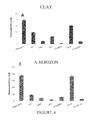
- A PowerlyzerTM (PowerLzer), PowerSoilTM DNA isolation kit (MoBio) while the published methods included OU (See Zhao, J., et al., Appl. Environ. Microbiol . (1996) 62: 316-322), MSU (See Hwang, C. et al., The ISME Journal (2009) 3, 47-64), H01 (See Hurt et al., Appl. Environ. Microbiol . (2001) 67: 4495-4503), CTABIPA (See DeAngelis, K.
- PowerlyzerTM PowerLzer
- MoBio PowerSoilTM DNA isolation kit
- OU See Zhao, J., et al., Appl. Environ. Microbiol . (1996) 62: 316-322
- MSU See Hwang, C. et al., The ISME Journal (2009) 3, 47-64
- H01 See Hurt et al., Appl. Environ. Microbiol .
- OTU operational taxonomic units
- FIG. 7 OTU overlap among DNA extraction methods. Venn diagrams prepared using Mothur from the combined OTUs accessed using experimental replicate extractions from iron oxide cemented clay (left), and deciduous forest A-horizon soil (right). OTUs were from de-noised 454 pyrotag sequencing data with singletons identified as occurring only once across all methods for a given environment removed.
- a Data is the average (OTU's/read) among replicate extractions.
- nucleic acid extraction methods were conducted and compared to the method of the current disclosure for quality and quantity of nucleic acid isolates.
- the current disclosure provides methods for isolating nucleic acid from environmental samples that are otherwise recalcitrant to yielding nucleic acid residing within the sample.
- the present methods are premised on the discovery that the use of a concentrated sodium phosphate buffer in the isolation process can effectively counteract against the positive charges present in an environmental sample which are believed to prevent an effective recovery of nucleic acid (generally negatively charged) from the sample.
- the data described herein demonstrate that after cell lysis, nucleic acid extraction and centrifugation, washing the resulting sample pellet with a concentrated sodium phosphate buffer releases negatively charged nucleic acid previously adsorbed by the multivalent cations present on the surface of the environmental materials, thus maximizing desorption of the nucleic acid.
- the methods of the current disclosure further demonstrate that the addition of sodium phosphate buffer during the cell lysis process inhibits adsorption of nucleic acid, resulting in a higher yield of nucleic acid from the sample.
- the methods described herein show that treatment of a sample with concentrated sodium phosphate buffer facilitates both competitive desorption during post-lysis washing and inhibits nucleic acid adsorption during cell lysis resulting in the isolation of nucleic acids of sufficient quantity and quality that enable an in-depth analysis of the extant microbial community present in an environmental sample.
- the term “environmental sample” or “sample”, refers to a sample containing material from the natural environment.
- the natural environment is meant to encompass the biosphere, or any environment containing positively charged particles or materials wherein genetic material may be found.
- the environmental sample contains positively charged particles and genetic material including, nucleic acids.
- Environmental samples include, but are not limited to, samples taken from any soil (encompassing all of the soil types and depths), water or liquid (encompassing all freshwater aquatic, or marine habitats), sediment (encompassing marine sediment, lake or river sediment, or mud sediment) or atmospheric dust or particulate.
- an environmental sample contains a multitude of species or a single species.
- species refers to any taxonomic grouping of genetically distinct organisms. Species and organisms need not be living organisms, but merely possess genetic material in the form of nucleic acid.
- soil refers to environmental samples of soil, manure, compost, and the like, e.g., commercial potting mixtures, commercial soil amendments.
- the term also includes a broad range of organic carbon and nitrogen content and varying sand, silt and/or clay compositions.
- Soil as used herein includes any composition containing components commonly associated with habitable and uninhabitable areas of the earth, including for example varying descriptions, e.g., dust, dirt, mud, muck, silt, ground, compost, composting landfills at various depths.
- Non-limiting examples of soil include landfill (e.g., 0-3 inches deep or 3-6 inches deep); A-horizon soil; animal manure (e.g., horse manure); mulch, e.g., mulch top soil; the ocean floor, hillsides, mountaintops and may extend from the surface to any depth.
- A-horizon or “topsoil” as used in the current disclosure shall mean a soil layer having formed at the surface (e.g., 0-12 inches deep) exhibiting obliteration of all or much of the original rock structure and show one or both of the following; an accumulation of humified organic matter intimately mixed with the mineral fraction, or properties resulting from cultivation, pasturing, or similar kinds of disturbance.
- sediment means particles, fragments or portions of inorganic or organic material that are transported and deposited by natural means (e.g., water, wind, glacial action, or gravity) that settle within a body of water (e.g., a lake, marine environment, river, or marsh).
- natural means e.g., water, wind, glacial action, or gravity
- Non-limiting examples of sediment as used in the methods of the current disclosure include, marine sediment; river sediment, lake sediment and mud sediment deposited within slow moving bodies of water or standing water.
- Specific examples of sediment deposits for use in the current methods include, but are not limited to, sand, river runoff, silt, mud or clay deposits at the bed or shelf of a body of water.
- clay sample as used in the current disclosure means an earthy environmental sample containing a combination of aluminum (Al 3+ ), iron (Fe 3+ and/or Fe 2+ ) and humic acids.
- Humic acids as used herein refer to any dibasic or tribasic acid containing carboxyl and phenol functional groups. Humic acids result from the degradation of organic material, such as plants, animals or detritus.
- Humic acid or humic acids as used in the current disclosure include fulvic acids and other low molecular weight acids capable of forming ionic complexes with positively charged ions present in soil or sediments including, but not limited to, magnesium (Mg 2+ ), manganese (Mn 2+ ), calcium (Ca 2+ ), lead (Pb 2+ ) and Fe.
- Humic acids are naturally occurring, polyelectrolytic, heterogeneous, organic substances that are generally dark brown in color, of relatively high molecular weight and, typically, resistant to degradation. Humic acids are found in water, air-borne organic materials, soils and sediments, and inhibit enzymatic (polymerase) activities characteristic of nucleic acid amplification techniques such as the polymerase chain reaction (PCR).
- PCR polymerase chain reaction
- Soils and sediments containing high organic carbon content also contain high levels of humic and fulvic acids.
- a clay sample may contain crystalline iron oxide.
- “Crystalline iron oxide” as referred to herein shall mean the naturally occurring mineral, specular hematite having the chemical formula, Fe 2 O 3 . Crystalline iron oxide is also commonly referred to as Specularite, iron oxide, ferric oxide, iron(III) oxide dehydrate or diiron trioxide.
- nucleic acid refers to one or more nucleic acids of any kind, including single- or double-stranded forms.
- a nucleic acid is DNA and in another aspect the nucleic acid is RNA.
- nucleic acid isolated by the present method is originated from one or more biological entities (e.g., viruses, cells, organisms) in a sample (i.e., an environmental sample).
- a biological entity as used herein means any independent organism or thing, alive or dead, containing genetic material (e.g., nucleic acid) that is capable of replicating either alone or with the assistance of another organism or cell.
- Non-limiting examples of sources for nucleic acid containing biological entities of the current disclosure include an organism or organisms including, a cell or cells, bacteria (e.g., Gram positive or Gram negative), yeast, fungi, algae, viruses, and Firmicutes.
- Nucleic acid isolated using a kit or method of the current disclosure can be from any cell containing organism or portion thereof, including, but not limited to bacteriophages, plasmids, spores, algae, nematodes, protozoa, prokaryotic cells, eukaryotic cells (such as fungal, insect or mammalian cells).
- DNA or RNA detected or isolated using a kit or method of the current disclosure is not necessarily located within a specific organelle but may be found in the cytoplasm, chloroplasts, mitochondria and nuclei of eukaryotic and multicellular organisms including mammals.
- an organism of the current disclosure includes bacteria, algae, viruses, fungi, and mammals (e.g., humans).
- Gram negative bacteria means any bacteria having a cell envelope with an additional outer membrane facing the external environment composed of phospholipids and lipopolysaccharides. Gram-negative bacteria are identified by their inability to retain the crystal violet dye in the Gram stain protocol. Thus, Gram negative bacteria appear red or pink following a Gram stain procedure.
- Non-limiting examples of Gram negative bacteria that can be detected and/or whose nucleic acid can be isolated using the kits and methods of the invention include but are not limited to Gram negative rods (e.g., anaerobes such as bacteroidaceae (e.g., Bacteroides fragilis ), facultative anaerobes, enterobacteriaceae (e.g., Escherichia coli ), vibrionaceae (e.g., Vibrio cholerae ), pasteurellae (e.g., Haemophilus influenzae ), and aerobes such as pseudomonadaceae (e.g., Pseudomonas aeruginosa ); Gram negative cocci (e.g., aerobes such as Neisseriaceae (e.g., Neisseria meningitidis ) and Gram negative obligate intracellular parasites (e.g., Rickettsiae (e.g., Ricket
- Gram negative bacteria families that can be detected and/or whose nucleic acid can be isolated include, but are not limited to, Acetobacteriaceae, Alcaligenaceae, Bacteroidaceae, Chromatiaceae, Enterobacteriaceae, Legionellaceae, Neisseriaceae, Nitrobacteriaceae, Pseudomonadaceae, Rhizobiaceae, Rickettsiaceae and Spirochaetaceae.
- Gram positive bacteria means any bacteria that retains crystal violet dye and thus appears dark blue of violet following the Gram stain procedure.
- Examples of Gram positive bacteria that can be detected and/or whose nucleic acid can be isolated using the kits and methods of the current disclosure include, but are not limited to, Firmicutes, A. globiformis, B. subtilis, C. renale, M. luteus, R. erythropolis , Ea39, Ben-28 and S. lividans .
- Gram positive bacteria that can be detected and/or whose nucleic acid can be isolated also are in groups that include, for example, Corynebacterium, Mycobacterium, Nocardia; Peptococcus (e.g., P.
- Peptostreptococcus e.g., Ps. Anaerobius
- some species in the group are capable of fermentation, reduction of nitrate, production of indole, urease, coagulase or catalase
- Ruminococcus Sarcina; Coprococcus
- Arthrobacter e.g., A. globiformis, A. citreus or A. nicotianae
- Micrococcus e.g., M. luteus, M. lylae, M. roseus, M. agilis, M. kristinae and M. halobius
- Bacillus e.g., B. anthracis, B.
- azotoformans B. cereus, B. coagulans, B. israelensis, B. larvae, B. mycoides, B. polymyxa, B. pumilis, B. stearothormophillus, B. subtilis, B. thuringiensis, B. validus, B. weihenstephanensis and B. pseudomycoides ); Sporolactobacillus; Sporocarcina ; Filibacter; Caryophanum and Desulfotomaculum .
- Clostridium which often include peritrichous flagellation, often degrade organic materials to acids, alcohols, CO 2 , H 2 and minerals (acids, particularly butyric acid, are frequent products of clostridial fermentation), and in one aspect form ellipsoidal or spherical endospores, which may or may not swell the sporangium.
- Species of Clostridium that can be detected and/or whose nucleic acid can be isolated include psychrophilic, mesophilic or thermophilic species, saccharolytic species, proteolytic species and/or specialist species, and those that are both saccharolytic and proteolytic species.
- Saccharolytic species of Clostridium that can be detected and/or whose nucleic acid can be isolated include but are not limited to Cl. aerotolerans, Cl. aurantibutyricum, Cl. beijerinckii, Cl. botulinum, Cl. butyricum, Cl. chauvoei, Cl. difficile, Cl. intestinale, Cl. novyi A, Cl. pateurianum, Cl. saccharolyticum, Cl. septicum, Cl. thermoaceticum , and Cl. thermosaccharolyticum.
- nucleic acid library refers to a compilation of genetic constructs, each comprising a DNA or RNA fragment stably inserted into a genetic vector whereby, the nucleic acid containing construct is capable of replication within a host organism.
- the nucleic acid library or library is a DNA expression library, wherein the DNA fragment of interest is operably inserted into an expression vector (e.g., cloning), such that the DNA fragment is capable of being transcribed and translated into a polypeptide.
- amplicon shall mean nucleic acid sequences that are formed as a result of natural or artificial nucleic acid amplification or replication.
- a nucleic acid sequence may be amplified as a result of polymerase chain reaction (PCR) or gene duplication events.
- PCR polymerase chain reaction
- high molecular weight as used in the current disclosure means nucleotides greater than or equal to 20,000 base pairs (bp) in length.
- High molecular weight nucleic acids range between 20 kilobase pairs (kb) and 500 kb, inclusive.
- high molecular weight nucleic acid length is between 20 kb and 100 kb, inclusive.
- high molecular weight nucleic acid is between 20 kb and 50 kb, inclusive.
- sodium phosphate buffer or “phosphate buffer” as used herein shall mean a solution containing any of the following alone or in combination: NaH 2 PO 4 , Na 2 HPO 4 , Na 3 PO 4 , at a pH between 7 and 9, inclusive.
- Non-limiting examples include 0.5 M NaH 2 PO 4 with 0.5 M Na 2 HPO 4 at pH 7.2 (wash buffer).
- the sodium phosphate buffer exists at a pH between 7.0 and 9.0, inclusive.
- sodium phosphate buffer is between 0.3 M and 1.2 M, or between 0.5M to 1.1M, of NaH 2 PO 4 with Na 2 HPO 4 at pH of about 7.0.
- sodium phosphate buffer is 1M NaH 2 PO 4 with Na 2 HPO 4 at a pH between 7.0 and 8.0, inclusive. In certain aspects of the current methods sodium phosphate buffer is 1M NaH 2 PO 4 with Na 2 HPO 4 at pH 8.0 and 1M NaH 2 PO 4 with Na 2 HPO 4 at pH 7.2.
- Adsorption or “adsorb” as used herein shall mean generally, the binding or adhesion of molecules, ions or particles to a solid surface.
- the binding of a molecule to the surface of a solid is reversible when the bonds formed between the solid surface and the adsorbent are broken.
- a non-limiting example of adsorption as used in the current disclosure is the adhesion of a negatively charged nucleic acid to the positively charged surface of a clay particle or soil sample.
- desorption or “desorb” as used in the current disclosure means the release of a bound ion, molecule or particle adhered to the surface of a solid. Desorption can occurs as a result of competitive entities (ions, molecules or particles) replacing previously bound entities or the dissociation of adsorbed materials from the surface to which they are bound. Non-limiting examples of desorption as referenced in the current methods includes, the release of adsorbed nucleic acids from the charged surface of clay particles.
- agent is employed herein to refer to any kind of compound, molecule or ion and any combination thereof.
- the agent is a small molecule.
- the agent is a biological molecule, including, but not limited to, a protein or a peptide or a nucleic acid, or an ion.
- the agent is a capable of binding charged ions in solution (e.g., chelation).
- the agent changes the pH of a solution or mixture (e.g., buffering).
- peptide or “protein” refers to a linear series of amino acid residues linked to one another by peptide bonds between the alpha-amino and carboxy groups of adjacent amino acid residues.
- binding refers to any stable, rather than transient, chemical bond between two or more molecules, including, but not limited to, covalent bonding, ionic bonding, and hydrogen bonding.
- this term also encompasses interaction between a nucleic acid molecule and a positively charged particle such as a cation or other positively charged agents.
- nucleic acid isolation procedures generally involve cell lysis and extraction with a combination of denaturing agents, chelating agents, proteolytic enzymes and non-ionic or anionic detergents and buffers. Following lysis and extraction and a subsequent centrifugation, the nucleic acids are separated from the supernatant via treatment with phenol/chloroform (or isoamyl alcohol) solution, to remove most of the undesirable cell lysis byproducts. The nucleic acid is then precipitated out of solution by the addition of alcohol (e.g., isopropanol), and optionally further purified by a variety of known methods including, but not limited to, treatment with ethanol.
- alcohol e.g., isopropanol
- nucleic acid isolation from environmental samples containing positively charged particles results in nucleic acid yields that are severely reduced or absent all together due to adsorption of the nucleic acids to the positively charged particles.
- the current methods provide a nucleic acid isolation process by which nucleic acid is efficiently isolated from an environmental sample.
- the present methods are premised on the discovery that the use of a concentrated sodium phosphate buffer in the isolation process can effectively counteract against the positive charges present in an environmental sample.
- a concentrated sodium phosphate buffer is used to wash lysed materials after the cell lysis and extraction steps to desorb any nucleic acid bound to positively charged particles during the lysis and extraction steps.
- a sodium phosphate buffer is used in the lysis step to prevent adsorption of nucleic acids to positively charged particles in the sample.
- a sodium phosphate buffer is used in both the lysis step and a wash step. The present methods do not require heating during any step, are easy to implement, and have been demonstrated to efficiently isolate nucleic acid from environmental samples that are otherwise recalcitrant to yielding nucleic acid, at sufficient quantity and quality.
- an environmental sample is obtained and the sample is subjected to a lysis process whereby the environmental sample is mixed with a lysis solution, optionally containing a sodium phosphate buffer, in the presence of liquid nitrogen.
- the resulting lysed material is then subjected to an extraction process whereby the lysed material is mixed with extraction solution and separated into a sample pellet and a supernatant via centrifugation.
- the resulting supernatant containing extracted nucleic acid is collected and the remaining pellet is washed in a concentrated sodium phosphate buffer, at least once to desorb any nucleic acid bound to positively charged particles during the lysis process.
- the supernatant from the wash is then collected and can be combined with the supernatant obtained from the extraction process, and the collected supernatant(s) can be treated with phenol/chloroform (or isoamyl alcohol) solution to further separate the nucleic acids from other cellular or environmental materials (e.g., denatured proteins, organelle membranes and/or environmental material).
- phenol/chloroform or isoamyl alcohol
- the extracted nucleic acids present in an aqueous (top) layer are precipitated out of solution via the addition of alcohol (e.g., isopropanol) and purified by known methods or by washing with ethanol.
- An environmental sample may be collected by any means known to one of ordinary skill in the art or by using any commercially available or improvised method, and tested directly or stored prior to use.
- sample collection techniques for use in the current methods are exemplified in Colwell, Human pathogens in the aquatic environment , pp. 337-344 In Colwell and Foster (eds.). Aquatic Microbial Ecology (1979); Fenical and Jenson, Marine Microorganisms: A New Biomedical Resource. (1992) Advances in Marine Biotechnology, vol. I: Pharmaceutical and Bioactive Natural Products, pp. 419-457, D. Attaway, O.
- nucleic acid is extracted using a kit or method of the invention at the site of collection, or the sample may be stored before a nucleic acid is isolated therefrom.
- the environmental sample may be frozen and stored at a temperature between ⁇ 60° C. to ⁇ 80° C., inclusive.
- the sample may be stored at a temperature below or equal to 35° C. until use.
- stream sediment core samples consisting of a mixture of gravel and iron cemented clay were obtained from a stream or creek bed at a depth of 45 cm below the surface.
- the cores were frozen in the field in liquid nitrogen and stored at ⁇ 80° C. until subjected to nucleic acid isolation processes.
- the environmental sample was obtained from deciduous forest A-horizon soil.
- A-horizon environmental samples were placed in a plastic bag and root and other large material (e.g., rocks, gravel, leaves) were removed. The residual soil was then manually mixed to prepare a uniform soil sample.
- the environmental sample obtained was iron cemented clay of uniform texture and a consistent moisture content of 24%, which was extracted from greater than 15 cm below the surface of A-horizon soil and maintained at a temperature below 35° C. until subjected to a nucleic acid isolation processes.
- clay samples for use in the current methods were obtained from larger environmental samples by cutting away exterior portions of the environmental sample using a sterile spatula and extracting a smaller portion of clay.
- the clay sample used in the current methods is between 0.1 g-0.5 g, 0.2 g to 2 g, 0.1 g and 5 g, inclusive, or greater than 5 g.
- the sample is subjected to a lysis process.
- the sample is mixed with a lysis solution in the presence of liquid nitrogen thereby obtaining lysed material.
- the lysis solution contains a denaturing agent, an ionic buffer, and a chelating agent.
- a denaturing agent can be any agent known to one of ordinary skill in the art that disrupts or destroys the secondary and tertiary structure of a protein or proteins or other cellular material, excluding nucleic acids.
- Non-limiting examples of denaturing agents for use in the current methods include those used in conventional cell lysis solutions, such as, strong acids or bases, concentrated salts (e.g., NaCl), or organic solvents that when applied to cells disrupts the interactions (e.g., covalent or non-covalent bonds, Van der Waals interactions, hydrogen bonding) between the amino-acid side chains of proteins and/or the alpha-helical and beta-sheet patterns of cellular proteins.
- strong acids or bases e.g., NaCl
- organic solvents e.g., organic solvents that when applied to cells disrupts the interactions (e.g., covalent or non-covalent bonds, Van der Waals interactions, hydrogen bonding) between the amino-acid side chains of proteins and/or the alpha-helical and beta-sheet patterns of cellular proteins.
- denaturing agents of the current methods include, but are not limited to, urea, guanidine chloride, guanidine HCL, guanidine isothiocynanate, phenol, 2-mercaptoethanol, ethanol, methanol, acetic acid, trichloroacetic acid, sulfosalicylic acid, or dithothreitol.
- Denaturing agents can be applied to in any concentration appropriate to denature proteins or cellular materials, such as membranes. The concentration of denaturing agents to be used will vary depending on the amount and volume of sample being processed.
- Non-limiting examples of functional concentrations of denaturing agents for use in the current methods include, 4 to 6 M guanidine isothiocyanate, 4 to 6 M guanidine HCl, 5 to 20 ul/ml of 2-mercaptoethanol, and 1 to 4 M NaCl, inclusive.
- Nucleic acids are sensitive to pH. At a high pH (pH>9) DNA is known to denature and the form single stranded DNA (ssDNA), meanwhile, at low pH DNA will depurinate, which dissociates the double helix structure by hydrolyzing the phosphodiester backbone. Thus, it is important to maintain a neutral pH (pH between 6.0 and 9.0) in solutions when working with nucleic acids.
- ionic buffers are used to maintain a neutral pH that will not denature the nucleic acid being isolated. Ionic buffers are any solution or agent that when present in a mixture maintains a stable, neutral pH between 6.0 and 9.0, inclusive. Ionic buffers can be applied in any concentration necessary to maintain a neutral pH in solution.
- the concentration of ionic buffer to be used will vary depending on the amount and volume of sample being processed, as well as the composition of a solution.
- Non-limiting examples of functional concentrations of ionic buffer for use in the current methods include, 50 to 500 mM Tris(hydroxymethyl)aminomethane (Tris), 50-500 mM 3-(N-morpholino)propanesulfonic acid (MOPS), 50-500 mM 2-[4-(2-hydroxyethyl)piperazine-1-yl]ethanesulfonic acid (HEPES), inclusive.
- Non-limiting examples of ionic buffers for use in the current methods include, but are not limited to, Tris(hydroxymethyl)aminomethane (Tris), 3-(N-morpholino)propanesulfonic acid (MOPS), 2-[4-(2-hydroxyethyl)piperazine-1-yl]ethanesulfonic acid (HEPES).
- Tris(hydroxymethyl)aminomethane Tris
- MOPS 3-(N-morpholino)propanesulfonic acid
- HEPES 2-[4-(2-hydroxyethyl)piperazine-1-yl]ethanesulfonic acid
- a chelating agent is added to the lysis solution to bind metal ions thereby inhibiting the activity of cation dependent enzymes and maintaining the integrity of nucleic acid.
- chelating agents for use in the current methods include, but are not limited to, ethylenediaminetetraacetic acid (EDTA), ethylene glycol tetraacetic acid (EGTA) and ethylenediamine.
- EDTA ethylenediaminetetraacetic acid
- EGTA ethylene glycol tetraacetic acid
- Chelating agents can be applied in any concentration necessary to competitively bind ionic material in a solution of the current disclosure.
- the concentration of chelating agents to be used will vary depending on the amount and volume of sample being processed.
- Non-limiting examples of functional concentrations of chelating agents for use in the current methods include, 5 to 500 mM EDTA, inclusive.
- the lysis solution contains a detergent.
- Detergent when added to the lysis solution causes the cell membrane to break down by dissolving the lipids and proteins of the cell and disrupting the bonds that maintain the integrity of the membrane. Detergent then interacts with the denatured lipids and proteins, causing them to precipitate out of solution.
- Non-limited examples of detergents for use in the current methods include, sodium dodecyl sulfate (SDS), sarkosyl, sodium lauryl sarcosinate, cetyltrimethyl ammonium bromide (CTAB), cholic acid, deoxycholic acid, benzamidotaurocholate (BATC), octyl phenol polyethoxylate, polyoxyethylene sorbitan monolaurate, tert-octylphenoxy poly(oxyethylene)ethanol, 1,4-piperazinebis-(ethanesulfonic acid), N-(2-acetamido)-2-aminoethanesulfonic acid, polyethylene glycol tert-octylphenyl ether (Triton® X-100), (1,1,3,3-tetramethylbutyl)phenyl-polyethylene glycol (Triton® X-114) and any combination thereof.
- SDS sodium dodecyl sulfate
- Detergents can be applied to in any concentration necessary to break down the membrane of cells within an environmental sample.
- concentration of detergent to be used will vary depending on the amount and volume of sample being processed.
- functional concentrations of detergents for use in the current methods include, 0.1% to 10% weight by volume sarkosyl (including 0.1%, 0.5%, 1%, 5%, and 10% w/v, for example), and 0.1% to 10% weight by volume CTAB (including 0.1%, 0.5%, 1%, 5%, and 10% w/v, for example).
- serum albumin protein is added to the lysis solution.
- Serum albumin is commonly used to stabilize enzymes and prevent adhesion of molecules to reaction tubes, thus in certain instances it is beneficial to add serum albumin protein to the lysis solution.
- Specific examples of serum albumin for use in the current methods include, but are not limited to, human albumin serum and bovine albumin serum (BSA). Serum albumin can be added to solution at any concentration necessary to stabilize enzymes or prevent the adhesion of molecules to reaction materials (e.g., centrifuge tubes or collection devices).
- Non-limiting examples of functional concentrations of serum albumin for use in the current methods includes, 1% to 25% weight by volume BSA (including 1%, 5%, 10%, 15%, 20% and 25%, for example).
- adsorption of nucleic acid is inhibited by the addition of a sodium phosphate buffer in the lysis solution.
- a sodium phosphate buffer can be added to the lysis solution at a concentration of between 300 mM to 1.2 M; or between 500 mM to 1.0 M.
- suitable concentrations of the sodium phosphate buffer are 300 mM, 400 mM, 500 mM, 600 mM, 700 mM, 800 mM, 900 mM, 1M, 1.1M and 1.2 M, and any value between these specific values.
- sodium phosphate buffer is present at a neutral pH between 6.0 to 9.0, or between 7.0 to 8.0, inclusive.
- the sodium phosphate buffer present in the lysis solution is 600 mM NaH 2 PO 4 with Na 2 HPO 4 at pH 7.2, 1.0 M NaH 2 PO 4 with Na 2 HPO 4 at pH 7.2 or 1M NaH 2 PO 4 with Na 2 HPO 4 at pH 8.0.
- the lysis solution consists of: 4 M guanidine isothiocyanate; 100 mM Tris pH 7.0, 20 mM EDTA, 0.6% sarkosyl, and 10 ⁇ l/ml 2-mercaptoethanol; or, alternatively, 1 M sodium phosphate buffer (pH 7.2), 4 M guanidine isothiocyanate, 10 ⁇ l/ml 2-mercaptoethanol.
- the lysis solution contains: 1 M sodium phosphate buffer and 6 M guanidine HCl; or 1 M sodium phosphate buffer pH 8.0 and 6 M guanidine HCl.
- An aspect of the current method includes obtaining a lysed material from an environmental sample containing cells, wherein the cells are lysed in the presence of liquid nitrogen.
- samples are loaded into sterile autoclaved mortars and dispersed with a pestle and overlaid with liquid nitrogen (LN 2 ), ground until thawed and collected from the mortar.
- LN 2 liquid nitrogen
- the environmental sample is frozen with liquid nitrogen, ground until thawed, refrozen with liquid nitrogen and ground again until thawed.
- liquid nitrogen is applied more than twice and the subsequent frozen sample is ground until thawed repeatedly, prior to collection of the lysed material.
- lysis can occur by any method known by one skilled in the art, so long as the lysis method does not sheer (e.g., bead milling) or denature (e.g., heating the sample above 35° C., e.g., heating at 35° C., 40° C., 45° C., 50° C., 55° C., 60° C., 65° C. or higher) the nucleic acid during the lysis process.
- Non-limiting examples of lysis processes to be used in the current methods include physical, chemical, and enzymatic lysis or any combination thereof.
- Extraction solution as used in the current disclosure shall mean any solution containing, a chaotropic agent; an ionic buffer; and a chelating agent.
- a chaotropic agent is any agent or substance that denatures molecules such as proteins or inhibits enzymatic activity.
- Non-limiting examples of chaotropic agents of the current methods include, urea, salt (e.g., NaCl), or alcohols such as phenol, or isoamyl alcohol.
- the chaotropic agent is urea. Chaotropic agents can be added to a solution at any concentration necessary to disrupt or denature protein conformation.
- the concentration of chaotropic agents to be used in the current methods will vary depending on the amount and volume of sample being processed.
- Non-limiting examples of functional concentrations of chaotropic agents for use in the extraction process of the current methods include, 2 to 10 M urea, and 0.5 to 3M NaCl, inclusive.
- Ionic buffers for use in the extraction process are defined above. In specific embodiments the ionic buffer present in the extraction solution is MOPS.
- Chelating agents for incorporation into the extraction solution are listed above. Specifically, EDTA can be added to the extraction process for chelation of metal ions in the solution.
- sodium phosphate buffer can be added to the extraction buffer at any concentration to improve the yield, quality and size of nucleic acid isolated from the sample.
- Non-limiting examples of sodium phosphate buffer concentrations useful in the current methods include, sodium phosphate buffer at a concentration between 0.1 M and 1.2 M, 0.1 M and 0.6 M, 0.3M and 1.0M, and 0.6 M to 1.0M.
- the extraction solution for use in the current methods is 6.4 M urea, 1 M NaCl, 100 mM MOPS (pH 7.0), 40 mM EDTA; or 100 mM Tris; 1M NaCl; 100 mM sodium phosphate buffer, 20 mM EDTA, 1% SDS.
- the extraction process includes mixing the lysed materials with an extraction solution in the presence of a detergent.
- Detergents added during the extraction process act as dehydrating agents that promote precipitation of nucleic acids from solution.
- Detergents useful in the lysis process are similarly useful in the extraction process.
- Non-limiting examples of specific detergents for incorporation in the extraction process include sarkosyl, SDS, and CTAB.
- the extraction process includes, mixing the extraction solution with an equal volume of chloroform:isoamyl alcohol (49:1) and subjecting to centrifugation.
- the extraction solution is mixed with a solution containing phenol chloroform and spun via centrifugation to create an aqueous top lay containing nucleic acids and a lower liquid layer containing cellular byproducts and a sample pellet.
- the lysed materials are collected from the mortar by washing with extraction solution, subjected to centrifugation, and mixed with chloroform: isoamyl alcohol (49:1) and subjected to centrifugation leaving a sample pellet and supernatant containing nucleic acids.
- the lysed materials are collected from the mortar by washing with extraction solution, mixed, subjected to centrifugation and treated with a detergent, again centrifuged, and mixed with chloroform: isoamyl alcohol (49:1) and subjected to centrifugation to obtain a pellet and supernatant containing nucleic acids.
- potassium acetate is added to the extraction mixture after the addition of the detergent, SDS to precipitate SDS and enable the detergent to be separated from the nucleic acid containing solution by a subsequent centrifugation.
- the lysed materials are collected from the mortar by washing with extraction solution, containing either 6.4 M urea, 1 M NaCl, 100 mM MOPS (pH 7.0), 40 mM EDTA, or alternatively, 100 mM Tris; 1M NaCl; 100 mM NaH 2 PO 4 , 20 mM EDTA, 1% SDS; is mixed and subjected to centrifugation, and mixed with chloroform: isoamyl alcohol (49:1) and subjected to centrifugation leaving a sample pellet and supernatant containing nucleic acids.
- extraction solution containing either 6.4 M urea, 1 M NaCl, 100 mM MOPS (pH 7.0), 40 mM EDTA, or alternatively, 100 mM Tris; 1M NaCl; 100 mM NaH 2 PO 4 , 20 mM EDTA, 1% SDS; is mixed and subjected to centrifugation, and mixed with chloroform: isoamyl alcohol
- the lysed materials are collected from the mortar by washing with extraction solution, containing either 6.4 M urea, 1 M NaCl, 100 mM MOPS (pH 7.0), 40 mM EDTA, or 100 mM Tris; 1M NaCl; 100 mM NaH 2 PO 4 , 20 mM EDTA, 1% SDS; is subjected to centrifugation, a detergent mixture containing sarkosyl and CTAB is added to the mixture and the resulting solution is then mixed and treated with potassium acetate before being subjected to centrifugation and mixed with chloroform:isoamyl alcohol (49:1); and centrifuged leaving a sample pellet and supernatant containing nucleic acids.
- extraction solution containing either 6.4 M urea, 1 M NaCl, 100 mM MOPS (pH 7.0), 40 mM EDTA, or 100 mM Tris; 1M NaCl; 100 mM NaH 2 PO 4 , 20 mM
- An aspect of the current disclosure includes collecting the supernatant after completion of the extraction process and subsequent centrifugation, and washing the sample pellet with a wash solution. Washing as described herein facilitates desorption of negatively charged nucleic acids from the positively charged surface of particles contained within the environmental sample pellet.
- the wash solution used in the methods of the current disclosure contains at least 0.3 M sodium phosphate buffer.
- Non-limiting examples of wash solution useful for the current methods include sodium phosphate at a concentration in the range of 300 mM to 1.2 M; or 500 mM to 1.0 M.
- suitable concentrations of the sodium phosphate buffer for use in the washing step are 300 mM, 400 mM, 500 mM, 600 mM, 700 mM, 800 mM, 900 mM, 1M, 1.1M and 1.2 M, and any value between these specific values.
- the sodium phosphate buffer has a neutral pH between 6.0 to 9.0, or between 7.0 to 8.0, inclusive.
- the wash buffer consists of 1 ml/g [500 mM NaH 2 PO 4 with Na 2 HPO 4 at pH 7.2 or 1.0 M NaH 2 PO 4 with Na 2 HPO 4 at pH 7.2].
- the wash buffer in addition to sodium phosphate, also contains one or more additional agents that contribute to stabilization of desorbed nucleic acid or further promote desorption.
- additional agents include a chaotropic agent (e.g., urea, NaCl), a detergent (e.g., sarkosyl, SDS), serum albumin proteins (e.g., BSA), and a chelating agent (e.g., EDTA, EGTA).
- the sample pellet is washed in a sodium phosphate buffer mixed vigorously (e.g., vortex or shaking) and centrifuged to obtain a sample pellet and a supernatant containing nucleic desorbed nucleic acid.
- the wash step is repeated more than once. For example, the wash step is repeated twice, three times, four times, or greater.
- the supernatant resulting from the wash step or steps is collected (e.g., centrifuge tube).
- the supernatant collected from the wash step and/or additional wash steps are combined with the supernatant collected after the extraction process or previous washes.
- the supernatant collected after washing with sodium phosphate buffer is subjected to an extraction process (i.e., a repeat extraction process).
- the supernatant collected after the wash is subjected to nucleic acid precipitation directly.
- the method for isolating nucleic acid from an environmental sample includes lysing the cells in the presence of sodium phosphate buffer to reduce adsorption of nucleic acid to positively charged particles in the sample, subjecting the lysed materials obtained from the lysis process to an extraction process, washing the pellet obtained after centrifugation in phosphate buffer to desorb nucleic acids bound to cationic particles in the environmental sample; prior to isolating the nucleic acids via precipitation and subsequent purification steps.
- the method for isolating nucleic acid from an environmental sample includes lysing the cells in a lysis solution without sodium phosphate buffer, subjecting the lysed materials to an extraction process, washing the pellet obtained after centrifugation in phosphate buffer to desorb nucleic acids bound to cationic particles in the environmental sample; prior to isolating the nucleic acids via precipitation and subsequent purification steps.
- the method for isolating nucleic acid from an environmental sample includes lysing cells in the presence of sodium phosphate to prohibit adsorption, subjecting the lysed materials obtained from the lysis process to an extraction process and subjecting the resulting supernatant to the subsequent precipitation and purification steps.
- sodium phosphate buffer is present in the extraction solution as well as the lysis solution and/or wash solution.
- sodium phosphate buffer is present in the extraction step and wash solution but not the lysis solution.
- sodium phosphate buffer is present in the extraction step and lysis solution but no wash step is conducted.
- sodium phosphate buffer is present in both the lysis solution and the extraction solution, and at least one wash step is conducted on the sample pellet.
- Nucleic acids extracted from the environmental sample using the current methods will be present in solution (i.e., supernatant(s)) resulting from the extraction process and/or wash step(s).
- the nucleic acid In order to isolate the nucleic acid from the collected supernatants the nucleic acid must be precipitated in the presence of alcohol (e.g., isopropyl alcohol (isopropanol) and/or ethyl alcohol (ethanol)).
- alcohol e.g., isopropyl alcohol (isopropanol) and/or ethyl alcohol (ethanol)
- a Non-limiting example of a nucleic acid precipitation process for use in the current methods includes the addition of isopropanol, mixing, and subsequent centrifugation creating a nucleic acid pellet and a supernatant. The supernatant is then discarded and the remaining nucleic acid pellet is purified.
- Nucleic acid purification methods are well known to those of ordinary skill in the art.
- the methods of the present disclosure are amenable to use with any known purification method, including, but not limited to, ethanol washing, chromatography, gel filtration, QIAGEN AllPrep DNA/RNA kit, SephadexTM G75 kits, WizardTM DNA Clean-Up System (Promega, Madison, Wis.), PowerSoilTM DNA CleanUp reagents (MoBio), QIAGEN Total Nucleic Acid purification system, SV Total RNA isolation system (Promega, Madison, Wis.), NucleoBond system (Clontech, Palo Alto, Calif.) and RNA Tack Resin (BIOTECX laboratories, Houston, Tex.).
- the precipitated nucleic acid pellet is washed one or more times with between 70% and 100% ethanol.
- the nucleic acid pellet is resuspended into solution.
- the nucleic acid pellet is suspended in diethylpyrocarbonate (DEPC) treated H 2 O.
- the nucleic acid pellet is suspended in Tris-EDTA buffer (TE buffer) at a pH from 7.0 to 8.1.
- the current methods do not heat the sample at to a temperature that would denature the nucleic acid (i.e., above 35° C.) or employ lysis techniques that sheer nucleic acid (i.e., bead milling), and thus nucleic acid isolated by the current methods are typically of high molecular weight ( ⁇ 20 kb).
- the isolated nucleic acid isolated via the current methods will be of sufficient quality and quantity enabling the nucleic acids to be analyzed as desired by the end user.
- the nucleic acid comprises RNA, and the RNA can be reverse transcribed into cDNA after precipitation of the isolation procedure.
- the nucleic acid is contacted with a restriction enzyme and digested after precipitation of the isolation procedure.
- the isolated nucleic is analyzed by mass spectrometry; agarose, capillary or polyacrylamide electrophoresis; hybridization; an array; a microarray; an enzymatic reaction; a fluorescent assay; a radioactive assay; a chromatographic assay; or, a combination thereof.
- the nucleic acid is contacted with one or more oligonucleotides after precipitation of the isolation procedure.
- one or more of the oligonucleotides hybridizes to the nucleic acid.
- a nucleic acid is immobilized to a solid surface or is hybridized to a nucleic acid immobilized on a solid surface.
- the methods or kits or the invention can further comprise amplifying the nucleic acid or a portion thereof after precipitation of the isolation procedure.
- the nucleic acid is amplified using a polymerase chain reaction (PCR) procedure, rolling circle replication, ligase-chain reaction or derivative methods thereof.
- the isolated nucleic acids are amplified using pyrosequence tagged primers targeting regions of the 16s rRNA gene to evaluate the diversity of species present in an environmental sample.
- a non-limiting example of species diversity evaluation for use in conjunction with the current methods is quantification of the bacterial 16S rRNA genes using the V1/V3 region for pyrosequencing with the TitaniumTM 454 chemistry. See, e.g., Krober et al., 2009; Voelkerding et al., 2009; Nossa et al., 2010; Ishak et al., 2011.
- the 16s rRNA gene is amplified utilizing primers containing pyrosequencing tags that, when incorporated in to an amplified target sequence, are used to identify individual species of interest and thus can be used to quantify the number of species present in the isolated nucleic acid obtained from an environmental sample of interest.
- amplification products are then evaluated using gel electrophoresis, purified using magnetic particle separation and evaluated for concentration and purity.
- the amplicons are then sequenced using known methods (e.g., 454 Life Sciences TitaniumTM gene sequencer system) and the samples are then compared and analyzed to determine species distinctions present. Analysis optionally includes, the removal of; sequencing errors (e.g., AmpliconNoise algorithm), chimeric sequences using UCHIME, and sequence alignment and trimming to recognize the sequence of interest. See Edgar et al., Bioinform (2011) 27: 2194-2200.
- nucleic acid isolated via the current methods are of sufficient quality and quantity to enable use in systems biology studies including, but not limited to microbial community genomic and transcriptomic studies.
- kits for isolating nucleic acids from an environmental sample containing are applicable to a variety of nucleic acid preparations (e.g., TruRNATM Atom Sciences, Oak Ridge, RNA PowerSoilTM, and PowerlyzerTM MoBio Laboratories, Salona Beach, Ca).
- the kits and methods of the current disclosure are adaptable to a wide range of sample volume, mass and type and nucleic acid yield.
- Three stream sediment core samples were taken from kilometer 5 and 22.3 of East Fork Poplar Creek (EFPC and Hinds Creek, Oak Ridge Tenn., at a depth of 45 cm.
- the cores were frozen in the field in liquid nitrogen and stored at ⁇ 80° C. until nucleic acids were isolated from the samples.
- These cores were heterogeneous in texture and consisted largely of gravel, sand, coal fragments, and iron cemented clay.
- alternative samples containing iron cemented clay were used for method development.
- a clay sample was taken at 20 cm below the surface of deciduous forest A-horizon in Knoxyille, Tenn. and maintained at 21° C. for >3 days.
- A-horizon soil was used to evaluate the reagents and ensure that nucleic acids within were protected throughout the extraction process.
- the iron cemented clay had a uniform appearance and nucleic extractions were performed on 250 mg samples that were taken from larger pieces of core samples by removing portions of the exterior via a sterile spatula.
- A-horizon samples were placed in a plastic bag, root and other material present in larger pieces were removed, and the residual soil was manually mixed to prepare a uniform loamy material.
- the total iron content was determined by digesting 0.5 g soil or sediment (dry weight) in 1 ml concentrated HNO 3 (67-70%) and 0.5 ml concentrated HCl (37.9%) at 95° C. for 4 hours, followed by dilution with deionized water to a final volume of 5 ml as per Luo and Gu, 2011.
- Total metal content in the acid extracts and digests was determined, after appropriate dilutions (10-100 ⁇ ), using an inductively coupled plasma mass spectrometer (ICP-MS, Elan-DRC, PerkinElmer, CT) (Table 3).
- Working standards were prepared in the range from 0.1 to 10 mg/L in dilute HNO 3 (0.01 M).
- Frozen stream sediment samples or live room temperature clay samples and A-horizon samples used for method development were loaded into sterile autoclaved mortars and overlaid with standard lysis solution (4 M guanidine isothiocyanate; 100 mM Tris pH 7.0, 20 mM EDTA, 0.6% sarkosyl, 10 ⁇ l/ml 2-mercaptoethanol) or clay lysis solution (1 M phosphate buffer (pH 7.2), 4 M guanidine isothiocyanate, 10 ⁇ l/ml 2-mercaptoethanol) at a volume of 0.33 ml/g sample at 21° C.
- standard lysis solution 4 M guanidine isothiocyanate; 100 mM Tris pH 7.0, 20 mM EDTA, 0.6% sarkosyl, 10 ⁇ l/ml 2-mercaptoethanol
- clay lysis solution (1 M phosphate buffer (pH 7.2), 4 M guanidine isothiocyanate, 10 ⁇ l/ml 2-mer
- Lysis solution modifications were tested, including the addition of sodium phosphate buffer (see below) at final concentrations ranging from 100 mM to 1.2 M, the removal of the sarkosyl, and inclusion of serum albumin (BSA).
- Samples were dispersed for ⁇ 5 seconds using a pestle and overlaid with liquid nitrogen (LN 2 ), ground until thawed twice, and washed from the mortar into centrifuge tubes with concentrated urea extraction buffer (4.67 ml/g sample; 6.4 M urea, 1 M NaCl, 100 mM MOPS (pH 7.0), 40 mM EDTA) or, alternatively, concentrated salt based extraction buffer (100 mM Tris; 1M NaCl; 100 mM NaH 2 PO 4 , 20 mM EDTA, 1% SDS).
- concentrated urea extraction buffer 4.67 ml/g sample; 6.4 M urea, 1 M NaCl, 100 mM MOPS (pH 7.0), 40
- Extraction solutions were centrifuged (4500 ⁇ g, 10 min, 21° C.) in a bench top centrifuge (large scale preparations), or in a micro-centrifuge (10,000 ⁇ g, 1 min, 21° C.; small scale preparations) depending on the sample quantity.
- a detergent mixture 5% sarkosyl and 5% cetyltrimethylammonium bromide was added (1.3 ml/g), followed by 5 M potassium acetate (0.67 ml/g, pH 5.2).
- the resulting solutions were extracted by vigorous mixing with an equal volume of chloroform:isoamyl alcohol (49:1) and centrifugation (7,100 ⁇ g, 20 min, 21° C.).
- the pellets were resuspended in 1 mug phosphate buffer [500 mM Na 2 HPO 4 , 500 mM NaH 2 PO 4 (pH 7.2)] by vigorous agitation or brief vortex mixing and centrifuged at 10,000 ⁇ g for 1 min. The solution was transferred to a new centrifuge tube, diluted with 2.33 ml/g extraction buffer and handled as described for the initial extraction. Nucleic Acids were precipitated using 0.67 volumes of isopropyl alcohol (21° C., 20 min) and centrifuged (16,000 ⁇ g, 20 min at 21° C.). Precipitates were dissolved in DEPC treated ddH2O (100 ⁇ l/g).
- Humic acid removal was performed using a 1 cm column of Sephadex G-75 molecular exclusion resin (GE Healthcare) supplemented with 0.01 volumes of DEAE Sepharose (Sigma) diluted 1:10 in 500 mM potassium acetate. The column flow-through was collected and where visible discoloration was present, samples were further purified using solutions 1-4 of a MoBio® DNA cleanup system.
- Sephadex G-75 molecular exclusion resin GE Healthcare
- DEAE Sepharose Sigma
- RNA PowerSoilTM, and PowerlyzerTM Three commercial reagent systems for extraction of TNA (TruRNATTM Atom Sciences, Oak Ridge) and RNA (RNA PowerSoilTM, and PowerlyzerTM; MoBio® Laboratories, Salona Beach, Ca) were compared for nucleic acid recovery from soil sediment samples and clay samples. Additionally, selected published methods were compared including the methods described herein as OU (See Zhao, J., et al., Appl. Environ. Microbiol . (1996) 62: 316-322), MSU (See Hwang, C. et al., The ISME Journal (2009) 3, 47-64), H01 (See Hurt et al., Appl. Environ. Microbiol .
- CTABIPA See DeAngelis, K. M., et al., Appl. Environ. Microbiol . (2011) 77(18):6313.
- PA-D See Andeer et al., Appl. Environ. Microbiol . (2012) 78: 163-169. All purchased reagent systems were used according to the manufacturer's protocols.
- ID NO.: 2 is shown in uppercase with the sequence tag identifying the sample shown in bold for one of the reverse primers.
- Primary amplification used 10 ng of purified DNA (2.15 ⁇ 10 6 Escherichia coli genome equivalents) with Platinum® Taq DNA polymerase High Fidelity (Invitrogen®) for 27 dissociation cycles at 95° C. ⁇ 30 seconds, annealing at 55° C. ⁇ 30 seconds, and extension at 68° C. ⁇ 30 seconds.
- the amplification products were evaluated by electrophoresis, purified using magnetic particle separation (AgenCourt® AMPure®XP, Beckman Coulter) and re-evaluated for concentration and purity using an Agilent 2100 BioAnalyzerTM (Agilent Technologies, Inc. Santa Clara, Calif.) and Pico-Green (Promega, Sunnyvale, Calif.) in a Synergy MX Multi-Mode Reader (BioTek).
- the V1-V3 amplicons were then sequenced using a 454 Life Sciences TitaniumTM gene sequencer system according to manufacturer instructions (454 Life Sciences-Roche, Branford, Conn.). All compared amplification products were multiplexed onto a single 454 pyroseqeuncing run. Two libraries amplified from A-Horizon soil samples failed to produce a comparable number of sequences in the multiplexed pyrosequencing file and were discarded.
- the final processed sequences were assigned to OTUs at 3% distance using average linkage clustering in Mothur.
- a representative sequence from each OTU was selected using QIIME (See Caporaso et al., 2010) and assigned to consecutive taxa using the Ribosomal Database Project (RDP) Classifier with a confidence cutoff of 0.5 (See Wang et al., Appl. Environ. Microbiol . (2007) 73: 5261-5267; Cole et al., 2009).
- RDP Ribosomal Database Project
- Overlapping OTUs were calculated across replicates of the three compared extraction methods and across A-horizon and clay samples using the Venn Diagram package in R statistical software. See Chen and Boutros, BMC Bioinform . (2011) 12: 35.
- Rarefaction analysis comparing extraction methods for clay and A-horizon samples was performed by plotting the results of random sequence re-sampling. Outliers (OTUs identified only once across all samples) were removed to support a comparison with prior work that examined the utility of pyrosequencing-based taxon identification microbial community determination. See Zhou et al., ISME (2011) 5: 1303-1313. Rarefaction curves and overlapping OTUs were re-calculated after removing outliers.
- EFPC East Fork Poplar Creek
- the results of the extractions using known methods failed to produce DNA of sufficient quantity or quality necessary for use in molecular analysis.
- the EFPC stream sediment samples largely consisted of a mixture of gravel and iron cemented clay as indicated by a rust color after exposure to air.
- surface A-horizon soil was obtained from deciduous forest and its subsurface iron cemented clay (clay sample) was used.
- the clay sample had a uniform texture and a consistent moisture content of 24% at depths>15 cm below the surface.
- the clay sample had the lowest quantity of acid extractable iron (0.08 mg/g) it contained the highest total iron (38.66 mg/g) following acid digestion, demonstrating that essentially all available iron was in the form of crystalline iron oxides cemented with the clay.
- the surface (A-horizon) soil above the iron cemented clay was used as a positive control to insure that extraction systems were functioning to expectation.
- the A-horizon sample also contained a large amount of iron (Table 3).
- RNA PowerSoilTM reagents (MoBio) alone yielded some nucleic acids from one of the stream sediments ( FIG. 1 , lane 1) but no detectable DNA from the second stream sediment ( FIG. 1 , lane 2) or the clay sample ( FIG. 1 , lane 4).
- the effect of pH on total nucleic acid (TNA) extraction from iron oxide cemented clay was tested over a range of 5.2 to 8.0.
- the entire range of standard Tris buffered lysis reagent including unadjusted 200 mM Tris-HCl (pH 3.9) and unadjusted 200 mM Trizma base (pH 10.0), did not block nucleic acid adsorption to iron cemented clay.
- the effect of omitting sarkosyl from lysis reagent modified with 300 mM sodium phosphate buffer (PB) pH 7.2 resulted in a lower yield of DNA from clay samples, while inclusion of 10% BSA resulted in a larger quantity of extracted DNA as shown in electrophoretic images ( FIG. 1C ).
- the DNA from the stream sediment cores recovered using this the presently discovered phosphate buffer desorption method showed a high molecular weight electrophoretic migration profile where the small amount of DNA visible in ethidium bromide Tris-Acetate electrophoresis (TAE) gels was highly fragmented for both liquid nitrogen grinding and bead mill preparative methods used without phosphate buffer desorption. Surprisingly, when the phosphate buffer was applied high molecular weight DNA was extracted.
- TAE Tris-Acetate electrophoresis
- a lysis reagent consisting of 1 M phosphate buffer pH 8.0 and 6 M guanidine HCl yielded DNA during the initial extraction where 1.4 ml of a concentrated salt buffer (100 mM Tris-HCL (pH 8.0), 100 mM sodium EDTA (pH 8.0), 100 mM sodium phosphate (pH 8.0), 1.5 M NaCl, 1% hexa-decylmethylammonium bromide) was used to wash the sample from the mortar ( FIG. 2B , lanes 1).
- DNA from the initial extraction procedure was kept separate from the 1 M sodium phosphate buffer wash result and both fractions were purified using a PowerCleanTM DNA Cleanup kit (MoBio). Despite DNA loss during purification, the total yield was larger from the grinding process (7.96 ⁇ 3.03 ⁇ g/g clay) Agarose gel purification with the WizardTM DNA Clean-Up System (Promega) supported improved recovery of high molecular weight fraction yielding 15.22 ⁇ 2.33 ⁇ g/g clay.
- FIGS. 4C and 4D Known procedures that used extraction reagent heating with iron cemented clay resulted in excessive DNA fragmentation ( FIGS. 4C and 4D ).
- the yield of DNA from known methods varied based on the method for final purification prior to quantification.
- the OU and MSU methods consist of the same nucleic acid extraction followed by gel purification (OU) or use of PowerSoilTM DNA CleanUp reagents (MoBio) (MSU).
- Excessive DNA fragmentation in samples heated in the presence of iron cemented clay resulted in poor yield from agarose gel purification (OU and MSU FIG. 4 , FIGS. 4C and 4D ) as shown by high molecular weight being retained in the gel comb well.
- the binding and washing purification methods of the current disclosure showed extensive high molecular weight DNA recovery.
- lysis by liquid nitrogen grinding yields larger DNA fragments than bead milling
- PA-D method uses a modified bead milling procedure, resulting in a high yield of DNA from the iron cemented clay ( FIG. 4 )
- the DNA was fragmented.
- the presently described method and the PA-D methods resulted in the highest yields of DNA from clay samples and A-horizon soils, only the current method was the was capable of maintaining the high molecular weight nucleic acids critical for sequencing ( FIG. 4 ).
- rarefaction curves were prepared from lists generated using Mothur online sequence analysis software ( FIG. 5 ).
- the averaged rarefaction curves showed that the recovered diversity was approximately 1.8-fold higher with the presently described extraction method for A-horizon soils and 4-fold higher when applied to clay samples. Variation among experimental replicate extractions showed that the diversity accessed was reproducible for a given method.
- the average OTU's at 2,500 and 5,000 reads (Table 1) indicate a flattened plateau in the rarefaction plots that may require combining libraries from additional PCR amplifications.
- the Firmicutes exhibit a higher proportion in libraries derived using the current extraction method compared to previously known extraction methods while the OTU's identified as Firmicutes in the iron cemented clay samples was greater than 6-fold larger than those recovered using the PowerLyzerTM reagents and ⁇ 8-fold larger than the ORNL 2001 method.
- the larger representation of Firmicutes was also apparent in the increased diversity from the A-horizon sample.
- the methods of the current disclosure also yielded the largest number of unclassified OTU's ( FIG. 6 ). Taken together, the improved capacity to recover DNA from the Firmicutes and large number of unclassified OTUs indicates the current extraction method is capable of accessing bacterial species that are more difficult to lyse, and thus provide a marked advantage over previously known methods.
- Venn diagrams using de-noised data with data outliers removed show a higher proportion of overlapping OTUs were recovered using the current DNA extraction method ( FIG. 7 ), revealing improved coverage of the microbial community present in a sample.
- OTUs recovered from clay samples using the current methodology overlapped with 63.1% of the OTUs accessed with the PowerLyzerTM procedure, whereas only 32% of the OTUs present from the PowerLyzerTM procedure were also present using the current extraction method.
- the ORNL 2001 method yielded a smaller number of identified OTUs than the libraries resulting from the PowerLyzerTM procedure ( FIG. 7 ), and showed a larger percentage overlap (36.1%) with the libraries produced using the current extraction method. This finding is not a result of probability because a larger total number of OTUs from the ORNL 2001 libraries (449 OTUs) overlap with the libraries produced using the current extraction method than the libraries generated from DNA prepared using the PowerLyzerTM procedure (399 OTUs).
Landscapes
- Chemical & Material Sciences (AREA)
- Health & Medical Sciences (AREA)
- Engineering & Computer Science (AREA)
- Biomedical Technology (AREA)
- Genetics & Genomics (AREA)
- Life Sciences & Earth Sciences (AREA)
- Biotechnology (AREA)
- Organic Chemistry (AREA)
- Zoology (AREA)
- Wood Science & Technology (AREA)
- Bioinformatics & Cheminformatics (AREA)
- General Engineering & Computer Science (AREA)
- Analytical Chemistry (AREA)
- Biophysics (AREA)
- Physics & Mathematics (AREA)
- Molecular Biology (AREA)
- Plant Pathology (AREA)
- Crystallography & Structural Chemistry (AREA)
- Microbiology (AREA)
- Biochemistry (AREA)
- General Health & Medical Sciences (AREA)
- Chemical Kinetics & Catalysis (AREA)
- Clinical Laboratory Science (AREA)
- Medicinal Chemistry (AREA)
- Measuring Or Testing Involving Enzymes Or Micro-Organisms (AREA)
Abstract
Description
| TABLE 1 | |||
| Clay | A-horizon | ||
| Method | OTU's/2500A | OTU's/5000A | OTU's/2500A | OTU's/5000A |
| Hurt, 2001 | 369.5 ± 59.5 | 567.5 ± 125.6 | 732.7 ± 9.7 | 1104.6 ± 28.7 |
| Current Method | 966.0 ± 115.5 | 1647.8B ± 199.0 | 944.6 ± 46.5 | 1531.2 ± 103.8 |
| PowerLyzer ™ | 431.7 ± 54.4 | 618.0 ± 132.2 | 794.1 ± 15.6 | 1231.4C |
| TABLE 2 | |||||
| Acid Ext. Fe | Fe | Al | |||
| Sample | Nitrogen % | Carbon % | mg/ga | mg/gb | mg/gb |
| Clay | 0.078 | 0.370 | 0.08 | 38.66 | 12.30 |
| A-horizon | 0.045 | 0.502 | 0.58 | 21.25 | 5.90 |
| 22.3 EFPC | 0.105 | 1.235 | 2.12 | 7.51 | 4.85 |
| 5.0 EFPC | 0.106 | 0.737 | 2.16 | 8.16 | 4.13 |
| Background | 0.379 | 5.750 | 1.08 | 4.66 | 4.34 |
| TABLE 3 | |||
| Clay | A-Horizon | Final Purification | |
| Method | μgDNA/g | μgDNA/g | Procedure |
| OU | 9.63 ± 1.03 | 45.21 ± 6.50 | Gel Purification by |
| Phenol Extract | |||
| Current | 15.22 ± 2.33 | 189.07 ± 33.69 | Gel Purification/ |
| Method | Promega Wizard | ||
| Modified Elution | |||
| MSU | 2.31 ± 0.23 | 20.90 ± 3.77 | MoBio PowerSoil ™ |
| DNA Cleanup | |||
| H01 | 6.06 ± 3.06 | 10.10 ± 5.46 | Gel Purification/ |
| | |||
| CTABIPA | |||
| 0 | 28.86 ± 10.28 | QIAGEN All Prep | |
| DNA/RNA | |||
| PA-D | 19.84 ± 1.23 | 182.4 ± 15.26 | Digestion with |
| RNase A | |||
| PowerLyzer ™ | 2.04 ± 0.54 | 13.2 ± 3.48 | PowerLyzer ™ |
Claims (24)
Priority Applications (1)
| Application Number | Priority Date | Filing Date | Title |
|---|---|---|---|
| US13/918,201 US9145553B2 (en) | 2012-06-15 | 2013-06-14 | Method for isolating nucleic acids |
Applications Claiming Priority (2)
| Application Number | Priority Date | Filing Date | Title |
|---|---|---|---|
| US201261660143P | 2012-06-15 | 2012-06-15 | |
| US13/918,201 US9145553B2 (en) | 2012-06-15 | 2013-06-14 | Method for isolating nucleic acids |
Publications (2)
| Publication Number | Publication Date |
|---|---|
| US20130338350A1 US20130338350A1 (en) | 2013-12-19 |
| US9145553B2 true US9145553B2 (en) | 2015-09-29 |
Family
ID=49756491
Family Applications (1)
| Application Number | Title | Priority Date | Filing Date |
|---|---|---|---|
| US13/918,201 Expired - Fee Related US9145553B2 (en) | 2012-06-15 | 2013-06-14 | Method for isolating nucleic acids |
Country Status (1)
| Country | Link |
|---|---|
| US (1) | US9145553B2 (en) |
Cited By (2)
| Publication number | Priority date | Publication date | Assignee | Title |
|---|---|---|---|---|
| WO2017209990A1 (en) | 2016-05-31 | 2017-12-07 | Exxonmobil Upstream Research Company | METHODS FOR lSOLATING NUCLEIC ACIDS FROM SAMPLES |
| US10570735B2 (en) | 2016-07-01 | 2020-02-25 | Exxonmobil Upstream Research Comapny | Methods to determine conditions of a hydrocarbon reservoir |
Families Citing this family (8)
| Publication number | Priority date | Publication date | Assignee | Title |
|---|---|---|---|---|
| WO2014052551A1 (en) | 2012-09-28 | 2014-04-03 | Cepheid | Methods for dna and rna extraction from fixed paraffin-embedded tissue samples |
| CN108124451B (en) * | 2015-07-24 | 2022-09-09 | 塞弗德公司 | Compositions and methods for DNA and RNA extraction from tissue samples |
| KR101729514B1 (en) * | 2015-12-18 | 2017-04-24 | 대한민국(관리청: 특허청장, 승계청: 식품의약품안전처장) | Method for isolation of high yield RNA from Gram positive bacteria, Bacillus cereus |
| US11959125B2 (en) | 2016-09-15 | 2024-04-16 | Sun Genomics, Inc. | Universal method for extracting nucleic acid molecules from a diverse population of one or more types of microbes in a sample |
| US10428370B2 (en) | 2016-09-15 | 2019-10-01 | Sun Genomics, Inc. | Universal method for extracting nucleic acid molecules from a diverse population of one or more types of microbes in a sample |
| GB2587545B (en) * | 2018-04-02 | 2023-06-14 | Sun Genomics Inc | Universal method for extracting nucleic acid molecules from a diverse population of one or more types of microbes in a sample |
| CN108982286B (en) * | 2018-08-28 | 2021-09-03 | 同济大学 | Separation and quantification method for soluble organic matters in different occurrence states in shale |
| CN112239775A (en) * | 2020-11-12 | 2021-01-19 | 苏州创澜生物科技有限公司 | Washing buffer solution for nucleic acid extraction |
Citations (2)
| Publication number | Priority date | Publication date | Assignee | Title |
|---|---|---|---|---|
| US20100105093A1 (en) * | 2006-08-01 | 2010-04-29 | Bugler Gerald J | Assay method for the detection of viable microbial cells in a sample |
| CN102409041A (en) * | 2011-12-08 | 2012-04-11 | 华东师范大学 | A kind of extracting method of microbial total genome DNA |
-
2013
- 2013-06-14 US US13/918,201 patent/US9145553B2/en not_active Expired - Fee Related
Patent Citations (2)
| Publication number | Priority date | Publication date | Assignee | Title |
|---|---|---|---|---|
| US20100105093A1 (en) * | 2006-08-01 | 2010-04-29 | Bugler Gerald J | Assay method for the detection of viable microbial cells in a sample |
| CN102409041A (en) * | 2011-12-08 | 2012-04-11 | 华东师范大学 | A kind of extracting method of microbial total genome DNA |
Non-Patent Citations (10)
Cited By (4)
| Publication number | Priority date | Publication date | Assignee | Title |
|---|---|---|---|---|
| WO2017209990A1 (en) | 2016-05-31 | 2017-12-07 | Exxonmobil Upstream Research Company | METHODS FOR lSOLATING NUCLEIC ACIDS FROM SAMPLES |
| US10570735B2 (en) | 2016-07-01 | 2020-02-25 | Exxonmobil Upstream Research Comapny | Methods to determine conditions of a hydrocarbon reservoir |
| US10663618B2 (en) | 2016-07-01 | 2020-05-26 | Exxonmobil Upstream Research Company | Methods to determine conditions of a hydrocarbon reservoir |
| US10895666B2 (en) | 2016-07-01 | 2021-01-19 | Exxonmobil Upstream Research Company | Methods for identifying hydrocarbon reservoirs |
Also Published As
| Publication number | Publication date |
|---|---|
| US20130338350A1 (en) | 2013-12-19 |
Similar Documents
| Publication | Publication Date | Title |
|---|---|---|
| US9145553B2 (en) | Method for isolating nucleic acids | |
| US7459548B2 (en) | Kits and processes for removing contaminants from nucleic acids in environmental and biological samples | |
| US7893251B2 (en) | Methods for selective isolation of nucleic acids from microbial cells present in samples containing higher eukaryotic cells and/or tissues | |
| Kauffmann et al. | DNA isolation from soil samples for cloning in different hosts | |
| Ettenauer et al. | Microbes on building materials—evaluation of DNA extraction protocols as common basis for molecular analysis | |
| CN102812118B (en) | Methods for Isolating and Purifying Nucleic Acids | |
| US20160194684A1 (en) | Method for extracting and purifying nucleic acids and buffers used | |
| CN108368539A (en) | Nucleic acid purification from environmental or biological samples | |
| Williamson et al. | Optimizing the indirect extraction of prokaryotic DNA from soils | |
| Shahriar et al. | Effect of proteinase-K on genomic DNA extraction from gram-positive strains | |
| EP2443251B1 (en) | Improvement of low-biomass soil dna/rna extraction yield and quality | |
| JP3491938B2 (en) | DNA recovery method | |
| JP5924888B2 (en) | Nucleic acid extraction method, nucleic acid extraction reagent kit, and nucleic acid extraction reagent | |
| WO2005073377A1 (en) | Method of collecting dna from environmental sample | |
| Satyanarayana et al. | Optimization of high-yielding protocol for DNA extraction from the forest rhizosphere microbes | |
| Zammit et al. | The recovery of nucleic acid from biomining and acid mine drainage microorganisms | |
| CN107743521A (en) | The separation of nucleic acid | |
| Fatima et al. | Microbial DNA extraction from soil by different methods and its PCR amplification | |
| Jiang et al. | Integrated lysis procedures reduce extraction biases of microbial DNA from mangrove sediment | |
| Raiyani et al. | Designing and evaluation of metagenomics 16S rRNA gene primers | |
| Hurt Jr et al. | Method for isolating nucleic acids | |
| WO2026003005A1 (en) | Method for removing inhibitory contaminants from nucleic acid-containing samples | |
| Lasota | Purification of human dna for dna profiling from body fluid contaminated soil using superparamagnetic iron oxide nanoparticles (spions). | |
| HK1102229B (en) | Kits and processes for removing contaminants from nucleic acids in environmental and biological samples | |
| Magana-Arachchi et al. | A simple and rapid DNA extraction method for Cyanobacteria and Monocots |
Legal Events
| Date | Code | Title | Description |
|---|---|---|---|
| AS | Assignment |
Owner name: OAK RIDGE ASSOCIATED UNIVERSITIES, TENNESSEE Free format text: ASSIGNMENT OF ASSIGNORS INTEREST;ASSIGNOR:HURT, RICHARD A., JR;REEL/FRAME:031706/0860 Effective date: 20131030 Owner name: UT-BATTELLE, LLC, TENNESSEE Free format text: ASSIGNMENT OF ASSIGNORS INTEREST;ASSIGNOR:ELIAS, DWAYNE A.;REEL/FRAME:031706/0801 Effective date: 20131021 Owner name: UT-BATTELLE, LLC, TENNESSEE Free format text: ASSIGNMENT OF ASSIGNORS INTEREST;ASSIGNOR:OAK RIDGE ASSOCIATED UNIVERSITIES;REEL/FRAME:031706/0938 Effective date: 20131105 |
|
| AS | Assignment |
Owner name: U.S. DEPARTMENT OF ENERGY, DISTRICT OF COLUMBIA Free format text: CONFIRMATORY LICENSE;ASSIGNOR:UT-BATTELLE, LLC;REEL/FRAME:031796/0329 Effective date: 20131115 |
|
| STCF | Information on status: patent grant |
Free format text: PATENTED CASE |
|
| MAFP | Maintenance fee payment |
Free format text: PAYMENT OF MAINTENANCE FEE, 4TH YR, SMALL ENTITY (ORIGINAL EVENT CODE: M2551); ENTITY STATUS OF PATENT OWNER: SMALL ENTITY Year of fee payment: 4 |
|
| FEPP | Fee payment procedure |
Free format text: MAINTENANCE FEE REMINDER MAILED (ORIGINAL EVENT CODE: REM.); ENTITY STATUS OF PATENT OWNER: SMALL ENTITY |
|
| LAPS | Lapse for failure to pay maintenance fees |
Free format text: PATENT EXPIRED FOR FAILURE TO PAY MAINTENANCE FEES (ORIGINAL EVENT CODE: EXP.); ENTITY STATUS OF PATENT OWNER: SMALL ENTITY |
|
| STCH | Information on status: patent discontinuation |
Free format text: PATENT EXPIRED DUE TO NONPAYMENT OF MAINTENANCE FEES UNDER 37 CFR 1.362 |
|
| FP | Lapsed due to failure to pay maintenance fee |
Effective date: 20230929 |