US9138472B2 - CD40L vaccines, compositions, and methods related thereto - Google Patents

CD40L vaccines, compositions, and methods related thereto Download PDF

Info

Publication number
US9138472B2
US9138472B2 US13/247,484 US201113247484A US9138472B2 US 9138472 B2 US9138472 B2 US 9138472B2 US 201113247484 A US201113247484 A US 201113247484A US 9138472 B2 US9138472 B2 US 9138472B2
Authority
US
United States
Prior art keywords
cd40l
viral
virus
dna
recombinant vector
Prior art date
Legal status (The legal status is an assumption and is not a legal conclusion. Google has not performed a legal analysis and makes no representation as to the accuracy of the status listed.)
Active, expires
Application number
US13/247,484
Other versions
US20120076820A1 (en
Inventor
Rama Rao Amara
Lilin Lai
Sue Fen Kwa
Current Assignee (The listed assignees may be inaccurate. Google has not performed a legal analysis and makes no representation or warranty as to the accuracy of the list.)
Emory University
Original Assignee
Emory University
Priority date (The priority date is an assumption and is not a legal conclusion. Google has not performed a legal analysis and makes no representation as to the accuracy of the date listed.)
Filing date
Publication date
Application filed by Emory University filed Critical Emory University
Priority to US13/247,484 priority Critical patent/US9138472B2/en
Assigned to EMORY UNIVERSITY reassignment EMORY UNIVERSITY ASSIGNMENT OF ASSIGNORS INTEREST (SEE DOCUMENT FOR DETAILS). Assignors: KWA, SUE FEN, LAI, LILIN, AMARA, RAMA RAO
Publication of US20120076820A1 publication Critical patent/US20120076820A1/en
Assigned to NATIONAL INSTITUTES OF HEALTH (NIH), U.S. DEPT. OF HEALTH AND HUMAN SERVICES (DHHS), U.S. GOVERNMENT reassignment NATIONAL INSTITUTES OF HEALTH (NIH), U.S. DEPT. OF HEALTH AND HUMAN SERVICES (DHHS), U.S. GOVERNMENT CONFIRMATORY LICENSE (SEE DOCUMENT FOR DETAILS). Assignors: EMORY UNIVERSITY
Application granted granted Critical
Publication of US9138472B2 publication Critical patent/US9138472B2/en
Active legal-status Critical Current
Adjusted expiration legal-status Critical

Links

Images

Classifications

    • AHUMAN NECESSITIES
    • A61MEDICAL OR VETERINARY SCIENCE; HYGIENE
    • A61KPREPARATIONS FOR MEDICAL, DENTAL OR TOILETRY PURPOSES
    • A61K39/00Medicinal preparations containing antigens or antibodies
    • A61K39/12Viral antigens
    • A61K39/21Retroviridae, e.g. equine infectious anemia virus
    • AHUMAN NECESSITIES
    • A61MEDICAL OR VETERINARY SCIENCE; HYGIENE
    • A61KPREPARATIONS FOR MEDICAL, DENTAL OR TOILETRY PURPOSES
    • A61K39/00Medicinal preparations containing antigens or antibodies
    • A61K39/12Viral antigens
    • AHUMAN NECESSITIES
    • A61MEDICAL OR VETERINARY SCIENCE; HYGIENE
    • A61PSPECIFIC THERAPEUTIC ACTIVITY OF CHEMICAL COMPOUNDS OR MEDICINAL PREPARATIONS
    • A61P31/00Antiinfectives, i.e. antibiotics, antiseptics, chemotherapeutics
    • A61P31/12Antivirals
    • AHUMAN NECESSITIES
    • A61MEDICAL OR VETERINARY SCIENCE; HYGIENE
    • A61PSPECIFIC THERAPEUTIC ACTIVITY OF CHEMICAL COMPOUNDS OR MEDICINAL PREPARATIONS
    • A61P37/00Drugs for immunological or allergic disorders
    • A61P37/02Immunomodulators
    • A61P37/04Immunostimulants
    • AHUMAN NECESSITIES
    • A61MEDICAL OR VETERINARY SCIENCE; HYGIENE
    • A61KPREPARATIONS FOR MEDICAL, DENTAL OR TOILETRY PURPOSES
    • A61K39/00Medicinal preparations containing antigens or antibodies
    • A61K2039/51Medicinal preparations containing antigens or antibodies comprising whole cells, viruses or DNA/RNA
    • A61K2039/525Virus
    • A61K2039/5256Virus expressing foreign proteins
    • AHUMAN NECESSITIES
    • A61MEDICAL OR VETERINARY SCIENCE; HYGIENE
    • A61KPREPARATIONS FOR MEDICAL, DENTAL OR TOILETRY PURPOSES
    • A61K39/00Medicinal preparations containing antigens or antibodies
    • A61K2039/51Medicinal preparations containing antigens or antibodies comprising whole cells, viruses or DNA/RNA
    • A61K2039/525Virus
    • A61K2039/5258Virus-like particles
    • AHUMAN NECESSITIES
    • A61MEDICAL OR VETERINARY SCIENCE; HYGIENE
    • A61KPREPARATIONS FOR MEDICAL, DENTAL OR TOILETRY PURPOSES
    • A61K39/00Medicinal preparations containing antigens or antibodies
    • A61K2039/51Medicinal preparations containing antigens or antibodies comprising whole cells, viruses or DNA/RNA
    • A61K2039/53DNA (RNA) vaccination
    • AHUMAN NECESSITIES
    • A61MEDICAL OR VETERINARY SCIENCE; HYGIENE
    • A61KPREPARATIONS FOR MEDICAL, DENTAL OR TOILETRY PURPOSES
    • A61K39/00Medicinal preparations containing antigens or antibodies
    • A61K2039/545Medicinal preparations containing antigens or antibodies characterised by the dose, timing or administration schedule
    • AHUMAN NECESSITIES
    • A61MEDICAL OR VETERINARY SCIENCE; HYGIENE
    • A61KPREPARATIONS FOR MEDICAL, DENTAL OR TOILETRY PURPOSES
    • A61K39/00Medicinal preparations containing antigens or antibodies
    • A61K2039/555Medicinal preparations containing antigens or antibodies characterised by a specific combination antigen/adjuvant
    • A61K2039/55511Organic adjuvants
    • A61K2039/55516Proteins; Peptides
    • AHUMAN NECESSITIES
    • A61MEDICAL OR VETERINARY SCIENCE; HYGIENE
    • A61KPREPARATIONS FOR MEDICAL, DENTAL OR TOILETRY PURPOSES
    • A61K39/00Medicinal preparations containing antigens or antibodies
    • A61K2039/57Medicinal preparations containing antigens or antibodies characterised by the type of response, e.g. Th1, Th2
    • CCHEMISTRY; METALLURGY
    • C12BIOCHEMISTRY; BEER; SPIRITS; WINE; VINEGAR; MICROBIOLOGY; ENZYMOLOGY; MUTATION OR GENETIC ENGINEERING
    • C12NMICROORGANISMS OR ENZYMES; COMPOSITIONS THEREOF; PROPAGATING, PRESERVING, OR MAINTAINING MICROORGANISMS; MUTATION OR GENETIC ENGINEERING; CULTURE MEDIA
    • C12N2740/00Reverse transcribing RNA viruses
    • C12N2740/00011Details
    • C12N2740/10011Retroviridae
    • C12N2740/15011Lentivirus, not HIV, e.g. FIV, SIV
    • C12N2740/15023Virus like particles [VLP]
    • CCHEMISTRY; METALLURGY
    • C12BIOCHEMISTRY; BEER; SPIRITS; WINE; VINEGAR; MICROBIOLOGY; ENZYMOLOGY; MUTATION OR GENETIC ENGINEERING
    • C12NMICROORGANISMS OR ENZYMES; COMPOSITIONS THEREOF; PROPAGATING, PRESERVING, OR MAINTAINING MICROORGANISMS; MUTATION OR GENETIC ENGINEERING; CULTURE MEDIA
    • C12N2740/00Reverse transcribing RNA viruses
    • C12N2740/00011Details
    • C12N2740/10011Retroviridae
    • C12N2740/15011Lentivirus, not HIV, e.g. FIV, SIV
    • C12N2740/15034Use of virus or viral component as vaccine, e.g. live-attenuated or inactivated virus, VLP, viral protein
    • CCHEMISTRY; METALLURGY
    • C12BIOCHEMISTRY; BEER; SPIRITS; WINE; VINEGAR; MICROBIOLOGY; ENZYMOLOGY; MUTATION OR GENETIC ENGINEERING
    • C12NMICROORGANISMS OR ENZYMES; COMPOSITIONS THEREOF; PROPAGATING, PRESERVING, OR MAINTAINING MICROORGANISMS; MUTATION OR GENETIC ENGINEERING; CULTURE MEDIA
    • C12N2740/00Reverse transcribing RNA viruses
    • C12N2740/00011Details
    • C12N2740/10011Retroviridae
    • C12N2740/16011Human Immunodeficiency Virus, HIV
    • C12N2740/16111Human Immunodeficiency Virus, HIV concerning HIV env
    • C12N2740/16134Use of virus or viral component as vaccine, e.g. live-attenuated or inactivated virus, VLP, viral protein
    • CCHEMISTRY; METALLURGY
    • C12BIOCHEMISTRY; BEER; SPIRITS; WINE; VINEGAR; MICROBIOLOGY; ENZYMOLOGY; MUTATION OR GENETIC ENGINEERING
    • C12NMICROORGANISMS OR ENZYMES; COMPOSITIONS THEREOF; PROPAGATING, PRESERVING, OR MAINTAINING MICROORGANISMS; MUTATION OR GENETIC ENGINEERING; CULTURE MEDIA
    • C12N2740/00Reverse transcribing RNA viruses
    • C12N2740/00011Details
    • C12N2740/10011Retroviridae
    • C12N2740/16011Human Immunodeficiency Virus, HIV
    • C12N2740/16211Human Immunodeficiency Virus, HIV concerning HIV gagpol
    • C12N2740/16234Use of virus or viral component as vaccine, e.g. live-attenuated or inactivated virus, VLP, viral protein
    • CCHEMISTRY; METALLURGY
    • C12BIOCHEMISTRY; BEER; SPIRITS; WINE; VINEGAR; MICROBIOLOGY; ENZYMOLOGY; MUTATION OR GENETIC ENGINEERING
    • C12NMICROORGANISMS OR ENZYMES; COMPOSITIONS THEREOF; PROPAGATING, PRESERVING, OR MAINTAINING MICROORGANISMS; MUTATION OR GENETIC ENGINEERING; CULTURE MEDIA
    • C12N2810/00Vectors comprising a targeting moiety
    • C12N2810/50Vectors comprising as targeting moiety peptide derived from defined protein
    • C12N2810/80Vectors comprising as targeting moiety peptide derived from defined protein from vertebrates
    • C12N2810/85Vectors comprising as targeting moiety peptide derived from defined protein from vertebrates mammalian
    • C12N2810/855Vectors comprising as targeting moiety peptide derived from defined protein from vertebrates mammalian from receptors; from cell surface antigens; from cell surface determinants

Definitions

  • AIDS has killed more than 25 million people since it was first recognized. In 2007 there were 2.7 million new HIV infections and 2 million HIV-related deaths. Many chronic viral infections are caused by retroviruses. For certain chronic viral infections, the immune system cannot clear the virus from the host even with the aid of therapeutic agents. For example, although highly active anti-retroviral therapy (HAART) may improve symptoms associated with infection, there is currently no cure for HIV or vaccine, and methods of preventing infections would be desirable.
  • HAART highly active anti-retroviral therapy
  • VMA modified vaccinia virus Ankara
  • SIV HIV Gag-Pol
  • Env Recombinant modified vaccinia virus Ankara
  • This vaccine elicits a good CD4 T-cell response but a relatively weak CD8 T-cell response. It is desirable to improve the ability of the vaccine to elicit a stronger CD8 response since CD4 cells are preferentially infected by the HIV virus.
  • the disclosure relates to vaccinating a subject against a viral infection, compositions, and methods related thereto. It is desirable to express CD40L in a certain form to achieve desirable adjuvant activity. In certain embodiments, the disclosure relates to the use of CD40L as an adjuvant, in combination with a viral antigen, to vaccinate a subject. In certain embodiments, the disclosure relates to methods of treating or preventing a viral infection comprising administering to a subject at risk of a viral infection a recombinant vector comprising genes sufficient to produce a viral-like particle and a nucleic acid sequence that encodes CD40L. In further embodiments, the viral like particle comprises CD40L.
  • CD40L is encoded in a nucleic acid that is expressed by a recombinant vector. In certain embodiments, the CD40L is expressed on the surface of the viral like particle in combination with a viral antigen.
  • the disclosure relates to a recombinant Modified Vaccinia Ankara (MVA) virus comprising genes sufficient to produce a viral like particle and a nucleic acid sequence that encodes CD40L.
  • the recombinant Modified Vaccinia Ankara (MVA) virus comprises an HIV env gene.
  • the viral like particle comprises is an envelope protein.
  • the envelope protein is a lentiviral envelope protein, such as an SIV or HIV envelope protein.
  • the disclosure relates to viral vaccines and vaccinating using compositions disclosed herein.
  • the viral vaccine is for the treatment or prevention of infection from a retrovirus.
  • vaccine comprises an envelope protein or capsid from influenza A virus including subtype H1N1, influenza B virus, influenza C virus, rotavirus A, rotavirus B, rotavirus C, rotavirus D, rotavirus E, SARS coronavirus, human adenovirus types (HAdV-1 to 55), human papillomavirus (HPV) Types 16, 18, 31, 33, 35, 39, 45, 51, 52, 56, 58, 59, parvovirus B19, molluscum contagiosum virus, JC virus (JCV), BK virus, Merkel cell polyomavirus, coxsackie A virus, norovirus, Rubella virus, lymphocytic choriomeningitis virus (LCMV), yellow fever virus, measles virus, mumps virus, respiratory syncytial virus, rinderpest virus, California encephalitis virus, hantavirus, rabies virus, ebola virus, marburg virus, herpes simplex virus
  • the recombinant vector is replication competent. In certain embodiments, the recombinant vector is replication incompetent.
  • the recombinant vector further comprises a nucleic acid that encodes a viral matrix protein or a viral core protein or a reverse transcriptase, proteases, ribonuclease or integrase or a gag, pol, or env, viral gene or a tat or rev viral gene.
  • the vector does not encode an integrase.
  • the vector comprises a nucleotide sequence that allows for translation initiation in the middle of a messenger RNA (mRNA) sequence operably linked to a nucleic acid sequence that encodes CD40L such as an internal ribosome entry site (IRES).
  • mRNA messenger RNA
  • IRS internal ribosome entry site
  • the disclosure relates to an isolated composition comprising a nucleic acid that encodes a CD40L and a nucleic acid that encodes the envelope protein of a virus.
  • FIG. 1 illustrates certain embodiments of the disclosure.
  • A) Construct diagram of DNA and CD40L DNA vaccines. DNA immunogens expressed are SIVmac239 gag, env, rev, tat sequences which are driven by the CMV early intermediate intron A promoter and stabilized by a BGH polyadenylation sequence.
  • the CD40L DNA vaccine comprises the same structure as the DNA vaccine but includes the IRES-driven macaque CD40L sequence inserted in the Nef region.
  • VLPs virus-like particles
  • FACS plots show the upregulation of CD80 on CD11c+mDC after addition of VLPs with and without CD40L. Mock indicates supernatant used from a transfection carried out without DNA. Bar chart shows 4 individual macaques where the use of VLPs show increased CD80 expression on myeloid dendritic cells.
  • FIG. 2 shows data on Anti-SW antibody responses post-vaccination in rhesus macaques.
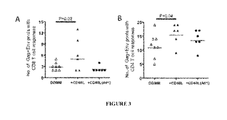
  • FIG. 3 shows data on anti-SW T cell responses post-vaccination and breadth of anti-SIV A) CD8 or B) CD4 T cell responses. Breadth is measured as the number of Gag or Env peptide pools that show positive IFN ⁇ + T cell responses. A total of 11 Gag peptide pools and 13 Env peptide pools were examined.
  • FIG. 4 shows data in a Kaplan-Meier's survival curve analysis post SIVsmE660 challenge.
  • C) Correlation between antibody avidity index against SIVsmE660 and acquisition of virus infection (no. of challenges prior to infection). A significant correlation (r 0.76, P ⁇ 0.001) was observed.
  • D) Correlation between neutralization titers against tier 2 isolate and acquisition of virus infection (no. of challenges prior to infection). A significant correlation (r 0.74, P ⁇ 0.002) was observed.
  • C and D animals that remained SIV negative at the end of 12 challenges are indicated at challenge 14. Spearman's rank correlation method was used for nonparametric data correlations.
  • FIG. 5 shows data for certain embodiments of the disclosure.
  • FIG. 6 shows data on levels of virus RNA copies in the colorectum of non-A01 and A01+ infected animals at 2 weeks post infection.
  • CD40L expressed on VLP enhances the avidity of vaccine elicited humoral immunity and there by enhances protection against a pathogenic immunodeficiency virus infection.
  • DCs Dendritic cells
  • APCs antigen presenting cells
  • DCs internalize extracellular antigens and present antigen-derived peptides in the context of MHC molecules to T cells. Recognition of these complexes by antigen-specific CD4 Th cells is important for full activation of macrophages, B cells, and CD8 T cells in vivo.
  • DCs are capable of presenting extracellular antigens on MHC class I (MHC I) molecules, a process termed cross-presentation, that enables DCs to activate antigen-specific cytotoxic CD8 T cells.
  • Cross presentation involves co-stimulation of DCs with CD4 and via interaction between CD40L expressed on CD4 cells and CD40 expressed on DCs. It may be that virus like particles elicit a poor CD8 response because of insufficient co-stimulation.
  • the disclosure relates to co-stimulation of DCs using CD40L.
  • a DNA vaccine co-expressing SIV viral like particles and CD40L was developed. In vitro activation experiments using these viral like particles activated DCs suggesting that a vaccine may be developed to provide co-stimulatory signaling during cross-presentation of the vaccine antigen.
  • the CD40 Ligand (CD40L also known as CD154) belongs to the TNF family of ligands.
  • the expression of CD40L on the surface of CD4 helper T cells is an activation signal of the adaptive immune response. Increasing the frequency of antigen-specific representation to CD8 effector T cells, or antigen-specific B cells is important in vaccination.
  • Engagement of the CD40 receptor on dendritic cells (DCs) or antigen presenting cells and B cells by the CD40L on activated CD4 helper T cells effects activation and expansion of target-associated antigen (TAA)-specific CD8 effector cells and increases in the levels of TAA-specific antibodies by vaccination.
  • TAA target-associated antigen
  • antigen refers to a molecule that provokes an immune response.
  • the immune response may involve either antibody production, or the activation of specific immunologically-competent cells, or both.
  • any macromolecule including virtually all proteins or peptides, can serve as an antigen.
  • antigens can be derived from recombinant or genomic DNA.
  • any DNA which comprises a nucleotide sequences or a partial nucleotide sequence encoding a protein that elicits an immune response therefore encodes an “antigen” as that term is used herein.
  • an antigen need not be encoded solely by a full length nucleotide sequence of a gene. It is readily apparent that the present disclosure includes, but is not limited to, the use of partial nucleotide sequences of more than one gene and that these nucleotide sequences are arranged in various combinations to elicit the desired immune response. Moreover, a skilled artisan will understand that an antigen need not be encoded by a “gene” at all. It is readily apparent that an antigen can be generated synthesized or can be derived from a biological sample. Such a biological sample can include, but is not limited to a tissue sample, a tumor sample, a cell or a biological fluid.
  • vector refers to a nucleic acid molecule which is capable of transferring nucleic acid sequences contained therein into a cell, and which is produced by means of molecular biological techniques.
  • Recombinant vectors are exemplified by linear DNA, plasmid DNA, modified viruses, etc.
  • Linear DNA, plasmid, adenovirus/adeno-associated viral, retroviral and viral vectors may be made using standard molecular biological techniques, or purchased and utilized as described by suppliers.
  • a typical recombinant vector is selected from the group consisting of a lentiviral vector, an adnoviral vector and an ando-associated viral vector.
  • a lentiviral vector refers to a recombinant vector bases on a lentivirus. HIV, SIV, and FIV are examples of lentiviruses.
  • a “coding region” of a gene consists of the nucleotide residues of the coding strand of the gene and the nucleotides of the non-coding strand of the gene which are homologous with or complementary to, respectively, the coding region of an mRNA molecule which is produced by transcription of the gene.
  • a “coding region” of an mRNA molecule also consists of the nucleotide residues of the mRNA molecule which are matched with an anti-codon region of a transfer RNA molecule during translation of the mRNA molecule or which encode a stop codon.
  • the coding region may thus include nucleotide residues corresponding to amino acid residues which are not present in the mature protein encoded by the mRNA molecule (e.g., amino acid residues in a protein export signal sequence).
  • Encoding refers to the inherent property of specific sequences of nucleotides in a polynucleotide, such as a gene, a cDNA, or an mRNA, to serve as templates for synthesis of other polymers and macromolecules in biological processes having either a defined sequence of nucleotides (i.e., rRNA, tRNA and mRNA) or a defined sequence of amino acids and the biological properties resulting therefrom.
  • a gene encodes a protein if transcription and translation of mRNA corresponding to that gene produces the protein in a cell or other biological system.
  • Both the coding strand the nucleotide sequence of which is identical to the mRNA sequence and is usually provided in sequence listings, and the non-coding strand, used as the template for transcription of a gene or cDNA, can be referred to as encoding the protein or other product of that gene or cDNA.
  • nucleotide sequence encoding an amino acid sequence includes all nucleotide sequences that are degenerate versions of each other and that encode the same amino acid sequence. Nucleotide sequences that encode proteins and RNA may include introns.
  • isolated means altered or removed from the natural state.
  • a nucleic acid or a peptide naturally present in a living animal is not “isolated,” but the same nucleic acid or peptide partially or completely separated from the coexisting materials of its natural state is “isolated.”
  • An isolated nucleic acid or protein can exist in substantially purified form, or can exist in a non-native environment such as, for example, a host cell.
  • isolated nucleic acid refers to a nucleic acid segment or fragment which has been separated from sequences which flank it in a naturally occurring state, i.e., a DNA fragment which has been removed from the sequences which are normally adjacent to the fragment, i.e., the sequences adjacent to the fragment in a genome in which it naturally occurs.
  • the term also applies to nucleic acids which have been substantially purified from other components which naturally accompany the nucleic acid, i.e., RNA or DNA or proteins, which naturally accompany it in the cell.
  • the term therefore includes, for example, a recombinant DNA which is incorporated into a vector, into an autonomously replicating plasmid or virus, or into the genomic DNA of a prokaryote or eukaryote, or which exists as a separate molecule (i.e., as a cDNA or a genomic or cDNA fragment produced by PCR or restriction enzyme digestion) independent of other sequences. It also includes a recombinant DNA which is part of a hybrid gene encoding additional polypeptide sequence.
  • operably linked refers to functional linkage between a regulatory sequence and a heterologous nucleic acid sequence resulting in expression of the latter.
  • a first nucleic acid sequence is operably linked with a second nucleic acid sequence when the first nucleic acid sequence is placed in a functional relationship with the second nucleic acid sequence.
  • a promoter is operably linked to a coding sequence if the promoter affects the transcription or expression of the coding sequence.
  • operably linked DNA sequences are contiguous and, where necessary to join two protein coding regions, in the same reading frame.
  • recombinant vector as used herein is defined as vector produced by joining pieces of nucleic acids from different sources.
  • the terms “prevent” and “preventing” include the prevention of the recurrence, spread or onset. It is not intended that the present disclosure be limited to complete prevention. In some embodiments, the onset is delayed, or the severity is reduced.
  • the terms “treat” and “treating” are not limited to the case where the subject (e.g. patient) is cured and the disease is eradicated. Rather, embodiments of the present disclosure also contemplate treatment that merely reduces symptoms, and/or delays disease progression.
  • CD40L refers to a macromolecule comprising a polypeptide sequence that binds CD40.
  • CD40L is expressed on the surface of T cells. It regulates B cell function by engaging CD40 on the B cell surface.
  • Human CD40L has the following amino acid sequence MIETYNQTSP RSAATGLPIS MKIFMYLLTV FLITQMIGSA LFAVYLHRRL DKIEDERNLH 61 EDFVFMKTIQ RCNTGERSLS LLNCEEIKSQ FEGFVKDIML NKEETKKENS FEMQKGDQNP 121 QIAAHVISEA SSKTTSVLQW AEKGYYTMSN NLVTLENGKQ LTVKRQGLYY IYAQVTFCSN 181 REASSQAPFI ASLCLKSPGR FERILLRAAN THSSAKPCGQ QSIHLGGVFE LQPGASVFVN 241 VTDPSQVSHG TGFTSFGLLK L (SEQ ID NO:1).
  • variant and mutant sequences such as isoforms and fragments will also bind to CD40.
  • the term is contemplated to include naturally occurring polymorphs and comparable CD40L proteins produced by other organisms. Fragments may be of less than 200, 150, 100, 50, 40, 30 or 20 amino acids from the N terminal end, the C terminal end, or the middle or the polypeptide.
  • variants and mutants when used in reference to a polypeptide refer to an amino acid sequence that differs by one or more amino acids from another, usually related polypeptide.
  • the variant may have “conservative” changes, wherein a substituted amino acid has similar structural or chemical properties.
  • conservative amino acid substitutions refers to the interchangeability of residues having similar side chains.
  • a group of amino acids having aliphatic side chains is glycine, alanine, valine, leucine, and isoleucine; a group of amino acids having aliphatic-hydroxyl side chains is serine and threonine; a group of amino acids having amide-containing side chains is asparagine and glutamine; a group of amino acids having aromatic side chains is phenylalanine, tyrosine, and tryptophan; a group of amino acids having basic side chains is lysine, arginine, and histidine; and a group of amino acids having sulfur-containing side chains is cysteine and methionine.
  • Preferred conservative amino acids substitution groups are: valine-leucine-isoleucine, phenylalanine-tyrosine, lysine-arginine, alanine-valine, and asparagine-glutamine. More rarely, a variant may have “non-conservative” changes (e.g., replacement of a glycine with a tryptophan). Similar minor variations may also include amino acid deletions or insertions (in other words, additions), or both. Guidance in determining which and how many amino acid residues may be substituted, inserted or deleted without abolishing biological activity may be found using computer programs well known in the art, for example, DNAStar software. Variants can be tested in functional assays. Preferred variants have less than 10%, and preferably less than 5%, and still more preferably less than 2% changes (whether substitutions, deletions, and so on).
  • the CD40L DNA vaccine was generated by inserting a DNA fragment containing macaque CD40L gene fused to an internal ribosome entry site (IRES) containing DNA, just downstream of the SIV Env gene of the DNA/SIV plasmid ( FIG. 1A ).
  • the animals that received CD40L DNA vaccine had higher titers of binding antibodies to the immunogen Env (SIVmac239)( FIG. 2A ) and higher levels of neutralization titers to a difficult to neutralize heterologous SIV Env (SIVsmE660)( FIG. 2C ) than animals that received DNA vaccine.
  • the CD40L DNA vaccine also generated anti-SIV Env antibody with higher levels of avidity than the DNA vaccine. This was true for against both immunogen Env ( FIG. 2D ) and challenge virus Env ( FIG. 2E ).
  • animals immunized with CD40L DNA had a broader range of CD8 ( FIG. 3A ) and CD4 ( FIG. 3B ) T cell responses against multiple pools of SW Gag and Env peptides.

Landscapes

  • Health & Medical Sciences (AREA)
  • Life Sciences & Earth Sciences (AREA)
  • Virology (AREA)
  • Immunology (AREA)
  • Pharmacology & Pharmacy (AREA)
  • Chemical & Material Sciences (AREA)
  • Veterinary Medicine (AREA)
  • Public Health (AREA)
  • Medicinal Chemistry (AREA)
  • General Health & Medical Sciences (AREA)
  • Animal Behavior & Ethology (AREA)
  • Microbiology (AREA)
  • Epidemiology (AREA)
  • Mycology (AREA)
  • Communicable Diseases (AREA)
  • Hematology (AREA)
  • Chemical Kinetics & Catalysis (AREA)
  • Organic Chemistry (AREA)
  • General Chemical & Material Sciences (AREA)
  • Nuclear Medicine, Radiotherapy & Molecular Imaging (AREA)
  • Oncology (AREA)
  • Engineering & Computer Science (AREA)
  • Bioinformatics & Cheminformatics (AREA)
  • Medicines Containing Antibodies Or Antigens For Use As Internal Diagnostic Agents (AREA)
  • Micro-Organisms Or Cultivation Processes Thereof (AREA)

Abstract

The disclosure relates to vaccinating a subject against a viral infection, compositions, and methods related thereto. In certain embodiments, the disclosure relates to the use of CD40L expressed on viral like particle as an adjuvant, in combination with a viral antigen, to vaccinate a subject.

Description

CROSS REFERENCE TO RELATED APPLICATIONS
This application claims priority to U.S. Provisional Patent Application Ser. No. 61/387,417, filed Sep. 28, 2010, which is hereby incorporated by this reference in its entirety.
ACKNOWLEDGEMENTS
This invention was made with government support under Grant R01 AI071852 awarded by the National Institute of Health. The government has certain rights in the invention.
BACKGROUND OF THE INVENTION
The World Health Organization estimates that AIDS has killed more than 25 million people since it was first recognized. In 2007 there were 2.7 million new HIV infections and 2 million HIV-related deaths. Many chronic viral infections are caused by retroviruses. For certain chronic viral infections, the immune system cannot clear the virus from the host even with the aid of therapeutic agents. For example, although highly active anti-retroviral therapy (HAART) may improve symptoms associated with infection, there is currently no cure for HIV or vaccine, and methods of preventing infections would be desirable.
Recombinant modified vaccinia virus Ankara (MVA) expressing SIV or HIV Gag-Pol and Env was described for managing immunodeficiency virus infections in nonhuman primates. Wyatt et al., (2004) AIDS Res Hum Retroviruses 20(6):645-53. This vaccine elicits a good CD4 T-cell response but a relatively weak CD8 T-cell response. It is desirable to improve the ability of the vaccine to elicit a stronger CD8 response since CD4 cells are preferentially infected by the HIV virus.
Clinical trials using CD40L to induce immune responses has been described. Tahara et al., (2004) Nat Med 10:835-841. Insertion of the CD40L gene into the transcription units of replication incompetent adenoviral vectors has been reported. Wierda et al., (2000) Blood 96:2917-2924. A chimeric molecule composed of a target antigen linked to the extracellular domain (ecd) of the CD40L has been described. Tang et al., (2009) Cancer Immunol Immunother 58(12):1949-57.
SUMMARY
The disclosure relates to vaccinating a subject against a viral infection, compositions, and methods related thereto. It is desirable to express CD40L in a certain form to achieve desirable adjuvant activity. In certain embodiments, the disclosure relates to the use of CD40L as an adjuvant, in combination with a viral antigen, to vaccinate a subject. In certain embodiments, the disclosure relates to methods of treating or preventing a viral infection comprising administering to a subject at risk of a viral infection a recombinant vector comprising genes sufficient to produce a viral-like particle and a nucleic acid sequence that encodes CD40L. In further embodiments, the viral like particle comprises CD40L.
In certain embodiments, CD40L is encoded in a nucleic acid that is expressed by a recombinant vector. In certain embodiments, the CD40L is expressed on the surface of the viral like particle in combination with a viral antigen.
In certain embodiments the disclosure relates to a recombinant Modified Vaccinia Ankara (MVA) virus comprising genes sufficient to produce a viral like particle and a nucleic acid sequence that encodes CD40L. In further embodiments, the recombinant Modified Vaccinia Ankara (MVA) virus comprises an HIV env gene. Typically the viral like particle comprises is an envelope protein. In further embodiments, the envelope protein is a lentiviral envelope protein, such as an SIV or HIV envelope protein.
In certain embodiments, the disclosure relates to viral vaccines and vaccinating using compositions disclosed herein. In certain embodiments, the viral vaccine is for the treatment or prevention of infection from a retrovirus.
In some embodiments, vaccine comprises an envelope protein or capsid from influenza A virus including subtype H1N1, influenza B virus, influenza C virus, rotavirus A, rotavirus B, rotavirus C, rotavirus D, rotavirus E, SARS coronavirus, human adenovirus types (HAdV-1 to 55), human papillomavirus (HPV) Types 16, 18, 31, 33, 35, 39, 45, 51, 52, 56, 58, 59, parvovirus B19, molluscum contagiosum virus, JC virus (JCV), BK virus, Merkel cell polyomavirus, coxsackie A virus, norovirus, Rubella virus, lymphocytic choriomeningitis virus (LCMV), yellow fever virus, measles virus, mumps virus, respiratory syncytial virus, rinderpest virus, California encephalitis virus, hantavirus, rabies virus, ebola virus, marburg virus, herpes simplex virus-1 (HSV-1), herpes simplex virus-2 (HSV-2), varicella zoster virus (VZV), Epstein-Barr virus (EBV), cytomegalovirus (CMV), herpes lymphotropic virus, roseolovirus, Kaposi's sarcoma-associated herpesvirus, hepatitis A (HAV), hepatitis B (HBV), hepatitis C (HCV), hepatitis D (HDV), hepatitis E (HEV), human immunodeficiency virus (HIV), The Human T-lymphotropic virus Type I (HTLV-1), Friend spleen focus-forming virus (SFFV) or Xenotropic MuLV-Related Virus (XMRV).
In certain embodiments, the recombinant vector is replication competent. In certain embodiments, the recombinant vector is replication incompetent.
In some embodiment, the recombinant vector further comprises a nucleic acid that encodes a viral matrix protein or a viral core protein or a reverse transcriptase, proteases, ribonuclease or integrase or a gag, pol, or env, viral gene or a tat or rev viral gene. In certain embodiments the vector does not encode an integrase.
In certain embodiments, the vector comprises a nucleotide sequence that allows for translation initiation in the middle of a messenger RNA (mRNA) sequence operably linked to a nucleic acid sequence that encodes CD40L such as an internal ribosome entry site (IRES). In certain embodiment, the disclosure relates to an isolated composition comprising a nucleic acid that encodes a CD40L and a nucleic acid that encodes the envelope protein of a virus.
BRIEF DESCRIPTION OF THE FIGURES
FIG. 1 illustrates certain embodiments of the disclosure. A) Construct diagram of DNA and CD40L DNA vaccines. DNA immunogens expressed are SIVmac239 gag, env, rev, tat sequences which are driven by the CMV early intermediate intron A promoter and stabilized by a BGH polyadenylation sequence. The CD40L DNA vaccine comprises the same structure as the DNA vaccine but includes the IRES-driven macaque CD40L sequence inserted in the Nef region. B) Expression levels of Gag, envelope and CD40L proteins in 293T cell lines transfected with the DNA or DNA-CD40L DNA plasmids using flow cytometric analysis. C) Effect of virus-like particles (VLPs) on dendritic cells. FACS plots show the upregulation of CD80 on CD11c+mDC after addition of VLPs with and without CD40L. Mock indicates supernatant used from a transfection carried out without DNA. Bar chart shows 4 individual macaques where the use of VLPs show increased CD80 expression on myeloid dendritic cells.
FIG. 2 shows data on Anti-SW antibody responses post-vaccination in rhesus macaques. A) Levels of binding antibody to the vaccine immunogen SIVmac239 Env pre- and post-vaccination. Macaques were given two DNA (D) and two MVA(M) immunizations at 8-wk intervals. The DDMM group received DNA vaccine and the +CD40L group received CD40L DNA vaccine. A01 indicates that these animals express Mamu A*01 histocompatability molecule. B) Binding antibody titers to the challenge virus SIVsmE660 Env at 2 weeks post 2nd MVA boost. D) Levels of neutralization antibodies to tier 2 isolate (SIVsmE660/CRS-PK-2A5). D) Avidity index of antibodies to SIVmac239 Env and E) to SIVsmE660 Env at 2 weeks post 2nd MVA boost.
FIG. 3 shows data on anti-SW T cell responses post-vaccination and breadth of anti-SIV A) CD8 or B) CD4 T cell responses. Breadth is measured as the number of Gag or Env peptide pools that show positive IFNγ+ T cell responses. A total of 11 Gag peptide pools and 13 Env peptide pools were examined.
FIG. 4 shows data in a Kaplan-Meier's survival curve analysis post SIVsmE660 challenge. A) Survival curve of all macaques from DNA-only (DDMM), DNA-CD40L (+CD40L) and control groups. B) Survival curve of vaccinated and control groups according to their Mamu A*01 (A01) status. Note that all animals in the DDMM group are Mamu A*01 negative. C) Correlation between antibody avidity index against SIVsmE660 and acquisition of virus infection (no. of challenges prior to infection). A significant correlation (r=0.76, P<0.001) was observed. D) Correlation between neutralization titers against tier 2 isolate and acquisition of virus infection (no. of challenges prior to infection). A significant correlation (r=0.74, P<0.002) was observed. For C and D: animals that remained SIV negative at the end of 12 challenges are indicated at challenge 14. Spearman's rank correlation method was used for nonparametric data correlations.
FIG. 5 shows data for certain embodiments of the disclosure. A) Plasma viral load of non-A01 or B) A01+ infected animals. Charts show the geomean data from each group (non-A01 or A01) and data from individual animals.
FIG. 6 shows data on levels of virus RNA copies in the colorectum of non-A01 and A01+ infected animals at 2 weeks post infection.
DETAILED DESCRIPTIONS
Studies disclosed herein suggest that CD40L expressed on VLP enhances the avidity of vaccine elicited humoral immunity and there by enhances protection against a pathogenic immunodeficiency virus infection.
Dendritic cells (DCs) are antigen presenting cells (APCs) which play a role in the induction of adaptive immune responses. DCs internalize extracellular antigens and present antigen-derived peptides in the context of MHC molecules to T cells. Recognition of these complexes by antigen-specific CD4 Th cells is important for full activation of macrophages, B cells, and CD8 T cells in vivo. DCs are capable of presenting extracellular antigens on MHC class I (MHC I) molecules, a process termed cross-presentation, that enables DCs to activate antigen-specific cytotoxic CD8 T cells. Cross presentation involves co-stimulation of DCs with CD4 and via interaction between CD40L expressed on CD4 cells and CD40 expressed on DCs. It may be that virus like particles elicit a poor CD8 response because of insufficient co-stimulation.
For certain embodiments, the disclosure relates to co-stimulation of DCs using CD40L. A DNA vaccine co-expressing SIV viral like particles and CD40L was developed. In vitro activation experiments using these viral like particles activated DCs suggesting that a vaccine may be developed to provide co-stimulatory signaling during cross-presentation of the vaccine antigen.
The CD40 Ligand (CD40L also known as CD154) belongs to the TNF family of ligands. The expression of CD40L on the surface of CD4 helper T cells is an activation signal of the adaptive immune response. Increasing the frequency of antigen-specific representation to CD8 effector T cells, or antigen-specific B cells is important in vaccination. Engagement of the CD40 receptor on dendritic cells (DCs) or antigen presenting cells and B cells by the CD40L on activated CD4 helper T cells effects activation and expansion of target-associated antigen (TAA)-specific CD8 effector cells and increases in the levels of TAA-specific antibodies by vaccination. CD40L binding to the CD40 receptor on the DCs promotes presentation of TAAs on Class I MHC molecules, and migration of the DCs to regional lymph nodes following antigen or virus exposure.
TERMS
The term “antigen” or “Ag” refers to a molecule that provokes an immune response. The immune response may involve either antibody production, or the activation of specific immunologically-competent cells, or both. The skilled artisan will understand that any macromolecule, including virtually all proteins or peptides, can serve as an antigen. Furthermore, antigens can be derived from recombinant or genomic DNA. A skilled artisan will understand that any DNA, which comprises a nucleotide sequences or a partial nucleotide sequence encoding a protein that elicits an immune response therefore encodes an “antigen” as that term is used herein. Furthermore, one skilled in the art will understand that an antigen need not be encoded solely by a full length nucleotide sequence of a gene. It is readily apparent that the present disclosure includes, but is not limited to, the use of partial nucleotide sequences of more than one gene and that these nucleotide sequences are arranged in various combinations to elicit the desired immune response. Moreover, a skilled artisan will understand that an antigen need not be encoded by a “gene” at all. It is readily apparent that an antigen can be generated synthesized or can be derived from a biological sample. Such a biological sample can include, but is not limited to a tissue sample, a tumor sample, a cell or a biological fluid.
The term “vector” as used herein refers to a nucleic acid molecule which is capable of transferring nucleic acid sequences contained therein into a cell, and which is produced by means of molecular biological techniques. Recombinant vectors are exemplified by linear DNA, plasmid DNA, modified viruses, etc. Linear DNA, plasmid, adenovirus/adeno-associated viral, retroviral and viral vectors may be made using standard molecular biological techniques, or purchased and utilized as described by suppliers. A typical recombinant vector is selected from the group consisting of a lentiviral vector, an adnoviral vector and an ando-associated viral vector. A lentiviral vector refers to a recombinant vector bases on a lentivirus. HIV, SIV, and FIV are examples of lentiviruses.
A “coding region” of a gene consists of the nucleotide residues of the coding strand of the gene and the nucleotides of the non-coding strand of the gene which are homologous with or complementary to, respectively, the coding region of an mRNA molecule which is produced by transcription of the gene. A “coding region” of an mRNA molecule also consists of the nucleotide residues of the mRNA molecule which are matched with an anti-codon region of a transfer RNA molecule during translation of the mRNA molecule or which encode a stop codon. The coding region may thus include nucleotide residues corresponding to amino acid residues which are not present in the mature protein encoded by the mRNA molecule (e.g., amino acid residues in a protein export signal sequence).
“Encoding” refers to the inherent property of specific sequences of nucleotides in a polynucleotide, such as a gene, a cDNA, or an mRNA, to serve as templates for synthesis of other polymers and macromolecules in biological processes having either a defined sequence of nucleotides (i.e., rRNA, tRNA and mRNA) or a defined sequence of amino acids and the biological properties resulting therefrom. Thus, a gene encodes a protein if transcription and translation of mRNA corresponding to that gene produces the protein in a cell or other biological system. Both the coding strand, the nucleotide sequence of which is identical to the mRNA sequence and is usually provided in sequence listings, and the non-coding strand, used as the template for transcription of a gene or cDNA, can be referred to as encoding the protein or other product of that gene or cDNA.
Unless otherwise specified, a “nucleotide sequence encoding an amino acid sequence” includes all nucleotide sequences that are degenerate versions of each other and that encode the same amino acid sequence. Nucleotide sequences that encode proteins and RNA may include introns.
“Isolated” means altered or removed from the natural state. For example, a nucleic acid or a peptide naturally present in a living animal is not “isolated,” but the same nucleic acid or peptide partially or completely separated from the coexisting materials of its natural state is “isolated.” An isolated nucleic acid or protein can exist in substantially purified form, or can exist in a non-native environment such as, for example, a host cell.
An “isolated nucleic acid” refers to a nucleic acid segment or fragment which has been separated from sequences which flank it in a naturally occurring state, i.e., a DNA fragment which has been removed from the sequences which are normally adjacent to the fragment, i.e., the sequences adjacent to the fragment in a genome in which it naturally occurs. The term also applies to nucleic acids which have been substantially purified from other components which naturally accompany the nucleic acid, i.e., RNA or DNA or proteins, which naturally accompany it in the cell. The term therefore includes, for example, a recombinant DNA which is incorporated into a vector, into an autonomously replicating plasmid or virus, or into the genomic DNA of a prokaryote or eukaryote, or which exists as a separate molecule (i.e., as a cDNA or a genomic or cDNA fragment produced by PCR or restriction enzyme digestion) independent of other sequences. It also includes a recombinant DNA which is part of a hybrid gene encoding additional polypeptide sequence.
The term “operably linked” refers to functional linkage between a regulatory sequence and a heterologous nucleic acid sequence resulting in expression of the latter. For example, a first nucleic acid sequence is operably linked with a second nucleic acid sequence when the first nucleic acid sequence is placed in a functional relationship with the second nucleic acid sequence. For instance, a promoter is operably linked to a coding sequence if the promoter affects the transcription or expression of the coding sequence. Generally, operably linked DNA sequences are contiguous and, where necessary to join two protein coding regions, in the same reading frame.
The term “recombinant vector” as used herein is defined as vector produced by joining pieces of nucleic acids from different sources.
As used herein, the terms “prevent” and “preventing” include the prevention of the recurrence, spread or onset. It is not intended that the present disclosure be limited to complete prevention. In some embodiments, the onset is delayed, or the severity is reduced.
As used herein, the terms “treat” and “treating” are not limited to the case where the subject (e.g. patient) is cured and the disease is eradicated. Rather, embodiments of the present disclosure also contemplate treatment that merely reduces symptoms, and/or delays disease progression.
The term “CD40L” refers to a macromolecule comprising a polypeptide sequence that binds CD40. In humans, CD40L is expressed on the surface of T cells. It regulates B cell function by engaging CD40 on the B cell surface. Human CD40L has the following amino acid sequence MIETYNQTSP RSAATGLPIS MKIFMYLLTV FLITQMIGSA LFAVYLHRRL DKIEDERNLH 61 EDFVFMKTIQ RCNTGERSLS LLNCEEIKSQ FEGFVKDIML NKEETKKENS FEMQKGDQNP 121 QIAAHVISEA SSKTTSVLQW AEKGYYTMSN NLVTLENGKQ LTVKRQGLYY IYAQVTFCSN 181 REASSQAPFI ASLCLKSPGR FERILLRAAN THSSAKPCGQ QSIHLGGVFE LQPGASVFVN 241 VTDPSQVSHG TGFTSFGLLK L (SEQ ID NO:1). It is contemplated that variant and mutant sequences such as isoforms and fragments will also bind to CD40. The term is contemplated to include naturally occurring polymorphs and comparable CD40L proteins produced by other organisms. Fragments may be of less than 200, 150, 100, 50, 40, 30 or 20 amino acids from the N terminal end, the C terminal end, or the middle or the polypeptide.
The terms “variant” and “mutant” when used in reference to a polypeptide refer to an amino acid sequence that differs by one or more amino acids from another, usually related polypeptide. The variant may have “conservative” changes, wherein a substituted amino acid has similar structural or chemical properties. One type of conservative amino acid substitutions refers to the interchangeability of residues having similar side chains. For example, a group of amino acids having aliphatic side chains is glycine, alanine, valine, leucine, and isoleucine; a group of amino acids having aliphatic-hydroxyl side chains is serine and threonine; a group of amino acids having amide-containing side chains is asparagine and glutamine; a group of amino acids having aromatic side chains is phenylalanine, tyrosine, and tryptophan; a group of amino acids having basic side chains is lysine, arginine, and histidine; and a group of amino acids having sulfur-containing side chains is cysteine and methionine. Preferred conservative amino acids substitution groups are: valine-leucine-isoleucine, phenylalanine-tyrosine, lysine-arginine, alanine-valine, and asparagine-glutamine. More rarely, a variant may have “non-conservative” changes (e.g., replacement of a glycine with a tryptophan). Similar minor variations may also include amino acid deletions or insertions (in other words, additions), or both. Guidance in determining which and how many amino acid residues may be substituted, inserted or deleted without abolishing biological activity may be found using computer programs well known in the art, for example, DNAStar software. Variants can be tested in functional assays. Preferred variants have less than 10%, and preferably less than 5%, and still more preferably less than 2% changes (whether substitutions, deletions, and so on).
EXPERIMENTAL Example 1 Construction of DNA Vaccine Expressing CD40L on SIV VLPs
The DNA vaccine expressed SIV239 Gag-Pol, Env, Tat and Rev using a single CMV promoter and subgenomic splicing of mRNA that is used by the SIV, as described in Lai L et al. 2011 J Infect Dis. 204:164-73, hereby incorporated by reference. The CD40L DNA vaccine was generated by inserting a DNA fragment containing macaque CD40L gene fused to an internal ribosome entry site (IRES) containing DNA, just downstream of the SIV Env gene of the DNA/SIV plasmid (FIG. 1A). The CD40L DNA vaccine expressed SIV VLPs containing CD40L on them. The expression of these proteins was confirmed by flow cytometry (FIG. 1B) and the co-stimulatory activity of the CD40L-containing VLPs was confirmed by activating macaque dendritic cells in vitro followed by flow cytometry (FIG. 1C).
Example 2 Macaque Trial
In this study, Indian rhesus macaques were immunized with either DNA vaccine (n=8, all Mamu A*01 negative) or CD40L DNA vaccine (n=12, 6 Mamu A*01 negative and 6 Mamu A*01 positive). Two DNA primes were given on weeks 0 and 8. All animals were boosted with a MVA vaccine on weeks 16 and 24. The MVA vaccine also expressed SIV239 Gag, Pol and Env but did not express CD40L. Immune responses were measured after each vaccination. Results for Mamu A*01 positive and negative animals in the DNA/SIV-CD40L group were shown separately on the graphs.
The animals that received CD40L DNA vaccine had higher titers of binding antibodies to the immunogen Env (SIVmac239)(FIG. 2A) and higher levels of neutralization titers to a difficult to neutralize heterologous SIV Env (SIVsmE660)(FIG. 2C) than animals that received DNA vaccine. The CD40L DNA vaccine also generated anti-SIV Env antibody with higher levels of avidity than the DNA vaccine. This was true for against both immunogen Env (FIG. 2D) and challenge virus Env (FIG. 2E). In addition, animals immunized with CD40L DNA had a broader range of CD8 (FIG. 3A) and CD4 (FIG. 3B) T cell responses against multiple pools of SW Gag and Env peptides.
5 months after the last MVA immunization, our vaccinated macaques were challenged with 12 weekly intrarectal doses of SIVsmE660. We also included 15 unvaccinated macaques as controls. Up to the 11th challenge, protection was seen of nearly ˜60% against acquisition of SW infection in the CD40L group (FIG. 4). Here, only 5 out of 12 macaques became SIV-infected. However, 3 more macaques became infected at the last challenge. A significant positive association was observed between the avidity of anti-E660 Env antibody and decreased acquisition of infection (FIG. 4C).
Among the macaques that were infected, significantly lower plasma viral load was seen at week 2 post-infection in the CD40L group than the control group (P=0.03) (FIGS. 5 and 6). Furthermore the levels of virus in the colorectal tissues were significantly lower in the CD40L group than the control group (P=0.002).

Claims (6)

The invention claimed is:
1. A recombinant vector comprising genes sufficient to produce a viral like particle and a deoxyribonucleic acid sequence, wherein the deoxyribonucleic acid sequence transcribes into mRNA that encodes a lentiviral envelope protein followed by an internal ribosome entry site sequence operably linked to a sequence encoding CD40L.
2. The recombinant vector of claim 1, wherein the lentiviral envelope protein is a HIV envelope protein.
3. The recombinant vector of claim 1, further comprising a nucleic acid that encodes a viral matrix protein or a viral core protein.
4. The recombinant vector of claim 1, further comprising a nucleic acid that encodes a reverse transcriptase, proteases, ribonuclease or integrase.
5. The recombinant vector of claim 1, further comprising a gag or pol viral gene.
6. The recombinant vector of claim 1, further comprising a tat or rev viral gene.
US13/247,484 2010-09-28 2011-09-28 CD40L vaccines, compositions, and methods related thereto Active 2031-12-08 US9138472B2 (en)

Priority Applications (1)

Application Number Priority Date Filing Date Title
US13/247,484 US9138472B2 (en) 2010-09-28 2011-09-28 CD40L vaccines, compositions, and methods related thereto

Applications Claiming Priority (2)

Application Number Priority Date Filing Date Title
US38741710P 2010-09-28 2010-09-28
US13/247,484 US9138472B2 (en) 2010-09-28 2011-09-28 CD40L vaccines, compositions, and methods related thereto

Publications (2)

Publication Number Publication Date
US20120076820A1 US20120076820A1 (en) 2012-03-29
US9138472B2 true US9138472B2 (en) 2015-09-22

Family

ID=45870895

Family Applications (1)

Application Number Title Priority Date Filing Date
US13/247,484 Active 2031-12-08 US9138472B2 (en) 2010-09-28 2011-09-28 CD40L vaccines, compositions, and methods related thereto

Country Status (1)

Country Link
US (1) US9138472B2 (en)

Families Citing this family (6)

* Cited by examiner, † Cited by third party
Publication number Priority date Publication date Assignee Title
US10973892B2 (en) * 2012-09-04 2021-04-13 Bavarian Nordic A/S Methods and compositions for enhancing vaccine immune responses
HK1249014A1 (en) 2015-03-20 2018-10-26 The Trustees Of The University Of Pennsylvania Vaccines with cd40 ligand as an adjuvant
CN104906571B (en) * 2015-06-29 2017-11-28 天津大学 A kind of preventative restructuring VLP vaccines and preparation method for the B/C hypotypes of HIV 1
US20210284716A1 (en) 2020-03-11 2021-09-16 Immunitybio, Inc. ACE2-Fc Trap
US11857620B2 (en) 2020-03-11 2024-01-02 Immunitybio, Inc. Method of inducing immunity against SARS-CoV-2 using spike (s) and nucleocapsid (N)-ETSD immunogens delivered by a replication-defective adenovirus
US12285480B2 (en) 2020-03-11 2025-04-29 Nantcell, Inc. Method of inducing immunity against SARS-CoV-2 using spike and nucleocapsid-ETSD immunogens delivered by RNA and replication-defective adenoviruses

Citations (4)

* Cited by examiner, † Cited by third party
Publication number Priority date Publication date Assignee Title
US20060051839A1 (en) 2000-03-02 2006-03-09 Emory University, A Georgia Corporation DNA expression vectors and methods of use
US20070048861A1 (en) 2000-03-02 2007-03-01 Robinson Harriet L Compositions and methods for generating an immune response
US20090092635A1 (en) 2007-08-17 2009-04-09 Wyeth Heterologous prime-boost immunization regimen
US20130280215A1 (en) 2011-10-18 2013-10-24 Geovax, Inc. Mva vectors expressing polypeptides and having high level production in certain cell lines

Patent Citations (4)

* Cited by examiner, † Cited by third party
Publication number Priority date Publication date Assignee Title
US20060051839A1 (en) 2000-03-02 2006-03-09 Emory University, A Georgia Corporation DNA expression vectors and methods of use
US20070048861A1 (en) 2000-03-02 2007-03-01 Robinson Harriet L Compositions and methods for generating an immune response
US20090092635A1 (en) 2007-08-17 2009-04-09 Wyeth Heterologous prime-boost immunization regimen
US20130280215A1 (en) 2011-10-18 2013-10-24 Geovax, Inc. Mva vectors expressing polypeptides and having high level production in certain cell lines

Non-Patent Citations (21)

* Cited by examiner, † Cited by third party
Title
Amara et al. Different patterns of immune responses but similar control of a simian-human immunodeficiency virus 89.6P mucosal challenge by modified vaccinia virus Ankara (MVA) and DNA/MVA vaccines. J Virol 2002; 76: 7625-7631.
Jin et al., Journal of Virology, Mar. 2002, 76(5):2206-2216. *
Kannanganat et al., Single-Cytokine-Producing Cells T Cells Are Functionally Superior to Multiple-Cytokine Producing Antiviral CD4, J. Virol. 2007, 81(16):8468.
Kwa et al., Heterologous SIVE660 Mucosal Challenge and Improves Protection against a SIV-Specific Humoral and Cellular Immunity Virus SIV239 Vaccine Enhances Virus Ankara Simian Immunodeficiency CD40L-Adjuvanted DNA/Modified Vaccinia, J. Virol. 2014, 88(17):9579.
Lai et al., Prevention of Infection by a Granulocyte-Macrophage Colony-Stimulating Factor Co-Expressing DNA/Modified Vaccinia Ankara Simian Immunodeficiency Virus Vaccine, JID (2011) 204:165-173.
Lai et al., SIVmac239 MVA vaccine with and without a DNA prime, similar prevention of infection by a repeated dose SIVsmE660 challenge despite different immune responses, Vaccine 30 (2012) 1737-1745.
Lin et al., Journal of Virology, Feb. 2009, 83(3):1216-1227. *
Litzinger et al., Leukemia Research, 2010, 34:1351-1357. *
Liu et al., Vaccine, 2008, 26:4062-4072. *
Robinson et al. Immunogenicity in Macaques of the Clinical Product for a Clade B DNA/MVA HIV Vaccine: Elicitation of IFN-, IL-2, and TNF-Coproducing CD4 and CD8 T Cells, Aids Research and Human Retroviruses, 2007 23(12):555-1561.
Robinson, Prime boost vaccines power up in people, Nature Medicine 9, 642-643 (2003).
Scriba et al., Vaccine, 2005, 23:1158-1169. *
Tahara et al. Trans-splicing repair of CD40 ligand deficiency results in naturally regulated correction of a mouse model of hyper-IgM X-linked immunodeficiency, Nature Medicine, 2004, 10(8):835-841.
Tang et al, Use of CD4OL immunoconjugates to overcome the defective immune response to vaccines for infections and cancer in the aged, Cancer Immunol Immunother (2009) 58:1949-1957.
Wierda et al., CD40-ligand (CD154) gene therapy for chronic lymphocytic leukemia, Blood, 2000, 96:2917-2924.
Wong et al., Gene Therapy, 2002, 9:337-344. *
Wyatt et al., Multiprotein HIV Type 1 Clade B DNA and MVA Vaccines: Construction, Expression, and Immunogenicity in Rodents of the MVA Component AIDS Research and Human Retroviruses, 2004, 20(6):645-653.
Xin et al., Prime-boost vaccination with plasmid DNA and a chimeric adenovirus type 5 vector with type 35 fiber induces protective immunity against HIV, Gene Therapy (2005) 12, 1769-1777.
Yao et al., Aids Research and Human Retroviruses, 2000, 16(3):227-236. *
Zhang et al., Journal of Surgical Research, Oct. 2003, 114(2):280. *
Zhang et al., Vaccine, 2010, 28:5114-5127. *

Also Published As

Publication number Publication date
US20120076820A1 (en) 2012-03-29

Similar Documents

Publication Publication Date Title
JP6959289B2 (en) Human immunodeficiency virus antigens, vectors, compositions, and how to use them
US10238734B2 (en) Compositions and methods for self-adjuvanting vaccines against microbes and tumors
EP1652857B1 (en) Fusion protein of HIV regulatory/accessory proteins
US9138472B2 (en) CD40L vaccines, compositions, and methods related thereto
US20070275010A1 (en) Mva Vaccines
JP2004506410A (en) Synthetic peptides and their use
US8981057B2 (en) B-cell stimulating fusion proteins of an antigen with BAFF or APRIL
CN113151184A (en) Method for cell membrane-based display of coronavirus immunogens to induce neutralizing antibodies
CN111533812A (en) DNA vaccine for SARS-COV-2 virus and its use
US20110014221A1 (en) Hiv combination vaccine and prime boost
AU2015240883B2 (en) Compositions comprising CH848 envelopes and uses thereof
Lu Combination DNA plus protein HIV vaccines
EP2892554B1 (en) Hiv immune stimulating compositions comprising recombinantly expressed pili on bacteria and methods related thereto
Gupta et al. Vaccination with a fusion protein that introduces HIV-1 gag antigen into a multitrimer CD40L construct results in enhanced CD8+ T cell responses and protection from viral challenge by vaccinia-gag
WO2006061643A1 (en) Method for vaccinating usign a prime-boost regime and hsv as a vector
CN101379078A (en) Treatment of epstein-barr virus related diseases
AU2017363967B2 (en) Viral vector constructs for expression of genetic adjuvants activating the CD40 and sting pathways
JP2017512499A (en) Mosaic HIV-1 sequences and uses thereof
CN119630419A (en) Recombinant modified saRNA (VRP) and vaccinia virus Ankara (MVA) prime-boost regimen
CN118354790A (en) Lentiviral vector for expressing human papillomavirus (HPV) antigens and its application in treating HPV-induced cancers
Mažeikė Generation of anticancer vaccine based on virus-like particles
KR20090090953A (en) AIDS DNA vaccine (X-127) or recombinant adenovirus for the prevention and treatment of AIDS
US20110177115A1 (en) Vaccination regimen
NZ626124A (en) Vaccines against hpv
HK1076822B (en) Fusion protein of hiv regulatory/accessory proteins

Legal Events

Date Code Title Description
AS Assignment

Owner name: EMORY UNIVERSITY, GEORGIA

Free format text: ASSIGNMENT OF ASSIGNORS INTEREST;ASSIGNORS:AMARA, RAMA RAO;LAI, LILIN;KWA, SUE FEN;SIGNING DATES FROM 20111020 TO 20111025;REEL/FRAME:027156/0795

AS Assignment

Owner name: NATIONAL INSTITUTES OF HEALTH (NIH), U.S. DEPT. OF

Free format text: CONFIRMATORY LICENSE;ASSIGNOR:EMORY UNIVERSITY;REEL/FRAME:028826/0025

Effective date: 20120814

STCF Information on status: patent grant

Free format text: PATENTED CASE

MAFP Maintenance fee payment

Free format text: PAYMENT OF MAINTENANCE FEE, 4TH YR, SMALL ENTITY (ORIGINAL EVENT CODE: M2551); ENTITY STATUS OF PATENT OWNER: SMALL ENTITY

Year of fee payment: 4

MAFP Maintenance fee payment

Free format text: PAYMENT OF MAINTENANCE FEE, 8TH YR, SMALL ENTITY (ORIGINAL EVENT CODE: M2552); ENTITY STATUS OF PATENT OWNER: SMALL ENTITY

Year of fee payment: 8