US9112744B1 - Noise whitening in a WLAN receiver - Google Patents
Noise whitening in a WLAN receiver Download PDFInfo
- Publication number
- US9112744B1 US9112744B1 US14/026,856 US201314026856A US9112744B1 US 9112744 B1 US9112744 B1 US 9112744B1 US 201314026856 A US201314026856 A US 201314026856A US 9112744 B1 US9112744 B1 US 9112744B1
- Authority
- US
- United States
- Prior art keywords
- matrix
- noise
- scaling factor
- whitening
- data
- Prior art date
- Legal status (The legal status is an assumption and is not a legal conclusion. Google has not performed a legal analysis and makes no representation as to the accuracy of the status listed.)
- Active
Links
- 230000002087 whitening effect Effects 0.000 title claims abstract description 94
- 239000011159 matrix material Substances 0.000 claims abstract description 184
- 238000012549 training Methods 0.000 claims abstract description 58
- 238000000034 method Methods 0.000 claims abstract description 43
- 238000004891 communication Methods 0.000 claims abstract description 37
- 238000007476 Maximum Likelihood Methods 0.000 claims description 18
- 238000000354 decomposition reaction Methods 0.000 claims description 10
- 238000005192 partition Methods 0.000 claims 1
- 238000000638 solvent extraction Methods 0.000 claims 1
- 238000012545 processing Methods 0.000 description 23
- 230000000875 corresponding effect Effects 0.000 description 17
- 230000006735 deficit Effects 0.000 description 13
- 238000010586 diagram Methods 0.000 description 12
- 230000005540 biological transmission Effects 0.000 description 11
- 239000000969 carrier Substances 0.000 description 8
- 241000276489 Merlangius merlangus Species 0.000 description 2
- 230000008901 benefit Effects 0.000 description 2
- 238000004364 calculation method Methods 0.000 description 2
- 238000004040 coloring Methods 0.000 description 2
- 230000000694 effects Effects 0.000 description 2
- 238000013507 mapping Methods 0.000 description 2
- 230000003287 optical effect Effects 0.000 description 2
- 230000010363 phase shift Effects 0.000 description 2
- 230000009466 transformation Effects 0.000 description 2
- 238000012935 Averaging Methods 0.000 description 1
- 238000007792 addition Methods 0.000 description 1
- 238000013459 approach Methods 0.000 description 1
- 238000004422 calculation algorithm Methods 0.000 description 1
- 239000003086 colorant Substances 0.000 description 1
- 230000002596 correlated effect Effects 0.000 description 1
- 238000012217 deletion Methods 0.000 description 1
- 230000037430 deletion Effects 0.000 description 1
- 238000002716 delivery method Methods 0.000 description 1
- 238000009795 derivation Methods 0.000 description 1
- 238000011161 development Methods 0.000 description 1
- 238000005516 engineering process Methods 0.000 description 1
- 238000005562 fading Methods 0.000 description 1
- 239000000835 fiber Substances 0.000 description 1
- 230000007246 mechanism Effects 0.000 description 1
- 230000008569 process Effects 0.000 description 1
- 230000004044 response Effects 0.000 description 1
- 230000035945 sensitivity Effects 0.000 description 1
- 230000007723 transport mechanism Effects 0.000 description 1
Images



Classifications
-
- H—ELECTRICITY
- H04—ELECTRIC COMMUNICATION TECHNIQUE
- H04L—TRANSMISSION OF DIGITAL INFORMATION, e.g. TELEGRAPHIC COMMUNICATION
- H04L25/00—Baseband systems
- H04L25/02—Details ; arrangements for supplying electrical power along data transmission lines
- H04L25/03—Shaping networks in transmitter or receiver, e.g. adaptive shaping networks
- H04L25/03993—Noise whitening
-
- H—ELECTRICITY
- H04—ELECTRIC COMMUNICATION TECHNIQUE
- H04L—TRANSMISSION OF DIGITAL INFORMATION, e.g. TELEGRAPHIC COMMUNICATION
- H04L25/00—Baseband systems
- H04L25/02—Details ; arrangements for supplying electrical power along data transmission lines
- H04L25/0202—Channel estimation
- H04L25/0224—Channel estimation using sounding signals
- H04L25/0228—Channel estimation using sounding signals with direct estimation from sounding signals
-
- H—ELECTRICITY
- H04—ELECTRIC COMMUNICATION TECHNIQUE
- H04L—TRANSMISSION OF DIGITAL INFORMATION, e.g. TELEGRAPHIC COMMUNICATION
- H04L25/00—Baseband systems
- H04L25/02—Details ; arrangements for supplying electrical power along data transmission lines
- H04L25/0202—Channel estimation
- H04L25/024—Channel estimation channel estimation algorithms
- H04L25/0258—Channel estimation using zero-forcing criteria
Definitions
- the present disclosure relates generally to communication networks and, more particularly, to noise whitening in multi input multi output (MIMO) communication systems.
- MIMO multi input multi output
- Wireless local area network (WLAN) technology has evolved rapidly over the past decade.
- Development of WLAN standards such as the Institute for Electrical and Electronics Engineers (IEEE) 802.11a, 802.11b, 802.11g, and 802.11n Standards has improved single-user peak data throughput.
- IEEE 802.11b Standard specifies a single-user peak throughput of 11 megabits per second (Mbps)
- the IEEE 802.11a and 802.11g Standards specify a single-user peak throughput of 54 Mbps
- the IEEE 802.11n Standard specifies a single-user peak throughput of 600 Mbps
- the IEEE 802.11ac Standard specifies a single-user peak throughput in the gigabits per second (Gbps) range.
- Gbps gigabits per second
- a method of whitening noise in a signal received by a receiving device from a transmitting device via a multi input multi output (MIMO) communication channel includes receiving, at the receiving device, a data unit via the MIMO communication channel, wherein the data unit includes at least training symbols and data symbols.
- the method further includes determining, with the receiving device and based on the training symbols, a channel estimate H corresponding to the MIMO communication channel.
- the method further includes determining a noise scaling factor s, wherein the noise scaling factor s is a ratio of variance of noise at the receiving device to a variance of noise at the transmitting device, and determining, using the channel estimate H and the noise scaling factor s, a noise whitening matrix W.
- the method additionally includes applying the noise whitening matrix W to (i) the channel estimate H to generate an effective channel matrix H eff and (ii) to the data symbols to generate whitened data symbols.
- a network interface configured to receive a data unit via the MIMO communication channel, wherein the data unit includes at least training symbols and data symbols.
- the network interface includes a channel estimation unit configured to determine, based on the training symbols, a channel estimate H corresponding to the MIMO communication channel.
- the network interface also includes a noise scaling factor generator configured to determine a noise scaling factor s, wherein the noise scaling factor s is a ratio of variance of receiver noise to a variance of transmitter noise, and a noise whitening unit configured to determine, using the channel estimate H and the noise scaling factor s, a noise whitening matrix W.
- the network interface is further configured to apply the noise whitening matrix W to (i) the channel estimate H to generate an effective channel matrix H eff and (ii) the data symbols to generate whitened data symbols.
- FIG. 1 is a block diagram of an example wireless local area network (WLAN) in which one or more communication devices utilize noise whitening techniques of the present disclosure, according to an embodiment;
- WLAN wireless local area network
- FIG. 2 is a diagram of an OFDM data unit, according to an embodiment
- FIG. 3 is a diagram of an OFDM data unit, according to another embodiment
- FIG. 4 is a block diagram of an example system model, according to an embodiment
- FIG. 5 is a block diagram of an example receiver processing unit, according to an embodiment.
- FIG. 6 is a flow chart illustrating a technique for determining a whitening matrix W based on a channel estimate H, according to an embodiment.
- FIG. 7 is a flow chart illustrating a technique for dynamically generating a noise scaling factor s, according to an embodiment.
- FIG. 8 is a flow diagram of an example method for whitening noise in a signal received by a receiving device from a transmitting device via a multi input multi output (MIMO) communication channel, according to an embodiment.
- MIMO multi input multi output
- wireless network devices such as an access point (AP) and client devices of a wireless local area network (WLAN) transmit data streams between the AP and the client devices.
- the WLAN supports multiple input multiple output (MIMO) communication in which the AP and/or the client stations include more than one antenna, thereby creating a plurality of spatial (or space-time) streams over which data can be transmitted simultaneously.
- MIMO multiple input multiple output
- the receiving device performs channel equalization to remove effects of the channel from a signal prior to demodulating the signal.
- MIMO equalization approach uses maximum likelihood (ML) equalization techniques.
- ML equalization is considered optimal to the extent that ML equalization attempts to minimize the probability of an error over a sequence of received bits or symbols. While optimal in some situations, ML techniques are complex and expensive to implement, in some embodiments. In some embodiments, a zero forcing (ZF) equalizer is utilized. Generally speaking, a ZF equalizer attempts to restore a received signal by applying an inverse of the channel to the signal. In at least some situations, ML techniques, even limited by system constraints, can exhibit significant performance advantages over ZF techniques, particularly for flat fading channels, in some embodiments.
- ZF zero forcing
- Tx-EVM transmitter error vector magnitude
- Tx-EVM transmitter error vector magnitude
- the receiver applies noise whitening to received signals prior to equalization and decoding of the received signals. Improvements in performance of the equalizer generally leads to increased sensitivity of the receiver, allowing, for example, for increased range of transmissions, increased data throughput, etc., in at least some embodiments.
- FIG. 1 is a block diagram of an example wireless local area network (WLAN) 10 in which one or more communication devices utilize noise whitening techniques of the present disclosure, according to an embodiment.
- An AP 14 includes a host processor 15 coupled to a network interface 16 .
- the network interface 16 includes a medium access control (MAC) unit 18 and a physical layer (PHY) unit 20 .
- the PHY unit 20 includes a plurality of transceivers 21 , and the transceivers are coupled to a plurality of antennas 24 .
- the AP 14 can include different numbers (e.g., 1, 2, 4, 5, etc.) of transceivers 21 and antennas 24 in other embodiments.
- the WLAN 10 includes a plurality of client stations 25 . Although four client stations 25 are illustrated in FIG. 1 , the WLAN 10 can include different numbers (e.g., 1, 2, 3, 5, 6, etc.) of client stations 25 in various scenarios and embodiments.
- a client station 25 - 1 includes a host processor 26 coupled to a network interface 27 .
- the network interface 27 includes a MAC processing unit 28 and a PHY processing unit 29 .
- the PHY processing unit 29 includes a plurality of transceivers 30 , and the transceivers 30 are coupled to a plurality of antennas 34 .
- the client station 25 - 1 can include different numbers (e.g., 1, 2, 4, 5, etc.) of transceivers 30 and antennas 34 in other embodiments.
- one or more of the client stations 25 - 2 and 25 - 3 , 25 - 4 has a structure the same as or similar to the client station 25 - 1 .
- the client stations 25 structured the same as or similar to the client station 25 - 1 have the same or a different number of transceivers and antennas.
- the client station 25 - 2 has only two transceivers and two antennas (not shown), according to an embodiment.
- the WLAN 10 supports operation according to one or more IEEE 802.11 Standards, such as the 802.11n Standard and/or 802.11ac Standard.
- the AP 14 and the client stations 25 are configured to transmit and receive data unit conforming to the one or more IEEE 802.11 Standards.
- the AP 14 and/or the client stations 25 are configured to perform channel estimation and noise whitening based on received data units that conform to the one or more of the IEEE 802.11 Standards.
- channel estimation and noise whitening techniques described herein are performed based on signal conforming to other suitable communication protocols.
- FIG. 2 is a diagram of an OFDM data unit 200 that the AP 14 is configured to transmit to a client station 25 (e.g., the client station 25 - 1 ) via orthogonal frequency domain multiplexing (OFDM) modulation, according to an embodiment.
- the client station 25 - 1 is also configured to transmit the data unit 200 to the AP 14 .
- the data unit 200 conforms to the IEEE-802.11n Standard and is designed for mixed mode situations, i.e., when the WLAN 10 includes one or more legacy client stations (e.g., conforming to the IEEE 802.11a Standard but not to the IEEE 802.11n Standard).
- the data unit 200 includes a preamble legacy portion having a legacy short training field (L-STF) 202 , a legacy long training field (L-LTF) 204 , and a legacy signal field (L-SIG) 206 .
- the preamble of the data unit 200 also includes a non-legacy, or a high throughput, portion having a high throughput signal field HT-SIG 208 which includes various information related to PHY transmission of the data unit 200 , such as a modulation and coding scheme (MCS) used for the data unit 200 , a bandwidth of the data unit 200 , etc.
- MCS modulation and coding scheme
- the preamble of the data unit 200 further includes a high throughput short training field (HT-STF) 210 , and M high throughput data long training fields (HT-LTFs) 212 , where M is an integer which generally corresponds to a number of spatial streams used to transmit the data unit 200 via a MIMO communication channel.
- Each of the HT-LTF fields 212 includes training symbols to train a receiver on a respective dimension (spatial stream) of the data unit 200 .
- L-STF 202 , L-LTF 204 , L-SIG 206 and HT-SIG 208 is each transmitted over a single spatial (or space-time) stream and is generated according to a lowest modulation and coding scheme (i.e., using binary phase shift keying (BPSK) and a coding rate of 1 ⁇ 2).
- the data unit 200 also includes a data portion 214 .
- FIG. 3 is a diagram of an OFDM data unit 300 that the AP 14 is configured to transmit to a client station 25 (e.g., the client station 25 - 1 ) via orthogonal frequency domain multiplexing (OFDM) modulation, according to an embodiment.
- the client station 25 - 1 is also configured to transmit the data unit 300 to the AP 14 .
- the data unit 300 conforms to the IEEE-802.11ac Standard and is designed for mixed mode situations, i.e., when the WLAN 10 includes one or more legacy client stations (e.g., conforming to the IEEE 802.11a Standard but not to the IEEE 802.11ac Standard).
- the data unit 300 includes a preamble legacy portion having a legacy short training field (L-STF) 302 , a legacy long training field (L-LTF) 304 , and a legacy signal field (L-SIG) 306 .
- the data unit 300 also includes a non-legacy, or a very high throughput, preamble portion having a first very high throughput signal field VHT-SIGA 308 which includes various information related to PHY transmission of the data unit 300 , such as a modulation and coding scheme (MCS) used for the data unit 300 , a bandwidth of the data unit 300 , etc.
- MCS modulation and coding scheme
- the VHT preamble portion further includes a very high throughput short training field (VHT-STF) 310 , and M very high throughput data long training fields (VHT-LTFs) 312 , where M is an integer which generally corresponds to a number of spatial streams used to transmit the data unit 300 via a MIMO communication channel.
- VHT-STF very high throughput short training field
- VHT-LTFs very high throughput data long training fields
- Each of the VHT-LTF fields 312 includes training symbols to train a receiver on a respective dimension (spatial stream) of the data unit 300 .
- the VHT-LTFs 312 are followed by a second VHT signal field (VHT-SIGB) 314 .
- L-STF 302 , L-LTF 304 , L-SIG 306 , VHT-SIGA 308 , and, in some embodiments, VHT-SIGB 314 is each transmitted over a single spatial (or space-time) stream and is generated according to a lowest modulation and coding scheme (i.e., using binary phase shift keying (BPSK) and a coding rate of 1 ⁇ 2).
- the data unit 300 also includes a data portion 316 .
- FIG. 4 is a block diagram of an example system model 400 , according to an embodiment.
- the system model 400 is utilized to derive a scheme for determining a noise whitening matrix at a receiving device (e.g., a client station 25 ).
- the model 400 is illustrated in FIG. 4 as having a transmitting communication device 402 (e.g., the AP 14 of FIG. 1 ) that transmits information to a receiving communication device 404 (e.g., the client station 25 - 1 , the client station 25 - 4 of FIG. 1 ) via a MIMO communication channel 406 .
- a transmitting communication device 402 e.g., the AP 14 of FIG. 1
- a receiving communication device 404 e.g., the client station 25 - 1 , the client station 25 - 4 of FIG. 1
- MIMO communication channel 406 e.g., MIMO communication channel
- N t represents the number of transmit antennas at the transmitting device 402
- N r represents the number of receive antennas at the receiving device 404
- N ss represents the number of spatial streams used for transmission from the transmitting device 402 to the receiving device 404 via the MIMO channel 406 .
- receiving device and “receiver” are used interchangeably.
- transmitting device and “transmitter” are used interchangeably.
- the transmitting device 402 is illustrated as having a MIMO transmit signal generator 408 and a transmitter noise and impairments component 410 .
- the MIMO transmit signal generator 408 receives input bits and, based on the input bits, generates a signal x to be transmitted to the receiving device 404 .
- the transmit signal generator 408 performs one or more of bit scrambling, encoding, stream parsing (e.g., to separate bits into multiple spatial streams), bit interleaving (i.e., changing the order of the bits to prevent long sequences of adjacent noisy bits from entering a decoder at the receiving device), constellation mapping, spatial stream mapping, inverse digital Fourier transformation, etc. to generate the signal to be transmitted x.
- the transmitter noise and impairments component 410 generally models noise and transmit chain impairments, such as phase noise, flicker noise, power amplifier non-linearities, in-phase/quadrature-phase (I/Q) mismatches, and carrier frequency offsets, etc. to which the signal x is subject at the transmitting device 402 .
- the transmitter noise and other impairments are represented by a random variable noise vector c, and the transmitted signal is, accordingly, represented by a sum of the signal x and the variable ⁇ (i.e., x+ ⁇ ).
- the noise vector ⁇ is assumed to be a zero-mean, independent and white random variable vector.
- the transmitted signal x+ ⁇ travels through a MIMO communication channel 406 to reach the receiving device 404 .
- the signal x and the noise ⁇ are generally transformed by the MIMO channel, which, in at least some situations, introduces correlation (“colors”) the noise, in at least some embodiments and/or scenarios.
- the receiving device 404 is illustrated in FIG. 4 as having a receiver noise component 412 and a MIMO signal receiver 414 .
- the receiver noise component 412 generally models receiver noise and receive chain impairments to which a signal is subjected at the receiving device 404 .
- the receiver noise and other impairments are represented by a random variable vector n.
- the noise vector n is assumed to be a zero-mean, independent and white random variable vector.
- the MIMO signal receiver 414 generally demodulates and decodes the received signal y to reproduce, or at least estimate, the transmitted signal x.
- the MIMO signal receiver 414 performs one or more of demodulation, de-interleaving, decoding, etc.
- the MIMO signal receiver 414 includes a MIMO equalizer (e.g., a ZF equalizer, an ML equalizer, or another suitable MIMO equalizer) that generally equalizes received signal to allow for more accurate demodulation of the received signal. Further, to improve equalization of the signal, the MIMO signal receiver 414 applies noise whitening to the received signal prior to equalization of the received signal. According to an embodiment, noise whitening of the received signal transforms the noise in the received signal to de-color, or de-correlate, the noise such that the noise appears at least substantially white to the MIMO equalizer.
- a MIMO equalizer e.g., a ZF equalizer, an ML equalizer, or another suitable MIMO equalizer
- y is an N r ⁇ 1 signal vector received at the signal reception component 414
- H is an N r ⁇ N ss channel matrix characterizing the channel 406
- x is an N ss ⁇ 1 signal vector generated by the transmit signal generator 408
- ⁇ is an N ss ⁇ 1 noise vector at the transmitting device 402
- n is an N r ⁇ 1 noise vector at the receiving device 404 .
- the expression in Equation 1 corresponds to a single sub-carrier of an OFDM signal, in an embodiment.
- a respective expression such as the Equation 1, can be written for each one of multiple sub-carriers in the received signal y, with the channel matrix H being a channel matrix characterizing the channel 406 at the corresponding sub-carrier frequency, the signal x being the signal transmitted at the corresponding subcarrier frequency, and the noise components ⁇ and n representing, respectively, the corresponding sub-carrier frequency transmitter and the receiver noise components.
- model 400 captures that the transmitter noise and impairments are subject to transformation by the channel response H of the channel 406 .
- the channel 406 causes coloring of the transmitter noise so that the transmitter noise in the received signal y is no longer white, in at least some embodiments and/or scenarios.
- the covariance matrix of the elements of the transmitter noise vector ⁇ is a non-identity matrix and, in some cases, includes off-diagonal elements.
- Such non-white noise negatively effects equalization of the received signal in the MIMO receiver 414 .
- noise whitening is applied to the received signal y to at least substantially whiten noise in the signal y prior to performing equalization of the signal.
- FIG. 5 is a block diagram of an example receiver processing unit 500 suitable for use in the receiving device 404 of FIG. 4 , according to an embodiment.
- the PHY processing unit 20 and/or the PHY processing unit 29 each includes the receiver processing unit 500 , in some embodiments.
- PHY processing unit 20 and/or the PHY processing unit 29 includes a noise whitening capable receiver processing unit other than the receiver processing unit 500 .
- the receiver processing unit 500 is included in devices other than the AP 14 and/or client stations 25 of FIG. 1 and/or in device operating in networks other than the WLAN 10 of FIG. 1 , in some embodiments.
- the receiver processing unit 500 includes an FFT unit 502 coupled to a receive antenna (not shown) and operating on signals received via the receive antenna. Although only one FFT unit 502 is illustrated in FIG. 5 , the receiver processing unit 500 includes multiple FFT units 502 , where each FFT unit 502 is provided for each one of multiple receive antennas coupled to the receiver processing unit 500 , in some embodiments. Alternatively, two or more of multiple receive antennas coupled to the receiver processing unit 500 are coupled to a single FFT unit 502 , in some embodiments.
- the output of the FFT unit 502 is provided to a channel estimation unit 504 .
- the channel estimation unit 504 determines or estimates a channel matrix H based on training data received from a transmitting device.
- the channel matrix estimation H is generated from sounding data transmitted from the transmitting device, in an embodiment.
- the transmitting device utilizes training fields, such as high throughput long training fields (e.g., the HT-LTFs 212 of FIG. 2 ) or very high throughout training fields (e.g., the VHT-LTFs 312 of FIG. 3 ) which are periodically generated and transmitted from the transmitting device to the receiving device.
- Each long training field includes a plurality of training symbols, which are used by the channel estimation unit 504 to determine or estimate the channel matrix H.
- the channel matrix estimation is generated at the beginning of a data transmission, such as the beginning of the transmission of a data packet, and reset for subsequent transmissions (e.g., reset for each subsequent data packet).
- HT-LTF generally relates to the IEEE Standard 802.11n standard
- VHT-LTF generally relates to the IEEE Standard 802.11 ac standard
- other channel estimation preambles or channel estimation training patterns are utilized by the channel estimation unit 504 to compute or estimate the channel matrix H, in other embodiments.
- the receiver processing unit 500 also includes a noise whitening unit 506 that receives channel estimates from the channels estimation unit 504 and, based on the channel estimates, generates a noise whiting matrix W, as will be described in more detail below.
- the noise whitening matrix W (or a Hermitian transpose of the whitening matrix W) is multiplied, at a junction 508 , with a channel matrix H generated by the channel estimation unit 504 , in an embodiment. Further, the noise whitening matrix W (or a Hermitian transpose of the whitening matrix W) is multiplied, at a junction 510 , with data symbols in the received signal y.
- the effective channel matrix H eff and the whitened received signal y are provided to a MIMO equalizer 512 , which processes the whitened received signal y to determine an estimate z of the transmitted signal x corresponding to the received signal y.
- the MIMO equalizer 512 receives the effective channel matrix W H H and the whitened received signal W H y, determines an equalization matrix based on the effective channel matrix W H H, applies the equalization matrix to the whitened received signal W H y, and generates a demodulated signal z based on the equalized whitened received signal W H y.
- the MIMO equalizer 512 is a zero forcing equalizer, for example, in an embodiment.
- the MIMO equalizer 512 is a maximum likelihood equalizer.
- the MIMO equalizer 512 implements another suitable equalization scheme.
- the demodulated signal z is operated on by a deinterleaver 514 that rearranges scattered bits and restores proper bit sequences in the estimated signal z. Then, a decoder 516 decodes the demodulated signal z into a bit stream corresponding to information bits transmitted by the transmitting device.
- the noise whitening unit 506 implements a relatively simple and efficient scheme, derived based on the model 400 of FIG. 4 , for determining a whitening matrix W. Derivation of a noise whitening scheme implemented by the noise whitening unit 506 in some embodiments will now be discussed in connection with the model 400 of FIG. 4 .
- a noise scaling factor s is determined as a ratio of variance of noise and other impairments to which the signal is subject at the receiver (receiver noise) to the variance of noise and other impairments to which the signal is subject at the transmitter (transmitter noise), given by
- Equation 6 ⁇ n ⁇ ⁇ Equation ⁇ ⁇ 7
- whitening of noise in a signal y is achieved by applying a Hermitian transpose of the whitening matrix W to the signal y, in an embodiment.
- Equation 6 Based on the system model 400 , the expression for the covariance matrix C ⁇ given above in Equation 6 can be rewritten as
- the matrix B can be decomposed into a matrix Q and a matrix R where the matrix Q is a square orthogonal matrix of dimensionality (N ss +N r ) ⁇ (N ss +N r ) and R is an upper triangular matrix of dimensionality (N ss +N r ) ⁇ N r .
- Equation 22 can be written in terms of Q B1 and Q B2 as
- the whitening matrix W is determined by performing QR decomposition of the matrix B, which is generally less computationally complex and considerably less expensive than matrix inversion.
- QR decomposition operations result in considerable savings of computational complexity, circuit area, consumed power, etc. relative to matrix inversion operations.
- the channel estimation unit 504 estimates the channel based on training data (e.g., training symbols transmitted in a training field of a data unit) transmitted by the transmitting device to allow the receiving device to determine a channel estimate for every spatial stream utilized for transmissions to the receiving device.
- training data e.g., training symbols transmitted in a training field of a data unit
- a data unit that conform to the IEEE 802.11n Standard and the IEEE 802.11 ac Standard include a sufficient number of long training field (HT-LTFs and VHT-LTFs, respectively) to allow a receiving device fully obtain an estimate of a multi-stream communication channel between the transmitting device and the receiving device.
- symbols of each long training field (HT-LTFs 212 , VHT-LTFs 312 ) is multiplied by a corresponding column of a preamble steering matrix P.
- a number of rows of the matrix P corresponds with the number of spatial streams N SS
- a number of columns of the matrix P corresponds with a number of LTFs (e.g., the number of spatial streams N ss over which the data unit is transmitted).
- Matrix P improves the orthogonality of the training symbols in the long training fields 212 , 312 as they are transmitted from the different transmit antennas, in an embodiment.
- the noise whitening matrix computation unit begins the whitening matrix computation after receiving channel estimates corresponding to the LTF (e.g., the first HT-LTF 212 - 1 , the first VHT-LTF 312 - 1 ) and updates the computation for each of the remaining LTF as channel estimates calculated based on each of the remaining LTF is received.
- whitening matrix computation for the multiple spatial streams is staggered with respect to the spatial streams, which generally reduces computational burden in the receiving device.
- the final whitening matrix W is available after the last LTF field of the data unit is received, and the whitening matrix is updated based on the last LTF field, in this embodiment.
- the receiver processing unit 500 receives a first long training field (e.g., the HT-LTFs 212 - 1 , the VHT-LTFs 312 - 2 ) and the channel estimation unit 504 generate a channel estimation based on the received first long training field.
- the channel estimation unit 504 generates a vector h1 containing elements of the channel matrix H corresponding to a first spatial stream.
- the channel estimation generated based on the first training field is provided to the noise whiting unit 506 .
- the noise whitening unit begins computation of the whitening matrix W.
- the noise whitening unit constructs a matrix B, as discussed above, using the channel estimation generated based on the first training field, and performs QR decomposition of the constructed matrix B.
- QR decomposition of the matrix B begins before the second training field is received by the receiver processing unit 500 and/or before a channel estimation based on the second training field is completed by the channel estimation unit 504 , in at least some embodiments and/or scenarios.
- the noise whitening unit 506 receives the channel estimate generated based on the second training field, and constructs a matrix B using the second channel estimate and the result of QR decomposition performed using the channel estimate generated based on the first training field, and so on.
- the noise whitening unit completes generation of the whitening matrix W, in an embodiment.
- a complete channel matrix H is obtained by the channel estimation unit 504 and is then provided to the noise whitening unit 506 , and the noise whitening unit 506 operates on the full channel matrix H.
- the channel estimation unit 504 generates a respective channel matrix H for each of a plurality of tones, or sub-carriers, of the received signal y (e.g., all tones, all data tones, a subset of data tones, etc.).
- the noise whitening unit 506 generates a respective whitening matrix W for each of a plurality of tones, or sub-carriers, of the received signal y (e.g., all tones, all data tones, a subset of data tones, etc.).
- each respective channel matrix H is then multiplied by the whitening matrix W generated for the corresponding tone, or for the corresponding set of tones, at the junction 508 .
- data symbols in the received signal y are multiplied by the whitening matrix W at a junction 510 to generate whitened data symbols W H y.
- each of a plurality of tones (or sub-carriers), or each group of a plurality of groups of tones, in the data symbols are multiplied by a respective whitening matrix W generated by the noise whitening unit 506 for the corresponding tones.
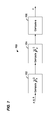
- FIG. 6 is a flow chart illustrating a technique 600 for determining a whitening matrix W based on a channel estimate H, according to an embodiment.
- the noise whitening unit 506 of FIG. 5 implements the whitening technique 500 .
- a noise scaling factor s is generated at block 602 .
- the noise scaling factor s is determined as a ratio of variance of receiver noise to variance of transmitter noise, in an embodiment.
- the noise scaling factor s is a relative measure of noise introduced into a signal by a receiver and noise introduced into the signal by the transmitter.
- a matrix B is constructed based on the channel estimate H and using the scale factor s generated at block 602 .
- the matrix B is constructed at block 604 according to Equation 16.
- QR decomposition of the matrix B is performed.
- the matrix B is decomposed at block 606 into a unitary matrix Q B and an upper triangular matrix R B .
- QR decomposition at block 606 is implemented via a plurality of coordinate rotation digital calculation (CORDIC) engines that perform QR calculations, in an embodiment.
- QR decomposition at block 606 is implemented in other suitable manners.
- a whitening matrix W is determined.
- the whitening matrix W is obtained at block 608 by extracting a matrix Q B2 from the unitary matrix Q generated at block 606 , and scaling the extracted matrix Q B2 by the noise scaling factor s generated at block 602 .
- the matrix Q B2 is a matrix of dimensionality N r ⁇ N r corresponding to N r bottom rows of the matrix Q B .
- W Q B ⁇ ⁇ 2 s , in an embodiment.
- the noise scaling factor s at the noise scaling factor generator block 602 is determined statically, or is adjusted dynamically, depending on the embodiment.
- one or more scaling factors are generated and are stored in a memory, such as a register.
- a noise scaling factor s is stored in a memory and is retrieved from memory at block 602 , in an embodiment.
- multiple of scaling factors s are generated and stored in memory, with each scaling factor s corresponding to a particular scenario (e.g., associated with one or more of signal to noise ratio (SNR), modulation and coding scheme (MCS), signal bandwidth, etc.).
- SNR signal to noise ratio
- MCS modulation and coding scheme
- a particular scaling factor s is selected at block 602 based on, for example, one or more of a SNR measured or determined for the signal for which the whitening matrix W is being developed, MCS that was used to generate the transmitted signal, the signal bandwidth of the signal, etc.
- the noise scaling factor s is generated at block 602 dynamically based on the signal being processed.
- dynamic generation of the scaling factor s automatically adjusts to the particular scenario and/or situation, such as the SNR, the MCS, the signal bandwidth, and the like.
- the scaling factor s is generated based on a signal field transmissions in the signal y, such as based on one or more of the L-SIG field 206 and the HT-SIG field 208 of the data unit 200 of FIG. 2 , or one or more of L-SIG field 306 and the VHT-SIGA field 308 of the data unit 300 of FIG. 3 , in some embodiments.
- such fields are generated according to a lowest order modulation (e.g., BPSK) and using a lowest coding rate (e.g., 1 ⁇ 2). Due at least in part to low order modulation and low coding rate used for these fields, decoding these fields at the receiver is typically accurate and reliable.
- decoded symbols are subtracted from received symbols to obtain an effective noise vector corresponding to noise present in the signal at the receiving device. Then, based on the effective noise vector, relative contributions to the noise vector from the transmitter and from the receiver are estimated, in an embodiment, as discussed in more detail below.
- the noise scaling factor s is determined based on observed, or estimated, values z at the output of the MIMO equalizer 512 during the reception of the one or more single stream fields, such as one or more of the signal fields discussed above (e.g., L-SIG, HT-SIG, VHT-SIG).
- ⁇ tilde over ( ⁇ ) ⁇ ⁇ 2 and ⁇ tilde over ( ⁇ ) ⁇ n 2 represent the maximum likelihood estimation (MLE) values of ⁇ ⁇ and ⁇ n , respectively.
- the maximum likelihood estimates of the values of ⁇ tilde over ( ⁇ ) ⁇ ⁇ 2 and ⁇ tilde over ( ⁇ ) ⁇ n 2 are determined based on the channel estimate h, the received signal y samples generated by the FFT unit 502 , and the output z of the equalizer 512 according to
- a noise scaling factor s 2 can be determined by taking the square root of
- ⁇ tilde over ( ⁇ ) ⁇ ⁇ 2 and ⁇ tilde over ( ⁇ ) ⁇ n 2 values are generated for each one of a plurality of tones (or sub-carriers) within the single stream signals being utilized, and are then averaged over the plurality of tones. Averaging estimates over a plurality of tones improves accuracy of ⁇ tilde over ( ⁇ ) ⁇ ⁇ 2 and ⁇ tilde over ( ⁇ ) ⁇ n 2 estimation, in at least some such
- FIG. 7 is a flow chart illustrating a technique 700 for dynamically generating a noise scaling factor s based on a received signal, y, demodulated representation of the received signal, z, and a channel estimate h, according to an embodiment.
- the noise scaling factor s at block 602 in FIG. 6 is generated using the technique 700 .
- the noise scaling factor s at block 602 in FIG. 6 is generated using another suitable scheme.
- variance of receiver noise, ⁇ tilde over ( ⁇ ) ⁇ n 2 is computed.
- variance of receiver noise ⁇ tilde over ( ⁇ ) ⁇ n 2 is computed at block 702 according to Equation 31.
- a respective value for variance of receiver noise ⁇ tilde over ( ⁇ ) ⁇ n 2 is computed for each one of a plurality of tones, or sub-carriers, of an OFDM symbol, and an average of the respective values for ⁇ tilde over ( ⁇ ) ⁇ n 2 over the plurality of tones is computed.
- variance of transmitter noise, ⁇ tilde over ( ⁇ ) ⁇ ⁇ 2 is computed.
- variance of transmitter noise is computed at block 704 according to Equation 32.
- a respective value for variance of transmitter noise ⁇ tilde over ( ⁇ ) ⁇ ⁇ 2 is computed for each one of a plurality of tones, or sub-carriers, of an OFDM symbol, and an average of the respective values for ⁇ tilde over ( ⁇ ) ⁇ ⁇ 2 over the plurality of tones is computed.
- the noise scaling factor s is determined as a square root of the ratio of ⁇ tilde over ( ⁇ ) ⁇ n 2 determined at block 702 to ⁇ tilde over ( ⁇ ) ⁇ ⁇ 2 determined at block 704 .
- FIG. 8 is a flow diagram of an example method 800 for whitening noise in a signal received by a receiving device from a transmitting device via a multi input multi output (MIMO) communication channel, according to an embodiment.
- the PHY processing unit 20 , 29 ( FIG. 1 ) is configured to implement the method 800 at least partially, in one embodiment.
- the receiving device 404 is configured to implement the method 800 .
- the receiver processing unit 500 of FIG. 5 is configured to implement the method 800 .
- the method 800 is implemented by other suitable communication devices.
- a data unit is received at the receiving device from the transmitting device via the MIMO communication channel.
- the data unit 200 of FIG. 2 is received.
- the data unit 300 of FIG. 3 is received.
- other suitable data units are received.
- the received data unit includes at least training symbols (e.g., one or more LTFs) and one or more data symbols.
- a channel estimate corresponding to the MIMO communication channel is determined.
- the channel estimate is determined at block 804 based on the one or more training fields, in an embodiment.
- a noise scaling factor s is determined.
- the noise scaling factor s is determined statically or is pre-determined.
- the noise scaling factor s is selected from a plurality of scaling factors stored in a memory (e.g., based on one or more of SNR, MCS, signal bandwidth, etc.).
- the noise scaling factor s is determined dynamically, based on the data unit.
- the noise scaling factor s is determined according to the technique 700 of FIG. 7 , in an embodiment. In other embodiments, other suitable schemes for determining the scaling factor s at block 806 are utilized.
- a whitening matrix W is determined using the channel estimate H determined at block 804 and the noise scaling factor s determined at block 806 .
- the noise whitening matrix W is determined according to the technique 600 of FIG. 6 , for example, in an embodiment.
- the noise whitening matrix W is applied to the data symbols in the received data unit to generate whitened data symbols, and, in at least some embodiments, to the channel estimate matrix H determined at block 804 to generate an effective channel estimate H eff .
- the whitened data symbols and the effective channel estimate H eff are operated on by a MIMO equalizer, such as an ML equalizer, a ZF equalizer, or another suitable equalizer.
- Whitening noise in the data generally improves performance of the MIMO equalizer, in at least some embodiments.
- the various blocks, operations, and techniques described above may be implemented utilizing hardware, a processor executing firmware instructions, a processor executing software instructions, or any combination thereof.
- the software or firmware instructions may be stored in any computer readable memory such as on a magnetic disk, an optical disk, or other storage medium, in a RAM or ROM or flash memory, processor, hard disk drive, optical disk drive, tape drive, etc.
- the software or firmware instructions may be delivered to a user or a system via any known or desired delivery method including, for example, on a computer readable disk or other transportable computer storage mechanism or via communication media.
- Communication media typically embodies computer readable instructions, data structures, program modules or other data in a modulated data signal such as a carrier wave or other transport mechanism.
- modulated data signal means a signal that has one or more of its characteristics set or changed in such a manner as to encode information in the signal.
- communication media includes wired media such as a wired network or direct-wired connection, and wireless media such as acoustic, radio frequency, infrared and other wireless media.
- the software or firmware instructions may be delivered to a user or a system via a communication channel such as a telephone line, a DSL line, a cable television line, a fiber optics line, a wireless communication channel, the Internet, etc. (which are viewed as being the same as or interchangeable with providing such software via a transportable storage medium).
- the software or firmware instructions may include machine readable instructions that, when executed by the processor, cause the processor to perform various acts.
- the hardware may comprise one or more of discrete components, an integrated circuit, an application-specific integrated circuit (ASIC), etc.
- ASIC application-specific integrated circuit
Landscapes
- Engineering & Computer Science (AREA)
- Power Engineering (AREA)
- Computer Networks & Wireless Communication (AREA)
- Signal Processing (AREA)
- Radio Transmission System (AREA)
Abstract
Description
y=H(x+ε)+n Equation 1
where y is an Nr×1 signal vector received at the
y=Hx
where ν a noise vector representing the total noise in the received signal y given by
ν=Hε+n Equation 3
C ν =E{νν H} Equation 4
where E{ } denotes the expected value, and the superscript H denotes a Hermitian transpose. Substituting the expression for the noise vector ν given in Equation 3 into Equation 4 results in
C ν =E{(Hε+n)(Hε+n)H }=HE{εε H }H H +E{nn H} Equation 5
Cν in Equation 5 can further be expressed as
C ν =H(ρε 2 I N
where ρε represents variance of transmitter noise ε and ρn represents variance of receiver noise n. In an embodiment, a noise scaling factor s is determined as a ratio of variance of noise and other impairments to which the signal is subject at the receiver (receiver noise) to the variance of noise and other impairments to which the signal is subject at the transmitter (transmitter noise), given by
In terms of the noise scaling factor s, Equation 6 can be rewritten as
C ν=ρε 2 HH H+ρn 2 I N
Further, ignoring the factor ρε 2 in
C ν =HH H +s 2 I N
W H y=W H Hx+W Hν Equation 10
Let u=WHν, then a covariance matrix of u can be written as
C u =E{uu H }=E{W HννH W}=W H E{νν H }W Equation 11
Cu in Equation 11 can be written in terms of the covariance matrix Cν of the noise vector ν as
C u =W H C ν W Equation 12
Based on Equation 12, in an embodiment, a whitening matrix W is determined such that the covariance matrix Cu is transformed into an identity matrix
W H C ν W=I Equation 13
Accordingly, the whitening matrix W is determined such that the expression in
WW H =C ν −1 Equation 14
To satisfy
where B is a matrix of dimensionality (Nss+Nr)×Nr given by
B=Q B R B Equation 17
where QB is a matrix obtained by dropping the last Nss column of the matrix Q and RB is a matrix obtained by dropping the last Nss rows of the matrix R. Accordingly, the matrix QB in Equation 17 is of dimensionality (Nss+Nr)×Nr and the matrix RB in Equation 17 is a square matrix of dimensionality Nr×Nr.
C ν=(Q B R B)H Q B R B =R B H Q B H Q B R B Equation 18
C ν =R B H R B Equation 19
C ν −1 =R B −1(R B −1)H
W=R B −1 Equation 21
Further, equating
QB can be written as a tall matrix
where QB1 is a matrix of dimensionality (Nss+Nr)×Nr and QB2 is a square matrix having of dimensionality Nr×Nr. Equation 22 can be written in terms of QB1 and QB2 as
From Equations 22 and 23 it follows that
Q B1 R B =H H Equation 24
and
Q B2 R B =sI Equation 25
Further, from Equations 21 and 25, it follows that
C ν=(HP)(HP)H +s 2 I N
wherein the matrix QB1 is a matrix of dimensionality Nss×Nr, and the matrix QB2 is a matrix of dimensionality Nr×Nr. Then, to obtain the whitening matrix W, the matrix QB2 scaled by the noise scaling factor s generated at
in an embodiment.
C ν =E{(hε+n)(hε+n)H }=hE{εε H }h H +E{nn H}
C ν =h(ρε 2 I N
where ρε represents variance of transmitter noise and ρn represents variance of receiver noise, and
C ν=ρε 2 hh H+ρn 2 I N
respectively.
In some embodiments, {tilde over (ρ)}ε 2 and {tilde over (ρ)}n 2 values are generated for each one of a plurality of tones (or sub-carriers) within the single stream signals being utilized, and are then averaged over the plurality of tones. Averaging estimates over a plurality of tones improves accuracy of {tilde over (ρ)}ε 2 and {tilde over (ρ)}n 2 estimation, in at least some such embodiments.
Claims (22)
Priority Applications (1)
| Application Number | Priority Date | Filing Date | Title |
|---|---|---|---|
| US14/026,856 US9112744B1 (en) | 2012-10-31 | 2013-09-13 | Noise whitening in a WLAN receiver |
Applications Claiming Priority (2)
| Application Number | Priority Date | Filing Date | Title |
|---|---|---|---|
| US201261720513P | 2012-10-31 | 2012-10-31 | |
| US14/026,856 US9112744B1 (en) | 2012-10-31 | 2013-09-13 | Noise whitening in a WLAN receiver |
Publications (1)
| Publication Number | Publication Date |
|---|---|
| US9112744B1 true US9112744B1 (en) | 2015-08-18 |
Family
ID=53786151
Family Applications (1)
| Application Number | Title | Priority Date | Filing Date |
|---|---|---|---|
| US14/026,856 Active US9112744B1 (en) | 2012-10-31 | 2013-09-13 | Noise whitening in a WLAN receiver |
Country Status (1)
| Country | Link |
|---|---|
| US (1) | US9112744B1 (en) |
Cited By (7)
| Publication number | Priority date | Publication date | Assignee | Title |
|---|---|---|---|---|
| US20180097562A1 (en) * | 2015-06-22 | 2018-04-05 | Fujitsu Limited | Network controller and signal quality estimating method |
| US20190342013A1 (en) * | 2018-05-01 | 2019-11-07 | Cavium, Llc | Methods and apparatus for sub-block based architecture of cholesky decomposition and channel whitening |
| KR20210018003A (en) * | 2019-08-07 | 2021-02-17 | 삼성전자주식회사 | System and method for providing sub-band whitening in the presence of partial-band interference |
| US11228359B1 (en) * | 2021-01-05 | 2022-01-18 | Ceva D.S.P. Ltd. | System and method for performing MLD preprocessing in a MIMO decoder |
| WO2022223100A1 (en) * | 2021-04-20 | 2022-10-27 | Nokia Solutions And Networks Oy | Interference rejection in cooperative multi-point communication |
| CN115336209A (en) * | 2020-04-03 | 2022-11-11 | 大陆汽车科技有限公司 | Discrete digital signal recovery method in noisy overload wireless communication system with hardware damage |
| US12107706B2 (en) | 2019-10-29 | 2024-10-01 | Continental Automotive Gmbh | Method of estimating transmit symbol vectors in an overloaded communication channel |
Citations (3)
| Publication number | Priority date | Publication date | Assignee | Title |
|---|---|---|---|---|
| US20100158162A1 (en) * | 2008-12-24 | 2010-06-24 | Masaaki Fujii | Qr decomposition detection device and method supporting interference whitening |
| US20100248666A1 (en) * | 2005-06-28 | 2010-09-30 | Dennis Hui | Method and device for synchronization and channel estimation in a radio receiver |
| US8548028B2 (en) | 2003-10-30 | 2013-10-01 | Marvell World Trade Ltd. | Method and apparatus for equalizing CDMA signals |
-
2013
- 2013-09-13 US US14/026,856 patent/US9112744B1/en active Active
Patent Citations (3)
| Publication number | Priority date | Publication date | Assignee | Title |
|---|---|---|---|---|
| US8548028B2 (en) | 2003-10-30 | 2013-10-01 | Marvell World Trade Ltd. | Method and apparatus for equalizing CDMA signals |
| US20100248666A1 (en) * | 2005-06-28 | 2010-09-30 | Dennis Hui | Method and device for synchronization and channel estimation in a radio receiver |
| US20100158162A1 (en) * | 2008-12-24 | 2010-06-24 | Masaaki Fujii | Qr decomposition detection device and method supporting interference whitening |
Non-Patent Citations (16)
Cited By (14)
| Publication number | Priority date | Publication date | Assignee | Title |
|---|---|---|---|---|
| US20180097562A1 (en) * | 2015-06-22 | 2018-04-05 | Fujitsu Limited | Network controller and signal quality estimating method |
| US10256903B2 (en) * | 2015-06-22 | 2019-04-09 | Fujitsu Limited | Network controller and signal quality estimating method |
| US20190342013A1 (en) * | 2018-05-01 | 2019-11-07 | Cavium, Llc | Methods and apparatus for sub-block based architecture of cholesky decomposition and channel whitening |
| US10651951B2 (en) * | 2018-05-01 | 2020-05-12 | Cavium, Llc. | Methods and apparatus for sub-block based architecture of cholesky decomposition and channel whitening |
| TWI812866B (en) * | 2019-08-07 | 2023-08-21 | 南韓商三星電子股份有限公司 | System and method for providing sub-band whitening in the presence of partial-band interference |
| KR20210018003A (en) * | 2019-08-07 | 2021-02-17 | 삼성전자주식회사 | System and method for providing sub-band whitening in the presence of partial-band interference |
| US11901933B2 (en) | 2019-08-07 | 2024-02-13 | Samsung Electronics Co., Ltd | System and method for providing sub-band whitening in the presence of partial-band interference |
| US12107706B2 (en) | 2019-10-29 | 2024-10-01 | Continental Automotive Gmbh | Method of estimating transmit symbol vectors in an overloaded communication channel |
| CN115336209A (en) * | 2020-04-03 | 2022-11-11 | 大陆汽车科技有限公司 | Discrete digital signal recovery method in noisy overload wireless communication system with hardware damage |
| US20230198811A1 (en) * | 2020-04-03 | 2023-06-22 | Continental Automotive Technologies GmbH | Reconstruction method of discrete digital signals in noisy overloaded wireless communication systems |
| US11996899B2 (en) | 2020-04-03 | 2024-05-28 | Continental Automotive Technologies GmbH | Method of discrete digital signal recovery in noisy overloaded wireless communication systems in the presence of hardware impairments |
| US12191923B2 (en) * | 2020-04-03 | 2025-01-07 | Continental Automotive Technologies GmbH | Reconstruction method of discrete digital signals in noisy overloaded wireless communication systems |
| US11228359B1 (en) * | 2021-01-05 | 2022-01-18 | Ceva D.S.P. Ltd. | System and method for performing MLD preprocessing in a MIMO decoder |
| WO2022223100A1 (en) * | 2021-04-20 | 2022-10-27 | Nokia Solutions And Networks Oy | Interference rejection in cooperative multi-point communication |
Similar Documents
| Publication | Publication Date | Title |
|---|---|---|
| US9112744B1 (en) | Noise whitening in a WLAN receiver | |
| KR101331674B1 (en) | Method for transmitting control information and apparatus for the same | |
| US8379763B2 (en) | Wireless communication device, wireless communication method, signal processing device, signal processing method, and computer program | |
| US8462863B1 (en) | Midamble for WLAN PHY frames | |
| EP2609710B1 (en) | Single stream phase tracking during channel estimation in a very high throughput wireless mimo communication system | |
| CN102027724B (en) | The space of the ofdm signal reducing the decay from the independent transmission antenna in MIMO transmitter maps | |
| US9614707B1 (en) | PHY frame formats in a system with more than four space-time streams | |
| US9397707B2 (en) | Method and apparatus for transmitting data in very high throughput wireless local area network system | |
| US9350590B2 (en) | Method, system and apparatus for carrier frequency offset correction and channel estimation | |
| US20160242073A1 (en) | Method and apparatus for generating a phy header field | |
| WO2011127193A1 (en) | Method and apparatus for constructing very high throughput long training field sequences | |
| KR20130059686A (en) | Method for transmitting and receiving wireless signal in wireless communication and apparatus for the same | |
| TWI628926B (en) | Channel estimation enhancement method and wireless device | |
| Oh et al. | Performance analysis for channel sounding in IEEE 802.11 ac network | |
| US10505599B1 (en) | Matrix equalization computation with pipelined architecture | |
| Zhang et al. | A novel High Throughput Long Training Field sequence design for next-generation WLAN | |
| KR101225649B1 (en) | Apparatus and method for channel estimation in multiple antenna communication system |
Legal Events
| Date | Code | Title | Description |
|---|---|---|---|
| AS | Assignment |
Owner name: MARVELL SEMICONDUCTOR, INC., CALIFORNIA Free format text: ASSIGNMENT OF ASSIGNORS INTEREST;ASSIGNOR:VENKATESH, SWAROOP;REEL/FRAME:035915/0638 Effective date: 20130830 Owner name: MARVELL INTERNATIONAL LTD., BERMUDA Free format text: ASSIGNMENT OF ASSIGNORS INTEREST;ASSIGNOR:MARVELL INDIA PVT. LTD.;REEL/FRAME:035915/0834 Effective date: 20150624 Owner name: MARVELL INDIA PVT. LTD., INDIA Free format text: ASSIGNMENT OF ASSIGNORS INTEREST;ASSIGNOR:CHANDRASEKAR, MANIKANDAN;REEL/FRAME:035915/0674 Effective date: 20130828 Owner name: MARVELL INTERNATIONAL LTD., BERMUDA Free format text: ASSIGNMENT OF ASSIGNORS INTEREST;ASSIGNOR:MARVELL SEMICONDUCTOR, INC.;REEL/FRAME:035915/0723 Effective date: 20150429 |
|
| STCF | Information on status: patent grant |
Free format text: PATENTED CASE |
|
| MAFP | Maintenance fee payment |
Free format text: PAYMENT OF MAINTENANCE FEE, 4TH YEAR, LARGE ENTITY (ORIGINAL EVENT CODE: M1551); ENTITY STATUS OF PATENT OWNER: LARGE ENTITY Year of fee payment: 4 |
|
| AS | Assignment |
Owner name: NXP USA, INC., TEXAS Free format text: ASSIGNMENT OF ASSIGNORS INTEREST;ASSIGNOR:MARVELL INTERNATIONAL LTD.;REEL/FRAME:051536/0001 Effective date: 20191206 |
|
| MAFP | Maintenance fee payment |
Free format text: PAYMENT OF MAINTENANCE FEE, 8TH YEAR, LARGE ENTITY (ORIGINAL EVENT CODE: M1552); ENTITY STATUS OF PATENT OWNER: LARGE ENTITY Year of fee payment: 8 |