US9111479B2 - Color optimization for visual representation - Google Patents
Color optimization for visual representation Download PDFInfo
- Publication number
- US9111479B2 US9111479B2 US13/915,996 US201313915996A US9111479B2 US 9111479 B2 US9111479 B2 US 9111479B2 US 201313915996 A US201313915996 A US 201313915996A US 9111479 B2 US9111479 B2 US 9111479B2
- Authority
- US
- United States
- Prior art keywords
- content
- raster
- canvas
- content object
- color
- Prior art date
- Legal status (The legal status is an assumption and is not a legal conclusion. Google has not performed a legal analysis and makes no representation as to the accuracy of the status listed.)
- Active, expires
Links
Images


Classifications
-
- H—ELECTRICITY
- H04—ELECTRIC COMMUNICATION TECHNIQUE
- H04N—PICTORIAL COMMUNICATION, e.g. TELEVISION
- H04N1/00—Scanning, transmission or reproduction of documents or the like, e.g. facsimile transmission; Details thereof
- H04N1/46—Colour picture communication systems
- H04N1/64—Systems for the transmission or the storage of the colour picture signal; Details therefor, e.g. coding or decoding means therefor
-
- G—PHYSICS
- G09—EDUCATION; CRYPTOGRAPHY; DISPLAY; ADVERTISING; SEALS
- G09G—ARRANGEMENTS OR CIRCUITS FOR CONTROL OF INDICATING DEVICES USING STATIC MEANS TO PRESENT VARIABLE INFORMATION
- G09G5/00—Control arrangements or circuits for visual indicators common to cathode-ray tube indicators and other visual indicators
- G09G5/02—Control arrangements or circuits for visual indicators common to cathode-ray tube indicators and other visual indicators characterised by the way in which colour is displayed
Definitions
- the invention concerns in general the technical field of image processing. Especially the invention concerns optimizing of image content data for visual representation.
- the digitalization of information has resulted in a development of ways for preparing graphical information for visualization.
- the visualization of graphical information i.e. images in a two dimensional space is based on two main types of graphical information, the first of which is called vector graphics and the second of which is called raster graphics (also known as bitmap).
- vector graphics are well-suited for showing ordered, exact and constructed items like text in vector graphics, lineart and diagrams.
- Images based on the raster graphics are well-suited for showing disordered, approximate and natural items, like landscapes and physical objects.
- An additional type of content to be visualized is text wherein predetermined font libraries are used in order to visualize the textual content.
- the information to be visualized as a whole, e.g. in a document page, may typically be built up from several content objects.
- the content objects represent several different content types.
- the content objects are rendered to an image i.e. raster canvas, which is an uncompressed form of the graphical image comprising the content object data.
- raster canvas which is an uncompressed form of the graphical image comprising the content object data.
- Prior compressing the raster image in the raster canvas it is often practical to first optimize the raster image data to be compressed.
- At least some traditional solutions which seek to optimize the storage size (file size) of the data in a raster canvas are based on an idea that the optimization operations are performed to final pixel data of the raster image, representing all the content belonging to the raster image.
- Such operations may relate to optimizing the quality of the raster image by e.g. reducing number of colors used or reducing resolution of the raster image.
- the problem with especially the color reduction is that as the image content data in the raster file may comprise multiple types of content objects, these kinds of optimization operations do not take the characteristics of the different content object types anyhow into an account during the optimization phase.
- the content in the page as regards to at least some content objects may get inaccurate as critical details of the content visual representation may get lost, which can negatively impact the viewing experience when the content is visualized.
- color shading based anti-alias effect is often applied around the smoothly curving details.
- the vector graphics are often vulnerable to optimization based on such color reduction.
- a computer implemented method for optimizing an amount of colors used in content data comprises receiving at least one content object; analyzing at least if the at least one received content object is a predetermined type; in response to a determination as an outcome of the analysis that at least one of the received content objects is predetermined type, determining at least one color used within the at least one content object of the predetermined type; rendering the received content objects to a raster canvas wherein the rendering is configured to be performed by protecting the at least one color used in the at least one content object of a predetermined type; storing information on the at least one color used in at least one rendered content object of the predetermined type; comparing at least one characteristic of the rendered content in the raster canvas to at least one predetermined criteria; in response to a mismatch of the characteristic of the rendered content in the raster canvas with the at least one predetermined criteria, optimizing the amount of colors used in the content of the raster canvas, wherein the optimization is performed by protecting the at least one color used in at
- the at least one color may comprise a set of colors used in all received content objects of predetermined type.
- the at least one color may comprise a sub-set of a set of colors used in all received content objects of predetermined type.
- the amount of colors in the raster canvas as at least one characteristic of the rendered content may be compared to a color limit set for the raster canvas.
- the analysis if the at least one received content object is a predetermined type may further comprise determination of area information on each of content object.
- a comparison of cumulative area information of a content object of a first type may be performed to at least one of the following: cumulative area information of at least one other content object of a second type, area information of a raster canvas.
- control data for color optimization may be defined.
- the control data may further be utilized in at least one of the following: selecting a file format for compressed content, selecting a color model for a file format, selecting a compression method for the content.
- a system for optimizing an amount of colors used in content data comprising one or more processors, a memory including computer program code and the memory and the computer program code are configured to, with the processor, cause the system at least to perform receive at least one content object; analyze at least if the at least one received content object is a predetermined type; in response to a determination as an outcome of the analysis that at least one of the received content objects is predetermined type, determine at least one color used within the at least one content object of the predetermined type; render the received content objects to a raster canvas wherein the rendering is configured to be performed by protecting the at least one color used in the at least one content object of a predetermined type; store information on the at least one color used in at least one rendered content object of the predetermined type; compare at least one characteristic of the rendered content in the raster canvas to at least one predetermined criteria; in response to a mismatch of the characteristic of the rendered content in the raster canvas with the at least one predetermined criteria, optimize the amount
- the system may be configured to compare the amount of colors in the raster canvas as at least one characteristic of the rendered content to a color limit set for the raster canvas.
- the system may be configured to determine area information on each of content object during the analysis if the at least one received content object is a predetermined type. Furthermore, the system may be configured to perform a comparison of cumulative area information of a content object of a first type to at least one of the following: cumulative area information of at least one other content object of a second type, area information of a raster canvas. The system may be configured to define control data for color optimization in response to the comparison. Moreover, the system may be configured to utilize the control data in at least one of the following: selecting a file format for compressed content, selecting a color model for a file format, selecting a compression method for the content.
- a computer-readable storage medium storing portions of computer program code wherein the portions of computer program code are computer-executable to implement the method steps as disclosed in the context of the first aspect above.
- FIG. 1 illustrates an example of a method according to the invention
- FIG. 2 illustrates another example of a method according to the invention
- FIG. 3 illustrates a further example of the method according to the invention
- FIG. 4 illustrates an example of some method steps according to the invention
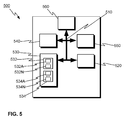
- FIG. 5 illustrates an example of a system according to the invention.
- Computer implemented method, system and computer program code are disclosed in order to selectively optimize colors in content comprising one or more separate content objects for visual representation.
- characteristics of the content objects to be included in a raster canvas are determined and on the basis of the characteristics the color optimization is at least partly performed.
- one characteristic to be taken into account in the color optimization is a type of the content objects.
- At least some characteristics of the raster canvas into which one or more content objects are to be rendered are known. For example, at least the size of the raster canvas and a number of colors, which can be used in the content to be rendered in the raster canvas, are known.
- the size of the raster canvas may e.g. be defined in pixels.
- One or more content objects are received 101 in a processing entity.
- the content objects may be embedded in one or more documents, which are received in the processing entity as a file or as a data stream.
- the content objects within the documents may e.g. be image, text, vector data content or similar, which are configured to be included in the final graphical presentation with necessary manipulation, if any, to the data.
- the receipt of content objects covers also any retrieval of the data from a predetermined location with computer implemented retrieval processes.
- the content objects may be within a document containing data, for example in a PDF, RTF, DOC/X or PPT/X format.
- Characteristics of the one or more content objects are analyzed 103 .
- At least a type of each of the received content objects is determined in the example of the invention.
- the determination of the type of the received content objects may be performed in the processing entity by comparing parameters of the received content objects, or the documents into which the content objects are embedded to, to predetermined criteria and based on the comparison the type of the content object is determined.
- the type of the content object may be text, image in a bitmap format or vector graphics, such as lineart, for example.
- the types of the received content objects are configured to be compared to predetermined types.
- the predetermined types of the content objects are defined in advance.
- At least one received content object matches with any of the predetermined type, information relating to at least one color in a set of colors used in the at least one content object of the predetermined type is extracted from the content object.
- the information on the at least one color may comprise information on all the colors or a sub-set of the colors used in the at least one content object of the predetermined type.
- the predetermined content object types are such whose visual representation with an acceptable quality requires specific measures to be taken during the manipulation process as will be described later.
- one received content object may be a text content and another received content object may e.g. be lineart. It is important to maintain the color information on both of these and, thus, the outcome of the content object analysis 103 may comprise information relating to colors from the sets of colors used in both of the mentioned content objects.
- the delivery of information for rendering purposes relating to at least one color used in content objects of predetermined type may be performed by maintaining the information in a buffer memory in the processing entity, such as a processor.
- the information may be stored in a data file, e.g. a customized file comprising metadata information relating to content objects to be included in the same graphical presentation, such as a document page.
- some additional information as regards the one or more content objects to be rendered in the raster canvas may be stored in the metadata, such as information the content types in general, e.g.
- the additional information may comprise information on content objects of predetermined type, but also information on any content objects. In some case the additional information may comprise some statistical information determined in some manner from the content objects.
- some other information on the received content objects may be extracted in the analysis phase and stored.
- information on the types of the content objects and coverage, i.e. area, of the objects in the raster canvas may be extracted and stored (not illustrated in FIG. 1 ).
- the received content objects belonging to a page are rendered 107 in the raster canvas. If one or more received content objects are analyzed 103 to be a predetermined type of types, information on at least one color used in the one or more content objects of a predetermined type or types is determined and delivered as an input for rendering step 107 .
- the rendering 107 comprises optimization of one or more content objects, i.e. the data of the content objects, according to one or more predetermined rules. Such rules may e.g. be selective color reduction, dithering, smoothing and so on. In practice, the optimization of colors with the rendering operation 107 may e.g.
- colors to be protected may be selected so that they are the colors, which in content sense have importance in the final visual representation.
- the protected colors are typically such, which are relevant to the high fidelity visual representation of the important content details, such as text and related vector objects like tables and graphs.
- the number of colors are configured to be optimized, i.e. reduced, according to a predetermined reduction scheme defined in the control data for optimization.
- the predetermined scheme may be defined so that if the content object is a first type, which is not of predetermined type, the color count after the rendering shall be at minimum X. For a second type of content object, which is not of predetermined type, the color count after the rendering shall be at minimum Y. And so on.
- the number of colors in the content objects, which are not of predetermined type may be artificially limited, i.e. reduced from the original set of colors of a certain content object.
- Any other scheme for optimizing the number of colors in content objects, which are not of predetermined type may be arranged. Also in some contexts it may be beneficial to optimize the number of colors of content objects of a predetermined type by the rendering operation 107 .
- the information on colors, which is stored 105 for further use may already be derived and stored in the step of content object analysis 103 . This may be the case in the implementation in which it is arranged that the rendering does not affect colors in content objects of predetermined type or types.
- the raster canvas analysis comprises determination of the content in the raster canvas as a whole. At least one characteristic of rendered content in the raster canvas is configured to be compared to at least one predetermined criteria, which may e.g. be set for the content in the raster canvas. In response to a mismatch in the comparison of the characteristic of the rendered content in the raster canvas with the at least one predetermined criteria, the amount of colors used in the content of the raster canvas is configured to be optimized.
- the piece of information stored 105 during the rendering phase 107 on the at least one color used in one or more content objects of predetermined type or types is at least partly configured to be used for example in the following way.
- the characteristic of the rendered content in the raster canvas may be used in the comparison may be the total number of colors used in the content of the raster canvas, which is determined from the rendered content.
- the total number of colors of the content in the raster canvas may be arranged to be compared to the color limit for the raster canvas when such a limit is set.
- a control data is configured to be determined, which indicates that amount of colors used in the raster canvas shall be optimized, i.e. reduced, but the at least one protected color according to the stored piece of information shall be maintained, i.e. protected.
- the control data comprises instructions to maintain the at least one color received from the storage 105 in the color optimization 111 and instructions to reduce the total number of colors according to the color limit set for the raster canvas.
- the color limit refers here to maximum number of colors, which can be used in the raster canvas.
- the content in the raster canvas may fulfill all requirements set for the raster canvas and there is no need for color optimization. In such a case the control data for color optimization indicates that nothing needs to be optimized.
- the color optimization 111 is configured to be performed to the data of the raster canvas comprising the unified graphical data of the content objects.
- the color optimization is performed according to instructions defined in the control data received from the step of raster canvas analysis 109 .
- the total color count used in the pixel data of the raster canvas is reduced and the color or colors used in the original content objects of a predetermined type are maintained and preserved. This enables maintaining the graphical information of the content objects of a predetermined type clear and sharp in the final graphical presentation.
- a raster canvas comprising content in a color optimal form, fulfilling any limits defined for the raster canvas.
- the content of the raster canvas is compressed 113 .
- the content of raster canvas is compressed with a compression method, which is preferably lossless compression method, such as PNG or TIFF.
- the advantage with the lossless compression method is that the data is preserved as it is. This enables maintaining the content originating from content objects of a predetermined type sharp and with good quality for visualization, which is a requirement for e.g. textual content.
- the use of lossless compression method is preferable, because with this measure one can avoid causing compression artifacts common to lossy compression methods.
- the compressed raster image is finally stored in a file to a memory of the processing or any other entity or delivered as a data stream to another entity.
- the content of the file can then be visualized on a computer screen, printed out into a paper or delivered over a communication channel to an external entity.
- the color optimization for the final visual representation is at least partly controlled with the information on the at least one color used in received content objects of predetermined type.
- some other information from content objects may be determined, which information may be used in definition of the control data for color optimization of the content in the raster canvas.
- FIG. 2 Another example of the method according to the invention is illustrated in FIG. 2 in which some additional information is determined and used in the color optimization.
- the content objects are received 101 and they are configured to be analyzed 103 .
- the type of the content objects and information on at least one color used in content object or objects of predetermined type or types are determined as described in the content of FIG. 1 .
- some other characteristics are configured to be determined from the received content objects in order to understand generic characteristics of the content in later stages of the method.
- the additional characteristics may comprise information on areas of each of the content object to be rendered in the raster canvas, which information on the additional characteristics is stored 105 for further use.
- the content object analysis 103 is performed individually to each of the received content objects and the information derived in the analysis is stored 105 individually for each received and analyzed content object.
- the content objects are rendered 107 in the raster canvas as described, and information on the protected at least one color used in one or more content objects of predetermined type or types are stored 105 .
- the content of the raster canvas is analyzed 109 for optimization purposes.
- the raster canvas analysis 109 utilizes at least partly the information stored 105 in the rendering phase 107 and content object analysis phase 103 .
- One aim of the raster canvas analysis 109 is to produce control data for color optimization step 111 .
- As an input for color optimization step 111 at least information on the protected colors are delivered causing the color optimization not to affect to the protected colors in the raster canvas. In this manner the quality of the content originating from content objects of predetermined type or types can be maintained on a sufficient level.
- the stored information comprises also additional information regarding the content objects rendered in the raster canvas, it may be used for deriving control data for color optimization 111 .
- several parameters describing generic characteristics of the content such a cumulative area of a specific type of content, in the raster canvas can be determined from the additional information. For example, a ratio of image area and vector area together against the total canvas area, a ratio of text area against the canvas area, a ratio of image area against the canvas area and/or vector drawing area against the canvas area may be determined from the additional information stored in the content object analysis phase 103 .
- the area information of the raster canvas is known.
- the overlapping of the content objects in the raster canvas may also be taken into account in the raster canvas analysis.
- Instructions for handling content object data is defined for the rendering operation in order to determined which content from all the content objects will be the top-most.
- the overlapping of content objects also has such an effect that the colors in pixel or pixels, originating from a content object of a predetermined type, but which are not visible in the final output when all the content objects has been rendered into the canvas due to another content object overlapping the mentioned pixel, or pixels, need not to be protected nor stored, if no other content object of a predetermined type comprise the same color.
- the method according to the example of the invention may select an appropriate color optimization scheme for the content. It is possible to restrict the color model for the raster canvas in the color optimization when the content is some specific type, or more specifically when it complies with certain predetermined criteria. In other words, it is not useful to create a 24-bit bitmap images, if the content can be visualized with a color palette of 256 colors. This has effect when the content of the raster canvas is compressed and thus the computing resources, such as memory usage in the computing entity, can be saved.
- the color optimization 111 is thus performed according to the control data received from the step of raster canvas analysis, as already described.
- the control data may comprise information based on which it is possible to select a file format for compressed content or a color model for a file format or to select a compression method for the content. For example, if the content in a bitmap comprises more colors than it is possible to include in a file format of a certain type, another applicable file format is arranged to be chosen.
- the most suitable color model for a file format may also be possible to select the most suitable color model for a file format based on colors used in bitmap content.
- an applicable compression method may be chosen, such as a lossy compression in order to produce the most optimal size and quality ratio.
- the content in the raster canvas may fulfill all requirements set for the raster canvas and there is no need for color optimization.
- the outcome of the color optimization 111 is compressed 113 and outputted 115 as already discussed.
- the color count in the palette for the raster canvas shall be reduced to 256, but forcing it to first include 7 ⁇ text color count.
- a graphic ratio i.e. the sum of image area and vector area against the canvas area is between 0.5 . . . 0.2
- the color count in the palette for the raster canvas shall be reduced to 256, but forcing it to first include 7 ⁇ text color count.
- the color palette is reduced to 256 colors and images are also dithered.
- the color palette may only be reduced to 256 colors without dithering. It can be seen that the effects to be performed in response to the determination of different characteristics of the content, may vary and may optimally be selected according to content and desired outcome of the content manipulation.
- FIG. 3 shows in a more illustrative manner the analysis of content objects and the rendering of them.
- the analysis comprises at least determining if the content object in question is a predetermined type or types and if yes, information on the color or colors used in the content objects of the predetermined type or types is taken as an input for rendering phase 107 A- 107 C.
- the analysis may comprise processes in which generic characteristics of the received content objects are determined and stored 105 (dashed arrow from box 103 to box 105 ).
- the rendering 107 A- 107 C comprises optimization of one or more content objects, i.e.
- At least color or colors of the content objects may be optimized.
- the color optimization during the rendering phase 107 A- 107 C is arranged to be performed so that the at least one color used in at least one content object of a predetermined type, which are defined in step 103 A- 103 C, are protected.
- the protection of the colors used in at least one content object of a predetermined type may mean that the colors are not optimized at all, or less optimization is performed to the defined colors than other colors.
- step 103 A content object of a predetermined type is determined in branch A (step 103 A) and in branch C (step 103 C).
- step 103 C content object of a predetermined type is determined in branch A (step 103 A) and in branch C (step 103 C).
- the information on the color or colors from rendering step 107 A and 107 C are stored 105 .
- the raster canvas analysis 109 is performed and at least the stored color information 105 is used when creating control data for the color optimization 111 as described earlier in the document. If information on the additional generic characteristics area stored 105 , the information is accordingly utilized when creating the control information for color optimization 111 .
- the color optimization 111 is performed according to the instructions defined in the control data and in such a manner the content data in the raster canvas can be color optimized so that the colors in the content originating from content object or objects of predetermined type or types can be maintained, and thus the quality of the content remains sufficient for visual representation.
- the compression 113 and the outputting 115 of the content may be arranged as already described.
- the raster canvas analysis 109 is configured to be performed when all content objects are rendered to the raster canvas.
- the raster canvas analysis 109 comprises one or more operations, as already described, by means of which the stored information on the content objects 105 can be utilized.
- the stored information comprises metadata from the received and analyzed content objects.
- the raster canvas analysis may comprise operations in which the characteristics of the content raster canvas are compared to predetermined criteria set for the raster canvas, such as maximum amount of colors allowed to be used in the raster canvas.
- a color optimization 111 is performed to the content of the raster canvas according to instructions defined in a control data. Once the color optimization 111 is performed, the optimized content in the raster canvas may be output for compression 401 .
- the invention also relates to a system, which is configured to implement the method as described above.
- a system according to an example of the invention is illustrated in FIG. 5 .
- the system 500 comprises, for example, a bus 510 , a processor 520 , a memory 530 , input means 540 , output means 550 , and a communication interface 560 .
- the bus 510 may include means or methods that enable communication among the elements of the system 500 .
- the system may comprise, or be implemented by, one or more servers, one or more desktop computers, one or more laptop computers, one or more tablet computers, one or more mobile communication terminals or one or more special hardware devices as long as it is capable of implementing the method according to the invention.
- any computing device which comprises necessary hardware and computer program code stored in a memory, may be configured to implement the method as described.
- the processor 520 may comprise one or more conventional processors, one or more microprocessors, or one or more processing logics, or any combination of these, that interprets and executes instructions defined by portions of computer program code.
- the memory 530 may comprise a random access memory (RAM) 532 and/or a read only memory (ROM) 534 .
- the RAM 532 may store information and instructions in a form of portions of computer program code 532 A- 532 N for execution by the processor 520 .
- the ROM 534 may include a conventional ROM device or another type of a static storage device that is configured to store static information and instructions in a form of portions of computer program code 534 A- 534 N for use by the processor 520 .
- the RAM 532 and ROM 534 may be implemented with one or more corresponding memory elements.
- the input means 540 may comprise a conventional mechanism that permits inputting information to the system 500 , such as a keyboard, a mouse, a pen, a touch screen, voice recognition and/or biometric mechanisms, CD/DVD/Blue-ray drive etc.
- the output means 550 may comprise a conventional mechanism that outputs information, including a display, a printer, a speaker, etc.
- the input and output means are not necessarily implemented into the system 500 , but may be coupled to the system 500 with some known interface either wirelessly or in a wired manner when needed.
- the system does not comprise any input means 540 or output means 550 as the system operates as a standalone entity, which is controlled externally through the communication interface 560 .
- the communication interface 560 may enable the system 500 to communicate with other elements and/or systems, such as networks, as well as with client terminals either directly or indirectly over a network.
- the system 500 may perform the operations as described above in response to the processor 520 executing at least one instruction defined in portions of computer program code contained in the computer-readable medium, such as memory.
- a computer-readable medium may be defined as a physical or logical memory device.
- the software instructions may be read into the memory from another computer-readable medium, such as a data storage device, or from another device via the communication interface 560 .
- the software instructions may cause the processor 520 to perform method steps and processes as described and thus to enable the operation of the system 500 according to an example of the invention.
- FIG. 5 illustrates an example of the system 500 according to the invention.
- the elements as disclosed in FIG. 5 do not necessarily exist in all implementations of the system 500 .
- the system 500 may not comprise input means 540 and output means 550 , but the system 500 may be accessed through the communication interface 560 with applicable devices and systems.
- the number and type of memories may vary. Further, the amount of portions of computer program code may depend on the implementation.
- the system 500 is configured, by means of at least part of the mentioned elements, to implement the method according to an example of the invention.
- the system 500 may be any device that receives the content data as an input through e.g. the communication interface 560 , performs the described method steps and returns or forwards the processed image content data further.
- An example of the invention also relates to a computer-readable storage medium, which stores at least portions of computer program code, wherein the portions of computer program code are computer-executable to implement the method steps in the system as described.
- the method as described by comprise instruction that colors in a first type of content objects shall be protected prior to colors in a second type of content objects.
- Such a prioritization order for color protection may be set between all the content object, which may be received in the processing entity.
- the prioritization order can be the following: textual content, vector graphics content, lineart content and image content, wherein the colors in the textual content are the most important to protect.
- content object and content in the raster canvas which are analyzed and manipulated as described.
- the used terminology shall be understood to mean that the data of the content object and the content data in the raster canvas are analyzed. Any similar expression shall also be understood in the same manner.
- the information on the at least one protected color refers to the data, i.e. definitions, describing the color information.
- the description here mainly discloses an environment in which the content object or objects of predetermined type is textual content.
- the content type is to be protected from the color count optimization.
- line art may be one type of content, which shall be protected in order to maintain the sharpness of the lines in the content type.
- the inventive idea is not anyhow limited to any specific content type.
Landscapes
- Engineering & Computer Science (AREA)
- Physics & Mathematics (AREA)
- Computer Hardware Design (AREA)
- General Physics & Mathematics (AREA)
- Theoretical Computer Science (AREA)
- Multimedia (AREA)
- Signal Processing (AREA)
- Image Generation (AREA)
Abstract
Description
Claims (15)
Priority Applications (1)
| Application Number | Priority Date | Filing Date | Title |
|---|---|---|---|
| US13/915,996 US9111479B2 (en) | 2013-06-12 | 2013-06-12 | Color optimization for visual representation |
Applications Claiming Priority (1)
| Application Number | Priority Date | Filing Date | Title |
|---|---|---|---|
| US13/915,996 US9111479B2 (en) | 2013-06-12 | 2013-06-12 | Color optimization for visual representation |
Publications (2)
| Publication Number | Publication Date |
|---|---|
| US20140368528A1 US20140368528A1 (en) | 2014-12-18 |
| US9111479B2 true US9111479B2 (en) | 2015-08-18 |
Family
ID=52018840
Family Applications (1)
| Application Number | Title | Priority Date | Filing Date |
|---|---|---|---|
| US13/915,996 Active 2033-08-02 US9111479B2 (en) | 2013-06-12 | 2013-06-12 | Color optimization for visual representation |
Country Status (1)
| Country | Link |
|---|---|
| US (1) | US9111479B2 (en) |
Families Citing this family (7)
| Publication number | Priority date | Publication date | Assignee | Title |
|---|---|---|---|---|
| US12300273B2 (en) | 2014-12-11 | 2025-05-13 | Rdi Technologies, Inc. | Apparatus and method for visualizing periodic motions in mechanical components |
| US10062411B2 (en) | 2014-12-11 | 2018-08-28 | Jeffrey R. Hay | Apparatus and method for visualizing periodic motions in mechanical components |
| US10459615B2 (en) | 2014-12-11 | 2019-10-29 | Rdi Technologies, Inc. | Apparatus and method for analyzing periodic motions in machinery |
| US11423551B1 (en) * | 2018-10-17 | 2022-08-23 | Rdi Technologies, Inc. | Enhanced presentation methods for visualizing motion of physical structures and machinery |
| US11373317B1 (en) | 2020-01-24 | 2022-06-28 | Rdi Technologies, Inc. | Measuring the speed of rotation or reciprocation of a mechanical component using one or more cameras |
| US11282213B1 (en) | 2020-06-24 | 2022-03-22 | Rdi Technologies, Inc. | Enhanced analysis techniques using composite frequency spectrum data |
| US11322182B1 (en) | 2020-09-28 | 2022-05-03 | Rdi Technologies, Inc. | Enhanced visualization techniques using reconstructed time waveforms |
Citations (4)
| Publication number | Priority date | Publication date | Assignee | Title |
|---|---|---|---|---|
| US20070002348A1 (en) * | 2005-03-15 | 2007-01-04 | Kabushiki Kaisha Toshiba | Method and apparatus for producing images by using finely optimized image processing parameters |
| US7215814B2 (en) * | 2002-12-06 | 2007-05-08 | Kabushiki Kaisha Toshiba | Image forming apparatus performing image correction for object, and method thereof |
| US20070109569A1 (en) * | 2005-11-17 | 2007-05-17 | Xerox Corporation | Determining the color match between image data and graphics objects |
| US20090296157A1 (en) * | 2008-05-30 | 2009-12-03 | Canon Kabushiki Kaisha | Image processing apparatus, method for controlling image processing apparatus, and program |
-
2013
- 2013-06-12 US US13/915,996 patent/US9111479B2/en active Active
Patent Citations (4)
| Publication number | Priority date | Publication date | Assignee | Title |
|---|---|---|---|---|
| US7215814B2 (en) * | 2002-12-06 | 2007-05-08 | Kabushiki Kaisha Toshiba | Image forming apparatus performing image correction for object, and method thereof |
| US20070002348A1 (en) * | 2005-03-15 | 2007-01-04 | Kabushiki Kaisha Toshiba | Method and apparatus for producing images by using finely optimized image processing parameters |
| US20070109569A1 (en) * | 2005-11-17 | 2007-05-17 | Xerox Corporation | Determining the color match between image data and graphics objects |
| US20090296157A1 (en) * | 2008-05-30 | 2009-12-03 | Canon Kabushiki Kaisha | Image processing apparatus, method for controlling image processing apparatus, and program |
Also Published As
| Publication number | Publication date |
|---|---|
| US20140368528A1 (en) | 2014-12-18 |
Similar Documents
| Publication | Publication Date | Title |
|---|---|---|
| US9111479B2 (en) | Color optimization for visual representation | |
| US9830308B2 (en) | Rendering apparatus and method for operating a web-platform | |
| US20140225928A1 (en) | Manipulation of textual content data for layered presentation | |
| KR102275413B1 (en) | Detecting and extracting image document components to create flow document | |
| US9384562B2 (en) | Methods for visual content processing, and systems and computer program codes thereto | |
| US10957097B2 (en) | Allocation of primitives to primitive blocks | |
| US9721359B2 (en) | Apparatus and method of decompressing rendering data and recording medium thereof | |
| US20190057070A1 (en) | System and method for printable document viewer optimization | |
| US10311060B2 (en) | Glyph management in texture atlases | |
| US9245361B2 (en) | Consolidating glyphs of a font | |
| KR20170134251A (en) | Image processing apparatus that performs compression processing of document file and compression method of document file and storage medium | |
| JP2010535371A (en) | Multi-sample rendering of 2D vector images | |
| US9471857B2 (en) | Overcoat processing mechanism | |
| US9218327B2 (en) | Optimizing the layout of electronic documents by reducing presentation size of content within document sections so that when combined a plurality of document sections fit within a page | |
| CN114048174A (en) | OFD document processing method and device and electronic equipment | |
| US9412187B2 (en) | Delayed rendering of content | |
| US20240331242A1 (en) | Systems and methods for converting composite image data | |
| US8913087B1 (en) | Digital image cropping | |
| US9036926B2 (en) | Bitmap processing mechanism | |
| US9483443B2 (en) | Tiled display list | |
| US8064090B2 (en) | System and method for processing variable print documents | |
| CA2969778A1 (en) | Glyph management in texture atlases | |
| US8941881B2 (en) | Method and apparatus for rasterizing transparent page | |
| US8971621B2 (en) | Toner limit processing mechanism | |
| JP4609210B2 (en) | Image processing apparatus, method, and program |
Legal Events
| Date | Code | Title | Description |
|---|---|---|---|
| AS | Assignment |
Owner name: DOCUMILL OY, FINLAND Free format text: ASSIGNMENT OF ASSIGNORS INTEREST;ASSIGNORS:KONNOLA, MIKA;HANNINEN, RAMI;LAAKSO, TERHO;REEL/FRAME:030901/0783 Effective date: 20130705 |
|
| FEPP | Fee payment procedure |
Free format text: PAYOR NUMBER ASSIGNED (ORIGINAL EVENT CODE: ASPN); ENTITY STATUS OF PATENT OWNER: SMALL ENTITY |
|
| STCF | Information on status: patent grant |
Free format text: PATENTED CASE |
|
| MAFP | Maintenance fee payment |
Free format text: PAYMENT OF MAINTENANCE FEE, 4TH YR, SMALL ENTITY (ORIGINAL EVENT CODE: M2551); ENTITY STATUS OF PATENT OWNER: SMALL ENTITY Year of fee payment: 4 |
|
| MAFP | Maintenance fee payment |
Free format text: PAYMENT OF MAINTENANCE FEE, 8TH YR, SMALL ENTITY (ORIGINAL EVENT CODE: M2552); ENTITY STATUS OF PATENT OWNER: SMALL ENTITY Year of fee payment: 8 |
|
| AS | Assignment |
Owner name: WUESSEN LENDINGS S.A.R.L., LUXEMBOURG Free format text: SECURITY INTEREST;ASSIGNOR:DOCUMILL OY;REEL/FRAME:070926/0110 Effective date: 20250409 |
|
| AS | Assignment |
Owner name: WUESSEN LENDING III S.A.R.L., LUXEMBOURG Free format text: SECURITY INTEREST;ASSIGNOR:DOCUMILL OY;REEL/FRAME:073300/0621 Effective date: 20251114 |