US9110586B2 - Scrolling apparatus, scrolling method, non-transitory computer readable recording medium and intergrated circuit - Google Patents
Scrolling apparatus, scrolling method, non-transitory computer readable recording medium and intergrated circuit Download PDFInfo
- Publication number
- US9110586B2 US9110586B2 US13/388,525 US201113388525A US9110586B2 US 9110586 B2 US9110586 B2 US 9110586B2 US 201113388525 A US201113388525 A US 201113388525A US 9110586 B2 US9110586 B2 US 9110586B2
- Authority
- US
- United States
- Prior art keywords
- display
- range
- display data
- load range
- distance
- Prior art date
- Legal status (The legal status is an assumption and is not a legal conclusion. Google has not performed a legal analysis and makes no representation as to the accuracy of the status listed.)
- Expired - Fee Related, expires
Links
Images




Classifications
-
- G—PHYSICS
- G06—COMPUTING OR CALCULATING; COUNTING
- G06F—ELECTRIC DIGITAL DATA PROCESSING
- G06F3/00—Input arrangements for transferring data to be processed into a form capable of being handled by the computer; Output arrangements for transferring data from processing unit to output unit, e.g. interface arrangements
- G06F3/01—Input arrangements or combined input and output arrangements for interaction between user and computer
- G06F3/048—Interaction techniques based on graphical user interfaces [GUI]
- G06F3/0487—Interaction techniques based on graphical user interfaces [GUI] using specific features provided by the input device, e.g. functions controlled by the rotation of a mouse with dual sensing arrangements, or of the nature of the input device, e.g. tap gestures based on pressure sensed by a digitiser
- G06F3/0488—Interaction techniques based on graphical user interfaces [GUI] using specific features provided by the input device, e.g. functions controlled by the rotation of a mouse with dual sensing arrangements, or of the nature of the input device, e.g. tap gestures based on pressure sensed by a digitiser using a touch-screen or digitiser, e.g. input of commands through traced gestures
- G06F3/04883—Interaction techniques based on graphical user interfaces [GUI] using specific features provided by the input device, e.g. functions controlled by the rotation of a mouse with dual sensing arrangements, or of the nature of the input device, e.g. tap gestures based on pressure sensed by a digitiser using a touch-screen or digitiser, e.g. input of commands through traced gestures for inputting data by handwriting, e.g. gesture or text
-
- G—PHYSICS
- G06—COMPUTING OR CALCULATING; COUNTING
- G06F—ELECTRIC DIGITAL DATA PROCESSING
- G06F3/00—Input arrangements for transferring data to be processed into a form capable of being handled by the computer; Output arrangements for transferring data from processing unit to output unit, e.g. interface arrangements
- G06F3/01—Input arrangements or combined input and output arrangements for interaction between user and computer
- G06F3/048—Interaction techniques based on graphical user interfaces [GUI]
- G06F3/0484—Interaction techniques based on graphical user interfaces [GUI] for the control of specific functions or operations, e.g. selecting or manipulating an object, an image or a displayed text element, setting a parameter value or selecting a range
- G06F3/0485—Scrolling or panning
-
- G—PHYSICS
- G09—EDUCATION; CRYPTOGRAPHY; DISPLAY; ADVERTISING; SEALS
- G09G—ARRANGEMENTS OR CIRCUITS FOR CONTROL OF INDICATING DEVICES USING STATIC MEANS TO PRESENT VARIABLE INFORMATION
- G09G5/00—Control arrangements or circuits for visual indicators common to cathode-ray tube indicators and other visual indicators
- G09G5/36—Control arrangements or circuits for visual indicators common to cathode-ray tube indicators and other visual indicators characterised by the display of a graphic pattern, e.g. using an all-points-addressable [APA] memory
- G09G5/39—Control of the bit-mapped memory
- G09G5/395—Arrangements specially adapted for transferring the contents of the bit-mapped memory to the screen
- G09G5/397—Arrangements specially adapted for transferring the contents of two or more bit-mapped memories to the screen simultaneously, e.g. for mixing or overlay
-
- G—PHYSICS
- G09—EDUCATION; CRYPTOGRAPHY; DISPLAY; ADVERTISING; SEALS
- G09G—ARRANGEMENTS OR CIRCUITS FOR CONTROL OF INDICATING DEVICES USING STATIC MEANS TO PRESENT VARIABLE INFORMATION
- G09G2320/00—Control of display operating conditions
- G09G2320/02—Improving the quality of display appearance
- G09G2320/0252—Improving the response speed
-
- G—PHYSICS
- G09—EDUCATION; CRYPTOGRAPHY; DISPLAY; ADVERTISING; SEALS
- G09G—ARRANGEMENTS OR CIRCUITS FOR CONTROL OF INDICATING DEVICES USING STATIC MEANS TO PRESENT VARIABLE INFORMATION
- G09G2330/00—Aspects of power supply; Aspects of display protection and defect management
- G09G2330/02—Details of power systems and of start or stop of display operation
- G09G2330/021—Power management, e.g. power saving
Definitions
- the present invention relates to a technique that enables scrolling of display contents of a display unit and, in particular, to a scrolling apparatus, a scrolling method, a scrolling program, and an integrated circuit which enable high-speed scrolling using a pointing device such as a touch panel.
- FIGS. 12A to 12C are diagrams showing an example of display data loaded to a memory buffer according to Patent Document 1 described above.
- a display range 500 is specified as an initial display area
- display data arranged in the display range 500 shown in FIG. 12A is saved in a memory buffer.
- display data included in the display range 500 is displayed on a display unit to perform initial display.
- display data that is arranged in an area 501 which is an area created by expanding the display range 500 by a maximum of one screen in upward, downward, leftward, and rightward directions is stored in the memory buffer.
- FIG. 12B shows contents of the memory buffer when scrolling is performed by one screen in the rightward direction.
- a range displayed on the display unit is moved from the display range 500 in FIG. 12A to the display range 500 in FIG. 12B , and display contents are scrolled by continuously displaying display data included in the display range on the display unit.
- display data corresponding to an area 502 ( FIG. 12C ) not yet stored in the memory buffer among areas having a possibility of being displayed on the display unit when scrolling is performed once again is stored in the memory buffer according to the modified display range 500 .
- the present invention solves the conventional problem described above, and an object thereof is to provide a scrolling apparatus, a scrolling method, a scrolling program, and an integrated circuit which enable high-speed scrolling while suppressing load processing time of display data and memory consumption for storing loaded display data by reducing the amount of display data to be loaded.
- a scrolling apparatus is a scrolling apparatus that enables scrolling of display contents of a display unit, the scrolling apparatus comprising: a detecting unit that detects a movement starting position specified by a user in an operating range having a position that is specifiable by the user; a primary storage unit that stores display data; a secondary storage unit that stores the display data in a load range that is larger than a display range of the display unit among the display data stored in the primary storage unit; a load range determining unit that determines the load range of the display data to be loaded from the primary storage unit to the secondary storage unit according to the movement starting position detected by the detecting unit; a loading unit that loads the display data in the load range determined by the load range determining unit from the primary storage unit to the secondary storage unit; and a display control unit that displays on the display unit display data in the display range among the display data in the load range stored in the secondary storage unit.
- FIG. 1 is a block diagram showing a configuration of a scrolling apparatus according to a first embodiment of the present invention.
- FIG. 2 is a flow chart showing a flow of processes from an initial display on a display unit to scrolling of display contents according to the first embodiment of the present invention.
- FIGS. 3A to 3C are diagrams showing a contact position of a finger on a touch panel.
- FIGS. 4A to 4C are diagrams showing a load range and a display range.
- FIG. 5 is a diagram describing a load priority judged by a load range determining unit.
- FIG. 6 is a flow chart showing a flow of processes from an initial display on a display unit to scrolling of display contents according to a second embodiment of the present invention.
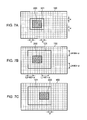
- FIGS. 7A to 7C are diagrams showing a load range and a display range according to the second embodiment of the present invention.
- FIG. 8 is a diagram showing a load range and a display range according to a third embodiment of the present invention.
- FIG. 9 is a diagram showing a load range and a display range according to a modification of the third embodiment of the present invention.
- FIG. 10 is a flow chart showing a flow of processes from an initial display on a display unit to scrolling of display contents according to a fourth embodiment of the present invention.
- FIGS. 11A and 11B are diagrams showing a load range and a display range according to a fourth embodiment of the present invention.
- FIGS. 12A to 12C are diagrams showing a conventional load range and a conventional display range.
- FIG. 1 is a block diagram showing a configuration of a scrolling apparatus 1 according to a first embodiment of the present invention.
- the scrolling apparatus 1 controls display contents on a display unit 2 and comprises a detecting unit 11 , a load range determining unit 12 , a loading unit 13 , a display control unit 14 , a primary storage unit 15 , and a secondary storage unit 16 .
- the display unit 2 is a CRT, an LCD, or the like which displays a screen.
- the detecting unit 11 comprising a pointing device such as a touch pad or a touch panel (in the present first embodiment, a touch panel) accepts and detects a user operation, and notifies a result of the operation to the load range determining unit 12 and the display control unit 14 . More specifically, the detecting unit 11 notifies a starting position of a slide operation, a movement position during the slide operation, and an end position of the slide operation. In the case of the touch panel according to the present first embodiment, the detecting unit 11 notifies a position at which a finger of the user touches the touch panel, a position to which the finger moves after coming into contact with the touch panel, and a position at which the finger breaks contact with the touch panel.
- the primary storage unit 15 is an HD (Hard Disk), a DVD (Digital Versatile Disk), or the like for saving data, and saves display data such as images. Moreover, while the present configuration represents an example in which the primary storage unit 15 is coupled directly, the primary storage unit 15 may alternatively be connected via a network such as the Internet.
- the load range determining unit 12 determines a load range indicating whichever area of the primary storage unit 15 in which display data to be loaded to the secondary storage unit 16 is arranged. In addition, the load range determining unit 12 judges display data arranged in a direction having a greatest difference between a present display range and the load range among display data arranged in the load range to have a high priority. Details of these functions will be described later.
- the loading unit 13 acquires display data from the primary storage unit 15 and stores the display data in the secondary storage unit 16 , and acquires display data in a range displayed by the display control unit 14 from the primary storage unit 15 and stores the display data in the secondary storage unit 16 .
- the loading unit 13 sequentially acquires display data in the load range determined by the load range determining unit 12 from the primary storage unit 15 in a descending order from the display data having a high priority as judged by the load range determining unit 12 , and stores the display data in the secondary storage unit 16 .
- the display control unit 14 determines which part of the data among the data stored in the secondary storage unit 16 is to be displayed on the display unit 2 , and enables scrolling of display contents of the display unit 2 according to user operation contents received from the detecting unit 11 . More specifically, when the user performs an operation involving sliding a finger on the touch panel and a movement position of the finger during the slide operation is notified from the detecting unit 11 , the display control unit 14 scrolls display contents of the display unit 2 by a same amount as a movement distance from a starting position of the slide operation to the notified movement position during the slide operation.
- the secondary storage unit 16 is a frame buffer or the like that stores display data and comprises a flash memory or the like which can be accessed at a higher rate than the primary storage unit 15 .
- Display data is stored in the secondary storage unit 16 in a same format as a layout displayed on the display unit 2 .
- FIG. 2 is a flow chart showing a flow of processes from initial display to performing scrolling
- FIGS. 3A to 3C are diagrams showing a contact position of a finger on the touch panel
- FIGS. 4A to 4C are diagrams showing an example of a load range determined by the load range determining unit 12
- FIG. 5 is a diagram describing a load priority judged by the load range determining unit 12 .
- FIGS. 3A , 3 B, and 3 C are diagrams showing a contact point between the touch panel and a finger upon initial display, upon start of a slide operation, and upon end of the slide operation, respectively.
- FIGS. 3A to 3C show an operating range 110 to which an input can be made via the touch panel, and a contact position 111 between the touch panel and a finger.
- the operating range 110 of the touch panel has a rectangular shape which has coordinates P (Xmin, Ymin) as an upper-left corner thereof, which extends in a +X direction (a rightward direction in FIG. 3 ) by Xmax and in a +Y direction (a downward direction in FIG. 3 ) by Ymax, and which has coordinates Q (Xmax, Ymax) as a lower-right corner thereof.
- P Xmin, Ymin
- Q a coordinate range that can be inputted using the touch panel of the detecting unit 11 and a coordinate range that can be displayed on the display unit 2 are consistent with each other.
- an area 150 is an area used by the secondary storage unit 16 to store display data. Display data is stored in this area in conformity with a layout in which the display control unit 14 displays the display data on the display unit 2 . Moreover, the area 150 is a virtual area and all of a storage area such as a physical memory for actually storing display data need not necessarily be secured at this point. Instead, when storing of display data actually becomes necessary, a storage area corresponding to the area may be secured.
- the display control unit 14 determines a display range 200 in which initial display is performed and notifies the same to the loading unit 13 (step S 1 ). This can be performed by displaying a fixed area set in advance by a system (for example, a first image among a plurality of images) or by having the user specify an area upon performing initial display.
- the loading unit 13 acquires display data to be arranged in the display range 200 that is initially displayed from the primary storage unit 15 and stores the display data in the secondary storage unit 16 (step S 2 ). Moreover, since a slide operation for performing scrolling has not yet been performed at this stage, a finger is not in contact with the touch panel as shown in FIG. 3A .
- the secondary storage unit 16 Upon receiving a display data storage request from the loading unit 13 , the secondary storage unit 16 secures a physical memory area necessary for storing the display data and stores the display data. Subsequently, initial display is performed as the display control unit 14 displays the display data included in the display range 200 of the secondary storage unit 16 on the display unit 2 (step S 3 ).
- the detecting unit 11 notifies a slide starting position to the load range determining unit 12 (step S 4 ).
- the load range determining unit 12 determines a load range 120 of the display data (step S 5 ). Specifically, as shown in FIG. 3B , assuming that X coordinates that can be operated via the touch panel of the detecting unit 11 range from Xmin to Xmax and Y coordinates range from Ymin to Ymax, and a starting position of the slide operation is A 0 (X 0 , Y 0 ), then the load range determining unit 12 predicts that scrolling may possibly be performed up to a movement distance described below as a scrollable range.
- the load range determining unit 12 predicts that scrolling in a rightward direction (+X direction) may possibly be performed up to coordinates A 1 (Xmin, Y 0 ) which is a movement end position to which a scroll operation can be performed in the rightward direction from the slide starting position A 0 (X 0 , Y 0 ) and which is a position having a maximum distance from the slide starting position A 0 (X 0 , Y 0 ).
- the load range determining unit 12 predicts that scrolling in a leftward direction ( ⁇ X direction) may possibly be performed up to coordinates A 2 (Xmax, Y 0 ) which is a movement end position to which a scroll operation can be performed in the leftward direction from the slide starting position A 0 (X 0 , Y 0 ) and which is a position having a maximum distance from the slide starting position A 0 (X 0 , Y 0 ).
- the load range determining unit 12 predicts that scrolling in a downward direction (+Y direction) may possibly be performed up to coordinates A 3 (X 0 , Ymin) which is a movement end position to which a scroll operation can be performed in the downward direction from the slide starting position A 0 (X 0 , Y 0 ) and which is a position having a maximum distance from the slide starting position A 0 (X 0 , Y 0 ).
- the load range determining unit 12 predicts that scrolling in an upward direction ( ⁇ Y direction) may possibly be performed up to coordinates A 4 (X 0 , Ymax) which is a movement end position to which a scroll operation can be performed in the upward direction from the slide starting position A 0 (X 0 , Y 0 ) and which is a position having a maximum distance from the slide starting position A 0 (X 0 , Y 0 ).
- the load range determining unit 12 judges display data arranged in a direction having a greatest difference between the present display range 200 and the load range 120 among display data to be arranged in the load range 120 to have a high priority.
- the load range 120 is determined as a range created by expanding the display range 200 in the respective directions by the respective widths described above
- the load range determining unit 12 judges display data arranged in a direction corresponding to a maximum width among the widths described above to have a high priority.
- the load range determining unit 12 judges that scrolling is most likely to be performed in the rightward direction that has the greatest difference, judges that display data that is displayed on the display unit 2 when scrolling is performed in the rightward direction or, in other words, display data arranged in an area to the right of the present display range 200 has a high priority, and judges that there is a descending order of priorities starting from nearby the present display range 200 .
- display data arranged in areas 1201 , 1202 , and 1203 on a right side of the present display range 200 are judged to have high priorities.
- the load range determining unit 12 judges display data arranged in a direction having a greatest difference between the present display range 200 and the load range 120 among display data to be arranged in the load range 120 to have a high priority.
- the load range determining unit 12 judges display data near the present display range 200 among display data arranged in areas 1201 , 1202 , and 1203 on a right side of the present display range 200 to have a high priority.
- priorities are high in an order of respective display data in the area 1201 , the area 1202 , and the area 1203 among the areas 1201 , 1202 , and 1203 . Accordingly, when display contents are scrolled in the rightward direction, priorities are judged as being high in an order in which the display data is to be displayed on the display unit 2 .
- the load range determining unit 12 repeats a sequence of determining a direction having a next greatest difference and judging display data arranged in that direction to have a high priority until priorities are judged for all pieces of display data arranged in the load range 120 .
- display data in one of areas 1206 a and 1206 b which is display data displayed when scrolling is performed in a direction near the downward and upward directions is judged to have a high priority.
- priorities have been judged by setting the areas 1201 , 1202 , and 1203 in FIG. 5 in units of partial areas depicted by dashed lines for the sake of simplicity, in practice, priorities may be judged by setting the areas 1201 , 1202 , and 1203 in units of pixels or units of pixel rows.
- the loading unit 13 sequentially acquires display data arranged in the load range 120 from the primary storage unit 15 in a descending order of priorities from the display data judged to have a high priority by the load range determining unit 12 , and stores the display data in the secondary storage unit 16 (step S 6 ). While the present process may be performed as a synchronous process, the present process is performed as asynchronous process in the present first embodiment in consideration of responsiveness to user operations and is performed in parallel with processes performed in the present and subsequent steps.
- the detecting unit 11 judges whether or not the contact position 111 of the finger on the touch panel has been moved by the user in order to scroll the screen by a slide operation (step S 7 ).
- a progress is made to step S 10 .
- the detecting unit 11 notifies a movement position during the slide operation to the display control unit 14 (step S 8 ).
- the display control unit 14 moves the display range 200 on the secondary storage unit 16 in accordance with the movement position during the slide operation notified from the detecting unit 11 , and displays display data included in the display range 200 on the display unit 2 as needed and scrolls display contents of the display unit 2 (step S 9 ).
- the display contents of the display unit 2 are scrolled by moving the display range 200 from a position shown in FIG. 4B to a position shown in FIG. 4C and displaying display data arranged in the display range 200 shown in FIG. 4C on the display unit 2 .
- the load range 120 is determined in step S 5 by the load range determining unit 12 based on a maximum movement distance over which the user can move without detaching the finger. Therefore, in the present step S 9 , even if the display range 200 is moved in accordance with the movement distance of the finger, the display range 200 does not move outside the load range 120 .
- the detecting unit 11 judges whether or not the user has detached the finger from the touch panel in order to end the slide operation (step S 10 ).
- the slide operation is judged as being ongoing and a return is made to step S 7 .
- the slide operation is judged as being finished and an end of the slide operation is notified to the display control unit 14 .
- the display control unit 14 judges whether or not display data in the display range 200 is entirely stored in the secondary storage unit 16 as a result of the display data loading process asynchronously executed in step S 6 (step S 11 ).
- step S 11 When display data in the display range 200 is entirely stored in the secondary storage unit 16 (YES in step S 11 ), the process is finished.
- step S 6 when the loading process asynchronously executed in step S 6 has not been concluded and a part of the display data in the display range 200 is not stored in the secondary storage unit 16 (NO in step S 11 ), stand-by is performed until the display data in the display range 200 is entirely stored in the secondary storage unit 16 (step S 12 ), and when the display data in the display range 200 is entirely stored in the secondary storage unit 16 , display data included in the display range 200 is displayed on the display unit 2 (step S 13 ) and the process is finished.
- step S 6 when the loading process of step S 6 is executed as a synchronous process, the processes of steps S 11 to S 13 may be omitted.
- the load range determining unit 12 predicts a maximum scrolling amount in each scrolling direction in which the user may next perform an operation based on coordinates of a slide operation starting position received from the detecting unit 11 , and determines the load range 120 . Therefore, only display data having a high possibility of being displayed on the display unit 2 can be loaded to the secondary storage unit 16 before a scroll operation of the user is finalized.
- the load range determining unit 12 judges that display data in a direction in which scrolling is most likely to be performed among the display data in the load range 120 has a high priority, and the loading unit 13 loads display data from the primary storage unit 15 to the secondary storage unit 16 in a descending order of priorities as determined by the load range determining unit 12 .
- display data can be loaded to the secondary storage unit 16 in a descending order of possibilities of being displayed due to scrolling before a scroll operation of the user is finalized. Therefore, according to the present first embodiment, high-speed scrolling can be realized while suppressing load processing time and memory consumption necessary for the secondary storage unit 16 .
- the load range determining unit 12 judges that a direction having a rightward-direction component as viewed from the display range 200 or, in other words, areas 1204 a and 1204 b in an obliquely-rightward direction have a next highest priority.
- a direction of a scroll operation by the user is a direction having a component of a direction predicted to have a highest priority
- display data in that direction is preferentially loaded to the secondary storage unit 16 . Therefore, scrolling of display contents can be favorably performed.
- the present first embodiment is favorable in that the load range determining unit 12 judges a priority of display data in the load range 120 and the loading unit 13 loads display data in a descending order of priorities from the primary storage unit 15 to the secondary storage unit 16 , such an arrangement is not restrictive.
- the loading unit 13 may load display data in the load range 120 determined by the load range determining unit 12 to the secondary storage unit 16 according to a preset order (for example, in a downward sequence from a topmost pixel row starting at a pixel in a top left corner in FIG. 4B ).
- the loading unit 13 may acquire display data in a range of the load range 120 excluding the display range 200 from the primary storage unit 15 and load the display data to the secondary storage unit 16 or may acquire display data in the entire load range 120 including the display range 200 from the primary storage unit 15 and overwrite the secondary storage unit 16 with the display data.
- FIG. 6 is a flow chart showing a flow of processes from an initial display to performing scrolling according to a second embodiment
- FIGS. 7A to 7C are diagrams showing an example of a load range determined by the load range determining unit 12 according to the second embodiment
- FIGS. 7A , 7 B, and 7 C are diagrams respectively showing contents of the secondary storage unit 16 and a load range determined by the load range determining unit 12 upon initial display, upon start of a slide operation, and upon end of a slide operation.
- configurations of the scrolling apparatus 1 and an operating range 110 of the touch panel according to the second embodiment are similar to the configurations according to the first embodiment respectively shown in FIGS. 1 and 3A to 3 C. The following description will focus on differences from the first embodiment.
- the display control unit 14 determines a display range 200 in which initial display is performed (step S 20 ).
- the display control unit 14 determines an initial load range 201 during the initial display and notifies the same to the loading unit 13 (step S 21 ).
- the display control unit 14 determines an area created by expanding the display range 200 in each direction by a predetermined width ⁇ as the initial load range 201 .
- the loading unit 13 acquires display data to be arranged in the initial load range 201 from the primary storage unit 15 and stores the display data in the secondary storage unit 16 (step S 22 ).
- Subsequent steps S 23 and S 24 are similar to steps S 3 and S 4 in FIG. 2 .
- step S 25 the load range determining unit 12 determines an area expanded by respective sums of widths W 1 , W 2 , W 3 , and W 4 by which scrolling is predicted to possibly be performed in the respective directions and a predetermined width ⁇ as a load range 121 .
- Subsequent steps S 26 to S 28 are similar to steps S 6 to S 8 in FIG. 2 .
- step S 29 in a similar manner as in the first embodiment, when the user moves the finger from the contact position 111 shown in FIG. 3B to the contact position 111 shown in FIG. 3C , the display control unit 14 moves the display range 200 from a position shown in FIG. 7B to a position shown in FIG. 7C , and the display contents of the display unit 2 are scrolled by displaying display data arranged in the display range 200 shown in FIG. 7C on the display unit 2 .
- steps S 30 to S 33 are similar to steps S 10 to S 13 in FIG. 2 .
- the display control unit 14 determines an area created by expanding the display range 200 in each direction by a predetermined width ⁇ as the initial load range 201 during initial display, even when the user moves the display range 200 by moving a finger immediately after bringing the finger into contact with the touch panel, display data not yet loaded can be prevented from being included in the display range 200 .
- the load range determining unit 12 determines a range expanded by a sum of a maximum movement distance that is movable without the user detaching the finger and a predetermined width ⁇ as the load range 121 . Therefore, even if the user moves the finger by a maximum movement distance from the contact position 111 shown in FIG. 3B to the contact position 111 shown in FIG. 3C , as shown in FIG. 7C , the display range 200 has not reached a right end of the load range 121 and a margin of a predetermined width ⁇ remains to a right side of the load range 121 . As a result, even if the user quickly performs consecutive scroll operations in a same direction, scrolling of the display contents of the display unit 2 can be favorably performed.
- the initial load range 201 that is created by expanding the display range 200 in each direction by a predetermined width ⁇ is loaded to the secondary storage unit 16 during initial display, there is a margin of the predetermined width ⁇ in each direction with respect to the display range 200 . Therefore, even if the user performs a scroll operation in a direction other than a direction having a greatest difference between the present display range 200 and the load range 121 , display contents of the display unit 2 can be favorably scrolled.
- the predetermined width ⁇ is set as a predetermined number of pixels and may be set as a width corresponding to one unit of a display object displayed on the display unit 2 .
- the predetermined width ⁇ For example, if the display object is a photograph, a next row of photographs may be set as the predetermined width ⁇ .
- the display object is a list of items, a next row of items may be set as the predetermined width ⁇ .
- the predetermined width ⁇ is a fixed value in the present second embodiment, when there is display data that has not yet been loaded in step S 31 , the value of the predetermined width ⁇ may be increased. In addition, after increasing the value of the predetermined width ⁇ , the predetermined width ⁇ may be restored to an initial value at a predetermined timing.
- a priority of display data in the load range 121 may be judged by the load range determining unit 12 and the display data may be loaded by the loading unit 13 in a descending order of priorities from the primary storage unit 15 to the secondary storage unit 16 .
- the loading unit 13 may load display data in the load range 121 determined by the load range determining unit 12 to the secondary storage unit 16 according to a preset order (for example, in a downward sequence from a topmost pixel row starting at a pixel in a top left corner in FIG. 7B ).
- the loading unit 13 may acquire display data in a range of the load range 121 excluding the initial load range 201 from the primary storage unit 15 and load the display data to the secondary storage unit 16 or may acquire display data in the entire load range 121 including the initial load range 201 from the primary storage unit 15 and overwrite the secondary storage unit 16 with the display data.
- a range created by expanding the display range 200 in all directions is set as the load range 120
- a range created by expanding the present display range 200 only in a direction having a greatest predicted movement distance may be set as the load range.
- FIG. 8 is a diagram showing a load range 122 determined by the load range determining unit 12 according to a third embodiment.
- configurations of the scrolling apparatus 1 and an operating range 110 of the touch panel according to the third embodiment are similar to the configurations according to the first embodiment respectively shown in FIGS. 1 and 3A to 3 C.
- a basic flow of processes from initial display to performing scrolling is similar to that of the first embodiment shown in FIG. 4 . The following description will focus on differences from the first embodiment.
- the load range determining unit 12 determines a range expanded only in a direction corresponding to a maximum movement distance among movement distances by which scrolling is predicted to possibly be performed in respective directions as a load range.
- the load range determining unit 12 compares four values including a distance (X 0 ⁇ Xmin) between the coordinates A 0 and coordinates A 1 , a distance (Xmax ⁇ X 0 ) between the coordinates A 0 and coordinates A 2 , a distance (Y 0 ⁇ Ymin) between the coordinates A 0 and coordinates A 3 , and a distance (Ymax ⁇ Y 0 ) between the coordinates A 0 and coordinates A 4 , and obtains a maximum value.
- a distance (X 0 ⁇ Xmin) between the coordinates A 0 and coordinates A 1 a distance (Xmax ⁇ X 0 ) between the coordinates A 0 and coordinates A 2 , a distance (Y 0 ⁇ Ymin) between the coordinates A 0 and coordinates A 3 , and a distance (Ymax ⁇ Y 0 ) between the coordinates A 0 and coordinates A 4 , and obtains a maximum value.
- a distance (X 0 ⁇ Xmin) between the
- the load range determining unit 12 determines a range expanded only in a direction corresponding to a maximum movement distance among movement distances by which scrolling is predicted to possibly be performed in respective directions as the load range 122 , a memory capacity required by the secondary storage unit 16 can be reduced.
- a priority of display data in the load range 122 may be judged by the load range determining unit 12 and the display data may be loaded by the loading unit 13 in a descending order of priorities from the primary storage unit 15 to the secondary storage unit 16 .
- the load range determining unit 12 may judge that an area adjacent to the display range 200 among the load range 122 has a high priority and the loading unit 13 may load display data in a descending order of the priorities.
- the loading unit 13 may load display data in the load range 122 determined by the load range determining unit 12 to the secondary storage unit 16 according to a preset order. Furthermore, the loading unit 13 may acquire display data in a range of the load range 122 excluding the display range 200 from the primary storage unit 15 and load the display data to the secondary storage unit 16 or may acquire display data in the entire load range 122 including the display range 200 from the primary storage unit 15 and overwrite the secondary storage unit 16 with the display data.
- the load range determining unit 12 may determine a range expanded in each direction with the exception of a direction corresponding to a maximum movement distance by a predetermined distance ⁇ as a load range 123 . According to this configuration, while reducing a memory capacity required by the secondary storage unit 16 , display contents of the display unit 2 can be favorably scrolled even if the user performs a scroll operation in a direction other than the direction corresponding to the maximum movement distance in a similar manner as in the second embodiment.
- a priority of display data in the load range 123 may be judged by the load range determining unit 12 and the display data may be loaded by the loading unit 13 in a descending order of priorities from the primary storage unit 15 to the secondary storage unit 16 .
- the loading unit 13 may load display data in the load range 123 determined by the load range determining unit 12 to the secondary storage unit 16 according to a preset order.
- the loading unit 13 may acquire display data in a range of the load range 123 excluding the display range 200 from the primary storage unit 15 and load the display data to the secondary storage unit 16 or may acquire display data in the entire load range 123 including the display range 200 from the primary storage unit 15 and overwrite the secondary storage unit 16 with the display data.
- FIG. 10 is a flow chart showing a flow of processes from an initial display to performing scrolling according to a fourth embodiment that uses a touch pad
- FIGS. 11A and 11B are diagrams showing an example of a load range determined by the load range determining unit 12 according to the fourth embodiment.
- FIGS. 11A and 11B are diagrams respectively showing a load range determined by the load range determining unit 12 upon start of a slide operation and upon end of a slide operation.
- a configuration of the scrolling apparatus 1 according to the fourth embodiment is similar to the configuration according to the first embodiment shown in FIG. 1 .
- a configuration of an operating range 110 of the touch pad according to the fourth embodiment is similar to the configuration according to the first embodiment shown in FIGS. 3A to 3C . The following description will focus on differences from the first embodiment.
- the display control unit 14 obtains a ratio T between coordinate ranges of the operating range 110 of the detecting unit 11 (touch pad) and a display range 200 of the display unit 2 based on the operating range 110 of the detecting unit 11 (touch pad) and the display range 200 of the display unit 2 , and stores the ratio T in a memory (step S 40 ).
- the ratio T can be obtained by acquiring coordinate range information from the display unit 2 when the display control unit 14 is connected to the display unit 2 by a wired or a wireless connection and then using the acquired coordinate range and a coordinate range of the operating range 110 that is known in advance.
- steps S 41 to S 44 are similar to steps S 1 to S 4 in FIG. 2 .
- the load range determining unit 12 determines a load range of display data based on a notified slide starting position and on the ratio T determined and stored in the memory by the display control unit 14 in step S 40 . Specifically, as shown in FIG.
- steps S 46 to S 48 are similar to steps S 6 to S 8 in FIG. 2 .
- the display control unit 14 moves the display range 200 on the secondary storage unit 16 in accordance with the movement position during the slide operation notified from the detecting unit 11 and the ratio T stored in the memory, and displays display data included in the display range 200 on the display unit 2 as needed to scroll display contents of the display unit 2 .
- the display contents of the display unit 2 are scrolled by moving the display range 200 from a position shown in FIG. 11A to a position shown in FIG.
- step S 45 the load range determining unit 12 based on a maximum movement distance over which the user can move without detaching the finger. Therefore, in the present step S 49 , even if the display range 200 is moved in accordance with the movement distance of the finger, the display range 200 does not move outside the load range 124 in a similar manner to the first embodiment described above. Subsequent steps S 50 to S 53 are similar to steps S 10 to S 13 in FIG. 2 .
- a priority of display data in the load range 124 may be judged by the load range determining unit 12 and the display data may be loaded by the loading unit 13 in a descending order of priorities from the primary storage unit 15 to the secondary storage unit 16 .
- the loading unit 13 may load display data in the load range 124 determined by the load range determining unit 12 to the secondary storage unit 16 according to a preset order.
- the loading unit 13 may acquire display data in a range of the load range 124 excluding the display range 200 from the primary storage unit 15 and load the display data to the secondary storage unit 16 or may acquire display data in the entire load range 124 including the display range 200 from the primary storage unit 15 and overwrite the secondary storage unit 16 with the display data.
- step S 4 in FIG. 2 when a user brings two fingers into contact with a pointing device such as a touch panel to start a pinching-in operation, the detecting unit 11 notifies positions in contact with the two fingers as a movement starting position to the load range determining unit 12 .
- the load range determining unit 12 determines a load range of the display data. Specifically, the load range determining unit 12 calculates a distance D between positions in contact with the two fingers. The load range determining unit 12 compares the calculated distance D with a predetermined distance D 1 , and judges that reduced display is performed when the calculated distance D is greater than the predetermined distance D 1 .
- the predetermined distance D 1 is assumed as a value corresponding to a spacing between two fingers that are spread apart under normal circumstances by a user when performing a pinching-in operation.
- Dmin denotes a minimum value inputtable as a distance between the two fingers
- the load range determining unit 12 predicts that a screen may possibly be reduced down to a quantity corresponding to a difference (D ⁇ Dmin).
- Dmin denotes a minimum value inputtable as a distance between the two fingers
- the load range determining unit 12 predicts that a screen may possibly be reduced down to a quantity corresponding to a difference (D ⁇ Dmin).
- Dmin a minimum value inputtable as a distance between the two fingers
- the load range determining unit 12 determines that the reducible range is a load range of the display data.
- step S 4 in FIG. 2 when a user brings two fingers into contact with a pointing device such as a touch panel to start a pinching-out operation, the detecting unit 11 notifies positions in contact with the two fingers as a movement starting position to the load range determining unit 12 .
- the load range determining unit 12 determines a load range of the display data. Specifically, the load range determining unit 12 calculates a distance D between positions in contact with the two fingers. The load range determining unit 12 compares the calculated distance D with a predetermined distance D 2 , and judges that enlarged display is performed when the calculated distance D is smaller than the predetermined distance D 2 .
- the predetermined distance D 2 is assumed as a value corresponding to a spacing between two fingers that are spread apart under normal circumstances by a user when performing a pinching-out operation.
- the predetermined distance D 2 may be a same value as the predetermined distance D 1 described earlier.
- Dmax denotes a maximum value inputtable as a distance between the two fingers
- the load range determining unit 12 predicts that a screen may possibly be enlarged up to a quantity corresponding to a difference (Dmax ⁇ D). In this case, for example, whichever is smaller of a maximum length by which a person spreads his (her) fingers and a maximum value of a distance between two points that are inputtable on the touch panel is used as the value Dmax.
- the load range determining unit 12 determines display data with a higher resolution as a load range in place of presently-displayed display data in order to enable high-quality display when enlarged display is performed. Accordingly, even an enlarged display by a pinching-out operation can be performed at high speed.
- a scroll operation may alternatively be performed using other pointing devices such as by a drag operation of a mouse or the like.
- the operating range 110 of the touch panel or the touch pad and the display range 200 of the display unit 2 respectively have rectangular shapes in which one of the vertical and horizontal sides is longer than the other side by a multiple equal to or greater than 1 and smaller than 2 and which have approximately a same vertical to horizontal ratio.
- the shape of the operating range 110 is a rectangle having a vertical to horizontal ratio of 3 to 1, when a user brings a finger into contact with a center in an upward and downward direction of a right end of the operating range 110 in order to scroll display contents in a rightward direction, a distance between a slide starting position and an upper end or a lower end of the operating range 110 becomes greater than a distance between the slide starting position and a left end of the operating range 110 .
- the shape of the operating range 110 is a rectangle having a vertical to horizontal ratio of 3 to 2, when the user brings a finger into contact with a center in an upward and downward direction of a right end of the operating range 110 in order to scroll display contents in a rightward direction, a distance between a slide starting position and a left end of the operating range 110 becomes greater than a distance between the slide starting position and an upper end or a lower end of the operating range 110 .
- the operating range 110 and the display range 200 of the display unit 2 are respectively have rectangular shapes in which one of the vertical and horizontal sides is longer than the other side by a multiple equal to or greater than 1 and smaller than 2 since a user can specify a contact position to the operating range 110 so that a distance between a slide starting position and an end of the operating range 110 in a desired scrolling direction becomes greater than the distance in another direction.
- the display control unit 14 can readily obtain a ratio T between coordinate ranges of the operating range 110 and the display range 200 of the display unit 2 . Furthermore, there is an advantage that a correspondence relationship between the operating range 110 and the display range 200 can be easily understood and a user can readily perform operations while viewing the display unit 2 .
- the operating range 110 and the display range 200 of the display unit 2 are consistent with each other and therefore have shapes whose vertical to horizontal ratios are equal to each other.
- specific applications that use a touch panel as is the case of the first to third embodiments described above include a car navigation system and a mobile phone including a touch panel.
- specific applications that use a touch pad as is the case of the fourth embodiment described above include a mode of scrolling display contents of a television set (display unit 2 ) using a touch pad provided on a front surface of a remote controller of the television set or a recorder.
- a range created by expanding the display range 200 in four directions is set as a load range in FIGS. 4A to 4C and 7 A to 7 C described earlier and a range created by expanding the display range 200 only in one direction is set as a load range in FIG. 8
- a range created by expanding the display range 200 in two or three directions may be set as the load range.
- respective function blocks of the load range determining unit 12 , the loading unit 13 , and the display control unit 14 are typically realized as an LSI that is an integrated circuit.
- the function blocks may be individually configured as single chips or a single chip may be configured which includes a part of or all of the function blocks.
- LSI While the term LSI has been used, other names such as an IC, a system LSI, a super LSI, or an ultra LSI may be used depending on degrees of integration.
- An integrated circuit may be realized using a dedicated circuit or a general-purpose processor.
- An FPGA Field Programmable Gate Array
- a reconfigurable processor that allows reconfiguration of connections and settings of circuit cells inside an LSI after LSI production may be used.
- an integrated circuit that realizes the respective function blocks of the load range determining unit 12 , the loading unit 13 , and the display control unit 14 is used connected to an information processing device that includes the detecting unit 11 , the primary storage unit 15 , the secondary storage unit 16 , and the display unit 2 .
- a scrolling apparatus that enables scrolling of display contents of a display unit, the scrolling apparatus comprising: a detecting unit that detects a movement starting position specified by a user in an operating range having a position that is specifiable by the user; a primary storage unit that stores display data; a secondary storage unit that stores the display data in a load range that is larger than a display range of the display unit among the display data stored in the primary storage unit; a load range determining unit that determines the load range of the display data to be loaded from the primary storage unit to the secondary storage unit according to the movement starting position detected by the detecting unit; a loading unit that loads the display data in the load range determined by the load range determining unit from the primary storage unit to the secondary storage unit; and a display control unit that displays on the display unit display data in the display range among the display data in the load range stored in the secondary storage unit.
- the primary storage unit stores display data
- the secondary storage unit stores the display data in a load range that is larger than a display range of the display unit among the display data stored in the primary storage unit.
- the load range of the display data to be loaded from the primary storage unit to the secondary storage unit is determined according to the detected movement starting position, display data in the determined load range is loaded from the primary storage unit to the secondary storage unit, and display data in the display range among the display data in the load range stored in the secondary storage unit is displayed on the display unit.
- the load range is determined according to the movement starting position or, in other words, before a movement end position is specified by the user and contents of a scroll operation are finalized, scrolling of display contents of the display unit can be processed at high speed.
- the load range is determined according to the movement starting position, an amount of display data that is loaded can be reduced compared to conventional cases where display data in all areas that may possibly be displayed by a scroll operation of a user is loaded before a movement starting position is specified. As a result, a load processing time of display data and memory consumption by the secondary storage unit that stores loaded display data can be reduced.
- the load range determining unit calculates a first distance between a first movement end position which is specifiable by the user in the operating range and which is farthest from the movement starting position in a first direction and the movement starting position detected by the detecting unit, calculates a second distance between a second movement end position which is specifiable by the user in the operating range and which is farthest from the movement starting position in a second direction that differs from the first direction and the movement starting position detected by the detecting unit, and when a direction corresponding to a longer distance of the first distance and the second distance is defined as a predicted scrolling direction, the load range determining unit judges that display data to be displayed on the display unit when the display contents are scrolled in the predicted scrolling direction among the display data in the load range has a high priority, and the loading unit sequentially loads to the secondary storage unit display data starting from data judged to have a high priority by the load range determining unit.
- a first distance between a first movement end position which is a movement end position specifiable by the user in the operating range and which is farthest from the movement starting position in a first direction and the detected movement starting position is calculated
- a second distance between a second movement end position which is a movement end position specifiable by the user in the operating range and which is farthest from the movement starting position in a second direction that differs from the first direction and the detected movement starting position is calculated.
- a direction corresponding to whichever is a longer distance of the first distance and the second distance is defined as a predicted scrolling direction.
- display data to be displayed on the display unit when the display contents are scrolled in the predicted scrolling direction among the display data in the load range is judged to have a high priority, and display data is sequentially loaded to the secondary storage unit starting from the display data judged to have a high priority.
- display data is preferentially loaded from the primary storage unit to the secondary storage unit starting with display data to be displayed on the display unit when the display contents are scrolled in the first direction.
- the load range determining unit judges that display data adjacent, in the predicted scrolling direction on the display unit, to display data in the present display range when displayed on the display unit has a high priority among display data to be displayed on the display unit when the display contents are scrolled in the predicted scrolling direction.
- display data adjacent in the predicted scrolling direction on the display unit to display data in the present display range when displayed on the display unit is judged to have a high priority among display data to be displayed on the display unit when the display contents are scrolled in the predicted scrolling direction, and display data is loaded to the secondary storage unit starting with the high-priority display data. Therefore, even when a user specifies a movement end position in the predicted scrolling direction immediately after specifying a movement starting position, since display data is preferentially loaded to the secondary storage unit starting with display data adjacent in the predicted scrolling direction on the display unit to display data in the present display range, display contents of the display unit can be favorably scrolled.
- the load range determining unit determines as the load range a range created by expanding the display range in the first direction by a width proportional to the first distance and expanding the display range in the second direction by a width proportional to the second distance.
- a range created by expanding the display range in the first direction by a width proportional to the first distance and expanding the display range in the second direction by a width proportional to the second distance is determined as the load range. Therefore, display data in a range respectively expanded in the first direction and the second direction by widths proportional to the first distance and the second distance is loaded from the primary storage unit to the secondary storage unit.
- the load range determining unit determines as the load range a range created by expanding the display range in the first direction by a width that is a sum of a predetermined width and a width proportional to the first distance and expanding the display range in the second direction by a width that is a sum of the predetermined width and a width proportional to the second distance.
- the load range determining unit determines as the load range a range created by expanding the display range only in the predicted scrolling direction by a width proportional to the predicted scrolling distance.
- the operating range and the display range respectively have rectangular shapes in which one of vertical and horizontal sides is longer than the other side by a multiple equal to or greater than 1 and smaller than 2 and which have approximately a same vertical to horizontal ratio.
- the operating range in which a position is specifiable by the user and the display range of the display unit respectively have rectangular shapes in which one of the vertical and horizontal sides is longer than the other side by a multiple equal to or greater than 1 and smaller than 2. Therefore, in the operating range, for example, the user can specify the movement starting position so that the first distance becomes greater than the second distance when desiring to scroll display contents in the first direction and specify the movement starting position so that the second distance becomes greater than the first distance when desiring to scroll display contents in the second direction.
- the respective vertical to horizontal ratios of the operating range and the display range are approximately equal to each other, when determining the load range by expanding the display range, a ratio between widths proportional to the first and second distances can be readily obtained. Furthermore, since the respective vertical to horizontal ratios of the operating range and the display range are approximately equal to each other, there is an advantage that a correspondence relationship between the operating range and the display range can be easily understood and the user can readily perform operations while viewing the display unit.
- the detecting unit detects positions of two points specified by the user as the movement starting position in the operating range having a position that is specifiable by the user
- the load range determining unit calculates a distance between the positions of the two points detected by the detecting unit and judges whether or not a reduced display process is to be performed based on the calculated distance
- a range of the display data displayed on the display unit when the reduced display process is performed by an amount in accordance with a value obtained by subtracting a preset distance from the calculated distance between the positions of the two points is defined as a reducible range
- the load range determining unit determines the reducible range as the load range when judgment is made that the reduced display process is to be performed.
- the detecting unit detects positions of two points specified by the user as the movement starting position in the operating range having a position that is specifiable by the user.
- the load range determining unit calculates a distance between the positions of the two points detected by the detecting unit and judges whether or not a reduced display process is to be performed based on the calculated distance.
- a range of the display data displayed on the display unit when the reduced display process is performed by an amount in accordance with a value obtained by subtracting a preset distance from the calculated distance between the positions of the two points is defined as a reducible range.
- the load range determining unit determines the reducible range as the load range when it is judged that the reduced display process is to be performed Therefore, since the loading unit loads display data in the reducible range from the primary storage unit to the secondary storage unit, the reduced display process can be performed at high speed.
- the detecting unit detects positions of two points specified by the user as the movement starting position in the operating range having a position that is specifiable by the user
- the load range determining unit calculates a distance between the positions of the two points detected by the detecting unit and judges whether or not an enlarged display process is to be performed based on the calculated distance
- a range of the display data displayed on the display unit when the enlarged display process is performed by an amount in accordance with a value obtained by subtracting the calculated distance between the positions of the two points from a preset distance is defined as an enlargeable range
- the load range determining unit determines the enlargeable range as the load range when judgment is made that the enlarged display process is to be performed.
- the detecting unit detects positions of two points specified by the user as the movement starting position in the operating range having a position that is specifiable by the user.
- the load range determining unit calculates a distance between the positions of the two points detected by the detecting unit and judges whether or not an enlarged display process is to be performed based on the calculated distance.
- a range of the display data displayed on the display unit when the enlarged display process is performed by an amount in accordance with a value obtained by subtracting the calculated distance between the positions of the two points from a preset distance is defined as an enlargeable range.
- the load range determining unit determines the enlargeable range as the load range when it is judged that the enlarged display process is to be performed. Therefore, since the loading unit loads display data in the enlargeable range from the primary storage unit to the secondary storage unit, the enlarged display process can be performed at high speed.
- a scrolling method is a scrolling method of scrolling display contents of a display unit, the scrolling method comprising: a detecting step of detecting a movement starting position specified by a user in an operating range having a position that is specifiable by the user; a load range determining step of determining, according to the movement starting position detected in the detecting step, a load range, which is larger than a display range of the display unit, of display data to be loaded from a primary storage unit that stores display data to a secondary storage unit that stores the display data, among the display data stored in the primary storage unit; a loading step of loading the display data in the load range determined in the load range determining step from the primary storage unit to the secondary storage unit; and a displaying step of displaying on the display unit display data in the display range among the display data in the load range stored in the secondary storage unit.
- the load range of the display data to be loaded from the primary storage unit to the secondary storage unit is determined according to the detected movement starting position, display data in the determined load range is loaded from the primary storage unit to the secondary storage unit, and display data in the display range among the display data in the load range stored in the secondary storage unit is displayed on the display unit.
- the load range is determined according to the movement starting position or, in other words, before a movement end position is specified by the user and contents of a scroll operation are finalized, scrolling of display contents of the display unit can be processed at high speed.
- the load range is determined according to the movement starting position, an amount of display data that is loaded can be reduced compared to conventional cases where display data in all areas that may possibly be displayed by a scroll operation of a user is loaded before a movement starting position is specified. As a result, a load processing time of display data and memory consumption by the secondary storage unit that stores loaded display data can be reduced.
- a scrolling program is a scrolling program that enables scrolling of display contents of a display unit, the scrolling program causing a computer to function as: a primary storage unit that stores display data; a secondary storage unit that stores the display data in a load range that is larger than a display range of the display unit among the display data stored in the primary storage unit; a load range determining unit that determines the load range of the display data to be loaded from the primary storage unit to the secondary storage unit according to a movement starting position specified by a user in an operating range having a position that is specifiable by the user; a loading unit that loads the display data in the load range determined by the load range determining unit from the primary storage unit to the secondary storage unit; and a display control unit that displays on the display unit display data in the display range among the display data in the load range stored in the secondary storage unit.
- the load range of the display data to be loaded from the primary storage unit to the secondary storage unit is determined according to the movement starting position specified by the user, display data in the determined load range is loaded from the primary storage unit to the secondary storage unit, and display data in the display range among the display data in the load range stored in the secondary storage unit is displayed on the display unit.
- the load range is determined according to the movement starting position or, in other words, before a movement end position is specified by the user and contents of a scroll operation are finalized, scrolling of display contents of the display unit can be processed at high speed.
- the load range is determined according to the movement starting position, an amount of display data that is loaded can be reduced compared to conventional cases where display data in all areas that may possibly be displayed by a scroll operation of a user is loaded before a movement starting position is specified. As a result, a load processing time of display data and memory consumption by the secondary storage unit that stores loaded display data can be reduced.
- An integrated circuit is an integrated circuit that enables scrolling of display contents of a display unit, the integrated circuit comprising: a load range determining circuit that determines, according to a movement starting position specified by a user in an operating range having a position that is specifiable by the user, a load range, which is larger than a display range of the display unit, of display data to be loaded from a primary storage unit that stores display data to a secondary storage unit that stores the display data, among the display data stored in the primary storage unit; a loading circuit that loads the display data in the load range determined by the load range determining circuit from the primary storage unit to the secondary storage unit; and a display control circuit that displays on the display unit display data in the display range among the display data in the load range stored in the secondary storage unit.
- the load range of the display data to be loaded from the primary storage unit to the secondary storage unit is determined according to the movement starting position specified by the user, display data in the determined load range is loaded from the primary storage unit to the secondary storage unit, and display data in the display range among the display data in the load range stored in the secondary storage unit is displayed on the display unit.
- the load range is determined according to the movement starting position or, in other words, before a movement end position is specified by the user and contents of a scroll operation are finalized, scrolling of display contents of the display unit can be processed at high speed.
- the load range is determined according to the movement starting position, an amount of display data that is loaded can be reduced compared to conventional cases where display data in all areas that may possibly be displayed by a scroll operation of a user is loaded before a movement starting position is specified. As a result, a load processing time of display data and memory consumption by the secondary storage unit that stores loaded display data can be reduced.
- a load range of display data to be loaded from the primary storage unit to the secondary storage unit is determined according to a detected movement starting position or, in other words, before a movement end position is specified by the user and contents of a scroll operation are finalized. Therefore, high-speed scrolling can be achieved.
- the load range is determined according to the movement starting position, an amount of display data that is loaded can be reduced compared to conventional cases where display data in all areas that may possibly be displayed by a scroll operation of a user is loaded before a movement starting position is specified. As a result, a load processing time of display data and memory consumption by the secondary storage unit that stores loaded display data can be reduced.
- the scrolling apparatus, the scrolling method, the scrolling program, and the integrated circuit according to the present invention are useful as display control devices, such as a remote controller of a television set or a recorder, a car navigation system, and a mobile phone, which enable scrolling of display contents of a display unit using a pointing device such as a touch panel or a touch pad.
- display control devices such as a remote controller of a television set or a recorder, a car navigation system, and a mobile phone, which enable scrolling of display contents of a display unit using a pointing device such as a touch panel or a touch pad.
Landscapes
- Engineering & Computer Science (AREA)
- Theoretical Computer Science (AREA)
- General Engineering & Computer Science (AREA)
- Physics & Mathematics (AREA)
- General Physics & Mathematics (AREA)
- Human Computer Interaction (AREA)
- Computer Hardware Design (AREA)
- User Interface Of Digital Computer (AREA)
- Controls And Circuits For Display Device (AREA)
- Digital Computer Display Output (AREA)
Abstract
Description
- Patent Document 1: Japanese Patent Application Laid-open No. 2000-47658
Claims (11)
Applications Claiming Priority (3)
| Application Number | Priority Date | Filing Date | Title |
|---|---|---|---|
| JP2010-128114 | 2010-06-03 | ||
| JP2010128114 | 2010-06-03 | ||
| PCT/JP2011/002936 WO2011152001A1 (en) | 2010-06-03 | 2011-05-26 | Scrolling device, scrolling method, scrolling program and integrated circuit |
Publications (2)
| Publication Number | Publication Date |
|---|---|
| US20120127209A1 US20120127209A1 (en) | 2012-05-24 |
| US9110586B2 true US9110586B2 (en) | 2015-08-18 |
Family
ID=45066394
Family Applications (1)
| Application Number | Title | Priority Date | Filing Date |
|---|---|---|---|
| US13/388,525 Expired - Fee Related US9110586B2 (en) | 2010-06-03 | 2011-05-26 | Scrolling apparatus, scrolling method, non-transitory computer readable recording medium and intergrated circuit |
Country Status (4)
| Country | Link |
|---|---|
| US (1) | US9110586B2 (en) |
| JP (1) | JP5674779B2 (en) |
| CN (1) | CN102473075B (en) |
| WO (1) | WO2011152001A1 (en) |
Families Citing this family (10)
| Publication number | Priority date | Publication date | Assignee | Title |
|---|---|---|---|---|
| JP2013214164A (en) * | 2012-03-30 | 2013-10-17 | Fujitsu Ltd | Portable electronic equipment, scroll processing method and scroll processing program |
| JP6024466B2 (en) | 2013-01-16 | 2016-11-16 | 富士通株式会社 | Information processing apparatus, information processing method, and information processing program |
| US20140215382A1 (en) * | 2013-01-25 | 2014-07-31 | Agilent Technologies, Inc. | Method for Utilizing Projected Gesture Completion to Improve Instrument Performance |
| JP2014154091A (en) * | 2013-02-13 | 2014-08-25 | Mitsubishi Electric Corp | User interface device and user interface method |
| US9805114B2 (en) * | 2013-09-30 | 2017-10-31 | Microsoft Technology Licensing, Llc | Composable selection model through reusable component |
| KR102210045B1 (en) * | 2013-12-12 | 2021-02-01 | 삼성전자 주식회사 | Apparatus and method for contrlling an input of electronic device having a touch device |
| US20170193632A1 (en) * | 2014-05-27 | 2017-07-06 | Huawei Technologies Co., Ltd. | Media file processing method and apparatus |
| US20170344212A1 (en) * | 2016-05-26 | 2017-11-30 | Kyocera Document Solutions Inc. | Display device and non-transitory computer-readable recording medium with display control program recorded thereon |
| US20190073091A1 (en) * | 2017-09-06 | 2019-03-07 | Sap Se | Dynamic display layout systems and methods |
| CN112364279B (en) * | 2021-01-14 | 2021-04-27 | 北京小米移动软件有限公司 | Image loading method and device |
Citations (10)
| Publication number | Priority date | Publication date | Assignee | Title |
|---|---|---|---|---|
| JPH1188866A (en) | 1997-07-18 | 1999-03-30 | Pfu Ltd | High-definition image display device and its program storage medium |
| JP2000047658A (en) | 1998-07-27 | 2000-02-18 | Nikon Corp | Scroll display system and recording medium recording scroll display program |
| US20060082600A1 (en) * | 2004-10-14 | 2006-04-20 | Canon Kabushiki Kaisha | Image processing result display apparatus, image processing result display method, and program for implementing the method |
| US20090128484A1 (en) * | 2007-10-29 | 2009-05-21 | Kabushiki Kaisha Toshiba | Information processing apparatus, scroll control apparatus, scroll control method, and computer program product |
| JP2009140119A (en) | 2007-12-05 | 2009-06-25 | Sharp Corp | Graphic display device and graphic display method |
| JP2009169493A (en) | 2008-01-11 | 2009-07-30 | Ntt Docomo Inc | Touch panel display control system, touch panel display control method, touch panel display control program |
| US20100122206A1 (en) * | 2008-11-13 | 2010-05-13 | Kabushiki Kaisha Toshiba | Image display device and image display method |
| US20100134425A1 (en) * | 2008-12-03 | 2010-06-03 | Microsoft Corporation | Manipulation of list on a multi-touch display |
| US8271898B1 (en) * | 2009-06-04 | 2012-09-18 | Mellmo Inc. | Predictive scrolling |
| US20120293559A1 (en) * | 2010-02-23 | 2012-11-22 | Mitsubishi Electric Corporation | Map scrolling device |
Family Cites Families (1)
| Publication number | Priority date | Publication date | Assignee | Title |
|---|---|---|---|---|
| JP2005156626A (en) * | 2003-11-20 | 2005-06-16 | Matsushita Electric Ind Co Ltd | Scroll processing display device, recording medium, computer-readable program |
-
2011
- 2011-05-26 JP JP2012518230A patent/JP5674779B2/en not_active Expired - Fee Related
- 2011-05-26 US US13/388,525 patent/US9110586B2/en not_active Expired - Fee Related
- 2011-05-26 CN CN201180003121.6A patent/CN102473075B/en not_active Expired - Fee Related
- 2011-05-26 WO PCT/JP2011/002936 patent/WO2011152001A1/en not_active Ceased
Patent Citations (11)
| Publication number | Priority date | Publication date | Assignee | Title |
|---|---|---|---|---|
| JPH1188866A (en) | 1997-07-18 | 1999-03-30 | Pfu Ltd | High-definition image display device and its program storage medium |
| JP2000047658A (en) | 1998-07-27 | 2000-02-18 | Nikon Corp | Scroll display system and recording medium recording scroll display program |
| US20060082600A1 (en) * | 2004-10-14 | 2006-04-20 | Canon Kabushiki Kaisha | Image processing result display apparatus, image processing result display method, and program for implementing the method |
| US20090128484A1 (en) * | 2007-10-29 | 2009-05-21 | Kabushiki Kaisha Toshiba | Information processing apparatus, scroll control apparatus, scroll control method, and computer program product |
| JP2009140119A (en) | 2007-12-05 | 2009-06-25 | Sharp Corp | Graphic display device and graphic display method |
| US20100302283A1 (en) | 2007-12-05 | 2010-12-02 | Sharp Kabushiki Kaisha | Graphic display device |
| JP2009169493A (en) | 2008-01-11 | 2009-07-30 | Ntt Docomo Inc | Touch panel display control system, touch panel display control method, touch panel display control program |
| US20100122206A1 (en) * | 2008-11-13 | 2010-05-13 | Kabushiki Kaisha Toshiba | Image display device and image display method |
| US20100134425A1 (en) * | 2008-12-03 | 2010-06-03 | Microsoft Corporation | Manipulation of list on a multi-touch display |
| US8271898B1 (en) * | 2009-06-04 | 2012-09-18 | Mellmo Inc. | Predictive scrolling |
| US20120293559A1 (en) * | 2010-02-23 | 2012-11-22 | Mitsubishi Electric Corporation | Map scrolling device |
Non-Patent Citations (1)
| Title |
|---|
| International Search Report issued Aug. 9, 2011 in International (PCT) Application No. PCT/JP2011/002936. |
Also Published As
| Publication number | Publication date |
|---|---|
| CN102473075A (en) | 2012-05-23 |
| CN102473075B (en) | 2015-09-23 |
| US20120127209A1 (en) | 2012-05-24 |
| WO2011152001A1 (en) | 2011-12-08 |
| JP5674779B2 (en) | 2015-02-25 |
| JPWO2011152001A1 (en) | 2013-07-25 |
Similar Documents
| Publication | Publication Date | Title |
|---|---|---|
| US20120127209A1 (en) | Scrolling apparatus, scrolling method, non-transitory computer readable recording medium and intergrated circuit | |
| US9805003B2 (en) | Rearranging layouts for different displays | |
| US10698600B2 (en) | Thumbnail image display apparatus and control method of thumbnail image display apparatus | |
| JP4814375B2 (en) | Detection device, detection method, and integrated circuit for detection | |
| EP2657829A2 (en) | Method of adjusting size of window and electronic device therefor | |
| EP2728457A2 (en) | Display method and electronic device using the same | |
| KR102373021B1 (en) | Global special effect conversion method, conversion device, terminal equipment and storage medium | |
| US9489069B2 (en) | Method for controlling display scrolling and zooming and an electronic device thereof | |
| US12079915B2 (en) | Synchronizing display of multiple animations | |
| EP2722850A1 (en) | Method for generating thumbnail image and electronic device thereof | |
| US11507260B2 (en) | Electronic album apparatus, method for operating electronic album apparatus, and operation program utilizing display cell enlargement | |
| US8683360B2 (en) | Support device, computer-readable recording medium, design support method and integrated circuit | |
| US9423935B2 (en) | Terminal apparatus and GUI screen generation method | |
| US20130162562A1 (en) | Information processing device and non-transitory recording medium storing program | |
| JP6579905B2 (en) | Information processing apparatus, display control method for information processing apparatus, and program | |
| CN110134319A (en) | A kind of image display method and apparatus based on Android system | |
| KR101265296B1 (en) | Apparatus and Method for Recognizing User Input using Camera | |
| JP5676199B2 (en) | Document image display control device, operation control method thereof, and operation control program thereof | |
| US20250278185A1 (en) | Display apparatus for displaying predicted trajectory and controlling method thereof | |
| US20240094897A1 (en) | Device and control method about layout in graphic user interface | |
| CN111432167A (en) | Video preview method and device and electronic equipment | |
| JP2013247454A (en) | Electronic apparatus, portable information terminal, image generating method, and program |
Legal Events
| Date | Code | Title | Description |
|---|---|---|---|
| AS | Assignment |
Owner name: PANASONIC CORPORATION, JAPAN Free format text: ASSIGNMENT OF ASSIGNORS INTEREST;ASSIGNOR:YAJIMA, HIDEAKI;REEL/FRAME:028389/0247 Effective date: 20111226 |
|
| AS | Assignment |
Owner name: PANASONIC INTELLECTUAL PROPERTY CORPORATION OF AMERICA, CALIFORNIA Free format text: ASSIGNMENT OF ASSIGNORS INTEREST;ASSIGNOR:PANASONIC CORPORATION;REEL/FRAME:033033/0163 Effective date: 20140527 Owner name: PANASONIC INTELLECTUAL PROPERTY CORPORATION OF AME Free format text: ASSIGNMENT OF ASSIGNORS INTEREST;ASSIGNOR:PANASONIC CORPORATION;REEL/FRAME:033033/0163 Effective date: 20140527 |
|
| ZAAA | Notice of allowance and fees due |
Free format text: ORIGINAL CODE: NOA |
|
| ZAAB | Notice of allowance mailed |
Free format text: ORIGINAL CODE: MN/=. |
|
| STCF | Information on status: patent grant |
Free format text: PATENTED CASE |
|
| MAFP | Maintenance fee payment |
Free format text: PAYMENT OF MAINTENANCE FEE, 4TH YEAR, LARGE ENTITY (ORIGINAL EVENT CODE: M1551); ENTITY STATUS OF PATENT OWNER: LARGE ENTITY Year of fee payment: 4 |
|
| FEPP | Fee payment procedure |
Free format text: MAINTENANCE FEE REMINDER MAILED (ORIGINAL EVENT CODE: REM.); ENTITY STATUS OF PATENT OWNER: LARGE ENTITY |
|
| LAPS | Lapse for failure to pay maintenance fees |
Free format text: PATENT EXPIRED FOR FAILURE TO PAY MAINTENANCE FEES (ORIGINAL EVENT CODE: EXP.); ENTITY STATUS OF PATENT OWNER: LARGE ENTITY |
|
| STCH | Information on status: patent discontinuation |
Free format text: PATENT EXPIRED DUE TO NONPAYMENT OF MAINTENANCE FEES UNDER 37 CFR 1.362 |
|
| FP | Lapsed due to failure to pay maintenance fee |
Effective date: 20230818 |