US9105226B2 - Spatio-temporal error diffusion for imaging devices - Google Patents
Spatio-temporal error diffusion for imaging devices Download PDFInfo
- Publication number
- US9105226B2 US9105226B2 US13/745,840 US201313745840A US9105226B2 US 9105226 B2 US9105226 B2 US 9105226B2 US 201313745840 A US201313745840 A US 201313745840A US 9105226 B2 US9105226 B2 US 9105226B2
- Authority
- US
- United States
- Prior art keywords
- error
- subframes
- temporal
- image
- domain
- Prior art date
- Legal status (The legal status is an assumption and is not a legal conclusion. Google has not performed a legal analysis and makes no representation as to the accuracy of the status listed.)
- Expired - Fee Related, expires
Links
- 238000009792 diffusion process Methods 0.000 title claims abstract description 85
- 238000003384 imaging method Methods 0.000 title claims abstract description 27
- 230000002123 temporal effect Effects 0.000 claims abstract description 167
- 238000000034 method Methods 0.000 claims abstract description 32
- 238000012545 processing Methods 0.000 claims description 24
- 230000001902 propagating effect Effects 0.000 claims 2
- 230000008569 process Effects 0.000 description 10
- 238000004891 communication Methods 0.000 description 5
- 238000013461 design Methods 0.000 description 3
- 238000005516 engineering process Methods 0.000 description 3
- 230000006870 function Effects 0.000 description 3
- 230000003287 optical effect Effects 0.000 description 3
- 230000000007 visual effect Effects 0.000 description 3
- 238000004590 computer program Methods 0.000 description 2
- 238000010586 diagram Methods 0.000 description 2
- 230000000694 effects Effects 0.000 description 2
- 239000000835 fiber Substances 0.000 description 2
- 239000002245 particle Substances 0.000 description 2
- 238000007639 printing Methods 0.000 description 2
- 238000013459 approach Methods 0.000 description 1
- 230000001413 cellular effect Effects 0.000 description 1
- 239000003086 colorant Substances 0.000 description 1
- 238000007796 conventional method Methods 0.000 description 1
- 230000001955 cumulated effect Effects 0.000 description 1
- 230000001419 dependent effect Effects 0.000 description 1
- 238000012986 modification Methods 0.000 description 1
- 230000004048 modification Effects 0.000 description 1
- 230000000644 propagated effect Effects 0.000 description 1
- 238000013139 quantization Methods 0.000 description 1
- 230000009467 reduction Effects 0.000 description 1
- 230000007480 spreading Effects 0.000 description 1
- 238000012546 transfer Methods 0.000 description 1
Images




Classifications
-
- G—PHYSICS
- G09—EDUCATION; CRYPTOGRAPHY; DISPLAY; ADVERTISING; SEALS
- G09G—ARRANGEMENTS OR CIRCUITS FOR CONTROL OF INDICATING DEVICES USING STATIC MEANS TO PRESENT VARIABLE INFORMATION
- G09G3/00—Control arrangements or circuits, of interest only in connection with visual indicators other than cathode-ray tubes
- G09G3/20—Control arrangements or circuits, of interest only in connection with visual indicators other than cathode-ray tubes for presentation of an assembly of a number of characters, e.g. a page, by composing the assembly by combination of individual elements arranged in a matrix no fixed position being assigned to or needed to be assigned to the individual characters or partial characters
- G09G3/2003—Display of colours
-
- G—PHYSICS
- G09—EDUCATION; CRYPTOGRAPHY; DISPLAY; ADVERTISING; SEALS
- G09G—ARRANGEMENTS OR CIRCUITS FOR CONTROL OF INDICATING DEVICES USING STATIC MEANS TO PRESENT VARIABLE INFORMATION
- G09G3/00—Control arrangements or circuits, of interest only in connection with visual indicators other than cathode-ray tubes
- G09G3/20—Control arrangements or circuits, of interest only in connection with visual indicators other than cathode-ray tubes for presentation of an assembly of a number of characters, e.g. a page, by composing the assembly by combination of individual elements arranged in a matrix no fixed position being assigned to or needed to be assigned to the individual characters or partial characters
- G09G3/2007—Display of intermediate tones
- G09G3/2059—Display of intermediate tones using error diffusion
- G09G3/2062—Display of intermediate tones using error diffusion using error diffusion in time
- G09G3/2066—Display of intermediate tones using error diffusion using error diffusion in time with error diffusion in both space and time
-
- G—PHYSICS
- G09—EDUCATION; CRYPTOGRAPHY; DISPLAY; ADVERTISING; SEALS
- G09G—ARRANGEMENTS OR CIRCUITS FOR CONTROL OF INDICATING DEVICES USING STATIC MEANS TO PRESENT VARIABLE INFORMATION
- G09G3/00—Control arrangements or circuits, of interest only in connection with visual indicators other than cathode-ray tubes
- G09G3/20—Control arrangements or circuits, of interest only in connection with visual indicators other than cathode-ray tubes for presentation of an assembly of a number of characters, e.g. a page, by composing the assembly by combination of individual elements arranged in a matrix no fixed position being assigned to or needed to be assigned to the individual characters or partial characters
- G09G3/34—Control arrangements or circuits, of interest only in connection with visual indicators other than cathode-ray tubes for presentation of an assembly of a number of characters, e.g. a page, by composing the assembly by combination of individual elements arranged in a matrix no fixed position being assigned to or needed to be assigned to the individual characters or partial characters by control of light from an independent source
- G09G3/3433—Control arrangements or circuits, of interest only in connection with visual indicators other than cathode-ray tubes for presentation of an assembly of a number of characters, e.g. a page, by composing the assembly by combination of individual elements arranged in a matrix no fixed position being assigned to or needed to be assigned to the individual characters or partial characters by control of light from an independent source using light modulating elements actuated by an electric field and being other than liquid crystal devices and electrochromic devices
- G09G3/3466—Control arrangements or circuits, of interest only in connection with visual indicators other than cathode-ray tubes for presentation of an assembly of a number of characters, e.g. a page, by composing the assembly by combination of individual elements arranged in a matrix no fixed position being assigned to or needed to be assigned to the individual characters or partial characters by control of light from an independent source using light modulating elements actuated by an electric field and being other than liquid crystal devices and electrochromic devices based on interferometric effect
-
- H—ELECTRICITY
- H04—ELECTRIC COMMUNICATION TECHNIQUE
- H04N—PICTORIAL COMMUNICATION, e.g. TELEVISION
- H04N1/00—Scanning, transmission or reproduction of documents or the like, e.g. facsimile transmission; Details thereof
- H04N1/40—Picture signal circuits
- H04N1/405—Halftoning, i.e. converting the picture signal of a continuous-tone original into a corresponding signal showing only two levels
- H04N1/4051—Halftoning, i.e. converting the picture signal of a continuous-tone original into a corresponding signal showing only two levels producing a dispersed dots halftone pattern, the dots having substantially the same size
- H04N1/4052—Halftoning, i.e. converting the picture signal of a continuous-tone original into a corresponding signal showing only two levels producing a dispersed dots halftone pattern, the dots having substantially the same size by error diffusion, i.e. transferring the binarising error to neighbouring dot decisions
-
- H—ELECTRICITY
- H04—ELECTRIC COMMUNICATION TECHNIQUE
- H04N—PICTORIAL COMMUNICATION, e.g. TELEVISION
- H04N19/00—Methods or arrangements for coding, decoding, compressing or decompressing digital video signals
- H04N19/85—Methods or arrangements for coding, decoding, compressing or decompressing digital video signals using pre-processing or post-processing specially adapted for video compression
- H04N19/86—Methods or arrangements for coding, decoding, compressing or decompressing digital video signals using pre-processing or post-processing specially adapted for video compression involving reduction of coding artifacts, e.g. of blockiness
Definitions
- aspects of the present disclosure relate generally to reducing halftone artifacts, and more particularly, to a spatio-temporal error diffusion method that allows different temporal error propagation in different subframes to reduce halftone artifacts.
- Imaging devices have bit-depth limits for reproducing images. If the bit-depth of an imaging device (e.g., a display or a printer) is lower than that of the image data to be presented, the bit-depth of the source image data may be reduced to match the bit-depth of the device. Quantization is the simplest approach for bit-depth reduction. However, the image quality may be degraded.
- Halftoning e.g., dithering or error diffusion
- Spatial halftoning has been used in printing to convert 8-bit/channel data to 1-bit/channel binary data. If the resolution is sufficiently high and dot shape is well controlled, a binary printer can produce photo quality images. Since the resolution of a display is generally more limited, patterns from spatial halftoning may be visible.
- temporal halftoning may be incorporated to increase the bit-depth.
- each pixel can only be turned on or off, thus, no gray scale can be produced natively. This is very similar to printing, in which a dot is either placed or not placed onto a page.
- spatial dithering e.g., error diffusion
- Temporal modulation is typically incorporated to increase the bit-depth and, therefore, reduce the halftone artifact. The visual noise between spatial halftoning and temporal halftoning are different.
- Temporal halftoning may produce no visual artifacts when implemented on a display in which the refreshing rate is higher than human eye can sense. However, if a display's refresh rate is not high enough to arrange subframes for temporal modulation, the flickering effect will be very noisy. In a reflective display, such as an AiMOD display, another side-effect of using temporal modulation is that it consumes more power.
- a further solution is to maximize temporal error diffusion, and then allocate the residual error from the last subframe to spatial halftoning, but this solution also suffers from potential temporal flickering.
- Still another solution involves content-dependent halftoning, but such a process is both complicated and unreliable.
- a method for reducing bit-depth of image data for an imaging device includes receiving an image frame for display to the imaging device.
- the method additionally includes applying temporal error diffusion for the image frame to produce a plurality of image subframes, wherein temporal errors generated in one subframe of the plurality of image subframes are passed to a next subframe of the plurality of image subframes for temporal error diffusion.
- the method also includes applying spatial error diffusion to remaining temporal errors from the temporal error diffusion of the image frame.
- an apparatus for reducing bit-depth of image data for an imaging device includes means for receiving an image frame for display to the imaging device.
- the apparatus additionally includes means for applying temporal error diffusion to the image frame to produce a plurality of image subframes, wherein temporal errors generated in one subframe of the of the image frame are passed to a next subframe of the plurality of image subframes for temporal error diffusion.
- the apparatus further includes means for applying spatial error diffusion to remaining temporal errors from the temporal error diffusion of the image frame.
- a computer program product includes a computer-readable medium.
- the computer-readable medium includes code for causing a computer to receive an image frame for display to the imaging device.
- the computer-readable medium additionally includes code for causing a computer to apply temporal error diffusion for the image frame to produce a plurality of image subframes, wherein temporal errors generated in one subframe of the plurality of image subframes are passed to a next subframe of the plurality of image subframes for temporal error diffusion.
- the computer-readable medium further includes code for causing a computer to apply spatial error diffusion to remaining temporal errors from the temporal error diffusion of the image frame.
- an image processing device to reducing bit-depth of image data for an imaging device includes at least one processor and a memory coupled to said at least one processor.
- the at least one processor is configured to receive an image frame for display to the imaging device.
- the at least one processor is additionally configured to apply temporal error diffusion for the image frame to produce a plurality of image subframes, wherein temporal errors generated in one subframe of the plurality of image subframes are passed to a next subframe of the plurality of image subframes for temporal error diffusion.
- the at least one processor is further configured apply spatial error diffusion to remaining temporal errors from the temporal error diffusion of the image frame.
- FIG. 1 is a block diagram conceptually illustrating an example of an imaging device implementing an image processing device in accordance with aspects of the present disclosure
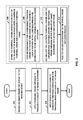
- FIG. 2 illustrates example blocks of a process for reducing bit-depth of image data for an imaging device in accordance with the present disclosure
- FIG. 3 illustrates example blocks of a conventional spatiotemporal vector error diffusion process in accordance with the prior art
- FIG. 4 illustrates example blocks of a spatiotemporal vector error diffusion process in which the lightness error from temporal error diffusion can be held and redirected to the spatial domain for spatial error diffusion.
- the present disclosure provides a new method of temporal modulation and spatial halftoning by using 3-dimensional vector error diffusion for AiMOD displays.
- Temporal error diffusion (TED) is executed first for each subframe, while spatial error diffusion (SED) is executed last. This sequence prevents lightness errors from some or all subframe TED from being propagated to subsequent subframes, but to be cumulated for SED. This disclosed process effectively reduces temporal flickering from temporal modulation.
- the propagation of the temporal dithering errors can be spread to both the temporal domain and the spatial domain.
- the spreading of errors from the temporal modulation can be adjusted to minimize visual artifacts or to save power consumption.
- the propagation of errors from the temporal modulation to the spatial domain can be adjusted differently for luminance and chrominance channels to further optimize the image quality.
- the image processing apparatus disclosed herein may receive images remotely, and may display images to a remote display of a remote imaging device.
- the image processing apparatus disclosed herein may be integrated with an imaging device, such as imaging device 100 .
- imaging device 100 may be a smartphone, tablet, television, or any other device having a user interface 102 including a display.
- the display may be of any type, but a binary display is of particular interest in discussing the advantages of the disclosed image processing apparatus.
- the display may be an AiMOD display.
- AiMOD display can only be turned on or turned off.
- the intensity of each color has to be generated by temporal modulation and/or spatial dithering. Because of a limited refresh rate, temporal modulation cannot be infinitive. Based on the specification of the spatial resolution and refresh rate of the AiMOD display, good image quality is not available without applying both spatial dithering and temporal dithering. Accordingly, spatiotemporal error diffusion is applied for halftoning.
- Spatiotemporal error diffusion may be implemented as TED followed by SED. Errors from TED in each subframe are spread to the next subframe, and eventually spread to the spatial domain for SED.
- a new spatiotemporal modulation method was developed to reduce temporal modulation in lightness, and thus to avoid temporal modulation flickering.
- Additional features of the example imaging device 100 may include one or more processors 104 connected to memory 106 by any suitable data bus or other communication medium. Further hardware components connected to the data bus or other communication medium may include a wireless radio 108 , network interface 110 , and a camera 112 . Data 114 and applications residing in memory 106 may configure the one or more processors 104 to operate the user interface 102 , wireless radio 108 , network interface 110 , and camera 112 in a manner that will be readily apparent to one skilled in the art.
- a network communications application 116 may operate the wireless radio 108 and network interface 110 to accomplish network communications according to any suitable protocols, such as a cellular protocol (e.g., LTE, CDMA, TDMA, CoMP, etc.) and an Internet Protocol (IP).
- a user interface application 118 may operate input and output components 102 to receive data and commands, and to render images, video, and sound to output components of the user interface 102 .
- an image capturing application 120 may operate camera 112 to capture images and store the images in the data 114 . Any of these components, in combination with processors 104 , memory, 106 , data 116 , and applications 114 - 120 , may serve as a means for receiving an image frame for display to the imaging device 100 .
- an image processing application 122 residing in memory 106 may configure the one or more processors 104 to process images according to temporal modulation and spatial halftoning process illustrated in FIG. 2 .
- image processing application 122 may configure the one or more processors 104 to access data 114 and retrieve an image frame from memory 106 .
- the one or more processors 104 , memory 106 , data 114 , and image processing application 122 may accomplish a means for receiving, at block 200 , an image frame for display to the imaging device.
- the process configured by image processing application 122 may include, at block 202 , applying temporal error diffusion for the image frame.
- temporal errors generated in one subframe of the image frames may be passed to a next subframe of the image frames for temporal error diffusion.
- the processing configured by image processing application 122 may include, at block 204 , applying spatial error diffusion to remaining temporal errors from the plurality of image subframes produced by temporal error diffusion.
- the process may include several operational blocks.
- the temporal errors generated in each of the plurality of image subframes may be divided into a lightness temporal error and a chrominance temporal error.
- the chrominance temporal errors may be predominantly passed to the next subframe, while at least a portion of the lightness errors may be held for redirection to the spatial domain for spatial error diffusion.
- the temporal errors passed to the next subframe may include only the chrominance temporal errors.
- the temporal errors passed to the next subframe may include a portion of the chrominance temporal errors and a smaller portion of the lightness temporal errors.
- the process may include accumulating the lightness temporal errors and the chrominance temporal errors from the plurality of subframes produced by temporal error diffusion into an accumulated error.
- the accumulated error may be passed to the spatial error diffusion process for use at block 204 . Additional details of the procedures of FIG. 2 are discussed below with reference to FIG. 4 . However, before turning to FIG. 4 , a prior art spatiotemoral error diffusion process is described for purposes of comparison.
- FIG. 3 illustrates the conventional spatiotemporal error diffusion process according to the prior art.
- the color of i-th pixel is noted C i at 300 .
- adding errors dispersed from neighbor pixels causes the color to become C i +E 0 at block 304 .
- a closest primary, P 1 is found, at block 308 , and the residue error, E 1 , is carried over to the next subframe at block 310 .
- the temporal error diffusion is continued, at 310 , 312 , and 314 until the limit of subframes is reached, resulting in a final residue error, E n , at block 316 .
- E n the final residue error
- this method intrinsically carries over all temporal error diffusion error from one subframe to the next until the end of the last subframe. As such, it maximizes the error propagation within the temporal domain.
- TED is modified to adjust error propagation between the temporal halftone and the spatial halftone.
- a determination may be made, at block 402 , whether to divide the temporal errors generated in each of the plurality of image subframes into a lightness temporal error E L and a chrominance temporal error E C .
- This determination at block 402 may also be a determination whether to allow at least a portion of the lightness temporal error E L to be held for redirection to the spatial domain for spatial error diffusion, rather than passed to the next subframe.
- image processing may be carried out at 404 in the manner described above with reference to FIG. 3 . Such a determination may be made based on a type of display, a user setting, image content, video frame rate, or any other criterion or combination of criteria. However, if a determination is made, at block 402 , to divide the temporal errors generated in each of the plurality of image subframes into a lightness temporal error E L and a chrominance temporal error E C , then image processing may be carried out accordingly at 406 . This processing is further described below.
- E 1 E L +E C , where E L and E C are lightness error and chrominance error.
- E C E a +E b , where E a and E b are the chrominance errors in two chrominance channels.
- C i is the i-th pixel color, (L*, a*, b*) if in CIELAB color space, and E 0 is the SED error spread from neighbor pixels.
- E 1 is the dither error passed to TED, including lightness error (E L ) and color error (E C ) which includes error from a* and b*.
- P 1 is the halftone color (a primary) from TED, and a color error is the combination of errors in all channels.
- Halftone errors, E L* , E a* , and E b* , of a pixel are carried over to a subsequent subframe for temporal modulation and/or to neighbor pixels for spatial halftoning.
- the temporal error is not split, all errors are passed to the next subframe.
- This processing is the same as the conventional method.
- the lightness error (E L ) may be held, at block 408 , and only the chrominance error (E C ) passed to the next subframe for TED, at block 410 .
- the reduce error (both lightness and chrominance errors) from the last subframe and the held lightness errors (E L ) that are not passed for TED are added together and passed for SED.
- E L from some or all of subframes may be held and eventually passed to the spatial domain.
- the decision to propagate lightness errors may be made for some, but not all, frames, or for a portion of frames. For example, if four frames are used for temporal modulation, and a decision to reduce lightness error propagation in TED has been made, two of the four frames may be allowed to propagate the entire error of each frame to its next frame, whereas the other 2 frames may pass lightness errors to the spatial domain. It is also envisioned that, in some aspects, chrominance error from TED may be held for some subframes and passed to the spatial domain to further temporal modulation.
- a 3-D halftoning method is disclosed.
- the halftoning starts with temporal error diffusion.
- the temporal halftoning error is parameterized to allocate between the temporal domain and the spatial domain, and the parameters to split the error can be independently controlled between the luminance channel and the chrominance channels.
- the sum of the remaining temporal halftone error and the halftone errors from each subframe set aside for spatial dithering is passed to the spatial domain for spatial error diffusion.
- DSP digital signal processor
- ASIC application specific integrated circuit
- FPGA field programmable gate array
- a general-purpose processor may be a microprocessor, but in the alternative, the processor may be any conventional processor, controller, microcontroller, or state machine.
- a processor may also be implemented as a combination of computing devices, e.g., a combination of a DSP and a microprocessor, a plurality of microprocessors, one or more microprocessors in conjunction with a DSP core, or any other such configuration.
- a software module may reside in RAM memory, flash memory, ROM memory, EPROM memory, EEPROM memory, registers, hard disk, a removable disk, a CD-ROM, or any other form of storage medium known in the art.
- An exemplary storage medium is coupled to the processor such that the processor can read information from, and write information to, the storage medium.
- the storage medium may be integral to the processor.
- the processor and the storage medium may reside in an ASIC.
- the ASIC may reside in a user terminal.
- the processor and the storage medium may reside as discrete components in a user terminal.
- the functions described may be implemented in hardware, software, firmware, or any combination thereof. If implemented in software, the functions may be stored on or transmitted over as one or more instructions or code on a computer-readable medium.
- Computer-readable media includes both computer storage media and communication media including any medium that facilitates transfer of a computer program from one place to another.
- a storage media may be any available media that can be accessed by a general purpose or special purpose computer.
- such computer-readable media can comprise RAM, ROM, EEPROM, CD-ROM or other optical disk storage, magnetic disk storage or other magnetic storage devices, or any other medium that can be used to carry or store desired program code means in the form of instructions or data structures and that can be accessed by a general-purpose or special-purpose computer, or a general-purpose or special-purpose processor. Also, any connection is properly termed a computer-readable medium.
- Disk and disc includes compact disc (CD), laser disc, optical disc, digital versatile disc (DVD), floppy disk and blu-ray disc where disks usually reproduce data magnetically, while discs reproduce data optically with lasers. Combinations of the above should also be included within the scope of computer-readable media.
Landscapes
- Engineering & Computer Science (AREA)
- Physics & Mathematics (AREA)
- Computer Hardware Design (AREA)
- General Physics & Mathematics (AREA)
- Theoretical Computer Science (AREA)
- Multimedia (AREA)
- Signal Processing (AREA)
- Image Processing (AREA)
- Facsimile Image Signal Circuits (AREA)
- Television Systems (AREA)
Abstract
Description
E L* =L* i −L* P
E a* =a* i −a* P
E b* =b* i −b* P
where (L*i, a*i, b*i) is L*a*b* values of a continuous tone color, and (L*P, a*P, b*P) is L*a*b* values of a primary color being chosen. Halftone errors, EL*, Ea*, and Eb*, of a pixel are carried over to a subsequent subframe for temporal modulation and/or to neighbor pixels for spatial halftoning.
Claims (24)
Priority Applications (6)
| Application Number | Priority Date | Filing Date | Title |
|---|---|---|---|
| US13/745,840 US9105226B2 (en) | 2013-01-20 | 2013-01-20 | Spatio-temporal error diffusion for imaging devices |
| EP14703480.5A EP2946544B1 (en) | 2013-01-20 | 2014-01-15 | Spatio-temporal error diffusion for imaging devices |
| PCT/US2014/011709 WO2014113488A1 (en) | 2013-01-20 | 2014-01-15 | Spatio-temporal error diffusion for imaging devices |
| CN201480005161.8A CN104937917B (en) | 2013-01-20 | 2014-01-15 | Method, apparatus and image processing equipment for the bit depth of the view data of the reduction picture frame of imaging device |
| KR1020157021725A KR101581739B1 (en) | 2013-01-20 | 2014-01-15 | Spatio-temporal error diffusion for imaging devices |
| JP2015553804A JP5932170B2 (en) | 2013-01-20 | 2014-01-15 | Spatio-temporal error diffusion for imaging devices |
Applications Claiming Priority (1)
| Application Number | Priority Date | Filing Date | Title |
|---|---|---|---|
| US13/745,840 US9105226B2 (en) | 2013-01-20 | 2013-01-20 | Spatio-temporal error diffusion for imaging devices |
Publications (2)
| Publication Number | Publication Date |
|---|---|
| US20140204114A1 US20140204114A1 (en) | 2014-07-24 |
| US9105226B2 true US9105226B2 (en) | 2015-08-11 |
Family
ID=50070690
Family Applications (1)
| Application Number | Title | Priority Date | Filing Date |
|---|---|---|---|
| US13/745,840 Expired - Fee Related US9105226B2 (en) | 2013-01-20 | 2013-01-20 | Spatio-temporal error diffusion for imaging devices |
Country Status (6)
| Country | Link |
|---|---|
| US (1) | US9105226B2 (en) |
| EP (1) | EP2946544B1 (en) |
| JP (1) | JP5932170B2 (en) |
| KR (1) | KR101581739B1 (en) |
| CN (1) | CN104937917B (en) |
| WO (1) | WO2014113488A1 (en) |
Families Citing this family (4)
| Publication number | Priority date | Publication date | Assignee | Title |
|---|---|---|---|---|
| US9190013B2 (en) * | 2013-02-05 | 2015-11-17 | Qualcomm Mems Technologies, Inc. | Image-dependent temporal slot determination for multi-state IMODs |
| US9524694B2 (en) | 2014-10-29 | 2016-12-20 | Apple Inc. | Display with spatial and temporal refresh rate buffers |
| KR102077466B1 (en) * | 2016-01-28 | 2020-02-14 | 휴렛-팩커드 디벨롭먼트 컴퍼니, 엘.피. | Data representing wear indicator |
| CN107329256B (en) * | 2016-04-28 | 2022-04-05 | 江苏慧光电子科技有限公司 | Display device and control method thereof |
Citations (8)
| Publication number | Priority date | Publication date | Assignee | Title |
|---|---|---|---|---|
| US20050157791A1 (en) | 2004-01-20 | 2005-07-21 | Eastman Kodak Company | System and method for video tone scale reduction |
| CN1924970A (en) | 2005-09-28 | 2007-03-07 | 乐金电子(南京)等离子有限公司 | Image processing method for plasma display device |
| US7352373B2 (en) | 2003-09-30 | 2008-04-01 | Sharp Laboratories Of America, Inc. | Systems and methods for multi-dimensional dither structure creation and application |
| US7420570B2 (en) | 2005-04-14 | 2008-09-02 | Samsung Electronics Co., Ltd. | Methods and systems for video processing using super dithering |
| US7450181B2 (en) | 1999-10-22 | 2008-11-11 | Sharp Laboratories Of America, Inc. | Bit-depth extension with models of equivalent input visual noise |
| US7542620B1 (en) | 2004-08-16 | 2009-06-02 | Apple Inc. | Robust temporal dithering and filtering |
| US20120106835A1 (en) | 2010-10-29 | 2012-05-03 | Xerox Corporation | Hybrid vector halftone screening and error diffusion |
| US8243093B2 (en) | 2003-08-22 | 2012-08-14 | Sharp Laboratories Of America, Inc. | Systems and methods for dither structure creation and application for reducing the visibility of contouring artifacts in still and video images |
-
2013
- 2013-01-20 US US13/745,840 patent/US9105226B2/en not_active Expired - Fee Related
-
2014
- 2014-01-15 JP JP2015553804A patent/JP5932170B2/en not_active Expired - Fee Related
- 2014-01-15 EP EP14703480.5A patent/EP2946544B1/en not_active Not-in-force
- 2014-01-15 WO PCT/US2014/011709 patent/WO2014113488A1/en not_active Ceased
- 2014-01-15 CN CN201480005161.8A patent/CN104937917B/en not_active Expired - Fee Related
- 2014-01-15 KR KR1020157021725A patent/KR101581739B1/en not_active Expired - Fee Related
Patent Citations (8)
| Publication number | Priority date | Publication date | Assignee | Title |
|---|---|---|---|---|
| US7450181B2 (en) | 1999-10-22 | 2008-11-11 | Sharp Laboratories Of America, Inc. | Bit-depth extension with models of equivalent input visual noise |
| US8243093B2 (en) | 2003-08-22 | 2012-08-14 | Sharp Laboratories Of America, Inc. | Systems and methods for dither structure creation and application for reducing the visibility of contouring artifacts in still and video images |
| US7352373B2 (en) | 2003-09-30 | 2008-04-01 | Sharp Laboratories Of America, Inc. | Systems and methods for multi-dimensional dither structure creation and application |
| US20050157791A1 (en) | 2004-01-20 | 2005-07-21 | Eastman Kodak Company | System and method for video tone scale reduction |
| US7542620B1 (en) | 2004-08-16 | 2009-06-02 | Apple Inc. | Robust temporal dithering and filtering |
| US7420570B2 (en) | 2005-04-14 | 2008-09-02 | Samsung Electronics Co., Ltd. | Methods and systems for video processing using super dithering |
| CN1924970A (en) | 2005-09-28 | 2007-03-07 | 乐金电子(南京)等离子有限公司 | Image processing method for plasma display device |
| US20120106835A1 (en) | 2010-10-29 | 2012-05-03 | Xerox Corporation | Hybrid vector halftone screening and error diffusion |
Non-Patent Citations (8)
| Title |
|---|
| Hsu, et al., "Temporal Frequency of Flickering-Distortion Optimized Video Halftoning for Electronic Paper," IEEE Transactions on Image Processing, vol. 20, No. 9, Sep. 2011, pp. 2502-2514. |
| Hsu, et al., "Video Halftoning Preserving Temporal Consistency," IEEE International Conference on Multimedia, 2007, pp. 1938-1941. |
| International Preliminary Report on Patentability from corresponding PCT Application Serial No. PCT/US2014/011709 dated May 7, 2015 (18 pages). |
| International Search Report and Written Opinion-PCT/US2014/011709-ISA/EPO-Apr. 3, 2014, 9 pp. |
| Response to Second Written Opinion dated Mar. 17, 2015, from corresponding PCT Application Serial No. PCT/US2014/011709 filed on Apr. 17, 2015, 20 pp. |
| Response to Written Opinion from corresponding PCT Application Serial No. PCT/US2014/011709, filed on Nov. 20, 2014 (24 pages). |
| Second Written Opinion from corresponding PCT Application Serial No. PCT/US2014/011709, mailed on Mar. 17, 2015, 5 pp. |
| Sun Z, "A Method to Generate Halftone Video," IEEE International Conference on Acoustics, Speech, and Signal Processing, 2005, vol. 2, pp. 565-568. |
Also Published As
| Publication number | Publication date |
|---|---|
| KR20150110591A (en) | 2015-10-02 |
| WO2014113488A1 (en) | 2014-07-24 |
| CN104937917A (en) | 2015-09-23 |
| KR101581739B1 (en) | 2016-01-04 |
| JP2016510546A (en) | 2016-04-07 |
| EP2946544A1 (en) | 2015-11-25 |
| CN104937917B (en) | 2017-11-17 |
| US20140204114A1 (en) | 2014-07-24 |
| EP2946544B1 (en) | 2017-02-22 |
| JP5932170B2 (en) | 2016-06-08 |
Similar Documents
| Publication | Publication Date | Title |
|---|---|---|
| CN107836118B (en) | Method, apparatus and computer readable storage medium for pixel preprocessing and encoding | |
| KR102617258B1 (en) | Image processing method and apparatus | |
| KR102230776B1 (en) | Linear encoder for image/video processing | |
| US20110026591A1 (en) | System and method of compressing video content | |
| US20220264134A1 (en) | Coding Method and Apparatus | |
| CN109155844B (en) | Image processing apparatus and image processing method using the same | |
| US11445201B2 (en) | Video encoding and decoding method, device, and system, and storage medium | |
| JP6496046B2 (en) | Pixel processing and encoding | |
| CN108235037B (en) | Encoding and decoding image data | |
| CN105869577A (en) | Display device image processing method and system | |
| CN103167259A (en) | Usage of dither on interpolated frames | |
| JP2023537319A (en) | System and method for adaptive video watermark application | |
| CN115002487B (en) | Spatial Adaptive Quantization Sensing Deblocking Filter | |
| US10257542B1 (en) | Compression encoding of images | |
| US20200021822A1 (en) | Image Filtering Method and Apparatus | |
| EP2946544B1 (en) | Spatio-temporal error diffusion for imaging devices | |
| US10349087B2 (en) | Methods, systems, and computer readable media for reconstructing images using blurring and noise-enhanced pixel intensity resampling | |
| CN101729762B (en) | Image processing apparatus, image processing method | |
| US10136148B2 (en) | Methods, receiving device and sending device for managing a picture | |
| US10298932B1 (en) | Compression encoding of images | |
| US10339641B2 (en) | Image processing apparatus and method, and decoding apparatus | |
| Kays et al. | Modulation concepts for high-rate display-camera data transmission | |
| KR102538197B1 (en) | Determination of co-located luminance samples of color component samples for HDR coding/decoding | |
| US10362338B2 (en) | Image processing | |
| JP2017506443A (en) | Image processing method for maintaining small color / gray difference |
Legal Events
| Date | Code | Title | Description |
|---|---|---|---|
| AS | Assignment |
Owner name: JUNIPER MEDICAL, INC., CALIFORNIA Free format text: ASSIGNMENT OF ASSIGNORS INTEREST;ASSIGNORS:LEVINSON, MITCHELL E.;ROSEN, JESSE N.;PENNYBACKER, WILLIAM;REEL/FRAME:029022/0598 Effective date: 20070608 |
|
| AS | Assignment |
Owner name: QUALCOMM INCORPORATED, CALIFORNIA Free format text: ASSIGNMENT OF ASSIGNORS INTEREST;ASSIGNORS:ZENG, HUANZHAO;MA, JIAN J.;SIGNING DATES FROM 20130211 TO 20130401;REEL/FRAME:030135/0294 |
|
| FEPP | Fee payment procedure |
Free format text: PAYOR NUMBER ASSIGNED (ORIGINAL EVENT CODE: ASPN); ENTITY STATUS OF PATENT OWNER: LARGE ENTITY |
|
| STCF | Information on status: patent grant |
Free format text: PATENTED CASE |
|
| FEPP | Fee payment procedure |
Free format text: MAINTENANCE FEE REMINDER MAILED (ORIGINAL EVENT CODE: REM.); ENTITY STATUS OF PATENT OWNER: LARGE ENTITY |
|
| LAPS | Lapse for failure to pay maintenance fees |
Free format text: PATENT EXPIRED FOR FAILURE TO PAY MAINTENANCE FEES (ORIGINAL EVENT CODE: EXP.); ENTITY STATUS OF PATENT OWNER: LARGE ENTITY |
|
| STCH | Information on status: patent discontinuation |
Free format text: PATENT EXPIRED DUE TO NONPAYMENT OF MAINTENANCE FEES UNDER 37 CFR 1.362 |
|
| FP | Lapsed due to failure to pay maintenance fee |
Effective date: 20190811 |