US9034873B2 - Pyridazine and pyrrole compounds, processes for obtaining them and uses - Google Patents
Pyridazine and pyrrole compounds, processes for obtaining them and uses Download PDFInfo
- Publication number
- US9034873B2 US9034873B2 US12/309,585 US30958507A US9034873B2 US 9034873 B2 US9034873 B2 US 9034873B2 US 30958507 A US30958507 A US 30958507A US 9034873 B2 US9034873 B2 US 9034873B2
- Authority
- US
- United States
- Prior art keywords
- pyridine
- bis
- pyridazine
- pyridin
- pyridazin
- Prior art date
- Legal status (The legal status is an assumption and is not a legal conclusion. Google has not performed a legal analysis and makes no representation as to the accuracy of the status listed.)
- Expired - Fee Related, expires
Links
- PBMFSQRYOILNGV-UHFFFAOYSA-N pyridazine Chemical compound C1=CC=NN=C1 PBMFSQRYOILNGV-UHFFFAOYSA-N 0.000 title claims description 95
- 238000000034 method Methods 0.000 title description 74
- 230000008569 process Effects 0.000 title description 35
- 150000003233 pyrroles Chemical class 0.000 title description 11
- 150000001875 compounds Chemical class 0.000 claims abstract description 126
- 125000000217 alkyl group Chemical group 0.000 claims abstract description 44
- -1 methylene, hydroxymethylene Chemical group 0.000 claims abstract description 44
- 125000003545 alkoxy group Chemical group 0.000 claims abstract description 32
- 229910052739 hydrogen Inorganic materials 0.000 claims abstract description 30
- 239000001257 hydrogen Substances 0.000 claims abstract description 30
- 125000001424 substituent group Chemical group 0.000 claims abstract description 16
- 125000003178 carboxy group Chemical group [H]OC(*)=O 0.000 claims abstract description 13
- 229910052717 sulfur Inorganic materials 0.000 claims abstract description 9
- 125000006165 cyclic alkyl group Chemical group 0.000 claims abstract description 7
- 125000004434 sulfur atom Chemical group 0.000 claims abstract description 7
- 150000003973 alkyl amines Chemical group 0.000 claims abstract description 6
- 125000002915 carbonyl group Chemical group [*:2]C([*:1])=O 0.000 claims abstract description 6
- 125000002768 hydroxyalkyl group Chemical group 0.000 claims abstract description 5
- 125000002813 thiocarbonyl group Chemical group *C(*)=S 0.000 claims abstract description 5
- 125000004435 hydrogen atom Chemical class [H]* 0.000 claims abstract 2
- RTZKZFJDLAIYFH-UHFFFAOYSA-N Diethyl ether Chemical compound CCOCC RTZKZFJDLAIYFH-UHFFFAOYSA-N 0.000 claims description 50
- HVQXULMJWLJMAQ-UHFFFAOYSA-N 3-(6-methylpyridin-2-yl)-6-[6-[6-(6-methylpyridin-2-yl)pyridazin-3-yl]pyridin-2-yl]pyridazine Chemical compound CC1=CC=CC(C=2N=NC(=CC=2)C=2N=C(C=CC=2)C=2N=NC(=CC=2)C=2N=C(C)C=CC=2)=N1 HVQXULMJWLJMAQ-UHFFFAOYSA-N 0.000 claims description 24
- GZPPCEKNTKPALH-UHFFFAOYSA-N 3-pyridin-2-yl-6-[6-[6-(6-pyridin-2-ylpyridazin-3-yl)pyridin-2-yl]pyridin-2-yl]pyridazine Chemical compound N1=CC=CC=C1C1=CC=C(C=2N=C(C=CC=2)C=2N=C(C=CC=2)C=2N=NC(=CC=2)C=2N=CC=CC=2)N=N1 GZPPCEKNTKPALH-UHFFFAOYSA-N 0.000 claims description 15
- CCHWBDYYZNNRLO-UHFFFAOYSA-N 2,9-bis(6-pyridin-2-ylpyridazin-3-yl)-1,10-phenanthroline Chemical compound N1=CC=CC=C1C1=CC=C(C=2N=C3C4=NC(=CC=C4C=CC3=CC=2)C=2N=NC(=CC=2)C=2N=CC=CC=2)N=N1 CCHWBDYYZNNRLO-UHFFFAOYSA-N 0.000 claims description 13
- LKVUXAFSZGGLLI-UHFFFAOYSA-N 3-pyridin-2-yl-6-[6-(6-pyridin-2-ylpyridazin-3-yl)pyridin-2-yl]pyridazine Chemical compound N1=CC=CC=C1C1=CC=C(C=2N=C(C=CC=2)C=2N=NC(=CC=2)C=2N=CC=CC=2)N=N1 LKVUXAFSZGGLLI-UHFFFAOYSA-N 0.000 claims description 12
- FGGYYUDWYSARDE-UHFFFAOYSA-N 6-[6-[6-[6-(6-carboxypyridin-2-yl)pyridazin-3-yl]pyridin-2-yl]pyridazin-3-yl]pyridine-2-carboxylic acid Chemical compound OC(=O)C1=CC=CC(C=2N=NC(=CC=2)C=2N=C(C=CC=2)C=2N=NC(=CC=2)C=2N=C(C=CC=2)C(O)=O)=N1 FGGYYUDWYSARDE-UHFFFAOYSA-N 0.000 claims description 12
- 125000001570 methylene group Chemical group [H]C([H])([*:1])[*:2] 0.000 claims description 11
- HBOUVSHTCFGRLQ-UHFFFAOYSA-N 2,9-bis[6-(6-methylpyridin-2-yl)pyridazin-3-yl]-1,10-phenanthroline Chemical compound CC1=CC=CC(C=2N=NC(=CC=2)C=2N=C3C4=NC(=CC=C4C=CC3=CC=2)C=2N=NC(=CC=2)C=2N=C(C)C=CC=2)=N1 HBOUVSHTCFGRLQ-UHFFFAOYSA-N 0.000 claims description 4
- XOPFNNKNVXCIPX-UHFFFAOYSA-N 3-(6-methylpyridin-2-yl)-6-[6-[6-(6-methylpyridin-2-yl)pyridazin-3-yl]-2-pyridin-2-yl-1h-pyridin-2-yl]pyridazine Chemical compound CC1=CC=CC(C=2N=NC(=CC=2)C=2NC(C=CC=2)(C=2N=CC=CC=2)C=2N=NC(=CC=2)C=2N=C(C)C=CC=2)=N1 XOPFNNKNVXCIPX-UHFFFAOYSA-N 0.000 claims description 4
- 125000004430 oxygen atom Chemical group O* 0.000 claims 1
- 229910052760 oxygen Inorganic materials 0.000 abstract description 9
- 239000001301 oxygen Substances 0.000 abstract description 8
- OWBSNFDCMRKELJ-UHFFFAOYSA-N 2,6-bis(5-pyridin-2-yl-1h-pyrrol-2-yl)pyridine Chemical compound C=1C=C(C=2N=C(C=CC=2)C=2NC(=CC=2)C=2N=CC=CC=2)NC=1C1=CC=CC=N1 OWBSNFDCMRKELJ-UHFFFAOYSA-N 0.000 abstract description 5
- MYMOFIZGZYHOMD-UHFFFAOYSA-N Dioxygen Chemical compound O=O MYMOFIZGZYHOMD-UHFFFAOYSA-N 0.000 abstract description 5
- QWSSUIAICAHOKR-UHFFFAOYSA-N 2-methyl-6-[5-[[5-(6-methylpyridin-2-yl)-1h-pyrrol-2-yl]methyl]-1h-pyrrol-2-yl]pyridine Chemical compound CC1=CC=CC(C=2NC(CC=3NC(=CC=3)C=3N=C(C)C=CC=3)=CC=2)=N1 QWSSUIAICAHOKR-UHFFFAOYSA-N 0.000 abstract description 2
- JUJWROOIHBZHMG-UHFFFAOYSA-N Pyridine Chemical compound C1=CC=NC=C1 JUJWROOIHBZHMG-UHFFFAOYSA-N 0.000 description 222
- HEDRZPFGACZZDS-MICDWDOJSA-N Trichloro(2H)methane Chemical compound [2H]C(Cl)(Cl)Cl HEDRZPFGACZZDS-MICDWDOJSA-N 0.000 description 112
- YMWUJEATGCHHMB-UHFFFAOYSA-N Dichloromethane Chemical compound ClCCl YMWUJEATGCHHMB-UHFFFAOYSA-N 0.000 description 78
- ZMXDDKWLCZADIW-UHFFFAOYSA-N N,N-Dimethylformamide Chemical compound CN(C)C=O ZMXDDKWLCZADIW-UHFFFAOYSA-N 0.000 description 75
- 238000005868 electrolysis reaction Methods 0.000 description 74
- 238000006722 reduction reaction Methods 0.000 description 59
- XEKOWRVHYACXOJ-UHFFFAOYSA-N Ethyl acetate Chemical compound CCOC(C)=O XEKOWRVHYACXOJ-UHFFFAOYSA-N 0.000 description 58
- 239000002609 medium Substances 0.000 description 58
- 230000009467 reduction Effects 0.000 description 58
- 238000006243 chemical reaction Methods 0.000 description 51
- QTBSBXVTEAMEQO-UHFFFAOYSA-N Acetic acid Chemical compound CC(O)=O QTBSBXVTEAMEQO-UHFFFAOYSA-N 0.000 description 50
- 239000002243 precursor Substances 0.000 description 50
- 239000000243 solution Substances 0.000 description 45
- 0 *C1=CC(*[Y]*C2=NC(*)=CC(*)=C2)=NC(*)=C1 Chemical compound *C1=CC(*[Y]*C2=NC(*)=CC(*)=C2)=NC(*)=C1 0.000 description 44
- KAESVJOAVNADME-UHFFFAOYSA-N Pyrrole Chemical compound C=1C=CNC=1 KAESVJOAVNADME-UHFFFAOYSA-N 0.000 description 44
- 238000005160 1H NMR spectroscopy Methods 0.000 description 43
- WYURNTSHIVDZCO-UHFFFAOYSA-N Tetrahydrofuran Chemical compound C1CCOC1 WYURNTSHIVDZCO-UHFFFAOYSA-N 0.000 description 42
- 239000000047 product Substances 0.000 description 41
- 230000015572 biosynthetic process Effects 0.000 description 39
- 239000000203 mixture Substances 0.000 description 38
- 238000001644 13C nuclear magnetic resonance spectroscopy Methods 0.000 description 36
- 239000003446 ligand Substances 0.000 description 33
- 239000002904 solvent Substances 0.000 description 30
- 238000003786 synthesis reaction Methods 0.000 description 30
- HEMHJVSKTPXQMS-UHFFFAOYSA-M Sodium hydroxide Chemical compound [OH-].[Na+] HEMHJVSKTPXQMS-UHFFFAOYSA-M 0.000 description 27
- 125000002496 methyl group Chemical group [H]C([H])([H])* 0.000 description 27
- NFHFRUOZVGFOOS-UHFFFAOYSA-N palladium;triphenylphosphane Chemical compound [Pd].C1=CC=CC=C1P(C=1C=CC=CC=1)C1=CC=CC=C1.C1=CC=CC=C1P(C=1C=CC=CC=1)C1=CC=CC=C1.C1=CC=CC=C1P(C=1C=CC=CC=1)C1=CC=CC=C1.C1=CC=CC=C1P(C=1C=CC=CC=1)C1=CC=CC=C1 NFHFRUOZVGFOOS-UHFFFAOYSA-N 0.000 description 27
- XLYOFNOQVPJJNP-UHFFFAOYSA-N water Substances O XLYOFNOQVPJJNP-UHFFFAOYSA-N 0.000 description 27
- WEVYAHXRMPXWCK-UHFFFAOYSA-N Acetonitrile Chemical compound CC#N WEVYAHXRMPXWCK-UHFFFAOYSA-N 0.000 description 26
- 238000006619 Stille reaction Methods 0.000 description 26
- PXHVJJICTQNCMI-UHFFFAOYSA-N Nickel Chemical compound [Ni] PXHVJJICTQNCMI-UHFFFAOYSA-N 0.000 description 25
- LFQSCWFLJHTTHZ-UHFFFAOYSA-N Ethanol Chemical compound CCO LFQSCWFLJHTTHZ-UHFFFAOYSA-N 0.000 description 24
- QAOWNCQODCNURD-UHFFFAOYSA-N Sulfuric acid Chemical compound OS(O)(=O)=O QAOWNCQODCNURD-UHFFFAOYSA-N 0.000 description 24
- YXFVVABEGXRONW-UHFFFAOYSA-N Toluene Chemical compound CC1=CC=CC=C1 YXFVVABEGXRONW-UHFFFAOYSA-N 0.000 description 24
- 238000005859 coupling reaction Methods 0.000 description 23
- 239000012074 organic phase Substances 0.000 description 23
- 238000010168 coupling process Methods 0.000 description 22
- BWHMMNNQKKPAPP-UHFFFAOYSA-L potassium carbonate Chemical compound [K+].[K+].[O-]C([O-])=O BWHMMNNQKKPAPP-UHFFFAOYSA-L 0.000 description 22
- VYPSYNLAJGMNEJ-UHFFFAOYSA-N silicon dioxide Inorganic materials O=[Si]=O VYPSYNLAJGMNEJ-UHFFFAOYSA-N 0.000 description 22
- 230000008878 coupling Effects 0.000 description 21
- 235000019439 ethyl acetate Nutrition 0.000 description 21
- UMJSCPRVCHMLSP-UHFFFAOYSA-N pyridine Natural products COC1=CC=CN=C1 UMJSCPRVCHMLSP-UHFFFAOYSA-N 0.000 description 21
- YLQBMQCUIZJEEH-UHFFFAOYSA-N tetrahydrofuran Natural products C=1C=COC=1 YLQBMQCUIZJEEH-UHFFFAOYSA-N 0.000 description 21
- IAZDPXIOMUYVGZ-WFGJKAKNSA-N Dimethyl sulfoxide Chemical compound [2H]C([2H])([2H])S(=O)C([2H])([2H])[2H] IAZDPXIOMUYVGZ-WFGJKAKNSA-N 0.000 description 20
- XEEYBQQBJWHFJM-UHFFFAOYSA-N Iron Chemical compound [Fe] XEEYBQQBJWHFJM-UHFFFAOYSA-N 0.000 description 20
- CSNNHWWHGAXBCP-UHFFFAOYSA-L Magnesium sulfate Chemical compound [Mg+2].[O-][S+2]([O-])([O-])[O-] CSNNHWWHGAXBCP-UHFFFAOYSA-L 0.000 description 20
- 238000002484 cyclic voltammetry Methods 0.000 description 20
- XHXFXVLFKHQFAL-UHFFFAOYSA-N phosphoryl trichloride Chemical compound ClP(Cl)(Cl)=O XHXFXVLFKHQFAL-UHFFFAOYSA-N 0.000 description 20
- 230000037361 pathway Effects 0.000 description 19
- 238000001075 voltammogram Methods 0.000 description 19
- IAZDPXIOMUYVGZ-UHFFFAOYSA-N Dimethylsulphoxide Chemical compound CS(C)=O IAZDPXIOMUYVGZ-UHFFFAOYSA-N 0.000 description 18
- 150000002431 hydrogen Chemical class 0.000 description 18
- 239000012429 reaction media Substances 0.000 description 18
- 238000010992 reflux Methods 0.000 description 18
- 239000000872 buffer Substances 0.000 description 17
- 239000000543 intermediate Substances 0.000 description 17
- 239000011541 reaction mixture Substances 0.000 description 17
- UIIMBOGNXHQVGW-UHFFFAOYSA-M Sodium bicarbonate Chemical compound [Na+].OC([O-])=O UIIMBOGNXHQVGW-UHFFFAOYSA-M 0.000 description 16
- 239000003480 eluent Substances 0.000 description 16
- HHLFWLYXYJOTON-UHFFFAOYSA-N glyoxylic acid Chemical compound OC(=O)C=O HHLFWLYXYJOTON-UHFFFAOYSA-N 0.000 description 16
- IBWYHNOFSKJKKY-UHFFFAOYSA-N 3-chloropyridazine Chemical compound ClC1=CC=CN=N1 IBWYHNOFSKJKKY-UHFFFAOYSA-N 0.000 description 15
- 229960000583 acetic acid Drugs 0.000 description 15
- 210000004027 cell Anatomy 0.000 description 15
- 230000000875 corresponding effect Effects 0.000 description 15
- 229910052736 halogen Inorganic materials 0.000 description 15
- 150000002367 halogens Chemical class 0.000 description 15
- VLKZOEOYAKHREP-UHFFFAOYSA-N n-Hexane Chemical compound CCCCCC VLKZOEOYAKHREP-UHFFFAOYSA-N 0.000 description 15
- 239000003208 petroleum Substances 0.000 description 15
- 239000000758 substrate Substances 0.000 description 14
- ROFVEXUMMXZLPA-UHFFFAOYSA-N Bipyridyl Chemical class N1=CC=CC=C1C1=CC=CC=N1 ROFVEXUMMXZLPA-UHFFFAOYSA-N 0.000 description 13
- OKTJSMMVPCPJKN-UHFFFAOYSA-N Carbon Chemical compound [C] OKTJSMMVPCPJKN-UHFFFAOYSA-N 0.000 description 13
- MZRVEZGGRBJDDB-UHFFFAOYSA-N N-Butyllithium Chemical compound [Li]CCCC MZRVEZGGRBJDDB-UHFFFAOYSA-N 0.000 description 13
- 238000002360 preparation method Methods 0.000 description 13
- PBGWILRUXNFSGL-UHFFFAOYSA-N 3-chloro-6-(6-chloropyridazin-3-yl)pyridazine Chemical class N1=NC(Cl)=CC=C1C1=CC=C(Cl)N=N1 PBGWILRUXNFSGL-UHFFFAOYSA-N 0.000 description 12
- BGVTUIRPHLSMJU-UHFFFAOYSA-N CC1=CC=C(C)N=N1 Chemical compound CC1=CC=C(C)N=N1 BGVTUIRPHLSMJU-UHFFFAOYSA-N 0.000 description 12
- KDLHZDBZIXYQEI-UHFFFAOYSA-N Palladium Chemical compound [Pd] KDLHZDBZIXYQEI-UHFFFAOYSA-N 0.000 description 12
- 239000007864 aqueous solution Substances 0.000 description 12
- 238000009815 homocoupling reaction Methods 0.000 description 12
- 230000003647 oxidation Effects 0.000 description 12
- 238000007254 oxidation reaction Methods 0.000 description 12
- 239000011701 zinc Substances 0.000 description 12
- JQIZHNLEFQMDCQ-UHFFFAOYSA-N 1,2,3,4-tetrahydropyridazine Chemical compound C1CC=CNN1 JQIZHNLEFQMDCQ-UHFFFAOYSA-N 0.000 description 11
- AJDKUDBNUISPHP-UHFFFAOYSA-N 3-pyridin-2-yl-6-(6-pyridin-2-ylpyridazin-3-yl)pyridazine Chemical compound N1=CC=CC=C1C1=CC=C(C=2N=NC(=CC=2)C=2N=CC=CC=2)N=N1 AJDKUDBNUISPHP-UHFFFAOYSA-N 0.000 description 11
- UFHFLCQGNIYNRP-UHFFFAOYSA-N Hydrogen Chemical group [H][H] UFHFLCQGNIYNRP-UHFFFAOYSA-N 0.000 description 11
- 229910052751 metal Inorganic materials 0.000 description 11
- 239000002184 metal Substances 0.000 description 11
- 229910000027 potassium carbonate Inorganic materials 0.000 description 11
- 229920006395 saturated elastomer Polymers 0.000 description 11
- KOZUUBWWSCWHJK-UHFFFAOYSA-N 3-chloro-6-[6-(6-chloropyridazin-3-yl)pyridin-2-yl]pyridazine Chemical compound N1=NC(Cl)=CC=C1C1=CC=CC(C=2N=NC(Cl)=CC=2)=N1 KOZUUBWWSCWHJK-UHFFFAOYSA-N 0.000 description 10
- XKRFYHLGVUSROY-UHFFFAOYSA-N Argon Chemical compound [Ar] XKRFYHLGVUSROY-UHFFFAOYSA-N 0.000 description 10
- 239000003054 catalyst Substances 0.000 description 10
- 238000002474 experimental method Methods 0.000 description 10
- IKDUDTNKRLTJSI-UHFFFAOYSA-N hydrazine hydrate Chemical compound O.NN IKDUDTNKRLTJSI-UHFFFAOYSA-N 0.000 description 10
- 229910052943 magnesium sulfate Inorganic materials 0.000 description 10
- 125000000956 methoxy group Chemical group [H]C([H])([H])O* 0.000 description 10
- 229910052759 nickel Inorganic materials 0.000 description 10
- 239000002244 precipitate Substances 0.000 description 10
- JPJALAQPGMAKDF-UHFFFAOYSA-N selenium dioxide Chemical compound O=[Se]=O JPJALAQPGMAKDF-UHFFFAOYSA-N 0.000 description 10
- UEBWQGAPGVXTMM-UHFFFAOYSA-N 3-[6-(6-oxo-1h-pyridazin-3-yl)pyridin-2-yl]-1h-pyridazin-6-one Chemical compound N1C(=O)C=CC(C=2N=C(C=CC=2)C2=NNC(=O)C=C2)=N1 UEBWQGAPGVXTMM-UHFFFAOYSA-N 0.000 description 9
- QGZKDVFQNNGYKY-UHFFFAOYSA-N Ammonia Chemical compound N QGZKDVFQNNGYKY-UHFFFAOYSA-N 0.000 description 9
- HCHKCACWOHOZIP-UHFFFAOYSA-N Zinc Chemical compound [Zn] HCHKCACWOHOZIP-UHFFFAOYSA-N 0.000 description 9
- 239000002253 acid Substances 0.000 description 9
- 230000008034 disappearance Effects 0.000 description 9
- 229910021397 glassy carbon Inorganic materials 0.000 description 9
- 229910052757 nitrogen Inorganic materials 0.000 description 9
- 125000001997 phenyl group Chemical group [H]C1=C([H])C([H])=C(*)C([H])=C1[H] 0.000 description 9
- 238000010898 silica gel chromatography Methods 0.000 description 9
- RFFLAFLAYFXFSW-UHFFFAOYSA-N 1,2-dichlorobenzene Chemical compound ClC1=CC=CC=C1Cl RFFLAFLAYFXFSW-UHFFFAOYSA-N 0.000 description 8
- BEZVGIHGZPLGBL-UHFFFAOYSA-N 2,6-diacetylpyridine Chemical compound CC(=O)C1=CC=CC(C(C)=O)=N1 BEZVGIHGZPLGBL-UHFFFAOYSA-N 0.000 description 8
- IJGRMHOSHXDMSA-UHFFFAOYSA-N Atomic nitrogen Chemical compound N#N IJGRMHOSHXDMSA-UHFFFAOYSA-N 0.000 description 8
- PMZURENOXWZQFD-UHFFFAOYSA-L Sodium Sulfate Chemical compound [Na+].[Na+].[O-]S([O-])(=O)=O PMZURENOXWZQFD-UHFFFAOYSA-L 0.000 description 8
- YNHIGQDRGKUECZ-UHFFFAOYSA-L bis(triphenylphosphine)palladium(ii) dichloride Chemical compound [Cl-].[Cl-].[Pd+2].C1=CC=CC=C1P(C=1C=CC=CC=1)C1=CC=CC=C1.C1=CC=CC=C1P(C=1C=CC=CC=1)C1=CC=CC=C1 YNHIGQDRGKUECZ-UHFFFAOYSA-L 0.000 description 8
- 238000000605 extraction Methods 0.000 description 8
- 150000004892 pyridazines Chemical class 0.000 description 8
- 239000011734 sodium Substances 0.000 description 8
- 229910000030 sodium bicarbonate Inorganic materials 0.000 description 8
- 239000007787 solid Substances 0.000 description 8
- 229910052725 zinc Inorganic materials 0.000 description 8
- AAILEWXSEQLMNI-UHFFFAOYSA-N 1h-pyridazin-6-one Chemical compound OC1=CC=CN=N1 AAILEWXSEQLMNI-UHFFFAOYSA-N 0.000 description 7
- FEYDZHNIIMENOB-UHFFFAOYSA-N 2,6-dibromopyridine Chemical compound BrC1=CC=CC(Br)=N1 FEYDZHNIIMENOB-UHFFFAOYSA-N 0.000 description 7
- MYSYYTJAVDBWDG-UHFFFAOYSA-N 3-(6-methylpyridin-2-yl)-6-[6-(6-methylpyridin-2-yl)pyridazin-3-yl]pyridazine Chemical compound CC1=CC=CC(C=2N=NC(=CC=2)C=2N=NC(=CC=2)C=2N=C(C)C=CC=2)=N1 MYSYYTJAVDBWDG-UHFFFAOYSA-N 0.000 description 7
- AMFHCPNKSNMCGD-UHFFFAOYSA-N 3-chloro-6-pyridin-2-ylpyridazine Chemical compound N1=NC(Cl)=CC=C1C1=CC=CC=N1 AMFHCPNKSNMCGD-UHFFFAOYSA-N 0.000 description 7
- HYBICQAZUMFLCJ-UHFFFAOYSA-N 3-methoxy-6-(6-methoxypyridazin-3-yl)pyridazine Chemical compound N1=NC(OC)=CC=C1C1=CC=C(OC)N=N1 HYBICQAZUMFLCJ-UHFFFAOYSA-N 0.000 description 7
- DDCLFSUBVBCSFN-UHFFFAOYSA-N 3-pyridin-2-yl-1h-pyridazin-6-one Chemical compound N1C(=O)C=CC(C=2N=CC=CC=2)=N1 DDCLFSUBVBCSFN-UHFFFAOYSA-N 0.000 description 7
- 239000007832 Na2SO4 Substances 0.000 description 7
- 238000004458 analytical method Methods 0.000 description 7
- 238000004587 chromatography analysis Methods 0.000 description 7
- 238000009833 condensation Methods 0.000 description 7
- 230000005494 condensation Effects 0.000 description 7
- 238000001816 cooling Methods 0.000 description 7
- 238000006880 cross-coupling reaction Methods 0.000 description 7
- 230000006870 function Effects 0.000 description 7
- 229910052742 iron Inorganic materials 0.000 description 7
- 238000004519 manufacturing process Methods 0.000 description 7
- 238000000746 purification Methods 0.000 description 7
- 229910052938 sodium sulfate Inorganic materials 0.000 description 7
- 230000001225 therapeutic effect Effects 0.000 description 7
- USKQYZHWJZDNCM-UHFFFAOYSA-N tributyl-(6-methylpyridin-2-yl)stannane Chemical compound CCCC[Sn](CCCC)(CCCC)C1=CC=CC(C)=N1 USKQYZHWJZDNCM-UHFFFAOYSA-N 0.000 description 7
- JIAARYAFYJHUJI-UHFFFAOYSA-L zinc dichloride Chemical compound [Cl-].[Cl-].[Zn+2] JIAARYAFYJHUJI-UHFFFAOYSA-L 0.000 description 7
- WKEFZMVAAKMMLC-UHFFFAOYSA-N 2,6-bis[5-(6-methylpyridin-2-yl)-1h-pyrrol-2-yl]pyridine Chemical compound CC1=CC=CC(C=2NC(=CC=2)C=2N=C(C=CC=2)C=2NC(=CC=2)C=2N=C(C)C=CC=2)=N1 WKEFZMVAAKMMLC-UHFFFAOYSA-N 0.000 description 6
- WZVWSOXTTOJQQQ-UHFFFAOYSA-N 2-bromo-6-(6-bromopyridin-2-yl)pyridine Chemical compound BrC1=CC=CC(C=2N=C(Br)C=CC=2)=N1 WZVWSOXTTOJQQQ-UHFFFAOYSA-N 0.000 description 6
- LIJSBIJJMXYTSM-UHFFFAOYSA-N 3-(1-ethoxyethenyl)-6-[6-(1-ethoxyethenyl)pyridazin-3-yl]pyridazine Chemical compound N1=NC(C(=C)OCC)=CC=C1C1=CC=C(C(=C)OCC)N=N1 LIJSBIJJMXYTSM-UHFFFAOYSA-N 0.000 description 6
- HYMQTVJIDDBUCD-UHFFFAOYSA-N 3-(6-pyridazin-3-ylpyridin-2-yl)pyridazine Chemical compound C1=CN=NC(C=2N=C(C=CC=2)C=2N=NC=CC=2)=C1 HYMQTVJIDDBUCD-UHFFFAOYSA-N 0.000 description 6
- WLYVXWKMFRGVHC-UHFFFAOYSA-N CC1=CC=C(C)S1.CC1=CC=C2/C=C\C3=C(N=C(C)C=C3)C2=N1.CC1=CC=CC(C)=N1.CC1=CC=CC(C2=CC=CC(C)=N2)=N1.CC1=CC=NC(C2=NC=CC(C)=N2)=N1.CC1=NC=NC(C)=N1 Chemical compound CC1=CC=C(C)S1.CC1=CC=C2/C=C\C3=C(N=C(C)C=C3)C2=N1.CC1=CC=CC(C)=N1.CC1=CC=CC(C2=CC=CC(C)=N2)=N1.CC1=CC=NC(C2=NC=CC(C)=N2)=N1.CC1=NC=NC(C)=N1 WLYVXWKMFRGVHC-UHFFFAOYSA-N 0.000 description 6
- GVVQYLCXQNOWHR-UHFFFAOYSA-N CC1=CC=C2/C=C\C3=C(N=C(C)C=C3)C2=N1.CC1=CC=CC(C)=N1.CC1=CC=CC(C2=CC=CC(C)=N2)=N1 Chemical compound CC1=CC=C2/C=C\C3=C(N=C(C)C=C3)C2=N1.CC1=CC=CC(C)=N1.CC1=CC=CC(C2=CC=CC(C)=N2)=N1 GVVQYLCXQNOWHR-UHFFFAOYSA-N 0.000 description 6
- ZYXONYRGSFHAIO-UHFFFAOYSA-N CC1=NN=C(C)C=C1.[H]N1C(C)=CC=C1C Chemical compound CC1=NN=C(C)C=C1.[H]N1C(C)=CC=C1C ZYXONYRGSFHAIO-UHFFFAOYSA-N 0.000 description 6
- OAKJQQAXSVQMHS-UHFFFAOYSA-N Hydrazine Chemical compound NN OAKJQQAXSVQMHS-UHFFFAOYSA-N 0.000 description 6
- KFZMGEQAYNKOFK-UHFFFAOYSA-N Isopropanol Chemical compound CC(C)O KFZMGEQAYNKOFK-UHFFFAOYSA-N 0.000 description 6
- 229910019213 POCl3 Inorganic materials 0.000 description 6
- KWYUFKZDYYNOTN-UHFFFAOYSA-M Potassium hydroxide Chemical compound [OH-].[K+] KWYUFKZDYYNOTN-UHFFFAOYSA-M 0.000 description 6
- 230000002378 acidificating effect Effects 0.000 description 6
- 230000003197 catalytic effect Effects 0.000 description 6
- 150000001768 cations Chemical class 0.000 description 6
- 239000003814 drug Substances 0.000 description 6
- 239000000843 powder Substances 0.000 description 6
- 239000000376 reactant Substances 0.000 description 6
- 239000000741 silica gel Substances 0.000 description 6
- 229910002027 silica gel Inorganic materials 0.000 description 6
- 239000000377 silicon dioxide Substances 0.000 description 6
- 238000004809 thin layer chromatography Methods 0.000 description 6
- ICKWEUMUWPSCRM-UHFFFAOYSA-N tributyl-(6-pyridin-2-ylpyridazin-3-yl)stannane Chemical compound N1=NC([Sn](CCCC)(CCCC)CCCC)=CC=C1C1=CC=CC=N1 ICKWEUMUWPSCRM-UHFFFAOYSA-N 0.000 description 6
- RIOQSEWOXXDEQQ-UHFFFAOYSA-N triphenylphosphine Chemical compound C1=CC=CC=C1P(C=1C=CC=CC=1)C1=CC=CC=C1 RIOQSEWOXXDEQQ-UHFFFAOYSA-N 0.000 description 6
- BKWQKVJYXODDAC-UHFFFAOYSA-N 1,2-dihydropyridazine Chemical compound N1NC=CC=C1 BKWQKVJYXODDAC-UHFFFAOYSA-N 0.000 description 5
- MMWRGWQTAMNAFC-UHFFFAOYSA-N 1,2-dihydropyridine Chemical compound C1NC=CC=C1 MMWRGWQTAMNAFC-UHFFFAOYSA-N 0.000 description 5
- GUSWJGOYDXFJSI-UHFFFAOYSA-N 3,6-dichloropyridazine Chemical compound ClC1=CC=C(Cl)N=N1 GUSWJGOYDXFJSI-UHFFFAOYSA-N 0.000 description 5
- KMJAINJBPIBWCL-UHFFFAOYSA-N 3,6-dipyridin-2-ylpyridazine Chemical compound N1=CC=CC=C1C1=CC=C(C=2N=CC=CC=2)N=N1 KMJAINJBPIBWCL-UHFFFAOYSA-N 0.000 description 5
- VDQYGXVDRRYXPZ-UHFFFAOYSA-N 3-(6-bromopyridin-2-yl)-6-pyridin-2-ylpyridazine Chemical compound BrC1=CC=CC(C=2N=NC(=CC=2)C=2N=CC=CC=2)=N1 VDQYGXVDRRYXPZ-UHFFFAOYSA-N 0.000 description 5
- HBGYAZVOIPRLHX-UHFFFAOYSA-N 3-pyridin-2-yl-1h-pyridazine-6-thione Chemical compound N1C(=S)C=CC(C=2N=CC=CC=2)=N1 HBGYAZVOIPRLHX-UHFFFAOYSA-N 0.000 description 5
- NLXLAEXVIDQMFP-UHFFFAOYSA-N Ammonium chloride Substances [NH4+].[Cl-] NLXLAEXVIDQMFP-UHFFFAOYSA-N 0.000 description 5
- 229910021585 Nickel(II) bromide Inorganic materials 0.000 description 5
- PNEYBMLMFCGWSK-UHFFFAOYSA-N aluminium oxide Inorganic materials [O-2].[O-2].[O-2].[Al+3].[Al+3] PNEYBMLMFCGWSK-UHFFFAOYSA-N 0.000 description 5
- 229910052786 argon Inorganic materials 0.000 description 5
- 229910052799 carbon Inorganic materials 0.000 description 5
- ORTQZVOHEJQUHG-UHFFFAOYSA-L copper(II) chloride Chemical compound Cl[Cu]Cl ORTQZVOHEJQUHG-UHFFFAOYSA-L 0.000 description 5
- 230000000694 effects Effects 0.000 description 5
- 239000003792 electrolyte Substances 0.000 description 5
- 238000001125 extrusion Methods 0.000 description 5
- 230000007062 hydrolysis Effects 0.000 description 5
- 238000006460 hydrolysis reaction Methods 0.000 description 5
- 238000001819 mass spectrum Methods 0.000 description 5
- 239000000463 material Substances 0.000 description 5
- 230000004048 modification Effects 0.000 description 5
- 238000012986 modification Methods 0.000 description 5
- 125000004433 nitrogen atom Chemical group N* 0.000 description 5
- 235000011181 potassium carbonates Nutrition 0.000 description 5
- 150000003839 salts Chemical class 0.000 description 5
- 239000012047 saturated solution Substances 0.000 description 5
- GYUURHMITDQTRU-UHFFFAOYSA-N tributyl(pyridin-2-yl)stannane Chemical compound CCCC[Sn](CCCC)(CCCC)C1=CC=CC=N1 GYUURHMITDQTRU-UHFFFAOYSA-N 0.000 description 5
- BSUNMIPMYAPYTA-UHFFFAOYSA-N tributyl-[6-(6-tributylstannylpyridin-2-yl)pyridin-2-yl]stannane Chemical compound CCCC[Sn](CCCC)(CCCC)C1=CC=CC(C=2N=C(C=CC=2)[Sn](CCCC)(CCCC)CCCC)=N1 BSUNMIPMYAPYTA-UHFFFAOYSA-N 0.000 description 5
- QNLGXYVSHITTGT-UHFFFAOYSA-N 2,9-dibromo-1,10-phenanthroline Chemical compound C1=C(Br)N=C2C3=NC(Br)=CC=C3C=CC2=C1 QNLGXYVSHITTGT-UHFFFAOYSA-N 0.000 description 4
- VAVGOGHLNAJECD-UHFFFAOYSA-N 2-chloro-6-methoxypyridine Chemical compound COC1=CC=CC(Cl)=N1 VAVGOGHLNAJECD-UHFFFAOYSA-N 0.000 description 4
- RDOAUPPSCNSYPM-UHFFFAOYSA-N 3,4-dihydropyridine Chemical compound C1CC=NC=C1 RDOAUPPSCNSYPM-UHFFFAOYSA-N 0.000 description 4
- XBJLKXOOHLLTPG-UHFFFAOYSA-N 3-chloro-6-methoxypyridazine Chemical compound COC1=CC=C(Cl)N=N1 XBJLKXOOHLLTPG-UHFFFAOYSA-N 0.000 description 4
- HLQBHKLJRJLJKV-UHFFFAOYSA-N 4,5-dichloro-3-pyridazin-3-ylpyridazine Chemical compound ClC1=CN=NC(C=2N=NC=CC=2)=C1Cl HLQBHKLJRJLJKV-UHFFFAOYSA-N 0.000 description 4
- JFPOAQYSFJZCED-UHFFFAOYSA-N 4-chloro-3-[2-(4-chloropyridazin-3-yl)pyridin-3-yl]pyridazine Chemical compound ClC1=CC=NN=C1C1=CC=CN=C1C1=NN=CC=C1Cl JFPOAQYSFJZCED-UHFFFAOYSA-N 0.000 description 4
- UWZDRASODWIVIJ-UHFFFAOYSA-N 4-pyridin-2-yl-3-[6-(4-pyridin-2-ylpyridazin-3-yl)pyridin-2-yl]pyridazine Chemical compound N1=CC=CC=C1C1=CC=NN=C1C1=CC=CC(C=2C(=CC=NN=2)C=2N=CC=CC=2)=N1 UWZDRASODWIVIJ-UHFFFAOYSA-N 0.000 description 4
- QNULVIXIJDFVMD-UHFFFAOYSA-N 6-(6-pyridin-2-ylpyridazin-3-yl)pyridine-2-carboxylic acid Chemical compound OC(=O)C1=CC=CC(C=2N=NC(=CC=2)C=2N=CC=CC=2)=N1 QNULVIXIJDFVMD-UHFFFAOYSA-N 0.000 description 4
- GXGIKOMMYOGCNN-UHFFFAOYSA-N 6-[6-(6-carboxypyridin-2-yl)pyridazin-3-yl]pyridine-2-carboxylic acid Chemical compound OC(=O)C1=CC=CC(C=2N=NC(=CC=2)C=2N=C(C=CC=2)C(O)=O)=N1 GXGIKOMMYOGCNN-UHFFFAOYSA-N 0.000 description 4
- CSCPPACGZOOCGX-UHFFFAOYSA-N Acetone Chemical compound CC(C)=O CSCPPACGZOOCGX-UHFFFAOYSA-N 0.000 description 4
- HEDRZPFGACZZDS-UHFFFAOYSA-N Chloroform Chemical compound ClC(Cl)Cl HEDRZPFGACZZDS-UHFFFAOYSA-N 0.000 description 4
- VEXZGXHMUGYJMC-UHFFFAOYSA-N Hydrochloric acid Chemical compound Cl VEXZGXHMUGYJMC-UHFFFAOYSA-N 0.000 description 4
- 206010028980 Neoplasm Diseases 0.000 description 4
- CDBYLPFSWZWCQE-UHFFFAOYSA-L Sodium Carbonate Chemical compound [Na+].[Na+].[O-]C([O-])=O CDBYLPFSWZWCQE-UHFFFAOYSA-L 0.000 description 4
- DGEZNRSVGBDHLK-UHFFFAOYSA-N [1,10]phenanthroline Chemical compound C1=CN=C2C3=NC=CC=C3C=CC2=C1 DGEZNRSVGBDHLK-UHFFFAOYSA-N 0.000 description 4
- 238000000862 absorption spectrum Methods 0.000 description 4
- 238000013459 approach Methods 0.000 description 4
- 125000000484 butyl group Chemical group [H]C([*])([H])C([H])([H])C([H])([H])C([H])([H])[H] 0.000 description 4
- 201000011510 cancer Diseases 0.000 description 4
- 125000004432 carbon atom Chemical group C* 0.000 description 4
- 230000015556 catabolic process Effects 0.000 description 4
- 239000010949 copper Substances 0.000 description 4
- 125000004122 cyclic group Chemical group 0.000 description 4
- 238000006731 degradation reaction Methods 0.000 description 4
- 238000001914 filtration Methods 0.000 description 4
- 238000005658 halogenation reaction Methods 0.000 description 4
- 125000002887 hydroxy group Chemical group [H]O* 0.000 description 4
- QSHDDOUJBYECFT-UHFFFAOYSA-N mercury Chemical compound [Hg] QSHDDOUJBYECFT-UHFFFAOYSA-N 0.000 description 4
- 229910052753 mercury Inorganic materials 0.000 description 4
- QEKXARSPUFVXIX-UHFFFAOYSA-L nickel(2+);triphenylphosphane;dibromide Chemical compound [Ni+2].[Br-].[Br-].C1=CC=CC=C1P(C=1C=CC=CC=1)C1=CC=CC=C1.C1=CC=CC=C1P(C=1C=CC=CC=1)C1=CC=CC=C1 QEKXARSPUFVXIX-UHFFFAOYSA-L 0.000 description 4
- QJGQUHMNIGDVPM-UHFFFAOYSA-N nitrogen group Chemical group [N] QJGQUHMNIGDVPM-UHFFFAOYSA-N 0.000 description 4
- UXCDUFKZSUBXGM-UHFFFAOYSA-N phosphoric tribromide Chemical compound BrP(Br)(Br)=O UXCDUFKZSUBXGM-UHFFFAOYSA-N 0.000 description 4
- NROKBHXJSPEDAR-UHFFFAOYSA-M potassium fluoride Chemical compound [F-].[K+] NROKBHXJSPEDAR-UHFFFAOYSA-M 0.000 description 4
- 239000011698 potassium fluoride Substances 0.000 description 4
- 125000004076 pyridyl group Chemical group 0.000 description 4
- 125000000168 pyrrolyl group Chemical group 0.000 description 4
- 150000003242 quaternary ammonium salts Chemical class 0.000 description 4
- DPKBAXPHAYBPRL-UHFFFAOYSA-M tetrabutylazanium;iodide Chemical compound [I-].CCCC[N+](CCCC)(CCCC)CCCC DPKBAXPHAYBPRL-UHFFFAOYSA-M 0.000 description 4
- AWDBHOZBRXWRKS-UHFFFAOYSA-N tetrapotassium;iron(6+);hexacyanide Chemical compound [K+].[K+].[K+].[K+].[Fe+6].N#[C-].N#[C-].N#[C-].N#[C-].N#[C-].N#[C-] AWDBHOZBRXWRKS-UHFFFAOYSA-N 0.000 description 4
- 125000003396 thiol group Chemical group [H]S* 0.000 description 4
- 239000011592 zinc chloride Substances 0.000 description 4
- YQQSRZSUGBETRS-UHFFFAOYSA-N 1h-pyridazine-6-thione Chemical compound SC1=CC=CN=N1 YQQSRZSUGBETRS-UHFFFAOYSA-N 0.000 description 3
- QLBMQQXSECXKRX-UHFFFAOYSA-N 2,9-bis(5-pyridin-2-yl-1h-pyrrol-2-yl)-1,10-phenanthroline Chemical compound C=1C=C(C=2N=C3C4=NC(=CC=C4C=CC3=CC=2)C=2NC(=CC=2)C=2N=CC=CC=2)NC=1C1=CC=CC=N1 QLBMQQXSECXKRX-UHFFFAOYSA-N 0.000 description 3
- RVQDRTFAHWSANL-UHFFFAOYSA-N 2,9-bis[5-(6-methylpyridin-2-yl)-1h-pyrrol-2-yl]-1,10-phenanthroline Chemical compound CC1=CC=CC(C=2NC(=CC=2)C=2N=C3C4=NC(=CC=C4C=CC3=CC=2)C=2NC(=CC=2)C=2N=C(C)C=CC=2)=N1 RVQDRTFAHWSANL-UHFFFAOYSA-N 0.000 description 3
- ULUNQYODBKLBOE-UHFFFAOYSA-N 2-(1h-pyrrol-2-yl)-1h-pyrrole Chemical compound C1=CNC(C=2NC=CC=2)=C1 ULUNQYODBKLBOE-UHFFFAOYSA-N 0.000 description 3
- PALQWHNGCPHKDA-UHFFFAOYSA-N 2-(5-pyridin-2-yl-1h-pyrrol-2-yl)-6-[6-(5-pyridin-2-yl-1h-pyrrol-2-yl)pyridin-2-yl]pyridine Chemical compound C=1C=C(C=2N=C(C=CC=2)C=2N=C(C=CC=2)C=2NC(=CC=2)C=2N=CC=CC=2)NC=1C1=CC=CC=N1 PALQWHNGCPHKDA-UHFFFAOYSA-N 0.000 description 3
- WYCIUIOCIYSVOZ-UHFFFAOYSA-N 2-chloro-6-(6-chloropyridin-2-yl)pyridine Chemical compound ClC1=CC=CC(C=2N=C(Cl)C=CC=2)=N1 WYCIUIOCIYSVOZ-UHFFFAOYSA-N 0.000 description 3
- KAXHWXGWCLMXDM-UHFFFAOYSA-N 2-methoxy-5-(6-methoxypyridin-3-yl)pyridine Chemical compound C1=NC(OC)=CC=C1C1=CC=C(OC)N=C1 KAXHWXGWCLMXDM-UHFFFAOYSA-N 0.000 description 3
- BZOGJNGSRNTPQO-UHFFFAOYSA-N 2-methyl-6-[5-[6-[5-(6-methylpyridin-2-yl)-1h-pyrrol-2-yl]-2-pyridin-2-yl-1h-pyridin-2-yl]-1h-pyrrol-2-yl]pyridine Chemical compound CC1=CC=CC(C=2NC(=CC=2)C=2NC(C=CC=2)(C=2NC(=CC=2)C=2N=C(C)C=CC=2)C=2N=CC=CC=2)=N1 BZOGJNGSRNTPQO-UHFFFAOYSA-N 0.000 description 3
- BMBMQIRKKVDXID-UHFFFAOYSA-N 3,6-bis(6-methylpyridin-2-yl)pyridazine Chemical compound CC1=CC=CC(C=2N=NC(=CC=2)C=2N=C(C)C=CC=2)=N1 BMBMQIRKKVDXID-UHFFFAOYSA-N 0.000 description 3
- DEZYXXNTIANXSZ-UHFFFAOYSA-N 3,6-dipyridin-4-ylpyridazine Chemical compound C1=NC=CC(C=2N=NC(=CC=2)C=2C=CN=CC=2)=C1 DEZYXXNTIANXSZ-UHFFFAOYSA-N 0.000 description 3
- QFKXFTLPCRTWIO-UHFFFAOYSA-N 3-(1h-pyrrol-2-yl)pyridazine Chemical compound C1=CNC(C=2N=NC=CC=2)=C1 QFKXFTLPCRTWIO-UHFFFAOYSA-N 0.000 description 3
- QNGQFQJHEQTUDX-UHFFFAOYSA-N 3-(4,6-dimethylpyridin-2-yl)-6-[6-(4,6-dimethylpyridin-2-yl)pyridazin-3-yl]pyridazine Chemical compound CC1=CC(C)=NC(C=2N=NC(=CC=2)C=2N=NC(=CC=2)C=2N=C(C)C=C(C)C=2)=C1 QNGQFQJHEQTUDX-UHFFFAOYSA-N 0.000 description 3
- AJXCQFXCAPJFSG-UHFFFAOYSA-N 3-(6-methylpyridin-2-yl)-6-pyridin-2-ylpyridazine Chemical compound CC1=CC=CC(C=2N=NC(=CC=2)C=2N=CC=CC=2)=N1 AJXCQFXCAPJFSG-UHFFFAOYSA-N 0.000 description 3
- PPERRAQNUGHXMH-UHFFFAOYSA-N 3-pyridin-2-ylpyridazine Chemical class N1=CC=CC=C1C1=CC=CN=N1 PPERRAQNUGHXMH-UHFFFAOYSA-N 0.000 description 3
- VHUUQVKOLVNVRT-UHFFFAOYSA-N Ammonium hydroxide Chemical compound [NH4+].[OH-] VHUUQVKOLVNVRT-UHFFFAOYSA-N 0.000 description 3
- VQRHLOFQGVKUMS-UHFFFAOYSA-N C1=CC=C(C2=NN=C(SC3=NN=C(C4=NC=CC=C4)C=C3)C=C2)N=C1 Chemical compound C1=CC=C(C2=NN=C(SC3=NN=C(C4=NC=CC=C4)C=C3)C=C2)N=C1 VQRHLOFQGVKUMS-UHFFFAOYSA-N 0.000 description 3
- 201000009030 Carcinoma Diseases 0.000 description 3
- KCXVZYZYPLLWCC-UHFFFAOYSA-N EDTA Chemical compound OC(=O)CN(CC(O)=O)CCN(CC(O)=O)CC(O)=O KCXVZYZYPLLWCC-UHFFFAOYSA-N 0.000 description 3
- CPELXLSAUQHCOX-UHFFFAOYSA-N Hydrogen bromide Chemical compound Br CPELXLSAUQHCOX-UHFFFAOYSA-N 0.000 description 3
- OKKJLVBELUTLKV-UHFFFAOYSA-N Methanol Chemical compound OC OKKJLVBELUTLKV-UHFFFAOYSA-N 0.000 description 3
- 238000005481 NMR spectroscopy Methods 0.000 description 3
- 238000006411 Negishi coupling reaction Methods 0.000 description 3
- 229910021529 ammonia Inorganic materials 0.000 description 3
- 235000011114 ammonium hydroxide Nutrition 0.000 description 3
- 239000008346 aqueous phase Substances 0.000 description 3
- 125000003118 aryl group Chemical group 0.000 description 3
- 239000012298 atmosphere Substances 0.000 description 3
- QVGXLLKOCUKJST-UHFFFAOYSA-N atomic oxygen Chemical compound [O] QVGXLLKOCUKJST-UHFFFAOYSA-N 0.000 description 3
- 230000008901 benefit Effects 0.000 description 3
- 239000007795 chemical reaction product Substances 0.000 description 3
- 238000005660 chlorination reaction Methods 0.000 description 3
- 238000004440 column chromatography Methods 0.000 description 3
- 230000000536 complexating effect Effects 0.000 description 3
- 229910052802 copper Inorganic materials 0.000 description 3
- 238000006297 dehydration reaction Methods 0.000 description 3
- UAOMVDZJSHZZME-UHFFFAOYSA-N diisopropylamine Chemical compound CC(C)NC(C)C UAOMVDZJSHZZME-UHFFFAOYSA-N 0.000 description 3
- 239000000539 dimer Substances 0.000 description 3
- 239000000499 gel Substances 0.000 description 3
- 230000026030 halogenation Effects 0.000 description 3
- 238000010438 heat treatment Methods 0.000 description 3
- 238000011065 in-situ storage Methods 0.000 description 3
- 230000005764 inhibitory process Effects 0.000 description 3
- 230000007246 mechanism Effects 0.000 description 3
- 229910021645 metal ion Inorganic materials 0.000 description 3
- 230000007935 neutral effect Effects 0.000 description 3
- 150000002815 nickel Chemical class 0.000 description 3
- IPLJNQFXJUCRNH-UHFFFAOYSA-L nickel(2+);dibromide Chemical compound [Ni+2].[Br-].[Br-] IPLJNQFXJUCRNH-UHFFFAOYSA-L 0.000 description 3
- 230000008520 organization Effects 0.000 description 3
- MOOYVEVEDVVKGD-UHFFFAOYSA-N oxaldehydic acid;hydrate Chemical compound O.OC(=O)C=O MOOYVEVEDVVKGD-UHFFFAOYSA-N 0.000 description 3
- CYQAYERJWZKYML-UHFFFAOYSA-N phosphorus pentasulfide Chemical compound S1P(S2)(=S)SP3(=S)SP1(=S)SP2(=S)S3 CYQAYERJWZKYML-UHFFFAOYSA-N 0.000 description 3
- 238000000425 proton nuclear magnetic resonance spectrum Methods 0.000 description 3
- ITXICKZGGKNFQR-UHFFFAOYSA-N pyridazine;1h-pyrrole Chemical compound C=1C=CNC=1.C1=CC=NN=C1 ITXICKZGGKNFQR-UHFFFAOYSA-N 0.000 description 3
- 230000008707 rearrangement Effects 0.000 description 3
- 238000007363 ring formation reaction Methods 0.000 description 3
- 229910000104 sodium hydride Inorganic materials 0.000 description 3
- 229910001220 stainless steel Inorganic materials 0.000 description 3
- 238000003756 stirring Methods 0.000 description 3
- 238000012360 testing method Methods 0.000 description 3
- JRMUNVKIHCOMHV-UHFFFAOYSA-M tetrabutylammonium bromide Chemical compound [Br-].CCCC[N+](CCCC)(CCCC)CCCC JRMUNVKIHCOMHV-UHFFFAOYSA-M 0.000 description 3
- REDSKZBUUUQMSK-UHFFFAOYSA-N tributyltin Chemical compound CCCC[Sn](CCCC)CCCC.CCCC[Sn](CCCC)CCCC REDSKZBUUUQMSK-UHFFFAOYSA-N 0.000 description 3
- 235000005074 zinc chloride Nutrition 0.000 description 3
- XMAYWYJOQHXEEK-OZXSUGGESA-N (2R,4S)-ketoconazole Chemical compound C1CN(C(=O)C)CCN1C(C=C1)=CC=C1OC[C@@H]1O[C@@](CN2C=NC=C2)(C=2C(=CC(Cl)=CC=2)Cl)OC1 XMAYWYJOQHXEEK-OZXSUGGESA-N 0.000 description 2
- WNSPCCWAAVHWIM-UHFFFAOYSA-N 1,2,3,6-tetrahydropyridazine Chemical compound C1NNCC=C1 WNSPCCWAAVHWIM-UHFFFAOYSA-N 0.000 description 2
- VEFLKXRACNJHOV-UHFFFAOYSA-N 1,3-dibromopropane Chemical compound BrCCCBr VEFLKXRACNJHOV-UHFFFAOYSA-N 0.000 description 2
- LIILLXMWAXTVGQ-UHFFFAOYSA-N 1-(6-pyridin-2-ylpyridazin-3-yl)ethanone Chemical compound N1=NC(C(=O)C)=CC=C1C1=CC=CC=N1 LIILLXMWAXTVGQ-UHFFFAOYSA-N 0.000 description 2
- DNKGIDURJINUOA-UHFFFAOYSA-N 2,9-dichloro-1,10-phenanthroline Chemical compound C1=C(Cl)N=C2C3=NC(Cl)=CC=C3C=CC2=C1 DNKGIDURJINUOA-UHFFFAOYSA-N 0.000 description 2
- AJKVQEKCUACUMD-UHFFFAOYSA-N 2-Acetylpyridine Chemical compound CC(=O)C1=CC=CC=N1 AJKVQEKCUACUMD-UHFFFAOYSA-N 0.000 description 2
- IMRWILPUOVGIMU-UHFFFAOYSA-N 2-bromopyridine Chemical compound BrC1=CC=CC=N1 IMRWILPUOVGIMU-UHFFFAOYSA-N 0.000 description 2
- VTQFXXAIEGWEIA-UHFFFAOYSA-N 2-methoxy-6-(6-methoxypyridin-2-yl)pyridine Chemical compound COC1=CC=CC(C=2N=C(OC)C=CC=2)=N1 VTQFXXAIEGWEIA-UHFFFAOYSA-N 0.000 description 2
- UWDHESVDMJZCAI-UHFFFAOYSA-N 2-pyridin-2-yl-4h-pyridin-3-one Chemical compound O=C1CC=CN=C1C1=CC=CC=N1 UWDHESVDMJZCAI-UHFFFAOYSA-N 0.000 description 2
- JZIBVTUXIVIFGC-UHFFFAOYSA-N 2H-pyrrole Chemical compound C1C=CC=N1 JZIBVTUXIVIFGC-UHFFFAOYSA-N 0.000 description 2
- KJXWCQMOAGYRAN-UHFFFAOYSA-N 3-(6-methylpyridin-2-yl)-6-[5-(6-methylpyridin-2-yl)-1h-pyrrol-2-yl]pyridazine Chemical compound CC1=CC=CC(C=2NC(=CC=2)C=2N=NC(=CC=2)C=2N=C(C)C=CC=2)=N1 KJXWCQMOAGYRAN-UHFFFAOYSA-N 0.000 description 2
- QUJNQFBBRLQCAX-UHFFFAOYSA-N 3-bromo-6-pyridin-2-ylpyridazine Chemical compound N1=NC(Br)=CC=C1C1=CC=CC=N1 QUJNQFBBRLQCAX-UHFFFAOYSA-N 0.000 description 2
- NYPYPOZNGOXYSU-UHFFFAOYSA-N 3-bromopyridine Chemical compound BrC1=CC=CN=C1 NYPYPOZNGOXYSU-UHFFFAOYSA-N 0.000 description 2
- XCMISAPCWHTVNG-UHFFFAOYSA-N 3-bromothiophene Chemical compound BrC=1C=CSC=1 XCMISAPCWHTVNG-UHFFFAOYSA-N 0.000 description 2
- UXMWOEBIPQMAQT-UHFFFAOYSA-N 3-pyridazin-3-ylpyridazine Chemical class C1=CN=NC(C=2N=NC=CC=2)=C1 UXMWOEBIPQMAQT-UHFFFAOYSA-N 0.000 description 2
- APKFDSVGJQXUKY-KKGHZKTASA-N Amphotericin-B Natural products O[C@H]1[C@@H](N)[C@H](O)[C@@H](C)O[C@H]1O[C@H]1C=CC=CC=CC=CC=CC=CC=C[C@H](C)[C@@H](O)[C@@H](C)[C@H](C)OC(=O)C[C@H](O)C[C@H](O)CC[C@@H](O)[C@H](O)C[C@H](O)C[C@](O)(C[C@H](O)[C@H]2C(O)=O)O[C@H]2C1 APKFDSVGJQXUKY-KKGHZKTASA-N 0.000 description 2
- HCLWTIATMWEYPO-UHFFFAOYSA-N C1=CC=C(C2=NN=C(OC3=NN=C(C4=NC=CC=C4)C=C3)C=C2)N=C1 Chemical compound C1=CC=C(C2=NN=C(OC3=NN=C(C4=NC=CC=C4)C=C3)C=C2)N=C1 HCLWTIATMWEYPO-UHFFFAOYSA-N 0.000 description 2
- KYRZQEDIXOBCGZ-UHFFFAOYSA-N CC1=CC(C)=NC(C2=CC=C(C3=CC=C(C4=CC(C)=CC(C)=N4)N3)N2)=C1.CC1=CC(C)=NC(C2=NN=C(C3=NN=C(C4=NC(C)=CC(C)=C4)C=C3)C=C2)=C1 Chemical compound CC1=CC(C)=NC(C2=CC=C(C3=CC=C(C4=CC(C)=CC(C)=N4)N3)N2)=C1.CC1=CC(C)=NC(C2=NN=C(C3=NN=C(C4=NC(C)=CC(C)=C4)C=C3)C=C2)=C1 KYRZQEDIXOBCGZ-UHFFFAOYSA-N 0.000 description 2
- DUDRLLDPPGEZFO-UHFFFAOYSA-N CC1=CC=CC(C2=CC=C(C3=NC(C4=CC=C(C5=CC=CC(C)=N5)N4)=CC=C3)N2)=N1.CC1=CC=CC(C2=NN=C(C3=NC(C4=CC=C(C5=CC=CC(C)=N5)N=N4)=CC=C3)C=C2)=N1 Chemical compound CC1=CC=CC(C2=CC=C(C3=NC(C4=CC=C(C5=CC=CC(C)=N5)N4)=CC=C3)N2)=N1.CC1=CC=CC(C2=NN=C(C3=NC(C4=CC=C(C5=CC=CC(C)=N5)N=N4)=CC=C3)C=C2)=N1 DUDRLLDPPGEZFO-UHFFFAOYSA-N 0.000 description 2
- JIOBGERIIQWASA-UHFFFAOYSA-N CC1=NN=C(CC2=NN=C(C)C=C2)C=C1 Chemical compound CC1=NN=C(CC2=NN=C(C)C=C2)C=C1 JIOBGERIIQWASA-UHFFFAOYSA-N 0.000 description 2
- VTYYLEPIZMXCLO-UHFFFAOYSA-L Calcium carbonate Chemical compound [Ca+2].[O-]C([O-])=O VTYYLEPIZMXCLO-UHFFFAOYSA-L 0.000 description 2
- 241000222122 Candida albicans Species 0.000 description 2
- RYGMFSIKBFXOCR-UHFFFAOYSA-N Copper Chemical compound [Cu] RYGMFSIKBFXOCR-UHFFFAOYSA-N 0.000 description 2
- AOJJSUZBOXZQNB-TZSSRYMLSA-N Doxorubicin Chemical compound O([C@H]1C[C@@](O)(CC=2C(O)=C3C(=O)C=4C=CC=C(C=4C(=O)C3=C(O)C=21)OC)C(=O)CO)[C@H]1C[C@H](N)[C@H](O)[C@H](C)O1 AOJJSUZBOXZQNB-TZSSRYMLSA-N 0.000 description 2
- 229910052693 Europium Inorganic materials 0.000 description 2
- DGAQECJNVWCQMB-PUAWFVPOSA-M Ilexoside XXIX Chemical compound C[C@@H]1CC[C@@]2(CC[C@@]3(C(=CC[C@H]4[C@]3(CC[C@@H]5[C@@]4(CC[C@@H](C5(C)C)OS(=O)(=O)[O-])C)C)[C@@H]2[C@]1(C)O)C)C(=O)O[C@H]6[C@@H]([C@H]([C@@H]([C@H](O6)CO)O)O)O.[Na+] DGAQECJNVWCQMB-PUAWFVPOSA-M 0.000 description 2
- 241000222734 Leishmania mexicana Species 0.000 description 2
- FYYHWMGAXLPEAU-UHFFFAOYSA-N Magnesium Chemical compound [Mg] FYYHWMGAXLPEAU-UHFFFAOYSA-N 0.000 description 2
- VEQPNABPJHWNSG-UHFFFAOYSA-N Nickel(2+) Chemical compound [Ni+2] VEQPNABPJHWNSG-UHFFFAOYSA-N 0.000 description 2
- 208000030852 Parasitic disease Diseases 0.000 description 2
- OAICVXFJPJFONN-UHFFFAOYSA-N Phosphorus Chemical compound [P] OAICVXFJPJFONN-UHFFFAOYSA-N 0.000 description 2
- BQCADISMDOOEFD-UHFFFAOYSA-N Silver Chemical compound [Ag] BQCADISMDOOEFD-UHFFFAOYSA-N 0.000 description 2
- KEAYESYHFKHZAL-UHFFFAOYSA-N Sodium Chemical compound [Na] KEAYESYHFKHZAL-UHFFFAOYSA-N 0.000 description 2
- NINIDFKCEFEMDL-UHFFFAOYSA-N Sulfur Chemical compound [S] NINIDFKCEFEMDL-UHFFFAOYSA-N 0.000 description 2
- 230000001476 alcoholic effect Effects 0.000 description 2
- APKFDSVGJQXUKY-INPOYWNPSA-N amphotericin B Chemical compound O[C@H]1[C@@H](N)[C@H](O)[C@@H](C)O[C@H]1O[C@H]1/C=C/C=C/C=C/C=C/C=C/C=C/C=C/[C@H](C)[C@@H](O)[C@@H](C)[C@H](C)OC(=O)C[C@H](O)C[C@H](O)CC[C@@H](O)[C@H](O)C[C@H](O)C[C@](O)(C[C@H](O)[C@H]2C(O)=O)O[C@H]2C1 APKFDSVGJQXUKY-INPOYWNPSA-N 0.000 description 2
- 229960003942 amphotericin b Drugs 0.000 description 2
- 230000000844 anti-bacterial effect Effects 0.000 description 2
- 230000001093 anti-cancer Effects 0.000 description 2
- 230000002141 anti-parasite Effects 0.000 description 2
- 239000003096 antiparasitic agent Substances 0.000 description 2
- 239000012736 aqueous medium Substances 0.000 description 2
- 230000004071 biological effect Effects 0.000 description 2
- 229910052797 bismuth Inorganic materials 0.000 description 2
- JCXGWMGPZLAOME-UHFFFAOYSA-N bismuth atom Chemical compound [Bi] JCXGWMGPZLAOME-UHFFFAOYSA-N 0.000 description 2
- 125000001246 bromo group Chemical group Br* 0.000 description 2
- 238000001311 chemical methods and process Methods 0.000 description 2
- 239000012707 chemical precursor Substances 0.000 description 2
- 239000003795 chemical substances by application Substances 0.000 description 2
- 125000001309 chloro group Chemical group Cl* 0.000 description 2
- 210000001072 colon Anatomy 0.000 description 2
- 238000010668 complexation reaction Methods 0.000 description 2
- 239000006184 cosolvent Substances 0.000 description 2
- 230000001472 cytotoxic effect Effects 0.000 description 2
- 238000005202 decontamination Methods 0.000 description 2
- 230000003588 decontaminative effect Effects 0.000 description 2
- 230000018044 dehydration Effects 0.000 description 2
- 238000011161 development Methods 0.000 description 2
- 238000006471 dimerization reaction Methods 0.000 description 2
- 238000001035 drying Methods 0.000 description 2
- 125000001301 ethoxy group Chemical group [H]C([H])([H])C([H])([H])O* 0.000 description 2
- OGPBJKLSAFTDLK-UHFFFAOYSA-N europium atom Chemical compound [Eu] OGPBJKLSAFTDLK-UHFFFAOYSA-N 0.000 description 2
- 210000002950 fibroblast Anatomy 0.000 description 2
- 239000006260 foam Substances 0.000 description 2
- 239000007789 gas Substances 0.000 description 2
- 238000004817 gas chromatography Methods 0.000 description 2
- 239000011521 glass Substances 0.000 description 2
- 125000005843 halogen group Chemical group 0.000 description 2
- 125000000623 heterocyclic group Chemical group 0.000 description 2
- SHFJWMWCIHQNCP-UHFFFAOYSA-M hydron;tetrabutylazanium;sulfate Chemical compound OS([O-])(=O)=O.CCCC[N+](CCCC)(CCCC)CCCC SHFJWMWCIHQNCP-UHFFFAOYSA-M 0.000 description 2
- 125000004029 hydroxymethyl group Chemical group [H]OC([H])([H])* 0.000 description 2
- 229960004125 ketoconazole Drugs 0.000 description 2
- 230000002045 lasting effect Effects 0.000 description 2
- 239000007788 liquid Substances 0.000 description 2
- 210000004185 liver Anatomy 0.000 description 2
- 239000011777 magnesium Substances 0.000 description 2
- 229910052749 magnesium Inorganic materials 0.000 description 2
- 150000002739 metals Chemical class 0.000 description 2
- VNWKTOKETHGBQD-UHFFFAOYSA-N methane Chemical compound C VNWKTOKETHGBQD-UHFFFAOYSA-N 0.000 description 2
- QGWKTXDLNQDJKV-UHFFFAOYSA-N methyl 3,6-dipyridin-2-ylpyridazine-4-carboxylate Chemical compound COC(=O)C1=CC(C=2N=CC=CC=2)=NN=C1C1=CC=CC=N1 QGWKTXDLNQDJKV-UHFFFAOYSA-N 0.000 description 2
- TZIHFWKZFHZASV-UHFFFAOYSA-N methyl formate Chemical compound COC=O TZIHFWKZFHZASV-UHFFFAOYSA-N 0.000 description 2
- 150000003956 methylamines Chemical class 0.000 description 2
- PQLXHQMOHUQAKB-UHFFFAOYSA-N miltefosine Chemical compound CCCCCCCCCCCCCCCCOP([O-])(=O)OCC[N+](C)(C)C PQLXHQMOHUQAKB-UHFFFAOYSA-N 0.000 description 2
- 229960003775 miltefosine Drugs 0.000 description 2
- 239000000178 monomer Substances 0.000 description 2
- ZBRJXVVKPBZPAN-UHFFFAOYSA-L nickel(2+);triphenylphosphane;dichloride Chemical compound [Cl-].[Cl-].[Ni+2].C1=CC=CC=C1P(C=1C=CC=CC=1)C1=CC=CC=C1.C1=CC=CC=C1P(C=1C=CC=CC=1)C1=CC=CC=C1 ZBRJXVVKPBZPAN-UHFFFAOYSA-L 0.000 description 2
- LQNUZADURLCDLV-UHFFFAOYSA-N nitrobenzene Chemical compound [O-][N+](=O)C1=CC=CC=C1 LQNUZADURLCDLV-UHFFFAOYSA-N 0.000 description 2
- 125000002734 organomagnesium group Chemical group 0.000 description 2
- 229910052698 phosphorus Inorganic materials 0.000 description 2
- 239000011574 phosphorus Substances 0.000 description 2
- NNFCIKHAZHQZJG-UHFFFAOYSA-N potassium cyanide Chemical compound [K+].N#[C-] NNFCIKHAZHQZJG-UHFFFAOYSA-N 0.000 description 2
- 235000003270 potassium fluoride Nutrition 0.000 description 2
- SSRHUSRCYKOCMA-UHFFFAOYSA-N pyridin-2-ylstannane Chemical compound [SnH3]C1=CC=CC=N1 SSRHUSRCYKOCMA-UHFFFAOYSA-N 0.000 description 2
- 238000011363 radioimmunotherapy Methods 0.000 description 2
- 238000010916 retrosynthetic analysis Methods 0.000 description 2
- 229910052709 silver Inorganic materials 0.000 description 2
- 239000004332 silver Substances 0.000 description 2
- 229910052708 sodium Inorganic materials 0.000 description 2
- 229910000029 sodium carbonate Inorganic materials 0.000 description 2
- 239000012312 sodium hydride Substances 0.000 description 2
- 239000010935 stainless steel Substances 0.000 description 2
- 239000000126 substance Substances 0.000 description 2
- 239000011593 sulfur Substances 0.000 description 2
- 230000002194 synthesizing effect Effects 0.000 description 2
- 238000012546 transfer Methods 0.000 description 2
- 230000009466 transformation Effects 0.000 description 2
- 239000013598 vector Substances 0.000 description 2
- 229910009112 xH2O Inorganic materials 0.000 description 2
- CYPYTURSJDMMMP-WVCUSYJESA-N (1e,4e)-1,5-diphenylpenta-1,4-dien-3-one;palladium Chemical compound [Pd].[Pd].C=1C=CC=CC=1\C=C\C(=O)\C=C\C1=CC=CC=C1.C=1C=CC=CC=1\C=C\C(=O)\C=C\C1=CC=CC=C1.C=1C=CC=CC=1\C=C\C(=O)\C=C\C1=CC=CC=C1 CYPYTURSJDMMMP-WVCUSYJESA-N 0.000 description 1
- IWZSHWBGHQBIML-ZGGLMWTQSA-N (3S,8S,10R,13S,14S,17S)-17-isoquinolin-7-yl-N,N,10,13-tetramethyl-2,3,4,7,8,9,11,12,14,15,16,17-dodecahydro-1H-cyclopenta[a]phenanthren-3-amine Chemical compound CN(C)[C@H]1CC[C@]2(C)C3CC[C@@]4(C)[C@@H](CC[C@@H]4c4ccc5ccncc5c4)[C@@H]3CC=C2C1 IWZSHWBGHQBIML-ZGGLMWTQSA-N 0.000 description 1
- DEVSOMFAQLZNKR-RJRFIUFISA-N (z)-3-[3-[3,5-bis(trifluoromethyl)phenyl]-1,2,4-triazol-1-yl]-n'-pyrazin-2-ylprop-2-enehydrazide Chemical compound FC(F)(F)C1=CC(C(F)(F)F)=CC(C2=NN(\C=C/C(=O)NNC=3N=CC=NC=3)C=N2)=C1 DEVSOMFAQLZNKR-RJRFIUFISA-N 0.000 description 1
- APQIUTYORBAGEZ-UHFFFAOYSA-N 1,1-dibromoethane Chemical compound CC(Br)Br APQIUTYORBAGEZ-UHFFFAOYSA-N 0.000 description 1
- HAJSTFQQUPSESY-UHFFFAOYSA-N 1,10-dibromo-1,10-phenanthroline Chemical compound C1=CN(Br)C2=C3N(Br)C=CC=C3C=CC2=C1 HAJSTFQQUPSESY-UHFFFAOYSA-N 0.000 description 1
- 150000005045 1,10-phenanthrolines Chemical class 0.000 description 1
- HZVGMPJZVYBYEK-UHFFFAOYSA-N 1,4-dihydropyridazine Chemical class C1C=CNN=C1 HZVGMPJZVYBYEK-UHFFFAOYSA-N 0.000 description 1
- WTAPZWXVSZMMDG-UHFFFAOYSA-N 1,5-diphenylpenta-1,4-dien-3-one;palladium Chemical compound [Pd].C=1C=CC=CC=1C=CC(=O)C=CC1=CC=CC=C1 WTAPZWXVSZMMDG-UHFFFAOYSA-N 0.000 description 1
- ISIGASSEBLFIPA-UHFFFAOYSA-N 1-(3,6-dipyridin-2-ylpyridazin-4-yl)ethanol Chemical compound CC(O)C1=CC(C=2N=CC=CC=2)=NN=C1C1=CC=CC=N1 ISIGASSEBLFIPA-UHFFFAOYSA-N 0.000 description 1
- UQEQXYYSRVAQHS-UHFFFAOYSA-N 1h-pyrrole;1,2,3,4-tetrahydropyridazine Chemical compound C=1C=CNC=1.C1CC=CNN1 UQEQXYYSRVAQHS-UHFFFAOYSA-N 0.000 description 1
- WRYYBPLIKPSGBX-UHFFFAOYSA-N 2,6-dibromo-2-pyridin-2-yl-1h-pyridine Chemical compound N1C(Br)=CC=CC1(Br)C1=CC=CC=N1 WRYYBPLIKPSGBX-UHFFFAOYSA-N 0.000 description 1
- FLNWYZVXENICKJ-UHFFFAOYSA-N 2-(1h-pyrrol-2-yl)-5,6-dihydro-1h-pyridazine Chemical compound N1CCC=CN1C1=CC=CN1 FLNWYZVXENICKJ-UHFFFAOYSA-N 0.000 description 1
- HIXDQWDOVZUNNA-UHFFFAOYSA-N 2-(3,4-dimethoxyphenyl)-5-hydroxy-7-methoxychromen-4-one Chemical compound C=1C(OC)=CC(O)=C(C(C=2)=O)C=1OC=2C1=CC=C(OC)C(OC)=C1 HIXDQWDOVZUNNA-UHFFFAOYSA-N 0.000 description 1
- NGNBDVOYPDDBFK-UHFFFAOYSA-N 2-[2,4-di(pentan-2-yl)phenoxy]acetyl chloride Chemical compound CCCC(C)C1=CC=C(OCC(Cl)=O)C(C(C)CCC)=C1 NGNBDVOYPDDBFK-UHFFFAOYSA-N 0.000 description 1
- FZMMYHLDBMXKGW-UHFFFAOYSA-N 2-bromo-2-methyl-1h-pyridine Chemical compound CC1(Br)NC=CC=C1 FZMMYHLDBMXKGW-UHFFFAOYSA-N 0.000 description 1
- JWTZSVLLPKTZJP-UHFFFAOYSA-N 2-bromo-6-chloropyridine Chemical compound ClC1=CC=CC(Br)=N1 JWTZSVLLPKTZJP-UHFFFAOYSA-N 0.000 description 1
- SOHDPICLICFSOP-UHFFFAOYSA-N 2-bromo-6-methylpyridine Chemical compound CC1=CC=CC(Br)=N1 SOHDPICLICFSOP-UHFFFAOYSA-N 0.000 description 1
- KNLOTZNPRIFUAR-UHFFFAOYSA-N 2-bromodecanoic acid Chemical compound CCCCCCCCC(Br)C(O)=O KNLOTZNPRIFUAR-UHFFFAOYSA-N 0.000 description 1
- OKDGRDCXVWSXDC-UHFFFAOYSA-N 2-chloropyridine Chemical compound ClC1=CC=CC=N1 OKDGRDCXVWSXDC-UHFFFAOYSA-N 0.000 description 1
- FNRMMDCDHWCQTH-UHFFFAOYSA-N 2-chloropyridine;3-chloropyridine;4-chloropyridine Chemical compound ClC1=CC=NC=C1.ClC1=CC=CN=C1.ClC1=CC=CC=N1 FNRMMDCDHWCQTH-UHFFFAOYSA-N 0.000 description 1
- FNFVWCQULDCJBP-UHFFFAOYSA-N 3,4-bis(3,4-dimethylpyridin-2-yl)pyridazine Chemical compound CC1=CC=NC(C=2C(=NN=CC=2)C=2C(=C(C)C=CN=2)C)=C1C FNFVWCQULDCJBP-UHFFFAOYSA-N 0.000 description 1
- WHLQWRYLRFHDLG-UHFFFAOYSA-N 3,4-dihydropyridazine Chemical compound C1CN=NC=C1 WHLQWRYLRFHDLG-UHFFFAOYSA-N 0.000 description 1
- CQMWSENAAZUQBW-UHFFFAOYSA-N 3-(5-methylpyridin-2-yl)-6-[6-(5-methylpyridin-2-yl)pyridazin-3-yl]pyridazine Chemical compound N1=CC(C)=CC=C1C1=CC=C(C=2N=NC(=CC=2)C=2N=CC(C)=CC=2)N=N1 CQMWSENAAZUQBW-UHFFFAOYSA-N 0.000 description 1
- PVTWVWWHTCYJQS-UHFFFAOYSA-N 3-(6-methylpyridin-2-yl)-6-(5-pyridin-2-yl-1h-pyrrol-2-yl)pyridazine Chemical compound CC1=CC=CC(C=2N=NC(=CC=2)C=2NC(=CC=2)C=2N=CC=CC=2)=N1 PVTWVWWHTCYJQS-UHFFFAOYSA-N 0.000 description 1
- QWRFUWYYFRSUTO-UHFFFAOYSA-N 3-(6-methylpyridin-2-yl)-6-[6-(6-methylpyridin-2-yl)-1,2-dihydropyridazin-3-yl]pyridazine Chemical compound CC1=CC=CC(C=2NNC(=CC=2)C=2N=NC(=CC=2)C=2N=C(C)C=CC=2)=N1 QWRFUWYYFRSUTO-UHFFFAOYSA-N 0.000 description 1
- BMYNFMYTOJXKLE-UHFFFAOYSA-N 3-azaniumyl-2-hydroxypropanoate Chemical compound NCC(O)C(O)=O BMYNFMYTOJXKLE-UHFFFAOYSA-N 0.000 description 1
- WJXYRDGHBKYIJJ-UHFFFAOYSA-N 3-chloro-6-[6-(6-methylpyridin-2-yl)pyridazin-3-yl]pyridazine Chemical compound CC1=CC=CC(C=2N=NC(=CC=2)C=2N=NC(Cl)=CC=2)=N1 WJXYRDGHBKYIJJ-UHFFFAOYSA-N 0.000 description 1
- ASFHDLDAWYTMJS-UHFFFAOYSA-N 3-methoxypyridazine Chemical compound COC1=CC=CN=N1 ASFHDLDAWYTMJS-UHFFFAOYSA-N 0.000 description 1
- CUBIMBZVFXQWCD-UHFFFAOYSA-N 3-pyridin-4-ylpyridazine Chemical compound C1=CN=NC(C=2C=CN=CC=2)=C1 CUBIMBZVFXQWCD-UHFFFAOYSA-N 0.000 description 1
- CSDQQAQKBAQLLE-UHFFFAOYSA-N 4-(4-chlorophenyl)-4,5,6,7-tetrahydrothieno[3,2-c]pyridine Chemical compound C1=CC(Cl)=CC=C1C1C(C=CS2)=C2CCN1 CSDQQAQKBAQLLE-UHFFFAOYSA-N 0.000 description 1
- HIBIZRVCMKCMCA-UHFFFAOYSA-N 4-chloro-3-pyridin-2-ylpyridazine Chemical compound ClC1=CC=NN=C1C1=CC=CC=N1 HIBIZRVCMKCMCA-UHFFFAOYSA-N 0.000 description 1
- PBBPBFYHOLKTFP-UHFFFAOYSA-N 5-pyridin-2-yl-1h-pyridazin-6-one Chemical compound O=C1NN=CC=C1C1=CC=CC=N1 PBBPBFYHOLKTFP-UHFFFAOYSA-N 0.000 description 1
- JTWMOWRMSZZHDR-UHFFFAOYSA-N 7-(5-hydroxy-2-methylphenyl)-6-(2-methoxyphenyl)-4-methylpurino[7,8-a]imidazole-1,3-dione Chemical compound COC1=CC=CC=C1N(C(=CN12)C=3C(=CC=C(O)C=3)C)C2=NC2=C1C(=O)NC(=O)N2C JTWMOWRMSZZHDR-UHFFFAOYSA-N 0.000 description 1
- 201000002909 Aspergillosis Diseases 0.000 description 1
- 241001225321 Aspergillus fumigatus Species 0.000 description 1
- 208000036641 Aspergillus infections Diseases 0.000 description 1
- RYXWOUMKPRUJSB-UHFFFAOYSA-N B.CC1=CC=CC(C2=CC=C(C3=NNC(C4=NC(C)=CC=C4)CC3)N2)=N1 Chemical compound B.CC1=CC=CC(C2=CC=C(C3=NNC(C4=NC(C)=CC=C4)CC3)N2)=N1 RYXWOUMKPRUJSB-UHFFFAOYSA-N 0.000 description 1
- 229920001342 Bakelite® Polymers 0.000 description 1
- MBMQJHLTWIYDHP-UHFFFAOYSA-N BrC1=CC=C2/C=C\C3=C(N=C(Br)C=C3)C2=N1.C.C1=CC=C(C2=CC=C(C3=NC4=C(C=C3)/C=C\C3=CC=C(C5=NN=C(C6=NC=CC=C6)C=C5)N=C34)N=N2)N=C1.C1=CC=C(P(C2=CC=CC=C2)C2=CC=CC=C2)C=C1.C1=CC=C(P(C2=CC=CC=C2)C2=CC=CC=C2)C=C1.C1=CC=C(P(C2=CC=CC=C2)C2=CC=CC=C2)C=C1.C1=CC=C(P(C2=CC=CC=C2)C2=CC=CC=C2)C=C1.CCCC[Sn](CCCC)(CCCC)C1=CC=C(C2=CC=CC=N2)N=N1.[Pd] Chemical compound BrC1=CC=C2/C=C\C3=C(N=C(Br)C=C3)C2=N1.C.C1=CC=C(C2=CC=C(C3=NC4=C(C=C3)/C=C\C3=CC=C(C5=NN=C(C6=NC=CC=C6)C=C5)N=C34)N=N2)N=C1.C1=CC=C(P(C2=CC=CC=C2)C2=CC=CC=C2)C=C1.C1=CC=C(P(C2=CC=CC=C2)C2=CC=CC=C2)C=C1.C1=CC=C(P(C2=CC=CC=C2)C2=CC=CC=C2)C=C1.C1=CC=C(P(C2=CC=CC=C2)C2=CC=CC=C2)C=C1.CCCC[Sn](CCCC)(CCCC)C1=CC=C(C2=CC=CC=N2)N=N1.[Pd] MBMQJHLTWIYDHP-UHFFFAOYSA-N 0.000 description 1
- XIPYYRGCSCVKFC-UHFFFAOYSA-N BrC1=CC=CC(Br)=N1.BrC1=CC=CC(C2=CC=CC(Br)=N2)=N1 Chemical compound BrC1=CC=CC(Br)=N1.BrC1=CC=CC(C2=CC=CC(Br)=N2)=N1 XIPYYRGCSCVKFC-UHFFFAOYSA-N 0.000 description 1
- LKWUCMSQNAIQPA-UHFFFAOYSA-N BrC1=CC=CC(Br)=N1.BrC1=CC=CC(C2=NN=C(C3=NC=CC=C3)C=C2)=N1.C1=CC=C(P(C2=CC=CC=C2)C2=CC=CC=C2)C=C1.C1=CC=C(P(C2=CC=CC=C2)C2=CC=CC=C2)C=C1.C1=CC=C(P(C2=CC=CC=C2)C2=CC=CC=C2)C=C1.C1=CC=C(P(C2=CC=CC=C2)C2=CC=CC=C2)C=C1.CCCC[Sn](CCCC)(CCCC)C1=NN=C(C2=NC=CC=C2)C=C1.[Pd] Chemical compound BrC1=CC=CC(Br)=N1.BrC1=CC=CC(C2=NN=C(C3=NC=CC=C3)C=C2)=N1.C1=CC=C(P(C2=CC=CC=C2)C2=CC=CC=C2)C=C1.C1=CC=C(P(C2=CC=CC=C2)C2=CC=CC=C2)C=C1.C1=CC=C(P(C2=CC=CC=C2)C2=CC=CC=C2)C=C1.C1=CC=C(P(C2=CC=CC=C2)C2=CC=CC=C2)C=C1.CCCC[Sn](CCCC)(CCCC)C1=NN=C(C2=NC=CC=C2)C=C1.[Pd] LKWUCMSQNAIQPA-UHFFFAOYSA-N 0.000 description 1
- HOOZAUVWTKISGJ-UHFFFAOYSA-N BrC1=CC=CC(Br)=N1.C1=CC=C(C2=CC=C(C3=CC=CC(C4=NN=C(C5=NC=CC=C5)C=C4)=N3)N=N2)N=C1.CCCC[Sn](CCCC)(CCCC)C1=NC=C(C2=NC=CC=C2)C=C1.CCCC[Sn](CCCC)(CCCC)C1=NC=CC=C1.ClC1=CC=C(C2=CC=CC(C3=NN=C(Cl)C=C3)=N2)N=N1 Chemical compound BrC1=CC=CC(Br)=N1.C1=CC=C(C2=CC=C(C3=CC=CC(C4=NN=C(C5=NC=CC=C5)C=C4)=N3)N=N2)N=C1.CCCC[Sn](CCCC)(CCCC)C1=NC=C(C2=NC=CC=C2)C=C1.CCCC[Sn](CCCC)(CCCC)C1=NC=CC=C1.ClC1=CC=C(C2=CC=CC(C3=NN=C(Cl)C=C3)=N2)N=N1 HOOZAUVWTKISGJ-UHFFFAOYSA-N 0.000 description 1
- BLFZDBDHJMLAMH-UHFFFAOYSA-N BrC1=CC=CC(C2=CC=CC(Br)=N2)=N1.C.C1=CC=C(C2=CC=C(C3=NC(C4=NC(C5=NN=C(C6=NC=CC=C6)C=C5)=CC=C4)=CC=C3)N=N2)N=C1.C1=CC=C(P(C2=CC=CC=C2)C2=CC=CC=C2)C=C1.C1=CC=C(P(C2=CC=CC=C2)C2=CC=CC=C2)C=C1.C1=CC=C(P(C2=CC=CC=C2)C2=CC=CC=C2)C=C1.C1=CC=C(P(C2=CC=CC=C2)C2=CC=CC=C2)C=C1.CCCC[Sn](CCCC)(CCCC)C1=CC=C(C2=CC=CC=N2)N=N1.[Pd] Chemical compound BrC1=CC=CC(C2=CC=CC(Br)=N2)=N1.C.C1=CC=C(C2=CC=C(C3=NC(C4=NC(C5=NN=C(C6=NC=CC=C6)C=C5)=CC=C4)=CC=C3)N=N2)N=C1.C1=CC=C(P(C2=CC=CC=C2)C2=CC=CC=C2)C=C1.C1=CC=C(P(C2=CC=CC=C2)C2=CC=CC=C2)C=C1.C1=CC=C(P(C2=CC=CC=C2)C2=CC=CC=C2)C=C1.C1=CC=C(P(C2=CC=CC=C2)C2=CC=CC=C2)C=C1.CCCC[Sn](CCCC)(CCCC)C1=CC=C(C2=CC=CC=N2)N=N1.[Pd] BLFZDBDHJMLAMH-UHFFFAOYSA-N 0.000 description 1
- AVLQPBYJDRQAQY-UHFFFAOYSA-N BrC1=CC=CC(C2=CC=CC(Br)=N2)=N1.CCCC[Sn](CCCC)(CCCC)C1=CC=CC(C2=CC=CC([Sn](CCCC)(CCCC)CCCC)=N2)=N1 Chemical compound BrC1=CC=CC(C2=CC=CC(Br)=N2)=N1.CCCC[Sn](CCCC)(CCCC)C1=CC=CC(C2=CC=CC([Sn](CCCC)(CCCC)CCCC)=N2)=N1 AVLQPBYJDRQAQY-UHFFFAOYSA-N 0.000 description 1
- CRRCOYTYZRFADB-UHFFFAOYSA-L Br[Ni]Br.C1=CC=C(P(C2=CC=CC=C2)C2=CC=CC=C2)C=C1.C1=CC=C(P(C2=CC=CC=C2)C2=CC=CC=C2)C=C1.CC1=CC(Br)=NC(C)=C1.CC1=CC(C)=NC(C2=NN=C(C3=NN=C(C4=NC(C)=CC(C)=C4)C=C3)C=C2)=C1.CC1=NN=C(Cl)C=C1.COC1=NN=C(C2=NN=C(C)C=C2)C=C1.ClC1=NN=C(C2=NN=C(Cl)C=C2)C=C1.O=C1C=CC(C2=NNC(=O)C=C2)=NN1.O=P(Cl)(Cl)Cl Chemical compound Br[Ni]Br.C1=CC=C(P(C2=CC=CC=C2)C2=CC=CC=C2)C=C1.C1=CC=C(P(C2=CC=CC=C2)C2=CC=CC=C2)C=C1.CC1=CC(Br)=NC(C)=C1.CC1=CC(C)=NC(C2=NN=C(C3=NN=C(C4=NC(C)=CC(C)=C4)C=C3)C=C2)=C1.CC1=NN=C(Cl)C=C1.COC1=NN=C(C2=NN=C(C)C=C2)C=C1.ClC1=NN=C(C2=NN=C(Cl)C=C2)C=C1.O=C1C=CC(C2=NNC(=O)C=C2)=NN1.O=P(Cl)(Cl)Cl CRRCOYTYZRFADB-UHFFFAOYSA-L 0.000 description 1
- 206010006187 Breast cancer Diseases 0.000 description 1
- 208000026310 Breast neoplasm Diseases 0.000 description 1
- JQUCWIWWWKZNCS-LESHARBVSA-N C(C1=CC=CC=C1)(=O)NC=1SC[C@H]2[C@@](N1)(CO[C@H](C2)C)C=2SC=C(N2)NC(=O)C2=NC=C(C=C2)OC(F)F Chemical compound C(C1=CC=CC=C1)(=O)NC=1SC[C@H]2[C@@](N1)(CO[C@H](C2)C)C=2SC=C(N2)NC(=O)C2=NC=C(C=C2)OC(F)F JQUCWIWWWKZNCS-LESHARBVSA-N 0.000 description 1
- RTPARHRRGBRURU-UHFFFAOYSA-N C.C.C.C[Ni].C[Ni].C[Ni].[Ar].[Ar].[Ar].[Ar].[Ar].[Ar].[Ar][Ar].[CH3-].[CH3-].[Ni].[Ni] Chemical compound C.C.C.C[Ni].C[Ni].C[Ni].[Ar].[Ar].[Ar].[Ar].[Ar].[Ar].[Ar][Ar].[CH3-].[CH3-].[Ni].[Ni] RTPARHRRGBRURU-UHFFFAOYSA-N 0.000 description 1
- GRJYTSPNCCDYPB-UHFFFAOYSA-N C.C.C.C[Ni].C[Ni].[Ar].[Ar].[Ar].[Ar].[Ar][Ar].[Ni].[Ni] Chemical compound C.C.C.C[Ni].C[Ni].[Ar].[Ar].[Ar].[Ar].[Ar][Ar].[Ni].[Ni] GRJYTSPNCCDYPB-UHFFFAOYSA-N 0.000 description 1
- AJGPWAPOGYPTKN-UHFFFAOYSA-N C.C1=CC=C(C2=CC=C(C3=NC(C4=NC(C5=NN=C(C6=NC=CC=C6)C=C5)=CC=C4)=CC=C3)N=N2)N=C1.C1=CC=C(P(C2=CC=CC=C2)C2=CC=CC=C2)C=C1.C1=CC=C(P(C2=CC=CC=C2)C2=CC=CC=C2)C=C1.C1=CC=C(P(C2=CC=CC=C2)C2=CC=CC=C2)C=C1.C1=CC=C(P(C2=CC=CC=C2)C2=CC=CC=C2)C=C1.CCCC[Sn](CCCC)(CCCC)C1=CC=CC(C2=CC=CC([Sn](CCCC)(CCCC)CCCC)=N2)=N1.ClC1=CC=C(C2=CC=CC=N2)N=N1.[Pd] Chemical compound C.C1=CC=C(C2=CC=C(C3=NC(C4=NC(C5=NN=C(C6=NC=CC=C6)C=C5)=CC=C4)=CC=C3)N=N2)N=C1.C1=CC=C(P(C2=CC=CC=C2)C2=CC=CC=C2)C=C1.C1=CC=C(P(C2=CC=CC=C2)C2=CC=CC=C2)C=C1.C1=CC=C(P(C2=CC=CC=C2)C2=CC=CC=C2)C=C1.C1=CC=C(P(C2=CC=CC=C2)C2=CC=CC=C2)C=C1.CCCC[Sn](CCCC)(CCCC)C1=CC=CC(C2=CC=CC([Sn](CCCC)(CCCC)CCCC)=N2)=N1.ClC1=CC=C(C2=CC=CC=N2)N=N1.[Pd] AJGPWAPOGYPTKN-UHFFFAOYSA-N 0.000 description 1
- WPHDXMJJINFAQN-UHFFFAOYSA-L C.C1=CC=C(P(C2=CC=CC=C2)C2=CC=CC=C2)C=C1.C1=CC=C(P(C2=CC=CC=C2)C2=CC=CC=C2)C=C1.CC1=CC=CC(C2=NN=C(C3=NC(C4=CC=C(C5=CC=CC(C)=N5)N=N4)=CC=C3)C=C2)=N1.CCCC[Sn](CCCC)(CCCC)C1=NC(C)=CC=C1.ClC1=CC=C(C2=CC=CC(C3=NN=C(Cl)C=C3)=N2)N=N1.Cl[Pd]Cl.O=C(O)C1=CC=CC(C2=NN=C(C3=NC(C4=CC=C(C5=CC=CC(C(=O)O)=N5)N=N4)=CC=C3)C=C2)=N1 Chemical compound C.C1=CC=C(P(C2=CC=CC=C2)C2=CC=CC=C2)C=C1.C1=CC=C(P(C2=CC=CC=C2)C2=CC=CC=C2)C=C1.CC1=CC=CC(C2=NN=C(C3=NC(C4=CC=C(C5=CC=CC(C)=N5)N=N4)=CC=C3)C=C2)=N1.CCCC[Sn](CCCC)(CCCC)C1=NC(C)=CC=C1.ClC1=CC=C(C2=CC=CC(C3=NN=C(Cl)C=C3)=N2)N=N1.Cl[Pd]Cl.O=C(O)C1=CC=CC(C2=NN=C(C3=NC(C4=CC=C(C5=CC=CC(C(=O)O)=N5)N=N4)=CC=C3)C=C2)=N1 WPHDXMJJINFAQN-UHFFFAOYSA-L 0.000 description 1
- MRWKLUHHXOKPQU-UHFFFAOYSA-N C.C[Li]CCCC.ClC1=CC=CC(C2=NC(Cl)=CC=C2)=N1.ClC1=NC=CC=C1.[Li]CN(C)CO Chemical compound C.C[Li]CCCC.ClC1=CC=CC(C2=NC(Cl)=CC=C2)=N1.ClC1=NC=CC=C1.[Li]CN(C)CO MRWKLUHHXOKPQU-UHFFFAOYSA-N 0.000 description 1
- WOJIEZXCMXNRSW-UHFFFAOYSA-N C1=CC2=C3C4=[N+](C=CC=C4C=C2)CCC[N+]3=C1.C1=CN=C2C(=C1)C=CC1=C2N=CC=C1.CC1=CC=C2C=CC3=C(N=C(C)C=C3)C2=N1.N#C[Fe]([K])([K])([K])(C#N)(C#N)(C#N)(C#N)C#[NH+].O=C1C=CC2=C3C4=C(C=CC(=O)N4CCCN13)C=C2 Chemical compound C1=CC2=C3C4=[N+](C=CC=C4C=C2)CCC[N+]3=C1.C1=CN=C2C(=C1)C=CC1=C2N=CC=C1.CC1=CC=C2C=CC3=C(N=C(C)C=C3)C2=N1.N#C[Fe]([K])([K])([K])(C#N)(C#N)(C#N)(C#N)C#[NH+].O=C1C=CC2=C3C4=C(C=CC(=O)N4CCCN13)C=C2 WOJIEZXCMXNRSW-UHFFFAOYSA-N 0.000 description 1
- OGZLGJKMQFQVJK-UHFFFAOYSA-N C1=CC=C(C2=CC=C(C3=CC=C(C4=CC=CC=N4)N3)N2)N=C1.C1=CC=C(C2=NN=C(C3=NN=C(C4=NC=CC=C4)C=C3)C=C2)N=C1 Chemical compound C1=CC=C(C2=CC=C(C3=CC=C(C4=CC=CC=N4)N3)N2)N=C1.C1=CC=C(C2=NN=C(C3=NN=C(C4=NC=CC=C4)C=C3)C=C2)N=C1 OGZLGJKMQFQVJK-UHFFFAOYSA-N 0.000 description 1
- HWGOKNFEWXSRKO-UHFFFAOYSA-L C1=CC=C(C2=CC=C(C3=CC=CC(C4=NN=C(C5=NC=CC=C5)C=C4)=N3)N=N2)N=C1.C1=CC=C(C2=NC=CC=C2)N=C1.C1=CC=C(P(C2=CC=CC=C2)C2=CC=CC=C2)C=C1.C1=CC=C(P(C2=CC=CC=C2)C2=CC=CC=C2)C=C1.CCCC[Sn](CCCC)(CCCC)C1=NC=CC=C1.ClC1=CC=C(C2=CC=CC(C3=NN=C(Cl)C=C3)=N2)N=N1.Cl[Pd]Cl Chemical compound C1=CC=C(C2=CC=C(C3=CC=CC(C4=NN=C(C5=NC=CC=C5)C=C4)=N3)N=N2)N=C1.C1=CC=C(C2=NC=CC=C2)N=C1.C1=CC=C(P(C2=CC=CC=C2)C2=CC=CC=C2)C=C1.C1=CC=C(P(C2=CC=CC=C2)C2=CC=CC=C2)C=C1.CCCC[Sn](CCCC)(CCCC)C1=NC=CC=C1.ClC1=CC=C(C2=CC=CC(C3=NN=C(Cl)C=C3)=N2)N=N1.Cl[Pd]Cl HWGOKNFEWXSRKO-UHFFFAOYSA-L 0.000 description 1
- BRBYWRJADABZHY-UHFFFAOYSA-N C1=CC=C(C2=CC=C(C3=NC4=C(C=C3)/C=C\C3=CC=C(C5=CC=C(C6=NC=CC=C6)N5)N=C34)N2)N=C1.C1=CC=C(C2=CC=C(C3=NC4=C(C=C3)/C=C\C3=CC=C(C5=NN=C(C6=NC=CC=C6)C=C5)N=C34)N=N2)N=C1.O=S(=O)(O)O Chemical compound C1=CC=C(C2=CC=C(C3=NC4=C(C=C3)/C=C\C3=CC=C(C5=CC=C(C6=NC=CC=C6)N5)N=C34)N2)N=C1.C1=CC=C(C2=CC=C(C3=NC4=C(C=C3)/C=C\C3=CC=C(C5=NN=C(C6=NC=CC=C6)C=C5)N=C34)N=N2)N=C1.O=S(=O)(O)O BRBYWRJADABZHY-UHFFFAOYSA-N 0.000 description 1
- HTSWAPNJUOLZNY-UHFFFAOYSA-N C1=CC=C(C2=CC=C(C3=NN=C(C4=NC=CC=C4)C=C3)N2)N=C1.C1=CC=C(C2=CC=C(C3CCC(C4=NC=CC=C4)=NN3)N2)N=C1 Chemical compound C1=CC=C(C2=CC=C(C3=NN=C(C4=NC=CC=C4)C=C3)N2)N=C1.C1=CC=C(C2=CC=C(C3CCC(C4=NC=CC=C4)=NN3)N2)N=C1 HTSWAPNJUOLZNY-UHFFFAOYSA-N 0.000 description 1
- WHLLPPMXRRUDGF-UHFFFAOYSA-N C1=CC=C(C2=CC=CC(C3=NC(C4=NC=CC=C4)=CC=C3)=N2)N=C1.C1=CC=C(C2=CC=CC(C3=NC=CC=C3)=C2)N=C1.C1=CN=C(C2=NC=CC=C2)C=C1 Chemical compound C1=CC=C(C2=CC=CC(C3=NC(C4=NC=CC=C4)=CC=C3)=N2)N=C1.C1=CC=C(C2=CC=CC(C3=NC=CC=C3)=C2)N=C1.C1=CN=C(C2=NC=CC=C2)C=C1 WHLLPPMXRRUDGF-UHFFFAOYSA-N 0.000 description 1
- IQZGZLBODNEKQP-UHFFFAOYSA-N C1=CC=C(C2=NC(C3=CC=CC(C4=NC(C5=NC=CC=C5)=NC=C4)=N3)=CC=N2)N=C1.C1=CC=C(C2=NC(C3=NC(C4=NC(C5=NC=CC=C5)=NC=C4)=CC=C3)=CC=N2)N=C1.C1=CC=C(C2=NC=CC(C3=CC=CC(C4=CC=NC(C5=NC=CC=C5)=N4)=N3)=N2)N=C1.C1=CC=C(C2=NC=CC(C3=CC=CC(C4=NC(C5=NC=CC=C5)=NC=C4)=N3)=N2)N=C1 Chemical compound C1=CC=C(C2=NC(C3=CC=CC(C4=NC(C5=NC=CC=C5)=NC=C4)=N3)=CC=N2)N=C1.C1=CC=C(C2=NC(C3=NC(C4=NC(C5=NC=CC=C5)=NC=C4)=CC=C3)=CC=N2)N=C1.C1=CC=C(C2=NC=CC(C3=CC=CC(C4=CC=NC(C5=NC=CC=C5)=N4)=N3)=N2)N=C1.C1=CC=C(C2=NC=CC(C3=CC=CC(C4=NC(C5=NC=CC=C5)=NC=C4)=N3)=N2)N=C1 IQZGZLBODNEKQP-UHFFFAOYSA-N 0.000 description 1
- RPCUTXYEZQOREA-UHFFFAOYSA-N C1=CC=C(C2=NC=CC=C2)N=C1.C1=CC=C(C2=NN=C(C3=NN=C(C4=NC=CC=C4)C=C3)C=C2)N=C1.CCCC[Sn](CCCC)(CCCC)C1=NC=CC=C1.ClC1=CC=C(C2=NN=C(Cl)C=C2)N=N1 Chemical compound C1=CC=C(C2=NC=CC=C2)N=C1.C1=CC=C(C2=NN=C(C3=NN=C(C4=NC=CC=C4)C=C3)C=C2)N=C1.CCCC[Sn](CCCC)(CCCC)C1=NC=CC=C1.ClC1=CC=C(C2=NN=C(Cl)C=C2)N=N1 RPCUTXYEZQOREA-UHFFFAOYSA-N 0.000 description 1
- KFYQPFUEHWGGGP-UHFFFAOYSA-N C1=CC=C(C2=NN=C(C3=NN=C(C4=NC=CC=C4)C=C3)C=C2)N=C1.CC1=CC=C(Cl)N=N1.CCCC[Sn](CCCC)(CCCC)C1=CC=CC=N1.COC1=NN=C(C2=NN=C(C)C=C2)C=C1.ClC1=NN=C(C2=NN=C(Cl)C=C2)C=C1.O=C1C=CC(C2=NNC(=O)C=C2)=NN1 Chemical compound C1=CC=C(C2=NN=C(C3=NN=C(C4=NC=CC=C4)C=C3)C=C2)N=C1.CC1=CC=C(Cl)N=N1.CCCC[Sn](CCCC)(CCCC)C1=CC=CC=N1.COC1=NN=C(C2=NN=C(C)C=C2)C=C1.ClC1=NN=C(C2=NN=C(Cl)C=C2)C=C1.O=C1C=CC(C2=NNC(=O)C=C2)=NN1 KFYQPFUEHWGGGP-UHFFFAOYSA-N 0.000 description 1
- AUZBZBOOYJIPGB-UHFFFAOYSA-N C1=CC=C(C2=NN=C(OC3=NN=C(C4=NC=CC=C4)C=C3)C=C2)N=C1.ClC1=NN=C(C2=CC=CC=N2)C=C1.O=C1C=CC(C2=CC=CC=N2)=NN1.OC1=NN=C(C2=CC=CC=N2)C=C1 Chemical compound C1=CC=C(C2=NN=C(OC3=NN=C(C4=NC=CC=C4)C=C3)C=C2)N=C1.ClC1=NN=C(C2=CC=CC=N2)C=C1.O=C1C=CC(C2=CC=CC=N2)=NN1.OC1=NN=C(C2=CC=CC=N2)C=C1 AUZBZBOOYJIPGB-UHFFFAOYSA-N 0.000 description 1
- PCFLOYUHBYMZAR-UHFFFAOYSA-N C1=CC=C(C2=NN=C(SC3=NN=C(C4=NC=CC=C4)C=C3)C=C2)N=C1.ClC1=NN=C(C2=NC=CC=C2)C=C1.O=C1C=CC(C2=NC=CC=C2)=NN1.S=C1C=CC(C2=NC=CC=C2)=NN1.S=PP=S=S=S=S Chemical compound C1=CC=C(C2=NN=C(SC3=NN=C(C4=NC=CC=C4)C=C3)C=C2)N=C1.ClC1=NN=C(C2=NC=CC=C2)C=C1.O=C1C=CC(C2=NC=CC=C2)=NN1.S=C1C=CC(C2=NC=CC=C2)=NN1.S=PP=S=S=S=S PCFLOYUHBYMZAR-UHFFFAOYSA-N 0.000 description 1
- SFUFQINWMDDTMF-UHFFFAOYSA-N C1=CC=C(P(C2=CC=CC=C2)C2=CC=CC=C2)C=C1.C1=CC=C(P(C2=CC=CC=C2)C2=CC=CC=C2)C=C1.C1=CC=C(P(C2=CC=CC=C2)C2=CC=CC=C2)C=C1.C1=CC=C(P(C2=CC=CC=C2)C2=CC=CC=C2)C=C1.CC1=CC=CC(C2=NN=C(C3=NC=CC=C3)C=C2)=N1.CCCC[Sn](CCCC)(CCCC)C1=NC(C)=CC=C1.ClC1=NN=C(C2=NC=CC=C2)C=C1.[Pd] Chemical compound C1=CC=C(P(C2=CC=CC=C2)C2=CC=CC=C2)C=C1.C1=CC=C(P(C2=CC=CC=C2)C2=CC=CC=C2)C=C1.C1=CC=C(P(C2=CC=CC=C2)C2=CC=CC=C2)C=C1.C1=CC=C(P(C2=CC=CC=C2)C2=CC=CC=C2)C=C1.CC1=CC=CC(C2=NN=C(C3=NC=CC=C3)C=C2)=N1.CCCC[Sn](CCCC)(CCCC)C1=NC(C)=CC=C1.ClC1=NN=C(C2=NC=CC=C2)C=C1.[Pd] SFUFQINWMDDTMF-UHFFFAOYSA-N 0.000 description 1
- NLYVOIVPEWLNLQ-UHFFFAOYSA-N C1=CC=C(P(C2=CC=CC=C2)C2=CC=CC=C2)C=C1.C1=CC=C(P(C2=CC=CC=C2)C2=CC=CC=C2)C=C1.C1=CC=C(P(C2=CC=CC=C2)C2=CC=CC=C2)C=C1.C1=CC=C(P(C2=CC=CC=C2)C2=CC=CC=C2)C=C1.CCCC[Sn](CCCC)(CCCC)C1=CC=CC(Cl)=N1.ClC1=CC=CC(Br)=N1.ClC1=CC=CC(C2=NC(Cl)=CC=C2)=N1.[Pd] Chemical compound C1=CC=C(P(C2=CC=CC=C2)C2=CC=CC=C2)C=C1.C1=CC=C(P(C2=CC=CC=C2)C2=CC=CC=C2)C=C1.C1=CC=C(P(C2=CC=CC=C2)C2=CC=CC=C2)C=C1.C1=CC=C(P(C2=CC=CC=C2)C2=CC=CC=C2)C=C1.CCCC[Sn](CCCC)(CCCC)C1=CC=CC(Cl)=N1.ClC1=CC=CC(Br)=N1.ClC1=CC=CC(C2=NC(Cl)=CC=C2)=N1.[Pd] NLYVOIVPEWLNLQ-UHFFFAOYSA-N 0.000 description 1
- MBIPYIQEQNXPCO-UHFFFAOYSA-N C1=CN=C(C2=CC=C(C3=NC=CC=C3)N=N2)C=C1.C1=CNC(C2N=CC=CC23=CC2NC=C3C3=CC4(=CC(NC=C4C4=CCCC=N4)C4N=NC(=CC45=CCCN=C5C4=CCCC=N4)C4=NCCC=C45C=CC=NC25)C(C2C=CC=CN2)N=N3)C=C1 Chemical compound C1=CN=C(C2=CC=C(C3=NC=CC=C3)N=N2)C=C1.C1=CNC(C2N=CC=CC23=CC2NC=C3C3=CC4(=CC(NC=C4C4=CCCC=N4)C4N=NC(=CC45=CCCN=C5C4=CCCC=N4)C4=NCCC=C45C=CC=NC25)C(C2C=CC=CN2)N=N3)C=C1 MBIPYIQEQNXPCO-UHFFFAOYSA-N 0.000 description 1
- VIVQTZICHHKUPB-UHFFFAOYSA-N C1=CN=C(C2=NN=C(C3=NN=C(C4=NC=CC=C4)C=C3)C=C2)C=C1.CC1=CC=CC=N1.ClC1=NN=C(C2=NC=CC=C2)C=C1.ClC1=NN=C(Cl)C=C1 Chemical compound C1=CN=C(C2=NN=C(C3=NN=C(C4=NC=CC=C4)C=C3)C=C2)C=C1.CC1=CC=CC=N1.ClC1=NN=C(C2=NC=CC=C2)C=C1.ClC1=NN=C(Cl)C=C1 VIVQTZICHHKUPB-UHFFFAOYSA-N 0.000 description 1
- BDMHHZSDJPDHIZ-UHFFFAOYSA-N C1=CN=NC(C2=CC=CC(C3=NN=CC=C3)=N2)=C1.ClC1=CC=C(C2=CC=CC(C3=NN=C(Cl)C=C3)=N2)N=N1 Chemical compound C1=CN=NC(C2=CC=CC(C3=NN=CC=C3)=N2)=C1.ClC1=CC=C(C2=CC=CC(C3=NN=C(Cl)C=C3)=N2)N=N1 BDMHHZSDJPDHIZ-UHFFFAOYSA-N 0.000 description 1
- PWJAFEMUNAQUQM-UHFFFAOYSA-N C=C(C)C1=NN=C(C2=NN=C(C(=C)OCC)C=C2)C=C1.C=C(C)OCC.ClC1=NN=C(C2=NN=C(Cl)C=C2)C=C1 Chemical compound C=C(C)C1=NN=C(C2=NN=C(C(=C)OCC)C=C2)C=C1.C=C(C)OCC.ClC1=NN=C(C2=NN=C(Cl)C=C2)C=C1 PWJAFEMUNAQUQM-UHFFFAOYSA-N 0.000 description 1
- SYLBDOBGCWGILR-UHFFFAOYSA-L CC(=O)C1=CC=CC(C(C)=O)=N1.COC(=O)O.ClC1=CC=C(C2=CC=CC(C3=NN=C(Cl)C=C3)=N2)N=N1.O=C([O-])CCC(=O)C1=CC=CC(C(=O)CCC(=O)[O-])=N1.O=C1C=CC(C2=CC=CC(C3=NNC(=O)C=C3)=N2)=NN1.O=P(Cl)(Cl)Cl.OC1=CC=C(C2=NC(C3=NN=C(O)C=C3)=CC=C2)N=N1.[K+].[K+] Chemical compound CC(=O)C1=CC=CC(C(C)=O)=N1.COC(=O)O.ClC1=CC=C(C2=CC=CC(C3=NN=C(Cl)C=C3)=N2)N=N1.O=C([O-])CCC(=O)C1=CC=CC(C(=O)CCC(=O)[O-])=N1.O=C1C=CC(C2=CC=CC(C3=NNC(=O)C=C3)=N2)=NN1.O=P(Cl)(Cl)Cl.OC1=CC=C(C2=NC(C3=NN=C(O)C=C3)=CC=C2)N=N1.[K+].[K+] SYLBDOBGCWGILR-UHFFFAOYSA-L 0.000 description 1
- VFWBGLKLMVTVLQ-UHFFFAOYSA-M CC(=O)C1=NC=CC=C1.CC1=NN=C(C2=CC=CC=N2)C=C1.O=C(CC(O)C(=O)[O-])C1=NC=CC=C1.O=C1C=CC(C2=NC=CC=C2)=NN1.O=C1NN=C(C2=NC=CC=C2)CC1O.O=CC(=O)O.OC1=NN=C(C2=NC=CC=C2)C=C1.[K+] Chemical compound CC(=O)C1=NC=CC=C1.CC1=NN=C(C2=CC=CC=N2)C=C1.O=C(CC(O)C(=O)[O-])C1=NC=CC=C1.O=C1C=CC(C2=NC=CC=C2)=NN1.O=C1NN=C(C2=NC=CC=C2)CC1O.O=CC(=O)O.OC1=NN=C(C2=NC=CC=C2)C=C1.[K+] VFWBGLKLMVTVLQ-UHFFFAOYSA-M 0.000 description 1
- KJPKEXLRLNZGQJ-UHFFFAOYSA-N CC1=CC(C)=NC(C2=CC=C(C3=NN=C(C4=NC(C)=CC(C)=C4)C=C3)N2)=C1.CC1=CC(C)=NC(C2=CC=C(C3CCC(C4=NC(C)=CC(C)=C4)=NN3)N2)=C1 Chemical compound CC1=CC(C)=NC(C2=CC=C(C3=NN=C(C4=NC(C)=CC(C)=C4)C=C3)N2)=C1.CC1=CC(C)=NC(C2=CC=C(C3CCC(C4=NC(C)=CC(C)=C4)=NN3)N2)=C1 KJPKEXLRLNZGQJ-UHFFFAOYSA-N 0.000 description 1
- LTSHCEUPEZHZGV-YGJXFZMTSA-N CC1=CC=C(Cl)N=N1.COC1=NN=C(C2=CC=C(C)N=N2)C=C1.ClC1=CC=C(C2=NN=C(Cl)C=C2)N=N1.O=C1C=CC(C2=NNC(=O)C=C2)=NN1.O=P(Cl)(Cl)Cl.[2H]CF Chemical compound CC1=CC=C(Cl)N=N1.COC1=NN=C(C2=CC=C(C)N=N2)C=C1.ClC1=CC=C(C2=NN=C(Cl)C=C2)N=N1.O=C1C=CC(C2=NNC(=O)C=C2)=NN1.O=P(Cl)(Cl)Cl.[2H]CF LTSHCEUPEZHZGV-YGJXFZMTSA-N 0.000 description 1
- ACGWQRMYFJKEOS-UHFFFAOYSA-N CC1=CC=C([Y]C2=NN=C(C)C=C2)N=N1 Chemical compound CC1=CC=C([Y]C2=NN=C(C)C=C2)N=N1 ACGWQRMYFJKEOS-UHFFFAOYSA-N 0.000 description 1
- XHANDKRQYANLKE-UHFFFAOYSA-N CC1=CC=CC(C)=N1.CC1=CC=CC(C2=CC=CC(C)=N2)=N1 Chemical compound CC1=CC=CC(C)=N1.CC1=CC=CC(C2=CC=CC(C)=N2)=N1 XHANDKRQYANLKE-UHFFFAOYSA-N 0.000 description 1
- BVNTZFAWRNQWBH-UHFFFAOYSA-O CC1=CC=CC(C2=CC=C(C3=CC=C(C4=CC=CC(C)=N4)N3)N2)=N1.CC1=CC=CC(C2=CC=C(C3=CC=C(C4=CC=CC(C)=N4)N=N3)N2)=N1.CC1=CC=CC(C2=CC=C(C3=CC=C(C4=CC=CC(C)=N4)NN3)NN2)=N1.CC1=CC=CC(C2=NN=C(C3=CC=C(C4=CC=CC(C)=N4)NN3)C=C2)=N1.CC1=CC=CC(C2=NN=C(C3=CCC(C4=CC=CC(C)=N4)=NN3)C=C2)=N1.CC1=CC=CC(C2=NNC(C3=CCC(C4=CC=CC(C)=N4)=NN3)=CC2)=N1.[H+] Chemical compound CC1=CC=CC(C2=CC=C(C3=CC=C(C4=CC=CC(C)=N4)N3)N2)=N1.CC1=CC=CC(C2=CC=C(C3=CC=C(C4=CC=CC(C)=N4)N=N3)N2)=N1.CC1=CC=CC(C2=CC=C(C3=CC=C(C4=CC=CC(C)=N4)NN3)NN2)=N1.CC1=CC=CC(C2=NN=C(C3=CC=C(C4=CC=CC(C)=N4)NN3)C=C2)=N1.CC1=CC=CC(C2=NN=C(C3=CCC(C4=CC=CC(C)=N4)=NN3)C=C2)=N1.CC1=CC=CC(C2=NNC(C3=CCC(C4=CC=CC(C)=N4)=NN3)=CC2)=N1.[H+] BVNTZFAWRNQWBH-UHFFFAOYSA-O 0.000 description 1
- UQAODIWTWDTCIJ-UHFFFAOYSA-O CC1=CC=CC(C2=CC=C(C3=CC=C(C4=CC=CC(C)=N4)N3)N2)=N1.CC1=CC=CC(C2=NN=C(C3=NN=C(C4=CC=CC(C)=N4)C=C3)C=C2)=N1.CC1=CC=CC(C2CCC(C3=CC=C(C4=CC=CC(C)=N4)N3)=NN2)=N1.[H+] Chemical compound CC1=CC=CC(C2=CC=C(C3=CC=C(C4=CC=CC(C)=N4)N3)N2)=N1.CC1=CC=CC(C2=NN=C(C3=NN=C(C4=CC=CC(C)=N4)C=C3)C=C2)=N1.CC1=CC=CC(C2CCC(C3=CC=C(C4=CC=CC(C)=N4)N3)=NN2)=N1.[H+] UQAODIWTWDTCIJ-UHFFFAOYSA-O 0.000 description 1
- FWNPOCGUWKEXSL-UHFFFAOYSA-N CC1=CC=CC(C2=CC=CC(C)=N2)=N1.COC1=CC=CC(C2=CC=CC(OC)=N2)=N1.COC1=CC=CC(Cl)=N1.O=C1C=CC=C(C2=CC=CC(=O)N2)N1 Chemical compound CC1=CC=CC(C2=CC=CC(C)=N2)=N1.COC1=CC=CC(C2=CC=CC(OC)=N2)=N1.COC1=CC=CC(Cl)=N1.O=C1C=CC=C(C2=CC=CC(=O)N2)N1 FWNPOCGUWKEXSL-UHFFFAOYSA-N 0.000 description 1
- FUSKEBWJSJHSGU-UHFFFAOYSA-N CC1=CC=CC(C2=NN=C(C3=NC(C)=CC=C3)C=C2)=N1.CCCC[Sn](CCCC)(CCCC)C1=NC(C)=CC=C1.ClC1=NN=C(Cl)C=C1.O=C(O)C1=CC=CC(C2=NN=C(C3=NC(C(=O)O)=CC=C3)C=C2)=N1.O=[Se]=O Chemical compound CC1=CC=CC(C2=NN=C(C3=NC(C)=CC=C3)C=C2)=N1.CCCC[Sn](CCCC)(CCCC)C1=NC(C)=CC=C1.ClC1=NN=C(Cl)C=C1.O=C(O)C1=CC=CC(C2=NN=C(C3=NC(C(=O)O)=CC=C3)C=C2)=N1.O=[Se]=O FUSKEBWJSJHSGU-UHFFFAOYSA-N 0.000 description 1
- OOSOLBXWHAIRIL-UHFFFAOYSA-N CC1=CC=CC(C2=NN=C(C3=NC=CC=C3)C=C2)=N1.O=C(O)C1=CC=CC(C2=NN=C(C3=NC=CC=C3)C=C2)=N1.O=[Se]=O Chemical compound CC1=CC=CC(C2=NN=C(C3=NC=CC=C3)C=C2)=N1.O=C(O)C1=CC=CC(C2=NN=C(C3=NC=CC=C3)C=C2)=N1.O=[Se]=O OOSOLBXWHAIRIL-UHFFFAOYSA-N 0.000 description 1
- JQKDBZIRJOJIII-UHFFFAOYSA-N CC1=CC=CC(C2=NN=C(C3=NN=C(C4=CC=CC(C)=N4)C=C3)C=C2)=N1.CC1=NC(C2=CC=C(C3=CC=C(C4=CC=CC(C)=N4)N=C3)N=C2)=CC=C1.CC1=NC(C2=CC=C(C3=CC=C(C4=CC=CC(C)=N4)N=C3)N=C2)=CC=C1.CC1=NC(C2=CC=C(C3=CC=C(C4=CC=CC(C)=N4)N=C3)N=C2)=CC=C1.CC1=NC(C2=CC=C(C3=CC=C(C4=CC=CC(C)=N4C)N=N3C)N=N2C)=CC=C1.CC1=NC(C2=CC=C(C3=CC=C(C4=CC=CC(C)=N4C)N=N3C)N=N2C)=CC=C1.CC1=NC(C2=CC=C(C3=CC=C(C4=CC=CC(C)=N4C)N=N3C)N=N2C)=CC=C1.[Ag] Chemical compound CC1=CC=CC(C2=NN=C(C3=NN=C(C4=CC=CC(C)=N4)C=C3)C=C2)=N1.CC1=NC(C2=CC=C(C3=CC=C(C4=CC=CC(C)=N4)N=C3)N=C2)=CC=C1.CC1=NC(C2=CC=C(C3=CC=C(C4=CC=CC(C)=N4)N=C3)N=C2)=CC=C1.CC1=NC(C2=CC=C(C3=CC=C(C4=CC=CC(C)=N4)N=C3)N=C2)=CC=C1.CC1=NC(C2=CC=C(C3=CC=C(C4=CC=CC(C)=N4C)N=N3C)N=N2C)=CC=C1.CC1=NC(C2=CC=C(C3=CC=C(C4=CC=CC(C)=N4C)N=N3C)N=N2C)=CC=C1.CC1=NC(C2=CC=C(C3=CC=C(C4=CC=CC(C)=N4C)N=N3C)N=N2C)=CC=C1.[Ag] JQKDBZIRJOJIII-UHFFFAOYSA-N 0.000 description 1
- XISMUDJIZVFHAX-UHFFFAOYSA-N CC1=CC=CC(C2=NN=C(C3=NN=C(C4=CC=CC(C)=N4)C=C3)C=C2)=N1.CCCC[Sn](CCCC)(CCCC)C1=NC(C)=CC=C1.ClC1=NN=C(C2=NN=C(Cl)C=C2)C=C1 Chemical compound CC1=CC=CC(C2=NN=C(C3=NN=C(C4=CC=CC(C)=N4)C=C3)C=C2)=N1.CCCC[Sn](CCCC)(CCCC)C1=NC(C)=CC=C1.ClC1=NN=C(C2=NN=C(Cl)C=C2)C=C1 XISMUDJIZVFHAX-UHFFFAOYSA-N 0.000 description 1
- VMAXCBLCEZRTCM-UHFFFAOYSA-N CC1=CC=CC(C2=NN=C(C3=NN=C(C4=NN=C(C5=NN=C(C6=NC(C)=CC=C6)C=C5)C=C4)C=C3)C=C2)=N1.CC1=N(C)C(C2=CC=C(C3=CC=C(C4=CC=C(C5=CC=C(C6=CC=CC(C)=N6C)N(C)=N5)N=N4)N=N3)N=N2C)=CC=C1.CC1=N(C)C(C2=CC=C(C3=CC=C(C4=CC=C(C5=CC=C(C6=CC=CC(C)=N6C)N(C)=N5)N=N4)N=N3)N=N2C)=CC=C1.CC1=N(C)C(C2=CC=C(C3=CC=C(C4=CC=C(C5=CC=C(C6=CC=CC(C)=N6C)N(C)=N5)N=N4)N=N3)N=N2C)=CC=C1.CC1=N(C)C(C2=CC=C(C3=CC=C(C4=CC=C(C5=CC=C(C6=CC=CC(C)=N6C)N(C)=N5)N=N4)N=N3)N=N2C)=CC=C1.CC1=NC(C2=CC=C(C3=CC=C(C4=NN(C)=C(C5=NN(C)=C(C6=NN(C)=CC=C6)C=C5)C=C4)N=N3C)N=N2C)=CC=C1.CC1=NC(C2=CC=C(C3=CC=C(C4=NN(C)=C(C5=NN(C)=C(C6=NN(C)=CC=C6)C=C5)C=C4)N=N3C)N=N2C)=CC=C1.CC1=NC(C2=CC=C(C3=CC=C(C4=NN(C)=C(C5=NN(C)=C(C6=NN(C)=CC=C6)C=C5)C=C4)N=N3C)N=N2C)=CC=C1.CC1=NC(C2=CC=C(C3=CC=C(C4=NN(C)=C(C5=NN(C)=C(C6=NN(C)=CC=C6)C=C5)C=C4)N=N3C)N=N2C)=CC=C1.CC1=NC(C2=CC=C(C3=CC=C(C4=NN(C)=C(C5=NN(C)=C(C6=NN(C)=CC=C6)C=C5)C=C4)N=N3C)N=N2C)=CC=C1.CCC Chemical compound CC1=CC=CC(C2=NN=C(C3=NN=C(C4=NN=C(C5=NN=C(C6=NC(C)=CC=C6)C=C5)C=C4)C=C3)C=C2)=N1.CC1=N(C)C(C2=CC=C(C3=CC=C(C4=CC=C(C5=CC=C(C6=CC=CC(C)=N6C)N(C)=N5)N=N4)N=N3)N=N2C)=CC=C1.CC1=N(C)C(C2=CC=C(C3=CC=C(C4=CC=C(C5=CC=C(C6=CC=CC(C)=N6C)N(C)=N5)N=N4)N=N3)N=N2C)=CC=C1.CC1=N(C)C(C2=CC=C(C3=CC=C(C4=CC=C(C5=CC=C(C6=CC=CC(C)=N6C)N(C)=N5)N=N4)N=N3)N=N2C)=CC=C1.CC1=N(C)C(C2=CC=C(C3=CC=C(C4=CC=C(C5=CC=C(C6=CC=CC(C)=N6C)N(C)=N5)N=N4)N=N3)N=N2C)=CC=C1.CC1=NC(C2=CC=C(C3=CC=C(C4=NN(C)=C(C5=NN(C)=C(C6=NN(C)=CC=C6)C=C5)C=C4)N=N3C)N=N2C)=CC=C1.CC1=NC(C2=CC=C(C3=CC=C(C4=NN(C)=C(C5=NN(C)=C(C6=NN(C)=CC=C6)C=C5)C=C4)N=N3C)N=N2C)=CC=C1.CC1=NC(C2=CC=C(C3=CC=C(C4=NN(C)=C(C5=NN(C)=C(C6=NN(C)=CC=C6)C=C5)C=C4)N=N3C)N=N2C)=CC=C1.CC1=NC(C2=CC=C(C3=CC=C(C4=NN(C)=C(C5=NN(C)=C(C6=NN(C)=CC=C6)C=C5)C=C4)N=N3C)N=N2C)=CC=C1.CC1=NC(C2=CC=C(C3=CC=C(C4=NN(C)=C(C5=NN(C)=C(C6=NN(C)=CC=C6)C=C5)C=C4)N=N3C)N=N2C)=CC=C1.CCC VMAXCBLCEZRTCM-UHFFFAOYSA-N 0.000 description 1
- VKNIEPOJYRWEMO-UHFFFAOYSA-N CCCCC1=CC(C2=CC=CC=N2)=NN=C1C1=NC=CC=C1 Chemical compound CCCCC1=CC(C2=CC=CC=N2)=NN=C1C1=NC=CC=C1 VKNIEPOJYRWEMO-UHFFFAOYSA-N 0.000 description 1
- ISVZCFBPWWFXEU-UHFFFAOYSA-N CCCCCCC(=O)C1=CC=CC(C2=NN=C(C3=NC(C4=CC=C(C5=CC=CC(C(=O)CCCCCC)=N5)N=N4)=CC=C3)C=C2)=N1.O=C1OCCOCCOCCOC(=O)C2=NC(=CC=C2)C2=CC=C(N=N2)C2=CC=CC(=N2)C2=NN=C(C=C2)C2=NC1=CC=C2 Chemical compound CCCCCCC(=O)C1=CC=CC(C2=NN=C(C3=NC(C4=CC=C(C5=CC=CC(C(=O)CCCCCC)=N5)N=N4)=CC=C3)C=C2)=N1.O=C1OCCOCCOCCOC(=O)C2=NC(=CC=C2)C2=CC=C(N=N2)C2=CC=CC(=N2)C2=NN=C(C=C2)C2=NC1=CC=C2 ISVZCFBPWWFXEU-UHFFFAOYSA-N 0.000 description 1
- UHNRLQRZRNKOKU-UHFFFAOYSA-N CCN(CC1=NC2=C(N1)C1=CC=C(C=C1N=C2N)C1=NNC=C1)C(C)=O Chemical compound CCN(CC1=NC2=C(N1)C1=CC=C(C=C1N=C2N)C1=NNC=C1)C(C)=O UHNRLQRZRNKOKU-UHFFFAOYSA-N 0.000 description 1
- SWWNCHWKIFJVSG-UHFFFAOYSA-N CCOC(=O)C1=CC(C2=CC=CC=N2)=NN=C1C1=NC=CC=C1 Chemical compound CCOC(=O)C1=CC(C2=CC=CC=N2)=NN=C1C1=NC=CC=C1 SWWNCHWKIFJVSG-UHFFFAOYSA-N 0.000 description 1
- VTLHIKSHMNFALC-UHFFFAOYSA-N CCOC1=CC(C2=CC=CC=N2)=NN=C1C1=NC=CC=C1 Chemical compound CCOC1=CC(C2=CC=CC=N2)=NN=C1C1=NC=CC=C1 VTLHIKSHMNFALC-UHFFFAOYSA-N 0.000 description 1
- CZNGTXVOZOWWKM-UHFFFAOYSA-N COC(=O)C1=CC=C(Br)C=C1 Chemical compound COC(=O)C1=CC=C(Br)C=C1 CZNGTXVOZOWWKM-UHFFFAOYSA-N 0.000 description 1
- DCRAOUFTJQRVGW-UHFFFAOYSA-N COC(=O)C1=CC=C(C2=CC=C(OC)N=N2)C=C1 Chemical compound COC(=O)C1=CC=C(C2=CC=C(OC)N=N2)C=C1 DCRAOUFTJQRVGW-UHFFFAOYSA-N 0.000 description 1
- MIYRXGZQQCAKQD-UHFFFAOYSA-N COC1=CC=C(C2=CC=C(C(F)(F)F)C=C2)N=N1 Chemical compound COC1=CC=C(C2=CC=C(C(F)(F)F)C=C2)N=N1 MIYRXGZQQCAKQD-UHFFFAOYSA-N 0.000 description 1
- NZEKNUOVEYRUFB-UHFFFAOYSA-N COC1=CC=C(C2=CC=CC=C2)N=N1 Chemical compound COC1=CC=C(C2=CC=CC=C2)N=N1 NZEKNUOVEYRUFB-UHFFFAOYSA-N 0.000 description 1
- VBHBRAKSUQCHAW-UHFFFAOYSA-N COC1=CC=C(C2=CC=CN=C2)N=N1 Chemical compound COC1=CC=C(C2=CC=CN=C2)N=N1 VBHBRAKSUQCHAW-UHFFFAOYSA-N 0.000 description 1
- NPFLZQYZINRWSH-UHFFFAOYSA-N COC1=CC=C(C2=CSC=C2)N=N1 Chemical compound COC1=CC=C(C2=CSC=C2)N=N1 NPFLZQYZINRWSH-UHFFFAOYSA-N 0.000 description 1
- KTANWJZNKVTUBK-UHFFFAOYSA-N COC1=CC=C(Cl)N=N1.COC1=CC=C([Ar])N=N1.C[Ar] Chemical compound COC1=CC=C(Cl)N=N1.COC1=CC=C([Ar])N=N1.C[Ar] KTANWJZNKVTUBK-UHFFFAOYSA-N 0.000 description 1
- DZCGTHRXKBGSED-UHFFFAOYSA-N COC1=NN=C(C2=NN=C(CO)C=C2)C=C1.COC1=NN=C(Cl)C=C1 Chemical compound COC1=NN=C(C2=NN=C(CO)C=C2)C=C1.COC1=NN=C(Cl)C=C1 DZCGTHRXKBGSED-UHFFFAOYSA-N 0.000 description 1
- XUCFFCWUMOIDTG-UHFFFAOYSA-N C[Y](C)[Y] Chemical compound C[Y](C)[Y] XUCFFCWUMOIDTG-UHFFFAOYSA-N 0.000 description 1
- 206010007134 Candida infections Diseases 0.000 description 1
- BVKZGUZCCUSVTD-UHFFFAOYSA-L Carbonate Chemical compound [O-]C([O-])=O BVKZGUZCCUSVTD-UHFFFAOYSA-L 0.000 description 1
- WLCMURUAMBYBJW-UHFFFAOYSA-N Cc1c(Cc2nc(c3nc(C)ccc3cc3)c3cc2-c2cnc(-c3nccc(C)n3)nc2C2)c2c(C)[s]1 Chemical compound Cc1c(Cc2nc(c3nc(C)ccc3cc3)c3cc2-c2cnc(-c3nccc(C)n3)nc2C2)c2c(C)[s]1 WLCMURUAMBYBJW-UHFFFAOYSA-N 0.000 description 1
- ZVFVWRHXVNLXIZ-UHFFFAOYSA-N Cc1cc(C)nc(-c2ccc(-c3ccc(-c4nc(C)cc(C)c4)[nH]3)[nH]2)c1 Chemical compound Cc1cc(C)nc(-c2ccc(-c3ccc(-c4nc(C)cc(C)c4)[nH]3)[nH]2)c1 ZVFVWRHXVNLXIZ-UHFFFAOYSA-N 0.000 description 1
- YGKBCXJCDSKVOL-UHFFFAOYSA-N Cc1cccc(CCc2ncnc(CCc3nc(-c4cccc(C)n4)ccc3)n2)n1 Chemical compound Cc1cccc(CCc2ncnc(CCc3nc(-c4cccc(C)n4)ccc3)n2)n1 YGKBCXJCDSKVOL-UHFFFAOYSA-N 0.000 description 1
- RWHXOBNLUSPDNQ-UHFFFAOYSA-N Cc1nc(CCc2ccc(ccc3c4nc(C)cc3)c4n2)ccc1 Chemical compound Cc1nc(CCc2ccc(ccc3c4nc(C)cc3)c4n2)ccc1 RWHXOBNLUSPDNQ-UHFFFAOYSA-N 0.000 description 1
- LGQMCZYWFIVKBL-UHFFFAOYSA-N ClC1=NN=C(C2=NN=C(Cl)C=C2)C=C1.ClC1=NN=C(Cl)C=C1 Chemical compound ClC1=NN=C(C2=NN=C(Cl)C=C2)C=C1.ClC1=NN=C(Cl)C=C1 LGQMCZYWFIVKBL-UHFFFAOYSA-N 0.000 description 1
- 229940126062 Compound A Drugs 0.000 description 1
- 229910021591 Copper(I) chloride Inorganic materials 0.000 description 1
- XLQSXGGDTHANLN-UHFFFAOYSA-N FC(F)(F)C1=CC=C(Br)C=C1 Chemical compound FC(F)(F)C1=CC=C(Br)C=C1 XLQSXGGDTHANLN-UHFFFAOYSA-N 0.000 description 1
- 229910000640 Fe alloy Inorganic materials 0.000 description 1
- 230000005526 G1 to G0 transition Effects 0.000 description 1
- NLDMNSXOCDLTTB-UHFFFAOYSA-N Heterophylliin A Natural products O1C2COC(=O)C3=CC(O)=C(O)C(O)=C3C3=C(O)C(O)=C(O)C=C3C(=O)OC2C(OC(=O)C=2C=C(O)C(O)=C(O)C=2)C(O)C1OC(=O)C1=CC(O)=C(O)C(O)=C1 NLDMNSXOCDLTTB-UHFFFAOYSA-N 0.000 description 1
- 101000600434 Homo sapiens Putative uncharacterized protein encoded by MIR7-3HG Proteins 0.000 description 1
- SNHMUERNLJLMHN-UHFFFAOYSA-N IC1=CC=CC=C1 Chemical compound IC1=CC=CC=C1 SNHMUERNLJLMHN-UHFFFAOYSA-N 0.000 description 1
- 102100034343 Integrase Human genes 0.000 description 1
- 208000004554 Leishmaniasis Diseases 0.000 description 1
- 206010058467 Lung neoplasm malignant Diseases 0.000 description 1
- 201000009906 Meningitis Diseases 0.000 description 1
- TWPPDTRGXXUDGI-UHFFFAOYSA-N N#CCCC[SiH2]CC1=CC=CC=C1 Chemical compound N#CCCC[SiH2]CC1=CC=CC=C1 TWPPDTRGXXUDGI-UHFFFAOYSA-N 0.000 description 1
- 229910000990 Ni alloy Inorganic materials 0.000 description 1
- 229910021586 Nickel(II) chloride Inorganic materials 0.000 description 1
- PMMGAIDNCGVICK-UHFFFAOYSA-L O=C(CC(O)C(=O)[O-])C1=CC=CC(C(=O)CC(O)C(=O)[O-])=N1 Chemical compound O=C(CC(O)C(=O)[O-])C1=CC=CC(C(=O)CC(O)C(=O)[O-])=N1 PMMGAIDNCGVICK-UHFFFAOYSA-L 0.000 description 1
- NSALBDWEUHBUHP-UHFFFAOYSA-N O=C1C=CC(C2=NNC(=O)C=C2)=NN1 Chemical compound O=C1C=CC(C2=NNC(=O)C=C2)=NN1 NSALBDWEUHBUHP-UHFFFAOYSA-N 0.000 description 1
- DOSSOLRXGGEILT-UHFFFAOYSA-N O=C1C=CC2=C3C4=C(C=C2)/C=C\C(=O)N4CCCN13 Chemical compound O=C1C=CC2=C3C4=C(C=C2)/C=C\C(=O)N4CCCN13 DOSSOLRXGGEILT-UHFFFAOYSA-N 0.000 description 1
- POJMWJLYXGXUNU-UHFFFAOYSA-N O=C1C=CC=C(C2=CC=CC(=O)N2)N1 Chemical compound O=C1C=CC=C(C2=CC=CC(=O)N2)N1 POJMWJLYXGXUNU-UHFFFAOYSA-N 0.000 description 1
- GFEPPASUZMYZAX-UHFFFAOYSA-N OCCC1=CC(C2=CC=CC=N2)=NN=C1C1=NC=CC=C1 Chemical compound OCCC1=CC(C2=CC=CC=N2)=NN=C1C1=NC=CC=C1 GFEPPASUZMYZAX-UHFFFAOYSA-N 0.000 description 1
- 206010033128 Ovarian cancer Diseases 0.000 description 1
- 229910020667 PBr3 Inorganic materials 0.000 description 1
- 229910019201 POBr3 Inorganic materials 0.000 description 1
- 229930012538 Paclitaxel Natural products 0.000 description 1
- ISWSIDIOOBJBQZ-UHFFFAOYSA-N Phenol Chemical compound OC1=CC=CC=C1 ISWSIDIOOBJBQZ-UHFFFAOYSA-N 0.000 description 1
- 206010060862 Prostate cancer Diseases 0.000 description 1
- 102100037401 Putative uncharacterized protein encoded by MIR7-3HG Human genes 0.000 description 1
- 108010092799 RNA-directed DNA polymerase Proteins 0.000 description 1
- KJTLSVCANCCWHF-UHFFFAOYSA-N Ruthenium Chemical compound [Ru] KJTLSVCANCCWHF-UHFFFAOYSA-N 0.000 description 1
- FOIXSVOLVBLSDH-UHFFFAOYSA-N Silver ion Chemical compound [Ag+] FOIXSVOLVBLSDH-UHFFFAOYSA-N 0.000 description 1
- 229910000831 Steel Inorganic materials 0.000 description 1
- 108020000999 Viral RNA Proteins 0.000 description 1
- MXDRPNGTQDRKQM-QYKNYGDISA-N [2H]C1=CC=C(C)N=N1 Chemical compound [2H]C1=CC=C(C)N=N1 MXDRPNGTQDRKQM-QYKNYGDISA-N 0.000 description 1
- PBMFSQRYOILNGV-NMQOAUCRSA-N [2H]C1=CC=C([2H])N=N1 Chemical compound [2H]C1=CC=C([2H])N=N1 PBMFSQRYOILNGV-NMQOAUCRSA-N 0.000 description 1
- CMWJHYMUMNVHCE-PEDKSZABSA-N [3H]C1=CC(C2=CC=C([Y]C3=NN=C(C4=NC([3H])=CC([3H])=C4)C=C3)N=N2)=NC([3H])=C1 Chemical compound [3H]C1=CC(C2=CC=C([Y]C3=NN=C(C4=NC([3H])=CC([3H])=C4)C=C3)N=N2)=NC([3H])=C1 CMWJHYMUMNVHCE-PEDKSZABSA-N 0.000 description 1
- BSKHPKMHTQYZBB-PGVRHJMLSA-N [3H]C1=CC([3H])=NC(C)=C1 Chemical compound [3H]C1=CC([3H])=NC(C)=C1 BSKHPKMHTQYZBB-PGVRHJMLSA-N 0.000 description 1
- UVXCIFWBXFTMOD-UHFFFAOYSA-N [C-]#[N+]C1=CC=C(Br)C=C1 Chemical compound [C-]#[N+]C1=CC=C(Br)C=C1 UVXCIFWBXFTMOD-UHFFFAOYSA-N 0.000 description 1
- ISENICIVPNBISW-UHFFFAOYSA-N [C-]#[N+]C1=CC=C(C2=CC=C(OC)N=N2)C=C1 Chemical compound [C-]#[N+]C1=CC=C(C2=CC=C(OC)N=N2)C=C1 ISENICIVPNBISW-UHFFFAOYSA-N 0.000 description 1
- PAPNRQCYSFBWDI-UHFFFAOYSA-N [H]N1C(C)=CC=C1C Chemical compound [H]N1C(C)=CC=C1C PAPNRQCYSFBWDI-UHFFFAOYSA-N 0.000 description 1
- CEGFCCPTQIQPES-UHFFFAOYSA-N [Li]C1=CC=CC(Cl)=N1 Chemical compound [Li]C1=CC=CC(Cl)=N1 CEGFCCPTQIQPES-UHFFFAOYSA-N 0.000 description 1
- 238000005903 acid hydrolysis reaction Methods 0.000 description 1
- 229910052768 actinide Inorganic materials 0.000 description 1
- 230000009471 action Effects 0.000 description 1
- 230000004913 activation Effects 0.000 description 1
- 239000004480 active ingredient Substances 0.000 description 1
- 150000001298 alcohols Chemical class 0.000 description 1
- 229910052782 aluminium Inorganic materials 0.000 description 1
- XAGFODPZIPBFFR-UHFFFAOYSA-N aluminium Chemical compound [Al] XAGFODPZIPBFFR-UHFFFAOYSA-N 0.000 description 1
- 150000001412 amines Chemical class 0.000 description 1
- 235000019270 ammonium chloride Nutrition 0.000 description 1
- 238000012443 analytical study Methods 0.000 description 1
- 230000000840 anti-viral effect Effects 0.000 description 1
- 239000012300 argon atmosphere Substances 0.000 description 1
- 150000001491 aromatic compounds Chemical class 0.000 description 1
- 150000001502 aryl halides Chemical class 0.000 description 1
- 229940091771 aspergillus fumigatus Drugs 0.000 description 1
- DLGYNVMUCSTYDQ-UHFFFAOYSA-N azane;pyridine Chemical compound N.C1=CC=NC=C1 DLGYNVMUCSTYDQ-UHFFFAOYSA-N 0.000 description 1
- 150000001540 azides Chemical class 0.000 description 1
- 230000001580 bacterial effect Effects 0.000 description 1
- 239000004637 bakelite Substances 0.000 description 1
- RWCCWEUUXYIKHB-UHFFFAOYSA-N benzophenone Chemical compound C=1C=CC=CC=1C(=O)C1=CC=CC=C1 RWCCWEUUXYIKHB-UHFFFAOYSA-N 0.000 description 1
- 239000012965 benzophenone Substances 0.000 description 1
- 238000009835 boiling Methods 0.000 description 1
- 201000008275 breast carcinoma Diseases 0.000 description 1
- 230000031709 bromination Effects 0.000 description 1
- 238000005893 bromination reaction Methods 0.000 description 1
- 230000005587 bubbling Effects 0.000 description 1
- HGXJOXHYPGNVNK-UHFFFAOYSA-N butane;ethenoxyethane;tin Chemical compound CCCC[Sn](CCCC)(CCCC)C(=C)OCC HGXJOXHYPGNVNK-UHFFFAOYSA-N 0.000 description 1
- 150000004648 butanoic acid derivatives Chemical class 0.000 description 1
- 229910000019 calcium carbonate Inorganic materials 0.000 description 1
- 229940095731 candida albicans Drugs 0.000 description 1
- 201000003984 candidiasis Diseases 0.000 description 1
- 238000001460 carbon-13 nuclear magnetic resonance spectrum Methods 0.000 description 1
- 230000006315 carbonylation Effects 0.000 description 1
- 238000005810 carbonylation reaction Methods 0.000 description 1
- PFKFTWBEEFSNDU-UHFFFAOYSA-N carbonyldiimidazole Chemical compound C1=CN=CN1C(=O)N1C=CN=C1 PFKFTWBEEFSNDU-UHFFFAOYSA-N 0.000 description 1
- 150000001732 carboxylic acid derivatives Chemical class 0.000 description 1
- 238000009903 catalytic hydrogenation reaction Methods 0.000 description 1
- 238000006555 catalytic reaction Methods 0.000 description 1
- 238000010349 cathodic reaction Methods 0.000 description 1
- 230000008859 change Effects 0.000 description 1
- 238000012512 characterization method Methods 0.000 description 1
- 230000009920 chelation Effects 0.000 description 1
- KXZJHVJKXJLBKO-UHFFFAOYSA-N chembl1408157 Chemical compound N=1C2=CC=CC=C2C(C(=O)O)=CC=1C1=CC=C(O)C=C1 KXZJHVJKXJLBKO-UHFFFAOYSA-N 0.000 description 1
- 238000000451 chemical ionisation Methods 0.000 description 1
- 239000007810 chemical reaction solvent Substances 0.000 description 1
- 229940125782 compound 2 Drugs 0.000 description 1
- OXBLHERUFWYNTN-UHFFFAOYSA-M copper(I) chloride Chemical compound [Cu]Cl OXBLHERUFWYNTN-UHFFFAOYSA-M 0.000 description 1
- 230000002596 correlated effect Effects 0.000 description 1
- 239000013078 crystal Substances 0.000 description 1
- 231100000050 cytotoxic potential Toxicity 0.000 description 1
- 230000003013 cytotoxicity Effects 0.000 description 1
- 231100000135 cytotoxicity Toxicity 0.000 description 1
- 238000007872 degassing Methods 0.000 description 1
- 239000007857 degradation product Substances 0.000 description 1
- 238000007324 demetalation reaction Methods 0.000 description 1
- 230000001419 dependent effect Effects 0.000 description 1
- RAFNCPHFRHZCPS-UHFFFAOYSA-N di(imidazol-1-yl)methanethione Chemical compound C1=CN=CN1C(=S)N1C=CN=C1 RAFNCPHFRHZCPS-UHFFFAOYSA-N 0.000 description 1
- 125000005331 diazinyl group Chemical group N1=NC(=CC=C1)* 0.000 description 1
- 125000000950 dibromo group Chemical group Br* 0.000 description 1
- 229940043279 diisopropylamine Drugs 0.000 description 1
- ZOMNIUBKTOKEHS-UHFFFAOYSA-L dimercury dichloride Chemical class Cl[Hg][Hg]Cl ZOMNIUBKTOKEHS-UHFFFAOYSA-L 0.000 description 1
- HISONENHUFVHQN-UHFFFAOYSA-N dimethyl pyridazine-3,6-dicarboxylate Chemical class COC(=O)C1=CC=C(C(=O)OC)N=N1 HISONENHUFVHQN-UHFFFAOYSA-N 0.000 description 1
- 238000004821 distillation Methods 0.000 description 1
- 238000009826 distribution Methods 0.000 description 1
- 208000001848 dysentery Diseases 0.000 description 1
- 230000005611 electricity Effects 0.000 description 1
- 238000007337 electrophilic addition reaction Methods 0.000 description 1
- 238000002330 electrospray ionisation mass spectrometry Methods 0.000 description 1
- 238000010828 elution Methods 0.000 description 1
- 230000007613 environmental effect Effects 0.000 description 1
- 210000003238 esophagus Anatomy 0.000 description 1
- 150000002148 esters Chemical class 0.000 description 1
- 150000002170 ethers Chemical class 0.000 description 1
- 125000001495 ethyl group Chemical group [H]C([H])([H])C([H])([H])* 0.000 description 1
- 239000000706 filtrate Substances 0.000 description 1
- 239000012467 final product Substances 0.000 description 1
- 238000003818 flash chromatography Methods 0.000 description 1
- 238000002189 fluorescence spectrum Methods 0.000 description 1
- 238000002290 gas chromatography-mass spectrometry Methods 0.000 description 1
- 210000001035 gastrointestinal tract Anatomy 0.000 description 1
- 239000012362 glacial acetic acid Substances 0.000 description 1
- 125000003106 haloaryl group Chemical group 0.000 description 1
- 125000005842 heteroatom Chemical group 0.000 description 1
- 239000012456 homogeneous solution Substances 0.000 description 1
- 230000002209 hydrophobic effect Effects 0.000 description 1
- 150000002466 imines Chemical class 0.000 description 1
- 230000006872 improvement Effects 0.000 description 1
- 238000000338 in vitro Methods 0.000 description 1
- 230000006698 induction Effects 0.000 description 1
- 238000003780 insertion Methods 0.000 description 1
- 230000037431 insertion Effects 0.000 description 1
- 238000011835 investigation Methods 0.000 description 1
- BAUYGSIQEAFULO-UHFFFAOYSA-L iron(2+) sulfate (anhydrous) Chemical compound [Fe+2].[O-]S([O-])(=O)=O BAUYGSIQEAFULO-UHFFFAOYSA-L 0.000 description 1
- 229910000359 iron(II) sulfate Inorganic materials 0.000 description 1
- 229910052747 lanthanoid Inorganic materials 0.000 description 1
- 150000002602 lanthanoids Chemical class 0.000 description 1
- 239000004973 liquid crystal related substance Substances 0.000 description 1
- 238000000622 liquid--liquid extraction Methods 0.000 description 1
- 238000006138 lithiation reaction Methods 0.000 description 1
- CKVWBMJEETWJTF-UHFFFAOYSA-N lithium;tributyltin Chemical compound CCCC[Sn]([Li])(CCCC)CCCC CKVWBMJEETWJTF-UHFFFAOYSA-N 0.000 description 1
- 201000005296 lung carcinoma Diseases 0.000 description 1
- 238000003760 magnetic stirring Methods 0.000 description 1
- 238000004949 mass spectrometry Methods 0.000 description 1
- 238000002844 melting Methods 0.000 description 1
- 230000008018 melting Effects 0.000 description 1
- 238000002156 mixing Methods 0.000 description 1
- 238000012544 monitoring process Methods 0.000 description 1
- 238000006386 neutralization reaction Methods 0.000 description 1
- QMMRZOWCJAIUJA-UHFFFAOYSA-L nickel dichloride Chemical compound Cl[Ni]Cl QMMRZOWCJAIUJA-UHFFFAOYSA-L 0.000 description 1
- 150000002825 nitriles Chemical class 0.000 description 1
- 108020004707 nucleic acids Proteins 0.000 description 1
- 150000007523 nucleic acids Chemical class 0.000 description 1
- 102000039446 nucleic acids Human genes 0.000 description 1
- 239000013307 optical fiber Substances 0.000 description 1
- 125000002524 organometallic group Chemical group 0.000 description 1
- 238000005691 oxidative coupling reaction Methods 0.000 description 1
- 229960001592 paclitaxel Drugs 0.000 description 1
- 229910052763 palladium Inorganic materials 0.000 description 1
- 239000012071 phase Substances 0.000 description 1
- IPNPIHIZVLFAFP-UHFFFAOYSA-N phosphorus tribromide Chemical compound BrP(Br)Br IPNPIHIZVLFAFP-UHFFFAOYSA-N 0.000 description 1
- 239000002798 polar solvent Substances 0.000 description 1
- 239000011591 potassium Substances 0.000 description 1
- 229960003975 potassium Drugs 0.000 description 1
- 229910052700 potassium Inorganic materials 0.000 description 1
- 235000015497 potassium bicarbonate Nutrition 0.000 description 1
- 229910000028 potassium bicarbonate Inorganic materials 0.000 description 1
- 239000011736 potassium bicarbonate Substances 0.000 description 1
- TYJJADVDDVDEDZ-UHFFFAOYSA-M potassium hydrogencarbonate Chemical compound [K+].OC([O-])=O TYJJADVDDVDEDZ-UHFFFAOYSA-M 0.000 description 1
- 229940086066 potassium hydrogencarbonate Drugs 0.000 description 1
- GLTSJGDULRDUGG-UHFFFAOYSA-M potassium;2-hydroxy-4-oxo-4-pyridin-2-ylbutanoate Chemical compound [K+].[O-]C(=O)C(O)CC(=O)C1=CC=CC=N1 GLTSJGDULRDUGG-UHFFFAOYSA-M 0.000 description 1
- 201000001514 prostate carcinoma Diseases 0.000 description 1
- 125000002206 pyridazin-3-yl group Chemical group [H]C1=C([H])C([H])=C(*)N=N1 0.000 description 1
- MYKHANQTTIRZJK-UHFFFAOYSA-N pyridazine-3,4-dione Chemical compound O=C1C=CN=NC1=O MYKHANQTTIRZJK-UHFFFAOYSA-N 0.000 description 1
- UBQKCCHYAOITMY-UHFFFAOYSA-N pyridin-2-ol Chemical compound OC1=CC=CC=N1 UBQKCCHYAOITMY-UHFFFAOYSA-N 0.000 description 1
- 125000000714 pyrimidinyl group Chemical group 0.000 description 1
- 239000010453 quartz Substances 0.000 description 1
- 230000002285 radioactive effect Effects 0.000 description 1
- 239000002901 radioactive waste Substances 0.000 description 1
- 239000002287 radioligand Substances 0.000 description 1
- 230000035484 reaction time Effects 0.000 description 1
- 230000009257 reactivity Effects 0.000 description 1
- 238000007157 ring contraction reaction Methods 0.000 description 1
- 229910052707 ruthenium Inorganic materials 0.000 description 1
- 238000001338 self-assembly Methods 0.000 description 1
- BTIHMVBBUGXLCJ-OAHLLOKOSA-N seliciclib Chemical compound C=12N=CN(C(C)C)C2=NC(N[C@@H](CO)CC)=NC=1NCC1=CC=CC=C1 BTIHMVBBUGXLCJ-OAHLLOKOSA-N 0.000 description 1
- 238000007086 side reaction Methods 0.000 description 1
- 201000000849 skin cancer Diseases 0.000 description 1
- 201000008261 skin carcinoma Diseases 0.000 description 1
- 235000017557 sodium bicarbonate Nutrition 0.000 description 1
- KSAVQLQVUXSOCR-UHFFFAOYSA-M sodium lauroyl sarcosinate Chemical compound [Na+].CCCCCCCCCCCC(=O)N(C)CC([O-])=O KSAVQLQVUXSOCR-UHFFFAOYSA-M 0.000 description 1
- 230000007928 solubilization Effects 0.000 description 1
- 238000005063 solubilization Methods 0.000 description 1
- 230000003381 solubilizing effect Effects 0.000 description 1
- 238000000638 solvent extraction Methods 0.000 description 1
- 125000006850 spacer group Chemical group 0.000 description 1
- 241000894007 species Species 0.000 description 1
- 238000001228 spectrum Methods 0.000 description 1
- 230000002269 spontaneous effect Effects 0.000 description 1
- 125000003638 stannyl group Chemical group [H][Sn]([H])([H])* 0.000 description 1
- 238000005797 stannylation reaction Methods 0.000 description 1
- 239000010959 steel Substances 0.000 description 1
- 239000000725 suspension Substances 0.000 description 1
- RCINICONZNJXQF-MZXODVADSA-N taxol Chemical compound O([C@@H]1[C@@]2(C[C@@H](C(C)=C(C2(C)C)[C@H](C([C@]2(C)[C@@H](O)C[C@H]3OC[C@]3([C@H]21)OC(C)=O)=O)OC(=O)C)OC(=O)[C@H](O)[C@@H](NC(=O)C=1C=CC=CC=1)C=1C=CC=CC=1)O)C(=O)C1=CC=CC=C1 RCINICONZNJXQF-MZXODVADSA-N 0.000 description 1
- CZDYPVPMEAXLPK-UHFFFAOYSA-N tetramethylsilane Chemical compound C[Si](C)(C)C CZDYPVPMEAXLPK-UHFFFAOYSA-N 0.000 description 1
- 125000001544 thienyl group Chemical group 0.000 description 1
- 101150080758 tonB gene Proteins 0.000 description 1
- 229910052723 transition metal Inorganic materials 0.000 description 1
- 150000003624 transition metals Chemical class 0.000 description 1
- DBHSVKZZSWTSTN-UHFFFAOYSA-N tributyl(pyridazin-3-yl)stannane Chemical compound CCCC[Sn](CCCC)(CCCC)C1=CC=CN=N1 DBHSVKZZSWTSTN-UHFFFAOYSA-N 0.000 description 1
- SRBYIFPGENOZFS-UHFFFAOYSA-N tributyl-(6-chloropyridin-2-yl)stannane Chemical compound CCCC[Sn](CCCC)(CCCC)C1=CC=CC(Cl)=N1 SRBYIFPGENOZFS-UHFFFAOYSA-N 0.000 description 1
- GQSHSSUYFVJPOO-UHFFFAOYSA-N tributyl-(6-methylpyridin-3-yl)stannane Chemical compound CCCC[Sn](CCCC)(CCCC)C1=CC=C(C)N=C1 GQSHSSUYFVJPOO-UHFFFAOYSA-N 0.000 description 1
- IQOXPHOBPKKYIQ-UHFFFAOYSA-N tributyl-(6-pyridin-3-ylpyridazin-3-yl)stannane Chemical compound N1=NC([Sn](CCCC)(CCCC)CCCC)=CC=C1C1=CC=CN=C1 IQOXPHOBPKKYIQ-UHFFFAOYSA-N 0.000 description 1
- DBGVGMSCBYYSLD-UHFFFAOYSA-N tributylstannane Chemical compound CCCC[SnH](CCCC)CCCC DBGVGMSCBYYSLD-UHFFFAOYSA-N 0.000 description 1
- 206010046766 uterine cancer Diseases 0.000 description 1
- 208000012991 uterine carcinoma Diseases 0.000 description 1
- 238000005406 washing Methods 0.000 description 1
- 239000002699 waste material Substances 0.000 description 1
- 229910052727 yttrium Inorganic materials 0.000 description 1
Images


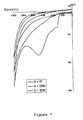


Classifications
-
- C—CHEMISTRY; METALLURGY
- C07—ORGANIC CHEMISTRY
- C07D—HETEROCYCLIC COMPOUNDS
- C07D401/00—Heterocyclic compounds containing two or more hetero rings, having nitrogen atoms as the only ring hetero atoms, at least one ring being a six-membered ring with only one nitrogen atom
- C07D401/14—Heterocyclic compounds containing two or more hetero rings, having nitrogen atoms as the only ring hetero atoms, at least one ring being a six-membered ring with only one nitrogen atom containing three or more hetero rings
-
- A—HUMAN NECESSITIES
- A61—MEDICAL OR VETERINARY SCIENCE; HYGIENE
- A61P—SPECIFIC THERAPEUTIC ACTIVITY OF CHEMICAL COMPOUNDS OR MEDICINAL PREPARATIONS
- A61P31/00—Antiinfectives, i.e. antibiotics, antiseptics, chemotherapeutics
- A61P31/04—Antibacterial agents
-
- A—HUMAN NECESSITIES
- A61—MEDICAL OR VETERINARY SCIENCE; HYGIENE
- A61P—SPECIFIC THERAPEUTIC ACTIVITY OF CHEMICAL COMPOUNDS OR MEDICINAL PREPARATIONS
- A61P31/00—Antiinfectives, i.e. antibiotics, antiseptics, chemotherapeutics
- A61P31/10—Antimycotics
-
- A—HUMAN NECESSITIES
- A61—MEDICAL OR VETERINARY SCIENCE; HYGIENE
- A61P—SPECIFIC THERAPEUTIC ACTIVITY OF CHEMICAL COMPOUNDS OR MEDICINAL PREPARATIONS
- A61P33/00—Antiparasitic agents
-
- A—HUMAN NECESSITIES
- A61—MEDICAL OR VETERINARY SCIENCE; HYGIENE
- A61P—SPECIFIC THERAPEUTIC ACTIVITY OF CHEMICAL COMPOUNDS OR MEDICINAL PREPARATIONS
- A61P33/00—Antiparasitic agents
- A61P33/02—Antiprotozoals, e.g. for leishmaniasis, trichomoniasis, toxoplasmosis
-
- A—HUMAN NECESSITIES
- A61—MEDICAL OR VETERINARY SCIENCE; HYGIENE
- A61P—SPECIFIC THERAPEUTIC ACTIVITY OF CHEMICAL COMPOUNDS OR MEDICINAL PREPARATIONS
- A61P35/00—Antineoplastic agents
-
- A—HUMAN NECESSITIES
- A61—MEDICAL OR VETERINARY SCIENCE; HYGIENE
- A61P—SPECIFIC THERAPEUTIC ACTIVITY OF CHEMICAL COMPOUNDS OR MEDICINAL PREPARATIONS
- A61P37/00—Drugs for immunological or allergic disorders
- A61P37/02—Immunomodulators
- A61P37/04—Immunostimulants
-
- C—CHEMISTRY; METALLURGY
- C07—ORGANIC CHEMISTRY
- C07D—HETEROCYCLIC COMPOUNDS
- C07D213/00—Heterocyclic compounds containing six-membered rings, not condensed with other rings, with one nitrogen atom as the only ring hetero atom and three or more double bonds between ring members or between ring members and non-ring members
- C07D213/02—Heterocyclic compounds containing six-membered rings, not condensed with other rings, with one nitrogen atom as the only ring hetero atom and three or more double bonds between ring members or between ring members and non-ring members having three double bonds between ring members or between ring members and non-ring members
- C07D213/04—Heterocyclic compounds containing six-membered rings, not condensed with other rings, with one nitrogen atom as the only ring hetero atom and three or more double bonds between ring members or between ring members and non-ring members having three double bonds between ring members or between ring members and non-ring members having no bond between the ring nitrogen atom and a non-ring member or having only hydrogen or carbon atoms directly attached to the ring nitrogen atom
- C07D213/24—Heterocyclic compounds containing six-membered rings, not condensed with other rings, with one nitrogen atom as the only ring hetero atom and three or more double bonds between ring members or between ring members and non-ring members having three double bonds between ring members or between ring members and non-ring members having no bond between the ring nitrogen atom and a non-ring member or having only hydrogen or carbon atoms directly attached to the ring nitrogen atom with substituted hydrocarbon radicals attached to ring carbon atoms
- C07D213/54—Radicals substituted by carbon atoms having three bonds to hetero atoms with at the most one bond to halogen, e.g. ester or nitrile radicals
- C07D213/55—Acids; Esters
-
- C—CHEMISTRY; METALLURGY
- C07—ORGANIC CHEMISTRY
- C07D—HETEROCYCLIC COMPOUNDS
- C07D401/00—Heterocyclic compounds containing two or more hetero rings, having nitrogen atoms as the only ring hetero atoms, at least one ring being a six-membered ring with only one nitrogen atom
- C07D401/02—Heterocyclic compounds containing two or more hetero rings, having nitrogen atoms as the only ring hetero atoms, at least one ring being a six-membered ring with only one nitrogen atom containing two hetero rings
- C07D401/04—Heterocyclic compounds containing two or more hetero rings, having nitrogen atoms as the only ring hetero atoms, at least one ring being a six-membered ring with only one nitrogen atom containing two hetero rings directly linked by a ring-member-to-ring-member bond
-
- C—CHEMISTRY; METALLURGY
- C07—ORGANIC CHEMISTRY
- C07D—HETEROCYCLIC COMPOUNDS
- C07D471/00—Heterocyclic compounds containing nitrogen atoms as the only ring hetero atoms in the condensed system, at least one ring being a six-membered ring with one nitrogen atom, not provided for by groups C07D451/00 - C07D463/00
- C07D471/02—Heterocyclic compounds containing nitrogen atoms as the only ring hetero atoms in the condensed system, at least one ring being a six-membered ring with one nitrogen atom, not provided for by groups C07D451/00 - C07D463/00 in which the condensed system contains two hetero rings
- C07D471/04—Ortho-condensed systems
-
- C—CHEMISTRY; METALLURGY
- C07—ORGANIC CHEMISTRY
- C07F—ACYCLIC, CARBOCYCLIC OR HETEROCYCLIC COMPOUNDS CONTAINING ELEMENTS OTHER THAN CARBON, HYDROGEN, HALOGEN, OXYGEN, NITROGEN, SULFUR, SELENIUM OR TELLURIUM
- C07F7/00—Compounds containing elements of Groups 4 or 14 of the Periodic Table
- C07F7/22—Tin compounds
- C07F7/2208—Compounds having tin linked only to carbon, hydrogen and/or halogen
-
- C07F7/2212—
-
- C—CHEMISTRY; METALLURGY
- C09—DYES; PAINTS; POLISHES; NATURAL RESINS; ADHESIVES; COMPOSITIONS NOT OTHERWISE PROVIDED FOR; APPLICATIONS OF MATERIALS NOT OTHERWISE PROVIDED FOR
- C09B—ORGANIC DYES OR CLOSELY-RELATED COMPOUNDS FOR PRODUCING DYES, e.g. PIGMENTS; MORDANTS; LAKES
- C09B57/00—Other synthetic dyes of known constitution
- C09B57/10—Metal complexes of organic compounds not being dyes in uncomplexed form
Definitions
- the present invention relates to nonlinear oligopyridazine compounds, to processes for obtaining them, to the uses thereof, and also to the regression thereof to oligopyrroles and to the uses of the pyridazinylpyrrole and oligopyrrole compounds obtained.
- oligopyridazine and oligopyrrole denote compounds comprising a sequence of nitrogenous rings of pyridazine or pyrrole type, said sequence being composed of two symmetrical or nonsymmetrical parts, linked by a heterocyclic spacer group or a heteroatom. In the present application, these terms will in addition be limited to the compounds according to the invention, which have a strictly defined structure.
- nitrogenous compound coordination chemistry has experienced a rapid development owing to the diversity of the chemical and catalytic properties of organometallic complexes containing one or more nitrogenous functions in their coordination sphere. This diversity is essentially linked to that of the nitrogenous functions involved in these complexes: amine, imine, nitrile, azide, etc.
- Oligopyridines are polydentate ligands which can also be categorized according to the number of nitrogen atoms participating in the chelation of the metal in the complex: bidentates (bipyridines), tridentates (terpyridines), tetradentates (quater-pyridines), etc., having the structure:
- 2,2′-Bipyridines have for a long time been the ligands most commonly used in coordination chemistry, in particular when they express asymmetric induction properties linked to the presence of groups which induce a chirality factor. More recently, 2,2′:6′,2′′-terpyridines (tpy) have opened up an area of investigation through the expression of polydentate sites favoring the formation of complexes with transition metals at a higher oxidation state. This property has been exploited, for example, for the oxidation of alcohols and the carbonylation of aromatic compounds. Even more recently, the chemistry of polydentate ligands of this type has been developed for catalytic activation in the context of the decontamination of radioactive waste.
- tpy 2,2′:6′,2′′-terpyridines
- 6,6′-Bis(6-methylpyridin-2-yl)-3,3′-bipyridazine 2 has, moreover, shown a strong supramolecular organization potential in the presence of various metals, such as silver (I) (Baxter, P. N. W.; Lehn, J.-M., Fisher, J.; Youinou, M, -T Angew. Chem. 1994, 106, 2432).
- this ⁇ , ⁇ ′-tetrapyridazine ligand has a linear geometry and can therefore only express sequences of coordination sites that are polybidentate for the same molecule.
- this tetramer preferentially results in a supramolecular arrangement of square grid type, as is the case for the bipyridazine 2.
- the elongation of the pyridazine chain also in this case enables self-assembly of four monomers resulting in a helicoidal organization formed of a tetramer in equilibrium with the square grid.
- the inventors therefore put forward the premise that it might be possible to carry out an electrochemical reduction of oligopyridazine compounds under conditions to be determined, despite the presence of several pyridazine rings within the same molecule, said rings being capable of considerably modifying its structure and its electronic properties.
- the reduction of the pyridazine sequences to oligopyrroles could be attempted.
- this reduction is not only effective under specific conditions developed and optimized by the inventors, but, in addition, it does not produce cyclization between the pyridazine residues or any other potential side reactions.
- the reduction may also take place pyridazine ring by pyridazine ring, making it possible to obtain just one or several site(s) of reduction on the molecule, thus opening up the route to the preparation of mixed pyridazinylpyrrole compounds.
- the inventors also sought to identify the potential biological applications of these new compounds. These compounds were then found to have therapeutic properties of great interest, in particular antiparasitic, anticancer and antibacterial properties.
- the present invention therefore relates to nonlinear oligopyridazine compounds, to the processes for obtaining them, to the uses thereof, and also to the reduction thereof to oligopyrroles and to the uses of the pyridazinylpyrrole and oligopyrrole compounds obtained.
- the invention relates to compounds of formula
- the alkyl, alkylamine, hydroxyalkyl and alkyloxy chains are methyls, methylamines, hydroxymethyls and methoxy, and the ethereal cyclic chain is of —CH 2 H 5 —(O—C 2 H 5 —) p type, it being possible for p to be between 1 and 4, limits included.
- Y will represent an oxygen or sulfur atom or a group of formula
- R which may be identical or different, will represent a hydrogen, an alkyl or alkyloxy chain containing from 1 to 6 carbons, or a —COOH or —COOR2 group, in which R2 is an alkyl chain containing from 1 to 6 carbons.
- the latter is directed toward precursors of the compounds according to the invention, in particular the compounds of formula
- the precursors will have identical groups A, and Z 1 will represent a halogen or alkoxy, an SnE 3 group, a hydroxyl or a mercapto.
- the invention relates to processes for preparing said precursors.
- a first process for preparing the precursors makes it possible to prepare the compounds of general formula
- the groups D represent a halogen or an alkyloxy chain containing from 1 to 6 carbons, preferably methoxy or ethoxy, and n1 is an integer between 2 and 4, limits included, by coupling at least two halopyridazines of formula
- G represents a halogen
- D is as defined above
- m is an integer between 1 and 3, limits included, in the presence of a stoichiometric mixture of zinc, dibromobis(triphenylphosphine)nickel and tetrabutylammonium iodide in distilled and degassed dimethylformamide, the coupling being followed by a step of purification by decomplexation.
- This process has the advantage of allowing the incrementation of the number of pyridazine rings in the molecule.
- the purification step is necessary in order to decomplex the product of the reaction from the reaction medium.
- This purification process can be carried out according to two distinct procedures:
- the process for purifying the compounds is carried out by decomplexation of said compounds in a saturated aqueous solution of potassium cyanide or sodium cyanide under cold conditions for approximately 1 h 30 to 4 h, preferably about 2 h to 3 h.
- under cold conditions is intended to mean temperatures ranging from 0 to 25° C. approximately, preferably about 18 to 20° C.
- the process for purifying the compounds is carried out by decomplexation of said compounds in a saturated aqueous solution of potassium halide or tetrabutylammonium halide, preferably potassium fluoride, or in a saturated aqueous solution of ammonia, the organic phase subsequently being washed with sodium hydrogen carbonate or potassium hydrogen carbonate, and then extracted with chloroform, dichloromethane, ethyl acetate or ether, etc.
- n2 is an integer between 1 and 4, limits included, and the groups X 1 , which may be identical or different, represent an alkyl or alkyloxy chain containing from 1 to 6 carbons, or a group chosen from the following groups:
- R represents a hydrogen, an alkyl or alkyloxy chain containing from 1 to 6 carbons, or a phenyl.
- This process implements Stille coupling, in proportions ranging from 1:2 to 1:3, between a compound of formula
- This process enables coupling of the end groups on the oligopyridazine compounds.
- the inventors therefore propose a process for electrochemical homocoupling of a pyridazine halide of formula
- n is equal to 1 or 2
- G is a halogen and X 2 represents a halogen, an alkyl or alkyloxy chain containing from 1 to 6 carbons, or a group chosen from the following groups:
- R represents a hydrogen, an alkyl or alkyloxy chain containing from 1 to 6 carbons, or a phenyl
- the electrolysis conditions being the following:
- the anode used is an Fe/Ni (64/36) anode.
- the reaction solvent advantageously comprises at least 50% of DMF and a polar cosolvent.
- a polar cosolvent for example, use may be made of a mixture of dimethylformamide (DMF) and of pyridine, in a ratio ranging from 90/10 to 50/50, limits included, preferably 80/20.
- the catalyst used is preferably a nickel complex, such as a nickel halide hydrate. When the solvent does not contain pyridine, a nickel halide-bipyridine complex may advantageously be used as catalyst.
- the support electrolyte is preferably a tetrabutylammonium halide or an equivalent such as tetrabutylammonium tetrafluoroborate, advantageously in amounts ranging from approximately 10 to 20 mol %, limits included, preferably 13 to 17%, relative to the pyridazine substrate.
- the intensity used during the reaction is, for example, about 0.05 A to 0.2 A, limits included, preferably 0.06 A to 0.1 A.
- the reaction may be carried out at ambient temperature (about 18-25° C.).
- the inventors also propose a process for electrochemically heterocoupling a pyridazine halide of formula
- n is an integer equal to 1 or 2
- G is a halogen and G represents an alkyl or alkyloxy chain containing from 1 to 6 carbons, or a group chosen from the following groups:
- R represents a hydrogen, or an alkyl or alkyloxy chain containing from 1 to 6 carbons, with an aromatic ring halide of formula Ar-G, in which X 1 is as defined above and Ar represents an optionally substituted, 5- or 6-membered aromatic ring, the electrolysis conditions being the following:
- the solvent used is DMF
- the support electrolyte is a tetrabutylammonium halide or an equivalent such as tetrabutylammonium tetrafluoroborate in amounts ranging from approximately 10 to 20 mol %, limits included, preferably from 13 to 17%, relative to the pyridazine substrate.
- the intensity used during the reaction is from 0.15 to 0.35 A, limits included, preferably about 0.2 A.
- the reaction may be carried out at ambient temperature (about 18-25° C.)
- the aromatic ring is preferably a phenyl, pyridinyl or thiophenyl nucleus, which is optionally monosubstituted.
- J represents a halogen or a methoxy
- the compounds of formula (XV) may alternatively be prepared starting from 3-acetyl-6-(pyridin-2-yl)pyridazine, itself obtained starting from 3-chloro-6-(pyridin-2-yl)pyridazine.
- glyoxylic acid is then condensed with 3-acetyl-6-(pyridin-2-yl)pyridazine in the presence of potassium carbonate, and then the resulting intermediate is treated in an acetic acid medium and in the presence of hydrazine monohydrate.
- n is an integer equal to 1 or 2
- R1 which may be identical or different, represent a hydrogen or an alkyl or alkyloxy chain containing from 1 to 6 carbons, are obtained by reacting phosphorus pentasulfide with the compound of formula
- the invention is also directed toward the process for preparing the compounds of formula
- 6,6′-bis(tributylstannyl)-2,2′-bipyridine Another precursor of interest synthesized by the inventors is 6,6′-bis(tributylstannyl)-2,2′-bipyridine. This compound is obtained by reacting 6,6′-dihalo-2,2-bipyridine with hexabutyl distannate in the presence of palladium(0) at a temperature of approximately 90-110° C. 6,6′-Dihalo-2,2′-bipyridine has been described in Nakhmanovich et al., Synthetic metal, 1997, 84: 883-884.
- Two other precursors of interest are, moreover, described in the example section and also exhibit biological activities. They are 2,6-bis(3-oxo-2H-pyridazin-6-yl)pyridine and 2,6-bis(3-chloropyridazin-6-yl)pyridine.
- the pyrrole precursors may be obtained by reduction, to pyrroles, of the corresponding pyridazine compounds.
- n1 is an integer between 2 and 4, limits included, and the X 1 groups, which may be identical or different, represent an alkyl or alkyloxy chain containing from 1 to 6 carbons or a group chosen from the following groups:
- R represents a hydrogen, an alkyl or alkyloxy chain containing from 1 to 6 carbons, or a phenyl, electrochemically, by extrusion of a nitrogen atom on one or more pyridazine ring(s), in which the electrolysis conditions are the following:
- the compounds according to the invention can be synthesized. According to a fourth aspect of the invention, the latter is directed toward the processes for preparing the compounds according to the invention using the precursors described above.
- the invention thus proposes, in particular, a process for preparing the compounds of the formula
- the groups R which may be identical or different, represent a hydrogen or an alkyl or alkyloxy chain containing from 1 to 6 carbons, by coupling, in the presence of a strong base, between a compound of formula
- the reaction temperature is preferably between 80-110° C., limits included.
- the following strong bases will be used: NaH, NaOH, and as solvent, DMF or DMSO.
- the groups A are identical.
- the invention also proposes a process for preparing the compounds of formula
- Z 2 and Z 3 representing either a halogen, or a stannylated group of formula SnE 3 , in which E represents a methyl, butyl or phenyl chain, and Y 2 , R1 and n being as defined above.
- the invention proposes a process for preparing the compounds of formula
- Z 4 represents MgG or Cu, G being a halogen, in the presence of methyl formate, of carbonyldiimidazole or of thiocarbonyldiimidazole.
- the obtaining of the organomagnesium and organocuprate derivatives is well known to those skilled in the art.
- the conventional reaction uses the halogenated compound corresponding to the desired organomagnesium-/organocuprate compound.
- the insertion of the magnesium or of the copper into the compound is carried out by addition of magnesium or of copper halide (CuI, CuCl) to the reaction medium, in the presence of a solvent such as, for example, Et 2 O or THF.
- the base may be chosen from potassium carbonate or potassium hydroxide. This reaction is preferably carried out at ambient temperature (about 18-25° C.).
- 2,6-bis(6-halopyridazin-3-yl)pyridine is obtained by halogenation, with phosphorus oxyhalide, of the 2,6-bis(6-2H-pyridazin-3-one)pyridine compound.
- This reaction is advantageously carried out at a temperature of about 80 to 110° C.
- 2,6-bis(pyridazin-3-yl)pyridine is prepared by reduction of the halogen functions of the 2,6-bis(6-halopyridazin-3-yl)pyridine, by catalytic hydrogenation.
- reaction is catalyzed by palladium-on-charcoal, under a dihydrogen atmosphere.
- ethanol will be used as solvent. This reaction can be carried out at ambient temperature.
- the invention is also directed toward a process for condensation-aldolization, in a basic medium, of glyoxylic acid with the compound of formula
- R3 represents a hydrogen, an alkyl chain containing from 1 to 6 carbons, or a —COCH 3 group, characterized in that the base used is potassium carbonate, introduced in an amount of at least three equivalents of said carbonate relative to the compound of formula (XIV).
- the weak bases may be chosen from calcium carbonate or potassium carbonate.
- the reaction can be carried out at ambient temperature.
- the invention also proposes a process for preparing a compound
- the solvent will be THF or ether
- the zinc reactant will be ZnCl 2
- the palladium(0) will be (Pd(Ph 3 ) 4 ) or palladium dibenzylidene acetone (Pd 2 dba 3 ).
- the latter relates to a process for reducing the oligopyridazines according to the invention to oligopyrroles.
- the groups R which may be identical or different, represent a hydrogen, an alkyl or alkyloxy chain containing from 1 to 6 carbons, or a phenyl, electrochemically, by extrusion of a nitrogen atom on one or more pyridazine ring(s), the electrolysis conditions being the following:
- Y 4 represents
- R1 is a methyl or a methoxy.
- the proton-donating polar medium may be constituted of an organic polar solvent (such as DMF, acetonitrile, etc.) supplemented with a proton donor (such as phenol, acetic acid, etc.), and, optionally, when the resulting medium is not conductive, a support electrolyte such as quaternary ammonium salts or an alcoholic acid aqueous medium.
- organic polar solvent such as DMF, acetonitrile, etc.
- a proton donor such as phenol, acetic acid, etc.
- a support electrolyte such as quaternary ammonium salts or an alcoholic acid aqueous medium.
- the quaternary ammonium salts are chosen from tetrabutylammonium hexafluorophosphate or tetrabutylammonium hydrogen sulfate, and the alcoholic acidic medium is constituted of a mixture of sulfuric acid or acetic acid to which ethanol has been added.
- the cathode is chosen from mercury film electrodes 4.5 cm in diameter, large-area carbon electrodes or screen-printed carbon electrodes.
- the intensity used is about 10 to 50 mA.
- the reaction is carried out at ambient temperature (about 18-25° C.)
- the reduction potential imposed which varies according to the substrates studied, should be controlled in order to control the Coulomb amount consumed during the electrolysis, i.e. the number of electrons used: 4 for monopyrrole and 8 for bipyrrole, etc.
- regression is intended to mean two steps of reduction in an acidic medium, the regression being the mechanistic result of the electrochemical reductions.
- alkyl and alkyloxy chains containing 1 to 6 carbons contain 1 to 3 carbons, they are preferably methyl, ethyl, methoxy or ethoxy.
- the invention aims to cover the multiple uses of the compounds synthesized.
- the compounds according to the invention are particularly suitable for use as ligands.
- the alkyl, alkylamine, hydroalkyl and alkyloxy chains are methyls, methylamines, hydroxymethyls and methoxy, and the ethereal cyclic chain is of —C 2 H 5 —(O—C 2 H 5 —) p type, p being as defined above.
- Y will represent an oxygen or sulfur atom or a group of formula
- R which may be identical or different, will represent a hydrogen, an alkyl or alkyloxy chain containing from 1 to 6 carbons, or a —COOH or —COOR2 group, in which R2 is an alkyl chain containing from 1 to 6 carbons.
- the compounds according to the invention are ligands which complex metal ions particularly well, in particular cations of iron, copper, ruthenium, europium, silver and bismuth type. They may be used alone or, as a variant, several identical ligands may be used in combination with one another.
- the inventors have, moreover, investigated the possible biological properties of their compounds and demonstrated therapeutic properties of interest.
- the invention is therefore directed toward the compounds according to the invention for use as a medicament, and their use as an active ingredient in therapeutic compositions.
- the compounds according to the invention have several biological uses that may lead to therapeutic uses.
- the compounds according to the invention may be used for obtaining a medicament for treating parasitic diseases.
- the parasitic diseases covered by the invention are in particular leishmaniasis, aspergillosis and candidiasis.
- these compounds according to the invention have a cytotoxic activity with respect to cancer cells. They are therefore particularly suitable for the preparation of anticancer medicaments.
- the cancer targeted by the invention is a carcinoma, for example an ENT carcinoma, a lung carcinoma, a uterine carcinoma, a carcinoma of the digestive tract (esophagus, colon, liver), a skin carcinoma, a breast carcinoma, a prostate carcinoma, an ovarian carcinoma, etc.
- a carcinoma for example an ENT carcinoma, a lung carcinoma, a uterine carcinoma, a carcinoma of the digestive tract (esophagus, colon, liver), a skin carcinoma, a breast carcinoma, a prostate carcinoma, an ovarian carcinoma, etc.
- the compounds according to the invention are suitable for the preparation of antibacterial medicaments, for example for the treatment of dysentery or meningitis.
- some of the compounds according to the invention are vectors of radioactive metals of great interest in the context of radioligands. Consequently, when they are complexed with an appropriate metal, such as bismuth or europium, they make it possible to obtain a medicament for use in radioimmunotherapy.
- the groups R which may be identical or different, represent a —COOR2 or —CONHR2 group in which the substituents R2 together form an ethereal cyclic alkyl chain,
- the groups R which may be identical or different, represent a hydrogen, an alkyl, alkylamine, hydroxyalkyl or alkyloxy chain containing from 1 to 6 carbon atoms, or a —COOH, —CONH 2 , —COOR2 or —CONHR2 group in which R2 is an alkyl chain containing from 1 to 6 carbon atoms or, when the substituents R are identical in the groups X 7 , the substituents R2 can together form an ethereal cyclic alkyl chain.
- the ethereal cyclic alkyl chain is a chain of —C 2 H 5 —(O—C 2 H 5 —) p type, p being as defined above.
- These compounds are tridentate or tetradentate, mixed N, O or N-donor ligands. They are consequently particularly suitable for complexing metal ions.
- the compounds according to the invention can selectively complex nucleic acids.
- they can be used as selective agents for complexing DNA and RNA, including that of HIV. They in fact act on the reverse transcriptase of cells, by inhibition of its primer on the viral RNA. They are therefore particularly suitable for the preparation of antiviral medicaments.
- These compounds can also be used as DNA-cleaving agents (metallonuclease, in particular when they are complexed with a metal of Cu type, for example).
- the inventors have also defined uses in the environmental, materials and electronics field.
- the invention is therefore also directed toward the use of the compounds according to the invention for the decontamination of cations in liquid media.
- these compounds are particularly suitable for complexing metal ions. They can optionally be used alone, or, as a variant, several identical ligands can be used in combination with one another.
- the compound will be chosen from the following group:
- the above compounds will advantageously be employed in combination with a carboxylic acid, in particular ⁇ -bromocapric acid.
- a carboxylic acid in particular ⁇ -bromocapric acid.
- the inventors in fact noted a synergy in the decontaminating activity when this specific combination was used with respect to actinide cations in particular.
- the invention also covers the materials composed of a supramolecular organization of compounds according to the invention.
- some of the compounds according to the invention have self-assembling properties. Others can self-assemble around metal cations.
- the invention is also directed toward, as such, the subgroups of compounds defined for the various applications/uses as products.
- the 1 H and 13 C NMR spectra were recorded on a Bruker Avance 300 spectrometer.
- the irradiation frequencies are respectively 300 MHz and 75.5 MHz, the chemical shifts are given in parts per million (ppm) with tetramethylsilane as internal standard.
- the coupling constants are given in Hertz (Hz) and the multiplicity of the signals is described as follows: s (singlet), bs (broad singlet), d (doublet), dd (doublet of doublets), t (triplet), q (quadruplet), m (multiplet).
- UV-visible absorption spectra were recorded on a Shimadzu UV-2401PC spectrometer.
- the fluorescence spectra were recorded on an SPEX Fluoromax fluorimeter. All the spectra recorded by the machines described above were carried out in a UV-visible quartz cell (1 cm).
- the oven temperature was programmed in the following way: 1 minute at 80° C., then 12° C. per minute up to 280° C.
- the mass spectra were recorded on a Thermoelectron DSQ machine by electron impact (70 eV), by chemical ionization (ammonia), by direct introduction or by GC-MS coupling.
- the tetrahydrofuran (THF) is freshly distilled over sodium/benzophenone under argon.
- the dichloromethane (DCM) and the N,N-dimethylformamide (DMF) are freshly distilled over calcium hydride under argon.
- the toluene is freshly distilled over sodium under argon.
- Tetrabutylammonium bromide, activated zinc powder and dibromo(bistriphenylphosphine)nickel(II) are added to a round-bottomed flask. The whole mixture is dried under vacuum and placed under argon. DMF that has been freshly distilled and degassed is added to the medium via a hollow tube. The solution is stirred at ambient temperature until a homogeneous solution is obtained. The halopyridazine is solubilized in the DMF that has been freshly distilled and degassed and added to the reaction medium via a hollow tube. The solution is stirred for 15 hours at 55° C. The blackish solution is cooled to ambient temperature, treated with an aqueous ammonia solution (25 N) and extracted with DCM. After having dried the organic phase over Na 2 SO 4 and evaporated off the solvent under reduced pressure, the residue is subsequently purified.
- Methoxypyridazine and a solution of HBr at 33% in acetic acid are stirred for 48 hours at 60° C., in a round-bottomed flask surmounted by a condenser.
- the solution is cooled and concentrated under vacuum.
- the precipitate is filtered off and washed with acetone.
- the grayish solid is suspended in water.
- the solution is brought to reflux and neutralized with a 1M solution of NaOH.
- the precipitate is filtered off, washed with water and dried under vacuum.
- POCl 3 and pyridazinone are refluxed for 18 hours, in a round-bottomed flask surmounted by a condenser. After a return to ambient temperature, the excess POCl 3 is removed by distillation under vacuum and the residue is hydrolyzed with ice. The solution is subsequently neutralized by adding 1M sodium hydroxide and extracted with dichloromethane. The organic phase is dried over Na 2 SO 4 and concentrated under reduced pressure.
- the previously dried reactants (haloaryl, stannylpyridine, palladium catalyst) are placed in a round-bottomed flask surmounted by a condenser, and the freshly distilled and degassed solvent is added to the reaction medium via a hollow tube.
- the solution is heated and stirred until the starting product has completely disappeared. After a return to ambient temperature, the solvent is evaporated off under reduced pressure, and the residue is taken up in DCM.
- the solution is filtered through Celite and washed with DCM.
- the organic phase is subsequently washed successively with a concentrated aqueous ammonia solution (25 N) and a saturated solution of KF.
- the organic phase is dried over Na 2 SO 4 and concentrated under reduced pressure.
- the solution is stirred at ambient temperature for 30 minutes and then a solution of tetrakis(triphenylphosphine)palladium(0) (0.1 eq.) and of halopyridazine (1 eq.) in THF is added to the reaction medium via a hollow tube.
- the solution is stirred for 48 hours at a temperature dependent on the substrate.
- the medium is treated with a saturated solution of NaHCO 3 .
- the solution is filtered through Celite, and washed successively with DCM and with a concentrated aqueous ammonia solution (25 N).
- the organic phase is dried over Na 2 SO 4 and concentrated under reduced pressure.
- the compound to be reduced is dissolved either in a three-solvent system (THF/acetic buffer/CH 3 CN: 5/4/1), or in a 0.5M H 2 SO 4 solution, and placed in the anode compartment of the electrochemical cell.
- An identical solvent system is placed in the cathode compartment and the appropriate voltage is imposed until 8 electrons have passed.
- the organic phase is evaporated under vacuum if necessary.
- the aqueous phase is subsequently treated with a saturated solution of Na 2 CO 3 until an alkaline pH is obtained.
- the medium is extracted with DCM, and the organic phase is dried over Na 2 SO 4 , filtered and concentrated under vacuum.
- the residue is purified by silica column chromatography (PE/EtOAc: the ratio depends on the compounds).
- the yield from preparation of the 6,6′-bismethoxy-bipyridazine 15 could thus be optimized at 95%, whereas this synthesis was described in three steps starting from the halopyridazine 14 with a 70% yield in the presence of zinc, NiCl 2 (H 2 O) 4 and PPh 3 (1:1:4) (Baxter, Lehn et al., 2000).
- the reaction was reproduced at 55° C., in DMF, starting from a stoichiometric mixture of zinc, NiBr 2 (PPh 3 ) 2 and nBu 4 NI, in a respective proportion of 1:0.3:1 (Scheme 7).
- the 6,6′-dichloro-3,3′-bipyridazine 17 is subsequently accessible in 2 steps, of hydrolysis and of chlorination with POCl 3 .
- the 6,6′-dichloro-3,3′-bipyridazine 17 it was possible to improve the overall yield of the preparation of bipyridazines 19 and 2, moving from a 53% to a 60% yield in five steps in the case of the bipyridazine 2.
- This 6,6′-dichloro-3,3′-bipyridazine precursor 17 has the advantage of enabling the introduction of a variety of functionalities at position 6 and 6′ on the bipyridazine backbones.
- the synthesis pathway used also corresponds to pathway 4 of point 1.
- the addition of a further methyl substituent on the 6-methylpyridinyl group makes it possible to increase the solubility of the compound and thus to facilitate the electrochemical ring regression.
- This molecule exhibits a strong cytotoxic potential on KB cancer cells with an IC 50 of 0.3 ⁇ g/ml, and also affects the tonB protein involved in the iron transport process used for bacterial growth.
- the coupling of aromatic halides is possible by virtue of a process of indirect electrolysis catalyzed by nickel complexes.
- the process employed is the consumable anode process.
- the precursor of the catalyst is introduced in the form of nickel salts (NiBr 2 , xH 2 O) or by oxidation of a metal bar containing nickel (stainless steel or Fe/Ni (64/36) steel).
- the material used is provided in the following way:
- the electrochemical cell is constituted of a glass wall, the lower part of which ending in a thread onto which is threaded a bakelite base (black, SVL40) containing a leaktight seal.
- a bakelite base black, SVL40
- four inlets of SVL 15 type are placed around a central inlet SVL22 making it possible to fit a metal bar which will play the role of anode.
- the cathode constituted of a nickel foam (40 cm 2 ), is placed concentrically around the anode. The solvent is stirred inside the cell by means of a magnetic bar.
- the various side inlets have the function of enabling the cathode to be electrically connected by means of a stainless steel wire, and of allowing inlet and outlet of a gas such as argon, which provides an inert atmosphere in the electrochemical cell.
- the fourth inlet makes it possible to take samples or to add reactants to the reaction medium during electrolysis.
- One of the inlets may, if necessary, be used to place a reference electrode for measuring the change in potential of the cell during a reaction.
- the cell is placed on an oil bath-magnetic stirrer, allowing possible heating, if necessary.
- DMF is the solvent used in the process.
- the medium is made conductive through the introduction of support electrolytes, such as quaternary ammonium salts.
- the supply of electricity to the cell is provided by a stabilized supply which makes it possible to work under galvanostatic conditions of 10 to 300 mA.
- the cathodic reaction concerns the reduction of the most readily reducible species, which, in the present case, is the precursor of the catalyst (nickel II salts).
- the nickel(II) is thus reduced to nickel(0) stabilized by ligands present in the medium (pyridine or bipyridine).
- the counterreaction is the oxidation of the metal bar, made of iron or of an iron/nickel alloy with a 64/36 composition.
- the metal salts generated in the medium thus contribute to a correct progression of the reaction.
- the process involved around the nickel(0) is shown in schemes 1 and 2, according to the intensity imposed: strong (scheme 1) or weak (scheme 2).
- the precursor of the catalyst used is the NiBr 2 Bipy (10%) complex, and in the case of an Fe/Ni (64/36) anode, the precursor of the catalyst is NiBr 2 (5 to 10%) and the ligand placed as cosolvent is pyridine.
- 6,6′-Dimethoxy-3,3′-bipyridazine 15 is the key intermediate in the synthesis of 6,6′-bisubstituted 3,3′-bipyridazine.
- a simple and effective original synthesis of this intermediate was developed electrochemically. This synthesis uses the consumable anode process described above and involves the homocoupling of 3-chloro-6-methoxypyridazine 14 by virtue of catalysis with nickel complexes (Scheme 1′).
- the material used is that described in paragraph 1.
- the anode is an Fe/Ni (64/36) bar and the cathode is a nickel foam (supplier Goodfellow).
- the solvent is a 50/50 DMF/pyridine mixture and the support electrolyte is constituted of a 1/1 NBu 4 Er/NBu 4 I mixture.
- the reaction is carried out at ambient temperature under an argon atmosphere.
- a pre-electrolysis in the presence of dibromoethane (300 ⁇ l) is carried out for 15 min at an intensity of 0.1 A in the absence of nickel (NiBr 2 , xH 2 O, 10%) and of the reactant (3-chloro-6-methoxypyridazine).
- the latter are subsequently added and the electrolysis is continued at an intensity of 0.05 A.
- the progression of the reaction is followed by GC analysis of samples of the reaction medium which are hydrolyzed (mixture of a saturated aqueous solution of EDTA/CH 2 Cl 2 ), this being until complete disappearance of the aryl halide (duration: approximately 15 to 19 h).
- the solvent is evaporated off under reduced pressure.
- the residue is taken up in a mixture (saturated aqueous solution of EDTA and of dichloromethane) and subjected to magnetic stirring for one hour.
- the organic phase is separated from the aqueous phase and the latter is extracted with CH 2 Cl 2 (4 times 100 ml).
- the combined organic phases are dried over anhydrous sodium sulfate, filtered, and concentrated under reduced pressure.
- the residue obtained is purified by chromatography on neutral alumina (elution 100% CH 2 Cl 2 ).
- the heterocouplings were carried out, unlike the homocouplings, at an intensity of 0.2 A.
- the precursor of the catalyst is the NiBr 2 bipy complex added in catalytic amount (10%).
- the anode is made of iron (XC10, 0.1% of carbon).
- the solvent is DMF. The results obtained are given in the table below (Table 1)
- bipyridazine structures were subjected to electrochemical ring regression conditions.
- the electroreduction experiment was carried out in a sulfuric acid medium because the 3,3′-bipyridazines 2 and 19 are not readily soluble in the acetic buffer.
- the voltammogram of 6,6′-bis(6-methylpyridin-2-yl)-3,3′-bipyridazine 2 clearly indicates a very marked reduction wave at a potential of ⁇ 0.5 V/SCE and a slight shoulder around ⁇ 0.6 V/SCE ( FIG. 1 ).
- the first wave may correspond to a potential of a simultaneous two-electron reduction (two electrons per pyridazine ring), of the two symmetric pyridazine groups of the dimer 2 (4 electrons in total).
- the formation of a bisdihydropyridazine intermediate 68 could therefore be envisioned and its regression to the dipyrrole 71 logically had to require a further provision of at least four electrons per mole (two electrons per dihydro ring), for a total of eight electrons/mol starting from the bipyridazine 2 (scheme 121).
- This preparative electrolysis was monitored by cyclic voltammetry directly in the cathode compartment on a carbon electrode at various stages of the electrosynthesis ( FIG. 1 : —before electrolysis, —during electrolysis, —at the end of electrolysis).
- a decrease in the intensity of the wave of reduction of the bipyridazine compound 2 on the various voltammograms clearly shows the reduction of said compound during the preparative electrolysis. The latter was halted after complete disappearance of this wave (experiment lasting 4 h 30, during which at least four electrons were therefore consumed).
- the selective reduction of just one pyridazine nucleus out of the two is therefore possible.
- the mechanism involves either a first 4-electron reduction of the pyridazine dimer, which would result in bis-1,2-dihydropyridazines 68, or two successive steps of 2-electron reduction via the intermediate 69.
- the latter hypothesis was first of all suggested through the identification, in the medium, of the intermediate 3-[6-(6-methylpyridin-2-yl)dihydropyridazin-3-yl]-6-(6-methylpyridin-2-yl)pyridazine 69 resulting from a first reduction with 2 first electrons.
- the preferred mechanism in fact appears to have to work by forming a bis-1,2-dihydropyridazine 68 (resulting from a 4-electron reduction) which becomes rearranged, in an acidic medium, to a mixed pyrrole-pyridazine system 70. Subsequently, the bipyrrole 71 results from a further 4-electron reduction of the remaining pyridazine.
- an improvement to the process may either relate to the potential to be applied (up to 0.85 V/SCE), or be provided by simply allowing the reaction to continue.
- the hypotheses are that, at ⁇ 0.7 V/SCE, the dihydropyridazine 2 is reduced to 72 and that the rearrangement to the bipyrrole 71, in an acidic medium, simply requires a longer reaction time.
- the preparative electrolysis is carried out in a sulfuric acid (0.5 mol ⁇ L ⁇ 1 )/ethanol medium (proportion: 0.5/0.5) in a cell with two compartments separated by sintered glass.
- the anode a stainless steel plate with a surface area of 15 cm 2 , is placed in the anode compartment.
- the cathode, a layer of mercury with a surface area of 16 cm 2 , and the reference electrode, the saturated calomel electrode, are introduced into the cathode compartment.
- the solvent volume in the two compartments is 90 ml.
- the substrate is introduced into the cathode compartment (194 mg, i.e.
- the reaction for performing preparative electrolysis of the bipyridazine 19 electrochemically was carried out in 0.5M H 2 SO 4 medium.
- a potential E t ⁇ 0.650 V/SCE was applied to the working electrode (layer of mercury) until consumption of 8 electrons.
- the reaction is monitored by cyclic voltammetry and TLC (see FIG. 10 ).
- the bipyrrole compound 112 was obtained with a yield in the region of 10%, along with the monopyrrole compound 107 and the tetrahydropyridazine compound 108.
- the low yield obtained for the bipyrrole is explained by its partial degradation in the concentrated H 2 SO 4 medium and the difficulties in purification by flash chromatography on silica gel.
- the number of electrons involved per reduction wave was determined by cyclic voltammetry by adding an internal reference (Red/Ox couple of which the number of electrons is known) to the solution.
- Ferrocenemethanol (Fc) was used as internal reference, the oxidation peak potential of said ferrocenemethanol being 0.28 V/SCE under the analytical conditions of the experiment (Scheme 91)
- the first two-electron transfer makes it possible to generate the dihydropyridazine intermediates (1,2- or 1,4-dihydropyridazines depending on their relative stability) and the second two-electron transfer brings about the extrusion of a nitrogen atom through the release of ammonia.
- the potential to be imposed for the preparative electrolyses should therefore lie at the level of the reduction waves corresponding at least to a four-electron reduction.
- the preparative electrolyses of the various pyridazines (80-85) were carried out using, respectively, a working potential corresponding to the potential of the second reduction wave for the precursors. Said electrolyses were continued until complete disappearance of the precursors and until the consumption of an amount of charges (number of Coulombs) corresponding to the minimum amount of electrons necessary to induce rearrangement of said precursors to pyrrole (four electrons per mole of the substrate reduced).
- the decrease in the intensity of the reduction wave ( ⁇ 1.08 V) for the precursor during the preparative electrolysis is correlated with the transformation during the electrosynthesis. Furthermore, said wave disappears completely at the end of electrolysis, thus making it possible to verify the total consumption of the precursor.
- the first wave is attributed to the two-electron reductions of the pyridazines to dihydropyridazines, and the second corresponds to the nitrogen extrusion so as to give the pyrrole rings.
- the ligand 33 was synthesized via a double Stille coupling, according to two different protocols (Retrosynthesis 2).
- Pathway A by the action of two equivalents of 2-tributylstannylpyridine 18 on the precursor 2,6-bis(3-chloropyridazin-6-yl)pyridine 32.
- Pathway B by condensation of two residues of 3-tributylstannyl-6-(pyridin-2-yl)pyridazine 30 with 2,6-dibromopyridine 31.
- pathway A which is an alternative to pathway A, was also developed, using Negishi coupling in place of Stille coupling.
- the dicarboxylate precursor 35 was generated in situ by condensation of the 2,6-diacetylpyridine 34 with two mol of glyoxylic acid (Scheme 13).
- the addition of two equivalents of hydrazine to the intermediate 35 at the reflux of acetic acid produces, by double cyclization, followed by dehydration, the 2,6-bis(6-2H-pyridazin-3-one)pyridine 36 with a yield of 75%.
- the dipyridazinone 36 can be in equilibrium in its tautomeric form.
- the 1 H NMR analysis (300 MHz) shows a broad singlet at around 11.38 ppm corresponding to the NH protons of the dione form 36.
- the dipyridazinone 36 was subsequently treated with an excess of POCl 3 at 95° C., so as to produce the bis(chloropyridazinyl)pyridine 32, with a yield of 72%.
- the bis(chloropyridazine)pyridine 32 obtained is an ⁇ , ⁇ ′-bifunctional tridentate ligand which enables an extension of the arrangement of the “pyridine-pyridazine” strand by coupling reactions. This opportunity obviously offers the possibility of subsequently preparing a variety of new heterocyclic sequences.
- the 2,6-bis[6-(pyridin-2-yl)pyridazin-3-yl]pyridine 33 was obtained, with a yield of 41%, by reacting two equivalents of 2-tributylstannylpyridine 18 with the precursor bis(chloropyridazinyl)pyridine 32, under the usual Stille coupling conditions [Pd(PPh 3 ) 4 , reflux of toluene] (Scheme 15).
- This moderate yield can be explained by the weak reactivity of the precursor bis(chloropyridazinyl)pyridine 32 (effect of the pyridazine ring), and the dimerization product derived from the stannic pyridine 38 is isolated with a yield of 17%.
- the ligand 33 was obtained in four steps with an overall yield of 22%.
- the monosubstituted intermediate, 3-(2-bromopyridin-6-yl)-6-(pyridin-2-yl)pyridazine 43 can also be predominantly isolated, with a yield of 72%, by starting from an equimolar mixture of the starting reactants (Scheme 17).
- halogenated derivative represents an intermediate of choice for gaining access to a large variety of heterogeneous ligands.
- a condensation is first carried out between 2,6-diacetylpyridine (34) and two mol of glyoxylic acid.
- the addition of two mol of hydrazine and of acetic acid allows a double cyclization followed by a dehydration, and results in 2,6-bis(6-2H-pyridazin-3-one)pyridine (36) with a yield of 91%.
- This compound is subsequently treated with an excess of POCl 3 at reflux for 15 hours, so as to give bis(chloropyridazine)pyridine (32) with a yield of 48%.
- the Stille coupling is replaced with Negishi coupling.
- the chloro(pyridyl)pyridazine 8a was chosen as precursor in the Stille coupling so as to react with the methylated stannylpyridine 22 (Scheme 19), in the equimolar presence of tetrakis(triphenylphosphine)palladium, so as to give exclusively the coupling product 44 with a yield of 90%.
- the pyridazine diacid ligand 48 can be obtained by oxidation of the bis(di-methylpyridyl)pyridazine 47 (Scheme 21).
- the latter was prepared via a double Stille coupling between the 6-methyl-2-tributylstannylpyridine 22 and the 3,6-dichloropyridazine 46 in the presence of tetrakis(triphenylphosphine)palladium.
- a slight excess of stannylated pyridine (3 eq.) was used.
- the 3,6-bis(2-carboxypyridin-6-yl)pyridazine acid 48 is isolated with a yield of 68%.
- the pyridazine diacid 48 obtained is a bis-tridentate ligand: N-donating (pyridine and pyridazine) and O-donating (diacid).
- N-donating pyridine and pyridazine
- O-donating diacid
- the precursor of bis(chloropyridazinyl)pyridine 32 type can, by means of double Stille coupling [Pd(PPh 3 ) 2 Cl 2 , DMF, 110° C.], in the presence of two mol of 6-methyl-2-tributylstannylpyridine 22, lead to the 2,6-di[6-(6-methylpyridin-2-yl)pyridazin-3-yl]pyridine 49 (Scheme 22).
- the dimethylated ligand 49 was obtained with a yield of 53%.
- the diacid 50 obtained is a ligand which has three coordination sites, a central site which is solely N-donating, and two symmetrical (N,O)-donating tridentate end sites.
- This compound can be converted to a cyclic ligand by introducing an ethereal alkyl chain using the two acid functions (via the ester or the acid chloride) (compound A below).
- This conversion which can be generalized to all the compounds according to the invention having two end acid functions, enables a direct use in radioimmunotherapy, where (N,O)-donating heterogeneous cyclic ligands are highly desired.
- the diacid 50 exhibited capacities for complexation that is cation-selective, for example selective for cations of lanthanide type.
- hydrophobic (alkyl) chains makes it possible, moreover, to improve the solubility in an organic medium after complexation, for example in the context of a liquid-liquid extraction (compound B above).
- a hydrophilic chain makes it possible to use these same ligands in an optionally aqueous medium.
- the first approach was attempted via a homocoupling, of the 2-bromo-6-[3-(pyridin-2-yl)pyridazin-6-yl]pyridine 43, in the presence of a catalytic amount of NiBr 2 (PPh 3 ) 2 /Zn and of nBu 4 NI, in DMF.
- This procedure did not make it possible to obtain the expected product.
- Such a result can be explained by the strong coordination potential of the polynitrogenous precursor, which traps the catalytic complex in situ.
- the second method (pathway B) consisted in carrying out a double Stille coupling of two equivalents of pyridylpyridazine 39 or 8a, respectively, on ⁇ , ⁇ ′-bisfunctional bipyridine precursors 52b or 60.
- the 6,6′-dichloro-2,2′-bipyridine 52a was synthesized by reacting 2-chloropyridine with a mixture of BuLi/Me 2 N(CH 2 ) 2 OLi as base for the regioselective lithiation at C-6 (Scheme 23).
- the 6-lithio-2-chloropyridine obtained appears to react with the starting chloropyridine so as to give the corresponding coupling product 52a with a yield of 47%.
- the 6,6′-dibromo-2,2′-bipyridine 52b was also obtained according to a similar procedure via monolithiation of the 2,6-dibromopyridine 42, followed by oxidative coupling, with a yield of 50% (Scheme 24).
- the 6,6′-dichloro-2,2′-bipyridine 52a can also be prepared via Stille heterocoupling between the 2-bromo-6-chloropyridine 55 and the 2-chloro-6-tributylstannylpyridine 56, with a yield of 35% (Scheme 25).
- the 2-chloro-6-methoxypyridine 57 is homocoupled in the presence of a stoichiometric amount of a solution (1:0.3:1) of zinc, NiBr 2 (PPh 3 ) 2 and nBu 4 NI, in DMF at 55° C., so as to give the 6,6′-methoxy-2,2′-bipyridine 58 with a yield of 94%.
- the hydrolysis of the 6,6′-methoxy groups is carried out with a mixture of 33% of hydrobromic acid in acetic acid, at 95° C. for 48 h, with a yield of 94%.
- This Stille coupling was also carried out in two different ways, either by reacting the brominated bipyridine 52b with two mol of stannylated pyridazine 39, or starting from the distannylated bipyridine 60 in the presence of two equivalents of chloro (or bromo) pyridazine 8a.
- the synthesis of the 2,9-dichloro-1,10-phenanthroline 65a consists of four steps, starting from the unsubstituted 1,10-phenanthroline 62 (Scheme 30).
- the N,N′-bridged dione 64 is the precursor of the 2,9-dihalo-1,10-phenanthrolines 65a and 65b. It can be prepared by regioselective oxidation of the 1,10-phenanthroline 62 after prior protection of the nitrogen doublets.
- the oxidation of the salt 63 was carried out with potassium hexacyanoferrate in an alkaline aqueous solution of sodium hydroxide at 0° C.
- the N,N′-bridged dione 64 formed was isolated by silica gel chromatography with a yield of 52%.
- the ⁇ , ⁇ ′-halogenation of the dione 64 follows the same mechanism of halogenation as in the case of the pyridazinone 16, or of the pyridinone 59, with spontaneous opening of the [N—(CH 2 ) 3 —N] bridge through an aromaticity effect.
- the 2,9-dichloro-1,10-phenanthroline 65a and the 2,9-dibromo-1,10-phenanthroline 65b were obtained by heating at 95° C., respectively, in an excess of corresponding phosphorus oxyhalide, with a yield of 72% and 79%.
- the 2,9-dihalo-1,10-phenanthrolines 65a and 65b represent precursors of choice for the synthesis of many rigid ligands analogous to the ligands prepared starting from 2,2′-bipyridine.
- the rigid ligand 66 was obtained by Stille bis-coupling, by condensing two residues of tributylstannylpyridazine 39 with the 2,9-dibromo-1,10-phenanthroline 65b, with a yield of 91%, whereas its dichlorinated homolog 65a enables only a more modest yield of 62% to be obtained (Scheme 31).
- the bipyridazine structure 66 was subjected to the electrochemical ring regression conditions.
- the electroreduction experiment was carried out in a sulfuric acid medium.
- the wave corresponds to a potential of a simultaneous 4-electron reduction (4 electrons per pyridazine ring).
- the formation of the corresponding dipyrrole 67 thus logically requires the input of at least 8 electrons per mole of bipyridazine 66.
- This preparative electrolysis was monitored by cyclic voltammetry directly in the cathode compartment on a carbon electrode at various stages of the electrosynthesis.
- a decrease in the intensity of the reduction wave for the bipyridazine compound 66 on the various voltammograms clearly shows the reduction of said compound during the preparative electrolysis. The latter was halted after complete disappearance of this wave (experiment lasting 10 h), during which time at least 8 electrons were therefore consumed.
- the reaction is monitored by cyclic voltammetry and TLC.
- the bipyrrole 206 was isolated with a yield of 10%, which is probably due to a phenomenon of degradation of the bipyrrole compound in a very acidic medium.
- the reaction is monitored by cyclic voltammetry and TLC.
- the preparative electrolysis of the bipyridazine 49 made it possible to isolate the bipyrrole 206 as the sole reaction product, with an optimizable yield of 45%.
- the potassium 2-hydroxy-4-oxo-4-(pyridin-2-yl)butanoate 5 obtained subsequently becomes cyclized, at the reflux of acetic acid in the presence of hydrazine monohydrate, so as to form the intermediate 6 which becomes dehydrated in situ so as to give the 6-(pyridin-2-yl)-2H-pyridazin-3-one 7 with an overall yield of 65%.
- the chlorination, or the bromination, of the pyridazinone 7 is a conventional reaction carried out, respectively, in an excess of phosphorus oxychloride or phosphorus oxybromide, at 100° C., so as to give the 3-halopyridazines 8a and 8b, with virtually quantitative yields.
- the 3,3′-di[6-(pyridin-2-yl)]pyridazine thioether 11 was also prepared by coupling the 6-(pyridin-2-yl)-2H-pyridazine-3-thione 10 and the 3-chloro-6-(pyridin-2-yl)pyridazine 8a, in the presence of a strong base (NaOH) in DMSO (Scheme 6).
- the pyridazinethione 10 was prepared previously by reacting phosphorus pentasulfide with the 6-(pyridin-2-yl)-2H-pyridazin-3-one 7 with a yield of 92%.
- the 6,6′-bis(6-methylpyridin-2-yl)-3,3′-bipyridazine 2 is obtained according to the general Stille coupling procedure, starting from a reaction mixture of 500 mg (2.21 mmol) of dichlorobipyridazine 17, 2.46 g (6.63 mmol) of 2-methyl-6-tributylstannylpyridine 22, 155 mg (0.221 mmol) of dichlorobis(triphenylphosphine)-palladium(II), and 40 ml of freshly distilled DMF. The reaction mixture is heated at 95-105° C.
- the purification of the product 2 can be obtained by decomplexation in a saturated aqueous solution of cold potassium cyanide or of EDTA for at least two hours, after the heating for 24 h mentioned above.
- This decomplexation can also be carried out by mixing the product 2 with 40 ml of a saturated aqueous solution of potassium fluoride.
- the organic phase is subsequently washed with NaHCO 3 , followed by extraction with CHCl 3 .
- the organic phase is dried over MgSO 4 , filtered and concentrated. Washing with 3 times 150 ml of 1M HCl is applied, and the aqueous phases are combined. After filtration, the mixture is neutralized with Na 2 CO 3 and the precipitate formed 2 is then filtered off.
- the mixture is kept at ⁇ 78° C. for two hours. After a return to ambient temperature, the solvent is evaporated off under vacuum. The residue is taken up with dichloromethane and then washed with water. The organic phase is dried over MgSO 4 , and evaporated to dryness.
- reaction medium After cooling to ambient temperature, the reaction medium is diluted with 80 ml of dichloromethane, then poured into a saturated solution of KF, and after filtration, the filtrate is washed with a saturated aqueous solution of NaHCO 3 and the organic phase is dried over MgSO 4 and concentrated under reduced pressure.
- the residue obtained is chromatographed on silica gel (eluent: a mixture of ethyl acetate/petroleum ether (20/80)). 6,6′-Di(1-ethoxyvinyl)-3,3′-bipyridazine (18) is isolated with a yield of 66%.
- This compound is obtained in the form of a brownish powder, according to procedure C, from the 6,6′-(pyridin-2,6-diyl)dipyridazin-3(2H)-one 36 (1.9 g, 6.247 mmol) and POCl 3 (15 ml). The residue is purified by silica column chromatography (EtOAc) to give the desired product with a yield of 48%.
- This compound is synthesized according to procedure E, from the 2,6-bis(6-chloropyridazin-3-yl)pyridine 32 (0.50 g, 1.65 mmol), 2-bromopyridine (0.537 g, 4.13 mmol), zinc chloride (0.69 g, 4.13 mmol), butyllithium (2.5 M in hexane, 3.6 ml, 4.13 mmol), tetrakis(triphenylphosphine)palladium(0) (0.19 g, 0.165 mmol) and THF (80 ml). Silica chromatography (PE/EtOAc: gradient of 80/20 to 0/100) gives the pure product in the form of a pale yellow powder with a yield of 17%.
- the 3,6-bis(6-methylpyridin-2-yl)pyridazine 47 is obtained according to the general Stille procedure, starting from a reaction mixture of 1.55 g (4.06 mmol) of 6-methyl-2-(tributylstannyl)pyridine 22, 300 mg (2.03 mmol) of 3,6-dichloropyridazine 46, 231 mg (0.20 mmol) of tetrakis(triphenylphosphine)palladium(0) and 50 ml of freshly distilled toluene.
- the disubstituted product 47 is isolated with a yield of 52%.
- the diacid 48 is obtained according to a procedure similar to the preparation of the acid 45, from a mixture of 230 mg (0.88 mmol) of pyridazine 47, 126 mg (1.14 mmol) of selenium dioxide and 7 ml of o-dichlorobenzene. The mixture is heated at 150° C. for 12 hours, so as to give the diacid 48 with a yield of 68%.
- This compound is synthesized according to procedure E, from the 2,6-bis(6-chloropyridazin-3-yl)pyridine 32 (0.50 g, 1.65 mmol), the 2-bromopicoline 104 (0.71 g, 4.13 mmol), zinc chloride (0.69 g, 4.13 mmol), butyllithium (2.5M in hexane, 3.6 ml, 4.13 mmol), tetrakis(triphenylphosphine)palladium(0) (0.19 g, 0.165 mmol) and THF (80 ml). Silica chromatography (PE/EtOAc: gradient of 80/20 to 0/100) gives the pure product in the form of a pale yellow powder with a yield of 73%.
- the diacid 50 is obtained according to the procedure used for preparing the acid (48), from a mixture of 300 mg (0.72 mmol) of pyridazine 49, 104 mg (0.93 mmol) of selenium dioxide and 10 ml of o-dichlorobenzene. The solution is heated at 150° C. for 18 hours with stirring, and the acid 50 is isolated with a yield of 71%.
- the 2,6-dibromopyridine (42) (2.32 g, 10 mmol) is solubilized in 250 ml of diethyl ether cooled to ⁇ 78° C.
- the assembly is equipped with a solids-addition funnel containing copper chloride (2) (pre-dried, 2 g, 14.9 mmol).
- Butyllithium (2.4M in hexane, 4.6 ml, 11 mmol) is added dropwise and the reaction medium is stirred for 2 hours at ⁇ 78° C.
- the copper chloride is added slowly over 30 minutes and the mixture is stirred for a further 30 minutes at ⁇ 78° C.
- Dry oxygen bubbling is carried out for 1 hour at ⁇ 78° C. and then for 1 hour at ambient temperature.
- the reaction medium is treated with 200 ml of water and 50 ml of a 1M solution of HCl, and a precipitate appears.
- the solution is filtered and the resulting solid is recrystallized from THF.
- the brownish solid is subsequently solubilized in THF and filtered through a Millipore filter.
- the solution is concentrated under vacuum and the desired product is obtained in the form of a white powder with a yield of 79%.
- the synthesis of the bipyridine 58 is carried out according to the procedure used for preparing the bipyridazinone 15, by preparing a catalytic mixture of 7.77 g (10.5 mmol) of dichlorobis(triphenylphosphine)-nickel(II), 2.27 g (35 mmol) of zinc and 11.235 g (35 mmol) of tetrabutylammonium bromide in 100 ml of DMF for coupling 5 g (35 mmol) of 2-chloro-6-methoxypyridine 57 (12 hours).
- the bipyridine 58 was isolated with a yield of 94%.
- the stannylated bipyridine 60 is obtained with a yield of 86%.
- the 6,6′-bis[6-(pyridin-2-yl)pyridazin-3-yl]-2,2′-bipyridine 61 was prepared according to the general Stille coupling procedure, starting from a reaction mixture of 1.17 g (6.15 mmol) of chloropyridazine 8a, 1.50 g (2.05 mmol) of 6,6′-ditributylstannyl-2,2′-bipyridine 60, 238 mg (0.20 mmol) of tetrakis(triphenylphosphine)palladium(0) and 60 ml of freshly distilled toluene.
- the disubstituted product 61 is isolated with a yield of 68%.
- the phenanthroline 62 (2.51 g, 13.9 mmol) is placed in a round-bottomed flask and is solubilized in the minimum amount of freshly distilled nitrobenzene. 1,3-Dibromopropane (6.3 ml, 61.9 mmol) is subsequently added to the solution. The medium is heated at 120° C. for 2 h, and the color of the solution changes from yellow to orange. After a return to ambient temperature, the precipitate formed is filtered off and washed with toluene, and recrystallized from a 5/1 mixture of ethanol/water. After filtration and drying, the bis-quaternary salt is isolated with a yield of 81%.
- Potassium hexacyanoferrate (3) (11.6 g, 35.2 mmol), sodium hydroxide (5.33 g) and 30 ml of water are placed in a round-bottomed flask. The solution is cooled to 0° C. and the bis-quaternary salt (1.51 g, 3.9 mmol) solubilized in 50 ml of water is added dropwise while keeping the temperature of the medium below 5° C. for 2 hours. The mixture is neutralized under mild conditions with hydrochloric acid at low temperature, and extracted with DSM. The organic phase is dried over MgSO 4 and concentrated under vacuum. The residue is chromatographed on silica (DCM/MeOH: 95/5), and the desired product is obtained with a yield of 52%.
- glyoxylic acid monohydrate (2.27 g, 30.67 mmol) is added to a solution of K 2 CO 3 (6.83 g, 49.43 mmol) in 40 ml of water.
- K 2 CO 3 6.83 g, 49.43 mmol
- the 2,6-diacetylpyridine (34) (2 g, 12.26 mmol) is added and the solution is heated at 50° C. for 2 h 30.
- the medium is subsequently cooled to 0° C., and glacial acetic acid (10.5 ml) followed by hydrazine monohydrate (5 ml) are added dropwise.
- the solution is brought to reflux for 2 hours.
- the medium is subsequently cooled to 0° C. and neutralized with powdered K 2 CO 3 .
- the precipitate formed is filtered off, and washed with water and then with isopropanol. A pale yellow powder is obtained with a yield of 91%.
- the IC50 values at the promastigote stage for the reference molecules given above are about 0.4 ⁇ g/ml for Amphotericin B, about 0.3 ⁇ g/ml for ketoconazole and greater than 2 ⁇ g/ml for miltefosine.
- the compounds of the invention have IC50 values of about 0.05 to 0.1 ⁇ g/ml.
- IC 50 of the referent molecules Caco (colon) Sub7 (liver) Fibroblast (skin) IC 50 ⁇ M 24 h 48 h 24 h 48 h 24 h 48 H Roscovitine 6 3 10 4 >25 >25 standard Taxol 0.01 ⁇ 0.008 0.01 ⁇ 0.01 >25 >25 standard Doxorubicine 1 0.06 0.4 0.04 2 1 stand 5FU standard 0.5* 0.5* >25 >25 >25 >25 means cells ⁇ SD Control 06 ⁇ 1 124 ⁇ 10 120 ⁇ 9 127 ⁇ 5 114 ⁇ 7 113 ⁇ 6 DMSO Control 17 ⁇ 1 120 ⁇ 7 119 ⁇ 5 128 ⁇ 7 115 ⁇ 4 115 ⁇ 4 culture IC 50 of the referent molecules *20% inhibition
Landscapes
- Organic Chemistry (AREA)
- Chemical & Material Sciences (AREA)
- Health & Medical Sciences (AREA)
- Veterinary Medicine (AREA)
- General Health & Medical Sciences (AREA)
- General Chemical & Material Sciences (AREA)
- Medicinal Chemistry (AREA)
- Nuclear Medicine, Radiotherapy & Molecular Imaging (AREA)
- Chemical Kinetics & Catalysis (AREA)
- Pharmacology & Pharmacy (AREA)
- Life Sciences & Earth Sciences (AREA)
- Animal Behavior & Ethology (AREA)
- Public Health (AREA)
- Immunology (AREA)
- Oncology (AREA)
- Communicable Diseases (AREA)
- Tropical Medicine & Parasitology (AREA)
- Engineering & Computer Science (AREA)
- Bioinformatics & Cheminformatics (AREA)
- Pharmaceuticals Containing Other Organic And Inorganic Compounds (AREA)
- Plural Heterocyclic Compounds (AREA)
- Nitrogen Condensed Heterocyclic Rings (AREA)
- Medicines That Contain Protein Lipid Enzymes And Other Medicines (AREA)
- Low-Molecular Organic Synthesis Reactions Using Catalysts (AREA)
- Electrolytic Production Of Non-Metals, Compounds, Apparatuses Therefor (AREA)
Abstract

-
- in which:
- the groups A, which may be identical or different, represent a group

-
- n is an integer equal to 1 or 2,
- Y represents an oxygen or sulfur atom, a methylene, hydroxymethylene, carbonyl or thiocarbonyl group, or a group of formula

-
- the groups R, which may be identical or different, represent a hydrogen, an alkyl, alkylamine, hydroxyl-alkyl or alkyloxy chain containing from 1 to 6 carbons, or a —COOH, —CONH2, —COOR2 or —CONHR2 group in which R2 is an alkyl chain containing from 1 to 6 carbons, or, when the substituents R are identical in the 2-pyridinyl groups, the substituents R2 may together form an ethereal cyclic alkyl chain, with the exception of the compounds: 2,6-di[5-(2-pyridyl)pyrrol-2-yl]pyridine and bis[5-(6-methyl-2-pyridyl)pyrrol-2-yl]methane.
Description


where (A) is helix and (B) is square grid.

- the groups A, which may be identical or different, represent a group

- n is an integer equal to 1 or 2,
- Y represents an oxygen or sulfur atom, a methylene, hydroxymethylene, carbonyl or thiocarbonyl group, or a group of formula

- the groups R, which may be identical or different, represent a hydrogen, an alkyl, alkylamine, hydroxyalkyl or alkyloxy chain containing from 1 to 6 carbons, or a —COOH, —CONH2, —COOR2 or —CONHR2 group in which R2 is an alkyl chain containing from 1 to 6 carbons, or, when the substituents R are identical in the 2-pyridinyl groups, the substituents R2 may together form an ethereal cyclic alkyl chain, with the exception of the compounds:
- 2,6-di[5-(2-pyridyl)pyrrol-2-yl]pyridine,
- bis[5-(6-methyl-2-pyridyl)pyrrol-2-yl]methane.

and the groups R, which may be identical or different, will represent a hydrogen, an alkyl or alkyloxy chain containing from 1 to 6 carbons, or a —COOH or —COOR2 group, in which R2 is an alkyl chain containing from 1 to 6 carbons.
- 2,9-bis[5-(pyridin-2-yl)pyrrol-2-yl]-1,10-phenanthroline,
- 2,6-bis[5-(pyridin-2-yl)pyrrol-2-yl]pyridine,
- 2,6-bis[5-(6-methylpyridin-2-yl)pyrrol-2-yl]-pyridine,
- di(6-pyridin-2-yl)pyridazine ether,
- di(6-pyridin-2-yl)pyridazine thioether,
- 2,6-bis[6-(pyridin-2-yl)pyridazin-3-yl]-pyridine,
- 2,6-bis[6-(6-methylpyridin-2-yl)pyridazin-3-yl]pyridine,
- 2,6-bis[3-(2-carboxypyridin-6-yl)pyridazin-6-yl]pyridine,
- 6,6′-bis[6-(pyridin-2-yl)pyridazin-3-yl]-2,2′-bipyridine,
- 2,9-bis[6-(pyridin-2-yl)pyridazin-3-yl]-1,10-phenanthroline,
- 2,6-bis[6-(6-methylpyridin-2-yl)pyridazin-3-yl]-2,2′-bipyridine,
- 2,6-bis[5-(6-methylpyridin-2-yl)pyrrol-2-yl]-2,2′-bipyridine,
- 6,6′-bis[5-(pyridin-2-yl)pyrrol-2-yl]-2,2′-bipyridine
- 2,9-bis[6-(6-methylpyridin-2-yl)pyridazin-3-yl]-1,10-phenanthroline,
- 2,9-bis[5-(6-methylpyridin-2-yl)pyrrol-2-yl]-1,10-phenanthroline.

in which:
when n is an integer equal to 1,
- A represents a group

- R1 represents a hydrogen, or an alkyl or alkyloxy chain containing from 1 to 6 carbons,
- Z1 represents a mercapto group or an SnE3 group, in which E represents a methyl, butyl or phenyl chain, or,
when n is an integer equal to 2, - the groups A, which may be identical or different, represent a group

- R1 represents a hydrogen, or an alkyl or alkyloxy chain containing from 1 to 6 carbons,
- Z1 represents a halogen, an alkyl or alkyloxy chain containing from 1 to 6 carbons, or a hydroxyl, mercapto or SnE3 group, in which E is as defined above,
with the exception of 3-chloro-6-[6-(6-methylpyridin-2-yl)pyridazin-3-yl]pyridazine.

in which the groups D represent a halogen or an alkyloxy chain containing from 1 to 6 carbons, preferably methoxy or ethoxy, and n1 is an integer between 2 and 4, limits included, by coupling at least two halopyridazines of formula

in which G represents a halogen, D is as defined above, and m is an integer between 1 and 3, limits included, in the presence of a stoichiometric mixture of zinc, dibromobis(triphenylphosphine)nickel and tetrabutylammonium iodide in distilled and degassed dimethylformamide, the coupling being followed by a step of purification by decomplexation.

in which n2 is an integer between 1 and 4, limits included, and the groups X1, which may be identical or different, represent an alkyl or alkyloxy chain containing from 1 to 6 carbons, or a group chosen from the following groups:

in which R represents a hydrogen, an alkyl or alkyloxy chain containing from 1 to 6 carbons, or a phenyl.

and a compound of formula
X1—Z3
in which Z2 and Z3, which different, represent either a halogen, or a stannyl group of formula SnE3, in which E represents a methyl, butyl or phenyl chain, and X1 is as defined above in relation to formula (XXIa).

in which n is equal to 1 or 2, G is a halogen and X2 represents a halogen, an alkyl or alkyloxy chain containing from 1 to 6 carbons, or a group chosen from the following groups:

in which R represents a hydrogen, an alkyl or alkyloxy chain containing from 1 to 6 carbons, or a phenyl, the electrolysis conditions being the following:
- the anode is constituted of at least 50% iron,
- the electrolysis medium comprises nickel, an element chosen from halogens, and pyridine or its derivatives.

in which n is an integer equal to 1 or 2, G is a halogen and G represents an alkyl or alkyloxy chain containing from 1 to 6 carbons, or a group chosen from the following groups:

in which R represents a hydrogen, or an alkyl or alkyloxy chain containing from 1 to 6 carbons, with an aromatic ring halide of formula Ar-G, in which X1 is as defined above and Ar represents an optionally substituted, 5- or 6-membered aromatic ring, the electrolysis conditions being the following:
- the anode is constituted of iron,
- the catalyst is chosen from nickel halide-bipyridine complexes.

in which the groups R1, which may be identical or different, represent a hydrogen, or an alkyl or alkyloxy chain containing from 1 to 6 carbons is obtained by hydrolysis of the compound of formula

in which J represents a halogen or a methoxy.

in which n is an integer equal to 1 or 2, and the groups R1, which may be identical or different, represent a hydrogen or an alkyl or alkyloxy chain containing from 1 to 6 carbons, are obtained by reacting phosphorus pentasulfide with the compound of formula


in which the groups R1, which may be identical or different, represent a hydrogen or an alkyl or alkyloxy chain containing from 1 to 6 carbons, and E represents a methyl, butyl or phenyl chain, by reacting the halogenated precursor with the corresponding hexaalkyl distannate in the presence of palladium(0) at a temperature of 90-110° C.

in which n1 is an integer between 2 and 4, limits included, and the X1 groups, which may be identical or different, represent an alkyl or alkyloxy chain containing from 1 to 6 carbons or a group chosen from the following groups:

in which R represents a hydrogen, an alkyl or alkyloxy chain containing from 1 to 6 carbons, or a phenyl, electrochemically, by extrusion of a nitrogen atom on one or more pyridazine ring(s), in which the electrolysis conditions are the following:
- the anode is a large-area electrode,
- the electrolysis medium is a proton-donating polar medium.

in which:
- n is an integer equal to 1 or 2,
- Y1 represents an oxygen or a sulfur,
- the groups X3, which may be identical or different, represent a hydrogen or a substituent of formula

in which the groups R, which may be identical or different, represent a hydrogen or an alkyl or alkyloxy chain containing from 1 to 6 carbons,
by coupling, in the presence of a strong base, between a compound of formula

and a compound of formula

in which Y1, X3 and n are as defined above, and G represents a halogen.

in which:
- the groups A, which may be identical or different, represent a group

- Y1 represents an oxygen or a sulfur,
- n is an integer equal to 1 or 2,
- the groups R1, which may be identical or different, represent a hydrogen or an alkyl or alkyloxy chain containing from 1 to 6 carbons,
by coupling, in the presence of a strong base, between a compound of formula

and a compound of formula

in which A, Y1, n and R1 are as defined above and G represents a halogen.

in which:
- Y2 represents a group of formula

- n is an integer equal to 1 or 2,
- the groups R1, which may be identical or different, represent a hydrogen or an alkyl or alkyloxy chain containing from 1 to 6 carbons,
by Stille coupling between a compound of formula

and at least one compound of formula

Z2 and Z3 representing either a halogen, or a stannylated group of formula SnE3, in which E represents a methyl, butyl or phenyl chain, and Y2, R1 and n being as defined above.

in which:
- Y3 represents a methylene, hydroxymethylene, carbonyl or thiocarbonyl group,
- n is an integer equal to 1 or 2,
- the groups R1, which may be identical or different, represent a hydrogen or an alkyl or alkyloxy chain containing from 1 to 6 carbons,
by coupling two organomagnesium or organocuprate compounds of formula

in which Z4 represents MgG or Cu, G being a halogen, in the presence of methyl formate, of carbonyldiimidazole or of thiocarbonyldiimidazole.

was prepared by the inventors according to a novel multistep synthetic pathway.

is prepared by condensation-aldolization, in a basic medium, of glyoxylic acid with the compound of formula


is obtained by addition of hydrazine at reflux in an acidic medium, preferably acetic acid, and then cyclization-dehydration of a 4,4′-(pyridin-2,6-yl)bis(2-dihydroxy-4-dioxo)butanoate salt.

in which R3 represents a hydrogen, an alkyl chain containing from 1 to 6 carbons, or a —COCH3 group, characterized in that the base used is potassium carbonate, introduced in an amount of at least three equivalents of said carbonate relative to the compound of formula (XIV).

in which:
- n is an integer equal to 1 or 2,
- Y represents an oxygen or sulfur atom, a methylene, hydroxymethylene, carbonyl or thiocarbonyl group or a group of formula

- the groups T, which may be identical or different, represent a hydrogen or an alkyl chain containing from 1 to 6 carbons,
by coupling between a compound of formula

in which the groups X, which are identical, are a halogen, and Y and n are as defined above, and a compound of formula

in which X and T are as defined above, in the presence of butyllithium, of a solvent, of a zinc reactant and of palladium(0).

in which:
- Y4 represents a methylene group or a group of formula

- n is an integer equal to 1 or 2,
- the groups X4, which may be identical or different, represent a hydrogen, a hydroxyl or mercapto group or a substituent of formula

in which the groups R, which may be identical or different, represent a hydrogen, an alkyl or alkyloxy chain containing from 1 to 6 carbons, or a phenyl, electrochemically, by extrusion of a nitrogen atom on one or more pyridazine ring(s), the electrolysis conditions being the following:
- the anode is a large-area electrode,
- the electrolysis medium is a proton-donating polar medium.

and the groups X4, which may be identical or different, represent a hydrogen, a hydroxyl or a substituent of formula

in which R1 is a methyl or a methoxy.

in which Y, A, R and n are as defined in relation to formula (Ia) above.

and the groups R, which may be identical or different, will represent a hydrogen, an alkyl or alkyloxy chain containing from 1 to 6 carbons, or a —COOH or —COOR2 group, in which R2 is an alkyl chain containing from 1 to 6 carbons.
- 2,9-bis[5-(pyridin-2-yl)pyrrol-2-yl]-1,10-phenanthroline,
- 2,6-bis[5-(pyridin-2-yl)pyrrol-2-yl]pyridine,
- 2,6-bis[5-(6-methylpyridin-2-yl)pyrrol-2-yl]-pyridine,
- di(6-pyridin-2-yl)pyridazine ether,
- di(6-pyridin-2-yl)pyridazine thioether,
- 2,6-bis[6-(pyridin-2-yl)pyridazin-3-yl]-pyridine,
- 2,6-bis[6-(6-methylpyridin-2-yl)pyridazin-3-yl]pyridine,
- 2,6-bis[3-(2-carboxypyridin-6-yl)pyridazin-6-yl]pyridine,
- 6,6′-bis[6-(pyridin-2-yl)pyridazin-3-yl]-2,2′-bipyridine,
- 2,9-bis[6-(pyridin-2-yl)pyridazin-3-yl]-1,10-phenanthroline,
- 2,6-bis[6-(6-methylpyridin-2-yl)pyridazin-3-yl]-2,2′-bipyridine,
- 2,6-bis[5-(6-methylpyridin-2-yl)pyrrol-2-yl]-2,2′-bipyridine,
- 6,6′-bis[5-(pyridin-2-yl)pyrrol-2-yl]-2,2′-bipyridine
- 2,9-bis[6-(6-methylpyridin-2-yl)pyridazin-3-yl]-1,10-phenanthroline,
- 2,9-bis[5-(6-methylpyridin-2-yl)pyrrol-2-yl]-1,10-phenanthroline.
- the group A represents a group

- Y represents a sulfur atom, or a group of formula

- the groups R, which may be identical or different, represent a hydrogen, an alkyl chain containing from 1 to 6 carbon atoms, or a —COOH or —COOR2 group, in which R2 is an alkyl chain containing from 1 to 6 carbons.
- di(6-pyridin-2-yl)pyridazine thioether,
- 2,6-bis[6-(pyridin-2-yl)pyridazin-3-yl]-pyridine,
- 2,6-bis[6-(6-methylpyridin-2-yl)pyridazin-3-yl]pyridine,
- 2,6-bis[3-(2-carboxypyridin-6-yl)pyridazin-6-yl]pyridine,
- 6,6′-bis[6-(pyridin-2-yl)pyridazin-3-yl]-2,2′-bipyridine,
- 2,9-bis[6-(pyridin-2-yl)pyridazin-3-yl]-1,10-phenanthroline.
- the group A represents a group

- Y represents a group of formula

- R represents a hydrogen, an alkyl or alkyloxy chain containing from 1 to 6 carbons, or a —COOH or —CONH2 group.
- 2,6-bis[6-(pyridin-2-yl)pyridazin-3-yl]-pyridine,
- 2,6-bis[6-(6-methylpyridin-2-yl)pyridazin-3-yl]pyridine,
- 6,6′-bis[6-(pyridin-2-yl)pyridazin-3-yl]-2,2′-bipyridine.
- if the group A represents a group

the groups R, which may be identical or different, represent a —COOR2 or —CONHR2 group in which the substituents R2 together form an ethereal cyclic alkyl chain,
- if the groups A represent a group

- the groups A, which may be identical or different, represent a group

- n is an integer equal to 1 or 2,
- Y represents a group of formula

- the groups R, which may be identical or different, represent a hydrogen, an alkyl or alkyloxy chain containing from 1 to 6 carbon atoms, or a —COOH, —CONH2, —COOR2 or —CONHR2 group in which R2 is an alkyl chain containing from 1 to 6 carbons or, when the substituents R are identical in the groups X, the substituents R2 may together form an ethereal cyclic alkyl chain.
- 2,9-bis[5-(pyridin-2-yl)pyrrol-2-yl]-1,10-phenanthroline,
- 2,6-bis[5-(pyridin-2-yl)pyrrol-2-yl]pyridine,
- 2,6-bis[5-(6-methylpyridin-2-yl)pyrrol-2-yl]-pyridine,
- di(6-pyridin-2-yl)pyridazine ether,
- di(6-pyridin-2-yl)pyridazine thioether,
- 2,6-bis[6-(pyridin-2-yl)pyridazin-3-yl]-pyridine,
- 2,6-bis[6-(6-methylpyridin-2-yl)pyridazin-3-yl]pyridine,
- 2,6-bis[3-(2-carboxypyridin-6-yl)pyridazin-6-yl]pyridine,
- 6,6′-bis[6-(pyridin-2-yl)pyridazin-3-yl]-2,2′-bipyridine,
- 2,9-bis[6-(pyridin-2-yl)pyridazin-3-yl]-1,10-phenanthroline,
- 2,6-bis[6-(6-methylpyridin-2-yl)pyridazin-3-yl]-2,2′-bipyridine,
- 2,6-bis[5-(6-methylpyridin-2-yl)pyrrol-2-yl]-2,2′-bipyridine,
- 6,6′-bis[5-(pyridin-2-yl)pyrrol-2-yl]-2,2′-bipyridine
- 2,9-bis[6-(6-methylpyridin-2-yl)pyridazin-3-yl]-1,10-phenanthroline,
- 2,9-bis[5-(6-methylpyridin-2-yl)pyrrol-2-yl]-1,10-phenanthroline.
-
FIG. 1 , cyclic voltammograms during the preparative electrolysis, medium H2SO4 0.5 mol·L−1, ethanol (1/1), C=6×10⁻³ mol/L, v=100 mV/s, -
FIG. 2 , cyclic voltammograms during the preparative electrolysis of 6,6′-bis(6-methylpyridin-2-yl)-3,3′-bipyridazine 2, (—before electrolysis, —during electrolysis, —at the end of electrolysis), vitreous carbon electrode, v=100 mV/s, -
FIG. 3 , cyclic voltammograms of the solvent and of 3,6-bis(pyridin-2-yl)pyridazines in acetic buffer and ethanol medium, C=10−3 mol·L−1, V=100 mV/s, -
FIG. 4 , cyclic voltammograms of 4-carbomethoxy-3,6-bis(pyridin-2-yl)pyridazine 84 and of 3,6-bis(pyridin-4-yl)pyridazine 81 in acetic buffer and ethanol medium, C=10−3 mol·L−1, V=100 mV/s, -
FIG. 5 , cyclic voltammograms during the preparative electrolysis of 4-(1-hydroxyethyl)-3,6-bis(pyridin-2-yl)pyridazine 82, (—before electrolysis, —during electrolysis, —at the end of electrolysis), vitreous carbon electrode, v=100 mV/s, -
FIG. 6 , voltammograms of various pyrrole derivatives at the end of preparative electrolysis in the cathode compartment, vitreous carbon electrode, v=100 mV/s, -
FIG. 7 , cyclic voltammograms during the preparative electrolysis of 2,9-di[6-(pyridin-2-yl)pyridazin-3-yl]-1,10-phenanthroline, (—before electrolysis, —during electrolysis, —at the end of electrolysis), vitreous carbon electrode, v=100 mV/s, -
FIG. 8 is a 1H NMR analysis of the di(6-pyridin-2-yl)pyridazine thioether 11, -
FIG. 9 gives the voltammograms recorded in the THF/acetic buffer (pH=4.6)/acetonitrile mixture using 2,6-bis[6-(6-methylpyridin-2-yl)pyridazin-3-yl]pyridine 49, -
FIG. 10 is a voltammogram of the reaction for preparative electrolysis of 6,6′-bis(pyridin-2-yl)-3,3′-bipyridazine (19), blank=reference voltammogram in the absence of product,elec 0=control voltammogram attime 0,elec 1=voltammogram after consumption of 8 electrons, -
FIG. 11 is a voltammogram of the reaction for preparative electrolysis of 6,6′-bis(4,6-dimethylpyridin-2-yl)-3,3′-bipyridazine 105, -
FIG. 12 gives the fluorescence and UV-visible absorption spectra for 2,6-bis[6-(6-methylpyridin-2-yl)pyridazin-3-yl]pyridine 49, -
FIG. 13 gives the fluorescence and UV-visible absorption spectra for 2,6-bis(5-(6-methylpyridin-2-yl)pyrrol-2-yl)pyridine 206, -
FIG. 14 gives the fluorescence and UV-visible absorption spectra for 2,6-bis[6-(pyridin-2-yl)pyridazin-3-yl]pyridine 33.


| TABLE 1 |
| heterocoupling of aromatic halides with |
| 3-chloro-6-methoxypyridazine |
| Entry | ArX | Product | Yield isolated (%) |
| 1 |
 |
 |
60 | |
| 2 |
 |
 |
62 | |
| 3 |
 |
 |
58 | |
| 4 |
 |
 |
70* | |
| 5 |
 |
 |
56* | |
| 6 |
 |
 |
33 | |
| *intensity 0.05 A | ||||


| TABLE 4 | ||
| Precursor | Ep(peak I) | Ep(peak II) |
 |
−0.79 V | −0.91V |
 |
−0.87 V | −1.06 V |
 |
−0.89 V | −1.08 V |
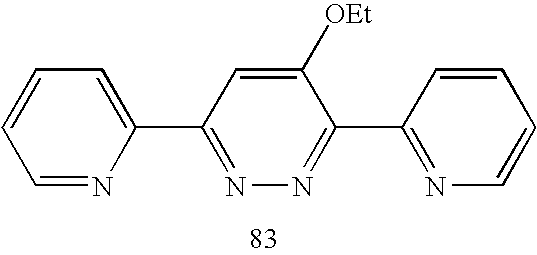 |
−0.90 V | −1.02 V |
 |
−0.70 V | −1.11 V |
 |
−0.99 V | −1.18 V |


| TABLE 5 | |||||||
| PCE yield | Chemical | ||||||
| Precursor | EP (wave I) | EP (wave II) | Eimposed | ne* | t (h) | (pyrroles) | yield** |
| 80 | −0.87 V | −1.06 V | −1.00 V | 4.06 | 4 | 86 (82%) | 22% |
| 82 | −0.89 V | −1.08 V | −1.00 V | 4.53 | 6 | 87 (85%) | 18% |
| 83 | −0.90 V | −1.02 V | −1.00 V | 4.5 | 5.20 | 88 (75%) | 30% |
| 84 | −0.71 V | −1.12 V | −1.05 V | 5.66 | 6.25 | 89 (60%) | 32% |
| 85 | −0.99 V | −1.18 V | −1.10 V | 4.5 | 5.33 | 90 (92%) | 25% |
| *number of electrons consumed/mol. of substrate reduced. | |||||||
| **Zn/AcOH | |||||||
| TABLE 6 | |||||||
| PCE yield | Chemical | ||||||
| Precursor | EP (wave I) | EP (wave II) | Eimposed | ne* | t (h) | (pyrroles) | yield** |
| 81 | −0.79 V | −0.91 V | −0.95 V | 3.77 | 4.6 | 91 (85%) | 30% |
| *number of electrons consumed/mol. of substrate reduced. | |||||||
| **Zn/AcOH | |||||||

 |
| Medium | Potential applied | Results |
| THF/acetic buffer | 1 | Et = −1.05 V, 10.3 e | Yield = 35% |
| pH = 4.6/acetonitrile: | 2 | Et = −1.15 V. 8 e | Mixture of 2 un- |
| 50/45/50 | Halts for volts | separated compounds, | |
| including bipyrrole | |||
| (109), traces | |||
| Polarogram | 3 | Et = −1.15 V, 10.1 e | Pyrrolepyridazine |
| Ec = −0.92 V, −1.03 V, | Without halting + 1 h | (110) 20% | |
| −1.16 V | pause at the end before | Pyrroletetrahydro- | |
| extraction | pyridazine (111) 20% | ||
| 4 | Et = −0.9 V, 3.78 e, | NMR crude, | |
| 40 min pause | degradation products: | ||
| Et = −0.97 V, 4 e, 40 min | waste | ||
| pause | |||
| Et = −1.15 V, 3.1 e, | |||
| allowed to run overnight | |||


 |
| Medium | Potential applied | Results |
| H2SO4 medium | Et = −0.90 V, 8 e | Yield = 10% |
| Ec = −551 mV, | ||
| −774 mV, | ||
| −1.053 V | ||
| THF/acetic buffer | Et = −1.2 V, 8.27 e | Yield = 45% |
| pH = 4.6/ | ||
| medium | ||
| 50/45/5 | ||
| Ec = −0.99 V and | ||
| −1.190 V | ||


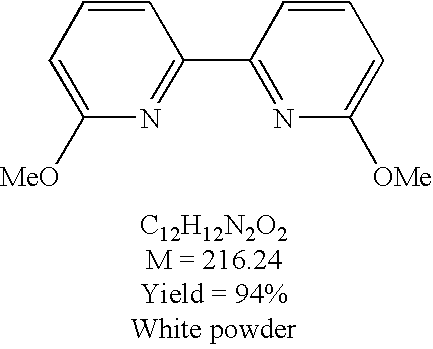


| KB cells | Parasitology IC50 or 80 | ||
| Cytotoxicity | Leishmania mexicana | Candida albicans | Aspergillus fumigatus |
| Compound No. | Structure | % inhibition at [10−5] | IC50 μM | IC50 μg/mL | μM | μg/mL | μM | μg/mL | μM | μg/mL |
| 37 |
 |
32 | |||||||||
| 36 |
 |
95 | 2.6 | 41 | 11 | >100 | >26.7 | ||||
| 9 |
 |
18 | 67 | >100 | >22.8 | >100 | >22.8 | >100 | >22.8 | ||
| 33 |
 |
98 | 103 | 6.27 | 1.81 | 0.19 | 0.05 | 6.4 | 1.85 | IC80 = 32 | IC80 = 9.26 |
| 61 |
 |
80 | 4.5 | <1 | <0.47 | 15 | 7 | ||||
| 50 |
 |
49 | 8 | 3.8 | 63 | 30.1 | |||||
| 11 |
 |
11 | 3 | 8.73 | 99 | 24.2 | |||||
| 66 |
 |
0 | 16 | 7.84 | >100 | 49.1 | |||||
| Specialty product | promastigotes μg/ml | amastigotes μg/ml | ||
| Ketoconazole | 0.3 ± 0.5 | 1.3 ± 0.2 | ||
| Amphotericin B | 0.04 ± 0.03 | 0.47 ± 0.05 | ||
| Miltefosine | >2 | 1.42 ± 0.14 | ||
| IC50 of the referent molecules |
| Caco (colon) | Sub7 (liver) | Fibroblast (skin) |
| IC50 μM | 24 h | 48 h | 24 h | 48 h | 24 h | 48 H |
| Roscovitine | 6 | 3 | 10 | 4 | >25 | >25 |
| standard | ||||||
| Taxol | 0.01 | <0.008 | 0.01 | <0.01 | >25 | >25 |
| | ||||||
| Doxorubicine | ||||||
| 1 | 0.06 | 0.4 | 0.04 | 2 | 1 | |
| stand | ||||||
| 5FU standard | 0.5* | 0.5* | >25 | >25 | >25 | >25 |
| means cells ± | ||||||
| SD | ||||||
| Control | 06 ± 1 | 124 ± 10 | 120 ± 9 | 127 ± 5 | 114 ± 7 | 113 ± 6 |
| DMSO | ||||||
| Control | 17 ± 1 | 120 ± 7 | 119 ± 5 | 128 ± 7 | 115 ± 4 | 115 ± 4 |
| culture |
| IC50 of the referent molecules |
 |
 |
   |
Claims (3)


Applications Claiming Priority (3)
| Application Number | Priority Date | Filing Date | Title |
|---|---|---|---|
| FR0606842 | 2006-07-26 | ||
| FR0606842A FR2904315B1 (en) | 2006-07-26 | 2006-07-26 | PYRIDAZINIC AND PYRROLIC COMPOUNDS, METHODS OF OBTAINING AND APPLICATIONS |
| PCT/FR2007/001287 WO2008012440A2 (en) | 2006-07-26 | 2007-07-26 | Pyridazine and pyrrole compounds, processes for obtaining them and uses |
Publications (2)
| Publication Number | Publication Date |
|---|---|
| US20100298562A1 US20100298562A1 (en) | 2010-11-25 |
| US9034873B2 true US9034873B2 (en) | 2015-05-19 |
Family
ID=37763892
Family Applications (1)
| Application Number | Title | Priority Date | Filing Date |
|---|---|---|---|
| US12/309,585 Expired - Fee Related US9034873B2 (en) | 2006-07-26 | 2007-07-26 | Pyridazine and pyrrole compounds, processes for obtaining them and uses |
Country Status (6)
| Country | Link |
|---|---|
| US (1) | US9034873B2 (en) |
| EP (1) | EP2069345A2 (en) |
| JP (1) | JP5564252B2 (en) |
| CA (1) | CA2658624A1 (en) |
| FR (1) | FR2904315B1 (en) |
| WO (1) | WO2008012440A2 (en) |
Families Citing this family (21)
| Publication number | Priority date | Publication date | Assignee | Title |
|---|---|---|---|---|
| EP2186810A1 (en) | 2008-10-31 | 2010-05-19 | Institut Curie | Poly-heteroaryl derivatives for the treatment of cancer |
| WO2010088268A1 (en) | 2009-01-28 | 2010-08-05 | Smartcells, Inc. | Exogenously triggered controlled release materials and uses thereof |
| WO2010088286A1 (en) | 2009-01-28 | 2010-08-05 | Smartcells, Inc. | Synthetic conjugates and uses thereof |
| WO2010088300A1 (en) | 2009-01-28 | 2010-08-05 | Smartcells, Inc. | Crystalline insulin-conjugates |
| BRPI1007457A2 (en) | 2009-01-28 | 2015-08-25 | Smartcells Inc | Conjugate, extended release formulation, and pump distribution system. |
| WO2010107520A1 (en) | 2009-03-20 | 2010-09-23 | Smartcells, Inc. | Soluble non-depot insulin conjugates and uses thereof |
| US8623345B2 (en) | 2009-03-20 | 2014-01-07 | Smartcells | Terminally-functionalized conjugates and uses thereof |
| KR20120102649A (en) | 2009-10-30 | 2012-09-18 | 막스-플랑크-게젤샤프트 츄어 푀르더룽 데어 비쎈샤프텐 에.파우. | Nitrogen-containing aromatic compounds and metal complexes |
| JP2013535467A (en) | 2010-07-28 | 2013-09-12 | スマートセルズ・インコーポレイテツド | Recombinantly expressed insulin polypeptide and uses thereof |
| EP2598522A4 (en) | 2010-07-28 | 2014-11-12 | Smartcells Inc | RECOMBINANT LECTINES, LECTINES WITH MODIFIED BINDING SITE AND USES THEREOF |
| AU2011282977A1 (en) | 2010-07-28 | 2013-02-21 | Smartcells, Inc. | Drug-ligand conjugates, synthesis thereof, and intermediates thereto |
| JP2014156402A (en) * | 2011-05-27 | 2014-08-28 | Nippon Soda Co Ltd | Bipyridine compound and antimicrobial agent |
| WO2013033018A2 (en) | 2011-08-30 | 2013-03-07 | Drexel University | Dihydroxybipyridine complexes of ruthenium and iridium for water oxidation and hydrogenation |
| US20150174034A1 (en) | 2013-03-13 | 2015-06-25 | Avon Products, Inc. | Tyrosinase inhibitors |
| US9364405B2 (en) | 2013-03-13 | 2016-06-14 | Avon Products, Inc. | Tyrosinase inhibitors |
| WO2014158943A1 (en) * | 2013-03-13 | 2014-10-02 | Avon Products, Inc | Tyrosinase inhibitors |
| KR20160065930A (en) | 2013-10-04 | 2016-06-09 | 머크 샤프 앤드 돔 코포레이션 | Glucose-responsive insulin conjugates |
| US10130625B2 (en) | 2014-07-22 | 2018-11-20 | University Of Maryland, College Park | Linked diaryl compounds with anticancer properties and methods of using the same |
| EP3684364A4 (en) | 2017-09-18 | 2021-06-02 | Goldfinch Bio, Inc. | PYRIDAZINONES AND THEIR METHODS OF USE |
| JP7063231B2 (en) * | 2018-10-26 | 2022-05-09 | 住友化学株式会社 | Dipyridadinyl ether compounds and their uses |
| CN110437206B (en) * | 2019-03-13 | 2022-06-10 | 上海大学 | Molecular foldate of pyridine-pyrrole alternans and preparation method thereof |
Citations (1)
| Publication number | Priority date | Publication date | Assignee | Title |
|---|---|---|---|---|
| US20040186288A1 (en) | 2001-05-08 | 2004-09-23 | Martin Kruger | 3,5-Diamino-1,2,4-triazoles as kinase inhibitors |
Family Cites Families (1)
| Publication number | Priority date | Publication date | Assignee | Title |
|---|---|---|---|---|
| JP3889065B2 (en) * | 1994-03-15 | 2007-03-07 | 株式会社東芝 | Organic nonlinear optical material |
-
2006
- 2006-07-26 FR FR0606842A patent/FR2904315B1/en not_active Expired - Fee Related
-
2007
- 2007-07-26 US US12/309,585 patent/US9034873B2/en not_active Expired - Fee Related
- 2007-07-26 JP JP2009521300A patent/JP5564252B2/en not_active Expired - Fee Related
- 2007-07-26 WO PCT/FR2007/001287 patent/WO2008012440A2/en not_active Ceased
- 2007-07-26 CA CA002658624A patent/CA2658624A1/en not_active Abandoned
- 2007-07-26 EP EP07823344A patent/EP2069345A2/en not_active Withdrawn
Patent Citations (1)
| Publication number | Priority date | Publication date | Assignee | Title |
|---|---|---|---|---|
| US20040186288A1 (en) | 2001-05-08 | 2004-09-23 | Martin Kruger | 3,5-Diamino-1,2,4-triazoles as kinase inhibitors |
Non-Patent Citations (7)
| Title |
|---|
| Baxter, Paul N. W., et al., "Self-Assembly and Structure of Interconverting Multinuclear Inorganic Arrays: A [4×5]AgI20 Grid and an AgI10 Quadruple Helicate", Chemistry-A European Journal, vol. 6, No. 24, (Dec. 15, 2000), pp. 4510-4517. |
| Baxter, Paul N. W., et al., "Self-Assembly and Structure of Interconverting Multinuclear Inorganic Arrays: A [4×5]AgI20 Grid and an AgI10 Quadruple Helicate", Chemistry—A European Journal, vol. 6, No. 24, (Dec. 15, 2000), pp. 4510-4517. |
| Coates, William J., et al., "1,4-Bis(3-oxo-2,3-dihydropyridazin-6-yl)benzene Analogues: Potent Phosphodiesterase Inhibitors and Inodilators", Journal of Medicinal Chemistry, vol. 33, No. 6, (1990), pp. 1735-1741. |
| International Search Report for PCT/FR2007/001287, mailed Apr. 10, 2008. |
| Jones et. al. (Tetrahedron, 1996, 52(26), pp. 8707-8724). * |
| Jones, R. Alan, et al., "Extended Heterocyclic Systems 1. The Synthesis and Characterisation of Pyrrolylpyridines, Alternating Pyrrole:Pyridine Oligomers and Polymers, and Related Systems", Tetrahedron, vol. 52, No. 26, (Jun. 1996), pp. 8707-8724. |
| Neidle, Stephen, (Cancer Drug Design and Discovery, ed. (Elsevier/Academic Press, 2008) pp. 427-431). * |
Also Published As
| Publication number | Publication date |
|---|---|
| EP2069345A2 (en) | 2009-06-17 |
| WO2008012440A2 (en) | 2008-01-31 |
| CA2658624A1 (en) | 2008-01-31 |
| FR2904315A1 (en) | 2008-02-01 |
| WO2008012440A3 (en) | 2008-05-29 |
| FR2904315B1 (en) | 2012-12-14 |
| US20100298562A1 (en) | 2010-11-25 |
| JP5564252B2 (en) | 2014-07-30 |
| JP2009544671A (en) | 2009-12-17 |
Similar Documents
| Publication | Publication Date | Title |
|---|---|---|
| US9034873B2 (en) | Pyridazine and pyrrole compounds, processes for obtaining them and uses | |
| US11807651B2 (en) | Process for the preparation of 6-(2-hydroxy-2-methylpropoxy)-4-(6-(6-((6-methoxypyridin-3-yl)methyl)-3,6-diazabicyclo[3.1.1]heptan-3-yl)pyridin-3-yl)pyrazolo[1,5-a]pyridine-3-carbonitrile | |
| Heller et al. | Functionalized 2, 2 ‘-bipyridines and 2, 2 ‘: 6 ‘, 2 ‘‘-terpyridines via Stille-type cross-coupling procedures | |
| US10202365B2 (en) | 2-(pyridin-3-yl)-pyrimidine derivatives as RET inhibitors | |
| US20110071165A1 (en) | Aza- and polyazanthranyl amides and their use as medicaments | |
| CA2403558A1 (en) | Thrombin inhibitors | |
| JP4343681B2 (en) | Cyanoanthranilamide derivatives and their use as pharmaceuticals | |
| Fallahpour et al. | Ruthenium (II) complexes of novel 4′-ethoxy-and 4′-hydroxy-5, 5 ″-dimethyl-2, 2′: 6′, 2 ″-terpyridines: X-ray crystal structures of 4′-ethoxy-5, 5 ″-dimethyl-2, 2 ″: 6′, 2 ″-terpyridine and the ruthenium (II) complex of 4′-ethoxy-5, 5 ″-dimethyl-2, 2′: 6′, 2 ″-terpyridine with 4′-chloro-2, 2′: 6′, 2 ″-terpyridine | |
| US20100004443A1 (en) | Linear pyridazine and pyrrole compounds, method for obtaining them and applications | |
| US20100016603A1 (en) | Production process of 2,3'-bipyridyl-6'-one | |
| Fallahpour | 4′‐Nitro‐2, 2′: 6′, 2′′‐terpyridine, 4′‐Amino‐2, 2′: 6′, 2′′‐terpyridine and Their Homo‐and Heteroleptic Iron (II) and Ruthenium (II) Complexes | |
| KR100430575B1 (en) | Method of Preparing Lansoprazole and Its Intermediate | |
| CN119431378A (en) | Cyclic compound, pharmaceutical composition containing the same, preparation method and use thereof | |
| CN108341816A (en) | A kind of selective depression kinases compound | |
| Tkachova et al. | Reactions of diethyl 2-(ethoxymethylene) malonate with 2-cyanoacetanilides: unexpected transfer of the ethoxymethylene moiety. | |
| Avuluri et al. | Regio Selective Arylation and Synthesis of New Alkyl−/Aryl−/Hetero‐3, 6‐di‐Bromo‐5‐(Pyridine‐4‐yl)‐1, 4‐Diazine‐2‐Carboxamidate Derivatives | |
| JP4865337B2 (en) | Process for producing 2,3'-bipyridyl-6'-one | |
| Jain et al. | Synthesis and characterization of 2, 7-bis (2-pyridyl)-1, 8-diazaanthraquinone—A redox-active ligand designed for the construction of supramolecular grids | |
| Rundla et al. | An Overview on the Catalytic Strategies for the Synthesis of Benzodiazines | |
| US20120220595A1 (en) | Deuterated Tyrosine Kinase Inhibitors | |
| Landor et al. | Allenes. Part 47. Pyrido [1, 2-a] pyrimidines and their hydrolysis products from allenic and acetylenic nitriles | |
| Nishiwaki et al. | Two ring transformations of 3-methyl-5-nitropyrimidin-4 (3 H)-one for the construction of azaheterocycles | |
| CN115043841A (en) | Preparation and application of heterocyclic compound as BTK inhibitor |
Legal Events
| Date | Code | Title | Description |
|---|---|---|---|
| AS | Assignment |
Owner name: CENTRE NATIONAL DE LA RECHERCHE SCIENTIFIQUE (C.N. Free format text: ASSIGNMENT OF ASSIGNORS INTEREST;ASSIGNORS:DUBREUIL, DIDIER MAX;PIPELIER, MURIEL GENEVIEVE;PRADERE, JEAN-PAUL;AND OTHERS;SIGNING DATES FROM 20090119 TO 20090120;REEL/FRAME:022196/0015 |
|
| STCF | Information on status: patent grant |
Free format text: PATENTED CASE |
|
| FEPP | Fee payment procedure |
Free format text: MAINTENANCE FEE REMINDER MAILED (ORIGINAL EVENT CODE: REM.); ENTITY STATUS OF PATENT OWNER: LARGE ENTITY |
|
| LAPS | Lapse for failure to pay maintenance fees |
Free format text: PATENT EXPIRED FOR FAILURE TO PAY MAINTENANCE FEES (ORIGINAL EVENT CODE: EXP.); ENTITY STATUS OF PATENT OWNER: LARGE ENTITY |
|
| STCH | Information on status: patent discontinuation |
Free format text: PATENT EXPIRED DUE TO NONPAYMENT OF MAINTENANCE FEES UNDER 37 CFR 1.362 |
|
| FP | Lapsed due to failure to pay maintenance fee |
Effective date: 20190519 |