US8993777B2 - Method for producing phenyl-substituted heterocyclic derivative - Google Patents
Method for producing phenyl-substituted heterocyclic derivative Download PDFInfo
- Publication number
- US8993777B2 US8993777B2 US14/355,035 US201214355035A US8993777B2 US 8993777 B2 US8993777 B2 US 8993777B2 US 201214355035 A US201214355035 A US 201214355035A US 8993777 B2 US8993777 B2 US 8993777B2
- Authority
- US
- United States
- Prior art keywords
- group
- carbon atoms
- atom
- hydrogen atom
- derived therefrom
- Prior art date
- Legal status (The legal status is an assumption and is not a legal conclusion. Google has not performed a legal analysis and makes no representation as to the accuracy of the status listed.)
- Expired - Fee Related
Links
- 0 [1*]C1=C([2*])CC(C2=C([11*])C([12*])=C([13*])C([14*])=C2[15*])=N1.[1*]C1=C([2*])CC=N1.[5*]OC1=C([11*])C([12*])=C([13*])C([14*])=C1[15*] Chemical compound [1*]C1=C([2*])CC(C2=C([11*])C([12*])=C([13*])C([14*])=C2[15*])=N1.[1*]C1=C([2*])CC=N1.[5*]OC1=C([11*])C([12*])=C([13*])C([14*])=C1[15*] 0.000 description 12
- YYMLBFHJVYRDCL-UHFFFAOYSA-N C1=CC2=C(C=C1)OC=N2.C1=CC2=CC=C(C3=NC4=C(C=CC=C4)O3)C=C2C=C1.CS(=O)(=O)OC1=CC=C2C=CC=CC2=C1 Chemical compound C1=CC2=C(C=C1)OC=N2.C1=CC2=CC=C(C3=NC4=C(C=CC=C4)O3)C=C2C=C1.CS(=O)(=O)OC1=CC=C2C=CC=CC2=C1 YYMLBFHJVYRDCL-UHFFFAOYSA-N 0.000 description 3
- YOUOYPAVIXGCMB-UHFFFAOYSA-N C1=CC2=C(C=C1)OC=N2.C1=CC2=CC=C(C3=NC4=C(C=CC=C4)O3)C=C2C=C1.CC1=CC=C2C=CC=CC2=C1 Chemical compound C1=CC2=C(C=C1)OC=N2.C1=CC2=CC=C(C3=NC4=C(C=CC=C4)O3)C=C2C=C1.CC1=CC=C2C=CC=CC2=C1 YOUOYPAVIXGCMB-UHFFFAOYSA-N 0.000 description 2
- HWGXIJRYEPZCGI-UHFFFAOYSA-N C1=CC2=C(C=C1)C(C1=NC3=C(C=CC=C3)O1)=CC=C2.C1=CC2=C(C=C1)OC=N2.CC1=CC=CC2=C1C=CC=C2 Chemical compound C1=CC2=C(C=C1)C(C1=NC3=C(C=CC=C3)O1)=CC=C2.C1=CC2=C(C=C1)OC=N2.CC1=CC=CC2=C1C=CC=C2 HWGXIJRYEPZCGI-UHFFFAOYSA-N 0.000 description 1
- LATXRHJEEKCRBC-UHFFFAOYSA-N C1=CC2=C(C=C1)C1=C(C=CC=C1)C(C1=NC3=C(C=CC=C3)O1)=C2.C1=CC2=C(C=C1)OC=N2.CC1=CC2=C(C=CC=C2)C2=C1C=CC=C2 Chemical compound C1=CC2=C(C=C1)C1=C(C=CC=C1)C(C1=NC3=C(C=CC=C3)O1)=C2.C1=CC2=C(C=C1)OC=N2.CC1=CC2=C(C=CC=C2)C2=C1C=CC=C2 LATXRHJEEKCRBC-UHFFFAOYSA-N 0.000 description 1
- GDMWMOFQWXPYNJ-UHFFFAOYSA-N C1=CC2=C(C=C1)OC(C1=CC=CC3=C1C=CC=N3)=N2.C1=CC2=C(C=C1)OC=N2.CC1=CC=CC2=C1C=CC=N2 Chemical compound C1=CC2=C(C=C1)OC(C1=CC=CC3=C1C=CC=N3)=N2.C1=CC2=C(C=C1)OC=N2.CC1=CC=CC2=C1C=CC=N2 GDMWMOFQWXPYNJ-UHFFFAOYSA-N 0.000 description 1
- BHSNCEYMUQRTNE-UHFFFAOYSA-N C1=CC2=C(C=C1)OC=N2.C1=CC2=CC(C3=NC4=C(C=CC=C4)O3)=CC=C2N=C1.CC1=CC=C2N=CC=CC2=C1 Chemical compound C1=CC2=C(C=C1)OC=N2.C1=CC2=CC(C3=NC4=C(C=CC=C4)O3)=CC=C2N=C1.CC1=CC=C2N=CC=CC2=C1 BHSNCEYMUQRTNE-UHFFFAOYSA-N 0.000 description 1
- YZMJHBIGYKEGTQ-UHFFFAOYSA-N C1=CC2=C(C=C1)OC=N2.C1=CC2=CC=C(C3=NC4=C(C=CC=C4)O3)C=C2C=C1.CC(=O)OC1=CC=C2C=CC=CC2=C1 Chemical compound C1=CC2=C(C=C1)OC=N2.C1=CC2=CC=C(C3=NC4=C(C=CC=C4)O3)C=C2C=C1.CC(=O)OC1=CC=C2C=CC=CC2=C1 YZMJHBIGYKEGTQ-UHFFFAOYSA-N 0.000 description 1
- TXDHIMDNMLAOIZ-UHFFFAOYSA-N C1=CC2=C(C=C1)OC=N2.C1=CC=C(C2=CC(C3=NC4=C(C=CC=C4)O3)=CC=C2)C=C1.CC1=CC=CC(C2=CC=CC=C2)=C1 Chemical compound C1=CC2=C(C=C1)OC=N2.C1=CC=C(C2=CC(C3=NC4=C(C=CC=C4)O3)=CC=C2)C=C1.CC1=CC=CC(C2=CC=CC=C2)=C1 TXDHIMDNMLAOIZ-UHFFFAOYSA-N 0.000 description 1
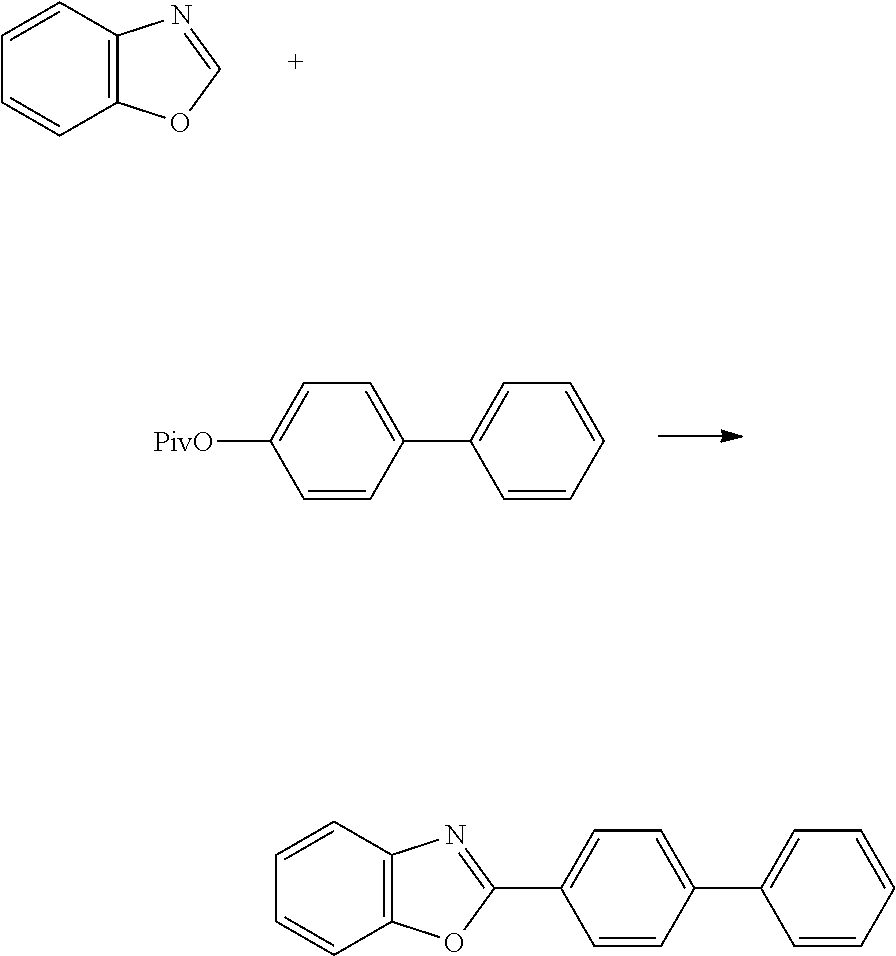
- BZGPZNSOHMWIND-UHFFFAOYSA-N C1=CC2=C(C=C1)OC=N2.C1=CC=C(C2=CC=C(C3=NC4=C(C=CC=C4)O3)C=C2)C=C1.CC1=CC=C(C2=CC=CC=C2)C=C1 Chemical compound C1=CC2=C(C=C1)OC=N2.C1=CC=C(C2=CC=C(C3=NC4=C(C=CC=C4)O3)C=C2)C=C1.CC1=CC=C(C2=CC=CC=C2)C=C1 BZGPZNSOHMWIND-UHFFFAOYSA-N 0.000 description 1
- DQAXIWJKUJEYCE-UHFFFAOYSA-N C1=CC2=C(C=C1)OC=N2.C1=CC=C(C2=NC3=C(C=CC=C3)O2)C=C1.CC1=CC=CC=C1 Chemical compound C1=CC2=C(C=C1)OC=N2.C1=CC=C(C2=NC3=C(C=CC=C3)O2)C=C1.CC1=CC=CC=C1 DQAXIWJKUJEYCE-UHFFFAOYSA-N 0.000 description 1
- JYKCSOMDGPYNKT-UHFFFAOYSA-N C1=CC2=C(C=C1)OC=N2.C1=CC=C(C2=NC3=C(C=CC=C3)O2)C=C1.CS(=O)(=O)OC1=CC=CC=C1 Chemical compound C1=CC2=C(C=C1)OC=N2.C1=CC=C(C2=NC3=C(C=CC=C3)O2)C=C1.CS(=O)(=O)OC1=CC=CC=C1 JYKCSOMDGPYNKT-UHFFFAOYSA-N 0.000 description 1
- PFQHCJMKQZFZEV-UHFFFAOYSA-N C1=CC2=C(C=C1)OC=N2.C1=CN=CC(C2=NC3=C(C=CC=C3)O2)=C1.CC1=CC=CN=C1 Chemical compound C1=CC2=C(C=C1)OC=N2.C1=CN=CC(C2=NC3=C(C=CC=C3)O2)=C1.CC1=CC=CN=C1 PFQHCJMKQZFZEV-UHFFFAOYSA-N 0.000 description 1
- QAUCZICQFAKRAM-UHFFFAOYSA-N C1=CC2=C(C=C1)OC=N2.CC1=CC=C(C)N=C1.CC1=CC=C(C2=NC3=C(C=CC=C3)O2)C=N1 Chemical compound C1=CC2=C(C=C1)OC=N2.CC1=CC=C(C)N=C1.CC1=CC=C(C2=NC3=C(C=CC=C3)O2)C=N1 QAUCZICQFAKRAM-UHFFFAOYSA-N 0.000 description 1
- BQVRYLCATSPLBT-UHFFFAOYSA-N C1=CC2=C(C=C1)OC=N2.CC1=CC=C2C=C(C#N)C=CC2=C1.N#CC1=CC2=CC=C(C3=NC4=C(C=CC=C4)O3)C=C2C=C1 Chemical compound C1=CC2=C(C=C1)OC=N2.CC1=CC=C2C=C(C#N)C=CC2=C1.N#CC1=CC2=CC=C(C3=NC4=C(C=CC=C4)O3)C=C2C=C1 BQVRYLCATSPLBT-UHFFFAOYSA-N 0.000 description 1
- XWAFDEXGCNICDN-UHFFFAOYSA-N C1=CC2=C(C=C1)OC=N2.CC1=CC=CC(C2=NC3=C(C=CC=C3)O2)=C1.CC1=CC=CC(OS(C)(=O)=O)=C1 Chemical compound C1=CC2=C(C=C1)OC=N2.CC1=CC=CC(C2=NC3=C(C=CC=C3)O2)=C1.CC1=CC=CC(OS(C)(=O)=O)=C1 XWAFDEXGCNICDN-UHFFFAOYSA-N 0.000 description 1
- FZCCLKMLPTZXLR-UHFFFAOYSA-N C1=CC2=C(C=C1)OC=N2.CC1=CN=CC(C)=C1.CC1=CN=CC(C2=NC3=C(C=CC=C3)O2)=C1 Chemical compound C1=CC2=C(C=C1)OC=N2.CC1=CN=CC(C)=C1.CC1=CN=CC(C2=NC3=C(C=CC=C3)O2)=C1 FZCCLKMLPTZXLR-UHFFFAOYSA-N 0.000 description 1
- LWISQHULPWCQLE-UHFFFAOYSA-N C1=CC2=C(C=C1)OC=N2.COC(=O)C1=CC2=CC=C(C)C=C2C=C1.COC(=O)C1=CC2=CC=C(C3=NC4=C(C=CC=C4)O3)C=C2C=C1 Chemical compound C1=CC2=C(C=C1)OC=N2.COC(=O)C1=CC2=CC=C(C)C=C2C=C1.COC(=O)C1=CC2=CC=C(C3=NC4=C(C=CC=C4)O3)C=C2C=C1 LWISQHULPWCQLE-UHFFFAOYSA-N 0.000 description 1
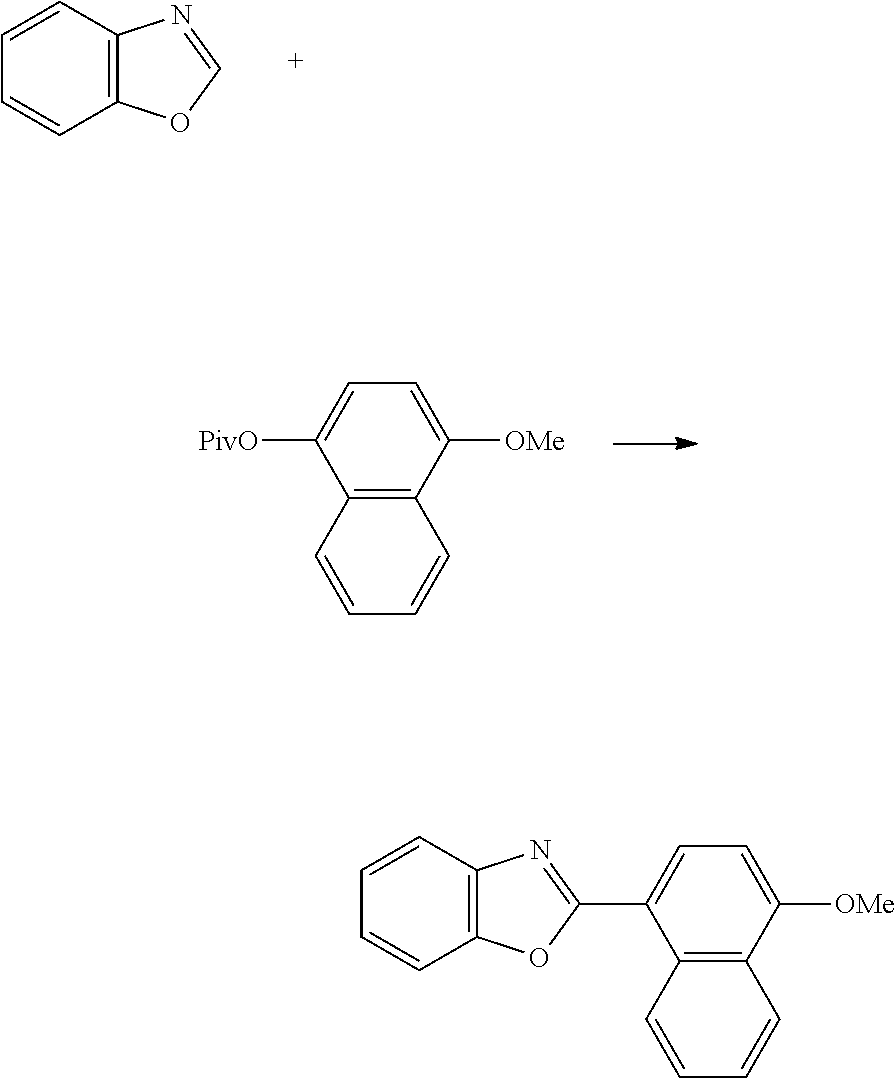
- WFNWWQLNTZOPEM-UHFFFAOYSA-N C1=CC2=C(C=C1)OC=N2.COC1=CC=C(C)C2=C1C=CC=C2.COC1=CC=C(C2=NC3=C(C=CC=C3)O2)C2=C1C=CC=C2 Chemical compound C1=CC2=C(C=C1)OC=N2.COC1=CC=C(C)C2=C1C=CC=C2.COC1=CC=C(C2=NC3=C(C=CC=C3)O2)C2=C1C=CC=C2 WFNWWQLNTZOPEM-UHFFFAOYSA-N 0.000 description 1
- LHCNAOBSTPEFSY-UHFFFAOYSA-N C1=CC2=C(C=C1)OC=N2.COC1=CC=C(C2=NC3=C(C=CC=C3)O2)C=C1.COC1=CC=C(OS(C)(=O)=O)C=C1 Chemical compound C1=CC2=C(C=C1)OC=N2.COC1=CC=C(C2=NC3=C(C=CC=C3)O2)C=C1.COC1=CC=C(OS(C)(=O)=O)C=C1 LHCNAOBSTPEFSY-UHFFFAOYSA-N 0.000 description 1
- VZJPPNPBZHVKSR-UHFFFAOYSA-N C1=CC2=C(C=C1)OC=N2.CS(=O)(=O)OC1=CC=C(C(F)(F)F)C=C1.FC(F)(F)C1=CC=C(C2=NC3=C(C=CC=C3)O2)C=C1 Chemical compound C1=CC2=C(C=C1)OC=N2.CS(=O)(=O)OC1=CC=C(C(F)(F)F)C=C1.FC(F)(F)C1=CC=C(C2=NC3=C(C=CC=C3)O2)C=C1 VZJPPNPBZHVKSR-UHFFFAOYSA-N 0.000 description 1
- OXZDRQKCAFXARE-UHFFFAOYSA-N C1=CC2=C(C=C1)SC=N2.C1=CC2=CC=C(C3=NC4=C(C=CC=C4)S3)C=C2C=C1.CC1=CC=C2C=CC=CC2=C1 Chemical compound C1=CC2=C(C=C1)SC=N2.C1=CC2=CC=C(C3=NC4=C(C=CC=C4)S3)C=C2C=C1.CC1=CC=C2C=CC=CC2=C1 OXZDRQKCAFXARE-UHFFFAOYSA-N 0.000 description 1
- PEVVFJMDARMCSS-UHFFFAOYSA-N C1=CC2=C(C=C1C1=CN=CO1)OCO2.C1=CC=C(C2=NC=C(C3=CC4=C(C=C3)OCO4)O2)C=C1.CS(=O)(=O)OC1=CC=CC=C1 Chemical compound C1=CC2=C(C=C1C1=CN=CO1)OCO2.C1=CC=C(C2=NC=C(C3=CC4=C(C=C3)OCO4)O2)C=C1.CS(=O)(=O)OC1=CC=CC=C1 PEVVFJMDARMCSS-UHFFFAOYSA-N 0.000 description 1
- MBYYRBGSUHJRRS-UHFFFAOYSA-N C1=CC2=CC=C(C3=NC4=C(C=CC=C4)O3)C=C2C=C1.CC1=CC=C(S(=O)(=O)OC2=CC=C3C=CC=CC3=C2)C=C1.[C+]1=NC2=C(C=CC=C2)O1 Chemical compound C1=CC2=CC=C(C3=NC4=C(C=CC=C4)O3)C=C2C=C1.CC1=CC=C(S(=O)(=O)OC2=CC=C3C=CC=CC3=C2)C=C1.[C+]1=NC2=C(C=CC=C2)O1 MBYYRBGSUHJRRS-UHFFFAOYSA-N 0.000 description 1
- PYQQLBCNADMOFM-UHFFFAOYSA-N C1=CC2=CC=C(C3=NC=C(C4=CC=C5OCOC5=C4)O3)C=C2C=C1.C1=NC=C(C2=CC=C3OCOC3=C2)O1.CC1=CC=C2C=CC=CC2=C1 Chemical compound C1=CC2=CC=C(C3=NC=C(C4=CC=C5OCOC5=C4)O3)C=C2C=C1.C1=NC=C(C2=CC=C3OCOC3=C2)O1.CC1=CC=C2C=CC=CC2=C1 PYQQLBCNADMOFM-UHFFFAOYSA-N 0.000 description 1
- XPJBIABXLYNKJQ-UHFFFAOYSA-N C1=CC2=CC=C(C3=NC=CO3)C=C2C=C1.C1=COC=N1.CC1=CC=C2C=CC=CC2=C1 Chemical compound C1=CC2=CC=C(C3=NC=CO3)C=C2C=C1.C1=COC=N1.CC1=CC=C2C=CC=CC2=C1 XPJBIABXLYNKJQ-UHFFFAOYSA-N 0.000 description 1
- DFBBRAAKBJIXAI-UHFFFAOYSA-N C1=CC2=CC=C(C3=NC=CS3)C=C2C=C1.C1=CSC=N1.CC1=CC=C2C=CC=CC2=C1 Chemical compound C1=CC2=CC=C(C3=NC=CS3)C=C2C=C1.C1=CSC=N1.CC1=CC=C2C=CC=CC2=C1 DFBBRAAKBJIXAI-UHFFFAOYSA-N 0.000 description 1
- NUGMDJNPMXFQRE-UHFFFAOYSA-N C1=CC=C(C2=CN=C(C3=CC=C4C=CC=CC4=C3)O2)C=C1.C1=CC=C(C2=CN=CO2)C=C1.CC1=CC=C2C=CC=CC2=C1 Chemical compound C1=CC=C(C2=CN=C(C3=CC=C4C=CC=CC4=C3)O2)C=C1.C1=CC=C(C2=CN=CO2)C=C1.CC1=CC=C2C=CC=CC2=C1 NUGMDJNPMXFQRE-UHFFFAOYSA-N 0.000 description 1
- ZODGFLLGCSYYMT-UHFFFAOYSA-N C1=CC=C(C2=CN=C(C3=CC=C4C=CC=CC4=C3)S2)C=C1.C1=CC=C(C2=CN=CS2)C=C1.CC1=CC=C2C=CC=CC2=C1 Chemical compound C1=CC=C(C2=CN=C(C3=CC=C4C=CC=CC4=C3)S2)C=C1.C1=CC=C(C2=CN=CS2)C=C1.CC1=CC=C2C=CC=CC2=C1 ZODGFLLGCSYYMT-UHFFFAOYSA-N 0.000 description 1
- QFMZQPDHXULLKC-UHFFFAOYSA-N C1=CC=C(P(CCP(C2=CC=CC=C2)C2=CC=CC=C2)C2=CC=CC=C2)C=C1 Chemical compound C1=CC=C(P(CCP(C2=CC=CC=C2)C2=CC=CC=C2)C2=CC=CC=C2)C=C1 QFMZQPDHXULLKC-UHFFFAOYSA-N 0.000 description 1
- WLPUWLXVBWGYMZ-UHFFFAOYSA-N C1CCC(P(C2CCCCC2)C2CCCCC2)CC1 Chemical compound C1CCC(P(C2CCCCC2)C2CCCCC2)CC1 WLPUWLXVBWGYMZ-UHFFFAOYSA-N 0.000 description 1
- BOUYBUIVMHNXQB-UHFFFAOYSA-N C1CCC(P(CCP(C2CCCCC2)C2CCCCC2)C2CCCCC2)CC1 Chemical compound C1CCC(P(CCP(C2CCCCC2)C2CCCCC2)C2CCCCC2)CC1 BOUYBUIVMHNXQB-UHFFFAOYSA-N 0.000 description 1
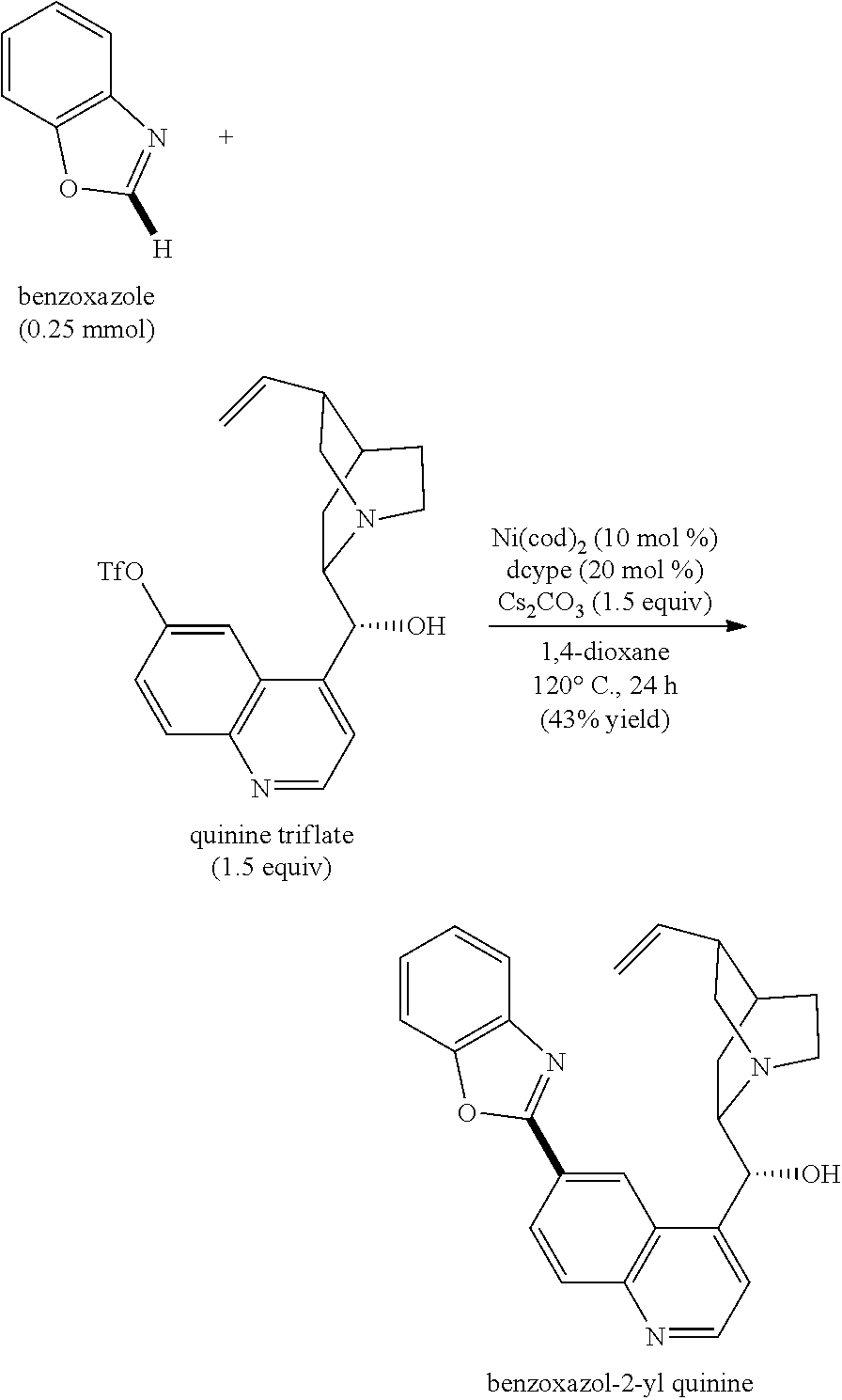
- XMVXLWUORFKWLQ-VYQSLSMTSA-N C=CC1CN2CCC1CC2[C@H](O)/C1=C/C=N\C2=C1C=C(/C1=N/C3=C(C=CC=C3)O1)C=C2.C=CC1CN2CCC1CC2[C@H](O)/C1=C/C=N\C2=C1C=C(C)C=C2.[H]C1=NC2=C(C=CC=C2)O1 Chemical compound C=CC1CN2CCC1CC2[C@H](O)/C1=C/C=N\C2=C1C=C(/C1=N/C3=C(C=CC=C3)O1)C=C2.C=CC1CN2CCC1CC2[C@H](O)/C1=C/C=N\C2=C1C=C(C)C=C2.[H]C1=NC2=C(C=CC=C2)O1 XMVXLWUORFKWLQ-VYQSLSMTSA-N 0.000 description 1
- SOAUDGAVTNCYNL-YUHXALOISA-M C=CC1CN2CCC1CC2[C@H](O)/C1=C/C=N\C2=C1C=C(C)C=C2.C=CC1CN2CCC1CC2[C@H](O)/C1=C/C=N\C2=C1C=C(C)C=C2.C=CC1CN2CCC1CC2[C@H](O)/C1=C/C=N\C2=C1C=C(O)C=C2.CCS[Na] Chemical compound C=CC1CN2CCC1CC2[C@H](O)/C1=C/C=N\C2=C1C=C(C)C=C2.C=CC1CN2CCC1CC2[C@H](O)/C1=C/C=N\C2=C1C=C(C)C=C2.C=CC1CN2CCC1CC2[C@H](O)/C1=C/C=N\C2=C1C=C(O)C=C2.CCS[Na] SOAUDGAVTNCYNL-YUHXALOISA-M 0.000 description 1
- UZUBCAQIFQYZEX-UHFFFAOYSA-N CC(=O)C1=C(C2=CC=C(C)C=C2)OC(C2=CC=CC=C2)=N1.CC(=O)C1=C(C2=CC=C(C)C=C2)OC=N1.CS(=O)(=O)OC1=CC=CC=C1 Chemical compound CC(=O)C1=C(C2=CC=C(C)C=C2)OC(C2=CC=CC=C2)=N1.CC(=O)C1=C(C2=CC=C(C)C=C2)OC=N1.CS(=O)(=O)OC1=CC=CC=C1 UZUBCAQIFQYZEX-UHFFFAOYSA-N 0.000 description 1
- VEUHZFXQNDHKGQ-UHFFFAOYSA-N CC(C)C1=CC=CC(C(C)C)=C1N1C=C[N+](C2=C(C(C)C)C=CC=C2C(C)C)=C1.[Cl-] Chemical compound CC(C)C1=CC=CC(C(C)C)=C1N1C=C[N+](C2=C(C(C)C)C=CC=C2C(C)C)=C1.[Cl-] VEUHZFXQNDHKGQ-UHFFFAOYSA-N 0.000 description 1
- HBXJMYFBDFGRPI-UHFFFAOYSA-N CC(C)[N+](C)(C)[O-] Chemical compound CC(C)[N+](C)(C)[O-] HBXJMYFBDFGRPI-UHFFFAOYSA-N 0.000 description 1
- PGKWMKQZVPRLDH-UHFFFAOYSA-N CC1=C(C)OC(C2=CC=C3C=CC=CC3=C2)=N1.CC1=C(C)OC=N1.CC1=CC=C2C=CC=CC2=C1.O=C=O.O=C=O Chemical compound CC1=C(C)OC(C2=CC=C3C=CC=CC3=C2)=N1.CC1=C(C)OC=N1.CC1=CC=C2C=CC=CC2=C1.O=C=O.O=C=O PGKWMKQZVPRLDH-UHFFFAOYSA-N 0.000 description 1
- IPCOKJSAHQBIPR-UHFFFAOYSA-N CC1=CC2=C(C=C1)N=C(C1=CC=C3C=CC=CC3=C1)O2.CC1=CC2=C(C=C1)N=CO2.CC1=CC=C2C=CC=CC2=C1 Chemical compound CC1=CC2=C(C=C1)N=C(C1=CC=C3C=CC=CC3=C1)O2.CC1=CC2=C(C=C1)N=CO2.CC1=CC=C2C=CC=CC2=C1 IPCOKJSAHQBIPR-UHFFFAOYSA-N 0.000 description 1
- GDMAMKNDJQTKCO-UHFFFAOYSA-N CC1=CC=C(C2=CN=C(C3=CC=CC=C3)O2)C=C1.CC1=CC=C(C2=CN=CO2)C=C1.CS(=O)(=O)OC1=CC=CC=C1 Chemical compound CC1=CC=C(C2=CN=C(C3=CC=CC=C3)O2)C=C1.CC1=CC=C(C2=CN=CO2)C=C1.CS(=O)(=O)OC1=CC=CC=C1 GDMAMKNDJQTKCO-UHFFFAOYSA-N 0.000 description 1
- MDXSYIWJAZOCTI-UHFFFAOYSA-N CC1=CC=C2C=CC=CC2=C1.CCC1=CN=C(C2=CC=C3C=CC=CC3=C2)O1.CCC1=CN=CO1.O=C=O.O=C=O Chemical compound CC1=CC=C2C=CC=CC2=C1.CCC1=CN=C(C2=CC=C3C=CC=CC3=C2)O1.CCC1=CN=CO1.O=C=O.O=C=O MDXSYIWJAZOCTI-UHFFFAOYSA-N 0.000 description 1
- ODRLLYMMAOKCLX-TYQUPEPHSA-N CCN(CC)CC.C[3H]F.[H][C@]12CC[C@]3(C)C(=O)CC[C@@]3([H])[C@]1([H])CCC1=CC(C)=CC=C12.[H][C@]12CC[C@]3(C)C(=O)CC[C@@]3([H])[C@]1([H])CCC1=CC(O)=CC=C12 Chemical compound CCN(CC)CC.C[3H]F.[H][C@]12CC[C@]3(C)C(=O)CC[C@@]3([H])[C@]1([H])CCC1=CC(C)=CC=C12.[H][C@]12CC[C@]3(C)C(=O)CC[C@@]3([H])[C@]1([H])CCC1=CC(O)=CC=C12 ODRLLYMMAOKCLX-TYQUPEPHSA-N 0.000 description 1
- MIOCUERTSIJEDP-UHFFFAOYSA-N CCP(CC)CCP(CC)CC Chemical compound CCP(CC)CCP(CC)CC MIOCUERTSIJEDP-UHFFFAOYSA-N 0.000 description 1
- ZKWQSBFSGZJNFP-UHFFFAOYSA-N CP(C)CCP(C)C Chemical compound CP(C)CCP(C)C ZKWQSBFSGZJNFP-UHFFFAOYSA-N 0.000 description 1
- PNVRWCOOQDYUJY-UHFFFAOYSA-N Cc1cccc(-c2nc3ccccc3[o]2)c1 Chemical compound Cc1cccc(-c2nc3ccccc3[o]2)c1 PNVRWCOOQDYUJY-UHFFFAOYSA-N 0.000 description 1
- JKQWRNLLUVAYLV-UHFFFAOYSA-N Cc1cccc(OS(C(F)(F)F)(=O)=O)c1 Chemical compound Cc1cccc(OS(C(F)(F)F)(=O)=O)c1 JKQWRNLLUVAYLV-UHFFFAOYSA-N 0.000 description 1
- XTAJUPMSEUTINH-OCLYRPGESA-N [H]C1=NC=C(C2=CC=CC=C2)O1.[H][C@]12CC[C@]3(C)C(=O)CC[C@@]3([H])[C@]1([H])CCC1=CC(C)=CC=C12.[H][C@]12CC[C@]3(C)C(=O)CC[C@@]3([H])[C@]1([H])CCC1=CC(C3=NC=C(C4=CC=CC=C4)O3)=CC=C12 Chemical compound [H]C1=NC=C(C2=CC=CC=C2)O1.[H][C@]12CC[C@]3(C)C(=O)CC[C@@]3([H])[C@]1([H])CCC1=CC(C)=CC=C12.[H][C@]12CC[C@]3(C)C(=O)CC[C@@]3([H])[C@]1([H])CCC1=CC(C3=NC=C(C4=CC=CC=C4)O3)=CC=C12 XTAJUPMSEUTINH-OCLYRPGESA-N 0.000 description 1
- BCMCBBGGLRIHSE-UHFFFAOYSA-N c1nc2ccccc2[o]1 Chemical compound c1nc2ccccc2[o]1 BCMCBBGGLRIHSE-UHFFFAOYSA-N 0.000 description 1
Classifications
-
- C—CHEMISTRY; METALLURGY
- C07—ORGANIC CHEMISTRY
- C07D—HETEROCYCLIC COMPOUNDS
- C07D263/00—Heterocyclic compounds containing 1,3-oxazole or hydrogenated 1,3-oxazole rings
- C07D263/52—Heterocyclic compounds containing 1,3-oxazole or hydrogenated 1,3-oxazole rings condensed with carbocyclic rings or ring systems
- C07D263/54—Benzoxazoles; Hydrogenated benzoxazoles
- C07D263/56—Benzoxazoles; Hydrogenated benzoxazoles with only hydrogen atoms, hydrocarbon or substituted hydrocarbon radicals, directly attached in position 2
- C07D263/57—Aryl or substituted aryl radicals
-
- C—CHEMISTRY; METALLURGY
- C07—ORGANIC CHEMISTRY
- C07D—HETEROCYCLIC COMPOUNDS
- C07D263/00—Heterocyclic compounds containing 1,3-oxazole or hydrogenated 1,3-oxazole rings
- C07D263/02—Heterocyclic compounds containing 1,3-oxazole or hydrogenated 1,3-oxazole rings not condensed with other rings
- C07D263/30—Heterocyclic compounds containing 1,3-oxazole or hydrogenated 1,3-oxazole rings not condensed with other rings having two or three double bonds between ring members or between ring members and non-ring members
- C07D263/32—Heterocyclic compounds containing 1,3-oxazole or hydrogenated 1,3-oxazole rings not condensed with other rings having two or three double bonds between ring members or between ring members and non-ring members with only hydrogen atoms, hydrocarbon or substituted hydrocarbon radicals, directly attached to ring carbon atoms
-
- C—CHEMISTRY; METALLURGY
- C07—ORGANIC CHEMISTRY
- C07D—HETEROCYCLIC COMPOUNDS
- C07D263/00—Heterocyclic compounds containing 1,3-oxazole or hydrogenated 1,3-oxazole rings
- C07D263/02—Heterocyclic compounds containing 1,3-oxazole or hydrogenated 1,3-oxazole rings not condensed with other rings
- C07D263/30—Heterocyclic compounds containing 1,3-oxazole or hydrogenated 1,3-oxazole rings not condensed with other rings having two or three double bonds between ring members or between ring members and non-ring members
- C07D263/34—Heterocyclic compounds containing 1,3-oxazole or hydrogenated 1,3-oxazole rings not condensed with other rings having two or three double bonds between ring members or between ring members and non-ring members with hetero atoms or with carbon atoms having three bonds to hetero atoms with at the most one bond to halogen, e.g. ester or nitrile radicals, directly attached to ring carbon atoms
-
- C—CHEMISTRY; METALLURGY
- C07—ORGANIC CHEMISTRY
- C07D—HETEROCYCLIC COMPOUNDS
- C07D263/00—Heterocyclic compounds containing 1,3-oxazole or hydrogenated 1,3-oxazole rings
- C07D263/52—Heterocyclic compounds containing 1,3-oxazole or hydrogenated 1,3-oxazole rings condensed with carbocyclic rings or ring systems
- C07D263/54—Benzoxazoles; Hydrogenated benzoxazoles
- C07D263/56—Benzoxazoles; Hydrogenated benzoxazoles with only hydrogen atoms, hydrocarbon or substituted hydrocarbon radicals, directly attached in position 2
-
- C—CHEMISTRY; METALLURGY
- C07—ORGANIC CHEMISTRY
- C07D—HETEROCYCLIC COMPOUNDS
- C07D277/00—Heterocyclic compounds containing 1,3-thiazole or hydrogenated 1,3-thiazole rings
- C07D277/02—Heterocyclic compounds containing 1,3-thiazole or hydrogenated 1,3-thiazole rings not condensed with other rings
- C07D277/20—Heterocyclic compounds containing 1,3-thiazole or hydrogenated 1,3-thiazole rings not condensed with other rings having two or three double bonds between ring members or between ring members and non-ring members
- C07D277/22—Heterocyclic compounds containing 1,3-thiazole or hydrogenated 1,3-thiazole rings not condensed with other rings having two or three double bonds between ring members or between ring members and non-ring members with only hydrogen atoms, hydrocarbon or substituted hydrocarbon radicals, directly attached to ring carbon atoms
-
- C—CHEMISTRY; METALLURGY
- C07—ORGANIC CHEMISTRY
- C07D—HETEROCYCLIC COMPOUNDS
- C07D277/00—Heterocyclic compounds containing 1,3-thiazole or hydrogenated 1,3-thiazole rings
- C07D277/60—Heterocyclic compounds containing 1,3-thiazole or hydrogenated 1,3-thiazole rings condensed with carbocyclic rings or ring systems
- C07D277/62—Benzothiazoles
- C07D277/64—Benzothiazoles with only hydrocarbon or substituted hydrocarbon radicals attached in position 2
- C07D277/66—Benzothiazoles with only hydrocarbon or substituted hydrocarbon radicals attached in position 2 with aromatic rings or ring systems directly attached in position 2
-
- C—CHEMISTRY; METALLURGY
- C07—ORGANIC CHEMISTRY
- C07D—HETEROCYCLIC COMPOUNDS
- C07D413/00—Heterocyclic compounds containing two or more hetero rings, at least one ring having nitrogen and oxygen atoms as the only ring hetero atoms
- C07D413/02—Heterocyclic compounds containing two or more hetero rings, at least one ring having nitrogen and oxygen atoms as the only ring hetero atoms containing two hetero rings
- C07D413/04—Heterocyclic compounds containing two or more hetero rings, at least one ring having nitrogen and oxygen atoms as the only ring hetero atoms containing two hetero rings directly linked by a ring-member-to-ring-member bond
-
- C—CHEMISTRY; METALLURGY
- C07—ORGANIC CHEMISTRY
- C07D—HETEROCYCLIC COMPOUNDS
- C07D471/00—Heterocyclic compounds containing nitrogen atoms as the only ring hetero atoms in the condensed system, at least one ring being a six-membered ring with one nitrogen atom, not provided for by groups C07D451/00 - C07D463/00
- C07D471/02—Heterocyclic compounds containing nitrogen atoms as the only ring hetero atoms in the condensed system, at least one ring being a six-membered ring with one nitrogen atom, not provided for by groups C07D451/00 - C07D463/00 in which the condensed system contains two hetero rings
- C07D471/08—Bridged systems
Definitions
- the present invention relates to a method for producing a phenyl-substituted heterocyclic derivative.
- a phenyl-substituted heterocyclic derivative is useful in a wide range of applications (e.g., as an antipodagric or a drug for treating amyloid polyneuropathy).
- An arylation reaction that arylates a C—H bond of an aromatic ring has attracted attention as an ideal biaryl skeleton-forming technique, and extensive studies have been conducted to further improve the reaction system.
- Non-Patent Documents 1 and 2 It has been known that a C—H/C—X coupling reaction between an azole and an aryl halide proceeds in the presence of an Ni(OAc) 2 /bipy catalyst and LiOt-Bu or Mg(Ot-Bu) 2 (additive) (see Non-Patent Documents 1 and 2).
- An organoboron compound and an organosilicon compound have been known as a raw material that is reacted with an azole.
- An aryl halide may not be easily available, and an organoboron compound and an organosilicon compound are normally synthesized from an aryl halide.
- An aryl halide, an organoboron compound, and an organosilicon compound may undergo a side reaction due to high chemical reactivity.
- An object of the present invention is to provide a method that can produce a phenyl-substituted heterocyclic derivative without using an aryl halide, and can suppress environmental impact.
- a phenyl-substituted heterocyclic derivative can be obtained through a coupling reaction by utilizing a specific phenol derivative, a specific heteroaromatic compound, a nickel-based catalyst, and 1,2-bis(dicyclohexylphosphino)ethane (bidentate ligand) in combination.
- the present invention is a production method of a phenyl-substituted heterocyclic derivative that is represented by the following general formula (1) and is characterized in that the method includes a step of reacting a heteroaromatic compound represented by the following general formula (2) with a phenol derivative represented by the following general formula (3) in the presence of a nickel compound, 1,2-bis(dicyclohexylphosphino)ethane, and a base.
- X 1 is an oxygen atom or a sulfur atom
- X 2 is a carbon atom or a nitrogen atom
- n is 0 when X 2 is a nitrogen atom, and is 1 when X 2 is a carbon atom
- R 1 is a hydrogen atom, a hydrocarbon group having 1 to 20 carbon atoms, a group derived therefrom, or an ester group
- R 2 is a hydrogen atom, a hydrocarbon group having 1 to 20 carbon atoms, a group derived therefrom, or an ester group, provided that R 1 and R 2 optionally bond to each other to form a divalent organic group having 4 to 6 carbon atoms
- R 11 is a hydrogen atom, a hydrocarbon group having 1 to 20 carbon atoms, a group derived therefrom, or an alkoxy group having 1 to 10 carbon atoms
- R 12 is a hydrogen atom, a hydrocarbon group having 1 to 20 carbon atoms, a group derived therefrom, or an alkoxy group
- X 1 is an oxygen atom or a sulfur atom
- R 1 is a hydrogen atom, a hydrocarbon group having 1 to 20 carbon atoms, a group derived therefrom, or an ester group
- R 2 is a hydrogen atom, a hydrocarbon group having 1 to 20 carbon atoms, a group derived therefrom, or an ester group, provided that R 1 and R 2 optionally bond to each other to form a divalent organic group having 4 to 6 carbon atoms.
- X 2 is a carbon atom or a nitrogen atom
- n is 0 when X 2 is a nitrogen atom
- R 5 is an acyl group, a dialkylcarbamoyl group, an alkyl carbonate group, an aryl carbonate group, an aralkyl carbonate group, a triflate group, an alkylsulfonyl group, an arylsulfonyl group, an aralkylsulfonyl group, a dialkylsulfamoyl group, or a diarylsulfamoyl group
- R 11 is a hydrogen atom, a hydrocarbon group having 1 to 20 carbon atoms, a group derived therefrom, or an alkoxy group having 1 to 10 carbon atoms
- R 12 is a hydrogen atom, a hydrocarbon group having 1 to 20 carbon atoms, a group derived therefrom, or an alkoxy group
- the method according to the present invention can eliminate a side reaction, or suppress a side reaction to a large extent. Since the raw material that replaces an aryl halide is used, it is possible to suppress environmental impact.
- a metal compound e.g., Li compound or Mg compound
- the production method of the present invention includes a step of reacting the heteroaromatic compound represented by the general formula (2) with the phenol derivative represented by the general formula (3) in the presence of the nickel compound, 1,2-bis(dicyclohexylphosphino)ethane, and the base (hereinafter referred to as “reaction step”).
- reaction step includes a step of reacting the heteroaromatic compound represented by the general formula (2) with the phenol derivative represented by the general formula (3) in the presence of the nickel compound, 1,2-bis(dicyclohexylphosphino)ethane, and the base (hereinafter referred to as “reaction step”).
- reaction step The reaction scheme is shown below.
- X 1 is an oxygen atom or a sulfur atom
- R 1 is a hydrogen atom, a hydrocarbon group having 1 to 20 carbon atoms, a group derived therefrom, or an ester group
- R 2 is a hydrogen atom, a hydrocarbon group having 1 to 20 carbon atoms, a group derived therefrom, or an ester group, provided that R 1 and R 2 optionally bond to each other to form a divalent organic group having 4 to 6 carbon atoms
- X 2 is a carbon atom or a nitrogen atom
- n is 0 when X 2 is a nitrogen atom
- R 5 is an acyl group, a dialkylcarbamoyl group, an alkyl carbonate group, an aryl carbonate group, an aralkyl carbonate group, a triflate group, an alkylsulfonyl group, an arylsulfonyl group, an aralkyl
- hydrocarbon group having 1 to 20 carbon atoms refers to a saturated linear or branched aliphatic hydrocarbon group or alicyclic hydrocarbon group having 1 to 20 carbon atoms.
- hydrocarbon group include a methyl group, an ethyl group, an n-propyl group, an isopropyl group, an n-butyl group, an isobutyl group, a tert-butyl group, an n-pentyl group, an isopentyl group, a neopentyl group, a 1-methylpropyl group, an n-hexyl group, an isohexyl group, a 1,1-dimethylbutyl group, a 2,2-dimethylbutyl group, a 3,3-dimethylbutyl group, an n-heptyl group, an n-octyl group, an n-nonyl group, an n-decyl group
- the group derived from the hydrocarbon group having 1 to 20 carbon atoms refers to a group obtained by substituting an arbitrary hydrogen atom bonded to an arbitrary carbon atom included in the hydrocarbon group having 1 to 20 carbon atoms with other atom (e.g., fluorine atom) or a functional group (e.g., ester group, keto group, or cyano group).
- atom e.g., fluorine atom
- a functional group e.g., ester group, keto group, or cyano group.
- the number of functional groups (substituents) is not particularly limited.
- ester group refers to a group represented by —COOR (wherein R is a hydrocarbon group having 1 to 20 carbon atoms).
- alkoxy group having 1 to 10 carbon atoms refers to a group that is consisting of an oxy group and a hydrocarbon group having 1 to 9 carbon atoms.
- alkoxy group include a methoxy group, an ethoxy group, an n-propyloxy group, an isopropyloxy group, an n-butyloxy group, an isobutyloxy group, a tert-butyloxy group, a cyclopropoxy group, a cyclobutyloxy group, a cyclopentyloxy group, a cyclohexyloxy group, and the like.
- acyl group refers to a group (R—CO—) obtained by removing —OH from a carboxylic acid (RCOOH).
- examples of the acyl group include an acetyl group, a propionyl group, an isopropionyl group, a butanoyl group (butyryl group), an isobutanoyl group, a tert-butanoyl group, a pentanoyl group, an isopentanoyl group, a pivaloyl group, and the like.
- dialkylcarbamoyl group refers to a group obtained by substituting the two hydrogen atoms included in a carbamoyl group (—CONH 2 ) with an identical hydrocarbon group or different hydrocarbon groups.
- examples of the dialkylcarbamoyl group include a dimethylcarbamoyl group, a diethylcarbamoyl group, a dipropylcarbamoyl group, a diisopropylcarbamoyl group, a dibutylcarbamoyl group, a diisobutylcarbamoyl group, a di-tert-butylcarbamoyl group, and the like.
- alkyl carbonate group refers to a group represented by RO—CO—O— (wherein R is an alkyl group).
- alkyl carbonate group include a methoxycarbonyloxy group, an ethoxycarbonyloxy group, an n-propoxycarbonyloxy group, an isopropoxycarbonyloxy group, an n-buthoxycarbonyloxy group, a 1-methylpropoxycarbonyloxy group, a 2-methylpropoxycarbonyloxy group, a tert-butoxycarbonyloxy group, and the like.
- aryl carbonate group examples include a phenoxycarbonyloxy group, a naphthoxycarbonyloxy group, and the like.
- aralkyl carbonate group examples include a benzyloxycarbonyloxy group and the like.
- alkylsulfonyl group examples include an alkanesulfonyl group such as a methanesulfonyl group, an ethanesulfonyl group, an n-propanesulfonyl group, an n-butanesulfonyl group, a tert-butanesulfonyl group, an n-pentanesulfonyl group, a neopentanesulfonyl group, an n-hexanesulfonyl group, an n-heptanesulfonyl group, an n-octanesulfonyl group, a 2-ethylhexanesulfonyl group, an n-nonanesulfonyl group, and an n-decanesulfonyl group; a cycloalkanesulfonyl group such as a cyclopentanesulfonyl group,
- arylsulfonyl group examples include a benzenesulfonyl group; an alkylbenzenesulfonyl group such as a tosyl group, a 2,4,6-trimethylbenzenesulfonyl group, a 2,4,6-triethylbenzenesulfonyl group, a 2,4,6-tripropylbenzenesulfonyl group, a 2,4,6-triisopropylbenzenesulfonyl group, and a 2,4,6-tri-tert-butylbenzenesulfonyl group; a naphthalenesulfonyl group; an alkylnaphthalenesulfonyl group; and the like.
- aralkylsulfonyl group examples include a benzylsulfonyl group, a 2-phenylethylsulfonyl group, a 4-phenylbutylsulfonyl group, a 2-methylbenzylsulfonyl group, and the like.
- dialkylsulfamoyl group examples include an N,N-dimethylsulfamoyl group, an N,N-diethylsulfamoyl group, and the like.
- diarylsulfamoyl group examples include a diphenylsulfamoyl group and the like.
- divalent organic group used herein in connection with the compound (heteroaromatic compound) represented by the general formula (2) refers to (i) a hydrocarbon group or a group derived therefrom in which carbon atoms bond to each other to form a chain-like structure, and which may include a carbon-carbon double bond, wherein, when a hydrogen atom is bonded to an arbitrary carbon atom that forms the chain-like structure, the hydrogen atom is optionally substituted with another atom (e.g., fluorine atom), a functional group (e.g., ester group, keto group, or cyano group), or a monovalent hydrocarbon group, the hydrocarbon group or a group derived therefrom forming a ring together with the carbon atom bonded to the nitrogen atom, and the carbon atom bonded to X′, or (ii) an organic group in which a chain-like structure is formed in a state in which a nitrogen atom, an oxygen atom, or a sulfur atom is present between two
- the heteroaromatic compound represented by the general formula (2) is preferably an oxazole derivative, a benzoxazole derivative, or a benzothiazole derivative, and particularly preferably an oxazole derivative, from the viewpoint of the yield of the resulting product.
- one of R 1 and R 2 be a hydrocarbon group having 1 to 20 carbon atoms or a group derived therefrom from the viewpoint of the yield of the resulting product.
- the phenol derivative represented by the general formula (3) is a compound obtained by substituting a hydroxyl group included in a compound having a phenol skeleton, a compound having a naphthol skeleton, a compound having a hydroxypyridine skeleton, a compound having a quinolinol skeleton, or the like with —OR 5 (wherein R 5 is an acyl group, a dialkylcarbamoyl group, an alkyl carbonate group, an aryl carbonate group, an aralkyl carbonate group, a triflate group, an alkylsulfonyl group, an arylsulfonyl group, an aralkylsulfonyl group, a dialkylsulfamoyl group, or a diarylsulfamoyl group).
- R 5 is preferably an acyl group, a dialkylcarbamoyl group, an alkyl carbonate group, a triflate group, an alkylsulfonyl group, an arylsulfonyl group, or a dialkylsulfamoyl group from the viewpoint of the yield of the resulting product in the present invention.
- R 5 is an acyl group, a pivaloyl group is preferable.
- R 5 is a dialkylcarbamoyl group, an N,N-dimethylcarbamoyl group is preferable.
- R 5 is an alkyl carbonate group, a tert-butoxycarbonyloxy group is preferable.
- R 5 is an alkylsulfonyl group, a methanesulfonyl group is preferable.
- R 5 is an arylsulfonyl group, a tosyl group is preferable.
- R 5 is a dialkylsulfamoyl group, an N,N-dimethylsulfamoyl group is preferable.
- phenol derivative examples include compounds respectively represented by the following general formulae (3-1) to (3-16).
- the phenol derivative is preferably a compound among the compounds respectively represented by the general formulae (3-1) to (3-8) and (3-13) to (3-16) since the target phenyl-substituted heterocyclic derivative can be obtained in high yield.
- R 5 is an acyl group, a dialkylcarbamoyl group, an alkyl carbonate group, an aryl carbonate group, an aralkyl carbonate group, a triflate group, an alkylsulfonyl group, an arylsulfonyl group, an aralkylsulfonyl group, a dialkylsulfamoyl group, or a diarylsulfamoyl group.
- the phenol derivative may be a compound in which a cyano group, a fluorine atom, or the like is bonded to an arbitrary ring-forming carbon atom included in the compounds respectively represented by the general formulae (3-1) to (3-16).
- the heteroaromatic compound and the phenol derivative are used in the ratio described below from the viewpoint of ensuring that the reaction proceeds smoothly.
- a usage amount of the phenol derivative is preferably in a range from 1 to 2 mol, and more preferably from 1 to 1.5 mol based on 1 mol of the heteroaromatic compound.
- the nickel compound used in the reaction step is not particularly limited.
- a nickel compound may be used that is conventionally known as a catalyst used for organic synthesis.
- An Ni(0) salt or an Ni(II) salt are preferable as the nickel compound. These compounds may be used singly or in combination of two or more types thereof.
- Ni(0) salt examples include bis(1,5-cyclooctadiene)nickel(0), bis(triphenylphosphine)nickeldicarbonyl, nickelcarbonyl, and the like.
- Ni(II) salt examples include nickel acetate (II), nickel trifluoroacetate (II), nickel nitrate (II), nickel chloride (II), nickel bromide (II), nickel acetylacetonate (II), nickel perchlorate (II), nickel citrate (II), nickel oxalate (II), nickel cyclohexanebutyrate (II), nickel benzoate (II), nickel stearate (II), nickel stearate (II), nickel sulfamate (II), nickel carbonate (II), nickel thiocyanate (II), nickel trifluoromethanesulfonate (II), bis(1,5-cyclooctadiene)nickel (II), bis(4-diethylaminodithiobenzyl)nickel (II), nickel cyanide (II), nickel fluoride (II), nickel boride (II), nickel borate (II), nickel hypophosphat
- the nickel compound is more preferably an Ni(0) salt and bis(1,5-cyclooctadiene)nickel (0) is particularly preferred from the viewpoint of ensuring that the reaction proceeds smoothly.
- Ni(0) salt or an Ni(II) salt to which a ligand is coordinated in advance may also be used.
- a usage amount of the nickel compound is preferably in a range from 0.05 to 0.1 mol, more preferably from 0.08 to 0.1 mol, and further preferably from 0.09 to 0.1 mol based on 1 mol of the heteroaromatic compound from the viewpoint of ensuring that the reaction proceeds smoothly.
- 1,2-Bis(dicyclohexylphosphino)ethane represented by the following formula is also used in the reaction step.
- 1,2-Bis(dicyclohexylphosphino)ethane is a ligand that can be coordinated to the nickel atom included in the nickel compound.
- the reaction between the compound represented by the general formula (2) and the compound represented by the general formula (3) proceeds smoothly in the presence of 1,2-bis(dicyclohexylphosphino)ethane and the nickel compound.
- a usage amount of the 1,2-bis(dicyclohexylphosphino)ethane is preferably in a range from 0.1 to 0.2 mol, more preferably from 0.15 to 0.2 mol, and further preferably from 0.18 to 0.2 mol based on 1 mol of the heteroaromatic compound from the viewpoint of ensuring that the reaction proceeds smoothly.
- the molar ratio of the Ni atoms included in the nickel compound to 1,2-bis(dicyclohexylphosphino)ethane is preferably 1:1.2 to 1:3, more preferably 1:1.5 to 1:2.5, and particularly 1:2 from the viewpoint of ensuring that the reaction proceeds smoothly.
- a base is also used in the reaction step.
- the base is not particularly limited.
- a compound may be used that is conventionally known as a base used for organic synthesis.
- Preferable examples of the base include lithium hydride, sodium hydride, potassium hydride, sodium hydroxide, potassium hydroxide, sodium carbonate, potassium carbonate, cesium carbonate, potassium fluoride, cesium fluoride, tripotassium phosphate, sodium acetate, potassium acetate, metal salts (lithium salt, sodium salt, or potassium salt) of an alkoxide having 1 to 6 carbon atoms, metal salts (lithium salt, sodium salt, or potassium salt) of an alkyl anion having 1 to 6 carbon atoms, diisopropylethylamine, tributylamine, N-methylmorpholine, diazabicycloundecene, diazabicyclooctane, imidazole, and the like. These compounds may be used singly or in combination of two or more types thereof.
- cesium carbonate and tripotassium phosphate are particularly as the base from the viewpoint of ensuring that the reaction proceeds smoothly.
- Examples of the alkoxide in case of using the metal salt of the alkoxide having 1 to 6 carbon atoms include a methoxide, an ethoxide, an n-propoxide, an isopropoxide, an n-butoxide, an isobutoxide, a tert-butoxide, an n-pentoxide, an isopentoxide, a neopentoxide, a 1-methylpropoxide, an n-hexoxide, an isohexoxide, a 1,1-dimethylbutoxide, a 2,2-dimethylbutoxide, a 3,3-dimethylbutoxide, and the like.
- alkyl anion in case of using the metal salt of the alkyl anion having 1 to 6 carbon atoms include a methyl anion, an ethyl anion, an n-propyl anion, an isopropyl anion, an n-butyl anion, an isobutyl anion, a tert-butyl anion, an n-pentyl anion, an isopentyl anion, a neopentyl anion, a 1-methylpropyl anion, an n-hexyl anion, an isohexyl anion, a 1,1-dimethylbutyl anion, a 2,2-dimethylbutyl anion, a 3,3-dimethylbutyl anion, and the like.
- a usage amount of the base is preferably in a range from 1 to 2 mol, and more preferably from 1.5 to 2 mol based on 1 mol of the heteroaromatic compound from the viewpoint of ensuring that the reaction proceeds smoothly.
- a solvent is normally used in the reaction step.
- the solvent include an aliphatic hydrocarbon such as a hexane, a cyclohexane, and a heptane; an aliphatic halogenated hydrocarbon such as a dichloromethane, a chloroform, a carbon tetrachloride, and a dichloroethane; an aromatic hydrocarbon such as a benzene, a toluene, a xylene, and a chlorobenzene; an ether such as a diethyl ether, a dibutyl ether, a dimethoxyethane (DME), a cyclopentyl methyl ether (CPME), a tert-butyl methyl ether, a tetrahydrofuran, and a dioxane; an ester such as ethyl acetate and ethyl propionate; an acid amide such as di
- dioxane and DMF are particularly as the solvent from the viewpoint of ensuring that the reaction proceeds smoothly.
- the reaction temperature employed in the reaction step is normally in a range from 80° C. to 140° C., preferably from 80° C. to 120° C., and particularly from 100° C. to 120° C. It is desirable to effect the reaction under normal pressure.
- the reaction may be effected under increased pressure or reduced pressure.
- the reaction atmosphere is not particularly limited.
- the reaction atmosphere is preferably an inert gas atmosphere (e.g., argon gas atmosphere or nitrogen gas atmosphere).
- the heteroaromatic compound When the heteroaromatic compound is reacted with the phenol derivative (i.e., biaryl coupling reaction) (see the above reaction scheme), the hydrogen atom bonded to the carbon atom indicated by * in the general formula (2) (heteroaromatic compound), and R 5 —O— bonded to the carbon atom indicated by * in the general formula (3) (phenol derivative) are eliminated, and the carbon atom indicated by * in the general formula (2) and the carbon atom indicated by * in the general formula (3) are bonded to each other.
- the compound represented by the general formula (1) can be produced by allowing the nickel compound, 1,2-bis(dicyclohexylphosphino)ethane, and the base to be present in combination in the reaction system.
- the method may optionally include a purification step after the reaction step.
- the product may be subjected to a normal post-process such as a solvent removal process, a washing process, and a chromatographic process.
- the yield of the compound represented by the general formula (1) is preferably 55% or higher, more preferably 70% or higher, and further preferably 80% or higher in the present production method.
- Yield refers to a value calculated based on the molar quantity of the heteroaromatic compound used as the reaction raw material.
- a glass vessel (internal volume: 20 mL) was charged with magnetic stir bars and 195.5 mg (0.60 mmol) of cesium carbonate, and dried under reduced pressure using a heat gun. The glass vessel was cooled to room temperature, and filled with argon gas.
- the glass vessel was removed from the glovebox, and 47.6 mg (0.40 mmol) of benzoxazole and 1.6 mL of 1,4-dioxane were added to the glass vessel under an argon gas stream.
- the glass vessel charged with the raw materials was sealed, and heated at 120° C. with stirring to react the raw materials.
- the reaction system was cooled to room temperature, and the reaction mixture was filtered through a short pad of silica gel. A precipitate was washed with ethyl acetate, and the filtrate was concentrated.
- the amount of 2-(naphthalen-2-yl)benzoxazole obtained was 93.2 mg, and the yield was 95%.
- Example 2 2-(Naphthalen-2-yl)benzoxazole obtained in Example 1 was subjected to NMR analysis ( 1 H-NMR and 13 C-NMR) and mass spectrometry using a nuclear magnetic resonance spectrometer (“JNM-ECA-400” manufactured by JEOL Ltd.) and a TLC/MS system equipped with a DART ion source (“JMS-T100TD” manufactured by JEOL Ltd.), respectively. The results are shown below.
- Methyl-5-methyl-2-(naphthalen-2-yl)oxazole-4-carboxylate was obtained in the same manner as in Example 1, except using methyl 5-methyl-1,3-oxazole-4-carboxylate instead of benzoxazole. The yield thereof was 72%.
- Ethyl-2-(naphthalen-2-yl)oxazole-5-carboxylate (see below) was obtained in the same manner as in Example 1, except using ethyl 5-oxazolecarboxylate instead of benzoxazole. The yield thereof was 34%.
- 2-(Naphthalen-2-yl)thiazole (see below) was obtained in the same manner as in Example 1, except that thiazole was used instead of benzoxazole, cesium carbonate was used in an amount of 0.80 mmol, and the reaction temperature was changed to 140° C. The yield thereof was 47%.
- 2-(Naphthalen-2-yl)benzothiazole (see below) was obtained in the same manner as in Example 1, except that benzothiazole was used instead of benzoxazole, cesium carbonate was used in an amount of 0.80 mmol, and the reaction temperature was changed to 140° C. The yield thereof was 65%.
- Methyl-6-(benzo[d]oxazol-2-yl)-2-naphthoate was obtained in the same manner as in Example 1, except using methyl-6-(pivaloyloxy)-2-naphthoate instead of naphthalen-2-yl pivalate. The yield thereof was 28%.
- 2-Phenylbenzoxazole was obtained in the same manner as in Example 1, except using phenyl triflate instead of naphthalen-2-yl pivalate. The yield thereof was 75%.
- 2-(4-Methoxyphenyl)benzoxazole was obtained in the same manner as in Example 1, except using 4-methoxyphenyl triflate instead of naphthalen-2-yl pivalate. The yield thereof was 55%.
- 2-(4-Trifluoromethylphenyl)benzoxazole was obtained in the same manner as in Example 1, except using 4-trifluoromethylphenyl triflate instead of naphthalen-2-yl pivalate. The yield thereof was 52%.
- 2-(6-Cyanonaphthalen-2-yl)benzoxazole was obtained in the same manner as in Example 1, except using 6-cyanonaphthalen-2-yl pivalate instead of naphthalen-2-yl pivalate. The yield thereof was 79%.
- 6-Methyl-2-(naphthalen-2-yl)benzoxazole was obtained in the same manner as in Example 1, except using 6-methylbenzoxazole instead of benzoxazole. The yield thereof was 96%.
- Texamine was obtained in the same manner as in Example 1, except that 5-(1,3-benzoxazol-5-yl)oxazole was used instead of benzoxazole, and phenyl triflate was used instead of naphthalen-2-yl pivalate. The yield thereof was 62%.
- Ethyl 5-(4-methoxyphenyl)-2-phenyloxazole-4-carboxylate was obtained in the same manner as in Example 1, except that ethyl 5-(4-methoxyphenyl)-1,3-oxazole-4-carboxylate was used instead of benzoxazole, and phenyl triflate was used instead of naphthalen-2-yl pivalate. The yield thereof was 73%.
- triethylamine (1.0 mL, 7.2 mmol, 1.2 equiv.) was added to a solution prepared by dissolving estrone (1.62 g, 6.0 mmol) in 10 mL of dichloromethane.
- the mixture was cooled to 0° C., and then trifluoromethanesulfonyl chloride (760 pt, 7.2 mmol, 1.2 equiv.) was added to the mixture over 3 minutes or more with stirring to effect a reaction. After 6 hours, the reaction was quenched by adding a saturated sodium hydrogen carbonate aqueous solution (10 mL) to the reaction mixture, and the reaction mixture was separated into two layers.
- a two-necked flask (internal volume: 100 mL) charged with magnetic stir bars was dried under reduced pressure using a heat gun, cooled to room temperature, and filled with argon gas. After the addition of quinine (1.33 g, 4.1 mmol) and sodium ethanethiolate (1.38 g, 16.4 mmol, 4.0 equiv.) to the flask, 30 mL of dimethylformamide was added to the mixture. The mixture was heated at 120° C. for 12 hours using an oil bath. After cooling the reaction mixture to room temperature, the reaction was quenched by adding a saturated ammonium chloride aqueous solution (30 mL), and the reaction mixture was separated into two layers.
- the organic layer (dimethylformamide solution) was isolated preparatively, and 25 mL of ethyl acetate was added to the aqueous layer to extract the product. The above operation was repeated four times. An excess amount of anhydrous magnesium sulfate was added to the collected organic layer (mixture of dimethylformamide solution and ethyl acetate solution), and the mixture was filtered. The solvent was evaporated under reduced pressure to obtain a concentrate including a crude product. The concentrate was washed with hexane including dichloromethane (10%) to obtain demethylated quinine (quinine-OH) (white solid, 1.27 g) (see below). The yield thereof was 99%.
- the organic layer (dichloromethane solution) was isolated preparatively, and 15 mL of dichloromethane was added to the aqueous layer to extract the product. The above operation was repeated four times. An excess amount of anhydrous magnesium sulfate was added to the collected organic layer (dichloromethane solution), and the mixture was filtered. The solvent was evaporated under reduced pressure to obtain a concentrate including a crude product.
- the yield thereof was 40%.
- a glass reaction vessel (20 mL, equipped with a J. Young (registered trademark) O-ring tap) charged with magnetic stir bars and cesium carbonate (122.2 mg, 0.375 mmol, 1.5 equiv.) was dried under reduced pressure using a heat gun, cooled to room temperature, and filled with argon gas.
- quinine triflate 165.9 mg, 0.375 mmol, 1.5 equiv.
- the reaction vessel was placed in a glovebox filled with argon gas.
- Ni(cod) 2 (7.0 mg, 0.025 mmol, 10 mol %) and 1,2-bis(dicyclohexylphosphino)ethane (20.8 mg, 0.05 mmol, 20 mol %) were added to the reaction vessel.
- the reaction vessel was removed from the glovebox, and benzoxazole (29.8 mg, 0.25 mmol, 1.0 equiv.) and 1,4-dioxane (1.0 mL) were added to the reaction vessel under an argon gas stream. After sealing the reaction vessel with the O-ring tap, the mixture was reacted at 120° C. for 24 hours with stirring.
- reaction mixture was then cooled to room temperature, and subjected to column chromatography (eluant: ethyl acetate) using a short pad of silica gel.
- the yield thereof was 43%.
- the method according to the present invention can produce a compound in which the carbon atom indicated by * in the general formula (2) and the carbon atom indicated by * in the general formula (3) are bonded to each other (see the above reaction scheme), a wide range of heteroaromatic compounds and phenol derivatives can be selectively used, and a compound having the target structure can be inexpensively and efficiently obtained. Therefore, a compound having the target structure (e.g., a biologically active compound, drug (e.g., compound having a steroid skeleton or an alkaloid skeleton), an organic electronic material, or an intermediate thereof) can be easily produced by utilizing the desired atom or functional group as a substituent that substitutes the heteroaromatic compound or the phenol derivative.
- a target structure e.g., a biologically active compound, drug (e.g., compound having a steroid skeleton or an alkaloid skeleton), an organic electronic material, or an intermediate thereof
- a compound having the target structure e.g., a biologically
Landscapes
- Chemical & Material Sciences (AREA)
- Organic Chemistry (AREA)
- Heterocyclic Carbon Compounds Containing A Hetero Ring Having Nitrogen And Oxygen As The Only Ring Hetero Atoms (AREA)
- Steroid Compounds (AREA)
- Low-Molecular Organic Synthesis Reactions Using Catalysts (AREA)
- Thiazole And Isothizaole Compounds (AREA)
- Plural Heterocyclic Compounds (AREA)
- Nitrogen Condensed Heterocyclic Rings (AREA)
Abstract

Description
- Non-Patent Document 1: Org. Lett. 11, 2009, 1733
- Non-Patent Document 2: Chem. Eur. J. 17, 2011, 10113

(In the formula, X1 is an oxygen atom or a sulfur atom, X2 is a carbon atom or a nitrogen atom, n is 0 when X2 is a nitrogen atom, and is 1 when X2 is a carbon atom, R1 is a hydrogen atom, a hydrocarbon group having 1 to 20 carbon atoms, a group derived therefrom, or an ester group, R2 is a hydrogen atom, a hydrocarbon group having 1 to 20 carbon atoms, a group derived therefrom, or an ester group, provided that R1 and R2 optionally bond to each other to form a divalent organic group having 4 to 6 carbon atoms, R11 is a hydrogen atom, a hydrocarbon group having 1 to 20 carbon atoms, a group derived therefrom, or an alkoxy group having 1 to 10 carbon atoms, R12 is a hydrogen atom, a hydrocarbon group having 1 to 20 carbon atoms, a group derived therefrom, or an alkoxy group having 1 to 10 carbon atoms, R13 is a hydrogen atom, a hydrocarbon group having 1 to 20 carbon atoms, a group derived therefrom, or an alkoxy group having 1 to 10 carbon atoms, R14 is a hydrogen atom, a hydrocarbon group having 1 to 20 carbon atoms, a group derived therefrom, or an alkoxy group having 1 to 10 carbon atoms, and R15 is a hydrogen atom, a hydrocarbon group having 1 to 20 carbon atoms, a group derived therefrom, or an alkoxy group having 1 to 10 carbon atoms, provided that R11 and R12 optionally bond to each other to form a divalent organic group having 4 to 6 carbon atoms, R12 and R13 optionally bond to each other to form a divalent organic group having 4 to 6 carbon atoms, R13 and R14 optionally bond to each other to form a divalent organic group having 4 to 6 carbon atoms, and R14 and R15 optionally bond to each other to form a divalent organic group having 4 to 6 carbon atoms.)

(In the formula, X1 is an oxygen atom or a sulfur atom, R1 is a hydrogen atom, a hydrocarbon group having 1 to 20 carbon atoms, a group derived therefrom, or an ester group, R2 is a hydrogen atom, a hydrocarbon group having 1 to 20 carbon atoms, a group derived therefrom, or an ester group, provided that R1 and R2 optionally bond to each other to form a divalent organic group having 4 to 6 carbon atoms.)

(In the formula, X2 is a carbon atom or a nitrogen atom, n is 0 when X2 is a nitrogen atom, and is 1 when X2 is a carbon atom, R5 is an acyl group, a dialkylcarbamoyl group, an alkyl carbonate group, an aryl carbonate group, an aralkyl carbonate group, a triflate group, an alkylsulfonyl group, an arylsulfonyl group, an aralkylsulfonyl group, a dialkylsulfamoyl group, or a diarylsulfamoyl group, R11 is a hydrogen atom, a hydrocarbon group having 1 to 20 carbon atoms, a group derived therefrom, or an alkoxy group having 1 to 10 carbon atoms, R12 is a hydrogen atom, a hydrocarbon group having 1 to 20 carbon atoms, a group derived therefrom, or an alkoxy group having 1 to 10 carbon atoms, R13 is a hydrogen atom, a hydrocarbon group having 1 to 20 carbon atoms, a group derived therefrom, or an alkoxy group having 1 to 10 carbon atoms, R14 is a hydrogen atom, a hydrocarbon group having 1 to 20 carbon atoms, a group derived therefrom, or an alkoxy group having 1 to 10 carbon atoms, and R15 is a hydrogen atom, a hydrocarbon group having 1 to 20 carbon atoms, a group derived therefrom, or an alkoxy group having 1 to 10 carbon atoms, provided that R11 and R12 optionally bond to each other to form a divalent organic group having 4 to 6 carbon atoms, R12 and R13 optionally bond to each other to form a divalent organic group having 4 to 6 carbon atoms, R13 and R14 optionally bond to each other to form a divalent organic group having 4 to 6 carbon atoms, and R14 and R15 optionally bond to each other to form a divalent organic group having 4 to 6 carbon atoms.)

(In the formula, X1 is an oxygen atom or a sulfur atom, R1 is a hydrogen atom, a hydrocarbon group having 1 to 20 carbon atoms, a group derived therefrom, or an ester group, R2 is a hydrogen atom, a hydrocarbon group having 1 to 20 carbon atoms, a group derived therefrom, or an ester group, provided that R1 and R2 optionally bond to each other to form a divalent organic group having 4 to 6 carbon atoms, X2 is a carbon atom or a nitrogen atom, n is 0 when X2 is a nitrogen atom, and is 1 when X2 is a carbon atom, R5 is an acyl group, a dialkylcarbamoyl group, an alkyl carbonate group, an aryl carbonate group, an aralkyl carbonate group, a triflate group, an alkylsulfonyl group, an arylsulfonyl group, an aralkylsulfonyl group, a dialkylsulfamoyl group, or a diarylsulfamoyl group, R11 is a hydrogen atom, a hydrocarbon group having 1 to 20 carbon atoms, a group derived therefrom, or an alkoxy group having 1 to 10 carbon atoms, R12 is a hydrogen atom, a hydrocarbon group having 1 to 20 carbon atoms, a group derived therefrom, or an alkoxy group having 1 to 10 carbon atoms, R13 is a hydrogen atom, a hydrocarbon group having 1 to 20 carbon atoms, a group derived therefrom, or an alkoxy group having 1 to 10 carbon atoms, R14 is a hydrogen atom, a hydrocarbon group having 1 to 20 carbon atoms, a group derived therefrom, or an alkoxy group having 1 to 10 carbon atoms, and R15 is a hydrogen atom, a hydrocarbon group having 1 to 20 carbon atoms, a group derived therefrom, or an alkoxy group having 1 to 10 carbon atoms, provided that R11 and R12 optionally bond to each other to form a divalent organic group having 4 to 6 carbon atoms, R12 and R13 optionally bond to each other to form a divalent organic group having 4 to 6 carbon atoms, R13 and R14 optionally bond to each other to form a divalent organic group having 4 to 6 carbon atoms, and R14 and R15 optionally bond to each other to form a divalent organic group having 4 to 6 carbon atoms.)

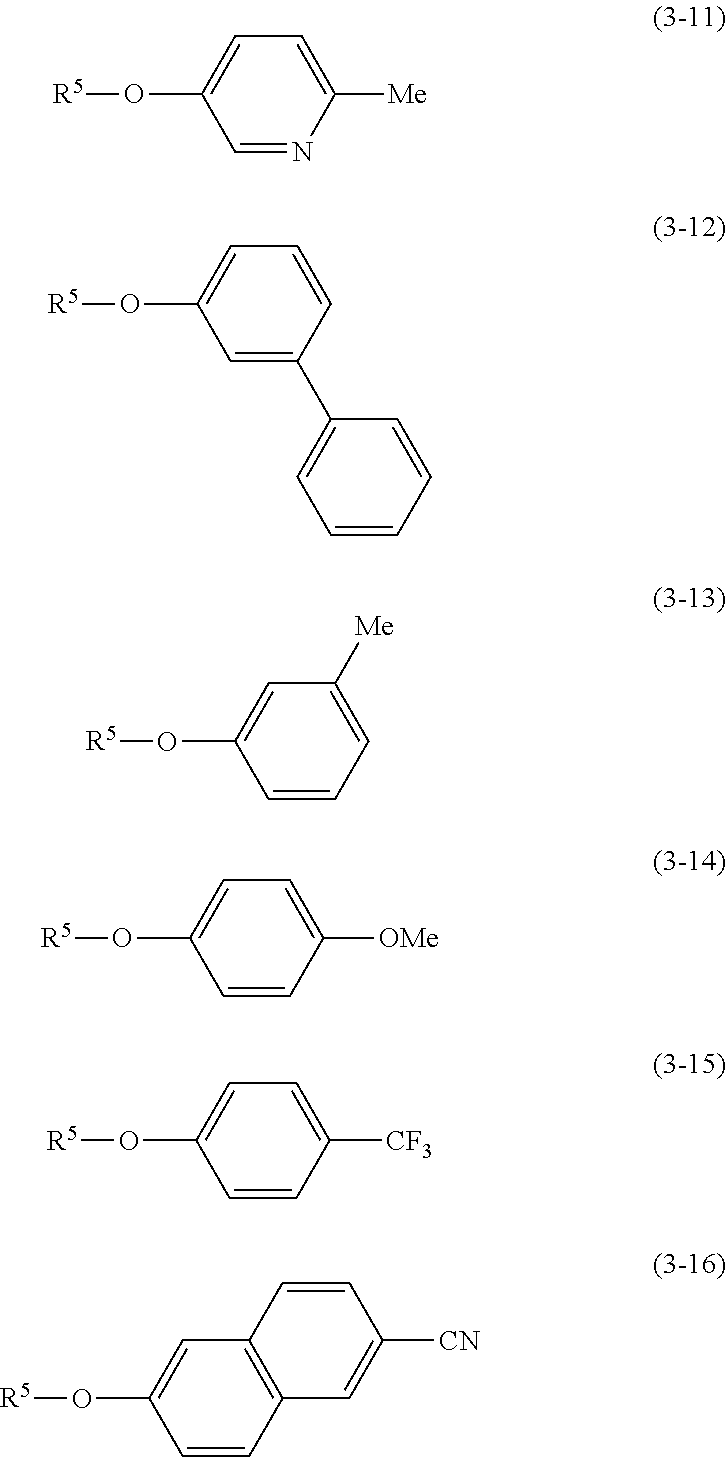
(In the formulae, R5 is an acyl group, a dialkylcarbamoyl group, an alkyl carbonate group, an aryl carbonate group, an aralkyl carbonate group, a triflate group, an alkylsulfonyl group, an arylsulfonyl group, an aralkylsulfonyl group, a dialkylsulfamoyl group, or a diarylsulfamoyl group.)






Claims (9)


Applications Claiming Priority (3)
| Application Number | Priority Date | Filing Date | Title |
|---|---|---|---|
| JP2011-239604 | 2011-10-31 | ||
| JP2011239604 | 2011-10-31 | ||
| PCT/JP2012/076242 WO2013065463A1 (en) | 2011-10-31 | 2012-10-10 | Method for producing phenyl-substituted heterocyclic derivative |
Publications (2)
| Publication Number | Publication Date |
|---|---|
| US20140275549A1 US20140275549A1 (en) | 2014-09-18 |
| US8993777B2 true US8993777B2 (en) | 2015-03-31 |
Family
ID=48191821
Family Applications (1)
| Application Number | Title | Priority Date | Filing Date |
|---|---|---|---|
| US14/355,035 Expired - Fee Related US8993777B2 (en) | 2011-10-31 | 2012-10-10 | Method for producing phenyl-substituted heterocyclic derivative |
Country Status (4)
| Country | Link |
|---|---|
| US (1) | US8993777B2 (en) |
| EP (1) | EP2774923B1 (en) |
| JP (1) | JP5671726B2 (en) |
| WO (1) | WO2013065463A1 (en) |
Families Citing this family (4)
| Publication number | Priority date | Publication date | Assignee | Title |
|---|---|---|---|---|
| JP6367121B2 (en) * | 2013-02-07 | 2018-08-01 | 国立大学法人名古屋大学 | Coupling method and method for producing aromatic group-substituted heterocyclic compound using the coupling method |
| CN108658886A (en) * | 2018-05-11 | 2018-10-16 | 温州大学苍南研究院 | A kind of arylation method of benzoxazole |
| KR102612519B1 (en) * | 2021-01-22 | 2023-12-12 | 주식회사 랩토 | Organic compounds and organic electroluminescent device including the same |
| WO2023048641A2 (en) * | 2021-09-21 | 2023-03-30 | Nanyang Technological University | Mycobacterium abscessus growth inhibitor and model |
-
2012
- 2012-10-10 EP EP12845027.7A patent/EP2774923B1/en not_active Not-in-force
- 2012-10-10 WO PCT/JP2012/076242 patent/WO2013065463A1/en not_active Ceased
- 2012-10-10 JP JP2013541690A patent/JP5671726B2/en not_active Expired - Fee Related
- 2012-10-10 US US14/355,035 patent/US8993777B2/en not_active Expired - Fee Related
Non-Patent Citations (13)
| Title |
|---|
| Canivet et al. (Organic Letters (2009), 11(8), 1733-1736). * |
| English translation of the International Search Report issued Nov. 6, 2012, in PCT/JP2012/076242. |
| European Search Report as received in the corresponding European Patent Application No. 12845027.7 dated Nov. 27, 2014. |
| Fengzhi Zhang, et al., "Decarboxylative C-H Cross-Coupling of Azoles", Angew. Chem. Int. Ed., vol. 49, 2010, pp. 2768-2771. |
| Fengzhi Zhang, et al., "Decarboxylative C—H Cross-Coupling of Azoles", Angew. Chem. Int. Ed., vol. 49, 2010, pp. 2768-2771. |
| Jérôme Cavinet, et al., "Nickel-Catalyzed Biaryl Coupling of Heteroarenes and Aryl Halides/Triflates", Organic Letters, vol. 11, No. 8, 2009, pp. 1733-1736. |
| Julien Roger, et al., "Aryl triflates: useful coupling partners for the direct arylation of heteroaryl derivatives via Pd-catalyzed C-H activation functionalization", Organic & Biomolecular Chemistry, vol. 6, 2008, pp. 169-174. |
| Julien Roger, et al., "Aryl triflates: useful coupling partners for the direct arylation of heteroaryl derivatives via Pd-catalyzed C—H activation functionalization", Organic & Biomolecular Chemistry, vol. 6, 2008, pp. 169-174. |
| Kei Muto, et al, "Nickel-Catalyzed C-H/C-O Coupling of Azoles with Phenol Derivatives", Journal of the American Chemical Society, vol. 134, Dec. 8, 2011, pp. 169-172. |
| Kei Muto, et al, "Nickel-Catalyzed C—H/C—O Coupling of Azoles with Phenol Derivatives", Journal of the American Chemical Society, vol. 134, Dec. 8, 2011, pp. 169-172. |
| Neil A. Strotman, et al., "Highly Regioselective Palladium-Catalyzed Direct Arylation of Oxazole at C-2 or C-5 with Aryl Bromides, Chlorides, and Triflates", Organic Letters., vol. 12, No. 16, 2010, pp. 3578-3581. |
| Takuya Yamamoto, et al., "Nickel-Catalyzed C-H Arylation of Azoles with Haloarenes: Scope, Mechanism, and Applications to the Synthesis of Bioactive Molecules", Chem. Eur. J., vol. 17, Jul. 8, 2011, pp. 10113-10122. |
| Takuya Yamamoto, et al., "Nickel-Catalyzed C—H Arylation of Azoles with Haloarenes: Scope, Mechanism, and Applications to the Synthesis of Bioactive Molecules", Chem. Eur. J., vol. 17, Jul. 8, 2011, pp. 10113-10122. |
Also Published As
| Publication number | Publication date |
|---|---|
| JPWO2013065463A1 (en) | 2015-04-02 |
| EP2774923B1 (en) | 2016-05-18 |
| JP5671726B2 (en) | 2015-02-18 |
| EP2774923A4 (en) | 2014-12-31 |
| WO2013065463A1 (en) | 2013-05-10 |
| EP2774923A1 (en) | 2014-09-10 |
| US20140275549A1 (en) | 2014-09-18 |
Similar Documents
| Publication | Publication Date | Title |
|---|---|---|
| CN103958487B (en) | Benzoic acid derivative as EIF4E inhibitor | |
| AU2005220728B2 (en) | Compounds, pharmaceutical compositions and methods for use in treating metabolic disorders | |
| CA2607848C (en) | 3-substituted (3-phenyl)-propionic acid derivatives for the treatment of metabolic disorders | |
| CA2621949A1 (en) | Conformationally constrained 3- (4-hydroxy-phenyl) - substituted-propanoic acids useful for treating metabolic disorders | |
| CA2563818A1 (en) | Compounds and compositions as ppar modulators | |
| US20140275549A1 (en) | Method for producing phenyl-substituted heterocyclic derivative | |
| WO2012100734A1 (en) | Compounds useful as retinoid-related orphan receptor gamma modulators | |
| EA014729B1 (en) | Crth2 receptor ligands and use thereof | |
| CA2669069A1 (en) | Process for the preparation of 2-imino-thiazolidin-4-one derivatives | |
| CA2476580A1 (en) | Thiazole and oxazole derivatives that modulate ppar activity | |
| US12344586B2 (en) | Process for the preparation of biphenylamines | |
| Kalogirou et al. | Ring transformation of (4-chloro-5 H-1, 2, 3-dithiazol-5-ylidene) acetonitriles to 3-haloisothiazole-5-carbonitriles | |
| JP5654601B2 (en) | Method for producing phenyl-substituted heterocyclic derivatives by a coupling method using a palladium compound | |
| Jadhao et al. | Copper-mediated [3+ 2] oxidative cyclization of oxime acetate and its utility in the formal synthesis of fentiazac | |
| CA2112731A1 (en) | Preparation of alkyl 2-alkyl-4-fluoromethylthiazolecarboxylates | |
| CA2626483A1 (en) | Compounds and compositions as ppar modulators | |
| US10336742B2 (en) | Process for preparing thiazole derivatives | |
| EP1951692B1 (en) | Oxazole and thiazole ppar modulator | |
| WO2010098396A1 (en) | Process for producing phenyl-substituted heterocyclic derivative | |
| CA1268759A (en) | Copper-mediated oximation reaction | |
| US20180273496A1 (en) | Method for preparing N-(1,3,4-oxadiazol-2-yl)arylcarboxamides | |
| HUP0300816A2 (en) | Continuous process for the preparation of pesticidal chlorothiazole-derivatives | |
| AU2010316669B2 (en) | Carboxy oxazole or thiazole compounds as DGAT - 1 inhibitors useful for the treatment of obesity | |
| CN117567485B (en) | A class of pyran derivatives containing fluorine and trifluoromethyl quaternary carbon centers, their preparation methods and applications | |
| HK1195308A (en) | Benzoic acid derivatives as eif4e inhibitors |
Legal Events
| Date | Code | Title | Description |
|---|---|---|---|
| AS | Assignment |
Owner name: NATIONAL UNIVERSITY CORPORATION NAGOYA UNIVERSITY, Free format text: ASSIGNMENT OF ASSIGNORS INTEREST;ASSIGNORS:ITAMI, KENICHIRO;YAMAGUCHI, JUNICHIRO;MUTO, KEI;SIGNING DATES FROM 20140520 TO 20140522;REEL/FRAME:033124/0921 |
|
| STCF | Information on status: patent grant |
Free format text: PATENTED CASE |
|
| FEPP | Fee payment procedure |
Free format text: MAINTENANCE FEE REMINDER MAILED (ORIGINAL EVENT CODE: REM.); ENTITY STATUS OF PATENT OWNER: LARGE ENTITY |
|
| LAPS | Lapse for failure to pay maintenance fees |
Free format text: PATENT EXPIRED FOR FAILURE TO PAY MAINTENANCE FEES (ORIGINAL EVENT CODE: EXP.); ENTITY STATUS OF PATENT OWNER: LARGE ENTITY |
|
| STCH | Information on status: patent discontinuation |
Free format text: PATENT EXPIRED DUE TO NONPAYMENT OF MAINTENANCE FEES UNDER 37 CFR 1.362 |
|
| FP | Lapsed due to failure to pay maintenance fee |
Effective date: 20190331 |