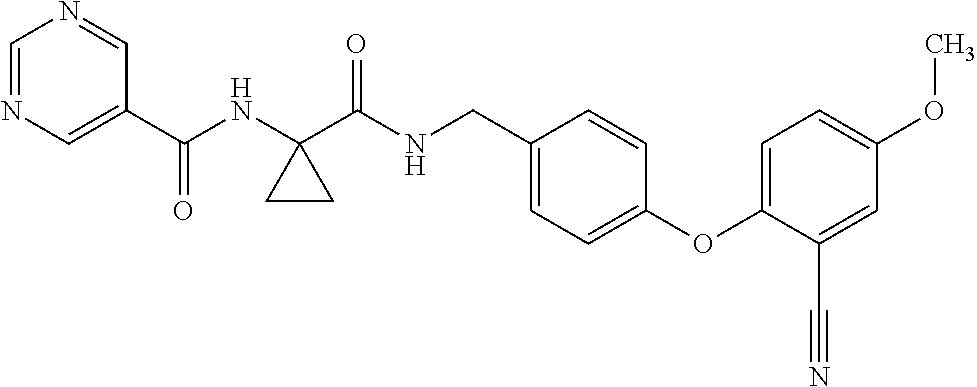
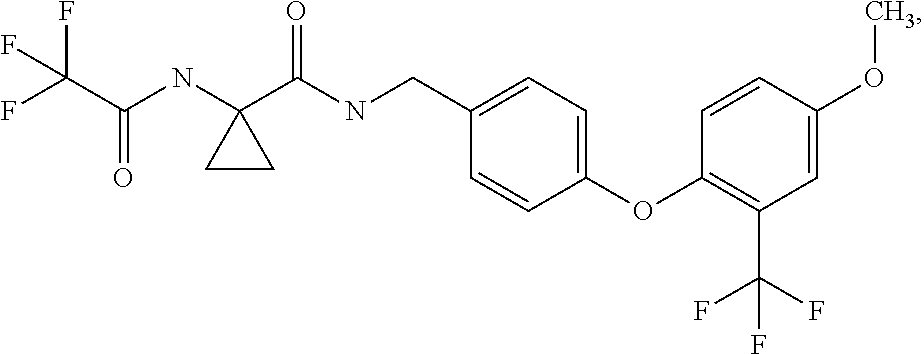
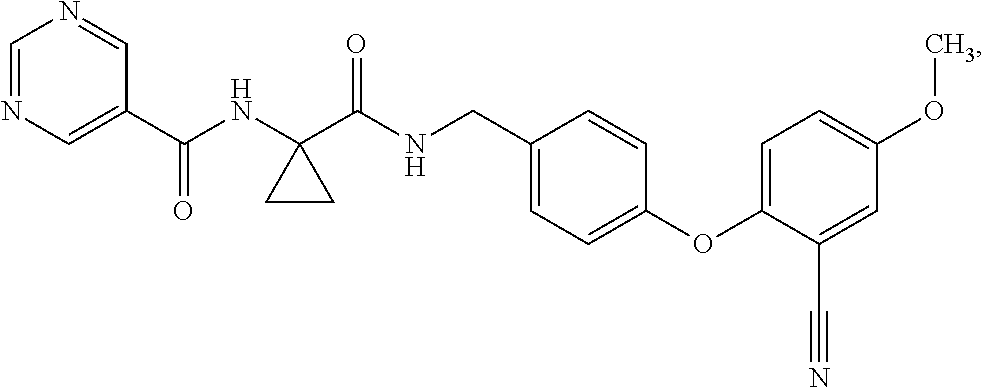
The present invention relates to compounds of general formula I
wherein n, R
1, R
2, R
3, R
4, R
5, R
6, R
7 and R
8 are defined as stated hereinafter, the enantiomers, the diastereomers, the mixtures thereof and the salts thereof, particularly the physiologically acceptable salts thereof with organic or inorganic acids or bases, which have valuable properties, the preparation thereof, the pharmaceutical compositions containing the pharmacologically effective compounds, the preparation thereof and the use thereof.
DETAILED DESCRIPTION OF THE INVENTION
In the above general formula I in a first embodiment
- R1 denotes
- (a) a C1-6-alkyl group optionally substituted by a group R1.1,
- (b) a C1-3-alkyl group wherein each methylene group is substituted by up to two fluorine atoms and each methyl group is substituted by up to three fluorine atoms,
- (c) a C3-6-cycloalkyl group optionally substituted by a group R1.2,
- (d) a C2-6-alkenyl group,
- (e) a C2-6-alkynyl group,
- (f) an aryl-C0-2-alkylene group optionally substituted by 1, 2 or 3 groups R1.3,
- (g) a five-membered heteroaryl group optionally substituted by 1, 2 or 3 groups R1.4, which contains at least one N, O or S atom and optionally also contains one, two or three further N atoms and may additionally be benzo-fused,
- (h) a six-membered heteroaryl group optionally substituted by a group R1.4, which contains one, two or three N atoms and may additionally be benzo-fused,
- (i) —O—R1:1.1 or
- (j) —NR1.1.3R1.1.4,
- R1.1 denotes halogen, —NO2, —CN, C3-6-cycloalkyl, —OR1.1.1, —SR1.1.1, —C(O)R1.1.1, —S(O)2—R1.1.2, —O—S(O)2—R1.1.1, —CO2R1.1.1, —O—C(O)—R1.1.1, —NR1.1.3R1.1.4, —NR1.1.3-C(O)—R1.1.1, —NR1.1,3-C(O)—R1.1.1, —NR1.1,3-CO2—R1.1.1, —C(O)—NR1.1.3R1.1.4,
- R1.1.1 denotes
- (a) H,
- (b) C1-4-alkyl,
- (c) C1-3-alkyl, wherein each methylene group is substituted by up to two fluorine atoms and each methyl group is substituted by up to three fluorine atoms,
- (d) a phenyl group optionally substituted by 1, 2 or 3 groups R1.1.1.1,
- (e) C3-6-cycloalkyl,
- (f) a pyridyl group optionally substituted by 1, 2 or 3 groups R1.1.1.2,
- R1.1.1.1 independently of one another denote
- (b) halogen, —NO2, —CN, —OH, —O—C1-4-alkyl, C3-6-cycloalkyl, C1-4-alkyl,
- (c) C1-3-alkyl, wherein each methylene group is substituted by up to two fluorine atoms and each methyl group is substituted by up to three fluorine atoms,
- R1.1.1.2 independently of one another denote halogen or C1-4-alkyl,
- R1.1.2 denotes
- (a) C1-4-alkyl,
- (b) C1-3-alkyl, wherein each methylene group is substituted by up to two fluorine atoms and each methyl group is substituted by up to three fluorine atoms,
- (c) —O—C1-4-alkyl,
- (d) a phenyl group optionally substituted by 1, 2 or 3 groups R1.1.1.1,
- R1.1.3,
- R1.1.4 independently of one another denote
- (a) H,
- (b) a C1-4-alkyl group optionally substituted by 1, 2 or 3 groups R1.1.4.1,
- (c) a phenyl group optionally substituted by 1, 2 or 3 groups R1.1.1.1,
- (d) C3-6-cycloalkyl, or
- R1.1.3 and R1.1.4 together with the N atom to which they are bound form a 4-, 5- or 6-membered heterocyclic ring, which may additionally contain a further heteroatom selected from N, O and S, or
- R1.1.3 and R1.1.4 together with the N atom to which they are bound form a cyclic imide,
- R1.1.4.1 independently of one another denote halogen, —NH2, —NH(C1-4-alkyl), —N(C1-4-alkyl)2 or —SO2—R1.1.2,
- R1.2 denotes halogen, —NO2, —CN or phenyl,
- R1.3 denotes
- (a) halogen, —NO2, —CN, —OR1.1.1, —SR1.1.1, —CO2R1.1.1, C1-6-alkyl,
- (b) C1-3-alkyl, wherein each methylene group is substituted by up to two fluorine atoms and each methyl group is substituted by up to three fluorine atoms,
- R1.4 independently of one another denote
- (a) halogen, —NO2, —CN, —OR1.1.1, —SR1.1.1, —S(O)—R1.1.2, —S(O)2—R1.1.2, —NR1.1.3R1.1.4, C1-6-alkyl,
- (b) C1-3-alkyl, wherein each methylene group is substituted by up to two fluorine atoms and each methyl group is substituted by up to three fluorine atoms , or
- (c) an oxo group,
- R2 denotes
- (a) H or C1-4-alkyl,
- (b) C1-3-alkyl, wherein each methylene group is substituted by up to two fluorine atoms and each methyl group is substituted by up to three fluorine atoms,
- R3 independently of one another denote
- (a) H, halogen, —CN, —OH, C1-6-alkyl, C3-7-cycloalkyl, —O—C1-4-alkyl, —O—CF3, —O—C3-6-cycloalkyl, —N(C1-3-alkyl)2, —C(O)—NH2, —(SO2)NH2, —SO2—C1-3-alkyl,
- (b) C1-3-alkyl, wherein each methylene group is substituted by up to two fluorine atoms and each methyl group is substituted by up to three fluorine atoms,
- R4, R5,
- R6, R7,
- R8 independently of one another denote
- (a) H, halogen, —CN, —OH,
- (b) C1-6-alkyl, wherein two adjacent substituents together may denote a trimethylene or tetramethylene group,
- (c) C1-3-alkyl, wherein each methylene group is substituted by up to two fluorine atoms and each methyl group is substituted by up to three fluorine atoms,
- (d) C3-7-cycloalkyl,
- (e) —O—C1-6-alkyl, wherein two adjacent substituents may denote a methylenedioxy or ethylenedioxy group,
- (f) —O—CF3, —O—C3-7-cycloalkyl,
- (g) —NH2, —NH(C1-3-alkyl), —N(C1-3-alkyl)2,
- (h) —C(O)—R8.1,
- (i) —SO2—R8.2,
- (j) a five-membered heteroaryl group optionally substituted by one or two C1-3-alkyl groups which is selected from among pyrrolyl, oxazolyl, isoxazolyl, oxadiazolyl, thiazolyl, isothiazolyl, thiadiazolyl, imidazolyl, pyrazolyl, triazolyl and tetrazolyl,
- (k) a six-membered heteroaryl group optionally substituted by one or two C1-3-alkyl groups which is selected from among pyridyl, pyrimidinyl, pyrazinyl, pyridazinyl and triazinyl,
- R8.1 denotes —NH2, —NH(C1-6-alkyl),—N(C1-6-alkyl)2, N-acetidinyl, N-pyrrolidinyl, N-piperidinyl, N-morpholinyl, —OH, —O—C1-8-alkyl, —O—C3-7-cycloalkyl,
- R8.2 denotes —NH2, —NH(C1-6-alkyl),—N(C1-6-alkyl)2, N-acetidinyl, N-pyrrolidinyl, N-piperidinyl, N-morpholinyl and
- n denotes one of the numbers 0, 1, 2, 3 or 4,
the enantiomers, the diastereomers, the mixtures thereof and the salts thereof, particularly the physiologically acceptable salts thereof with organic or inorganic acids or bases.
A further embodiment of the present invention comprises the compounds of the above general formula I, wherein R2, R3, R4, R5, R6, R7, R8 and n are defined as mentioned hereinbefore in the first embodiment and
- R1 denotes
- (a) a C1-6-alkyl group optionally substituted by a group R1.1,
- (b) a C1-3-alkyl group wherein each methylene group is substituted by up to two fluorine atoms and each methyl group is substituted by up to three fluorine atoms,
- (c) a C3-6-cycloalkyl group optionally substituted by a group R1.2,
- (d) a phenyl group optionally substituted by 1, 2 or 3 groups R1.3,
- (e) a five-membered heteroaryl group optionally substituted by a group R1.4, which contains at least one N, O or S atom and which optionally additionally contains one, two or three further N atoms, or
- (f) a six-membered heteroaryl group optionally substituted by a group R1.4, which contains one, two or three N atoms,
- R1.1 denotes C3-6-cycloalkyl, —OR1.1.1, —NR1.1.3R1.1.4, —C(O)—NR1.1.3R1.1.4, —CN, —CO2R1.1.1, —S(O)2—C1-6-alkyl or —O—S(O)2—C1-6-alkyl,
- R1.1.1 denotes
- (a) H,
- (b) C1-4-alkyl,
- (c) C1-3-alkyl, wherein each methylene group is substituted by up to two fluorine atoms and each methyl group is substituted by up to three fluorine atoms, or
- (d) C3-6-cycloalkyl,
- R1.1.3,
- R1.1.4 independently of one another denote
- (a) H,
- (b) C1-4-alkyl or
- (c) C3-6-cycloalkyl, and
- R1.2 denotes halogen, —NO2, —CN or phenyl,
- R1.3 denotes
- (a) halogen, —NO2, —CN, —OR1.1.1, —SR1.1.1, —CO2R1.1.1, C1-6-alkyl or
- (b) C1-3-alkyl, wherein each methylene group is substituted by up to two fluorine atoms and each methyl group is substituted by up to three fluorine atoms, and
- R1.4 denotes
- (a) halogen, —NO2, —CN, —OR1.1.1, —SR1.1.1, —NR1.1.3R1.1.4, C1-6-alkyl,
- (b) C1-3-alkyl, wherein each methylene group is substituted by up to two fluorine atoms and each methyl group is substituted by up to three fluorine atoms, or
- (c) an oxo group,
the enantiomers, the diastereomers, the mixtures thereof and the salts thereof, particularly the physiologically acceptable salts thereof with organic or inorganic acids or bases.
A further embodiment of the present invention comprises the compounds of the above general formula I, wherein
- R1 denotes
- (a) a C1-6-alkyl group optionally substituted by a group R1.1,
- (b) a C1-3-alkyl group wherein each methylene group is substituted by up to two fluorine atoms and each methyl group is substituted by up to three fluorine atoms,
- (c) a C3-6-cycloalkyl group optionally substituted by a group R1.2,
- (d) a phenyl group optionally substituted by 1, 2 or 3 groups R1.3,
- (e) a five-membered heteroaryl group optionally substituted by a group R1.4, which contains at least one N, O or S atom and which optionally additionally contains one, two or three further N atoms, or
- (f) a six-membered heteroaryl group optionally substituted by a group R1.4, which contains one, two or three N atoms,
- R1.1 denotes C3-6-cycloalkyl, —OR1.1.1, —NR1.1.3R1.1.4, —C(O)—NR1.1.3R1.1.4, —CN, —CO2R1.1.1, —S(O)2—C1-6-alkyl or —O—S(O)2—C1-6-alkyl,
- R1.1.1 denotes
- (a) H,
- (b) C14-alkyl,
- (c) C1-3-alkyl, wherein each methylene group is substituted by up to two fluorine atoms and each methyl group is substituted by up to three fluorine atoms, or
- (d) C3-6-cycloalkyl,
- R1.1.3,
- R1.1.4 independently of one another denote
- (a) H,
- (b) C1-4-alkyl or
- (c) C3-6-cycloalkyl,
- R1.2 denotes halogen, —NO2, —CN or phenyl,
- R1.3 denotes
- (a) halogen, —NO2, —CN, —OR1.1.1, —SR1.1.1, —CO2R1.1.1, C1-6-alkyl or
- (b) C1-3-alkyl, wherein each methylene group is substituted by up to two fluorine atoms and each methyl group is substituted by up to three fluorine atoms,
- R1.4 denotes
- (a) halogen, —NO2, —CN, —OR1.1.1, —SR1.1.1, —NR1.1.3R1.1.4, C1-6-alkyl,
- (b) C1-3-alkyl, wherein each methylene group is substituted by up to two fluorine atoms and each methyl group is substituted by up to three fluorine atoms, or
- (c) an oxo group
- R2 denotes H or C1-3-alkyl,
- R3 independently of one another denote
- (a) H, halogen, C1-3-alkyl, —O—C1-3-alkyl or
- (b) C1-3-alkyl, wherein each methylene group is substituted by up to two fluorine atoms and each methyl group is substituted by up to three fluorine atoms,
- R4 denotes H or halogen,
- R5 denotes
- (a) H, halogen,
- (b) C1-3-alkyl,
- (c) C1-3-alkyl, wherein each methylene group is substituted by up to two fluorine atoms and each methyl group is substituted by up to three fluorine atoms,
- (d) —O—C1-3-alkyl,
- (e) —C(O)—O—C1-3-alkyl or —C(O)—NH2,
- R6 denotes
- (a) H, halogen,
- (b) C1-3-alkylene-R6.1,
- (c) C1-3-alkyl, wherein each methylene group is substituted by up to two fluorine atoms and each methyl group is substituted by up to three fluorine atoms,
- (d) —OH, —O—C1-4-alkyl,
- (e) —O—CHF2, —O—CF3,
- (f) —C(O)—O—R6.2, —CN, —C(O)—CH3, —C(O)—NH2 or
- (g) pyrrolyl,
- R6.1 denotes H, —OH,
- R6.2 denotes H, C1-3-alkyl,
- R7 denotes
- (a) H, halogen,
- (b) C1-3-alkyl,
- (c) C1-3-alkyl, wherein each methylene group is substituted by up to two fluorine atoms and each methyl group is substituted by up to three fluorine atoms,
- (d) —O—C1-3-alkyl,
- (e) —C(O)—NH2 or —C(O)-pyrrolidinyl, and
- R8 denotes
- (a) H, halogen,
- (b) C1-4-alkyl,
- (c) C1-3-alkyl, wherein each methylene group is substituted by up to two fluorine atoms and each methyl group is substituted by up to three fluorine atoms,
- (d) —O—C1-3-alkyl,
- (e) —O—CF3,
- (f) —CN, —C(O)—NH2 or
- (g) pyrrolyl,
the enantiomers, the diastereomers, the mixtures thereof and the salts thereof, particularly the physiologically acceptable salts thereof with organic or inorganic acids or bases.
A further embodiment of the present invention comprises the compounds of the above general formula I, wherein R2, R3, R4, R5, R6, R7, R8 and n are defined as mentioned hereinbefore in the first embodiment and
- R1 denotes
- (a) a C1-6-alkyl group optionally substituted by a group R1.1,
- (b) a C1-3-alkyl group wherein each methylene group is substituted by up to two fluorine atoms and each methyl group is substituted by up to three fluorine atoms,
- (c) a phenyl group optionally substituted by 1, 2 or 3 groups R1.3,
- (d) a five-membered heteroaryl group optionally substituted by a group R1.4, which is selected from among furanyl, isoxazolyl, isothiazolyl, oxazolyl, thiazolyl, pyrazolyl, thiadiazolyl, oxadiazolyl, triazolyl, tetrazolyl, imidazolyl, indolyl, thienyl, pyrrolyl, benzimidazolyl, benzoxazolyl, benzothiazolyl and benzisoxazinyl, or
- (e) a six-membered heteroaryl group optionally substituted by a group R1.4, which is selected from among pyridyl, pyrimidinyl, pyridazinyl, pyrazinyl, triazinyl, quinazolinyl and quinoxazinyl,
- R1.1 denotes C3-6-cycloalkyl, —OR1.1.1, —NR1.1.3R1.1.4, —C(O)—NR1.1.3R1.1.4, —CN, —CO2R1.1.1, —S(O)2—C1-6-alkyl or —O—S(O)2—C1-6-alkyl,
- R1.1.1 denotes
- (a) H,
- (b) C1-4-alkyl,
- (c) C1-3-alkyl, wherein each methylene group is substituted by up to two fluorine atoms and each methyl group is substituted by up to three fluorine atoms, or
- (d) C3-6-cycloalkyl,
- R1.1.3,
- R1.1.4 independently of one another denote
- (a) H,
- (b) C1-4-alkyl or
- (c) C3-6-cycloalkyl,
- R1.3 denotes
- (a) halogen, —NO2, —CN, —OR1.1.1, —SR1.1.1, —CO2R1.1.1, C1-6-alkyl or
- (b) C1-3-alkyl, wherein each methylene group is substituted by up to two fluorine atoms and each methyl group is substituted by up to three fluorine atoms, and
- R1.4 denotes
- (a) halogen, —NO2, —CN, —OR1.1.1, —SR1.1.1, C1-6-alkyl,
- (b) C1-3-alkyl, wherein each methylene group is substituted by up to two fluorine atoms and each methyl group is substituted by up to three fluorine atoms, or
- (c) an oxo group,
the enantiomers, the diastereomers, the mixtures thereof and the salts thereof, particularly the physiologically acceptable salts thereof with organic or inorganic acids or bases.
A further embodiment of the present invention comprises the compounds of the above general formula I, wherein R2, R3, R4, R5, R6, R7, R8 and n are defined as mentioned hereinbefore in the first embodiment and
- R1 denotes a group selected from
the enantiomers, the diastereomers, the mixtures thereof and the salts thereof, particularly the physiologically acceptable salts thereof with organic or inorganic acids or bases.
A further embodiment of the present invention comprises the compounds of the above general formula I, wherein R1, R3, R4, R5, R6, R7, R8 and n are defined as mentioned hereinbefore in the first embodiment and
- R2 denotes H or C1-3-alkyl,
the enantiomers, the diastereomers, the mixtures thereof and the salts thereof, particularly the physiologically acceptable salts thereof with organic or inorganic acids or bases.
A further embodiment of the present invention comprises the compounds of the above general formula I, wherein R1, R2, R4, R5, R6, R7, R8 and n are defined as mentioned hereinbefore in the first embodiment and
- R3 independently of one another denote
- (a) H, halogen, C1-3-alkyl, —O—C1-3-alkyl or
- (b) C1-3-alkyl, wherein each methylene group is substituted by up to two fluorine atoms and each methyl group is substituted by up to three fluorine atoms,
the enantiomers, the diastereomers, the mixtures thereof and the salts thereof, particularly the physiologically acceptable salts thereof with organic or inorganic acids or bases.
A further embodiment of the present invention comprises the compounds of the above general formula I, wherein R1, R2, R3, R5, R6, R7, R8 and n are defined as mentioned hereinbefore in the first embodiment and
- R4 denotes H or halogen,
the enantiomers, the diastereomers, the mixtures thereof and the salts thereof, particularly the physiologically acceptable salts thereof with organic or inorganic acids or bases.
A further embodiment of the present invention comprises the compounds of the above general formula I, wherein R1, R2, R3, R4, R6, R7, R8 and n are defined as mentioned hereinbefore in the first embodiment and
- R5 denotes
- (a) H, halogen,
- (b) C1-3-alkyl,
- (c) C1-3-alkyl, wherein each methylene group is substituted by up to two fluorine atoms and each methyl group is substituted by up to three fluorine atoms,
- (d) —O—C1-3-alkyl,
- (e) —C(O)—O—C1-3-alkyl or —C(O)—NH2,
the enantiomers, the diastereomers, the mixtures thereof and the salts thereof, particularly the physiologically acceptable salts thereof with organic or inorganic acids or bases.
A further embodiment of the present invention comprises the compounds of the above general formula I, wherein R1, R2, R3, R4, K R5, R7, R8 and n are defined as mentioned hereinbefore in the first embodiment and
- R6 denotes
- (a) H, halogen,
- (b) C1-3-alkylene-R6.1,
- (c) C1-3-alkyl, wherein each methylene group is substituted by up to two fluorine atoms and each methyl group is substituted by up to three fluorine atoms,
- (d) —OH, —O—C1-4-alkyl,
- (e) —O—CHF2, —O—CF3,
- (f) —C(O)—O—R6.2, —CN, —C(O)—CH3, —C(O)—NH2 or
- (g) pyrrolyl,
- R6.1 denotes H or —OH and
- R6.2 denotes H or C1-3-alkyl,
the enantiomers, the diastereomers, the mixtures thereof and the salts thereof, particularly the physiologically acceptable salts thereof with organic or inorganic acids or bases.
A further embodiment of the present invention comprises the compounds of the above general formula I, wherein R1, R2, R3, R4, R5, R6, R8 and n are defined as mentioned hereinbefore in the first embodiment and
- R7 denotes
- (a) H, halogen,
- (b) C1-3-alkyl,
- (c) C1-3-alkyl, wherein each methylene group is substituted by up to two fluorine atoms and each methyl group is substituted by up to three fluorine atoms,
- (d) —O—C1-3-alkyl,
- (e) —C(O)—NH2 or —C(O)-pyrrolidinyl,
the enantiomers, the diastereomers, the mixtures thereof and the salts thereof, particularly the physiologically acceptable salts thereof with organic or inorganic acids or bases.
A further embodiment of the present invention comprises the compounds of the above general formula I, wherein R1, R2, R3, R4, R5, R6, R7 and n are defined as mentioned hereinbefore in the first embodiment and
- R8 denotes
- (a) H, halogen,
- (b) C1-4-alkyl,
- (c) C1-3-alkyl, wherein each methylene group is substituted by up to two fluorine atoms and each methyl group is substituted by up to three fluorine atoms,
- (d) —O—C1-3-alkyl,
- (e) —O—CF3,
- (f) —CN, —C(O)—NH2 or
- (g) pyrrolyl,
the enantiomers, the diastereomers, the mixtures thereof and the salts thereof, particularly the physiologically acceptable salts thereof with organic or inorganic acids or bases.
A further embodiment of the present invention comprises the compounds of the above general formula I wherein
- R1 denotes a group selected from
- R2 denotes H or —CH3,
- R3 denotes H, F, —CF3, —CH3 or —O—CH3,
- R4 denotes H or Cl,
- R5 denotes H, Cl, C1-3-alkyl, —CF3, —O—C1-3-alkyl, —C(O)—O—C1-3-alkyl or —C(O)—NH2,
- R6 denotes H, F, Cl, C1-3-alkyl, —CF3, —O—C1-4-alkyl, —OCF3, —C(O)—NH2 or pyrrolyl,
- R7 denotes H, F, Cl, C1-3-alkyl, —CF3, —O—C1-3-alkyl, —C(O)—NH2 or —C(O)-pyrrolidinyl and
- R8 denotes H, F, Cl, Br, C1-4-alkyl, —CF3, —O—C1-3-alkyl, —OCF3, —C(O)—NH2, —OCF3 or pyrrolyl,
the enantiomers, the diastereomers, the mixtures thereof and the salts thereof, particularly the physiologically acceptable salts thereof with organic or inorganic acids or bases.
A further embodiment of the present invention comprises the compounds of the above general formula I wherein
- R1 denotes a group selected from
- R2 denotes H, —CH3 or —C2H5,
- R3 denotes H, F, Cl, —CF3, —CH3 or —O—CH3,
- R4 denotes H or Cl,
- R5 denotes H, Cl, C1-3-alkyl, —CF3, —O—C1-3-alkyl, —C(O)—O—C1-3-alkyl or —C(O)—NH2,
- R6 denotes H, F, Cl, Br, —CN, C1-3-alkyl, —CF3, —COOH, —COO—C1-3-alkyl, —CH(OH)CH3, —OH, —O—C1-4-alkyl, —OCF3, —OCHF2, —C(O)—CH3, —C(O)—NH2 or pyrrolyl,
- R7 denotes H, F, Cl, C1-3-alkyl, —CF3, —O—C1-3-alkyl, —C(O)—NH2 or —C(O)-pyrrolidinyl and
- R8 denotes H, F, Cl, Br, —CN, C1-4-alkyl, —CF3, —O—C1-3-alkyl, —OCF3, —C(O)—NH2, —OCF3 or pyrrolyl,
the enantiomers, the diastereomers, the mixtures thereof and the salts thereof, particularly the physiologically acceptable salts thereof with organic or inorganic acids or bases.
A further embodiment of the present invention comprises the compounds of general formula Ia,
- R1 denotes a C1-6-alkyl group optionally substituted by a group R1.1,
- R1.1 denotes halogen, —NO2, —CN, C3-6-cycloalkyl, —OR1.1.1, —SR1.1.1, —C(O)R1.1.1, —S(O)2—R1.1.2, —O—S(O)2—R1.1.1, —CO2R1.1.1, —O—C(O)—R1.1.1, —NR1.1.3R1.1.4, —NR1.1,3-C(O)—R1.1.1, —NR1.1,3-C(O)—R1.1.1, —NR1.1,3-CO2—R1.1.1 or —C(O)—NR1.1.3R1.1.4,
- R1.1.1 denotes
- (a) H,
- (b) C1-4-alkyl,
- (c) C1-3-alkyl, wherein each methylene group is substituted by up to two fluorine atoms and each methyl group is substituted by up to three fluorine atoms, or
- (d) C3-6-cycloalkyl,
- R1.1.2 denotes
- (a) C1-4-alkyl,
- (b) C1-3-alkyl, wherein each methylene group is substituted by up to two fluorine atoms and each methyl group is substituted by up to three fluorine atoms, or
- (c) —O—C1-4-alkyl,
- R1.1.3,
- R1.1.4 independently of one another denote
- (a) H,
- (b) a C1-4-alkyl group optionally substituted by 1, 2 or 3 groups R1.1.4.1 or
- (c) C3-6-cycloalkyl,
- R2 denotes
- (a) H, C1-4-alkyl or
- (b) C1-3-alkyl, wherein each methylene group is substituted by up to two fluorine atoms and each methyl group is substituted by up to three fluorine atoms,
- R4 denotes H or halogen,
- R6 denotes
- (a) H, halogen,
- (b) C1-3-alkylene-R6.1,
- (c) C1-3-alkyl, wherein each methylene group is substituted by up to two fluorine atoms and each methyl group is substituted by up to three fluorine atoms,
- (d) —OH, —O—C1-4-alkyl,
- (e) —O—CHF2, —O—CF3,
- (f) —C(O)—O—R6.2, —CN, —C(O)—CH3, —C(O)—NH2 or
- (g) pyrrolyl,
- R6.1 denotes H, —OH,
- R6.2 denotes H, C1-3-alkyl, and
- R8 denotes
- (a) H, halogen,
- (b) C1-4-alkyl,
- (c) C1-3-alkyl, wherein each methylene group is substituted by up to two fluorine atoms and each methyl group is substituted by up to three fluorine atoms,
- (d) —O—C1-3-alkyl,
- (e) —O—CF3,
- (f) —CN, —C(O)—NH2 or
- (g) pyrrolyl,
the enantiomers, the diastereomers, the mixtures thereof and the salts thereof, particularly the physiologically acceptable salts thereof with organic or inorganic acids or bases.
A further embodiment of the present invention comprises the compounds of general formula Ia, wherein
- R1 denotes a group selected from
- R2 denotes H, —CH3 or —C2H5,
- R4 denotes H or Cl,
- R6 denotes Cl or —O—C1-4-alkyl, and
- R8 denotes F or —CF3,
the enantiomers, the diastereomers, the mixtures thereof and the salts thereof, particularly the physiologically acceptable salts thereof with organic or inorganic acids or bases.
A further embodiment of the present invention comprises the compounds of general formula Ia,
- R1 denotes
- (a) a five-membered heteroaryl group optionally substituted by 1, 2 or 3 groups R1.4, which contains at least one N, O or S atom and which optionally additionally contains one, two or three further N atoms and which may additionally be benzo-condensed, or
- (b) a six-membered heteroaryl group optionally substituted by a group R1.4, which contains one, two or three N atoms and which may additionally be benzo-condensed,
- R1.4 independently of one another denote
- (a) halogen, —NO2, —CN, —OR1.1.1, —SR1.1.1, —S(O)2—R1.1.2, —S(O)2—R1.1.2, —NR1.1.3R1.1.4, C1-6-alkyl or
- (b) C1-3-alkyl, wherein each methylene group is substituted by up to two fluorine atoms and each methyl group is substituted by up to three fluorine atoms,
- R1.1.1 denotes
- (a) H,
- (b) C1-4-alkyl,
- (c) C1-3-alkyl, wherein each methylene group is substituted by up to two fluorine atoms and each methyl group is substituted by up to three fluorine atoms, or
- (d) C3-6-cycloalkyl,
- R1.1.2 denotes
- (a) C1-4-alkyl,
- (b) C1-3-alkyl, wherein each methylene group is substituted by up to two fluorine atoms and each methyl group is substituted by up to three fluorine atoms, or
- (c) —O—C1-4-alkyl,
- R1.1.3,
- R1.1.4 independently of one another denote
- (a) H,
- (b) a C1-4-alkyl group optionally substituted by 1, 2 or 3 groups R1.1.4.1,
- (c) C3-6-cycloalkyl, or
- R2 denotes
- (a) H, C1-4-alkyl or
- (b) C1-3-alkyl, wherein each methylene group is substituted by up to two fluorine atoms and each methyl group is substituted by up to three fluorine atoms,
- R4 denotes H or halogen,
- R6 denotes
- (a) H, halogen,
- (b) C1-3-alkylene-R6.1,
- (c) C1-3-alkyl, wherein each methylene group is substituted by up to two fluorine atoms and each methyl group is substituted by up to three fluorine atoms,
- (d) —OH, —O—C1-4-alkyl,
- (e) —O—CHF2, —O—CF3,
- (f) —C(O)—O—R6.2, —CN, —C(O)—CH3, —C(O)—NH2 or
- (g) pyrrolyl,
- R6.1 denotes H, —OH,
- R6.2 denotes H, C1-3-alkyl, and
- R8 denotes
- (a) H, halogen,
- (b) C1-4-alkyl,
- (c) C1-3-alkyl, wherein each methylene group is substituted by up to two fluorine atoms and each methyl group is substituted by up to three fluorine atoms,
- (d) —O—C1-3-alkyl,
- (e) —O—CF3,
- (f) —CN, —C(O)—NH2 or
- (g) pyrrolyl,
the enantiomers, the diastereomers, the mixtures thereof and the salts thereof, particularly the physiologically acceptable salts thereof with organic or inorganic acids or bases.
A further embodiment of the present invention comprises the compounds of general formula Ia, wherein
- R1 denotes a group selected from
- R2 denotes H, —CH3 or —C2H5,
- R4 denotes H or Cl,
- R6 denotes F, Cl, Br, —CN, —CH3, —CF3, —COOH, —COO—CH3, —CH(OH)CH3, —OH, —O—CH3, —OCF3, —OCHF2, —C(O)—CH3, —C(O)—NH2 or pyrrolyl, and
- R8 denotes H, F, Cl, Br, —CN, C1-4-alkyl, —CF3, —O—C1-3-alkyl, —OCF3, —C(O)—NH2, —OCF3 or pyrrolyl,
the enantiomers, the diastereomers, the mixtures thereof and the salts thereof, particularly the physiologically acceptable salts thereof with organic or inorganic acids or bases.
The following are mentioned as examples of most particularly preferred compounds of the above general formula I:
| |
| No. | Structure |
| |
| (1) | |
| |
| (2) | |
| |
| (3) | |
| |
| (4) | |
| |
| (5) | |
| |
| (6) | |
| |
| (7) | |
| |
| (8) | |
| |
| (9) | |
| |
| (10) | |
| |
| (11) | |
| |
| (12) | |
| |
| (13) | |
| |
| (14) | |
| |
| (15) | |
| |
| (16) | |
| |
| (17) | |
| |
| (18) | |
| |
| (19) | |
| |
| (20) | |
| |
| (21) | |
| |
| (22) | |
| |
| (23) | |
| |
| (24) | |
| |
| (25) | |
| |
| (26) | |
| |
| (27) | |
| |
| (28) | |
| |
| (29) | |
| |
| (30) | |
| |
| (31) | |
| |
| (32) | |
| |
| (33) | |
| |
| (34) | |
| |
| (35) | |
| |
| (36) | |
| |
| (37) | |
| |
| (38) | |
| |
| (39) | |
| |
| (40) | |
| |
| (41) | |
| |
| (42) | |
| |
| (43) | |
| |
| (44) | |
| |
| (45) | |
| |
| (46) | |
| |
| (47) | |
| |
| (48) | |
| |
| (49) | |
| |
| (50) | |
| |
| (51) | |
| |
| (52) | |
| |
| (53) | |
| |
| (54) | |
| |
| (55) | |
| |
| (56) | |
| |
| (57) | |
| |
| (58) | |
| |
| (59) | |
| |
| (60) | |
| |
| (61) | |
| |
| (62) | |
| |
| (63) | |
| |
| (64) | |
| |
| (65) | |
| |
| (66) | |
| |
| (67) | |
| |
| (68) | |
| |
| (69) | |
| |
| (70) | |
| |
| (71) | |
| |
| (72) | |
| |
| (73) | |
| |
| (74) | |
| |
| (75) | |
| |
| (76) | |
| |
| (77) | |
| |
| (78) | |
| |
| (79) | |
| |
| (80) | |
| |
| (81) | |
| |
| (82) | |
| |
| (83) | |
| |
| (84) | |
| |
| (85) | |
| |
| (86) | |
| |
| (87) | |
| |
| (88) | |
| |
| (89) | |
| |
| (90) | |
| |
| (91) | |
| |
| (92) | |
| |
| (93) | |
| |
| (94) | |
| |
| (95) | |
| |
| (96) | |
| |
| (97) | |
| |
| (98) | |
| |
| (99) | |
| |
| (100) | |
| |
| (101) | |
| |
| (102) | |
| |
| (103) | |
| |
| (104) | |
| |
| (105) | |
| |
| (106) | |
| |
| (107) | |
| |
| (108) | |
| |
| (109) | |
| |
| (110) | |
| |
| (111) | |
| |
| (112) | |
| |
| (113) | |
| |
| (114) | |
| |
| (115) | |
| |
| (116) | |
| |
| (117) | |
| |
| (118) | |
| |
| (119) | |
| |
| (120) | |
| |
| (121) | |
| |
| (122) | |
| |
| (123) | |
| |
| (124) | |
| |
| (125) | |
| |
| (126) | |
| |
| (127) | |
| |
| (128) | |
| |
| (129) | |
| |
| (130) | |
| |
| (131) | |
| |
| (132) | |
| |
| (133) | |
| |
| (134) | |
| |
| (135) | |
| |
| (136) | |
| |
| (137) | |
| |
| (138) | |
| |
| (139) | |
| |
| (140) | |
| |
| (141) | |
| |
| (142) | |
| |
| (143) | |
| |
| (144) | |
| |
| (145) | |
| |
| (146) | |
| |
| (147) | |
| |
| (148) | |
| |
| (149) | |
| |
| (150) | |
| |
| (151) | |
| |
| (152) | |
| |
| (153) | |
| |
| (154) | |
| |
| (155) | |
| |
| (156) | |
| |
| (157) | |
| |
| (158) | |
| |
| (159) | |
| |
| (160) | |
| |
| (161) | |
| |
| (162) | |
| |
| (163) | |
| |
the enantiomers, the diastereomers, the mixtures thereof and the salts thereof, particularly the physiologically acceptable salts thereof with organic or inorganic acids or bases.
Terms and Definitions Used
Unless otherwise stated, all the substituents are independent of one another. If for example there are a plurality of C1-6-alkyl groups as substituents in one group, in the case of three C1-6-alkyl substituents, independently of one another, one may represent methyl, one n-propyl and one tert-butyl.
Within the scope of this application, in the definition of possible substituents, these may also be represented in the form of a structural formula. If present, an asterisk (*) in the structural formula of the substituent is to be understood as being the linking point to the rest of the molecule.
The subject-matter of this invention also includes the compounds according to the invention, including the salts thereof, wherein one or more hydrogen atoms, for example one, two, three, four or five hydrogen atoms, are replaced by deuterium.
By the term “C1-3-alkyl” (including those which are part of other groups) are meant alkyl groups with 1 to 3 carbon atoms, by the term “C1-4-alkyl” are meant branched and unbranched alkyl groups with 1 to 4 carbon atoms, by the term “C1-6-alkyl” are meant branched and unbranched alkyl groups with 1 to 6 carbon atoms and by the term “C1-8-alkyl” are meant branched and unbranched alkyl groups with 1 to 8 carbon atoms. Examples of these include: methyl, ethyl, n-propyl, iso-propyl, n-butyl, iso-butyl, sec-butyl, tert-butyl, n-pentyl, neopentyl, n-hexyl, n-heptyl and n-octyl. The abbreviations Me, Et, n-Pr, i-Pr, n-Bu, i-Bu, t-Bu, etc. may optionally also be used for the groups mentioned above. Unless stated otherwise, the definitions propyl and butyl include all the possible isomeric forms of the groups in question. Thus, for example, propyl includes n-propyl and iso-propyl, butyl includes iso-butyl, sec-butyl and tert-butyl.
Moreover the terms mentioned above also include those groups wherein each methylene group may be substituted by up to two fluorine atoms and each methyl group may be substituted by up to three fluorine atoms.
By the term “C0-2-alkylene” are meant branched and unbranched alkylene groups with 0 to 2 carbon atoms, while a C0-alkylene group denotes a bond. Examples of these include: methylene, ethylene and ethane-1,1-diyl.
Moreover the terms mentioned above also include those groups wherein each methylene group may be substituted by up to two fluorine atoms.
By the term “C3-7-cycloalkyl” (including those which are part of other groups) are meant cyclic alkyl groups with 3 to 7 carbon atoms and by the term “C3-6-cycloalkyl” are meant cyclic alkyl groups with 3 to 6 carbon atoms. Examples of these include: cyclopropyl, cyclobutyl, cyclopentyl, cyclohexyl or cycloheptyl.
Unless otherwise stated, the cyclic alkyl groups may be substituted by one or more groups selected from among methyl, ethyl, iso-propyl, tert-butyl, hydroxy, fluorine, chlorine, bromine and iodine.
By the term “C2-6-alkenyl” (including those which are part of other groups) are meant branched and unbranched alkenyl groups with 2 to 6 carbon atoms, provided that they have at least one double bond. Alkenyl groups with 2 to 4 carbon atoms are preferred. Examples of these include: ethenyl or vinyl, propenyl, butenyl, pentenyl, or hexenyl. Unless stated otherwise, the definitions propenyl, butenyl, pentenyl and hexenyl include all the possible isomeric forms of the groups in question. Thus, for example, propenyl includes 1-propenyl and 2-propenyl, butenyl includes 1-butenyl, 2-butenyl and 3-butenyl, 1-methyl-1-propenyl, 1-methyl-2-propenyl etc.
By the term “C2-6-alkynyl” (including those which are part of other groups) are meant branched and unbranched alkynyl groups with 2 to 6 carbon atoms, provided that they have at least one triple bond. Alkynyl groups with 2 to 4 carbon atoms are preferred. Examples of these include: ethynyl, propynyl, butynyl, pentynyl or hexynyl. Unless stated otherwise, the definitions propynyl, butynyl, pentynyl and hexynyl include all the possible isomeric forms of the groups in question. Thus, for example, propynyl includes 1-propynyl and 2-propynyl, butynyl includes 1-butynyl, 2-butynyl and 3-butynyl, 1-methyl-1-propynyl, 1-methyl-2-propynyl etc.
“Halogen” within the scope of the present invention denotes fluorine, chlorine, bromine or iodine. Unless stated otherwise, fluorine, chlorine and bromine are regarded as preferred halogens.
By the term “heterocyclic rings” are meant stable 4-, 5- or 6-membered monocyclic heterocyclic ring systems which may be both saturated and monounsaturated and besides carbon atoms may carry one or two heteroatoms which are selected from among nitrogen, oxygen and sulphur. Both nitrogen and sulphur heteroatoms may optionally be oxidised. The previously mentioned heterocycles may be linked to the rest of the molecule via a carbon atom or a nitrogen atom. The following compounds are mentioned by way of example:
“Cyclic imides” include for example succinimide, maleimide and phthalimide.
By the term “aryl” (including those which are part of other groups) are meant aromatic ring systems with 6 or 10 carbon atoms. Examples of these include phenyl, 1-naphthyl or 2-naphthyl; the preferred aryl group is phenyl. Unless otherwise stated, the aromatic groups may be substituted by one or more groups selected from among methyl, ethyl, n-propyl, iso-propyl, tert-butyl, hydroxy, methoxy, trifluoromethoxy, fluorine, chlorine, bromine and iodine, while the groups may be identical or different.
By the term “heteroaryl” are meant five- or six-membered heterocyclic aromatic groups which may contain one, two, three or four heteroatoms, selected from among oxygen, sulphur and nitrogen, and which additionally contain sufficient conjugated double bonds to form an aromatic system. These heteroaryls may additionally be benzo-fused to a phenyl ring, so that nine- or ten-membered bicyclic heteroaryls are formed.
The following are examples of five- or six-membered heterocyclic aromatic groups:
The following are examples of nine- or ten-membered heterocyclic aromatic groups:
Unless otherwise stated, the heteroaryls mentioned previously may be substituted by one or more groups selected from among methyl, ethyl, n-propyl, iso-propyl, tert-butyl, hydroxy, methoxy, trifluoromethoxy, fluorine, chlorine, bromine and iodine, while the groups may be identical or different. In addition, a nitrogen atom present in the heteroaryl group may be oxidised, thus forming an N-oxide.
By the term “oxo group” is meant an oxygen substituent at a carbon atom, which leads to the formation of a carbonyl group —C(O)—. The introduction of an oxo group as substituent at a non-aromatic carbon atom leads to the conversion of a —CH2 group into a —C(O) group. The introduction of an oxo group at an aromatic carbon atom leads to the conversion of a —CH group into a —C(O) group and result in the loss of aromaticity.
If they contain suitable basic functions, for example amino groups, compounds of general formula I may be converted, particularly for pharmaceutical use, into the physiologically acceptable salts thereof with inorganic or organic acids. Examples of inorganic acids for this purpose include hydrobromic acid, phosphoric acid, nitric acid, hydrochloric acid, sulphuric acid, methanesulphonic acid, ethanesulphonic acid, benzenesulphonic acid or p-toluenesulphonic acid, while organic acids that may be used include malic acid, succinic acid, acetic acid, fumaric acid, maleic acid, mandelic acid, lactic acid, tartaric acid or citric acid.
In addition, the compounds of general formula I, if they contain suitable carboxylic acid functions, may if desired be converted into the addition salts thereof with inorganic or organic bases. Examples of inorganic bases include alkali or alkaline earth metal hydroxides, e.g. sodium hydroxide or potassium hydroxide, or carbonates, ammonia, zinc or ammonium hydroxides; examples of organic amines include diethylamine, triethylamine, ethanolamine, diethanolamine, triethanolamine, cyclohexylamine or dicyclohexylamine.
The compounds according to the invention may be present as racemates, provided that they have only one chiral element, but may also be obtained as pure enantiomers, i.e. in the (R) or (S) form.
However, the application also includes the individual diastereomeric pairs of antipodes or mixtures thereof, which are obtained if there is more than one chiral element in the compounds of general formula I, as well as the individual optically active enantiomers of which the above-mentioned racemates are made up.
Methods of Preparation
According to the invention the compounds of general formula I are obtained by methods known per se to those skilled in the art, for example by the following methods:
(A) amide coupling:
(B) amide coupling:
(C) reductive amination of the aldehydes or ketones; reduction of the oximes previously formed from the aldehydes or ketones:
(D) nucleophilic substitution at 4-fluoro-aldehydes or ketones:
(E) reduction of the nitrile arouo:
(F) nucleophilic substitution at 4-fluoro-benzonitriles:
Description of the Method of hBK1 Receptor Binding
CHO cells expressing the hBK1 receptor are cultivated in Dulbecco's modified medium. The medium from confluent cultures is removed and the cells are washed with PBS buffer, scraped off and isolated by centrifugation. The cells are then homogenized in suspension and the homogenate is centrifuged and resuspended. The protein content is determined and the membrane preparation obtained in this manner is then frozen at −80° C.
After thawing, 200 μl of the homogenate (50 to 100 μg of proteins/assay) are incubated at room temperature with 0.5 to 1.0 nM of kallidin (DesArg10, Leu9), [3,4-prolyl-3,43H(N)] and increasing concentrations of the test substance in a total volume of 250 μl for 60 minutes. The incubation is terminated by rapid filtration through GF/B glass fibre filters which had been pretreated with polyethyleneimine (0.3%). The protein-bound radioactivity is measured in a TopCount NXT. Non-specific binding is defined as radioactivity bound in the presence of 1.0 μM of kallidin (DesArg10, Leu9), [3,4-prolyl-3,43H(N)]. The concentration/binding curve is analysed using a computer-assisted nonlinear curve fitting. The Ki which corresponds to the test substance is determined using the data obtained in this manner.
Indications
By virtue of their pharmacological properties, the novel compounds and their physiologically acceptable salts are suitable for treating diseases and symptoms of diseases caused at least to some extent by stimulation of bradykinin-B1 receptors.
In view of their pharmacological effect the substances are suitable for the treatment of
- (a) acute pain such as e.g. toothache, peri- and postoperative pain, traumatic pain, muscle pain, the pain caused by burns, sunburn, trigeminal neuralgia, pain caused by colic, as well as spasms of the gastro-intestinal tract or uterus;
- (b) visceral pain such as e.g. chronic pelvic pain, gynaecological pain, pain before and during menstruation, pain caused by pancreatitis, peptic ulcers, interstitial cystitis, renal colic, angina pectoris, pain caused by irritable bowel, non-ulcerative dyspepsia and gastritis, non-cardiac thoracic pain and pain caused by myocardial ischaemia and cardiac infarct;
- (c) neuropathic pain such as e.g. painful neuropathies, pain of diabetic neuropathy, AIDS-associated neuropathic pain, pain of lumbago, non-herpes-associated neuralgia, post-zoster neuralgia, nerve damage, cerebro-cranial trauma, pain of nerve damage caused by toxins or chemotherapy, phantom pain, pain of multiple sclerosis, nerve root tears and painful traumatically-caused damage to individual nerves;
- (d) inflammatory/pain receptor-mediated pain in connection with diseases such as osteoarthritis, rheumatoid arthritis, rheumatic fever, tendo-synovitis, tendonitis, gout, vulvodynia, damage to and diseases of the muscles and fascia (muscle injury, fibromyalgia), osteoarthritis, juvenile arthritis, spondylitis, gout-arthritis, psoriasis-arthritis, fibromyalgia, myositis, migraine, dental disease, influenza and other virus infections such as colds, systemic lupus erythematodes,
- (e) tumour pain associated with cancers such as lymphatid or myeloid leukaemia, Hodgkin's disease, non-Hodgkin's lymphomas, lymphogranulomatosis, lymphosarcomas, solid malignant tumours and extensive metastases;
- (f) headache diseases such as e.g. headache of various origins, cluster headaches, migraine (with or without aura) and tension headaches.
The compounds are also suitable for treating
- (g) inflammatory changes connected with diseases of the airways such as bronchial asthma, including allergic asthma (atopic and non-atopic) as well as bronchospasm on exertion, occupationally induced asthma, viral or bacterial exacerbation of an existing asthma and other non-allergically induced asthmatic diseases;
- chronic obstructive pulmonary disease (COPD) including pulmonary emphysema, acute adult respiratory distress syndrome (ARDS), bronchitis, lung inflammation, allergic rhinitis (seasonal and all year round), vasomotor rhinitis and diseases caused by dust in the lungs such as aluminosis, anthracosis, asbestosis, chalicosis, siderosis, silicosis, tabacosis and byssinosis;
- (h) inflammatory phenomena caused by sunburn and burns, oedema after burns trauma, cerebral oedema and angiooedema, intestinal complaints including Crohn's diseases and ulcerative colitis, irritable bowel syndrome, pancreatitis, nephritis, cystitis (interstitial cystitis), uveitis; inflammatory skin diseases (such as e.g. psoriasis and eczema), vascular diseases of the connective tissue, lupus, sprains and fractures;
- (i) diabetes mellitus and its effects (such as e.g. diabetic vasculopathy, diabetic neuropathy, diabetic retinopathy) and diabetic symptoms in insulitis (e.g. hyperglycaemia, diuresis, proteinuria and increased renal excretion of nitrite and kallikrein);
- (j) neurodegenerative diseases such as Parkinson's disease and Alzheimer's disease;
- (k) sepsis and septic shock after bacterial infections or after trauma;
- (l) syndromes that cause itching and allergic skin reactions;
- (m) osteoporosis;
- (n) epilepsy;
- (o) damage to the central nervous system;
- (p) wounds and tissue damage;
- (q) inflammation of the gums;
- (r) benign prostatic hyperplasia and hyperactive bladder;
- (s) pruritus;
- (t) vitiligo;
- (u) disorders of the motility of respiratory, genito-urinary, gastro-intestinal or vascular regions and
- (v) post-operative fever.
By the term “treatment” or “therapy” is meant a therapeutic treatment of patients with manifest, acute or chronic indications, this term including on the one hand symptomatic (palliative) treatment for relieving the symptoms of the disease and on the other hand the causal or curative treatment of the indication with the aim of bringing an end to the pathological condition, reducing the severity of the pathological condition or delaying the progress of the pathological condition, irrespective of the nature or gravity of the indication.
In another aspect the present invention relates to the use of a compound of general formula I for preparing a pharmaceutical composition for the acute and prophylactic treatment of acute pain, visceral pain, neuropathic pain, inflammatory pain or pain mediated by pain receptors, cancer pain and headache diseases.
The use is characterised in that it comprises administering an effective amount of a compound of general formula I or a physiologically acceptable salt thereof to a patient requiring such treatment.
In addition to being suitable as human therapeutic agents, these substances are also useful in the veterinary treatment of domestic animals, exotic animals and farm animals.
Combinations
For treating pain, it may be advantageous to combine the compounds according to the invention with stimulating substances such as caffeine or other pain-alleviating active compounds. If active compounds suitable for treating the cause of the pain are available, these can be combined with the compounds according to the invention. If, independently of the pain treatment, other medical treatments are also indicated, for example for high blood pressure or diabetes, the active compounds required can be combined with the compounds according to the invention.
The following compounds may be used for combination therapy, for example:
Non-steroidal antirheumatics (NSAR): COX-2 inhibitors such as propionic acid derivatives (alminoprofen, benoxaprofen, bucloxic acid, carprofen, fenhufen, fenoprofen, fiuprofen, fiulbiprofen, ibuprofen, indoprofen, ketoprofen, miroprofen, naproxen, oxaprozin, pirprofen, pranoprofen, suprofen, tiaprofenic acid, tioxaprofen), acetic acid derivatives (indomethacin, acemetacin, alcofenac, isoxepac, oxpinax, sulindac, tiopinac, tolmetin, zidometacin, zomepirac) fenamic derivatives (meclofenamic acid, mefenamic acid, tolfenamic acid), biphenyl-carboxylic acid derivatives, oxicams (isoxicam, meloxicam, piroxicam, sudoxicam and tenoxicam), salicylic acid derivatives (acetylsalicylic acid, sulphasalazin, why not also mesalazin, olsalazin, and pyrazolone (apazone, bezpiperylone, feprazone, mofebutazone, oxyphenbutazone, phenylbutazone, why not also propyphenazone and metamizol, and coxibs (celecoxib, valecoxib, rofecoxib, etoricoxib).
Opiate receptor agonists such as e.g. morphine, propoxyphen (Darvon), tramadol, buprenorphine.
Cannabinoid agonists such as e.g. GW-1000, KDS-2000, SAB-378, SP-104, NVP001-GW-843166, GW-842166X, PRS-211375.
Sodium channel blockers such as e.g. carbamazepine, mexiletin, lamotrigin, pregabalin, tectin, NW-1029, CGX-1002.
N-type calcium channel blockers such as e.g. ziconitide, NMED-160, SP1-860. Serotonergic and noradrenergic modulators such as e.g. SR-57746, paroxetine, duloxetine, clonidine, amitriptyline, citalopram.
Corticosteroids such as e.g. betamethasone, budesonide, cortisone, dexamethasone, hydrocortisone, methylprednisolone, prednisolone, prednisone and triamcinolone.
Histamine H1-receptor antagonists such as e.g. bromopheniramine, chloropheniramine, dexchlorpheniramine, triprolidine, clemastine, diphenhydramine, diphenylpyraline, tripelennamine, hydroxyzine, methdilazine, promethazine, trimeprazine azatadine, cyproheptadine, antazoline, pheniramine, pyrilamine, astemizole, terfenadine, loratadine, cetirizine, desloratadine, fexofenadine, levocetirizine.
Histamine H2-receptor antagonists such as e.g. cimetidine, famotidine, and ranitidine.
Proton pump inhibitors such as e.g. omeprazole, pantoprazole, esomeprazole.
Leukotriene antagonists and 5-lipoxygenasehemmer such as e.g. zafirlukast, montelukast, pranlukast and zileuton.
Local anaesthetics such as e.g. Ambroxol, lidocaine.
VR1 agonists and antagonists such as e.g. NGX-4010, WL-1002, ALGRX-4975, WL-10001, AMG-517.
Nicotine receptor agonists such as e.g. ABT-202, A-366833, ABT-594, BTG-102, A-85380, CGX1204.
P2X3-receptor antagonists such as e.g. A-317491, ISIS-13920, AZD-9056.
NGF agonists and antagonists such as e.g. RI-724, RI-1024, AMG-819, AMG-403, PPH 207.
NK1 and NK2 antagonists such as e.g. DA-5018, R-116301, CP-728663, ZD-2249.
NMDA antagonists such as e.g. NER-MD-11, CNS-5161, EAA-090, AZ-756, CNP-3381.
potassium channel modulators such as e.g. CL-888, ICA-69673, retigabin.
GABA modulators such as e.g. lacosamide.
Serotonergic and noradrenergic modulators such as e.g. SR-57746, paroxetine, duloxetine, clonidine, amitriptyline, citalopram, flibanserine.
Anti-migraine drugs such as e.g. sumatriptan, zolmitriptan, naratriptan, eletriptan.
The dosage necessary for obtaining a pain-alleviating effect is, in the case of intravenous administration, expediently from 0.01 to 3 mg/kg of body weight, preferably from 0.1 to 1 mg/kg, and, in the case of oral administration, from 0.1 to 8 mg/kg of body weight, preferably from 0.5 to 3 mg/kg, in each case 1 to 3 times per day. The compounds prepared according to the invention can be administered intravenously, subcutaneously, intramuscularly, intrarectally, intranasally, by inhalation, transdermally or orally, aerosol formulations being particularly suitable for inhalation. They can be incorporated into customary pharmaceutical preparations, such as tablets, coated tablets, capsules, powders, suspensions, solutions, metered-dose aerosols or suppositories, if appropriate together with one or more customary inert carriers and/or diluents, for example with maize starch, lactose, cane sugar, microcrystalline cellulose, magnesium stearate, polyvinylpyrrolidone, citric acid, tartaric acid, water, water/ethanol, water/glycerol, water/sorbitol, water/polyethylene glycol, propylene glycol, cetylstearyl alcohol, carboxymethylcellulose or fatty substances, such as hardened fat, or suitable mixtures thereof.
Experimental Section
Generally, there are mass spectra and/or 1H NMR spectra for the compounds that were prepared. The ratios given for the eluants are in volume units of the solvents in question. For ammonia, the given volume units are based on a concentrated solution of ammonia in water.
Unless indicated otherwise, the acid, base and salt solutions used for working up the reaction solutions are aqueous systems having the stated concentrations. For chromatographic purification, silica gel from Millipore (MATREX™, 35 to 70 μm) or Alox (E. Merck, Darmstadt, Alumina 90 standardized, 63 to 200 μm, article No. 1.01097.9050) are used.
In the descriptions of the experiments, the following abbreviations are used:
- TLC thin layer chromatogram
- DIPEA diisopropylethylamine
- DMA N,N-dimethylacetamide
- DMAP 4-dimethylaminopyridine
- DMF N,N-dimethylformamide
- DMSO dimethylsulphoxide
- HATU O-(7-azabenzotriazol-1-yl)-N,N,N′,N′-tetramethyluronium hexafluorophosphate
- tert tertiary
- TBTU 2-(1H-benzotriazol-1-yl)-1,1,3,3-tetramethyluronium-tetrafluoroborate
- THF tetrahydrofuran
The following analytical HPLC methods were used:
Method 1: Column: XTerra™ MS C18, 2.5 μM, 4.6×30 mm
-
- Detection: 210-420 nm
- Eluant A: water/0.1% formic acid
- Eluant B: acetonitrile/0.1% formic acid
- Gradient:
| |
|
| |
time in min |
% A |
% B |
flow rate in mL/min |
| |
|
| |
| |
0.0 |
95.0 |
5.0 |
1.0 |
| |
0.1 |
95.0 |
5.0 |
1.0 |
| |
3.1 |
2.0 |
98.0 |
1.0 |
| |
4.5 |
2.0 |
98.0 |
1.0 |
| |
5.0 |
95.0 |
5.0 |
1.0 |
| |
|
Method 2: Column: Microsorb C18, 3 μM, 4.6×50 mm
-
- Detection: 220-320 nm
- Eluant A: water/0.1% TFA
- Eluant B: acetonitrile/0.1% TFA
- Gradient:
| |
|
| |
time in min |
% A |
% B |
flow rate in mL/min |
| |
|
| |
| |
0.0 |
95.0 |
5.0 |
1.5 |
| |
0.5 |
95.0 |
5.0 |
1.5 |
| |
3.8 |
2.0 |
98.0 |
1.5 |
| |
4.3 |
2.0 |
98.0 |
1.5 |
| |
4.35 |
95.0 |
5.0 |
1.5 |
| |
4.6 |
95.0 |
5.0 |
1.5 |
| |
|
Method 3: Column: XTerra™ MS C18, 3.5 μM, 4.6×50 mm
-
- Detection: 210-420 nm
- Eluant A: water/0.1% formic acid
- Eluant B: acetonitrile/0.1% formic acid
- Gradient:
| |
|
| |
time in min |
% A |
% B |
flow rate in mL/min |
| |
|
| |
| |
0.0 |
95.0 |
5.0 |
1.0 |
| |
0.1 |
95.0 |
5.0 |
1.0 |
| |
7.1 |
2.0 |
98.0 |
1.0 |
| |
7.9 |
2.0 |
98.0 |
1.0 |
| |
8.0 |
95.0 |
5.0 |
1.0 |
| |
|
Method 4: Column: Zorbax Stable Bond C18, 3.5 μM, 4.6×75 mm
-
- Detection: 230-360 nm
- Eluant A: water/0.1% formic acid
- Eluant B: acetonitrile/0.1% formic acid
- Gradient:
| |
|
| |
time in min |
% A |
% B |
flow rate in mL/min |
| |
|
| |
| |
0.0 |
95.0 |
5.0 |
1.6 |
| |
0.1 |
95.0 |
5.0 |
1.6 |
| |
4.5 |
10.0 |
90.0 |
1.6 |
| |
5.09 |
10.0 |
90.0 |
1.6 |
| |
5.5 |
90.0 |
10.0 |
1.6 |
| |
|
Method 5: Column: Interchim Strategy C18, 5 μM, 4.6×50 mm
-
- Detection: 220-320 nm
- Eluant A: water/0.1% TFA
- Eluant B: acetonitrile
- Gradient:
| |
|
| |
time in min |
% A |
% B |
flow rate in mL/min |
| |
|
| |
| |
0.0 |
95.0 |
5.0 |
3.0 |
| |
0.3 |
95.0 |
5.0 |
3.0 |
| |
2.0 |
2.0 |
98.0 |
3.0 |
| |
2.4 |
2.0 |
98.0 |
3.0 |
| |
2.45 |
95.0 |
5.0 |
3.0 |
| |
2.8 |
95.0 |
5.0 |
3.0 |
| |
|
Method 6: Column: Merck Cromolith Speed ROD RP18e, 4.6×50 mm
-
- Detection: 190-400 nm
- Eluant A: water/0.1% formic acid
- Eluant B: acetonitrile/0.1% formic acid
- Gradient:
| |
|
| |
time in min |
% A |
% B |
flow rate in mL/min |
| |
|
| |
0.0 |
90.0 |
10.0 |
1.5 |
| |
4.5 |
10.0 |
90.0 |
1.5 |
| |
5.0 |
10.0 |
90.0 |
1.5 |
| |
5.5 |
90.0 |
10.0 |
1.5 |
| |
|
The following preparative methods were used for the reversed-phase chromatography:
Method 1: Column: AXIA Gemini C18 10 μM, 100×30 mm
-
- Detection: 210-500 nm
- Eluant A: water/0.1% trifluoroacetic acid
- Eluant B: acetonitrile
- Gradient:
| |
|
| |
time in min |
% A |
% B |
flow rate in mL/min |
| |
|
| |
| |
0.0 |
90.0 |
10.0 |
50 |
| |
0.6 |
90.0 |
10.0 |
50 |
| |
1.5 |
90.0 |
10.0 |
50 |
| |
8.0 |
5.0 |
95.0 |
50 |
| |
9.0 |
5.0 |
95.0 |
50 |
| |
9.2 |
90.0 |
10.0 |
50 |
| |
10.0 |
90.0 |
10.0 |
50 |
| |
|
Method 2: Column: Atlantis C18 5 μM, 100×30 mm
-
- Detection: 210-500 nm
- Eluant A: water/0.1% trifluoroacetic acid
- Eluant B: acetonitrile
- Gradient:
| |
|
| |
time in min |
% A |
% B |
flow rate in mL/min |
| |
|
| |
| |
0.0 |
95.0 |
5.0 |
5 |
| |
0.5 |
95.0 |
5.0 |
50 |
| |
8.0 |
5.0 |
95.0 |
50 |
| |
9.0 |
5.0 |
95.0 |
50 |
| |
9.5 |
95.0 |
5.0 |
50 |
| |
10.0 |
95.0 |
5.0 |
50 |
| |
10.1 |
95.0 |
5.0 |
5 |
| |
|
The following microwave apparatus was used: Biotage EmrysOptimizer™, OEM Explorer™, CEM Discover™
EXAMPLE 1
Pyrimidine-5-carboxylic acid{1-[4-(4-chloro-2-fluoro-phenoxy)-3-fluoro-benzylcarbamoyl]-cyclopropyl}-amide
1a) ethyl 1-[(pyrimidine-5-carbonyl)-amino]-cyclopropanecarboxylate
A solution of 6.80 g (54.8 mmol) of pyrimidine-5-carboxylic acid, 18.82 mL (135 mmol) of triethylamine and 19.27 g (60 mmol) of TBTU in 200 mL THF was stirred for 30 minutes at ambient temperature. Then 9.11 g (55 mmol) of ethyl 1-amino-cyclopropanecarboxylate hydrochloride were added and the mixture was stirred further overnight. Then the mixture was evaporated down, the residue was stirred with 200 mL water and the crude product was extracted with ethyl acetate. The intermediate product was purified by column chromatography (silica gel, dichloromethane+0-4% methanol).
Yield: 88% of theory
C11H13N3O3 (235.24)
Mass spectrum: [M+H]+=236
1b) 1-[(pyrimidine-5-carbonyl)-amino]-cyclopropanecarboxylic acid
65 mL of a 2N sodium hydroxide solution were added to a solution of 11.0 g (46.76 mmol) of ethyl 1-[(pyrimidine-5-carbonyl)amino]-cyclopropanecarboxylate in 200 mL methanol and the mixture was stirred for one hour at 50° C. Then it was neutralised with concentrated acetic acid and evaporated to dryness in vacuo. The crude product thus obtained was purified by chromatography.
Yield: 52% of theory
C9H9N3O3 (207.19)
Mass spectrum: [M+H]+=208
[M−H]−=206
1c) 4-(4-chloro-2-fluoro-phenoxy)-3-fluoro-benzonitrile
A solution of 1.6 mL (15 mmol) of 4-chloro-2-fluorophenol and 1.68 g (15 mmol) of potassium tert. butoxide in 10 mL DMSO was stirred for one hour at ambient temperature. Then 2.1 g (15 mmol) of 3,4-difluoro-benzonitrile were added and the mixture was stirred overnight at 60° C. The mixture was then combined with approx. 50 mL water, then extracted three times with 30 ml of ethyl acetate. The organic extracts were washed with sodium chloride solution, dried on sodium sulphate and evaporated down. The product thus obtained was reacted further without any further purification.
Yield: 98% of theory.
C13H6ClF2NO (265.64)
Rf=0.90 thin layer chromatography (silica gel, dichloromethane+ethanol 50:1):
1d) 4-(4-chloro-2-fluoro-phenoxy)-3-fluoro-benzylamine
1.0 g (3.76 mmol) of 4-(4-chloro-2-fluoro-phenoxy)-3-fluoro-benzonitrile were hydrogenated in 30 mL methanolic ammonia solution with the addition of Raney nickel at 50° C. under a hydrogen pressure of 50 psi. Then the catalyst was filtered off and the filtrate was evaporated to dryness. The crude product thus obtained was reacted further without any further purification.
Yield: 99% of theory
C13H10ClF2NO (269.67)
Mass spectrum: [M+H]+=270/72
1e) Pyrimidine-5-carboxylic acid-{1-[4-(4-chloro-2-fluoro-phenoxy)-3-fluoro-benzylcarbamoyl]-cyclopropyl}-amide hydrochloride
0.5 mL (3.6 mmol) of triethylamine, 0.433 g (1.35 mmol) of TBTU and 325.5 mg (1.2 mmol) of 4-(4-chloro-2-fluoro-phenoxy)-3-fluoro-benzylamine were added to a solution of 250 mg (1.2 mmol) of 1-[(pyrimidine-5-carbonyl)-amino]-cyclopropanecarboxylic acid (from 1b) in 15 mL tetrahydrofuran and the mixture was stirred overnight at ambient temperature. Then the mixture was evaporated to dryness and the crude product thus obtained was purified by chromatography. The purified product was dissolved in approx. 4 mL ethyl acetate and the dropwise addition of ethereal hydrochloric acid solution caused the hydrochloride to precipitate out, which was then filtered off and dried.
Yield: 56% of theory
C22H17ClF2N4O3×HCl (496.31)
Mass spectrum: [M−H]−=457/59
Thin layer chromatography (silica gel, dichloromethane+ethanol 9:1): Rf=0.48
EXAMPLE 2
Pyrimidine-5-carboxylic acid-(1-{1-[4-(4-chloro-2-fluoro-phenoxy)-phenyl]-ethylcarbamoyl}-cyclopropyl)-amide
2a) 1-[4-(4-chloro-2-fluoro-phenoxy)-phenyl]-ethanone
A solution of 2.45 g (17.7 mmol) of 4-fluoro-acetophenone and 2.60 g (17.7 mmol) of 4-chloro-2-fluorophenol in 40 mL DMSO was combined with 8.0 g (57.9 mmol) of potassium carbonate and the mixture was stirred for 32 hours at 120° C. Then it was evaporated to dryness in vacuo, the residue was combined with approx. 50 mL water and extracted three times with 40 mL methyl acetate. The extracts were washed with 2N potassium carbonate solution, dried on sodium sulphate and evaporated down. The crude product thus obtained was purified by column chromatography (silica gel, dichloromethane).
Yield: 72% of theory
C14H10ClFC2 (264.68)
Mass spectrum: [M+H]+=265
Rf=0.18 thin layer chromatography (aluminium oxide, petroleum ether+dichloromethane 4:1)
2b) 1-[4-(4-chloro-2-fluoro-phenoxy)-phenyl]-ethanone-oxime
A mixture of 3.4 g (12.8 mmol) of 1-[4-(4-chloro-2-fluoro-phenoxy)-phenyl]-ethanone and 3.0 mL hydroxylamine solution (50% in water) in 100 mL ethanol was refluxed for five hours. Then the mixture was evaporated to dryness, the residue was combined with approx. 15 mL water and extracted three times with 10 mL ethyl acetate. The extracts were washed with saturated sodium chloride solution, dried and evaporated down. The product thus obtained was reacted further without any further purification.
Yield: 72% of theory
C14H11ClFNO2 (279.69)
Mass spectrum: [M+H]+=280
Rf=0.55 thin layer chromatography (silica gel, dichloromethane+methanol 50:1)
2c) 1-[4-(4-chloro-2-fluoro-phenoxy)-phenyl]-ethylamine
2.60 g (9.3 mmol) of 1-[4-(4-chloro-2-fluoro-phenoxy)-phenyl]-ethanone-oxime were dissolved in 20 mL methanol, then combined with 30 mL 7N methanolic ammonia solution and after the addition of 0.2 g Raney nickel hydrogenated at ambient temperature and 50 psi hydrogen pressure. Then the catalyst was filtered off and the filtrate was evaporated down. The crude product thus obtained was reacted further without any further purification.
Yield: 89% of theory
C14H13ClFNO (265.71)
Mass spectrum: [M−NH2]+=249/51
Rf=0.36 thin layer chromatography (silica gel, dichloromethane+methanol 9:1)
2d) pyrimidine-5-carboxylic acid-(1-{1-[4-(4-chloro-2-fluoro-phenoxy)-phenyl]-ethylcarbamoyl}-cyclopropyl)-amide
Analogously to Example (1e) the title compound was prepared from 1-[(pyrimidine-5-carbonyl)-amino]-cyclopropanecarboxylic acid and 1-[4-(4-chloro-2-fluoro-phenoxy)-phenyl]-ethylamine.
Yield: 29% of theory
C23H20ClFN4O3 (454.88)
Mass spectrum: [M+H]+=455/57
Rf=0.44 thin layer chromatography (silica gel, dichloromethane+methanol 9:1)
EXAMPLE 7
Pyrimidine-5-carboxylic acid{1-[3-fluoro-4-(4-methoxy-phenoxy)-benzylcarbamoyl]-cyclopropyl}-amide
7a) 3-fluoro-4-(4-methoxy-phenoxy)-benzaldehyde
4.9 g (40 mmol) of 4-methoxy-phenol and 4.4 ml (40 mmol) of 3,4-difluorobenzaldehyde were dissolved in 40 ml DMA and stirred in a microwave (CEM Explorer) for 15 minutes at 110° C., then filtered through basic Alox, washed with DMF and concentrated by rotary evaporation. The residue was separated through a KG column with a gradient (cyclohexane+10-25% ethyl acetate) and concentrated by rotary evaporation.
Yield: 57% of theory
C14H11FO3 (246.24)
Mass spectrum: [M+H]+=247
7b) 3-fluoro-4-(4-methoxy-phenoxy)-benzylamine
73.9 mg (0.3 mmol) of 3-fluoro-4-(4-methoxy-phenoxy)-benzaldehyde are dissolved in 5 ml of methanolic ammonia, combined with Ra—Ni and shaken for about 9 hours at 35° C. and 3 bar H2 pressure.
The catalyst was removed by suction filtering and the solution was evaporated down in vacuo, dissolved in 3 ml DMF and purified by chromatography.
Yield: 67% of theory
C14H14FNO2 (247.27)
Mass spectrum: [M−NH2]+=231
7c) pyrimidine-5-carboxylic acid-{1-[3-fluoro-4-(4-methoxy-phenoxy)-benzylcarbamoyl]-cyclopropyl}-amide
24.7 mg (0.1 mmol) of 3-fluoro-4-(4-methoxy-phenoxy)-benzylamine were dissolved in 1 ml DMF. 20.7 mg (0.1 mmol) of 1-[(pyrimidine-5-carbonyl)-amino]-cyclopropanecarboxylic acid (prepared in 1b) were also dissolved in DMF and 35.3 mg (0.11 mmol) and 21 μl triethylamine (0.15 mmol) were added. Shaken overnight at ambient temperature and purified by reversed-phase chromatography.
Yield: 65% of theory
C23H21 FN4O4 (436.44)
Mass spectrum: [M+H]+=437
EXAMPLE 9
Pyrimidine-5-carboxylic acid{1-[4-(4-carbamoyl-phenoxy)-benzylcarbamoyl]-cyclopropyl}-amide
9a) 4-(4-formyl-phenoxy)-benzamide
3.1 g (23 mmol) of 4-hydroxybenzamide and 2.8 g (23 mmol) of 4-fluorobenzaldehyde were dissolved in DMSO, combined with 4.4 g (32 mmol) of K2CO3 and stirred overnight at 140° C., filtered through basic Alox, washed with DMF, concentrated by rotary evaporation and purified by chromatography (silica gel column, dichloromethane with a gradient of 10-20% methanol). As there was still some DMF present, the mixture was triturated with water, suction filtered and dried
Yield: 57% of theory
C14H11NO3 (241.25)
Mass spectrum (EI):M+.=241
9b) 4-(4-aminomethyl-phenoxy)-benzamide
Analogously to Example (7b) 4-(4-formyl-phenoxy)-benzamide was used as starting material.
C14H14N2O2 (242.28)
Mass spectrum: [M−NH2]+=226
9c) pyrimidine-5-carboxylic acid-{1-[4-(4-carbamoyl-phenoxy)-benzylcarbamoyl]-cyclopropyl}-amide
Analogously to Example (7c) the title compound was prepared starting from 4-(4-aminomethyl-phenoxy)-benzamide.
Yield: 69% of theory
C23H21N5O4 (431.54)
Mass spectrum: [M+H]+=432
EXAMPLE 10
Pyrimidine-5-carboxylic acid[1-(2,6-dimethyl-4-phenoxy-benzylcarbamoyl)-cyclopropyl]-amide
10a) 2,6-dimethyl-4-phenoxy-benzaldehyde
2.3 g (25 mmol) of phenol and 3.8 g (25 mmol) of 2,6-dimethyl-4-fluorobenzaldehyde were dissolved in 60 ml DMA, combined with 4.8 g (35 mmol) of K2CO3 and stirred at 150° C. for 5 min in a microwave (OEM Discoverer), filtered through basic Alox, washed with DMF and concentrated by rotary evaporation. Taken up in a mixture of acetonitrile/water. The substance crystallised, was filtered off and dried.
Yield: 83% of theory
C15H14O2 (226.28)
Mass spectrum: [M+H]+=227
10b) 2,6-dimethyl-4-phenoxy-benzylamine
Analogously to Example (7b) 2,6-dimethyl-4-phenoxy-benzaldehyde was used as starting material.
C15H17NO (227.31)
Mass spectrum: [M−NH2]+=211
10c) pyrimidine-5-carboxylic acid[1-(2,6-dimethyl-4-phenoxy-benzylcarbamoyl)-cyclopropyl]-amide
Analogously to Example (7c) the title compound was prepared starting from 2,6-dimethyl-4-phenoxy-benzylamine.
Yield: 53% of theory
C24H24N4O3 (416.48)
Mass spectrum: [M+H]+=417
EXAMPLE 14
Pyrimidine-5-carboxylic acid(1-{4-[3-(pyrrolidine-1-carbonyl)-phenoxy]-benzylcarbamoyl}-cyclopropyl)-amide
14a) 3-(4-formyl-phenoxy)-benzoic acid
5.3 g (35 mmol) of methyl 3-hydroxy-benzoate and 4.3 g (35 mmol) of 4-fluorobenzaldehyde were dissolved in DMSO and 5.8 g (42 mmol) of K2CO3 were added and tm stirred for 6 h at 80° C. Then it was filtered through basic Alox with Celite, concentrated by rotary evaporation and purified by chromatography (silica gel column, cyclohexane with gradient of 5-30% ethyl acetate).
This was then combined with 50 ml of methanol and 24 ml of 2M NaOH, the mixture was stirred for 2 hours at ambient temperature and the methanol was eliminated. The residue was diluted with water and combined with 44 ml of 1M hydrochloric acid, during which time the product was precipitated. Washed with water and dried.
Yield: 63% of theory
C14H10O4 (242.23)
Mass spectrum: [M−H]−=241
14b) 4-[3-(pyrrolidine-1-carbonyl)-phenoxy]-benzaldehyde
1 g (4.1 mmol) of 3-(4-formyl-phenoxy)-benzoic acid were dissolved in 25 ml DMF and combined with 0.86 ml (4.95 mmol) of DIPEA and 1.32 g (4.1 mmol) of TBTU, stirred for 5 min at ambient temperature and then 0.29 g (4.1 mmol) of pyrrolidine were added. The mixture was stirred at ambient temperature, filtered through basic Alox, concentrated by rotary evaporation and purified by chromatography (silica gel column, dichloromethane with gradient of 0-10% methanol).
Yield: 41% of theory.
C18H17NO3 (295.34)
Mass spectrum: [M+H]+=296
14c) [3-(4-aminomethyl-phenoxy)-phenyl]-pyrrolidin-1-yl-methanone
Analogously to Example (9b) 4-[3-(pyrrolidine-1-carbonyl)-phenoxy]-benzaldehyde was used as starting material.
C18H20N2O2 (296.37)
Mass spectrum: [M−NH2]+=280
14d) pyrimidine-5-carboxylic acid(1-{4-[3-(pyrrolidine-1-carbonyl)-phenoxy]-benzylcarbamoyl}-cyclopropyl)-amide
Analogously to Example (7c) the title compound was prepared starting from [3-(4-aminomethyl-phenoxy)-phenyl]-pyrrolidin-1-yl-methanone.
Yield: 77% of theory
C27H27N5O4 (485.54)
Mass spectrum: [M+H]+=486
EXAMPLE 39
Pyrimidine-5-carboxylic acid-(1-{1-[4-(4-methoxy-phenoxy)-phenyl]-ethylcarbamoyl}-cyclopropyl)-amide
39a) 1-[4-(4-methoxy-phenoxy)-phenyl]-ethanone
138 mg (1 mmol) of 4-fluoroacetophenone were taken and 124 mg (1 mmol) of 4-methoxyphenol were dissolved in DMSO and added thereto, then 200 mg (1.45 mmol) of K2CO3 were added and the mixture was stirred for 8 h at 80° C., then for 6 h at 100° C., then for 3 h at 120° C. and for 3 h at 140° C. The reaction mixture was filtered through basic Alox, washed with DMF/methanol=9/1 and concentrated by rotary evaporation. The substance was purified by reversed-phase chromatography.
Yield: 32% of theory
C15H14O3 (242.27)
Mass spectrum: [M+H]+=243
39b) 1-[4-(4-methoxy-phenoxy)-phenyl]-ethylamine
78 mg (0.32 mmol) of 1-[4-(4-methoxy-phenoxy)-phenyl]-ethanone were dissolved in 10 ml of 7M methanolic ammonia and combined with 50 mg of Raney nickel. The mixture was shaken for 6 h at 50° C. and 3 bar hydrogen pressure. Raney nickel was added twice more and hydrogenation was continued for 2 h and 6 h under the same conditions. The catalyst was removed by suction filtering and the residue was evaporated down.
Yield: 73% of theory
C15H17NO2 (243.31)
Mass spectrum: [M−NH2]+=227
39c) pyrimidine-5-carboxylic acid-(1-{1-[4-(4-methoxy-phenoxy)-phenyl]-ethylcarbamoyl}-cyclopropyl)-amide
Analogously to Example (7c) the title compound was prepared starting from 1-[4-(4-methoxy-phenoxy)-phenyl]-ethylamine.
Yield: 32% of theory
C24H24N4O4 (432.48)
Mass spectrum: [M+H]+=433
EXAMPLE 40
Pyrimidine-5-carboxylic acid-{1-[4-(2-chloro-phenoxy)-2-fluoro-benzylcarbamoyl]-cyclopropyl}-amide
40a) 4-(2-chlorophenoxy)-2-fluorobenzaldehyde
142 mg (1 mmol) of 2,4-difluorobenzaldehyde were dissolved in 5 ml DMSO and taken and combined with 200 mg (1.45 mmol) of K2CO3. 128 mg (1 mmol) of 2-chlorophenol were dissolved in 10 ml DMSO and added and stirred for 2 days at ambient temperature. The reaction mixture was filtered through basic Alox, washed with DMF and concentrated by rotary evaporation. The substance was purified by reversed-phase chromatography.
Yield: 48% of theory.
C13H8ClFO2 (250.66)
Mass spectrum: [M+H]+=251/253
40b) 4-(2-chlorophenoxy)-2-fluorobenzylamine
148 mg (0.59 mmol) of 4-(2-chlorophenoxy)-2-fluorobenzaldehyde were dissolved in 10 ml of 7M methanolic ammonia and 50 mg Raney nickel were added. The mixture was shaken for 4 h at 35° C. and 3 bar hydrogen pressure. The catalyst was removed by suction filtering, the residue was evaporated down and purified by reversed-phase chromatography.
Yield: 43% of theory
C13H11ClFNO (251.69)
Mass spectrum: [M+H]+=252/254
40c) pyrimidine-5-carboxylic acid-{1-[4-(2-chloro-phenoxy)-2-fluoro-benzylcarbamoyl]-cyclopropyl}-amide
Analogously to Example (7c) the title compound was prepared starting from 4-(2-chlorophenoxy)-2-fluorobenzylamine.
Yield: 67% of theory
C22H18ClFN4O3 (440.86)
Mass spectrum: [M+H]+=441/443
EXAMPLE 43
Pyrimidine-5-carboxylic acid-{1-[2-fluoro-4-(4-methoxy-phenoxy)-benzylcarbamoyl]-cyclopropyl}-amide
43a) 2-fluoro-4-(4-methoxy-phenoxy)-benzaldehyde
Analogously to Example (40a) 2,4-difluorobenzaldehyde and 4-methoxyphenol were used as starting material.
Yield: 47% of theory
C14H11FO3 (246.24)
Mass spectrum: [M+H]+=247
43b) 2-fluoro-4-(4-methoxy-phenoxy)-benzylamine
180 mg (0.73 mmol) of 2-fluoro-4-(4-methoxy-phenoxy)-benzaldehyde were stirred with 180 μl (3 mmol) of hydroxylamine solution (50% in water) in 5 ml DMF at 100° C. for 1 h and then stirred overnight at ambient temperature. The mixture was evaporated down, dissolved in 10 ml of 7M methanolic ammonia and combined with 50 mg Raney nickel. It was then shaken for 4 h at ambient temperature and 3 bar hydrogen pressure. The catalyst was removed by suction filtering, the residue was evaporated down and purified by reversed-phase chromatography.
Yield: 52% of theory
C14H14FNO2 (247.27)
Mass spectrum: [M−NH2]+=231
43c) pyrimidine-5-carboxylic acid-{1-[2-fluoro-4-(4-methoxy-phenoxy)-benzylcarbamoyl]-cyclopropyl}-amide
Analogously to Example (7c) the title compound was prepared starting from 2-fluoro-4-(4-methoxy-phenoxy)-benzylamine.
Yield: 64% of theory
C23H21FN4O4 (436.45)
Mass spectrum: [M+H]+=437
EXAMPLE 44
Pyrimidine-5-carboxylic acid(1-{1-[4-(2-chloro-phenoxy)-2-fluoro-phenyl]-ethylcarbamoyl}-cyclopropyl)-amide
44a) 1-[4-(2-chloro-phenoxy)-2-fluoro-phenyl]-ethanone
156 mg (1 mmol) of 2,4-difluoracetophenone were dissolved in 5 ml DMSO, taken and combined with 200 mg (1.45 mmol) of K2CO3. 128 mg (1 mmol) of 2-chlorophenol were dissolved in 5 ml DMSO and added thereto and the mixture was stirred for 2 days at ambient temperature. The reaction mixture was filtered through basic Alox, washed with DMF and concentrated by rotary evaporation. The substance was purified by reversed-phase chromatography.
Yield: 35% of theory
C14H10ClFO2 (264.69)
Mass spectrum: [M+H]+=265/267
44b) 1-[4-(2-chloro-phenoxy)-2-fluoro-phenyl]-ethylamine
Analogously to Example (43b) 1-[4-(2-chloro-phenoxy)-2-fluoro-phenyl]-ethanone was used as starting material.
Yield: 49% of theory
C14H13ClFNO (265.72)
Mass spectrum: [M−NH2]+=249/251
44c) pyrimidine-5-carboxylic acid(1-{1-[4-(2-chloro-phenoxy)-2-fluoro-phenyl]-ethylcarbamoyl}-cyclopropyl)-amide
Analogously to Example (7c) the title compound was prepared starting from 1-[4-(2-chloro-phenoxy)-2-fluoro-phenyl]-ethylamine.
Yield: 56% of theory
C23H20ClFN4O3 (454.89)
Mass spectrum: [M+H]+=455/457
EXAMPLE 49
Pyrimidine-5-carboxylic acid-{1-[4-(2-isopropyl-phenoxy)-benzylcarbamoyl]-cyclopropyl}-amide
49a) 4-(2-isopropyl-phenoxy)-benzylamine
27 mg (0.2 mmol) of 2-isopropyl-phenol were dissolved in 2 ml DMSO. Then 41.4 mg (0.3 mmol) of K2CO3 and 1 ml of a 0.2 M solution of 4-fluoro-benzaldehyde in DMSO were added and the mixture was shaken overnight at 100° C. It was then filtered through basic Alox, washed with DMF and concentrated by rotary evaporation. The residue was dissolved in 2 ml of methanol and 7 ml of 7M methanolic ammonia were added, Ra—Ni was added and the mixture was shaken for 7 hours at 55° C. and 3.5 bar H2 pressure. The catalyst was removed by suction filtering, washed with methanol and the solution was evaporated down in vacuo, dissolved in 2 ml DMF and purified by chromatography.
Yield: 14% according to UV chromatography in the LCMS
C16H19NO (241.34)
Mass spectrum: [M−NH2]+=225
49b) pyrimidine-5-carboxylic acid-{1-[4-(2-isopropyl-phenoxy)-benzylcarbamoyl]-cyclopropyl}-amide
Analogously to Example (7c) the title compound was prepared from 1-[(pyrimidine-5-carbonyl)-amino]-cyclopropanecarboxylic acid and 4-(2-isopropyl-phenoxy)-benzylamine.
Yield: 89% of theory
C25H26N4O3 (430.51)
Mass spectrum: [M+H]+=431
EXAMPLE 74
Pyrimidine-5-carboxylic acid{1-[2-chloro-4-(2-chloro-phenoxy)-benzyl-carbamoyl]-cyclopropyl}-amide
74a) 2-chloro-4-(2-chloro-phenoxy)-benzonitrile
A solution of 1.17 g (7.54 mmol) of 2-chloro-4-fluorobenzonitrile and 0.97 g (7.54 mmol) of 2-chlorophenol in 40 mL DMSO was combined with 3.2 g (23.16 mmol) of potassium carbonate and stirred overnight at 120° C. Then the mixture was evaporated to dryness in vacuo, the residue was mixed with water and extracted with ethyl acetate. The extracts were washed with water and saturated sodium chloride solution, dried and evaporated down. The crude product thus obtained was purified by column chromatography (silica gel, dichloromethane).
Yield: 60% of theory
C13H7Cl2NO (264.106)
Mass spectrum: [M+NH4]+=281/3/5
74b) 2-chloro-4-(2-chloro-phenoxy)-benzylamine
1.2 g (4.54 mmol) of 2-chloro-4-(2-chloro-phenoxy)-benzonitrile were dissolved in 30 mL methanol and 30 ml 7M methanolic ammonia were added, then 150 mg Raney nickel were added to the mixture. It was shaken at 50° C. under 50 psi hydrogen pressure. The catalyst was separated off by suction filtering and the filtrate was evaporated down.
Yield: 98% of theory
C13H11Cl2NO (268.14)
Mass spectrum: [M+H]+=268/70/2
74c) Pyrimidine-5-carboxylic acid{1-[2-chloro-4-(2-chloro-phenoxy)-benzyl-carbamoyl]-cyclopropyl}-amide
85 mg (0.84 mmol) of triethylamine, 130 mg (0.40 mmol) of TBTU and 100 mg (0.37 mmol) of 2-chloro-4-(2-chloro-phenoxy)-benzylamine were added to a solution of 80 mg (0.38 mmol) of 1-[(pyrimidin-5-carbonyl)-amino]-cyclopropanecarboxylic acid (from 1 b) in 30 mL tetrahydrofuran and 5 mL DMF and the mixture was stirred overnight at ambient temperature. Then the mixture was evaporated to dryness and the residue was combined with 2 M potassium carbonate solution. It was extracted with ethyl acetate and the organic phase was washed with water and saturated sodium chloride solution, dried and evaporated down. The crude product thus obtained was purified by reversed-phase chromatography. The fractions were evaporated down to the aqueous phase, made basic with ammonia and extracted with ethyl acetate. The organic phase was washed with saturated sodium chloride solution, dried and evaporated down. The residue was evaporated out with ether and dried.
Yield: 29% of theory
C22H18Cl2N4O3 (457.31)
Mass spectrum: [M+H]+=457/9/61
Rf=0.7 thin layer chromatography (silica gel, dichloromethane+methanol 9:1)
EXAMPLE 75
Pyrimidine-5-carboxylic acid(1-{1-[2-chloro-4-(2-chloro-phenoxy)-phenyl]-ethylcarbamoyl}-cyclopropyl)-amide
75a) 1-[2-chloro-4-(2-chloro-phenoxy)-phenyl]-ethanone
Obtained analogously to Example 74a) starting from 2-chloro-4-fluoracetophenone and 2-chlorophenol.
Yield: 77% of theory
C14H10Cl2O2 (281.13)
Mass spectrum: [M+H]+=281/3/5
75b) 1-[2-chloro-4-(2-chloro-phenoxy)-phenyl]-ethanone-oxime
A mixture of 2.4 g (8.54 mmol) of 1-[2-chloro-4-(2-chloro-phenoxy)-phenyl]-ethanone and 0.76 mL hydroxylamine solution (50% in water) in 60 mL ethanol was refluxed for 24 hours. Then the mixture was evaporated to dryness and the residue was purified by chromatography (silica gel column, methylene chloride).
Yield: 73% of theory
C14H11Cl2NO2 (296.15)
Mass spectrum: [M+H]+=296/8/300
75c) 1-[2-chloro-4-(2-chloro-phenoxy)-phenyl]-ethylamine
1.8 g (6.08 mmol) of 1-[2-chloro-4-(2-chloro-phenoxy)-phenyl]-ethanone-oxime was dissolved in 50 mL methanol and 50 mL 7M methanolic ammonia were added, followed by 400 mg Raney nickel. The mixture was shaken at RT and 50 psi hydrogen pressure. The catalyst was suction filtered and the filtrate was evaporated down. The residue was purified by chromatography (silica gel column, dichloromethane:methanol=50:1 to 9:1)
Yield: 42% of theory
C14H13Cl2NO (282.16)
Mass spectrum: [M+H]+=282/4/6
75d) Pyrimidine-5-carboxylic acid(1-{1-[2-chloro-4-(2-chloro-phenoxy)-phenyl]-ethylcarbamoyl}-cyclopropyl)-amide
Analogously to Example (74c) the title compound was prepared starting from 1-[2-chloro-4-(2-chloro-phenoxy)-phenyl]-ethylamine.
Yield: 35% of theory
C23H20Cl2N4O3 (471.34)
Mass spectrum: [M+H]+=471/473/475
Rf=0.15 thin layer chromatography (silica gel, dichloromethane+methanol 19:1)
EXAMPLE 76
Pyrimidine-5-carboxylic acid{1-[2-chloro-4-(2-chloro-4-hydroxy-phenoxy)-benzylcarbamoyl]-cyclopropyl}-amide
76a) 2-chloro-4-(2-chloro-4-methoxy-phenoxy)-benzonitrile
A solution of 3.0 g (19.28 mmol) of 2-chloro-4-fluorobenzonitrile and 3.06 g (19.28 mmol) of 2-chloro-4-methoxyphenol in 77 mL DMSO was combined with 5.32 g (38.57 mmol) of potassium carbonate and stirred for 2 h at 120° C. Then the mixture was evaporated to dryness in vacuo, the residue was taken up in dichloromethane and washed once with semisaturated potassium carbonate solution and twice with water. The organic phase was dried on sodium sulphate and evaporated down.
Yield: 100% of theory
C14H9Cl2NO2 (294.13)
Mass spectrum: [M−H]−=292/4/6
76b) 2-chloro-4-(2-chloro-4-hydroxy-phenoxy)-benzonitrile
0.5 g (1.7 mmol) of 2-chloro-4-(2-chloro-4-methoxy-phenoxy)-benzonitrile and 2.21 mL (2.21 mmol) of boron tribromide 1M in dichloromethane were stirred in 5.5 mL dichloromethane for 5 days at RT. The mixture was carefully combined with methanol and then water and dichloromethane were added. The phases were separated and the aqueous phase was extracted twice more with dichloromethane. The organic phase was dried on sodium sulphate and evaporated down.
Yield: 100% of theory
C13H7Cl2NO2 (280.11)
Mass spectrum: [M−H]−=278/80/2
76c) 4-(4-aminomethyl-3-chloro-phenoxy)-3-chloro-phenol-trifluoroacetic acid salt
74 mg (1.96 mmol) of lithium aluminium hydride were taken and at 0° C. 3 mL of THF were added dropwise. Then 498 mg (1.78 mmol) of 2-chloro-4-(2-chloro-4-hydroxy-phenoxy)-benzonitrile in 3 mL THF was slowly added dropwise at 0° C. The reaction mixture was stirred overnight at RT, then combined with 2M sodium hydroxide solution at 0° C. and filtered through Celite. The mixture was washed with THF and the filtrate was dried on sodium sulphate and evaporated down. The residue was purified by chromatography (reversed phase).
Yield: 21% of theory
C13H11Cl2NO2 (284.14)
Mass spectrum: [M−NH2]+=267/9/71
76d) Pyrimidine-5-carboxylic acid{1-[2-chloro-4-(2-chloro-4-hydroxy-phenoxy)-benzylcarbamoyl]-cyclopropyl}-amide
269 μl (1.93 mmol) of triethylamine and 166 mg (0.52 mmol) of TBTU were added to a solution of 100 mg (0.48 mmol) of 1-[(pyrimidin-5-carbonyl)-amino]-cyclopropanecarboxylic acid (from 1b) in 5 mL DMF and the mixture was stirred for 10 min at RT. Then 147 mg (0.37 mmol) of 4-(4-aminomethyl-3-chloro-phenoxy)-3-chloro-phenol-trifluoroacetic acid salt dissolved in 30 mL THF was added. The reaction mixture was stirred for 2 h at RT and evaporated to dryness. The residue was purified by chromatography (reversed phase).
Yield: 43% of theory
C22H18Cl2N4O4 (473.31)
Mass spectrum: [M+H]+=473/5/7
EXAMPLE 77
1-(2,2,2-trifluoro-acetylamin)-cyclopropanecarboxylic acid 4-(2-chloro-4-methoxy-phenoxy)-benzylamide
77a) 1-(2,2,2-trifluoro-acetylamin)-cyclopropanecarboxylic acid 4-(2-chloro-4-methoxyphenoxy)-benzylamide
150 mg (0.43 mmol) of 1-amino-cyclopropanecarboxylic acid 4-(2-chloro-4-methoxy-phenoxy)-benzylamide was dissolved in 15 mL dichloromethane, and 90 μL (0.65 mmol) of triethylamine and 72 μL (0.52 mmol) of trifluoroacetic acid were added. The reaction mixture was stirred for 2 h at RT and then mixed with water and evaporated down. The residue was dissolved in DMF and purified by chromatography (reversed phase).
Yield: 29% of theory
C20H18ClF3N2O4 (442.82)
Mass spectrum: [M−H]−=441/3
EXAMPLE 78
Pyrimidine-5-carboxylic acid{1-[4-(4-bromo-2-chloro-phenoxy)-benzylcarbamoyl]-cyclopropyl}-amide
78a) 4-(4-bromo-2-chloro-phenoxy)-benzaldehyde
A solution of 50 mg (0.40 mmol) of 4-fluorobenzaldehyde and 83.6 mg (0.40 mmol) of 4-bromo-2-chlorophenol in 2 mL DMSO was combined with 80 mg (0.58 mmol) of potassium carbonate and stirred overnight at 120° C. The reaction mixture was filtered through Alox B, washed with dichloromethane and evaporated down. The residue was purified by chromatography (reversed phase).
Yield: 16% of theory
C13H8BrClO2 (311.56)
Mass spectrum: [M+H]+=311/3/5
78b) 4-(4-bromo-2-chloro-phenoxy)-benzaldehyde-oxime
20 mg (0.06 mmol) of 4-(4-bromo-2-chloro-phenoxy)-benzaldehyde were stirred with 20 μL (0.33 mmol) of hydroxylamine solution (50% in water) in 2 mL f DMF at 80° C. for 1 h. The reaction mixture was purified by chromatography (reversed phase).
Yield: 86% of theory
C13H9BrClNO2 (326.57)
Mass spectrum: [M+H]+=326/8/30
78c) 4-(4-bromo-2-chloro-phenoxy)-benzylamine
18 mg (0.06 mmol) of 4-(4-bromo-2-chloro-phenoxy)-benzaldehyde-oxime was dissolved in 2 mL methanol, then 37 mg (0.15 mmol) of nickel(II)chloride hexahydrate and 21 mg (0.56 mmol) of sodium borohydride were slowly added. The reaction mixture was stirred overnight at RT and then purified by chromatography (reversed phase).
Yield: 46% of theory
C13H11 BrClNO (312.59)
Mass spectrum: [M+H]+=295/7/9
78d) Pyrimidine-5-carboxylic acid{1-[4-(4-bromo-2-chloro-phenoxy)-benzylcarbamoyl]-cyclopropyl}-amide
7 μL (0.05 mmol) of triethylamine and 8.4 mg (0.03 mmol) of TBTU were added to a solution of 5.4 mg (0.03 mmol) of 1-[(pyrimidin-5-carbonyl)-amino]-cyclo-propanecarboxylic acid (from 1b) in 1 mL DMF and stirred for 5 min at RT. Then 8 mg (0.03 mmol) of 4-(4-bromo-2-chloro-phenoxy)-benzylamine was added and the mixture was stirred overnight at ambient temperature. The reaction mixture was purified by chromatography (reversed phase).
Yield: 84% of theory
C22H18BrClN4O3 (501.76)
Mass spectrum: [M−H]−=499/501/3
EXAMPLE 79
Pyrimidine-5-carboxylic acid{1-[4-(4-bromo-2-trifluoromethyl-phenoxy)-benzylcarbamoyl]-cyclopropyl}-amide
79a) 4-(4-bromo-2-trifluoromethyl-phenoxy)-benzaldehyde
Prepared analogously to Example 78a) starting from 4-fluorobenzaldehyde and 4-bromo-2-(trifluoromethyl)-benzenol.
Yield: 30% of theory
C14H8BrF3O2 (345.11)
Mass spectrum: [M+H]+=345/7
79b) 4-(4-bromo-2-trifluoromethyl-phenoxy)-benzaldehyde-oxime
Prepared analogously to 78b) starting from 4-(4-bromo-2-trifluoromethyl-phenoxy)-benzaldehyde, it was further reacted directly without chromatographic purification.
Yield: 100% of theory
C14H9BrF3NO2 (360.13)
Mass spectrum: [M+H]+=360/2
79c) 4-(4-bromo-2-trifluoromethyl-phenoxy)-benzylamine-trifluoroacetic acid salt
Prepared analogously to 78c) starting from 4-(4-bromo-2-trifluoromethyl-phenoxy)-benzaldehyde-oximebut with a reaction time of only 10 min.
Yield: 52% of theory
C14H11 BrF3NO (346.15)
Mass spectrum: [M+H]+=346/8
79d) Pyrimidine-5-carboxylic acid{1-[4-(4-bromo-2-trifluoromethyl-phenoxy)-benzylcarbamoyl]-cyclopropyl}-amide
Analogously to Example (78d) the title compound was prepared starting from 4-(4-bromo-2-trifluoromethyl-phenoxy)-benzylamine-trifluoroacetic acid salt.
Yield: 80% of theory
C23H18BrF3N4O3 (535.32)
Mass spectrum: [M+H]+=535/7
EXAMPLE 81
Pyrimidine-5-carboxylic acid(1-{1-[4-(4-difluoromethoxy-phenoxy)-phenyl]-ethylcarbamoyl}-cyclopropyl)-amide
81 a) 1-[4-(4-difluoromethoxy-phenoxy)-phenyl]-ethanone
A solution of 666 μL (5.52 mmol) of 4-fluoroacetophenone and 883 mg (5.52 mmol) of 4-(difluoromethoxy)phenol in 10 mL DMSO was combined with 1.91 g (13.78 mmol) of potassium carbonate and stirred overnight at 100° C. The reaction mixture was poured onto 250 mL semisaturated sodium chloride solution and extracted twice with tert-butylmethylether. The organic phase was dried and evaporated down. The residue was purified by chromatography (silica gel, petroleum ether/ethyl acetate).
Yield: 89% of theory
C15H12F2O3 (278.25)
Mass spectrum: [M+H]+=279
81b) 1-[4-(4-difluoromethoxy-phenoxy)-phenyl]-ethanone-oxime
A mixture of 1.37 g (4.92 mmol) of 1-[4-(4-difluoromethoxy-phenoxy)-phenyl]-ethanone and 1.16 mL hydroxylamine solution (50% in water) in 5 mL ethanol was refluxed for 3 hours. Then the mixture was concentrated and evaporated down several times with ethanol, and the residue was purified by chromatography (silica gel column, petroleum ether/ethyl acetate).
Yield: 94% of theory
C15H13F2NO3 (293.27)
Mass spectrum: [M+H]+=294
81c) 1-[4-(4-difluoromethoxy-phenoxy)-phenyl]-ethylamine
1.35 g (4.60 mmol) of 1-[4-(4-difluoromethoxy-phenoxy)-phenyl]-ethanone-oxime were dissolved in 50 ml of 7M methanolic ammonia, then combined with 100 mg Raney nickel. The mixture was shaken overnight at RT and 50 psi hydrogen pressure. The catalyst was removed by suction filtering and the filtrate was evaporated down.
Yield: 99% of theory
C15H15F2NO2 (279.28)
Mass spectrum: [M−NH2]+=263
81d) Pyrimidine-5-carboxylic acid(1-{1-[4-(4-difluoromethoxy-phenoxy)-phenyl]-ethylcarbamoyl}-cyclopropyl)-amide
376 μL (2.70 mmol) of triethylamine and 0.52 g (1.62 mmol) of TBTU were added to a solution of 0.28 g (1.35 mmol) of 1-[(pyrimidin-5-carbonyl)-amino]-cyclo-propanecarboxylic acid (from 1b) in 5 mL DMF and the mixture was stirred for 5 min at RT. Then 0.42 g (1.50 mmol) of 1-[4-(4-difluoromethoxy-phenoxy)-phenyl]-ethylamine was added and the mixture was stirred for 30 min at ambient temperature. The reaction mixture was purified by chromatography (reversed phase). The acetonitrile was distilled off, the aqueous phase was made basic with ammonia and extracted with dichloromethane. The organic phase was dried and evaporated down.
Yield: 66% of theory
C24H22F2N4O4 (468.45)
Mass spectrum: [M−H]−=467
EXAMPLE 82
Pyrimidine-5-carboxylic acid(1-{1-[4-(4-methoxy-2-trifluoromethyl-phenoxy)-phenyl]-ethylcarbamoyl}-cyclopropyl)-amide
82a) 1-benzyloxy-4-methoxy-2-trifluoromethyl-benzene
18 g (166.67 mmol) of benzylalcohol was slowly added to a solution of 6.7 g (167.50 mmol) of sodium hydride in 148 mL NMP. The reaction mixture was stirred for 30 min at RT, then a solution of 27 g (139.09 mmol) of 1-fluoro-4-methoxy-2-trifluoromethyl-benzene in 515 mL NMP was added, and this was stirred for 30 min at RT and for 2 h at 100° C. After cooling to RT the mixture was diluted with water and extracted with ethyl acetate, the organic phase was washed with saturated sodium chloride solution, dried on sodium sulphate and evaporated down. The residue was purified by chromatography (silica gel, petroleum ether/ethyl acetate).
Yield: 76% of theory
C15H13F3O2 (282.26)
Mass spectrum: [M+]=282
Rf=0.4 thin layer chromatography (silica gel, ethyl acetate/petroleum ether 7:93)
82b) 4-methoxy-2-trifluoromethyl-phenol
30 g (106.28 mmol) of 1-benzyloxy-4-methoxy-2-trifluoromethyl-benzene were dissolved in 60 mL ethyl acetate and then combined with 3 g palladium/C 10%. The mixture was shaken at RT and 50 psi hydrogen pressure for 4 h. The reaction mixture was suction filtered through Celite and the filtrate was evaporated down. The residue was purified by chromatography (silica gel, petroleum ether/ethyl acetate).
Yield: 97% of theory
C8H7F3O2 (192.14)
Mass spectrum: [M−H]−=191
Rf=0.2 thin layer chromatography (silica gel, ethyl acetate/petroleum ether 1:10)
82c) 4-(4-methoxy-2-trifluoromethyl-phenoxy)-benzonitrile
A solution of 4 g (20.82 mmol) of 4-methoxy-2-trifluoromethyl-phenol and 2.52 g (20.82 mmol) of 4-fluorobenzonitrile in 60 mL DMSO was combined with 5.75 g (41.64 mmol) of potassium carbonate and stirred for 3 h at 120° C. The reaction mixture was diluted with water, and extracted three times with dichloromethane. The organic phase was washed twice with water, dried on sodium sulphate and evaporated down. The residue was purified by chromatography (reversed phase).
Yield: 52% of theory
C18H10F3NO2 (293.24)
Mass spectrum: [M−H]−=292
82d) 1-[4-(4-methoxy-2-trifluoromethyl-phenoxy)-phenyl]-ethanone
4.87 mL (6.82 mmol) of methylmagnesium bromide (1.4 M in THF) was placed under a nitrogen atmosphere and cooled to −20° C., then 0.5 g (1.71 mmol) of 4-(4-methoxy-2-trifluoromethyl-phenoxy)-benzonitrile in 2.5 mL diethyl ether was added dropwise. After this addition the mixture was stirred for a further 15 min at −20° C. and then allowed to come up to RT. The reaction mixture was slowly added to an ice/ammonium chloride refrigerant mixture and then extracted with diethyl ether. The organic phase was dried and evaporated down. The residue was purified by chromatography (silica gel, petroleum ether/acetic acid ethyl ester).
Yield: 62% of theory
C16H13F3O3 (310.27)
Mass spectrum: [M+H]+=311
82e) 1-[4-(4-methoxy-2-trifluoromethyl-phenoxy)-phenyl]-ethanone-oxime
Prepared analogously to Example 81b) starting from 1-[4-(4-methoxy-2-trifluoromethyl-phenoxy)-phenyl]-ethanone.
Yield: 95% of theory
C16H14F3NO3 (325.28)
Mass spectrum: [M+H]+=326
82f) 1-[4-(4-methoxy-2-trifluoromethyl-phenoxy)-phenyl]-ethylamine
Prepared analogously to Example 2c) starting from 1-[4-(4-methoxy-2-trifluoromethyl-phenoxy)-phenyl]-ethanone-oxime.
Yield: 100% of theory
C16H16F3NO2 (311.30)
Mass spectrum (EI): [M*+]=311
82g) Pyrimidine-5-carboxylic acid(1-{1-[4-(4-methoxy-2-trifluoromethyl-phenoxy)-phenyl]-ethylcarbamoyl}-cyclopropyl)-amide
Prepared analogously to Example 76d) starting from 1-[4-(4-methoxy-2-trifluoromethyl-phenoxy)-phenyl]-ethylamine.
Yield: 53% of theory
C25H23F3N4O4 (500.47)
Mass spectrum: [M+H]+=501
EXAMPLE 83
N-{1-[4-(2-chloro-4-methoxy-phenoxy)-benzylcarbamoyl]-cyclopropyl}-5-trifluoromethyl-nicotinamide
83a) N-{1-[4-(2-chloro-4-methoxy-phenoxy)-benzylcarbamoyl]-cyclopropyl}-5-trifluoromethyl-nicotinamide
102 μL (0.73 mmol) of triethylamine and 117 mg (0.36 mmol) of TBTU were added to a solution of 73.7 mg (0.37 mmol) of 1-tert-butoxycarbonylamino-cyclopropanecarboxylic acid in 6 mL DMF and the mixture was stirred for 5 min at RT. Then 96.6 mg (0.37 mmol) of 4-(2-chloro-4-methoxy-phenoxy)-benzylamine was added and the mixture was stirred overnight at ambient temperature. The reaction mixture was filtered through Alox B, washed with DMF and the filtrate was evaporated down. 10 ml of dichloromethane/trifluoroacetic acid=1/1 were added to the residue and this was shaken for 1 h at RT. The reaction mixture was evaporated down and the residue was purified by chromatography (reversed phase). The corresponding fractions were freeze-dried. 35 mg (0.18 mmol) of 5-(trifluoromethyl)nicotinic acid was dissolved in 2 ml DMF and combined with 52 μL (0.37 mmol) of triethylamine and 59 mg (0.18 mmol) of TBTU and stirred for 10 min at RT. Then the freeze-dried 1-amino-cyclopropanecarboxylic acid-4-(2-chloro-4-methoxy-phenoxy)-benzylamide was added and the mixture was stirred overnight at RT. The reaction mixture was purified directly by chromatography (reversed phase).
Yield: 21% of theory
C25H21ClF3N3O4 (519.90)
Mass spectrum: [M+H]+=520
EXAMPLE 84
Pyrimidine-5-carboxylic acid{1-[4-(4-methoxy-2-trifluoromethyl-phenoxy)-benzylcarbamoyl]-cyclopropyl}-amide
84a) 4-(4-methoxy-2-trifluoromethyl-phenoxy)-benzylamine
2.53 g (8.63 mmol) of 4-(4-methoxy-2-trifluoromethyl-phenoxy)-benzonitrile (from 82c) were dissolved in 100 ml 7M methanolic ammonia, then combined with 250 mg Raney nickel. The mixture was shaken at RT and 50 psi hydrogen pressure for 3 h. The catalyst was removed by suction filtering and the filtrate was evaporated down.
Yield: 90% of theory
C15H14F3NO2 (297.27)
Mass spectrum: [M−NH2]+=281
84b) Pyrimidine-5-carboxylic acid{1-[4-(4-methoxy-2-trifluoromethyl-phenoxy)-benzylcarbamoyl]-cyclopropyl}-amide
Prepared analogously to Example 78d) starting from 4-(4-methoxy-2-trifluoromethyl-phenoxy)-benzylamine.
C24 H21 F3N4O4 (486.44)
Mass spectrum: [M+H]+=487
EXAMPLE 85
1-(4-dimethylamino-butyrylamino)-cyclopropanecarboxylic acid 4-(4-methoxy-2-trifluoromethyl-phenoxy)-benzylamide
85a) 1-amino-cyclopropanecarboxylic acid 4-(4-methoxy-2-trifluoromethyl-phenoxy)-benzylamide
540 μL (3.85 mmol) of triethylamine and 864 mg (2.69 mmol) of TBTU were added to a solution of 541.5 mg (2.69 mmol) of 1-tert-butoxycarbonylamino-cyclopropanecarboxylic acid in 45 mL DMF and the mixture was stirred for 5 min at RT. Then 800 mg (2.69 mmol) of 4-(4-methoxy-2-trifluoromethyl-phenoxy)-benzylamine (from 84a) was added and the mixture was stirred for 2 h at ambient temperature. The reaction mixture was filtered through Alox B, washed with DMF/MeOH=9/1 and the filtrate was evaporated down. 20 ml dichloromethane/trifluoroacetic acid/water=50/45/5 were added to the residue and the mixture was stirred for 1 h at RT. The reaction mixture was evaporated down, the residue was dissolved in dichloromethane and extracted with 10 mL of 1 M sodium hydroxide solution. The dichloromethane phase was separated off and evaporated down.
Yield: 79% of theory
C19H19F3N2O3 (380.36)
Mass spectrum: [M+H]+=381
85b) 1-(4-dimethylamino-butyrylamino)-cyclopropanecarboxylic acid 4-(4-methoxy-2-trifluoromethyl-phenoxy)-benzylamide
1.44 mg (11 μMol) 4-dimethylamino-butyric acid was dissolved in 100 μL DMF, 3.5 μL (24.95 μMol) triethylamine and 3.37 mg (10.5 μMol) TBTU in 100 μL DMF were added and the mixture was stirred for 10 min at RT. Then 3.80 mg (10 μMol) 1-amino-cyclopropanecarboxylic acid 4-(4-methoxy-2-trifluoromethyl-phenoxy)-benzylamide in 100 μL DMF was added and the mixture was shaken for 3 days at ambient temperature. Filtered through Alox B, washed with DMF/MeOH=9/1 and the filtrate was evaporated down.
Yield: 73% of theory
C25H30F3N3 (493.53)
Mass spectrum: [M+H]+=494
EXAMPLE 100
1-(2-cyano-acetylamino)-cyclopropanecarboxylic acid 4-(4-methoxy-2-tri-fluoromethyl-phenoxy)-benzylamide
100a) 1-(2-cyano-acetylamino)-cyclopropanecarboxylic acid 4-(4-methoxy-2-trifluoromethyl-phenoxy)-benzylamide
Prepared analogously to Example 85b) starting from cyanoacetic acid and 1-amino-cyclopropanecarboxylic acid 4-(4-methoxy-2-trifluoromethyl-phenoxy)-benzylamide (from 85a). In addition, the residue was finally purified by chromatography (reversed phase).
Yield: 25% of theory
C22H20F3N3 (447.42)
Mass spectrum: [M+H]+=448
EXAMPLE 106
3-methyl-isoxazole-4-carboxylic acid{1-[4-(4-methoxy-2-trifluoromethyl-phenoxy)-benzylcarbamoyl]-cyclopropyl}-amide
106a) 3-methyl-isoxazole-4-carboxylic acid{1-[4-(4-methoxy-2-trifluoromethyl-phenoxy)-benzylcarbamoyl]-cyclopropyl}-amide
37 μL (0.26 mmol) of triethylamine and 84.4 mg (0.26 mmol) of TBTU were added to a solution of 33.4 mg (0.26 mmol) of 3-methylisoxazole-4-carboxylic acid in 5 mL DMF and the mixture was stirred for 10 min at RT. Then 100 mg (0.26 mmol) of 1-amino-cyclopropanecarboxylic acid 4-(4-methoxy-2-trifluoromethyl-phenoxy)-benzylamide (from 85a) was added and the mixture was stirred for 4 h at ambient temperature and overnight at 40° C. The reaction mixture was purified by chromatography (reversed phase).
Yield: 12% of theory
C24H22F3N3O5 (489.44)
Mass spectrum: [M+H]+=490
EXAMPLE 107
3-methoxy-isoxazole-5-carboxylic acid{1-[4-(4-methoxy-2-trifluoromethyl-phenoxy)-benzylcarbamoyl]-cyclopropyl}-amide
107a) 3-methoxy-isoxazole-5-carboxylic acid{1-[4-(4-methoxy-2-trifluoromethyl-phenoxy)-benzylcarbamoyl]-cyclopropyl}-amide
Prepared analogously to Example 106a) starting from 3-methoxy-isoxazole-5-carboxylic acid. The reaction time was 4 h at RT.
Yield: 25% of theory
C24H22F3N3O6 (505.44)
Mass spectrum: [M+H]+=506
EXAMPLE 108
5-methyl-isoxazole-4-carboxylic acid{1-[4-(4-methoxy-2-trifluoromethyl-phenoxy)-benzylcarbamoyl]-cyclopropyl}amide
108a) 5-methyl-isoxazole-4-carboxylic acid{1-[4-(4-methoxy-2-trifluoromethyl-phenoxy)-benzylcarbamoyl]-cyclopropyl}amide
Prepared analogously to Example 106a) starting from 3-methyl-isoxazole-4-carboxylic acid. The reaction was carried out overnight at RT.
Yield: 45% of theory
C24H22F3N3O5 (489.44)
Mass spectrum: [M+H]+=490
EXAMPLE 109
N-{1-[4-(4-methoxy-2-trifluoromethyl-phenoxy)-benzylcarbamoyl]-cyclopropyl}-malonic acid monoamide monoethylester
109a) N-{1-[4-(4-methoxy-2-trifluoromethyl-phenoxy)-benzylcarbamoyl]-cyclopropyl}-malonic acid monoamide monoethylester
87 μL (0.50 mmol) of DIPEA and 80.9 mg (0.25 mmol) of TBTU were added to a solution of 33.27 mg (0.25 mmol) of monoethylmalonate in 100 μL DMF and the mixture was stirred for 5 min at RT. Then 83 mg (0.17 mmol) of 1-amino-cyclopropanecarboxylic acid 4-(4-methoxy-2-trifluoromethyl-phenoxy)-benzylamide-trifluoroacetic acid salt (from 85a) was added and the mixture was stirred for 1.5 h at ambient temperature. The reaction mixture was purified by chromatography (reversed phase).
Yield: 76% of theory
C24H25F3N2O6 (494.46)
Mass spectrum: [M+H]+=495
EXAMPLE 113
2-methoxy-N-{1-[4-(4-methoxy-2-trifluoromethyl-phenoxy)-benzylcarbamoyl]-cyclopropyl}-nicotinamide
113a) 2-methoxy-N-{1-[4-(4-methoxy-2-trifluoromethyl-phenoxy)-benzylcarbamoyl]-cyclopropyl}-nicotinamide
Prepared analogously to Example 109a) starting from 2-methoxynicotinic acid. The reaction time was 24 h at RT.
Yield: 61% of theory
C26H24F3N3O5 (515.48)
Mass spectrum: [M+H]+=516
EXAMPLE 114
N-{1-[4-(4-methoxy-2-trifluoromethyl-phenoxy)-benzylcarbamoyl]-cyclopropyl}-malonic acid monoamide
114a) N-{1-[4-(4-methoxy-2-trifluoromethyl-phenoxy)-benzylcarbamoyl]-cyclopropyl}malonic acid monoamide
33 mg (0.067 mmol) of N-{1-[4-(4-methoxy-2-trifluoromethyl-phenoxy)-benzylcarbamoyl]-cyclopropyl}-malonic acid monoamide monoethylester (from 109a) was stirred for 1 h at RT together with 1 mL sodium hydroxide solution 1M in 20 mL THF. The reaction mixture was evaporated down and the residue was purified by chromatography (reversed phase).
Yield: 26% of theory
C22H21 F3N2O6 (466.41)
Mass spectrum: [M+H]+=467
EXAMPLE 116
6-methoxy-pyridine-2-carboxylic acid{1-[4-(4-methoxy-2-trifluoromethyl-phenoxy)-benzylcarbamoyl]-cyclopropyl}-amide
116a) 6-methoxy-pyridine-2-carboxylic acid{1-[4-(4-methoxy-2-trifluoromethyl-phenoxy)-benzylcarbamoyl]-cyclopropyl}-amide
Prepared analogously to Example 109a) starting from 6-methoxy-2-pyridincarboxylic acid. The reaction was carried out overnight at RT.
Yield: 53% of theory
C26H24F3N3O5 (515.48)
Mass spectrum: [M+H]+=516
EXAMPLE 118
6-hydroxy-pyridine-2-carboxylic acid{1-[4-(4-methoxy-2-trifluoromethyl-phenoxy)-benzylcarbamoyl]-cyclopropyl}-amide
118a) 6-hydroxy-pyridine-2-carboxylic acid{1-[4-(4-methoxy-2-trifluoromethyl-phenoxy)-benzylcarbamoyl]-cyclopropyl}-amide
74 μL (0.43 mmol) of DIPEA and 57.7 mg (0.18 mmol) of TBTU were added to a solution of 20 mg (0.14 mmol) of 6-hydroxypicolinic acid in 100 μL DMF and the mixture was stirred for 5 min at RT. Then 71 mg (0.14 mmol) of 1-amino-cyclopropanecarboxylic acid 4-(4-methoxy-2-trifluoromethyl-phenoxy)-benzylamide-trifluoroacetic acid salt (from 84a) was added and the mixture was stirred for 3 days at ambient temperature. The reaction mixture was purified by chromatography (reversed phase).
Yield: 52% of theory
C25H22F3N3O5 (501.46)
Mass spectrum: [M+H]+=502
EXAMPLE 119
2-methoxy-N-{1-[4-(4-methoxy-2-trifluoromethyl-phenoxy)-benzylcarbamoyl]-cyclopropyl}-isonicotinamide
119a) 2-methoxy-N-{1-[4-(4-methoxy-2-trifluoromethyl-phenoxy)-benzylcarbamoyl]-cyclopropyl}-isonicotinamide
Prepared analogously to Example 118a) from 2-methoxy-4-pyridinecarboxylic acid. The reaction time was 2 h at RT.
Yield: 51% of theory
C26H24F3N3O5 (515.48)
Mass spectrum: [M+H]+=516
EXAMPLE 120
2-fluoro-N-{1-[4-(4-methoxy-2-trifluoromethyl-phenoxy)-benzylcarbamoyl]-cyclopropyl}-isonicotinamide
120a) 2-fluoro-N-{1-[4-(4-methoxy-2-trifluoromethyl-phenoxy)-benzylcarbamoyl]-cyclopropyl}-isonicotinamide
68 μL (0.48 mmol) of TEA and 57 mg (0.19 mmol) of TBTU were added to a solution of 23 mg (0.16 mmol) of 6-fluoro-nicotinic acid in 2 mL DMF and the mixture was stirred for 5 min at RT. Then 80 mg (0.16 mmol) of 1-amino-cyclopropanecarboxylic acid 4-(4-methoxy-2-trifluoromethyl-phenoxy)-benzylamide-trifluoroacetic acid salt (from 85a) was added and the mixture was stirred for 2 h at ambient temperature. A further 57 mg (0.19 mmol) of TBTU, 68 μL (0.48 mmol) of TEA and 23 mg (0.16 mmol) of 6-fluoro-nicotinic acid were added and the mixture was stirred overnight at RT. The reaction mixture was purified by chromatography (reversed phase).
Yield: 33% of theory
C25H21 F4 N3O4 (503.46)
Mass spectrum: [M+H]+=504
EXAMPLE 125
Oxazole-5-carboxylic acid{1-[4-(4-methoxy-2-trifluoromethyl-phenoxy)-benzylcarbamoyl]-cyclopropyl}-amide
125a) oxazole-5-carboxylic acid{1-[4-(4-methoxy-2-trifluoromethyl-phenoxy)-benzylcarbamoyl]-cyclopropyl}-amide
57.5 μL (0.41 mmol) of TEA and 48 mg (0.15 mmol) of TBTU were added to a solution of 15.4 mg (0.14 mmol) of oxazole-5-carboxylic acid in 1.5 mL DMF and the mixture was stirred for 5 min at RT. Then 67.5 mg (0.14 mmol) of 1-amino-cyclopropanecarboxylic acid 4-(4-methoxy-2-trifluoromethyl-phenoxy)-benzylamide-trifluoroacetic acid salt (from 85a) were added and the mixture was stirred for 2 h at ambient temperature. The reaction mixture was purified by chromatography (reversed phase).
Yield: 25% of theory
C23H20F3N3O5 (475.42)
Mass spectrum: [M+H]+=476
EXAMPLE 129
6-methyl-pyridine-2-carboxylic acid{1-[4-(4-methoxy-2-trifluoromethyl-phenoxy)-benzylcarbamoyl]-cyclopropyl}-amide
129a) 6-methyl-pyridine-2-carboxylic acid{1-[4-(4-methoxy-2-trifluoromethyl-phenoxy)-benzylcarbamoyl]-cyclopropyl}amide
28 μL (0.20 mmol) of TEA and 118.8 mg (0.30 mmol) of HATU were added to a solution of 27.7 mg (0.20 mmol) of 6-methylpicolinic acid in 5 mL DMF and the mixture was stirred for 5 min at RT. Then 112 μL (0.81 mmol) of TEA and 100 mg (0.20 mmol) of 1-amino-cyclopropanecarboxylic acid 4-(4-methoxy-2-trifluoromethyl-phenoxy)-benzylamide-trifluoroacetic acid salt (from 85a) were added and the mixture was stirred overnight at RT. The reaction mixture was purified by chromatography (reversed phase).
Yield: 80% of theory
C26H24F3N3O4 (499.48)
Mass spectrum: [M+H]+=500
EXAMPLE 139
N-{1-[4-(4-methoxy-2-trifluoromethyl-phenoxy)-benzylcarbamoyl]-cyclopropyl}-succinic acid-monoamid
A solution of 82 mg (0.166 mmol) of N-{1-[4-(4-methoxy-2-trifluoromethyl-phenoxy)-benzylcarbamoyl]-cyclopropyl}-succinic acid-monoamide-methylester (product from Example 132) and 2 mL sodium hydroxide solution (1 N) in 10 mL THF was stirred for two hours at ambient temperature, then neutralised with 0.1 N hydrochloric acid and evaporated down. The solid residue was stirred in approx. 3 mL dichloromethane, filtered off and evaporated down again.
Yield: 98% of theory
C23H23F3N2O6 (480.43)
Mass spectrum: [M+H]+=481
EXAMPLE 140
Pyrimidine-5-carboxylic acid{1-[4-(4-cyano-2-trifluoromethyl-phenoxy)-benzylcarbamoyl]-cyclopropyl}-amide
A solution of 100 mg (0.32 mmol) of pyrimidin-5-carboxylic acid[1-(4-hydroxy-benzylcarbamoyl)-cyclopropyl]-amide, 60.5 mg (0.32 mmol) of 4-fluoro-3-trifluoromethyl-benzonitrile and 110 mg (0.8 mmol) of potassium carbonate in 5 mL DMF was stirred for two hours at 110° C. After cooling the mixture was diluted with approx. 3 mL acetone, filtered and evaporated down. The crude product thus obtained was purified by column chromatography (reversed phase).
Yield: 82% of theory
C24H18F3N6O3 (481.43)
Mass spectrum: [M+H]+=481
EXAMPLE 148
2-methanesulphinyl-pyrimidine-5-carboxylic acid{1-[4-(4-methoxy-2-trifluoromethyl-phenoxy)-benzylcarbamoyl]-cyclopropyl}-amide
186 mg (1.08 mmol) of 3-chloroperbenzoic acid were added at approx. 5° C. to a solution of 575 mg (1.08 mmol) of 2-methylthio-pyrimidine-5-carboxylic acid{1-[4-(4-methoxy-2-trifluoromethyl-phenoxy)-benzylcarbamoyl]-cyclopropyl}-amide (product from Example 144) in 10 mL dichloromethane. Then the cooling was removed and the reaction mixture stirred for a further three hours at ambient temperature. Half the solution was evaporated down and the crude product thus obtained was purified by chromatography (reversed phase HPLC).
Yield: 6% of theory
C25H23F3N4O5S (548.54)
Mass spectrum: [M+H]+=549
EXAMPLE 149
2-methanesulphonyl-pyrimidine-5-carboxylic acid{1-[4-(4-methoxy-2-trifluoromethyl-phenoxy)-benzylcarbamoyl]-cyclopropyl}-amide
Half the crude product mixture from Example 148 was combined with a further 186 mg 3-chloroperbenzoic acid and stirred for two hours at ambient temperature. After the solution had been evaporated down the crude product thus obtained was purified by chromatography (reversed phase HPLC).
Yield: 47% of theory
C25H23F3N4O6S (564.54)
Mass spectrum: [M+H]+=565
EXAMPLE 152
2-Cyano-pyrimidine-5-carboxylic acid{1-[4-(4-methoxy-2-trifluoromethyl-phenoxy)-benzylcarbamoyl]-cyclopropyl}-amide
A solution of 50 mg (0.089 mmol) of 2-methanesulphonyl-pyrimidine-5-carboxylic acid{1-[4-(4-methoxy-2-trifluoromethyl-phenoxy)-benzylcarbamoyl]-cyclopropyl}-amide (product from Example 149) in 2 mL DMF was combined with 9 mg (0.13 mmol) of potassium cyanide and then heated to 100° C. for 10 minutes in a microwave apparatus. The mixture was then combined with 2 mL concentrated ammonia solution and extracted with dichloromethane. The crude product obtained after evaporation was purified by chromatography (reversed phase HPLC).
Yield: 51% of theory
C25H20F3N5O4 (511.45)
Mass spectrum: [M+H]+=512
EXAMPLE 163
Pyrimidine-5-carboxylic acid{1-[4-(4-acetyl-2-trifluoromethyl-phenoxy)-benzylcarbamoyl]-cyclopropyl}-amide
A solution of 70 mg (0.14 mmol) of pyrimidine-5-carboxylic acid(1-{4-[4-(1-hydroxyethyl)-2-trifluoromethyl-phenoxy]-benzylcarbamoyl}-cyclopropyl)amide (product from Example 153) in 10 mL dichloromethane was combined with 300 mg (3.5 mmol) of manganese dioxide and stirred for three days at ambient temperature. The mixture was then filtered and evaporated down. The crude product thus obtained was purified by chromatography (reversed phase HPLC).
Yield: 21% of theory
C25H21F3N4O4 (498.45)
Mass spectrum: [M+H]+=499
The remaining compounds are prepared analogously to the foregoing Examples.
Table of End Compounds:
| |
| |
|
Educt |
Method of |
|
| No. |
Structure |
(benzylamine) |
manufacture |
LCMS |
| |
| (1) |
|
1d) |
1e) |
[M − H]− = 457/459 |
| |
| (2) |
|
2c) |
analogously to 1e) |
[M + H]+ = 455/457 |
| |
| (3) |
|
3b) |
analogously to 1e) |
[M + H]+ = 429/431 |
| |
| (4) |
|
3b) |
analogously to 1e) |
[M + H]+ = 441/443 |
| |
| (5) |
|
3b) |
analogously to 1e) |
[M + H]+ = 445/447 |
| |
| (6) |
|
6b) |
analogously to 1e) |
[M + H]+ = 423/425 |
| |
| (7) |
|
7b) |
7c) |
[M + H]+ = 437 |
| |
| (8) |
|
8b) |
analogously to 7c) |
[M + H]+ = 487 |
| |
| (9) |
|
9b) |
analogously to 7c) |
[M + H]+ = 432 |
| |
| (10) |
|
10b) |
analogously to 7c) |
[M + H]+ = 417 |
| |
| (11) |
|
11b) |
analogously to 7c) |
[M + H]+ = 447 |
| |
| (12) |
|
12b) |
analogously to 7c) |
[M + H]+ = 451 |
| |
| (13) |
|
13b) |
analogously to 7c) |
[M + H]+ = 449 |
| |
| (14) |
|
14c) |
analogously to 7c) |
[M + H]+ = 486 |
| |
| (15) |
|
15c) |
analogously to 7c) |
[M + H]+ = 432 |
| |
| (16) |
|
16c) |
analogously to 7c) |
[M + H]+ = 432 |
| |
| (17) |
|
17b) |
analogously to 7c) |
[M + H]+ = 457 |
| |
| (18) |
|
18b) |
analogously to 7c) |
[M + H]+ = 407 |
| |
| (19) |
|
19c) |
analogously to 7c) |
[M + H]+ = 486 |
| |
| (20) |
|
20b) |
analogously to 7c) |
[M + H]+ = 441/443 |
| |
| (21) |
|
21b) |
analogously to 7c) |
[M + H]+ = 475/477/479 |
| |
| (22) |
|
22b) |
analogously to 7c) |
[M + H]+ = 475/477/479 |
| |
| (23) |
|
23b) |
analogously to 7c) |
[M + H]+ = 459/461 |
| |
| (24) |
|
commercially obtainable |
analogously to 7c) |
[M + H]+ = 419 |
| |
| (25) |
|
commercially obtainable |
analogously to 7c) |
[M + H]+ = 525 |
| |
| (26) |
|
commercially obtainable |
analogously to 7c) |
[M + H]+ = 403 |
| |
| (27) |
|
commercially obtainable |
analogously to 7c) |
[M + H]+ = 457 |
| |
| (28) |
|
commercially obtainable |
analogously to 7c) |
[M + H]+ = 419 |
| |
| (29) |
|
commercially obtainable |
analogously to 7c) |
[M + H]+ = 423/425 |
| |
| (30) |
|
commercially obtainable |
analogously to 7c) |
[M + H]+ = 403 |
| |
| (31) |
|
commercially obtainable |
analogously to 7c) |
[M + H]+ = 407 |
| |
| (32) |
|
commercially obtainable |
analogously to 7c) |
[M + H]+ = 407 |
| |
| (33) |
|
commercially obtainable |
analogously to 7c) |
[M + H]+ = 407 |
| |
| (34) |
|
commercially obtainable |
analogously to 7c) |
[M − H]− = 387 |
| |
| (35) |
|
commercially obtainable |
analogously to 7a, b, c) |
[M + H]+ = 451 |
| |
| (36) |
|
commercially obtainable |
analogously to 7a, b, c) |
[M + H]+ = 437 |
| |
| (37) |
|
commercially obtainable |
analogously to 7a, b, c) |
[M + H]+ = 455/457 |
| |
| (38) |
|
commercially obtainable |
analogously to 7a, b, c) |
[M + H]+ = 471/473 |
| |
| (39) |
|
39b) |
analogously to 7c) |
[M + H]+ = 433 |
| |
| (40) |
|
40b) |
analogously to 7c) |
[M + H]+ = 441/443 |
| |
| (41) |
|
41b) |
analogously to 7c) |
[M + H]+ = 437/439 |
| |
| (42) |
|
commercially obtainable |
analogously to 7c) |
[M + H]+ = 403 |
| |
| (43) |
|
43b) |
analogously to 7c) |
[M + H]+ = 437 |
| |
| (44) |
|
44b) |
analogously to 7c) |
[M + H]+ = 455/457 |
| |
| (45) |
|
45b) |
analogously to 7c) |
[M + H]+ = 451 |
| |
| (46) |
|
46b) |
analogously to 1e) |
[M + H]+ = 481/483 |
| |
| (47) |
|
47b) |
analogously to 1e) |
[M + H]+ = 466/468 |
| |
| (48) |
|
48b) |
analogously to 1e) |
[M + H]+ = 467/469 |
| |
| (49) |
|
49a) |
analogously to 7c) |
[M + H]+ = 431 |
| |
| (50) |
|
50a) |
analogously to 7c) |
[M + H]+ = 475 |
| |
| (51) |
|
51a) |
analogously to 7c) |
[M + H]+ = 433 |
| |
| (52) |
|
52a) |
analogously to 7c) |
[M + H]+ = 473 |
| |
| (53) |
|
53a) |
analogously to 7c) |
[M + H]+ = 453/455 |
| |
| (54) |
|
54a) |
analogously to 7c) |
[M + H]+ = 437/439 |
| |
| (55) |
|
55a) |
analogously to 7c) |
[M + H]+ = 441/443 |
| |
| (56) |
|
56a) |
analogously to 7c) |
[M + H]+ = 457/459/461 |
| |
| (57) |
|
57a) |
analogously to 7c) |
[M + H]+ = 457/459/461 |
| |
| (58) |
|
58a) |
analogously to 7c) |
[M + H]+ = 441/443 |
| |
| (59) |
|
59a) |
analogously to 7c) |
[M + H]+ = 417 |
| |
| (60) |
|
60a) |
analogously to 7c) |
[M + H]+ = 443 |
| |
| (61) |
|
61a) |
analogously to 7c) |
[M + H]+ = 457/459/461 |
| |
| (62) |
|
62a) |
analogously to 7c) |
[M + H]+ = 437/439 |
| |
| (63) |
|
63a) |
analogously to 7c) |
[M + H]+ = 497/499 |
| |
| (64) |
|
64a) |
analogously to 7c) |
[M + H]+ = 457 |
| |
| (65) |
|
65a) |
analogously to 7c) |
[M + H]+ = 473 |
| |
| (66) |
|
66a) |
analogously to 7c) |
[M + H]+ = 445 |
| |
| (67) |
|
67a) |
analogously to 7c) |
[M + H]+ = 454 |
| |
| (68) |
|
68a) |
analogously to 7c) |
[M + H]+ = 453/455 |
| |
| (69) |
|
69a) |
analogously to 7c) |
[M + H]+ = 453/455 |
| |
| (70) |
|
70a) |
analogously to 7c) |
[M + H]+ = 488/490 |
| |
| (71) |
|
71a) |
analogously to 7c) |
[M + H]+ = 437/439 |
| |
| (72) |
|
72a) |
analogously to 7c) |
[M + H]+ = 461 |
| |
| (73) |
|
73a) |
analogously to 7c) |
[M + H]+ = 449 |
| |
| (74) |
|
74b) |
74c) |
[M + H]+ = 457/9/61 |
| |
| (75) |
|
75c) |
analogously to 74c) |
[M + H]+ = 471/3/5 |
| |
| (76) |
|
76c) |
76d) |
[M + H]+ = 473/5/7 |
| |
| (77) |
|
53a) |
77a) |
[M − H]− = 441/443 |
| |
| (78) |
|
78c) |
78d) |
[M − H]− = 499/501/3 |
| |
| (79) |
|
79c) |
analogously to 78d) |
[M + H]+ = 535/7 |
| |
| (80) |
|
80c) |
analogously to 78d) |
[M + H]+ = 501/3/5 |
| |
| (81) |
|
81c) |
81d) |
[M − H]− = 467 |
| |
| (82) |
|
82f) |
analogously to 76d) |
[M + H]+ = 501 |
| |
| (83) |
|
53a) |
83a) |
[M + H]+ = 520 |
| |
| (84) |
|
84a) |
84b) |
[M + H]+ = 487 |
| |
| (85) |
|
84a) |
85b) |
[M + H]+ = 494 |
| |
| (86) |
|
84a) |
analogously to 85b) |
[M + H]+ = 491 |
| |
| (87) |
|
84a) |
analogously to 85b) |
[M + H]+ = 480 |
| |
| (88) |
|
84a) |
analogously to 85b) |
[M + H]+ = 508 |
| |
| (89) |
|
84a) |
analogously to 85b) |
[M + H]+ = 486 |
| |
| (90) |
|
84a) |
analogously to 85b) |
[M + H]+ = 466 |
| |
| (91) |
|
84a) |
analogously to 85b) |
[M + H]+ = 437 |
| |
| (92) |
|
84a) |
analogously to 85b) |
[M + H]+ = 453 |
| |
| (93) |
|
84a) |
analogously to 85b) |
[M + H]+ = 449 |
| |
| (94) |
|
84a) |
analogously to 85b) |
[M + H]+ = 465 |
| |
| (95) |
|
84a) |
analogously to 85b) |
[M + H]+ = 489 |
| |
| (96) |
|
84a) |
analogously to 85b) |
[M + H]+ = 489 |
| |
| (97) |
|
84a) |
analogously to 85b) |
[M + H]+ = 463 |
| |
| (98) |
|
84a) |
analogously to 85b) |
[M + H]+ = 485 |
| |
| (99) |
|
84a) |
analogously to 85b) |
[M + H]+ = 486 |
| |
| (100) |
|
84a) |
100a) |
[M + H]+ = 448 |
| |
| (101) |
|
84a) |
analogously to 100a) |
[M + H]+ = 423 |
| |
| (102) |
|
84a) |
analogously to 100a) |
[M + H]+ = 477 |
| |
| (103) |
|
84a) |
analogously to 100a) |
[M + H]+ = 476 |
| |
| (104) |
|
84a) |
analogously to 78d) |
[M + H]+ = 501 |
| |
| (105) |
|
84a) |
analogously to 78d) |
[M + H]+ = 439 |
| |
| (106) |
|
84a) |
106a) |
[M + H]+ = 490 |
| |
| (107) |
|
84a) |
107a), analogously to 106a) |
[M + H]+ = 506 |
| |
| (108) |
|
84a) |
108a), analogously to 106a) |
[M + H]+ = 490 |
| |
| (109) |
|
84a) |
109a) |
[M + H]+ = 495 |
| |
| (110) |
|
84a) |
analogously to 109a) |
[M + H]+ = 516 |
| |
| (111) |
|
84a) |
analogously to 109a) |
[M + H]+ = 494 |
| |
| (112) |
|
84a) |
analogously to 109a) |
[M + H]+ = 480 |
| |
| (113) |
|
84a) |
113a) |
[M + H]+ = 516 |
| |
| (114) |
|
84a) |
114a) |
[M + H]+ = 467 |
| |
| (115) |
|
84a) |
analogously to 109a) |
[M + H]+ = 466 |
| |
| (116) |
|
84a) |
116a), analogously to 109a) |
[M + H]+ = 516 |
| |
| (117) |
|
84a) |
analogously to 107a) |
[M + H]+ = 502 |
| |
| (118) |
|
84a) |
118a) |
[M + H]+ = 502 |
| |
| (119) |
|
84a) |
119a), analogously to 118a) |
[M + H]+ = 516 |
| |
| (120) |
|
84a) |
120a) |
[M + H]+ = 504 |
| |
| (121) |
|
84a) |
analogously to 120a) |
[M + H]+ = 487 |
| |
| (122) |
|
84a) |
analogously to 120a) |
[M + H]+ = 554 |
| |
| (123) |
|
84a) |
analogously to 78d) |
[M + H]+ = 502 |
| |
| (124) |
|
84a) |
analogously to 78d) |
[M + H]+ = 502 |
| |
| (125) |
|
84a) |
125a) |
[M + H]+ = 476 |
| |
| (126) |
|
84a) |
analogously to 120a) |
[M + H]+ = 475 |
| |
| (127) |
|
84a) |
analogously to 78d) |
[M + H]+ = 538 |
| |
| (128) |
|
84a) |
analogously to 78d) |
[M + H]+ = 501 |
| |
| (129) |
|
84a) |
129a) |
[M + H]+ = 500 |
| |
| (130) |
|
84a) |
analogously to 129a) |
[M + H]+ = 500 |
| |
| (131) |
|
84a) |
analogously to 125a) |
[M + H]+ = 492 |
| |
| (132) |
|
84a) |
analogously to 109 |
[M + H]+ = 495 |
| |
| (133) |
|
84a) |
analogously to 109 |
[M + H]+ = 494 |
| |
| (134) |
|
84a) |
analogously to 109 |
[M + H]+ = 508 |
| |
| (135) |
|
84a) |
analogously to 109 |
[M + H]+ = 480 |
| |
| (136) |
|
84a) |
analogously to 129 |
[M + H]+ = 492 |
| |
| (137) |
|
84a) |
analogously to 129 |
[M + H]+ = 520 |
| |
| (138) |
|
84a) |
analogously to 129 |
[M + H]+ = 520 |
| |
| (139) |
|
|
|
[M + H]+ = 481 |
| |
| (140) |
|
|
|
[M + H]+ = 482 |
| |
| (141) |
|
85 |
analogously to 1e) |
[M + H]+ = 433 |
| |
| (142) |
|
84a) |
analogously to 129 |
[M + H]+ = 502 |
| |
| (143) |
|
84a) |
analogously to 129 |
[M + H]+ = 516 |
| |
| (144) |
|
84a) |
analogously to 129 |
[M + H]+ = 533 |
| |
| (145) |
|
86 |
analogously to 1e) |
[M + H]+ = 467 |
| |
| (146) |
|
|
analogously to 140 |
[M + H]+ = 414 [M − H]− = 412 |
| |
| (147) |
|
|
analogously to 140 |
[M + H]+ = 444 [M − H]− = 442 |
| |
| (148) |
|
|
|
[M + H]+ = 549 |
| |
| (149) |
|
|
|
[M + H]+ = 565 |
| |
| (150) |
|
84a) |
analogously to 129 |
[M + H]+ = 502 |
| |
| (151) |
|
87 |
analogously to 1e) |
[M + H]+ = 515 |
| |
| (152) |
|
|
|
[M + H]+ = 512 |
| |
| (153) |
|
88 |
analogously to 1e) |
[M + H]+ = 501 |
| |
| (154) |
|
89 |
analogously to 1e) |
[M + H]+ = 491 |
| |
| (155) |
|
90 |
analogously to 1e) |
[M + H]+ = 515 |
| |
| (156) |
|
91 |
analogously to 1e) |
[M + H]+ = 485 [M − H]− = 483 |
| |
| (157) |
|
|
analogously to 140 |
[M + H]+ = 448 |
| |
| (158) |
|
|
analogously to 140 |
[M + H]+ = 492/94 |
| |
| (159) |
|
|
analogously to 140 |
[M + H]+ = 482 |
| |
| (160) |
|
|
analogously to 140 |
[M + H]+ = 428 |
| |
| (161) |
|
|
analogously to 139 |
[M + H]+ = 501 [M − H]− = 499 |
| |
| (162) |
|
|
analogously to 140 |
[M + H]+ = 432 [M − H]− = 430 |
| |
| (163) |
|
|
|
[M + H]+ = 499 |
| |
Table of Intermediate Compounds III
| |
|
Method of |
|
| No. |
Structure |
manufacture |
LCMS |
| |
| (1d) |
|
(1d) |
[M + H]+ = 270/272 |
| |
| (2c) |
|
(2c) |
[M − NH2]− = 249/251 |
| |
| (3b) |
|
analogously to (1d) |
[M + H]+ = 252/254 |
| |
| (7b) |
|
(7a, b) |
[M − NH2]+ = 231 |
| |
| (8b) |
|
analogously to (7a, b) |
[M − NH2]+ = 281 |
| |
| (9b) |
|
(9a, b) |
[M − NH2]+ = 226 |
| |
| (10b) |
|
(10a, b) |
[M − NH2]+ = 211 |
| |
| (11b) |
|
analogously to (7a, b) |
[M − NH2]+ = 241 |
| |
| (12b) |
|
analogously to (7a, b) |
[M − NH2]+ = 245 |
| |
| (13b) |
|
analogously to (7a, b) |
[M − NH2]+ = 243 |
| |
| (14c) |
|
analogously to (9a, b) |
[M − NH2]+ = 280 |
| |
| (15c) |
|
analogously to (9a, b) |
[M − NH2]+ = 226 |
| |
| (16c) |
|
analogously to (9a, b) |
[M − NH2]+ = 226 |
| |
| (17b) |
|
analogously to (8a, b) |
[M − NH2]+ = 251 |
| |
| (18b) |
|
analogously to (7a, b) |
[M − NH2]+ = 201 |
| |
| (19c) |
|
analogously to (9a, b) |
[M − NH2]+ = 280 |
| |
| (20b) |
|
analogously to (7a, b) |
[M − NH2]+ = 235 |
| |
| (21b) |
|
analogously to (7a, b) |
[M + H]+ = 286/288/290 |
| |
| (22b) |
|
analogously to (7a, b) |
[M − NH2]+ = 269/71/73 |
| |
| (23b) |
|
analogously to (7a, b) |
[M + H]+ = 270/272 |
| |
| (39b) |
|
(39a, b) |
[M − NH2]+ = 269/71/73 |
| |
| (40b) |
|
(40a, b) |
[M + H]+ = 252/254 |
| |
| (41b) |
|
analogously to (39a, b) |
[M − NH2]+ = 231/233 |
| |
| (43b) |
|
(43a, b) |
[M − NH2]+ = 231 |
| |
| (44b) |
|
(44a, b) |
[M − NH2]+ = 249/251 |
| |
| (45b) |
|
analogously to (44a, b) |
[M − NH2]+ = 245 |
| |
| (46b) |
|
analogously to (1d) |
[M − NH2]+ = 275/277 |
| |
| (49a) |
|
(49a) |
[M − NH2]+ = 225 |
| |
| (50a) |
|
analogously to (49a) |
[M − NH2]+ = 269 |
| |
| (51a) |
|
analogously to (49a) |
[M − NH2]+ = 227 |
| |
| (52a) |
|
analogously to (49a) |
[M − NH2]+ = 267 |
| |
| (53a) |
|
analogously to (49a) |
[M − NH2]+ = 247 |
| |
| (54a) |
|
analogously to (49a) |
[M − NH2]+ = 231 |
| |
| (55a) |
|
analogously to (49a) |
[M − NH2]+ = 235 |
| |
| (56a) |
|
analogously to (49a) |
[M − NH2]+ = 251/253 |
| |
| (57a) |
|
analogously to (49a) |
[M − NH2]+ = 251/253 |
| |
| (58a) |
|
analogously to (49a) |
[M − NH2]+ = 235 |
| |
| (59a) |
|
analogously to (49a) |
[M − NH2]+ = 211 |
| |
| (60a) |
|
analogously to (49a) |
[M − NH2]+ = 237 |
| |
| (61a) |
|
analogously to (49a) |
[M − NH2]+ = 251/253 |
| |
| (62a) |
|
analogously to (49a) |
[M − NH2]+ = 231 |
| |
| (63a) |
|
analogously to (49a) |
[M − NH2]+ = 291/293 |
| |
| (64a) |
|
analogously to (49a) |
[M − NH2]+ = 251 |
| |
| (65a) |
|
analogously to (49a) |
[M − NH2]+ = 267 |
| |
| (66a) |
|
analogously to (49a) |
[M − NH2]+ = 239 |
| |
| (67a) |
|
analogously to (49a) |
[M − NH2]+ = 248 |
| |
| (68a) |
|
analogously to (49a) |
[M − NH2]+ = 247 |
| |
| (69a) |
|
analogously to (49a) |
[M − NH2]+ = 247 |
| |
| (70a) |
|
analogously to (49a) |
[M − NH2]+ = 282 |
| |
| (71a) |
|
analogously to (49a) |
[M − NH2]+ = 231 |
| |
| (72a) |
|
analogously to (49a) |
[M − NH2]+ = 255 |
| |
| (73a) |
|
analogously to (49a) |
[M − NH2]+ = 243 |
| |
| (74b) |
|
(74a, b) |
[M + H]+ = 268/70/2 |
| |
| (75c) |
|
(75a, b, c) |
[M + H]+ = 282/4/6 |
| |
| (76c) |
|
(76a, b, c) |
[M − NH4]+ = 267/9/71 |
| |
| (78c) |
|
(78a, b, c) |
[M + H]+ = 295/7/9 |
| |
| (79c) |
|
(79a, b, c) |
[M + H]+ = 346/8 |
| |
| (80c) |
|
analogously to (79a, b, c) |
[M − NH2]+ = 295/7/9 |
| |
| (81c)) |
|
(81a, b, c) |
[M + H − NH3]+ = 263 |
| |
| (82f)) |
|
(82c, d, e, f) |
M*+ = 311 |
| |
| (84a)) |
|
analogously to (82c) and (84a) |
[M − NH2]+ = 281 |
| |
| (85) |
|
analogously to (49a) |
[M + H − NH3]+ = 227 |
| |
| (86) |
|
analogously to (49a) |
|
| |
| (87) |
|
analogously to (49a) |
[M + H − NH3]+ = 309 |
| |
| (88) |
|
|
[M + H − NH3]+ = 295 |
| |
| (89) |
|
analogously to (49a) |
[M + H − NH3]+ = 285 [M + H]+ = 302 |
| |
| (90) |
|
|
[M + H − NH3]+ = 309 |
| |
| (91) |
|
analogously to (49a) |
[M + H]+ = 296 |
| |
The following Examples describe pharmaceutical formulations which contain as active substance any desired compound of general formula I, but without restricting the scope of the present invention thereto:
EXAMPLE I
Dry Ampoule with 75 mg of Active Compound per 10 ml
Composition:
| |
|
| |
Active compound |
75.0 |
mg |
| |
Mannitol |
50.0 |
mg |
| |
Water for injection |
ad 10.0 |
ml |
| |
|
Production:
Active compound and mannitol are dissolved in water. The charged ampoules are freeze dried. Water for injection is used to dissolve to give the solution ready for use.
EXAMPLE II
Tablet with 50 mg of Active Compound
Composition:
| |
|
| |
(1) Active compound |
50.0 mg |
| |
(2) Lactose |
98.0 mg |
| |
(3) Maize starch |
50.0 mg |
| |
(4) Polyvinylpyrrolidone |
15.0 mg |
| |
(5) Magnesium stearate |
2.0 mg |
| |
|
215.0 mg |
| |
|
Production:
(1), (2) and (3) are mixed and granulated with an aqueous solution of (4). (5) is admixed to the dry granules. Tablets are compressed from this mixture, biplanar with a bevel on both sides and dividing groove on one side.
Diameter of the tablets: 9 mm.
EXAMPLE III
Tablet with 350 mg of Active Compound
Composition:
| |
|
| |
(1) Active compound |
350.0 mg |
| |
(2) Lactose |
136.0 mg |
| |
(3) Maize starch |
80.0 mg |
| |
(4) Polyvinylpyrrolidone |
30.0 mg |
| |
(5) Magnesium stearate |
4.0 mg |
| |
|
600.0 mg |
| |
|
Production:
(1), (2) and (3) are mixed and granulated with an aqueous solution of (4). (5) is admixed to the dry granules. Tablets are compressed from this mixture, biplanar with a bevel on both sides and dividing groove on one side.
Diameter of the tablets: 12 mm.
EXAMPLE IV
Capsule with 50 mg of Active Compound
Composition:
| |
|
| |
(1) Active compound |
50.0 mg |
| |
(2) Maize starch dried |
58.0 mg |
| |
(3) Lactose powdered |
50.0 mg |
| |
(4) Magnesium stearate |
2.0 mg |
| |
|
160.0 mg |
| |
|
Production:
(1) is triturated with (3). This trituration is added to the mixture of (2) and (4) with vigorous mixing.
This powder mixture is packed into hard gelatine two-piece capsules of size 3 in a capsule-filling machine.
EXAMPLE V
Capsules with 350 mg of Active Compound
Composition:
| |
|
| |
(1) Active compound |
350.0 mg |
| |
(2) Maize starch dried |
46.0 mg |
| |
(3) Lactose powdered |
30.0 mg |
| |
(4) Magnesium stearate |
4.0 mg |
| |
|
430.0 mg |
| |
|
Production:
(1) is triturated with (3). This trituration is added to the mixture of (2) and (4) with vigorous stirring.
This powder mixture is packed into hard gelatine two-piece capsules of size 0 in a capsule-filling machine.
EXAMPLE VI
Suppositories with 100 mg of Active Compound
1 Suppository Comprises:
| |
|
| |
Active compound |
100.0 mg |
| |
Polyethylene glycol (M.W. 1500) |
600.0 mg |
| |
Polyethylene glycol (M.W. 6000) |
460.0 mg |
| |
Polyethylene sorbitan monostearate |
840.0 mg |
| |
|
2000.0 mg |
| |
|