US8886938B1 - System and method for cross-site reference forgery attack prevention using double validated tokens with time sensitivity - Google Patents
System and method for cross-site reference forgery attack prevention using double validated tokens with time sensitivity Download PDFInfo
- Publication number
- US8886938B1 US8886938B1 US13/731,877 US201213731877A US8886938B1 US 8886938 B1 US8886938 B1 US 8886938B1 US 201213731877 A US201213731877 A US 201213731877A US 8886938 B1 US8886938 B1 US 8886938B1
- Authority
- US
- United States
- Prior art keywords
- token
- hash
- plaintext
- primary
- client
- Prior art date
- Legal status (The legal status is an assumption and is not a legal conclusion. Google has not performed a legal analysis and makes no representation as to the accuracy of the status listed.)
- Active, expires
Links
Images




Classifications
-
- H—ELECTRICITY
- H04—ELECTRIC COMMUNICATION TECHNIQUE
- H04L—TRANSMISSION OF DIGITAL INFORMATION, e.g. TELEGRAPHIC COMMUNICATION
- H04L9/00—Cryptographic mechanisms or cryptographic arrangements for secret or secure communications; Network security protocols
- H04L9/32—Cryptographic mechanisms or cryptographic arrangements for secret or secure communications; Network security protocols including means for verifying the identity or authority of a user of the system or for message authentication, e.g. authorization, entity authentication, data integrity or data verification, non-repudiation, key authentication or verification of credentials
- H04L9/3236—Cryptographic mechanisms or cryptographic arrangements for secret or secure communications; Network security protocols including means for verifying the identity or authority of a user of the system or for message authentication, e.g. authorization, entity authentication, data integrity or data verification, non-repudiation, key authentication or verification of credentials using cryptographic hash functions
-
- H—ELECTRICITY
- H04—ELECTRIC COMMUNICATION TECHNIQUE
- H04L—TRANSMISSION OF DIGITAL INFORMATION, e.g. TELEGRAPHIC COMMUNICATION
- H04L9/00—Cryptographic mechanisms or cryptographic arrangements for secret or secure communications; Network security protocols
- H04L9/32—Cryptographic mechanisms or cryptographic arrangements for secret or secure communications; Network security protocols including means for verifying the identity or authority of a user of the system or for message authentication, e.g. authorization, entity authentication, data integrity or data verification, non-repudiation, key authentication or verification of credentials
- H04L9/3297—Cryptographic mechanisms or cryptographic arrangements for secret or secure communications; Network security protocols including means for verifying the identity or authority of a user of the system or for message authentication, e.g. authorization, entity authentication, data integrity or data verification, non-repudiation, key authentication or verification of credentials involving time stamps, e.g. generation of time stamps
Definitions
- CSRF cross-site reference forgery
- the invention in general, in one aspect, relates to a method for validating a form.
- the method includes providing, to a client, the form comprising a primary token, receiving, in response to the client loading the page form, a request for a secondary token, providing the secondary token in response to receiving the request, and receiving the form comprising the primary token and a secondary token from a client.
- the method further includes validating the form, where validating the form includes obtaining a first primary token hash from the secondary token, applying a first hash function to the primary token to obtain a second primary token hash, and determining that the first primary token hash and the second primary token hash match.
- the method further includes accepting the form upon validating the form.
- the invention in general, in one aspect, relates to a system.
- the system includes a computer processor, memory, and a server program stored in the memory and executing on the computer processor.
- the server program has functionality to provide, to a client the form comprising a primary token, receive, in response to the client loading the page form, a request for a secondary token, provide the secondary token in response to receiving the request, and receive a form comprising a primary token and a secondary token from a client.
- the server program further includes functionality to validate the form, where the form is validated by obtaining a first primary token hash from the secondary token, applying a first hash function to the primary token to obtain a second primary token hash, and determining that the first hash function and the second hash function match.
- the server program further includes functionality to accept the form upon determining the form is validated.
- the invention relates to a computer readable storage medium with instructions that, when executed by a processor, comprise functionality to perform steps for validating a form.
- the steps include providing, to a client, the form comprising a primary token, receiving, in response to the client loading the page form, a request for a secondary token, providing the secondary token in response to receiving the request, and receiving the form comprising the primary token and a secondary token from a client.
- the steps further include validating the form, where validating the form includes obtaining a first primary token hash from the secondary token, applying a first hash function to the primary token to obtain a second primary token hash, and determining that the first primary token hash and the second primary token hash match.
- the steps further include accepting the form upon validating the form.
- FIGS. 1-5 show a flow diagram of a system in accordance with one or more embodiments of the invention.
- FIGS. 6-9 show a flow chart of a method in accordance with one or more embodiments of the invention.
- FIGS. 10A and 10B show an example in accordance with one or more embodiments of the invention.
- FIG. 11 shows a computer system in accordance with one or more embodiments of the invention.
- embodiments of the invention provide a method and system for an enhanced mechanism for guarding against CSRF-type attacks. Specifically, embodiments of the invention may be used to validate a transaction using a pair of enhanced tokens that may be used to validate each other.
- FIG. 1 shows a diagram of a system in accordance with one or more embodiments of the invention.
- the server ( 100 ) is connected to one or more clients (client A ( 102 A), client N ( 102 N)) via a network ( 104 ).
- the server ( 100 ) is a computer system or group of computer systems with functionality to service requests from one or more clients (client A ( 102 A), client N ( 102 N)).
- requests may include requests for data and files, such as webpages. Further, such requests may include validation data used to verify that the client is authorized to receive the results of a request.
- Detail about the server ( 100 ) is shown and described in relation to FIG. 2 .
- the one or more clients are computer systems or groups of computer systems with functionality to generate requests to be serviced by the server ( 100 ).
- the one or more clients (client A ( 102 A), client N ( 102 N)) may be implemented as a personal computer or computing device operated by a user, and sending requests based on input from the user. Detail about the one or more clients (client A ( 102 A), client N ( 102 N)) is shown and described in relation to FIG. 2 .
- FIG. 2 shows a diagram of a system in accordance with one or more embodiments of the invention.
- a server ( 200 ) is connected to one or more clients (client A ( 202 A), client N ( 202 N)).
- the server ( 200 ) includes a server program ( 206 ) and a user identity repository ( 208 ).
- the server program ( 206 ) includes a token pair generator ( 210 ).
- the user identity repository ( 208 ) includes multiple user identities (user identity A ( 212 A), user identity N ( 212 N)).
- Each user identity (user identity A ( 212 A), user identity N ( 212 N)) includes user data elements (user data elements A ( 214 A), user data elements N ( 214 N)), a token series counter (token series counter A ( 216 A), token series counter N ( 216 N)), and a session repository (session repository A ( 218 A), session repository N ( 218 N)).
- the server program ( 206 ) is a process or group of processes with functionality to communicate with client programs (client program A ( 204 A), client program N ( 204 N)).
- the server program ( 206 ) provides data files to client programs (client program A ( 204 A), client program N ( 204 N)) that are rendered on the client (client A ( 202 A), client N ( 202 N))) and displayed to a user and includes functionality to receive input from the user.
- server program ( 206 ) is part of a web server with functionality to host an application that contains sensitive data.
- a client program (client program A ( 204 A), client program N ( 204 N)) is a process or group of processes with functionality to translate input from a user of the client (client A ( 202 A), client N ( 202 N)) into a request transmitted to the server program ( 206 ).
- the client program (client program A ( 204 A), client program N ( 204 N)) includes functionality to receive data from the server program ( 206 ) and output the data to a user of the client (client A ( 202 A), client N ( 202 N).
- the client program (client program A ( 204 A), client program N ( 204 N)) includes a web browser.
- the server program ( 206 ) may be implemented as part of a financial services application, accessible using the client program (client program A ( 204 A), client program N ( 204 N)).
- a financial services application may be used by a user of a client (client A ( 202 A), client N ( 202 N)) to manage financial transactions.
- management functionality may include, but is not limited to, tracking deposits to and payments from a bank account, managing credit, handling payroll, and accessing retirement funds and accounts.
- the server program ( 206 ) includes a token pair generator ( 210 ) with functionality to generate a data set used to validate a client program (client program A ( 204 A), client program N ( 204 N)).
- the token pair generator ( 210 ) includes functionality to generate a pair of tokens using data from a user identity.
- a token is data (such as a string of text) that enables a server program ( 206 ) and a client program (client program A ( 204 A), client program N ( 204 N)) to identify one another. Further detail regarding tokens is shown and described in relation to FIGS. 4 and 5 .
- the user identity repository is a collection of user identities (user identity A ( 212 A), user identity N ( 212 N)) used by the server program ( 206 ) to store and retrieve data associated with different users accessing the server ( 200 ) via a client program (client program A ( 204 A), client program N ( 204 N)).
- the user data elements (user data elements A ( 214 A), user data elements N ( 214 N)) in each user identity (user identity A ( 212 A), user identity N ( 212 N)) include information identifying a user. Such information may include, for example, a unique identification number, a user realm identifying the user by index to a table, and date the user account was created.
- the user data elements (user data elements A ( 214 A), user data elements N ( 214 N)) may include other data items not listed above.
- the token series counter (token series counter A ( 216 A), token series counter N ( 216 N)) is data that tracks the most recently issued series number for a pair of tokens.
- token pairs generated by the token pair generator ( 210 ) each include a token series number obtained from the token series counter ( 216 ).
- the token series counter ( 216 ) is used to verify that a token submitted by a client program (client program A ( 204 A), client program N ( 204 N)) was part of the most recently issued token pair for a user.
- a token received with an outdated token series number may indicate that the token is not valid.
- the session repository (session repository A ( 218 A), session repository N ( 218 N)) is a collection of sessions containing data about transactions between the server program ( 206 ) and a client program (client program A ( 204 A), client program N ( 204 N)), organized by related requests. Detail about the session repository (session repository A ( 218 A), session repository N ( 218 N)) is shown and described in relation to FIG. 3 .
- FIG. 3 shows a diagram of a session repository in accordance with one or more embodiments of the invention.
- the session repository ( 300 ) includes multiple sessions (session A ( 302 A), session N ( 302 N)).
- Each session (session A ( 302 A), session N ( 302 N)) includes a session ID (session ID A ( 304 A), session ID N ( 304 N)) and may include, at various times, a secondary token (secondary token A ( 306 A), secondary token N ( 306 N)).
- the session ID (session ID A ( 304 A), session ID N ( 304 N)) is a unique identifier assigned at the initialization of a transaction and applied to subsequent related transactions.
- a user may initialize a session by requesting a form.
- the server program creates a session (session A ( 302 A), session N ( 302 N)) with a unique session ID (session ID A ( 304 A), session ID N ( 304 N)), and embeds the session ID into the requested form.
- the user may then subsequently populate the form and submit the populated form with the session ID to the server program, which subsequently associates the submitted populated form with the initial request for the form.
- the server program stores a secondary token (secondary token A ( 306 A), secondary token N ( 306 N)) in the session (session A ( 302 A), session N ( 302 N)) for later retrieval. Further detail about the secondary token (secondary token A ( 306 A), secondary token N ( 306 N)) is shown and described in relation to FIG. 5 .
- FIG. 4 shows a diagram of a primary token in accordance with one embodiment of the invention.
- the primary token ( 400 ) includes user data ( 402 ), a series number ( 404 ), an expiration time ( 406 ), a plaintext data type ( 408 ), plaintext ( 410 ), a plaintext hash ( 412 ), and a secondary token hash ( 414 ).
- the user data ( 402 ) includes identifying information used to locate a user identity. In one embodiment of the invention, the user data ( 402 ) identifies a user identity against which the other data in the token is compared.
- the series number ( 404 ) is the value of the token series counter when the token pair is generated. In one embodiment of the invention, the series number ( 404 ) is implemented as an integer representing the total number of tokens generated for a user identity. Alternatively, in one embodiment of the invention, the series number ( 404 ) is implemented as a value representing the time at which the primary token ( 400 ) was generated.
- the expiration time ( 406 ) is a value identifying a point in time subsequent to the generation of the primary token ( 400 ). Specifically, in one embodiment of the invention, the expiration time ( 406 ) is the point at which the primary token ( 400 ) is no longer acceptable to validate a user submission.
- the plaintext data type ( 408 ) is data that indicates the content and order of the text stored as the plaintext ( 410 ).
- the plaintext hash ( 412 ) is the result of applying a hash function to the plaintext ( 410 ).
- the server program can apply a stored hash function to plaintext within a primary token ( 400 ) received from a client program and compare the result to the plaintext hash ( 412 ) stored in the primary token ( 400 ).
- the plaintext hash ( 412 ) provides the server program with the ability to verify that the plaintext ( 410 ) was generated by an entity with access to the same hash function used to generate the plaintext hash ( 412 ).
- the secondary token hash ( 414 ) is the result of applying a hash function to a secondary token or a portion of a secondary token.
- the secondary token hash ( 414 ) is used to verify that a secondary token is validly paired with a primary token ( 400 ).
- the server program can apply a stored hash function to a secondary token paired with a primary token ( 400 ) and received from a client program. The result of applying the hash function to the secondary token may then be compared to the secondary token hash ( 414 ) stored in the primary token ( 400 ).
- the secondary token hash ( 414 ) provides the server program with the ability to verify that the received secondary token is validly paired with the primary token ( 400 ).
- FIG. 5 shows a diagram of a secondary token in accordance with one embodiment of the invention.
- the secondary token ( 500 ) includes user data ( 502 ), a series number ( 504 ), an expiration time ( 506 ), a plaintext data type ( 508 ), plaintext ( 510 ), a plaintext hash ( 512 ), and a primary token hash ( 414 ).
- the user data ( 502 ), series number ( 504 ), expiration time ( 506 ) plaintext data type ( 508 ), plaintext ( 510 ), and plaintext hash ( 512 ) are substantially similar to the equivalent elements depicted in FIG. 4 . However, for any given primary token and secondary token pair, the data contained in one or more elements may be different.
- the plaintext data type ( 508 ) of the secondary token ( 500 ) is different from the plaintext data type of the paired primary token.
- the plaintext ( 510 ) of the secondary token ( 500 ) may also be different from the plaintext of the paired primary token, and therefore results in a different plaintext hash ( 512 ).
- the variation of the plaintext between a token pair prevents a token forger from simply copying the plaintext data type ( 508 ) plaintext ( 510 ) and plaintext hash ( 512 ) from one token of the pair to generate the paired token.
- the primary token hash ( 514 ) is the result of applying a hash function to a primary token or a portion of a primary token.
- the primary token hash ( 514 ) is used to verify that a primary token is validly paired with a secondary token ( 500 ).
- the server program can apply a stored hash function to a primary token paired with a secondary token ( 500 ) and received from a client program. The result of applying the hash function to the primary token may then be compared to the primary token hash ( 514 ) stored in the secondary token ( 500 ).
- the primary token hash ( 514 ) provides the server program with the ability to verify that the received primary token is validly paired with the secondary token ( 500 ).
- the primary tokens and secondary tokens are sent via different protocols.
- the primary token may be sent in a transfer using hypertext transfer protocol (HTTP) and or HTTP secure (HTTPS).
- HTTP hypertext transfer protocol
- HTTPS HTTP secure
- the secondary token may therefore be sent, for example, using asynchronous JavaScript and extensible markup language (AJAX).
- AJAX asynchronous JavaScript and extensible markup language
- the primary token may, for example, be designated HTTP-only, and therefore inaccessible using other protocols (such as AJAX).
- the primary tokens and secondary tokens are sent via different protocols in order to prevent a foreign client-side program (i.e., a program downloaded and executed inadvertently by a user) from being able to read both tokens.
- FIG. 6 shows a flowchart for receiving an initial request for a form in accordance with one or more embodiments of the invention. While the various steps in these flowcharts are presented and described sequentially, one of ordinary skill will appreciate that some or all of the steps may be executed in different orders, may be combined or omitted, and some or all of the steps may be executed in parallel.
- the server establishes a session with the client.
- the server program receives a request containing data targeting a form page.
- the request containing the data is sent during an active session, and includes a session ID.
- the server program accesses the user identity and session associated with the session ID.
- the server program generates a primary and secondary token using the new value stored by the token series counter.
- the token pair is generated using information from the user identity. Further, elements of the token pair may be generated by applying a hash function to certain portions of data stored in the user data elements.
- the server program In Step 616 , the server program generates the requested form page using the primary token of the token pair, and transmits the form page to the client program.
- the primary token is sent as a HTTPS HTTP-only cookie.
- the form page includes functionality to automatically generate a request for the secondary token once the form page is loaded by the client program.
- the secondary token is stored in the user identity within the current session (the session matching the received session ID.
- FIG. 7 shows a flowchart for servicing the request for the secondary token in accordance with one or more embodiments of the invention. While the various steps in these flowcharts are presented and described sequentially, one of ordinary skill will appreciate that some or all of the steps may be executed in different orders, may be combined or omitted, and some or all of the steps may be executed in parallel.
- the server program receives a request for a secondary token associated with a session.
- the request includes a session ID referencing a session stored in a user identity.
- the request is sent using an AJAX call initiated when a client program loads an HTTP form containing an HTTPS HTTP-only primary token.
- the request is sent automatically from the client at the time the page form is loaded by the client program and without any further input from a user of the client program.
- the received primary token is validated.
- the primary token may be validated using multiple comparisons.
- the server program uses the plaintext data type in the primary token and the user data elements stored in the user identity to generate plaintext for the user. The generated plaintext may then be compared to the plaintext portion of the received primary token.
- the primary token may be validated by applying a stored hash function to the generated plaintext and comparing the result to the plaintext hash within the received primary token.
- the primary token may be validated by comparing the expiration time in the primary token to the current time stored on the server.
- the primary token is validated by comparing the series number stored in the primary token to the current value of the token series counter stored in the user identity. Further information on token validation is shown and described in relation to FIG. 9 .
- Step 714 the server program determines whether the primary token was validated (i.e., shown to be valid). If in Step 714 , the server program determines that the primary token is not valid, then in Step 716 , the server program responds to the request by notifying the sender of the request that an invalid primary token has been submitted. If in Step 714 , the server program determines that the primary token is valid, then in Step 718 , the server program obtains the pair secondary token from the session stored in the user identity. In Step 720 , the server program validates the primary token using the secondary token. In one embodiment of the invention, the primary token is validated using the primary token hash stored in the secondary token. In one embodiment of the invention, the server program applies a stored hash function to the primary token and compares the result to the primary token hash in the secondary token.
- Step 722 the server program determines whether the primary token is valid based on the validation performed using the secondary token. If in Step 722 , the server program determines that the primary token is not valid, then in Step 716 , the server program responds to the request by notifying the sender of the request that they have submitted an invalid primary token. If in Step 722 , the server program determines that the primary token is valid, then in Step 724 , the server program sends the secondary token to the client. In one embodiment of the invention, the secondary token is sent via java script object notation. In Step 726 , the server program removes the secondary token from the session within the user identity.
- FIG. 8 shows a flowchart for validating the token pair upon receiving a form in accordance with one or more embodiments of the invention. While the various steps in these flowcharts are presented and described sequentially, one of ordinary skill will appreciate that some or all of the steps may be executed in different orders, may be combined or omitted, and some or all of the steps may be executed in parallel.
- Step 810 the server program receives a form containing a primary token and a secondary token.
- Step 812 the server program determines whether the primary token is valid. In one embodiment of the invention, the primary token is validated in the same manner as the validation performed on the primary token discussed in FIG. 7 . If in Step 814 , the server program determines that the primary token is not valid, then in Step 816 , the server program responds to the request by notifying the sender of the request that they have submitted an invalid primary token.
- Step 812 the server program determines whether the primary token is valid.
- Step 816 the server program determines whether the secondary token is valid. In one embodiment of the invention, the secondary token is validated in the same manner as the primary token. If in Step 816 , the server program determines that the secondary token is not valid, then in Step 816 , the server program responds to the request by notifying the sender of the request that they have submitted an invalid primary token. If in Step 816 , the server program determines that the secondary token is valid, then in Step 818 , the form is accepted. Once the form is accepted, then in Step 820 , the token series counter value is incremented.
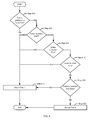
- FIG. 9 shows a flowchart for validating each token in a token pair in accordance with one or more embodiments of the invention. While the various steps in these flowcharts are presented and described sequentially, one of ordinary skill will appreciate that some or all of the steps may be executed in different orders, may be combined or omitted, and some or all of the steps may be executed in parallel.
- the token is validated using the token hash stored in the paired token.
- the server program applies a stored hash function to the token and compares the result to the token hash in the paired token.
- the server program generates a hash function for use by all user identities.
- the server program generates a different hash function for each user identity to be used for tokens generated for that user identity.
- Step 910 the token hash of the received token does not match the token hash stored in the paired token, then in Step 912 , the server program determines that the token is invalid (i.e., not valid).
- Step 914 the server program applies a hash function to the plaintext in the token, and compares the result to the plaintext hash stored in the token.
- the hash function applied to the plaintext is generated by the server program for the user identity.
- the hash function is generated by the server program for use by multiple user identities. If in Step 914 , the resulting plaintext hash does not match the plaintext hash stored in the token, then in Step 912 , the server program determines that the token is invalid (i.e., not valid).
- Step 916 the server program obtains the expiration time stored in the token and compares it to a current time.
- the current time is obtained from the system clock. If in Step 916 , the expiration time is before the current time, then in Step 912 , the server program determines that the token is invalid (i.e., not valid).
- Step 918 the server program obtains the series number stored in the token, and compares it to the value of the token series counter stored in the session associated with the token. If in Step 918 , the series token number does not match the value stored in the token series counter, then in Step 912 , the server program determines that the token is invalid (i.e., not valid).
- Step 920 the server program determines whether the plaintext stored in the token matches the plaintext in the user identity for the associated session.
- the server program parses the plaintext using the plaintext data type stored in the token. If in Step 920 , one or more of the element in the plaintext of the token does not match the user data elements stored in the user identity, then in Step 912 , the server program determines that the token is invalid (i.e., not valid). If in Step 920 , the server program determines that the plaintext stored in the token matches the user data elements stored in the user identity, then in Step 922 , the token is accepted as valid.
- FIGS. 10A and 10B show an example in accordance with one or more embodiments of the invention.
- the server ( 1000 ) includes a server program ( 1006 ) and a user identity repository ( 1008 ).
- the server program ( 1006 ) includes a token pair generator ( 1010 ).
- the user identity repository ( 1008 ) includes a single user identity ( 1012 ), and the user identity ( 1012 ) includes user data elements ( 1014 ), a token series counter ( 1016 ), and a session repository ( 1018 ).
- the server program is connected to a client ( 1002 ) and an attacker ( 1020 ) via a network ( 1004 ).
- FIG. 10B shows an example timeline in accordance with one or more embodiments of the invention.
- the timeline shown in FIG. 10B uses the components shown and described in relation to FIG. 10A and described below.
- the client ( 1002 ) establishes a session with the server program ( 1006 ) and requests a form page.
- the request includes a session ID.
- the server program ( 1006 ) accesses the user identity associated with the session identified by the session ID.
- the server program ( 1006 ) obtains the user data elements ( 1014 ) from the user identity ( 1012 ).
- the server program ( 1006 ) obtains the current value for the token series counter ( 1016 ). For the purposes of the example, assume that the current value stored in the token series counter ( 1016 ) is “4321”.
- Step 1036 the server program ( 1036 ) submits the user data elements and the token series counter value to the token pair generator ( 1010 ).
- the token pair generator ( 1010 ) generates a primary and a secondary token using the user data elements and the token series counter value.
- the primary token includes the following: user data equal to a user ID as user0099, the series number equal to “4321”, an expiration time of 2012:09:15:05:16:00, a plaintext data type equal to [date_user_created][userID], a plaintext equal to [2011:02:22:06:28:00][user0099], a plaintext hash, and a secondary token hash.
- the secondary token includes the following: user data equal to a user ID as user0099, the series number equal to “4321”, an expiration time of 2012:09:15:05:16:00, a plaintext data type equal to [userID][user_relm], a plaintext equal to [user0099][Mr_Smith], a plaintext hash, and a primary token hash.
- Step 1040 the server program ( 1006 ) obtains the generated primary token and secondary token from the token pair generator ( 1010 ).
- Step 1042 the server program ( 1006 ) stores the secondary token in the current session associated with the request.
- Step 1044 the server program ( 1006 ) places the primary token into the requested form and transmits the form to the client ( 1002 ).
- the primary token is embedded in the form as an HTTP cookie and is HTTPS only.
- the server program ( 1006 ) receives a request from the client ( 1002 ) for the secondary token.
- the request is an AJAX call sent from the client in response to client loading the requested form.
- the request is generated and sent by the client as part of the client program loading and/or executing the page form.
- the client program loads the page form for presentation to a user, and as part of the loading process, code within the page form generates the request (e.g., AJAX call) and sends the request to the server program.
- the second request includes the primary token.
- Step 1048 the server program ( 1006 ) accesses the session associated with the request and obtains the secondary token.
- the server program ( 1006 ) validates the primary token using the secondary token. For the purposes of the example, assume that the server program ( 1006 ) validates the primary token using the steps outlined in FIG. 9 . Specifically, the server program ( 1006 ) first applies a hash function to the primary token and compares the result to the primary token hash stored in the secondary token. If the result is not consistent with the primary token hash stored in the secondary token, the token pair is rejected and an error is sent to the client. Assume that the results of the hash function match the primary token hash stored in the secondary token.
- the server program ( 1006 ) applies a plaintext hash to the plaintext in the primary token and compares the results to the plaintext hash stored in the primary token. Assume that the results of the hash function match the plaintext hash stored in the primary token. Next, the server program ( 1006 ) compares the expiration time of 2012:09:15:05:16:00 to the current system time. Assume that the current system time is before the expiration time.
- the server program ( 1006 ) obtains the series number of “4321” from the primary token and compare it to the value of the token series counter for the user identity. Assume that the value of the token series counter is “4321”, and therefore the series number matches the stored value. Finally the server program ( 1006 ) uses the plaintext data type in the primary token to generate plaintext using the user data elements in the user identity. Therefore, in this example, the server program ( 1006 ) generates plaintext as [2011:02:22:06:28:00][user0099], which matches the plaintext stored in the primary token. At this point, the server program ( 1006 ) has validated the primary token. In Step 1052 , the server program server program ( 1006 ) sends the token pair to the client in response to determining that the primary token is valid.
- Step 1054 the client transmits the populated form (which contains sensitive data or instructions) to the server program ( 1006 ).
- the server program ( 1006 ) prepares to validate the token pair by accessing the user identity associated with the session and obtaining the user data elements and token series counter value.
- Step 1058 the server program ( 1006 ) validates the token pair. Assume that the primary token is validated in the same manner as the primary token validation performed at Step 1050 . Assume further that the primary token has been found valid. The server program ( 1006 ) then proceeds to validate the secondary token. For the purposes of the example, assume that the server program ( 1006 ) validates the secondary token using the steps outlined in FIG. 9 . Specifically, the server program ( 1006 ) first applies a hash function to the secondary token and compares the result to the secondary token hash stored in the primary token. If the result is not consistent with the secondary token hash stored in the primary token, the token pair is rejected and an error is sent to the client. Assume that the results of the hash function match the secondary token hash stored in the primary token.
- the server program ( 1006 ) applies a plaintext hash to the plaintext in the secondary token and compares the results to the plaintext hash stored in the secondary token. Assume that the results of the hash function match the plaintext hash stored in the secondary token. Next, the server program ( 1006 ) compares the expiration time of 2012:09:15:05:16:00 to the current system time. Assume that the current system time is before the expiration time.
- the server program ( 1006 ) obtains the series number of “4321” from the secondary token and compare it to the value of the token series counter for the user identity. Assume that the value of the token series counter is “4321”, and therefore the series number matches the stored value. Finally the server program ( 1006 ) uses the plaintext data type in the secondary token to generate plaintext using the user data elements in the user identity. Therefore, in this example, the server program ( 1006 ) generates plaintext as [user0099] [Mr_Smith], which matches the plaintext stored in the secondary token. At this point, the server program ( 1006 ) has validated the secondary token. Once both tokens have been validated, then the server program ( 1006 ) accepts the form, which may include executing instructions contained therein. Also at Step 1056 , the server program ( 1006 ) increments the token series counter ( 1018 ) from “4321” to “4322”.
- Steps 1060 through 1066 show an example of a failed attempt to submit a form with a forged token.
- the attacker ( 1020 ) coaxes the client ( 1002 ) into downloading the form from the attacker ( 1020 ). In one embodiment of the invention, this may be done by presenting a user of the client ( 1002 ) with a hyperlink that triggers the form download making it appear as though the form originated from the server program ( 1006 ). Assume that the form contains instructions to transfer money from the client ( 1002 ) to the attacker ( 1020 ). Further, assume that the attacker somehow obtained a previously used token pair, and copied the content of the token pair to generate the forged token pair.
- Step 1062 the form is submitted by the client ( 1002 ) and the server program ( 1006 ) receives the form containing a forged token pair from the client ( 1002 ).
- the server program ( 1006 ) prepares to validate the forged token pair by accessing the user identity associated with the session and obtaining the user data elements and token series counter value.
- Step 1066 the server program ( 1006 ) attempts to validate the token pair.
- the server program ( 1006 ) determines that the series number of the submitted tokens (“4321”) is younger than the current series number (“4322”). Accordingly, the submitted form is rejected.
- the attempt by the attacker ( 1020 ) to transfer funds from the client ( 1002 ) is, therefore, unsuccessful.
- a computer system includes one or more computer processor(s) ( 1102 ) such as a central processing unit (CPU) or other hardware processor(s), associated memory ( 1104 ) (e.g., random access memory (RAM), cache memory, flash memory, etc.), a storage device ( 1106 ) (e.g., a hard disk, an optical drive such as a compact disk drive or digital video disk (DVD) drive, a flash memory stick, etc.), and numerous other elements and functionalities typical of today's computers (not shown).
- the processor ( 1102 ) is hardware.
- the processor may be an integrated circuit.
- the computer system ( 1100 ) may also include input means, such as a keyboard ( 1108 ), a mouse ( 1110 ), or a microphone (not shown). Further, the computer system ( 1100 ) may include output means, such as a monitor ( 1112 ) (e.g., a liquid crystal display (LCD), a plasma display, or cathode ray tube (CRT) monitor).
- the computer system ( 1100 ) may be connected to a network ( 1114 ) (e.g., a local area network (LAN), a wide area network (WAN) such as the Internet, or any other type of network) via a network interface connection (not shown).
- LAN local area network
- WAN wide area network
- the Internet or any other type of network
- the computer system ( 1100 ) includes at least the minimal processing, input, and/or output means necessary to practice embodiments of the invention.
- one or more elements of the aforementioned computer system ( 1100 ) may be located at a remote location and connected to the other elements over a network.
- embodiments of the invention may be implemented on a distributed system having a plurality of nodes, where each portion of the invention (e.g., user agreement information, product use agreement pre-recordings, application store, product use agreement application, etc.) may be located on a different node within the distributed system.
- the node corresponds to a computer system.
- the node may correspond to a processor with associated physical memory.
- the node may alternatively correspond to a processor or micro-core of a processor with shared memory and/or resources.
- software instructions in the form of computer readable program code to perform embodiments of the invention may be stored, temporarily or permanently, on a non-transitory computer readable storage medium, such as a compact disc (CD), a diskette, a tape, memory, or any other computer readable storage device.
- a non-transitory computer readable storage medium such as a compact disc (CD), a diskette, a tape, memory, or any other computer readable storage device.
Landscapes
- Engineering & Computer Science (AREA)
- Computer Security & Cryptography (AREA)
- Computer Networks & Wireless Communication (AREA)
- Signal Processing (AREA)
- Information Transfer Between Computers (AREA)
Abstract
Description
Claims (18)
Priority Applications (1)
| Application Number | Priority Date | Filing Date | Title |
|---|---|---|---|
| US13/731,877 US8886938B1 (en) | 2012-12-31 | 2012-12-31 | System and method for cross-site reference forgery attack prevention using double validated tokens with time sensitivity |
Applications Claiming Priority (1)
| Application Number | Priority Date | Filing Date | Title |
|---|---|---|---|
| US13/731,877 US8886938B1 (en) | 2012-12-31 | 2012-12-31 | System and method for cross-site reference forgery attack prevention using double validated tokens with time sensitivity |
Publications (1)
| Publication Number | Publication Date |
|---|---|
| US8886938B1 true US8886938B1 (en) | 2014-11-11 |
Family
ID=51845927
Family Applications (1)
| Application Number | Title | Priority Date | Filing Date |
|---|---|---|---|
| US13/731,877 Active 2033-05-26 US8886938B1 (en) | 2012-12-31 | 2012-12-31 | System and method for cross-site reference forgery attack prevention using double validated tokens with time sensitivity |
Country Status (1)
| Country | Link |
|---|---|
| US (1) | US8886938B1 (en) |
Cited By (3)
| Publication number | Priority date | Publication date | Assignee | Title |
|---|---|---|---|---|
| CN108390878A (en) * | 2018-02-26 | 2018-08-10 | 腾讯科技(深圳)有限公司 | Method, apparatus for verifying network request safety |
| US20180302406A1 (en) * | 2017-04-13 | 2018-10-18 | International Business Machines Corporation | Secure client-server communication |
| US20230316272A1 (en) * | 2019-09-24 | 2023-10-05 | nChain Holdings Limited | Divisible tokens |
Citations (2)
| Publication number | Priority date | Publication date | Assignee | Title |
|---|---|---|---|---|
| US20090192944A1 (en) * | 2008-01-24 | 2009-07-30 | George Sidman | Symmetric verification of web sites and client devices |
| JP2013134655A (en) * | 2011-12-27 | 2013-07-08 | Ricoh Co Ltd | Information processing device, information processing system, and program |
-
2012
- 2012-12-31 US US13/731,877 patent/US8886938B1/en active Active
Patent Citations (2)
| Publication number | Priority date | Publication date | Assignee | Title |
|---|---|---|---|---|
| US20090192944A1 (en) * | 2008-01-24 | 2009-07-30 | George Sidman | Symmetric verification of web sites and client devices |
| JP2013134655A (en) * | 2011-12-27 | 2013-07-08 | Ricoh Co Ltd | Information processing device, information processing system, and program |
Cited By (9)
| Publication number | Priority date | Publication date | Assignee | Title |
|---|---|---|---|---|
| US20180302406A1 (en) * | 2017-04-13 | 2018-10-18 | International Business Machines Corporation | Secure client-server communication |
| US20190068602A1 (en) * | 2017-04-13 | 2019-02-28 | International Business Machines Corporation | Secure client-server communication |
| US10587732B2 (en) * | 2017-04-13 | 2020-03-10 | International Business Machines Corporation | Secure client-server communication |
| US10757225B2 (en) * | 2017-04-13 | 2020-08-25 | International Business Machines Corporation | Secure client-server communication |
| US11165890B2 (en) | 2017-04-13 | 2021-11-02 | International Business Machines Corporation | Secure client-server communication |
| CN108390878A (en) * | 2018-02-26 | 2018-08-10 | 腾讯科技(深圳)有限公司 | Method, apparatus for verifying network request safety |
| CN108390878B (en) * | 2018-02-26 | 2021-11-05 | 腾讯科技(深圳)有限公司 | Method and device for verifying network request security |
| US20230316272A1 (en) * | 2019-09-24 | 2023-10-05 | nChain Holdings Limited | Divisible tokens |
| US12505437B2 (en) * | 2019-09-24 | 2025-12-23 | Nchain Licensing Ag | Divisible tokens |
Similar Documents
| Publication | Publication Date | Title |
|---|---|---|
| US8869251B2 (en) | Remote provision of consistent one-time password functionality for disparate on-line resources | |
| US11210661B2 (en) | Method for providing payment gateway service using UTXO-based protocol and server using same | |
| US11222312B2 (en) | Method and system for a secure registration | |
| US10454918B1 (en) | Method for SSO service using PKI based on blockchain networks, and device and server using the same | |
| US8615794B1 (en) | Methods and apparatus for increased security in issuing tokens | |
| US8489740B2 (en) | Method and an apparatus to generate message authentication codes at a proxy server for validating a web session | |
| US10726111B2 (en) | Increased security using dynamic watermarking | |
| US9032085B1 (en) | Identifying use of software applications | |
| EP3896894A1 (en) | Systems and methods for generating, uploading, and executing codes blocks within distributed network nodes | |
| US10015191B2 (en) | Detection of man in the browser style malware using namespace inspection | |
| US20180225660A1 (en) | Systems and methods for issuing and tracking digital tokens within distributed network nodes | |
| US10778668B2 (en) | HTTP session validation module | |
| JP6533236B2 (en) | Digital certificate processing and verification | |
| JP2015528168A (en) | Method and apparatus for pre-provisioning an authentication token for a mobile application | |
| US12242649B2 (en) | Super-cookie identification for stolen cookie detection | |
| US11570168B2 (en) | Techniques for repeat authentication | |
| US20230155999A1 (en) | Method and System for Detecting Two-Factor Authentication | |
| US12323434B2 (en) | Page integrity assurance | |
| US9348992B2 (en) | Linked identities | |
| US11062329B1 (en) | Cross device tracking of e-commerce sales | |
| US11057453B2 (en) | Locking of client session using event listener | |
| US11062340B2 (en) | Post sale referral tracking | |
| US11316843B1 (en) | Systems for authenticating users from a separate user interface | |
| US8667563B1 (en) | Systems and methods for displaying personalized content | |
| US9560046B2 (en) | Device notarization |
Legal Events
| Date | Code | Title | Description |
|---|---|---|---|
| AS | Assignment |
Owner name: INTUIT INC., CALIFORNIA Free format text: ASSIGNMENT OF ASSIGNORS INTEREST;ASSIGNOR:GREENWOOD, MATTHEW;REEL/FRAME:033580/0269 Effective date: 20121228 |
|
| STCF | Information on status: patent grant |
Free format text: PATENTED CASE |
|
| AS | Assignment |
Owner name: GOLUB CAPITAL LLC, AS ADMINISTRATIVE AGENT, NEW YO Free format text: SECURITY INTEREST;ASSIGNOR:QUICKBASE, INC.;REEL/FRAME:038168/0956 Effective date: 20160401 Owner name: QUICKBASE, INC., NEW YORK Free format text: ASSIGNMENT OF ASSIGNORS INTEREST;ASSIGNOR:INTUIT INC.;REEL/FRAME:038177/0325 Effective date: 20160401 |
|
| FEPP | Fee payment procedure |
Free format text: PAT HOLDER CLAIMS SMALL ENTITY STATUS, ENTITY STATUS SET TO SMALL (ORIGINAL EVENT CODE: LTOS); ENTITY STATUS OF PATENT OWNER: LARGE ENTITY |
|
| MAFP | Maintenance fee payment |
Free format text: PAYMENT OF MAINTENANCE FEE, 4TH YR, SMALL ENTITY (ORIGINAL EVENT CODE: M2551) Year of fee payment: 4 |
|
| AS | Assignment |
Owner name: GOLUB CAPITAL MARKETS LLC, AS COLLATERAL AGENT, NE Free format text: FIRST LIEN PATENT SECURITY AGREEMENT;ASSIGNOR:QUICKBASE, INC.;REEL/FRAME:048776/0431 Effective date: 20190402 Owner name: GOLUB CAPITAL MARKETS LLC, AS COLLATERAL AGENT, NEW YORK Free format text: FIRST LIEN PATENT SECURITY AGREEMENT;ASSIGNOR:QUICKBASE, INC.;REEL/FRAME:048776/0431 Effective date: 20190402 |
|
| AS | Assignment |
Owner name: TCG SENIOR FUNDING L.L.C., AS COLLATERAL AGENT, NE Free format text: SECOND LIEN PATENT SECURITY AGREEMENT;ASSIGNOR:QUICKBASE, INC.;REEL/FRAME:048788/0655 Effective date: 20190402 Owner name: QUICKBASE, INC., MASSACHUSETTS Free format text: TERMINATION AND RELEASE OF PATENT SECURITY AGREEMENT RECORDED AT REEL 038168, FRAME 0956;ASSIGNOR:GOLUB CAPITAL LLC, AS ADMINISTRATIVE AGENT;REEL/FRAME:048789/0763 Effective date: 20190402 Owner name: TCG SENIOR FUNDING L.L.C., AS COLLATERAL AGENT, NEW YORK Free format text: SECOND LIEN PATENT SECURITY AGREEMENT;ASSIGNOR:QUICKBASE, INC.;REEL/FRAME:048788/0655 Effective date: 20190402 |
|
| FEPP | Fee payment procedure |
Free format text: ENTITY STATUS SET TO UNDISCOUNTED (ORIGINAL EVENT CODE: BIG.); ENTITY STATUS OF PATENT OWNER: LARGE ENTITY |
|
| FEPP | Fee payment procedure |
Free format text: MAINTENANCE FEE REMINDER MAILED (ORIGINAL EVENT CODE: REM.); ENTITY STATUS OF PATENT OWNER: LARGE ENTITY |
|
| FEPP | Fee payment procedure |
Free format text: 7.5 YR SURCHARGE - LATE PMT W/IN 6 MO, LARGE ENTITY (ORIGINAL EVENT CODE: M1555); ENTITY STATUS OF PATENT OWNER: LARGE ENTITY |
|
| MAFP | Maintenance fee payment |
Free format text: PAYMENT OF MAINTENANCE FEE, 8TH YEAR, LARGE ENTITY (ORIGINAL EVENT CODE: M1552); ENTITY STATUS OF PATENT OWNER: LARGE ENTITY Year of fee payment: 8 |
|
| AS | Assignment |
Owner name: QUICKBASE, INC., MASSACHUSETTS Free format text: TERMINATION AND RELEASE OF SECURITY INTEREST IN PATENTS RECORDED AT REEL 048788, FRAME 0655;ASSIGNOR:TCG SENIOR FUNDING L.L.C., AS COLLATERAL AGENT;REEL/FRAME:066849/0889 Effective date: 20240320 |
|
| MAFP | Maintenance fee payment |
Free format text: PAYMENT OF MAINTENANCE FEE, 12TH YEAR, LARGE ENTITY (ORIGINAL EVENT CODE: M1553); ENTITY STATUS OF PATENT OWNER: LARGE ENTITY Year of fee payment: 12 |