US8886619B2 - Structured test adherence management for manual data entry systems - Google Patents
Structured test adherence management for manual data entry systems Download PDFInfo
- Publication number
- US8886619B2 US8886619B2 US13/448,966 US201213448966A US8886619B2 US 8886619 B2 US8886619 B2 US 8886619B2 US 201213448966 A US201213448966 A US 201213448966A US 8886619 B2 US8886619 B2 US 8886619B2
- Authority
- US
- United States
- Prior art keywords
- data entry
- collection
- structured
- membership
- entry
- Prior art date
- Legal status (The legal status is an assumption and is not a legal conclusion. Google has not performed a legal analysis and makes no representation as to the accuracy of the status listed.)
- Active, expires
Links
Images



Classifications
-
- G—PHYSICS
- G16—INFORMATION AND COMMUNICATION TECHNOLOGY [ICT] SPECIALLY ADAPTED FOR SPECIFIC APPLICATION FIELDS
- G16H—HEALTHCARE INFORMATICS, i.e. INFORMATION AND COMMUNICATION TECHNOLOGY [ICT] SPECIALLY ADAPTED FOR THE HANDLING OR PROCESSING OF MEDICAL OR HEALTHCARE DATA
- G16H50/00—ICT specially adapted for medical diagnosis, medical simulation or medical data mining; ICT specially adapted for detecting, monitoring or modelling epidemics or pandemics
- G16H50/20—ICT specially adapted for medical diagnosis, medical simulation or medical data mining; ICT specially adapted for detecting, monitoring or modelling epidemics or pandemics for computer-aided diagnosis, e.g. based on medical expert systems
-
- G—PHYSICS
- G16—INFORMATION AND COMMUNICATION TECHNOLOGY [ICT] SPECIALLY ADAPTED FOR SPECIFIC APPLICATION FIELDS
- G16H—HEALTHCARE INFORMATICS, i.e. INFORMATION AND COMMUNICATION TECHNOLOGY [ICT] SPECIALLY ADAPTED FOR THE HANDLING OR PROCESSING OF MEDICAL OR HEALTHCARE DATA
- G16H10/00—ICT specially adapted for the handling or processing of patient-related medical or healthcare data
- G16H10/60—ICT specially adapted for the handling or processing of patient-related medical or healthcare data for patient-specific data, e.g. for electronic patient records
Definitions
- the present disclosure relates to systems and methods for assisting patients with chronic diseases in managing structured test procedures, including management of manual data entries received from the patients.
- Patients and healthcare professionals may thereby track and analyze glucose measurements over a period of time to assess changes in the patient over the course of a day, week, or other desirable timeframe. For example, some healthcare professionals may instruct a patient to obtain glucose measurements seven or more times a day over a course of a few consecutive days so that patients may observe the changes associated with particular events or times of day.
- Structured test procedures are typically administered in an automated manner by the glucose meter. During testing, the patient is prompted to input blood samples into the glucose meter at designated times in accordance with a structured test procedure. Glucose measures derived from the blood samples are in turn properly tagged and associated with the structured test procedure being administered by the glucose meter.
- diabetes management applications have been developed for use independent from a glucose meter.
- a diabetes management application may reside on a patient's phone or another type of mobile computing device.
- Such diabetes management applications can likewise help the patient manage structured test procedures by reminding them to collect blood glucose measures and insuring that the collected values obey certain constraints.
- glucose measures are input manually by the patient into the diabetes management application. Accordingly, there is a need to properly manage manual data entries received from the patient in relation to the structured test being administered to the patient.
- a computer-implemented method for managing manual entries of blood glucose measures for a patient in relation to a structured collection procedure managed by a portable computing device.
- the method includes: managing a structured collection procedure for a user of the computing device, where the structured collection procedure specifies one or more collection events for obtaining blood glucose measures for a patient; receiving a data entry for a blood glucose measure from the user of the computing device; evaluating the data entry in relation to the structured collection procedure using a membership rule set, where the membership rule set defines rules for associating data entries with structured collection procedures; and inputting the data entry into a logbook residing in a data store on the computing device.
- the data entry may be input with or without an association to the structured collection procedure.
- a diabetes management application for use on a portable computing device.
- the diabetes management application includes: a structured test module that manages a given structured collection procedure for the user of the computing device, where the given structured collection procedure specifies one or more collection events for obtaining blood glucose measures for a patient; an input module configured to receive a given data entry for a blood glucose measure from a user of the computing device; a logbook configured to store data entries related to diabetes care of the patient; a membership rule set that defines rules for associating data entries received from the user with structured collection procedures; and a membership module configured to receive the given data entry from the input module and operable to associate the given data entry with the given structured collection procedure based on the membership rule set, where the input module, the structured test module and the membership module are executed by a computer processor residing on the computing device.
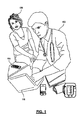
- FIG. 1 is a drawing depicting a patient and a treating clinician
- FIG. 2 is a block diagram of an exemplary diabetes management application 200 which may reside on a portable computing device.
- FIG. 3 is a flowchart depicting an exemplary method for managing manual entries of blood glucose measures in relation to a structured test managed by a portable computing device
- FIG. 4 is a flowchart depicting an exemplary method for evaluating data entries implemented by a membership module of the diabetes management application.
- a person 100 with diabetes and a healthcare professional 102 are shown in a clinical environment.
- Persons with diabetes include persons with metabolic syndrome, pre-diabetes, type 1 diabetics, type 2 diabetics and gestational diabetics and are collectively referred to as a patient.
- Healthcare providers for diabetes are diverse and include nurses, nurse practitioners, physicians, and endocrinologists and are collectively referred to as a clinician. While this disclosure makes reference to diabetes care, it is readily understood that the concepts related to structured testing disclosed herein can be applied to other types of chronic diseases.
- this disclosure makes reference to blood glucose measures but the concepts are extendable to other types of biomarkers of a patient including but not limited to an interstitial glucose value, an HbA1c value, a heart rate measurement, a blood pressure measurement, lipids, triglycerides, cholesterol and the like.
- the patient 100 typically shares with the clinician 102 a variety of patient data including blood glucose measurements, amounts of insulin infused, amounts of food and beverages consumed, exercise schedules, and other lifestyle information.
- the clinician 102 may obtain additional patient data that includes measurements of HbA1C, cholesterol levels, triglycerides, blood pressure, and weight of the patient 100 .
- the patient data can be recorded manually or electronically by the patient 100 or clinician 102 using a diabetes management application accessible on a handheld portable computing device 104 , a personal computer (PC) 106 or some other type of computing device.
- the clinician 102 can analyze the patient data manually or electronically using the diabetes management application or some other type of diabetes analysis software. After analyzing the patient data and reviewing adherence of the patient 100 to previously prescribed therapy, the clinician 102 can decide whether to modify the therapy for the patient 100 .
- FIG. 2 depicts an exemplary diabetes management application 200 which may reside on a portable computing device.
- the diabetes management application 200 is intended for use by persons with diabetes.
- the diabetes management application 200 will support entry, transfer, storage, display and analysis of blood glucose measures and other health indicators.
- the diabetes management application 200 will also provide structured testing procedures to help the user increase their understanding of how to manage their diabetes. Because people tend to carry their portable computing device (e.g., phone) with them, the diabetes management application 200 will provide persons with diabetes an easy-to-use way to capture and track their health information.
- the diabetes management application 200 will support data sharing by means of short message service (SMS) as well as email delivery of reports.
- SMS short message service
- the diabetes management application 200 may include an input module 210 , a membership module 220 and a structured test module 230 .
- the structured test module 230 is operable to manage a structured test or collection procedure to the user of the computing device, where the structured test specifies one or more collection events for obtaining blood glucose measures from a patient.
- the structured tests accessible to the structured test module 230 are stored in data store 232 residing on the portable computing device.
- the diabetes management application 200 supports two exemplary structured tests: the testing in pairs (TiP) structured test and the three-day profile structured test.
- the testing is pairs test involves obtaining a pair of blood glucose measures in relation to a given event, such as a meal.
- the pair of blood glucose measures for a given test should fall within a window of time which encapsulates the given event, such that a first measure occurs before the given event and the second measure occurs after the given event.
- Paired testing can address scenarios such as the relationship between portion sizes and postprandial glucose values, the effect of exercise on blood glucose control and the efficacy of insulin doses.
- three-day profile tests involve obtaining blood glucose measures at predefined time slots throughout the course of a given day and repeating the measures over a three day period.
- the three-day profile test specifies obtaining blood glucose measures at seven different times during the day: pre-breakfast; post-breakfast; pre-lunch; post-lunch; pre-dinner; post-dinner; and bedtime. While reference is made throughout this disclosure to these two particular structured tests, it is readily understood that the concepts disclosed herein are extendable to other types of structured tests.
- the input module 210 is configured to receive data entries from a user of the computing device.
- a data entry may be for a blood glucose measure taken by the user, where the data entry includes a blood glucose measure along with a date and time at which the blood glucose measure was taken. It is readily understood that the data entry may further include other data related to the blood glucose measure and/or the patient. In other examples, a data entry may not include a blood glucose measure. Rather, the data entry may pertain to a meal event, an exercise event or other types of events or health parameters related to the patient (also referred to herein as non-blood glucose entries). In any case, one or more parameters of the data entry are input manually by the user of the computing device.
- the membership module 220 is configured to receive the data entries from the input module 210 and evaluates the data entries for association with the structured test procedure currently being managed by the structured test module 230 . More specifically, the data entries are evaluated in relation to a set of membership rules 222 , where the set includes rules for associating data entries with the given structured collection procedure as will be further described below. Data entries are in turn input by the membership module into a logbook 240 for the patient with or without an association to the given structured collection procedure. Membership rules may also be stored in a data store residing on the portable computing device.
- TiP Testing in Pairs
- the question at hand is how to manage membership of logbook entries in a structured test. It is not really an option to have the user manage membership with no enforcement of restrictions; that would defeat the purpose of structured testing.
- pair the new entry and the existing SINGLE and set both to PAIRED S9 Create, there is a Precluded by CE1 PAIRED entry and multiple SINGLE entries in the window S10: Create, multiple Per CE2, if the new entry falls within one of the PAIRED entries existing pairs, do not allow. and no SINGLE Per CE3, if the new entry falls before either of entries in the window the existing pairs, do not allow. Per CE1, if there are existing SINGLEs anywhere, do not allow. Otherwise, allow and set the new entry to SINGLE S11: Create, multiple Per CE2, if the new entry falls within one of the PAIRED entries existing pairs, do not allow.
- S1 Deleting an OUT Allow entry
- S2 Deleting a Allow SINGLE entry
- S3 Deleting a Set the remaining entry to SINGLE and PAIRED entry apply the logic for a new entry to it.
- S4 Create, no paired or Set the new entry to SINGLE single entries in the window
- S5 Create, there is one If the new entry and the existing SINGLE SINGLE entry in make a pair, set both to PAIRED. the window Otherwise, make the new entry SINGLE.
- S6 Create, there are If the new entry can be paired with one of the no PAIRED and existing singles, pair it with the SINGLE that multiple SINGLE encompasses the largest window less than w entries in the window and set any SINGLE entries that fall within this window to OUT per CI1. Otherwise, set the new entry to SINGLE.
- S7 Create, there is a Per CI1, if the new entry is between the PAIRED entry in existing PAIR, make the new entry OUT. the window but Otherwise, set the new entry to SINGLE no SINGLE entry
- S8 Create, there is a Per CI1, if the new entry falls within the PAIRED entry and existing pair, make the new entry OUT.
- SINGLE S9 Create, there is a Per CI1, if the new entry falls within the PAIRED entry and existing pair, make the new entry OUT. multiple SINGLE entries If the new entry can be paired with one of the in the window existing singles, pair it with the SINGLE that encompasses the largest window less than w and set any SINGLE entries that fall within this window to OUT per CI1. Otherwise, set the new entry to SINGLE S10: Create, multiple Per CI1, if the new entry falls within one of PAIRED entries the existing pairs, set the new entry to OUT.
- set the new entry to SINGLE entries in the window S11 Create, multiple Per CI1, if the new entry falls within one of PAIRED entries the existing pairs, set the new entry to OUT. and one SINGLE If the new entry matches the existing SINGLE entry in the window but the resulting pair intersects an existing pair, set the new entry to OUT. If the new entry matches the existing SINGLE and the resulting pair does not intersect an existing pair, set the new entry and the existing SINGLE to PAIRED. Otherwise, set the new entry to SINGLE S12: Create, multiple Per CI1, if the new entry falls within one of the PAIRED entries and existing pairs, set the new entry to OUT.
- 3DP tests are simpler than TiP tests because there are predefined time slots and each time slot has specific requirements.
- 3DP tests are more complex than TiP tests because there is no simplifying concept like “pair” which can reduce the problem analysis space (the concept of “day” in 3DP at first looks like it might be useful, but because a 3DP day has no real relationship to a calendar day, that proves to not be true). Nonetheless, a 3DP regimen can be analyzed in terms of “windows” similar to those used for TiPs tests.
- Each of the 7 “slots” in a 3DP day has time constraints based on “normal” meal and bed times that the user selects. For example, the user may have indicated that breakfast normally occurs at 7 am.
- the event should fall within a defined time-window associated with the slot (e.g., within 30 minutes of the designated meal time).
- the event should meet the other criteria for the slot.
- the data entry may specify an indicator for the slot (e.g., pre-breakfast, post-breakfast, pre-lunch, etc.).
- the indicator should also match the indicator associated with the slot.
- Other types of criteria are also contemplated by this disclosure. When each of the criteria for the slot is met, the data entry is mapped to the slot and thus associated with the structured test. Accordingly, each data entry for a 3DP regimen falls into one of two states:
- FIG. 3 provides an overview of this exemplary method 300 for managing manual data entries of blood glucose measures in the context of a diabetes management application 200 residing on a portable computing device.
- various data related to the patient's diabetes care may be logged by the patient via the diabetes management application 200 into a logbook residing on the portable computing device.
- the patient may be prompted to manually input data entries for blood glucose measures taken in accordance with the structured test.
- Such data entries may include blood glucose measures as well as a date and time at which the blood glucose measure was taken by the patient.
- this data is provided manually by the patient as opposed to being generated or otherwise provided automatically by the diabetes management application 200 .
- the patient may also input data entries which are unrelated to the ongoing structured test.
- the patient may input a data entry pertaining to a meal, exercise or some other type of health data. In this case, the data entries are not in response to or associated with the ongoing structure test but nonetheless captured by the diabetes management application 200 .
- the diabetes management application 200 is configured to receive directives pertaining to data entries in the logbook as indicated at 310 .
- Directives may include but are not limited to creating, deleting or updating data entries in the logbook.
- each directive pertains to one or more particular data entries whether it be deleting an existing data entry or creating a new data entry.
- Directives are evaluated at 320 using membership rules to determine whether the directive is permissible or not as it relates to the ongoing structured test.
- the data entry may be created with an association to the structured test as indicated at 340 or without an association to the structured test as indicated at 350 .
- FIG. 4 further depicts the evaluation process as implemented by the membership module 220 of the diabetes management application 200 .
- the membership module 220 Upon receiving a directive at 410 from the user, the membership module 220 first determines the type of structured test that is being managed for the patient.
- the type identifier for the ongoing structured test may be stored in a data store 234 accessible to the membership module 220 , where the data store 234 contains data for the ongoing structure test and is maintained by the test module 230 . In this way, the membership module 220 may determine the type of structured test by retrieving the type identifier from the data store 234 .
- Membership rules vary depending on the management approach and the type of structured test.
- the management approach i.e., implicit or explicit
- a set of membership rules should be provided for each unique combination of management approach and test type that is supported by the diabetes management application 200 .
- the membership module 220 can retrieve at 430 an applicable set of membership rules for evaluating the user directive.
- the membership module 220 retrieves at 440 any previous data entries stored in the logbook and associated with the ongoing structured test.
- each structured test administered by the test module 230 is assigned a unique test identifier.
- the unique test identifier for the ongoing structured test is in turn maintained in the data store 234 by the test module 230 .
- the membership module 220 can access the test identifier for the ongoing structure test and, if applicable, tag the data entries being entered into the logbook with the unique identifier for the ongoing structure test.
- the membership module 220 can likewise retrieve the test identifier from the data store 234 and, using the retrieved test identifier, retrieve any previous data entries associated with the ongoing structure test from the logbook 240 .
- the membership module 220 can then determine at 450 the applicable scenario from a set of possible scenarios. For example, assume a directive to create a new data entry in the context of an ongoing TiP test. Should the membership module 220 retrieve one SINGLE data entry in the time window for the ongoing TiP test, the membership module 220 would deem the situation S 5 (see scenario table above) and in turn retrieve the corresponding membership rule which applies to this scenario.
- the membership module 220 applies the corresponding membership rule as indicated at 460 .
- the membership module 220 operating in accordance with the explicit approach, would permit the new entry to be paired with the existing entry and thus associated with the ongoing TiPs test. If the new entry and the existing entry failed to meet the pairing criteria, the membership module 220 , operating in accordance with the explicit approach, would tell the user the that the entry cannot be part of the structured test, and ask the user to either modify the entry or remove it from the structured test.
- the membership module 220 operating in accordance with the implicit approach, would permit the new entry to be paired with the existing entry if the new entry and the existing entry meet the pairing criteria for forming a pair.
- the membership module 220 operating in accordance with the implicit approach, would not associate the new data entry with the ongoing TiP test and permit entry into the logbook.
- the pairing criteria are defined by the structured test and thus operate independent from the membership rules set forth in this disclosure. It is to be further understood that only the relevant steps of the membership module 220 are discussed above in relation to FIG. 4 , but that other software-implemented instructions may be needed to control and manage the overall operation of the system.
- module may refer to, be part of, or include an Application Specific Integrated Circuit (ASIC); an electronic circuit; a combinational logic circuit; a field programmable gate array (FPGA); a processor (shared, dedicated, or group) that executes code; other suitable components that provide the described functionality; or a combination of some or all of the above, such as in a system-on-chip.
- ASIC Application Specific Integrated Circuit
- FPGA field programmable gate array
- processor shared, dedicated, or group
- the term module may include memory (shared, dedicated, or group) that stores code executed by the processor.
- code may include software, firmware, and/or microcode, and may refer to programs, routines, functions, classes, and/or objects.
- shared means that some or all code from multiple modules may be executed using a single (shared) processor. In addition, some or all code from multiple modules may be stored by a single (shared) memory.
- group means that some or all code from a single module may be executed using a group of processors. In addition, some or all code from a single module may be stored using a group of memories.
- the apparatuses and methods described herein may be implemented by one or more computer programs executed by one or more processors.
- the computer programs include processor-executable instructions that are stored on a non-transitory tangible computer readable medium.
- the computer programs may also include stored data.
- Non-limiting examples of the non-transitory tangible computer readable medium are nonvolatile memory, magnetic storage, and optical storage.
Landscapes
- Engineering & Computer Science (AREA)
- Health & Medical Sciences (AREA)
- Medical Informatics (AREA)
- Public Health (AREA)
- Epidemiology (AREA)
- Biomedical Technology (AREA)
- Primary Health Care (AREA)
- General Health & Medical Sciences (AREA)
- Data Mining & Analysis (AREA)
- Pathology (AREA)
- Databases & Information Systems (AREA)
- Measurement Of The Respiration, Hearing Ability, Form, And Blood Characteristics Of Living Organisms (AREA)
- Measuring And Recording Apparatus For Diagnosis (AREA)
Abstract
Description
-
- 1. The structured test began on Sunday
- 2. On Monday morning, the user measured their blood glucose at 6:30 AM. They took a half-hour walk from 7 to 7:30, and measured their blood glucose again at 10 AM. They recorded none of this in diabetes management application.
- 3. On Tuesday evening, the user remembers that they didn't log their Monday exercise and related blood glucose measures. They open the diabetes management application and scroll their meter's memory to record the blood glucose at 6:30, record the exercise at 7:00 and use their meter to get the blood glucose at 10. But, since it is now Tuesday, they neglect to reset the date on these events. As far as the diabetes management application is concerned, the events occurred on Tuesday morning, not Monday morning.
- 4. On Wednesday, when the user logs some something else, they realize the mistake and reset the dates on the three earlier events (from Tuesday to Monday).
-
- 1. When the user enters the first blood glucose value, should the diabetes management application consider it part of the structured test? Should it allow the user to identify it as such? This is not at all obvious because no exercise has been entered.
- 2. On Wednesday, the user resets the time of the exercise by a day. At that moment the post-exercise blood glucose is outside the acceptance window for the post event. What happens?
- 3. What happens if the user makes a blood glucose entry between 6:30 and 10 and tries to include it in the structured test?
- 4. What happens if the user, when they move the post-exercise blood glucose reading, mistakenly changes the time to 10 PM (outside the allowable range)?
- 5. What happens if the user, after moving the 6:30 AM event but before moving the 10 AM event, creates a new pre-exercise event at 7 AM on Tuesday?
This disclosure presents an analysis of the problem of structured test membership in a manual-entry situation and solutions in light of this analysis.
-
- 1. The entry in question is not part of the structured test which is referred to herein as the “OUT” state.
- 2. The entry in question is potentially half of a pair whose other half is not yet available which is referred to herein as the “SINGLE” state.
- 3. The entry in question is part of a completed pair which is referred to herein as the PAIRED state.
Possible situations that any solution must address are enumerated as follows: - Deleting an OUT entry
- Deleting a SINGLE entry
- Deleting a PAIRED entry
- Creating a relevant new entry in the presence of existing entries
-
- There are no PAIRED or SINGLE entries in the window
- There are no PAIRED entries in the window, and one SINGLE entry
- There are no PAIRED entries in the window, and more than one SINGLE entry
- There is a PAIRED entry in the window, but no SINGLE entries
- There is one PAIRED entry and one SINGLE entry in the window
- There is one PAIRED entry and more than one SINGLE entry in the window
- There are multiple PAIRED entries and no SINGLE entries in the window
- There are multiple PAIRED entries and one SINGLE entry in the window
- There are multiple PAIRED and multiple SINGLE entries in the window
Note that in the above, it is sufficient for one member of a pair to fall in the window to count as a single PAIRED entry in the window. Added to the three earlier scenarios (for delete), twelve possible scenarios have been identified that can occur in a manual-entry system with respect to a running TiP regimen. Potential solutions must address every one of these situations, either by providing explicit rules for dealing with it, or explicit rules for precluding it.
-
- CE1: Only one SINGLE allowed at a time
- CE2: Pairs cannot overlap or be nested.
- CE3: Pairs must be started in chronological order
Guided by these three global constraints, particular membership rules can be enumerated for each of the twelve possible scenarios. These membership rules collectively define the membership rule set which pertains to a TiPs test under the explicit approach and are set forth in the table below.
| Situation | Explicit Approach Logic |
| S1: Deleting an OUT | Allow |
| entry | |
| S2: Deleting a SINGLE | Allow |
| entry | |
| S3: Deleting a PAIRED | Per CE1, if there are existing SINGLEs, do not |
| entry | allow. Otherwise, allow and set the remaining |
| entry to SINGLE. | |
| S4: Create, no paired or | Allow |
| single entries in the | |
| window | |
| S5: Create, there is one | Per CE1, if the new entry and the existing |
| SINGLE entry in | SINGLE make a pair, allow and set both to |
| the window | PAIRED. Otherwise, do not allow per CE1 |
| S6: Create, there are | Precluded by CE1 |
| no PAIRED and | |
| multiple SINGLE | |
| entries in the window | |
| S7: Create, there is a | Per CE1, if there are existing SINGLEs |
| PAIRED entry in | anywhere, do not allow. |
| the window but | Per CE2, if the new entry is between the |
| no SINGLE entry | existing PAIR, do not allow. |
| Otherwise, set the new entry to SINGLE | |
| S8: Create, there is a | Per CE1, if the existing SINGLE and the new |
| PAIRED entry and | entry do not make a pair, do not allow. |
| a SINGLE entry | Per CE2, if the new entry falls within the |
| in the window | existing pair, do not allow. |
| Otherwise, pair the new entry and the existing | |
| SINGLE and set both to PAIRED | |
| S9: Create, there is a | Precluded by CE1 |
| PAIRED entry and | |
| multiple SINGLE | |
| entries in the window | |
| S10: Create, multiple | Per CE2, if the new entry falls within one of the |
| PAIRED entries | existing pairs, do not allow. |
| and no SINGLE | Per CE3, if the new entry falls before either of |
| entries in the window | the existing pairs, do not allow. |
| Per CE1, if there are existing SINGLEs | |
| anywhere, do not allow. | |
| Otherwise, allow and set the new entry to | |
| SINGLE | |
| S11: Create, multiple | Per CE2, if the new entry falls within one of the |
| PAIRED entries | existing pairs, do not allow. |
| and one SINGLE | Per CE3, if the new entry falls before either of |
| entry in the window | the existing pairs, do not allow. |
| Per CE1, if the new entry and existing single do | |
| not make a pair, do not allow | |
| Otherwise, pair the new entry and the existing | |
| single, setting both to PAIRED | |
| S12: Create, multiple | Precluded by CE1 |
| PAIRED entries and | |
| multiple SINGLE | |
| entries in the window | |
Manual data entries can be evaluated in relation this membership rule set by the
-
- CI1: Pairs cannot overlap or be nested.
From this constraint, particular membership rules for the implicit approach can be enumerated for each of the twelve possible scenarios. These membership rules collectively define the membership rule set which pertains to a TiPs test under the implicit approach and are set forth in the table below.
- CI1: Pairs cannot overlap or be nested.
| Situation | Implicit Approach Logic |
| S1: Deleting an OUT | Allow |
| entry | |
| S2: Deleting a | Allow |
| SINGLE entry | |
| S3: Deleting a | Set the remaining entry to SINGLE and |
| PAIRED entry | apply the logic for a new entry to it. |
| S4: Create, no paired or | Set the new entry to SINGLE |
| single entries in | |
| the window | |
| S5: Create, there is one | If the new entry and the existing SINGLE |
| SINGLE entry in | make a pair, set both to PAIRED. |
| the window | Otherwise, make the new entry SINGLE. |
| S6: Create, there are | If the new entry can be paired with one of the |
| no PAIRED and | existing singles, pair it with the SINGLE that |
| multiple SINGLE | encompasses the largest window less than w |
| entries in the window | and set any SINGLE entries that fall within |
| this window to OUT per CI1. | |
| Otherwise, set the new entry to SINGLE. | |
| S7: Create, there is a | Per CI1, if the new entry is between the |
| PAIRED entry in | existing PAIR, make the new entry OUT. |
| the window but | Otherwise, set the new entry to SINGLE |
| no SINGLE entry | |
| S8: Create, there is a | Per CI1, if the new entry falls within the |
| PAIRED entry and | existing pair, make the new entry OUT. |
| a SINGLE entry | If the new entry and the existing SINGLE |
| in the window | for a pair, set both to PAIRED |
| Otherwise, set the new entry to SINGLE | |
| S9: Create, there is a | Per CI1, if the new entry falls within the |
| PAIRED entry and | existing pair, make the new entry OUT. |
| multiple SINGLE entries | If the new entry can be paired with one of the |
| in the window | existing singles, pair it with the SINGLE that |
| encompasses the largest window less than w | |
| and set any SINGLE entries that fall within | |
| this window to OUT per CI1. | |
| Otherwise, set the new entry to SINGLE | |
| S10: Create, multiple | Per CI1, if the new entry falls within one of |
| PAIRED entries | the existing pairs, set the new entry to OUT. |
| and no SINGLE | Otherwise, set the new entry to SINGLE |
| entries in the window | |
| S11: Create, multiple | Per CI1, if the new entry falls within one of |
| PAIRED entries | the existing pairs, set the new entry to OUT. |
| and one SINGLE | If the new entry matches the existing SINGLE |
| entry in the window | but the resulting pair intersects an existing |
| pair, set the new entry to OUT. | |
| If the new entry matches the existing SINGLE | |
| and the resulting pair does not intersect an | |
| existing pair, set the new entry and the existing | |
| SINGLE to PAIRED. | |
| Otherwise, set the new entry to SINGLE | |
| S12: Create, multiple | Per CI1, if the new entry falls within one of the |
| PAIRED entries and | existing pairs, set the new entry to OUT. |
| multiple SINGLE | If the new entry matches an existing SINGLE |
| entries in the window | but the resulting pair intersects an existing pair |
| for all such SINGLEs, set the new entry to | |
| OUT. | |
| If the new entry matches an existing SINGLE | |
| and the resulting pair does not intersect an | |
| existing pair, choose the SINGLE that | |
| encompasses the largest window less than w | |
| and set any SINGLE entries that fall within this | |
| window to OUT per CI1. Set the new entry and | |
| the matching SINGLE to PAIRED. | |
| Otherwise, set the new entry to SINGLE | |
Manual data entries can be evaluated in relation to this membership rule set by the
-
- 1. The entry in question is not part of the structured test; referred to herein as the OUT state.
- 2. The entry in question is filling a slot in the structured test; referred to herein as the SLOTTED state.
The various create and delete scenarios are now enumerated based on the possible states. Delete is straightforward: deleting either an OUT entry or a SLOTTED entry. With respect to a new relevant entry, the following situations are possible: - The entry does not match any slot
- The entry matches a slot that has a SLOTTED entry
- The entry matches a slot for which there is no SLOTTED entry.
Thus, for 3DP there are only five possible scenarios a solution must address or preclude.
-
- C3DP1: Only one entry per slot
- C3DP2: Every entry must match a slot
Guided by these global constraints, particular membership rules can be enumerated for each of the possible scenarios. These membership rules collectively define the membership rule set which pertains to a 3DP test and are set forth in the table below.
| Situation | Explicit Approach | Implicit Approach |
| Delete an OUT | Allow | Allow |
| entry | ||
| Delete a | Allow | Allow |
| SLOTTED | ||
| entry | ||
| New entry does | Do not allow per | Make new entry OUT |
| not match any | C3DP2 | |
| slot | ||
| New entry | Do not allow per | Make new entry OUT |
| matches a slot | C3DP1 | |
| for which there | ||
| is a SLOTTED | ||
| entry | ||
| New entry | Put entry in the slot, | Put entry in the slot, |
| matches a slot | make it SLOTTED | make it SLOTTED |
| for which there | ||
| is no SLOTTED | ||
| entry | ||
Manual data entries can be evaluated in relation to these membership rules by the
-
- 1. When the user enters the first blood glucose value, should the diabetes management application consider it part of the structured test? Should it allow the user to identify it as such? This is not at all obvious because no exercise has been entered.
This issue is resolved by the overall assumption that only blood glucose entries are considered. Therefore, in the implicit approach the blood glucose value is SINGLE and in the explicit approach the user has the option (which we presume they select) to include the result in the structured test. - 2. On Wednesday, the user resets the time of the exercise by a day. At that moment the post-exercise blood glucose is outside the acceptance window for the post event. What happens?
Presume the user first resets the date on the “before” event (the sequence is the same if the move the “after” event first). In both implicit and explicit approaches, both the “before” the “after” events go to the SINGLE state. Then, when the “before” event is moved, both events return to PAIRED state. - 3. What happens if the user makes a blood glucose entry between 6:30 and 10 and tries to include it in the structured test?
This is prohibited in the both the implicit and explicit approaches. In the implicit approach, the new event would be OUT. In the explicit approach, the user would be told they cannot include the result in the structured test. - 4. What happens if the user, when they move the post-exercise blood glucose reading, mistakenly changes the time to 10 PM (outside the allowable range)?
In the implicit approach, the new event would be marked SINGLE. In the explicit approach, the user would be told there is an error because there is already a SINGLE event. - 5. What happens if the user, after moving the 6:30 AM event but before moving the 10 AM event, creates a new pre-exercise event at 7 AM on Tuesday?
In both approaches, the new event will form a pair with the remaining Tuesday post-exercise. When the user attempts to move that post event, the implicit approach will allow it and set the new event to SINGLE. In the explicit approach, the user will not be allowed to move the post event until providing a pair for the Monday pre event.
- 1. When the user enters the first blood glucose value, should the diabetes management application consider it part of the structured test? Should it allow the user to identify it as such? This is not at all obvious because no exercise has been entered.
Claims (19)
Priority Applications (5)
| Application Number | Priority Date | Filing Date | Title |
|---|---|---|---|
| US13/448,966 US8886619B2 (en) | 2011-12-29 | 2012-04-17 | Structured test adherence management for manual data entry systems |
| CN201280070953.4A CN104137109B (en) | 2011-12-29 | 2012-12-21 | Compliance management is tested in structuring for artificial data input system |
| PCT/EP2012/076536 WO2013098221A1 (en) | 2011-12-29 | 2012-12-21 | Structured test adherence management for manual data entry systems |
| HK15104119.1A HK1203662B (en) | 2011-12-29 | 2012-12-21 | Structured test adherence management for manual data entry systems |
| EP12809275.6A EP2798547A1 (en) | 2011-12-29 | 2012-12-21 | Structured test adherence management for manual data entry systems |
Applications Claiming Priority (2)
| Application Number | Priority Date | Filing Date | Title |
|---|---|---|---|
| US201161581331P | 2011-12-29 | 2011-12-29 | |
| US13/448,966 US8886619B2 (en) | 2011-12-29 | 2012-04-17 | Structured test adherence management for manual data entry systems |
Publications (2)
| Publication Number | Publication Date |
|---|---|
| US20130173566A1 US20130173566A1 (en) | 2013-07-04 |
| US8886619B2 true US8886619B2 (en) | 2014-11-11 |
Family
ID=48695768
Family Applications (1)
| Application Number | Title | Priority Date | Filing Date |
|---|---|---|---|
| US13/448,966 Active 2032-08-15 US8886619B2 (en) | 2011-12-29 | 2012-04-17 | Structured test adherence management for manual data entry systems |
Country Status (4)
| Country | Link |
|---|---|
| US (1) | US8886619B2 (en) |
| EP (1) | EP2798547A1 (en) |
| CN (1) | CN104137109B (en) |
| WO (1) | WO2013098221A1 (en) |
Cited By (1)
| Publication number | Priority date | Publication date | Assignee | Title |
|---|---|---|---|---|
| CN111192647A (en) * | 2019-12-31 | 2020-05-22 | 嘉兴太美医疗科技有限公司 | Data collection system and data collection method of physical examination instrument |
Citations (15)
| Publication number | Priority date | Publication date | Assignee | Title |
|---|---|---|---|---|
| US20040172284A1 (en) | 2003-02-13 | 2004-09-02 | Roche Diagnostics Corporation | Information management system |
| US20060047192A1 (en) | 2004-08-26 | 2006-03-02 | Robert Hellwig | Insulin bolus recommendation system |
| US20060137695A1 (en) | 2004-12-23 | 2006-06-29 | Robert Hellwig | System and method for determining insulin bolus quantities |
| US20070230282A1 (en) | 2006-04-03 | 2007-10-04 | Darrell May | Dismiss all event reminders |
| US20080177149A1 (en) | 2006-06-16 | 2008-07-24 | Stefan Weinert | System and method for collecting patient information from which diabetes therapy may be determined |
| US20090150177A1 (en) | 2007-12-07 | 2009-06-11 | Roche Diagnostics Operations, Inc. | Method and system for setting time blocks |
| US20100016700A1 (en) | 2008-07-18 | 2010-01-21 | Lifescan, Inc. | Analyte measurement and management device and associated methods |
| US20100069730A1 (en) | 2006-03-23 | 2010-03-18 | Chris Bergstrom | System and Methods for Improved Diabetes Data Management and Use Employing Wireless Connectivity Between Patients and Healthcare Providers and Repository of Diabetes Management Information |
| US20100160757A1 (en) | 2008-02-29 | 2010-06-24 | Roche Diagnostics Operations, Inc. | Device and method for assessing blood glucose control |
| US20100160759A1 (en) | 2007-06-29 | 2010-06-24 | Celentano Michael J | Combination communication device and medical device for communicating wirelessly with a remote medical device |
| US20100198142A1 (en) | 2009-02-04 | 2010-08-05 | Abbott Diabetes Care Inc. | Multi-Function Analyte Test Device and Methods Therefor |
| WO2010089304A1 (en) | 2009-02-04 | 2010-08-12 | Sanofi-Aventis Deutschland Gmbh | Medical device and method for providing information for glycemic control |
| US20100218132A1 (en) | 2008-12-23 | 2010-08-26 | Roche Diagnostics Operations, Inc. | Management method and system for implementation, execution, data collection, and data analysis of a structured collection procedure which runs on a collection device |
| US20100331650A1 (en) | 2009-06-25 | 2010-12-30 | Roche Diagnostics Operations, Inc. | Episodic blood glucose monitoring system with an interactive graphical user interface and methods thereof |
| US20110029870A1 (en) | 2006-03-31 | 2011-02-03 | Research In Motion Limited | Snooze support for event reminders |
-
2012
- 2012-04-17 US US13/448,966 patent/US8886619B2/en active Active
- 2012-12-21 CN CN201280070953.4A patent/CN104137109B/en active Active
- 2012-12-21 WO PCT/EP2012/076536 patent/WO2013098221A1/en not_active Ceased
- 2012-12-21 EP EP12809275.6A patent/EP2798547A1/en not_active Ceased
Patent Citations (20)
| Publication number | Priority date | Publication date | Assignee | Title |
|---|---|---|---|---|
| US20040172284A1 (en) | 2003-02-13 | 2004-09-02 | Roche Diagnostics Corporation | Information management system |
| US7553281B2 (en) | 2004-08-26 | 2009-06-30 | Roche Diagnostices Operations, Inc. | Insulin bolus recommendation system |
| US20060047192A1 (en) | 2004-08-26 | 2006-03-02 | Robert Hellwig | Insulin bolus recommendation system |
| US7291107B2 (en) | 2004-08-26 | 2007-11-06 | Roche Diagnostics Operations, Inc. | Insulin bolus recommendation system |
| US20080058628A1 (en) | 2004-08-26 | 2008-03-06 | Robert Hellwig | Insulin bolus recommendation system |
| US20060137695A1 (en) | 2004-12-23 | 2006-06-29 | Robert Hellwig | System and method for determining insulin bolus quantities |
| US20100069730A1 (en) | 2006-03-23 | 2010-03-18 | Chris Bergstrom | System and Methods for Improved Diabetes Data Management and Use Employing Wireless Connectivity Between Patients and Healthcare Providers and Repository of Diabetes Management Information |
| US20110029870A1 (en) | 2006-03-31 | 2011-02-03 | Research In Motion Limited | Snooze support for event reminders |
| US20070230282A1 (en) | 2006-04-03 | 2007-10-04 | Darrell May | Dismiss all event reminders |
| US20080177149A1 (en) | 2006-06-16 | 2008-07-24 | Stefan Weinert | System and method for collecting patient information from which diabetes therapy may be determined |
| US20100168660A1 (en) | 2007-06-29 | 2010-07-01 | Galley Paul J | Method and apparatus for determining and delivering a drug bolus |
| US20100160759A1 (en) | 2007-06-29 | 2010-06-24 | Celentano Michael J | Combination communication device and medical device for communicating wirelessly with a remote medical device |
| US20090150177A1 (en) | 2007-12-07 | 2009-06-11 | Roche Diagnostics Operations, Inc. | Method and system for setting time blocks |
| US20100160757A1 (en) | 2008-02-29 | 2010-06-24 | Roche Diagnostics Operations, Inc. | Device and method for assessing blood glucose control |
| US20100016700A1 (en) | 2008-07-18 | 2010-01-21 | Lifescan, Inc. | Analyte measurement and management device and associated methods |
| US20100218132A1 (en) | 2008-12-23 | 2010-08-26 | Roche Diagnostics Operations, Inc. | Management method and system for implementation, execution, data collection, and data analysis of a structured collection procedure which runs on a collection device |
| US20100212675A1 (en) | 2008-12-23 | 2010-08-26 | Roche Diagnostics Operations, Inc. | Structured testing method for diagnostic or therapy support of a patient with a chronic disease and devices thereof |
| US20100198142A1 (en) | 2009-02-04 | 2010-08-05 | Abbott Diabetes Care Inc. | Multi-Function Analyte Test Device and Methods Therefor |
| WO2010089304A1 (en) | 2009-02-04 | 2010-08-12 | Sanofi-Aventis Deutschland Gmbh | Medical device and method for providing information for glycemic control |
| US20100331650A1 (en) | 2009-06-25 | 2010-12-30 | Roche Diagnostics Operations, Inc. | Episodic blood glucose monitoring system with an interactive graphical user interface and methods thereof |
Non-Patent Citations (2)
| Title |
|---|
| "Glooko App Offers Diabetics Easier Self-Checks", www.phys.org/news/2011-11-glooko-app-diabetics-easier-self-checks.html; (2011). |
| Glooko Logbook & MeterSync Cable, www.glooko.com/product/logbook , (2011). |
Cited By (1)
| Publication number | Priority date | Publication date | Assignee | Title |
|---|---|---|---|---|
| CN111192647A (en) * | 2019-12-31 | 2020-05-22 | 嘉兴太美医疗科技有限公司 | Data collection system and data collection method of physical examination instrument |
Also Published As
| Publication number | Publication date |
|---|---|
| EP2798547A1 (en) | 2014-11-05 |
| HK1203662A1 (en) | 2015-10-30 |
| CN104137109B (en) | 2018-01-26 |
| US20130173566A1 (en) | 2013-07-04 |
| CN104137109A (en) | 2014-11-05 |
| WO2013098221A1 (en) | 2013-07-04 |
Similar Documents
| Publication | Publication Date | Title |
|---|---|---|
| Wan et al. | Cost-effectiveness of continuous glucose monitoring for adults with type 1 diabetes compared with self-monitoring of blood glucose: the DIAMOND randomized trial | |
| US9402956B2 (en) | Handheld diabetes manager with a user interface for displaying a status of an external medical device | |
| ES2755879T3 (en) | Procedure and system for providing both an estimated actual mean blood glucose value and an estimated glycohemoglobin (HbA1C) value from structured point blood glucose measurements | |
| EP2710502B1 (en) | Dynamic data collection | |
| EP3070628A1 (en) | Methods and devices for tracking patient data | |
| US9965587B2 (en) | Reminder, classification, and pattern identification systems and methods for handheld diabetes management devices | |
| US20090240127A1 (en) | Methods of determining pre or post meal time slots or intervals in diabetes management | |
| US20150095042A1 (en) | High/low blood glucose risk assessment systems and methods | |
| US9259190B2 (en) | Reminder management for manual entry diabetes application | |
| US11864888B2 (en) | User-defined structured testing for use in diabetes care | |
| US20130173566A1 (en) | Structured test adherence management for manual data entry systems | |
| EP3975200A1 (en) | Reduction of healthcare variation | |
| Clifford | The pros and cons of point-of-care testing vs laboratory testing. | |
| US10453566B2 (en) | Method for reconciling medical data captured on one device with a structured test administered on another device | |
| HK1203662B (en) | Structured test adherence management for manual data entry systems | |
| HK1193965A (en) | User-defined structured testing for use in diabetes care | |
| HK1193965B (en) | User-defined structured testing for use in diabetes care |
Legal Events
| Date | Code | Title | Description |
|---|---|---|---|
| AS | Assignment |
Owner name: ROCHE DIAGNOSTICS OPERATIONS, INC., INDIANA Free format text: ASSIGNMENT OF ASSIGNORS INTEREST;ASSIGNOR:REINKE, ROBERT E.;REEL/FRAME:028060/0993 Effective date: 20120412 |
|
| STCF | Information on status: patent grant |
Free format text: PATENTED CASE |
|
| AS | Assignment |
Owner name: ROCHE DIABETES CARE, INC., INDIANA Free format text: ASSIGNMENT OF ASSIGNORS INTEREST;ASSIGNOR:ROCHE DIAGNOSTICS OPERATIONS, INC.;REEL/FRAME:036008/0670 Effective date: 20150302 |
|
| MAFP | Maintenance fee payment |
Free format text: PAYMENT OF MAINTENANCE FEE, 4TH YEAR, LARGE ENTITY (ORIGINAL EVENT CODE: M1551) Year of fee payment: 4 |
|
| MAFP | Maintenance fee payment |
Free format text: PAYMENT OF MAINTENANCE FEE, 8TH YEAR, LARGE ENTITY (ORIGINAL EVENT CODE: M1552); ENTITY STATUS OF PATENT OWNER: LARGE ENTITY Year of fee payment: 8 |
|
| MAFP | Maintenance fee payment |
Free format text: PAYMENT OF MAINTENANCE FEE, 12TH YEAR, LARGE ENTITY (ORIGINAL EVENT CODE: M1553); ENTITY STATUS OF PATENT OWNER: LARGE ENTITY Year of fee payment: 12 |