US8856837B2 - Location-based tuner - Google Patents
Location-based tuner Download PDFInfo
- Publication number
- US8856837B2 US8856837B2 US12/826,862 US82686210A US8856837B2 US 8856837 B2 US8856837 B2 US 8856837B2 US 82686210 A US82686210 A US 82686210A US 8856837 B2 US8856837 B2 US 8856837B2
- Authority
- US
- United States
- Prior art keywords
- channel
- output device
- location
- map
- channel map
- Prior art date
- Legal status (The legal status is an assumption and is not a legal conclusion. Google has not performed a legal analysis and makes no representation as to the accuracy of the status listed.)
- Active, expires
Links
Images


Classifications
-
- H—ELECTRICITY
- H04—ELECTRIC COMMUNICATION TECHNIQUE
- H04N—PICTORIAL COMMUNICATION, e.g. TELEVISION
- H04N5/00—Details of television systems
- H04N5/44—Receiver circuitry for the reception of television signals according to analogue transmission standards
- H04N5/50—Tuning indicators; Automatic tuning control
-
- H—ELECTRICITY
- H04—ELECTRIC COMMUNICATION TECHNIQUE
- H04N—PICTORIAL COMMUNICATION, e.g. TELEVISION
- H04N21/00—Selective content distribution, e.g. interactive television or video on demand [VOD]
- H04N21/40—Client devices specifically adapted for the reception of or interaction with content, e.g. set-top-box [STB]; Operations thereof
- H04N21/41—Structure of client; Structure of client peripherals
- H04N21/422—Input-only peripherals, i.e. input devices connected to specially adapted client devices, e.g. global positioning system [GPS]
- H04N21/42202—Input-only peripherals, i.e. input devices connected to specially adapted client devices, e.g. global positioning system [GPS] environmental sensors, e.g. for detecting temperature, luminosity, pressure, earthquakes
-
- H—ELECTRICITY
- H04—ELECTRIC COMMUNICATION TECHNIQUE
- H04N—PICTORIAL COMMUNICATION, e.g. TELEVISION
- H04N21/00—Selective content distribution, e.g. interactive television or video on demand [VOD]
- H04N21/40—Client devices specifically adapted for the reception of or interaction with content, e.g. set-top-box [STB]; Operations thereof
- H04N21/43—Processing of content or additional data, e.g. demultiplexing additional data from a digital video stream; Elementary client operations, e.g. monitoring of home network or synchronising decoder's clock; Client middleware
- H04N21/438—Interfacing the downstream path of the transmission network originating from a server, e.g. retrieving encoded video stream packets from an IP network
- H04N21/4383—Accessing a communication channel
Definitions
- the present invention relates to geo-location related methods and systems for tuning to particular programs or content sources in a consistent way regardless of location.
- a television program is typically tuned to by a user providing a channel number to an output device, such as through interaction with a channel map or simply by inputting the channel number.
- a channel map cross-references the provided channel number to a channel name, such as but not limited to a network name, like ABC, ESPN, ESPN2, to a channel number, like 1, 4, 7.
- Some geographical areas use different channel maps in that the channel name in one geographical area may be mapped to a first channel number while the same channel name is mapped to a second, different channel number in another geographical area. This can be problematic to a user traveling between those geographical areas in the event the user inputs a certain channel number thinking it corresponds with the channel name of interest when it is actually mapped to another channel name due to the new geographical area being supported with a different channel map.
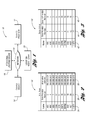
- FIG. 1 illustrates a system for location-based tuning in accordance with one non-limiting aspect of the present invention
- FIGS. 2-3 illustrate channel maps in accordance with one non-limiting aspect of the present invention.
- FIG. 4 illustrates a flowchart of a method of location-based tuning in accordance with one non-limiting aspect of the present invention.
- FIG. 1 illustrates a system 10 for location-based tuning in accordance with one non-limiting aspect of the present invention.
- the system includes a service provider 12 operable to provide media content related services to an output device 14 and a positional location device 16 operable to facilitate locating a geographical area of the output device 14 . Communications between the output device 14 , locating device 16 , and service provider 12 are carried out over a network 18 .
- FIG. 1 illustrates a single output device 14 , positional locating device 16 , service provider 12 and network 18 for exemplary purposes.
- the present invention fully contemplates its application with any number of such devices 12 , 14 , 16 and with communication therebetween carried out over wireline, wireless, or a combination of wireless and wireline systems 18 .
- the service provider 12 is predominately described with respect to supporting television related services, such as but not limited to the playback of linear and non-linear television programs, movies, etc., that are either transmitted to the output device 14 with signaling streams originating from the service provider 12 or from some other entity within the control or domain thereof.
- the service provider 12 may be operable to transport or facilitate transport of related signaling streams as IP type signaling streams identifiable with an IP address or URL, MPEG based signaling streams identifiable at a designate frequency or channel number (the output device may include a tuner), FDMA or CDMA based signaling used by cellular phone network, satellite, WiMax, or other transmission networks yet to be developed.
- channels or television channels having a channel number or other form of address are referred to as channels or television channels having a channel number or other form of address. This is done for the sake of simplifying the explanation and without intending to limit the scope and contemplation of the present invention to television channels or related services.
- the output device 14 is contemplated to be any type of output device 14 having capabilities to interface media content directly with a user and/or with a viewing device or other element associated with the user.
- Exemplary output devices 14 include but are not limited to settop boxes (STBs), media terminal adapters (MTAs), mobile phones, mobile computers, personal digital assistants (PDAs), televisions, etc.
- STBs settop boxes
- MTAs media terminal adapters
- PDAs personal digital assistants
- the signaling associated with the service provider 12 may be adapted to the signaling capabilities and other restrictions (e.g., video formatting, codec, protocol, etc.) of the output device 14 .
- the positional locating device 16 is contemplated to be any type of device having capabilities to generate positional coordinates, such as but not limited to Global Positioning Coordinates (GPS), and/or to otherwise facilitate identifying a current geographical area of the output device. This may be done, for example, by triangulating the positioning of the output device through related signaling, in which case the positional locating device may be part of the output device and/or a device carried on the person of the user, by cross-reference addressing used to electronically communicate with the output device based on known positional coordinate of intermediary devices used to communicate therewith, and/or through any type of other positional locating operation and means.
- GPS Global Positioning Coordinates
- One non-limiting aspect of the present invention contemplates the system 10 having a location-based tuner 20 operable to facilitate location-based tuning of the output device 14 .
- the location-based tuning corresponds with the location-based tuner 20 operating in cooperation with the positional locating device 16 to adjust tuning requests according to a current geographical location of the output device 14 .
- the channel names and channel numbers corresponding with the first geographical area may not correspond with the second geographical area.
- the location-based tuner 20 can correlate the mapping discrepancies and provide tuning assistance.
- the location-based tuner 20 is shown to be separate from each of the output device 14 , positional locating device 16 , and service provider 12 .
- the operations and other functions contemplated to be performed by the location-based tuner 20 may be wholly or partially integrated within one or more of the illustrated devices 12 , 14 , 16 .
- the location assistance provided by the location-based tuner 20 may be added to the output device 14 such that the output device 14 may be capable of providing assistance.
- the location-based tuner 20 may also be a standalone network-based element capable of facilitating tuning of any number of output devices 14 having capabilities to communicate therewith.
- At least one non-limiting aspect of the present invention contemplates the location-based tuner 20 facilitating tuning operations of the type where some discrepancy may occur between the tuning the user is accustomed to and the tuning required for the current geographical area or communication capabilities of the output device 14 .
- the channel number and channel name discrepancies can occur, for example, in the event the output device 14 is attempting to access media services from a different service provider 12 , in the event the same service provider 12 relies on a different channel number or channel name correlations in each of the first and second geographical areas, and in the event the user travels to a new geographical area, in which case the output device 14 may travel with the user or the user may be attempting to access services from a different output device 14 .
- the geographical boundaries or demarcation between the first and second geographical areas may correspond with any boundary, either of the physical type, such as were different service providers 12 are allocated to different physical areas of service, or of an electronic type, where different service providers 12 , and in some cases, the same service provider 12 , may be capable of communicating over different channel numbers or other addresses depending on the medium through which the services are being accessed.
- FIGS. 2-3 illustrate channel maps 30 , 32 used in the first and second geographical areas in accordance with one non-limiting aspect of the present invention.
- a first channel map 30 corresponds with the first geographical area and the second channel map 32 corresponds with the second geographical area.
- the first channel map 30 includes a name column 34 listing channel names and first and second number columns 36 , 38 .
- the first number column 36 illustrates television channels for each channel name of a first service provider servicing the first geographical area and the second number column 38 illustrates alternative address for each channel name 34 .
- the alternative addresses 38 correspond with medium of communication other than that used to transmit the television channels 36 broadcast, cable, or satellite television service providers 12 .
- the alternative addresses 38 may correspond with IP address, URL addresses, cellular address, WIFI addresses, and the like that are suitable to facilitate non-television related transmission of the media content, optionally from the first service provider 12 or some other provider 12 having the ability to communicate with the output device, such as a hotel DVR or private entertainment system that may communicate over a local wireline or wireless network; a geographically unbound, web-based content source; and a local cellular or wireless telephone or telephony service provider. While only one column of television channels 36 and one column of alternative addresses 38 are shown, any number of additional columns may be similarly included for each content source 12 having capabilities to support transmission of the noted channel names to the output device.
- the second channel map 32 similarly includes a name column 42 for listing the channel names available within the second geographical area and first and second number columns 44 , 46 for listing corresponding channel number of first and second service providers available within the second geographical area.
- first and second number columns 44 , 46 for listing corresponding channel number of first and second service providers available within the second geographical area.
- only channel numbers are listed in the second channel map 32 to represent another application of the present invention where multiple television service providers 12 are able to communicate with the output device 14 , which optionally may require the output device 14 to tune to different television networks or to otherwise establish different network type connections, e.g., the first service provider channel 44 may be available through a wireline connection to the output device 14 while the second service provider channels 46 may be available through a different, wireless connection.
- the first and second channel maps are intended to represent, for exemplary purposes, different schemes for cross-reference television channel names available within a particular area with the channel numbers or other addresses used by service providers capable of servicing the particular area to transmit the content of the corresponding channel name.
- FIG. 4 illustrates a flowchart 50 of a method of location-based tuning in accordance with one non-limiting aspect of the present invention.
- the method may be implemented wholly or partially according to operations executed or otherwise facilitate by the location-based tuner 20 .
- the method is predominately described with respect to tuning to television channels.
- the use of television channels is intended only to reflect one arrangement of identify and accessing signal streams carrying content and is not intended to limit the method of the present invention to television channel tuning or to television related servicers.
- the method of the present is particular advantageous in easing user access to any type of media content where the media content may be accessed through different mechanisms, networks, interfaces, .etc. in different physically or electrically disparate areas.
- Block 52 relates to determining a tuning request.
- the tuning request may relate to any request by the user to access media content through the output device 14 or with the assistance of the output device 14 .
- the tuning request is described with respect to a television related event where the user desires to tune to or otherwise access content carried over at particular television channel of interest.
- the location-based tuner 20 may determine the tuning event from communication received from the output device 14 , such as in response to user input thereto, or in the case of the location-based tuner being part of the output device 14 , in response to user inputs directly to the location-based tuner 20 .
- One aspect of determining the tuning request may include assessing the channel number needed to be tuned to by the output device 14 from user inputted information other than the actual channel number, which the user is unlikely to know if the user is in a different geographical area having a channel map that differs from their home geographical area.
- the tuning request may identify the content or channel of interest by its name, such as but not limited to input of the name associated with the source of the content (e.g., ESPN, ABC, etc.).
- the channel name may be determined from input of the program name instead.
- Yet another option may allow the user to identify the channel of interested by inputting the channel number associated with their home location, which may then be cross-referenced to the desired channel number.
- the tuning request may be automatically determined from operations of the output device 14 or non-user specific operations, such as when the output device 14 requests tuning due to an inability to continue to receive the desired content over the currently tuned to channel, e.g., when traversing a boundary between a first geographical area and a second geographical area where the second geographical area carries the desired content on another television channel or through an alternatively delivery system.
- the tuning request may related to a message or other inquiry made to determining the channel number corresponding with a particular channel of interest, such as if the user transmits an email or text message to request the channel number for an inputted channel name.
- Block 54 relates to determining a geographical area of the output device 14 through which the tuning request is to be completed.
- the geographical area may correspond with the physical location of the user and/or the output device 14 , i.e., in the event the output device 14 is in a different geographical area than the user, the location of the output device 14 and not the user may be determined.
- the location-based tuner 20 may determine the geographical area according to geographical coordinates provided by the positional locating device 16 and/or through coordinates previously associated with the location of the output device 14 of interest.
- the geographical area may be constantly or periodically monitored to track the current positioning of the output device 14 , such as to facilitate continuous access while the output device 14 is actively traveling between different geographical areas.
- Block 56 relates to determining content sources 12 available in the determined geographical area.
- the content sources 12 correspond with any source 12 having the capabilities to transmit the content of a particular television channel to the output device 14 .
- One available content source 12 may use a cable television system that transmits the content over television channels while another available content source 12 may use satellite, WIFI, private networks (hotel or home network), or cellular/mobile phone networks that transmit the content over other types of signal streams that can be identified by channel number or other addressing options.
- the available content sources 12 may be filtered according to the capabilities of the output device 14 to interact with the associated content sources 12 .
- Content sources 12 that are unable to deliver the content according to the codec or protocol of the output device 14 may be eliminated from the content sources 12 determined to be available.
- Block 58 relates to assessing whether multiple content sources available within the given geographical area for the content of interest.
- a selection process is conducted in Block 60 if multiple content sources 12 are available.
- the selection process may be implemented with or without user interaction/selection of the content source 12 .
- One selection process may relate to selecting the least expensive of the available sources 12 to provide the content. This cost may be assessed according to transmission costs, such as cost per bit of data need to support access, and user subscription costs, such as if the user is required to pay more for one source 12 than the other.
- the costs may be determined ahead of time, such as part of the user's subscription purchase and/or anew depending on the desired content and available sources 12 , such as by the location-based tuner 20 communication messages or otherwise facilitating electronic cost inquires to the available sources 12 .
- Another selection process may related to selecting the content source 12 having the highest quality, such as by assessing the communication mediums required for each source 12 and identifying the one having the highest quality output and/or the most reliable output.
- the content sources 12 may be selected automatically or through user inputs.
- the user may specify operational settings or default setting such that the content source 12 meeting one of the above-identified criteria is automatically selected over the others without requiring user confirmation.
- the user may also be presented with a graphical user interface (GUI) or the other presentation portal through which the available content sources 12 can be listed for selection by the user.
- GUI graphical user interface
- the tuning of the output device may be in executed in Block 62 .
- the execution of the tuning operation may be automatically completed in a manner that is transparent to the user, such as to allow for seamless and continuous presentation of content while traveling from one geographic location to another where the channel must be changed to maintain uninterrupted access or viewing.
- one non-limiting aspect of the present invention relates to tuning to particular programs or content sources in a consistent way regardless of location.
- One non-limiting aspect of the present invention may rely on a database and geo-location to determine local parameters for locating content. For example, a computer or “portable” set-top box could identify (using GPS, for example) that it is located in Atlanta. It could then identify that it is on a Cox cable plant and could therefore determine that ESPN is on digital channel 75.1 and the local NBC affiliate is on channel 9.1 or available at a particular URL. This might be particularly useful for finding over-the-air broadcast channels in different locations. When traveling, it may be difficult to find the particular local channel for a particular service.
- the source can be found and presented with little or no user interaction. As the location changes, the source can be updated to tune the most powerful signal. If the neighboring regions overlap, the signal may be able to transition without interruption.
- One such application would be for broadcast television signals that are national in nature, but carried by different local channels, where a user can enter a user-friendly channel identifier (such as CNN), then be automatically tuned to the right channel number for that location. Also, the user can cross region boundaries and have the channel number automatically updated to the new area.
Landscapes
- Engineering & Computer Science (AREA)
- Multimedia (AREA)
- Signal Processing (AREA)
- Business, Economics & Management (AREA)
- Life Sciences & Earth Sciences (AREA)
- Biodiversity & Conservation Biology (AREA)
- Ecology (AREA)
- Emergency Management (AREA)
- Environmental & Geological Engineering (AREA)
- Environmental Sciences (AREA)
- Remote Sensing (AREA)
- Two-Way Televisions, Distribution Of Moving Picture Or The Like (AREA)
Abstract
Description
Claims (15)
Priority Applications (1)
| Application Number | Priority Date | Filing Date | Title |
|---|---|---|---|
| US12/826,862 US8856837B2 (en) | 2010-06-30 | 2010-06-30 | Location-based tuner |
Applications Claiming Priority (1)
| Application Number | Priority Date | Filing Date | Title |
|---|---|---|---|
| US12/826,862 US8856837B2 (en) | 2010-06-30 | 2010-06-30 | Location-based tuner |
Publications (2)
| Publication Number | Publication Date |
|---|---|
| US20120002115A1 US20120002115A1 (en) | 2012-01-05 |
| US8856837B2 true US8856837B2 (en) | 2014-10-07 |
Family
ID=45399462
Family Applications (1)
| Application Number | Title | Priority Date | Filing Date |
|---|---|---|---|
| US12/826,862 Active 2032-10-19 US8856837B2 (en) | 2010-06-30 | 2010-06-30 | Location-based tuner |
Country Status (1)
| Country | Link |
|---|---|
| US (1) | US8856837B2 (en) |
Families Citing this family (3)
| Publication number | Priority date | Publication date | Assignee | Title |
|---|---|---|---|---|
| FR2973786B1 (en) * | 2011-04-06 | 2014-07-04 | Valois Sas | RING FOR DEVICE FOR DISPENSING FLUID. |
| US10778569B2 (en) * | 2016-03-03 | 2020-09-15 | Comcast Cable Communications, Llc | Methods and systems for providing alternate content |
| CN109392054B (en) * | 2018-11-13 | 2020-06-02 | 电子科技大学 | Method for cooperative multi-channel and opportunistic routing in wireless network |
Citations (10)
| Publication number | Priority date | Publication date | Assignee | Title |
|---|---|---|---|---|
| US6181921B1 (en) * | 1994-08-19 | 2001-01-30 | Seiko Epson Corporation | Broadcasting station data detector and broadcast receiver for moving body that search a channel map based on location |
| US6295294B1 (en) * | 1997-08-07 | 2001-09-25 | At&T Corp. | Technique for limiting network congestion |
| US6362778B2 (en) * | 2000-03-26 | 2002-03-26 | Timothy J Neher | Personal location detection system |
| US20060160570A1 (en) * | 2003-05-21 | 2006-07-20 | Mikko Kamarainen | Communication network terminal, a terminal accessory device and an assembly containing the terminal and the accessory device |
| US20070300252A1 (en) * | 2006-06-21 | 2007-12-27 | Swarup Acharya | User Interface Methods and Apparatus for Roaming Access to Subscription Services |
| US7352710B1 (en) * | 1999-05-20 | 2008-04-01 | Cisco Technology, Inc. | Symmetrical codec selection in an asymmetrical codec environment |
| US20090205000A1 (en) * | 2008-02-05 | 2009-08-13 | Christensen Kelly M | Systems, methods, and devices for scanning broadcasts |
| US20100203823A1 (en) * | 2007-06-18 | 2010-08-12 | Tuli Apaar | Method and Device for Continuation of Multimedia Playback |
| US20110141375A1 (en) * | 1994-11-07 | 2011-06-16 | Index Systems, Inc. | Method and apparatus for transmitting and downloading setup information |
| US8081938B2 (en) * | 2008-03-19 | 2011-12-20 | Fujitsu Limited | Broadcast receiver and channel list display method |
-
2010
- 2010-06-30 US US12/826,862 patent/US8856837B2/en active Active
Patent Citations (10)
| Publication number | Priority date | Publication date | Assignee | Title |
|---|---|---|---|---|
| US6181921B1 (en) * | 1994-08-19 | 2001-01-30 | Seiko Epson Corporation | Broadcasting station data detector and broadcast receiver for moving body that search a channel map based on location |
| US20110141375A1 (en) * | 1994-11-07 | 2011-06-16 | Index Systems, Inc. | Method and apparatus for transmitting and downloading setup information |
| US6295294B1 (en) * | 1997-08-07 | 2001-09-25 | At&T Corp. | Technique for limiting network congestion |
| US7352710B1 (en) * | 1999-05-20 | 2008-04-01 | Cisco Technology, Inc. | Symmetrical codec selection in an asymmetrical codec environment |
| US6362778B2 (en) * | 2000-03-26 | 2002-03-26 | Timothy J Neher | Personal location detection system |
| US20060160570A1 (en) * | 2003-05-21 | 2006-07-20 | Mikko Kamarainen | Communication network terminal, a terminal accessory device and an assembly containing the terminal and the accessory device |
| US20070300252A1 (en) * | 2006-06-21 | 2007-12-27 | Swarup Acharya | User Interface Methods and Apparatus for Roaming Access to Subscription Services |
| US20100203823A1 (en) * | 2007-06-18 | 2010-08-12 | Tuli Apaar | Method and Device for Continuation of Multimedia Playback |
| US20090205000A1 (en) * | 2008-02-05 | 2009-08-13 | Christensen Kelly M | Systems, methods, and devices for scanning broadcasts |
| US8081938B2 (en) * | 2008-03-19 | 2011-12-20 | Fujitsu Limited | Broadcast receiver and channel list display method |
Also Published As
| Publication number | Publication date |
|---|---|
| US20120002115A1 (en) | 2012-01-05 |
Similar Documents
| Publication | Publication Date | Title |
|---|---|---|
| US12452494B2 (en) | Systems and methods for providing media content listings according to points of interest | |
| US10154294B2 (en) | Cloud based location shifting service | |
| US10924561B2 (en) | System and method for predictive delivery of prioritized content | |
| US8695044B1 (en) | Wireless multimedia content brokerage service for real time selective content provisioning | |
| US20110283322A1 (en) | Systems and methods for providing media content listings according to a destination location | |
| ES3047124T3 (en) | Downloading media content via a handheld device | |
| US11457060B2 (en) | Version selective content delivery | |
| US8831545B2 (en) | Methods and apparatus for aggregation of guide and frequency map information for multiple frequency networks using upper-level single frequency network | |
| US9681106B2 (en) | Viewer-personalized broadcast and data channel content delivery system and method | |
| US20120002115A1 (en) | Location-based tuner | |
| US20140047063A1 (en) | Location-based program listing | |
| US8584188B2 (en) | System and method for displaying call status on TV | |
| US10979495B2 (en) | Information processing apparatus, information processing method, and information processing system | |
| US20130159929A1 (en) | Method and apparatus for providing contents-related information | |
| US20140047488A1 (en) | Location-based program listing | |
| KR102045358B1 (en) | Media platform apparatus, and control method thereof | |
| US20140047479A1 (en) | Location-based program listing | |
| JP2021002861A (en) | Display apparatus | |
| JP5693405B2 (en) | Transmission device, communication system, and program | |
| WO2011143493A1 (en) | Systems and methods for providing media content listings according to a destination location | |
| JP6768906B2 (en) | Display device | |
| KR101382615B1 (en) | Terminal, method for controlling broadcast service thereof, device and method for controlling broadcast service | |
| JP2019088027A (en) | Display apparatus | |
| KR20130042116A (en) | Server and method for managing scrapping information of contents, and device for transmitting the scrapping information | |
| HK1201389B (en) | A method, a device and a system for scheduling media recording via a handheld device |
Legal Events
| Date | Code | Title | Description |
|---|---|---|---|
| AS | Assignment |
Owner name: CABLE TELEVISION LABORATORIES, INC., COLORADO Free format text: ASSIGNMENT OF ASSIGNORS INTEREST;ASSIGNOR:STEVENS, J. CLARKE;REEL/FRAME:024617/0350 Effective date: 20100629 |
|
| STCF | Information on status: patent grant |
Free format text: PATENTED CASE |
|
| MAFP | Maintenance fee payment |
Free format text: PAYMENT OF MAINTENANCE FEE, 4TH YR, SMALL ENTITY (ORIGINAL EVENT CODE: M2551) Year of fee payment: 4 |
|
| FEPP | Fee payment procedure |
Free format text: MAINTENANCE FEE REMINDER MAILED (ORIGINAL EVENT CODE: REM.); ENTITY STATUS OF PATENT OWNER: SMALL ENTITY |
|
| FEPP | Fee payment procedure |
Free format text: 7.5 YR SURCHARGE - LATE PMT W/IN 6 MO, SMALL ENTITY (ORIGINAL EVENT CODE: M2555); ENTITY STATUS OF PATENT OWNER: SMALL ENTITY |
|
| MAFP | Maintenance fee payment |
Free format text: PAYMENT OF MAINTENANCE FEE, 8TH YR, SMALL ENTITY (ORIGINAL EVENT CODE: M2552); ENTITY STATUS OF PATENT OWNER: SMALL ENTITY Year of fee payment: 8 |
|
| FEPP | Fee payment procedure |
Free format text: MAINTENANCE FEE REMINDER MAILED (ORIGINAL EVENT CODE: REM.); ENTITY STATUS OF PATENT OWNER: SMALL ENTITY |