US8856499B1 - Reducing instruction execution passes of data groups through a data operation unit - Google Patents
Reducing instruction execution passes of data groups through a data operation unit Download PDFInfo
- Publication number
- US8856499B1 US8856499B1 US11/893,615 US89361507A US8856499B1 US 8856499 B1 US8856499 B1 US 8856499B1 US 89361507 A US89361507 A US 89361507A US 8856499 B1 US8856499 B1 US 8856499B1
- Authority
- US
- United States
- Prior art keywords
- instruction
- data group
- data
- count
- current
- Prior art date
- Legal status (The legal status is an assumption and is not a legal conclusion. Google has not performed a legal analysis and makes no representation as to the accuracy of the status listed.)
- Active, expires
Links
Images

Classifications
-
- G—PHYSICS
- G06—COMPUTING OR CALCULATING; COUNTING
- G06F—ELECTRIC DIGITAL DATA PROCESSING
- G06F9/00—Arrangements for program control, e.g. control units
- G06F9/06—Arrangements for program control, e.g. control units using stored programs, i.e. using an internal store of processing equipment to receive or retain programs
- G06F9/30—Arrangements for executing machine instructions, e.g. instruction decode
- G06F9/38—Concurrent instruction execution, e.g. pipeline or look ahead
- G06F9/3836—Instruction issuing, e.g. dynamic instruction scheduling or out of order instruction execution
-
- G—PHYSICS
- G06—COMPUTING OR CALCULATING; COUNTING
- G06F—ELECTRIC DIGITAL DATA PROCESSING
- G06F9/00—Arrangements for program control, e.g. control units
- G06F9/06—Arrangements for program control, e.g. control units using stored programs, i.e. using an internal store of processing equipment to receive or retain programs
- G06F9/30—Arrangements for executing machine instructions, e.g. instruction decode
- G06F9/32—Address formation of the next instruction, e.g. by incrementing the instruction counter
- G06F9/321—Program or instruction counter, e.g. incrementing
-
- G—PHYSICS
- G06—COMPUTING OR CALCULATING; COUNTING
- G06F—ELECTRIC DIGITAL DATA PROCESSING
- G06F9/00—Arrangements for program control, e.g. control units
- G06F9/06—Arrangements for program control, e.g. control units using stored programs, i.e. using an internal store of processing equipment to receive or retain programs
- G06F9/30—Arrangements for executing machine instructions, e.g. instruction decode
- G06F9/38—Concurrent instruction execution, e.g. pipeline or look ahead
- G06F9/3802—Instruction prefetching
- G06F9/3808—Instruction prefetching for instruction reuse, e.g. trace cache, branch target cache
- G06F9/381—Loop buffering
-
- G—PHYSICS
- G06—COMPUTING OR CALCULATING; COUNTING
- G06F—ELECTRIC DIGITAL DATA PROCESSING
- G06F9/00—Arrangements for program control, e.g. control units
- G06F9/06—Arrangements for program control, e.g. control units using stored programs, i.e. using an internal store of processing equipment to receive or retain programs
- G06F9/30—Arrangements for executing machine instructions, e.g. instruction decode
- G06F9/38—Concurrent instruction execution, e.g. pipeline or look ahead
- G06F9/3824—Operand accessing
- G06F9/383—Operand prefetching
Definitions
- the present invention is generally related to programming graphics computer systems.
- a “graphic primitive” is a basic component of a graphic picture, such as a point, line, polygon, or the like. Rendered images are formed with combinations of these graphic primitives. Many procedures may be utilized to perform 3-D graphics rendering.
- Specialized graphics processing units e.g., GPUs, etc.
- the GPUs are configured for high-speed operation and typically incorporate one or more rendering pipelines.
- Each pipeline includes a number of hardware-based functional units that are optimized for high-speed execution of graphics instructions/data.
- the instructions/data are fed into the front end of the pipeline and the computed results emerge at the back end of the pipeline.
- the hardware-based functional units, cache memories, firmware, and the like, of the GPU are optimized to operate on the low-level graphics primitives and produce real-time rendered 3-D images.
- the functional units of the GPU need to be programmed in order to properly execute many of the more refined pixel shading techniques. These techniques require, for example, the blending of colors into a pixel in accordance with factors in a rendered scene which affect the nature of its appearance to an observer. Such factors include, for example, fogginess, reflections, light sources, and the like.
- graphics rendering programs e.g., small specialized programs that are executed by the functional units of the GPU
- Such graphics rendering programs are commonly referred to as shader programs, or simply shaders.
- some types of shaders can be used to alter the actual geometry of a 3-D scene (e.g., Vertex shaders) and other primitive attributes.
- Shader instructions are often executed on groups of data. Often, there are many data groups and many instructions to be executed on these data groups. In certain applications, the particular instructions executed on and the number of instructions executed on each data group varies. That is, instruction A may be executed on data group 1 while instruction B may be executed on data group 2. Moreover, three instructions may be executed on data group 7 while one instruction may be executed on data group 10.
- Embodiments of the present invention provide a graphics architecture that implements a shader program loading and execution process that can scale as graphics application needs require and provide added performance without incurring penalties such as increased processor overhead.
- the present invention is implemented as an apparatus comprising an instruction mapping table, which includes a plurality of instruction counts and a plurality of instruction pointers each corresponding with one of the instruction counts.
- Each instruction pointer identifies a next instruction for execution. Further, each instruction count specifies a number of instructions to execute beginning with the next instruction.
- the apparatus also has a data operation unit adapted to receive a data group and adapted to execute on the received data group the number of instructions specified by a current instruction count of the instruction mapping table beginning with the next instruction identified by a current instruction pointer of the instruction mapping table before proceeding with another data group.
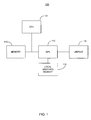
- FIG. 1 shows a computer system in accordance with one embodiment of the present invention.
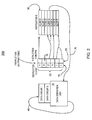
- FIG. 2 illustrates an apparatus in accordance with an embodiment of the present invention.
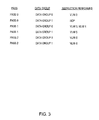
- FIG. 3 illustrates operation of the apparatus of FIG. 1 in accordance with an embodiment of the present invention.
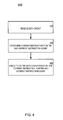
- FIG. 4 illustrates a flow chart showing a method of executing instructions on data groups in accordance with an embodiment of the present invention.
- FIG. 1 shows a computer system 100 in accordance with one embodiment of the present invention.
- Computer system 100 depicts the components of a basic computer system in accordance with embodiments of the present invention providing the execution platform for certain hardware-based and software-based functionality.
- computer system 100 comprises at least one CPU 101 , a system memory 115 , and at least one graphics processor unit (GPU) 110 .
- the CPU 101 can be coupled to the system memory 115 via a bridge component/memory controller (not shown) or can be directly coupled to the system memory 115 via a memory controller (not shown) internal to the CPU 101 .
- the GPU 110 is coupled to a display 112 .
- One or more additional GPUs can optionally be coupled to system 100 to further increase its computational power.
- System 100 can be implemented as, for example, a desktop computer system or server computer system, having a powerful general-purpose CPU 101 coupled to a dedicated graphics rendering GPU 110 . In such an embodiment, components can be included that add peripheral buses, specialized graphics memory, IO devices, and the like.
- system 100 can be implemented as a handheld device (e.g., cellphone, etc.) or a set-top video game console device such as, for example, the Xbox®, available from Microsoft Corporation of Redmond, Wash., or the PlayStation3®, available from Sony Computer Entertainment Corporation of Tokyo, Japan.
- the GPU 110 can be implemented as a discrete component, a discrete graphics card designed to couple to the computer system 100 via a connector (e.g., AGP slot, PCI-Express slot, etc.), a discrete integrated circuit die (e.g., mounted directly on a motherboard), or as an integrated GPU included within the integrated circuit die of a computer system chipset component (not shown), or within the integrated circuit die of a PSOC (programmable system-on-a-chip).
- a local graphics memory 114 can be included for the GPU 110 for high bandwidth graphics data storage.
- FIG. 2 illustrates an apparatus 200 in accordance with an embodiment of the present invention.
- VLIW very long instruction words
- the apparatus 200 includes a data operation unit 10 and an instruction mapping table 25 .
- the data operation unit 10 executes instructions 30 on a data group (e.g., data group 0, data group 1). It should be understood that there may be any number of data groups and any number of data operation units arranged in a sequential manner.
- the instructions 30 are sent to the data operation unit 10 via line 35 .
- line 40 enables data groups to be resent through the data operation unit 10 .
- the data group is received in a streaming manner.
- the instruction mapping table 25 provides program counter functionality by determining what instruction(s), if any, to execute on the data group and when to execute the instruction(s), if any, on the data group.
- the apparatus 200 is well suited for executing instructions on data groups representing pixel data.
- the apparatus 200 may be a pixel processing device such as a central processing unit (CPU), a graphics processing unit (GPU), a graphics card, a portable video device, or any other type of pixel processing device.
- CPU central processing unit
- GPU graphics processing unit
- graphics card a graphics card
- portable video device or any other type of pixel processing device.
- the instruction mapping table 25 including a plurality of instruction counts 15 and a plurality of instruction pointers 20 each corresponding with one of the instruction counts 15 . That is, there are a plurality of instruction count 15 and instruction pointer 20 pairs.
- Each instruction pointer 20 identifies a next instruction, if any, for execution by the data operation unit 10 .
- Each instruction count 15 specifies a number of instructions to execute beginning with the next instruction specified by its corresponding instruction pointer 20 .
- the instruction count 15 having the value 1 indicates that one instruction (e.g., the next instruction) will be executed while the instruction count 15 having the value 3 indicates that three instructions (e.g., the next instruction (assuming VLIW 2) and two instructions (VLIW 3 and VLIW 4) after the next instruction (VLIW 2)) will be executed.
- the instruction count 15 having the value 0 indicates that no instruction (nop) will be executed and its corresponding instruction pointer 20 will not identify the next instruction for execution.
- the data operation unit 10 is adapted to receive a data group (e.g., data group 0) and is adapted to execute on the received data group the number of instructions specified by a current instruction count 15 of the instruction mapping table 25 beginning with the next instruction identified by a current instruction pointer 20 of the instruction mapping table 25 before proceeding with another data group (e.g., data group 0). That is, the data operation unit 10 executes on the received data group (e.g., data group 0) a number of instructions specified by a current instruction count 15 and instruction pointer 20 pair beginning with a next instruction identified by the current instruction count 15 and instruction pointer 20 pair.
- a data group e.g., data group 0
- the current instruction count 15 and the current instruction pointer 20 are determined by advancing through the instruction mapping table 25 from the top to the bottom in response to the data operation unit 10 receiving a data group for an execution pass.
- the apparatus 200 has several advantages. First, use of the current instruction count 15 avoids need for resending the data group through the data operation unit 10 for each of the number of instructions specified by the current instruction count 20 . This is illustrated in FIG. 2 . That is, for the current execution pass, the currently required instructions are performed on the relevant data group (e.g., data group 0) without resending the data group through the data operation unit 10 to complete the current execution pass. Then, the data operation unit 10 proceeds with the current execution pass for another data group (e.g., data group 1). Since additional power is utilized to resend the data group through the data operation unit 10 , there is a reduction in power use by eliminating the resending of data through the data operation unit 10 .
- the relevant data group e.g., data group 0
- the data operation unit 10 proceeds with the current execution pass for another data group (e.g., data group 1). Since additional power is utilized to resend the data group through the data operation unit 10 , there is a reduction in
- the ability to execute multiple instructions on the data group enables performance of more complex instructions from simpler building block instructions. That is, once the data group is available to the data operation unit 10 , as much instructions are performed as currently required by the instruction mapping table 25 .
- FIG. 3 illustrates operation of the apparatus 200 of FIG. 2 in accordance with an embodiment of the present invention.
- the instruction mapping table 25 facilitates execution passes Pass 0, Pass 1, and Pass 2 for data group 0 and data group 1 through the data operation unit 10 .
- the instruction mapping table 25 may be configured to facilitate any number of execution passes and any number of data groups.
- the size of the instruction mapping table 25 is dependent on the number desired passes and the number of data groups.
- the instruction mapping table 25 has six rows to handle Pass 0, Pass 1, and Pass 2 for data group 0 and data group 1.
- FIG. 4 illustrates a flow chart showing a method 400 of executing instructions on data groups in accordance with an embodiment of the present invention. Reference is made to FIGS. 2 and 3 .
- the data operation unit 10 receives a data group (e.g., data group 0) of the data groups (e.g., data group 0, data group 1).
- a data group e.g., data group 0
- the data group 0 is received in a streaming manner.
- a current instruction pointer 20 that identifies a next instruction for execution and a current instruction count 15 that specifies a number of instructions to execute beginning with the next instruction, are determined from the instruction mapping table 25 for the current execution pass.
- the current state of the instruction mapping table 25 is at Pass 2 for data group 0 (or row 5 of the instruction mapping table 25 ). That is, the current instruction count 15 has the value 1 and the current instruction pointer 20 identifies the next instruction VLIW 5 for Pass 2 for data group 0.
- the data operation unit 10 executes on the received data group 0 the number of instructions (1) specified by the current instruction count 15 beginning with the next instruction (VLIW 5) identified by the current instruction pointer 20 before proceeding with data group 1. Refer to FIG. 2 .
- the method 400 is well suited for executing instructions on data groups representing pixel data. Moreover, the method 400 may be implemented in a pixel processing device such as a central processing unit (CPU), a graphics processing unit (GPU), a graphics card, a portable video device, or any other type of pixel processing device.
- a pixel processing device such as a central processing unit (CPU), a graphics processing unit (GPU), a graphics card, a portable video device, or any other type of pixel processing device.
Landscapes
- Engineering & Computer Science (AREA)
- Software Systems (AREA)
- Theoretical Computer Science (AREA)
- Physics & Mathematics (AREA)
- General Engineering & Computer Science (AREA)
- General Physics & Mathematics (AREA)
- Executing Machine-Instructions (AREA)
Abstract
Description
Claims (16)
Priority Applications (1)
| Application Number | Priority Date | Filing Date | Title |
|---|---|---|---|
| US11/893,615 US8856499B1 (en) | 2007-08-15 | 2007-08-15 | Reducing instruction execution passes of data groups through a data operation unit |
Applications Claiming Priority (1)
| Application Number | Priority Date | Filing Date | Title |
|---|---|---|---|
| US11/893,615 US8856499B1 (en) | 2007-08-15 | 2007-08-15 | Reducing instruction execution passes of data groups through a data operation unit |
Publications (1)
| Publication Number | Publication Date |
|---|---|
| US8856499B1 true US8856499B1 (en) | 2014-10-07 |
Family
ID=51627105
Family Applications (1)
| Application Number | Title | Priority Date | Filing Date |
|---|---|---|---|
| US11/893,615 Active 2030-04-20 US8856499B1 (en) | 2007-08-15 | 2007-08-15 | Reducing instruction execution passes of data groups through a data operation unit |
Country Status (1)
| Country | Link |
|---|---|
| US (1) | US8856499B1 (en) |
Citations (4)
| Publication number | Priority date | Publication date | Assignee | Title |
|---|---|---|---|---|
| US6421701B1 (en) * | 1999-01-29 | 2002-07-16 | International Business Machines Corporation | Method and system for replication support in a remote method invocation system |
| US6704857B2 (en) * | 1999-12-23 | 2004-03-09 | Pts Corporation | Methods and apparatus for loading a very long instruction word memory |
| US20060206695A1 (en) * | 2005-03-11 | 2006-09-14 | Jonah Proujansky-Bell | Data movement within a processor |
| US20070288553A1 (en) * | 2004-06-24 | 2007-12-13 | Freestyle Technology Pty Ltd. | Client Processor Device |
-
2007
- 2007-08-15 US US11/893,615 patent/US8856499B1/en active Active
Patent Citations (4)
| Publication number | Priority date | Publication date | Assignee | Title |
|---|---|---|---|---|
| US6421701B1 (en) * | 1999-01-29 | 2002-07-16 | International Business Machines Corporation | Method and system for replication support in a remote method invocation system |
| US6704857B2 (en) * | 1999-12-23 | 2004-03-09 | Pts Corporation | Methods and apparatus for loading a very long instruction word memory |
| US20070288553A1 (en) * | 2004-06-24 | 2007-12-13 | Freestyle Technology Pty Ltd. | Client Processor Device |
| US20060206695A1 (en) * | 2005-03-11 | 2006-09-14 | Jonah Proujansky-Bell | Data movement within a processor |
Similar Documents
| Publication | Publication Date | Title |
|---|---|---|
| US20240248718A1 (en) | Inline data inspection for workload simplification | |
| US7663621B1 (en) | Cylindrical wrapping using shader hardware | |
| CN101131768B (en) | Tile based precision rasterization in a graphics pipeline | |
| US8063903B2 (en) | Edge evaluation techniques for graphics hardware | |
| US10553024B2 (en) | Tile-based rendering method and apparatus | |
| US9928637B1 (en) | Managing rendering targets for graphics processing units | |
| TWI633447B (en) | Maximizing parallel processing in graphics processors | |
| US8441497B1 (en) | Interpolation of vertex attributes in a graphics processor | |
| CN116050495A (en) | Systems and methods for training neural networks with sparse data | |
| US20080198166A1 (en) | Multi-threads vertex shader, graphics processing unit, and flow control method | |
| WO2018026482A1 (en) | Mechanism to accelerate graphics workloads in a multi-core computing architecture | |
| US8736624B1 (en) | Conditional execution flag in graphics applications | |
| US9024957B1 (en) | Address independent shader program loading | |
| US20140372703A1 (en) | System, method, and computer program product for warming a cache for a task launch | |
| CN111406277A (en) | Microblock-based low resolution depth storage | |
| US8411096B1 (en) | Shader program instruction fetch | |
| US8624906B2 (en) | Method and system for non stalling pipeline instruction fetching from memory | |
| US5966142A (en) | Optimized FIFO memory | |
| CN114511657A (en) | Data processing method and related device | |
| US8314803B2 (en) | Buffering deserialized pixel data in a graphics processor unit pipeline | |
| US7109999B1 (en) | Method and system for implementing programmable texture lookups from texture coordinate sets | |
| US8659601B1 (en) | Program sequencer for generating indeterminant length shader programs for a graphics processor | |
| CN114600149B (en) | Method and apparatus for reducing drawing command information | |
| JP5435253B2 (en) | Conditional execution bits in the graphics processor unit pipeline | |
| US20140125687A1 (en) | Method for sub-pixel texture mapping and filtering |
Legal Events
| Date | Code | Title | Description |
|---|---|---|---|
| AS | Assignment |
Owner name: NVIDIA CORPORATION, CALIFORNIA Free format text: ASSIGNMENT OF ASSIGNORS INTEREST;ASSIGNORS:TOKSVIG, MICHAEL J.M.;MAHAN, JUSTIN M.;HUTCHINS, EDWARD A.;AND OTHERS;SIGNING DATES FROM 20070924 TO 20080111;REEL/FRAME:020586/0027 |
|
| STCF | Information on status: patent grant |
Free format text: PATENTED CASE |
|
| MAFP | Maintenance fee payment |
Free format text: PAYMENT OF MAINTENANCE FEE, 4TH YEAR, LARGE ENTITY (ORIGINAL EVENT CODE: M1551) Year of fee payment: 4 |
|
| MAFP | Maintenance fee payment |
Free format text: PAYMENT OF MAINTENANCE FEE, 8TH YEAR, LARGE ENTITY (ORIGINAL EVENT CODE: M1552); ENTITY STATUS OF PATENT OWNER: LARGE ENTITY Year of fee payment: 8 |
|
| MAFP | Maintenance fee payment |
Free format text: PAYMENT OF MAINTENANCE FEE, 12TH YEAR, LARGE ENTITY (ORIGINAL EVENT CODE: M1553); ENTITY STATUS OF PATENT OWNER: LARGE ENTITY Year of fee payment: 12 |