US8856098B2 - Ranking search results based on word weight - Google Patents
Ranking search results based on word weight Download PDFInfo
- Publication number
- US8856098B2 US8856098B2 US12/804,229 US80422910A US8856098B2 US 8856098 B2 US8856098 B2 US 8856098B2 US 80422910 A US80422910 A US 80422910A US 8856098 B2 US8856098 B2 US 8856098B2
- Authority
- US
- United States
- Prior art keywords
- word
- target
- string
- segmented
- denotes
- Prior art date
- Legal status (The legal status is an assumption and is not a legal conclusion. Google has not performed a legal analysis and makes no representation as to the accuracy of the status listed.)
- Active, expires
Links
Images




Classifications
-
- G06F17/30687—
-
- G—PHYSICS
- G06—COMPUTING OR CALCULATING; COUNTING
- G06F—ELECTRIC DIGITAL DATA PROCESSING
- G06F16/00—Information retrieval; Database structures therefor; File system structures therefor
- G06F16/30—Information retrieval; Database structures therefor; File system structures therefor of unstructured textual data
- G06F16/33—Querying
- G06F16/338—Presentation of query results
-
- G—PHYSICS
- G06—COMPUTING OR CALCULATING; COUNTING
- G06F—ELECTRIC DIGITAL DATA PROCESSING
- G06F16/00—Information retrieval; Database structures therefor; File system structures therefor
- G06F16/30—Information retrieval; Database structures therefor; File system structures therefor of unstructured textual data
- G06F16/33—Querying
- G06F16/3331—Query processing
- G06F16/334—Query execution
- G06F16/3346—Query execution using probabilistic model
Definitions
- the present application relates to the field of computer data processing and in particular to a method for ranking search results and a device thereof.
- a search engine generally estimates the extent to which a search result (also referred to as a target string) matches a query string according to a distance of the position where several words in the query string occur among the search result and one with a shorter distance is typically matched to a higher extent and thus is higher ranked.
- a search result including “disinfection machine” tends to be closer to the intention of a user than “disinfection equipment”, which is closer still to the intention of the user than “industrial disinfection washing machine”, “dehydrator”, and “dryer”, all of which will have some influence on the ranking of the search results.
- Standard techniques for ranking search results are typically based on the distance of words in a query string within a target string using the shortest sliding window (i.e., the shortest interval located in the target string that includes the words in the query string), edit distance of query string and target string, word context as Part of Speech (POS), etc.
- shortest sliding window i.e., the shortest interval located in the target string that includes the words in the query string
- POS Part of Speech
- search results A, B, and C include the strings “Nokia battery”, “Nokia cell phone, complimentary battery”, and “Nokia n73 cell phone with original battery”, respectively.
- the simple distance calculation shows that the distance between with “Nokia” and “battery” in string A is zero and thus A has the highest degree of match.
- the distances between “Nokia” and “battery” for strings B and C are three and five words, respectively, indicating that C is a poorer match than B.
- search result C in fact is a better match than B despite the greater word spacing.
- FIG. 1 is a flowchart illustrating an embodiment of a process for generating a mapping of word weights.
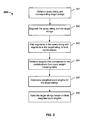
- FIG. 2 is a flowchart of an embodiment of a process for ranking search results.
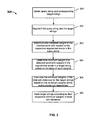
- FIG. 3 is a flowchart of another embodiment of a process for ranking search results.
- FIG. 4 is a block diagram illustrating an embodiment of a system for ranking search results.
- FIG. 5 is a block diagram illustrating another embodiment of a system for ranking search results.
- the invention can be implemented in numerous ways, including as a process; an apparatus; a system; a composition of matter; a computer program product embodied on a computer readable storage medium; and/or a processor, such as a processor configured to execute instructions stored on and/or provided by a memory coupled to the processor.
- these implementations, or any other form that the invention may take, may be referred to as techniques.
- the order of the steps of disclosed processes may be altered within the scope of the invention.
- a component such as a processor or a memory described as being configured to perform a task may be implemented as a general component that is temporarily configured to perform the task at a given time or a specific component that is manufactured to perform the task.
- the term ‘processor’ refers to one or more devices, circuits, and/or processing cores configured to process data, such as computer program instructions.
- Ranking of target strings while accounting for certain semantic factors is described.
- the ranking takes into consideration the semantic correlation between a query string and a target string to better evaluate the extent to which the query string matches the target string and generate a ranking of search results in a search engine for an ecommerce platform that more closely tracks the intent of typical users. Examples involving using the technique in search engines are discussed extensively for purposes of illustration. The technique is also applicable to many other applications.
- FIG. 1 is a flowchart illustrating an embodiment of a process for generating a mapping of word weights.
- Process 100 may be performed on a server, a search engine, or any other appropriate device. The generated mapping of word weights are stored and used later.
- statistical samples are obtained from texts or collections of symbols having a variety of formats, such as webpages, user search logs, user selection logs, etc.
- a first word and a second word are selected from the statistical samples, the number of times that the first and second words both occur in the statistical sample is counted, and denoted as C (the first word, the second word). For example, the number of times that both “cell phone” and “Nokia” occur in the samples is counted and recorded as C (cell phone, Nokia). Subsequently the weights for the respective words are computed to be used later for generating a ranking of the search results.
- the number of times that the second word occurs in the statistical sample is counted and recorded as ⁇ C (Y i , the second word), where Y i denotes the respective words occurring together with the second word.
- Y i denotes the respective words occurring together with the second word.
- the total number of times that “Nokia” occurs together with other words such as “battery”, “original”, etc.
- Y i denotes the respective words occurring together with “Nokia”.
- the probability P of occurrence of the first word given the condition that the second word also occurs is calculated as follows: P (the first word
- the second word) C (the first word,the second word)/ ⁇ C ( Y i , the second word).
- a probability of occurrence of “cell phone” given that the condition that “Nokia” also occurs is calculated as: P (cell phone
- Nokia) C (cell phone)/ ⁇ C ( Y i , Nokia).
- the weight measuring the semantic correlation between the first and second words is determined.
- Nokia) 1 ⁇ C (cell phone)/ ⁇ C (Y i , Nokia) during a search for “Nokia”.
- weight can be calculated in other ways.
- the weight is set to P.
- Weights can also be transformed into different forms in some embodiments, such as in logarithmic form.
- the weights of the semantic correlations between the respective words and the other respective words in the statistical sample are stored as a mapping table of word weights and optionally output.
- Other appropriate formats such as lists, trees, etc. can also be used.
- Table 1 An example of a table of word weights is depicted in Table 1:
- Table 1 The example table of word weight depicted in Table 1 is merely illustrative, and the table of word weights can be embodied in other forms in other embodiments. Also, a word can be weighted in many different ways, and FIG. 1 merely illustrates an embodiment of a statistic probability derived from a statistic language model. The weights can be derived using other appropriate techniques, such as calculated automatically or configured manually.
- FIG. 2 is a flowchart of an embodiment of a process for ranking search results.
- Process 200 may be performed on a server or any other appropriate device.
- the extent to which the target strings match the query string (also referred to as the matching extent) is determined.
- a query string and corresponding target strings are obtained.
- the query string includes keywords input by a user, which is used to identify the targets strings in a database of potential results.
- keywords input by a user, which is used to identify the targets strings in a database of potential results.
- a variety of techniques such as keyword or index matching can be used to obtain the target strings.
- the target strings include characters that are correlated with the query string. For example, if the user inputs a query string of “Nokia Battery” and the target strings retrieved at the server are String A “Nokia Battery”, String B “Nokia Cell Phone With Free Battery”, and String C “Nokia n73 Cell Phone With Original Battery”, then all the retrieved strings A, B, and C are target strings.
- the query string and the target strings are segmented.
- Q denotes the query string
- T denotes the target string
- the query string is segmented into words Q 1 Q 2 . . . Q m
- the target string is segmented into words T 1 T 2 . . . T n .
- Other segmentation techniques are possible, such as segmentation of the strings into semantic words, characters, letters, symbols, etc.
- Other target strings can be similarly segmented.
- the respective segmented words in the query string are combined sequentially in pairs with the segmented words in the target strings into combinations of segmented words, where each combination includes a segmented word in the query string and a segmented word of the target query of characters.
- each combination includes a segmented word in the query string and a segmented word of the target query of characters.
- (T i , Q 1 ), (T i , Q 2 ) . . . (T i , Q m ) are derived.
- Resulting combinations of segmented words from the query string and target string C are: (T 1 , Q 1 ), (T 1 , Q 2 ), (T 2 , Q 1 ), (T 2 , Q 2 ), (T 3 , Q 1 ), (T 3 , Q 2 ), (T 4 , Q 1 ), (T 4 , Q 2 ), (T 5 , Q 1 ), and (T 5 , Q 2 ).
- the previously generated table of word weights is looked up and the weights of the respective combinations of segmented words are retrieved.
- W denotes the weight and the weights of the respective combinations of segmented words retrieved from the table of word weights are: W (T1, Q1), W (T1, Q2), W (T2, Q1), W (T2, Q2), W (T3, Q1), W (T3′, Q2), W (T4, Q1), W (T4, Q2), W (T5, Q1), and W (T5, Q2).
- Wi 0.
- T1 and Q1 are “Nokia”
- a weighted word length for each target string is calculated based on the weights of segmented words.
- the weighted word length is the weighted length of the shortest sliding window.
- the minimum weights of the segmented words in the target string with respect to the corresponding segmented words in the query string are calculated. In some embodiments, the minimum weights of the segmented words in the query string with respect to the respective segmented words in the target string are calculated. Since a process of calculating the minimum weights of the respective segmented words in the target string with respect to the respective segmented words in the query string is very similar to a process of calculating the minimum weights of the respective segmented words in the query string with respect to the respective segmented words in the target string, only the former will be described in detail below for purposes of illustration.
- the smaller of the two weights corresponding to (T1, Q1) and (T1, Q2), the smaller of the two weights corresponding to (T2, Q1) and (T2, Q2), etc. are determined.
- W (T1, Q1) and W (T1, Q2) W (T1, Q1) is smaller; between W (T2, Q1) and W (T2, Q2), W (T2, Q1) is smaller; between W (T3, Q1) and W (T3, Q2), W (T3, Q1) is smaller; between W (T4, Q1) and W (T4, Q2), W (T4, Q1) is smaller; and between W (T5, Q1) and W (T5, Q2), W (T5, Q2) is smaller.
- the minimum weights are: W1, W2, W3, W4, and W5′.
- the weighted length of the shortest sliding window is calculated based on the minimum weights for the target string.
- the weighted length of the shortest sliding window of the target string, W sw is calculated as follows:
- W denotes the weight
- T i denotes the i th segmented word in the target string
- k and h denote the starting and ending positions of the shortest sliding window of the target string, respectively
- Q j denotes the j th segmented word in the query string
- m denotes the number of segmented words in the query string.
- the extent to which the query string matches the target string is determined based on the weighted word length.
- the respective target strings of characters are ranked by the weighted word lengths, and a ranking result is optionally sent back to the user terminal.
- Ranking involves comparing the weighted lengths of the shortest sliding windows of the respective target strings. The smaller the length, the higher the extent of match and the higher the ranking of a target string; the greater the length, the lower the extent of match and the lower the ranking of the target string.
- the extent to which the query string matches the respective target strings of characters is more accurately determined by process 200 than by traditional calculation methods that do not account for semantic correlations between words in a target string and words in a query string.
- target strings “Nokia battery” and “Nokia n73 cell phone original battery” differ in length, they are both highly relevant for the query string of “Nokia battery” since their weighted word lengths are similar.
- the application can introduce a word weight indicating the semantic correlation between a query string and a target string to rank accurately respective target strings of characters by ranking highly those target strings of characters correlated with the query string to thereby reflect the extent to which the respective target strings match the query string and can be applied simply and effectively in practice.
- FIG. 3 is a flowchart of another embodiment of a process for ranking search results.
- Process 300 determines the extent to which the target strings match the query string based on their edit distance.
- the edit distance refers to the number of elementary operations required to change one string of characters to another or the sum of the lengths of different parts of two strings of characters. Typical elementary operations include insertion, deletion, or substitution of a character/word or other designated operations. For example, “I love you” is changed to “I don't love her” with at least by two elementary operations, i.e., inserting “don't” and replacing “you” with “her”, so the edit distance between the two strings is two.
- a query string and corresponding target strings are obtained by the server. This is similar to 201 of process 200 .
- the query string of “Nokia cell phone battery” and target strings are “original Nokia battery”, “Samsung cell phone battery”, etc.
- the query string and the target string are segmented into segmented words constituting the query string and segmented words constituting the target string, respectively.
- Q denotes the query string
- T denotes the target string
- the query string is segmented into words Q 1 Q 2 . . . Q m
- the target string is segmented into words T 1 T 2 . . . T n .
- the minimum weight of an inserted word with respect to the respective segmented words in the query string is determined.
- the weights of the inserted word with respect to the respective segmented words in the query string are retrieved from the table of word weights.
- the weights of the inserted word “original”, denoted as I1 with respect to the respective segmented words in the query string of character are: W (I1, Q1), W (I1, Q2), and W (I1, Q3).
- the minimum weight of the inserted word with respect to the respective segmented words in the query string is calculated as:
- the minimum weight of a deleted word with respect to the segmented words in the target string is calculated based on the table of word weights.
- the weights of the deleted word with respect to the respective segmented words in the target string are retrieved the table of word weights.
- the weights of the deleted word “cell phone”, denoted as D1 with respect to the respective segmented words in the target string are: W (D1, T1), W (D1, T2), and W (D1, T3).
- the minimum weight of the deleted word with respect to the segmented words in the target string are calculated as:
- the edit distance involves substitution of words.
- one string is “Nokia Battery” and another is “Samsung Battery”, where “Samsung” substituted “Nokia”.
- the substitution operation is regarded as a combination of addition and deletion operations instead of a separate operation. For example, it can be assumed that “Nokia” is deleted and “Samsung” is added to change “Nokia Battery” to “Samsung Battery”. Accordingly, the computation described above involving inserted or deleted word is used to determine the minimum weight of the edit distance.
- the substitution operation is regarded as a third type of operation in addition to the insertion and deletion.
- One way to determine the minimum weight of the edit distance of the replacement word is setting it to a preset fixed value (e.g., 1).
- Other ways include setting the edit distance of the replacement word to the sum, the average, the maximum, or any other appropriate combination of the minimum weight of the inserted word with respect to the respective segmented words in the query string and the minimum weight of the deleted word with respect to the respective segmented word in the target string.
- the edit distance of the replacement word “Samsung” is the sum of the minimum weight of the inserted word “Samsung” with respect to the segmented words in the query string “Nokia Battery” and the minimum weight of the deleted word “Nokia” with respect to the segments word in the target string “Samsung Battery”.
- the edit distance of the replacement word “Samsung” is the sum of the minimum weight of the inserted “Samsung” with respect to the segmented words in the query string “Nokia Battery” and the minimum weight of the deleted word “Nokia” with respect to the segments words in the target string “Samsung Battery” and divided by two.
- the minimum weights of the total edit distances for the target strings are calculated based on the minimum weights of the words determined in the previous steps and the values used to determine the extent to which the query string matches the target strings.
- the minimum weights of the total edit distance of the target strings are compared to generate a ranking.
- Processes 200 and 300 can be implemented in a variety of different ways.
- a weight can be calculated alternately with respect to the query string and the target string.
- the inserted string of characters can be weighted with respect to the query string and the deleted string of characters can be weighted with respect to the target string.
- a weight can be calculated or transformed in any form, for example, logarithmically, or a target word can be weighted by the maximum, the average or another form (“weighted length”) of the weights of the target word with respect to the respective query words.
- weighted length the maximum, the average or another form
- a word distance or length can be calculated throughout a string of characters or in any algorithmically selected interval (“e.g., a different part of one string of characters from another string of characters”).
- Ranking may involve the calculation of any weighted word distance or length instead of the shortest sliding window or an edit distance.
- FIG. 4 is a block diagram illustrating an embodiment of a system for ranking search results.
- System 400 includes: a word weight generation module 401 adapted to weigh the semantic correlation between every two words in a set of statistical samples and to generate and store a table of word weights; a word retrieval module 402 adapted to receive a query string and to search for the query string and to retrieve target strings of characters; a word segmentation module 403 adapted to segment the query string and each of the target strings; a combination module 404 adapted to combine the respective segmented words in the query string sequentially in pairs with the respective segmented words in the target string; an inquiring module 405 adapted to inquire of the table of word weights to retrieve the weights of the respective combinations of segmented words; and a matching module 406 adapted to calculate a weighted word length from the weights, to rank the target strings based on the weighted word length, and to optionally feed back a ranking result to the user terminal.
- a word weight generation module 401 adapted to
- word weight generation module 401 further includes: a sample acquisition module adapted to acquire the statistical samples; a first counting module adapted to select a first word and a second word from the statistical samples and to count the number of times that both the first and second words occur in the statistical sample as C (the first word, the second word); a second counting module adapted to count the number of times that the second word occurs in the statistical sample as ⁇ C (Y i , the second word), where Y i denotes a word occurring together with the second word in the samples; a probability calculation module adapted to calculate the probability of the first word on the condition that the second word occurs as P (the first word
- the weighted word length is the weighted length of the shortest sliding window and matching module 406 further includes: a minimum weight calculation module adapted to calculate the minimum weights of the segmented words in the target string with respect to the segmented words in the query string or the minimum weights of the segmented words in the query string with respect to the segmented words in the target string; a first calculation module adapted to calculate the weighted lengths of the shortest sliding windows for the respective targets string of characters according to the minimum weights; and a ranking module adapted to compare the weighted lengths of the shortest sliding windows of the respective target strings and to rank the target strings based on the weighted lengths.
- FIG. 5 is a block diagram illustrating another embodiment of a system for ranking search results.
- System 500 includes: a word-weights generation module 501 adapted to weight the semantic correlation between every two words in a set of statistical samples and to generate and store a table of word weights; a word retrieval module 502 adapted to receive a query string and to search for the query string and to retrieve target strings of characters; a word segmentation module 503 adapted to segment the query string and each of the target strings of characters; a first minimum weight calculation module 504 adapted to calculate the minimum weight of an inserted word with respect to the segmented words in the query string; a second minimum weight calculation module 505 adapted to calculate the minimum weight of a deleted word with respect to the segmented words in the target string; and a matching module 506 adapted to calculate a total edit distance from the minimum weights, to rank the respective target strings of characters and to optionally feed back a ranking result to the user terminal.
- a word-weights generation module 501 adapted to weight the semantic
- system 500 further includes a third minimum weight calculation module adapted to calculate the minimum weight of the edit distance of a replacement word prior to calculation of the total edit distance.
- Systems 400 and 500 use a word weight to indicate the semantic correlation between a query string and a target string to more accurately reflect the extent to which respective target strings of characters match the query string and can be applied simply and effectively in practice.
- Each system may be implemented using one or more computing devices such as a personal computer, a server computer, a handheld or portable device, a flat panel device, a multi-processor system, a microprocessor based system, a set-top box, a programmable consumer electronic device, a network PC, a minicomputer, a large-scale computer, a special purpose device, a distributed computing environment including any of the foregoing systems or devices, or other hardware/software/firmware combination that includes one or more processors and memory coupled to the processors and configured to provide the processors with instructions.
- the modules described above can be implemented as software components executing on one or more general purpose processors, as hardware such as programmable logic devices and/or Application Specific Integrated Circuits designed to perform certain functions or a combination thereof.
- the modules can be embodied by a form of software products which can be stored in a nonvolatile storage medium (such as optical disk, flash storage device, mobile hard disk, etc.), including a number of instructions for making a computer device (such as personal computers, servers, network equipments, etc.) implement the methods described in the embodiments of the present invention.
- the modules may be implemented on a single device or distributed across multiple devices. The functions of the modules may be merged into one another or further split into multiple sub-modules.
Landscapes
- Engineering & Computer Science (AREA)
- Theoretical Computer Science (AREA)
- Physics & Mathematics (AREA)
- Computational Linguistics (AREA)
- Data Mining & Analysis (AREA)
- Databases & Information Systems (AREA)
- General Engineering & Computer Science (AREA)
- General Physics & Mathematics (AREA)
- Probability & Statistics with Applications (AREA)
- Information Retrieval, Db Structures And Fs Structures Therefor (AREA)
- Machine Translation (AREA)
Abstract
Description
P(the first word|the second word)=C(the first word,the second word)/ΣC(Y i, the second word).
P(cell phone|Nokia)=C(cell phone)/ΣC(Y i, Nokia).
| Table 1 | ||
| Word 1 | Word 2 | Weight |
| Cell Phone | Nokia | W12 |
| Cell Phone | Battery | W13 |
| Nokia | Battery | W23 |
| . . . | . . . | |
| The mth word | The nth word | Wmn |
-
- W (T2, Q1)=W2 W (T2, Q2)=W2′
- W (T3, Q1)=W3 W (T3, Q2)=W3′
- W (T4, Q1)=W4 W (T4, Q2)=W4′
- W (T5, Q1)=W5 W (T5, Q2)=W5′
W sw =ΣWi=W1+W2+W3+W4+W5′.
where W denotes the weight, It denotes the tth segmented word in the inserted string of character, n denotes the number of inserted segmented words, Qj denotes the jth segmented word in the query string, and m denotes the number of segmented words in the query string.
where W denotes the weight, Ti denotes the tth segmented word in the target string, q denotes the number of segmented words in the target string, Dd denotes the dth segmented word in the deleted word, and p denotes the number of deleted segmented words.
W Total =W I +W D,
where WTotal denotes the minimum weight of the total edit distance, WI denotes the minimum weight of the inserted word with respect to the respective segmented words in the query string, and WD denotes the minimum weight of the deleted word with respect to the respective segmented words in the target string.
W Total =W I +W D +W S
where WTotal denotes the total edit distance, WI denotes the minimum weight of the inserted word with respect to the respective segmented words in the query string, WD denotes the minimum weight of the deleted word with respect to the respective segmented words in the target string, and WS denotes the minimum weight of the substituted word with respect to the respective segmented words in the query string and/or the target string.
Claims (20)
Priority Applications (4)
| Application Number | Priority Date | Filing Date | Title |
|---|---|---|---|
| EP10802539.6A EP2457151A4 (en) | 2009-07-20 | 2010-07-16 | Ranking search results based on word weight |
| PCT/US2010/002000 WO2011011046A1 (en) | 2009-07-20 | 2010-07-16 | Ranking search results based on word weight |
| JP2012521611A JP5597255B2 (en) | 2009-07-20 | 2010-07-16 | Ranking search results based on word weights |
| US14/473,677 US9317591B2 (en) | 2009-07-20 | 2014-08-29 | Ranking search results based on word weight |
Applications Claiming Priority (3)
| Application Number | Priority Date | Filing Date | Title |
|---|---|---|---|
| CN200910151647 | 2009-07-20 | ||
| CN200910151647.3 | 2009-07-20 | ||
| CN2009101516473A CN101957828B (en) | 2009-07-20 | 2009-07-20 | Method and device for sequencing search results |
Related Child Applications (1)
| Application Number | Title | Priority Date | Filing Date |
|---|---|---|---|
| US14/473,677 Continuation US9317591B2 (en) | 2009-07-20 | 2014-08-29 | Ranking search results based on word weight |
Publications (2)
| Publication Number | Publication Date |
|---|---|
| US20110016111A1 US20110016111A1 (en) | 2011-01-20 |
| US8856098B2 true US8856098B2 (en) | 2014-10-07 |
Family
ID=43465993
Family Applications (2)
| Application Number | Title | Priority Date | Filing Date |
|---|---|---|---|
| US12/804,229 Active 2031-01-04 US8856098B2 (en) | 2009-07-20 | 2010-07-15 | Ranking search results based on word weight |
| US14/473,677 Active US9317591B2 (en) | 2009-07-20 | 2014-08-29 | Ranking search results based on word weight |
Family Applications After (1)
| Application Number | Title | Priority Date | Filing Date |
|---|---|---|---|
| US14/473,677 Active US9317591B2 (en) | 2009-07-20 | 2014-08-29 | Ranking search results based on word weight |
Country Status (5)
| Country | Link |
|---|---|
| US (2) | US8856098B2 (en) |
| EP (1) | EP2457151A4 (en) |
| JP (1) | JP5597255B2 (en) |
| CN (1) | CN101957828B (en) |
| WO (1) | WO2011011046A1 (en) |
Cited By (1)
| Publication number | Priority date | Publication date | Assignee | Title |
|---|---|---|---|---|
| US20140331126A1 (en) * | 2013-05-06 | 2014-11-06 | Dropbox, Inc. | Animating Edits to Documents |
Families Citing this family (35)
| Publication number | Priority date | Publication date | Assignee | Title |
|---|---|---|---|---|
| CN102637171A (en) * | 2011-02-10 | 2012-08-15 | 北京百度网讯科技有限公司 | Method and device for optimizing searching results |
| CN102799586B (en) * | 2011-05-24 | 2016-04-27 | 北京百度网讯科技有限公司 | A kind of escape degree defining method for search results ranking and device |
| US8706753B2 (en) * | 2011-08-25 | 2014-04-22 | Oracle International Corporation | Search result ranking with search string certainty weighting |
| CN102346777B (en) * | 2011-10-09 | 2016-06-01 | 北京百度网讯科技有限公司 | A kind of method and apparatus that illustrative sentence retrieval result is ranked up |
| CN103294727B (en) * | 2012-03-05 | 2017-09-08 | 阿里巴巴集团控股有限公司 | The filter method and system of a kind of recommended object |
| CN103425691B (en) * | 2012-05-22 | 2016-12-14 | 阿里巴巴集团控股有限公司 | A kind of searching method and system |
| GB2518988A (en) * | 2012-07-30 | 2015-04-08 | Hewlett Packard Development Co | Search method |
| US9292621B1 (en) | 2012-09-12 | 2016-03-22 | Amazon Technologies, Inc. | Managing autocorrect actions |
| US9305150B2 (en) * | 2012-12-10 | 2016-04-05 | Lookout, Inc. | Method and system for managing user login behavior on an electronic device for enhanced security |
| CN103902549B (en) * | 2012-12-25 | 2017-12-12 | 阿里巴巴集团控股有限公司 | The method and apparatus for searching for data sorting, the method and apparatus of data search |
| US20140223466A1 (en) * | 2013-02-01 | 2014-08-07 | Huawei Technologies Co., Ltd. | Method and Apparatus for Recommending Video from Video Library |
| CN103970791B (en) * | 2013-02-01 | 2018-01-23 | 华为技术有限公司 | A kind of method, apparatus for recommending video from video library |
| CN103488787B (en) * | 2013-09-30 | 2017-12-19 | 北京奇虎科技有限公司 | A kind of method for pushing and device of the online broadcasting entrance object based on video search |
| CN103491205B (en) * | 2013-09-30 | 2016-08-17 | 北京奇虎科技有限公司 | The method for pushing of a kind of correlated resources address based on video search and device |
| WO2015043389A1 (en) * | 2013-09-30 | 2015-04-02 | 北京奇虎科技有限公司 | Participle information push method and device based on video search |
| US20150170067A1 (en) * | 2013-12-17 | 2015-06-18 | International Business Machines Corporation | Determining analysis recommendations based on data analysis context |
| US10242090B1 (en) * | 2014-03-06 | 2019-03-26 | The United States Of America As Represented By The Director, National Security Agency | Method and device for measuring relevancy of a document to a keyword(s) |
| US9754020B1 (en) | 2014-03-06 | 2017-09-05 | National Security Agency | Method and device for measuring word pair relevancy |
| US10353964B2 (en) * | 2014-09-15 | 2019-07-16 | Google Llc | Evaluating semantic interpretations of a search query |
| CN104462323B (en) * | 2014-12-02 | 2018-02-27 | 百度在线网络技术(北京)有限公司 | Semantic similarity calculation method, method for processing search results and device |
| CN104462327B (en) * | 2014-12-02 | 2018-09-11 | 百度在线网络技术(北京)有限公司 | Calculating, search processing method and the device of statement similarity |
| CN105446957B (en) | 2015-12-03 | 2018-07-20 | 小米科技有限责任公司 | Similitude determines method, apparatus and terminal |
| US10528328B2 (en) * | 2015-12-08 | 2020-01-07 | Microsoft Technology Licensing, Llc | Learning from input patterns in Programing-By-Example |
| CN106919603B (en) * | 2015-12-25 | 2020-12-04 | 北京奇虎科技有限公司 | Method and device for calculating word segmentation weight in query word pattern |
| US10021051B2 (en) | 2016-01-01 | 2018-07-10 | Google Llc | Methods and apparatus for determining non-textual reply content for inclusion in a reply to an electronic communication |
| CN106970919B (en) * | 2016-01-14 | 2020-05-12 | 北京国双科技有限公司 | Method and device for discovering new word group |
| CN106997335B (en) * | 2016-01-26 | 2020-05-19 | 阿里巴巴集团控股有限公司 | Identical character string determination method and device |
| CN107657471B (en) * | 2016-09-22 | 2021-04-30 | 腾讯科技(北京)有限公司 | Virtual resource display method, client and plug-in |
| CN107103066A (en) * | 2017-04-18 | 2017-08-29 | 北京思特奇信息技术股份有限公司 | The search method and device of a kind of user preference |
| CN110580271B (en) * | 2018-06-08 | 2022-05-24 | 百度在线网络技术(北京)有限公司 | Data query method and device |
| CN109783498B (en) * | 2019-01-17 | 2020-06-02 | 北京三快在线科技有限公司 | Data processing method and device, electronic equipment and storage medium |
| CN110287307B (en) * | 2019-05-05 | 2022-04-05 | 浙江吉利控股集团有限公司 | Search result ordering method and device and server |
| CN112667779B (en) * | 2020-12-30 | 2023-09-05 | 北京奇艺世纪科技有限公司 | Information query method and device, electronic equipment and storage medium |
| CN112564988B (en) * | 2021-02-19 | 2021-06-18 | 腾讯科技(深圳)有限公司 | Alarm processing method and device and electronic equipment |
| EP4270232A4 (en) | 2022-03-10 | 2023-12-06 | Tencent Technology (Shenzhen) Company Limited | MODEL TRAINING METHOD AND APPARATUS, IDENTITY ANONYMIZATION METHOD AND APPARATUS, DEVICE, STORAGE MEDIUM AND PROGRAM PRODUCT |
Citations (20)
| Publication number | Priority date | Publication date | Assignee | Title |
|---|---|---|---|---|
| US6018735A (en) * | 1997-08-22 | 2000-01-25 | Canon Kabushiki Kaisha | Non-literal textual search using fuzzy finite-state linear non-deterministic automata |
| JP2000194713A (en) | 1998-12-25 | 2000-07-14 | Nippon Telegr & Teleph Corp <Ntt> | Character string search method and apparatus, and storage medium storing character string search program |
| US20020103798A1 (en) | 2001-02-01 | 2002-08-01 | Abrol Mani S. | Adaptive document ranking method based on user behavior |
| US6631372B1 (en) | 1998-02-13 | 2003-10-07 | Yahoo! Inc. | Search engine using sales and revenue to weight search results |
| US6633868B1 (en) * | 2000-07-28 | 2003-10-14 | Shermann Loyall Min | System and method for context-based document retrieval |
| US20040002849A1 (en) * | 2002-06-28 | 2004-01-01 | Ming Zhou | System and method for automatic retrieval of example sentences based upon weighted editing distance |
| US20040064447A1 (en) | 2002-09-27 | 2004-04-01 | Simske Steven J. | System and method for management of synonymic searching |
| US20050154723A1 (en) | 2003-12-29 | 2005-07-14 | Ping Liang | Advanced search, file system, and intelligent assistant agent |
| US20050198026A1 (en) | 2004-02-03 | 2005-09-08 | Dehlinger Peter J. | Code, system, and method for generating concepts |
| US20070136281A1 (en) | 2005-12-13 | 2007-06-14 | Microsoft Corporation | Training a ranking component |
| US20070250501A1 (en) | 2005-09-27 | 2007-10-25 | Grubb Michael L | Search result delivery engine |
| US20080016098A1 (en) | 2006-07-14 | 2008-01-17 | Bea Systems, Inc. | Using Tags in an Enterprise Search System |
| US20080016061A1 (en) | 2006-07-14 | 2008-01-17 | Bea Systems, Inc. | Using a Core Data Structure to Calculate Document Ranks |
| US20080016053A1 (en) | 2006-07-14 | 2008-01-17 | Bea Systems, Inc. | Administration Console to Select Rank Factors |
| US20080016071A1 (en) | 2006-07-14 | 2008-01-17 | Bea Systems, Inc. | Using Connections Between Users, Tags and Documents to Rank Documents in an Enterprise Search System |
| US20080162456A1 (en) * | 2006-12-27 | 2008-07-03 | Rakshit Daga | Structure extraction from unstructured documents |
| US20100185611A1 (en) | 2006-03-01 | 2010-07-22 | Oracle International Corporation | Re-ranking search results from an enterprise system |
| US8051187B2 (en) * | 2008-12-22 | 2011-11-01 | Check Point Software Technologies Ltd. | Methods for automatic categorization of internal and external communication for preventing data loss |
| US8073849B2 (en) * | 2007-10-16 | 2011-12-06 | Institute For Information Industry | Method and system for constructing data tag based on a concept relation network |
| US8321425B2 (en) | 2006-12-29 | 2012-11-27 | Thomson Reuters Global Resources | Information-retrieval systems, methods, and software with concept-based searching and ranking |
Family Cites Families (5)
| Publication number | Priority date | Publication date | Assignee | Title |
|---|---|---|---|---|
| JP2005063468A (en) * | 1996-05-29 | 2005-03-10 | Matsushita Electric Ind Co Ltd | Document search device |
| US7756859B2 (en) * | 2005-12-19 | 2010-07-13 | Intentional Software Corporation | Multi-segment string search |
| CN100517330C (en) * | 2007-06-06 | 2009-07-22 | 华东师范大学 | Word sense based local file searching method |
| CN100557612C (en) * | 2007-11-15 | 2009-11-04 | 深圳市迅雷网络技术有限公司 | Method and device for sorting search results based on search engine |
| US8909654B2 (en) * | 2007-11-19 | 2014-12-09 | Nippon Telegraph And Telephone Corporation | Information search method, apparatus, program and computer readable recording medium |
-
2009
- 2009-07-20 CN CN2009101516473A patent/CN101957828B/en active Active
-
2010
- 2010-07-15 US US12/804,229 patent/US8856098B2/en active Active
- 2010-07-16 EP EP10802539.6A patent/EP2457151A4/en not_active Withdrawn
- 2010-07-16 WO PCT/US2010/002000 patent/WO2011011046A1/en not_active Ceased
- 2010-07-16 JP JP2012521611A patent/JP5597255B2/en not_active Expired - Fee Related
-
2014
- 2014-08-29 US US14/473,677 patent/US9317591B2/en active Active
Patent Citations (20)
| Publication number | Priority date | Publication date | Assignee | Title |
|---|---|---|---|---|
| US6018735A (en) * | 1997-08-22 | 2000-01-25 | Canon Kabushiki Kaisha | Non-literal textual search using fuzzy finite-state linear non-deterministic automata |
| US6631372B1 (en) | 1998-02-13 | 2003-10-07 | Yahoo! Inc. | Search engine using sales and revenue to weight search results |
| JP2000194713A (en) | 1998-12-25 | 2000-07-14 | Nippon Telegr & Teleph Corp <Ntt> | Character string search method and apparatus, and storage medium storing character string search program |
| US6633868B1 (en) * | 2000-07-28 | 2003-10-14 | Shermann Loyall Min | System and method for context-based document retrieval |
| US20020103798A1 (en) | 2001-02-01 | 2002-08-01 | Abrol Mani S. | Adaptive document ranking method based on user behavior |
| US20040002849A1 (en) * | 2002-06-28 | 2004-01-01 | Ming Zhou | System and method for automatic retrieval of example sentences based upon weighted editing distance |
| US20040064447A1 (en) | 2002-09-27 | 2004-04-01 | Simske Steven J. | System and method for management of synonymic searching |
| US20050154723A1 (en) | 2003-12-29 | 2005-07-14 | Ping Liang | Advanced search, file system, and intelligent assistant agent |
| US20050198026A1 (en) | 2004-02-03 | 2005-09-08 | Dehlinger Peter J. | Code, system, and method for generating concepts |
| US20070250501A1 (en) | 2005-09-27 | 2007-10-25 | Grubb Michael L | Search result delivery engine |
| US20070136281A1 (en) | 2005-12-13 | 2007-06-14 | Microsoft Corporation | Training a ranking component |
| US20100185611A1 (en) | 2006-03-01 | 2010-07-22 | Oracle International Corporation | Re-ranking search results from an enterprise system |
| US20080016098A1 (en) | 2006-07-14 | 2008-01-17 | Bea Systems, Inc. | Using Tags in an Enterprise Search System |
| US20080016061A1 (en) | 2006-07-14 | 2008-01-17 | Bea Systems, Inc. | Using a Core Data Structure to Calculate Document Ranks |
| US20080016053A1 (en) | 2006-07-14 | 2008-01-17 | Bea Systems, Inc. | Administration Console to Select Rank Factors |
| US20080016071A1 (en) | 2006-07-14 | 2008-01-17 | Bea Systems, Inc. | Using Connections Between Users, Tags and Documents to Rank Documents in an Enterprise Search System |
| US20080162456A1 (en) * | 2006-12-27 | 2008-07-03 | Rakshit Daga | Structure extraction from unstructured documents |
| US8321425B2 (en) | 2006-12-29 | 2012-11-27 | Thomson Reuters Global Resources | Information-retrieval systems, methods, and software with concept-based searching and ranking |
| US8073849B2 (en) * | 2007-10-16 | 2011-12-06 | Institute For Information Industry | Method and system for constructing data tag based on a concept relation network |
| US8051187B2 (en) * | 2008-12-22 | 2011-11-01 | Check Point Software Technologies Ltd. | Methods for automatic categorization of internal and external communication for preventing data loss |
Cited By (4)
| Publication number | Priority date | Publication date | Assignee | Title |
|---|---|---|---|---|
| US20140331126A1 (en) * | 2013-05-06 | 2014-11-06 | Dropbox, Inc. | Animating Edits to Documents |
| US9727544B2 (en) * | 2013-05-06 | 2017-08-08 | Dropbox, Inc. | Animating edits to documents |
| US10579715B2 (en) | 2013-05-06 | 2020-03-03 | Dropbox, Inc. | Animating edits to documents |
| US11074396B2 (en) | 2013-05-06 | 2021-07-27 | Dropbox, Inc. | Animating edits to documents |
Also Published As
| Publication number | Publication date |
|---|---|
| US9317591B2 (en) | 2016-04-19 |
| HK1149823A1 (en) | 2011-10-14 |
| US20110016111A1 (en) | 2011-01-20 |
| JP5597255B2 (en) | 2014-10-01 |
| JP2012533818A (en) | 2012-12-27 |
| CN101957828B (en) | 2013-03-06 |
| WO2011011046A1 (en) | 2011-01-27 |
| CN101957828A (en) | 2011-01-26 |
| EP2457151A1 (en) | 2012-05-30 |
| US20150081683A1 (en) | 2015-03-19 |
| EP2457151A4 (en) | 2017-01-04 |
Similar Documents
| Publication | Publication Date | Title |
|---|---|---|
| US8856098B2 (en) | Ranking search results based on word weight | |
| US8560513B2 (en) | Searching for information based on generic attributes of the query | |
| US8566303B2 (en) | Determining word information entropies | |
| JP5736469B2 (en) | Search keyword recommendation based on user intention | |
| US20200334261A1 (en) | Search ranking method and apparatus, electronic device and storage medium | |
| US10289957B2 (en) | Method and system for entity linking | |
| CN107526846B (en) | Method, device, server and medium for generating and sorting channel sorting model | |
| CN110991187A (en) | Entity linking method, device, electronic equipment and medium | |
| US10452696B2 (en) | Method and apparatus for computing similarity between cross-field documents | |
| WO2018028099A1 (en) | Method and device for search quality assessment | |
| CN102906736A (en) | System and method for matching entities and synonym group organizer used therein | |
| CN113934848B (en) | Data classification method and device and electronic equipment | |
| CN113656575B (en) | Training data generation method and device, electronic equipment and readable medium | |
| CN103294684A (en) | System and method for searching associated terms | |
| CN112732766B (en) | Data sorting method, device, electronic device and storage medium | |
| CN116303588A (en) | Data verification method, device, electronic equipment and medium for upstream and downstream tables | |
| CN111897994A (en) | Search method, search device, server and computer-readable storage medium | |
| CN113672760B (en) | Text corresponding relation construction method and related equipment thereof | |
| CN110659345A (en) | Data pushing method, device, equipment and storage medium for fact report | |
| CN110727851B (en) | Item alias mining methods, systems, electronic equipment and readable storage media | |
| TWI486797B (en) | Methods and devices for sorting search results | |
| CN119047462A (en) | Article identification method, article identification device, electronic equipment, storage medium and program product | |
| CN111368202A (en) | Search recommendation method and device, electronic equipment and storage medium | |
| CN119046512A (en) | Information retrieval methods | |
| HK1149823B (en) | Method and apparatus for ranking search results |
Legal Events
| Date | Code | Title | Description |
|---|---|---|---|
| AS | Assignment |
Owner name: ALIBABA GROUP HOLDING LIMITED, CAYMAN ISLANDS Free format text: ASSIGNMENT OF ASSIGNORS INTEREST;ASSIGNORS:XIE, YUHENG;XING, FEI;GUO, NING;AND OTHERS;SIGNING DATES FROM 20100714 TO 20100715;REEL/FRAME:024764/0348 |
|
| STCF | Information on status: patent grant |
Free format text: PATENTED CASE |
|
| MAFP | Maintenance fee payment |
Free format text: PAYMENT OF MAINTENANCE FEE, 4TH YEAR, LARGE ENTITY (ORIGINAL EVENT CODE: M1551) Year of fee payment: 4 |
|
| MAFP | Maintenance fee payment |
Free format text: PAYMENT OF MAINTENANCE FEE, 8TH YEAR, LARGE ENTITY (ORIGINAL EVENT CODE: M1552); ENTITY STATUS OF PATENT OWNER: LARGE ENTITY Year of fee payment: 8 |
|
| MAFP | Maintenance fee payment |
Free format text: PAYMENT OF MAINTENANCE FEE, 12TH YEAR, LARGE ENTITY (ORIGINAL EVENT CODE: M1553); ENTITY STATUS OF PATENT OWNER: LARGE ENTITY Year of fee payment: 12 |