US8855759B2 - Method of treating a rheumatic disorder using combination of transcutaneous electrical nerve stimulation and a ginsenoside - Google Patents
Method of treating a rheumatic disorder using combination of transcutaneous electrical nerve stimulation and a ginsenoside Download PDFInfo
- Publication number
- US8855759B2 US8855759B2 US11/907,010 US90701007A US8855759B2 US 8855759 B2 US8855759 B2 US 8855759B2 US 90701007 A US90701007 A US 90701007A US 8855759 B2 US8855759 B2 US 8855759B2
- Authority
- US
- United States
- Prior art keywords
- tens
- ginsenoside
- treatment
- treating
- concentration
- Prior art date
- Legal status (The legal status is an assumption and is not a legal conclusion. Google has not performed a legal analysis and makes no representation as to the accuracy of the status listed.)
- Active, expires
Links
Images



Classifications
-
- A—HUMAN NECESSITIES
- A61—MEDICAL OR VETERINARY SCIENCE; HYGIENE
- A61N—ELECTROTHERAPY; MAGNETOTHERAPY; RADIATION THERAPY; ULTRASOUND THERAPY
- A61N1/00—Electrotherapy; Circuits therefor
- A61N1/02—Details
- A61N1/04—Electrodes
- A61N1/0404—Electrodes for external use
- A61N1/0408—Use-related aspects
- A61N1/0456—Specially adapted for transcutaneous electrical nerve stimulation [TENS]
-
- A—HUMAN NECESSITIES
- A61—MEDICAL OR VETERINARY SCIENCE; HYGIENE
- A61N—ELECTROTHERAPY; MAGNETOTHERAPY; RADIATION THERAPY; ULTRASOUND THERAPY
- A61N1/00—Electrotherapy; Circuits therefor
- A61N1/18—Applying electric currents by contact electrodes
- A61N1/32—Applying electric currents by contact electrodes alternating or intermittent currents
- A61N1/36—Applying electric currents by contact electrodes alternating or intermittent currents for stimulation
- A61N1/36014—External stimulators, e.g. with patch electrodes
-
- A—HUMAN NECESSITIES
- A61—MEDICAL OR VETERINARY SCIENCE; HYGIENE
- A61N—ELECTROTHERAPY; MAGNETOTHERAPY; RADIATION THERAPY; ULTRASOUND THERAPY
- A61N1/00—Electrotherapy; Circuits therefor
- A61N1/18—Applying electric currents by contact electrodes
- A61N1/32—Applying electric currents by contact electrodes alternating or intermittent currents
- A61N1/36—Applying electric currents by contact electrodes alternating or intermittent currents for stimulation
- A61N1/36014—External stimulators, e.g. with patch electrodes
- A61N1/36021—External stimulators, e.g. with patch electrodes for treatment of pain
-
- A—HUMAN NECESSITIES
- A61—MEDICAL OR VETERINARY SCIENCE; HYGIENE
- A61N—ELECTROTHERAPY; MAGNETOTHERAPY; RADIATION THERAPY; ULTRASOUND THERAPY
- A61N1/00—Electrotherapy; Circuits therefor
- A61N1/18—Applying electric currents by contact electrodes
- A61N1/32—Applying electric currents by contact electrodes alternating or intermittent currents
- A61N1/325—Applying electric currents by contact electrodes alternating or intermittent currents for iontophoresis, i.e. transfer of media in ionic state by an electromotoric force into the body
Definitions
- Rheumatic disorder such as arthritis
- Arthritis is the most common cause of the disorder, affecting 1% of the world's population. Whereas pain is a common complaint, the most devastating effect is inflammation.
- Non-steroid anti-flammatory drugs NSAIDs
- NSAIDs have been the main form of treatment due to their ability to inhibit production of inflammation-enhancing prostaglandins.
- NSAIDs have been known to be associated with multiple gastrointestinal side-effects, such as gastric ulceration.
- TENS transcutaneous electrical nerve stimulation
- COX-2 inhibitors have been found to elevate risk of vascular thrombosis.
- TENS transcutaneous electrical nerve stimulation
- TENS is the procedure of applying controlled, low voltage electrical pulses to the nervous system by passing electricity through the skin via electrodes. TENS is unique in that it exerts pain-relieving effect by activating built-in control mechanisms of the nervous system.
- TENS has been shown not to be a panacea, rather its pain-relieving effect often declined rapidly with time. Thus, it is unknown if TENS provides long term effect.
- Ginsenosides are steroid-like compounds found exclusively in the plant genus Panax . Ginsenosides, through administration of ginseng, have been known to cause different reactions. Some enhance muscle tone, others regulate blood sugar, and others stimulate the central nervous system. Due to the different effects of ginsenosides, it has difficult to pinpoint which ones may have a beneficial effect on rheumatic disorder. Furthermore, if any benefits were observed they were not substantial.
- the new method proposes combining TENS and ginsenosides. Through the new method, inflammation resulting from rheumatic disorders can be addressed synergistically.
- the present invention proposes a method of treating rheumatic disorders using a combined regimen of TENS and one or more ginsensosides, such as Rb1.
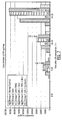
- FIG. 1-8 show the effect of combined TENS/Rb1 treatment on concentrations of various cytokines.
- Combined TENS/Rb1 treatment is compared against TENS treatment and Rb1 treatment.
- Affected cytokines include IL-10, IL-2, IL-1 alpha, IL-1 beta, I1-6, GM-CSF, IFN-gamma, and TNF-alpha.
- TENS/Rb1 treatment had a synergistic affect on concentration.
- rheumatic disorder shall refer to a variety of disorders characterized by inflammation, degeneration, or metabaolic derangement of the connective tissue structures of the body, such as the joints; examples include arthritis and osteoarthritis.
- the present invention relates to a method of treating a rheumatic disorder in a mammal including the steps of applying a transcutaneous electrical nerve stimulation (TENS)/ginsenoside regimen.
- TENS/ginsenoside treatment shows a synergistic effect on increasing cytokine concentration, thus effectively treating rheumatic disorders.
- TENS is applied first, followed by administration of the ginsenoside, or vise versa.
- TENS applies a controlled, low voltage electrical pulse to the nervous system by passing electricity through the skin via electrodes placed on the skin.
- Units capable of supplying TENS contain one or more of 1 or more electrodes, preferably between 1 to 16 electrodes, a base unit, a connection means such as wires between the electrodes and the, base unit, a stimulus supply means such as a battery source, for example a JV N:Cd rechargeable battery, an intensity varying device such as a knob or lever capable of varying the intensity delivered by the stimulus supply means, and a conductive gel for use as a conduction medium between the electrodes and the patient's skin.
- a stimulus supply means such as a battery source, for example a JV N:Cd rechargeable battery
- an intensity varying device such as a knob or lever capable of varying the intensity delivered by the stimulus supply means
- a conductive gel for use as a conduction medium between the electrode
- the TENS unit is utilized between 20 minutes to 1 hour per session, preferably 20 to 45 minutes.
- TENS is operated at a frequency between 1 to 50 Hz, preferably between 1 to 4 Hz, more preferably between 1 to 2 Hz.
- the pulse width can be about 0.15-0.25 ms.
- TENS can be delivered in a “pulse-train burst stimulation”, which involves delivering impulses at a rate of about 2 Hz with an inner train frequency of about 80 Hz. The intensity of stimulation is increased until phasic muscle contraction occurs. This phasic muscle contraction may be visible.
- the electrodes of the TENS Unit can be carbon rubber electrodes, sterile pre-gelled electrodes, a self adhesive electrodes, and may be of a suitable size based upon the body area to be treated. As stated earlier, a conductive gel can be implemented between the electrodes and the patient's skin.
- the positioning of the electrodes should be close, i.e., from 0.25 cm to 1 cm, to the affected area or the nearby acupuncture point.
- the affected area is the area showing symptoms of arthritis, for example swelling, oedma, stiffness, paresthesia, joint pain, etc.
- the electrodes can be positioned paraspinally at L5-S1 level and sciatic hiatus at midpoint between ischial tuberosity and greater trochanter, paraspinally at cervicothoracic junction, paraspinally at lumbosacral junction, superior to lateral joint line in depression above femoral condyle and medial joint line between tendons of semitendinosus and semimembranosus, 5 cm above medial aspect of patellar base and anterior-inferior to fibular head and 5 cm above lateral aspect of patellar base and just below medial condyle of tibia, dorsal web space and volar suface of wrist, lateral depression at end of elbow crease, and just above medial epieondyle and antecubital fossa.
- the administered ginsenoside can be selected from the group consisting Rb1, Rb2, Rb3, Rc, Rd, Rg3, Rh2, and aglycone PD.
- the administered ginsenoside is a combination of two or more ginsenosides.
- the administered ginsenoside is Rb1.
- the ginsenoside is administered with a pharmaceutically-acceptable carrier, such as a liquid carrier for example saline, glucose, distilled water, and the like, or a solid carriers such as a combination of syrups, binders, extracts, coatings, resins, powders, and the like.
- a pharmaceutically-acceptable carrier such as a liquid carrier for example saline, glucose, distilled water, and the like, or a solid carriers such as a combination of syrups, binders, extracts, coatings, resins, powders, and the like.
- the ginsenoside can be administered in a concentration of from 75 to 125 ⁇ g/ml.
- the ginsenoside can be administered in a volume of from 250 ⁇ l to 350 ⁇ l every two to four days for from 10 to 20 days.
- the following is an example of method of treaty arthritis or the symptoms of arthritis using the regimen of the present invention.
- TENS was firstly applied. Acupuncture points chosen were ST-35 and EX-LE-4 because they are common local points for treating knee problems. Surface electrodes were applied near the acupuncture points. A low-frequency constant mode TENS of 2 Hz and pulse width of 200- ⁇ s was used. The intensity was increased until a strong, tolerable, stroking sensation, preferably producing visible phasic muscle contration. Treatment lasted for 20 minutes and the intensity for the TENS was readjusted, if necessary, after 5 minutes to maintain the desired sensation. Treatment was carried out on alternate days for 8 sessions within 2 weeks.
- Rb1 is then administered.
- the ginsenoside Rb1 was administered to arthritic rats.
- Administration consisted of applying 300 ⁇ l of 100 ⁇ g/ml Rb1 sub-cutaneously about 0.5 cm from the affected area, which was the one where there was swelling. Administration occurred every third day for the 2 week period.
- FIG. 1 shows the synergistic affect of TENS/Rb1 on increasing the concentration of IL-10.
- IL-10 concentration is more than merely TENS or Rb1 singly administered.
- Rb1 is limited to 2500 pg/ml and singly administered TENS is approximately 3200 pg/ml, it was expected that the TENS/Rb1 treatment should be between 2500 pg/ml to 3200 pg/ml; thus TENS/Rb1 results are clearly unexpected.
- FIG. 2 shows the synergistic affect of TENS/Rb1 on increasing the concentration of IL-2. As clearly shown, at 24 hours following treatment, TENS/Rb1 treatment resulted in a IL-2 concentration significantly more than TENS or Rb1 administered singly.
- IL-1 alpha shows an increase in concentration post-TENS/Rb1 treatment as compared to post-TENS or post-Rb1 treatments.
- IL-1 aplha is associated as a target for pain control
- the increase in concentration address pain resulting from the arthritic condition.
- FIG. 4 shows an increase in IL-1 beta concentration post-TENS/Rb1 treatment in comparison to TENS treatment or Rb1 treatment. Similar to IL-1 alpha, IL-1 beta can aid in pain control arising from the arthritic condition.
- FIG. 5 shows that IL-6 concentration following TENS/Rb1 treatment is lower than concentration following TENS treatment.
- concentration is higher post-TENS/Rb1 treatments compared with TENS treatment or Rb1 treatment.
- Post-TENS/Rb1 concentration is almost equal to post-Rb1 concentration (see, FIG. 7 ).
- any of the disclosed devices or portions thereof may be combined together or separated into further portions unless specifically stated otherwise;
Landscapes
- Health & Medical Sciences (AREA)
- Life Sciences & Earth Sciences (AREA)
- General Health & Medical Sciences (AREA)
- Engineering & Computer Science (AREA)
- Biomedical Technology (AREA)
- Nuclear Medicine, Radiotherapy & Molecular Imaging (AREA)
- Radiology & Medical Imaging (AREA)
- Animal Behavior & Ethology (AREA)
- Public Health (AREA)
- Veterinary Medicine (AREA)
- Heart & Thoracic Surgery (AREA)
- Biophysics (AREA)
- Pain & Pain Management (AREA)
- Pharmaceuticals Containing Other Organic And Inorganic Compounds (AREA)
Abstract
Description
Claims (5)
Priority Applications (1)
| Application Number | Priority Date | Filing Date | Title |
|---|---|---|---|
| US11/907,010 US8855759B2 (en) | 2007-10-09 | 2007-10-09 | Method of treating a rheumatic disorder using combination of transcutaneous electrical nerve stimulation and a ginsenoside |
Applications Claiming Priority (1)
| Application Number | Priority Date | Filing Date | Title |
|---|---|---|---|
| US11/907,010 US8855759B2 (en) | 2007-10-09 | 2007-10-09 | Method of treating a rheumatic disorder using combination of transcutaneous electrical nerve stimulation and a ginsenoside |
Publications (2)
| Publication Number | Publication Date |
|---|---|
| US20090093854A1 US20090093854A1 (en) | 2009-04-09 |
| US8855759B2 true US8855759B2 (en) | 2014-10-07 |
Family
ID=40523940
Family Applications (1)
| Application Number | Title | Priority Date | Filing Date |
|---|---|---|---|
| US11/907,010 Active 2030-07-28 US8855759B2 (en) | 2007-10-09 | 2007-10-09 | Method of treating a rheumatic disorder using combination of transcutaneous electrical nerve stimulation and a ginsenoside |
Country Status (1)
| Country | Link |
|---|---|
| US (1) | US8855759B2 (en) |
Families Citing this family (18)
| Publication number | Priority date | Publication date | Assignee | Title |
|---|---|---|---|---|
| CA2864473C (en) | 2011-11-11 | 2021-10-19 | The Regents Of The University Of California | Transcutaneous spinal cord stimulation: noninvasive tool for activation of locomotor circuitry |
| US9993642B2 (en) | 2013-03-15 | 2018-06-12 | The Regents Of The University Of California | Multi-site transcutaneous electrical stimulation of the spinal cord for facilitation of locomotion |
| EP3782698A1 (en) | 2013-09-27 | 2021-02-24 | The Regents Of The University Of California | Engaging the cervical spinal cord circuitry to re- enable volitional control of hand function in tetraplegic subjects |
| US10751533B2 (en) | 2014-08-21 | 2020-08-25 | The Regents Of The University Of California | Regulation of autonomic control of bladder voiding after a complete spinal cord injury |
| CA2959378A1 (en) | 2014-08-27 | 2016-03-03 | The Regents Of The University Of California | Multi-electrode array for spinal cord epidural stimulation |
| US11298533B2 (en) | 2015-08-26 | 2022-04-12 | The Regents Of The University Of California | Concerted use of noninvasive neuromodulation device with exoskeleton to enable voluntary movement and greater muscle activation when stepping in a chronically paralyzed subject |
| US11097122B2 (en) | 2015-11-04 | 2021-08-24 | The Regents Of The University Of California | Magnetic stimulation of the spinal cord to restore control of bladder and/or bowel |
| US11235154B2 (en) | 2017-02-17 | 2022-02-01 | The University Of British Columbia | Apparatus and methods for maintaining physiological functions |
| US12434068B2 (en) | 2017-05-23 | 2025-10-07 | The Regents Of The University Of California | Accessing spinal networks to address sexual dysfunction |
| DE20168827T1 (en) | 2017-06-30 | 2021-01-21 | Gtx Medical B.V. | NEUROMODULATION SYSTEM |
| US12357828B2 (en) | 2017-12-05 | 2025-07-15 | Ecole Polytechnique Federale De Lausanne (Epfl) | System for planning and/or providing neuromodulation |
| EP3720338B1 (en) | 2017-12-05 | 2025-09-24 | Ecole Polytechnique Fédérale de Lausanne (EPFL) | A system for planning and/or providing neuromodulation |
| EP3840638A4 (en) | 2018-08-23 | 2022-05-18 | The Regents Of The University Of California | NON-INVASIVE SPINAL CORD STIMULATION FOR NERVE ROOT PARALYSIS, CAUD'S TAIL SYNDROME AND RESTORATION OF UPPER LIMB FUNCTION |
| DE18205821T1 (en) | 2018-11-13 | 2020-12-24 | Gtx Medical B.V. | CONTROL SYSTEM FOR MOTION RECONSTRUCTION AND / OR RECOVERY FOR A PATIENT |
| EP3695878B1 (en) | 2019-02-12 | 2023-04-19 | ONWARD Medical N.V. | A system for neuromodulation |
| EP3824948A1 (en) | 2019-11-19 | 2021-05-26 | ONWARD Medical B.V. | A planning and/or control system for a neuromodulation system |
| EP3827875B1 (en) | 2019-11-27 | 2023-07-05 | ONWARD Medical N.V. | Neuromodulation system |
| DE19211698T1 (en) | 2019-11-27 | 2021-09-02 | Onward Medical B.V. | Neuromodulation system |
Citations (5)
| Publication number | Priority date | Publication date | Assignee | Title |
|---|---|---|---|---|
| US4966893A (en) | 1989-01-13 | 1990-10-30 | Pang Peter K T | Method for treatment of senile dementia |
| US20040138712A1 (en) * | 2002-11-29 | 2004-07-15 | Dov Tamarkin | Combination stimulating and exothermic heating device and method of use thereof |
| US20080009469A1 (en) * | 2004-01-26 | 2008-01-10 | Kozo Ninomiya | Medicament for Threapeutic Treating of Pain |
| US20080027018A1 (en) * | 2005-09-02 | 2008-01-31 | Luis Mir | Electrotransfer of nucleic acid into tissue cells |
| US20090281049A1 (en) * | 2006-09-19 | 2009-11-12 | Quanhai Liu | New use of ginsenoside compound-k in manufacturing medicaments |
-
2007
- 2007-10-09 US US11/907,010 patent/US8855759B2/en active Active
Patent Citations (6)
| Publication number | Priority date | Publication date | Assignee | Title |
|---|---|---|---|---|
| US4966893A (en) | 1989-01-13 | 1990-10-30 | Pang Peter K T | Method for treatment of senile dementia |
| US5137878A (en) | 1989-01-13 | 1992-08-11 | Pang Peter K T | Composition and method for treatment of senile dementia |
| US20040138712A1 (en) * | 2002-11-29 | 2004-07-15 | Dov Tamarkin | Combination stimulating and exothermic heating device and method of use thereof |
| US20080009469A1 (en) * | 2004-01-26 | 2008-01-10 | Kozo Ninomiya | Medicament for Threapeutic Treating of Pain |
| US20080027018A1 (en) * | 2005-09-02 | 2008-01-31 | Luis Mir | Electrotransfer of nucleic acid into tissue cells |
| US20090281049A1 (en) * | 2006-09-19 | 2009-11-12 | Quanhai Liu | New use of ginsenoside compound-k in manufacturing medicaments |
Also Published As
| Publication number | Publication date |
|---|---|
| US20090093854A1 (en) | 2009-04-09 |
Similar Documents
| Publication | Publication Date | Title |
|---|---|---|
| US8855759B2 (en) | Method of treating a rheumatic disorder using combination of transcutaneous electrical nerve stimulation and a ginsenoside | |
| Heidland et al. | Neuromuscular electrostimulation techniques: historical aspects and current possibilities in treatment of pain and muscle waisting | |
| US20230001202A1 (en) | Article and method for treating diabetic peripheral neuropathy | |
| Jack et al. | Electrical stimulation as a tool to promote plasticity of the injured spinal cord | |
| Ma et al. | Potential mechanisms of acupuncture for neuropathic pain based on somatosensory system | |
| Pieber et al. | Electrotherapy for the treatment of painful diabetic peripheral neuropathy: a review. | |
| Šitum et al. | Notalgia paresthetica | |
| Johnson et al. | Transcutaneous electrical nerve stimulation for the management of painful conditions: focus on neuropathic pain | |
| DeSantana et al. | Effectiveness of transcutaneous electrical nerve stimulation for treatment of hyperalgesia and pain | |
| Lee et al. | Efficacy of pulsed electromagnetic therapy for chronic lower back pain: a randomized, double-blind, placebo-controlled study | |
| Yang et al. | Application and underlying mechanism of acupuncture for the nerve repair after peripheral nerve injury: remodeling of nerve system | |
| Yu et al. | The effects of electroacupuncture on the extracellular signal-regulated kinase 1/2/P2X3 signal pathway in the spinal cord of rats with chronic constriction injury | |
| Gersh et al. | Applications of transcutaneous electrical nerve stimulation in the management of patients with pain: state-of-the-art update | |
| JP2015517365A (en) | DC current output device applicable to treatment | |
| Donovan-Rodriguez et al. | Evidence of a role for descending serotonergic facilitation in a rat model of cancer-induced bone pain | |
| Willinger et al. | Management of refractory pain after total joint replacement | |
| Yu et al. | Current trends in spinal cord injury repair | |
| Gao et al. | A review of electroacupuncture in bone repair: mechanisms and clinical implications | |
| Cabıoğlu et al. | Role of acupuncture in stress management | |
| Shallenberger et al. | Prolozone™–regenerating joints and eliminating pain | |
| Yildizgoren et al. | A modern interpretation of traditional galvanic current: percutaneous needle electrolysis therapy | |
| US10556101B2 (en) | Systems and methods for electrostimulation therapy of plants | |
| Chen et al. | Vagus nerve stimulation: innovative applications in the field of hand function rehabilitation | |
| RU2565741C1 (en) | Method of treating inflammatory, degenerative-dystrophic disorders of spine or joints of extremities | |
| Pop et al. | Peripheral nerve injury rehabilitation. |
Legal Events
| Date | Code | Title | Description |
|---|---|---|---|
| AS | Assignment |
Owner name: HONG KONG POLYTECHNIC UNIVERSITY, THE, HONG KONG Free format text: ASSIGNMENT OF ASSIGNORS INTEREST;ASSIGNORS:LO, SAMUEL CHUN LAP;LEUNG, MASON CHIN PANG;REEL/FRAME:021832/0383;SIGNING DATES FROM 20070914 TO 20071002 Owner name: HONG KONG POLYTECHNIC UNIVERSITY, THE, HONG KONG Free format text: ASSIGNMENT OF ASSIGNORS INTEREST;ASSIGNORS:LO, SAMUEL CHUN LAP;LEUNG, MASON CHIN PANG;SIGNING DATES FROM 20070914 TO 20071002;REEL/FRAME:021832/0383 |
|
| STCF | Information on status: patent grant |
Free format text: PATENTED CASE |
|
| MAFP | Maintenance fee payment |
Free format text: PAYMENT OF MAINTENANCE FEE, 4TH YR, SMALL ENTITY (ORIGINAL EVENT CODE: M2551) Year of fee payment: 4 |
|
| MAFP | Maintenance fee payment |
Free format text: PAYMENT OF MAINTENANCE FEE, 8TH YR, SMALL ENTITY (ORIGINAL EVENT CODE: M2552); ENTITY STATUS OF PATENT OWNER: SMALL ENTITY Year of fee payment: 8 |
|
| MAFP | Maintenance fee payment |
Free format text: PAYMENT OF MAINTENANCE FEE, 12TH YR, SMALL ENTITY (ORIGINAL EVENT CODE: M2553); ENTITY STATUS OF PATENT OWNER: SMALL ENTITY Year of fee payment: 12 |