US8854547B2 - Video display apparatus, source apparatus, video display method, and video display system - Google Patents
Video display apparatus, source apparatus, video display method, and video display system Download PDFInfo
- Publication number
- US8854547B2 US8854547B2 US13/215,006 US201113215006A US8854547B2 US 8854547 B2 US8854547 B2 US 8854547B2 US 201113215006 A US201113215006 A US 201113215006A US 8854547 B2 US8854547 B2 US 8854547B2
- Authority
- US
- United States
- Prior art keywords
- video display
- display apparatus
- game machine
- status information
- receiver
- Prior art date
- Legal status (The legal status is an assumption and is not a legal conclusion. Google has not performed a legal analysis and makes no representation as to the accuracy of the status listed.)
- Active, expires
Links
Images


Classifications
-
- H—ELECTRICITY
- H04—ELECTRIC COMMUNICATION TECHNIQUE
- H04N—PICTORIAL COMMUNICATION, e.g. TELEVISION
- H04N5/00—Details of television systems
- H04N5/63—Generation or supply of power specially adapted for television receivers
-
- H—ELECTRICITY
- H04—ELECTRIC COMMUNICATION TECHNIQUE
- H04N—PICTORIAL COMMUNICATION, e.g. TELEVISION
- H04N21/00—Selective content distribution, e.g. interactive television or video on demand [VOD]
- H04N21/40—Client devices specifically adapted for the reception of or interaction with content, e.g. set-top-box [STB]; Operations thereof
- H04N21/43—Processing of content or additional data, e.g. demultiplexing additional data from a digital video stream; Elementary client operations, e.g. monitoring of home network or synchronising decoder's clock; Client middleware
- H04N21/436—Interfacing a local distribution network, e.g. communicating with another STB or one or more peripheral devices inside the home
- H04N21/4363—Adapting the video stream to a specific local network, e.g. a Bluetooth® network
- H04N21/43632—Adapting the video stream to a specific local network, e.g. a Bluetooth® network involving a wired protocol, e.g. IEEE 1394
- H04N21/43635—HDMI
-
- H—ELECTRICITY
- H04—ELECTRIC COMMUNICATION TECHNIQUE
- H04N—PICTORIAL COMMUNICATION, e.g. TELEVISION
- H04N21/00—Selective content distribution, e.g. interactive television or video on demand [VOD]
- H04N21/40—Client devices specifically adapted for the reception of or interaction with content, e.g. set-top-box [STB]; Operations thereof
- H04N21/43—Processing of content or additional data, e.g. demultiplexing additional data from a digital video stream; Elementary client operations, e.g. monitoring of home network or synchronising decoder's clock; Client middleware
- H04N21/443—OS processes, e.g. booting an STB, implementing a Java virtual machine in an STB or power management in an STB
- H04N21/4436—Power management, e.g. shutting down unused components of the receiver
Definitions
- Embodiments described herein relate generally to a video display apparatus which receives and displays a video signal, a source apparatus, a video display method, and a video display system.
- a source apparatus such as a game machine
- a video display apparatus such as a TV receiver
- a video display apparatus powers itself off when a prescribed time has elapsed because it does not recognize that a game machine is being manipulated, though a user is manipulating the game machine using a game controller or the like and the game machine is outputting a video signal. This is inconvenient to users, which is a problem.
- Video display apparatus having a power saving function may power themselves off though a user is manipulating a source apparatus. This is inconvenient to users.
- FIG. 1 shows a video display system in which a game machine (source apparatus) is connected to a video display apparatus (sink apparatus) according to an embodiment.
- FIG. 2 illustrates a system configuration of the video display apparatus according to the embodiment.
- FIG. 3 illustrates a functional configuration of the game machine which is connected to the video display apparatus according to the embodiment.
- FIG. 4 illustrates how a transition of apparatus status information is caused in the game machine (source apparatus) which is connected to the video display apparatus according to the embodiment, in each of a case that the game machine itself has been manipulated and a case that it has not been manipulated.
- FIG. 5 illustrates a functional configuration of the video display apparatus according to the embodiment which is connected to the game machine.
- FIG. 6 illustrates how the video display apparatus according to the embodiment recognizes a status of the game machine connected to it using an HDMI-CEC command.
- FIG. 7 illustrates how the video display apparatus according to the embodiment recognizes a status of the game machine connected to it using an HDMI-CEC command and, if judging that the game machine is inactive, the video display apparatus powers itself off.
- FIG. 8 illustrates a functional configuration of a video display apparatus according to another embodiment which is connected to a source apparatus.
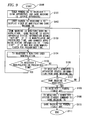
- FIG. 9 illustrates a process which is executed by each of the video display apparatus according to the embodiments.
- a video display apparatus including: a video display unit configured to display a video by receiving a video signal output from a source apparatus; a status information acquisition module configured to acquire, from the source apparatus, status information indicating whether the source apparatus is active or inactive; and a power controller configured to perform a control of powering off the video display apparatus if the acquired status information indicates that the source apparatus is inactive.
- FIG. 1 shows a video display system in which a source apparatus is connected to a video display apparatus according to an embodiment.
- Reference numeral 1 denotes a video display apparatus which is the sink apparatus.
- the embodiment is directed to the case that the video display apparatus is a TV receiver, it may be any apparatus capable of displaying video such as a PC or a portable terminal.
- Reference numeral 18 denotes a game machine which is the source apparatus, and reference symbol 18 a denotes a game controller for controlling the game machine 18 .
- Reference symbol 18 b denotes an HDMI (high-definition multimedia interface; registered trademark) cable.
- the video display apparatus (TV receiver) 1 and the game machine 18 comply with the HDMI standard and are connected to each other by the HDMI cable 18 b.
- the user manipulates the game machine 18 and a video signal relating to a game, for example, is output to the video display apparatus (TV receiver) 1 via the HDMI cable 18 b.
- a video signal relating to a game for example, is output to the video display apparatus (TV receiver) 1 via the HDMI cable 18 b.
- the game machine 18 is a source and the video display apparatus (TV receiver) 1 is a sink apparatus.
- FIG. 2 illustrates a system configuration of the video display apparatus 1 according to the embodiment.
- Reference numeral 2 denotes an antenna; 3 a , a tuner; 4 , a signal processor; 5 , a video processor; 6 , an audio processor; 7 , a display processor; 8 , a display device; 9 , speakers; and 10 , a bus.
- Reference numeral 11 denotes a controller; 12 , an MPU; 13 , a RAM; 14 , a ROM; 15 , a flash memory; and 16 , a recording device.
- Reference numeral 17 denotes an external interface
- 19 a manipulation receiving unit
- 20 a manipulation device (remote controller).
- Reference numeral 21 denotes a transmitting/receiving section and reference numeral 26 denotes the Internet.
- Broadcast programs are broadcast from plural broadcasting stations such as broadcasting stations 25 a and 25 b .
- An antenna 2 is connected to the video display apparatus (TV receiver) 1 .
- a single tuner or plural tuners 3 a are provided. Broadcast signals of plural programs that are broadcast from the broadcasting stations 25 a and 25 b etc. in the form of broadcast waves are received by the antenna 2 and supplied to the tuner 3 a .
- the tuner 3 a tunes in to a broadcast signal of a program and outputs the thus-selected broadcast signal to the signal processor 4 .
- the MPU 12 of the controller 11 is connected to the tuner 3 a , the signal processor 4 , the video processor 5 , the audio processor 6 , the display processor 7 , the RAM 13 , the ROM 14 , the flash memory 15 , the recording device 16 , the external interface 17 , the manipulation receiving unit 19 , the manipulation device (remote controller) 20 , and the transmitting/receiving section 21 via the bus 10 and controls them.
- the signal processor 4 performs decoding processing on a broadcast signal of a program selected by the tuner 3 a , and outputs a resulting broadcast signal having the transport stream (TS) format to the recording device 16 .
- TS transport stream
- the recording device 16 is a large-capacity recording device (video signal recording device) such as an HDD (hard disk drive).
- the recording device 16 is provided inside the video display apparatus (TV receiver) 1 .
- the recording device 16 may be an SSD.
- the recording device 16 continuously receives a broadcast signal of a broadcast program having the transport stream format and records it. Broadcast programs recorded in the recording device 16 can be reproduced when necessary.
- a broadcast signal of a program that is extracted from recorded broadcast programs is decoded by the signal processor 4 .
- An audio signal and a video signal are extracted from a decoded signal and output to the audio processor 6 and the video processor 5 , respectively.
- the audio processor 6 decodes the received audio signal and outputs resulting signals to the speakers 9 .
- the speakers 9 convert the received audio signals into an output sound.
- the video processor 5 decodes the received video signal and outputs a resulting signal to the display processor 7 .
- the display processor 7 performs display processing relating to colors, display positions, etc. and outputs a resulting video signal to the display device 8 .
- the display device 8 displays the received video signal on a display unit such as a display panel (not shown).
- the video display apparatus (TV receiver) 1 (actually, external interface 17 ) is connected to the game machine 18 via the HDMI cable 18 b .
- the manipulation device 20 such as a remote controller or a keyboard is connected to the video display apparatus 1 (actually, manipulation receiving unit 19 ), whereby the user can manipulate the video display apparatus 1 .
- the video display apparatus 1 (actually, transmission/receiving section 21 ) is connected to the Internet and hence can perform an Internet communication.
- FIG. 3 illustrates a functional configuration of the game machine 18 which is connected to the video display apparatus 1 according to the embodiment.
- the game machine 18 is a source apparatus for the video display apparatus (TV receiver) 1 .
- the game machine 18 outputs a video signal (AV data), for example, to the video display apparatus 1 (sink apparatus) via the HDMI cable 18 b.
- AV data video signal
- AV data is recording in a storage medium such as an HDD or a DVD (digital versatile disc), VOD (video on demand) data transmitted by ground-wave digital broadcast or via a network line, or transport stream data as typified by data of IPTV.
- AV data of any type can be used.
- a system controller 304 controls an AV data reproducing section 302 and an AV data transmitting section 306 .
- the system controller 304 checks a format of AV data 301 . If decoding is necessary, the system controller 304 supplies the AV data 301 to the AV data reproducing section 302 .
- the AV data reproducing section 302 decodes the AV data and outputs resulting data to the AV data transmitting section 306 . If decoding is not necessary, the system controller 304 supplies the AV data 301 to the AV data transmitting section 306 .
- a user control receiving section 303 receives a command that is output from the game controller 18 a or a remote controller (not shown) manipulated by the user.
- the received command is input to the system controller 304 .
- the system controller 304 a system control for the game machine 18 according to the received command.
- the system controller 304 when the game machine 18 has received a user manipulation such as a user control command, the system controller 304 makes the apparatus status information of the game machine 18 “active” and causes an apparatus status holding section 305 to hold that information.
- the game machine 18 is equipped with a timer 307 , which keeps time. If no user manipulation (e.g., control command) has not been made for a prescribed time (e.g., 10 minutes), the system controller 304 changes the apparatus status information from “active” to “inactive” and causes an apparatus status holding section 305 to hold the latter information.
- a prescribed time e.g. 10 minutes
- the game machine when receiving, from the video display apparatus 1 (sink apparatus), a request for sending the apparatus status information (“active” or “inactive”) held by the apparatus status holding section 305 , the game machine (actually, AV data transmitting section 306 ) sends the apparatus status information to the video display apparatus (TV receiver) 1 .
- the AV data transmitting section 306 outputs AV data including video and audio and apparatus status information of the game machine 18 to the HDMI cable 18 b.
- AV data transmission line is the HDMI cable 18 b
- AV data may be transmitted by radio or the like.
- FIG. 4 illustrates how the status is held in the game machine 18 (source apparatus) which is connected to the video display apparatus (TV receiver) 1 , in each of a case that the game machine 18 itself has been manipulated and a case that it has not been manipulated.
- a transition of device status information can be caused by a CEC (consumer electronics control) message.
- the game machine 18 When receiving a message from, for example, the game controller 18 a in a state that the apparatus status information is “inactive,” the game machine 18 causes a transition of the apparatus status information to “active” (indicated by numeral 401 ) and holds that information. When receiving a message in a state that the apparatus status information is “active,” the game machine 18 keeps the apparatus status information being “active” (indicated by numeral 403 ).
- the game machine 18 If the timer 307 shows that no message has been input from the game controller 18 a for a prescribed time (e.g., 30 minutes), the game machine 18 causes a transition of the apparatus status information to “inactive.”
- a prescribed time e.g. 30 minutes
- FIG. 5 illustrates a functional configuration of the video display apparatus (TV receiver) 1 .
- the video display apparatus (TV receiver) 1 is a sink apparatus which is connected to the game machine 18 (source apparatus).
- AV data including video and/or audio and apparatus status information of the game machine 18 are output from the game machine 18 via the HDMI cable 18 b.
- An AV data receiving section 501 receives the AV data including video and/or audio which is output from the game machine 18 .
- An AV data reproducing section 502 reproduces the AV data supplied from the AV data receiving section 501 .
- a sleep controller 506 is connected to the AV data receiving section 501 and the AV data reproducing section 502 and controls them.
- An apparatus information receiving section 503 receives the apparatus status information (“active” or “inactive”; managed in the game machine 18 ) from the game machine 18 , and supplies it to the sleep controller 506 .
- the sleep controller 506 judges whether to put the video display apparatus 1 (sink apparatus) into a sleep state from an active state.
- a sleep timer setting section 504 holds set time information upon expiry of which a judgment as to whether to put the video display apparatus (TV receiver) 1 into a sleep state is made.
- a timer section 505 keeps time when instructed to do so by the sleep controller 506 .
- the sleep controller 506 uses the timer section 505 , the sleep controller 506 measures a time for which the video display apparatus (TV receiver) 1 has not been manipulated by the user.
- the sleep controller 506 compares the time for which the video display apparatus (TV receiver) 1 has not been manipulated by the user with a prescribed time (e.g., 30 minutes) that is set in the sleep timer setting section 504 . If the time for which the video display apparatus (TV receiver) 1 has not been manipulated by the user is longer than the prescribed time (e.g., 30 minutes) that is set in the sleep timer setting section 504 , the sleep controller 506 judges whether to put the video display apparatus (TV receiver) 1 into a sleep state from an active state using the apparatus status information received by the apparatus information receiving section 503 which indicates whether the game machine 18 is active or inactive.
- a prescribed time e.g. 30 minutes
- the system controller 304 performs the following power control for the video display apparatus (TV receiver) 1 . If judging that the game machine 18 is active, the sleep controller 506 keeps the video display apparatus (TV receiver) 1 active. If judging that the game machine 18 is inactive, the sleep controller 506 puts the video display apparatus (TV receiver) 1 into a sleep state.
- a request command (CEC command) is sent via the CEC lines of HDMI ports.
- the video display apparatus (TV receiver) 1 requests the game machine 18 to send apparatus status information.
- the game machine 18 sends apparatus status information to the apparatus information receiving section 503 of the video display apparatus (TV receiver) 1 .
- the apparatus information receiving section 503 judges the content of the apparatus status information received from the game machine 18 , and supplies a judgment result to the sleep controller 506 . According to the judgment result, the system controller 304 performs a power control, that is, keeps the video display apparatus (TV receiver) 1 active or puts the video display apparatus (TV receiver) 1 into a sleep state.
- FIG. 6 illustrates how the video display apparatus (TV receiver) 1 according to the embodiment recognizes a status of the game machine 18 connected to it using an HDMI-CEC command.
- the video display apparatus (TV receiver) 1 and the game machine 18 are connected to each other by the HDMI cable 18 b and the video display apparatus (TV receiver) 1 recognizes a status of the game machine 18 using an HDMI-CEC command.
- the video display apparatus (TV receiver) 1 sends a status command (HDMI-CEC command) to the game machine 18 (indicated by numeral 600 ).
- the game machine 18 sends, to the video display apparatus (TV receiver) 1 , the apparatus status information (“active” or “inactive”) that is held by the apparatus status holding section 305 (indicated by numeral 601 ).
- the video display apparatus (TV receiver) 1 can thus recognize the status (active or inactive) of the game machine 18 .
- FIG. 7 illustrates how the video display apparatus (TV receiver) 1 according to the embodiment recognizes a status of the game machine 18 connected to it using an HDMI-CEC command and, if judging that the game machine 18 is inactive, the video display apparatus 1 powers itself off.
- the video display apparatus (TV receiver) 1 sends a status command (HDMI-CEC command) to the game machine 18 (indicated by numeral 600 ).
- the game machine 18 sends, to the video display apparatus (TV receiver) 1 , apparatus status information that is held in the game machine 18 and indicates that it is inactive and the video display apparatus (TV receiver) 1 receives the apparatus status information (indicated by numeral 602 ).
- the video display apparatus (TV receiver) 1 In response to the received apparatus status information, the video display apparatus (TV receiver) 1 sends an HDMI-CEC system standby command to the game machine 18 (indicated by numeral 603 ).
- the game machine 18 receives the HDMI-CEC system standby command, the game machine 18 performs a control of powering itself off (in link with the power-off of the video display apparatus (TV receiver) 1 ).
- the video display apparatus (TV receiver) 1 If receiving apparatus status information to the effect that the game machine 18 is active, it is preferable that, for example, the video display apparatus (TV receiver) 1 reset its sleep timer (sleep timer setting section 504 ).
- the video display apparatus (TV receiver) 1 inquires of the game machine 18 about its status when the video display apparatus (TV receiver) 1 has not been manipulated for 30 minutes.
- HDMI-CEC is a function of enabling cooperation between apparatus through transmission of a control signal over an HDMI cable. Where control microcomputers of respective digital apparatus are connected to each other by single-wire serial CEC lines in daisy chain form, HDMI-CEC enables exchange of CEC commands.
- the system standby is a function of powering off a peripheral device that is HDMI-connected to a TV receiver when a power-off manipulation is performed on the TV receiver.
- the system standby allows a user who has enjoyed viewing of a TV receiver, a DVD player, or the like to power off, by one touch, plural apparatus that have been used.
- FIG. 8 illustrates a functional configuration of a video display apparatus according to another embodiment which is connected to a source apparatus.
- the video display apparatus (TV receiver) 1 is a sink apparatus which is connected to a source apparatus which is a game machine 18 .
- AV data including video and/or audio and apparatus status information of the game machine 18 is sent from the game machine 18 via an HDMI cable 18 b .
- the AV data transmission line may be a radio transmission line or the like.
- the video display apparatus (TV receiver) 1 is equipped with a reception data separating section 801 which receives AV data including apparatus status information of the game machine 18 from the game machine 18 .
- the data separating section 801 separates the received AV data into data including the video and/or audio and data including the apparatus status information of the game machine 18 and outputs those data.
- the data including the video and/or audio is received by an AV data receiving section 802 and supplied to an AV data reproducing section 803 .
- the AV data reproducing section 803 reproduces the AV data including the video and/or audio.
- a sleep controller 805 is connected to the AV data receiving section 802 and the AV data reproducing section 803 and controls them.
- a control command receiving section 804 receives the data including the apparatus status information of the game machine 18 . As in the above embodiment, the control command receiving section 804 receives the apparatus status information that is managed in the game machine 18 and indicates whether the game machine 18 is active or inactive, and supplies it to the sleep controller 805 .
- the sleep controller 805 judges whether to put the video display apparatus 1 (sink apparatus) into a sleep state from an active state.
- a sleep timer setting section 807 holds set time information upon expiry of which a judgment as to whether to put the video display apparatus (TV receiver) 1 into a sleep state is made.
- a timer section 806 keeps time when instructed to do so by the sleep controller 805 .
- the sleep controller 805 uses the timer section 806 to measure a time for which the video display apparatus (TV receiver) 1 has not been manipulated by the user.
- the sleep controller 805 compares the time for which the video display apparatus (TV receiver) 1 has not been manipulated by the user with a prescribed time (e.g., 30 minutes) that is set in the sleep timer setting section 807 . If the time for which the video display apparatus (TV receiver) 1 has not been manipulated by the user is longer than the prescribed time (e.g., 30 minutes) that is set in the sleep timer setting section 807 , the sleep controller 805 judges whether to put the video display apparatus (TV receiver) 1 into a sleep state from an active state using the apparatus status information indicating whether the game machine 18 is active or inactive.
- a prescribed time e.g. 30 minutes
- the system controller 805 performs the following power control for the video display apparatus (TV receiver) 1 . If judging that the game machine 18 is active, the sleep controller 805 keeps the video display apparatus (TV receiver) 1 active. If judging that the game machine 18 is inactive, the sleep controller 805 puts the video display apparatus (TV receiver) 1 into a sleep state.
- a request command (CEC command) is sent via the CEC lines of HDMI ports.
- FIG. 9 illustrates a process which is executed by each of the video display apparatus 1 (sink apparatus; in the following, represented by the video display apparatus 1 ) according to the embodiments.
- the process starts at step S 100 .
- the user powers on the TV receiver 1 (sink apparatus) and the game machine 18 (source apparatus) which are connected to each other by the HDMI cable 18 b.
- the user causes the TV receiver 1 to display video by manipulating the game machine 18 .
- the game machine 18 monitors a user manipulation, and keeps the apparatus status information being “active” if a user manipulation is made in a prescribed time and changes the apparatus status information to “inactive” if no user manipulation has not been made for the prescribed time.
- the apparatus status information is held by the apparatus status holding section 305 (memory) of the game machine 18 .
- the TV receiver 1 monitors a user manipulation on itself.
- the TV receiver 1 judges whether or not it has been manipulated in a prescribed time. If the TV receiver 1 judges that it has been manipulated in the prescribed time (S 105 : yes), the process returns to step S 104 . On the other hand, if TV receiver 1 judges that it has not been manipulated for the prescribed time (S 105 : no), the process moves to step S 106 .
- the TV receiver 1 acquires apparatus status information of the game machine 18 by requesting the game machine 18 to send it.
- step S 107 the TV receiver 1 judges whether or not the game machine 18 is inactive. If it is judged that the game machine 18 is inactive (S 107 : yes), the process moves to step S 108 . If it is judged that the game machine 18 is active (S 107 : no), the process returns to step S 103 .
- the TV receiver 1 performs a control of powering itself off.
- the TV receiver 1 sends a CEC system standby command to the game machine 18 .
- step S 110 receiving the CEC system standby command, the game machine 18 performs a control of powering itself off.
- the process is finished at step S 111 .
- the game machine 18 holds the apparatus status information indicating whether the game machine 18 is active because it has been controlled by the game controller or the like or the game machine 18 is inactive because it has not been controlled by the game controller or the like.
- the game machine 18 sends the apparatus status information to the TV receiver 1 when requested to do so.
- the TV receiver 1 measures a time for which it has not been manipulated by the user. If not manipulated for the prescribed time or more, the TV receiver 1 acquires apparatus status information from the game machine 18 . Based on the acquired apparatus status information, the TV receiver 1 judges whether to power itself off.
- the TV receiver 1 controls the game machine 18 using, for example, an HDMI-CEC system standby command so that the game machine 18 powers itself off.
- the TV receiver 1 performs a power control by judging a system status of the game machine 18 (source apparatus).
- the TV receiver 1 does not stop its operation while the user is manipulating the game machine 18 . This is more convenient to the user.
- power control is performed taking into consideration the connection state of the TV receiver 1 and the game machine 18 , which enables power saving control.
- the TV receiver 1 checks a status of the game machine 18 using an HDMI CEC command.
- a status of the game machine 18 may be checked according to another protocol such as IP (Internet protocol).
- the video display apparatus (TV receiver) 1 which is a sink apparatus according to each embodiment is equipped with a video display unit which displays video by receiving a video signal from the game machine 18 which is a source apparatus.
- the video display apparatus (TV receiver) 1 is also equipped with a status information acquisition module which acquires, from the game machine 18 , status information indicating whether the game machine 18 is active or inactive.
- the video display apparatus (TV receiver) 1 is also equipped with a power controller which performs a control of powering off the video display apparatus (TV receiver) 1 if the game machine 18 is inactive.
- the game machine 18 which is a source apparatus according to each embodiment is equipped with a status information holding module which monitors whether or not the game machine 18 has been manipulated and which keeps status information being “active” if the game machine 18 is manipulated in a prescribed time and changes the status information to “inactive” if the game machine 18 has not been manipulated for the prescribed time.
- the game machine 18 is also equipped with an output module which sends the status information held by the status information holding module to the video display apparatus (TV receiver) 1 when requested to do so.
- the problem that it may be powered off though the user is manipulating a source apparatus can be solved and the convenience of the user can thereby be increased.
Landscapes
- Engineering & Computer Science (AREA)
- Multimedia (AREA)
- Signal Processing (AREA)
- General Engineering & Computer Science (AREA)
- Software Systems (AREA)
- Computer Networks & Wireless Communication (AREA)
- Two-Way Televisions, Distribution Of Moving Picture Or The Like (AREA)
Abstract
Description
Claims (3)
Applications Claiming Priority (2)
| Application Number | Priority Date | Filing Date | Title |
|---|---|---|---|
| JP2010-267833 | 2010-11-30 | ||
| JP2010267833A JP5085720B2 (en) | 2010-11-30 | 2010-11-30 | Video display system |
Publications (2)
| Publication Number | Publication Date |
|---|---|
| US20120133833A1 US20120133833A1 (en) | 2012-05-31 |
| US8854547B2 true US8854547B2 (en) | 2014-10-07 |
Family
ID=46126396
Family Applications (1)
| Application Number | Title | Priority Date | Filing Date |
|---|---|---|---|
| US13/215,006 Active 2031-12-21 US8854547B2 (en) | 2010-11-30 | 2011-08-22 | Video display apparatus, source apparatus, video display method, and video display system |
Country Status (2)
| Country | Link |
|---|---|
| US (1) | US8854547B2 (en) |
| JP (1) | JP5085720B2 (en) |
Cited By (1)
| Publication number | Priority date | Publication date | Assignee | Title |
|---|---|---|---|---|
| US11688330B2 (en) | 2021-11-29 | 2023-06-27 | Samsung Electronics Co., Ltd. | Display apparatus and controlling method thereof |
Families Citing this family (9)
| Publication number | Priority date | Publication date | Assignee | Title |
|---|---|---|---|---|
| JP2014128007A (en) * | 2012-12-27 | 2014-07-07 | Toshiba Corp | Information processing unit and display processing method |
| US8872983B2 (en) | 2012-12-27 | 2014-10-28 | Kabushiki Kaisha Toshiba | Information processing apparatus and display processing method |
| US9367098B2 (en) * | 2013-02-08 | 2016-06-14 | Htc Corporation | Power saving method for handheld mobile electronic device and device using the same |
| US20150085187A1 (en) * | 2013-09-20 | 2015-03-26 | Huimin Chen | Method and apparatus for burst mode video processing with inband link power management |
| US20160371048A1 (en) * | 2015-06-16 | 2016-12-22 | T1V, Inc. | Remote gesture control, input monitor, systems including the same, and associated methods |
| AU2016204533A1 (en) * | 2015-07-09 | 2017-02-02 | Embertec Pty Ltd | Standby Power Controller With Enhanced Use Detection |
| WO2020171245A1 (en) * | 2019-02-18 | 2020-08-27 | 엘지전자 주식회사 | Display device and method for operating same |
| EP3820144B1 (en) * | 2019-11-07 | 2021-12-29 | Axis AB | Method for displaying a video stream of a scene |
| US11931647B2 (en) * | 2021-05-13 | 2024-03-19 | Stewart Upson | Integrated screen with USB and HDMI for game console |
Citations (23)
| Publication number | Priority date | Publication date | Assignee | Title |
|---|---|---|---|---|
| JPH07322169A (en) | 1994-05-24 | 1995-12-08 | Rohm Co Ltd | Television signal receiver |
| JP2004186772A (en) | 2002-11-29 | 2004-07-02 | Toshiba Corp | Recording / reproducing apparatus and recording / reproducing method |
| JP2004235920A (en) | 2003-01-30 | 2004-08-19 | Toshiba Corp | Television receiver and display restriction method |
| US20050125829A1 (en) | 2003-12-04 | 2005-06-09 | Orion Electric Company Ltd. | Apparatus for switching external input |
| JP2005250529A (en) | 2004-03-01 | 2005-09-15 | Sony Corp | Broadcast program content management distribution system and method |
| JP2006310922A (en) | 2005-04-26 | 2006-11-09 | Seiko Epson Corp | TV set |
| JP2007293776A (en) | 2006-04-27 | 2007-11-08 | Funai Electric Co Ltd | Client server system |
| JP2008182524A (en) | 2007-01-25 | 2008-08-07 | Funai Electric Co Ltd | Video image and sound system |
| JP2009016897A (en) | 2007-06-29 | 2009-01-22 | Toshiba Corp | Electronic device, power consumption control method |
| US20090102971A1 (en) * | 2006-03-08 | 2009-04-23 | Westinghouse Digital Electronics, Llc | Method and apparatus for automatic startup and shutdown including automatic source switching |
| JP2009253430A (en) | 2008-04-02 | 2009-10-29 | Canon Inc | Display device and method of controlling the same |
| US20090320055A1 (en) * | 2008-06-23 | 2009-12-24 | Echostar Technologies Llc | Systems and methods for conserving energy in an entertainment system |
| US20090322944A1 (en) | 2008-06-25 | 2009-12-31 | Sanyo Electric Co., Ltd. | Electronic Device |
| US20100033026A1 (en) * | 2008-08-08 | 2010-02-11 | Sony Corporation | Electronic equipment and power supply state control method for electronic equipment |
| US20100070783A1 (en) * | 2008-09-11 | 2010-03-18 | Panasonic Corporation | Electronic device and power control method |
| JP2010087823A (en) | 2008-09-30 | 2010-04-15 | Toshiba Corp | Video playback device and video playback system |
| US20100103272A1 (en) * | 2007-05-02 | 2010-04-29 | Canon Kabushiki Kaisha | Circuit and method of control of ddc data transmission for video display device |
| US20100131782A1 (en) * | 2008-11-25 | 2010-05-27 | Sony Corporation | Information processing apparatus, method, and program |
| US20110047394A1 (en) * | 2008-02-13 | 2011-02-24 | Tetsuya Sato | Electrical power saving system |
| US20110164181A1 (en) * | 2010-01-04 | 2011-07-07 | Sony Corporation | Device control apparatus, device control method and program |
| US20110176056A1 (en) * | 2008-10-16 | 2011-07-21 | Sony Corporation | Information processing system, display device, output device, information processing device, identification information acquisition method and identification information supply method |
| US8345165B2 (en) * | 2005-12-27 | 2013-01-01 | Panasonic Corporation | Audio video system, control apparatus, output apparatus, and program |
| US8359618B2 (en) * | 2009-12-25 | 2013-01-22 | Kabushiki Kaisha Toshiba | Communication apparatus |
-
2010
- 2010-11-30 JP JP2010267833A patent/JP5085720B2/en not_active Expired - Fee Related
-
2011
- 2011-08-22 US US13/215,006 patent/US8854547B2/en active Active
Patent Citations (25)
| Publication number | Priority date | Publication date | Assignee | Title |
|---|---|---|---|---|
| JPH07322169A (en) | 1994-05-24 | 1995-12-08 | Rohm Co Ltd | Television signal receiver |
| JP2004186772A (en) | 2002-11-29 | 2004-07-02 | Toshiba Corp | Recording / reproducing apparatus and recording / reproducing method |
| JP2004235920A (en) | 2003-01-30 | 2004-08-19 | Toshiba Corp | Television receiver and display restriction method |
| US20050125829A1 (en) | 2003-12-04 | 2005-06-09 | Orion Electric Company Ltd. | Apparatus for switching external input |
| JP2005167774A (en) | 2003-12-04 | 2005-06-23 | Orion Denki Kk | Video image sound device |
| JP2005250529A (en) | 2004-03-01 | 2005-09-15 | Sony Corp | Broadcast program content management distribution system and method |
| JP2006310922A (en) | 2005-04-26 | 2006-11-09 | Seiko Epson Corp | TV set |
| US8345165B2 (en) * | 2005-12-27 | 2013-01-01 | Panasonic Corporation | Audio video system, control apparatus, output apparatus, and program |
| US20090102971A1 (en) * | 2006-03-08 | 2009-04-23 | Westinghouse Digital Electronics, Llc | Method and apparatus for automatic startup and shutdown including automatic source switching |
| JP2007293776A (en) | 2006-04-27 | 2007-11-08 | Funai Electric Co Ltd | Client server system |
| JP2008182524A (en) | 2007-01-25 | 2008-08-07 | Funai Electric Co Ltd | Video image and sound system |
| US20100103272A1 (en) * | 2007-05-02 | 2010-04-29 | Canon Kabushiki Kaisha | Circuit and method of control of ddc data transmission for video display device |
| JP2009016897A (en) | 2007-06-29 | 2009-01-22 | Toshiba Corp | Electronic device, power consumption control method |
| US20110047394A1 (en) * | 2008-02-13 | 2011-02-24 | Tetsuya Sato | Electrical power saving system |
| JP2009253430A (en) | 2008-04-02 | 2009-10-29 | Canon Inc | Display device and method of controlling the same |
| US20090320055A1 (en) * | 2008-06-23 | 2009-12-24 | Echostar Technologies Llc | Systems and methods for conserving energy in an entertainment system |
| US20090322944A1 (en) | 2008-06-25 | 2009-12-31 | Sanyo Electric Co., Ltd. | Electronic Device |
| JP2010010855A (en) | 2008-06-25 | 2010-01-14 | Sanyo Electric Co Ltd | Electronic device |
| US20100033026A1 (en) * | 2008-08-08 | 2010-02-11 | Sony Corporation | Electronic equipment and power supply state control method for electronic equipment |
| US20100070783A1 (en) * | 2008-09-11 | 2010-03-18 | Panasonic Corporation | Electronic device and power control method |
| JP2010087823A (en) | 2008-09-30 | 2010-04-15 | Toshiba Corp | Video playback device and video playback system |
| US20110176056A1 (en) * | 2008-10-16 | 2011-07-21 | Sony Corporation | Information processing system, display device, output device, information processing device, identification information acquisition method and identification information supply method |
| US20100131782A1 (en) * | 2008-11-25 | 2010-05-27 | Sony Corporation | Information processing apparatus, method, and program |
| US8359618B2 (en) * | 2009-12-25 | 2013-01-22 | Kabushiki Kaisha Toshiba | Communication apparatus |
| US20110164181A1 (en) * | 2010-01-04 | 2011-07-07 | Sony Corporation | Device control apparatus, device control method and program |
Non-Patent Citations (2)
| Title |
|---|
| Japanese Patent Application No. 2010-267833, Notification of Reasons for Refusal, mailed Mar. 21, 2012, (with English Translation). |
| Japanese Patent Application No. 2010-267833, Notification of Reasons for Refusal, mailed Nov. 29, 2011, (with English Translation). |
Cited By (1)
| Publication number | Priority date | Publication date | Assignee | Title |
|---|---|---|---|---|
| US11688330B2 (en) | 2021-11-29 | 2023-06-27 | Samsung Electronics Co., Ltd. | Display apparatus and controlling method thereof |
Also Published As
| Publication number | Publication date |
|---|---|
| US20120133833A1 (en) | 2012-05-31 |
| JP5085720B2 (en) | 2012-11-28 |
| JP2012119937A (en) | 2012-06-21 |
Similar Documents
| Publication | Publication Date | Title |
|---|---|---|
| US8854547B2 (en) | Video display apparatus, source apparatus, video display method, and video display system | |
| RU2427096C1 (en) | Display system and display device | |
| US8903523B2 (en) | Audio processing device, audio processing method, and program | |
| EP2341667A2 (en) | Device control bus command translation for noncompliant and incompatible devices | |
| US9697865B2 (en) | Method and system for providing universal follow-me functionality | |
| CN101521765A (en) | Electronic apparatus and display control method | |
| EP2791756B1 (en) | Apparatus, systems and methods for modifying operating states based on monitored hdmi cec communications | |
| US8495706B2 (en) | Television apparatus, display control device, and display control method | |
| CN103916694A (en) | Broadcast source processing method and device | |
| JP2014011734A (en) | Video processing device | |
| EP2137961A1 (en) | Inactive information providing method and video apparatus thereof | |
| US8842224B2 (en) | Image signal processing apparatus for detaching a plurality of modules and control method thereof | |
| JP2004349790A (en) | Recording and playback device | |
| US8508663B2 (en) | Electronic device capable of wired connection to an external device having a power-save mode | |
| KR101349772B1 (en) | Auto mode conversion method accodring to status of display apparatus on record end and broadcast receiving apparatus using the same | |
| JP5150703B2 (en) | RECORDING / REPRODUCING DEVICE, RECORDING / REPRODUCING DEVICE, AND DEVICE CONTROL METHOD CONNECTED TO VIDEO DISPLAY DEVICE | |
| JP2010004289A (en) | Display device | |
| JP2015089007A (en) | Display device and output control method | |
| JP4963247B2 (en) | Broadcast program recording and playback device | |
| KR20100050373A (en) | Video apparatus and method for controlling video apparatus | |
| KR101463929B1 (en) | operation control method of source terminal apparatus associated with watching status of display apparatus, and computer-readable recording medium for the same | |
| KR101350691B1 (en) | Control method of internal power supply on record and broadcast receiving apparatus using the same | |
| JP2011086992A (en) | Video display system | |
| KR101035877B1 (en) | Content playback control system and method | |
| JP2012124866A (en) | Video display apparatus |
Legal Events
| Date | Code | Title | Description |
|---|---|---|---|
| AS | Assignment |
Owner name: KABUSHIKI KAISHA TOSHIBA, JAPAN Free format text: ASSIGNMENT OF ASSIGNORS INTEREST;ASSIGNOR:YOSHIDA, HITOSHI;REEL/FRAME:026791/0789 Effective date: 20110510 |
|
| STCF | Information on status: patent grant |
Free format text: PATENTED CASE |
|
| FEPP | Fee payment procedure |
Free format text: PAYOR NUMBER ASSIGNED (ORIGINAL EVENT CODE: ASPN); ENTITY STATUS OF PATENT OWNER: LARGE ENTITY |
|
| AS | Assignment |
Owner name: TOSHIBA LIFESTYLE PRODUCTS & SERVICES CORPORATION, Free format text: ASSIGNMENT OF PARTIAL RIGHTS;ASSIGNOR:KABUSHIKI KAISHA TOSHIBA;REEL/FRAME:040458/0840 Effective date: 20160630 Owner name: TOSHIBA VISUAL SOLUTIONS CORPORATION, JAPAN Free format text: CORPORATE SPLIT;ASSIGNOR:TOSHIBA LIFESTYLE PRODUCTS & SERVICES CORPORATION;REEL/FRAME:040458/0859 Effective date: 20160713 |
|
| MAFP | Maintenance fee payment |
Free format text: PAYMENT OF MAINTENANCE FEE, 4TH YEAR, LARGE ENTITY (ORIGINAL EVENT CODE: M1551) Year of fee payment: 4 |
|
| AS | Assignment |
Owner name: TOSHIBA VISUAL SOLUTIONS CORPORATION, JAPAN Free format text: ASSIGNMENT OF ASSIGNORS INTEREST;ASSIGNOR:KABUSHIKI KAISHA TOSHIBA;REEL/FRAME:046881/0120 Effective date: 20180420 |
|
| AS | Assignment |
Owner name: HISENSE VISUAL TECHNOLOGY CO., LTD., CHINA Free format text: ASSIGNMENT OF ASSIGNORS INTEREST;ASSIGNOR:TOSHIBA VISUAL SOLUTIONS CORPORATION;REEL/FRAME:051493/0333 Effective date: 20191225 |
|
| MAFP | Maintenance fee payment |
Free format text: PAYMENT OF MAINTENANCE FEE, 8TH YEAR, LARGE ENTITY (ORIGINAL EVENT CODE: M1552); ENTITY STATUS OF PATENT OWNER: LARGE ENTITY Year of fee payment: 8 |