US8824742B2 - Occupancy detection for managed lane enforcement based on localization and classification of windshield images - Google Patents
Occupancy detection for managed lane enforcement based on localization and classification of windshield images Download PDFInfo
- Publication number
- US8824742B2 US8824742B2 US13/527,228 US201213527228A US8824742B2 US 8824742 B2 US8824742 B2 US 8824742B2 US 201213527228 A US201213527228 A US 201213527228A US 8824742 B2 US8824742 B2 US 8824742B2
- Authority
- US
- United States
- Prior art keywords
- image
- vehicle
- violator
- feature
- classification
- Prior art date
- Legal status (The legal status is an assumption and is not a legal conclusion. Google has not performed a legal analysis and makes no representation as to the accuracy of the status listed.)
- Active, expires
Links
Images




Classifications
-
- G—PHYSICS
- G06—COMPUTING OR CALCULATING; COUNTING
- G06N—COMPUTING ARRANGEMENTS BASED ON SPECIFIC COMPUTATIONAL MODELS
- G06N20/00—Machine learning
-
- G—PHYSICS
- G06—COMPUTING OR CALCULATING; COUNTING
- G06V—IMAGE OR VIDEO RECOGNITION OR UNDERSTANDING
- G06V20/00—Scenes; Scene-specific elements
- G06V20/50—Context or environment of the image
- G06V20/52—Surveillance or monitoring of activities, e.g. for recognising suspicious objects
- G06V20/54—Surveillance or monitoring of activities, e.g. for recognising suspicious objects of traffic, e.g. cars on the road, trains or boats
-
- G—PHYSICS
- G06—COMPUTING OR CALCULATING; COUNTING
- G06N—COMPUTING ARRANGEMENTS BASED ON SPECIFIC COMPUTATIONAL MODELS
- G06N20/00—Machine learning
- G06N20/10—Machine learning using kernel methods, e.g. support vector machines [SVM]
-
- G—PHYSICS
- G06—COMPUTING OR CALCULATING; COUNTING
- G06V—IMAGE OR VIDEO RECOGNITION OR UNDERSTANDING
- G06V20/00—Scenes; Scene-specific elements
- G06V20/50—Context or environment of the image
- G06V20/59—Context or environment of the image inside of a vehicle, e.g. relating to seat occupancy, driver state or inner lighting conditions
Definitions
- the present disclosure relates to an image-based method and system for detecting vehicle occupancy violations for managed lane enforcement.
- the disclosure finds application in traffic management.
- the present exemplary embodiments are also amendable to other like applications.
- HOV High Occupancy Vehicle
- HOT High Occupancy Tolling
- RFID radio frequency identification
- Another example of a conventional automated enforcement method performs object recognition by searching for objects based on image content assumptions. This method is based on the assumption that different objects within the image, such as faces, seats, and seat belts, are visible to the camera. Therefore, parts of the image are analyzed to determine a location of the objects and appearance characteristics, such as color, size, texture, and shape, etc., of the objects.
- the appearance characteristic can include spectral features, which can be extracted for detecting pixels belonging to the skin of an occupant. The extraction of the appearance characteristics can be performed via a feature representation of the object.
- the objects in the image that have characteristics that match a reference object are associated as being the same as the reference object. In other words, the object is labeled as being an occupant or a seat, etc.
- the object recognition approach may incorrectly classify an image as having a single-occupant when a passenger is leaning forward.
- the appearance characteristics that are extracted from the image match those of a seat and fail to match reference features corresponding to a face.
- FIGS. 2A and 2B show another variation in which an occupant is facing sideways when the reference object used in the object recognition approach is adapted to detect forward-facing occupants.
- the vehicle is incorrectly classified as having a single-occupant because the driver is only identified.
- the object recognition approach can incorrectly classify a vehicle as having a single occupant when it fails to identify, as an object, a rear-seated passenger sitting behind the driver.
- a system and a method is needed that classifies an entire windshield and/or cabin region instead of searching for specific objects situated inside parts of the image using appearance and spectral features. More specifically, there is needed an approach that makes no assumptions about the content of images in advance of the process.
- One embodiment of the application relates to a method and a system for detecting a vehicle occupancy violation.
- the method includes acquiring an image including a vehicle from an image capture device positioned to view oncoming traffic.
- the method further includes processing pixels of the image for computing a feature vector describing a cabin region of the vehicle.
- the method also includes applying the feature vector to a classifier for classifying the image into respective classes including at least classes for a candidate violator and a non-violator.
- the method includes outputting the classification.
- the system includes an image capture module that is adapted to acquire an image including a cabin of a vehicle from an image capture device positioned to view oncoming traffic.
- the system includes a violation determination device that is adapted for processing the image.
- the device includes a feature extraction module that is adapted to process pixels of the image for determining a descriptor of the image.
- the device performs a process selected from a group consisting of a Successive Mean Quantization Transform (SMQT); a Scale-Invariant Feature Transform (SIFT); a Histogram of Gradients (HOG); a Bag-of-Visual-Words Representation; a Fisher Vector (FV) Representation; and, a combination of the above.
- the system further includes a classifier that is adapted to separate representations corresponding to violating and non-violating images.
- the classifier is further adapted to compute a score that reflects a likelihood that the image corresponds to a violating vehicle.
- the classifier is adapted to classify the image in response to the score meeting and exceeding the threshold.
- the system further includes a processor adapted to implement the modules.
- a graphic user interface is adapted to output the classification.
- FIGS. 1-3 show example image variations that result in incorrect classifications when using an object recognition approach in the PRIOR ART.
- FIG. 4 is a schematic illustration of a managed lane enforcement system in one exemplary embodiment.
- FIG. 5 is a flow-chart describing the method 500 for determining a managed lane violation according to one embodiment of the disclosure.
- FIG. 6A shows an example of an image acquired by the system and including a frontal-view of an approaching vehicle.
- FIG. 6B shows a sub-image of a windshield region that was located and extracted from the image of FIG. 6A .
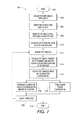
- FIG. 7 is a flow-chart describing a method for training the classifier and/or training device of the system.
- FIGS. 8A and 8B are example images acquired by the present system.
- FIG. 9A is a graphical representation showing accuracy results obtained by varying a thresholding parameter in the present disclosure.
- FIG. 9B is a graphical representation showing the relationship between accuracy and yield for the presently disclosed process and for a conventional object recognition approach.
- the present disclosure relates to a method and a system for automatically detecting vehicle occupancy violations for managed lane enforcement.
- the system analyzes images that are acquired from a camera having a visible-light blocking filter that is sensitive to only near-infrared (NIR) light.
- the system then performs the method in two stages. In a first stage, the windshield region is located and extracted from the original image. In a second stage, a feature vector is calculated for representing the windshield region.
- the feature vector is applied to a classifier, which indicates whether the vehicle is violating or is a candidate of violating the managed lane requirement.
- a thresholding parameter can be applied to the image by the classifier for further determining whether the system performs the classification process.
- the system can be continually retrained while on-line using labeled ground truth from a manual verification of candidate violations.
- FIG. 4 is a schematic illustration of a managed lane enforcement system 100 in one exemplary embodiment.
- the system 100 includes a training device 102 (herein also referred to as a ‘classifier 102 ’), a storage device 104 , and a violation determination device 106 , which may be linked together by communication links, referred to herein as a network.
- the system 100 may be in further communication with a user device 108 .
- the training device 102 illustrated in FIG. 4 includes a controller 110 that is part of or associated with the training device 102 .
- the exemplary controller 110 is adapted for controlling a training of the managed lane enforcement system 100 by generating at least one descriptor that can be later compared to descriptors computed from captured images.
- the controller 110 includes a processor 112 , which controls the overall operation of the training device 102 by execution of processing instructions, which are stored in memory 114 connected to the processor 112 .
- the memory 114 may represent any type of tangible computer readable medium such as random access memory (RAM), read only memory (ROM), magnetic disk or tape, optical disk, flash memory, or holographic memory. In one embodiment, the memory 114 comprises a combination of random access memory and read only memory.
- the digital processor 112 can be variously embodied, such as by a single-core processor, a dual-core processor (or more generally by a multiple-core processor), a digital processor and cooperating math coprocessor, a digital controller, or the like.
- the digital processor 112 in addition to controlling the operation of the training device 102 , executes instructions stored in memory 114 for performing the parts of the method outlined in FIG. 7 that is performed at the system 100 . In some embodiments, the processor 112 and memory 114 may be combined in a single chip.
- the training device 102 may be embodied in a networked device, although it is also contemplated that the training device 102 may be located elsewhere on a network to which the system 100 is connected, such as on a server, networked computer, or the like, or distributed throughout the network or otherwise accessible thereto.
- the classifier can be a Support Vector Machine (SVM), which is trained on a set of labeled windshield images according to the instructions contained in the memory 114 .
- SVM Support Vector Machine
- the memory 114 stores a classification generation module 116 , which is adapted to acquire training images with labels, group images with the same label in a set, calculate features using a set of labeled data, and associate a set of features with a select classification, compute a signed distance between the vehicle image kernel transformed representations (i.e., feature vector/descriptor) in the projected feature space and a hyper-plane boundary, compare the unsigned distance to a threshold, and classify the image based on results of the comparison.
- a classification generation module 116 is adapted to acquire training images with labels, group images with the same label in a set, calculate features using a set of labeled data, and associate a set of features with a select classification, compute a signed distance between the vehicle image kernel transformed representations (i.e., feature vector/descriptor) in the projected feature space and a hyper-plane boundary, compare the unsigned distance to a threshold, and classify the image based on results of the comparison.
- Embodiments are contemplated wherein
- the software modules as used herein are intended to encompass any collection or set of instructions executable by the training device 102 or other digital system so as to configure the computer or other digital system to perform the task that is the intent of the software.
- the term “software” as used herein is intended to encompass such instructions stored in storage medium such as RAM, a hard disk, optical disk, or so forth, and is also intended to encompass so-called “firmware” that is software stored on a ROM or so forth.
- Such software may be organized in various ways, and may include software components organized as libraries, Internet-based programs stored on a remote server or so forth, source code, interpretive code, object code, directly executable code, and so forth. It is contemplated that the software may invoke system-level code or calls to other software residing on a server (not shown) or other location to perform certain functions.
- the training device 102 also includes one or more communication interfaces, such as network interfaces, for communicating with external devices.
- the communication interfaces 120 may include, for example, a modem, a router, a cable, and/or Ethernet port, etc.
- the communication interface 120 is adapted to receive sample (hereinafter “training”) images 122 and test images 124 as input and provide at least one descriptor and/or class association (assigned to a set of descriptors) 126 as output.
- training sample
- test images 124 as input
- test images 124 as input
- one communication interface can receive the input and provide the output.
- the various components of the training device 102 may be all connected by a bus 128 .
- the training device 102 may include one or more special purpose or general purpose computing devices, such as a server computer or digital front end (DFE), or any other computing device capable of executing instructions for performing the exemplary method.
- special purpose or general purpose computing devices such as a server computer or digital front end (DFE), or any other computing device capable of executing instructions for performing the exemplary method.
- DFE digital front end
- FIG. 4 further illustrates the training device 102 connected to an image capture device 130 for inputting and/or receiving the training and test images 122 , 124 in electronic format.
- the image capture device 130 may include a camera that is selected to provide the training and test images 122 , 124 or it can be an input device adapted to transmit the images captured by a camera to the training device 102 .
- an input device can include a scanner, a computer, or the like.
- the image data may be input from any suitable source, such as a workstation, a database, a memory storage device, such as a disk, or the like.
- the input device can be in communication with the controller 102 containing the processor 112 and memories 114 .
- the managed lane enforcement system 100 includes a storage device 104 in communication with the training device 102 .
- the training device 102 can be in communication with a server (not shown) that includes a processing device and memory, such as storage device 104 , or has access to a storage device 104 , for storing classes/classifications that can be used by the violation determination device 106 .
- the storage device 104 includes a repository, which stores at least one class 132 (and/or its associated descriptor) provided by the training device 102 .
- the managed lane enforcement system 100 further includes the violation determination device 106 in communication with the storage device 104 and the image capture device 130 .
- the determination device 106 is adapted to acquire captured image data 150 from the image capture device 130 positioned to view a lane of interest.
- the image capture device 130 can be the same camera used to capture training and test images, or it can be a different camera.
- the camera based imaging system is proposed to capture frontal-view images a vehicle.
- the system can include additional cameras stationed view into the rear or the rear seating area of the vehicle or the license plate/bumper area.
- the system includes at least one illuminator 156 , which provides illumination that is not obtrusive to the driver but still enables robust capturing despite ambient light conditions.
- a near infrared (NIR) illuminator 156 source is used having a wavelength greater than 750 nm.
- a visible light illuminator is stationed to provide illumination without shining into eyes of the driver.
- the exemplary determination device 106 includes, for example, a computer or microcomputer.
- the determination device 106 may be included as part of the image capture device 130 or it may be in communication with the image capture device 130 .
- the determination device 106 includes a processor 134 , such as a CPU, and a memory 136 for storing software modules executable on the processor of the CPU and at least one communication interface 138 including hardware and/or software suitable for providing wireless data communication with the storage device 104 , the image capture device 130 , and a graphical user interface (GUI) 140 .
- the memory 136 , processor 134 , and communication interface(s) 138 can be similarly configured to memory 114 , processor 112 , and communication interface 120 of the training device 102 .
- the exemplary software module includes an image localization module 142 , which locates a windshield region (or desired side of the windshield region) of the vehicle in a captured image; an image representation determination module 144 , which computes a descriptor of the windshield region for analyzing a cabin region of the vehicle using pixels of the image; and, a classification module 146 , which classifies the captured image into a respective class.
- image localization module 142 which locates a windshield region (or desired side of the windshield region) of the vehicle in a captured image
- an image representation determination module 144 which computes a descriptor of the windshield region for analyzing a cabin region of the vehicle using pixels of the image
- a classification module 146 which classifies the captured image into a respective class.
- captured image data 150 may undergo processing by the violation determination device 106 and a classification 152 and/or evidence package 154 may be displayed to the user in a suitable form on the GUI 140 in communication with the determination device 106 .
- the GUI 140 can include a display, for displaying information to users, and a user input device, such as a keyboard or touch or writable screen, for receiving instructions as input, and/or a cursor control device, such as a mouse, trackball, or the like, for communicating user input information and command selections to the processor 134 .
- the information output from the determination device 106 can be provided to a user device 108 , such as a computer belonging to an enforcement authority.
- the user device 108 can include a computer at a dispatch center, a smart phone belonging to an enforcement driver in transit (and capable of making traffic stops) or to a vehicle computer and/or GPS system that is in communication with the determination device 106 .
- FIG. 5 is a flow-chart describing the method 500 for determining a managed lane violation according to one embodiment of the disclosure.
- the method starts at S 500 .
- the violation determination module 106 acquires an image including a vehicle from the image capture device 130 positioned to view oncoming traffic at S 502 .
- the images can be acquired from the image capture device 130 in NIR.
- a visible light filter can block ambient light in the visible wavelength range that falls on the camera lens.
- the use of artificial illumination is also provided by the illuminator 156 at least during periods where the conditions are dark, such as at night time or in inclement weather.
- the illuminator provides the artificial illumination in a spectrum that is not obtrusive to drivers.
- the module 106 performs pre-processing on the image data to locate a windshield region of the vehicle captured in the image at S 504 . More specifically, the image localization module 142 performs windshield image localization using image processing or a machine learning approach based on object localization methods known in the art.
- a camera field of view can be focused substantially at a desired level corresponding to an approximate estimation of the windshield region for triggering the disclosed determination process.
- the location of the windshield is only partially known by fixed camera-to-vehicle geometry.
- Different vehicle classes and types such as trailers, trucks, vans, and large-to-mid-to-coup size vehicles, are all characterized by different lengths measuring between the respective nose and windshield of the vehicles.
- the size, pitch angle, and height of the windshields also vary between the different vehicle classes and types.
- the left-to-right displacement of the vehicle within a lane is not known a priori.
- the boundaries defining the windshield region in the image are not fixed between captured images.
- FIG. 6A shows an example of an image captured by the image capture device and including a frontal-view of the approaching vehicle.
- FIG. 6B shows a sub-image of the windshield region that was located and extracted from the image of FIG. 6A .
- the extracted windshield sub-image may be substantially rectangular or may be non-rectangular in shape.
- the sub-image can undergo further processing for determining a sub-region of the sub-image at S 508 .
- a passenger side and a driver side of the windshield region can be defined. Because every vehicle moving in a lane contains a driver controlling the vehicle, the system can assume that the vehicle contains at least one-occupant. Therefore, the system can operate on the assumption that there is an occupant seated in the driver seat and therefore analyze only a passenger sub-region of the cabin.
- the module 142 can extract the passenger side of the windshield region from the image and eliminate the driver side as noise. In this manner, the system can be more discriminative of the violation determination based on the passenger area(s).
- the system 100 can therefore focus on the isolated windshield sub-image for determining the relevant differentiating characteristics between violators and non-violators without expending computational resource on extraneous features situated beyond the windshield area.
- the image localization module 142 transmits the sub-image to the image representation/descriptor determination module 144 .
- Module 144 applies an automatic detection algorithm to the sub-image (hereinafter also referred to as ‘image’) to determine whether the vehicle is a candidate offender of the managed lane regulation.
- module 144 computes an image representation(s). More specifically, the module 144 computes a descriptor for describing the cabin of the vehicle using pixels of the image at S 510 .
- Several embodiments are contemplated for computing a descriptor.
- One embodiment uses a global approach, which extracts a single descriptor for describing the localized image.
- a global distributor is computed from pixel statistics.
- Another embodiment contemplates a sub-image approach, which extracts local descriptors from small patch regions in the image.
- a single signature is aggregated from the patches for classification.
- module 144 computes an image descriptor from the pixels so that the classification module 146 can perform a classification on the descriptor.
- parts of the image are searched for objects that can be associated with specific items.
- the objects are labeled as including, for example, a face, a seat, a seat belt, etc.
- the labels are then applied to a classifier for determining the number of occupants in the vehicle.
- the module 144 defines a set of generic features that describe the entire image and not just parts (associated with objects and the location of objects) of the image. More specifically, the module 144 applies an algorithm that provides a feature vector describing the image data. In this manner, the computed feature vector can be used to classify the image without requiring the use of labels of objects.
- the module 144 is adapted to perform a Successive Mean Quantization Transform (SMQT) approach following the technique understood in the art.
- the SMQT process determines a feature vector for each pixel in the image by analyzing a vicinity of the pixel. More specifically, for each pixel that is analyzed, the pixel is designated as a center pixel in a vicinity/region. An average value (0-255) for the region is determined. This average is set as a threshold value. Then, the value of each pixel in the region (i.e., the center pixel and the surrounding pixels in the region) is compared to the threshold. The pixels are each assigned a binary value based on the comparison.
- SQT Successive Mean Quantization Transform
- pixels having a value below the threshold may be assigned a “0” value and pixels having a value meeting or exceeding the threshold may be assigned a “1” value.
- a 9-bit binary number is generated for a 3 ⁇ 3 vicinity of a pixel using the binary values of each pixel in the region. The binary number is converted to a decimal number. This decimal number is assigned to the center pixel. The process then generates a feature vector using the decimal numbers for each of the pixels in the image.
- the module 144 first identifies patch regions in the image. The module 144 then extracts descriptors from the patch regions. The patch descriptors are then aggregated into an image-level descriptor. Generally, the patch descriptors correspond to low-dimensional feature vectors and the image-level descriptor corresponds to a high-dimensional feature vector.
- the module 144 is adapted to extract local patches and represent them with descriptors, following techniques understood in the art such as the SIFT.
- the module 144 is adapted to perform a Histogram of Gradients (HOG) process following the technique understood in the art.
- HOG Histogram of Gradients
- the HOG approach compiles histograms for localized cell portions (i.e., spatially connected cell blocks/block regions) in an image.
- the process can generate a histogram of gradient directions (and orientations) for pixels in the cell, although other descriptors can be used such as shape, texture, and color, etc.
- gradients are determined for each cell portion and the number of occurrences is counted.
- the combination of histograms (for all cell portions) is used to represent the descriptor. More specifically, the descriptor is generated as a feature vector representing the normalized histograms for all block regions.
- the module 144 is adapted to compute a Bag-of-Visual-Words (BOW) representation using a technique that is understood in the art. This technique consists in learning a set of patch prototypes by clustering the set of low-level descriptors. Given a new image, each of its patch descriptors is assigned to its closest prototype and the image is described by the histogram of the number of occurrences of each prototype.
- BOW Bag-of-Visual-Words
- the module 144 is adapted to compute a Fisher Vector (FV) Representation using a technique that is understood in the art.
- This technique consists in learning a probabilistic model of the low-level descriptors using, for instance, a Gaussian Mixture Model (GMM). Given a new image, it is characterized by the gradient of the log-likelihood of the image descriptors on the GMM with respect to the model parameters.
- GMM Gaussian Mixture Model
- the sub-image approach extracts multiple local descriptors from the windshield sub-image and then aggregates them into a sub-image-level global descriptor.
- the system 100 is modular, it can use other features and types of kernels in the classifier for performing the above-mentioned algorithms.
- a combination of the above approaches can be used.
- Computing the descriptor at S 510 can also extend to multiband systems, where the sets of features from images from different bands can be combined. Regardless of the approach used, the module 144 transmits the descriptor/feature vector to the classification module 146 .
- the classification module 146 is adapted to classify the image into one of respective classes including at least classes for a violator and a candidate non-violator.
- One aspect of the present disclosure is that the classification module 146 is adapted to selectively perform the classification routine. In other words, the module 146 determines whether to classify or not classify the captured image based on a later-discussed sample distance of a kernel transformed image representation (hereinafter synonymously referred to as a ‘kernel transformed descriptor’ or a ‘kernel transformed feature vector’) to the hyper-plane boundary. This distance is subsequently compared to a threshold which is meant to balance yield and classification accuracy. An increase in the decision threshold will lead to a decrease in the yield but will typically lead to an increase of the accuracy. On the other hand, a decrease of the decision threshold will lead to an increase of the yield but will also typically lead to a decrease of the classification accuracy.
- a kernel transformed image representation hereinafter synonymously referred to as a ‘kernel transformed descriptor’ or
- the system acquires a thresholding parameter at S 512 .
- this thresholding parameter is a minimum distance (and/or score) between the kernel transformed image representation and the hyper-plane boundary.
- the system determines the distance between the vehicle (and/or windshield region) kernel transformed image representation and the hyper-plane boundary at S 514 .
- the distance is compared to the threshold at S 516 .
- the classification module 146 outputs no classification and ends at S 532 .
- the module 146 applies the descriptor to the classifier at S 518 .
- the module 146 can compare the descriptor to the descriptors describing the classifications 132 in the storage module 132 at S 518 .
- the module 146 classifies the image into a respective class at S 520 .
- the class can include one of a violator, meaning that the vehicle has only one occupant while using a managed lane, or a candidate non-violator, meaning that the vehicle may have more than one occupant.
- one embodiment contemplates applying the disclosed process to a classification based on using the descriptor to rather count the number of occupants. This embodiment can be implemented by changing the classes (and/or a labeling system) of the training data.
- the module 146 determines whether the image is classified as a candidate violator or a non-violator at S 522 . In response to the image being classified as a non-violator (NO at S 522 ), the method can end at S 532 . In this manner, a violation can be issued only when one is detected by the algorithm. In response to the image being classified as a candidate violator (YES at S 522 ), the module 146 can output the determination 152 at S 524 .
- the system can display at the determination device 106 and/or provide a user device 108 with a notice that a vehicle is a candidate violator. In this manner, the system cues a user, such as a traffic enforcement authority, to review the image.
- the module 146 can perform further analysis on the image at S 526 .
- the module 146 can perform further processing on the image to determine whether the candidate violator is in-fact a violator or a non-violator of the managed lane requirement.
- the module 146 can determine whether the candidate violator is actually a violator at S 528 . In response to the image being a non-violator (NO at S 528 ), the module 156 can end at S 532 . In response to the image being a violator (YES at S 526 ), the system can display at the determination device 108 and/or provide the user device 108 with a notice that a vehicle is violating the managed lane requirement at S 524 .
- the system in response to the module 146 determining that the vehicle is one of a candidate violator or a violator (YES at S 522 or S 528 ), the system can generate an evidence package 154 at S 530 .
- An evidence package 154 may consist of information that can assist the user and/or traffic enforcement authority in identifying the vehicle for issuing a ticket.
- the system can further analyze the pixels to generate a front seat image, a rear seat image, a license plate image, and a color vehicle image.
- the system can use known processes of segmentation for identifying the license plate number on the vehicle.
- the evidence package 154 is provided to the user device 108 belonging to an enforcement authority.
- the enforcement authority can further examine the evidence to determine whether to perform a traffic stop and/or issue a ticket (after identifying the license plate) through the mail system without performing any actual traffic stop. It is further contemplated that the latter approach, of identifying the vehicle and issuing a ticket, can also be performed automatically by the system.
- the method ends at S 532 .
- the system includes a machine learning classifier 102 for performing an on-line training of the feature vectors for use in the image representation process.
- FIG. 7 is a flow-chart describing a method 700 for training the classifier and/or training device 102 .
- the method starts at S 702 .
- the classification generation module 116 acquires training images of vehicles from the image capture device or an input device at S 704 .
- the module 116 acquires the images with labels identifying each image as including a passenger occupant and not including a passenger occupant.
- the training images can be labeled with a “1” value in the case the vehicle is a violator and a “0” value in the case the vehicle is a non-violator.
- the training images are acquired as having generally forward-facing occupants, but images can also include other variations such as images having sideway-facing occupants and other occlusions.
- the module 116 groups the images having the same labels in a set at S 706 .
- the module 116 generates at least one descriptor/feature vector generally describing the set at S 708 .
- the module associates the descriptor/feature vector with a select class at S 710 .
- the classes include a non-violator and at least one of a candidate violator and a violator.
- the accuracy determination module 118 acquires test images at S 712 , such as images shown in FIGS. 8A and 8B . For each test image, the module 118 determines a set of features and identifies a classification using the set of features at S 714 . Module 118 classifies the test image(s) based on the classification corresponding with the determined set of features at S 716 . The system can store and/or update the classifications at S 718 .
- One aspect of the module 118 is that it can further determine an accuracy of the classifications of test images at S 720 and, as mentioned, selectively classify and/or update the classification of the image based on a select thresholding parameter. The accuracy is determined using the equation:
- Accuracy # ⁇ ⁇ TP + # ⁇ ⁇ TN # ⁇ ⁇ TP + # ⁇ ⁇ FP + # ⁇ ⁇ FN + # ⁇ ⁇ TN ⁇ 100 ( 1 ) wherein TP denotes true positive, TN denotes true negative, FP denotes false positive, and FN denotes false negative.
- a true positive is defined as a correct classification of an image as belonging to a violator.
- a true negative is defined as a correct classification of an image as belonging to a non-violator.
- a false positive is defined as an incorrect classification of an image as belonging to a violator.
- a false negative is defined as an incorrect classification of an image as belonging to a non-violator.
- the accuracy can be affected by the distance between the vehicle in the image and the hyper-plane boundary. Therefore, by selectively setting a minimum distance (i.e., threshold) for the vehicle distance, the accuracy can be controlled.
- FIG. 9A is a graphical representation showing the results obtained using the (SMQT) process discussed above.
- the classification accuracy is increased when the absolute value of the thresholding parameter is increased. This increase in accuracy is obtained at the cost of decreasing the yield when a distance that kernel transformed test image representations are situated to the hyper-plane boundary is below the threshold.
- the yield is the number of decisions made by the system divided by the total number of test images.
- the denominator in the accuracy formula is the number of decisions made.
- FIG. 9B is a graphical representation showing the relationship between accuracy and yield for the presently disclosed process and for a conventional object recognition approach. As the figure illustrates, accuracy increases when the yield decreases, which in the present approach is made in response to an increase in the thresholding parameter.
- the system can adjust the thresholding parameter at S 722 . This adjustment can be made in response to an acquired threshold that is provided by user input or automatically to a predetermined setting. After the threshold is adjusted for purposes of changing the accuracy, the system returns to S 712 and repeats the process on subsequent images using the updated threshold. The method otherwise ends at S 724 .
- One aspect of the present disclosure is that it uses a dataset describing the entire, desired windshield region. This dataset is more efficient than conventional methods, which perform detection by rather searching through the image for objects (s.a., faces, seats, and seat belts, etc.) with a fixed detection frame size and which perform these searches at several different image scales in order to find the objects. Furthermore, the present disclosure improves accurate detection for images having occlusions, such as, for example, when a face is occluded. Therefore, the present disclosure provides improved computation and accuracy requirements relative to the conventional approaches.
- Another aspect of the disclosure is that it does not use an object-labeling system for determining a violator and non-violator.
- Conventional methods search for objects, such as by analyzing a facial region in a windshield, and then label the objects. The labeled objects are then used to count the number of occupants. The number of occupants is then used to determine whether the violation occurred.
- the present disclosure provides a less costly process because the ground truth is easier to label.
- the disclosure requires less training for different postures/profiles of faces.
- the illustrated methods and other methods of the disclosure may be implemented in hardware, software, or combinations thereof, in order to provide the control functionality described herein, and may be employed in any system including but not limited to the above illustrated system 100 , wherein the disclosure is not limited to the specific applications and embodiments illustrated and described herein.
Landscapes
- Engineering & Computer Science (AREA)
- Theoretical Computer Science (AREA)
- Physics & Mathematics (AREA)
- General Physics & Mathematics (AREA)
- Software Systems (AREA)
- Evolutionary Computation (AREA)
- Computer Vision & Pattern Recognition (AREA)
- Data Mining & Analysis (AREA)
- Artificial Intelligence (AREA)
- Medical Informatics (AREA)
- Multimedia (AREA)
- Computing Systems (AREA)
- General Engineering & Computer Science (AREA)
- Mathematical Physics (AREA)
- Image Analysis (AREA)
- Traffic Control Systems (AREA)
Abstract
Description
wherein TP denotes true positive, TN denotes true negative, FP denotes false positive, and FN denotes false negative. A true positive is defined as a correct classification of an image as belonging to a violator. A true negative is defined as a correct classification of an image as belonging to a non-violator. A false positive is defined as an incorrect classification of an image as belonging to a violator. A false negative is defined as an incorrect classification of an image as belonging to a non-violator. As mentioned earlier, the accuracy can be affected by the distance between the vehicle in the image and the hyper-plane boundary. Therefore, by selectively setting a minimum distance (i.e., threshold) for the vehicle distance, the accuracy can be controlled.
Claims (19)
Priority Applications (1)
| Application Number | Priority Date | Filing Date | Title |
|---|---|---|---|
| US13/527,228 US8824742B2 (en) | 2012-06-19 | 2012-06-19 | Occupancy detection for managed lane enforcement based on localization and classification of windshield images |
Applications Claiming Priority (1)
| Application Number | Priority Date | Filing Date | Title |
|---|---|---|---|
| US13/527,228 US8824742B2 (en) | 2012-06-19 | 2012-06-19 | Occupancy detection for managed lane enforcement based on localization and classification of windshield images |
Publications (2)
| Publication Number | Publication Date |
|---|---|
| US20130336538A1 US20130336538A1 (en) | 2013-12-19 |
| US8824742B2 true US8824742B2 (en) | 2014-09-02 |
Family
ID=49755955
Family Applications (1)
| Application Number | Title | Priority Date | Filing Date |
|---|---|---|---|
| US13/527,228 Active 2033-01-11 US8824742B2 (en) | 2012-06-19 | 2012-06-19 | Occupancy detection for managed lane enforcement based on localization and classification of windshield images |
Country Status (1)
| Country | Link |
|---|---|
| US (1) | US8824742B2 (en) |
Cited By (6)
| Publication number | Priority date | Publication date | Assignee | Title |
|---|---|---|---|---|
| CN104537363A (en) * | 2015-01-22 | 2015-04-22 | 哈尔滨工业大学 | Full-automatic adjustable cupboard leg assembly control method based on visual inspection system |
| US20150286885A1 (en) * | 2014-04-04 | 2015-10-08 | Xerox Corporation | Method for detecting driver cell phone usage from side-view images |
| US20150331105A1 (en) * | 2014-05-16 | 2015-11-19 | Palo Alto Research Center Incorporated | Computer-Implemented System And Method For Detecting Vehicle Occupancy |
| US20190139328A1 (en) * | 2017-11-07 | 2019-05-09 | Toyota Jidosha Kabushiki Kaisha | Driverless transportation system |
| US10318830B2 (en) * | 2016-03-17 | 2019-06-11 | Nec Corporation | Passenger counting device, system, method and program |
| US11205103B2 (en) | 2016-12-09 | 2021-12-21 | The Research Foundation for the State University | Semisupervised autoencoder for sentiment analysis |
Families Citing this family (41)
| Publication number | Priority date | Publication date | Assignee | Title |
|---|---|---|---|---|
| US20140074566A1 (en) * | 2012-09-11 | 2014-03-13 | James K. McCoy | Remote Sensing of Vehicle Occupancy |
| CN103870830B (en) * | 2014-02-25 | 2018-06-26 | 奇瑞汽车股份有限公司 | The extracting method and device of lane line Edge Feature Points |
| US9633267B2 (en) * | 2014-04-04 | 2017-04-25 | Conduent Business Services, Llc | Robust windshield detection via landmark localization |
| US10733471B1 (en) | 2014-06-27 | 2020-08-04 | Blinker, Inc. | Method and apparatus for receiving recall information from an image |
| US10515285B2 (en) | 2014-06-27 | 2019-12-24 | Blinker, Inc. | Method and apparatus for blocking information from an image |
| US9779318B1 (en) | 2014-06-27 | 2017-10-03 | Blinker, Inc. | Method and apparatus for verifying vehicle ownership from an image |
| US10579892B1 (en) | 2014-06-27 | 2020-03-03 | Blinker, Inc. | Method and apparatus for recovering license plate information from an image |
| US9594971B1 (en) | 2014-06-27 | 2017-03-14 | Blinker, Inc. | Method and apparatus for receiving listings of similar vehicles from an image |
| US9600733B1 (en) | 2014-06-27 | 2017-03-21 | Blinker, Inc. | Method and apparatus for receiving car parts data from an image |
| US9589201B1 (en) | 2014-06-27 | 2017-03-07 | Blinker, Inc. | Method and apparatus for recovering a vehicle value from an image |
| US9589202B1 (en) | 2014-06-27 | 2017-03-07 | Blinker, Inc. | Method and apparatus for receiving an insurance quote from an image |
| US9607236B1 (en) | 2014-06-27 | 2017-03-28 | Blinker, Inc. | Method and apparatus for providing loan verification from an image |
| US9754171B1 (en) | 2014-06-27 | 2017-09-05 | Blinker, Inc. | Method and apparatus for receiving vehicle information from an image and posting the vehicle information to a website |
| US10540564B2 (en) | 2014-06-27 | 2020-01-21 | Blinker, Inc. | Method and apparatus for identifying vehicle information from an image |
| US9818154B1 (en) | 2014-06-27 | 2017-11-14 | Blinker, Inc. | System and method for electronic processing of vehicle transactions based on image detection of vehicle license plate |
| US9558419B1 (en) | 2014-06-27 | 2017-01-31 | Blinker, Inc. | Method and apparatus for receiving a location of a vehicle service center from an image |
| US9773184B1 (en) | 2014-06-27 | 2017-09-26 | Blinker, Inc. | Method and apparatus for receiving a broadcast radio service offer from an image |
| US10572758B1 (en) | 2014-06-27 | 2020-02-25 | Blinker, Inc. | Method and apparatus for receiving a financing offer from an image |
| US10867327B1 (en) | 2014-06-27 | 2020-12-15 | Blinker, Inc. | System and method for electronic processing of vehicle transactions based on image detection of vehicle license plate |
| US9892337B1 (en) | 2014-06-27 | 2018-02-13 | Blinker, Inc. | Method and apparatus for receiving a refinancing offer from an image |
| US9563814B1 (en) | 2014-06-27 | 2017-02-07 | Blinker, Inc. | Method and apparatus for recovering a vehicle identification number from an image |
| US9760776B1 (en) | 2014-06-27 | 2017-09-12 | Blinker, Inc. | Method and apparatus for obtaining a vehicle history report from an image |
| CN104239897B (en) * | 2014-09-04 | 2017-05-17 | 天津大学 | Visual feature representing method based on autoencoder word bag |
| US9552524B2 (en) * | 2014-09-15 | 2017-01-24 | Xerox Corporation | System and method for detecting seat belt violations from front view vehicle images |
| CN104408613A (en) * | 2014-11-11 | 2015-03-11 | 东南大学 | Method and system for optimally processing distributed violation information |
| US9607245B2 (en) | 2014-12-02 | 2017-03-28 | Xerox Corporation | Adapted vocabularies for matching image signatures with fisher vectors |
| US9367763B1 (en) | 2015-01-12 | 2016-06-14 | Xerox Corporation | Privacy-preserving text to image matching |
| CN106469309B (en) * | 2015-08-14 | 2019-11-12 | 杭州海康威视数字技术股份有限公司 | Vehicle monitoring method and device, processor, image acquisition device |
| US10068171B2 (en) * | 2015-11-12 | 2018-09-04 | Conduent Business Services, Llc | Multi-layer fusion in a convolutional neural network for image classification |
| AU2016397317B2 (en) | 2016-03-17 | 2019-05-16 | Nec Corporation | Passenger counting device, system, method and program, and vehicle movement amount calculation device, method and program |
| US10049284B2 (en) * | 2016-04-11 | 2018-08-14 | Ford Global Technologies | Vision-based rain detection using deep learning |
| US11538257B2 (en) * | 2017-12-08 | 2022-12-27 | Gatekeeper Inc. | Detection, counting and identification of occupants in vehicles |
| WO2020027752A2 (en) * | 2018-05-08 | 2020-02-06 | Havelsan Hava Elektronik Sanayi Ve Ticaret Anonim Sirketi | A method for detecting child passengers in front seats of vehicles |
| WO2020018045A2 (en) * | 2018-05-08 | 2020-01-23 | Havelsan Hava Elektroni̇k Sanayi Ve Ticaret Anonim Sirketi | A detection system checking seat belt use and a method thereof |
| TR201808941A2 (en) * | 2018-06-25 | 2018-09-21 | Havelsan Hava Elektronik Sanayi Ve Ticaret Anonim Sirketi | PLATE RECOGNITION SYSTEM A METHOD FOR SECURITY BELT VIOLATION DETECTION USING CAMERA IMAGES |
| CN111340261B (en) * | 2018-12-03 | 2023-07-18 | 北京嘀嘀无限科技发展有限公司 | Method, system, computer equipment and storage medium for judging order violation |
| US10867193B1 (en) | 2019-07-10 | 2020-12-15 | Gatekeeper Security, Inc. | Imaging systems for facial detection, license plate reading, vehicle overview and vehicle make, model, and color detection |
| US11196965B2 (en) | 2019-10-25 | 2021-12-07 | Gatekeeper Security, Inc. | Image artifact mitigation in scanners for entry control systems |
| US11187551B2 (en) * | 2020-03-10 | 2021-11-30 | International Business Machines Corporation | Methods and systems for recommending activities to users onboard vehicles |
| CN112257712B (en) * | 2020-10-29 | 2024-02-27 | 湖南星汉数智科技有限公司 | Train ticket image alignment method and device, computer device and computer readable storage medium |
| CN114359683B (en) * | 2021-12-31 | 2023-10-20 | 电子科技大学 | A single-core HOG efficient heterogeneous acceleration method for text positioning |
Citations (8)
| Publication number | Priority date | Publication date | Assignee | Title |
|---|---|---|---|---|
| US20050190953A1 (en) * | 2003-10-28 | 2005-09-01 | Toshinori Nagahashi | Method, system and program for searching area considered to be face image |
| US7055639B2 (en) | 2002-09-06 | 2006-06-06 | Denso Corporation | Occupant detection system for vehicle |
| US7786897B2 (en) * | 2007-01-23 | 2010-08-31 | Jai Pulnix, Inc. | High occupancy vehicle (HOV) lane enforcement |
| US7898402B2 (en) * | 2006-10-24 | 2011-03-01 | Honda Motor Co., Ltd. | Vehicle occupant detection apparatus |
| US8013760B2 (en) | 2008-10-06 | 2011-09-06 | Mark Iv Ivhs, Inc. | High occupancy vehicle status signaling using electronic toll collection infrastructure |
| US20120069183A1 (en) * | 2010-09-16 | 2012-03-22 | Kabushiki Kaisha Toshiba | Vehicle detection apparatus |
| US20120147194A1 (en) | 2010-12-14 | 2012-06-14 | Xerox Corporation | Determining a total number of people in an ir image obtained via an ir imaging system |
| US20120200682A1 (en) | 2011-02-08 | 2012-08-09 | Xerox Corporation | Method for classifying a pixel of a hyperspectral image in a remote sensing application |
-
2012
- 2012-06-19 US US13/527,228 patent/US8824742B2/en active Active
Patent Citations (8)
| Publication number | Priority date | Publication date | Assignee | Title |
|---|---|---|---|---|
| US7055639B2 (en) | 2002-09-06 | 2006-06-06 | Denso Corporation | Occupant detection system for vehicle |
| US20050190953A1 (en) * | 2003-10-28 | 2005-09-01 | Toshinori Nagahashi | Method, system and program for searching area considered to be face image |
| US7898402B2 (en) * | 2006-10-24 | 2011-03-01 | Honda Motor Co., Ltd. | Vehicle occupant detection apparatus |
| US7786897B2 (en) * | 2007-01-23 | 2010-08-31 | Jai Pulnix, Inc. | High occupancy vehicle (HOV) lane enforcement |
| US8013760B2 (en) | 2008-10-06 | 2011-09-06 | Mark Iv Ivhs, Inc. | High occupancy vehicle status signaling using electronic toll collection infrastructure |
| US20120069183A1 (en) * | 2010-09-16 | 2012-03-22 | Kabushiki Kaisha Toshiba | Vehicle detection apparatus |
| US20120147194A1 (en) | 2010-12-14 | 2012-06-14 | Xerox Corporation | Determining a total number of people in an ir image obtained via an ir imaging system |
| US20120200682A1 (en) | 2011-02-08 | 2012-08-09 | Xerox Corporation | Method for classifying a pixel of a hyperspectral image in a remote sensing application |
Non-Patent Citations (12)
| Title |
|---|
| Birch et al., "Automated Vehicle Occupancy Monitoring", Optical Engineering, vol. 43, pp. 1828-1832, 2004. |
| Csurka et al., "Visual Categorization with Bags of Keypoints", ECCV SLCV, 2004. |
| Nilsson et al., "Face Detection Using Local SMQT Features and Split Up SNoW Classifier", IEEE International Conference on Acoustics, Speech, and Signal Processing, 2007. |
| Paul, Peter; Burry, Aaron M.; Wang, Yuheng; Kozitsky, Vladimir "Application of the SNoW machine learning paradigm to a set of transportation imaging problems" Proceedings of the SPIE, vol. 8305, article id. 830512, 11 pp. (2012). * |
| Pavlidis et al., "A Vehicle Occupant Counting System Based on Near-Infrared Phenomenology and Fuzzy Neural Classification", IEEE Transactions on Intelligent Transportation Systems, vol. 1, No. 2, Jun. 2000, pp. 72-85. |
| Perez-Jimenez et al., "High Occupancy Vehicle Detection", Structural, Syntactic and Statistical Pattern Recognition Journal, vol. 5342, pp. 782-789, 2008. |
| Perronnin et al., "Fisher Kernels on Visual Vocabularies for Image Categorization", CVPR, 2007. |
| Perronnin et al., "Improving the Fisher Kernel for Large-Scale Image Classification", ECCV, 2010. |
| U.S. Appl. No. 13/215,401, filed Aug. 23, 2011, by Fan et al., entitled "Front Seat Vehicle Occupancy Detection Via Seat Pattern Recognition". |
| U.S. Appl. No. 13/312,414, filed Dec. 6, 2011, by Edul N. Dalai et al., entitled "Vehicle Occupancy Detection Via Single Band Infrared Imaging". |
| Viola et al., "Robust Real-Time Face Detection", International Journal of Computer Vision, vol. 57, pp. 137-154, 2007. |
| Xiaoli Hao; Houjin Chen; Jie Li, "An Automatic Vehicle Occupant Counting Algorithm Based on Face Detection," Signal Processing, 2006 8th International Conference on , vol. 3, no., pp. 16-20 2006. * |
Cited By (11)
| Publication number | Priority date | Publication date | Assignee | Title |
|---|---|---|---|---|
| US20150286885A1 (en) * | 2014-04-04 | 2015-10-08 | Xerox Corporation | Method for detecting driver cell phone usage from side-view images |
| US9842266B2 (en) * | 2014-04-04 | 2017-12-12 | Conduent Business Services, Llc | Method for detecting driver cell phone usage from side-view images |
| US20150331105A1 (en) * | 2014-05-16 | 2015-11-19 | Palo Alto Research Center Incorporated | Computer-Implemented System And Method For Detecting Vehicle Occupancy |
| US9547085B2 (en) * | 2014-05-16 | 2017-01-17 | Palo Alto Research Center Incorporated | Computer-implemented system and method for detecting vehicle occupancy |
| CN104537363A (en) * | 2015-01-22 | 2015-04-22 | 哈尔滨工业大学 | Full-automatic adjustable cupboard leg assembly control method based on visual inspection system |
| US10318830B2 (en) * | 2016-03-17 | 2019-06-11 | Nec Corporation | Passenger counting device, system, method and program |
| US10789494B2 (en) | 2016-03-17 | 2020-09-29 | Nec Corporation | Passenger counting device, system, method and program |
| US10824887B2 (en) | 2016-03-17 | 2020-11-03 | Nec Corporation | Passenger counting device, system, method and program |
| US10922565B2 (en) | 2016-03-17 | 2021-02-16 | Nec Corporation | Passenger counting device, system, method and program |
| US11205103B2 (en) | 2016-12-09 | 2021-12-21 | The Research Foundation for the State University | Semisupervised autoencoder for sentiment analysis |
| US20190139328A1 (en) * | 2017-11-07 | 2019-05-09 | Toyota Jidosha Kabushiki Kaisha | Driverless transportation system |
Also Published As
| Publication number | Publication date |
|---|---|
| US20130336538A1 (en) | 2013-12-19 |
Similar Documents
| Publication | Publication Date | Title |
|---|---|---|
| US20130336538A1 (en) | Occupancy detection for managed lane enforcement based on localization and classification of windshield images | |
| US9552524B2 (en) | System and method for detecting seat belt violations from front view vehicle images | |
| US9842266B2 (en) | Method for detecting driver cell phone usage from side-view images | |
| US9721173B2 (en) | Machine learning approach for detecting mobile phone usage by a driver | |
| US9317752B2 (en) | Method for detecting large size and passenger vehicles from fixed cameras | |
| US9275289B2 (en) | Feature- and classifier-based vehicle headlight/shadow removal in video | |
| Artan et al. | Driver cell phone usage detection from HOV/HOT NIR images | |
| US8744132B2 (en) | Video-based method for detecting parking boundary violations | |
| Anagnostopoulos et al. | A license plate-recognition algorithm for intelligent transportation system applications | |
| US9514366B2 (en) | Vehicle detection method and system including irrelevant window elimination and/or window score degradation | |
| EP1782335B1 (en) | Method for traffic sign detection | |
| US8737747B2 (en) | Method for automated tire detection and recognition | |
| US9363483B2 (en) | Method for available parking distance estimation via vehicle side detection | |
| Gerónimo et al. | 2D–3D-based on-board pedestrian detection system | |
| US9633267B2 (en) | Robust windshield detection via landmark localization | |
| Atkočiūnas et al. | Image processing in road traffic analysis | |
| Artan et al. | Passenger compartment violation detection in HOV/HOT lanes | |
| US9477892B2 (en) | Efficient method of offline training a special-type parked vehicle detector for video-based on-street parking occupancy detection systems | |
| KR102448268B1 (en) | Intelligent image analysis system for accuracy enhancement of object analysis by auto learning, estimation and distribution of object based on Deep Neural Network Algorithm | |
| Maldonado-Bascon et al. | Traffic sign recognition system for inventory purposes | |
| Nurhadiyatna et al. | Gabor filtering for feature extraction in real time vehicle classification system | |
| Sugiharto et al. | Automated Detection of Driver and Passenger Without Seat Belt using YOLOv8. | |
| Chen et al. | Vision-based traffic surveys in urban environments | |
| Artan et al. | Comparison of face detection and image classification for detecting front seat passengers in vehicles | |
| Artan et al. | Occupancy detection in vehicles using fisher vector image representation |
Legal Events
| Date | Code | Title | Description |
|---|---|---|---|
| AS | Assignment |
Owner name: XEROX CORPORATION, CONNECTICUT Free format text: ASSIGNMENT OF ASSIGNORS INTEREST;ASSIGNORS:SKAFF, SANDRA;XU, BEILEI;PAUL, PETER;AND OTHERS;SIGNING DATES FROM 20120620 TO 20120717;REEL/FRAME:028584/0767 |
|
| FEPP | Fee payment procedure |
Free format text: PAYOR NUMBER ASSIGNED (ORIGINAL EVENT CODE: ASPN); ENTITY STATUS OF PATENT OWNER: LARGE ENTITY |
|
| STCF | Information on status: patent grant |
Free format text: PATENTED CASE |
|
| AS | Assignment |
Owner name: CONDUENT BUSINESS SERVICES, LLC, TEXAS Free format text: ASSIGNMENT OF ASSIGNORS INTEREST;ASSIGNOR:XEROX CORPORATION;REEL/FRAME:041542/0022 Effective date: 20170112 |
|
| MAFP | Maintenance fee payment |
Free format text: PAYMENT OF MAINTENANCE FEE, 4TH YEAR, LARGE ENTITY (ORIGINAL EVENT CODE: M1551) Year of fee payment: 4 |
|
| AS | Assignment |
Owner name: BANK OF AMERICA, N.A., NORTH CAROLINA Free format text: SECURITY INTEREST;ASSIGNOR:CONDUENT BUSINESS SERVICES, LLC;REEL/FRAME:057970/0001 Effective date: 20211015 Owner name: U.S. BANK, NATIONAL ASSOCIATION, CONNECTICUT Free format text: SECURITY INTEREST;ASSIGNOR:CONDUENT BUSINESS SERVICES, LLC;REEL/FRAME:057969/0445 Effective date: 20211015 |
|
| MAFP | Maintenance fee payment |
Free format text: PAYMENT OF MAINTENANCE FEE, 8TH YEAR, LARGE ENTITY (ORIGINAL EVENT CODE: M1552); ENTITY STATUS OF PATENT OWNER: LARGE ENTITY Year of fee payment: 8 |
|
| MAFP | Maintenance fee payment |
Free format text: PAYMENT OF MAINTENANCE FEE, 12TH YEAR, LARGE ENTITY (ORIGINAL EVENT CODE: M1553); ENTITY STATUS OF PATENT OWNER: LARGE ENTITY Year of fee payment: 12 |