US8819589B2 - Providing partner services within a host application - Google Patents
Providing partner services within a host application Download PDFInfo
- Publication number
- US8819589B2 US8819589B2 US12/136,077 US13607708A US8819589B2 US 8819589 B2 US8819589 B2 US 8819589B2 US 13607708 A US13607708 A US 13607708A US 8819589 B2 US8819589 B2 US 8819589B2
- Authority
- US
- United States
- Prior art keywords
- partner
- host
- user
- function
- selection
- Prior art date
- Legal status (The legal status is an assumption and is not a legal conclusion. Google has not performed a legal analysis and makes no representation as to the accuracy of the status listed.)
- Active, expires
Links
Images




Classifications
-
- G—PHYSICS
- G06—COMPUTING OR CALCULATING; COUNTING
- G06F—ELECTRIC DIGITAL DATA PROCESSING
- G06F3/00—Input arrangements for transferring data to be processed into a form capable of being handled by the computer; Output arrangements for transferring data from processing unit to output unit, e.g. interface arrangements
- G06F3/01—Input arrangements or combined input and output arrangements for interaction between user and computer
- G06F3/048—Interaction techniques based on graphical user interfaces [GUI]
- G06F3/0481—Interaction techniques based on graphical user interfaces [GUI] based on specific properties of the displayed interaction object or a metaphor-based environment, e.g. interaction with desktop elements like windows or icons, or assisted by a cursor's changing behaviour or appearance
-
- G—PHYSICS
- G06—COMPUTING OR CALCULATING; COUNTING
- G06F—ELECTRIC DIGITAL DATA PROCESSING
- G06F9/00—Arrangements for program control, e.g. control units
- G06F9/06—Arrangements for program control, e.g. control units using stored programs, i.e. using an internal store of processing equipment to receive or retain programs
- G06F9/46—Multiprogramming arrangements
- G06F9/50—Allocation of resources, e.g. of the central processing unit [CPU]
- G06F9/5005—Allocation of resources, e.g. of the central processing unit [CPU] to service a request
- G06F9/5027—Allocation of resources, e.g. of the central processing unit [CPU] to service a request the resource being a machine, e.g. CPUs, Servers, Terminals
- G06F9/5055—Allocation of resources, e.g. of the central processing unit [CPU] to service a request the resource being a machine, e.g. CPUs, Servers, Terminals considering software capabilities, i.e. software resources associated or available to the machine
-
- G—PHYSICS
- G06—COMPUTING OR CALCULATING; COUNTING
- G06F—ELECTRIC DIGITAL DATA PROCESSING
- G06F3/00—Input arrangements for transferring data to be processed into a form capable of being handled by the computer; Output arrangements for transferring data from processing unit to output unit, e.g. interface arrangements
- G06F3/01—Input arrangements or combined input and output arrangements for interaction between user and computer
- G06F3/048—Interaction techniques based on graphical user interfaces [GUI]
-
- G—PHYSICS
- G06—COMPUTING OR CALCULATING; COUNTING
- G06F—ELECTRIC DIGITAL DATA PROCESSING
- G06F2209/00—Indexing scheme relating to G06F9/00
- G06F2209/50—Indexing scheme relating to G06F9/50
- G06F2209/5015—Service provider selection
Definitions
- a user may work on an item using a host application and then decide to take some action with respect to the item that is not supported by the host application.
- the user may create a product brochure using a host word processing application.
- the user may then decide to physically produce the brochure in some form that is not supported by the host word processing application and the environment in which in which it operates. For instance, perhaps the user wishes to print the brochure as a high-quality glossy publication.
- the host application may interact with a group of output devices, such as printers, fax machines, etc. However, the host application, together with its available output devices, may not have adequate resources to handle the user's printing request.
- the user may attempt to find a partner service that can process the document item in the desired manner.
- the user can locate a partner service in the traditional manner, such as by researching available partner services listed in paper-based directories, network-accessible directories, and so forth.
- the user may also seek the advice of others, such as by talking to colleagues within her office, reading network-accessible customer reviews, and so forth.
- the user may manually contact the partner service and explain the task to be performed.
- the user may be asked to manually provide the partner service with whatever resources it needs to complete the task, such as a document item file.
- the user may be asked to manually pick up the final product.
- the user may or may not be satisfied with the results; if not, the user may decide to seek out the services of another partner service.
- An illustrative approach is described for providing a partner service to a user.
- the approach entails first providing a network-accessible host application to the user.
- the user interacts with the host application to perform a host function.
- the user may invoke (or otherwise act on) a partner-selection user interface presentation to explore available partner services for carrying out a desired partner function.
- the user selects one of the partner services listed in the partner-selection user interface presentation.
- the host application automatically instructs the partner service to perform the desired partner function.
- the partner function complements the host function performed by the host application in an integrated and seamless manner.
- FIG. 1 shows an illustrative system for integrating a host system and one or more partner systems.
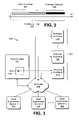
- FIG. 2 is a timeline that shows how the system of FIG. 1 can be used to provide a partner function that seamlessly complements a host function.
- FIG. 3 shows an illustrative network environment for implementing the system of FIG. 1 .
- FIG. 4 shows an illustrative partner-selection user interface presentation that can be invoked within the context of a host application; the partner-selection user interface presentation allows a user to select a partner service.
- FIGS. 5-7 show other illustrative partner-selection user interface presentations for selecting a partner service.
- FIG. 8 shows an illustrative procedure for invoking a partner service within the context of the user's interaction with a host application.
- FIG. 9 shows illustrative processing functionality that can be used to implement any aspect of the features shown in the foregoing drawings.
- Series 100 numbers refer to features originally found in FIG. 1
- series 200 numbers refer to features originally found in FIG. 2
- series 300 numbers refer to features originally found in FIG. 3 , and so on.
- This disclosure sets forth an approach for allowing a user to select a partner service within the context of the user's interaction with a host application.
- the approach helps improve the efficiency of finding and utilizing a partner service.
- the concepts disclosed herein may address one or more of the challenges or problems previously noted, but are not limited to addressing all or any of these challenges or problems.
- Section A describes an illustrative system for integrating a host system with one or more partner systems.
- Section B describes an illustrative method for allowing a user to select a partner service within the context of the user's interaction with a host application.
- Section C describes illustrative processing functionality that can be used to implement any aspect of the features described in Sections A and B.
- FIG. 9 provides additional details regarding one illustrative implementation of the functions shown in the figures.
- FIG. 1 shows one illustrative system 100 for integrating a host system 102 with one or more partner systems 104 .
- the host system 102 may include one or more host applications 106 for performing one or more host services (note that the host applications 106 will be referred to in the singular below to facilitate discussion).
- a host application 106 can allow the user to create and edit document items, such as word processing document items, spreadsheet document items, presentation document items, graphics document items, and so on.
- the host application 106 can alternatively, or in addition, allow the user to act on other types of items, such as digital photograph items, music file items, and so on.
- the host service provided by the host application 106 allows the user to perform one or more host functions.
- the host application 106 can provide one or more host user interface presentations (“host UI presentations”) through which a user can interact with the host application 106 .
- host UI presentations host user interface presentations
- frontend server functionality 108 may deliver the host UI presentations through which the user interacts with the host application 106 .
- the host application 106 is described herein as the agent which delivers the host UI presentations.
- the host application 106 is to be interpreted as corresponding to whatever functionality delivers the host UI presentations, however physically implemented in a particular environment.
- the host system 102 also includes a linking module 110 .
- the linking module 110 provides functionality that allows a user to select from among multiple partner services.
- the linking module 110 generates a partner-selection user interface presentation (“partner-selection UI presentation”).
- partner-selection UI presentation lists one or more partner services.
- the user may decide to perform a partner function.
- the user invokes (or otherwise acts on) the partner-selection UI presentation and selects an appropriate partner service to perform the desired partner function.
- the following discussion will provide representative examples of various types of partner services that can be selected.
- the host system 102 also includes a partner interface module 112 .
- the partner interface module 112 includes functionality which allows the host system 102 to interact with different partner systems 104 .
- the partner interface module 112 can provide different component modules (not shown) that enable it to interact with respective different types of partner systems 104 . By virtue of this provision, the partner interface module 112 can accommodate different communication protocols used by different partner systems 104 .
- FIG. 1 shows that the partner systems 104 include three representative partner systems ( 114 , 116 , 118 ), but the system 100 can include any number of partner systems.
- FIG. 1 shows an expanded view of partner system A 114 .
- Other partner systems e.g., 116 , 118 , etc.
- Partner system A 114 includes a partner application 120 for providing or administering a partner service.
- the partner application 120 provides data processing functionality for receiving an instruction to carry out a requested partner function; it responds by carrying out this function.
- the requested partner function may correspond to an activity that cannot be performed solely within the realm of data processing operations.
- the user may request the partner application 120 to professionally print a document item that she has prepared using the host application 106 .
- the partner function involves the use of a printing press.
- the user may request a team of legal specialists to review a document item.
- the partner function is an activity that is performed in a wholly manual manner.
- the partner application 120 corresponds to functionality for receiving the instruction to perform the partner function and for optionally administering the completion of the partner function.
- the partner application 120 may also serve as a conduit through which the partner system A 114 may communicate its results back to the user via the host application 106 .
- FIG. 1 shows that partner system A 114 includes optional partner infrastructure 122 .
- the partner infrastructure 122 represents whatever physical equipment is called on to perform the partner function.
- the partner infrastructure 122 may include a printing press.
- the partner infrastructure 122 can be construed even more liberally to encompass the facility(ies) in which the partner service takes place.
- FIG. 1 shows that the partner system A 114 can communicate with the host system 102 via a host interface module 124 .
- the host system 102 and the partner system A 114 are administered by two respective entities.
- the partner systems 104 themselves can be administered by separate respective entities; alternatively, two or more of the partner systems 104 can be administered by a single entity.
- FIG. 2 is a timeline that shows one illustrative application of the system 100 of FIG. 1 .
- the user seeks to perform a complete task 202 .
- the user first interacts with the host application 106 to perform a host function 204 .
- the user invokes the partner-selection UI presentation to select a partner service.
- the partner service provides a partner function 206 .
- the partner function 206 complements the host function 204 , together accomplishing the complete task 202 .
- FIG. 2 shows that the partner function 206 follows the host function 204 . But this is merely one example. In other cases, the partner function 206 may precede the host function 204 . Or multiple partner functions can be interleaved within one or more host functions in any manner. No limitation is placed on how the partner function 206 may complement the host function 204 .
- the partner service proceeds without any interaction with the user (beyond optionally receiving instructions from the user at the beginning of the partner function 206 ). In another case, the partner service involves some interaction with the user in the course of performing its partner function 206 .
- the level of interactivity associated with the partner service will depend on the nature of the particular function it performs and other potential factors.
- FIG. 3 shows a network environment 300 for implementing the system 100 of FIG. 1 .
- users may access the host system 102 using respective user electronic devices ( 302 , 304 , . . . 306 ) via a network 308 .
- the user electronic devices ( 302 , 304 , . . . 306 ) can correspond to any type of data processing device or any combination of types of data processing devices.
- a user electronic device can be implemented by a desktop computer, a laptop computer, a personal data assistant (PDA) device, a mobile communication device, a set-top box, a game console device, and so on. Users may access network-accessible resources using browsing functionality (not shown) provided by the user electronic devices ( 302 , 304 , . . . 306 ).
- the network 308 may represent any type of mechanism for allowing the user electronic devices ( 302 , 304 , . . . 306 ) to interact with the host system 102 .
- the network 308 can correspond to a wide area network (such as the Internet), a local area network (LAN), a point-to-point connection, or any combination of connectivity mechanisms.
- the network 308 can be physically implemented using any combination of hardwired links, wireless links, name servers, gateways, routers, and so on (not shown).
- the network 308 can be governed by any protocol or combination of protocols.
- the host system 102 in the context of the network environment 300 functions as a network-implemented service.
- the host system 102 can be implemented by one or more server-type computers, one or more data stores, and other data processing equipment.
- the partner systems 104 may also be coupled to the network 308 . At least one of the partner systems 104 may itself represent a network-implemented service. In this case, the partner system can perform its partner function using data processing equipment. At least one other of the partner systems 104 may involve physical operations that lie outside the realm of data processing (such as operating a printing press). As described above, in those circumstances in which the partner function involves such physical operations, the partner system can use data processing equipment for interacting with the host system 102 and for optionally administrating the completion of the requested partner function.
- FIG. 3 shows that the host system 102 presents a host UI presentation 310 to the user.
- the user interacts with this host UI presentation 310 to perform a host function.
- the linking module 110 can present a partner-selection UI presentation 312 in the context of the user's interaction with the host UI presentation 310 .
- the partner-selection UI presentation 312 invites the user to select a partner service to carry out a partner function.
- the host system 102 communicates with a corresponding partner system.
- FIG. 3 illustrates such communication by the dotted line which connects the host system 102 with representative partner system A 114 .
- FIG. 4 shows additional details regarding a representative host UI presentation 310 and a representative partner-selection UI presentation 312 .
- the host UI presentation 310 provides an interface through which the user may create and/or edit any kind of document item, such as a word processing document item, a spreadsheet document item, a graphics document items, and so on.
- the host UI presentation 310 can include a work area part 402 in which the user performs one or more host functions.
- the work area part 402 corresponds to the area in which the user may create and edit a document item.
- the host UI presentation 310 can also include a control part 404 .
- the control part 404 provides an interface which allows the user to enter various commands.
- FIG. 4 shows the case in which the control part 404 is displayed at the top of the host UI presentation 310 . But other implementations can display the control part 404 in other locations.
- the host UI presentation 310 can provide plural control parts (not shown).
- the control part 404 itself may include various control mechanisms.
- the control mechanisms can invoke respective functions which are appropriate to the type of service offered by the host application 106 .
- a subset of the control mechanisms may control the opening, saving, closing, printing, etc. of a document item.
- Another subset of the control mechanisms may control the creation and editing of the document item that is being worked on.
- the control mechanisms can be implemented as one or more of the following: command buttons, dropdown menus, checkboxes, radio buttons, slider mechanisms, etc.
- FIG. 4 shows that the control part 404 includes a main control mechanism 406 . Activation of this main control mechanism 406 causes the linking module 110 (of FIG. 1 ) to present the partner-selection UI presentation 312 .
- Other control mechanisms within the control part 404 can be used to invoke the partner-selection UI presentation 312 .
- the control part 404 can display the partner-selection UI presentation 312 as a persisting part of its control mechanisms, that is, without requiring the user to expressly invoke the partner-selection UI presentation 312 .
- the control part 404 can display the partner-selection UI presentation 312 as a tool bar, a collection of hypertext-type links, or any other control mechanism or combination of control mechanisms.
- partner-selection UI presentation is to be construed liberally herein; it refers to any collection of user interface information that can be displayed to the user in any form within the context of the host UI presentation 310 , with which the user may interact to select a partner service.
- the partner-selection UI presentation 312 takes the form of a drop-down menu that is presented when the user activates the main control mechanism 406 . (Once again, this is merely one option.)
- the menu presents a list of partner services that can be invoked to perform a desired partner function.
- the user can select one (or more) of these partner services in any manner, e.g., by clicking on an entry in the partner-selection UI presentation 312 .
- the linking module 110 responds to this selection by sending an appropriate instruction to an associated partner system (e.g., partner system A 114 ) via the partner interface module 112 .
- partner system e.g., partner system A 114
- This partner-selection UI presentation 312 includes two columns ( 502 , 504 ) of control options.
- a first column 502 of options describes various operations that can be performed.
- illustrative options include “New” (for creating a new document item), “Open” (for opening a new document item”), “Save” (for saving a document item that is being worked on in the work area part 402 ), and so on.
- the second column 504 of options identifies a list of services that can be invoked to perform a selected operation in the first column 502 . For example, in the illustrated example in FIG. 5 , the user has selected a “Print” option in the first column 502 .
- the second column 504 presents a list of services that can be invoked to print a document item.
- the second column 504 includes a first subset of options that are associated with the home or local environment in which the host system 102 operates.
- this subset of options can include an option “Printer X” and “Printer Y.”
- Each of these options may direct the host application 106 to print out the document item at a local printer in a traditional manner.
- the second column 504 includes a second subset of options that are not associated with the environment in which the host system 102 operates.
- these options are associated with respective partner services provided by partner systems.
- the option “Frank's Print Shop” directs the host system 102 to contact a professional printing business to print an identified document item. This business, for example, may operate a professional printing press. The same applies to the option “John's Same Day Ink.” This option is associated with another professional printing business.
- the user activates one of the partner services within the partner-selection UI presentation 312 .
- This prompts the linking module 110 to communicate with the partner system associated with the selected partner service.
- the partner service may interact with the user at the outset of the task to determine what functions the user wants to be performed.
- the partner service may optionally communicate with the user throughout the process of performing the function.
- FIG. 6 shows the partner-selection UI presentation 312 for the case in which the user selects another operation in the first column 502 , namely “Review.”
- This operation loosely refers to various types of reviews that can be performed on a document item.
- the second column 504 of options presents partner services that are relevant to this operation.
- a first option “Legal Compliance Center,” corresponds to a business that will perform legal analysis on a document item (such as by checking a to-be-published book for potential instances of libel).
- a second option, “Temp Service Proofreading,” corresponds to a business that will proofread and format a document item.
- a third option, “Peer Review Committee,” corresponds to an organization that will perform a peer review of information presented in a document item. Still other options are possible for this category of operation (“Review”).
- the second column 504 in this case can display a list of partner services for publishing a document item. Some of these partner services may correspond network-accessible services for publishing (e.g., posting) document items in electronic form for public access or for more restricted access.
- the second column 504 in this case can display a list of different partner services for converting a document item in this manner.
- a partner service can convert a document that the user has created in a word processing application into an HTML page (or other type of markup page) that allows it to function as a network-accessible page.
- the partner-selection UI presentation 312 can include yet additional operations (in the first column 502 ) and associated partner service options (in the second column 504 ).
- the above examples are merely representative and not exhaustive of the types of partner services that can be invoked.
- FIG. 7 shows various optional supplemental features that can be added to the partner-selection UI presentation 312 .
- a first entry 702 for partner 1 includes rating information associated with this partner's service.
- the rating information can be expressed using a star-rating system or some other system.
- the rating information can provide a rating score given to the partner service by a group of customers. For example, the rating score may be computed by taking the average of the customers' individual rating scores. Or the rating information can reflect the opinion of a particular authorized reviewer, e.g., an expert.
- a second entry 704 presents a sample customer comment regarding the service provided by partner 2 .
- the user can activate this sample comment (which can be provided as a hypertext link) and read the customer's full review, as well as the reviews of other people.
- a third entry 706 may include a command that can be activated by a user to find out more information regarding the service provided by partner 3 . Activation of this command may direct the user to an information page provided by partner 3 .
- a fourth entry 708 may include information regarding a marketing offer being made by partner 4 (or some other entity). The user may activate this command to find out more about the offer. Or the user may activate the command to accept the offer.
- FIG. 8 shows an illustrative procedure 800 for performing a task using a combination of the host system 102 and a partner system.
- the host system 102 presents the host application 106 to the user, e.g., via one or more host UI presentations 310 .
- the host system 102 interacts with the user, allowing the user to execute a host function.
- the host system 102 provides the partner-selection UI presentation 312 .
- the host system 102 can present the partner-selection UI presentation 312 in response to the user's express activation of this presentation.
- the control part 404 of the host UI presentation 310 may display the partner-selection UI presentation 312 without asking the user to activate it.
- the host system 102 receives the user's selection of a partner service.
- the user may make this selection by clicking on a desired partner service within a list of available partner services.
- the host system 102 contacts the partner system associated with the selected partner service, instructing the partner system to perform the identified partner function.
- the partner system receives the instructions sent by the host system 102 .
- the partner system carries out the instructions, hence performing the requested partner function.
- FIG. 9 sets forth illustrative electrical data processing functionality or equipment 900 (simply “processing functionality” below) that can be used to implement any aspect of the functions described above.
- processing functionality can be used to implement any aspect of the host system 102 , any aspect of the partner systems 104 , any aspect of the user electronic devices ( 302 , 304 , 306 ), etc.
- the processing functionality 900 may correspond to a general purpose computing device, a special purpose computing device, or any other implementation.
- the processing functionality 900 can include volatile and non-volatile memory, such as RAM 902 and ROM 904 , as well as one or more processing devices 906 .
- the processing functionality 900 also optionally includes various media devices 908 , such as a hard disk module, an optical disk module, and so forth.
- the processing functionality 900 can perform various operations identified above when the processing device(s) 906 executes instructions that are maintained by memory (e.g., RAM 902 , ROM 904 , or elsewhere). More generally, instructions and other information can be stored on any computer-readable medium 910 , including, but not limited to, static memory storage devices, magnetic storage devices, optical storage devices, and so on.
- the term “computer-readable medium” also encompasses plural storage devices.
- logic describes instructions for performing identified tasks; for example, the term “linking logic” refers to operations performed by the linking module 110 of FIG. 1 .
- the processing functionality 900 also includes an input/output module 912 for receiving various inputs from a user (via input modules 914 ), and for providing various outputs to the user (via output modules).
- One particular output mechanism may include a presentation module 916 and an associated graphical user interface (GUI) 918 .
- the processing functionality 900 can also include one or more network interfaces 920 for exchanging data with other devices via one or more communication conduits 922 .
- One or more communication buses 924 communicatively couple the above-described components together.
Landscapes
- Engineering & Computer Science (AREA)
- Theoretical Computer Science (AREA)
- General Engineering & Computer Science (AREA)
- Physics & Mathematics (AREA)
- General Physics & Mathematics (AREA)
- Software Systems (AREA)
- Human Computer Interaction (AREA)
- User Interface Of Digital Computer (AREA)
- Information Transfer Between Computers (AREA)
- Input From Keyboards Or The Like (AREA)
Abstract
Description
-
- In one case, the designer of the
host application 106 can select the partner services that will appear in the partner-selection UI presentation 312. - In addition, or alternatively, the linking
module 110 can regularly update its selection of partner services depending on various factors. For example, the linkingmodule 110 can rank the partner services based on their performance, potentially removing partner services that are unpopular or that consistently receive negative reviews. - In addition, or alternatively, the linking
module 110 can dynamically select partner services based on its assessment of the host function that the user is performing. For example, the linkingmodule 110 can discover that the user is in the process of creating a business card (e.g., based on the user's express selection of a card selection tool, or the user's request to create a document item having a size which conforms to a business card). In some cases, the linkingmodule 110 can determine the host function that is being performed based on one or more telltale keywords in the document that the user is creating or editing. In response to such analysis, the linkingmodule 110 can present a collection of partner services which is particularly tailored to the task that the user is assumed to be performing. - In addition, or alternatively, the linking
module 110 can dynamically select partner services based on its assessment of patterns in a particular user's behavior. For example, if the user frequently selects a particular service, the linkingmodule 110 can display an identifier for this service at the top of the list of available services. - In addition, or alternatively, the linking
module 110 can select partner functions based on any type of marketing program. For example, thehost system 102 can allow partner services to bid on the right to list their partner services within the partner-selection UI presentation 312. The linkingmodule 110 can dynamically display the partner services corresponding to the top n bidders. - In addition, or alternatively, the linking
module 110 can determine the geographic location in which the user is interacting with thehost application 106. In one case, the linkingmodule 110 can make this determination based on information supplied to it by the user in advance. In response, the linkingmodule 110 can provide a list of services which are deemed appropriate for the user's locale. For example, the linkingmodule 110 can identify partner services that are within driving distance of the user's present locale. - In addition, or alternatively, the
host application 106 may allow the user to expressly select a custom list of partner services.
- In one case, the designer of the
Claims (14)
Priority Applications (5)
| Application Number | Priority Date | Filing Date | Title |
|---|---|---|---|
| US12/136,077 US8819589B2 (en) | 2008-06-10 | 2008-06-10 | Providing partner services within a host application |
| EP09763108A EP2289008A4 (en) | 2008-06-10 | 2009-05-04 | Providing partner services within a host application |
| CN2009801316367A CN102119388A (en) | 2008-06-10 | 2009-05-04 | Provide partner services in the main application |
| PCT/US2009/042648 WO2009151817A2 (en) | 2008-06-10 | 2009-05-04 | Providing partner services within a host application |
| TW098115589A TWI466005B (en) | 2008-06-10 | 2009-05-11 | Providing partner services within a host application |
Applications Claiming Priority (1)
| Application Number | Priority Date | Filing Date | Title |
|---|---|---|---|
| US12/136,077 US8819589B2 (en) | 2008-06-10 | 2008-06-10 | Providing partner services within a host application |
Publications (2)
| Publication Number | Publication Date |
|---|---|
| US20090307303A1 US20090307303A1 (en) | 2009-12-10 |
| US8819589B2 true US8819589B2 (en) | 2014-08-26 |
Family
ID=41401277
Family Applications (1)
| Application Number | Title | Priority Date | Filing Date |
|---|---|---|---|
| US12/136,077 Active 2031-10-29 US8819589B2 (en) | 2008-06-10 | 2008-06-10 | Providing partner services within a host application |
Country Status (5)
| Country | Link |
|---|---|
| US (1) | US8819589B2 (en) |
| EP (1) | EP2289008A4 (en) |
| CN (1) | CN102119388A (en) |
| TW (1) | TWI466005B (en) |
| WO (1) | WO2009151817A2 (en) |
Families Citing this family (4)
| Publication number | Priority date | Publication date | Assignee | Title |
|---|---|---|---|---|
| US20110246340A1 (en) * | 2010-04-02 | 2011-10-06 | Tracelink, Inc. | Method and system for collaborative execution of business processes |
| US10013141B2 (en) * | 2011-12-29 | 2018-07-03 | Jacob J. Dayan | Electronic signature management system and method |
| US10949899B2 (en) * | 2014-12-29 | 2021-03-16 | Ebay Inc. | Systems and methods for inferred review |
| CN111026466A (en) * | 2019-12-03 | 2020-04-17 | 成都卫士通信息产业股份有限公司 | File processing method and device, computer readable storage medium and electronic equipment |
Citations (28)
| Publication number | Priority date | Publication date | Assignee | Title |
|---|---|---|---|---|
| US5892909A (en) | 1996-09-27 | 1999-04-06 | Diffusion, Inc. | Intranet-based system with methods for co-active delivery of information to multiple users |
| US5978595A (en) * | 1996-09-27 | 1999-11-02 | Hitachi, Ltd. | Method for supporting user operation |
| US20010049821A1 (en) | 2000-06-02 | 2001-12-06 | Yasushi Ochi | Network-utilizing content broadcast system and contest execution system |
| WO2002003254A1 (en) | 2000-06-30 | 2002-01-10 | Ip.Com, Inc. | Internet based electronic publication referral system |
| US20020049792A1 (en) | 2000-09-01 | 2002-04-25 | David Wilcox | Conceptual content delivery system, method and computer program product |
| US20020072997A1 (en) * | 2000-09-13 | 2002-06-13 | Ip.Com, Inc. | Global information network product publication system |
| US20020099738A1 (en) * | 2000-11-22 | 2002-07-25 | Grant Hugh Alexander | Automated web access for back-end enterprise systems |
| US20020165882A1 (en) | 2001-05-01 | 2002-11-07 | Zettel Ignatius M. | Method and system for publishing electronic media to a document management system in various publishing formats independent of the media creation application |
| US20030014519A1 (en) * | 2001-07-12 | 2003-01-16 | Bowers Theodore J. | System and method for providing discriminated content to network users |
| US20030046201A1 (en) * | 2001-04-06 | 2003-03-06 | Vert Tech Llc | Method and system for creating e-marketplace operations |
| US20030204425A1 (en) * | 2002-04-30 | 2003-10-30 | Kennedy David V. | Method and apparatus for creating and processing applications |
| US20040172597A1 (en) * | 2003-02-21 | 2004-09-02 | Alcatel | Method and apparatus for a zero development web-based graphical user interface |
| US20040230500A1 (en) * | 2003-02-21 | 2004-11-18 | Satosi Imago | Service providing apparatus, user terminal, service providing method, service utilizing method, computer-readable recording medium recorded with a service providing program, and computer-readable recording medium recorded with a service utilizing program |
| US20040261010A1 (en) * | 2003-04-01 | 2004-12-23 | Takaya Matsuishi | Web page creation apparatus, Web page creation method, Web page creation program and recording method |
| US6957429B1 (en) * | 1999-09-03 | 2005-10-18 | Fuji Xerox Co., Ltd. | Service processing apparatus and service execution control method |
| US20050246654A1 (en) * | 2004-05-03 | 2005-11-03 | Microsoft Corporation | Third party service switching through command bar user interface |
| US6983479B1 (en) | 2001-06-08 | 2006-01-03 | Tarantella, Inc. | Dynamic content activation by locating, coordinating and presenting content publishing resources such that content publisher can create or change content |
| US20060024653A1 (en) | 2004-07-30 | 2006-02-02 | Microsoft Corporation | Method, system, and apparatus for exposing workbooks as data sources |
| US20060077439A1 (en) * | 2004-10-08 | 2006-04-13 | Sharp Laboratories Of America, Inc. | Methods and systems for distributing localized display elements to an imaging device |
| US20060165040A1 (en) * | 2004-11-30 | 2006-07-27 | Rathod Yogesh C | System, method, computer program products, standards, SOA infrastructure, search algorithm and a business method thereof for AI enabled information communication and computation (ICC) framework (NetAlter) operated by NetAlter Operating System (NOS) in terms of NetAlter Service Browser (NSB) to device alternative to internet and enterprise & social communication framework engrossing universally distributed grid supercomputing and peer to peer framework |
| US20060259239A1 (en) | 2005-04-27 | 2006-11-16 | Guy Nouri | System and method for providing multimedia tours |
| US20070089053A1 (en) | 2005-10-14 | 2007-04-19 | Uhlig Mark A | Dynamic variable-content publishing |
| US20080034275A1 (en) * | 2001-06-01 | 2008-02-07 | International Business Machines Corporation | Automated management of internet and/or web site content |
| US20080068647A1 (en) * | 2006-09-19 | 2008-03-20 | Tami Isobe | Image processing system, image managing device, method, storage medium and image processing device |
| US20080104052A1 (en) | 2006-10-31 | 2008-05-01 | Microsoft Corporation | Implicit, specialized search of business objects using unstructured text |
| US20080172600A1 (en) * | 2007-01-12 | 2008-07-17 | International Business Machines Corporation | Method and system for dynamically assembling presentations of web pages |
| US7523401B1 (en) * | 2003-09-03 | 2009-04-21 | Theoris Software, Llc | System and method for providing a browser-based user interface |
| US20090228490A1 (en) * | 2008-03-06 | 2009-09-10 | Robert Bosch Gmbh | Apparatus and method for universal data access by location based systems |
Family Cites Families (4)
| Publication number | Priority date | Publication date | Assignee | Title |
|---|---|---|---|---|
| US20030078979A1 (en) * | 2001-10-22 | 2003-04-24 | Motorola, Inc. | Method and apparatus for controlling an intelligent device through an instant messaging protocol over a communication network |
| EP1779553A4 (en) * | 2004-07-26 | 2008-02-20 | Interdigital Tech Corp | High speed downlink packet access co-processor for upgrading the capabilities of an existing modem host |
| US7707586B2 (en) * | 2004-09-08 | 2010-04-27 | Intel Corporation | Operating system independent agent |
| CN100588203C (en) * | 2005-07-12 | 2010-02-03 | 国际商业机器公司 | Data storage method and system |
-
2008
- 2008-06-10 US US12/136,077 patent/US8819589B2/en active Active
-
2009
- 2009-05-04 WO PCT/US2009/042648 patent/WO2009151817A2/en not_active Ceased
- 2009-05-04 CN CN2009801316367A patent/CN102119388A/en active Pending
- 2009-05-04 EP EP09763108A patent/EP2289008A4/en not_active Withdrawn
- 2009-05-11 TW TW098115589A patent/TWI466005B/en not_active IP Right Cessation
Patent Citations (31)
| Publication number | Priority date | Publication date | Assignee | Title |
|---|---|---|---|---|
| US5978595A (en) * | 1996-09-27 | 1999-11-02 | Hitachi, Ltd. | Method for supporting user operation |
| US5892909A (en) | 1996-09-27 | 1999-04-06 | Diffusion, Inc. | Intranet-based system with methods for co-active delivery of information to multiple users |
| US6957429B1 (en) * | 1999-09-03 | 2005-10-18 | Fuji Xerox Co., Ltd. | Service processing apparatus and service execution control method |
| US20010049821A1 (en) | 2000-06-02 | 2001-12-06 | Yasushi Ochi | Network-utilizing content broadcast system and contest execution system |
| WO2002003254A1 (en) | 2000-06-30 | 2002-01-10 | Ip.Com, Inc. | Internet based electronic publication referral system |
| US20020049792A1 (en) | 2000-09-01 | 2002-04-25 | David Wilcox | Conceptual content delivery system, method and computer program product |
| US20020072997A1 (en) * | 2000-09-13 | 2002-06-13 | Ip.Com, Inc. | Global information network product publication system |
| US20020099738A1 (en) * | 2000-11-22 | 2002-07-25 | Grant Hugh Alexander | Automated web access for back-end enterprise systems |
| US20030046201A1 (en) * | 2001-04-06 | 2003-03-06 | Vert Tech Llc | Method and system for creating e-marketplace operations |
| US20020165882A1 (en) | 2001-05-01 | 2002-11-07 | Zettel Ignatius M. | Method and system for publishing electronic media to a document management system in various publishing formats independent of the media creation application |
| US20080034275A1 (en) * | 2001-06-01 | 2008-02-07 | International Business Machines Corporation | Automated management of internet and/or web site content |
| US20080098030A1 (en) * | 2001-06-01 | 2008-04-24 | International Business Machines Corporation | Automated management of internet and/or web site content |
| US6983479B1 (en) | 2001-06-08 | 2006-01-03 | Tarantella, Inc. | Dynamic content activation by locating, coordinating and presenting content publishing resources such that content publisher can create or change content |
| US20030014519A1 (en) * | 2001-07-12 | 2003-01-16 | Bowers Theodore J. | System and method for providing discriminated content to network users |
| US20030204425A1 (en) * | 2002-04-30 | 2003-10-30 | Kennedy David V. | Method and apparatus for creating and processing applications |
| US20040172597A1 (en) * | 2003-02-21 | 2004-09-02 | Alcatel | Method and apparatus for a zero development web-based graphical user interface |
| US20040230500A1 (en) * | 2003-02-21 | 2004-11-18 | Satosi Imago | Service providing apparatus, user terminal, service providing method, service utilizing method, computer-readable recording medium recorded with a service providing program, and computer-readable recording medium recorded with a service utilizing program |
| US20040261010A1 (en) * | 2003-04-01 | 2004-12-23 | Takaya Matsuishi | Web page creation apparatus, Web page creation method, Web page creation program and recording method |
| US7523401B1 (en) * | 2003-09-03 | 2009-04-21 | Theoris Software, Llc | System and method for providing a browser-based user interface |
| US20050246654A1 (en) * | 2004-05-03 | 2005-11-03 | Microsoft Corporation | Third party service switching through command bar user interface |
| US20050262449A1 (en) * | 2004-05-03 | 2005-11-24 | Microsoft Corporation | Online service switching and customizations |
| US7941761B2 (en) * | 2004-05-03 | 2011-05-10 | Microsoft Corporation | Third party service switching through command bar user interface |
| US20060024653A1 (en) | 2004-07-30 | 2006-02-02 | Microsoft Corporation | Method, system, and apparatus for exposing workbooks as data sources |
| US20060077439A1 (en) * | 2004-10-08 | 2006-04-13 | Sharp Laboratories Of America, Inc. | Methods and systems for distributing localized display elements to an imaging device |
| US20060165040A1 (en) * | 2004-11-30 | 2006-07-27 | Rathod Yogesh C | System, method, computer program products, standards, SOA infrastructure, search algorithm and a business method thereof for AI enabled information communication and computation (ICC) framework (NetAlter) operated by NetAlter Operating System (NOS) in terms of NetAlter Service Browser (NSB) to device alternative to internet and enterprise & social communication framework engrossing universally distributed grid supercomputing and peer to peer framework |
| US20060259239A1 (en) | 2005-04-27 | 2006-11-16 | Guy Nouri | System and method for providing multimedia tours |
| US20070089053A1 (en) | 2005-10-14 | 2007-04-19 | Uhlig Mark A | Dynamic variable-content publishing |
| US20080068647A1 (en) * | 2006-09-19 | 2008-03-20 | Tami Isobe | Image processing system, image managing device, method, storage medium and image processing device |
| US20080104052A1 (en) | 2006-10-31 | 2008-05-01 | Microsoft Corporation | Implicit, specialized search of business objects using unstructured text |
| US20080172600A1 (en) * | 2007-01-12 | 2008-07-17 | International Business Machines Corporation | Method and system for dynamically assembling presentations of web pages |
| US20090228490A1 (en) * | 2008-03-06 | 2009-09-10 | Robert Bosch Gmbh | Apparatus and method for universal data access by location based systems |
Non-Patent Citations (13)
| Title |
|---|
| "China First Office Action", Mailed Date: Aug. 16, 2012, Application No. 200980131636.7, Filed Date: May 4, 2009, pp. 10. |
| "GMC PrintNet—The Preferred Solution for Print Service Providers," GMC Software Technologies, 2008, GMC home page accessible at <<http://www.gmc.net/en/home/>>, Apr. 1, 2008, 2 pages. |
| "GMC PrintNet-The Preferred Solution for Print Service Providers," GMC Software Technologies, 2008, GMC home page accessible at >, Apr. 1, 2008, 2 pages. |
| "Swing Software," product description, available at <<http://www.swingsoftware.com/products/docpublisher/features.asp>>, Mar. 31, 2008, 3 pages. |
| "Swing Software," product description, available at >, Mar. 31, 2008, 3 pages. |
| Aviv Segev; "Context-Based Matching and Ranking of Web Services for Composition"; www.eng.tau.ac.il/~eran/papers/Segev-Context-Service.pdf; 2001, 14 pages. * |
| Aviv Segev; "Context-Based Matching and Ranking of Web Services for Composition"; www.eng.tau.ac.il/˜eran/papers/Segev—Context—Service.pdf; 2001, 14 pages. * |
| Bill Camarda, "Integrating Office Documents with Desktop Publishing Systems," excerpted from Chapter 21 of Office 2000 Deployment & Administration, 2000, available at <<http://www.billcamarda.com/integdtx.pdf>>, 29 pages. |
| Bill Camarda, "Integrating Office Documents with Desktop Publishing Systems," excerpted from Chapter 21 of Office 2000 Deployment & Administration, 2000, available at >, 29 pages. |
| Caverlee et al.; "Discovering and Ranking Web Services with BASIL: A Personalized Approach with Biased Focus"; ICSOC'04, Nov. 15-19, 2004, New York, New York, USA; ACM 1-58113-871-7/04/0011; p. 10 pages. * |
| John Gekas; "Web Service Ranking in Service Networks"; Demos and Posters of the 3rd European Semantic Web Conference (ESWC 2006), Budva, Montenegro, Jun. 11-14, 2006; 3 pages. * |
| Navid Ahmadi; "Flexible Matching and Ranking of Web Service Advertisements"; MW4SOC Workshop Newport Beach, CA, USA; Nov. 26, 2007; 20 pages. * |
| Search Report and Written Opinion for PCT/US2009/042648, international filing date May 4, 2009, mailing date Dec. 22, 2009, 11 pages. |
Also Published As
| Publication number | Publication date |
|---|---|
| TW200951800A (en) | 2009-12-16 |
| CN102119388A (en) | 2011-07-06 |
| EP2289008A2 (en) | 2011-03-02 |
| TWI466005B (en) | 2014-12-21 |
| WO2009151817A2 (en) | 2009-12-17 |
| US20090307303A1 (en) | 2009-12-10 |
| EP2289008A4 (en) | 2012-05-30 |
| WO2009151817A3 (en) | 2010-02-18 |
Similar Documents
| Publication | Publication Date | Title |
|---|---|---|
| CN1821943B (en) | The discoverability of tasks using active content wizards and help files-“what can I do now” feature | |
| CN103080915B (en) | Automatically and semi-automatic selection of service or process provider | |
| US8112404B2 (en) | Providing search results for mobile computing devices | |
| US11282144B2 (en) | Automated systems and methods for managing the placement process for securing insurance coverage | |
| US11663199B1 (en) | Application development based on stored data | |
| WO2011056516A2 (en) | Mechanism for adding content from a search to a document or message | |
| CN102667699A (en) | Quick access utility | |
| US8819589B2 (en) | Providing partner services within a host application | |
| JP2021124914A (en) | Information processing system, information processing method | |
| US20110087764A1 (en) | Engine for generating and managing communications concerning on-line collaboration among a plurality of users in consideration with a computerized application | |
| WO2018149288A1 (en) | Office document sending method, terminal and system | |
| EP3166024A1 (en) | Method for unifying tool and information coming from multiple information sources, and computer program product and device using same | |
| CN115630176A (en) | Presentation processing method and electronic equipment | |
| US8762826B2 (en) | Organization and design system and online community for images | |
| KR102945423B1 (en) | Drag-and-drop based no-code app building method and service through UI module component map | |
| US9330097B2 (en) | Projects containing media data of different types | |
| Padova | Adobe acrobat 9 PDF bible | |
| JP2025025808A (en) | Information processing device, information processing system, information processing method, and program | |
| US20140233065A1 (en) | Proofing of a Product Over a Network | |
| CN111954873B (en) | Presents an overview of the components in the file | |
| US20240160840A1 (en) | Online real-time interactive collaborative annotation system | |
| Gostner et al. | Usage of spatial information for selection of co-located devices | |
| Lira et al. | REST-Based Semantic Annotation of Web Services | |
| Nanuru et al. | The Implementation and Integration of UIUX Design within the Joobify Application through the Utilization of the Lean UX Methodology | |
| Ribeiro | Computers and Information Processing for Business: Microsoft Office 2019 and Python |
Legal Events
| Date | Code | Title | Description |
|---|---|---|---|
| AS | Assignment |
Owner name: MICROSOFT CORPORATION, WASHINGTON Free format text: ASSIGNMENT OF ASSIGNORS INTEREST;ASSIGNORS:BENSLEY, ANN-MARI;JACOBS, LESLEY L.;GILES, JASON D.;REEL/FRAME:021370/0544 Effective date: 20080606 |
|
| STCF | Information on status: patent grant |
Free format text: PATENTED CASE |
|
| AS | Assignment |
Owner name: MICROSOFT TECHNOLOGY LICENSING, LLC, WASHINGTON Free format text: ASSIGNMENT OF ASSIGNORS INTEREST;ASSIGNOR:MICROSOFT CORPORATION;REEL/FRAME:034564/0001 Effective date: 20141014 |
|
| MAFP | Maintenance fee payment |
Free format text: PAYMENT OF MAINTENANCE FEE, 4TH YEAR, LARGE ENTITY (ORIGINAL EVENT CODE: M1551) Year of fee payment: 4 |
|
| MAFP | Maintenance fee payment |
Free format text: PAYMENT OF MAINTENANCE FEE, 8TH YEAR, LARGE ENTITY (ORIGINAL EVENT CODE: M1552); ENTITY STATUS OF PATENT OWNER: LARGE ENTITY Year of fee payment: 8 |
|
| MAFP | Maintenance fee payment |
Free format text: PAYMENT OF MAINTENANCE FEE, 12TH YEAR, LARGE ENTITY (ORIGINAL EVENT CODE: M1553); ENTITY STATUS OF PATENT OWNER: LARGE ENTITY Year of fee payment: 12 |