US8758762B2 - Method for preparing recombinant antigen complex using rotavirus nanoparticle - Google Patents

Method for preparing recombinant antigen complex using rotavirus nanoparticle Download PDF

Info

Publication number
US8758762B2
US8758762B2 US13/095,303 US201113095303A US8758762B2 US 8758762 B2 US8758762 B2 US 8758762B2 US 201113095303 A US201113095303 A US 201113095303A US 8758762 B2 US8758762 B2 US 8758762B2
Authority
US
United States
Prior art keywords
rotavirus
virus
antigen complex
hepatitis
antigen
Prior art date
Legal status (The legal status is an assumption and is not a legal conclusion. Google has not performed a legal analysis and makes no representation as to the accuracy of the status listed.)
Active, expires
Application number
US13/095,303
Other versions
US20110311573A1 (en
Inventor
Won Yong Kim
In Sik Chung
Jong-Bum Kim
Dong-Hwa Shon
Van Thai Than
Jang Won Yoon
Joo Hyoung Park
In-Hyuk Baek
Current Assignee (The listed assignees may be inaccurate. Google has not performed a legal analysis and makes no representation or warranty as to the accuracy of the list.)
Individual
Original Assignee
Industry Academic Cooperation Foundation of Chung Ang University
Priority date (The priority date is an assumption and is not a legal conclusion. Google has not performed a legal analysis and makes no representation as to the accuracy of the date listed.)
Filing date
Publication date
Application filed by Industry Academic Cooperation Foundation of Chung Ang University filed Critical Industry Academic Cooperation Foundation of Chung Ang University
Assigned to CHUNG-ANG UNIVERSITY INDUSTRY-ACADEMY COOPERATION FOUNDATION reassignment CHUNG-ANG UNIVERSITY INDUSTRY-ACADEMY COOPERATION FOUNDATION ASSIGNMENT OF ASSIGNORS INTEREST (SEE DOCUMENT FOR DETAILS). Assignors: KIM, JONG-BUM, PARK, JOO HYOUNG, Shon, Dong-Hwa, YOON, JANG WON, CHUNG, IN SIK, KIM, WON YOUNG, PAEK, IN-HYUK, Than, Van Thai
Assigned to CHUNG-ANG UNIVERSITY INDUSTRY-ACADEMY COOPERATION FOUNDATION reassignment CHUNG-ANG UNIVERSITY INDUSTRY-ACADEMY COOPERATION FOUNDATION CORRECTIVE ASSIGNMENT TO CORRECT THE ASSIGNEE WON YONG KIM AND IN-HYUK BAEK PREVIOUSLY RECORDED ON REEL 026909 FRAME 0497. ASSIGNOR(S) HEREBY CONFIRMS THE FIRST ASSIGNEE IS WON YONG KIM, NOT WON YOUNG KIM, AND THE LAST ASSIGNEE IS IN-HYUK BAEK, NOT IN-HYUK PAEK. Assignors: KIM, JONG-BUM, PARK, JOO HYOUNG, Shon, Dong-Hwa, YOON, JANG WON, Baek, In-Hyuk, CHUNG, IN SIK, KIM, WON YONG, Than, Van Thai
Publication of US20110311573A1 publication Critical patent/US20110311573A1/en
Application granted granted Critical
Publication of US8758762B2 publication Critical patent/US8758762B2/en
Assigned to KIM, WON YONG reassignment KIM, WON YONG ASSIGNMENT OF ASSIGNORS INTEREST (SEE DOCUMENT FOR DETAILS). Assignors: CHUNG-ANG UNIVERSITY INDUSTRY-ACADEMY COOPERATION FOUNDATION
Active legal-status Critical Current
Adjusted expiration legal-status Critical

Links

Images

Classifications

    • AHUMAN NECESSITIES
    • A61MEDICAL OR VETERINARY SCIENCE; HYGIENE
    • A61KPREPARATIONS FOR MEDICAL, DENTAL OR TOILETRY PURPOSES
    • A61K39/00Medicinal preparations containing antigens or antibodies
    • A61K39/12Viral antigens
    • A61K39/29Hepatitis virus
    • AHUMAN NECESSITIES
    • A61MEDICAL OR VETERINARY SCIENCE; HYGIENE
    • A61KPREPARATIONS FOR MEDICAL, DENTAL OR TOILETRY PURPOSES
    • A61K39/00Medicinal preparations containing antigens or antibodies
    • A61K39/12Viral antigens
    • AHUMAN NECESSITIES
    • A61MEDICAL OR VETERINARY SCIENCE; HYGIENE
    • A61KPREPARATIONS FOR MEDICAL, DENTAL OR TOILETRY PURPOSES
    • A61K39/00Medicinal preparations containing antigens or antibodies
    • A61K39/12Viral antigens
    • A61K39/15Reoviridae, e.g. calf diarrhea virus
    • AHUMAN NECESSITIES
    • A61MEDICAL OR VETERINARY SCIENCE; HYGIENE
    • A61PSPECIFIC THERAPEUTIC ACTIVITY OF CHEMICAL COMPOUNDS OR MEDICINAL PREPARATIONS
    • A61P31/00Antiinfectives, i.e. antibiotics, antiseptics, chemotherapeutics
    • A61P31/12Antivirals
    • A61P31/14Antivirals for RNA viruses
    • CCHEMISTRY; METALLURGY
    • C07ORGANIC CHEMISTRY
    • C07KPEPTIDES
    • C07K14/00Peptides having more than 20 amino acids; Gastrins; Somatostatins; Melanotropins; Derivatives thereof
    • C07K14/005Peptides having more than 20 amino acids; Gastrins; Somatostatins; Melanotropins; Derivatives thereof from viruses
    • CCHEMISTRY; METALLURGY
    • C07ORGANIC CHEMISTRY
    • C07KPEPTIDES
    • C07K19/00Hybrid peptides, i.e. peptides covalently bound to nucleic acids, or non-covalently bound protein-protein complexes
    • CCHEMISTRY; METALLURGY
    • C12BIOCHEMISTRY; BEER; SPIRITS; WINE; VINEGAR; MICROBIOLOGY; ENZYMOLOGY; MUTATION OR GENETIC ENGINEERING
    • C12NMICROORGANISMS OR ENZYMES; COMPOSITIONS THEREOF; PROPAGATING, PRESERVING, OR MAINTAINING MICROORGANISMS; MUTATION OR GENETIC ENGINEERING; CULTURE MEDIA
    • C12N15/00Mutation or genetic engineering; DNA or RNA concerning genetic engineering, vectors, e.g. plasmids, or their isolation, preparation or purification; Use of hosts therefor
    • C12N15/09Recombinant DNA-technology
    • C12N15/11DNA or RNA fragments; Modified forms thereof; Non-coding nucleic acids having a biological activity
    • CCHEMISTRY; METALLURGY
    • C12BIOCHEMISTRY; BEER; SPIRITS; WINE; VINEGAR; MICROBIOLOGY; ENZYMOLOGY; MUTATION OR GENETIC ENGINEERING
    • C12NMICROORGANISMS OR ENZYMES; COMPOSITIONS THEREOF; PROPAGATING, PRESERVING, OR MAINTAINING MICROORGANISMS; MUTATION OR GENETIC ENGINEERING; CULTURE MEDIA
    • C12N15/00Mutation or genetic engineering; DNA or RNA concerning genetic engineering, vectors, e.g. plasmids, or their isolation, preparation or purification; Use of hosts therefor
    • C12N15/09Recombinant DNA-technology
    • C12N15/63Introduction of foreign genetic material using vectors; Vectors; Use of hosts therefor; Regulation of expression
    • C12N15/79Vectors or expression systems specially adapted for eukaryotic hosts
    • C12N15/85Vectors or expression systems specially adapted for eukaryotic hosts for animal cells
    • C12N15/86Viral vectors
    • C12N15/866Baculoviral vectors
    • GPHYSICS
    • G01MEASURING; TESTING
    • G01NINVESTIGATING OR ANALYSING MATERIALS BY DETERMINING THEIR CHEMICAL OR PHYSICAL PROPERTIES
    • G01N33/00Investigating or analysing materials by specific methods not covered by groups G01N1/00 - G01N31/00
    • G01N33/48Biological material, e.g. blood, urine; Haemocytometers
    • G01N33/50Chemical analysis of biological material, e.g. blood, urine; Testing involving biospecific ligand binding methods; Immunological testing
    • G01N33/53Immunoassay; Biospecific binding assay; Materials therefor
    • G01N33/569Immunoassay; Biospecific binding assay; Materials therefor for microorganisms, e.g. protozoa, bacteria, viruses
    • G01N33/56983Viruses
    • AHUMAN NECESSITIES
    • A61MEDICAL OR VETERINARY SCIENCE; HYGIENE
    • A61KPREPARATIONS FOR MEDICAL, DENTAL OR TOILETRY PURPOSES
    • A61K39/00Medicinal preparations containing antigens or antibodies
    • A61K2039/51Medicinal preparations containing antigens or antibodies comprising whole cells, viruses or DNA/RNA
    • A61K2039/525Virus
    • A61K2039/5256Virus expressing foreign proteins
    • AHUMAN NECESSITIES
    • A61MEDICAL OR VETERINARY SCIENCE; HYGIENE
    • A61KPREPARATIONS FOR MEDICAL, DENTAL OR TOILETRY PURPOSES
    • A61K39/00Medicinal preparations containing antigens or antibodies
    • A61K2039/51Medicinal preparations containing antigens or antibodies comprising whole cells, viruses or DNA/RNA
    • A61K2039/525Virus
    • A61K2039/5258Virus-like particles
    • AHUMAN NECESSITIES
    • A61MEDICAL OR VETERINARY SCIENCE; HYGIENE
    • A61KPREPARATIONS FOR MEDICAL, DENTAL OR TOILETRY PURPOSES
    • A61K39/00Medicinal preparations containing antigens or antibodies
    • A61K2039/555Medicinal preparations containing antigens or antibodies characterised by a specific combination antigen/adjuvant
    • A61K2039/55511Organic adjuvants
    • A61K2039/55566Emulsions, e.g. Freund's adjuvant, MF59
    • AHUMAN NECESSITIES
    • A61MEDICAL OR VETERINARY SCIENCE; HYGIENE
    • A61KPREPARATIONS FOR MEDICAL, DENTAL OR TOILETRY PURPOSES
    • A61K39/00Medicinal preparations containing antigens or antibodies
    • A61K2039/62Medicinal preparations containing antigens or antibodies characterised by the link between antigen and carrier
    • A61K2039/627Medicinal preparations containing antigens or antibodies characterised by the link between antigen and carrier characterised by the linker
    • AHUMAN NECESSITIES
    • A61MEDICAL OR VETERINARY SCIENCE; HYGIENE
    • A61KPREPARATIONS FOR MEDICAL, DENTAL OR TOILETRY PURPOSES
    • A61K39/00Medicinal preparations containing antigens or antibodies
    • A61K2039/64Medicinal preparations containing antigens or antibodies characterised by the architecture of the carrier-antigen complex, e.g. repetition of carrier-antigen units
    • CCHEMISTRY; METALLURGY
    • C07ORGANIC CHEMISTRY
    • C07KPEPTIDES
    • C07K2319/00Fusion polypeptide
    • CCHEMISTRY; METALLURGY
    • C12BIOCHEMISTRY; BEER; SPIRITS; WINE; VINEGAR; MICROBIOLOGY; ENZYMOLOGY; MUTATION OR GENETIC ENGINEERING
    • C12NMICROORGANISMS OR ENZYMES; COMPOSITIONS THEREOF; PROPAGATING, PRESERVING, OR MAINTAINING MICROORGANISMS; MUTATION OR GENETIC ENGINEERING; CULTURE MEDIA
    • C12N2710/00MICROORGANISMS OR ENZYMES; COMPOSITIONS THEREOF; PROPAGATING, PRESERVING, OR MAINTAINING MICROORGANISMS; MUTATION OR GENETIC ENGINEERING; CULTURE MEDIA dsDNA viruses
    • C12N2710/00011Details
    • C12N2710/14011Baculoviridae
    • C12N2710/14111Nucleopolyhedrovirus, e.g. autographa californica nucleopolyhedrovirus
    • C12N2710/14141Use of virus, viral particle or viral elements as a vector
    • C12N2710/14143Use of virus, viral particle or viral elements as a vector viral genome or elements thereof as genetic vector
    • CCHEMISTRY; METALLURGY
    • C12BIOCHEMISTRY; BEER; SPIRITS; WINE; VINEGAR; MICROBIOLOGY; ENZYMOLOGY; MUTATION OR GENETIC ENGINEERING
    • C12NMICROORGANISMS OR ENZYMES; COMPOSITIONS THEREOF; PROPAGATING, PRESERVING, OR MAINTAINING MICROORGANISMS; MUTATION OR GENETIC ENGINEERING; CULTURE MEDIA
    • C12N2720/00MICROORGANISMS OR ENZYMES; COMPOSITIONS THEREOF; PROPAGATING, PRESERVING, OR MAINTAINING MICROORGANISMS; MUTATION OR GENETIC ENGINEERING; CULTURE MEDIA dsRNA viruses
    • C12N2720/00011Details
    • C12N2720/12011Reoviridae
    • C12N2720/12311Rotavirus, e.g. rotavirus A
    • C12N2720/12322New viral proteins or individual genes, new structural or functional aspects of known viral proteins or genes
    • CCHEMISTRY; METALLURGY
    • C12BIOCHEMISTRY; BEER; SPIRITS; WINE; VINEGAR; MICROBIOLOGY; ENZYMOLOGY; MUTATION OR GENETIC ENGINEERING
    • C12NMICROORGANISMS OR ENZYMES; COMPOSITIONS THEREOF; PROPAGATING, PRESERVING, OR MAINTAINING MICROORGANISMS; MUTATION OR GENETIC ENGINEERING; CULTURE MEDIA
    • C12N2720/00MICROORGANISMS OR ENZYMES; COMPOSITIONS THEREOF; PROPAGATING, PRESERVING, OR MAINTAINING MICROORGANISMS; MUTATION OR GENETIC ENGINEERING; CULTURE MEDIA dsRNA viruses
    • C12N2720/00011Details
    • C12N2720/12011Reoviridae
    • C12N2720/12311Rotavirus, e.g. rotavirus A
    • C12N2720/12334Use of virus or viral component as vaccine, e.g. live-attenuated or inactivated virus, VLP, viral protein
    • CCHEMISTRY; METALLURGY
    • C12BIOCHEMISTRY; BEER; SPIRITS; WINE; VINEGAR; MICROBIOLOGY; ENZYMOLOGY; MUTATION OR GENETIC ENGINEERING
    • C12NMICROORGANISMS OR ENZYMES; COMPOSITIONS THEREOF; PROPAGATING, PRESERVING, OR MAINTAINING MICROORGANISMS; MUTATION OR GENETIC ENGINEERING; CULTURE MEDIA
    • C12N2770/00MICROORGANISMS OR ENZYMES; COMPOSITIONS THEREOF; PROPAGATING, PRESERVING, OR MAINTAINING MICROORGANISMS; MUTATION OR GENETIC ENGINEERING; CULTURE MEDIA ssRNA viruses positive-sense
    • C12N2770/00011Details
    • C12N2770/32011Picornaviridae
    • C12N2770/32211Cardiovirus, e.g. encephalomyocarditis virus
    • C12N2770/32234Use of virus or viral component as vaccine, e.g. live-attenuated or inactivated virus, VLP, viral protein
    • CCHEMISTRY; METALLURGY
    • C12BIOCHEMISTRY; BEER; SPIRITS; WINE; VINEGAR; MICROBIOLOGY; ENZYMOLOGY; MUTATION OR GENETIC ENGINEERING
    • C12NMICROORGANISMS OR ENZYMES; COMPOSITIONS THEREOF; PROPAGATING, PRESERVING, OR MAINTAINING MICROORGANISMS; MUTATION OR GENETIC ENGINEERING; CULTURE MEDIA
    • C12N2770/00MICROORGANISMS OR ENZYMES; COMPOSITIONS THEREOF; PROPAGATING, PRESERVING, OR MAINTAINING MICROORGANISMS; MUTATION OR GENETIC ENGINEERING; CULTURE MEDIA ssRNA viruses positive-sense
    • C12N2770/00011Details
    • C12N2770/32011Picornaviridae
    • C12N2770/32411Hepatovirus, i.e. hepatitis A virus
    • C12N2770/32422New viral proteins or individual genes, new structural or functional aspects of known viral proteins or genes
    • CCHEMISTRY; METALLURGY
    • C12BIOCHEMISTRY; BEER; SPIRITS; WINE; VINEGAR; MICROBIOLOGY; ENZYMOLOGY; MUTATION OR GENETIC ENGINEERING
    • C12NMICROORGANISMS OR ENZYMES; COMPOSITIONS THEREOF; PROPAGATING, PRESERVING, OR MAINTAINING MICROORGANISMS; MUTATION OR GENETIC ENGINEERING; CULTURE MEDIA
    • C12N2770/00MICROORGANISMS OR ENZYMES; COMPOSITIONS THEREOF; PROPAGATING, PRESERVING, OR MAINTAINING MICROORGANISMS; MUTATION OR GENETIC ENGINEERING; CULTURE MEDIA ssRNA viruses positive-sense
    • C12N2770/00011Details
    • C12N2770/32011Picornaviridae
    • C12N2770/32411Hepatovirus, i.e. hepatitis A virus
    • C12N2770/32434Use of virus or viral component as vaccine, e.g. live-attenuated or inactivated virus, VLP, viral protein
    • GPHYSICS
    • G01MEASURING; TESTING
    • G01NINVESTIGATING OR ANALYSING MATERIALS BY DETERMINING THEIR CHEMICAL OR PHYSICAL PROPERTIES
    • G01N2333/00Assays involving biological materials from specific organisms or of a specific nature
    • G01N2333/005Assays involving biological materials from specific organisms or of a specific nature from viruses
    • G01N2333/08RNA viruses
    • G01N2333/14Reoviridae, e.g. rotavirus, bluetongue virus, Colorado tick fever virus
    • YGENERAL TAGGING OF NEW TECHNOLOGICAL DEVELOPMENTS; GENERAL TAGGING OF CROSS-SECTIONAL TECHNOLOGIES SPANNING OVER SEVERAL SECTIONS OF THE IPC; TECHNICAL SUBJECTS COVERED BY FORMER USPC CROSS-REFERENCE ART COLLECTIONS [XRACs] AND DIGESTS
    • Y02TECHNOLOGIES OR APPLICATIONS FOR MITIGATION OR ADAPTATION AGAINST CLIMATE CHANGE
    • Y02ATECHNOLOGIES FOR ADAPTATION TO CLIMATE CHANGE
    • Y02A50/00TECHNOLOGIES FOR ADAPTATION TO CLIMATE CHANGE in human health protection, e.g. against extreme weather
    • Y02A50/30Against vector-borne diseases, e.g. mosquito-borne, fly-borne, tick-borne or waterborne diseases whose impact is exacerbated by climate change

Definitions

  • the present disclosure relates to a method for preparing a recombinant antigen complex using a rotavirus nanoparticle. More particularly, it relates to a construct for expressing a rotavirus antigen complex, a host cell transformed with the expression construct, a vaccine composition including the rotavirus antigen complex, a virus-like particle (VLP) of rotavirus having the rotavirus antigen complex, and a vaccine composition including the virus-like particle.
  • VLP virus-like particle
  • rotavirus Human rotavirus (HRV) is the most common cause of diarrhea among infants and young children. Worldwide, including Korea, nearly 95% of children have been infected with the virus at least once by the age of 5, and it is known to account for ⁇ 40% of about 125 million diarrhea patients occurring every year. Hence, rotavirus is a very important pathogen in public health (Patel et al. 2011 . Pediatr Infect Dis J 30: S1-S5).
  • the virus is non-enveloped and is surrounded by a three-layered icosahedral protein capsid 75 nm in diameter, consisting of an outer capsid, an inner capsid and a core protein. It is known as a dsRNA virus consisting of 11 segments.
  • Each segment codes for one of 6 structural proteins (VP1, VP2, VP3, VP4, VP6 and VP7) and 6 nonstructural proteins (NSPs 1-6) (Estes and Cohen, 1989. Rotavirus gene structure and function. Microbiol Rev 53: 410-449). Rotavirus is classified into 7 groups, from A through G, depending on the antigenicity of VP6. Group A rotaviruses, which are the most common globally, may be subdivided into glycoprotein type (G type) by the immunogenic protein VP7 and protease-sensitive type (P type) by VP4. At present, 23 G types and 32 P types are reported.
  • G type glycoprotein type
  • P type protease-sensitive type
  • serotypes including G1-G4, G6, G8-G10 and G12 and 8 genotypes including P[3], P[4], P[6], P[8]-P[11] and P[14] cause infections.
  • the serotypes are not cross-protective (Banyai et al. 2009 . Arch Virol 154: 1823-1829; Matthijnssens et al., 2009 . Future Microbiol 4: 1303-1316).
  • HAV human hepatitis A virus
  • Hepatitis A virus is an RNA virus belonging to the family Picornaviridae, around 27 nm in diameter. After an incubation period of 28 days on average, it can induce acute liver disease characterized by such clinical symptoms as fever, malaise, appetite loss, nausea, abdominal pain, dark urine, jaundice, etc. Like rotavirus, it is non-enveloped and contains a single-stranded 7.5-kb RNA packaged in an icosahedral protein shell 27 nm in diameter. It is known to have one long ORF (P1-3) (Totsuka et al. 1999 . Intervirology 42: 63-68).
  • Hepatitis A is mainly spread by the fecal-oral route, like rotavirus, via contact with contaminated food or drinking water. About 11-22% of hepatitis A patients are hospitalized. When an adult patient is hospitalized, he/she will have to be away from work for about 27 days. When the disease outbreaks, a preventive therapy is required for 11 people who contacted with the patient on average. In the US, the direct and indirect costs spent for one hepatitis A patient is estimated at 1,817-2,459 dollars for an adult and 433-1,492 dollars for one who is aged 18 or younger (WHO. 2000. MMWR Wkly Epidemiol Rec 75: 38-44).
  • hepatitis A is increasing rapidly nationwide, centered around the metropolitan areas including Seoul, Incheon and Gyeonggi. According to an epidemiological study by the Korea Centers for Disease Control and Prevention, the outbreak of hepatitis A is increasing quickly, with 2,233 cases in 2007 and 1,575 cases between January and June of 2008 (KCDC, 2010).
  • the inventors of the present disclosure have made efforts to develop an expression vector system capable of expressing a recombinant rotavirus antigen complex loaded with a heterologous virus epitope and a method for producing a rotavirus-like particle including the recombinant rotavirus antigen complex using the same.
  • the present inventors have developed a baculovirus expression vector system capable of expressing a hepatitis A virus epitope and a rotavirus antigen at the same time. They have transformed a host cell using the system, successfully expressed the virus antigen complex, and identified its immunogenicity.
  • they have successfully produced a virus-like particle of rotavirus having the antigen complex by expressing the antigen complex together with an additional virus structural protein, and identified the immunogenicity of the virus-like particle.
  • the present disclosure is directed to providing a construct for expressing a rotavirus antigen complex comprising a heterologous virus antigen.
  • the present disclosure is also directed to providing a host cell transformed with the construct for expressing a rotavirus antigen complex.
  • the present disclosure is also directed to providing a vaccine composition comprising the rotavirus antigen complex.
  • the present disclosure is also directed to providing a method for producing the rotavirus antigen complex.
  • the present disclosure is also directed to providing a virus-like particle of rotavirus comprising an antigen complex protein of a hepatitis A virus antigen and a rotavirus antigen.
  • the present disclosure is also directed to providing a vaccine composition comprising the virus-like particle of rotavirus.
  • the present disclosure is also directed to providing a method for producing the vaccine composition comprising the virus-like particle of rotavirus.
  • the present disclosure is also directed to providing a method of vaccination comprising administering to a subject in need thereof an effective amount of a vaccine composition.
  • the present disclosure provides a construct for expressing a rotavirus antigen complex comprising: (i) a nucleotide sequence encoding an antigen complex in which a heterologous virus antigen and a rotavirus antigen are linked; and (ii) a promoter operatively linked to the sequence encoding the antigen complex.
  • the term “antigen complex” refers to a chimeric antigen comprising two or more different antigens or epitopes at the same time.
  • One of the prominent technical features of the present disclosure is that it provides an expression construct system capable of expressing a rotavirus antigen complex loaded with a heterologous virus epitope wherein the heterologous virus epitope is linked to a rotavirus antigen.
  • expression construct refers to an essential element for expression including a nucleotide sequence to be expressed and a sequence for inducing the expression of the sequence (e.g., a promoter).
  • the expression construct may include a transcription regulatory sequence, the nucleotide sequence to be expressed, and a polyadenylation sequence.
  • promoter refers to a transcription regulatory sequence capable of inducing transcription of a target gene in a eukaryotic cell.
  • Non-limiting examples of the promoter sequence operable in the eukaryotic cell include cytomegalovirus immediate early promoter, SV40 promoter (SV40 late promoter and SV40 early promoter), herpes simplex virus (HSV) tk promoter, adenovirus 2 major late promoter (PAdmI), adenovirus 2 early promoter (PAdE2), human parvovirus-associated virus (AAV) p19 promoter, Epstein-Barr virus (EBV) promoter, Rous sarcoma virus (RSV) promoter, Vaccinia virus 7.5K promoter, mouse metallothionein (MT) promoter, MMTV LTR promoter, HIV LTR promoter, ⁇ -actin promoter, EF1 alpha promoter, human IL-2 gene promoter, human IFN gene promoter, human IL
  • operatively linked refers to a functional linkage between a nucleotide expression regulatory sequence (e.g., promoter, signal sequence, or array of transcription factor binding sites) and a nucleotide sequence, wherein the regulatory sequence directs transcription and/or translation of the nucleotide sequence.
  • a nucleotide expression regulatory sequence e.g., promoter, signal sequence, or array of transcription factor binding sites
  • the expression construct of the present disclosure may comprise a polyadenylation sequence as a transcriptional termination sequence, which includes, for example, bovine growth hormone terminator (Gimmi, E. R., et al., Nucleic Acids Res. 17: 6983-6998 (1989)), SV40-derived polyadenylation sequence (Schek, N, et al., Mol. Cell Biol. 12: 5386-5393 (1992)), HIV-1 polyA (Klasens, B. I. F., et al., Nucleic Acids Res.
  • ⁇ -globin polyA (Gil, A., et al, Cell 49: 399-406 (1987)), HSV TK polyA (Cole, C. N. and T. P. Stacy, Mol. Cell. Biol. 5: 2104-2113 (1985)), or polyomavirus polyA (Batt, D. B and G. G. Carmichael, Mol. Cell. Biol. 15: 4783-4790 (1995)), but is not limited thereto.
  • the expression construct of the present disclosure may comprise an antibiotic-resistant gene commonly employed in the art as a selection marker.
  • genes resistant to ampicillin, gentamicin, carbenicillin, chloramphenicol, streptomycin, kanamycin, geneticin (G418), neomycin or tetracycline may be included.
  • the recombinant antigen complex expression construct of the present disclosure may be prepared in various forms, including plasmid or viral vector systems.
  • the expression construct of the present disclosure may be a viral vector system, for example, vector systems of adenovirus, adeno-associated virus, retrovirus, lentivirus, Vaccinia virus, herpes simplex virus, baculovirus, etc., but is not limited thereto.
  • the expression construct may be constructed as a baculovirus transfer vector.
  • the heterologous virus in the rotavirus antigen complex expression construct, may be hepatitis A virus.
  • the hepatitis A virus antigen may be domain 2 (D2) or domain 3 (D3). More specifically, D2 and D3 may respectively be a polypeptide having an amino acid sequence of SEQ ID NO: 2 and SEQ ID NO: 3.
  • the rotavirus antigen may be VP7 protein. More specifically, the rotavirus antigen VP7 protein may be a polypeptide having an amino acid sequence of SEQ ID NO: 1.
  • the hepatitis A virus antigen and the rotavirus antigen may be linked by a peptide linker.
  • the peptide linker may be Leu-Glu-Pro-Gly or Lys-Asp-Glu-Leu. Lys-Asp-Glu-Leu promotes retention of the recombinant protein in the endoplasmic reticulum (ER) and, thus, improves antigen presenting effect by MHC class I.
  • the construct for expressing a rotavirus antigen complex of the present disclosure comprises the DNA elements shown in FIG. 1 .
  • the present disclosure provides a host cell transformed with the construct for expressing a rotavirus antigen complex.
  • the host cell that is transformed with the rotavirus antigen complex expression construct of the present disclosure may be specifically an animal cell, more specifically a yeast cell, an insect cell or a mammalian cell, most specifically an insect cell.
  • the insect cell may be, for example, Spodoptera frugiperda 21 (Sf21; Invitrogen), Spodoptera frugiperda 9 (Sf9; Invitrogen), Trichoplusia ni 5 (Tn5; Invitrogen), or the like, but is not limited thereto.
  • the animal cell may be transformed with the expression construct according to various methods known in the art.
  • Non-limiting examples include microinjection (Capecchi, M. R., Cell, 22: 479 (1980)), calcium phosphate precipitation (Graham, F. L. et al., Virology, 52: 456 (1973)), electroporation (Neumann, E. et al., EMBO J., 1: 841 (1982)), liposome-mediated transfection (Wong, T. K. et al., Gene, 10: 87 (1980)), DEAE-dextran method (Gopal, Mol. Cell. Biol., 5: 1188-1190 (1985)), gene bombardment (Yang et al., Proc. Natl. Acad. Sci., 87: 9568-9572 (1990)), lithium acetate-DMSO method (Hill et al., Nucleic Acid Res., 19, 5791 (1991)), etc.
  • the present disclosure provides a recombinant rotavirus antigen complex wherein the hepatitis A virus antigen and the rotavirus antigen are linked with each other.
  • the present disclosure provides a vaccine composition comprising the recombinant rotavirus antigen complex as an active ingredient.
  • the rotavirus antigen may be VP7 protein, and the hepatitis A virus epitope may be D2 or D3.
  • the VP7 protein may be a polypeptide having an amino acid sequence of SEQ ID NO: 1.
  • D2 and D3 may respectively be a polypeptide having an amino acid sequence of SEQ ID NO: 2 and SEQ ID NO: 3.
  • the hepatitis A virus antigen and the rotavirus antigen may be linked by a peptide linker. More specifically, the peptide linker may be Leu-Glu-Pro-Gly or Lys-Asp-Glu-Leu.
  • the recombinant rotavirus antigen complex protein of the present disclosure has antibody-inducing ability not only for rotavirus but also for hepatitis A virus.
  • the vaccine composition of the present disclosure comprises: (a) a pharmaceutically effective amount of the recombinant rotavirus antigen complex protein comprising the hepatitis A virus antigen; and (b) a pharmaceutically acceptable carrier.
  • the vaccine composition of the present disclosure may be used to prevent various diseases caused by infection with hepatitis A virus or rotavirus.
  • pharmaceutically effective amount refers to an amount sufficient to achieve a preventive effect for the disease.
  • the pharmaceutically acceptable carrier included in the vaccine composition of the present disclosure may be one commonly used in the art.
  • Non-limiting examples may include lactose, dextrose, sucrose, sorbitol, mannitol, starch, gum acacia, calcium phosphate, alginate, gelatin, calcium silicate, microcrystalline cellulose, polyvinylpyrrolidone, cellulose, water, syrup, methyl cellulose, methyl hydroxybenzoate, propyl hydroxybenzoate, talc, magnesium stearate, mineral oil, etc.
  • the composition of the present disclosure may further include a lubricant, a wetting agent, a sweetener, a flavor, an emulsifier, a suspending agent, a preservative, or the like.
  • the vaccine composition of the present disclosure may be administered parenterally.
  • it may be administered intravenously, intra-abdominally, intramuscularly, subcutaneously or topically.
  • An adequate dose of the vaccine composition of the present disclosure may vary depending on such factors as preparation method, administration method, age, body weight and sex of the patient, severity of symptoms, administration time, administration route, rate of excretion, and responsivity. A physician of ordinary skill in the art will easily determine and diagnose the administration dose effective for treatment.
  • the vaccine composition of the present disclosure may be prepared into unit-dose or multiple-dose preparations by those skilled in the art using a pharmaceutically acceptable carrier and/or excipient according to a method known in the art.
  • the preparation may be in the form of a solution in an oil or aqueous medium, a suspension, an emulsion, an extract, a powder, a granule, a tablet, or a capsule. It may further include a dispersant or a stabilizer.
  • the present disclosure provides a method for producing a rotavirus antigen complex having a hepatitis A virus antigen, comprising: (a) culturing a host cell transformed with a recombinant baculovirus for expressing a rotavirus antigen complex comprising: (i) a nucleotide sequence encoding an antigen complex in which a hepatitis A virus antigen and a rotavirus antigen are linked; and (ii) a promoter operatively linked to the sequence encoding the antigen complex; and (b) isolating and purifying a recombinant rotavirus antigen complex protein from the cultured cell.
  • the transformed host cell may be cultured according to a common animal cell culturing method known in the art.
  • any natural or synthetic medium containing a carbon source, a nitrogen source, an inorganic salt, etc. that may be effectively used by the cell may be used.
  • the carbon source may include: a carbohydrate such as glucose, fructose and sucrose; starch or starch hydrolysate; an organic acid such as acetic acid and propionic acid; an alcohol such as methanol, ethanol and propanol; or the like.
  • the nitrogen source may include: ammonia; an ammonium salt of an inorganic acid or an organic acid such as ammonium chloride, ammonium sulfate, ammonium acetate and ammonium phosphate; peptone, meat extract, yeast extract, corn steep liquor, casein hydrolysate, soybean extract, soybean hydrolysate; various fermented cells and digested product thereof; or the like.
  • the inorganic salt may include potassium dihydrogen phosphate, dipotassium hydrogen phosphate, magnesium phosphate, magnesium sulfate, sodium chloride, manganese sulfate, copper sulfate, calcium carbonate, or the like.
  • the medium may be any one commonly employed for culturing of an animal cell.
  • Eagle's minimum essential medium Eagle's MEM; Eagle, H. Science 130: 432 (1959)
  • ⁇ -MEM Stanner, C. P. et al., Nat. New Biol. 230: 52 (1971)
  • lscove's MEM Iscove, N. et al., J. Exp. Med. 147: 923 (1978)
  • Medium 199 Morgan et al., Proc. Soc. Exp. Bio. Med., 73: 1 (1950)
  • CMRL 1066 and RPMI 1640 Moore et al., J. Amer. Med. Assoc.
  • the culturing is carried out under aerobic conditions, for example, by shaking or spinning.
  • the culturing temperature is in the range from 15 to 40° C.
  • the culturing time is usually from 5 hours to 7 days.
  • the pH of the medium may be adjusted to 3.0-9.0.
  • the pH of the medium may be adjusted by adding, for example, an inorganic or organic acid, an alkaline solution, urea, calcium carbonate, ammonia, etc. If necessary, an antibiotic such as ampicillin and tetracycline may be added.
  • the expressed antigen complex protein may be isolated and purified according to a method commonly employed in the art.
  • Various methods including solubility-based fractionation using ammonium sulfate or PEG, ultrafiltration based on molecular weight, various chromatographic techniques (based on size, charge, hydrophobicity or affinity), or the like may be employed.
  • solubility-based fractionation using ammonium sulfate or PEG ultrafiltration based on molecular weight
  • various chromatographic techniques based on size, charge, hydrophobicity or affinity
  • a combination of the above-mentioned methods is used for the isolation and purification.
  • the present disclosure provides a virus-like particle of rotavirus comprising: (a) a polypeptide VP2, VP4 and VP6 of rotavirus; and (b) a fusion protein of a heterologous virus epitope and a rotavirus antigen VP7.
  • the heterologous virus is hepatitis A virus.
  • the fusion protein is a fusion protein D2-VP7 of a hepatitis A virus antigen D2 and a rotavirus antigen VP7.
  • the polypeptide VP2 has an amino acid sequence of SEQ ID NO: 4, the polypeptide VP4 has an amino acid sequence of SEQ ID NO: 5, the polypeptide VP6 has an amino acid sequence of SEQ ID NO: 6, the polypeptide D2 has an amino acid sequence of SEQ ID NO: 2, and the polypeptide VP7 has an amino acid sequence of SEQ ID NO: 1.
  • the fusion protein D2-VP7 is one in which D2 and VP7 are linked by a peptide linker Leu-Glu-Pro-Gly or Lys-Asp-Glu-Leu.
  • the present disclosure provides a vaccine composition
  • a vaccine composition comprising a virus-like particle of rotavirus having (i) polypeptides of VP2, VP4 and VP6 of rotavirus; and (b) a fusion protein D2-VP7 of a hepatitis A virus antigen D2 and a rotavirus antigen VP7.
  • the present disclosure provides a method for producing a virus-like particle of rotavirus having a hepatitis A virus antigen, comprising: (a) culturing a host cell transformed with four recombinant baculoviruses of (i) a first recombinant baculovirus comprising a VP2 encoding nucleotide sequence operatively linked to a promoter; (ii) a second recombinant baculovirus comprising a VP4 encoding nucleotide sequence operatively linked to a promoter; (iii) a third recombinant baculovirus comprising a VP6 encoding nucleotide sequence operatively linked to a promoter; and (iv) a fourth recombinant baculovirus comprising a fusion protein D2-VP7 encoding nucleotide sequence operatively linked to a promoter; and (b) isolating and pur
  • the polypeptide VP2 has an amino acid sequence of SEQ ID NO: 4
  • the polypeptide VP4 has an amino acid sequence of SEQ ID NO: 5
  • the polypeptide VP6 has an amino acid sequence of SEQ ID NO: 6
  • the polypeptide D2 has an amino acid sequence of SEQ ID NO: 2
  • the polypeptide VP7 has an amino acid sequence of SEQ ID NO: 1.
  • the fusion protein D2-VP7 is one in which D2 and VP7 are linked by a peptide linker Leu-Glu-Pro-Gly or Lys-Asp-Glu-Leu.
  • the present disclosure provides a method of vaccination comprising administering to a subject in need thereof an effective amount of a vaccine composition which comprises a recombinant rotavirus antigen complex wherein a hepatitis A virus antigen is linked with a rotavirus antigen.
  • the present disclosure provides a method of vaccination comprising administering to a subject in need thereof an effective amount of a vaccine composition which comprises a virus-like particle of rotavirus having (i) polypeptides of VP2, VP4 and VP6 of rotavirus; and (ii) a fusion protein D2-VP7 of a hepatitis A virus antigen D2 and a rotavirus antigen VP7.
  • a vaccine composition which comprises a virus-like particle of rotavirus having (i) polypeptides of VP2, VP4 and VP6 of rotavirus; and (ii) a fusion protein D2-VP7 of a hepatitis A virus antigen D2 and a rotavirus antigen VP7.
  • FIG. 1 shows baculovirus expression vector systems developed by the inventors of the present invention which express a recombinant antigen complex comprising a hepatitis A virus antigen and a rotavirus antigen.
  • FIG. 2 a and FIG. 2 b show that a recombinant antigen complex protein is expressed normally in an insect Sf9 cell infected with the recombinant baculovirus vector of the present invention.
  • FIG. 2 a shows a result of total protein analysis by SDS-PAGE (lane 1: uninfected, lane 2: D2-VP7 antigen complex, lane 3: D3-VP7 antigen complex).
  • FIG. 2 b shows a Western blot analysis result using anti-V5 antibody (lane N: uninfected, lane 1: D2-VP7 antigen complex, lane 2: D3-VP7 antigen complex).
  • FIG. 3 shows expression of a recombinant antigen complex protein D2-VP7 of the present invention in an insect Sf9 cell (lane 1: uninfected Sf9 cell, lanes 1-10: 1-10 days after viral infection).
  • FIG. 4 a and FIG. 4 b show Western blot analysis result showing that a recombinant antigen complex protein of the present invention is recognized by antibodies specific for hepatitis A virus and rotavirus.
  • FIG. 4 a shows a measurement result using anti-rotavirus rabbit serum comprising an antibody specific for rotavirus Wa (lane 1: uninfected Sf9 cell, lane 2: D2-VP7 antigen complex, lane 3: D3-VP7 antigen complex).
  • FIG. 4 b shows a measurement result using hepatitis A virus-infected patient serum comprising an antibody specific for hepatitis A virus (lane 1: uninfected Sf9 cell, lane 2: D2-VP7 antigen complex).
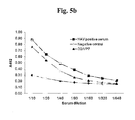
  • FIG. 5 a and FIG. 5 b show an immunogenicity evaluation result of a recombinant antigen complex protein D2-VP7 by ELISA.
  • the recombinant antigen complex protein D2-VP7 was injected to a rabbit for immunization, and serum isolated therefrom was subjected to antibody measurement.
  • FIG. 5 a shows an antibody measurement result of the rabbit serum immunized with the rotavirus Wa antigen.
  • negative rabbit serum as negative control rabbit serum immunized with rotavirus Wa as positive control
  • rabbit serum immunized with the recombinant antigen complex protein D2-VP7 rabbit serum immunized with the recombinant antigen complex protein D2-VP7
  • Absorbance (OD value) is shown on the ordinate and dilution rate is shown on the abscissa.
  • FIG. 5 b shows an antibody measurement result of the rabbit serum immunized with the hepatitis A virus HM175 antigen.
  • negative rabbit serum as negative control rabbit serum immunized with hepatitis A virus HM175 antigen as positive control
  • rabbit serum immunized with the recombinant antigen complex protein D2-VP7 rabbit serum immunized with the recombinant antigen complex protein D2-VP7
  • Absorbance (OD value) is shown on the ordinate and dilution rate is shown on the abscissa.
  • FIG. 6 a and FIG. 6 b show a result of measuring reactivity between an immunized serum obtained by inoculating a recombinant antigen complex protein D2-VP7 to a rabbit and virus using a confocal microscope.
  • panel A shows a result of measuring reactivity between an MA104 cell infected with rotavirus Wa and an unimmunized normal rabbit serum
  • panel B shows a result of measuring reactivity between an MA104 cell infected with rotavirus Wa and a rabbit serum immunized with the recombinant antigen complex protein D2-VP7.
  • panel A shows a result of measuring reactivity between an FRhK-4 cell infected with hepatitis A virus HM175 and an unimmunized normal rabbit serum
  • panel B shows a result of measuring reactivity between an FRhK-4 cell infected with hepatitis A virus HM175 and a rabbit serum immunized with the recombinant antigen complex protein D2-VP7.
  • FIG. 7 a and FIG. 7 b show that neutralizing antibodies against rotavirus and hepatitis A virus are formed in a serum obtained by inoculating a recombinant antigen complex protein D2-VP7 to a rabbit.
  • panel A shows an MA104 cell infected with rotavirus Wa (positive control)
  • panel B shows a result of adding a normal rabbit serum to an MA104 cell infected with rotavirus Wa (negative control)
  • panel C shows a result of adding a rabbit antiserum (X 320) against a recombinant antigen complex protein D2-VP7 to an MA104 cell infected with rotavirus Wa.
  • panel A shows an FRhK-4 cell infected with hepatitis A virus HM175 (positive control)
  • panel B shows a result of adding a normal rabbit serum to an FRhK-4 cell infected with hepatitis A virus HM175 (negative control)
  • panel C shows a result of adding a rabbit antiserum (X 160) against a recombinant antigen complex protein D2-VP7 to an FRhK-4 cell infected with hepatitis A virus HM175.
  • FIG. 8 shows a virus-like particle (VLP) of rotavirus comprising hepatitis A virus antigen.
  • Panel A shows a virus-like particle of rotavirus comprising a recombinant antigen complex protein in which rotavirus proteins VP2, VP6 and VP4, and fusion protein in which hepatitis A virus antigen D2 and a rotavirus protein VP7 are linked
  • panel B shows a core-like particle (CLP) of rotavirus comprising proteins of VP2 and VP6.
  • VLP virus-like particle
  • FIG. 9 shows a Western blot analysis result showing that a virus-like particle of rotavirus of the present disclosure is recognized by antibodies specific for rotavirus proteins VP2, VP4 and VP6 produced in a rabbit.
  • FIG. 10 a and FIG. 10 b show an immunogenicity evaluation result of a virus-like particle of rotavirus by ELISA.
  • the VLP of rotavirus comprising a recombinant antigen complex protein D2-VP7 was injected to a mouse for immunization, and immunized serum isolated therefrom was subjected to antibody measurement.
  • FIG. 10 a shows an antibody measurement result of the mouse serum immunized with the rotavirus VLP for the rotavirus Wa antigen.
  • negative mouse serum as negative control : mouse serum immunized with rotavirus Wa as positive control
  • mouse serum immunized with the rotavirus VLP Absorbance (OD value) is shown on the ordinate and dilution rate is shown on the abscissa].
  • FIG. 10 b shows an antibody measurement result of the mouse serum immunized with the hepatitis A virus HM175 antigen.
  • negative mouse serum as negative control mouse serum immunized with hepatitis A virus HM175 antigen as positive control
  • mouse serum immunized with the rotavirus VLP mouse serum immunized with the rotavirus VLP.
  • Absorbance (OD value) is shown on the ordinate and dilution rate is shown on the abscissa.
  • Insect Sf9 Spodoptera frugiperda ) cells were acquired from the Korean Cell Line Bank (KCLB; Korea) and used for preparation of recombinant baculovirus. Sf9 cells were cultured in TNM-FH medium containing 10% fetal bovine serum (FBS) at 90 rpm and 27° C. using a 250-mL spinner flask. Number of cells and cell viability were measured using a hemocytometer according to the trypan blue exclusion method.
  • FBS fetal bovine serum
  • Epitope genes were acquired from serotype G1P[8] Wa rotavirus and HM175 hepatitis A virus genomes, and the Bac-N-Blue baculovirus expression vector system (Invitrogen) was used for preparation of recombinant baculovirus.
  • Restriction enzyme XhoI and T4 DNA ligase were purchased from New England Biolabs.
  • the baculovirus transfer vector pBlueBac4.5/V5-His and the baculovirus expression system Bac-N-BlueTM were purchased from Invitrogen.
  • the Plasmid Miniprep kit was purchased from Bioneer.
  • An antiserum isolated from a human patient infected with hepatitis A virus and an antiserum from a rabbit infected with Wa rotavirus were used for analysis of immunogenicity. 6-8 week-old SPF female New Zealand white rabbits were used as test animal. They were accustomed for 2 weeks before test.
  • VP7 gene of rotavirus (HRV) capsid was synthesized from a cDNA obtained from Wa (G1P[8]) rotavirus RNA by RT-PCR.
  • Hepatitis A virus (HAV) domain 2 (D2, amino acids 767-842) and domain 3 (D3, amino acids 1403-1456) genes were synthesized from a cDNA obtained from HM175 hepatitis A virus RNA by RT-PCR.
  • DNA fragments encoding two kinds of recombinant antigen complexes comprising hepatitis A virus and rotavirus epitopes were obtained: (1) HAV D2 and HRV VP7 (D2-VP7), (2) HAV D3 and HRV VP7 (D3-VP7).
  • the recombinant genes were amplified by PCR and cloned into the baculovirus transfer vector pBlueBac4.5 (Invitrogen) to prepare a recombinant baculovirus transfer vector.
  • the prepared recombinant transfer vector was subjected to base sequencing analysis to ensure that the cloning was performed accurately.
  • the prepared recombinant baculovirus transfer vector was mixed with Bac-N-BlueTM linearized baculovirus DNA and Cellfectin® II that had been prepared in serum-free medium, and reacted at room temperature for 15 minutes. Then, insect Sf9 cells (2 ⁇ 10 6 cells/5 mL, 60-mm plates) were added. The mixture solution was replaced with TNM-FH medium containing 10% FBS, and the recombinant baculovirus was identified by the standard plaque assay.
  • Recombinant antigen complex protein expression sample was isolated by 10% SDS-PAGE and identified by Coomassie Brilliant Blue R-250 (Bio-Rad) staining. In order to identify the presence of the expressed protein, all the protein components were transferred to an Immuno-BlotTM PVDF membrane (Bio-Rad), and the membrane was blocked using 5% skim milk.
  • the rotavirus Wa rabbit antiserum and the hepatitis A patient antiserum were prepared in a mixture of Tris-buffered saline and Tween 20 (TBS-T; 20 mM Tris-HCl, 500 mM NaCl, 0.1% Tween 20, pH 7.9).
  • reaction was further carried out using peroxidase-conjugated goat anti-rabbit IgG (1:2000 dilution in TBS-T, Invitrogen) as secondary antibody.
  • the expressed protein was identified by electrochemiluminescence (ECL) after exposure on an X-ray film (Kodak).
  • ⁇ g of the recombinant antigen complex protein D2-VP7 was intramuscularly injected to two New Zealand white rabbits together with Freund's complete adjuvant (day 0). On day 28, boosting was performed by injecting Freund's incomplete adjuvant. On day 40, blood was taken from the ear vein, serum was isolated therefrom, and the formation of antibody was identified by ELISA.
  • the isolated and purified rotavirus Wa antigen and hepatitis A virus HM175 antigen were prepared in a coating solution (0.1 M Na 2 CO 3 , 0.1 M NaHCO 3 , pH 9.4) at a concentration of 0.1 ⁇ g per well, and coated on a 96-well immunoplate overnight at 4° C.
  • the plate was washed 3 times with 200 ⁇ L of PBS-T (1 ⁇ PBS with 0.05% Tween 20), and then blocked using 5% (w/v) skim milk.
  • the immunized serum obtained from the rabbit was serially diluted and reacted at 37° C. or 1 hour.
  • FRhk-4 cells cultured on a 96-well glass plate 100 ⁇ L of 10 ⁇ diluted HM175 hepatitis A virus solution and 100 ⁇ L of a viral medium (Eagle's medium containing 2% bovine serum) were added and reaction was performed until a cytopathic effect was observed. After removing the culture medium and adding 80% acetone and reacting for 10 minutes to immobilize the cells, the cells were washed 3 times with PBS (pH 7.2). Then, after adding 100 ⁇ L of the recombinant antigen complex protein D2/VP7 immunized serum obtained from the rabbit as primary antibody, which had been diluted 50 ⁇ with PBS, reaction was performed at 37° C. for 1 hour.
  • a viral medium Eagle's medium containing 2% bovine serum
  • Sf9 cells cultured in 250 mL of TNM-FH medium containing 10% FBS and 0.1% Pluronic F-68 to about 3 ⁇ 10 6 cells/mL concentration were concentrated centrifugally and infected simultaneously with 4 recombinant baculoviruses comprising polynucleotides encoding VP2, VP4, VP6 and D2-VP7 with an MOI of 5 pfu/cell.
  • 4 recombinant baculoviruses comprising polynucleotides encoding VP2, VP4, VP6 and D2-VP7 with an MOI of 5 pfu/cell.
  • After adsorbing the viruses for about 3-4 hour in a centrifugal tube the infected cell solution was centrifuged and the supernatant was replaced with a fresh medium.
  • the medium was 220 mL of Grace's insect medium containing 10% FBS and 0.1% Pluronic F-68. Then, the cells were cultured at 27° C. for
  • the infected cell culture was ultracentrifuged at 12,000 rpm for 30 minutes.
  • VLP virus-like particle
  • sucrose cushion sucrose in TNC buffer, 10 mM Tris-HCl, pH 7.5, 140 mM NaCl, 10 mM CaCl 2
  • SW28 rotor SW28 rotor
  • the obtained VLP precipitate was suspended in 4 mL of TNC buffer and, after adding 0.42 g CsCl/mL, centrifuged at 35,000 rpm for 18 hours using an SW50.1 rotor (Beckman Coulter). Following the centrifugation, two identified bands, i.e.
  • VLP bottom band
  • CLP top band
  • VLP purified bottom band
  • CLP top band
  • FIG. 1 schematically shows baculovirus expression vector systems developed by the inventors of the present disclosure which express a recombinant antigen complex comprising a hepatitis A virus antigen and a rotavirus antigen.
  • expression systems for two kinds of recombinant antigen complex of rotavirus and hepatitis A virus antigens which are named D2-VP7 and D3-VP7 respectively, have been fabricated.
  • 1,215-bp and 1,149-bp recombinant antigen protein amplification products were obtained by overlap extension PCR, and they were respectively inserted to the baculovirus transfer vector pBlueBac4.5 (Invitrogen).
  • pBlueBac4.5 Invitrogen
  • FIG. 2 a An insect Sf9 ( Spodoptera frugiperda 9) cell was introduced into the recombinant baculovirus expression vectors and expression was identified through whole cell protein analysis. It was identified that the expected two recombinant antigen complex protein products were expressed in the insect cell ( FIG. 2 a ). In particular, specific protein products corresponding to their size could be identified by using V5 antibody ( FIG. 2 b ). This result suggests that the recombinant antigen complex proteins are stably expressed by the recombinant antigen complex protein expression systems of the present disclosure comprising the rotavirus antigen and the hepatitis A virus antigen at the same time.
  • the cell was infected with the recombinant baculovirus expressing D2-VP7 at 5 pfu/cell and observed for 10 days.
  • the expression level was highest on day 2 after the infection.
  • the expression level was decreased gradually and reached the minimum on day 10 ( FIG. 3 ). This indicates that, after the infection with the recombinant baculovirus, the cell was normally lysed in 10 days.
  • the recombinant antigen complex protein D2-VP7 In order to further identify the immunogenicity of the recombinant antigen complex protein D2-VP7, the corresponding antigen was inoculated to a rabbit and it was investigated whether an antibody specific for the antigen is produced. As seen from FIG. 5 a and FIG. 5 b , the recombinant antigen complex protein D2-VP7 induced the production of the antibody specific for the rotavirus Wa and hepatitis A virus antigens.
  • the cultured cells infected with each virus were reacted with the serum immunized by inoculating the recombinant antigen complex D2-VP7.
  • the immunized rabbit serum obtained by inoculating the recombinant antigen complex D2-VP7 reacted specifically with each virus. This result proves that the recombinant antigen complex D2-VP7 induces the production of the antibody specific for hepatitis A virus and rotavirus.
  • the synthesized virus-like particle of rotavirus was observed using an electron microscope. It was identified that the virus-like particle of rotavirus comprising the recombinant antigen complex D2-VP7 was formed successfully ( FIG. 8 ).
  • the virus-like particle of rotavirus was isolated by 10% SDS-PAGE and Western blot was carried out using rotavirus-specific antibody produced from a rabbit. Specific protein product corresponding to the size was identified ( FIG. 9 ).
  • a mouse was immunized with the prepared virus-like particle and it was investigated whether antibody specific for the antigen is produced. Comparison with a negative control group revealed that the antibody specific for the virus was produced ( FIG. 10 ).
  • baculovirus expression vector systems capable of expressing two recombinant antigen complex proteins D2-VP7 and D3-VP7 were constructed and the antigen complex proteins were expressed in insect Sf9 cells.
  • the immunogenicity of the expressed recombinant antigen complex proteins was identified by Western blot analysis using rabbit and human patient serums. Furthermore, the recombinant antigen complex protein identified to have immunogenicity was directly injected into a rabbit and a serum obtained therefrom was subjected to ELISA analysis. Through production of the virus-specific antibody, its immunogenicity was reconfirmed. In addition, it was identified that the antiserum obtained from immunization of a rabbit has neutralizing antibody of inhibiting both hepatitis A virus and rotavirus.
  • the antigen complex protein expression system of the present disclosure may be utilized for spontaneous and large-scale expression of hepatitis A virus- and rotavirus-derived antigen proteins, synthesis of chimeric virus-like particles, development of complex vaccines for hepatitis A virus and rotavirus, and development of complex virus-like particle vaccines comprising various viral antigen.
  • the present disclosure provides a construct for expressing a rotavirus antigen complex loaded with a heterologous virus epitope, a vaccine composition comprising the rotavirus antigen complex, a virus-like particle of rotavirus comprising the rotavirus antigen complex, and a vaccine composition comprising the virus-like particle of rotavirus.
  • an antigen complex comprising a rotavirus antigen as well as a heterologous virus epitope and a virus-like particle of rotavirus comprising the antigen complex can be produced in large scale at low cost.
  • the present disclosure may be applied for research and development of novel complex vaccines for rotavirus and heterologous virus.

Landscapes

  • Health & Medical Sciences (AREA)
  • Life Sciences & Earth Sciences (AREA)
  • Chemical & Material Sciences (AREA)
  • Virology (AREA)
  • General Health & Medical Sciences (AREA)
  • Medicinal Chemistry (AREA)
  • Genetics & Genomics (AREA)
  • Organic Chemistry (AREA)
  • Engineering & Computer Science (AREA)
  • Immunology (AREA)
  • Molecular Biology (AREA)
  • Microbiology (AREA)
  • Biomedical Technology (AREA)
  • Pharmacology & Pharmacy (AREA)
  • Animal Behavior & Ethology (AREA)
  • Biochemistry (AREA)
  • Veterinary Medicine (AREA)
  • Public Health (AREA)
  • Mycology (AREA)
  • Epidemiology (AREA)
  • Biotechnology (AREA)
  • Biophysics (AREA)
  • General Engineering & Computer Science (AREA)
  • Bioinformatics & Cheminformatics (AREA)
  • Zoology (AREA)
  • Wood Science & Technology (AREA)
  • Physics & Mathematics (AREA)
  • Communicable Diseases (AREA)
  • Proteomics, Peptides & Aminoacids (AREA)
  • Hematology (AREA)
  • Urology & Nephrology (AREA)
  • Gastroenterology & Hepatology (AREA)
  • Plant Pathology (AREA)
  • General Physics & Mathematics (AREA)
  • Pathology (AREA)
  • Tropical Medicine & Parasitology (AREA)
  • Cell Biology (AREA)
  • Analytical Chemistry (AREA)
  • Food Science & Technology (AREA)
  • Chemical Kinetics & Catalysis (AREA)

Abstract

Disclosed are a construct for expressing a rotavirus antigen complex loaded with a heterologous virus epitope, a vaccine composition containing the rotavirus antigen complex, a virus-like particle of rotavirus containing the rotavirus antigen complex, and a vaccine composition containing the virus-like particle of rotavirus. According to the present disclosure, an antigen complex containing a rotavirus antigen as well as a heterologous virus epitope and a virus-like particle of rotavirus containing the antigen complex can be produced in large scale at low cost. Thus, the present disclosure may be applied for research and development of novel complex vaccines for rotavirus and heterologous virus.

Description

RELATED APPLICATIONS
This application claims priority from foreign patent application 10-2010-0041095, filed Apr. 30, 2010 in the Republic of Korea.
TECHNICAL FIELD
The present disclosure relates to a method for preparing a recombinant antigen complex using a rotavirus nanoparticle. More particularly, it relates to a construct for expressing a rotavirus antigen complex, a host cell transformed with the expression construct, a vaccine composition including the rotavirus antigen complex, a virus-like particle (VLP) of rotavirus having the rotavirus antigen complex, and a vaccine composition including the virus-like particle.
BACKGROUND
Human rotavirus (HRV) is the most common cause of diarrhea among infants and young children. Worldwide, including Korea, nearly 95% of children have been infected with the virus at least once by the age of 5, and it is known to account for ˜40% of about 125 million diarrhea patients occurring every year. Hence, rotavirus is a very important pathogen in public health (Patel et al. 2011. Pediatr Infect Dis J 30: S1-S5). The virus is non-enveloped and is surrounded by a three-layered icosahedral protein capsid 75 nm in diameter, consisting of an outer capsid, an inner capsid and a core protein. It is known as a dsRNA virus consisting of 11 segments. Each segment codes for one of 6 structural proteins (VP1, VP2, VP3, VP4, VP6 and VP7) and 6 nonstructural proteins (NSPs 1-6) (Estes and Cohen, 1989. Rotavirus gene structure and function. Microbiol Rev 53: 410-449). Rotavirus is classified into 7 groups, from A through G, depending on the antigenicity of VP6. Group A rotaviruses, which are the most common globally, may be subdivided into glycoprotein type (G type) by the immunogenic protein VP7 and protease-sensitive type (P type) by VP4. At present, 23 G types and 32 P types are reported. In human, 9 serotypes including G1-G4, G6, G8-G10 and G12 and 8 genotypes including P[3], P[4], P[6], P[8]-P[11] and P[14] cause infections. The serotypes are not cross-protective (Banyai et al. 2009. Arch Virol 154: 1823-1829; Matthijnssens et al., 2009. Future Microbiol 4: 1303-1316).
According to the Centers for Disease Control and Prevention (CDC) of the US, annual cost spent for the treatment of rotavirus-associated diarrhea amounts to 10 million dollars in the US only. In Korea, 70% of infants and young children hospitalized for acute enteritis are those who are infected by the virus. Accordingly, the World Health Organization (WHO) is striving to reduce occurrence of rotavirus in developing countries and to develop vaccines against rotavirus in developed countries to save medical cost (Parashar et al. 2003. Emerg Infect Dis 9:565-572).
Meanwhile, infection with human hepatitis A virus (HAV) is increasing recently in the western part of the US, the Middle East and some regions in Asia. The spread of hepatitis A is a global concern. Also in Korea, hepatitis A is rapidly increasing in recent years in teenagers and those who are in their twenties who lack immunity against the virus. The infection is commonest in ages between 5 and 14 years. It is reported that about 30% of patients are aged 15 or younger. According to a survey in the US from 1982 through 1993, the incidence of hepatitis A (47%) was more frequent than hepatitis B (37%), and serologic test revealed that about 33% of the US population had been infected with hepatitis A virus (Gust et al. 1992. Vaccine 10: S56-S8). Hepatitis A virus is an RNA virus belonging to the family Picornaviridae, around 27 nm in diameter. After an incubation period of 28 days on average, it can induce acute liver disease characterized by such clinical symptoms as fever, malaise, appetite loss, nausea, abdominal pain, dark urine, jaundice, etc. Like rotavirus, it is non-enveloped and contains a single-stranded 7.5-kb RNA packaged in an icosahedral protein shell 27 nm in diameter. It is known to have one long ORF (P1-3) (Totsuka et al. 1999. Intervirology 42: 63-68).
Hepatitis A is mainly spread by the fecal-oral route, like rotavirus, via contact with contaminated food or drinking water. About 11-22% of hepatitis A patients are hospitalized. When an adult patient is hospitalized, he/she will have to be away from work for about 27 days. When the disease outbreaks, a preventive therapy is required for 11 people who contacted with the patient on average. In the US, the direct and indirect costs spent for one hepatitis A patient is estimated at 1,817-2,459 dollars for an adult and 433-1,492 dollars for one who is aged 18 or younger (WHO. 2000. MMWR Wkly Epidemiol Rec 75: 38-44). In Korea, hepatitis A is increasing rapidly nationwide, centered around the metropolitan areas including Seoul, Incheon and Gyeonggi. According to an epidemiological study by the Korea Centers for Disease Control and Prevention, the outbreak of hepatitis A is increasing quickly, with 2,233 cases in 2007 and 1,575 cases between January and June of 2008 (KCDC, 2010).
Throughout the specification, a number of publications and patent documents are referred to and cited. The disclosure of the cited publications and patent documents is incorporated herein by reference in its entirety to more clearly describe the state of the related art and the present disclosure.
DETAILED DESCRIPTION OF THE INVENTION
The inventors of the present disclosure have made efforts to develop an expression vector system capable of expressing a recombinant rotavirus antigen complex loaded with a heterologous virus epitope and a method for producing a rotavirus-like particle including the recombinant rotavirus antigen complex using the same. As a result, the present inventors have developed a baculovirus expression vector system capable of expressing a hepatitis A virus epitope and a rotavirus antigen at the same time. They have transformed a host cell using the system, successfully expressed the virus antigen complex, and identified its immunogenicity. Furthermore, they have successfully produced a virus-like particle of rotavirus having the antigen complex by expressing the antigen complex together with an additional virus structural protein, and identified the immunogenicity of the virus-like particle.
The present disclosure is directed to providing a construct for expressing a rotavirus antigen complex comprising a heterologous virus antigen.
The present disclosure is also directed to providing a host cell transformed with the construct for expressing a rotavirus antigen complex.
The present disclosure is also directed to providing a vaccine composition comprising the rotavirus antigen complex.
The present disclosure is also directed to providing a method for producing the rotavirus antigen complex.
The present disclosure is also directed to providing a virus-like particle of rotavirus comprising an antigen complex protein of a hepatitis A virus antigen and a rotavirus antigen.
The present disclosure is also directed to providing a vaccine composition comprising the virus-like particle of rotavirus.
The present disclosure is also directed to providing a method for producing the vaccine composition comprising the virus-like particle of rotavirus.
The present disclosure is also directed to providing a method of vaccination comprising administering to a subject in need thereof an effective amount of a vaccine composition.
Other features and aspects will be apparent from the following detailed description, drawings, and claims.
In one general aspect, the present disclosure provides a construct for expressing a rotavirus antigen complex comprising: (i) a nucleotide sequence encoding an antigen complex in which a heterologous virus antigen and a rotavirus antigen are linked; and (ii) a promoter operatively linked to the sequence encoding the antigen complex.
As used herein, the term “antigen complex” refers to a chimeric antigen comprising two or more different antigens or epitopes at the same time.
One of the prominent technical features of the present disclosure is that it provides an expression construct system capable of expressing a rotavirus antigen complex loaded with a heterologous virus epitope wherein the heterologous virus epitope is linked to a rotavirus antigen.
As used herein, the term “expression construct” refers to an essential element for expression including a nucleotide sequence to be expressed and a sequence for inducing the expression of the sequence (e.g., a promoter). Specifically, the expression construct may include a transcription regulatory sequence, the nucleotide sequence to be expressed, and a polyadenylation sequence.
As used herein, the term “promoter” refers to a transcription regulatory sequence capable of inducing transcription of a target gene in a eukaryotic cell. Non-limiting examples of the promoter sequence operable in the eukaryotic cell include cytomegalovirus immediate early promoter, SV40 promoter (SV40 late promoter and SV40 early promoter), herpes simplex virus (HSV) tk promoter, adenovirus 2 major late promoter (PAdmI), adenovirus 2 early promoter (PAdE2), human parvovirus-associated virus (AAV) p19 promoter, Epstein-Barr virus (EBV) promoter, Rous sarcoma virus (RSV) promoter, Vaccinia virus 7.5K promoter, mouse metallothionein (MT) promoter, MMTV LTR promoter, HIV LTR promoter, β-actin promoter, EF1 alpha promoter, human IL-2 gene promoter, human IFN gene promoter, human IL-4 gene promoter, human lymphotoxin gene promoter, human GM-CSF gene promoter, and human hemoglobin-, human muscle creatine- or human metallothionein-derived promoter.
As used herein, the term “operatively linked” refers to a functional linkage between a nucleotide expression regulatory sequence (e.g., promoter, signal sequence, or array of transcription factor binding sites) and a nucleotide sequence, wherein the regulatory sequence directs transcription and/or translation of the nucleotide sequence.
The expression construct of the present disclosure may comprise a polyadenylation sequence as a transcriptional termination sequence, which includes, for example, bovine growth hormone terminator (Gimmi, E. R., et al., Nucleic Acids Res. 17: 6983-6998 (1989)), SV40-derived polyadenylation sequence (Schek, N, et al., Mol. Cell Biol. 12: 5386-5393 (1992)), HIV-1 polyA (Klasens, B. I. F., et al., Nucleic Acids Res. 26: 1870-1876 (1998)), β-globin polyA (Gil, A., et al, Cell 49: 399-406 (1987)), HSV TK polyA (Cole, C. N. and T. P. Stacy, Mol. Cell. Biol. 5: 2104-2113 (1985)), or polyomavirus polyA (Batt, D. B and G. G. Carmichael, Mol. Cell. Biol. 15: 4783-4790 (1995)), but is not limited thereto.
Furthermore, the expression construct of the present disclosure may comprise an antibiotic-resistant gene commonly employed in the art as a selection marker. For example, genes resistant to ampicillin, gentamicin, carbenicillin, chloramphenicol, streptomycin, kanamycin, geneticin (G418), neomycin or tetracycline may be included.
The recombinant antigen complex expression construct of the present disclosure may be prepared in various forms, including plasmid or viral vector systems. Specifically, the expression construct of the present disclosure may be a viral vector system, for example, vector systems of adenovirus, adeno-associated virus, retrovirus, lentivirus, Vaccinia virus, herpes simplex virus, baculovirus, etc., but is not limited thereto. Most specifically, the expression construct may be constructed as a baculovirus transfer vector.
According to a specific embodiment of the present disclosure, in the rotavirus antigen complex expression construct, the heterologous virus may be hepatitis A virus.
According to another specific embodiment of the present disclosure, the hepatitis A virus antigen may be domain 2 (D2) or domain 3 (D3). More specifically, D2 and D3 may respectively be a polypeptide having an amino acid sequence of SEQ ID NO: 2 and SEQ ID NO: 3.
According to another specific embodiment of the present disclosure, the rotavirus antigen may be VP7 protein. More specifically, the rotavirus antigen VP7 protein may be a polypeptide having an amino acid sequence of SEQ ID NO: 1.
According to another specific embodiment of the present disclosure, the hepatitis A virus antigen and the rotavirus antigen may be linked by a peptide linker.
According to another specific embodiment of the present disclosure, the peptide linker may be Leu-Glu-Pro-Gly or Lys-Asp-Glu-Leu. Lys-Asp-Glu-Leu promotes retention of the recombinant protein in the endoplasmic reticulum (ER) and, thus, improves antigen presenting effect by MHC class I.
According to a specific embodiment of the present disclosure, the construct for expressing a rotavirus antigen complex of the present disclosure comprises the DNA elements shown in FIG. 1.
In another general aspect, the present disclosure provides a host cell transformed with the construct for expressing a rotavirus antigen complex.
The host cell that is transformed with the rotavirus antigen complex expression construct of the present disclosure may be specifically an animal cell, more specifically a yeast cell, an insect cell or a mammalian cell, most specifically an insect cell. The insect cell may be, for example, Spodoptera frugiperda 21 (Sf21; Invitrogen), Spodoptera frugiperda 9 (Sf9; Invitrogen), Trichoplusia ni 5 (Tn5; Invitrogen), or the like, but is not limited thereto.
The animal cell may be transformed with the expression construct according to various methods known in the art. Non-limiting examples include microinjection (Capecchi, M. R., Cell, 22: 479 (1980)), calcium phosphate precipitation (Graham, F. L. et al., Virology, 52: 456 (1973)), electroporation (Neumann, E. et al., EMBO J., 1: 841 (1982)), liposome-mediated transfection (Wong, T. K. et al., Gene, 10: 87 (1980)), DEAE-dextran method (Gopal, Mol. Cell. Biol., 5: 1188-1190 (1985)), gene bombardment (Yang et al., Proc. Natl. Acad. Sci., 87: 9568-9572 (1990)), lithium acetate-DMSO method (Hill et al., Nucleic Acid Res., 19, 5791 (1991)), etc.
In another general aspect, the present disclosure provides a recombinant rotavirus antigen complex wherein the hepatitis A virus antigen and the rotavirus antigen are linked with each other.
In another general aspect, the present disclosure provides a vaccine composition comprising the recombinant rotavirus antigen complex as an active ingredient.
According to a specific embodiment of the present disclosure, the rotavirus antigen may be VP7 protein, and the hepatitis A virus epitope may be D2 or D3.
According to another specific embodiment of the present disclosure, the VP7 protein may be a polypeptide having an amino acid sequence of SEQ ID NO: 1.
According to another specific embodiment of the present disclosure, D2 and D3 may respectively be a polypeptide having an amino acid sequence of SEQ ID NO: 2 and SEQ ID NO: 3.
According to another specific embodiment of the present disclosure, the hepatitis A virus antigen and the rotavirus antigen may be linked by a peptide linker. More specifically, the peptide linker may be Leu-Glu-Pro-Gly or Lys-Asp-Glu-Leu.
As demonstrated by the following examples, the recombinant rotavirus antigen complex protein of the present disclosure has antibody-inducing ability not only for rotavirus but also for hepatitis A virus.
The vaccine composition of the present disclosure comprises: (a) a pharmaceutically effective amount of the recombinant rotavirus antigen complex protein comprising the hepatitis A virus antigen; and (b) a pharmaceutically acceptable carrier. The vaccine composition of the present disclosure may be used to prevent various diseases caused by infection with hepatitis A virus or rotavirus. As used herein, the term “pharmaceutically effective amount” refers to an amount sufficient to achieve a preventive effect for the disease.
The pharmaceutically acceptable carrier included in the vaccine composition of the present disclosure may be one commonly used in the art. Non-limiting examples may include lactose, dextrose, sucrose, sorbitol, mannitol, starch, gum acacia, calcium phosphate, alginate, gelatin, calcium silicate, microcrystalline cellulose, polyvinylpyrrolidone, cellulose, water, syrup, methyl cellulose, methyl hydroxybenzoate, propyl hydroxybenzoate, talc, magnesium stearate, mineral oil, etc. In addition, the composition of the present disclosure may further include a lubricant, a wetting agent, a sweetener, a flavor, an emulsifier, a suspending agent, a preservative, or the like.
The vaccine composition of the present disclosure may be administered parenterally. For example, it may be administered intravenously, intra-abdominally, intramuscularly, subcutaneously or topically.
An adequate dose of the vaccine composition of the present disclosure may vary depending on such factors as preparation method, administration method, age, body weight and sex of the patient, severity of symptoms, administration time, administration route, rate of excretion, and responsivity. A physician of ordinary skill in the art will easily determine and diagnose the administration dose effective for treatment.
The vaccine composition of the present disclosure may be prepared into unit-dose or multiple-dose preparations by those skilled in the art using a pharmaceutically acceptable carrier and/or excipient according to a method known in the art. The preparation may be in the form of a solution in an oil or aqueous medium, a suspension, an emulsion, an extract, a powder, a granule, a tablet, or a capsule. It may further include a dispersant or a stabilizer.
In another general aspect, the present disclosure provides a method for producing a rotavirus antigen complex having a hepatitis A virus antigen, comprising: (a) culturing a host cell transformed with a recombinant baculovirus for expressing a rotavirus antigen complex comprising: (i) a nucleotide sequence encoding an antigen complex in which a hepatitis A virus antigen and a rotavirus antigen are linked; and (ii) a promoter operatively linked to the sequence encoding the antigen complex; and (b) isolating and purifying a recombinant rotavirus antigen complex protein from the cultured cell.
The transformed host cell may be cultured according to a common animal cell culturing method known in the art.
For culturing of the transformed host cell, any natural or synthetic medium containing a carbon source, a nitrogen source, an inorganic salt, etc. that may be effectively used by the cell may be used. The carbon source may include: a carbohydrate such as glucose, fructose and sucrose; starch or starch hydrolysate; an organic acid such as acetic acid and propionic acid; an alcohol such as methanol, ethanol and propanol; or the like. The nitrogen source may include: ammonia; an ammonium salt of an inorganic acid or an organic acid such as ammonium chloride, ammonium sulfate, ammonium acetate and ammonium phosphate; peptone, meat extract, yeast extract, corn steep liquor, casein hydrolysate, soybean extract, soybean hydrolysate; various fermented cells and digested product thereof; or the like. The inorganic salt may include potassium dihydrogen phosphate, dipotassium hydrogen phosphate, magnesium phosphate, magnesium sulfate, sodium chloride, manganese sulfate, copper sulfate, calcium carbonate, or the like.
The medium may be any one commonly employed for culturing of an animal cell. For example, Eagle's minimum essential medium (Eagle's MEM; Eagle, H. Science 130: 432 (1959)), α-MEM (Stanner, C. P. et al., Nat. New Biol. 230: 52 (1971)), lscove's MEM (Iscove, N. et al., J. Exp. Med. 147: 923 (1978)), Medium 199 (Morgan et al., Proc. Soc. Exp. Bio. Med., 73: 1 (1950)), CMRL 1066 and RPMI 1640 (Moore et al., J. Amer. Med. Assoc. 199: 519 (1967)), F12 (Ham, Proc. Natl. Acad. Sci. USA 53: 288 (1965)), F10 (Ham, R. G. Exp. Cell Res. 29: 515 (1963)), Dulbecco's modified Eagle's medium (DMEM; Dulbecco, R. et al., Virology 8: 396 (1959)), DMEM/F12 mixture (Barnes, D. et al., Anal. Biochem. 102: 255 (1980)), Waymouth's MB752/1 (Waymouth, C. J. Natl. Cancer Inst. 22: 1003 (1959)), McCoy's 5A (McCoy, T. A., et al., Proc. Soc. Exp. Biol. Med. 100: 115 (1959)), MCDB series (Ham, R. G. et al., In Vitro 14: 11 (1978)), or the like may be used. Detailed description about these media can be found in R. Ian Freshney, Culture of Animal Cells, A Manual of Basic Technique, Alan R. Liss, Inc., New York, which is incorporated herein by reference.
The culturing is carried out under aerobic conditions, for example, by shaking or spinning. Specifically, the culturing temperature is in the range from 15 to 40° C., and the culturing time is usually from 5 hours to 7 days. The pH of the medium may be adjusted to 3.0-9.0. The pH of the medium may be adjusted by adding, for example, an inorganic or organic acid, an alkaline solution, urea, calcium carbonate, ammonia, etc. If necessary, an antibiotic such as ampicillin and tetracycline may be added.
From the cultured transformed cell, the expressed antigen complex protein may be isolated and purified according to a method commonly employed in the art. Various methods including solubility-based fractionation using ammonium sulfate or PEG, ultrafiltration based on molecular weight, various chromatographic techniques (based on size, charge, hydrophobicity or affinity), or the like may be employed. Usually, a combination of the above-mentioned methods is used for the isolation and purification.
In another general aspect, the present disclosure provides a virus-like particle of rotavirus comprising: (a) a polypeptide VP2, VP4 and VP6 of rotavirus; and (b) a fusion protein of a heterologous virus epitope and a rotavirus antigen VP7.
According to a specific embodiment of the present disclosure, the heterologous virus is hepatitis A virus.
According to another specific embodiment of the present disclosure, the fusion protein is a fusion protein D2-VP7 of a hepatitis A virus antigen D2 and a rotavirus antigen VP7.
According to a specific embodiment of the present disclosure, the polypeptide VP2 has an amino acid sequence of SEQ ID NO: 4, the polypeptide VP4 has an amino acid sequence of SEQ ID NO: 5, the polypeptide VP6 has an amino acid sequence of SEQ ID NO: 6, the polypeptide D2 has an amino acid sequence of SEQ ID NO: 2, and the polypeptide VP7 has an amino acid sequence of SEQ ID NO: 1.
According to another specific embodiment of the present disclosure, the fusion protein D2-VP7 is one in which D2 and VP7 are linked by a peptide linker Leu-Glu-Pro-Gly or Lys-Asp-Glu-Leu.
In another general aspect, the present disclosure provides a vaccine composition comprising a virus-like particle of rotavirus having (i) polypeptides of VP2, VP4 and VP6 of rotavirus; and (b) a fusion protein D2-VP7 of a hepatitis A virus antigen D2 and a rotavirus antigen VP7.
Description about the vaccine composition comprising the virus-like particle of rotavirus will be omitted since it is the same as that given with respect to the rotavirus antigen complex.
In another general aspect, the present disclosure provides a method for producing a virus-like particle of rotavirus having a hepatitis A virus antigen, comprising: (a) culturing a host cell transformed with four recombinant baculoviruses of (i) a first recombinant baculovirus comprising a VP2 encoding nucleotide sequence operatively linked to a promoter; (ii) a second recombinant baculovirus comprising a VP4 encoding nucleotide sequence operatively linked to a promoter; (iii) a third recombinant baculovirus comprising a VP6 encoding nucleotide sequence operatively linked to a promoter; and (iv) a fourth recombinant baculovirus comprising a fusion protein D2-VP7 encoding nucleotide sequence operatively linked to a promoter; and (b) isolating and purifying a virus-like particle of rotavirus from the cultured cell.
According to a specific embodiment of the present disclosure, the polypeptide VP2 has an amino acid sequence of SEQ ID NO: 4, the polypeptide VP4 has an amino acid sequence of SEQ ID NO: 5, the polypeptide VP6 has an amino acid sequence of SEQ ID NO: 6, the polypeptide D2 has an amino acid sequence of SEQ ID NO: 2, and the polypeptide VP7 has an amino acid sequence of SEQ ID NO: 1. According to another specific embodiment of the present disclosure, the fusion protein D2-VP7 is one in which D2 and VP7 are linked by a peptide linker Leu-Glu-Pro-Gly or Lys-Asp-Glu-Leu.
Description about the method for producing the virus-like particle of rotavirus will be omitted since it is the same as that given with respect to the rotavirus antigen complex protein.
In another general aspect, the present disclosure provides a method of vaccination comprising administering to a subject in need thereof an effective amount of a vaccine composition which comprises a recombinant rotavirus antigen complex wherein a hepatitis A virus antigen is linked with a rotavirus antigen.
In another general aspect, the present disclosure provides a method of vaccination comprising administering to a subject in need thereof an effective amount of a vaccine composition which comprises a virus-like particle of rotavirus having (i) polypeptides of VP2, VP4 and VP6 of rotavirus; and (ii) a fusion protein D2-VP7 of a hepatitis A virus antigen D2 and a rotavirus antigen VP7.
BRIEF DESCRIPTION OF THE DRAWINGS
The file of this patent or application publication contains at least one drawing executed in color. Copies of this patent or application publication with color drawing(s) will be provided by the Office upon request and payment of the necessary fee.
FIG. 1 shows baculovirus expression vector systems developed by the inventors of the present invention which express a recombinant antigen complex comprising a hepatitis A virus antigen and a rotavirus antigen.
FIG. 2 a and FIG. 2 b show that a recombinant antigen complex protein is expressed normally in an insect Sf9 cell infected with the recombinant baculovirus vector of the present invention.
FIG. 2 a shows a result of total protein analysis by SDS-PAGE (lane 1: uninfected, lane 2: D2-VP7 antigen complex, lane 3: D3-VP7 antigen complex).
FIG. 2 b shows a Western blot analysis result using anti-V5 antibody (lane N: uninfected, lane 1: D2-VP7 antigen complex, lane 2: D3-VP7 antigen complex).
FIG. 3 shows expression of a recombinant antigen complex protein D2-VP7 of the present invention in an insect Sf9 cell (lane 1: uninfected Sf9 cell, lanes 1-10: 1-10 days after viral infection).
FIG. 4 a and FIG. 4 b show Western blot analysis result showing that a recombinant antigen complex protein of the present invention is recognized by antibodies specific for hepatitis A virus and rotavirus.
FIG. 4 a shows a measurement result using anti-rotavirus rabbit serum comprising an antibody specific for rotavirus Wa (lane 1: uninfected Sf9 cell, lane 2: D2-VP7 antigen complex, lane 3: D3-VP7 antigen complex).
FIG. 4 b shows a measurement result using hepatitis A virus-infected patient serum comprising an antibody specific for hepatitis A virus (lane 1: uninfected Sf9 cell, lane 2: D2-VP7 antigen complex).
FIG. 5 a and FIG. 5 b show an immunogenicity evaluation result of a recombinant antigen complex protein D2-VP7 by ELISA. The recombinant antigen complex protein D2-VP7 was injected to a rabbit for immunization, and serum isolated therefrom was subjected to antibody measurement.
FIG. 5 a shows an antibody measurement result of the rabbit serum immunized with the rotavirus Wa antigen. [
Figure US08758762-20140624-P00001
: negative rabbit serum as negative control,
Figure US08758762-20140624-P00002
: rabbit serum immunized with rotavirus Wa as positive control,
Figure US08758762-20140624-P00003
: rabbit serum immunized with the recombinant antigen complex protein D2-VP7] Absorbance (OD value) is shown on the ordinate and dilution rate is shown on the abscissa.
FIG. 5 b shows an antibody measurement result of the rabbit serum immunized with the hepatitis A virus HM175 antigen. [
Figure US08758762-20140624-P00001
: negative rabbit serum as negative control,
Figure US08758762-20140624-P00002
: rabbit serum immunized with hepatitis A virus HM175 antigen as positive control,
Figure US08758762-20140624-P00003
: rabbit serum immunized with the recombinant antigen complex protein D2-VP7] Absorbance (OD value) is shown on the ordinate and dilution rate is shown on the abscissa.
FIG. 6 a and FIG. 6 b show a result of measuring reactivity between an immunized serum obtained by inoculating a recombinant antigen complex protein D2-VP7 to a rabbit and virus using a confocal microscope. In FIG. 6 a, panel A shows a result of measuring reactivity between an MA104 cell infected with rotavirus Wa and an unimmunized normal rabbit serum, and panel B shows a result of measuring reactivity between an MA104 cell infected with rotavirus Wa and a rabbit serum immunized with the recombinant antigen complex protein D2-VP7.
In FIG. 6 b, panel A shows a result of measuring reactivity between an FRhK-4 cell infected with hepatitis A virus HM175 and an unimmunized normal rabbit serum, and panel B shows a result of measuring reactivity between an FRhK-4 cell infected with hepatitis A virus HM175 and a rabbit serum immunized with the recombinant antigen complex protein D2-VP7.
FIG. 7 a and FIG. 7 b show that neutralizing antibodies against rotavirus and hepatitis A virus are formed in a serum obtained by inoculating a recombinant antigen complex protein D2-VP7 to a rabbit.
In FIG. 7 a, panel A shows an MA104 cell infected with rotavirus Wa (positive control), panel B shows a result of adding a normal rabbit serum to an MA104 cell infected with rotavirus Wa (negative control), and panel C shows a result of adding a rabbit antiserum (X 320) against a recombinant antigen complex protein D2-VP7 to an MA104 cell infected with rotavirus Wa.
In FIG. 7 b, panel A shows an FRhK-4 cell infected with hepatitis A virus HM175 (positive control), panel B shows a result of adding a normal rabbit serum to an FRhK-4 cell infected with hepatitis A virus HM175 (negative control), and panel C shows a result of adding a rabbit antiserum (X 160) against a recombinant antigen complex protein D2-VP7 to an FRhK-4 cell infected with hepatitis A virus HM175.
FIG. 8 shows a virus-like particle (VLP) of rotavirus comprising hepatitis A virus antigen. Panel A shows a virus-like particle of rotavirus comprising a recombinant antigen complex protein in which rotavirus proteins VP2, VP6 and VP4, and fusion protein in which hepatitis A virus antigen D2 and a rotavirus protein VP7 are linked, and panel B shows a core-like particle (CLP) of rotavirus comprising proteins of VP2 and VP6.
FIG. 9 shows a Western blot analysis result showing that a virus-like particle of rotavirus of the present disclosure is recognized by antibodies specific for rotavirus proteins VP2, VP4 and VP6 produced in a rabbit.
FIG. 10 a and FIG. 10 b show an immunogenicity evaluation result of a virus-like particle of rotavirus by ELISA. The VLP of rotavirus comprising a recombinant antigen complex protein D2-VP7 was injected to a mouse for immunization, and immunized serum isolated therefrom was subjected to antibody measurement.
FIG. 10 a shows an antibody measurement result of the mouse serum immunized with the rotavirus VLP for the rotavirus Wa antigen. [
Figure US08758762-20140624-P00001
: negative mouse serum as negative control,
Figure US08758762-20140624-P00002
: mouse serum immunized with rotavirus Wa as positive control,
Figure US08758762-20140624-P00003
: mouse serum immunized with the rotavirus VLP). Absorbance (OD value) is shown on the ordinate and dilution rate is shown on the abscissa].
FIG. 10 b shows an antibody measurement result of the mouse serum immunized with the hepatitis A virus HM175 antigen. [
Figure US08758762-20140624-P00001
: negative mouse serum as negative control,
Figure US08758762-20140624-P00002
: mouse serum immunized with hepatitis A virus HM175 antigen as positive control,
Figure US08758762-20140624-P00003
: mouse serum immunized with the rotavirus VLP]. Absorbance (OD value) is shown on the ordinate and dilution rate is shown on the abscissa.
The examples and experiments will now be described. The following examples and experiments are for illustrative purposes only and not intended to limit the scope of this disclosure.
EXAMPLES Methods and Materials
1. Materials
Insect Sf9 (Spodoptera frugiperda) cells were acquired from the Korean Cell Line Bank (KCLB; Korea) and used for preparation of recombinant baculovirus. Sf9 cells were cultured in TNM-FH medium containing 10% fetal bovine serum (FBS) at 90 rpm and 27° C. using a 250-mL spinner flask. Number of cells and cell viability were measured using a hemocytometer according to the trypan blue exclusion method. Epitope genes were acquired from serotype G1P[8] Wa rotavirus and HM175 hepatitis A virus genomes, and the Bac-N-Blue baculovirus expression vector system (Invitrogen) was used for preparation of recombinant baculovirus.
2. Reagents and Test Animals
Restriction enzyme XhoI and T4 DNA ligase were purchased from New England Biolabs. The baculovirus transfer vector pBlueBac4.5/V5-His and the baculovirus expression system Bac-N-Blue™ were purchased from Invitrogen. The Plasmid Miniprep kit was purchased from Bioneer. An antiserum isolated from a human patient infected with hepatitis A virus and an antiserum from a rabbit infected with Wa rotavirus were used for analysis of immunogenicity. 6-8 week-old SPF female New Zealand white rabbits were used as test animal. They were accustomed for 2 weeks before test.
3. Construction of Recombinant Baculovirus Expression System for Expression of Antigen Complex Having Rotavirus and Hepatitis a Virus Epitopes
VP7 gene of rotavirus (HRV) capsid was synthesized from a cDNA obtained from Wa (G1P[8]) rotavirus RNA by RT-PCR. Hepatitis A virus (HAV) domain 2 (D2, amino acids 767-842) and domain 3 (D3, amino acids 1403-1456) genes were synthesized from a cDNA obtained from HM175 hepatitis A virus RNA by RT-PCR. By artificially inserting an XhoI restriction enzyme site to a primer, DNA fragments encoding two kinds of recombinant antigen complexes comprising hepatitis A virus and rotavirus epitopes were obtained: (1) HAV D2 and HRV VP7 (D2-VP7), (2) HAV D3 and HRV VP7 (D3-VP7). The recombinant genes were amplified by PCR and cloned into the baculovirus transfer vector pBlueBac4.5 (Invitrogen) to prepare a recombinant baculovirus transfer vector. The prepared recombinant transfer vector was subjected to base sequencing analysis to ensure that the cloning was performed accurately. The prepared recombinant baculovirus transfer vector was mixed with Bac-N-Blue™ linearized baculovirus DNA and Cellfectin® II that had been prepared in serum-free medium, and reacted at room temperature for 15 minutes. Then, insect Sf9 cells (2×10⁶ cells/5 mL, 60-mm plates) were added. The mixture solution was replaced with TNM-FH medium containing 10% FBS, and the recombinant baculovirus was identified by the standard plaque assay.
4. Identification of Expressed Protein by SDS-PAGE and Western Blot
Recombinant antigen complex protein expression sample was isolated by 10% SDS-PAGE and identified by Coomassie Brilliant Blue R-250 (Bio-Rad) staining. In order to identify the presence of the expressed protein, all the protein components were transferred to an Immuno-Blot™ PVDF membrane (Bio-Rad), and the membrane was blocked using 5% skim milk. As primary antibody, the rotavirus Wa rabbit antiserum and the hepatitis A patient antiserum were prepared in a mixture of Tris-buffered saline and Tween 20 (TBS-T; 20 mM Tris-HCl, 500 mM NaCl, 0.1% Tween 20, pH 7.9). After reaction with the prepared primary antibody for 1 hour, reaction was further carried out using peroxidase-conjugated goat anti-rabbit IgG (1:2000 dilution in TBS-T, Invitrogen) as secondary antibody. The expressed protein was identified by electrochemiluminescence (ECL) after exposure on an X-ray film (Kodak).
5. Immunization of Rabbit
50 μg of the recombinant antigen complex protein D2-VP7 was intramuscularly injected to two New Zealand white rabbits together with Freund's complete adjuvant (day 0). On day 28, boosting was performed by injecting Freund's incomplete adjuvant. On day 40, blood was taken from the ear vein, serum was isolated therefrom, and the formation of antibody was identified by ELISA.
6. Detection of Specific Antibody by ELISA
The isolated and purified rotavirus Wa antigen and hepatitis A virus HM175 antigen (Abcam, UK) were prepared in a coating solution (0.1 M Na2CO3, 0.1 M NaHCO3, pH 9.4) at a concentration of 0.1 μg per well, and coated on a 96-well immunoplate overnight at 4° C. The plate was washed 3 times with 200 μL of PBS-T (1×PBS with 0.05% Tween 20), and then blocked using 5% (w/v) skim milk. The immunized serum obtained from the rabbit was serially diluted and reacted at 37° C. or 1 hour. After washing, 100 μL of peroxidase-conjugated goat anti-rabbit IgG (diluted in PBS-T, containing 5% skim milk) was added into each well, and reaction was performed at 37° C. for 1 hour. After adding ortho-phenylenediamine (OPD) as substrate and reacting for 5 minutes, 50 μL of 1 M H2SO4 was added to each well to stop the reaction. Then, antibody was quantitated by measuring absorbance at 492 nm using an ELISA reader (NanoQuant).
7. Identification of Antibody Specificity Through Virus-Antibody Reaction
7-1. Antibody Specificity for Rotavirus
To MA104 cells cultured on a 96-well glass plate (Nunc), 100 μL of 10× diluted Wa rotavirus solution and 100 μL of a viral medium (Eagle's medium containing 0.5% of 1 mg/mL trypsin) were added and reaction was performed until a cytopathic effect was observed. After removing the culture medium and adding 80% acetone and incubating for 10 minutes to immobilize the cells, the cells were washed 3 times with PBS (pH 7.2). Then, after adding 100 μL of the recombinant antigen complex protein D2-VP7 immunized serum obtained from the rabbit as primary antibody, which had been diluted 50× with PBS, reaction was performed at 37° C. for 1 hour. After washing 3 times with PBS, 50 μL of 50× diluted FITC-conjugated goat anti-rabbit IgG (Invitrogen) was added as secondary antibody. Then, after reacting at 37° C. for 1 hour followed by further washing 3 times with PBS, 80% glycerol (Sigma) was added to terminate the reaction. Then, it was observed under a confocal microscope (Carl Zeiss) whether the antibody obtained from the rabbit exhibits specificity for rotavirus.
7-2. Antibody Specificity for Hepatitis A Virus
To FRhk-4 cells cultured on a 96-well glass plate (Nunc), 100 μL of 10× diluted HM175 hepatitis A virus solution and 100 μL of a viral medium (Eagle's medium containing 2% bovine serum) were added and reaction was performed until a cytopathic effect was observed. After removing the culture medium and adding 80% acetone and reacting for 10 minutes to immobilize the cells, the cells were washed 3 times with PBS (pH 7.2). Then, after adding 100 μL of the recombinant antigen complex protein D2/VP7 immunized serum obtained from the rabbit as primary antibody, which had been diluted 50× with PBS, reaction was performed at 37° C. for 1 hour. After washing 3 times with PBS, 50 μL of fiftyfold diluted FITC-conjugated goat anti-rabbit IgG (Invitrogen) was added as secondary antibody. Then, after reacting at 37° C. for 1 hour followed by further washing 3 times with PBS, 80% glycerol (Sigma) was added to terminate the reaction. Then, it was observed under a confocal microscope (Carl Zeiss) whether the antibody obtained from the rabbit exhibits specificity for hepatitis A virus.
8. Formation of Neutralizing Antibody
After deactivation of complement by incubating the recombinant antigen complex protein D2-VP7 immunized serum obtained from the rabbit at 56° C. for 30 minutes, the titer of the Wa rotavirus and HM175 hepatitis A virus solutions was measured by TCID50. After adding 50 μL of each virus containing 100 doses TCID50/25 μL (diluted in Eagle's medium at 1:10 for HAV and 1:640 for rotavirus) to a 96-well plate, 50 μL of the serum obtained from the rabbit, which had been diluted tenfold, was serially diluted two-fold and added to each well. After uniformly mixing, the mixture was incubated at 37° C. for 1 hour. After adding 50 μL of each virus-immunized serum mixture to the cell culture plate and then adding 50 μL of maintenance medium (Eagle's medium containing 2% bovine serum for HAV, and Eagle's medium containing 1 mg/mL trypsin for rotavirus), incubation was performed for 5 days. Then, formation of the neutralizing antibody from the immunized serum was identified by measuring the degree of denaturation of the cells using an inverted microscope (Leica) according to the ACTG Laboratory Technologist Committee's manual (revised version 1.0, May 25, 2004).
M=xk+d[0.5−(1/n)(r)]  Spearman-Karber formula
xk=dose of the highest dilution
r=sum of the number of “−” responses
d=spacing between dilutions
n=wells per dilution
9. Synthesis of Virus-Like Particle of Rotavirus
9-1. Infection of Cells
Sf9 cells cultured in 250 mL of TNM-FH medium containing 10% FBS and 0.1% Pluronic F-68 to about 3×10⁶ cells/mL concentration were concentrated centrifugally and infected simultaneously with 4 recombinant baculoviruses comprising polynucleotides encoding VP2, VP4, VP6 and D2-VP7 with an MOI of 5 pfu/cell. After adsorbing the viruses for about 3-4 hour in a centrifugal tube, the infected cell solution was centrifuged and the supernatant was replaced with a fresh medium. The medium was 220 mL of Grace's insect medium containing 10% FBS and 0.1% Pluronic F-68. Then, the cells were cultured at 27° C. for 5-7 days.
9-2. Isolation and Purification of Virus-Like Particle of Rotavirus
The infected cell culture was ultracentrifuged at 12,000 rpm for 30 minutes.
To the supernatant containing the virus-like particle (VLP), 1.5 mL of 35% sucrose cushion (sucrose in TNC buffer, 10 mM Tris-HCl, pH 7.5, 140 mM NaCl, 10 mM CaCl2) was added. Then, by centrifuging at 25,000 rpm for 90 minutes using an SW28 rotor (Beckman Coulter), the VLP was obtained as precipitate. The obtained VLP precipitate was suspended in 4 mL of TNC buffer and, after adding 0.42 g CsCl/mL, centrifuged at 35,000 rpm for 18 hours using an SW50.1 rotor (Beckman Coulter). Following the centrifugation, two identified bands, i.e. the bottom band (VLP) and the top band (CLP), were recovered using a disposable syringe, suspended respectively in 6 mL of TNC buffer, and then centrifuged at 35,000 rpm for 120 minutes using an SW41 rotor (Beckman Coulter). The VLP pellet was suspended in TNC buffer and identified by electron microscopic analysis.
9-3. Immunization
50 μg of each of the purified bottom band (VLP) and top band (CLP) was subcutaneously injected to two mice (Balb/c) together with Freund's complete adjuvant at 2-3 sites on the back. 14, 35 and 56 days later, boosting was performed by injecting Freund's incomplete adjuvant. 60 days later, blood was taken from the vein, serum was isolated therefrom, and formation of antibody was identified by ELISA.
Result
1. Construction of Recombinant Baculovirus Expression System for Expressing of Antigen Complex Having Rotavirus and Hepatitis A Virus Epitopes
FIG. 1 schematically shows baculovirus expression vector systems developed by the inventors of the present disclosure which express a recombinant antigen complex comprising a hepatitis A virus antigen and a rotavirus antigen. As shown in FIG. 1, expression systems for two kinds of recombinant antigen complex of rotavirus and hepatitis A virus antigens, which are named D2-VP7 and D3-VP7 respectively, have been fabricated. 1,215-bp and 1,149-bp recombinant antigen protein amplification products were obtained by overlap extension PCR, and they were respectively inserted to the baculovirus transfer vector pBlueBac4.5 (Invitrogen). Thus prepared recombinant baculovirus transfer vectors were subjected to DNA base sequence analysis. It was identified that the cloned base sequence was fused in frame.
2. Expression of Recombinant Antigen Complex Protein in Insect Sf9 Cells
An insect Sf9 (Spodoptera frugiperda 9) cell was introduced into the recombinant baculovirus expression vectors and expression was identified through whole cell protein analysis. It was identified that the expected two recombinant antigen complex protein products were expressed in the insect cell (FIG. 2 a). In particular, specific protein products corresponding to their size could be identified by using V5 antibody (FIG. 2 b). This result suggests that the recombinant antigen complex proteins are stably expressed by the recombinant antigen complex protein expression systems of the present disclosure comprising the rotavirus antigen and the hepatitis A virus antigen at the same time. In order to investigate the change in expression of the recombinant antigen complex protein in the insect Sf9 cell with time, the cell was infected with the recombinant baculovirus expressing D2-VP7 at 5 pfu/cell and observed for 10 days. The expression level was highest on day 2 after the infection. Then, the expression level was decreased gradually and reached the minimum on day 10 (FIG. 3). This indicates that, after the infection with the recombinant baculovirus, the cell was normally lysed in 10 days.
3. Immunogenicity of Recombinant Antigen Complex Protein
It was investigated whether the two recombinant antigen complex proteins comprising the rotavirus and hepatitis A virus antigens have immunogenicity. First, Western blot was carried out for the two recombinant antigen complex proteins using HAV antiserum from a human patient and rabbit antibody (IgG) against HRV Wa. As seen from FIG. 4 a, both the expressed recombinant antigen complex proteins (D2-VP7 and D3-VP7) showed positive response to the rotavirus-specific antibody. In contrast, for the HAV antiserum acquired from three human patients, only the D2-VP7 showed a positive result (Table 1). As seen from FIG. 4 b, it was identified that the recombinant antigen complex D2-VP7 is recognized by the HAV antiserum acquired from the three human patients.
TABLE 1
Recombinant antigen
complex protein
Antibodies D2-VP7 D3-VP7
Rabbit IgG against HRV Wa (+) (+)
HAV antiserum from human patient 1 (+) (−)
HAV antiserum from human patient 2 (+) (−)
HAV antiserum from human patient 3 (+) (−)
This result shows that, among the two recombinant antigen complex proteins, D2-VP7 has immunogenicity against both rotavirus and hepatitis A virus.
In order to further identify the immunogenicity of the recombinant antigen complex protein D2-VP7, the corresponding antigen was inoculated to a rabbit and it was investigated whether an antibody specific for the antigen is produced. As seen from FIG. 5 a and FIG. 5 b, the recombinant antigen complex protein D2-VP7 induced the production of the antibody specific for the rotavirus Wa and hepatitis A virus antigens.
Furthermore, in order to identify whether the antibody specific for the recombinant antigen complex D2-VP7 reacts specifically with rotavirus and hepatitis A virus, the cultured cells infected with each virus were reacted with the serum immunized by inoculating the recombinant antigen complex D2-VP7. As seen from FIG. 6 a and FIG. 6 b, the immunized rabbit serum obtained by inoculating the recombinant antigen complex D2-VP7 reacted specifically with each virus. This result proves that the recombinant antigen complex D2-VP7 induces the production of the antibody specific for hepatitis A virus and rotavirus.
4. Neutralizing Antibody Producing Ability of Recombinant Antigen Complex Protein
In order to identify whether the antibody specific for the recombinant antigen complex D2-VP7 has neutralizing effect for rotavirus and hepatitis A virus, cells were infected with each virus and cultured, and then were reacted with the antiserum against the recombinant antigen complex D2-VP7. It was identified that the antiserum has the neutralizing ability of inhibiting the viruses, with the cytopathic effect decreased to 320× dilution for rotavirus and to 160× dilution for hepatitis A virus, when compared with a positive control group (FIG. 7 a and FIG. 7 b). Table 2 shows the TCID50 measurement result for the antiserum against the recombinant antigen complex D2-VP7 obtained by inoculating to a rabbit.
TABLE 2
Human rotavirus Hepatitis A virus
Titer (TCID50) 10−5.35/mL 10−1.95/mL
5. Electron Microscopic Image of Virus-Like Particle of Rotavirus
The synthesized virus-like particle of rotavirus was observed using an electron microscope. It was identified that the virus-like particle of rotavirus comprising the recombinant antigen complex D2-VP7 was formed successfully (FIG. 8).
6. Immunogenicity of Virus-Like Particle of Rotavirus
In order to investigate the immunogenicity of the virus-like particle of rotavirus, the virus-like particle was isolated by 10% SDS-PAGE and Western blot was carried out using rotavirus-specific antibody produced from a rabbit. Specific protein product corresponding to the size was identified (FIG. 9). In order further confirm the immunogenicity of the virus-like particle of rotavirus, a mouse was immunized with the prepared virus-like particle and it was investigated whether antibody specific for the antigen is produced. Comparison with a negative control group revealed that the antibody specific for the virus was produced (FIG. 10).
7. Conclusion
In the present disclosure, baculovirus expression vector systems capable of expressing two recombinant antigen complex proteins D2-VP7 and D3-VP7 were constructed and the antigen complex proteins were expressed in insect Sf9 cells. The immunogenicity of the expressed recombinant antigen complex proteins was identified by Western blot analysis using rabbit and human patient serums. Furthermore, the recombinant antigen complex protein identified to have immunogenicity was directly injected into a rabbit and a serum obtained therefrom was subjected to ELISA analysis. Through production of the virus-specific antibody, its immunogenicity was reconfirmed. In addition, it was identified that the antiserum obtained from immunization of a rabbit has neutralizing antibody of inhibiting both hepatitis A virus and rotavirus. Furthermore, when a mouse was immunized with the virus-like particle of rotavirus comprising the rotavirus-hepatitis A virus recombinant antigen complex, antibodies specific for hepatitis A virus and rotavirus were produced. Accordingly, the antigen complex protein expression system of the present disclosure may be utilized for spontaneous and large-scale expression of hepatitis A virus- and rotavirus-derived antigen proteins, synthesis of chimeric virus-like particles, development of complex vaccines for hepatitis A virus and rotavirus, and development of complex virus-like particle vaccines comprising various viral antigen.
While the present disclosure has been described with respect to the specific embodiments, it will be apparent to those skilled in the art that various changes and modifications may be made without departing from the spirit and scope of the disclosure as defined in the following claims.
The present disclosure provides a construct for expressing a rotavirus antigen complex loaded with a heterologous virus epitope, a vaccine composition comprising the rotavirus antigen complex, a virus-like particle of rotavirus comprising the rotavirus antigen complex, and a vaccine composition comprising the virus-like particle of rotavirus. According to the present disclosure, an antigen complex comprising a rotavirus antigen as well as a heterologous virus epitope and a virus-like particle of rotavirus comprising the antigen complex can be produced in large scale at low cost. Thus, the present disclosure may be applied for research and development of novel complex vaccines for rotavirus and heterologous virus.

Claims (5)

What is claimed is:
1. A virus-like particle of rotavirus comprising: (i) polypeptides of VP2, VP4 and VP6 of rotavirus; and (ii) a rotavirus antigen complex in which hepatitis A virus domain 2 (D2; SEQ ID NO:2) or domain 3 (D3; SEQ ID NO:3) and rotavirus VP7 (SEQ ID NO:1) are linked.
2. A vaccine composition comprising the virus-like particle of rotavirus of claim 1.
3. The virus-like particle of rotavirus according to claim 1, wherein the rotavirus VP7 and the hepatitis A virus D2 or D3 are linked by a peptide linker of Leu-Glu-Pro-Gly or Lys-Asp-Glu-Leu.
4. The virus-like particle of rotavirus of claim 1, comprising hepatitis A virus D2.
5. The virus-like particle of rotavirus of claim 1, comprising hepatitis A virus D3.
US13/095,303 2010-04-30 2011-04-27 Method for preparing recombinant antigen complex using rotavirus nanoparticle Active 2031-09-21 US8758762B2 (en)

Applications Claiming Priority (2)

Application Number Priority Date Filing Date Title
KR20100041095 2010-04-30
KR10-2010-0041095 2010-04-30

Publications (2)

Publication Number Publication Date
US20110311573A1 US20110311573A1 (en) 2011-12-22
US8758762B2 true US8758762B2 (en) 2014-06-24

Family

ID=44477642

Family Applications (1)

Application Number Title Priority Date Filing Date
US13/095,303 Active 2031-09-21 US8758762B2 (en) 2010-04-30 2011-04-27 Method for preparing recombinant antigen complex using rotavirus nanoparticle

Country Status (5)

Country Link
US (1) US8758762B2 (en)
EP (1) EP2382989B1 (en)
JP (1) JP5325927B2 (en)
KR (1) KR101316102B1 (en)
WO (1) WO2011136506A2 (en)

Cited By (1)

* Cited by examiner, † Cited by third party
Publication number Priority date Publication date Assignee Title
WO2022152939A1 (en) 2021-01-18 2022-07-21 Conserv Bioscience Limited Coronavirus immunogenic compositions, methods and uses thereof

Families Citing this family (2)

* Cited by examiner, † Cited by third party
Publication number Priority date Publication date Assignee Title
KR101818816B1 (en) 2015-09-25 2018-01-17 중앙대학교 산학협력단 Method for Producing and Purifying Virus-Like Particle of Rotavirus using Yeast strain
WO2022085648A1 (en) * 2020-10-19 2022-04-28 一般財団法人阪大微生物病研究会 Fusion protein and vaccine

Citations (1)

* Cited by examiner, † Cited by third party
Publication number Priority date Publication date Assignee Title
US20070207526A1 (en) * 2005-11-22 2007-09-06 Doris Coit Norovirus and sapovirus antigens

Family Cites Families (6)

* Cited by examiner, † Cited by third party
Publication number Priority date Publication date Assignee Title
US5186933A (en) * 1986-12-30 1993-02-16 Baylor College Of Medicine Synthesis and immunogenicity of rotavirus genes using a baculovirus expression system
US5614403A (en) * 1994-06-01 1997-03-25 Baylor College Of Medicine In vitro replication system capable of rescuing cloned and manipulated rotavirus genes
WO2000032625A1 (en) * 1998-12-04 2000-06-08 Biogen, Inc. Hbv core antigen particles with multiple immunogenic components attached via peptide ligands
KR100422158B1 (en) * 2000-02-12 2004-03-10 (주)익스플로젠 Production method of recombinant rotavirus structural proteins and vaccine composition
EP1576877A1 (en) * 2004-03-04 2005-09-21 Bioprotein Technologies Preparation of recombinant rotavirus proteins in milk of transgenic non-human mammals
AU2009256397B2 (en) * 2008-05-29 2014-06-05 The Government Of The United States Of America, As Represented By The Secretary, Department Of Health And Human Services Expression and assembly of human group C rotavirus-like particles and uses thereof

Patent Citations (1)

* Cited by examiner, † Cited by third party
Publication number Priority date Publication date Assignee Title
US20070207526A1 (en) * 2005-11-22 2007-09-06 Doris Coit Norovirus and sapovirus antigens

Non-Patent Citations (4)

* Cited by examiner, † Cited by third party
Title
Bányai et al., "Molecular Characterization of a Rare, Human-Porcine Reassortant Rotavirus Strain, G11P[6], from Ecuador," Arch. Virol. 154:1823-1829, 2009.
Estes et al., "Rotavirus Gene Structure and Function," Microbiol. Rev. 53:410-449, 1989.
Gust, "Epidemiological Patterns of Hepatitis A in Different Parts of the World," Vaccine 10 (Suppl. 1):S56-SS58, 1992.
Totsuka et al., "Hepatitis A Virus Proteins," Intervirology 42:63-68, 1999.

Cited By (1)

* Cited by examiner, † Cited by third party
Publication number Priority date Publication date Assignee Title
WO2022152939A1 (en) 2021-01-18 2022-07-21 Conserv Bioscience Limited Coronavirus immunogenic compositions, methods and uses thereof

Also Published As

Publication number Publication date
KR101316102B1 (en) 2013-10-11
WO2011136506A2 (en) 2011-11-03
EP2382989B1 (en) 2016-06-29
WO2011136506A3 (en) 2012-04-19
WO2011136506A9 (en) 2012-03-01
JP5325927B2 (en) 2013-10-23
KR20110121577A (en) 2011-11-07
JP2011234716A (en) 2011-11-24
EP2382989A1 (en) 2011-11-02
US20110311573A1 (en) 2011-12-22

Similar Documents

Publication Publication Date Title
Tan et al. E. coli‐expressed recombinant norovirus capsid proteins maintain authentic antigenicity and receptor binding capability
Leite et al. Characterization of Toronto virus capsid protein expressed in baculovirus
AU2008268014B2 (en) Vaccine antigen capable of inducing cross-reacting and neutralizing antibody against high-risk-type human papillomavirus
CN103260645A (en) Norovirus capsid and rotavirus VP6 protein as a combination vaccine
EP2297186B1 (en) Expression and assembly of human group c rotavirus-like particles and uses thereof
Ishida et al. Quantification of systemic and local immune responses to individual rotavirus proteins during rotavirus infection in mice
CA3121471A1 (en) New human rotavirus strains and vaccines
James et al. Seroepidemiology of human group C rotavirus in the UK
Price et al. Complementation of recombinant baculoviruses by coinfection with wild-type virus facilitates production in insect larvae of antigenic proteins of hepatitis B virus and influenza virus.
Fukumoto et al. Seroprevalence of trichodysplasia spinulosa-associated polyomavirus in Japan
US8758762B2 (en) Method for preparing recombinant antigen complex using rotavirus nanoparticle
CN115747231A (en) I-type feline coronavirus virus-like particle, preparation method and application
Yuan et al. Homotypic and heterotypic serum isotype-specific antibody responses to rotavirus nonstructural protein 4 and viral protein (VP) 4, VP6, and VP7 in infants who received selected live oral rotavirus vaccines
AU2001239350B2 (en) Rotavirus pseudoviral particles and use thereof for vectorizing proteins or nucleic acids
Iosef et al. Systemic and intestinal antibody responses to NSP4 enterotoxin of Wa human rotavirus in a gnotobiotic pig model of human rotavirus disease
US7959932B2 (en) Human rotavirus and vaccine composition comprising same
Kotaki et al. Generation of single-round infectious rotavirus with a mutation in the intermediate capsid protein VP6
Fiore et al. Antigenicity, immunogenicity and passive protection induced by immunization of mice with baculovirus-expressed VP7 protein from rhesus rotavirus
WO2018146257A1 (en) Hepatitis e virus vaccine
Erkai et al. Generation and Immunogenicity of Virus-like Particles Based on the Capsid Protein of a Chinese Epidemic Strain of Feline Panleukopenia Virus
TWI872271B (en) Sars-cov-2 chimeric vlps vaccine composition, expressing vector and use thereof
Baek et al. Expression of recombinant rotavirus proteins harboring antigenic epitopes of the hepatitis A virus polyprotein in insect cells
Tao et al. Establishment of indirect immunofluorescence assay for rotavirus
Yatsuhashi Epidemiological and clinical features of hepatitis E in Japan.
HK1139420A (en) Vaccine antigen capable of inducing cross-reacting and neutralizing antibody against high-risk-type human papillomavirus

Legal Events

Date Code Title Description
AS Assignment

Owner name: CHUNG-ANG UNIVERSITY INDUSTRY-ACADEMY COOPERATION

Free format text: ASSIGNMENT OF ASSIGNORS INTEREST;ASSIGNORS:KIM, WON YOUNG;CHUNG, IN SIK;KIM, JONG-BUM;AND OTHERS;SIGNING DATES FROM 20110601 TO 20110602;REEL/FRAME:026909/0497

AS Assignment

Owner name: CHUNG-ANG UNIVERSITY INDUSTRY-ACADEMY COOPERATION

Free format text: CORRECTIVE ASSIGNMENT TO CORRECT THE ASSIGNEE WON YONG KIM AND IN-HYUK BAEK PREVIOUSLY RECORDED ON REEL 026909 FRAME 0497. ASSIGNOR(S) HEREBY CONFIRMS THE FIRST ASSIGNEE IS WON YONG KIM, NOT WON YOUNG KIM, AND THE LAST ASSIGNEE IS IN-HYUK BAEK, NOT IN-HYUK PAEK;ASSIGNORS:KIM, WON YONG;CHUNG, IN SIK;KIM, JONG-BUM;AND OTHERS;SIGNING DATES FROM 20110601 TO 20110602;REEL/FRAME:027223/0870

STCF Information on status: patent grant

Free format text: PATENTED CASE

FEPP Fee payment procedure

Free format text: PAYOR NUMBER ASSIGNED (ORIGINAL EVENT CODE: ASPN); ENTITY STATUS OF PATENT OWNER: SMALL ENTITY

MAFP Maintenance fee payment

Free format text: PAYMENT OF MAINTENANCE FEE, 4TH YR, SMALL ENTITY (ORIGINAL EVENT CODE: M2551)

Year of fee payment: 4

MAFP Maintenance fee payment

Free format text: PAYMENT OF MAINTENANCE FEE, 8TH YR, SMALL ENTITY (ORIGINAL EVENT CODE: M2552); ENTITY STATUS OF PATENT OWNER: SMALL ENTITY

Year of fee payment: 8

AS Assignment

Owner name: KIM, WON YONG, KOREA, REPUBLIC OF

Free format text: ASSIGNMENT OF ASSIGNORS INTEREST;ASSIGNOR:CHUNG-ANG UNIVERSITY INDUSTRY-ACADEMY COOPERATION FOUNDATION;REEL/FRAME:058966/0166

Effective date: 20220204

MAFP Maintenance fee payment

Free format text: PAYMENT OF MAINTENANCE FEE, 12TH YR, SMALL ENTITY (ORIGINAL EVENT CODE: M2553); ENTITY STATUS OF PATENT OWNER: SMALL ENTITY

Year of fee payment: 12