US8754206B2 - Metal (III) complex of biuret-amide based macrocyclic ligand as green oxidation catalyst - Google Patents
Metal (III) complex of biuret-amide based macrocyclic ligand as green oxidation catalyst Download PDFInfo
- Publication number
- US8754206B2 US8754206B2 US13/478,957 US201213478957A US8754206B2 US 8754206 B2 US8754206 B2 US 8754206B2 US 201213478957 A US201213478957 A US 201213478957A US 8754206 B2 US8754206 B2 US 8754206B2
- Authority
- US
- United States
- Prior art keywords
- formula
- biuret
- complex
- iii
- ligand
- Prior art date
- Legal status (The legal status is an assumption and is not a legal conclusion. Google has not performed a legal analysis and makes no representation as to the accuracy of the status listed.)
- Active
Links
- 0 *C1(*)C(=O)N2C(C)(C)C(=O)N3C4=C(C=C(C)C(C)=C4)N4C(=O)C(C)(C)N(C1=O)[Fe]342O Chemical compound *C1(*)C(=O)N2C(C)(C)C(=O)N3C4=C(C=C(C)C(C)=C4)N4C(=O)C(C)(C)N(C1=O)[Fe]342O 0.000 description 15
- FXLABGZTXQOGSI-UHFFFAOYSA-N CC1=CC=C(NC(=O)C(C)(C)N)C(NC(=O)C(C)(C)N)=C1 Chemical compound CC1=CC=C(NC(=O)C(C)(C)N)C(NC(=O)C(C)(C)N)=C1 FXLABGZTXQOGSI-UHFFFAOYSA-N 0.000 description 3
- MGOKFJFWECIELP-UHFFFAOYSA-I CN1C(=O)N2C(C)(C)C(=O)N3C4=CC([N+](=O)[O-])=CC=C4[N@]4C(=O)C(C)(C)[N@](C1=O)[Fe]324Cl Chemical compound CN1C(=O)N2C(C)(C)C(=O)N3C4=CC([N+](=O)[O-])=CC=C4[N@]4C(=O)C(C)(C)[N@](C1=O)[Fe]324Cl MGOKFJFWECIELP-UHFFFAOYSA-I 0.000 description 3
- WVWGBPMJINCQFD-UHFFFAOYSA-I CN1C(=O)N2C(C)(C)C(=O)N3C4=CC=CC=C4[N@]4C(=O)C(C)(C)[N@](C1=O)[Fe]324Cl Chemical compound CN1C(=O)N2C(C)(C)C(=O)N3C4=CC=CC=C4[N@]4C(=O)C(C)(C)[N@](C1=O)[Fe]324Cl WVWGBPMJINCQFD-UHFFFAOYSA-I 0.000 description 3
- WPOQLQRFQUGOSO-UHFFFAOYSA-I CC1=CC=C2C(=C1)N1C(=O)C(C)(C)N3C(=O)N(C)C(=O)[N@@]4C(C)(C)C(=O)[N@]2[Fe]134Cl Chemical compound CC1=CC=C2C(=C1)N1C(=O)C(C)(C)N3C(=O)N(C)C(=O)[N@@]4C(C)(C)C(=O)[N@]2[Fe]134Cl WPOQLQRFQUGOSO-UHFFFAOYSA-I 0.000 description 2
- WAXLNDQIQLROSY-UHFFFAOYSA-N CN1C(=O)NC(C)(C)C(=O)NC2=CC=C([N+](=O)[O-])C=C2NC(=O)C(C)(C)NC1=O.CN1C(=O)NC(C)(C)C(=O)NC2=CC=CC=C2NC(=O)C(C)(C)NC1=O Chemical compound CN1C(=O)NC(C)(C)C(=O)NC2=CC=C([N+](=O)[O-])C=C2NC(=O)C(C)(C)NC1=O.CN1C(=O)NC(C)(C)C(=O)NC2=CC=CC=C2NC(=O)C(C)(C)NC1=O WAXLNDQIQLROSY-UHFFFAOYSA-N 0.000 description 2
- FSZNPUWMWCFXPM-UHFFFAOYSA-I C.C.CC1=CC=C(NC(=O)C(C)(C)N)C(NC(=O)C(C)(C)N)=C1.CC1=CC=C2C(=C1)N1C(=O)C(C)(C)N3C(=O)N(C)C(=O)N4C(C)(C)C(=O)N2[Fe]143Cl.CC1=CC=C2NC(=O)C(C)(C)CC(=O)N(C)C(=O)NC(C)(C)C(=O)NC2=C1.CN(C(=O)Cl)C(=O)Cl.OO.[HH] Chemical compound C.C.CC1=CC=C(NC(=O)C(C)(C)N)C(NC(=O)C(C)(C)N)=C1.CC1=CC=C2C(=C1)N1C(=O)C(C)(C)N3C(=O)N(C)C(=O)N4C(C)(C)C(=O)N2[Fe]143Cl.CC1=CC=C2NC(=O)C(C)(C)CC(=O)N(C)C(=O)NC(C)(C)C(=O)NC2=C1.CN(C(=O)Cl)C(=O)Cl.OO.[HH] FSZNPUWMWCFXPM-UHFFFAOYSA-I 0.000 description 1
- UPQMNBJHFIENBO-UHFFFAOYSA-G C1CCOC1.CC1(C)C(=O)N2C(C)(C)C(=O)N3C4=C(C=CC=C4)N4C(=O)C(C)(C)N(C1=O)[Fe]342.CC1(C)NC(=O)C(C)(C)C(=O)NC(C)(C)C(=O)NC2=C(C=CC=C2)NC1=O.Cl[Fe](Cl)Cl.[Li+] Chemical compound C1CCOC1.CC1(C)C(=O)N2C(C)(C)C(=O)N3C4=C(C=CC=C4)N4C(=O)C(C)(C)N(C1=O)[Fe]342.CC1(C)NC(=O)C(C)(C)C(=O)NC(C)(C)C(=O)NC2=C(C=CC=C2)NC1=O.Cl[Fe](Cl)Cl.[Li+] UPQMNBJHFIENBO-UHFFFAOYSA-G 0.000 description 1
- QEKRDXCTPXMORB-UHFFFAOYSA-I CC1(C)C(=O)N2C3=CC=CC=C3N3C(=O)C(=O)N4C5=C(C=CC=C5)N(C1=O)[Fe]324O.CC1(C)C(=O)NC2=CC=CC=C2NC(=O)C(=O)NC2=C(C=CC=C2)NC1=O.[Li+] Chemical compound CC1(C)C(=O)N2C3=CC=CC=C3N3C(=O)C(=O)N4C5=C(C=CC=C5)N(C1=O)[Fe]324O.CC1(C)C(=O)NC2=CC=CC=C2NC(=O)C(=O)NC2=C(C=CC=C2)NC1=O.[Li+] QEKRDXCTPXMORB-UHFFFAOYSA-I 0.000 description 1
- GMOBIQPQNDOTCB-UHFFFAOYSA-N CC1=C(C)C=C2C(=C1)N1C(=O)C(C)(C)N3C(=O)C(C)(C)C(=O)N4C(C)(C)C(=O)N2C134 Chemical compound CC1=C(C)C=C2C(=C1)N1C(=O)C(C)(C)N3C(=O)C(C)(C)C(=O)N4C(C)(C)C(=O)N2C134 GMOBIQPQNDOTCB-UHFFFAOYSA-N 0.000 description 1
- GCXSLRIQSYDXGM-UHFFFAOYSA-N CCOC(=O)CC(=O)OCC.N.N.NC(=O)C1=C(N)C=CC=C1.NC(=O)C1=CC=CC=C1N.NC1=CC=CC=C1C(=O)O.O=C1NC23(Cl)(Cl)NC(=O)C4=C(C=CC=C4)N2C(=O)CC(=O)N3C2=CC=CC=C12.[CH2+2].[HH].[HH].[HH].[HH].[Y].[Y].[Y] Chemical compound CCOC(=O)CC(=O)OCC.N.N.NC(=O)C1=C(N)C=CC=C1.NC(=O)C1=CC=CC=C1N.NC1=CC=CC=C1C(=O)O.O=C1NC23(Cl)(Cl)NC(=O)C4=C(C=CC=C4)N2C(=O)CC(=O)N3C2=CC=CC=C12.[CH2+2].[HH].[HH].[HH].[HH].[Y].[Y].[Y] GCXSLRIQSYDXGM-UHFFFAOYSA-N 0.000 description 1
- FAPFLQZJBIMGDN-UHFFFAOYSA-N CN1C(=O)NC(C)(C)C(=O)NC2=CC=C([N+](=O)[O-])C=C2NC(=O)C(C)(C)NC1=O Chemical compound CN1C(=O)NC(C)(C)C(=O)NC2=CC=C([N+](=O)[O-])C=C2NC(=O)C(C)(C)NC1=O FAPFLQZJBIMGDN-UHFFFAOYSA-N 0.000 description 1
- GJFHNJLVAIDHMV-UHFFFAOYSA-N CN1C(=O)NC(C)(C)C(=O)NC2=CC=CC=C2NC(=O)C(C)(C)NC1=O Chemical compound CN1C(=O)NC(C)(C)C(=O)NC2=CC=CC=C2NC(=O)C(C)(C)NC1=O GJFHNJLVAIDHMV-UHFFFAOYSA-N 0.000 description 1
Images


Classifications
-
- C—CHEMISTRY; METALLURGY
- C07—ORGANIC CHEMISTRY
- C07D—HETEROCYCLIC COMPOUNDS
- C07D259/00—Heterocyclic compounds containing rings having more than four nitrogen atoms as the only ring hetero atoms
-
- C—CHEMISTRY; METALLURGY
- C07—ORGANIC CHEMISTRY
- C07F—ACYCLIC, CARBOCYCLIC OR HETEROCYCLIC COMPOUNDS CONTAINING ELEMENTS OTHER THAN CARBON, HYDROGEN, HALOGEN, OXYGEN, NITROGEN, SULFUR, SELENIUM OR TELLURIUM
- C07F15/00—Compounds containing elements of Groups 8, 9, 10 or 18 of the Periodic Table
- C07F15/02—Iron compounds
Definitions
- the present invention relates to metal (III) complex of a biuret-amide based macrocyclic ligand as green catalysts that exhibit both excellent reactivity for the activation of H 2 O 2 and high stability at low pH and high ionic strength.
- the invention also relates to macrocyclic biuret amide based ligand for designing of functional peroxidase mimics that acts as an oxidation catalyst.
- the present invention further relates to the synthesis of said metal complex of a biuret-amide based macrocyclic ligand.
- Catalyst fate is an important issue in both the economic and environmental performances of any new technology.
- designing metal complexes that activate H 2 O 2 O 2 or O 2 but are themselves inert to oxidation is the key to the synthesis of efficient transition metal oxidation catalysts.
- An approach pursued by researchers to achieve this goal has been to mimic enzymes that function as oxidation catalysts.
- Nature has evolved enzymes that are very efficient as oxidation catalysts. These include cytochrome P450 and peroxidases, enzymes that use an iron (IV) oxoporphyrin radical cation intermediate to catalyze the oxidation of various organic substrates selectively and efficiently.
- the enzymes that activate “Green” oxidants like O 2 or H 2 O 2 in aerobic biochemistry exhibit remarkable activity and selectivity, however, limits their technological applicability due to high costs, limited availability and less activity at extreme pH limit and ionic strength.
- Macrocyclic ligands with various donor atoms are very important to stabilize metals with high valent oxidation states.
- Such macrocyclic complexes play a significant role in mimicking either structure and/or functions of several metallo enzymes, especially enzymes which use hydrogen peroxides or oxygen for their activity, Fe (III) complexes based on a class of tetraamidemacrocyclic ligands (Fe-TAML's) developed by Collins et. al. have several attributes that render them to be excellent functional mimics of peroxidases.
- Fe-TAML's tetraamidemacrocyclic ligands
- the tetra amido macrocyclic ligand is prepared by the process given below:
- the diamide diamine intermediate is reacted with an activating diacid to form the macrocyclic tetramido compound having at least 11 atoms forming the macrocycle. Further, the said patent discloses the formation of LiFeB* as given below:
- a series of tetraazamacrocyclic complexes bearing tetraamide groups is derived from o-aminobenzoic acid, with ethylene diamine or o-phenylene diamine and diethyl malonate in the presence of transition metal ions as templates. These complexes may be useful for investigation of metal containing—biological molecules such as metalloenzymes, and their catalytic activity for industry.
- step (b) reacting the product of step (a) with dimethyl malonyl chloride in the presence of triethylamine;
- step (c) reacting the product of step (b) with trifluoroacetic acid to remove the protecting BOC group;
- step (d) reacting the product of step (c) with oxalyl chloride in the presence of triethylamine to produce a tetradentate amido macrocycle ligand (1).
- Ligand (1) was further deprotonated using a strong base, n-butyllithium, and reacted with ferrous chloride in dry tetrahydrofuran and exposing the resulting mixture to air to obtain Fe complex (2).
- the synthesized Fe-complex in said patent is used as an activator of H 2 O 2 in various oxidation chemistries.
- a related tetraamide extended ligand with ferrocenyl groups is also disclosed which is synthesized by the reaction of Fe(CoCl) with H 2 O 2 . It is further disclosed that macrocycles are formed by double Michael addition of amines to the vinyl groups of ligand. In particular, reaction with n-butylamine gave the macrocycle H4LnBu, and reaction with ethylenediamine gave H4Len in high yield. Cobalt complexes of both these macrocycles and the acyclic precursor, H4LacrA, are also studied. The complex formed with the acyclic ligand contain two ligands coordinated to the cobalt center via the pendant rather than the headgroup amides, resulting in a square-planar coordination geometry around the cobalt center.
- [ML 1 Cl 2 ] disclosed relates to dichloro(6,9,15,18-tetraone-1,2,4,5,10,11,13,14-octaazacyclooctadecane) metal (II);
- [ML 2 Cl 2 ] is dichloro(6,9,15,18-tetraone-7,8,16,17 dibenzol1,2,4,5,10,11,13,14 octaazacyclooctadecane) metal (II) where M is Fe, Co, Ni, Zn.
- TAML tetraamido macrocyclic ligand
- TAML tetraamido macrocyclic ligand
- the very high turnover number observed for this class of catalysts has been shown the robustness of the tetraamido macrocyclic ligand framework which makes these Fe(III) complexes resistant to oxidative degradation. They have been used to perform various oxidations in water using H 2 O 2 and can be used for the degradation of various environmental pollutants. But the major problem of this catalyst is it loses activity below pH 4 due to acid catalyzed demetalation.
- the stability and reactivity of Fe-TAML's are best controlled by modulating the ⁇ -donor ability of the deprotonated amide nitrogen atoms in the 6-membered ring.
- Replacement of the —CMe 2 by the corresponding electron withdrawing —CF 2 in the malonyl fragment of the 6-membered ring shows very positive effects on acid stability and reaction rates.
- fluorinated —CF 2 unit in the catalyst framework renders its usage unsuitable for water treatment applications and is not eco-friendly.
- Green catalyst that competes catalytically while showing robustness in extreme acidic and basic environment remains a challenge to the scientific community.
- the present inventor has sought to develop environmentally friendly macrocylic ligands and its metal complex that can lead to new generation of peroxidase mimics and function as oxidation catalyst. It is the object of the invention to provide metal complexes of oxidatively robust frameworks with selected macrocyclic rigid ligands, and to develop a simple high yielding process of preparation thereof, which have attributes better than the CF 2 functionalized Fe-TAML.
- high-valent iron-oxo species are the key reactive intermediates in the catalytic dioxygen activation by heme and non-heme iron enzymes. These reactive intermediates either follow an oxygen atom transfer or electron transfer for the oxidation of myriads of substrates. Hence it has dragged a huge interest in designing both heme and non-heme iron complexes that would mimic the native enzymes where a high valent Fe-oxo species is achievable upon oxidation.
- a ligand system that is resistant to oxidation and helps stabilizing the high valent Fe-oxo species injecting more electron density is highly desired.
- Fe IV -oxo species has already been synthesized and well characterized by spectroscopy and x-ray crystal structure [Jo'zsef Kaizer, Eric J. Klinker, Na Young Oh, Jan-Uwe Rohde, Woon Ju Song, Audria Stubna, Jinheung Kim, Eckard Mu ⁇ umlaut over ( ) ⁇ nck, Wonwoo Nam, and Lawrence Que, Jr; J. Am. Chem. Soc. 2004, 126, 472.]. These species are stable at ambient temperature for a long time period and also able to oxidize unactivated C—H bonds like cyclohexane.
- Fe V -oxo species is believed to be more oxidizing in nature than Fe IV -oxo species, and hence efforts have been made in making the same.
- Collins and co-workers have trapped Fe V -oxo species from [Fe III -TAML] that is only stable at ⁇ 40° C. and used for the oxidation of organic sulfide to sulfoxide [Filipe Tiago de Oliveira, Arani Chanda, Deboshri Banerjee, Xiaopeng Shan, Sujit Mondal, Lawrence Que Jr., Emile L. Bondmar, Eckard Münck, Terrence J. Collins; Science, 315, 9, 835; Soumen Kundu, Jasper Van Kirk Thompson, Alexander D. Ryabov, and Terrence J. Collins; J. Am. Chem. Soc., 2011, 133 (46), 18546].
- organic transformations could not be achieved at this temperature without ease.
- Main objective of the present invention is to provide biocompatible metal (III) complex of a biuret-amide based macrocyclic ligand that exhibits both excellent reactivity for the activation of H 2 O 2 and high stability at low pH and high ionic strength.
- Another object of the present invention is to provide deprotonated Me-substituted biurets that can be excellent ligands for designing of functional peroxidase mimics acting as green oxidation catalyst.
- present invention provides a biocompatible metal (III) complex of a biuret-amide based macrocyclic ligand of Formula (X), [M III L 1 ].
- X a biuret-amide based macrocyclic ligand of Formula (X), [M III L 1 ].
- M is selected from group of elements that exhibit +3 oxidation states such as transition elements selected from the group consisting of Cr, Mn, Fe, Cu, Ni or Co; group in elements, inner transition elements such as lanthanides; L1 is a biuret-amide based macrocyclic ligand;
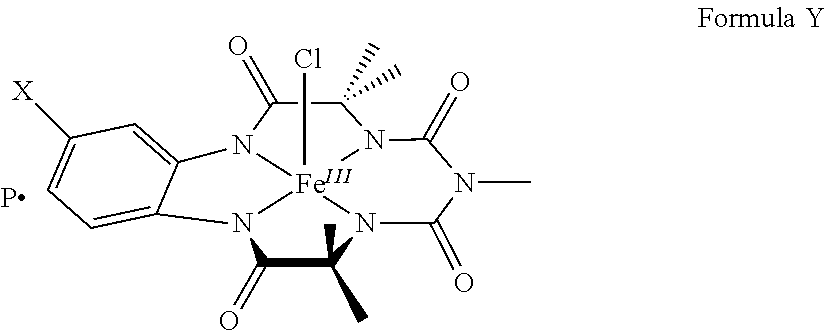
- biocompatible metal (III) complex wherein Fe (III) complex of a biuret-amide based macrocyclic ligand is represented by:
- X hydrogen or electron withdrawing groups selected from the group consisting of —NO 2 , —COOH, —COOR, —COO or —CN;
- P represent a cation selected from Li + or Et 4 N + and representative compounds of formula 1 comprising:
- macrocyclic biuret amide based ligand L1 for designing of functional peroxidase mimics represented by following compounds:
- the biocompatible metal (III) complex of a biuret-amide based macrocyclic ligand of Formula X are useful for H 2 O 2 oxidation of a wide spectrum of targets selected from the group consisting of toxic polychlorophenols, thiophosphate pesticides and nitrophenols, azo dyes, dibenzothiophenes, an anthrax surrogate, and natural and synthetic estrogens, in effluent bleaching, in small molecule synthesis by oxidation (e.g. N-oxides, epoxides, aldehydes), and as functioning analogues of catalase-peroxidase enzymes.
- targets selected from the group consisting of toxic polychlorophenols, thiophosphate pesticides and nitrophenols, azo dyes, dibenzothiophenes, an anthrax surrogate, and natural and synthetic estrogens, in effluent bleaching, in small molecule synthesis by oxidation (e.g. N-oxides
- simple high yielding synthesis of library of biocompatible transition metal (III) complex based on a macrocyclic biuret amide ligand of formula X comprising the steps of;
- FIG. 1 depicts Molecular structure of (Et 4 N) 2 [Fe III (biuret-amide)] (IA) and (Et 4 N) 2 [Fe III (Cl)B*](III)
- FIG. 2 depicts an ORTEP (Oak Ridge Thermal Ellipsoid Plot Program) diagram of the anionic part of (IA). H-atoms are not shown for clarity.
- ORTEP Oil Ridge Thermal Ellipsoid Plot Program
- FIG. 3 depicts ESI-MS (electrospray ionization mass spectrometry) of a solution of complex 1A in methanol (m/z 413).
- the axial chloro ligand is not observed as this ligand is labile and gets dissociated under the conditions of the mass spectrometry experiment.
- FIG. 4 depicts UV-Visible spectra of IA in water (0.138 mM).
- FIG. 5 depicts FT-IR Spectra of IA.
- FIG. 6 depicts Cyclic voltammogram of 1A vs Pt wire in CH 3 CN (0.1 M n-Bu 4 NPF 6 , sweep rate 100 mV/see).
- the Fc + /Fc couple under the same experimental condition is shown in inset.
- FIG. 7 depicts the Changes in UV-VIS spectra of (IA) (0.173 mM) in pH 5 phosphate buffer (0.1 M) over a period of 5 hrs at 25° C. (Inset) Kinetics of demetallation of IA in pH 7 phosphate buffer at various ionic strengths.
- FIG. 8 depicts Bleaching of Orange II by (IA) at pH 11. (Inset) The kinetics of bleaching follows exponential kinetics.
- FIG. 9 depicts Comparative Orange II bleaching by H 2 O 2 at pH 7 for (IA) and (II).
- FIG. 10 depicts Comparative Orange II bleaching by H 2 O 2 at pH 9 for (IA) and (II).
- FIG. 11 depicts an ORTEP diagram of IB. H-atoms are not shown for clarity.
- FIG. 12 depicts acid catalyzed demetalation of Fe(III) complex of nitro ligated biuret amide macrocyclic ligand (IB).
- FIG. 13 depicts Kinetics of 1B catalyzed bleaching of Safranine O (4.22 ⁇ 10 ⁇ 5 M) by H 2 O 2 (0.012M).
- Initial concentration of 1B 7.5 ⁇ 10 ⁇ 8 M at 25° C. in 0.01 M Phosphate Buffer; aliquots of the same amount of 1B were added after 20,000 sec to restart the reaction again.
- Inset figure shows linearization of the data obtained after each addition of 1B according to Equation (5).
- FIG. 14 depicts typical crystal structures of II (left) and IA (right)
- FIG. 15 depicts Frontier molecular orbitals: HOMO, HOMO-1 and HOMO-2 of II (upper) and 1A.
- FIG. 16 depicts possible protonated species of IA in acidic media and their relative energies in the unit of kcal/mole, axial water is not shown for clarity.
- FIG. 17 depicts possible protonated species of II in acidic media and their relative energies in the unit of kcal/mole, axial water is not shown for clarity.
- FIG. 18 depicts Six coordinated and five coordinated complexes of II and IA.
- FIG. 21 depicts 1 H NMR of L1b.
- FIG. 22 depicts electronic absorption spectra of [Fe III (biuret-amide)] (blue) before addition of mCPBA, mixture of Fe IV -oxo and Fe V -oxo (black) just after addition of mCPBA and Fe V -oxo after 40 seconds (red).
- FIG. 23 depicts electronic spectra which shows that Fe V -oxo peak is diminishing over 30 minutes and generation of Fe IV -oxo peak.
- FIG. 24 depicts new Peak of cyclohexanone (3.005 min) and cyclohexanol (2.967 min) that were generated (solvent Ethyl acetate).
- FIG. 25 depicts benzaldehyde (3.425 min) peak which was generated.
- FIG. 26 depicts 1 H NMR of L1a.
- the compounds ‘B*’ and ‘II’ used alternately in the specification mean and refer to Fe(III) complex of TAML (tetraamido macrocyclic ligand) reported by Collins group.
- the present invention provides metal complex of a biuret-amide based macrocyclic ligand as ‘green oxidation catalyst’ that result in high aqueous stability in low pH. Further, the stability towards oxidative degradation and reactivity is controlled by modulating the ⁇ -donor ability of the deprotonated amide nitrogen atoms in the six membered ring of transition metal complex of a biuret-amide based macrocyclic ligand. Moreover, in an attempt to make robust catalyst, the present inventor has observed that a modification at the aromatic ring by introducing electron withdrawing groups can tame down the oxidative degradation and provide enhanced stability at lower pH.
- the present invention provides deprotonated Me-substituted biurets that can act as excellent ligands for designing of functional peroxidase mimics.
- present invention disclose biocompatible metal (III) complex of a biuret-amide based macrocyclic ligand of the Formula (X), as green catalysts that exhibit both excellent reactivity for the activation of H 2 O 2 and high stability at low pH and high ionic strength, [M III L1].
- P Formula X wherein ‘M’ is selected from group of elements that exhibit +3 oxidation states such as transition elements selected from Cr, Mn, Fe, Cu, Ni, Co etc; group III elements, inner transition elements such as lanthanides; L1 is a biuret-amide based macrocyclic ligand;
- the present invention discloses macrocyclic biuret amide based ligand L1 for designing functional peroxidase mimics
- the ligand L1 is represented by the Formula L1a;
- the ligand L1 is represented by the formula L1b;
- the present invention provides a simple, high yielding synthesis of transition metal (III) complex based on macrocyclic biuret amide ligand.
- the metal (III) complex based on a macrocyclic biuret amide ligand act as green catalysts for H 2 O 2 oxidation of a wide spectrum of targets including but not limited to toxic polychlorophenols, thiophosphate pesticides and nitrophenols, azo dyes, dibenzothiophenes, an anthrax surrogate, and natural and synthetic estrogens, in effluent bleaching, in small molecule synthesis by oxidation (e.g. N-oxides, epoxides, aldehydes and the like may be synthesized from the oxidation of suitable precursor molecules).
- the transition metal (III)-complex of present invention can catalytically convert H 2 O 2 into dioxygen.
- the metal (III) complex activators of the invention are reactive, low molecular weight, functioning analogues of catalase-peroxidase enzymes.
- the Fe(III)-complex based on a macrocyclic biuret amide ligand act as green catalysts for H 2 O 2 oxidation of a wide spectrum of targets including but not limited to toxic polychlorophenols, thiophosphate pesticides and nitrophenols, azo dyes, dibenzothiophenes, an anthrax surrogate, and natural and synthetic estrogens, in effluent bleaching, in small molecule synthesis by oxidation (e.g. N-oxides, epoxides, aldehydes and the like may be synthesized from the oxidation of suitable precursor molecules).
- targets including but not limited to toxic polychlorophenols, thiophosphate pesticides and nitrophenols, azo dyes, dibenzothiophenes, an anthrax surrogate, and natural and synthetic estrogens, in effluent bleaching, in small molecule synthesis by oxidation (e.g. N-oxides, epoxides,
- Fe(III)-complex of present invention can catalytically convert H 2 O 2 into dioxygen.
- the Fe (III) complex activators of the invention are reactive, low molecular weight, functioning analogues of catalase-peroxidase enzymes.
- the present invention relates to a simple high yielding synthesis of library of metal (III) complex based on a macrocyclic biuret amide ligand including the following steps:
- diamine (1) is added to a mixture of dry THF and dry base selected form diethylamine, triethylamine etc. and the resultant solution is added into an addition funnel.
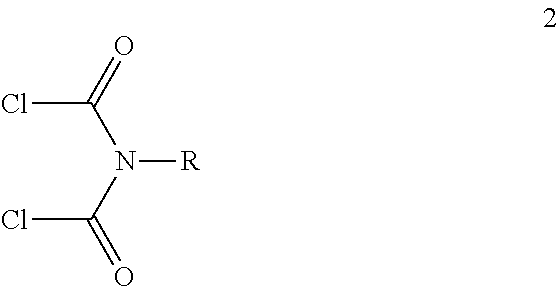
- N,N-dichloroformyl(aryl/alkyl)amine (2) is diluted with dry THF and transferred into another addition funnel. Both the solutions are added drop wise over a period of 1 hour into three necked round bottom flask containing dry THF at 0° C. under N 2 . After complete addition, the reaction mixture is allowed to warm to room temperature, stirred for an additional 12 hours till completion of the reaction. The reaction mixture is concentrated, purified by a flash column chromatography to obtain pure macrocylic ligand L1.
- the present invention relate to synthesis of library of Fe (III) complex based on a macrocyclic biuret amide ligand
- Fe (III) complex (Et 4 N) 2 .[Fe III (biuret-amide)] (IA) obtained by the process described above is characterized by Single crystal X-ray diffraction to observe the molecular packing in crystal lattice.
- the X-ray crystal structure of (IA) indicates a square pyramidal Fe(III) with an axial Cl atom that has been also observed for other Fe-TAML's ( FIG. 2 ).
- the Fe—N bond length is 1.88(2) ⁇ and the Fe(III) lies 0.448 ⁇ above the plane formed by the four donor nitrogen's (NA, NB, NC, ND).
- the N5 atom of the Me-biuret ring is 3.14(3) ⁇ away from the Fe(III) indicating that this N-atom is not involved in bonding with the Fe(III) center.
- the Me-biuret ring is very planar and the torsion angle between the C1-N5 and C6-N2 planes is around ⁇ 175.13°. Therefore the N5 atom in the 6-membered ring is strictly sp2 hybridized and the nitrogen lone pair, residing in the p orbital of N5 atom, is conjugated extensively to the carbonyl C-atom on both sides.
- the complex is further characterized by ESI-MS ( FIG. 3 ), UV-VIS ( FIG. 4 ), FT-IR ( FIG. 5 ) and elemental analysis.
- the ⁇ -donor ability of (Et 4 N) 2 .[Fe III (biuret-amide)] is studied using cyclic voltammetry.
- the peak observed for (IA) (E1/2 at ⁇ 0.064 V) can most likely be assigned to a one electron oxidation for a Fe(III)/Fe(IV) couple while the other peak might be due to a ligand centered oxidation process ( FIG. 6 ).
- the Fe(III)/Fe(IV) couple for (IA) is found to be approximately 230 mV lower. This indicates that presence of the —NMe group increases the donor ability of the amide nitrogen in the six membered ring of the macrocyclic complex.
- the stability of (IA) towards demetallation at different pH and ionic strengths is tested to evaluate the operational stability of the complex of instant invention for possible catalytic reactions in water.
- the complex showed very good stability up to pH 2 in presence of HClO 4 .
- Fe-TAML's are known to degrade in the presence of phosphate buffer and hence the stability of the complex (IA) is also tested under different ionic strengths and pH's.
- FIG. 7 shows the UV-VIS spectra of (IA) in the presence of pH 5 (0.1M phosphate buffer) over a time period of 5 hours at 25° C. It is found that only 10% of the complex degraded this time period. The t 1/2 was calculated to be approximately 18 hrs.
- the stability of this complex is also monitored at different ionic strengths at pH 7.
- the complex is found out to be remarkably stable up to 0.5 M phosphate concentrations ( FIG. 7 ).
- the phosphate buffer induced demetallation for similar Fe-TAML's have been studied in details.
- the proposed mechanism for phosphate buffer induced demetallation involves first the co-ordination of the O—PO(OH) 2 into the Fe(III) center followed by the intramolecular attack of the H+ onto the amide N-donors.
- Complex (IA) has an extra —NMe group which is not bonded to the Fe(III) center.
- the lone pair on this N-atom resides predominantly in the p-orbital and can possibly be the first site for attack of the intramolecular H+ ion, thereby shielding complex (IA) from phosphate induced demetallation.
- the present invention provides (Et 4 N). robust Fe(III) complex of nitro ligated biuret amide macrocyclic ligand as given below.
- the present invention relate to the comparative study of compound of Formula IB and IA (wherein, X ⁇ H) w.r.t kinetics of acid induced demetalation, catalyzed bleaching of orange II dye, catalyzed bleaching of safranine O by H 2 O 2 compound B*[Fe(III) complex of TAML].
- X ⁇ H acid induced demetalation
- catalyzed bleaching of orange II dye catalyzed bleaching of safranine O by H 2 O 2 compound B*[Fe(III) complex of TAML.
- the present invention discloses the formation of a more stable Fe V -oxo species that is generated by reaction of mCPBA and [FeIII(biuret-amide)] which is more oxidizing than Fe IV -oxo and its use for oxidation of an unactivated C—H bonds (Scheme 3).
- reaction mixture was allowed to warm to room temperature (27° C.) and then stirred for an additional 12 hr. After completion of the reaction, the reaction mixture was concentrated and then purified by a flash column chromatography to obtain the macrocylcic ligand L1a. Yield: 39%.
- reaction mixture was allowed to warm to room temperature (25° C.) and then stirred for an additional 12 hr. After completion of the reaction, the reaction mixture was concentrated and then purified by a flash column chromatography (100% EtOAc) to yield macrocyclic biuret based ligand (L1b). Yield: 55 mg (44%).
- Hydrogen peroxide (30% w/w) was purchased from Merk, India while Orange II dye and Safranine O were bought from Aldrich. Orange II was used without further purification whereas Safranine O was recrystallized from ethanol and used in the kinetics. Other reagents used in experiments were also supplied by Aldrich. Deionized water was used to make all the stock solutions for the kinetic and spectrophotometric runs.
- the six coordinated complexes IIA and 1A 6 , as well as their five coordinated analogues, IIB and 1A 5 , ( FIG. 18 ) were optimized with density functional theory (DFT); using the Gaussian 09 suite of programs (M. J. Frisch, G. W. Trucks; H. B. Schlegel, G. E. Scuseria, M. A. Robb, J. R. Cheeseman, G. Scalmani, V. Barone, B. Mennucci, G. A. Petersson, Nakatsuji, M. Caricato, X. Li, H. P. Hratchian A. F. Izmaylov, J. Bloino, G. Zheng, J. L. Sonnenberg, M. Hada, M. Ehara, K.
- DFT density functional theory
- Acid induced demetalation kinetics was monitored in kinetic mode of the spectrophotometer (Perkin-Elmer— ⁇ 35) using 1.00 cm quartz cell in thermostatted cell housing.
- IB was kept constant at 0.173 mM while acid concentration was varied from 0.04 to 3.0 M using HClO 4 .
- the pseudo first order rate constants (k d ) were calculated from the initial rates at 350 nm (one of the absorption peaks of complex IB) and temperature was kept constant at 25.0 ⁇ 0.5° C.
- solution pH was measured with a pH meter (LABINDIA, PICO + ) with calibrated electrode.
- Extinction coefficients for Orange II of 17,800, 23,000 and 19,400 M ⁇ 1 cm ⁇ 1 at pH 7, 9 and 11 respectively was used to calculate the initial rates of Orange II oxidation, Plot of concentration versus time was taken up to 10-20% of conversion of the dye compared to the total reaction.
- k d k 1 ⁇ K a ⁇ ⁇ 1 ⁇ K a ⁇ ⁇ 2 ⁇ [ H + ] + k 2 ⁇ K a ⁇ ⁇ 2 ⁇ [ H + ] 2 + k 3 ⁇ [ H + ] 3 K a ⁇ ⁇ 1 ⁇ K a ⁇ ⁇ 2 + K a ⁇ ⁇ 2 ⁇ [ H + ] + [ H + ] 2 - k 1 * ⁇ [ H + ] + k 2 * ⁇ [ H + ] 2 + k 3 * ⁇ [ H + ] 3 ( 1 )
- Equation 6 From the slope of the double logarithm of the ratio A t /A ⁇ vs. time plot in Equation 6 gives the value of ki ( FIG. 13 , Table 4).
- the rate constant k 2 is calculated from the intercept of the plot by putting the value of k i .
Landscapes
- Chemical & Material Sciences (AREA)
- Organic Chemistry (AREA)
Abstract
Description
 |
| X1 | X2 | R | ||
| a | H | H | CH3 | |
| b | NO2 | H | CH3 | |
| c | H | H | F | |
| d | Cl | Cl | F | |
| MeOOC | H | CH3 | ||
| Cl | Cl | CH3 | ||
| CH3 | H | CH3 | ||
| CH3 | CH3 | CH3 | ||
| COOH | H | CH3 | ||


[MIIIL1].P Formula X
wherein
‘M’ is selected from group of elements that exhibit +3 oxidation states such as transition elements selected from the group consisting of Cr, Mn, Fe, Cu, Ni or Co; group in elements, inner transition elements such as lanthanides; L1 is a biuret-amide based macrocyclic ligand;

wherein X=hydrogen or electron withdrawing groups selected from the group consisting of —NO2, —COOH, —COO or —CN;
R=C1-C3 alkyl or phenyl which may be optionally substituted;
P represent a cation selected from Li+ or Et4N+.

wherein X=hydrogen or electron withdrawing groups selected from the group consisting of —NO2, —COOH, —COOR, —COO or —CN; P represent a cation selected from Li+ or Et4N+ and representative compounds of formula 1 comprising:


-
- a, mixing diamine (1) in Tetrahydrofurane (THF) and base to obtain a mixture;

-
-
- wherein X=hydrogen or electron withdrawing groups selected from the group consisting of —NO2, —COOH, —COOR, —COCl or —CN;
- b. adding N,N-dichloroformyl(aryl/alkylamine (2) dissolved in dry THF in the mixture as obtained in step (a) at 0° C. under nitrogen for period in the range of 50 to 70 minutes to obtain a solution;
-

-
-
- Wherein R=C1-C3 alkyl or phenyl which may be optionally substituted;
- c. allowing the solution as obtained in step (b) to warm to temperature in the range of 25 to 35° C., stirring for 11 to 13 hours to obtain macrocylic ligand of Formula L1;
-

-
-
- wherein X=hydrogen or electron withdrawing groups selected from the group consisting of —NO2, —COOH, —COOR, —COOl or —CN; R=C1-C3 alkyl or phenyl which may be optionally substituted;
- d. inserting metal (III) using metal precursor into the biuret-amide ligand of Formula L1 in presence of a base and non-polar solvent followed by addition of a cationic salt by a process known in the art to Obtain biocompatible transition metal (III) complex based on a macrocyclic biuret amide ligand of formula X.
In yet another embodiment of the present invention, base used in step (a) is selected from diethylamine or triethylamine.
In yet another embodiment of the present invention, metal precursor used in step (d) is selected from group of elements that exhibit +3 oxidation states such as transition elements selected from the group consisting of Cr, Mn, Fe, Cu, Ni or Co; group III elements, inner transition elements such as lanthanides.
In yet another embodiment of the present invention, cation used in step (d) is selected from [Et4N]+ or Li+.
In yet another embodiment of the present invention, the simple high yielding synthesis of library of biocompatible Fe (III) complex based on a macrocyclic biuret amide ligand comprising the steps of; - a. cyclizing diamine (1) with N,N-dichloroformyl(aryl/alkyl)amine (2) dissolved in dry THF, base and chloroform at 0° C. under nitrogen, allowing to warm at temperature in the range of 25 to 35° C., stirring for about 12 hours to obtain macrocylic ligand of Formula L1;
- b. inserting Fe (III) chloride into the biuret-amide ligand (L1a) using FeCl2 in presence of a base n-butyl lithium and non-polar solvent followed by addition of Et4N+ by a process known in the art to obtain compound of
formula 1.
-
[MIIIL1].P Formula X
wherein
‘M’ is selected from group of elements that exhibit +3 oxidation states such as transition elements selected from Cr, Mn, Fe, Cu, Ni, Co etc; group III elements, inner transition elements such as lanthanides;
L1 is a biuret-amide based macrocyclic ligand;

-
- ‘X’ represent hydrogen, electron withdrawing groups such as —NO2, —COOH, —COOR, —COCl, —CN etc;
- R represent C1-C3 alkyl or phenyl which may be optionally substituted;
P represent a cation selected from Li+, [Et4N]+ etc. The presence of cation Li+ and [Et4N]+ make the complex water soluble. The complex shows very good stability up topH 2 in presence of HClO4 and is stable up to 0.5M phosphate concentration.
In a preferred aspect, the present invention provides Fe (III) complex based on a macrocyclic biuret amide ligand of Formula (I) and its properties as a “green” oxidation catalyst.

-
- wherein. ‘X’ represent hydrogen, electron withdrawing groups such as —NO2, —COOH, —COOR, —COCl, —CN etc;
- R represents C1-C3 alkyl or phenyl which may be optionally substituted;
- P represent a cation selected from Li+, [Et4N]+ etc.

-
- wherein ‘X’ represent hydrogen, electron withdrawing groups such as —NO2, COOH, COOR, —COCl, —CN etc;
- R represents C1-C3 alkyl or phenyl which may be optionally substituted.


-
- 1. cyclizing diamine (1) with N,N-dichloroformyl(aryl/alkyl)amine (2) dissolved in dry THF, base and chloroform at 0° C. under nitrogen, allowing to warm to room temperature (25 to 35° C.), stirring for about 12 hours to obtain macrocylic biuret-amide ligand of Formula L1; and
- 2. inserting metal (III) using metal precursor into the biuret-amide ligand L1 in presence of a base and non-polar solvent followed by addition of a cationic salt by a process known in the art.


-
- wherein, ‘X’ represent hydrogen, electron withdrawing groups such as —NO2, —COOH, —COOR, —COCl, —CN etc; R represents C1-C3 alkyl or phenyl which may be optionally substituted; P represent a cation selected from Li+, [Et4N]+.
comprising; - i. cyclizing diamine (1) with N,N-dichloroformyl(aryl/alkyl)amine (2) dissolved in dry THF, base and chloroform at 0° C. under nitrogen, allowing to warm to room temperature, stirring for about 12 hours to obtain macrocylic biuret-amide ligand of Formula L1; and
- ii. inserting Fe (III) into the biuret-amide ligand (L1) using FeCl2 in presence of a base n-butyl lithium and non-polar solvent followed by addition of Et4N+Cl− by a process known in the art.
- wherein, ‘X’ represent hydrogen, electron withdrawing groups such as —NO2, —COOH, —COOR, —COCl, —CN etc; R represents C1-C3 alkyl or phenyl which may be optionally substituted; P represent a cation selected from Li+, [Et4N]+.

The preparation, reactivity and kinetics of robust Fe(III) complex of nitro ligated biuret amide macrocyclic ligand (IB) towards orange II dye is given in the experiments below. The crystal structure and CV of Fe(III) complex of nitro ligated biuret amide macrocyclic ligand (IB) is given in


-
- [FeIII(biuret-amide)] catalyst are subject to H+ catalyzed demetalation, following the
Equation 1 according toScheme 2 described above, kd=k1*[H+]+k2*[H+]2+k3*[H+]3 where kd is the first order rate constant. Comparing the kinetic parameter it was found acid induced demetalation of IA and IB was significantly less compared to (compound II) complex i.e Fe (III) complex of TAML (tetraamido macrocyclic ligand) (Table 2). Kinetic fitting ofEquation 1 for catalyst IB is given inFIG. 12 . Demetalation in high concentration phosphate buffer was totally unimportant because in twenty four hour time scale insignificant absorption change was observed at 350 nm for both IA and IB.
- [FeIII(biuret-amide)] catalyst are subject to H+ catalyzed demetalation, following the
| TABLE 2 |
| Kinetic parameters of acid catalyzed demetalation of |
| [FeIII(L2X)](X = H, NO2) IA, IB in comparison to |
| compound II and compound II (with CF2). |
| Catalyst | k1* [M−1s−1] | k3* [M−3s−1] | t1/2 [pH 1] |
| 1A | (3.7 ± 0.5) × 10−3 | (1.04 ± 0.04) × | 10−1 | 144 | Sec |
| 1B | (1.41 ± 0.09) × 10−3 | (2.5 ± 0.1) × | 10−4 | 4788 | Sec |
| II | 2.2 ± 0.7 | (6.7 ± 0.2) × | 105 | 1.0 × 10⁻³ | Sec |
| II (CF2) | (2.56 ± 0.03) × 10−4 | (10.6 ± 0.5) × | 10−4 | ||
-
- Orange II dye has absorption maxima at 485 nm. Natural oxidant H2O2 slowly oxidizes Orange II but in presence of IA and IB huge catalysis was observed. The kinetic data followed the mechanism shown in
Scheme 2. The initial rate of the dye bleaching reaction obeyed Michaelis-Menten type Equation (2) which was derived considering the steady state of oxidized [FeIII(L2X)] species using mass balance equation [FeIII]T=[FeIII(L2X)]]+[Oxidized-[FeIII L2X)]]. From kinetic fitting it was observed k.1˜0 for both IA and IB. AtpH 11 the inverse initial rate has linear dependence on inverse concentrations of both the reagents which suggests, k.1 is negligible (FIG. 19 : up to 2×10⁵ M for Orange II and 1×10⁻³ M for H2O2 at [IB]=1×10⁷ M). In Table 3 all the kinetic parameters related to Orange II bleaching are given in details at 25° C. in 0.01 M Phosphate Buffer.
- Orange II dye has absorption maxima at 485 nm. Natural oxidant H2O2 slowly oxidizes Orange II but in presence of IA and IB huge catalysis was observed. The kinetic data followed the mechanism shown in
| TABLE 3 |
| Rate Constants (M−1s−1) for the [FeIII(L2X)] (X = H, NO2) IA, |
| IB catalyzed bleaching of Orange II by [H2O2] at 25° C. |
| in 0.01M Phosphate Buffer |
| Catalyst | pH | k1 [M−1s−1] | k2 [M−1s−1] |
| 1A | 7.0 | (2.0 ± 0.1) × 102 | (2.0 ± 0.1) × 104 |
| 9.4 | (2.8 ± 0.2) × 103 | (1.12 ± 0.10) × 105 | |
| 11.0 | (3.4 ± 0.2) × 104 | (1.60 ± 0.10) × 105 | |
| 1B | 7.0 | (1.24 ± 0.10) × 103 | (4.1 ± 0.5) × 105 |
| 9.4 | (2.36 ± 0.6) × 103 | (4.2 ± 0.4) × 105 | |
| 11.0 | (2.4 ± 0.2) × 104 | (4.9 ± 0.5) × 105 | |
| II | 11.0* | 3.5 × 10³ | 1.50 × 10⁴ |
| *II shows maximum activity at pH 11.0 | |||
-
- In
FIG. 13 incomplete bleaching of safranine O is described even if [H2O2]>>>[dye]. Addition of second aliquot of H2O2 does not restart the catalytical bleaching after 20,000 sec of first cycle but addition of a new aliquot of catalyst brings back the reaction again, suggesting the complete deactivation of the catalyst after end of first cycle. To hold this condition the half-life as determined by k1 or k2i should be greater than the time required for very large number catalytic turnovers as decided by k2. - Kinetic analysis showed initial rate is directly proportional to [safranine O] and independent of [H2O2]i.e zero order with respect to [H2O2] which proves that the reaction holds k1[H2O2]>k2[safranine O] as well as k−1 is negligible compared to the k1[H2O2]. Compared to Orange II bleaching k2 was significantly low for Safranine O at
pH 11, which favors to hold the condition k1[H2O2]>>k2[Safranine O] at pH 11.0 which suggests why safranine O bleaching is difficult for [FeIII(biuret-amide)](X═H, NO2) and safranine O is a perfect choice for determining intramolecular inactivation. For safranine O bleaching, Equation (2) can be simplified to Equation (3) and k2 value can be calculated from the initial rate vs, [Safranine O] data as given in Table 4.
- In
-
- The mono exponential intramolecular inactivation rate constant (ki) measurement of the oxidized form of the catalyst was done by the method followed by Collins group. The simplified differential rate law for dye bleaching is given by Equation (3) where Dt and x are total concentrations of the dye and concentration of the bleached dye at time t respectively. Integrating the Equation (3) under the boundary condition x=x∞ at t=t∞ results Equation (4). Equation (5) was derived by replacing the concentration terms by the absorbance term.
| TABLE 4 |
| Rate Constants ki (s−1) and k2 (M−1s−1) of IA, IB catalysis in |
| comparison with II in terms of Safranine O bleaching by |
| H2O2 at pH 11.0, 25° C. |
| Catalyst | ki × 104 [s−1] | k2 × 10−3 [M−1s−1]a | k2 × 10−3 [M−1s−1]b |
| 1A | 3.7 ± 0.1 | 2.0 ± 0.1 | 2.4 ± 0.1 |
| 1B | 3.0 ± 0.2 | 3.8 ± 0.3 | 3.9 ± 0.1 |
| II | 34 ± 3 | 11.0 ± 1.0 | 12.0 ± 1.0 |
| II (CF2) | 130 ± 10 | 100 ± 20 | |
| afrom Equation (5); | |||
| bfrom initial rates | |||
-
- In to a 4×10⁻⁴ M solution of [FeIII(biuret-amide] in
acetonitrile 1 equivalent of mCPBA was added at room temperature to form a green colored solution followed by a purple color. The purple color indicates a FeIV-oxo species and the green a FeV-oxo species (FIG. 22 ). The characteristic band for FeV-oxo species at 440 nm and 630 nm reached a maximum just after addition and stayed intact for a period of 30 minutes (FIG. 23 ) that is enough for a typical C—H bond activation.
- In to a 4×10⁻⁴ M solution of [FeIII(biuret-amide] in
-
- After the formation of FeV-oxo complex excess cyclohexane was added to it and the green colour of FeV-oxo was disappeared in 20 min. To isolate the organic products from the mixture containing metal complex, the solution was filtered over silica gel with ethyl acetate. The solution was then analyzed by GC (
FIG. 24 )
- After the formation of FeV-oxo complex excess cyclohexane was added to it and the green colour of FeV-oxo was disappeared in 20 min. To isolate the organic products from the mixture containing metal complex, the solution was filtered over silica gel with ethyl acetate. The solution was then analyzed by GC (
-
- Same procedure was followed for toluene oxidation and the solution was then analyzed by GC (
FIG. 25 ).
- Same procedure was followed for toluene oxidation and the solution was then analyzed by GC (
-
- By installing a substituted biuret moiety onto the ligand framework, the current inventors have synthesized a new generation of macrocyclic metal (III) complex that exhibit both excellent reactivity and stability, especially at low pH and high ionic strength.
- Further, the catalyst comprises of elements that are truly biocompatible which makes it a suitable candidate for environmental remediation.
- The current invention has demonstrated that the deprotonated Me-substituted biurets can be excellent ligands for the designing of functional peroxidase mimics.
- The incorporation of electron withdrawing groups at the head aromatic ring tames down the oxidative degradation and gives extra stability in strongly acidic medium.
- The present invention has achieved a new generation of macrocyclic metal (III) complex that exhibit both excellent reactivity and stability, especially at low pH and high ionic strength without introducing non-eco-friendly electronegative fluorine with overall improved performance compared to normal Fe-TAML in view of green oxidation.
Claims (13)
[MIIIL1].P Formula X,





Applications Claiming Priority (2)
| Application Number | Priority Date | Filing Date | Title |
|---|---|---|---|
| IN1747/DEL/2011 | 2011-06-21 | ||
| IN1747DE2011 | 2011-06-21 |
Publications (2)
| Publication Number | Publication Date |
|---|---|
| US20120329680A1 US20120329680A1 (en) | 2012-12-27 |
| US8754206B2 true US8754206B2 (en) | 2014-06-17 |
Family
ID=47362398
Family Applications (1)
| Application Number | Title | Priority Date | Filing Date |
|---|---|---|---|
| US13/478,957 Active US8754206B2 (en) | 2011-06-21 | 2012-05-23 | Metal (III) complex of biuret-amide based macrocyclic ligand as green oxidation catalyst |
Country Status (1)
| Country | Link |
|---|---|
| US (1) | US8754206B2 (en) |
Cited By (6)
| Publication number | Priority date | Publication date | Assignee | Title |
|---|---|---|---|---|
| WO2017015145A2 (en) | 2015-07-17 | 2017-01-26 | SeLux Diagnostics, Inc. | Dissociable transition-metal nanoparticles |
| WO2017100442A1 (en) | 2015-12-08 | 2017-06-15 | SeLux Diagnostics, Inc. | Nanoparticle amplifiers and uses thereof |
| WO2017127684A1 (en) | 2016-01-21 | 2017-07-27 | SeLux Diagnostics, Inc. | Methods for rapid antimicrobial susceptibility testing |
| US9834808B2 (en) | 2016-01-21 | 2017-12-05 | SeLux Diagnostics, Inc. | Methods for rapid antibiotic susceptibility testing |
| WO2018119439A1 (en) | 2016-12-23 | 2018-06-28 | SeLux Diagnostics, Inc. | Methods for improved rapid antimicrobial susceptibility testing |
| US10048269B2 (en) | 2014-07-25 | 2018-08-14 | SeLux Diagnostics, Inc. | Assay methods involving dissociable nanoparticles |
Families Citing this family (5)
| Publication number | Priority date | Publication date | Assignee | Title |
|---|---|---|---|---|
| WO2017053564A1 (en) | 2015-09-25 | 2017-03-30 | Carnegie Mellon University | Far superior oxidation catalysts based on macrocyclic compounds |
| CN107497487B (en) * | 2017-08-15 | 2019-10-25 | 南京大学 | A composite material for improving the reactivity of tetraamidohexamethylphenyl ring iron and its preparation method and application method |
| CN107445218B (en) * | 2017-08-15 | 2019-10-25 | 南京大学 | A composite material for improving the stability of tetraamidohexamethylphenyl ring iron and its preparation method and application method |
| CN109678239B (en) * | 2018-11-19 | 2022-11-18 | 南京卡佛科学仪器有限公司 | Catalytic oxidation method for efficiently degrading ciprofloxacin and product toxicity evaluation method thereof |
| CN112657556B (en) * | 2020-12-08 | 2023-04-11 | 大连理工大学 | Preparation method and application of tetra-amino-iron ligand catalyst-magnesium oxide-cyclodextrin composite material |
Citations (4)
| Publication number | Priority date | Publication date | Assignee | Title |
|---|---|---|---|---|
| US6051704A (en) * | 1996-07-22 | 2000-04-18 | Carnegie Mellon University | Synthesis of macrocyclic tetraamido-N ligands |
| US7060818B2 (en) * | 2003-02-21 | 2006-06-13 | Carnegie Mellon University | Synthesis of macrocyclic tetraamido compounds and new metal insertion process |
| US20110094043A1 (en) | 2009-10-13 | 2011-04-28 | Anindya Ghosh | Method of synthesis of tetradentate amide macrocycle ligand and its metal-complex |
| WO2011137190A1 (en) * | 2010-04-27 | 2011-11-03 | Carnegie Mellon University | Carbon supported tetraamido macrocyclic ligand catalytic activators and methods for making the same |
-
2012
- 2012-05-23 US US13/478,957 patent/US8754206B2/en active Active
Patent Citations (4)
| Publication number | Priority date | Publication date | Assignee | Title |
|---|---|---|---|---|
| US6051704A (en) * | 1996-07-22 | 2000-04-18 | Carnegie Mellon University | Synthesis of macrocyclic tetraamido-N ligands |
| US7060818B2 (en) * | 2003-02-21 | 2006-06-13 | Carnegie Mellon University | Synthesis of macrocyclic tetraamido compounds and new metal insertion process |
| US20110094043A1 (en) | 2009-10-13 | 2011-04-28 | Anindya Ghosh | Method of synthesis of tetradentate amide macrocycle ligand and its metal-complex |
| WO2011137190A1 (en) * | 2010-04-27 | 2011-11-03 | Carnegie Mellon University | Carbon supported tetraamido macrocyclic ligand catalytic activators and methods for making the same |
Non-Patent Citations (25)
| Title |
|---|
| A. Schaefer, H. Horn, R. Ahlrichs, "Fully optimized contracted Gaussian basis sets for atoms Li to Kr"; Journal of Chemical Physics 1992, 97, 2571-2577. |
| Becke, A. D.; "Density-functional thermochemistry. III. The role of exact exchange"; J. Chem. Phys. 1993, 98, 5648-5652. |
| Collins, T., TAML Oxidant Activators: A New Approach to the Activation of Hydrogen Peroxide for Environmentally Significant Problems, Acc. Chem. Res., 2002, 35, 782-790. * |
| F. Weigend, R. Ahlrichs, "A fully direct RI-HF algorithm Implementation, optimised auxiliary basis sets, demonstration of accuracy and efficiency"; Physical Chemistry Chemical Physics; 2005, 7, 3297-3305. |
| F. Weigend, R. Ahlrichs, "Balanced basis sets of split valence, triple zeta valence and triple zeta valence and quadruple zeta valence for H to Rn Desiogn assessment of accuracy"; Physical Chemistry Chemical Physics 2005, 7, 3297-3305. |
| Filipe Tiago de Oliveira, Arani Chanda, Deboshri Banerjee, Xiaopeng Shan, Sujit Mondal, Lawrence Que Jr., Emile L. Bominaar, Eckard Münck, Terrence J. Collins; "Chemical and Spectroscopic Evidence for an FeV-Oxo Complex"; Science, 315, 9, 835-838, 2007. |
| Filipe Tiago de Oliveira, Arani Chanda, Deboshri Banerjee, Xiaopeng Shan, Sujit Mondal, Lawrence Que Jr., Emile L. Bominaar, Eckard Münck, Terrence J. Collins; "Chemical and Spectroscopic Evidence for an FeV-Oxo Complex"; Science, 315, 9, 835-838. |
| Ganai et al.; Synthesis of Functional Hybred Silica Scaffolds With Controllable Hierarchical Porosity by Dynamic Templating; Chem. Commun., 2012, 48, 5292-5294. * |
| Ghosh, et al.; "Catalase-Peroxidase Activity of Iron(III)-TAML Activators of Hydrogen Peroxide"; J. Am. Chem. Soc. 2008, 130, 15116-15126. |
| Hariharan, P. C.; Pople, "The Effect of d-Functions on Molecular Orbital Energies for Hydrocarbons"; J. A. Chem. Phys. Lett. 1972, 16, 217-219. |
| Horner, et al.; "Coordination Complexes of New Acyclic and Macrocyclic Ligands"; 1998; 3 pages. |
| J. P. Perdew, K. Burke, M. Ernzerhof, "Generalized Gradient Approximation Made Simple"; Phys. Rev. Lett. 1996, 77, 3865. |
| K. Eichkorn, O. Treutler, H. Oehm, M. Haeser, R. Ahlrichs, "Auxiliary basis sets to approximate Coulomb potentials"; Chem. Phys. Lett. 1995, 240, 283-290. |
| Kaizer, et al; "Nonheme FeIVo Complexes That Can Oxidize the C-H Bonds of Cyclohexane at Room Temperature" J. Am. Chem. Soc. 2004, 126, 472. |
| M. Sierka, A. Hogekamp, R. Ahlrichs, "Fast evaluation of the Coulomb potential for electron densities using multipole accelerated resolution of identity approximation"; J. Chem. Phys. 2003, 118, 9136-9148. |
| Malvi et al.; One Pot Glucose Detection by [FeIII(biuret-amide)] Immobilized on Mesoporus Silica Nanoparticles: An Efficient HRP Mimic; Chem. Commun., 2012, 48, 5289-5291. * |
| Nasman, et al.; "Nineteen-membered pentaazamacrocyclic complexes bearing tetraamide groups"; Transition Metal Chemistry, vol. 22, No. 3, 1997 , pp. 273-276(4). |
| Nasman; "Tetraamide Macrocyclic Complexes of Some Transition Metal Ions"; Journal of Al Azhar University-Gaza (Natural Sciences), (2007), vol. 9, p. 53-59. |
| Panda et al., Fe(III) Complex of Biuret-Amide Based Macrocyclic Ligand as Peroxidase Enzyme Mimic, Chem. Commun., Jun. 14, 2011, 47, 8016-8018. * |
| Pera-Titus et al., Degradation of Chlorophenols by Means of Advanced Oxidation Processes: A General Review, Applied Catalysis B: Environmental, 2004, 47, 219-256. * |
| R. Ahlrichs, M. Baer, M. Haeser, H. Horn, C. Koelmel, "Electronic Structure Calculations on Workstation Computers: The Program System Turbomole"; Chem. Phys. Lett. 1989, 162, 165-169. |
| Schaefer, C. Huber, R. Ahlrichs, "Fully optimized contracted Gaussian basis sets of triple zeta valence quality for atoms Li to Kr"; Journal of Chemical Physics 1994, 100, 5829-5835. |
| Shakir, et al.; "Tetraamide macrocyclic complexes of transition metals with ligands derived from hydrazine"; Transition Metal Chemistry vol. 22, No. 2 (1997), 189-192. |
| Soumen Kundu, Jasper Van Kirk Thompson, Alexander D. Ryabov, and Terrence J. Collins; "On the Reactivity of Mononuclear Iron(V)oxo Complexes"; J. Am. Chem. Soc., 2011, 133 (46), 18546-18549. |
| Stevens, P. J.; Devlin, F. J.; Chablowski, C. F.; Frisch, M. J.; "Ab Initio Calculation of Vibrational Absorption and Circular Dichroism Spectra Using Density Functional Force Fields" J. Phys. Chem. 1994, 80, 11623. |
Cited By (7)
| Publication number | Priority date | Publication date | Assignee | Title |
|---|---|---|---|---|
| US10048269B2 (en) | 2014-07-25 | 2018-08-14 | SeLux Diagnostics, Inc. | Assay methods involving dissociable nanoparticles |
| WO2017015145A2 (en) | 2015-07-17 | 2017-01-26 | SeLux Diagnostics, Inc. | Dissociable transition-metal nanoparticles |
| WO2017100442A1 (en) | 2015-12-08 | 2017-06-15 | SeLux Diagnostics, Inc. | Nanoparticle amplifiers and uses thereof |
| WO2017127684A1 (en) | 2016-01-21 | 2017-07-27 | SeLux Diagnostics, Inc. | Methods for rapid antimicrobial susceptibility testing |
| US9834808B2 (en) | 2016-01-21 | 2017-12-05 | SeLux Diagnostics, Inc. | Methods for rapid antibiotic susceptibility testing |
| EP3845663A1 (en) | 2016-01-21 | 2021-07-07 | Selux Diagnostics Inc. | Methods for rapid antimicrobial susceptibility testing |
| WO2018119439A1 (en) | 2016-12-23 | 2018-06-28 | SeLux Diagnostics, Inc. | Methods for improved rapid antimicrobial susceptibility testing |
Also Published As
| Publication number | Publication date |
|---|---|
| US20120329680A1 (en) | 2012-12-27 |
Similar Documents
| Publication | Publication Date | Title |
|---|---|---|
| US20120329680A1 (en) | Metal (III) Complex Of Biuret-Amide Based Macrocyclic Ligand As Green Oxidation Catalyst | |
| Zhang et al. | Laser flash photolysis generation and kinetic studies of porphyrin− manganese− oxo intermediates. Rate constants for oxidations effected by porphyrin− MnV− oxo species and apparent disproportionation equilibrium constants for porphyrin− MnIV− oxo species | |
| Mukherjee et al. | Ligand-derived oxidase activity. Catalytic aerial oxidation of alcohols (including methanol) by Cu (II)-diradical complexes | |
| Guha et al. | Radical pathway in catecholase activity with zinc-based model complexes of compartmental ligands | |
| Comba et al. | Structure, bonding, and catecholase mechanism of copper bispidine complexes | |
| Ghosh et al. | A radical pathway in catecholase activity with nickel (II) complexes of phenol based “end-off” compartmental ligands | |
| Gordon et al. | Tuning the Fe (II/III) redox potential in nonheme Fe (II)–hydroxo complexes through primary and secondary coordination sphere modifications | |
| Gordon et al. | Characterization of Terminal Iron (III)–Oxo and Iron (III)–Hydroxo Complexes Derived from O2 Activation | |
| Nakane et al. | A Novel Square-Planar Ni (II) Complex with an Amino Carboxamido Dithiolato-Type Ligand as an Active-Site Model of NiSOD | |
| Tsou et al. | Iron (III) Bound by Hydrosulfide Anion Ligands: NO-Promoted Stabilization of the [FeIII–SH] Motif | |
| Sokolowski et al. | Metal-versus Ligand-Centered Oxidations in Phenolato− Vanadium and− Cobalt Complexes: Characterization of Phenoxyl− Cobalt (III) Species | |
| Shivakumar et al. | Chemistry of metal-bound anion radicals. A family of mono-and bis (azopyridine) chelates of bivalent ruthenium | |
| Comba et al. | Dioxygen reactivity of new bispidine-copper complexes | |
| Thennarasu et al. | Mononuclear copper (II) Schiff base complexes as effective models for phenoxazinone synthase | |
| Panja et al. | Structural characterization of a new manganese (III)–salen complex [H2salen= N, N′-bis (salicylidene) ethane-1, 2-diamine] and study of its electron transfer kinetics with hydroquinone and catechol | |
| Kopf et al. | Oxo-and Hydroxo-Bridged Heme-Copper Assemblies Formed from Acid− Base or Metal− Dioxygen Chemistry | |
| Sengupta et al. | Mn (III) and Cu (II) complexes of 1-((3-(dimethylamino) propylimino) methyl) naphthalen-2-ol): Synthesis, characterization, catecholase and phenoxazinone synthase activity and DFT-TDDFT study | |
| Chowdhury et al. | Phenoxazinone synthase and antimicrobial activity by a bis (1, 3-diamino-2-propanolate) cobalt (III) complex | |
| Takaichi et al. | Copper complexes of the non-innocent β-diketiminate ligand containing phenol groups | |
| Maity et al. | Molecular and electronic structures of ruthenium complexes containing an ONS-coordinated open-shell π radical and an oxidative aromatic ring cleavage reaction | |
| Mondal et al. | Unprecedented iminobenzosemiquinone and iminobenzoquinone coordinated mononuclear Cu (II) complex formation under air | |
| Chuang et al. | Characterization of A New Copper (I)− Nitrito Complex That Evolves Nitric Oxide | |
| Pinder et al. | Metallodithiolates as ligands to dinitrosyl iron complexes: toward the understanding of structures, equilibria, and spin coupling | |
| Coia et al. | Osmium hydrazido and dinitrogen complexes | |
| Ghosh et al. | Spontaneous Reduction of Mononuclear High‐Spin Iron (III) Complexes to Mononuclear Low‐Spin Iron (II) Complexes in Aqueous Media and Nuclease Activity via Self‐Activation |
Legal Events
| Date | Code | Title | Description |
|---|---|---|---|
| AS | Assignment |
Owner name: COUNCIL OF SCIENTIFIC & INDUSTRIAL RESEARCH, INDIA Free format text: ASSIGNMENT OF ASSIGNORS INTEREST;ASSIGNORS:SENGUPTA, SAYAM;PANDA, CHAKADOLA;GHOSH, MUNMUN;SIGNING DATES FROM 20120627 TO 20120726;REEL/FRAME:028951/0707 |
|
| STCF | Information on status: patent grant |
Free format text: PATENTED CASE |
|
| FEPP | Fee payment procedure |
Free format text: MAINTENANCE FEE REMINDER MAILED (ORIGINAL EVENT CODE: REM.) |
|
| FEPP | Fee payment procedure |
Free format text: SURCHARGE FOR LATE PAYMENT, LARGE ENTITY (ORIGINAL EVENT CODE: M1554) |
|
| MAFP | Maintenance fee payment |
Free format text: PAYMENT OF MAINTENANCE FEE, 4TH YEAR, LARGE ENTITY (ORIGINAL EVENT CODE: M1551) Year of fee payment: 4 |
|
| MAFP | Maintenance fee payment |
Free format text: PAYMENT OF MAINTENANCE FEE, 8TH YEAR, LARGE ENTITY (ORIGINAL EVENT CODE: M1552); ENTITY STATUS OF PATENT OWNER: LARGE ENTITY Year of fee payment: 8 |
|
| FEPP | Fee payment procedure |
Free format text: MAINTENANCE FEE REMINDER MAILED (ORIGINAL EVENT CODE: REM.); ENTITY STATUS OF PATENT OWNER: LARGE ENTITY |