US8748632B2 - Positive allosteric modulators of group II mGluRs - Google Patents
Positive allosteric modulators of group II mGluRs Download PDFInfo
- Publication number
- US8748632B2 US8748632B2 US13/051,798 US201113051798A US8748632B2 US 8748632 B2 US8748632 B2 US 8748632B2 US 201113051798 A US201113051798 A US 201113051798A US 8748632 B2 US8748632 B2 US 8748632B2
- Authority
- US
- United States
- Prior art keywords
- substituted
- unsubstituted
- compound
- independently
- mmol
- Prior art date
- Legal status (The legal status is an assumption and is not a legal conclusion. Google has not performed a legal analysis and makes no representation as to the accuracy of the status listed.)
- Active
Links
- 0 *N1[W]C2=NC(C(C)C)=NN=C2C1=O.[3*]N1[W]C2=CC(C(C)C)=CC=C2C1=O.[3*]N1[W]C2=CC(C(C)C)=CN=C2C1=O.[3*]N1[W]C2=CC(C(C)C)=NC=C2C1=O.[3*]N1[W]C2=CC(C(C)C)=NN=C2C1=O.[3*]N1[W]C2=NC(C(C)C)=CC=C2C1=O.[3*]N1[W]C2=NC(C(C)C)=CN=C2C1=O.[3*]N1[W]C2=NC(C(C)C)=NC=C2C1=O Chemical compound *N1[W]C2=NC(C(C)C)=NN=C2C1=O.[3*]N1[W]C2=CC(C(C)C)=CC=C2C1=O.[3*]N1[W]C2=CC(C(C)C)=CN=C2C1=O.[3*]N1[W]C2=CC(C(C)C)=NC=C2C1=O.[3*]N1[W]C2=CC(C(C)C)=NN=C2C1=O.[3*]N1[W]C2=NC(C(C)C)=CC=C2C1=O.[3*]N1[W]C2=NC(C(C)C)=CN=C2C1=O.[3*]N1[W]C2=NC(C(C)C)=NC=C2C1=O 0.000 description 14
- FTYLVJNMIZIOOL-UHFFFAOYSA-N CC(C)CN1SC2=CC(OCC3=CC(C4=CC(C(=O)O)=C(Cl)C=C4)=CC=C3)=CC=C2C1=O Chemical compound CC(C)CN1SC2=CC(OCC3=CC(C4=CC(C(=O)O)=C(Cl)C=C4)=CC=C3)=CC=C2C1=O FTYLVJNMIZIOOL-UHFFFAOYSA-N 0.000 description 3
- HXORMJJDRQNAII-UHFFFAOYSA-N COC1=C(C2=CC=CC(COC3=CC4=C(C=C3)C(=O)N(C3CCCC3)S4)=C2)C=C(C(=O)O)C=C1 Chemical compound COC1=C(C2=CC=CC(COC3=CC4=C(C=C3)C(=O)N(C3CCCC3)S4)=C2)C=C(C(=O)O)C=C1 HXORMJJDRQNAII-UHFFFAOYSA-N 0.000 description 3
- RBQZSTHTHNKFHW-UHFFFAOYSA-N O=C(O)C1=C(Cl)C=CC(C2=CC=CC(COC3=CC=C4C(=O)N(C5CC5)SC4=C3)=C2)=C1 Chemical compound O=C(O)C1=C(Cl)C=CC(C2=CC=CC(COC3=CC=C4C(=O)N(C5CC5)SC4=C3)=C2)=C1 RBQZSTHTHNKFHW-UHFFFAOYSA-N 0.000 description 3
- WSJJJSYOUXIKQC-UHFFFAOYSA-N O=C(O)C1=CC(C2=CC=CC(COC3=CC4=C(C=C3)C(=O)N(C3=CC=CC=C3)C4)=C2)=CC=C1Cl Chemical compound O=C(O)C1=CC(C2=CC=CC(COC3=CC4=C(C=C3)C(=O)N(C3=CC=CC=C3)C4)=C2)=CC=C1Cl WSJJJSYOUXIKQC-UHFFFAOYSA-N 0.000 description 3
- WLNNHBHTIDYGLP-UHFFFAOYSA-N O=C(O)C1=CC=C(Cl)C(C2=CC=CC(COC3=CC=C4C(=O)N(C5CCCC5)CC4=C3)=C2)=C1 Chemical compound O=C(O)C1=CC=C(Cl)C(C2=CC=CC(COC3=CC=C4C(=O)N(C5CCCC5)CC4=C3)=C2)=C1 WLNNHBHTIDYGLP-UHFFFAOYSA-N 0.000 description 3
- WAZHKWKLKJZVAE-JXGAYGJWSA-N C1=CC=C(C2=CC=CC=C2)C=C1.CC.CC.CC.CCCCC.[3H]1[U][V][W]C2=CC=CC=C12 Chemical compound C1=CC=C(C2=CC=CC=C2)C=C1.CC.CC.CC.CCCCC.[3H]1[U][V][W]C2=CC=CC=C12 WAZHKWKLKJZVAE-JXGAYGJWSA-N 0.000 description 2
- IMHMIERAXZPLJV-UHFFFAOYSA-N CC(C)CCN1CC2=C(C=CC(OCC3=CC(C4=CC=C(Cl)C(C(=O)O)=C4)=CC=C3)=C2)C1=O Chemical compound CC(C)CCN1CC2=C(C=CC(OCC3=CC(C4=CC=C(Cl)C(C(=O)O)=C4)=CC=C3)=C2)C1=O IMHMIERAXZPLJV-UHFFFAOYSA-N 0.000 description 2
- JUSYYLGFTXAHLX-UHFFFAOYSA-N CC(C)CCN1SC2=CC(OCC3=CC(C4=CC(C(=O)O)=C(Cl)C=C4)=CC=C3)=CC=C2C1=O Chemical compound CC(C)CCN1SC2=CC(OCC3=CC(C4=CC(C(=O)O)=C(Cl)C=C4)=CC=C3)=CC=C2C1=O JUSYYLGFTXAHLX-UHFFFAOYSA-N 0.000 description 2
- YZJZFZOHJRZNPA-UHFFFAOYSA-N CC(C)CN1CC2=C(C=CC(OCC3=CC(C4=CC=C(Cl)C(C(=O)O)=C4)=CC=C3)=C2)C1=O Chemical compound CC(C)CN1CC2=C(C=CC(OCC3=CC(C4=CC=C(Cl)C(C(=O)O)=C4)=CC=C3)=C2)C1=O YZJZFZOHJRZNPA-UHFFFAOYSA-N 0.000 description 2
- IPHOWNGWSDCVGP-UHFFFAOYSA-N CC(C)N1CC2=CC(OCC3=CC(C4=CC(C(=O)O)=C(Cl)C=C4)=CC=C3)=CC=C2C1=O Chemical compound CC(C)N1CC2=CC(OCC3=CC(C4=CC(C(=O)O)=C(Cl)C=C4)=CC=C3)=CC=C2C1=O IPHOWNGWSDCVGP-UHFFFAOYSA-N 0.000 description 2
- FBRDUOZBPXBDII-UHFFFAOYSA-N CC1=C(C(=O)O)C=C(C2=CC=CC(COC3=CC=C4C(=O)N(C5CCCC5)CC4=C3)=C2)C=C1 Chemical compound CC1=C(C(=O)O)C=C(C2=CC=CC(COC3=CC=C4C(=O)N(C5CCCC5)CC4=C3)=C2)C=C1 FBRDUOZBPXBDII-UHFFFAOYSA-N 0.000 description 2
- QWAKOVPCOXCIOS-UHFFFAOYSA-N CC1=CC(F)=C(C2=CC=CC(COC3=CC=C4C(=O)N(C5CCCC5)CC4=C3)=C2)C=C1 Chemical compound CC1=CC(F)=C(C2=CC=CC(COC3=CC=C4C(=O)N(C5CCCC5)CC4=C3)=C2)C=C1 QWAKOVPCOXCIOS-UHFFFAOYSA-N 0.000 description 2
- WXJPZVBSFWJYDQ-UHFFFAOYSA-N CC1=CC=C(C(=O)O)C=C1C1=CC=CC(COC2=CC=C3C(=O)N(C4CCCC4)CC3=C2)=C1 Chemical compound CC1=CC=C(C(=O)O)C=C1C1=CC=CC(COC2=CC=C3C(=O)N(C4CCCC4)CC3=C2)=C1 WXJPZVBSFWJYDQ-UHFFFAOYSA-N 0.000 description 2
- VUMIBIDABVTRIS-UHFFFAOYSA-N CC1=CC=C(C(=O)O)C=C1C1=CC=CC(COC2=CC=C3C(=O)N(C4CCCC4)SC3=C2)=C1 Chemical compound CC1=CC=C(C(=O)O)C=C1C1=CC=CC(COC2=CC=C3C(=O)N(C4CCCC4)SC3=C2)=C1 VUMIBIDABVTRIS-UHFFFAOYSA-N 0.000 description 2
- ALYOQCUPONTJFO-UHFFFAOYSA-N CC1=CC=C(C2=CC=CC(COC3=CC4=C(C=C3)C(=O)N(C3CCCC3)S4)=C2)C=C1C(=O)O Chemical compound CC1=CC=C(C2=CC=CC(COC3=CC4=C(C=C3)C(=O)N(C3CCCC3)S4)=C2)C=C1C(=O)O ALYOQCUPONTJFO-UHFFFAOYSA-N 0.000 description 2
- PPCPRTGTJBOFEI-UHFFFAOYSA-N CCCN1CC2=CC(OCC3=CC(C4=CC(C(=O)O)=C(Cl)C=C4)=CC=C3)=CC=C2C1=O Chemical compound CCCN1CC2=CC(OCC3=CC(C4=CC(C(=O)O)=C(Cl)C=C4)=CC=C3)=CC=C2C1=O PPCPRTGTJBOFEI-UHFFFAOYSA-N 0.000 description 2
- XQECUUIIUMXUJZ-UHFFFAOYSA-N CN(C)C(=O)C1=C(Cl)C=CC(C2=CC=CC(COC3=CC=C4C(=O)N(C5CCCC5)CC4=C3)=C2)=C1 Chemical compound CN(C)C(=O)C1=C(Cl)C=CC(C2=CC=CC(COC3=CC=C4C(=O)N(C5CCCC5)CC4=C3)=C2)=C1 XQECUUIIUMXUJZ-UHFFFAOYSA-N 0.000 description 2
- UXFVICYNSDZOSR-UHFFFAOYSA-N CN(C)C(c1cc(-c2cccc(COc(cc3SN4C5CCCC5)ccc3C4=O)c2)ccc1Cl)=O Chemical compound CN(C)C(c1cc(-c2cccc(COc(cc3SN4C5CCCC5)ccc3C4=O)c2)ccc1Cl)=O UXFVICYNSDZOSR-UHFFFAOYSA-N 0.000 description 2
- VIRLOSITWBFZTC-UHFFFAOYSA-N CN1SC2=CC(OCC3=CC(C4=CC(C(=O)O)=C(Cl)C=C4)=CC=C3)=CC=C2C1=O Chemical compound CN1SC2=CC(OCC3=CC(C4=CC(C(=O)O)=C(Cl)C=C4)=CC=C3)=CC=C2C1=O VIRLOSITWBFZTC-UHFFFAOYSA-N 0.000 description 2
- BUZSAAKSFZMGDU-UHFFFAOYSA-N COC1=CC=C(C(=O)O)C=C1C1=CC=CC(COC2=CC=C3C(=O)N(C4CCCC4)CC3=C2)=C1 Chemical compound COC1=CC=C(C(=O)O)C=C1C1=CC=CC(COC2=CC=C3C(=O)N(C4CCCC4)CC3=C2)=C1 BUZSAAKSFZMGDU-UHFFFAOYSA-N 0.000 description 2
- GZFMOWONVCCZGO-UHFFFAOYSA-N COc(cc(cc1)C(O)=O)c1OCCCCOc(cc1)cc(SN2C3CCCC3)c1C2=O Chemical compound COc(cc(cc1)C(O)=O)c1OCCCCOc(cc1)cc(SN2C3CCCC3)c1C2=O GZFMOWONVCCZGO-UHFFFAOYSA-N 0.000 description 2
- PPCUNFCLHSRGJB-UHFFFAOYSA-N O=C(O)C1=C(Cl)C=CC(C2=CC=CC(C3=CC=C4C(=O)N(C5CCCC5)CC4=C3)=C2)=C1 Chemical compound O=C(O)C1=C(Cl)C=CC(C2=CC=CC(C3=CC=C4C(=O)N(C5CCCC5)CC4=C3)=C2)=C1 PPCUNFCLHSRGJB-UHFFFAOYSA-N 0.000 description 2
- LTGPWXCMAIXPQG-UHFFFAOYSA-N O=C(O)C1=C(Cl)C=CC(C2=CC=CC(C3=CC=C4C(=O)N(CC5CCCCC5)CC4=C3)=C2)=C1 Chemical compound O=C(O)C1=C(Cl)C=CC(C2=CC=CC(C3=CC=C4C(=O)N(CC5CCCCC5)CC4=C3)=C2)=C1 LTGPWXCMAIXPQG-UHFFFAOYSA-N 0.000 description 2
- GOWMLURUVOXADH-UHFFFAOYSA-N O=C(O)C1=C(Cl)C=CC(C2=CC=CC(COC3=CC=C4C(=O)N(C5CC5)CC4=C3)=C2)=C1 Chemical compound O=C(O)C1=C(Cl)C=CC(C2=CC=CC(COC3=CC=C4C(=O)N(C5CC5)CC4=C3)=C2)=C1 GOWMLURUVOXADH-UHFFFAOYSA-N 0.000 description 2
- JLNCSHRPBPSZBX-UHFFFAOYSA-N O=C(O)C1=C(Cl)C=CC(C2=CC=CC(COC3=CC=C4C(=O)N(C5CCC5)CC4=C3)=C2)=C1 Chemical compound O=C(O)C1=C(Cl)C=CC(C2=CC=CC(COC3=CC=C4C(=O)N(C5CCC5)CC4=C3)=C2)=C1 JLNCSHRPBPSZBX-UHFFFAOYSA-N 0.000 description 2
- SKQGZCVEAKVCCM-UHFFFAOYSA-N O=C(O)C1=C(Cl)C=CC(C2=CC=CC(COC3=CC=C4C(=O)N(C5CCC5)SC4=C3)=C2)=C1 Chemical compound O=C(O)C1=C(Cl)C=CC(C2=CC=CC(COC3=CC=C4C(=O)N(C5CCC5)SC4=C3)=C2)=C1 SKQGZCVEAKVCCM-UHFFFAOYSA-N 0.000 description 2
- JGAYFGMOKXTABH-UHFFFAOYSA-N O=C(O)C1=C(Cl)C=CC(C2=CC=CC(COC3=CC=C4C(=O)N(CC5=CC=C(OC(F)(F)F)C=C5)CC4=C3)=C2)=C1 Chemical compound O=C(O)C1=C(Cl)C=CC(C2=CC=CC(COC3=CC=C4C(=O)N(CC5=CC=C(OC(F)(F)F)C=C5)CC4=C3)=C2)=C1 JGAYFGMOKXTABH-UHFFFAOYSA-N 0.000 description 2
- SFOPRQAXIGFLOR-UHFFFAOYSA-N O=C(O)C1=C(Cl)C=CC(C2=CC=CC(COC3=CC=C4C(=O)N(CC5CC5)SC4=C3)=C2)=C1 Chemical compound O=C(O)C1=C(Cl)C=CC(C2=CC=CC(COC3=CC=C4C(=O)N(CC5CC5)SC4=C3)=C2)=C1 SFOPRQAXIGFLOR-UHFFFAOYSA-N 0.000 description 2
- UOMKUGIFVCRJEJ-UHFFFAOYSA-N O=C(O)C1=C(Cl)C=CC(C2=CC=CC(COC3=CC=C4C(=O)N(CC5CCCCC5)CC4=C3)=C2)=C1 Chemical compound O=C(O)C1=C(Cl)C=CC(C2=CC=CC(COC3=CC=C4C(=O)N(CC5CCCCC5)CC4=C3)=C2)=C1 UOMKUGIFVCRJEJ-UHFFFAOYSA-N 0.000 description 2
- GVYAOWRIIRTALC-UHFFFAOYSA-N O=C(O)C1=C(F)C=CC(C2=CC=CC(COC3=CC=C4C(=O)N(C5CCCC5)SC4=C3)=C2)=C1 Chemical compound O=C(O)C1=C(F)C=CC(C2=CC=CC(COC3=CC=C4C(=O)N(C5CCCC5)SC4=C3)=C2)=C1 GVYAOWRIIRTALC-UHFFFAOYSA-N 0.000 description 2
- HLQQHKJXQSBRLN-UHFFFAOYSA-N O=C(O)C1=C(O)C=CC(C2=CC=CC(COC3=CC=C4C(=O)N(C5CCCC5)CC4=C3)=C2)=C1 Chemical compound O=C(O)C1=C(O)C=CC(C2=CC=CC(COC3=CC=C4C(=O)N(C5CCCC5)CC4=C3)=C2)=C1 HLQQHKJXQSBRLN-UHFFFAOYSA-N 0.000 description 2
- DWTYHCYVKJONSP-UHFFFAOYSA-N O=C(O)C1=CC(C2=CC=CC(COC3=CC4=C(C=C3)C(=O)N(C3CCCC3)C4)=C2)=CC=C1Cl Chemical compound O=C(O)C1=CC(C2=CC=CC(COC3=CC4=C(C=C3)C(=O)N(C3CCCC3)C4)=C2)=CC=C1Cl DWTYHCYVKJONSP-UHFFFAOYSA-N 0.000 description 2
- KTQHLMNMVKMDII-UHFFFAOYSA-N O=C(O)C1=CC(C2=CC=CC(COC3=CC4=C(C=C3)C(=O)N(C3CCCC3)S4)=C2)=CC(F)=C1 Chemical compound O=C(O)C1=CC(C2=CC=CC(COC3=CC4=C(C=C3)C(=O)N(C3CCCC3)S4)=C2)=CC(F)=C1 KTQHLMNMVKMDII-UHFFFAOYSA-N 0.000 description 2
- IBQPSJPBASPNCR-UHFFFAOYSA-N O=C(O)C1=CC(C2=CC=CC(COC3=CC4=C(C=C3)C(=O)N(C3CCCCC3)C4)=C2)=CC=C1Cl Chemical compound O=C(O)C1=CC(C2=CC=CC(COC3=CC4=C(C=C3)C(=O)N(C3CCCCC3)C4)=C2)=CC=C1Cl IBQPSJPBASPNCR-UHFFFAOYSA-N 0.000 description 2
- SMKJKAAZYYTDKN-UHFFFAOYSA-N O=C(O)C1=CC(C2=CC=CC(COC3=CC4=C(C=C3)C(=O)N(C3CCCCC3)O4)=C2)=CC=C1Cl Chemical compound O=C(O)C1=CC(C2=CC=CC(COC3=CC4=C(C=C3)C(=O)N(C3CCCCC3)O4)=C2)=CC=C1Cl SMKJKAAZYYTDKN-UHFFFAOYSA-N 0.000 description 2
- KVJSUTHOTPIBKD-UHFFFAOYSA-N O=C(O)C1=CC(C2=CC=CC(COC3=CC4=C(C=C3)C(=O)N(CC3CC3)C4)=C2)=CC=C1Cl Chemical compound O=C(O)C1=CC(C2=CC=CC(COC3=CC4=C(C=C3)C(=O)N(CC3CC3)C4)=C2)=CC=C1Cl KVJSUTHOTPIBKD-UHFFFAOYSA-N 0.000 description 2
- XGRORXLNXYCRHX-UHFFFAOYSA-N O=C(O)C1=CC(C2=CC=CC(COC3=CC=C4C(=O)N(C5CCCC5)C(=O)C4=C3)=C2)=CC=C1Cl Chemical compound O=C(O)C1=CC(C2=CC=CC(COC3=CC=C4C(=O)N(C5CCCC5)C(=O)C4=C3)=C2)=CC=C1Cl XGRORXLNXYCRHX-UHFFFAOYSA-N 0.000 description 2
- PVRNAOFIVADFMO-UHFFFAOYSA-N O=C(O)C1=CC(Cl)=C(C2=CC=CC(COC3=CC4=C(C=C3)C(=O)N(C3CCCC3)C4)=C2)C=C1 Chemical compound O=C(O)C1=CC(Cl)=C(C2=CC=CC(COC3=CC4=C(C=C3)C(=O)N(C3CCCC3)C4)=C2)C=C1 PVRNAOFIVADFMO-UHFFFAOYSA-N 0.000 description 2
- JHBVDFXAWLGDRG-UHFFFAOYSA-N O=C(O)C1=CC(F)=CC(C2=CC=CC(COC3=CC=C4C(=O)N(C5CCCC5)CC4=C3)=C2)=C1 Chemical compound O=C(O)C1=CC(F)=CC(C2=CC=CC(COC3=CC=C4C(=O)N(C5CCCC5)CC4=C3)=C2)=C1 JHBVDFXAWLGDRG-UHFFFAOYSA-N 0.000 description 2
- PZLYFIUJOKQBFD-UHFFFAOYSA-N O=C(O)C1=CC([N+](=O)[O-])=CC(C2=CC=CC(COC3=CC=C4C(=O)N(C5CCCC5)SC4=C3)=C2)=C1 Chemical compound O=C(O)C1=CC([N+](=O)[O-])=CC(C2=CC=CC(COC3=CC=C4C(=O)N(C5CCCC5)SC4=C3)=C2)=C1 PZLYFIUJOKQBFD-UHFFFAOYSA-N 0.000 description 2
- HAOGXXJUFZGYJP-UHFFFAOYSA-N O=C1C2=CC=C(OCC3=CC(C4=C(F)C=C(Cl)C=C4)=CC=C3)C=C2CN1C1CCCC1 Chemical compound O=C1C2=CC=C(OCC3=CC(C4=C(F)C=C(Cl)C=C4)=CC=C3)C=C2CN1C1CCCC1 HAOGXXJUFZGYJP-UHFFFAOYSA-N 0.000 description 2
- POPKTGVNWBKZTD-UHFFFAOYSA-N O=C1C2=CC=C(OCC3=CC(C4=CC=CC=C4)=CC=C3)C=C2CN1C1CCCC1 Chemical compound O=C1C2=CC=C(OCC3=CC(C4=CC=CC=C4)=CC=C3)C=C2CN1C1CCCC1 POPKTGVNWBKZTD-UHFFFAOYSA-N 0.000 description 2
- DSGPZZJNTOWKII-UHFFFAOYSA-N O=C=O.[H]C1=CC=C(OCCCCOC2=CC=C3C(=O)N(C4CCCC4)CC3=C2)C(OC)=C1 Chemical compound O=C=O.[H]C1=CC=C(OCCCCOC2=CC=C3C(=O)N(C4CCCC4)CC3=C2)C(OC)=C1 DSGPZZJNTOWKII-UHFFFAOYSA-N 0.000 description 2
- ZQBPXBADOJMCRU-UHFFFAOYSA-N OC(c(cc(cc1)-c2cc(COc(cc3SN4C5CCCC5)ccc3C4=O)ccc2)c1Cl)=O Chemical compound OC(c(cc(cc1)-c2cc(COc(cc3SN4C5CCCC5)ccc3C4=O)ccc2)c1Cl)=O ZQBPXBADOJMCRU-UHFFFAOYSA-N 0.000 description 2
- VZKDJGODBLGIQT-JXGAYGJWSA-N C1=CC=C(C2=CC=CC=C2)C=C1.CC.CC.CC.CCCC.[3H]1[U][V][W]C2=CC=CC=C12 Chemical compound C1=CC=C(C2=CC=CC=C2)C=C1.CC.CC.CC.CCCC.[3H]1[U][V][W]C2=CC=CC=C12 VZKDJGODBLGIQT-JXGAYGJWSA-N 0.000 description 1
- AIBHIBYVDIFNEA-ONFFVYQJSA-N C1=CC=C(C2=CC=CC=C2)C=C1.CC.CC.CCCCC.[3H]1[U]C=CC2=CC=CC=C12 Chemical compound C1=CC=C(C2=CC=CC=C2)C=C1.CC.CC.CCCCC.[3H]1[U]C=CC2=CC=CC=C12 AIBHIBYVDIFNEA-ONFFVYQJSA-N 0.000 description 1
- XZLONDAIAFTCAD-OFBARGLQSA-N C1=CC=C(C2=CC=CC=C2)C=C1.CC.CC.CCCCC.[3H]1[U][V][W]C2=CC=CC=C12 Chemical compound C1=CC=C(C2=CC=CC=C2)C=C1.CC.CC.CCCCC.[3H]1[U][V][W]C2=CC=CC=C12 XZLONDAIAFTCAD-OFBARGLQSA-N 0.000 description 1
- CNESSXSNXPMJFB-UHFFFAOYSA-N CC(=O)OC1=CC(C)=CC=C1C(=O)Cl.CC1=CC=C(C(=O)N(O)C2CCCC2)C(O)=C1.CC1=CC=C(C(=O)O)C(O)=C1.CC1=CC=C2C(=C1)OC(=O)N2C1CCCC1.COC1=CC=C2C(=O)N(C3CCCC3)OC2=C1.O=C(O)C1=CC(C2=CC=CC(COC3=CC4=C(C=C3)C(=O)N(C3CCCC3)O4)=C2)=CC=C1Cl.ONC1CCCC1 Chemical compound CC(=O)OC1=CC(C)=CC=C1C(=O)Cl.CC1=CC=C(C(=O)N(O)C2CCCC2)C(O)=C1.CC1=CC=C(C(=O)O)C(O)=C1.CC1=CC=C2C(=C1)OC(=O)N2C1CCCC1.COC1=CC=C2C(=O)N(C3CCCC3)OC2=C1.O=C(O)C1=CC(C2=CC=CC(COC3=CC4=C(C=C3)C(=O)N(C3CCCC3)O4)=C2)=CC=C1Cl.ONC1CCCC1 CNESSXSNXPMJFB-UHFFFAOYSA-N 0.000 description 1
- YTFWHIVMPQFLFA-UHFFFAOYSA-N CC(C)CCN1CC2=CC(OCC3=CC(C4=CC=C(Cl)C(C(=O)O)=C4)=CC=C3)=CC=C2C1=O.CC(C)CN1CC2=CC(OCC3=CC(C4=CC=C(Cl)C(C(=O)O)=C4)=CC=C3)=CC=C2C1=O.O=C(O)C1=CC(C2=CC=CC(COC3=CC=C4C(=O)N(C5=CC=CC=C5)CC4=C3)=C2)=CC=C1Cl.O=C(O)C1=CC(C2=CC=CC(COC3=CC=C4C(=O)N(C5CC5)CC4=C3)=C2)=CC=C1Cl.O=C(O)C1=CC(C2=CC=CC(COC3=CC=C4C(=O)N(C5CCCC5)C(=O)C4=C3)=C2)=CC=C1Cl.O=C(O)C1=CC(C2=CC=CC(COC3=CC=C4C(=O)N(C5CCCC5)CC4=C3)=C2)=CC=C1Cl.O=C(O)C1=CC(C2=CC=CC(COC3=CC=C4C(=O)N(C5CCCCC5)CC4=C3)=C2)=CC=C1Cl.O=C(O)C1=CC(C2=CC=CC(COC3=CC=C4C(=O)N(CC5CC5)CC4=C3)=C2)=CC=C1Cl Chemical compound CC(C)CCN1CC2=CC(OCC3=CC(C4=CC=C(Cl)C(C(=O)O)=C4)=CC=C3)=CC=C2C1=O.CC(C)CN1CC2=CC(OCC3=CC(C4=CC=C(Cl)C(C(=O)O)=C4)=CC=C3)=CC=C2C1=O.O=C(O)C1=CC(C2=CC=CC(COC3=CC=C4C(=O)N(C5=CC=CC=C5)CC4=C3)=C2)=CC=C1Cl.O=C(O)C1=CC(C2=CC=CC(COC3=CC=C4C(=O)N(C5CC5)CC4=C3)=C2)=CC=C1Cl.O=C(O)C1=CC(C2=CC=CC(COC3=CC=C4C(=O)N(C5CCCC5)C(=O)C4=C3)=C2)=CC=C1Cl.O=C(O)C1=CC(C2=CC=CC(COC3=CC=C4C(=O)N(C5CCCC5)CC4=C3)=C2)=CC=C1Cl.O=C(O)C1=CC(C2=CC=CC(COC3=CC=C4C(=O)N(C5CCCCC5)CC4=C3)=C2)=CC=C1Cl.O=C(O)C1=CC(C2=CC=CC(COC3=CC=C4C(=O)N(CC5CC5)CC4=C3)=C2)=CC=C1Cl YTFWHIVMPQFLFA-UHFFFAOYSA-N 0.000 description 1
- IRHHTMDXZAUWOR-UHFFFAOYSA-N CC(C)CCN1SC2=CC(OCC3=CC(C4=CC(C(=O)O)=C(Cl)C=C4)=CC=C3)=CC=C2C1=O.CC(C)CN1SC2=CC(OCC3=CC(C4=CC(C(=O)O)=C(Cl)C=C4)=CC=C3)=CC=C2C1=O.CC1=CC(F)=C(C2=CC=CC(COC3=CC=C4C(=O)N(C5CCCC5)CC4=C3)=C2)C=C1.O=C(O)C1=CC(C2=CC=CC(C3=CC4=C(C=C3)C(=O)N(C3CCCC3)C4)=C2)=CC=C1Cl.O=C(O)C1=CC(C2=CC=CC(C3=CC4=C(C=C3)C(=O)N(CC3CCCCC3)C4)=C2)=CC=C1Cl.O=C(O)C1=CC(C2=CC=CC(COC3=CC=C4C(=O)N(C5CCCC5)SC4=C3)=C2)=CC=C1Cl.O=C1C2=CC=C(OCC3=CC(C4=CC=CC=C4)=CC=C3)C=C2CN1C1CCCC1 Chemical compound CC(C)CCN1SC2=CC(OCC3=CC(C4=CC(C(=O)O)=C(Cl)C=C4)=CC=C3)=CC=C2C1=O.CC(C)CN1SC2=CC(OCC3=CC(C4=CC(C(=O)O)=C(Cl)C=C4)=CC=C3)=CC=C2C1=O.CC1=CC(F)=C(C2=CC=CC(COC3=CC=C4C(=O)N(C5CCCC5)CC4=C3)=C2)C=C1.O=C(O)C1=CC(C2=CC=CC(C3=CC4=C(C=C3)C(=O)N(C3CCCC3)C4)=C2)=CC=C1Cl.O=C(O)C1=CC(C2=CC=CC(C3=CC4=C(C=C3)C(=O)N(CC3CCCCC3)C4)=C2)=CC=C1Cl.O=C(O)C1=CC(C2=CC=CC(COC3=CC=C4C(=O)N(C5CCCC5)SC4=C3)=C2)=CC=C1Cl.O=C1C2=CC=C(OCC3=CC(C4=CC=CC=C4)=CC=C3)C=C2CN1C1CCCC1 IRHHTMDXZAUWOR-UHFFFAOYSA-N 0.000 description 1
- KQYOJPQQHRBPFQ-UHFFFAOYSA-N CC(C)N1CC2=CC(OCC3=CC(C4=CC=C(Cl)C(C(=O)O)=C4)=CC=C3)=CC=C2C1=O.CC1=CC=C(CN2CC3=CC(OCC4=CC(C5=CC=C(Cl)C(C(=O)O)=C5)=CC=C4)=CC=C3C2=O)C=C1.CCCN1CC2=CC(OCC3=CC(C4=CC=C(Cl)C(C(=O)O)=C4)=CC=C3)=CC=C2C1=O.COC1=C(C2=CC=CC(COC3=CC4=C(C=C3)C(=O)N(C3CCCC3)C4)=C2)C=C(C(=O)O)C=C1.COC1=CC(C(=O)O)=CC(OC)=C1C1=CC=CC(COC2=CC=C3C(=O)N(C4CCCC4)CC3=C2)=C1.O=C(O)C1=C(Cl)C=CC(C2=CC=CC(COC3=CC=C4C(=O)N(CC5CCCCC5)CC4=C3)=C2)=C1.O=C(O)C1=CC(C2=CC=CC(COC3=CC=C4C(=O)N(C5CCC5)CC4=C3)=C2)=CC=C1Cl Chemical compound CC(C)N1CC2=CC(OCC3=CC(C4=CC=C(Cl)C(C(=O)O)=C4)=CC=C3)=CC=C2C1=O.CC1=CC=C(CN2CC3=CC(OCC4=CC(C5=CC=C(Cl)C(C(=O)O)=C5)=CC=C4)=CC=C3C2=O)C=C1.CCCN1CC2=CC(OCC3=CC(C4=CC=C(Cl)C(C(=O)O)=C4)=CC=C3)=CC=C2C1=O.COC1=C(C2=CC=CC(COC3=CC4=C(C=C3)C(=O)N(C3CCCC3)C4)=C2)C=C(C(=O)O)C=C1.COC1=CC(C(=O)O)=CC(OC)=C1C1=CC=CC(COC2=CC=C3C(=O)N(C4CCCC4)CC3=C2)=C1.O=C(O)C1=C(Cl)C=CC(C2=CC=CC(COC3=CC=C4C(=O)N(CC5CCCCC5)CC4=C3)=C2)=C1.O=C(O)C1=CC(C2=CC=CC(COC3=CC=C4C(=O)N(C5CCC5)CC4=C3)=C2)=CC=C1Cl KQYOJPQQHRBPFQ-UHFFFAOYSA-N 0.000 description 1
- AILATSBOAHYFPY-KSVNWWNTSA-N CC.CC.[3H]1[U]C=CC2=CC(OCC3=CC(C4=CC=CC=C4)=CC=C3)=CC=C12 Chemical compound CC.CC.[3H]1[U]C=CC2=CC(OCC3=CC(C4=CC=CC=C4)=CC=C3)=CC=C12 AILATSBOAHYFPY-KSVNWWNTSA-N 0.000 description 1
- FAXQXZSFNFPEJC-UHFFFAOYSA-N CC1=C(C2=CC=CC(COC3=CC4=C(C=C3)C(=O)N(C3CCCC3)C4)=C2)C=C(C(=O)O)C=C1.CC1=CC=C(C2=CC=CC(COC3=CC=C4C(=O)N(C5CCCC5)CC4=C3)=C2)C=C1C(=O)O.O=C(O)C1=CC(C2=CC=CC(COC3=CC4=C(C=C3)C(=O)N(C3CCCC3)C4)=C2)=C(Cl)C=C1.O=C(O)C1=CC(C2=CC=CC(COC3=CC4=C(C=C3)C(=O)N(C3CCCC3)C4)=C2)=CC(F)=C1.O=C(O)C1=CC(C2=CC=CC(COC3=CC4=C(C=C3)C(=O)N(C3CCCC3)C4)=C2)=CC=C1O.O=C(O)C1=CC(Cl)=C(C2=CC=CC(COC3=CC4=C(C=C3)C(=O)N(C3CCCC3)C4)=C2)C=C1.O=C1C2=CC=C(OCC3=CC(C4=C(F)C=C(Cl)C=C4)=CC=C3)C=C2CN1C1CCCC1 Chemical compound CC1=C(C2=CC=CC(COC3=CC4=C(C=C3)C(=O)N(C3CCCC3)C4)=C2)C=C(C(=O)O)C=C1.CC1=CC=C(C2=CC=CC(COC3=CC=C4C(=O)N(C5CCCC5)CC4=C3)=C2)C=C1C(=O)O.O=C(O)C1=CC(C2=CC=CC(COC3=CC4=C(C=C3)C(=O)N(C3CCCC3)C4)=C2)=C(Cl)C=C1.O=C(O)C1=CC(C2=CC=CC(COC3=CC4=C(C=C3)C(=O)N(C3CCCC3)C4)=C2)=CC(F)=C1.O=C(O)C1=CC(C2=CC=CC(COC3=CC4=C(C=C3)C(=O)N(C3CCCC3)C4)=C2)=CC=C1O.O=C(O)C1=CC(Cl)=C(C2=CC=CC(COC3=CC4=C(C=C3)C(=O)N(C3CCCC3)C4)=C2)C=C1.O=C1C2=CC=C(OCC3=CC(C4=C(F)C=C(Cl)C=C4)=CC=C3)C=C2CN1C1CCCC1 FAXQXZSFNFPEJC-UHFFFAOYSA-N 0.000 description 1
- XIVMHFYWLOSMQY-UHFFFAOYSA-N CC1=CC=C(C(=O)NC2CCCC2)C(S)=C1.COC(=O)C1=CC=C(C)C=C1S.O=C1C2=CC=C(O)C=C2SN1C1CCCC1.O=C1C2=CC=C(O)C=C2SN1C1CCCC1.O=C=O.[H]C1=CC=C(C2=CC=CC(COC3=CC4=C(C=C3)C(=O)N(C3CCCC3)S4)=C2)C=C1Cl Chemical compound CC1=CC=C(C(=O)NC2CCCC2)C(S)=C1.COC(=O)C1=CC=C(C)C=C1S.O=C1C2=CC=C(O)C=C2SN1C1CCCC1.O=C1C2=CC=C(O)C=C2SN1C1CCCC1.O=C=O.[H]C1=CC=C(C2=CC=CC(COC3=CC4=C(C=C3)C(=O)N(C3CCCC3)S4)=C2)C=C1Cl XIVMHFYWLOSMQY-UHFFFAOYSA-N 0.000 description 1
- OTAVHCIETPUBQF-UHFFFAOYSA-N CC1=CC=C(C(=O)O)C=C1C1=CC=CC(COC2=CC=C3C(=O)N(C4CCCC4)SC3=C2)=C1.CN1SC2=CC(OCC3=CC(C4=CC(C(=O)O)=C(Cl)C=C4)=CC=C3)=CC=C2C1=O.O=C(O)C1=C(Cl)C=CC(C2=CC=CC(COC3=CC=C4C(=O)N(C5CC5)SC4=C3)=C2)=C1.O=C(O)C1=C(Cl)C=CC(C2=CC=CC(COC3=CC=C4C(=O)N(C5CCC5)SC4=C3)=C2)=C1.O=C(O)C1=C(Cl)C=CC(C2=CC=CC(COC3=CC=C4C(=O)N(CC5CC5)SC4=C3)=C2)=C1.O=C(O)C1=CC(C2=CC=CC(COC3=CC4=C(C=C3)C(=O)N(C3CCCC3)S4)=C2)=CC=C1CO.O=C(O)C1=CC=C(C2=CC=CC(COC3=CC=C4C(=O)N(C5CCCC5)SC4=C3)=C2)C=C1 Chemical compound CC1=CC=C(C(=O)O)C=C1C1=CC=CC(COC2=CC=C3C(=O)N(C4CCCC4)SC3=C2)=C1.CN1SC2=CC(OCC3=CC(C4=CC(C(=O)O)=C(Cl)C=C4)=CC=C3)=CC=C2C1=O.O=C(O)C1=C(Cl)C=CC(C2=CC=CC(COC3=CC=C4C(=O)N(C5CC5)SC4=C3)=C2)=C1.O=C(O)C1=C(Cl)C=CC(C2=CC=CC(COC3=CC=C4C(=O)N(C5CCC5)SC4=C3)=C2)=C1.O=C(O)C1=C(Cl)C=CC(C2=CC=CC(COC3=CC=C4C(=O)N(CC5CC5)SC4=C3)=C2)=C1.O=C(O)C1=CC(C2=CC=CC(COC3=CC4=C(C=C3)C(=O)N(C3CCCC3)S4)=C2)=CC=C1CO.O=C(O)C1=CC=C(C2=CC=CC(COC3=CC=C4C(=O)N(C5CCCC5)SC4=C3)=C2)C=C1 OTAVHCIETPUBQF-UHFFFAOYSA-N 0.000 description 1
- MERJALOZFRFFFH-UHFFFAOYSA-N CC1=CC=C(CCCC2CCCC2)C=C1.CC1=CC=C(CCN)C=C1.COC(=O)N(CCC1=CC=C(C)C=C1)C1CCCC1.IC1CCCC1.O=C(O)C1=CC(C2=CC=CC(COC3=CC4=C(C=C3)CCN(C3CCCC3)C4=O)=C2)=CC=C1Cl.O=C1C2=CC(O)=CC=C2CCN1C1CCCC1 Chemical compound CC1=CC=C(CCCC2CCCC2)C=C1.CC1=CC=C(CCN)C=C1.COC(=O)N(CCC1=CC=C(C)C=C1)C1CCCC1.IC1CCCC1.O=C(O)C1=CC(C2=CC=CC(COC3=CC4=C(C=C3)CCN(C3CCCC3)C4=O)=C2)=CC=C1Cl.O=C1C2=CC(O)=CC=C2CCN1C1CCCC1 MERJALOZFRFFFH-UHFFFAOYSA-N 0.000 description 1
- JQXDPYMPWLKQJD-UHFFFAOYSA-N CN(C)C(=O)C1=C(Cl)C=CC(C2=CC=CC(COC3=CC4=C(C=C3)C(=O)N(C3CCCC3)S4)=C2)=C1.O=C(O)C1=C(Cl)C=CC(C2=CC=CC(COC3=CC4=C(C=C3)C(=O)N(C3CCCC3)S4)=C2)=C1 Chemical compound CN(C)C(=O)C1=C(Cl)C=CC(C2=CC=CC(COC3=CC4=C(C=C3)C(=O)N(C3CCCC3)S4)=C2)=C1.O=C(O)C1=C(Cl)C=CC(C2=CC=CC(COC3=CC4=C(C=C3)C(=O)N(C3CCCC3)S4)=C2)=C1 JQXDPYMPWLKQJD-UHFFFAOYSA-N 0.000 description 1
- NWVYWKHEPSZMIL-UHFFFAOYSA-N CN(C)C(=O)C1=C(Cl)C=CC(C2=CC=CC(COC3=CC=C4C(=O)N(C5CCCC5)CC4=C3)=C2)=C1.CN(C)C(=O)C1=C(Cl)C=CC(C2=CC=CC(COC3=CC=C4C(=O)N(C5CCCC5)SC4=C3)=C2)=C1.O=C(O)C1=CC(C2=CC=CC(COC3=CC4=C(C=C3)N=CC=C4)=C2)=CC=C1Cl.O=C(O)C1=CC(C2=CC=CC(COC3=CC=C4C(=O)N(C5CCCC5)CCC4=C3)=C2)=CC=C1Cl.O=C(O)C1=CC(C2=CC=CC(COC3=CC=C4CCN(C5CCCC5)C(=O)C4=C3)=C2)=CC=C1Cl.O=C=O.O=C=O.[H]C1=CC=C(OCCCCOC2=CC=C3C(=O)N(C4CCCC4)CC3=C2)C(OC)=C1.[H]C1=CC=C(OCCCCOC2=CC=C3C(=O)N(C4CCCC4)SC3=C2)C(OC)=C1 Chemical compound CN(C)C(=O)C1=C(Cl)C=CC(C2=CC=CC(COC3=CC=C4C(=O)N(C5CCCC5)CC4=C3)=C2)=C1.CN(C)C(=O)C1=C(Cl)C=CC(C2=CC=CC(COC3=CC=C4C(=O)N(C5CCCC5)SC4=C3)=C2)=C1.O=C(O)C1=CC(C2=CC=CC(COC3=CC4=C(C=C3)N=CC=C4)=C2)=CC=C1Cl.O=C(O)C1=CC(C2=CC=CC(COC3=CC=C4C(=O)N(C5CCCC5)CCC4=C3)=C2)=CC=C1Cl.O=C(O)C1=CC(C2=CC=CC(COC3=CC=C4CCN(C5CCCC5)C(=O)C4=C3)=C2)=CC=C1Cl.O=C=O.O=C=O.[H]C1=CC=C(OCCCCOC2=CC=C3C(=O)N(C4CCCC4)CC3=C2)C(OC)=C1.[H]C1=CC=C(OCCCCOC2=CC=C3C(=O)N(C4CCCC4)SC3=C2)C(OC)=C1 NWVYWKHEPSZMIL-UHFFFAOYSA-N 0.000 description 1
- OCXYZVNWGCZWKQ-UHFFFAOYSA-N CN1C2=CC(OCC3=CC(C4=CC=C(Cl)C(C(=O)O)=C4)=CC=C3)=CC=C2C(=O)N1C1=CC=CC=C1 Chemical compound CN1C2=CC(OCC3=CC(C4=CC=C(Cl)C(C(=O)O)=C4)=CC=C3)=CC=C2C(=O)N1C1=CC=CC=C1 OCXYZVNWGCZWKQ-UHFFFAOYSA-N 0.000 description 1
- BNNFCPYCONTHOK-UHFFFAOYSA-N CN1C2=CC(OCC3=CC(C4=CC=C(Cl)C(C(=O)O)=C4)=CC=C3)=CC=C2C(=O)N1C1=CC=CC=C1.COC1=CC=C(C(=O)O)C=C1C1=CC=CC(COC2=CC=C3C(=O)N(C4CCCC4)SC3=C2)=C1.O=C(O)C1=C(F)C=CC(C2=CC=CC(COC3=CC=C4C(=O)N(C5CCCC5)SC4=C3)=C2)=C1.O=C(O)C1=CC(C2=CC=CC(COC3=CC4=C(C=C3)C(=O)N(C3CCCC3)S4)=C2)=CC(F)=C1.O=C(O)C1=CC(C2=CC=CC(COC3=CC=C4C(=O)N(C5CCCC5)OC4=C3)=C2)=CC=C1Cl.O=C(O)C1=CC(C2=CC=CC(COC3=CC=C4C(=O)N(C5CCCCC5)OC4=C3)=C2)=CC=C1Cl.O=C(O)C1=CC([N+](=O)[O-])=CC(C2=CC=CC(COC3=CC=C4C(=O)N(C5CCCC5)SC4=C3)=C2)=C1 Chemical compound CN1C2=CC(OCC3=CC(C4=CC=C(Cl)C(C(=O)O)=C4)=CC=C3)=CC=C2C(=O)N1C1=CC=CC=C1.COC1=CC=C(C(=O)O)C=C1C1=CC=CC(COC2=CC=C3C(=O)N(C4CCCC4)SC3=C2)=C1.O=C(O)C1=C(F)C=CC(C2=CC=CC(COC3=CC=C4C(=O)N(C5CCCC5)SC4=C3)=C2)=C1.O=C(O)C1=CC(C2=CC=CC(COC3=CC4=C(C=C3)C(=O)N(C3CCCC3)S4)=C2)=CC(F)=C1.O=C(O)C1=CC(C2=CC=CC(COC3=CC=C4C(=O)N(C5CCCC5)OC4=C3)=C2)=CC=C1Cl.O=C(O)C1=CC(C2=CC=CC(COC3=CC=C4C(=O)N(C5CCCCC5)OC4=C3)=C2)=CC=C1Cl.O=C(O)C1=CC([N+](=O)[O-])=CC(C2=CC=CC(COC3=CC=C4C(=O)N(C5CCCC5)SC4=C3)=C2)=C1 BNNFCPYCONTHOK-UHFFFAOYSA-N 0.000 description 1
- QQAXNYKNRFKPMU-UHFFFAOYSA-N COC(=O)C1=CC(C2=CC=CC(CBr)=C2)=CC=C1Cl Chemical compound COC(=O)C1=CC(C2=CC=CC(CBr)=C2)=CC=C1Cl QQAXNYKNRFKPMU-UHFFFAOYSA-N 0.000 description 1
- MNFZVPMUCOSKJE-UHFFFAOYSA-N COC(=O)N(CCC1=CC=CC(OC)=C1)C1CCCC1.COC1=CC(CCCC2CCCC2)=CC=C1.COC1=CC(CCN)=CC=C1.IC1CCCC1.O=C(O)C1=CC(C2=CC=CC(COC3=CC4=C(C=C3)CC(C3CCCC3)NC4=O)=C2)=CC=C1Cl.O=C1C2=CC=C(O)C=C2CCN1C1CCCC1 Chemical compound COC(=O)N(CCC1=CC=CC(OC)=C1)C1CCCC1.COC1=CC(CCCC2CCCC2)=CC=C1.COC1=CC(CCN)=CC=C1.IC1CCCC1.O=C(O)C1=CC(C2=CC=CC(COC3=CC4=C(C=C3)CC(C3CCCC3)NC4=O)=C2)=CC=C1Cl.O=C1C2=CC=C(O)C=C2CCN1C1CCCC1 MNFZVPMUCOSKJE-UHFFFAOYSA-N 0.000 description 1
- BVWTXUYLKBHMOX-UHFFFAOYSA-N COC(c(cc1)cc(OC)c1O)=O Chemical compound COC(c(cc1)cc(OC)c1O)=O BVWTXUYLKBHMOX-UHFFFAOYSA-N 0.000 description 1
- KKQWXKRTMXLOQR-UHFFFAOYSA-N COC(c(cc1OC)ccc1OCCCCBr)=O Chemical compound COC(c(cc1OC)ccc1OCCCCBr)=O KKQWXKRTMXLOQR-UHFFFAOYSA-N 0.000 description 1
- OIEJBPSIAOJISX-UHFFFAOYSA-N COC1=CC(C(=O)O)=CC(OC)=C1C1=CC=CC(COC2=CC=C3C(=O)N(C4CCCC4)CC3=C2)=C1 Chemical compound COC1=CC(C(=O)O)=CC(OC)=C1C1=CC=CC(COC2=CC=C3C(=O)N(C4CCCC4)CC3=C2)=C1 OIEJBPSIAOJISX-UHFFFAOYSA-N 0.000 description 1
- JVUMTNOVGMFIGC-UHFFFAOYSA-N COC1=CC(C)=CC=C1O.COC1=CC(C)=CC=C1OCCCCBr.O=C1C2=CC=C(O)C=C2SN1C1CCCC1.O=C=O.O=C=O.O=C=O.[H]C1=CC=C(OCCCCOC2=CC=C3C(=O)N(C4CCCC4)SC3=C2)C(OC)=C1 Chemical compound COC1=CC(C)=CC=C1O.COC1=CC(C)=CC=C1OCCCCBr.O=C1C2=CC=C(O)C=C2SN1C1CCCC1.O=C=O.O=C=O.O=C=O.[H]C1=CC=C(OCCCCOC2=CC=C3C(=O)N(C4CCCC4)SC3=C2)C(OC)=C1 JVUMTNOVGMFIGC-UHFFFAOYSA-N 0.000 description 1
- RSNRVVHJTNOPCL-UHFFFAOYSA-N COc(cc(cc1)C(O)=O)c1OCCCCOc(cc1CN2C3CCCC3)ccc1C2=O Chemical compound COc(cc(cc1)C(O)=O)c1OCCCCOc(cc1CN2C3CCCC3)ccc1C2=O RSNRVVHJTNOPCL-UHFFFAOYSA-N 0.000 description 1
- UFLBFEIWKNFYRC-UHFFFAOYSA-N O=C(O)C1=C(Cl)C=CC(C2=CC=CC(COC3=CC=C4N=CC=CC4=C3)=C2)=C1 Chemical compound O=C(O)C1=C(Cl)C=CC(C2=CC=CC(COC3=CC=C4N=CC=CC4=C3)=C2)=C1 UFLBFEIWKNFYRC-UHFFFAOYSA-N 0.000 description 1
- DCIGYZDBMXBGDV-UHFFFAOYSA-N O=C(O)C1=CC(C2=CC=CC(COC3=CC4=C(C=CC=C4)C=C3)=C2)=CC=C1Cl.O=C=O.O=C=O.[H]C1=CC=C(OCCCCOC2=CC=C3C(=O)N(C4CCCC4)SC3=C2)C=C1.[H]C1=CC=CC(OCCCCOC2=CC=C3C(=O)N(C4CCCC4)SC3=C2)=C1 Chemical compound O=C(O)C1=CC(C2=CC=CC(COC3=CC4=C(C=CC=C4)C=C3)=C2)=CC=C1Cl.O=C=O.O=C=O.[H]C1=CC=C(OCCCCOC2=CC=C3C(=O)N(C4CCCC4)SC3=C2)C=C1.[H]C1=CC=CC(OCCCCOC2=CC=C3C(=O)N(C4CCCC4)SC3=C2)=C1 DCIGYZDBMXBGDV-UHFFFAOYSA-N 0.000 description 1
- OAQBFIUKZFPSMN-UHFFFAOYSA-N O=C(O)C1=CC(C2=CC=CC(COC3=CC=C4C(=O)N(C5CCCC5)CCC4=C3)=C2)=CC=C1Cl Chemical compound O=C(O)C1=CC(C2=CC=CC(COC3=CC=C4C(=O)N(C5CCCC5)CCC4=C3)=C2)=CC=C1Cl OAQBFIUKZFPSMN-UHFFFAOYSA-N 0.000 description 1
- RGJRUFROGILIAI-UHFFFAOYSA-N O=C(O)C1=CC(C2=CC=CC(COC3=CC=C4C(=O)N(C5CCCC5)OC4=C3)=C2)=CC=C1Cl Chemical compound O=C(O)C1=CC(C2=CC=CC(COC3=CC=C4C(=O)N(C5CCCC5)OC4=C3)=C2)=CC=C1Cl RGJRUFROGILIAI-UHFFFAOYSA-N 0.000 description 1
- ZLNKOACTRFIELN-UHFFFAOYSA-N O=C(O)C1=CC(C2=CC=CC(COC3=CC=C4CCN(C5CCCC5)C(=O)C4=C3)=C2)=CC=C1Cl Chemical compound O=C(O)C1=CC(C2=CC=CC(COC3=CC=C4CCN(C5CCCC5)C(=O)C4=C3)=C2)=CC=C1Cl ZLNKOACTRFIELN-UHFFFAOYSA-N 0.000 description 1
- JCGOUIUPYIWVHZ-UHFFFAOYSA-N O=C(O)C1=CC=C(C2=CC=CC(COC3=CC=C4C(=O)N(C5CCCC5)SC4=C3)=C2)C=C1 Chemical compound O=C(O)C1=CC=C(C2=CC=CC(COC3=CC=C4C(=O)N(C5CCCC5)SC4=C3)=C2)C=C1 JCGOUIUPYIWVHZ-UHFFFAOYSA-N 0.000 description 1
- HLEATEZKUYCHJA-UHFFFAOYSA-N O=C1C2=CC=C(O)C=C2C(=O)N1C1CCCC1 Chemical compound O=C1C2=CC=C(O)C=C2C(=O)N1C1CCCC1 HLEATEZKUYCHJA-UHFFFAOYSA-N 0.000 description 1
- GLNUWAHPTKBMLY-UHFFFAOYSA-N O=C1C2=CC=C(O)C=C2CN1C1CCCC1 Chemical compound O=C1C2=CC=C(O)C=C2CN1C1CCCC1 GLNUWAHPTKBMLY-UHFFFAOYSA-N 0.000 description 1
- PXHIYFMTRHEUHZ-UHFFFAOYSA-N O=C1OC(=O)C2=CC(O)=CC=C12 Chemical compound O=C1OC(=O)C2=CC(O)=CC=C12 PXHIYFMTRHEUHZ-UHFFFAOYSA-N 0.000 description 1
- OJPKTHBWEJHTLZ-UHFFFAOYSA-N O=C=O.[H]C1=CC(OC)=C(C2=CC=CC(COC3=CC=C4C(=O)N(C5CCCC5)CC4=C3)=C2)C(OC)=C1 Chemical compound O=C=O.[H]C1=CC(OC)=C(C2=CC=CC(COC3=CC=C4C(=O)N(C5CCCC5)CC4=C3)=C2)C(OC)=C1 OJPKTHBWEJHTLZ-UHFFFAOYSA-N 0.000 description 1
- CRHRAOOTEDTHLD-UHFFFAOYSA-N O=C=O.[H]C1=CC=C(C2=CC=CC(COC3=CC4=C(C=C3)C(=O)N(C3CCCC3)S4)=C2)C=C1 Chemical compound O=C=O.[H]C1=CC=C(C2=CC=CC(COC3=CC4=C(C=C3)C(=O)N(C3CCCC3)S4)=C2)C=C1 CRHRAOOTEDTHLD-UHFFFAOYSA-N 0.000 description 1
- KZFNGTWYVOCJGM-UHFFFAOYSA-N O=C=O.[H]C1=CC=C(C2=CC=CC(COC3=CC=C4C(=O)N(C5CCCC5)CC4=C3)=C2)C(Cl)=C1 Chemical compound O=C=O.[H]C1=CC=C(C2=CC=CC(COC3=CC=C4C(=O)N(C5CCCC5)CC4=C3)=C2)C(Cl)=C1 KZFNGTWYVOCJGM-UHFFFAOYSA-N 0.000 description 1
- AXRJPSLFLDUMGU-UHFFFAOYSA-N O=C=O.[H]C1=CC=C(OCCCCOC2=CC=C3C(=O)N(C4CCCC4)SC3=C2)C(OC)=C1 Chemical compound O=C=O.[H]C1=CC=C(OCCCCOC2=CC=C3C(=O)N(C4CCCC4)SC3=C2)C(OC)=C1 AXRJPSLFLDUMGU-UHFFFAOYSA-N 0.000 description 1
- RZEPNZGXSMEBKA-UHFFFAOYSA-N Oc(cc1SN2C3CCCC3)ccc1C2=O Chemical compound Oc(cc1SN2C3CCCC3)ccc1C2=O RZEPNZGXSMEBKA-UHFFFAOYSA-N 0.000 description 1
Classifications
-
- C—CHEMISTRY; METALLURGY
- C07—ORGANIC CHEMISTRY
- C07D—HETEROCYCLIC COMPOUNDS
- C07D209/00—Heterocyclic compounds containing five-membered rings, condensed with other rings, with one nitrogen atom as the only ring hetero atom
- C07D209/02—Heterocyclic compounds containing five-membered rings, condensed with other rings, with one nitrogen atom as the only ring hetero atom condensed with one carbocyclic ring
- C07D209/44—Iso-indoles; Hydrogenated iso-indoles
- C07D209/46—Iso-indoles; Hydrogenated iso-indoles with an oxygen atom in position 1
-
- A—HUMAN NECESSITIES
- A61—MEDICAL OR VETERINARY SCIENCE; HYGIENE
- A61K—PREPARATIONS FOR MEDICAL, DENTAL OR TOILETRY PURPOSES
- A61K31/00—Medicinal preparations containing organic active ingredients
- A61K31/33—Heterocyclic compounds
- A61K31/395—Heterocyclic compounds having nitrogen as a ring hetero atom, e.g. guanethidine or rifamycins
- A61K31/40—Heterocyclic compounds having nitrogen as a ring hetero atom, e.g. guanethidine or rifamycins having five-membered rings with one nitrogen as the only ring hetero atom, e.g. sulpiride, succinimide, tolmetin, buflomedil
- A61K31/403—Heterocyclic compounds having nitrogen as a ring hetero atom, e.g. guanethidine or rifamycins having five-membered rings with one nitrogen as the only ring hetero atom, e.g. sulpiride, succinimide, tolmetin, buflomedil condensed with carbocyclic rings, e.g. carbazole
- A61K31/4035—Isoindoles, e.g. phthalimide
-
- A—HUMAN NECESSITIES
- A61—MEDICAL OR VETERINARY SCIENCE; HYGIENE
- A61P—SPECIFIC THERAPEUTIC ACTIVITY OF CHEMICAL COMPOUNDS OR MEDICINAL PREPARATIONS
- A61P25/00—Drugs for disorders of the nervous system
- A61P25/18—Antipsychotics, i.e. neuroleptics; Drugs for mania or schizophrenia
-
- A—HUMAN NECESSITIES
- A61—MEDICAL OR VETERINARY SCIENCE; HYGIENE
- A61P—SPECIFIC THERAPEUTIC ACTIVITY OF CHEMICAL COMPOUNDS OR MEDICINAL PREPARATIONS
- A61P25/00—Drugs for disorders of the nervous system
- A61P25/22—Anxiolytics
-
- A—HUMAN NECESSITIES
- A61—MEDICAL OR VETERINARY SCIENCE; HYGIENE
- A61P—SPECIFIC THERAPEUTIC ACTIVITY OF CHEMICAL COMPOUNDS OR MEDICINAL PREPARATIONS
- A61P25/00—Drugs for disorders of the nervous system
- A61P25/30—Drugs for disorders of the nervous system for treating abuse or dependence
-
- A—HUMAN NECESSITIES
- A61—MEDICAL OR VETERINARY SCIENCE; HYGIENE
- A61P—SPECIFIC THERAPEUTIC ACTIVITY OF CHEMICAL COMPOUNDS OR MEDICINAL PREPARATIONS
- A61P25/00—Drugs for disorders of the nervous system
- A61P25/30—Drugs for disorders of the nervous system for treating abuse or dependence
- A61P25/32—Alcohol-abuse
-
- A—HUMAN NECESSITIES
- A61—MEDICAL OR VETERINARY SCIENCE; HYGIENE
- A61P—SPECIFIC THERAPEUTIC ACTIVITY OF CHEMICAL COMPOUNDS OR MEDICINAL PREPARATIONS
- A61P25/00—Drugs for disorders of the nervous system
- A61P25/30—Drugs for disorders of the nervous system for treating abuse or dependence
- A61P25/34—Tobacco-abuse
-
- A—HUMAN NECESSITIES
- A61—MEDICAL OR VETERINARY SCIENCE; HYGIENE
- A61P—SPECIFIC THERAPEUTIC ACTIVITY OF CHEMICAL COMPOUNDS OR MEDICINAL PREPARATIONS
- A61P25/00—Drugs for disorders of the nervous system
- A61P25/30—Drugs for disorders of the nervous system for treating abuse or dependence
- A61P25/36—Opioid-abuse
-
- C—CHEMISTRY; METALLURGY
- C07—ORGANIC CHEMISTRY
- C07D—HETEROCYCLIC COMPOUNDS
- C07D209/00—Heterocyclic compounds containing five-membered rings, condensed with other rings, with one nitrogen atom as the only ring hetero atom
- C07D209/02—Heterocyclic compounds containing five-membered rings, condensed with other rings, with one nitrogen atom as the only ring hetero atom condensed with one carbocyclic ring
- C07D209/44—Iso-indoles; Hydrogenated iso-indoles
- C07D209/48—Iso-indoles; Hydrogenated iso-indoles with oxygen atoms in positions 1 and 3, e.g. phthalimide
-
- C—CHEMISTRY; METALLURGY
- C07—ORGANIC CHEMISTRY
- C07D—HETEROCYCLIC COMPOUNDS
- C07D215/00—Heterocyclic compounds containing quinoline or hydrogenated quinoline ring systems
- C07D215/02—Heterocyclic compounds containing quinoline or hydrogenated quinoline ring systems having no bond between the ring nitrogen atom and a non-ring member or having only hydrogen atoms or carbon atoms directly attached to the ring nitrogen atom
- C07D215/16—Heterocyclic compounds containing quinoline or hydrogenated quinoline ring systems having no bond between the ring nitrogen atom and a non-ring member or having only hydrogen atoms or carbon atoms directly attached to the ring nitrogen atom with hetero atoms or with carbon atoms having three bonds to hetero atoms with at the most one bond to halogen, e.g. ester or nitrile radicals, directly attached to ring carbon atoms
- C07D215/20—Oxygen atoms
-
- C—CHEMISTRY; METALLURGY
- C07—ORGANIC CHEMISTRY
- C07D—HETEROCYCLIC COMPOUNDS
- C07D217/00—Heterocyclic compounds containing isoquinoline or hydrogenated isoquinoline ring systems
- C07D217/22—Heterocyclic compounds containing isoquinoline or hydrogenated isoquinoline ring systems with hetero atoms or with carbon atoms having three bonds to hetero atoms with at the most one bond to halogen, e.g. ester or nitrile radicals, directly attached to carbon atoms of the nitrogen-containing ring
- C07D217/24—Oxygen atoms
-
- C—CHEMISTRY; METALLURGY
- C07—ORGANIC CHEMISTRY
- C07D—HETEROCYCLIC COMPOUNDS
- C07D261/00—Heterocyclic compounds containing 1,2-oxazole or hydrogenated 1,2-oxazole rings
- C07D261/20—Heterocyclic compounds containing 1,2-oxazole or hydrogenated 1,2-oxazole rings condensed with carbocyclic rings or ring systems
-
- C—CHEMISTRY; METALLURGY
- C07—ORGANIC CHEMISTRY
- C07D—HETEROCYCLIC COMPOUNDS
- C07D275/00—Heterocyclic compounds containing 1,2-thiazole or hydrogenated 1,2-thiazole rings
- C07D275/04—Heterocyclic compounds containing 1,2-thiazole or hydrogenated 1,2-thiazole rings condensed with carbocyclic rings or ring systems
Definitions
- the disclosure generally relates to compounds and compositions, and methods of using these compounds and compositions, as positive allosteric modulators of the metabotropic glutamate receptor subtype 2 receptor (mGluR2), and mGluR3 (collectively Group II mGluRs), and for treating CNS disorders associated with Group II mGluRs (mGluII receptors) including schizophrenia, anxiety and addiction, e.g. cocaine addiction, nicotine addiction, alcohol addiction and the like.
- mGluR2 metabotropic glutamate receptor subtype 2 receptor
- mGluR3 collectively Group II mGluRs
- CNS disorders associated with Group II mGluRs mGluII receptors
- schizophrenia, anxiety and addiction e.g. cocaine addiction, nicotine addiction, alcohol addiction and the like.
- Glutamate receptors play a role in numerous neurological, neurodegenerative, psychiatric, and psychological disorders, and a variety of mammalian disease states are associated with aberrant activity of these receptors. Glutamate receptors have been classified as either “ionotropic” or “metabotropic”. Ionotropic receptors are directly coupled to the opening of cation channels in the cell membranes of the neuron. Metabotropic receptors belong to the family of G-protein-coupled receptors and are coupled to systems that lead to enhanced phosphoinositide hydrolysis, activation of phospholipase D, increases or decreases in cAMP formation, and changes in ion channel function.
- Metabotropic glutamate receptors are divided into three groups based on amino acid sequence homology, transduction mechanism and binding selectivity: Group I, Group II and Group III.
- Group I includes metabotropic glutamate receptors 1 and 5 (mGluR1 and mGluR5)
- Group II includes metabotropic glutamate receptors 2 and 3 (mGluR2 and mGluR3)
- Group III includes metabotropic glutamate receptors 4, 6, 7, and 8 (mGluR4, mGluR6, mGluR7 and mGluR8).
- Each mGluR type may be found in several subtypes.
- subtypes of mGluR1 include mGluR1a, mGluR1b and mGluR1c.
- mGluII Group II metabotropic glutamate receptors
- mGluII Group II metabotropic glutamate receptors
- mGlu2 and mGlu3 receptors are inhibitory autoreceptors located primarily on glutamatergic afferents throughout the mammalian brain where they decrease excitatory glutamate transmission
- GABA B receptors which share close structural and functional homology to mGluII receptors (Schoepp, J. Pharmacol. Exp. Ther., 299:12-20, 2001), also negatively regulate glutamate transmission.
- VTA ventral tegmental area
- NAcc nucleus accumbens
- LY314582 and CGP44532 agonists at mGluII and GABA B receptors respectively, were shown to elevate intracranial self-stimulation (ICSS) reward thresholds in drug-naive rats (Macey et al., Neuropharmacology, 40:676-685, 2001; Harrison et al., Psychopharmacology, 160:56-66, 2002), demonstrating that mGluII and GABA B receptors negatively regulate brain reward function.
- ICSS intracranial self-stimulation
- antagonists for the Group II mGluRs may be useful in treating neurological disorders such as senile dementia, Parkinson's disease, Alzheimer's disease, Huntington's Chorea, pain, epilepsy, and head trauma.
- the disclosure provides compounds and compositions, and methods of using these compounds and compositions, as positive allosteric modulators of Group II metabotropic glutamate receptors (mGluII receptors).
- mGluII receptors Group II metabotropic glutamate receptors
- the disclosed compounds and compositions are useful for treating CNS disorders associated with mGluII receptors including schizophrenia, anxiety, addiction, e.g. cocaine addiction, nicotine addiction, and the like.
- X and X′ are each independently absent or are each independently selected from O, S, and NR 4 ;
- y is independently an integer selected from 0 and 1;
- q is independently an integer selected from 0, 1, 2, 3, 4, 5 and 6;
- n, and t are each independently an integer selected from 0, 1, 2, 3, and 4;
- T, U, V and W are each independently absent, or are each independently selected from C ⁇ O, CHR 3 , O, S, SO, SO 2 , and NR 3 , or T and U, U and V, or V and W each independently form —CR 3 ⁇ CR 3′ — or —CR 3 ⁇ N—, wherein T, U, V and W, together with the phenyl group to which T and W are attached, form a 5 or 6 membered ring;
- R 1 and R 2 are each independently selected from hydrogen, halogen, cyano, amino, nitro, hydroxyl, substituted or unsubstituted alkyl, perfluoroalkyl, substituted or unsubstituted alkenyl, substituted or unsubstituted alkynyl, substituted or unsubstituted cycloalkyl, substituted or unsubstituted heteroalkyl, substituted or unsubstituted heterocycloalkyl, substituted or unsubstituted aryl, substituted or unsubstituted heteroaryl, substituted or unsubstituted alkylaryl, substituted or unsubstituted heteroalkylaryl, —(CH 2 ) j OR 5 , —(CH 2 ) j C(Z)R 5 , —(CH 2 ) j C(O)OR 5 , —(CH 2 ) j NR 6 R 7 , —(CH 2 ) j C(
- R 3 and R 3′ are each independently selected from hydrogen, halogen, cyano, amino, nitro, hydroxyl, substituted or unsubstituted alkyl, perfluoroalkyl, substituted or unsubstituted alkenyl, substituted or unsubstituted alkynyl, substituted or unsubstituted cycloalkyl, substituted or unsubstituted heteroalkyl, substituted or unsubstituted heterocycloalkyl, substituted or unsubstituted aryl, substituted or unsubstituted heteroaryl, substituted or unsubstituted alkylaryl, substituted or unsubstituted heteroalkylaryl;
- R 4 is independently selected from hydrogen and substituted or unsubstituted alkyl
- R 5 , R 6 , R 7 , R 8 , and R 9 are each independently selected from hydrogen, halogen, cyano, amino, nitro, hydroxyl, substituted or unsubstituted alkyl, perfluoroalkyl, substituted or unsubstituted alkenyl, substituted or unsubstituted alkynyl, substituted or unsubstituted cycloalkyl, substituted or unsubstituted heteroalkyl, substituted or unsubstituted heterocycloalkyl, substituted or unsubstituted aryl, substituted or unsubstituted heteroaryl, substituted or unsubstituted alkylaryl, substituted or unsubstituted heteroalkylaryl, or R 5 , R 8 , and R 9 are as described and R 6 and R 7 , together with the nitrogen to which they are attached, form substituted or unsubstituted 3- to 7-membered heterocycloalkyl, or substituted
- R 10 is independently selected from hydrogen and substituted or unsubstituted alkyl
- each of R 1 , R 2 , R 3 , R 4 , R 5 , R 6 , R 7 , R 8 , R 9 , and R 10 is optionally independently substituted with 1 to 3 groups, each group independently selected from hydrogen, halogen, cyano, amino, aminomonoalkyl, aminodialkyl, nitro, hydroxyl, alkyl, perfluoroalkyl, alkoxy, alkenyl, alkynyl, cycloalkyl, heteroalkyl, heterocycloalkyl, aryl, heteroaryl, alkylaryl, and heteroalkylaryl.
- alkyl by itself or as part of another substituent, means, unless otherwise stated, a straight (i.e., unbranched) or branched chain, or cyclic hydrocarbon radical, or combinations thereof, which may be fully saturated, mono- or polyunsaturated and can include di- and multivalent radicals, having the number of carbon atoms designated (i.e., C 1 -C 10 means one to ten carbons).
- saturated hydrocarbon radicals include, but are not limited to, groups such as methyl, ethyl, N-propyl, isopropyl, N-butyl, sec-butyl, tert-butyl, isobutyl, cyclobutyl, pentyl, cyclopentyl, hexyl, cyclohexyl, (cyclohexyl)methyl, cyclopropylmethyl, homologs and isomers of, for example, N-pentyl, N-hexyl, N-heptyl, N-octyl, and the like.
- An unsaturated alkyl group is one having one or more double bonds or triple bonds.
- unsaturated alkyl groups include, but are not limited to, vinyl, 2-propenyl, crotyl, 2-isopentenyl, 2-(butadienyl), 2,4-pentadienyl, 3-(1,4-pentadienyl), ethynyl, 1- and 3-propynyl, 3-butynyl, and the higher homologs and isomers.
- Alkyl groups which are limited to hydrocarbon groups are termed “homoalkyl”.
- alkylene by itself or as part of another substituent means a divalent radical derived from an alkyl, as exemplified, but not limited, by —CH 2 CH 2 CH 2 CH 2 —, —CH 2 CH ⁇ CHCH 2 —, —CH 2 C ⁇ CCH 2 —, —CH 2 CH 2 CH(CH 2 CH 2 CH 3 )CH 2 —.
- an alkyl (or alkylene) group will have from 1 to 24 carbon atoms.
- a “lower alkyl” or “lower alkylene” is a shorter chain alkyl or alkylene group, generally having eight or fewer carbon atoms.
- alkyl and “alkylene” are interchangeable depending on the placement of the “alkyl” or “alkylene” group within the molecule.
- heteroalkyl by itself or in combination with another term, means, unless otherwise stated, a stable straight or branched chain, or cyclic hydrocarbon radical, or combinations thereof, consisting of at least one carbon atoms and at least one heteroatom selected from the group consisting of O, N, P, Si and S, and wherein the nitrogen, phosphorus, and sulfur atoms may optionally be oxidized and the nitrogen heteroatom may optionally be quaternized.
- the heteroatom(s) O, N, P and S and Si may be placed at any interior position of the heteroalkyl group or at the position at which alkyl group is attached to the remainder of the molecule.
- Examples include, but are not limited to, —CH 2 —CH 2 —O—CH 3 , —CH 2 —CH 2 —NH—CH 3 , —CH 2 —CH 2 —N(CH 3 )—CH 3 , —CH 2 —S—CH 2 —CH 3 , —CH 2 —CH 2 , —S(O)—CH 3 , —CH 2 —CH 2 —S(O) 2 —CH 3 , —CH ⁇ CH—O—CH 3 , —Si(CH 3 ) 3 , —CH 2 —CH ⁇ N—OCH 3 , —CH ⁇ CH—N(CH 3 )—CH 3 , O—CH 3 , —O—CH 2 —CH 3 and —CN.
- heteroalkylene by itself or as part of another substituent means a divalent radical derived from heteroalkyl, as exemplified, but not limited by, —CH 2 —CH 2 —S—CH 2 —CH 2 — and —CH 2 —S—CH 2 —CH 2 —NH—CH 2 —.
- heteroatoms can also occupy either or both of the chain termini (e.g., alkyleneoxo, alkylenedioxo, alkyleneamino, alkylenediamino, and the like). Still further, for alkylene and heteroalkylene linking groups, no orientation of the linking group is implied by the direction in which the formula of the linking group is written. For example, the formula —C(O)OR′-represents both —C(O)OR′— and —R′OC(O)—.
- heteroalkyl groups include those groups that are attached to the remainder of the molecule through a heteroatom, such as —C(O)R′, —C(O)NR′, —NR′R′′, —OR′, —SR′, and/or —SO 2 R′.
- heteroalkyl is recited, followed by recitations of specific heteroalkyl groups, such as —NR′R′′ or the like, it will be understood that the terms heteroalkyl and —NR′R′′ are not redundant or mutually exclusive. Rather, the specific heteroalkyl groups are recited to add clarity.
- heteroalkyl should not be interpreted herein as excluding specific heteroalkyl groups, such as —NR′R′′ or the like.
- heteroalkyl and heteroalkylene are interchangeable depending on the placement of the “heteroalkyl” or “heteroalkylene” group within the molecule.
- cycloalkyl and “heterocycloalkyl”, by themselves or in combination with other terms, represent, unless otherwise stated, cyclic versions of “alkyl” and “heteroalkyl”, respectively. Additionally, for heterocycloalkyl, when the heteroatom is nitrogen, it can occupy the position at which the heterocycle is attached to the remainder of the molecule. Examples of cycloalkyl include, but are not limited to, cyclopentyl, cyclohexyl, 1-cyclohexenyl, 3-cyclohexenyl, cycloheptyl, and the like.
- heterocycloalkyl examples include, but are not limited to, 1-(1,2,5,6-tetrahydropyridyl), 1-piperidinyl, 2-piperidinyl, 3-piperidinyl, 4-morpholinyl, 3-morpholinyl, tetrahydrofuran-2-yl, tetrahydrofuran-3-yl, tetrahydrothien-2-yl, tetrahydrothien-3-yl, 1-piperazinyl, 2-piperazinyl, and the like.
- cycloalkylene and “heterocycloalkylene” refer to the divalent derivatives of cycloalkyl and heterocycloalkyl, respectively.
- cycloalkyl and cycloalkylene are interchangeable depending on the placement of the “cycloalkyl” or “cycloalkylene” group within the molecule.
- heterocycloalkyl and heterocycloalkylene are interchangeable depending on the placement of the “heterocycloalkyl” or “heterocycloalkylene” group within the molecule.
- halo or “halogen,” by themselves or as part of another substituent, mean, unless otherwise stated, a fluorine, chlorine, bromine, or iodine atom. Additionally, terms such as “haloalkyl” and “perfluoroalkyl” are meant to include monohaloalkyl and polyhaloalkyl. For example, the term “halo(C 1 -C 4 )alkyl” is mean to include, but not be limited to, trifluoromethyl, 2,2,2-trifluoroethyl, 4-chlorobutyl, 3-bromopropyl, and the like. As used herein, the terms “haloalkyl” and “haloalkylene” are interchangeable depending on the placement of the “haloalkyl” or “haloalkylene” group within the molecule.
- aryl means, unless otherwise stated, a polyunsaturated, aromatic, hydrocarbon substituent which can be a single ring or multiple rings, which are fused together or linked covalently.
- heteroaryl refers to aryl groups (or rings) that contain from one to four heteroatoms (in each separate ring in the case of multiple rings) selected from N, O, and S, wherein the nitrogen and sulfur atoms are optionally oxidized, and the nitrogen atom(s) are optionally quaternized.
- heteroaryl can be attached to the remainder of the molecule through a carbon or heteroatom.
- Non-limiting examples of aryl and heteroaryl groups include phenyl, 1-naphthyl, 2-naphthyl, 4-biphenyl, 1-pyrrolyl, 2-pyrrolyl, 3-pyrrolyl, 3-pyrazolyl, 2-imidazolyl, 4-imidazolyl, pyrazinyl, 2-oxazolyl, 4-oxazolyl, 2-phenyl-4-oxazolyl, 5-oxazolyl, 3-isoxazolyl, 4-isoxazolyl, 5-isoxazolyl, 2-thiazolyl, 4-thiazolyl, 5-thiazolyl, 2-furyl, 3-furyl, 2-thienyl, 3-thienyl, 2-pyridyl, 3-pyridyl, 4-pyridyl, 2-pyrimidyl, 4-pyrimidyl, 5-benzothiazolyl, purinyl, 2-benzimidazolyl, 5-indolyl, 1-isoquinoly
- arylene and heteroarylene refer to the divalent radicals of aryl and heteroaryl, respectively.
- aryl and heteroarylene are interchangeable depending on the placement of the “aryl” and “arylene” group within the molecule.
- heteroaryl and heteroarylene are interchangeable depending on the placement of the “heteroaryl” and “heteroarylene” group within the molecule.
- aryl when used in combination with other terms (e.g., aryloxo, arylthioxo, arylalkyl) includes both aryl and heteroaryl rings as defined above.
- arylalkyl is meant to include those radicals in which an aryl group is attached to an alkyl group (e.g., benzyl, phenethyl, pyridylmethyl and the like) including those alkyl groups in which a carbon atom (e.g., a methylene group) has been replaced by, for example, an oxygen atom (e.g., phenoxymethyl, 2-pyridyloxymethyl, 3-(1-naphthyloxy)propyl, and the like).
- haloaryl as used herein is meant to cover aryls substituted with one or more halogens.
- heteroalkyl where a heteroalkyl, heterocycloalkyl, or heteroaryl includes a specific number of members (e.g., “3 to 7 membered”), the term “member” referrers to a carbon or heteroatom.
- oxo as used herein means an oxygen that is double bonded to a carbon atom.
- Substituents for alkyl, heteroalkyl, cycloalkyl, heterocycloalkyl monovalent and divalent derivative radicals can be one or more of a variety of groups selected from, but not limited to: —OR′, ⁇ O, ⁇ NR′, ⁇ N—OR′, —NR′R′′, —SR′, -halogen, —SiR′R′′R′′′, —OC(O)R′, —C(O)R′, —CO 2 R′—C(O)NR′′R′′′, —OC(O)NR′R′′, —NR′C(O)R′′, —NR′—C(O)NR′′R′′′, —NR′C(O)OR′′,
- R′, R′′, R′′′ and R′′′′ each independently refer to hydrogen, substituted or unsubstituted heteroalkyl, substituted or unsubstituted cycloalkyl, substituted or unsubstituted heterocycloalkyl, substituted or unsubstituted aryl (e.g., aryl substituted with 1-3 halogens), substituted or unsubstituted alkyl, alkoxy or thioalkoxy groups, or arylalkyl groups.
- each of the R groups is independently selected as are each R 1 , R′′, R′′′ and R′′′′ groups when more than one of these groups is present.
- R 1 and R′′ are attached to the same nitrogen atom, they can be combined with the nitrogen atom to form a A-, 5-, 6-, or 7-membered ring.
- —NR 1 R′′ is meant to include, but not be limited to, 1-pyrrolidinyl and A-morpholinyl.
- alkyl is meant to include groups including carbon atoms bound to groups other than hydrogen groups, such as haloalkyl and perfluoroalkyl (e.g., —CF 3 and —CH 2 CF 3 ) and acyl (e.g., —C(O)CH 3 , —C(O)CF 3 , —C(O)CH 2 OCH 3 , and the like).
- haloalkyl and perfluoroalkyl e.g., —CF 3 and —CH 2 CF 3
- acyl e.g., —C(O)CH 3 , —C(O)CF 3 , —C(O)CH 2 OCH 3 , and the like.
- exemplary substituents for aryl and heteroaryl groups are varied and are selected from, for example: halogen, —OR′, —NR′R′′, —SR′, -halogen, —SiR′R′′R′′′, —OC(O)R′, —C(O)R′, —CO 2 R′, —C(O)NR′R′′, —OC(O)NR′R′′, —NR′C(O)R′′, —NR′—C(O)NR′′R′′′, —NR′C(O)OR′′, —NRC(NR′R′′R′′′) ⁇ NR′′′′, —NRC(NR′R′′) ⁇ NR′′′, —S(O)R′, —S(O) 2 R′, —S(O) 2 NR′R′′, —NR′SO 2 R′′, —CN and —NO 2 R′′, —CN and —NO 2 R′′, —CN and —NO 2 R′′,
- Two of the substituents on adjacent atoms of aryl or heteroaryl ring may optionally form a ring of the formula -T-C(O)—(CRR′) q —U—, wherein T and U are independently —NR—, —O—, —CRR′— or a single bond, and q is an integer of from O to 3.
- two of the substituents on adjacent atoms of aryl or heteroaryl ring may optionally be replaced with a substituent of the formula -A-(CH 2 ) r —B—, wherein A and B are independently —CR′R′′—, —O—, —NR′′—, —S—, —S(O)—, —S(O) 2 —, —S(O) 2 NR′— or a single bond, and r is an integer of from 1 to 4.
- One of the single bonds of the new ring so formed may optionally be replaced with a double bond.
- two of the substituents on adjacent atoms of aryl or heteroaryl ring may optionally be replaced with a substituent of the formula —(CR′R′′) s —X′—(C′′R′′′) d —, where s and d are independently integers of from O to 3, and X′ is —O—, —NR′—, —S—, —S(O)—, —S(O) 2 —, or —S(O) 2 NR′—.
- R′, R′′, and R′′′ are independently selected from hydrogen, substituted or unsubstituted alkyl, substituted or unsubstituted cycloalkyl, substituted or unsubstituted heterocycloalkyl, substituted or unsubstituted aryl, and substituted or unsubstituted heteroaryl.
- heteroatom or “ring heteroatom” is meant to include oxygen (O), nitrogen (N), sulfur (S), phosphorus (P), and silicon (Si).
- aminoalkyl refers to an amino group covalently bound to an alkylene linker.
- the amino group is —NR′R′′, wherein R′ and R′′ are typically selected from hydrogen, substituted or unsubstituted alkyl, substituted or unsubstituted heteroalkyl, substituted or unsubstituted cycloalkyl, substituted or unsubstituted heterocycloalkyl, substituted or unsubstituted aryl, or substituted or unsubstituted heteroaryl.
- a “substituent group,” as used herein, means a group selected from at least the following moieties: (A) —OH, —NH 2 , —SH, —CN, —CF 3 , —NO 2 , oxo, halogen, unsubstituted alkyl, unsubstituted heteroalkyl, unsubstituted cycloalkyl, unsubstituted heterocycloalkyl, unsubstituted aryl, unsubstituted heteroaryl, and (B) alkyl, heteroalkyl, cycloalkyl, heterocycloalkyl, aryl, and heteroaryl, substituted with at least one substituent selected from: (i) oxo, —OH, —NH 2 , —SH, —CN, —CF 3 , —NO 2 , halogen, unsubstituted alkyl, unsubstituted heteroalkyl, unsubstituted
- a “size-limited substituent” or “size-limited substituent group,” as used herein means a group selected from all of the substituents described above for a “substituent group,” wherein each substituted or unsubstituted alkyl is a substituted or unsubstituted C 1 -C 20 alkyl, each substituted or unsubstituted heteroalkyl is a substituted or unsubstituted 2 to 20 membered heteroalkyl, each substituted or unsubstituted cycloalkyl is a substituted or unsubstituted C 4 -C 8 cycloalkyl, and each substituted or unsubstituted heterocycloalkyl is a substituted or unsubstituted 4 to 8 membered heterocycloalkyl.
- a “lower substituent” or “lower substituent group,” as used herein means a group selected from all of the substituents described above for a “substituent group,” wherein each substituted or unsubstituted alkyl is a substituted or unsubstituted C 1 -C 8 alkyl, each substituted or unsubstituted heteroalkyl is a substituted or unsubstituted 2 to 8 membered heteroalkyl, each substituted or unsubstituted cycloalkyl is a substituted or unsubstituted C 5 -C 7 cycloalkyl, and each substituted or unsubstituted heterocycloalkyl is a substituted or unsubstituted 5 to 7 membered heterocycloalkyl.
- the neutral forms of the compounds are regenerated by contacting the salt with a base or acid and isolating the parent compound in the conventional manner.
- the parent form of the compound differs from the various salt forms in certain physical properties, such as solubility in polar solvents.
- Certain compounds of the disclosure can exist in unsolvated forms as well as solvated forms, including hydrated forms. In general, the solvated forms are equivalent to unsolvated forms and are encompassed within the scope of the disclosure. Certain compounds of the disclosure may exist in multiple crystalline or amorphous forms. In general, all physical forms are equivalent for the uses contemplated by the disclosure.
- Certain compounds of the disclosure possess asymmetric carbon atoms (optical or chiral centers) or double bonds; the enantiomers, racemates, diastereomers, tautomers, geometric isomers, stereoisometric forms that may be defined, in terms of absolute stereochemistry, as (R)- or (S)- or, as (D)- or (L)- for amino acids, and individual isomers are encompassed within the scope of the disclosure.
- the compounds of the disclosure do not include those which are known in art to be too unstable to synthesize and/or isolate.
- the disclosure is meant to include compounds in racemic and optically pure forms.
- Optically active (R)- and (S)-, or (D)- and (L)-isomers may be prepared using chiral synthons or chiral reagents, or resolved using conventional techniques.
- the compounds described herein contain olefinic bonds or other centers of geometric asymmetry, and unless specified otherwise, it is intended that the compounds include both E and Z geometric isomers.
- tautomer refers to one of two or more structural isomers which exist in equilibrium and which are readily converted from one isomeric form to another.
- structures depicted herein are also meant to include compounds which differ in the presence of one or more isotopically enriched atoms.
- compounds having the present structures except for the replacement of a hydrogen by a deuterium or tritium, or the replacement of a carbon by 13 C- or 14 C-enriched carbon are within the scope of the disclosure.
- the compounds of the disclosure may also contain unnatural proportions of atomic isotopes at one or more of atoms that constitute such compounds.
- the compounds may be radiolabeled with radioactive isotopes, such as for example tritium ( 3 H), iodine-125 ( 125 I) or carbon-14 ( 14 C). All isotopic variations of the compounds of the disclosure, whether radioactive or not, are encompassed within the scope of the disclosure.
- salts are meant to include salts of active compounds which are prepared with relatively nontoxic acids or bases, depending on the particular substituent moieties found on the compounds described herein.
- base addition salts can be obtained by contacting the neutral form of such compounds with a sufficient amount of the desired base, either neat or in a suitable inert solvent.
- pharmaceutically acceptable base addition salts include sodium, potassium, calcium, ammonium, organic amino, or magnesium salt, or a similar salt.
- acid addition salts can be obtained by contacting the neutral form of such compounds with a sufficient amount of the desired acid, either neat or in a suitable inert solvent.
- Examples of pharmaceutically acceptable acid addition salts include those derived from inorganic acids like hydrochloric, hydrobromic, nitric, carbonic, monohydrogencarbonic, phosphoric, mono-hydrogenphosphoric, dihydrogenphosphoric, sulfuric, monohydrogensulfuric, hydriodic, or phosphorous acids and the like, as well as the salts derived from relatively nontoxic organic acids like acetic, propionic, isobutyric, maleic, malonic, benzoic, succinic, suberic, fumaric, lactic, mandelic, phthalic, benzenesulfonic, p-tolylsulfonic, citric, tartaric, methanesulfonic, and the like.
- inorganic acids like hydrochloric, hydrobromic, nitric, carbonic, monohydrogencarbonic, phosphoric, mono-hydrogenphosphoric, dihydrogenphosphoric, sulfuric, monohydrogensulfuric, hydriodic, or phosphorous
- salts of amino acids such as arginate and the like, and salts of organic acids like glucuronic or galactunoric acids and the like (see, e.g., Berge et al., Journal of Pharmaceutical Science, 66:1-19 (1977)).
- Certain specific compounds of the disclosure contain both basic and acidic functionalities that allow the compounds to be converted into either base or acid addition salts.
- the disclosure provides compounds, which are in a prodrug form.
- Prodrugs of the compounds described herein are those compounds that readily undergo chemical changes under physiological conditions to provide the compounds of the disclosure.
- prodrugs can be converted to the compounds of the disclosure by chemical or biochemical methods in an ex vivo environment. For example, prodrugs can be slowly converted to the compounds of the disclosure when placed in a transdermal patch reservoir with a suitable enzyme or chemical reagent.
- a when used in reference to a group of substituents herein, mean at least one.
- a compound is substituted with “an” alkyl or aryl, the compound is optionally substituted with at least one alkyl and/or at least one aryl.
- the group may be referred to as “R-substituted.” Where a moiety is R-substituted, the moiety is substituted with at least one R substituent and each R substituent is optionally different.
- treating or “treatment” in reference to a particular disease includes prevention of the disease.
- the disclosure provides compounds and compositions, and methods of using these compounds and compositions, as positive allosteric modulators of the metabotropic gluatmate receptor subtype 2 (mGluR2) receptor.
- the disclosed compounds and compositions are useful for treating CNS disorders associated with the mGluR2 receptor including schizophrenia, anxiety, addiction, e.g. cocaine addiction, nicotine addiction, and the like.
- each A 1 is independently —CR 1 ⁇ or —N ⁇ ;
- each A 2 is independently —CR 2 ⁇ , —(C ⁇ )— or —N ⁇ ;
- each A 3 is independently —CR 3 ⁇ , —(C ⁇ )— or —N ⁇ ;
- X is independently O, S, or NR 4 ;
- n, and t are each independently an integer from 0, 1, 2, 3, to 4;
- y is independently an integer selected from 0 and 1;
- q is independently an integer selected from 0, 1, 2, 3, 4, 5 to 6;
- T, U, V and W are each independently absent, or are each independently CO, CH 2 , CHR 3 , O, S, SO, SO 2 , NH, NR 3 , or NR 5 , or T and U, U and V, or V and W form —CR 3 ⁇ CR 3 — or —CR 3 ⁇ N—, wherein T, U, V and W, together with the phenyl group to which T and W are attached, form a 5 or 6 membered ring;
- R 1 and R 2 are each independently hydrogen, halogen, cyano, nitro, hydroxyl, substituted or unsubstituted alkyl, substituted or unsubstituted alkene, substituted or unsubstituted alkyne, substituted or unsubstituted haloalkyl, substituted or unsubstituted cycloalkyl, substituted or unsubstituted heteroalkyl, substituted or unsubstituted heterocycloalkyl, substituted or unsubstituted aryl, substituted or unsubstituted heteroaryl, substituted or unsubstituted alkylaryl, substituted or unsubstituted heteroalkylaryl, —(CH 2 ) j C( ⁇ Z)R 6 , —(CH 2 ) j OR 6 , —(CH 2 ) j C(O)R 6 , —(CH 2 ) j C(O)OR 6 , —(CH 2 )
- R 3 is independently hydrogen, halogen, cyano, nitro, hydroxyl, substituted or unsubstituted alkyl, substituted or unsubstituted alkene, substituted or unsubstituted alkyne, substituted or unsubstituted haloalkyl, substituted or unsubstituted cycloalkyl, substituted or unsubstituted heteroalkyl, substituted or unsubstituted heterocycloalkyl, substituted or unsubstituted aryl, substituted or unsubstituted heteroaryl, substituted or unsubstituted alkylaryl, substituted or unsubstituted heteroalkylaryl;
- R 4 is independently hydrogen or substituted or unsubstituted alkyl
- R 5 is independently hydrogen, hydroxyl, substituted or unsubstituted alkyl, substituted or unsubstituted alkene, substituted or unsubstituted alkyne, substituted or unsubstituted haloalkyl, substituted or unsubstituted cycloalkyl, substituted or unsubstituted heteroalkyl, substituted or unsubstituted heterocycloalkyl, substituted or unsubstituted aryl, substituted or unsubstituted heteroaryl, substituted or unsubstituted alkylaryl, substituted or unsubstituted heteroalkylaryl;
- R 6 is independently hydrogen, substituted or unsubstituted alkyl, substituted or unsubstituted haloalkyl, substituted or unsubstituted heteroalkyl, substituted or unsubstituted cycloalkyl, substituted or unsubstituted heterocycloalkyl, substituted or unsubstituted aryl, or substituted or unsubstituted heteroaryl;
- R 7 , R 8 , R 9 and R 10 are each independently hydrogen, substituted or unsubstituted alkyl, substituted or unsubstituted alkyl-NR 12 R 13 , substituted or unsubstituted alkyl-CONR 12 R 13 , substituted or unsubstituted heteroalkyl, substituted or unsubstituted cycloalkyl, substituted or unsubstituted heterocycloalkyl, substituted or unsubstituted aryl, or substituted or unsubstituted heteroaryl, substituted or unsubstituted aralkyl, substituted or unsubstituted heteroaralkyl, or R 7 and R 8 , together with the nitrogen to which they are attached, form substituted or unsubstituted 3- to 7-membered heterocycloalkyl, or substituted or unsubstituted 5-membered heteroaryl;
- R 11 is independently hydrogen, substituted or unsubstituted alkyl, substituted or unsubstituted haloalkyl, substituted or unsubstituted heteroalkyl, substituted or unsubstituted aryl, substituted or unsubstituted heteroaryl, substituted or unsubstituted heterocycloalkyl, or substituted or unsubstituted cycloalkyl;
- R 12 and R 13 are each independently hydrogen, substituted or unsubstituted alkyl, substituted or unsubstituted haloalkyl, substituted or unsubstituted heteroalkyl, substituted or unsubstituted cycloalkyl, substituted or unsubstituted heterocycloalkyl, substituted or unsubstituted aryl, or substituted or unsubstituted heteroaryl, or R 12 and R 13 are joined together with the nitrogen to which they are attached, to form substituted or unsubstituted 3- to 7-membered heterocycloalkyl, or substituted or unsubstituted 5-membered heteroaryl; wherein any of the groups listed for R 1 , R 2 , R 3 , R 4 , R 5 , R 6 , R 7 , R 8 , R 9 , R 10 , R 11 , R 12 and R 13 are each optionally independently substituted with 1 to 3 groups, each group independently selected from halogen, hydroxy
- the disclosure provides compounds of Formula IA, wherein T, U, V and W, together with the phenyl group to which T and W are attached, form a 5 membered ring including:
- the disclosure provides compounds of Formula IA, wherein T, U, V and W, together with the phenyl group to which T and W are attached, form a 6 membered ring including:
- X and X′ are each independently absent or are each independently selected from O, S, and NR 4 ;
- y is independently an integer selected from 0 and 1;
- q is independently an integer selected from 0, 1, 2, 3, 4, 5 and 6;
- n, and t are each independently an integer selected from 0, 1, 2, 3, and 4;
- T, U, V and W are each independently absent, or are each independently selected from C ⁇ O, CHR 3 , O, S, SO, SO 2 , and NR 3 , or T and U, U and V, or V and W each independently form —CR 3 ⁇ CR 3′ — or —CR 3 ⁇ N—, wherein T, U, V and W, together with the phenyl group to which T and W are attached, form a 5 or 6 membered ring;
- R 1 and R 2 are each independently selected from hydrogen, halogen, cyano, amino, nitro, hydroxyl, substituted or unsubstituted alkyl, perfluoroalkyl, substituted or unsubstituted alkenyl, substituted or unsubstituted alkynyl, substituted or unsubstituted cycloalkyl, substituted or unsubstituted heteroalkyl, substituted or unsubstituted heterocycloalkyl, substituted or unsubstituted aryl, substituted or unsubstituted heteroaryl, substituted or unsubstituted alkylaryl, substituted or unsubstituted heteroalkylaryl, —(CH 2 ) j OR 5 , —(CH 2 ) j C(Z)R 5 , —(CH 2 ) j C(O)OR 5 , —(CH 2 ) j NR 6 R 7 , —(CH 2 ) j C(
- R 3 and R 3′ are each independently selected from hydrogen, halogen, cyano, amino, nitro, hydroxyl, substituted or unsubstituted alkyl, perfluoroalkyl, substituted or unsubstituted alkenyl, substituted or unsubstituted alkynyl, substituted or unsubstituted cycloalkyl, substituted or unsubstituted heteroalkyl, substituted or unsubstituted heterocycloalkyl, substituted or unsubstituted aryl, substituted or unsubstituted heteroaryl, substituted or unsubstituted alkylaryl, substituted or unsubstituted heteroalkylaryl;
- R 4 is independently selected from hydrogen and substituted or unsubstituted alkyl
- R 5 , R 6 , R 7 , R 8 , and R 9 are each independently selected from hydrogen, halogen, cyano, amino, nitro, hydroxyl, substituted or unsubstituted alkyl, perfluoroalkyl, substituted or unsubstituted alkenyl, substituted or unsubstituted alkynyl, substituted or unsubstituted cycloalkyl, substituted or unsubstituted heteroalkyl, substituted or unsubstituted heterocycloalkyl, substituted or unsubstituted aryl, substituted or unsubstituted heteroaryl, substituted or unsubstituted alkylaryl, substituted or unsubstituted heteroalkylaryl, or R 5 , R 8 , and R 9 are as described above and R 6 and R 7 , together with the nitrogen to which they are attached, form substituted or unsubstituted 3- to 7-membered heterocycloalkyl, or substitute
- R 10 is independently selected from hydrogen and substituted or unsubstituted alkyl
- each of R 1 , R 2 , R 3 , R 4 , R 5 , R 6 , R 7 , R 8 , R 9 , and R 10 is optionally independently substituted with 1 to 3 groups, each group independently selected from hydrogen, halogen, cyano, amino, aminomonoalkyl, aminodialkyl, nitro, hydroxyl, alkyl, perfluoroalkyl, alkoxy, alkenyl, alkynyl, cycloalkyl, heteroalkyl, heterocycloalkyl, aryl, heteroaryl, alkylaryl, and heteroalkylaryl.
- X is independently absent and X′ is independently 0;
- y is independently 1;
- q is independently 1;
- T, U, V and W are each independently selected from CO, CHR 3 , O, S, SO, SO 2 , and NR 3 , wherein T, U, V and W, together with the phenyl group to which T and W are attached, form a 5 membered ring;
- R 1 and R 2 are each independently selected from hydrogen, halogen, cyano, nitro, hydroxyl, substituted or unsubstituted alkyl, perfluoroalkyl, —(CH 2 ) j C( ⁇ O)R 5 , —(CH 2 ) j OR 5 , —(CH 2 ) j C(O)R 5 , —(CH 2 ) j C(O)OR 5 , and (CH 2 ) j (O)NR 6 R 7 , wherein each j is independently an integer selected from 0, 1, 2, and 3;
- R 3 and R 3′ are each independently selected from hydrogen, halogen, cyano, amino, nitro, hydroxyl, substituted or unsubstituted alkyl, perfluoroalkyl, substituted or unsubstituted alkenyl, substituted or unsubstituted alkynyl, substituted or unsubstituted cycloalkyl, substituted or unsubstituted aryl, and substituted or unsubstituted alkylaryl; and
- R 5 , R 6 , and R 7 are each independently selected from hydrogen and substituted or unsubstituted alkyl.
- the disclosure provides a compound of Formula I, wherein T, U, V and W, together with the phenyl group to which T and W are attached, form a 5 membered ring including:
- X is independently absent and X′ is independently O;
- y is independently 1;
- q is independently 1;
- T, U, V and W are each independently selected from CO, CHR 3 , O, S, SO, SO 2 , and NR 3 , wherein T, U, V and W, together with the phenyl group to which T and W are attached, form a 6 membered ring;
- R 1 and R 2 are each independently selected from hydrogen, halogen, cyano, nitro, hydroxyl, substituted or unsubstituted alkyl, perfluoroalkyl, —(CH 2 ) j C( ⁇ O)R 5 , —(CH 2 ) j OR 5 , —(CH 2 ) j C(O)R 5 , —(CH 2 ) j C(O)OR 5 , and (CH 2 ) j C(O)NR 6 R 7 , wherein each j is independently an integer selected from 0, 1, 2, and 3;
- R 3 and R 3′ are each independently selected from hydrogen, halogen, cyano, amino, nitro, hydroxyl, substituted or unsubstituted alkyl, perfluoroalkyl, substituted or unsubstituted alkenyl, substituted or unsubstituted alkynyl, substituted or unsubstituted cycloalkyl, substituted or unsubstituted aryl, and substituted or unsubstituted alkylaryl; and
- R 5 , R 6 , and R 7 are each independently selected from hydrogen and substituted or unsubstituted alkyl.
- the disclosure provides a compound of Formula I, wherein T, U, V and W, together with the phenyl group to which T and W are attached, form a 6 membered ring including:
- the disclosure provides a compound of Formula I, wherein the compound of Formula I has Formula II:
- X and X′ are each independently absent or are each independently selected from O, S, and NR 4 ;
- y is independently an integer selected from 0 and 1;
- q is independently an integer selected from 0, 1, 2, 3, 4, 5 and 6;
- n and t are each independently an integer selected from 0, 1, 2, 3, and 4;
- T, U, V and W are each independently selected from CO, CHR 3 , O, S, SO, SO 2 , and NR 3 , wherein T, U, V and W, together with the phenyl group to which T and W are attached, form a 5 or a 6 membered ring;
- R 1 and R 2 are each independently selected from hydrogen, halogen, cyano, nitro, hydroxyl, substituted or unsubstituted alkyl, perfluoroalkyl, —(CH 2 ) j C( ⁇ O)R 5 , —(CH 2 ) j OR 5 , —(CH 2 ) j C(O)R 5 , —(CH 2 ) j C(O)OR 5 , and (CH 2 ) j C(O)NR 6 R 7 , wherein each j is independently an integer selected from 0, 1, 2, and 3;
- R 3 and R 3′ are each independently selected from hydrogen, halogen, cyano, amino, nitro, hydroxyl, substituted or unsubstituted alkyl, perfluoroalkyl, substituted or unsubstituted alkenyl, substituted or unsubstituted alkynyl, substituted or unsubstituted cycloalkyl, substituted or unsubstituted aryl, and substituted or unsubstituted alkylaryl; and
- R 5 , R 6 , and R 7 are each independently selected from hydrogen and substituted or unsubstituted alkyl.
- X is independently absent and X′ is independently O;
- y is independently 1;
- q is independently 1;
- T, U, V and W are each independently absent, or are each independently selected from C ⁇ O, CHR 3 , O, S, SO, SO 2 , and NR 3 , wherein T, U, V and W, together with the phenyl group to which T and W are attached, form a 5 membered ring;
- R 1 is independently selected from hydrogen, halogen, cyano, nitro, hydroxyl, substituted or unsubstituted alkyl, perfluoroalkyl, —C( ⁇ O)R 5 , —OR 5 , —C(O)R 5 , —C(O)OR 5 , and —C(O)NR 6 R 7 , wherein each j is independently an integer selected from 0, 1, 2, and 3;
- R 3 and R 3′ are each independently selected from hydrogen, halogen, substituted or unsubstituted alkyl, perfluoroalkyl, substituted or unsubstituted cycloalkyl, substituted or unsubstituted aryl, and substituted or unsubstituted alkylaryl.
- X is independently absent and X′ is independently O;
- y is independently 1;
- q is independently 1;
- T, U, V and W are each independently absent, or are each independently selected from C ⁇ O, CHR 3 , O, S, SO, SO 2 , and NR 3 , wherein T, U, V and W, together with the phenyl group to which T and W are attached, form a 6 membered ring;
- R 1 is independently selected from hydrogen, halogen, cyano, nitro, hydroxyl, substituted or unsubstituted alkyl, perfluoroalkyl, —C( ⁇ O)R 5 , —OR 5 , —C(O)R 5 , —C(O)OR 5 , and —C(O)NR 6 R 7 , wherein each j is independently an integer selected from 0, 1, 2, and 3;
- R 3 and R 3′ are each independently selected from hydrogen, halogen, substituted or unsubstituted alkyl, perfluoroalkyl, substituted or unsubstituted cycloalkyl, substituted or unsubstituted aryl, and substituted or unsubstituted alkylaryl.
- the disclosure provides a compound of Formula I, wherein the compound of Formula I has Formula III:
- X and X′ are each independently absent or are each independently selected from O, S, and NR 4 ;
- y is independently an integer selected from 0 and 1;
- q is independently an integer selected from 0, 1, 2, 3, 4, 5 and 6;
- n and t are each independently an integer selected from 0, 1, 2, 3, and 4;
- V and W are each independently absent, or are each independently selected from C ⁇ O, CHR 3 , O, S, SO, SO 2 , and NR 3 , wherein CONR 3 and W, together with the phenyl group to which CONR 3 and W are attached, form a 5 or 6 membered ring;
- R 1 and R 2 are each independently selected from hydrogen, halogen, cyano, nitro, hydroxyl, substituted or unsubstituted alkyl, perfluoroalkyl, —(CH 2 ) j C( ⁇ O)R 5 , —(CH 2 ) j OR 5 , —(CH 2 ) j C(O)R 5 , —(CH 2 ) j C(O)OR 5 , and (CH 2 ) j C(O)NR 6 R 7 , wherein each j is independently an integer selected from 0, 1, 2, and 3;
- R 3 and R 3′ are each independently selected from hydrogen, halogen, cyano, amino, nitro, hydroxyl, substituted or unsubstituted alkyl, perfluoroalkyl, substituted or unsubstituted alkenyl, substituted or unsubstituted alkynyl, substituted or unsubstituted cycloalkyl, substituted or unsubstituted aryl, and substituted or unsubstituted alkylaryl; and
- R 5 , R 6 , and R 7 are each independently selected from hydrogen and substituted or unsubstituted alkyl.
- X is independently absent and X′ is independently O;
- y is independently 1;
- q is independently 1;
- V and W are each independently absent, or are each independently selected from C ⁇ O, CHR 3 , O, S, SO, SO 2 , and NR 3 , wherein CONR 3 and W, together with the phenyl group to which CONR 3 and W are attached, form a 5 membered ring;
- R 1 is independently selected from hydrogen, halogen, cyano, nitro, hydroxyl, substituted or unsubstituted alkyl, perfluoroalkyl, —C( ⁇ O)R 5 , —OR 5 , —C(O)R 5 , —C(O)OR 5 , and —C(O)NR 6 R 7 , wherein each j is independently an integer selected from 0, 1, 2, and 3;
- R 3 and R 3′ are each independently selected from hydrogen, halogen, substituted or unsubstituted alkyl, perfluoroalkyl, substituted or unsubstituted cycloalkyl, substituted or unsubstituted aryl, and substituted or unsubstituted alkylaryl.
- X is independently absent and X′ is independently O;
- y is independently 1;
- q is independently 1;
- V and W are each independently absent, or are each independently selected from C ⁇ O, CHR 3 , O, S, SO, SO 2 , and NR 3 , wherein CONR 3 and W, together with the phenyl group to which CONR 3 and W are attached, form a 6 membered ring;
- R 1 is independently selected from hydrogen, halogen, cyano, nitro, hydroxyl, substituted or unsubstituted alkyl, perfluoroalkyl, —C( ⁇ O)R 5 , —OR 5 , —C(O)R 5 , —C(O)OR 5 , and —C(O)NR 6 R 7 , wherein each j is independently an integer selected from 0, 1, 2, and 3;
- R 3 and R 3′ are each independently selected from hydrogen, halogen, substituted or unsubstituted alkyl, perfluoroalkyl, substituted or unsubstituted cycloalkyl, substituted or unsubstituted aryl, and substituted or unsubstituted alkylaryl.
- the disclosure provides a compound of Formula I, wherein the compound of Formula I has Formula IV:
- X and X′ are each independently absent or are each independently selected from O, S, and NR 4 ;
- y is independently an integer selected from 0 and 1;
- q is independently an integer selected from 0, 1, 2, 3, 4, 5 and 6;
- n and t are each independently an integer selected from 0, 1, 2, 3, and 4;
- W is independently selected from C ⁇ O, CHR 3 , O, S, SO, SO 2 , and NR 3 ;
- R 1 is independently selected from hydrogen, halogen, cyano, nitro, hydroxyl, substituted or unsubstituted alkyl, perfluoroalkyl, —(CH 2 ) j C( ⁇ O)R 5 , —(CH 2 ) j OR 5 , —(CH 2 ) j C(O)R 5 , —(CH 2 ) j C(O)OR 5 , and (CH 2 ) j C(O)NR 6 R 7 , wherein each j is independently an integer selected from 0, 1, 2, and 3;
- R 3 is independently selected from hydrogen, halogen, cyano, amino, nitro, hydroxyl, substituted or unsubstituted alkyl, perfluoroalkyl, substituted or unsubstituted alkenyl, substituted or unsubstituted alkynyl, substituted or unsubstituted cycloalkyl, substituted or unsubstituted aryl, and substituted or unsubstituted alkylaryl; and
- R 5 , R 6 , and R 7 are each independently selected from hydrogen and substituted or unsubstituted alkyl.
- X is independently absent and X′ is independently O;
- y is independently 1;
- q is independently 1;
- R 1 is independently selected from hydrogen, halogen, cyano, nitro, hydroxyl, substituted or unsubstituted alkyl, perfluoroalkyl, —C( ⁇ O)R 5 , —OR 5 , —C(O)R 5 , —C(O)OR 5 , and —C(O)NR 6 R 7 , wherein each j is independently an integer selected from 0, 1, 2, and 3;
- R 3 is independently selected from hydrogen, halogen, substituted or unsubstituted alkyl, perfluoroalkyl, substituted or unsubstituted cycloalkyl, substituted or unsubstituted aryl, and substituted or unsubstituted alkylaryl.
- the disclosure provides a compound of Formula I, wherein the compound of Formula I has Formula V:
- n and t are each independently an integer selected from 0, 1, 2, 3, and 4;
- W is independently selected from C ⁇ O, CHR 3 , O, S, SO, SO 2 , and NR 3 ;
- R 1 is independently selected from hydrogen, halogen, cyano, nitro, hydroxyl, substituted or unsubstituted alkyl, perfluoroalkyl, —(CH 2 ) j C( ⁇ O)R 5 , —(CH 2 ) j OR 5 , —(CH 2 ) j C(O)R 5 , —(CH 2 ) j C(O)OR 5 , and (CH 2 ) j C(O)NR 6 R 7 , wherein each j is independently an integer selected from 0, 1, 2, and 3;
- R 3 is independently selected from hydrogen, halogen, cyano, amino, nitro, hydroxyl, substituted or unsubstituted alkyl, perfluoroalkyl, substituted or unsubstituted alkenyl, substituted or unsubstituted alkynyl, substituted or unsubstituted cycloalkyl, substituted or unsubstituted aryl, and substituted or unsubstituted alkylaryl; and
- R 5 , R 6 , and R 7 are each independently selected from hydrogen and substituted or unsubstituted alkyl.
- R 1 is independently selected from hydrogen, halogen, cyano, nitro, hydroxyl, substituted or unsubstituted alkyl, perfluoroalkyl, —C( ⁇ O)R 5 , —OR 5 , —C(O)R 5 , —C(O)OR 5 , and —C(O)NR 6 R 7 , wherein each j is independently an integer selected from 0, 1, 2, and 3;
- R 3 is independently selected from hydrogen, halogen, substituted or unsubstituted alkyl, perfluoroalkyl, substituted or unsubstituted cycloalkyl, substituted or unsubstituted aryl, and substituted or unsubstituted alkylaryl.
- X and X′ are each independently absent or are each independently selected from O, S, and NR 4 ;
- y is independently an integer selected from 0 and 1;
- q is independently an integer selected from 0, 1, 2, 3, 4, 5 and 6;
- n and t are each independently an integer selected from 0, 1, 2, 3, and 4;
- T and U are each independently selected from C ⁇ O, CHR 3 , O, S, SO, SO 2 , and NR 3 , or T and U each independently form —CR 3 ⁇ CR 3′ — or —CR 3 ⁇ N—;
- R 1 is independently selected from hydrogen, halogen, cyano, nitro, hydroxyl, substituted or unsubstituted alkyl, perfluoroalkyl, —(CH 2 ) j C( ⁇ O)R 5 , —(CH 2 ) j OR 5 , —(CH 2 ) j C(O)R 5 , —(CH 2 ) j C(O)OR 5 , and (CH 2 ) j C(O)NR 6 R 7 , wherein each j is independently an integer selected from 0, 1, 2, and 3;
- R 3 is independently selected from hydrogen, halogen, cyano, amino, nitro, hydroxyl, substituted or unsubstituted alkyl, perfluoroalkyl, substituted or unsubstituted alkenyl, substituted or unsubstituted alkynyl, substituted or unsubstituted cycloalkyl, substituted or unsubstituted aryl, and substituted or unsubstituted alkylaryl; and
- R 5 , R 6 , and R 7 are each independently selected from hydrogen and substituted or unsubstituted alkyl.
- X is independently absent and X′ is independently 0;
- y is independently 1;
- q is independently 1;
- T and U each independently form —CR 3 ⁇ CR 3′ — or —CR ⁇ N—;
- R 1 is independently selected from hydrogen, halogen, cyano, nitro, hydroxyl, substituted or unsubstituted alkyl, perfluoroalkyl, —C( ⁇ O)R 5 , —OR 5 , —C(O)R 5 , —C(O)OR 5 , and —C(O)NR 6 R 7 , wherein each j is independently an integer selected from 0, 1, 2, and 3;
- R 3 is independently selected from hydrogen, halogen, substituted or unsubstituted alkyl, perfluoroalkyl, substituted or unsubstituted cycloalkyl, substituted or unsubstituted aryl, and substituted or unsubstituted alkylaryl.
- n and t are each independently an integer selected from 0, 1, 2, 3, and 4;
- T and U are each independently selected from C ⁇ O, CHR 3 , O, S, SO, SO 2 , and NR 3 , or T and U each independently form —CR 3 ⁇ CR 3′ — or —CR 3 ⁇ N—;
- R 1 is independently selected from hydrogen, halogen, cyano, nitro, hydroxyl, substituted or unsubstituted alkyl, perfluoroalkyl, —(CH 2 ) j C( ⁇ O)R 5 , —(CH 2 ) j OR 5 , —(CH 2 ) j C(O)R 5 , —(CH 2 ) j C(O)OR 5 , and (CH 2 ) j C(O)NR 6 R 7 , wherein each j is independently an integer selected from 0, 1, 2, and 3;
- R 3 is independently selected from hydrogen, halogen, cyano, amino, nitro, hydroxyl, substituted or unsubstituted alkyl, perfluoroalkyl, substituted or unsubstituted alkenyl, substituted or unsubstituted alkynyl, substituted or unsubstituted cycloalkyl, substituted or unsubstituted aryl, and substituted or unsubstituted alkylaryl; and
- R 5 , R 6 , and R 7 are each independently selected from hydrogen and substituted or unsubstituted alkyl.
- T and U each independently form —CR 3 ⁇ CR 3′ — or —CR 3 ⁇ N—;
- R 1 is independently selected from hydrogen, halogen, cyano, nitro, hydroxyl, substituted or unsubstituted alkyl, perfluoroalkyl, —C( ⁇ O)R 5 , —OR 5 , —C(O)R 5 , —C(O)OR 5 , and —C(O)NR 6 R 7 , wherein each j is independently an integer selected from 0, 1, 2, and 3; and
- R 3 is independently selected from hydrogen, halogen, substituted or unsubstituted alkyl, perfluoroalkyl, substituted or unsubstituted cycloalkyl, substituted or unsubstituted aryl, and substituted or unsubstituted alkylaryl.
- the disclosure provides a compound of Formula I, wherein the compound of Formula I is:
- the disclosure provides methods for treating a CNS disorder including schizophrenia, anxiety and addiction, by administering to a subject in need thereof, an effective amount of a compound having Formula I, thereby treating the disorder.
- the disclosure provides methods for treating a CNS disorder, wherein the disorder is an addictive disorder.
- the disclosure provides methods for treating a CNS disorder, wherein the disorder is an addictive disorder, and wherein the addictive disorder is nicotine addiction, alcohol addiction, opiate addiction, amphetamine addiction, methamphetamine addiction, or cocaine addiction.
- the addictive disorder is nicotine addiction, alcohol addiction, opiate addiction, amphetamine addiction, methamphetamine addiction, or cocaine addiction.
- the disclosure provides methods for treating a CNS disorder, wherein the disorder is an addictive disorder, and wherein the addictive disorder is nicotine addiction.
- the disclosure provides methods for treating a CNS disorder, wherein the disorder is an addictive disorder, and wherein the addictive disorder is cocaine addiction.
- the disclosure provides methods for treating a CNS disorder, wherein the disorder is an addictive disorder, and wherein the addictive disorder is schizophrenia.
- the disclosure provides methods for treating a warm-blooded animal having an addictive disorder or schizophrenia, by administering to the animal an effective amount of a compound having Formula I, thereby treating the disorder or schizophrenia.
- the disclosure provides a pharmaceutical composition including a compound having Formula I, and a pharmaceutical acceptable carrier.
- the disclosure provides methods for treating substance abuse, by administering to a subject in need thereof, an effective amount of a compound having Formula I, wherein the effective amount is sufficient to diminish, inhibit or eliminate desire for and/or consumption of the substance in the subject.
- the disclosure provides methods for treating substance abuse, wherein the substance is nicotine, alcohol, opiates, amphetamines, methamphetamines, or cocaine.
- the disclosure provides a method for treating an addictive disorder, by a) administering to a subject in need thereof, an effective amount of a compound having Formula I, during a first time period, wherein the first time period is a time period wherein the subject expects to be in an environment wherein, or exposed to stimuli in the presence of which, the subject habitually uses an addictive substance; and b) administering an effective amount of a compound having Formula I during a second time period, wherein the second time period is a time period wherein the subject is suffering from withdrawal.
- an “effective amount” of an antagonist is an amount that modulates the normal activity of mGluII receptors in a subject.
- a “normal” activity of mGlu receptor represents a level of activity in a cell or subject not having an mGluR-related disorder and can be determined using methods known in the art, some of which are disclosed herein.
- the disclosed compounds can be administered at a concentration of about 0.1-50 mg/kg, in certain aspects between 0.1 and 5 mg/kg.
- an effective amount is at least 0.5 mg/kg, for example, 0.5 mg/kg to about 10 mg/kg, or 0.5 mg/kg to about 5 mg/kg.
- the disclosed compounds can be administered at a concentration of about 0.5 mg/kg or 1 mg/kg.
- the disclosed compounds may also be administered in an amount of between about 0.01 and 25 mg/kg body weight.
- the compounds can be administered at a concentration equal to or greater than 1 mg/kg, for example between about 3 and about 20 mg/kg.
- the disclosed compounds can be is administered at a concentration of between about 5 and about 15 mg/kg.
- the disclosed compounds can be administered at between about 7 and about 12 mg/kg, for example at 9 mg/kg. It will be understood that the disclosure provides a basis for further studies in humans to more precisely determine effective amounts in humans. Doses used for rodent studies provide a basis for the ranges of doses indicated herein for humans and other mammals.
- the excitatory neurotransmitter L-glutamate has been shown to activate ligand-gated cationic channels termed N-methyl-D-aspartate (NMDA), alpha-amino-3-hydroxy-5-methyl-isoxazole-4-propionate (AMPA) and kainate (KA) receptors (ionotropic glutamate receptors; iGluRs) and to regulate ion channels and enzymes producing second messengers via specific receptors coupled to G-proteins.
- NMDA N-methyl-D-aspartate
- AMPA alpha-amino-3-hydroxy-5-methyl-isoxazole-4-propionate
- KA kainate receptors
- metabotropic glutamate receptors represent a heterogeneous family of receptor proteins that modulate synaptic function through coupling to multiple second messenger systems (Pin and Duvoisin, 1995). Metabo-tropic glutamate receptors are currently classified into three groups based on sequence homology, second messenger coupling and similar agonist pharmacology. Group I mGluRs include mGluRt and mGluRs, which are coupled to phosphoinositide (PI) hydrolysis when expressed in non-neuronal cells.
- PI phosphoinositide
- Group II mGluRs which include mGluR2 and mGluR3, are negatively coupled to cyclic adenosine 3′,5′-monophosphate (CAMP) formation.
- Group III mGluRs are the most heterogeneous subgroup of mGluRs, and include mGluR4, mGluR6, mGluR7 and mGluR8.
- Group III mGluRs are also negatively coupled to CAMP formation when expressed in non-neuronal cells. The characterization of mGluRs in the central nervous system (CNS) represents a new area of therapeutic opportunity.
- CNS central nervous system
- Metabotropic glutamate receptors represent a heterogeneous family of receptor proteins that modulate synaptic function through coupling to multiple second messenger systems (Pin and Duvoisin, 1995). Metabo-tropic glutamate receptors are currently classified into three groups based on sequence homology, second messenger coupling and similar agonist pharmacology.
- Group I mGluRs include mGluR1 and mGluR5, which are coupled to phosphoinositide (PI) hydrolysis when expressed in non-neuronal cells.
- Group II mGluRs which include mGluR2 and mGluR3, are negatively coupled to cyclic adenosine 3′,5′-monophosphate (CAMP) formation.
- CAMP cyclic adenosine 3′,5′-monophosphate
- Group III mGluRs are the most heterogeneous subgroup of mGluRs, and include mGluR4, mGluR6, mGluR7 and mGluR8. Group III mGluRs are also negatively coupled to CAMP formation when expressed in non-neuronal cells.
- Metabotropic glutamate disorders include CNS disorders such as schizophrenia, and addictive disorders such as cocaine addiction.
- Metabotropic glutamate disorders include disorders that involve one or both of a Group I metabotropic glutamate receptor (mGluR) and one or both of a Group II mGluR.
- Addictive metabotropic glutamate disorders also include, for example, nicotine addiction, alcohol addiction, opiate addiction, amphetamine addiction, cocaine addiction, methamphetamine addiction, and the like.
- the excitatory neurotransmitter L-glutamate has been shown to activate ligand-gated cationic channels termed N-methyl-D-aspartate (NMDA), alpha-amino-3-hydroxy-5-methyl-isoxazole-4-propionate (AMPA) and kainite (KA) receptors (ionotropic glutamate receptors; iGluRs) (Johnson and Ascher, 1987; Honore et al., 1988; Lodge and Collingridge, 1991) and to regulate ion channels and enzymes producing second messengers via specific receptors coupled to G-proteins (Baskys, 1994).
- NMDA N-methyl-D-aspartate
- AMPA alpha-amino-3-hydroxy-5-methyl-isoxazole-4-propionate
- KA kainite receptors
- metabotropic glutamate receptors represent a heterogeneous family of receptor proteins that modulate synaptic function through coupling to multiple second messenger systems (Pin and Duvoisin, 1995). Metabo-tropic glutamate receptors are currently classified into three groups based on sequence homology, second messenger coupling and similar agonist pharmacology. Group I mGluRs include mGluRt and mGluRs, which are coupled to phosphoinositide (PI) hydrolysis when expressed in non-neuronal cells.
- PI phosphoinositide
- Group II mGluRs which include mGluR2 and mGluR3, are negatively coupled to cyclic adenosine 3′,5′-monophosphate (CAMP) formation.
- Group III mGluRs are the most heterogeneous subgroup of mGluRs, and include mGlu&, mGlu&, mGluR7 and mGluRs.
- Group III mGluRs are also negatively coupled to CAMP formation when expressed in non-neuronal cells (Nakanishi, 1992; Schoepp, 1994; Pin and Duvoisin, 1995).
- the characterization of mGluRs in the central nervous system (CNS) represents a new area of therapeutic opportunity.
- the disclosed compounds of Formula I are selective for Group II metabotropic glutamate receptors.
- the disclosed compounds may produce anxiolytic activity in the potentiated startle and elevated plus maze models of anxiety (Helton et al., 1997; Monn et al., 1997).
- the disclosed compounds of Formula I may be useful in the treatment of anxiety-related disorders.
- Metabotropic glutamate receptors can modulate both excitatory and inhibitory neuronal transmission by pre and post-synaptic mechanisms.
- the role of glutamate in nicotine withdrawal is supported by an increasing number of studies reporting changes in glutamatergic function following both acute and chronic nicotine administration and/or withdrawal. For example, there have been reported interactions between the nicotinic cholinergic system and the glutamatergic system (Aizenman et al., 1991; Vidal, 1994; Zhang et uZ., 1994).
- Acute nicotine administration has been shown to enhance the release of glutamate through activation of nicotinic receptors located on presynaptic terminals and to facilitate evoked glutamate synaptic transmission (McGehee et al., 1995; Gray et al., 1996).
- the pharmacological characterization and understanding of the function of mGluRs in nicotine withdrawal have been limited due to a lack of potent, systemically active and selective pharmacological probes.
- the disclosed compounds of Formula I may be useful in treating patients suffering from withdrawal from chronic nicotine exposure and/or smoking cessation.
- the disclosure also provides methods for treating nicotine addiction by administering one or more compounds disclosed herein.
- the method includes administering to a subject in need thereof, an effective amount of at least one antagonist which modulates the Group II mGluR receptor, thereby treating the nicotine addiction and/or withdrawal symptoms.
- the metabotropic glutamate disorder is depression.
- Blockade of mGluR2/3 receptors has antidepressant properties as reflected in reversal of the negative affective (depression-like) aspects of nicotine withdrawal.
- blockade of mGluR2 and mGluR3 reverses depression-like symptoms observed during drug withdrawal, and possibly depression observed during drug dependence (Ahmed, S. H., et al. Nature Neuroscience, 5: 625-626 (2002), incorporated in its entirety by reference).
- administering an effective amount of an antagonist of mGluR2 and mGluR3 is likely to be efficacious for treating non-drug-induced depressions, based on the known neurobiological similarities mediating drug- and non-drug-induced depressions (Markou et al.
- bupropion another clinically proven antidepressant treatment, reverses the depression-like aspects of nicotine withdrawal (Cryan, J. F., et al., Psychopharmacology, 168, 347-358 (2003).
- clinically proven antidepressant treatments reverse the depression-like aspects of drug withdrawal. Therefore, it can be inferred that a treatment (e.g., mGluR2/3 antagonist) that normalized thresholds in the model, would be a clinically effective treatment.
- the reversal of both amphetamine and nicotine withdrawal by the same antidepressant treatment indicates that there are commonalities in various types of depression, independent of what the depression-induction mechanism is and/or the primary site of action of the drug of abuse, i.e., nicotinic receptor for nicotine, monoaminergic transporters for amphetamine.
- the disclosure also provides methods for treating depressive symptoms and anxiety symptoms of depression.
- the method includes administering to a subject in need thereof, an effective amount of at least one antagonist which modulates the mGluR2 or mGluR3 receptor, thereby treating the depressive symptoms and anxiety symptoms.
- the disclosure provides at least one antagonist of mGluR2 or mGluR3 receptor that can be administered during a depressed time period, wherein the subject experiences symptoms of depression, whereas an mGluR5 antagonist is administered during time periods when the subject experiences symptoms of anxiety. Depression is characterized by both depressive symptoms and anxiety symptoms.
- the disclosure which provides an mGluR2/3/5 combination treatment as an effective antidepressant, with the mGluR2/3 antagonism ameliorating depressive symptoms and the mGluR5 antagonist ameliorating anxiety symptoms.
- this embodiment takes advantage of the anti-depressive properties of mGluR2/3 antagonists and the anxiolytic properties of mGluR5 antagonists (See e.g., Cosford, N. D., et al., J. Med. Chem. 6; 46(2):204-6 (2003); Brodkin J., et al., Eur. J. Neurosci., 16(11):2241-4 (2002); and Brodkin J., et al., Pharmacol. Biochem. Behay. 73(2):359-66 (2002)). Since anxiety is known to be a major symptom of the overall syndrome of depression, this aspect of the disclosure is effective at treating the anxiety symptoms of depression.
- Depressive symptoms and anxiety symptoms are well known in the art.
- Methods of the disclosure treat one or more symptoms of depression and one or more symptoms of anxiety.
- Symptoms of depression include, for example, but are not limited to, the following: a persistent sad, anxious or “empty” mood; sleeping too little or sleeping too much; reduced appetite and weight loss, or increased appetite and weight gain; loss of interest or pleasure in activities once enjoyed; restlessness or irritability; persistent physical symptoms that don't respond to treatment, e.g., headaches, chronic pain, or constipation and other digestive disorders; difficulty concentrating, remembering, or making decisions; fatigue or loss of energy; feeling guilty, hopeless or worthless; and thoughts of death or suicide.
- Symptoms of anxiety include, but are not limited to, the following: excessive worry, occurring more days than not, over a period of months, for example over a period of at least six months; unreasonable worry about a number of events or activities, such as work or school and/or health; the inability to control worry; restlessness, feeling keyed-up or on edge; tiredness; problems concentrating; irritability; muscle tension; and trouble falling asleep or staying asleep, or restless and unsatisfying sleep.
- the disclosure also provides methods for treating a metabotropic glutamate disorder, the subject is a mammalian subject, for example a human subject afflicted with a metabotropic glutamate receptor disorder, for example nicotine addiction, cocaine addiction, or depression.
- a metabotropic glutamate receptor disorder for example nicotine addiction, cocaine addiction, or depression.
- the examples herein illustrate the methods of the disclosure in rodents. However, it will be understood that the methods are expected to be efficacious in human subjects as well, due to the similarity between rodents and humans in the physiology of addictive disorders and depression (Markou et al. 998; Markou and Kenny 2002, incorporated in its entirety by reference), and the structure of mGlu receptors (Schoepp et al. Neuropharm. 999, 38, 1431-1476).; Schoepp D D (2001), J Pharmacol Exp Ther 299:12-20).
- the phrase “Simultaneous administration” of two or more antagonists includes administration of the agonists to a subject within a short enough time period such that a sufficient concentration of each of the antagonists is present in the subject at the same time to modulate their respective mGlu receptor targets. Therefore, it will be recognized that the maximum time difference between administrations of antagonists that represent simultaneous administration depends on the half-life of the antagonists administered, the amount of antagonist administered, and the method and location by which the antagonists are administered, for example.
- the disclosure also provides antagonists that can be administered for periods of weeks, months, years, and possibly indefinitely for subjects exhibiting failure to abstain from drug use or for chronic depressive disorders that may be unrelated to drug use or induced by drug use, but not remitting spontaneously without the methods suggested herein.
- the disclosure also provides methods for inhibiting drug-taking behavior, treating depression, and/or treating the depression-like state associated with drug use and dependence (Ahmed et al., 2002, incorporated herein in its entirety by reference), or with addictive drug withdrawal, that includes administering to a subject in need thereof, an effective amount of at least one antagonist which modulates mGluR2 and/or mGluR3, thereby treating consumption of the addictive substance, depression, or the depression-like state of the addictive drug dependence or drug withdrawal states.
- the effective amount of at least one antagonist is administered to decrease nicotine consumption.
- an effective amount of an antagonist of mGluR2 and mGluR3 can be administered to decrease nicotine consumption.
- an inhibitor of mGluR2 and/or mGluR3 is administered while a subject is experiencing withdrawal.
- an inhibitor of mGluR2 and/or mGluR3 is administered during a time period when a subject is actively using an addictive substance.
- an inhibitor of mGluR2 and/or mGluR3 is administered during a time period when a subject is actively experiencing depression associated with drug use or not associated with drug use.
- the disclosure also provides a method for antagonizing at least two of mGluR2, mGluR3, and mGluR5, that includes simultaneously administering to a subject in need thereof, an amount of at least two antagonists that modulate at least two of mGluR2, mGluR3, and mGluR5.
- the amount of each antagonist is sufficient to modulate its target mGluR. This amount may be less than an effective amount of the antagonist when administered alone. However, the amount administered in these embodiments is sufficient so that the combination of antagonists is effective for treating a metabotropic disorder.
- each antagonist is provided at an effective amount for treating a metabotropic glutamate disorder.
- the subject is afflicted with depression, a nicotine addiction, or a cocaine addiction.
- an antagonist that modulates mGluR2 and mGluR3 is administered along with an antagonist that modulates mGluR5.
- the disclosure also provides a method for treating an addictive disorder, also referred to herein as substance abuse, that includes administering to a subject in need thereof, an effective amount of at least one antagonist that modulates at least one of mGluR2, 3, and 5 during a first time period, followed by administering at least one antagonist that modulates at least one of mGluR2 and/or 3 during a second time period.
- the first time period for example, is a time period wherein the subject expects to be in an environment wherein, or exposed to stimuli in the presence of which, the subject habitually uses an addictive substance, or wherein the subject is actively using the addictive substance.
- the second time period for example, is a time period wherein the subject is suffering from withdrawal and/or depression.
- Antagonists or agonists may be delivered orally, intravenously, intraperitoneally, intramuscularly, subcutaneously, intranasally, and intradermally, as well as, by transdermal delivery (e.g., with a lipid-soluble carrier in a skin patch placed on skin), or even by gastrointestinal delivery (e.g., with a capsule or tablet).
- antagonists or agonists used in the methods of the disclosure are delivered directly to the brain or certain regions of the brain to activate or inhibit receptors at specific brain sites producing the desirable effect without inhibiting or activating receptors at other brain sites, thus avoiding undesirable side-effects or actions that may counteract the beneficial therapeutic action mediated by the former site(s).
- the dosage will be sufficient to provide an effective amount of an antagonist either singly or in combination, as discussed above. Some variation in dosage will necessarily occur depending upon the condition of the patient being treated, and the physician will, in any event, determine the appropriate dose for the individual patient. The dose will depend, among other things, on the body weight, physiology, and chosen administration regimen.
- the antagonists employed in disclosed methods can be administered alone or in combination with pharmaceutically acceptable carriers, in either single or multiple doses.
- suitable pharmaceutical carriers include inert solid diluents or fillers, sterile aqueous solutions, and various nontoxic organic solvents.
- the pharmaceutical compositions formed by combining one or more antagonist with the pharmaceutically acceptable carrier are then readily administered in a variety of dosage forms such as tablets, lozenges, syrups, injectable solutions, and the like.
- These pharmaceutical carriers can, if desired, contain additional ingredients such as flavorings, binders, excipients, and the like.
- tablets containing various excipients such as sodium citrate, calcium carbonate, and calcium phosphate are employed along with various disintegrants such as starch, and potato or tapioca starch, alginic acid, and certain complex silicates, together with binding agents such as polyvinylpyrolidone, sucrose, gelatin, and acacia.
- disintegrants such as starch, and potato or tapioca starch, alginic acid, and certain complex silicates
- binding agents such as polyvinylpyrolidone, sucrose, gelatin, and acacia.
- lubricating agents such as magnesium stearate, sodium lauryl sulfate, and talc are often useful for tableting purposes.
- Solid compositions of a similar type may also be employed as fillers in salt and hard-filled gelatin capsules. Appropriate materials for this purpose include lactose or milk sugar and high molecular weight polyethylene glycols.
- the antagonists may be combined with various sweetening or flavoring agents, colored matter or dyes, and if desired, emulsifying or suspending agents, together with diluents such as water, ethanol, propylene glycol, glycerin, and combinations thereof.
- diluents such as water, ethanol, propylene glycol, glycerin, and combinations thereof.
- solutions of preparation in sesame or peanut oil or in aqueous polypropylene glycol are employed, as well as sterile aqueous saline solutions of the corresponding water soluble pharmaceutically acceptable metal salts previously described.
- Such an aqueous solution should be suitably buffered if necessary and the liquid diluent first rendered isotonic with sufficient saline or glucose.
- sterile aqueous media employed are all readily obtainable by standard techniques well known to those skilled in the art.
- the disclosure also provides methods for screening for an agent that improves the ability of a known inhibitor to at least partially normalize intracranial self-stimulation (ICSS) threshold and/or improves the ability of a known inhibitor to inhibit consumption of an addictive substance for a non-human, mammalian subject.
- IVS intracranial self-stimulation
- the method includes: a) affecting the ICSS threshold of the subject; b) administering to the subject, a sufficient amount of the known inhibitor to inhibit consumption of an addictive substance and/or at least partially normalize the ICSS threshold when administered alone or in combination with another inhibitor, wherein the known inhibitor is an antagonist of mGluR2 and/or mGluR3 and/or mGluR5; c) administering to the subject, an effective amount of a test agent, wherein the test agent is a known or suspected antagonist of mGluR2 and/or mGluR3 and/or mGluR5; and d) determining whether the test agent improves the ability of the known inhibitor, to at least partially normalize the ICSS threshold, and optionally to inhibit one or both of consumption of the addictive substance, thereby identifying an agent that improves the ability of the known inhibitor to normalize ICSS threshold and/or improves the ability of a known inhibitor to inhibit consumption of an addictive substance, or, alternatively, determining whether the test agent improves the ability of the
- Intracranial self-stimulation (ICSS) thresholds are at least partially normalized when an increase or decrease on ICSS threshold caused by a metabotropic glutamate disorder is at least partially inhibited (i.e. adjusted back to the ICSS threshold of a subject that is not afflicted with the metabotropic glutamate disorder).
- ICSS Intracranial self-stimulation
- methods of this embodiment of the disclosure can utilize chronic administration of an addictive substance (e.g., cocaine) or termination of administration of an addictive substance (e.g., nicotine) to affect (i.e., denormalize) the ICSS threshold before or during administration of the known inhibitor and the test agent.
- an addictive substance e.g., cocaine
- an addictive substance e.g., nicotine
- Acute administration of an addictive substance typically decreases the ICSS threshold, while chronic administration of an addictive substance and/or termination of administration of an addictive substance typically increases the ICSS threshold.
- the ICSS threshold can be affected by other known methods.
- the chronic mild stress procedure can be used to induce threshold elevations reversible by antidepressant treatments (Moreau J. L., Bos M., Jenck F., Martin J. R., Mortas P. and Wichmann J. (1996), Eur Neuropsychopharmacology, 6, 169-175; Moreau J. L., Bourson A., Jenck F., Martin J. R. and Mortas P. (1994), J Psychiatry Neurosci 19, 51-56; Moreau J. L., Jenck F., Martin J. R., Mortas P. and Haefely W. E. (1992), Eur Neuropsychopharmacology, 2, 43-49).
- test agent is used herein to mean any agent that is being examined for the ability to improve the ability of the known inhibitor to inhibit consumption of an addictive substance or normalize ICSS thresholds.
- the method generally is used as a screening assay to identify molecules that can act as a therapeutic agent for treating depressive disorders or addictive disorders such as cocaine addiction or nicotine addiction.
- the test agent can be an agent known to inhibit mGluR2, mGluR3, and/or mGluR5.
- the screening methods of the disclosure can be combined with other methods that analyze test agents for the ability to antagonize mGluR2, mGluR3, and/or mGluR5.
- a cell based high throughput assay can be used to screen for test agents that are antagonists for mGluR2, mGluR3, and/or mGluR5, using methods known in the art.
- Test agents identified as antagonists of mGluR2, mGluR3, and/or mGluR5 can then be analyzed in the screening method provided in this embodiment of the disclosure, to determine whether the test agents improve the ability of the known inhibitor to inhibit consumption of an addictive substance or affect ICSS reward thresholds.
- a test agent can be any type of molecule, including, for example, a peptide, a peptidomimetic, a polynucleotide, or a small organic molecule, that one wishes to examine for the ability to act as a therapeutic agent, which is an agent that provides a therapeutic advantage to a subject receiving it.
- kits that are useful for carrying out the methods of the disclosure.
- the components of the kits depend on the specific method that is intended to be performed by the kit.
- the kit can be useful for carrying out a method to treat a metabotropic glutamate disorder.
- the kit can include at least one container that contains an antagonist that modulates metabotropic glutamate receptor 2 (mGluR2), mGluR3, and/or mGluR5.
- the kit includes a first container with an inhibitor of mGluR5 and a second container with an inhibitor of mGluR2 and/or mGluR3.
- the kit includes a container of MPEP and a container of LY341495.
- the antagonists included in the test kit are provided in an amount and form that is sufficient to allow an effective amount to be administered to the subject.
- the kit for example, can also include instructions regarding effective use of the antagonists in the treatment of substance abuse and depression.
- the kit in certain aspects includes information that is generally useful for a depressed individual or an individual suffering from an addiction.
- kits can be useful for screening for an agent that improves the ability of a known inhibitor to inhibit consumption of an addictive substance or at least partially normalize intracranial self-stimulation threshold.
- the kit for example, includes a container having a known inhibitor.
- the kit may include a container of an addictive substance to be administered to a non-human mammalian subject.
- the disclosure also provides a method for treating an addictive disorder that includes administering to a subject in need thereof, an effective amount of a selective serotonin reuptake inhibitor, such as paroxetine, a serotonin-1A receptor antagonist, and/or bupropion, and administrating to the subject an effective amount of an antagonist of mGluR2, mGluR3, and/or mGluR5.
- a selective serotonin reuptake inhibitor such as paroxetine, a serotonin-1A receptor antagonist, and/or bupropion
- an mGluR5 antagonist where an mGluR5 antagonist is administered, the mGluR5 administration is stopped during periods wherein the subject suffers from withdrawal.
- administration of the selective serotonin reuptake inhibitor, a 5-HT1A receptor antagonist, and/or bupropion is commenced during periods wherein the subject suffers from withdrawal.
- Cocaine addiction remains a major public health problem in the United States.
- Conditioned stimuli previously associated with cocaine administration may also elicit conditioned “cravings” leading to the reinstatement of cocaine-seeking behavior even after a prolonged period of abstinence.
- Recent studies indicate that the neuronal mechanisms underlying various aspects of drug abuse may differ necessitating the use of different treatments for specific aspects of drug dependence.
- a safe and effective pharmacological treatment for cocaine dependence has yet to be identified. Thus, there remains a need for the design of new chemical entities that may become future novel medications for cocaine addiction.
- mGluII receptors Group II metabotropic glutamate receptors
- mGluII receptors Group II metabotropic glutamate receptors
- the disclosed compounds are characterized in in vitro assays measuring potency and efficacy against mGluII receptors.
- the most potent and efficacious compounds are profiled in vitro against other mGluR subtypes, related proteins (e.g., GABA B ) and other central nervous systems (CNS) targets to determine selectivity.
- the disclosed compounds were also assessed for their pharmacokinetic (PK) properties including brain penetration. Finally, the disclosed compounds were evaluated in rat models assessing the different aspects of cocaine dependence: (1) the reinforcing effects of intravenously self-administering cocaine; (2) cue-induced reinstatement of cocaine-seeking behavior, and (3) the reward and motivational deficits associated with cocaine abstinence. Complementary experiments compare the effects of the disclosed compounds that have positive effects on cocaine-related behaviors with the effects of the same compounds on food motivated behaviors. Such comparisons are an important aspect of drug screening for potential anti-addiction medications.
- the mGluII receptor positive modulators may decrease the reinforcing effects of self-administered cocaine in rats that had extended access to cocaine, a putative model of cocaine dependence while having no effect in rats with limited access to cocaine.
- Positive mGluII receptor modulators may attenuate discriminatory cue-induced reinstatement of cocaine self-administration.
- mGluII receptor negative modulators may reverse the reward deficits associated with early cocaine abstinence.
- Glutamate is the principal excitatory transmitter in the central nervous system acting through ionotropic glutamate receptors. Glutamate also plays a major role in activating modulatory pathways through G-protein-coupled metabotropic glutamate receptors (mGluRs).
- mGluRs G-protein-coupled metabotropic glutamate receptors
- Eight mGuR subtypes have been identified and classified based on sequence homology, pharmacology and signal transduction. These include Group I (mGluR1 and 5), Group II (mGluR2 and 3) and Group III (mGluR4, 6, 7, and 8) receptors.
- the Group I receptors couple to Gaq and phospholipase C, whereas Group II and Group III mGluRs couple to Gai.
- mGluR subtypes are involved in a broad range of neuromodulatory roles in different brain circuits.
- specific subtypes may provide viable targets for novel treatment strategies for a range of neurological and psychiatric disorders, including anxiety, pain, Parkinson's disease, schizophrenia, cognitive disorders, depression or drug dependence including cocaine dependence.
- mGluRs Group II mGluRs (mGlu2 and mGlu3) are found both pre- and postsynaptically and couple to G i and G o -proteins to negatively regulate the activity of adenylyl cyclase. These receptors are abundantly expressed in forebrain regions such as the cortex, hippocampus, striatum and amygdala. To date, there have been relatively few binding studies reported for mGluRs due to the lack of selective radioligands with high affinities.
- Group II mGluRs function as glutamate autoreceptors to modulate presynaptic glutamate release.
- mGluRs Due to the high level of conservation of the orthosteric (i.e. glutamate) binding site of mGluRs, it has proven difficult to develop subtype specific ligands for these receptors. As such, the most widely used orthosteric antagonists for Group II mGluRs (i.e. compounds that compete with glutamate at the glutamate binding site on the receptor), such as LY341495, show some level of activity at all mGluR subtypes. Similarly LY354740 and MGS0028 are examples of competitive mGluR2/3 agonists; that is, these are compounds which are equally potent and efficacious at both mGluR2 and mGluR3.
- LY354740 and MGS0028 are examples of competitive mGluR2/3 agonists; that is, these are compounds which are equally potent and efficacious at both mGluR2 and mGluR3.
- allosteric antagonists may provide additional advantages in that their activity is not altered by the presence of competing orthosteric agonists.
- Research has demonstrated that the synthesis of potent and selective positive allosteric modulators of mGluR2 is achievable. These compounds have the potential to elucidate the role of mGluR2 in various physiological processes, including drug dependence.
- Cocaine addiction is a chronic relapsing disorder and remains a major public health problem in the United States.
- the number of cases of cocaine abuse has steadily risen in the past decade.
- a safe and effective pharmacological treatment for cocaine dependence has yet to be identified, which highlights the need to design new chemical entities that may become future novel medications for cocaine addiction.
- mGluRs play a significant role in the abuse-related effects of cocaine.
- repeated administration of cocaine has been shown to alter the function of mGluRs, as well as their regulation by cysteine/glutamate exchange in the nucleus accumbens.
- the intravenous drug self-administration procedure provides a reliable and robust model of human drug consumption.
- This procedure in animals provides a valid model of human drug abuse as studied in a controlled laboratory situation.
- Self-administration of drugs of abuse is thought to provide an operational measure of the rewarding effects of the drug. Increases in excitatory glutamatergic transmission are likely to contribute to the positive reinforcing properties of addictive drugs.
- Neurochemical studies indicate that systemic cocaine administration increase glutamate levels in the ventral tegmental area (VTA) and the nucleus accumbens, brain structures that are integral components of the extended amygdala, a brain circuit mediating the reward effects of all major drugs of abuse.
- VTA ventral tegmental area
- Another challenge for the treatment of drug addiction is chronic vulnerability to relapse.
- One of the factors that precipitates drug craving and relapse to drug taking behavior in humans is environmental stimuli previously associated with drug-taking.
- These drug-associated stimuli can be divided into two categories: discrete drug cues (e.g., drug paraphernalia) that are associated with the rewarding effects of the drug, and discriminatory and contextual drug cues (e.g., specific environmental stimuli or specific environments) that predicts drug availability.
- discrete, discriminative and contextual conditioned cues can reinstate drug-seeking behavior, measured by variables derived from the reinstatement procedure.
- the mGluR2/3 agonist LY379268 attenuated cocaine-seeking behavior induced by discriminative cocaine-associated cues or by cocaine priming.
- LY379268 inhibited cue-induced reinstatement of heroin-seeking, alcohol-seeking, nicotine-seeking, and also inhibited food-seeking behavior.
- the decreases in cue-induced food responding suggest that the administration of mGluR2/3 agonist decreased motivation for a natural reinforcer also. Further, it has been hypothesized that susceptibility to relapse due to cue reactivity increases gradually over periods of weeks or months.
- Avoidance and alleviation of the negative affective state of early drug withdrawal with further drug abuse is hypothesized to be an important source of motivation that contributes significantly to the development of compulsive drug use and relapse during early abstinence. It has been hypothesized that susceptibility to relapse due to affective withdrawal symptoms peaks within days of cessation reflecting early rise in withdrawal symptoms. Thus, pharmacological treatments that reverse the depression-like aspects of early cocaine withdrawal would remove an important source of motivation that contributes to relapse to drug abuse shortly after the initial cessation of drug administration. Abrupt abstinence following chronic exposure to drugs of abuse, including cocaine results in a negative affective state reflected in significant elevations in intracranial self-stimulation (ICSS) thresholds.
- ICSS intracranial self-stimulation
- ICSS thresholds are thought to provide an operational measure of brain reward function; thus elevations in ICSS thresholds reflect deficits in brain reward function. This threshold elevation is opposite to the lowering of ICSS thresholds observed after cocaine administration that reflects an increase in brain reward function that most likely underlies, or at least relates to, cocaine's euphorigenic effects. This increase in brain reward function associated with cocaine consumption is considered essential for the establishment and maintenance of cocaine self-administration behavior. The mechanisms that contribute to withdrawal-induced reward deficits or reward facilitation remain unclear. Group II mGluRs have been implicated in the synaptic adaptations that occur in response to chronic drug exposure and contribute to the aversive behavioral withdrawal syndrome.
- the mGluR2/3 agonist LY314582 was shown to elevate ICSS thresholds in control rats; and in nicotine-dependent rats at lower doses than those that elevate thresholds in control rats, suggesting that negative regulation of brain reward function by mGluR2/3 was increased by prolonged nicotine exposure. That is, activation of mGluR2/3 precipitated ICSS threshold elevations in nicotine-dependent rats similar to those threshold elevations observed during spontaneous nicotine withdrawal.
- the above findings led to the prediction that an antagonist of mGluR2/3 would reverse spontaneous nicotine withdrawal. Consistent with this prediction, blockade of mGluR2/3 attenuated the reward deficits exhibited by rats undergoing spontaneous nicotine withdrawal.
- Schizophrenia is a devastating psychiatric illness that afflicts approximately 1% of the worldwide population.
- the core symptoms observed in schizophrenic patients include positive symptoms (thought disorder, delusions, hallucinations, paranoia), negative symptoms (social withdrawal, anhedonia, apathy, paucity of speech) and cognitive impairments such as deficits in perception, attention, learning, short- and long-term memory and executive function.
- the cognitive deficits in schizophrenia are one of the major disabilities associated with the illness and are considered a reliable predictor of long-term disability and treatment outcome.
- Currently available antipsychotics effectively treat the positive symptoms, but provide modest effects on the negative symptoms and cognitive impairments.
- NMDA N-methyl-D-aspartate
- PCP phencyclidine
- NMDA receptors involved in these symptoms might reside at glutamatergic synapses on GABAergic projection neurons in midbrain regions as well as GABAergic interneurons and glutamatergic projection neurons in key cortical and limbic regions
- GABAergic interneurons and glutamatergic projection neurons in key cortical and limbic regions For example, under normal conditions the activation of NMDA receptors localized on GABAergic projection neurons in subcortical regions, such as the nucleus accumbens, provides inhibitory control on excitatory glutamatergic thalamocortical neurons that project to pyramidal neurons in the prefrontal cortex (PFC).
- PFC prefrontal cortex
- NMDA receptors on midbrain inhibitory GABAergic neurons could result in a disinhibition of glutamatergic thalamocortical inputs to pyramidal neurons in the PFC. This disinhibition would lead to a subsequent increased activity of glutamatergic thalamic neurons and increased activity mediated by the DL-a-amino-3-hydroxy-5-methylisoxasole-4-propionate (AMPA) subtype of glutamate receptors at thalamocortical synapses in the PFC.
- AMPA DL-a-amino-3-hydroxy-5-methylisoxasole-4-propionate
- NMDA receptor function such as activation of metabotropic glutamate receptor subtype 5 (mGluR5) located on GABAergic neurons
- An alternative approach might be to reduce excitatory glutamatergic transmission at key synapses, such as thalamocortical synapses in the PFC, by activation of metabotropic glutamate receptor subtypes 2 and 3 (mGluR 2 and mGluR3) presynaptically located in these synapses.
- mGluR 2 and mGluR3 metabotropic glutamate receptor subtypes 2 and 3
- Group II mGlu receptor agonists such as (1S,2S,5R,6S)-2-aminobicyclo[3.1.0]hexane-2,6-dicaroboxylic acid (LY354740) and related compounds that are highly selective for mGluR2 and mGluR3 have robust activity in animal models that have been used to predict efficacy of potential antipsychotic agents. Consistent with the animal studies, clinical studies reveal that a highly selective agonist of group II mGlu receptors has robust efficacy in improving ratings for positive and negative symptoms in patients with schizophrenia.
- group II mGlu receptor agonists groups II mGlu receptor agonists that fit well with current models of disruptions in subcortical and cortical circuits that might be involved in the psychotomimetic effects of NMDA receptor antagonists and the range of symptoms observed in schizophrenia patients.
- orthosteric agonists of these receptors will reach the market for broad clinical use.
- mGlu2/3 receptor agonists such as LY404039 [4-aminho-2-thiabicyclo(3.1.0)hexane-4,6-dicarboxylic acid] are absent in mGluR2-knockout, but not mGluR3-knockout, mice.
- positive allosteric modulators of mGluR2 might be an alternative approach that could provide greater selectivity and other potential advantages to orthosteric agonists.
- mGluR2-selective PAMs have efficacy in animal models that predict antipsychotic activity that are very similar to those observed with the mGluR2/3 orthosteric agonists.
- these studies raise the possibility that selective mGluR2 PAMs might provide a novel approach to the treatment of these disorders that is devoid of the adverse effects associated with currently available drugs.
- BBr 3 (0.54 g, 2 mmol) was added dropwise to a solution of 2-cyclopentyl-6-methoxybenzo[d]isothiazol-3(2H)-one (0.250 g, 1 mmol) in anhydrous benzene (20 mL) at 0° C. The mixture was gradually warmed to room temperature and then heated at 80° C. for 30 min. The reaction mixture was then cooled to room temperature and carefully quenched with H 2 O (20 mL). The resulting mixture was then heated to reflux for an hour and filtered; the precipitate was washed with H 2 O and dried under vacuum to give the crude product.
- Potassium carbonate (0.052 g, 0.38 mmol) was added to a solution of 2-cyclopentyl-6-hydroxybenzo[d]isothiazol-3(2H)-one (0.075 g, 0.32 mmol) and methyl 3′-(bromomethyl)-3-chlorobiphenyl-4-carboxylate (0.129 g, 0.38 mmol) in CH 3 CN (5 mL). After stirring for 12 h at 80° C., the organic phase was evaporated under reduced pressure and the crude material was partitioned between water and CH 2 Cl 2 . The aqueous layer was extracted with CH 2 Cl 2 (3 ⁇ 15 mL).
- Potassium carbonate (0.166 g, 1.2 mmol) was added to a solution of 2-cyclopentyl-7-hydroxy-3,4-dihydroisoquinolin-1(2H)-one (0.235 g, 1 mmol) and 3-(bromomethyl)phenylboronic acid (0.257 g, 1.2 mmol) in acetone (10 mL).
- the solvent was evaporated and the residue was dissolved in water and neutralized using 1M HCl.
- the aqueous layer was extracted with ethyl acetate and the organic layer was dried over anhydrous Na 2 SO 4 .
- the solvent was evaporated in vacuum to obtain the crude acid as a yellow solid.
- the crude residue was purified using automated prep-HPLC to yield the desired compound as a pale yellow solid (0.023 g, 36%).
- Potassium carbonate (0.094 g, 0.66 mmol) was added to a solution of 2-cyclopentyl-7-hydroxy-3,4-dihydroisoquinolin-1(2H)-one (0.132 g, 0.56 mmol) and 1-bromo-3-(bromomethyl)benzene (0.164 g, 0.66 mmol) in CH 3 CN (10 mL). After stirring for 1 h at 80° C., the organic phase was evaporated under reduced pressure and the crude material was partitioned between water and CH 2 Cl 2 . The aqueous layer was extracted with CH 2 Cl 2 (3 ⁇ 15 mL).
- the crude acetoxy compound (assuming 100% conversion) obtained was then converted to the acid chloride by heating to reflux with oxalyl chloride (1.3 mL, 15 mmol) in CH 2 Cl 2 (20 mL) for 1 h. After removal of the volatile materials, the acid chloride (1.05 g, 4.38 mmol) in CH 2 Cl 2 (20 mL) was added to a stirred mixture of sodium carbonate (1N, 17.5 mL) and C 5 H 9 NH.OH (1.32 g, 13.2 mmol) in tetrahydrofuran (30 mL) at 0° C.
- BBr 3 (0.54 g, 2 mmol) was added dropwise to a solution of 2-cyclopentyl-6-methoxybenzo[d]isoxazol-3(2H)-one (0.232 g, 1 mmol) in anhydrous benzene (20 mL) at 0° C. The mixture was gradually warmed to room temperature and then heated at 80° C. for 30 min. The reaction mixture was then cooled to room temperature and carefully quenched with H 2 O (20 mL). The resulting mixture was then heated to reflux for 1 hour and then cooled.
- BBr 3 (1.836 g, 7.35 mmol) was added dropwise to a solution of 2-cyclopentyl-7-methoxy-3,4-dihydroisoquinolin-1(2H)-one (0.600 g, 2.45 mmol) in benzene (50 mL) at 0° C. The mixture was gradually warmed to room temperature and then heated at 80° C. for 30 min. The reaction mixture was then cooled to room temperature and carefully quenched with H 2 O. The resulting mixture was then heated at reflux for 1 hour and then cooled.
- BBr 3 (3.7 g, 14.7 mmol) was added dropwise to a solution of 2-cyclopentyl-7-methoxy-3,4-dihydroisoquinolin-1(2H)-one (1.2 g, 4.9 mmol) in benzene (50 mL) at 0° C. The mixture was gradually warmed to room temperature and then heated at 80° C. for 30 min. The reaction mixture was then cooled to room temperature and carefully quenched with H 2 O. The resulting mixture was then heated at reflux for an hour and then cooled.
- the acid (0.048 g, 0.1 mmol) was dissolved in DMF (2 mL) at room temperature. HOBt (0 016 g, 0.12 mmol) was added in one portion followed by EDC (0.023 g, 0.12 mmol). The resulting mixture was stirred at room temperature for 30 min. To this dimethylamine hydrogen chloride (0.010 g, 0.12) and triethylamine (0.02 mL, 0.12 mmol) was added and stirred for 2 h, and the organic phase was evaporated under reduced pressure and the crude material was partitioned between water and ethyl acetate. The aqueous layer was extracted with ethyl acetate (3 ⁇ 5 mL).
- Potassium carbonate (0.066 g, 0.48 mmol) was added to a solution of 2-cyclopentyl-7-hydroxy-3,4-dihydroisoquinolin-1(2H)-one (0.100 g, 0.42 mmol) and methyl 4-(4-bromobutoxy)-3-methoxybenzoate (0.146 g, 0.46 mmol) in CH 3 CN (10 mL).
- EC 50 ( ⁇ M) EC 50 ( ⁇ M) >10 inactive 6 0.05 0.07 7 0.08 0.13 8 0.1 0.15 9 0.06 0.07 10 0.26 0.51 11 0.27 0.29 12 0.22 0.28 13 0.09 0.10 14 0.07 0.11 15 >5 >5.0 16 0.35 0.3 17 NT NT 20 0.08 NT 21 0.072 0.183 22 0.023 0.052 23 0.089 0.145 24 0.111 0.19 25 0.11 NT 26 0.13 NT 27 0.173 NT 28 NT NT 29 NT NT 30 3.24 NT 34 0.02 0.08 35 NT NT 40 0.17 0.12 41 desensitizes 0.655 42 desensitizes 0.33 43 0.629 0.725 44 weak PAM weak agonist 45 0.134 0.199 46 0.644 1.05 47 0.54 0.62 50 0.674 NT 51 NT NT 52 NT NT 53 NT NT 55 NT NT 56 NT NT 60 0.31 0.34
Landscapes
- Chemical & Material Sciences (AREA)
- Organic Chemistry (AREA)
- Health & Medical Sciences (AREA)
- General Health & Medical Sciences (AREA)
- Public Health (AREA)
- Veterinary Medicine (AREA)
- Animal Behavior & Ethology (AREA)
- Life Sciences & Earth Sciences (AREA)
- Pharmacology & Pharmacy (AREA)
- Medicinal Chemistry (AREA)
- Engineering & Computer Science (AREA)
- Addiction (AREA)
- Bioinformatics & Cheminformatics (AREA)
- Neurosurgery (AREA)
- Neurology (AREA)
- General Chemical & Material Sciences (AREA)
- Chemical Kinetics & Catalysis (AREA)
- Biomedical Technology (AREA)
- Nuclear Medicine, Radiotherapy & Molecular Imaging (AREA)
- Psychiatry (AREA)
- Epidemiology (AREA)
- Pharmaceuticals Containing Other Organic And Inorganic Compounds (AREA)
- Organic Low-Molecular-Weight Compounds And Preparation Thereof (AREA)
Abstract
Description

or a pharmaceutically acceptable salt or solvate thereof, wherein:

or a pharmaceutically acceptable salt or solvent thereof, wherein:

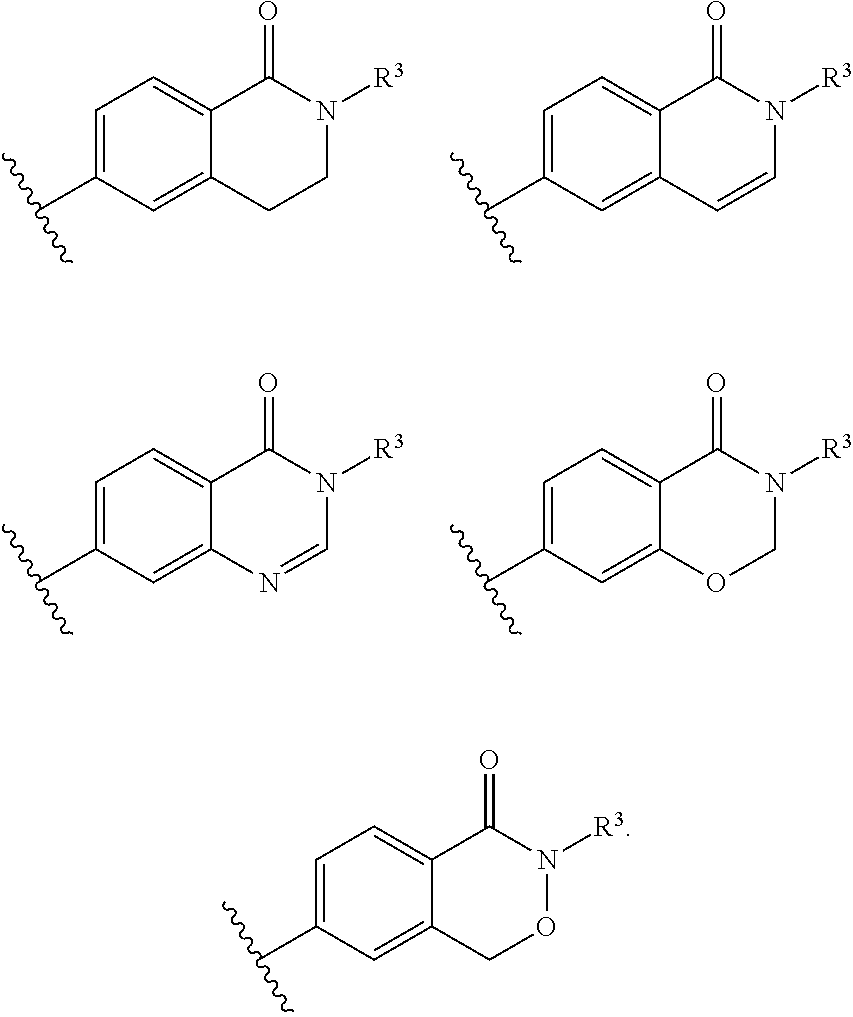

or a pharmaceutically acceptable salt or solvate thereof, wherein:


wherein:

wherein:
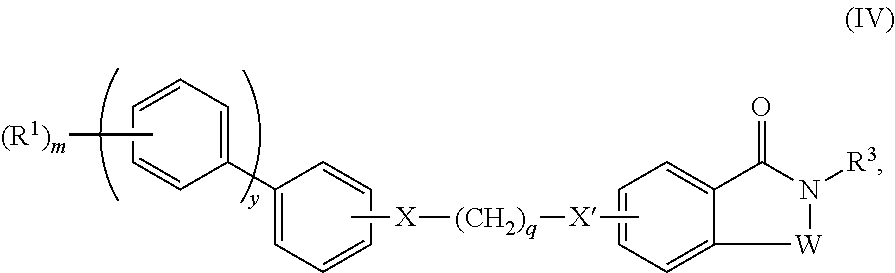
wherein:

wherein:

wherein:

wherein:


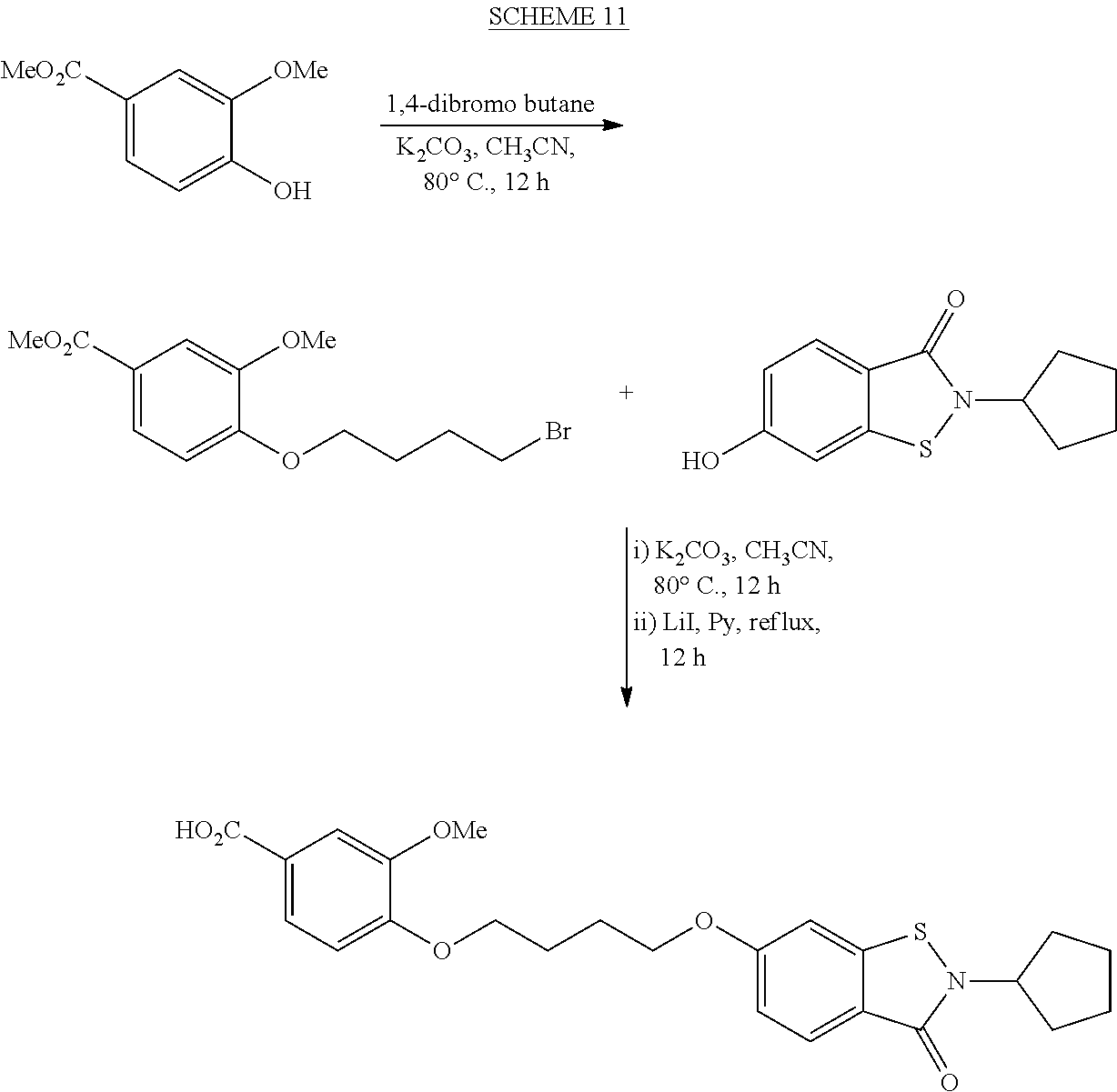


| mGluR2 | mGluR2 | ||
| PAM | Ago | ||
| Example | Structure | EC50(μM) | EC50 (μM) |
 |
>10 | inactive | |
| 6 |
 |
0.05 | 0.07 |
| 7 |
 |
0.08 | 0.13 |
| 8 |
 |
0.1 | 0.15 |
| 9 |
 |
0.06 | 0.07 |
| 10 |
 |
0.26 | 0.51 |
| 11 |
 |
0.27 | 0.29 |
| 12 |
 |
0.22 | 0.28 |
| 13 |
 |
0.09 | 0.10 |
| 14 |
 |
0.07 | 0.11 |
| 15 |
 |
>5 | >5.0 |
| 16 |
 |
0.35 | 0.3 |
| 17 |
 |
NT | NT |
| 20 |
 |
0.08 | NT |
| 21 |
 |
0.072 | 0.183 |
| 22 |
 |
0.023 | 0.052 |
| 23 |
 |
0.089 | 0.145 |
| 24 |
 |
0.111 | 0.19 |
| 25 |
 |
0.11 | NT |
| 26 |
 |
0.13 | NT |
| 27 |
 |
0.173 | NT |
| 28 |
 |
NT | NT |
| 29 |
 |
NT | NT |
| 30 |
 |
3.24 | NT |
| 34 |
 |
0.02 | 0.08 |
| 35 |
 |
NT | NT |
| 40 |
 |
0.17 | 0.12 |
| 41 |
 |
desensitizes | 0.655 |
| 42 |
 |
desensitizes | 0.33 |
| 43 |
 |
0.629 | 0.725 |
| 44 |
 |
weak PAM | weak agonist |
| 45 |
 |
0.134 | 0.199 |
| 46 |
 |
0.644 | 1.05 |
| 47 |
 |
0.54 | 0.62 |
| 50 |
 |
0.674 | NT |
| 51 |
 |
NT | NT |
| 52 |
 |
NT | NT |
| 53 |
 |
NT | NT |
| 55 |
 |
NT | NT |
| 56 |
 |
NT | NT |
| 60 |
 |
0.31 | 0.34 |
| 61 |
 |
desensitizes | 0.91 |
 |
>10 | >10 | |
| 67 |
 |
>10 | >10 |
| 72 |
 |
0.3 | 0.32 |
| 73 |
 |
NT | NT |
| 74 |
 |
1.46 | NT |
| 77 |
 |
0.315 | NT |
| 78 |
 |
0.176 | 0.479 |
Claims (17)


Priority Applications (1)
| Application Number | Priority Date | Filing Date | Title |
|---|---|---|---|
| US13/051,798 US8748632B2 (en) | 2010-03-19 | 2011-03-18 | Positive allosteric modulators of group II mGluRs |
Applications Claiming Priority (2)
| Application Number | Priority Date | Filing Date | Title |
|---|---|---|---|
| US31585410P | 2010-03-19 | 2010-03-19 | |
| US13/051,798 US8748632B2 (en) | 2010-03-19 | 2011-03-18 | Positive allosteric modulators of group II mGluRs |
Publications (2)
| Publication Number | Publication Date |
|---|---|
| US20120071503A1 US20120071503A1 (en) | 2012-03-22 |
| US8748632B2 true US8748632B2 (en) | 2014-06-10 |
Family
ID=44649861
Family Applications (1)
| Application Number | Title | Priority Date | Filing Date |
|---|---|---|---|
| US13/051,798 Active US8748632B2 (en) | 2010-03-19 | 2011-03-18 | Positive allosteric modulators of group II mGluRs |
Country Status (2)
| Country | Link |
|---|---|
| US (1) | US8748632B2 (en) |
| WO (1) | WO2011116356A2 (en) |
Cited By (2)
| Publication number | Priority date | Publication date | Assignee | Title |
|---|---|---|---|---|
| US10099993B2 (en) | 2014-04-06 | 2018-10-16 | Sanford-Burnham Medical Research Institute | Metabotropic glutamate receptor positive allosteric modulators (PAMS) and uses thereof |
| WO2026052975A1 (en) | 2024-09-09 | 2026-03-12 | Serenatis Bio limited | Treatments for pathological repetitive behaviours |
Families Citing this family (38)
| Publication number | Priority date | Publication date | Assignee | Title |
|---|---|---|---|---|
| TWI417095B (en) | 2006-03-15 | 2013-12-01 | Janssen Pharmaceuticals Inc | 1,4-disubstituted 3-cyano-pyridone derivatives and their use as positive allosteric modulators of mglur2-receptors |
| TW200845978A (en) | 2007-03-07 | 2008-12-01 | Janssen Pharmaceutica Nv | 3-cyano-4-(4-tetrahydropyran-phenyl)-pyridin-2-one derivatives |
| TW200900065A (en) | 2007-03-07 | 2009-01-01 | Janssen Pharmaceutica Nv | 3-cyano-4-(4-pyridinyloxy-phenyl)-pyridin-2-one derivatives |
| CA2696948C (en) | 2007-09-14 | 2013-04-30 | Jose Maria Cid-Nunez | 1',3'-disubstituted-4-phenyl-3,4,5,6-tetrahydro-2h,1'h-[1,4']bipyridinyl-2'-ones |
| KR20100080597A (en) | 2007-09-14 | 2010-07-09 | 오르토-맥닐-얀센 파마슈티칼스 인코포레이티드 | 1,3-disubstituted-4-phenyl-1h-pyridin-2-ones |
| CA2735764C (en) | 2008-09-02 | 2016-06-14 | Ortho-Mcneil-Janssen Pharmaceuticals, Inc. | 3-azabicyclo[3.1.0]hexyl derivatives as modulators of metabotropic glutamate receptors |
| AU2009304293B2 (en) | 2008-10-16 | 2012-04-26 | Addex Pharma S.A. | Indole and benzomorpholine derivatives as modulators of metabotropic glutamate receptors |
| BRPI0921333A2 (en) | 2008-11-28 | 2015-12-29 | Addex Pharmaceuticals Sa | indole and benzoxazine derivatives as metabotropic glutamate receptor modulators |
| NZ596078A (en) | 2009-05-12 | 2013-06-28 | Janssen Pharmaceuticals Inc | 1,2,4-TRIAZOLO [4,3-a] PYRIDINE DERIVATIVES AND THEIR USE FOR THE TREATMENT OR PREVENTION OF NEUROLOGICAL AND PSYCHIATRIC DISORDERS |
| MY153913A (en) | 2009-05-12 | 2015-04-15 | Janssen Pharmaceuticals Inc | 7-aryl-1,2,4-triazolo[4,3-a]pyridine derivatives and their use as positive allosteric modulators of mglur2 receptors |
| EA020671B1 (en) | 2009-05-12 | 2014-12-30 | Янссен Фармасьютикалз, Инк. | 1,2,4-TRIAZOLO[4,3-a]PYRIDINE DERIVATIVES AND THEIR USE AS POSITIVE ALLOSTERIC MODULATORS OF mGluR2 RECEPTORS |
| EP2643320B1 (en) | 2010-11-08 | 2015-03-04 | Janssen Pharmaceuticals, Inc. | 1,2,4-TRIAZOLO[4,3-a]PYRIDINE DERIVATIVES AND THEIR USE AS POSITIVE ALLOSTERIC MODULATORS OF MGLUR2 RECEPTORS |
| CA2815002C (en) | 2010-11-08 | 2019-10-22 | Janssen Pharmaceuticals, Inc. | 1,2,4-triazolo[4,3-a]pyridine derivatives and their use as positive allosteric modulators of mglur2 receptors |
| CN103298810B (en) | 2010-11-08 | 2016-03-16 | 杨森制药公司 | The purposes of 1,2,4-triazolo [4,3-a] pyridine derivate and the positive allosteric modulators as MGLUR2 acceptor thereof |
| EP2642998B1 (en) | 2010-11-24 | 2020-09-16 | The Trustees of Columbia University in the City of New York | A non-retinoid rbp4 antagonist for treatment of age-related macular degeneration and stargardt disease |
| WO2013166037A1 (en) | 2012-05-01 | 2013-11-07 | The Trustees Of Columbia University In The City Of New York | Non-retinoid antagonists for treatment of eye disorders |
| WO2014152013A1 (en) | 2013-03-14 | 2014-09-25 | The Trustees Of Columbia University In The City Of New York | 4-phenylpiperidines, their preparation and use |
| WO2014151936A1 (en) | 2013-03-14 | 2014-09-25 | The Trustees Of Columbia University In The City Of New York | Octahydropyrrolopyrroles, their preparation and use |
| ES2700541T3 (en) | 2013-03-14 | 2019-02-18 | Univ Columbia | Octahidrociclopentapirroles, its preparation and use |
| US9938291B2 (en) | 2013-03-14 | 2018-04-10 | The Trustess Of Columbia University In The City Of New York | N-alkyl-2-phenoxyethanamines, their preparation and use |
| JO3368B1 (en) | 2013-06-04 | 2019-03-13 | Janssen Pharmaceutica Nv | 6, 7- dihydropyrazolu [5,1-a] pyrazine-4 (5 hands) -on compounds and their use as negative excretory regulators of Miglore 2 receptors. |
| JO3367B1 (en) | 2013-09-06 | 2019-03-13 | Janssen Pharmaceutica Nv | 1,2,4-TRIAZOLO[4,3-a]PYRIDINE COMPOUNDS AND THEIR USE AS POSITIVE ALLOSTERIC MODULATORS OF MGLUR2 RECEPTORS |
| KR102414246B1 (en) | 2014-01-21 | 2022-06-27 | 얀센 파마슈티카 엔.브이. | Combinations comprising positive allosteric modulators or orthosteric agonists of metabotropic glutamatergic receptor subtype 2 and their use |
| LT3431106T (en) | 2014-01-21 | 2021-02-10 | Janssen Pharmaceutica Nv | Combinations comprising positive allosteric modulators of metabotropic glutamatergic receptor subtype 2 and their use |
| DK4036094T3 (en) | 2014-04-30 | 2026-03-23 | Univ Columbia | SUBSTITUTED 4-PHENYLPIPERIDINES, THEIR PRODUCTION AND USE |
| JP6552061B2 (en) * | 2014-06-10 | 2019-07-31 | サンフォード−バーンハム メディカル リサーチ インスティテュート | Negative allosteric modulators (NAMS) of metabotropic glutamate receptors and their use |
| WO2016168633A1 (en) | 2015-04-17 | 2016-10-20 | Abbvie Inc. | Indazolones as modulators of tnf signaling |
| UY36630A (en) | 2015-04-17 | 2016-11-30 | Abbvie Inc | TRICYCLIC MODULATORS OF TNF SIGNALING |
| US9879016B2 (en) | 2015-04-17 | 2018-01-30 | Abbvie Inc. | Indazolones as modulators of TNF signaling |
| WO2022198003A1 (en) * | 2021-03-19 | 2022-09-22 | Vanderbilt University | Negative allosteric modulators of metabotropic glutamate receptor 2 |
| WO2022212815A1 (en) * | 2021-04-02 | 2022-10-06 | Vanderbilt University | Quinazoline-4(3h)-one derivatives as negative allosteric modulators of metabotropic glutamate receptor 2 |
| MX2024000313A (en) | 2021-07-09 | 2024-03-06 | Plexium Inc | Aryl compounds and pharmaceutical compositions that modulate ikzf2. |
| WO2024059781A1 (en) * | 2022-09-16 | 2024-03-21 | Vanderbilt University | Negative allosteric modulators of metabotropic glutamate receptor 2 |
| AU2023383986A1 (en) * | 2022-11-22 | 2025-03-13 | Xi'an Xintong Pharmaceutical Research Co., Ltd. | Novel bicyclic pd-l1 inhibitors, preparation methods therefor and medicinal uses thereof |
| CN116046958B (en) * | 2023-03-28 | 2023-07-07 | 上海赛默罗生物科技有限公司 | Determination method for related substances in phthalazine and isoxazole drugs |
| WO2024263563A1 (en) * | 2023-06-20 | 2024-12-26 | Sanford Burnham Prebys Medical Discovery Institute | Metabotropic glutamate subtype-2 and -3 receptor positive allosteric modulators and uses thereof |
| WO2025006553A1 (en) * | 2023-06-27 | 2025-01-02 | Sanford Burnham Prebys Medical Discovery Institute | Metabotropic glutamate receptor positive allosteric modulators and uses thereof |
| WO2025019598A1 (en) * | 2023-07-20 | 2025-01-23 | Sanford Burnham Prebys Medical Discovery Institute | Positive allosteric modulator of the metabotropic glutamate receptor subtype 2 receptor, synthesis and solid forms thereof |
Citations (2)
| Publication number | Priority date | Publication date | Assignee | Title |
|---|---|---|---|---|
| WO2006057860A1 (en) | 2004-11-22 | 2006-06-01 | Eli Lilly And Company | Potentiators of glutamate receptors |
| US20080300260A1 (en) | 2007-05-25 | 2008-12-04 | Herve Geneste | HETEROCYCLIC COMPOUNDS AS POSITIVE MODULATORS OF METABOTROPIC GLUTAMATE RECEPTOR 2 (MGLU2 receptor) |
-
2011
- 2011-03-18 US US13/051,798 patent/US8748632B2/en active Active
- 2011-03-18 WO PCT/US2011/029100 patent/WO2011116356A2/en not_active Ceased
Patent Citations (2)
| Publication number | Priority date | Publication date | Assignee | Title |
|---|---|---|---|---|
| WO2006057860A1 (en) | 2004-11-22 | 2006-06-01 | Eli Lilly And Company | Potentiators of glutamate receptors |
| US20080300260A1 (en) | 2007-05-25 | 2008-12-04 | Herve Geneste | HETEROCYCLIC COMPOUNDS AS POSITIVE MODULATORS OF METABOTROPIC GLUTAMATE RECEPTOR 2 (MGLU2 receptor) |
Non-Patent Citations (12)
| Title |
|---|
| Bonnefous et al, "Biphenyl-indanones: allosteric potentiators of the metabotropic glutamate subtype 2 receptor", Bioorg. Med. Chem. Lett., 15(19):4354-8 (2005). |
| Dhanya et al., "Design and synthesis of an orally active metabotropic glutamate receptor subtype-2 (mGluR2) positive allosteric modulator (PAM) that decreases cocaine self-administration in rats", J. Med. Chem., 54(1):342-53 (2010). |
| Galici et al., "Biphenyl-indanone A, a positive allosteric modulator of the metabotropic glutamate receptor subtype 2, has antipsychotic- and anxiolytic-like effects in mice", J. Pharmacol. Exp. Ther., 318(1):173-85 (2006). |
| Gnerre et al. (Journal of Medicinal Chemistry (2000), 43(25), 4747-4758). * |
| Govek et al. (Bioorganic & Medicinal Chemistry Letters 15 (2005) 4068-4072). * |
| Hoarau et al. (CAPLUS Abstract of: Synthesis (2000), (5), 655-660). * |
| International Search Report (ISR) from PCT/US2011/029100. |
| Kubinyi (3D QSAR in Drug Design: Ligand-Protein Interactions and Molecular Similarity, vol. 2-3, Springer, 1998, 800 pages). pp. 243-244 provided. * |
| Rodriguez et al. (Bioorganic & Medicinal Chemistry Letters 19 (2009) 3209-3213). * |
| Uno et al. (CAPLUS Abstract of: Chemical & Pharmaceutical Bulletin (1978), 26(2), 549-55). * |
| Wermuth, The Practice of Medicinal Chemsitry, 2d ed. (2003), 768 pages. Chs. 9-10 provided. * |
| Williams et al. (Bioorganic & Medicinal Chemistry Letters 19 (2009) 4967-4970). * |
Cited By (3)
| Publication number | Priority date | Publication date | Assignee | Title |
|---|---|---|---|---|
| US10099993B2 (en) | 2014-04-06 | 2018-10-16 | Sanford-Burnham Medical Research Institute | Metabotropic glutamate receptor positive allosteric modulators (PAMS) and uses thereof |
| US10377695B2 (en) | 2014-04-06 | 2019-08-13 | Sanford Burnham Prebys Medical Discovery Institute | Metabotropic glutamate receptor positive allosteric modulators (PAMS) and uses thereof |
| WO2026052975A1 (en) | 2024-09-09 | 2026-03-12 | Serenatis Bio limited | Treatments for pathological repetitive behaviours |
Also Published As
| Publication number | Publication date |
|---|---|
| US20120071503A1 (en) | 2012-03-22 |
| WO2011116356A2 (en) | 2011-09-22 |
| WO2011116356A3 (en) | 2012-01-12 |
Similar Documents
| Publication | Publication Date | Title |
|---|---|---|
| US20120071503A1 (en) | Positive allosteric modulators of group ii mglurs | |
| CN112689633B (en) | Pyridinecarboxamide compounds for inhibiting Nav1.8 | |
| US10273214B2 (en) | Subunit selective NMDA receptor potentiators for the treatment of neurological conditions | |
| Winn et al. | 2, 4-diarylpyrrolidine-3-carboxylic acids potent ETA selective endothelin receptor antagonists. 1. Discovery of A-127722 | |
| EP3275440B1 (en) | Novel oxadiazole derivative and pharmaceutical containing same | |
| TW201742863A (en) | Chimeric compounds targeting proteins, compositions, methods, and uses thereof | |
| CA2950952C (en) | Metabotropic glutamate receptor negative allosteric modulators (nams) and uses thereof | |
| US10676438B2 (en) | KCNQ2-5 channel activator | |
| CN102177153A (en) | Drug Combinations and Methods for Treating Alcohol Use Disorder, Pain, and Other Conditions | |
| BRPI0712332A2 (en) | pharmaceutically acceptable compound and derivatives thereof, pharmaceutical composition, method of antagonizing a dp-2 receptor, and use of a compound | |
| US20180244645A1 (en) | 2-amino-3-fluoro-3-(fluoromethyl)-6-methyl-6-phenyl-3,4,5,6-tetrahydropyridines as bace1 inhibitors | |
| JPH07509219A (en) | 4-[4'-piperidinyl or 3'-pyrrolidinyl]-substituted imidazoles as H↓3 receptor antagonists and methods of therapeutic use thereof | |
| KR20090116732A (en) | 1-benzenesulfonyl-1H-indole derivatives as inhibitors of CRC 'activity | |
| KR20110091508A (en) | Carbamate compounds or salts thereof | |
| US20180201608A1 (en) | Compositions and methods for treating neurodegenerative diseases | |
| KR101628585B1 (en) | Benzothiazolone compound | |
| Aljuaid et al. | In Silico and ADMET Studies of Spiro-Quinazoline Compounds as Acetylcholine Esterase Inhibitors Against Alzheimer’s Disease | |
| KR20020073176A (en) | Anxiety method | |
| CN119137114A (en) | Crystalline form of (S)-1-(pyridazin-3-ylcarbamoyl)-6-azaspiro[2.5]octane-6-carboxylic acid 1,1,1,3,3,3-hexafluoropropane-2-ester as a monoacylglycerol lipase inhibitor | |
| EA022043B1 (en) | Sulfone compounds as 5-htreceptor ligands | |
| CN103787954B (en) | Cyclic amine compound that one class fluorine replaces and preparation method thereof, pharmaceutical composition and purposes | |
| US10106518B2 (en) | Chromene derivatives as inhibitors of TCR-Nck interaction | |
| US10377695B2 (en) | Metabotropic glutamate receptor positive allosteric modulators (PAMS) and uses thereof | |
| WO2025006553A1 (en) | Metabotropic glutamate receptor positive allosteric modulators and uses thereof | |
| US20190127320A1 (en) | Kcnq2-5 channel activator |
Legal Events
| Date | Code | Title | Description |
|---|---|---|---|
| AS | Assignment |
Owner name: SANFORD-BURNHAM MEDICAL RESEARCH INSTITUTE, CALIFO Free format text: ASSIGNMENT OF ASSIGNORS INTEREST;ASSIGNORS:COSFORD, NICHOLAS D.P.;PANICKAR, DHANYA RAVEENDRA;SIDIQUE, SHYAMA;SIGNING DATES FROM 20110409 TO 20110411;REEL/FRAME:026335/0900 |
|
| AS | Assignment |
Owner name: THE REGENTS OF THE UNIVERSITY OF CALIFORNIA, CALIF Free format text: ASSIGNMENT OF ASSIGNORS INTEREST;ASSIGNORS:MARKOU, ATHINA;SEMENOVA, SVETLANA;REEL/FRAME:032182/0088 Effective date: 20140205 |
|
| STCF | Information on status: patent grant |
Free format text: PATENTED CASE |
|
| MAFP | Maintenance fee payment |
Free format text: PAYMENT OF MAINTENANCE FEE, 4TH YR, SMALL ENTITY (ORIGINAL EVENT CODE: M2551) Year of fee payment: 4 |
|
| AS | Assignment |
Owner name: SANFORD BURNHAM PREBYS MEDICAL DISCOVERY INSTITUTE Free format text: CHANGE OF NAME;ASSIGNOR:SANFORD-BURNHAM MEDICAL RESEARCH INSTITUTE;REEL/FRAME:051514/0969 Effective date: 20150624 |
|
| CC | Certificate of correction | ||
| MAFP | Maintenance fee payment |
Free format text: PAYMENT OF MAINTENANCE FEE, 8TH YR, SMALL ENTITY (ORIGINAL EVENT CODE: M2552); ENTITY STATUS OF PATENT OWNER: SMALL ENTITY Year of fee payment: 8 |
|
| CC | Certificate of correction | ||
| MAFP | Maintenance fee payment |
Free format text: PAYMENT OF MAINTENANCE FEE, 12TH YR, SMALL ENTITY (ORIGINAL EVENT CODE: M2553); ENTITY STATUS OF PATENT OWNER: SMALL ENTITY Year of fee payment: 12 |