US8712375B2 - System and method for enhanced transaction payment - Google Patents
System and method for enhanced transaction payment Download PDFInfo
- Publication number
- US8712375B2 US8712375B2 US12/017,145 US1714508A US8712375B2 US 8712375 B2 US8712375 B2 US 8712375B2 US 1714508 A US1714508 A US 1714508A US 8712375 B2 US8712375 B2 US 8712375B2
- Authority
- US
- United States
- Prior art keywords
- mobile subscriber
- message
- transaction
- code
- approval
- Prior art date
- Legal status (The legal status is an assumption and is not a legal conclusion. Google has not performed a legal analysis and makes no representation as to the accuracy of the status listed.)
- Expired - Fee Related, expires
Links
Images




Classifications
-
- G—PHYSICS
- G06—COMPUTING OR CALCULATING; COUNTING
- G06Q—INFORMATION AND COMMUNICATION TECHNOLOGY [ICT] SPECIALLY ADAPTED FOR ADMINISTRATIVE, COMMERCIAL, FINANCIAL, MANAGERIAL OR SUPERVISORY PURPOSES; SYSTEMS OR METHODS SPECIALLY ADAPTED FOR ADMINISTRATIVE, COMMERCIAL, FINANCIAL, MANAGERIAL OR SUPERVISORY PURPOSES, NOT OTHERWISE PROVIDED FOR
- G06Q20/00—Payment architectures, schemes or protocols
- G06Q20/30—Payment architectures, schemes or protocols characterised by the use of specific devices or networks
- G06Q20/32—Payment architectures, schemes or protocols characterised by the use of specific devices or networks using wireless devices
- G06Q20/322—Aspects of commerce using mobile devices [M-devices]
- G06Q20/3224—Transactions dependent on location of M-devices
-
- G—PHYSICS
- G06—COMPUTING OR CALCULATING; COUNTING
- G06Q—INFORMATION AND COMMUNICATION TECHNOLOGY [ICT] SPECIALLY ADAPTED FOR ADMINISTRATIVE, COMMERCIAL, FINANCIAL, MANAGERIAL OR SUPERVISORY PURPOSES; SYSTEMS OR METHODS SPECIALLY ADAPTED FOR ADMINISTRATIVE, COMMERCIAL, FINANCIAL, MANAGERIAL OR SUPERVISORY PURPOSES, NOT OTHERWISE PROVIDED FOR
- G06Q40/00—Finance; Insurance; Tax strategies; Processing of corporate or income taxes
Definitions
- the present invention relates generally to telecommunications services. More particularly, the present invention relates to capabilities that enhance substantially the value and usefulness of various messaging paradigms including, inter alia, Short Message Service (SMS), Multimedia Message Service (MMS), Internet Protocol (IP) Multimedia Subsystem (IMS), Wireless Application Protocol (WAP), etc.
- SMS Short Message Service
- MMS Multimedia Message Service
- IP Internet Protocol
- IMS Multimedia Subsystem
- WAP Wireless Application Protocol
- a Mobile Subscriber for example a user of a Wireless Device (WD)—for example a user of a Wireless Device (WD) such as, inter alia, a mobile telephone, a BlackBerry, etc. that is serviced by a Wireless Carrier (WC)—of their WD grows substantially.
- MS Mobile Subscriber
- WD Wireless Device
- WC Wireless Carrier
- M-Commerce Mobile Commerce
- M-Commerce which, broadly speaking, encompasses the buying and selling of merchant-supplied products, goods, and services through WDs
- a purchase in the checkout lane of a brick-and-mortar store a purchase at a (fast-food or other) restaurant, etc.
- the present invention provides such enhanced transaction payment capabilities and addresses, in new and innovatory ways, various of the (not insubstantial) challenges that are associated with same.
- a method for enhancing the security of a transaction payment in which a request message is received from a mobile subscriber, where the request message is associated with a payment portion of a transaction and includes a payment amount.
- the amount of the transaction is extracted and, based thereon, as well as based on information previously supplied by the mobile subscriber, an authorization code is generated.
- the authorization code is then packaged in a response message and dispatched to the mobile subscriber
- the request message (and the response message) may be any one of (a) a Short Message Service message, (b) a Multimedia Message Service message, and/or (c) an IP Multimedia Subsystem message, and may further include one or more of (a) an account identifiers and/or (b) a password.
- the initial request may also initiate one or more of (a) one or more inquiries to the mobile subscriber, (b) a low or an empty balance replenishment operation, and/or (c) mobile subscriber location awareness.
- the mobile subscriber location awareness may be derived from, e.g., one or more of (a) Location-Based Services and/or (b) Global Positioning System.
- the information that is previously supplied by the mobile subscriber is provided during a registration process, which may be web-based
- the mobile subscriber when the mobile subscriber receives the authorization code, he/she may then supply the code to a merchant with whom the mobile subscriber is transacting.
- the authorization code may so supplied via one or more of (a) manual means, (b) Bluetooth, (c) WiFi, (d) Near Field Communication, (e) Uniform Resource Locator, and/or (f) Web cookie.
- an approval code is generated, perhaps by request of the merchant, and returned to the merchant, who may, in turn, pass the approval code to the mobile subscriber.
- a method of conducting a commercial transaction including the steps of receiving a single, mobile subscriber-initiated, short message service (SMS) message, the SMS message including a payment amount for a commercial transaction, communicating with a billing interface to obtain an authorization code for the payment amount, sending a response SMS message to the mobile subscriber, the response SMS message including the authorization code, receiving the authorization code from a party to the commercial transaction other than the mobile subscriber (e.g., a merchant), and generating an approval code based on the authorization code, payment amount and at least one identifier, and supplying the approval code to the party to the commercial transaction other than the mobile subscriber (again, e.g., the merchant).
- SMS short message service
- the approval code may then be received from the mobile subscriber in an SMS message.
- FIG. 1 is a diagrammatic presentation of an exemplary Messaging Inter-Carrier Vendor (MICV).
- MICV Messaging Inter-Carrier Vendor
- FIG. 2 illustrates one particular arrangement that is possible through aspects of the present invention.
- FIG. 3 illustrates various of the exchanges or interactions that are possible during the registration portion of the present invention.
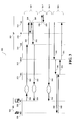
- FIG. 4 illustrates various of the exchanges or interactions that are supported by aspects of the present invention.
- FIG. 5 is a diagrammatic presentation of aspects of an exemplary Service Provider (SP) Application Server (AS).
- SP Service Provider
- AS Application Server
- the present invention may leverage the capabilities of a centrally-located, full-featured MICV facility.
- U.S. Pat. No. 7,154,901 entitled “INTERMEDIARY NETWORK SYSTEM AND METHOD FOR FACILITATING MESSAGE EXCHANGE BETWEEN WIRELESS NETWORKS,” and its associated continuations, for a description of a MICV, a summary of various of the services/functions/etc. that are performed by a MICV, and a discussion of the numerous advantages that arise from same.
- the disclosure of U.S. Pat. No. 7,154,901, along with its associated continuations, is incorporated herein by reference.
- a MICV 120 is disposed between, possibly inter alia, multiple WCs (WC 1 114 ⁇ WC x 118 ) on one side and multiple SPs (SP 1 122 ⁇ SP y 124 ) on the other side and thus ‘bridges’ all of the connected entities.
- a MICV 120 thus, as one simple example, may offer various routing, formatting, delivery, value-add, etc. capabilities that provide, possibly inter alia:
- a WC 114 ⁇ 118 (and, by extension, all of the MSs 102 ⁇ 104 / 106 ⁇ 108 / 110 ⁇ 112 that are serviced by the WC 114 ⁇ 118 ) with ubiquitous access to a broad universe of SPs 122 ⁇ 124 , and
- a MICV 120 may have varying degrees of visibility (e.g., access, etc.) to the (MS ⁇ MS, MS ⁇ SP, etc.) messaging traffic:
- a WC 114 ⁇ 118 may elect to route just their out-of-network messaging traffic to a MICV 120 . Under this approach the MICV 120 would have visibility (e.g., access, etc.) to just the portion of the WC's 114 ⁇ 118 messaging traffic that was directed to the MICV 120 by the WC 114 ⁇ 118 .
- a WC 114 ⁇ 118 may elect to route all of their messaging traffic to a MICV 120 .
- the MICV 120 may, possibly among other things, subsequently return to the WC 114 ⁇ 118 that portion of the messaging traffic that belongs to (i.e., that is destined for a MS 102 ⁇ 104 / 106 ⁇ 108 / 110 ⁇ 112 of) the WC 114 ⁇ 118 .
- the MICV 120 would have visibility (e.g., access, etc.) to all of the WC's 114 ⁇ 118 messaging traffic.
- a SP may, possibly inter alia, be realized as a third-party (e.g., a service bureau), an element of a WC or a landline carrier, an element of a MICV, multiple entities working together, etc.
- a third-party e.g., a service bureau
- an element of a WC or a landline carrier e.g., a WC or a landline carrier
- an element of a MICV e.g., multiple entities working together, etc.
- the (SMS/MMS/etc.) messaging traffic of numerous WCs (WC 1 210 ⁇ WC n 212 ) is exchanged with a MICV 214 and the MICV 214 is connected with SP x 216 , a SP that offers, possibly inter alia, the present invention.
- SP x 216 may offer a registration process.
- a MS that is interested in using aspects of the present invention may identify herself and provide some range of information.
- a registration process may be tailored (e.g., the range of information gathered, the scope of access subsequently granted, etc.) to the class of user—e.g., different types, categories, etc. of MSs may complete different registration processes.
- FIG. 3 and reference numeral 300 illustrate various of the exchanges or interactions that might occur during an illustrative registration process (involving a hypothetical MS, Mary 302 , and our hypothetical SP, SP x 304 ).
- an illustrative registration process involving a hypothetical MS, Mary 302 , and our hypothetical SP, SP x 304 .
- SP x 304 Of interest and note in the diagram are the following entities:
- MS 302 WD 306 For example, Mary's WD such as a cellular telephone, BlackBerry, PalmPilot, etc.
- MS 302 Personal Computer (PC) 308 For example, one of Mary's work, home, etc. PCs.
- MICV 312 As noted above the use of a MICV, although not required, provides significant advantages.
- SP 304 Web Server (WS) 314 A publicly-available World Wide Web (WWW) site that is optionally provided by SP x .
- WWW World Wide Web
- SP 304 Billing Interface (BI) 316 A single, consolidated interface that SP x may use to easily reach, inter alia, one or more external entities such as a credit card or debit card clearinghouse, a carrier billing system, a service bureau that provides access to multiple carrier billing systems, etc.
- external entities such as a credit card or debit card clearinghouse, a carrier billing system, a service bureau that provides access to multiple carrier billing systems, etc.
- MS 302 WD 306 and MS 302 PC 308 entities are illustrated as being adjacent or otherwise near each other in actual practice the entities may, for example, be physically located anywhere.
- a given “message” sent between a MS 302 and a SP 304 may actually comprise a series of steps in which the message is received, forwarded and routed between different entities, including a WD 306 associated with a MS 302 , a WC 310 , a MICV 312 , and a SP 304 .
- reference to a particular message generally includes that particular message as conveyed at any stage between an origination source, such as a WD 306 of a MS 302 , and an end receiver, such as a SP 304 .
- reference to a particular message generally includes a series of related communications between, for example, a MS 302 and a WC 310 , the WC 310 and a MICV 312 , and the MICV 312 and a SP 304 .
- the series of related communications may, in general, contain substantially the same information, or information may be added or subtracted in different communications that nevertheless may be generally referred to as a same message.
- a particular message, whether undergoing changes or not, is referred to by different reference numbers at different stages between a source and an endpoint of the message.
- the exchanges that are collected under the designation Set 1 represent the activities that might take place as Mary 302 begins a registration process with SP x 304 .
- Set 1 the exchanges that are collected under the designation Set 1 represent the activities that might take place as Mary 302 begins a registration process with SP x 304 .
- Mary 302 uses one of her PCs 308 to visit a WS 314 of SP x 304 to, possibly among other things, complete a service registration process (see 320 ⁇ 322 ).
- SP x 's 304 WS 314 interacts with SP x 's 304 AS 318 to, possibly among other things, commit some or all of the information that Mary 302 provided to a data repository (e.g., a database), optionally complete a billing transaction, etc. (see 324 ).
- a data repository e.g., a database
- BI 316 completes a billing transaction (see 326 ⁇ 328 ).
- SP x 's 304 WS 314 responds appropriately (e.g., with the presentation of a confirmation message, etc.) (see 332 ⁇ 334 ).
- the collected information may be reviewed, confirmed, etc. through one or more manual and/or automatic mechanisms.
- the registration process may be completed through any combination of one or more channels including, inter alia, the indicated WWW facility, wireless messaging (SMS, MMS, IMS, etc.), E-mail messages, Instant Messaging (IM) exchanges, conventional mail, telephone, Interactive Voice Response (IVR) facilities, etc.
- a range of information may be captured from a candidate user including, inter alia:
- Identifying Information e.g., general information about Mary. For example, possibly among other things, a unique identifier and a password, optionally a pseudonym or handle, name, age, sex, etc.
- Contact Information For example, possibly among other things, contact information (such as, possibly inter alia, landline and/or wireless Telephone Numbers [TNs], E-mail addresses, IM addresses, physical addresses, etc.).
- contact information such as, possibly inter alia, landline and/or wireless Telephone Numbers [TNs], E-mail addresses, IM addresses, physical addresses, etc.).
- SP x may be offered by SP x including, possibly inter alia, free (e.g., possibly advertising-based), a fixed one-time charge, a recurring (e.g., per transaction, etc.) fixed charge, a recurring (e.g., per transaction, etc.) variable charge, etc.
- SP x may be offered by SP x including, possibly among other things, credit or debit card information, authorization to place a charge on a MS's phone bill, etc.
- Account Information For example, possibly among other things, the particulars for one or more (internal to SP x ) accounts.
- the particulars might include, possibly inter alia, an account identifier, account spending/funding/etc. limits or thresholds, one or more funding sources (e.g., cash, one or more of the mechanisms that were identified in the above Billing Information, etc.), the particulars (including, possibly inter alia, timing, dollar amount, source[s], etc.) for periodic scheduled account replenishment or ‘top up’ actions, the particulars (including, possibly inter alia, occurrence frequency, size or dollar amount, etc.) for when additional or extra approval steps should be applied, etc.
- funding sources e.g., cash, one or more of the mechanisms that were identified in the above Billing Information, etc.
- the particulars including, possibly inter alia, timing, dollar amount, source[s], etc.
- the particulars including, possibly inter alia, occurrence frequency, size or dollar amount, etc. for when additional or extra approval steps should be applied, etc.
- the information that Mary provided during the registration process may be preserved in a data repository (e.g., a database) and may optionally be organized as a MS Profile.
- a data repository e.g., a database
- the content of Mary's profile may optionally be augmented by SP x .
- one or more internal or external sources of consumer, demographic, geographic, psychographic, corporate, etc. information may be leveraged to selectively enhance or augment elements of Mary's profile.
- a billing transaction may take any number of forms and may involve different external entities (e.g., a WC's billing system, a carrier billing system service bureau, a credit or debit card clearinghouse, etc.).
- a billing transaction may include, inter alia:
- the exchanges that are collected under the designation Set 2 represent the activities that might take place as SP x 304 optionally coordinates, etc. with one or more external entities (such as, for example, one or more credit card clearinghouses, etc.) to, possibly among other things, secure access, arrange for funds, etc. (see 336 ⁇ 338 ).
- one or more external entities such as, for example, one or more credit card clearinghouses, etc.
- the exchanges that are collected under the designation Set 3 represent the activities that might take place as SP x 304 dispatches to Mary 302 one or more confirmation E-mail messages (see 340 ⁇ 342 ).
- the exchanges that are collected under the designation Set 4 represent the activities that might take place as SP x 's 304 AS 318 dispatches one or more confirmation SMS, MMS, IMS, etc. messages to Mary's 302 WD 306 (see 344 ⁇ 348 ) and Mary 302 replies or responds to the message(s) (see 350 ⁇ 354 ).
- the messages are shown traversing a MICV 312 .
- SP x 304 may employ a Short Code (SC) or a regular TN as its source address (and to which it would ask users of its service to direct any reply messages).
- SC Short Code
- While the abbreviated length of a SC (e.g., five digits for a SC administered by Neustar under the Common Short Code [CSC] program) incrementally enhances the experience of a MS 302 (e.g., the MS 302 need remember and enter only a few digits as the destination address of a reply message) it also, by definition, constrains the universe of available SCs thereby causing each individual SC to be a limited or scarce resource and raising a number of SC/CSC management, etc. issues.
- a description of a common (i.e., universal) short code environment may be found in pending U.S. patent application Ser. No. 10/742,764 entitled “UNIVERSAL SHORT CODE ADMINISTRATION FACILITY.”
- the registration information that was described above may subsequently be managed (e.g., existing information may be edited or removed, new information may be added, etc.) through any combination of one or more channels including, inter alia, a SP's WWW facility, wireless messaging (SMS, MMS, IMS, etc.), e-mail messages, IM exchanges, conventional mail, telephone, IVR facilities, etc.
- a SP's WWW facility wireless messaging (SMS, MMS, IMS, etc.), e-mail messages, IM exchanges, conventional mail, telephone, IVR facilities, etc.
- Mary may secure services for her automobile at a gas or filling station, at a repair or service facility, etc.
- M Merchant (M) 406 .
- M the store that Mary is visiting.
- MS 402 MS 408 For example, Mary herself.
- MS 402 WD 410 For example, Mary's WD such as a cellular telephone, BlackBerry, PalmPilot, etc.
- MICV 414 As noted above the use of a MICV, although not required, provides significant advantages.
- SP 404 BI 416 a single, consolidated interface that a SP may use to easily reach, inter alia, one or more external entities (such as, for example, a credit card or debit card clearinghouse, a carrier billing system, a service bureau that provides access to multiple carrier billing systems, etc.).
- external entities such as, for example, a credit card or debit card clearinghouse, a carrier billing system, a service bureau that provides access to multiple carrier billing systems, etc.
- M Back-end System 420 .
- MBS Back-end System
- PoS Point of Sale
- a given “message” sent between a MS 402 and a SP 404 may actually comprise a series of steps in which the message is received, forwarded and routed between different entities, including a WD 410 associated with a MS 402 , a WC 412 , a MICV 414 , and a SP 404 .
- a particular message generally includes that particular message as conveyed at any stage between an origination source, such as a WD 410 of a MS 402 , and an end receiver, such as a SP 404 .
- reference to a particular message generally includes a series of related communications between, for example, a MS 402 and a WC 412 , the WC 412 and a MICV 414 , and the MICV 414 and a SP 404 .
- the series of related communications may, in general, contain substantially the same information, or information may be added or subtracted in different communications that nevertheless may be generally referred to as a same message.
- a particular message, whether undergoing changes or not, is referred to by different reference numbers at different stages between a source and an endpoint of the message.
- the exchanges that are collected under the designation Set 1 represent the activities that might take place as Mary 408 , while in the checkout lane, receives from M 406 , possibly inter alia, the dollar amount of her purchase (see 422 ⁇ 424 ).
- the information may be conveyed to Mary 408 manually (e.g., verbally, through a messaging exchange, etc.) and/or automatically (e.g., via Bluetooth, via WiFi, etc.).
- the exchanges that are collected under the designation Set 2 represent the activities that might take place as Mary 408 users her WD 410 (see 426 ) to compose and dispatch a (SMS, MMS, etc.) request message (see 428 ); the message 428 is routed by Mary's 408 WC 412 to a MICV 414 (see 430 ) and then directed, by the MICV 414 , to SP x 404 (see 432 ); and the message is received and processed by SP x 404 (specifically, by an AS 418 of SP x 404 ).
- FIG. 5 and reference numeral 500 provide a diagrammatic presentation of aspects of an exemplary SP AS 502 .
- the illustrated AS contains several key components—Gateways (GW 1 508 ⁇ GW a 510 in the diagram), Incoming Queues (IQ 1 512 ⁇ IQ b 514 in the diagram), WorkFlows (WorkFlow 1 518 ⁇ WorkFlow d 520 in the diagram), Database 522 , Outgoing Queues (OQ 1 524 ⁇ OQ c 526 in the diagram), and an Administrator 528 .
- GW 1 508 ⁇ GW a 510 in the diagram Incoming Queues (IQ 1 512 ⁇ IQ b 514 in the diagram), WorkFlows (WorkFlow 1 518 ⁇ WorkFlow d 520 in the diagram), Database 522 , Outgoing Queues (OQ 1 524 ⁇ OQ c 526 in the diagram), and an Administrator 528 .
- a dynamically updateable set of one or more Gateways handle incoming (SMS/MMS/IMS/etc. messaging, etc.) traffic 504 ⁇ 506 and outgoing (SMS/MMS/IMS/etc. messaging, etc.) traffic 504 ⁇ 506 .
- Incoming traffic 504 ⁇ 506 is accepted and deposited on an intermediate or temporary Incoming Queue (IQ 1 512 ⁇ IQ b 514 in the diagram) for subsequent processing.
- Processed artifacts are removed from an intermediate or temporary Outgoing Queue (OQ 1 524 ⁇ OQ c 526 in the diagram) and then dispatched 504 ⁇ 506 .
- a dynamically updateable set of one or more Incoming Queues (IQ 1 512 ⁇ IQ b 514 in the diagram) and a dynamically updateable set of one or more Outgoing Queues (OQ 1 524 ⁇ OQ c 526 in the diagram) operate as intermediate or temporary buffers for incoming and outgoing traffic 504 ⁇ 506 .
- a dynamically updateable set of one or more WorkFlows remove incoming traffic from an intermediate or temporary Incoming Queue (IQ 1 512 ⁇ IQ b 514 in the diagram), perform all of the required processing operations (explained below), and deposit processed artifacts on an intermediate or temporary Outgoing Queue (OQ 1 524 ⁇ OQ c 526 in the diagram).
- the WorkFlow component will be described more fully below.
- the Database 522 that is depicted in FIG. 5 is a logical representation of the possibly multiple physical repositories that may be implemented to support, inter alia, configuration, word catalog, calculation, etc. information.
- the physical repositories may be implemented through any combination of conventional Relational Database Management Systems (RDBMSs) such as Oracle, through Object Database Management Systems (ODBMSs), through in-memory Database Management Systems (DBMSs), or through any other equivalent facilities.
- RDBMSs Relational Database Management Systems
- ODBMSs Object Database Management Systems
- DBMSs in-memory Database Management Systems
- An Administrator 528 provides management or administrative control over all of the different components of an AS through, as one example, a Web-based interface. It will be readily apparent to one of ordinary skill in the relevant art that numerous other interfaces (e.g., an Application Programming Interface [API], a data feed, etc.) are easily possible.
- API Application Programming Interface
- a WorkFlow component may be quickly and easily realized to support any number of activities.
- WorkFlows might be configured to support a registration process; to support the receipt and processing of incoming (SMS, MMS, IMS, etc.) messages; to support the generation and processing of billing events; to support the generation and dispatch of outgoing confirmation, update, etc. messages; to support the generation of scheduled and/or on-demand reports; etc.
- SMS Session Management System
- MMS mobile station
- IMS IMS
- the specific WorkFlows that were just described are exemplary only; it will be readily apparent to one of ordinary skill in the relevant art that numerous other WorkFlow arrangements, alternatives, etc. are easily possible.
- a SP may maintain a repository (e.g., a database) into which selected details of all administrative, messaging, processing, etc. activities may be recorded.
- a repository e.g., a database
- such a repository may be used to support:
- Scheduled e.g., daily, weekly, etc.
- on-demand reporting with report results delivered through SMS, MMS, IMS, etc. messages; through E-mail; through a WWW-based facility; through IM; through an IVR facility; etc.
- GIS Geographic Information System
- Generated reports may contain, possibly inter alia, textual and graphic elements.
- the SP may continuously expand the depth and/or the breadth of its internal repositories and, possibly inter alia, consequently incrementally refine, improve, etc. the quality, etc. of its reporting, etc. activities.
- Mary's 408 SMS/MMS/etc. message 428 may be directed to an appropriate destination address (e.g., a TN or a SC), as provided/specified/identified/etc. by, possibly inter alia, M 406 or SP x 404 and may contain any number of elements or data items including, possibly inter alia, the dollar amount of the purchase, an optional account identifier (e.g., if, perhaps for convenience and/or flexibility, Mary 408 maintains more than one account), an optional MS password or identifier/code, the current date and time, etc.
- an appropriate destination address e.g., a TN or a SC
- M 406 or SP x 404 may contain any number of elements or data items including, possibly inter alia, the dollar amount of the purchase, an optional account identifier (e.g., if, perhaps for convenience and/or flexibility, Mary 408 maintains more than one account), an optional MS password or identifier/code, the current date and time, etc.
- an optional destination address
- SA Source Address
- Destination Address such as, for example, the destination SC
- message content or body that might contain, as just one possible example, the transaction amount
- the processing activities that are depicted under the designation Set 3 in FIG. 4 represent the activities that might take place as the SP's 404 AS 418 completes all of the required processing activities (including, possibly inter alia, as appropriate and as required one or more billing events via SP's 404 BI 416 ) to, possibly among other things, generate an Authorization Code (AuC) (see 438 ⁇ 440 ).
- AuC Authorization Code
- a received request may be applied to or passed against one or more of a MS′ accounts (for example, possibly inter alia, in a SP-defined and/or MS-defined order or sequence).
- a received request may, for example based on SP-defined and/or MS-defined criteria (such as, possibly inter alia, occurrence frequency, individual or aggregate dollar amount, etc.), optionally trigger one or more additional check, approval, etc. steps or actions. Such steps or actions may result in, possibly inter alia, a pause in or suspension of a transaction, further approval sequences (utilizing any combination of one or more channels including, possibly inter alia, WWW, E-mail, IM, IVR, SMS/MMS/etc., phone, mail, etc.), etc.
- a MS′ account(s) may be found to contain insufficient funds to support the successful processing of a received request. Under such a circumstance a transaction may, for example, be rejected, paused, suspended, etc.; one or more notifications may be issued to a MS (utilizing any combination of one or more channels including, possibly inter alia, WWW, E-mail, IM, IVR, SMS/MMS/etc., phone, mail, etc.); etc.
- the exchanges that are collected under the designation Set 4 represent the activities that might take place as SP x 404 dispatches one or more (SMS, MMS, etc.) positive response messages (see 442 ); the message(s) is (are) routed by a MICV 414 to Mary's 408 WC 412 (see 444 ); and the message(s) is (are) received by Mary 408 on her WD 410 (see 446 ).
- the positive response message(s) may contain, possibly inter alia, an AuC value, a date/time stamp, etc. Additionally, Mary may optionally reply to a (any of the) response message(s).
- the exchanges that are collected under the designation Set 5 represent the activities that might take place as Mary 408 conveys the received AuC, along possibly with other information, to M 406 (see 448 ⁇ 450 ).
- the information may be conveyed to M 406 manually (e.g., verbally, through a messaging exchange, etc.) and/or automatically (e.g., via Bluetooth, via WiFi, etc.).
- M 406 may submit a request (containing, possibly among other things, an AuC value, the dollar amount of a purchase, a date/time stamp, a merchant identifier, a merchant password or code, etc.) (see 452 ); the MBS 420 may complete all of the required processing activities (including, possibly inter alia, as appropriate and as required interacting with a SP's AS) to, possibly among other things, generate an Approval Code (ApC) (see 454 ⁇ 456 ); and the MBS 420 may return a response to M 406 (containing, possibly among other things, an ApC) (see 458 ).
- a request containing, possibly among other things, an AuC value, the dollar amount of a purchase, a date/time stamp, a merchant identifier, a merchant password or code, etc.
- ApC Approval Code
- the exchanges that are collected under the designation Set 7 represent the activities that might take place as M 406 conveys, possibly inter alia, the ApC to Mary 408 (see 460 ).
- the information may be conveyed to Mary 408 manually (e.g., verbally, through a messaging exchange, etc.) and/or automatically (e.g., via Bluetooth, via WiFi, etc.).
- a MS may optionally dispatch to a SP one or more additional (SMS, MMS, etc.) messages containing, possibly inter alia, an ApC value to ‘close the loop’ as a further security check.
- a SP may optionally leverage Location-Based Service (LBS)/Global Positioning System (GPS) facilities to provide an additional level of security by, possibly inter alia, matching the physical location of a MS (as determined through LBS, GPS, or similar facilities) and the physical location of M.
- LBS Location-Based Service
- GPS Global Positioning System
- a M may optionally allow a MS to bypass a conventional checkout process and might, possibly inter alia, leverage the capabilities of facilities like Near Field Communication (NFC), RFID, etc. to quickly ‘scan’ all of a MS′ items and subsequently automatically launch the initial exchanges that are illustrated in FIG. 4 .
- NFC Near Field Communication
- Various of the information that is conveyed between a MS and a M may be exchanged via one or more of any number of mechanisms including, for example, NFC.
- a SP may optionally alert a MS to a ‘low account balance’ condition (e.g., when the balance of an account drops below a threshold level previously specified by the MS, etc.).
- a SP may optionally allow a MS to ‘top up’ an account (with, possibly inter alia, cash, a credit card, a debit card, etc.) through, possibly inter alia, an appropriate exchange of (SMS, MMS, etc.) request/approval/confirmation/etc. messages.
- a SP may optionally offer various data mining services to, possibly inter alia, Ms, MSs, WCs, etc.
- Such services might include, for example, transaction trends or patterns, historical summaries, etc.; may include numerous aggregations (e.g., by MS, by geographic region, by time interval, etc.); and may be presented through any combination of one or more channels including, inter alia, WWW, E-mail, IM, SMS/MMS/etc., mail, etc.
- a SP may optionally offer periodic reports (on a scheduled basis, on demand, etc.) that summarize account activity—e.g., possibly inter alia, funding events, purchase transactions, payments, etc.
- Such reports may be delivered through any combination of one or more channels including, inter alia, WWW, E-mail, IM, IVR, SMS/MMS/etc., phone, mail, etc. and may offer various optional enhancements (such as, possibly inter alia, drill-down capability).
- Ms and/or MSs that so elect various of the exchanges that are illustrated in FIG. 4 may optionally be completed automatically, perhaps for an incremental fee or charge to a M and/or a MS, with an appropriate set of confirmation, approval, etc. (SMS/MMS/etc., IM, E-Mail, IVR, mail, etc.) messages.
- the various confirmation, response, approval, report, etc. message(s) that were described above may optionally contain an informational element—e.g., a service announcement, a relevant or applicable factoid, etc.
- the informational element may be selected statically (e.g., all generated messages are injected with the same informational text), selected randomly (e.g., a generated message is injected with informational text that is randomly selected from a pool of available informational text), or location-based (i.e., a generated message is injected with informational text that is selected from a pool of available informational text based on the current physical location of the recipient of the message as derived from, as one example, a LBS/GPS facility).
- a SP may optionally allow advertisers to register and/or provide (e.g., directly, or through links/references to external sources) advertising content.
- the provided advertising content may optionally be included in various of the above described message(s)—e.g., textual material, multimedia (images of brand logos, sound, video snippets, etc.) material, etc.
- the advertising material may be selected statically (e.g., all generated messages are injected with the same advertising material), selected randomly (e.g., a generated message is injected with advertising material that is randomly selected from a pool of available material), or location-based (i.e., a generated message is injected with advertising material that is selected from a pool of available material based on the current physical location of the recipient of the message as derived from, as one example, a LBS/GPS facility).
- the above described message(s) may optionally contain promotional materials, coupons, etc. (via, possibly inter alia, text, still images, video clips, etc.).
Landscapes
- Engineering & Computer Science (AREA)
- Business, Economics & Management (AREA)
- Physics & Mathematics (AREA)
- Accounting & Taxation (AREA)
- Theoretical Computer Science (AREA)
- General Physics & Mathematics (AREA)
- Strategic Management (AREA)
- General Business, Economics & Management (AREA)
- Computer Networks & Wireless Communication (AREA)
- Development Economics (AREA)
- Technology Law (AREA)
- Marketing (AREA)
- Finance (AREA)
- Economics (AREA)
- Telephonic Communication Services (AREA)
Abstract
Description
| Acronym | Meaning | ||
| ApC | Approval Code | ||
| API | Application Programming Interface | ||
| AS | Application Server | ||
| AuC | Authorization Code | ||
| BI | Billing Interface | ||
| CSC | Common Short Code | ||
| DB | Database | ||
| DBMS | Database Management System | ||
| Electronic Mail | |||
| GIS | Geographic Information System | ||
| GPS | Global Positioning System | ||
| GW | Gateway | ||
| IM | Instant Messaging | ||
| IMS | IP Multimedia Subsystem | ||
| IP | Internet Protocol | ||
| IQ | Incoming Queue | ||
| IVR | Interactive Voice Response | ||
| LBS | Location Based Services | ||
| M | Merchant | ||
| MBS | Merchant Back-end System | ||
| MICV | Messaging Inter-Carrier Vendor | ||
| MMS | Multimedia Message Service | ||
| MS | Mobile Subscriber | ||
| NFC | Near Field Communication | ||
| ODBMS | Object Database Management System | ||
| OQ | Outgoing Queue | ||
| PC | Personal Computer | ||
| PoS | Point of Sale | ||
| RDBMS | Relational Database Management System | ||
| RFID | Radio Frequency Identification | ||
| SA | Source Address | ||
| SC | Short Code | ||
| SMS | Short Message Service | ||
| SP | Service Provider | ||
| TN | Telephone Number | ||
| URL | Uniform Resource Locator | ||
| WAP | Wireless Application Protocol | ||
| WC | Wireless Carrier | ||
| WD | Wireless Device | ||
| WS | Web Server | ||
| WWW | World-Wide Web | ||
Claims (20)
Priority Applications (1)
| Application Number | Priority Date | Filing Date | Title |
|---|---|---|---|
| US12/017,145 US8712375B2 (en) | 2007-01-29 | 2008-01-21 | System and method for enhanced transaction payment |
Applications Claiming Priority (2)
| Application Number | Priority Date | Filing Date | Title |
|---|---|---|---|
| US89784307P | 2007-01-29 | 2007-01-29 | |
| US12/017,145 US8712375B2 (en) | 2007-01-29 | 2008-01-21 | System and method for enhanced transaction payment |
Publications (2)
| Publication Number | Publication Date |
|---|---|
| US20080182551A1 US20080182551A1 (en) | 2008-07-31 |
| US8712375B2 true US8712375B2 (en) | 2014-04-29 |
Family
ID=39668558
Family Applications (1)
| Application Number | Title | Priority Date | Filing Date |
|---|---|---|---|
| US12/017,145 Expired - Fee Related US8712375B2 (en) | 2007-01-29 | 2008-01-21 | System and method for enhanced transaction payment |
Country Status (1)
| Country | Link |
|---|---|
| US (1) | US8712375B2 (en) |
Cited By (3)
| Publication number | Priority date | Publication date | Assignee | Title |
|---|---|---|---|---|
| US20140310076A1 (en) * | 2013-04-12 | 2014-10-16 | Michael A. Liberty | Appending advertising to perishable validation tokens |
| US20150261948A1 (en) * | 2014-03-12 | 2015-09-17 | Cognitas Technologies, Inc. | Two-factor authentication methods and systems |
| US20180315045A1 (en) * | 2012-09-06 | 2018-11-01 | Liberty Peak Ventures, Llc | Payment architecture using machine-readable graphical code |
Families Citing this family (10)
| Publication number | Priority date | Publication date | Assignee | Title |
|---|---|---|---|---|
| US8662384B2 (en) * | 2006-02-28 | 2014-03-04 | Google Inc. | Text message payment |
| US8280348B2 (en) | 2007-03-16 | 2012-10-02 | Finsphere Corporation | System and method for identity protection using mobile device signaling network derived location pattern recognition |
| US9185123B2 (en) | 2008-02-12 | 2015-11-10 | Finsphere Corporation | System and method for mobile identity protection for online user authentication |
| EP2460114A4 (en) * | 2009-07-31 | 2014-11-26 | Finsphere Corp | Mobile communications message verification of financial transactions |
| US20110035294A1 (en) * | 2009-08-04 | 2011-02-10 | Authernative, Inc. | Multi-tier transaction processing method and payment system in m- and e- commerce |
| US9195980B2 (en) * | 2009-10-30 | 2015-11-24 | Nokia Technologies Oy | Method and apparatus for recovery during authentication |
| US10387853B1 (en) * | 2010-01-19 | 2019-08-20 | The Pnc Financial Services Group, Inc. | Secondary purchase card for financial transactions (“cap card”) |
| US20130059532A1 (en) * | 2011-09-07 | 2013-03-07 | Microsoft Corporation | Partially Transparent Antenna |
| US20130159181A1 (en) * | 2011-12-20 | 2013-06-20 | Sybase 365, Inc. | System and Method for Enhanced Mobile Wallet |
| WO2015183497A1 (en) * | 2014-05-06 | 2015-12-03 | Case Wallet, Inc. | Cryptocurrency virtual wallet system and method |
Citations (7)
| Publication number | Priority date | Publication date | Assignee | Title |
|---|---|---|---|---|
| US20030119478A1 (en) * | 2001-07-24 | 2003-06-26 | Dan Nagy | Method and system for data management in electronic payments transactions |
| US6868391B1 (en) * | 1997-04-15 | 2005-03-15 | Telefonaktiebolaget Lm Ericsson (Publ) | Tele/datacommunications payment method and apparatus |
| US20050107067A1 (en) * | 2001-12-19 | 2005-05-19 | Bernd Redecker | Method and system for carrying out verification processes with regard to authorization of use and/or payment processes via a mobile telephone terminal, as well as a mobile telephone terminal, an interrogation station, a control program for a mobile telephone terminal and a control program for an interrogations station |
| US20060025110A1 (en) * | 2004-07-28 | 2006-02-02 | Jun Liu | Password protection for mobile phones |
| US20060253339A1 (en) * | 2005-05-05 | 2006-11-09 | Moneet Singh | System and process for escrow of payments |
| US20070244811A1 (en) * | 2006-03-30 | 2007-10-18 | Obopay Inc. | Mobile Client Application for Mobile Payments |
| US20080227391A1 (en) * | 2003-05-19 | 2008-09-18 | Einar Rosenberg | Apparatus and method for increased security of wireless transactions |
-
2008
- 2008-01-21 US US12/017,145 patent/US8712375B2/en not_active Expired - Fee Related
Patent Citations (7)
| Publication number | Priority date | Publication date | Assignee | Title |
|---|---|---|---|---|
| US6868391B1 (en) * | 1997-04-15 | 2005-03-15 | Telefonaktiebolaget Lm Ericsson (Publ) | Tele/datacommunications payment method and apparatus |
| US20030119478A1 (en) * | 2001-07-24 | 2003-06-26 | Dan Nagy | Method and system for data management in electronic payments transactions |
| US20050107067A1 (en) * | 2001-12-19 | 2005-05-19 | Bernd Redecker | Method and system for carrying out verification processes with regard to authorization of use and/or payment processes via a mobile telephone terminal, as well as a mobile telephone terminal, an interrogation station, a control program for a mobile telephone terminal and a control program for an interrogations station |
| US20080227391A1 (en) * | 2003-05-19 | 2008-09-18 | Einar Rosenberg | Apparatus and method for increased security of wireless transactions |
| US20060025110A1 (en) * | 2004-07-28 | 2006-02-02 | Jun Liu | Password protection for mobile phones |
| US20060253339A1 (en) * | 2005-05-05 | 2006-11-09 | Moneet Singh | System and process for escrow of payments |
| US20070244811A1 (en) * | 2006-03-30 | 2007-10-18 | Obopay Inc. | Mobile Client Application for Mobile Payments |
Cited By (3)
| Publication number | Priority date | Publication date | Assignee | Title |
|---|---|---|---|---|
| US20180315045A1 (en) * | 2012-09-06 | 2018-11-01 | Liberty Peak Ventures, Llc | Payment architecture using machine-readable graphical code |
| US20140310076A1 (en) * | 2013-04-12 | 2014-10-16 | Michael A. Liberty | Appending advertising to perishable validation tokens |
| US20150261948A1 (en) * | 2014-03-12 | 2015-09-17 | Cognitas Technologies, Inc. | Two-factor authentication methods and systems |
Also Published As
| Publication number | Publication date |
|---|---|
| US20080182551A1 (en) | 2008-07-31 |
Similar Documents
| Publication | Publication Date | Title |
|---|---|---|
| US20080182551A1 (en) | System and Method for Enhanced Transaction Payment | |
| US9788205B2 (en) | System and method for second factor authentication | |
| US8751394B2 (en) | System and method for enhanced transaction security | |
| US20100250350A1 (en) | System and Method for Item Identification and Purchase | |
| US9100222B2 (en) | System and method for mobile user authentication | |
| US9807042B2 (en) | Enhanced real-time messaging | |
| US7389117B2 (en) | System and method for message-based access | |
| US20130159181A1 (en) | System and Method for Enhanced Mobile Wallet | |
| US8577398B2 (en) | System and method for enhanced content delivery | |
| US20100272114A1 (en) | Alerts life cycle | |
| US9209994B2 (en) | System and method for enhanced application server | |
| US8788354B2 (en) | System and method for operator charging gateway | |
| US8903434B2 (en) | System and method for message-based conversations | |
| US20080167959A1 (en) | System and Method for Enhanced Content Distribution | |
| EP2750338B1 (en) | Facility for message-based conversations | |
| US9509858B1 (en) | Calling card replenishment system | |
| US20080057988A1 (en) | System and Method for Enhanced Interaction | |
| US20110307337A1 (en) | System and Method for Mobile Advertising Platform | |
| KR101235921B1 (en) | System and Method for providing point reserving service | |
| KR20120111731A (en) | System and method for managing promotional savings using a communications platform | |
| KR20060052740A (en) | Credit card payment system and merchant information provision method in the system | |
| KR20150087487A (en) | Intelligent chat system and method for voice chat system |
Legal Events
| Date | Code | Title | Description |
|---|---|---|---|
| AS | Assignment |
Owner name: SYBASE 365, INC., VIRGINIA Free format text: ASSIGNMENT OF ASSIGNORS INTEREST;ASSIGNOR:LOVELL, ROBERT C., JR.;REEL/FRAME:020392/0470 Effective date: 20080118 |
|
| FEPP | Fee payment procedure |
Free format text: PAYOR NUMBER ASSIGNED (ORIGINAL EVENT CODE: ASPN); ENTITY STATUS OF PATENT OWNER: LARGE ENTITY Free format text: PAYER NUMBER DE-ASSIGNED (ORIGINAL EVENT CODE: RMPN); ENTITY STATUS OF PATENT OWNER: LARGE ENTITY |
|
| STCF | Information on status: patent grant |
Free format text: PATENTED CASE |
|
| MAFP | Maintenance fee payment |
Free format text: PAYMENT OF MAINTENANCE FEE, 4TH YEAR, LARGE ENTITY (ORIGINAL EVENT CODE: M1551) Year of fee payment: 4 |
|
| MAFP | Maintenance fee payment |
Free format text: PAYMENT OF MAINTENANCE FEE, 8TH YEAR, LARGE ENTITY (ORIGINAL EVENT CODE: M1552); ENTITY STATUS OF PATENT OWNER: LARGE ENTITY Year of fee payment: 8 |
|
| FEPP | Fee payment procedure |
Free format text: MAINTENANCE FEE REMINDER MAILED (ORIGINAL EVENT CODE: REM.); ENTITY STATUS OF PATENT OWNER: LARGE ENTITY |
|
| LAPS | Lapse for failure to pay maintenance fees |
Free format text: PATENT EXPIRED FOR FAILURE TO PAY MAINTENANCE FEES (ORIGINAL EVENT CODE: EXP.); ENTITY STATUS OF PATENT OWNER: LARGE ENTITY |
|
| STCH | Information on status: patent discontinuation |
Free format text: PATENT EXPIRED DUE TO NONPAYMENT OF MAINTENANCE FEES UNDER 37 CFR 1.362 |
|
| FP | Lapsed due to failure to pay maintenance fee |
Effective date: 20260429 |