US8703970B2 - Compounds having photochemically removable protecting groups based on an electrocyclic reaction between a chromophore attached via an anilide group to a benzothiophene ring - Google Patents
Compounds having photochemically removable protecting groups based on an electrocyclic reaction between a chromophore attached via an anilide group to a benzothiophene ring Download PDFInfo
- Publication number
- US8703970B2 US8703970B2 US13/779,141 US201313779141A US8703970B2 US 8703970 B2 US8703970 B2 US 8703970B2 US 201313779141 A US201313779141 A US 201313779141A US 8703970 B2 US8703970 B2 US 8703970B2
- Authority
- US
- United States
- Prior art keywords
- compound
- nmr
- compounds
- rhodamine
- hydrogen
- Prior art date
- Legal status (The legal status is an assumption and is not a legal conclusion. Google has not performed a legal analysis and makes no representation as to the accuracy of the status listed.)
- Expired - Fee Related
Links
- 0 *.*N(C=C)C(=O)C1=C(C)C2=CC([W])=C(C)C=C2S1 Chemical compound *.*N(C=C)C(=O)C1=C(C)C2=CC([W])=C(C)C=C2S1 0.000 description 27
- GMNIXNPZSPJHHR-UHFFFAOYSA-N CCN(CC)C1=CC2OC3=CC(C)=C(C)C=C3C(C3=CC=CC=C3)C2C=C1 Chemical compound CCN(CC)C1=CC2OC3=CC(C)=C(C)C=C3C(C3=CC=CC=C3)C2C=C1 GMNIXNPZSPJHHR-UHFFFAOYSA-N 0.000 description 4
- RHGAQLRZUUDGOC-UHFFFAOYSA-N CC1=C([W])C=C2C(=C1)SC(C(=O)Cl)=C2C Chemical compound CC1=C([W])C=C2C(=C1)SC(C(=O)Cl)=C2C RHGAQLRZUUDGOC-UHFFFAOYSA-N 0.000 description 3
- HGRJCJYGAHJIEA-UHFFFAOYSA-N CC1=C(C)C=C2C(=C1)OC1C=C(O)C=CC1C2C1=C(C(=O)O)C=CC=C1 Chemical compound CC1=C(C)C=C2C(=C1)OC1C=C(O)C=CC1C2C1=C(C(=O)O)C=CC=C1 HGRJCJYGAHJIEA-UHFFFAOYSA-N 0.000 description 2
- WWGUMAYGTYQSGA-UHFFFAOYSA-N CC1=CC2=CC=CC=C2C=C1C Chemical compound CC1=CC2=CC=CC=C2C=C1C WWGUMAYGTYQSGA-UHFFFAOYSA-N 0.000 description 2
- IWWSSKIEIPGCQH-UHFFFAOYSA-N CCN(CC)C1=CC=C2C(=C1)OC1C=C(N(CC)CC)C=CC1C2C1=CC=CC=C1 Chemical compound CCN(CC)C1=CC=C2C(=C1)OC1C=C(N(CC)CC)C=CC1C2C1=CC=CC=C1 IWWSSKIEIPGCQH-UHFFFAOYSA-N 0.000 description 2
- FJAADKLINLNMGN-UHFFFAOYSA-M C.C.C.C.C.C.C.C.C.C.C=S.CC.CC.CC.CC.CC.CC(N)=S.CC1=C(C(=O)N(C)C2=CC=C3SC4=C(C=CC=C4)C(=O)C3=C2)SC2=C1C=CC(C(=O)O)=C2.CC1=CC=CC=C1.CCl.CCl.COC(=O)C1=CC2=C(C=C1)C(C)=C(C(=O)N(C)C1=CC=C3SC4=C(C=CC=C4)C(=O)C3=C1)S2.CS.O[K].SC1=CC=CC=C1.SCC1=CC=CC=C1 Chemical compound C.C.C.C.C.C.C.C.C.C.C=S.CC.CC.CC.CC.CC.CC(N)=S.CC1=C(C(=O)N(C)C2=CC=C3SC4=C(C=CC=C4)C(=O)C3=C2)SC2=C1C=CC(C(=O)O)=C2.CC1=CC=CC=C1.CCl.CCl.COC(=O)C1=CC2=C(C=C1)C(C)=C(C(=O)N(C)C1=CC=C3SC4=C(C=CC=C4)C(=O)C3=C1)S2.CS.O[K].SC1=CC=CC=C1.SCC1=CC=CC=C1 FJAADKLINLNMGN-UHFFFAOYSA-M 0.000 description 1
- CJFROVLZYQADHW-UHFFFAOYSA-N C.C.C.C.C.C.C=S.CC.CC.CC.CC.CC1=C(C(=O)N(C)C2=CC=CC=C2)SC2=C1C=CC=C2.CC1=CC=CC=C1.CCl.CN1C(=O)C2=C(C3=C(C=CC=C3)S2)C2=C1C=CC=C2.CO.[H]C Chemical compound C.C.C.C.C.C.C=S.CC.CC.CC.CC.CC1=C(C(=O)N(C)C2=CC=CC=C2)SC2=C1C=CC=C2.CC1=CC=CC=C1.CCl.CN1C(=O)C2=C(C3=C(C=CC=C3)S2)C2=C1C=CC=C2.CO.[H]C CJFROVLZYQADHW-UHFFFAOYSA-N 0.000 description 1
- IWESVXJRUSZODI-UHFFFAOYSA-N C.C.C.C.C.C.CC.CC.CC.CC1=CC2=C(C=C1)SC1=CC=C(N(C)C(=O)C3=C(C)C4=C(C=CC=C4)S3)C=C1C2=O.CCl.CCl.CCl.CNC1=CC=C2SC3=C(C=C(C)C=C3)C(=O)C2=C1.O=C(Cl)C1=C(Cl)C2=C(C=C([Y])C=C2)S1 Chemical compound C.C.C.C.C.C.CC.CC.CC.CC1=CC2=C(C=C1)SC1=CC=C(N(C)C(=O)C3=C(C)C4=C(C=CC=C4)S3)C=C1C2=O.CCl.CCl.CCl.CNC1=CC=C2SC3=C(C=C(C)C=C3)C(=O)C2=C1.O=C(Cl)C1=C(Cl)C2=C(C=C([Y])C=C2)S1 IWESVXJRUSZODI-UHFFFAOYSA-N 0.000 description 1
- NKQKUPPKUOVASE-UHFFFAOYSA-O C.C.CC#N.CCC.CCC(=O)C(=O)N(CC)CC.COC(=O)CC1=CC=CC=C1.COC(C)=O.O.[H+].[H]C(C)(C)N(CC)C(=O)C(C)=O.[H]C1(C)OC(C)(O)C(=O)N1CC Chemical compound C.C.CC#N.CCC.CCC(=O)C(=O)N(CC)CC.COC(=O)CC1=CC=CC=C1.COC(C)=O.O.[H+].[H]C(C)(C)N(CC)C(=O)C(C)=O.[H]C1(C)OC(C)(O)C(=O)N1CC NKQKUPPKUOVASE-UHFFFAOYSA-O 0.000 description 1
- ZQSLULMAYHGMCG-UHFFFAOYSA-N C.C.CC.CC1=C(C(=O)N(C)C2=CC=C3SC4=C(C=CC=C4)C(=O)C3=C2)SC2=C1C=CC=C2.CCl.CN1C(=O)C2=C(C3=C(C=CC=C3)S2)C2=C1C=C1C(=O)C3=C(C=CC=C3)SC1=C2.CN1C(=O)C2=C(C3=C(C=CC=C3)S2)C2=C1C=CC1=C2C(=O)C2=C(C=CC=C2)S1.[H]C Chemical compound C.C.CC.CC1=C(C(=O)N(C)C2=CC=C3SC4=C(C=CC=C4)C(=O)C3=C2)SC2=C1C=CC=C2.CCl.CN1C(=O)C2=C(C3=C(C=CC=C3)S2)C2=C1C=C1C(=O)C3=C(C=CC=C3)SC1=C2.CN1C(=O)C2=C(C3=C(C=CC=C3)S2)C2=C1C=CC1=C2C(=O)C2=C(C=CC=C2)S1.[H]C ZQSLULMAYHGMCG-UHFFFAOYSA-N 0.000 description 1
- ALHSZVSOQJJFHR-UHFFFAOYSA-N C.C.CC.CCl.COC(=O)C1=CC2=C(C=C1)C(C)=C(C(=O)N(C)C1=CC=C3SC4=C(C=C(Br)C=C4)C(=O)C3=C1)S2.COC(=O)C1=CC2=C(C=C1)C1=C(S2)C(=O)N(C)C2=C1C1=C(C=C2)SC2=C(C=C(Br)C=C2)C1=O.COC(=O)C1=CC2=C(C=C1)C1=C(S2)C(=O)N(C)C2=C1C=C1SC3=C(C=C(Br)C=C3)C(=O)C1=C2.[H]C Chemical compound C.C.CC.CCl.COC(=O)C1=CC2=C(C=C1)C(C)=C(C(=O)N(C)C1=CC=C3SC4=C(C=C(Br)C=C4)C(=O)C3=C1)S2.COC(=O)C1=CC2=C(C=C1)C1=C(S2)C(=O)N(C)C2=C1C1=C(C=C2)SC2=C(C=C(Br)C=C2)C1=O.COC(=O)C1=CC2=C(C=C1)C1=C(S2)C(=O)N(C)C2=C1C=C1SC3=C(C=C(Br)C=C3)C(=O)C1=C2.[H]C ALHSZVSOQJJFHR-UHFFFAOYSA-N 0.000 description 1
- AWOOIYTVWJIVOZ-UHFFFAOYSA-N C.C=O.CC.CC1=C(C(=O)N(C)C2=CC=C(C3=CC=CC=C3)C=C2)SC2=C1C=CC=C2.CCl Chemical compound C.C=O.CC.CC1=C(C(=O)N(C)C2=CC=C(C3=CC=CC=C3)C=C2)SC2=C1C=CC=C2.CCl AWOOIYTVWJIVOZ-UHFFFAOYSA-N 0.000 description 1
- RSDJTSVSIFIQGY-GEZUXRPRSA-N C/C=N(CC)/C(C)=C(\O)CC Chemical compound C/C=N(CC)/C(C)=C(\O)CC RSDJTSVSIFIQGY-GEZUXRPRSA-N 0.000 description 1
- UFWIBTONFRDIAS-UHFFFAOYSA-N C1=CC=C2C=CC=CC2=C1 Chemical compound C1=CC=C2C=CC=CC2=C1 UFWIBTONFRDIAS-UHFFFAOYSA-N 0.000 description 1
- DFDZUOPTBGOEBP-UHFFFAOYSA-N CC(=O)N(C)C1=CC=C2SC3=C(C=C(C)C=C3)C(=O)C2=C1.CC(=O)NC1=CC=C2SC3=C(C=C(C)C=C3)C(=O)C2=C1.CC1=CC2=C(C=C1)SC1=CC=C(N)C=C1C2=O.CC1=CC2=C(C=C1)SC1=CC=C([N+](=O)[O-])C=C1C2=O.CCO.CNC1=CC=C2SC3=C(C=C(C)C=C3)C(=O)C2=C1 Chemical compound CC(=O)N(C)C1=CC=C2SC3=C(C=C(C)C=C3)C(=O)C2=C1.CC(=O)NC1=CC=C2SC3=C(C=C(C)C=C3)C(=O)C2=C1.CC1=CC2=C(C=C1)SC1=CC=C(N)C=C1C2=O.CC1=CC2=C(C=C1)SC1=CC=C([N+](=O)[O-])C=C1C2=O.CCO.CNC1=CC=C2SC3=C(C=C(C)C=C3)C(=O)C2=C1 DFDZUOPTBGOEBP-UHFFFAOYSA-N 0.000 description 1
- FHVKGHJQDIDNIN-UHFFFAOYSA-N CC1=CC=C2C(=C1)SC(C(=O)N(C)C1=CC=C3SC4C=CC(Br)=CC4C(=O)C3=C1)=C2Cl Chemical compound CC1=CC=C2C(=C1)SC(C(=O)N(C)C1=CC=C3SC4C=CC(Br)=CC4C(=O)C3=C1)=C2Cl FHVKGHJQDIDNIN-UHFFFAOYSA-N 0.000 description 1
- BTSYZMRXZBTSIQ-UHFFFAOYSA-N CC1=CC=C2C(=C1)SC(C(=O)N(C)C1=CC=C3SC4C=CC=CC4C(=O)C3=C1)=C2Cl Chemical compound CC1=CC=C2C(=C1)SC(C(=O)N(C)C1=CC=C3SC4C=CC=CC4C(=O)C3=C1)=C2Cl BTSYZMRXZBTSIQ-UHFFFAOYSA-N 0.000 description 1
- TVXLXLNEAMGISW-UHFFFAOYSA-N O=C(O)C1=C(C2C3=CC=C(O)C=C3OC3C=C(O)C=CC32)C=CC=C1 Chemical compound O=C(O)C1=C(C2C3=CC=C(O)C=C3OC3C=C(O)C=CC32)C=CC=C1 TVXLXLNEAMGISW-UHFFFAOYSA-N 0.000 description 1
- VOSSFYJUOYJWTC-SJJGXFTNSA-N O=C(O)CC(=O)O.O=C=O.O=COCC1=CC2=C(C=C1)C(Cl)=C(C(=O)Cl)S2.O=COCC1=CC=C(/C=C/C(=O)O)C=C1.O=COCC1=CC=C(C=O)C=C1.[H]C1=CC=C(C=O)C=C1 Chemical compound O=C(O)CC(=O)O.O=C=O.O=COCC1=CC2=C(C=C1)C(Cl)=C(C(=O)Cl)S2.O=COCC1=CC=C(/C=C/C(=O)O)C=C1.O=COCC1=CC=C(C=O)C=C1.[H]C1=CC=C(C=O)C=C1 VOSSFYJUOYJWTC-SJJGXFTNSA-N 0.000 description 1
- UYDIVXHHFXGIAJ-OEOQGRKWSA-N [H][C@@]12C(=CC3=C(SC4=C(C=CC=C4)C3=O)[C@@H]1Cl)N(C)C(=O)C1=C2C2=C(C=CC=C2)S1.[H][C@]12C3=C(C=C[C@]1(Cl)N(C)C(=O)C1=C2C2=C(C=CC=C2)S1)SC1=C(C=CC=C1)C3=O Chemical compound [H][C@@]12C(=CC3=C(SC4=C(C=CC=C4)C3=O)[C@@H]1Cl)N(C)C(=O)C1=C2C2=C(C=CC=C2)S1.[H][C@]12C3=C(C=C[C@]1(Cl)N(C)C(=O)C1=C2C2=C(C=CC=C2)S1)SC1=C(C=CC=C1)C3=O UYDIVXHHFXGIAJ-OEOQGRKWSA-N 0.000 description 1
Images


Classifications
-
- C—CHEMISTRY; METALLURGY
- C07—ORGANIC CHEMISTRY
- C07D—HETEROCYCLIC COMPOUNDS
- C07D495/00—Heterocyclic compounds containing in the condensed system at least one hetero ring having sulfur atoms as the only ring hetero atoms
- C07D495/12—Heterocyclic compounds containing in the condensed system at least one hetero ring having sulfur atoms as the only ring hetero atoms in which the condensed system contains three hetero rings
- C07D495/14—Ortho-condensed systems
-
- C—CHEMISTRY; METALLURGY
- C07—ORGANIC CHEMISTRY
- C07D—HETEROCYCLIC COMPOUNDS
- C07D335/00—Heterocyclic compounds containing six-membered rings having one sulfur atom as the only ring hetero atom
- C07D335/04—Heterocyclic compounds containing six-membered rings having one sulfur atom as the only ring hetero atom condensed with carbocyclic rings or ring systems
- C07D335/10—Dibenzothiopyrans; Hydrogenated dibenzothiopyrans
- C07D335/12—Thioxanthenes
- C07D335/20—Thioxanthenes with hydrocarbon radicals, substituted by amino radicals, directly attached in position 9
-
- C—CHEMISTRY; METALLURGY
- C07—ORGANIC CHEMISTRY
- C07D—HETEROCYCLIC COMPOUNDS
- C07D409/00—Heterocyclic compounds containing two or more hetero rings, at least one ring having sulfur atoms as the only ring hetero atoms
- C07D409/02—Heterocyclic compounds containing two or more hetero rings, at least one ring having sulfur atoms as the only ring hetero atoms containing two hetero rings
- C07D409/12—Heterocyclic compounds containing two or more hetero rings, at least one ring having sulfur atoms as the only ring hetero atoms containing two hetero rings linked by a chain containing hetero atoms as chain links
-
- Y—GENERAL TAGGING OF NEW TECHNOLOGICAL DEVELOPMENTS; GENERAL TAGGING OF CROSS-SECTIONAL TECHNOLOGIES SPANNING OVER SEVERAL SECTIONS OF THE IPC; TECHNICAL SUBJECTS COVERED BY FORMER USPC CROSS-REFERENCE ART COLLECTIONS [XRACs] AND DIGESTS
- Y02—TECHNOLOGIES OR APPLICATIONS FOR MITIGATION OR ADAPTATION AGAINST CLIMATE CHANGE
- Y02P—CLIMATE CHANGE MITIGATION TECHNOLOGIES IN THE PRODUCTION OR PROCESSING OF GOODS
- Y02P20/00—Technologies relating to chemical industry
- Y02P20/50—Improvements relating to the production of bulk chemicals
- Y02P20/55—Design of synthesis routes, e.g. reducing the use of auxiliary or protecting groups
Definitions
- the field of the invention relates to compounds having photochemically removable protecting groups.
- Photochemically removable protecting groups that release biologically active molecules upon exposure to light otherwise referred to as “cage compounds,” have been widely used in biological applications and physiological studies. 1,2
- the cage compounds typically used have certain drawbacks, which may not always be obvious.
- UV light is most often used to effect the photochemical release of the biologically active molecule, but may cause cellular damage and mortality.
- 3 Cage compounds may undergo premature hydrolytic or even enzymatic release of the bioeffector in living cells.
- the types of bioeffector leaving groups that can be photochemically released from the photoremovable protecting group are all too often limited to rather weak bases such as carboxylate groups and phosphate esters.
- Improved compounds having photochemically removable protecting groups are desirable. Especially, compounds that undergo photochemical release upon exposure to light at relatively long wavelengths that extend into the visible range.
- the disclosed compounds may have a formula:
- the compounds are soluble in aqueous solution.
- the substituents W and X are hydrogen or —COOY where at least one of W and X is —COOY.
- Substituent COOY typically is a group which increases the water solubility of the compound such as a carboxyl group or an alkyl ester which may be hydrolyzed to provide a carboxyl group.
- Y typically is H or a C 1 -C 6 alkyl, which may be straight chain or branched and more typically methyl (i.e., W and X independently are selected from hydrogen, a carboxyl group, or an ester group, with the proviso that at least one of W and X is a carboxyl group or an ester group).
- the “photoremovable group” or “leaving group” LG typically is a nucleophile or base or anion such as Cl ⁇ , PhCH 2 CO 2 ⁇ , PhS ⁇ , PhCH 2 S ⁇ , PhO ⁇ , HO ⁇ , or HS ⁇ .
- Substituent R typically is C 1 -C 6 alkyl, which may be straight chain or branched and more typically methyl.
- Substituent “A” typically is a chromophore comprising 1, 2, 3, or more, 5- or 6-membered aromatic rings, which optionally include one or more heteroatoms and which optionally are substituted at one or more positions, for example with a halogen.
- the substituent A typically absorbs light and reacts with the LG carbon atom in an electrocyclic reaction to form a compound having a formula:
- LG is photolyzed from the zwitterionic intermediate as discussed herein to form a compound having a formula:
- substituent A typically is a chromophore which absorbs light and provides a two electron component for the electrocyclic reaction.
- substituent A may be a thioxanthene-type chromophore, a xanthene-type chromophore (e.g., a fluorescein-type chromophore or a rhodamine-type chromophore), a naphthalene-type chromophore, carbocyanine-type chromophore, dipyrromethene boron-type chromophore, coumarin-type chromophore, acridine-type chromophore, pyrene-type chromophore, DANSYL-type chromophore, and lanthanide chelate-type chromophore.
- substituent A is a thioxanthene-type chromophore, a x
- the disclosed compounds have a formula:
- R 1 , R 2 , R 3 , and R 4 are each independently halogen or hydrogen, and R, LG, W, and X are as described herein.
- the disclosed compounds may have a formula:
- R 2 is bromine
- the disclosed compounds have a formula:
- R 1 , R 2 , R 3 , and R 4 are each independently halogen or hydrogen, and R, LG, W, and X are as described herein.
- the disclosed compounds may have a formula:
- R 2 is bromine
- the disclosed compounds typically absorb light and undergo an electrocyclic reaction whereby the leaving group is photolytically released from the compound.
- the compounds have an absorption maxima greater than about 350 nm and extending into the visible wavelengths of light (e.g., greater than about 360, 370, 380, 390, 400, 410, or 420 nm).
- the compounds have an absorption maxima of about 350-400 nm.
- the compounds may have a higher absorption maxima, for example, an absorption maxima of about 400-450 nm.
- the methods typically include subjecting the compounds disclosed herein having a formula:
- the photolytic reaction typically has a yield of greater than about 80%, 85%, 90%, 95%, 96%, 97%, 98%, 99%, or 100%, after the compound has been subjected to light for a suitable period of time (e.g., for at least about 10, 30, 60, or 90 minutes).
- Suitable light may include light having a wavelength greater than about 350 nm and extending into the visible wavelengths of light (e.g., greater than about 360, 370, 380, 390, 400, 410, or 420 nm).
- suitable light may include light of a wavelength between about 350-450 nm.
- the methods may include reacting a compound having a formula:
- the synthesis methods may be performed to synthesis a compound having a formula:
- R is C 1 -C 6 alkyl
- Z is S or O
- R 1 , R 2 , R 3 , and R 4 are each independently halogen or hydrogen
- W and X are hydrogen or —COOY
- Y is hydrogen or C 1 -C 6 alkyl
- LG ⁇ is Cl ⁇ , PhCH 2 CO 2 ⁇ , PhS ⁇ , PhCH 2 S ⁇ , PhO ⁇ , HO ⁇ , or HS ⁇ .
- Such methods may include reacting: (a) a compound having a formula:
- FIG. 1 illustrates compounds photolyzed in methods contemplated herein.
- FIG. 3 Illustrates the relative enthalpies of the stationary points on the ground-state singlet S 0 and lowest triplet T 1 surfaces relevant for formation of the linear ring closure product. Unpaired spin density isosurfaces are shown for open-shell species. The unsubstituted model is shown; relative enthalpies for methyl ester-substituted model are within 1 kcal mol ⁇ 1 . All structures correspond to the lowest electronic state of a given multiplicity, as confirmed by wavefunction stability tests.
- FIG. 4 Illustrates the relative enthalpies of the stationary points on the ground-state singlet S 0 and lowest triplet T 1 surfaces relevant for the formation of the U-shaped helical ring closure product. Unpaired spin density isosurfaces are shown for open-shell species. The unsubstituted model is shown; the relative enthalpies for methyl ester-substituted model are within 1 kcal mol ⁇ 1 . No local minimum corresponds to the 1 I DR intermediate, since the geometry optimization directly converges to closed-shell product P-U.
- Suitable chromophores for the compounds disclosed herein may include, but are not limited to thioxanthene-type chromophores, xanthene-type chromophores (e.g., a fluorescein-type chromophores or a rhodamine-type chromophores), a naphthalene-type chromophores, carbocyanine-type chromophores, dipyrromethene boron-type chromophores, coumarin-type chromophores, acridine-type chromophores, pyrene-type chromophores, DANSYL-type chromophores, and lanthanide chelate-type chromophores.
- thioxanthene-type chromophores e.g., a fluorescein-type chromophores or a rhodamine-type chromophores
- chromophores may include, but are not limited to: 1,5 IAEDANS; 1,8-ANS; 4-Methylumbelliferone; 5-carboxy-2,7-dichlorofluorescein; 5-Carboxyfluorescein (5-FAM); 5-Carboxytetramethylrhodamine (5-TAMRA); 5-FAM (5-Carboxyfluorescein); 5-HAT (Hydroxy Tryptamine); 5-Hydroxy Tryptamine (HAT); 5-ROX (carboxy-X-rhodamine); 5-TAMIA (5-Carboxytetranethylrhodamine); 6-Carboxyrhodamine 6G; 6-CR 6G; 6-JOE; 7-Amino-4-methylcoumarin; 7-Aminoactinomycin D (7-AAD); 7-Hydroxy-4-methylcoumarin; 9-Amino-6-chloro-2-methoxyacridine; ABQ; Acid Fuchsin;
- the compounds may include a chromophore selected from the group of thioxanthene-type chromophores or xanthene-type chromophores.
- the group of thioxanthene-type chromophores and xanthene-type chromophores typically includes any chromophore that includes a group having the formula:
- the substituent A may comprise the following structure:
- Xanthene-type fluorophores include fluorescein-type chromophores (e.g., fluoroscein and fluorescein isothiocyanate, and the like) and rhodamine-type chromophores (e.g., rhodamine, rhodamine-B, and the like).
- the compounds may include a chromophore selected from the group of fluorescein-type chromophores.
- the group of fluorescein-type chromophores typically includes any chromophore that includes a fluorescein group having the formula:
- Fluorescein-type chromophores include fluorescein, fluorescein derivatives that include a fluorescein group, and salts thereof (e.g., 5-carboxy-2,7-dichlorofluorescein; 5-Carboxyfluorescein (5-FAM); DCFH (Dichlorodihydrofluorescein Diacetate); Fluorescein isothiocyanate (FITC); Fluorescein Diacetate, and the like).
- the substituent A may comprise the following structure:
- the compounds may include a chromophore selected from the group of rhodamine-type chromophores.
- the group of rhodamine-type chromophores typically includes any chromophore that includes a rhodamine group having the formula:
- substituent A may comprise the following structure:
- Rhodamine-type chromophores include rhodamine, rhodamine derivatives that include a rhodamine group, and salts thereof (e.g., 5-Carboxytetramethylrhodamine (5-TAMRA); 5-ROX (carboxy-X-rhodamine); 6-Carboxyrhodamine 6G; DHR (Dihydrorhodamine 123); Lissamine Rhodamine; Lissamine Rhodamine B; Rhodamine 110; Rhodamine 123; Rhodamine 5 GLD; Rhodamine 6G; Rhodamine B; Rhodamine B 200; Rhodamine B extra; Rhodamine BB; Rhodamine BG; Rhodamine Green; Rhodamine Phallicidine; Rhodamine Phalloidine; Rhodamine Red; Sulphorhodamine B can C; Sulphorhodamine G Extra; Tetramethylrhodamine (TRITC);
- the compounds may include a chromophore selected from the group of the naphthalene-type chromophores.
- the naphthalene-type chromophores typically include any chromophore that includes a naphthalene group having the formula:
- substituent A may comprise the following structure:
- Naphthalene-type chromophores include naphthalene, IAEDANS, EDANS, and the like.
- Naphthalene-type chromophores may include pyrene.
- the LG ⁇ photoexpulsions can be conducted with 390 nm light or with a sunlamp. Solubility in 75% aqueous CH 3 CN is achieved by introducing a carboxylate group at the C-6 position of the benzothiophene ring.
- the carboxylate and methyl ester derivatives regiospecifically cyclize at the more hindered C-1 position of the thioxanthone ring. Otherwise, the photocyclization favors the C-3 position of the thioxanthone.
- Quantum yields for reaction are 0.01-0.04, depending on LG ⁇ basicity. Electronic structure calculations for the triplet excited state show that excitation transfer occurs from the thioxanthone to the benzothiophene ring. Subsequent cyclization in the triplet excited state is energetically favorable and initially generates the triplet excited state of the zwitterionic species. Expulsion of LG ⁇ is thought to occur once this species converts to the closed shell ground state.
- Ring A subunit represents a chromophore that absorbs light at long wavelengths that extend into the visible region.
- our focus on the release of thiols anticipates an ultimate goal of developing a photoremovable protecting group for cysteine residues in peptides such as glutathione. Leaving groups such as phenolate or carboxylate are outside the scope of this paper.
- the benzothiophene C-6 carboxylate group greatly complicates their synthesis.
- the benzothiophene carbonyl chloride 12 was synthesized from the corresponding cinnamic acid derivative 17 (Scheme 3), whereas the synthesis of benzothiophene 11 (eq. 2) was reported previously. 11
- the 2-nitro substituent was reduced to the amines 20 and 21 by iron, 10 followed by acylation.
- the resultant carboxamides 22 and 23 were then alkylated to introduce the N-methyl substituents 24, 25.
- Subsequent base hydrolysis of the acetamides furnished the thioxanthone 2-methylamines 13 and 14.
- ester ⁇ 5600 M ⁇ 1 cm ⁇ 1
- Pyrex-filtered light from a Hanovia medium pressure mercury lamp was used. A sunlamp was also effective at photolysing all of the compounds in the study. Quantum yields were determined at 390 nm using a monochromator for wavelength selection utilizing a high pressure mercury lamp as the light source.
- the acid photoproduct 27 did not have sufficient solubility in aqueous solvent to obtain the 13 C NMR spectrum, and since it was only obtainable as a powder, the X-ray structure also could not be determined.
- a pure sample of regioisomer 31 crystallized from a DMSO solution of the mixture of 30 and 31.
- a pure sample of 30 was precipitated upon addition of H 2 O to the supernatant.
- the 1 H NMR spectrum of the pure sample of 31 was distinctly different from that of regioisomer 30.
- the structure of 30 was assigned by comparing chemical shifts of protons of the N-methyl and the thioxanthone ring system to the corresponding protons of the pure regioisomeric acid 27 (data not shown) that was established by 1 H NMR COSY.
- a crystalline sample of was obtained from CHCl 3 as the solvent, and its structure was confirmed by X-ray crystallography.
- the photochemistry of 7-9 is similar to that reported previously for benzothiophene carboxanilides 5. 4
- the thioxanthones have the advantage of being photoreactive at relatively long photolysis wavelengths, whereas 5 reacts upon irradiation deep in the UV (310 nm).
- Photolyses of 7-9 can be conducted at 390 nm or by use of a sunlamp. In both cases the direct photolyses result in expulsion of the various LG ⁇ in nearly quantitative yields, regardless of basicity of the LG ⁇ .
- the photochemical mechanism for 7-9 is thought to involve expulsion of a leaving group LG ⁇ from a zwitterionic intermediate 2 (Scheme 1) that is formally produced via excited state 6e electrocyclic ring closure.
- Quantum yields decrease with increasing leaving group basicity.
- the cyclization step producing the zwitterionic intermediate likely involves the triplet excited state. Quantum yields for 7-10 are generally much lower than for 5, which photolyzes efficiently.
- the photocyclization products of 7-9 are formed regioselectively or regiospecifically.
- Unsubstituted thioxanthone has a triplet yield of 0.56 in polar, protic solvent (CH 3 OH) and 0.85 in nonpolar hydrocarbon solvent (cyclohexane).
- the unsubstituted compound 7 and its methyl ester derivative 8 were considered in two conformations, L ( FIG. 3 ) and U ( FIG. 4 ), that correlate with the corresponding regioisomeric ring closure products, 30 for U and 31 for L in the case of 7, and likewise to products 26 and 28 for U and L conformers in the case of ester 8.
- L FIG. 3
- U FIG. 4
- FIGS. 3 and 4 depict the stationary points on the ground state singlet and lowest triplet excited state surfaces relevant for formation of the cyclized products of 7.
- the relative enthalpies for ester compound 8 are within 1 kcal mol ⁇ 1 and therefore, the Figures are not shown.
- C-3 atom pyramidalization appears to be the main reaction coordinate, aside from the solvent coordinate, which also may be important. Modelling of the 3 Thiox to 3 Bzt transition would require sophisticated multi-reference calculations; not surprisingly, our attempts to locate a transition state on the lowest adiabatic T 1 surface with DFT methods were not successful.
- transition state structures 3 TS FIGS. 3 and 4
- the barrier heights are ca. 1-2 kcal mol ⁇ 1 for both 7 and 8.
- the barrier is virtually non-existent, ⁇ 1 kcal mol ⁇ 1 for both 7 and 8.
- the ring closure reaction leads to triplet intermediates 3 I that are lower in energy than the initial 3 Bzt structures by 20 and 18 kcal mol ⁇ 1 for the L and U isomers, respectively, for both 7 and 8.
- Unpaired spin distributions in 3 I and 1 I DR are very similar, with the two unpaired electrons largely uncoupled and spatially separated, as evident from the spin distribution in 1 I DR .
- the decoupling between the two unpaired electrons correlates very well with near-degeneracy between the singlet and triplet states for the intermediate I.
- geometry optimizations did not locate any minima corresponding to singlet diradical intermediates, 1 ID R , as the open-shell character quickly collapses to become closed-shell during the optimization.
- the optimized closed-shell singlet structures P-U are 23 kcal mol ⁇ 1 lower than corresponding 3 I structures and significantly differ in geometry from 3 I, as the chlorine atom migrates to the C-2′ position in structure P-U.
- the closed shell species ultimately gives the closed-shell products P-L that are 40 kcal mol ⁇ 1 lower in energy than 1 I. In the case of P-L the chlorine atom has migrated to the C-4′ position.
- Thioxanthones bearing a benzothiophene carboxamide group at the C-2 position are capable of expelling leaving groups such as Cl ⁇ , PhS ⁇ , HS ⁇ and PhCH 2 S ⁇ that are originally present at the C-3 position of the benzothiophene ring.
- the leaving group expulsions can be achieved using 390 nm light or a sunlamp in essentially quantitative yields.
- the inclusion of a carboxylate group at the C-6 position of the benzothiophene ring system greatly improves solubilities in aqueous media.
- the photorelease of the leaving groups proceeds with quantum yields of 0.01-0.04, depending on leaving basicity.
- the carboxylate-substituted benzothiophenes photocyclize regiospecifically.
- the preference is for photoelectrocyclization to the C-1 position of the thioxanthone ring to give a helical photoproduct.
- C-3 photocyclization is slightly preferred to C-1 photocyclization, when the benzothiophene ring lacks the C-6 carboxylate group.
- the photocyclizations occur in the triplet excited state according to quenching experiments with known triplet excited state quenchers. DFT calculations show that the triplet excited state cyclization is energetically favourable and produces a triplet excited state. Intersystem crossing of this species produces a singlet diradical, which in water is expected to collapse to the corresponding closed shell species (zwitterion) with C 3 —Cl bond breaking to form product.
- the solid was dissolved in benzene and refluxed with Norite for 2 h, followed by vacuum filtration through Celite to remove colored impurities.
- the filtrate was concentrated in vacuo and crystallized from benzene to obtain 1.8 g (81% yield) of red crystals, mp 168-170° C.
- the reaction mixture was filtered to remove triethylamine hydrochloride and the filtrate was washed three times with aq saturated NaHCO 3 , H 2 O, three times with aq. 2N HCl to remove unreacted amines, H 2 O, brine, dried over Na 2 SO 4 , and concentrated in vacuo to give crude product 8.
- the reaction mixture was filtered to remove triethylamine hydrochloride salt, the filtrate was washed three times with aq saturated NaHCO 3 , H 2 O, three times with aq. 2N HCl to remove unreacted amines, H 2 O, brine, dried over Na 2 SO 4 , and concentrated in vacuo to give crude ester 10.
- Solid photoproduct isomer 30 was obtained upon addition of water to the above DMSO filtrate by filtration, after washing with water and methanol.
- the photoproduct isomer 30 was crystallized from CHCl 3 to give a yellow crystalline solid, mp 271-273° C.
- a 25 mL solution comprised of 0.010 M of 10 (LG ⁇ Cl ⁇ ) in N 2 saturated 20% H 2 O in CH 3 CN containing 100 mM phosphate buffer at pH 7 was irradiated with a 450 W Hanovia medium pressure mercury lamp with Pyrex filter for 60 min. The photoproduct was isolated by filtration and washed with H 2 O, washed with a small amount of CHCl 3 , and dried under vacuum. Photoproduct 32 was a yellow powder, mp >300° C.
- a semi-micro optical bench was used for quantum yield determinations, similar to the apparatus described by Zimmerman.
- 32 Light from a 200 W high-pressure mercury lamp was passed through an Oriel monochromator, which was set to 390 nm wavelengths. The light was collimated through a lens. A fraction of the light was diverted 90° by a beam splitter to a 10 ⁇ 3.6 cm side quartz cylindrical cell containing an actinometer. The photolysate was contained in a 10 ⁇ 1.8 cm quartz cylindrical cell of 25 mL volume. The concentrations of the reactants were 0.0018-0.0030 M. All quantum yields reported herein were the average of two or more independent runs. Behind the photolysate was mounted a quartz cylindrical cell containing 25 mL of actinometer. Light output was monitored by ferrioxalate actinometery using the splitting ratio technique.
- DFT Density Functional Theory
Landscapes
- Chemical & Material Sciences (AREA)
- Organic Chemistry (AREA)
- Plural Heterocyclic Compounds (AREA)
Abstract
Description

or a zwitterion thereof. Typically, the compounds are soluble in aqueous solution. The substituents W and X are hydrogen or —COOY where at least one of W and X is —COOY. Substituent COOY typically is a group which increases the water solubility of the compound such as a carboxyl group or an alkyl ester which may be hydrolyzed to provide a carboxyl group. As such, Y typically is H or a C1-C6 alkyl, which may be straight chain or branched and more typically methyl (i.e., W and X independently are selected from hydrogen, a carboxyl group, or an ester group, with the proviso that at least one of W and X is a carboxyl group or an ester group). The “photoremovable group” or “leaving group” LG typically is a nucleophile or base or anion such as Cl−, PhCH2CO2 −, PhS−, PhCH2S−, PhO−, HO−, or HS−. Substituent R typically is C1-C6 alkyl, which may be straight chain or branched and more typically methyl. Substituent “A” typically is a chromophore comprising 1, 2, 3, or more, 5- or 6-membered aromatic rings, which optionally include one or more heteroatoms and which optionally are substituted at one or more positions, for example with a halogen. The substituent A typically absorbs light and reacts with the LG carbon atom in an electrocyclic reaction to form a compound having a formula:

which may be referred to as a “zwitterionic intermediate.” Subsequently, LG is photolyzed from the zwitterionic intermediate as discussed herein to form a compound having a formula:


wherein Z is S or O;
R1, R2, R3, and R4 are each independently halogen or hydrogen, and R, LG, W, and X are as described herein. Specifically, the disclosed compounds may have a formula:

where, preferably, R2 is bromine.

wherein Z is S or O, and
R1, R2, R3, and R4 are each independently halogen or hydrogen, and R, LG, W, and X are as described herein. Specifically, the disclosed compounds may have a formula:
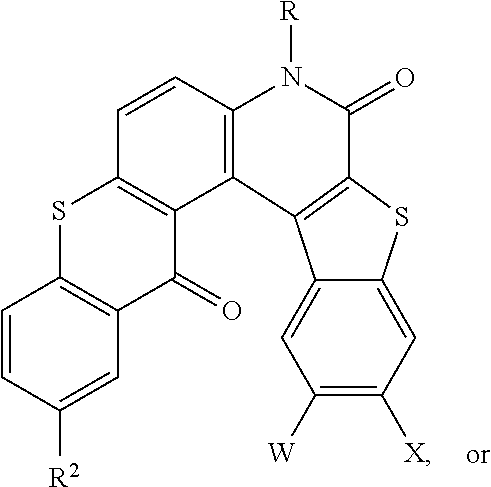
where, preferably, R2 is bromine.

to light to produce the compounds disclosed herein having a formula:

where A, R, W, X, and LG are as described herein. In the disclosed methods, the photolytic reaction typically has a yield of greater than about 80%, 85%, 90%, 95%, 96%, 97%, 98%, 99%, or 100%, after the compound has been subjected to light for a suitable period of time (e.g., for at least about 10, 30, 60, or 90 minutes). Suitable light may include light having a wavelength greater than about 350 nm and extending into the visible wavelengths of light (e.g., greater than about 360, 370, 380, 390, 400, 410, or 420 nm). In some embodiments, suitable light may include light of a wavelength between about 350-450 nm.

where A, R, LG, W, and X are as described herein.
The methods may include reacting a compound having a formula:

and a compound with a formula:


wherein R is C1-C6 alkyl,
Z is S or O,
R1, R2, R3, and R4 are each independently halogen or hydrogen,
W and X are hydrogen or —COOY, where Y is hydrogen or C1-C6 alkyl, and LG− is Cl−, PhCH2CO2 −, PhS−, PhCH2S−, PhO−, HO−, or HS−.
Such methods may include reacting:
(a) a compound having a formula:

(b) a compound having a formula:


where Z is S for thioxanthene-type chromophores or O for xanthene-type chromophores. The chromophore may be substituted at one or more positions R1-R8, for example, with a halogen. Accordingly, in the disclosed compounds the substituent A may comprise the following structure:


and derivatives and isomers thereof.


and isomers thereof. Accordingly, in the disclosed compounds the substituent A may comprise the following structure:


Accordingly, in the disclosed compounds the substituent A may comprise the following structure:

Naphthalene-type chromophores include naphthalene, IAEDANS, EDANS, and the like. Naphthalene-type chromophores may include pyrene.


In the case of benzothiophene 12 the precursor, cinnamic acid 17, was obtained by Knoevenagel condensation of 4-formyl methyl benzoate 16.12 Somewhat unusual reaction conditions were necessary for the esterification step affording 16.

The 2-nitro substituent was reduced to the

Photoproduct 26 was identified by 1H NMR spectroscopy and elemental analysis. The regiospecificity was further established, unambiguously, by 600 MHz 1H NMR COSY, which clearly showed five vicinal couplings as cross peaks for protons in the three benzenoid rings. Regioisomer 28 would have shown only four vicinal couplings in the COSY spectrum. The solubility of 26 in all solvents was relatively low, which precluded obtaining a satisfactory 13C NMR spectrum. The compound was obtainable only as a powder, despite repeated attempts to obtain crystals for structure determination using X-ray diffraction. The absorption spectrum of ester 26 showed a long wavelength maximum at 432 nm (ε=10300 M−1 cm−1) in aq dioxane containing phosphate buffer (

A pure sample of

Quantum yield determinations gave Φ=0.053 for formation of 32, which is 38% higher than Φ=0.039 found for ester 8 (LG−=Cl−).


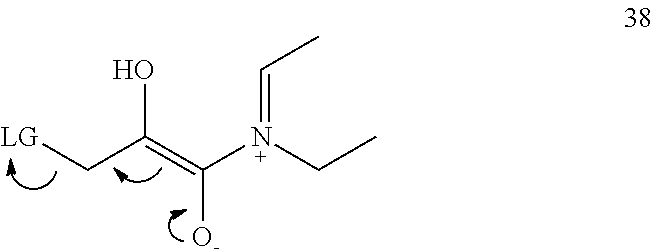
In the case of L isomer, we located an open-shell diradical transition state TSR that corresponds to the ring reopening in 1IDR leading to the Thiox reactant via a ˜10 kcal mol−1 barrier (

- 1. H.-M. Lee, D. R. Larson and D. S. Lawrence, Illuminating the chemistry of life: design, synthesis, and applications of “caged” and related photoresponsive compounds, ACS Chem. Biol. 2009, 4, 409-427 and references cited therein.
- 2. G. Mayer and A. Heckel, Biologically active Molecules with a light switch, Angew. Chem. Int. Ed. 2006, 45, 4900-4921.
- 3. D. Warther, S. Gug, A. Specht, F. Bolze, J.-F. Nicoud, A. Mourot, M. Goeldner, Two-photon uncaging: new prospects in neuroscience and cellular biology, Biorg. Med. Chem. 2010, 18, 7753-7758.
- 4. M. Sarker, T. Shahrin and M. G. Steinmetz, Photochemical eliminations involving zwitterionic intermediates generated via electrocyclic ring closure of benzothiophene carboxanilides, Org. Lett. 2011, 13, 872-875.
- 5. (a) The nitrobenzyl group has been used as a photoremovable protecting group for sulfhydryl groups.5b,c It should be noted that the expected byproduct upon photochemical release of thiol is a nitrosoarene, and in general, nitrosoarenes undergo chemical reduction by thiols.6 (b) C.-Y. Chang, T. T. Fernandez, R. Panchal and H. Bayley, Caged catalytic subunit of cAMP-dependent protein kinase, J. Am. Chem. Soc. 1998, 120, 7661-7662. (c) H. Bayley, C.-Y. Chang, W. T. Miller, B. Niblack and P. Pan, Caged peptides and proteins by targeted chemical modification, in Methods in Enzymology, 1998, 291, 117-135.
- 6. S. Montanari, C. Paradisi and G. Scorrano, Pathways of nitrosobenzene reduction by thiols in alcoholic media, J. Org. Chem. 1999, 64, 3422-3428.
- 7. A. Specht, S. Loudwig, L. Peng and M. Goeldner, p-Hydroxyphenacyl bromide as a photoremovable thiol label: a potential phototrigger for thiol-containing biomolecules, Tetrahedron Lett. 2002, 43, 8947-8950.
- 8. J. W. Walker, S. H. Gilbert, R. M. Drummond, M. Yamada, R. Sreekumar, R. E. Carraway, M. Ikebe and F. S. Fay, Signaling pathways underlying eosinophil cell motility revealed by using caged peptides”, Proc. Natl. Acad. Sci. USA, 1998, 95, 1568-1573.
- 9. (a) H. Kimura, Hydrogen sulfide: its production, release, and functions, Amino Acids, 2011, 41, 113-121. (b) M. M. Gadalla and S. H. Snyder, Hydrogen sulfide as a gasotransmitter, J. Neurochem. 2010, 113, 14-26.
- 10. J. K. Moon, J. W. Park, W. S. Lee, Y. J. Kang, H. A. Chung, M. S. Shin, and Y. J. Yoon, Synthesis of Some 2-Substituted-thioxanthones, J. Heterocyclic Chem. 1999, 36, 793-798.
- 11. W. B. Wright and H. J. Brabander, The Preparation of 3-Chlorobenzo[b]thiophene Derivatives from Cinnamic Acids, J. Heterocyclic Chem. 1971, 8, 711-714.
- 12. Z. Pechlivanidis, H. Hopf and L. Ernst, Paracyclophanes: Extending the Bridges. Synthesis, Eur. J. Org. Chem. 2009, 223-237.
- 13. R. A. Delden, J. H. Hurenkamp and B. L. Feringa, Photochemical and Thermal Isomerization Processes of a Chiral Auxiliary Based Donor—Acceptor Substituted Chiroptical Molecular Switch: Convergent Synthesis, Improved Resolution and Switching Properties, Chem. Eur. J. 2003, 9, 2845-2853.
- 14. M. G. Neumann, M. H. Gehlen, M. V. Encinas, N. S. Allen, T. Corrales, C. Peinado and F. Catalina, Photophysics and Photoreactivity of Substituted Thioxanthones, J. Chem. Soc., Faraday Transactions, 1997, 93, 1517-1521.
- 15. Y. Ilichev, M. A. Schworer and J. Wirz, Photochemical reaction mechanisms of 2-nitrobenzyl compounds: methyl ethers and caged ATP, J. Am. Chem. Soc. 2004, 126, 4581-4595.
- 16. J. W. Walker, H. Martin, F. R. Schmitt, and R. J. Barsotti, Rapid release of an □-adrenergic receptor ligand from photolabile analogues, Biochemistry, 1993, 32, 1338-1345.
- 17. K. Stensrud, J. Noh, K. Kandler, J. Wirz, D. Heger, and R. S. Givens, Competing pathways in the photo-Favorskii rearrangement and release of esters: studies on fluorinated p-hydroxyphenacyl-caged GABA and glutamate phototriggers, J. Org. Chem. 2009, 74, 5219-5227.
- 18. R. S. Givens, J. F. W. Weber, A. H. Jung and C.-H. Park, New photoprotecting groups: desyl and p-hydroxyphenacyl phosphate and carboxylate esters, Methods in Enzymology, 1998, 120, 1-29.
- 19. V. Hagen, J. Bendig, S. Frings, T. Eckardt, S. Helm, D. Reuter and U. B. Kaupp, Highly efficient and ultrafast phototriggers for cAMP and cGMP by using long-wavelength UV/Vis-activation, Angew. Chem. Int. Ed. 2001, 40, 1045-1048.
- 20. T. Furuta, S. S.-H. Wang, J. L. Dantzker, T. M. Dore, W. J. Bybee, E. M. Callaway, W. Denk and R. Y. Tsien, Proc. Natl. Acad. Sci, USA, 1999, 96, 1193-1200.
- 21. M. J. Davis, C. H. Kragor, K. G. Reddie, H. C. Wilson, Y. Zue and T. M. Dore, Substituent effects on the sensitivity of a quinoline photoremovable protecting group to one- and two-photon excitation, J. Org. Chem. 2009, 74, 1721-1729.
- 22. (a) A. V. Pinheiro, A. J. Parola, P. V. Baptista, and J. C. Lima, pH Effect on the photochemistry of 4-methylcoumarin phosphate esters: caged-phosphate case study. J. Phys. Chem. A. 2010, 114, 12795-12803. (b) R. Schmidt, D. Geissler, V. Hagen, and J. Bendig, Mechanism of photocleavage of (coumarin-4-yl)methyl esters, J. Chem. Phys. 2007, 111, 5768-5774.
- 23. V. San Miguel, C. G. Bochet, and A. del Campo, Wavelength-selective caged surfaces: how many functional levels are possible? J. Am. Chem. Soc. 2011, 133, 5380-5388.
- 24. For a review of two-photon uncaging, see H. Kasai, M. Matsuzaki, and G. C. R. Ellis-Davies, Two-Photon Uncaging Microscopy, in Imaging in Neuroscience and Development, ed. R. Yuste and A. Konnerth, Cold Spring Harbor, N.Y., 2005, pp 275-383.
- 25. (a) With arylthiols efficient quenching23a of benzophenone by hydrogen transfer results in thiyl and ketyl radicals,23b which regenerate starting materials by disproportionation more rapidly than homocoupling to pinacol and disulfide.23a-d With mesitylmercaptan and benzophenone a quantum yield of 0.1 has been reported for disulfide formation.23c We did not observe disulfide or pinacol products in our study. A computational study indicates that such disporportionation will be facile.23d An alternate mechanism for quenching is electron transfer and rapid back electron transfer, which may be more important for alkylthiols than arylthiols23b (a) J. B. Guttenplan and S. G. Cohen, Quenching and reduction of photoexcited benzophenone by thioethers and mercaptans, J. Org. Chem. 1973, 38, 2001-2007. (b) S. Inbar, H. Linschitz, and S. G. Cohen, Quenching and radical formation in the reaction of photoexcited benzophenone with thiols and thioethers (sulfides). Nanosecond flash studies. J. Am. Chem. Soc. 1982, 104, 1679-1682. (c) S. G. Cohen, A. W. Rose, P. G. Stone, A. Ehret, Competitive processes in retardation by mercaptans of photoreduction by alcohols, J. Am. Chem. Soc. 1979, 101, 1827-1832. (d) H. Cardy, E. Poquet, M. Chaillet, and J. Ollivier, Ab intio CI study of hydrogen abstraction from hydrogen and methyl sulphide by ketone triplet excited state, Chem. Phys. 1993, 79-90.
- 26. J. Beltowski, Hypoxia in the renal medulla: implications for H2S signaling, J. Pharmacol. Exp. Therapeutics, 2010, 334, 358-363.
- 27. H. Zhao, H. Wang and M. Xian, Cysteine-activated hydrogen sulfide (H2S) donors, J. Am. Chem. Soc. 2011, 133, 15-17.
- 28. (a) O. Rubio-Pons, L. Serrano-Andres, D. Burget and P. Jacques, A butterfly like motion as a clue to the photophysics of thioxanthone. J. Photochem. Photobiol. A: Chem. 2006, 179, 298-304. (b) X. Allonas, C. Ley, C. Bibaut, P. Jacques and J. P. Fouassier, Investigation of the triplet quantum yield of thioxanthone by time-resolved thermal lens spectroscopy: solvent and population lens effects, Chem. Phys. Lett. 2000, 322, 483-490.
- 29. (a) J. Seixas de Melo, L. M. Rodrigues, C. Serpa, L. G. Arnaut, I.C.F.R. Ferreira and M.-J. R. P. Queiroz, Photochemistry and Photophysics of Thienocarbazoles, Photochem. Photobiol. 2003, 77, 121-128. (b) B. Wex, B. R. Kaafarani, E. O. Danilov and D. C. Neckers, Altering the emission behavior with the turn of a thiophene ring: the photophysics of condensed ring systems of alternating benzenes and thiophenes, J. Phys. Chem. A. 2006, 110, 13754-13758.
- 30. C. Ma, M. G. Steinmetz, E. J. Kopatz, and R. Rathore, Photochemical cleavage and release of carboxylic acids from α-keto amides, J. Org. Chem. 2005, 70, 4431-4442.
- 31. C. Ma, Y. Chen, and M. G. Steinmetz, Photochemical cleavage and release of para-substituted phenols from α-keto amides. J. Org. Chem. 2006, 71, 4206-4215.
- 32. H. E. Zimmerman, Apparatus for quantitative and preparative photolysis. The Wisconsin black box, Mol. Photochem., 1971, 3, 281-92.
- 33. J. P. Perdew, K. Burke, and M. Ernzerhof, Generalized gradient approximation made simple, Phys. Rev. Lett. 1996, 77, 3865-3868.
- 34. W. J. Hehre, L. Radom, P. v. R. Schleyer, J. A. Pople, Ab Initio Molecular Orbital Theory, John Wiley and Sons, New York, 1985.
- 35. G. Scalmani and M. J. Frisch, Continuous surface charge polarizable continuum models of solvation. I. General formalism, J. Chem. Phys., 2010, 132, 114110.
- 36. J. Tomasi, B. Mennucci, and R. Cammi, Quantum mechanical continuum solvation models, Chem. Rev., 2005, 105, 2999.
- 37. J. Tomasi, B. Mennucci, and E. Cancès, The IEF version of the PCM solvation method: An overview of a new method addressed to study molecular solutes at the QM ab initio level, J. Mol. Struct. (Theochem), 1999, 464, 211.
- 38. K. Fukui, The path of chemical reactions—the IRC approach, Acc. Chem. Res. 1981, 14, 363-368.
- 39. M. J. Frisch, G. W. Trucks, H. B. Schlegel, G. E. Scuseria, M. A. Robb, J. R. Cheeseman, G. Scalmani, V. Barone, B. Mennucci, G. A. Petersson, H. Nakatsuji, M. Caricato, X. Li, H. P. Hratchian, A. F. Izmaylov, J. Bloino, G. Zheng, J. L. Sonnenberg, M. Hada, M. Ehara, K. Toyota, R. Fukuda, J. Hasegawa, M. Ishida, T. Nakajima, Y. Honda, O. Kitao, H. Nakai, T. Vreven, J. A. Montgomery, Jr., J. E. Peralta, F. Ogliaro, M. Bearpark, J. J. Heyd, E. Brothers, K. N. Kudin, V. N. Staroverov, R. Kobayashi, J. Normand, K. Raghavachari, A. Rendell, J. C. Burant, S. S. Iyengar, J. Tomasi, M. Cossi, N. Rega, J. M. Millam, M. Klene, J. E. Knox, J. B. Cross, V. Bakken, C. Adamo, J. Jaramillo, R. Gomperts, R. E. Stratmann, O. Yazyev, A. J. Austin, R. Cammi, C. Pomelli, J. W. Ochterski, R. L. Martin, K. Morokuma, V. G. Zakrzewski, G. A. Voth, P. Salvador, J. J. Dannenberg, S. Dapprich, A. D. Daniels, O. Farkas, J. B. Foresman, J. V. Ortiz, J. Cioslowski and D. J. Fox, Gaussian 09, Revision B.01, Gaussian, Inc., Wallingford Conn., 2009.
Claims (18)


Priority Applications (1)
| Application Number | Priority Date | Filing Date | Title |
|---|---|---|---|
| US13/779,141 US8703970B2 (en) | 2012-03-01 | 2013-02-27 | Compounds having photochemically removable protecting groups based on an electrocyclic reaction between a chromophore attached via an anilide group to a benzothiophene ring |
Applications Claiming Priority (2)
| Application Number | Priority Date | Filing Date | Title |
|---|---|---|---|
| US201261605406P | 2012-03-01 | 2012-03-01 | |
| US13/779,141 US8703970B2 (en) | 2012-03-01 | 2013-02-27 | Compounds having photochemically removable protecting groups based on an electrocyclic reaction between a chromophore attached via an anilide group to a benzothiophene ring |
Publications (2)
| Publication Number | Publication Date |
|---|---|
| US20130231484A1 US20130231484A1 (en) | 2013-09-05 |
| US8703970B2 true US8703970B2 (en) | 2014-04-22 |
Family
ID=49043201
Family Applications (1)
| Application Number | Title | Priority Date | Filing Date |
|---|---|---|---|
| US13/779,141 Expired - Fee Related US8703970B2 (en) | 2012-03-01 | 2013-02-27 | Compounds having photochemically removable protecting groups based on an electrocyclic reaction between a chromophore attached via an anilide group to a benzothiophene ring |
Country Status (1)
| Country | Link |
|---|---|
| US (1) | US8703970B2 (en) |
Families Citing this family (2)
| Publication number | Priority date | Publication date | Assignee | Title |
|---|---|---|---|---|
| JP2025531033A (en) | 2022-08-25 | 2025-09-19 | サノフイ | Novel substituted 2-carbonyl-benzothiophene-6-carboxylic acid derivatives, processes for their preparation and therapeutic uses thereof - Patents.com |
| CN120441417B (en) * | 2025-07-09 | 2025-09-12 | 北京理工大学 | Helical chiral polycyclic aromatic hydrocarbon compounds, open-shell compounds, and preparation methods and applications thereof |
Citations (1)
| Publication number | Priority date | Publication date | Assignee | Title |
|---|---|---|---|---|
| WO2004089529A1 (en) * | 2003-04-07 | 2004-10-21 | Universität Konstanz | Method for the intramolecular energy transfer for the cleavage of labile functional group from biomolecules and the protected biomolecules |
-
2013
- 2013-02-27 US US13/779,141 patent/US8703970B2/en not_active Expired - Fee Related
Patent Citations (1)
| Publication number | Priority date | Publication date | Assignee | Title |
|---|---|---|---|---|
| WO2004089529A1 (en) * | 2003-04-07 | 2004-10-21 | Universität Konstanz | Method for the intramolecular energy transfer for the cleavage of labile functional group from biomolecules and the protected biomolecules |
Non-Patent Citations (58)
Also Published As
| Publication number | Publication date |
|---|---|
| US20130231484A1 (en) | 2013-09-05 |
Similar Documents
| Publication | Publication Date | Title |
|---|---|---|
| Missioui et al. | Novel antioxidant quinoxaline derivative: Synthesis, crystal structure, theoretical studies, antidiabetic activity and molecular docking study | |
| Estevão et al. | Antioxidant activity of unexplored indole derivatives: Synthesis and screening | |
| Schoen et al. | A novel 3-substituted benzazepinone growth hormone secretagogue (L-692,429) | |
| CN105566276B (en) | Benzo-hexatomic ring derivative as DPP-4 inhibitor and application thereof | |
| Davies et al. | Extended rhodamine photosensitizers for photodynamic therapy of cancer cells | |
| WO2008059867A1 (en) | Novel 1,2-dihydroquinoline derivative having (substituted phenyl or substituted heterocyclic) carbonyloxy lower alkyl group and ester-introduced phenyl group as substituents | |
| Huang et al. | Rational design of phosphorescent iridium (III) complexes for selective glutathione sensing and amplified photodynamic therapy | |
| CN107459482B (en) | Nitric oxide donors, their preparation and use | |
| Hsieh et al. | Multiple fluorescent behaviors of phenothiazine-based organic molecules | |
| US8703970B2 (en) | Compounds having photochemically removable protecting groups based on an electrocyclic reaction between a chromophore attached via an anilide group to a benzothiophene ring | |
| Bera et al. | Red light active Pt (iv)–BODIPY prodrug as a mitochondria and endoplasmic reticulum targeted chemo-PDT agent | |
| Xue et al. | Enone dyes as visible photoinitiator in radical polymerization: The influence of peripheral N-alkylated (hetero) aromatic amine group | |
| CA3071534A1 (en) | Substituted fused pyrimidine compounds and uses thereof | |
| WO2005100345A1 (en) | Thio-substituted tricyclic and bicyclic aromatic methanesulfinyl derivatives | |
| CN117886772B (en) | Phenothiazine leucophotocage compounds, their synthesis methods and applications | |
| Xu et al. | Rational design of β-carboline as an efficient type I/II photosensitizer to enable hypoxia-tolerant chemo-photodynamic therapy | |
| Sarker et al. | Photochemical electrocyclic ring closure and leaving group expulsion from N-(9-oxothioxanthenyl) benzothiophene carboxamides | |
| ES2373667T3 (en) | ARILMETANOSULFINILO DERIVATIVES SUBSTITUTED WITH AN UNCLE GROUP. | |
| Class et al. | Patent application title: COMPOUNDS HAVING PHOTOCHEMICALLY REMOVABLE PROTECTING GROUPS BASED ON AN ELECTROCYCLIC REACTION BETWEEN A CHROMOPHORE ATTACHED VIA AN ANILIDE GROUP TO A BENZOTHIOPHENE RING Inventors: Mark G. Steinmetz (Whitefish Bay, WI, US) Majher I. Sarker (Milwaukee, WI, US) Tasnuva Shahrin (Milwaukee, WI, US) Assignees: Marquette University | |
| US7820833B2 (en) | Dithio compounds | |
| CN112062713B (en) | ALA-HPO hybrid derivative with iron chelation and PDT activity and preparation method and application thereof | |
| CN1944424B (en) | An aromatic formyl piperazine compound and its preparation method and application in pharmacy | |
| CN116332901B (en) | A raloxifene derivative with room temperature phosphorescence characteristics and its application | |
| Frelek et al. | Circular dichroism studies on absolute configuration assignment of peptidomimetics with a terminal chiral 3-arylpropionic acid unit | |
| CN101362725A (en) | Preparation method and application of ligustrazine guanidine derivatives |
Legal Events
| Date | Code | Title | Description |
|---|---|---|---|
| AS | Assignment |
Owner name: MARQUETTE UNIVERSITY, WISCONSIN Free format text: ASSIGNMENT OF ASSIGNORS INTEREST;ASSIGNORS:STEINMETZ, MARK G.;SARKER, MAJHER I.;SHAHRIN, TASNUVA;REEL/FRAME:030068/0735 Effective date: 20130314 |
|
| SULP | Surcharge for late payment | ||
| FEPP | Fee payment procedure |
Free format text: MAINTENANCE FEE REMINDER MAILED (ORIGINAL EVENT CODE: REM.) |
|
| LAPS | Lapse for failure to pay maintenance fees |
Free format text: PATENT EXPIRED FOR FAILURE TO PAY MAINTENANCE FEES (ORIGINAL EVENT CODE: EXP.) |
|
| STCH | Information on status: patent discontinuation |
Free format text: PATENT EXPIRED DUE TO NONPAYMENT OF MAINTENANCE FEES UNDER 37 CFR 1.362 |
|
| FP | Lapsed due to failure to pay maintenance fee |
Effective date: 20180422 |