US8687903B1 - Depthmap compression using a primitive - Google Patents
Depthmap compression using a primitive Download PDFInfo
- Publication number
- US8687903B1 US8687903B1 US14/022,127 US201314022127A US8687903B1 US 8687903 B1 US8687903 B1 US 8687903B1 US 201314022127 A US201314022127 A US 201314022127A US 8687903 B1 US8687903 B1 US 8687903B1
- Authority
- US
- United States
- Prior art keywords
- depthmap
- primitive
- pixels
- transformed
- pixel
- Prior art date
- Legal status (The legal status is an assumption and is not a legal conclusion. Google has not performed a legal analysis and makes no representation as to the accuracy of the status listed.)
- Expired - Fee Related
Links
Images


Classifications
-
- H—ELECTRICITY
- H04—ELECTRIC COMMUNICATION TECHNIQUE
- H04N—PICTORIAL COMMUNICATION, e.g. TELEVISION
- H04N19/00—Methods or arrangements for coding, decoding, compressing or decompressing digital video signals
- H04N19/50—Methods or arrangements for coding, decoding, compressing or decompressing digital video signals using predictive coding
- H04N19/597—Methods or arrangements for coding, decoding, compressing or decompressing digital video signals using predictive coding specially adapted for multi-view video sequence encoding
Definitions
- the subject technology generally relates to depthmaps and, in particular, relates to systems and methods for compressing depthmaps using primitives.
- Depthmaps present challenges for applications in a client-server environment. Depthmaps tend to be relatively large and therefore consume valuable bandwidth when being served across a network. Depthmaps may also require the client to have a proprietary decoder to retrieve depthmap data from the depthmaps after receipt.
- a system for compressing a depthmap comprises an encoding module configured to determine a minimum value and a maximum value of a depthmap.
- the encoding module is further configured to normalize the depthmap based on the minimum value, the maximum value, and an encoding model.
- the normalized depthmap comprises a scalar value for each pixel of the depthmap.
- the system also comprises a compression module configured to compress the normalized depthmap.
- a computer-implemented method for compressing a depthmap comprises determining a minimum value and a maximum value of a depthmap.
- the method also comprises normalizing the depthmap based on the minimum value, the maximum value, and an encoding model.
- the normalized depthmap comprises a scalar value for each pixel of the depthmap.
- the method also comprises compressing the normalized depthmap.
- a system for compressing a depthmap comprises an encoding module configured to determine a minimum value and a maximum value of a depthmap.
- the encoding module is further configured to normalize the depthmap based on the minimum value, the maximum value, and an encoding model.
- the normalized depthmap comprises a scalar value for each pixel of the depthmap.
- the encoding model comprises at least one of a linear model and a nonlinear model.
- the system also comprises a compression module configured to compress the normalized depthmap using Joint Photographic Experts Group (JPEG) compression.
- JPEG Joint Photographic Experts Group
- the system also comprises a transmission module configured to combine metadata with the compressed normalized depthmap into a transmission file.
- the metadata comprises at least one of the minimum value, the maximum value, and a type of the encoding model.
- a system for compressing a depthmap comprises an encoding module configured to group a plurality of pixels of a depthmap. Each grouped pixel of the depthmap comprises a depth value and is associated with an optic ray aligned with a camera capturing the depthmap. Each of the plurality of depth values is within a predetermined offset from one another.
- the encoding module is further configured to generate a primitive based on the grouped plurality of pixels.
- the primitive comprises an identification value.
- Each of the plurality of optic rays intersects a corresponding portion of the primitive.
- the encoding module is further configured to transform the depthmap based on the primitive. Each grouped pixel of the transformed depthmap comprises the identification value.
- the system also comprises a compression module configured to compress the transformed depthmap using a lossless image compression scheme.
- a computer-implemented method for compressing a depthmap comprises grouping a plurality of pixels of a depthmap. Each grouped pixel of the depthmap comprises a depth value and is associated with an optic ray aligned with a camera capturing the depthmap. Each of the plurality of depth values is within a predetermined offset from one another.
- the method also comprises generating a primitive based on the grouped plurality of pixels.
- the primitive comprises an identification value.
- Each of the plurality of optic rays intersects a corresponding portion of the primitive.
- the method also comprises transforming the depthmap based on the primitive. Each grouped pixel of the transformed depthmap comprises the identification value.
- the method also comprises compressing the transformed depthmap using a lossless image compression scheme.
- a machine-readable medium encoded with executable instructions for compressing a depthmap comprises code for grouping a plurality of pixels of a depthmap. Each grouped pixel of the depthmap comprises a depth value and is associated with an optic ray aligned with a camera capturing the depthmap. Each of the plurality of depth values is within a predetermined offset from one another.
- the instructions also comprise code for generating a primitive based on the grouped plurality of pixels.
- the primitive comprises an identification value.
- Each of the plurality of optic rays intersects a corresponding portion of the primitive.
- the instructions also comprise code for transforming the depthmap based on the primitive. Each grouped pixel of the transformed depthmap comprises the identification value.
- the instructions also comprise code for compressing the transformed depthmap using a lossless image compression scheme.
- the instructions also comprise code for combining metadata with the compressed transformed depthmap into a transmission file.
- the metadata comprises at least one of the identification value, identification information of each of the grouped plurality of pixels, and one or more parameters defining the primitive.
- a computer-implemented method for decoding a compressed depthmap comprises receiving a compressed version of a depthmap and decompressing the compressed version of the depthmap to generate a decompressed version of the depthmap.
- the decompressed version of the depthmap is normalized based on a minimum value of an original version of the depthmap, a maximum value of the original version of the depthmap, and an encoding model.
- the normalized depthmap comprises a scalar value for each pixel of the original version of the depthmap.
- the method also comprises decoding the normalized depthmap to generate the original version of the depthmap.
- a computer-implemented method for decoding a compressed depthmap comprises receiving a compressed version of a depthmap and decompressing the compressed version of the depthmap using a lossless image decompression scheme to generate a decompressed version of the depthmap.
- the decompressed version of the depthmap is transformed based on a primitive comprising an identification value.
- the primitive is generated based on a grouped plurality of pixels of an original version of the depthmap.
- Each grouped pixel of the original version of the depthmap comprises a depth value and is associated with an optic ray aligned with a camera capturing the original version of the depthmap.
- Each of the plurality of depth values is within a predetermined offset from one another.
- Each of the plurality of optic rays intersects a corresponding portion of the primitive.
- Each grouped pixel of the transformed depthmap comprises the identification value.
- the method also comprises decoding the transformed depthmap to generate the original version of the depthmap.
- FIG. 1 illustrates an example of a system for compressing a depthmap, in accordance with various aspects of the subject technology.
- FIG. 2 illustrates an example of a method for compressing a depthmap, in accordance with various aspects of the subject technology.
- FIG. 3 illustrates an example of a depthmap, in accordance with various aspects of the subject technology.
- FIGS. 4A , 4 B, and 4 C illustrate a comparison between a linear encoding model and a nonlinear encoding model when applied to a perspective image, in accordance with various aspects of the subject technology.
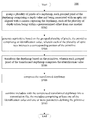
- FIG. 5 illustrates an example of a method for compressing a depthmap using a primitive, in accordance with various aspects of the subject technology.
- FIG. 6 illustrates an example of a camera being used to capture an image of a building to generate a depthmap, in accordance with various aspects of the subject technology.
- FIG. 7 is a block diagram illustrating components of a controller, in accordance with various aspects of the subject technology.
- a depthmap may be used to supplement the software-based map by providing depth information of the one or more structures.
- the software-based map is typically delivered over a network from a server to a client device (e.g., a laptop computer, a desktop computer, a netbook, a mobile phone, a tablet, etc.) so that the software-based map can be displayed on the client device (e.g., using a browser or some other suitable user interface).
- a depthmap is typically a relatively large file, and therefore may consume valuable bandwidth when being served across the network.
- FIG. 1 illustrates an example of system 100 for compressing a depthmap, in accordance with various aspects of the subject technology.
- System 100 comprises encoding module 102 , compression module 104 , and transmission module 106 . These modules may be in communication with one another. In some aspects, the modules may be implemented in software (e.g., subroutines and code).
- some or all of the modules may be implemented in hardware (e.g., an Application Specific Integrated Circuit (ASIC), a Field Programmable Gate Array (FPGA), a Programmable Logic Device (PLD), a controller, a state machine, gated logic, discrete hardware components, or any other suitable devices) and/or a combination of both. Additional features and functions of these modules according to various aspects of the subject technology are further described in the present disclosure.
- ASIC Application Specific Integrated Circuit
- FPGA Field Programmable Gate Array
- PLD Programmable Logic Device
- controller e.g., a state machine, gated logic, discrete hardware components, or any other suitable devices
- FIG. 2 illustrates an example of method 200 for compressing a depthmap, in accordance with various aspects of the subject technology.
- FIG. 3 illustrates an example of such a depthmap.
- Depthmap 300 in FIG. 3 comprises one or more pixels 302 , as depicted by each square within depthmap 300 .
- a depth value may be stored in each of the one or more pixels 302 .
- Each depth value may be a representation of a distance between a particular point (e.g., a three-dimensional point) associated with a corresponding pixel 302 and a camera that captured depthmap 300 .
- aspects of the subject technology utilize a normalized depthmap format that may be suitable for compression and be quickly decompressed/decoded by a client device.
- a minimum depth e.g., a near value in relation to the camera
- a maximum depth e.g., a far value in relation to the camera
- a scalar value may be generated for each pixel in the depthmap based on an encoding model. The scalar value may then be used to interpolate the depth between the minimum and maximum depths for a respective pixel.
- the normalized depthmap format may also be referred to as a range depthmap format.
- the normalized depthmap may then be compressed using a conventional compression scheme so that the client device can quickly decompress/decode the compressed normalized depthmap.
- a conventional compression scheme is Joint Photographic Experts Group (JPEG) compression, which is a lossy compression scheme that involves quantization errors.
- encoding module 102 may determine a minimum value and a maximum value of the depthmap.
- the minimum value of depthmap 300 in FIG. 3 may be the depth value stored in the one or more pixels 302 that has a value nearest the camera (e.g., the lowest value from among the depth values associated with the one or more pixels 302 ).
- the maximum value of depthmap 300 may be the depth value stored in the one or more pixels 302 that has a value farthest away from the camera (e.g., the highest value from among the depth values associated with the one or more pixels 302 ).
- encoding module 102 may then normalize the depthmap based on the minimum value, the maximum value, and the encoding model.
- the normalized depthmap may comprise the scalar value for each pixel of the depthmap. As discussed above, the scalar value is used to interpolate the depth between the minimum value and the maximum value for a respective pixel.
- the scalar value may be computed differently depending on the encoding model that is used to generate the normalized depthmap.
- the encoding model may be at least one of a linear model and a nonlinear model.
- d is a depth value of a corresponding pixel of the depthmap
- min is the minimum value
- max is the maximum value
- d is a depth value of a corresponding pixel of the depthmap
- min is the minimum value
- max is the maximum value
- the encoding model may be selected based on the type of image that the depthmap was generated from.
- the linear model may be used for orthographic images. That is, the linear model may be used if the depthmap is generated from an orthographic image (e.g., captured by an orthographic camera).
- the orthographic image provides an orthographic view of a scene in which orthographic rays are parallel to one another.
- the normalized depthmap is compressed (e.g., using JPEG compression)
- any quantization error may be spread evenly throughout the full depth range between the minimum value and the maximum value. This is the desired behavior for an orthographic camera where, due to the projection model being used, the final screen coordinates of a particular three-dimensional (3D) point do not depend on the 3D point's depth along a camera viewing direction.
- the nonlinear model may be used for perspective images (e.g., captured by perspective cameras).
- perspective cameras the linear model may not be appropriate, since the final screen coordinates of a particular 3D point do depend on the 3D point's depth along the camera viewing direction (e.g., perspective divide).
- the nonlinear model (e.g., a perspective model) may be used for perspective images.
- the nonlinear model may be used if the depthmap is generated from a perspective image.
- the perspective image provides a perspective view of a scene in which perspective rays converge at a single source (e.g., at the perspective camera).
- FIGS. 4A , 4 B, and 4 C illustrate a comparison between the linear model and the nonlinear model when applied to a perspective image, in accordance with various aspects of the subject technology.
- FIG. 4A illustrates an example of a perspective image.
- FIGS. 4B and 4C illustrate examples of respective depthmaps generated from the perspective image shown in FIG. 4A .
- the depthmap in FIG. 4B was encoded using the nonlinear model, while the depthmap in FIG. 4C was encoded using the linear model.
- the depthmap using the nonlinear model e.g., FIG. 4B
- the depthmap using the linear model is more accurate in conveying depth information of the perspective image than is the depthmap using the linear model (e.g., FIG. 4C ).
- the scalar value for each pixel of the depthmap generated from either the linear model or the nonlinear model may be greater than or equal to zero, in addition to being less than or equal to 1.
- suitable values for the scalar value may be used provided that the scalar values of the depthmap are normalized with respect to the depth values.
- compression module 104 may compress the normalized depthmap.
- a conventional compression scheme may be used so that the client device can quickly decompress/decode the compressed normalized depthmap without having to rely on a proprietary decoder.
- compression module 104 may compress the normalized depthmap using JPEG compression (e.g., JPEG 90-95 grayscale compression).
- Client devices commonly include decoders capable of decoding JPEG files to retrieve compressed data.
- compression module 104 may multiply the scalar value for each pixel of the depthmap by 255 to generate a compression value. The compression values may then be rounded to the nearest integer to satisfy the requirements of JPEG compression.
- JPEG compression has been described, other compression schemes supported by the client device (e.g., by a browser of the client device) may be used to compress the normalized depthmap, such as a portable network graphics (PNG) compression scheme.
- PNG portable network graphics
- a size of the compressed normalized depthmap is less than 1/10th of a size of the original depthmap.
- the normalized depthmap may be compressed to other sizes depending on the size of the normalized depthmap, bandwidth limitations, available compression schemes supported by the client device, the desired size of the compressed normalized depthmap, etc.
- the compressed normalized depthmap may then be transmitted to the client device.
- This information may include the minimum value, the maximum value, a type of the encoding model that was used to encode the depthmap (e.g., either the linear encoding model or the nonlinear model), and other suitable information that can be used by the client device to decode the compressed normalized depthmap.
- Transmission module 106 may package this information as metadata along with the compressed normalized depthmap into a single file so that the file may be transmitted to the client device. According to step S 208 , transmission module 106 may combine the metadata with the compressed normalized depthmap into a transmission file.
- This metadata may comprise at least one of the minimum value, the maximum value, a type of the encoding model, and a type of compression scheme associated with the compressed normalized depthmap.
- the transmission file may then be transmitted over the network to the client device.
- the transmission file may be a JavaScript Object Notation (JSON) file (e.g., a gziped base64 JSON file).
- JSON JavaScript Object Notation
- the client device may access the depthmap data (e.g., view and/or use the contents of the depthmap data) from the compressed normalized depthmap.
- the client device may access the depthmap data without explicitly decompressing the compressed normalized depthmap.
- the depthmap may be encoded in a format such that each pixel of the depthmap defines an index to a primitive, such as a three-dimensional (3D) plane. Encoding the indexes instead of the actual depth values of the depthmap may allow for greater compression of the depthmap.
- the primitive may then be used to define an operation to obtain the depth values associated with the pixels of the depthmap. For example, each pixel may be associated with an optic ray that intersects with a corresponding portion of the primitive. With this intersection information as well as parameters of the primitive, the depth values of the depthmap may be obtained.
- FIG. 5 illustrates an example of method 500 for compressing a depthmap using a primitive, in accordance with various aspects of the subject technology.
- encoding module 102 may group a plurality of pixels of a depthmap, such as depthmap 300 in FIG. 3 .
- a depth value may be stored in each of the one or more pixels 302 .
- Each depth value may be a representation of a distance between a particular point (e.g., a three-dimensional point) associated with a corresponding pixel 302 and a camera that captured depthmap 300 .
- FIG. 6 illustrates an example of camera 602 being used to capture an image of building 604 to generate a depthmap, in accordance with various aspects of the subject technology.
- the distance between point 610 and camera 602 along optic ray 606 may be stored as a depth value in a pixel associated with point 610 .
- the distance between point 612 and camera 602 along optic ray 608 may be stored as a depth value in a pixel associated with point 612 .
- the points on side 614 of building 604 (including points 610 and 612 ) may be roughly the same distance away from camera 602 as one another. As a result, the pixels of the depthmap associated with the points on side 614 may be grouped together.
- These grouped pixels may have depth values that are roughly the same as one another.
- each of these depth values may be within a predetermined offset from one another.
- the predetermined offset may be less than ten percent of a maximum one of the depth values associated with side 614 .
- the predetermined offset may be greater or smaller depending on the range of the depth values, the desired accuracy of the depthmap, the desired compression of the depthmap, etc.
- each of the grouped pixels displaying side 614 may be associated with a respective optic ray that is aligned with camera 602 (e.g., optic rays 608 and 606 ).
- encoding module 102 may generate a primitive based on the grouped plurality of pixels from step S 502 .
- the primitive may be a plane that matches side 614 of building 604 in FIG. 6 .
- the primitive may be shaped such that each of the plurality of optic rays associated with the pixels of side 614 (e.g., optic rays 606 and 608 ) may intersect a corresponding portion of the primitive.
- the primitive may be a plane, the primitive may also comprise other geometric shapes (e.g., an ellipsoid) that can be parameterized.
- the primitive may be a geometric shape that can be described by a set of equations. The set of equations, for example, may be used later at the client device to obtain the depth values associated with side 614 of building 604 .
- the primitive may comprise an identification value for identifying the primitive.
- the primitive may comprise an identification value of “1,” which may allow each pixel of the depthmap to index to this particular primitive by storing the identification value of “1.”
- each primitive may have a different identification value from one another (e.g., “2,” “3,” “4,” and so on).
- encoding module 102 may transform the depthmap based on the primitive.
- Each grouped pixel of the transformed depthmap may comprise the identification value. For example, as discussed above, if the identification value for the primitive is “1,” then each pixel associated with side 614 may store a value of “1” in reference to the primitive instead of the actual depth value. As a result, the transformed depthmap may be reduced in size compared to the original depthmap.
- compression module 104 may compress the transformed depthmap.
- the transformed depthmap may be compressed using a lossless image compression scheme such as a portable network graphics (PNG) compression scheme. This type of compression can be quickly decompressed/decoded by the client device without having to rely on a proprietary decoder.
- a size of the compressed transformed depthmap is less than 1/10th of a size of the original depthmap.
- the transformed depthmap may be compressed to other sizes depending on the size of the transformed depthmap, bandwidth limitations, available compression schemes supported by the client device, the desired size of the compressed transformed depthmap, etc.
- the compressed transformed depthmap may then be transmitted to the client device.
- This information may include the identification value, one or more parameters defining the primitive (e.g., a set of equations defining the primitive), and other suitable information that can be used by the client device to decode the compressed transformed depthmap.
- Transmission module 106 may package this information as metadata along with the compressed transformed depthmap into a single file so that the file may be transmitted to the client device. According to step S 510 , transmission module 106 may combine the metadata with the compressed transformed depthmap into a transmission file.
- This metadata may comprise at least one of the identification value, one or more parameters defining the primitive, and a type of compression scheme associated with the compressed transformed depthmap. If more than one primitive is used, the metadata may comprise a list of the plurality of primitives along with their respective identification values.
- the transmission file may then be transmitted over the network to the client device.
- the transmission file may be a JavaScript Object Notation (JSON) file (e.g., a gziped base64 JSON file).
- JSON JavaScript Object Notation
- the metadata may allow the client device to decode the compressed transformed depthmap into the original depthmap. For example, using the primitive parameter information as well as the intersection of the primitive with each optic ray of the grouped pixels of the depthmap, the depth values can be computed along each of the optic rays.
- the client device may access the depthmap data (e.g., view and/or use the contents of the depthmap data) from the compressed transformed depthmap.
- the client device may access the depthmap data without explicitly decompressing the compressed transformed depthmap.
- FIG. 7 is a block diagram illustrating components of controller 700 , in accordance with various aspects of the subject technology.
- Controller 700 comprises processor module 704 , storage module 710 , input/output (I/O) module 708 , memory module 706 , and bus 702 .
- Bus 702 may be any suitable communication mechanism for communicating information.
- Processor module 704 , storage module 710 , I/O module 708 , and memory module 706 are coupled with bus 702 for communicating information between any of the modules of controller 700 and/or information between any module of controller 700 and a device external to controller 700 .
- information communicated between any of the modules of controller 700 may include instructions and/or data.
- bus 702 may be a universal serial bus.
- bus 702 may provide Ethernet connectivity.
- processor module 704 may comprise one or more processors, where each processor may perform different functions or execute different instructions and/or processes. For example, one or more processors may execute instructions for operating system 100 , one or more processors may execute instructions for compressing a depthmap (e.g., methods 200 and 500 ), and one or more processors may execute instructions for input/output functions.
- processors may execute instructions for operating system 100
- processors may execute instructions for compressing a depthmap (e.g., methods 200 and 500 )
- processors may execute instructions for input/output functions.
- Memory module 706 may be random access memory (“RAM”) or other dynamic storage devices for storing information and instructions to be executed by processor module 704 . Memory module 706 may also be used for storing temporary variables or other intermediate information during execution of instructions by processor 704 . In some aspects, memory module 706 may comprise battery-powered static RAM, which stores information without requiring power to maintain the stored information. Storage module 710 may be a magnetic disk or optical disk and may also store information and instructions. In some aspects, storage module 710 may comprise hard disk storage or electronic memory storage (e.g., flash memory). In some aspects, memory module 706 and storage module 710 are both a machine-readable medium.
- RAM random access memory
- Memory module 706 may also be used for storing temporary variables or other intermediate information during execution of instructions by processor 704 .
- memory module 706 may comprise battery-powered static RAM, which stores information without requiring power to maintain the stored information.
- Storage module 710 may be a magnetic disk or optical disk and may also store information and instructions. In some aspects, storage module 710 may comprise hard
- Controller 700 is coupled via I/O module 708 to a user interface for providing information to and receiving information from an operator of system 100 .
- the user interface may be a cathode ray tube (“CRT”) or LCD monitor for displaying information to an operator.
- the user interface may also include, for example, a keyboard or a mouse coupled to controller 700 via I/O module 708 for communicating information and command selections to processor module 704 .
- processor module 704 executes one or more sequences of instructions contained in memory module 706 and/or storage module 710 .
- instructions may be read into memory module 706 from another machine-readable medium, such as storage module 710 .
- instructions may be read directly into memory module 706 from I/O module 708 , for example from an operator of system 100 via the user interface.
- Execution of the sequences of instructions contained in memory module 706 and/or storage module 710 causes processor module 704 to perform methods to compress a depthmap.
- a computational algorithm for compressing a depthmap may be stored in memory module 706 and/or storage module 710 as one or more sequences of instructions.
- Information such as the minimum value, the maximum value, the depth values, the scalar values, the metadata, the primitive, the identification value, the one or more parameters defining the primitive, and other suitable information may be communicated from processor module 704 to memory module 706 and/or storage module 710 via bus 702 for storage.
- the information may be communicated from processor module 704 , memory module 706 , and/or storage module 710 to I/O module 708 via bus 702 .
- the information may then be communicated from I/O module 708 to an operator of system 100 via the user interface.
- processors in a multi-processing arrangement may also be employed to execute the sequences of instructions contained in memory module 706 and/or storage module 710 .
- hard-wired circuitry may be used in place of or in combination with software instructions to implement various aspects of the subject disclosure.
- aspects of the subject disclosure are not limited to any specific combination of hardware circuitry and software.
- machine-readable medium refers to any medium that participates in providing instructions to processor module 704 for execution. Such a medium may take many forms, including, but not limited to, non-volatile media, and volatile media.
- Non-volatile media include, for example, optical or magnetic disks, such as storage module 710 .
- Volatile media include dynamic memory, such as memory module 706 .
- Machine-readable media or computer-readable media include, for example, floppy disk, a flexible disk, hard disk, magnetic tape, any other magnetic medium, a CD-ROM, DVD, any other optical medium, punch cards, paper tape, any other physical mediums with patterns of holes, a RAM, a PROM, an EPROM, a FLASH EPROM, any other memory chip or cartridge, or any other medium from which a processor can read.
- the system includes an encoding module configured to group a plurality of pixels of a depthmap. Each grouped pixel of the depthmap may include a depth value and be associated with an optic ray aligned with a camera capturing the depthmap. Each of the plurality of depth values may be within a predetermined offset from one another.
- the encoding module may further be configured to generate a primitive based on the grouped plurality of pixels, the primitive comprising an identification value, wherein each of the plurality of optic rays intersects a corresponding portion of the primitive.
- the encoding module may further be configured to transform the depthmap based on the primitive, wherein each grouped pixel of the transformed depthmap comprises the identification value.
- the system may also include a compression module configured to compress the transformed depthmap using a lossless image compression scheme.
- the system further includes a transmission module configured to combine metadata with the compressed transformed depthmap into a transmission file, the metadata comprising at least one of the identification value and one or more parameters defining the primitive.
- the transmission file may be a JavaScript Object Notation (JSON) file.
- JSON JavaScript Object Notation
- the primitive comprises a geometric shape.
- the geometric shape may include at least one of a plane and an ellipsoid.
- the predetermined offset is less than ten percent of a maximum one of the plurality of depth values.
- the lossless image compression scheme comprises a portable network graphics (PNG) compression scheme.
- PNG portable network graphics
- a size of the compressed transformed depthmap is less than 1/10th of a size of the original depthmap.
- Various aspects of the subject technology relate to a computer-implemented method for compressing a depthmap.
- the method includes grouping a plurality of pixels of a depthmap, each grouped pixel of the depthmap comprising a depth value and being associated with an optic ray aligned with a camera capturing the depthmap, each of the plurality of depth values being within a predetermined offset from one another, generating a primitive based on the grouped plurality of pixels, the primitive comprising an identification value, wherein each of the plurality of optic rays intersects a corresponding portion of the primitive, transforming the depthmap based on the primitive, wherein each grouped pixel of the transformed depthmap comprises the identification value, and compressing the transformed depthmap using a lossless image compression scheme.
- the method further includes combining metadata with the compressed transformed depthmap into a transmission file, the metadata comprising at least one of the identification value, identification information of each of the grouped plurality of pixels, and one or more parameters defining the primitive.
- the transmission file may be a JavaScript Object Notation (JSON) file.
- JSON JavaScript Object Notation
- the primitive may include a geometric shape.
- the geometric shape may include at least one of a plane and an ellipsoid.
- the predetermined offset may be less than ten percent of a maximum one of the plurality of depth values.
- the lossless image compression scheme may be a portable network graphics (PNG) compression scheme.
- a size of the compressed transformed depthmap may be less than 1/10th of a size of the original depthmap.
- Various aspects of the subject technology relate to a machine-readable medium encoded with executable instructions for compressing a depthmap.
- the instructions include code for grouping a plurality of pixels of a depthmap. Each grouped pixel of the depthmap may comprise a depth value and being associated with an optic ray aligned with a camera capturing the depthmap. Each of the plurality of depth values may be within a predetermined offset from one another.
- the instructions may further include code for generating a primitive based on the grouped plurality of pixels, the primitive comprising an identification value. Each of the plurality of optic rays may intersect a corresponding portion of the primitive.
- the instructions may further include code for transforming the depthmap based on the primitive, wherein each grouped pixel of the transformed depthmap comprises the identification value, compressing the transformed depthmap using a lossless image compression scheme, and combining metadata with the compressed transformed depthmap into a transmission file.
- the metadata may include at least one of the identification value, identification information of each of the grouped plurality of pixels, and one or more parameters defining the primitive.
- the lossless image compression scheme may include a portable network graphics (PNG) compression scheme.
- Various aspects of the subject technology relate to a computer-implemented method for decoding a compressed depthmap.
- the method includes receiving a compressed version of a depthmap, decompressing the compressed version of the depthmap using a lossless image decompression scheme to generate a decompressed version of the depthmap, wherein the decompressed version of the depthmap is transformed based on a primitive comprising an identification value, the primitive being generated based on a grouped plurality of pixels of an original version of the depthmap, and decoding the transformed depthmap to generate the original version of the depthmap.
- Each grouped pixel of the original version of the depthmap may comprise a depth value and is associated with an optic ray aligned with a camera capturing the original version of the depthmap.
- Each of the plurality of depth values may be within a predetermined offset from one another.
- Each of the plurality of optic rays may intersect a corresponding portion of the primitive.
- Each grouped pixel of the transformed depthmap may comprise the identification value.
- the method further includes receiving a transmission file, the transmission file comprising metadata and the compressed version of the depthmap.
- the metadata may include at least one of the identification value, identification information of each of the grouped plurality of pixels, one or more parameters defining the primitive, and a type of compression scheme associated with the compressed version of the depthmap.
- the transformed depthmap is decoded based on the metadata.
- the method may further include accessing the original version of the depthmap using the metadata.
- the lossless image decompression scheme comprises a portable network graphics (PNG) decompression scheme.
- the primitive may comprise a geometric shape.
- the predetermined offset may be less than ten percent of a maximum one of the plurality of depth values.
- a phrase such as “an aspect” does not imply that such aspect is essential to the subject technology or that such aspect applies to all configurations of the subject technology.
- a disclosure relating to an aspect may apply to all configurations, or one or more configurations.
- An aspect may provide one or more examples of the disclosure.
- a phrase such as an “aspect” may refer to one or more aspects and vice versa.
- a phrase such as an “embodiment” does not imply that such embodiment is essential to the subject technology or that such embodiment applies to all configurations of the subject technology.
- a disclosure relating to an embodiment may apply to all embodiments, or one or more embodiments.
- An embodiment may provide one or more examples of the disclosure.
- a phrase such an “embodiment” may refer to one or more embodiments and vice versa.
- a phrase such as a “configuration” does not imply that such configuration is essential to the subject technology or that such configuration applies to all configurations of the subject technology.
- a disclosure relating to a configuration may apply to all configurations, or one or more configurations.
- a configuration may provide one or more examples of the disclosure.
- a phrase such as a “configuration” may refer to one or more configurations and vice versa.
Landscapes
- Engineering & Computer Science (AREA)
- Multimedia (AREA)
- Signal Processing (AREA)
- Compression Or Coding Systems Of Tv Signals (AREA)
Abstract
Description
Claims (20)
Priority Applications (1)
| Application Number | Priority Date | Filing Date | Title |
|---|---|---|---|
| US14/022,127 US8687903B1 (en) | 2011-08-16 | 2013-09-09 | Depthmap compression using a primitive |
Applications Claiming Priority (3)
| Application Number | Priority Date | Filing Date | Title |
|---|---|---|---|
| US201161524303P | 2011-08-16 | 2011-08-16 | |
| US13/303,095 US8553998B1 (en) | 2011-08-16 | 2011-11-22 | Depthmap compression using a primitive |
| US14/022,127 US8687903B1 (en) | 2011-08-16 | 2013-09-09 | Depthmap compression using a primitive |
Related Parent Applications (1)
| Application Number | Title | Priority Date | Filing Date |
|---|---|---|---|
| US13/303,095 Continuation US8553998B1 (en) | 2011-08-16 | 2011-11-22 | Depthmap compression using a primitive |
Publications (1)
| Publication Number | Publication Date |
|---|---|
| US8687903B1 true US8687903B1 (en) | 2014-04-01 |
Family
ID=49262533
Family Applications (2)
| Application Number | Title | Priority Date | Filing Date |
|---|---|---|---|
| US13/303,095 Expired - Fee Related US8553998B1 (en) | 2011-08-16 | 2011-11-22 | Depthmap compression using a primitive |
| US14/022,127 Expired - Fee Related US8687903B1 (en) | 2011-08-16 | 2013-09-09 | Depthmap compression using a primitive |
Family Applications Before (1)
| Application Number | Title | Priority Date | Filing Date |
|---|---|---|---|
| US13/303,095 Expired - Fee Related US8553998B1 (en) | 2011-08-16 | 2011-11-22 | Depthmap compression using a primitive |
Country Status (1)
| Country | Link |
|---|---|
| US (2) | US8553998B1 (en) |
Cited By (3)
| Publication number | Priority date | Publication date | Assignee | Title |
|---|---|---|---|---|
| WO2016099901A1 (en) * | 2014-12-17 | 2016-06-23 | Microsoft Technology Licensing, Llc | Low power dma snoop and skip |
| WO2016099900A1 (en) * | 2014-12-17 | 2016-06-23 | Microsoft Technology Licensing, Llc | Low power dma labeling |
| US9747225B2 (en) | 2015-05-05 | 2017-08-29 | Microsoft Technology Licensing, Llc | Interrupt controller |
Families Citing this family (2)
| Publication number | Priority date | Publication date | Assignee | Title |
|---|---|---|---|---|
| CN104079941B (en) * | 2013-03-27 | 2017-08-25 | 中兴通讯股份有限公司 | A kind of depth information decoding method, device and Video processing playback equipment |
| CN110956670A (en) * | 2019-11-18 | 2020-04-03 | 中国航空工业集团公司西安航空计算技术研究所 | Multi-mode self-adaptive Z value compression algorithm based on depth migration |
Citations (6)
| Publication number | Priority date | Publication date | Assignee | Title |
|---|---|---|---|---|
| US5870097A (en) | 1995-08-04 | 1999-02-09 | Microsoft Corporation | Method and system for improving shadowing in a graphics rendering system |
| US7158656B2 (en) | 1999-03-08 | 2007-01-02 | Vulcan Patents Llc | Three dimensional object pose estimation which employs dense depth information |
| US7245768B1 (en) * | 1999-11-19 | 2007-07-17 | Dynamic Digital Depth Research Pty Ltd. | Depth map compression technique |
| US7324687B2 (en) * | 2004-06-28 | 2008-01-29 | Microsoft Corporation | Color segmentation-based stereo 3D reconstruction system and process |
| US7639838B2 (en) | 2002-08-30 | 2009-12-29 | Jerry C Nims | Multi-dimensional images system for digital image input and output |
| US8369579B2 (en) | 2006-12-21 | 2013-02-05 | Massachusetts Institute Of Technology | Methods and apparatus for 3D surface imaging using active wave-front sampling |
-
2011
- 2011-11-22 US US13/303,095 patent/US8553998B1/en not_active Expired - Fee Related
-
2013
- 2013-09-09 US US14/022,127 patent/US8687903B1/en not_active Expired - Fee Related
Patent Citations (8)
| Publication number | Priority date | Publication date | Assignee | Title |
|---|---|---|---|---|
| US5870097A (en) | 1995-08-04 | 1999-02-09 | Microsoft Corporation | Method and system for improving shadowing in a graphics rendering system |
| US6252608B1 (en) | 1995-08-04 | 2001-06-26 | Microsoft Corporation | Method and system for improving shadowing in a graphics rendering system |
| US7158656B2 (en) | 1999-03-08 | 2007-01-02 | Vulcan Patents Llc | Three dimensional object pose estimation which employs dense depth information |
| US7245768B1 (en) * | 1999-11-19 | 2007-07-17 | Dynamic Digital Depth Research Pty Ltd. | Depth map compression technique |
| US7639838B2 (en) | 2002-08-30 | 2009-12-29 | Jerry C Nims | Multi-dimensional images system for digital image input and output |
| US7324687B2 (en) * | 2004-06-28 | 2008-01-29 | Microsoft Corporation | Color segmentation-based stereo 3D reconstruction system and process |
| US7379583B2 (en) * | 2004-06-28 | 2008-05-27 | Microsoft Corporation | Color segmentation-based stereo 3D reconstruction system and process employing overlapping images of a scene captured from viewpoints forming either a line or a grid |
| US8369579B2 (en) | 2006-12-21 | 2013-02-05 | Massachusetts Institute Of Technology | Methods and apparatus for 3D surface imaging using active wave-front sampling |
Cited By (5)
| Publication number | Priority date | Publication date | Assignee | Title |
|---|---|---|---|---|
| WO2016099901A1 (en) * | 2014-12-17 | 2016-06-23 | Microsoft Technology Licensing, Llc | Low power dma snoop and skip |
| WO2016099900A1 (en) * | 2014-12-17 | 2016-06-23 | Microsoft Technology Licensing, Llc | Low power dma labeling |
| US9710878B2 (en) | 2014-12-17 | 2017-07-18 | Microsoft Technoloy Licensing, LLC | Low power DMA labeling |
| US10181175B2 (en) | 2014-12-17 | 2019-01-15 | Microsoft Technology Licensing, Llc | Low power DMA snoop and skip |
| US9747225B2 (en) | 2015-05-05 | 2017-08-29 | Microsoft Technology Licensing, Llc | Interrupt controller |
Also Published As
| Publication number | Publication date |
|---|---|
| US8553998B1 (en) | 2013-10-08 |
Similar Documents
| Publication | Publication Date | Title |
|---|---|---|
| US10853447B2 (en) | Bezier volume representation of point cloud attributes | |
| US20240104786A1 (en) | Data compression using integer neural networks | |
| US10839564B2 (en) | Leveraging JPEG discrete cosine transform coefficients in neural networks | |
| US8126279B2 (en) | Lifting-based view compensated compression and remote visualization of volume rendered images | |
| US9736455B2 (en) | Method and apparatus for downscaling depth data for view plus depth data compression | |
| US20240223817A1 (en) | Video compression using optical flow | |
| US11983906B2 (en) | Systems and methods for image compression at multiple, different bitrates | |
| US8885955B1 (en) | Depthmap compression | |
| US8553998B1 (en) | Depthmap compression using a primitive | |
| US12631751B2 (en) | Compressing lidar range images | |
| US20240331204A1 (en) | Method to generate for global displacement transformation in mesh compression | |
| US8798383B1 (en) | Method of adaptive structure-driven compression for image transmission over ultra-low bandwidth data links | |
| WO2024221458A9 (en) | Point cloud encoding/decoding method and apparatus, device, and storage medium | |
| KR20250002422A (en) | Coding method, decoding method and terminal | |
| WO2023278829A1 (en) | Attribute coding in geometry point cloud coding | |
| US12602836B2 (en) | Method to generate displacement for symmetry mesh | |
| US12256055B2 (en) | Patch-based depth mapping method and apparatus for high-efficiency encoding/decoding of plenoptic video | |
| US10477225B2 (en) | Method of adaptive structure-driven compression for image transmission over ultra-low bandwidth data links | |
| WO2025108070A1 (en) | System and method for geometry point cloud coding | |
| WO2025119333A1 (en) | System and method for geometry point cloud coding | |
| AU2012292957A1 (en) | A method of processing information that is indicative of a shape | |
| EP4564230A1 (en) | Training method for image processing network, and coding method, decoding method, and electronic device | |
| WO2026086557A1 (en) | System and method for geometry point cloud coding | |
| WO2025123959A1 (en) | Dynamic mesh base geometry position prediction coding | |
| JP2010002273A (en) | Image processing method |
Legal Events
| Date | Code | Title | Description |
|---|---|---|---|
| AS | Assignment |
Owner name: GOOGLE INC., CALIFORNIA Free format text: ASSIGNMENT OF ASSIGNORS INTEREST;ASSIGNOR:HERNANDEZ ESTEBAN, CARLOS;REEL/FRAME:031922/0148 Effective date: 20111110 |
|
| STCF | Information on status: patent grant |
Free format text: PATENTED CASE |
|
| AS | Assignment |
Owner name: GOOGLE LLC, CALIFORNIA Free format text: CHANGE OF NAME;ASSIGNOR:GOOGLE INC.;REEL/FRAME:044101/0299 Effective date: 20170929 |
|
| MAFP | Maintenance fee payment |
Free format text: PAYMENT OF MAINTENANCE FEE, 4TH YEAR, LARGE ENTITY (ORIGINAL EVENT CODE: M1551) Year of fee payment: 4 |
|
| MAFP | Maintenance fee payment |
Free format text: PAYMENT OF MAINTENANCE FEE, 8TH YEAR, LARGE ENTITY (ORIGINAL EVENT CODE: M1552); ENTITY STATUS OF PATENT OWNER: LARGE ENTITY Year of fee payment: 8 |
|
| FEPP | Fee payment procedure |
Free format text: MAINTENANCE FEE REMINDER MAILED (ORIGINAL EVENT CODE: REM.); ENTITY STATUS OF PATENT OWNER: LARGE ENTITY |
|
| LAPS | Lapse for failure to pay maintenance fees |
Free format text: PATENT EXPIRED FOR FAILURE TO PAY MAINTENANCE FEES (ORIGINAL EVENT CODE: EXP.); ENTITY STATUS OF PATENT OWNER: LARGE ENTITY |
|
| STCH | Information on status: patent discontinuation |
Free format text: PATENT EXPIRED DUE TO NONPAYMENT OF MAINTENANCE FEES UNDER 37 CFR 1.362 |
|
| FP | Lapsed due to failure to pay maintenance fee |
Effective date: 20260401 |