US8680276B2 - Synthesis of (4aS,7aS)-octahydro-1H-pyrrolo[3,4-b]pyridine - Google Patents
Synthesis of (4aS,7aS)-octahydro-1H-pyrrolo[3,4-b]pyridine Download PDFInfo
- Publication number
- US8680276B2 US8680276B2 US13/056,458 US201013056458A US8680276B2 US 8680276 B2 US8680276 B2 US 8680276B2 US 201013056458 A US201013056458 A US 201013056458A US 8680276 B2 US8680276 B2 US 8680276B2
- Authority
- US
- United States
- Prior art keywords
- formula
- pyridine
- alk
- piperidine
- synthesis
- Prior art date
- Legal status (The legal status is an assumption and is not a legal conclusion. Google has not performed a legal analysis and makes no representation as to the accuracy of the status listed.)
- Expired - Fee Related, expires
Links
- HSHCRKHAEUCUBS-DAGTVUEDSA-N C.COC(=O)C1CCCN(C(C)=O)C1C(=O)OC.COC(=O)[C@@H]1[C@H](C(=O)OC)CCCN1C(C)=O.COC(=O)[C@H]1[C@@H](C(=O)O)CCCN1C(C)=O.II.I[IH]I Chemical compound C.COC(=O)C1CCCN(C(C)=O)C1C(=O)OC.COC(=O)[C@@H]1[C@H](C(=O)OC)CCCN1C(C)=O.COC(=O)[C@H]1[C@@H](C(=O)O)CCCN1C(C)=O.II.I[IH]I HSHCRKHAEUCUBS-DAGTVUEDSA-N 0.000 description 5
- HNZHQWUBRQCAOX-UHFFFAOYSA-N COC(=O)C1CCCN(C(C)=O)C1C(=O)OC Chemical compound COC(=O)C1CCCN(C(C)=O)C1C(=O)OC HNZHQWUBRQCAOX-UHFFFAOYSA-N 0.000 description 5
- QSAWQNUELGIYBC-OLQVQODUSA-N O=C(O)[C@H]1CCCC[C@H]1C(=O)O Chemical compound O=C(O)[C@H]1CCCC[C@H]1C(=O)O QSAWQNUELGIYBC-OLQVQODUSA-N 0.000 description 5
- 0 C=*C(N(CCC1)*C1C(O*=C)=O)=O Chemical compound C=*C(N(CCC1)*C1C(O*=C)=O)=O 0.000 description 4
- NMNHKHWKQNUCNR-JGVFFNPUSA-N COC(=O)[C@H]1[C@@H](C(=O)O)CCCN1C(C)=O Chemical compound COC(=O)[C@H]1[C@@H](C(=O)O)CCCN1C(C)=O NMNHKHWKQNUCNR-JGVFFNPUSA-N 0.000 description 4
- HNZHQWUBRQCAOX-BDAKNGLRSA-N COC(=O)[C@@H]1[C@H](C(=O)OC)CCCN1C(C)=O Chemical compound COC(=O)[C@@H]1[C@H](C(=O)OC)CCCN1C(C)=O HNZHQWUBRQCAOX-BDAKNGLRSA-N 0.000 description 3
- FLBPWPJXMZQUEF-YMDBTHKTSA-N C.CI.COC(=O)[C@H]1CCCN(C(C)=O)[C@H]1C(=O)O.COC(=O)[C@H]1[C@@H](C(=O)O)CCCN1C(C)=O Chemical compound C.CI.COC(=O)[C@H]1CCCN(C(C)=O)[C@H]1C(=O)O.COC(=O)[C@H]1[C@@H](C(=O)O)CCCN1C(C)=O FLBPWPJXMZQUEF-YMDBTHKTSA-N 0.000 description 2
- XIXSKLYYDKTQRI-NKWVEPMBSA-N CC(=O)N1CCC[C@@H]2C(=O)OC(=O)[C@@H]21 Chemical compound CC(=O)N1CCC[C@@H]2C(=O)OC(=O)[C@@H]21 XIXSKLYYDKTQRI-NKWVEPMBSA-N 0.000 description 2
- ISAMGAYKPBSHFW-SFYZADRCSA-N CC(=O)N1CCC[C@H]2C(=O)N(C)C(=O)[C@H]21 Chemical compound CC(=O)N1CCC[C@H]2C(=O)N(C)C(=O)[C@H]21 ISAMGAYKPBSHFW-SFYZADRCSA-N 0.000 description 2
- XIXSKLYYDKTQRI-RQJHMYQMSA-N CC(=O)N1CCC[C@H]2C(=O)OC(=O)[C@H]21 Chemical compound CC(=O)N1CCC[C@H]2C(=O)OC(=O)[C@H]21 XIXSKLYYDKTQRI-RQJHMYQMSA-N 0.000 description 2
- HNZHQWUBRQCAOX-DTWKUNHWSA-N COC(=O)[C@H]1CCCN(C(C)=O)[C@H]1C(=O)OC Chemical compound COC(=O)[C@H]1CCCN(C(C)=O)[C@H]1C(=O)OC HNZHQWUBRQCAOX-DTWKUNHWSA-N 0.000 description 2
- KSCPLKVBWDOSAI-RQJHMYQMSA-N [H]N1C[C@@]2([H])CCCN([H])[C@@]2([H])C1 Chemical compound [H]N1C[C@@]2([H])CCCN([H])[C@@]2([H])C1 KSCPLKVBWDOSAI-RQJHMYQMSA-N 0.000 description 2
- UGJADELUYMOYSE-COWSEJPHSA-N C.C.COC(=O)[C@@H]1CCCN(C(C)=O)[C@@H]1C(=O)O.COC(=O)[C@@H]1[C@H](C(=O)O)CCCN1C(C)=O Chemical compound C.C.COC(=O)[C@@H]1CCCN(C(C)=O)[C@@H]1C(=O)O.COC(=O)[C@@H]1[C@H](C(=O)O)CCCN1C(C)=O UGJADELUYMOYSE-COWSEJPHSA-N 0.000 description 1
- SSGWOUREYIJYCP-GUDSAPKUSA-M C.CC(=O)N1CCCC2C(=O)OC(=O)[C@H]21.Cl.O=C(O)C1CCCC[C@@H]1C(=O)O.[V]I Chemical compound C.CC(=O)N1CCCC2C(=O)OC(=O)[C@H]21.Cl.O=C(O)C1CCCC[C@@H]1C(=O)O.[V]I SSGWOUREYIJYCP-GUDSAPKUSA-M 0.000 description 1
- AWDIDTPMLLUHRG-LDUTVQBOSA-N C.COC(=O)[C@@H]1[C@H](C(=O)OC)CCCN1C(C)=O.Cl.I[IH]I.O=C(O)[C@H]1CCCC[C@H]1C(=O)O Chemical compound C.COC(=O)[C@@H]1[C@H](C(=O)OC)CCCN1C(C)=O.Cl.I[IH]I.O=C(O)[C@H]1CCCC[C@H]1C(=O)O AWDIDTPMLLUHRG-LDUTVQBOSA-N 0.000 description 1
- SDYLAXGTLVRTMB-NGIJWAGMSA-M CC(=O)N1CCCC2C(=O)N(CC3=CC=CC=C3)C(=O)[C@H]21.CC(=O)N1CCCC2C(=O)OC(=O)[C@H]21.[V]I Chemical compound CC(=O)N1CCCC2C(=O)N(CC3=CC=CC=C3)C(=O)[C@H]21.CC(=O)N1CCCC2C(=O)OC(=O)[C@H]21.[V]I SDYLAXGTLVRTMB-NGIJWAGMSA-M 0.000 description 1
- UGMPJFIEWRQNIU-RFXLBOMMSA-N CC(=O)N1CCCC2C(=O)N(CC3=CC=CC=C3)C(=O)[C@H]21.Cl.O=C1C2CCCC[C@@H]2C(=O)N1CC1=CC=CC=C1 Chemical compound CC(=O)N1CCCC2C(=O)N(CC3=CC=CC=C3)C(=O)[C@H]21.Cl.O=C1C2CCCC[C@@H]2C(=O)N1CC1=CC=CC=C1 UGMPJFIEWRQNIU-RFXLBOMMSA-N 0.000 description 1
- ISAMGAYKPBSHFW-JGVFFNPUSA-N CC(=O)N1CCC[C@@H]2C(=O)N(C)C(=O)[C@@H]21 Chemical compound CC(=O)N1CCC[C@@H]2C(=O)N(C)C(=O)[C@@H]21 ISAMGAYKPBSHFW-JGVFFNPUSA-N 0.000 description 1
- JJCPHGDCTQZQSF-YKXYIQRYSA-N CC(=O)N1CCC[C@H]2C(=O)OC(=O)[C@H]21.COC(=O)C1CCCN(C(C)=O)C1C(=O)OC.COC(=O)[C@@H]1[C@H](C(=O)OC)CCCN1C(C)=O.[H]N1C[C@]2([H])CCCN([H])[C@]2([H])C1 Chemical compound CC(=O)N1CCC[C@H]2C(=O)OC(=O)[C@H]21.COC(=O)C1CCCN(C(C)=O)C1C(=O)OC.COC(=O)[C@@H]1[C@H](C(=O)OC)CCCN1C(C)=O.[H]N1C[C@]2([H])CCCN([H])[C@]2([H])C1 JJCPHGDCTQZQSF-YKXYIQRYSA-N 0.000 description 1
- PGHYPCPNTBGZLQ-KNVOCYPGSA-N CN1C(=O)[C@H]2CCCC[C@H]2C1=O Chemical compound CN1C(=O)[C@H]2CCCC[C@H]2C1=O PGHYPCPNTBGZLQ-KNVOCYPGSA-N 0.000 description 1
- BLDAKFGGIMMKOM-DTORHVGOSA-N CN1C[C@H]2CCCC[C@H]2C1 Chemical compound CN1C[C@H]2CCCC[C@H]2C1 BLDAKFGGIMMKOM-DTORHVGOSA-N 0.000 description 1
- HUDXZTWIUZZFOS-UHFFFAOYSA-M COC(=O)C1=C(C(=O)OC)N=CC=C1.COC(=O)C1CCCCC1C(=O)OC.[V].[V]I Chemical compound COC(=O)C1=C(C(=O)OC)N=CC=C1.COC(=O)C1CCCCC1C(=O)OC.[V].[V]I HUDXZTWIUZZFOS-UHFFFAOYSA-M 0.000 description 1
- RKTOONDCSBSCDU-UHFFFAOYSA-N COC(=O)C1=C(C(=O)OC)N=CC=C1.O=C(O)C1=C(C(=O)O)N=CC=C1 Chemical compound COC(=O)C1=C(C(=O)OC)N=CC=C1.O=C(O)C1=C(C(=O)O)N=CC=C1 RKTOONDCSBSCDU-UHFFFAOYSA-N 0.000 description 1
- YLGIBCYHQZTFQL-UHFFFAOYSA-N COC(=O)C1=CC=CN=C1C(=O)OC Chemical compound COC(=O)C1=CC=CN=C1C(=O)OC YLGIBCYHQZTFQL-UHFFFAOYSA-N 0.000 description 1
- AIACXWOETVLBIA-UHFFFAOYSA-N COC(=O)C1CCCCC1C(=O)OC Chemical compound COC(=O)C1CCCCC1C(=O)OC AIACXWOETVLBIA-UHFFFAOYSA-N 0.000 description 1
- FACOOUCRSMFNDM-UHFFFAOYSA-M COC(=O)C1CCCCC1C(=O)OC.COC(=O)C1CCCN(C(C)=O)C1C(=O)OC.II.[V]I Chemical compound COC(=O)C1CCCCC1C(=O)OC.COC(=O)C1CCCN(C(C)=O)C1C(=O)OC.II.[V]I FACOOUCRSMFNDM-UHFFFAOYSA-M 0.000 description 1
- NMNHKHWKQNUCNR-MQWKRIRWSA-N COC(=O)[C@@H]1C(C(=O)O)CCCN1C(C)=O Chemical compound COC(=O)[C@@H]1C(C(=O)O)CCCN1C(C)=O NMNHKHWKQNUCNR-MQWKRIRWSA-N 0.000 description 1
- FGVIAJJTGZEDMI-SFYZADRCSA-N COC(=O)[C@@H]1CCCN(C(C)=O)[C@@H]1C(=O)O Chemical compound COC(=O)[C@@H]1CCCN(C(C)=O)[C@@H]1C(=O)O FGVIAJJTGZEDMI-SFYZADRCSA-N 0.000 description 1
- NMNHKHWKQNUCNR-SFYZADRCSA-N COC(=O)[C@@H]1[C@H](C(=O)O)CCCN1C(C)=O Chemical compound COC(=O)[C@@H]1[C@H](C(=O)O)CCCN1C(C)=O NMNHKHWKQNUCNR-SFYZADRCSA-N 0.000 description 1
- WQJZXSSAMGZVTM-UHFFFAOYSA-N COC1=C2C(=CC(F)=C1F)C(=O)C(C(=O)O)=CN2C1CC1 Chemical compound COC1=C2C(=CC(F)=C1F)C(=O)C(C(=O)O)=CN2C1CC1 WQJZXSSAMGZVTM-UHFFFAOYSA-N 0.000 description 1
- SSWWARZCJPVRGW-AWHYESAQSA-N Cl.O=C1C2CCCC[C@@H]2C(=O)N1CC1=CC=CC=C1.[H]N1CCCC2CN(CC3=CC=CC=C3)C[C@H]21 Chemical compound Cl.O=C1C2CCCC[C@@H]2C(=O)N1CC1=CC=CC=C1.[H]N1CCCC2CN(CC3=CC=CC=C3)C[C@H]21 SSWWARZCJPVRGW-AWHYESAQSA-N 0.000 description 1
- FEHLMWAHBWRCMX-PQENCVIESA-N I.[H]N1CCC[C@@]2([H])CN(CC3=CC=CC=C3)C[C@@]12[H].[H]N1C[C@]2([H])CCCN([H])[C@]2([H])C1 Chemical compound I.[H]N1CCC[C@@]2([H])CN(CC3=CC=CC=C3)C[C@@]12[H].[H]N1C[C@]2([H])CCCN([H])[C@]2([H])C1 FEHLMWAHBWRCMX-PQENCVIESA-N 0.000 description 1
- NMASXYCNDJMMFR-UHFFFAOYSA-N O=C(O)C1=CN(C2CC2)C2=C(F)C(F)=C(F)C=C2C1=O Chemical compound O=C(O)C1=CN(C2CC2)C2=C(F)C(F)=C(F)C=C2C1=O NMASXYCNDJMMFR-UHFFFAOYSA-N 0.000 description 1
- WEXQOLCYKFJAJZ-ZUZCIYMTSA-N [H]N1CCC[C@@]2([H])CN(C3=C(F)C=C4C(=O)C(C(=O)O)=CN(C5CC5)C4=C3F)C[C@@]12[H] Chemical compound [H]N1CCC[C@@]2([H])CN(C3=C(F)C=C4C(=O)C(C(=O)O)=CN(C5CC5)C4=C3F)C[C@@]12[H] WEXQOLCYKFJAJZ-ZUZCIYMTSA-N 0.000 description 1
- FABPRXSRWADJSP-MEDUHNTESA-N [H]N1CCC[C@@]2([H])CN(C3=C(F)C=C4C(=O)C(C(=O)O)=CN(C5CC5)C4=C3OC)C[C@@]12[H] Chemical compound [H]N1CCC[C@@]2([H])CN(C3=C(F)C=C4C(=O)C(C(=O)O)=CN(C5CC5)C4=C3OC)C[C@@]12[H] FABPRXSRWADJSP-MEDUHNTESA-N 0.000 description 1
- KSCPLKVBWDOSAI-NKWVEPMBSA-N [H]N1C[C@]2([H])CCCN([H])[C@]2([H])C1 Chemical compound [H]N1C[C@]2([H])CCCN([H])[C@]2([H])C1 KSCPLKVBWDOSAI-NKWVEPMBSA-N 0.000 description 1
Images



Classifications
-
- C—CHEMISTRY; METALLURGY
- C07—ORGANIC CHEMISTRY
- C07D—HETEROCYCLIC COMPOUNDS
- C07D211/00—Heterocyclic compounds containing hydrogenated pyridine rings, not condensed with other rings
- C07D211/04—Heterocyclic compounds containing hydrogenated pyridine rings, not condensed with other rings with only hydrogen or carbon atoms directly attached to the ring nitrogen atom
- C07D211/06—Heterocyclic compounds containing hydrogenated pyridine rings, not condensed with other rings with only hydrogen or carbon atoms directly attached to the ring nitrogen atom having no double bonds between ring members or between ring members and non-ring members
- C07D211/08—Heterocyclic compounds containing hydrogenated pyridine rings, not condensed with other rings with only hydrogen or carbon atoms directly attached to the ring nitrogen atom having no double bonds between ring members or between ring members and non-ring members with hydrocarbon or substituted hydrocarbon radicals directly attached to ring carbon atoms
- C07D211/10—Heterocyclic compounds containing hydrogenated pyridine rings, not condensed with other rings with only hydrogen or carbon atoms directly attached to the ring nitrogen atom having no double bonds between ring members or between ring members and non-ring members with hydrocarbon or substituted hydrocarbon radicals directly attached to ring carbon atoms with radicals containing only carbon and hydrogen atoms attached to ring carbon atoms
- C07D211/16—Heterocyclic compounds containing hydrogenated pyridine rings, not condensed with other rings with only hydrogen or carbon atoms directly attached to the ring nitrogen atom having no double bonds between ring members or between ring members and non-ring members with hydrocarbon or substituted hydrocarbon radicals directly attached to ring carbon atoms with radicals containing only carbon and hydrogen atoms attached to ring carbon atoms with acylated ring nitrogen atom
-
- C—CHEMISTRY; METALLURGY
- C07—ORGANIC CHEMISTRY
- C07D—HETEROCYCLIC COMPOUNDS
- C07D471/00—Heterocyclic compounds containing nitrogen atoms as the only ring hetero atoms in the condensed system, at least one ring being a six-membered ring with one nitrogen atom, not provided for by groups C07D451/00 - C07D463/00
- C07D471/02—Heterocyclic compounds containing nitrogen atoms as the only ring hetero atoms in the condensed system, at least one ring being a six-membered ring with one nitrogen atom, not provided for by groups C07D451/00 - C07D463/00 in which the condensed system contains two hetero rings
- C07D471/04—Ortho-condensed systems
Definitions
- the present invention relates to the stereoselective synthesis of (4aS,7aS)-octahydro-1H-pyrrolo[3,4-b]pyridine, as well as the conversion thereof to give Moxifloxacin.
- Moxifloxacin is a synthetic broadspectrum antibacterial agent, employed for the treatment of respiratory infections (pneumonia, chronic sinusitis, chronic bronchitis), skin and soft tissues. Clinical trials are also being carried out in which Moxifloxacin is used in the treatment of tuberculosis.
- Moxifloxacin a fluoroquinolone, is available as the monohydrochloride salt of 1-cyclopropyl-7-[(S,S)-2,8-diazabycyclo[4.3.0]non-8-yl]-6-fluoro-8-methoxy-1,4-dihydro-4-oxo-3-quinoline carboxylic acid.
- Moxifloxacin is commercialized with the tradename of Avelox® and, in a low-dosage form for ophthalmic use, with the tradename of Vigamox®.
- the molecule is characterized by a fluoroquinolonic skeleton, which is common to that of other two antibiotics of the same category (Gatifloxacin and Balofloxacin) and by a side chain S,S-diazabicyclononane:
- the intermediate fluoroquinolone (CAS No.: 112811-72-0), with or without the methoxy group, is a commercial product, the synthesis of which requires eleven steps.
- the involved chemistry is common to most fluoroquinolons.
- the S,S-diazabicyclononane or (S,S)-2,8-diazabycyclo[4.3.0]nonane or (4aS,7aS)-octahydro-1H-pyrrolo[3,4-b]pyridine (CAS No.: 151213-40-0) is the most critical intermediate, since it has two chiral centres, both of configuration S, is optically active and levogyre. It is also a commercial substance, but the synthesis and optical resolution thereof is currently not satisfactory.
- the synthesis of the intermediate S,S-diazabicyclononane of the prior art comprises the reaction of pyridine-2,3-dicarboxylic acid anhydride with benzyl amine to give N-benzyl-2,3-pyridine-dicarboxamide, the reduction of the pyridine ring to give 6-benzyl-5,7-dioxooctahydropyrrolo[3,4-b]pyridine, the reduction of the amide groups to give 6-benzyloctahydropyrrolo[3,4-b]pyridine, and the optical resolution thereof by formation of the diastereoisomeric salt with L-tartaric acid, followed by debenzylation.
- the problem that is addressed by the present invention is to provide an alternative process for the preparation of the intermediate (4aS,7aS)-octahydro-1H-pyrrolo[3,4-b]pyridine in an optically active form with high enantiomeric excess.
- FIG. 1 shows a proton NMR spectrum (in CDCl3, 300 MHz) of the intermediate (III);
- FIG. 2 shows a 13 C NMR spectrum (in CDCl3, 300 MHz) of the intermediate (III);
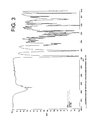
- FIG. 3 shows an IR spectrum of the intermediate (X).
- FIG. 4 shows a proton NMR spectrum (in CDCl3, 300 MHz) of the intermediate (X).
- the present invention relates to the synthesis of (4aS,7aS)-octahydro-1H-pyrrolo[3,4-b]pyridine of formula (I):
- Alk is a straight or branched C1-C5 alkyl group
- Alk has the meanings set forth above;
- the optical resolution by enzymatic hydrolysis of the intermediate dialkyl-1-alkylcarbonylpiperidine-2,3-dicarboxylate racemate of formula (II) is carried out by means of a lipase or an esterase.
- a lipase is lipase B of Candida antarctica (CALB), preferably in an immobilized form on an inert solid support, particularly lipase B covalently immobilized on beads of polyacrylates.
- CALB Candida antarctica
- lipase B in a form entrapped in porous gel or in a non-immobilized form will be able to be used.
- the use of the enzyme in the immobilized form has the advantage to allow an easy recycling and reuse of the same.
- said esterase is PLE.
- an organic solvent such as DMSO, acetonitrile, N-MPO, solutions of surfactants (Triton), heptanes
- the Alk group in formula (II), (III) and (X) of the ester functional group can be the same or also different of that of the amidic group.
- the Alk group in formula (II), (III) and (X) is preferably a methyl.
- the optical resolution reaction takes place according to the following scheme A:
- the enzyme selectively hydrolyses the isomer (2R,3S) providing the intermediate of formula (X), which can be divided from the mixture and isolated by solubilization with a base and reprecipitation or isolation in the presence of an acid, according to conventional methods.
- the desired isomer (2S,3R) (intermediate of formula (III)) is isolated from the reaction mixture by extraction with an organic solvent.
- a strong base will be used, such as, for example, a 30% NaOH solution in water, up to pH 8, the aqueous phase will be washed with an organic solvent until extraction of the diester (verified by HPLC), then the pH of the aqueous solution will be brought back to a pH of about 7, for example, with a strong acid, such as aqueous HCl, thus separating the intermediate (X).
- a strong acid such as aqueous HCl
- step (b)) the conversion of the intermediate (III) to (4aR,7aS)-1-alkylcarbonylhexahydrofuro[3,4-b]pyridine-5,7-dione of formula (IV) (step (b)) is carried out in two stages:
- the stage (b1) can be carried out by treatment with a strong acid.
- a strong acid for example, aqueous HCl under reflux for a period of time ranging between 2 and 4 hours will be able to be used.
- the stage (b2) can be carried out by reaction of the intermediate (IIIa) with a condensing agent, such as an anhydride.
- a condensing agent such as an anhydride.
- step (c) the conversion of the intermediate (IV) to (4aS,7as)-octahydro-1H-pyrrolo[3,4-b]pyridine of formula (I) (step (c)) can be carried out in four stages:
- Alk is as defined above, and GP is a protective group preferably selected from benzyl amine or benzyl amine substituted, for example, with alkyl, p-nitro, fluorine, trifluoromethyl in the ortho or para position;
- the stage (c1) can be carried out in an inert solvent, for example, toluene, at temperatures ranging between 50° C. and the boiling temperature of the solvent, preferably between 70° C. and 100° C.
- an inert solvent for example, toluene
- the stage (c2) can be carried out by treatment with a strong acid, for example, hydrochloric acid under reflux for a period of time ranging between 4 hours and 10 hours.
- a strong acid for example, hydrochloric acid under reflux
- the stage (c3) can be carried out with an alkaline metal hydride, such as, for example, LiAlH4.
- an alkaline metal hydride such as, for example, LiAlH4.
- the stage (c4) can be carried out by catalytic hydrogenation, for example, in the presence of a suitable Pd/C catalyst.
- a suitable Pd/C catalyst for example, it will be possible to operate at a temperature ranging between 40° C. and 80° C., and under pressures ranging between 2 and 50 bars.
- the final intermediate of formula (I) can be isolated with enantiomeric purity above 98%, or above 99%, by distillation of the reaction mixture, preferably by vacuum distillation.
- Alk is a straight or branched C1-C5 alkyl group
- the Alk group is preferably methyl.
- the reaction can be carried out, for example, in methanol with catalysis of strong acid, for example, hydrochloric acid, under reflux for a period of time ranging between 15 hours and 40 hours, preferably between 20 and 30 hours.
- the reduction step (ii) can be carried out by catalytic hydrogenation.
- a useful catalyst is Pd/C at a temperature ranging between 40° C. and 80° C. and a pressure between 5 and 20 bars.
- the reaction environment has to be substantially anhydrous, to prevent the formation of trans isomers.
- Alk is preferably methyl.
- the acylation reaction can be carried out by using acetic anhydride with basic catalysis, preferably of organic bases, such as tertiary amines.
- the reduction step (ii) provide exclusively the racemic mixture of the 2,3-sostituents in configuration cis and therefore the mixture of (2S,3R) and (2R,3S)-piperidine-2,3-dialkyldicarboxylate, also named cis-piperidine-2,3-dialkyldicarboxylate, excluding the other two enantiomers of configuration trans named (2S,3S) and (2R,3R)-piperidine-2,3-dialkyldicarboxylate.
- the step (iii) provide therefore the intermediate of formula (II) dialkyl-1-alkylcarbonylpiperidine-2,3-dicarboxylate racemate which is a mixture of (2S,3S) and (2R,3R)-1-alkylcarbonylpiperidine-2,3-dialkyldicarboxylate where the substituents in positions 2 and 3 are in configuration cis.
- the compound of formula (II) could therefore also be named cis-dialkyl-1-alkylcarbonylpiperidine-2,3-dicarboxylate racemate or cis-1-alkylcarbonylpiperidine-2,3-dialkyldicarboxylate racemate.
- the intermediate (I) that is obtained as described above can be converted into Moxifloxacin according to the two following synthesis routes.
- the first synthesis route provides for the following steps:
- (B1) optionally, salification with hydrogen chloride to give moxifloxacin hydrochloride.
- the second synthesis route provides for the following steps:
- the method of the invention allows also obtaining the intermediate of formula (X), (2R,3S)-1-alkylcarbonyl-2-(alkoxycarbonyl)piperidine-3-carboxylic acid, and preferably, (2R,3S)-1-acetyl-2-(methoxycarbonyl)piperidine-3-carboxylic acid, in an enantiomerically pure form (enantiomeric purity >99%).
- Such intermediate of formula (X) although not falling within the synthesis process of moxifloxacin, is a synthon of interest.
- pyrrolidinecarboxyamide compounds and piperidinecarboxyamides functionalized with quinoline-methoxyphenylsulfonylmethyl radicals that can be used as inhibitors of MMP, TNF, and aggrecanase, described in the patent publication WO 2002/055491.
- the process for the preparation of (4aR,7aR)-octahydro-1H-pyrrolo[3,4-b]pyridine of formula (XII) comprises:
- Alk is a straight or branched C1-C5 alkyl group
- Alk has the meanings set forth above;
- the R,R-diazabicyclononane so prepared showed an optical purity higher than 99%.
- step (b)) the conversion of the intermediate (X) to (4aS,7aR)-1-alkylcarbonylhexahydrofuro[3,4-b]pyridine-5,7-dione of formula (IV-bis) (step (b)) is carried out in two stages:
- An advantage of the invention is the preparation of the core of piperidine-2,3-disubstituted compounds having an absolute configuration (one optical isomers of four) in a very easy, practical and almost quantitative way, providing optical purity equal to or higher of 99% and avoiding the recycle of conventional resolution agents.
- the invention therefore allows also the practical preparation of new compounds such as those of formula III, X-bis, X-bis-I, IV, IVa, X, X-I, III-bis, IV-bis, IVa-bis and known compounds like IIIa and IIIa-bis.
- Alk is a straight or branched C1-C5 alkyl group
- Alk is a straight or branched C1-C5 alkyl group
- the toluene solution (about 400 mL) of the preparation 1 is added, virtually containing 116.8 g intermediate (V), and 2 g 10% Pd/C (anhydrous) is added. Then, it is hydrogenated at 60° C. and 10 bars for about 4 hours. Once the reaction was completed (monitored via GC), the catalyst is filtered off and the toluene solution that is obtained is directly used in the following step.
- the solution is combined to an analogous mixture, which is obtained again starting from 80 g intermediate (II) and in which the recycled enzyme has been used.
- the total aqueous phase obtained (about 1000 mL) is brought to pH 7 and concentrated to a small volume (about 350 mL). Then it is brought to pH 8 with 8 mL of 30% NaOH.
- the reaction is extracted with 3 ⁇ 500 mL ethyl acetate.
- the diester (2S,3R enantiomer, intermediate (III)) remains in the organic phase, while the monoacid (2R,3S enantiomer, intermediate (X)) remains in the aqueous phase.
- the chemical purity of the two phases is verified via HPLC by carrying out, if needed, a counter-extraction (with water for the organic phase, and ethyl acetate for the aqueous phase) to remove optional residues of the undesired species.
- the aqueous phase is brought back to pH 7 with conc. HCl and is concentrated to residue, thus obtaining 115 g of a pale yellow oil containing a variable amount of inorganic salts (partially precipitated) and possibly of water.
- the IR and proton NMR spectra (in CDCl3, 300 MHz) of the isolated compound (X) are shown in FIGS. 3 and 4 , respectively.
- the spectra reveal the presence of a monoester mixture in the 2 and 3 positions, due to internal transesterification reactions according the following scheme
- the solution deriving from the preceding step is brought to 70° C. Then, 38 mL benzylamine are added dropwise. The reaction is held at 70° C. for about 2 hours. Once the reaction is complete (verification of conversion via GC), 30 ml water is added. The reaction is stirred, and the phases are separated. The aqueous phase is extracted again with 4 ⁇ 20 mL toluene. The combined organic phases are brought to residue obtaining 34.5 g of the desired product as an oil.
- the reaction of the examples 2-7 can be repeated starting from the intermediate (X), thus obtaining, if desired, the other enantiomer of the compound (1).
- the diester dimethyl-(2R,3S)-1-acetylpiperidine-2,3-dicarboxylate results to be quantitatively hydrolyzed to the monoacid (intermediate (X)), while the other enantiomer dimethyl-(2S,3R)-1-acetylpiperidine-2,3-dicarboxylate (intermediate (III)) remains unreacted.
- the work-up already described in example 1 allows obtaining the two enantiomers (intermediate (III) and intermediate (X)) in separate form, in a yield above 97%, a chemical purity above 99% (except for the presence of easily removable inorganic salts), and an optical purity above 99%.
- the reaction is stirred at 25° C. for about 36 hours maintaining the pH at 6 thanks to the addition of 0.1 M soda.
- the course of the reaction is followed via chiral HPLC.
- the enzyme hydrolyzes preferentially the enantiomer dimethyl-(2S,3R)-1-acetylpiperidine-2,3-dicarboxylate, providing the intermediate (2S,3R)-1-acetyl-2-(methoxycarbonyl)piperidine-3-carboxylic acid of formula (X-bis)
Landscapes
- Chemical & Material Sciences (AREA)
- Organic Chemistry (AREA)
- Nitrogen Condensed Heterocyclic Rings (AREA)
- Preparation Of Compounds By Using Micro-Organisms (AREA)
- Pharmaceuticals Containing Other Organic And Inorganic Compounds (AREA)
Abstract

Description


according to the following method, which provides for:

thanks to the action of a lipase or an esterase, to give, after isolating the intermediate (2S,3R)-1-alkylcarbonylpiperidine-2,3-dialkyldicarboxylate of formula (III):


also known as (R,R)-2,8-Diazabicyclo[4.3.0]nonane or R,R-diazabicyclononane having CAS RN 151213-42-2. Such key intermediate is actually employed for the synthesis of other active pharmaceutical ingredients as described in the patent publications EP591808 (antibiotics), WO2005054239 (histamine H4 antagonists for the treatment of asthma) and WO2008067871 (substituted dihydropyrazolones for treating cardiovascular and haematological diseases).

thanks to the action of a lipase or an esterase to give the intermediate (2R,3S)-1-alkylcarbonyl-2-(alkoxycarbonyl)piperidine-3-carboxylic acid of formula (X):


to the compound (2R,3S)-1-piperidine-2,3-dicarboxylic acid of formula (IIIa-bis),

as hydrochloride salt, which is the enantiomer of the compound (IIIa) previously described, could be conveniently performed according to the same procedure disclosed in Example 2 for preparation of the compound IIIa.
The conversion of the intermediate (IIIa-bis) to the compound of formula (IV-bis)

and then to (4aR,7aR)-octahydro-1H-pyrrolo[3,4-b]pyridine of formula (XII)

passing through the compound 6-substituted-(4aS,7aR)-1-alkylcarbonyltetrahydro-1H-pyrrolo[3,4-b]pyridine-5,7(2H,6H)-dione of formula (IVa-bis):


comprises the following steps:

thanks to the action of a lipase or an esterase to give the intermediate (2S,3R)-1-alkylcarbonylpiperidine-2,3-dialkyldicarboxylate of formula (III):


comprises the following steps:

thanks to the action of a lipase or an esterase to give the intermediate (2R,3S)-1-alkylcarbonyl-2-(alkoxycarbonyl)piperidine-3-carboxylic acid of formula (X):


Claims (7)


Applications Claiming Priority (4)
| Application Number | Priority Date | Filing Date | Title |
|---|---|---|---|
| ITMI2009A000332A IT1393337B1 (en) | 2009-03-06 | 2009-03-06 | SUMMARY OF (4AS, 7AS) -OTTAIDRO-1H-PIRROLO [3,4-B] PYRIDINE |
| ITMI2009A0332 | 2009-03-06 | ||
| ITMI2009A000332 | 2009-03-06 | ||
| PCT/EP2010/052734 WO2010100215A1 (en) | 2009-03-06 | 2010-03-04 | SYNTHESIS OF (4aS,7aS)-OCTAHYDRO-1H-PYRROLO[3,4-b]PYRIDINE |
Publications (2)
| Publication Number | Publication Date |
|---|---|
| US20110137036A1 US20110137036A1 (en) | 2011-06-09 |
| US8680276B2 true US8680276B2 (en) | 2014-03-25 |
Family
ID=41137093
Family Applications (1)
| Application Number | Title | Priority Date | Filing Date |
|---|---|---|---|
| US13/056,458 Expired - Fee Related US8680276B2 (en) | 2009-03-06 | 2010-03-04 | Synthesis of (4aS,7aS)-octahydro-1H-pyrrolo[3,4-b]pyridine |
Country Status (5)
| Country | Link |
|---|---|
| US (1) | US8680276B2 (en) |
| EP (1) | EP2403831B1 (en) |
| CA (1) | CA2751548C (en) |
| IT (1) | IT1393337B1 (en) |
| WO (1) | WO2010100215A1 (en) |
Families Citing this family (13)
| Publication number | Priority date | Publication date | Assignee | Title |
|---|---|---|---|---|
| ITTO20110705A1 (en) | 2011-07-29 | 2013-01-30 | Italiana Sint Spa | PROCEDURE FOR THE PREPARATION OF MOXIFLOXACINE CHLORIDRATE AND RELATED INTERMEDIATES |
| CN102952130B (en) * | 2011-08-24 | 2016-03-23 | 重庆华邦胜凯制药有限公司 | The method of chiral synthesize (S, S)-2,8-diazabicyclo nonane |
| US9073881B2 (en) | 2011-09-23 | 2015-07-07 | Hoffmann-La Roche Inc. | Benzoic acid derivatives |
| CN103497187A (en) * | 2013-09-25 | 2014-01-08 | 苏州维桢生物医药科技有限公司 | Method for improving chemical purity of moxifloxacin side chain on industry |
| CN104016981B (en) * | 2014-06-23 | 2016-03-23 | 南京正大天晴制药有限公司 | A kind of Moxifloxacin hydrochloride analog and preparation method thereof |
| CN105566319B (en) * | 2014-10-09 | 2018-06-01 | 和鼎(南京)医药技术有限公司 | The preparation method of one kind (S, S) -2,8- diazabicylos [4,3,0] nonane |
| CN104370907A (en) * | 2014-11-17 | 2015-02-25 | 安徽美诺华药物化学有限公司 | Method for preparing quinolone derivative |
| CN110183445B (en) * | 2019-06-28 | 2021-08-24 | 昆明学院 | Synthetic method of moxifloxacin and its derivatives |
| CN112939849B (en) * | 2019-12-11 | 2022-05-03 | 浙江新和成股份有限公司 | (S, S) -2, 8-diazabicyclo [4.3.0] nonane intermediate and preparation method and application thereof |
| CN111100125A (en) * | 2019-12-31 | 2020-05-05 | 厦门本素药业有限公司 | Preparation method of moxifloxacin intermediate |
| CN112759590B (en) * | 2020-11-19 | 2021-12-31 | 内蒙古源宏精细化工有限公司 | Preparation method of moxifloxacin |
| CN112939847B (en) * | 2021-02-06 | 2022-05-13 | 台州市生物医化产业研究院有限公司 | Method for preparing moxifloxacin intermediate (S, S) -2, 8-diazabicyclo [4,3,0] nonane |
| CN112920184B (en) * | 2021-02-06 | 2022-03-01 | 台州市生物医化产业研究院有限公司 | Method for preparing moxifloxacin intermediate (S, S) -2, 8-diazabicyclo [4,3,0] nonane |
Citations (2)
| Publication number | Priority date | Publication date | Assignee | Title |
|---|---|---|---|---|
| EP0550903A1 (en) | 1992-01-10 | 1993-07-14 | Bayer Ag | Quinolone- and naphthyridone carboxylic acid derivatives as antibacterial agents |
| WO1999009200A1 (en) | 1997-08-14 | 1999-02-25 | Bayer Aktiengesellschaft | Method for racemic biochemical resolution of cis- and trans- pyrrolopiperidine |
Family Cites Families (17)
| Publication number | Priority date | Publication date | Assignee | Title |
|---|---|---|---|---|
| DE3906365A1 (en) | 1988-07-15 | 1990-01-18 | Bayer Ag | 7- (1-PYRROLIDINYL) -3-CHINOLONE AND NAPHTHYRIDONE CARBOXYLIC ACID DERIVATIVES, METHOD AND SUBSTITUTED (OXA) DIAZABICYCLOOCTANES AND NONANESE AS INTERMEDIATE PRODUCTS, AND ANTIBACTERIAL AGENTS AND FOOD ADDITIVES CONTAINING THEM |
| DE4234078A1 (en) | 1992-10-09 | 1994-04-14 | Bayer Ag | Quinolonecarboxylic acids |
| DE19751948A1 (en) | 1997-11-24 | 1999-05-27 | Bayer Ag | Rapid preparation of 8-alkoxy-quinolone-carboxylic acid derivative antibacterial agent, e.g. gatifloxacin, in high purity |
| DE19821039A1 (en) | 1998-05-11 | 1999-11-18 | Bayer Ag | Production of (S,S)-8-benzyl-2,8-diazabicyclo(4.3.0)nonane useful as intermediate for antibiotic moxifloxacin |
| DE19927412A1 (en) | 1999-06-16 | 2000-12-21 | Bayer Ag | Process for the enantiomeric enrichment of cis-8-benzyl-7,9-dioxo-2,8-diazabicyclo [4.3.0] nonane |
| DE19931115A1 (en) | 1999-07-06 | 2001-01-11 | Bayer Ag | Racemization of R, S-dioxo-benzylpyrrolopiperidine |
| WO2002055491A2 (en) | 2001-01-11 | 2002-07-18 | Bristol Myers Squibb Company P | 1,2-DISUBSTITUTED CYCLIC INHIBITORS OF MATRIX METALLORPROTEASES AND TNF-$g(a) |
| DE10226923A1 (en) | 2002-06-17 | 2003-12-24 | Bayer Ag | Process for the enantiomer enrichment of cis-8-benzyl-7,9-dioxo-2,8-diazabicyclo [4.3.0] nonane |
| WO2005012285A1 (en) | 2003-08-05 | 2005-02-10 | Matrix Laboratories Ltd | An improved process for the preparation of moxifloxacin hydrochloride |
| WO2005054239A1 (en) | 2003-12-05 | 2005-06-16 | Bayer Healthcare Ag | 2-aminopyrimidine derivatives |
| US20060111369A1 (en) | 2004-11-10 | 2006-05-25 | Somberg John C | Synthesis, characterization and biological action of optically active isomers of floxacins |
| WO2006134491A2 (en) | 2005-06-14 | 2006-12-21 | Aurobindo Pharma Limited | New crystalline form of moxifloxacin hydrochloride and process for its preparation |
| NL2000323C2 (en) | 2005-12-20 | 2007-11-20 | Pfizer Ltd | Pyrimidine derivatives. |
| ES2284380B1 (en) | 2006-03-10 | 2008-11-01 | Quimica Sintetica S.A. | PROCEDURE FOR THE PREPARATION OF MOXIFLOXACINO AND MOXIFLOXACINO CHLORHYDRATE. |
| PE20080520A1 (en) | 2006-07-11 | 2008-06-13 | Janssen Pharmaceutica Nv | BENZOFURO- AND BENZOTHENOPYRIMIDINE DERIVATIVES AS MODULATORS OF THE HISTAMINE H4 RECEPTOR |
| DE102006050516A1 (en) | 2006-10-26 | 2008-04-30 | Bayer Healthcare Ag | New pyrazol-3-one compounds are hypoxia-inducible transcription factor-prolyl-4-hydroxylase inhibitors useful e.g. to treat and/or prophylaxis heart-circulation diseases, heart failure, anemia, chronic kidney diseases and renal failure |
| US7692655B2 (en) | 2007-02-16 | 2010-04-06 | Mitac International Corporation | Apparatus and method of generating curved baseline for map labeling |
-
2009
- 2009-03-06 IT ITMI2009A000332A patent/IT1393337B1/en active
-
2010
- 2010-03-04 EP EP20100708517 patent/EP2403831B1/en not_active Not-in-force
- 2010-03-04 WO PCT/EP2010/052734 patent/WO2010100215A1/en not_active Ceased
- 2010-03-04 CA CA2751548A patent/CA2751548C/en not_active Expired - Fee Related
- 2010-03-04 US US13/056,458 patent/US8680276B2/en not_active Expired - Fee Related
Patent Citations (2)
| Publication number | Priority date | Publication date | Assignee | Title |
|---|---|---|---|---|
| EP0550903A1 (en) | 1992-01-10 | 1993-07-14 | Bayer Ag | Quinolone- and naphthyridone carboxylic acid derivatives as antibacterial agents |
| WO1999009200A1 (en) | 1997-08-14 | 1999-02-25 | Bayer Aktiengesellschaft | Method for racemic biochemical resolution of cis- and trans- pyrrolopiperidine |
Non-Patent Citations (4)
| Title |
|---|
| C. Agami et al., "Enantioselective synthesis of comfortionally restricted analogs of NMDA: cis- and trans-piperdine-2, 3-dicarboxylic acids and methylated derivatives", Journal of Organic Chemistry, vol. 61, No. 17, pp. 5736-5742, 1996. |
| C. Agami et al., "Neuromediator analogs: synthesis of cis (2R, 3S) and trans (2S, 3S)-2, 3-piperidine dicarboxylic acids from (2S)-2-phenylglycinol", Tetrahedron Letters, vol. 36, No. 10, Jan. 10, 1995, pp. 1657-1660. |
| Chemical Abstract Services Jul. 29, 2009, Registry No. 1169974-48-4. * |
| Chemical Abstract Services Sep. 1, 2009, Registry No. 1178858-33-7. * |
Also Published As
| Publication number | Publication date |
|---|---|
| US20110137036A1 (en) | 2011-06-09 |
| EP2403831A1 (en) | 2012-01-11 |
| IT1393337B1 (en) | 2012-04-20 |
| EP2403831B1 (en) | 2015-05-20 |
| WO2010100215A1 (en) | 2010-09-10 |
| CA2751548A1 (en) | 2010-09-10 |
| CA2751548C (en) | 2017-04-11 |
| ITMI20090332A1 (en) | 2010-09-07 |
Similar Documents
| Publication | Publication Date | Title |
|---|---|---|
| US20110137036A1 (en) | SYNTHESIS OF (4aS,7aS)-OCTAHYDRO-1H-PYRROLO[3,4-b]PYRIDINE | |
| US9068214B2 (en) | Method for preparing (R)-praziquantel | |
| CN114555599B (en) | Process for preparing acyloxymethyl esters of (4S) - (4-cyano-2-methoxyphenyl) -5-ethoxy-2, 8-dimethyl-1, 4-dihydro-1, 6-naphthyridine-3-carboxylic acid | |
| JP5106478B2 (en) | Process for producing benzoxazine derivative and its intermediate | |
| TW200846307A (en) | Preparation of pregabalin and related compounds | |
| El Blidi et al. | A straightforward synthesis of an aminocyclitol based on an enzymatic aldol reaction and a highly stereoselective intramolecular Henry reaction | |
| JPWO2001018005A1 (en) | Method for producing benzoxazine derivatives and intermediates therefor | |
| EP2077987B1 (en) | Mandelic acid derivatives and preparation thereof | |
| ES2546102T3 (en) | Method of enzymatic synthesis of (7S) -3,4-dimethoxybicyclo [4.2.0] octa-1,3,5-triene-7-carboxylic acid or its esters and use in the synthesis of ivabradine and its salts | |
| JP2006503011A (en) | Process for producing enantiomers of indole-2,3-dione-3-oxime derivatives | |
| JP2006503011A5 (en) | ||
| Yoshida et al. | Enantioselective synthesis of a chiral pyridazinone derivative by lipase-catalyzed hydrolysis | |
| IL174219A (en) | Process for the preparation of enantiopure intermediates using yeast cholesterase | |
| JP2004217608A (en) | Method for producing (1s,2s)-2-fluorocyclopropanecarboxylic acid derivative | |
| JP4524845B2 (en) | Method for producing optically active allyl alcohol derivative having amino group, and optically active compound | |
| JPH08322591A (en) | Method for obtaining optically pure 1,2,3,4-tetrahydroquinoline-2-acetic acid esters by optical resolution | |
| US10308612B2 (en) | Method for producing 1-(acyloxy)alkyl carbamate derivative | |
| CN101027277A (en) | Process for the preparation of (2R, 3R)-2-hydroxy-3-amino-3-aryl-propionamide and (2R, 3R)-2-hydroxy-3-amino-3-aryl-propionic acid alkylester | |
| HK40068366A (en) | Process for producing acyloxymethyl esters of (4s)-(4-cyano-2-methoxyphenyl)-5-ethoxy-2,8-dimethyl-1,4-dihydro-1,6-naphthyridin-3-carboxylic acid | |
| HU213569B (en) | Enzymatic process for the stereoselective preparation of a heterobicyclic alcohol enantiomer |
Legal Events
| Date | Code | Title | Description |
|---|---|---|---|
| AS | Assignment |
Owner name: F.I.S. FABBRICA ITALIANA SINTETICI S.P.A, ITALY Free format text: ASSIGNMENT OF ASSIGNORS INTEREST;ASSIGNORS:MOTTERLE, RICCARDO;ARVOTTI, GIANCARLO;BERGANTINO, ELISABETTA;AND OTHERS;SIGNING DATES FROM 20110127 TO 20110202;REEL/FRAME:025835/0390 |
|
| STCF | Information on status: patent grant |
Free format text: PATENTED CASE |
|
| MAFP | Maintenance fee payment |
Free format text: PAYMENT OF MAINTENANCE FEE, 4TH YEAR, LARGE ENTITY (ORIGINAL EVENT CODE: M1551) Year of fee payment: 4 |
|
| FEPP | Fee payment procedure |
Free format text: MAINTENANCE FEE REMINDER MAILED (ORIGINAL EVENT CODE: REM.); ENTITY STATUS OF PATENT OWNER: LARGE ENTITY |
|
| LAPS | Lapse for failure to pay maintenance fees |
Free format text: PATENT EXPIRED FOR FAILURE TO PAY MAINTENANCE FEES (ORIGINAL EVENT CODE: EXP.); ENTITY STATUS OF PATENT OWNER: LARGE ENTITY |
|
| STCH | Information on status: patent discontinuation |
Free format text: PATENT EXPIRED DUE TO NONPAYMENT OF MAINTENANCE FEES UNDER 37 CFR 1.362 |
|
| FP | Lapsed due to failure to pay maintenance fee |
Effective date: 20220325 |