US8635333B2 - Method and system for estimating a number of users of a website based on lossy compressed data - Google Patents
Method and system for estimating a number of users of a website based on lossy compressed data Download PDFInfo
- Publication number
- US8635333B2 US8635333B2 US12/746,005 US74600508A US8635333B2 US 8635333 B2 US8635333 B2 US 8635333B2 US 74600508 A US74600508 A US 74600508A US 8635333 B2 US8635333 B2 US 8635333B2
- Authority
- US
- United States
- Prior art keywords
- bits
- website
- accessing
- array
- activated
- Prior art date
- Legal status (The legal status is an assumption and is not a legal conclusion. Google has not performed a legal analysis and makes no representation as to the accuracy of the status listed.)
- Active, expires
Links
Images




Classifications
-
- G—PHYSICS
- G06—COMPUTING OR CALCULATING; COUNTING
- G06Q—INFORMATION AND COMMUNICATION TECHNOLOGY [ICT] SPECIALLY ADAPTED FOR ADMINISTRATIVE, COMMERCIAL, FINANCIAL, MANAGERIAL OR SUPERVISORY PURPOSES; SYSTEMS OR METHODS SPECIALLY ADAPTED FOR ADMINISTRATIVE, COMMERCIAL, FINANCIAL, MANAGERIAL OR SUPERVISORY PURPOSES, NOT OTHERWISE PROVIDED FOR
- G06Q30/00—Commerce
- G06Q30/02—Marketing; Price estimation or determination; Fundraising
- G06Q30/0201—Market modelling; Market analysis; Collecting market data
-
- G—PHYSICS
- G06—COMPUTING OR CALCULATING; COUNTING
- G06F—ELECTRIC DIGITAL DATA PROCESSING
- G06F11/00—Error detection; Error correction; Monitoring
- G06F11/30—Monitoring
- G06F11/34—Recording or statistical evaluation of computer activity, e.g. of down time, of input/output operation ; Recording or statistical evaluation of user activity, e.g. usability assessment
- G06F11/3452—Performance evaluation by statistical analysis
-
- G—PHYSICS
- G06—COMPUTING OR CALCULATING; COUNTING
- G06F—ELECTRIC DIGITAL DATA PROCESSING
- G06F11/00—Error detection; Error correction; Monitoring
- G06F11/30—Monitoring
- G06F11/34—Recording or statistical evaluation of computer activity, e.g. of down time, of input/output operation ; Recording or statistical evaluation of user activity, e.g. usability assessment
- G06F11/3466—Performance evaluation by tracing or monitoring
- G06F11/3476—Data logging
Definitions
- the present invention relates to a method and system for estimating a number of users of a website.
- the number of users of a website is an important parameter to determine the success of the webpage and often has a direct influence on advertising revenues.
- IP address may be rewritten by a firewall, the computer may be used by more than one person, or somebody may use the login of somebody else. Nevertheless, the identified entities are often used to estimate the number of users of a website because they are considered to be a reasonable proxy for the users.
- records are stored that log the access of the entity.
- an analysis tool reads the stored records and counts the number of accessing entities which is deemed to be a good estimation for the number of accessing users.
- sampling has been proposed.
- the basic principle of sampling is that only for each x-th (e.g. each 10 th ) access an identity of an accessing entity is stored.
- the stored records are analysed and a number of accessing entities is estimated based on the sampled records.
- this sampling method has the drawback that it is only precise when the number of events, e.g. logged accesses, in the reporting interval is large.
- long intervals like entire years will typically contain enough events, the same might not be true for hourly or daily intervals.
- the invention comprises a method for estimating a number of users of a website that comprises the steps of repeatedly determining that the website is accessed by an entity, in reaction to the access of the website, determining data dependent on the entity that accesses the website and storing said data, lossy compressing said stored data, and estimating a number of users of the website based on the compressed stored data.
- This method has the advantage that due to the lossy compression algorithm, less data needs to be stored and analysed. A small loss of precision is acceptable, because the determination of data dependent on the entity is already a source of inaccuracies.
- the method according to the invention comprises the steps of determining a maximum amount of data to be stored, determining a set of numbers, repeatedly mapping the data dependent on the entities that access the website onto a number of the set of numbers according to a mapping function and storing the resulting numbers.
- the maximum amount of data to be stored is exceeded, the set of numbers is pruned and the stored numbers that correspond to the pruned numbers of the set of numbers are deleted. Later on, a relation between the size of the set of the not-pruned numbers and the size of the set of the pruned numbers is determined, and the number of users of the website is estimated based on the pruned stored data and said relation.
- the method comprises the steps of providing an array of bits in a storage, repeatedly mapping the data dependent on the entities that access the website onto one bit of the array of bits according to a mapping function and activating the bit of the array of bits onto which the data was mapped, and estimating the number of users of the website based on the activated bits of the array of bits.
- This embodiment has the advantage that it allows to efficiently store data that can be used to estimate a number of users of the website. Preferably, only single bits are set in response to accesses. In this way, the required amount of storage is often lower compared to storing the exact identities of accessing entities as numbers.
- the method comprises the steps of determining a period of time for which the number of users is to be estimated, dividing the period of time into intervals, providing a plurality of arrays of bits corresponding to the number of intervals, associating each array of bits of the plurality of arrays of bits with one interval, such that for each interval one array of bits is used.
- the bits of the associated array of bits are activated according to the data dependent on the entities that access the website during the interval.
- each array of bits allows to estimate the number of users of the website that accessed the website during the associated interval.
- an array of bits is determined that allows to estimate the number of users of the website that accessed the website during the period of time. This array of bits may be determined by combining the arrays of bits for each interval using a logical OR-operation between the bits of the arrays of bits having the same significance.
- This method allows to efficiently store data about entities that have accessed the webpage during each interval and to efficiently combine the stored data for each interval by performing a simple logical OR-operation.
- the mapping function maps the data dependent on the entities that access the website onto a number of the set of numbers or onto one bit of the array of bits based on a uniform distribution.
- a non-linear mapping function is employed, such that e.g. the number of data items dependent on the entities that is mapped onto one bit varies in dependence on a magnitude of the data item. This makes the method more scalable in comparison to the usage of a uniform distribution.
- the mapping function may be composed of two steps: First, data dependent on the accessing entity, e.g. a user identification, is mapped to an integer h using a hash function. Hash functions are described in the prior art that ensure that the resulting integers are evenly distributed between 0 (included) and a constant M (excluded). Afterwards, a non-linear function may be applied to the resulting hash value.
- a maximum likelihood analysis is performed to determine the number of accessing entities that is most likely to reproduce the given pattern of activated bits of the array.
- the step of estimating the numbers of users of the website based on the activated bits of the array of bits may comprise the steps of providing an estimation function relating a number of activated bits with a number of users, determining a number of activated bits by counting the number of activated bits of the array of bits, and estimating the number of users of the website based on the number of activated bits of the array of bits and the estimation function.
- the position of an activated bit is irrelevant, such that the estimation can be efficiently performed.
- the estimated number of users an integer for which the expected number of activated bits matches the observed number of activated bits most closely is chosen. Because this computation is expensive to perform exactly, a preferred approach is to precompute the expected number of activated bits for certain numbers of users and to use this data for interpolating the actual number of users based on the observed number of activated bits.
- the data dependent on the entity is an identification of the entity.
- the method according to the invention may be efficient and may allow to estimate the number of users with an acceptable precision for all interval lengths with a uniform algorithm and potentially without the need to estimate sampling parameters precisely.
- the invention comprises a system for estimating a number of users of a website.
- the system may comprise means for determining that the website is accessed by an entity, means for determining data dependent on the entity that accesses the website, in reaction to the access of the website, means for storing said data, means for lossy compressing said stored data, and means for estimating a number of users of the website based on the compressed stored data.
- the system according to the invention may have the same advantages as the corresponding method according to the invention.
- the system comprises means for determining a maximum amount of data to be stored, means for determining a set of numbers, means for repeatedly mapping the data dependent on the entities that access the website onto a number of the set of numbers according to a mapping function, means for storing the resulting numbers, means for pruning the set of numbers and deleting the stored numbers that correspond to the pruned numbers of the set of numbers, when the maximum amount of data to be stored is exceeded, means for determining a relation between the size of the set of the not-pruned numbers and the size of the set of the pruned numbers, and means for estimating the number of users of the website based on the pruned stored data and said relation.
- the system according to the invention comprises a storage storing an array of bits, means for repeatedly mapping the data dependent on the entities that access the website onto one bit of the array of bits according to a mapping function and for activating the bit of the array of bits onto which the data was mapped, and means for estimating the number of users of the website based on the activated bits of the array of bits.
- the system comprises means for determining a period of time for which the number of users is to be estimated, means for dividing the period of time into intervals, means for providing a plurality of arrays of bits corresponding to the number of intervals, means for associating each array of bits of the plurality of arrays of bits with one interval, such that for each interval one array of bits is used, means for activating in each interval the bits of the associated array of bits according to the data dependent on the entities that access the website during the interval, such that each array of bits allows to estimate the number of users of the website that accessed the website during the associated interval, and means for, after the end of the period of time, determining an array of bits that allows to estimate the number of users of the website that accessed the website during the period of time by combining the arrays of bits for each interval using a logical OR-operation between the bits of the arrays of bits having the same significance.
- the means for repeatedly mapping comprises a mapping function that maps the data dependent on the entity onto a number of the set of numbers or onto one bit of the array of bits based on a uniform distribution.
- the means for repeatedly mapping comprises a mapping function that is non-linear, such that the number of data items dependent on the entities that is mapped onto one bit varies in dependence on a magnitude of the data item.
- the mapping function may be composed of two steps: First, data dependent on the accessing entity, e.g. a user identification, is mapped to an integer h using a hash function. Hash functions are described in the prior art that ensure that the resulting integers are evenly distributed between 0 (included) and a constant M (excluded). Afterwards, a non-linear function may be applied to the resulting hash value.
- the means for estimating the number of users of the website based on the activated bits of the array of bits uses a maximum likelihood analysis to determine the number of accessing entities that is most likely to reproduce the given pattern of activated bits of the array.
- the means for estimating the number of users of the website based on the activated bits of the array of bits comprises an estimation means comprising an estimation function relating a number of activated bits with a number of users, means for determining a number of activated bits by counting the number of activated bits of the array of bits, and means for estimating the number of users of the website based on the number of activated bits of the array of bits and the estimation function.
- the means for estimating the number of users of the website chooses as the estimated number of users an integer for which the expected number of activated bits matches the observed number of activated bits most closely. Because this computation is expensive to perform exactly, a preferred approach is to precompute the expected number of activated bits for certain numbers of users and to use this data for interpolating the actual number of users based on the observed number of activated bits.
- the data dependent on the entity is an identification of the entity.
- the invention comprises a computer program product that comprises a computer readable medium and a computer program recorded therein in form of a series of state elements corresponding to instructions which are adapted to be processed by a data processing means of a data processing apparatus such that a method according to the invention is performed or a system according to the invention is formed on the data processing means.
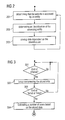
- FIG. 1 shows one embodiment of a system for estimating a number of users of a website.
- FIG. 2 shows a process that generates access data according to one embodiment of the present invention.
- FIG. 3 shows one embodiment of a data compression and user estimation process according to the invention.
- FIG. 4 shows another embodiment of a data compression and user estimation process according to the invention.
- FIG. 5 shows an embodiment of the method according to the invention.
- FIG. 6 shows an embodiment of the system according to the present invention.
- FIG. 1 shows one embodiment of a system according to the present invention.
- a web server 101 receives accesses of the website 102 and generates based on the accesses an access log 103 .
- the access log is analysed by a web analytics engine 104 .
- the web analytics engine 104 comprises a log parser 105 that parses the access log 103 and generates access data that is stored in a data base 106 .
- the access data 106 is regularly compressed using a lossy compression algorithm.
- a means for lossy compressing the data 107 generates a data basis 108 for the estimation of a number of users of the website. Based on this data basis, a number of users of the website is estimated 109 .
- FIG. 2 shows a process that generates access data 106 that may be used in one embodiment of the method according to the present invention.
- step 201 it is determined that the website is accessed by an entity.
- step 202 an identification of the entity that accesses the website is determined.
- step 203 data dependent on the identification of the entity is stored and the process resumes with step 201 .
- FIG. 3 shows one embodiment of a lossy compression procedure in combination with a user estimation step according to the present invention.
- the procedure checks whether the end of an interval for which the accessing entities are logged is reached. If the end of the interval is reached, the stored data is lossy compressed in step 302 .
- Step 303 checks whether the end of the period of time is reached. In other words, it is checked whether another interval follows. If this is the case, the process resumes with step 301 . If the end of the period of time is reached, a number of users is estimated in step 304 based on the stored data.
- FIG. 4 shows a data compression and user estimation procedure according to one embodiment of the method according to the invention. It is assumed that a process is running that continuously generates access data like e.g. the process shown in FIG. 2 .
- step 401 it is checked whether the maximum amount of stored data is exceeded. If this is the case, the set of numbers is pruned in step 402 and the stored numbers that correspond to the pruned numbers of the set of numbers are deleted in step 403 .
- it is checked whether the end of the period of time is reached in step 404 . If the end of the period of time is not reached, the procedure resumes with step 401 . If the end of the period of time is reached, a relation is determined.
- the relation may be for example the size of the set of the pruned numbers plus the size of the set of the not-pruned numbers, i.e. the overall size of the set of numbers at the beginning, divided by the size of the set of the not-pruned numbers.
- the following example further illustrates this procedure. It is assumed that the maximum amount of data to be stored is set to be 5, while the set of numbers on which the identifications of the entities are mapped are the numbers between 0 and 99. It is assumed that in a first interval, data is stored that indicates that the entities 1, 12, 17, 19, 33, 43, 67, 82, 83, 92 accessed the webpage in the interval 1 . Since the amount of stored data exceeds 5, the lower half of the set of numbers is pruned. The numbers 67, 82, 83, and 92 remain.
- the entities 1, 3, 72, and 73 access the webpage.
- the numbers 72 and 73 are stored, such that the entities 67, 72, 73, 82, 83, and 92 are stored. This again exceeds the maximum amount of data to be stored such that the third quarter of the set of numbers is pruned, i.e. the numbers from 50 to 74.
- the numbers 82, 83, and 92 remain. These are three entities. It is known that only one quarter of the complete set of numbers remains. Therefore, the numbers of accessing entities is multiplied with 4 to estimate the number of users that accessed the webpage. 3 times 4 yields 12. The exact number of accessing entities was 14. This means that the described procedure provides an acceptable estimation for the actual number of users of the website, while using only a fraction of the storage that would be necessary to store the identities of all accessing entities.
- the maximum amount of data was chosen to be 5 to provide a concise example. In practice, values of 10000 or more will lead to better precision without increasing the memory demand unduely.
- FIG. 5 shows another embodiment of the method according to the present invention.
- step 501 it is determined that the website is accessed by an entity.
- step 502 an identification of the entity that accesses the website is determined.
- the identification of the entity is then mapped onto one bit of a first array of bits according to a mapping function in step 503 .
- the bit of the array of bits onto which the identification was mapped is activated accordingly (step 504 ).
- mapping function H(x) is used:
- the mapping function H(x) maps each entity onto a value between 0 and S ⁇ 1. The mapping function possesses the property that some values are chosen more often than others, i.e. the mapping function is non-linear.
- C and K are constants that can be derived from the expected maximal value E of the statistical parameter to be examined and the values of S and M:
- C for the mapping function H(x) is calculated as:
- K S ln ⁇ ( M + C C )
- the parameter x must be uniformly distributed.
- Techniques for calculating x from an identification of an entity are known, for example a cryptographic hash function can be used, but also simpler hash functions will normally give satisfactory results.
- the described mapping function exhibits in a wide range a scale-invariant quality of the estimation, if E is chosen sufficiently high. Even if E is orders of magnitude too high, the resulting precision will degrade only moderately.
- step 505 shown in FIG. 5 it is determined whether the end of the first interval is reached. If this is not the case, the procedure resumes with step 501 . Otherwise, the procedure proceeds to step 506 , in which it is determined again that the website is accessed by an entity.
- step 507 an identification of the accessing entity is determined, and in step 508 , this identification of the entity is mapped onto one bit of a second array of bits according to the above described mapping function. The corresponding bit of the second array of bits is activated accordingly in step 509 .
- step 510 it is determined whether the end of the second interval is reached. If the end is not reached yet, the procedure resumes with step 506 .
- step 511 in which the first array of bits and the second array of bits are combined using a logical OR-operation, wherein the result is written into the first array of bits.
- the first array of bits indicates the identifications of the entities that have accessed the website during the first and the second interval.
- step 512 it is checked whether the end of the period of time has been reached in step 512 . If there are further intervals, the procedure proceeds to step 513 , where the second array of bits is deleted. Then, the procedure jumps back to step 506 . If the end of the period of time is reached in step 512 , the procedure proceeds to step 514 in which the number of the users of the website is estimated based on the first array of bits.
- FIG. 6 shows one embodiment of a system according to the invention.
- the system for estimating a number of users of a website 601 comprises means for determining that the website is accessed by an entity 602 , means for determining an identification of the entity that accesses the web site 603 , means for storing data dependent on the identification of the entity 604 , means for lossy compressing the stored data 605 , and means for estimating a number of users of the website based on the stored data 606 .
Landscapes
- Engineering & Computer Science (AREA)
- Theoretical Computer Science (AREA)
- Business, Economics & Management (AREA)
- Physics & Mathematics (AREA)
- General Engineering & Computer Science (AREA)
- Finance (AREA)
- Strategic Management (AREA)
- Accounting & Taxation (AREA)
- Development Economics (AREA)
- General Physics & Mathematics (AREA)
- Entrepreneurship & Innovation (AREA)
- Quality & Reliability (AREA)
- Computer Hardware Design (AREA)
- Game Theory and Decision Science (AREA)
- Data Mining & Analysis (AREA)
- Economics (AREA)
- Marketing (AREA)
- General Business, Economics & Management (AREA)
- Life Sciences & Earth Sciences (AREA)
- Bioinformatics & Cheminformatics (AREA)
- Bioinformatics & Computational Biology (AREA)
- Evolutionary Biology (AREA)
- Probability & Statistics with Applications (AREA)
- Information Transfer Between Computers (AREA)
Abstract
Description
x denotes the hashcode derived from an accessing entity. It is characterized by a number taken from an interval from 0 to M−1, e.g. by a 64-bit-value if M=264. For each interval, an array of bits having S bits is provided. The larger S is chosen, the higher is the precision of the generated statistics. Reasonable values for S lie around 1 million. The mapping function H(x) maps each entity onto a value between 0 and S−1. The mapping function possesses the property that some values are chosen more often than others, i.e. the mapping function is non-linear. C and K are constants that can be derived from the expected maximal value E of the statistical parameter to be examined and the values of S and M:
With this mapping function for each entity a hash bucket H(x) is calculated and the corresponding bit is set in the array of bits. For combining the arrays of bits of the intervals, the arrays of bits can be simply combined using a logical OR-operation.
For determining C, a fixed point must be calculated that can be estimated for example with
Then, K is set as follows:
In this embodiment, the parameter x must be uniformly distributed. Techniques for calculating x from an identification of an entity are known, for example a cryptographic hash function can be used, but also simpler hash functions will normally give satisfactory results.
Claims (9)
Applications Claiming Priority (4)
| Application Number | Priority Date | Filing Date | Title |
|---|---|---|---|
| EP07023415.8 | 2007-12-04 | ||
| EP07023415.8A EP2071461B1 (en) | 2007-12-04 | 2007-12-04 | Method and system for estimating a number of users of a website based on lossy compressed data |
| EP07023415 | 2007-12-04 | ||
| PCT/EP2008/010027 WO2009071227A1 (en) | 2007-12-04 | 2008-11-26 | Method and system for estimating a number of users of a website based on lossy compressed data |
Related Parent Applications (1)
| Application Number | Title | Priority Date | Filing Date |
|---|---|---|---|
| PCT/EP2008/010027 A-371-Of-International WO2009071227A1 (en) | 2007-12-04 | 2008-11-26 | Method and system for estimating a number of users of a website based on lossy compressed data |
Related Child Applications (1)
| Application Number | Title | Priority Date | Filing Date |
|---|---|---|---|
| US14/142,343 Continuation US20140114723A1 (en) | 2007-12-04 | 2013-12-27 | Method and system for estimating a number of users of a website based on lossy compressed data |
Publications (2)
| Publication Number | Publication Date |
|---|---|
| US20110022703A1 US20110022703A1 (en) | 2011-01-27 |
| US8635333B2 true US8635333B2 (en) | 2014-01-21 |
Family
ID=39323034
Family Applications (2)
| Application Number | Title | Priority Date | Filing Date |
|---|---|---|---|
| US12/746,005 Active 2030-11-14 US8635333B2 (en) | 2007-12-04 | 2008-11-26 | Method and system for estimating a number of users of a website based on lossy compressed data |
| US14/142,343 Abandoned US20140114723A1 (en) | 2007-12-04 | 2013-12-27 | Method and system for estimating a number of users of a website based on lossy compressed data |
Family Applications After (1)
| Application Number | Title | Priority Date | Filing Date |
|---|---|---|---|
| US14/142,343 Abandoned US20140114723A1 (en) | 2007-12-04 | 2013-12-27 | Method and system for estimating a number of users of a website based on lossy compressed data |
Country Status (4)
| Country | Link |
|---|---|
| US (2) | US8635333B2 (en) |
| EP (1) | EP2071461B1 (en) |
| ES (1) | ES2622117T3 (en) |
| WO (1) | WO2009071227A1 (en) |
Families Citing this family (7)
| Publication number | Priority date | Publication date | Assignee | Title |
|---|---|---|---|---|
| US8626901B2 (en) | 2010-04-05 | 2014-01-07 | Comscore, Inc. | Measurements based on panel and census data |
| US20190095964A1 (en) * | 2017-09-22 | 2019-03-28 | Go Daddy Operating Company, LLC | Guidance enabled growth |
| JP7041607B2 (en) * | 2018-10-30 | 2022-03-24 | 株式会社日立製作所 | Resource management support device and resource management support method |
| CN109767045A (en) * | 2019-01-17 | 2019-05-17 | 北京腾云天下科技有限公司 | A kind of prediction technique, device, calculating equipment and the medium of loss user |
| US11190603B2 (en) | 2019-03-15 | 2021-11-30 | International Business Machines Corporation | Intelligent sampling of data generated from usage of interactive digital properties |
| DE102020111559A1 (en) | 2020-04-28 | 2021-10-28 | Qreuz GmbH | Procedure and system for the collection, processing and distribution of specific behavioral data regarding the interactions carried out when a visitor visits a digital offer. |
| CN113590890B (en) * | 2021-08-04 | 2024-03-26 | 拉卡拉支付股份有限公司 | Information storage method, apparatus, electronic device, storage medium, and program product |
Citations (5)
| Publication number | Priority date | Publication date | Assignee | Title |
|---|---|---|---|---|
| JP2002063102A (en) | 2000-08-16 | 2002-02-28 | Frontline Dot Jp:Kk | Log-analyzing system |
| US20030018501A1 (en) | 2001-05-04 | 2003-01-23 | Shan Jerry Z. | Adaptive testing for conversion-related estimates relevant to a network accessible site |
| EP1341089A2 (en) | 2002-02-27 | 2003-09-03 | Netiq Corporation | On-line web traffic sampling |
| US20060277197A1 (en) | 2005-06-03 | 2006-12-07 | Bailey Michael P | Data format for website traffic statistics |
| US20060274763A1 (en) | 2005-06-03 | 2006-12-07 | Error Christopher R | Variable sampling rates for website visitation analysis |
-
2007
- 2007-12-04 EP EP07023415.8A patent/EP2071461B1/en active Active
- 2007-12-04 ES ES07023415.8T patent/ES2622117T3/en active Active
-
2008
- 2008-11-26 WO PCT/EP2008/010027 patent/WO2009071227A1/en not_active Ceased
- 2008-11-26 US US12/746,005 patent/US8635333B2/en active Active
-
2013
- 2013-12-27 US US14/142,343 patent/US20140114723A1/en not_active Abandoned
Patent Citations (5)
| Publication number | Priority date | Publication date | Assignee | Title |
|---|---|---|---|---|
| JP2002063102A (en) | 2000-08-16 | 2002-02-28 | Frontline Dot Jp:Kk | Log-analyzing system |
| US20030018501A1 (en) | 2001-05-04 | 2003-01-23 | Shan Jerry Z. | Adaptive testing for conversion-related estimates relevant to a network accessible site |
| EP1341089A2 (en) | 2002-02-27 | 2003-09-03 | Netiq Corporation | On-line web traffic sampling |
| US20060277197A1 (en) | 2005-06-03 | 2006-12-07 | Bailey Michael P | Data format for website traffic statistics |
| US20060274763A1 (en) | 2005-06-03 | 2006-12-07 | Error Christopher R | Variable sampling rates for website visitation analysis |
Non-Patent Citations (1)
| Title |
|---|
| PCT/EP2008/010027, International Search Report and Written Opinion, mail date Jan. 28, 2009. |
Also Published As
| Publication number | Publication date |
|---|---|
| US20110022703A1 (en) | 2011-01-27 |
| EP2071461A1 (en) | 2009-06-17 |
| EP2071461B1 (en) | 2017-02-22 |
| US20140114723A1 (en) | 2014-04-24 |
| ES2622117T3 (en) | 2017-07-05 |
| WO2009071227A1 (en) | 2009-06-11 |
Similar Documents
| Publication | Publication Date | Title |
|---|---|---|
| US20140114723A1 (en) | Method and system for estimating a number of users of a website based on lossy compressed data | |
| US10503408B2 (en) | Deployment of an upgrade to a storage system based on correlation analysis of measurements of the storage system | |
| US7904330B2 (en) | Event type estimation system, event type estimation method, and event type estimation program stored in recording media | |
| US8775471B1 (en) | Representing user behavior information | |
| US7346734B2 (en) | Cluster storage collection based data management | |
| US20130046885A1 (en) | System and Method for Performing Capacity Planning for Enterprise Applications | |
| Cafiero et al. | Maximum Likelihood estimation of the standard commodity storage model: Evidence from sugar prices | |
| WO2015168262A2 (en) | Systems, devices and methods for generating locality-indicative data representations of data streams, and compressions thereof | |
| US7908239B2 (en) | System for storing event data using a sum calculator that sums the cubes and squares of events | |
| CN105824834A (en) | Search traffic cheating behavior identification method and apparatus | |
| EP1484684A1 (en) | Method and computer system for providing a cost estimate for sizing a computer system | |
| CN114564460A (en) | Parameter tuning method, device, equipment and medium based on distributed storage system | |
| Costagliola et al. | Effort estimation modeling techniques: a case study for web applications | |
| Clawson et al. | The utility of auxiliary data in statistical population reconstruction | |
| CN111125018B (en) | File exception tracing method, device, equipment and storage medium | |
| CN108255696A (en) | A kind of analysis method and system acquired based on user to web page operation behavior | |
| CN114528179A (en) | Data acquisition program state monitoring method, device, equipment and storage medium | |
| US10824597B2 (en) | Cache folder identification method and device | |
| CN119416230A (en) | A cloud-based collaborative forensic data protection method, device, equipment and medium | |
| US10713232B2 (en) | Efficient data processing | |
| CN111881346A (en) | Hot data identification method, system and related device | |
| US7275022B2 (en) | System and method for analytically modeling data organized according to non-referred attributes | |
| CN108828342B (en) | Power equipment state detection method and device, computer equipment and storage medium | |
| KR20030027565A (en) | Visiting hours measurement method in web log analysis system | |
| CN117724899A (en) | A project data backup method, system and medium |
Legal Events
| Date | Code | Title | Description |
|---|---|---|---|
| AS | Assignment |
Owner name: COREMEDIA AG, GERMANY Free format text: ASSIGNMENT OF ASSIGNORS INTEREST;ASSIGNOR:KUMMER, OLAF;REEL/FRAME:025024/0403 Effective date: 20100916 |
|
| STCF | Information on status: patent grant |
Free format text: PATENTED CASE |
|
| FEPP | Fee payment procedure |
Free format text: PAT HOLDER NO LONGER CLAIMS SMALL ENTITY STATUS, ENTITY STATUS SET TO UNDISCOUNTED (ORIGINAL EVENT CODE: STOL); ENTITY STATUS OF PATENT OWNER: LARGE ENTITY |
|
| FPAY | Fee payment |
Year of fee payment: 4 |
|
| MAFP | Maintenance fee payment |
Free format text: PAYMENT OF MAINTENANCE FEE UNDER 1.28(C) (ORIGINAL EVENT CODE: M1559) |
|
| FEPP | Fee payment procedure |
Free format text: PETITION RELATED TO MAINTENANCE FEES GRANTED (ORIGINAL EVENT CODE: PTGR) |
|
| MAFP | Maintenance fee payment |
Free format text: PAYMENT OF MAINTENANCE FEE, 8TH YEAR, LARGE ENTITY (ORIGINAL EVENT CODE: M1552); ENTITY STATUS OF PATENT OWNER: LARGE ENTITY Year of fee payment: 8 |
|
| AS | Assignment |
Owner name: COREMEDIA GMBH, GERMANY Free format text: ASSIGNMENT OF ASSIGNORS INTEREST;ASSIGNOR:COREMEDIA AG;REEL/FRAME:058449/0001 Effective date: 20211206 |
|
| MAFP | Maintenance fee payment |
Free format text: PAYMENT OF MAINTENANCE FEE, 12TH YEAR, LARGE ENTITY (ORIGINAL EVENT CODE: M1553); ENTITY STATUS OF PATENT OWNER: LARGE ENTITY Year of fee payment: 12 |