US8631767B1 - Livestock grooming - Google Patents
Livestock grooming Download PDFInfo
- Publication number
- US8631767B1 US8631767B1 US13/346,724 US201213346724A US8631767B1 US 8631767 B1 US8631767 B1 US 8631767B1 US 201213346724 A US201213346724 A US 201213346724A US 8631767 B1 US8631767 B1 US 8631767B1
- Authority
- US
- United States
- Prior art keywords
- canister
- manifold
- outlet
- blower
- airflow
- Prior art date
- Legal status (The legal status is an assumption and is not a legal conclusion. Google has not performed a legal analysis and makes no representation as to the accuracy of the status listed.)
- Expired - Fee Related, expires
Links
- 230000003370 grooming effect Effects 0.000 title claims abstract description 35
- 244000144972 livestock Species 0.000 title claims abstract description 27
- 238000000034 method Methods 0.000 claims abstract description 4
- 230000003213 activating effect Effects 0.000 claims description 2
- 238000010792 warming Methods 0.000 claims 1
- 241001465754 Metazoa Species 0.000 description 7
- 238000010276 construction Methods 0.000 description 4
- 238000001035 drying Methods 0.000 description 3
- 230000009977 dual effect Effects 0.000 description 2
- 239000012530 fluid Substances 0.000 description 2
- 230000002411 adverse Effects 0.000 description 1
- 238000000861 blow drying Methods 0.000 description 1
- 238000004140 cleaning Methods 0.000 description 1
- 238000004891 communication Methods 0.000 description 1
- 239000002131 composite material Substances 0.000 description 1
- 239000012141 concentrate Substances 0.000 description 1
- 238000013016 damping Methods 0.000 description 1
- 239000013536 elastomeric material Substances 0.000 description 1
- 230000007613 environmental effect Effects 0.000 description 1
- 239000011152 fibreglass Substances 0.000 description 1
- 239000004519 grease Substances 0.000 description 1
- 238000010438 heat treatment Methods 0.000 description 1
- 239000012535 impurity Substances 0.000 description 1
- 239000000463 material Substances 0.000 description 1
- 239000002184 metal Substances 0.000 description 1
- 239000004033 plastic Substances 0.000 description 1
- 230000001902 propagating effect Effects 0.000 description 1
- 229920006395 saturated elastomer Polymers 0.000 description 1
Images




Classifications
-
- A—HUMAN NECESSITIES
- A01—AGRICULTURE; FORESTRY; ANIMAL HUSBANDRY; HUNTING; TRAPPING; FISHING
- A01K—ANIMAL HUSBANDRY; AVICULTURE; APICULTURE; PISCICULTURE; FISHING; REARING OR BREEDING ANIMALS, NOT OTHERWISE PROVIDED FOR; NEW BREEDS OF ANIMALS
- A01K13/00—Devices for grooming or caring of animals, e.g. curry-combs; Fetlock rings; Tail-holders; Devices for preventing crib-biting; Washing devices; Protection against weather conditions or insects
-
- A—HUMAN NECESSITIES
- A01—AGRICULTURE; FORESTRY; ANIMAL HUSBANDRY; HUNTING; TRAPPING; FISHING
- A01K—ANIMAL HUSBANDRY; AVICULTURE; APICULTURE; PISCICULTURE; FISHING; REARING OR BREEDING ANIMALS, NOT OTHERWISE PROVIDED FOR; NEW BREEDS OF ANIMALS
- A01K13/00—Devices for grooming or caring of animals, e.g. curry-combs; Fetlock rings; Tail-holders; Devices for preventing crib-biting; Washing devices; Protection against weather conditions or insects
- A01K13/001—Washing, cleaning, or drying devices
Definitions
- Embodiments of the present invention relate generally to livestock grooming devices and associated methodologies, and more particularly without limitation to a blower system and usage thereof in the livestock industry for drying or dressing livestock fur.
- Blowers are used to groom the fur of various livestock animals, such as by blow drying and fluffing the fur after a livestock animal has been washed.
- the blower acts as a positive pressure source to provide pressurized air, which is directed toward the livestock animal via a hand-held flexible hose attached in fluid communication with the blower, to expedite drying and/or fluffing of the fur.
- multiple blowers are used, in parallel or series, whereby airflow generated by the multiple blowers is directed out of a common orifice to concentrate the directed air flow.
- the user has the choice of using just one of the blowers for more delicate jobs or both blowers for heavier jobs. It is to innovations related to this subject matter that the claimed invention is generally directed.
- an apparatus having a first canister containing a first blower that selectively imparts an airflow through an outlet of the first canister, and further having a second canister containing a second blower that selectively imparts another airflow through an outlet of the second canister.
- a manifold fluidly connects both outlets to a manifold outlet.
- a backflow preventer device between the second blower and the manifold outlet selectively prevents the airflow from the first canister from entering the outlet of the second canister.
- a method including steps of obtaining a livestock grooming device having a first canister containing a first blower, a second canister containing a second blower, and a manifold fluidly connecting outlets of both canisters to a manifold outlet; closing a backflow preventer device between the second blower and the manifold outlet; and activating only the first blower, the closed backflow preventer preventing any of the airflow from the first blower from entering an outlet of the second canister so that the entire airflow from the first blower flows through the manifold outlet.
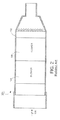
- FIG. 1 is an isometric depiction of a blower device constructed in accordance with related art solutions.
- FIG. 2 is a partial diagrammatic cross-sectional view of the blower device of FIG. 1 .
- FIG. 3 is a diagrammatic cross-sectional depiction of a livestock grooming device that is constructed in accordance with embodiments of the present invention.
- FIG. 4 is a diagrammatic cross-sectional depiction of a livestock grooming device that is constructed in accordance with alternative embodiments of the present invention.
- FIG. 5 is a diagrammatic cross-sectional depiction of a livestock grooming device that is constructed in accordance with alternative embodiments of the present invention.
- FIG. 6 is an elevational depiction of the livestock grooming device of FIG. 5 .
- FIG. 7 is an elevational depiction of the livestock grooming device of FIG. 5 .
- FIG. 8 is a diagrammatic piping depiction of another four-into-one header constructed in accordance with embodiments of the present invention.
- a livestock grooming system has a plurality of blowers, each being selectively engageable so that the user can operate the system with just one blower or alternatively with any desired number of blowers. For instance, in a system having two blowers the user might likely find it advantageous to begin by drying a washed animal's fur with the airflow delivered by both blowers running simultaneously. Afterward, when the animal is substantially dry, the user might likely find it advantageous to fluff the animal's fur with the comparatively less forceful airflow delivered by just one of the two blowers.
- the claimed embodiments provide advantageous solutions for compensating in the piping to prevent air from an active blower from flowing backward through another inactive blower.
- FIGS. 1 and 2 are isometric and diagrammatic partial cross-sectional depictions, respectively, of a dual blower device 100 that is constructed in accordance with embodiments of previous related art solutions.
- the blower device 100 is generally constructed of a canister 102 that contains two blowers 104 , 106 .
- the canister 102 has an inlet 108 where fresh air is drawn in to supply the blowers 104 , 106 .
- the blowers 104 , 106 pressurize the supplied air and direct the pressurized air to exit the canister 102 from an outlet 110 .
- a flexible hose (see FIG. 7 ) is connected at one end thereof to the stub defining the outlet 110 and a grooming tool, such as a nozzle or airbrush and the like, is connected to the opposing end of the flexible hose.
- FIG. 3 diagrammatically likewise generally depicts a dual blower device, but in the form of a grooming device 112 that is constructed in accordance with embodiments of the present invention.
- the grooming device 112 has two canisters 114 , 116 , each containing one blower 118 .
- the contemplated embodiments are not limited to either the number of canisters 114 , 116 or the number of motors 118 in each canister 114 , 116 depicted in the illustrative embodiments of FIG. 3 .
- more than two canisters 114 , 116 can be included in the grooming device 112 construction.
- more than one blower 118 can be contained in one or more of the canisters 114 , 116 .
- the grooming device 112 has a manifold 120 that in all canister arrangements generally fluidly connects the outlets 122 , 124 of the respective canisters 114 , 116 to a manifold outlet 126 .
- the manifold outlet 126 provides a singular passageway for all of the airflow created by either or both of the blowers 118 .
- the flexible hose ( FIG. 7 ) is connected to the manifold outlet for directing the airflow to the desired point of use.
- the manifold can have two or more manifold outlets 126 .
- the manifold 120 in these illustrative embodiments includes a check valve 128 between the outlet 122 of the canister 114 and the manifold outlet 126 permitting airflow in only one direction, from the canister 114 to the manifold outlet 126 .
- a check valve 128 between the outlet 122 of the canister 114 and the manifold outlet 126 permitting airflow in only one direction, from the canister 114 to the manifold outlet 126 .
- check valve 128 is merely illustrative and not limiting of the contemplated embodiments of the present invention which generally provide a flow prevent device to prevent backflow through one of the powered off canisters from one or more other powered canisters.
- another type of valve such as but not limited to a butterfly valve 130 depicted in FIG. 4 , or otherwise not depicted such as a gate valve, a ball valve, a solenoid valve, and the like can be used.
- An enumeration of all types of valves that can be used in replacement of the depicted check valve 128 and butterfly valve 130 is unnecessary for the skilled artisan to readily ascertain the scope of the claimed invention.
- FIG. 3 also generally discloses the proposition that in some embodiments regardless of the number of canisters all but one of them can have a corresponding backflow preventer device, such as the check valve or the like, in the manifold between the respective canister's outlet and the manifold outlet. In that way the one canister without a corresponding backflow preventer is designated as the canister that is powered when the airflow of only one blower is needed.
- a backflow preventer device such as the check valve or the like
- the manifold can advantageously include three backflow preventer devices between respective outlets of three canisters, with only one of the four canisters remaining unrestricted by a backflow preventer device so that it would be designated as the first (and sometimes only) powered canister at lowest airflow requirement conditions.
- a backflow preventer device so that it would be designated as the first (and sometimes only) powered canister at lowest airflow requirement conditions.
- FIG. 4 generally discloses the proposition that in other embodiments regardless of the number of canisters all of them can have a corresponding backflow preventer device in the manifold between the respective canister's outlet and the manifold outlet. In that way when the airflow of only one blower is needed, that designated canister can be duty cycled among the plurality of canisters for robustness and reliability sake.
- each of the four canisters can be provided with a corresponding backflow preventer device in the manifold.
- FIG. 5 depicts illustrative embodiments similar to FIG. 4 except that here the backflow preventer devices, manual operated valves, are contained within each of the canisters 114 ′, 116 ′ instead of in the manifold 120 ′.
- the manual operated valves have an external lever 132 that is selectively positionable between a closed position and an open position. All that has been described herein is likewise applicable to the illustrative embodiments of FIG. 5 .
- the number of canisters containing a backflow preventer device can be all or some of the total number of canisters, depending on the minimum airflow requirement and the cost benefit balancing of constructing an arrangement that maximizes the system robustness and reliability in which each of the canisters can contain a corresponding backflow preventer device.
- FIG. 6 is an elevational view of a four canister grooming device 112 constructed in accordance with the diagrammatic depiction of FIG. 5 .
- a tubular framework 134 such as of welded construction and the like, provides an upstanding supporting structure. In these illustrative embodiments the framework 134 is ultimately supported upon a pair of wheels to enhance the portability of the grooming device 112 .
- a filter assembly 136 is supported by the upper end of the framework 134 .
- the filter assembly 136 includes a removable screen 138 that, when removed, provides access to a compartment 140 that is volumetrically oversized to contain an abundance of replaceable (or washable) filter media.
- the filter compartment is fluidly connected to the inlet ends of each of the canisters so that supply air is drawn through the filter media and then into the respectively powered canister.
- the filter media is contemplated as being reusable but a “one-use” (a filter intended to be discarded after a single use) type of filter media can also be employed. It is further contemplated that the filter media may be formed of any number of filter portions that, in some embodiments, abut and/or overlap to provide one continuous filter.
- the filter compartment 140 is contemplated as being made of metal but other materials can be used, for example, plastic, fiberglass, composite materials, etc.
- the filter compartment 140 is shown to be generally rectangular in shape but it is to be understood that any shape can be provided.
- the filter compartment is sized such that a filter surface area is provided that is larger than the sum of the intake openings of the canisters.
- the abundantly large filter surface and volume is well suited for the typical environment where an inordinate amount of hair, dirt, oil and grease abound. Comparatively smaller filters in those environmental conditions are significantly quicker to become saturated with impurities and, accordingly, adversely affect blower efficiency and power.
- the comparatively larger surface area of the disclosed embodiments performs comparatively longer without becoming congested, permitting the user to increase the time between filter changes and cleaning.
- the framework 134 also provides a rigid supporting structure for the attachment of enclosure panels (removable or not removable) to partially or entirely surround the canisters.
- enclosure panels removable or not removable
- Such an enclosure advantageously makes the grooming device 112 operate quieter and hence less disturbing to livestock in the proximity of the device while it is being operated.
- the enclosure panels can be insulated to enhance the performance of that advantageous benefit.
- the lower portion of the framework 134 supports enclosure panels that define a storage enclosure sized for storing a desired length of flexible hose for use when the grooming device 112 is operational.
- FIG. 6 Another advantageous feature of the illustrative embodiments of FIG. 6 is the use of a flexible connector 142 between the outlets of each of the canisters and the manifold 120 ′′.
- the flexible connector 142 is preferably constructed of an elastomeric material and the like in order to damp vibrations from the blowers from propagating to the manifold and, in turn, to the enclosure and/or the framework. That damping advantageously reduces if not prevents the noise and physical stress otherwise imparted by those vibrations.
- FIG. 7 is another isometric view of the grooming device 112 ′ of FIG. 6 further showing a distal end 144 of a flexible hose 146 removed from the lower storage compartment and readied for use in operation of the grooming device 112 ′.
- the distal end 144 forms a nozzle for intensifying the airflow for its intended use in grooming an animal.
- An upwardly projecting portion of the framework 134 includes a handle 148 for ease in grasping while moving the grooming device 112 ′.
- An orthogonally projecting rack 150 provides a width-wise support for wrapping an electrical extension cord 152 for storage thereof.
- toggle switches 154 for individually powering each of the four blowers. Although not shown, in alternative equivalent embodiments similar switches are provided for selectively powering a heating element in one or more of the canisters. Also provided in the upstanding portion of the framework is a utility electrical receptacle 156 to make remote electrical power provided by the electrical extension cord 152 also available for use locally with auxiliary powered equipment used in conjunction with the grooming device 112 ′.
- FIG. 8 diagrammatically depicts illustrative alternative equivalent embodiments constructed by the joinder of two two-into-one piping components to ultimately provide the four-into-one piping arrangement.
Landscapes
- Life Sciences & Earth Sciences (AREA)
- Environmental Sciences (AREA)
- Zoology (AREA)
- Animal Husbandry (AREA)
- Biodiversity & Conservation Biology (AREA)
- Animal Behavior & Ethology (AREA)
- Housing For Livestock And Birds (AREA)
Abstract
An apparatus and associated method for a livestock grooming device having a first canister containing a first blower that selectively imparts an airflow through an outlet of the first canister, and further having a second canister containing a second blower that selectively imparts another airflow through an outlet of the second canister. A manifold fluidly connects both outlets to a manifold outlet. A backflow preventer device between the second blower and the manifold outlet selectively prevents the airflow from the first canister from entering the outlet of the second canister.
Description
This application claims the benefit of the earlier filing date of U.S. provisional patent application Ser. No. 61/430,899.
Embodiments of the present invention relate generally to livestock grooming devices and associated methodologies, and more particularly without limitation to a blower system and usage thereof in the livestock industry for drying or dressing livestock fur.
Blowers are used to groom the fur of various livestock animals, such as by blow drying and fluffing the fur after a livestock animal has been washed. The blower acts as a positive pressure source to provide pressurized air, which is directed toward the livestock animal via a hand-held flexible hose attached in fluid communication with the blower, to expedite drying and/or fluffing of the fur. In some cases, multiple blowers are used, in parallel or series, whereby airflow generated by the multiple blowers is directed out of a common orifice to concentrate the directed air flow. The user has the choice of using just one of the blowers for more delicate jobs or both blowers for heavier jobs. It is to innovations related to this subject matter that the claimed invention is generally directed.
In some embodiments an apparatus is provided having a first canister containing a first blower that selectively imparts an airflow through an outlet of the first canister, and further having a second canister containing a second blower that selectively imparts another airflow through an outlet of the second canister. A manifold fluidly connects both outlets to a manifold outlet. A backflow preventer device between the second blower and the manifold outlet selectively prevents the airflow from the first canister from entering the outlet of the second canister.
In some embodiments a method is provided including steps of obtaining a livestock grooming device having a first canister containing a first blower, a second canister containing a second blower, and a manifold fluidly connecting outlets of both canisters to a manifold outlet; closing a backflow preventer device between the second blower and the manifold outlet; and activating only the first blower, the closed backflow preventer preventing any of the airflow from the first blower from entering an outlet of the second canister so that the entire airflow from the first blower flows through the manifold outlet.
A livestock grooming system is described that has a plurality of blowers, each being selectively engageable so that the user can operate the system with just one blower or alternatively with any desired number of blowers. For instance, in a system having two blowers the user might likely find it advantageous to begin by drying a washed animal's fur with the airflow delivered by both blowers running simultaneously. Afterward, when the animal is substantially dry, the user might likely find it advantageous to fluff the animal's fur with the comparatively less forceful airflow delivered by just one of the two blowers. The claimed embodiments provide advantageous solutions for compensating in the piping to prevent air from an active blower from flowing backward through another inactive blower.
The grooming device 112 has a manifold 120 that in all canister arrangements generally fluidly connects the outlets 122, 124 of the respective canisters 114, 116 to a manifold outlet 126. In these illustrative embodiments the manifold outlet 126 provides a singular passageway for all of the airflow created by either or both of the blowers 118. In these illustrative embodiments the flexible hose (FIG. 7 ) is connected to the manifold outlet for directing the airflow to the desired point of use. In equivalent alternative embodiments (not depicted) the manifold can have two or more manifold outlets 126.
The manifold 120 in these illustrative embodiments includes a check valve 128 between the outlet 122 of the canister 114 and the manifold outlet 126 permitting airflow in only one direction, from the canister 114 to the manifold outlet 126. Thus, when only the canister 116 is powered on with the canister 114 powered off, the airflow from the powered canister 116 deadheads against the closed check valve 128 so that it does not flow backward through the canister 114.
The depiction of the check valve 128 is merely illustrative and not limiting of the contemplated embodiments of the present invention which generally provide a flow prevent device to prevent backflow through one of the powered off canisters from one or more other powered canisters. In equivalent alternative embodiments another type of valve such as but not limited to a butterfly valve 130 depicted in FIG. 4 , or otherwise not depicted such as a gate valve, a ball valve, a solenoid valve, and the like can be used. An enumeration of all types of valves that can be used in replacement of the depicted check valve 128 and butterfly valve 130 is unnecessary for the skilled artisan to readily ascertain the scope of the claimed invention.
A filter assembly 136 is supported by the upper end of the framework 134. The filter assembly 136 includes a removable screen 138 that, when removed, provides access to a compartment 140 that is volumetrically oversized to contain an abundance of replaceable (or washable) filter media. The filter compartment is fluidly connected to the inlet ends of each of the canisters so that supply air is drawn through the filter media and then into the respectively powered canister. The filter media is contemplated as being reusable but a “one-use” (a filter intended to be discarded after a single use) type of filter media can also be employed. It is further contemplated that the filter media may be formed of any number of filter portions that, in some embodiments, abut and/or overlap to provide one continuous filter. The filter compartment 140 is contemplated as being made of metal but other materials can be used, for example, plastic, fiberglass, composite materials, etc. In these illustrative embodiments the filter compartment 140 is shown to be generally rectangular in shape but it is to be understood that any shape can be provided. In any event, preferably the filter compartment is sized such that a filter surface area is provided that is larger than the sum of the intake openings of the canisters. The abundantly large filter surface and volume is well suited for the typical environment where an inordinate amount of hair, dirt, oil and grease abound. Comparatively smaller filters in those environmental conditions are significantly quicker to become saturated with impurities and, accordingly, adversely affect blower efficiency and power. The comparatively larger surface area of the disclosed embodiments performs comparatively longer without becoming congested, permitting the user to increase the time between filter changes and cleaning.
Although not depicted, it will be noted that the framework 134 also provides a rigid supporting structure for the attachment of enclosure panels (removable or not removable) to partially or entirely surround the canisters. Such an enclosure advantageously makes the grooming device 112 operate quieter and hence less disturbing to livestock in the proximity of the device while it is being operated. The enclosure panels can be insulated to enhance the performance of that advantageous benefit. It will be noted that in these illustrative embodiments the lower portion of the framework 134 supports enclosure panels that define a storage enclosure sized for storing a desired length of flexible hose for use when the grooming device 112 is operational.
Another advantageous feature of the illustrative embodiments of FIG. 6 is the use of a flexible connector 142 between the outlets of each of the canisters and the manifold 120″. The flexible connector 142 is preferably constructed of an elastomeric material and the like in order to damp vibrations from the blowers from propagating to the manifold and, in turn, to the enclosure and/or the framework. That damping advantageously reduces if not prevents the noise and physical stress otherwise imparted by those vibrations.
In these illustrative embodiments having four canisters there are four toggle switches 154 for individually powering each of the four blowers. Although not shown, in alternative equivalent embodiments similar switches are provided for selectively powering a heating element in one or more of the canisters. Also provided in the upstanding portion of the framework is a utility electrical receptacle 156 to make remote electrical power provided by the electrical extension cord 152 also available for use locally with auxiliary powered equipment used in conjunction with the grooming device 112′.
It will be noted that the manifold 120″ described in FIGS. 6 and 7 fluidly connect all four of the fluid lines into one piping component; a four-into-one type of manifold. The contemplated embodiments are not so limited, in that FIG. 8 diagrammatically depicts illustrative alternative equivalent embodiments constructed by the joinder of two two-into-one piping components to ultimately provide the four-into-one piping arrangement.
It is to be understood that even though numerous characteristics and advantages of various aspects have been set forth in the foregoing description, together with details of the structure and function, this disclosure is illustrative only, and changes may be made in detail, especially in matters of structure and arrangement to the full extent indicated by the broad general meaning of the terms in which the appended claims are expressed.
Claims (20)
1. An apparatus comprising:
a first canister containing a first blower that selectively imparts a first airflow through an outlet of the first canister;
a second canister containing a second blower that selectively imparts a second airflow through an outlet of the second canister;
a first flexible connector connected to the first canister's outlet;
a different second flexible connector connected to the second canister's outlet;
a rigid piping manifold having a first manifold inlet connected to the first flexible connector and a second manifold inlet connected to the second flexible connector, so that the first flow passes entirely through the first flexible connector before entering the rigid piping manifold and the second flow passes entirely through the second flexible connector before entering the rigid piping manifold, the rigid piping manifold fluidly combining the first and second manifold inlets into only one manifold outlet; and
a backflow preventer device between the second blower and the manifold outlet, selectively preventing the first airflow from entering the second canister.
2. The apparatus of claim 1 comprising a third canister containing a third blower that selectively imparts a third airflow through an outlet of the third canister, and a different third flexible connector connecting the third canister's outlet to a third inlet of the rigid piping manifold.
3. The apparatus of claim 2 comprising a fourth canister containing a fourth blower that selectively imparts a fourth airflow through an outlet of the fourth canister, and a different fourth flexible connector connecting the fourth canister's outlet to a fourth inlet of the rigid piping manifold.
4. The apparatus of claim 3 comprising an upright framework supporting the four canisters and the rigid piping manifold, the frame including a roller upon which the frame is transportable.
5. The apparatus of claim 4 wherein each of the canisters is attached to a filter compartment that is sized to hold a filter media adjacent an inlet of each of the canisters.
6. The apparatus of claim 5 wherein the filter compartment comprises an intake screen that is sized larger than the cross sectional area of the four canister inlets.
7. The apparatus of claim 6 wherein the framework comprises an enclosure for storing a flexible hose that is connectable to the manifold outlet.
8. The apparatus of claim 7 wherein the flexible hose connects to the manifold outlet inside the enclosure.
9. The apparatus of claim 8 wherein the framework supports a switch for each of the blowers and a utility electrical receptacle.
10. A method comprising:
obtaining a livestock grooming device having a first canister containing a first blower, a second canister containing a second blower, a first flexible connector connected to the first canister, a second flexible connector connected to the second canister, and a rigid piping manifold having a first manifold inlet connected to the first flexible connector and a second manifold inlet connected to the second flexible connector, the rigid piping manifold fluidly combining the first and second manifold inlets into only one manifold outlet;
closing a backflow preventer device between the second blower and the manifold outlet; and
activating only the first blower, the closed backflow preventer preventing any of the airflow from the first blower from entering an outlet of the second canister so that the entire airflow from the first blower flows through the manifold outlet.
11. A livestock grooming apparatus, comprising:
a framework including a roller upon which the framework is transportable;
four canister blowers supported by the framework, each canister blower selectively imparting a respective airflow;
a rigid piping manifold having four manifold inlets that are fluidly combined into only one manifold outlet; and
four flexible connectors, each connecting one of the canister blowers to one of the manifold inlets so that each of the airflows passes entirely through the respective flexible connector before entering the rigid piping manifold.
12. The livestock grooming apparatus of claim 11 comprising a backflow preventer device between a selected canister blower and the manifold outlet, the backflow preventer device preventing airflow from another canister blower from entering the selected canister blower.
13. The livestock grooming apparatus of claim 12 comprising three backflow preventer devices, one of the three backflow preventer devices between each of three of the canister blowers and the manifold outlet.
14. The livestock grooming apparatus of claim 12 comprising four backflow preventer devices, one of the four backflow preventer devices between each of the canister blowers and the manifold outlet.
15. The livestock grooming apparatus of claim 11 wherein the framework supports a filter compartment that is sized to hold a filter media adjacent an inlet of each of the canister blowers.
16. The livestock grooming apparatus of claim 15 wherein the filter compartment comprises an intake screen that is sized larger than the cross sectional area of the four canister blower inlets.
17. The livestock grooming apparatus of claim 11 wherein the framework supports an enclosure for storing a flexible hose that is connectable to the manifold outlet.
18. The livestock grooming apparatus of claim 17 wherein the flexible hose connects to the manifold outlet inside the enclosure.
19. The livestock grooming apparatus of claim 11 wherein the framework supports a switch for each of the blowers and a utility electrical receptacle.
20. The livestock grooming apparatus of claim 11 wherein at least one of the canister blowers includes a heater for selectively warming the airflow.
Priority Applications (1)
| Application Number | Priority Date | Filing Date | Title |
|---|---|---|---|
| US13/346,724 US8631767B1 (en) | 2011-01-07 | 2012-01-09 | Livestock grooming |
Applications Claiming Priority (2)
| Application Number | Priority Date | Filing Date | Title |
|---|---|---|---|
| US201161430899P | 2011-01-07 | 2011-01-07 | |
| US13/346,724 US8631767B1 (en) | 2011-01-07 | 2012-01-09 | Livestock grooming |
Publications (1)
| Publication Number | Publication Date |
|---|---|
| US8631767B1 true US8631767B1 (en) | 2014-01-21 |
Family
ID=49919164
Family Applications (1)
| Application Number | Title | Priority Date | Filing Date |
|---|---|---|---|
| US13/346,724 Expired - Fee Related US8631767B1 (en) | 2011-01-07 | 2012-01-09 | Livestock grooming |
Country Status (1)
| Country | Link |
|---|---|
| US (1) | US8631767B1 (en) |
Cited By (9)
| Publication number | Priority date | Publication date | Assignee | Title |
|---|---|---|---|---|
| USD792662S1 (en) * | 2016-05-27 | 2017-07-18 | Billy Chen | Pet dryer |
| USD838061S1 (en) * | 2017-07-12 | 2019-01-08 | Ningbo Iclipper Electric Appliance Co., Ltd. | Pet hair blowing and sucking nursing machine |
| US11156229B2 (en) * | 2019-05-08 | 2021-10-26 | Xceed Engineering LLC | Livestock blower apparatus |
| USD1005615S1 (en) * | 2023-07-19 | 2023-11-21 | Shenzhen Suihai Industrial Co., Ltd. | Pet grooming vacuum |
| USD1013294S1 (en) * | 2023-05-30 | 2024-01-30 | Ningbo Yuexiang Electric Appliance Co., Ltd. | Pet grooming vacuum cleaner |
| USD1019014S1 (en) * | 2023-11-01 | 2024-03-19 | Ningbo Meace Pet Products Co., Ltd | Pet dryer |
| USD1037577S1 (en) * | 2024-04-16 | 2024-07-30 | Zhejiang Kelaisiman Industry and Trade Co., Ltd. | Pet grooming tool |
| USD1041093S1 (en) * | 2023-09-13 | 2024-09-03 | Zhongshan Kamshing Home Electrical Appliance Co., Ltd | Combined vacuum cleaner and blow dryer for pet grooming |
| US12557784B1 (en) * | 2024-11-03 | 2026-02-24 | Ji Er (Zhejiang) Technology Co., LTD. | Double-air-duct water blower for pet |
Citations (6)
| Publication number | Priority date | Publication date | Assignee | Title |
|---|---|---|---|---|
| US3378065A (en) * | 1965-08-19 | 1968-04-16 | Harrington Mfg Company | Blower arrangement for peanut dryer |
| US5926972A (en) | 1996-12-16 | 1999-07-27 | Di Peso; Charles C. | Animal grooming apparatus |
| US6305325B1 (en) | 1999-10-29 | 2001-10-23 | Sullivan Supply, Inc. | Livestock blow dryer |
| US7748380B1 (en) * | 2004-04-06 | 2010-07-06 | Sti Licensing Corporation | Combined air-supplying/air-purifying system |
| US7775180B2 (en) | 2006-07-05 | 2010-08-17 | Boss Technology Systems, Inc. | Livestock blow dryer with diverter valve |
| US8011114B2 (en) | 2009-12-04 | 2011-09-06 | Superior Investments, Inc. | Vehicle dryer with butterfly inlet valve |
-
2012
- 2012-01-09 US US13/346,724 patent/US8631767B1/en not_active Expired - Fee Related
Patent Citations (6)
| Publication number | Priority date | Publication date | Assignee | Title |
|---|---|---|---|---|
| US3378065A (en) * | 1965-08-19 | 1968-04-16 | Harrington Mfg Company | Blower arrangement for peanut dryer |
| US5926972A (en) | 1996-12-16 | 1999-07-27 | Di Peso; Charles C. | Animal grooming apparatus |
| US6305325B1 (en) | 1999-10-29 | 2001-10-23 | Sullivan Supply, Inc. | Livestock blow dryer |
| US7748380B1 (en) * | 2004-04-06 | 2010-07-06 | Sti Licensing Corporation | Combined air-supplying/air-purifying system |
| US7775180B2 (en) | 2006-07-05 | 2010-08-17 | Boss Technology Systems, Inc. | Livestock blow dryer with diverter valve |
| US8011114B2 (en) | 2009-12-04 | 2011-09-06 | Superior Investments, Inc. | Vehicle dryer with butterfly inlet valve |
Cited By (10)
| Publication number | Priority date | Publication date | Assignee | Title |
|---|---|---|---|---|
| USD792662S1 (en) * | 2016-05-27 | 2017-07-18 | Billy Chen | Pet dryer |
| USD838061S1 (en) * | 2017-07-12 | 2019-01-08 | Ningbo Iclipper Electric Appliance Co., Ltd. | Pet hair blowing and sucking nursing machine |
| US11156229B2 (en) * | 2019-05-08 | 2021-10-26 | Xceed Engineering LLC | Livestock blower apparatus |
| US20220034333A1 (en) * | 2019-05-08 | 2022-02-03 | Xceed Engineering LLC | Livestock Blower Apparatus |
| USD1013294S1 (en) * | 2023-05-30 | 2024-01-30 | Ningbo Yuexiang Electric Appliance Co., Ltd. | Pet grooming vacuum cleaner |
| USD1005615S1 (en) * | 2023-07-19 | 2023-11-21 | Shenzhen Suihai Industrial Co., Ltd. | Pet grooming vacuum |
| USD1041093S1 (en) * | 2023-09-13 | 2024-09-03 | Zhongshan Kamshing Home Electrical Appliance Co., Ltd | Combined vacuum cleaner and blow dryer for pet grooming |
| USD1019014S1 (en) * | 2023-11-01 | 2024-03-19 | Ningbo Meace Pet Products Co., Ltd | Pet dryer |
| USD1037577S1 (en) * | 2024-04-16 | 2024-07-30 | Zhejiang Kelaisiman Industry and Trade Co., Ltd. | Pet grooming tool |
| US12557784B1 (en) * | 2024-11-03 | 2026-02-24 | Ji Er (Zhejiang) Technology Co., LTD. | Double-air-duct water blower for pet |
Similar Documents
| Publication | Publication Date | Title |
|---|---|---|
| US7806083B2 (en) | Livestock blow dryer with air deflectors | |
| US7921813B2 (en) | Livestock blow dryer with insulated region | |
| US7753004B2 (en) | Livestock blow dryer with filter and muffler | |
| US7975652B2 (en) | Livestock blow dryer with turbulator plate | |
| US7870837B2 (en) | Livestock blow dryer with grooming nozzle | |
| US7775180B2 (en) | Livestock blow dryer with diverter valve | |
| US7753005B2 (en) | Livestock blow dryer with removable cartridge motors | |
| US7806084B2 (en) | Livestock blow dryer with air outlet and air inlets of similar cross-sectional area | |
| DE602006009544D1 (en) | Filter unit for a pool cleaning robot | |
| US20120031347A1 (en) | Multi-chamber livestock blower | |
| CN109590146A (en) | A kind of phone housing automatic paint spraying apparatus | |
| CN205341104U (en) | Backpack atomizing air -blower | |
| WO2025007501A1 (en) | Dust removal device for air supply and exhaust pipe main pipeline of ivc rack | |
| DE102015104354B4 (en) | Demonstration device for the operation of an air cleaner | |
| CN108672443A (en) | One kind being based on education and instruction test tube cleaning device | |
| CN208967961U (en) | A kind of automated cleaning wet curtain device | |
| AT3906U1 (en) | DEVICE FOR SUCTIONING THE PAINT LEVER MADE BY SPRAY-PAINTING | |
| US20150231654A1 (en) | Material spraying machine | |
| CN206861739U (en) | Clarifier | |
| CN205084063U (en) | Air source treatment device | |
| KR102389455B1 (en) | booth | |
| KR20090057520A (en) | Oxygen generator | |
| CN211430723U (en) | Ozone insect-killing and mould-removing device | |
| KR101589047B1 (en) | Multy Suction Device of Treatment Laundry | |
| CN220344790U (en) | An integrated machine for disinfection and drying of medical non-woven fabrics in the hospital logistics department |
Legal Events
| Date | Code | Title | Description |
|---|---|---|---|
| STCF | Information on status: patent grant |
Free format text: PATENTED CASE |
|
| FPAY | Fee payment |
Year of fee payment: 4 |
|
| FEPP | Fee payment procedure |
Free format text: MAINTENANCE FEE REMINDER MAILED (ORIGINAL EVENT CODE: REM.); ENTITY STATUS OF PATENT OWNER: MICROENTITY |
|
| LAPS | Lapse for failure to pay maintenance fees |
Free format text: PATENT EXPIRED FOR FAILURE TO PAY MAINTENANCE FEES (ORIGINAL EVENT CODE: EXP.); ENTITY STATUS OF PATENT OWNER: MICROENTITY |
|
| STCH | Information on status: patent discontinuation |
Free format text: PATENT EXPIRED DUE TO NONPAYMENT OF MAINTENANCE FEES UNDER 37 CFR 1.362 |
|
| FP | Lapsed due to failure to pay maintenance fee |
Effective date: 20220121 |