US8628944B2 - Method for producing ethanol from xylose - Google Patents

Method for producing ethanol from xylose Download PDF

Info

Publication number
US8628944B2
US8628944B2 US12/815,837 US81583710A US8628944B2 US 8628944 B2 US8628944 B2 US 8628944B2 US 81583710 A US81583710 A US 81583710A US 8628944 B2 US8628944 B2 US 8628944B2
Authority
US
United States
Prior art keywords
saccharomyces cerevisiae
ethanol
xylose
phosphate
recombinant saccharomyces
Prior art date
Legal status (The legal status is an assumption and is not a legal conclusion. Google has not performed a legal analysis and makes no representation as to the accuracy of the status listed.)
Active, expires
Application number
US12/815,837
Other versions
US20110143409A1 (en
Inventor
Jin-Ho Seo
Yong-cheol Park
Current Assignee (The listed assignees may be inaccurate. Google has not performed a legal analysis and makes no representation or warranty as to the accuracy of the list.)
SNU R&DB Foundation
Original Assignee
SNU R&DB Foundation
Priority date (The priority date is an assumption and is not a legal conclusion. Google has not performed a legal analysis and makes no representation as to the accuracy of the date listed.)
Filing date
Publication date
Application filed by SNU R&DB Foundation filed Critical SNU R&DB Foundation
Assigned to SNU R&DB FOUNDATION reassignment SNU R&DB FOUNDATION ASSIGNMENT OF ASSIGNORS INTEREST (SEE DOCUMENT FOR DETAILS). Assignors: SEO, JIN-HO, PARK, YONG-CHEOL
Publication of US20110143409A1 publication Critical patent/US20110143409A1/en
Application granted granted Critical
Publication of US8628944B2 publication Critical patent/US8628944B2/en
Active legal-status Critical Current
Adjusted expiration legal-status Critical

Links

Images

Classifications

    • CCHEMISTRY; METALLURGY
    • C12BIOCHEMISTRY; BEER; SPIRITS; WINE; VINEGAR; MICROBIOLOGY; ENZYMOLOGY; MUTATION OR GENETIC ENGINEERING
    • C12PFERMENTATION OR ENZYME-USING PROCESSES TO SYNTHESISE A DESIRED CHEMICAL COMPOUND OR COMPOSITION OR TO SEPARATE OPTICAL ISOMERS FROM A RACEMIC MIXTURE
    • C12P7/00Preparation of oxygen-containing organic compounds
    • C12P7/02Preparation of oxygen-containing organic compounds containing a hydroxy group
    • C12P7/04Preparation of oxygen-containing organic compounds containing a hydroxy group acyclic
    • C12P7/06Ethanol, i.e. non-beverage
    • C12P7/08Ethanol, i.e. non-beverage produced as by-product or from waste or cellulosic material substrate
    • CCHEMISTRY; METALLURGY
    • C12BIOCHEMISTRY; BEER; SPIRITS; WINE; VINEGAR; MICROBIOLOGY; ENZYMOLOGY; MUTATION OR GENETIC ENGINEERING
    • C12NMICROORGANISMS OR ENZYMES; COMPOSITIONS THEREOF; PROPAGATING, PRESERVING, OR MAINTAINING MICROORGANISMS; MUTATION OR GENETIC ENGINEERING; CULTURE MEDIA
    • C12N9/00Enzymes; Proenzymes; Compositions thereof; Processes for preparing, activating, inhibiting, separating or purifying enzymes
    • C12N9/0004Oxidoreductases (1.)
    • C12N9/0006Oxidoreductases (1.) acting on CH-OH groups as donors (1.1)
    • CCHEMISTRY; METALLURGY
    • C12BIOCHEMISTRY; BEER; SPIRITS; WINE; VINEGAR; MICROBIOLOGY; ENZYMOLOGY; MUTATION OR GENETIC ENGINEERING
    • C12NMICROORGANISMS OR ENZYMES; COMPOSITIONS THEREOF; PROPAGATING, PRESERVING, OR MAINTAINING MICROORGANISMS; MUTATION OR GENETIC ENGINEERING; CULTURE MEDIA
    • C12N9/00Enzymes; Proenzymes; Compositions thereof; Processes for preparing, activating, inhibiting, separating or purifying enzymes
    • C12N9/10Transferases (2.)
    • C12N9/1022Transferases (2.) transferring aldehyde or ketonic groups (2.2)
    • CCHEMISTRY; METALLURGY
    • C12BIOCHEMISTRY; BEER; SPIRITS; WINE; VINEGAR; MICROBIOLOGY; ENZYMOLOGY; MUTATION OR GENETIC ENGINEERING
    • C12NMICROORGANISMS OR ENZYMES; COMPOSITIONS THEREOF; PROPAGATING, PRESERVING, OR MAINTAINING MICROORGANISMS; MUTATION OR GENETIC ENGINEERING; CULTURE MEDIA
    • C12N9/00Enzymes; Proenzymes; Compositions thereof; Processes for preparing, activating, inhibiting, separating or purifying enzymes
    • C12N9/10Transferases (2.)
    • C12N9/12Transferases (2.) transferring phosphorus containing groups, e.g. kinases (2.7)
    • C12N9/1205Phosphotransferases with an alcohol group as acceptor (2.7.1), e.g. protein kinases
    • YGENERAL TAGGING OF NEW TECHNOLOGICAL DEVELOPMENTS; GENERAL TAGGING OF CROSS-SECTIONAL TECHNOLOGIES SPANNING OVER SEVERAL SECTIONS OF THE IPC; TECHNICAL SUBJECTS COVERED BY FORMER USPC CROSS-REFERENCE ART COLLECTIONS [XRACs] AND DIGESTS
    • Y02TECHNOLOGIES OR APPLICATIONS FOR MITIGATION OR ADAPTATION AGAINST CLIMATE CHANGE
    • Y02EREDUCTION OF GREENHOUSE GAS [GHG] EMISSIONS, RELATED TO ENERGY GENERATION, TRANSMISSION OR DISTRIBUTION
    • Y02E50/00Technologies for the production of fuel of non-fossil origin
    • Y02E50/10Biofuels, e.g. bio-diesel

Definitions

  • the present invention relates to a method for producing ethanol from xylose using recombinant Saccharomyces cerevisiae . More particularly, the present invention relates to a method for producing ethanol from xylose using recombinant Saccharomyces cerevisiae wherein the recombinant Saccharomyces cerevisiae is transformed such that NADH and NAD+ as cofactors are coupled with each other and used, and that acetaldehyde dehydrogenase producing acetic acid is not expressed.
  • Ethanol the main ingredient in alcoholic beverages
  • ethanol is attracting considerable attention as a clean energy alternative to petroleum.
  • ethanol has been commercialized as a fuel for transportation for a long time.
  • Ethanol fuels consisting of 10% ethanol and 90% gasoline, are commercially available in the U.S.A.
  • Ethanol used as a transportation fuel is prepared from sugarcane, corn, etc.
  • Sugarcane is a raw material of sugar and corn is a raw material of foods.
  • the use of these sources for the preparation of ethanol causes, as a side-effect, an increase in sugar or corn costs and, as an ethical problem, use of the grain for fuel materials, rather than food materials.
  • Xylose a form of biomass, is found at high concentrations in wood waste in the form of polymeric xylene. Xylose is separated from xylo-oligosaccharide (XOS) formed through hydrolysis of xylan, which is used for the preparation of xylitol capable of preventing dental caries.
  • XOS xylo-oligosaccharide
  • Xylose is a renewable resource, which is recovered from wood byproducts generated in the process of producing pulp, etc. Use of xylose does not entail an increase in alternative material prices and is free from ethical problems and a great deal of research associated therewith is thus conducted at present.
  • Saccharomyces cerevisiae is well-known as a strain for producing ethanol in the preparation of fermented liquor such as coarse liquor. Saccharomyces cerevisiae is actively utilized as a host for the preparation of useful medicines and its use as a host for preparing ethanol is actively researched.
  • Saccharomyces cerevisiae has neither xylose reductase (XR) nor xylitol dehydrogenase (XDH) and thus, disadvantageously, cannot metabolize xylose.
  • XR xylose reductase
  • XDH xylitol dehydrogenase
  • Saccharomyces cerevisiae metabolizes xylose
  • ethanol is produced as a byproduct. Accordingly, some researchers have attempted to produce ethanol coming into the spotlight as an alternative energy using Saccharomyces cerevisiae.
  • the present invention has been made in view of the above problems, and it is an object of the present invention to develop and provide a method for preparing ethanol from xylose using recombinant Saccharomyces cerevisiae to solve supply bottleneck of NADH or NAD + as a cofactor and minimize preparation of acetic acid, and thereby increase an amount of ethanol produced.
  • the above and other objects can be accomplished by the provision of a method for preparing ethanol from xylose using recombinant Saccharomyces cerevisiae wherein the recombinant Saccharomyces cerevisiae is transformed to express xylose reductase (XR) converting xylose into xylitol using NADH as a cofactor; wherein the recombinant Saccharomyces cerevisiae is transformed to express xylitol dehydrogenase (XDH) converting xylitol into xylulose using NAD + as a cofactor; wherein the recombinant Saccharomyces cerevisiae is transformed to over-express xylulokinase (XK) converting xylulose into xylulose 5-phosphate; and wherein the recombinant Saccharomyces cerevisiae is transformed to over-express transal
  • Saccharomyces cerevisiae is commercially available as an ethanol-producing strain, but does not utilize xylose as a sole carbon source. This is because Saccharomyces cerevisiae has neither xylose reductase (XR) nor xylitol dehydrogenase (XDH), thus having no metabolic ability to convert xylose into xylulose. Accordingly, XR and XDH enzymes should be incorporated into hosts in order to produce ethanol. Generally, XR utilizes NADPH as a cofactor and XDH utilizes NAD + as a cofactor.
  • NADH-preferring XR rather than NADPH-dependent XR, is incorporated and coupled with NAD + -dependent XDH.
  • NAD + -dependent XDH
  • xylose is converted into xylulose by the NADH-preferring XR and NAD + -dependent XDH, and xylulose is converted into xylulose 5-phosphate by the additionally-incorporated XK and metabolized through pentose phosphate pathway.
  • XK When XK is not over-expressed, although it is an enzyme present in yeast, and XR and XDH are incorporated into strains, ethanol can be produced from xylose, but yield and production efficiency are considerably low. Accordingly, it is preferred that XK be over-expressed.
  • transaldolase 1 is an enzyme present on the pentose phosphate pathway, which converts sedoheptulose 7-phosphate and glyceraldehyde 3-phosphate into 4-erythrose 4-phosphate and fructose 6-phosphate.
  • TAL1 is over-expressed in order to improve production efficiency of ethanol.
  • Saccharomyces cerevisiae wherein xylose reductase or xylitol dehydrogenase is integrated into the genome of Saccharomyces cerevisiae is preferred.
  • genes are incorporated into the genome, they are advantageously not lost during culturing.
  • Saccharomyces cerevisiae wherein xylulokinase (XK) is integrated into delta sequences on the genome of Saccharomyces cerevisiae is preferred, since it is can be integrated in the form of multiple copies.
  • XK xylulokinase
  • the recombinant Saccharomyces cerevisiae is preferably transformed such that it does not express acetaldehyde dehydrogenase to convert acetaldehyde into acetic acid. This is the reason that production of acetic acid, as a by-product, is prevented and ethanol can thus be produced with a high yield and high production efficiency.
  • the transformation of the recombinant Saccharomyces cerevisiae such that acetaldehyde dehydrogenase is not expressed can be preferably carried out by entirely or partially fragmenting acetaldehyde dehydrogenase-encoding genes.
  • the production of the recombinant Saccharomyces cerevisiae which is additionally transformed, such that acetaldehyde dehydrogenase is not expressed is preferably carried out by O 2 -limited fed-batch fermentation.
  • the reason for the O 2 -limited fed-batch fermentation is that the production of acetic acid as a by-product is minimized.
  • FIG. 1 is a flow chart illustrating a process for producing ethanol from xylose according to the present invention
  • FIG. 2 is a graph showing the fact that the mutated XR, unlike the wild-type XR, exhibits high affinity for NADH over NADPH;
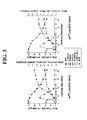
  • FIG. 3 is a graph comparing the mutated XR with wild-type XR in view of xylose metabolism level (xylitol production efficiency);
  • FIG. 4 is a graph comparing the SX3 strain with the SX5 strain in view of ethanol fermentation results.
  • FIG. 5 is a graph comparing SX5:ald6 ⁇ strain, wherein the production of acetic acid is inhibited, with SX5 strain in view of ethanol fermentation results.
  • the present invention provides a method for producing ethanol using Saccharomyces cerevisiae , wherein NADH as a cofactor of xylose reductase required for ethanol production, and NAD + as a cofactor of xylitol dehydrogenase are coupled and utilized and acetaldehyde dehydrogenase mediating production of acetic acid as a byproduct is removed, and ethanol can thus be produced at a high yield and high production efficiency.
  • gene recombinant is not described in detail in this example.
  • Gene recombination and methods for producing transformation systems are well-known in the art, genetic engineering, and a detailed description thereof is thus omitted.
  • Saccharomyces cerevisiae D452-2 used herein as a host was obtained from professor Makino of Kyoto University in Japan (Seiya Watanabe, Ahmed Abu Saleh, Seung Pil Pack, Narayana Annaluru, Tsutomu Kodaki and Keisuke Makino. 2007. Ethanol production from xylose using recombinant Saccharomyces cerevisiae expressing protein-engineered NADH-preferring xylose reductase from Pichia stipitis . Microbiol. 153:3044-3054).
  • Vectors, YEpM4XR(WT), YEpM4XR(R276H) and pPGKXDH(WT) were also collected from professor Makino of Kyoto University in Japan and the XR(R276H) enzyme mutated by subjecting wild-type XR to point mutation exhibits higher selective affinity for NADH over NADPH, as compared to wild-type XR (See FIG. 2 , Seiya Watanabe, Ahmed Abu Saleh, Seung Pil Pack, Narayana Annaluru, Tsutomu Kodaki and Keisuke Makino. 2007.
  • the parent vectors for the production of YIpXRWT-XDHWT and YEpM4XR(R276H), YIp5 and delta ISXK, were collected from Tae-Hee Lee, previous researcher, the graduate School of Seoul National University (Tae-Hee Lee, Metabolic engineering studies on production of ethanol from xylose by recombinant Saccharomyces cerevisiae , M. S. Thesis, Seoul National University, 2000).
  • the parent vector used for the production of pAUR_d_ALD6, pAUR101 was a vector which is commercially obtainable from Takara, Japan, and ALD6 genes were obtained by cloning from S. cerevisiae CEN.PK2-1D.
  • the TAL1 genes were obtained by cloning Pichia stipitis CBS6054.
  • Table 1 below shows strains produced in this example and gene types thereof.
  • the strain used herein was D452-2/pXR MUT /pXDH into which XR mut and XDH are episomally integrated in the form of plasmids.
  • the substrate used herein was xylose and aerobic fermentation was performed.
  • D452-2/pXR WT /pXDH into which wild-type NADPH-dependent XR (hereinafter, referred to as “XR WT ”) and XDH are episomally integrated in the form of plasmids was used as a control group strain.
  • SX2, SX3 and SX5 are used to ferment ethanol.
  • SX2 is a strain into which XR mut and XDH are integrated into the genome via homologous recombination
  • SX3 is a strain additionally integrated into the delta sequence on the genome to increase ethanol production efficiency for SX2.
  • SX5 is a strain in which transaldolase 1 (TAL1) is additionally over-expressed to improve the metabolic rate of the pentose phosphate pathway for SX3.
  • TAL1 transaldolase 1
  • a multi fermentation bath (B.Brown Corp.) with a size of 1 L was used for fermentation and operation volume was 500 mL.
  • the fermentation bath was maintained at a temperature of 30° C. and a fermentation solution was maintained at pH of 5.5.
  • the fermentation was carried out using microaerobic fermentation wherein stirring is performed at a rate of 300 rpm and aeration is performed at a rate of 0.1 vvm.
  • the SX3 strain exhibited about 2.7-fold higher xylose consumption rate and about 500-increased final ethanol concentration, as compared to the SX2 strain.
  • the SX5 strain wherein XR and XDH enzymes are incorporated and expressed, and XK and TAL1 enzymes are over-expressed, exhibited about a 2-fold increase in xylose consumption rate and an 80%-increased final ethanol concentration, as compared to the SX3 strain.
  • the SX5 strain exhibited a 3-fold increase in ethanol production efficiency and a 47%-increase in yield, as compared to the SX3 strain.
  • a multi fermentation bath (B.Brown Corp.) with a size of 1 L was used for fermentation and operation volume was 500 mL.
  • the fermentation bath was maintained at a temperature of 30° C. and a fermentation solution was maintained at pH of 5.5.
  • the fermentation was carried out using microaerobic fermentation wherein stirring is performed at a rate of 200 rpm and aeration is performed at a rate of 0.06 vvm.
  • SX5 SX3 + YEpXR + pTAL(SX3: SX2 + delta XK, SX2: YIpXR MUT ⁇ XDH WT ) 2)
  • SX5: ald6 ⁇ is obtained by removing ALD6 genes from SX5 strain.

Landscapes

  • Life Sciences & Earth Sciences (AREA)
  • Chemical & Material Sciences (AREA)
  • Health & Medical Sciences (AREA)
  • Organic Chemistry (AREA)
  • Zoology (AREA)
  • Engineering & Computer Science (AREA)
  • Wood Science & Technology (AREA)
  • Genetics & Genomics (AREA)
  • Bioinformatics & Cheminformatics (AREA)
  • Microbiology (AREA)
  • Biotechnology (AREA)
  • Biochemistry (AREA)
  • General Engineering & Computer Science (AREA)
  • General Health & Medical Sciences (AREA)
  • Molecular Biology (AREA)
  • Biomedical Technology (AREA)
  • Medicinal Chemistry (AREA)
  • Chemical Kinetics & Catalysis (AREA)
  • General Chemical & Material Sciences (AREA)
  • Preparation Of Compounds By Using Micro-Organisms (AREA)
  • Micro-Organisms Or Cultivation Processes Thereof (AREA)

Abstract

Disclosed is a method for producing ethanol from xylose using a recombinant Saccharomyces cerevisiae strain transformed to express a xylose reductase that uses NADH as a cofactor and a xylitol dehydrogenase that uses NAD+ as a cofactor, which are coupled with each other. The method provides an increase in ethanol yield and production efficiency, as compared to a control group, and enables production of ethanol at higher yield and high production efficiency by further eliminating acetaldehyde dehydrogenase which mediates production of acetic acid (by-product).

Description

CROSS-REFERENCE TO RELATED APPLICATION
This application is a continuation of PCT/KR2009/007458 filed Dec. 12, 2009, the entire contents of which are incorporated herein by reference.
TECHNICAL FIELD
The present invention relates to a method for producing ethanol from xylose using recombinant Saccharomyces cerevisiae. More particularly, the present invention relates to a method for producing ethanol from xylose using recombinant Saccharomyces cerevisiae wherein the recombinant Saccharomyces cerevisiae is transformed such that NADH and NAD+ as cofactors are coupled with each other and used, and that acetaldehyde dehydrogenase producing acetic acid is not expressed.
BACKGROUND ART
Ethanol, the main ingredient in alcoholic beverages, has been consumed since the development of alcoholic beverages. However, in modern times, ethanol is attracting considerable attention as a clean energy alternative to petroleum. In Brazil, ethanol has been commercialized as a fuel for transportation for a long time. Ethanol fuels, consisting of 10% ethanol and 90% gasoline, are commercially available in the U.S.A.
Meanwhile, at the conventional low-cost oil age involving cheap petroleum, the cost of manufacturing ethanol is higher than the price of oil, and thus ethanol is not cost-competitive. However, taking into consideration gradual exhaustion of oil deposits and increased oil prices, ethanol is becoming increasingly cost-competitive and will eventually overtake the price competitiveness of petroleum.
Ethanol used as a transportation fuel is prepared from sugarcane, corn, etc. Sugarcane is a raw material of sugar and corn is a raw material of foods. For this reason, the use of these sources for the preparation of ethanol causes, as a side-effect, an increase in sugar or corn costs and, as an ethical problem, use of the grain for fuel materials, rather than food materials.
Accordingly, a great deal of research is widely conducted on the development of alternatives to sugarcane and corn. Xylose, found at high concentrations in waste wood materials or forestry by-products, is one potential candidate.
Xylose, a form of biomass, is found at high concentrations in wood waste in the form of polymeric xylene. Xylose is separated from xylo-oligosaccharide (XOS) formed through hydrolysis of xylan, which is used for the preparation of xylitol capable of preventing dental caries.
Xylose is a renewable resource, which is recovered from wood byproducts generated in the process of producing pulp, etc. Use of xylose does not entail an increase in alternative material prices and is free from ethical problems and a great deal of research associated therewith is thus conducted at present.
Meanwhile, Saccharomyces cerevisiae is well-known as a strain for producing ethanol in the preparation of fermented liquor such as coarse liquor. Saccharomyces cerevisiae is actively utilized as a host for the preparation of useful medicines and its use as a host for preparing ethanol is actively researched.
Saccharomyces cerevisiae has neither xylose reductase (XR) nor xylitol dehydrogenase (XDH) and thus, disadvantageously, cannot metabolize xylose.
Accordingly, in order to allow Saccharomyces cerevisiae to metabolize xylose, a great deal of research is being conducted into incorporation of these enzymes into Saccharomyces cerevisiae. From research results, it can be confirmed that xylose is substantially metabolized.
In addition, when Saccharomyces cerevisiae metabolizes xylose, ethanol is produced as a byproduct. Accordingly, some researchers have attempted to produce ethanol coming into the spotlight as an alternative energy using Saccharomyces cerevisiae.
In this regard, the preparation of ethanol from xylose causes problems of low preparation yield and low economic efficiency. These problems are also caused by limited supply of NAD(P)H and NAD (P)+, as cofactors, and acetic acid obtained as a by-product.
SUMMARY OF THE DISCLOSURE
Therefore, the present invention has been made in view of the above problems, and it is an object of the present invention to develop and provide a method for preparing ethanol from xylose using recombinant Saccharomyces cerevisiae to solve supply bottleneck of NADH or NAD+ as a cofactor and minimize preparation of acetic acid, and thereby increase an amount of ethanol produced.
In accordance with the present invention, the above and other objects can be accomplished by the provision of a method for preparing ethanol from xylose using recombinant Saccharomyces cerevisiae wherein the recombinant Saccharomyces cerevisiae is transformed to express xylose reductase (XR) converting xylose into xylitol using NADH as a cofactor; wherein the recombinant Saccharomyces cerevisiae is transformed to express xylitol dehydrogenase (XDH) converting xylitol into xylulose using NAD+ as a cofactor; wherein the recombinant Saccharomyces cerevisiae is transformed to over-express xylulokinase (XK) converting xylulose into xylulose 5-phosphate; and wherein the recombinant Saccharomyces cerevisiae is transformed to over-express transaldolase 1 (TAL1) converting sedoheptulose 7-phosphate and glyceraldehyde 3-phosphate into erythrose 4-phosphate and fructose 6-phosphate (See FIG. 1).
Saccharomyces cerevisiae is commercially available as an ethanol-producing strain, but does not utilize xylose as a sole carbon source. This is because Saccharomyces cerevisiae has neither xylose reductase (XR) nor xylitol dehydrogenase (XDH), thus having no metabolic ability to convert xylose into xylulose. Accordingly, XR and XDH enzymes should be incorporated into hosts in order to produce ethanol. Generally, XR utilizes NADPH as a cofactor and XDH utilizes NAD+ as a cofactor.
In the present invention, NADH-preferring XR, rather than NADPH-dependent XR, is incorporated and coupled with NAD+-dependent XDH. When NADH and NAD+ as cofactors are coupled with each other, they are reproduced and reusable, thus solving the problem, namely, deterioration in economic efficiency, which is caused by limited cofactor supply.
In the Saccharomyces cerevisiae transformed by incorporating XR and XDH, xylose is converted into xylulose by the NADH-preferring XR and NAD+-dependent XDH, and xylulose is converted into xylulose 5-phosphate by the additionally-incorporated XK and metabolized through pentose phosphate pathway.
When XK is not over-expressed, although it is an enzyme present in yeast, and XR and XDH are incorporated into strains, ethanol can be produced from xylose, but yield and production efficiency are considerably low. Accordingly, it is preferred that XK be over-expressed.
Meanwhile, transaldolase 1 (TAL1) is an enzyme present on the pentose phosphate pathway, which converts sedoheptulose 7-phosphate and glyceraldehyde 3-phosphate into 4-erythrose 4-phosphate and fructose 6-phosphate. In the present invention, TAL1 is over-expressed in order to improve production efficiency of ethanol.
Meanwhile, in the present invention, a recombinant Saccharomyces cerevisiae wherein xylose reductase or xylitol dehydrogenase is integrated into the genome of Saccharomyces cerevisiae is preferred. When genes are incorporated into the genome, they are advantageously not lost during culturing.
Meanwhile, the recombinant Saccharomyces cerevisiae wherein xylulokinase (XK) is integrated into delta sequences on the genome of Saccharomyces cerevisiae is preferred, since it is can be integrated in the form of multiple copies.
Meanwhile, the recombinant Saccharomyces cerevisiae is preferably transformed such that it does not express acetaldehyde dehydrogenase to convert acetaldehyde into acetic acid. This is the reason that production of acetic acid, as a by-product, is prevented and ethanol can thus be produced with a high yield and high production efficiency. At this time, the transformation of the recombinant Saccharomyces cerevisiae such that acetaldehyde dehydrogenase is not expressed can be preferably carried out by entirely or partially fragmenting acetaldehyde dehydrogenase-encoding genes.
Meanwhile, the production of the recombinant Saccharomyces cerevisiae which is additionally transformed, such that acetaldehyde dehydrogenase is not expressed, is preferably carried out by O2-limited fed-batch fermentation. The reason for the O2-limited fed-batch fermentation is that the production of acetic acid as a by-product is minimized.
BRIEF DESCRIPTION OF THE DRAWINGS
The above and other objects, features and other advantages of the present invention will be more clearly understood from the following detailed description taken in conjunction with the accompanying drawings, in which:
FIG. 1 is a flow chart illustrating a process for producing ethanol from xylose according to the present invention;
FIG. 2 is a graph showing the fact that the mutated XR, unlike the wild-type XR, exhibits high affinity for NADH over NADPH;
FIG. 3 is a graph comparing the mutated XR with wild-type XR in view of xylose metabolism level (xylitol production efficiency);
FIG. 4 is a graph comparing the SX3 strain with the SX5 strain in view of ethanol fermentation results; and
FIG. 5 is a graph comparing SX5:ald6Δstrain, wherein the production of acetic acid is inhibited, with SX5 strain in view of ethanol fermentation results.
DETAILED DESCRIPTION OF THE DISCLOSURE
As apparent from the above description, the present invention provides a method for producing ethanol using Saccharomyces cerevisiae, wherein NADH as a cofactor of xylose reductase required for ethanol production, and NAD+ as a cofactor of xylitol dehydrogenase are coupled and utilized and acetaldehyde dehydrogenase mediating production of acetic acid as a byproduct is removed, and ethanol can thus be produced at a high yield and high production efficiency.
Hereinafter, the following Examples and Experimental Examples will be provided for a further understanding of the invention. The following examples are for illustrative purposes only and are not intended to limit the scope of the present invention.
Example 1 Production of Transformed Saccharomyces cerevisiae Strains
In this example, recombinant Saccharomyces cerevisiae used for the following Examples 2 to 4 were prepared.
Meanwhile, gene recombinant is not described in detail in this example. Gene recombination and methods for producing transformation systems are well-known in the art, genetic engineering, and a detailed description thereof is thus omitted.
The Saccharomyces cerevisiae D452-2 used herein as a host was obtained from professor Makino of Kyoto University in Japan (Seiya Watanabe, Ahmed Abu Saleh, Seung Pil Pack, Narayana Annaluru, Tsutomu Kodaki and Keisuke Makino. 2007. Ethanol production from xylose using recombinant Saccharomyces cerevisiae expressing protein-engineered NADH-preferring xylose reductase from Pichia stipitis. Microbiol. 153:3044-3054).
Vectors, YEpM4XR(WT), YEpM4XR(R276H) and pPGKXDH(WT) were also collected from professor Makino of Kyoto University in Japan and the XR(R276H) enzyme mutated by subjecting wild-type XR to point mutation exhibits higher selective affinity for NADH over NADPH, as compared to wild-type XR (See FIG. 2, Seiya Watanabe, Ahmed Abu Saleh, Seung Pil Pack, Narayana Annaluru, Tsutomu Kodaki and Keisuke Makino. 2007. Ethanol production from xylose by recombinant Saccharomyces cerevisiae expressing protein-engineered NADH-preferring xylose reductase from Pichia stipitis Microbiol. 153:3044-3054).
The parent vectors for the production of YIpXRWT-XDHWT and YEpM4XR(R276H), YIp5 and delta ISXK, were collected from Tae-Hee Lee, previous researcher, the Graduate School of Seoul National University (Tae-Hee Lee, Metabolic engineering studies on production of ethanol from xylose by recombinant Saccharomyces cerevisiae, M. S. Thesis, Seoul National University, 2000).
The parent vector used for the production of pAUR_d_ALD6, pAUR101, was a vector which is commercially obtainable from Takara, Japan, and ALD6 genes were obtained by cloning from S. cerevisiae CEN.PK2-1D.
The TAL1 genes were obtained by cloning Pichia stipitis CBS6054.
Table 1 below shows strains produced in this example and gene types thereof.
TABLE 1
Strains prepared in this example
Strains Gene type Plasmids used
D452-2 Matα, leu2 his3 ura3 can1
D452-2/ D452-2, ura3::URA3, leu2::LEU2 YEpM4XR(WT),
pXRWT/pXDH YEpM4XR(WT), pPGKXDH(WT) pPGKXDH(WT)
D452-2/ D452-2, ura3::URA3, leu2::LEU2, YEpM4XR(R276H),
pXRMUT/pXDH YEpM4XR(R276H), pPGKXDH(WT) pPGKXDH(WT)
D452-2/ D452-2, ura3::URA3 YIpXRWT-XDHWT
YIpXRWT-XDH PPGK-XYL1WT-TPGK, PPGK-XYL2WT-TPGK
SX2 D452-2, ura3::URA3 YIpXRR276H-XDHWT
PPGK-XYL1MUT-TPGK, PPGK-XYL2WT-TPGK
SX3 SX2, delta ISXK
Ty1-delta::PGPD-XKS1-TGPD-neor
SX5 SX3, , leu2::LEU2 YEpM4XR(R276H),
YEpM4XR(R276H), p423PsTAL1 P423PsTAL1
SX5:ald6□ SX5, ALD6::pAUR_d_ALD6 pAUR_d_ALD6
1) WT: wild type
Example 2 Fermentation of Xylose Using NADH-Preferring XR Rather than NADPH-Dependent XR
In order to confirm the effects of the fermentation using a NADH-dependent XR mutant (hereinafter, also referred to as “XRmut”), rather than NADPH-dependent XR, on the metabolism of xylose, the following experiments were performed.
The strain used herein was D452-2/pXRMUT/pXDH into which XRmut and XDH are episomally integrated in the form of plasmids. The substrate used herein was xylose and aerobic fermentation was performed. D452-2/pXRWT/pXDH into which wild-type NADPH-dependent XR (hereinafter, referred to as “XRWT”) and XDH are episomally integrated in the form of plasmids was used as a control group strain.
The fermentation results are shown in FIG. 3 and the fermentation using XRmut exhibits superior xylitol production efficiency, as compared to the fermentation using XRWT. This is the reason that XRmut uses NADH wherein its amount present in the body is greater than NADPH. The ultimate effects of XRMUT on the production of ethanol as well as xylitol cannot be significantly confirmed without additionally over-expressing XK, since XK is present in a low titer in the D452-2/pXRMUT/pXDH strain.
Example 3 Fermentation of Ethanol Using SX2, SX3 and SX5 Strains Produced in Example 1
Among the strains produced in Example 1, SX2, SX3 and SX5 are used to ferment ethanol.
SX2 is a strain into which XRmut and XDH are integrated into the genome via homologous recombination, and SX3 is a strain additionally integrated into the delta sequence on the genome to increase ethanol production efficiency for SX2. In addition, SX5 is a strain in which transaldolase 1 (TAL1) is additionally over-expressed to improve the metabolic rate of the pentose phosphate pathway for SX3.
A multi fermentation bath (B.Brown Corp.) with a size of 1 L was used for fermentation and operation volume was 500 mL. The fermentation bath was maintained at a temperature of 30° C. and a fermentation solution was maintained at pH of 5.5. The fermentation was carried out using microaerobic fermentation wherein stirring is performed at a rate of 300 rpm and aeration is performed at a rate of 0.1 vvm.
The microaerobic fermentation results of SX2, SX3 and SX5 strains are shown in Table 2 below (See FIG. 4).
TABLE 2
Microaerobic fermentation results of SX2, SX3 and SX5
Final
Xylose ethanol Ethanol Yield
consumption concen- production (g/g (product/
rate tration) efficiency xylose))
Strains (g/L · hr) (g/L ) (g/L · hr) Ethanol Xylitol
SX2 0.14 7.0 0 0 0.29
SX3 0.38 10.7 0.06 0.17 0 See
SX5 0.79 18.3 0.19 0.25 0.04 FIG. 4
1) SX2: YIpXRMUT − XDHWT
2) SX3: SX2 + delta XK
3) SX5: SX3 + YEpXR + pTAL
As can be seen from Table 2, the SX3 strain exhibited about 2.7-fold higher xylose consumption rate and about 500-increased final ethanol concentration, as compared to the SX2 strain.
Meanwhile, the SX5 strain wherein XR and XDH enzymes are incorporated and expressed, and XK and TAL1 enzymes are over-expressed, exhibited about a 2-fold increase in xylose consumption rate and an 80%-increased final ethanol concentration, as compared to the SX3 strain. The SX5 strain exhibited a 3-fold increase in ethanol production efficiency and a 47%-increase in yield, as compared to the SX3 strain.
Example 4 Ethanol Fermentation Using Strain SX5 and SX5:ald6Δ Produced in Example 1
Among strains produced in Example 1, SX5 and SX5:ald6Δ, wherein ALD6 genes are removed from the SX5, were used to ferment ethanol.
A multi fermentation bath (B.Brown Corp.) with a size of 1 L was used for fermentation and operation volume was 500 mL. The fermentation bath was maintained at a temperature of 30° C. and a fermentation solution was maintained at pH of 5.5.
The fermentation was carried out using microaerobic fermentation wherein stirring is performed at a rate of 200 rpm and aeration is performed at a rate of 0.06 vvm.
O2-limited fermentation results of SX5 and SX5:ald6Δ strains are shown in Table 3 below (See FIG. 5).
TABLE 3
O2-limited fermentation results of SX5 and SX5:ald6Δ strains
Yield
Xylose Final (g/g
consump- ethanol Ethanol (product/
tion concen- production xylose))
rate tration) efficiency Acetic
Strains (g/L · hr) (g/L) (g/L · hr) Ethanol acid
SX5 0.31 36.9 0.07 0.23 0.15 See
SX5:ald6 0.65 50.1 0.25 0.39 0.01 FIG. 4
Δ
1) SX5: SX3 + YEpXR + pTAL(SX3: SX2 + delta XK, SX2: YIpXRMUT − XDHWT)
2) SX5: ald6Δ is obtained by removing ALD6 genes from SX5 strain.
The SX5:ald6Δ strain wherein acetaldehyde dehydrogenase encoding ALD6 genes is fragmented from recombinant yeast in order to minimize acetic acid inhibiting cell growth and ethanol fermentation, exhibited 35% increased final ethanol concentration and 70%-increased ethanol production efficiency, as compared to the SX5 strain, as shown in Table 3 above.
Although the preferred embodiments of the present invention have been disclosed for illustrative purposes, those skilled in the art will appreciate that various modifications, additions and substitutions are possible, without departing from the scope and spirit of the invention as disclosed in the accompanying claims.

Claims (4)

The invention claimed is:
1. A method for producing ethanol from xylose using recombinant Saccharomyces cerevisiae, the method comprising:
transforming the recombinant Saccharomyces cerevisiae to express NADH-preferring xylose reductase (XR) to convert xylose into xylitol using NADH as a cofactor;
transforming the recombinant Saccharomyces cerevisiae to express xylitol dehydrogenase (XDH) to convert xylitol into xylulose using NAD+ as a cofactor;
transforming the recombinant Saccharomyces cerevisiae to over-express xylulokinase (XK) to convert xylulose into xylulose 5-phosphate; and
transforming the recombinant Saccharomyces cerevisiae to over-express transaldolase 1 (TAL1) to convert sedoheptulose 7-phosphate and glyceraldehyde 3-phosphate into erythrose 4-phosphate and fructose 6-phosphate,
wherein the recombinant Saccharomyces cerevisiae is transformed to entirely or partially fragmentize acetaldehyde dehydrogenase encoding gene ALD6 to disrupt expression on acetaldehyde dehydrogenase that converts acetaldehyde into acetic acid.
2. The method of claim 1, wherein a gene encoding the xylose reductase (XR) or xylitol dehydrogenase (XDH) is integrated into the genome of the Saccharomyces cerevisiae.
3. The method of claim 1, wherein a gene encoding the xylitol dehydrogenase (XDH) is integrated into the delta sequence on the genome of the Saccharomyces cerevisiae.
4. The method of claim 1, wherein the production of ethanol is carried out by O2-limited fed-batch fermentation.
US12/815,837 2009-12-12 2010-06-15 Method for producing ethanol from xylose Active 2030-11-04 US8628944B2 (en)

Applications Claiming Priority (1)

Application Number Priority Date Filing Date Title
PCT/KR2009/007458 WO2011071204A2 (en) 2009-12-12 2009-12-12 Method for producing ethanol from xylose using recombinant saccharomyces cerevisiae involving coupled use of nadh and nad+

Related Parent Applications (1)

Application Number Title Priority Date Filing Date
PCT/KR2009/007458 Continuation WO2011071204A2 (en) 2009-12-12 2009-12-12 Method for producing ethanol from xylose using recombinant saccharomyces cerevisiae involving coupled use of nadh and nad+

Publications (2)

Publication Number Publication Date
US20110143409A1 US20110143409A1 (en) 2011-06-16
US8628944B2 true US8628944B2 (en) 2014-01-14

Family

ID=44143376

Family Applications (1)

Application Number Title Priority Date Filing Date
US12/815,837 Active 2030-11-04 US8628944B2 (en) 2009-12-12 2010-06-15 Method for producing ethanol from xylose

Country Status (2)

Country Link
US (1) US8628944B2 (en)
WO (1) WO2011071204A2 (en)

Families Citing this family (4)

* Cited by examiner, † Cited by third party
Publication number Priority date Publication date Assignee Title
BR112013009837B1 (en) 2010-10-28 2020-10-27 Total Research & Technology Feluy Sa process for the production of polylactic acid using monascus
BR112013011473B1 (en) * 2010-11-11 2022-08-09 Toyota Jidosha Kabushiki Kaisha PROCESS FOR PRODUCTION OF ETHANOL USING RECOMBINANT YEAST LINEAGE
KR101590993B1 (en) 2013-12-12 2016-02-02 서울대학교산학협력단 Method for production of 2,3-Butanediol with recombinant yeast
CN108277244B (en) * 2018-01-08 2020-09-08 深圳瑞德林生物技术有限公司 Preparation of sedoheptulose and aldose by immobilized enzyme cascade reaction

Non-Patent Citations (5)

* Cited by examiner, † Cited by third party
Title
Bengtsson et al., "Xylose reductase from Pichia stipitis with altered coenzyme preference improves ethanolic xylose fermentation by recombinant Saccharomyces cerevisiae", Biotechnology for Biofuels 2009, 2:9.
International Search Report for PCT/KR2009/007458 mailed Aug. 5, 2010.
Ni et al. (AEM Accepts, Feb. 2007, pp. 1-245). *
Prasad et al., "Ethanol as an alternative fuel from agricultural, inductrial and urban residues", Resources, Conservation and Recycling 50 (2007) 1-39.
Watanabe et al. (Microbiology, 2007, vol. 153, pp. 3044-3054). *

Also Published As

Publication number Publication date
WO2011071204A3 (en) 2011-08-04
US20110143409A1 (en) 2011-06-16
WO2011071204A2 (en) 2011-06-16

Similar Documents

Publication Publication Date Title
Ruchala et al. Construction of advanced producers of first-and second-generation ethanol in Saccharomyces cerevisiae and selected species of non-conventional yeasts (Scheffersomyces stipitis, Ogataea polymorpha)
US11753659B2 (en) Glycerol and acetic acid converting yeast cells with improved acetic acid conversion
Matsushika et al. Ethanol production from xylose in engineered Saccharomyces cerevisiae strains: current state and perspectives
CN102869766B (en) Cells adapted to ferment mixed sugar compositions
Madhavan et al. Bioconversion of lignocellulose-derived sugars to ethanol by engineered Saccharomyces cerevisiae
Matsushika et al. Bioethanol production performance of five recombinant strains of laboratory and industrial xylose-fermenting Saccharomyces cerevisiae
Lee et al. Effects of NADH-preferring xylose reductase expression on ethanol production from xylose in xylose-metabolizing recombinant Saccharomyces cerevisiae
Sibirny Biotechnology of yeasts and filamentous fungi
Romaní et al. Metabolic engineering of Saccharomyces cerevisiae ethanol strains PE-2 and CAT-1 for efficient lignocellulosic fermentation
US20110262983A1 (en) Metabolically engineered yeasts for the production of ethanol and other products from xylose and cellobiose
Pitkänen et al. Xylose chemostat isolates of Saccharomyces cerevisiae show altered metabolite and enzyme levels compared with xylose, glucose, and ethanol metabolism of the original strain
US12012604B2 (en) Acetate consuming yeast cell
BR112012000599B1 (en) PROCESS FOR THE FERMENTATIVE PRODUCTION OF ETHANOL FROM A SUGAR COMPOSITION USING A RECOMBINANT YEAST STRAIN
Dmytruk et al. Genetic improvement of conventional and nonconventional yeasts for the production of first-and second-generation ethanol
US8628944B2 (en) Method for producing ethanol from xylose
Li et al. Functional expression of xylose isomerase in flocculating industrial Saccharomyces cerevisiae strain for bioethanol production
US8603776B2 (en) Method for preparing xylose-utilizing strain
Jo et al. Microaerobic conversion of xylose to ethanol in recombinant Saccharomyces cerevisiae SX6MUT expressing cofactor-balanced xylose metabolic enzymes and deficient in ALD6
Vasylyshyn et al. Construction of the improved producers of first-and second-generation ethanol in conventional and non-conventional yeasts
Tamakawa et al. Construction of a Candida utilis strain with ratio-optimized expression of xylose-metabolizing enzyme genes by cocktail multicopy integration method
US20120122172A1 (en) Method for producing ethanol from xylose using recombinant saccharomyces cerevisiae transformed to eliminate functions of genes involved in tor signal transduction pathway
Guo et al. Physiological and enzymatic comparison between Pichia stipitis and recombinant Saccharomyces cerevisiae on xylose fermentation
JP6879111B2 (en) Recombinant yeast and method for producing ethanol using it
Vasylyshyn et al. Construction of the Improved Producers
JP7078900B2 (en) Transformed yeast and method for producing ethanol using it

Legal Events

Date Code Title Description
AS Assignment

Owner name: SNU R&DB FOUNDATION, KOREA, REPUBLIC OF

Free format text: ASSIGNMENT OF ASSIGNORS INTEREST;ASSIGNORS:SEO, JIN-HO;PARK, YONG-CHEOL;SIGNING DATES FROM 20100524 TO 20100601;REEL/FRAME:024538/0732

STCF Information on status: patent grant

Free format text: PATENTED CASE

FEPP Fee payment procedure

Free format text: PAYER NUMBER DE-ASSIGNED (ORIGINAL EVENT CODE: RMPN); ENTITY STATUS OF PATENT OWNER: SMALL ENTITY

Free format text: PAYOR NUMBER ASSIGNED (ORIGINAL EVENT CODE: ASPN); ENTITY STATUS OF PATENT OWNER: SMALL ENTITY

FPAY Fee payment

Year of fee payment: 4

FEPP Fee payment procedure

Free format text: MAINTENANCE FEE REMINDER MAILED (ORIGINAL EVENT CODE: REM.); ENTITY STATUS OF PATENT OWNER: SMALL ENTITY

FEPP Fee payment procedure

Free format text: 7.5 YR SURCHARGE - LATE PMT W/IN 6 MO, SMALL ENTITY (ORIGINAL EVENT CODE: M2555); ENTITY STATUS OF PATENT OWNER: SMALL ENTITY

MAFP Maintenance fee payment

Free format text: PAYMENT OF MAINTENANCE FEE, 8TH YR, SMALL ENTITY (ORIGINAL EVENT CODE: M2552); ENTITY STATUS OF PATENT OWNER: SMALL ENTITY

Year of fee payment: 8

MAFP Maintenance fee payment

Free format text: PAYMENT OF MAINTENANCE FEE, 12TH YR, SMALL ENTITY (ORIGINAL EVENT CODE: M2553); ENTITY STATUS OF PATENT OWNER: SMALL ENTITY

Year of fee payment: 12