US8610559B2 - Environmental hazard warning system and method - Google Patents
Environmental hazard warning system and method Download PDFInfo
- Publication number
- US8610559B2 US8610559B2 US13/329,243 US201113329243A US8610559B2 US 8610559 B2 US8610559 B2 US 8610559B2 US 201113329243 A US201113329243 A US 201113329243A US 8610559 B2 US8610559 B2 US 8610559B2
- Authority
- US
- United States
- Prior art keywords
- protective suit
- parameter
- sensor parameter
- tolerance data
- portable
- Prior art date
- Legal status (The legal status is an assumption and is not a legal conclusion. Google has not performed a legal analysis and makes no representation as to the accuracy of the status listed.)
- Expired - Fee Related, expires
Links
Images


Classifications
-
- G—PHYSICS
- G08—SIGNALLING
- G08B—SIGNALLING SYSTEMS, e.g. PERSONAL CALLING SYSTEMS; ORDER TELEGRAPHS; ALARM SYSTEMS
- G08B21/00—Alarms responsive to a single specified undesired or abnormal condition and not otherwise provided for
- G08B21/02—Alarms for ensuring the safety of persons
-
- G—PHYSICS
- G08—SIGNALLING
- G08B—SIGNALLING SYSTEMS, e.g. PERSONAL CALLING SYSTEMS; ORDER TELEGRAPHS; ALARM SYSTEMS
- G08B17/00—Fire alarms; Alarms responsive to explosion
- G08B17/10—Actuation by presence of smoke or gases, e.g. automatic alarm devices for analysing flowing fluid materials by the use of optical means
-
- G—PHYSICS
- G08—SIGNALLING
- G08B—SIGNALLING SYSTEMS, e.g. PERSONAL CALLING SYSTEMS; ORDER TELEGRAPHS; ALARM SYSTEMS
- G08B21/00—Alarms responsive to a single specified undesired or abnormal condition and not otherwise provided for
- G08B21/02—Alarms for ensuring the safety of persons
- G08B21/12—Alarms for ensuring the safety of persons responsive to undesired emission of substances, e.g. pollution alarms
-
- G—PHYSICS
- G08—SIGNALLING
- G08B—SIGNALLING SYSTEMS, e.g. PERSONAL CALLING SYSTEMS; ORDER TELEGRAPHS; ALARM SYSTEMS
- G08B25/00—Alarm systems in which the location of the alarm condition is signalled to a central station, e.g. fire or police telegraphic systems
- G08B25/01—Alarm systems in which the location of the alarm condition is signalled to a central station, e.g. fire or police telegraphic systems characterised by the transmission medium
- G08B25/10—Alarm systems in which the location of the alarm condition is signalled to a central station, e.g. fire or police telegraphic systems characterised by the transmission medium using wireless transmission systems
Definitions
- the present disclosure relates to an environmental hazard warning system and an environmental hazard warning method, and particularly to an environmental hazard warning system and an environmental hazard warning method for an emergency personnel under the protection of a protective suit.
- FIG. 1 is a block diagram of an embodiment of an environmental hazard warning system of the present disclosure.
- FIG. 2 A/ 2 B is a block diagram of another embodiment of an environmental hazard warning system of the present disclosure.
- FIG. 3 is a flowchart of a first embodiment of an environmental hazard warning method of the present disclosure.
- FIG. 4 is a flowchart of a second embodiment of an environmental hazard warning method of the present disclosure.
- FIG. 5 is a flowchart of a third embodiment of an environmental hazard warning method of the present disclosure.
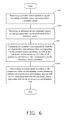
- FIG. 6 is a flowchart of a fourth embodiment of an environmental hazard warning method of the present disclosure.
- FIG. 1 is a block diagram of an embodiment of an environmental hazard warning system of the present disclosure.
- the environmental hazard warning system is applied to a firefighter under the protection of a fire proximity suit.
- the environmental hazard warning system can be applied to other types of emergency personnel under the protection of other types of protective suits, for example, riot control officers under the protection of protective equipment.
- an environmental hazard warning system includes a data unit 10 , a comparison unit 20 , and an alarm unit 30 .
- the environmental hazard warning system is installed in a portable device 100 including an input device 110 , an output device 120 , embedded sensors 130 , and a short distance wireless identifier 140 .
- the portable device 100 can be a public safety radio, a smart phone, a tablet computer, a notebook computer, or other types of portable electronic devices.
- the data unit 10 is capable of storing a plurality of protective suit tolerance data 11 .
- the protective suit tolerance data 11 can be, for example, a safe limit for temperature, humidity, acidic materials, base materials, electrical voltages and/or current, hazardous radioactive materials, or other values of the environmental parameters of an emergency scene.
- the value the protective suit tolerance data 11 can be defined according to the parameter of a protective suit such as a fire proximity suit. For instance, if the protective suit can be normally used in temperatures between 0 degree centigrade and 50 degrees centigrade according to the thermal tolerance of the protective suit, the range of the protective suit tolerance data 11 can be accordingly defined between 0 degree centigrade and 50 degrees centigrade.
- the comparison unit 20 receives a portable sensor parameter signal Sp including a portable sensor parameter Pp from a portable sensor, that is, one of embedded sensors 130 and body sensors 200 .
- the portable sensor parameter Pp can be, for example, temperature, humidity, acidic materials, base materials, electrical voltages and/or current, hazardous radioactive materials, or other environmental parameters of the emergency scene.
- each of the embedded sensors 130 and the body sensors 200 can be a type of sensor, which is capable of detecting one of the different portable sensor parameters Pp.
- the comparison unit 20 compares the portable sensor parameter Pp in the portable sensor parameter signal Sp, with the protective suit tolerance data 11 corresponding to the portable sensor parameter Pp. For example, if the portable sensor parameter Pp is a temperature, the comparison unit 20 compares the temperature with the protective suit tolerance data 11 including a range of temperature.
- Embedded sensors 110 are embedded in the portable device 100 .
- the body sensors 200 can be carried on the protective suit or attached to the body of the user of the portable device 100 while the location of the body sensors 200 can be arranged according to actual demands such as the type of the body sensors 200 .
- the body sensors 200 communicate with the portable device 100 through a short distance wireless network 1000 .
- the short distance wireless network 1000 is implemented according to BLUETOOTH telecommunication standard. In other embodiments, the short distance wireless network 1000 can be implemented according to other telecommunication standards such as near field communication (NFC).
- the alarm unit 30 transmits an alarm signal Sa to the output device 120 corresponding to the comparison between the portable sensor parameter Pp and the protective suit tolerance data 11 .
- the alarm unit 30 transmits the alarm signal Sa to the output device 120 to enable the output device 120 to provide a warning message M (not shown).
- the portable sensor parameter Pp is a temperature of 60 degrees centigrade while the protective suit tolerance data 11 is a range of temperature between 0 degrees centigrade and 50 degrees centigrade
- the alarm unit 30 transmits the alarm signal Sa to the output device 120 since the temperature exceeds the range of temperature.
- the output device 120 is a speaker, which provides the warning message M, which is audio.
- the output device 120 can be other types of electronic devices, which are capable of providing the warning message M visually which can attract the attention of the user of the portable device 100 .
- the output device 120 can be augmented reality glasses, which display an augmented reality image including the warning message M according to the alarm signal Sa, wherein the portable device 100 can be a helmet while the output device 120 is a face mask of the helmet.
- the protective suit tolerance data 11 is inputted through the short distance wireless identifier 140 .
- the short distance wireless identifier 140 receives a protective suit parameter signal Ss, including a protective suit parameter Ps, of the protective suit from a short distance wireless device 300 , which is installed on the protective suit
- the data unit 10 transforms the protective suit parameter Ps in the protective suit parameter signal Ss to the protective suit tolerance data 11 .
- the protective suit parameter Ps is an identifier of the protective suit
- the data unit 10 selects pre-inputted protective suit tolerance data of the protective suit as the protective suit tolerance data 11 .
- the protective suit parameter Ps is the parameter of the protective suit such as thermal tolerance
- the data unit 10 stores the parameter as the protective suit tolerance data 11 .
- the short distance wireless identifier 140 is a RFID (radio-frequency identification) reader
- the short distance wireless device 300 is a RFID tag
- the protective suit tolerance data 11 can also be input through the input device 110 .
- the input device 110 can be a keyboard, a touch panel, a microphone, or other types of human-machine interface (HMI).
- the data unit 10 can be further capable of storing a plurality of body tolerance data 12 .
- the body tolerance data 12 is input through the input device 110 .
- the body tolerance data 12 can be, for example, a safe limit for temperature, humidity, oxygen, toxic gas, blood pressure, pulse rate, or other values of biometric parameters
- the portable sensor parameter Pp can further be, for example, temperature, humidity, oxygen thickness, toxic gas thickness, blood pressure, pulse rate, or other biometric parameters.
- the value of each of the body tolerance data 12 can be defined according to the endurance of a body.
- the comparison unit 20 further compares the portable sensor parameter Pp in the portable sensor parameter signal Sp with the body tolerance data 12 corresponding to the portable sensor parameter Pp, and then the alarm unit 30 transmits the alarm signal Sa to the output device 120 when the portable sensor parameter is not within the body tolerance data 12 , thereby enabling the output device 120 to provide the warning message M.
- the comparison unit 20 further receives a stationary sensor parameter signal Sf including a stationary sensor parameter Pf from a stationary sensor disposed in the emergency scene, that is, one of the environmental sensors 400 .
- Each of the environmental sensors 400 can be a type of sensor, which is capable of detecting one of the different portable sensor parameters Pp.
- the comparison unit 20 compares the portable sensor parameter Pp in the portable sensor parameter signal Sp with the protective suit tolerance data 11 corresponding to the portable sensor parameter Pp as well as the stationary sensor parameter Pf in the stationary sensor parameter signal Sf with the protective suit tolerance data 11 corresponding to the stationary sensor parameter Pf.
- the alarm unit 30 transmits the alarm signal Sa according to the comparison between the portable sensor parameter Pp and the protective suit tolerance data 11 corresponding to the portable sensor parameter Pp as well as the comparison between the stationary sensor parameter Pf and the protective suit tolerance data 11 corresponding to the stationary sensor parameter Pf.
- the portable sensor parameter Pp and the stationary sensor parameter Pf belong to a same type of parameter such as temperature
- the portable sensor parameter Pp and the stationary sensor parameter Pf correspond to the same protective suit tolerance data 11
- the alarm unit 30 transmits the alarm signal Sa to the output device 120 when any of the portable sensor parameter Pp and the stationary sensor parameter Pf is not within the protective suit tolerance data 11 .
- FIG. 2 A/ 2 B is a block diagram of another embodiment of an environmental hazard warning system of the present disclosure.
- the environmental hazard warning system is installed in a server 500 , which communicates with a portable device 600 through a wireless network 2000 .
- the portable device 600 includes the input device 110 , the output device 120 , the embedded sensors 130 , and the short distance wireless identifier 140 as described above.
- the comparison unit 20 receives the portable sensor parameter signal Sp and the protective suit parameter signal Ss through the portable device 600 , while the portable device 600 receives the stationary sensor parameter signal Sf from the environmental sensors 400 through the server 500 .
- FIG. 3 is a flowchart of a first embodiment of an environmental hazard warning method of the present disclosure.
- the environmental hazard warning method is applied to a firefighter under the protection of a fire proximity suit.
- the environmental hazard warning method of the present disclosure is as follows. Depending on the embodiment, additional steps may be added, others removed, and the ordering of the steps may be changed.
- a short distance wireless identifier is used to receive a protective suit parameter signal including the protective suit parameter from a short distance wireless device.
- the short distance wireless identifier is a RFID reader
- the short distance wireless device is a RFID tag.
- the protective suit parameter in the protective suit parameter signal is transformed to protective suit tolerance data.
- the protective suit tolerance data can be, for example, a safe limit for temperature, humidity, acidic materials, base materials, electrical voltages and/or current, hazardous radioactive materials, or other values of the environmental parameters of an emergency scene.
- the protective suit parameter can be transformed to the protective suit tolerance data by, for instance, deriving the higher limits and/or the lower limits from the protective suit parameters defined as ranges.
- a portable sensor parameter signal including a portable sensor parameter is received from a portable sensor.
- the portable sensor parameter can be, for example, temperature, humidity, oxygen thickness, toxic gas thickness, strong acid strength, strong base strength, electricity leakage amount, radioactive ray strength, or other environmental parameters of the emergency scene.
- step S 14 the portable sensor parameter is compared with the protective suit tolerance data corresponding to the portable sensor parameter.
- step S 15 an alarm signal is transmitted corresponding to the comparison between the portable sensor parameter and the protective suit tolerance data.
- the alarm signal is transmitted to an output device to enable the output device to provide a warning message.
- the steps of the environmental hazard warning method are implemented through a portable device, while the portable sensor communicates with the portable device through a short distance wireless network.
- the warning message is provided via audio or visual means which can attract the attention of the user of the portable device.
- the portable device can display an augmented reality image through augmented reality glasses according to the alarm signal.
- the environmental hazard warning system can be implemented through a server, which communicates with a portable device through a wireless network.
- FIG. 4 is a flowchart of a second embodiment of an environmental hazard warning method of the present disclosure.
- the environmental hazard warning method of the present disclosure is as follows. Depending on the embodiment, additional steps may be added, others removed, and the ordering of the steps may be changed.
- step S 21 an input device is used to input a protective suit tolerance data.
- step S 22 a portable sensor parameter signal including a portable sensor parameter is received from a portable sensor.
- step S 23 the portable sensor parameter is compared with the protective suit tolerance data corresponding to the portable sensor parameter.
- step S 24 an alarm signal is transmitted corresponding to the comparison between the portable sensor parameter and the protective suit tolerance data.
- FIG. 5 is a flowchart of a third embodiment of an environmental hazard warning method of the present disclosure.
- the environmental hazard warning method of the present disclosure is as follows. Depending on the embodiment, additional steps may be added, others removed, and the ordering of the steps may be changed.
- step S 31 a portable sensor parameter signal is received from a portable sensor
- step S 32 a portable sensor parameter is derived from the portable sensor parameter signal.
- step S 33 the type of the portable sensor parameter is determined. If the portable sensor parameter is an environmental parameter, step S 34 is implemented; if the portable sensor parameter is a biometric parameter, step S 36 is implemented.
- step S 34 the environmental parameter is compared with protective suit tolerance data corresponding to the environmental parameter.
- step S 35 an alarm signal is transmitted corresponding to the comparison between the environmental parameter and the protective suit tolerance data.
- step S 36 the biometric parameter is compared with body tolerance data corresponding to the biometric parameter.
- the body tolerance data is input through an input device.
- the body tolerance data can be, for example, a safe limit for temperature, humidity, oxygen, toxic gas, blood pressure, pulse rate, or other values of biometric parameters
- the biometric parameter can be, for example, temperature, humidity, oxygen thickness, toxic gas thickness, blood pressure, or pulse rate.
- the value of the body tolerance data can be defined according to the endurance of a body
- step S 37 an alarm signal is transmitted corresponding to the comparison between the biometric parameter and the body tolerance data.
- FIG. 6 is a flowchart of a fourth embodiment of an environmental hazard warning method of the present disclosure.
- the environmental hazard warning method of the present disclosure is as follows. Depending on the embodiment, additional steps may be added, others removed, and the ordering of the steps may be changed.
- step S 41 a portable sensor parameter signal including a portable sensor parameter is received from a portable sensor.
- step S 42 a stationary sensor parameter signal including a stationary sensor parameter is received from a stationary sensor.
- step S 43 the portable sensor parameter is compared with the protective suit tolerance data corresponding to the portable sensor parameter, and the stationary sensor parameter is compared with the protective suit tolerance data corresponding to the stationary sensor parameter.
- step S 44 an alarm signal is transmitted according to the comparison between the portable sensor parameter and the protective suit tolerance data as well as the comparison between the stationary sensor parameter and the protective suit tolerance data.
- the environmental hazard warning system and the environmental hazard warning method provide alarms of the threats in an emergency scene such as high temperature, toxic gas, strong acid, strong base, electricity leakage, or radioactive ray according to the parameter of a protective suit. As a result, the safety of emergency personnel under the protection of the protective suit can be ensured even under extreme environmental conditions.
Landscapes
- Business, Economics & Management (AREA)
- General Physics & Mathematics (AREA)
- Physics & Mathematics (AREA)
- Emergency Management (AREA)
- Engineering & Computer Science (AREA)
- General Health & Medical Sciences (AREA)
- Toxicology (AREA)
- Health & Medical Sciences (AREA)
- Environmental & Geological Engineering (AREA)
- Chemical & Material Sciences (AREA)
- Analytical Chemistry (AREA)
- Computer Networks & Wireless Communication (AREA)
- Alarm Systems (AREA)
Abstract
Description
Claims (20)
Priority Applications (3)
| Application Number | Priority Date | Filing Date | Title |
|---|---|---|---|
| US13/329,243 US8610559B2 (en) | 2011-12-17 | 2011-12-17 | Environmental hazard warning system and method |
| CN2012101381660A CN103164926A (en) | 2011-12-17 | 2012-05-07 | Environmental hazard warning system and method |
| TW101117683A TWI458514B (en) | 2011-12-17 | 2012-05-18 | Environmental hazard warning system and method |
Applications Claiming Priority (1)
| Application Number | Priority Date | Filing Date | Title |
|---|---|---|---|
| US13/329,243 US8610559B2 (en) | 2011-12-17 | 2011-12-17 | Environmental hazard warning system and method |
Publications (2)
| Publication Number | Publication Date |
|---|---|
| US20130154824A1 US20130154824A1 (en) | 2013-06-20 |
| US8610559B2 true US8610559B2 (en) | 2013-12-17 |
Family
ID=48587978
Family Applications (1)
| Application Number | Title | Priority Date | Filing Date |
|---|---|---|---|
| US13/329,243 Expired - Fee Related US8610559B2 (en) | 2011-12-17 | 2011-12-17 | Environmental hazard warning system and method |
Country Status (3)
| Country | Link |
|---|---|
| US (1) | US8610559B2 (en) |
| CN (1) | CN103164926A (en) |
| TW (1) | TWI458514B (en) |
Cited By (3)
| Publication number | Priority date | Publication date | Assignee | Title |
|---|---|---|---|---|
| CN107765561A (en) * | 2017-09-29 | 2018-03-06 | 珠海市领创智能物联网研究院有限公司 | A kind of networked intelligent household electricity optimizing control method |
| US11049380B2 (en) * | 2015-01-13 | 2021-06-29 | Robert Kaindl | Personal safety device, method and article |
| US11315396B2 (en) | 2018-01-08 | 2022-04-26 | Robert Kaindl | Threat identification device and system with optional active countermeasures |
Families Citing this family (13)
| Publication number | Priority date | Publication date | Assignee | Title |
|---|---|---|---|---|
| KR102023601B1 (en) * | 2013-04-04 | 2019-09-23 | 삼성전자 주식회사 | Terminal device and method for preventing accident |
| US10262462B2 (en) | 2014-04-18 | 2019-04-16 | Magic Leap, Inc. | Systems and methods for augmented and virtual reality |
| EP3132379B1 (en) * | 2014-04-15 | 2018-11-07 | Huntington Ingalls Incorporated | System and method for augmented reality display of dynamic environment information |
| US9864909B2 (en) | 2014-04-25 | 2018-01-09 | Huntington Ingalls Incorporated | System and method for using augmented reality display in surface treatment procedures |
| WO2015164755A1 (en) | 2014-04-25 | 2015-10-29 | Huntington Ingalls Incorporated | Augmented reality display of dynamic target object information |
| WO2015191346A1 (en) | 2014-06-09 | 2015-12-17 | Huntington Ingalls Incorporated | System and method for augmented reality display of electrical system information |
| US10504294B2 (en) | 2014-06-09 | 2019-12-10 | Huntington Ingalls Incorporated | System and method for augmented reality discrepancy determination and reporting |
| US10915754B2 (en) | 2014-06-09 | 2021-02-09 | Huntington Ingalls Incorporated | System and method for use of augmented reality in outfitting a dynamic structural space |
| JP2016004493A (en) * | 2014-06-18 | 2016-01-12 | キヤノン株式会社 | Image processing apparatus and control method thereof |
| US9898867B2 (en) | 2014-07-16 | 2018-02-20 | Huntington Ingalls Incorporated | System and method for augmented reality display of hoisting and rigging information |
| GB2534678B (en) * | 2014-12-18 | 2017-08-09 | Wearable Tech Ltd | Issuing alarm signal to operatives |
| WO2016209963A1 (en) * | 2015-06-24 | 2016-12-29 | Baker Hughes Incorporated | Integration of heads up display with data processing |
| CN107339985A (en) * | 2017-06-20 | 2017-11-10 | 北京机械设备研究所 | A kind of indoor autonomous positioning and condition monitoring system and method |
Citations (6)
| Publication number | Priority date | Publication date | Assignee | Title |
|---|---|---|---|---|
| US5973602A (en) * | 1993-04-30 | 1999-10-26 | John W. Cole, III | Method and apparatus for monitoring temperature conditions in an environment |
| US6310552B1 (en) * | 1991-08-06 | 2001-10-30 | North-South Corporation | Integrated firefighter safety monitoring and alarm system |
| US20010036832A1 (en) | 2000-04-14 | 2001-11-01 | Onscene, Inc. | Emergency command and control system |
| US20070205903A1 (en) * | 2006-03-03 | 2007-09-06 | University Of Maryland, College Park | Integrated System for Monitoring the Allowable Heat Exposure Time for Firefighters |
| US20090174547A1 (en) | 2004-11-10 | 2009-07-09 | Greene Michael F | Wearable or portable device including sensors and an image input for establishing communications interoperability and situational awareness of events at an incident site |
| US8085144B2 (en) * | 2002-07-02 | 2011-12-27 | Mine Safety Appliances Company | Equipment and method for identifying, monitoring and evaluating equipment, environmental and physiological conditions |
Family Cites Families (2)
| Publication number | Priority date | Publication date | Assignee | Title |
|---|---|---|---|---|
| US5635909A (en) * | 1992-09-08 | 1997-06-03 | Cole; Boyd F. | Temperature monitoring assembly incorporated into a protective garment |
| CN2302667Y (en) * | 1997-04-07 | 1999-01-06 | 刘岳平 | Temp.-testing, cold-proof and alarming garment |
-
2011
- 2011-12-17 US US13/329,243 patent/US8610559B2/en not_active Expired - Fee Related
-
2012
- 2012-05-07 CN CN2012101381660A patent/CN103164926A/en active Pending
- 2012-05-18 TW TW101117683A patent/TWI458514B/en not_active IP Right Cessation
Patent Citations (6)
| Publication number | Priority date | Publication date | Assignee | Title |
|---|---|---|---|---|
| US6310552B1 (en) * | 1991-08-06 | 2001-10-30 | North-South Corporation | Integrated firefighter safety monitoring and alarm system |
| US5973602A (en) * | 1993-04-30 | 1999-10-26 | John W. Cole, III | Method and apparatus for monitoring temperature conditions in an environment |
| US20010036832A1 (en) | 2000-04-14 | 2001-11-01 | Onscene, Inc. | Emergency command and control system |
| US8085144B2 (en) * | 2002-07-02 | 2011-12-27 | Mine Safety Appliances Company | Equipment and method for identifying, monitoring and evaluating equipment, environmental and physiological conditions |
| US20090174547A1 (en) | 2004-11-10 | 2009-07-09 | Greene Michael F | Wearable or portable device including sensors and an image input for establishing communications interoperability and situational awareness of events at an incident site |
| US20070205903A1 (en) * | 2006-03-03 | 2007-09-06 | University Of Maryland, College Park | Integrated System for Monitoring the Allowable Heat Exposure Time for Firefighters |
Cited By (3)
| Publication number | Priority date | Publication date | Assignee | Title |
|---|---|---|---|---|
| US11049380B2 (en) * | 2015-01-13 | 2021-06-29 | Robert Kaindl | Personal safety device, method and article |
| CN107765561A (en) * | 2017-09-29 | 2018-03-06 | 珠海市领创智能物联网研究院有限公司 | A kind of networked intelligent household electricity optimizing control method |
| US11315396B2 (en) | 2018-01-08 | 2022-04-26 | Robert Kaindl | Threat identification device and system with optional active countermeasures |
Also Published As
| Publication number | Publication date |
|---|---|
| TW201325653A (en) | 2013-07-01 |
| US20130154824A1 (en) | 2013-06-20 |
| CN103164926A (en) | 2013-06-19 |
| TWI458514B (en) | 2014-11-01 |
Similar Documents
| Publication | Publication Date | Title |
|---|---|---|
| US20130154824A1 (en) | Environmental hazard warning system and method | |
| US20130116922A1 (en) | Emergency guiding system, server and portable device using augmented reality | |
| US10365260B2 (en) | Image based surveillance system | |
| US20130099919A1 (en) | Emergency guiding system and server | |
| US20130115587A1 (en) | Emergency command system and method | |
| US20160050037A1 (en) | Emergency alert notification device, system, and method | |
| US20180108234A1 (en) | Mobile smoke and fire detection system and method | |
| CN105026982A (en) | Head-mounted display and control method thereof | |
| US20190088097A1 (en) | Mental health, safety, and wellness support system | |
| CN102938030B (en) | A kind of rights of using of application arrange and control method and the terminal of localized area | |
| US20130049930A1 (en) | Emergency guiding system and method | |
| US20180033289A1 (en) | System for detecting intrusion in advance using sms notification service and system and method for notifying rescue signal | |
| US20170132900A1 (en) | Monitoring zone escape remote management system and method therefor | |
| CN112818752A (en) | Method and apparatus for safety management of product processing system | |
| KR101409824B1 (en) | Emergency management system based on bluetooth communication | |
| EP3131075B1 (en) | Gas detectors safety compliance advertisement via low-power wireless radio | |
| CA2966139C (en) | Alarm verification system and method thereof | |
| US20130179818A1 (en) | Communication device, method, and interface for emergency responder | |
| KR102141045B1 (en) | Accident reporting system | |
| US20240302121A1 (en) | Rfid-based building response to firearm presence | |
| KR20190066917A (en) | user safety map providing method for personal safety | |
| KR102543102B1 (en) | Method, server and system for providing safety accident prevention service based on digital twin technology | |
| WO2024103071A1 (en) | Light switch systems configured to respond to gunfire and methods of use | |
| KR102228265B1 (en) | System for searching concealed transmitter | |
| CN110096863B (en) | Alarm method and mobile terminal |
Legal Events
| Date | Code | Title | Description |
|---|---|---|---|
| AS | Assignment |
Owner name: HON HAI PRECISION INDUSTRY CO., LTD., TAIWAN Free format text: ASSIGNMENT OF ASSIGNORS INTEREST;ASSIGNORS:CAI, YI-WEN;WANG, SHIH-CHENG;REEL/FRAME:027404/0786 Effective date: 20111215 |
|
| STCF | Information on status: patent grant |
Free format text: PATENTED CASE |
|
| FPAY | Fee payment |
Year of fee payment: 4 |
|
| AS | Assignment |
Owner name: CLOUD NETWORK TECHNOLOGY SINGAPORE PTE. LTD., SINGAPORE Free format text: ASSIGNMENT OF ASSIGNORS INTEREST;ASSIGNOR:HON HAI PRECISION INDUSTRY CO., LTD.;REEL/FRAME:045281/0269 Effective date: 20180112 Owner name: CLOUD NETWORK TECHNOLOGY SINGAPORE PTE. LTD., SING Free format text: ASSIGNMENT OF ASSIGNORS INTEREST;ASSIGNOR:HON HAI PRECISION INDUSTRY CO., LTD.;REEL/FRAME:045281/0269 Effective date: 20180112 |
|
| MAFP | Maintenance fee payment |
Free format text: PAYMENT OF MAINTENANCE FEE, 8TH YEAR, LARGE ENTITY (ORIGINAL EVENT CODE: M1552); ENTITY STATUS OF PATENT OWNER: LARGE ENTITY Year of fee payment: 8 |
|
| FEPP | Fee payment procedure |
Free format text: MAINTENANCE FEE REMINDER MAILED (ORIGINAL EVENT CODE: REM.); ENTITY STATUS OF PATENT OWNER: LARGE ENTITY |
|
| LAPS | Lapse for failure to pay maintenance fees |
Free format text: PATENT EXPIRED FOR FAILURE TO PAY MAINTENANCE FEES (ORIGINAL EVENT CODE: EXP.); ENTITY STATUS OF PATENT OWNER: LARGE ENTITY |
|
| STCH | Information on status: patent discontinuation |
Free format text: PATENT EXPIRED DUE TO NONPAYMENT OF MAINTENANCE FEES UNDER 37 CFR 1.362 |
|
| FP | Lapsed due to failure to pay maintenance fee |
Effective date: 20251217 |