US8551448B2 - Rotanone analogs: method of preparation and use - Google Patents
Rotanone analogs: method of preparation and use Download PDFInfo
- Publication number
- US8551448B2 US8551448B2 US12/273,509 US27350908A US8551448B2 US 8551448 B2 US8551448 B2 US 8551448B2 US 27350908 A US27350908 A US 27350908A US 8551448 B2 US8551448 B2 US 8551448B2
- Authority
- US
- United States
- Prior art keywords
- group
- independently
- different
- same
- lower alkyl
- Prior art date
- Legal status (The legal status is an assumption and is not a legal conclusion. Google has not performed a legal analysis and makes no representation as to the accuracy of the status listed.)
- Expired - Fee Related, expires
Links
- 0 COc(c(OC)c1)cc2c1OCC1Oc3c(CC(CCN*)O4)c4ccc3C(*)C21* Chemical compound COc(c(OC)c1)cc2c1OCC1Oc3c(CC(CCN*)O4)c4ccc3C(*)C21* 0.000 description 38
- AXJPLVYMBKOFQU-UHFFFAOYSA-N C.CC(C)=O.CCC(C)=O Chemical compound C.CC(C)=O.CCC(C)=O AXJPLVYMBKOFQU-UHFFFAOYSA-N 0.000 description 1
- JUVIOZPCNVVQFO-YMTQGWHGSA-N C=C(C)[C@H]1CC2=C(C=CC3=C2OC2COC4=C(C=C(OC)C(OC)=C4)C2C3=O)O1 Chemical compound C=C(C)[C@H]1CC2=C(C=CC3=C2OC2COC4=C(C=C(OC)C(OC)=C4)C2C3=O)O1 JUVIOZPCNVVQFO-YMTQGWHGSA-N 0.000 description 1
- MBABOKRGFJTBAE-UHFFFAOYSA-N COS(C)(=O)=O Chemical compound COS(C)(=O)=O MBABOKRGFJTBAE-UHFFFAOYSA-N 0.000 description 1
- HHVIBTZHLRERCL-UHFFFAOYSA-N CS(C)(=O)=O Chemical compound CS(C)(=O)=O HHVIBTZHLRERCL-UHFFFAOYSA-N 0.000 description 1
- BRWYMDIEBGZZNY-UHFFFAOYSA-N [H]C(I)=C(C)C.[H]C(I)=C(C)C Chemical compound [H]C(I)=C(C)C.[H]C(I)=C(C)C BRWYMDIEBGZZNY-UHFFFAOYSA-N 0.000 description 1
Images


Classifications
-
- C—CHEMISTRY; METALLURGY
- C07—ORGANIC CHEMISTRY
- C07D—HETEROCYCLIC COMPOUNDS
- C07D493/00—Heterocyclic compounds containing oxygen atoms as the only ring hetero atoms in the condensed system
- C07D493/12—Heterocyclic compounds containing oxygen atoms as the only ring hetero atoms in the condensed system in which the condensed system contains three hetero rings
- C07D493/14—Ortho-condensed systems
-
- A—HUMAN NECESSITIES
- A61—MEDICAL OR VETERINARY SCIENCE; HYGIENE
- A61K—PREPARATIONS FOR MEDICAL, DENTAL OR TOILETRY PURPOSES
- A61K51/00—Preparations containing radioactive substances for use in therapy or testing in vivo
- A61K51/02—Preparations containing radioactive substances for use in therapy or testing in vivo characterised by the carrier, i.e. characterised by the agent or material covalently linked or complexing the radioactive nucleus
- A61K51/04—Organic compounds
- A61K51/041—Heterocyclic compounds
- A61K51/0412—Heterocyclic compounds having oxygen as the only ring hetero atom, e.g. fungichromin
- A61K51/0421—Heterocyclic compounds having oxygen as the only ring hetero atom, e.g. fungichromin having six-membered rings with one oxygen as the only ring hetero atom
Definitions
- Coronary heart disease is the leading cause of death in the United States, accounting for roughly 24% of all deaths.
- the cost of cardiovascular diseases in 1999 is estimated by the American Heart Association (AHA) at $286.5 billion.
- Myocardial perfusion scintigraphy is widely used in the evaluation of patients with known or suspected coronary artery disease (CAD).
- CAD coronary artery disease
- the extensive clinical use of stress myocardial perfusion imaging has resulted largely from its demonstrated improved diagnostic sensitivity and specificity for detection of CAD as compared with exercise electrocardiogram.
- myocardial flow tracers with improved tracer kinetics.
- tracers Although several tracers are currently available for perfusion imaging, all of these tracers suffer from one or more limitations which render them less than ideal agents for assessment of cardiac perfusion (e.g., limited extraction at high flow (Tc99m-sestamibi, T1-201 Chloride) (Marshall et al., 1990), lack of ideal isotope (T1-201 chloride), high liver extraction (Tc99m-teboroxime and Tc99m-sestamibi) (Marshall et al., 1991).
- Tc99m-sestamibi T1-201 Chloride
- Tc99m-teboroxime and Tc99m-sestamibi Marshall et al., 1991.
- Myocardial perfusion tracers are needed with: improved extraction on first pass; better linearity with true blood flow; improved detection of myocardial viability; and reduced accumulation in non cardiac tissues.
- radiopharmaceuticals may be used as diagnostic or therapeutic agents by virtue of the physical properties of their constituent radionuclides. Thus, their utility is not based on any pharmacologic action.
- Most clinically used drugs of this class are diagnostic agents incorporating a gamma-emitting nuclide which, because of physical or metabolic properties of its coordinated ligands, localizes in a specific organ after intravenous injection. The resultant images can reflect organ structure or function.
- the radiolabel is a gamma-radiation emitting radionuclide and the radiotracer is located using a gamma-radiation detecting camera (this process is often referred to as gamma scintigraphy).
- the imaged site is detectable because the radiotracer is chosen either to localize at a pathological site (termed positive contrast) or, alternatively, the radiotracer is chosen specifically not to localize at such pathological sites (termed negative contrast).
- Rotenone, [2R,6aS,12aS]-1,2,12,12a-tetrahydro-8,9-dimethoxy-2-(1-methylethenyl)-[1]benzopyrano[3,4-b]furo[2,3-h]benzopyran-6(6aH)-one is a natural product of the Leguminosae plant family and has been used as an insecticide, pesticide and fish poison, and has been used in mitochondrial energy metabolism studies. Rotenone binds on the ND-1 gene product and inhibit Complex I in a reversible competitive manner resulting in the biological effect.
- Rotenone has a high affinity for mitochondria.
- the myocardium is an organ rich in mitochrondria. Novel radiolabeled rotenone analogs that display efficient myocardial uptake and adequate myocardial retention are attractive candidates for clinical evaluation of myocardial blood flow.
- Rotenone is a specific, high-affinity inhibitor of Complex I (NADH:ubiquinone oxidoreductase), the proximal enzyme of the mitochondrial electron transport chain. Since rotenone inhibition defines the activity of Complex I, defects in radiotracer binding can be expected to reflect functional changes in the enzyme, and hence, abnormalities of the mitochondrial energy metabolism.
- the prior art rotenone radionuclides utilize a rotenone compound having the following structure:
- the present invention provides rotenone analogs and methods of using them.
- X is independently the same or different and is selected from the group consisting of O and S;
- X 1 is selected from the group consisting of SnMe 3 , SnBu 3 , B(—OCH 2 C(CH 3 ) 2 CH 2 O—), BF 3 K, ZnI, ZnBr, Br, Cl, F, CH 2 F, CH 2 CH 2 F, C 6 H 4 F, and CH 2 C 6 H 4 F;
- X 2 is selected from the group consisting of O and S;
- R is independently the same or different and is selected from the group consisting of H, lower alkyl, and a halogen; and R′ is independently the same or different and is a lower alkyl; and R′′ is independently the same or different and is selected from the group consisting of H and a lower alkyl; and
- R 3 is independently the same or different and is selected from the group consisting of H, lower alkyl, and CH 2 F; and wherein the stereochemical configuration at any stereocenter is R, S or a
- X is independently the same or different and is selected from the group consisting of O and S, and wherein at least one X is S;
- X 1 is selected from the group consisting of SnMe 3 , SnBu 3 , B(—OCH 2 C(CH 3 ) 2 CH 2 O—), BF 3 K, ZnI, ZnBr, Br, Cl, I, F, CH 2 F, CH 2 CH 2 F, C 6 H 4 F, and CH 2 C 6 H 4 F;
- X 2 is selected from the group consisting of O and S;
- R is independently the same or different and is selected from the group consisting of H, lower alkyl, and a halogen; and
- R′ is independently the same or different and is a lower alkyl; and
- R′′ is independently the same or different and is selected from the group consisting of H and a lower alkyl; and
- R 3 is independently the same or different and is selected from the group consisting of H, lower alkyl, and CH 2 F; and
- X is independently the same or different and is selected from the group consisting of O and S;
- X 1 is selected from the group consisting of SnMe 3 , SnBu 3 , B(—OCH 2 C(CH 3 ) 2 CH 2 O—), BF 3 K, ZnI, ZnBr, Br, Cl, I, F, CH 2 F, CH 2 CH 2 F, C 6 H 4 F, and CH 2 C 6 H 4 F;
- X 2 is selected from the group consisting of O and S;
- R is independently the same or different and is selected from the group consisting of H, lower alkyl, and halogen;
- R′ is independently the same or different and is a lower alkyl;
- R′′ is independently the same or different and is selected from the group consisting of H and lower alkyl; and
- R 3 is independently the same or different and is selected from the group consisting of H, lower alkyl, and CH 2 F; and wherein the stereochemical configuration at any stereocenter is R, S or a
- X is independently the same or different and is selected from the group consisting of O and S;
- X 1 is selected from the group consisting of SnMe 3 , SnBu 3 , B(—OCH 2 C(CH 3 ) 2 CH 2 O—), BF 3 K, ZnI, ZnBr, Br, Cl, F, CH 2 F, CH 2 CH 2 F, C 6 H 4 F, and CH 2 C 6 H 4 F;
- X 2 is selected from the group consisting of OH, OR, OPg, SH, SR, and SPg;
- R is independently the same or different and is selected from the group consisting of H, lower alkyl, and a halogen;
- R′ is independently the same or different and is a lower alkyl;
- R′′ is independently the same or different and is selected from the group consisting of H and a lower alkyl;
- R 3 is independently the same or different and is selected from the group consisting of H, lower alkyl, and CH 2 F; and wherein
- X is independently the same or different and is selected from the group consisting of O and S, and further wherein at least one X is S;
- X 1 is selected from the group consisting of SnMe 3 , SnBu 3 , B(—OCH 2 C(CH 3 ) 2 CH 2 O—), BF 3 K, ZnI, ZnBr, Br, Cl, I, F, CH 2 F, CH 2 CH 2 F, C 6 H 4 F, and CH 2 C 6 H 4 F;
- X 2 is selected from the group consisting of OH, OR, OPg, SH, SR, and SPg;
- R is independently the same or different and is selected from the group consisting of H, lower alkyl, and a halogen;
- R′ is independently the same or different and is a lower alkyl;
- R′′ is independently the same or different and is selected from the group consisting of H and a lower alkyl;
- R 3 is independently the same or different and is selected from the group consisting of H
- X is independently the same or different and is selected from the group consisting of O and S;
- X 1 is selected from the group consisting of SnMe 3 , SnBu 3 , B(—OCH 2 C(CH 3 ) 2 CH 2 O—), BF 3 K, ZnI, ZnBr, Br, Cl, I, F, CH 2 F, CH 2 CH 2 F, C 6 H 4 F, and CH 2 C 6 H 4 F;
- X 2 is selected from the group consisting of OH, OR, OPg, SH, SR, and SPg;
- R is independently the same or different and is selected from the group consisting of H, lower alkyl, and halogen;
- R′ is independently the same or different and is a lower alkyl;
- R′′ is independently the same or different and is selected from the group consisting of H and lower alkyl;
- R 3 is independently the same or different and is selected from the group consisting of H, lower alkyl, and CH 2 F; and wherein the stereo
- the present invention provides a compound having the structure:
- X is independently the same or different and is selected from the group consisting of O and S;
- X 2 is selected from the group consisting of OH, OR, OPg, SH, SR, SPg, ⁇ O, and ⁇ S;
- R is independently the same or different and is selected from the group consisting of H, lower alkyl, and halogen;
- R′ is independently the same or different and is a lower alkyl;
- R′′ is independently the same or different and is selected from the group consisting of H and lower alkyl;
- R 3 is independently the same or different and is selected from the group consisting of H, lower alkyl, and CH 2 F;
- R 4 is independently the same or different and is selected from the group consisting of H, alkyl, and aryl;
- R 5 is selected from the group consisting of CH 2 CH(OH)CH 2 F, CH 2 C 6 H 4 F, COC 6 H 4 F, and CH 2 CH 2 F; and wherein the stereochemical configuration at any stereocenter is R,
- the present invention provides a compound having the structure:
- X is independently the same or different and is selected from the group consisting of O and S;
- X 2 is selected from the group consisting of OH, OR, OPg, SH, SR, SPg, ⁇ O, and ⁇ S;
- R is independently the same or different and is selected from the group consisting of H, lower alkyl, and halogen;
- R′ is independently the same or different and is a lower alkyl;
- R′′ is independently the same or different and is selected from the group consisting of H and lower alkyl;
- R 3 is independently the same or different and is selected from the group consisting of H, lower alkyl, and CH 2 F; and
- R 4 is independently the same or different and is selected from the group consisting of H, alkyl, and aryl;
- R 5 is selected from the group consisting of 11 CH 3 and 11 CH 3 CH 2 ; and wherein the stereochemical configuration at any stereocenter is R, S or a mixture of these configurations.
- the present invention provides a compound having the structure:
- X is independently the same or different and is selected from the group consisting of O and S;
- X 2 is selected from the group consisting of OH, OR, OPg, SH, SR, SPg, ⁇ O, and ⁇ S;
- R is independently the same or different and is selected from the group consisting of H, lower alkyl, and halogen;
- R′ is independently the same or different and is a lower alkyl;
- R′′ is independently the same or different and is selected from the group consisting of H and lower alkyl;
- R 3 is independently the same or different and is selected from the group consisting of H, lower alkyl, and CH 2 F; and
- R 4 is selected from the group consisting of 11 CH 3 , 12 CH 3 , 11 CH 3 CH 2 , and 12 CH 3 CH 2 ; and wherein the stereochemical configuration at any stereocenter is R, S or a mixture of these configurations.
- the present invention provides a compound having the structure:
- X is independently the same or different and is selected from the group consisting of O and S;
- X 2 is selected from the group consisting of O and S;
- R is independently the same or different and is selected from the group consisting of H, lower alkyl, and halogen;
- R′ is independently the same or different and is a lower alkyl;
- R′′ is independently the same or different and is selected from the group consisting of H and lower alkyl;
- R 3 is selected from the group consisting of 11 CH 3 , 11 CH 3 CH 2 , and 12 CH 3 CH 2 H 2 F; and wherein the stereochemical configuration at any stereocenter is R, S or a mixture of these configurations.
- the present invention provides a compound having the structure:
- X is independently the same or different and is selected from the group consisting of O and S;
- X 2 is selected from the group consisting of OH, OR, OPg, SH, SR, and SPg;
- R is independently the same or different and is selected from the group consisting of H, lower alkyl, and halogen;
- R′ is independently the same or different and is a lower alkyl;
- R′′ is independently the same or different and is selected from the group consisting of H and lower alkyl;
- R 3 is selected from the group consisting of 11 CH 3 , 12 CH 3 , 11 CH 3 CH 2 , and 12 CH 3 CH 2 ; and wherein the stereochemical configuration at any stereocenter is R, S or a mixture of these configurations.
- the present invention provides a compound having the structure:
- X is independently the same or different and is selected from the group consisting of O and S;
- X 2 is selected from the group consisting of OH, OR, OPg, SH, SR, SPg, ⁇ O, and ⁇ S;
- R is independently the same or different and is selected from the group consisting of H, lower alkyl, and halogen;
- R′ is independently the same or different and is a lower alkyl;
- R′′ is independently the same or different and is selected from the group consisting of H and lower alkyl;
- R 2 is selected from the group consisting of 11 CH 3 , 12 CH 3 , 11 CH 3 CH 2 , and 12 CH 3 CH 2 ; and
- R 3 is independently the same or different and is selected from the group consisting of H, lower alkyl, and CH 2 F; wherein the stereochemical configuration at any stereocenter of the compound is R, S or a mixture of these configurations.
- one or more halogen in the compounds disclosed herein may be further defined as a halogen isotope.
- halogen isotopes that may be incorporated in the compounds of the present invention include, 18 F, 19 F, 35 Cl, 37 Cl, 75 Br, 76 Br, 77 Br, 79 Br, 80 Br, 80m Br, 81 Br, 120 I, 121 I, 122 I, 123 I, 124 I, 125 I, 127 I, and 131 I.
- one or more carbon in the compounds disclosed herein may be further defined as a carbon isotope, such as 12 C or 11 C.
- one or more Se in the compounds disclosed herein may be further defined as a Se isotope, such as 73 Se or 75 Se.
- the present invention provides a composition comprising a compound of the present invention and a pharmaceutically acceptable vehicle.
- the composition is an injectable composition.
- the vehicle is human serum albumin; aqueous buffer solutions, e.g tris (hydromethyl)aminomethane (and its salts), phosphate, citrate, bicarbonate etc.; alcohols, including ethanol, propylene glycol, etc; sterile water; physiological saline; or balanced ionic solutions containing chloride and or dicarbonate salts or normal blood plasma cations such as calcium, potassium, sodium, and magnesium.
- the concentration of a labeled compound as described herein is about 1.0 to 50 millicuries. In some embodiments the concentration is about 1.0 to 10, 10 to 20, 20 to 30, 30 to 40, or 40 to 50 millicuries.
- the present invention provides a kit comprising, in suitable container means, at least one rotenone analog compound of the present invention.
- the rotenone analog may be provided in the kit as a labeled rotenone analog or it may be provided as an unlabelled intermediate compound.
- a diagnostic kit of the present invention may comprise, for example, a labeled rotenone analog and a pharmaceutically acceptable vehicle.
- the kit may have a single container means or it may have distinct container means for each compound.
- the diagnostic kit may further comprise a syringe or other device for administering a labeled rotenone analog and a pharmaceutically acceptable vehicle to a subject.
- the diagnostic kit may further comprise instructions for using the components of the kit.
- the present invention provides a method of imaging a region in a patient comprising: (a) administering to a patient a diagnostically effective amount of a composition comprising a labeled rotenone analog and a pharmaceutically effective vehicle; (b) exposing a region of the patient to radiation; and (c) obtaining an image of the region of the patient.
- the region is the heart. In other aspects of the invention the region is the brain.
- the composition is administered in a volume of about 1 to 10 mL.
- the concentration of the labeled rotenone analog administered to the patient is about 1.0 to 50 millicuries. In some embodiments the concentration is about 1.0 to 10, 10 to 20, 20 to 30, 30 to 40, or 40 to 50 millicuries.
- the composition is administered by intraarterial injection or intravenous injection.
- the present invention provides a method of imaging blood flow in a patient comprising: (a) administering to a patient a diagnostically effective amount of a composition comprising a labeled rotenone analog and a pharmaceutically effective vehicle; (b) exposing the patient to radiation; and (c) obtaining an image of the patient.
- the image may be of the patient's whole body or it may be a region of the patient such as the heart or brain.
- the composition is administered in a volume of about 1 to 10 mL.
- the concentration of the labeled rotenone analog administered to the patient is about 1.0 to 50 millicuries. In some embodiments the concentration is about 1.0 to 10, 10 to 20, 20 to 30, 30 to 40, or 40 to 50 millicuries.
- the composition is administered by intravenous injection.
- the present invention provides methods of synthesizing the rotenone analogs disclosed herein.
- the present invention provides methods comprising the steps in the chemical synthesis schemes shown in FIG. 1 , FIG. 2 , FIG. 3 , FIG. 4 , FIG. 7 , FIG. 8 , FIG. 9 , FIG. 10 , FIG. 11 , FIG. 12 , FIG. 13 , and FIG. 14 .
- FIG. 1 shows a synthetic pathway in accordance with one embodiment of the present invention for the synthesis of Z and E rotenone isomers.
- FIG. 2 shows a synthetic pathway in accordance with one embodiment of the present invention for the synthesis of halovinyl intermediates.
- FIG. 3 shows a synthetic pathway in accordance with one embodiment of the present invention for the synthesis of Z and E isomers of the present invention.
- FIG. 4 shows a synthetic pathway in accordance with one embodiment of the present invention for the synthesis of halovinyl intermediates.
- FIG. 5 shows a comparison of the E and Z isomers of iodorotenone analogs in perfusion studies.
- FIG. 6 shows a comparison of the E and Z isomers of iodorotenone anologs in perfusion studies.
- FIG. 7 shows a synthetic pathway in accordance with one embodiment of the present invention for the synthesis of fluorine-labeled rotenone analogs.
- FIG. 8 shows a synthetic pathway in accordance with one embodiment of the present invention for the synthesis of fluorine-labeled rotenone analogs.
- FIG. 9 shows a synthetic pathway in accordance with one embodiment of the present invention for the synthesis of fluorine-labeled rotenone analogs.
- FIG. 10 shows a synthetic pathway in accordance with one embodiment of the present invention for the synthesis of fluorine-labeled rotenone analogs.
- FIG. 11 shows a synthetic pathway in accordance with one embodiment of the present invention for the synthesis of carbon-labeled rotenone analogs.
- FIG. 12 shows a synthetic pathway in accordance with one embodiment of the present invention for the synthesis of carbon-labeled rotenone analogs.
- FIG. 13 shows a synthetic pathway in accordance with one embodiment of the present invention for the synthesis of carbon-labeled rotenone analogs.
- FIG. 14 shows a synthetic pathway in accordance with one embodiment of the present invention for the synthesis of carbon-labeled rotenone analogs.
- FIG. 15 shows the NMR NOESY spectra confirming the configuration of E-iodorotenone.
- FIG. 16 shows the NMR NOESY spectra confirming the configuration of Z-iodorotenone.
- FIG. 17 shows planar images in canine injected with Z-iodorotenone or E-iodorotenone.
- Rotenone is a natural product of the Leguminosae plant family and has been used as an insecticide, pesticide and fish poison, and has been used in mitochondrial energy metabolism studies.
- Rotenone is a specific, high-affinity inhibitor of Complex I (NADH:ubiquinone oxidoreductase), the proximal enzyme of the mitochondrial electron transport chain. Since rotenone inhibition defines the activity of Complex I, defects in radiotracer binding can be expected to reflect functional changes in the enzyme, and hence, abnormalities of the mitochondrial energy metabolism.
- Complex I NADH:ubiquinone oxidoreductase
- the present invention provides novel rotenone analogs labeled with halogen isotopes or carbon isotopes. Labeled with single photon and positron emitting isotopes, the rotenone analogs of the present invention are useful in, for example, clinical imaging applications as tracers to measure cardiac blood flow and detect regions of ischemia.
- the rotenone analogs disclosed herein have superior extraction and retention properties to other tracers (e.g., 99m Tc-sestamibi and 99m Tc-tetrofosmin) currently in clinical use.
- tracers e.g., 99m Tc-sestamibi and 99m Tc-tetrofosmin
- Those of ordinary skill in the art will be able to make the rotenone analogs of the present invention in view of the description provided herein and the chemical synthesis schemes shown in FIG. 1 , FIG. 2 , FIG. 3 , FIG. 4 , FIG. 7 , FIG. 8 , FIG. 9 ,
- the rotenone analogs may be labeled with halogen isotopes.
- halogen isotopes include, 18 F, 19 F, 35 Cl, 37 Cl, 75 Br, 76 Br, 77 Br, 79 Br, 80 Br, 80m Br, 81 Br, 120 I, 121 I, 122 I, 123 I, 124 I, 125 I, 127 I, and 131 I.
- Other isotopes that may be used with the compounds of the present invention include, for example, 11 C, 73 Se, and 75 Se. These are non-limiting examples of isotopes. Those of ordinary skill in the art will be able to select the appropriate isotope for labeling the rotenone analog for use in a particular diagnostic or research application.
- the terminal haloolefin group of rotenone is a useful functionality in the design of mechanism based radiotracers. Because the potency of these tracers often depends on the geometry of the olefin, there is considerable interest in developing stereospecific methods for these molecules.
- heteroatom as used herein means an atom of any element other than carbon or hydrogen.
- electron-withdrawing group is recognized in the art, and denotes the tendency of a substituent to attract valence electrons from neighboring atoms, i.e., the substituent is electronegative with respect to neighboring atoms.
- a quantification of the level of electron-withdrawing capability is given by the Hammett sigma (o) constant. This well known constant is described in many references, for instance, March (1977).
- alkyl refers to saturated aliphatic groups, including straight-chain alkyl groups, branched-chain alkyl groups, cycloalkyl (alicyclic) groups, alkyl substituted cycloalkyl groups, and cycloalkyl substituted alkyl groups.
- a straight chain or branched chain alkyl has 30 or fewer carbon atoms in its backbone (e.g., C 1 -C 30 for straight chain, C 3 -C 30 for branched chain), and more preferably 20 or fewer.
- preferred cycloalkyls have from 3-10 carbon atoms in their ring structure, and more preferably have 5, 6 or 7 carbons in the ring structure.
- lower alkyl as used herein means an alkyl group, as defined above, but having from one to ten carbons, more preferably from one to six carbon atoms in its backbone structure. Likewise, “lower alkenyl” and “lower alkynyl” have similar chain lengths. Preferred alkyl groups are lower alkyls. In preferred embodiments, a substituent designated herein as alkyl is a lower alkyl.
- aralkyl refers to an alkyl group substituted with an aryl group (e.g., an aromatic or heteroaromatic group).
- alkenyl and alkynyl refer to unsaturated aliphatic groups analogous in length and possible substitution to the alkyls described above, but that contain at least one double or triple bond respectively.
- aryl as used herein includes 5-, 6- and 7-membered single-ring aromatic groups that may include from zero to four heteroatoms, for example, benzene, pyrrole, furan, thiophene, imidazole, oxazole, thiazole, triazole, pyrazole, pyridine, pyrazine, pyridazine and pyrimidine, and the like.
- aryl groups having heteroatoms in the ring structure may also be referred to as “aryl heterocycles” or “heteroaromatics.”
- the aromatic ring can be substituted at one or more ring positions with such substituents as described above, for example, halogen, azide, alkyl, aralkyl, alkenyl, alkynyl, cycloalkyl, hydroxyl, alkoxyl, amino, nitro, sulfhydryl, imino, amido, phosphonate, phosphinate, carbonyl, carboxyl, silyl, ether, alkylthio, sulfonyl, sulfonamido, ketone, aldehyde, ester, heterocyclyl, aromatic or heteroaromatic moieties, —CF 3 , —CN, or the like.
- aryl also includes polycyclic ring systems having two or more cyclic rings in which two or more carbons are common to two adjoining rings (the rings are “fused rings”) wherein at least one of the rings is aromatic, e.g., the other cyclic rings can be cycloalkyls, cycloalkenyls, cycloalkynyls, aryls and/or heterocyclyls.
- ortho, meta and para apply to 1,2-, 1,3- and 1,4-disubstituted benzenes, respectively.
- 1,2-dimethylbenzene and ortho-dimethylbenzene are synonymous.
- heterocyclyl or “heterocyclic group” refer to 3- to 10-membered ring structures, more preferably 3- to 7-membered rings, whose ring structures include one to four heteroatoms. Heterocycles can also be polycycles.
- Heterocyclyl groups include, for example, azetidine, azepine, thiophene, thianthrene, furan, pyran, isobenzofuran, chromene, xanthene, phenoxathiin, pyrrole, imidazole, pyrazole, isothiazole, isoxazole, pyridine, pyrazine, pyrimidine, pyridazine, indolizine, isoindole, indole, indazole, purine, quinolizine, isoquinoline, quinoline, phthalazine, naphthyridine, quinoxaline, quinazoline, cimnoline, pteridine, carbazole, carboline, phenanthridine, acridine, pyrimidine, phenanthroline, phenazine, phenarsazine, phenothiazine, furazan, pheno
- the heterocyclic ring can be substituted at one or more positions with such substituents as described above, as for example, halogen, alkyl, aralkyl, alkenyl, alkynyl, cycloalkyl, hydroxyl, amino, nitro, sulfhydryl, imino, amido, phosphonate, phosphinate, carbonyl, carboxyl, silyl, ether, alkylthio, sulfonyl, ketone, aldehyde, ester, a heterocyclyl, an aromatic or heteroaromatic moiety, —CF 3 , —CN, or the like.
- substituents as described above, as for example, halogen, alkyl, aralkyl, alkenyl, alkynyl, cycloalkyl, hydroxyl, amino, nitro, sulfhydryl, imino, amido, phosphonate, phosphinate, carbonyl, carboxy
- polycyclyl or “polycyclic group” refer to two or more rings (e.g., cycloalkyls, cycloalkenyls, cycloalkynyls, aryls and/or heterocyclyls) in which two or more carbons are common to two adjoining rings, e.g., the rings are “fused rings”. Rings that are joined through non-adjacent atoms are termed “bridged” rings.
- Each of the rings of the polycycle can be substituted with such substituents as described above, as for example, halogen, alkyl, aralkyl, alkenyl, alkynyl, cycloalkyl, hydroxyl, amino, nitro, sulfhydryl, imino, amido, phosphonate, phosphinate, carbonyl, carboxyl, silyl, ether, alkylthio, sulfonyl, ketone, aldehyde, ester, a heterocyclyl, an aromatic or heteroaromatic moiety, —CF 3 , —CN, or the like.
- substituents as described above, as for example, halogen, alkyl, aralkyl, alkenyl, alkynyl, cycloalkyl, hydroxyl, amino, nitro, sulfhydryl, imino, amido, phosphonate, phosphinate, carbonyl, carboxyl, si
- carrier refers to an aromatic or non-aromatic ring in which each atom of the ring is carbon.
- nitro means —N02; the term “halogen” designates —F, —Cl, —Br or —I; the term “sulfhydryl” means —SH; the term “hydroxyl” means —OH; and the term “sulfonyl” means —SO 2 —.
- amine and “amino” are art-recognized and refer to both unsubstituted and substituted amines, e.g., a moiety that can be represented by the general formula:
- R 9 , R 10 — and R′ 10 each independently represent a group permitted by the rules of valence.
- acylamino is art-recognized and refers to a moiety that can be represented by the general formula:
- R 9 is as defined above, and R′ 11 represents a hydrogen, an alkyl, an alkenyl or —(CH 2 ) m —R 8 , where m and R 8 are as defined above.
- amino is art recognized as an amino-substituted carbonyl and includes a moiety that can be represented by the general formula:
- R 9 and R 10 are as defined above.
- alkylthio refers to an alkyl group, as defined above, having a sulfur radical attached thereto.
- the “alkylthio” moiety is represented by one of —S-alkyl, —S-alkenyl, —S-alkynyl, and —S—(CH 2 ) m —R 8 , wherein m and R 8 are defined above.
- Representative alkylthio groups include methylthio, ethyl thio, and the like.
- carbonyl is art recognized and includes such moieties as can be represented by the general formula:
- X is a bond or represents an oxygen or a sulfur
- R 11 represents a hydrogen, an alkyl, an alkenyl, —(CH 2 ) m —R 8 or a pharmaceutically acceptable salt
- R′ 11 represents a hydrogen, an alkyl, an alkenyl or —(CH 2 ) m —R 8 , where m and R 8 are as defined above.
- X is an oxygen and R 11 or R′ 11 is not hydrogen
- the formula represents an “ester”.
- X is an oxygen
- R 11 is as defined above, the moiety is referred to herein as a carboxyl group, and particularly when R 11 is a hydrogen, the formula represents a “carboxylic acid”.
- alkoxyl or “alkoxy” as used herein refer to an alkyl group, as defined above, having an oxygen radical attached thereto.
- Representative alkoxyl groups include methoxy, ethoxy, propyloxy, tert-butoxy and the like.
- An “ether” is two hydrocarbons covalently linked by an oxygen. Accordingly, the substituent of an alkyl that renders that alkyl an ether is or resembles an alkoxyl, such as can be represented by one of —O-alkyl, —O— alkenyl, —O-alkynyl, —O—(CH 2 ) m —R 8 , where m and R 8 are described above.
- R 41 is an electron pair, hydrogen, alkyl, cycloalkyl, or aryl.
- triflyl, tosyl, mesyl, and nonaflyl are art-recognized and refer to trifluoromethanesulfonyl, p-toluenesulfonyl, methanesulfonyl, and nonafluorobutanesulfonyl groups, respectively.
- triflate, tosylate, mesylate, and nonaflate are art-recognized and refer to trifluoromethanesulfonate ester, p-toluenesulfonate ester, methanesulfonate ester, and nonafluorobutanesulfonate ester functional groups and molecules that contain said groups, respectively.
- Me, Et, Ph, Tf, Nf, Ts, Ms represent methyl, ethyl, phenyl, trifluoromethanesulfonyl, nonafluorobutanesulfonyl, p-toluenesulfonyl and methanesulfonyl, respectively.
- a more comprehensive list of the abbreviations utilized by organic chemists of ordinary skill in the art appears in the first issue of each volume of the Journal of Organic Chemistry; this list is typically presented in a table entitled Standard List of Abbreviations, the contents of which are hereby incorporated by reference in its entirety for all purposes.
- R 41 is as defined above.
- sulfonyl refers to a moiety that can be represented by the general formula:
- R 44 is selected from the group consisting of hydrogen, alkyl, alkenyl, alkynyl, cycloalkyl, heterocyclyl, aryl, or heteroaryl.
- sulfoxido refers to a moiety that can be represented by the general formula:
- R 44 is selected from the group consisting of hydrogen, alkyl, alkenyl, alkynyl, cycloalkyl, heterocyclyl, aralkyl, or aryl.
- a “selenoalkyl” refers to an alkyl group having a substituted seleno group attached thereto.
- Exemplary “selenoethers” which may be substituted on the alkyl are selected from one of —Se-alkyl, —Se-alkenyl, —Se-alkynyl, and —Se—(CH 2 ) m —R 7 , m and R 7 being defined above.
- Analogous substitutions can be made to alkenyl and alkynyl groups to produce, for example, aminoalkenyls, aminoalkynyls, amidoalkenyls, amidoalkynyls, iminoalkenyls, iminoalkynyls, thioalkenyls, thioalkynyls, carbonyl-substituted alkenyls or alkynyls.
- each expression e.g. alkyl, m, n, etc., when it occurs more than once in any structure, is intended to be independent of its definition elsewhere in the same structure.
- substitution or “substituted with” includes the implicit proviso that such substitution is in accordance with permitted valence of the substituted atom and the substituent, and that the substitution results in a stable compound, e.g., which does not spontaneously undergo transformation such as by rearrangement, cyclization, elimination, etc.
- the term “substituted” is contemplated to include all permissible substituents of organic compounds.
- the permissible substituents include acyclic and cyclic, branched and unbranched, carbocyclic and heterocyclic, aromatic and nonaromatic substituents of organic compounds.
- Illustrative substituents include, for example, those described herein above.
- the permissible substituents can be one or more and the same or different for appropriate organic compounds.
- the heteroatoms such as nitrogen may have hydrogen substituents and/or any permissible substituents of organic compounds described herein which satisfy the valences of the heteroatoms. This invention is not intended to be limited in any manner by the permissible substituents of organic compounds.
- protecting group P g
- P g protecting group
- protecting groups include esters of carboxylic acids, silyl ethers of alcohols, and acetals and ketals of aldehydes and ketones, respectively.
- a list of illustrative, but not exhaustive protecting groups is disclosed in Greene abd Wuts (1991), the contents of which are hereby incorporated by reference in its entirety.
- Contemplated equivalents of the compounds described above include compounds which otherwise correspond thereto, and which have the same general properties thereof (e.g., functioning as analgesics), wherein one or more simple variations of substituents are made which do not adversely affect the efficacy of the compound in binding receptors.
- the compounds of the present invention may be prepared by the methods illustrated in the general reaction schemes as, for example, described below, or by modifications thereof, using readily available starting materials, reagents and conventional synthesis procedures. In these reactions, it is also possible to make use of variants which are in themselves known, but are not mentioned here.
- the present invention also relates to imaging agents containing a radionuclide as described above, in an amount sufficient for imaging, together with a pharmaceutically acceptable vehicle.
- Imaging agents incorporating a gamma-emitting nuclide which, because of physical or metabolic properties of its coordinated ligands, localize in a specific organ after they are administered to the patient.
- the resultant images can reflect organ structure or function.
- the radiolabel is a gamma-radiation emitting radionuclide and the radiotracer is located using a gamma-radiation detecting camera (this process is often referred to as gamma scintigraphy).
- the imaged site is detectable because the radiotracer is chosen either to localize at a pathological site (termed positive contrast) or, alternatively, the radiotracer is chosen specifically not to localize at such pathological sites (termed negative contrast).
- radiological vehicles include, human serum albumin; aqueous buffer solutions, e.g tris (hydromethyl)aminomethane (and its salts), phosphate, citrate, bicarbonate, etc.; alcohols, including ethanol, propylene glycol, etc; sterile water; physiological saline; and balanced ionic solutions containing chloride and or dicarbonate salts or normal blood plasma cations such as calcium, potassium, sodium, and magnesium.
- the concentration of the imaging agent according to the present invention in the radiological vehicle should be sufficient to provide satisfactory imaging, for example, when using an aqueous solution, the dosage is about 1.0 to 50 millicuries.
- the imaging agent should be administered so as to remain in the patient for about 1 to 3 hours, although both longer and shorter time periods are acceptable. Therefore, convenient ampules containing 1 to 10 mL of aqueous solution may be prepared.
- Labeled rotenone analogs of the present invention may be used with imaging techniques such as positron emission tomography (PET) and Single Photon Emission Computed Tomography (SPECT).
- PET imaging is a diagnostic examination that involves the acquisition of physiologic images based on the detection of radiation from the emission of positrons from a radionuclide compound administered to the patient. The radionuclide compound is typically administered via intravenous injection. Different colors or degrees of brightness on a PET image represent different levels of tissue or organ function.
- SPECT imaging is a three-dimensional technique combined with computer assisted reconstruction of images of organs to reveal both anatomy and function. As with PET imaging, patients undergoing SPECT imaging are administered a radioactive tracer. PET and SPECT images may be used to evaluate a variety of diseases, and are commonly used in the fields of oncology, cardiology, and neurology.
- rotenone has high affinity to Complex I of the mitochondrial electron transport chain.
- labeled rotenone analogs may be used to investigate abnormalities in mitochondrial function. Such abnormalities may be associated with, for example, ischemia. Due to its affinity for mitochondria, rotenone is particularly well suited for use with tissues rich in mitochondria, such as the myocardium and brain.
- PET or SPECT scans of the heart using rotenone radionuclides can be used to determine blood flow to the heart muscle and help evaluate signs of coronary artery disease. This information can assist health care providers in the diagnosis, localization, and risk stratification of patients with known or suspected coronary artery disease.
- Complex I NADH-quinone oxidoreductase
- Complex I is one of three energy-transducing enzyme complexes of the respiratory chain in mitochondria. It is the point of entry for the major fraction of electrons that traverse the respiratory chain eventually resulting in the reduction of oxygen.
- Mammalian Complex I is composed of 46 subunits and contains noncovalently bound FMN and several iron-sulfur clusters as prosthetic groups.
- the novel rotenone analogs of the present invention provide valuable research tools for the study of Complex I and associated pathologies, including neurodegenerative diseases like Parkinson's disease and Huntington's disease.
- the novel rotenone analogs can be used as in vitro, in situ, or in vivo markers of Complex I.
- compositions in accordance with certain embodiment of the present invention comprise an effective amount of one or more of the rotenone radionuclides described above and formulated together with one or more pharmaceutically acceptable carriers and/or diluents.
- phrases “pharmaceutically acceptable” is employed herein to refer to those compounds, materials, compositions, and/or dosage forms which are, within the scope of sound medical judgment, suitable for use in contact with the tissues of human beings and animals without excessive toxicity, irritation, allergic response, or other problem or complication, commensurate with a reasonable benefit/risk ratio.
- materials which can serve as pharmaceutically-acceptable carriers include: (1) sugars, such as lactose, glucose and sucrose; (2) starches, such as corn starch and potato starch; (3) cellulose, and its derivatives, such as sodium carboxymethyl cellulose, ethyl cellulose and cellulose acetate; (4) powdered tragacanth; (5) malt; (6) gelatin; (7) talc; (8) excipients, such as cocoa butter and waxes; (9) oils, such as peanut oil, cottonseed oil, safflower oil, sesame oil, olive oil, corn oil and soybean oil; (10) glycols, such as propylene glycol; (11) polyols, such as glycerin, sorbitol, mannitol and polyethylene glycol; (12) esters, such as ethyl oleate and ethyl laurate; (13) agar; (14) buffering agents, such as magnesium hydroxide and aluminum hydroxide; (15)
- aqueous and nonaqueous carriers examples include water, ethanol, polyols (such as glycerol, propylene glycol, polyethylene glycol, and the like), and suitable mixtures thereof, vegetable oils, such as olive oil, and injectable organic esters, such as ethyl oleate.
- polyols such as glycerol, propylene glycol, polyethylene glycol, and the like
- vegetable oils such as olive oil
- injectable organic esters such as ethyl oleate.
- Proper fluidity can be maintained, for example, by the use of coating materials, such as lecithin, by the maintenance of the required particle size in the case of dispersions, and by the use of surfactants.
- compositions may also contain adjuvants such as preservatives, wetting agents, emulsifying agents and dispersing agents. Prevention of the action of microorganisms upon the subject compounds may be ensured by the inclusion of various antibacterial and antifungal agents, for example, paraben, chlorobutanol, phenol sorbic acid, and the like. It may also be desirable to include isotonic agents, such as sugars, sodium chloride, and the like into the compositions. In addition, prolonged absorption of the injectable pharmaceutical form may be brought about by the inclusion of agents which delay absorption such as aluminum monostearate and gelatin.
- kits will thus comprise, in suitable container means, at least one rotenone analog and/or rotenone analog intermediate.
- the kits will generally include at least one vial, test tube, flask, bottle, syringe or other container, into which a component may be placed, and preferably, suitably aliquoted. Where there is more than one component in the kit, the kit also will generally contain a second, third or other additional container into which the additional components may be separately placed. However, various combinations of components may be comprised in a container. Such kits may be useful in diagnostic and/or research purposes.
- a diagnostic kit of the present invention may comprise a labeled rotenone analog and a pharmaceutically acceptable vehicle.
- the diagnostic kit of the present invention may comprise an unlabeled rotenone analog intermediate.
- the kit may have a single container means or it may have distinct container means for each compound.
- the diagnostic kit may further comprise a syringe or other device for administering the labeled rotenone analog and a pharmaceutically acceptable vehicle to a subject.
- the diagnostic kit may further comprise instructions for using the components of the kit.
- Z-7′-iodorotenone and E-7′-iodorotenone compounds were also evaluated in canines.
- Two 20-25 kg dogs were anesthetized with iv sodium pentathol and maintained on inhaled isoflurane.
- Four to six mCi of Z-[ 123 I]Iodorotenone or E-[ 123 I]Iodorotenone was injected in a front leg vein.
- Dual head planar imaging was carried out using the GE Millenium SPECT scanner with Hawkeye xray CT. The scanning protocol was serial 4 m whole body scans over the first hour, 8 m whole body scans from 1-2 h and 30 min whole body scans out to 7 h post injection of the tracer.
- the planar images are shown in FIG. 17 .
- the E-iodorotenone showed greater heart uptake and retention.
- the heart is clearly visable out to 4.5 hours.
- the Z-iodorotenone washed out of the heart faster and cleared through the gallbaldder and stomach more rapidly. No thyroid blocking agent was introduced prior to the scan.
- the bright spot in the throat region in the Z-iodorotenone scan is salivary gland. The uptake of both compounds in the thyroid was minimal.
- NMR spectra of the E-iodorotenone and Z-iodorotenone are shown in FIG. 15 and FIG. 16 . These NOESY spectra show the through space interactions of the protons on the molecule. From this one may determine the structure of the molecule. These spectra confimed the configuration of E- and Z-iodorotenone.
- Rotenol Acetate Synthesis Rotenol (1.58 g, 4.0 mmol) was dissolved in dry CH 2 Cl 2 (20 mL) and cooled to 0° C. under argon atmosphere. Added dimethylaminopyridine (DMAP, 586 mg, 4.8 mmol) followed by acetic anhydride (449 mg, 0.415 mL, 4.4 mmol) and the mixture was stirred for 1 hour. Added a few drops of methanol and the solvent was evaporated. The crude residue was purified by flash column chromatography on silica gel using EtOAc:Hexane (1:5) to afford the acetate as white crystalline solid (1.72 g, 98%); m.
- DMAP dimethylaminopyridine
- acetic anhydride 449 mg, 0.415 mL, 4.4 mmol
- Z-Iodorotenol Synthesis Z-Iodoacetate (5.0 g, 8.87 mmol) was dissolved in minimum amount of CH 2 Cl 2 (10 mL) and added to a 1:1 mixture of MeOH:H 2 O (32 mL) followed by solid potassium carbonate (3.7 mg, 27 mmol). The mixture was heated at 60° C. for 4 hours with vigorous stirring. The mixture was cooled to room temperature, water was added (100 mL), and extracted with CH 2 Cl 2 (3 ⁇ 100 mL).
- E/Z-Bromorotenol Synthesis E/Z-Bromoacetate (476 mg, 0.92 mmol) was dissolved in minimum amount of CH 2 Cl 2 (1 mL) and added to a 1:1 mixture of MeOH:H 2 O (10 mL) followed by solid potassium carbonate (635 mg, 4.6 mmol). The mixture was heated at 60° C. for 4 h with vigorous stirring. The mixture was cooled to room temperature, water was added (25 mL), and extracted with CH 2 Cl 2 (3 ⁇ 25 mL).
- Z-Iodorotenone Synthesis To a solution of Z-iodorotenol (250 mg, 0.478 mmol) in dry acetonitrile (5 mL) was added activated manganese dioxide (625 mg, 7.18 mmol) at once under argon atmosphere and the mixture was stirred vigorously at room temperature for 1 minute. The mixture was filtered through a pad of celite, washed several times with dichloromethane, and evaporated to get a residue, which was purified by flash column chromatography on silica gel using EtOAc:hexane (1:3 to 3:7) to furnish Z-iodorotenone as a colourless solid (92 mg, 37%).
- E/Z-Bromorotenone Synthesis To a solution of E/Z-bromorotenol (100 mg, 0.21 mmol) in dry acetonitrile (5 mL) was added activated manganese dioxide (275 mg, 3.2 mmol) at once under argon atmosphere and the mixture was stirred vigorously at room temperature for 1 minute. The mixture was filtered through a pad of celite, washed several times with dichloromethane, and evaporated to get a residue, which was purified by flash column chromatography on silica gel using EtOAc:hexane (1:3 to 3:7) bromorotenone as a colourless solid (40 mg, 40%). m. p.
- Trimethyl Tin Rotenol Acetate Synthesis Z-Iodorotenol (564 mg, 1 mmol) was dissolved in dry THF (5 mL) under argon. Added hexamethylditin, (393 mg, 1.2 mmol) Pd catalyst (2 mg), and LiCl (51 mg, 1.2 mmol) successively and the mixture was stirred at room temperature for 2 hours. The solvent was evaporated and the crude residue was chromatographed on silica gel using EtOAc:Hexane (1:3) to afford the trimethyl tin compound as white powder (384 mg, 64%).
- Z-Tributylstannylrotenol Synthesis Z-Tributylstannylrotenol acetate (364 mg, 0.5 mmol) was dissolved in minimum amount of CH 2 Cl 2 (1 mL) and added to a 1:1 mixture of methanol:water (10 mL). Added solid potassium carbonate (345 mg, 2.5 mmol) and the mixture was stirred vigorously overnight at room temperature. Added more water (25 mL) and extracted with dichloromethane (3 ⁇ 25 mL).
- 12a-Fluoromethylrotenone Method A (4-NE-39): The tosylate (58 mg, 0.1 mmol) and TBAF (0.125 mL, 0.125 mmol) in dry THF (1 mL) was heated at 60° C. for 12 h. Evaporated the solvent and the residue was purified by chromatography on silica gel using EtOAc:Hexane (3:7) to obtain the fluoride as glassy solid (ca 8 mg, impure!). The reaction was complete when used 1.5 equivalents of solid TBAF.
- Fluororotenol Fluoroacetate (456 mg, 1 mmol) was dissolved in minimum amount of CH 2 Cl 2 (1 mL) and added a 1:1 mixture of MeOH:H 2 O (10 mL) followed by solid potassium carbonate (500 mg, 5 mmol). The mixture was heated at 60° C. for 4 h with vigorous stirring. Cooled to room temp, added more water (25 mL) and extracted with CH 2 Cl 2 (3 ⁇ 25 mL).
- Fluororotenol Fluoroacetate (456 mg, 1 mmol) was dissolved in minimum amount of CH 2 Cl 2 (1 mL) and added a 1:1 mixture of MeOH:H 2 O (10 mL) followed by solid potassium carbonate (500 mg, 5 mmol). The mixture was heated at 60° C. for 4 h with vigorous stirring. Cooled to room temp, added more water (25 mL) and extracted with CH 2 Cl 2 (3 ⁇ 25 mL).
- Methylrotenol Trimethyltinrotenol (25 mg, 0.05 mmol), Pd(PPh 3 ) 4 (6 mg, 0.005 mmol), triphenylphosphine (1.5 mg, 0.005 mmol), copper iodide (1.0 mg, 0.005 mmol) and potassium carbonate (0.7 mg, 0.005 mmol) were mixed together in dry DMF (0.5 mL) under argon and was stirred for 2 minutes at room temperature. Added methyl iodide (64 mg, 28 ⁇ L, 4.5 mmol) in one portion and the mixture was stirred at room temperature for 5 minutes followed by 60° C. for 5 minutes and 80° C. for 15 minutes. The starting material was completely consumed.
- Methylrotenol acetate Wittig salt (113 mg, 0.27 mmol) was suspended in dry THF (3 mL) and cooled to 0° C. in an ice bath under argon atmosphere. A solution of (TMS) 2 NNa (1 M solution in THF, 0.25 mL, 0.25 mmol) was added dropwise and the mixture was stirred for 15 minutes at 0° C. The suspension got dissolved in to an yellow-orange solution. The solution was cooled to ⁇ 78° C. and a solution of ketoacetate (100 mg, 0.23 mmol) was added dropwise. Reaction mixture stirred at ⁇ 78° C. for 4 h and then allowed to come to room temperature.
Landscapes
- Chemical & Material Sciences (AREA)
- Health & Medical Sciences (AREA)
- Organic Chemistry (AREA)
- Life Sciences & Earth Sciences (AREA)
- Pharmacology & Pharmacy (AREA)
- Physics & Mathematics (AREA)
- Medicinal Chemistry (AREA)
- Optics & Photonics (AREA)
- Proteomics, Peptides & Aminoacids (AREA)
- Epidemiology (AREA)
- Animal Behavior & Ethology (AREA)
- General Health & Medical Sciences (AREA)
- Public Health (AREA)
- Veterinary Medicine (AREA)
- Outside Dividers And Delivering Mechanisms For Harvesters (AREA)
- Medicines Containing Antibodies Or Antigens For Use As Internal Diagnostic Agents (AREA)
- Harvesting Machines For Root Crops (AREA)
Abstract
Description


Isomer B: 7.87 (d, J=8.4 Hz, 1H, 11-H); 6.73 (s, 1H, 1-H); 6.44 (d, J=8.4 Hz, 1H, 10-H); 6.40 (s, 1H, 4-H); 5.24 (m, 2H, 5′-H and 6a-H); 5.02 (s, 1H, 7′-H); 5.00 (s, 1H, 7′-H); 4.82-4.44 (m, 4H, 6-Ha, 6-Hb, 12a-CH2); 3.78 (d, J=11.3 Hz, 1H, 6-Ha); 3.88 (s, 3H, OCH3); 3.85 (s, 3H, CH3); 3.39 (dd, J=15.5, 9.6 Hz, 1H, 4′-H); 2.95 (dd, J=15.5, 8.0 Hz, 1H, 4′-H); 1.82 (s, 3H, 12a-CH3).
Method C (4-NE-38): Hydroxymethyl rotenone (100 mg, 0.23 mmol) was dissolved in dry CH2Cl2 (mL) and cooled to 0° C. under argon. DAST (46 mg, 0.3 mmol) was added dropwise and the mixture was stirred at 0° C. for 2 h. Evaporated the volatiles and the crude yellow residue was purified on silica gel chromatography using EtOAc:Hexane (2:3) to obtain the fluoride as colorless glassy solid (52 mg, 53%). 1H NMR (CDCl3): δ 7.92 (d, J=8.4 Hz, 1H, 11-H); 6.83 (s, 1H, 1-H); 6.45 (d, J=8.4 Hz, 1H, 10-H); 6.40 (s, 1H, 4-H); 5.24-4.40 (m, 8H, 5′-H, 6a-H, 7′-H, 6-Ha, 6-Hb, 12a-CH2F, 6-Ha); 3.82 (s, 3H, OCH3); 3.80 (s, 3H, CH3); 3.39 (dd, J=15.5, 9.6 Hz, 1H, 4′-H); 2.95 (dd, J=15.5, 8.0 Hz, 1H, 4′-H); 1.81 (s, 3H, 12a-CH3).
- Blandini and Greenamyre, Analytical Biochem., 230:16-19, 1995.
- Charalambous et al., Nucl. Med. Biol., 22:65-69, 1995.
- Enas et al., J. Labelled Compd. Radiopharm., 37:220-222, 1995.
- Greene and Wuts, In: Protective Groups in Organic Synthesis, 2nd Ed.; Wiley, N.Y., 1991.
- Kenski et al., J. Labelled Compd. Radiopharm., 42(1):S333-335, 1999.
- March, In: Advanced Organic Chemistry, McGraw Hill Book Co., NY, 251-259, 1977.
- Marshall et al., Circulation, 82:998-1007, 1990.
- Marshall et al., J. Nucl. Med., 32:1979-1988, 1991.
- Marshall et al., J. Nucl. Med., 42:272-281, 2001.
- O'Neil et al., In: [F-18] Fluororotenoids: Evaluation of Potential Myocardial Imaging Agents in an Isolated, Perfused Rabbit Heart Model, 19th Annual Western Reg. Mtg., Soc. of Nuc. Med., Monterey, Calif., 1994.
- VanBrocklin et al., J. Labelled Compd. Radiopharm., 37:217-219, 1995.
- VanBrocklin et al., J. Nucl. Med., 35(5):73P, 1994.
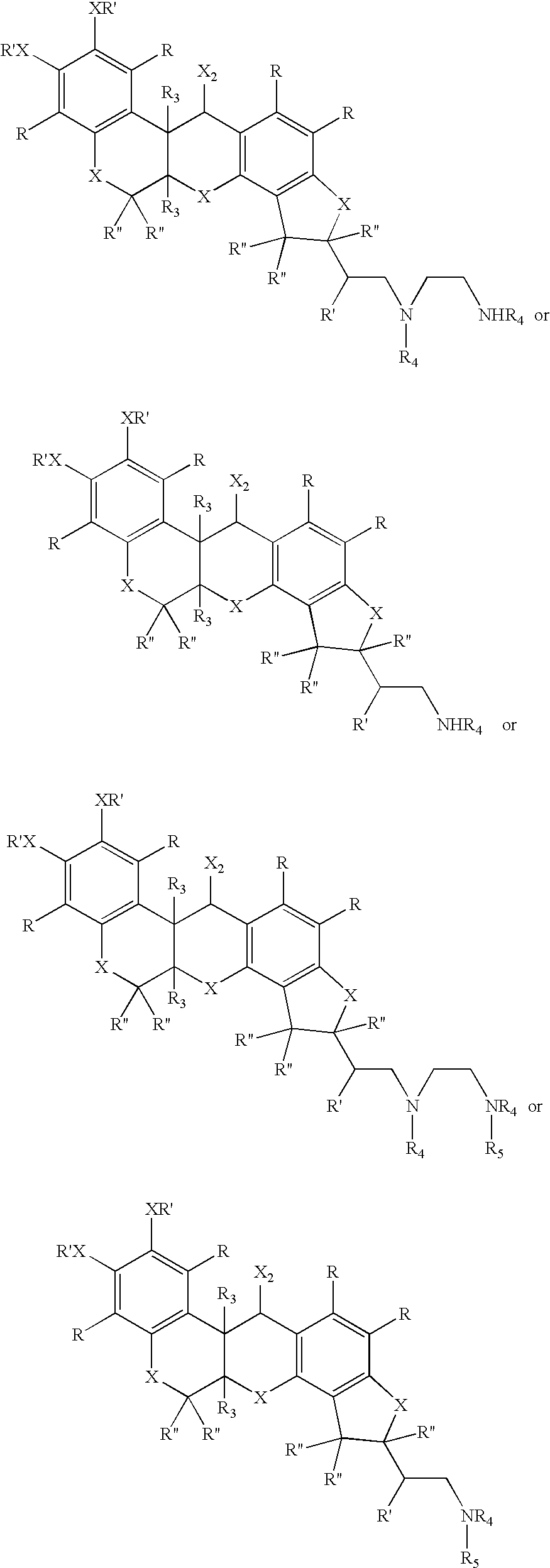
Claims (40)




Priority Applications (1)
| Application Number | Priority Date | Filing Date | Title |
|---|---|---|---|
| US12/273,509 US8551448B2 (en) | 2006-05-18 | 2008-11-18 | Rotanone analogs: method of preparation and use |
Applications Claiming Priority (3)
| Application Number | Priority Date | Filing Date | Title |
|---|---|---|---|
| US80132206P | 2006-05-18 | 2006-05-18 | |
| PCT/US2007/069178 WO2007137135A2 (en) | 2006-05-18 | 2007-05-17 | Rotenone analogs: method of preparation and use |
| US12/273,509 US8551448B2 (en) | 2006-05-18 | 2008-11-18 | Rotanone analogs: method of preparation and use |
Related Parent Applications (1)
| Application Number | Title | Priority Date | Filing Date |
|---|---|---|---|
| PCT/US2007/069178 Continuation WO2007137135A2 (en) | 2006-05-18 | 2007-05-17 | Rotenone analogs: method of preparation and use |
Publications (2)
| Publication Number | Publication Date |
|---|---|
| US20090136424A1 US20090136424A1 (en) | 2009-05-28 |
| US8551448B2 true US8551448B2 (en) | 2013-10-08 |
Family
ID=38719425
Family Applications (1)
| Application Number | Title | Priority Date | Filing Date |
|---|---|---|---|
| US12/273,509 Expired - Fee Related US8551448B2 (en) | 2006-05-18 | 2008-11-18 | Rotanone analogs: method of preparation and use |
Country Status (4)
| Country | Link |
|---|---|
| US (1) | US8551448B2 (en) |
| AU (1) | AU2007202205A1 (en) |
| BR (1) | BRPI0702575A (en) |
| CA (1) | CA2589023A1 (en) |
Families Citing this family (1)
| Publication number | Priority date | Publication date | Assignee | Title |
|---|---|---|---|---|
| CA2839351C (en) | 2011-07-13 | 2015-11-24 | Nordion (Canada) Inc. | Radiolabelled rotenone derivatives and their use in spect imaging |
Citations (2)
| Publication number | Priority date | Publication date | Assignee | Title |
|---|---|---|---|---|
| WO2003086476A1 (en) | 2002-04-08 | 2003-10-23 | Biostream, Inc. | Technetium-labeled rotenone derivatives, and methods of use thereof |
| US20050192458A1 (en) | 2002-04-30 | 2005-09-01 | Goodman Mark M. | Tumor imaging compounds |
-
2007
- 2007-05-16 AU AU2007202205A patent/AU2007202205A1/en not_active Abandoned
- 2007-05-17 BR BRPI0702575-0A patent/BRPI0702575A/en not_active IP Right Cessation
- 2007-05-17 CA CA002589023A patent/CA2589023A1/en not_active Abandoned
-
2008
- 2008-11-18 US US12/273,509 patent/US8551448B2/en not_active Expired - Fee Related
Patent Citations (2)
| Publication number | Priority date | Publication date | Assignee | Title |
|---|---|---|---|---|
| WO2003086476A1 (en) | 2002-04-08 | 2003-10-23 | Biostream, Inc. | Technetium-labeled rotenone derivatives, and methods of use thereof |
| US20050192458A1 (en) | 2002-04-30 | 2005-09-01 | Goodman Mark M. | Tumor imaging compounds |
Non-Patent Citations (12)
| Title |
|---|
| Bhandari, P. et al.: Biosynthesis of rotenone and amorphigenin. Study of the origins of isopropenyl-substituted dihydrofuran E-rings using isotopically labeled late precursors. J. of Chem. Soc., Perkins Transac., vol. 7, pp. 851-863, 1992. * |
| Blandini F and Greenamyre JT "Assay of [3H] Dihydrorotenone Binding to Complex I in Intact Human Platelets" Analytical Biochem. 230: 16-19 (1995). |
| Charalambous A, Manger TJ, Kilbourn MR "Synthesis of (2-[11C] Methoxy) rotenone, a Marker of Mitochondrial Complex I Activity" Nucl. Med. Biol. 22: 65-69 (1995). |
| International Search Report for Application No. PCT/US2007/069178. Jan. 22, 2008. |
| Kenski, DM; VanBrocklin, HF; O'Neil, JP "Fluorine-18 Labeled Rotenone Analogs: Preparation and Evaluation of Pet Mitochondrial Probes" J. Labelled Compd. Radiopharm 42, suppl. 1, S333-335 (1999). |
| Marshall, R. C. , Leidholdt E. M. Jr. , Zhang, D. Y., Barnett, C. A. "The effect of flow on technetium-99m-teboroxime (SQ30217) and thallium-201 extraction and retention in rabbit heart" J. Nucl. Med. 32: 1979-1988 (1991). |
| Marshall, R. C., Leidholdt E. M. Jr., Zhang, D. Y., Barnett, C. A. "Technetium-99m hexakis 2-methoxy-2-isobutyl isonitrile and thallium-201 extraction, washout, and retention at varying coronary flow rates in rabbit heart". Circulation 82: 998-1007 (1990). |
| Marshall, R. C., Powers-Risius, P., Reutter, B. W., Taylor, S. E., VanBrocklin, H. F., Huesman, R. H., Budinger, T. F. "Kinetic analysis of 125I-Iodorotenone as a deposited myocardial flow tracer: comparison with 99mTc-sestamibi" J. Nucl. Med. 42: 272-281 (2001). |
| O'Neil JP, Marshall RC, Powers-Risius P, VanBrocklin HF "[F-18] Fluororotenoids: Evaluation of Potential Myocardial Imaging Agents in an Isolated, Perfused Rabbit Heart Model" Poster P1 presented to the 19th Annual Western Regional Meeting, Society of Nuclear Medicine, Monterey, CA. Oct. 20-23, 1994. |
| Vanbrocklin HF, Enas JD, Hanrahan SM, Brennan K. M, O'Neil JP, Taylor SE. "[F-18] Fluorodihydrorotenone: Synthesis and evaluation of a mitochondrial electron transport chain (ETC) complex I probe for PET" J. Nucl. Med. 35 (5): 73P (1994). |
| Vanbrocklin HF, Enas JD, Hanrahan SM, O'Neil JP "Fluorine-18 Labeled Dihydrorotenone Analogs: Preparation and Evaluation of PET Mitochondrial Probes" Journal of Labelled Compounds and Radiopharmaceuticals 37: 217-219 (1995). |
| Vanbrocklin, H.F. et al.: Automated HPLC method development of molecular imaging precursors. LCGC North America, Sep. 1, 2005. * |
Also Published As
| Publication number | Publication date |
|---|---|
| CA2589023A1 (en) | 2007-11-18 |
| BRPI0702575A (en) | 2008-01-15 |
| AU2007202205A1 (en) | 2007-12-06 |
| US20090136424A1 (en) | 2009-05-28 |
Similar Documents
| Publication | Publication Date | Title |
|---|---|---|
| US5817776A (en) | Amino acid analogs for tumor imaging | |
| CN101555232A (en) | Pyridazinone compound marked by fluorine-18, preparation method and applications | |
| CN112175025B (en) | Glucose derivative containing benzene ring and application thereof | |
| US12162904B2 (en) | Mannose derivative and application thereof | |
| CN111138504B (en) | A kind of99mTc-CNPEDG complex and preparation method and application thereof | |
| US20100228012A1 (en) | Pendant fatty acid imaging agents | |
| Choi et al. | Synthesis and evaluation of an 125I-labeled azide prosthetic group for efficient and bioorthogonal radiolabeling of cyclooctyne-group containing molecules using copper-free click reaction | |
| WO2007137135A2 (en) | Rotenone analogs: method of preparation and use | |
| US7910745B2 (en) | Organic compound and method for producing radioactive halogen-labeled organic compound using the same | |
| US20090136424A1 (en) | Rotanone Analogs: Method of Preparation and Use | |
| Xue et al. | Synthesis and biodistribution of novel dipicolylamine 99mTc-(CO) 3-labeled fatty acid derivatives for myocardial imaging | |
| JPS58502203A (en) | r-releasing receptor-binding 3-quinuclidinyl glycolate, its production method, and image forming method and assay method using the same | |
| CN102898470B (en) | Novel organic phosphine compound and preparation method and application thereof | |
| CN102219818A (en) | Thymidine derivates as well as preparation method and applications thereof in preparing tumor developing agents as ligand | |
| WO2008133730A2 (en) | Labeled rotenone analogs | |
| US6334995B1 (en) | Process for the preparation of technetium-99m diethylene triamine penta-acetic acid diester | |
| CN116987128B (en) | Mannose derivative modified by (D) -alpha-imino acid and application thereof | |
| US9023315B2 (en) | Tricarbonyl complexes with tridentate chelators for myocardium imaging | |
| Fonge et al. | 99mTc-tricarbonyl labeled agents for cell labeling: Development, biodistribution in normal mice and preliminary in vitro evaluation | |
| CN105524113A (en) | 99mTcN nuclear-labeled triazole-ring-containing glucosine complex and its preparation method and application | |
| CN120230160A (en) | A glucose derivative containing L-proline modification and its application | |
| JP2014122177A (en) | Method of producing radioactive iodine labeling precursor | |
| WO2000044715A1 (en) | Novel aralkylguanidine compounds | |
| Labib | Asia Oceania Journal of Nuclear Medicine and Biology |
Legal Events
| Date | Code | Title | Description |
|---|---|---|---|
| AS | Assignment |
Owner name: THE REGENTS OF THE UNIVERSITY OF CALIFORNIA, CALIF Free format text: ASSIGNMENT OF ASSIGNORS INTEREST;ASSIGNORS:VANBROCKLIN, HENRY F.;O'NEIL, JAMES P.;GIBBS, ANDREW R.;AND OTHERS;REEL/FRAME:022018/0488;SIGNING DATES FROM 20081120 TO 20081205 Owner name: THE REGENTS OF THE UNIVERSITY OF CALIFORNIA, CALIF Free format text: ASSIGNMENT OF ASSIGNORS INTEREST;ASSIGNORS:VANBROCKLIN, HENRY F.;O'NEIL, JAMES P.;GIBBS, ANDREW R.;AND OTHERS;SIGNING DATES FROM 20081120 TO 20081205;REEL/FRAME:022018/0488 |
|
| AS | Assignment |
Owner name: ENERGY, UNITED STATES DEPARTMENT OF, DISTRICT OF C Free format text: CONFIRMATORY LICENSE;ASSIGNOR:REGENTS OF THE UNIVERSITY OF CALIFORNIA, THE;REEL/FRAME:022206/0696 Effective date: 20081119 |
|
| FEPP | Fee payment procedure |
Free format text: PATENT HOLDER CLAIMS MICRO ENTITY STATUS, ENTITY STATUS SET TO MICRO (ORIGINAL EVENT CODE: STOM); ENTITY STATUS OF PATENT OWNER: SMALL ENTITY |
|
| STCF | Information on status: patent grant |
Free format text: PATENTED CASE |
|
| FPAY | Fee payment |
Year of fee payment: 4 |
|
| FEPP | Fee payment procedure |
Free format text: ENTITY STATUS SET TO SMALL (ORIGINAL EVENT CODE: SMAL); ENTITY STATUS OF PATENT OWNER: SMALL ENTITY |
|
| MAFP | Maintenance fee payment |
Free format text: PAYMENT OF MAINTENANCE FEE, 8TH YR, SMALL ENTITY (ORIGINAL EVENT CODE: M2552); ENTITY STATUS OF PATENT OWNER: SMALL ENTITY Year of fee payment: 8 |
|
| FEPP | Fee payment procedure |
Free format text: MAINTENANCE FEE REMINDER MAILED (ORIGINAL EVENT CODE: REM.); ENTITY STATUS OF PATENT OWNER: SMALL ENTITY |
|
| LAPS | Lapse for failure to pay maintenance fees |
Free format text: PATENT EXPIRED FOR FAILURE TO PAY MAINTENANCE FEES (ORIGINAL EVENT CODE: EXP.); ENTITY STATUS OF PATENT OWNER: SMALL ENTITY |
|
| STCH | Information on status: patent discontinuation |
Free format text: PATENT EXPIRED DUE TO NONPAYMENT OF MAINTENANCE FEES UNDER 37 CFR 1.362 |
|
| FP | Lapsed due to failure to pay maintenance fee |
Effective date: 20251008 |