CROSS-REFERENCE TO RELATED APPLICATIONS
This application claims priority to U.S. Provisional Patent Application No. 61/480,196 filed on Apr. 28, 2011, the entire content of which is incorporated herein by reference.
FIELD OF THE INVENTION
The present invention relates to vehicles, and more particularly to vehicle suspension systems.
BACKGROUND OF THE INVENTION
Rear-wheel drive passenger vehicles are typically designed with a solid-axle suspension system for transferring an engine's torque to the rear wheels of the vehicle. Such solid-axle suspension systems typically include an axle housing, a differential located in the axle housing, and two axles interconnecting the differential and the respective rear wheels of the vehicle. The axle housing is typically supported relative to the vehicle's chassis by multiple springs to permit the axle housing to move upwardly and downwardly relative to the vehicle's chassis as the vehicle is moving in response to irregularities in the driving surface.
SUMMARY OF THE INVENTION
Solid-axle suspension systems, however, inherently compromise a vehicle's performance or handling to some extent because a solid-axle suspension system is responsive to inputs received from either of the rear wheels of the vehicle. For example, should the driver-side rear wheel encounter an irregularity in a driving surface (e.g., a pothole), the driver-side rear wheel would be caused to move downwardly relative to the vehicle's chassis, and the passenger-side rear wheel may be caused to move upwardly or tilt inwardly, thereby losing camber, in response to the input provided on the driver-side rear wheel.
The invention provides an independent rear suspension kit for a vehicle originally equipped with a solid-axle suspension system to increase the performance and handling of the vehicle. Independent rear suspension systems, as described in more detail below, substantially isolate a vehicle's rear wheels such that an input to the system by one of the wheels does not affect the other of the wheels.
The invention provides, in one aspect, an independent rear suspension kit for a vehicle. The kit includes first and second mounting brackets configured to be fastened to a chassis of the vehicle, a cross-member interconnecting the first and second brackets, a differential housing supported by the cross-member, first and second upper control arms pivotably coupled to the cross-member, first and second lower control arms pivotably coupled to the differential housing, a first upright pivotably coupled to the first upper control arm and the first lower control arm, and a second upright pivotably coupled to the second upper control arm and the second lower control arm.
Other features and aspects of the invention will become apparent by consideration of the following detailed description and accompanying drawings.
BRIEF DESCRIPTION OF THE DRAWINGS
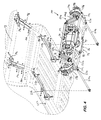
FIG. 1 is a rear perspective view of an independent rear suspension kit of the invention.
FIG. 2 is a front perspective view of the independent rear suspension kit of FIG. 1.
FIG. 3 is an exploded, rear perspective view of the independent rear suspension kit of FIG. 1.
FIG. 4 is a bottom perspective view of the independent rear suspension kit of FIG. 1 assembled to a vehicle chassis.
Before any embodiments of the invention are explained in detail, it is to be understood that the invention is not limited in its application to the details of construction and the arrangement of components set forth in the following description or illustrated in the following drawings. The invention is capable of other embodiments and of being practiced or of being carried out in various ways. Also, it is to be understood that the phraseology and terminology used herein is for the purpose of description and should not be regarded as limiting.
DETAILED DESCRIPTION
FIGS. 1 and 2 illustrate an independent rear suspension kit 10 for a vehicle originally equipped with a solid-axle suspension system. As such, the kit 10 may be used for converting the vehicle from a solid-axle suspension system to an independent rear suspension system. Alternatively, the kit 10 may be used as original equipment in a specialty vehicle (e.g., a tube-frame race car) to provide an independent rear suspension system. The kit 10 includes first (i.e., driver-side) and second (i.e., passenger-side) mounting brackets 14 a, 14 b configured to be fastened to a chassis 18 of the vehicle (FIG. 4). With continued reference to FIG. 4, the vehicle includes a rear sub-frame 22 to which the brackets 14 a, 14 b are attached. Particularly, each of the brackets 14 a, 14 b is shaped to follow the contour of parallel rails 26 a, 26 b of the rear sub-frame 22. As such, the shape of the brackets 14 a, 14 b dictates the placement or location of the brackets 14 a, 14 b on the respective rails 26 a, 26 b. The brackets 14 a, 14 b are fastened to the rails 26 a, 26 b using conventional threaded fasteners to clamp the brackets 14 a, 14 b to the respective rails 26 a, 26 b. Alternatively or additionally, the brackets 14 a, 14 b may be welded to the rails 26 a, 26 b of the rear sub-frame 22. The illustrated kit 10 in FIGS. 1 and 2 is specially configured for use with a Chevrolet Camaro, model years 1967-1969. The shapes of some of the components, however, may be modified to adapt the kit 10 for use with different vehicles.
With reference to FIGS. 1-3, the kit 10 also includes a cross-member 30 interconnecting the first and second brackets 14 a, 14 b. Particularly, each of the brackets 14 a, 14 b includes a mount 34 a, 34 b (FIG. 4), and opposed ends of the cross-member 30 are fastened to the respective mounts 34 a, 34 b to secure the cross-member 30 to the rear sub-frame 22 of the vehicle's chassis 18. A rubber or polymeric cylindrical bushing 38 is received in each end of the cross-member 30 to interconnect the ends of the cross-member 30 with the respective mounts 34 a, 34 b on the brackets 14 a, 14 b to attenuate vibration transferred to the vehicle's chassis 18. Conventional threaded fasteners are received in the bushings 38 and are utilized to connect the opposed ends of the cross-member 30 with the respective mounts 34 a, 34 b.
With reference to FIG. 1, the kit 10 further includes a differential housing 42 supported by the cross-member 30. The differential housing 42 includes spaced flanges 46 a, 46 b (FIG. 3) having a plurality of threaded holes 50. A corresponding plurality of threaded fasteners are inserted through respective apertures 54 in the cross-member 30 and received in the threaded holes 50 to support the differential housing 42 from the cross-member 30. The differential housing 42 also includes two arms 58 a, 58 b, the purpose of which is described in detail below, extending from the bottom of the differential housing 42. The arms 58 a, 58 b are welded to the differential housing 42; however, in an alternative embodiment of the kit 10 the differential housing 42 and the arms 58 a, 58 b may be integrally formed as a single piece (e.g., by machining from a billet, by casting, etc.). As shown in FIG. 2, a “third member” or a differential unit 62 is attached to the differential housing 42 in a conventional manner. The differential unit 62 includes a case 66 and a differential (not shown) at least partially received within the case 66. The differential unit 62 includes an input yoke (not shown) to receive torque from the vehicle's engine (e.g., via a drive shaft, also not shown).
With continued reference to FIG. 2, the kit 10 also includes a saddle 78 having opposed first and second ends interconnecting the first and second brackets 14 a, 14 b, respectively. Particularly, the saddle 78 includes end plates 82 that are fastened to the respective brackets 14 a, 14 b. The saddle 78 also includes a middle portion 86 coupled to the differential housing 42 to further secure the differential housing 42 to the rear sub-frame 22 of the vehicle's chassis 18. The saddle 78 includes a V-shaped tube 90 and the middle portion 86 of the saddle 78 includes opposed, parallel plates 94, 98 at least one of which is welded to the tube 90. The plate 94 also includes a flange 102 that is fastened to the case 66 of the differential unit 62 which, in turn, is fastened to the differential housing 42.
With reference to FIGS. 1-3, the kit 10 further includes first and second upper control arms 106 a, 106 b pivotably coupled to the cross-member 30. Each of the first and second upper control arms 106 a, 106 b includes opposed ends to which threaded spherical rod ends 110, 114 are attached (FIG. 3). The inboard rod end 110 on each of the upper control arms 106 a, 106 b is pivotably coupled to the cross-member 30 via an upper control arm mount 118 a, 118 b and a conventional threaded fastener. In the illustrated construction of the kit 10, the upper control arms 106 a, 106 b are shaped with a curvature to provide clearance for the mounting brackets 14 a, 14 b and the rails 26 a, 26 b of the rear sub-frame 22. Alternatively, in a vehicle configuration in which no clearance issues are posed by the mounting brackets 14 a, 14 b or the rear sub-frame 22, the upper control arms 106 a, 106 b may be substantially straight. The length of each of the upper control arms 106 a, 106 b is adjustable to adjust a camber angle of the respective rear wheels. Particularly, the upper control arms 106 a, 106 b may be independently lengthened or shortened by adjusting the depth to which the spherical rod ends 110, 114 are threaded into the respective ends of the control arms 106 a, 106 b.
With reference to FIGS. 1-3, the kit 10 also includes first and second lower control arms 122 a, 122 b pivotably coupled to the differential housing 42 and the saddle 78. Each of the lower control arms 122 a, 122 b is generally A-shaped and includes a forward tube 126 and a rearward tube 130 that taper toward each other. The forward tube 126 of each of the lower control arms 122 a, 122 b is pivotably coupled to the saddle 78 (i.e., via the plates 94, 98) using a conventional threaded fastener, while the rearward tube 130 of each of the lower control arms 122 a, 122 b is pivotably coupled to the respective arms 58 a, 58 b of the differential housing 42 using a conventional threaded fastener. The lower control arms 122 a, 122 b also include tie rod end bushings 124 pivotably coupling the lower control arms 122 a, 122 b to the differential housing 42 and the saddle 78. The bushings 124 are rotatable with respect to the remainder of the lower control arms 122 a, 122 b to adjust the overall length of the lower control arms 122 a, 122 b. Accordingly, the tie rod end bushings 124 may be adjusted to vary the track width or the toe of the vehicle in which the kit 10 is installed. The tie rod end bushings 124 may include rubber or polymeric bushings to attenuate vibration transferred to the differential housing 42 and the vehicle's chassis 18. With reference to FIG. 1, the kit 10 further includes a tie link 134 interconnecting the first and second arms 58 a, 58 b of the differential housing 42 to increase the rigidity of the arms 58 a, 58 b. In the illustrated embodiment of the kit 10, the tie link 134 is welded to the differential housing 42 and defines at least a portion of each of the arms 58 a, 58 b.
With reference to FIGS. 1-3, the kit 10 further includes a first upright 138 a pivotably coupled to the first upper control arm 106 a and the first lower control arm 122 a, and a second upright 138 b pivotably coupled to the second upper control arm 106 b and the second lower control arm 122 b. As shown in FIG. 3, the first and second uprights 138 a, 138 b each include a lower pivot mount 142 positioned between the respective tubes 126, 130 of each of the lower control arms 122 a, 122 b. A single threaded fastener is inserted through the lower pivot mount 142 to interconnect the respective tubes 126, 130 of each of the lower control arms 122 a, 122 b to pivotably couple the uprights 138 a, 138 b to the respective lower control arms 122 a, 122 b. Each of the uprights 138 a, 138 b also includes an upper pivot mount 146 to which the outboard rod ends 114 of the respective upper control arms 106 a, 106 b are pivotably coupled using conventional threaded fasteners. As described above, the length of the upper control arms 106 a, 106 b is adjustable to permit adjustment of the camber angle of each of the uprights 138 a, 138 b, and therefore the rear wheels.
With reference to FIGS. 1 and 3, the kit 10 also includes a first suspension member 150 a interconnecting the cross-member 30 and the first lower control arm 122 a, and a second suspension member 150 b interconnecting the cross-member 30 and the second lower control arm 122 b. In the illustrated construction of the kit 10, the first and second suspension members 150 a, 150 b are each configured as coil-over shocks 154 having an adjustable shock 158 surrounded by a coil spring 162. As would be understood by one of ordinary skill in the art, both the preload on the coil spring 162 and the damping coefficient of the shock 158 are independently adjustable to change the performance of the coil-over shocks 154. An upper end of each of the coil-over shocks 154 is pivotably coupled to a respective upper shock mount 166 a, 166 b attached to the cross-member 30 (see also FIG. 4). A conventional threaded fastener is utilized to pivotably couple each of the coil-over shocks 154 with the respective upper shock mounts 166 a, 166 b on the cross-member 30. With reference to FIGS. 1 and 3, the lower control arms 122 a, 122 b include respective lower shock mounts 170 a, 170 b attached to the rearward tube 130 of each of the lower control arms 122 a, 122 b. Like the upper shock mounts 166 a, 166 b, a conventional threaded fastener is utilized to pivotably couple the lower end of each of the coil-over shocks 154 with the respective lower shock mounts 170 a, 170 b on the lower control arms 122 a, 122 b. As such, the vertical forces acting on the rear wheels while the vehicle is in operation are transferred to the vehicle's chassis 18 through the uprights 138 a, 138 b, the lower control arms 122 a, 122 b, the coil-over shocks 154, the cross-member 30, and the brackets 14 a, 14 b.
With continued reference to FIGS. 1 and 3, the kit 10 further includes a first stub axle assembly 174 a extending between the first upright 138 a and the differential housing 42, and a second stub axle assembly 174 b extending between the second upright 138 b and the differential housing 42. The inboard ends of the respective stub axle assemblies 174 a, 174 b are coupled to the differential to receive torque from the differential when the vehicle is in operation, while the outboard ends of the respective stub axle assemblies 174 a, 174 b are coupled to respective hubs 178 a, 178 b that are rotatably supported by the uprights 138 a, 138 b. The hubs 178 a, 178 b each include a plurality of axle studs (not shown) for securing the rear wheels to the hubs 178 a, 178 b (e.g., using lug nuts). As such, torque from the differential is transferred to the respective rear wheels of the vehicle through the respective stub axle assemblies 174 a, 174 b and the hubs 178 a, 178 b.
With reference to FIG. 3, the first and second stub axle assemblies 174 a, 174 b each include a stub axle 186 rotatably supported by the differential housing 42 and engaged with the differential. The first and second stub axle assemblies 174 a, 174 b also each include an axle shaft 190 having a first end and a second end, a first constant-velocity joint 194 coupling the stub axle 186 with the first end of the axle shaft 190, an output shaft (not shown) coupled for co-rotation with the hub 178 a, 178 b, and a second constant-velocity joint 198 coupling the second end of the axle shaft 190 with the output shaft. As such, torque is transferred from the differential through the stub axle 186, the first constant-velocity joint 194, the axle shaft 190, the second constant-velocity joint 198, and the output shaft of the respective assemblies 174 a, 174 b before reaching the hubs 178 a, 178 b and the respective rear wheels of the vehicle.
With reference to FIGS. 1-3, the kit 10 also includes a first rotor 202 a coupled for co-rotation with the first stub-axle assembly 174 a and a second rotor 202 b coupled for co-rotation with the second stub-axle assembly 174 b. The rotors 202 a, 202 b are positioned between the stub axle 186 and the first constant-velocity joint 194 in each of the stub axle assemblies 174 a, 174 b. Therefore, the rotors 202 a, 202 b are located inboard of the respective uprights 138 a, 138 b such that the rotors 202 a, 202 b do not contribute to the sprung mass of the kit 10. In other words, the rotors 202 a, 202 b are not moved upwardly and downwardly with the rear wheels and uprights 138 a, 138 b when the vehicle is in operation. Conventional threaded fasteners are used to secure the first rotor 202 a between the first constant-velocity joint 194 and the stub axle 186 of the first stub axle assembly 174 a. Likewise, conventional threaded fasteners are used to secure the second rotor 202 b between the first constant-velocity joint 194 and the stub axle 186 of the second stub axle assembly 174 b.
With reference to FIGS. 1 and 3, the kit 10 further includes first and second calipers 206 a, 206 b mounted to the differential housing 42 which, when actuated, apply a braking force on the first and second rotors 202 a, 202 b to decelerate the rotation of the stub axle assemblies 174 a, 174 b to bring the vehicle to a stop. Respective caliper mounts 210 a, 210 b are fastened to the differential housing 42 to which the first and second calipers 206 a, 206 b are fastened (FIG. 3).
With reference to FIG. 2, the kit 10 also includes a first strut rod 214 a configured to interconnect the first lower control arm 122 a and the chassis 18, and a second strut rod 214 b configured to interconnect the second lower control arm 122 b and the chassis 18. Both of the strut rods 214 a, 214 b extend toward the front of the vehicle's chassis 18 (FIG. 4) and are operable to transfer the propulsion forces resulting from the contact between the vehicle's rear wheels and the driving surface to the vehicle's chassis 18. In the illustrated embodiment of the kit 10, the strut rods 214 a, 214 b extend in a direction substantially parallel to the length of the vehicle. Alternatively, depending upon the particular configuration of the vehicle's chassis 18, the strut rods 214 a, 214 b may be obliquely oriented with respect to a central axis of the chassis 18.
With continued reference to FIG. 4, the kit 10 further includes first and second sub-frame connectors 218 a, 218 b configured to interconnect a front sub-frame 222 and the rear sub-frame 22 of the vehicle's chassis 18. The first strut rod 214 a includes opposed ends pivotably coupled to the first sub-frame connector 218 a and the first lower control arm 122 a, respectively. Likewise, the second strut rod 214 b includes opposed ends pivotably coupled to the second sub-frame connector 218 b and the second lower control arm 122 b, respectively. The sub-frame connectors 218 a, 218 b each include an offset strut mount 226 to which the respective strut rods 214 a, 214 b are pivotably coupled. The lower control arms 122 a, 122 b also each include a strut mount 230 to which the respective strut rods 214 a, 214 b are pivotably coupled.
In operation of a vehicle using the independent rear suspension kit 10 described above, the vehicle's rear wheels are substantially isolated from each other such that an input to the suspension system by one of the wheels (e.g., a jouncing motion) does not affect the other of the wheels. Consequently, the handling characteristics of the vehicle may be improved by using the kit 10 in place of the solid-axle suspension system originally equipped in the vehicle.
Various features of the invention are set forth in the following claims.