US8516442B2 - Graphical user interface metadata evolution tool - Google Patents
Graphical user interface metadata evolution tool Download PDFInfo
- Publication number
- US8516442B2 US8516442B2 US12/038,672 US3867208A US8516442B2 US 8516442 B2 US8516442 B2 US 8516442B2 US 3867208 A US3867208 A US 3867208A US 8516442 B2 US8516442 B2 US 8516442B2
- Authority
- US
- United States
- Prior art keywords
- gui element
- gap
- gui
- identifier
- metadata
- Prior art date
- Legal status (The legal status is an assumption and is not a legal conclusion. Google has not performed a legal analysis and makes no representation as to the accuracy of the status listed.)
- Expired - Fee Related, expires
Links
Images




Classifications
-
- G—PHYSICS
- G06—COMPUTING OR CALCULATING; COUNTING
- G06F—ELECTRIC DIGITAL DATA PROCESSING
- G06F8/00—Arrangements for software engineering
- G06F8/30—Creation or generation of source code
- G06F8/38—Creation or generation of source code for implementing user interfaces
-
- G—PHYSICS
- G06—COMPUTING OR CALCULATING; COUNTING
- G06F—ELECTRIC DIGITAL DATA PROCESSING
- G06F8/00—Arrangements for software engineering
- G06F8/30—Creation or generation of source code
- G06F8/36—Software reuse
Definitions
- This disclosure relates to the storage of metadata associated with a graphical user interface (GUI) element in a GUI application (GAP), and in particular relates to the migration of the stored metadata from one GUI element in one version of a GAP to a corresponding GUI element in another version of the GAP.
- GUI graphical user interface
- GUIs graphical user interfaces
- Nontrivial GAPs contain hundreds of GUI screens that in turn contain thousands of GUI objects.
- test engineers write programs using scripting languages (e.g., JavaScript and VBScript), and these testing scripts drive GAPs through different states by mimicking users who interact with these GAPs by performing actions on their GUI objects.
- scripting languages e.g., JavaScript and VBScript
- test scripts simulate users of GAPs, and their statements access and manipulate GUI objects of these GAPs. For example, the statement:
- VbWindow (“Login”).VbEdit(“txtAgentsName”).Set “Shawn”
- test scripts Expanding automatically generated test scripts with manually written code to automate tests makes the test script more complex, difficult to understand, maintain, and evolve. Although it is known in advance that the test scripts access and manipulate GUI elements, it is not clear how to detect operations at compile time that lead to runtime errors.
- API calls exported by testing platforms remains a primary mode of accessing and manipulating GUI objects of GAPs, and these API calls lead to various run-time errors in the test scripts. For example, test personnel may use platform API calls incorrectly in the test script source code thereby accessing GUI elements that they did not intend to access.
- GUI metadata evolution architecture uses GUI metadata processing logic to address the technical challenges associated with managing potentially large amounts of informational data describing a GUI.
- the GUI metadata processing logic may include communication logic, parsing logic, and type processing logic.
- the communication logic may obtain a GUI element type specification message.
- the parsing logic may parse the message for a GUI element identifier and a GUI type identifier.
- the type processing logic may maintain a GUI element type metadata record in a GUI element metadata repository.
- the type processing logic may store the GUI type identifier in a metadata record located by the GUI element identifier.
- the GUI metadata processing logic also maintains GUI element version mappings that have been specified between GUI elements between GAP versions.
- FIG. 1 shows a metadata evolution tool architecture
- FIG. 2 shows a metadata repository architecture
- FIG. 3 shows examples of type specification messages.
- FIG. 4 shows examples of mapping specification messages.
- FIG. 5 shows examples of notation messages.
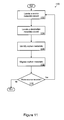
- FIG. 6 shows a flow diagram of metadata processing.
- FIG. 7 shows a flow diagram of type processing.
- FIG. 8 shows a first part of a flow diagram of mapping processing.
- FIG. 9 shows a second part of a flow diagram of mapping processing.
- FIG. 10 shows a flow diagram of notation processing.
- FIG. 11 shows a flow diagram of metadata migration processing.
- FIG. 12 shows a flow diagram of metadata migration processing.
- FIG. 13 shows a flow diagram of metadata migration processing.
- FIG. 1 shows one embodiment of a metadata evolution tool architecture 100 .
- the architecture 100 includes an interface 102 , a processor 104 , a memory 106 , and a metadata repository 108 .
- the architecture 100 may communicate with other systems through the interface 102 .
- the architecture 100 may receive requests for metadata information and send responses to those requests through the interface 102 .
- the architecture 100 may send instructions to the interface 102 to display a prompt at a non-local terminal and may receive responses to the prompt through the interface 102 .
- the processor 104 may send instructions to display a prompt at display 136 and may receive responses to the prompt.
- the processor 104 executes the logic stored in the memory 106 .
- the metadata repository 108 receives, retrieves, and stores metadata information processed by the processor 104 .
- the memory 106 may include metadata processing logic 110 , database and file management logic 112 , and messages 114 .
- the metadata processing logic 110 may instruct the processor 104 to perform process flows for maintaining and migrating metadata.
- the database and file management logic 112 may instruct the processor 104 to perform processes relevant to data storage, retrieval, and manipulation to and from the metadata repository 108 .
- the messages 114 may be stored in the memory when received from the interface 102 and manipulated by the processor 104 according to instructions from the metadata processing logic 106 .
- the metadata processing logic 110 includes metadata message handling logic 116 , type processing logic 118 , mapping processing logic 120 , notation processing logic 122 , and metadata migration logic 124 .
- the metadata message handling logic 116 may instruct the processor 104 to store messages 114 received from the interface 102 in the memory 106 and process the messages 114 as described below.
- the metadata message handling logic 116 may include communication logic 126 and parsing logic 128 .
- the communication logic 126 may instruct the processor 104 to send and receive messages 114 through the interface 102 .
- the communication logic 126 may also instruct the processor 104 to store the messages 114 in the memory 106 .
- the communication logic 126 may send instructions to the interface 102 to display a prompt to a non-local terminal and may instruct the processor 104 to process instructions received by the interface 102 in response to the prompt.
- the communication logic 126 may instruct the processor 104 to send instructions to the display 136 to display a prompt, and the processor 104 may process instructions received in response to the prompt.
- the parsing logic 128 may instruct the processor 104 to parse the messages 114 .
- the parsing logic 128 may instruct the processor 104 to extract metadata identification information from the messages.
- the type processing logic 118 , mapping processing logic 120 , and notation processing logic 122 may instruct the processor 104 to process metadata messages, such as type specification message 130 , mapping specification message 132 , and notation message 134 .
- the type processing logic 118 , mapping processing logic 120 , or notation processing logic 122 may instruct the processor 104 to maintain a metadata record stored in the metadata repository 108 .
- the processor 104 may direct reading, writing, storing, copying, updating, moving, deleting, overwriting, appending, or otherwise manipulating data stored within a metadata record in the metadata repository 108 .
- the type processing logic 118 , mapping processing logic 120 , or notation processing logic 122 may be performed in conjunction with processes from the database and file management logic 112 .
- the messages 114 include as examples type specification messages 130 , mapping specification messages 132 , and notation messages 134 , but may include other messages related to metadata.
- the type specification messages 130 , the mapping specification messages 132 , and the notation messages 134 are discussed in more detail with regard to FIGS. 3 , 4 , and 5 , respectively.
- FIG. 2 shows one implementation of the metadata repository 108 .
- the metadata repository 108 may be organized in many different ways, however.
- the metadata repository 108 may include a GAP 0 metadata record 202 , GAP 1 metadata record 204 through GAP ‘j’ metadata record 206 , and a GUI element version mapping record 208 .
- the GAP metadata records 202 , 204 , and 206 may store metadata associated with a specific GAP or GAP version.
- the GUI element version mapping record 208 may store the mappings from one GUI element to another GUI element.
- Each GAP metadata record may include a GAP identifier.
- the GAP identifiers 210 , 212 , and 214 may serve to identify either a GAP, a version of a GAP, or both.
- GAP 0 metadata record 202 contains a GAP 0 identifier 210 of “University Directory0”
- GAP 1 metadata record 204 contains a GAP 1 identifier 212 of “University Directory1.”
- “University Directory0” may serve to identify the whole GAP as “University Directory0.”
- “University Directory0” may serve to identify the version of the GAP as version 0 (e.g., the current version) of the GAP “University Directory.”
- the metadata repository 108 may store metadata records for multiple GAPs, as well as multiple metadata records for each of the multiple versions of each GAP.
- the GAP 0 metadata record 202 additionally may include GUI element 1 metadata record 216 through GUI element ‘n’ metadata record 218 .
- the total number ‘n’ of GUI element metadata records stored within each GAP metadata record may vary depending on the complexity of the GAP.
- Each GUI element metadata record may correspond to a GUI element within a GAP or a version of a GAP, and each GUI element within a GAP may have a corresponding GUI element metadata record within the GAP metadata record.
- GAP 0 metadata record 202 contains GUI element ‘n’ metadata record 218 indicating that GAP 0 may be composed of ‘n’ or more identifiable GUI elements.
- GUI element ‘n’ metadata record 218 may indicate that GAP 0 metadata record 202 currently contains ‘n’ GUI element metadata records, where ‘n’ may be an integer value from 0 up to the total number of GUI elements in GAP 0 . Every GUI element in a GAP may not have a corresponding GUI element metadata record.
- GAP 1 metadata record 204 may contain GUI element ‘k’ metadata record 220
- GAP ‘j’ metadata record may contain GUI element ‘m’ metadata record 222 .
- Each of the GUI element metadata records 216 , 218 , 220 , and 222 may include a GUI element identifier 224 , a type identifier 226 , a notation 228 , a GUI element mapping 230 , and other metadata 232 .
- a GUI element identifier 224 may serve to identify a GUI element within the GAP or GAP version, using a unique number, character string, or other indicia. For example, one element ID may be “0x30fb0.”
- a type identifier 226 may be a classification of a GUI element that defines high level semantics, annotations and properties, permitted or restricted behaviors, and values associated with the GUI element.
- one type identifier may be “US-StateTextBox” which may specify a type of text box GUI element that only accepts strings corresponding to the names of the states of the United States. This information may come from the knowledge of a testing engineer when he or she tries to understand the semantics of each GUI element in the GAP under test.
- a notation 228 may include text, notes, informal comments, constraints, or information derived from a technical specification that one programmer may wish to convey to another programmer about a particular GUI element.
- a notation 228 may include the text “State Names Only,” as an informal method of conveying to another programmer that only strings corresponding to the names of states of the United States should be included.
- a GUI element mapping 230 may identify a GUI element in another GAP or GAP version corresponding to the GUI element associated with the GUI element metadata record.
- a GUI element mapping 230 may include the values “University Directory1” and “0x30fc8” to indicate that the GUI element associated with this GUI element metadata record corresponds to GUI element 0x30fc8 in the GAP University Directory, version 1.
- other metadata 232 may be stored in association with a GUI element metadata record.
- the metadata repository 108 may include any number of GUI element version mapping records, such as the record 208 .
- the number of GUI element version mapping records 208 may vary according to the number of GAPs or GAP versions.
- each GUI element version mapping record 208 may include mappings from one specific GAP version to another specific GAP version.
- each GUI element version mapping record 208 may include all of the mappings between all of the versions of a single GAP.
- FIG. 2 shows that the GUI element version mapping record 208 includes GUI element version mappings 234 and 236 .
- the number of GUI element version mappings 234 and 236 in a GUI element version mapping record 208 may vary according to the number of mappings made between GUI elements of different GAPs or GAP versions.
- Each GUI element version mapping 234 or 236 may include a source GAP alias identifier 238 , a source GUI element identifier 240 , a destination GAP alias identifier 242 , a destination GUI element identifier 244 , and a confidence level value 246 .
- the GUI element version mapping 248 provides an example of a GUI element version mapping using extensible markup language (XML).
- the GUI element version mapping 248 includes a source GAP alias identifier 250 , a source GUI element identifier 252 , a destination GAP alias identifier 254 , a destination GUI element identifier 256 , and a confidence level value 258 .
- the mapping indicates a correspondence between GUI element 0x30fc8 of GAP University Directory, version 1 (e.g. a subsequent version), to GUI element 0x80fc0 of GAP University Directory, version 0 (e.g. a current version), with a confidence level of 100.
- the confidence level values may use decimal values between 0 and 1, integer values between 0 and 100, or any other scale, to indicate the strength of the certainty to which the mapping between the GUI elements is a correct mapping.
- a mapping provided by a human user may have a high or absolute confidence of 1 or 100 percent, where a mapping provided by a mapping evaluation program using GUI element property comparison may have a lower or no confidence.
- a mapping provided by a mapping evaluation program using GUI element property comparison may have a high or absolute confidence, where a mapping provided by a human user may have a lower or no confidence.
- the processor 104 uses the database and file management logic 112 to access and manipulate any of the GAP metadata records 202 , 204 , or 206 , GUI element metadata records 216 , 218 , 220 , or 222 , and/or GUI element version mapping records stored in the metadata repository 108 .
- the access and manipulation of the data in the metadata repository 108 may include reading, writing, storing, copying, updating, moving, deleting, overwriting, appending, or any other function performed on data.
- FIG. 3 shows an example of a GUI element type mapping 300 that may be a component of a GUI element type specification message 130 .
- the GUI element type mapping 300 includes a GAP alias 302 , a GUI element identifier 304 , and a GUI type identifier 306 . Additional, fewer, or different fields may be included in the GUI element type mapping 300 .
- the GAP alias 302 may specify an identifier for the GAP which includes the GUI element to which a type is being applied.
- the GAP alias 302 may be a unique identifier that distinguishes between GAPs or GAP versions, including a current GAP version and a subsequent version of the same GAP.
- the GUI element identifier 304 may provide a unique identifier for the GUI element which is being typed.
- the GUI type identifier 306 specifies the GUI element type being assigned to the GUI element (e.g., SSNTextBox).
- FIG. 3 also shows two examples of GUI element type mappings 308 and 310 using an XML representation.
- the base XML tag may be a “TypeGUIObject” tag to indicate that the XML content is the specification of GUI element type content.
- the type mapping 308 is a mapping for a Window GUI element.
- the GAP alias 312 is “University Directory0”, signifying the current version of a university directory GAP.
- the GUI element being typed has the unique element identifier 314 “0x30fb0” noted by the HWND identifier and established, for example, by an accessibility layer interface.
- the GUI type identifier 316 for the Window GUI element is “US-StateTextBox”.
- the type mapping 310 is a mapping for a Menu Item GUI element.
- the GAP alias 318 is “University Directory1”, signifying the subsequent version of the university directory GAP.
- the GUI element being typed has the unique element identifier 320 “OpenFile” as specified by the Name field.
- the GUI type identifier 322 for the Window GUI element is “FileOpen”.
- FIG. 3 also shows an example of a GUI element type specification message 324 using an XML representation.
- the GUI element type specification message 324 includes a GUI element type specification message header 326 and a GUI element type specification message terminator 328 .
- the header 326 (“TypeGUIObject”) and terminator 328 (“/TypeGUIObject”) signify that the data within the message specifies a type mapping for a GUI element.
- the GUI element type specification message 324 may further include a GAP alias 330 , GUI element identifier 332 , and a GUI type identifier 334 .
- FIG. 4 shows an example of a GUI element version mapping (“version mapping”) 400 that may be a component of a GUI element mapping specification message 132 .
- the version mapping 400 includes a source GAP alias 402 , a source GUI element identifier 404 , a destination GAP alias 406 , a destination GUI element identifier 408 , and a confidence level 410 . Additional, fewer, or different fields may be included in the version mapping 400 .
- the source GAP alias 402 specifies an identifier for a GAP (the “source GAP”) that includes a first specified GUI element
- the destination GAP alias 406 specifies an identifier for a GAP (the “destination GAP”) that includes a second specified GUI element that should be linked to the first specified GUI element.
- the GAP aliases 402 and 406 may be unique identifiers that distinguish between GAPs or different versions of a GAP, such as identifiers that differentiate the current GAP version and the subsequent GAP version.
- the source GUI element identifier 404 may provide a unique identifier for the selected GUI element in the source GAP
- the destination GUI element identifier 408 may provide a unique identifier for the selected GUI element in the destination GAP.
- FIG. 4 also shows a specific example of a version mapping 412 using a multimode structure in which one node is represented with the tag “FromAlias” and the second node is represented with the tag “ToAlias”.
- the version mapping 412 specifies a source GAP alias 414 of “University Directory1”, signifying the subsequent version of a university directory GAP.
- the source GUI element being mapped e.g., a combo box
- the version mapping 412 also specifies a destination GAP alias 418 of “University Directory0”, signifying the current version of a university directory GAP.
- the destination GUI element being mapped (e.g., a drop down listbox), has the unique element identifier 420 “0x30fc0” tagged by the “HWND” label.
- the version mapping 412 establishes that a particular drop down listbox in the subsequent version of the GAP corresponds to a particular combo box in the current GAP version.
- the element mapping 412 additionally specifies a confidence level 422 of 100, signifying that this mapping has a 100% certainty of being a correct mapping between elements.
- FIG. 4 also shows an example of a GUI element mapping specification message 424 .
- the GUI element mapping specification message 424 includes a GUI element mapping specification message header 426 (“MapGuiObjects”) and a GUI element mapping specification message terminator 428 (“/MapGuiObjects”).
- the header 426 and terminator 428 signify that the data within the message specifies an element mapping between GUI elements in different GAPs or GAP versions.
- the GUI element type specification message 424 may further include a source GAP alias 430 , a source GUI element identifier 432 , a destination GAP alias 434 , a destination GUI element identifier 436 , and a confidence level 438 .
- the confidence level field 410 is an optional extension to the GUI element version mapping 400 .
- the confidence level field 410 may specify a degree of reliability for the GUI element version mapping.
- the confidence level may be relatively high (e.g., 90-100%).
- the confidence level may be set to a specified level (e.g., a predefined level for automated matching), or may be set relative to a threshold that depends on the strength of the connection evident detected by the automated analysis.
- the automated analysis may determine a normalized score for any given attempt to match one GUI element to another GUI element.
- the confidence level field 410 may then specify the normalized score.
- the confidence level field 410 may further specify why the confidence level is set to any particular value.
- an explanation field e.g., a character such as “M” or “A” may be included in the confidence level field 410 to denote that the confidence level arises from Manual or Automated analysis.
- the explanation field may include the tag “forced” and have a value of “0” or “1” depending on whether a version mapping was specified by a manual or automated analysis.
- FIG. 5 shows an example of a GUI element notation mapping 500 that may be a component of a GUI element notation message 134 .
- the notation mapping format 500 includes a GAP alias 502 , a GUI element identifier 504 , and a GUI notation 506 . Additional, fewer, or different fields may be included in the notation mapping 500 .
- the GAP alias 502 specifies an identifier for the GAP which includes the GUI element to which a notation is being applied.
- the GAP alias 502 may be a unique identifier that distinguishes between GAPs or GAP versions, including a current GAP version and a subsequent version of the same GAP.
- the GUI element identifier 504 provides a unique identifier for the GUI element which is being notated.
- the GUI notation 506 specifies the notation being assigned to the GUI element (e.g., the text “State names only”).
- FIG. 5 also shows two examples of GUI notation mappings 508 and 510 using an XML representation.
- the notation mapping 508 is a mapping for a Window GUI element.
- the GAP alias 512 is “University Directory0”, signifying the current version of a university directory GAP.
- the GUI element being notated has the unique element identifier 514 “0x30fb0” noted by the HWND identifier and established, for example, by an accessibility layer interface.
- the GUI notation 516 for the Window GUI element is the text “State names only”.
- the notation mapping 510 is a mapping for a Menu Item GUI element.
- the GAP alias 518 is “University Directory1”, signifying the subsequent version of the university directory GAP.
- the GUI element being annotated has the unique element identifier 520 “OpenFile” as specified by the Name field.
- the GUI notation 522 for the Window GUI element is the text “Opens to Default Directory” as specified by the Annotation field.
- FIG. 5 also shows an example of a GUI element notation message 524 in an XML representation.
- the GUI element notation message 524 may include a GUI element notation message header 526 (“NotationGuiObject”) and a GUI element notation message terminator 528 (“/NotationGuiObject”).
- the header 526 and terminator 528 signify that the data within the message specifies a notation for a GUI element.
- the GUI element notation message 524 may further include a GAP alias 530 , GUI element identifier 532 , and a GUI notation 534 .
- FIG. 6 shows a flow diagram 600 of metadata message processing that the metadata processing logic 110 may perform.
- the metadata processing logic 110 may obtain a metadata message ( 602 ).
- the metadata message may be obtained through the interface 102 and stored in the memory 106 .
- the metadata processing logic 110 may instruct the processor 104 to then parse the metadata message ( 604 ).
- the metadata processing logic 110 may parse a metadata message to obtain element identification information, GAP identification information, notation data, or other metadata.
- the metadata processing logic 110 may then maintain metadata records based on the information extracted from the parsed metadata message ( 606 ). Maintaining metadata records may include reading, writing, storing, copying, updating, moving, deleting, overwriting, appending, or otherwise manipulating the data within the metadata records.
- the metadata processing logic 110 may then check whether any more messages are available for processing ( 608 ). If more messages are available, the metadata processing logic 110 may then cycle back and obtain the next metadata message ( 602 ). If no more messages are available, then the metadata processing logic 110 may
- FIG. 7 shows a flow diagram 700 of type processing that may be performed by type processing logic 118 .
- the type processing logic 118 may first obtain a type specification message ( 702 ).
- the type specification message may be in the example format shown for the GUI element type specification message 324 .
- the type processing logic 118 may then extract a GAP alias from the type specification message ( 704 ).
- the GAP alias may be delimited in an XML statement as illustrated by the GAP alias 330 .
- the type processing logic 118 may then extract a GUI element identifier from the type specification message ( 706 ).
- the GUI element identifier may be delimited in an XML statement as illustrated by the GUI element identifier 332 .
- the type processing logic 118 may then extract a GUI type identifier from the type specification message ( 708 ).
- the GUI type identifier may be delimited in an XML statement as illustrated by the GUI type identifier 334 .
- the type processing logic 118 may then determine whether a type metadata record corresponding to the GAP alias and GUI element identifier already exists ( 710 ). If a type metadata record already does exist for the GAP alias and GUI element identifier, then the type processing logic 118 stores the GUI type identifier in the type metadata record ( 712 ). The type processing logic 118 may store the GUI type identifier by overwriting an already existing GUI type identifier or storing the GUI type identifier in a blank GUI type identifier field. In addition, the type processing logic 118 may display a confirmation request prompt before overwriting an existing identifier, or may employ any other conflict resolution technique before storing or overwriting data.
- the type processing logic 118 may create a type metadata record for the GAP alias and the GUI element identifier ( 714 ). The type processing logic 118 may then store the GUI type identifier in the type metadata record ( 712 ).
- FIG. 8 shows a first part of a flow diagram 800 of mapping processing that may be performed by the mapping processing logic 120 .
- the mapping processing logic 120 may first obtain a mapping specification message ( 802 ).
- the mapping specification message may be in the example format shown for the GUI element version mapping message 424 .
- the mapping processing logic 120 may then extract a source GAP alias from the mapping specification message ( 804 ).
- the source GAP alias may be delimited in an XML statement as illustrated by the source GAP alias 430 .
- the mapping processing logic 120 may then extract a destination GAP alias from the mapping specification message ( 806 ).
- the destination GAP alias may be delimited in an XML statement as illustrated by the destination GAP alias 434 .
- the mapping processing logic 120 may then extract a source GUI element identifier from the mapping specification message ( 808 ).
- the source GUI element identifier may be delimited in an XML statement as illustrated by the source GUI element identifier 432 .
- the mapping processing logic 120 may then extract a destination GUI element identifier from the mapping specification message ( 810 ).
- the destination GUI element identifier may be delimited in an XML statement as illustrated by the destination GUI element identifier 436 .
- the mapping processing logic 120 may then extract a confidence value from the mapping specification message ( 812 ).
- the confidence value may be delimited in an XML statement as illustrated by the confidence value 438 .
- FIG. 9 shows a second part of a flow diagram 900 of mapping processing that may be performed by mapping processing logic 120 .
- the mapping processing logic 120 may decide which mapping metadata record to update ( 902 ). This decision may be based on pre-existing or default settings. Alternatively or additionally, the decision may be based on a mapping instruction received from a user in response to an instruction prompt. If the mapping instruction specifies updating the GUI element version mapping record, then the mapping processing logic 120 may create a GUI version mapping ( 904 ). The GUI version mapping may be delimited in an XML statement as illustrated by the version mapping 412 . The mapping processing logic 120 may then store the GUI version mapping ( 906 ). For example, the GUI version mapping may be stored in the GUI element version mapping record 208 .
- the mapping processing logic 120 may locate a source GAP metadata record in a metadata repository ( 908 ).
- the metadata repository may be the metadata repository 108 .
- the source GAP metadata record may be in the example format shown for the GAP 0 metadata record 202 .
- the source GAP metadata record may be located by comparing the source GAP alias extracted from the mapping specification message ( 804 ) with a GAP identifier, such as GAP 0 identifier 210 .
- the mapping processing logic 120 may then store the destination GUI element identifier ( 910 ). For example, the destination GUI element identifier may be stored in the GUI element mapping field 230 . Alternatively or additionally, the confidence level may be stored.
- the confidence level may be stored in the other metadata field 232 .
- the mapping processing logic 120 may then locate a destination GUI record ( 912 ).
- the destination GAP metadata record may be similar to GAP 1 metadata record 204 .
- the destination GAP metadata record may be located by comparing the destination GAP alias extracted from the mapping specification message ( 806 ) with a GAP identifier, such as GAP 1 identifier 212 .
- the mapping processing logic 120 may then store the source GUI element identifier ( 914 ).
- the source GUI element identifier may be stored in the GUI element mapping field 230 .
- the confidence level may be stored.
- the confidence level may be stored in the other metadata field 232 .
- the mapping processing logic 230 may then terminate. These steps need not be performed in any particular order. Some steps may be added or removed without affecting the aims of the process.
- the mapping processing logic 120 may first locate a source GAP metadata record in a metadata repository ( 916 ). The mapping processing logic 120 may then store the destination GUI element identifier and/or the confidence level ( 918 ). The mapping processing logic 120 may then locate a destination GUI metadata record ( 920 ). The mapping processing logic 120 may then store the source GUI element identifier and/or the confidence level ( 922 ). The mapping processing logic 120 may then create a GUI version mapping ( 924 ). The mapping processing logic 120 may then store the GUI version mapping in the GUI version mapping records ( 926 ). The mapping processing logic 120 may then terminate. These steps need not be performed in any particular order. Some steps may be added or removed without affecting the aims of the process.
- FIG. 10 shows a flow diagram 1000 of notation processing that may be performed by notation processing logic 122 .
- the notation processing logic 122 may first obtain a notation message ( 1002 ).
- the notation message may be in the format shown for the GUI element notation message 524 .
- the notation processing logic 122 may then extract a GAP alias from the notation message ( 1004 ).
- the GAP alias may be delimited in an XML statement as illustrated by the GAP alias 530 .
- the notation processing logic 122 may then extract a GUI element identifier from the notation message ( 1006 ).
- the GUI element identifier may be delimited in an XML statement as illustrated by the GUI element identifier 532 .
- the notation processing logic 122 may then extract a GUI notation from the notation message ( 1008 ).
- the GUI notation may be delimited in an XML statement as illustrated by the GUI notation 534 .
- the notation processing logic 122 may then determine whether there already exists a notation metadata record corresponding to the GAP alias and GUI element identifier extracted from the notation message ( 1010 ). If a notation metadata record already does exist for the GAP alias and GUI element identifier, then the notation processing logic 122 can store the GUI notation in the notation metadata record ( 1012 ) before terminating. The notation processing logic 122 may store the GUI notation by overwriting an already existing GUI notation, storing the GUI notation in a blank GUI notation field, displaying a prompt before overwriting an existing notation, appending the notation with an existing notation, or using any other suitable form of resolving conflicts before storing data.
- the notation processing logic 122 may create a notation metadata record for the GAP alias and the GUI element identifier ( 1014 ). The notation processing logic 122 may then store the GUI notation in the notation metadata record ( 1012 ) before terminating.
- FIG. 11 shows a flow diagram 1100 of metadata migration processing that the metadata migration logic 124 may perform.
- the metadata migration logic 124 may locate a source metadata record ( 1102 ).
- the metadata migration logic 124 may then locate a destination metadata record ( 1104 ).
- the metadata migration logic 124 may then identify orphan metadata ( 1106 ).
- Orphan metadata may include metadata stored in a GUI element metadata record where the metadata is not also stored in another GUI element metadata record to which the first GUI element metadata record is mapped.
- orphan metadata may include metadata associated with a GUI element where the GUI element does not have a mapping to another GUI element.
- the metadata migrating logic 124 may then migrate any orphan metadata ( 1108 ). The migration may occur automatically.
- the migration may occur after the display of a prompting message. If more source messages are available ( 1110 ), the metadata migrating logic 124 may then cycle back and obtain the next source record ( 1102 ). If no more source records are available ( 1110 ), then the metadata migration logic 124 may cease.
- FIG. 12 shows a flow diagram 1200 of metadata migration processing that may be performed by metadata migration logic 124 .
- the metadata migration logic 124 may, for example, execute the processing during a mapping process, such as mapping processes 800 and 900 . This metadata migration processing may assist in moving all of the existing metadata or any overlooked metadata from one GAP to another or one GAP version to another.
- the metadata migration logic 124 may first determine whether the source GUI element has metadata associated with it ( 1202 ). For example, the metadata migration logic 124 may use a source GAP alias and a source GUI element identifier to locate a source GUI element metadata record. Then the metadata migration logic 124 may search within that source GUI element metadata record for any relevant metadata fields, such as a type field 226 , notation field 228 , or other metadata field 232 . If the metadata migration logic 124 determines that the source GUI element does not have relevant metadata associated with it, the metadata migration logic 124 may then determine whether the destination GUI element has metadata associated with it ( 1204 ). This determination may be performed in a manner similar to determining whether the source GUI element had metadata associated with it ( 1202 ). If the metadata migration logic 124 determines that the destination GUI element does not have relevant metadata associated with it, the logic may terminate.
- the metadata migration logic 124 determines whether a destination GUI element has metadata associated with it ( 1206 ). This determination may be performed in a manner similar to determining whether the source GUI element had metadata associated with it ( 1202 ). If the metadata migration logic 124 determines that the destination GUI element does not have metadata associated with it, the metadata migration logic 124 may provide a prompt for further processing instructions ( 1208 ). The prompt may ask for instructions on whether to copy metadata from the GUI element with the metadata to the GUI element record without the metadata ( 1210 ). If the response to the prompt is ‘no’, then the logic may terminate. If the response to the prompt is ‘yes’, then the logic may perform the copy process ( 1212 ) before terminating. A similar process occurs where a source GUI element does not have metadata, but a destination GUI element does.
- the metadata migration logic 124 may provide a prompt for further processing instructions ( 1214 ).
- the prompt may include options for Overwriting one of the sets of metadata with the other, Appending one set of metadata with the other (or optionally, append each set of metadata to the other), or Moving one set of metadata to a completely different GUI element metadata record ( 1216 ). If the response to the prompt includes Overwriting one of the sets of metadata with the other, then the metadata migration logic 124 may perform the overwrite process ( 1218 ) before terminating.
- the metadata migration logic 124 may perform the appending process ( 1220 ) before terminating. If the response to the prompt includes Moving one set of metadata, the metadata migration logic 124 may perform the move process ( 1222 ) before terminating. Alternatively or additionally, the metadata migration logic 124 may perform the move process ( 1222 ) and then provide another prompt for a continued action, such as copying one set of metadata into the metadata record vacated by the move process, similar to the copy prompt ( 1210 ).
- FIG. 13 shows a flow diagram 1300 of metadata migration processing that may be performed by metadata migration logic 124 .
- the metadata migration logic 124 may first search for GUI elements that have metadata associated with them ( 1302 ). For example, this search may be performed by accessing a GAP or GAP version metadata record and accessing each GUI element metadata record stored with that record. Alternatively or additionally, the metadata migration logic 124 may look up a list of GAPs or GAP versions along with associated GUI element identifiers and access the GUI element metadata records for each of the GUI element identifiers individually. Alternatively or additionally, the metadata migration logic 124 may perform a depth-first, breadth-first, or other search technique to access all the GUI element metadata records within a metadata repository. Once the metadata migration logic 124 has acquired a GUI element, it may determine whether the GUI element has appropriate metadata in a manner similar to determining whether the source GUI element had metadata associated with it ( 1202 ).
- the metadata logic 124 may determine whether the GUI element has a mapping associated with it ( 1304 ). For example, this determination may include looking at a GUI element mapping field 230 within the GUI element metadata record. Alternatively or additionally, the determination may have been made by another logic process with the result from the metadata migration logic 124 passed along with the identification of the GUI element.
- the metadata migration logic 124 may assume that another metadata migration logic process, such as the logic process 1200 , has already migrated any relevant metadata, and thus next determine whether that GUI element was the last element that needed to be checked for metadata migration ( 1306 ). This determination may include looking at the next GAP or GAP version and associated GUI element identifier in a list. Alternatively or additionally, the determination may include looking at the next GUI element metadata record brought up in a depth-first, breadth-first, or other appropriate search algorithm. If the metadata migration logic 124 determines that the GUI element was the last GUI element to process, then the metadata migration logic 124 may terminate.
- another metadata migration logic process such as the logic process 1200
- the metadata migration logic 124 may move to the next GUI element ( 1308 ). This move may include accessing the next GAP or GAP version and associated GUI element identifier in a list. Alternatively or additionally, the move may include accessing the next GUI element metadata record brought up in a depth-first, breadth-first, or other appropriate search algorithm. After the move, the metadata migration logic 124 may cycle back and determine whether the new GUI element has a mapping associated with it ( 1304 ).
- the metadata migration logic 124 may provide a prompt for further instructions ( 1310 ).
- the prompt may request further instructions as to whether to map the GUI element to another GUI element ( 1312 ). If the response to the prompt includes a ‘yes’, then the metadata migration logic 124 may activate a mapping processing logic 120 and terminate ( 1314 ). Alternatively or additionally, the metadata migration logic 124 may activate a mapping processing logic 120 and a metadata migration processing 1200 before terminating.
- the metadata migration logic 124 may determine whether that GUI element was the last element that needed to be checked for metadata migration ( 1316 ), similar to the check 1306 . If the metadata migration logic 124 determines that the GUI element was the last GUI element to process, then the metadata migration logic 124 may terminate. If the metadata migration logic 124 determines that the GUI element was not the last GUI element to be processed, the metadata migration logic 124 may move to the next GUI element ( 1308 ).
- the systems may be implemented in many different ways. For example, although some features are shown stored in computer-readable memories (e.g., as logic implemented as computer-executable instructions or as data structures in memory), all or part of the systems, logic, and data structures may be stored on, distributed across, or read from other machine-readable media.
- the media may include hard disks, floppy disks, CD-ROMs, a signal, such as a signal received from a network or partitioned into sections and received in multiple packets communicated across a network.
- the systems may be implemented in software, hardware, or a combined form of software and hardware.
- a processor or any other logic may be implemented with a microprocessor, a microcontroller, a DSP, an application specific integrated circuit (ASIC), program instructions, discrete analog or digital logic, or a combination of other types of circuits or logic.
- memories may be DRAM, SRAM, Flash or any other type of memory.
- the systems may be distributed among multiple components, such as among multiple processors and memories, optionally including multiple distributed processing systems.
- Logic such as programs or circuitry, may be combined or split among multiple programs, distributed across several memories and processors, and may be implemented in or as a function library, such as a dynamic link library (DLL) or other shared library.
- DLL dynamic link library
Landscapes
- Engineering & Computer Science (AREA)
- Software Systems (AREA)
- General Engineering & Computer Science (AREA)
- Theoretical Computer Science (AREA)
- Physics & Mathematics (AREA)
- General Physics & Mathematics (AREA)
- Human Computer Interaction (AREA)
- User Interface Of Digital Computer (AREA)
Abstract
Description
Claims (16)
Priority Applications (3)
| Application Number | Priority Date | Filing Date | Title |
|---|---|---|---|
| US12/038,672 US8516442B2 (en) | 2008-02-27 | 2008-02-27 | Graphical user interface metadata evolution tool |
| EP09250551.0A EP2105837B1 (en) | 2008-02-27 | 2009-02-27 | Test script transformation analyzer with change guide engine |
| EP09250564A EP2096536A3 (en) | 2008-02-27 | 2009-02-27 | Graphical user interface application comparator |
Applications Claiming Priority (1)
| Application Number | Priority Date | Filing Date | Title |
|---|---|---|---|
| US12/038,672 US8516442B2 (en) | 2008-02-27 | 2008-02-27 | Graphical user interface metadata evolution tool |
Publications (2)
| Publication Number | Publication Date |
|---|---|
| US20090217250A1 US20090217250A1 (en) | 2009-08-27 |
| US8516442B2 true US8516442B2 (en) | 2013-08-20 |
Family
ID=40999627
Family Applications (1)
| Application Number | Title | Priority Date | Filing Date |
|---|---|---|---|
| US12/038,672 Expired - Fee Related US8516442B2 (en) | 2008-02-27 | 2008-02-27 | Graphical user interface metadata evolution tool |
Country Status (1)
| Country | Link |
|---|---|
| US (1) | US8516442B2 (en) |
Cited By (9)
| Publication number | Priority date | Publication date | Assignee | Title |
|---|---|---|---|---|
| US20140082155A1 (en) * | 2012-09-14 | 2014-03-20 | Ca, Inc. | User interface with configuration, registration, and runtime selection of views |
| US20140215343A1 (en) * | 2013-01-29 | 2014-07-31 | International Business Machines Corporation | Automatic extraction, modeling, and code mapping of application user interface display screens and components |
| US20160274872A1 (en) * | 2015-03-16 | 2016-09-22 | Microsoft Technology Licensing, Llc | Domain specific language modeling framework in a development environment |
| US9600519B2 (en) | 2013-11-26 | 2017-03-21 | Software Ag | Method and system to detect changes to graphical user interface screenshots used in documentation |
| US10067755B2 (en) | 2015-03-16 | 2018-09-04 | Microsoft Technology Licensing, Llc | Model driven customization framework |
| US10204092B2 (en) * | 2016-12-12 | 2019-02-12 | Wipro Limited | Method and system for automatically updating automation sequences |
| US10379847B2 (en) | 2015-03-16 | 2019-08-13 | Microsoft Technology Licensing, Llc | Representation of customizable types in a development environment |
| US10474564B1 (en) * | 2019-01-25 | 2019-11-12 | Softesis Inc. | Identifying user interface elements using element signatures |
| US11200033B2 (en) * | 2020-01-13 | 2021-12-14 | Fujitsu Limited | Application programming interface (API) based object oriented software development and textual analysis |
Families Citing this family (14)
| Publication number | Priority date | Publication date | Assignee | Title |
|---|---|---|---|---|
| CA2454290C (en) * | 2003-12-29 | 2013-05-21 | Ibm Canada Limited-Ibm Canada Limitee | Graphical user interface (gui) script generation and documentation |
| US7913231B2 (en) * | 2004-05-11 | 2011-03-22 | Sap Ag | Testing pattern-based applications |
| US8516442B2 (en) | 2008-02-27 | 2013-08-20 | Accenture Global Services Limited | Graphical user interface metadata evolution tool |
| US8365147B2 (en) * | 2008-02-27 | 2013-01-29 | Accenture Global Services Limited | Test script transformation architecture |
| US8132114B2 (en) * | 2008-02-27 | 2012-03-06 | Accenture Global Services Limited | Graphical user interface typing and mapping system |
| US8849612B2 (en) * | 2009-09-14 | 2014-09-30 | Fourthwall Media, Inc. | System and method of substituting parameter sets in self-contained mini-applications |
| US8572570B2 (en) | 2010-06-10 | 2013-10-29 | Accenture Global Services Limited | Assisted compositional reasoning for test scripts |
| US9734214B2 (en) * | 2012-06-28 | 2017-08-15 | Entit Software Llc | Metadata-based test data generation |
| CN104956326A (en) * | 2013-02-01 | 2015-09-30 | 惠普发展公司,有限责任合伙企业 | Test script creation based on abstract test user control |
| US10909105B2 (en) * | 2016-11-28 | 2021-02-02 | Sap Se | Logical logging for in-memory metadata store |
| US10871977B2 (en) * | 2018-08-29 | 2020-12-22 | Ernst & Young U.S. Llp | Automated software script remediation methods and systems |
| US10949174B2 (en) * | 2018-10-31 | 2021-03-16 | Salesforce.Com, Inc. | Automatic classification of user interface elements |
| US10761818B2 (en) * | 2018-10-31 | 2020-09-01 | Salesforce.Com, Inc. | Automatic identification of types of user interface components |
| US11074063B2 (en) * | 2019-09-10 | 2021-07-27 | International Business Machines Corporation | Automatic upgrade of robotic process automation using a computer |
Citations (30)
| Publication number | Priority date | Publication date | Assignee | Title |
|---|---|---|---|---|
| US5781720A (en) | 1992-11-19 | 1998-07-14 | Segue Software, Inc. | Automated GUI interface testing |
| US6216212B1 (en) * | 1997-08-01 | 2001-04-10 | International Business Machines Corporation | Scaleable method for maintaining and making consistent updates to caches |
| US20030052917A1 (en) * | 2001-09-14 | 2003-03-20 | David Dubovsky | Data structures for use with environment based data driven automated test engine for GUI applications |
| US6549922B1 (en) * | 1999-10-01 | 2003-04-15 | Alok Srivastava | System for collecting, transforming and managing media metadata |
| US20030202012A1 (en) | 2002-04-29 | 2003-10-30 | International Business Machines Corporation | Method, system and program product for determining differences between an existing graphical user interface (GUI) mapping file and a current GUI |
| US20030236775A1 (en) * | 2002-06-20 | 2003-12-25 | International Business Machines Corporation | Topological best match naming convention apparatus and method for use in testing graphical user interfaces |
| US20040002818A1 (en) | 2001-12-21 | 2004-01-01 | Affymetrix, Inc. | Method, system and computer software for providing microarray probe data |
| US20040002989A1 (en) * | 2002-06-28 | 2004-01-01 | Kaminer William W. | Graphical user interface-relational database access system for a robotic archive |
| US20050166094A1 (en) * | 2003-11-04 | 2005-07-28 | Blackwell Barry M. | Testing tool comprising an automated multidimensional traceability matrix for implementing and validating complex software systems |
| US20050204343A1 (en) * | 2004-03-12 | 2005-09-15 | United Parcel Service Of America, Inc. | Automated test system for testing an application running in a windows-based environment and related methods |
| US20050235274A1 (en) * | 2003-08-27 | 2005-10-20 | Ascential Software Corporation | Real time data integration for inventory management |
| US20060015847A1 (en) | 2000-09-14 | 2006-01-19 | Bea Systems, Inc. | XML-based graphical user interface application development toolkit |
| US20060168577A1 (en) | 2005-01-21 | 2006-07-27 | Melo Antonio A V | Software development system and method |
| US20060230314A1 (en) * | 2005-04-07 | 2006-10-12 | Sanjar Amir F | Automatic generation of solution deployment descriptors |
| US20070006043A1 (en) | 2005-06-29 | 2007-01-04 | Markus Pins | System and method for regression tests of user interfaces |
| US20070074121A1 (en) * | 2005-09-16 | 2007-03-29 | Microsoft Corporation | Interfaces for a productivity suite application and a hosted user interface |
| US20070143327A1 (en) * | 2005-12-20 | 2007-06-21 | Luis Rivas | Application generator for data transformation applications |
| US20070143398A1 (en) | 2005-12-16 | 2007-06-21 | Jean Graham | Central work-product management system for coordinated collaboration with remote users |
| US7246134B1 (en) * | 2004-03-04 | 2007-07-17 | Sun Microsystems, Inc. | System and methods for tag library generation |
| US20070240116A1 (en) | 2006-02-22 | 2007-10-11 | International Business Machines Corporation | System and method for maintaining and testing a software application |
| US20070271203A1 (en) * | 2006-05-05 | 2007-11-22 | Sap Ag | Methods and systems for cost estimation based on templates |
| US20080092068A1 (en) * | 2006-02-06 | 2008-04-17 | Michael Norring | Method for automating construction of the flow of data driven applications in an entity model |
| US20080282230A1 (en) * | 2007-05-07 | 2008-11-13 | International Business Machines Corporation | Product, method and system for using window authentication in testing graphical user interface applications |
| US7546602B2 (en) | 2001-07-10 | 2009-06-09 | Microsoft Corporation | Application program interface for network software platform |
| US7562307B2 (en) * | 2004-05-21 | 2009-07-14 | Computer Associates Think, Inc. | Automated creation of web page to XML translation servers |
| US20090217302A1 (en) | 2008-02-27 | 2009-08-27 | Accenture Global Services Gmbh | Test script transformation architecture |
| US20090217250A1 (en) | 2008-02-27 | 2009-08-27 | Accenture Global Services Gmbh | Graphical user interface metadata evolution tool |
| US7716662B2 (en) | 2005-06-22 | 2010-05-11 | Comcast Cable Holdings, Llc | System and method for generating a set top box code download step sequence |
| US7873908B1 (en) * | 2003-09-30 | 2011-01-18 | Cisco Technology, Inc. | Method and apparatus for generating consistent user interfaces |
| US7937338B2 (en) * | 2008-04-30 | 2011-05-03 | International Business Machines Corporation | System and method for identifying document structure and associated metainformation |
-
2008
- 2008-02-27 US US12/038,672 patent/US8516442B2/en not_active Expired - Fee Related
Patent Citations (32)
| Publication number | Priority date | Publication date | Assignee | Title |
|---|---|---|---|---|
| US5781720A (en) | 1992-11-19 | 1998-07-14 | Segue Software, Inc. | Automated GUI interface testing |
| US6216212B1 (en) * | 1997-08-01 | 2001-04-10 | International Business Machines Corporation | Scaleable method for maintaining and making consistent updates to caches |
| US6549922B1 (en) * | 1999-10-01 | 2003-04-15 | Alok Srivastava | System for collecting, transforming and managing media metadata |
| US6990654B2 (en) * | 2000-09-14 | 2006-01-24 | Bea Systems, Inc. | XML-based graphical user interface application development toolkit |
| US20060015847A1 (en) | 2000-09-14 | 2006-01-19 | Bea Systems, Inc. | XML-based graphical user interface application development toolkit |
| US7546602B2 (en) | 2001-07-10 | 2009-06-09 | Microsoft Corporation | Application program interface for network software platform |
| US20030052917A1 (en) * | 2001-09-14 | 2003-03-20 | David Dubovsky | Data structures for use with environment based data driven automated test engine for GUI applications |
| US20040002818A1 (en) | 2001-12-21 | 2004-01-01 | Affymetrix, Inc. | Method, system and computer software for providing microarray probe data |
| US20030202012A1 (en) | 2002-04-29 | 2003-10-30 | International Business Machines Corporation | Method, system and program product for determining differences between an existing graphical user interface (GUI) mapping file and a current GUI |
| US6898764B2 (en) * | 2002-04-29 | 2005-05-24 | International Business Machines Corporation | Method, system and program product for determining differences between an existing graphical user interface (GUI) mapping file and a current GUI |
| US20030236775A1 (en) * | 2002-06-20 | 2003-12-25 | International Business Machines Corporation | Topological best match naming convention apparatus and method for use in testing graphical user interfaces |
| US20040002989A1 (en) * | 2002-06-28 | 2004-01-01 | Kaminer William W. | Graphical user interface-relational database access system for a robotic archive |
| US20050235274A1 (en) * | 2003-08-27 | 2005-10-20 | Ascential Software Corporation | Real time data integration for inventory management |
| US7873908B1 (en) * | 2003-09-30 | 2011-01-18 | Cisco Technology, Inc. | Method and apparatus for generating consistent user interfaces |
| US20050166094A1 (en) * | 2003-11-04 | 2005-07-28 | Blackwell Barry M. | Testing tool comprising an automated multidimensional traceability matrix for implementing and validating complex software systems |
| US7246134B1 (en) * | 2004-03-04 | 2007-07-17 | Sun Microsystems, Inc. | System and methods for tag library generation |
| US20050204343A1 (en) * | 2004-03-12 | 2005-09-15 | United Parcel Service Of America, Inc. | Automated test system for testing an application running in a windows-based environment and related methods |
| US7562307B2 (en) * | 2004-05-21 | 2009-07-14 | Computer Associates Think, Inc. | Automated creation of web page to XML translation servers |
| US20060168577A1 (en) | 2005-01-21 | 2006-07-27 | Melo Antonio A V | Software development system and method |
| US20060230314A1 (en) * | 2005-04-07 | 2006-10-12 | Sanjar Amir F | Automatic generation of solution deployment descriptors |
| US7716662B2 (en) | 2005-06-22 | 2010-05-11 | Comcast Cable Holdings, Llc | System and method for generating a set top box code download step sequence |
| US20070006043A1 (en) | 2005-06-29 | 2007-01-04 | Markus Pins | System and method for regression tests of user interfaces |
| US20070074121A1 (en) * | 2005-09-16 | 2007-03-29 | Microsoft Corporation | Interfaces for a productivity suite application and a hosted user interface |
| US20070143398A1 (en) | 2005-12-16 | 2007-06-21 | Jean Graham | Central work-product management system for coordinated collaboration with remote users |
| US20070143327A1 (en) * | 2005-12-20 | 2007-06-21 | Luis Rivas | Application generator for data transformation applications |
| US20080092068A1 (en) * | 2006-02-06 | 2008-04-17 | Michael Norring | Method for automating construction of the flow of data driven applications in an entity model |
| US20070240116A1 (en) | 2006-02-22 | 2007-10-11 | International Business Machines Corporation | System and method for maintaining and testing a software application |
| US20070271203A1 (en) * | 2006-05-05 | 2007-11-22 | Sap Ag | Methods and systems for cost estimation based on templates |
| US20080282230A1 (en) * | 2007-05-07 | 2008-11-13 | International Business Machines Corporation | Product, method and system for using window authentication in testing graphical user interface applications |
| US20090217302A1 (en) | 2008-02-27 | 2009-08-27 | Accenture Global Services Gmbh | Test script transformation architecture |
| US20090217250A1 (en) | 2008-02-27 | 2009-08-27 | Accenture Global Services Gmbh | Graphical user interface metadata evolution tool |
| US7937338B2 (en) * | 2008-04-30 | 2011-05-03 | International Business Machines Corporation | System and method for identifying document structure and associated metainformation |
Non-Patent Citations (16)
| Title |
|---|
| Compuware, The Leader in IT Value, "Accelerate Testing and Deliver High Quality Applications on Time," 2008 Compuware Corporation, 2 pages. |
| Extended European Search Report dated Feb. 10, 2011 for corresponding European Patent Office Application No. 09250551.0. |
| First Examiner's Report dated Jul. 4, 2011 for co-pending Canadian Patent Application No. 2,653,887. |
| First Office Action dated Jun. 24, 2011 for co-pending Chinese Patent Application No. 200910118531.X with English translation. |
| First Office Action dated Nov. 16, 2011 for co-pending Chinese Patent Application No. 200910118535.8. |
| Grechanik et al., "Reducing Effort in Script-Based Testing," Accenture Technology Labs, Systems Integration Group, Chicago, Illinois, Nov. 11, 2007, pp. 1-22. |
| Hewlett-Packard Development Company, "HP Functional Testing Software, BTO Software," 2008, 1 page. |
| Hewlett-Packard Development Company, HP QuickTest Professional Software, data sheet, 2007, 4 pages. |
| IBM, "Rational Robot, Features and Benefits," "Rational Software," undated, 1 page. |
| IBM, "Rational Robot, Overview," "Rational Software," undated, 1 page. |
| Memon et al., "Automating Regression Testing for Evolving GUI Software," Journal of Software Maintenance and Evolution: Research and Practice, vol. 17, No. 1, Jan. 1, 2005, pp. 27-64, XP002617925. |
| Memon et al., "Regression Testing of GUIs," Proceedings of ESEC/FSE '03, Sep. 1-5, 2003, pp. 118-127, Helsinki, Finland, XP-002617924. |
| Memon et al., "Regression Testing of GUIs," Proceedings of ESEC/FSE'03, Sep. 1, 2003, pp. 118-127 (10 pages). |
| Pierce, Benjamin C., "Types and Programming Languages," The MIT Press, Cambridge, Massachusetts, 2008, ISBN 0-262-16209-1, complete book. |
| United States Patent and Trademark Office Action dated Dec. 13, 2010 for corresponding co-pending U.S. Appl. No. 12/038,658. |
| United States Patent and Trademark Office Action dated Sep. 29, 2011 for co-pending U.S. Appl. No. 12/038,665. |
Cited By (19)
| Publication number | Priority date | Publication date | Assignee | Title |
|---|---|---|---|---|
| US10379707B2 (en) | 2012-09-14 | 2019-08-13 | Ca, Inc. | Providing a user interface with configurable interface components |
| US10387003B2 (en) * | 2012-09-14 | 2019-08-20 | Ca, Inc. | User interface with runtime selection of views |
| US9348490B2 (en) * | 2012-09-14 | 2016-05-24 | Ca, Inc. | User interface with configuration, registration, and runtime selection of views |
| US20140082155A1 (en) * | 2012-09-14 | 2014-03-20 | Ca, Inc. | User interface with configuration, registration, and runtime selection of views |
| US9338063B2 (en) | 2013-01-29 | 2016-05-10 | International Business Machines Corporation | Automatic extraction, modeling, and code mapping of application user interface display screens and components |
| US9111091B2 (en) * | 2013-01-29 | 2015-08-18 | International Business Machines Corporation | Automatic extraction, modeling, and code mapping of application user interface display screens and components |
| US9369349B2 (en) | 2013-01-29 | 2016-06-14 | International Business Machines Corporation | Automatic extraction, modeling, and code mapping of application user interface display screens and components |
| US9531600B2 (en) | 2013-01-29 | 2016-12-27 | International Business Machines Corporation | Automatic extraction, modeling, and code mapping of application user interface display screens and components |
| US20140215343A1 (en) * | 2013-01-29 | 2014-07-31 | International Business Machines Corporation | Automatic extraction, modeling, and code mapping of application user interface display screens and components |
| US9600519B2 (en) | 2013-11-26 | 2017-03-21 | Software Ag | Method and system to detect changes to graphical user interface screenshots used in documentation |
| US10078501B2 (en) * | 2015-03-16 | 2018-09-18 | Microsoft Technology Licensing, Llc | Domain specific language modeling framework in a development environment |
| US20160274872A1 (en) * | 2015-03-16 | 2016-09-22 | Microsoft Technology Licensing, Llc | Domain specific language modeling framework in a development environment |
| US10379847B2 (en) | 2015-03-16 | 2019-08-13 | Microsoft Technology Licensing, Llc | Representation of customizable types in a development environment |
| US10067755B2 (en) | 2015-03-16 | 2018-09-04 | Microsoft Technology Licensing, Llc | Model driven customization framework |
| US10204092B2 (en) * | 2016-12-12 | 2019-02-12 | Wipro Limited | Method and system for automatically updating automation sequences |
| US10474564B1 (en) * | 2019-01-25 | 2019-11-12 | Softesis Inc. | Identifying user interface elements using element signatures |
| US10719432B1 (en) * | 2019-01-25 | 2020-07-21 | Softesis Inc. | Identifying user interface elements using element signatures |
| US20200242017A1 (en) * | 2019-01-25 | 2020-07-30 | Softesis Inc. | Identifying user interface elements using element signatures |
| US11200033B2 (en) * | 2020-01-13 | 2021-12-14 | Fujitsu Limited | Application programming interface (API) based object oriented software development and textual analysis |
Also Published As
| Publication number | Publication date |
|---|---|
| US20090217250A1 (en) | 2009-08-27 |
Similar Documents
| Publication | Publication Date | Title |
|---|---|---|
| US8516442B2 (en) | Graphical user interface metadata evolution tool | |
| US8365147B2 (en) | Test script transformation architecture | |
| US20230244465A1 (en) | Systems and methods for automated retrofitting of customized code objects | |
| US8151276B2 (en) | Test script transformation analyzer with change guide engine | |
| US8185917B2 (en) | Graphical user interface application comparator | |
| US8028276B1 (en) | Method and system for generating a test file | |
| US8276117B2 (en) | Displaying and refactoring programs that include database statements | |
| JP4148527B2 (en) | Functional test script generator | |
| US9152731B2 (en) | Detecting a broken point in a web application automatic test case | |
| US9471282B2 (en) | System and method for using annotations to automatically generate a framework for a custom javaserver faces (JSF) component | |
| US7793156B2 (en) | System and method to facilitate automatic globalization verification test | |
| US7581206B2 (en) | Systems and methods for creating and providing templates in a single file | |
| US20030227480A1 (en) | Method and apparatus for testing embedded examples in GUI documentation | |
| US7552418B2 (en) | Systems and methods for creating and providing templates in a single file | |
| BR112015011537B1 (en) | STORAGE METHOD AND DEVICE FOR ASSOCIATION OF METADATA WITH SOURCE CODE | |
| US10338915B2 (en) | Automated identification of code dependency | |
| US20090217182A1 (en) | Graphical user interface typing and mapping system | |
| US7680668B2 (en) | Method for generating a language-independent regression test script | |
| EP2105837B1 (en) | Test script transformation analyzer with change guide engine | |
| US20160124795A1 (en) | Evaluation method and apparatus | |
| CN114003269A (en) | Component processing method and device, electronic equipment and storage medium | |
| US20160321165A1 (en) | Annotated test interfaces | |
| US11176022B2 (en) | Health diagnostics and analytics for object repositories | |
| CN119690521A (en) | Pipeline task generation method and related equipment | |
| CA2805604C (en) | Test script transformation architecture |
Legal Events
| Date | Code | Title | Description |
|---|---|---|---|
| AS | Assignment |
Owner name: ACCENTURE GLOBAL SERVICES GMBH, SWITZERLAND Free format text: ASSIGNMENT OF ASSIGNORS INTEREST;ASSIGNORS:GRECHANICK, MARK;XIE, QING;FU, CHEN;REEL/FRAME:020575/0818 Effective date: 20080227 |
|
| AS | Assignment |
Owner name: ACCENTURE GLOBAL SERVICES GMBH, SWITZERLAND Free format text: "CONFIRMATION OF SIGNATURE";ASSIGNOR:GRECHANIK, MARK;REEL/FRAME:020826/0669 Effective date: 20080416 |
|
| AS | Assignment |
Owner name: ACCENTURE GLOBAL SERVICES LIMITED, IRELAND Free format text: ASSIGNMENT OF ASSIGNORS INTEREST;ASSIGNOR:ACCENTURE GLOBAL SERVICES GMBH;REEL/FRAME:025700/0287 Effective date: 20100901 |
|
| STCF | Information on status: patent grant |
Free format text: PATENTED CASE |
|
| FPAY | Fee payment |
Year of fee payment: 4 |
|
| MAFP | Maintenance fee payment |
Free format text: PAYMENT OF MAINTENANCE FEE, 8TH YEAR, LARGE ENTITY (ORIGINAL EVENT CODE: M1552); ENTITY STATUS OF PATENT OWNER: LARGE ENTITY Year of fee payment: 8 |
|
| FEPP | Fee payment procedure |
Free format text: MAINTENANCE FEE REMINDER MAILED (ORIGINAL EVENT CODE: REM.); ENTITY STATUS OF PATENT OWNER: LARGE ENTITY |
|
| LAPS | Lapse for failure to pay maintenance fees |
Free format text: PATENT EXPIRED FOR FAILURE TO PAY MAINTENANCE FEES (ORIGINAL EVENT CODE: EXP.); ENTITY STATUS OF PATENT OWNER: LARGE ENTITY |
|
| STCH | Information on status: patent discontinuation |
Free format text: PATENT EXPIRED DUE TO NONPAYMENT OF MAINTENANCE FEES UNDER 37 CFR 1.362 |
|
| FP | Lapsed due to failure to pay maintenance fee |
Effective date: 20250820 |