US8507028B2 - Visualization and enhancement of latent fingerprints using low pressure dye vapor deposition - Google Patents
Visualization and enhancement of latent fingerprints using low pressure dye vapor deposition Download PDFInfo
- Publication number
- US8507028B2 US8507028B2 US12/327,836 US32783608A US8507028B2 US 8507028 B2 US8507028 B2 US 8507028B2 US 32783608 A US32783608 A US 32783608A US 8507028 B2 US8507028 B2 US 8507028B2
- Authority
- US
- United States
- Prior art keywords
- lpdvd
- prints
- dye
- methods
- latent fingerprints
- Prior art date
- Legal status (The legal status is an assumption and is not a legal conclusion. Google has not performed a legal analysis and makes no representation as to the accuracy of the status listed.)
- Expired - Fee Related, expires
Links
Images



Classifications
-
- A—HUMAN NECESSITIES
- A61—MEDICAL OR VETERINARY SCIENCE; HYGIENE
- A61B—DIAGNOSIS; SURGERY; IDENTIFICATION
- A61B5/00—Measuring for diagnostic purposes; Identification of persons
- A61B5/117—Identification of persons
- A61B5/1171—Identification of persons based on the shapes or appearances of their bodies or parts thereof
- A61B5/1172—Identification of persons based on the shapes or appearances of their bodies or parts thereof using fingerprinting
Definitions
- the present invention relates to new methods and apparatus for the recovery, visualization and enhancement of latent fingerprints.
- the ninhydrin spray is prepared using ninhydrin powder and a suitable solvent, such as acetone or ethanol, or from ninhydrin crystals and a solvent.
- a suitable solvent such as acetone or ethanol
- DFO dihydroxybenzoic acid
- amino acids react with the DFO to form a product that fluoresces yellow under green excitation light.
- thermal paper can be discolored if the chemicals are not prepared or applied properly, which can result in damage or loss of valuable evidence.
- CA esters have been used since the late 1970s as an effective means of developing latent fingerprints on non-porous substrates such as glass, plastics and aluminum foil.
- CA fuming utilizes the CA esters to develop the latent prints by heating liquid CA (e.g. super glue methylcyanoacrylate or ethylcyanoacrylate) so that it reacts with traces of amino acids, fatty acids and proteins in the latent fingerprint and moisture in the air to produce a visible, sticky white material that forms along the ridges of the fingerprint.
- the final result is an image of the entire latent fingerprint that may be photographed directly but often requires a separate process for further enhancement.
- Such further enhancement usually comprises treating the article with a premixed liquid dye solution, applied by dipping, spraying, or brushing followed by drying.
- a premixed liquid dye solution applied by dipping, spraying, or brushing followed by drying.
- enhancement dyes are usually mixed by the facility trying to develop the latent prints, which can easily result in inconsistency or errors in formulation and concentration. This can in turn lead to damage or loss of the evidence.
- the dye solutions contain solvents that may dissolve the fingerprint residue that has not reacted with the CA.
- the action of dipping, spraying or brushing the evidence with the dye solution may wash away or wipe away critical evidence.
- the CA procedure represents the most common method for the development of latent fingerprints, it is relatively complex and time consuming.
- the CA must be in gaseous form, which is generally accomplished by placing the article into a fuming chamber or an airtight tank having a small heater. A few drops of liquid CA are then placed into a tiny, open container and the container is placed on top of the heater inside the tank. The tank is then carefully sealed but remains at atmospheric pressure and the heater is activated.
- the boiling point for most CAs varies between 49° C. and 65° C. (120° F. and 150° F.) depending on the chemical composition. When the CA in the container reaches the boiling point it will boil away into the surrounding atmosphere to create a concentration of gaseous CA.
- any latent fingerprints exist anywhere inside the tank they will eventually be exposed to the gaseous CA and the natural humidity contained in the atmosphere is enough to trigger the reaction.
- the whole reaction can take over two hours depending on the size of the tank, the concentration of the gaseous CA in the air, the humidity in the air and numerous other factors.
- CA development processes including overdevelopment when polymerization occurs between the fingerprint ridges and excess development beyond the ridges that make it difficult to distinguish the print from the background.
- CA polymerizes to form a white material that may not provide contrast against a white background, again making distinguishing of the print difficult. This often results in the need for further enhancement, e.g. the use of fluorescent dyes to visualize the prints.
- VMD Physical Vapor Deposition
- MMD Vacuum Metal Deposition
- a standard VMD method uses a vacuum chamber and thermal sources to evaporate two thin layers, one of gold and the other of zinc, onto the suspect material. The material is loaded into a vacuum chamber and the pressure is lowered to approximately 1 millionth of an atmosphere (10 ⁇ 4 mbar). Gold is then evaporated, deposits uniformly over the surface and is absorbed by the ridges of the human sweat that form the invisible fingerprint pattern.
- Zinc is then evaporated and because zinc generally condenses only onto another metal, it adheres only to the gold coated areas that lie between the sweat ridges to create a visible pattern defining the latent fingerprint image. This method of developing fingerprints is again relatively complex and time consuming, as well as costly.
- the present invention provides new methods and apparatus for the recovery, visualization and enhancement of latent fingerprints using Low Pressure Dye Vapor Deposition (LPDVD).
- LPDVD Low Pressure Dye Vapor Deposition
- the LPDVD methods of the present invention provide a controlled deposition of a precursor followed by a fluorescent dye, combination of dyes or co-deposition of the precursor and dye stuffs premixed as a dry solid compound to make the latent fingerprints visible.
- FIG. 1 is a graph showing results of tests performed on aluminum substrates 24 hours after fingerprint deposition.
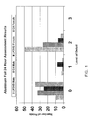
- FIG. 2 is a graph showing results of tests performed on plastic bag substrates 24 hours after fingerprint deposition.
- FIG. 3 is a graph showing results of tests performed on glass 24 hours after fingerprint deposition.
- FIG. 4 is a graph showing results of tests performed on the front side of thermal paper substrates 24 hours after fingerprint deposition.
- FIG. 5 is a graph showing results of tests performed on the back side of thermal paper substrates 24 hours after fingerprint deposition.
- FIG. 6 is a graph showing results of tests performed on aluminum substrates 60 days after fingerprint deposition.
- FIG. 7 is a graph showing results of tests performed on plastic bag substrates 60 days after fingerprint deposition.
- FIG. 8 is a graph showing results of tests performed on glass 60 days after fingerprint deposition.
- FIG. 9 is a graph showing results of tests performed on thermal paper substrates 60 days after fingerprint deposition.
- FIG. 10 is a schematic drawing of an apparatus according to one embodiment of the present invention.
- the present invention provides new methods and apparatus for the recovery, visualization and enhancement of latent fingerprints using Low Pressure Dye Vapor Deposition (LPDVD).
- LPDVD Low Pressure Dye Vapor Deposition
- the LPDVD methods of the present invention provide a controlled deposition of a precursor followed by a fluorescent dye, combination of dyes or co-deposition of the precursor and dye stuffs premixed as a dry solid compound to make the latent fingerprints visible.
- the LPDVD method of the present invention can be used on a wide variety of substrates, including non-porous metal, glass and plastic as well as porous thermal paper.
- the basic methodology of the LPDVD methods of the present invention involves the use of a precursor in combination with a controlled deposition of a fluorescent dye, combination of dyes or co-deposition of a premixed dry solid compound, wherein the dye stuffs are either sublimated or evaporated in a low pressure environment and condense onto the exposed surfaces of the substrate.
- Use of the LPDVD methods of the present invention allow for noncontact application of fluorescent dye(s) that will adhere to the latent fingerprints and that can be viewed and controlled so that development and visualization can be optimized.
- the LPDVD methods of the present invention are at least equal to and in some cases more effective then the conventional CA fuming, fluorescent dye enhancement and dry ninhydrin methods.
- the LPDVD processes of the present invention can be carried out using the apparatus shown in FIG. 10 .
- the apparatus comprises a vapor delivery system 10 , having a delivery chamber 12 , for heating source materials 14 , using heaters 16 , 18 .
- the vapor delivery system 10 also includes a carrier gas source 20 , in connection with an inlet 22 , to the delivery chamber 12 .
- An outlet 24 , of the delivery chamber 12 is connected to a nozzle 34 , located in a vacuum chamber 30 , that is used for the LPDVD process to develop latent fingerprints on an article 32 .
- the vacuum chamber 30 also includes a viewing window 3 6 , and an excitation light source 38 , and is connected to an exhaust filter 40 , and system vacuum pump 50 .
- An optional controller 60 is connected to the various components of the system.
- the LPDVD process of the present invention will be described below with reference to FIG. 10 .
- the articles 32 , of evidence are placed or suspended inside the vacuum chamber 30 .
- the delivery chamber 12 of the vapor delivery system 10 , is loaded with source materials 14 , comprising polycyanoacrylate and a chosen dye or premixed dry solid compound consisting of polycyanoacrylate and a dye material.
- the delivery chamber 12 is then sealed and pumped down to a predetermined pressure using the vacuum pump 50 . Pressure measurement and set points are monitored and controlled manually using the readings from vacuum gauges or alternatively using the controller 60 , such as a PC or PLC control system.
- the excitation light source 38 is turned on, focused on the article 32 , and set to optimum excitation wavelength for the dye being used.
- the vapor delivery system 10 is turned on and allowed to ramp up to a preset temperature using the heaters 16 , 18 , causing the source material 14 , to either sublimate or evaporate.
- a metered flow of carrier gas, preferably nitrogen gas, from the carrier gas source 20 enters the delivery chamber 12 , through the inlet 22 , and is heated to the same temperature as the source material 14 .
- the source material 14 undergoes phase change from solid to vapor, they are diluted by the carrier gas and carried into the vacuum chamber 30 , via the nozzle 34 .
- the gases (vapors) Upon entering the vacuum chamber 30 , the gases (vapors) rapidly expand in all directions and condense onto the exposed surfaces of the article 32 , (the evidence).
- the source materials are preferentially deposited on to the ridges of the fingerprints or the background creating contrast to make what were invisible prints become visible.
- the deposition rate and thickness of the source material can be controlled by adjusting the temperature of the vapor delivery system 10 , regulating the mass flow of the carrier gas and by changing the duration of the deposition.
- the development can be viewed through the viewing window 36 , using the unaided eye or with the aid of an excitation light source 38 , which causes the deposited dyes to fluoresce. The process can be terminated, continued or repeated until optimum visualization has been achieved.
- the operator turns off the vapor delivery system 10 , which cools rapidly causing the source material 14 , to once again undergo a phase change, this time from gas to solid. This effectively terminates the deposition process.
- the flow of carrier gas is then shut off, the vacuum chamber 30 , is isolated from the vacuum pump 60 , and vented to atmosphere so that the articles 32 , (evidence) can be retrieved for further assessment or photography.
- the exhaust filter 40 such as a chemical trap, can be used to remove pollutant materials from the exhaust stream for further treatment or abatement.
- the LPDVD methods can be used to deposit polycyanoacrylate alone or in combination with dyestuffs for farther enhancement.
- the polycyanoacrylate and the dyes for the LPDVD methods of the present invention can be premixed as a dry solid compound and co-deposited.
- the dyes can be chosen from a wide variety of known and available dyes, including fluorescent, non-fluorescent or near infrared dyes. Fluorescent dyes that can be used include rhodamine 6G, D2 yellow, ardrox, brilliant yellow, Photosecure UY1, and others.
- Example of non-fluorescent dyes include those from the anthraquinone family commonly used in thermal dry printers for example.
- One example of a near infrared dye is Photosecure N84, having peak emission in the 830 nm range, that can be visualized or photographed using an infrared camera.
- LPDVD methods of the present invention provide a number of advantages, particularly with respect to the conventional methods noted above.
- LPDVD methods use polycyanoacrylate and a dye or combination or dyes to develop the latent print, but do not use metals as required when using VMD methods.
- the LPDVD methods can operate within a much broader pressure range, i.e. 10 ⁇ 2 mbar compared to the pressure range required for VMD methods (i.e. 10 ⁇ 4 mbar or less).
- the LPDVD methods use solid forms of polycyanoacrylate and dyes that can be premixed as a dry solid compound which allows for greater batch to batch control, consistency and repeatability of formulation.
- Enhancement of the prints using LPDVD methods is a one step process completed in one process run thus saving time and avoiding additional steps that may damage the evidence through physical contact with the substrate; e.g. spraying, brushing, dipping or drying.
- the LPDVD methods of the present invention provide a single method that can be used for development of prints on a wide range of substrates, both porous and non-porous. This replaces as many as three separate and different conventional processes currently in use. LPDVD techniques can develop prints on thermal paper in as little as 30 to 60 minutes with no further enhancement needed. This is significantly less than the three weeks sometimes needed when using conventional methods.
- the LPDVD methods of the present invention allow for optimization and precision control of the deposition process and therefore nearly eliminates the possibility of over fuming and overdevelopment that can occur when fuming CA or applying excess liquid dyes as required in the prior art.
- Deposition of polycyanoacrylate and dyes does not begin until the system is pumped down to the desired pressure.
- the results from using the LPDVD methods are much more consistent because of the greater control possibilities.
- the operator can precisely control rate, uniformity and film thickness for optimal visualization of the latent print. Dyes can be deposited with very uniform thicknesses across the entire substrate, thereby avoiding blotching, and missed spots as well as under or over developed areas that often occur when using liquid based dyes in the prior art methods.
- the concentration and film thickness of the dye affects the fluorescent response when exposed to excitation light. If the concentration of the dyes is too low or too high, there will be less than optimum fluorescence. If the deposited film thickness is too low or too high, there will be less than an optimum response.
- the LPDVD methods provide for superior control over both the dye concentration and the film thickness, therefore making it much easier to achieve the highest fluorescent response. There is far greater control of concentration and deposited film thickness than when using conventional liquid based dyes applied by spraying, dipping, brushing and finally drying. This lack of control can result in dye concentrations being inaccurate and inconsistent, especially during the mixing process and film thickness of the dye when dried is extremely variable.
- the LPDVD methods of the present invention provide superior control and film thickness utilization of the dye leading to optimum fluorescence response.
- the LPDVD methods of the present invention are very flexible, allowing the operator to develop, take photographs and reprocess the article to try to develop more detail if necessary.
- the LPDVD methods of the present invention allow for minimum heat contacting the surface of the article.
- the carrier gas is heated to relatively high temperatures, up to 600° C. in the vapor delivery system, the low mass flow and rapid expansion upon entering the vacuum chamber results in no significant heat buildup on the exposed surfaces during the deposition process.
- the process therefore operates essentially at room temperature unless there is a desire to artificially heat the substrate prior to or during the process.
- Sample fingerprints were collected from a number of different male and female volunteers. Before print deposition, each volunteer followed a stringent hand washing protocol: i.e. 1) wash hands thoroughly with soap and warm water, 2) dry hands using a non-contact air dryer, and 3) wipe hands with an alcohol swab. Once their hands were clean, each volunteer placed non-powdered nitrile gloves over their hands to promote sweating and prevent the hands from collecting contaminants. After a 15-minute period, each volunteer removed the gloves and touched their nose and forehead prior to depositing a series of depleted prints on the designated substrate. Thus the deposits consisted of both eccrine and sebaceous secretions. Only one finger was utilized at a time and each finger was used to deposit 10 fingerprints subsequently.
- each slot was divided into A and B sides so that each slot area was cut in half before print deposition to avoid destroying the fingerprint once it had been deposited.
- the separation of the slot areas allowed the deposited fingerprint to be easily separated into two portions.
- Fingerprints were deposited on the exterior of the bag and each column was labeled with the sampling date, substrate description, and spaces to enter the processing date and gender of the donor (M for male and F for female). Each print was assigned a number from 1-10 and a letter A for the left-half or B for the right-half. Once the prints were deposited and the information recorded, the grid was removed and the prints were separated.
- the halves were than randomly distributed between processing by the LPDVD process and by a conventional CA fuming process.
- For the plastic bag substrates a total of 100 prints were developed by each process in 24-hour and 60-day assessments. After processing, the bags were kept in cardboard boxes to prevent dust collection before assessment.
- each column was composed of 5 microscope slides in length and 2 slides in width and each slide had 2 prints deposited thereon.
- the thermal paper was tested on both the front and back side.
- a number of the samples were damaged and removed from the study. Therefore, the 60 day samples (front and back side) were grouped together and not differentiated.
- the plastic bags, the microscope slides and the aluminum foil were developed using CA fuming, followed by the application of rhodamine 6G dye stain.
- the CA fuming was completed using a Misonix CA-3000 fuming chamber that was fully automated and controlled humidity, temperature and time. The humidity was kept at 80%, and samples were run through 2 cycles, a 15-minute fuming cycle where the superglue is vaporized in the chamber, and a 20-minute purge cycle that completely evacuates any residual cyanoacrylate fumes.
- the rhodamine 6G dye was applied using a spray bottle under a fume hood.
- the thermal paper was processed with dry ninhydrin using standard technique. Blotting paper was soaked in the ninhydrin solution and allowed to dry. The thermal paper samples were then placed between two pieces of the treated blotting paper and sealed within a standard Ziploc® bag and allowed to sit for two weeks before being removed for assessment.
- the developed fingerprints from all methods were assessed and compared by forensic identification officers. These assessments were carried out using a Polilight (Rofin, Australia) having a wavelength range of 425 nm to 530 nm. An excitation wavelength of 530 nm, orange barrier filter and orange viewing goggles were used to visualize the prints. Each print was examined thoroughly and given a score of 0, 1, 2 or 3 to signify the level of detail present. A score of 0 indicated no ridge detail. A score of 1 indicated Level 1 detail, i.e. basic fingerprint patterns of loops, whorls and arches. A score of 2 indicated Level 2 detail, i.e. major ridge events such as bifurcations, ridge endings, short ridges etc.
- Level 3 detail i.e. individual ridge detail such as the shape and width of ridges, incipient ridges, and the relative location of pores.
- Level 1 and 2 detail i.e. individual ridge detail such as the shape and width of ridges, incipient ridges, and the relative location of pores.
- Level 1 and 2 detail i.e. individual ridge detail such as the shape and width of ridges, incipient ridges, and the relative location of pores.
- Level 1 and 2 detail in the center of the print and Level 2 or 3 around the periphery. In these cases, the lowest level of detail was taken for statistical purposes to prevent positive skewing of the results on either side.
- the preferred print was also indicated in cases were possible. The microscope slides had to be placed on an angle when being assessed in order to minimize background distortion resulting from excess dye.
- Table 1 contains the data for each substrate type for the 24 hour processing. In addition, the same data is shown in graphic form in FIGS. 1-5 .
- Table 2 shows the data that was collected for each substrate following 60 days and illustrates the ability of the LPDVD process of the present invention to develop aged latent fingerprints from the four different substrates in comparison to conventional CA and dry ninhydrin methods. This data is also shown in graphic form in FIGS. 6-9 .
- the value of the LPDVD process according to the present invention as compared to the conventional CA and dry ninhydrin methods is clearly evident from the collected data.
- the LPDVD process can be used to develop latent fingerprints on all four types of substrates tested, as opposed to the need for two different conventional processes to accomplish the same coverage of all four substrates.
- the 60 day old samples on aluminum foil exhibited prints that were not nearly as well developed as the 24 hour samples as shown in Table 2 and FIG. 6 . This is a result of the evaporation of the oils and residues left by the finger on the substrate or possibly because of improper deposition of the fingerprints. In any event, the amount of prints showing any level of detail significantly decreased for the 60 day samples as compared to the 24 hour samples.
- the LPDVD process was able to detect 13 male prints and 11 female prints with Level 1 and 2 detail which amounts to 24% of the total prints processed using LPDVD.
- the conventional CA method found a total number of 26 Level 2 detail prints compared with 19 Level 2 prints when using the LPDVD process. Therefore, for the 60 day samples, the conventional CA method was slightly better in developing Level 2 identifiable prints.
- Table 2 and FIG. 7 show the results for the 60 day old prints on the plastic bag substrates to be very similar to those found from the 24 hour samples.
- the total of male prints showing Level 2 detail using the LPDVD process was one better than when using the CA process, and the total female prints showing Level 2 detail using the LPDVD process was two fewer than when using the CA process.
- the 24 hour results were more sensitive having a total of 20 prints with Level 3 detail whereas the 60 day samples had no Level 3 detail present.
- Preferences were recorded for 34 of the 40 male prints with CA fuming being preferred 26 times.
- Results obtained from the glass samples (microscope slides) after 24 hours are shown in Table 1 and FIG. 3 .
- the results for the 60 day old prints on glass are shown in Table 2 and FIG. 8 . Similar results to those for the 24 hour samples were found. The male prints again produced much better results then the female prints, probably because of the low amounts of residues left by the female volunteers. It is also possible that improvements to the sensitivity of the processes could be made.
- the tests on thermal paper proved the most interesting.
- the results for the 24 hour samples are shown in Table 1 and in FIGS. 4 and 5 .
- the LPDVD process was the only process that was able to develop any latent prints on the front side of thermal paper.
- a total of 160 prints were processed on the front side of thermal paper with the LPDVD process obtaining 28 prints of Level 2 detail as opposed to the dry ninhydrin method that failed to develop any prints.
- the dry ninhydrin method was unable to develop any prints and no female prints were obtained with either process.
- the results obtained from the processing of the 24 hour and 60 day old prints proved the viability and usefulness of the LPDVD process according to the present invention.
- the 24 hour sample results showed that the LPDVD process is more effective in developing latent prints with identifiable detail on aluminum foil, glass and thermal paper than conventional processes and specifically showed that the LPDVD process was the only process able to develop prints on thermal paper.
- the CA fuming method was slightly preferred for plastic bag substrates.
- the 60 day old samples did not produce results that were as dramatic, but still proved that the LPDVD process is comparable to conventional processes.
- CA fuming was still slightly preferred for both aluminum foil and plastic bags, but LPDVD was more effective for glass.
- Thermal paper results were not significant as there not enough prints could be developed by any method.
- the LPDVD process of the present invention may be useful for detecting minute cracks or metal fatigue on metal parts therefore illuminating the need for liquid penetrate inspection (LPI) and providing greater utilization of materials.
- LPI liquid penetrate inspection
Landscapes
- Life Sciences & Earth Sciences (AREA)
- Health & Medical Sciences (AREA)
- Medical Informatics (AREA)
- Biophysics (AREA)
- Pathology (AREA)
- Engineering & Computer Science (AREA)
- Biomedical Technology (AREA)
- Heart & Thoracic Surgery (AREA)
- Physics & Mathematics (AREA)
- Molecular Biology (AREA)
- Surgery (AREA)
- Animal Behavior & Ethology (AREA)
- General Health & Medical Sciences (AREA)
- Public Health (AREA)
- Veterinary Medicine (AREA)
- Measurement Of The Respiration, Hearing Ability, Form, And Blood Characteristics Of Living Organisms (AREA)
Abstract
Description
| TABLE 1 |
| 24 Hour Assessment Results |
| Substrate | Level of Detail | Male | Female |
| LPDVD | CA | LPDVD | CA | ||
| n = 60 | n = 60 | n = 40 | n = 40 | ||
| |
0 | 9 | 33 | 25 | 36 |
| 1 | 2 | 1 | 8 | 1 | |
| 2 | 49 | 26 | 7 | 3 | |
| 3 | 0 | 0 | 0 | 0 | |
| |
0 | 18 | 13 | 37 | 26 |
| 1 | 12 | 12 | 2 | 5 | |
| 2 | 22 | 25 | 1 | 7 | |
| 3 | 8 | 10 | 0 | 2 | |
| |
0 | 6 | 17 | 35 | 40 |
| 1 | 7 | 2 | 0 | 0 | |
| 2 | 47 | 41 | 5 | 0 | |
| 3 | 0 | 0 | 0 | 0 | |
| LPDVD | CA | LPDVD | CA | ||
| n = 60 | n = 60 | n = 20 | n = 20 | ||
| |
0 | 42 | 60 | 10 | 20 |
| (Front Side) | 1 | 0 | 0 | 0 | 0 |
| 2 | 18 | 0 | 10 | 0 | |
| 3 | 0 | 0 | 0 | 0 | |
| LPDVD | CA | LPDVD | CA | ||
| n = 20 | n = 20 | n = 30 | n = 30 | ||
| |
0 | 2 | 20 | 30 | 30 |
| (Back Side) | 1 | 2 | 0 | 0 | 0 |
| 2 | 16 | 0 | 0 | 0 | |
| 3 | 0 | 0 | 0 | 0 | |
| TABLE 2 |
| 60 Day Assessment Results |
| Substrate | Level of Detail | Male | Female |
| LPDVD | CA | LPDVD | CA | ||
| n = 40 | n = 40 | n = 60 | n = 60 | ||
| |
0 | 27 | 18 | 49 | 54 |
| 1 | 2 | 0 | 3 | 2 | |
| 2 | 11 | 22 | 8 | 4 | |
| 3 | 0 | 0 | 0 | 0 | |
| |
0 | 3 | 1 | 54 | 49 |
| 1 | 5 | 8 | 0 | 3 | |
| 2 | 32 | 31 | 6 | 8 | |
| 3 | 0 | 0 | 0 | 0 | |
| |
0 | 15 | 22 | 54 | 57 |
| 1 | 2 | 0 | 3 | 2 | |
| 2 | 23 | 18 | 3 | 1 | |
| 3 | 0 | 0 | 0 | 0 | |
| LPDVD | CA | LPDVD | CA | ||
| n = 20 | n = 20 | n = 30 | n = 30 | ||
| |
0 | 16 | 20 | 30 | 30 |
| 1 | 2 | 0 | 0 | 0 | |
| 2 | 2 | 0 | 0 | 0 | |
| 3 | 0 | 0 | 0 | 0 | |
Claims (11)
Priority Applications (5)
| Application Number | Priority Date | Filing Date | Title |
|---|---|---|---|
| US12/327,836 US8507028B2 (en) | 2008-12-04 | 2008-12-04 | Visualization and enhancement of latent fingerprints using low pressure dye vapor deposition |
| EP09797154.3A EP2385790B1 (en) | 2008-12-04 | 2009-12-02 | Visualization and enhancement of latent fingerprints using low pressure dye vapor deposition |
| PCT/IB2009/007736 WO2010064140A1 (en) | 2008-12-04 | 2009-12-02 | Visualization and enhancement of latent fingerprints using low pressure dye vapor deposition |
| AU2009323760A AU2009323760B2 (en) | 2008-12-04 | 2009-12-02 | Visualization and enhancement of latent fingerprints using Low Pressure Dye Vapor Deposition |
| US13/949,292 US9138177B2 (en) | 2008-12-04 | 2013-07-24 | Visualization and enhancement of latent fingerprints using low pressure dye vapor deposition |
Applications Claiming Priority (1)
| Application Number | Priority Date | Filing Date | Title |
|---|---|---|---|
| US12/327,836 US8507028B2 (en) | 2008-12-04 | 2008-12-04 | Visualization and enhancement of latent fingerprints using low pressure dye vapor deposition |
Related Child Applications (1)
| Application Number | Title | Priority Date | Filing Date |
|---|---|---|---|
| US13/949,292 Division US9138177B2 (en) | 2008-12-04 | 2013-07-24 | Visualization and enhancement of latent fingerprints using low pressure dye vapor deposition |
Publications (2)
| Publication Number | Publication Date |
|---|---|
| US20100143575A1 US20100143575A1 (en) | 2010-06-10 |
| US8507028B2 true US8507028B2 (en) | 2013-08-13 |
Family
ID=41682754
Family Applications (2)
| Application Number | Title | Priority Date | Filing Date |
|---|---|---|---|
| US12/327,836 Expired - Fee Related US8507028B2 (en) | 2008-12-04 | 2008-12-04 | Visualization and enhancement of latent fingerprints using low pressure dye vapor deposition |
| US13/949,292 Active 2029-02-21 US9138177B2 (en) | 2008-12-04 | 2013-07-24 | Visualization and enhancement of latent fingerprints using low pressure dye vapor deposition |
Family Applications After (1)
| Application Number | Title | Priority Date | Filing Date |
|---|---|---|---|
| US13/949,292 Active 2029-02-21 US9138177B2 (en) | 2008-12-04 | 2013-07-24 | Visualization and enhancement of latent fingerprints using low pressure dye vapor deposition |
Country Status (4)
| Country | Link |
|---|---|
| US (2) | US8507028B2 (en) |
| EP (1) | EP2385790B1 (en) |
| AU (1) | AU2009323760B2 (en) |
| WO (1) | WO2010064140A1 (en) |
Cited By (1)
| Publication number | Priority date | Publication date | Assignee | Title |
|---|---|---|---|---|
| US20200166491A1 (en) * | 2017-05-10 | 2020-05-28 | L'oreal | Testing method to reveal sweat transfer from skin to fabrics |
Families Citing this family (11)
| Publication number | Priority date | Publication date | Assignee | Title |
|---|---|---|---|---|
| US8272343B1 (en) * | 2005-11-29 | 2012-09-25 | Weaver David E | Fingerprint goggles |
| KR101182502B1 (en) * | 2008-09-30 | 2012-09-12 | 도쿄엘렉트론가부시키가이샤 | Method for detecting abnormal placement state of substrate, substrate processing method, computer-readable storage medium and substrate processing apparatus |
| KR101375767B1 (en) * | 2012-09-26 | 2014-03-18 | 성낙도 | Identifier device of security element |
| CN103469162A (en) * | 2013-05-10 | 2013-12-25 | 公安海警学院 | Novel latent fingerprint displaying method |
| US9750436B1 (en) | 2014-04-11 | 2017-09-05 | Air Science Usa Llc | Method for detecting fingerprints |
| CN104352241B (en) * | 2014-11-15 | 2017-01-11 | 宋志宏 | Infrared ray fingerprint displayer |
| KR102434703B1 (en) | 2017-08-14 | 2022-08-22 | 삼성전자주식회사 | Method of processing biometric image and apparatus including the same |
| GB201815050D0 (en) * | 2018-09-14 | 2018-10-31 | Secr Defence | Apparatus and associated accessories, methods and uses for visualising a print on an object |
| FR3086298B1 (en) * | 2018-09-24 | 2021-01-01 | Crime Science Tech | REVELATION OF LATENT TRACKS |
| KR102220585B1 (en) * | 2019-10-02 | 2021-02-25 | 대한민국 | Portable fumming device for detecting fingerprint with vacuum condition |
| GB202207029D0 (en) * | 2022-05-13 | 2022-06-29 | Foster & Freeman Ltd | Fingermark enhancement apparatus |
Citations (6)
| Publication number | Priority date | Publication date | Assignee | Title |
|---|---|---|---|---|
| US4297383A (en) | 1980-07-15 | 1981-10-27 | Bourdon Louis P | Apparatus and method for obtaining fingerprints |
| US5465765A (en) * | 1994-04-15 | 1995-11-14 | Martindale; Jack E. | Vacuum apparatus for developing fingerprints |
| US6157774A (en) * | 1997-05-16 | 2000-12-05 | Tokyo Electron Limited | Vapor generating method and apparatus using same |
| US20020124537A1 (en) | 2000-09-11 | 2002-09-12 | Manna Ronald R. | Fingerprint processing chamber with airborne contaminant containment and adsorption |
| US20080020126A1 (en) * | 2006-05-18 | 2008-01-24 | Armor Holdings Forensics Llc | Compound for and method of developing latent fingerprints |
| US8272343B1 (en) * | 2005-11-29 | 2012-09-25 | Weaver David E | Fingerprint goggles |
-
2008
- 2008-12-04 US US12/327,836 patent/US8507028B2/en not_active Expired - Fee Related
-
2009
- 2009-12-02 EP EP09797154.3A patent/EP2385790B1/en not_active Not-in-force
- 2009-12-02 AU AU2009323760A patent/AU2009323760B2/en not_active Ceased
- 2009-12-02 WO PCT/IB2009/007736 patent/WO2010064140A1/en not_active Ceased
-
2013
- 2013-07-24 US US13/949,292 patent/US9138177B2/en active Active
Patent Citations (6)
| Publication number | Priority date | Publication date | Assignee | Title |
|---|---|---|---|---|
| US4297383A (en) | 1980-07-15 | 1981-10-27 | Bourdon Louis P | Apparatus and method for obtaining fingerprints |
| US5465765A (en) * | 1994-04-15 | 1995-11-14 | Martindale; Jack E. | Vacuum apparatus for developing fingerprints |
| US6157774A (en) * | 1997-05-16 | 2000-12-05 | Tokyo Electron Limited | Vapor generating method and apparatus using same |
| US20020124537A1 (en) | 2000-09-11 | 2002-09-12 | Manna Ronald R. | Fingerprint processing chamber with airborne contaminant containment and adsorption |
| US8272343B1 (en) * | 2005-11-29 | 2012-09-25 | Weaver David E | Fingerprint goggles |
| US20080020126A1 (en) * | 2006-05-18 | 2008-01-24 | Armor Holdings Forensics Llc | Compound for and method of developing latent fingerprints |
Non-Patent Citations (2)
| Title |
|---|
| "Summer Research Symposium Abstract Index" Summer Research Symposium, Jul. 21, 2007, pp. 6-33. * |
| L. Tomasevich, M. Leonard, An Intermolecular Conjugate Addition Approach to the Synthesis of Lunamarine, 2007 Summer Research Symposium, 2007, pp. 6-33, Wash-Jeff College, USA. |
Cited By (1)
| Publication number | Priority date | Publication date | Assignee | Title |
|---|---|---|---|---|
| US20200166491A1 (en) * | 2017-05-10 | 2020-05-28 | L'oreal | Testing method to reveal sweat transfer from skin to fabrics |
Also Published As
| Publication number | Publication date |
|---|---|
| US20130305987A1 (en) | 2013-11-21 |
| WO2010064140A1 (en) | 2010-06-10 |
| US20100143575A1 (en) | 2010-06-10 |
| AU2009323760A1 (en) | 2011-06-30 |
| EP2385790A1 (en) | 2011-11-16 |
| AU2009323760B2 (en) | 2014-07-03 |
| US9138177B2 (en) | 2015-09-22 |
| EP2385790B1 (en) | 2019-02-27 |
Similar Documents
| Publication | Publication Date | Title |
|---|---|---|
| US8507028B2 (en) | Visualization and enhancement of latent fingerprints using low pressure dye vapor deposition | |
| Lee et al. | Methods of latent fingerprint development | |
| Barros et al. | A new methodology for the visualization of latent fingermarks on the sticky side of adhesive tapes using novel fluorescent dyes | |
| Hahn et al. | Evaluation of a Novel One-Step Fluorescent Cyanoacrylate Fuming Process for Latent Print Visualization. | |
| US20110076383A1 (en) | Method of Developing Latent Fingerprints | |
| CN113614506B (en) | Automated systems and methods for tissue sectioning, staining and scanning | |
| TW201307490A (en) | Fingerprint-displaying spray and method utilizing spray to display fingerprint | |
| Zheng et al. | The effectiveness and practicality of using simultaneous superglue & iodine fuming method for fingermark development on ‘low yield’leather surfaces: A feasibility study | |
| Guo et al. | Laser‐Induced Visualization of Latent Fingerprints on Metal Surfaces | |
| Ramotowski | Vapor/fuming methods | |
| US9377424B2 (en) | Methods of detecting latent stains on a surface | |
| McCabe et al. | Evaluation of Indanedione Application Methods for Fingermark Detection on Paper: Conventional Treatment, Vacuum Development, and Dry-Transfer. | |
| CN112739261B (en) | Device for making marks on objects visible and related accessories, methods and uses | |
| Gulekci | An innovative approach to latent fingerprint development at crime scenes: The cyanoacrylate spraying methodology | |
| US8652244B2 (en) | Use of low global warming potential (LGWP) solvents for finger print development applications | |
| Mumbo | The detection and recovery of latent fingerprints on clothing and fabric items | |
| Rasmussen | Non-powder application of upconverting nanoparticles for fingerprint development | |
| Kumar et al. | 1, 2-Indanedione (IND) Reagent for The Detection of Latent Fingermarks: A Review | |
| CN118620886A (en) | A fingerprint imaging and DNA extraction method based on silicon dioxide | |
| US10362971B1 (en) | Fingerprint powder | |
| US20230405948A1 (en) | Method of enhancing footwear impression on porous surfaces using potassium ferrocyanide solution for footwear impression enhancement | |
| Ramirez-Soto et al. | Taylor dispersion governs the compositional evolution of Marangoni-contracted droplets | |
| Hynes | Latent Fingerprint Enhancement on Recycled Plastic and Compostable Paperboard Drink Containers | |
| Keough | Validating Forensic Latent Fingerprinting Techniques | |
| Zarate et al. | A fluorogenic method for lifting, enhancing, and preserving bloody impression evidence |
Legal Events
| Date | Code | Title | Description |
|---|---|---|---|
| AS | Assignment |
Owner name: LINDE NORTH AMERICA, INC.,NEW JERSEY Free format text: ASSIGNMENT OF ASSIGNORS INTEREST;ASSIGNOR:KNAGGS, CALVIN THOMAS;REEL/FRAME:021991/0074 Effective date: 20081210 Owner name: LINDE NORTH AMERICA, INC., NEW JERSEY Free format text: ASSIGNMENT OF ASSIGNORS INTEREST;ASSIGNOR:KNAGGS, CALVIN THOMAS;REEL/FRAME:021991/0074 Effective date: 20081210 |
|
| STCF | Information on status: patent grant |
Free format text: PATENTED CASE |
|
| FPAY | Fee payment |
Year of fee payment: 4 |
|
| AS | Assignment |
Owner name: MESSER INDUSTRIES USA, INC., DELAWARE Free format text: NUNC PRO TUNC ASSIGNMENT;ASSIGNOR:LINDE AKTIENGESELLSCHAFT;REEL/FRAME:050049/0842 Effective date: 20190808 |
|
| AS | Assignment |
Owner name: MESSER NORTH AMERICA, INC., NEW JERSEY Free format text: MERGER AND CHANGE OF NAME;ASSIGNORS:LINDE NORTH AMERICA, INC.;MESSER NORTH AMERICA, INC.;REEL/FRAME:054982/0148 Effective date: 20190213 |
|
| AS | Assignment |
Owner name: MESSER INDUSTRIES USA, INC., DELAWARE Free format text: ASSIGNMENT OF ASSIGNORS INTEREST;ASSIGNOR:MESSER NORTH AMERICA, INC.;REEL/FRAME:054998/0748 Effective date: 20210118 |
|
| MAFP | Maintenance fee payment |
Free format text: PAYMENT OF MAINTENANCE FEE, 8TH YEAR, LARGE ENTITY (ORIGINAL EVENT CODE: M1552); ENTITY STATUS OF PATENT OWNER: LARGE ENTITY Year of fee payment: 8 |
|
| FEPP | Fee payment procedure |
Free format text: MAINTENANCE FEE REMINDER MAILED (ORIGINAL EVENT CODE: REM.); ENTITY STATUS OF PATENT OWNER: LARGE ENTITY |
|
| LAPS | Lapse for failure to pay maintenance fees |
Free format text: PATENT EXPIRED FOR FAILURE TO PAY MAINTENANCE FEES (ORIGINAL EVENT CODE: EXP.); ENTITY STATUS OF PATENT OWNER: LARGE ENTITY |
|
| STCH | Information on status: patent discontinuation |
Free format text: PATENT EXPIRED DUE TO NONPAYMENT OF MAINTENANCE FEES UNDER 37 CFR 1.362 |
|
| FP | Lapsed due to failure to pay maintenance fee |
Effective date: 20250813 |