US8468413B2 - Apparatus and method for setting hybrid automatic repeat request and automatic repeat request parameter in mobile communication system - Google Patents
Apparatus and method for setting hybrid automatic repeat request and automatic repeat request parameter in mobile communication system Download PDFInfo
- Publication number
- US8468413B2 US8468413B2 US13/008,270 US201113008270A US8468413B2 US 8468413 B2 US8468413 B2 US 8468413B2 US 201113008270 A US201113008270 A US 201113008270A US 8468413 B2 US8468413 B2 US 8468413B2
- Authority
- US
- United States
- Prior art keywords
- harq
- arq
- parameter
- default
- qcis
- Prior art date
- Legal status (The legal status is an assumption and is not a legal conclusion. Google has not performed a legal analysis and makes no representation as to the accuracy of the status listed.)
- Expired - Fee Related, expires
Links
Images




Classifications
-
- H—ELECTRICITY
- H04—ELECTRIC COMMUNICATION TECHNIQUE
- H04L—TRANSMISSION OF DIGITAL INFORMATION, e.g. TELEGRAPHIC COMMUNICATION
- H04L1/00—Arrangements for detecting or preventing errors in the information received
- H04L1/12—Arrangements for detecting or preventing errors in the information received by using return channel
- H04L1/16—Arrangements for detecting or preventing errors in the information received by using return channel in which the return channel carries supervisory signals, e.g. repetition request signals
- H04L1/18—Automatic repetition systems, e.g. Van Duuren systems
-
- H—ELECTRICITY
- H04—ELECTRIC COMMUNICATION TECHNIQUE
- H04L—TRANSMISSION OF DIGITAL INFORMATION, e.g. TELEGRAPHIC COMMUNICATION
- H04L1/00—Arrangements for detecting or preventing errors in the information received
- H04L1/12—Arrangements for detecting or preventing errors in the information received by using return channel
- H04L1/16—Arrangements for detecting or preventing errors in the information received by using return channel in which the return channel carries supervisory signals, e.g. repetition request signals
- H04L1/18—Automatic repetition systems, e.g. Van Duuren systems
- H04L1/1825—Adaptation of specific ARQ protocol parameters according to transmission conditions
-
- H—ELECTRICITY
- H04—ELECTRIC COMMUNICATION TECHNIQUE
- H04L—TRANSMISSION OF DIGITAL INFORMATION, e.g. TELEGRAPHIC COMMUNICATION
- H04L1/00—Arrangements for detecting or preventing errors in the information received
- H04L1/12—Arrangements for detecting or preventing errors in the information received by using return channel
- H04L1/16—Arrangements for detecting or preventing errors in the information received by using return channel in which the return channel carries supervisory signals, e.g. repetition request signals
- H04L1/18—Automatic repetition systems, e.g. Van Duuren systems
- H04L1/1812—Hybrid protocols; Hybrid automatic repeat request [HARQ]
Definitions
- the present invention relates to an apparatus and method for setting Hybrid Automatic Repeat reQuest (HARQ) and Automatic Repeat reQuest (ARQ) parameters in a mobile communication system.
- HARQ Hybrid Automatic Repeat reQuest
- ARQ Automatic Repeat reQuest
- each packet is retransmitted several times by a Hybrid Automatic Repeat reQuest (HARQ) process in order to reduce errors in a wireless section.
- HARQ Hybrid Automatic Repeat reQuest
- UM Unacknowledged Mode
- RLC Radio Link Control
- HARQ retransmission is performed.
- AM Acknowledged Mode
- ARQ retransmission is performed when the performed HARQ retransmission has failed.
- An HARQ parameter which is connected with the end-to-end performance of a flow in the eNB or UE, includes a maximum-number-of-retransmissions parameter maxHARQ-Tx, and an ARQ parameter includes a maximum-number-of-retransmissions parameter maxRetxThreshold and a plurality of timer parameters, that is, t_Reordering, t_StatusProhibit, and t_PollRetransmit.
- the HARQ parameter and ARQ parameter are set to the same values in every flow by Radio Resource Control (RRC) of an eNB or UE.
- RRC Radio Resource Control
- an eNB When an eNB sets HARQ and ARQ parameters to the same values for all UEs without taking the channel status of each UE into consideration, as described above, it may exert a bad influence on the communication performance in a UM and/or AM according to the channel status of each UE. For example, when an eNB sets the HARQ and ARQ parameters based on an average channel status, an HARQ retransmission using the set HARQ parameter is performed even in the case where a channel is in a bad status, so that the probability of failure in the HARQ retransmission increases, and the communication performance in a UM is deteriorated.
- an eNB when an eNB independently sets the ARQ parameter without taking a preset HARQ parameter into consideration, it may exert a bad influence on the communication performance in an AM. For example, the eNB may perform an ARQ retransmission before an HARQ retransmission is terminated, or the t_StatusProhibit timer for an ARQ may not expire when the HARQ retransmission has been finished, thereby causing an unnecessary delay.
- the present invention provides an apparatus and method for setting HARQ and ARQ parameters optimized according to the channel status of each UE in a mobile communication system.
- the present invention provides an apparatus and method for setting default HARQ and ARQ parameters and updating the set default HARQ and ARQ parameters according to the channel status of each UE in a mobile communication system.
- an apparatus for setting Hybrid Automatic Repeat reQuest (HARQ) and Automatic Repeat reQuest (ARQ) parameters in a mobile communication system including: an HARQ parameter setting unit that sets a default HARQ parameter based on a default HARQ parameter setting condition determined by using a plurality of Quality Collaboration Indexes (QCIs); an ARQ parameter setting unit that sets a default ARQ parameter based on a default ARQ parameter setting condition determined by using the plurality of QCIs; and a parameter updating unit that updates the set default HARQ parameter and the set default ARQ parameter according to a channel status of a User Equipment (UE).
- QCIs Quality Collaboration Indexes
- a parameter updating unit that updates the set default HARQ parameter and the set default ARQ parameter according to a channel status of a User Equipment (UE).
- UE User Equipment
- a method for setting Hybrid Automatic Repeat reQuest (HARQ) and Automatic Repeat reQuest (ARQ) parameters in a mobile communication system includes: setting a default HARQ parameter based on a default HARQ parameter setting condition determined by using a plurality of Quality Collaboration Indexes (QCIs); setting a default ARQ parameter based on a default ARQ parameter setting condition determined by using the plurality of QCIs; and updating the set default HARQ parameter and the set default ARQ parameter according to a channel status of a User Equipment (UE).
- QCIs Quality Collaboration Indexes
- UE User Equipment
- FIG. 1 is a block diagram illustrating the configuration of an HARQ and ARQ parameter setting apparatus according to an embodiment of the present invention
- FIG. 2 is a flowchart illustrating a procedure of setting HARQ and ARQ parameters according to an embodiment of the present invention
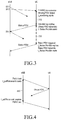
- FIG. 3 is a signal flow diagram explaining t_Reordering and t_StatusProhibit which are used during a packet transmission/reception procedure between an eNB and a UE according to an embodiment of the present invention
- FIG. 4 is a signal flow diagram explaining t_PollRetransmit which is used during a packet transmission/reception procedure between an eNB and a UE according to an embodiment of the present invention
- FIG. 5 is a flowchart illustrating a procedure of updating default HARQ and ARQ parameters in an HARQ and ARQ parameter setting apparatus according to an embodiment of the present invention
- FIG. 6 is a graph illustrating P_LE according to P_I with respect to maxHARQ-Tx according to an embodiment of the present invention
- FIG. 7 is a view illustrating the target residual post-HARQ error rates of default HARQ and ARQ parameters and update HARQ and ARQ parameters according to an embodiment of the present invention
- FIG. 8 is a view illustrating the HARQ target delay of default HARQ and ARQ parameters and update HARQ and ARQ parameters according to an embodiment of the present invention.
- FIG. 9 is a view illustrating the target residual post-ARQ error rates of default HARQ and ARQ parameters and update HARQ and ARQ parameters according to an embodiment of the present invention.
- FIGS. 1 through 9 discussed below, and the various embodiments used to describe the principles of the present disclosure in this patent document are by way of illustration only and should not be construed in any way to limit the scope of the disclosure. Those skilled in the art will understand that the principles of the present disclosure may be implemented in any suitably arranged wireless communications system. The following description will be given only about a part necessary to understand the operation of the present invention, and the other background technology will be omitted in order to prevent the subject matter of the present invention from being obscured.
- the present invention proposes a technology for setting HARQ and ARQ parameters in common for every flow based on an average channel status set as default, periodically measuring the channel status of each User Equipment (UE), and updating the HARQ and ARQ parameters in order to set HARQ and ARQ parameters optimized according to the channel status of the UE in a mobile communication system.
- UE User Equipment
- FIG. 1 is a block diagram illustrating the configuration of an HARQ and ARQ parameter setting apparatus according to an exemplary embodiment of the present invention.
- the HARQ and ARQ parameter setting apparatus, illustrated in FIG. 1 may be included in an evolved Node B (eNB) or UE.
- eNB evolved Node B
- UE User Equipment
- the HARQ and ARQ parameter setting apparatus includes an HARQ parameter setting unit 110 , an ARQ parameter setting unit 130 , and a parameter updating unit 150 .
- the HARQ parameter setting unit 110 sets an average channel status, determines an HARQ parameter setting condition based on the set average channel status, and then sets a default HARQ parameter, that is, maxHARQ-Tx, which meets the determined HARQ parameter setting condition, in common in every flow.
- the ARQ parameter setting unit 130 sets an average channel status and determines an ARQ parameter setting condition based on the set average channel status. Then, the ARQ parameter setting unit 130 sets default ARQ parameters, that is, maxRetxThreshold, t_Reordering, t_StatusProhibit, and t_PollRetransmit, which meet the determined ARQ parameter setting condition, in common in every flow.
- the parameter updating unit 150 periodically measures the channel status of each UE, updates the default HARQ and ARQ parameters, which have been set by the HARQ parameter setting unit 110 and ARQ parameter setting unit 130 , according to the current channel status of the UE, and then outputs the updated HARQ and ARQ parameters.
- a method for setting the maxHARQ-Tx which is an HARQ parameter, and the maxRetxThreshold, t_Reordering, t_StatusProhibit, and t_PollRetransmit, which are ARQ parameters, to default, and then updating the HARQ and ARQ parameters set to default in the HARQ and ARQ parameter setting apparatus will be described in detail with reference to FIG. 2 .
- FIG. 2 is a flowchart illustrating a procedure of setting HARQ and ARQ parameters according to an exemplary embodiment of the present invention.
- the HARQ parameter setting unit 110 sets an HARQ parameter which meets a performance requirement condition in a flow corresponding to a UM, that is, an HARQ parameter setting condition, in blocks 201 to 207 .
- the ARQ parameter setting unit 130 sets an ARQ parameter which meets a performance requirement condition in a flow corresponding to an AM, that is, an ARQ parameter setting condition, in blocks 209 to 217 .
- the eNB or UE transmits packets corresponding to one or more Quality Collaboration Indexes (QCIs) having a Packet Error Loss Rate (PELR) equal to or higher than a threshold value in the AM, and transmits packets corresponding to the other QCIs among the overall QCIs in the UM. That is, the eNB or UE transmits packets corresponding to each QCI in the AM or UM by making reference to Table 1 below.
- QCIs Quality Collaboration Indexes
- PELR Packet Error Loss Rate
- Table 1 below shows an available RLC mode mapping according to each QCI by making reference to standardized QCI characteristics which are specified in 3rd Generation Partnership Project (3GPP) Standard TS 23.203.
- the eNB or UE transmits packets corresponding to QCI #4, #5, #6, #8, and #9, which have a PELR of 10 ⁇ 6 , in the AM; and transmits packets corresponding to QCI #1, #2, #3, and #7, which are the other QCIs, in the UM.
- the HARQ parameter setting unit 110 determines an HARQ parameter setting condition for setting an HARQ parameter based on the mapping shown in Table 1.
- the HARQ parameter setting condition determined based on an HARQ target delay and a target residual post-HARQ error rate.
- a Packet Delay Budget (PDB) of the tightest boundary is 50 ms, wherein the PELR is 10 ⁇ 3 .
- a 50 ms PDB which corresponds to QCI #3 and a real-time game service, satisfies a 30 ms delay, including a scheduling delay and an HARQ delay between an eNB and a UE, except for an average delay on a backhaul.
- a specific scheduling is required, so that the HARQ parameter setting unit 110 sets a specific HARQ parameter for QCI #3, separately from the other QCIs.
- the HARQ parameter setting unit 110 determines an HARQ target delay to be 40 ms by aiming at 100 ms, which is the PDB of normal Voice over Internet Protocol (VoIP) traffics, and by taking a 40 ms average scheduling delay and a 20 ms average delay on a backhaul into consideration. Also, the HARQ parameter setting unit 110 additionally gives a margin to 10 ⁇ 3 , which is the tightest PELR among packets corresponding to QCIs transmitted in the UM, and determines a target residual post-HARQ error rate to be 10 ⁇ 4 .
- VoIP Voice over Internet Protocol
- the HARQ parameter setting unit 110 a default maxHARQ-Tx in blocks 203 to 207 based on the determined HARQ parameter setting condition, that is, the HARQ target delay and the target residual post-HARQ error rate. That is, the HARQ parameter setting unit 110 determines a first maxHARQ-Tx and a second maxHARQ-Tx by means of equations 1 and 2 below, and then sets a smaller value of the determined first and second maxHARQ-Txs as a default maxHARQ-Tx.
- the first maxHARQ-Tx represents a maxHARQ-Tx determined based on the HARQ target delay
- the second maxHARQ-Tx represent a maxHARQ-Tx determined based on the target residual post-HARQ error rate.
- the HARQ parameter setting unit 110 determines the first maxHARQ-Tx by means of equation 1 below based on the HARQ target delay, which has been determined in block 201 .
- Equation 1 is an equation for determining the first maxHARQ-Tx to meet 40 ms, which is the determined HARQ target delay.
- the HARQ parameter setting unit 110 determines the first maxHARQ-Tx by means of Equation 1 below in block 203 .
- D 4 ms+8 ms*(maxHARQ-Tx) ⁇ 40 ms [Eqn. 1]
- Equation 1 “D” represents an HARQ target delay, and “maxHARQ-Tx” represents the first maxHARQ-Tx.
- the first maxHARQ-Tx may be four.
- Equation 2 is an equation for determining the second maxHARQ-Tx to meet the determined target residual post-HARQ error rate.
- Equation 2 “P_LE” represents a target residual post-HARQ error rate, “P_I” represents a packet's initial transmission error rate measured by an operator, and “maxHARQ-Tx” represents the second maxHARQ-Tx.
- the HARQ parameter setting unit 110 determines the second maxHARQ-Tx using Equation 2 when taking type-1 HARQ into consideration and ignoring a NACK error probability.
- the P_I is set as a target value used in determining an MCS level in a MAC layer.
- measured values are used.
- Equation 2 since the P_LE meets 10 ⁇ 4 when the target value of the P_I is 0.1, the HARQ parameter setting unit 110 determines the second maxHARQ-Tx with respect to the P_I's target value of 0.1 and the P_LE of 10 ⁇ 4 in block 205 . Meanwhile, in the case of IR, a P_LE smaller than 10 ⁇ 4 may be used with respect to the same P_I's target value of 0.1.
- the HARQ parameter setting unit 110 determines a smaller value of the determined first and second maxHARQ-Txs to be a default maxHARQ-Tx.
- the reason why the HARQ parameter setting unit 110 determines a smaller value of the determined first and second maxHARQ-Txs to be a default maxHARQ-Tx is that it is effective to prevent waste of radio resources by reducing the number of retransmissions in a flow meeting a PELR requirement condition in the UM and to rapidly perform a retransmission by minimizing delay when a PELR of a flow is satisfied.
- the ARQ parameter setting unit 130 determines an ARQ parameter setting condition for setting an ARQ parameter.
- the ARQ parameter setting condition determined based on the PELR requirement conditions and PDBs of QCIs corresponding to an RLC AM. That is, in block 209 , the ARQ parameter setting unit 130 makes reference to the QCI characteristics standardized in Table 1, and determines a PELR of 10 ⁇ 6 corresponding to the AM and a PDB of 300 ms, which corresponds to the PDBs of the remaining QCIs, except for QCI #5, as the ARQ parameter setting condition.
- QCI #5 is a CI corresponding to a signaling service and has the highest priority, the PDB of QCI #5 is not considered.
- the ARQ parameter setting unit 130 determines first and second maxRetxThresholds which meet the determined ARQ parameter setting condition by means of Equations 3 and 4 below, and then sets a larger value of the determined first and second maxRetxThresholds as the default maxRetxThreshold.
- the ARQ parameter setting unit 130 retransmits a packet when an HARQ transmission has failed and a status Protocol Data Unit (status PDU) has been successfully received, and also retransmits a packet through polling even when a status PDU has an error. Therefore, the ARQ parameter setting unit 130 assumes that a retransmission is performed by the number of times of the first maxRetxThreshold at all times, and determines a first maxRetxThreshold, where the determined PELR is 10-6 or less, by means of equation 3 below.
- Equation 3 “maxRetxThreshold” represents the first maxRetxThreshold, and “P_LE” represents a target residual post-HARQ error rate.
- P_LE 10 ⁇ 4
- a first maxRetxThreshold of 1 or more meets a condition of 10 ⁇ 6 or less, which is the ARQ parameter setting condition.
- the target residual post-ARQ error rate becomes 10 ⁇ 8 .
- the ARQ parameter setting unit 130 determines a second maxRetxThreshold, where the determined PDB is 300 ms or less, by means of equation 4 below. D+ 2* D *(maxRetxTreshold) ⁇ 300 ms [Eqn. 4]
- Equation 4 “maxRetxThreshold” represents a second maxRetxThreshold, and “D” represents an HARQ target delay.
- the ARQ parameter setting unit 130 determines a maximum value of the determined first and second maxRetxThresholds as a default maxRetxThreshold.
- the ARQ parameter setting unit 130 sets t_Reordering, t_StatusProhibit, and t_PollRetransmit, which are timer parameters of the ARQ parameter.
- the ARQ parameter setting unit 130 sets the timer parameters to reduce unnecessary ARQ retransmissions.
- the default HARQ and ARQ parameter setting scheme is a scheme for setting the HARQ and ARQ parameters to equal values for all flows using an HARQ and ARQ parameter setting condition when there is no information on channels.
- Such a default HARQ and ARQ parameter setting scheme may be used when it is difficult to set separate HARQ and ARQ parameters according to each flow, or when it is difficult to change set parameters depending on time.
- an eNB or UE equally uses default HARQ and ARQ parameters in all flows, as described above, it is impossible to properly use the characteristics of flows having different QCI requirement conditions, and communication performance may be deteriorated because a channel status changed depending on the movement of the UE is not reflected. Also, if an eNB or UE equally uses default HARQ and ARQ parameters in all flows, it is difficult to reflect a scheduling delay depending on the amount of traffic, which makes it difficult to efficiently perform an HARQ retransmission.
- the parameter updating unit 150 periodically measures the channel status of the UE and updates the default HARQ and ARQ parameters in block 219 . Then, in block 221 , the parameter updating unit 150 outputs the updated HARQ and ARQ parameters.
- timer parameters included in the ARQ parameter will be described with reference to FIGS. 3 and 4 .
- FIG. 3 is a signal flow diagram explaining t_Reordering and t_StatusProhibit which are used during a packet transmission/reception procedure between an eNB and a UE according to an embodiment of the present invention.
- the UE when a UE detects no reception of a packet with Sequence Number (SN) 1 , which has been transmitted from an eNB, the UE sets a t_Reordering 310 as a timer for setting a waiting time for the transmission of a status PDU.
- SN Sequence Number
- the UE when the eNB transmits packets in order from a packet with the lowest SN, and the UE receives a packet with SN 2 before receiving a packet with SN 1 , which is a lower than SN 2 , the UE detects that the packet with SN 1 has not been received.
- the eNB retransmits the packet with SN 1 by the maxHARQ-Tx in maximum, thereby enabling the UE to successfully receive the packet with SN 1 . Therefore, the t_Reordering 310 is set to a time period equal to or greater than a target HARQ delay “D.”
- the t_StatusProhibit 330 is a timer which is used for the UE to again transmit a status PDU when the UE has transmitted the status PDU and then the eNB has failed in packet retransmission. Accordingly, the t_StatusProhibit 330 may be set to a time period corresponding to the sum of a status PDU transmission time period and a packet retransmission time period.
- FIG. 4 is a signal flow diagram explaining t_PollRetransmit which is used during a packet transmission/reception procedure between an eNB and a UE according to an embodiment of the present invention.
- the eNB in order to request the UE to transmit a status PDU, the eNB sets a poll bit in a data PDU and transmits the data PDU to the UE. Then, the eNB sets t_PollRetransmit 350 as a timer for establishing a waiting time for receiving the status PDU from the UE in response to the data PDU.
- the t_PollRetransmit 350 is set by taking a time period during which the status PDU is transmitted from the UE into consideration.
- the t_StatusProhibit 330 and the t_PollRetransmit 350 are set to a time period equal to or greater than “2*D.”
- FIG. 5 is a flowchart illustrating a procedure of updating default HARQ and ARQ parameters in an HARQ and ARQ parameter setting apparatus according to an embodiment of the present invention.
- blocks 501 to 507 are performed in a MAC layer, and blocks 509 and 511 are performed in an RRC layer.
- the parameter updating unit 150 in the HARQ and ARQ parameter setting apparatus measures a scheduling delay D_S of a packet and a P_I according to the current channel status. Then, in block 503 , the parameter updating unit 150 determines if the current time “t” corresponds to a time according to a predetermined period “T,” proceeds to block 505 when the current time “t” corresponds to a time according to a predetermined period “T,” and returns to block 501 when the current time “t” does not correspond to a time according to a predetermined period “T.”
- the period “T” may be set to be longer than a preset period in an environment where a channel varies rapidly, and may be set to be shorter than the preset period in an environment where a channel varies slowly. Meanwhile, the matter of optimizing the period “T” is not included in the scope of the present invention.
- the parameter updating unit 150 calculates an average value P_I(t) of P_Is measured every period “T” and an average value D_S(t) of the measured D_Ss in block 505 , and then updates the current P_I(t) and D_S(t) with the calculated P_I(t) and D_S(t) in block 507 .
- the parameter updating unit 150 updates a default maxHARQ-Tx using the updated P_I(t) and D_S(t) based on equations 5 and 6 below. That is, the parameter updating unit 150 determines upper bounds of D(t) and P_LE(t) according to the PDBs and PELRs of QCIs corresponding to an UM using the updated P_I(t) and D_S(t) based on equations 5 and 6 below.
- D(t) is determined to be the same as “D” determined in Equation 1. That is, D(t) is “4 ms+8 ms*(maxHARQ-Tx).” Accordingly, the parameter updating unit 150 calculates a maxHARQ-Tx based on Equation 5, using the updated D_S(t) and PDBs according to Table 1.
- Equation 6 P_LE(t) is determined to be the same as “P_LE” determined in equation 2. Accordingly, the parameter updating unit 150 calculates a maxHARQ-Tx based on Equation 6, using the updated P_I(t) and PELRs according to Table 1. Thereafter, the parameter updating unit 150 updates the default maxHARQ-Tx with a smaller value of the calculated maxHARQ-Txs.
- the parameter updating unit 150 updates a default maxRetxThreshold using equations 3 and 4, and updates default t_Reordering, t_StatusProhibit, and t_PollRetransmit. That is, the parameter updating unit 150 updates a default maxRetxThreshold with a larger value of maxRetxThreshold(t)s, which meet conditions of 10 ⁇ 8 and 300 ms in Equations 3 and 4, respectively, based on P_LE(t) and D(t) of Equations 5 and 6. In addition, the parameter updating unit 150 updates t_Reordering to the D(t), and updates t_StatusProhibit and t_PollRetransmit to “2*D(t).”
- an HARQ parameter “maxHARQ-Tx” required for meeting 10 ⁇ 4 which is an HARQ parameter setting condition, increases from 3 to 6.
- the HARQ and ARQ parameter setting apparatus changes the HARQ parameter “maxHARQ-Tx” depending on channel statuses, it is possible to more efficiently perform an HARQ retransmission, and it is possible to enhance the efficiency of HARQ retransmissions in the UM.
- FIGS. 7 to 9 show the target residual post-HARQ error rates, the HARQ target delay, and the target residual post-ARQ error rates of default (i.e. default-configuration) HARQ and ARQ parameters, and update (i.e. adaptive-configuration) HARQ and ARQ parameters according to an embodiment of the present invention.
- an HARQ delay is 28 ms.
- P_I is less than 0.05
- the target residual post-HARQ error rate of update (i.e. adaptive-configuration) HARQ and ARQ parameters is maintained at about 10-4, which is an HARQ parameter setting condition, thereby yielding a worse result than when the default HARQ and ARQ parameter update is not performed, but having an advantage in that an HARQ target delay is small.
- the UM since flows have a characteristic that is more sensitive to a delay than to an error rate, it is more effective to reduce the delay.
- HARQ and ARQ parameters it is possible to update HARQ and ARQ parameters according to channel statuses of each UE.
- HARQ and ARQ parameters is set corresponding to channel statuses of each UE, it is possible to more effectively perform HARQ retransmissions, and it is possible to enhance the efficiency of HARQ retransmissions in the UM.
Landscapes
- Engineering & Computer Science (AREA)
- Computer Networks & Wireless Communication (AREA)
- Signal Processing (AREA)
- Mobile Radio Communication Systems (AREA)
Abstract
Description
| TABLE 1 | ||||||
| Packet | ||||||
| Packet | Error | Available | ||||
| Resource | Delay | Loss | RLC Mode | |||
| QCI | Type | Budget | Rate | | Mapping | |
| 1 | GBR | 100 |
10−2 | VoIP | UM | |
| 2 | 150 |
10−3 | Live Streaming Video | UM | ||
| 3 | 50 |
10−3 | Real Time Gaming | UM | ||
| 4 | 300 |
10−6 | Buffered Streaming Video | AM | ||
| 5 | Non-GBR | 100 |
10−6 | | AM | |
| 6 | 300 |
10−6 | TCP-based, Buffered Streaming | AM | ||
| Video | ||||||
| 7 | 100 |
10−3 | Voice, Live Streaming Video | UM | ||
| 8 | 300 |
10−6 | TCP-based, Buffered Streaming | AM | ||
| Video | ||||||
| 9 | 300 |
10−6 | TCP-based, Buffered Streaming | AM | ||
| Video | ||||||
D=4 ms+8 ms*(maxHARQ-Tx)≦40 ms [Eqn. 1]
D+2*D*(maxRetxTreshold)≦300 ms [Eqn. 4]
Claims (20)
Applications Claiming Priority (2)
| Application Number | Priority Date | Filing Date | Title |
|---|---|---|---|
| KR1020100004341A KR101692552B1 (en) | 2010-01-18 | 2010-01-18 | Apparatus and method for setting hybrid automatic repeat request and automatic repeat request parameter in a mobile communication system |
| KR10-2010-0004341 | 2010-01-18 |
Publications (2)
| Publication Number | Publication Date |
|---|---|
| US20110179329A1 US20110179329A1 (en) | 2011-07-21 |
| US8468413B2 true US8468413B2 (en) | 2013-06-18 |
Family
ID=44278448
Family Applications (1)
| Application Number | Title | Priority Date | Filing Date |
|---|---|---|---|
| US13/008,270 Expired - Fee Related US8468413B2 (en) | 2010-01-18 | 2011-01-18 | Apparatus and method for setting hybrid automatic repeat request and automatic repeat request parameter in mobile communication system |
Country Status (2)
| Country | Link |
|---|---|
| US (1) | US8468413B2 (en) |
| KR (1) | KR101692552B1 (en) |
Cited By (1)
| Publication number | Priority date | Publication date | Assignee | Title |
|---|---|---|---|---|
| WO2021215788A1 (en) * | 2020-04-20 | 2021-10-28 | 엘지전자 주식회사 | Method and apparatus for performing mixed mode retransmission in nr v2x |
Families Citing this family (18)
| Publication number | Priority date | Publication date | Assignee | Title |
|---|---|---|---|---|
| US9167472B2 (en) | 2011-07-01 | 2015-10-20 | Qualcomm Incorporated | Methods and apparatus for enhanced UL RLC flow control for MRAB calls |
| US9232482B2 (en) | 2011-07-01 | 2016-01-05 | QUALOCOMM Incorporated | Systems, methods and apparatus for managing multiple radio access bearer communications |
| US9591593B2 (en) | 2011-07-22 | 2017-03-07 | Qualcomm Incorporated | Systems, methods and apparatus for radio uplink power control |
| US9930569B2 (en) | 2011-08-04 | 2018-03-27 | Qualcomm Incorporated | Systems, methods and apparatus for wireless condition based multiple radio access bearer communications |
| US9686046B2 (en) | 2011-09-13 | 2017-06-20 | Qualcomm Incorporated | Systems, methods and apparatus for wireless condition based multiple radio access bearer communications |
| US8873535B2 (en) | 2011-09-26 | 2014-10-28 | Qualcomm Incorporated | Systems, methods and apparatus for retransmitting protocol data units in wireless communications |
| CN104115437A (en) * | 2012-02-11 | 2014-10-22 | Vid拓展公司 | Method and apparatus for video aware hybrid automatic repeat request |
| WO2013162281A1 (en) * | 2012-04-25 | 2013-10-31 | 엘지전자 주식회사 | Method for transceiving data in wireless communication system, and apparatus therefor |
| JP6213094B2 (en) * | 2013-09-20 | 2017-10-18 | 株式会社Jvcケンウッド | Camera system, master camera device and slave camera device |
| US10686560B2 (en) * | 2014-06-23 | 2020-06-16 | Qualcomm Incorporated | Quick RLC retransmission on HARQ failure during tune away |
| CN105704739A (en) * | 2014-11-26 | 2016-06-22 | 深圳市中兴微电子技术有限公司 | User plane reinitializing method and device |
| US9621307B2 (en) | 2015-03-27 | 2017-04-11 | Intel IP Corporation | Method for transmitting a plurality of uplink messages and mobile radio communication terminal device |
| US10484247B2 (en) | 2015-05-29 | 2019-11-19 | Telefonaktiebolaget Lm Ericsson (Publ) | Transmission control of a multi-hop relay radio |
| CN109905206A (en) * | 2017-12-07 | 2019-06-18 | 夏普株式会社 | Wireless communications method and equipment |
| KR102224410B1 (en) * | 2018-10-25 | 2021-03-08 | 엘지전자 주식회사 | Method and apparatus for determining a resource selection window based on information related to sidelink HARQ feedback in a wireless communication system |
| US12255698B2 (en) | 2020-03-25 | 2025-03-18 | Atc Technologies, Llc | Intelligent packet repetition in mobile satellite service (MSS) links to overcome channel blockages |
| CA3176423A1 (en) | 2020-03-25 | 2021-09-30 | Atc Technologies Llc | Intelligent packet repetition in mobile satellite service (mss) links to overcome channel blockages |
| KR102635239B1 (en) * | 2021-04-01 | 2024-02-08 | 연세대학교 산학협력단 | Apparatus and Method for Determining Optimal Number of HARQ Retransmissions based on Packet Replication in Multi-Connection Network |
Citations (1)
| Publication number | Priority date | Publication date | Assignee | Title |
|---|---|---|---|---|
| US8121048B2 (en) * | 2006-08-22 | 2012-02-21 | Zte Corporation | Repeat control method in enhanced uplink asynchronous hybrid automatic repeat request |
-
2010
- 2010-01-18 KR KR1020100004341A patent/KR101692552B1/en not_active Expired - Fee Related
-
2011
- 2011-01-18 US US13/008,270 patent/US8468413B2/en not_active Expired - Fee Related
Patent Citations (1)
| Publication number | Priority date | Publication date | Assignee | Title |
|---|---|---|---|---|
| US8121048B2 (en) * | 2006-08-22 | 2012-02-21 | Zte Corporation | Repeat control method in enhanced uplink asynchronous hybrid automatic repeat request |
Non-Patent Citations (1)
| Title |
|---|
| Boujemaa et al., Evaluating the performance of ARQ and HARQ I over Nakagami fading channels., 2006, IEEE Info. & Comm. Tech. ICTTA 2nd vol. 2, pp. 2669-2673. * |
Cited By (1)
| Publication number | Priority date | Publication date | Assignee | Title |
|---|---|---|---|---|
| WO2021215788A1 (en) * | 2020-04-20 | 2021-10-28 | 엘지전자 주식회사 | Method and apparatus for performing mixed mode retransmission in nr v2x |
Also Published As
| Publication number | Publication date |
|---|---|
| KR101692552B1 (en) | 2017-01-03 |
| KR20110084669A (en) | 2011-07-26 |
| US20110179329A1 (en) | 2011-07-21 |
Similar Documents
| Publication | Publication Date | Title |
|---|---|---|
| US8468413B2 (en) | Apparatus and method for setting hybrid automatic repeat request and automatic repeat request parameter in mobile communication system | |
| CN115190552B (en) | Indicates the status of the forwarded data | |
| RU2408146C2 (en) | Method and device for controlling data block transmission | |
| KR100912784B1 (en) | Data transmission method and data retransmission method | |
| TWI489816B (en) | Method implemented by a wireless transmit/receive unit (WTRU) and wireless transmit/receive unit | |
| US9294234B2 (en) | Methods and arrangements for early HARQ feedback in a mobile communication system | |
| JP4952586B2 (en) | Packet data discarding method, radio communication apparatus, and mobile communication system | |
| US8050248B2 (en) | Retransmission in wireless communication systems | |
| US20160183158A1 (en) | Retransmission of protocol data unit via alternate transmission path for dual connectivity wireless network | |
| US20140220996A1 (en) | Method and apparatus for transmission in bundling mode in wireless communication network | |
| CN101361309A (en) | Data transmission method and data retransmission method | |
| US20150180786A1 (en) | Method for setting parameter in data transmission service, terminal, and base station | |
| JP2006191312A (en) | Communication control method, radio communication system, mobile station, base station, and base station control apparatus. | |
| US20110158186A1 (en) | Method and apparatus for scheduling an acknowledgement in a wireless communication system | |
| US8181080B2 (en) | Adaptive HARQ control for EDCH | |
| CN101682916B (en) | Send RLC PDU and the RLC entity of the method for distributing radio resource and mobile communication in mobile communication system | |
| KR20100069125A (en) | Communication system and method for connecting of rrc therein | |
| CN110971352B (en) | HARQ retransmission processing method and device for uplink enhanced RLC (radio link control) fragments | |
| KR20160099484A (en) | Method and apparatus for performing synchronous HARQ according to variable TTI allocation | |
| KR100912785B1 (en) | Receivers and how to report status reports | |
| US20250300771A1 (en) | PERFORMANCE OPTIMIZATIONS FOR eMMB and URLLC APPLICATIONS WITH HIGH RELIABILITY REQUIREMENTS | |
| EP4622153A1 (en) | Performance optimizations for emmb and urllc applications with high reliability requirements | |
| KR20070113090A (en) | Method and apparatus for retransmitting control message in mobile communication system | |
| US20080311856A1 (en) | Method and Apparatus for Power Control of an Air Interface Transmission |
Legal Events
| Date | Code | Title | Description |
|---|---|---|---|
| AS | Assignment |
Owner name: SAMSUNG ELECTRONICS CO., LTD., KOREA, REPUBLIC OF Free format text: ASSIGNMENT OF ASSIGNORS INTEREST;ASSIGNORS:KIM, DONG-SOOK;KIM, BYUNG-SUK;KANG, SEONG-RYONG;AND OTHERS;REEL/FRAME:025653/0353 Effective date: 20110118 |
|
| STCF | Information on status: patent grant |
Free format text: PATENTED CASE |
|
| FEPP | Fee payment procedure |
Free format text: PAYOR NUMBER ASSIGNED (ORIGINAL EVENT CODE: ASPN); ENTITY STATUS OF PATENT OWNER: LARGE ENTITY |
|
| FPAY | Fee payment |
Year of fee payment: 4 |
|
| MAFP | Maintenance fee payment |
Free format text: PAYMENT OF MAINTENANCE FEE, 8TH YEAR, LARGE ENTITY (ORIGINAL EVENT CODE: M1552); ENTITY STATUS OF PATENT OWNER: LARGE ENTITY Year of fee payment: 8 |
|
| FEPP | Fee payment procedure |
Free format text: MAINTENANCE FEE REMINDER MAILED (ORIGINAL EVENT CODE: REM.); ENTITY STATUS OF PATENT OWNER: LARGE ENTITY |
|
| LAPS | Lapse for failure to pay maintenance fees |
Free format text: PATENT EXPIRED FOR FAILURE TO PAY MAINTENANCE FEES (ORIGINAL EVENT CODE: EXP.); ENTITY STATUS OF PATENT OWNER: LARGE ENTITY |
|
| STCH | Information on status: patent discontinuation |
Free format text: PATENT EXPIRED DUE TO NONPAYMENT OF MAINTENANCE FEES UNDER 37 CFR 1.362 |
|
| FP | Lapsed due to failure to pay maintenance fee |
Effective date: 20250618 |