US8426414B2 - Modulators of G protein-coupled receptor 88 - Google Patents
Modulators of G protein-coupled receptor 88 Download PDFInfo
- Publication number
- US8426414B2 US8426414B2 US12/897,004 US89700410A US8426414B2 US 8426414 B2 US8426414 B2 US 8426414B2 US 89700410 A US89700410 A US 89700410A US 8426414 B2 US8426414 B2 US 8426414B2
- Authority
- US
- United States
- Prior art keywords
- mmol
- methyl
- pyridin
- butyl
- amino
- Prior art date
- Legal status (The legal status is an assumption and is not a legal conclusion. Google has not performed a legal analysis and makes no representation as to the accuracy of the status listed.)
- Active, expires
Links
- 0 *.*C.[1*]N(CC([5*])C([3*])([4*])C[2*])C(=O)C1CC1C Chemical compound *.*C.[1*]N(CC([5*])C([3*])([4*])C[2*])C(=O)C1CC1C 0.000 description 11
- UUTHQGVJQSMJDC-QKBJRNKPSA-N CC[C@H](C)[C@H](N)CN(C(=O)[C@@H]1C[C@H]1C1=NC=C(F)C=C1)C1=CC=C(OCC2CCC2)C=C1 Chemical compound CC[C@H](C)[C@H](N)CN(C(=O)[C@@H]1C[C@H]1C1=NC=C(F)C=C1)C1=CC=C(OCC2CCC2)C=C1 UUTHQGVJQSMJDC-QKBJRNKPSA-N 0.000 description 2
- LZUIELTTXOOADX-RFNYNIMXSA-N CC[C@H](C)[C@H](N)CN(C(=O)[C@@H]1C[C@H]1C1=NC=CC=C1)C1=CC=C(C2=CC=C(OC(C)C)C=C2)C=C1 Chemical compound CC[C@H](C)[C@H](N)CN(C(=O)[C@@H]1C[C@H]1C1=NC=CC=C1)C1=CC=C(C2=CC=C(OC(C)C)C=C2)C=C1 LZUIELTTXOOADX-RFNYNIMXSA-N 0.000 description 2
- JKYKJYPLEYXFLR-MEHFKMHRSA-O C=C[Ar].CC(C)(C)OC(=O)C=[N+]=[N-].CC(C)(C)OC(=O)[C@@H]1C[C@H]1[Ar].CCOP(C)(=O)CC(=O)OC(C)(C)C.O=C(O)[C@@H]1C[C@H]1[Ar].[Ar]C1CO1.[H+] Chemical compound C=C[Ar].CC(C)(C)OC(=O)C=[N+]=[N-].CC(C)(C)OC(=O)[C@@H]1C[C@H]1[Ar].CCOP(C)(=O)CC(=O)OC(C)(C)C.O=C(O)[C@@H]1C[C@H]1[Ar].[Ar]C1CO1.[H+] JKYKJYPLEYXFLR-MEHFKMHRSA-O 0.000 description 1
- SJNLBAKBDNNABM-UHFFFAOYSA-N CC(C)(C)C(=O)O.CC(C)(C)CO Chemical compound CC(C)(C)C(=O)O.CC(C)(C)CO SJNLBAKBDNNABM-UHFFFAOYSA-N 0.000 description 1
- SMOWLBCCNFSQFV-IQJSVSFRSA-N CC(C)(C)OC(=O)/C=C/[Ar].CC(C)(C)OC(=O)C=P(C1=CC=CC=C1)(C1=CC=CC=C1)C1=CC=CC=C1.CC(C)(C)OC(=O)[C@H]1C[C@@H]1[Ar].CS(C)(C)(=O)I.[H]C(=O)[Ar] Chemical compound CC(C)(C)OC(=O)/C=C/[Ar].CC(C)(C)OC(=O)C=P(C1=CC=CC=C1)(C1=CC=CC=C1)C1=CC=CC=C1.CC(C)(C)OC(=O)[C@H]1C[C@@H]1[Ar].CS(C)(C)(=O)I.[H]C(=O)[Ar] SMOWLBCCNFSQFV-IQJSVSFRSA-N 0.000 description 1
- HCJQMDYCQJLZMU-CLJLJLNGSA-N CC(C)OC1=CC=C(C2=CC=C(N(CC3(N)CCCC3)C(=O)[C@@H]3C[C@H]3C3=CC=CC(F)=N3)C=C2)C=C1 Chemical compound CC(C)OC1=CC=C(C2=CC=C(N(CC3(N)CCCC3)C(=O)[C@@H]3C[C@H]3C3=CC=CC(F)=N3)C=C2)C=C1 HCJQMDYCQJLZMU-CLJLJLNGSA-N 0.000 description 1
- KWCWCYGZRJSCGE-BQNXMZLMSA-N CC1=CC=CN([C@H]2C[C@@H]2C(=O)N(CC2(N)CCCC2)C2=CC=C(C3=CC=C(OC(C)C)C=C3)C=C2)=C1.CCCC1=CC=C(C2=CC=C(N(CC3(N)CCOCC3)C(=O)[C@H]3C[C@@H]3C3=NC=CC=C3)C=C2)C=C1.CC[C@H](C)[C@H](N)CN(C(=O)[C@@H]1C[C@H]1C1=NC=C(C)C=C1)C1=CC2=C/C=C(C3CC3)\C=C\2C=C1.[H][C@](C)(CC)[C@]([H])(N)CN(C(=O)[C@@H]1C[C@H]1C1=CC=CC=N1)C1=CC=C(OCC2CCC2)C=C1.[H][C@](C)(CC)[C@]([H])(N)CN(C(=O)[C@@H]1C[C@H]1C1=NC=C(C)C=C1)C1=CC=C(OCC2CCC2)C=C1 Chemical compound CC1=CC=CN([C@H]2C[C@@H]2C(=O)N(CC2(N)CCCC2)C2=CC=C(C3=CC=C(OC(C)C)C=C3)C=C2)=C1.CCCC1=CC=C(C2=CC=C(N(CC3(N)CCOCC3)C(=O)[C@H]3C[C@@H]3C3=NC=CC=C3)C=C2)C=C1.CC[C@H](C)[C@H](N)CN(C(=O)[C@@H]1C[C@H]1C1=NC=C(C)C=C1)C1=CC2=C/C=C(C3CC3)\C=C\2C=C1.[H][C@](C)(CC)[C@]([H])(N)CN(C(=O)[C@@H]1C[C@H]1C1=CC=CC=N1)C1=CC=C(OCC2CCC2)C=C1.[H][C@](C)(CC)[C@]([H])(N)CN(C(=O)[C@@H]1C[C@H]1C1=NC=C(C)C=C1)C1=CC=C(OCC2CCC2)C=C1 KWCWCYGZRJSCGE-BQNXMZLMSA-N 0.000 description 1
- HYDCPHDARDDRLK-SOJMSEEISA-N CCCC#CC1=CC=C(N(C[C@@H](N)[C@@H](C)CC)C(=O)[C@@H]2C[C@H]2C2=CC=CC(C)=N2)C=C1.CCCC1=CC=C(C2=CC=C(N(C[C@@H](N)[C@@H](C)CC)C(=O)[C@H]3C[C@@H]3C3=NC(C)=CC=C3)C=C2)C=C1.[H][C@](C)(CC)[C@]([H])(N)CN(C(=O)[C@]1([H])C[C@@]1([H])C1=NC=CC=C1)C1=CC=C(C2=CC=C(CCC)C=C2)C=C1.[H][C@](C)(CC)[C@]([H])(N)CN(C(=O)[C@]1([H])C[C@@]1([H])C1=NC=CC=C1)C1=CC=C(C2=CC=C(OC(C)C)C=C2)C=C1 Chemical compound CCCC#CC1=CC=C(N(C[C@@H](N)[C@@H](C)CC)C(=O)[C@@H]2C[C@H]2C2=CC=CC(C)=N2)C=C1.CCCC1=CC=C(C2=CC=C(N(C[C@@H](N)[C@@H](C)CC)C(=O)[C@H]3C[C@@H]3C3=NC(C)=CC=C3)C=C2)C=C1.[H][C@](C)(CC)[C@]([H])(N)CN(C(=O)[C@]1([H])C[C@@]1([H])C1=NC=CC=C1)C1=CC=C(C2=CC=C(CCC)C=C2)C=C1.[H][C@](C)(CC)[C@]([H])(N)CN(C(=O)[C@]1([H])C[C@@]1([H])C1=NC=CC=C1)C1=CC=C(C2=CC=C(OC(C)C)C=C2)C=C1 HYDCPHDARDDRLK-SOJMSEEISA-N 0.000 description 1
- AAEPVOZWSCKQDB-JBJBFBLISA-N CCCC#CC1=CC=C(N(C[C@@H](N)[C@@H](C)CC)C(=O)[C@@H]2C[C@H]2C2=NC(F)=CC=C2)C=C1 Chemical compound CCCC#CC1=CC=C(N(C[C@@H](N)[C@@H](C)CC)C(=O)[C@@H]2C[C@H]2C2=NC(F)=CC=C2)C=C1 AAEPVOZWSCKQDB-JBJBFBLISA-N 0.000 description 1
- YFBVWRCMBPIACW-CLJLJLNGSA-N CCCC1=CC=C(C2=CC=C(N(CC3(N)CCCC3)C(=O)[C@@H]3C[C@H]3C3=CC=CC(F)=N3)C=C2)C=C1 Chemical compound CCCC1=CC=C(C2=CC=C(N(CC3(N)CCCC3)C(=O)[C@@H]3C[C@H]3C3=CC=CC(F)=N3)C=C2)C=C1 YFBVWRCMBPIACW-CLJLJLNGSA-N 0.000 description 1
- LMXPQIWIJSDTOE-BAUCSDHGSA-N CCCC1=CC=C(C2=CC=C(N(CC3(N)CCCC3)C(=O)[C@H]3C[C@@H]3N3=CC(C)=CC=C3)C=C2)C=C1.CCCC1=CC=C(C2=CC=C(N(C[C@@H](N)[C@@H](C)OC)C(=O)[C@H]3C[C@@H]3C3=NC=CN=C3)C=C2)C=C1.CC[C@H](C)[C@H](N)CN(C(=O)[C@@H]1C[C@H]1C1=NC=C(C)C=C1)C1=CC=C(OCC2CCC2)C=C1.[H][C@](C)(CC)[C@]([H])(N)CN(C(=O)[C@@H]1C[C@H]1C1=NC=CC=C1)C1=CC=C(C2=CC=C(C#CC)C=C2)C=C1.[H][C@](C)(CC)[C@]([H])(N)CN(C(=O)[C@]1([H])C[C@@]1([H])C1=NC=CC=C1)C1=CC=C(C2=CC=C(COC)C=C2)C=C1 Chemical compound CCCC1=CC=C(C2=CC=C(N(CC3(N)CCCC3)C(=O)[C@H]3C[C@@H]3N3=CC(C)=CC=C3)C=C2)C=C1.CCCC1=CC=C(C2=CC=C(N(C[C@@H](N)[C@@H](C)OC)C(=O)[C@H]3C[C@@H]3C3=NC=CN=C3)C=C2)C=C1.CC[C@H](C)[C@H](N)CN(C(=O)[C@@H]1C[C@H]1C1=NC=C(C)C=C1)C1=CC=C(OCC2CCC2)C=C1.[H][C@](C)(CC)[C@]([H])(N)CN(C(=O)[C@@H]1C[C@H]1C1=NC=CC=C1)C1=CC=C(C2=CC=C(C#CC)C=C2)C=C1.[H][C@](C)(CC)[C@]([H])(N)CN(C(=O)[C@]1([H])C[C@@]1([H])C1=NC=CC=C1)C1=CC=C(C2=CC=C(COC)C=C2)C=C1 LMXPQIWIJSDTOE-BAUCSDHGSA-N 0.000 description 1
- HRGHJIQCLFLXGH-KAYWLYCHSA-N CCCC1=CC=C(C2=CC=C(N(CC3(N)CCOCC3)C(=O)[C@@H]3C[C@H]3C3=NC=CC=C3)C=C2)C=C1 Chemical compound CCCC1=CC=C(C2=CC=C(N(CC3(N)CCOCC3)C(=O)[C@@H]3C[C@H]3C3=NC=CC=C3)C=C2)C=C1 HRGHJIQCLFLXGH-KAYWLYCHSA-N 0.000 description 1
- ZMHBHJGXECXRJB-JCCVNKNGSA-N CCCC1=CC=C(C2=CC=C(N(C[C@@H](N)[C@@H](C)CC)C(=O)C3CC3C3=NC=CC=C3)C=C2)C=C1.COCC1=CC=C(C2=CC=C(N(CC3(N)CCCC3)C(=O)[C@H]3C[C@@H]3C3=NC(C)=CC=C3)C=C2)C=C1 Chemical compound CCCC1=CC=C(C2=CC=C(N(C[C@@H](N)[C@@H](C)CC)C(=O)C3CC3C3=NC=CC=C3)C=C2)C=C1.COCC1=CC=C(C2=CC=C(N(CC3(N)CCCC3)C(=O)[C@H]3C[C@@H]3C3=NC(C)=CC=C3)C=C2)C=C1 ZMHBHJGXECXRJB-JCCVNKNGSA-N 0.000 description 1
- IXONRRPQUXQOPR-NBEIFDRLSA-N CCCC1=CC=C(C2=CC=C(N(C[C@@H](N)[C@@H](C)CC)C(=O)C3CC3C3=NC=CN=C3)C=C2)C=C1 Chemical compound CCCC1=CC=C(C2=CC=C(N(C[C@@H](N)[C@@H](C)CC)C(=O)C3CC3C3=NC=CN=C3)C=C2)C=C1 IXONRRPQUXQOPR-NBEIFDRLSA-N 0.000 description 1
- GZGSSESELLMYKM-FAGFFNGISA-N CCCC1=CC=C(C2=CC=C(N(C[C@@H](N)[C@@H](C)CC)C(=O)C3C[C@H]3C3=NC=CC=C3F)C=C2)C=C1.CC[C@H](C)[C@H](N)CN(C(=O)[C@@H]1C[C@H]1C1=NC=C(C)C=C1)C1=CC=C(C2=CC=C(COC)C=C2)C=C1.CC[C@H](C)[C@H](N)CN(C(=O)[C@H]1C[C@@H]1C1=NC(C)=CC=C1)C1=CC=C(C2=CC=C(COC)C=C2)C=C1.CC[C@H](C)[C@H](N)CN(C(=O)[C@H]1C[C@@H]1C1=NC(C)=CC=C1)C1=CC=C(C2=CC=C(OC(C)C)C=C2)C=C1 Chemical compound CCCC1=CC=C(C2=CC=C(N(C[C@@H](N)[C@@H](C)CC)C(=O)C3C[C@H]3C3=NC=CC=C3F)C=C2)C=C1.CC[C@H](C)[C@H](N)CN(C(=O)[C@@H]1C[C@H]1C1=NC=C(C)C=C1)C1=CC=C(C2=CC=C(COC)C=C2)C=C1.CC[C@H](C)[C@H](N)CN(C(=O)[C@H]1C[C@@H]1C1=NC(C)=CC=C1)C1=CC=C(C2=CC=C(COC)C=C2)C=C1.CC[C@H](C)[C@H](N)CN(C(=O)[C@H]1C[C@@H]1C1=NC(C)=CC=C1)C1=CC=C(C2=CC=C(OC(C)C)C=C2)C=C1 GZGSSESELLMYKM-FAGFFNGISA-N 0.000 description 1
- SNJHSKKWWIZMRI-NNPJNUEMSA-N CCCC1=CC=C(C2=CC=C(N(C[C@@H](N)[C@@H](C)CC)C(=O)[C@@H]3C[C@H]3C3=CC=CC(F)=N3)C=C2)C=C1 Chemical compound CCCC1=CC=C(C2=CC=C(N(C[C@@H](N)[C@@H](C)CC)C(=O)[C@@H]3C[C@H]3C3=CC=CC(F)=N3)C=C2)C=C1 SNJHSKKWWIZMRI-NNPJNUEMSA-N 0.000 description 1
- OBGKRTYDTRUMGO-RFNYNIMXSA-N CCCC1=CC=C(C2=CC=C(N(C[C@@H](N)[C@@H](C)CC)C(=O)[C@@H]3C[C@H]3C3=NC=CC=C3)C=C2)C=C1 Chemical compound CCCC1=CC=C(C2=CC=C(N(C[C@@H](N)[C@@H](C)CC)C(=O)[C@@H]3C[C@H]3C3=NC=CC=C3)C=C2)C=C1 OBGKRTYDTRUMGO-RFNYNIMXSA-N 0.000 description 1
- ACHWOQFQUULIGX-RSGKYCQNSA-N CCCC1=CC=C(C2=CC=C(N(C[C@@H](N)[C@@H](C)CC)C(=O)[C@H]3C[C@@H]3C3=NC=CC=C3F)C=C2)C=C1 Chemical compound CCCC1=CC=C(C2=CC=C(N(C[C@@H](N)[C@@H](C)CC)C(=O)[C@H]3C[C@@H]3C3=NC=CC=C3F)C=C2)C=C1 ACHWOQFQUULIGX-RSGKYCQNSA-N 0.000 description 1
- UQUHOTPODXDRFY-UJTWYAIMSA-N CCCC1=CC=C(C2=CC=C(N(C[C@@H](N)[C@@H](C)OC)C(=O)[C@@H]3C[C@H]3C3=CN=CC=N3)C=C2)C=C1 Chemical compound CCCC1=CC=C(C2=CC=C(N(C[C@@H](N)[C@@H](C)OC)C(=O)[C@@H]3C[C@H]3C3=CN=CC=N3)C=C2)C=C1 UQUHOTPODXDRFY-UJTWYAIMSA-N 0.000 description 1
- RZLSXQUSOWFJCB-HCRCJJAXSA-N CC[C@H](C)[C@H](N)CN(C(=O)[C@@H]1C[C@H]1C1=CC=CC(F)=N1)C1=CC=C(C2=CC=C(COC)C=C2)C=C1 Chemical compound CC[C@H](C)[C@H](N)CN(C(=O)[C@@H]1C[C@H]1C1=CC=CC(F)=N1)C1=CC=C(C2=CC=C(COC)C=C2)C=C1 RZLSXQUSOWFJCB-HCRCJJAXSA-N 0.000 description 1
- HXKLXPLIRCZCBV-NNPJNUEMSA-N CC[C@H](C)[C@H](N)CN(C(=O)[C@@H]1C[C@H]1C1=CC=CC(F)=N1)C1=CC=C(C2=CC=C(OC(C)C)C=C2)C=C1 Chemical compound CC[C@H](C)[C@H](N)CN(C(=O)[C@@H]1C[C@H]1C1=CC=CC(F)=N1)C1=CC=C(C2=CC=C(OC(C)C)C=C2)C=C1 HXKLXPLIRCZCBV-NNPJNUEMSA-N 0.000 description 1
- XHQVAHSQBATIAY-LDFQAZLFSA-N CC[C@H](C)[C@H](N)CN(C(=O)[C@@H]1C[C@H]1C1=NC=C(F)C=C1)C1=CC2=CC=C(C3CC3)C=C2C=C1 Chemical compound CC[C@H](C)[C@H](N)CN(C(=O)[C@@H]1C[C@H]1C1=NC=C(F)C=C1)C1=CC2=CC=C(C3CC3)C=C2C=C1 XHQVAHSQBATIAY-LDFQAZLFSA-N 0.000 description 1
- DRGVJVOOFKKBQN-NNPJNUEMSA-N CC[C@H](C)[C@H](N)CN(C(=O)[C@@H]1C[C@H]1C1=NC=CC=C1)C1=CC=C(C2=CC=C(COC)C=C2)C=C1 Chemical compound CC[C@H](C)[C@H](N)CN(C(=O)[C@@H]1C[C@H]1C1=NC=CC=C1)C1=CC=C(C2=CC=C(COC)C=C2)C=C1 DRGVJVOOFKKBQN-NNPJNUEMSA-N 0.000 description 1
- UGFSSCBVRGHFER-LWZKNFMGSA-N CC[C@H](C)[C@H](N)CN(C(=O)[C@@H]1C[C@H]1C1=NC=CC=C1)C1=CC=C(OCC2CCC2)C=C1 Chemical compound CC[C@H](C)[C@H](N)CN(C(=O)[C@@H]1C[C@H]1C1=NC=CC=C1)C1=CC=C(OCC2CCC2)C=C1 UGFSSCBVRGHFER-LWZKNFMGSA-N 0.000 description 1
- IMFBFWCENGZNQO-HNDFRXHXSA-N CC[C@H](C)[C@H](N)CN(C(=O)[C@H]1C[C@@H]1C1=NC=C(F)C=C1)C1=CC=C(C2=CC=C(COC)C=C2)C=C1 Chemical compound CC[C@H](C)[C@H](N)CN(C(=O)[C@H]1C[C@@H]1C1=NC=C(F)C=C1)C1=CC=C(C2=CC=C(COC)C=C2)C=C1 IMFBFWCENGZNQO-HNDFRXHXSA-N 0.000 description 1
- YSTHHVHMWYUHLL-JWQCQUIFSA-N COCC1=CC=C(C2=CC=C(N(CC3(N)CCCC3)C(=O)[C@@H]3C[C@H]3C3=CC=CC(F)=N3)C=C2)C=C1 Chemical compound COCC1=CC=C(C2=CC=C(N(CC3(N)CCCC3)C(=O)[C@@H]3C[C@H]3C3=CC=CC(F)=N3)C=C2)C=C1 YSTHHVHMWYUHLL-JWQCQUIFSA-N 0.000 description 1
- BRUUSIKJAXIKJP-RFNYNIMXSA-N [H][C@](C)(CC)[C@]([H])(N)CN(C(=O)[C@]1([H])C[C@@]1([H])C1=NC=CC=C1)C1=CC=C(C2=CC=C(C#CC)C=C2)C=C1 Chemical compound [H][C@](C)(CC)[C@]([H])(N)CN(C(=O)[C@]1([H])C[C@@]1([H])C1=NC=CC=C1)C1=CC=C(C2=CC=C(C#CC)C=C2)C=C1 BRUUSIKJAXIKJP-RFNYNIMXSA-N 0.000 description 1
Classifications
-
- C—CHEMISTRY; METALLURGY
- C07—ORGANIC CHEMISTRY
- C07D—HETEROCYCLIC COMPOUNDS
- C07D213/00—Heterocyclic compounds containing six-membered rings, not condensed with other rings, with one nitrogen atom as the only ring hetero atom and three or more double bonds between ring members or between ring members and non-ring members
- C07D213/02—Heterocyclic compounds containing six-membered rings, not condensed with other rings, with one nitrogen atom as the only ring hetero atom and three or more double bonds between ring members or between ring members and non-ring members having three double bonds between ring members or between ring members and non-ring members
- C07D213/04—Heterocyclic compounds containing six-membered rings, not condensed with other rings, with one nitrogen atom as the only ring hetero atom and three or more double bonds between ring members or between ring members and non-ring members having three double bonds between ring members or between ring members and non-ring members having no bond between the ring nitrogen atom and a non-ring member or having only hydrogen or carbon atoms directly attached to the ring nitrogen atom
- C07D213/24—Heterocyclic compounds containing six-membered rings, not condensed with other rings, with one nitrogen atom as the only ring hetero atom and three or more double bonds between ring members or between ring members and non-ring members having three double bonds between ring members or between ring members and non-ring members having no bond between the ring nitrogen atom and a non-ring member or having only hydrogen or carbon atoms directly attached to the ring nitrogen atom with substituted hydrocarbon radicals attached to ring carbon atoms
- C07D213/54—Radicals substituted by carbon atoms having three bonds to hetero atoms with at the most one bond to halogen, e.g. ester or nitrile radicals
- C07D213/56—Amides
-
- A—HUMAN NECESSITIES
- A61—MEDICAL OR VETERINARY SCIENCE; HYGIENE
- A61P—SPECIFIC THERAPEUTIC ACTIVITY OF CHEMICAL COMPOUNDS OR MEDICINAL PREPARATIONS
- A61P25/00—Drugs for disorders of the nervous system
-
- A—HUMAN NECESSITIES
- A61—MEDICAL OR VETERINARY SCIENCE; HYGIENE
- A61P—SPECIFIC THERAPEUTIC ACTIVITY OF CHEMICAL COMPOUNDS OR MEDICINAL PREPARATIONS
- A61P25/00—Drugs for disorders of the nervous system
- A61P25/14—Drugs for disorders of the nervous system for treating abnormal movements, e.g. chorea, dyskinesia
-
- A—HUMAN NECESSITIES
- A61—MEDICAL OR VETERINARY SCIENCE; HYGIENE
- A61P—SPECIFIC THERAPEUTIC ACTIVITY OF CHEMICAL COMPOUNDS OR MEDICINAL PREPARATIONS
- A61P25/00—Drugs for disorders of the nervous system
- A61P25/14—Drugs for disorders of the nervous system for treating abnormal movements, e.g. chorea, dyskinesia
- A61P25/16—Anti-Parkinson drugs
-
- A—HUMAN NECESSITIES
- A61—MEDICAL OR VETERINARY SCIENCE; HYGIENE
- A61P—SPECIFIC THERAPEUTIC ACTIVITY OF CHEMICAL COMPOUNDS OR MEDICINAL PREPARATIONS
- A61P25/00—Drugs for disorders of the nervous system
- A61P25/18—Antipsychotics, i.e. neuroleptics; Drugs for mania or schizophrenia
-
- A—HUMAN NECESSITIES
- A61—MEDICAL OR VETERINARY SCIENCE; HYGIENE
- A61P—SPECIFIC THERAPEUTIC ACTIVITY OF CHEMICAL COMPOUNDS OR MEDICINAL PREPARATIONS
- A61P25/00—Drugs for disorders of the nervous system
- A61P25/22—Anxiolytics
-
- A—HUMAN NECESSITIES
- A61—MEDICAL OR VETERINARY SCIENCE; HYGIENE
- A61P—SPECIFIC THERAPEUTIC ACTIVITY OF CHEMICAL COMPOUNDS OR MEDICINAL PREPARATIONS
- A61P25/00—Drugs for disorders of the nervous system
- A61P25/24—Antidepressants
-
- A—HUMAN NECESSITIES
- A61—MEDICAL OR VETERINARY SCIENCE; HYGIENE
- A61P—SPECIFIC THERAPEUTIC ACTIVITY OF CHEMICAL COMPOUNDS OR MEDICINAL PREPARATIONS
- A61P25/00—Drugs for disorders of the nervous system
- A61P25/28—Drugs for disorders of the nervous system for treating neurodegenerative disorders of the central nervous system, e.g. nootropic agents, cognition enhancers, drugs for treating Alzheimer's disease or other forms of dementia
-
- A—HUMAN NECESSITIES
- A61—MEDICAL OR VETERINARY SCIENCE; HYGIENE
- A61P—SPECIFIC THERAPEUTIC ACTIVITY OF CHEMICAL COMPOUNDS OR MEDICINAL PREPARATIONS
- A61P25/00—Drugs for disorders of the nervous system
- A61P25/30—Drugs for disorders of the nervous system for treating abuse or dependence
-
- A—HUMAN NECESSITIES
- A61—MEDICAL OR VETERINARY SCIENCE; HYGIENE
- A61P—SPECIFIC THERAPEUTIC ACTIVITY OF CHEMICAL COMPOUNDS OR MEDICINAL PREPARATIONS
- A61P3/00—Drugs for disorders of the metabolism
-
- A—HUMAN NECESSITIES
- A61—MEDICAL OR VETERINARY SCIENCE; HYGIENE
- A61P—SPECIFIC THERAPEUTIC ACTIVITY OF CHEMICAL COMPOUNDS OR MEDICINAL PREPARATIONS
- A61P3/00—Drugs for disorders of the metabolism
- A61P3/04—Anorexiants; Antiobesity agents
-
- A—HUMAN NECESSITIES
- A61—MEDICAL OR VETERINARY SCIENCE; HYGIENE
- A61P—SPECIFIC THERAPEUTIC ACTIVITY OF CHEMICAL COMPOUNDS OR MEDICINAL PREPARATIONS
- A61P3/00—Drugs for disorders of the metabolism
- A61P3/08—Drugs for disorders of the metabolism for glucose homeostasis
- A61P3/10—Drugs for disorders of the metabolism for glucose homeostasis for hyperglycaemia, e.g. antidiabetics
-
- A—HUMAN NECESSITIES
- A61—MEDICAL OR VETERINARY SCIENCE; HYGIENE
- A61P—SPECIFIC THERAPEUTIC ACTIVITY OF CHEMICAL COMPOUNDS OR MEDICINAL PREPARATIONS
- A61P43/00—Drugs for specific purposes, not provided for in groups A61P1/00-A61P41/00
-
- C—CHEMISTRY; METALLURGY
- C07—ORGANIC CHEMISTRY
- C07D—HETEROCYCLIC COMPOUNDS
- C07D241/00—Heterocyclic compounds containing 1,4-diazine or hydrogenated 1,4-diazine rings
- C07D241/02—Heterocyclic compounds containing 1,4-diazine or hydrogenated 1,4-diazine rings not condensed with other rings
- C07D241/10—Heterocyclic compounds containing 1,4-diazine or hydrogenated 1,4-diazine rings not condensed with other rings having three double bonds between ring members or between ring members and non-ring members
- C07D241/12—Heterocyclic compounds containing 1,4-diazine or hydrogenated 1,4-diazine rings not condensed with other rings having three double bonds between ring members or between ring members and non-ring members with only hydrogen atoms, hydrocarbon or substituted hydrocarbon radicals, directly attached to ring carbon atoms
Definitions
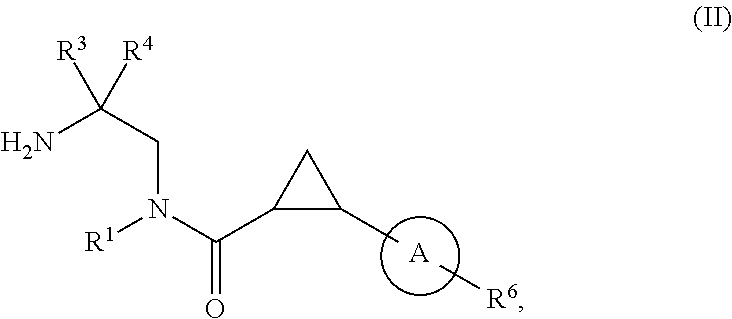
- the present disclosure is generally directed to compounds which can modulate G-protein coupled receptor 88, compositions comprising such compounds, and methods for modulating G-protein coupled receptor 88.
- GPR88 is an orphan member of the G protein coupled receptor (GPCR) superfamily. GPR88 demonstrates GPCR activity several assays including GTPgS binding, calcium influx, and cAMP inhibition assays. The receptor exhibits high expression in the CNS, with measurable expression in peripheral tissues including liver. CNS expression is particularly robust in striatum, paralleling that of the dopamine D2 receptor (Mizushima et. al, Genomics 69, 314-321 (2000)) suggesting the receptor may play a role in regulating dopaminergic activity.
- GPCR G protein coupled receptor
- mice that lack GPR88 expression exhibit enhanced response to dopaminergic agonists, altered performance in models relevant to schizophrenia (prepulse inhibition, conditioned avoidance responding) and depression (forced swim test). These results demonstrate therapeutic potential for GPR88 in treating CNS diseases. Transcriptional profiling studies have also revealed GPR88 expression is altered by treatments or conditions related to bipolar disorder (Ogden et al., Mol Psychiatry 2004 November; 9(11):1007-29 and Brandish, et al. Neuron , Vol. 45, 861-872, Mar. 24, 2005, schizophrenia (Matsuoka, et al. Synapse 2008 January; 62(1):1-7), and depression (Conti et al., Mol. Psychiatry. 2007 February; 12(2):167-89.), providing additional support for GPR88 as an essential modulator of CNS signaling pathways related to psychiatric disease.
- GPR88 is also expressed liver tissue suggesting GPR88 signaling may contribute to regulation of metabolic processes.
- Initial phenotypic characterization of genetically-modified mice lacking GPR88 expression suggests these animals exhibit altered response to glucose, insulin levels and triglycerides. These results suggest compounds that modulate GPR88 activity may have utility in metabolic diseases.
- GPR88 activity agonists, antagonists, or modulators
- compounds that modulate GPR88 activity are predicted to have therapeutic utility in the treatment of psychosis, cognitive deficits in schizophrenia, affective disorders, attention deficit hyperactivity disorders, bipolar disorder, drug addiction, Parkinson's disease, Alzheimer's disease, obesity and diabetes.
- n 0 or 1
- A is selected from imidazolyl; phenyl; pyrazinyl; pyrimidinyl; pyridinyl; and thiazolyl;
- R 1 is selected from:
- R 2 is selected from hydrogen; C 1 -C 3 alkyl; C 3 -C 6 cycloalkyl; and C 3 -C 6 cycloalkyl-C 1 -C 3 alkyl;
- R 3 is selected from hydrogen; C 1 -C 6 alkyl; C 1 -C 3 alkoxy-C 1 -C 3 alkyl; hydroxy-C 1 -C 3 alkyl;
- R 4 is selected from hydrogen; C 1 -C 3 alkyl; and hydroxy-C 1 -C 3 alkyl; or
- R 3 and R 4 together with the carbon atom to which they are attached, form a carbonyl group, or form a ring selected from C 3 -C 6 cycloalkyl; tetrahydrofuryl; and tetrahydropyranyl;
- R 5 is selected from hydrogen and C 1 -C 3 alkyl
- R 4 and R 5 together with the carbon atoms to which they are attached, form a cyclopentyl or cyclohexyl ring;
- R 6 is selected from hydrogen; C 1 -C 3 alkoxy; C 1 -C 3 alkyl; and halo;
- R 7 is selected from
- R 8 is selected from hydrogen; C 1 -C 3 alkyl; and halo;
- R 9 is selected from hydrogen; C 1 -C 3 alkyl; and halo.
- the present disclosure provides a compound of Formula (I), or a pharmaceutically acceptable salt thereof, wherein B is phenyl.
- the present disclosure provides a compound of Formula (I), or a pharmaceutically acceptable salt thereof, wherein B is pyridinyl.
- the present disclosure provides a compound of Formula (I), or a pharmaceutically acceptable salt thereof, wherein B is selected from imidazolyl; pyrazinyl; pyrimidinyl; and thiazolyl.
- A is selected from pyrazinyl and pyridinyl
- R 1 is selected from:
- R 3 is selected from C 4 alkyl and C 1 alkoxy-C 2 alkyl
- R 4 is hydrogen
- R 3 and R 4 together with the carbon atom to which they are attached, form a carbonyl group, or form a ring selected from C 5 cycloalkyl and tetrahydropyranyl;
- R 6 is selected from hydrogen and halo
- R 7 is selected from
- composition comprising a compound of Formula (I), or a pharmaceutically acceptable salt thereof, and a pharmaceutically acceptable carrier.
- the present disclosure provides a method of treating a disorder selected from a neurological disorder or a metabolic disease in a mammal, comprising administering to the mammal a therapeutically effective amount of a compound of Formula (I), or a pharmaceutically acceptable salt thereof.
- the mammal is a human.
- the disorder is a neurological disorder is selected from psychosis, cognitive deficits in schizophrenia, affective disorders, attention deficit hyperactivity disorders, drug addiction, Parkinson's disease, and Alzheimer's disease.
- the disorder is a metabolic disease selected from obesity and diabetes.
- the present disclosure provides a method of modulating G protein-coupled receptor 88 in a mammal, comprising administering to the mammal a therapeutically effective amount of a compound of Formula (I), or a pharmaceutically acceptable salt thereof.
- the mammal is a human.
- the G protein-coupled receptor 88 is modulated in order to treat a neurological disorder or metabolic disease.
- the G protein-coupled receptor 88 is modulated in order to treat a neurological disorder wherein the neurological disorder is selected from psychosis, cognitive deficits in schizophrenia, affective disorders, attention deficit hyperactivity disorders, bipolar disorder, drug addiction, Parkinson's disease, and Alzheimer's disease.
- the G protein-coupled receptor 88 is modulated in order to treat a metabolic disease wherein the metabolic disease is selected from obesity and diabetes.
- C 2-6 alkenyl denotes an alkenyl group containing two to six carbon atoms. Where these designations exist they supercede all other definitions contained herein.
- alkenyl refers to a straight or branched chain group of two to six carbon atoms containing at least one carbon-carbon double bond.
- alkenyloxy refers to an alkenyl group attached to the parent molecular moiety through an oxygen atom.
- alkoxy refers to an alkyl group attached to the parent molecular moiety through an oxygen atom.
- alkoxyalkyl refers to an alkyl group substituted with one, two, or three alkoxy groups.
- alkoxyalkynyl refers to an alkynyl group substituted with one, two, or three alkoxy groups.
- alkoxycarbonyl refers to an alkoxy group attached to the parent molecular moiety through a carbonyl group.
- alkoxycarbonylalkyl refers to an alkyl group substituted with one, two, or three alkoxycarbonyl groups.
- alkyl refers to a group derived from a straight or branched chain saturated hydrocarbon containing from one to six carbon atoms.
- alkylsulfanyl refers to an alkyl group attached to the parent molecular moiety through a sulfur atom.
- alkynyl refers to a straight or branched chain group of two to six carbon atoms containing at least one carbon-carbon triple bond.
- carbonyl refers to —C(O)—.
- cyano refers to —CN.
- cyanoalkyl refers to an alkyl group substituted with one, two, or three cyano groups.
- cycloalkenyl refers to a partially unsaturated monocyclic, hydrocarbon ring system having five to seven carbon atoms and zero heteroatoms.
- Representative examples of cycloalkenyl groups include, but are not limited to, cyclopentenyl, cyclohexenyl, and cycloheptenyl.
- cycloalkyl refers to a saturated monocyclic, hydrocarbon ring system having three to seven carbon atoms and zero heteroatoms.
- Representative examples of cycloalkyl groups include, but are not limited to, cyclopropyl, cyclopentyl, and cyclohexyl.
- (cycloalkyl)alkoxy refers to a cycloalkyl group attached to the parent molecular moiety through an alkoxy group.
- cycloalkyloxy refers to a cycloalkyl group attached to the parent molecular moiety through an oxygen atom.
- (cycloalkyl)alkyl refers to an alkyl group substituted with one, two, or three cycloalkyl groups.
- halo and “halogen,” as used herein, refer to F, Cl, Br, or I.
- haloalkoxy refers to a haloalkyl group attached to the parent molecular moiety through an oxygen atom.
- haloalkyl refers to an alkyl group substituted by one, two, three, or four halogen atoms.
- heterocyclyl refers to a four-, five-, six-, or seven-membered ring containing one, two, three, or four heteroatoms independently selected from nitrogen, oxygen, and sulfur.
- the four-membered ring has zero double bonds, the five-membered ring has zero to two double bonds, and the six- and seven-membered rings have zero to three double bonds.
- heterocyclyl also includes bicyclic groups in which the heterocyclyl ring is fused to another monocyclic heterocyclyl group, or a four- to six-membered aromatic or non-aromatic carbocyclic ring; as well as bridged bicyclic groups such as 7-azabicyclo[2.2.1]hept-7-yl, 2-azabicyclo[2.2.2]oc-2-tyl, and 2-azabicyclo[2.2.2]oc-3-tyl.
- the heterocyclyl groups of the present disclosure can be attached to the parent molecular moiety through any carbon atom or nitrogen atom in the group.
- heterocyclyl groups include, but are not limited to, benzothienyl, furyl, imidazolyl, indolinyl, indolyl, isothiazolyl, isoxazolyl, morpholinyl, oxazolyl, piperazinyl, piperidinyl, pyrazolyl, pyridinyl, pyrrolidinyl, pyrrolopyridinyl, pyrrolyl, thiazolyl, thienyl, thiomorpholinyl, 7-azabicyclo[2.2.1]hept-7-yl, 2-azabicyclo[2.2.2]oc-2-tyl, and 2-azabicyclo[2.2.2]oc-3-tyl.
- heterocyclyloxy refers to a heterocyclyl group attached to the parent molecular moiety through an oxygen atom.
- hydroxy refers to —OH.
- hydroxyalkyl refers to an alkyl group substituted with one, two, or three hydroxy groups.
- phenoxy refers to a phenyl group attached to the parent molecular moiety through an oxygen atom.
- phenylalkoxy refers to a phenyl group attached to the parent molecular moiety through an alkoxy group.
- Individual stereoisomers of compounds can be prepared synthetically from commercially available starting materials which contain chiral centers or by preparation of mixtures of enantiomeric products followed by separation such as conversion to a mixture of diastereomers followed by separation or recrystallization, chromatographic techniques, or direct separation of enantiomers on chiral chromatographic columns. Starting compounds of particular stereochemistry are either commercially available or can be made and resolved by techniques known in the art.
- Certain compounds of the present disclosure may also exist in different stable conformational forms which may be separable. Torsional asymmetry due to restricted rotation about an asymmetric single bond, for example because of steric hindrance or ring strain, may permit separation of different conformers.
- the present disclosure includes each conformational isomer of these compounds and mixtures thereof.
- the compounds of the present disclosure can exist as pharmaceutically acceptable salts.
- pharmaceutically acceptable salt represents salts or zwitterionic forms of the compounds of the present disclosure which are water or oil-soluble or dispersible, which are, within the scope of sound medical judgment, suitable for use in contact with the tissues of patients without excessive toxicity, irritation, allergic response, or other problem or complication commensurate with a reasonable benefit/risk ratio, and are effective for their intended use.
- the salts can be prepared during the final isolation and purification of the compounds or separately by reacting a suitable nitrogen atom with a suitable acid.
- Representative acid addition salts include acetate, adipate, alginate, citrate, aspartate, benzoate, benzenesulfonate, bisulfate, butyrate, camphorate, camphorsulfonate; digluconate, dihydrobromide, dihydrochloride, dihydroiodide, glycerophosphate, hemisulfate, heptanoate, hexanoate, formate, fumarate, hydrochloride, hydrobromide, hydroiodide, 2-hydroxyethanesulfonate, lactate, maleate, mesitylenesulfonate, methanesulfonate, naphthylenesulfonate, nicotinate, 2-naphthalenesulfonate, oxalate, palmoate, pectinate, persulfate, 3-phenylproprionate, picrate, pivalate, propionate, succinate, tartrate, trichlor
- Basic addition salts can be prepared during the final isolation and purification of the compounds by reacting a carboxy group with a suitable base such as the hydroxide, carbonate, or bicarbonate of a metal cation or with ammonia or an organic primary, secondary, or tertiary amine.
- a suitable base such as the hydroxide, carbonate, or bicarbonate of a metal cation or with ammonia or an organic primary, secondary, or tertiary amine.
- the cations of pharmaceutically acceptable salts include lithium, sodium, potassium, calcium, magnesium, and aluminum, as well as nontoxic quaternary amine cations such as ammonium, tetramethylammonium, tetraethylammonium, methylamine, dimethylamine, trimethylamine, triethylamine, diethylamine, ethylamine, tributylamine, pyridine, N,N-dimethylaniline, N-methylpiperidine, N-methylmorpholine, dicyclohexylamine, procaine, dibenzylamine, N,N-dibenzylphenethylamine, and N,N′-dibenzylethylenediamine.
- Other representative organic amines useful for the formation of base addition salts include ethylenediamine, ethanolamine, diethanolamine, piperidine, and piperazine.
- compositions which include therapeutically effective amounts of compounds of Formula (I) or pharmaceutically acceptable salts thereof, and one or more pharmaceutically acceptable carriers, diluents, or excipients.
- therapeutically effective amount refers to the total amount of each active component that is sufficient to show a meaningful patient benefit. When applied to an individual active ingredient, administered alone, the term refers to that ingredient alone.
- the term refers to combined amounts of the active ingredients that result in the therapeutic effect, whether administered in combination, serially, or simultaneously.
- the compounds of Formula (I) and pharmaceutically acceptable salts thereof are as described above.
- the carrier(s), diluent(s), or excipient(s) must be acceptable in the sense of being compatible with the other ingredients of the formulation and not deleterious to the recipient thereof.
- a process for the preparation of a pharmaceutical formulation including admixing a compound of Formula (I), or a pharmaceutically acceptable salt thereof, with one or more pharmaceutically acceptable carriers, diluents, or excipients.
- pharmaceutically acceptable refers to those compounds, materials, compositions, and/or dosage forms which are, within the scope of sound medical judgment, suitable for use in contact with the tissues of patients without excessive toxicity, irritation, allergic response, or other problem or complication commensurate with a reasonable benefit/risk ratio, and are effective for their intended use.
- compositions may be presented in unit dose forms containing a predetermined amount of active ingredient per unit dose. Dosage levels of between about 0.01 and about 250 milligram per kilogram (“mg/kg”) body weight per day, preferably between about 0.05 and about 100 mg/kg body weight per day of the compounds of the present disclosure are typical in a monotherapy for the prevention and treatment of disease. Typically, the pharmaceutical compositions of this disclosure will be administered from about 1 to about 5 times per day or alternatively, as a continuous infusion. Such administration can be used as a chronic or acute therapy.
- mg/kg milligram per kilogram
- the amount of active ingredient that may be combined with the carrier materials to produce a single dosage form will vary depending on the condition being treated, the severity of the condition, the time of administration, the route of administration, the rate of excretion of the compound employed, the duration of treatment, and the age, gender, weight, and condition of the patient.
- Preferred unit dosage formulations are those containing a daily dose or sub-dose, as herein above recited, or an appropriate fraction thereof, of an active ingredient. Treatment may be initiated with small dosages substantially less than the optimum dose of the compound. Thereafter, the dosage is increased by small increments until the optimum effect under the circumstances is reached.
- the compound is most desirably administered at a concentration level that will generally afford effective results without causing any harmful or deleterious side effects.
- compositions of this disclosure comprise a combination of a compound of the present disclosure and one or more additional therapeutic or prophylactic agent
- both the compound and the additional agent are usually present at dosage levels of between about 10 to 150%, and more preferably between about 10 and 80% of the dosage normally administered in a monotherapy regimen.
- compositions may be adapted for administration by any appropriate route, for example by the oral (including buccal or sublingual), rectal, nasal, topical (including buccal, sublingual, or transdermal), vaginal, or parenteral (including subcutaneous, intracutaneous, intramuscular, intra-articular, intrasynovial, intrasternal, intrathecal, intralesional, intravenous, or intradermal injections or infusions) route.
- Such formulations may be prepared by any method known in the art of pharmacy, for example by bringing into association the active ingredient with the carrier(s) or excipient(s). Oral administration or administration by injection are preferred.
- compositions adapted for oral administration may be presented as discrete units such as capsules or tablets; powders or granules; solutions or suspensions in aqueous or non-aqueous liquids; edible foams or whips; or oil-in-water liquid emulsions or water-in-oil emulsions.
- the active drug component can be combined with an oral, non-toxic pharmaceutically acceptable inert carrier such as ethanol, glycerol, water, and the like.
- an oral, non-toxic pharmaceutically acceptable inert carrier such as ethanol, glycerol, water, and the like.
- Powders are prepared by comminuting the compound to a suitable fine size and mixing with a similarly comminuted pharmaceutical carrier such as an edible carbohydrate, as, for example, starch or mannitol. Flavoring, preservative, dispersing, and coloring agent can also be present.
- Capsules are made by preparing a powder mixture, as described above, and filling formed gelatin sheaths.
- Glidants and lubricants such as colloidal silica, talc, magnesium stearate, calcium stearate, or solid polyethylene glycol can be added to the powder mixture before the filling operation.
- a disintegrating or solubilizing agent such as agar-agar, calcium carbonate, or sodium carbonate can also be added to improve the availability of the medicament when the capsule is ingested.
- suitable binders include starch, gelatin, natural sugars such as glucose or beta-lactose, corn sweeteners, natural and synthetic gums such as acacia, tragacanth or sodium alginate, carboxymethylcellulose, polyethylene glycol, and the like.
- Lubricants used in these dosage forms include sodium oleate, sodium chloride, and the like.
- Disintegrators include, without limitation, starch, methyl cellulose, agar, betonite, xanthan gum, and the like.
- Tablets are formulated, for example, by preparing a powder mixture, granulating or slugging, adding a lubricant and disintegrant, and pressing into tablets.
- a powder mixture is prepared by mixing the compound, suitable comminuted, with a diluent or base as described above, and optionally, with a binder such as carboxymethylcellulose, an aliginate, gelating, or polyvinyl pyrrolidone, a solution retardant such as paraffin, a resorption accelerator such as a quaternary salt and/or and absorption agent such as betonite, kaolin, or dicalcium phosphate.
- a binder such as carboxymethylcellulose, an aliginate, gelating, or polyvinyl pyrrolidone
- a solution retardant such as paraffin
- a resorption accelerator such as a quaternary salt and/or
- absorption agent such as betonite, kaolin, or dicalcium phosphate.
- the powder mixture can be granulated by wetting with a binder such as syrup, starch paste, acadia mucilage, or solutions of cellulosic or polymeric materials and forcing through a screen.
- a binder such as syrup, starch paste, acadia mucilage, or solutions of cellulosic or polymeric materials and forcing through a screen.
- the powder mixture can be run through the tablet machine and the result is imperfectly formed slugs broken into granules.
- the granules can be lubricated to prevent sticking to the tablet forming dies by means of the addition of stearic acid, a stearate salt, talc, or mineral oil.
- the lubricated mixture is then compressed into tablets.
- the compounds of the present disclosure can also be combined with a free flowing inert carrier and compressed into tablets directly without going through the granulating or slugging steps.
- a clear or opaque protective coating consisting of a sealing coat of shellac,
- Oral fluids such as solution, syrups, and elixirs can be prepared in dosage unit form so that a given quantity contains a predetermined amount of the compound.
- Syrups can be prepared by dissolving the compound in a suitably flavored aqueous solution, while elixirs are prepared through the use of a non-toxic vehicle.
- Solubilizers and emulsifiers such as ethoxylated isostearyl alcohols and polyoxyethylene sorbitol ethers, preservatives, flavor additive such as peppermint oil or natural sweeteners, or saccharin or other artificial sweeteners, and the like can also be added.
- dosage unit formulations for oral administration can be microencapsulated.
- the formulation can also be prepared to prolong or sustain the release as for example by coating or embedding particulate material in polymers, wax, or the like.
- the compounds of Formula (I), and pharmaceutically acceptable salts thereof, can also be administered in the form of liposome delivery systems, such as small unilamellar vesicles, large unilamellar vesicles, and multilamellar vesicles.
- liposomes can be formed from a variety of phopholipids, such as cholesterol, stearylamine, or phophatidylcholines.
- the compounds of Formula (I) and pharmaceutically acceptable salts thereof may also be delivered by the use of monoclonal antibodies as individual carriers to which the compound molecules are coupled.
- the compounds may also be coupled with soluble polymers as targetable drug carriers.
- Such polymers can include polyvinylpyrrolidone, pyran copolymer, polyhydroxypropylmethacrylamidephenol, polyhydroxyethylaspartamidephenol, or polyethyleneoxidepolylysine substituted with palitoyl residues.
- the compounds may be coupled to a class of biodegradable polymers useful in achieving controlled release of a drug, for example, polylactic acid, polepsilon caprolactone, polyhydroxy butyric acid, polyorthoesters, polyacetals, polydihydropyrans, polycyanoacrylates, and cross-linked or amphipathic block copolymers of hydrogels.
- a class of biodegradable polymers useful in achieving controlled release of a drug, for example, polylactic acid, polepsilon caprolactone, polyhydroxy butyric acid, polyorthoesters, polyacetals, polydihydropyrans, polycyanoacrylates, and cross-linked or amphipathic block copolymers of hydrogels.
- compositions adapted for transdermal administration may be presented as discrete patches intended to remain in intimate contact with the epidermis of the recipient for a prolonged period of time.
- the active ingredient may be delivered from the patch by iontophoresis as generally described in Pharmaceutical Research 1986, 3(6), 318.
- compositions adapted for topical administration may be formulated as ointments, creams, suspensions, lotions, powders, solutions, pastes, gels, sprays, aerosols, or oils.
- compositions adapted for rectal administration may be presented as suppositories or as enemas.
- compositions adapted for nasal administration wherein the carrier is a solid include a course powder having a particle size for example in the range 20 to 500 microns which is administered in the manner in which snuff is taken, i.e., by rapid inhalation through the nasal passage from a container of the powder held close up to the nose.
- suitable formulations wherein the carrier is a liquid, for administration as a nasal spray or nasal drops, include aqueous or oil solutions of the active ingredient.
- Fine particle dusts or mists which may be generated by means of various types of metered, dose pressurized aerosols, nebulizers, or insufflators.
- compositions adapted for vaginal administration may be presented as pessaries, tampons, creams, gels, pastes, foams, or spray formulations.
- compositions adapted for parenteral administration include aqueous and non-aqueous sterile injection solutions which may contain anti-oxidants, buffers, bacteriostats, and soutes which render the formulation isotonic with the blood of the intended recipient; and aqueous and non-aqueous sterile suspensions which may include suspending agents and thickening agents.
- the formulations may be presented in unit-dose or multi-dose containers, for example sealed ampoules and vials, and may be stored in a freeze-dried (lyophilized) condition requiring only the addition of the sterile liquid carrier, for example water for injections, immediately prior to use.
- Extemporaneous injection solutions and suspensions may be prepared from sterile powders, granules, and tablets.
- formulations may include other agents conventional in the art having regard to the type of formulation in question, for example those suitable for oral administration may include flavoring agents.
- patient includes both human and other mammals.
- treating refers to: (i) preventing a disease, disorder or condition from occurring in a patient that may be predisposed to the disease, disorder, and/or condition but has not yet been diagnosed as having it; (ii) inhibiting the disease, disorder, or condition, i.e., arresting its development; and (iii) relieving the disease, disorder, or condition, i.e., causing regression of the disease, disorder, and/or condition.
- This disclosure is intended to encompass compounds having Formula (I) when prepared by synthetic processes or by metabolic processes including those occurring in the human or animal body (in vivo) or processes occurring in vitro.
- HATU O-(7-azabenzotriazol-1-yl)-N,N,N′,N′-tetramethyluronium hexafluorophosphate
- BOP for benzotriazol-1-yloxytris(dimethylamino)phosphonium hexafluorophosphate
- EDC or EDCI for 1-(3-dimethylaminopropyl)-3-ethylcarbodiimide hydrochloride
- TBTU O-benzotriazol-1-yl-N,N,N′,N′-tetramethyluronium tetrafluoroborate
- BOC Boc for tert-butoxycarbonyl
- Ar for aryl; Et for ethyl; tBu for tert-butyl; Ph for
- TBS for retention time or room temperature
- TAF for tert-butyldimethylsilyl
- TBAF for tetrabutylammonium fluoride
- DIEA for diisopropylethylamine
- Et 2 O for diethyl ether
- Py.SO 3 for pyridine 2-sulfonate
- DCE for 1,2-dichloroethane
- MeOD for CD 3 OD.
- the compounds of the present disclosure may be prepared using the reactions and techniques described in this section as well as other synthetic methods known to those of ordinary skill in the art.
- the reactions are performed in solvents appropriate to the reagents and materials employed and suitable for the transformation being effected.
- all proposed reaction conditions including choice of solvents, reaction temperature, duration of the experiment and workup procedures, are chosen to be the conditions standard for that reaction, which should be readily recognized by one skilled in the art. It is understood by one skilled in the art of organic synthesis that the functionality present on various portions of the molecule must be compatible with the reagents and reactions proposed. Such restrictions to the substituents which are compatible with the reaction conditions will be readily apparent to one skilled in the art and alternate methods must then be used.
- the aryl cyclopropanecarboxylic acid 5 that are not commercially available are prepared according to Scheme 3.
- the aryl alkene 10 is reacted with t-butyldiazoacetate 11 under catalytic conditions to give aryl cyclopropanecarboxylic acid t-butyl ester 12.
- epoxidation of compound 10 afford epoxide 13.
- Cyclopropanation of compound 13 with t-butyl diethylphosphonoacetate 14 provides aryl cyclopropanecarboxylic acid t-butyl ester 12.
- the t-butyl is removed under acidic conditions to afford the aryl cyclopropanecarboxylic acid 5.
- aryl cyclopropanecarboxylic acid t-butyl ester 12 is also prepared from aryl aldehyde 15 as outlined in Scheme 4. Reaction of aryl aldehyde 15 with t-butyl triphenylphosphinoacetate 16 gives compound 17. cyclopropanation of 17 provides the aryl cyclopropanecarboxylic acid t-butyl ester 12.
- Multiplicity patterns are designated as follows: s, singlet; d, doublet; t, triplet; q, quartet; m, multiplet; br, broad peak; dd, doublet of doublet; br d, broad doublet; dt, doublet of triplet; br s, broad singlet; dq, doublet of quartet
- IR infrared
- Optical rotations [ ⁇ ] D were determined on a Rudolph Scientific Autopol IV polarimeter in the solvents indicated; concentrations are given in mg/mL.
- High resolution mass spectra were determined on a Finnegan MAT900.
- Liquid chromatography (LC)/mass spectra were run on a Shimadzu LC coupled to a Water Micromass ZQ.
- Part B 4,4,5,5-tetramethyl-2-(4-prop-1-ynyl-phenyl)-[1,3,2]dioxaborolane
- Part D ⁇ 1-[(4-Bromo-phenylamino)-methyl]-cyclopentyl ⁇ -carbamic acid tert-butyl ester
- Part F (1- ⁇ [[Trans-2-(6-fluoro-pyridin-2-yl)-cyclopropanecarbonyl]-(4′-propyl-biphenyl-4-yl)-amino]-methyl ⁇ -cyclopentyl)-carbamic acid tert-butyl ester
- Part B Trans-2-(6-fluoro-pyridin-2-yl)-cyclopropanecarboxylic acid (1-amino-cyclopentylmethyl)-(4′-isopropoxy-biphenyl-4-yl)-amide
- Neat 4-methylmorpholine (2.7 mL, 24.6 mmol) was added, via syringe, to a rapidly stirred, 0° C., solution of 4-tert-butoxycarbonylamino-tetrahydro-pyran-4-carboxylic acid (5.0 g, 20.4 mmol) and isobutyl chloroformate (3.2 mL, 24.5 mmol) in anhydrous tetrahydrofuran (200 mL) contained in a 1000 mL round bottomed flask. Precipitate immediately formed. The suspension was allowed to stir at 0° C.
- Part B (4-Formyl-tetrahydro-pyran-4-yl)-carbamic acid tert-butyl ester
- Part F (4- ⁇ [(4-Bromo-phenyl)-(2-pyridin-2-yl-cyclopropanecarbonyl)-amino]-methyl ⁇ -tetrahydro-pyran-4-yl)-carbamic acid tert-butyl ester
- Oxalyl chloride (0.42 mL, 4.8 mmol) was added to a stirred suspension of 2-pyridin-2-yl-cyclopropane carboxylic acid (0.65 g, 3.98 mmol) in anhydrous dichloromethane (40 mL) and anhydrous dimethylformamide (1.0 mL).
- Neat triethyamine (1.2 mL, 8.6 mmol) was then slowly added and the mixture allowed to stir at ambient temperature for 0.5 h over which time the reaction became blue in color and the solid dispersed.
- the reaction mixture evaporated to dryness then redissolved in dichloromethane (40 mL).
- the vial was closed with a septum and evacuated by cannula whilst the contained mixture stirred.
- the vessel was N2 blanketed then 1,2-dimethoxyethane (4.1 mL) and water (1.4 mL) were added via syringe.
- the stirred reaction solution was then taken through 5 evacuation/N 2 blanketing cycles, by cannula, left under N 2 blanket, then heated to 85° C. at 5° C. per minute, by proportional wattage microwave irradiation at 2.45 GHz, for a total of 15 minutes.
- the reaction mixture was then diluted with methanol (50 mL), filtered through celite, preabsorbed on silica gel and flash chromatographed (elution solvent: 15% (v/v) 2-propanol/hexane). Combined chromatography fractions were partially evaporated to result in a 2-propanol solution (30 mL) of the penultimate product.
- Part B ((1S,2S)-1- ⁇ [[Trans-2-(6-fluoro-pyridin-2-yl)-cyclopropanecarbonyl]-(4′-propyl-biphenyl-4-yl)-amino]-methyl ⁇ -2-methyl-butyl)-carbamic acid tert-butyl ester
- Part B Trans-2-(6-fluoro-pyridin-2-yl)-cyclopropanecarboxylic acid ((2S,3S)-2-amino-3-methyl-pentyl)-(4′-isopropoxy-biphenyl-4-yl)-amide
- Part B Trans-2-(6-fluoro-pyridin-2-yl)-cyclopropanecarboxylic acid ((2S,3S)-2-amino-3-methyl-pentyl)-(4′-methoxymethyl-biphenyl-4-yl)-amide
- Chiral HPLC separated the two diasteromers Column. ChiralPak AD-H 20 mm ⁇ 250 mm, 30% Ethanol in hexane isocratic, retention time: 10.36 min and 12.22 min.] to give:
- Trans-2-(6-fluoro-pyridin-2-yl)-cyclopropanecarboxylic acid (0.150 g, 0.83 mmol) was dissolved in thionyl chloride (2 mL), which was stirred and heated at 60° C. for 1.5 hrs. The excessive solvent was removed on ratovapor and dried under high vacuum for 2 hrs to give the corresponding acid chloride.
- 96 well GTP ⁇ S assay plates were purchased from Perkin Elmer. Wheat Germ Agglutinin PVT SPA beads and 35 5-GTP ⁇ S were purchased from Amersham GDP, GTP ⁇ S and all buffer reagents were from Sigma. 384 well white NBS plates were purchased from corning. Pertussis toxin was purchased from Calbiochem. All cell culture reagents were purchased from Invitrogen. Forskolin was purchased from Sigma. The cAMP HTRF kit was purchased from Cisbio International.
- the GTP ⁇ S assay buffer consisted of 10 mM MgCl 2 , 180 mM NaCl, 200 uM GDP, 0.167 mg/ml DTT, 1 mM EGTA and 20 mM HEPES pH7.4. This buffer was used for dilution of membranes, beads, and 35 S GTP ⁇ S components.
- To each well of the 96 well assay plate 48 ul assay buffer, 2 ul of 100 ⁇ compound, 50 ul membrane solution (0.2 ug/ul), 50 ul 35 S GTP ⁇ S solution (0.8 nM) and 50 ul of SPA beads (10 mg/ml). Non-specific binding was determined by the addition of cold GTP ⁇ S to control wells.
- the cAMP HTRF assay is modified from the Cisbio International kit procedure 62AM4PEJ. Assay plates were prepared by stamping 0.1 ul of 100 ⁇ compound stock solutions diluted in DMSO or DMSO alone into 384 well NBS plates. The cAMP HTRF assay was performed using cells in suspension.
- the cAMP HTRF assay buffer consisted of Hank's Balanced Salt Solution (HBSS), 2 mM CaCl 2 , 5 mM MgCl 2 , 20 mM HEPES and 1 mM 3-isobutyl-1-methylxanthine (IBMX) (added fresh at the time of assay).
- HBSS Hank's Balanced Salt Solution
- IBMX 3-isobutyl-1-methylxanthine
- pertussis toxin 100 ng/ml was added to culture medium for 16 hours prior to assay. Confluent cells were disrupted with cell dissociation buffer count cells then centrifuged at 1000 ⁇ g for 5 minutes. The cell pellet was resuspended in assay buffer alone for basal cAMP measurements or with 0.75 uM forskolin (added immediately prior to addition to wells) for addition to all other wells. Using a Multidrop 384 (Lab systems) 10 ul of cell suspension was added to each well containing compound or DMSO. The plates were incubated at room temperature for 30 minutes covered. During this time the cAMP standard curve was prepared as per manufacturer's instruction.
- Table 2 shows EC50 values for select compounds of the present disclosure: All compounds marked “X” had an EC50 of between 3 nM and 20 nM.
Landscapes
- Health & Medical Sciences (AREA)
- Chemical & Material Sciences (AREA)
- Organic Chemistry (AREA)
- Engineering & Computer Science (AREA)
- Bioinformatics & Cheminformatics (AREA)
- Medicinal Chemistry (AREA)
- General Chemical & Material Sciences (AREA)
- Nuclear Medicine, Radiotherapy & Molecular Imaging (AREA)
- Chemical Kinetics & Catalysis (AREA)
- Pharmacology & Pharmacy (AREA)
- Life Sciences & Earth Sciences (AREA)
- Animal Behavior & Ethology (AREA)
- General Health & Medical Sciences (AREA)
- Public Health (AREA)
- Veterinary Medicine (AREA)
- Neurology (AREA)
- Biomedical Technology (AREA)
- Neurosurgery (AREA)
- Diabetes (AREA)
- Psychiatry (AREA)
- Hematology (AREA)
- Obesity (AREA)
- Psychology (AREA)
- Child & Adolescent Psychology (AREA)
- Addiction (AREA)
- Emergency Medicine (AREA)
- Endocrinology (AREA)
- Hospice & Palliative Care (AREA)
- Pain & Pain Management (AREA)
- Pharmaceuticals Containing Other Organic And Inorganic Compounds (AREA)
- Plural Heterocyclic Compounds (AREA)
- Pyridine Compounds (AREA)
Abstract
Description

or a pharmaceutically acceptable salt thereof, wherein

wherein “

-
- C3-C6 alkenyl;
- C2-C6 alkenyloxy;
- C3-C6 alkoxy;
- C1-C3 alkoxy-C2-C3 alkynyl;
- C1-C6 alkyl;
- C2-C6 alkynyl;
- C5-C6 cycloalkenyl;
- C3-C6 cycloalkyl optionally substituted with one or two C1-C3 alkyl groups;
- C3-C6 cycloalkyl-C1-C3 alkoxy, wherein the cycloalkyl is optionally substituted with one or two C1-C3 alkyl groups;
- C3-C7 cycloalkyloxy optionally substituted with one or two C1-C3 alkyl groups;
- halo;
- heterocyclyl optionally substituted with one or two groups independently selected from C1-C3 alkyl, halo-C1-C3 alkyl, and phenyl;
- heterocyclyloxy optionally substituted with one or two halo-C1-C3 alkyl groups;
- phenoxy-C1-C3 alkoxy;
- phenyl optionally substituted with one, two, or three substituents independently selected from C1-C3 alkoxy, C1-C6 alkoxy-C1-C3 alkyl, C1-C3 alkoxycarbonyl, C1-C3 alkoxycarbonyl-C1-C3 alkyl, C1-C6 alkyl, C1-C3 alkylsulfanyl, C2-C6 alkynyl, cyano-C1-C3 alkyl, halo, halo-C1-C3 alkoxy, —NH2, and phenoxy optionally substituted with one or two groups independently selected from C1-C3 alkoxy-C1-C3 alkyl and halo; provided that when the phenyl is substituted the first substituent is in the para position on the phenyl ring;
- phenyl-C1-C3 alkoxy, wherein the phenyl is optionally substituted with one or two groups independently selected from C1-C3 alkoxy-C1-C3 alkyl and halo; and
- X—C(O)—NH—; wherein X is selected from C1-C3 alkoxy; C1-C6 alkyl; C3-C10 cycloalkyl; and heterocyclyl optionally substituted with C1-C6 alkyl;

or a pharmaceutically acceptable salt thereof, wherein

wherein “
-
- C5 alkynyl;
- C3 cycloalkyl;
- C4 cycloalkyl-C1 alkoxy; and
- phenyl optionally substituted with one substituent selected from C3 alkoxy, C1 alkoxy-C1 alkyl, C3 alkyl, and C2 alkynyl, provided that when the phenyl is substituted the substituent is in the para position on the phenyl ring;


| TABLE 1 |
| (Ia) |
 |
| Example | B | R | R′ | R″ | Ar | (M + H)+ |
| 1 | Ph | 4-methoxymethylphenyl | sec-butyl | H | pyridin-2-yl | 458.1 |
| 2 | Ph | 4-isopropoxyphenyl | sec-butyl | H | pyridin-2-yl | 472.3 |
| 3 | Ph | 4-propylphenyl | sec-butyl | H | pyridin-2-yl | 456.3 |
| 4 | Ph | 4-methoxymethylphenyl | sec-butyl | H | 5-fluoro- | 476.2 |
| pyridin-2-yl | ||||||
| 5 | Ph | 4-propynylphenyl | sec-butyl | H | pyridin-2-yl | 452.2 |
| 6 | Ph | 4-propylphenyl | (CH2)4 | 6-fluoro- | 472.2 |
| pyridin-2-yl | |||||
| 7 | Ph | 4-isopropoxyphenyl | (CH2)4 | 6-fluoro- | 488.2 |
| pyridin-2-yl | |||||
| 8 | Ph | 4-methoxymethylphenyl | (CH2)4 | 6-fluoro- | 474.2 |
| pyridin-2-yl | |||||
| 9 | Ph | 4-propylphenyl | (CH2)2O(CH2)2 | pyridin-2-yl | 470.3 |
| 10 | Ph | 4-propylphenyl | sec-butyl | H | 3-fluoro- | 474.3 |
| pyridin-2-yl | ||||||
| 11 | Ph | 4-propylphenyl | sec-butyl | H | pyrazin-2-yl | 457.3 |
| 12 | Ph | cyclobutylmethoxy | sec-butyl | H | 5-fluoro- | 440.2 |
| pyridine-2-yl | ||||||
| 13 | Ph | cyclobutylmethoxy | sec-butyl | H | pyridin-2-yl | 422.3 |
| 14 | Ph | 4-propylphenyl | sec-butyl | H | 6-fluoro- | 474.3 |
| pyridin-2-yl | ||||||
| 15 | Ph | 4-isopropoxyphenyl | sec-butyl | H | 6-fluoro- | 490.3 |
| pyridin-2-yl | ||||||
| 16 | Ph | 4-methoxymethylphenyl | sec-butyl | H | 6-fluoro- | 476.3 |
| pyridin-2-yl | ||||||
| 17 | Ph | cyclobutylmethoxy | sec-butyl | H | 5-fluoro- | 440.3 |
| pyridine-2-yl | ||||||
| 18 | Ph | 4-propylphenyl | 1-methoxy | H | pyrazin-2-yl | 459.3 |
| ethyl | ||||||
| 19 | Ph | pent-1-ynyl | sec-butyl | H | 6-fluoro- | 422.3 |
| pyridin-2-yl | ||||||
| 20 | Naphthyl | cyclopropyl | sec-butyl | H | 6-fluoro- | 446.2 |
| pyridin-2-yl | ||||||


- [(1S,2S)-1-({[4-(tert-Butyl-dimethyl-silanyloxy)-phenyl]-[(1R,2R)-2-(5-fluoro-pyridin-2-yl)-cyclopropanecarbonyl]-amino}-methyl)-2-methyl-butyl]-carbamic acid tert-butyl ester
- [(1S,2S)-1-({[4-(tert-Butyl-dimethyl-silanyloxy)-phenyl]-[(1S,2S)-2-(5-fluoro-pyridin-2-yl)-cyclopropanecarbonyl]-amino}-methyl)-2-methyl-butyl]-carbamic acid tert-butyl ester


| TABLE 2 | |||
| Example Number | Range (EC50) | ||
| 1 | X | ||
| 2 | X | ||
| 3 | 3 nM | ||
| 4 | X | ||
| 5 | X | ||
| 6 | X | ||
| 7 | X | ||
| 8 | X | ||
| 9 | X | ||
| 10 | X | ||
| 11 | X | ||
| 12 | 20 nM | ||
| 13 | X | ||
| 14 | X | ||
| 15 | 8 nM | ||
| 16 | X | ||
| 17 | X | ||
| 18 | X | ||
| 19 | X | ||
| 20 | X | ||
Claims (7)


Priority Applications (1)
| Application Number | Priority Date | Filing Date | Title |
|---|---|---|---|
| US12/897,004 US8426414B2 (en) | 2009-10-09 | 2010-10-04 | Modulators of G protein-coupled receptor 88 |
Applications Claiming Priority (2)
| Application Number | Priority Date | Filing Date | Title |
|---|---|---|---|
| US25009109P | 2009-10-09 | 2009-10-09 | |
| US12/897,004 US8426414B2 (en) | 2009-10-09 | 2010-10-04 | Modulators of G protein-coupled receptor 88 |
Publications (2)
| Publication Number | Publication Date |
|---|---|
| US20110251204A1 US20110251204A1 (en) | 2011-10-13 |
| US8426414B2 true US8426414B2 (en) | 2013-04-23 |
Family
ID=43479451
Family Applications (1)
| Application Number | Title | Priority Date | Filing Date |
|---|---|---|---|
| US12/897,004 Active 2031-09-13 US8426414B2 (en) | 2009-10-09 | 2010-10-04 | Modulators of G protein-coupled receptor 88 |
Country Status (6)
| Country | Link |
|---|---|
| US (1) | US8426414B2 (en) |
| EP (1) | EP2486014B1 (en) |
| JP (1) | JP2013507371A (en) |
| CN (1) | CN102648180A (en) |
| ES (1) | ES2430946T3 (en) |
| WO (1) | WO2011044212A1 (en) |
Families Citing this family (12)
| Publication number | Priority date | Publication date | Assignee | Title |
|---|---|---|---|---|
| US8497271B2 (en) | 2009-10-07 | 2013-07-30 | Bristol-Myers Squibb Company | Modulators of G protein-coupled receptor 88 |
| US8304577B2 (en) | 2009-10-09 | 2012-11-06 | Bristol-Myers Squibb Company | Modulators of G protein-coupled receptor 88 |
| US8703953B2 (en) | 2012-03-09 | 2014-04-22 | Bristol-Myers Squibb Company | Aryl ether-base kinase inhibitors |
| WO2015006100A1 (en) | 2013-07-08 | 2015-01-15 | Bristol-Myers Squibb Company | Aryl amide kinase inhibitors |
| CN105979950A (en) | 2013-10-11 | 2016-09-28 | 百时美施贵宝公司 | Pyrrolotriazine kinase inhibitors |
| MX2020009950A (en) | 2018-03-23 | 2021-04-28 | Carmot Therapeutics Inc | Modulators of g-protein coupled receptors. |
| JP2023550643A (en) * | 2020-11-25 | 2023-12-04 | レネオ ファーマシューティカルズ,インク. | Method for producing PPAR delta agonist |
| US20240132450A1 (en) | 2020-12-17 | 2024-04-25 | Acadia Pharmaceuticals Inc. | Modulators of g protein-coupled receptor 88 |
| KR20240007251A (en) | 2021-05-13 | 2024-01-16 | 카모트 테라퓨틱스, 인크. | Modulator of G-protein coupled receptors |
| GB202209193D0 (en) | 2022-06-22 | 2022-08-10 | Pandeia Therapeutics Ltd | Modulators of g protein-coupled receptor 88 |
| GB202209195D0 (en) | 2022-06-22 | 2022-08-10 | Pandeia Therapeutics Ltd | Modulators of g protein-coupled receptor 88 |
| WO2026055419A1 (en) | 2024-09-05 | 2026-03-12 | Acadia Pharmaceuticals Inc. | Modulators of g protein-coupled receptor 88 |
Citations (18)
| Publication number | Priority date | Publication date | Assignee | Title |
|---|---|---|---|---|
| WO1994012461A1 (en) | 1992-12-02 | 1994-06-09 | Pfizer Inc. | Catechol diethers as selective pdeiv inhibitors |
| WO1996021464A1 (en) | 1995-01-13 | 1996-07-18 | Emisphere Technologies, Inc. | Compositions for the delivery of antigens |
| WO2003086325A2 (en) | 2002-04-05 | 2003-10-23 | Boehringer Ingelheim Pharmaceuticals, Inc. | Cyanamides useful as reversible inhibitors of cysteine proteases |
| WO2003103666A2 (en) | 2002-06-07 | 2003-12-18 | Altana Pharma Ag | Novel 4,5-dihydro-imidazo[4,5,1-ij]quinolin-6-ones |
| WO2004047738A2 (en) | 2002-11-22 | 2004-06-10 | Bristol-Myers Squibb Company | Arylcyclopropylcarboxylic amides as potassium channel openers |
| WO2004056745A2 (en) | 2002-12-23 | 2004-07-08 | Janssen Pharmaceutica N.V. | Adamantyl acetamides as 11-beta hydroxysteroid dehydrogenase inhibitors |
| WO2004072018A1 (en) | 2003-02-12 | 2004-08-26 | Takeda Pharmaceutical Company Limited | Amine derivative |
| WO2005000309A2 (en) | 2003-06-27 | 2005-01-06 | Ionix Pharmaceuticals Limited | Chemical compounds |
| WO2005051890A1 (en) | 2003-11-19 | 2005-06-09 | Smithkline Beecham Corporation | Aminophenylcyclopropyl carboxylic acids and derivatives as agonists to gpr40 |
| WO2006012227A2 (en) | 2004-06-24 | 2006-02-02 | Incyte Corporation | Amido compounds and their use as pharmaceuticals |
| CN1733708A (en) | 2005-08-02 | 2006-02-15 | 天津大学 | Anti-hepatitis B virus tertiary amine oxide, preparation method and application of preparation medicine |
| WO2006027252A1 (en) | 2004-09-10 | 2006-03-16 | Ucb Pharma, Sa | Sigma receptor ligands |
| JP2007217408A (en) | 2006-01-19 | 2007-08-30 | Tanabe Seiyaku Co Ltd | Pharmaceutical composition |
| WO2007117715A2 (en) | 2006-04-07 | 2007-10-18 | Vertex Pharmaceuticals Incorporated | Modulators of atp-binding cassette transporters |
| WO2007129188A1 (en) | 2006-05-10 | 2007-11-15 | Pfizer Japan Inc. | Cyclopropanecarboxamide compound |
| WO2008022154A2 (en) | 2006-08-14 | 2008-02-21 | Wyeth | Methods of identifying agents for treating neurological disorders |
| WO2011044195A1 (en) | 2009-10-07 | 2011-04-14 | Bristol-Myers Squibb Company | Modulators of g protein-coupled receptor 88 |
| WO2011044225A1 (en) | 2009-10-09 | 2011-04-14 | Bristol-Myers Squibb Company | Modulators of g protein-coupled receptor 88 |
Family Cites Families (1)
| Publication number | Priority date | Publication date | Assignee | Title |
|---|---|---|---|---|
| GB0428250D0 (en) * | 2004-12-23 | 2005-01-26 | Novartis Ag | Organic compounds |
-
2010
- 2010-10-04 US US12/897,004 patent/US8426414B2/en active Active
- 2010-10-06 EP EP10765716.5A patent/EP2486014B1/en not_active Not-in-force
- 2010-10-06 JP JP2012533272A patent/JP2013507371A/en active Pending
- 2010-10-06 CN CN2010800560408A patent/CN102648180A/en active Pending
- 2010-10-06 WO PCT/US2010/051597 patent/WO2011044212A1/en not_active Ceased
- 2010-10-06 ES ES10765716T patent/ES2430946T3/en active Active
Patent Citations (18)
| Publication number | Priority date | Publication date | Assignee | Title |
|---|---|---|---|---|
| WO1994012461A1 (en) | 1992-12-02 | 1994-06-09 | Pfizer Inc. | Catechol diethers as selective pdeiv inhibitors |
| WO1996021464A1 (en) | 1995-01-13 | 1996-07-18 | Emisphere Technologies, Inc. | Compositions for the delivery of antigens |
| WO2003086325A2 (en) | 2002-04-05 | 2003-10-23 | Boehringer Ingelheim Pharmaceuticals, Inc. | Cyanamides useful as reversible inhibitors of cysteine proteases |
| WO2003103666A2 (en) | 2002-06-07 | 2003-12-18 | Altana Pharma Ag | Novel 4,5-dihydro-imidazo[4,5,1-ij]quinolin-6-ones |
| WO2004047738A2 (en) | 2002-11-22 | 2004-06-10 | Bristol-Myers Squibb Company | Arylcyclopropylcarboxylic amides as potassium channel openers |
| WO2004056745A2 (en) | 2002-12-23 | 2004-07-08 | Janssen Pharmaceutica N.V. | Adamantyl acetamides as 11-beta hydroxysteroid dehydrogenase inhibitors |
| WO2004072018A1 (en) | 2003-02-12 | 2004-08-26 | Takeda Pharmaceutical Company Limited | Amine derivative |
| WO2005000309A2 (en) | 2003-06-27 | 2005-01-06 | Ionix Pharmaceuticals Limited | Chemical compounds |
| WO2005051890A1 (en) | 2003-11-19 | 2005-06-09 | Smithkline Beecham Corporation | Aminophenylcyclopropyl carboxylic acids and derivatives as agonists to gpr40 |
| WO2006012227A2 (en) | 2004-06-24 | 2006-02-02 | Incyte Corporation | Amido compounds and their use as pharmaceuticals |
| WO2006027252A1 (en) | 2004-09-10 | 2006-03-16 | Ucb Pharma, Sa | Sigma receptor ligands |
| CN1733708A (en) | 2005-08-02 | 2006-02-15 | 天津大学 | Anti-hepatitis B virus tertiary amine oxide, preparation method and application of preparation medicine |
| JP2007217408A (en) | 2006-01-19 | 2007-08-30 | Tanabe Seiyaku Co Ltd | Pharmaceutical composition |
| WO2007117715A2 (en) | 2006-04-07 | 2007-10-18 | Vertex Pharmaceuticals Incorporated | Modulators of atp-binding cassette transporters |
| WO2007129188A1 (en) | 2006-05-10 | 2007-11-15 | Pfizer Japan Inc. | Cyclopropanecarboxamide compound |
| WO2008022154A2 (en) | 2006-08-14 | 2008-02-21 | Wyeth | Methods of identifying agents for treating neurological disorders |
| WO2011044195A1 (en) | 2009-10-07 | 2011-04-14 | Bristol-Myers Squibb Company | Modulators of g protein-coupled receptor 88 |
| WO2011044225A1 (en) | 2009-10-09 | 2011-04-14 | Bristol-Myers Squibb Company | Modulators of g protein-coupled receptor 88 |
Non-Patent Citations (3)
| Title |
|---|
| Garrido, Dulce M., et al, "Synthesis and Activity of Small Molecule GPR40 Agonists," Bioorganic & Medicinal Chemistry Letters, vol. 16, No. 7, pp. 1840-1845, 2006. |
| U.S. Appl. No. 12/895,916, filed Oct. 1, 2010, Bi et al. |
| U.S. Appl. No. 12/898,016, filed Oct. 5, 2010, Dzierba et al. |
Also Published As
| Publication number | Publication date |
|---|---|
| JP2013507371A (en) | 2013-03-04 |
| US20110251204A1 (en) | 2011-10-13 |
| EP2486014B1 (en) | 2013-07-31 |
| EP2486014A1 (en) | 2012-08-15 |
| ES2430946T3 (en) | 2013-11-22 |
| CN102648180A (en) | 2012-08-22 |
| WO2011044212A1 (en) | 2011-04-14 |
Similar Documents
| Publication | Publication Date | Title |
|---|---|---|
| EP2486014B1 (en) | Modulators of g protein-coupled receptor 88 | |
| US8497271B2 (en) | Modulators of G protein-coupled receptor 88 | |
| US8304577B2 (en) | Modulators of G protein-coupled receptor 88 | |
| KR20230104191A (en) | Bicyclic compounds and their uses for the treatment of diseases | |
| WO2024259171A2 (en) | Keap1 inhibitors and uses thereof | |
| CA3129841A1 (en) | Cyclic molecules as bruton's tyrosine kinase inhibitor | |
| WO2023114456A1 (en) | Uses of bicyclic compounds for the treatment of diseases | |
| EP4518864A1 (en) | Methods of treating neuropathies | |
| EP3009421A1 (en) | Glycine transporter inhibitor | |
| CN118382441A (en) | Use of bicyclic compounds for treating diseases | |
| EA049703B1 (en) | BICYCLIC COMPOUNDS AND THEIR APPLICATION FOR THE TREATMENT OF DISEASES | |
| HK40097563A (en) | Bicyclic compounds and uses thereof for the treatment of diseases | |
| JP2010538055A (en) | Bicyclic aryl and heteroaryl receptor modulators |
Legal Events
| Date | Code | Title | Description |
|---|---|---|---|
| AS | Assignment |
Owner name: BRISTOL-MYERS SQUIBB COMPANY, NEW JERSEY Free format text: ASSIGNMENT OF ASSIGNORS INTEREST;ASSIGNORS:DZIERBA, CAROLYN DIANE;BRONSON, JOANNE J.;MACOR, JOHN E.;SIGNING DATES FROM 20101118 TO 20101207;REEL/FRAME:025736/0242 |
|
| AS | Assignment |
Owner name: LEXICON PHARMACEUTICALS, INC., TEXAS Free format text: ASSIGNMENT OF ASSIGNORS INTEREST;ASSIGNORS:BI, YINGZHI;FINK, CYNTHIA;GREEN, MICHAEL;AND OTHERS;SIGNING DATES FROM 20101210 TO 20101223;REEL/FRAME:025778/0830 |
|
| STCF | Information on status: patent grant |
Free format text: PATENTED CASE |
|
| CC | Certificate of correction | ||
| FPAY | Fee payment |
Year of fee payment: 4 |
|
| AS | Assignment |
Owner name: BIOPHARMA CREDIT PLC, UNITED KINGDOM Free format text: SECURITY INTEREST;ASSIGNOR:LEXICON PHARMACEUTICALS, INC.;REEL/FRAME:044958/0377 Effective date: 20171204 |
|
| AS | Assignment |
Owner name: LEXICON PHARMACEUTICALS, INC., TEXAS Free format text: RELEASE BY SECURED PARTY;ASSIGNOR:BIOPHARMA CREDIT PLC;REEL/FRAME:053767/0445 Effective date: 20200908 |
|
| MAFP | Maintenance fee payment |
Free format text: PAYMENT OF MAINTENANCE FEE, 8TH YEAR, LARGE ENTITY (ORIGINAL EVENT CODE: M1552); ENTITY STATUS OF PATENT OWNER: LARGE ENTITY Year of fee payment: 8 |
|
| AS | Assignment |
Owner name: OXFORD FINANCE LLC, AS COLLATERAL AGENT, VIRGINIA Free format text: SECURITY INTEREST;ASSIGNOR:LEXICON PHARMACEUTICALS, INC.;REEL/FRAME:059432/0709 Effective date: 20220317 |
|
| MAFP | Maintenance fee payment |
Free format text: PAYMENT OF MAINTENANCE FEE, 12TH YEAR, LARGE ENTITY (ORIGINAL EVENT CODE: M1553); ENTITY STATUS OF PATENT OWNER: LARGE ENTITY Year of fee payment: 12 |
|
| AS | Assignment |
Owner name: HERCULES CAPITAL, INC., AS AGENT, CALIFORNIA Free format text: SECURITY INTEREST;ASSIGNORS:LEXICON PHARMACEUTICALS, INC.;LEXICON PHARMACEUTICALS (NEW JERSEY), INC.;LION ACQUISITION CORPORATION;REEL/FRAME:075498/0899 Effective date: 20260504 |
|
| AS | Assignment |
Owner name: LEXICON PHARMACEUTICALS, INC., TEXAS Free format text: RELEASE OF SECURITY INTEREST;ASSIGNOR:OXFORD FINANCE LLC;REEL/FRAME:075545/0601 Effective date: 20260504 Owner name: LEXICON PHARMACEUTICALS, TEXAS Free format text: RELEASE OF SECURITY INTEREST;ASSIGNOR:OXFORD FINANCE LLC;REEL/FRAME:075545/0601 Effective date: 20260504 |