US8422678B2 - Method, apparatus and system for protecting security keys on a wireless platform - Google Patents
Method, apparatus and system for protecting security keys on a wireless platform Download PDFInfo
- Publication number
- US8422678B2 US8422678B2 US11/281,982 US28198205A US8422678B2 US 8422678 B2 US8422678 B2 US 8422678B2 US 28198205 A US28198205 A US 28198205A US 8422678 B2 US8422678 B2 US 8422678B2
- Authority
- US
- United States
- Prior art keywords
- security key
- partition
- wireless node
- key
- dedicated
- Prior art date
- Legal status (The legal status is an assumption and is not a legal conclusion. Google has not performed a legal analysis and makes no representation as to the accuracy of the status listed.)
- Expired - Fee Related, expires
Links
- 238000000034 method Methods 0.000 title claims abstract description 28
- 238000005192 partition Methods 0.000 claims abstract description 54
- 238000004891 communication Methods 0.000 claims abstract description 9
- 230000001052 transient effect Effects 0.000 claims description 21
- 238000005516 engineering process Methods 0.000 claims description 7
- 230000007246 mechanism Effects 0.000 claims description 4
- 238000012545 processing Methods 0.000 abstract description 2
- ADVCGXWUUOVPPB-XLPZGREQSA-N 1-[(2r,4s,5s)-4-amino-5-(hydroxymethyl)oxolan-2-yl]-5-methylpyrimidine-2,4-dione Chemical compound O=C1NC(=O)C(C)=CN1[C@@H]1O[C@H](CO)[C@@H](N)C1 ADVCGXWUUOVPPB-XLPZGREQSA-N 0.000 description 43
- 239000008186 active pharmaceutical agent Substances 0.000 description 7
- 238000009795 derivation Methods 0.000 description 5
- 230000006870 function Effects 0.000 description 5
- 230000008569 process Effects 0.000 description 5
- 238000012546 transfer Methods 0.000 description 4
- 230000005540 biological transmission Effects 0.000 description 2
- 230000001010 compromised effect Effects 0.000 description 2
- 230000003993 interaction Effects 0.000 description 2
- 238000000060 site-specific infrared dichroism spectroscopy Methods 0.000 description 2
- 230000000694 effects Effects 0.000 description 1
- 238000002955 isolation Methods 0.000 description 1
- 239000000463 material Substances 0.000 description 1
- 238000010295 mobile communication Methods 0.000 description 1
- 238000012986 modification Methods 0.000 description 1
- 230000004048 modification Effects 0.000 description 1
- 229920001690 polydopamine Polymers 0.000 description 1
- 230000002062 proliferating effect Effects 0.000 description 1
- 238000000926 separation method Methods 0.000 description 1
Images




Classifications
-
- H—ELECTRICITY
- H04—ELECTRIC COMMUNICATION TECHNIQUE
- H04L—TRANSMISSION OF DIGITAL INFORMATION, e.g. TELEGRAPHIC COMMUNICATION
- H04L9/00—Cryptographic mechanisms or cryptographic arrangements for secret or secure communications; Network security protocols
- H04L9/08—Key distribution or management, e.g. generation, sharing or updating, of cryptographic keys or passwords
- H04L9/0816—Key establishment, i.e. cryptographic processes or cryptographic protocols whereby a shared secret becomes available to two or more parties, for subsequent use
- H04L9/0838—Key agreement, i.e. key establishment technique in which a shared key is derived by parties as a function of information contributed by, or associated with, each of these
- H04L9/0841—Key agreement, i.e. key establishment technique in which a shared key is derived by parties as a function of information contributed by, or associated with, each of these involving Diffie-Hellman or related key agreement protocols
- H04L9/0844—Key agreement, i.e. key establishment technique in which a shared key is derived by parties as a function of information contributed by, or associated with, each of these involving Diffie-Hellman or related key agreement protocols with user authentication or key authentication, e.g. ElGamal, MTI, MQV-Menezes-Qu-Vanstone protocol or Diffie-Hellman protocols using implicitly-certified keys
-
- H—ELECTRICITY
- H04—ELECTRIC COMMUNICATION TECHNIQUE
- H04L—TRANSMISSION OF DIGITAL INFORMATION, e.g. TELEGRAPHIC COMMUNICATION
- H04L2209/00—Additional information or applications relating to cryptographic mechanisms or cryptographic arrangements for secret or secure communication H04L9/00
- H04L2209/80—Wireless
Definitions
- Wireless networks are proliferating at a rapid pace as computer users become increasingly mobile. Wireless networks offer users significant flexibility to “roam” across networks without being tied to a specific location.
- One downside of wireless networks is that they typically face significant security issues. Since the connection is “wireless”, i.e., not physical, any party with a compatible wireless network interface may position themselves to inspect and/or intercept wireless packets. In other words, any third party hacker or attacker may, with relative ease, gain access to packets being transmitted across a wireless network, regardless of who the packets are actually destined for.
- FIG. 1 illustrates a typical wireless network topology
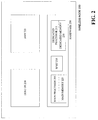
- FIG. 2 illustrates an example AMT environment
- FIG. 3 illustrates an example virtual machine host
- FIG. 4 illustrates conceptually the components of an embodiment of the present invention
- FIG. 5 is a flow chart illustrating an embodiment of the present invention.
- Embodiments of the present invention provide a method, apparatus and system for protecting security keys on a wireless platform. More specifically, embodiments of the present invention provide a secure environment within which wireless platforms may generate, store and access security key material for enabling secure wireless protocols on wireless platforms.
- Reference in the specification to “one embodiment” or “an embodiment” of the present invention means that a particular feature, structure or characteristic described in connection with the embodiment is included in at least one embodiment of the present invention. Thus, the appearances of the phrases “in one embodiment,” “according to one embodiment” or the like appearing in various places throughout the specification are not necessarily all referring to the same embodiment.
- FIG. 1 describes a typical wireless network topology.
- Wireless Network 100 may comprise a collection of different types of networks (e.g., an 802.11 network, an 802.16 network and a “3G” network.
- 3G networks are well known to those of ordinary skill in the art and include networks that conform to the 3G International Telecommunications Union (“ITU”) specification for mobile communications technology.
- ITU International Telecommunications Union
- Wireless Network 100 may comprise the same types of networks and/or a different combination of network types.
- Wireless Network 100 may comprise any type of network architecture, including but are not limited to wireless local area networks (“WLANs”), wireless wide area networks (“WWANs”) including 3G networks, wireless metropolitan area networks (“WMANs”) and/or corporate intranets.
- Wireless Network 100 may include one or more access points or APs (illustrated conceptually as “AP 105 ”, “AP 110 ” and “AP 115 ” in FIG. 1 and referred to collectively as “APs”) and one or more end nodes (illustrated conceptually as “Wireless Node 120 ” and “Wireless Node 125 ” in FIG. 1 and referred to collectively as “Wireless Nodes”).
- APs access points or APs
- end nodes illustrated conceptually as “Wireless Node 120 ” and “Wireless Node 125 ” in FIG. 1 and referred to collectively as “Wireless Nodes”.
- Wireless Nodes 120 and 125 may comprise any type of device that is capable of communicating wirelessly with other devices.
- Such devices may include personal computers, servers, laptops, portable handheld computers (e.g., personal digital assistants or “PDAs”), set-top boxes, intelligent appliances, wireless telephones, web tablets, wireless headsets, pagers, instant messaging devices, digital cameras, digital audio receivers, televisions and/or other devices that may receive and/or transmit information wirelessly (including hybrids and/or combinations of the aforementioned devices).
- APs are “entry points” that provide wireless nodes with access to Wireless Network 100 .
- APs and the Wireless Nodes may communicate with one another using protocols and standards established by the IEEE for wireless communications. For example, some embodiments may conform to the IEEE 802.11 standard, while other embodiments may conform to IEEE 802.16 networks and/or wired networks like IEEE 802.3 Ethernet LANs.
- APs may comprise a standalone device and/or be incorporated as part of another network device such as a network bridge, router, or switch.
- Each AP typically has a predetermined range within which a wireless node may freely roam without interruption.
- Wireless Node 125 may have to reestablish its wireless connection via a new entry point (e.g., AP 115 at its new location).
- a new entry point e.g., AP 115 at its new location.
- the Wireless Nodes and APs typically engage in a series of messages that are designed to initiate a communications session between the Wireless Node and the APs.
- the Wireless Nodes and APs may additionally engage in various exchanges designed to establish a secure link between the two points. Further details of these interactions are described in detail later in the specification.
- Wireless Nodes and APs may engage in various exchanges designed to establish a secure link between the two points.
- a variety of encryption schemes may be utilized to enable secure wireless transmissions. These schemes, however, are typically only as secure as the host operating system (“OS”) on the wireless devices.
- OS host operating system
- the security measures themselves are nonetheless limited by the vulnerability of the WNIC driver (installed on the host OS) and other OS components to various types of attacks.
- the IEEE 802.11 specification defines a “supplicant” to establish various security measures, this supplicant resides in the host OS and is nonetheless subject to attacks that may be levied at the OS.
- Pairwise Master Key (“PMK”) derivation on the host may be done using “EAP methods” on the host and an authentication server on the network, but since the result is a shared PMK between the host and the Authentication server (also known as the Policy Decision Point (“PDP”)), this PMK on the host may be unsecure (e.g., it may be “sniffed” and transferred to a rogue device) when the PDP transfers the PMK to the AP.
- PDP Policy Decision Point
- Wireless network users are open, for example, to “man in the middle” (“MITM”) attacks in which an attacker is able to read, insert and modify messages between two parties without either party knowing that the wireless connection between them has been compromised.
- MITM man in the middle
- Another type of attack comprises a “replay” technique wherein a message from a wireless node may be recoded by an unauthorized third party and then replayed at a later time to simulate a seemingly legitimate message and thereby gain access to the network.
- security keys may be generated within an isolated environment, remote from, and inaccessible by, the host OS.
- the generated security keys may additionally be stored in and accessed from a location remote from and inaccessible by the host OS.
- the security keys typically used to protect the WLAN communication session are generated and stored within the hardware accessible only by the secure environment and never read by the host OS.
- this secure environment may also be capable of executing security protocols with network end-points. More specifically, this secure environment may execute a WLAN session key handshake protocol (described in further detail below) which derives Pairwise Transient Keys (PTKs), used to protect the data and management traffic between the host platform and the AP.
- PTKs Pairwise Transient Keys
- This isolated and secure environment may comprise a variety of different types of partitions, including an entirely separate hardware partition (e.g., utilizing Intel® Corporation's Active Management Technologies (“AMT”), “Manageability Engine” (“ME”), Platform Resource Layer (“PRL”) and/or other comparable or similar technologies) and/or a virtualized partition (e.g., a virtual machine in Intel® Corporation's Virtualization Technology (“VT”) scheme).
- AMT Active Management Technologies
- ME Manageability Engine
- PRL Platform Resource Layer
- VT Virtualization Technology
- FIG. 2 illustrates conceptually a typical AMT environment as implemented by Intel® Corporation. It will be readily apparent to those of ordinary skill in the art that embodiments of the present invention may also be implemented in other similar and/or comparable implementations of AMT. Only the components pertinent to describing the AMT environment have been illustrated in order not to unnecessarily obscure embodiments of the present invention, but it will be readily apparent to those of ordinary skill in the art that additional components may be included without departing from the spirit of embodiments of the invention.
- a wireless device may include a host operating system (“Host OS 210 ”) and system hardware (“Hardware 250 ”).
- Hardware 250 may include two processors, one to perform typical processing tasks for Host OS 210 (“Main Processor 205 ”) while the other may be dedicated exclusively to managing the device via a dedicated partition (“Dedicated Processor 215 ” for “AMT 220 ”).
- Each processor may have associated resources on Wireless Device 200 and they may share one or more other resources.
- Main Processor 205 and Dedicated Processor 210 may each have portions of memory dedicated to them (“Main Memory 225 ” and “Dedicated Memory 230 ” respectively) but they may share a wireless network interface card (“WNIC 235 ”).
- WNIC 235 wireless network interface card
- the wireless device (“Wireless Device 300 ”) is virtualized, it may include only a single processor but a virtual machine monitor (“VMM 330 ”) on the device may present multiple abstractions and/or views of the device or host, such that the underlying hardware of the host appears as one or more independently operating virtual machines (“VMs”).
- VMM 330 may be implemented in software (e.g., as a standalone program and/or a component of a host operating system), hardware, firmware and/or any combination thereof.
- VMM 330 manages allocation of resources on the host and performs context switching as necessary to cycle between various VMs according to a round-robin or other predetermined scheme. It will be readily apparent to those of ordinary skill in the art that although only one processor is illustrated (“Main Processor 305 ”), embodiments of the present invention are not so limited and multiple processors may also be utilized within a virtualized environment.
- VM 310 and VM 320 may function as self-contained platforms respectively, running their own “guest operating systems” (i.e., operating systems hosted by VMM 330 , illustrated as “Guest OS 311 ” and “Guest OS 321 ” and hereafter referred to collectively as “Guest OS”) and other software (illustrated as “Guest Software 312 ” and “Guest Software 322 ” and hereafter referred to collectively as “Guest Software”).
- Each Guest OS and/or Guest Software operates as if it were running on a dedicated computer rather than a virtual machine. That is, each Guest OS and/or Guest Software may expect to control various events and have access to hardware resources on Host 100 . Within each VM, the Guest OS and/or Guest Software may behave as if they were, in effect, running on Wireless Device 300 's physical hardware (“Host Hardware 340 ”, which may include a wireless Network Interface Card (“WNIC 350 ”)).
- Host Hardware 340 which may include a wireless Network Interface Card (“WNIC 350 ”).
- a physical hardware partition with a dedicated processor may provide a higher level of security than a virtualized partition (as illustrated in FIG. 3 ), but embodiments of the invention may be practiced in either environment and/or a combination of these environments to provide varying levels of security.
- an AMT, ME or PRL platform may be implemented within a virtualized environment.
- VM 320 may be dedicated as an AMT partition on a host while VM 310 runs typical applications on the host. In this scenario, the host may or may not include multiple processors.
- VM 320 may be assigned Dedicated Processor 215 while VM 310 (and other VMs on the host) may share the resources of Main Processor 205 .
- the processor may serve both the VMs, but VM 320 may still be isolated from the other VMs on the host with the cooperation of VMM 330 .
- a “partition”, a secure partition”, a “security partition” and/or a “management partition” shall include any physical and/or virtual partition (as described above).
- FIG. 4 illustrates an embodiment of the present invention.
- a wireless device (“Wireless Node 400 ”) may include at least three logical components, namely a host operating system (“Host OS 405 ”), wireless local area network (“WLAN”) hardware/firmware (“WNIC 410 ”) and a dedicated partition such as an AMT (“AMT 415 ”).
- Host OS 405 host operating system
- WLAN wireless local area network
- WNIC 410 wireless local area network
- AMT 415 dedicated partition such as an AMT
- AMT 415 may provide isolation from Host OS 405 (either via a physical separation, a virtual separation or a combination thereof) to enhance the security on the wireless platform.
- an embodiment of the present invention includes a scheme to “offload” portions of the WLAN security key generation process to AMT 415 (i.e., a secure and isolated partition).
- AMT 415 i.e., a secure and isolated partition.
- Host OS 405 may include typical components such an 802.1X supplicant (“Supplicant 420 ”), a network stack, e.g., Transmission Control Protocol (“TCP”), User Datagram Protocol (“UDP”) and/or Dynamic Host Configuration Protocol (“DHCP”) (collectively referred to as “Network Stack 425 ”) and a wireless network driver (“Driver 430 ”).
- Host 405 may additionally include an “AMT offload API” (“AMT Crypto Offload API 435 ”) and EAP methods (“EAP Methods 440 ”).
- WNIC 410 may include an encryption engine (“Encryption Engine 450 ”), a multiplexer/demultiplexer (“MUX/DeMUX 455 ”) and in one embodiment, WNIC 410 may include an additional security component, namely a key store (“Key Store 445 ”). Key Store 445 may be utilized to securely store security keys after they are generated, inaccessible by Host OS 405 .
- AMT 415 may include various components including a wireless network driver (“Driver 460 ”), a secure key store (“AMT Key Store 465 ”), an 802.1X Supplicant (“Supplicant 470 ”), and an “AMT offload library” (“AMT Crypto Offload Library 475 ”).
- the concept of “offload APIs” and “offload libraries” is well known to those of ordinary skill in the art and further description thereof is omitted herein.
- Host OS 405 may initiate control of WNIC 410 .
- Driver 430 in Host OS 405 may perform typical 802.11 authentication procedures (e.g., scanning, discovery, and EAP key management steps), using 802.11 control and management messages. As soon as Driver 430 recognizes a domain (i.e.
- SSID Secure System Identification
- Driver 430 may initiate initial 802.11i authentication procedures for secure association with the 802.11 Access Point (“AP”), and a backend authentication server (hereafter “AAA server”) on Wireless Network 100 .
- AP 802.11 Access Point
- AAA server backend authentication server
- Driver 430 may “offload” all key derivation functions to AMT 415 , to ensure that the key generation (in AMT 415 ) and storage process (in Key Store 445 ) are isolated from Host OS 405 .
- key store e.g., Key Store 445
- embodiments of the invention are not so limited.
- the security keys may be stored in other “secure” locations that are isolated from and not accessible by Host OS 405 including but not limited to AMT 415 (e.g., in AMT Key Store 465 ), in a Trusted Platform Module (“TPM”) and/or in a key store on the hard drive on Wireless Node 400 .
- AMT 415 e.g., in AMT Key Store 465
- TPM Trusted Platform Module
- key store on the hard drive on Wireless Node 400 e.g., in a Key Store 465
- TPMs are well known to those of ordinary skill in the art and typically include one or more hardened storage devices resistant to certain types of user tampering.
- EAP Methods 440 and Supplicant 420 on Wireless Node 400 may be modified to utilize AMT Crypto Offload API 435 for invoking all key derivation functions. More specifically, AMT Crypto Offload API 435 may transfer all functions and parameters to AMT 415 's AMT Crypto Offload Library 475 , which may then execute the functions to generate the PMK. As a result of the transfer of key derivation to AMT 415 , in one embodiment, no intermediate and/or final results of any cryptographic computation (for security keys) are available outside AMT 415 , i.e., the keys exist only in the secure and isolated environment of AMT 415 .
- AMT 415 may instead merely provide EAP Methods 440 and Supplicant 420 with a reference pointer/identity to the PMK.
- Host OS 405 thus does not receive the derived PMK but may utilize the derived PMK (via the reference pointer(s)) to perform an 802.11i 4-way handshake.
- the 802.11i 4-way handshake to derive the per-session Pairwise Transient Keys (“PTKs”).
- Supplicant 420 on Host OS 405 may transfer control from Host OS 405 to Supplicant 470 on AMT 415 to perform the 802.11i 4-way handshake.
- the 4-way handshake is described in further detail below.
- EAP Methods 440 and Supplicant 420 may remain unchanged, i.e., these components currently exist and may be used unchanged to facilitate embodiments of the present invention.
- an embodiment of the present invention allows the PMK to be derived in Host OS 405 but provides additional measures to protect the PMK.
- various known steps may be taken to ensure that the PMK is protected from illegal read access while a trust relationship is established between AMT 415 and Host OS 405 , such that all communication between these entities has the following properties: data confidentiality, data origin authentication, and data integrity.
- the PMK may be wrapped (encrypted) and integrity protected using the keys derived from one of the mechanisms described above.
- the wrapped PMK may be delivered from Supplicant 420 on Host 405 to AMT 415 , and AMT 415 may verify the integrity and origin authentication of the encrypted PMK, and then decrypt the PMK.
- Supplicant 420 on Host OS 405 may then remove the PMK from its memory cache.
- AMT 415 may perform the 4-way handshake described in further detail below.
- Wireless Node 400 may proceed with an 802.1 ⁇ l 4-way handshake.
- the 802.11i 4-way handshake ensures that transient session keys (i.e., PTKs) are derived to provide confidentiality and integrity protection for all data communication between Wireless Node 400 and the AP (i.e., the PEP).
- the transient session keys enable Wireless Node 400 and the AP to confirm that they are not communicating with a replayed session.
- Supplicant 420 on Host OS 405 may indicate to Supplicant 470 on AMT 415 to initiate the 4-way handshake with the AP.
- all components necessary for the 4-way handshake may reside on AMT 415 .
- the PMK and nonces (used to generate random numbers), EAPOL-Key messages, security integrity checks and/or deriving PTKs may all reside and/or occur within AMT 415 (e.g., within AMT Key Store 465 or within a TPM, as described below).
- the TPM may be used to store the PMK, nonces and other information used during PTK derivation.
- AMT 415 may have derived PTKs, and AMT 415 may thereafter install the PTKs in WNIC 415 's hardware key store, i.e., Key Store 445 .
- AMT 415 may then inform Supplicant 420 that the 4-way handshake is complete and send Supplicant 420 a key ID.
- Supplicant 420 may then open an 802.1X controlled port for all data traffic and Driver 430 in Host OS 405 may use the key ID to tag data frames for encryption.
- the tagged data frames may then be encrypted by WNIC 410 and transmitted by WNIC 410 from Wireless Node 400 .
- WNIC 410 may be unable to handle encryption of all the frames (e.g., if the volume of frames for encryption is higher than a predetermined threshold that WNIC 410 is able to process). If so, WNIC 410 may reroute the frames to AMT 415 for encryption by AMT 415 , inform Driver 430 to send the frames directly to AMT 415 for encryption, and/or a combination of the two. In the latter scenario, AMT 415 may perform encryption of the tagged frames and forward the encrypted frames to WNIC 410 , to be transmitted from Wireless Node 400 .
- an additional nonce may be supplied to Host OS 405 , encrypted with a symmetric key previously provisioned into AMT 415 or by encrypting it with AMT 415 's public key.
- This additional nonce may be mixed with other random nonces supplied by AMT 415 as part of the 4-way handshake.
- the PDP i.e. the authentication server on the network
- this operation may prevent a MITM attack during the 4-way handshake even if the PMK was inadvertently exposed to a rogue on the host or if the PMK is compromised by a hacker.
- FIG. 5 is a flow chart illustrating an embodiment of the present invention. Although the following operations may be described as a sequential process, many of the operations may in fact be performed in parallel and/or concurrently. In addition, the order of the operations may be re-arranged without departing from the spirit of embodiments of the invention.
- a PMK may be generated. In one embodiment, the PMK may be generated within AMT 415 while in an alternate embodiment, the PMK may be generated on Host OS 405 and securely transferred to AMT 415 .
- Supplicant 420 on Host OS 405 may indicate to Supplicant 470 on AMT 415 to initiate a 4-way handshake with an AP.
- AMT 415 may perform the 4-way handshake and generate PTKs.
- the PTKs may then be stored in WNIC 410 in Key Store 445 in 504 and in 505 , AMT 415 may inform Supplicant 420 that the 4-way handshake is complete and send Supplicant 420 a key ID.
- Supplicant 420 may open an 802.1X controlled port for all data traffic and in 507 , Driver 430 on Host OS 405 may use the key ID to tag data frames for encryption.
- the tagged data frames may be encrypted in WNIC 410 and/or AMT 415 .
- a computing device may include various other well-known components such as one or more processors.
- the processor(s) and machine-accessible media may be communicatively coupled using a bridge/memory controller, and the processor may be capable of executing instructions stored in the machine-accessible media.
- the bridge/memory controller may be coupled to a graphics controller, and the graphics controller may control the output of display data on a display device.
- the bridge/memory controller may be coupled to one or more buses. One or more of these elements may be integrated together with the processor on a single package or using multiple packages or dies.
- a host bus controller such as a Universal Serial Bus (“USB”) host controller may be coupled to the bus(es) and a plurality of devices may be coupled to the USB.
- USB Universal Serial Bus
- user input devices such as a keyboard and mouse may be included in the computing device for providing input data.
- the host bus controller may be compatible with various other interconnect standards including PCI, PCI Express, FireWire and other such existing and future standards.
Landscapes
- Engineering & Computer Science (AREA)
- Computer Security & Cryptography (AREA)
- Computer Networks & Wireless Communication (AREA)
- Signal Processing (AREA)
- Mobile Radio Communication Systems (AREA)
Abstract
Description
Claims (27)
Priority Applications (1)
| Application Number | Priority Date | Filing Date | Title |
|---|---|---|---|
| US11/281,982 US8422678B2 (en) | 2005-11-16 | 2005-11-16 | Method, apparatus and system for protecting security keys on a wireless platform |
Applications Claiming Priority (1)
| Application Number | Priority Date | Filing Date | Title |
|---|---|---|---|
| US11/281,982 US8422678B2 (en) | 2005-11-16 | 2005-11-16 | Method, apparatus and system for protecting security keys on a wireless platform |
Publications (2)
| Publication Number | Publication Date |
|---|---|
| US20070110245A1 US20070110245A1 (en) | 2007-05-17 |
| US8422678B2 true US8422678B2 (en) | 2013-04-16 |
Family
ID=38040829
Family Applications (1)
| Application Number | Title | Priority Date | Filing Date |
|---|---|---|---|
| US11/281,982 Expired - Fee Related US8422678B2 (en) | 2005-11-16 | 2005-11-16 | Method, apparatus and system for protecting security keys on a wireless platform |
Country Status (1)
| Country | Link |
|---|---|
| US (1) | US8422678B2 (en) |
Cited By (2)
| Publication number | Priority date | Publication date | Assignee | Title |
|---|---|---|---|---|
| US9888010B2 (en) | 2014-09-09 | 2018-02-06 | Oracle International Corporation | System and method for providing an integrated firewall for secure network communication in a multi-tenant environment |
| US11914686B2 (en) | 2021-10-15 | 2024-02-27 | Pure Storage, Inc. | Storage node security statement management in a distributed storage cluster |
Families Citing this family (17)
| Publication number | Priority date | Publication date | Assignee | Title |
|---|---|---|---|---|
| KR101005212B1 (en) * | 2005-12-16 | 2011-01-13 | 노키아 코포레이션 | Method and apparatus for processing network connection and computer readable recording medium |
| US8171302B2 (en) * | 2006-05-30 | 2012-05-01 | Hewlett-Packard Development Company, L.P. | Method and system for creating a pre-shared key |
| US8417868B2 (en) * | 2006-06-30 | 2013-04-09 | Intel Corporation | Method, apparatus and system for offloading encryption on partitioned platforms |
| US8578159B2 (en) * | 2006-09-07 | 2013-11-05 | Motorola Solutions, Inc. | Method and apparatus for establishing security association between nodes of an AD HOC wireless network |
| US8175272B2 (en) * | 2007-03-12 | 2012-05-08 | Motorola Solutions, Inc. | Method for establishing secure associations within a communication network |
| US9239915B2 (en) * | 2007-09-26 | 2016-01-19 | Intel Corporation | Synchronizing between host and management co-processor for network access control |
| US9455898B2 (en) | 2010-09-17 | 2016-09-27 | Oracle International Corporation | System and method for facilitating protection against run-away subnet manager instances in a middleware machine environment |
| US9935848B2 (en) | 2011-06-03 | 2018-04-03 | Oracle International Corporation | System and method for supporting subnet manager (SM) level robust handling of unkown management key in an infiniband (IB) network |
| US20120311182A1 (en) | 2011-06-03 | 2012-12-06 | Oracle International Corporation | System and method for supporting controlled re-routing in an infiniband (ib) network |
| US8955075B2 (en) * | 2012-12-23 | 2015-02-10 | Mcafee Inc | Hardware-based device authentication |
| US9760730B2 (en) * | 2015-08-28 | 2017-09-12 | Dell Products L.P. | System and method to redirect and unlock software secure disk devices in a high latency environment |
| US10097534B2 (en) * | 2015-08-28 | 2018-10-09 | Dell Products L.P. | System and method to redirect hardware secure USB storage devices in high latency VDI environments |
| US11018871B2 (en) * | 2018-03-30 | 2021-05-25 | Intel Corporation | Key protection for computing platform |
| EP4201090A4 (en) * | 2020-08-24 | 2024-07-10 | Eleven Software Inc. | Key matching for eapol handshake using distributed computing |
| US20220264299A1 (en) * | 2022-05-09 | 2022-08-18 | Intel Corporation | Virtual enterprise secure networking |
| US12506769B2 (en) * | 2022-05-23 | 2025-12-23 | The Johns Hopkins University | Virtualization-based controller for industrial control system resiliency |
| US12418423B2 (en) * | 2023-04-11 | 2025-09-16 | Hewlett Packard Enterprise Development Lp | Binding a virtual security processor to a physical security processor |
Citations (9)
| Publication number | Priority date | Publication date | Assignee | Title |
|---|---|---|---|---|
| US20040242228A1 (en) * | 2003-01-14 | 2004-12-02 | Samsung Electronics Co., Ltd. | Method for fast roaming in a wireless network |
| US20050091486A1 (en) * | 2003-10-23 | 2005-04-28 | Idan Avraham | Providing a graphical user interface in a system with a high-assurance execution environment |
| US20060083377A1 (en) * | 2004-10-15 | 2006-04-20 | Broadcom Corporation | Derivation method for cached keys in wireless communication system |
| US20060089819A1 (en) * | 2004-10-25 | 2006-04-27 | Dubal Scott P | Chipset activation |
| US20060121883A1 (en) * | 2004-08-11 | 2006-06-08 | Stefano Faccin | Apparatus, and associated methods, for facilitating secure, make-before-break hand-off in a radio communication system |
| US20060136720A1 (en) * | 2004-12-21 | 2006-06-22 | Microsoft Corporation | Computer security management, such as in a virtual machine or hardened operating system |
| US20060191000A1 (en) * | 2005-02-18 | 2006-08-24 | Cisco Technology, Inc. | Key distribution and caching mechanism to facilitate client handoffs in wireless network systems |
| US20060236127A1 (en) * | 2005-04-01 | 2006-10-19 | Kurien Thekkthalackal V | Local secure service partitions for operating system security |
| US20100135487A1 (en) * | 2008-12-02 | 2010-06-03 | Electronics And Telecommunications Research Institute | Bundle authentication system and method |
-
2005
- 2005-11-16 US US11/281,982 patent/US8422678B2/en not_active Expired - Fee Related
Patent Citations (9)
| Publication number | Priority date | Publication date | Assignee | Title |
|---|---|---|---|---|
| US20040242228A1 (en) * | 2003-01-14 | 2004-12-02 | Samsung Electronics Co., Ltd. | Method for fast roaming in a wireless network |
| US20050091486A1 (en) * | 2003-10-23 | 2005-04-28 | Idan Avraham | Providing a graphical user interface in a system with a high-assurance execution environment |
| US20060121883A1 (en) * | 2004-08-11 | 2006-06-08 | Stefano Faccin | Apparatus, and associated methods, for facilitating secure, make-before-break hand-off in a radio communication system |
| US20060083377A1 (en) * | 2004-10-15 | 2006-04-20 | Broadcom Corporation | Derivation method for cached keys in wireless communication system |
| US20060089819A1 (en) * | 2004-10-25 | 2006-04-27 | Dubal Scott P | Chipset activation |
| US20060136720A1 (en) * | 2004-12-21 | 2006-06-22 | Microsoft Corporation | Computer security management, such as in a virtual machine or hardened operating system |
| US20060191000A1 (en) * | 2005-02-18 | 2006-08-24 | Cisco Technology, Inc. | Key distribution and caching mechanism to facilitate client handoffs in wireless network systems |
| US20060236127A1 (en) * | 2005-04-01 | 2006-10-19 | Kurien Thekkthalackal V | Local secure service partitions for operating system security |
| US20100135487A1 (en) * | 2008-12-02 | 2010-06-03 | Electronics And Telecommunications Research Institute | Bundle authentication system and method |
Non-Patent Citations (1)
| Title |
|---|
| Intel Active Management Technology Small Business Adminstrator's Guide Version 1.02. Published Feb. 2005. * |
Cited By (2)
| Publication number | Priority date | Publication date | Assignee | Title |
|---|---|---|---|---|
| US9888010B2 (en) | 2014-09-09 | 2018-02-06 | Oracle International Corporation | System and method for providing an integrated firewall for secure network communication in a multi-tenant environment |
| US11914686B2 (en) | 2021-10-15 | 2024-02-27 | Pure Storage, Inc. | Storage node security statement management in a distributed storage cluster |
Also Published As
| Publication number | Publication date |
|---|---|
| US20070110245A1 (en) | 2007-05-17 |
Similar Documents
| Publication | Publication Date | Title |
|---|---|---|
| US8422678B2 (en) | Method, apparatus and system for protecting security keys on a wireless platform | |
| CN111448779A (en) | System, device and method for hybrid secret sharing | |
| US8099495B2 (en) | Method, apparatus and system for platform identity binding in a network node | |
| US11863977B2 (en) | Key generation method, device, and system | |
| US11552790B2 (en) | Method for key sharing between accelerators | |
| US11487867B2 (en) | Method and apparatus for creating virtualized network function instance | |
| Antonioli et al. | Nearby threats: Reversing, analyzing, and attacking google's' nearby connections' on android | |
| JP2009538096A (en) | Authentication of tamper resistant modules in base station routers | |
| CN110769420A (en) | Network access method, apparatus, terminal, base station and readable storage medium | |
| US11483299B2 (en) | Method and apparatus for encrypted communication | |
| WO2025016183A1 (en) | Data processing method and related device | |
| US20070110244A1 (en) | Method, apparatus and system for enabling a secure wireless platform | |
| CN115189928B (en) | A method and system for dynamic and secure migration of cryptographic service virtual machines | |
| Fu et al. | A secure SDN based multi-RANs architecture for future 5G networks | |
| US11558357B2 (en) | Method for key sharing between accelerators with switch | |
| US10623382B2 (en) | Creating and utilizing black keys for the transport layer security (TLS) handshake protocol and method therefor | |
| US20210126776A1 (en) | Technologies for establishing device locality | |
| WO2024260532A1 (en) | Apparatus and method for remote attestation using symmetric keys | |
| EP3720042B1 (en) | Method and device for determining trust state of tpm, and storage medium | |
| US11343083B2 (en) | Method for key sharing between accelerators in virtual channel | |
| US11405336B2 (en) | Method for key sharing between accelerators in virtual channel with switch | |
| Robinson | Cryptography as a service | |
| CN118400119A (en) | Method and device for defending network attack and electronic equipment | |
| Zhou et al. | Untangling the knot: Breaking access control in home wireless mesh networks | |
| Oberle et al. | Integrity based relationships and trustworthy communication between network participants |
Legal Events
| Date | Code | Title | Description |
|---|---|---|---|
| AS | Assignment |
Owner name: INTEL CORPORATION, CALIFORNIA Free format text: ASSIGNMENT OF ASSIGNORS INTEREST;ASSIGNORS:SOOD, KAPIL;SMITH, NED;REEL/FRAME:023012/0339;SIGNING DATES FROM 20051110 TO 20051112 Owner name: INTEL CORPORATION,CALIFORNIA Free format text: ASSIGNMENT OF ASSIGNORS INTEREST;ASSIGNORS:SOOD, KAPIL;SMITH, NED;SIGNING DATES FROM 20051110 TO 20051112;REEL/FRAME:023012/0339 Owner name: INTEL CORPORATION, CALIFORNIA Free format text: ASSIGNMENT OF ASSIGNORS INTEREST;ASSIGNORS:SOOD, KAPIL;SMITH, NED;SIGNING DATES FROM 20051110 TO 20051112;REEL/FRAME:023012/0339 |
|
| FEPP | Fee payment procedure |
Free format text: PAYER NUMBER DE-ASSIGNED (ORIGINAL EVENT CODE: RMPN); ENTITY STATUS OF PATENT OWNER: LARGE ENTITY Free format text: PAYOR NUMBER ASSIGNED (ORIGINAL EVENT CODE: ASPN); ENTITY STATUS OF PATENT OWNER: LARGE ENTITY |
|
| STCF | Information on status: patent grant |
Free format text: PATENTED CASE |
|
| FPAY | Fee payment |
Year of fee payment: 4 |
|
| FEPP | Fee payment procedure |
Free format text: MAINTENANCE FEE REMINDER MAILED (ORIGINAL EVENT CODE: REM.); ENTITY STATUS OF PATENT OWNER: LARGE ENTITY |
|
| LAPS | Lapse for failure to pay maintenance fees |
Free format text: PATENT EXPIRED FOR FAILURE TO PAY MAINTENANCE FEES (ORIGINAL EVENT CODE: EXP.); ENTITY STATUS OF PATENT OWNER: LARGE ENTITY |
|
| STCH | Information on status: patent discontinuation |
Free format text: PATENT EXPIRED DUE TO NONPAYMENT OF MAINTENANCE FEES UNDER 37 CFR 1.362 |
|
| FP | Lapsed due to failure to pay maintenance fee |
Effective date: 20210416 |