US8339975B2 - Apparatus and method for allocating subchannels and controlling interference in OFDMA systems - Google Patents

Apparatus and method for allocating subchannels and controlling interference in OFDMA systems Download PDF

Info

Publication number
US8339975B2
US8339975B2 US12/341,933 US34193308A US8339975B2 US 8339975 B2 US8339975 B2 US 8339975B2 US 34193308 A US34193308 A US 34193308A US 8339975 B2 US8339975 B2 US 8339975B2
Authority
US
United States
Prior art keywords
interference
list
subchannel
base station
node
Prior art date
Legal status (The legal status is an assumption and is not a legal conclusion. Google has not performed a legal analysis and makes no representation as to the accuracy of the status listed.)
Active, expires
Application number
US12/341,933
Other versions
US20090310478A1 (en
Inventor
Mohamed Rashad SALEM
Abdulkareem Adinoiyi
Mahmudur Rahman
Halim Yanikomeroglu
David Falconer
Young-Doo Kim
Current Assignee (The listed assignees may be inaccurate. Google has not performed a legal analysis and makes no representation or warranty as to the accuracy of the list.)
Samsung Electronics Co Ltd
Original Assignee
Samsung Electronics Co Ltd
Priority date (The priority date is an assumption and is not a legal conclusion. Google has not performed a legal analysis and makes no representation as to the accuracy of the date listed.)
Filing date
Publication date
Application filed by Samsung Electronics Co Ltd filed Critical Samsung Electronics Co Ltd
Assigned to SAMSUNG ELECTRONICS CO., LTD. reassignment SAMSUNG ELECTRONICS CO., LTD. ASSIGNMENT OF ASSIGNORS INTEREST (SEE DOCUMENT FOR DETAILS). Assignors: KIM, YOUNG-DOO, FALCONER, DAVID, RAHMAN, MAHMUDUR, YANIKOMEROGLU, HALIM, ADINOIYI, ABDULKAREEM, SALEM, MOHAMED RASHAD
Publication of US20090310478A1 publication Critical patent/US20090310478A1/en
Application granted granted Critical
Publication of US8339975B2 publication Critical patent/US8339975B2/en
Active legal-status Critical Current
Adjusted expiration legal-status Critical

Links

Images

Classifications

    • HELECTRICITY
    • H04ELECTRIC COMMUNICATION TECHNIQUE
    • H04LTRANSMISSION OF DIGITAL INFORMATION, e.g. TELEGRAPHIC COMMUNICATION
    • H04L5/00Arrangements affording multiple use of the transmission path
    • H04L5/0001Arrangements for dividing the transmission path
    • H04L5/0003Two-dimensional division
    • H04L5/0005Time-frequency
    • H04L5/0007Time-frequency the frequencies being orthogonal, e.g. OFDM(A) or DMT
    • HELECTRICITY
    • H04ELECTRIC COMMUNICATION TECHNIQUE
    • H04LTRANSMISSION OF DIGITAL INFORMATION, e.g. TELEGRAPHIC COMMUNICATION
    • H04L5/00Arrangements affording multiple use of the transmission path
    • H04L5/003Arrangements for allocating sub-channels of the transmission path
    • H04L5/0037Inter-user or inter-terminal allocation
    • HELECTRICITY
    • H04ELECTRIC COMMUNICATION TECHNIQUE
    • H04LTRANSMISSION OF DIGITAL INFORMATION, e.g. TELEGRAPHIC COMMUNICATION
    • H04L5/00Arrangements affording multiple use of the transmission path
    • H04L5/003Arrangements for allocating sub-channels of the transmission path
    • H04L5/0058Allocation criteria
    • HELECTRICITY
    • H04ELECTRIC COMMUNICATION TECHNIQUE
    • H04LTRANSMISSION OF DIGITAL INFORMATION, e.g. TELEGRAPHIC COMMUNICATION
    • H04L5/00Arrangements affording multiple use of the transmission path
    • H04L5/003Arrangements for allocating sub-channels of the transmission path
    • H04L5/0058Allocation criteria
    • H04L5/0075Allocation using proportional fairness
    • HELECTRICITY
    • H04ELECTRIC COMMUNICATION TECHNIQUE
    • H04WWIRELESS COMMUNICATION NETWORKS
    • H04W72/00Local resource management
    • H04W72/50Allocation or scheduling criteria for wireless resources
    • H04W72/54Allocation or scheduling criteria for wireless resources based on quality criteria
    • H04W72/541Allocation or scheduling criteria for wireless resources based on quality criteria using the level of interference
    • HELECTRICITY
    • H04ELECTRIC COMMUNICATION TECHNIQUE
    • H04LTRANSMISSION OF DIGITAL INFORMATION, e.g. TELEGRAPHIC COMMUNICATION
    • H04L5/00Arrangements affording multiple use of the transmission path
    • H04L5/003Arrangements for allocating sub-channels of the transmission path
    • H04L5/0058Allocation criteria
    • H04L5/006Quality of the received signal, e.g. BER, SNR, water filling
    • HELECTRICITY
    • H04ELECTRIC COMMUNICATION TECHNIQUE
    • H04LTRANSMISSION OF DIGITAL INFORMATION, e.g. TELEGRAPHIC COMMUNICATION
    • H04L5/00Arrangements affording multiple use of the transmission path
    • H04L5/003Arrangements for allocating sub-channels of the transmission path
    • H04L5/0058Allocation criteria
    • H04L5/0062Avoidance of ingress interference, e.g. ham radio channels
    • HELECTRICITY
    • H04ELECTRIC COMMUNICATION TECHNIQUE
    • H04LTRANSMISSION OF DIGITAL INFORMATION, e.g. TELEGRAPHIC COMMUNICATION
    • H04L5/00Arrangements affording multiple use of the transmission path
    • H04L5/003Arrangements for allocating sub-channels of the transmission path
    • H04L5/0058Allocation criteria
    • H04L5/0064Rate requirement of the data, e.g. scalable bandwidth, data priority
    • HELECTRICITY
    • H04ELECTRIC COMMUNICATION TECHNIQUE
    • H04LTRANSMISSION OF DIGITAL INFORMATION, e.g. TELEGRAPHIC COMMUNICATION
    • H04L5/00Arrangements affording multiple use of the transmission path
    • H04L5/003Arrangements for allocating sub-channels of the transmission path
    • H04L5/0078Timing of allocation
    • H04L5/0087Timing of allocation when data requirements change

Definitions

  • the at least one node may be at least one terminal in the OFDMA system, and the determination unit determines the threshold by estimating a total sum of actual data rates of the at least one terminal in a present frame using an actual data rate of the at least one terminal from a previous frame.
  • the determination unit may determine the sum of the data rates of a second hop of the at least one relay station to be the threshold.
  • a computer-readable storage medium storing a program may be used to implement the above method.
  • an average cumulative virtual data rate may be obtained, which may be calculated via Equation 11 as below:

Landscapes

  • Engineering & Computer Science (AREA)
  • Signal Processing (AREA)
  • Computer Networks & Wireless Communication (AREA)
  • Quality & Reliability (AREA)
  • Mobile Radio Communication Systems (AREA)
  • Radio Relay Systems (AREA)

Abstract

Provided is an apparatus for controlling interference. The apparatus may receive interference information about at least one subchannel which is allocated to at least one node in an OFDMA system. The apparatus may create an interference list using the interference information. The apparatus may report the interference list to a radio network controller (RNC).”

Description

CROSS-REFERENCE TO RELATED APPLICATION
This application claims the benefit under 35 U.S.C. §119(a) of a Korean Patent Application No. 10-2008-0054726, filed Jun. 11, 2008, in the Korean Intellectual Property Office, the entire disclosure of which is incorporated herein by reference.
TECHNICAL FIELD
The following description relates to Orthogonal Frequency Division Multiple Access (OFDMA) systems. More particularly, the description relates to an apparatus and method for allocating subchannels and controlling interference in OFDMA systems.
BACKGROUND
Currently, expansion of a cell radius is expected in a mobile communication system since throughput is increased or services are provided to terminals outside a cell radius by reducing path loss occurring between a base station and a terminal via relay nodes installed within the cell radius.
Interference occurs in such mobile communication systems due to a plurality of nodes in the cell which cause traffic, including traffic of a base station. Also, overhead may occur when transmitting data packets due to the plurality of nodes. Such overhead may be overcome by recycling channels between cells. However, if cell interference occurs while channels are recycled between cells, users located at the edge of the cell radius may experience inferior conditions due to resource allocation.
SUMMARY
In one general aspect, an apparatus for allocating subchannels includes: a subchannel allocation coefficient determination unit to determine a subchannel allocation coefficient using a queue length of at least one terminal and a signal to interference plus noise ratio (SINR) of the at least one terminal and at least one relay station in an Orthogonal Frequency Division Multiple Access (OFDMA) system and a subchannel allocation unit to allocate a subchannel to at least one link formed in the OFDMA system using the subchannel allocation coefficient.
The at least one node may be at least one terminal in the OFDMA system. The determination unit may determine the threshold by estimating a total sum of actual data rates of the at least one terminal in a present frame using an actual data rate of the at least one terminal from a previous frame.
The subchannel allocation coefficient determination unit may determine the subchannel allocation coefficient for each of the at least one link based on the subchannels, where the subchannel allocation coefficient may be proportional to the queue length, and a data rate is calculated using the SINR.
The subchannel allocation unit may allocate a subchannel to each of the at least one link so that a total sum of the subchannel allocation coefficients of each of the at least one link, where the subchannel is allocated, is a maximum.
The subchannel allocation unit may select a link whose subchannel allocation coefficient is a maximum derived from links formed between a base station and the at least one terminal, and formed between the base station and the at least one relay station, for each subchannel; and the at least one relay station selects a link whose subchannel allocation coefficient is a maximum derived from links formed between the at least one relay station and the at least one terminal, for each subchannel.
The subchannel allocation unit may allocate a subchannel to each of the at least one link using the selected links so that a total sum of the subchannel allocation coefficients is a maximum.
The apparatus for allocating the subchannel also may be included in a base station in the OFDMA system.
In another general aspect, an apparatus for controlling interference may include: an interference information receiving unit to receive interference information about at least one subchannel which is allocated to at least one node in an OFDMA system; a determination unit to determine whether a data rate of the at least one node is greater than a threshold; an interference list creating unit to create an interference list using the interference information when the data rate is not greater than the threshold; and a reporting unit to report the interference list to a radio network controller (RNC), wherein the RNC receives the interference list; creates a base station list and a relay station list to limit data transmission for each subchannel allocated to the OFDMA system; and transmits the base station list and relay station list to at least one base station in the OFDMA system.
The at least one node may transmit the interference information to the apparatus for controlling interference after generating a predetermined number of interference information for each subchannel that is set in an order of greatest interference power.
The at least one node may be at least one terminal in the OFDMA system, and the determination unit determines the threshold by estimating a total sum of actual data rates of the at least one terminal in a present frame using an actual data rate of the at least one terminal from a previous frame.
The at least one node may be at least one relay station in the OFDMA system, and the determination unit determines whether a total sum of the data rates of first hop of the at least one relay station is greater than the threshold.
The determination unit may determine the sum of the data rates of a second hop of the at least one relay station to be the threshold.
The data rate of the at least one node may be greater than the threshold and the interference list creating unit, limits an interference of each subchannel in the order of greatest interference power; determines whether the data rate of the at least one node is greater than the threshold; and creates the interference list using the interference information about the limited interference of each subchannel.
The data rate of the at least one node may be greater than the threshold and the interference creating unit limits the interference of each subchannel in the order of the greatest interference power and the reporting unit transmits the data rate of the at least one node and transmits the interference list.
The RNC may create for each subchannel the base station list and the relay station list using the interference list and the data rate of the at least one node.
The apparatus for controlling interference may be included in the at least one base station in the OFDMA system.
In another general aspect, a method for allocating subchannels includes: determining a subchannel allocation coefficient using a queue length of at least one terminal and SINR of the at least one terminal and at least one relay station in an OFDMA system; and allocating a subchannel to at least one link formed in the OFDMA system using the subchannel allocation coefficient.
In another general aspect, a method for allocating subchannels includes: receiving interference information about at least one subchannel which is allocated to at least one node, from the at least one node in an OFDMA system; determining whether a data rate of the at least one node is greater than a threshold; making an interference list using the interference information when the data rate is not greater than the threshold; and transmitting the interference list to an RNC, wherein the RNC receives the interference list, creates a base station list and a relay station list to limit data transmission for each subchannel allocated to the OFDMA system, and transmits the base station list and relay station list to the at least one base station in the OFDMA.
In another general aspect, a computer-readable storage medium storing a program may be used to implement the above method.
In another general aspect, a computer-readable storage medium storing a program may also be used to implement the above method.
In addition, all data rates of the OFDMA system may be a maximum.
Other features will be apparent from the description, the drawings, and the claims.
BRIEF DESCRIPTION OF THE DRAWINGS
FIG. 1 is a diagram illustrating an exemplary communication network.
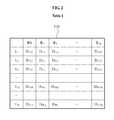
FIG. 2 is a table illustrating an exemplary list of subchannels that may be allocated.
FIG. 3 is a diagram illustrating an exemplary apparatus for allocating subchannels.
FIG. 4 is a diagram illustrating an exemplary apparatus for controlling interference.
FIG. 5 is a flowchart illustrating exemplary operations of an exemplary apparatus for controlling interference.
FIG. 6 is a flowchart illustrating an exemplary method of allocating subchannels.
FIG. 7 is a flowchart illustrating an exemplary method of allocating subchannels.
FIG. 8 is flowchart illustrating an exemplary method of controlling interference.
Like reference symbols in the various drawings indicate like elements.
DETAILED DESCRIPTION
The following detailed description is provided to assist the reader in gaining a comprehensive understanding of the various apparatuses and methods described herein. Accordingly, various changes, modifications, and equivalents of the apparatuses and methods described herein will be suggested to those of ordinary skill in the art. A method of allocating resources which can improve throughput by minimizing interference between cells or interference within cells when a plurality of relay nodes are installed is described below. In particular, an OFDMA scheme has been introduced in a next generation mobile communication system and a method of allocating resources considering the OFDMA is described below. Also, fairness for users is considered in view of resource allocation.
FIG. 1 is a diagram illustrating an exemplary Orthogonal Frequency Division Multiple Access (OFDMA) system. Referring to FIG. 1, the exemplary OFDMA system includes a base station 110; at least one relay station 121, 122, and 123; and at least one terminal 131, 132, 133, 134, and 135. It is assumed that there exists M number of the at least one relay station 121, 122, and 123 and K number of the at least one terminal 131, 132, 133, 134, and 135 in the exemplary OFDMA system. A total number of links, where subchannels can be allocated, are M(1+K)+K since K links exist between the base station 110 and the at least one terminal 131, 132, 133, 134, and 135; M links exist between the base station 110 and the at least one relay station 121, 122, and 123; and MK links exist between the at least one relay station 121, 122, and 123 and the at least one terminal 131, 132, 133, 134, and 135. A subchannel is respectively allocated to each of the links. Before the apparatus for allocating subchannels allocates the subchannels to the links, the apparatus determines a subchannel allocation coefficient using a queue length of the at least one terminal 131, 132, 133, 134, and 135 and a signal to interference plus noise ratio (SINR) of the at least one relay station 121, 122, and 123 and the at least one terminal 131, 132, 133, 134, and 135.
For example, the base station 110 and the at least one relay station 121, 122, and 123 may store the queue length information of the at least one terminal 131, 132, 133, 134, and 135. Accordingly, the apparatus for allocating subchannels may continuously update the queue length information of the at least one terminal 131, 132, 133, 134, and 135 by obtaining the queue length information of the at least one terminal 131, 132, 133, 134, and 135 from the base station and the at least one relay station 121, 122, and 123.
In another example, the apparatus for allocating subchannels may obtain SINR information from the at least one relay station 121, 122, and 123 and the at least one terminal 131, 132, 133, 134, and 135. In addition, the apparatus for allocating subchannels may be included in the base station 110. The base station 110 may also have the queue length information and the SINR information.
In another example, the apparatus for allocating subchannels may determine the subchannel allocation coefficient for each of the M(1+K)+K number of links based on all subchannels, where the subchannel allocation coefficient is proportional to the queue length, and a data rate is calculated using the SINR. In this example, the data rate may be calculated using:
R = W log 2 ( 1 + - 1.5 β ln ( 5 BER ) ) [ Equation 1 ]
where β is a received SINR value, and W indicates a bandwidth.
A subchannel allocation coefficient corresponding to an nth subchannel in a link formed between the base station and the terminal may be represented by:
D n,0−k =R 0,k,n ·Q k 0(t)  [Equation 2]
where n indicates an nth subchannel, 0 indicates a base station, and k indicates a kth terminal. R0,k,n indicates a data rate between the base station and the kth terminal in the nth subchannel, and Qk 0(t) indicates a queue length of the kth terminal between the base station and the kth terminal.
A subchannel allocation coefficient corresponding to the nth subchannel in the link formed between the base station and the relay station, may be represented by:
D n , 0 - m = R 0 , m , n max k { Q k 0 ( t ) - Q k m ( t ) , 0 } [ Equation 3 ]
where n indicates an nth subchannel, 0 indicates a base station, m indicates an mth relay station, and k indicates a kth terminal. R0,m,n indicates a data rate of an mth relay station between the base station and the mth relay station in the nth subchannel, and
max k { Q k 0 ( t ) - Q k m ( t ) , 0 }
indicates a queue length which is calculated by deducting a queue length of the kth terminal between the mth relay station and the kth terminal from a queue length of the kth terminal between the base station and the kth terminal. If a queue length is a negative number, a subchannel allocation coefficient between the base station and the mth relay station is zero.
In a link formed between the relay station and the terminal, a subchannel allocation coefficient corresponding to the nth subchannel may be represented by:
D n,m =R m,k,n ·Q k m(t)  [Equation 4]
where n indicates an nth subchannel, m indicates an mth relay station, and k indicates a kth terminal. Rm,k,n indicates a data rate of the kth terminal between the mth relay station and the kth terminal in nth subchannel, and Qk m(t) indicates a queue length of the kth terminal between the mth relay station and the kth terminal.
The apparatus for allocating subchannels may allocate subchannels to links formed in the OFDMA system once the subchannel allocation coefficient is determined using Equations 1 through 4.
The apparatus for allocating subchannels may also allocate a subchannel to each of the at least one link so that a total sum of the subchannel allocation coefficients is a maximum when subchannels are allocated to the at least one link, which may be represented by:
max ρ , γ n = 1 N { m = 0 M k = 1 K ρ m , k , n R m , k , n Q k m ( t ) + m = 1 M k = 1 K γ 0 , m , n R 0 , m , n max [ Q k 0 ( t ) - Q k m ( t ) , 0 ] } [ Equation 5 ]
where ρm,k,n and γ0,m,n are indicator variables and have features as described below:
ρ m , k , n { 0 , 1 } m , k , n γ 0 , m , n { 0 , 1 } m , n m = 0 M k = 1 K ρ m , k , n + m = 1 M γ 0 , m , n 1 n . [ Equation 6 ]
Referring to Equation 5, a single subchannel is allocated to each of the links in the OFDMA system; however, a total sum of subchannel allocation coefficients that changes depending on a subchannel in each link are compared, and a combination of a subchannel and a link whose total sum is a maximum, is determined. Since a number of links in the OFDMA system in this example is M(1+K)+K, when a number of a subchannel is N, a number of cases that subchannels may be allocated to a link is NPM(1+K)+K. Therefore, the apparatus for allocating subchannels may allocate a subchannel to a link to satisfy Equation 5 by comparing the combination of the subchannel and the link as many times as NPM(1+K)+K. Also, the apparatus for allocating subchannels may allocate a subchannel to a link using another method instead of the above described method. For example, an apparatus for allocating subchannels may select a link whose subchannel allocation coefficient (which may be calculated for each link) is a maximum, from among K links formed between the base station 110 and the at least one terminal (e.g., 131, 132, 133, 134, and 135) and an M link formed between the base station 110 and the at least one relay station (e.g., 121, 122, and 123). In this example, the at least one relay station 121, 122, and 123 selects a link whose subchannel allocation coefficient is a maximum, from among the K links formed between the at least one relay station 121, 122, and 123 and the at least one terminal 131, 132, 133, 134, and 135. Consequently, the apparatus for allocating subchannels may allocate a subchannel to a link using the selected links.
An operation to select a link whose subchannel allocation coefficient (which may be calculated for each link) is a maximum, from among the K links between the base station 110 and the at least one terminal (e.g., 131, 132, 133, 134, and 135) and the M links between the base station 110 and the at least one relay station (e.g., 121, 122, and 123), may be represented by:
D n , 0 - k = ( R 0 , k , n · Q k 0 ( t ) ) , D n , 0 - m = R 0 , m , n max k { Q k 0 ( t ) - Q k m ( t ) , 0 } D n , 0 = max j { M K } D n , 0 - j . [ Equation 7 ]
An operation to select a link whose subchannel allocation coefficient is a maximum, from among the K links formed between the at least one relay station (e.g., 121, 122, 123) and the at least one terminal (e.g., 131, 132, 133, 134, and 135), may be represented by:
D n , m = max k R m , k , n · Q k m ( t ) . [ Equation 8 ]
As described above, an exemplary list of selected links and subchannels is illustrated in Table I 210 of FIG. 2. Hereinafter, examples of allocating a subchannel to a link will be described with reference to FIG. 2.
FIG. 2 is a table illustrating an exemplary list of subchannels that may be allocated. Referring to Table 1210, the first column listing “n1 through nN” represents a plurality of subchannels; the second column, labeled “BS,” represents a base station 110; and the remaining columns, labeled R1 through RM, each represent at least one relay station 121, 122, and 123. That is, in this example, the terms R1 through RM do not represent a data rate, but instead are used to represent a first receiver 121, a second receiver 122, etc. Also, DNM represents a subchannel allocation coefficient. Subchannel allocation coefficients of links selected according to Equation 7 are shown in the column labeled “BS” and subchannel allocation coefficients of links selected according to Equation 8 are shown for each column labeled R1 to an RM.
In one implementation, An apparatus for allocating subchannels may allocate a subchannel to a link so that a total sum of subchannel allocation coefficients of links, where a subchannel is allocated, is a maximum from among links selected using Equations 7 and 8. Referring to Table I 210, since a single subchannel is allocated to each link formed in the OFDMA system, a single link may be selected for each subchannel in the columns. Therefore, under this condition, links are selected so that a total sum of subchannel allocation coefficients of the selected links is a maximum, consequently a corresponding subchannel is allocated to the selected link.
FIG. 3 is a diagram illustrating an exemplary apparatus 310 for allocating subchannels. Referring to FIG. 3, the apparatus 310 for allocating subchannels may include a subchannel allocation coefficient determination unit 311 and a subchannel allocation unit 312. The subchannel allocation coefficient determination unit 311 determines a subchannel allocation coefficient using a queue length of at least one terminal existing in an OFDMA system and an SINR of the at least one terminal and at least one relay station. The subchannel allocation coefficient determination unit 311 may determine the subchannel allocation coefficient, the subchannel allocation coefficient is proportional to the queue length and a data rate is calculated using the SINR. That is, using Equations 1 through 4, the subchannel allocation coefficient may be determined.
The subchannel allocation unit 312 allocates a subchannel to at least one single link formed in the OFDMA system using the subchannel allocation coefficient determined in the subchannel allocation coefficient determination unit 311. The subchannel allocation unit 312 may allocate the subchannel to the at least one link so that a total sum of subchannel allocation coefficients of links, where subchannel is allocated, using Equations 5 and 6. The subchannel allocation unit 312 may select, for each subchannel, a link whose subchannel allocation coefficient is a maximum from among links formed between the base station 110 and the at least one terminal. In this example, the relay station may select, for each subchannel, a link whose subchannel allocation coefficient is a maximum from links formed between the relay station and the at least one terminal, using Equation 8. The subchannel allocation unit 312 may also allocate the subchannel to a link using the selected links so that a total sum of subchannel allocation coefficients of links, where the subchannel is allocated, is a maximum. The apparatus 310 for allocating subchannels may be included in the base station. FIG. 4 is a diagram illustrating an apparatus 410 for controlling interference. Referring to FIG. 4, the apparatus 410 for controlling interference, at least one node 421, 422, 423, and 424, and a radio network controller 430 are illustrated. The apparatus may include, for example, an interference information receiving unit 411, a determination unit 412, an interference list creating unit 413, and reporting unit 414. In addition, the apparatus for controlling interference may be included in a base station, for example, base station 110 illustrated in FIG. 1.
The interference information receiving unit 411 receives, from at least one node 421, 422, 423, and 424, interference information regarding at least one subchannel which is allocated to at least one node 421, 422, 423, and 424. The at least one node 421, 422, 423, and 424 may generate a predetermined number of interference information for each subchannel, which is allocated to each node, set in an order of greatest interference power, and may transmit the interference information to the apparatus 410 for controlling interference. As an example, when a predetermined number is six, the at least one node 421, 422, 423, and 424 may generate six pieces of interference information for each subchannel in an order of greatest interference power, and may transmit the generated six pieces of interference information to the apparatus 410 for controlling interference.
The determination unit 412 determines whether a data rate of the at least one node 421, 422, 423, and 424 is greater than a threshold. The at least one node 421, 422, 423, and 424 may be at least one terminal distributed in the OFDMA system. For example, the determination unit 412 may determine the threshold by estimating a total sum of actual data rates of the at least one terminal 421, 422, 423, and 424 in a present frame using an actual data rate of the at least one terminal from a previous frame, which is described in detail below.
A total sum of actual data rates of the at least one terminal 421, 422, 423, and 424 in a previous frame is calculated using a total sum of an actual data rate from the previous frame of the at least one terminal 421, 422, 423, and 424 as below:
r tot ( t - 1 ) = k = 1 K r k ( t - 1 ) . [ Equation 9 ]
In this example, it is assumed that a number of the at least one terminal is K.
By using the total sum of data rates of the at least one terminal 421, 422, 423, and 424 in the previous frame which is calculated via Equation 9, the total sum of data rates of the at least one terminal 421, 422, 423, and 424 in a present frame may be estimated via Equation 10 as below:
{tilde over (r)} tot(t)=(1−w){tilde over (r)} tot(t−1)+wr tot(t−1),{tilde over (r)} tot(0)=0  [Equation 10]
where 0<w<1.
By using the total sum of data rates of the at least one terminal 421, 422, 423, and 424 in the present frame which is estimate via Equation 10, an average cumulative virtual data rate may be obtained, which may be calculated via Equation 11 as below:
v ( t ) = v ( t - 1 ) + r ~ tot ( t ) K , v ( 0 ) = 0. [ Equation 11 ]
Also, a cumulative actual data rate of a kth terminal from among the at least one terminal 421, 422, 423, and 424 may be represented by:
s k(t)=s k(t−1)+r k(t),s k(0)=0.  [Equation 12]
The determination unit 412 may determine whether the cumulative actual data rate of the kth terminal, which can be calculated via Equation 12, is greater than a threshold by having the average cumulative virtual data rate which can be calculated via Equation 11 to be the threshold. Equation 13 below shows whether a cumulative actual data rate is greater than the threshold is determined by having 95% of an average cumulative virtual data rate of the terminal to be the threshold.
r k(t)+s k(t−1)≧0.95v(t).  [Equation 13]
A threshold which is to be compared with the data rate of the rth terminal may be determined by deducting sk(t−1) from each of left and right terms in Equation 13, which may be represented by:
r k(t)≧0.95v(t)−s k(t−1)=r k th(t).  [Equation 14]
Consequently, referring to Equation 14, the threshold determined in the determination unit 412 is 0.95v(t)−sk(t−1).
In the above example, it has been assumed that the at least one node 421, 422, 423, and 424 is a terminal, however it is possible that the at least one node 421, 422, 423, and 424 may be the at least one relay station existing in the OFDMA system. For example, the determination unit 412 may determine whether a total sum of data rates of first hops of the at least one relay station 421, 422, 423, and 424 is greater than a threshold. Also, the determination unit 412 may determine a total sum of data rates of second hops of the at least one relay station 421, 422, 423, and 424.
The interference list creating unit 413 creates an interference list using an interference list received in the interference information receiving unit 411 once the determination unit 412 has determined the data rate of the at least one node 421, 422, 423, and 424 is not greater than the threshold. The interference list creating unit 413 may limit the interference of each subchannel, allocated to each node of the at least one node 421, 422, 423, and 424, in an order of greatest interference power, and may determine whether the data rates of the at least one node 421, 422, 423, and 424 is greater than the threshold. When the data rates of the at least one node 421, 422, 423, and 424 are greater than the threshold, the interference list creating unit 413 creates the interference list using the interference information about the limited interference. As an example, it is assumed the interference information receiving unit 411 receives six pieces of interference information for each subchannel from the kth terminal where three subchannels are allocated, and each piece of interference information is In1, In2, In3, In4, In5, In6. (n: subchannel, interference power: In1>In2>In3>In4>In5>In6). As a result of that interference list creating unit 413 limits the interference for each subchannel in an order of greatest interference power, when a data rate of the kth terminal is greater than the threshold since I11 and I12 are limited in the first subchannel, when the data rate of the kth terminal is greater than the threshold since I21 is limited in the second terminal, and when the data rate of the kth terminal is greater than the threshold since I31 is limited in the third terminal, the interference list creating unit 413 creates an interference list for each subchannel using I11, I12, I21, and I31.
The reporting unit 414 transmits the interference list created in the interference list creating unit 413 to the radio network controller 430. The interference list creating unit 413 may limit the interference in the order of greatest interference power, and the reporting unit 414 may transmit that the interference list created by determining whether a data rate at the time of the limiting is greater than the threshold and the data rate value to the radio network controller 430.
The radio network controller 430 creates, using the interference list received from the apparatus for controlling interference, a base station list and a relay station list to limit data transmission for each subchannel, allocated to the OFDMA system, and also transmits the base station list and relay station list to at least one base station in the OFDMA system.
When the radio network controller 430 receives the interference list and the data rate from the apparatus for controlling interference, and the base station list and the relay station list to limit data transmission using the received interference list and the data rate are created so that all data rates in the OFDMA system become a maximum for each subchannel allocated to the OFDMA system, the interference list and the data rate being created by limiting the interference in the order of greatest interference power. This may be described by Equation 15.
max x Z = i x i R i j i , j C i ( 1 - x j ) s . t . x 1 , x 2 , x N c { 0 , 1 } [ Equation 15 ]
Equation 15 represents selecting a base station and a relay station to limit data transmission for each subchannel allocated to the OFDMA system. Ri indicates a data rate which can be obtained in an ith cell in the case that a base station and a relay station in a jth cell are limited; x is an indicator to determine whether to limit signal transmission of a base station or a relay station in each cell. When x=1, signal transmission is not limited, and when x=0, signal transmission is limited.
Hereinafter, the operations of the radio network controller 430 according to Equation 15 will be described by taking an example of a case of an nth subchannel. It is assumed, the radio network controller 430 receives a data rate when interference is limited and the interference list from the apparatus for controlling interference is in the first cell; the received data rate and the received interference list are analyzed when signal transmission of the base station is limited or when the relay station in the second cell and the third cell is limited; and an estimated data transmission rate in the first cell is R1. It is also assumed that the radio network controller 430 receives a data rate when interference is limited and the interference list from the apparatus for controlling interference is in the second cell; that the received data rate and the received interference list are analyzed when signal transmission of the base station or the relay station in the first cell is limited; and an estimated data transmission rate in the second cell is R2. It is also assumed that the radio network controller 430 receives a data rate when interference is limited and the interference list from the apparatus for controlling interference is in the third cell; the received data rate and the received interference list are analyzed when signal transmission of either the base station or the relay station is in the first cell is limited; and an estimated data transmission rate in the third cell is R3. This may be represented by:
x max Z=x 1(1−x 2)(1−x 3)R 1 +x 2(1−x 1)R 2 +x 3(1−x 1)R 3 s.tx 1 ,x 2 ,x 3ε0.1  [Equation 16]
The radio network controller 430 selects a base station or a relay station to limit data transmission for each subchannel from among base stations and relay stations in the OFDMA system by obtaining x1, x2, and x3 satisfying Equation 16, thereby creating an interference list. For example, if Z in Equation 16 is a maximum when x1=0, x2=1, x3=1 are satisfied, the radio network controller 430 has a base station or a relay station in the first cell; either the a base station list or a relay station list may limit data transmission; and the radio network controller 430 may transmit the base station list or the relay station list to a plurality of base stations in the OFDMA system.
FIG. 5 is a flowchart illustrating exemplary operations of an exemplary apparatus for controlling interference. Referring to FIG. 5, a radio network controller 510, an apparatus for controlling interference 520, and at least one node 530 are illustrated. In 541, the at least one node 530 generates interference information for at least one subchannel, allocated to the at least one node 530.
For example, the at least one node 530 may generate a predetermined number of interference information for each subchannel, set in an order of greatest interference power. In operation 542, the generated interference information is transmitted to the apparatus 520 for controlling interference. In operation 543, the apparatus 520 for controlling interference determines whether a data rate of the at least one node 530 is greater than a threshold. For example, the at least one node 530 may be a terminal and determining whether a data rate of the at least one terminal 530 is greater than the threshold may be determined using Equations 9 through 14.
Also, as an example, the at least one node 530 may be a relay station and a total sum of data rates of a first hop of the at least one relay station 530 is greater than total sum of data rates of a second hop of the at least one relay station 530 may be determined.
In operation 544, as a result of the determination in operation 543, when the data rate of the at least one node 530 is not greater than the threshold, the apparatus 520 for controlling interference creates an interference list using the interference information. In operation 545, the interference list created in the operation 544 is transmitted to the radio network controller 510. The apparatus 520 for controlling the interference limits the interference of each subchannel, allocated to the at least one node 530, in the order of greatest interference power, and determines whether the data rates of the at least one node 530 is greater than the threshold, and, when the data rates of the at least one node 530 is greater than the threshold, creates the interference list using the interference information about the limited interference, consequently may transmit the data rate which can be obtained by limiting the interference, and the interference list to the radio network controller 510. In operation 546, by using the interference list received by the radio network controller 510 in operation 545, a base station list and a relay station list to limit data transmission for each subchannel, allocated to the OFDMA system, are created from among at least one base station and relay station in the OFDMA system.
As an example, the radio network controller 510, via Equation 15, may create the base station list and relay station list to limit data transmission so that a total sum of data rates for each subchannel in the OFDMA system is a maximum. In operation 547, the base station list and the relay station list created in operation 546 is transmitted to at least one base station in the OFDMA system.
FIG. 6 is a flowchart illustrating an exemplary method of allocating subchannels. In operation 610, a subchannel allocation coefficient is determined using a queue length of at least one terminal in the OFDMA system and an SINR of the at least one terminal and at least one relay station in the OFDMA system. In one implementation, the subchannel allocation coefficient may be determined using Equations 1 through 4.
In operation 620, a total sum of subchannel allocation coefficients of links, where a subchannel is allocated, is compared. In operation 630, whether the total sum of subchannel allocation coefficients is the maximum is determined as a result of the comparison in operation 620. In one implementation, operation 630 may be determined via Equations 5 through 6. As a result of the determination in operation 630, when the total sum of the subchannel allocation coefficients are not the maximums, operation flow returns to operation 620, and the comparison operation is repeated until a total sum of subchannel allocation coefficients is a maximum. As a result of the determination in operation 630, when a combination of a subchannel and a link whose total sum of subchannel allocation coefficients is a maximum is determined, a subchannel is allocated to a link to generate such combination in operation 640.
FIG. 7 is a flowchart illustrating an exemplary method of allocating subchannels. In operation 710, a total sum of subchannel allocation coefficients of links where subchannel is allocated is compared. In operation 720, a link whose subchannel allocation coefficient is a maximum is selected for each subchannel, from among links between a base station and a terminal and between the base station and a relay station.
In one implementation, operation 720 may be selected using Equation 7. In operation 730, a link whose subchannel allocation coefficient is a maximum is selected for each subchannel, from among links between the relay station and the terminal. In one implementation, operation 730 may be selected via Equation 8. In operation 740, a subchannel is allocated to a link using links selected in operations 720 and 730 so that a total sum of subchannel allocation coefficients is a maximum.
FIG. 8 is flowchart illustrating an exemplary method of controlling interference. In operation 810, interference information is received from at least one node in the OFDMA system. In one implementation, a predetermined number of the at least one node is generated in an order of greatest interference power, and the interference information may be transmitted. In operation 820, a data rate of the at least one node is compared with a threshold. In operation 830, whether the data rate of the at least one node is greater than the threshold is determined. In one implementation, the at least one node may be at least one terminal, and determining whether a data rate of at least one terminal is greater than the threshold is calculated using Equations 10 through 14.
In another example, the at least one node may be at least one relay station, and it may be determined whether a total sum of data rates of first hop of the at least one relay station is greater than the threshold. As a result of the determination in operation 830, when the data rate of the at least one node is greater than the threshold, the operation is terminated. However, as a result of the determination in operation 830, when the data rate of the at least one node is not greater than the threshold, interference is limited for each subchannel; allocated to the at least one node in an order of greatest interference power; and the data rate of the at least one node is compared with the threshold in operation 840.
In operation 850, whether the data rate of the at least one node which can be obtained by limiting the interference is greater than the threshold is determined. As a result of the determination in operation 850, when the data rate of the at least one node which can be obtained by limiting the interference is not greater than the threshold, operation 840 is repeated. However, as a result of the determination in operation 850, when the data rate of the at least one node which can be obtained by limiting the interference is greater than the threshold, an interference list is created using the interference information about the limited interference in operation 860. In operation 870, the interference list created in operation 860 and the data rate of the at least one node which can be obtained by limiting the interference are transmitted to a radio network controller.
For example, the radio network controller may create a base station list and a relay station list for each subchannel allocated to the OFDMA system via Equation 15, using the interference list and data rate transmitted from operation 870 and the controller may transmit the base station list and relay station list to at least one base station.
The method of allocating subchannels and for controlling interference in an OFDMA system as described above may be recorded in computer-readable media including program instructions to cause a processor to implement or carry out various operations embodied by a computer to form a specific machine or apparatus. A non-exhaustive list of examples of media may include, alone or in combination with the program instructions, at least data files, data structures, and the like. A non-exhaustive list of examples of computer-readable media may include magnetic media such as hard disks, floppy disks, and magnetic tape; optical media such as CD ROM disks and DVD; magneto-optical media such as optical disks; and hardware devices that are specially configured to store and perform program instructions, such as read-only memory (ROM), random access memory (RAM), flash memory, and the like. A non-exhaustive list of examples of program instructions may include both steps, procedures, instructions embodied in machine code, such as produced by a compiler, and files containing higher level code that may be executed by the computer using an interpreter or other programming. Such hardware devices may be configured to act as one or more software modules in order to perform the exemplary method described above.
A number of exemplary embodiments have been described above. Nevertheless, it will be understood that various modifications may be made. For example, suitable results may be achieved if the described techniques are performed in a different order and/or if components in a described system, architecture, device, or circuit are combined in a different manner and/or replaced or supplemented by other components or their equivalents. Accordingly, other implementations are within the scope of the following claims.

Claims (14)

1. An apparatus for controlling interference, the apparatus comprising:
an interference information receiving unit configured to receive interference information about at least one subchannel which is allocated to at least one node in an OFDMA system;
a determination unit configured to determine that a data rate of the at least one node is less than a threshold based on the interference information about the at least one subchannel;
an interference list creating unit configured to limit interference in the at least one subchannel until the data rate of the at least one node is greater than the threshold, and to create an interference list comprising the limited interference information; and
a reporting unit configured to transmit the interference list comprising the limited interference information to a radio network controller (RNC),
wherein the apparatus is included in a station controlled by the RNC, and
the interference list transmitted to the RNC enables the RNC to create a base station list and a relay station list to limit data transmission for each subchannel allocated to the OFDMA system, and to transmit the base station list and relay station list to at least one base station in the OFDMA system.
2. The apparatus of claim 1, wherein the apparatus receives, from the at least one node, the interference information for controlling interference after the at least one node generates a predetermined number of interference information for each subchannel that is set in an order of greatest interference power.
3. The apparatus of claim 1, wherein the at least one node is at least one terminal in the OFDMA system, and the determination unit determines the threshold by estimating a total sum of actual data rates of the at least one terminal in a present frame using an actual data rate of the at least one terminal from a previous frame.
4. The apparatus of claim 1, wherein the at least one node is at least one relay station in the OFDMA system, and the determination unit determines whether a total sum of the data rates of a first hop of the at least one relay station is greater than the threshold.
5. The apparatus of claim 4, wherein the determination unit determines the sum of the data rates of a second hop of the at least one relay station to be the threshold.
6. The apparatus of claim 1, wherein the interference list creating unit limits the interference of each of the at least one subchannels in an order of greatest interference to least interference, determines again whether the data rate of the at least one node is greater than the threshold, and, in response to determining the data rate of the at least one node is not greater than the threshold, repeats the limiting and the determining.
7. The apparatus of claim 1, wherein the apparatus for controlling interference is included in the at least one base station in the OFDMA system.
8. The apparatus of claim 1, wherein the apparatus is included in a base station which is controlled by the RNC.
9. A method of an apparatus for controlling interference, the method comprising:
receiving interference information about at least one subchannel which is allocated to at least one node, from the at least one node in an OFDMA system;
determining that a data rate of the at least one node is less than a threshold based on the interference information about the at least one subchannel;
limiting interference in the at least one subchannel until the data rate of the at least one node is greater than the threshold, and creating an interference list comprising the limited interference information; and
transmitting the interference list to a radio network controller (RNC),
wherein the apparatus is included in a station controlled by the RNC, and
the interference list transmitted to the RNC enables the RNC to create a base station list and a relay station list to limit data transmission for each subchannel allocated to the OFDMA system, and to transmit the base station list and relay station list to at least one base station in the OFDMA system.
10. A non-transitory computer-readable storage medium storing a program to cause a processor to implement the method of claim 9.
11. A base station which is controlled by a radio network controller (RNC), the base station comprising:
a determiner configured to determine that a data rate of a node is less than a predetermined threshold based on interference information about a plurality of subchannels allocated to the node;
an interference list creator configured to limit interference in the plurality of subchannels until the data rate of the node is greater than the predetermined threshold, and to create an interference list comprising the limited interference information; and
a transmitter configured to transmit the interference list comprising the limited interference information to the RNC,
wherein the interference list transmitted to the RNC enables the RNC to create a base station list and a relay station list to limit data transmission for each subchannel allocated to the OFDMA system, and to transmit the base station list and relay station list to at least one other base station in the OFDMA system.
12. The base station of claim 11, wherein the interference list creator is configured to limit the interference in each subchannel from among the plurality of subchannels in an order from a subchannel comprising the greatest interference to a subchannel comprising the least interference.
13. The base station of claim 11, wherein the determiner and the interference list creator repeatedly perform the determining and the limiting, a plurality of times, until the data rate of the node is greater than the predetermined threshold.
14. The base station of claim 11, further comprising a receiver configured to receive a base station list and/or a relay station list from the RNC, and, in response to receiving the base station list and/or the relay station list, the interference list creator is configured to limit the interference in the plurality of subchannels.
US12/341,933 2008-06-11 2008-12-22 Apparatus and method for allocating subchannels and controlling interference in OFDMA systems Active 2029-03-31 US8339975B2 (en)

Applications Claiming Priority (2)

Application Number Priority Date Filing Date Title
KR1020080054726A KR101469143B1 (en) 2008-06-11 2008-06-11 Method and apparatus for controlling subchannel allocation and interference in an OFDMA system
KR10-2008-0054726 2008-06-11

Publications (2)

Publication Number Publication Date
US20090310478A1 US20090310478A1 (en) 2009-12-17
US8339975B2 true US8339975B2 (en) 2012-12-25

Family

ID=41414661

Family Applications (1)

Application Number Title Priority Date Filing Date
US12/341,933 Active 2029-03-31 US8339975B2 (en) 2008-06-11 2008-12-22 Apparatus and method for allocating subchannels and controlling interference in OFDMA systems

Country Status (5)

Country Link
US (1) US8339975B2 (en)
EP (1) EP2289277B1 (en)
JP (2) JP5419182B2 (en)
KR (1) KR101469143B1 (en)
WO (1) WO2009151210A2 (en)

Families Citing this family (4)

* Cited by examiner, † Cited by third party
Publication number Priority date Publication date Assignee Title
US20070177545A1 (en) * 2006-01-30 2007-08-02 Natarajan Kadathur S System and method for allocating sub-channels in a network
KR101683112B1 (en) * 2009-08-09 2016-12-08 엘지전자 주식회사 Method and apparatus of scheduling in relay communication system
JP5504970B2 (en) * 2009-09-25 2014-05-28 ソニー株式会社 Management server, communication system, communication terminal, and relay device
CN108419245B (en) * 2017-02-09 2021-11-12 中兴通讯股份有限公司 Subnet division method and device

Citations (22)

* Cited by examiner, † Cited by third party
Publication number Priority date Publication date Assignee Title
JP2003229896A (en) 2002-02-01 2003-08-15 Fujitsu Ltd Packet transmission scheduling apparatus and packet transmission scheduling method
US20040228288A1 (en) * 2003-05-12 2004-11-18 Lg Electronics Inc. Method of determining reverse data rate in mobile communication system
US20050111476A1 (en) * 2003-11-20 2005-05-26 Nokia Corporation Radio resource control
US20050232183A1 (en) 2003-09-03 2005-10-20 Sartori Philippe J Method and apparatus for relay facilitated communications
KR20060057471A (en) 2004-11-23 2006-05-26 삼성전자주식회사 Scheduling Device and Method in Cellular Communication System Using Relay Method
WO2006098608A1 (en) 2005-03-18 2006-09-21 Samsung Electronics Co., Ltd. System and method for subcarrier allocation in a wireless multihop relay network
JP2007068092A (en) 2005-09-02 2007-03-15 Kddi Corp Wireless communication method and relay station
KR20070038875A (en) 2005-10-06 2007-04-11 삼성전자주식회사 Channel Configuration and Resource Allocation Method for Wireless Communication System Using Multi-hop Relay Method
US20070104087A1 (en) * 2005-11-04 2007-05-10 Samsung Electronics Co., Ltd. Apparatus and method for feedback of subcarrier quality estimation in an OFDM/OFDMA system
EP1788740A1 (en) 2004-09-29 2007-05-23 Matsushita Electric Industrial Co., Ltd. Radio communication device and radio communication method
KR20070062757A (en) 2005-12-13 2007-06-18 엘지전자 주식회사 Data transfer relay method
EP1806945A2 (en) 2006-01-06 2007-07-11 Samsung Electronics Co., Ltd. Apparatus and method of providing relay service in Broadband Wireless Access (BWA) communication system
KR20070082284A (en) 2006-02-16 2007-08-21 삼성전자주식회사 Wireless Resource Distribution Apparatus and Method in a Multi-hop Relay Broadband Wireless Access Communication System
KR20070117140A (en) 2006-06-07 2007-12-12 삼성전자주식회사 Resource allocation method and system in communication system
US20080240030A1 (en) * 2007-03-20 2008-10-02 Nokia Corporation Transmission adaptation in a wireless network
US20080273541A1 (en) * 2007-05-03 2008-11-06 Abroadcasting Company Linked-list hybrid peer-to-peer system and method for optimizing throughput speed and preventing data starvation
US20090110087A1 (en) * 2007-10-30 2009-04-30 Yin Liu Channel-Dependent Frequency-Domain Scheduling in an Orthogonal Frequency Division Multiplexing Communications System
US20090213805A1 (en) * 2008-02-27 2009-08-27 Qualcomm Incorporated Method and apparatus for supporting data transmission in a multi-carrier communication system
US20090285109A1 (en) * 2008-05-19 2009-11-19 Qualcomm Incorporated Methods and systems for adaptive effective cinr reporting in a wireless communication system
US20090316809A1 (en) * 2006-03-11 2009-12-24 Jin Young Chun Method for transmitting channel quality information
US20100034148A1 (en) * 2004-07-20 2010-02-11 Nortel Networks Limited Method and system of flow control in multi-hop wireless access networks
US20100130223A1 (en) * 2006-08-15 2010-05-27 Telefonaktiebolaget Lm Ericsson (Pumbl) Method and apparatus for scheduling resources and avoiding interference in a multi-cellular wireless communication system

Family Cites Families (11)

* Cited by examiner, † Cited by third party
Publication number Priority date Publication date Assignee Title
US8024A (en) * 1851-04-08 Bbick-pbess
US4022A (en) * 1845-05-01 Improvement in machines for hackling and cleaning hemp and flax
KR100943572B1 (en) * 2003-12-23 2010-02-24 삼성전자주식회사 Adaptive Subchannel Allocation System and Method Considering Frequency Reuse in Orthogonal Frequency Division Multiple Access System
US7818018B2 (en) * 2004-01-29 2010-10-19 Qualcomm Incorporated Distributed hierarchical scheduling in an AD hoc network
US7974253B2 (en) * 2005-03-08 2011-07-05 Qualcomm Incorporated Methods and apparatus for implementing and using a rate indicator
US7760751B2 (en) * 2006-05-19 2010-07-20 Futurewei Technologies, Inc. System for supporting consecutive and distributed subcarrier channels in OFDMA networks
JP4786413B2 (en) * 2006-05-22 2011-10-05 Kddi株式会社 Control station apparatus and radio communication control method
JP4430052B2 (en) * 2006-06-19 2010-03-10 株式会社エヌ・ティ・ティ・ドコモ Mobile communication system, user apparatus and transmission method
US9179366B2 (en) * 2006-08-31 2015-11-03 Intel Corporation Scheduling methods and apparatus based on adjusted channel capacity
KR20080037398A (en) * 2006-10-26 2008-04-30 삼성전자주식회사 Base Station Cooperation Method in Communication System and Its System
JP5014946B2 (en) * 2007-10-18 2012-08-29 Kddi株式会社 Frequency channel assignment apparatus, frequency channel assignment method, and computer program

Patent Citations (22)

* Cited by examiner, † Cited by third party
Publication number Priority date Publication date Assignee Title
JP2003229896A (en) 2002-02-01 2003-08-15 Fujitsu Ltd Packet transmission scheduling apparatus and packet transmission scheduling method
US20040228288A1 (en) * 2003-05-12 2004-11-18 Lg Electronics Inc. Method of determining reverse data rate in mobile communication system
US20050232183A1 (en) 2003-09-03 2005-10-20 Sartori Philippe J Method and apparatus for relay facilitated communications
US20050111476A1 (en) * 2003-11-20 2005-05-26 Nokia Corporation Radio resource control
US20100034148A1 (en) * 2004-07-20 2010-02-11 Nortel Networks Limited Method and system of flow control in multi-hop wireless access networks
EP1788740A1 (en) 2004-09-29 2007-05-23 Matsushita Electric Industrial Co., Ltd. Radio communication device and radio communication method
KR20060057471A (en) 2004-11-23 2006-05-26 삼성전자주식회사 Scheduling Device and Method in Cellular Communication System Using Relay Method
WO2006098608A1 (en) 2005-03-18 2006-09-21 Samsung Electronics Co., Ltd. System and method for subcarrier allocation in a wireless multihop relay network
JP2007068092A (en) 2005-09-02 2007-03-15 Kddi Corp Wireless communication method and relay station
KR20070038875A (en) 2005-10-06 2007-04-11 삼성전자주식회사 Channel Configuration and Resource Allocation Method for Wireless Communication System Using Multi-hop Relay Method
US20070104087A1 (en) * 2005-11-04 2007-05-10 Samsung Electronics Co., Ltd. Apparatus and method for feedback of subcarrier quality estimation in an OFDM/OFDMA system
KR20070062757A (en) 2005-12-13 2007-06-18 엘지전자 주식회사 Data transfer relay method
EP1806945A2 (en) 2006-01-06 2007-07-11 Samsung Electronics Co., Ltd. Apparatus and method of providing relay service in Broadband Wireless Access (BWA) communication system
KR20070082284A (en) 2006-02-16 2007-08-21 삼성전자주식회사 Wireless Resource Distribution Apparatus and Method in a Multi-hop Relay Broadband Wireless Access Communication System
US20090316809A1 (en) * 2006-03-11 2009-12-24 Jin Young Chun Method for transmitting channel quality information
KR20070117140A (en) 2006-06-07 2007-12-12 삼성전자주식회사 Resource allocation method and system in communication system
US20100130223A1 (en) * 2006-08-15 2010-05-27 Telefonaktiebolaget Lm Ericsson (Pumbl) Method and apparatus for scheduling resources and avoiding interference in a multi-cellular wireless communication system
US20080240030A1 (en) * 2007-03-20 2008-10-02 Nokia Corporation Transmission adaptation in a wireless network
US20080273541A1 (en) * 2007-05-03 2008-11-06 Abroadcasting Company Linked-list hybrid peer-to-peer system and method for optimizing throughput speed and preventing data starvation
US20090110087A1 (en) * 2007-10-30 2009-04-30 Yin Liu Channel-Dependent Frequency-Domain Scheduling in an Orthogonal Frequency Division Multiplexing Communications System
US20090213805A1 (en) * 2008-02-27 2009-08-27 Qualcomm Incorporated Method and apparatus for supporting data transmission in a multi-carrier communication system
US20090285109A1 (en) * 2008-05-19 2009-11-19 Qualcomm Incorporated Methods and systems for adaptive effective cinr reporting in a wireless communication system

Non-Patent Citations (2)

* Cited by examiner, † Cited by third party
Title
International Preliminary Report on Patentability (including Written opinion of the International Searching Authority) issued Oct. 4, 2011, in counterpart International Application No. PCT/KR2009/002119 (7 pages).
Parag, Parimal, et al., "A subcarrier Allocation Algorithm for OFDMA using Buffer and Channel State Information", 2005 IEEE 62nd Vehicular Technology Conference, Sep. 2005, pp. 622-625.

Also Published As

Publication number Publication date
EP2289277A2 (en) 2011-03-02
JP2013258780A (en) 2013-12-26
EP2289277B1 (en) 2020-04-08
WO2009151210A2 (en) 2009-12-17
JP5419182B2 (en) 2014-02-19
KR101469143B1 (en) 2014-12-04
EP2289277A4 (en) 2016-09-28
WO2009151210A3 (en) 2011-11-17
JP2012504876A (en) 2012-02-23
KR20090128789A (en) 2009-12-16
US20090310478A1 (en) 2009-12-17
JP5691103B2 (en) 2015-04-01

Similar Documents

Publication Publication Date Title
US11678272B2 (en) System and method for joint power and resource allocation using reinforcement learning
KR101539214B1 (en) Method of scheduling and admission control for guaranteed bit rate and/or maximum bit rate services
US8190165B2 (en) System and method for utility-based scheduling for space division multiple access (SDMA) on an uplink of a wireless communications network
US8588832B2 (en) Precoding method for femtocell or picocell and communication system of using the method
US7804805B2 (en) Apparatus and method for scheduling transmission of data packets in a multichannel wireless communication system
US20080304448A1 (en) System and Method for Dynamic Resource Allocation in Wireless Communications Networks
US8077678B2 (en) Radio resource allocating method and apparatus in adaptive antenna system
US7720503B2 (en) Method and system for controlling power in a communication system
US20090185502A1 (en) Apparatus and method for planning a wireless network
EP1962439A2 (en) Method and apparatus for joint scheduling to increase frequency efficiency and fairness in a multi-channel distributed antenna system using frequency reuse and common power control
US20110194419A1 (en) Wireless communication system for efficient multicast transmission using adaptive modulation and coding mechanism
CN102404853B (en) Method for sending PDCCHs (Physical Downlink Control Channels) and equipment for sending PDCCHs
CN101242207A (en) Method and apparatus for joint scheduling to increase frequency efficiency and fairness
US8046019B2 (en) Method and system for optimal allocation of uplink transmission power in communication networks
EP3030031B1 (en) Method for allocating transmission resources in a wireless communications network
US8339975B2 (en) Apparatus and method for allocating subchannels and controlling interference in OFDMA systems
EP1946577B1 (en) Selection of radio resources in a radio communications network
EP1788830A1 (en) System and method for allocating resource and user terminal using the method
US10271337B2 (en) Method and apparatus for performing decoding with low complexity in wireless communication system
EP1727296A1 (en) Method and device for downlink resource allocation for packet transmission of users of radio communication systems
US8565144B2 (en) Scheduling apparatus and method of relay-based network
KR20100040594A (en) Method for allocating transmission power
Roorda et al. Dynamic time slot assignment in reservation protocols for multiaccess channels
Nguyen Adaptive multiple access schemes for massive MIMO machine-type communication networks
Carrasco et al. Channel-aware MAC performance of AMC-ARQ-based wireless systems

Legal Events

Date Code Title Description
AS Assignment

Owner name: SAMSUNG ELECTRONICS CO., LTD., KOREA, REPUBLIC OF

Free format text: ASSIGNMENT OF ASSIGNORS INTEREST;ASSIGNORS:SALEM, MOHAMED RASHAD;ADINOIYI, ABDULKAREEM;RAHMAN, MAHMUDUR;AND OTHERS;SIGNING DATES FROM 20080912 TO 20081010;REEL/FRAME:022199/0963

FEPP Fee payment procedure

Free format text: PAYER NUMBER DE-ASSIGNED (ORIGINAL EVENT CODE: RMPN); ENTITY STATUS OF PATENT OWNER: LARGE ENTITY

Free format text: PAYOR NUMBER ASSIGNED (ORIGINAL EVENT CODE: ASPN); ENTITY STATUS OF PATENT OWNER: LARGE ENTITY

STCF Information on status: patent grant

Free format text: PATENTED CASE

FPAY Fee payment

Year of fee payment: 4

MAFP Maintenance fee payment

Free format text: PAYMENT OF MAINTENANCE FEE, 8TH YEAR, LARGE ENTITY (ORIGINAL EVENT CODE: M1552); ENTITY STATUS OF PATENT OWNER: LARGE ENTITY

Year of fee payment: 8

MAFP Maintenance fee payment

Free format text: PAYMENT OF MAINTENANCE FEE, 12TH YEAR, LARGE ENTITY (ORIGINAL EVENT CODE: M1553); ENTITY STATUS OF PATENT OWNER: LARGE ENTITY

Year of fee payment: 12