US8335922B2 - Recording medium, digital information verification apparatus, and digital information verification method - Google Patents
Recording medium, digital information verification apparatus, and digital information verification method Download PDFInfo
- Publication number
- US8335922B2 US8335922B2 US11/882,097 US88209707A US8335922B2 US 8335922 B2 US8335922 B2 US 8335922B2 US 88209707 A US88209707 A US 88209707A US 8335922 B2 US8335922 B2 US 8335922B2
- Authority
- US
- United States
- Prior art keywords
- information
- feature amount
- digital
- digital information
- content
- Prior art date
- Legal status (The legal status is an assumption and is not a legal conclusion. Google has not performed a legal analysis and makes no representation as to the accuracy of the status listed.)
- Expired - Fee Related, expires
Links
Images





Classifications
-
- H—ELECTRICITY
- H04—ELECTRIC COMMUNICATION TECHNIQUE
- H04N—PICTORIAL COMMUNICATION, e.g. TELEVISION
- H04N1/00—Scanning, transmission or reproduction of documents or the like, e.g. facsimile transmission; Details thereof
- H04N1/32—Circuits or arrangements for control or supervision between transmitter and receiver or between image input and image output device, e.g. between a still-image camera and its memory or between a still-image camera and a printer device
- H04N1/32101—Display, printing, storage or transmission of additional information, e.g. ID code, date and time or title
- H04N1/32144—Display, printing, storage or transmission of additional information, e.g. ID code, date and time or title embedded in the image data, i.e. enclosed or integrated in the image, e.g. watermark, super-imposed logo or stamp
-
- H—ELECTRICITY
- H04—ELECTRIC COMMUNICATION TECHNIQUE
- H04N—PICTORIAL COMMUNICATION, e.g. TELEVISION
- H04N2201/00—Indexing scheme relating to scanning, transmission or reproduction of documents or the like, and to details thereof
- H04N2201/32—Circuits or arrangements for control or supervision between transmitter and receiver or between image input and image output device, e.g. between a still-image camera and its memory or between a still-image camera and a printer device
- H04N2201/3201—Display, printing, storage or transmission of additional information, e.g. ID code, date and time or title
- H04N2201/3225—Display, printing, storage or transmission of additional information, e.g. ID code, date and time or title of data relating to an image, a page or a document
- H04N2201/3233—Display, printing, storage or transmission of additional information, e.g. ID code, date and time or title of data relating to an image, a page or a document of authentication information, e.g. digital signature, watermark
Definitions
- the present invention relates to a recording medium, a digital information verification apparatus, and a digital information verification system that identify a digital document based on feature amount information generated using meta information such as a header or property and content information which is document content to thereby support validation or verification of authenticity and integrity of a digital document and enable third-party certification thereof.
- a use of a scanner allows documents that have been stored in the form of a paper to be easily digitized. Further, practical application of a high-resolution image scanner makes digital archive of a large number of paper documents, which has not been unauthorized, legally acceptable, if a given security requirement is satisfied (e-document law, which came into effect on April. 2005).
- the digital signature is a technique capable of identifying the creator of a document (validating identity) as well as obtaining third party certification that no modification has been made to the document (validating integrity).
- the time stamp can certify the time at which a document is newly created in addition to the above function of the digital signature.
- the digital signature and time stamp are added to the entire document.
- a conventional concept of the originality assurance system realized by using the techniques described above is to safely manage a document of the fixed final version as an original document, that is, to store so-called “paper” document in a locked document stack.
- the system targets a document the location of its original document of which is clear.
- the digital signature and time stamp are used as very effective techniques for assuring identity or integrity.
- Jpn. Pat. Appln. Laid-Open Publication No. 2000-285024 and Jpn. Pat. Appln. Laid-Open Publication No. 2001-117820 are known.
- a solution for a digital document sanitizing problem is proposed in Paper of Information Processing Society of Japan/Computer Security Group (CSEC) “Digital document sanitizing problem (2003/7/17) (2003-CSEC-22-009)”.
- CSEC Paper of Information Processing Society of Japan/Computer Security Group
- a digital document is divided into blocks, and partial signatures (hash values) for respective blocks are generated.
- the generated hash values are embedded in non-disclosure parts of the document body, allowing the parts having the same hash value to be detected as unchanged parts and the parts having different hash values to be detected as a change.
- binder A description will be made focusing a single/multiple documents and a filing or document constituted by a single/multiple pages (hereinafter, referred collectively as “binder”).
- a digital signature is often added to the entire binder. In this case, although it is possible to detect whether any change has been made to the entire binder, it is impossible to detect which document (page) in the binder the change has been made to.
- the above technique of 1) does not describe the above points and only aims to use a digital signature to simply store a digital document in a complete state (a state where no change has been made).
- unstructured document type such as PDF (Portable Document Format) or Microsoft Office Word is considered.
- Such a format is roughly constituted by “Content information” representing the content itself of a document and “meta information” representing the header or property (version information, total number of pages, order of pages, angle of rotation of each page, notation, magnification, etc.) of the document.
- the conventional techniques 2) and 3) treat “content information+meta information” as one document and focus on the content of the content information.
- a binder paper document
- a digital document e.g., PDF format
- the digital document is stored with a digital signature and time stamp added thereto.
- a digitization operator operator who performs scan operation
- digitization manager manager who performs final review and approval
- the digitization operator first performs scan operation and verifies sameness between a digitized document and original paper document and, then, adds his or her digital signature to the digitized document.
- the binders are set in an auto document feeder provided in a scanner for automatic scan processing, and the verification of sameness between the digitized document and paper original document is often omitted in terms of operating effectiveness.
- the digital signature of the digitization operator is added to the digital document without verification of the sameness and, then, approval processing is forwarded to the digitization manager.
- verification of the sameness between the digitized document and original paper document needs to be performed in the subsequent time point.
- the digitization manager who gives final approval may perform the verification, or there may be a case where another operator who is in charge of the verification thereof may be designated.
- the present invention has been made to solve the above problems, and an object thereof is to provide a recording medium, digital information verification apparatus, and a digital information verification method capable of: certifying/verifying authenticity and integrity of a digital document including meta information such as a header, property, and the like and content information by using the meta information and content information; achieving third-party certification of the digital document; and responding flexibly to operations such as page rotation, notation addition, and the like even after, e.g., scan operation (addition of digital signature/time stamp).
- a recording medium that records a computer-readable digital information verification program in order to allows a computer to execute a method of verifying digital information
- the digital information verification program allows a computer to execute: a feature amount information generation step that uses meta information and content information of the digital information to generate feature amount information for identifying the digital information; a registration step that registers the feature amount information generated by the feature amount information generation step and digital information in association with each other; and a feature amount information verification step that uses the feature amount information generation step to generate feature amount information of another digital information corresponding to the digital information registered by the registration step, uses the generated feature amount information and the feature amount information registered by the registration step to determine presence/absence of any change made to the digital information registered by the registration step and, when determining that any change has been made, identifies the changed part to verify the digital information.
- a digital information verification apparatus that verifies digital information, comprising: a feature amount information generation section that uses meta information and content information of the digital information to generate feature amount information for identifying the digital information; a registration section that registers the digital information and the feature amount information generated from the digital information in association with each other; and a feature amount information verification section that uses the feature amount information generation section to generate feature amount information of another digital information corresponding to the digital information registered by the registration section, uses the generated feature amount information and the feature amount information registered by the registration section to determine presence/absence of any change made to the digital information registered by the registration section and, when determining that any change has been made, identifies the changed part to verify the digital information.
- a digital information verification method allowing a computer to execute verification of digital information, comprising: a feature amount information generation step that uses meta information and content information of the digital information to generate feature amount information for identifying the digital information; a registration step that registers the feature amount information generated by the feature amount information generation step and digital information in association with each other; and a feature amount information verification step that uses the feature amount information generation step to generate feature amount information of another digital information corresponding to the digital information registered by the registration step, uses the generated feature amount information and the feature amount information registered by the registration step to determine presence/absence of any change made to the digital information registered by the registration step and, when determining that any change has been made, identifies the changed part to verify the digital information.
- the present invention it is possible to certify/verify authenticity and integrity of a digital document including meta information such as a header, property, and the like and content information by using the meta information and content information, to achieve third-party certification of the digital document and to respond flexibly to operations such as page rotation, notation addition, and the like even after, e.g., scan operation (addition of digital signature/time stamp).
- FIG. 1 is a principle view for explaining the present invention
- FIG. 2 is a view showing a configuration of an embodiment of the present invention
- FIG. 3 is a flowchart of registration processing
- FIG. 4 is a view showing digital information analysis processing
- FIG. 5 is a view showing feature amount information generation processing of meta information
- FIG. 6 is a view showing feature amount information generation processing of content information
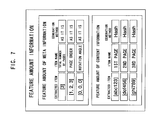
- FIG. 7 is a view showing feature amount information obtained by integrating the feature amounts of the meta information and content information
- FIG. 8 is a view showing an example of the content of a management card issued at the digital information registration time
- FIG. 9 is a view showing an image of a storage state at the digital information registration time
- FIG. 10 is a flowchart of update processing
- FIG. 11 is a view showing change operation performed at the time when the rotation error has been found.
- FIG. 12 is a view showing analysis processing of corrected digital information
- FIG. 13 is a view showing feature amount generation processing of the meta information in the corrected digital information
- FIG. 14 is a view showing feature amount information obtained by integrating the feature amounts of the meta information and content information of corrected digital information
- FIG. 15 is a view showing an example of the content of a management card issued at the digital information update time
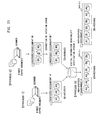
- FIG. 16 is a view showing an image of a storage state at the digital information update time
- FIG. 17 is a flowchart of verification processing
- FIG. 18 is a view showing an example of comparison/verification using old and new meta information feature amounts
- FIG. 19 is a view showing an example of comparison/verification using old and new content information feature amounts
- FIG. 20 is a view showing an example of verification result output screen
- FIG. 21 is a view showing an example of merging of a plurality of documents.
- FIG. 22A to 22H are view showing another use form of the second embodiment.
- FIG. 1 is a principle view for explaining the outline of the embodiment of the present invention.
- the embodiment shown in FIG. 1 includes a digital information analysis section 10 for analyzing digital information of a digital document read out by a scanner and extracting meta information and content information from the digital document, a feature amount information generation section 20 for generating feature amount information from the meta information and content information, and a feature amount information verification section 50 for validating/verifying the feature amount information of an object to be verified.
- the digital information analysis section 10 receives an input digital information, performs analysis of the digital information, and separates the digital information into meta information including information concerning a header, property, and the like of the digital information and content information including the content of the body of the digital information by the analysis processing so as to extract them.
- the digital information includes information read out by a not shown scanner and information transmitted from other digital information management apparatus, and the like.
- the feature amount information generation section 20 includes a meta information extraction method determination section 21 , a content information extraction method determination section 23 , a meta information feature amount generation section 22 , and a content information feature amount generation section 24 .
- the meta information extraction method determination section 21 and content information extraction method determination section 23 each have a function of selecting item information concerning a predetermined item respectively from the meta information and content information extracted from the digital information in a separated manner by the digital information analysis section 10 and performing determination for selecting a generation method for generating feature amount information from the selected item information (hereinafter, according to the need, these functions are collectively referred to as “selection/determination function” and information (item and generation method) obtained by the selection/determination function are collectively referred to as “selected/determined information”).
- the meta information feature amount generation section 22 and content information feature amount generation section 24 each have a function of generating feature amount information (meta information related parameter and content information related parameter) respectively from the meta information and content information based on the selected/determined information of the meta information extraction method determination section 21 and content information extraction method determination section 23 .
- the meta information includes items corresponding to a header, property, and the like.
- the items include version information, total number of pages, page order, rotation angle of pages, and operations (addition, change, deletion, integration, rotation) corresponding to a header or property of the digital information.
- the meta information extraction method determination section 21 determines, by its own selection/determination function, items to be selected when selecting given items in the meta information which is required for originality verification in the process of the present embodiment or selecting all items in the meta information.
- a user that is, a manager (or a man in charge of document creation) can previously set items corresponding to the type (e.g., subject) of the digital information in a table.
- a manager or a man in charge of document creation
- the meta information extraction method determination section 21 can instruct the meta information feature amount generation section 22 to generate feature amount information according to a plurality of generation patterns (generation method) that the meta information extraction method determination section 21 has selected.
- Examples of the generation pattern include, for example, a pattern that uses a one-way hash function so as not to leak the content of the meta information to a third-party to calculate a hash value from the meta information to generate the feature amount information, pattern that uses the meta information, as it is, without considering a risk such as leakage to the third-party to generate the feature amount information, pattern that encodes the content of the meta information, and the like.
- the meta information extraction method determination section 21 selects, on a case-by-case basis, these generation patterns of the feature amount information to generate variation in the generation pattern (method) of the feature amount information concerning the meta information.
- a manager or a man in charge of document creation or a user (document user) can previously set items (generation patterns) corresponding to the type (e.g., subject) of the digital information in a table.
- generation patterns items corresponding to the type (e.g., subject) of the digital information in a table.
- the meta information feature amount generation section 22 generates the feature amount information of the meta information based on the meta information and feature amount generation pattern obtained by the meta information extraction method determination section 21 .
- the meta information feature amount generation section 22 adds, to the generated respective feature amount information, information indicating to which item (meta information) of a plurality of meta information the generated feature amount information corresponds and information indicating the feature amount information generation method, as additional information and allows the respective feature amount information and addition information to be processed independently from the digital information.
- the content information extraction method determination section 23 determines items to be selected, by its selection/determination function, when selecting given items in the plurality of content information which is required for originality verification in the process of the present embodiment or selecting all items in the content information.
- the content information extraction method determination section 23 can select the items in units of a document (page) or, select, according to the need, a given part in each document (page).
- a user in determining which items are to be selected, a user, that is, a manager (or a man in charge of document creation) can previously set items corresponding to the type (e.g., subject) of the digital information in a table. Alternatively, it is possible to set the item for each digital information handled.
- the content information extraction method determination section 23 can instruct the content information feature amount generation section 24 to generate feature amount information according to a plurality of generation pattern (generation method) that the content information extraction method determination section 23 has selected.
- Examples of the generation pattern include, for example, a pattern that uses a one-way hash function so as not to leak the content of the content information to a third-party to calculate a hash value from the content information to generate the feature amount information, pattern that uses the content information, as it is, without considering a risk such as leakage to the third-party to generate the feature amount information, and pattern that encodes the content of the content information, pattern that extracts a statistics value of the content of the content information, and the like.
- the content information extraction method determination section 23 selects, on a case-by-case basis, these generation patterns of the feature amount information to generate variation in the generation pattern (generation method) of the feature amount information concerning the content information.
- a manager or a man in charge of document creation or a user (document user) can previously set items (generation patterns) corresponding to the type (e.g., subject) of the digital information in a table.
- generation patterns items corresponding to the type (e.g., subject) of the digital information in a table.
- the meta information extraction method determination section 21 and content information extraction method determination section 23 can operate in collaboration with other to determine the meta information to be selected in correspondence with the type (e.g., subject) of the digital information and its feature amount generation pattern and content information to be selected and its feature amount generation pattern. That is, the meta information and content information to be selected are determined such that they are associated with each other like an after-mentioned relationship between page information (meta information) and its content (content information) or between operations and the content (content information) concerning the operations.
- the content information feature amount generation section 24 generates the feature amount information of the content information based on the content information and feature amount generation pattern obtained by the content information extraction method determination section 23 .
- the feature amount information is generated, for example, in units of a document (page), or, according to the need, generated with respect to a given part in each document (page).
- the content information feature amount generation section 24 adds, to the generated respective feature amount information, information indicating to which content information (to which part in a document) of a plurality of content information (document) the generated content information corresponds and information indicating the feature amount information generation method, as additional information and allows the respective feature amount information and addition information to be processed independently from the digital information.
- the feature amount information generation section 20 integrates the feature amount information of the meta information and that of the content information for registration. At this time, feature amount information generation section 20 adds a digital signature 200 and time stamp 300 respectively to the entire digital information and entire integrated feature amount information.
- the feature amount information verification section 50 includes a meta information verification section 51 having a function of comparing the respective feature amount information (items) of old and new meta information to be verified to certify/verify the presence/absence of any change for each item and a content information verification section 52 having a function of comparing the respective feature amount information (items) of old and new content information to be verified to certify/verify the presence/absence of any change for each item, thereby supporting certification/verification of the feature amount information to be verified.
- a meta information verification section 51 having a function of comparing the respective feature amount information (items) of old and new meta information to be verified to certify/verify the presence/absence of any change for each item
- a content information verification section 52 having a function of comparing the respective feature amount information (items) of old and new content information to be verified to certify/verify the presence/absence of any change for each item, thereby supporting certification/verification of the feature amount information to be verified.
- FIG. 2 is a block diagram showing a digital information verification apparatus according to the embodiment of the present invention.
- a digital information verification apparatus (digital information originality verification system) 1 shown in FIG. 2 includes an digital information analysis section 10 , a feature amount information generation section 20 , a certification information processing section 30 , a registration/management section 40 , a feature amount information verification section 50 , and a processing controller 60 .
- the digital information analysis section 10 receives digital information analysis request from the processing controller 60 to be described later and performs the above-mentioned operation. Since the configurations and operations of the digital information analysis section 10 and feature amount information generation section 20 have been described in the outline of the embodiment shown in FIG. 1 , descriptions thereof will hereinafter be omitted.
- the certification information processing section 30 receives a certification information processing request from the processing controller 60 and performs acquisition/addition/verification of certification information required for third-party certification.
- the certification information concretely means information such as the digital signature 200 , time stamp 300 , and the like.
- the certification information is afterward used as information required to certify, when, who creates digital information and feature amount to be verified or that the digital information and feature amount have not been changed from the time at which the target information are newly created, to a third party.
- the digital signature 200 is issued by CA (Certificate Authority) 500 A and time stamp 300 is issued by TA (Time Authority) 500 B.
- CA Certificate Authority
- TA Time Authority
- the digital signature 200 and time stamp 300 those issued by public third-party organizations are used. This increases believability and truthfulness of the information (digital information and time stamp), allowing strict third-party certification to be performed.
- a role of the certification information processing section 30 in the present embodiment is to acquire the digital signature 200 and time stamp 300 respectively from the CA 500 A and TA 500 B and adding them to the entire digital information and entire feature amount information and, after that, performs verification of the digital information using the digital signature 200 and time stamp 300 .
- the certification information processing section 30 is constituted by two sub-elements: a certification information addition section 31 and a certification information verification section 32 .
- the certification information addition section 31 performs acquisition/addition of certification information for the digital information and feature amount information, to which certification information is to be added, received from the processing controller 60 to be described later.
- the certification information verification section 32 performs verification of certification information for the digital information and feature amount information, to which certification information is to be added, received from the processing controller 60 .
- the registration/management section 40 receives a registration/management request from the processing controller 60 and performs association between the digital information, feature amount information and certification information for registration/management.
- the certification information is included respectively in the digital information and feature amount information as a management form of the registration/management section 40 shown in FIG. 2
- the certification information may be managed independently of the digital information and feature amount information.
- the management form in which the certification information is included respectively in the digital information and feature amount information is employed.
- the feature amount information verification section 50 receives a feature amount information verification request from the processing controller 60 together with old and new feature amount information to be verified and performs verification of the feature amount information to be verified.
- the feature amount information verification section 50 is constituted by two sub-elements: a meta information verification section 51 and a content information verification section 52 .
- the meta information verification section 51 compares the respective feature amount information (items) of the meta information corresponding respectively to at least two old and new digital information to be verified received from the processing controller 60 to certify/verify the presence/absence of any change for each item.
- the content information verification section 52 compares the respective feature amount information (items) of the content information corresponding respectively to at least two old and new digital information to be verified received from the processing controller 60 to certify/verify the presence/absence of any change for each item.
- the processing controller 60 plays a main role in the digital information verification apparatus 1 .
- the processing controller 60 issues a processing request to the respective sections described above and receives a request therefrom and performs a predetermined notification to a user 700 .
- a user utilizes the digital information verification apparatus 1
- the digital information verification apparatus 1 consider the situation in which the user scans a binder (paper document composed of a single or plurality of pages) by a scanner to obtain a digitized document (corresponding to aforementioned “digital information”) and adds the digital signature 200 and time stamp 300 to the digitized document so as to storage the digitized document.
- a binder paper document composed of a single or plurality of pages
- the above series of operations correspond to the operation process of generating digitized document from a paper document in the existing e-document law. It can be assumed that the already-stored digitized document to which the digital signature 200 and time stamp 300 have been added is afterward taken according to the need and the following operation is performed.
- the user uses the digital information verification apparatus 1 as a means for exhibiting the records as evidence if embroiled in court cases afterward, or when performing third-party certification of the digitized document.
- a digitized operator (client as digitized operator) 700 A who scans the binder (paper document) using a scanner and registers the obtained digitized document in the digital information verification apparatus 1 ; an operator in charge of making change (client in charge of making change) 700 B who takes out the digitized document registered by the digitized operator 700 A from the digital information verification apparatus 1 , corrects the rotation error, and re-registers the corrected digitized document in the digital information verification apparatus 1 ; and an operator in charge of verification (client in charge of verification) 700 C who performs third-party certification of the digitized document registered in the digital information verification apparatus 1 .
- the above three operators use the digital information verification apparatus 1 to perform the following processes.
- the digitized operator 700 A scans a binder (paper document) using a scanner to obtain a digitized document and inputs it as digital information to thereby complete registration of the digitized document in the digital information verification apparatus 1 .
- a rotation error of a given page at the scan time is detected and the paper is rotated.
- the operator in charge of making change 700 B performs the rotation operation for the digitized information registered by the digitized operator 700 A and, after that, re-registers it in the digital information verification apparatus 1 .
- the operator in charge of verification 700 C identifies the changed part and certifies unchanged part, followed by verification of the identification and certification.
- the digital information verification apparatus 1 provides the following three functions respectively to the digitized operator 700 A, operator in charge of making change 700 B, and operator in charge of verification 700 C.
- Registration function (utilized by digitized operator 700 A at registration time of digitized information)
- Verification function (utilized by operator in charge of verification 700 C at verification time of digitized information)
- FIG. 3 is a flowchart of the registration processing.
- the digitized operator 700 A sets a binder (paper document) in an auto document feeder provided in a scanner and depresses a scan button. An image of the captured binder is displayed on a screen. The digitized operator 700 A then selects “registration” menu and depresses a determination button to issue a digital information registration request to the processing controller 60 in the digital information verification apparatus 1 . Thus, the digital information is forwarded to the processing controller 60 .
- the processing controller 60 receives the digital information registration request (step ST-R 1 ) and issues an analysis processing request to the digital information analysis section 10 together with the input digital information as parameters (step ST-R 2 ).
- the digital information analysis section 10 executes analysis processing for the received digital information (step ST-R 3 ).
- the digital information analysis section 10 separates the digital information into meta information concerning information such as version information, total number of pages, order of pages, angle of rotation of each page corresponding to a header and property and respective operations related to the digital information extracted by the analysis processing and content information including the content of the body of the digital information.
- FIG. 4 shows a state where the digital information has been separated into the meta information and content information.
- the binder paper document
- the digital information is separated into the meta information and content information by the digital information analysis section 10 .
- information such as version information (“1.3” (M ⁇ 1)), total number of pages (“3” (M ⁇ 2)), page order (“1 ⁇ 2 ⁇ 3” (M ⁇ 3)), rotation angle of each page (rotation angles of all pages are “0” (M ⁇ 4)), and the like are extracted as the meta information, and the contents of the document body from pages 1 to 3 are arranged as the content information.
- the content information and meta information are extracted from the same digital information or the same part in the same digital document and, thus, have a constant relationship to each other.
- the digital information analysis section 10 issues a feature amount information generation request to the feature amount generation section 20 together with the separated meta information and content information as parameters (step ST-R 4 ).
- the feature amount generation section 20 receives the feature amount information generation request from the digital information analysis section 10 (step ST-R 5 - 1 ) and starts feature amount generation processing for the meta information in the first place.
- the meta information extraction method determination section 21 in the feature amount generation section 20 makes determination about selection of items to be extracted and selection regarding a generation method of the feature amount information by the above-mentioned selection/determination function (step ST-R 5 - 2 ). More specifically, the meta information extraction method determination section 21 makes determination processing to select, on a case-by-case basis, given items in the meta information which is required for originality verification in the process of the present embodiment or select all items in the meta information.
- the present invention is applied to a case where the rotation error (error of the direction of the document relative to the scanning direction) of a document at the scan time is corrected. Therefore, the feature amount information of the rotation angle (M ⁇ 4) of each page is naturally generated and, in addition, the feature amount information of the total number of pages (M ⁇ 2) and page order (M ⁇ 3) are also generated in the present embodiment.
- determination information concerning the items to be extracted of the meta information is previously determined before the operation of the present embodiment and is retained in the meta information extraction method determination section 21 as a definition body.
- determination information concerning the items to be extracted of the meta information is previously determined before the operation of the present embodiment and is retained in the meta information extraction method determination section 21 as a definition body.
- the meta information extraction method determination section 21 selects, on a case-by-case basis, a generation pattern of the feature amount information from among a pattern that uses a one-way hash function so as not to leak the content of the meta information to a third-party to calculate a hash value, pattern that uses the meta information, as it is, without considering a risk such as leakage to the third-party, and pattern that encodes the content of the meta information, and the like.
- the present embodiment assumes, especially, a case where the rotation error of a document at the scan time is corrected. Therefore, in this case, a generation pattern that uses the content of the meta information, as it is, is selected in order to check the rotation angle (M ⁇ 4) of each page has been changed from that at the time of creation time, that is, in order to check how the correction has been made to the rotation angles of all pages whose rotation angles at the digital document creation time were 0°.
- the generation method of the feature amount information of the meta information is, as described in the above outline, selected, on a case-by-case basis, depending on the items in the meta information and, as in the case of the determination about the items to be extracted, is previously determined before the operation of the present embodiment and retained in the meta information extraction method determination section 21 as a definition body.
- the meta information feature amount generation section 22 acquires information (selection/determination information) for generating the feature amount information from the meta information extraction method determination section 21 and, based on the information, generates the feature amount information of the meta information (step ST-R 5 - 3 ).
- FIG. 5 shows a state where the feature amount information of the meta information is generated.
- the meta information feature amount generation section 22 generates the feature amount of the meta information according to the selection/determination information (Meta-define).
- meta information feature amount generation section 22 records information, as “item name”, indicating to which item in the meta information each feature amount information corresponds and records another information indicating the generation method of the feature amount information (in the case of the present embodiment, expression “as it is” is recorded).
- the feature amount information is recorded without changing respective forms retained by the corresponding items of the meta information in the present embodiment, the feature amount information may be converted into a hash value or encoded depending on the selection/determination information (Meta-define).
- step ST-R 5 - 4 feature amount generation processing of the content information is executed (step ST-R 5 - 4 ). That is, the content information extraction method determination section 23 in the feature amount generation section 20 makes determination about items to be extracted and a generation method of the feature amount information.
- the determination information concerning the items to be extracted is previously determined before the operation of the present embodiment and is retained in the content information extraction method determination section 23 as a definition body. As described above, by adopting a method that selects, on a case-by-case basis, given items in the content information which is required for originality verification, data of the content information feature amount can be reduced.
- the content information extraction method determination section 23 selects, on a case-by-case basis, a generation pattern of the feature amount information from among a pattern that uses a one-way hash function so as not to leak the content of the content information to a third-party to calculate a hash value, pattern that uses the content information, as it is, without considering a risk such as leakage to the third-party, pattern that encodes the content of the content information, and pattern that extracts a statistics value of the content of the content information, and the like.
- “To extract a statistics value” is the generation pattern of the feature amount information, in which a predetermined statistics value is previously acquired from the content information and, based on the acquired value, the feature amount information is generated. For example, assume that there exists binary data “0010110100011100” as the content information. In this case, if the total number of “1” is odd, ‘a’ is recorded. Such a statistical processing method is used to output the statistics value for generation of the feature amount information in some cases.
- a method that uses a one-way hash function to calculate a hash value is selected in order to prevent leakage of the content information.
- the generation method of the feature amount information of the content information is selected, on a case-by-case basis, depending on the items in the content information and, as in the case of the determination about the items to be extracted, is previously determined before the operation of the present embodiment and retained in the content information extraction method determination section 23 as a definition body.
- the content information feature amount generation section 24 acquires selection/determination information for generating the feature amount information from the content information extraction method determination section 23 and, based on the selection/determination information, generates the feature amount information of the content information (step ST-R 5 - 5 ).
- FIG. 6 shows a state where the feature amount information of the content information is generated.
- the content information feature amount generation section 24 generates the feature amount of the content information according to the selection/determination information (Contents-define).
- content information feature amount generation section 24 records information, as “item name”, indicating to which item in the content information each feature amount information corresponds and records another information indicating the generation method of the feature amount information (in the case of the present embodiment, expression “Hash” (indicating that a hash value has been calculated using a one-way hash function) is recorded).
- [abc123] is calculated/recorded as the feature amount corresponding to the content information of 1st page.
- [dfe456] and [ghi789] are calculated/recorded as the feature amounts corresponding to the content information of 2nd and 3rd pages, respectively.
- “item name” and “generation method” each correspond to additional information. Further, in the generation of the feature amount information, random numbers or date and time information may be added to the content information in calculating a hash value using a one-way hash function.
- the reason for using the hash value is to prevent the content of the content information from being leaked to a third-party.
- the one-way hash function is featured in that original content cannot be guessed from a calculated value. However, if someone calculates a hash value by guessing the content of the original content information and the calculated hash value coincides with the recorded hash value, he or she can easily confirm that the guessed content is recorded in the original document body. Thus, the random numbers or date and time information are added in order to prevent such a threat.
- the hash value is calculated in units of a page in the present embodiment, making it difficult to guess the content of the document body (for example, the original document body is constituted by chapters, paragraphs, and the like and includes a large number of characters). Therefore, it is not always necessary to add the random numbers or date and time information.
- the feature amount is generated for a given item (e.g., name, gender, telephone number, or the like) in the page, it can be determined that the content of the document body can easily be guessed by the method described above due to less amount of information.
- the feature amount information generation section 20 integrates the meta information and content information (step ST-R 5 - 6 ) and outputs them as one feature amount information to the digital information analysis section 10 .
- FIG. 7 shows a state where the meta information and content information are integrated with each other to obtain one feature amount information.
- the digital information analysis section 10 sends the generated feature amount information to the processing controller 60 .
- the processing controller 60 issues a certification information addition request to the certification information addition section 31 in the certification information processing section 30 together with a pair of digital information and feature amount information thereof as input parameters (step ST-R 6 ).
- the certification information addition section 31 makes a request for generating the digital document 200 and time stamp 300 which are required for third-party certification. At this time, a digital signature of the digitized operator 700 A is used.
- the certification information addition section 31 issues a request for generating the digital signatures 200 to CA 500 A and a request for generating the time stamp 300 to TA 500 B, as described above.
- the certification information addition section 31 then sends the received pair of digital information and its feature amount information respectively to CA 500 A and TA 500 B and acquires digital signatures 200 and time stamps 300 corresponding respectively to the digital information and its feature amount information (step ST-R 7 ).
- the certification information addition section 31 After acquisition of the certification information, the certification information addition section 31 sends back the digital information and its feature amount information with certification information (digital signatures 200 and time stamps 300 ) to the processing controller 60 .
- the processing controller 60 acquires the digital information and its feature amount information with certification information from the certification information addition section 31 and issues a registration processing request to the registration/management section 40 .
- the registration/management section 40 stores therein the respective information in an integrated manner and manages the version number thereof (step ST-R 8 ).
- the registration/management section 40 After completion of the above processing, the registration/management section 40 outputs a management card indicating the completion of the digital information registration and notification indicating normal end to the digitized operator 700 A. After that, the digitized operator 700 A logs out, and the registration processing is normally ended. If an error has occurred, the corresponding notification is made to the digitized operator 700 A, and the registration processing is aborted.
- FIG. 8 shows an example of the content of the management card at the digital information registration time.
- the management card is managed in this system or dedicated business server as a temporary receipt and used when the subsequent process (update of the digital information, browsing thereof, or verification thereof) is performed.
- FIG. 9 shows an image of a storage state at the digital information registration time.
- FIG. 10 is a flowchart of the update processing. The operation of steps ST-U 1 and ST-U 2 are performed by the operator in charge of making change 700 B, which starts this update processing.
- the operator in charge of making change 700 B performs full-text search for the digital information registered in the registration/management section 40 based on the above-mentioned management card and performs content confirmation processing for digital information displayed on a screen one by one (step ST-U 1 ). At this time, operator in charge of making change 700 B finds the rotation error at the scan time (step ST-U 2 ). Then, operation for correcting the error is started (step ST-U 3 and subsequent steps).
- the operator in charge of making change 700 B corrects the rotation error of the 2nd page of the digital information to a proper direction (step ST-U 2 - 1 ).
- an original document correction button is depressed after the correction (step ST-U 2 - 2 )
- an original document correction confirmation window is displayed.
- the window inquires whether the correction is applied or not, and operator in charge of making change 700 B depresses a determination button (step ST-U 2 - 3 ).
- an update request associated with the correction is issued to the processing controller 60 .
- the digital information and management card including the information indicating that the rotation error has been corrected are sent to the processing controller 60 .
- the processing controller 60 receives the digital information update request (step ST-U 3 ) and issues an analysis processing request together with the input digital information as parameters to the digital information analysis section 10 (step ST-U 4 ).
- the digital information analysis section 10 executes the analysis processing for the received digital information (step ST-U 5 ). As described in the registration processing, the digital information analysis section 10 extracts the meta information and content information in a separated manner.
- FIG. 12 shows a state where the analysis processing is executed.
- the rotation angle of the 2nd page has been changed to “Right 90”. That is, the above operation in which the 2nd page has been rotated clockwise by 90° from the original state is extracted and recorded as PageLot in the meta information.
- the digital information analysis section 10 issues a feature amount information generation request together with the separated meta information and content information as parameters to the feature amount information generation section 20 (step ST-U 6 ).
- the feature amount information generation section 20 receives the feature amount information generation request from the digital information analysis section 10 (step ST-U 7 - 1 ) and starts feature amount generation processing for the meta information in the first place.
- the meta information extraction method determination section 21 in the feature amount generation section 20 acquires the above-mentioned selection/determination information (the same information as that used at the time when the digital document is newly registered: Meta-define) for generation of the feature amount information (step ST-U 7 - 2 ). Subsequently, the meta information extraction method determination section 21 sends the acquired selection/determination information to the meta information feature amount generation section 22 . Then, the meta information feature amount generation section 22 generates the feature amount information of the meta information based on the selection/determination information (step ST-R 7 - 3 ).
- FIG. 13 shows a state where the feature amount information of the meta information is generated.
- the meta information feature amount generation section 22 generates the feature amount of the meta information according to the selection/determination information (Meta-define).
- MU-2 shows that information indicating that the 2nd page has been rotated clockwise by 90° from the original state is extracted and recorded as it is.
- the content information extraction method determination section 23 in the feature amount generation section 20 acquires the selection/determination information (the same information as that used at the time when the digital document is newly registered: Contents-define) for generation of the feature amount information (step ST-U 7 - 4 ). Subsequently, the content information extraction method determination section 23 sends the acquired selection/determination information to the content information feature amount generation section 24 . Then, content information feature amount generation section 24 generates the feature amount information of the content information based on the selection/determination information (step ST-R 7 - 5 ).
- the content information feature amount generation section 24 generates the feature amount of the content information according to the selection/determination information (Contents-define).
- the selection/determination information Contents-define
- the content itself of the content information is not processed in most cases, and meta information serving as display information is often processed.
- the feature amount information generation section 20 integrates the meta information and content information (ST-U 7 - 6 ) and outputs them to the digital information analysis section 10 as one feature amount information.
- FIG. 14 shows a state where the meta information and content information are integrated with each other to obtain one feature amount information.
- the digital information analysis section 10 sends the generated feature amount information to the processing controller 60 .
- the processing controller 60 issues a certification information addition request together with a pair of digital information and its feature amount information as input parameter to the certification information addition section 31 in the certification information processing section 30 (step ST-U 8 ).
- the certification information addition section 31 makes a request for generating the digital signatures 200 and time stamp 300 which are required for third-party certification. At this time, a digital signature of the operator in charge of making change 700 B is used. The certification information addition section 31 issues a request for generating the digital signatures 200 to CA 500 A and a request for generating the time stamp 300 to TA 500 B, as described above. The certification information addition section 31 then sends the received pair of digital information and its feature amount information respectively to CA 500 A and TA 500 B and acquires digital signatures 200 and time stamps 300 corresponding respectively to the digital information and its feature amount information (step ST-U 9 ). After acquisition of the certification information, the certification information addition section 31 sends back the digital information and its feature amount information with certification information (digital signatures 200 and time stamps 300 ) to the processing controller 60 .
- the processing controller 60 acquires the digital information and its feature amount information with certification information added from the certification information addition section 31 and issues an update processing request to the registration/management section 40 .
- the registration/management section 40 stores therein the respective information in an integrated manner and manages the version number thereof (step ST-U 10 ).
- an old version of the digital information is not overwritten by a new version thereof, but all versions of the digital information are stored so as to allow third-party certification of each version to be achieved afterward.
- a version number management in which all versions of the digital information are not retained.
- the registration/management section 40 After completion of the above processing, the registration/management section 40 outputs a management card indicating the completion of the digital information update and notification indicating normal end to the operator in charge of making change 700 B. After that, the operator in charge of making change 700 B logs out, and the update processing is normally ended. If an error has occurred, the corresponding notification is made to the operator in charge of making change 700 B, and the update processing is aborted.
- FIG. 15 shows an example of the content of the management card at the digital information update time.
- the management card shown in FIG. 15 is managed in the digital information verification apparatus 1 or dedicated business server as a temporary receipt and used when the subsequent process (update of the digital information, browsing thereof, or verification thereof) is performed.
- the subsequent process update of the digital information, browsing thereof, or verification thereof
- it is necessary to take countermeasures to detect falsification, to keep information safe from prying eyes, and the like, as well as, to establish a mechanism to at least allow only the users that can log in the system or only authorized users to access the management card.
- FIG. 16 shows an image of a storage state at the digital information update time.
- digital information ID and version number are assigned as a search tag to manage respective information in association with each other.
- the digital signatures 200 - 2 and time stamps 300 - 2 of the operator in charge of making change 700 B are added respectively to the updated digital information and its feature amount information.
- the digital signatures 200 - 1 and time stamps 300 - 1 of the digitization operator 700 A are added respectively to the digital information and its feature amount information.
- the image of FIG. 16 shows that the 1st and 2nd versions are created by the different operators. Images of all pages within the digital information of the 1st and 2nd versions represent actual image when the users browse a screen.
- the present embodiment is also applicable to any other various operations such as addition of a search keyword or comment (notation, etc.) by the same processing as described above.
- FIG. 17 is a flowchart of the digital information verification processing.
- the operator in charge of verification 700 C searches for digital information to be verified based on the management card of the registered digital information managed in the digital information verification apparatus 1 , a dedicated business server, or the like (step ST-V 1 ) and displays the target digital information on a screen. Subsequently, the operator in charge of verification 700 C selects a “verification” menu on the screen. When a determination button is depressed, a request for verification of the digital information is issued to the processing controller 60 . At this time, the management card (latest version) of the digital information to be verified is sent to the processing controller 60 .
- a case can be assumed in which the operator in charge of verification 700 C focuses heavily on the scanned document to which some sort of correction has been made and, in the present embodiment, the rotation error of the scanned digital document has been corrected, so that the operator in charge of verification 700 C is likely to select the digital information as the verification target.
- operator in charge of verification 700 C may search for the target digital information based on the subject matter described in the management card, such as “scanned document (rotation error has been corrected)”. Further, in the case where a plurality of corrected digital information are managed in a list, the operator in charge of verification 700 C may collectively select the plurality of corrected digital information.
- the processing controller 60 receives the digital information verification request (step ST-V 2 ) and issues a request for acquisition of the corresponding digital information and its feature amount information together with the input management card as parameters to the registration/management section 40 (step ST-V 3 ).
- the processing controller 60 Upon receiving the two information, the processing controller 60 issues a certification information verification request to the certification information verification section 32 in the certification information processing section 30 (step ST-V 5 ). At this time, the feature amount information (2nd version) and feature amount information (1st version) are sent to the certification information verification section 32 .
- the certification information verification section 32 Upon receiving the certification information verification request, the certification information verification section 32 executes certification information verification processing using the received two feature amount information (1st and 2nd versions) (step ST-V 6 ). More specifically, the certification information verification section 32 issues requests for verification of the digital signatures 200 and time stamps 300 added to the two feature amount information (1st and 2nd versions) respectively to the CA 500 A and TA 500 B and obtains their processing results (step ST-V 7 ).
- the processing is continued, and the processing controller 60 issues a feature amount information verification request to the feature amount information verification section 50 (step ST-V 8 ).
- the feature amount information (2nd version) and feature amount information (1st version) are sent to the feature amount information verification section 50 .
- the feature amount information verification section 50 Upon receiving the feature amount information verification request, the feature amount information verification section 50 executes verification processing for the received feature amount information (2nd version) and feature amount information (1st version).
- the meta information verification section 51 executes the verification processing for the meta information (step ST-V 9 ).
- this meta information verification processing respective items in the meta information are compared to each other using the feature amount information (2nd version) and feature amount information (1st version) which have been acquired in step ST-V 4 .
- whether there has been made any change to the first version is firstly determined and, in the case where it is determined that there is any change, how the change has been made is determined, and a changed part (unchanged part) is identified (determined).
- FIG. 18 shows a state where respective items in the meta information are compared to each other.
- item name “total number of pages” extracted item “3 pages” is recorded in both the first and second versions without change and the sameness between them can be confirmed (step ST-V 9 - 1 ).
- item name “page order” the same comparison is made to achieve verification.
- the content information verification section 52 executes content information verification processing (step ST-V 10 ).
- the content information verification processing is executed in the following procedures. Respective items in the content information are compared to each other using the feature amount information (2nd version) and feature amount information (1st version) which have been acquired in step ST-V 4 to thereby determine how the change has been made is determined, and a changed part (unchanged part) is identified (determined).
- FIG. 19 shows a state where respective items in the content information are compared to each other.
- the same comparison is made to achieve verification. The hash values of the 2nd page are not changed between the 1st and 2nd versions and the sameness between them can be confirmed. The above verification reveals that the content information of all pages are not changed from their 1st version.
- the feature amount information verification section 50 merges/analyzes the verification results acquired from the meta information verification section 51 and content information verification section 52 and sends back the processed verification results to the processing controller 60 .
- the processing controller 60 outputs the verification results to the operator in charge of verification 700 C (step ST-V 11 ).
- FIG. 20 shows an example of a verification result output screen obtained by the above verification results.
- an image of the pages constituting the document is displayed on the screen. Since the present embodiment assumes a document composed of only three pages, all pages can be displayed at a time. Each page is clickable for original document correction confirmation and, when being clicked, original document correction information of each page can be referred to.
- Icons each representing an original document correction state are displayed on the upper right portions of the respective pages. For example, ⁇ represents that no change has been made to the meta information and content information from their original state, ⁇ represents that only the meta information has been changed, ⁇ represents that only the content information has been changed, and x represents that both the meta information and content information have been changed from their original state.
- the operator in charge of verification 700 C checks such icons to thereby visually confirm the verification results.
- step ST-V 11 - 1 When the operator in charge of verification 700 C clicks the 2nd page on the screen (step ST-V 11 - 1 ), an original document correction information window is popped up for confirmation of original document correction content (step ST-V 11 - 2 ). The operator in charge of verification 700 C depresses an end button on the screen to thereby end the verification processing (step ST-V 11 - 3 ).
- step ST-V 11 - 3 When the above processing has been completed normally, the operator in charge of verification 700 C logs out, and the verification processing is normally ended. If an error has occurred, the corresponding notification is made to the operator in charge of verification 700 C, and the verification processing is aborted.
- the verification processing in the present embodiment is achieved by using the 2nd version as the latest version and comparing the 2nd version with the 1st version (original document).
- not only the operator in charge of verification 700 C, but also the digitized operator 700 A and operator in charge of making change 700 B can utilize the verification function for confirmation of the digital information after his or her operation.
- the feature amount information to be verified is acquired from the registration/management section 40 and the verification request is issued together with the feature amount information as input parameters to the feature amount information verification section 50
- a configuration may be adopted in which the latest digital information is sent to the digital information analysis section 10 to thereby allow digital information analysis and feature amount information generation to be performed in real time.
- verification confirmation may be performed by acquiring only the 1st version (original document) of the feature amount information stored in the registration/management section 40 and sending the latest version of the feature amount information acquired from the digital information analysis section 10 to the feature amount information verification section 50 .
- FIG. 21 is a view for explaining the second embodiment.
- a digitized operator 700 A scans the binder (paper document) using a scanner and registers the obtained digitized document in the digital information verification apparatus 1 .
- the operator in charge of making change 700 B takes out the digitized document registered by the digitized operator 700 A from the digital information verification apparatus 1 , corrects a rotation error, and re-registers the corrected digitized document in the digital information verification apparatus 1 .
- the operator in charge of merging 700 D takes out two digitized documents registered by the operator in charge of making change 700 B from the digital information verification apparatus (digital information originality verification system) 1 , merges the two digitized documents into one document, and re-registers it in the digital information verification apparatus 1 .
- the operator in charge of verification 700 C performs third-party certification of the digitized document registered in the digital information verification apparatus 1 .
- the above four operators use the digital information verification apparatus 1 to perform the following processes.
- the digitized operator 700 A scans a binder (paper document) using a scanner to obtain a digitized document and inputs it as digital information to thereby complete registration of the digitized document in the digital information verification apparatus 1 .
- the operator 700 A in charge of making change 700 B detects a rotation error of a given page at the scan time and performs the rotation operation for the page and, after that, re-registers it in the digital information verification apparatus 1 .
- the operator in charge of merging 700 D merges two digitized document. More specifically, the operator in charge of merging 700 D takes out digitized document A and digitized document B created through the above processes 1 and 2 from the digital information verification apparatus 1 , merges them, and re-registers the merged document in the digital information verification apparatus 1 .
- the operator in charge of verification 700 C identifies the changed part and certifies unchanged part, followed by verification of the identification and certification.
- the operator in charge of merging 700 D acquires the digitized document A and digitized document B registered in the digital information verification apparatus 1 and merges the two digitized document.
- the content information of the digitized document C obtained by one merging method there is obtained content information in which the content information of the digitized document B follows after the content information of the digitized document A (DOC-C- 1 in FIG. 21 ). Further, as the content information of the digitized document C obtained by another merging method, there is obtained content information in which the content information of the digitized document B corresponding to 3 pages are inserted between the content information of the 2nd and 3rd pages of the digitized document A (DOC-C- 2 in FIG. 21 ). Thus, even if the order of the pages is changed in the merged digital information, specification and verification thereof can obviously be achieved.
- the meta information of the digitized document C is generated from the meta information of the digitized document A, meta information of the digitized document B, and content information of the digitized document C.
- the digital information verification apparatus 1 generates the feature amount information of the digitized document C and adds a digital signature and time stamp thereto.
- the operator in charge of verification 700 C identifies the changed part and certifies unchanged part, followed by verification of the identification and certification, as in the case of the process 3 in the first embodiment.
- the present embodiment is also applicable to a case where three or more binders are merged into one binder in the same way. Further, the present embodiment can deal not only with the merging of the binders, but also with various operations as shown in FIG. 22 , such as change of file format ( FIG. 22A ), page order change ( FIG. 22B ), page insertion ( FIG. 22C ), JPEG alteration to page ( FIG. 22D ), page deletion ( FIG. 22E ), page rotation ( FIG. 22F ), addition of comment/notation ( FIG. 22G ), or addition of note/supporting data ( FIG. 22H ).
- change of file format FIG. 22A
- page order change FIG. 22B
- page insertion FIG. 22C
- JPEG alteration to page FIG. 22D
- page deletion FIG. 22E
- page rotation FIG. 22F
- addition of comment/notation FIG. 22G
- addition of note/supporting data FIG. 22H
- a binder paper document
- the present embodiment is not limited to a system corresponding to the above case.
- the following steps are performed in the embodiments of the present invention to determine presence/absence of any change to the digital document and identify the changed part: generating the feature amount information with respect to digital information to be verified and registering it in association with the digital document; in the case where any operation is made to the digital information, acquiring the feature amount information (meta information related parameters and content information related parameters) of the meta information and content information concerning the operation, the feature amount information including the same items (meta information and content information) as those of the feature amount information related to the digital information before being changed; and comparing the feature amount information before and after the operation.
- certification/verification of authenticity and integrity of a digital document including the meta information such as a header, property, and the like can be achieved while considering the meta information in order to respond flexibly to operations such as page rotation, notation addition, merging of documents, and the like even after scan operation (addition of digital signature/time stamp), and third-party certification of the digital document can be achieved.
- the computer-readable medium mentioned here includes: a portable storage medium such as a CD-ROM, a flexible disk, a DVD disk, a magneto-optical disk, or an IC card; a database that holds computer program; and another computer and database thereof.
Landscapes
- Engineering & Computer Science (AREA)
- Multimedia (AREA)
- Signal Processing (AREA)
- Storage Device Security (AREA)
- Machine Translation (AREA)
- Document Processing Apparatus (AREA)
- Information Retrieval, Db Structures And Fs Structures Therefor (AREA)
Abstract
Description
Claims (20)
Applications Claiming Priority (2)
| Application Number | Priority Date | Filing Date | Title |
|---|---|---|---|
| JP2006267772A JP4836735B2 (en) | 2006-09-29 | 2006-09-29 | Electronic information verification program, electronic information verification apparatus, and electronic information verification method |
| JP2006-267772 | 2006-09-29 |
Publications (2)
| Publication Number | Publication Date |
|---|---|
| US20080082829A1 US20080082829A1 (en) | 2008-04-03 |
| US8335922B2 true US8335922B2 (en) | 2012-12-18 |
Family
ID=39262408
Family Applications (1)
| Application Number | Title | Priority Date | Filing Date |
|---|---|---|---|
| US11/882,097 Expired - Fee Related US8335922B2 (en) | 2006-09-29 | 2007-07-30 | Recording medium, digital information verification apparatus, and digital information verification method |
Country Status (2)
| Country | Link |
|---|---|
| US (1) | US8335922B2 (en) |
| JP (1) | JP4836735B2 (en) |
Families Citing this family (8)
| Publication number | Priority date | Publication date | Assignee | Title |
|---|---|---|---|---|
| JP4593614B2 (en) * | 2007-12-27 | 2010-12-08 | 富士通株式会社 | Image data verification method and image data verification system |
| JP5400319B2 (en) * | 2008-04-24 | 2014-01-29 | キヤノン株式会社 | Electronic document control apparatus, method and program |
| JP2011039997A (en) * | 2009-08-18 | 2011-02-24 | Fuji Xerox Co Ltd | Information processor and computer program |
| JP5644777B2 (en) * | 2010-01-21 | 2014-12-24 | 日本電気株式会社 | File group consistency verification system, file group consistency verification method, and file group consistency verification program |
| JP5553670B2 (en) * | 2010-04-19 | 2014-07-16 | キヤノン株式会社 | Management device, control method thereof, and program |
| US8412944B1 (en) * | 2010-12-17 | 2013-04-02 | Pasquale Mazzone | Document certification system and method |
| JP5874474B2 (en) * | 2012-03-21 | 2016-03-02 | 富士ゼロックス株式会社 | Image information registration system, image information registration program |
| US11650814B1 (en) * | 2012-12-21 | 2023-05-16 | EMC IP Holding Company LLC | Generating customized documentation for applications |
Citations (4)
| Publication number | Priority date | Publication date | Assignee | Title |
|---|---|---|---|---|
| JP2000285024A (en) | 1999-03-30 | 2000-10-13 | Ricoh Co Ltd | Originality assurance electronic storage method and computer-readable recording medium storing a program for causing a computer to execute the method |
| JP2001117820A (en) | 1999-10-15 | 2001-04-27 | Fujitsu Ltd | Electronic original document management apparatus and method |
| JP2003114884A (en) | 2001-10-05 | 2003-04-18 | Hitachi Ltd | Electronic document editing and display system |
| US20070226504A1 (en) * | 2006-03-24 | 2007-09-27 | Reconnex Corporation | Signature match processing in a document registration system |
Family Cites Families (1)
| Publication number | Priority date | Publication date | Assignee | Title |
|---|---|---|---|---|
| JP2003168019A (en) * | 2001-12-04 | 2003-06-13 | Nippon Telegr & Teleph Corp <Ntt> | Content distribution system and mediation device on distributed network |
-
2006
- 2006-09-29 JP JP2006267772A patent/JP4836735B2/en not_active Expired - Fee Related
-
2007
- 2007-07-30 US US11/882,097 patent/US8335922B2/en not_active Expired - Fee Related
Patent Citations (4)
| Publication number | Priority date | Publication date | Assignee | Title |
|---|---|---|---|---|
| JP2000285024A (en) | 1999-03-30 | 2000-10-13 | Ricoh Co Ltd | Originality assurance electronic storage method and computer-readable recording medium storing a program for causing a computer to execute the method |
| JP2001117820A (en) | 1999-10-15 | 2001-04-27 | Fujitsu Ltd | Electronic original document management apparatus and method |
| JP2003114884A (en) | 2001-10-05 | 2003-04-18 | Hitachi Ltd | Electronic document editing and display system |
| US20070226504A1 (en) * | 2006-03-24 | 2007-09-27 | Reconnex Corporation | Signature match processing in a document registration system |
Non-Patent Citations (3)
| Title |
|---|
| Miyazaki, K. et al., "A Digital Document Sanitizing Scheme with Disclosure Condition Control," Proceedings of the 2004 Symposium on Cryptography and Information Security, vol. I, pp. 515-520, Sendai, Japan, Jan. 27-30, 2004. |
| Miyazaki, K. et al., "Digital Document Sanitizing Problem," Paper of Information Processing Society of Japan/Computer Security Group (CSEC), pp. 61-67, Jul. 17, 2003. |
| Yoshioka, T. et al., "Proposal on Partial Integrity Assurance Technology that Considers Correction and Distribution for Electronic Documents," pp. 231-232. |
Also Published As
| Publication number | Publication date |
|---|---|
| US20080082829A1 (en) | 2008-04-03 |
| JP4836735B2 (en) | 2011-12-14 |
| JP2008090389A (en) | 2008-04-17 |
Similar Documents
| Publication | Publication Date | Title |
|---|---|---|
| US8335922B2 (en) | Recording medium, digital information verification apparatus, and digital information verification method | |
| US6243480B1 (en) | Digital authentication with analog documents | |
| US6754822B1 (en) | Active watermarks and watermark agents | |
| EP3543891B1 (en) | A computer implemented method and a system for tracking of certified documents lifecycle and computer programs thereof | |
| CN112685795B (en) | Digital certificate creation method, digital certificate verification method and digital certificate system | |
| US20070168657A1 (en) | Method and system for linking certificates to signed files | |
| US20040225884A1 (en) | Electronic signature system and method | |
| JP4722599B2 (en) | Electronic image data verification program, electronic image data verification system, and electronic image data verification method | |
| US20080294903A1 (en) | Authenticity assurance system for spreadsheet data | |
| US8996483B2 (en) | Method and apparatus for recording associations with logs | |
| JP6965972B2 (en) | Falsification recognition method, device and storage medium | |
| KR20200088995A (en) | Document security and integrity verification based on blockchain in image forming device | |
| US8312266B2 (en) | Methods and apparatus for verifying electronic mail | |
| US9223784B2 (en) | Method and apparatus for archiving media using a log | |
| KR20200000576A (en) | A Method For Detecting Counterfeit application in Mobile Device Based On Blockchain | |
| US20080022109A1 (en) | Electronic data disclosure method and system | |
| US20080243752A1 (en) | Method and Apparatus for Process Logging | |
| JP7143626B2 (en) | Placement device, verification device, control method, data generation method and data structure | |
| JP5408113B2 (en) | Electronic image data verification program, electronic image data verification method, and electronic image data verification apparatus | |
| US20260019417A1 (en) | System and method for authentication and validation of digital content | |
| KR20250133926A (en) | Information processing device, method, and program |
Legal Events
| Date | Code | Title | Description |
|---|---|---|---|
| AS | Assignment |
Owner name: FUJITSU LIMITED, JAPAN Free format text: ASSIGNMENT OF ASSIGNORS INTEREST;ASSIGNORS:YOSHIOKA, TAKASHI;TAKENAKA, MASAHIKO;TAKENAKA, TETSUYA;REEL/FRAME:019685/0998;SIGNING DATES FROM 20070405 TO 20070406 Owner name: FUJITSU LIMITED, JAPAN Free format text: ASSIGNMENT OF ASSIGNORS INTEREST;ASSIGNORS:YOSHIOKA, TAKASHI;TAKENAKA, MASAHIKO;TAKENAKA, TETSUYA;SIGNING DATES FROM 20070405 TO 20070406;REEL/FRAME:019685/0998 |
|
| AS | Assignment |
Owner name: FUJITSU LIMITED, JAPAN Free format text: CORRECTIVE ASSIGNMENT TO CORRECT THE THIRD INVENTOR'S NAME & EXECUTION DATE AND THE ASSIGNEE'S ADDRESS, PREVIOUSLY RECORDED AT REEL 019685 FRAME 0998;ASSIGNORS:YOSHIOKA, TAKASHI;TAKENAKA, MASAHIKO;IZU, TETSUYA;REEL/FRAME:019766/0463;SIGNING DATES FROM 20070405 TO 20070406 Owner name: FUJITSU LIMITED, JAPAN Free format text: CORRECTIVE ASSIGNMENT TO CORRECT THE THIRD INVENTOR'S NAME & EXECUTION DATE AND THE ASSIGNEE'S ADDRESS, PREVIOUSLY RECORDED AT REEL 019685 FRAME 0998;ASSIGNORS:YOSHIOKA, TAKASHI;TAKENAKA, MASAHIKO;IZU, TETSUYA;SIGNING DATES FROM 20070405 TO 20070406;REEL/FRAME:019766/0463 |
|
| FEPP | Fee payment procedure |
Free format text: PAYOR NUMBER ASSIGNED (ORIGINAL EVENT CODE: ASPN); ENTITY STATUS OF PATENT OWNER: LARGE ENTITY |
|
| STCF | Information on status: patent grant |
Free format text: PATENTED CASE |
|
| FPAY | Fee payment |
Year of fee payment: 4 |
|
| FEPP | Fee payment procedure |
Free format text: MAINTENANCE FEE REMINDER MAILED (ORIGINAL EVENT CODE: REM.); ENTITY STATUS OF PATENT OWNER: LARGE ENTITY |
|
| LAPS | Lapse for failure to pay maintenance fees |
Free format text: PATENT EXPIRED FOR FAILURE TO PAY MAINTENANCE FEES (ORIGINAL EVENT CODE: EXP.); ENTITY STATUS OF PATENT OWNER: LARGE ENTITY |
|
| STCH | Information on status: patent discontinuation |
Free format text: PATENT EXPIRED DUE TO NONPAYMENT OF MAINTENANCE FEES UNDER 37 CFR 1.362 |
|
| FP | Lapsed due to failure to pay maintenance fee |
Effective date: 20201218 |