US8323609B2 - Carbon nanostructure synthesis from carbon-excess explosives in supercritical fluid - Google Patents
Carbon nanostructure synthesis from carbon-excess explosives in supercritical fluid Download PDFInfo
- Publication number
- US8323609B2 US8323609B2 US12/949,670 US94967010A US8323609B2 US 8323609 B2 US8323609 B2 US 8323609B2 US 94967010 A US94967010 A US 94967010A US 8323609 B2 US8323609 B2 US 8323609B2
- Authority
- US
- United States
- Prior art keywords
- explosive
- carbon
- nanostructures
- fluid
- supercritical fluid
- Prior art date
- Legal status (The legal status is an assumption and is not a legal conclusion. Google has not performed a legal analysis and makes no representation as to the accuracy of the status listed.)
- Active, expires
Links
Images



Classifications
-
- B—PERFORMING OPERATIONS; TRANSPORTING
- B82—NANOTECHNOLOGY
- B82Y—SPECIFIC USES OR APPLICATIONS OF NANOSTRUCTURES; MEASUREMENT OR ANALYSIS OF NANOSTRUCTURES; MANUFACTURE OR TREATMENT OF NANOSTRUCTURES
- B82Y30/00—Nanotechnology for materials or surface science, e.g. nanocomposites
-
- B—PERFORMING OPERATIONS; TRANSPORTING
- B82—NANOTECHNOLOGY
- B82Y—SPECIFIC USES OR APPLICATIONS OF NANOSTRUCTURES; MEASUREMENT OR ANALYSIS OF NANOSTRUCTURES; MANUFACTURE OR TREATMENT OF NANOSTRUCTURES
- B82Y40/00—Manufacture or treatment of nanostructures
-
- C—CHEMISTRY; METALLURGY
- C01—INORGANIC CHEMISTRY
- C01B—NON-METALLIC ELEMENTS; COMPOUNDS THEREOF; METALLOIDS OR COMPOUNDS THEREOF NOT COVERED BY SUBCLASS C01C
- C01B32/00—Carbon; Compounds thereof
- C01B32/05—Preparation or purification of carbon not covered by groups C01B32/15, C01B32/20, C01B32/25, C01B32/30
-
- C—CHEMISTRY; METALLURGY
- C01—INORGANIC CHEMISTRY
- C01B—NON-METALLIC ELEMENTS; COMPOUNDS THEREOF; METALLOIDS OR COMPOUNDS THEREOF NOT COVERED BY SUBCLASS C01C
- C01B32/00—Carbon; Compounds thereof
- C01B32/15—Nano-sized carbon materials
-
- C—CHEMISTRY; METALLURGY
- C01—INORGANIC CHEMISTRY
- C01B—NON-METALLIC ELEMENTS; COMPOUNDS THEREOF; METALLOIDS OR COMPOUNDS THEREOF NOT COVERED BY SUBCLASS C01C
- C01B32/00—Carbon; Compounds thereof
- C01B32/15—Nano-sized carbon materials
- C01B32/152—Fullerenes
- C01B32/154—Preparation
-
- C—CHEMISTRY; METALLURGY
- C01—INORGANIC CHEMISTRY
- C01B—NON-METALLIC ELEMENTS; COMPOUNDS THEREOF; METALLOIDS OR COMPOUNDS THEREOF NOT COVERED BY SUBCLASS C01C
- C01B32/00—Carbon; Compounds thereof
- C01B32/15—Nano-sized carbon materials
- C01B32/158—Carbon nanotubes
- C01B32/16—Preparation
- C01B32/166—Preparation in liquid phase
-
- C—CHEMISTRY; METALLURGY
- C01—INORGANIC CHEMISTRY
- C01B—NON-METALLIC ELEMENTS; COMPOUNDS THEREOF; METALLOIDS OR COMPOUNDS THEREOF NOT COVERED BY SUBCLASS C01C
- C01B32/00—Carbon; Compounds thereof
- C01B32/40—Carbon monoxide
-
- Y—GENERAL TAGGING OF NEW TECHNOLOGICAL DEVELOPMENTS; GENERAL TAGGING OF CROSS-SECTIONAL TECHNOLOGIES SPANNING OVER SEVERAL SECTIONS OF THE IPC; TECHNICAL SUBJECTS COVERED BY FORMER USPC CROSS-REFERENCE ART COLLECTIONS [XRACs] AND DIGESTS
- Y02—TECHNOLOGIES OR APPLICATIONS FOR MITIGATION OR ADAPTATION AGAINST CLIMATE CHANGE
- Y02P—CLIMATE CHANGE MITIGATION TECHNOLOGIES IN THE PRODUCTION OR PROCESSING OF GOODS
- Y02P20/00—Technologies relating to chemical industry
- Y02P20/50—Improvements relating to the production of bulk chemicals
- Y02P20/54—Improvements relating to the production of bulk chemicals using solvents, e.g. supercritical solvents or ionic liquids
Definitions
- This invention relates to the synthesis of carbon nanostructures such as graphene, fullerenes and nano-tubes, and more particular to the synthesis of such nanostructures from carbon-excess explosives in supercritical fluid.
- Graphene is a one-atom-thick planar sheet of sp 2 -bonded carbon atoms that are densely packed in a honeycomb, hexagonal crystal lattice.
- Graphene is a basic building block for graphitic materials of all other dimensionalities.
- Graphene can be wrapped up into 0 D fullerenes, rolled into 1 D nanotubes or stacked into 3 D graphite.
- Techniques for epitaxy deposition of graphene include but are not limited to Molecular Beam Epitaxy (MBE), Chemical Vapor Deposition (CVD) and plasma assisted CVD.
- Graphene has rather remarkable properties. Graphene is stable, chemically inert, and crystalline under ambient conditions. It is a semimetal in that its conduction and valence bands just meet at discrete points in the Brillouin zone. An electron in graphene has an effective mass of zero and behaves more like a photon than a conventional massive particle. Finally graphene can carry huge current densities—about 10 8 A/cm 2 , roughly two orders of magnitude greater than copper. Graphene is a candidate for replacing silicon as a basis for faster, more powerful electronics. Graphene nanoribbons (GNRs) are essentially single layers of graphene that are cut in a particular pattern to give it certain electrical properties.
- GNRs Graphene nanoribbons
- a fullerene is a spherical shaped carbon molecule.
- a common method used to produce fullerenes is to send a large current between two nearby graphite electrodes in an inert atmosphere. The resulting carbon plasma arc between the electrodes cools into sooty residue from which many fullerenes can be isolated.
- a carbon nanotubes is a hollow cylindrical shaped carbon molecule.
- the properties of single-walled nanotubes are determined by the graphene structure in which the carbon atoms are arranged to form the cylinder.
- Multi-walled nanotubes are made of concentric cylinders around a common central hollow. CNTs have stimulated a great deal of interest in the microelectronic and other industries because of their unique properties including tensile strengths above 35 GPa, elastic modulus reaching 1 TPa, higher thermal conductivity than diamond, ability to carry 1000 ⁇ the current of copper, densities below 1.3 g/cm 3 and high chemical, thermal and radiation stability.
- CNTs have great promise for devices such as field effect transistors, field emission displays, single electron transistors in the microelectronic industry, and uses in other industries.
- CNTs are commonly grown using several techniques such as arc discharge, laser ablation and chemical vapour deposition (CVD). Commercialization of CNTs will depend in large part on the ability to grow and network CNTs on a large cost-effective scale without compromising these properties.
- the present invention provides a cost-effective technique for synthesizing carbon nanostructures in quantities for industrial applications, a technique that may produce “metal free” nanostructures.
- a method of synthesizing carbon nanostructures comprises providing an explosive material of carbon-based molecules.
- Useful explosives such as TNT, picric acid, tetryl, TATB, PETN, RDX, HMX and NM will exhibit a negative oxygen balance and have activated C or CO as reactant products.
- the explosive material is dissolved in a supercritical fluid in an oxygen-free environment.
- One such fluid is supercritical CO 2 .
- the supercritical fluid acts as an inert buffer to separate the carbon-based explosive molecules.
- the supercritical fluid is heated to a temperature exceeding the decomposition temperature of the explosive to decompose the explosive molecules into reaction products comprising activated C or CO.
- the activated C with or without a catalyst or CO with a catalyst will reassemble in the supercritical fluid to form carbon nanostructures. Reassembly of the activated C without a catalyst produces “metal-free” nanostructures. Some portion of the activated C and CO will return to its stable state forming amorphous carbon.
- the fluid is filtered to remove the carbon nanostructures.
- the nanostructures may include one or more of graphene, fullerenes or CNTs.
- the temperature of the fluid may affect the relative mixture of nanostructures. Once the nanostructures have been removed, the other reactants may be removed and the supercritical fluid recycled.
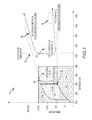
- FIG. 1 is a phase diagram of CO 2 illustrating the region of interest within the supercritical fluid for decomposing carbon-excess explosives and reassembling the activated carbon into nanostructures;
- FIG. 2 is a table of explosives and their oxygen balance
- FIG. 3 is a table of explosive materials having a negative oxygen balance and their reaction for decomposition products
- FIG. 4 is a diagram of an embodiment of an apparatus for synthesizing nanostructures from carbon-excess explosives in supercritical CO 2 (scCO 2 );
- FIG. 5 is a flow diagram of an embodiment for synthesizing nanostructures from carbon-excess explosives in supercritical CO 2 (scCO 2 );
- FIG. 6 is a diagram of explosive material comprising TNT
- FIG. 7 is a diagram of the TNT molecules dissolved in the sc CO 2 that acts as an inert buffer
- FIG. 8 is a diagram of the TNT molecules decomposed into their constituent reactants including activated C and CO;
- FIG. 9 is a diagram of the reassembly of activated carbon into carbon-free CNTs
- FIG. 10 is a diagram illustrating the removal and separation of the synthesized nanostructures into graphene, fullerenes and nanotubes.
- FIG. 11 is a diagram of the reassembly of activated carbon monoxide into CNTs with a catalyst.
- scCO 2 serves as an inert buffer to separate the individual explosives molecules.
- Michael Niehaus et al. “Suitability of modified supercritical carbon dioxide as solvent for polar substances” Propellants, Explosives, Pyrotechnics 22, 176-179 (1997), which is hereby incorporated by reference, demonstrates the use of scCO 2 as a solvent for explosives just as PETN and RDX.
- Niehaus studies the introduction of co-solvents (modifiers) to change the solvent capacity or critical point. Niehaus performed his experiments at 300 bar, 50 degrees C.
- bulk explosive is contacted with scCO 2 at temperatures where the explosives dissolves into the supercritical fluid but the molecular structure of the explosive is preserved e.g. 30 to 85 degrees C.
- the explosive is separated from the binder and then allowed to recombine into a bulk explosive.
- the explosive molecules recombine into nano- or micro-sized particles of explosive.
- a supercritical fluid such as supercritical carbon-dioxide (scCO 2 ) provides an environment that safely dissolves and decomposes the explosive molecules into its reactant products including activated C or CO and provides the temperature and pressure for the required collision rate of activated C atoms and CO molecules to form carbon nanostructures such as graphene, fullerenes and nanotubes.
- scCO 2 supercritical carbon-dioxide
- This process may be performed without a metal reactant at relatively low temperatures in the supercritical region to provide a cost-effective path to bulk fabrication of nanostructures. Furthermore, an instantiation of the process can produce “metal-free” nanostructures. As the supercritical fluid provides an inert buffer that does not react with the explosive, the fluid is preserved. Once the nanostructures are removed, the other reactant products may be removed and the supercritical fluid recycled. As a byproduct of this product, the explosive material itself is reduced and decommissioned.
- a pressure-temperature phase diagram 10 illustrates the solid 12 , liquid 14 , gas 16 and supercritical fluid 18 for carbon-dioxide (CO 2 ). Boiling separates the gas and liquid phases and ends in a critical point 20 where the liquid and gases phases disappear to become a single supercritical fluid phase.
- the critical point for CO 2 is 304.1 degrees K at 7.38 MPA (73.07 bar).
- a supercritical fluid can dissolve materials like a liquid.
- small changes in pressure or temperature result in large changes in density.
- There is no surface tension in a supercritical fluid as there is no liquid/gas phase boundary.
- solubility in a supercritical fluid tends to increase with density of the fluid (at constant temperature). Since density increases with pressure, solubility tends to increase with pressure. Without loss of generality, the processes for synthesizing nanostructures from carbon-excess explosives in a supercritical fluid will be described for supercritical CO 2 with the understanding that other supercritical fluids may be used as well.
- An explosive material also called an explosive
- An explosive is a substance that contains a great amount of stored energy that can produce an explosion, a sudden expansion of the material after initiation when heated or shocked, usually accompanied by the production of light, heat, sound, and pressure.
- the explosive carries an oxidizer and a reducer in a metastable state.
- the explosive molecules share electrons among the reactant products. These shared electrons exist at higher orbits and energy levels, hence the metastable nature of the explosive. When initiated, the explosive molecules decompose into their reactant products in stable states at much lower energy levels, hence the rapid release of energy.
- An explosion is a type of spontaneous chemical reaction (once initiated) that is driven by both a highly negative enthalpy change (much heat is released) and a highly positive entropy change (large quantities of gases are released) in going from reactants to reaction products, thereby constituting a very thermodynamically favorable process in addition to one that is kinetically very fast.
- explosives are substances that contain a large amount of energy stored in chemical bonds.
- the energetic stability of the gaseous products and, hence, their generation comes from the formation of strongly bonded species like carbon monoxide, carbon dioxide, and (di)nitrogen, which contain strong double and triple bonds having bond strengths of nearly 1,000 kJ/mole.
- Oxygen balance (OB, or OB %) is an expression that is used to indicate the degree to which an explosive can be oxidized. If an explosive molecule contains just enough oxygen to form carbon dioxide from carbon, water from hydrogen molecules, all of its sulfur dioxide from sulfur, and all metal oxides from metals with no excess, the molecule is said to have a zero oxygen balance. The molecule is said to have a positive oxygen balance if it contains more oxygen than is needed and a negative oxygen balance if it contains less oxygen than is needed; the combustion will then be incomplete, and large amount of toxic gases like carbon monoxide will be present.
- FIG. 2 is a table 30 of some common CHNO (carbon-hydrogen-nitrogen-oxygen) explosives and their respective oxygen balances. Explosives such as HMX, NM, PETN, Picric Acid, RDX, TATB, Tetryl and TNT exhibit significant negative oxygen balances. The oxygen balance is calculated from the empirical formula of a compound in percentage of oxygen required for complete conversion of carbon to carbon dioxide, hydrogen to water, and metal to metal oxide.
- CHNO carbon-hydrogen-nitrogen-oxygen
- a table 40 illustrates the reaction for decomposition products in an oxygen-free environment for a number of common explosives that exhibit negative oxygen balances. These particular explosives decompose into CO, C, H 2 O and N 2 reaction products. Other explosives such as PET, RDX and HMX decompose into CO, H 2 O and N 2 but do not produce C. Under normal conditions, upon initiation via heat and/or pressure, a spontaneous reaction is triggered throughout the explosive material causing large amounts of stored energy to be released producing an uncontrolled explosion and the reaction products.
- a suitable explosive material having a negative oxygen balance in a solvent comprising a supercritical fluid such as scCO 2 in an oxygen-free environment The CO 2 acts as an inert buffer to separate the carbon-based explosive molecules. Sufficient dilution of the explosive in the scCO 2 reduces inter-molecular interactions between explosive molecules so that when the explosive is activated the explosive molecules will still self-activate and decompose but will not trigger spontaneous reacting in neighboring explosive molecules (e.g. the explosive will not explode).
- the supercritical fluid is heated to a temperature exceeding the decomposition temperature of the explosive to self-activate and decompose the explosive molecules into reaction products comprising activated C or CO.
- a general region of interest 50 spans any temperature greater than the decomposition temperature 52 for a particular explosive within the supercritical fluid region 18 .
- the optimal conditions that define a particular region of interest 54 for producing nanostructures will depend on a number of factors including but not limited to the particular explosive used as the carbon source, the desired type and mixture of nanostructures, whether modifiers have been added to the supercritical CO 2 to change the solvent properties and critical temperature and energy conservation.
- the resulting nanostructures are not soluble and relatively large compared to the CO 2 and other reactant products so they can be filtered and separated.
- the region of interest 50 may span a temperature range from approximately 250 degrees C. to 350 degrees C. and a pressure range from approximately 200 bar to 2,000 bar. The minimal temperature must at least exceed the critical point for the fluid and the decomposition temperature for the explosive.
- the maximum temperature is set only by power consumption considerations, higher temperatures may be used and successfully produce nanostructures but are simply not required.
- metals such as Lithium (Li) or Sodium (NA) that would react with the scCO 2 (making the scCO 2 a source of carbon) are not introduced to the fluid.
- the scCO 2 functions only as inert buffer and does not react, hence is preserved throughout the process.
- region of interest 54 is constrained to conserve energy for the process (energy used to heat the fluid is balanced by the energy produced by decomposing the explosive) using TNT as the explosive.
- regions of interest 60 and 62 for the known processes of reacting Lithium with scCO 2 at high temperatures (where the scCO 2 is the source of the carbon) to produce carbon nanotubes and of dissolving explosives in scCO 2 at low temperatures to either recover the pure explosive or to form nano/micro explosive particles are shown in FIG. 1 .
- the published experiments for reacting Lithium with scCO 2 report temperatures for region of interest 60 of 550 degrees C. and above. Very high temperatures are required to get the Lithium to react with the CO 2 to produce the activated C atoms.
- the published experiments for using scCO 2 to dissolve and separate explosive molecules report temperatures for region of interest 62 of between 30 to 80 degrees C.
- an embodiment of a system 70 for synthesizing carbon nanostructures from carbon-excess explosives comprises a reactor vessel 72 , a filter 74 for removing the nanostructures from the scCO 2 , a separator 76 (optional) such as a centrifuge for separating the different types of nanostructures and an expansion chamber 78 (optional) for removing the remaining reaction products and re-circulating the scCO 2 .
- An explosive 80 suitably in powder form, is placed in the reactor vessel.
- a source 82 of CO 2 is coupled to the reactor vessel to provide a solvent.
- Modifiers 84 such as water or ammonia may be introduced into the vessel to alter the solvent properties or critical point.
- a heater 86 controls the vessel temperature.
- Vessel pressure may be controlled via the amount of CO 2 introduced, the temperature or possibly using pistons to pressurize the vessel.
- a catalyst 88 may be introduced into the fluid. This may be accomplished through a series of vacuum gates coupled to the vessel.
- the reactor vessel is heated and pressurized to produce a supercritical CO 2 environment in which explosive 80 dissolves, decomposes into active C or CO and reassembled to form carbon nanostructures 90 .
- the supercritical CO 2 and nanostructures are flushed from the reactor vessel and pass through filter 74 .
- the filter removes the nanostructures, which are not soluble, from the fluid.
- the nanostructures which may include a varied composition of graphene, fullerenes and nanotubes, may be passed through a separator 76 (e.g. a centrifuge or chromatography process) to separate the different types of nanostructures.
- the filtered fluid may be passed to expansion chamber 78 that implements a distillation process that boils off the CO 2 fluid and different reaction products. The different gases evaporate at different temperatures.
- the chamber is configured to trap the CO 2 as it evaporates and recirculate the CO 2 back to the reactor vessel.
- a carbon-excess explosive material such as TNT 100 is provided (step 102 ).
- TNT is a CHNO explosive having a molecular representation 104 of C 7 H 5 N 3 O 6 and exhibits a negative oxygen balance of ⁇ 74%.
- TNT 100 is dissolved into a solvent comprising supercritical CO 2 106 made up of CO 2 molecules 108 (step 110 ). This occurs at a temperature above the critical point for the CO 2 based fluid.
- the mixture may, for example, comprise approximately 95% by weight CO 2 and 5% by weight TNT to provide sufficient dilution to buffer the TNT molecules.
- the fluid is heated to a temperature above the decomposition temperature of the explosive (step 112 ) to activate the TNT molecules 104 to decompose into the reaction products of C 114 , CO 116 , H 2 O 118 and N 2 120 (e.g. 7CO+7C+5H 2 O+3N 2 ) in a background of scCO 2 of CO 2 molecules 108 .
- the fluid pressure and temperature suitably lie in a range between 100 bar, 250 degrees C. and 3,000 bar, 350 degrees C.
- the steps of dissolving and decomposing the explosive in the scCO 2 may occur at the same or different temperature.
- the explosive material may be introduced into the scCO 2 at a temperature sufficient only to dissolve the explosive material.
- the fluid may then be heated to decompose the explosive molecules.
- the explosive material may be introduced into the scCO 2 at the higher temperature to both dissolve and decompose the explosive.
- reaction products of C 114 , CO 116 , H 2 O 118 and N 2 120 are at least temporarily in an activated state. Their electrons occupy a higher orbit, hence higher energy state. These electrons will naturally return to their lower orbit, lower energy stable states.
- the temperature and pressure conditions of the supercritical CO 2 that dissolve and decompose the TNT molecules also provide an environment that supports the required collision rate of activated C atoms to reassemble carbon nanostructures such as graphene 122 , fullerenes 124 and nanotubes 126 (step 128 ). Steps 112 and 128 of decomposition and reassembly may happen approximately simultaneously and may overlap as the reassembly process starts while explosive molecules continue to decompose.
- the activated C atoms will self-organize into the various nanostructures.
- the carbon may assemble into graphene 122 , which may then roll into nanotubes 126 or fullerenes 124 . Alternately, the carbon may assembly directly into the fullerenes 124 or nanotubes 126 .
- the composition of the reassembled nanotubes may depend on such factors as the explosive, the fluid (e.g. any modifiers introduced), the temperature and pressure and whether a catalyst was introduced or not. In particular the temperature may be set to affect the composition of nanostructures (e.g. different temperatures may produce a higher concentration of nanotubes).
- a distinct advantage of this process is that the nanostructures are “metal-free”. Because the explosive provides the source of carbon, no metal (e.g. Li) is required to react with the scCO 2 and thus no metals are introduced to the process. Carbon nanostructures that are free of metal contaminants may be very useful in certain applications such as electronic devices.
- the fluid may be filtered to remove the carbon nanostructures and the nanostructures separated (step 130 ). Because the scCO 2 functions only as an inert buffer and does not react with the explosive or any other element that may be introduced the CO 2 is preserved.
- the filtered fluid may be processed further to remove the other reaction products such as CO, N 2 or H 2 O and recirculated (step 132 ).
- the fluid may or may not remain in its supercritical phase during the filtering and recirculation processes.
- a catalyst 134 such as Fe may be added to the fluid to reassemble the activated CO molecules 116 into nanostructures 136 (step 138 ).
- the Fe catalyzes the reaction of a pair of CO molecules 116 to form C atoms that form the nanostructures and CO 2 molecules 140 .
- the pressure and temperature conditions may be adjusted to optimize nanostructure synthesis in the presence of a catalyst while remaining in the supercritical fluid phase.
- the fluid may be filtered again to remove the carbon nanostructures and Fe catalyst (step 130 ).
- the Fe catalyst may be separated and removed from the nanostructures. As the Fe only acts as a catalyst if the Fe can all be removed than the nanostructures may be considered to be metal free.
- the process may be configured to extract carbon nanostructures from the activated C or CO in different ways.
- the catalyst could be introduced into the fluid early in the process to catalyze nanostructure growth for both the activated C and CO.
- An explosive may be used that only produces a CO reaction product (no activated C).
Landscapes
- Chemical & Material Sciences (AREA)
- Organic Chemistry (AREA)
- Engineering & Computer Science (AREA)
- Nanotechnology (AREA)
- Inorganic Chemistry (AREA)
- Materials Engineering (AREA)
- Physics & Mathematics (AREA)
- Condensed Matter Physics & Semiconductors (AREA)
- General Physics & Mathematics (AREA)
- Crystallography & Structural Chemistry (AREA)
- Manufacturing & Machinery (AREA)
- Composite Materials (AREA)
- Carbon And Carbon Compounds (AREA)
Abstract
Description
Claims (21)
Priority Applications (1)
| Application Number | Priority Date | Filing Date | Title |
|---|---|---|---|
| US12/949,670 US8323609B2 (en) | 2010-11-18 | 2010-11-18 | Carbon nanostructure synthesis from carbon-excess explosives in supercritical fluid |
Applications Claiming Priority (1)
| Application Number | Priority Date | Filing Date | Title |
|---|---|---|---|
| US12/949,670 US8323609B2 (en) | 2010-11-18 | 2010-11-18 | Carbon nanostructure synthesis from carbon-excess explosives in supercritical fluid |
Publications (2)
| Publication Number | Publication Date |
|---|---|
| US20120128574A1 US20120128574A1 (en) | 2012-05-24 |
| US8323609B2 true US8323609B2 (en) | 2012-12-04 |
Family
ID=46064545
Family Applications (1)
| Application Number | Title | Priority Date | Filing Date |
|---|---|---|---|
| US12/949,670 Active 2031-05-26 US8323609B2 (en) | 2010-11-18 | 2010-11-18 | Carbon nanostructure synthesis from carbon-excess explosives in supercritical fluid |
Country Status (1)
| Country | Link |
|---|---|
| US (1) | US8323609B2 (en) |
Cited By (3)
| Publication number | Priority date | Publication date | Assignee | Title |
|---|---|---|---|---|
| US20100254884A1 (en) * | 2009-03-02 | 2010-10-07 | Olga Shenderova | Production of Conductive Nanodiamond by Dynamic Synthesis Approaches |
| US20120126438A1 (en) * | 2010-11-22 | 2012-05-24 | University Of Limerick | Process and System for Fabrication and Surface Modification of Colloidal Carbon Spheres in Supercritical Media |
| CN107628599A (en) * | 2016-07-14 | 2018-01-26 | 南京理工大学 | A kind of preparation method of graphene |
Families Citing this family (2)
| Publication number | Priority date | Publication date | Assignee | Title |
|---|---|---|---|---|
| US20130327637A1 (en) | 2012-06-12 | 2013-12-12 | The George Washington University | System and method for mass production of graphene platelets in arc plasma |
| CN104003379B (en) * | 2014-05-30 | 2015-12-30 | 中国工程物理研究院化工材料研究所 | A kind of preparation method of graphene quantum dot |
Citations (1)
| Publication number | Priority date | Publication date | Assignee | Title |
|---|---|---|---|---|
| US5953679A (en) | 1997-04-16 | 1999-09-14 | The United States Of America As Represented By The Secretary Of Army | Method for recovery and separation of trinitrotoluene by supercritical fluid extraction |
-
2010
- 2010-11-18 US US12/949,670 patent/US8323609B2/en active Active
Patent Citations (1)
| Publication number | Priority date | Publication date | Assignee | Title |
|---|---|---|---|---|
| US5953679A (en) | 1997-04-16 | 1999-09-14 | The United States Of America As Represented By The Secretary Of Army | Method for recovery and separation of trinitrotoluene by supercritical fluid extraction |
Non-Patent Citations (7)
| Title |
|---|
| Lou et al, "Formation of variously shaped carbon nanotubes in carbon dioxide-alkali metal (Li, Na) system," Letters to the Editor / Carbon 43 (2005) pp. 1084-1114. |
| Lou et al., "Synthesis of carbon nanotubes by reduction of carbon dioxide with metallic lithium," Carbon 41 (2003) pp. 3063-3074. |
| Niehaus et al., "Suitability of Modified Supercritical Carbon Dioxide as Solvent for Polar Substances," Propellants, Explosives, Pyrotechnics 22, pp. 176-179 (1997). |
| Pourmortazavi et al.,"Application of Supercritical Carbon Dioxide in Energetic Materials Processes: A Review," 2005 American Chemical Society, Ind. Eng. Chem. Res. 2005, 44, pp. 6523-6533. |
| Pourmortazavi, et al., Application of Supercritical Carbon Dioxide in Energetic Materials Processes: A Review, Ind. Eng. Chem. Res. 2005; 44: 6523-6533. * |
| Shakhashiri, "Chemical of the Week-Carbon Dioxide, CO2," General Chemistry, www.scifun.org, Feb. 6, 2008. |
| Teipel et al., "Characterization of the Phase Equilibrium of the System Trinitrotoluene/Carbon Dioxide," Propellants, Explosives, Pyrotechnics 23, pp. 82-85 (1998). |
Cited By (5)
| Publication number | Priority date | Publication date | Assignee | Title |
|---|---|---|---|---|
| US20100254884A1 (en) * | 2009-03-02 | 2010-10-07 | Olga Shenderova | Production of Conductive Nanodiamond by Dynamic Synthesis Approaches |
| US8728429B2 (en) * | 2009-03-02 | 2014-05-20 | International Technology Center | Production of conductive nanodiamond by dynamic synthesis approaches |
| US20120126438A1 (en) * | 2010-11-22 | 2012-05-24 | University Of Limerick | Process and System for Fabrication and Surface Modification of Colloidal Carbon Spheres in Supercritical Media |
| CN107628599A (en) * | 2016-07-14 | 2018-01-26 | 南京理工大学 | A kind of preparation method of graphene |
| CN107628599B (en) * | 2016-07-14 | 2020-04-28 | 南京理工大学 | Preparation method of graphene |
Also Published As
| Publication number | Publication date |
|---|---|
| US20120128574A1 (en) | 2012-05-24 |
Similar Documents
| Publication | Publication Date | Title |
|---|---|---|
| Chaturvedi et al. | A review on the use of nanometals as catalysts for the thermal decomposition of ammonium perchlorate | |
| Yan et al. | Highly energetic compositions based on functionalized carbon nanomaterials | |
| Kairi et al. | Toward high production of graphene flakes–a review on recent developments in their synthesis methods and scalability | |
| Pumera et al. | Impurities in graphenes and carbon nanotubes and their influence on the redox properties | |
| US20120128574A1 (en) | Carbon nanostructure synthesis from carbon-excess explosives in supercritical fluid | |
| US7494639B2 (en) | Purification of carbon nanotubes based on the chemistry of fenton's reagent | |
| KR101689337B1 (en) | A method for producing graphene with rapid expansion and graphene made thereby | |
| US20030059364A1 (en) | Method for poduction of nanostructures | |
| JP2008545603A (en) | Apparatus and method for producing hydrogen gas by microwave plasma discharge | |
| JP2009522191A5 (en) | ||
| Shenderova et al. | Production and purification of nanodiamonds | |
| US20130022530A1 (en) | Production Of Exfoliated Graphite | |
| Mukasyan et al. | Combustion/micropyretic synthesis of atomically thin two-dimensional materials for energy applications | |
| Li et al. | Characterization of thermal reaction of aluminum/copper (II) oxide/poly (tetrafluoroethene) nanocomposite by thermogravimetric analysis, differential scanning calorimetry, mass spectrometry and X-ray diffraction | |
| JP2010521278A (en) | Novel series power plant process and method for providing a hydrogen carrier reversibly usable in the power plant process | |
| WO2018074009A1 (en) | Method for synthesizing ammonia, and apparatus for said method | |
| Plönjes et al. | Synthesis of single-walled carbon nanotubes in vibrationally non-equilibrium carbon monoxide | |
| Hasan et al. | Mechanochemical conversion of elemental sulfur into functional sulfur nanomaterials for promising applications | |
| Jayant et al. | Grinding and milling (mechanochemical) methods: An excellent greener approach to develop sustainable materials | |
| Bilyak | Methods of obtaining graphene | |
| Yehia et al. | Thermal behaviour of MWCNT/ammonium perchlorate particles | |
| EP2066600A2 (en) | Improved explosive materials by stabilization in nanotubes | |
| Panicker et al. | Synthesis strategies of various carbon materials | |
| Devi et al. | Graphene and its derivatives: various routes of synthesis | |
| Zhao et al. | Graphdiyne as a thermocatalyst for enhancing thermal decomposition process of CL-20 |
Legal Events
| Date | Code | Title | Description |
|---|---|---|---|
| AS | Assignment |
Owner name: RAYTHEON COMPANY, MASSACHUSETTS Free format text: ASSIGNMENT OF ASSIGNORS INTEREST;ASSIGNORS:BARKER, DELMAR L.;OWENS, WILLIAM R.;SIGNING DATES FROM 20101101 TO 20101102;REEL/FRAME:025408/0020 Owner name: THE ARIZONA BOARD OF REGENTS ON BEHALF OF THE UNIV Free format text: ASSIGNMENT OF ASSIGNORS INTEREST;ASSIGNOR:BECK, JOHN WARREN;REEL/FRAME:025408/0061 Effective date: 20101028 |
|
| FEPP | Fee payment procedure |
Free format text: PAYOR NUMBER ASSIGNED (ORIGINAL EVENT CODE: ASPN); ENTITY STATUS OF PATENT OWNER: LARGE ENTITY |
|
| AS | Assignment |
Owner name: RAYTHEON COMPANY, MASSACHUSETTS Free format text: CORRECTIVE ASSIGNMENT TO CORRECT THE ADDITION OF THE THIRD INVENTOR NAME, MEAD M. JORDAN, INADVERTENTLY OMITTED IN THE ORIGINAL FILING PREVIOUSLY RECORDED ON REEL 025408 FRAME 0020. ASSIGNOR(S) HEREBY CONFIRMS THE ASSIGNMENT OF ASSIGNOR'S INTEREST;ASSIGNORS:BARKER, DELMAR L.;OWENS, WILLIAM R.;JORDAN, MEAD M.;SIGNING DATES FROM 20101101 TO 20101102;REEL/FRAME:029170/0045 |
|
| STCF | Information on status: patent grant |
Free format text: PATENTED CASE |
|
| FPAY | Fee payment |
Year of fee payment: 4 |
|
| MAFP | Maintenance fee payment |
Free format text: PAYMENT OF MAINTENANCE FEE, 8TH YEAR, LARGE ENTITY (ORIGINAL EVENT CODE: M1552); ENTITY STATUS OF PATENT OWNER: LARGE ENTITY Year of fee payment: 8 |
|
| MAFP | Maintenance fee payment |
Free format text: PAYMENT OF MAINTENANCE FEE, 12TH YEAR, LARGE ENTITY (ORIGINAL EVENT CODE: M1553); ENTITY STATUS OF PATENT OWNER: LARGE ENTITY Year of fee payment: 12 |