US8322602B2 - Secure and portable payment system - Google Patents
Secure and portable payment system Download PDFInfo
- Publication number
- US8322602B2 US8322602B2 US12/553,789 US55378909A US8322602B2 US 8322602 B2 US8322602 B2 US 8322602B2 US 55378909 A US55378909 A US 55378909A US 8322602 B2 US8322602 B2 US 8322602B2
- Authority
- US
- United States
- Prior art keywords
- transaction
- customer
- seller
- purchaser
- phone
- Prior art date
- Legal status (The legal status is an assumption and is not a legal conclusion. Google has not performed a legal analysis and makes no representation as to the accuracy of the status listed.)
- Expired - Fee Related, expires
Links
Images






Classifications
-
- G—PHYSICS
- G10—MUSICAL INSTRUMENTS; ACOUSTICS
- G10L—SPEECH ANALYSIS TECHNIQUES OR SPEECH SYNTHESIS; SPEECH RECOGNITION; SPEECH OR VOICE PROCESSING TECHNIQUES; SPEECH OR AUDIO CODING OR DECODING
- G10L17/00—Speaker identification or verification techniques
-
- G—PHYSICS
- G06—COMPUTING OR CALCULATING; COUNTING
- G06Q—INFORMATION AND COMMUNICATION TECHNOLOGY [ICT] SPECIALLY ADAPTED FOR ADMINISTRATIVE, COMMERCIAL, FINANCIAL, MANAGERIAL OR SUPERVISORY PURPOSES; SYSTEMS OR METHODS SPECIALLY ADAPTED FOR ADMINISTRATIVE, COMMERCIAL, FINANCIAL, MANAGERIAL OR SUPERVISORY PURPOSES, NOT OTHERWISE PROVIDED FOR
- G06Q20/00—Payment architectures, schemes or protocols
- G06Q20/08—Payment architectures
- G06Q20/10—Payment architectures specially adapted for electronic funds transfer [EFT] systems; specially adapted for home banking systems
- G06Q20/102—Bill distribution or payments
-
- G—PHYSICS
- G06—COMPUTING OR CALCULATING; COUNTING
- G06Q—INFORMATION AND COMMUNICATION TECHNOLOGY [ICT] SPECIALLY ADAPTED FOR ADMINISTRATIVE, COMMERCIAL, FINANCIAL, MANAGERIAL OR SUPERVISORY PURPOSES; SYSTEMS OR METHODS SPECIALLY ADAPTED FOR ADMINISTRATIVE, COMMERCIAL, FINANCIAL, MANAGERIAL OR SUPERVISORY PURPOSES, NOT OTHERWISE PROVIDED FOR
- G06Q20/00—Payment architectures, schemes or protocols
- G06Q20/08—Payment architectures
- G06Q20/10—Payment architectures specially adapted for electronic funds transfer [EFT] systems; specially adapted for home banking systems
- G06Q20/105—Payment architectures specially adapted for electronic funds transfer [EFT] systems; specially adapted for home banking systems involving programming of a portable memory device, e.g. IC cards, "electronic purses"
-
- G—PHYSICS
- G06—COMPUTING OR CALCULATING; COUNTING
- G06Q—INFORMATION AND COMMUNICATION TECHNOLOGY [ICT] SPECIALLY ADAPTED FOR ADMINISTRATIVE, COMMERCIAL, FINANCIAL, MANAGERIAL OR SUPERVISORY PURPOSES; SYSTEMS OR METHODS SPECIALLY ADAPTED FOR ADMINISTRATIVE, COMMERCIAL, FINANCIAL, MANAGERIAL OR SUPERVISORY PURPOSES, NOT OTHERWISE PROVIDED FOR
- G06Q20/00—Payment architectures, schemes or protocols
- G06Q20/08—Payment architectures
- G06Q20/20—Point-of-sale [POS] network systems
-
- G—PHYSICS
- G06—COMPUTING OR CALCULATING; COUNTING
- G06Q—INFORMATION AND COMMUNICATION TECHNOLOGY [ICT] SPECIALLY ADAPTED FOR ADMINISTRATIVE, COMMERCIAL, FINANCIAL, MANAGERIAL OR SUPERVISORY PURPOSES; SYSTEMS OR METHODS SPECIALLY ADAPTED FOR ADMINISTRATIVE, COMMERCIAL, FINANCIAL, MANAGERIAL OR SUPERVISORY PURPOSES, NOT OTHERWISE PROVIDED FOR
- G06Q20/00—Payment architectures, schemes or protocols
- G06Q20/22—Payment schemes or models
- G06Q20/223—Payment schemes or models based on the use of peer-to-peer networks
-
- G—PHYSICS
- G06—COMPUTING OR CALCULATING; COUNTING
- G06Q—INFORMATION AND COMMUNICATION TECHNOLOGY [ICT] SPECIALLY ADAPTED FOR ADMINISTRATIVE, COMMERCIAL, FINANCIAL, MANAGERIAL OR SUPERVISORY PURPOSES; SYSTEMS OR METHODS SPECIALLY ADAPTED FOR ADMINISTRATIVE, COMMERCIAL, FINANCIAL, MANAGERIAL OR SUPERVISORY PURPOSES, NOT OTHERWISE PROVIDED FOR
- G06Q20/00—Payment architectures, schemes or protocols
- G06Q20/30—Payment architectures, schemes or protocols characterised by the use of specific devices or networks
- G06Q20/32—Payment architectures, schemes or protocols characterised by the use of specific devices or networks using wireless devices
- G06Q20/322—Aspects of commerce using mobile devices [M-devices]
- G06Q20/3223—Realising banking transactions through M-devices
-
- G—PHYSICS
- G06—COMPUTING OR CALCULATING; COUNTING
- G06Q—INFORMATION AND COMMUNICATION TECHNOLOGY [ICT] SPECIALLY ADAPTED FOR ADMINISTRATIVE, COMMERCIAL, FINANCIAL, MANAGERIAL OR SUPERVISORY PURPOSES; SYSTEMS OR METHODS SPECIALLY ADAPTED FOR ADMINISTRATIVE, COMMERCIAL, FINANCIAL, MANAGERIAL OR SUPERVISORY PURPOSES, NOT OTHERWISE PROVIDED FOR
- G06Q20/00—Payment architectures, schemes or protocols
- G06Q20/30—Payment architectures, schemes or protocols characterised by the use of specific devices or networks
- G06Q20/32—Payment architectures, schemes or protocols characterised by the use of specific devices or networks using wireless devices
- G06Q20/322—Aspects of commerce using mobile devices [M-devices]
- G06Q20/3227—Aspects of commerce using mobile devices [M-devices] using secure elements embedded in M-devices
-
- G—PHYSICS
- G06—COMPUTING OR CALCULATING; COUNTING
- G06Q—INFORMATION AND COMMUNICATION TECHNOLOGY [ICT] SPECIALLY ADAPTED FOR ADMINISTRATIVE, COMMERCIAL, FINANCIAL, MANAGERIAL OR SUPERVISORY PURPOSES; SYSTEMS OR METHODS SPECIALLY ADAPTED FOR ADMINISTRATIVE, COMMERCIAL, FINANCIAL, MANAGERIAL OR SUPERVISORY PURPOSES, NOT OTHERWISE PROVIDED FOR
- G06Q20/00—Payment architectures, schemes or protocols
- G06Q20/30—Payment architectures, schemes or protocols characterised by the use of specific devices or networks
- G06Q20/32—Payment architectures, schemes or protocols characterised by the use of specific devices or networks using wireless devices
- G06Q20/326—Payment applications installed on the mobile devices
- G06Q20/3263—Payment applications installed on the mobile devices characterised by activation or deactivation of payment capabilities
-
- G—PHYSICS
- G06—COMPUTING OR CALCULATING; COUNTING
- G06Q—INFORMATION AND COMMUNICATION TECHNOLOGY [ICT] SPECIALLY ADAPTED FOR ADMINISTRATIVE, COMMERCIAL, FINANCIAL, MANAGERIAL OR SUPERVISORY PURPOSES; SYSTEMS OR METHODS SPECIALLY ADAPTED FOR ADMINISTRATIVE, COMMERCIAL, FINANCIAL, MANAGERIAL OR SUPERVISORY PURPOSES, NOT OTHERWISE PROVIDED FOR
- G06Q20/00—Payment architectures, schemes or protocols
- G06Q20/38—Payment protocols; Details thereof
- G06Q20/382—Payment protocols; Details thereof insuring higher security of transaction
- G06Q20/3821—Electronic credentials
-
- G—PHYSICS
- G06—COMPUTING OR CALCULATING; COUNTING
- G06Q—INFORMATION AND COMMUNICATION TECHNOLOGY [ICT] SPECIALLY ADAPTED FOR ADMINISTRATIVE, COMMERCIAL, FINANCIAL, MANAGERIAL OR SUPERVISORY PURPOSES; SYSTEMS OR METHODS SPECIALLY ADAPTED FOR ADMINISTRATIVE, COMMERCIAL, FINANCIAL, MANAGERIAL OR SUPERVISORY PURPOSES, NOT OTHERWISE PROVIDED FOR
- G06Q20/00—Payment architectures, schemes or protocols
- G06Q20/38—Payment protocols; Details thereof
- G06Q20/382—Payment protocols; Details thereof insuring higher security of transaction
- G06Q20/3825—Use of electronic signatures
-
- G—PHYSICS
- G07—CHECKING-DEVICES
- G07F—COIN-FREED OR LIKE APPARATUS
- G07F7/00—Mechanisms actuated by objects other than coins to free or to actuate vending, hiring, coin or paper currency dispensing or refunding apparatus
- G07F7/08—Mechanisms actuated by objects other than coins to free or to actuate vending, hiring, coin or paper currency dispensing or refunding apparatus by coded identity card or credit card or other personal identification means
- G07F7/0873—Details of the card reader
- G07F7/088—Details of the card reader the card reader being part of the point of sale [POS] terminal or electronic cash register [ECR] itself
- G07F7/0886—Details of the card reader the card reader being part of the point of sale [POS] terminal or electronic cash register [ECR] itself the card reader being portable for interacting with a POS or ECR in realizing a payment transaction
Definitions
- the present invention relates generally to payment systems that utilize a portable device, and in particular to payment systems that utilize a first portable device that belongs to a seller and a second portable device that belongs to a buyer, but do not utilize a point of sale (POS) device.
- POS point of sale
- the credit card system is evolving to utilize the cellular-phone, in the hands of the customer, instead of the conventional plastic card and, consequently to the use of new POS systems with new interfaces, in place of the conventional magnetic stripe reader.
- cell-phone as used in this application will refer to any handheld or portable device with communications capabilities, and the term credit card or CC will include all financial transaction cards including credit cards, debit cards, smart cards, charge cards, and pre-paid cards.
- a payment system that will allow a purchaser to use his cell-phone instead of a conventional plastic card with the magnetic stripe, in order to charge his credit or debit account.
- the payment system includes a central service (CS) server.
- CS central service
- One configuration of such a server includes features described in U.S. Pat. No. 6,912,659 granted to the applicant of this application.
- a payment system includes one or more software applications that run in cell-phones, servers and other devices without the use of a POS terminal or other device that reads credit cards, debit cards, smart cards and the like.
- This embodiment of the present invention may be referred to as POS-Free Payment System.
- This payment system enables customers or purchasers, to pay by means of their respective cell-phones or any other personal device carried by the purchasers and by using the services of a central service of this invention.
- the cell-phone or other portable device runs a software application.
- the purchaser is making payment to a seller by charging the purchaser's credit card or debit card account.
- credit card or CC will also refer to debit cards, smart cards, charge cards, and pre-paid cards.
- the seller may not have access to any POS device and may not have any credit card processing network available, may have no electric power, however, the seller has access to his cell-phone, as a sole instrument to complete a secure, verified, and certified CC transaction.
- POS Free system when a participant purchaser agrees to enter into a financial transaction with a participant seller and decides to charge his CC account a specific amount to be paid to the seller, he communicates his willing to do so to the seller, and the seller, wherever he will be, picks up his (seller's) cell-phone or other portable device and selects by, pushing the appropriate buttons or selecting the appropriate icons, the seller's application of this invention. In this manner, the seller activates the previously installed application of the present invention for vendors that runs in his cell-phone.
- the application may prompt the seller to authenticate himself to the application, for example by entering a personal identification number (PIN), and, in addition, the application will prompt the seller to enter the amount of the transaction.
- the seller's cell phone may then digitally sign a string including at least the time and date and the transaction's amount and transmit it, for example by placing a call with the cell-phone, to the central service server (CCS).
- CCS central service server
- the previously installed purchaser's application of the present invention may prompt the cell-phone owner (i.e., the purchaser) to authenticate himself, and to enter the transaction amount the purchaser is willing to charge his CC account in benefit of the seller.
- the purchaser places his cell phone near the seller's cell phone.
- the purchaser cell-phone by means of the application, generates an acoustic message.
- One acoustic message system and method to is described in U.S. Pat. No. 6,236,724 granted to the applicant of this patent application.
- the acoustic message includes a string with the date and time and the amount the purchaser accepted to pay, among other data, both digitally signed with the purchaser's digital signature and encoded to sound. A method to do so is described in GB Patent Number 2,374,182 granted to the applicant of this patent application.
- the sound carrying the encoded purchaser's digital signature referred here below also as acoustic message or acoustic digital signature is captured by the seller's cell phone and transmitted to the central service server/interactive voice recognition (IVR) system though the voice channel (same call as before).
- IVR interactive voice recognition
- the central service server (CCS) complemented with an IVR receives the two encoded digital signatures belonging to the seller and the purchaser respectively.
- the central service server/IVR decodes the encoded digital signatures into strings of bits (i.e., similar to standard PKCS#7 digital signatures), checks and verifies each of them, and eventually, if both are truthful digital signatures, the central service server identifies the seller and the purchaser by means of their respective X.509 certificate whose respective serial numbers were within the digital signatures, verifies if the transaction amounts are identical and, eventually, the CSS retrieves the purchaser's CC account data, as well as the seller's account data and acting as a POS system, executes the CC transaction, impersonating the seller and the purchaser.
- the central service server operating as a POS system receives the transaction confirmation, which is from the CC processing network, it stores the two received digital signatures, returns to the seller uttering a confirmation phrase, including a confirmation number, for the seller to hear and finish the call.
- the CSS can send by e-mail, conventional mail or any other kind of communication system (e.g., SMS), a copy of the transaction confirmation with all the available data, which may be signed, by the CSS.
- SMS any other kind of communication system
- the purchaser has paid to the seller the sum the purchaser decided to pay, charging a credit card account belonging to the purchaser, which may be one associated with a conventional plastic magnetic stripe card or other financial account.
- the CC account is a kind of virtual CC which is usable only by means of the purchaser's cell-phone application.
- the seller has been credited by the acquirer and/or the CC company the exact sum the seller expected to be credited as if the seller had used a conventional POS and had swiped or otherwise read the customer's credit card.
- the transaction completed as per the method, software, devices and servers of the present invention is by far more secure than a conventional magnetic strip card based transaction. This is due to the fact that in accordance with the present invention, there is a digital signature coming from the purchaser, with a time stamp and the amount, stating categorically and undeniably the desire of the purchaser to make a transaction, and charging one particular credit card account of the purchaser.
- the seller selects the application in his cell-phone and enters the PIN and the transaction amount and invites the customer to proceed with the purchaser's cell-phone's CC application (the cell-phone application).
- the customer utilizing his cell-phone selects the purchaser's application, enters the PIN, enters the amount, and places the purchaser's cell-phone near the seller's cell-phone, and presses send or other similar button or icon.
- the purchaser's cell-phone application generates a digital signature with the time-stamp and the amount and encodes it to sound (acoustic digital signature).
- the seller's cell-phone application captures the acoustic digital signature, places a call to the CSS/IVR, and transmits the purchaser's acoustic digital signature to the CSS/IVR together with the seller's digital signature, and waits for a response.
- the IVR captures the acoustic digital signatures, decodes the signatures, and transmits the digital signatures to the CSS (platform server).
- the platform server :
- PS 1 receives the customer's and seller's digital signature.
- PS 2 verifies the digital signatures, compares the amounts, and verifies the time coincidence checking if within tolerances.
- PS 3 retrieves the sellers account data and the customers account data.
- PS 4 Notification: The server transmits to the CC company (i.e., the issuer) the transaction data for pre-notification.
- the CC company i.e., the issuer
- the server acts as a conventional POS system and executes the transaction through conventional networks and if eventually everything is fine, the CC company returns to the server with an authorization number.
- the server stores the customer's and seller's digital signature and returns to the seller with a Confirmation number (optional SMS to customer, e-mail, etc).
- the purchaser's cell-phone application will generate a time stamped digital signature only when the customer enters the correct PIN (or other identification) which is the key for decrypting the private key.
- the CC issuer will only authorize the transaction with such CC/debit card when the platform server (CSS) requests authorization after receiving a valid, synchronized digital signature of the authorized user of the CC/debit card.
- CCS platform server
- a further variation of the method presented here is a case where the seller does not have the seller's application installed in his cell-phone event though the seller is, indeed, a participant seller, that is, the seller has registered with the CS and has opened a CC acquirer account, an account where he can receive money from the transactions the seller completes.
- the seller does not sends his digital signature, but, instead the seller identifies themselves against the CSS/IVR using dual-tone multi-frequency (DTMF) tones, and also sending the expected amount that is due for the transaction.
- DTMF dual-tone multi-frequency
- the purchaser who has the purchaser application, sends their acoustic digital signature as before, through the seller's phone, which can be also a regular phone and not necessarily a cellular one.
- the seller does have a conventional POS, and is able to read a conventional credit card with magnetic strip, smart card interface, or other interface such as radio free (RF).
- RF radio free
- the purchaser may not have a plastic CC for the CC account that the purchaser is willing to charge, but instead has the purchaser's application of the present invention previously installed in the purchaser's cell-phone.
- an adaptor that enables the seller to charge the purchaser's CC account using the seller's conventional POS system, whereas the adaptor is a device that is able to capture the purchaser cell-phone's generated acoustic message carrying the purchaser digital signature encoded to sound.
- the adaptor is capable of decoding the captured encoded digital signature, and to transmit the decoded digital signature to the central service server.
- the central service server receives the digital signature belonging to the purchaser, checks and verifies the digital signature, and eventually, if it is a truthful digital signature, the central service server identifies the purchaser by means of the respective X.509 certificate whose serial numbers are within the digital signature, and, eventually the CSS stores the received digital signature.
- the CSS retrieves the purchaser's CC account data, and transmits it back to the adaptor.
- the adaptor is in possession of all of the purchaser CC account data that would be stored in a conventional plastic card's magnetic stripe that is necessary to complete a financial transaction.
- a clone of a conventional plastic credit card is created that corresponds to the respective purchaser's CC account.
- the plastic card is extracted from the adaptor and is ready to be used in the seller's conventional POS, as a standard plastic CC.
- the “clone” credit card with the purchaser's account data may be returned to the adaptor of the present invention after having been swiped. Doing so, the magnetic stripe's purchaser data will be erased by the adaptor.
- the seller was able to complete a CC transaction, using the seller's conventional POS device, including the case where the customer has no plastic credit card, but wherein the customer has a cell-phone with the special purchaser's application of the present invention.
- the seller utilizes an adaptor to enter the transaction amount and invites the customer to proceed with the purchaser's cell-phone application.
- the customer picks-up their cell-phone, selects the purchaser's cell-phone application, enters the PIN, enters the amount, and places the cell-phone in proximity to the adaptor's microphone, and presses the send button, or a similar button or icon.
- the purchaser's cell-phone application generates a digital signature including the time-stamp and the amount and encodes the digital signature to sound (acoustic digital signature).
- the adaptor captures the acoustic digital signature, decodes it, and transmits it to the CSS/IVR together with the seller's data and amount. The adaptor then waits for a response.
- PS 1 receives the digital signature, and seller's data.
- PS 2 verifies the digital signature, compares the amounts, and verifies the time coincidence between the digital signature and the seller's data. That is, checks to see if the times are within a tolerance.
- PS 3 retrieves the seller's account data and the customer's account data.
- PS 4 optional pre-authorization—the server transmits to the Issuer the transaction data for pre-notification.
- the server stores the customer's and seller's digital signature and returns to the adaptor with the customer's account data.
- the adaptor writes on a blank card's magnetic stripe the customer CC/debit card data creating a “clone” card which is ejected from the adaptor, handed by the seller, and swiped in the conventional POS magnetic card reader.
- the seller's POS device reads the customer's CC/debit card data and completes the transaction as usual.
- the “clone” card is returned to adaptor and the magnetic stripe is erased.
- a special POS device is provided that is able to capture the acoustic messages generated by the cell-phone purchaser's application of the present invention.
- the special POS device is configured to capture an acoustic message, using, for example a microphone or similar device, and one or more central processing units (CPUs).
- This special POS device is able to capture and decode the acoustic message generated by the purchaser cell-phone application of the present invention into a digital string recuperating the purchaser's digital signature.
- the special POS device is also able to generate a message with the time and date, and the transaction amount, entered by the seller or automatically generated by the seller's system.
- the special POS device will transmit the message, with the purchaser's and the seller's input, to the central service server, in order to enable the server to proceed as in the above mentioned cases.
- the CC transaction is completed and a confirmation message is returned to the special POS device, optionally signed by the CSS.
- the CSS will verify the purchaser's digital signature, identify the purchaser, retrieve the purchaser's CC data and transmit the relevant data to the special POS device for the completion of the transaction by such special POS device.
- the CSS will store the received digital signatures as digital testimonies of the willingness of the parties to complete the specific transaction.
- a solution is provided for on-line purchasing security problems such as identity theft.
- a method and software are provided that ease the cumbersome procedures nowadays in use to complete an on-line transaction based on CC or debit cards.
- a method and software for on-line purchasing includes the same purchaser's cell-phone application as in the other cases referred above and, additionally, a software application, that is easy to download into the potential on-line purchaser's personal computer (PC), and, where the installation of such software requires little effort (e.g., similar to the ActiveX Microsoft technology).
- PC personal computer
- This software for on-line purchasing (e.g., ActiveX), once installed in the on-line purchaser's PC, and by using the PC's microphone, is able to capture the acoustic message generated by the cell-phone purchaser's application according to the present invention, that is, the acoustic message carrying the encoded to sound version of the purchaser's digital signature on the date and time and the transaction amount.
- the same software of on-line purchaser's PC has the capability to decode the encoded digital signature and to transmit such digital signature to the CSS, whereas the CSS verifies and checks the received digital signature, and, eventually, if it is a true and accurate digital signature, identifies the purchaser, retrieves the purchaser CC as well as personal data (i.e., address data) from the CSS data base, and sends all the data necessary to fulfill the form to the purchaser's PC application (ActiveX).
- the form is filled automatically and conveniently by the application running in the PC (ActiveX) using XML technology or other similar technology, and the purchaser can send the filled form back to the seller's site to proceed with the on-line operation.
- the customer being a participant customer, has a cell-phone with the purchaser's application (a cell-phone with the download application referred to as purchaser's application of the present invention).
- the purchaser can use any PC, not necessarily a secure one, nor it is required to pre-install any special software on the PC.
- the seller is not required to have special features on the seller's web-site, and the seller may by a non participant merchant.
- the CSS will play a role in this procedure as well.
- the customer visits the seller's site with any PC and decides to buy.
- the buyer receives a form to fill that may be extensive, and that requires Credit/Debit card data, address, and the like.
- the customer browses to the CSS site and downloads an ActiveX (Form Filler ActiveX) application
- ActiveX Form Filler ActiveX
- the customer picks up his cell-phone and selects the purchaser's application, enters the PIN, enters the amount, and presses SEND (or similar button or icon) when the customer's cell-phone is placed near the PC microphone.
- the purchaser's application computes a digital signature over the time-stamp and the amount and encodes it to sound (acoustic digital signature).
- the ActiveX captures the acoustic signature, decodes it, and transmits it to the CSS.
- the Server transmits to the CC Issuer the transaction data for notification of the willingness of the customer to perform a transaction such as this with his CC,
- the server stores the customer's digital signature and returns to the customer's PC application with the necessary data to fulfill the form.
- the ActiveX PC application receives the data, and fulfills the form.
- the customer is willing to make an over-the-phone transaction using the cell-phone purchaser's application of the present invention.
- the phone merchant is a participant merchant and has an on-line PC equipped with a microphone.
- the seller is not necessarily equipped with a POS device and while the seller will use a PC, this PC does not need to have any special application previously installed. Also, the seller does not need any special features in his cell-phone and can receive calls in any phone.
- the CSS plays a role as a service.
- the customer picks-up the customer's cell-phone, calls the seller's number and at the due time decides to buy a good or service (i.e., shares).
- the seller using the seller's PC goes to CSS's site, enters the seller's login name and PIN and the transaction amount and invites the customer to proceed with their purchaser's cell-phone application.
- the customer selects the purchaser's cell-phone application, enters the PIN, enters the amount, and presses “SEND by phone”.
- the purchaser cell-phone application generates a digital signature over the time-stamp and the amount and encodes it to sound (acoustic digital signature) and sends it through the voice channel.
- the seller places the seller's cell-phone proximate to the PC's microphone.
- the PC captures the acoustic digital signature sent by the customer, decodes it, and transmits it to the platform's server.
- the Platform's Server The Platform's Server:
- PS 1 receives the customer's digital signature and seller's imputed data.
- PS 2 verifies the digital signature, compares the amounts, and verifies the time coincidence (checks to see if between tolerances).
- PS 3 retrieves the seller's account data and the customer's account data.
- the server acting as a POS device, transmits to the CC company network the transaction data for approval, and if everything is fine, the CC company returns to the server with a confirmation number.
- the server stores the customer's digital signature and seller's data and returns to the seller's PC with a confirmation number or digital testimony signed by the server, a document stating the reception of valid customer's digital signature, signed by the CSS itself (optionally, the CSS may send an SMS, e-mail, or the like to the customer).
- a method is provided to pre-announce to the purchaser's CC issuer or, alternatively, to the purchaser's bank, or, in general, to the entity which manages the purchaser's account, the intention of the true account's owner to complete a specific transaction.
- the true and authorized account's owner has identified themselves by way of his/her digital signature stamped on the time and date as well as the amount, type of the transaction, and has let the CSS server know of the account owner's willingness to complete a transaction in all the cases mentioned above.
- the CSS can inform or notify the purchaser's CC issuer or, alternatively, the purchaser's bank, or the entity that manages the purchaser's account about the intention of the true account's owner to complete a transaction.
- the purchaser's application will generate a time stamped digital signature only when the customer enters the correct PIN, known only by the authorized owner of the CC account.
- This secret PIN is not stored in the cell-phone memory, and it is the key for decrypting the private key according to the procedure and method described in the Israeli patent application 173463 applied by the applicant of this patent application.
- the CC Issuer or account manager will only enable transactions with a credit card/debit card, if they have received a signed-by-the-CSS notification of the authorization of the account owner to do a transaction that is not higher than the amount digitally signed, within a certain period of time (e.g., up to 10 minutes of the digitally signed time stamp).
- the CSS will notify the Issuer about the account owner's authorization only after receiving a valid, time stamped digital signature of the authorized owner including the amount. Due to the fact that this digital signature based authorization notification reaches the CC Issuer before or simultaneously with the conventional transaction approval request, this notification is referred to as Pre-Authorization or Pre-Authorization Notification (PAN).
- PAN Pre-Authorization or Pre-Authorization Notification
- PAN is a valid option for all the cases presented here, and greatly increases the security of the use of CC for any transaction, on-the-spot, over-the-net, as well as over-the-phone, and in general, any transaction where the account manager, that is, the Issuer, the bank, and the like, do not see the account owner.
- the lack of compelling identification of the transactor, (i.e., the person that intends to buy with the CC), by the only entity (i.e., Issuer, bank) that positively knows the account's owner is one of the most enabling factors that facilitates identity theft.
- remote transactions means any transaction accomplished without the bank employee's personal verification of the identification of the account owner, for example, such as an automatic teller machine (ATM) transaction, a phone-banking transaction, an on-line banking transaction, a check based transaction, a fax based transaction, any CC based transaction, on-the-spot, e-commerce, over-the-phone or automatic dispenser and in general, any transaction affecting money in an account wherein the identity of the transactor, that is, the question if the transactor is the authorized person to take money from the account or is an impostor, cannot be checked by a bank employee.
- ATM automatic teller machine
- the PAN provides to a clear-cut security solution due to the fact that the account manager may freeze the account and reject any of such transaction attempts, of the type named above, if the account manager does not have the notification of the CSS about the perfectly secure and non-repudiable identification of the account owner based in digital signature technologies.
- identification not only identification, but also corroboration, within the notification, about the willingness of the account owner to accomplish at a certain time (e.g., within five minutes of the time-stamp), such type of transaction (e.g., ATM) with an upper limit (e.g., up to US$150).
- a method is provided of securing a remote transaction without disruption of the present in use procedure to accomplish such remote transaction.
- an example is the remote conventional transaction represented by the use of an ATM machine by a bank (account manager) customer in order to extract money.
- PAN step a pre-authorization notification step
- the procedure is summarized as follows: before the customer accomplishes the withdrawing of the money from the ATM machine as usual, the customer picks-up his cell-phone and selects the PAN application, which was previously installed in his cell-phone. Once activated the PAN application will offer a menu of possible remote transactions.
- the customer selects the ATM icon.
- the application will ask the customer to enter the upper limit of the transaction's amount (e.g., US$100). Once entered, the application will compute a time stamped digital signature over the amount and the type of transaction—in this case, ATM. The application will also encode the digital signature to sound and will place a call to the IVR system working in conjunction with a server.
- the server which may be located at the account manager facilities, will receive the digital signature, and will check the validity of such digital signature. If the digital signature is valid, the server will prepare a digitally-signed-by-the-server document stating the verified-by-the-server customer's willingness to accomplish an ATM transaction up to the upper limit within a certain period of time. This digitally-signed-by-the-server document may be referred to as a digital testimony. Now, the server will transmit the digital testimony to the account manager (i.e., the customer's bank mainframe, the CC issuer platform, and the like).
- the account manager i.e., the customer's bank mainframe, the CC issue
- the customer proceeds with the remote transaction as usual, in this case, the customer enters their plastic CC in the ATM, enters their PIN, and other information, exactly as the procedure is today.
- This procedure includes the transaction's request for approval that the ATM transmits to the account manager system. Once such transaction's request for approval reaches the account manager system, the account manager system will proceed as today plus certain additional steps due to the method of the present invention. These additional steps include checking if the customer who intends to complete the transaction is a PAN's participant customer and if positive, the checking is for the type of transaction, in this case ATM, and for an upper limit that the customer has instructed the account manager.
- the corroboration is that the account manager system has the pre-authorization notification in the form of a digital testimony, or alike, notifying the account management of the customer's willingness to pursue with such transaction.
- the account management system is expected to reject the transaction and/or to suspend the progress of the transaction approval and/or to contact the customer for verification.
- the PAN method is also useful for other types of remote transactions such as check based transactions, fax based transactions, banking through the internet, banking over-the-phone, CC or debit card based transactions, and in general all the related account transactions wherein the customer identity and willingness cannot be verified by the account manager staff. Stated another way, it is as if the “faucet” (the account) is always closed, with the exception of the certain window of time after the account manager receives the notification to open it for one particular type of transaction and up to one particular limited amount. And where such notification is based in a customer well verified digital signature.
- the on-line merchant is a non-participant on-line merchant. That is, a merchant that does not know about the existence of the PAN method.
- the customer will buy at such a merchant as today, with no procedure change but before completing the transaction, if the type and amount of the transaction falls within the category of restricted transactions as per the agreement between the customer and the account manager, then the customer will add to the present-in-use procedure a pre-authorization notification step (PAN step). Therefore, the procedure is summarized as follows: before the customer accomplishes the transaction as usual, the customer picks up their cell-phone and selects the PAN application, that was previously installed in the customer's cell-phone. Once activated the PAN application will offer a menu of possible remote transactions.
- the customer selects the “CC on-line” or similar icon/button.
- the application will prompt the customer to enter the upper limit of the transaction's amount (e.g., US$150). Once entered, the application will compute a time stamped digital signature over the amount and the type of transaction, CC on-line in this case. The application will place a call to the IVR system working in conjunction with a server and will also encode the digital signature to sound.
- the server which may be located at the account manager (i.e., the CC or Debit card Issuer) facilities, will receive the digital signature, will check the validity of such digital signature, and, if everything is valid, will prepare a digitally-signed-by-the-server document stating the verified-by-the-server customer's willingness to accomplish an CC transaction up to the upper limit within a certain period of time. This digitally-signed-by-the-server document is referred to as a digital testimony. Now, the server will transmit the digital testimony to the account manager (the customer's bank mainframe, the CC issuer platform, and the like).
- the customer proceeds with the remote transaction as usual.
- This procedure includes the transaction's request for approval that the merchant POS device transmits to the account manager system through the CC company network. Once the transaction's request for approval reaches the account manager system (i.e., the bank, the CC Issuer), the account manager system will proceed as today plus certain additional steps due to the method of the present invention.
- the account manager system i.e., the bank, the CC Issuer
- These additional steps include checking if the customer's account, the account relevant for the transaction, is a PAN's participant customer account and, if positive, checking for the type of transaction, in this case CC on-line and for the upper limit that the customer has instructed the account manager. That is, the required corroboration that the account manager system has in his possession the respective pre-authorization notification in the form of a digital testimony, or similar notification, notifying the account management of the customer's willingness to pursue with such transaction.
- the account management system is expected to reject the transaction or alternatively to suspend the progress of the transaction approval and/or to contact the customer for verification of his identity and his willingness to do the transaction.
- the customer can also send the digital signature through the Internet that is, visiting the account manager site and transmitting the acoustic digital signature to his PC microphone, whereas the acoustic digital signature will be captured with the help of an ActiveX.
- the PAN method working in conjunction with the client software (the purchaser cell-phone application) and the Server-IVR software of the present invention is able to improve fundamentally the security of remote transactions, maintaining the “faucet” (i.e., the customer's account) closed all the time that there is not a time-stamped digital signature on the type of transaction and the upper limit of the transaction amount, validated by the server.
- the PAN method is not weighty and complicated for the customer but fully optional. That is, if the customer is happy with the situation today (i.e., the “faucet” is open all the time), then it is fine, he has been warned by his bank and offered a security improvement and the customer has rejected it. If there will be a problem in the future, the customer cannot complain to the bank that he was not warned. There will be many customers that will prefer to put a ceiling, an upper limit or a trigger limit on the remote transactions. Beyond that trigger limit, they may desire to request the PAN method (e.g., ATM transaction higher than $3,000; a check higher than $5000, an on-line banking transaction higher than $1000; an e-commerce transaction higher than $100). All of these rules are referred collectively to as personal security policy of the customer.
- any bank's customer can specify his personal security policy, because including the total rejection of the PAN is a way to state one particular security policy.
- a method for payments wherein the customer is equipped with a portable device able to store and, eventually, able to transmit, by means of a given technology (e.g., Bluetooth, infrared, and the like), a specially modified X.509 certificate.
- This specially modified X.509 certificate is the encoding to bits of a declaration stating, among other things, that one precise and included CC account belongs to the owner of a given voiceprint (included in the statement), wherein this voiceprint was created by means of a given “speaker identification” technology at certain agreed upon conditions, and as said, the voice print is also included in the statement.
- the declaration must be digitally signed by a trusted third party (i.e., a certification authority).
- the modified X.509 of this invention is a digitally signed document associating a CC account with a voiceprint, and therefore, this link become unmalleable, and impossible to corrupt due to the digital signature.
- the payment method may work as follows: he modified X.509 is transmitted by the portable device to, and captured by, another special device of the present invention, referred to as “bio POS” located at the store.
- bio POS another special device of the present invention
- This device will be ready to also capture the voice of the customer (i.e., the customer says—I would like to pay $55 with my “oral account”) and, using one given speech recognition technology, in conjunction with the technology of “speaker identification” used to create the modified X.509 voiceprint, this “bio POS” will:
- the customer can charge his cc account paying without any other means than the portable device which carries and transmits the special X.509 and by using his verbal commands.
- No other person can charge such account because such person voice will be, in principle, different than the voice of the true owner, and consequently the computed voiceprint will be different than the signed one, and the bio POS will reject the transaction.
- a payment method is provided by which the customer does not need to bring or carry any portable device or material gadget in order to charge his CC account.
- a special X.509 Repository/ or data base which stores all the special X.509 certificates, wherein each one of the special X.509 is as described above and the above described BIO POS is connected to the repository, in a way that the bio POS can retrieve a copy of any desired special X.509.
- the customer lets the bio POS know who he pretends to be, by speaking out his name, or his login number, or by entering his name into a bio POS keypad, or entering his login number, or by any other method resulting in enabling the bio POS to know who this customer pretend to be and more, which special X.509 correspond to him, in order to retrieve it from the repository.
- the bio POS will be ready to also capture the voice of the customer (e.g., the customer says: I would like to pay $55 with my CC account) and, by means of the technology of “speaker identification” used to create the modified X.509's voiceprint, and using in conjunction a given speech recognition technology, agreed upon in advance or established within the special X.509, this “Bio POS” will:
- the methods of payments described in accordance to various embodiments of the present invention may enjoy the “anti-phishing” features, as described in the U.S. Pat. No. 6,957,185, granted to the applicant of this patent application, wherein the server, after receiving the customer digital signature, authenticates itself in front of the customer and/or the seller, generating and transmitting a variable and specific code for each transaction (i.e., each received digital signature) and wherein the server transmits the variable codes to the seller, the seller's transaction specific code, and through the seller to the customer, the customer's transaction specific code respectively, and wherein each of them, or at least one of them, compares the received variable code with their respective cellular phone application of the present invention.
- the server after receiving the customer digital signature, authenticates itself in front of the customer and/or the seller, generating and transmitting a variable and specific code for each transaction (i.e., each received digital signature) and wherein the server transmits the variable codes to the seller, the seller's transaction specific code, and through the seller to the
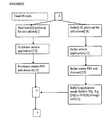
- FIGS. 1-4 illustrate a flow diagram for the method pos free 1001 ;
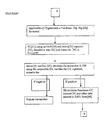
- FIGS. 5-8 illustrate a flow diagram for the method form-filler [ 103 ]
- FIGS. 9-12 illustrate a flow diagram for method: over-the-phone transactions [ 104 b];
- FIG. 13 illustrates a flow diagram describing the pan's enrollment
- FIGS. 14 and 15 illustrate a flow diagram for the operation of non-disruptive pan [ 106 ]
- FIG. 16 illustrates a flow diagram for enrollment for method 108 ;
- FIGS. 17 and 18 illustrate a flow diagram for method [ 108 ] operation
- FIGS. 19-22 illustrate a flow diagram for case adaptor 102 .
- the present invention may be described herein in terms of various components and processing steps. It should be appreciated that such components and steps may be realized by any number of hardware and software components configured to perform the specified functions.
- the present invention may employ various electronic control devices, visual display devices, input terminals and the like, which may carry out a variety of functions under the control of one or more control systems, microprocessors or other control devices.
- the present invention may be practiced in any number of financial transaction contexts and the exemplary embodiments relating to a system and method for a secure payment system are merely a few of the exemplary applications for the invention.
- the principles, features and methods discussed may be applied to any situation involving a financial transaction between a seller and a purchaser.
- a payments systems [ 100 ] is provided in which a purchaser [ 5 ] uses his cell-phone [ 1 ] or any other portable device [ 1 ] instead of a conventional plastic card [ 2 ] with a magnetic stripe [ 3 ], in order to charge his credit [ 4 ] or debit account [ 4 ].
- a Central Service [ 6 ] of the present invention is provided in which a purchaser [ 5 ] uses his cell-phone [ 1 ] or any other portable device [ 1 ] instead of a conventional plastic card [ 2 ] with a magnetic stripe [ 3 ], in order to charge his credit [ 4 ] or debit account [ 4 ].
- a method [ 100 ] that utilizes software applications that run in cell-phones. These cell phones are the purchaser's cell-phone [ 1 ] and/or seller's cell-phone [ 18 ].
- the payment system of the present invention further comprises a server [ 8 ] and IVR software [ 9 ] which constitutes together the elements of one of the payment systems of the present invention referred as POS-Free Payment System [ 100 ].
- This payment system [ 100 ] enables the customers or purchasers [ 5 ], to pay by means of their respective cell-phones [ 1 ] or any other personal device [ 1 ] carried by the purchasers [ 5 ] and by using the service of Central Service [ 6 ] of the present invention which is equipped with a server [ 8 ] and an IVR [ 9 ] (Interactive Voice Response).
- the cell-phone or device [ 1 ] runs the software application.
- CC also refers to debit cards, charge cards, smart cards, pre-paid cards, gift cards, and the like
- application [ 13 ] may prompt the seller [ 10 ] to identify himself to the application [ 13 ], for example, by entering a seller's PIN [ 19 ], and, as well, application [ 13 ] may request from the seller [ 10 ] to enter the amount of the transaction [ 15 ].
- the seller's cell phone application [ 13 ] may now digitally sign (time-stamped) a string [ 20 ] including at least the transaction's amount [ 15 ], with the seller's digital signature [ 25 ].
- Such seller's acoustic digital signature [ 26 ] is transmitted to the IVR [ 9 ], for example by placing a call [ 21 ] to the Central Service IVR [ 9 ] which is connected to the Server [ 8 ].
- the purchaser [ 5 ] may pick up the purchaser's cell-phone [ 1 ], and select the purchaser application [ 17 ]'s icon of the present invention and activate the application [ 17 ].
- the purchaser's application [ 17 ] may prompt the cell-phone owner (the purchaser [ 5 ]) to authenticate himself by entering a PIN [ 35 ] or other identification information, such as biometric identification, and to enter the transaction amount [ 15 ] that the purchaser [ 5 ] is willing to charge his CC account [ 4 ] in benefit of the seller [ 10 ].
- the purchaser's acoustic message [ 22 ] carries and contains a string [ 23 ] with the date and time and the amount [ 15 ] the purchaser [ 5 ] accepted to pay, amongst other data (e.g., type of transaction determined by the icon selection).
- the string [ 23 ] is digitally signed by the application [ 17 ] with the purchaser's digital signature [ 24 ].
- the string may be digitally signed in accordance with the method presented in the Great Britain Patent Number 2,374,182, applied by the applicant of this patent application.
- the resultant digital signature [ 24 ] is encoded to sound.
- the sound [ 22 ] carrying the encoded purchaser's digital signature [ 24 ], referred here below also as acoustic message [ 22 ] or acoustic digital signature [ 22 ] is captured by the seller's cell phone [ 18 ] and transmitted to the IVR [ 9 ] though the voice channel. In accordance to the present embodiment, this may be similar to call [ 21 ] as earlier described.
- the central service server [ 8 ] receives the two encoded digital signatures belonging to the seller [ 10 ] and the purchaser [ 5 ] respectively.
- the central service server [ 8 ] checks and verified each of the encoded digital signatures [ 24 ] and [ 25 ], and eventually, if both are truthful digital signatures, the central service server [ 8 ] identifies the seller [ 10 ] and the purchaser [ 5 ] by means of retrieving the respective X.509 certificates whose respective serial numbers were within the digital signatures [ 24 ] and [ 25 ].
- the server [ 8 ] verifies if the transaction amounts [ 15 ] are identical and, eventually, the CSS [ 8 ] retrieves the purchaser's CC account [ 4 ] data, as well as the Seller's account [ 27 b ] data and acting as a POS [ 11 ] system, executes the CC transaction [ 14 ], impersonating the seller [ 10 ] and the purchaser [ 5 ].
- the central service server [ 8 ] operating as a POS [ 11 ] system receives the transaction confirmation [ 28 ], for example, from the CC company network [ 12 ], the central service server [ 8 ] stores the two received digital signatures [ 24 , 25 ], and returns to the seller [ 10 ] uttering (text-to-speech) a confirmation phrase, including a confirmation number, for the seller [ 10 ] to hear and finish the call [ 21 ].
- the CS [ 6 ] may send to the customer and/or seller by e-mail, conventional mail or any kind of communication system (e.g., SMS), a copy of the transaction confirmation with all the available data, optionally signed, by the CS [ 6 ] itself.
- e-mail e.g., SM
- SMS any kind of communication system
- the purchaser [ 5 ] has paid to the seller [ 10 ] the sum [ 15 ] he decided to pay, charging a credit card account [ 4 ] belonging to the purchaser, which may be one associated with a magnetic stripe plastic card or not.
- the CC account is a kind of virtual CC account [ 29 ] which is usable only by means of the purchaser's cell-phone application [ 17 ].
- the seller account [ 27 c ] has been credited by the acquirer [ 30 ] and/or the CC company, the exact sum the seller [ 10 ] expected to be credited as if the seller had used a conventional POS [ 11 ] system and had swiped the customer plastic credit card [ 2 ], while in the practice he had used an application installed in his cell-phone [ 13 ].
- the transaction [ 14 ] completed as per the method, software and servers of the present invention [ 100 ] is by far more secure than a conventional magnetic strip card based transaction.
- the purchaser's digital signature [ 24 ] is completed by using standards such as the PKCS#7, that is, the usage of the purchaser's private key [ 31 ], which is known only by the purchaser [ 5 ], and avoiding repudiation, constitutes a digital proof [ 32 b ] of the willingness of the purchaser [ 5 ] to complete the transaction [ 14 ].
- the seller digital signature [ 25 ] on the time and date and amount [ 15 ]
- the seller [ 10 ] selects the application [ 13 ] in his cell-phone [ 18 ] and enters the PIN [ 19 ], the transaction amount [ 15 ] and invites the purchaser [ 5 ] to proceed with his cell-phone's purchaser's application [ 17 ].
- the customer [ 5 ] picks-up his cell-phone [ 1 ], selects the application [ 17 ], enters the PIN [ 35 ] or other identification information, enters the amount [ 15 ], and places the customer's cell-phone [ 1 ] in proximity to the seller's cell-phone [ 18 ], and presses SEND.
- the purchaser's cell-phone application [ 17 ] generates a digital signature over the time-stamp and the amount [ 15 ] and encodes it to sound (purchaser's acoustic digital signature) [ 22 ].
- the seller's cell-phone application [ 13 ] which has already placed a call [ 21 ] to the IVR [ 9 ], and have already, sent the seller's acoustic digital signature [ 26 ] captures the purchaser's acoustic digital signature [ 22 ], transmits it to the Server's IVR [ 9 ]. Now the seller's cell-phone Application [ 13 ] waits for a response.
- the IVR [ 9 ] captures the acoustic digital signatures [ 22 , 26 ], decodes them and transmits the digital signatures [ 24 , 25 ] to the Server [ 8 ].
- PS 1 receives the customer's and seller's digital signatures [ 24 , 25 ].
- PS 2 verifies the digital signatures, compares the amounts, and verifies the time coincidence, checks if the difference is within tolerance [ 36 ].
- PS 3 retrieves the sellers account data [ 27 b ] and the customers account data [ 4 ]
- PS 4 transaction approval:
- the Server [ 8 ] acting as a conventional POS [ 11 ] transmits to the CC company (i.e.: the issuer [ 37 ]) by means of the network [ 12 ] the transaction's data for approval, and if approved, the CC company [ 37 ] returns to the Server [ 8 ] with an Authorization Number [ 28 ].
- the Server [ 8 ] stores the customer's and seller's digital signature [ 24 , 25 ] and returns to the seller [ 10 ] with a Confirmation number [ 38 ]. Furthermore, the server [ 8 ] may send an SMS, e-mail, etc to the purchaser [ 5 ]. Alternatively, the server [ 8 ] can send a one-time-code to the purchaser [ 5 ] through the seller phone [ 18 ] in order to authenticate itself in front of the seller [ 10 ] and or the purchaser [ 5 ] as we will explain below.
- the Purchaser's Cell-phone application [ 17 ] will generate a time-stamped digital signature [ 24 ] only when the customer [ 5 ] enters the exact PIN [ 35 ].
- This PIN [ 35 ] is the key for decrypting the private Key according with a method presented in the Israeli patent application number 173463, applied by the Applicant of this application.
- one configuration is that the CC issuer [ 37 ] will only enable the transaction [ 14 ] with such CC/debit card [ 4 ] when there is a Platform server [ 8 ] notification [ 42 ] of the willing of the purchaser [ 5 ] to execute the transaction [ 14 ] represented by a notification [ 42 ] from the server [ 8 ] emitted after receiving a valid, synchronized digital signature [ 24 ] of the authorized owner [ 5 ].
- FIGS. 1 to 4 illustrate a flow diagram for the method POS FREE 100 .
- a further variation [ 101 ] of the method presented [ 100 ] is a case where the seller [ 10 ] does not have the seller's application [ 13 ], nor any special application related to this method, installed in his cell-phone.
- he [ 10 ] is, indeed, a participant seller, that is, the seller has registered himself for the service [ 6 ] and he [ 10 ] as opened a CC acquirer's account [ 27 c ], an account where he can receive money from the transactions he completed.
- the seller [ 10 ] also sends the expected amount [ 15 ] due to the transaction [ 14 ].
- the purchaser [ 5 ] who has the purchaser's application [ 17 ], sends his acoustic digital signature [ 22 ] as before, through the seller's phone [ 18 ], which can be also, in this case [ 101 ] a regular phone and not necessarily a cellular one.
- the Adaptor [[ 39 ]] is a device able to capture, by means of a microphone [ 40 ] the purchaser's cell-phone generated acoustic message [ 22 ] carrying the purchaser's digital signature encoded to sound.
- the Adaptor [ 39 ] is able to decode such encoded digital signature [ 22 ], to transmit such decoded digital signature [ 24 ] to the Central Service Server [ 8 ], whereas the Central Service Server [ 8 ] receives the digital signature [ 24 ] belonging to the purchaser [ 5 ], checks and verified such digital signature [ 24 ], and eventually, if it is a truthful digital signature, the Central Service Server [ 8 ] identifies the purchaser [ 5 ] by means of retrieving the respective X.509 certificate, whose serial numbers was within the digital signature [ 24 ], and, eventually, the CSS [ 8 ] stores the received digital signature [ 24 ].
- the CSS [ 8 ] retrieves the purchaser's CC account data [ 4 ], and, assuming all the checks have been OK, it [ 39 ] transmits the CC account data [ 4 ] back to the said Adaptor [ 39 ].
- the Adaptor [[ 39 ]] is in possession of all the purchaser's CC account data [ 4 ] needed in order to magnetically write in a conventional plastic card magnetic stripe [ 3 ] the received data [ 4 ] or parts of it.
- the idea is to create a temporarily clone or a temporarily conventional plastic credit card [ 41 ] corresponding to the respective purchaser's CC account [ 4 ].
- the plastic card [ 41 ] is extracted from or expelled by the adaptor [ 39 ] and this temporarily CC [ 41 ] is ready to be used in the Seller's conventional POS [ 11 ], as any standard plastic CC [ 22 ].
- One configuration for method [ 102 ] is that, once used, the “clone” credit card [ 41 ] with the purchaser's account data [ 4 ] will be returned to the adaptor [ 39 ] of this invention [ 39 ] after having been swiped in the conventional POS [ 11 ].
- the magnetic stripe's purchaser data [ 4 ] will be erased by the adaptor [ 39 ].
- the seller [ 10 ] was able to complete a CC transaction, using a conventional POS [ 11 ], including in the case the customer [ 5 ] has no plastic Credit Card [ 2 ], but his cell-phone [ 1 ] with the special application of this invention for a purchaser [ 17 ].
- the seller [ 10 ] enters in the adaptor [ 39 ] the transaction amount [ 15 ] and invites the customer [ 5 ] to proceed with his purchaser's cell-phone application [ 17 ].
- the customer [ 5 ] picks-up his cell-phone [ 1 ], selects the purchaser's cell-phone application [ 17 ], enters the PIN [ 35 ], enters the amount [ 15 ], and approaches the cell-phone [ 1 ] to the adaptor's microphone [ 40 ], and presses SEND.
- the purchaser's cell-phone application [ 17 ] generates a digital signature over the time-stamp and the amount [ 24 ] and encodes it to sound (acoustic digital signature [ 22 ]).
- the Adaptor [ 39 ] captures the acoustic digital signature [ 22 ], decodes it, and transmits it to the CSS [ 8 ] together with the seller's data [ 27 a ] and amount [ 15 ]. Waits for response.
- PS 1 receives the digital signature [ 24 ], and seller's data [ 27 a].
- PS 2 verifies the digital signature [ 24 ], compares the amounts [ 15 ], and verifies the time coincidence, i.e.: if within tolerance [ 36 ].
- PS 3 retrieves the seller's account data [ 27 b ] and the customer's account data.
- the server transmits to the Issuer [ 37 ] the transaction data for notification [ 42 ] of the willing of the purchaser [ 5 ] to execute the referred transaction [ 14 ], and if eventually everything is fine, the Issuer [ 37 ] returns to the Server [ 8 ] with a Pre-Authorization's reception Number. Also, when at due time, the issuer [ 37 ] will receive the request to approval of the transaction [ 14 ] originated in the POS [ 11 ], the issuer [ 37 ] will check if the notification [ 42 ] has been received for such transaction amount [ 15 ], and if positive, to enable the transaction 14 (assuming all the other regular requisites are fulfilled).
- the server [ 8 ] stores the customer's digital signature [ 24 ] and returns to the adaptor [ 39 ] with the Customer [ 5 ] credit card data [ 4 ].
- the adaptor [ 39 ] writes on a temporarily card's magnetic Stripe the Customer credit card data [ 4 ] creating a “clone” card [ 41 ] which is ejected from the adaptor [ 39 ], handed by the seller, and swiped in the conventional POS [ 11 ] magnetic card reader.
- the POS [ 11 ] reads the Customer's credit card data [ 4 ] and completes the transaction [ 14 ] as usual.
- the “clone” card [ 41 ] is returned to adaptor [ 39 ] to be erased.
- One variation of the case [ 102 ] is a Universal POS Adaptor [ 44 ], consisting in an adaptor like before [ 39 ] with the additional features that enable it to capture messages not only acoustically [ 22 ], but also through USB, Bluetooth, Wi-Fi infrared or any other transmission technology or standard, generating as before a magnetic stripe information able to be read by a conventional POS [ 11 ], and in this way to enable to complete transactions with any possible gadget not compatible with or acceptable to a conventional POS [ 11 ].
- FIGS. 19 to 22 illustrates a flow diagram for case Adaptor 102 .
- a special POS referred as Acoustic POS [ 45 ] is able to capture the acoustic messages [ 22 ] generated by the Cell-phone purchaser's application of this invention [ 17 ].
- the Acoustic POS [ 45 ] has means to capture an acoustic message, like a microphone, and one or more CPUs. This Acoustic POS [ 45 ] is able to capture and decode the said acoustic message [ 22 ] generated by the purchaser's cell-phone application of this invention [ 17 ] into a digital string [ 24 ] recuperating the purchaser's digital signature [ 24 ]. This acoustic POS [ 45 ] is able also to generate a message with the time and date, and optionally, the transaction amount, entered by the seller.
- the Acoustic POS [ 45 ] will transmit the message, with the purchaser's and the seller's input, to the Central service Server [ 8 ], in order to enable the server [ 8 ] to proceed as in the above mentioned cases [ 100 , 101 , 102 ].
- the server [ 8 ] will check the purchaser's digital signature [ 24 ], will retrieve the purchaser CC data [ 4 ] and will transmit such data [ 4 ] to the Acoustic POS [ 45 ], in order to enable the Acoustic POS [ 45 ] to proceed with a conventional POS transaction.
- the CSS [ 8 ] will verify the purchaser's digital signature [ 24 ], identify the purchaser [ 5 ], retrieve the purchaser CC data [ 4 ] and transmit the relevant data to the Acoustic POS [ 45 ] for the completion of the transaction by such Acoustic POS [ 45 ].
- the CSS [ 8 ] will store the received digital signatures [ 24 ] as digital testimonies [ 32 ] of the willingness of the parties to do the specific transaction.
- the solution [ 103 ] consists on a method, and software for easing the cumbersome procedures nowadays in use to complete an on-line transaction [ 46 ] based on CC or debit cards.
- the method and software for on-line purchasing of this invention [ 103 ] consists of the same Purchaser's cell-phone application [ 17 ] as in the other cases referred above [ 100 , 101 , 102 ] and, additionally, a software application [ 50 ], easy to download into the potential on-line purchaser's PC [ 51 ] and, where the installation of such software [ 50 ] is effortless, i.e.: like the ActiveX Microsoft technology.
- This software for on-line purchasing of this invention [ 50 ]
- the on-line purchaser's PC [ 51 ] and by means of the PC's microphone [ 52 ], is able to capture the acoustic message [ 22 ] generated by the cell-phone purchaser's application [ 17 ] according the invention presented here, i.e.: the acoustic message [ 22 ] carrying the encoded to sound version of the purchaser's digital signature [ 24 ] on the date and time and the transaction amount [ 15 ].
- the software for on-line purchaser's PC (ActiveX) [ 50 ] has the capability to decode the encoded digital signature [ 22 ] and to transmit such recuperated digital signature [ 24 ] to the CSS [ 8 ], whereas the CSS [ 8 ].
- PS 1 receives the customer's digital signature [ 24 ].
- PS 2 verifies the digital signature [ 24 ], and verifies the time coincidence, checks if the difference is within tolerance [ 36 ], eventually, stores the digital signature [ 24 ].
- PS 3 identifies the on-line purchaser [ 47 ], retrieves the customers account data [ 4 ].
- PS 4 optional transaction notification:
- the Server [ 8 ] notifies the CC issuer [ 37 ] about the willing of the authorized owner [ 5 ] to charge the CC account [ 4 ].
- PS 5 returns to the PC software application [ 50 ] with the customer's data [ 4 ] including personal data needed to fulfill the form [ 48 ].
- this [ 103 ] method for on-line purchasing [ 46 ] not only makes the buying experience easier, by automatically fulfilling the form [ 48 ] but improves the security of the transaction n[ 14 ].
- the issuer [ 37 ] will reject any transaction [ 14 ] all the time there is no a pre-notification [ 42 ].
- the form [ 48 ] is filled automatically and conveniently, by the application [ 50 ] running in the PC (ActiveX), and the purchaser [ 47 ] can send the fulfilled form [ 48 ] back to the seller's site to proceed with the on-line operation [ 46 ].
- FIGS. 5 to 8 illustrate a flow diagram for the method Form-Filler [ 103 ].
- the customer being a participant customer has a cell-phone with the Purchaser's application (a cell-phone with the download referred as Purchaser's application of this invention [ 17 ]).
- the on-line Seller [ 53 ] is not required to have nothing special in his site, being a non participant merchant or a non necessarily participant merchant.
- the customer [ 47 ] he is visiting seller's site with any PC [ 51 ] and decides to buy; he receives an extensive form [ 48 ] to fill, including his name, Credit/Debit card data, address, etc.
- the customer [ 47 ] browses to the CSS [ 8 ] site or any alternative site and downloads an ActiveX (Form Filler ActiveX [ 50 ]). He picks-up his cell-phone [ 1 ] selects the Purchaser's application [ 17 ], enters the PIN, enters the amount [ 15 ], and presses SEND when his cell-phone [ 1 ] is close to the PC micro [ 52 ].
- ActiveX Form Filler ActiveX
- the Purchaser's application [ 17 ] computes a digital signature [ 24 ] over the time-stamp and the amount [ 15 ] and encodes it to sound (acoustic digital signature [ 22 ]).
- the ActiveX [ 50 ] captures the acoustic signature [ 22 ], decodes it, and transmits it to the CSS [ 8 ].
- the CSS [ 8 ] receives the customer's digital signature, verifies the digital signature, and verifies the time coincidence, i.e.: if within tolerance. Now the CSS [ 8 ] retrieves the customers account data. Optionally, the CSS [ 8 ] may notify the Issuer [ 37 ] about the coming on-line transaction [ 46 ] with a specific upper limit, and within a short window of time. This notification [ 42 ] may be signed by the CSS [ 8 ].
- the Server [ 8 ] transmits to the CC Issuer [ 37 ] the transaction data for notification [ 42 ] of the willing of the customer [ 47 ] to do a transaction [ 46 ] such this and paying with his CC account, and if eventually everything is fine, the Issuer [ 37 ] returns to the Server [ 8 ] with an Notification Reception Confirmation Message.
- the Server [ 8 ] stores the customer's digital signature [ 24 ] and returns to the customer's PC application [ 50 ] with the necessary data to fulfill the form [ 48 ].
- the ActiveX [ 50 ] receives the data, and fulfills the form [ 48 ].
- the customer [ 47 ] proceed with the on-line purchasing according to the seller [ 53 ] instructions using the already fulfilled seller's form [ 48 ] and the transaction [ 46 ] becomes a standard transaction for the Seller [ 53 ].
- the Server [ 8 ] will receive the digital signature [ 24 ] from the IVR [ 9 ] or in some cases directly (i.e.: ASP [ 64 ] pages). It [ 8 ] will check the validity of such digital signature [ 24 ], and, eventually, if everything is right, will prepare a digitally-signed-by-the-Server document [ 42 ] stating the verified-by-the-server customer's willing to accomplish a specific type of transaction (i.e.: ATM transaction, CC on-the-spot, etc) up to the upper amount limit within a short period of time [ 63 ].
- a specific type of transaction i.e.: ATM transaction, CC on-the-spot, etc
- the over-the-phone merchant [ 56 ] is a participant merchant and has an on-line PC [ 57 ] equipped with a microphone [ 58 ].
- the Seller [ 56 ] is not necessarily equipped with a POS [ 11 ] and while he will use a PC [ 57 ], this PC doesn't need to have any special application installed previously. Also the Seller [ 56 ] will have nothing special in his cell-phone and can receive calls in any phone.
- the over-the-phone customer [ 55 ] picks-up his cell-phone [ 59 ], calls the seller's phone number (any type of phone) and at a given time decides to buy a good or service.
- the customer [ 55 ] selects the application [ 17 ], enters his PIN, enters the amount, selects the purchaser cell-phone application icon [ 62 ] for over-the-phone transactions, and presses SEND.
- the purchaser cell-phone application [ 17 ] generates a digital signature over the time-stamp and the amount [ 24 ] and encodes it to sound (acoustic digital signature [ 22 ]) and sends it through the voice channel.
- the Seller [ 56 ] approaches his phone [ 61 ] to the PC's micro [ 58 ].
- the PC's ActiveX [ 50 ] captures the acoustic digital signature [ 22 ] sent by the customer, decodes it, and transmits it to the ASP [ 64 ] and the ASP transmit it to the Platform's Server [ 8 ].
- the Platform Server :
- PS 1 receives the customer's digital signature [ 24 ] and seller's imputed data though the ASP [ 64 ].
- PS 2 verifies the digital signature [ 22 ], compares the amounts, and verifies the time coincidence (if between tolerance [ 36 ]).
- PS 3 retrieves the sellers account data and the customers account data.
- the Server acting as a POS, transmits through the CC company network [ 12 ] the transaction data for approval, and if eventually everything is fine, the CC company returns to the Server [ 8 ] with a confirmation number which is displayed for the over-the-phone merchant [ 56 ] in his PC [ 57 ] through the ASP [ 64 ].
- the Server [ 8 ] stores the customer's digital signature [ 24 ] and seller's data for future auditing and returns to the seller's PC [ 57 ] with a Confirmation number, as said above, or Digital Testimony [ 32 ] signed by the server [ 8 ].
- the server [ 8 ] confirms the transaction sending an SMS, e-mail, etc to the customer and or merchant.
- the over-the-phone merchant [ 56 ] is a participant merchant and has an on-line PC [ 57 ] equipped with a microphone [ 58 ].
- the Seller [ 56 ] is equipped with a conventional POS [ 11 ] able to accept manually entered data and while he will use a PC [ 57 ], this PC doesn't need to have any special application installed previously. Also the Seller [ 56 ] will have nothing special in his cell-phone and can receive calls in any phone.
- the over-the-phone customer [ 55 ] picks-up his cell-phone [ 59 ], calls the seller's phone number (any type of phone) and at a given time decides to buy a good or service.
- the customer [ 55 ] selects the application [ 17 ], enters his PIN, enters the amount, selects the purchaser cell-phone application icon [ 62 ] for over-the-phone transactions, and presses SEND.
- the purchaser cell-phone application [ 17 ] generates a digital signature over the time-stamp and the amount [ 24 ] and encodes it to sound (acoustic digital signature [ 22 ]) and sends it through the voice channel.
- the Seller [ 56 ] approaches his phone [ 61 ] to the PC's micro [ 58 ]
- the PC's ActiveX [ 50 ] captures the acoustic digital signature [ 22 ] sent by the customer, decodes it, and transmits it to the ASP [ 64 ] and the ASP transmit it to the Platform's Server [ 8 ].
- the Platform Server :
- PS 1 receives the customer's digital signature [ 24 ] and seller's imputed data though the ASP [ 64 ].
- PS 2 verifies the digital signature [ 22 ], compares the amounts, and verifies the time coincidence (if between tolerance [ 36 ]).
- PS 3 retrieves the sellers account data and the customers account data.
- the Server notifies the Purchaser's Issuer about the intention [ 63 ] of the purchaser to complete a transaction over the phone for the amount not higher than the amount given [ 37 ].
- the Server [ 8 ] stores the customer's digital signature [ 24 ] and seller's data for future auditing and returns to the seller's PC [ 57 ] with al the customer account data needed to proceed, as said above, or Digital Testimony [ 32 ] signed by the server [ 8 ].
- the seller [ 56 ] proceeds with the transaction as usual, using the conventional POS [ 11 ].
- FIGS. 9 to 12 illustrate a red flow diagram for method: Over-the-phone transactions [ 104 b].
- the said announcement is backed by the purchaser digital signature [ 24 ] previously verified by the server [ 8 ].
- the server identifies the signor of the digital signature by means of the x.509 certificate.
- the server [ 8 ] retrieves the corresponding account, whereas the association owner-account has been made during the enrolment.
- the owner by identified himself by means of his/her digital signature stamped on the time and date as well as on the amount and type of the transaction, has let the CSS [ 8 ] know of his willing to complete a transaction [ 63 ] as in most of the cases mentioned above.
- the CSS [ 8 ] can inform or notify the Purchaser's CC issuer [ 37 ] or, alternatively, to the purchaser's bank, or to the entity which manage the purchaser's account about the intention [ 63 ] of the true account's owner [ 7 ] to complete a transaction.
- the Purchaser application [ 17 ] will generate a Time stamped digital signature [ 24 ] only when the customer enters the correct PIN, known only by the authorized owner of the CC.
- This secret PIN is not written in the Cell-phone memory, and it is the key for decrypting the private Key according with the procedure and method described in the Israeli patent application number 173463 applied by the author of this application.
- the CC Issuer [ 37 ] or account manager will only enable transactions with such Credit Card/debit card, if it has received a Signed-by-the-CSS notification [ 42 , 32 ] of the authorization of the account owner to do a transaction not higher that the amount digitally signed (the upper limit authorized), within a pre agreed and short window of time (i.e.: up to 10 minutes after the digitally signed time stamp).
- the CSS [ 8 ] will notify the Issuer [ 37 ] about the account owner's willing [ 63 ] only after receiving a valid, Time Stamped digital signature of the authorized owner [ 7 ] over the amount (upper limit). Due to the fact that this digital signature based authorization notification riches the CC Issuer [ 37 ] before or simultaneously with the conventional transaction approval request, we refer to it as Pre-Authorization Notification (PAN [ 65 ]).
- PAN [ 65 ] Pre-Authorization Notification
- PAN [ 65 ] is a valid option for all the cases presented here, and strongly increases the security of the use of CC for any transaction, on-the-spot, as over-the-net, as well as over-the-phone, and in general, any transaction where the account manager (i.e.: the issuer, the bank, etc) does not see the account owner [ 7 ].
- the PAN's implies the previous or simultaneous notification by the CSS [ 8 ] (digitally signed) to the account manager [ 37 ] (issuer or Bank) of the willing of the account owner [ 63 ], positively identified by the CSS [ 8 ] using the X.509 certificate, to accomplish a transaction with an upper limit amount, within a short period of time, and the validity of this willing is supported and corroborated by the account owner's digital signature, as a Digital Testimony [ 32 ] of his/her desire, the Identity theft will not be viable.
- any transaction accomplished without the bank employee's personal verification of the identification of the account owner, as an ATM (Automatic Teller Machine) transaction, a phone-banking transaction, a on-line banking transaction, a check based transaction, a fax based transaction, any CC based transaction, on-the-spot, e-commerce, over-the-phone or automatic dispenser and in general, any transaction affecting the account moneys whereas the identity of the transactor, i.e.: the question if the transactor is the authorized person to withdraw moneys from the account or an impostor, cannot be checked by a bank employee.
- ATM Automatic Teller Machine
- the PAN [ 65 ] provides to be a clear-cut security solution due to the fact that the account manager may reject any of such remote transaction attempts, of the type named above, if he does not have the notification [ 42 ] of the CSS [ 8 ] about the perfectly secure and non-repudiable identification of the account owner [ 7 ] based in digital signature technologies, and not only the identification but also the corroboration, within the notification [ 42 ], about the willing of the owner to accomplish [ 63 ] at such time (i.e.: within 5 minutes of the time-stamp), such type of transaction (i.e.: ATM) with such upper limit (i.e.: up to US$150).
- remote transactions [ 66 ] whereas there is an entity who manages a customer's account [ 68 ], like a bank, and whereas the account owner [ 7 ] provides instructions to such account manager [ 68 ], during the enrolment to the PAN [ 65 ] service, to halt certain types of remote transactions, if some condition have not fulfilled.
- the conditions may be that a previous notification [ 42 ] authorizing the execution of the transaction should been received from the CSS ( 8 ), for the respective amount and time window.
- the customer may request to halt the execution of certain remote transactions, only in the case the transaction amount exceed a lower limit [ 70 ] (a trigger for the requesting of the PAN [ 42 ]) requested by the customer in order to trigger the PAM request i.e.: notification [ 42 ] request.
- a lower limit [ 70 ] a trigger for the requesting of the PAN [ 42 ]
- notification [ 42 ] request i.e.: notification [ 42 ] request.
- FIG. 13 illustrates a flow diagram describing the PAN's enrolment.
- the procedure will be as follows: before the customer accomplishes the withdrawing of the money from the ATM machine as usual, he picks-up his cell-phone [ 1 ] and selects the PAN's cell-phone application [ 67 ], which was previously installed in his cell-phone [ 1 ]. Once [ 67 ] is activated the purchaser enters the PIN and the PAN application [ 67 ] will offer a menu of possible remote transactions.
- the customer selects the ATM icon.
- the application [ 67 ] will ask the customer to enter the upper limit of the transaction's amount [ 15 ] (i.e.: $100). Once entered, the application [ 67 ] will compute a time stamped digital signature [ 24 ] over the amount and the type of transaction, ATM in this case. The application [ 67 ] will also encode the digital signature to sound [ 22 ] and will place a call to the IVR [ 9 ] system working in conjunction with a Server [ 8 ].
- the IVR [ 9 ] will decode the acoustic digital signature [ 22 ], into a digital signature [ 24 ].
- the Server [ 8 ] located at the account manager facilities, will receive the digital signature [ 24 ] from the IVR [ 9 ], will check the validity of such digital signature, and, eventually, if everything is right, will prepare a digitally-signed-by-the-Server document [ 42 ] stating the verified-by-the-server customer's willing to accomplish an ATM transaction up to the upper limit within a short period of time. Let's refer to this digitally-signed-by-the-Server document as a Digital Testimony [ 32 ], which is one type of notification [ 42 ]. Now the server [ 8 ] will transmit the Digital Testimony [ 32 ] to the account manager [ 68 ] (the customer's bank mainframe, the CC issuer platform, etc).
- the customer [ 5 ] proceeds with the remote transaction [ 66 ] as usual.
- ATM remote transaction
- On of the steps of this procedure includes the usual transaction's request for approval, which the ATM transmits to the account manager system (i.e.: the bank). Once such transaction's request for approval reaches the account manager system, the account manager system will proceed as today plus certain additional steps due to the method [ 106 ] of this invention. These additional steps includes the verification if the customer [ 5 ] who intent to do the transaction [ 66 ] is a PAN's participant customer, and if positive, the checking if, for such type of transaction, in this case ATM, the customer have requested the pre-notification step.
- the account management [ 68 ] system will verify if the transaction amount is above the lower limit [ 70 ] for triggering the pre-notification requisite. Assuming that this is the case, the account management system will check if it has received a pre-authorization notification [ 42 ] corresponding to the customer, and type of transaction. Again, assuming that this is the case, the account management system should check that the transaction amount coming with the standard transaction approval request is equal or lower than the amount specified in the pre-authorization notification. Only if positive, the account management system will enable the transaction approval procedure to continue. Otherwise, it will stop the transaction approval procedure or, alternatively, request additional steps in order to avoid a potential identity theft.
- FIGS. 14 and 16 illustrate a flow diagram for the operation of Non-Disruptive PAN [ 106 ].
- the PAN method is also good for several type of remote transaction like a check based transactions, fax based transactions, banking through the internet, banking over-the-phone, CC or debit card based transactions, and in general all the related to the account transactions whereas the customer identity and willing cannot be verified by the account manager staff.
- the method [ 106 ] is like the faucet (the account) which is always closed, with the exemption of the short window of time after the account manager receives the notification to open or unfreeze it for one particular type of transaction, a window of time and up to one particular limit. And where such notification is based in a customer well verified digital signature [ 24 ].
- the customer [ 75 ] will buy at such merchant site [ 73 ] as today, no procedure change, but before completing the transaction [ 71 ], if the type and amount of the transaction fell within the category of restricted transactions as per the agreement [ 69 ] between the customer [ 75 ] and the account manager [ 68 ], thus the customer [ 75 ] will add to the present-in-use procedure a pre-authorization notification step. (PAN step).
- the additional step as per this method [ 106 ] consists of, before the customer [ 75 ] accomplishes the transaction [ 71 ] as usual, he picks-up his cell-phone [ 1 ] and selects the PAN application [ 67 ], which was previously installed in his cell-phone [ 1 ] during the enrolment procedure. Once activated the PAN application [ 67 ] will offer a menu of possible remote transactions [ 66 ].
- the application will ask the customer [ 75 ] to enter the upper limit [ 74 ] of the transaction's amount (i.e.: 150). Once entered, the application will compute a time stamped digital signature over the amount and the type of transaction [ 24 ], CC on-line in this case.
- the application [ 68 ] will place a call to the IVR [ 9 ] system working in conjunction with a Server [ 8 ] and will also encode the digital signature to sound [ 22 ].
- This Server [ 8 ] located at the account manager [ 68 ] (i.e.: the CC or Debit card issuer, the bank) facilities, will receive the digital signature [ 24 ], will check the validity of such digital signature [ 24 ], and, eventually, if everything is right, will prepare a digitally-signed-by-the-Server document [ 42 ] stating the verified-by-the-server customer's willing [ 63 ] to accomplish an CC transaction [ 71 ] up to the upper limit [ 74 ] within a short period of time.
- the customer [ 75 ] proceeds with the remote transaction as usual.
- the usual procedure includes the transaction's request for approval, ultimately, from the account management entity [ 68 ].
- the merchant POS transmits to the account manager [ 68 ] system such request.
- Once such transaction's request for approval reaches the account manager [ 68 ] system (The Bank, The CC Issuer), the account manager [ 68 ] system will proceed as today plus certain additional steps due to the method of this invention [ 106 ].
- These additional steps includes the checking if the customer's account, the account relevant for the transaction, is a PAN's participant customer account and, if positive, the checking if for such type of transaction [ 71 ], in this case CC on-line transaction [ 71 ], and for such transaction amount the customer [ 75 ] has instructed the account manager [ 68 ] that it is required the corroboration that the account manager system has in his possession the respective pre-authorization notification [ 42 ] or in the form of a Digital Testimony [ 32 ], or the like, notifying the account management [ 68 ] of the customer's willingness [ 63 ] to pursue with such transaction [ 71 ].
- the account management [ 68 ] system is expected to reject the transaction [ 71 ] or alternatively to suspend the progress of the transaction approval and/or to contact the customer for verification of his identity and his willing to do the transaction.
- the PAN method [ 106 ] working in conjunction with the client software (the purchaser cell-phone application [ 67 ]) and the Server [ 8 ]-IVR [ 9 ] software of this invention is able to improve fundamentally the security of the remote transactions [ 66 ], maintaining “the faucet” (the customer's account) close all the time there is no a Time Stamped Digital Signature [ 24 ] on the type of transaction and the upper limit of the transaction amount, perfectly validated by the Server [ 8 ].
- the PAN method [ 106 ] is not weighty and complicated for the customer but fully optional i.e.: if the customer feels happy with the situation today (the faucet is open all the time) it is fine, he has been warned and offered a security improvement and the customer has rejected it.
- the bank/Issuer position is better in any case due to the bank has suggested a solution.
- any bank customer when offered the PAN [ 106 ] solution, can specify his personal security policy [ 69 ], because, including the total rejection of the PAN is a way to state one particular security policy [ 69 ]
- the PAN method delivers a Digital Testimony based in the customer digital signature which is un-repudiable.
- any given technology i.e.: Bluetooth, infrared, Wi-Fi, etc, the transmission technology [ 81 ]
- a specially modified X.509 certificate [ 82 ].
- This specially modified X.509 certificate [ 82 ] is the result of the encoding to bits of an assertion [ 83 ] stating, amongst other things, that one precise (and included in the assertion) CC account [ 84 ] belongs to a given person (name, address) which is the “owner [ 85 ]” of a given voiceprint [ 86 ](also included in the statement [ 83 ]) and whereas this voiceprint [ 86 ] was created by means of a given “speaker identification” technology [ 87 ] at certain agreed upon conditions [ 88 ](i.e.: noise background).
- the said declaration [ 83 ] must be digitally signed [ 90 ] by a Trusted Third Party [ 89 ] (i.e.: a Certification Authority, CA).
- a Trusted Third Party i.e.: a Certification Authority, CA.
- the modified X.509 of this invention [ 82 ] is a digitally signed document [ 90 ] associating a given CC account [ 84 ] with a given voiceprint [ 86 ], and due to the digital signature [ 90 ], this link become unmalleable, and impossible to corrupt due to the fact that the HASH value of the assertion [ 83 ] will change if the statement [ 83 ] is corrupted and this change is easily detected.
- the payment method [ 107 ] presented here consists of, as said above, a portable device [ 93 ] in the hands of the customer [ 80 ] and a special POS [ 91 ] referred as BIO-POS in the store or in the hands of the seller [ 92 ], whereas the method [ 107 ] may work as follows: once the customer [ 80 ] decides to charge his CC or debit card account [ 84 ], buying a good or service, he launches the portable device causing it to transmit the X.509 [ 82 ] to the Bio-POS [ 91 ].
- This modified X.509 [ 82 ] is transmitted by the portable device [ 93 ], to and captured by the special device of this invention, referred as “bio POS” [ 91 ], located at the store.
- This device [ 91 ] will be ready to capture also the voice of the customer [ 80 ] (i.e.: the customer says: I would like to pay $55 charging my “CC account [ 84 ]” [ 97 ]) and, the bio-POS [ 91 ], using one agreed upon speech recognition technology [ 94 ], in conjunction with the technology of “speaker identification” [ 87 ] used to create the modified X.509 voiceprint, will:
- the customer [ 80 ] can charge his CC account [ 84 ] paying without any other means than the portable device [ 93 ] which carries and transmits the special X.509 [ 82 ] and by using his verbal commands [i.e. 95 ].
- No other person can charge such account because such person voice [ 95 ] will be, in principle, different to the voice of the true owner [ 85 ], and consequently the computed voiceprint [ 96 ] will be different of the signed one [ 86 ], and the Bio POS [ 91 ] will reject the transaction.
- BIO POS [ 91 ] is connected to the said repository [ 98 ], in a way that the Bio POS [ 91 ] can retrieve a copy of any desired special X.509 [ 82 ].
- BIO-POS [ 91 ] A POS [ 91 ] with special features referred as BIO-POS [ 91 ]
- FIG. 16 illustrates a flow diagram for enrollment for method 108
- the Bio POS [ 91 ] know who he [ 80 ] pretend to be, i.e.: by speaking out his name, or his Identification number (i.e.: Social security number), or by entering his name into a Bio POS [ 91 ] keypad, or entering his ID number, or by any other method resulting in enabling the Bio POS [ 91 ] to know who this customer [ 80 ] pretend to be and more, which special X.509 [ 82 ] correspond to him, in order to retrieve it [ 82 ] from the said repository [ 98 ].
- FIGS. 17 and 18 illustrate a flow diagram for method [ 108 ] operation
- Some of the methods of payments described in this invention may enjoy the “anti-phishing” features, as described in the U.S. Pat. No. 6,957,185, whereas the server [ 80 ], after receiving the customer digital signature [ 24 ], authenticates itself in front of the customer [ 5 ] and/or the seller [ 10 ], generating and transmitting a variable and specific code, referred as Reverse OTP different for each transaction (i.e.: each received digital signature [ 24 ]) and whereas the server [ 8 ] transmits the variable codes to the seller [ 10 ], the seller's transaction specific code or seller's reverse OTP, and through the seller [ 10 ] to the customer [ 5 ], the customer's transaction specific code respectively, and whereas each of them, or one of them, compares the received variable code with the one their respective cellular phone application [ 17 ] of this invention displays.
- Reverse OTP a variable and specific code
- the customer [ 5 ] compares the received variable code, received after sending the digital signature [ 24 ] on the type of transaction and amount, and find out that such one time code, received though the seller [ 10 ] or directly, is identical to the one displayed in his cell-phone display, he can rest sure that he is dealing with his true service provider and not with a phished service. The same can be said for the seller.
- This combined method [ 109 ] enables the use of a no-gadget payment method without the need to replace or update the present-in-use POS.
- the customer [ 80 ] has decided to charge his CC account [ 84 ] with a given amount in order to complete a transaction, he [ 80 ] lets the Adaptor [ 44 b ] know who he [ 80 ] pretend to be, i.e.: by speaking out his name, or his Identification number (i.e.: Social security number), or by entering his name into a Adaptor [ 44 b ] keypad, or entering his ID number, or by any other method resulting in enabling the Adaptor [ 44 b ] to know who this customer [ 80 ] pretend to be and more, which special X.509 [ 82 ] correspond to him, in order to retrieve it [ 82 ] from the repository [ 98 ].
- the Adaptor [ 44 b ] know who he [ 80 ] pretend to be, i.e.: by speaking out his name, or his Identification number (i.e.: Social security number), or by entering his name into a Adaptor [ 44 b ] keypad, or entering
- this Adaptor [ 44 b ] will be ready to capture also the voice of the customer (i.e.: the customer says: I would like to pay $55 with my CC account” [ 95 ]) and, by means of the technology of “speaker identification” [ 87 ] used to create the modified X.509 [ 82 ] voiceprint [ 86 ], and using in conjunction a given speech recognition technology [ 94 ], agreed upon in advance or established within the special X.509 [ 82 ], this Adaptor [ 44 b ] will:
- the Adaptor [ 44 b ] transmits to the Issuer [ 37 ] the transaction data for notification [ 42 ] of the willing [ 63 ] of the purchaser to execute the referred transaction
- the adaptor [ 44 b ] writes on a temporarily card's magnetic Stripe the Customer credit card data [ 84 ] creating a “clone” card [ 41 ] which is ejected from the adaptor [ 44 b ], handed by the seller, and swiped in the conventional POS [ 11 ] magnetic card reader.
- the POS [ 11 ] reads the Customer's credit card data [ 4 ] and completes the transaction as usual.
- the “clone” card [ 41 ] is returned to adaptor [ 44 b ] to be erased.
Landscapes
- Business, Economics & Management (AREA)
- Accounting & Taxation (AREA)
- Engineering & Computer Science (AREA)
- Physics & Mathematics (AREA)
- General Physics & Mathematics (AREA)
- Strategic Management (AREA)
- General Business, Economics & Management (AREA)
- Theoretical Computer Science (AREA)
- Finance (AREA)
- Computer Networks & Wireless Communication (AREA)
- Development Economics (AREA)
- Economics (AREA)
- Computer Security & Cryptography (AREA)
- Health & Medical Sciences (AREA)
- Audiology, Speech & Language Pathology (AREA)
- Human Computer Interaction (AREA)
- Acoustics & Sound (AREA)
- Multimedia (AREA)
- Cash Registers Or Receiving Machines (AREA)
- Financial Or Insurance-Related Operations Such As Payment And Settlement (AREA)
Abstract
Description
-
- to overcome the security problems of the ATM transactions without the cooperation of the ATM owners,
- to overcome the security problems of the CC on-line transactions without the cooperation of the on-line merchants, nor the need to join forces with the CC companies,
- to overcome the security problems of the CC on-the-spot transactions without the cooperation of the Acquirers, nor the Issuers nor the POS owners,
- to overcome the security problems of the checks without the need to change anything,
- to overcome the security problems of the on-line-banking without the need of a secure computer,
- to overcome the security problems of phone-banking without the cooperation of the over-the-phone merchants (i.e., the customer can send his pre-authorization to the bank though any on-line PC while calling the over-the-phone merchant).
-
- to overcome the security problems of the ATM transactions without the cooperation of the ATM owners,
- to overcome the security problems of the CC on-line transactions without the cooperation of the on-line merchants, nor the need to joint forces with the CC companies
- to overcome the security problems of the CC on-the-spot transactions without the cooperation of the acquirers, nor the issuers nor the POS owners,
- to overcome the security problems of the checks without the need to change nothing in the traditional clearing procedure
- to overcome the security problems of the on-line-banking without the need of a secure computer,
- to overcome the security problems of the phone-banking without the cooperation of the over-the-phone merchants (i.e.; the customer can send his pre-authorization to the bank though any on-line PC while calling the over-the-phone merchant),
Claims (4)
Priority Applications (2)
| Application Number | Priority Date | Filing Date | Title |
|---|---|---|---|
| US12/553,789 US8322602B2 (en) | 2006-06-12 | 2009-09-03 | Secure and portable payment system |
| US13/693,760 US20130103587A1 (en) | 2006-06-12 | 2012-12-04 | Secure and portable payment system |
Applications Claiming Priority (4)
| Application Number | Priority Date | Filing Date | Title |
|---|---|---|---|
| IL176262A IL176262A0 (en) | 2006-06-12 | 2006-06-12 | Secure and friendly payment system |
| IL176262 | 2006-06-12 | ||
| US11/761,915 US7584886B2 (en) | 2006-06-12 | 2007-06-12 | Secure and portable payment system |
| US12/553,789 US8322602B2 (en) | 2006-06-12 | 2009-09-03 | Secure and portable payment system |
Related Parent Applications (2)
| Application Number | Title | Priority Date | Filing Date |
|---|---|---|---|
| US11/761,916 Continuation US7842174B2 (en) | 2006-06-12 | 2007-06-12 | Electrochemical chip with miniaturized sensor array |
| US11/761,915 Continuation US7584886B2 (en) | 2006-06-12 | 2007-06-12 | Secure and portable payment system |
Related Child Applications (1)
| Application Number | Title | Priority Date | Filing Date |
|---|---|---|---|
| US13/693,760 Continuation US20130103587A1 (en) | 2006-06-12 | 2012-12-04 | Secure and portable payment system |
Publications (2)
| Publication Number | Publication Date |
|---|---|
| US20090327130A1 US20090327130A1 (en) | 2009-12-31 |
| US8322602B2 true US8322602B2 (en) | 2012-12-04 |
Family
ID=39230614
Family Applications (3)
| Application Number | Title | Priority Date | Filing Date |
|---|---|---|---|
| US11/761,915 Expired - Fee Related US7584886B2 (en) | 2006-06-12 | 2007-06-12 | Secure and portable payment system |
| US12/553,789 Expired - Fee Related US8322602B2 (en) | 2006-06-12 | 2009-09-03 | Secure and portable payment system |
| US13/693,760 Abandoned US20130103587A1 (en) | 2006-06-12 | 2012-12-04 | Secure and portable payment system |
Family Applications Before (1)
| Application Number | Title | Priority Date | Filing Date |
|---|---|---|---|
| US11/761,915 Expired - Fee Related US7584886B2 (en) | 2006-06-12 | 2007-06-12 | Secure and portable payment system |
Family Applications After (1)
| Application Number | Title | Priority Date | Filing Date |
|---|---|---|---|
| US13/693,760 Abandoned US20130103587A1 (en) | 2006-06-12 | 2012-12-04 | Secure and portable payment system |
Country Status (4)
| Country | Link |
|---|---|
| US (3) | US7584886B2 (en) |
| GB (1) | GB2452223B (en) |
| IL (1) | IL176262A0 (en) |
| WO (1) | WO2008038161A2 (en) |
Cited By (1)
| Publication number | Priority date | Publication date | Assignee | Title |
|---|---|---|---|---|
| DE102013006549A1 (en) * | 2013-04-08 | 2014-10-09 | Fiducia It Ag | Method and system for cashless payment or cash withdrawal with a mobile customer terminal |
Families Citing this family (66)
| Publication number | Priority date | Publication date | Assignee | Title |
|---|---|---|---|---|
| WO2006115984A2 (en) | 2005-04-21 | 2006-11-02 | Securedpay Solutions, Inc. | Portable handheld device for wireless order entry and real time payment authorization and related methods |
| US7681791B1 (en) | 2005-12-28 | 2010-03-23 | Brett Beveridge | Efficient inventory and information management |
| JP5186790B2 (en) * | 2007-04-06 | 2013-04-24 | 日本電気株式会社 | Electronic money transaction method and electronic money system |
| JP4548441B2 (en) * | 2007-04-11 | 2010-09-22 | 日本電気株式会社 | Content utilization system and content utilization method |
| US8818905B2 (en) * | 2007-06-25 | 2014-08-26 | Total System Services, Inc. | System and method for encrypting interactive voice response application information |
| US20090055319A1 (en) * | 2007-08-21 | 2009-02-26 | Fazal Raheman | Novel card-less, name-less, number-less, and paper-less method and system of highly secure completely anonymous customer-merchant transactions |
| US20090078758A1 (en) * | 2007-09-26 | 2009-03-26 | First Data Corporation | Systems and methods for cardless transactions using a telephone number |
| US9251510B2 (en) | 2007-11-30 | 2016-02-02 | U.S. Bank National Association | Buyer routing arrangements and methods for disparate network systems |
| US9799028B2 (en) * | 2007-11-30 | 2017-10-24 | U.S. Bank National Association | Seller routing arrangements and methods for disparate network systems |
| US20090144194A1 (en) * | 2007-11-30 | 2009-06-04 | Mark Dickelman | Computer automated systems, devices and methods for data processing of accounting records |
| US20090222323A1 (en) * | 2008-02-29 | 2009-09-03 | Laura Ann Figgie Kelly | Opportunity segmentation |
| US8347230B2 (en) | 2008-09-30 | 2013-01-01 | Apple Inc. | Visual presentation of multiple internet pages |
| US8570158B2 (en) * | 2009-08-13 | 2013-10-29 | At&T Intellectual Property I, L.P. | Programming a universal remote control via a point-of-sale system |
| US9223953B2 (en) | 2009-08-24 | 2015-12-29 | International Business Machines Corporation | Enabling secure transactions between spoken web sites |
| EP2524492A4 (en) * | 2010-01-11 | 2014-11-19 | Mobile Messenger Global Inc | Method and apparatus for billing purchases from a mobile phone application |
| WO2011128499A1 (en) * | 2010-04-14 | 2011-10-20 | Nokia Corporation | Method and apparatus for providing automated payment |
| US8571939B2 (en) | 2010-07-07 | 2013-10-29 | Toshiba Global Commerce Solutions Holdings Corporation | Two phase payment link and authorization for mobile devices |
| US10825013B2 (en) * | 2010-11-17 | 2020-11-03 | International Business Machines Corporation | Systems and methods for face-to-face mobile phone mercantile transactions |
| US20120130790A1 (en) | 2010-11-19 | 2012-05-24 | Mastercard International Incorporated | Method and system for location- and history-based distribution of offers to mobile devices |
| US9836737B2 (en) | 2010-11-19 | 2017-12-05 | Mastercard International Incorporated | Method and system for distribution of advertisements to mobile devices prompted by aural sound stimulus |
| US9836780B2 (en) | 2010-11-19 | 2017-12-05 | Mastercard International Incorporated | Method and system for consumer transactions using voice or human based gesture actions |
| US10043209B2 (en) | 2010-11-19 | 2018-08-07 | Mastercard International Incorporated | Method and system for consumer transactions using voice or human based gesture actions |
| US8498900B1 (en) | 2011-07-25 | 2013-07-30 | Dash Software, LLC | Bar or restaurant check-in and payment systems and methods of their operation |
| US20130185214A1 (en) * | 2012-01-12 | 2013-07-18 | Firethorn Mobile Inc. | System and Method For Secure Offline Payment Transactions Using A Portable Computing Device |
| EP3413222B1 (en) | 2012-02-24 | 2020-01-22 | Nant Holdings IP, LLC | Content activation via interaction-based authentication, systems and method |
| US9633344B2 (en) * | 2012-03-04 | 2017-04-25 | Quick Check Ltd. | Device, system, and method of electronic payment |
| US10395223B2 (en) | 2012-03-07 | 2019-08-27 | Early Warning Services, Llc | System and method for transferring funds |
| US11593800B2 (en) | 2012-03-07 | 2023-02-28 | Early Warning Services, Llc | System and method for transferring funds |
| US10395247B2 (en) | 2012-03-07 | 2019-08-27 | Early Warning Services, Llc | Systems and methods for facilitating a secure transaction at a non-financial institution system |
| US10970688B2 (en) | 2012-03-07 | 2021-04-06 | Early Warning Services, Llc | System and method for transferring funds |
| US20130238488A1 (en) | 2012-03-07 | 2013-09-12 | Clearxchange, Llc | System and method for transferring funds |
| US8762266B2 (en) | 2012-05-08 | 2014-06-24 | Vantiv, Llc | Systems and methods for performing funds freeze and/or funds seizure with respect to prepaid payment cards |
| US20140201014A1 (en) * | 2013-01-11 | 2014-07-17 | Juan José Rider Jimenez | Process for payment by cell phone to a merchant object of the invention |
| US20140279122A1 (en) * | 2013-03-13 | 2014-09-18 | Aliphcom | Cloud-based media device configuration and ecosystem setup |
| US9380613B2 (en) | 2013-03-13 | 2016-06-28 | Aliphcom | Media device configuration and ecosystem setup |
| US11044451B2 (en) | 2013-03-14 | 2021-06-22 | Jawb Acquisition Llc | Proximity-based control of media devices for media presentations |
| US20140358794A1 (en) * | 2013-06-04 | 2014-12-04 | Ncr Corporation | Techniques for credit card processing |
| US9721314B2 (en) * | 2013-10-28 | 2017-08-01 | Square, Inc. | Apportioning shared financial expenses |
| US20150365384A1 (en) * | 2014-06-16 | 2015-12-17 | Wul4 | System and Methods for Transmitting Information Using Inaudible Acoustic Signals |
| US11461761B2 (en) | 2014-09-26 | 2022-10-04 | Citycheers Media Corp. | System for conducting transactions independent of point of sale system |
| US10275759B2 (en) | 2014-09-26 | 2019-04-30 | Citycheers Media Corp. | System for conducting transactions independent of point of sale system |
| US9558493B2 (en) | 2014-11-12 | 2017-01-31 | BenedorTSE LLC | Secure authorizations using independent communications and different one-time-use encryption keys for each party to a transaction |
| US9569776B2 (en) | 2014-11-12 | 2017-02-14 | BenedorTSE LLC | Secure authorizations using independent communications and different one-time-use encryption keys for each party to a transaction |
| US9558492B2 (en) | 2014-11-12 | 2017-01-31 | Benedoretse Llc | Secure authorizations using independent communications and different one-time-use encryption keys for each party to a transaction |
| US10614457B2 (en) | 2014-11-12 | 2020-04-07 | BenedorTSE LLC | Secure authorizations using independent communications and different one-time-use encryption keys for each party to a transaction |
| US10839359B2 (en) | 2015-03-23 | 2020-11-17 | Early Warning Services, Llc | Payment real-time funds availability |
| US10748127B2 (en) | 2015-03-23 | 2020-08-18 | Early Warning Services, Llc | Payment real-time funds availability |
| US10878387B2 (en) | 2015-03-23 | 2020-12-29 | Early Warning Services, Llc | Real-time determination of funds availability for checks and ACH items |
| US10769606B2 (en) | 2015-03-23 | 2020-09-08 | Early Warning Services, Llc | Payment real-time funds availability |
| US10832246B2 (en) | 2015-03-23 | 2020-11-10 | Early Warning Services, Llc | Payment real-time funds availability |
| US11037122B2 (en) * | 2015-07-21 | 2021-06-15 | Early Warning Services, Llc | Secure real-time transactions |
| US10970695B2 (en) * | 2015-07-21 | 2021-04-06 | Early Warning Services, Llc | Secure real-time transactions |
| US11151522B2 (en) | 2015-07-21 | 2021-10-19 | Early Warning Services, Llc | Secure transactions with offline device |
| US11386410B2 (en) | 2015-07-21 | 2022-07-12 | Early Warning Services, Llc | Secure transactions with offline device |
| US11151523B2 (en) | 2015-07-21 | 2021-10-19 | Early Warning Services, Llc | Secure transactions with offline device |
| US10963856B2 (en) * | 2015-07-21 | 2021-03-30 | Early Warning Services, Llc | Secure real-time transactions |
| US11037121B2 (en) * | 2015-07-21 | 2021-06-15 | Early Warning Services, Llc | Secure real-time transactions |
| US11062290B2 (en) * | 2015-07-21 | 2021-07-13 | Early Warning Services, Llc | Secure real-time transactions |
| US10438175B2 (en) | 2015-07-21 | 2019-10-08 | Early Warning Services, Llc | Secure real-time payment transactions |
| US10956888B2 (en) * | 2015-07-21 | 2021-03-23 | Early Warning Services, Llc | Secure real-time transactions |
| US11157884B2 (en) | 2015-07-21 | 2021-10-26 | Early Warning Services, Llc | Secure transactions with offline device |
| US11144928B2 (en) | 2016-09-19 | 2021-10-12 | Early Warning Services, Llc | Authentication and fraud prevention in provisioning a mobile wallet |
| CN108550368B (en) * | 2018-03-19 | 2022-05-31 | 广州合利宝支付科技有限公司 | Voice data processing method |
| US12499427B2 (en) | 2021-08-31 | 2025-12-16 | Early Warning Services, Llc | Direct electronic bill payment with real-time funds availability |
| US12561420B2 (en) | 2022-02-15 | 2026-02-24 | Bank Of America Corporation | System and method for authenticating users via pattern based digital resources on a distributed development platform |
| US20240152588A1 (en) * | 2022-11-09 | 2024-05-09 | Toshiba Global Commerce Solutions, Inc. | Voice signature for secure order pickup |
Citations (7)
| Publication number | Priority date | Publication date | Assignee | Title |
|---|---|---|---|---|
| WO2000051280A2 (en) | 1999-02-25 | 2000-08-31 | Enco-Tone Ltd. | Method and apparatus for the secure indentification of the owner of a portable device |
| GB2374182A (en) | 1999-12-19 | 2002-10-09 | Enco Tone Ltd | The acoustic encoding of dynamic identification codes |
| JP2003032742A (en) | 2001-07-13 | 2003-01-31 | Dainippon Printing Co Ltd | Method for preventing illegal use of portable telephone |
| US20030037004A1 (en) * | 2001-08-14 | 2003-02-20 | Chuck Buffum | Dialog-based voiceprint security for business transactions |
| US20030177068A1 (en) | 2000-09-28 | 2003-09-18 | Takashi Fujimoto | Mobile telephone |
| US20040044621A1 (en) * | 2002-08-27 | 2004-03-04 | Visa U.S.A., Inc. | Method and system for facilitating payment transactions using access devices |
| US20070260558A1 (en) | 2006-04-17 | 2007-11-08 | Look Thomas F | Methods and systems for secure transactions with electronic devices |
Family Cites Families (1)
| Publication number | Priority date | Publication date | Assignee | Title |
|---|---|---|---|---|
| US7681245B2 (en) * | 2002-08-30 | 2010-03-16 | Avaya Inc. | Remote feature activator feature extraction |
-
2006
- 2006-06-12 IL IL176262A patent/IL176262A0/en not_active IP Right Cessation
-
2007
- 2007-06-12 GB GB0900193.4A patent/GB2452223B/en not_active Expired - Fee Related
- 2007-06-12 US US11/761,915 patent/US7584886B2/en not_active Expired - Fee Related
- 2007-06-12 WO PCT/IB2007/004226 patent/WO2008038161A2/en not_active Ceased
-
2009
- 2009-09-03 US US12/553,789 patent/US8322602B2/en not_active Expired - Fee Related
-
2012
- 2012-12-04 US US13/693,760 patent/US20130103587A1/en not_active Abandoned
Patent Citations (7)
| Publication number | Priority date | Publication date | Assignee | Title |
|---|---|---|---|---|
| WO2000051280A2 (en) | 1999-02-25 | 2000-08-31 | Enco-Tone Ltd. | Method and apparatus for the secure indentification of the owner of a portable device |
| GB2374182A (en) | 1999-12-19 | 2002-10-09 | Enco Tone Ltd | The acoustic encoding of dynamic identification codes |
| US20030177068A1 (en) | 2000-09-28 | 2003-09-18 | Takashi Fujimoto | Mobile telephone |
| JP2003032742A (en) | 2001-07-13 | 2003-01-31 | Dainippon Printing Co Ltd | Method for preventing illegal use of portable telephone |
| US20030037004A1 (en) * | 2001-08-14 | 2003-02-20 | Chuck Buffum | Dialog-based voiceprint security for business transactions |
| US20040044621A1 (en) * | 2002-08-27 | 2004-03-04 | Visa U.S.A., Inc. | Method and system for facilitating payment transactions using access devices |
| US20070260558A1 (en) | 2006-04-17 | 2007-11-08 | Look Thomas F | Methods and systems for secure transactions with electronic devices |
Non-Patent Citations (4)
| Title |
|---|
| Examination Report dated Jul. 20, 2011, GB0900193.4. |
| Examination Report dated Sep. 30, 2010, GB0900193.4. |
| International Search Report and Written Opinion dated Aug. 18, 2008, PCT/IB07/04226. |
| Office Action dated Aug. 14, 2008 for U.S. Appl. No. 11/761,915. |
Cited By (1)
| Publication number | Priority date | Publication date | Assignee | Title |
|---|---|---|---|---|
| DE102013006549A1 (en) * | 2013-04-08 | 2014-10-09 | Fiducia It Ag | Method and system for cashless payment or cash withdrawal with a mobile customer terminal |
Also Published As
| Publication number | Publication date |
|---|---|
| US20080091596A1 (en) | 2008-04-17 |
| IL176262A0 (en) | 2006-10-05 |
| WO2008038161A2 (en) | 2008-04-03 |
| US20090327130A1 (en) | 2009-12-31 |
| GB2452223A (en) | 2009-02-25 |
| GB2452223B (en) | 2012-07-04 |
| WO2008038161A3 (en) | 2009-04-23 |
| US7584886B2 (en) | 2009-09-08 |
| US20130103587A1 (en) | 2013-04-25 |
| GB0900193D0 (en) | 2009-02-11 |
Similar Documents
| Publication | Publication Date | Title |
|---|---|---|
| US8322602B2 (en) | Secure and portable payment system | |
| US10503469B2 (en) | System and method for voice authentication | |
| US9117212B2 (en) | System and method for authentication using speaker verification techniques and fraud model | |
| US8016185B2 (en) | Money transfer service with authentication | |
| US7003497B2 (en) | System and method for confirming electronic transactions | |
| US20020091646A1 (en) | Method and system for verifying the identity of on-line credit card purchasers through a proxy transaction | |
| US20150088746A1 (en) | Method and system for implementing financial transactions | |
| CN101501722A (en) | Money transfer transactions via pre-paid wireless communication devices | |
| US20090220060A1 (en) | Phone and pin | |
| US20080126252A1 (en) | Method and system for converting mail order/telephone order transactions into E-commerce transactions | |
| CN113168437A (en) | sound authentication | |
| CN104867012A (en) | Transaction authorization system and method and remote payment system | |
| CN101523428A (en) | Transaction authorization system and method | |
| CN113971555A (en) | Home account service processing method and device, electronic device and readable storage medium | |
| KR20110007940A (en) | Remittance system and remittance method | |
| GB2438284A (en) | Payment authorisation using voice biometric | |
| KR100977028B1 (en) | Remittance system and remittance method | |
| US20140351136A1 (en) | System for authorizing electronic transactions and a method thereof | |
| JP2004318731A (en) | Security method for command by voice recognition, and various transaction methods using the same | |
| GB2539899A (en) | Secure payment method and system for a voice telephony based payment system implemented over a telecommunications network | |
| KR20090109977A (en) | Method and system of payment processing through voice call channel and recording medium therefor | |
| WO2012150525A1 (en) | A method and a system for securing anonymous electronic financial transactions using biometrics and other secure means | |
| KR101267489B1 (en) | Method and system for preventing phishing fraud using call authentication | |
| KR20120137065A (en) | Method and system for authentication | |
| TW201124921A (en) | Online payment method and system. |
Legal Events
| Date | Code | Title | Description |
|---|---|---|---|
| AS | Assignment |
Owner name: ENCOTONE LTD., ISRAEL Free format text: ASSIGNMENT OF ASSIGNORS INTEREST;ASSIGNOR:CIDWAY TECHNOLOGIES, LTD.;REEL/FRAME:023197/0175 Effective date: 20080618 Owner name: CIDWAY TECHNOLOGIES, LTD., UNITED KINGDOM Free format text: ASSIGNMENT OF ASSIGNORS INTEREST;ASSIGNOR:LABATON, ISAAC J.;REEL/FRAME:023197/0171 Effective date: 20070610 |
|
| ZAAA | Notice of allowance and fees due |
Free format text: ORIGINAL CODE: NOA |
|
| ZAAB | Notice of allowance mailed |
Free format text: ORIGINAL CODE: MN/=. |
|
| ZAAA | Notice of allowance and fees due |
Free format text: ORIGINAL CODE: NOA |
|
| ZAAB | Notice of allowance mailed |
Free format text: ORIGINAL CODE: MN/=. |
|
| ZAAA | Notice of allowance and fees due |
Free format text: ORIGINAL CODE: NOA |
|
| ZAAB | Notice of allowance mailed |
Free format text: ORIGINAL CODE: MN/=. |
|
| REMI | Maintenance fee reminder mailed | ||
| LAPS | Lapse for failure to pay maintenance fees | ||
| FP | Lapsed due to failure to pay maintenance fee |
Effective date: 20161204 |
|
| PRDP | Patent reinstated due to the acceptance of a late maintenance fee |
Effective date: 20180105 |
|
| FEPP | Fee payment procedure |
Free format text: SURCHARGE, PETITION TO ACCEPT PYMT AFTER EXP, UNINTENTIONAL. (ORIGINAL EVENT CODE: M2558); ENTITY STATUS OF PATENT OWNER: SMALL ENTITY |
|
| MAFP | Maintenance fee payment |
Free format text: PAYMENT OF MAINTENANCE FEE, 4TH YR, SMALL ENTITY (ORIGINAL EVENT CODE: M2551) Year of fee payment: 4 |
|
| FEPP | Fee payment procedure |
Free format text: PETITION RELATED TO MAINTENANCE FEES GRANTED (ORIGINAL EVENT CODE: PMFG) Free format text: PETITION RELATED TO MAINTENANCE FEES FILED (ORIGINAL EVENT CODE: PMFP) |
|
| STCF | Information on status: patent grant |
Free format text: PATENTED CASE |
|
| FEPP | Fee payment procedure |
Free format text: MAINTENANCE FEE REMINDER MAILED (ORIGINAL EVENT CODE: REM.); ENTITY STATUS OF PATENT OWNER: SMALL ENTITY |
|
| FEPP | Fee payment procedure |
Free format text: 7.5 YR SURCHARGE - LATE PMT W/IN 6 MO, SMALL ENTITY (ORIGINAL EVENT CODE: M2555); ENTITY STATUS OF PATENT OWNER: SMALL ENTITY |
|
| MAFP | Maintenance fee payment |
Free format text: PAYMENT OF MAINTENANCE FEE, 8TH YR, SMALL ENTITY (ORIGINAL EVENT CODE: M2552); ENTITY STATUS OF PATENT OWNER: SMALL ENTITY Year of fee payment: 8 |
|
| FEPP | Fee payment procedure |
Free format text: MAINTENANCE FEE REMINDER MAILED (ORIGINAL EVENT CODE: REM.); ENTITY STATUS OF PATENT OWNER: SMALL ENTITY |
|
| LAPS | Lapse for failure to pay maintenance fees |
Free format text: PATENT EXPIRED FOR FAILURE TO PAY MAINTENANCE FEES (ORIGINAL EVENT CODE: EXP.); ENTITY STATUS OF PATENT OWNER: SMALL ENTITY |
|
| STCH | Information on status: patent discontinuation |
Free format text: PATENT EXPIRED DUE TO NONPAYMENT OF MAINTENANCE FEES UNDER 37 CFR 1.362 |
|
| FP | Lapsed due to failure to pay maintenance fee |
Effective date: 20241204 |