US8301390B2 - Quantum chemistry simulations using optimization methods - Google Patents
Quantum chemistry simulations using optimization methods Download PDFInfo
- Publication number
- US8301390B2 US8301390B2 US12/012,502 US1250208A US8301390B2 US 8301390 B2 US8301390 B2 US 8301390B2 US 1250208 A US1250208 A US 1250208A US 8301390 B2 US8301390 B2 US 8301390B2
- Authority
- US
- United States
- Prior art keywords
- energy
- computer
- solutions
- parameters
- semiempirical
- Prior art date
- Legal status (The legal status is an assumption and is not a legal conclusion. Google has not performed a legal analysis and makes no representation as to the accuracy of the status listed.)
- Expired - Fee Related, expires
Links
- 238000000034 method Methods 0.000 title claims abstract description 150
- 238000005457 optimization Methods 0.000 title claims abstract description 35
- 238000004088 simulation Methods 0.000 title description 35
- 230000008569 process Effects 0.000 claims abstract description 30
- 230000006870 function Effects 0.000 claims description 46
- 230000002068 genetic effect Effects 0.000 claims description 28
- 238000004422 calculation algorithm Methods 0.000 claims description 23
- 238000006243 chemical reaction Methods 0.000 claims description 19
- 230000013011 mating Effects 0.000 claims description 15
- 230000035945 sensitivity Effects 0.000 claims description 6
- 238000005263 ab initio calculation Methods 0.000 claims description 3
- 238000003860 storage Methods 0.000 claims description 2
- UHOVQNZJYSORNB-UHFFFAOYSA-N Benzene Chemical compound C1=CC=CC=C1 UHOVQNZJYSORNB-UHFFFAOYSA-N 0.000 description 54
- 230000005281 excited state Effects 0.000 description 44
- 239000005977 Ethylene Substances 0.000 description 38
- VGGSQFUCUMXWEO-UHFFFAOYSA-N Ethene Chemical compound C=C VGGSQFUCUMXWEO-UHFFFAOYSA-N 0.000 description 37
- 238000005182 potential energy surface Methods 0.000 description 24
- 230000005283 ground state Effects 0.000 description 20
- 238000003048 parameterized model number 3 Methods 0.000 description 19
- 230000035772 mutation Effects 0.000 description 18
- 238000013459 approach Methods 0.000 description 14
- 108090000623 proteins and genes Proteins 0.000 description 14
- 230000006798 recombination Effects 0.000 description 14
- 238000005215 recombination Methods 0.000 description 14
- 210000000349 chromosome Anatomy 0.000 description 11
- 238000004458 analytical method Methods 0.000 description 9
- 238000004364 calculation method Methods 0.000 description 9
- 238000011156 evaluation Methods 0.000 description 8
- 239000000126 substance Substances 0.000 description 8
- 238000000367 ab initio method Methods 0.000 description 7
- 238000004513 sizing Methods 0.000 description 7
- 230000008901 benefit Effects 0.000 description 6
- 238000012546 transfer Methods 0.000 description 6
- 230000005428 wave function Effects 0.000 description 6
- 230000006399 behavior Effects 0.000 description 5
- 238000002474 experimental method Methods 0.000 description 5
- 230000003993 interaction Effects 0.000 description 5
- 238000010206 sensitivity analysis Methods 0.000 description 5
- 238000013461 design Methods 0.000 description 4
- 238000009826 distribution Methods 0.000 description 4
- 238000006552 photochemical reaction Methods 0.000 description 4
- PJANXHGTPQOBST-VAWYXSNFSA-N Stilbene Natural products C=1C=CC=CC=1/C=C/C1=CC=CC=C1 PJANXHGTPQOBST-VAWYXSNFSA-N 0.000 description 3
- 238000007697 cis-trans-isomerization reaction Methods 0.000 description 3
- 238000004590 computer program Methods 0.000 description 3
- 125000000219 ethylidene group Chemical group [H]C(=[*])C([H])([H])[H] 0.000 description 3
- 230000010429 evolutionary process Effects 0.000 description 3
- -1 for example Chemical compound 0.000 description 3
- 239000000463 material Substances 0.000 description 3
- 230000007246 mechanism Effects 0.000 description 3
- 238000012986 modification Methods 0.000 description 3
- 230000004048 modification Effects 0.000 description 3
- 238000004776 molecular orbital Methods 0.000 description 3
- 229920003208 poly(ethylene sulfide) Polymers 0.000 description 3
- 229920006393 polyether sulfone Polymers 0.000 description 3
- 102000004169 proteins and genes Human genes 0.000 description 3
- 238000004835 semi-empirical calculation Methods 0.000 description 3
- PJANXHGTPQOBST-UHFFFAOYSA-N stilbene Chemical compound C=1C=CC=CC=1C=CC1=CC=CC=C1 PJANXHGTPQOBST-UHFFFAOYSA-N 0.000 description 3
- 235000021286 stilbenes Nutrition 0.000 description 3
- 108700028369 Alleles Proteins 0.000 description 2
- UEXCJVNBTNXOEH-UHFFFAOYSA-N Ethynylbenzene Chemical group C#CC1=CC=CC=C1 UEXCJVNBTNXOEH-UHFFFAOYSA-N 0.000 description 2
- 238000004965 Hartree-Fock calculation Methods 0.000 description 2
- 241000899793 Hypsophrys nicaraguensis Species 0.000 description 2
- 238000004615 MNDO calculation Methods 0.000 description 2
- 125000004429 atom Chemical group 0.000 description 2
- 238000005284 basis set Methods 0.000 description 2
- 230000031018 biological processes and functions Effects 0.000 description 2
- 238000007796 conventional method Methods 0.000 description 2
- 230000000694 effects Effects 0.000 description 2
- 230000006872 improvement Effects 0.000 description 2
- 150000002605 large molecules Chemical class 0.000 description 2
- 238000010801 machine learning Methods 0.000 description 2
- 229920002521 macromolecule Polymers 0.000 description 2
- 238000000329 molecular dynamics simulation Methods 0.000 description 2
- 238000004713 multireference configuration interaction Methods 0.000 description 2
- 230000001443 photoexcitation Effects 0.000 description 2
- 238000010672 photosynthesis Methods 0.000 description 2
- 230000029553 photosynthesis Effects 0.000 description 2
- 230000009467 reduction Effects 0.000 description 2
- 230000000717 retained effect Effects 0.000 description 2
- 239000000523 sample Substances 0.000 description 2
- 238000006467 substitution reaction Methods 0.000 description 2
- 230000007704 transition Effects 0.000 description 2
- 238000012935 Averaging Methods 0.000 description 1
- 238000004694 CASSCF calculation Methods 0.000 description 1
- OKTJSMMVPCPJKN-UHFFFAOYSA-N Carbon Chemical compound [C] OKTJSMMVPCPJKN-UHFFFAOYSA-N 0.000 description 1
- 108010003272 Hyaluronate lyase Proteins 0.000 description 1
- 102000004310 Ion Channels Human genes 0.000 description 1
- 239000002262 Schiff base Substances 0.000 description 1
- 150000004753 Schiff bases Chemical class 0.000 description 1
- 238000013473 artificial intelligence Methods 0.000 description 1
- 125000003118 aryl group Chemical group 0.000 description 1
- 238000003047 austin model 1 Methods 0.000 description 1
- DMLAVOWQYNRWNQ-UHFFFAOYSA-N azobenzene Chemical compound C1=CC=CC=C1N=NC1=CC=CC=C1 DMLAVOWQYNRWNQ-UHFFFAOYSA-N 0.000 description 1
- VMQPMGHYRISRHO-UHFFFAOYSA-N benzvalene Chemical compound C1=CC2C3C1C32 VMQPMGHYRISRHO-UHFFFAOYSA-N 0.000 description 1
- 238000012742 biochemical analysis Methods 0.000 description 1
- 229910052799 carbon Inorganic materials 0.000 description 1
- 125000004432 carbon atom Chemical group C* 0.000 description 1
- 239000011203 carbon fibre reinforced carbon Substances 0.000 description 1
- 210000004027 cell Anatomy 0.000 description 1
- 238000001311 chemical methods and process Methods 0.000 description 1
- 230000002759 chromosomal effect Effects 0.000 description 1
- 238000005094 computer simulation Methods 0.000 description 1
- 238000003084 configuration interaction method Methods 0.000 description 1
- 238000000354 decomposition reaction Methods 0.000 description 1
- 230000007423 decrease Effects 0.000 description 1
- 239000000412 dendrimer Substances 0.000 description 1
- 229920000736 dendritic polymer Polymers 0.000 description 1
- 238000011161 development Methods 0.000 description 1
- CTLSARLLLBZBRV-UHFFFAOYSA-N dewar benzene Chemical compound C1=CC2C=CC21 CTLSARLLLBZBRV-UHFFFAOYSA-N 0.000 description 1
- 239000003814 drug Substances 0.000 description 1
- 238000005516 engineering process Methods 0.000 description 1
- 230000005284 excitation Effects 0.000 description 1
- 230000014509 gene expression Effects 0.000 description 1
- 229910052739 hydrogen Inorganic materials 0.000 description 1
- 239000001257 hydrogen Substances 0.000 description 1
- 125000004435 hydrogen atom Chemical class [H]* 0.000 description 1
- 238000013101 initial test Methods 0.000 description 1
- 238000012417 linear regression Methods 0.000 description 1
- 239000008204 material by function Substances 0.000 description 1
- 238000005259 measurement Methods 0.000 description 1
- 230000003287 optical effect Effects 0.000 description 1
- 230000037361 pathway Effects 0.000 description 1
- 230000003094 perturbing effect Effects 0.000 description 1
- 238000005220 pharmaceutical analysis Methods 0.000 description 1
- 150000004291 polyenes Chemical class 0.000 description 1
- 230000005233 quantum mechanics related processes and functions Effects 0.000 description 1
- 238000005295 random walk Methods 0.000 description 1
- 238000011160 research Methods 0.000 description 1
- 230000002207 retinal effect Effects 0.000 description 1
- 238000012552 review Methods 0.000 description 1
- 239000007787 solid Substances 0.000 description 1
- 239000002904 solvent Substances 0.000 description 1
- 230000004083 survival effect Effects 0.000 description 1
- 238000012360 testing method Methods 0.000 description 1
- 230000005641 tunneling Effects 0.000 description 1
- XLYOFNOQVPJJNP-UHFFFAOYSA-N water Substances O XLYOFNOQVPJJNP-UHFFFAOYSA-N 0.000 description 1
- 239000010457 zeolite Substances 0.000 description 1
Images





Classifications
-
- G—PHYSICS
- G16—INFORMATION AND COMMUNICATION TECHNOLOGY [ICT] SPECIALLY ADAPTED FOR SPECIFIC APPLICATION FIELDS
- G16C—COMPUTATIONAL CHEMISTRY; CHEMOINFORMATICS; COMPUTATIONAL MATERIALS SCIENCE
- G16C10/00—Computational theoretical chemistry, i.e. ICT specially adapted for theoretical aspects of quantum chemistry, molecular mechanics, molecular dynamics or the like
-
- G—PHYSICS
- G16—INFORMATION AND COMMUNICATION TECHNOLOGY [ICT] SPECIALLY ADAPTED FOR SPECIFIC APPLICATION FIELDS
- G16C—COMPUTATIONAL CHEMISTRY; CHEMOINFORMATICS; COMPUTATIONAL MATERIALS SCIENCE
- G16C20/00—Chemoinformatics, i.e. ICT specially adapted for the handling of physicochemical or structural data of chemical particles, elements, compounds or mixtures
- G16C20/30—Prediction of properties of chemical compounds, compositions or mixtures
Definitions
- the invention relates generally to the fields of simulations, analysis, and predictions for chemical, biological, biochemical, pharmaceutical, and/or physical phenomena.
- the invention further relates generally to the field of optimization methods.
- Photochemical reactions are fundamental in many biological (e.g., photosynthesis and vision) and technological (e.g., solar cells and light emitting diode (LED) displays) settings.
- Such reactions as well as many spectroscopic measurements, involve electronic excited states of molecules and their concomitant structural changes.
- the reactions and associated dynamics are energetically subtle and require highly accurate descriptions of the relevant molecular forces.
- One exemplary benefit of simulating and predicting reactions is to limit the amount of real-world experimental reactions needed. For example, this may avoid useless chemical combinations and may provide new combinations not previously considered.
- conventional simulation and prediction methods have been inadequate for several reasons.
- Reliable methods for prediction are computationally very expensive even for small molecular reactions, and rapidly approach the impossible for reactions in complex environments, such as in solvents (e.g., water), in solid cages (e.g., zeolites), or with more complex molecules, such as proteins (e.g., protein ion channels).
- solvents e.g., water
- solid cages e.g., zeolites
- proteins e.g., protein ion channels
- Embodiments of the present invention provide, among other things, methods, apparatus, and systems for tuning a semiempirical process for predicting energy for different molecular configurations.
- an energy value and an energy gradient are determined for each of a plurality of molecular configurations using an accurate method.
- a functional form of the semiempirical process is optimized using the determined energy values and energy gradients via multiobjective optimization.
- the functional form relates one or more parameters to energy values and energy gradients.
- FIG. 1 shows a method for evolving a functional form, according to an embodiment of the present invention
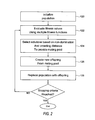
- FIG. 2 shows a method for optimizing parameters for a semiempirical process, according to an embodiment of the present invention
- FIG. 3 illustrates non-domination and crowding for a two-objective minimization problem
- FIG. 4 shows an example non-dominated sorting procedure
- FIG. 5 shows an example elitist replacement strategy used in NSGA-II
- FIG. 7 shows convergence of NSGA-II for reparameterization of semiempirical parameters for ethylene
- FIG. 8 shows a best non-dominated front after 100 generations for ethylene compared to prior published results
- FIG. 9 shows a comparison of best non-dominated solutions obtained for ethylene via a MOGA versus multiple runs of a single-objective GA with different weights for two objectives;
- FIG. 10 shows a best non-dominated front after 100 generations for benzene compared to published results
- FIG. 11 shows sensitivity of PM3 parameter set to random perturbation, including errors in energy and energy gradient for 606 randomly perturbed parameter sets
- FIG. 12A shows a histogram of a density of parameter sets around (within 2% of) Pareto-optimal solutions
- FIG. 12B shows RMS deviation in error in energy between the Pareto-optimal solutions and corresponding neighboring parameter sets
- FIG. 12C shows RMS deviation in error in energy gradient between the Pareto-optimal solutions and corresponding neighboring parameter solutions
- FIGS. 13A and 13B show RMS deviations in error in energy and energy gradient for each of Pareto-optimal solutions, and stable Pareto-optimal solutions, respectively;
- FIG. 14 shows energy levels of ethylene at various geometries: planar, twisted, and pyramidalized from ab initio calculations and from PM3 and AM1 calculations, respectively;
- FIG. 15A shows best non-dominated parameter sets obtained via multiobjective GA
- FIG. 15B shows energy differences between planar and twisted geometries, and between twisted and pyramidalized geometry
- FIG. 16A shows best non-dominated sets and a previous solution set
- FIG. 16B shows an energy difference between planar and twisted geometries
- FIG. 16C shows an energy difference between twisted and pyramidalized geometry
- FIG. 17 shows the average time for half the population to transfer from S 1 (excited state, pyramidalized) to S 0 (ground state, planar) following photoexcitation of the gas-phase ethylene for the stable Pareto-optimal semiempirical parameters;
- FIG. 18 shows a subset of Pareto-optimal solutions for ethylene that are stable to small perturbations, yield accurate energetics for untested, yet critical configurations, and yield dynamics with ab initio accuracy;
- FIGS. 19A-19K are histograms of the deviation of eleven stable, accurate, and optimal semiempirical parameters for ethylene, including U ss ( FIG. 19A ), U pp ( FIG. 19B ), ⁇ p ( FIG. 19D ), ç s ( FIG. 19E ), ç p ( FIG. 19F ), G ss ( FIG. 19G ), G sp ( FIG. 19H ), G pp ( FIG. 19I ), G p2 ( FIG. 19J ), and H sp ( FIG. 19K ) from their corresponding PM3 parameter values.
- AIMS ab initio multiple spawning
- the semiempirical parameters which are different for each element, have traditionally been hand-designed and optimized for a small set of molecules without the use of fractional occupation molecular orbitals. Such parameters predict ground state properties for a set of molecules, but not excited-state energies.
- AM1 parameter sets in ethylene for example, incorrectly obtain the so-called pyramidalized structure as the excited-state minimum.
- These carefully established parameter sets often yield inaccurate potential energy surfaces, resulting in unphysical excited-state reaction dynamics.
- the parameter sets must be reoptimized for different classes of molecules using a very limited set of ab initio and/or experimental data.
- This so-called reparametrization strategy is a promising way to extend direct dynamics simulations of photochemistry to more realistic multi-picosecond time scales. It is also reasonable to expect transferability of the parameter sets optimized on simple molecules, such as ethylene and benzene, to other, complex molecules, such as stilbene and phenylacetylene dendrimers.
- the reparametrization approach opens up the possibility of accurate simulations of photochemistry in complex environments such as proteins and condensed phases.
- the reoptimization problem is massively multimodal and involves multiple conflicting and competing objectives, such as minimizing the difference between calculated and predicted energies, gradients of energies, and stationary-point geometries.
- Conventional reparameterization methods mostly based on a staged fixed-weight single-objective optimization, have only been partially successful, as the weights of different objectives often are unknown, and local search can get stuck in low-quality optima. Particularly, such methods have not yielded globally correct PES, and have produced unphysical dynamics.
- Evolutionary algorithms are robust search methods that simultaneously optimize multiple objectives, and thus are particularly suited for rapid reparameterization of semiempirical parameters.
- embodiments of the invention provide, among other things, the use of multiobjective optimization methods such as multiobjective evolutionary algorithms, including multiobjective genetic algorithms (MOGA), for rapid reparameterization of semiempirical methods to obtain globally-correct excited state dynamics.
- multiobjective evolutionary algorithms can process a number of solutions in parallel and find all or a majority of the diverse Pareto-optimal solutions, avoiding potentially irrelevant and unphysical pathways. This approach bridges high-level quantum chemistry and semiempirical methods, providing an accurate representation of complex molecular excited-state and ground-state behavior.
- MOGAs can be used to reoptimize the parameter sets using a very limited set of known accurate data (e.g., ab initio and experimental data) to yield globally accurate potential energy surfaces and excited-states, providing accurate photochemical reaction dynamics.
- Use of MOGA for example, can provide accuracy well beyond convention methods, or expectation of human experts. Additionally, a dramatic reduction (e.g., from ⁇ 100 to 1000 times) in computation cost can be achieved. This allows, for example, simulations for more complex molecules, which may be impractical or even impossible for methods such as AIMS.
- a method for tuning a semiempirical process for predicting energy for different molecular configurations includes determining an energy value for each of a plurality of molecular configurations using an accurate method, such as AIMS or use of experimental results.
- an accurate method such as AIMS or use of experimental results.
- a number of “snapshots” may be taken for different configurations using AIMS. In some exemplary embodiments, this provides very accurate snapshots, but only for very few points.
- One or more functional forms of a semiempirical process are optimized using the determined energy values.
- Such functional forms preferably relate one or more parameters to energy values.
- optimizing the functional forms includes optimizing the one or more parameters based on the determined energy values.
- At least one energy gradient is also determined for each of a plurality of molecular configurations using the accurate method.
- optimization further includes optimizing the one or more parameters based on the determined at least one energy gradient.
- one or more parameters are optimized to minimize differences (error) between calculated and predicted energies, and gradients of energies.
- multiobjective optimization may include, for example, multiobjective genetic algorithms (MOGA), which can provide Pareto-optimal solutions.
- MOGA multiobjective genetic algorithms
- Other objectives such as geometries (e.g., stationary-point geometries), may be considered as well in multiobjective optimization methods. Simulations may be run using the optimized functional forms.
- FIG. 1 An example process for optimizing a functional form for a semiempirical process given data provided by an accurate method is shown in FIG. 1 .
- a functional form is provided 100 , either by selecting a previously provided function, or by evolving a function, for example, by genetic programming (GP). Evolving a functional form may occur with or without prior problem knowledge.
- An example method for evolving a functional form using GP uses techniques similar to that described in Sastry, Johnson, Goldberg, and Bellon, “Genetic Programming for Multiscale Modeling”, International Journal for Multiscale Computational Engineering, 2(2)239-256 (2004); and Sastry, Johnson, Goldberg, and Bellon, “Genetic Programming for Multitimescale Modeling”, Physical Review B 72, 085438 (2005). These two publications are incorporated herein by reference in their entirety.
- parameters used in the functional form are selected 102 for reparameterization.
- Each of these parameters forms a decision variable for a search problem, so that a solution is made up of a string of the decision variables.
- the decision variables are encoded into finite-length strings of alphabets of certain cardinality. Such strings are also referred to as chromosomes, the alphabets are referred to as genes, and the values of genes are referred to as alleles.
- real-valued encoding is used, though other types of coding (binary, gray, permutation, program, etc.) are also contemplated. Problem knowledge may be used as needed or desired to select parameters.
- a fitness measure is provided 104 , which considers predicted energies and energy gradients compared to energies and energy gradients determined using the accurate method.
- Fitness may be objective, subjective, or co-evolutionary, but it is preferred that the fitness evaluation be objective.
- the parameter sets be optimized for a particular system and that the sets are fit to only a few important geometries for the molecule. The overall goal is to maintain an accurate description of ground-state properties, and yield a globally accurate PES, including excited states.
- multiple fitness functions are used: a first function minimizing the error between the predicted energy for a particular configuration and the energy determined using the accurate method; and a second function minimizing the error between the predicted energy gradient for a particular configuration and the energy gradient determined using the accurate method.
- the number of configurations preferably are a very limited set of excited-state and ground-state configurations determined using the accurate method.
- the fitness functions e.g., the energy error fitness function
- these multiple fitness functions are not combined to provide a single objective, such as by providing a priori weights to each of the fitness functions and combining them. This is because the correct weights are usually not known a priori, and it is easy for a local search to get stuck in low-quality optima. Instead, embodiments of the present invention employ a multiobjective optimization given the multiple fitness functions.
- the example method then evolves 106 a plurality of solutions to the search problem.
- An example process for evolving solutions is shown in FIG. 2 .
- the population is initialized 120 by selecting a population size and generating an initial population. Selecting a population size may be done, as a nonlimiting example, using population-sizing models, which are known to those of ordinary skill in the art.
- the population may be initialized randomly and/or according to particular criteria, such as criteria based on knowledge of the problem, closeness to existing parameters (e.g., existing parameter sets), etc.
- the fitness values of the candidate solutions are evaluated 122 . This may be done, for example, using the multiple fitness functions provided.
- Selection takes place 124 for the example multiobjective genetic algorithm preferably based on “survival of the non-dominated”.
- non-dominated sorting to assign domination ranks to individuals in the population based on their multiple objective values.
- a candidate solution x may dominate y, for example, if x is no worse than y in all objectives and if x is better than y in at least one objective.
- assigning all non-dominated solutions a low rank assigning non-dominated solutions among the remaining solutions a next-highest rank, and so on, subsets of the population with different ranks are provided. This criteria is used to converge onto the Pareto-optimal solutions (the best non-dominated set of solutions).
- Another, and preferably secondary, selection criteria that may be used is diversity or crowding distance; i.e., how dense the non-dominated (Pareto) front is in the neighborhood of the solution. Considering this criteria allows one to achieve good coverage or spread of solutions in the Pareto front, to maintain as diverse a distribution as possible.
- the solutions can be selected for a mating pool for evolving new solutions.
- An exemplary selection process is s-wise tournament selection, without replacement.
- the selection between solutions in the tournament may be based on a combination of the domination ranking and the crowding distance, preferably with the domination ranking having priority in selection.
- the domination ranking may be used to first consider among solutions in a tournament, with the crowding distance used to select among solutions having the same domination rank. The selection preferably takes place until the mating pool has the same number of solutions (chromosomes) as the initial population.
- the mating pool is then used to create new offspring 126 .
- This may be done by recombination and/or mutation, as is known to those of ordinary skill in the art.
- Recombination combines parental traits to create offspring, while mutation slightly modifies an offspring. The result will be a new, and possibly better, solution that is not identical to any particular parent.
- Various methods for recombination and mutation are known to those of ordinary skill in the art, and the invention is not to be limited to particular methods of recombination and/or mutation. It will also be appreciated that particular methods of recombination and/or mutation lend themselves well to efficiency enhancements.
- the offspring population created by selection, recombination, and mutation replaces the original parental population 128 .
- Elitism in which the best solutions from the parent and offspring population are retained for the next generation and are used to evolve new candidate solutions, may be used.
- the evolutionary process is then repeated until one or more stopping criteria are met 130 .
- the example optimization method provides a plurality of Pareto-optimal solutions. Additional criteria may be used to select solutions 108 from among the evolved Pareto-optimal solutions. Such criteria may include, but is not limited to: 1) sensitivity to small perturbations; 2) ability to yield accurate excited- and ground-state energies for untested and critical configurations; and/or 3) ability to yield accurate excited-state dynamics.
- robustness of a particular parameter set may be analyzed. Small changes in the parameters (e.g., 0.1% or less) should have small effects on the error in energy and the error in gradient.
- a small number e.g., 10) parameter sets around each optimized parameter set may be selected, and error in energy and energy gradient may be calculated for each set. Points (sets) having large RMSE values (as a nonlimiting example, above 0.05 eV for error in energy and above 0.008 eV/Ang for error in energy gradient) can be removed as being too sensitive.
- the GA population also contains data that can be mined, e.g., for sensitivity or parameter sets. Analysis of quality of solutions around the Pareto-optimal sets yields a good measure of the SE parameter stability. More perturb points in the MOGA analysis indicates higher reliability.
- An example method for checking the ability to yield accurate excited-state dynamics includes determining a population transfer using a limited number (e.g., 20) of initial conditions for each parameter set. Parameter sets with lower error in energy gradient values have lifetimes close to ab initio value.
- simulations can be carried out 110 .
- one or more molecular configurations e.g., coordinates
- one or more molecular configurations may be input to the resulting functions to determine an energy and energy gradient.
- a nonlimiting example method described herein reparameterizes two simple molecules, which are fundamental building blocks of organic molecules: ethylene and benzene.
- the photochemistry of ethylene has been studied as a prototype for cis-trans isomerization.
- the small size of ethylene has many advantages. First, semiempirical calculations can be run very quickly, so a large number of reparameterization runs can be conducted. Second, the small number of atoms, basis functions, and possible geometries imply that the results may be less complex and more easily interpretable. Lastly, the size and simplicity enables the reoptimized parameter sets to be amenable for further analysis of ethylene dynamics and for transferability to stilbene or conjugated polyenes.
- ethylene has an associated set of ethylidene geometries that can be used to evaluate performance of the reoptimized parameter sets in calculations for which they were not optimized.
- Benzene plays an important role in photochemistry and photophysics of aromatic system and has been extensively studied both experimentally and theoretically.
- the example method uses energetics for the ground state planar and ethylidene geometries, twisted geometry on the excited state as well as the gradients on the excited and ground states.
- the ab initio results used for reparameterization are taken from previously reported calculations (Ben-Nun & Martinez, Photodynamics of ethylene: Ab initio studies of conical intersections, Chemical Physics, 259, 237-248) and are calculated using CASSCF(2/6)*SDCI wavefunctions with the aug-cc-pVDZ basis set.
- For reparameterization of benzene we use four important local minima on S 0 : planar, Dewar benzene, prefulvene, and benzvalene.
- a floating occupation molecular orbital-configuration interaction (FOMO-CI) calculation is used to describe electronic excited states.
- the molecular orbitals are optimized using an SCF calculation in which the occupation numbers of some of the orbitals are allowed to fluctuate. These occupation numbers are updated at each SCF iteration according to
- O i ⁇ - ⁇ ⁇ F ⁇ 2 ⁇ 2 ⁇ e - ( ⁇ - ⁇ i ) 2 ⁇ ⁇ 2 ⁇ ⁇ d ⁇
- O i the occupation number at orbital i
- ⁇ the width of the Gaussian function
- ⁇ i the energy of orbital i
- ⁇ F the Fermi level energy determined such that
- N electrons is the number of electrons in the system. While all orbitals could be allowed to have fractional occupation, only the occupation numbers of orbitals in the active space are allowed to vary. The benefit of this method is that it is a fast, low-cost way of generating better virtual orbitals, which improves the treatment of excited states.
- the semiempirical calculations are performed with a developmental version of MOPAC2000, while the ab initio results are performed with MOLPRO and MolCas.
- 11 semiempirical parameters for carbon U ss , U pp , ⁇ s , ⁇ p , ⁇ s , ⁇ p , G ss , G sp , G pp , G p2 and H sp —are reoptimized.
- a real-valued encoding is used to represent the parameters.
- the core-core repulsion parameters ⁇ , a i , b i , and c i —are not reoptimized.
- the reparameterization of the semiempirical methods involve multiple objectives and yield a set of optimal solutions, also known as Pareto-optimal solutions, instead of a single optimal solution. Since no one Pareto-optimal solution is better than the other—without additional information or decision-making choice—the goal of multi-objective optimization is to search for all Pareto-optimal solutions.
- Traditional approaches for handling multi-objective problems usually convert multiple objectives into single-objective problems by using a priori weights denoting the relative importance of the different objectives. Such approaches rely on multiple runs of single-objective optimization with different weights to obtain different Pareto-optimal solutions. However, the choice of weights is a non-trivial task, and uniform coverage of the Pareto-optimal front is usually improbable—sometimes, impossible—and the methods are usually inefficient and less robust.
- Gs genetic algorithms
- the strings which are candidate solutions, are referred to as chromosomes
- the alphabets are referred to as genes
- the values of genes are called alleles.
- An exemplary method uses a real-valued encoding to represent the 11 parameters of the semiempirical methods.
- an upper and a lower bound are specified around the PM3 value for each semiempirical parameter and a real value between the specified bounds represents a possible semiempirical value. Therefore, a chromosome in this example consists of 11 real-valued genes corresponding to each of the 11 semiempirical parameters.
- other representations such as binary, gray, permutation, real number, program functions, etc. are possible.
- GAs rely on a notion of fitness, or a relative goodness measure of a candidate solution.
- fitness can be objective, subjective, co-evolutionary, etc.
- the two fitness functions used in this example involve minimizing the absolute error in energies and energy-gradients, respectively, for a very limited set of excited-state and ground-state configurations either calculated by ab initio methods or obtained by experiments, and those predicted by semiempirical methods. That is,
- x represents the semiempirical parameters to be optimized
- n c is the number of configurations
- n g is the number of gradient-energy data used in reparameterization.
- ⁇ E 0,i and ⁇ E SE,i are the differences in energy between the geometry i and the reference structure (planar ethylene and benzene) calculated by ab initio and semiempirical methods, respectively.
- ⁇ G 0,SE,i geometry difference between the reparameterized semiempirical geometries and the ab initio geometries, ⁇ G 0,SE,i , by calculating the sum-squared differences between the corresponding atoms after the molecules have been rotated and translated such that they are in maximum coincidence.
- ⁇ E 0,i and ⁇ E SE,i represent the excited-state energy gradients using ab initio and semiempirical methods, respectively.
- the semiempirical calculations are done within a development version of MOPAC2000 using a CAS(2/2)*CI wavefunction. All geometries are minimized, and then energy gradients are calculated at this minimum on the potential energy surface.
- the initial population of candidate solutions is usually generated randomly across the search space. However, domain-specific knowledge or other information can be easily incorporated in the generation of the initial population. In this example reparameterization of semiempirical potentials, the initial population is randomly generated within a certain percentage (20-50%) of the PM3 parameter values. The parameter bounds are restricted around the PM3 set so as to maintain a reasonable representation of the ground-state potential energy surface.
- Non-dominated sorting assigns domination ranks to individuals in the population based on their multiple objective values.
- a candidate solution x dominates y, if x is no worse than y in all objectives and if x is better than y in at least one objective. For example, as shown in FIG. 3 , solution B is preferred and dominates solution C, whereas solutions A and B are non-dominant.
- non-dominated sorting method we start with the set of solutions that are not dominated by any solution in the population and assign them rank 1 . Next, solutions that are not dominated by any of the remaining solutions are assigned rank 2 . That is, all solutions with rank 2 are dominated by at least one solution with rank 1 , but are not dominated by others in the population. Thus, the sorting and ranking process continues by assigning increasing ranks to those solutions that are not dominated by any of the remaining unranked solutions. After non-dominated sorting, we are left with subsets of population with different ranks. An example of this sorting for a two objective minimization problem is shown in FIG. 4 . Solutions with a given rank are not dominated by solutions that have the same rank or higher and are dominated by at least one solution with a lower rank. Therefore, with respect to Pareto optimality, solutions with lower ranks should be given priority.
- each solution in the population is assigned a crowding distance, which estimates how dense the non-dominated front is in the neighborhood of the solution. Therefore, the higher the crowding distance of the solution, the more diverse the solution is in the non-dominated front. For example, in FIG. 3 , solution A is more crowded, and hence more diverse, than solution B.
- the pseudocode for computing the crowding distance is outlined below:
- crowding_distance_computation(P) for rank r 1 to R
- P r subset of solutions in P with rank r
- Q r sort P r using j th objective, f j .
- P is the population
- R is the maximum rank assigned in the population
- M is the number of objectives
- Q r (i) ⁇ f j is the value of j th fitness value of the i th individual.
- the selection process allocates more copies to solutions with better fitness values and thus imposes the survival-of-the-fittest mechanism on the candidate solutions.
- the main idea of selection is to prefer better solutions to worse ones.
- tournament selection without replacement with tournament size s s chromosomes are chosen at random without replacement and entered into a tournament against each other.
- the best (fittest) individual in the group of s chromosomes wins the tournament and is selected into a mating pool for evolving new solutions.
- the tournaments are continued until all the individuals in the population have competed once, at which point there are exactly n/2 chromosomes in the mating pool, where n is the population size (the population size being an exact multiple of the tournament size).
- the entire process is repeated again—but this time the competitors in each tournament will be different—so that the mating pool has n chromosomes.
- NSGA-II uses an individual comparison operator to compare the quality of two solutions and to select the better one. Both the rank and the crowding distance of the two solutions are used in the comparison operator, a pseudo-code of which is given below. First, ranks of the two individuals are considered and the solution with a lower rank is selected. If the two individuals have the same rank, then the solution with the highest crowding distance is selected.
- Recombination combines bits and pieces of two or more parental solutions to create new, possibly better solutions (i.e., offspring). There are many ways to accomplish this, as will be appreciated by one of ordinary skill in the art. Achieving competent performance depends on getting the recombination mechanism designed properly, but is significant that the offspring under recombination should not be identical to any particular parent and will instead combine parental traits in a novel manner.
- ⁇ ⁇ x i c 1 - x i c 2 x i p 1 - x i p 2 ⁇ , where x i c 1 and x i c 2 are the i th gene-values of offspring c 1 and c 2 , respectively.
- the polynomial probability distribution for ⁇ which is used to perform the contracting and expanding operations, is defined as:
- f ⁇ ( ⁇ ) ⁇ 0.5 ⁇ ( ⁇ c + 1 ) ⁇ ⁇ n ⁇ ⁇ 1 0.5 ⁇ ( ⁇ c + 1 ) ⁇ ⁇ - ( ⁇ c + 2 ) ⁇ > 1
- x i c 1 1 2 ⁇ ( x i p 1 + x i p 2 ) + ⁇ 2 ⁇ ( x i p 1 - x i p 2 )
- x i c 2 1 2 ⁇ ( x i p 1 + x i p 2 ) - ⁇ 2 ⁇ ( x i p 1 - x i p 2 )
- the example polynomial mutation used is similar to SBX, and the only difference is in the computation of polynomial probability. Instead of using genotypic distance between two parents as in SBX, the distance between a gene and its corresponding upper or lower bound, whichever is closer, is considered in computing the contracting and expanding probability distributions. In polynomial mutation, for a chromosome participating in mutation, each gene (or variable) undergoes contracting or expanding operation with a probability p m .
- the offspring population created by selection, recombination, and mutation replaces the original parental population.
- An example method uses elitism where the best solutions from the parent and offspring population are retained for the next generation and used to evolve new candidate solutions.
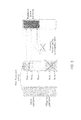
- elitist replacement as illustrated in FIG. 5 , the parent and offspring population are combined.
- the domination ranks and crowding distances are computed on the combined population. Individuals with increasing ranks are gradually added starting from those with the lowest rank into the new population until its size reaches to n. However, if it is not possible to add all the solutions belonging to a particular rank without increasing the population size to greater than n, individuals with greater crowding distances are preferred.
- the evolutionary process is repeated until one or more stopping criteria are met.
- the goal is to converge onto the Pareto-optimal solutions (the best non-dominated set). Based on convergence studies, we run NSGA-II for a maximum of 100 generations.
- the invention was tested with experimental simulation.
- the results demonstrated the effectiveness of using multiobjective genetic algorithms in rapid reparameterization of semiempirical methods for ethylene and benzene.
- population-sizing and run-duration requirements were estimated and then the performance of the evolutionary approach in predicting globally accurate PESs—specifically on critical and untested excited states—was compared with previously published results and with single-objective optimization.
- the convergence rate of NSGA-II and the run-duration requirements for reparameterization were also considered. Specifically, ten independent runs of NSGA-II with a population size of 800 were run, and the evolution of the best non-dominated front at different generations of the evolutionary process was considered. The results are shown in FIG. 7 . The results show that reasonably good quality solutions start appearing as early as the tenth generation and the solution quality improves at a steady pace until about twenty-five generations and gradually up to about 100 generations. After about 100 generations, the improvement in solution quality was found to be minimal.
- the solution qualities provided by the best non-dominated front of NSGA-II were compared over the current published results of Owens (2004) for ethylene in FIG. 8 .
- the solutions obtained through the example GA are significantly superior, both in terms of error in energy and energy-gradient, than those reported in Owens (2004).
- the example multiobjective GA yields solutions that are 384% lower error in the energy and 32.5% lower error in the energy gradient than the previously published results.
- the optimality of the parameter sets representing the best non-dominated front has been confirmed with local search and random-perturbation methods.
- the example multiobjective GA found a total of 150 unique semiempirical parameter sets on the best non-dominated front, and for benzene, the multiobjective GA found a total of 82 unique semiempirical parameter sets on the best non-dominated front. From an optimization point of view, all the parameter sets in the best non-dominated front are equally good. However, from the chemistry perspective this may not be the case, and ultimately those semiempirical parameters that yield globally accurate potential energy surface are of interest. Therefore, it is desirable to provide parameter sets that: 1) are not sensitive to small perturbations; 2) yield accurate excited- and ground-state energies for untested, and critical configurations; and 3) yield accurate excited-state dynamics.
- a preferable property of good-quality semiempirical parameter sets is that they should be less sensitive to small perturbations. That is, if the reoptimized parameter sets are perturbed, it is desirable for the errors in the energy and energy gradient to be similar to those of the Pareto-optimal parameter sets.
- a sensitivity or stability analysis of the parameter sets can be performed, for example, by considering the errors in energy and energy gradient of randomly perturbed parameter sets around the Pareto-optimal parameter sets. If the error in energy and energy-gradient of the perturbed parameter sets are greater than some threshold, then they are deemed as sensitive. The question then becomes the value of these thresholds.
- Standard parameter sets such as PM3 have traditionally been held as robust or stable. Therefore, perturbing the PM3 parameter set and analyzing the errors in energy and energy-gradient of the parameter sets should provide an idea of what the threshold values should be for determining the stability of the Pareto-optimal parameter sets.
- the PM3 parameter sets were randomly perturbed, and over 600 perturbed parameter sets are created, such that the parameter values of the perturbed parameter sets are within 2% of the PM3 set. That is, the relative distance between every semiempirical parameter in the perturbed set and the PM3 set is less than 0.01:
- x i and x i ′ are the values of the i th parameter in the PM3 set and perturbed parameter set, respectively.
- the errors in energy and energy gradient for each of the perturbed parameter sets are computed and are plotted in FIG. 11 .
- the results in FIG. 11 show that the RMS deviation in error in energy of the perturbed points from that of PM3 is 0.99 eV.
- the RMS deviation in error in energy gradient of the perturbed points from that of PM3 is 0.023 eV/A°. Therefore, threshold values of 0.99 and 0.023 are used for assessing stability of the Pareto-optimal sets.
- One advantage of using genetic algorithms is that one has a population of candidate solutions that can be used to perform an on-line sensitivity analysis of the optimal semiempirical parameter sets. Performing such a sensitivity analysis not only reduces the number of acceptable reoptimized parameter sets, but is also more efficient and reliable than a manual stability/sensitivity analysis. Thus, such an analysis is performed, and along with saving the Pareto-optimal semiempirical parameter set, for each of the Pareto-optimal solutions maintained is a list of parameter sets visited during the GA process that are within 2% from that Pareto-optimal solution. The RMS deviation in errors in energy and energy gradient can then be computed between the Pareto-optimal solution and the parameter sets around it.
- both the RMS deviation in error and energy gradient is less than their respective threshold, then the Pareto-optimal solution is labeled as being stable. On the other hand, if either of the deviations is greater than the threshold, then the Pareto-optimal solution is labeled as sensitive.
- FIGS. 12B and 12C also show the RMS deviations of error in energy and error in energy gradient between the Pareto-optimal solutions and the corresponding neighboring parameter sets. The RMS deviation in energy and energy gradient for each of the Pareto-optimal solutions is shown in FIG. 13A .
- the online sensitivity analysis reveals that 44 out of 150 Pareto-optimal solutions have either RMS deviation in error or energy or RMS deviation in error in energy gradient or both are greater than their respective threshold and therefore are sensitive.
- the results also show that 100 out of 150 Pareto-optimal solutions have both RMS deviations in errors in energy and energy gradient that are below the threshold and thus are considered stable or less sensitive to small perturbations in the parameter values.
- the parameter sets that are found to be stable via the online sensitive analysis are shown in FIG. 13B .
- the carbon-carbon bond twists 90° and decreases in the energy gap from 7.8 eV to 2.5 eV.
- the twisted geometry is not an excited state minimum but a saddle point with respect to pyramidalization of one of the carbon atoms.
- the pyramidalized geometry is actually higher in energy than the purely twisted geometry on the excited state, which is in direct contrast to the results of experiments and high level calculations.
- FIGS. 15A and 15B Two significant energetics are considered, and results are compared, as shown in FIGS. 15A and 15B :
- excited state lifetime was considered, and the average time for half the population to transfer from S 1 (excited state, pyramidalized) to S 0 (ground state, planar) following photoexcitation of the gas-phase molecule was computed.
- This phenomenon has been extensively studied using ab initio simulations.
- the AIMS simulations used multi-reference configuration interaction (MRCI) electronic wavefunctions within a double zeta basis set.
- the simulations did not include Rydberg basis functions, the nuclear dynamics is followed for 0.5 picoseconds, and the total dynamics is represented by averaging over results obtained using 10 different representations of the initial wavefunction. Overall, approximately 100 nuclear basis functions are spawned during the simulation time.
- the ab initio results indicate that the average time for half the population to transfer from S 1 to S 0 is 180 ⁇ 50 fs.
- the dynamics simulations are computed for each of the stable Pareto-optimal solutions and compared to the ab initio simulation results.
- the dynamics results are averaged over 50 independent dynamics simulations and are plotted as a function of error in energy gradient in FIG. 17 .
- the results show that most of the stable Pareto-optimal solutions—especially those with lower error in energy gradient—yield near ideal, ab initio quality dynamics results.
- the dynamics simulation results for the best solutions obtained via single-objective optimization are significantly worse than those obtained via multiobjective optimization.
- the dynamics simulation results clearly show that the majority of the stable Pareto-optimal solutions—specifically 85 out of 100—yield dynamic results in agreement with ab initio simulations.
- results for benzene also show that while the standard semiempirical sets yield inaccurate dynamics, the example multiobjective GA optimized parameter sets yield results consistent with experiments and ab initio computations. For example, the newly optimized parameter sets predict an S 2 lifetime of 100 fs, in agreement with previous experiment.
- FIGS. 19A-19K depict histograms of the deviation of the 11 semiempirical values from their corresponding PM3 values. The results show that the parameter values, with the exception of ⁇ p , are very diverse. Understanding the relationship between these optimal, stable, and accurate semiempirical parameters can yield insights into important energy relations for the given molecule. In addition to yielding physical insights into the excited-state energetics, if we can determine the relationships between the semiempirical parameters, we would have interpretable semiempirical methods.
- Another advantage of using multiobjective GA is that the Pareto-optimal solutions can be mined to automatically discover the relation between semiempirical parameters.
- the multiple reoptimized parameter sets of semiempirical methods yield globally correct potential energy surfaces. Therefore, the interactions among the parameters can contain important information about the molecules. Understanding these key interactions is helpful to developing a robust multiscaling method.
- Traditional clustering techniques, the model-building process of Bayesian optimization algorithm, and/or symbolic regression via genetic programming can be used to understand the parameter interactions.
- the relationship between the semiempirical parameters can be symbolically regressed via genetic programming. Accordingly, the 61 Pareto-optimal parameter sets that 1) are stable to small perturbations, 2) yield accurate configurational energies, and 3) yield ab initio quality excited-state dynamics are selected. The data is normalized using a z-score score
- x i ′ x i - x _ i s x i
- x i and s x i are the sample mean and variance of the i th semiempirical parameter, respectively.
- the objective then is to determine the functional relationship between each of the 11 semiempirical parameters as a function of the rest of the 10 parameters. For example, we use GP to evolve a functional relationship between U ss in terms of U pp , ⁇ s , ⁇ p , ⁇ s , ⁇ p , G ss , G sp , G pp , G p2 and H sp .
- the normalized data is used to evolve relationships between the semiempirical parameters via GP.
- the output of the candidate program is the normalized value of a semiempirical parameter.
- the fitness of a solution is computed as the root mean square error (RMSE) between the predicted and Pareto-optimal value of the semiempirical parameter for which we are evolving the candidate program.
- RMSE root mean square error
- all GP runs a population size of 1000 and run duration of 100 generations were used.
- the best evolved regression function for each of the independent runs is then simplified using the symbolic math toolbox in MATLAB.
- the coefficients are then optimized using either linear or non-linear regression methods. Generally, the results were:
- independent GP runs reveal a linear relationship between G ss , G p 2 and ⁇ s
- 14 independent GP runs reveal a relationship between G ss , G p 2 and ⁇ p
- a majority of the independent GP runs reveal a relationship between G ss and G p 2 .
- G p 2 29 independent GP runs suggest that G p 2 is linearly proportional to G ss and U pp , and 20 independent runs suggest that G p 2 is linearly proportional to G ss and ⁇ s . Furthermore, all independent GP runs suggest that G p 2 depends on G ss .
- H sp For H sp , 28 independent GP runs reveal that H sp is related to G p 2 and G pp . More importantly, all the runs indicate that H sp is related to G pp and G p 2 , which is in agreement with previously published analysis.
- an example method uses fixed evolutionary operators that do not adapt linkage, which may limit scalability in reparameterizing semiempirical methods for other complex molecules.
- eCGA extended compact genetic algorithm
- decomposition-based design approaches are possible to help successfully design competent and efficient genetic algorithm operators.
- reoptimization preferably is massively multimodal and involves conflicting and competing objectives, such as minimizing differences between calculated and predicted energies, gradients of energies, and stationary-point geometries.
- the example optimization method described tunes a potential, but it is also contemplated according to alternative embodiments to evolve empirical potentials using genetic programming (GP).
- GP genetic programming
- Ab initio methods compute the potential energy surfaces from scratch and are highly accurate, but are prohibitively expensive even for small systems.
- GP may be used to regress symbolically the PES from a limited set of directly calculated points on the PES using an accurate method.
- Such GP regression provides an inline function for increasing number of active configurations (or complexity) as a machine-learned replacement to the “look-up table” approach.
- Multiscale modeling requires only relevant information at the appropriate scales.
- an inline semiempirical function may be represented by a GP tree generated from a function set of various primitive functions and a terminal set.
- the primitive functions and/or terminal set may be selected at least partially based on problem knowledge, though this is not necessary.
- An ephemeral random constant may also be used as part of the terminal set.
- a semiempirical function may be evolved. Appropriate GP techniques may be employed (e.g., tournament selection, subtree crossover, subtree mutation, point mutation), as would be appreciated by those of ordinary skill in the art.
- advanced GP features such as, but not limited to, constrained syntactic structures, automatically defined functions, etc.
- constrained syntactic structures such as, but not limited to, constrained syntactic structures, automatically defined functions, etc.
- multiobjective genetic algorithms may be used according to example embodiments of the present invention in multiscaling simulations of excited state dynamics in photochemistry. More particularly, MOGAs have been used to bridge high-level quantum chemistry and semiempirical methods to provide an accurate representation of complex molecular excited-state and ground-state behavior, well beyond previous attempts, or expectation of human experts, and a dramatic reduction (from about 100 to 1000 times) in computational cost. Rapid reparameterization of semiempirical methods not only eliminates the need for a full-fledged ab initio dynamics simulation, which is prohibitively expensive for large molecules, but also eliminates drawbacks of semiempirical methods that use standard parameter sets and can yield unphysical dynamics.
- reoptimized semiempirical parameters that are transferable to other complex molecules containing similar properties as ethylene and benzene.
- the reoptimized parameter sets for ethylene and benzene may be transferable to other molecules.
- the MOGA results produce transferable potentials—that is, parameters from one molecular system can be used for similar systems, analogous to use of building blocks in genetic algorithms.
- parameters from one molecular system can be used for similar systems, such as ethylene parameters to simulate benzene (and vice versa).
- Optimized semiempirical parameters of a small number of relatively simple molecules can be used to predict accurately the behavior of large complex molecules.
- Such transferability may allow, for example, GAs to enable the fast, accurate simulation of complex molecules from a standard GA-tuned database.
- This allows, as a nonlimiting example, direct simulation of photoinduced cis-trans isomerization in molecules such as (but not limited to) stilbene and azobenzene, as well as energy transfer in dendrimeric molecules.
- this opens up the possibility of accurate simulations of photochemistry in complex environments such as proteins and condensed phases, providing new ways for modeling and designing chemicals.
- the GA-discovered potentials inherit the accuracy of the ab initio data, permit simulations to orders of magnitude larger time scales (e.g., picoseconds) than that believed currently possible by ab initio methods (e.g., femtoseconds), even for simple molecules, and exhibit transferability in initial tests.
- a MOGA optimization approach provides an enabling technology to simulate successfully, within a reasonable time frame and with sufficient accuracy, complex, multiscale biological, chemical, and materials problems that are ubiquitous in science and engineering, and thus impact one's ability to address critical biophysical simulations of, for example, vision and photosynthesis, and for automated design of pharmaceuticals and functional materials.
- Applications include, but are not limited to, computational materials, chemistry, physics, biochemical, and pharmaceutical analysis and design.
- Methods and systems according to the present invention may be applicable to simulations of other physical, chemical, biochemical, and/or biological events.
- optimization, artificial intelligence and machine learning methods such as genetic programming (GP) may be used to provide more accurate and efficient solutions for simulating or predicting dynamics of materials-related events, such as molecular dynamics and physical dynamics.
- GP genetic programming
- Embodiments of the present invention are directed to methods and program products for tuning or evolving reaction simulations using optimization methods, and for simulating reactions.
- Those knowledgeable in the art will appreciate that embodiments of the present invention lend themselves well to practice in the form of computer program products. Accordingly, it will be appreciated that embodiments of the present invention may comprise computer program products comprising computer executable instructions stored on a computer readable medium that when executed cause a computer to undertake methods according to the present invention, or a computer configured to carry out such methods.
- the executable instructions may comprise computer program language instructions that have been compiled into a machine-readable format.
- the computer-readable medium may comprise, by way of example, a magnetic, optical, signal-based, and/or circuitry medium useful for storing data.
- the instructions may be downloaded entirely or in part from a networked computer.
- computer as used herein is intended to broadly refer to any machine capable of reading and executing recorded instructions.
- results of methods of the present invention may be displayed on one or more monitors or displays (e.g., as text, graphics, charts, code, etc.), printed on suitable media, stored in appropriate memory or storage, etc.
- Other embodiments of the invention include systems for tuning or evolving reaction simulations using optimization methods and for simulating reactions, with an example being a processor-based system capable of executing instructions that cause it to carry out a method of the invention. It will accordingly be appreciated that description made herein of a method of the invention may likewise apply to a program product of the invention and/or to a system of the invention. Resulting parameter set and optimized functional forms are also embodiments of the present invention.
Landscapes
- Engineering & Computer Science (AREA)
- Computing Systems (AREA)
- Theoretical Computer Science (AREA)
- Physics & Mathematics (AREA)
- Health & Medical Sciences (AREA)
- General Health & Medical Sciences (AREA)
- Spectroscopy & Molecular Physics (AREA)
- Life Sciences & Earth Sciences (AREA)
- Bioinformatics & Cheminformatics (AREA)
- Bioinformatics & Computational Biology (AREA)
- Management, Administration, Business Operations System, And Electronic Commerce (AREA)
Abstract
Description
where Oi is the occupation number at orbital i, ω is the width of the Gaussian function, εi is the energy of orbital i, and εF is the Fermi level energy determined such that
where Nelectrons is the number of electrons in the system. While all orbitals could be allowed to have fractional occupation, only the occupation numbers of orbitals in the active space are allowed to vary. The benefit of this method is that it is a fast, low-cost way of generating better virtual orbitals, which improves the treatment of excited states.
where x represents the semiempirical parameters to be optimized, nc is the number of configurations, and ng is the number of gradient-energy data used in reparameterization. ΔE0,i and ΔESE,i are the differences in energy between the geometry i and the reference structure (planar ethylene and benzene) calculated by ab initio and semiempirical methods, respectively.
| crowding_distance_computation(P) | ||
| for rank r = 1 to R | ||
| Pr = subset of solutions in P with rank r | ||
| nr = size(Pr) | ||
| for i = 1 to nr | ||
| dc(Pr(i)) = 0 | ||
| for j = 1 to M | ||
| Qr = sort Pr using jth objective, fj. | ||
| dc(Qr(1)) = dc(Qr(nr)) = ∞ | ||
| for i = 2 to nr−1 | ||
| dist = Qr(i+1).fj − Qr(i−1).fj | ||
| dc(Qr(i)) = dc(Qr(i)) + dist | ||
| end | ||
| end | ||
| end | ||
| end | ||
| return dc | ||
where, P is the population, R is the maximum rank assigned in the population, M is the number of objectives, and Qr(i)·fj is the value of jth fitness value of the ith individual.
| compare(x,y) | ||
| if rank(x) < rank(y) then return x | ||
| if rank(x) > rank(y) then return y | ||
| if rank(x) = rank(y) | ||
| if dc(x) > dc(y) then return x | ||
| if dc(x) < dc(y) then return y | ||
| if dc(x) = dc(y) then randomly choose either x or y | ||
| End | ||
where xi c
f′=αf 1(x)+(1−α)f 2(x)
where f1 and f2 are as given in the above fitness equations, respectively, and α is the weighting factor. To potentially obtain different Pareto-optimal solutions, 20 different values for α ranging from 0.05 to 1.0 with steps of 0.05 were used. The selection, recombination, and mutation operators and their parameters were kept identical to those of the multiobjective GA.
where

Claims (21)
Priority Applications (1)
| Application Number | Priority Date | Filing Date | Title |
|---|---|---|---|
| US12/012,502 US8301390B2 (en) | 2007-01-31 | 2008-01-31 | Quantum chemistry simulations using optimization methods |
Applications Claiming Priority (2)
| Application Number | Priority Date | Filing Date | Title |
|---|---|---|---|
| US89895207P | 2007-01-31 | 2007-01-31 | |
| US12/012,502 US8301390B2 (en) | 2007-01-31 | 2008-01-31 | Quantum chemistry simulations using optimization methods |
Publications (2)
| Publication Number | Publication Date |
|---|---|
| US20080312895A1 US20080312895A1 (en) | 2008-12-18 |
| US8301390B2 true US8301390B2 (en) | 2012-10-30 |
Family
ID=40133133
Family Applications (1)
| Application Number | Title | Priority Date | Filing Date |
|---|---|---|---|
| US12/012,502 Expired - Fee Related US8301390B2 (en) | 2007-01-31 | 2008-01-31 | Quantum chemistry simulations using optimization methods |
Country Status (1)
| Country | Link |
|---|---|
| US (1) | US8301390B2 (en) |
Cited By (4)
| Publication number | Priority date | Publication date | Assignee | Title |
|---|---|---|---|---|
| US10417370B2 (en) | 2014-02-12 | 2019-09-17 | Microsoft Technology Licensing, Llc | Classical simulation constants and ordering for quantum chemistry simulation |
| WO2020092810A1 (en) * | 2018-10-31 | 2020-05-07 | Movidius Ltd. | Automated generation of neural networks |
| US11735291B2 (en) | 2019-12-20 | 2023-08-22 | International Business Machines Corporation | Quantum computing thermodynamic observables of a chemical system |
| US11942192B2 (en) | 2020-07-13 | 2024-03-26 | International Business Machines Corporation | Density-functional theory determinations using a quantum computing system |
Families Citing this family (11)
| Publication number | Priority date | Publication date | Assignee | Title |
|---|---|---|---|---|
| CA2913743C (en) | 2013-05-30 | 2023-01-03 | Universite De Sherbrooke | Systems and methods for performing bayesian optimization |
| US9524466B2 (en) * | 2014-06-16 | 2016-12-20 | International Business Machines Corporation | Automated multi-objective solution selection |
| CN106372400B (en) * | 2016-08-29 | 2019-06-04 | 深圳晶泰科技有限公司 | Construct the method and application, the method and system for predicting drug crystal forms of Polarized force field |
| US11556850B2 (en) * | 2019-10-10 | 2023-01-17 | Accenture Global Solutions Limited | Resource-aware automatic machine learning system |
| CN111581746A (en) * | 2020-05-11 | 2020-08-25 | 中国矿业大学 | Novel multi-objective optimization method for three-phase cylindrical switched reluctance linear generator |
| CN112330007B (en) * | 2020-10-30 | 2024-04-26 | 交控科技股份有限公司 | Passenger-oriented transfer connection optimization method and device |
| CN113641101B (en) * | 2021-07-22 | 2023-06-16 | 武汉大学 | Multi-channel control parameter optimizing algorithm based on numerical simulation |
| CN115099118B (en) * | 2022-06-24 | 2024-04-09 | 中国人民解放军海军工程大学 | High-dimensional multi-objective joint parallel simulation optimization method based on NSGAⅢ |
| CN116306919A (en) * | 2023-03-09 | 2023-06-23 | 华东理工大学 | Large-Scale Multi-objective Combinatorial Optimization Method Based on Problem Recombination and Its Application |
| CN118504850B (en) * | 2024-07-22 | 2024-10-22 | 深圳市规划和自然资源数据管理中心(深圳市空间地理信息中心) | Simulation optimization method of vegetation gross primary productivity based on mixed linear regression model of footprint model |
| CN120072090B (en) * | 2025-04-28 | 2025-08-29 | 台州道致科技股份有限公司 | High-throughput reaction screening system and method based on computer control and data processing |
Citations (1)
| Publication number | Priority date | Publication date | Assignee | Title |
|---|---|---|---|---|
| US20060040322A1 (en) * | 2004-06-07 | 2006-02-23 | Francesco Archetti | Method of construction and selection of virtual libraries in combinatorial chemistry |
-
2008
- 2008-01-31 US US12/012,502 patent/US8301390B2/en not_active Expired - Fee Related
Patent Citations (1)
| Publication number | Priority date | Publication date | Assignee | Title |
|---|---|---|---|---|
| US20060040322A1 (en) * | 2004-06-07 | 2006-02-23 | Francesco Archetti | Method of construction and selection of virtual libraries in combinatorial chemistry |
Non-Patent Citations (61)
| Title |
|---|
| Alder & Wainwright, "Studied in Molecular Dynamics. II. Behaviour of a Small Number of Elastic Spheres." Journal of Chemical Physics, 33, pp. 1439-1451, 1960. |
| Alder & Wainwright, "Studies in Molecular Dynamics. I. General Method." Journal of Chemical Physics, 32, pp. 459-466, 1959. |
| Babovic & Keijzer, "Genetic Programming as a Model Induction Engine." Journal of Hydroinformatics, 2(1), pp. 35-60, 2000. |
| Barkema & Mousseau, "Event-based Relaxation of Continuous Disordered Systems." Phys. Rev. Lett., 77(21), pp. 4358-4361, 1996. |
| Barkema & Mousseau, "The Activation-Relaxation Technique: An Efficient Algorithm for Sampling Energy Landscapes." Comp. Mat. Sc., 20, p. 285-292, 2001. |
| Ben-Nun, M., & Martinez, T., "Ab Initio Quantum Molecular Dynamics." Advances in Chemical Physics, 121, pp. 439-512 (2002). |
| Ben-Nun, M., & Martinez, T., "Photodynamics of Ethylene: Ab Initio Studies of Conical Intersections." Chemical Physics, 259, pp. 237-248, (2000). |
| Ben-Nun, M., Quenneville, J., & Martinez, T., "Ab Initio Multiple Spawning: Photochemistry from First Principles Quantum Molecular Dynamics." Journal of Physical Chemistry, A, 104(22), pp. 5161-5175, (2000). |
| Boisvert & Lewis, "Self-diffusion of Adatoms, Dimers, and Vacancies on Cu(100)." Phys. Rev. B, 56(12), pp. 7643-7655, 1997. |
| Bouar & Soisson, "Kinetic Pathways from Embedded-Atom-Method Potentials: Influence of the Activation Barriers." Phys. Rev. B, 65(9), 094103, 2002. |
| Cai, Kalos, De Koning, & Bulatov, "Importance Sampling of Rare Transition Events in Markov Processes." Phys. Rev. E, 66(4), 046703, 2002. |
| Cleri, F., Rosato, V., "Tight-binding potentials for transition metals and alloys." Phys. Rev. B, 48, p. 22, 1993. |
| Deb, K., & Agarwal, R., "Simulated Binary Crossover for Continuous Search Space." Complex Systems, 9, pp. 115-148, (1995). |
| Deb, K., Pratap, A., Agarwal, S., & Meyarivan, T., "A Fast Elitist Non-dominated Sorting Genetic Algorithm for Multi-objective Optimization: NSGA-II." IEEE Transactions on Evolutionary Computation, 6(2), pp. 182-197, (2002). |
| Deshpande, "Relationship Between Fracture Toughness, Fracture Path, and Microstructure of 7050 Aluminum Alloy: Part I. Quantitative Characterization." Metal Transactions A, 29A, pp. 1191-1201, 1998. |
| Dewar, M., & Thiel, W., "The MNDO Method: Approximations and Parameters." Journal of the American Chemical Society, 99(15), pp. 4899-4907, (1977). |
| Dewar, M., Zoebisch, E., Healy, E., & Stewart, J., "AM1: A New General Purpose Quantum Mechanical Molecular Model." Journal of the American Chemical Society, 107(13), pp. 3902-3909, (1985). |
| Diaz De La Rubia, et al., "Self-decay-induced Damage Production and Micro-structure Evolution in FCC Metals: An Atomic-Scale Computer Simulation Approach." J. Comp.-Aided Mat. Design, 5, pp. 243-264, 1998. |
| Fichthorn & Weinberg, "Theoretical Foundations of Dynamical Monte Carlo Simulations." J. Chem. Phys., 95(2), pp. 1090-1096, 1991. |
| Fish & Schwab, "Towards Constitutive Models Based on Atomistics." International Journal for Multiscale Computational Engineering, 1(1), pp. 43-56, 2003. |
| Girifalco & Weizer, "Application of the Morse Potential Function to Cubic Metals." Phys. Rev., 114(3), pp. 687-690, 1959. |
| Goldberg, D., Deb, K., & Clark, J., "Genetic Algorithms, Noise and the Sizing of Populations." Complex Systems, 6, pp. 333-362, (1992). |
| Grujicic, Cao & Joseph, "Multiscale Modeling of Deformation and Fracture of Polycrystalline Lamellar gamma-TiA1 + alpha2-Ti3 A1 Alloys." International Journal for Multiscale Computational Engineering, 1(1), pp. 1-21, 2003. |
| Grujicic, Cao & Joseph, "Multiscale Modeling of Deformation and Fracture of Polycrystalline Lamellar γ-TiA1 + α2-Ti3 A1 Alloys." International Journal for Multiscale Computational Engineering, 1(1), pp. 1-21, 2003. |
| Hamilton, Dawe, & Foiles, "Dislocation Mechanism for Island Diffusion on fcc (111) Surfaces." Phys. Rev. Lett., 74(14), pp. 2760-2763, 1995. |
| Harik, G., Cantu-Paz, E., Goldberg, D., & Miller, B., "The Gambler's Ruin Problem, Genetic Algorithms, and the Sizing of Populations." Evolutionary Computation, 7(3), pp. 231-253, (1999). |
| Haynes, et al., Type Inheritance in Strongly Typed Genetic Programming. In Angeline & Kinnear, Advances in Genetic Programming 2, (Chapter 18, pp. 359-376). Cambridge, MA: MIT Press (1996). |
| Henkelman & Jonsson, "A Dimer Method for Finding Saddle Points on High Dimensional Potential Surfaces Using Only First Derivatives." J. Chem. Phys., 111(15), pp. 7010-7022, (1999), ibid 113, 9978 (2000), ibid 115, 9657 (2001). |
| Jacobsen, Cooper & Sethna, "Simulations of Energetic Beam Deposition: From Picoseconds to Seconds." Phys. Rev. B, 58(23), pp. 15847-15865, 1998. |
| Kassner & Perez-Prado, "Five-power-law Creep in Single Phase Metals and Alloys." Progress in Materials Science, 45, 1-102, 2000. |
| King, H., "Quantitative Size-Factors for Metallic Solid Solutions." J. Mater. Sci., 1, p. 79, 1966. |
| Kinnear, "Alternatives in Automatic Function Definition: A Comparison of Performance." In Kinnear, K.E. (Ed.), Advances in Genetic Programming. (Chapter 6, pp. 119-141), Cambridge, MA: MIT Press (1996a). |
| Koza, "Hierarchical Genetic Algorithms Operation on Populations of Computer Programs." Proceedings of the 11th International Joint Conference on Artificial Intelligence, 1, pp. 768-774, 1989. |
| Levanov, et al., "Energetics of Co adatoms on the Cu(001) surface." Phys. Rev. B, 61, 2230, 2000. |
| Mazzone, et al., "Molecular-dynamics calculations of thermodynamic properties of metastable alloys." Phys. Rev. B, 55, p. 837, 1997. |
| Montana, "Strongly Typed Genetic Algorithm." Evolutionary Computation, 3(2), pp. 199-230, 1995. (Also BBN Technical Report No. 7866). |
| Mukherjee, Fedder, Ramaswamy & White, "Engineering Simulation Approaches for Micromachined Devices." IEEE Transactions on Computer-Aided Design of Integrated Circuits and Devices, 19(12), pp. 1572-1589, 2000. |
| Pelikan & Goldberg, "Escaping Hierarchical Traps with Competent Genetic Algorithms." Proceedings of the Genetic and Evolutionary Computation Conference, pp. 5111-518, 2001. (Also IlliGAL Report No. 2000020). |
| Pelikan, "Bayesian Optimization Algorithm: From Single Level to Hierarchy." Doctoral Dissertation, University of Illinois at Urbana-Champaign, Urbana, IL, 2002. (Also IlliGAL Report No. 2002023). |
| Quenneville, J., Ben-Nun, M., Martinez, T., "Photochemistry from first principles-advances and future prospects." J. Photochem. Photobiol., 144, p. 229, 2001. |
| Radloff, W., Stert, V., Freudenberg, T., Hertel, I., Jouvet, C., Dedonder-Lardeux, C., & Solgadi, D., "Internal Conversion in Highly Excited Benzene and Benzene Dimer: Femtosecond Time-resolved Photoelectron Spectroscopy." Chemical Physics Letters, 21(1-3), pp. 20-26, (1997). |
| Ratle & Sebag, "Grammar-guided Genetic Programming and Dimensional Consistency: Application to Non-parametric Identification in Mechanics." Applied Soft Computing, 1, pp. 105-118, 2001. |
| Ryan, Collins & O'Neill, "Grammatical Evolution: Evolving Computer Programs for an Arbitrary Language." Proceedings of the EuroGP Conference, 1391, pp. 83-96, 1998. (LNCS). |
| Sastry & Goldberg, "Probabilistic Model Building and Competent Genetic Programming." In Riolo, R., et al. (Eds.), Genetic Programming, Theory and Practice. Chapter 13, pp. 205-220. Boston, MA: Kluwer Academic Publishers (2003). (Also IlliGAL Report No. 2003013). |
| Sastry, K. & Goldberg, D., "Modeling Tournament Selection with Replacement Using Apparent Added Noise." Intelligent Engineering Systems Through Artificial Neural Networks, 11, pp. 129-134 (2001). |
| Sastry, K., Johnson, D., Goldberg, D., & Bellon, P., "Genetic Programming for Multiscale Modeling." Int. J. of MultiScale Comput. Eng., 2(2), pp. 239-256 (2004). |
| Sastry, K., Johnson, D., Goldberg, D., & Bellon, P., "Genetic Programming for Multi-timescale Modeling." Physical Review B, 72, 085438 (2005). |
| Sastry, K., Johnson, D., Thompson, A., Goldberg, D., Martinez, T., Leiding, J., Owens, J., "Multiobjective Genetic Algorithms for Multiscaling Excited State Direct Dynamics in Photochemistry." Proc. of the 8th annual conference on Genetic and evolutionary computation, pp. 1745-1752 (2006). |
| Sastry, O'Reilly, Goldberg, "Building-block Supply in Genetic Programming." In Riolo, R., et al., (Eds.), Genetic Programming Theory and Practice. Chapter 9, pp. 155-172. Boston, MA: Kluwer Academic Publishers (2003). (Also IlliGAL Report No. 2003012). |
| Sorensen & Voter, "Temperature-accelerated Dynamics for Simulation of Infrequent Events." J. Chem. Phys. 112(21), pp. 9599-9606, 2000. |
| Steiner & Genilloud, "Simple Bias Potential for Boosting Molecular Dynamics with the Hyperdynamics Scheme." Phys. Rev. B, 57(17), pp. 10236-10239, 1998. |
| Stepanyuk, et al., "Burrowing of Co clusters on the Cu(001) surface: Atomic-scale calculations," Phys. Rev. B, 63, 235406, 2001. |
| Stepanyuk, et al., "Strain and adatom motion on mesoscopic islands," Phys. Rev. B, 63, 153406, 2001. |
| Stepanyuk, et al., "Strain relief and island shape evolution in heteroepitaxial metal growth," Phys. Rev. B, 62, 15398, 2000. |
| Stewart, J. "Optimization of Parameters for Semiempirical Methods 1. Method." Journal of Computational Chemistry, 10(2), pp. 209-220 (1989). |
| Toniolo, A., Thopmson, A., Martinez, T., "Excited State Direct Dynamics of Benzene with Reparameterized Multireference Semiempirical Configuration Interaction Methods." Chemical Physics, 304, pp. 133-145 (2004). |
| U.S. Appl. No. 11/343,195, filed Jan. 30, 2006, David E. Goldberg. |
| Van Der Ven & Ceder, "First Principles Theory of Ionic Diffusion with Nondilute Carriers." Phys. Rev. B, 64(18), p. 184307, 2001. |
| Voter, "Hyperdynamics: Accelerated Molecular Dynamics of Infrequent Events." Phys. Rev. Lett., 78(20), pp. 3908-3911, 1997. |
| Voter, "Parallel Replica Method for Dynamics of Infrequent Events." Phys. Rev. B, 57(22), pp. R13985-R13988, 1998. |
| Voter, Montalenti & Germann, "Extending the Time Scale in Atomistic Simulation of Materials." Annu. Rev. Mater. Res., 32, pp. 321-346, 2002. |
Cited By (6)
| Publication number | Priority date | Publication date | Assignee | Title |
|---|---|---|---|---|
| US10417370B2 (en) | 2014-02-12 | 2019-09-17 | Microsoft Technology Licensing, Llc | Classical simulation constants and ordering for quantum chemistry simulation |
| WO2020092810A1 (en) * | 2018-10-31 | 2020-05-07 | Movidius Ltd. | Automated generation of neural networks |
| CN113287121A (en) * | 2018-10-31 | 2021-08-20 | 莫维迪厄斯有限公司 | Automatic generation of neural networks |
| US12481863B2 (en) | 2018-10-31 | 2025-11-25 | Intel Corporation | Automated generation of neural networks |
| US11735291B2 (en) | 2019-12-20 | 2023-08-22 | International Business Machines Corporation | Quantum computing thermodynamic observables of a chemical system |
| US11942192B2 (en) | 2020-07-13 | 2024-03-26 | International Business Machines Corporation | Density-functional theory determinations using a quantum computing system |
Also Published As
| Publication number | Publication date |
|---|---|
| US20080312895A1 (en) | 2008-12-18 |
Similar Documents
| Publication | Publication Date | Title |
|---|---|---|
| US20080312895A1 (en) | Quantum chemistry simulations using optimization methods | |
| Leguy et al. | EvoMol: a flexible and interpretable evolutionary algorithm for unbiased de novo molecular generation | |
| Yang et al. | Practical massively parallel monte-carlo tree search applied to molecular design | |
| Liu et al. | Genbench: A benchmarking suite for systematic evaluation of genomic foundation models | |
| Mercado et al. | Practical notes on building molecular graph generative models | |
| Paliwal et al. | Regal: Transfer learning for fast optimization of computation graphs | |
| Rustad et al. | A feature restoration for machine learning on anti-corrosion materials | |
| Wojtuch et al. | Extended study on atomic featurization in graph neural networks for molecular property prediction | |
| Golovkin et al. | Analysis of X-ray spectral data with genetic algorithms | |
| Gandomi et al. | A multiobjective evolutionary framework for formulation of nonlinear structural systems | |
| KR20240144773A (en) | How to optimize the properties of molecules | |
| Hammad | Software cost estimation using stacked ensemble classifier and feature selection | |
| Mandal et al. | SELC: Sequential elimination of level combinations by means of modified genetic algorithms | |
| Sastry et al. | Optimization of semiempirical quantum chemistry methods via multiobjective genetic algorithms: Accurate photodynamics for larger molecules and longer time scales | |
| Kaufman et al. | Multi-knockout genetic network analysis: the Rad6 example | |
| Hog et al. | Meta-learning population-based methods for reinforcement learning | |
| Bouzarkouna et al. | Local-meta-model CMA-ES for partially separable functions | |
| Cao et al. | A parallel levenberg-marquardt algorithm | |
| Calcagno et al. | Quantum chemistry driven molecular inverse design with data-free reinforcement learning | |
| D’Agostino et al. | A fine-grained CUDA implementation of the multi-objective evolutionary approach NSGA-II: potential impact for computational and systems biology applications | |
| Bellonzi et al. | QB Ground State Energy Estimation Benchmark | |
| Bungay et al. | Optimization of transition state structures using genetic algorithms | |
| Dubey et al. | A novel framework for ab initio coarse protein structure prediction | |
| Zhang et al. | Evolutionary neural architecture search with dual contrastive learning | |
| Jiang et al. | Turning Sparse Large-Scale Multiobjective Optimization Into Evolutionary Multitasking |
Legal Events
| Date | Code | Title | Description |
|---|---|---|---|
| AS | Assignment |
Owner name: BOARD OF TRUSTEES OF THE UNIVERSITY OF ILLINIOS, T Free format text: ASSIGNMENT OF ASSIGNORS INTEREST;ASSIGNORS:SASTRY, KUMARA;JOHNSON, DUANE D.;THOMPSON, ALEXIS L.;AND OTHERS;REEL/FRAME:021449/0086;SIGNING DATES FROM 20080313 TO 20080728 Owner name: BOARD OF TRUSTEES OF THE UNIVERSITY OF ILLINIOS, T Free format text: ASSIGNMENT OF ASSIGNORS INTEREST;ASSIGNORS:SASTRY, KUMARA;JOHNSON, DUANE D.;THOMPSON, ALEXIS L.;AND OTHERS;SIGNING DATES FROM 20080313 TO 20080728;REEL/FRAME:021449/0086 |
|
| ZAAA | Notice of allowance and fees due |
Free format text: ORIGINAL CODE: NOA |
|
| ZAAB | Notice of allowance mailed |
Free format text: ORIGINAL CODE: MN/=. |
|
| STCF | Information on status: patent grant |
Free format text: PATENTED CASE |
|
| CC | Certificate of correction | ||
| FPAY | Fee payment |
Year of fee payment: 4 |
|
| MAFP | Maintenance fee payment |
Free format text: PAYMENT OF MAINTENANCE FEE, 8TH YEAR, LARGE ENTITY (ORIGINAL EVENT CODE: M1552); ENTITY STATUS OF PATENT OWNER: LARGE ENTITY Year of fee payment: 8 |
|
| FEPP | Fee payment procedure |
Free format text: MAINTENANCE FEE REMINDER MAILED (ORIGINAL EVENT CODE: REM.); ENTITY STATUS OF PATENT OWNER: LARGE ENTITY |
|
| LAPS | Lapse for failure to pay maintenance fees |
Free format text: PATENT EXPIRED FOR FAILURE TO PAY MAINTENANCE FEES (ORIGINAL EVENT CODE: EXP.); ENTITY STATUS OF PATENT OWNER: LARGE ENTITY |
|
| STCH | Information on status: patent discontinuation |
Free format text: PATENT EXPIRED DUE TO NONPAYMENT OF MAINTENANCE FEES UNDER 37 CFR 1.362 |
|
| FP | Lapsed due to failure to pay maintenance fee |
Effective date: 20241030 |