US8298513B2 - Hexatriene-β-carbonyl compound - Google Patents
Hexatriene-β-carbonyl compound Download PDFInfo
- Publication number
- US8298513B2 US8298513B2 US12/525,599 US52559908A US8298513B2 US 8298513 B2 US8298513 B2 US 8298513B2 US 52559908 A US52559908 A US 52559908A US 8298513 B2 US8298513 B2 US 8298513B2
- Authority
- US
- United States
- Prior art keywords
- group
- formula
- substituents
- represented
- substituted
- Prior art date
- Legal status (The legal status is an assumption and is not a legal conclusion. Google has not performed a legal analysis and makes no representation as to the accuracy of the status listed.)
- Expired - Fee Related, expires
Links
- 0 [1*]/C=C(\C=C\CC[4*])C(=O)OC[5*].[1*]/C=C(\C=C\CC[4*])C(=O)O[2*].[1*]/C=C(\C=C\C[3*])C(=O)OC[5*].[1*]/C=C(\C=C\C[3*])C(=O)O[2*] Chemical compound [1*]/C=C(\C=C\CC[4*])C(=O)OC[5*].[1*]/C=C(\C=C\CC[4*])C(=O)O[2*].[1*]/C=C(\C=C\C[3*])C(=O)OC[5*].[1*]/C=C(\C=C\C[3*])C(=O)O[2*] 0.000 description 127
- JQYDECSZBZCKFQ-UHFFFAOYSA-N CCN(CC)C1=CC2=C(C=C1)C=C(C(C)=O)C(=O)O2 Chemical compound CCN(CC)C1=CC2=C(C=C1)C=C(C(C)=O)C(=O)O2 JQYDECSZBZCKFQ-UHFFFAOYSA-N 0.000 description 13
- ZNGQJFWLRBNWIS-UHFFFAOYSA-N CCCOCCNC(=O)C1=CC2=C(C=C(N(CC)CC)C=C2)OC1=O Chemical compound CCCOCCNC(=O)C1=CC2=C(C=C(N(CC)CC)C=C2)OC1=O ZNGQJFWLRBNWIS-UHFFFAOYSA-N 0.000 description 11
- WUXBFJHWTOKWPS-CNEURLDDSA-N C.C.CC(=O)CCCCCCC1=CC=C([N+](=O)[O-])C2=NON=C12.CC(=O)CCCCCCCCCCCC1=CC=C2C=C3C=CC=N3B(F)(F)N21.CC(=O)CN1CCN(CC(=O)O)CCN(CC(=O)O)CCN(CC(=O)O)CC1.CC(=O)CNC(C)=O.CCN(CC)C1=CC2=C(C=C1)C=C(C(C)=O)C(=O)O2.CN(C)C1=CC2=C(C=C1)C(C1=CC(C(=O)[O-])=CC=C1)=C1C=CC(=[N+](C)C)C=C1O2.[H][C@]12NC(=O)N[C@@]1([H])CSC2CCCCC(C)=O Chemical compound C.C.CC(=O)CCCCCCC1=CC=C([N+](=O)[O-])C2=NON=C12.CC(=O)CCCCCCCCCCCC1=CC=C2C=C3C=CC=N3B(F)(F)N21.CC(=O)CN1CCN(CC(=O)O)CCN(CC(=O)O)CCN(CC(=O)O)CC1.CC(=O)CNC(C)=O.CCN(CC)C1=CC2=C(C=C1)C=C(C(C)=O)C(=O)O2.CN(C)C1=CC2=C(C=C1)C(C1=CC(C(=O)[O-])=CC=C1)=C1C=CC(=[N+](C)C)C=C1O2.[H][C@]12NC(=O)N[C@@]1([H])CSC2CCCCC(C)=O WUXBFJHWTOKWPS-CNEURLDDSA-N 0.000 description 8
- YNILHUZKTPQNPP-UHFFFAOYSA-N CC(=O)CN1CCN(CC(=O)O)CCN(CC(=O)O)CCN(CC(=O)O)CC1 Chemical compound CC(=O)CN1CCN(CC(=O)O)CCN(CC(=O)O)CCN(CC(=O)O)CC1 YNILHUZKTPQNPP-UHFFFAOYSA-N 0.000 description 8
- VAEHSRXSWCUVJD-UHFFFAOYSA-N CCC1=CN(C)N=N1.CCC1=CN(C)N=N1.CCN1C=C(C)N=N1.CCN1C=C(C)N=N1 Chemical compound CCC1=CN(C)N=N1.CCC1=CN(C)N=N1.CCN1C=C(C)N=N1.CCN1C=C(C)N=N1 VAEHSRXSWCUVJD-UHFFFAOYSA-N 0.000 description 7
- ZVJNRCNRRZIGGT-UHFFFAOYSA-N CNC(=O)CCCCCNC1=CC=C([N+](=O)[O-])/C2=N/O/N=C\12 Chemical compound CNC(=O)CCCCCNC1=CC=C([N+](=O)[O-])/C2=N/O/N=C\12 ZVJNRCNRRZIGGT-UHFFFAOYSA-N 0.000 description 7
- USVSJRDOOVNNCS-CNEURLDDSA-N C.C.CC(=O)CCCCCCC1=CC=C([N+](=O)[O-])C2=NON=C12.CC(=O)CCCCCCCCCCCC1=CC=C2C=C3C=CC=C3B(F)(F)C21.CC(=O)CN1CCN(CC(=O)O)CCN(CC(=O)O)CCN(CC(=O)O)CC1.CC(=O)CNC(C)=O.CCN(CC)C1=CC2=C(C=C1)C=C(C(C)=O)C(=O)O2.COC(=O)C1=CC=CC(C2C3=CC=C(N(C)C)C=C3OC3=C2C=CC(N(C)C)=C3)=C1.[H][C@]12NC(=O)N[C@@]1([H])CSC2CCCCC(C)=O Chemical compound C.C.CC(=O)CCCCCCC1=CC=C([N+](=O)[O-])C2=NON=C12.CC(=O)CCCCCCCCCCCC1=CC=C2C=C3C=CC=C3B(F)(F)C21.CC(=O)CN1CCN(CC(=O)O)CCN(CC(=O)O)CCN(CC(=O)O)CC1.CC(=O)CNC(C)=O.CCN(CC)C1=CC2=C(C=C1)C=C(C(C)=O)C(=O)O2.COC(=O)C1=CC=CC(C2C3=CC=C(N(C)C)C=C3OC3=C2C=CC(N(C)C)=C3)=C1.[H][C@]12NC(=O)N[C@@]1([H])CSC2CCCCC(C)=O USVSJRDOOVNNCS-CNEURLDDSA-N 0.000 description 6
- PVCOAGFWVDOSMB-UHFFFAOYSA-N CCC1=CN(C)N=N1 Chemical compound CCC1=CN(C)N=N1 PVCOAGFWVDOSMB-UHFFFAOYSA-N 0.000 description 6
- MJIOJWXRXDWUBV-UHFFFAOYSA-N CCN1C=C(C)N=N1 Chemical compound CCN1C=C(C)N=N1 MJIOJWXRXDWUBV-UHFFFAOYSA-N 0.000 description 6
- GILXYFHOGFIVLP-UHFFFAOYSA-N CC(=O)CCCCCNC1=CC=C([N+](=O)[O-])C2=NON=C12 Chemical compound CC(=O)CCCCCNC1=CC=C([N+](=O)[O-])C2=NON=C12 GILXYFHOGFIVLP-UHFFFAOYSA-N 0.000 description 5
- SIZITCGTTDFOHC-UHFFFAOYSA-N CC1=CN(C)N=N1.CC1=CN(C)N=N1 Chemical compound CC1=CN(C)N=N1.CC1=CN(C)N=N1 SIZITCGTTDFOHC-UHFFFAOYSA-N 0.000 description 4
- LZDHOZOIRQBWCA-UHFFFAOYSA-N CCC1=CN(C)N=N1.CCN1C=C(C)N=N1.CCN1C=C(C)N=N1.CCN1C=C(C)N=N1 Chemical compound CCC1=CN(C)N=N1.CCN1C=C(C)N=N1.CCN1C=C(C)N=N1.CCN1C=C(C)N=N1 LZDHOZOIRQBWCA-UHFFFAOYSA-N 0.000 description 4
- NSIBNZYKOSMBHQ-UHFFFAOYSA-N C.C.C.CCC1=CN(C)N=N1.CCC1=CN(C)N=N1.CCN1C=C(C)N=N1.CCN1C=C(C)N=N1 Chemical compound C.C.C.CCC1=CN(C)N=N1.CCC1=CN(C)N=N1.CCN1C=C(C)N=N1.CCN1C=C(C)N=N1 NSIBNZYKOSMBHQ-UHFFFAOYSA-N 0.000 description 3
- PKLNOAREQUDCAI-UHFFFAOYSA-N CNC(=O)CNC(=O)CN1CCN(CC(=O)O)CCN(CC(=O)O)CCN(CC(=O)O)CC1 Chemical compound CNC(=O)CNC(=O)CN1CCN(CC(=O)O)CCN(CC(=O)O)CCN(CC(=O)O)CC1 PKLNOAREQUDCAI-UHFFFAOYSA-N 0.000 description 3
- ULJKAXRVBWBCNY-NQMVMOMDSA-N [H][C@@]12CS[C@H](CCCCC(=O)NC)[C@]1([H])NC(=O)N2 Chemical compound [H][C@@]12CS[C@H](CCCCC(=O)NC)[C@]1([H])NC(=O)N2 ULJKAXRVBWBCNY-NQMVMOMDSA-N 0.000 description 3
- UJTJKFUXEPBALY-UHFFFAOYSA-N C.C.C.CCC1=CN(C)N=N1.CCN1C=C(C)N=N1.CCN1C=C(C)N=N1.CCN1C=C(C)N=N1 Chemical compound C.C.C.CCC1=CN(C)N=N1.CCN1C=C(C)N=N1.CCN1C=C(C)N=N1.CCN1C=C(C)N=N1 UJTJKFUXEPBALY-UHFFFAOYSA-N 0.000 description 2
- RFRLBCUOVQXBRB-CDLDXDOTSA-N C.CC(=O)CCCCCCC1=CC=C([N+](=O)[O-])C2=NON=C12.CC(=O)CCCCCCCCCCCC1=CC=C2C=C3C=CC=C3B(F)(F)C21.CC(=O)CN1CCN(CC(=O)O)CCN(CC(=O)O)CCN(CC(=O)O)CC1.CC(=O)CNC(C)=O.CCN(CC)C1=CC2=C(C=C1)C=C(C(C)=O)C(=O)O2.COC(=O)C1=CC=CC(C2C3=CC=C(N(C)C)C=C3OC3=C2C=CC(N(C)C)=C3)=C1.[H][C@]12NC(=O)N[C@@]1([H])CS[C@H]2CCCCC(C)=O Chemical compound C.CC(=O)CCCCCCC1=CC=C([N+](=O)[O-])C2=NON=C12.CC(=O)CCCCCCCCCCCC1=CC=C2C=C3C=CC=C3B(F)(F)C21.CC(=O)CN1CCN(CC(=O)O)CCN(CC(=O)O)CCN(CC(=O)O)CC1.CC(=O)CNC(C)=O.CCN(CC)C1=CC2=C(C=C1)C=C(C(C)=O)C(=O)O2.COC(=O)C1=CC=CC(C2C3=CC=C(N(C)C)C=C3OC3=C2C=CC(N(C)C)=C3)=C1.[H][C@]12NC(=O)N[C@@]1([H])CS[C@H]2CCCCC(C)=O RFRLBCUOVQXBRB-CDLDXDOTSA-N 0.000 description 2
- GEZNKQDTJVSPBG-CDLDXDOTSA-N C.CC(=O)CCCCCCC1=CC=C([N+](=O)[O-])C2=NON=C12.CC(=O)CCCCCCCCCCCC1=CC=C2C=C3C=CC=N3B(F)(F)N21.CC(=O)CN1CCN(CC(=O)O)CCN(CC(=O)O)CCN(CC(=O)O)CC1.CC(=O)CNC(C)=O.CCN(CC)C1=CC2=C(C=C1)C=C(C(C)=O)C(=O)O2.CN(C)C1=CC2=C(C=C1)C(C1=CC(C(=O)[O-])=CC=C1)=C1C=CC(=[N+](C)C)C=C1O2.[H][C@]12NC(=O)N[C@@]1([H])CS[C@H]2CCCCC(C)=O Chemical compound C.CC(=O)CCCCCCC1=CC=C([N+](=O)[O-])C2=NON=C12.CC(=O)CCCCCCCCCCCC1=CC=C2C=C3C=CC=N3B(F)(F)N21.CC(=O)CN1CCN(CC(=O)O)CCN(CC(=O)O)CCN(CC(=O)O)CC1.CC(=O)CNC(C)=O.CCN(CC)C1=CC2=C(C=C1)C=C(C(C)=O)C(=O)O2.CN(C)C1=CC2=C(C=C1)C(C1=CC(C(=O)[O-])=CC=C1)=C1C=CC(=[N+](C)C)C=C1O2.[H][C@]12NC(=O)N[C@@]1([H])CS[C@H]2CCCCC(C)=O GEZNKQDTJVSPBG-CDLDXDOTSA-N 0.000 description 2
- ALVHTJGTDHAUII-UHFFFAOYSA-N C.CC(=O)CNC(C)=O.CN(C)C1=CC2=C(C=C1)C(C1=CC(C(=O)[O-])=CC=C1)=C1C=CC(=[N+](C)C)C=C1O2 Chemical compound C.CC(=O)CNC(C)=O.CN(C)C1=CC2=C(C=C1)C(C1=CC(C(=O)[O-])=CC=C1)=C1C=CC(=[N+](C)C)C=C1O2 ALVHTJGTDHAUII-UHFFFAOYSA-N 0.000 description 2
- NVMBSVQPLGMHBD-UHFFFAOYSA-N CCC(=O)CNC(=O)C1=CC2=C(C=C(N(CC)CC)C=C2)OC1=O Chemical compound CCC(=O)CNC(=O)C1=CC2=C(C=C(N(CC)CC)C=C2)OC1=O NVMBSVQPLGMHBD-UHFFFAOYSA-N 0.000 description 2
- LULCAHWNDYLQTM-UHFFFAOYSA-N CCN(CC)C1=CC2=C(C=C1)C=C(C(=O)NCC(=O)NC)C(=O)O2 Chemical compound CCN(CC)C1=CC2=C(C=C1)C=C(C(=O)NCC(=O)NC)C(=O)O2 LULCAHWNDYLQTM-UHFFFAOYSA-N 0.000 description 2
- YPKZJRGKHXINPU-GUBZILKMSA-N [H][C@]12NC(=O)N[C@@]1([H])CS[C@H]2CCCCC(C)=O Chemical compound [H][C@]12NC(=O)N[C@@]1([H])CS[C@H]2CCCCC(C)=O YPKZJRGKHXINPU-GUBZILKMSA-N 0.000 description 2
- GOOXTNZJWGULIC-FBMAVCSNSA-N C.C#CC1=CC=CC=C1.CC(C)(C)OC(=O)NCCOCCOC(=O)/C(Br)=C/CO[Si](C1=CC=CC=C1)(C1=CC=CC=C1)C(C)(C)C.CC(C)(C)OC(=O)NCCOCCOC(=O)C(/C=C/C1=CC=CC=C1)=C/CO[Si](C1=CC=CC=C1)(C1=CC=CC=C1)C(C)(C)C.CCCC[SnH](CCCC)CCCC.CCCC[Sn](/C=C/C1=CC=CC=C1)(CCCC)CCCC Chemical compound C.C#CC1=CC=CC=C1.CC(C)(C)OC(=O)NCCOCCOC(=O)/C(Br)=C/CO[Si](C1=CC=CC=C1)(C1=CC=CC=C1)C(C)(C)C.CC(C)(C)OC(=O)NCCOCCOC(=O)C(/C=C/C1=CC=CC=C1)=C/CO[Si](C1=CC=CC=C1)(C1=CC=CC=C1)C(C)(C)C.CCCC[SnH](CCCC)CCCC.CCCC[Sn](/C=C/C1=CC=CC=C1)(CCCC)CCCC GOOXTNZJWGULIC-FBMAVCSNSA-N 0.000 description 1
- FAKOKGLCLHTHFU-GSRDSHTESA-N C.C.C.C.C.C#CC1=CC=C(NC(=O)CNC(=O)OC(C)(C)C)C=C1.CCCC[SnH](CCCC)CCCC.CCCC[Sn](/C=C/C1=CC=C(NC(=O)CNC(=O)OC(C)(C)C)C=C1)(CCCC)CCCC.CCOC(=O)/C(Br)=C/COC1CCCCO1.CCOC(=O)C(/C=C/C1=CC=C(NC(=O)CN)C=C1)=C/CO.CCOC(=O)C(/C=C/C1=CC=C(NC(=O)CNC(=O)OC(C)(C)C)C=C1)=C/COC1CCCCO1.Cl Chemical compound C.C.C.C.C.C#CC1=CC=C(NC(=O)CNC(=O)OC(C)(C)C)C=C1.CCCC[SnH](CCCC)CCCC.CCCC[Sn](/C=C/C1=CC=C(NC(=O)CNC(=O)OC(C)(C)C)C=C1)(CCCC)CCCC.CCOC(=O)/C(Br)=C/COC1CCCCO1.CCOC(=O)C(/C=C/C1=CC=C(NC(=O)CN)C=C1)=C/CO.CCOC(=O)C(/C=C/C1=CC=C(NC(=O)CNC(=O)OC(C)(C)C)C=C1)=C/COC1CCCCO1.Cl FAKOKGLCLHTHFU-GSRDSHTESA-N 0.000 description 1
- PSZXZXQDPUSNSG-VUARPVPBSA-N C.C.C.C.C.C#CC1=CC=C(NC(=O)OC(C)(C)C)C=C1.CCCC[SnH](CCCC)CCCC.CCCC[Sn](/C=C/C1=CC=C(NC(=O)OC(C)(C)C)C=C1)(CCCC)CCCC.CCOC(=O)/C(Br)=C/CO.CCOC(=O)C(/C=C/C1=CC=C(N)C=C1)=C/CO.CCOC(=O)C(/C=C/C1=CC=C(NC(=O)OC(C)(C)C)C=C1)=C/CO.Cl Chemical compound C.C.C.C.C.C#CC1=CC=C(NC(=O)OC(C)(C)C)C=C1.CCCC[SnH](CCCC)CCCC.CCCC[Sn](/C=C/C1=CC=C(NC(=O)OC(C)(C)C)C=C1)(CCCC)CCCC.CCOC(=O)/C(Br)=C/CO.CCOC(=O)C(/C=C/C1=CC=C(N)C=C1)=C/CO.CCOC(=O)C(/C=C/C1=CC=C(NC(=O)OC(C)(C)C)C=C1)=C/CO.Cl PSZXZXQDPUSNSG-VUARPVPBSA-N 0.000 description 1
- VNTLDHFHJOCQBQ-YRGZOMKKSA-N C.C.C.CCN(CC)C1=CC2=C(C=C1)/C=C(/C(=O)CCCOCCOC(=O)C(/C=C/C1=CC=C(NC(=O)CCCCCCC3=CC=C([N+](=O)[O-])C4=NON=C34)C=C1)=C/CO)C(=O)O2.CCN(CC)C1=CC2=C(C=C1)/C=C(/C(=O)CCCOCCOC(=O)C(/C=C/C1=CC=C(NC(=O)CCCCCCC3=CC=C([N+](=O)[O-])C4=NON=C34)C=C1)=C/CO[Si](C1=CC=CC=C1)(C1=CC=CC=C1)C(C)(C)C)C(=O)O2 Chemical compound C.C.C.CCN(CC)C1=CC2=C(C=C1)/C=C(/C(=O)CCCOCCOC(=O)C(/C=C/C1=CC=C(NC(=O)CCCCCCC3=CC=C([N+](=O)[O-])C4=NON=C34)C=C1)=C/CO)C(=O)O2.CCN(CC)C1=CC2=C(C=C1)/C=C(/C(=O)CCCOCCOC(=O)C(/C=C/C1=CC=C(NC(=O)CCCCCCC3=CC=C([N+](=O)[O-])C4=NON=C34)C=C1)=C/CO[Si](C1=CC=CC=C1)(C1=CC=CC=C1)C(C)(C)C)C(=O)O2 VNTLDHFHJOCQBQ-YRGZOMKKSA-N 0.000 description 1
- YOTJDWCBVJNEOZ-XMLPZEPBSA-N C.C.C.CCN(CC)C1=CC2=C(C=C1)C=C(C(=O)O)C(=O)O2.CCOC(=O)C(/C=C/C1=CC=C(N)C=C1)=C/CO.CCOC(=O)C(/C=C/C1=CC=C(NC(=O)/C2=C/C3=C(C=C(N(CC)CC)C=C3)OC2=O)C=C1)=C/CO Chemical compound C.C.C.CCN(CC)C1=CC2=C(C=C1)C=C(C(=O)O)C(=O)O2.CCOC(=O)C(/C=C/C1=CC=C(N)C=C1)=C/CO.CCOC(=O)C(/C=C/C1=CC=C(NC(=O)/C2=C/C3=C(C=C(N(CC)CC)C=C3)OC2=O)C=C1)=C/CO YOTJDWCBVJNEOZ-XMLPZEPBSA-N 0.000 description 1
- OMXRJHDBXFGPKM-GHRXDBMVSA-N C.C.C.CCN(CC)C1=CC2=C(C=C1)C=C(C(=O)OC1C(=O)CCC1=O)C(=O)O2.CCOC(=O)C(/C=C/C1=CC=C(NC(=O)CCC(=O)C2=CC3=C(C=C(N(CC)CC)C=C3)OC2=O)C=C1)=C/CO Chemical compound C.C.C.CCN(CC)C1=CC2=C(C=C1)C=C(C(=O)OC1C(=O)CCC1=O)C(=O)O2.CCOC(=O)C(/C=C/C1=CC=C(NC(=O)CCC(=O)C2=CC3=C(C=C(N(CC)CC)C=C3)OC2=O)C=C1)=C/CO OMXRJHDBXFGPKM-GHRXDBMVSA-N 0.000 description 1
- MACGYSHRBKIUQW-KMYHJJSNSA-N C.C.C.CCOC(=O)C(/C=C/C1=CC=C(NC(=O)CCCCCCC2=CC=C([N+](=O)[O-])C3=NON=C23)C=C1)=C/CO.O=C(O)CCCCCCC1=CC=C([N+](=O)[O-])C2=NON=C12 Chemical compound C.C.C.CCOC(=O)C(/C=C/C1=CC=C(NC(=O)CCCCCCC2=CC=C([N+](=O)[O-])C3=NON=C23)C=C1)=C/CO.O=C(O)CCCCCCC1=CC=C([N+](=O)[O-])C2=NON=C12 MACGYSHRBKIUQW-KMYHJJSNSA-N 0.000 description 1
- DOKZUQUZASSGCN-AYBVRKSLSA-N C.C.C.CCOC(=O)C(/C=C/C1=CC=C(NC(=O)CN)C=C1)=C/CO.CCOC(=O)C(/C=C/C1=CC=C(NC(=O)CNC(=O)CN2CCN(CC(=O)O)CCN(CC(=O)O)CCN(CC(=O)O)CC2)C=C1)=C/CO.O=C(O)CN1CCN(CC(=O)O)CCN(CC(=O)ON2C(=O)CCC2=O)CCN(CC(=O)O)CC1 Chemical compound C.C.C.CCOC(=O)C(/C=C/C1=CC=C(NC(=O)CN)C=C1)=C/CO.CCOC(=O)C(/C=C/C1=CC=C(NC(=O)CNC(=O)CN2CCN(CC(=O)O)CCN(CC(=O)O)CCN(CC(=O)O)CC2)C=C1)=C/CO.O=C(O)CN1CCN(CC(=O)O)CCN(CC(=O)ON2C(=O)CCC2=O)CCN(CC(=O)O)CC1 DOKZUQUZASSGCN-AYBVRKSLSA-N 0.000 description 1
- FRAQCUNTLCHRDB-PJKSQSIHSA-N C.C.CCN(CC)C1=CC2=C(C=C1)/C=C(/C(=O)CCCOCCOC(=O)C(/C=C/C1=CC=C(NC(=O)CCCCCCC3=CC=C([N+](=O)[O-])C4=NON=C34)C=C1)=C/CO)C(=O)O2.[2H]PC.[H]C(=O)/C=C(\C=C\C1=CC=C(NC(=O)CCCCCCC2=CC=C([N+](=O)[O-])C3=NON=C23)C=C1)C(=O)OCCOCCCC(=O)/C1=C/C2=C(C=C(N(CC)CC)C=C2)OC1=O Chemical compound C.C.CCN(CC)C1=CC2=C(C=C1)/C=C(/C(=O)CCCOCCOC(=O)C(/C=C/C1=CC=C(NC(=O)CCCCCCC3=CC=C([N+](=O)[O-])C4=NON=C34)C=C1)=C/CO)C(=O)O2.[2H]PC.[H]C(=O)/C=C(\C=C\C1=CC=C(NC(=O)CCCCCCC2=CC=C([N+](=O)[O-])C3=NON=C23)C=C1)C(=O)OCCOCCCC(=O)/C1=C/C2=C(C=C(N(CC)CC)C=C2)OC1=O FRAQCUNTLCHRDB-PJKSQSIHSA-N 0.000 description 1
- GJZYPMULPSZMAA-BBGNVGAWSA-N C.C.CCOC(=O)C(/C=C/C1=CC=C(NC(=O)CCCCCCCCCCCC2=N3/C(=CC4=CC=CN4B3(F)F)/C=C\2)C=C1)=C/CO.O=C(O)CCCCCCCCCCCC1=N2/C(=CC3=CC=CN3B2(F)F)/C=C\1 Chemical compound C.C.CCOC(=O)C(/C=C/C1=CC=C(NC(=O)CCCCCCCCCCCC2=N3/C(=CC4=CC=CN4B3(F)F)/C=C\2)C=C1)=C/CO.O=C(O)CCCCCCCCCCCC1=N2/C(=CC3=CC=CN3B2(F)F)/C=C\1 GJZYPMULPSZMAA-BBGNVGAWSA-N 0.000 description 1
- KYSLNMKFEKJYOM-QOPUHDIDSA-N C.C.CCOC(=O)C(/C=C/C1=CC=C(NC(=O)CNC(=O)CN2CCN(CC(=O)O)CCN(CC(=O)O)CCN(CC(=O)O)CC2)C=C1)=C/CO.[H]C(=O)/C=C(\C=C\C1=CC=C(NC(=O)CNC(=O)CN2CCN(CC(=O)O)CCN(CC(=O)O)CCN(CC(=O)O)CC2)C=C1)C(=O)OCC Chemical compound C.C.CCOC(=O)C(/C=C/C1=CC=C(NC(=O)CNC(=O)CN2CCN(CC(=O)O)CCN(CC(=O)O)CCN(CC(=O)O)CC2)C=C1)=C/CO.[H]C(=O)/C=C(\C=C\C1=CC=C(NC(=O)CNC(=O)CN2CCN(CC(=O)O)CCN(CC(=O)O)CCN(CC(=O)O)CC2)C=C1)C(=O)OCC KYSLNMKFEKJYOM-QOPUHDIDSA-N 0.000 description 1
- KQYJSCNYXFWDOK-XJYLMTRSSA-H C.C.CCOC(=O)C1=CC(C2=CC=C(NC(=O)CCC(=O)CN3CCN4CCN5CCN(CC3)CC(=O)O[Gd](OC(=O)C4)OC(=O)C5)C=C2)N(C)C=C1.[H]C(=O)/C=C(\C=C\C1=CC=C(NC(=O)CCC(=O)CN2CCN3CCN4CCN(CC2)CC(=O)O[Gd](OC(=O)C3)OC(=O)C4)C=C1)C(=O)OCC Chemical compound C.C.CCOC(=O)C1=CC(C2=CC=C(NC(=O)CCC(=O)CN3CCN4CCN5CCN(CC3)CC(=O)O[Gd](OC(=O)C4)OC(=O)C5)C=C2)N(C)C=C1.[H]C(=O)/C=C(\C=C\C1=CC=C(NC(=O)CCC(=O)CN2CCN3CCN4CCN(CC2)CC(=O)O[Gd](OC(=O)C3)OC(=O)C4)C=C1)C(=O)OCC KQYJSCNYXFWDOK-XJYLMTRSSA-H 0.000 description 1
- RJGZEPVGAROREC-DJPHODGQSA-N C.C.CCOC(=O)C1=CC(C2=CC=C(NC(=O)CCCCCCC3=CC=C([N+](=O)[O-])C4=NON=C34)C=C2)=N(C)C=C1.[H]C(=O)/C=C(\C=C\C1=CC=C(NC(=O)CCCCCCC2=CC=C([N+](=O)[O-])C3=NON=C23)C=C1)C(=O)OCC Chemical compound C.C.CCOC(=O)C1=CC(C2=CC=C(NC(=O)CCCCCCC3=CC=C([N+](=O)[O-])C4=NON=C34)C=C2)=N(C)C=C1.[H]C(=O)/C=C(\C=C\C1=CC=C(NC(=O)CCCCCCC2=CC=C([N+](=O)[O-])C3=NON=C23)C=C1)C(=O)OCC RJGZEPVGAROREC-DJPHODGQSA-N 0.000 description 1
- RSYJZCPKYXSISK-VZZDOFFZSA-N C.CC(=O)CCCCCNC1=CC=C([N+](=O)[O-])C2=NON=C12.[H][C@]12NC(=O)N[C@@]1([H])CS[C@H]2CCCCC(C)=O Chemical compound C.CC(=O)CCCCCNC1=CC=C([N+](=O)[O-])C2=NON=C12.[H][C@]12NC(=O)N[C@@]1([H])CS[C@H]2CCCCC(C)=O RSYJZCPKYXSISK-VZZDOFFZSA-N 0.000 description 1
- UTOCTRJQUPRBHD-MRCUACSISA-N C.CC(C)(C)OC(=O)NCCOCCOC(=O)/C(Br)=C/CO[Si](C1=CC=CC=C1)(C1=CC=CC=C1)C(C)(C)C.CC(C)(C)OC(=O)NCCOCCOC(=O)C(/C=C/C1=CC=C(NC(=O)OC(C)(C)C)C=C1)=C/CO[Si](C1=CC=CC=C1)(C1=CC=CC=C1)C(C)(C)C.CCCC[Sn](/C=C/C1=CC=C(NC(=O)OC(C)(C)C)C=C1)(CCCC)CCCC Chemical compound C.CC(C)(C)OC(=O)NCCOCCOC(=O)/C(Br)=C/CO[Si](C1=CC=CC=C1)(C1=CC=CC=C1)C(C)(C)C.CC(C)(C)OC(=O)NCCOCCOC(=O)C(/C=C/C1=CC=C(NC(=O)OC(C)(C)C)C=C1)=C/CO[Si](C1=CC=CC=C1)(C1=CC=CC=C1)C(C)(C)C.CCCC[Sn](/C=C/C1=CC=C(NC(=O)OC(C)(C)C)C=C1)(CCCC)CCCC UTOCTRJQUPRBHD-MRCUACSISA-N 0.000 description 1
- BMRLJNVYVIYIHR-SJGAGCRXSA-N C.CCN(CC)C1=CC2=C(C=C1)C=C(C(=O)CCCOCCOC(=O)C(/C=C/C1=CC=C(N)C=C1)=C/CO[Si](C1=CC=CC=C1)(C1=CC=CC=C1)C(C)(C)C)C(=O)O2.CCN(CC)C1=CC2=C(C=C1)C=C(C(=O)ON1C(=O)CCC1=O)CO2 Chemical compound C.CCN(CC)C1=CC2=C(C=C1)C=C(C(=O)CCCOCCOC(=O)C(/C=C/C1=CC=C(N)C=C1)=C/CO[Si](C1=CC=CC=C1)(C1=CC=CC=C1)C(C)(C)C)C(=O)O2.CCN(CC)C1=CC2=C(C=C1)C=C(C(=O)ON1C(=O)CCC1=O)CO2 BMRLJNVYVIYIHR-SJGAGCRXSA-N 0.000 description 1
- IQACZEFOZFQHPO-DSJAKSQDSA-N C.CCN(CC)C1=CC2=C(C=C1)C=C(C(=O)CCCOCCOC(=O)C(/C=C/C1=CC=CC=C1)=C/CO)C(=O)O2.CCN(CC)C1=CC2=C(C=C1)C=C(C(=O)CCCOCCOC(=O)C(/C=C/C1=CC=CC=C1)=C/CO[Si](C1=CC=CC=C1)(C1=CC=CC=C1)C(C)(C)C)C(=O)O2.CCN(CC)C1=CC2=C(C=C1)C=C(C(=O)ON1C(=O)CCC1=O)CO2 Chemical compound C.CCN(CC)C1=CC2=C(C=C1)C=C(C(=O)CCCOCCOC(=O)C(/C=C/C1=CC=CC=C1)=C/CO)C(=O)O2.CCN(CC)C1=CC2=C(C=C1)C=C(C(=O)CCCOCCOC(=O)C(/C=C/C1=CC=CC=C1)=C/CO[Si](C1=CC=CC=C1)(C1=CC=CC=C1)C(C)(C)C)C(=O)O2.CCN(CC)C1=CC2=C(C=C1)C=C(C(=O)ON1C(=O)CCC1=O)CO2 IQACZEFOZFQHPO-DSJAKSQDSA-N 0.000 description 1
- BJUFSZUEJTYPFD-MYYMODNJSA-N C.[H][C@]12NC(=O)N[C@@]1([H])CS[C@H]2CCCCC(=O)NC1=CC=C(/C=C/C(=C\CO)C(=O)OCC)C=C1.[H][C@]12NC(=O)N[C@@]1([H])CS[C@H]2CCCCC(=O)O Chemical compound C.[H][C@]12NC(=O)N[C@@]1([H])CS[C@H]2CCCCC(=O)NC1=CC=C(/C=C/C(=C\CO)C(=O)OCC)C=C1.[H][C@]12NC(=O)N[C@@]1([H])CS[C@H]2CCCCC(=O)O BJUFSZUEJTYPFD-MYYMODNJSA-N 0.000 description 1
- LHXRKJNAHQQNKR-UHFFFAOYSA-N CC(=O)CCCCCCCCCCCC1=CC=C2C=C3C=CC=N3B(F)(F)N21 Chemical compound CC(=O)CCCCCCCCCCCC1=CC=C2C=C3C=CC=N3B(F)(F)N21 LHXRKJNAHQQNKR-UHFFFAOYSA-N 0.000 description 1
- UMWMDGYFSUZEMX-QIRXARTNSA-N CC(=O)CCCCCCCCCCCC1=CC=C2C=C3C=CC=N3B(F)(F)N21.CC(=O)CCCCCNC(C)=O.CC(=O)CCCCCNC1=CC=C([N+](=O)[O-])C2=NON=C12.CC(=O)CN1CCN(CC(=O)O)CCN(CC(=O)O)CCN(CC(=O)O)CC1.CCN(CC)C1=CC2=C(C=C1)C=C(C(C)=O)C(=O)O2.CN(C)C1=CC2=C(C=C1)C(C1=CC(C(=O)[O-])=CC=C1)=C1C=CC(=[N+](C)C)C=C1O2.[H][C@]12NC(=O)N[C@@]1([H])CS[C@H]2CCCCC(C)=O Chemical compound CC(=O)CCCCCCCCCCCC1=CC=C2C=C3C=CC=N3B(F)(F)N21.CC(=O)CCCCCNC(C)=O.CC(=O)CCCCCNC1=CC=C([N+](=O)[O-])C2=NON=C12.CC(=O)CN1CCN(CC(=O)O)CCN(CC(=O)O)CCN(CC(=O)O)CC1.CCN(CC)C1=CC2=C(C=C1)C=C(C(C)=O)C(=O)O2.CN(C)C1=CC2=C(C=C1)C(C1=CC(C(=O)[O-])=CC=C1)=C1C=CC(=[N+](C)C)C=C1O2.[H][C@]12NC(=O)N[C@@]1([H])CS[C@H]2CCCCC(C)=O UMWMDGYFSUZEMX-QIRXARTNSA-N 0.000 description 1
- MSQITSFBLXYHOD-JFEODMRMSA-N CC(=O)CCCCCNC1=CC=C([N+](=O)[O-])C2=NON=C12.[H][C@]12NC(=O)N[C@@]1([H])CS[C@H]2CCCCC(C)=O Chemical compound CC(=O)CCCCCNC1=CC=C([N+](=O)[O-])C2=NON=C12.[H][C@]12NC(=O)N[C@@]1([H])CS[C@H]2CCCCC(C)=O MSQITSFBLXYHOD-JFEODMRMSA-N 0.000 description 1
- BLKCMNZWCLXIEA-LCWQFTOVSA-P CC(=O)NCCCCCC(=O)ON1C(=O)CCC1=O.CCOC(=O)C(/C=C/C1=CC=C(NC(=O)CCC(=O)CCCCCNC(C)=O)C=C1)=C/CO.CN(C)C1=CC2=C(C=C1)C(C1=CC=CC(C(=O)O)=C1)=C1C=CC(=[N+](C)C)C=C1O2.CN(C)C1=CC2=C(C=C1)C(C1=CC=CC(C(=O)O)=C1)=C1C=CC(=[N+](C)C)C=C1O2 Chemical compound CC(=O)NCCCCCC(=O)ON1C(=O)CCC1=O.CCOC(=O)C(/C=C/C1=CC=C(NC(=O)CCC(=O)CCCCCNC(C)=O)C=C1)=C/CO.CN(C)C1=CC2=C(C=C1)C(C1=CC=CC(C(=O)O)=C1)=C1C=CC(=[N+](C)C)C=C1O2.CN(C)C1=CC2=C(C=C1)C(C1=CC=CC(C(=O)O)=C1)=C1C=CC(=[N+](C)C)C=C1O2 BLKCMNZWCLXIEA-LCWQFTOVSA-P 0.000 description 1
- XFKVXNWOQDRGKD-DOSFJXLESA-N CC/N=C/C=C(\C=C\C1=C(C)CCCC1(C)C)C(=O)OC.CCN1C=CC(C(=O)OC)=CC1C1=C(C)CCCC1(C)C.COC(=O)C(/C=C/C1=C(C)CCCC1(C)C)=C/C=O Chemical compound CC/N=C/C=C(\C=C\C1=C(C)CCCC1(C)C)C(=O)OC.CCN1C=CC(C(=O)OC)=CC1C1=C(C)CCCC1(C)C.COC(=O)C(/C=C/C1=C(C)CCCC1(C)C)=C/C=O XFKVXNWOQDRGKD-DOSFJXLESA-N 0.000 description 1
- KRTMNALUCKTOFN-UHFFFAOYSA-N CCC(=O)CNC(=O)CN1CCN(CC(=O)O)CCN(CC(=O)O)CCN(CC(=O)O)CC1 Chemical compound CCC(=O)CNC(=O)CN1CCN(CC(=O)O)CCN(CC(=O)O)CCN(CC(=O)O)CC1 KRTMNALUCKTOFN-UHFFFAOYSA-N 0.000 description 1
- NNLSQINTDIWALS-UHFFFAOYSA-N CCCCCCCCCCC(C(=O)NC)C1=CC=C2C=C3C=CC=N3B(F)(F)N21 Chemical compound CCCCCCCCCCC(C(=O)NC)C1=CC=C2C=C3C=CC=N3B(F)(F)N21 NNLSQINTDIWALS-UHFFFAOYSA-N 0.000 description 1
- PTFCXHFGDMQWNI-CEKKMPOZSA-N CCN(CC)C1=CC2=C(C=C1)C=C(C(=O)CCCOCCOC(=O)C(/C=C/C1=CC=C(N)C=C1)=C/CO[Si](C1=CC=CC=C1)(C1=CC=CC=C1)C(C)(C)C)C(=O)O2.[H][C@]12NC(=O)N[C@@]1([H])CS[C@H]2CCCCC(=O)NC1=CC=C(/C=C/C(=C\CO[Si](C2=CC=CC=C2)(C2=CC=CC=C2)C(C)(C)C)C(=O)OCCOCCCC(=O)C2=CC3=C(C=C(N(CC)CC)C=C3)OC2=O)C=C1 Chemical compound CCN(CC)C1=CC2=C(C=C1)C=C(C(=O)CCCOCCOC(=O)C(/C=C/C1=CC=C(N)C=C1)=C/CO[Si](C1=CC=CC=C1)(C1=CC=CC=C1)C(C)(C)C)C(=O)O2.[H][C@]12NC(=O)N[C@@]1([H])CS[C@H]2CCCCC(=O)NC1=CC=C(/C=C/C(=C\CO[Si](C2=CC=CC=C2)(C2=CC=CC=C2)C(C)(C)C)C(=O)OCCOCCCC(=O)C2=CC3=C(C=C(N(CC)CC)C=C3)OC2=O)C=C1 PTFCXHFGDMQWNI-CEKKMPOZSA-N 0.000 description 1
- DJKKTTSRZDRHHO-KPSAQNJLSA-N CCN(CC)C1=CC2=C(C=C1)C=C(C(=O)CCCOCCOC(=O)C(/C=C/C1=CC=CC=C1)=C/CO)C(=O)O2.[2H]PC.[H]C(=O)/C=C(\C=C\C1=CC=CC=C1)C(=O)OCCOCCCC(=O)C1=CC2=C(C=C(N(CC)CC)C=C2)OC1=O Chemical compound CCN(CC)C1=CC2=C(C=C1)C=C(C(=O)CCCOCCOC(=O)C(/C=C/C1=CC=CC=C1)=C/CO)C(=O)O2.[2H]PC.[H]C(=O)/C=C(\C=C\C1=CC=CC=C1)C(=O)OCCOCCCC(=O)C1=CC2=C(C=C(N(CC)CC)C=C2)OC1=O DJKKTTSRZDRHHO-KPSAQNJLSA-N 0.000 description 1
- WOVJYVWBOURGFA-UHFFFAOYSA-N CCN(CC)C1=CC2=C(C=C1)C=C(C(=O)NC)C(=O)O2 Chemical compound CCN(CC)C1=CC2=C(C=C1)C=C(C(=O)NC)C(=O)O2 WOVJYVWBOURGFA-UHFFFAOYSA-N 0.000 description 1
- KHBIGLLUVWKHIZ-PUTQUAILSA-N CCN(CC)C1=CC2=C(C=C1)C=C(C(=O)NCCOCCOC(=O)C(/C=C/C1=CC=C(NC(=O)CCCCCNC3=CC=C([N+](=O)[O-])C4=NON=C34)C=C1)=C/CO[Si](C1=CC=CC=C1)(C1=CC=CC=C1)C(C)(C)C)C(=O)O2 Chemical compound CCN(CC)C1=CC2=C(C=C1)C=C(C(=O)NCCOCCOC(=O)C(/C=C/C1=CC=C(NC(=O)CCCCCNC3=CC=C([N+](=O)[O-])C4=NON=C34)C=C1)=C/CO[Si](C1=CC=CC=C1)(C1=CC=CC=C1)C(C)(C)C)C(=O)O2 KHBIGLLUVWKHIZ-PUTQUAILSA-N 0.000 description 1
- BFDIGHSYIIJHBU-FJSJCOPRSA-N CCN(CC)c(cc1)cc(O2)c1C=C(C(NCCOCCOC(/C(/C=C/c1ccccc1)=C/C=O)=O)=O)C2=O Chemical compound CCN(CC)c(cc1)cc(O2)c1C=C(C(NCCOCCOC(/C(/C=C/c1ccccc1)=C/C=O)=O)=O)C2=O BFDIGHSYIIJHBU-FJSJCOPRSA-N 0.000 description 1
- RKDTZUAWEQJBHN-UHFFFAOYSA-N CCN(CC)c(cc1)cc(O2)c1C=C(C(NCCOCCOC(C1=CC(c3ccccc3)NC=C1)=O)=O)C2=O Chemical compound CCN(CC)c(cc1)cc(O2)c1C=C(C(NCCOCCOC(C1=CC(c3ccccc3)NC=C1)=O)=O)C2=O RKDTZUAWEQJBHN-UHFFFAOYSA-N 0.000 description 1
- FTFLQZFZJMSINH-UHFFFAOYSA-N CCOC(=O)C1=CC(C2=CC=C(NC(=O)CNC(=O)CCCCCNC(C)=O)C=C2)N(C)C=C1.CN(C)C1=CC2=C(C=C1)C(C1=CC=CC(C(=O)O)=C1)=C1C=CC(=N(C)C)C=C1O2 Chemical compound CCOC(=O)C1=CC(C2=CC=C(NC(=O)CNC(=O)CCCCCNC(C)=O)C=C2)N(C)C=C1.CN(C)C1=CC2=C(C=C1)C(C1=CC=CC(C(=O)O)=C1)=C1C=CC(=N(C)C)C=C1O2 FTFLQZFZJMSINH-UHFFFAOYSA-N 0.000 description 1
- YABBUCHYINEKPX-UHFFFAOYSA-N CC[I](C)[n]1nnc(C)c1 Chemical compound CC[I](C)[n]1nnc(C)c1 YABBUCHYINEKPX-UHFFFAOYSA-N 0.000 description 1
- SYAUMGCBUGPKDM-UHFFFAOYSA-N CC[I]([n]1nnc(C)c1)I Chemical compound CC[I]([n]1nnc(C)c1)I SYAUMGCBUGPKDM-UHFFFAOYSA-N 0.000 description 1
- DEKRWPDODOVDGK-UHFFFAOYSA-N CN(C)C1=CC2=C(C=C1)C(C1=CC(C(=O)[O-])=CC=C1)=C1C=CC(=[N+](C)C)C=C1O2.CNC(=O)CNC(=O)CCCCCNC(C)=O Chemical compound CN(C)C1=CC2=C(C=C1)C(C1=CC(C(=O)[O-])=CC=C1)=C1C=CC(=[N+](C)C)C=C1O2.CNC(=O)CNC(=O)CCCCCNC(C)=O DEKRWPDODOVDGK-UHFFFAOYSA-N 0.000 description 1
- IMPMPFUVDYLFRZ-UHFFFAOYSA-N CNC(=O)CNC(=O)CCCCCNC(C)=O.CNCC1=CC=C2C(=C1)OC1=C(C=CC(N(C)C)=C1)C2C1=CC(C(=O)OC)=CC=C1 Chemical compound CNC(=O)CNC(=O)CCCCCNC(C)=O.CNCC1=CC=C2C(=C1)OC1=C(C=CC(N(C)C)=C1)C2C1=CC(C(=O)OC)=CC=C1 IMPMPFUVDYLFRZ-UHFFFAOYSA-N 0.000 description 1
- VCXTZNYSQZQGGC-UHFFFAOYSA-N CNC(=O)CNC(=O)CCCCCNC(C)=O.COC(=O)C1=CC=CC(C2C3=CC=C(N(C)C)C=C3OC3=C2C=CC(N(C)C)=C3)=C1 Chemical compound CNC(=O)CNC(=O)CCCCCNC(C)=O.COC(=O)C1=CC=CC(C2C3=CC=C(N(C)C)C=C3OC3=C2C=CC(N(C)C)=C3)=C1 VCXTZNYSQZQGGC-UHFFFAOYSA-N 0.000 description 1
- UAPBYPSUWZVMRV-UHFFFAOYSA-N CNc(c1n[o]nc11)ccc1[N+]([O-])=O Chemical compound CNc(c1n[o]nc11)ccc1[N+]([O-])=O UAPBYPSUWZVMRV-UHFFFAOYSA-N 0.000 description 1
- UEVUETRZYCMVTO-UHFFFAOYSA-N C[n]1nnc([IH]C)c1 Chemical compound C[n]1nnc([IH]C)c1 UEVUETRZYCMVTO-UHFFFAOYSA-N 0.000 description 1
- NRIJPLVPAJOJNZ-UHFFFAOYSA-N Cc(nn1)c[n]1[IH]C Chemical compound Cc(nn1)c[n]1[IH]C NRIJPLVPAJOJNZ-UHFFFAOYSA-N 0.000 description 1
- LHZDRGGZMBEXRN-QUDRLNBKSA-N [2H]PC.[H]C(=O)/C=C(\C=C\C1=CC=C(NC(=O)CCCCCNC2=CC=C([N+](=O)[O-])/C3=N/O/N=C\23)C=C1)C(=O)OCC Chemical compound [2H]PC.[H]C(=O)/C=C(\C=C\C1=CC=C(NC(=O)CCCCCNC2=CC=C([N+](=O)[O-])/C3=N/O/N=C\23)C=C1)C(=O)OCC LHZDRGGZMBEXRN-QUDRLNBKSA-N 0.000 description 1
- YPKZJRGKHXINPU-OPRDCNLKSA-N [H][C@@]12CS[C@H](CCCCC(C)=O)[C@]1([H])NC(=O)N2 Chemical compound [H][C@@]12CS[C@H](CCCCC(C)=O)[C@]1([H])NC(=O)N2 YPKZJRGKHXINPU-OPRDCNLKSA-N 0.000 description 1
Images


Classifications
-
- C—CHEMISTRY; METALLURGY
- C07—ORGANIC CHEMISTRY
- C07K—PEPTIDES
- C07K1/00—General methods for the preparation of peptides, i.e. processes for the organic chemical preparation of peptides or proteins of any length
- C07K1/13—Labelling of peptides
-
- A—HUMAN NECESSITIES
- A61—MEDICAL OR VETERINARY SCIENCE; HYGIENE
- A61K—PREPARATIONS FOR MEDICAL, DENTAL OR TOILETRY PURPOSES
- A61K49/00—Preparations for testing in vivo
- A61K49/001—Preparation for luminescence or biological staining
- A61K49/0013—Luminescence
- A61K49/0017—Fluorescence in vivo
- A61K49/0019—Fluorescence in vivo characterised by the fluorescent group, e.g. oligomeric, polymeric or dendritic molecules
- A61K49/0021—Fluorescence in vivo characterised by the fluorescent group, e.g. oligomeric, polymeric or dendritic molecules the fluorescent group being a small organic molecule
- A61K49/0039—Coumarin dyes
-
- A—HUMAN NECESSITIES
- A61—MEDICAL OR VETERINARY SCIENCE; HYGIENE
- A61K—PREPARATIONS FOR MEDICAL, DENTAL OR TOILETRY PURPOSES
- A61K49/00—Preparations for testing in vivo
- A61K49/001—Preparation for luminescence or biological staining
- A61K49/0013—Luminescence
- A61K49/0017—Fluorescence in vivo
- A61K49/0019—Fluorescence in vivo characterised by the fluorescent group, e.g. oligomeric, polymeric or dendritic molecules
- A61K49/0021—Fluorescence in vivo characterised by the fluorescent group, e.g. oligomeric, polymeric or dendritic molecules the fluorescent group being a small organic molecule
- A61K49/0041—Xanthene dyes, used in vivo, e.g. administered to a mice, e.g. rhodamines, rose Bengal
-
- A—HUMAN NECESSITIES
- A61—MEDICAL OR VETERINARY SCIENCE; HYGIENE
- A61K—PREPARATIONS FOR MEDICAL, DENTAL OR TOILETRY PURPOSES
- A61K49/00—Preparations for testing in vivo
- A61K49/001—Preparation for luminescence or biological staining
- A61K49/0013—Luminescence
- A61K49/0017—Fluorescence in vivo
- A61K49/0019—Fluorescence in vivo characterised by the fluorescent group, e.g. oligomeric, polymeric or dendritic molecules
- A61K49/0045—Fluorescence in vivo characterised by the fluorescent group, e.g. oligomeric, polymeric or dendritic molecules the fluorescent agent being a peptide or protein used for imaging or diagnosis in vivo
- A61K49/0047—Green fluorescent protein [GFP]
-
- A—HUMAN NECESSITIES
- A61—MEDICAL OR VETERINARY SCIENCE; HYGIENE
- A61K—PREPARATIONS FOR MEDICAL, DENTAL OR TOILETRY PURPOSES
- A61K49/00—Preparations for testing in vivo
- A61K49/001—Preparation for luminescence or biological staining
- A61K49/0013—Luminescence
- A61K49/0017—Fluorescence in vivo
- A61K49/005—Fluorescence in vivo characterised by the carrier molecule carrying the fluorescent agent
- A61K49/0056—Peptides, proteins, polyamino acids
-
- A—HUMAN NECESSITIES
- A61—MEDICAL OR VETERINARY SCIENCE; HYGIENE
- A61K—PREPARATIONS FOR MEDICAL, DENTAL OR TOILETRY PURPOSES
- A61K49/00—Preparations for testing in vivo
- A61K49/001—Preparation for luminescence or biological staining
- A61K49/0013—Luminescence
- A61K49/0017—Fluorescence in vivo
- A61K49/005—Fluorescence in vivo characterised by the carrier molecule carrying the fluorescent agent
- A61K49/0058—Antibodies
-
- A—HUMAN NECESSITIES
- A61—MEDICAL OR VETERINARY SCIENCE; HYGIENE
- A61K—PREPARATIONS FOR MEDICAL, DENTAL OR TOILETRY PURPOSES
- A61K51/00—Preparations containing radioactive substances for use in therapy or testing in vivo
- A61K51/02—Preparations containing radioactive substances for use in therapy or testing in vivo characterised by the carrier, i.e. characterised by the agent or material covalently linked or complexing the radioactive nucleus
- A61K51/04—Organic compounds
- A61K51/08—Peptides, e.g. proteins, carriers being peptides, polyamino acids, proteins
- A61K51/081—Peptides, e.g. proteins, carriers being peptides, polyamino acids, proteins the protein being an albumin, e.g. human serum albumin [HSA], bovine serum albumin [BSA], ovalbumin
-
- A—HUMAN NECESSITIES
- A61—MEDICAL OR VETERINARY SCIENCE; HYGIENE
- A61K—PREPARATIONS FOR MEDICAL, DENTAL OR TOILETRY PURPOSES
- A61K51/00—Preparations containing radioactive substances for use in therapy or testing in vivo
- A61K51/02—Preparations containing radioactive substances for use in therapy or testing in vivo characterised by the carrier, i.e. characterised by the agent or material covalently linked or complexing the radioactive nucleus
- A61K51/04—Organic compounds
- A61K51/08—Peptides, e.g. proteins, carriers being peptides, polyamino acids, proteins
- A61K51/083—Peptides, e.g. proteins, carriers being peptides, polyamino acids, proteins the peptide being octreotide or a somatostatin-receptor-binding peptide
-
- A—HUMAN NECESSITIES
- A61—MEDICAL OR VETERINARY SCIENCE; HYGIENE
- A61K—PREPARATIONS FOR MEDICAL, DENTAL OR TOILETRY PURPOSES
- A61K51/00—Preparations containing radioactive substances for use in therapy or testing in vivo
- A61K51/02—Preparations containing radioactive substances for use in therapy or testing in vivo characterised by the carrier, i.e. characterised by the agent or material covalently linked or complexing the radioactive nucleus
- A61K51/04—Organic compounds
- A61K51/08—Peptides, e.g. proteins, carriers being peptides, polyamino acids, proteins
- A61K51/085—Peptides, e.g. proteins, carriers being peptides, polyamino acids, proteins the peptide being neurotensin
-
- A—HUMAN NECESSITIES
- A61—MEDICAL OR VETERINARY SCIENCE; HYGIENE
- A61K—PREPARATIONS FOR MEDICAL, DENTAL OR TOILETRY PURPOSES
- A61K51/00—Preparations containing radioactive substances for use in therapy or testing in vivo
- A61K51/02—Preparations containing radioactive substances for use in therapy or testing in vivo characterised by the carrier, i.e. characterised by the agent or material covalently linked or complexing the radioactive nucleus
- A61K51/04—Organic compounds
- A61K51/08—Peptides, e.g. proteins, carriers being peptides, polyamino acids, proteins
- A61K51/088—Peptides, e.g. proteins, carriers being peptides, polyamino acids, proteins conjugates with carriers being peptides, polyamino acids or proteins
-
- A—HUMAN NECESSITIES
- A61—MEDICAL OR VETERINARY SCIENCE; HYGIENE
- A61K—PREPARATIONS FOR MEDICAL, DENTAL OR TOILETRY PURPOSES
- A61K51/00—Preparations containing radioactive substances for use in therapy or testing in vivo
- A61K51/02—Preparations containing radioactive substances for use in therapy or testing in vivo characterised by the carrier, i.e. characterised by the agent or material covalently linked or complexing the radioactive nucleus
- A61K51/04—Organic compounds
- A61K51/08—Peptides, e.g. proteins, carriers being peptides, polyamino acids, proteins
- A61K51/10—Antibodies or immunoglobulins; Fragments thereof, the carrier being an antibody, an immunoglobulin or a fragment thereof, e.g. a camelised human single domain antibody or the Fc fragment of an antibody
-
- A—HUMAN NECESSITIES
- A61—MEDICAL OR VETERINARY SCIENCE; HYGIENE
- A61K—PREPARATIONS FOR MEDICAL, DENTAL OR TOILETRY PURPOSES
- A61K51/00—Preparations containing radioactive substances for use in therapy or testing in vivo
- A61K51/02—Preparations containing radioactive substances for use in therapy or testing in vivo characterised by the carrier, i.e. characterised by the agent or material covalently linked or complexing the radioactive nucleus
- A61K51/04—Organic compounds
- A61K51/08—Peptides, e.g. proteins, carriers being peptides, polyamino acids, proteins
- A61K51/10—Antibodies or immunoglobulins; Fragments thereof, the carrier being an antibody, an immunoglobulin or a fragment thereof, e.g. a camelised human single domain antibody or the Fc fragment of an antibody
- A61K51/1093—Antibodies or immunoglobulins; Fragments thereof, the carrier being an antibody, an immunoglobulin or a fragment thereof, e.g. a camelised human single domain antibody or the Fc fragment of an antibody conjugates with carriers being antibodies
-
- C—CHEMISTRY; METALLURGY
- C07—ORGANIC CHEMISTRY
- C07C—ACYCLIC OR CARBOCYCLIC COMPOUNDS
- C07C229/00—Compounds containing amino and carboxyl groups bound to the same carbon skeleton
- C07C229/40—Compounds containing amino and carboxyl groups bound to the same carbon skeleton having amino groups bound to carbon atoms of at least one six-membered aromatic ring and carboxyl groups bound to acyclic carbon atoms of the same carbon skeleton
- C07C229/44—Compounds containing amino and carboxyl groups bound to the same carbon skeleton having amino groups bound to carbon atoms of at least one six-membered aromatic ring and carboxyl groups bound to acyclic carbon atoms of the same carbon skeleton with carboxyl groups linked to the six-membered aromatic ring, or to the condensed ring system containing that ring, by unsaturated carbon chains
-
- C—CHEMISTRY; METALLURGY
- C07—ORGANIC CHEMISTRY
- C07C—ACYCLIC OR CARBOCYCLIC COMPOUNDS
- C07C237/00—Carboxylic acid amides, the carbon skeleton of the acid part being further substituted by amino groups
- C07C237/02—Carboxylic acid amides, the carbon skeleton of the acid part being further substituted by amino groups having the carbon atoms of the carboxamide groups bound to acyclic carbon atoms of the carbon skeleton
- C07C237/04—Carboxylic acid amides, the carbon skeleton of the acid part being further substituted by amino groups having the carbon atoms of the carboxamide groups bound to acyclic carbon atoms of the carbon skeleton the carbon skeleton being acyclic and saturated
-
- C—CHEMISTRY; METALLURGY
- C07—ORGANIC CHEMISTRY
- C07D—HETEROCYCLIC COMPOUNDS
- C07D271/00—Heterocyclic compounds containing five-membered rings having two nitrogen atoms and one oxygen atom as the only ring hetero atoms
- C07D271/12—Heterocyclic compounds containing five-membered rings having two nitrogen atoms and one oxygen atom as the only ring hetero atoms condensed with carbocyclic rings or ring systems
-
- C—CHEMISTRY; METALLURGY
- C07—ORGANIC CHEMISTRY
- C07D—HETEROCYCLIC COMPOUNDS
- C07D311/00—Heterocyclic compounds containing six-membered rings having one oxygen atom as the only hetero atom, condensed with other rings
- C07D311/02—Heterocyclic compounds containing six-membered rings having one oxygen atom as the only hetero atom, condensed with other rings ortho- or peri-condensed with carbocyclic rings or ring systems
- C07D311/04—Benzo[b]pyrans, not hydrogenated in the carbocyclic ring
- C07D311/06—Benzo[b]pyrans, not hydrogenated in the carbocyclic ring with oxygen or sulfur atoms directly attached in position 2
- C07D311/08—Benzo[b]pyrans, not hydrogenated in the carbocyclic ring with oxygen or sulfur atoms directly attached in position 2 not hydrogenated in the hetero ring
- C07D311/16—Benzo[b]pyrans, not hydrogenated in the carbocyclic ring with oxygen or sulfur atoms directly attached in position 2 not hydrogenated in the hetero ring substituted in position 7
-
- C—CHEMISTRY; METALLURGY
- C07—ORGANIC CHEMISTRY
- C07D—HETEROCYCLIC COMPOUNDS
- C07D311/00—Heterocyclic compounds containing six-membered rings having one oxygen atom as the only hetero atom, condensed with other rings
- C07D311/02—Heterocyclic compounds containing six-membered rings having one oxygen atom as the only hetero atom, condensed with other rings ortho- or peri-condensed with carbocyclic rings or ring systems
- C07D311/78—Ring systems having three or more relevant rings
- C07D311/80—Dibenzopyrans; Hydrogenated dibenzopyrans
- C07D311/82—Xanthenes
- C07D311/90—Xanthenes with hydrocarbon radicals, substituted by amino radicals, directly attached in position 9
-
- C—CHEMISTRY; METALLURGY
- C07—ORGANIC CHEMISTRY
- C07D—HETEROCYCLIC COMPOUNDS
- C07D413/00—Heterocyclic compounds containing two or more hetero rings, at least one ring having nitrogen and oxygen atoms as the only ring hetero atoms
- C07D413/02—Heterocyclic compounds containing two or more hetero rings, at least one ring having nitrogen and oxygen atoms as the only ring hetero atoms containing two hetero rings
- C07D413/12—Heterocyclic compounds containing two or more hetero rings, at least one ring having nitrogen and oxygen atoms as the only ring hetero atoms containing two hetero rings linked by a chain containing hetero atoms as chain links
-
- C—CHEMISTRY; METALLURGY
- C07—ORGANIC CHEMISTRY
- C07D—HETEROCYCLIC COMPOUNDS
- C07D495/00—Heterocyclic compounds containing in the condensed system at least one hetero ring having sulfur atoms as the only ring hetero atoms
- C07D495/02—Heterocyclic compounds containing in the condensed system at least one hetero ring having sulfur atoms as the only ring hetero atoms in which the condensed system contains two hetero rings
- C07D495/04—Ortho-condensed systems
-
- C—CHEMISTRY; METALLURGY
- C07—ORGANIC CHEMISTRY
- C07F—ACYCLIC, CARBOCYCLIC OR HETEROCYCLIC COMPOUNDS CONTAINING ELEMENTS OTHER THAN CARBON, HYDROGEN, HALOGEN, OXYGEN, NITROGEN, SULFUR, SELENIUM OR TELLURIUM
- C07F5/00—Compounds containing elements of Groups 3 or 13 of the Periodic Table
- C07F5/02—Boron compounds
-
- C—CHEMISTRY; METALLURGY
- C07—ORGANIC CHEMISTRY
- C07F—ACYCLIC, CARBOCYCLIC OR HETEROCYCLIC COMPOUNDS CONTAINING ELEMENTS OTHER THAN CARBON, HYDROGEN, HALOGEN, OXYGEN, NITROGEN, SULFUR, SELENIUM OR TELLURIUM
- C07F7/00—Compounds containing elements of Groups 4 or 14 of the Periodic Table
- C07F7/02—Silicon compounds
- C07F7/08—Compounds having one or more C—Si linkages
- C07F7/18—Compounds having one or more C—Si linkages as well as one or more C—O—Si linkages
- C07F7/1804—Compounds having Si-O-C linkages
Definitions
- the present invention relates to a novel hexatriene- ⁇ -carbonyl compound.
- PET positron emission tomography
- fluorescent imaging MRI (magnetic resonance imaging), etc.
- MRI magnetic resonance imaging
- molecules that are present in a living body such as those of proteins, antibodies, peptides and sugar chains, are labeled using, for example, radioactive labels, and such labels are detected to form an image of the distribution or the like of such molecules in a living body.
- radioactive labels such labels are detected to form an image of the distribution or the like of such molecules in a living body.
- a compound that has a hexatriene- ⁇ -keto structure undergoes cyclization due to an azaelectrocylic reaction with, for example, an amino group of a lysine residue (see, for example, Non-Patent Documents 1, 2 and 3).
- a compound having a hexatriene- ⁇ -keto structure as represented by the formula below promptly reacts with the lysine residue of phospholipase A 2 (PLA 2 , forms a Schiff base and then undergoes cyclization.
- an object of the present invention is to provide a label with which labeling is easy at the time of labeling a molecule, i.e., a label that has a high reaction rate upon labeling and that produces a high reaction yield, as well as a precursor for the production of the label.
- the present invention provides a hexatriene- ⁇ -carbonyl compound represented by General Formula (I).
- R 1 is a group represented by —CH 2 OH, —CH 2 —OR 11 or —CHO,
- R 2 is a hydrogen atom, a lower alkyl group, a lower alkyl group substituted with one or more substituents, an ar(lower)alkyl group, an ar(lower)alkyl group substituted with one or more substituents, an aryl group, an aryl group substituted with one or more substituents, a heteroaryl group, a heteroaryl group substituted with one or more substituents, or a group represented by the formula -L 2 -A 2 -M 2 ,
- R 3 is a hydrogen atom, a lower alkyl group, a lower alkyl group substituted with one or more substituents, an ar(lower)alkyl group, an ar(lower)alkyl group substituted with one or more substituents, an aryl group, an aryl group substituted with one or more substituents, a heteroaryl group, a heteroaryl group substituted with one or more substituents, or a group represented by the formula -L 1 -A 1 -M 1 , the formula -L 1 -N 3 or the formula: -L 1 -C ⁇ CH, and [Chemical Formula 21]
- Z is a group represented by the formula below:
- L 1 is a bond or a group represented by the formula —(CH 2 ) n —, the formula —(CH 2 ) n —O—(CH 2 ) m —, the formula —(CH 2 ) n —CONH— or the formula —CONH—(CH 2 ) n — (wherein n and m each independently represent an integer of 1 to 20),
- a 1 is a group represented by —O—, —CO 2 —, —S— or —NH—,
- L 2 is a bond or a group represented by —(CH 2 ) n —O—(CH 2 ) m — (wherein n and m each independently represent an integer of 1 to 20),
- a 2 is a group represented by —O—, —CO 2 —, —S— or —NH—,
- M 1 is a hydrogen atom, a group represented by —OH, —CO 2 H, —SH or —NH 2 , or a protecting group for a group represented by —OH, —CO 2 H, —SH or —NH 2 ,
- M 2 is a hydrogen atom or a protecting group for a group represented by —OH, —CO 2 H, —SH or —NH 2 ,
- R 11 is a protecting group for a hydroxyl group
- R 12 is a hydrogen atom, a lower alkyl group, a lower alkyl group substituted with one or more substituents, a lower alkoxy group, a lower alkoxy group substituted with one or more substituents, an ar(lower)alkyl group, an ar(lower)alkyl group substituted with one or more substituents, an ar(lower)alkoxy group, an ar(lower)alkoxy group substituted with one or more substituents, an aryl group, an aryl group substituted with one or more substituents, a heteroaryl group or a heteroaryl group substituted with one or more substituents, and
- R 13 is a hydrogen atom, a lower alkyl group, a lower alkyl group substituted with one or more substituents, a lower alkoxy group, a lower alkoxy group substituted with one or more substituents, an ar(lower)alkyl group, an ar(lower)alkyl group substituted with one or more substituents, an ar(lower)alkoxy group, an ar(lower)alkoxy group substituted with one or more substituents, an aryl group, an aryl group substituted with one or more substituents, a heteroaryl group or a heteroaryl group substituted with one or more substituents.
- the present invention provides a hexatriene- ⁇ -carbonyl compound represented by General Formula (II).
- R 1 is a group represented by —CH 2 OH, —CH 2 —OR 11 or —CHO,
- R 2 is a hydrogen atom, a lower alkyl group, a lower alkyl group substituted with one or more substituents, an ar(lower)alkyl group, an ar(lower)alkyl group substituted with one or more substituents, an aryl group, an aryl group substituted with one or more substituents, a heteroaryl group, a heteroaryl group substituted with one or more substituents, or a group represented by the formula -L 2 -A 2 -M 2 ,
- R 4 is a carbonyl group substituted with a substituent that functions as a label
- X 1 is a group represented by the formula -L 1 -A 1 -, the formula -A 1 -L 1 - or the formula below:
- L 1 is a bond or a group represented by the formula —(CH 2 ) n —, the formula —(CH 2 ) n —O—(CH 2 ) m —, the formula —(CH 2 ) n —CONH— or the formula —CONH—(CH 2 ) n — (wherein n and m each independently represent an integer of 1 to 20),
- a 1 is a group represented by —O—, —CO 2 —, —S— or —NH—,
- L 2 is a bond or a group represented by —(CH 2 ) n —O—(CH 2 ) m — (wherein n and m each independently represent an integer of 1 to 20),
- a 2 is a group represented by —O—, —CO 2 —, —S— or —NH—,
- M 2 is a hydrogen atom or a protecting group for a group represented by —OH, —CO 2 H, —SH or —NH 2 ,
- R 11 is a protecting group for a hydroxyl group
- R 12 is a hydrogen atom, a lower alkyl group, a lower alkyl group substituted with one or more substituents, a lower alkoxy group, a lower alkoxy group substituted with one or more substituents, an ar(lower)alkyl group, an ar(lower)alkyl group substituted with one or more substituents, an ar(lower)alkoxy group, a lower ar(lower)alkoxy group, an aryl group, a lower aryl group, a heteroaryl group or a lower heteroaryl group, and
- R 13 is a hydrogen atom, a lower alkyl group, a lower alkyl group substituted with one or more substituents, a lower alkoxy group, a lower alkoxy group substituted with one or more substituents, an ar(lower)alkyl group, an ar(lower)alkyl group substituted with one or more substituents, an ar(lower)alkoxy group, an ar(lower)alkoxy group substituted with one or more substituents, an aryl group, an aryl group substituted with one or more substituents, a heteroaryl group or a heteroaryl group substituted with one or more substituents.
- the present invention provides a hexatriene- ⁇ -carbonyl compound represented by General Formula (III).
- R 1 is a group represented by —CH 2 OH, —CH 2 —OR 11 or —CHO,
- R 3 is a hydrogen atom, a lower alkyl group, a lower alkyl group substituted with one or more substituents, an ar(lower)alkyl group, an ar(lower)alkyl group substituted with one or more substituents, an aryl group, an aryl group substituted with one or more substituents, a heteroaryl group, a heteroaryl group substituted with one or more substituents, or a group represented by the formula -L 1 -A 1 -M 1 , the formula -L 1 -N 3 or the formula: -L 1 -C ⁇ CH, [Chemical Formula 27]
- R 5 is a carbonyl group substituted with a substituent that functions as a label
- X 2 is a group represented by the formula -L 2 -A 2 -L 3 -, and
- Z is a group represented by:
- L 1 is a bond or a group represented by the formula —(CH 2 ) n —, the formula —(CH 2 ) n —O—(CH 2 ) m —, the formula —(CH 2 ) n —CONH— or the formula —CONH—(CH 2 ) n — (wherein n and m each independently represent an integer of 1 to 20),
- a 1 is a group represented by —O—, —CO 2 —, —S— or —NH—,
- L 2 is a bond or a group represented by —(CH 2 ) n —O—(CH 2 ) n — (wherein n and m each independently represent an integer of 1 to 20),
- a 2 is a group represented by —O—, —CO 2 —, —S— or —NH—,
- L 3 is a bond or a group represented by the formula —(CH 2 ) n — or —(CH 2 ) n —O—(CH 2 ) m — (wherein n and m each independently represent an integer of 1 to 20),
- M 1 is a hydrogen atom, a group represented by —OH, —CO 2 H, —SH or —NH 2 , or a protecting group for a group represented by —OH, —CO 2 H, —SH or —NH 2 ,
- R 11 is a protecting group for a hydroxyl group
- R 12 is a hydrogen atom, a lower alkyl group, a lower alkyl group substituted with one or more substituents, a lower alkoxy group, a lower alkoxy group substituted with one or more substituents, an ar(lower)alkyl group, an ar(lower)alkyl group substituted with one or more substituents, an ar(lower)alkoxy group, an ar(lower)alkoxy group substituted with one or more substituents, an aryl group, an aryl group substituted with one or more substituents, a heteroaryl group or a heteroaryl group substituted with one or more substituents, and
- R 13 is a hydrogen atom, a lower alkyl group, a lower alkyl group substituted with one or more substituents, a lower alkoxy group, a lower alkoxy group substituted with one or more substituents, an ar(lower)alkyl group, an ar(lower)alkyl group substituted with one or more substituents, an ar(lower)alkoxy group, an ar(lower)alkoxy group substituted with one or more substituents, an aryl group, an aryl group substituted with one or more substituents, a heteroaryl group or a heteroaryl group substituted with one or more substituents.
- the present invention provides a hexatriene- ⁇ -carbonyl compound represented by General Formula (IV).
- R 1 is a group represented by —CH 2 OH, —CH 2 —OR 11 or —CHO,
- R 4 is a carbonyl group substituted with a substituent that functions as a label
- R 5 is a carbonyl group substituted with a substituent that functions as a label
- X 1 is a group represented by the formula -L 1 -A 1 -, the formula -A 1 -L 1 - or the formula below:
- X 2 is a group represented by the formula -L 2 -A 2 -L 3 -, and
- Z is a group represented by the formula below:
- L 1 is a bond or a group represented by the formula —(CH 2 ) n —, the formula —(CH 2 ) n —O—(CH 2 ) m , the formula —(CH 2 ) n —CONH— or the formula —CONH—(CH 2 ) n — (wherein n and m each independently represent an integer of 1 to 20),
- a 1 is a group represented by —O—, —CO 2 —, —S— or —NH—,
- L 2 is a bond or a group represented by —(CH 2 ) n —O—(CH 2 ) m — (wherein n and m each independently represent an integer of 1 to 20),
- a 2 is a group represented by —O—, —CO 2 —, —S— or —NH—,
- L 3 is a bond or a group represented by the formula —(CH 2 ) n — or —(CH 2 ) n —O—(CH 2 ) m — (wherein n and m each independently represent an integer of 1 to 20),
- R 11 is a protecting group for a hydroxyl group
- R 12 is a hydrogen atom, a lower alkyl group, a lower alkyl group substituted with one or more substituents, a lower alkoxy group, a lower alkoxy group substituted with one or more substituents, an ar(lower)alkyl group, an ar(lower)alkyl group substituted with one or more substituents, an ar(lower)alkoxy group, an ar(lower)alkoxy group substituted with one or more substituents, an aryl group, an aryl group substituted with one or more substituents, a heteroaryl group or a heteroaryl group substituted with one or more substituents, and
- R 13 is a hydrogen atom, a lower alkyl group, a lower alkyl group substituted with one or more substituents, a lower alkoxy group, a lower alkoxy group substituted with one or more substituents, an ar(lower)alkyl group, an ar(lower)alkyl group substituted with one or more substituents, an ar(lower)alkoxy group, an ar(lower)alkoxy group substituted with one or more substituents, an aryl group, an aryl group substituted with one or more substituents, a heteroaryl group or a heteroaryl group substituted with one or more substituents.
- the present invention is directed to, as described above, a hexatriene- ⁇ -carbonyl compound represented by General Formula (I).
- R 1 is a group represented by —CH 2 OH, —CH 2 —OR 11 or —CHO,
- R 2 is a hydrogen atom, a lower alkyl group, a lower alkyl group substituted with one or more substituents, an ar(lower)alkyl group, an ar(lower)alkyl group substituted with one or more substituents, an aryl group, an aryl group substituted with one or more substituents, a heteroaryl group, a heteroaryl group substituted with one or more substituents, or a group represented by the formula -L 2 -A 2 -M 2 ,
- R 3 is a hydrogen atom, a lower alkyl group, a lower alkyl group substituted with one or more substituents, an ar(lower)alkyl group, an ar(lower)alkyl group substituted with one or more substituents, an aryl group, an aryl group substituted with one or more substituents, a heteroaryl group, a heteroaryl group substituted with one or more substituents, or a group represented by the formula -L 1 -A 1 -M 1 , the formula -L 1 -N 3 or the formula: -L 1 -C ⁇ CH, and [Chemical Formula 33]
- Z is a group represented by the formula below:
- L 1 is a bond or a group represented by the formula —(CH 2 ) n —, the formula —(CH 2 ) n —O—(CH 2 ) m —, the formula —(CH 2 ) n —CONH— or the formula —CONH—(CH 2 ) n — (wherein n and m each independently represent an integer of 1 to 20, preferably an integer of 1 to 12 and more preferably an integer of 1 to 7),
- a 1 is a group represented by —O—, —CO 2 —, —S— or —NH—,
- L 2 is a bond or a group represented by —(CH 2 ) n —O—(CH 2 ) m — (wherein n and m each independently represent an integer of 1 to 20, preferably an integer of 1 to 12 and more preferably an integer of 1 to 7),
- a 2 is a group represented by —O—, —CO 2 —, —S— or —NH—,
- M 1 is a hydrogen atom, a group represented by —OH, —CO 2 H, —SH or —NH 2 , or a protecting group for a group represented by —OH, —CO 2 H, —SH or —NH 2 ,
- M 2 is a hydrogen atom or a protecting group for a group represented by —OH, —CO 2 H, —SH or —NH 2 ,
- R 11 is a protecting group for a hydroxyl group
- R 12 is a hydrogen atom, a lower alkyl group, a lower alkyl group substituted with one or more substituents, a lower alkoxy group, a lower alkoxy group substituted with one or more substituents, an ar(lower)alkyl group, an ar(lower)alkyl group substituted with one or more substituents, an ar(lower)alkoxy group, an ar(lower)alkoxy group substituted with one or more substituents, an aryl group, an aryl group substituted with one or more substituents, a heteroaryl group or a heteroaryl group substituted with one or more substituents, and
- R 13 is a hydrogen atom, a lower alkyl group, a lower alkyl group substituted with one or more substituents, a lower alkoxy group, a lower alkoxy group substituted with one or more substituents, an ar(lower)alkyl group, an ar(lower)alkyl group substituted with one or more substituents, an ar(lower)alkoxy group, an ar(lower)alkoxy group substituted with one or more substituents, an aryl group, an aryl group substituted with one or more substituents, a heteroaryl group or a heteroaryl group substituted with one or more substituents.
- the present invention is directed to a hexatriene- ⁇ -carbonyl compound represented by General Formula (II).
- R 1 is a group represented by —CH 2 OH, —CH 2 —OR 11 or —CHO,
- R 2 is a hydrogen atom, a lower alkyl group, a lower alkyl group substituted with one or more substituents, an ar(lower)alkyl group, an ar(lower)alkyl group substituted with one or more substituents, an aryl group, an aryl group substituted with one or more substituents, a heteroaryl group, a heteroaryl group substituted with one or more substituents, or a group represented by the formula -L 2 -A 2 -M 2 ,
- R 4 is a carbonyl group substituted with a substituent that functions as a label
- X 1 is a group represented by the formula -L 1 -A 1 -, the formula -A 1 -L 1 - or the formula below:
- L 1 is a bond or a group represented by the formula —(CH 2 ) n —, the formula —(CH 2 ) n —O—(CH 2 ) m —, the formula —(CH 2 ) n —CONH— or the formula —CONH—(CH 2 ) n — (wherein n and m each independently represent an integer of 1 to 20, preferably an integer of 1 to 12 and more preferably an integer of 1 to 7),
- a 1 is a group represented by —O—, —CO 2 —, —S— or —NH—,
- L 2 is a bond or a group represented by —(CH 2 ) n —O—(CH 2 ) m — (wherein n and m each independently represent an integer of 1 to 20, preferably an integer of 1 to 12 and more preferably an integer of 1 to 7),
- a 2 is a group represented by —O—, —CO 2 —, —S— or —NH—,
- M 2 is a hydrogen atom or a protecting group for a group represented by —OH, —CO 2 H, —SH or —NH 2 ,
- R 11 is a protecting group for a hydroxyl group
- R 12 is a hydrogen atom, a lower alkyl group, a lower alkyl group substituted with one or more substituents, a lower alkoxy group, a lower alkoxy group substituted with one or more substituents, an ar(lower)alkyl group, an ar(lower)alkyl group substituted with one or more substituents, an ar(lower)alkoxy group, a lower ar(lower)alkoxy group, an aryl group, a lower aryl group, a heteroaryl group or a lower heteroaryl group, and
- R 13 is a hydrogen atom, a lower alkyl group, a lower alkyl group substituted with one or more substituents, a lower alkoxy group, a lower alkoxy group substituted with one or more substituents, an ar(lower)alkyl group, an ar(lower)alkyl group substituted with one or more substituents, an ar(lower)alkoxy group, an ar(lower)alkoxy group substituted with one or more substituents, an aryl group, an aryl group substituted with one or more substituents, a heteroaryl group or a heteroaryl group substituted with one or more substituents.
- the present invention is directed to a hexatriene- ⁇ -carbonyl compound represented by General Formula (III).
- R 1 is a group represented by —CH 2 OH, —CH 2 —OR 11 or —CHO,
- R 3 is a hydrogen atom, a lower alkyl group, a lower alkyl group substituted with one or more substituents, an ar(lower)alkyl group, an ar(lower)alkyl group substituted with one or more substituents, an aryl group, an aryl group substituted with one or more substituents, a heteroaryl group, a heteroaryl group substituted with one or more substituents, or a group represented by the formula -L 1 -A 1 -M 1 , the formula -L 1 -N 3 or the formula: -L 1 -C ⁇ CH, [Chemical Formula 39]
- R 5 is a carbonyl group substituted with a substituent that functions as a label
- X 2 is a group represented by the formula -L 2 -A 2 -L 3 -, and
- Z is a group represented by:
- L 1 is a bond or a group represented by the formula —(CH 2 —, the formula —(CH 2 ) n —O—(CH 2 ) m —, the formula —(CH 2 ) n —CONH— or the formula —CONH—(CH 2 ) m — (wherein n and m each independently represent an integer of 1 to 20, preferably an integer of 1 to 12 and more preferably an integer of 1 to 7),
- a 1 is a group represented by —O—, —CO 2 —, —S— or —NH—,
- L 2 is a bond or a group represented by —(CH 2 ) n —O—(CH 2 ) m — (wherein n and m each independently represent an integer of 1 to 20, preferably an integer of 1 to 12 and more preferably an integer of 1 to 7),
- a 2 is a group represented by —O—, —CO 2 —, —S— or —NH—,
- L 3 is a bond or a group represented by the formula —(CH 2 ) n — or —(CH 2 ) n —O—(CH 2 ) m — (wherein n and m each independently represent an integer of 1 to 20, preferably an integer of 1 to 12 and more preferably an integer of 1 to 7),
- M 1 is a hydrogen atom, a group represented by —OH, —CO 2 H, —SH or —NH 2 , or a protecting group for a group represented by —OH, —CO 2 H, —SH or —NH 2 ,
- R 11 is a protecting group for a hydroxyl group
- R 12 is a hydrogen atom, a lower alkyl group, a lower alkyl group substituted with one or more substituents, a lower alkoxy group, a lower alkoxy group substituted with one or more substituents, an ar(lower)alkyl group, an ar(lower)alkyl group substituted with one or more substituents, an ar(lower)alkoxy group, an ar(lower)alkoxy group substituted with one or more substituents, an aryl group, an aryl group substituted with one or more substituents, a heteroaryl group or a heteroaryl group substituted with one or more substituents, and
- R 13 is a hydrogen atom, a lower alkyl group, a lower alkyl group substituted with one or more substituents, a lower alkoxy group, a lower alkoxy group substituted with one or more substituents, an ar(lower)alkyl group, an ar(lower)alkyl group substituted with one or more substituents, an ar(lower)alkoxy group, an ar(lower)alkoxy group substituted with one or more substituents, an aryl group, an aryl group substituted with one or more substituents, a heteroaryl group or a heteroaryl group substituted with one or more substituents.
- the present invention is directed to a hexatriene- ⁇ -carbonyl compound represented by General Formula (IV)
- R 1 is a group represented by —CH 2 OH, —CH 2 —OR 11 or —CHO,
- R 4 is a carbonyl group substituted with a substituent that functions as a label
- R 5 is a carbonyl group substituted with a substituent that functions as a label
- X 1 is a group represented by the formula -L 1 -A 1 -, the formula -A 1 -L 1 - or the formula below:
- X 2 is a group represented by the formula -L 2 -A 2 -L 3 -, and
- Z is a group represented by the formula below:
- L 1 is a bond or a group represented by the formula —(CH 2 ) n —, the formula —(CH 2 ) n —O—(CH 2 ) m —, the formula —(CH 2 ) n —CONH— or the formula —CONH—(CH 2 ) n — (wherein n and m each independently represent an integer of 1 to 20, preferably an integer of 1 to 12 and more preferably an integer of 1 to 7),
- a 1 is a group represented by —O—, —CO 2 —, —S— or —NH—,
- L 2 is a bond or a group represented by —(CH 2 ) n —O—(CH 2 ) m — (wherein n and m each independently represent an integer of 1 to 20, preferably an integer of 1 to 12 and more preferably an integer of 1 to 7),
- a 2 is a group represented by —O—, —CO 2 —, —S— or —NH—,
- L 3 is a bond or a group represented by the formula —(CH 2 ) n — or —(CH 2 ) n —O—(CH 2 ) m — (wherein n and m each independently represent an integer of 1 to 20, preferably an integer of 1 to 12 and more preferably an integer of 1 to 7),
- R 11 is a protecting group for a hydroxyl group
- R 12 is a hydrogen atom, a lower alkyl group, a lower alkyl group substituted with one or more substituents, a lower alkoxy group, a lower alkoxy group substituted with one or more substituents, an ar(lower)alkyl group, an ar(lower)alkyl group substituted with one or more substituents, an ar(lower)alkoxy group, an ar(lower)alkoxy group substituted with one or more substituents, an aryl group, an aryl group substituted with one or more substituents, a heteroaryl group or a heteroaryl group substituted with one or more substituents, and
- R 13 is a hydrogen atom, a lower alkyl group, a lower alkyl group substituted with one or more substituents, a lower alkoxy group, a lower alkoxy group substituted with one or more substituents, an ar(lower)alkyl group, an ar(lower)alkyl group substituted with one or more substituents, an ar(lower)alkoxy group, an ar(lower)alkoxy group substituted with one or more substituents, an aryl group, an aryl group substituted with one or more substituents, a heteroaryl group or a heteroaryl group substituted with one or more substituents.
- R 1 refers to a group represented by —CH 2 OH, —CH 2 —OSi(t-Bu)Ph 2 or —CHO,
- R 2 refers to a lower alkyl group or a group represented by the formula -L 2 -A 2 -M,
- R 3 refers to a hydrogen atom or a group represented by the formula -L 1 -A 1 -M, a group represented by the formula -L 1 -N 3 or a group represented by the formula -L 1 -C ⁇ CH, and
- Z refers to a divalent group derived from an aromatic hydrocarbon; and, in the formulae above;
- L 1 is a bond or a group represented by —(CH 2 ) n —CONH— or —CONH—(CH 2 ) n — (wherein n represents an integer of 1 to 20),
- a 1 is a group represented by —O—, —CO 2 —, —S— or —NH—,
- L 2 is a bond or a group represented by —(CH 2 ) n —O—(CH 2 ) m — (wherein n and m each independently represent an integer of 1 to 20);
- a 2 is a group represented by —O—, —CO 2 —, —S— or —NH—, and
- M refers to a hydrogen atom or an acyl group.
- R 1 refers to a group represented by —CH 2 OH or —CHO
- R 2 refers to a lower alkyl group
- R 4 refers to a group represented by the formula below:
- X 1 refers to a group represented by the formula -L 1 -A 1 -, a group represented by the formula -A 1 -L 1 - or a group represented by the formula below:
- Z refers to a divalent group derived from an aromatic hydrocarbon
- L 1 is a bond or a group represented by —(CH 2 ) n —CONH— or —CONH—(CH 2 ) n — (wherein n represents an integer of 1 to 20), and
- a 1 is a group represented by —O—, —CO 2 —, —S— or —NH—.
- R 1 refers to a group represented by —CH 2 OH, —CH 2 —OSi(t-Bu)Ph 2 or —CHO,
- R 3 refers to a hydrogen atom or a group represented by the formula -L 1 -A 1 -M, a group represented by the formula -L 1 -N 3 or a group represented by the formula -L 1 -C ⁇ CH,
- R 5 refers to a group represented by the formula below:
- X 2 refers to a group represented by the formula -L 2 -A 2 -L 3 -, and
- Z refers to a divalent group derived from an aromatic hydrocarbon
- L 1 is a bond or a group represented by —(CH 2 ) n —CONH— or —CONH—(CH 2 ) n — (wherein n represents an integer of 1 to 20),
- a 1 is a group represented by —O—, —CO 2 —, —S— or —NH—,
- L 2 is a bond or a group represented by —(CH 2 ) n —O—(CH 2 ) m — (wherein n and m each independently represent an integer of 1 to 20),
- a 2 is a group represented by —O—, —CO 2 —, —S— or —NH—,
- L 3 is a bond
- M refers to a hydrogen atom or an acyl group.
- R 1 refers to a group represented by —CH 2 OH, —CH 2 —OSi(t-Bu)Ph 2 or —CHO,
- R 4 refers to a group represented by the formula below:
- R 5 refers to a group represented by the formula below:
- X 1 refers to a group represented by the formula -L 1 -A 1 -, a group represented by the formula -A 1 -L 1 - or a group represented by the formula below:
- X 2 refers to a group represented by the formula -L 2 -A 2 -L 3 -, and
- Z refers to a divalent group derived from an aromatic hydrocarbon
- L 1 is a bond or a group represented by —(CH 2 ) n —CONH— or —CONH—(CH 2 ) n — (wherein n represents an integer of 1 to 20),
- a 1 is a group represented by —O—, —CO 2 —, —S— or —NH—,
- L 2 is a bond or a group represented by —(CH 2 ) n —O—(CH 2 ) m — (wherein n and m each independently represent an integer of 1 to 20),
- a 2 is a group represented by —O—, —CO 2 —, —S— or —NH—, and
- L 3 is a bond
- the compound of the present invention represented by Formula (I) wherein R 1 is —CH 2 OR 11 can be produced according to the following method. Specifically, the compound represented by Formula (I) wherein R 1 is —CH 2 OR 11 can be obtained by treating a compound represented by General Formula (X):
- R 3 is a hydrogen atom, a lower alkyl group, a lower alkyl group substituted with one or more substituents, an ar(lower)alkyl group, an ar(lower)alkyl group substituted with one or more substituents, an aryl group, an aryl group substituted with one or more substituents, a heteroaryl group, a heteroaryl group substituted with one or more substituents, or a group represented by the formula -L 1 -A 1 -M 1 , the formula -L 1 -N 3 or the formula: -L 1 -C ⁇ CH, [Chemical Formula 51]
- Z is a group represented by the formula below:
- M 11 is Zn, Sn, B, Al, Mg, Si, As, Cu or Zr, and
- R 21 is a lower alkyl group, an aryl group, a heteroaryl group, a hydroxyl group, an alkoxy group or a halogen atom;
- L 1 is a bond or a group represented by the formula —(CH 2 ) n —, the formula —(CH 2 ) n —O—(CH 2 ) m —, the formula —(CH 2 ) n —CONH— or the formula —CONH—(CH 2 ) n — (wherein n and m each independently represent an integer of 1 to 20, preferably an integer of 1 to 12 and more preferably an integer of 1 to 7),
- a 1 is a group represented by —O—, —CO 2 —, —S— or —NH—,
- M 1 is a hydrogen atom, a group represented by —OH, —CO 2 H, —SH or —NH 2 , or a protecting group for a group represented by —OH, —CO 2 H, —SH or —NH 2 ,
- R 12 is a hydrogen atom, a lower alkyl group, a lower alkyl group substituted with one or more substituents, a lower alkoxy group, a lower alkoxy group substituted with one or more substituents, an ar(lower)alkyl group, an ar(lower)alkyl group substituted with one or more substituents, an ar(lower)alkoxy group, an ar(lower)alkoxy group substituted with one or more substituents, an aryl group, an aryl group substituted with one or more substituents, a heteroaryl group or a heteroaryl group substituted with one or more substituents, and
- R 13 is a hydrogen atom, a lower alkyl group, a lower alkyl group substituted with one or more substituents, a lower alkoxy group, a lower alkoxy group substituted with one or more substituents, an ar(lower)alkyl group, an ar(lower)alkyl group substituted with one or more substituents, an ar(lower)alkoxy group, an ar(lower)alkoxy group substituted with one or more substituents, an aryl group, an aryl group substituted with one or more substituents, a heteroaryl group or a heteroaryl group substituted with one or more substituents, with a compound represented by General Formula (XI):
- R 2 is a hydrogen atom, a lower alkyl group, a lower alkyl group substituted with one or more substituents, an ar(lower)alkyl group, an ar(lower)alkyl group substituted with one or more substituents, an aryl group, an aryl group substituted with one or more substituents, a heteroaryl group, a heteroaryl group substituted with one or more substituents, or a group represented by the formula -L 2 -A 2 -M 2 ,
- R 11 is a protecting group for a hydroxyl group
- R 31 is a halogen atom
- L 2 is a bond or a group represented by —(CH 2 ) n —O—(CH 2 ) m — (wherein n and m each independently represent an integer of 1 to 20, preferably an integer of 1 to 12 and more preferably an integer of 1 to 7),
- a 2 is a group represented by —O—, —CO 2 —, —S— or —NH—, and
- M 2 is a hydrogen atom or a protecting group for a group represented by —OH, —CO 2 H, —SH or —NH 2 .
- the compound of the present invention represented by Formula (I) wherein R 1 is a group represented by —CH 2 OH can be produced according to the following method. Specifically, the compound represented by Formula (I) wherein R 1 is —CH 2 OR 11 can be obtained by eliminating R 11 of a compound represented by General Formula (I-1):
- R 2 is a hydrogen atom, a lower alkyl group, a lower alkyl group substituted with one or more substituents, an ar(lower)alkyl group, an ar(lower)alkyl group substituted with one or more substituents, an aryl group, an aryl group substituted with one or more substituents, a heteroaryl group, a heteroaryl group substituted with one or more substituents, or a group represented by the formula -L 2 -A 2 -M 2 ,
- R 3 is a hydrogen atom, a lower alkyl group, a lower alkyl group substituted with one or more substituents, an ar(lower)alkyl group, an ar(lower)alkyl group substituted with one or more substituents, an aryl group, an aryl group substituted with one or more substituents, a heteroaryl group, a heteroaryl group substituted with one or more substituents, or a group represented by the formula -L 1 -A 1 -M 1 , the formula -L 1 -N 3 or the formula: -L 1 -C ⁇ CH, and [Chemical Formula 55]
- Z is a group represented by the formula below:
- L 1 is a bond or a group represented by the formula —(CH 2 ) n —, the formula —(CH 2 ) n —O—(CH 2 ) m —, the formula —(CH 2 ) n —CONH— or the formula —CONH—(CH 2 ) n — (wherein n and m each independently represent an integer of 1 to 20, preferably an integer of 1 to 12 and more preferably an integer of 1 to 7),
- a 1 is a group represented by —O—, —CO 2 —, —S— or —NH—,
- L 2 is a bond or a group represented by —(CH 2 ) n —O—(CH 2 ) m — (wherein n and m each independently represent an integer of 1 to 20, preferably an integer of 1 to 12 and more preferably an integer of 1 to 7),
- a 2 is a group represented by —O—, —CO 2 —, —S— or —NH—,
- M 1 is a hydrogen atom, a group represented by —OH, —CO 2 H, —SH or —NH 2 , or a protecting group for a group represented by —OH, —CO 2 H, —SH or —NH 2 ,
- M 2 is a hydrogen atom or a protecting group for a group represented by —OH, —CO 2 H, —SH or —NH 2 ,
- R 11 is a protecting group for a hydroxyl group
- R 12 is a hydrogen atom, a lower alkyl group, a lower alkyl group substituted with one or more substituents, a lower alkoxy group, a lower alkoxy group substituted with one or more substituents, an ar(lower)alkyl group, an ar(lower)alkyl group substituted with one or more substituents, an ar(Lower)alkoxy group, an ar(lower)alkoxy group substituted with one or more substituents, an aryl group, an aryl group substituted with one or more substituents, a heteroaryl group or a heteroaryl group substituted with one or more substituents, and
- R 13 is a hydrogen atom, a lower alkyl group, a lower alkyl group substituted with one or more substituents, a lower alkoxy group, a lower alkoxy group substituted with one or more substituents, an ar(lower)alkyl group, an ar(lower)alkyl group substituted with one or more substituents, an ar(lower)alkoxy group, an ar(lower)alkoxy group substituted with one or more substituents, an aryl group, an aryl group substituted with one or more substituents, a heteroaryl group or a heteroaryl group substituted with one or more substituents.
- the compound of the present invention represented by Formula (I) wherein R 1 is a group represented by —CHO can be produced according to the following method. Specifically, the compound represented by Formula (I) wherein R 1 is a group represented by —CH 2 OH can be obtained by oxidizing a compound represented General Formula (I-2):
- R 2 is a hydrogen atom, a lower alkyl group, a lower alkyl group substituted with one or more substituents, an ar(lower)alkyl group, an ar(lower)alkyl group substituted with one or more substituents, an aryl group, an aryl group substituted with one or more substituents, a heteroaryl group, a heteroaryl group substituted with one or more substituents, or a group represented by the formula -L 2 -A 2 -M 2 ,
- R 3 is a hydrogen atom, a lower alkyl group, a lower alkyl group substituted with one or more substituents, an ar(lower)alkyl group, an ar(lower)alkyl group substituted with one or more substituents, an aryl group, an aryl group substituted with one or more substituents, a heteroaryl group, a heteroaryl group substituted with one or more substituents, or a group represented by the formula -L 1 -A 1 -M 1 , the formula -L 1 -N 3 or the formula: -L 1 -C ⁇ CH, and [Chemical Formula 58]
- Z is a group represented by the formula below:
- L 1 is a bond or a group represented by the formula —(CH 2 ) n —, the formula —(CH 2 ) n —O—(CH 2 ) m , the formula —(CH 2 ) n —CONH— or the formula —CONH—(CH 2 ) n — (wherein n and m each independently represent an integer of 1 to 20, preferably an integer of 1 to 12 and more preferably an integer of 1 to 7),
- a 1 is a group represented by —O—, —CO 2 —, —S— or —NH—,
- L 2 is a bond or a group represented by —(CH 2 ) n —O—(CH 2 ) m — (wherein n and m each independently represent an integer of 1 to 20, preferably an integer of 1 to 12 and more preferably an integer of 1 to 7),
- a 2 is a group represented by —O—, —CO 2 —, —S— or —NH—,
- M 1 is a hydrogen atom, a group represented by —OH, —CO 2 H, —SH or —NH 2 , or a protecting group for a group represented by —OH, —CO 2 H, —SH or —NH 2 ,
- M 2 is a hydrogen atom or a protecting group for a group represented by —OH, —CO 2 H, —SH or —NH 2 ,
- R 12 is a hydrogen atom, a lower alkyl group, a lower alkyl group substituted with one or more substituents, a lower alkoxy group, a lower alkoxy group substituted with one or more substituents, an ar(lower)alkyl group, an ar(lower)alkyl group substituted with one or more substituents, an ar(lower)alkoxy group, an ar(lower)alkoxy group substituted with one or more substituents, an aryl group, an aryl group substituted with one or more substituents, a heteroaryl group or a heteroaryl group substituted with one or more substituents, and
- R 13 is a hydrogen atom, a lower alkyl group, a lower alkyl group substituted with one or more substituents, a lower alkoxy group, a lower alkoxy group substituted with one or more substituents, an ar(lower)alkyl group, an ar(lower)alkyl group substituted with one or more substituents, an ar(lower)alkoxy group, an ar(lower)alkoxy group substituted with one or more substituents, an aryl group, an aryl group substituted with one or more substituents, a heteroaryl group or a heteroaryl group substituted with one or more substituents.
- the compound of the present invention represented by Formula (II) wherein R 1 is a group represented by —CH 2 —OR 11 and X 1 is a group represented by the formula -A 1 -L 1 - or -L 1 -A 1 - can be produced according to the following method. Specifically, a compound represented by General Formula (I-11):
- R 1 is a group represented by —CH 2 —OR 11 ,
- R 2 is a hydrogen atom, a lower alkyl group, a lower alkyl group substituted with one or more substituents, an ar(lower)alkyl group, an ar(lower)alkyl group substituted with one or more substituents, an aryl group, an aryl group substituted with one or more substituents, a heteroaryl group, a heteroaryl group substituted with one or more substituents, or a group represented by the formula -L 2 -A 2 -M 2 , and
- Z is a group represented by the formula below:
- L 1 is a bond or a group represented by the formula —(CH 2 ) n —, the formula —(CH 2 ) n —O—(CH 2 ) m —, the formula —(CH 2 ) n —CONH— or the formula —CONH—(CH 2 ) n — (wherein n and m each independently represent an integer of 1 to 20, preferably an integer of 1 to 12 and more preferably an integer of 1 to 7),
- a 1 is a group represented by —O—, —CO 2 —, —S— or —NH—,
- L 2 is a bond or a group represented by —(CH 2 ) n —O—(CH 2 ) m — (wherein n and m each independently represent an integer of 1 to 20, preferably an integer of 1 to 12 and more preferably an integer of 1 to 7),
- a 2 is a group represented by —O—, —CO 2 —, —S— or —NH—,
- M 2 is a hydrogen atom or a protecting group for a group represented by —OH, —CO 2 H, —SH or —NH 2 ,
- R 11 is a protecting group for a hydroxyl group
- R 12 is a hydrogen atom, a lower alkyl group, a lower alkyl group substituted with one or more substituents, a lower alkoxy group, a lower alkoxy group substituted with one or more substituents, an ar(lower)alkyl group, an ar(lower)alkyl group substituted with one or more substituents, an ar(lower)alkoxy group, an ar(lower)alkoxy group substituted with one or more substituents, an aryl group, an aryl group substituted with one or more substituents, a heteroaryl group or a heteroaryl group substituted with one or more substituents, and
- R 13 is a hydrogen atom, a lower alkyl group, a lower alkyl group substituted with one or more substituents, a lower alkoxy group, a lower alkoxy group substituted with one or more substituents, an ar(lower)alkyl group, an ar(lower)alkyl group substituted with one or more substituents, an ar(lower)alkoxy group, an ar(lower)alkoxy group substituted with one or more substituents, an aryl group, an aryl group substituted with one or more substituents, a heteroaryl group or a heteroaryl group substituted with one or more substituents, is coupled with a compound represented by the formula R 4 —Y 1 (XIV) wherein,
- R 4 is a carbonyl group substituted with a substituent that functions as a label
- Y 1 is a leaving group
- R 1 is a group represented by —CH 2 —OR 11 ,
- R 2 is a hydrogen atom, a lower alkyl group, a lower alkyl group substituted with one or more substituents, an ar(lower)alkyl group, an ar(lower)alkyl group substituted with one or more substituents, an aryl group, an aryl group substituted with one or more substituents, a heteroaryl group, a heteroaryl group substituted with one or more substituents, or a group represented by the formula -L 2 -A 2 -M 2 ,
- R 4 is a carbonyl group substituted with a substituent that functions as a label
- Z is a group represented by the formula below:
- L 1 is a bond or a group represented by the formula —(CH 2 ) n —, the formula —(CH 2 ) n —O—(CH 2 ) m —, the formula —(CH 2 ) n —CONH— or the formula —CONH—(CH 2 ) n — (wherein n and m each independently represent an integer of 1 to 20, preferably an integer of 1 to 12 and more preferably an integer of 1 to 7),
- a 1 is a group represented by —O—, —CO 2 —, —S— or —NH—,
- L 2 is a bond or a group represented by —(CH 2 ) n —O—(CH 2 ) m — (wherein n and m each independently represent an integer of 1 to 20, preferably an integer of 1 to 12 and more preferably an integer of 1 to 7),
- a 2 is a group represented by —O—, —CO 2 —, —S— or —NH—,
- M 2 is a hydrogen atom or a protecting group for a group represented by —OH, —CO 2 H, —SH or —NH 2 ,
- R 11 is a protecting group for a hydroxyl group
- R 12 is a hydrogen atom, a lower alkyl group, a lower alkyl group substituted with one or more substituents, a lower alkoxy group, a lower alkoxy group substituted with one or more substituents, an ar(lower)alkyl group, an ar(lower)alkyl group substituted with one or more substituents, an ar(lower)alkoxy group, a lower ar(lower)alkoxy group, an aryl group, a lower aryl group, a heteroaryl group or a lower heteroaryl group, and
- R 13 is a hydrogen atom, a lower alkyl group, a lower alkyl group substituted with one or more substituents, a lower alkoxy group, a lower alkoxy group substituted with one or more substituents, an ar(lower)alkyl group, an ar(lower)alkyl group substituted with one or more substituents, an ar(lower)alkoxy group, an ar(lower)alkoxy group substituted with one or more substituents, an aryl group, an aryl group substituted with one or more substituents, a heteroaryl group or a heteroaryl group substituted with one or more substituents; or a compound represented by General Formula (I-12):
- R 1 is a group represented by —CH 2 —OR 11 ,
- R 2 is a hydrogen atom, a lower alkyl group, a lower alkyl group substituted with one or more substituents, an ar(lower)alkyl group, an ar(lower)alkyl group substituted with one or more substituents, an aryl group, an aryl group substituted with one or more substituents, a heteroaryl group, a heteroaryl group substituted with one or more substituents, or a group represented by the formula -L 2 -A 2 -M 2 , and
- Z is a group represented by the formula below:
- L 1 is a bond or a group represented by the formula —(CH 2 ) n —, the formula —(CH 2 ) n —O—(CH 2 ) m —, the formula —(CH 2 ) n —CONH— or the formula —CONH—(CH 2 ) n — (wherein n and m each independently represent an integer of 1 to 20, preferably an integer of 1 to 12 and more preferably an integer of 1 to 7),
- a 1 is a group represented by —O—, —CO 2 —, —S— or —NH—,
- L 2 is a bond or a group represented by —(CH 2 ) n —O—(CH 2 ) m — (wherein n and m each independently represent an integer of 1 to 20, preferably an integer of 1 to 12 and more preferably an integer of 1 to 7),
- a 2 is a group represented by —O—, —CO 2 —, —S— or —NH—,
- M 2 is a hydrogen atom or a protecting group for a group represented by —OH, —CO 2 H, —SH or —NH 2 ,
- R 11 is a protecting group for a hydroxyl group
- R 12 is a hydrogen atom, a lower alkyl group, a lower alkyl group substituted with one or more substituents, a lower alkoxy group, a lower alkoxy group substituted with one or more substituents, an ar(lower)alkyl group, an ar(lower)alkyl group substituted with one or more substituents, an ar(lower)alkoxy group, an ar(lower)alkoxy group substituted with one or more substituents, an aryl group, an aryl group substituted with one or more substituents, a heteroaryl group or a heteroaryl group substituted with one or more substituents, and
- R 13 is a hydrogen atom, a lower alkyl group, a lower alkyl group substituted with one or more substituents, a lower alkoxy group, a lower alkoxy group substituted with one or more substituents, an ar(lower)alkyl group, an ar(lower)alkyl group substituted with one or more substituents, an ar(lower)alkoxy group, an ar(lower)alkoxy group substituted with one or more substituents, an aryl group, an aryl group substituted with one or more substituents, a heteroaryl group or a heteroaryl group substituted with one or more substituents, is coupled with a compound represented by the formula R 4 —Y 1 (XIV)
- R 4 is a carbonyl group substituted with a substituent that functions as a label
- Y 1 is a leaving group
- R 1 is a group represented by —CH 2 —OR 11 ,
- R 2 is a hydrogen atom, a lower alkyl group, a lower alkyl group substituted with one or more substituents, an ar(lower)alkyl group, an ar(lower)alkyl group substituted with one or more substituents, an aryl group, an aryl group substituted with one or more substituents, a heteroaryl group, a heteroaryl group substituted with one or more substituents, or a group represented by the formula -L 2 -A 2 -M 2 ,
- R 4 is a carbonyl group substituted with a substituent that functions as a label
- Z is a group represented by the formula below:
- L 1 is a bond or a group represented by the formula —(CH 2 ) n —, the formula —(CH 2 ) n )—O—(CH 2 ) m —, the formula —(CH 2 ) n —CONH— or the formula —CONH—(CH 2 ) n — (wherein n and m each independently represent an integer of 1 to 20, preferably an integer of 1 to 12 and more preferably an integer of 1 to 7),
- a 1 is a group represented by —O—, —CO 2 —, —S— or —NH—,
- L 2 is a bond or a group represented by —(CH 2 ) n —O—(CH 2 ) m — (wherein n and m each independently represent an integer of 1 to 20, preferably an integer of 1 to 12 and more preferably an integer of 1 to 7),
- a 2 is a group represented by —O—, —CO 2 —, —S— or —NH—,
- M 2 is a hydrogen atom or a protecting group for a group represented by —OH, —CO 2 H, —SH or —NH 2 ,
- R 11 is a protecting group for a hydroxyl group
- R 12 is a hydrogen atom, a lower alkyl group, a lower alkyl group substituted with one or more substituents, a lower alkoxy group, a lower alkoxy group substituted with one or more substituents, an ar(lower)alkyl group, an ar(lower)alkyl group substituted with one or more substituents, an ar(lower)alkoxy group, a lower ar(lower)alkoxy group, an aryl group, a lower aryl group, a heteroaryl group or a lower heteroaryl group, and
- R 13 is a hydrogen atom, a lower alkyl group, a lower alkyl group substituted with one or more substituents, a lower alkoxy group, a lower alkoxy group substituted with one or more substituents, an ar(lower)alkyl group, an ar(lower)alkyl group substituted with one or more substituents, an ar(lower)alkoxy group, an ar(lower)alkoxy group substituted with one or more substituents, an aryl group, an aryl group substituted with one or more substituents, a heteroaryl group or a heteroaryl group substituted with one or more substituents.
- R 1 is a group represented by —CH 2 —OR 11 ,
- R 2 is a hydrogen atom, a lower alkyl group, a lower alkyl group substituted with one or more substituents, an ar(lower)alkyl group, an ar(lower)alkyl group substituted with one or more substituents, an aryl group, an aryl group substituted with one or more substituents, a heteroaryl group, a heteroaryl group substituted with one or more substituents, or a group represented by the formula -L 2 -A 2 -M 2 , and
- Z is a group represented by the formula below:
- L 1 is a bond or a group represented by the formula —(CH 2 ) n , the formula —(CH 2 ) n —O—(CH 2 ) m —, the formula —(CH 2 ) n —CONH— or the formula —CONH—(CH 2 ) n — (wherein n and m each independently represent an integer of 1 to 20, preferably an integer of 1 to 12 and more preferably an integer of 1 to 7),
- L 2 is a bond or a group represented by —(CH 2 ) n —O—(CH 2 ) m — (wherein n and m each independently represent an integer of 1 to 20, preferably an integer of 1 to 12 and more preferably an integer of 1 to 7),
- a 2 is a group represented by —O—, —CO 2 —, —S— or —NH—,
- M 2 is a hydrogen atom or a protecting group for a group represented by —OH, —CO 2 H, —SH or —NH 2 ,
- R 11 is a protecting group for a hydroxyl group
- R 12 is a hydrogen atom, a lower alkyl group, a lower alkyl group substituted with one or more substituents, a lower alkoxy group, a lower alkoxy group substituted with one or more substituents, an ar(lower)alkyl group, an ar(lower)alkyl group substituted with one or more substituents, an ar(lower)alkoxy group, an ar(lower)alkoxy group substituted with one or more substituents, an aryl group, an aryl group substituted with one or more substituents, a heteroaryl group or a heteroaryl group substituted with one or more substituents, and
- R 13 is a hydrogen atom, a lower alkyl group, a lower alkyl group substituted with one or more substituents, a lower alkoxy group, a lower alkoxy group substituted with one or more substituents, an ar(lower)alkyl group, an ar(lower)alkyl group substituted with one or more substituents, an ar(lower)alkoxy group, an ar(lower)alkoxy group substituted with one or more substituents, an aryl group, an aryl group substituted with one or more substituents, a heteroaryl group or a heteroaryl group substituted with one or more substituents, is reacted with a compound represented by General Formula (XV):
- R 4 is a carbonyl group substituted with a substituent that functions as a label and it is thus possible to obtain a compound represented by General Formula (II-3):
- R 1 is a group represented by —CH 2 —OR 11 ,
- R 2 is a hydrogen atom, a lower alkyl group, a lower alkyl group substituted with one or more substituents, an ar(lower)alkyl group, an ar(lower)alkyl group substituted with one or more substituents, an aryl group, an aryl group substituted with one or more substituents, a heteroaryl group, a heteroaryl group substituted with one or more substituents, or a group represented by the formula -L 2 -A 2 -M 2 ,
- R 4 is a carbonyl group substituted with a substituent that functions as a label
- Z is a group represented by the formula below:
- L 1 is a bond or a group represented by the formula —(CH 2 ) n —, the formula —(CH 2 ) n —O—(CH 2 ) m —, the formula —(CH 2 ) n —CONH— or the formula —CONH—(CH 2 ) n — (wherein n and m each independently represent an integer of 1 to 20, preferably an integer of 1 to 12 and more preferably an integer of 1 to 7),
- L 2 is a bond or a group represented by —(CH 2 ) n —O—(CH 2 ) m — (wherein n and m each independently represent an integer of 1 to 20, preferably an integer of 1 to 12 and more preferably an integer of 1 to 7),
- a 2 is a group represented by —O—, —CO 2 —, —S— or —NH—,
- M 2 is a hydrogen atom or a protecting group for a group represented by —OH, —CO 2 H, —SH or —NH 2 ,
- R 11 is a protecting group for a hydroxyl group
- R 12 is a hydrogen atom, a lower alkyl group, a lower alkyl group substituted with one or more substituents, a lower alkoxy group, a lower alkoxy group substituted with one or more substituents, an ar(lower)alkyl group, an ar(lower)alkyl group substituted with one or more substituents, an ar(lower)alkoxy group, a lower ar(lower)alkoxy group, an aryl group, a lower aryl group, a heteroaryl group or a lower heteroaryl group, and
- R 13 is a hydrogen atom, a lower alkyl group, a lower alkyl group substituted with one or more substituents, a lower alkoxy group, a lower alkoxy group substituted with one or more substituents, an ar(lower)alkyl group, an ar(lower)alkyl group substituted with one or more substituents, an ar(lower)alkoxy group, an ar(lower)alkoxy group substituted with one or more substituents, an aryl group, an aryl group substituted with one or more substituents, a heteroaryl group or a heteroaryl group substituted with one or more substituents.
- R 1 is a group represented by —CH 2 —OR 11 ,
- R 2 is a hydrogen atom, a lower alkyl group, a lower alkyl group substituted with one or more substituents, an ar(lower)alkyl group, an ar(lower)alkyl group substituted with one or more substituents, an aryl group, an aryl group substituted with one or more substituents, a heteroaryl group, a heteroaryl group substituted with one or more substituents, or a group represented by the formula -L 2 -A 2 -M 2 , and
- Z is a group represented by the formula below:
- L 1 is a bond or a group represented by the formula —(CH 2 )—, the formula —(CH 2 ) n —O—(CH 2 ) m —, the formula —(CH 2 ) n —CONH— or the formula —CONH—(CH 2 ) n — (wherein n and m each independently represent an integer of 1 to 20, preferably an integer of 1 to 12 and more preferably an integer of 1 to 7),
- L 2 is a bond or a group represented by —(CH 2 ) n —O—(CH 2 ) m — (wherein n and m each independently represent an integer of 1 to 20, preferably an integer of 1 to 12 and more preferably an integer of 1 to 7),
- a 2 is a group represented by —O—, —CO 2 —, —S— or —NH—,
- M 2 is a hydrogen atom or a protecting group for a group represented by —OH, —CO 2 H, —SH or —NH 2 ,
- R 11 is a protecting group for a hydroxyl group
- R 12 is a hydrogen atom, a lower alkyl group, a lower alkyl group substituted with one or more substituents, a lower alkoxy group, a lower alkoxy group substituted with one or more substituents, an ar(lower)alkyl group, an ar(lower)alkyl group substituted with one or more substituents, an ar(lower)alkoxy group, a lower ar(lower)alkoxy group, an aryl group, a lower aryl group, a heteroaryl group or a lower heteroaryl group, and
- R 13 is a hydrogen atom, a lower alkyl group, a lower alkyl group substituted with one or more substituents, a lower alkoxy group, a lower alkoxy group substituted with one or more substituents, an ar(lower)alkyl group, an ar(lower)alkyl group substituted with one or more substituents, an ar(lower)alkoxy group, an ar(lower)alkoxy group substituted with one or more substituents, an aryl group, an aryl group substituted with one or more substituents, a heteroaryl group or a heteroaryl group substituted with one or more substituents, is reacted with a compound represented by General Formula (XVI): R 4 —N 3 (XVI) wherein,
- R 4 is a carbonyl group substituted with a substituent that functions as a label, and it is thus possible to obtain a compound represented by General Formula (II-4):
- R 1 is a group represented by —CH 2 —OR 11 ,
- R 2 is a hydrogen atom, a lower alkyl group, a lower alkyl group substituted with one or more substituents, an ar(lower)alkyl group, an ar(lower)alkyl group substituted with one or more substituents, an aryl group, an aryl group substituted with one or more substituents, a heteroaryl group, a heteroaryl group substituted with one or more substituents, or a group represented by the formula -L 2 -A 2 -M 2 ,
- R 4 is a carbonyl group substituted with a substituent that functions as a label
- Z is a group represented by the formula below:
- L 1 is a bond or a group represented by the formula —(CH 2 ) n —, the formula —(CH 2 ) n —O—(CH 2 ) m —, the formula —(CH 2 ) n —CONH— or the formula —CONH—(CH 2 ) n — (wherein n and m each independently represent an integer of 1 to 20, preferably an integer of 1 to 12 and more preferably an integer of 1 to 7),
- L 2 is a bond or a group represented by —(CH 2 ) n —O—(CH 2 ) m — (wherein n and m each independently represent an integer of 1 to 20, preferably an integer of 1 to 12 and more preferably an integer of 1 to 7),
- a 2 is a group represented by —O—, —CO 2 —, —S— or —NH—,
- M 2 is a hydrogen atom or a protecting group for a group represented by —OH, —CO 2 H, —SH or —NH 2 ,
- R 11 is a protecting group for a hydroxyl group
- R 12 is a hydrogen atom, a lower alkyl group, a lower alkyl group substituted with one or more substituents, a lower alkoxy group, a lower alkoxy group substituted with one or more substituents, an ar(lower)alkyl group, an ar(lower)alkyl group substituted with one or more substituents, an ar(lower)alkoxy group, a lower ar(lower)alkoxy group, an aryl group, a lower aryl group, a heteroaryl group or a lower heteroaryl group, and
- R 13 is a hydrogen atom, a lower alkyl group, a lower alkyl group substituted with one or more substituents, a lower alkoxy group, a lower alkoxy group substituted with one or more substituents, an ar(lower)alkyl group, an ar(lower)alkyl group substituted with one or more substituents, an ar(lower)alkoxy group, an ar(lower)alkoxy group substituted with one or more substituents, an aryl group, an aryl group substituted with one or more substituents, a heteroaryl group or a heteroaryl group substituted with one or more substituents).
- the compound of the present invention represented by Formula (II) wherein R 1 is a group represented by —CH 2 OH can be produced according to the following method. Specifically, by eliminating R 11 of the compound represented by Formula (II) wherein R 1 is —CH 2 OR 11 , the compound represented by Formula (II) wherein R 1 is a group represented by —CH 2 OH can be obtained.
- the compound of the present invention represented by Formula (II) wherein R 1 is a group represented by —CHO can be produced according to the following method. Specifically, by oxidizing the compound represented by Formula (II) wherein R 1 is a group represented by —CH 2 OH, the compound represented by Formula (II) wherein R 1 is a group represented by —CHO can be obtained.
- the compound of the present invention represented by Formula (III) wherein R 1 is a group represented by —CH 2 —OR 11 can be produced according to the following method. Specifically, a compound represented by General Formula (I-21):
- R 1 is a group represented by —CH 2 —OR 11 ,
- R 3 is a hydrogen atom, a lower alkyl group, a lower alkyl group substituted with one or more substituents, an ar(lower)alkyl group, an ar(lower)alkyl group substituted with one or more substituents, an aryl group, an aryl group substituted with one or more substituents, a heteroaryl group, a heteroaryl group substituted with one or more substituents, or a group represented by the formula -L 1 -A 1 -M 1 , the formula -L 1 -N 3 or the formula: -L 1 -C ⁇ CH, and [Chemical Formula 80]
- Z is a group represented by:
- L 1 is a bond or a group represented by the formula —(CH 2 ) n —, the formula —(CH 2 ) n —O—(CH 2 ) m —, the formula —(CH 2 ) n —CONH— or the formula —CONH—(CH 2 ) n — (wherein n and m each independently represent an integer of 1 to 20, preferably an integer of 1 to 12 and more preferably an integer of 1 to 7),
- a 1 is a group represented by —O—, —CO 2 —, —S— or —NH—,
- M 1 is a hydrogen atom, a group represented by —OH, —CO 2 H, —SH or —NH 2 , or a protecting group for a group represented by —OH, —CO 2 H, —SH or —NH 2 ,
- L 2 is a bond or a group represented by —(CH 2 ) n —O—(CH 2 ) m — (wherein n and m each independently represent an integer of 1 to 20, preferably an integer of 1 to 12 and more preferably an integer of 1 to 7),
- a 2 is a group represented by —O—, —CO 2 —, —S— or —NH—,
- R 11 a protecting group for a hydroxyl group
- R 12 is a hydrogen atom, a lower alkyl group, a lower alkyl group substituted with one or more substituents, a lower alkoxy group, a lower alkoxy group substituted with one or more substituents, an ar(lower)alkyl group, an ar(Lower)alkyl group substituted with one or more substituents, an ar(lower)alkoxy group, an ar(lower)alkoxy group substituted with one or more substituents, an aryl group, an aryl group substituted with one or more substituents, a heteroaryl group or a heteroaryl group substituted with one or more substituents, and
- R 13 is a hydrogen atom, a lower alkyl group, a lower alkyl group substituted with one or more substituents, a lower alkoxy group, a lower alkoxy group substituted with one or more substituents, an ar(lower)alkyl group, an ar(lower)alkyl group substituted with one or more substituents, an ar(lower)alkoxy group, an ar(lower)alkoxy group substituted with one or more substituents, an aryl group, an aryl group substituted with one or more substituents, a heteroaryl group or a heteroaryl group substituted with one or more substituents, is coupled with a compound represented by the formula R 5 -L 3 -Y 2 (XVII)
- R 5 is a carbonyl group substituted with a substituent that functions as a label
- L 3 is a bond or a group represented by the formula —(CH 2 ) n — or —(CH 2 ) n —O—(CH 2 ) m — (wherein n and m each independently represent an integer of 1 to 20, preferably an integer of 1 to 12 and more preferably an integer of 1 to 7), and
- Y 2 is a leaving group
- the compound of the present invention represented by Formula (III) wherein R 1 is a group represented by —CH 2 OH can be produced according to the following method. Specifically, by eliminating R 11 of the compound represented by Formula (III) wherein R 1 is —CH 2 OR 11 , the compound represented by formula (III) wherein R 1 is a group represented by —CH 2 OH can be obtained.
- the compound of the present invention represented by Formula (III) wherein R 1 is a group represented by —CHO can be produced according to the following method. Specifically, by oxidizing the compound represented by Formula (III) wherein R 1 is a group represented by —CH 2 OH, the compound represented by formula (III) wherein R 1 is a group represented by —CHO can be obtained.
- the compound of the present invention represented by Formula (IV) wherein R 1 is a group represented by —CH 2 —OR 11 can be produced according to the following method. Specifically, a compound represented by General Formula (II-11):
- R 1 is a group represented by —CH 2 —OR 11 ,
- R 4 is a carbonyl group substituted with a substituent that functions as a label
- X 1 is a group represented by the formula -L 1 -A 1 -, the formula A 1 -L 1 - or the formula below:
- L 1 is a bond or a group represented by the formula —(CH 2 ) n —, the formula —(CH 2 ) n —O—(CH 2 ) m —, the formula —(CH 2 ) n —CONH— or the formula —CONH—(CH 2 ) n — (wherein n and m each independently represent an integer of 1 to 20, preferably an integer of 1 to 12 and more preferably an integer of 1 to 7),
- a 1 is a group represented by —O—, —CO 2 —, —S— or —NH—,
- L 2 is a bond or a group represented by —(CH 2 ) n —O—(CH 2 ) m — (wherein n and m each independently represent an integer of 1 to 20, preferably an integer of 1 to 12 and more preferably an integer of 1 to 7),
- a 2 is a group represented by —O—, —CO 2 —, —S— or —NH—,
- R 11 is a protecting group for a hydroxyl group
- R 12 is a hydrogen atom, a lower alkyl group, a lower alkyl group substituted with one or more substituents, a lower alkoxy group, a lower alkoxy group substituted with one or more substituents, an ar(lower)alkyl group, an ar(lower)alkyl group substituted with one or more substituents, an ar(lower)alkoxy group, a lower ar(lower)alkoxy group, an aryl group, a lower aryl group, a heteroaryl group or a lower heteroaryl group, and
- R 13 is a hydrogen atom, a lower alkyl group, a lower alkyl group substituted with one or more substituents, a lower alkoxy group, a lower alkoxy group substituted with one or more substituents, an ar(lower)alkyl group, an ar(lower)alkyl group substituted with one or more substituents, an ar(lower)alkoxy group, an ar(lower)alkoxy group substituted with one or more substituents, an aryl group, an aryl group substituted with one or more substituents, a heteroaryl group or a heteroaryl group substituted with one or more substituents, is coupled with a compound represented by the formula R 5 -L 3 -Y 2 (XVII)
- R 5 is a carbonyl group substituted with a substituent that functions as a label
- L 3 is a bond or a group represented by the formula —(CH 2 ) n — or —(CH 2 ) n —O—(CH 2 ) m — (wherein n and m each independently represent an integer of 1 to 20, preferably an integer of 1 to 12 and more preferably an integer of 1 to 7), and
- Y 2 is a leaving group
- the compound of the present invention represented by Formula (IV) wherein R 1 is a group represented by —CH 2 —OR 11 and X 1 is a group represented by the formula -A 1 -L 1 - or -L 1 -A 1 - can be produced according to the following method.
- R 1 is a group represented by —CH 2 —OR 11 ,
- R 5 is a carbonyl group substituted with a substituent that functions as a label
- X 2 is a group represented by the formula -L 2 -A 2 -L 3 -, and
- Z is a group represented by:
- L 1 is a bond or a group represented by the formula —(CH 2 ) n —, the formula —(CH 2 ) n —O—(CH 2 ) m —, the formula —(CH 2 ) n —CONH— or the formula —CONH—(CH 2 ) n — (wherein n and m each independently represent an integer of 1 to 20, preferably an integer of 1 to 12 and more preferably an integer of 1 to 7),
- a 1 is a group represented by —O—, —CO 2 —, —S— or —NH—,
- L 2 is a bond or a group represented by —(CH 2 ) n —O—(CH 2 ) n — (wherein n and m each independently represent an integer of 1 to 20, preferably an integer of 1 to 12 and more preferably an integer of 1 to 7),
- a 2 is a group represented by —O—, —CO 2 —, —S— or —NH—,
- L 3 is a bond or a group represented by the formula —(CH 2 ) n — or —(CH 2 ) n —O—(CH 2 ) m — (wherein n and m each independently represent an integer of 1 to 20, preferably an integer of 1 to 12 and more preferably an integer of 1 to 7),
- R 11 is a protecting group for a hydroxyl group
- R 12 is a hydrogen atom, a lower alkyl group, a lower alkyl group substituted with one or more substituents, a lower alkoxy group, a lower alkoxy group substituted with one or more substituents, an ar(lower)alkyl group, an ar(lower)alkyl group substituted with one or more substituents, an ar(lower)alkoxy group, an ar(lower)alkoxy group substituted with one or more substituents, an aryl group, an aryl group substituted with one or more substituents, a heteroaryl group or a heteroaryl group substituted with one or more substituents, and
- R 13 is a hydrogen atom, a lower alkyl group, a lower alkyl group substituted with one or more substituents, a lower alkoxy group, a lower alkoxy group substituted with one or more substituents, an ar(lower)alkyl group, an ar(lower)alkyl group substituted with one or more substituents, an ar(lower)alkoxy group, an ar(lower)alkoxy group substituted with one or more substituents, an aryl group, an aryl group substituted with one or more substituents, a heteroaryl group or a heteroaryl group substituted with one or more substituents, is coupled with a compound represented by the formula R 4 —Y 1 (XIV)
- R 4 is a carbonyl group substituted with a substituent that functions as a label
- Y 1 is a leaving group
- R 1 is a group represented by —CH 2 —OR 11 ,
- R 4 is a carbonyl group substituted with a substituent that functions as a label
- R 5 is a carbonyl group substituted with a substituent that functions as a label
- X 2 is a group represented by the formula -L 2 -A 2 -L 3 -, and
- Z is a group represented by the formula below:
- L 1 is a bond or a group represented by the formula —(CH 2 ) n —, the formula —(CH 2 ) n —O—(CH 2 ) m —, the formula —(CH 2 )—CONH— or the formula —CONH—(CH 2 ) n — (wherein n and m each independently represent an integer of 1 to 20, preferably an integer of 1 to 12 and more preferably an integer of 1 to 7),
- a 1 is a group represented by —O—, —CO 2 —, —S— or —NH—,
- L 2 is a bond or a group represented by —(CH 2 ) n —O—(CH 2 ) m — (wherein n and m each independently represent an integer of 1 to 20, preferably an integer of 1 to 12 and more preferably an integer of 1 to 7),
- a 2 is a group represented by —O—, —CO 2 —, —S— or —NH—,
- L 3 is a bond or a group represented by the formula —(CH 2 ) n — or —(CH 2 ) n —O—(CH 2 ) m — (wherein n and m each independently represent an integer of 1 to 20, preferably an integer of 1 to 12 and more preferably an integer of 1 to 7),
- R 11 is a protecting group for a hydroxyl group
- R 12 is a hydrogen atom, a lower alkyl group, a lower alkyl group substituted with one or more substituents, a lower alkoxy group, a lower alkoxy group substituted with one or more substituents, an ar(lower)alkyl group, an ar(lower)alkyl group substituted with one or more substituents, an ar(lower)alkoxy group, an ar(lower)alkoxy group substituted with one or more substituents, an aryl group, an aryl group substituted with one or more substituents, a heteroaryl group or a heteroaryl group substituted with one or more substituents, and
- R 13 is a hydrogen atom, lower alkyl group, lower alkyl group substituted with one or more substituents, lower alkoxy group, lower alkoxy group substituted with one or more substituents, ar(lower)alkyl group, ar(lower)alkyl group substituted with one or more substituents, ar(lower)alkoxy group, ar(lower)alkoxy group substituted with one or more substituents, aryl group, aryl group substituted with one or more substituents, heteroaryl group or heteroaryl group substituted with one or more substituents; or
- R 1 is a group represented by —CH 2 —OR 11 ,
- R 5 is a carbonyl group substituted with a substituent that functions as a label
- X 2 is a group represented by the formula -L 2 -A 2 -L 3 -, and
- Z is a group represented by:
- L 1 is a bond or a group represented by the formula —(CH 2 ) n —, the formula —(CH 2 ) n —O—(CH 2 ) m —, the formula —(CH 2 ) n —CONH— or the formula —CONH—(CH 2 ) n — (wherein n and m each independently represent an integer of 1 to 20, preferably an integer of 1 to 12 and more preferably an integer of 1 to 7),
- a 1 is a group represented by —O—, —CO 2 —, —S— or —NH—,
- L 2 is a bond or a group represented by —(CH 2 ) n —O—(CH 2 ) m — (wherein n and m each independently represent an integer of 1 to 20, preferably an integer of 1 to 12 and more preferably an integer of 1 to 7),
- a 2 is a group represented by —O—, —CO 2 —, —S— or —NH—,
- L 3 is a bond or a group represented by the formula —(CH 2 ) n — or —(CH 2 ) n —O—(CH 2 ) m — (wherein n and m each independently represent an integer of 1 to 20, preferably an integer of 1 to 12 and more preferably an integer of 1 to 7),
- R 11 is a protecting group for a hydroxyl group
- R 12 is a hydrogen atom, a lower alkyl group, a lower alkyl group substituted with one or more substituents, a lower alkoxy group, a lower alkoxy group substituted with one or more substituents, an ar(lower)alkyl group, an ar(lower)alkyl group substituted with one or more substituents, an ar(lower)alkoxy group, an ar(lower)alkoxy group substituted with one or more substituents, an aryl group, an aryl group substituted with one or more substituents, a heteroaryl group or a heteroaryl group substituted with one or more substituents, and
- R 13 is a hydrogen atom, a lower alkyl group, a lower alkyl group substituted with one or more substituents, a lower alkoxy group, a lower alkoxy group substituted with one or more substituents, an ar(lower)alkyl group, an ar(lower)alkyl group substituted with one or more substituents, an ar(lower)alkoxy group, an ar(lower)alkoxy group substituted with one or more substituents, an aryl group, an aryl group substituted with one or more substituents, a heteroaryl group or a heteroaryl group substituted with one or more substituents, is coupled with a compound represented by the formula R 4 —Y 1 (XIV)
- R 4 is a carbonyl group substituted with a substituent that functions as a label
- Y 1 is a leaving group
- R 1 is a group represented by —CH 2 —OR 11 ,
- R 4 is a carbonyl group substituted with a substituent that functions as a label
- R 5 is a carbonyl group substituted with a substituent that functions as a label
- X 2 is a group represented by the formula -L 2 -A 2 -L 1 -, and
- Z is a group represented by the formula below:
- L 1 is a bond or a group represented by the formula —(CH 2 ) n —, the formula —(CH 2 ) n —O—(CH 2 ) m —, the formula —(CH 2 ) n —CONH— or the formula —CONH—(CH 2 ) n — (wherein n and m each independently represent an integer of 1 to 20, preferably an integer of 1 to 12 and more preferably an integer of 1 to 7),
- a 1 is a group represented by —O—, —CO 2 —, —S— or —NH—,
- L 2 is a bond or a group represented by —(CH 2 ) n —O—(CH 2 ) m — (wherein n and m each independently represent an integer of 1 to 20, preferably an integer of 1 to 12 and more preferably an integer of 1 to 7),
- a 2 is a group represented by —O—, —CO 2 —, —S— or —NH—,
- L 3 is a bond or a group represented by the formula —(CH 2 ) n — or —(CH 2 ) n —O—(CH 2 ) m — (wherein n and m each independently represent an integer of 1 to 20, preferably an integer of 1 to 12 and more preferably an integer of 1 to 7),
- R 11 is a protecting group for a hydroxyl group
- R 12 is a hydrogen atom, a lower alkyl group, a lower alkyl group substituted with one or more substituents, a lower alkoxy group, a lower alkoxy group substituted with one or more substituents, an ar(lower)alkyl group, an ar(lower)alkyl group substituted with one or more substituents, an ar(lower)alkoxy group, an ar(lower)alkoxy group substituted with one or more substituents, an aryl group, an aryl group substituted with one or more substituents, a heteroaryl group or a heteroaryl group substituted with one or more substituents, and
- R 13 is a hydrogen atom, a lower alkyl group, a lower alkyl group substituted with one or more substituents, a lower alkoxy group, a lower alkoxy group substituted with one or more substituents, an ar(lower)alkyl group, an ar(lower)alkyl group substituted with one or more substituents, an ar(lower)alkoxy group, an ar(lower)alkoxy group substituted with one or more substituents, an aryl group, an aryl group substituted with one or more substituents, a heteroaryl group or a heteroaryl group substituted with one or more substituents.
- R 1 is a group represented by —CH 2 —OR 11 ,
- R 5 is a carbonyl group substituted with a substituent that functions as a label
- X 2 is a group represented by the formula -L 2 -A 2 -L 3 -, and
- Z is a group represented by:
- L 1 is a bond or a group represented by the formula —(CH 2 ) n —, the formula —(CH 2 ) n —O—(CH 2 ) m , the formula —(CH 2 ) n —CONH— or the formula —CONH—(CH 2 ) n — (wherein n and m each independently represent an integer of 1 to 20, preferably an integer of 1 to 12 and more preferably an integer of 1 to 7),
- L 2 is a bond or a group represented by —(CH 2 ) n —O—(CH 2 ) m — (wherein n and m each independently represent an integer of 1 to 20, preferably an integer of 1 to 12 and more preferably an integer of 1 to 7),
- a 2 is a group represented by —O—, —CO 2 —, —S— or —NH—,
- L 3 is a bond or a group represented by the formula —(CH 2 ) n — or —(CH 2 ) n —O—(CH 2 ) m — (wherein n and m each independently represent an integer of 1 to 20, preferably an integer of 1 to 12 and more preferably an integer of 1 to 7),
- R 11 is a protecting group for a hydroxyl group
- R 12 is a hydrogen atom, a lower alkyl group, a lower alkyl group substituted with one or more substituents, a lower alkoxy group, a lower alkoxy group substituted with one or more substituents, an ar(lower)alkyl group, an ar(lower)alkyl group substituted with one or more substituents, an ar(lower)alkoxy group, an ar(lower)alkoxy group substituted with one or more substituents, an aryl group, an aryl group substituted with one or more substituents, a heteroaryl group or a heteroaryl group substituted with one or more substituents, and
- R 13 is a hydrogen atom, a lower alkyl group, a lower alkyl group substituted with one or more substituents, a lower alkoxy group, a lower alkoxy group substituted with one or more substituents, an ar(lower)alkyl group, an ar(lower)alkyl group substituted with one or more substituents, an ar(lower)alkoxy group, an ar(lower)alkoxy group substituted with one or more substituents, an aryl group, an aryl group substituted with one or more substituents, a heteroaryl group or a heteroaryl group substituted with one or more substituents, is reacted with a compound represented by General Formula (XV):
- R 4 is a carbonyl group substituted with a substituent that functions as a label and it is thus possible to obtain a compound represented by General Formula (IV-4):
- R 1 is a group represented by —CH 2 —OR 11 ,
- R 4 is a carbonyl group substituted with a substituent that functions as a label
- R 5 is a carbonyl group substituted with a substituent that functions as a label
- X 2 is a group represented by the formula -L 2 -A 2 -L 3 -, and
- Z is a group represented by:
- L 1 is a bond or a group represented by the formula —(CH 2 ) n —, the formula —(CH 2 ) n —O—(CH 2 ) m —, the formula —(CH 2 ) n —CONH— or the formula —CONH—(CH 2 ) n — (wherein n and m each independently represent an integer of 1 to 20, preferably an integer of 1 to 12 and more preferably an integer of 1 to 7),
- L 2 is a bond or a group represented by —(CH 2 ) n —O—(CH 2 ) m — (wherein n and m each independently represent an integer of 1 to 20, preferably an integer of 1 to 12 and more preferably an integer of 1 to 7),
- a 2 is a group represented by —O—, —CO 2 —, —S— or —NH—,
- L 3 is a bond or a group represented by the formula —(CH 2 ) n — or —(CH 2 ) n —O—(CH 2 ) m — (wherein n and m each independently represent an integer of 1 to 20, preferably an integer of 1 to 12 and more preferably an integer of 1 to 7),
- R 11 is a protecting group for a hydroxyl group
- R 12 is a hydrogen atom, a lower alkyl group, a lower alkyl group substituted with one or more substituents, a lower alkoxy group, a lower alkoxy group substituted with one or more substituents, an ar(lower)alkyl group, an ar(lower)alkyl group substituted with one or more substituents, an ar(lower)alkoxy group, an ar(lower)alkoxy group substituted with one or more substituents, an aryl group, an aryl group substituted with one or more substituents, a heteroaryl group or a heteroaryl group substituted with one or more substituents, and
- R 13 is a hydrogen atom, a lower alkyl group, a lower alkyl group substituted with one or more substituents, a lower alkoxy group, a lower alkoxy group substituted with one or more substituents, an ar(Lower)alkyl group, an ar(lower)alkyl group substituted with one or more substituents, an ar(lower)alkoxy group, an ar(lower)alkoxy group substituted with one or more substituents, an aryl group, an aryl group substituted with one or more substituents, a heteroaryl group or a heteroaryl group substituted with one or more substituents.
- R 1 is a group represented by —CH 2 —OR 11 ,
- R 5 is a carbonyl group substituted with a substituent that functions as a label
- X 2 is a group represented by the formula -L 2 -A 2 -L 3 -, and
- Z is a group represented by:
- L 1 is a bond or a group represented by the formula —(CH 2 ) n —, the formula —(CH 2 ) n —O—(CH 2 ) m —, the formula —(CH 2 ) n —CONH— or the formula —CONH—(CH 2 ) n — (wherein n and m each independently represent an integer of 1 to 20, preferably an integer of 1 to 12 and more preferably an integer of 1 to 7),
- L 2 is a bond or a group represented by —(CH 2 ) n —O—(CH 2 ) m — (wherein n and m each independently represent an integer of 1 to 20, preferably an integer of 1 to 12 and more preferably an integer of 1 to 7),
- a 2 is a group represented by —O—, —CO 2 —, —S— or —NH—,
- L 3 is a bond or a group represented by the formula —(CH 2 ) n — or —(CH 2 ) n —O—(CH 2 ) m — (wherein n and m each independently represent an integer of 1 to 20, preferably an integer of 1 to 12 and more preferably an integer of 1 to 7),
- R 11 is a protecting group for a hydroxyl group
- R 12 is a hydrogen atom, a lower alkyl group, a lower alkyl group substituted with one or more substituents, a lower alkoxy group, a lower alkoxy group substituted with one or more substituents, an ar(lower)alkyl group, an ar(lower)alkyl group substituted with one or more substituents, an ar(lower)alkoxy group, an ar(lower)alkoxy group substituted with one or more substituents, an aryl group, an aryl group substituted with one or more substituents, a heteroaryl group or a heteroaryl group substituted with one or more substituents, and
- R 13 is a hydrogen atom, a lower alkyl group, a lower alkyl group substituted with one or more substituents, a lower alkoxy group, a lower alkoxy group substituted with one or more substituents, an ar(lower)alkyl group, an ar(lower)alkyl group substituted with one or more substituents, an ar(lower)alkoxy group, an ar(lower)alkoxy group substituted with one or more substituents, an aryl group, an aryl group substituted with one or more substituents, a heteroaryl group or a heteroaryl group substituted with one or more substituents, is reacted with a compound represented by General Formula (XVI): R 4 —N 3 (XVI) wherein,
- R 4 is a carbonyl group substituted with a substituent that functions as a label and it is thus possible to obtain a compound represented by General Formula (IV-5):
- R 1 is a group represented by —CH 2 —OR 11 ,
- R 4 is a carbonyl group substituted with a substituent that functions as a label
- R 5 is a carbonyl group substituted with a substituent that functions as a label
- X 2 is a group represented by the formula -L 2 -A 2 -L 3 -, and
- Z is a group represented by:
- L 1 is a bond or a group represented by the formula —(CH 2 ) n —, the formula —(CH 2 ) n —O—(CH 2 ) m —, the formula —(CH 2 ) n —CONH— or the formula —CONH—(CH 2 ) n — (wherein n and m each independently represent an integer of 1 to 20, preferably an integer of 1 to 12 and more preferably an integer of 1 to 7),
- L 2 is a bond or a group represented by —(CH 2 ) n —O—(CH 2 ) m — (wherein n and m each independently represent an integer of 1 to 20, preferably an integer of 1 to 12 and more preferably an integer of 1 to 7),
- a 2 is a group represented by —O—, —CO 2 —, —S— or —NH—,
- L 3 is a bond or a group represented by the formula —(CH 2 ) n — or —(CH 2 ) n —O—(CH 2 ) m — (wherein n and m each independently represent an integer of 1 to 20, preferably an integer of 1 to 12 and more preferably an integer of 1 to 7),
- R 11 is a protecting group for a hydroxyl group
- R 12 is a hydrogen atom, a lower alkyl group, a lower alkyl group substituted with one or more substituents, a lower alkoxy group, a lower alkoxy group substituted with one or more substituents, an ar(lower)alkyl group, an ar(lower)alkyl group substituted with one or more substituents, an ar(lower)alkoxy group, an ar(lower)alkoxy group substituted with one or more substituents, an aryl group, an aryl group substituted with one or more substituents, a heteroaryl group or a heteroaryl group substituted with one or more substituents, and
- R 13 is a hydrogen atom, a lower alkyl group, a lower alkyl group substituted with one or more substituents, a lower alkoxy group, a lower alkoxy group substituted with one or more substituents, an ar(lower)alkyl group, an ar(lower)alkyl group substituted with one or more substituents, an ar(Lower)alkoxy group, an ar(lower)alkoxy group substituted with one or more substituents, an aryl group, an aryl group substituted with one or more substituents, a heteroaryl group or a heteroaryl group substituted with one or more substituents.
- the compound of the present invention represented by Formula (IV) wherein R 1 is a group represented by —CH 2 OH can be produced according to the following method. Specifically, by eliminating R 11 of the compound represented by Formula (IV) wherein R 1 is —CH 2 OR 11 , the compound represented by Formula (VI) wherein R 1 is a group represented by —CH 2 OH can be obtained.
- the compound of the present invention represented by Formula (IV) wherein R 1 is a group represented by —CHO can be produced according to the following method. Specifically, by oxidizing the compound represented by Formula (IV) wherein R 1 is —CH 2 OH, the compound represented by formula (IV) wherein R 1 is a group represented by —CHO can be obtained.
- the present invention is directed to a test composition that contains one or more members selected from the group consisting of a compound represented by Formula (II) wherein R 1 is a group represented by —CHO, a compound represented by Formula (III) wherein R 1 is a group represented by —CHO and a compound represented by Formula (IV) wherein R 1 is a group represented by —CHO. It is preferable in connection with the composition that the test is carried out via positron emission tomography, fluorescent imaging, nuclear magnetic resonance imaging (MRI), single-photon emission computed tomography (SPECT) or autoradiography.
- MRI nuclear magnetic resonance imaging
- SPECT single-photon emission computed tomography
- the present invention is directed to a test kit that contains one or more hexatriene- ⁇ -carbonyl compounds selected from the group consisting of a compound represented by Formula (II) wherein R 1 is a group represented by —CHO, a compound represented by Formula (III) wherein R 1 is a group represented by —CHO and a compound represented by Formula (IV) wherein R 1 is a group represented by —CHO.
- the test kit is characterized in that the one or more hexatriene- ⁇ -carbonyl compounds label an amino group-containing compound that is present in a sample, thereby allowing the amino group-containing compound to be tested.
- the present invention is directed to an antibody labeled with one or more hexatriene- ⁇ -carbonyl compounds into which a positron-emitting metal radionuclide is incorporated.
- the antibody is characterized in that the one or more hexatriene- ⁇ -carbonyl compounds are one or more hexatriene- ⁇ -carbonyl compounds selected from the group consisting of a compound represented by Formula (II) wherein R 1 is a group represented by —CHO and R 4 is a carbonyl group substituted with a substituent that functions as a label the carbonyl group substituted with a substituent that functions as a label being able to coordinate with a radioactive metal; a compound represented by Formula (III) wherein R 1 is a group represented by —CHO and R 5 is a carbonyl group substituted with a substituent that functions as a label the carbonyl group substituted with a substituent that functions as a label being able to coordinate with a radioactive metal; and a compound
- the present invention is directed to a kit for producing a PET contrast agent that contains an antibody labeled with one or more hexatriene- ⁇ -carbonyl compounds into which a positron-emitting metal radionuclide is incorporated.
- the kit is characterized in that the kit contains
- one or more hexatriene- ⁇ -carbonyl compounds selected from the group consisting of a compound represented by Formula (II) wherein R 4 is a carbonyl group substituted with a substituent that functions as a label the carbonyl group substituted with a substituent that functions as a label being able to coordinate with a radioactive metal a compound represented by Formula (III) wherein R 5 is a carbonyl group substituted with a substituent that functions as a label, the carbonyl group substituted with a substituent that functions as a label being able to coordinate with a radioactive metal and a compound represented by Formula (IV) wherein at least one of R 4 and R 5 is a carbonyl group substituted with a substituent that functions as a label the carbonyl group substituted with a substituent that functions as a label being able to coordinate with a radioactive metal;
- the present invention is directed to an antibody labeled with one or more hexatriene- ⁇ -carbonyl compounds.
- the antibody is characterized in that the hexatriene- ⁇ -carbonyl compounds are hexatriene- ⁇ -carbonyl compounds selected from the group consisting of a compound represented by Formula (II) wherein R 1 is a group represented by —CHO, a compound represented by Formula (III) wherein R 1 is a group represented by —CHO, and a compound represented by Formula (IV) wherein R 1 is a group represented by —CHO.
- the present invention is directed to a kit for producing an antibody labeled with one or more hexatriene- ⁇ -carbonyl compounds.
- the kit is characterized in that the kit contains:
- one or more hexatriene- ⁇ -carbonyl compounds selected from the group consisting of a compound represented by Formula (II) wherein R 1 is a group represented by —CHO, a compound represented by Formula (III) wherein R 1 is a group represented by —CHO, and a compound represented by Formula (IV) wherein R 1 is a group represented by —CHO,
- kits for labeling a protein contains:
- one or more hexatriene- ⁇ -carbonyl compounds selected from the group consisting of a compound represented by Formula (II) wherein R 1 is a group represented by —CHO, a compound represented by Formula (III) wherein R 1 is a group represented by —CHO and a compound represented by Formula (IV) wherein R 1 is a group represented by —CHO,
- lower refers to 1 to 6 carbon atoms and preferably 1 to 4 carbon atoms unless specified otherwise.
- a “lower alkyl group”, and the “lower alkyl” moiety in an “ar(lower)alkyl group”, a “lower alkoxy group” and an “ar(lower)alkoxy group” refer to linear and branched C 1-6 alkane residues such as methyl, ethyl, propyl, isopropyl, butyl, isobutyl, t-butyl, pentyl, neopentyl and hexyl.
- Preferable examples of lower alkyl groups and lower alkyl moieties include C 1-5 alkyls.
- Preferable C 1-5 alkyls include methyl, ethyl, propyl, isopropyl, butyl, isobutyl, t-butyl, pentyl, neopentyl, etc.
- an “aryl group” and the “ar” moiety in an “ar(lower)alkyl group” includes phenyl, naphthyl, dihydronaphthyl (such as 1,2-dihydronaphthyl and 1,4-dihydronaphthyl), tetrahydronaphthyl (such as 1,2,3,4-tetrahydronaphthyl), indenyl, anthryl, etc.
- preferable as an aryl group and an “ar” moiety are C 6-10 aryls, with phenyl and naphthyl being particularly preferable.
- Heteroaryl groups include saturated and unsaturated monocyclic and polycyclic heterocyclic groups having at least one hetero atom such as an oxygen atom, a sulfur atom or a nitrogen atom.
- heteroaryl groups include 3 to 8-membered rings that have 1 to 4 nitrogen atoms (preferably 5 or 6-membered unsaturated heteromonocyclic groups) such as pyrrolyl, pyrrolinyl, imidazolyl, pyrazolyl, pyridyl, dihydropyridyl, pyrimidyl, pyranyl, pyridazinyl, triazolyl and tetrazolyl; 3 to 8-membered (preferably 5 or 6-membered) saturated heteromonocyclic groups that have 1 to 4 nitrogen atoms such as pyrrolidinyl, imidazolidinyl, piperidyl and piperazinyl unsaturated fused heteromonocyclic groups that have 1 to 4 nitrogen atoms such as indo
- a “divalent group derived from an aromatic hydrocarbon” refers to a group formed by the removal of two hydrogen atoms from an aromatic hydrocarbon. Examples of such divalent groups derived from aromatic hydrocarbons include 1,2-phenylene, 1,3-phenylene, 1,4-phenylene, etc.
- an “ar(lower)alkyl group” refers to a group in which an aforementioned aryl group is attached to a carbon atom of an aforementioned lower alkyl.
- An example of such an ar(lower)alkyl group is a group in which a C 6-10 aryl is attached to a C 1-6 alkyl.
- Examples of such groups in which a C 6-10 aryl is attached to a C 1-6 alkyl include benzyl, phenethyl, 3-phenylpropyl, benzhydryl, trityl, etc.
- Preferable examples of such ar(lower)alkyl groups are benzyl, trityl, etc.
- lower alkoxy groups include methoxy, ethoxy, propoxy, isopropoxy, butoxy, isobutoxy, t-butoxy, pentyloxy, t-pentyloxy, hexyloxy, etc.
- ar(lower)alkoxy groups examples include benzyloxy, phenethyloxy, 3-phenylpropyloxy, benzhydryloxy, trityloxy, etc.
- substituents in “lower alkyl groups substituted with one or more substituents”, “ar(lower)alkyl groups substituted with one or more substituents”, “aryl groups substituted with one or more substituents”, “heteroaryl groups substituted with one or more substituents”, “divalent groups derived from aromatic hydrocarbons substituted with one or more substituents”, “lower alkoxy groups substituted with one or more substituents” and “ar(lower)alkoxy groups substituted with one or more substituents” include an imino group, an amino group, a protected amino group, a mono- (or di-) lower alkylamino group, an N-lower alkyl-protected amino group, a lower alkyl group, a hydroxy group, a protected hydroxy group, an acyloxy group, a lower alkoxy group, an acyl group, an amino(lower)alkyl group, a protected amino(lower)alkyl group, a heteroaryl group,
- leaving groups include lower alkoxys (such as methoxy and ethoxy), halogens (such as fluorine, chlorine, bromine and iodine), acyloxys, for example, lower alkanoyloxys (such as acetoxy and propionyloxy), p-toluenesulfonyloxy, succinyloxy, etc.
- halogens such as fluorine, chlorine, bromine and iodine
- acyloxys for example, lower alkanoyloxys (such as acetoxy and propionyloxy), p-toluenesulfonyloxy, succinyloxy, etc.
- Such leaving groups are preferably halogens.
- acyl groups include carbamoyl, aliphatic acyl, and aromatic ring or heterocyclic ring-containing acyl groups.
- Such aliphatic acyls includes saturated and unsaturated acyclic and cyclic groups, for example, lower alkanoyls (such as formyl, acetyl, propionyl, butyryl isobutyryl, valeryl, isovaleryl, oxalyl, succinyl and pivaloyl); lower alkoxycarbonyls (such as methoxycarbonyl, ethoxycarbonyl, propoxycarbonyl, isopropoxycarbonyl, butoxycarbonyl, t-butoxycarbonyl, pentyloxycarbonyl and hexyloxycarbonyl); lower alkanesulfonyls (such as mesyl ethanesulfonyl, propanesulfonyl, isopropanesulfonyl and butanesulf
- Aromatic ring or heterocyclic ring-containing acyl groups include arenesulfonyls (such as benzenesulphonyl and tosyl); aroyls (such as benzoyl, toluoyl, xyloyl, naphthoyl, phthaloyl and indancarbonyl); ar(lower) alkanoyls (such as phenylacetyl and phenylpropionyl); ar(lower)alkoxycarbonyls (such as benzyloxycarbonyl and phenethyloxycarbonyl); etc.
- arenesulfonyls such as benzenesulphonyl and tosyl
- aroyls such as benzoyl, toluoyl, xyloyl, naphthoyl, phthaloyl and indancarbonyl
- ar(lower) alkanoyls such as phenylacetyl and
- the protecting groups of a “protecting group for a group represented by —NH 2 ” and of a “protected amino group” include acyls (such as acetyl and benzoyl), tri(lower alkyl)silyls (such as trimethylsilyl and t-butyldimethylsilyl), lower alkyldiarylsilyls (such as (t-butyl)diphenylsilyl), ar(lower)alkyls that may have one or more suitable substituents (such as benzyl, trityl, p-nitrobenzyl and p-methoxybenzyl), aryl lower alkoxycarbonyls (such as 9-fluorenylmethylcarbonyl), lower alkoxycarbonyls (such as t-butyloxycarbonyl), etc.
- acyls such as acetyl and benzoyl
- tri(lower alkyl)silyls such as trimethyls
- “protected amino groups” include acyl (such as acetyl and benzoyl)amino, tri(lower alkyl)silyl (such as trimethylsilyl and t-butyldimethylsilyl)amino, lower alkyldiarylsilyl (such as (t-butyl)diphenylsilyl)amino, ar(lower)alkyl that may have one or more suitable substituents (such as benzyl, trityl, p-nitrobenzyl and p-methoxybenzyl)amino, aryl lower alkoxycarbonyl (such as 9-fluorenylmethylcarbonyl)amino, lower alkoxycarbonyl (such as t-butyloxycarbonyl)amino, etc.
- acyl such as acetyl and benzoyl
- tri(lower alkyl)silyl such as trimethylsilyl and t-butyld
- the protecting groups of a “protecting group for a hydroxyl group”, of a “protected hydroxy group” and of a “protecting group for a group represented by —OH” include acyls (such as acetyl and benzoyl), tri(lower alkyl)silyls (such as trimethylsilyl and t-butyldimethylsilyl), lower alkyldiarylsilyls (such as t-butylphenylsilyl), ar(lower)alkyls that may have one or more suitable substituents (such as benzyl, trityl, p-nitrobenzyl and p-methoxybenzyl), lower alkyls substituted with lower alkoxys (such as methoxymethyl), lower alkyls substituted with aryls (such as trityl), lower alkoxycarbonyls (such as t-butyloxycarbonyl), heterohydrocarbon groups (such as te
- “Protected hydroxy groups” include acyl (such as acetyl and benzoyl)oxy, tri(lower alkyl)silyl (such as trimethylsilyl and t-butyldimethylsilyl)oxy, lower alkyldiarylsilyl (such as t-butyldiphenylsilyl)oxy, ar(lower)alkyl that may have one or more suitable substituents (such as benzyl, trityl, p-nitrobenzyl and p-methoxybenzyl)oxy, lower alkoxy-substituted lower alkyl (such as methoxymethyl)oxy, aryl-substituted lower alkyl (such as trityl)oxy, lower alkoxycarbonyl (such as t-butyloxycarbonyl)oxy, heterohydrocarbon (such as tetrahydro-2H-pyran-2-yl)oxy, etc.
- acyl such as acety
- a “protecting group for a carboxy group”, a protecting group in a “protected carboxy group”and a protecting group for “a group represented by —CO 2 H” include lower alkyls (such as methyl ethyl and t-butyl), lower alkoxy-substituted lower alkyls (such as methoxymethyl), lower alkyls substituted with lower alkoxy-substituted lower alkoxys (such as methoxyethoxymethyl), ar(lower)alkyls that may have one or more suitable substituents (such as benzyl, trityl, p-nitrobenzyl and p-methoxybenzyl), triaryl lower alkyls (such as triphenylmethyl), tri(lower alkyl)silyls (such as trimethylsilyl and t-butyldimethylsilyl), etc.
- lower alkyls such as methyl ethyl and t-butyl
- “Protected carboxy groups” include lower alkyl (such as methyl, ethyl and t-butyl)oxycarbonyls, lower alkoxy-substituted lower alkyl (such as methoxymethyl)oxycarbonyls, lower alkyls substituted with lower alkoxy-substituted lower alkoxy (such as methoxyethoxymethyl)oxycarbonyls, ar(lower)alkyl that may have one or more suitable substituents (such as benzyl trityl, p-nitrobenzyl and p-methoxybenzyl)oxycarbonyls, triaryl lower alkyl (such as triphenylmethyl)oxycarbonyls, trilower alkylsilyl (such as trimethylsilyl and t-butyldimethylsilyl)oxycarbonyls, etc.
- lower alkyl such as methyl, ethyl and t-butyloxycarbonyls
- a “protecting group for a sulfanil group”, a protecting group in a “protected sulfanil group” and a “protecting group for a group represented by —SH” include lower alkyls (such as methyl, ethyl and t-butyl), ar(lower)alkyls that may have one or more suitable substituents (such as benzyl, trityl, p-nitrobenzyl and p-methoxybenzyl), aryl(lower alkoxy)carbonyls (such as 9-fluorenylmethylcarbonyl, etc.
- “Protected sulfanyl groups” include lower alkyl (such as methyl, ethyl and t-butyl)thioethers, ar(lower)alkyl that may have one or more suitable substituents (such as benzyl trityl, p-nitrobenzyl and p-methoxybenzyl)thioethers, aryl-lower alkoxycarbonyl (such as 9-fluorenylmethylcarbonyl)thioethers, etc.
- suitable substituents such as benzyl trityl, p-nitrobenzyl and p-methoxybenzyl
- aryl-lower alkoxycarbonyl such as 9-fluorenylmethylcarbonyl)thioethers, etc.
- the “label” as in the “carbonyl group substituted with a substituent that functions as a label” includes compounds that themselves have fluorescence, those that are coordinated with a radioactive metal those that contain a radioactive isotope, those that are coordinated with a paramagnetic metal for MRI, those that have affinity with the target compound and are for use in isolating or purifying the target compound, etc.
- Examples of such compounds that themselves have fluorescence include coumarin, NBD (7-nitrobenz-2-oxa-1,3-diazole), BODIPY (registered trademark), TAMRA (5-(and -6-)carboxytetramethylrhodamine), pyrene, etc.
- Examples of those that are coordinated with a radioactive metal include porphorine, DOTA (1,4,7,10-tetraazacyclodecane-1,4,7,10-tetraacetic acid), DTPA (diethylenetriaminepentaacetic acid), etc.
- Examples of those that contain a radioactive isotope include derivatives containing 18 F, 11 C, 13 N and/or 15 O (such as trifluoro( 18 F) borate) and the like.
- Examples of those that are coordinated with a paramagnetic metal for MRI include gadolinium and the like. Examples of those that have affinity with the target compound and are for use in isolating or purifying the target compound include biotin.
- Examples of “carbonyl groups substituted with a substituent that functions as a label” include those that are represented by the formulae below.
- the compound represented by Formula (II) of the present invention is, as described above, a precursor useful in the production of the compound represented by Formula (II) and the compound represented by Formula (III).
- the compound represented by Formula (II) and the compound represented by Formula (III) are useful precursors of the compound represented by Formula (IV).
- the compound represented by Formula (II), the compound represented by Formula (III) and the compound represented by Formula (IV) promptly react with an amino group that is present within a molecule, preferably an amino group of a lysine residue, due to the presence of the hexatriene- ⁇ -keto moiety in the compounds, form a Schiff base, and then undergo cyclization.
- the compound represented by Formula (II), the compound represented by Formula (III) and the compound represented by Formula (IV) have a substituent that functions as a label within the compounds, they are useful in tracking a molecule.
- the compound represented by Formula (I) of the present invention is preferably such that, in the formula,
- R 1 is a group represented by —CH 2 OH, —CH 2 —OR 11 or —CHO,
- R 2 is a lower alkyl group, a lower alkyl group substituted with one or more substituents or a group represented by the formula -L 2 -A 2 -M 2 ,
- R 3 is a hydrogen atom or a group represented by the formula -L 1 -A 1 -M 1 , the formula -L 1 -N 3 or the formula: -L 1 -C ⁇ CH, and [Chemical Formula 105]
- Z is a divalent group derived from an aromatic hydrocarbon or a divalent group derived from an aromatic hydrocarbon substituted with one or more substituents;
- L 1 is a bond or a group represented by the formula —(CH 2 ) n —CONH— or the formula —CONH—(CH 2 ) n — (wherein n represents an integer of 1 to 20),
- a 1 is a group represented by —O—, —CO 2 —, —S— or —NH—,
- L 2 is a bond or a group represented by —(CH 2 ) n —O—(CH 2 ) m — (wherein n and m each independently represent an integer of 1 to 20),
- a 2 is a group represented by —O—, —CO 2 —, —S— or —NH—,
- M 1 is a hydrogen atom, a group represented by —NH 2 or an acyl group,
- M 2 is a hydrogen atom or an acyl group
- R 11 is a protecting group for a hydroxyl group.
- the compound of the present invention represented by Formula (II) is preferably such that, in the formula,
- R 1 is a group represented by —CH 2 OH or —CHO
- R 2 is a lower alkyl group or a lower alkyl group substituted with one or more substituents
- R 4 is a group represented by the formula below:
- X 1 is a group represented by the formula -L 1 -A 1 -, the formula -A 1 -L 1 - or the formula below:
- Z is a divalent group derived from an aromatic hydrocarbon or a divalent group derived from an aromatic hydrocarbon substituted with one or more substituents;
- L 1 is a bond or a group represented by —(CH 2 ) n —CONH— or —CONH—(CH 2 ) n — (wherein n represents an integer of 1 to 20), and
- a 1 is a group represented by —O—, —CO 2 —, —S— or —NH—.
- the compound of the present invention represented by Formula (III) is preferably such that, in the formula,
- R 1 is a group represented by —CH 2 OH, —CH 2 —OR 11 or —CHO,
- R 3 is a hydrogen atom or a group represented by the formula -L 1 -A 1 -M 1 , the formula -L 1 -N 3 or the formula: -L 1 -C ⁇ CH, [Chemical Formula 108]
- R 5 is a group represented by the formula below:
- X 2 is a group represented by the formula -L 2 -A 2 -L 3 -, and
- Z is a divalent group derived from an aromatic hydrocarbon or a divalent group derived from an aromatic hydrocarbon substituted with one or more substituents;
- L 1 is a bond or a group represented by —(CH 2 ) n —CONH— or —CONH—(CH 2 ) n — (wherein n represents an integer of 1 to 20),
- a 1 is a group represented by —O—, —CO 2 —, —S— or —NH—,
- L 2 is a bond or a group represented by —(CH 2 ) n —O—(CH 2 ) m — (wherein n and m each independently represent an integer of 1 to 20),
- a 2 is a group represented by —O—, —CO 2 —, —S— or —NH—,
- L 3 is a bond or a group represented by —(CH 2 ) n —O—(CH 2 ) m — (wherein n and m each independently represent an integer of 1 to 20),
- M 1 is a hydrogen atom, a group represented by —NH 2 or an acyl group, and
- R 11 is a protecting group for a hydroxyl group.
- the compound of the present invention represented by Formula (IV) is preferably such that, in the formula,
- R 1 is a group represented by —CH 2 OH, —CH—OR 11 or —CHO,
- R 4 is a group represented by the formula below:
- R 5 is a group represented by the formula below:
- X 1 is a group represented by the formula -L 1 -A 1 -, the formula -A 1 -L 1 - or the formula below:
- X 2 is a group represented by the formula -L 2 -A 2 -L 3 -, and
- Z is a divalent group derived from an aromatic hydrocarbon or a divalent group derived from an aromatic hydrocarbon substituted with one or more substituents;
- L 1 is a bond or a group represented by —(CH 2 ) n —CONH— or —CONH—(CH 2 ) n — (wherein n represents an integer of 1 to 20),
- a 1 is a group represented by —O—, —CO 2 —, —S— or —NH—,
- L 2 is a bond or a group represented by —(CH 2 ) n —O—(CH 2 ) m — (wherein n and m each independently represent an integer of 1 to 20),
- a 2 is a group represented by —O—, —CO 2 —, —S— or —NH—,
- L 3 is a bond or a group represented by —(CH 2 ) n —CONH— or —CONH—(CH 2 ) n — (wherein n represents an integer of 1 to 20), and
- R 11 is a protecting group for a hydroxyl group.
- the compound of the present invention represented by Formula (I) is more preferably such that, in the formula,
- R 1 refers to a group represented by —CH 2 OH, —CH 2 —OSi(t-Bu)Ph 2 or —CHO,
- R 2 refers to a lower alkyl group or a group represented by the formula -L 2 -A 2 -M,
- R 3 refers to a hydrogen atom or a group represented by the formula -L 1 -A 1 -M, a group represented by the formula -L 1 -N 3 or a group represented by the formula -L 1 -C ⁇ CH, and
- Z refers to a divalent group derived from an aromatic hydrocarbon
- L 1 is a bond or a group represented by —(CH 2 ) n —CONH— or —CONH—(CH 2 ) n — (wherein n represents an integer of 1 to 20),
- a 1 is a group represented by —O—, —CO 2 —, —S— or —NH—,
- L 2 is a bond or a group represented by —(CH 2 ) n —O—(CH 2 ) m — (wherein n and m each independently represent an integer of 1 to 20),
- a 2 is a group represented by —O—, —CO 2 —, —S— or —NH—, and
- M refers to a hydrogen atom or an acyl group.
- the compound of the present invention represented by Formula (II) is more preferably such that, in the formula,
- R 1 refers to a group represented by —CH 2 OH or —CHO
- R 2 refers to a lower alkyl group
- R 4 refers to a group represented by the formula below:
- X 1 refers to a group represented by the formula -L 1 -A 1 -, a group represented by the formula -A 1 -L 1 - or a group represented by the formula below:
- Z refers to a divalent group derived from an aromatic hydrocarbon
- L 1 is a bond or a group represented by —(CH 2 ) n —CONH— or —CONH—(CH 2 ) n — (wherein n represents an integer of 1 to 20), and
- a 1 is a group represented by —O—, —CO 2 —, —S— or —NH—.
- the compound represented by Formula (III) of the present invention is more preferably such that, in the formula,
- R 1 refers to a group represented by —CH 2 OH, —CH 2 —OSi(t-Bu)Ph 2 or —CHO,
- R 3 refers to a hydrogen atom or a group represented by the formula -L 1 -A 1 -M, a group represented by the formula -L 1 -N 3 or a group represented by the formula -L 1 -C ⁇ CH,
- R 5 is a group represented by the formula below:
- X 2 refers to a group represented by the formula -L 2 -A 2 -L 3 -, and
- Z refers to a divalent group derived from an aromatic hydrocarbon
- L 1 is a bond or a group represented by —(CH 2 ) n —CONH— or —CONH—(CH 2 ) n — (wherein n represents an integer of 1 to 20),
- a 1 is a group represented by —O—, —CO 2 —, —S— or —NH—,
- L 2 is a bond or a group represented by —(CH 2 ) n —O—(CH 2 ) m — (wherein n and m each independently represent an integer of 1 to 20),
- a 2 is a group represented by —O—, —CO 2 —, —S— or —NH—,
- L 3 is a bond
- M refers to a hydrogen atom or an acyl group.
- the compound of the present invention represented by Formula (IV) is more preferably such that, in the formula,
- R 1 refers to a group represented by —CH 2 OH, —CH 2 —OSi(t-Bu)Ph 2 or —CHO,
- R 4 is a group represented by the formula below:
- R 5 is a group represented by the formula below:
- X 1 is a group represented by the formula -L 1 -A 1 -, a group represented by the formula -A 1 -L 1 - or a group represented by the formula below:
- X 2 refers to a group represented by the formula -L 2 -A 2 -L 3 -, and
- Z refers to a divalent group derived from an aromatic hydrocarbon
- L 1 is a bond or a group represented by —(CH 2 ) n —CONH— or —CONH—(CH 2 ) n — (wherein n represents an integer of 1 to 20),
- a 1 is a group represented by —O—, —CO 2 —, —S— or —NH—,
- L 2 is a bond or a group represented by —(CH 2 ) n —O—(CH 2 ) m — (wherein n and m each independently represent an integer of 1 to 20),
- a 2 is a group represented by —O—, —CO 2 —, —S— or —NH—, and
- L 3 is a bond
- the compound of the present invention represented by Formula (I) is further preferably such that, in the formula,
- R 1 is a group represented by —CH 2 OH or —CH 2 —OSi(t-Bu)Ph 2 ,
- R 2 refers to a lower alkyl group or a group represented by the formula —(CH 2 ) n —O—(CH 2 ) m —NH-M 2 (wherein n and m each independently represent an integer of 1 to 20, and M 2 is an acyl group),
- R 3 is a hydrogen atom or a group represented by the formula -L 1 -NH-M 1 (wherein L 1 is a bond or a group represented by the formula —(CH 2 ) n —CONH— or the formula —CONH—(CH 2 ) n — (wherein n represents an integer of 1 to 20) and M 1 is a hydrogen atom or an acyl group), and
- Z is a divalent group derived from an aromatic hydrocarbon.
- the compound of the present invention represented by Formula (II) is further preferably such that, in the formula,
- R 1 is a group represented by —CH 2 OH or —CHO
- R 2 is a lower alkyl group
- R 4 is a group represented by the formula below:
- X 1 is a group represented by the formula -L 1 -NH— or the formula —NH-L 1 - (wherein L 1 is a bond or a group represented by —(CH 2 ) n —CONH— or —CONH—(CH 2 ) n — (wherein n represents an integer of 1 to 20)), and
- Z is a divalent group derived from an aromatic hydrocarbon.
- the compound of the present invention represented by Formula (III) is further preferably such that, in the formula,
- R 1 is a group represented by —CH 2 OH, —CH 2 —OSi(t-Bu)Ph 2 or —CHO,
- R 3 is a hydrogen atom or a group represented by —NH 2 ,
- R 5 is a group represented by the formula below:
- X 2 is a group represented by the formula -L 2 —NH-L 3 - (wherein,
- L 2 is a bond or a group represented by —(CH 2 ) n —O—(CH 2 ) m — (wherein n and m each independently represent an integer of 1 to 20),
- L 3 is a bond or a group represented by —(CH 2 ) n —O—(CH 2 ) m — (wherein n and m each independently represent an integer of 1 to 20)), and
- Z refers to a divalent group derived from an aromatic hydrocarbon.
- the compound of the present invention represented by Formula (IV) is further preferably such that, in the formula,
- R 1 is a group represented by —CH 2 OH, —CH 2 —OSi(t-Bu)Ph 2 or —CHO,
- R 4 is a group represented by the formula below:
- R 5 is a group represented by the formula below:
- X 1 is a group represented by the formula -L 1 -NH— or the formula —NH-L 1 -,
- X 2 is a group represented by the formula -L 2 -NH-L 3 -, and
- Z is a divalent group derived from an aromatic hydrocarbon
- L 1 is a bond or a group represented by —(CH 2 ) n —CONH— or —CONH—(CH 2 ) n — (wherein n represents an integer of 1 to 20),
- L 2 is a bond or a group represented by —(CH 2 ) n —O—(CH 2 ) m — (wherein n and m each independently represent an integer of 1 to 20), and
- L 3 is a bond or a group represented by —(CH 2 ) n —CONH— or —CONH—(CH 2 ) n — (wherein n represents an integer of 1 to 20).
- the compound of the present invention represented by Formula (I) is selected from the group consisting of a compound represented by General Formula (I) wherein,
- R 1 is a group represented by —CH 2 OH
- R 2 is an ethyl group
- R 3 is a group represented by —NH 2 .
- Z is a 1,4-phenylene group
- R 1 is a group represented by —CH 2 —OSi(t-Bu)Ph 2 ,
- R 2 is a group represented by —(CH 2 ) 2 —O—(CH 2 ) 2 —NH—CO(t-Bu)Ph 3 ,
- R 3 is a hydrogen atom
- Z is a 1,4-phenylene group
- R 1 is a group represented by —CH 2 —OSi(t-Bu)Ph 2 ,
- R 2 is a group represented by —(CH 2 ) 2 —O—(CH 2 ) 2 —NH—CO(t-Bu) 3 ,
- R 3 is a group represented by —NH—CO(t-Bu) 3 .
- Z is a 1,4-phenylene group
- R 1 is a group represented by —CH 2 —OH
- R 2 is an ethyl group
- R 3 is a group represented by —NH—CO—CH 2 —NH 2 , and
- Z is a 1,4-phenylene group.
- the compound of the present invention represented by Formula (II) is selected from the group consisting of a compound represented by Formula (II) wherein,
- R 1 is a group represented by —CH 2 OH
- R 2 is an ethyl group
- R 4 —X 1 — is a group represented by the formula:
- Z is a 1,4-phenylene group
- R 1 is a group represented by —CHO
- R 2 is an ethyl group
- R 4 —X 1 — is a group represented by the formula:
- Z is a 1,4-phenylene group
- R 1 is a group represented by —CH 2 OH
- R 2 is an ethyl group
- R 4 —X 1 — is a group represented by the formula:
- Z is a 1,4-phenylene group
- R 1 is a group represented by —CH 2 OH
- R 2 is an ethyl group
- R 4 —X 1 — is a group represented by the formula:
- Z is a 1,4-phenylene group
- R 1 is a group represented by —CH 2 OH
- R 2 is an ethyl group
- R 4 —X 1 — is a group represented by the formula:
- Z is a 1,4-phenylene group
- R 1 is a group represented by —CH 2 OH
- R 2 is an ethyl group
- R 4 —X 1 — is a group represented by the formula:
- Z is a 1,4-phenylene group
- R 1 is a group represented by —CHO
- R 2 is an ethyl group
- R 4 —X 1 — is a group represented by the formula:
- Z is a 1,4-phenylene group
- R 1 is a group represented by —CH 2 OH
- R 2 is an ethyl group
- R 4 —X 1 — is a group represented by the formula:
- Z is a 1,4-phenylene group
- R 1 is a group represented by —CHO
- R 2 is an ethyl group
- R 4 —X 1 — is a group represented by the formula:
- Z is a 1,4-phenylene group
- R 1 is a group represented by —CH 2 OH
- R 2 is an ethyl group
- R 4 —X 1 — is a group represented by the formula:
- Z is a 1,4-phenylene group
- R 1 is a group represented by —CHO
- R 2 is an ethyl group
- R 4 —X 1 — is a group represented by the formula:
- Z is a 1,4-phenylene group.
- the compound of the present invention represented by Formula (III) is selected from the group consisting of a compound represented by Formula (III) wherein,
- R 1 is a group represented by —CH 2 —OSi(t-Bu)Ph 2 ,
- R 8 is a hydrogen atom
- R 5 —X 2 — is a group represented by the formula:
- Z is a 1,4-phenylene group
- R 1 is a group represented by —CH 2 —OH
- R 3 is a hydrogen atom
- R 5 —X 2 — is a group represented by the formula:
- Z is a 1,4-phenylene group
- R 1 is a group represented by —CHO
- R 3 is a hydrogen atom
- R 5 —X 2 — is a group represented by the formula:
- Z is a 1,4-phenylene group
- R 1 is a group represented by —CH 2 —OSi(t-Bu)Ph 2 ,
- R 3 is a group represented by —NH 2
- R 5 —X 2 — is a group represented by the formula:
- Z is a 1,4-phenylene group.
- R 1 is a group represented by —CH—OSi(t-Bu)Ph 2 ,
- R 4 —X 1 — is a group represented by the formula:
- R 5 —X 2 — is a group represented by the formula:
- Z is a 1,4-phenylene group
- R 1 is a group represented by —CH 2 —OH
- R 4 —X 1 — is a group represented by the formula:
- R 5 —X 2 — is a group represented by the formula:
- Z is a 1,4-phenylene group
- R 1 is a group represented by —CH 2 —OSi(t-Bu)Ph 2 ,
- R 4 —X 1 — is a group represented by the formula:
- R 5 —X 2 — is a group represented by the formula:
- Z is a 1,4-phenylene group
- R 1 is a group represented by —CH 2 OH
- R 4 —X 1 — is a group represented by the formula:
- R 5 —X 2 — is a group represented by the formula:
- Z is a 1,4-phenylene group
- R 1 is a group represented by —CHO
- R 4 —X 1 — is a group represented by the formula:
- R 5 —X 2 — is a group represented by the formula:
- Z is a 1,4-phenylene group.
- the compound represented by Formula (I) can be produced, for example, according to the following method.
- R 2 is a hydrogen atom, a lower alkyl group, a lower alkyl group substituted with one or more substituents, an ar(lower)alkyl group, an ar(lower)alkyl group substituted with one or more substituents, an aryl group, an aryl group substituted with one or more substituents, a heteroaryl group, a heteroaryl group substituted with one or more substituents, or a group represented by the formula -L 2 -A 2 -M 2 ,
- R 3 is a hydrogen atom, a lower alkyl group, a lower alkyl group substituted with one or more substituents, an ar(lower)alkyl group, an ar(lower)alkyl group substituted with one or more substituents, an aryl group, an aryl group substituted with one or more substituents, a heteroaryl group, a heteroaryl group substituted with one or more substituents, or a group represented by the formula -L 1 -A 1 -M 1 , the formula -L 1 -N 3 or the formula: -L 1 -C ⁇ CH, [Chemical Formula 149]
- Z is a group represented by the formula below:
- M 11 is Zn, Sn, B, Al, Mg, Si, As, Cu or Zr, and
- R 21 is a lower alkyl group, an aryl group, a heteroaryl group, a hydroxyl group, an alkoxy group or a halogen atom.
- L 1 is a bond or a group represented by the formula —(CH 2 ) n —, the formula —(CH 2 ) n —O—(CH 2 ) m —, the formula —(CH 2 ) n —CONH— or the formula —CONH—(CH 2 ) n — (wherein n and m each independently represent an integer of 1 to 20),
- a 1 is a group represented by —O—, —CO 2 —, —S— or —NH—,
- L 2 is a bond or a group represented by —(CH 2 ) n —O—(CH 2 ) m — (wherein n and m each independently represent an integer of 1 to 20),
- a 2 is a group represented by —O—, —CO 2 —, —S— or —NH—,
- M 1 is a hydrogen atom, a group represented by —OH, —CO 2 H, —SH or —NH 2 , or a protecting group for a group represented by —OH, —CO 2 H, —SH or —NH 2 ,
- M 2 is a hydrogen atom or a protecting group for a group represented by —OH, —CO 2 H, —SH or —NH 2 ,
- R 11 is a protecting group for a hydroxyl group
- R 12 is a hydrogen atom, a lower alkyl group, a lower alkyl group substituted with one or more substituents, a lower alkoxy group, a lower alkoxy group substituted with one or more substituents, an ar(lower)alkyl group, an ar(lower)alkyl group substituted with one or more substituents, an ar(lower)alkoxy group, an ar(lower)alkoxy group substituted with one or more substituents, an aryl group, an aryl group substituted with one or more substituents, a heteroaryl group or a heteroaryl group substituted with one or more substituents,
- R 13 is a hydrogen atom, a lower alkyl group, a lower alkyl group substituted with one or more substituents, a lower alkoxy group, a lower alkoxy group substituted with one or more substituents, an ar(lower)alkyl group, an ar(lower)alkyl group substituted with one or more substituents, an ar(lower)alkoxy group, an ar(lower)alkoxy group substituted with one or more substituents, an aryl group, an aryl group substituted with one or more substituents, a heteroaryl group or a heteroaryl group substituted with one or more substituents, and
- R 31 is a halogen atom.
- a coupling compound represented by Formula (X) can be obtained by reacting an acetylene compound represented by General Formula (XII) and a metallic compound represented by Formula (XII) in the presence of a radical initiator (such as AIBN), a coupling compound represented by Formula (X) can be obtained.
- This reaction can be performed at, for example, 25 to 200° C. and preferably 70 to 120° C.
- this reaction can be performed in a nonpolar solvent such as tetrahydrofuran, ether, benzene, toluene or xylene.
- the compound represented by Formula (I-1) is a compound represented by Formula (I) wherein R 1 is a group represented by —CH 2 OR 11 . It is preferable to perform the coupling reaction in the presence of a catalyst.
- catalysts include palladium, nickel and like catalysts, in particular, Pd(dba) 2 , Pd(PPh 3 ) 4 , Ni(PPh 3 ) 4 , Pd(PPh 3 ) 2 Cl 2 , PdCl 2 , etc.
- a catalytic aid examples include P(2-furyl) 3 , PPh 3 , dba (dibenzylideneacetone), etc.
- the coupling reaction can be performed at, for example, 25 to 200° C. and preferably 70 to 120° C.
- the coupling reaction can be performed in a nonpolar solvent such as tetrahydrofuran, ether, benzene or toluene as well as in a polar solvent such as dimethylformamide (DMF), dimethyl sulfoxide (DMSO), acetonitrile, propionitrile or diethoxyethane (DME).
- DMF dimethylformamide
- DMSO dimethyl sulfoxide
- DME diethoxyethane
- the compound represented by Formula (I-2) is a compound represented by Formula (I) wherein R 1 is a group represented by CH 2 OH. Since R 11 is a protecting group for a hydroxyl group, R 11 can be removed by treating it under suitable conditions according to the type of protecting group. For example, when R 11 is tetrahydro-2H-pyran-2-yl (THP), examples of such suitable conditions include treatment with acidic water, acid treatment with p-toluenesulfonic acid (p-TsOH), acid treatment with pyridinium paratoluene sulfinate (PPTS), and the like.
- THP tetrahydro-2H-pyran-2-yl
- suitable conditions include treatment with acidic water, acid treatment with p-toluenesulfonic acid (p-TsOH), acid treatment with pyridinium paratoluene sulfinate (PPTS), and the like.
- the compound represented by Formula (I-3) is a compound represented by Formula (I) wherein R 1 is a group represented by —CHO.
- the oxidation conditions are not limited insofar as the conditions for oxidizing a primary alcohol to an aldehyde.
- the oxidation conditions involve, for example, pyridinium dichlorochromate (PDC), a Dess-Martin reagent, manganese dioxide, tetrapropylammonium perruthenate (TPAP) oxidation, Ishii oxidation, Swern oxidation, Corey-Kim oxidation, natural oxidation, enzymatic oxidation, PtO 2 oxidation, etc.
- PDC pyridinium dichlorochromate
- TPAP tetrapropylammonium perruthenate
- the oxidation reaction can be carried out at, for example, 10 to 100° C. and preferably 25 to 50° C.
- the oxidation reaction can be carried out in a nonpolar solvent such as tetrahydrofuran, ether, benzene, toluene or xylene as well as in a polar solvent such as dimethylformamide (DMF), dimethylsulfoxide (DMSO), acetonitrile, propionitrile or diethoxyethane (DME).
- a nonpolar solvent such as tetrahydrofuran, ether, benzene, toluene or xylene
- a polar solvent such as dimethylformamide (DMF), dimethylsulfoxide (DMSO), acetonitrile, propionitrile or diethoxyethane (DME).
- the compound represented by Formula XII), the compound represented by Formula (XIII) and the compound represented by Formula (XI) may be obtained commercially or may be produced according to published literature.
- the compound represented by Formula (II can be produced according to, for example, the following method or the like.
- the compound represented by Formula (II) wherein R 1 is a group represented by —CH 2 —OR 11 and X 1 is a group represented by the formula -A 1 -L 1 - or -L 1 -A 1 - can be produced according to, for example, the following method.
Landscapes
- Health & Medical Sciences (AREA)
- Chemical & Material Sciences (AREA)
- Life Sciences & Earth Sciences (AREA)
- Organic Chemistry (AREA)
- Proteomics, Peptides & Aminoacids (AREA)
- General Health & Medical Sciences (AREA)
- Veterinary Medicine (AREA)
- Public Health (AREA)
- Animal Behavior & Ethology (AREA)
- Epidemiology (AREA)
- Medicinal Chemistry (AREA)
- Engineering & Computer Science (AREA)
- Biomedical Technology (AREA)
- Pharmacology & Pharmacy (AREA)
- Optics & Photonics (AREA)
- Physics & Mathematics (AREA)
- Molecular Biology (AREA)
- Immunology (AREA)
- Biochemistry (AREA)
- Neurology (AREA)
- Radiology & Medical Imaging (AREA)
- Nuclear Medicine, Radiotherapy & Molecular Imaging (AREA)
- Analytical Chemistry (AREA)
- Biophysics (AREA)
- Genetics & Genomics (AREA)
- Pathology (AREA)
- Organic Low-Molecular-Weight Compounds And Preparation Thereof (AREA)
- Pyrane Compounds (AREA)
- Plural Heterocyclic Compounds (AREA)
- Heterocyclic Carbon Compounds Containing A Hetero Ring Having Oxygen Or Sulfur (AREA)
- Heterocyclic Carbon Compounds Containing A Hetero Ring Having Nitrogen And Oxygen As The Only Ring Hetero Atoms (AREA)
- Medicines Containing Antibodies Or Antigens For Use As Internal Diagnostic Agents (AREA)
- Peptides Or Proteins (AREA)
Abstract

(wherein R1, R2, R3, R4, R5, X1, X2 and Z are as defined in the specification)
Description

- Patent Document 1: JP 2005-154374A
- Non-Patent Document 1: Tanaka et al., Tetrahedron Lett., 1998, Vol. 39, pp. 1185-1188.
- Non-Patent document 2: Tanaka et al., Tetrahedron, 1999, Vol. 55, pp. 1657-1686
- Non-Patent document 3: Tanaka et al., J. of Synth. Org. Chem. Japan, 1999, Vol. 57, pp. 876-887

-L1-C≡CH, and [Chemical Formula 21]


-L1-C≡CH, [Chemical Formula 27]


-L1-C≡CH, and [Chemical Formula 33]


-L1-C≡CH, [Chemical Formula 39]


-L1-C≡CH, [Chemical Formula 51]


-L1-C≡CH, and [Chemical Formula 55]


-L1-C≡CH, and [Chemical Formula 58]

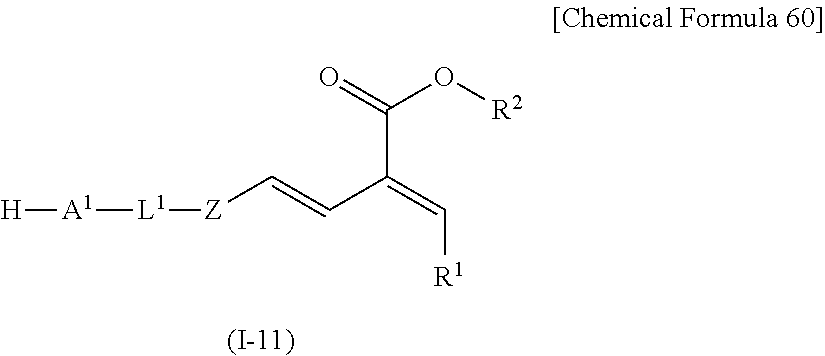


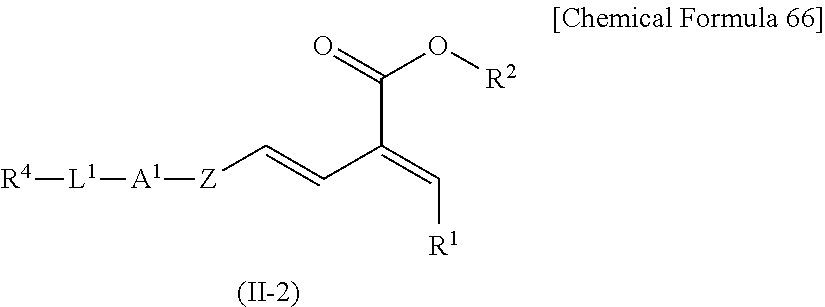


R4—C≡C—H (XV)


R4—N3 (XVI)
wherein,


-L1-C≡CH, and [Chemical Formula 80]


R4—C≡C—H (XV)


R4—N3 (XVI)
wherein,


-L1-C≡CH, and [Chemical Formula 105]


-L1-C≡CH, [Chemical Formula 108]


-L1-C≡CH, [Chemical Formula 149]


-L1-C≡CH, and [Chemical Formula 166]

-L1-C≡CH, [Chemical Formula 168]


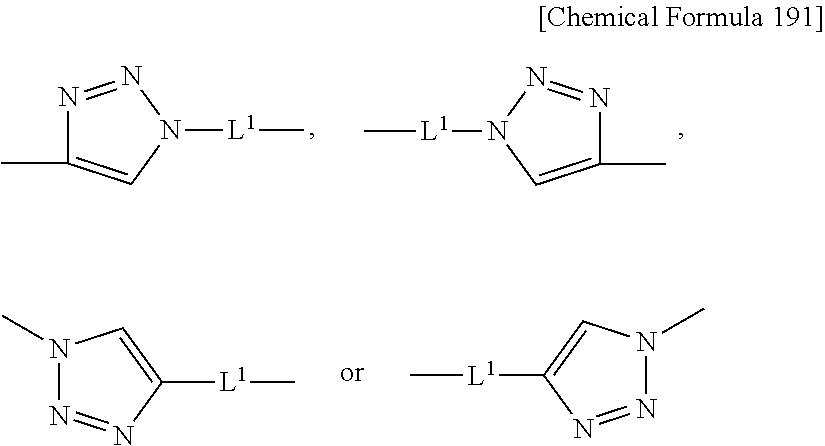


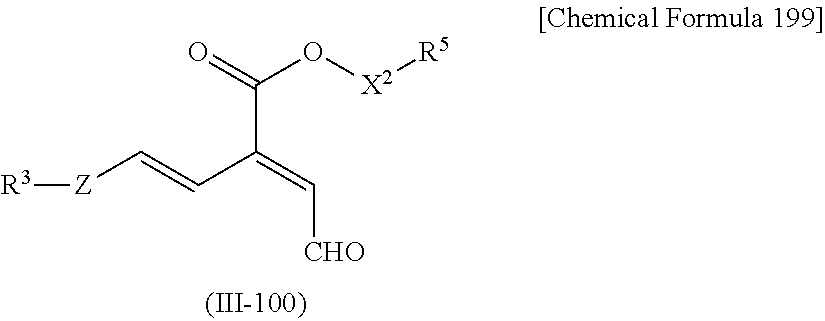
-L1-C≡CH, [Chemical Formula 200]

-L1-C≡CH, [Chemical Formula 202]


-L1-C≡CH, [Chemical Formula 224]

-L1-C≡CH, [Chemical Formula 226]


- BOC: t-butoxycarbonyl,
- TBDPS: t-butyldiphenylsilyl
- THF: tetrahydrofuran,
- AIBN: 2,2′-azobisisobutyronitrile,
- DMF: dimethylformamide
- Pd2(dba)3: tris(dibenzylideneacetone)dipalladium(0)
- P(2-furyl)3: tri(2-furyl)phosphine
- Dess-Martin periodinane reagent: 1,1,1-triacetoxy-1,1-dihydro-1,2-benziodoxol-3(1H)-one,
- IBX resin: (2-iodoxybenzoic acid) resin,
- EDC: 1-(3-dimethylaminopropyl)-3-ethylcarbodiimide hydrochloride,
- DMAP: 4-dimethylaminopyridine,
- HBTU: o-benzotriazol-1-yl-N,N,N′,N′-tetramethyluronium hexahydrophosphate,
- PDC: pyridinium dichromate,
- TFA: trifluoroacetic acid,
- Ar: argon
- TBAF: tetrabutylammonium fluoride,
- PBS: phosphate buffered saline.


- R2 being an ethyl group,
- R4—X1— being a group represented by the formula:


- R2 being an ethyl group,
- R4—X1— being a group represented by the formula:


Claims (2)

-L1-C≡CH,
Applications Claiming Priority (3)
| Application Number | Priority Date | Filing Date | Title |
|---|---|---|---|
| JP2007-025489 | 2007-02-05 | ||
| JP2007025489 | 2007-02-05 | ||
| PCT/JP2008/051871 WO2008096760A1 (en) | 2007-02-05 | 2008-02-05 | NOVEL HEXATRIENE-β-CARBONYL COMPOUND |
Publications (2)
| Publication Number | Publication Date |
|---|---|
| US20100008857A1 US20100008857A1 (en) | 2010-01-14 |
| US8298513B2 true US8298513B2 (en) | 2012-10-30 |
Family
ID=39681668
Family Applications (1)
| Application Number | Title | Priority Date | Filing Date |
|---|---|---|---|
| US12/525,599 Expired - Fee Related US8298513B2 (en) | 2007-02-05 | 2008-02-05 | Hexatriene-β-carbonyl compound |
Country Status (4)
| Country | Link |
|---|---|
| US (1) | US8298513B2 (en) |
| EP (1) | EP2128124A4 (en) |
| JP (1) | JP5013378B2 (en) |
| WO (1) | WO2008096760A1 (en) |
Families Citing this family (9)
| Publication number | Priority date | Publication date | Assignee | Title |
|---|---|---|---|---|
| WO2010055950A1 (en) | 2008-11-17 | 2010-05-20 | 財団法人ヒューマンサイエンス振興財団 | Novel cancer targeting therapy using complex of substance capable of binding specifically to constituent factor of cancer stroma and anti-tumor compound |
| BR112012029866A2 (en) * | 2010-06-03 | 2017-03-07 | Genentech Inc | method for determining the presence of a steap-1 protein |
| JP6490574B2 (en) | 2013-02-28 | 2019-03-27 | 国立研究開発法人国立がん研究センター | Antibodies against insoluble fibrin |
| JP6327547B2 (en) * | 2013-08-02 | 2018-05-23 | 国立研究開発法人理化学研究所 | New compounds and their use |
| US10683341B2 (en) | 2015-06-30 | 2020-06-16 | Glytech, Inc. | Albumin-sugar chain complex |
| WO2020241340A1 (en) | 2019-05-24 | 2020-12-03 | 株式会社糖鎖工学研究所 | Novel artificial protein catalyst |
| JPWO2023171009A1 (en) | 2022-03-09 | 2023-09-14 | ||
| CN114707337B (en) * | 2022-04-12 | 2022-11-29 | 核工业北京地质研究院 | Nuclide migration simulation method and nuclide migration simulation system in radioactive waste disposal process |
| CN118406033B (en) * | 2024-07-03 | 2024-09-27 | 东北师范大学 | A preparation method of chroman compounds |
Citations (3)
| Publication number | Priority date | Publication date | Assignee | Title |
|---|---|---|---|---|
| WO2002046147A2 (en) | 2000-12-06 | 2002-06-13 | Nst Neurosurvival Technologies Ltd. | Perturbed membrane-binding compounds |
| JP2003160547A (en) | 2001-09-13 | 2003-06-03 | Daiso Co Ltd | Cis-aminoindanol derivatives, their preparation and their use |
| JP2006510577A (en) | 2002-07-01 | 2006-03-30 | コミツサリア タ レネルジー アトミーク | Labeled peptide having affinity for phospholipid and use thereof |
Family Cites Families (1)
| Publication number | Priority date | Publication date | Assignee | Title |
|---|---|---|---|---|
| JP2005154374A (en) | 2003-11-27 | 2005-06-16 | Hamamatsu Photonics Kk | Radioactive tropane alkaloid derivative, tropane alkaloid derivative and method for producing the same |
-
2008
- 2008-02-05 JP JP2008557126A patent/JP5013378B2/en not_active Expired - Fee Related
- 2008-02-05 US US12/525,599 patent/US8298513B2/en not_active Expired - Fee Related
- 2008-02-05 EP EP08710803A patent/EP2128124A4/en not_active Withdrawn
- 2008-02-05 WO PCT/JP2008/051871 patent/WO2008096760A1/en not_active Ceased
Patent Citations (4)
| Publication number | Priority date | Publication date | Assignee | Title |
|---|---|---|---|---|
| WO2002046147A2 (en) | 2000-12-06 | 2002-06-13 | Nst Neurosurvival Technologies Ltd. | Perturbed membrane-binding compounds |
| JP2004528275A (en) | 2000-12-06 | 2004-09-16 | エヌエステイ・ニユーロサーバイバル・テクノロジーズ・リミテツド | Compounds that bind to disordered membranes |
| JP2003160547A (en) | 2001-09-13 | 2003-06-03 | Daiso Co Ltd | Cis-aminoindanol derivatives, their preparation and their use |
| JP2006510577A (en) | 2002-07-01 | 2006-03-30 | コミツサリア タ レネルジー アトミーク | Labeled peptide having affinity for phospholipid and use thereof |
Non-Patent Citations (15)
Also Published As
| Publication number | Publication date |
|---|---|
| EP2128124A4 (en) | 2012-09-05 |
| US20100008857A1 (en) | 2010-01-14 |
| JPWO2008096760A1 (en) | 2010-05-20 |
| WO2008096760A1 (en) | 2008-08-14 |
| JP5013378B2 (en) | 2012-08-29 |
| EP2128124A1 (en) | 2009-12-02 |
Similar Documents
| Publication | Publication Date | Title |
|---|---|---|
| US20100008857A1 (en) | Novel hexatriene-beta-carbonyl compound | |
| US7163935B2 (en) | Scorpionate-like pendant macrocyclic ligands, complexes and compositions thereof, and methods of using same | |
| CN118955616B (en) | A compound targeting and binding to fibroblast activation protein and its application | |
| JP5705434B2 (en) | Chelating agent | |
| JP2022552757A (en) | Camptothecin class drugs and their antibody conjugates | |
| CN119192214B (en) | Targeted binding fibroblast activation protein multimeric compound and application thereof | |
| US20190309000A1 (en) | Chelated PSMA Inhibitors | |
| CN119390720B (en) | A bicyclo[1.1.1]pentane compound targeting fibroblast activation protein and its application | |
| JP2004509152A (en) | Prochelators for radiometal-labeled molecules | |
| JP5829625B2 (en) | Hypervalent radioactive astatine or iodine compound and preparation method thereof | |
| JP2004526671A (en) | Conjugates of antioxidants with metal chelating ligands for use in diagnostic and therapeutic applications | |
| JP7205930B2 (en) | Radioactive compounds for the treatment of melanoma and uses thereof | |
| EP3160514B1 (en) | Conjugates derived from non-steroidal anti-inflammatory drugs and methods of use thereof in imaging | |
| JP6327547B2 (en) | New compounds and their use | |
| KR20260006628A (en) | Ligands targeting fibroblast-activating protein | |
| CN119325492A (en) | CA-IX targeting fluorescent probes | |
| US9079867B2 (en) | Polyazamacrocyclic compound, and a production method and a biomedical use therefor | |
| US20230002293A1 (en) | Radiohalogen prosthetic moieties and radiolabeled biomolecules | |
| US9968683B2 (en) | Method for conjugating molecules | |
| CN116375709B (en) | Folic acid receptor targeting drug, metal complex, preparation method and application thereof | |
| US20250325670A1 (en) | Novel boron agent | |
| AU2023333045A1 (en) | Chemical conjugates, compositions, and methods of preparation and use thereof | |
| CN119365549A (en) | Fluorescent probe targeting CA-IX | |
| CA3289920A1 (en) | Ligand targeting fibroblast activation protein | |
| KR20250127541A (en) | Composition for diagnosis or treatment of cancer containing radioisotope-labeled and halogenated benzamide derivative compound as effective component |
Legal Events
| Date | Code | Title | Description |
|---|---|---|---|
| AS | Assignment |
Owner name: OSAKA UNIVERSITY, JAPAN Free format text: ASSIGNMENT OF ASSIGNORS INTEREST;ASSIGNORS:FUKASE, KOICHI;TANAKA, KATSUNORI;WATANABE, YASUYOSHI;AND OTHERS;REEL/FRAME:023043/0593;SIGNING DATES FROM 20090713 TO 20090716 Owner name: RIKEN, JAPAN Free format text: ASSIGNMENT OF ASSIGNORS INTEREST;ASSIGNORS:FUKASE, KOICHI;TANAKA, KATSUNORI;WATANABE, YASUYOSHI;AND OTHERS;REEL/FRAME:023043/0593;SIGNING DATES FROM 20090713 TO 20090716 Owner name: RIKEN, JAPAN Free format text: ASSIGNMENT OF ASSIGNORS INTEREST;ASSIGNORS:FUKASE, KOICHI;TANAKA, KATSUNORI;WATANABE, YASUYOSHI;AND OTHERS;SIGNING DATES FROM 20090713 TO 20090716;REEL/FRAME:023043/0593 Owner name: OSAKA UNIVERSITY, JAPAN Free format text: ASSIGNMENT OF ASSIGNORS INTEREST;ASSIGNORS:FUKASE, KOICHI;TANAKA, KATSUNORI;WATANABE, YASUYOSHI;AND OTHERS;SIGNING DATES FROM 20090713 TO 20090716;REEL/FRAME:023043/0593 |
|
| REMI | Maintenance fee reminder mailed | ||
| LAPS | Lapse for failure to pay maintenance fees | ||
| STCH | Information on status: patent discontinuation |
Free format text: PATENT EXPIRED DUE TO NONPAYMENT OF MAINTENANCE FEES UNDER 37 CFR 1.362 |
|
| STCH | Information on status: patent discontinuation |
Free format text: PATENT EXPIRED DUE TO NONPAYMENT OF MAINTENANCE FEES UNDER 37 CFR 1.362 |
|
| FP | Lapsed due to failure to pay maintenance fee |
Effective date: 20161030 |