US8256024B2 - Cold weather garment - Google Patents
Cold weather garment Download PDFInfo
- Publication number
- US8256024B2 US8256024B2 US11/842,839 US84283907A US8256024B2 US 8256024 B2 US8256024 B2 US 8256024B2 US 84283907 A US84283907 A US 84283907A US 8256024 B2 US8256024 B2 US 8256024B2
- Authority
- US
- United States
- Prior art keywords
- garment
- resistant
- per unit
- unit area
- torso
- Prior art date
- Legal status (The legal status is an assumption and is not a legal conclusion. Google has not performed a legal analysis and makes no representation as to the accuracy of the status listed.)
- Active, expires
Links
- 239000000463 material Substances 0.000 claims abstract description 88
- 239000004744 fabric Substances 0.000 claims abstract description 33
- 230000002209 hydrophobic effect Effects 0.000 claims abstract description 10
- XLYOFNOQVPJJNP-UHFFFAOYSA-N water Substances O XLYOFNOQVPJJNP-UHFFFAOYSA-N 0.000 claims abstract description 10
- 239000000835 fiber Substances 0.000 claims abstract description 8
- 239000011248 coating agent Substances 0.000 claims abstract description 6
- 238000000576 coating method Methods 0.000 claims abstract description 6
- 239000012528 membrane Substances 0.000 claims abstract description 6
- -1 polytetrafluoroethylene Polymers 0.000 claims abstract description 4
- 229920001343 polytetrafluoroethylene Polymers 0.000 claims abstract description 4
- 239000004810 polytetrafluoroethylene Substances 0.000 claims abstract description 4
- 229920002635 polyurethane Polymers 0.000 claims abstract description 4
- 239000004814 polyurethane Substances 0.000 claims abstract description 4
- 239000002131 composite material Substances 0.000 claims abstract description 3
- 238000009413 insulation Methods 0.000 claims description 16
- 238000005299 abrasion Methods 0.000 claims description 9
- 230000001846 repelling effect Effects 0.000 claims description 2
- 230000007613 environmental effect Effects 0.000 abstract description 5
- 239000010410 layer Substances 0.000 description 37
- 230000000694 effects Effects 0.000 description 6
- 230000033228 biological regulation Effects 0.000 description 5
- 238000010168 coupling process Methods 0.000 description 4
- 230000008642 heat stress Effects 0.000 description 4
- 238000012360 testing method Methods 0.000 description 4
- 238000013022 venting Methods 0.000 description 4
- 230000008901 benefit Effects 0.000 description 3
- 230000036760 body temperature Effects 0.000 description 3
- 229920002821 Modacrylic Polymers 0.000 description 2
- 239000004677 Nylon Substances 0.000 description 2
- NIXOWILDQLNWCW-UHFFFAOYSA-N acrylic acid group Chemical group C(C=C)(=O)O NIXOWILDQLNWCW-UHFFFAOYSA-N 0.000 description 2
- 239000004760 aramid Substances 0.000 description 2
- 229920003235 aromatic polyamide Polymers 0.000 description 2
- 230000000712 assembly Effects 0.000 description 2
- 238000000429 assembly Methods 0.000 description 2
- 230000008645 cold stress Effects 0.000 description 2
- 230000008878 coupling Effects 0.000 description 2
- 238000005859 coupling reaction Methods 0.000 description 2
- 230000001747 exhibiting effect Effects 0.000 description 2
- 230000007246 mechanism Effects 0.000 description 2
- 238000002844 melting Methods 0.000 description 2
- 230000008018 melting Effects 0.000 description 2
- 239000000203 mixture Substances 0.000 description 2
- 229920001778 nylon Polymers 0.000 description 2
- 230000037081 physical activity Effects 0.000 description 2
- 229920000728 polyester Polymers 0.000 description 2
- 230000001681 protective effect Effects 0.000 description 2
- 239000002356 single layer Substances 0.000 description 2
- 239000000126 substance Substances 0.000 description 2
- 239000004753 textile Substances 0.000 description 2
- 206010010144 Completed suicide Diseases 0.000 description 1
- 210000001015 abdomen Anatomy 0.000 description 1
- 239000000853 adhesive Substances 0.000 description 1
- 230000001070 adhesive effect Effects 0.000 description 1
- 229920006231 aramid fiber Polymers 0.000 description 1
- 230000001149 cognitive effect Effects 0.000 description 1
- 239000006260 foam Substances 0.000 description 1
- 239000000446 fuel Substances 0.000 description 1
- 239000003292 glue Substances 0.000 description 1
- 230000002631 hypothermal effect Effects 0.000 description 1
- 230000006872 improvement Effects 0.000 description 1
- 229940004975 interceptor Drugs 0.000 description 1
- 239000002648 laminated material Substances 0.000 description 1
- 238000013021 overheating Methods 0.000 description 1
- 230000035699 permeability Effects 0.000 description 1
- 239000005871 repellent Substances 0.000 description 1
- 239000011347 resin Substances 0.000 description 1
- 229920005989 resin Polymers 0.000 description 1
- 239000002982 water resistant material Substances 0.000 description 1
- 238000004078 waterproofing Methods 0.000 description 1
Images


Classifications
-
- A—HUMAN NECESSITIES
- A41—WEARING APPAREL
- A41D—OUTERWEAR; PROTECTIVE GARMENTS; ACCESSORIES
- A41D3/00—Overgarments
- A41D3/005—Overgarments with pullover structure
Definitions
- the present application relates to garments, and more particularly, to garments for use in cold weather conditions.
- clothing that provides protection from the environmental elements, such as low temperatures, wind, rain and snow, and protection from other hazards, such as rough terrain, fire, enemy assault, etc. Desirably, such clothing does not interfere with a person's ability to perform required tasks, such as tasks that demand agility and physical exertion.
- some conventional winter garments had other disadvantages.
- some winter garment designs led to heat stress and exhaustion during activities involving high physical exertion. This is due in part to the insulation and breathability properties of the winter garment.
- certain conventional winter garment designs have proper insulation and breathability properties for stationary or low-exertion activities, but are overly insulated and/or inadequately breathable for high-exertion activities.
- some conventional winter garment designs trap moisture during physical activities. Trapped moisture can dampen the winter garment, any underlying garment(s), and the wearer, which increases the risk of cold stress or even hypothermia after completion of such activities.
- a second type of winter garment was designed to breathe, move or wick moisture away from the skin, and keep soldiers warm and relatively dry during periods of exertion.
- the second type of winter garment was an improvement over previous designs, it too had several disadvantages.
- the second type of winter garment often provided too much insulation and caused heat stress during physical activities.
- Personnel such as soldiers commonly don a body armor vest over the torso portion of their winter garments.
- body armor vests provide a latent insulation to the torso, or core, portion of the body.
- the garment did not take into account the extra insulation afforded by the armor.
- a user wearing both the second type of winter garment and a body armor vest was often overly insulated about his or her torso, which often negatively affected the user's core temperature and increased the risk of heat stress.
- Described herein are various embodiments of a flame-resistant, cold-weather garment that provides improved body temperature regulation when worn under body armor during cold-weather applications as compared to conventional garments.
- Improper core and extremity temperature regulation can lead to heat or cold stress on the body, which can negatively affect cognitive decision-making skills and physical capabilities.
- improper temperature regulation can threaten the success of a mission.
- proper regulation of the core and extremity temperatures of soldiers can provide a tactical advantage for troops involved in a wide variety of field operations.
- the cold-weather garment described herein assists in maintaining the core and extremity temperatures of wearers at a comfortable and proper level in cold weather conditions.
- the cold-weather garment is at least partially waterproof, windproof and/or breathable to maintain proper body temperature regulation.
- the cold-weather garment described herein can provide flame-resistance in cold weather conditions.
- the cold-weather garment described herein can resist abrasion in cold weather conditions.
- a long-sleeve upper-body cold-weather garment includes a torso portion and two sleeve portions that are attached to and extend from opposite edges of the torso portion.
- the torso portion is made from a first material and the sleeve portions are each made from a second material.
- the first material is lighter per unit area and more breathable than the second material.
- the second material is heavier per unit area than the first material, but is more resistant to cold-weather environmental conditions.
- the second material is water resistant, flame resistant and comprises an outer surface having a camouflage pattern.
- the second material is made up of at least approximately 50% hydrophobic fibers, includes a coating having water-repellant characteristics, and/or includes a multi-layer composite fabric that includes a water-resistant membrane made from either polyurethane or polytetrafluoroethylene.
- the first material includes a single layer made of one material and the second material includes three layers each of a different material.
- the first layer consists essentially of a woven or knitted face fabric and comprises the outer surface.
- the second layer consists essentially of a single-side-pile knitted fleece fabric.
- the third layer is positioned between the first and second layer and consists essentially of a water-resistant membrane.
- the second material includes a single-side-pile or double-side-pile knitted fleece fabric that is made of at least approximately 50% hydrophobic yarns.
- the first material is flame resistant.
- the first material includes a non-pile, non-fleece fabric.
- the torso portion includes two armpit sections. In other aspects, each sleeve portion includes an armpit section. In some aspects, each sleeve portion includes a respective shoulder section. However, in other implementations, the torso portion includes right and left shoulder sections. Also, in some implementations, the torso portion includes a front and back torso section and each sleeve portion includes a respective one of a right and left side torso section.
- the garment can, in some implementations, include a collar portion made essentially from the second material. In other implementations, the collar portion can be made essentially from the first material.
- an upper-body cold-weather garment includes a torso portion, two long-sleeve portions and a collar portion.
- the torso portion is primarily made from a first material having a first weight per unit area and a first breathability rating.
- the long-sleeve portions extend from the torso portion and is primarily made from a second material having a second weight per unit area greater than the first weight per unit area and a second breathability rating lower than the first breathability rating.
- the collar portion is positioned proximate an upper end of the torso portion and is primarily made from the second material.
- the second material includes (i) an insulation and flame-resistant inner layer made of a single-side-pile knitted fleece, (ii) an abrasion-resistant outer layer made of a woven or knitted face fabric, and (iii) a waterproof and windproof intermediate layer between the inner and outer layers made of a polymeric material.
- the collar portion includes an adjustable placket.
- the outer layer includes a water repelling coating.
- the inner layer is made of at least approximately 50% hydrophobic fibers.
- the inner layer is made of a single-side-pile or double-side-pile knitted fleece fabric.
- the two long-sleeve portions can, in some implementations, each include a shoulder section that extends from the collar portion.
- a cold-weather and projectile protection system includes a long-sleeve upper-body garment and a body armor vest.
- the garment includes a torso portion that includes a first material with a first weight per unit area and a first breathability rating.
- the garment also includes two long-sleeve portions that extend from the torso portion. Each long-sleeve portion has a shoulder section and includes a second material having a second weight per unit area greater than the first weight per unit area and a second breathability rating lower than the first breathability rating.
- the second material includes an insulation and flame-resistant inner layer that includes a single-side-pile knitted fleece, an abrasion-resistant outer layer that includes a woven or knitted face fabric, and a waterproof and windproof intermediate layer between the inner and outer layers that includes a polymeric material.
- the body armor vest is wearable over the long-sleeve upper-body garment and provides protection against projectiles, such that when worn, the vest substantially covers the torso portion of the garment and does not substantially cover the long-sleeve portions of the garment.
- FIG. 1 is a perspective view of a cold-weather garment according to one embodiment.
- FIG. 2 is an exploded cross-sectional view of a sleeve portion of the cold-weather garment of FIG. 1 .
- FIG. 3 is a perspective view of a cold-weather garment according to another embodiment.
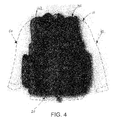
- FIG. 4 is a front view of a body armor vest according to one exemplary embodiment worn over the cold-weather garment of FIG. 1 .
- the garment 10 includes a torso portion 20 and two long sleeve portions, i.e., a left sleeve portion 40 and a right sleeve portion 50 , coupled to and extending from the torso portion.
- the garment 10 also includes a collar portion 60 coupled to the torso portion 20 at its upper end near the neck of the wearer and intermediate the left and right sleeve portions 40 , 50 .
- the torso portion 20 is made from a first material and the left and right sleeve portions 40 , 50 are made from a second material (see FIG. 2 ) different than the first material.
- the collar portion can be made from either the first or second material.
- the respective portions of the cold-weather garment 10 are attached to each other via any of various fabric coupling techniques to form a seam along the intersection of two or more portions.
- the seam is formed using any of various known fabric coupling techniques, such as by using flame-resistant thread.
- the torso portion 20 when the garment 10 is properly worn by a wearer, the torso portion 20 includes a front section 22 that substantially covers the chest and abdomen area of the wearer, left and right side sections 24 , 26 that substantially cover the left and right sides of the wearer's torso below the arms, respectively, and a back section (not shown) that substantially covers the back of the wearer.
- the torso portion 120 of garment 110 does not include left and right side sections and does not cover the left and right sides of the wearer's torso below the arms.
- the torso portion 20 of garment 10 also covers the left and right armpit areas of the wearer.
- the torso portion 20 can be made from one continuous piece of fabric or several interconnected pieces of fabric.
- the torso portion 20 includes a placket, e.g. slit, 30 formed in the collar portion 60 and front section 22 of the torso portion 20 .
- the placket 30 extends along the entire length of the front section 22 and in other instances, such as shown in FIG. 1 , the placket extends along only a portion of the front section 22 .
- the placket 30 can be adjusted between a fully open and fully closed position by any of various coupling mechanisms, such as, for example, zippers, hook and loop fasteners, string, buttons, snaps, other closures, etc., to provide a desired level of venting depending on any of various factors, such as the environmental conditions and comfort of the wearer.
- the coupling mechanism is a zipper made from a flame-resistant resin.
- the placket 30 includes a flap 32 that at least partially underlies, and in some implementations, overlies, the seam formed between opposing sides of the placket when the placket is at least partially closed.
- the flap can be made from any of various materials, but preferably is made from the second material.
- the cold-weather garment 10 can include adjustable collar openings and lower torso openings to provide further adjustability of the level of venting and, in some cases, the garment's fit.
- the collar portion 60 and lower section of the torso portion 20 can include embedded resiliently elastic cords at least partially enveloping the respective openings. The cords can be tightened to effectively decrease the circumference of the openings to decrease venting through the openings, or loosened to effectively increase the circumference of the openings to increase venting through the openings.
- the right sleeve portion 50 includes the same or similar features as the left sleeve portion 40 . Accordingly, unless otherwise noted, the details of the right sleeve portion 50 can be recognized with reference to the following features of the left sleeve portion 40 .
- the left sleeve portion 40 when the garment 10 is properly worn by a wearer, the left sleeve portion 40 includes a shoulder section 42 that covers the left shoulder of the wearer, an upper arm section 44 that covers the upper left arm of the wearer, an elbow section 46 that covers the elbow of the wearer, and a lower arm section 48 that covers the lower left arm of the wearer. In other embodiments, such as shown in FIG.
- the left and right sleeve portions 140 , 150 of the garment 110 include left and right side sections, such as left side section 149 , that cover the left and right sides of the user's torso when the garment 10 is properly worn.
- the shoulder section 42 of the garment 10 are preferably seamless to reduce wear on the body armor and person's body, which often results from seams rubbing against the armor.
- the left sleeve portion 40 covers the left armpit area of the wearer, and in other implementations, the left sleeve portion does not cover the left armpit area of the wearer to allow for extra breathability in the armpit area.
- the torso portion 20 is made from a first material and the left sleeve portion 40 is made from a second material.
- the first material is lighter per unit area and provides more breathability than the second material.
- the second material provides better protection from environmental elements than the first material.
- the second material provides more insulation, better flame-resistance, better waterproofing, better windproofing and/or better wear resistance than the first material.
- the first material of the torso portion 20 has minimal water-resistance and the second material of the sleeve portion 40 has significant water-resistance. As shown in FIG.
- the cold-weather garment provides greater protection and more insulation of the user's upper body not covered by the vest, e.g., the left and right arms covered by the left and right sleeve portions 40 , 50 , and less insulation and bulk about the user's body covered by the vest, e.g., the torso covered by the torso portion 20 .
- gaps may exist between the vest 160 and the cold-weather garment 10 , such as around the neck, shoulder and armpit areas, applicant discovered that the material composition and bulk of the vest can provide significant water-resistance for a torso portion 20 (including areas adjacent the gaps) made of a minimally water-resistant material.
- the garment 10 can be used in conjunction with any of various commercially available body armor vests, such as Interceptor Body Armor made by Point Blank Body Armor, Inc.
- a body armor vest such as vest 160
- Some body armor vests also include right and left side protective inserts that are supported by the vest.
- the body armor vest is sleeveless, such as body armor vest 160 .
- a body armor vest having sleeves can be worn over the garment 10 .
- the first material is a single layer of lightweight, soft, breathable, flame-resistant and stretchable material, such as a 4-way stretchable, 2-end or 3-end knit fleece fabric, e.g., FlamestretchTM fleece fabric made by Massif Mountain Gear Company, or other fleece fabric, such as described in U.S. Pat. No. 5,727,401, which is incorporated herein by reference.
- the first material is a single-side-pile or double-side-pile knitted fleece fabric. At least half of the fleece fabric can be made from one type of combination of hydrophobic fibers, such as, but not limited to, polyester, nylon, acrylic, modacrylic and aramid.
- hydrophobic materials such as fibers and yarns, are materials that exhibit a moisture regain of less than 4.8%.
- the first material is a non-pile, non-fleece knit fabric, such as, but not limited to, a jersey or interlock knit fabric having a finished fabric weight between approximately 6.9 and 10.9 ounces per square yard.
- the first material is more breathable that the second material according to the ASTM D 737 Air Permeability Test.
- the first material can have a breathability rating of approximately 143 ft 3 /min/ft 2 or more and the second material can have a breathability rating of approximately 0.562 ft 3 /min/ft 2 or less.
- the first material is also flame-resistant.
- a flame-resistant material is a material that has less than approximately 6.0 seconds afterflame and exhibits no melting or dripping when tested according to the ASTM D 6413 Flame Resistance of Textiles Vertical Test.
- the second material includes multiple laminated or non-laminated material layers.
- the second material can include a first inner layer 70 , a second outer layer 80 , and a third intermediate layer 90 between the inner and outer layers.
- the first inner layer 70 is a single-side-pile knitted fleece fabric made of one or more types of hydrophobic fibers, such as, but not limited to, polyester, nylon, acrylic, modacrylic and aramid. In some instances, at least 50% of the first inner layer is made of hydrophobic fibers. Accordingly, the first inner layer can provide water-resistance characteristics.
- the second outer layer 80 is a woven or knitted face fabric providing a relatively high resistance to abrasion, e.g., exhibiting approximately 1,000 or more cycles before wear-through when tested according to the ASTM D 3884 Abrasion Resistance Test with CS 10 abrasive wheels and a 250 gram load.
- the second outer layer includes a knit jersey fabric having a weight of approximately 5.9 to 7.8 ounces per square yard and being primarily made from an aramid fiber blend.
- the second outer layer can include a camouflage pattern, such as a conventional camouflage pattern or a digital camouflage pattern 82 as illustrated.
- the third intermediate layer 90 is a water-resistant, waterproof and/or windproof membrane.
- the membrane is made from polyurethane or polytetrafluoroethylene having any of various thicknesses.
- the second material in addition to or instead of the third intermediate layer, can include a water-repellent coating or encapsulated finish to one or more of the first inner layer and second outer layer.
- the coating and finish respectively, repel moisture and wind to help regulate the body temperature and comfort of the wearer.
- the three layers are bonded together, such as through use of an adhesive or glue.
- the second material can also have flame-resistance properties.
- the first inner layer 70 can be made of a fabric having less than approximately 6.0 seconds afterflame and exhibiting no melting or dripping when tested according to the ASTM D 6413 Flame Resistance of Textiles Vertical Test.
- one or more of the layers of the second material can be treated with a flame suppressant chemical, such as any of various flame suppressant chemicals known in the art.
- respective elbow assemblies 84 are attached to the second outer layer of the left and right sleeve portions 40 , 50 over the wearer's elbow.
- Each elbow assembly can include a lightweight flame-resistant pad, such as a foam pad.
- each elbow assembly includes a series of relatively small outwardly extending protrusions, such as abrasion dots, for wear resistance.
- the cold-weather garment 10 can also include one or more storage pockets, tool holders and insignia holders attached to, or integrated in, the outer surface of the garment.
- the cold-weather garment 10 includes a pen pocket 100 attached to the outer surface of the left sleeve portion 40 , storage pockets 102 , 104 attached to the outer surface of the left and right sleeve portions 40 , 50 , respectively, and an insignia holder 106 , such as a flag holder, attached to the outer surface of the right sleeve portion 50 .
- the cold-weather garment 10 can also include one or more infrared identification assemblies, such as infrared identification assembly 140 secured to the left sleeve portion 40 .
- the infrared identification assembly 108 includes an infrared beam reflector (not shown) coverable by a removable cover 109 .
Landscapes
- Engineering & Computer Science (AREA)
- Textile Engineering (AREA)
- Professional, Industrial, Or Sporting Protective Garments (AREA)
- Outer Garments And Coats (AREA)
Abstract
Description
Claims (18)
Priority Applications (1)
| Application Number | Priority Date | Filing Date | Title |
|---|---|---|---|
| US11/842,839 US8256024B2 (en) | 2007-08-21 | 2007-08-21 | Cold weather garment |
Applications Claiming Priority (1)
| Application Number | Priority Date | Filing Date | Title |
|---|---|---|---|
| US11/842,839 US8256024B2 (en) | 2007-08-21 | 2007-08-21 | Cold weather garment |
Publications (2)
| Publication Number | Publication Date |
|---|---|
| US20110072551A1 US20110072551A1 (en) | 2011-03-31 |
| US8256024B2 true US8256024B2 (en) | 2012-09-04 |
Family
ID=43778647
Family Applications (1)
| Application Number | Title | Priority Date | Filing Date |
|---|---|---|---|
| US11/842,839 Active 2031-07-05 US8256024B2 (en) | 2007-08-21 | 2007-08-21 | Cold weather garment |
Country Status (1)
| Country | Link |
|---|---|
| US (1) | US8256024B2 (en) |
Cited By (3)
| Publication number | Priority date | Publication date | Assignee | Title |
|---|---|---|---|---|
| US20120096628A1 (en) * | 2010-10-26 | 2012-04-26 | Victor Eugene Grady | Personal item protector apparatus |
| USD764750S1 (en) * | 2015-01-21 | 2016-08-30 | Nicholas Ballesteros | Set of shirt sleeves |
| USD765351S1 (en) | 2013-05-28 | 2016-09-06 | Weldarmor Inc. | Sweater |
Families Citing this family (3)
| Publication number | Priority date | Publication date | Assignee | Title |
|---|---|---|---|---|
| US9403044B2 (en) | 2013-02-26 | 2016-08-02 | Paul Pirone | Outerwear system incorporating a base garment with attachable outer skins, such as for providing terrain dictated camouflage |
| CN104013124A (en) * | 2014-05-27 | 2014-09-03 | 昆山佑翔电子科技有限公司 | Trench coat for women |
| EP3565425A1 (en) | 2017-01-06 | 2019-11-13 | Petrakis, Lawrence, T. | Breathable heavyweight garments for physical conditioning |
Citations (11)
| Publication number | Priority date | Publication date | Assignee | Title |
|---|---|---|---|---|
| US5088116A (en) * | 1989-04-10 | 1992-02-18 | Gould Russell P | All weather garment system |
| US5415924A (en) * | 1993-02-05 | 1995-05-16 | Aquatic Design | Waterproof, breathable fabric for outdoor athletic apparel |
| US5727401A (en) | 1995-08-09 | 1998-03-17 | Southern Mills, Inc. | Fire resistant fleece fabric and garment |
| US6018819A (en) * | 1998-04-15 | 2000-02-01 | Bha Technologies, Inc. | Garment with moisture vapor transmissive wind barrier panels |
| US20040221360A1 (en) * | 2003-05-05 | 2004-11-11 | Wood Michael Tate | Waterfowl hunter's dual-function top garments |
| US20050075028A1 (en) * | 1998-08-28 | 2005-04-07 | Moshe Rock | Multi-layer composite fabric garment |
| US6892396B2 (en) * | 2002-05-23 | 2005-05-17 | Mizuno Corporation | Undershirt |
| US20060277651A1 (en) | 2005-04-14 | 2006-12-14 | Ali Razzaghi | Protective garment with curved and protected extremities |
| US20090255038A1 (en) * | 2008-04-09 | 2009-10-15 | Lion Apparel, Inc. | Protective garment with low friction characteristics |
| US7636948B1 (en) | 2006-01-26 | 2009-12-29 | Lineweight Llc | Combat shirt and armor system |
| US7743476B2 (en) * | 2004-06-24 | 2010-06-29 | Mmi-Ipco, Llc | Engineered fabric articles |
-
2007
- 2007-08-21 US US11/842,839 patent/US8256024B2/en active Active
Patent Citations (11)
| Publication number | Priority date | Publication date | Assignee | Title |
|---|---|---|---|---|
| US5088116A (en) * | 1989-04-10 | 1992-02-18 | Gould Russell P | All weather garment system |
| US5415924A (en) * | 1993-02-05 | 1995-05-16 | Aquatic Design | Waterproof, breathable fabric for outdoor athletic apparel |
| US5727401A (en) | 1995-08-09 | 1998-03-17 | Southern Mills, Inc. | Fire resistant fleece fabric and garment |
| US6018819A (en) * | 1998-04-15 | 2000-02-01 | Bha Technologies, Inc. | Garment with moisture vapor transmissive wind barrier panels |
| US20050075028A1 (en) * | 1998-08-28 | 2005-04-07 | Moshe Rock | Multi-layer composite fabric garment |
| US6892396B2 (en) * | 2002-05-23 | 2005-05-17 | Mizuno Corporation | Undershirt |
| US20040221360A1 (en) * | 2003-05-05 | 2004-11-11 | Wood Michael Tate | Waterfowl hunter's dual-function top garments |
| US7743476B2 (en) * | 2004-06-24 | 2010-06-29 | Mmi-Ipco, Llc | Engineered fabric articles |
| US20060277651A1 (en) | 2005-04-14 | 2006-12-14 | Ali Razzaghi | Protective garment with curved and protected extremities |
| US7636948B1 (en) | 2006-01-26 | 2009-12-29 | Lineweight Llc | Combat shirt and armor system |
| US20090255038A1 (en) * | 2008-04-09 | 2009-10-15 | Lion Apparel, Inc. | Protective garment with low friction characteristics |
Non-Patent Citations (3)
| Title |
|---|
| Crye Precision Combat Shirt, http://cryeprecision.com/product1.asp?P=CS1, 3 pages (Printed Oct. 15, 2007). |
| http://www.basspro.com/Drake-Waterfowlreg;-Systems-EST-153;-Eqwader-153;-Two-Tone-Pullover-Shirts-for-Men-Long-Sleeve/product/103123/72422?cmCat=CROSSSELL-PRODUCT#description, "Drake Waterfowl® Systems EST(TM) Egwader(TM) Two-Tone Pullover Shirts for Men-Long Sleeve," Bass Pro Shops, 2 pgs., retrieved Jan. 27, 2012. |
| http://www.basspro.com/Drake-Waterfowlreg;-Systems-EST-153;-Eqwader-153;-Two-Tone-Pullover-Shirts-for-Men—Long-Sleeve/product/103123/72422?cmCat=CROSSSELL—PRODUCT#description, "Drake Waterfowl® Systems EST™ Egwader™ Two-Tone Pullover Shirts for Men—Long Sleeve," Bass Pro Shops, 2 pgs., retrieved Jan. 27, 2012. |
Cited By (4)
| Publication number | Priority date | Publication date | Assignee | Title |
|---|---|---|---|---|
| US20120096628A1 (en) * | 2010-10-26 | 2012-04-26 | Victor Eugene Grady | Personal item protector apparatus |
| US9648918B2 (en) * | 2010-10-26 | 2017-05-16 | Victor Eugene Grady | Personal item protector apparatus |
| USD765351S1 (en) | 2013-05-28 | 2016-09-06 | Weldarmor Inc. | Sweater |
| USD764750S1 (en) * | 2015-01-21 | 2016-08-30 | Nicholas Ballesteros | Set of shirt sleeves |
Also Published As
| Publication number | Publication date |
|---|---|
| US20110072551A1 (en) | 2011-03-31 |
Similar Documents
| Publication | Publication Date | Title |
|---|---|---|
| US8656512B2 (en) | Advanced engineered garment | |
| EP1862757B1 (en) | Hybrid garment to be worn under body armor | |
| EP0723647B1 (en) | Waterproof and water vapour-permeable cover for body armor | |
| US6961958B1 (en) | Concealable ballistic protective pants with tail bone coverage | |
| US7636948B1 (en) | Combat shirt and armor system | |
| US20110023201A1 (en) | Unobtrusive stylish wearable apparel protection body armor garment vest incorporated into a ready to wear article of clothing and method of fitting and manufacture a ballistic panel carrying garment. | |
| AU2010224243B2 (en) | Personal ballistic protection | |
| US9823050B2 (en) | Integrated body armor garment | |
| US20050193481A1 (en) | Adjustable concealed body armor | |
| US20110072551A1 (en) | Cold weather garment | |
| US20120324612A1 (en) | Removable Jacket Sleeves For Body Armor | |
| US20140237711A1 (en) | Outerwear system incorporating a base garment with attachable outer skins, such as for providing terrain dictated camouflage | |
| US20190331463A1 (en) | Protective clothing system with cooling subsystem | |
| US12419367B2 (en) | Clothing system | |
| US20110099675A1 (en) | Ballistic resistant neck protector | |
| JP4573305B2 (en) | Highly breathable intermediate for motorbike operation | |
| KR102209836B1 (en) | Combat shirt | |
| EP2199727A1 (en) | Protective garment with a ballistic resistant torso portion and stab and cut resistant sleeves | |
| CN207678874U (en) | Charge garment | |
| US20040013845A1 (en) | Single-layer waterproof insulating system | |
| CN207678871U (en) | Charge garment housing and charge garment suit | |
| US7426753B1 (en) | Protective garment | |
| RU2086891C1 (en) | Protective clothing | |
| Sudheshna | 13. Protective Clothing: A brief discussion and General Requirements | |
| CN211060741U (en) | High-performance bulletproof vest |
Legal Events
| Date | Code | Title | Description |
|---|---|---|---|
| AS | Assignment |
Owner name: MASSIF MOUNTAIN GEAR COMPANY, LLC, OREGON Free format text: ASSIGNMENT OF ASSIGNORS INTEREST;ASSIGNOR:ROBERTS, JEFFREY K.;REEL/FRAME:019923/0512 Effective date: 20070827 |
|
| FEPP | Fee payment procedure |
Free format text: PAYOR NUMBER ASSIGNED (ORIGINAL EVENT CODE: ASPN); ENTITY STATUS OF PATENT OWNER: LARGE ENTITY |
|
| STCF | Information on status: patent grant |
Free format text: PATENTED CASE |
|
| AS | Assignment |
Owner name: WELLS FARGO BANK, N.A., NORTH CAROLINA Free format text: SECURITY AGREEMENT;ASSIGNOR:MASSIF MOUNTAIN GEAR COMPANY, L.L.C.;REEL/FRAME:029101/0285 Effective date: 20121005 |
|
| AS | Assignment |
Owner name: GGC TACTICAL DEBT HOLDINGS, LLC, CALIFORNIA Free format text: SECURITY AGREEMENT;ASSIGNOR:MASSIF MOUNTAIN GEAR COMPANY, L.L.C.;REEL/FRAME:029344/0068 Effective date: 20121119 |
|
| AS | Assignment |
Owner name: SAMTECH, LLC, CALIFORNIA Free format text: ASSIGNMENT OF ASSIGNORS INTEREST;ASSIGNOR:MASSIF MOUNTAIN GEAR COMPANY LLC;REEL/FRAME:033653/0424 Effective date: 20140829 Owner name: MASSIF MOUNTAIN GEAR COMPANY LLC, TENNESSEE Free format text: RELEASE OF SECURITY INTEREST;ASSIGNOR:GGC TACTICAL DEBT HOLDINGS, LLC;REEL/FRAME:033677/0211 Effective date: 20140828 Owner name: MASSIF MOUNTAIN GEAR COMPANY LLC, TENNESSEE Free format text: RELEASE OF SECURITY INTEREST;ASSIGNOR:WELLS FARGO BANK, N.A.;REEL/FRAME:033677/0161 Effective date: 20140828 |
|
| AS | Assignment |
Owner name: MASSIF MOUNTAIN GEAR COMPANY, L. L. C., TENNESSEE Free format text: RELEASE;ASSIGNOR:WELLS FARGO BANK, N. A.;REEL/FRAME:034807/0163 Effective date: 20150106 |
|
| FPAY | Fee payment |
Year of fee payment: 4 |
|
| FEPP | Fee payment procedure |
Free format text: ENTITY STATUS SET TO UNDISCOUNTED (ORIGINAL EVENT CODE: BIG.); ENTITY STATUS OF PATENT OWNER: LARGE ENTITY |
|
| MAFP | Maintenance fee payment |
Free format text: PAYMENT OF MAINTENANCE FEE, 8TH YEAR, LARGE ENTITY (ORIGINAL EVENT CODE: M1552); ENTITY STATUS OF PATENT OWNER: LARGE ENTITY Year of fee payment: 8 |
|
| MAFP | Maintenance fee payment |
Free format text: PAYMENT OF MAINTENANCE FEE, 12TH YEAR, LARGE ENTITY (ORIGINAL EVENT CODE: M1553); ENTITY STATUS OF PATENT OWNER: LARGE ENTITY Year of fee payment: 12 |