US8247399B2 - Photoactive metal nitrosyls for blood pressure regulation and cancer therapy - Google Patents
Photoactive metal nitrosyls for blood pressure regulation and cancer therapy Download PDFInfo
- Publication number
- US8247399B2 US8247399B2 US13/039,794 US201113039794A US8247399B2 US 8247399 B2 US8247399 B2 US 8247399B2 US 201113039794 A US201113039794 A US 201113039794A US 8247399 B2 US8247399 B2 US 8247399B2
- Authority
- US
- United States
- Prior art keywords
- light
- group
- nitrosyl
- ligand
- papy
- Prior art date
- Legal status (The legal status is an assumption and is not a legal conclusion. Google has not performed a legal analysis and makes no representation as to the accuracy of the status listed.)
- Expired - Fee Related, expires
Links
- QAMCIBKBMBYWGP-UHFFFAOYSA-N CC(C)(C)(C)(N=O)N=O.CC(C)(C)(C)(N=O)ON Chemical compound CC(C)(C)(C)(N=O)N=O.CC(C)(C)(C)(N=O)ON QAMCIBKBMBYWGP-UHFFFAOYSA-N 0.000 description 1
- DRRLTHSXJLUXRY-UHFFFAOYSA-N CC(C)(N)(N)(N)N=O.CC(C)(N)(S)(S)N=O Chemical compound CC(C)(N)(N)(N)N=O.CC(C)(N)(S)(S)N=O DRRLTHSXJLUXRY-UHFFFAOYSA-N 0.000 description 1
Images




Classifications
-
- C—CHEMISTRY; METALLURGY
- C07—ORGANIC CHEMISTRY
- C07D—HETEROCYCLIC COMPOUNDS
- C07D213/00—Heterocyclic compounds containing six-membered rings, not condensed with other rings, with one nitrogen atom as the only ring hetero atom and three or more double bonds between ring members or between ring members and non-ring members
- C07D213/02—Heterocyclic compounds containing six-membered rings, not condensed with other rings, with one nitrogen atom as the only ring hetero atom and three or more double bonds between ring members or between ring members and non-ring members having three double bonds between ring members or between ring members and non-ring members
- C07D213/04—Heterocyclic compounds containing six-membered rings, not condensed with other rings, with one nitrogen atom as the only ring hetero atom and three or more double bonds between ring members or between ring members and non-ring members having three double bonds between ring members or between ring members and non-ring members having no bond between the ring nitrogen atom and a non-ring member or having only hydrogen or carbon atoms directly attached to the ring nitrogen atom
- C07D213/60—Heterocyclic compounds containing six-membered rings, not condensed with other rings, with one nitrogen atom as the only ring hetero atom and three or more double bonds between ring members or between ring members and non-ring members having three double bonds between ring members or between ring members and non-ring members having no bond between the ring nitrogen atom and a non-ring member or having only hydrogen or carbon atoms directly attached to the ring nitrogen atom with hetero atoms or with carbon atoms having three bonds to hetero atoms with at the most one bond to halogen, e.g. ester or nitrile radicals, directly attached to ring carbon atoms
- C07D213/78—Carbon atoms having three bonds to hetero atoms, with at the most one bond to halogen, e.g. ester or nitrile radicals
- C07D213/81—Amides; Imides
-
- A—HUMAN NECESSITIES
- A61—MEDICAL OR VETERINARY SCIENCE; HYGIENE
- A61K—PREPARATIONS FOR MEDICAL, DENTAL OR TOILETRY PURPOSES
- A61K41/00—Medicinal preparations obtained by treating materials with wave energy or particle radiation ; Therapies using these preparations
- A61K41/0057—Photodynamic therapy with a photosensitizer, i.e. agent able to produce reactive oxygen species upon exposure to light or radiation, e.g. UV or visible light; photocleavage of nucleic acids with an agent
-
- A—HUMAN NECESSITIES
- A61—MEDICAL OR VETERINARY SCIENCE; HYGIENE
- A61P—SPECIFIC THERAPEUTIC ACTIVITY OF CHEMICAL COMPOUNDS OR MEDICINAL PREPARATIONS
- A61P35/00—Antineoplastic agents
-
- C—CHEMISTRY; METALLURGY
- C07—ORGANIC CHEMISTRY
- C07C—ACYCLIC OR CARBOCYCLIC COMPOUNDS
- C07C235/00—Carboxylic acid amides, the carbon skeleton of the acid part being further substituted by oxygen atoms
- C07C235/42—Carboxylic acid amides, the carbon skeleton of the acid part being further substituted by oxygen atoms having carbon atoms of carboxamide groups bound to carbon atoms of six-membered aromatic rings and singly-bound oxygen atoms bound to the same carbon skeleton
- C07C235/44—Carboxylic acid amides, the carbon skeleton of the acid part being further substituted by oxygen atoms having carbon atoms of carboxamide groups bound to carbon atoms of six-membered aromatic rings and singly-bound oxygen atoms bound to the same carbon skeleton with carbon atoms of carboxamide groups and singly-bound oxygen atoms bound to carbon atoms of the same non-condensed six-membered aromatic ring
- C07C235/58—Carboxylic acid amides, the carbon skeleton of the acid part being further substituted by oxygen atoms having carbon atoms of carboxamide groups bound to carbon atoms of six-membered aromatic rings and singly-bound oxygen atoms bound to the same carbon skeleton with carbon atoms of carboxamide groups and singly-bound oxygen atoms bound to carbon atoms of the same non-condensed six-membered aromatic ring with carbon atoms of carboxamide groups and singly-bound oxygen atoms, bound in ortho-position to carbon atoms of the same non-condensed six-membered aromatic ring
- C07C235/60—Carboxylic acid amides, the carbon skeleton of the acid part being further substituted by oxygen atoms having carbon atoms of carboxamide groups bound to carbon atoms of six-membered aromatic rings and singly-bound oxygen atoms bound to the same carbon skeleton with carbon atoms of carboxamide groups and singly-bound oxygen atoms bound to carbon atoms of the same non-condensed six-membered aromatic ring with carbon atoms of carboxamide groups and singly-bound oxygen atoms, bound in ortho-position to carbon atoms of the same non-condensed six-membered aromatic ring having the nitrogen atoms of the carboxamide groups bound to hydrogen atoms or to acyclic carbon atoms
-
- C—CHEMISTRY; METALLURGY
- C07—ORGANIC CHEMISTRY
- C07C—ACYCLIC OR CARBOCYCLIC COMPOUNDS
- C07C323/00—Thiols, sulfides, hydropolysulfides or polysulfides substituted by halogen, oxygen or nitrogen atoms, or by sulfur atoms not being part of thio groups
- C07C323/23—Thiols, sulfides, hydropolysulfides or polysulfides substituted by halogen, oxygen or nitrogen atoms, or by sulfur atoms not being part of thio groups containing thio groups and nitrogen atoms, not being part of nitro or nitroso groups, bound to the same carbon skeleton
- C07C323/39—Thiols, sulfides, hydropolysulfides or polysulfides substituted by halogen, oxygen or nitrogen atoms, or by sulfur atoms not being part of thio groups containing thio groups and nitrogen atoms, not being part of nitro or nitroso groups, bound to the same carbon skeleton at least one of the nitrogen atoms being part of any of the groups, X being a hetero atom, Y being any atom
- C07C323/40—Y being a hydrogen or a carbon atom
- C07C323/42—Y being a carbon atom of a six-membered aromatic ring
-
- C—CHEMISTRY; METALLURGY
- C07—ORGANIC CHEMISTRY
- C07C—ACYCLIC OR CARBOCYCLIC COMPOUNDS
- C07C323/00—Thiols, sulfides, hydropolysulfides or polysulfides substituted by halogen, oxygen or nitrogen atoms, or by sulfur atoms not being part of thio groups
- C07C323/50—Thiols, sulfides, hydropolysulfides or polysulfides substituted by halogen, oxygen or nitrogen atoms, or by sulfur atoms not being part of thio groups containing thio groups and carboxyl groups bound to the same carbon skeleton
- C07C323/62—Thiols, sulfides, hydropolysulfides or polysulfides substituted by halogen, oxygen or nitrogen atoms, or by sulfur atoms not being part of thio groups containing thio groups and carboxyl groups bound to the same carbon skeleton having the sulfur atom of at least one of the thio groups bound to a carbon atom of a six-membered aromatic ring of the carbon skeleton
-
- C—CHEMISTRY; METALLURGY
- C07—ORGANIC CHEMISTRY
- C07D—HETEROCYCLIC COMPOUNDS
- C07D213/00—Heterocyclic compounds containing six-membered rings, not condensed with other rings, with one nitrogen atom as the only ring hetero atom and three or more double bonds between ring members or between ring members and non-ring members
- C07D213/02—Heterocyclic compounds containing six-membered rings, not condensed with other rings, with one nitrogen atom as the only ring hetero atom and three or more double bonds between ring members or between ring members and non-ring members having three double bonds between ring members or between ring members and non-ring members
- C07D213/04—Heterocyclic compounds containing six-membered rings, not condensed with other rings, with one nitrogen atom as the only ring hetero atom and three or more double bonds between ring members or between ring members and non-ring members having three double bonds between ring members or between ring members and non-ring members having no bond between the ring nitrogen atom and a non-ring member or having only hydrogen or carbon atoms directly attached to the ring nitrogen atom
- C07D213/24—Heterocyclic compounds containing six-membered rings, not condensed with other rings, with one nitrogen atom as the only ring hetero atom and three or more double bonds between ring members or between ring members and non-ring members having three double bonds between ring members or between ring members and non-ring members having no bond between the ring nitrogen atom and a non-ring member or having only hydrogen or carbon atoms directly attached to the ring nitrogen atom with substituted hydrocarbon radicals attached to ring carbon atoms
- C07D213/36—Radicals substituted by singly-bound nitrogen atoms
- C07D213/38—Radicals substituted by singly-bound nitrogen atoms having only hydrogen or hydrocarbon radicals attached to the substituent nitrogen atom
Definitions
- This invention relates generally to nitric oxide delivery agents and methods of their use, more specifically to photoactive compounds suitable for targeted delivery of nitric oxide.
- the compositions and methods of the present invention are suitable for use as vasodilators and as antineoplastic agents.
- Nitric oxide is the first gaseous molecule that acts as a biological messenger and participates in a myriad of biological processes including control of blood pressure, neurotransmission and inhibition of tumor growth.
- the desire to deliver NO at biological targets under specific physiological conditions has inspired research in the area of designed molecules that release NO on demand.
- organic exogenous NO donors like nitrates and nitrosothiols
- sodium nitroprusside NSP
- NO donors like nitrates and nitrosothiols
- NSP sodium nitroprusside
- NO nitric oxide
- 6 NO synthases are a class of heme-proteins which are both constitutive (e.g., neuronal and endothelial NOS) and inducible (e.g., cytokine-inducible NOS III).
- the principal targets of NO in bioregulatory processes are also iron proteins.
- sGC soluble guanylyl cyclase
- nitrates e.g., glyceryl trinitrate, GTN
- nitrites e.g., isoamyl nitrite, IAMN
- nitrosamines e.g., oximes, hydroxylamines, nitrosothiols (e.g., SNAP and GSNO)
- heterocycles e.g., SIN-1
- NONOates e.g., DEA-NO
- NO-donors such as GTN, SNAP, IAMN, DEA-NO, as well as the metal-NO complex SNP, when used in biomedical applications.
- NO-release is poorly controlled upon administration of these NO-donors to a subject, since NO is released via various enzymatic and non-enzymatic pathways.
- organic nitrates like GTN have been used to relieve angina pectoris and acute myocardial infraction
- organic nitrites such as isobutyl and isoamyl nitrite have been used clinically as vasodilators.
- Nitrosothiols NO-donors such as SNAP and related derivatives are often unstable and production of NO is induced by heat, UV light, certain metal ions, superoxide and selected enzymes.
- NO-donors such as like hydroxyureas, hydroxylamines, and SIN-1 (sydnonimines) all require activation by specific enzymes and are difficult to target to a given site.
- SNP sodium nitroprusside
- NIPRIDE sodium nitroprusside
- NITROPRESS sodium nitroprusside
- SNP is widely used in hospitals to lower blood pressure during hypertensive episodes (e.g., heart attacks and congestive heart failures). It is also used to combat vasoconstriction during open-heart surgery.
- cyanide poisoning poses some risk in SNP therapy, and in fact SNP infusion is often discontinued after 10-15 min to minimize cyanide toxicity.
- compositions and methods comprising NO-donors that can be safely administered to subjects (e.g., patients with heart disease or caner), and whose release of NO can be satisfactorily regulated.
- the present invention meets this need by providing compositions and methods comprising NO-complexes that release NO upon illumination with low-power light.
- This invention relates generally to nitric oxide delivery agents and methods of their use, more specifically to photoactive compounds suitable for targeted delivery of nitric oxide.
- the compositions and methods of the present invention are suitable for use as vasodilators and as antineoplastic agents.
- compositions comprising a non-porphyrin metal nitrosyl that releases nitric oxide (NO) upon illumination with light of low radiant power, wherein the porphyrin metal nitrosyl comprises a pentadentate or tetradentate ligand having one or more carboxamido groups, and a group 7 or group 8 transition metal in a +2, +3 or +4 oxidation state.
- the transition metal is selected from the group consisting of Mn II , and R III .
- the non-porphyrin metal nitrosyl is an [LM(NO) x ] n+ type
- L is the pentadentate ligand
- M is the transition metal
- x is one or two for number of NO ligands
- n is net charge
- the non porphyrin metal nitrosyl is an [L′M(NO) x ] n ⁇ type
- L′ is the tetradentate ligand
- M is the transition metal
- x is one or two for number of NO ligands
- n is net charge.
- the ligand comprises one or more pyridine rings.
- the ligand is selected from but not limited to the group consisting of PaPy 3 H, PaPy 2 OH 2 , PaPy 2 SH 2 , PcPy 2 OH 2 , PcPy 2 SH 2 , PcPy 3 H, Me PcPy 3 H, PaBOH 4 , PaBSH 4 , PcBOH 4 , PcBSH 4 , Py 2 PSH, Me PyPSH 4 , H 2 bpb, and H 2 Me 2 bqb.
- compositions comprises a non-porphyrin metal nitrosyl selected from the group consisting of [(PaPy 3 )Ru(NO)](BF 4 ) 2 , [(PaPy 3 )Mn(NO)]ClO 4 , [(bpb)Ru(NO)(Cl)], [(Me 2 bqb)Ru(NO)(Cl)], [(Me 2 bqb)Ru(NO)(py)], [(Me 2 bqb)Ru(NO)(Cl)], [(PcPy 3 )Fe(NO)](ClO 4 ) 2 , and [(MePcPy 3 )Fe(NO)](ClO 4 ) 2 .
- a non-porphyrin metal nitrosyl selected from the group consisting of [(PaPy 3 )Ru(NO)](BF 4 ) 2 , [(PaPy 3 )Mn(NO)]
- the light comprises ultraviolet light and the low radiant power is in the range of 1 to 50 mWatts, while in others, the light comprises visible light and the low radiant power is in the range of 25 to 250 Watts.
- Compositions comprising a non-porphyrin metal nitrosyl of the present invention are formulated with a physiologically acceptable excipient, in some embodiments.
- the non-porphyrin metal nitrosyl is a salt.
- the present invention provides methods of synthesizing a metal nitrosyl comprising: deprotonating a ligand in a solvent to produce a deprotonated ligand, wherein the ligand is a pentadentate or tetradentate ligand having one or more carboxamido groups; reacting a metal salt with the deprotonated ligand to produce a solution comprising an intermediate, wherein the metal is a group 7 or group 8 transition metal in a +2, +3 or +4 oxidation state; and passing NO through the solution to produce a metal nitrosyl.
- the transition metal is selected from the group consisting of Mn II , and R III .
- the ligand is selected from the group consisting of PaPy 3 H, PaPy 2 OH 2 , PaPy 2 SH 2 , PcPy 2 OH 2 , PcPy 2 SH 2 , PcPy 3 H, Me PcPy 3 H, PaBOH 4 , PaBSH 4 , PcBOH 4 , PcBSH 4 , Py 2 PSH, Me PyPSH 4 , H 2 bpb, and H 2 Me 2 bqb.
- the present invention provides methods of inducing cGMP production by a muscle cell, comprising: providing a composition comprising a non-porphyrin metal nitrosyl; and contacting a muscle cell with the composition under conditions suitable for causing the muscle cell to produce cGMP.
- the conditions comprise illuminating the muscle cell with ultraviolet light to cause the metal nitrosyl to release NO.
- the conditions comprise illuminating the muscle cell with visible light to cause the metal nitrosyl to release NO.
- at least ten fold more cGMP is produced when the conditions comprise illumination of the muscle cells with ultraviolet or visible light.
- the present invention also provides methods of inducing vasorelaxation of a muscle, comprising: providing a composition comprising a non-porphyrin metal nitrosyl; and contacting a contracted muscle with the composition under conditions suitable for causing the muscle to relax.
- the conditions comprise illuminating the muscle with ultraviolet light to cause the metal nitrosyl to release NO.
- the conditions comprise illuminating the muscle with visible light to cause the metal nitrosyl to release NO.
- the present invention provides methods of administering a concentrated NO burst.
- the methods comprise: providing a device comprising a catheter having a non-porphyrin metal nitrosyl immobilized at its distal end and a fiber optic line, wherein the fiber optic line is suitable for delivering light to the distal end of the catheter; inserting the catheter into a subject so as to position the distal end in proximity to a site of interest; and illuminating the non-porphyrin metal nitrosyl with light of low radiant power through the fiber optic line, under conditions suitable for causing the metal nitrosyl to release NO.
- the subject is a cancer patient and the site of interest is a solid tumor.
- the solid tumor is selected from the group consisting of a sarcoma, a carcinoma, and a lymphoma.
- the present invention provides methods of producing a nitrosylated compound, comprising: providing a non-porphyrin metal nitrosyl; contacting a compound having a free thiol group with the non-porphyrin metal nitrosyl under conditions suitable for causing S-nitrosylation of the free thiol to produce a nitrosylated compound.
- the conditions comprise maintaining temperature in a range of 4° C. to 42° C.
- the non-porphyrin metal nitrosyl is [(PaPy 3 )Ru(NO)](BF 4 ) 2
- the conditions comprise illumination with light of low radiant power
- the light comprises ultraviolet light and the low radiant power is in the range of 1 to 50 mWatts.
- the non-porphyrin metal nitrosyl when the non-porphyrin metal nitrosyl is selected from the group consisting of [(PaPy 3 )Fe(NO)](ClO 4 ) 2 , [(PcPy 3 )Fe(NO)](ClO 4 ) 2 , and [(MePcPy 3 )Fe(NO)](ClO 4 ) 2 , the conditions comprise an absence of light.
- the compound having a free thiol group is a protein, while in some particularly preferred embodiments the protein is a cysteine protease.
- Also provided by the present invention are methods of inhibiting a cysteine protease comprising: providing a non-porphyrin metal nitrosyl; contacting a cysteine protease with the non-porphyrin metal nitrosyl under conditions suitable for causing inhibition of the cysteine protease.
- the conditions comprise illumination with ultraviolet or visible light.
- the conditions comprise ambient temperature (e.g., 20° C.-25° C., preferably 21° C.-23° C.).
- the illumination causes the metal nitrosyl to release NO to form a cysteine protease-SNO adduct.
- the non-porphyrin metal nitrosyl is [(PaPy 3 )Mn(NO)]ClO 4 .
- FIG. 1 shows structures of various conventional organic NO donors.
- FIG. 2 shows structures of various non-heme iron nitrosyl NO donors.
- FIG. 4 shows general structures of exemplary carboxamido ligands.
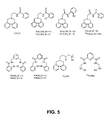
- FIG. 5 shows structures of several preferred (designed) carboxamido ligands of the present invention.
- Various substituents on the phenyl rings are contemplated in some embodiments.
- FIG. 6 shows structures of several metal nitrosyls with photolabile NO that have been synthesized by the inventor.
- FIG. 7(A) provides a plot of K NO values versus light power.
- FIG. 8(A) shows the structure of the designed ligand H 2 bpb.
- FIG. 8(B) shows the structure of the designed ligand H 2 Me 2 bqb.
- FIG. 8(C) provides a plot of the electronic absorption spectrum of [(bpb)Ru(NO)(Cl)] (broken line) and [(Me 2 bqb)Ru(NO)(Cl)] (solid line) in DMF. Both nitrosyls are photolabile.
- FIG. 9(B) shows conversion of reduced Mb to Mb-NO upon reaction with [(PaPy 3 )Ru(NO)](BF 4 ) 2 in aqueous solution upon exposure to low intensity UV light.
- FIG. 9(C) shows conversion of reduced cyt c oxidase to its NO-adduct via reaction with [(PaPy 3 )Ru(NO)](BF 4 ) 2 under low intensity UV light.
- Dash-dot line oxidized and dash line: reduced enzyme; dotted line: reduced enzyme plus [(PaPy 3 )Ru(NO)](BF 4 ) 2 under ordinary light (20 min); solid line: same mixture exposed to UV light for 30 s (Patra and Mascharak, Inorg Chem, 42:7363-7365, 2003, herein incorporated by reference).
- FIG. 10(A) provides a graph showing production of cGMP in rat aortic smooth muscle cells upon [(PaPy 3 )Ru(NO)](BF 4 ) 2 treatment, following exposure to light.
- FIG. 10(B) provides a graph showing relaxation of rat aortic rings upon exposure to [(PaPy 3 )Ru(NO)](BF 4 ) 2 and exposure to UV light. Note the relaxation effect when the Ru-drug concentration goes to 1 ⁇ 10 ⁇ 5 M. Although the control drug DEA/NO shows relaxation effect at 1 ⁇ 10 ⁇ 8 M, the Ru-drug exhibits the effect only under exposure to light.
- FIG. 11 provides a schematic of a device for depositing a metal nitrosyl/polymer at a specific location in a subject's body.
- FIG. 12(A) provides a mass spectrum of Na + [papain-SH] protein.
- FIG. 12(B) provides a mass spectrum of Na + [papain-SNO] protein showing the addition of 30 mass units indicative of S—NO bound formation.
- FIG. 12(C) provides a schematic of S-nitrosylation of papain by [(PaPy 3 )Mn(NO)] + .
- metal nitrosyls belong to a promising class of NO donors that can provide NO under various conditions including exposure to light
- 2,8,9 synthetic strategies that allow one to prepare designed photoactive inorganic NO donors that can be used under very mild illumination, have only recently been described.
- the inventor has synthesized a series of non-porphyrin metal nitrosyls (Patra et al., Angew Chem Int Ed, 41:2512-2515, 2002, and as described herein). These metal nitrosyls, derived from designed ligands, exhibit rapid release of NO in solution upon illumination with light of low-to-moderate intensity.
- the metal nitrosyls of the present invention are suitable for modulating the activities of specific enzymes.
- cyclic GIMP cyclic GIMP
- rat aortic rings display relaxation when treated with the metal nitrosyls of the present invention under light, while in the dark no such reaction is observed.
- some embodiments of the present invention provide photoactive metal nitrosyls for smooth muscle relaxation (and blood pressure control). Methods for testing this activity are known in the art (e.g., U.S. Pat. No. 5,631,284, herein incorporated by reference in its entirety).
- the NO donors of the present invention release NO under mild conditions when triggered by light.
- sudden surges of NO can cause cell death, the use of the metal nitrosyls in photodynamic therapy for treatment of cancer is contemplated.
- the NO donors of the present invention were designed on the basis of several key principles, and as such these principles can be applied to various synthetic protocols for production of photoactive NO donors.
- the metal nitrosyls described herein are soluble in water, alcohols and solvents such as acetonitrile and DMF, and hence their delivery to biological systems can be altered with ease. Since one can move the absorption maximum of a specific metal nitrosyl by altering the nature of the ligand around the metal as described in more detail below, the wavelength dependence of these NO donors can be controlled by synthetic manipulations of the ligand that is bound to the metal (and which also binds NO).
- the non-porphyrin metal nitrosyls described herein are suitable for use as NO donor under mild conditions.
- nitrosyls with these metal ions in +2 and +4 oxidation states have also been isolated, such that complexes comprising metals in these oxidation states are also contemplated.
- Metals other than iron, manganese and ruthenium may also be used (preferably transition metals). Preferred metals form a complex, which exhibits sufficient stability and photolability of an NO ligand to be useful for one or more of the purposes described herein. Nitrosyl complexes having more than one metal center are also contemplated.
- the ligands according to preferred embodiments as disclosed herein generally have one or more carboxamido nitrogens (N amido is abbreviated as N a ).
- N amido is abbreviated as N a ).
- a stabilized M(III) center resists total internal transfer of the single electron of NO to iron and helps to keep the equilibrium 1 more on the left hand side of the reaction shown in FIG. 3 . NO labilization then results from population of a dissociative excited state. Also, a high reduction potential of the M(III) center allows the metal complex to survive in presence of reductants.
- M(III) center is in low spin to aid in resisting ligand dissociation subsequent to NO loss upon illumination. It is known that reduction and subsequent ligand loss results in the cyanide toxicity and Prussian blue (and other precipitate) formation in case of nitroprusside (SNP) therapy. 8g Complexes having polydentate strong-field ligands (hence low spin) with high reduction potentials, such as certain complexes according to preferred embodiments herein, generally avoid such problems. Laboratory results have shown that a combination of carboxamido nitrogens and thiolato sulfurs (or ring nitrogens) give rise to low spin M(III) complexes, while incorporation of one or two phenolato oxygens results in high spin species. 10
- a strong trans-labilizing group (preferably negatively charged) occupying a position trans to a bound NO molecule results in enhanced photolability of NO in the complex.
- the presence of this negative charge discourages transfer of the single electron of NO to the metal center and once again the equilibrium stays on the left.
- the ligands of FIG. 3 all provide such a negatively charged donor trans to the bound NO in the resulting complexes.
- the only exception is set c in which two NO molecules are trans to each other. This particular set demonstrates the impact of the negative charge since NO is a strong translabilizing yet neutral ligand and hence is different from the thiolato S and phenolato O donors.
- Ligands in accordance with the disclosure herein include those having the structures shown in FIG. 4 as Formulae I-V.
- R 1 is either hydrogen or alkyl.
- R 4 is an electron-withdrawing group.
- R 5 is selected from N, C—OH, C—SH, C—OR 1 , and C—SR 1 , while R 6 and R 6′ are ⁇ O and H, provided that when R 6 is ⁇ O, R 6′ is H, and when R 6 is H, R 6′ is ⁇ O.
- Pharmaceutically acceptable salts, solvates or prodrug derivatives of the foregoing compounds are also presently contemplated.
- FIG. 5 Some pentadentate and tetradentate ligands used in accordance with preferred embodiments are shown in FIG. 5 .
- one or more carbons and/or nitrogens may be substituted with atoms or groups other than H, preferably methyl or other lower alkyl, methoxy or other alkoxy, nitro, and other, preferably electron withdrawing, groups.
- the ligands of FIGS. 4 and 5 having fused rings may be modified to change the conjugation so as to move ⁇ max to a desired wavelength. Note that in the ligands shown, it is also possible to switch the relative positions of the nitrogen and keto portions of the carboxamido group.
- These polydentate ligands have one or more built-in carboxamide groups (except for Py 2 PSH) to ensure low spin metal complexes, preferably having relatively high reduction potentials (Hs denote dissociable amide, phenolic and thiolate proton(s) in each abbreviation).
- Hs denote dissociable amide, phenolic and thiolate proton(s) in each abbreviation.
- These polydentate ligands help resist formation of multiple [ML n L′ m (solv)] species in solution as is the case with nitroprusside (SNP).
- SNP nitroprusside
- most of the metal complexes of these ligands are soluble in water and yet do not form oxo- and hydroxo-bridged polymeric products particularly in case of the iron complexes.
- the pentadentate ligands like PaPy 3 H and Py 2 PSH allow formation of [(L)M(NO] n+ or [(L)M(NO] n ⁇ species with different donor centers trans to NO. These ligands also give rise to complexes with different ring sizes and different extent of conjugation (compare PaPy 3 H and PcPy 3 H). Also, the spin states and redox potentials of the metal centers in the resulting metal complexes with such ligands vary to a great extent as do their electronic absorption spectra. These flexibilities allow one to study the effects of such variations on NO photolability, and accordingly to alter the NO photolability as desired.
- the tetradentate ligands like PaBOH 4 and PcBSH 4 have been designed to afford [(L)M(X)(NO] n ⁇ species. In these types of nitrosyls, one can vary the fifth ligand X and check the effect of the trans ligand on NO photolability quite easily.
- nitrosyls like [Fe(PaPy 3 )(NO)](CIO 4 ) 2 and [Mn(PaPy 3 )(NO)](BF 4 ) 2 are converted into the corresponding solvato species [M(PaPy 3 )(solv)] 2+ following NO loss.
- Clean isosbestic points in the multiple trace spectra indicate that the [M(PaPy 3 )(NO)] 2+ ⁇ [M(PaPy 3 )(solv)] 2+ transformation is likely devoid of other intermediates.
- the inventive metal nitrosyls do not suffer from any significant back reaction (e.g., NO recombination) since the metal site, preferably a M 3+ site, often prefers solvents such as MeCN and H 2 O as the sixth ligand over NO.
- Preliminary actinometric measurements have afforded a quantum yield of 0.12 for the light reaction of [Ru(PaPy 3 )(NO)](BF 4 ) 2 in water.
- Inorganic NO donors known in the art require either high power laser light or 500 xenon arc lamp for NO release.
- the metal nitrosyls of the present invention release NO upon illumination with low power light, including less than 100 W, 60 W, or 50 W, and also with less exotic sources of light, such as a tungsten lamp, although laser, halogen and other sources may also be used.
- ligands such as those illustrated in FIGS. 4 and 5
- ligands make it possible to synthesize a series of metal nitrosyls that exhibit absorption maxima at different wavelengths (preferably lying in the region from about 900 nm to about 350 nm, including about 850 nm, 800 nm, 750 nm, 700 nm, 650 nm, 600 nm, 550 nm, 500 nm, 450 nm and 400 nm).
- Complexes having absorption maxima at wavelengths above and below these values, and at any of the values between the specific numbers noted above are also contemplated.
- the present invention provides a collection of non-porphyrin NO donors that can be activated with light of various wavelengths.
- the systematic approach of the present invention allows one to alter the ligand frame to bring the absorption maximum ( ⁇ max ) to any desired region and test the photolability of the bound NO.
- NO donors that release NO upon illumination in the visible range.
- the following example demonstrates that minor alterations move ⁇ max of these metal nitrosyls from UV to the visible region.
- the complex [Ru(bpb)(NO)(Cl)] (derived from the designed ligand H 2 bpb) exhibits its ⁇ max in MeCN at 380 nm.
- the complex [Ru(Me 2 bqb)(NO)(Cl)] (derived from the designed ligand H 2 Me 2 bqb) has been synthesized.
- the new ligand H 2 Me 2 bqb contains quinaldic acid moiety in place of picolinic acid moiety in the bpb ligand.
- This change in the ligand frame causes a shift in the ⁇ max from 380 nm (in case of complex [Ru(bpb)(NO)(Cl)]) to 455 nm (in case of [Ru(Me 2 bqb)(NO)(Cl)]), as shown in FIG. 8C .
- 9,10-diaminophenanthrene is used instead of o-diaminobenzene to add more conjugation in the ligand system. It is contemplated that such an alteration is suitable for moving the ⁇ max of the resulting ruthenium nitrosyl further into the visible region (additional details are provided in Patra et al., Inorg Chem, 12:4487-4495, 2004, herein incorporated by reference).
- Binding of NO to Myoglobin (Mb) and Hemoglobin (Hb), a process that regulates a variety of biological responses including blood pressure regulation and platelet aggregation is well known in the art. Inhibition of heme proteins such as cytochrome c oxidase and non-heme proteins such as lipoxygenase by NO has also been studied. It is now known that binding of NO to cytochrome c oxidase modulates mitochondrial respiration, while 15-lipoxygenase catalytically consumes NO and impairs activation of guanylate cyclase. In all such studies, both NO gas and NO donors such as GTN and GSNO have been employed.
- the present set of nitrosyls as disclosed herein can be used as novel NO donors having one or more attractive properties.
- One property is that the delivery of NO and thus the nitrosylation reaction, can be controlled and triggered at ease by light exposure at selected frequencies, chosen from among a wide range of possible wavelengths depending upon ligand choice and design.
- the nitrosylating agent is a solid, it can be measured easily for stoichiometric studies, unlike NO gas.
- nitrosylation complexes as are delivered or administered and then activated by light to cause release of NO.
- a pharmaceutically effective amount of a complex is delivered or administered and then activated by application of light corresponding to the absorption maximum required for efficient NO release by the complex of interest.
- the delivery rate of NO is controlled by the duration, intensity, and/or frequency of light delivered, as well as by the amount of complex present.
- the control of the spatial component of NO delivery is effected by site-specific delivery of the complex and/or by site-specific delivery of the activating light, in some embodiments.
- Site-specific delivery of at least one complex is accomplished by direct injection or application, such as by a syringe, catheter, transdermal patch, topical application, endoscopic application or implantation, as well as by other means such as those known in the art.
- Site-specific delivery of light is most easily accomplished by directing the light to a specific region of the body whether externally by directing illumination of an external source to a part of the body, or internally by use of catheter-based, endoscopic, and/or fiber-optic sources, as are well known in the art. Fully or partially implanted temporary, permanent or semi-permanent light sources, such as may be made using fiber optics or other sources, are also contemplated. Site-specific light delivery is also done by masking or shading areas outside of a target area.
- Light for activation may be of any variety and from any kind of source, including generally monochromatic light, full spectrum light, and/or light having a specific collection of wavelengths or one or more portions of the spectrum, and may come from a laser, LED, incandescent source, or any source as is known in the art.
- Site-specific delivery of a complex may also be done by implanting or administering a device that has been coated or impregnated with a material comprising a complex.
- a vascular stent having a coating comprising a complex may be implanted in a blood vessel, or a device such as a seed, capsule, or packet comprising a complex may be implanted or delivered to a site within the body, such as a tumor or organ.
- the metal nitrosyls derived from ligands with vinyl benzene side arm (R 4 n vinyl benzene in FIG.
- a catheter may be fitted with a tip or other portion comprising a complex, or be used in combination with a separate element, such as a guidewire comprising a complex, which can be used in combination with a light source (external or internal) to effect site-specific delivery of NO.
- a catheter having ports or pores through which a fluid may be expressed may also be used to deliver a complex.
- the foregoing methods of delivering NO may be used to treat any condition, disease, or ailment for which NO has therapeutic value.
- delivery of NO to smooth muscle results in relaxation of that smooth muscle. If the smooth muscle is in a blood vessel, such as an artery, relaxation of the muscle will result in vasodilation and a reduction in blood pressure.
- the relaxation of smooth muscle is the result of NO release triggered by light activation, and results in the lowering of blood pressure in a mammal when the smooth muscle comprises a blood vessel, such as an artery, of the mammal.
- the vasodilative properties of NO delivered via a complex are also useful for treating sexual dysfunction, including erectile dysfunction.
- NO is well known as a toxic material, and thus delivery of NO may also be used to kill cells, including tumors, pre-cancerous tissue, and other undesirable tissues.
- Therapeutic applications employing the metal nitrosyl complexes according to preferred embodiments disclosed herein may use formulations such as solutions or suspensions, or the complexes may be utilized in compositions such as tablets, capsules or elixirs for oral administration, suppositories, sterile solutions or suspensions for injectable or parenteral administration, and the like, or incorporated into shaped articles.
- Subjects in need of treatment (typically mammalian) using the compounds according to the present disclosure can be administered dosages that will provide therapeutic efficacy.
- the dose and method of administration will vary from subject to subject and may be dependent upon such factors as sex, weight, diet, concurrent medication, overall clinical condition, the particular compounds employed, the specific use for which these compounds are employed, and other factors which those skilled in the medical arts will recognize.
- Formulations including the complexes disclosed herein are prepared for storage or administration by mixing the complex, or a pharmaceutically acceptable salt, solvate or prodrug thereof, having a desired degree of purity with physiologically acceptable carriers, excipients, stabilizers etc., and may be provided in sustained release or timed release formulations.
- Acceptable carriers or diluents for therapeutic use are well known in the pharmaceutical field, and are described, for example, in Remington's Pharmaceutical Sciences, Mack Publishing Co., (A. R. Gennaro edit. 1985).
- Such materials are nontoxic to the recipients at the dosages and concentrations employed, and include buffers such as phosphate, citrate, acetate and other organic acid salts, antioxidants such as ascorbic acid, low molecular weight (less than about ten residues) peptides such as polyarginine, proteins, such as serum albumin, gelatin, or immunoglobulins, hydrophilic polymers such as polyvinylpyrrolidinone, amino acids such as glycine, glutamic acid, aspartic acid, or arginine, monosaccharides, disaccharides, and other carbohydrates including cellulose or its derivatives, glucose, mannose or dextrins, chelating agents such as EDTA, sugar alcohols such as mannitol or sorbitol, counter ions such as sodium and/or nonionic surfactants such as Tween, Pluronics or polyethyleneglycol.
- buffers such as phosphate, citrate, acetate and other organic acid salts
- antioxidants such as
- Dosage formulations of the present compounds to be used for parenteral administration are preferably sterile. Sterility is readily accomplished by filtration through sterile membranes such as 0.2 micron membranes, or by other conventional methods known to those skilled in the art. Formulations are preferably stored in lyophilized form or as an aqueous solution. The pH of the preparations fall preferably between 3 and 11, including from 5 to 9, and from 7 to 8. It will be understood that use of certain of the foregoing excipients, carriers, or stabilizers will result in the formation of cyclic polypeptide salts.
- While the preferred route of administration is by injection, other methods of administration are also anticipated such as intravenously (bolus and/or infusion), subcutaneously, intramuscularly, colonically, rectally, nasally or intraperitoneally, employing a variety of dosage forms such as suppositories, implanted pellets or small cylinders, aerosols, oral dosage formulations and topical formulations such as ointments, drops and dermal patches.
- dosage forms such as suppositories, implanted pellets or small cylinders, aerosols, oral dosage formulations and topical formulations such as ointments, drops and dermal patches.
- the compounds according to the present disclosure are desirably incorporated into shaped articles such as implants, which may employ inert materials such as biodegradable polymers or synthetic silicones, for example, Silastic, silicone rubber or other polymers commercially available.
- the complexes according to the present disclosure may also be administered in the form of liposome delivery systems, such as small unilamellar vesicles, large unilamellar vesicles and multilamellar vesicles.
- Liposomes can be formed from a variety of lipids, such as cholesterol, stearylamine or phosphatidylcholines.
- the complexes according to the present disclosure may also be delivered by the use of antibodies, antibody fragments, growth factors, hormones, or other targeting moieties, to which the compound molecules are coupled.
- the complexes may also be coupled with suitable polymers as targetable drug carriers.
- suitable polymers can include polyvinylpyrrolidinone, pyran copolymer, polyhydroxy-propyl-methacrylamide-phenol, polyhydroxyethyl-aspartamide-phenol, or polyethyleneoxide-polylysine substituted with palmitoyl residues.
- the complexes disclosed herein may be coupled to a class of biodegradable polymers useful in achieving controlled release of a drug, for example polylactic acid, polyglycolic acid, copolymers of polylactic and polyglycolic acid, polyepsilon caprolactone, polyhydroxy butyric acid, polyorthoesters, polyacetals, polydihydropyrans, polycyanoacrylates and cross linked or amphipathic block copolymers of hydrogels.
- Polymers and semipermeable polymer matrices may be formed into shaped articles, such as valves, stents, tubing, prostheses and the like.
- Therapeutic liquid formulations generally are placed into a container having a sterile access port, for example, an intravenous solution bag or vial having a stopper pierceable by hypodermic injection needle, or, in some cases, they may be administered orally.
- a sterile access port for example, an intravenous solution bag or vial having a stopper pierceable by hypodermic injection needle, or, in some cases, they may be administered orally.
- Therapeutically effective dosages may be determined by either in vitro or in vivo methods. For each particular compound presently disclosed, individual determinations may be made to determine a suitable dosage.
- the range of therapeutically effective dosages will naturally be influenced by the route of administration, the therapeutic objectives, and the condition of the patient. For injection by hypodermic needle, it may be assumed the dosage is delivered into the body's fluids, but it often is delivered to a target tissue by use of a catheter or endoscopic delivery system.
- the absorption efficiency should be determined for each compound by methods well known in pharmacology. Accordingly, it may be necessary for the therapist to titer the dosage and modify the route of administration as required to obtain a desired therapeutic effect.
- the determination of effective dosage levels that is, the dosage levels necessary to achieve the desired result, will be within the abilities of one skilled in the art. Typically, applications of the complex are commenced at lower dosage levels, with dosage levels being increased until the desired effect is achieved.
- a typical dosage might range from about 0.001 mg/kg to about 1000 mg/kg, preferably from about 0.01 mg/kg to about 100 mg/kg, and more preferably from about 0.10 mg/kg to about 20 mg/kg.
- the complexes disclosed herein may be administered several times daily, and other dosage regimens may also be useful.
- a complex or mixture of complexes as the free acid or base form or as a pharmaceutically acceptable salt, is compounded with one or more of a physiologically acceptable vehicle, carrier, excipient, binder, preservative, stabilizer, dye, flavor etc., as called for by accepted pharmaceutical practice.
- a physiologically acceptable vehicle carrier, excipient, binder, preservative, stabilizer, dye, flavor etc.
- the amount of active ingredient in these complexes is such that a suitable dosage in the range indicated is obtained.
- Typical adjuvants which may be incorporated into tablets, capsules and the like are a binder such as acacia, corn starch or gelatin, and excipient such as microcrystalline cellulose, a disintegrating agent like corn starch or alginic acid, a lubricant such as magnesium stearate, a sweetening agent such as sucrose or lactose, or a flavoring agent.
- a dosage form is a capsule, in addition to the above materials it may also contain a liquid carrier such as water, saline, a fatty oil.
- Other materials of various types may be used as coatings or as modifiers of the physical form of the dosage unit.
- Sterile compositions for injection can be formulated according to conventional pharmaceutical practice.
- dissolution or suspension of the active compound in a vehicle such as an oil or a synthetic fatty vehicle like ethyl oleate, or into a liposome may be desired.
- a vehicle such as an oil or a synthetic fatty vehicle like ethyl oleate
- Buffers, preservatives, antioxidants and the like can be incorporated according to accepted pharmaceutical practice.
- the complexes may be used alone or in combination, or in combination with other therapeutic or diagnostic agents.
- the complexes disclosed herein may be co-administered along with other compounds or complexes.
- the complexes disclosed herein can be utilized in vivo, ordinarily in mammals such as primates, such as humans, sheep, horses, cattle, pigs, dogs, cats, rats and mice, or in vitro.
- complexes may also be used in much the same manner in diagnostic applications.
- a complex may be prepared using labeled NO which would then allow for delivery of labeled NO for diagnostic or scientific study of how NO is used in a cell, tissue, or body.
- alkyl refers to saturated and unsaturated aliphatic groups including straight-chain and branched-chain and cyclic groups, or any combination thereof, having the number of carbon atoms specified, or if no number is specified, having up to 12 carbon atoms, but preferably having one to three carbon atoms. Cyclic alkyls typically comprise a monocyclic aliphatic ring having 3 to 12 carbon atoms and preferably 3 to 7 carbon atoms. The cyclic alkyls of this invention may include one or more nitrogen atoms.
- “alkyl” refers to straight-chain and branched-chain groups; more preferably saturated straight-chain groups.
- alkoxy refers to a group having the formula —OR where R is alkyl, as defined above.
- aryl refers to an unsubstituted or substituted aromatic ring, substituted with one or more substituents selected from alkyl, alkoxy, nitro, cyano, halo, hydroxy, mercapto, thioalkoxy, carboxyl, amino, alkyl-substituted amino, including but not limited to carbocyclic aryl, heterocyclic aryl, and biaryl groups and the like, all of which may be optionally substituted.
- Preferred aryl groups include phenyl, naphthyl, biphenyl, phenanthrenyl, naphthacenyl, and other aromatic heterocyclics.
- heteroaryl refers to any aryl group, containing from one to four heteroatoms, selected from the group consisting of nitrogen, oxygen and sulfur.
- prodrug derivatives refers to compounds of the invention that have metabolically cleavable groups and become, by sovolysis or under physiological conditions, compounds of the invention that are pharmaceutically-active in vivo (See Bundgard, H., “Design of Prodrugs”, pp. 7-9, 21-24, Elsevier, Amsterdam, 1985).
- the compounds of this invention carbon atoms bonded to four non-identical substituents are asymmetric. Accordingly, the compounds may exist as stereoisomers, including enantiomers and diastereomers.
- the compounds of this invention having one or more centers of asymmetry may exist as enantiomers or mixtures thereof (e.g. racemates).
- compounds that have two or more asymmetric centers can exist as diastereomers.
- the syntheses described herein may employ racemates, enantiomers or diastereomers as starting materials or intermediates. Diastereomeric products resulting from such syntheses may be separated by chromatographic or crystallization methods, or by other methods known in the art. Likewise, enantiomeric product mixtures may be separated using methods known in the art (See for example, Jacqes, Collet and Wilen “Enantiomers, Racemates and Resolutions,” Krieger Publishing Co., Malabar, Fla. 1991).
- the terms “radiant power” and “radiant flux” refer to radiant energy per unit time, as measured in watts.
- the term “low radiant power” corresponds to less than 500 Watts, preferably less than 250 watts.
- the term “low radiant power” corresponds to less than 100 mWatts, preferably less than 50 mWatts.
- visible light refers to electromagnetic radiation of a wavelength that is can be seen or detected by the human eye. As used herein, the term “visible” light refers to light with a wavelength from 380 to 780 nm.
- UV light refers to electromagnetic radiation of a wavelength shorter than that of the visible region, but longer than that of soft X-rays.
- long wave UVA light or “blacklight” refer to light with a wavelength in the range of 380-315 nm.
- intermediate wave UVB light refers to light with a wavelength in the range of 315-280 nm.
- short wave UVC light or “germicidal” light refer to light with a wavelength in the range of 280-10 nm.
- porphyrin refers to a heterocyclic macrocycle made from four pyrrole subunits linked on opposite sides through four methine bridges. Porphyrins readily combine with metals coordinating them in the central cavity. Some iron containing porphyrins are termed “hemes.”
- metal nitrosyl refers to metal complexes containing one or more NO as ligands.
- the term “pentadentate ligand” refers to organic molecules that bind transition metal ions at five coordination positions via donor atoms such as O, N, S and P.
- the term “tetradentate ligand” as used herein refers to organic molecules that bind transition metal ions at four coordination positions via donor atoms such as O, N, S, and P.
- carboxylate refers to a C( ⁇ O)—NH2 moiety.
- pyridine ring refers to a pyridyl group attached to the ligand frame.
- Soluble guanyl cyclase (sGC) activity was determined by measuring the conversion of GTP to cGMP in the absence and presence of the NO-donors of the present invention (Murad et al., “Guanylate Cyclase: Activation by Azide, Nitro Compounds, Nitric Oxide, and Hydroxyl Radical and Inhibition by Hemoglobin and Myoglobin,” in Adv. Cyclic Nucleo. Res , George and Ignarro (eds.), Raven Press: New York, Vol. 9, 145-158, 1978).
- reaction buffer 50 mM triethanolamine-HCl, pH 7.4
- IBMX 1 mM
- phosphocreatine 5 mM
- creatine kinase 5 U/mL
- MgCl 2 4 mM
- BSA 1 mG/mL
- dithiothreitol 1 mM
- GTP 2 mM
- Tension was initially set at 1 g and reset at intervals following an equilibrium period of 1 hour during which time fresh Krebs-bicarbonate buffer was replaced every 15-20 minutes. After equilibrium, the rings were primed with KCl (4.8 ⁇ 10 ⁇ 2 M) before a supramaximal concentration of phenylephrine (PE; 10 ⁇ 6 M) was added. Once this response had stabilized, acetylcholine (ACH; 10 ⁇ 6 M) was added to the bath to assess the integrity of endothelium of WT vessels. If the contractions to PE were not maintained, or relaxations greater than 50% of the PE-induced tone to ACH were not observed, the tissues were discarded.
- Tissues were then washed for 30 minutes (by addition of fresh Krebs-bicarbonate buffer at 15 minutes intervals) after which cumulative concentrations of PE (10 ⁇ 9 -10 ⁇ 6 M) were added to the organ bath.
- the tissues were then washed over 60 minutes to restore basal tone before contracting to approximately 80% of the maximum PE-induced response.
- cumulative concentration-response curves to the NO-donors were constructed in the presence and absence of light (foil-covered organ baths versus fiber-optic halogen lamp [250 W]) and the soluble cGMP inhibitor ODQ (5 mM).
- Rat aortic rings precontracted with phenylephrine exhibited relaxation when the tissue was exposed to UV light in the presence of [(PaPy 3 )Ru(NO)](BF 4 ) 2 .
- the relaxation was comparable to that observed upon treatment of the tissue with a conventional NO donor (DEA/NO) as shown in FIG. 10B .
- Significant contraction was observed with a dose of 1 ⁇ 10 ⁇ 5 M of the Ru nitrosyl. When the light was turned off, the tissue contracted ⁇ 25%. When the light was turned on again, the tissue relaxed to its final value. This illustrates very nicely the light dependence of NO release from the metal nitrosyls of the present invention, as well as the associated tissue relaxation.
- PDT photodynamic therapy
- ROS reactive oxygen species
- PHOTOFRIN a porfimer sodium composition available from Axcan Scandipharm, Inc.
- Singlet oxygen is however not the only agent for such selective cell kill.
- the production of endogenous NO has recently been shown to be associated with apoptosis of tumorigenic cells (Xu et al., Cell Res, 12:311-320, 2002; and Wink et al., Carcinogenesis, 19:711-721, 1998).
- thermal NO-donors however is undesirable due to various systemic side effects.
- confining the photoactive NO-donors to malignant tissues (solid tumors) and then triggering NO-release by illumination is contemplated to result in a high (pathological) concentration of NO at specific target without adversely affecting other tissues.
- the metal nitrosyls of the present invention are triggered to release NO upon exposure to light of selected wavelengths (including low intensity light)
- the NO donors described herein are contemplated to be useful in photodynamic therapy for tumors.
- the NO donors are particularly suitable for use in cases of solid localized tumors, where one can inject the metal nitrosyls and expose the malignant locales to low-intensity light of selected wavelength.
- nitrosyl-polymer hybrid pellets can be implanted in tumors (or placed next to the tumor by the use of endoscopes and catheters).
- Placement of the catheter containing the nitrosyl-polymer hybrid is expected to be comparatively simple since a small amount of NO release from the pellet (via low illumination during insertion) is contemplated to increase the hemocompatibility of the device (high thromboresistivity) (Keefer, Nat Mater, 2:357-358, 2003).
- the physician triggers NO release at the target area with the help of light (via a fiber optic cable).
- the sudden increase in NO concentration then leads to destruction of the cancer cells with minimal side effect(s). So far, this kind of local generation of NO has not been possible with the conventional NO-donors.
- the light is provided via a fiber optic cable, light penetration (the common limitation of photochemotherapeutics) should not be a problem.
- the localized use of polymer-supported metal nitrosyls of the present invention should also eliminate problems associated with toxicity.
- NO-donors are immobilized in a polymer matrix (such as that disclosed in U.S. Pat. No. 6,656,217, herein incorporated by reference).
- the nitrosyl-polymer hybrid (in the form of pellets) is connected at the end of a catheter and placed in a desired position in a subject's body with the aid of an endoscope.
- a coaxial fiber optic line is placed alongside the catheter for delivering light for subsequent release of a sudden burst of NO under control of a clinician (e.g., physician, nurse, etc.).
- a clinician e.g., physician, nurse, etc.
- Twice-crystallized papain was activated by stirring the enzyme in 50 mM phosphate buffer (pH 6.2) containing 10 mM dithiothreitol (DTT) for 24 h. The solution was then passed through a Pharmacia 20 mL desalting column equipped with a BioRad FPLC absorbance/electrical-conducting detector at 4° C. The activated protein (devoid of DTT) eluted from the column in 2 minutes at a flow rate of 2 mL/min, and was subsequently lyophilized and stored at ⁇ 20° C.
- DTT dithiothreitol
- Papain activity was determined spectrophotometrically at 410 nm by monitoring the formation of p-nitroaniline from the substrate N ⁇ -Benzoyl-l-arginine-p-nitroanilide (l-BApNA).
- a 1.5 mM stock solution of l-BApNA was prepared in 50 mM phosphate buffer (pH 6.2, 1 mM EDTA, 0.1 M NaCl) and stored at room temperature.
- a 4.6 ⁇ M stock solution of active papain was also prepared in 50 mM phosphate buffer (pH 6.2, 1 mM EDTA, 0.1 M NaCl) and stored at 0° C.
- a freshly prepared 3.0 mM stock solution of 1 was prepared in 50 mM phosphate buffer (pH 6.2, 1 mM EDTA, 0.1 M NaCl) and stored in the dark.
- the concentrations of the substrate and enzyme were kept the same as above and the final concentration of [(PaPy 3 )Mn(NO)](ClO 4 ) was maintained at 0.167 mM.
- a 250 ⁇ L aliquot of active papain was added to 50 ⁇ L of [(PaPy 3 )Mn(NO)](ClO 4 ) and the mixture was exposed to a 50 W tungsten lamp for various time intervals (0 s-90 s). After each exposure, 350 ⁇ L of the substrate was added to the solution and the residual enzyme activity was monitored at 25° C.
- the protein was then injected into a Spectra-Physics UV 2000 HPLC setup with a Grace VYDAC reverse phase C4 column (10 ⁇ m particle size, 4.6 ⁇ 150 mm, 1 mL loop volume).
- the elution was carried out using the following gradient of H 2 O-MeCN: 95%:5% H 2 O:MeCN to 75%:35% H 2 O:MeCN in 5 min, then to 45%:55% H 2 O:MeCN in 60 min, and finally to 5%:95% in 3 min.
- the retention time of both active papain and papain-SNO was 40.7 min under these conditions.
- Electrospray ionization mass spectrometry was carried out on a Waters Micromass ZMD mass spectrometer. Protein samples collected from the HPLC were injected directly into the Z-spray source of the MS at a flow rate of 20 ⁇ L/min. The instrumental parameters used were as follows: cone voltage 2.80 kV, capillary voltage 30 V, multiplier 550V, desolvation temp 110° C., and cone block temp 150° C. The mass spectra were deconvoluted using MaxEnt 1 software (Waters Micromass). Results
- the difference of 23 m/z corresponds to a Na+ ion that associates with papain in our mass spectrum.
- Identification of the papain-SNO adduct clearly demonstrates that inhibition of papain by [(PaPy 3 )Mn(NO)](ClO 4 ) under light occurs due to the nitrosylation of the
Landscapes
- Chemical & Material Sciences (AREA)
- Organic Chemistry (AREA)
- Health & Medical Sciences (AREA)
- Life Sciences & Earth Sciences (AREA)
- Public Health (AREA)
- Medicinal Chemistry (AREA)
- Pharmacology & Pharmacy (AREA)
- Veterinary Medicine (AREA)
- Animal Behavior & Ethology (AREA)
- General Health & Medical Sciences (AREA)
- Molecular Biology (AREA)
- Epidemiology (AREA)
- Biochemistry (AREA)
- Chemical Kinetics & Catalysis (AREA)
- General Chemical & Material Sciences (AREA)
- Nuclear Medicine, Radiotherapy & Molecular Imaging (AREA)
- Pharmaceuticals Containing Other Organic And Inorganic Compounds (AREA)
- Medicines That Contain Protein Lipid Enzymes And Other Medicines (AREA)
Abstract
Description
cGMP Generation in Cultured Rat Aortic Smooth Muscle Cells
Results
- 1. Methods in Nitric Oxide Research; Feelisch M., Stamler, J. S., Eds.; John Wiley and Sons; Chichester, England, 1996 and references therein.
- 2. Mechanistic Aspects of the Reactions of Nitric oxide with Transition-Metal Complexes. Ford, P. C.; Lorkovic, I. M. Chem. Rev. 2002, 102, 993 and references therein.
- 3. Nitric Oxide: Biology and Pathobiology, Ignarro, L. J., Ed.; Academic press: San Diego, 2000.
- 4. Nitric Oxide and Infection; Fang, F. C., Ed.; Kluwer Academic/Plenum Publishers: New York, 1999.
- 5. NO News is Good news. Koshland, Jr. D. E. Science, 1992, 258, 1862.
- 6. (a) Mechanism of Free-Radical Generation by Nitric Oxide Synthase. Rosen, G. M.; Tsai, P.; Pou, S. Chem. Rev. 2002, 102, 1191. (b) Marietta, M. A.; Hurshman, A. R.; Rusche, K. M. Curr. Opin. Chem. Biol. 1998, 2, 656. (c) The Surprising Life of Nitric Oxide. Feldman, P. L.; Griffith, O. W.; Stuehr, D. J. Chem Eng. News, 1993, 71, 26.
- 7. Nitric oxide mediated Photo-induced Cell Death in Human Malignant Cells. Ali, S. M.; Olivo, M. Internat. J. Oncology 2003, 22, 751.
- 8. (a) Nitric Oxide Donors: Chemical Activities and Biological Applications. Wang, P. G.; Xian, M.; Tang, X.; Wu, X.; Wen, Z.; Cai, T.; Janczuk, A. J. Chem. Rev. 2002, 102, 1091 and references therein. (b) Non-heme iron Nitrosyls in Biology. Butler, A. R.; Megson, I. L. Chem. Rev. 2002, 102, 1155. (c) Chemistry of the Nitric Oxide-Releasing Diazeniumdiolate (“Nitrosohydroxylamine”) Functional group and Its Oxygen-Substituted Derivatives. Hrabie, J. A.; Keefer, L. K. Chem. Rev. 2002, 102, 1135. (d) New Chemical and Biological Aspects of S-Nitrosothiols. Wang, K.; Zhang, W.; Xian, M.; Hou, Y.-C.; Chen, X.-C.; Cheng, J.-P.; Wang, P. G. Curr. Med. Chem. 2000, 7, 821. (e) Current Trends in the Development of Nitric Oxide Donors. Hou, Y.-C.; Janczuk, A.; Wang, P. G. Curr. Pharm.
Design 1999, 5, 417. (f) Nitric Oxide Complexes of Metalloporphyrins: An Overview of Some Mechanistic Studies. Hoshino, M.; Layerman, L.; Ford, P. C. Coord. Chem. Rev. 1999, 187, 75. (g) Chemistry Relevant to the Biological Effects of Nitric Oxide and Metallonitrosyls. Clarke, M. J.; Gaul, J. B. Struct. Bonding 1993, 81, 147. - 9. Light and Metal Complexes in Medicine. Stochel, G.; Wanat, A.; Kulis, E.; Stasicka, Z. Coord. Chem. Rev. 1998, 171, 203.
- 10. (a) Coordination of Carboxamido Nitrogen to Tervalent Iron: Insight into a New Chapter of Iron Chemistry. Marlin, D. S.; Mascharak, P. K. Chem Soc. Rev. 2000, 29, 69-74. (b) Spin States and Stability of Fe(III) Complexes of Ligands with Carboxamido Nitrogen and Phenolato Oxygen Donors. Marlin, D. S.; Olmstead, M. M.; Mascharak, P. K. Eur. J. Inorg. Chem. 2002, 859-865. (c) Chemistry of Iron(III) Complexes of N,N′-bis(2-hydroxyphenyl)pyridine-2,6-dicarboxamide: Seven-Coordinate Iron(III) Complexes Ligated to Deprotonated Carboxamido Nitrogens. Marlin, D. S.; Olmstead, M. M.; Mascharak, P. K. Inorg. Chim. Acta, 2002, 297, 106-114. (d) Carboxamido Nitrogens are Good Donors for Fe(III): Syntheses, Structures, and Properties of Two Low-Spin Nonmacrocyclic Iron(III) Complexes with Tetracarboxamido-N Coordination. Marlin, D. S.; Olmstead, M. M.; Mascharak, P. K. Inorg. Chem. 1999, 38, 3258-3260.
- 11. (a) The First Non-heme Iron(III) Complex with a Carboxamido Group that Exhibits Photolability of a Bound NO Ligand. Patra, A. K.; Afshar, R.; Olmstead, M. M.; Mascharak, P. K. Angew. Chem. Int. Ed. 2002, 41, 2512-2515. (b) Iron Nitrosyls of a Pentadentate Ligand Containing a Single Carboxamide Group: Syntheses, Structures, Electronic Properties and Photolability of NO. Patra, A. K.; Rowland, J. M.; Marlin, D. S.; Bill, E.; Olmstead, M. M.; Mascharak, P. K. Inorg. Chem. 2003, 42, 6812. (c) A Ruthenium Nitrosyl that rapidly Delivers NO to Proteins in Aqueous Solution Upon Exposure to UV Light. Patra, A. K.; Olmstead, M. M.; Mascharak, P. K. Inorg. Chem. 2003, 42, 7363. (d) Reactions of NO with Mn(II) and Mn(II) Center Coordinated to Carboxamido Nitrogen: Synthesis of a Manganese Nitrosyl with Photolabile NO. Ghosh, K.; Eroy-Reveles, A. A.; Avila, B.; Holman, T. R.; Olmstead, M. M.; Mascharak, P. K. Inorg. Chem. 2004, 43, 2988. (e) Photolabile Ruthenium Nitrosyls with Planar Dicarboxamide Tetradentate N4 Ligands: Effect of In-plane and Axial Ligand Strength on NO Release, Patra, A. K.; Rose, J. J.; Murphy, K.; Olmstead, M. M.; Mascharak, P. K. Inorg. Chem. In press.
- 12. Photochemistry of Metal Nitrosyl Complexes: Delivery of Nitric Oxide to Biological Targets. Ford, P. D.; Bourassa, J.; Miranda, K.; Lee, B.; Lorkovic, I.; Boggs, S.; Kudo, S.; Layerman, L. Coord. Chem. Rev. 1998, 171, 185.
- 13. (a) The History of Photodetection and Photodynamic Therapy. Ackroyd, R.; Kelty, C.; Brown, N.; Reed, M. Photochem. Photobiol. 2001, 74, 656. (b) Recent Advances in Photodynamic Therapy. Pandey, R. K.
J. Porphyrins Phthalocyanines 2000, 4, 368. - 14. (a) Photodynamic therapy in Oncology: Mechanisms and Clinical Use. Pass, H. I. J. natl. Cancer Inst. 1993, 85, 443. (b) Yearly review: Photochemotherapy of Cancer: Experimental Research. Moan J.; Berg, K. Photochem. Photobiol. 1992, 55, 931.
Claims (26)


Priority Applications (1)
| Application Number | Priority Date | Filing Date | Title |
|---|---|---|---|
| US13/039,794 US8247399B2 (en) | 2004-05-20 | 2011-03-03 | Photoactive metal nitrosyls for blood pressure regulation and cancer therapy |
Applications Claiming Priority (4)
| Application Number | Priority Date | Filing Date | Title |
|---|---|---|---|
| US57300504P | 2004-05-20 | 2004-05-20 | |
| US11/134,807 US7582623B2 (en) | 2004-05-20 | 2005-05-20 | Photoactive metal nitrosyls for blood pressure regulation and cancer therapy |
| US12/540,810 US8153620B2 (en) | 2004-05-20 | 2009-08-13 | Photoactive metal nitrosyls for blood pressure regulation and cancer therapy |
| US13/039,794 US8247399B2 (en) | 2004-05-20 | 2011-03-03 | Photoactive metal nitrosyls for blood pressure regulation and cancer therapy |
Related Parent Applications (1)
| Application Number | Title | Priority Date | Filing Date |
|---|---|---|---|
| US12/540,810 Continuation US8153620B2 (en) | 2004-05-20 | 2009-08-13 | Photoactive metal nitrosyls for blood pressure regulation and cancer therapy |
Publications (2)
| Publication Number | Publication Date |
|---|---|
| US20110152230A1 US20110152230A1 (en) | 2011-06-23 |
| US8247399B2 true US8247399B2 (en) | 2012-08-21 |
Family
ID=35426168
Family Applications (4)
| Application Number | Title | Priority Date | Filing Date |
|---|---|---|---|
| US11/134,807 Active 2028-04-30 US7582623B2 (en) | 2004-05-20 | 2005-05-20 | Photoactive metal nitrosyls for blood pressure regulation and cancer therapy |
| US12/540,810 Expired - Fee Related US8153620B2 (en) | 2004-05-20 | 2009-08-13 | Photoactive metal nitrosyls for blood pressure regulation and cancer therapy |
| US13/039,794 Expired - Fee Related US8247399B2 (en) | 2004-05-20 | 2011-03-03 | Photoactive metal nitrosyls for blood pressure regulation and cancer therapy |
| US13/420,299 Expired - Fee Related US8609843B2 (en) | 2004-05-20 | 2012-03-14 | Photoactive metal nitrosyls for blood pressure regulation and cancer therapy |
Family Applications Before (2)
| Application Number | Title | Priority Date | Filing Date |
|---|---|---|---|
| US11/134,807 Active 2028-04-30 US7582623B2 (en) | 2004-05-20 | 2005-05-20 | Photoactive metal nitrosyls for blood pressure regulation and cancer therapy |
| US12/540,810 Expired - Fee Related US8153620B2 (en) | 2004-05-20 | 2009-08-13 | Photoactive metal nitrosyls for blood pressure regulation and cancer therapy |
Family Applications After (1)
| Application Number | Title | Priority Date | Filing Date |
|---|---|---|---|
| US13/420,299 Expired - Fee Related US8609843B2 (en) | 2004-05-20 | 2012-03-14 | Photoactive metal nitrosyls for blood pressure regulation and cancer therapy |
Country Status (1)
| Country | Link |
|---|---|
| US (4) | US7582623B2 (en) |
Families Citing this family (34)
| Publication number | Priority date | Publication date | Assignee | Title |
|---|---|---|---|---|
| US7582623B2 (en) * | 2004-05-20 | 2009-09-01 | The Regents Of The University Of California | Photoactive metal nitrosyls for blood pressure regulation and cancer therapy |
| EP1888510A4 (en) | 2005-05-27 | 2013-01-16 | Univ North Carolina | NITRIC OXIDE-LIBERATING PARTICLES FOR NITRIC OXIDE THERAPY AND BIOMEDICAL APPLICATIONS |
| US20070219208A1 (en) * | 2006-02-27 | 2007-09-20 | Balaraman Kalyanaraman | Methods for Treating Cancer |
| US20080033412A1 (en) * | 2006-08-01 | 2008-02-07 | Harry Thomas Whelan | System and method for convergent light therapy having controllable dosimetry |
| US7862598B2 (en) | 2007-10-30 | 2011-01-04 | The Invention Science Fund I, Llc | Devices and systems that deliver nitric oxide |
| US20090110933A1 (en) * | 2007-10-30 | 2009-04-30 | Searete Llc, A Limited Liability Corporation Of The State Of Delaware | Systems and devices related to nitric oxide releasing materials |
| US7975699B2 (en) | 2007-10-30 | 2011-07-12 | The Invention Science Fund I, Llc | Condoms configured to facilitate release of nitric oxide |
| US8221690B2 (en) * | 2007-10-30 | 2012-07-17 | The Invention Science Fund I, Llc | Systems and devices that utilize photolyzable nitric oxide donors |
| US8642093B2 (en) | 2007-10-30 | 2014-02-04 | The Invention Science Fund I, Llc | Methods and systems for use of photolyzable nitric oxide donors |
| EP2148725A4 (en) * | 2007-05-11 | 2010-08-25 | Clarimedix | Visible light modulation of mitochondrial function in hypoxia and disease |
| US20090112193A1 (en) * | 2007-10-30 | 2009-04-30 | Searete Llc, A Limited Liability Corporation Of The State Of Delaware | Systems and devices that utilize photolyzable nitric oxide donors |
| US8349262B2 (en) | 2007-10-30 | 2013-01-08 | The Invention Science Fund I, Llc | Nitric oxide permeable housings |
| US20110182970A1 (en) * | 2007-10-30 | 2011-07-28 | Hyde Roderick A | Nitric oxide sensors and systems |
| US10080823B2 (en) * | 2007-10-30 | 2018-09-25 | Gearbox Llc | Substrates for nitric oxide releasing devices |
| US7897399B2 (en) | 2007-10-30 | 2011-03-01 | The Invention Science Fund I, Llc | Nitric oxide sensors and systems |
| US8877508B2 (en) | 2007-10-30 | 2014-11-04 | The Invention Science Fund I, Llc | Devices and systems that deliver nitric oxide |
| US8980332B2 (en) | 2007-10-30 | 2015-03-17 | The Invention Science Fund I, Llc | Methods and systems for use of photolyzable nitric oxide donors |
| WO2011022652A1 (en) | 2009-08-21 | 2011-02-24 | Novan, Inc. | Topical gels |
| BR112012003804B1 (en) | 2009-08-21 | 2019-02-19 | Novan, Inc. | Wound Dressing, Method to Form an Injury Dressing, and Wound Dressing Kit |
| CA2775397A1 (en) * | 2009-09-28 | 2011-03-31 | University Of Kentucky Research Foundation | Thiol-containing compounds for the removal of elements from contaminated milieu and methods of use |
| US8591876B2 (en) | 2010-12-15 | 2013-11-26 | Novan, Inc. | Methods of decreasing sebum production in the skin |
| ES2695173T3 (en) | 2011-02-28 | 2019-01-02 | Novan Inc | Silica particles modified with S-nitrosothiol that release nitric oxide and methods of manufacturing them |
| WO2015006309A1 (en) * | 2013-07-10 | 2015-01-15 | Christoph Scharf | Devices and methods for delivery of therapeutic energy |
| WO2015095840A1 (en) | 2013-12-20 | 2015-06-25 | Biomed Valley Discoveries, Inc. | Cancer treatments using combinations of cdk and erk inhibitors |
| WO2015095842A2 (en) | 2013-12-20 | 2015-06-25 | Biomed Valley Discoveries, Inc. | Methods and compositions for treating non-erk mapk pathway inhibitor-resistant cancers |
| US11007183B2 (en) | 2013-12-20 | 2021-05-18 | Biomed Valley Discoveries, Inc. | Cancer treatments using combinations of PI3K/Akt pathway and ERK inhibitors |
| US10668055B2 (en) | 2013-12-20 | 2020-06-02 | Biomed Valley Discoveries, Inc. | Cancer treatment using combinations of ERK and RAF inhibitors |
| EP4389225A3 (en) | 2013-12-20 | 2024-10-09 | Biomed Valley Discoveries, Inc. | Cancer treatments using combinations of type 2 mek and erk inhibitors |
| HK1244274A1 (en) | 2015-01-30 | 2018-08-03 | 生物医学谷探索股份有限公司 | Crystal form of C21H22CI2N4O2 |
| WO2016123581A1 (en) | 2015-01-30 | 2016-08-04 | Biomed Valley Discoveries, Inc. | Crystalline c21h22c12n4o2 malonate |
| US11771770B2 (en) | 2016-03-18 | 2023-10-03 | The George Washington University | Compositions for treatment of cancer, methods and systems for forming the same |
| DK3528856T3 (en) | 2016-10-18 | 2023-10-16 | Univ Marquette | Composite materials containing structural polymers and photoreactive nitrogen oxide releasing agents and uses thereof for wound dressings |
| US12239948B2 (en) | 2019-06-17 | 2025-03-04 | Marquette University | Materials based on natural pollen grains and uses thereof |
| JP7385122B2 (en) * | 2020-03-04 | 2023-11-22 | 国立大学法人 新潟大学 | Catalysts, electrodes, water decomposition methods and carbon dioxide decomposition methods |
Citations (3)
| Publication number | Priority date | Publication date | Assignee | Title |
|---|---|---|---|---|
| US5631284A (en) * | 1993-10-06 | 1997-05-20 | University Of British Columbia | Compositions and methods for relaxing smooth muscles |
| US6656217B1 (en) * | 1996-08-27 | 2003-12-02 | Novovascular, Inc. | Medical device coated with a polymer containing a nitric oxide releasing organometallic nitrosyl compound useful for the prevention of platelet aggregation |
| US7582623B2 (en) * | 2004-05-20 | 2009-09-01 | The Regents Of The University Of California | Photoactive metal nitrosyls for blood pressure regulation and cancer therapy |
-
2005
- 2005-05-20 US US11/134,807 patent/US7582623B2/en active Active
-
2009
- 2009-08-13 US US12/540,810 patent/US8153620B2/en not_active Expired - Fee Related
-
2011
- 2011-03-03 US US13/039,794 patent/US8247399B2/en not_active Expired - Fee Related
-
2012
- 2012-03-14 US US13/420,299 patent/US8609843B2/en not_active Expired - Fee Related
Patent Citations (4)
| Publication number | Priority date | Publication date | Assignee | Title |
|---|---|---|---|---|
| US5631284A (en) * | 1993-10-06 | 1997-05-20 | University Of British Columbia | Compositions and methods for relaxing smooth muscles |
| US6656217B1 (en) * | 1996-08-27 | 2003-12-02 | Novovascular, Inc. | Medical device coated with a polymer containing a nitric oxide releasing organometallic nitrosyl compound useful for the prevention of platelet aggregation |
| US7582623B2 (en) * | 2004-05-20 | 2009-09-01 | The Regents Of The University Of California | Photoactive metal nitrosyls for blood pressure regulation and cancer therapy |
| US8153620B2 (en) * | 2004-05-20 | 2012-04-10 | The Regents Of The University Of California | Photoactive metal nitrosyls for blood pressure regulation and cancer therapy |
Also Published As
| Publication number | Publication date |
|---|---|
| US20090317885A1 (en) | 2009-12-24 |
| US7582623B2 (en) | 2009-09-01 |
| US8609843B2 (en) | 2013-12-17 |
| US20050267090A1 (en) | 2005-12-01 |
| US20110152230A1 (en) | 2011-06-23 |
| US20120184014A1 (en) | 2012-07-19 |
| US8153620B2 (en) | 2012-04-10 |
Similar Documents
| Publication | Publication Date | Title |
|---|---|---|
| US8247399B2 (en) | Photoactive metal nitrosyls for blood pressure regulation and cancer therapy | |
| ES2639021T3 (en) | Addition salts of 5-aminolevulinic acid or its derivatives | |
| US8096419B2 (en) | Compound | |
| Rose et al. | Photosensitization of ruthenium nitrosyls to red light with an isoelectronic series of heavy-atom chromophores: experimental and density functional theory studies on the effects of O-, S-and Se-substituted coordinated dyes | |
| CN105343878B (en) | Restore responsive type water-soluble molecular target photosensitizer and its preparation method and application | |
| ES2215522T3 (en) | SUBSTITUTED METALIZED PTALOCIANINS, ITS PREPARATION AND ITS USE. | |
| JPH11147836A (en) | Use of glutathione derivative for pharmacotherapy | |
| WO2019169953A1 (en) | Cd24-targeting monoclonal antibody and diethylamine azo onium diol salt conjugate and use thereof | |
| CN106929003A (en) | A kind of multi-functional near infrared fluorescent probe and its preparation method and application | |
| EP2682384A1 (en) | Auto-magnetic metal salen complex compound | |
| Muniz Carvalho et al. | When NO. Is not enough: chemical systems, advances and challenges in the development of NO. And HNO donors for old and current medical issues | |
| US8440827B2 (en) | Photolabile caged transition metal complexes and methods of using the same | |
| CN107987081A (en) | A kind of new chlorin e 6 derivative and its pharmaceutically acceptable salt, its preparation method and application | |
| AU2001272463A1 (en) | Substituted metal-phthalocyanines, their preparation and the use thereof | |
| Hoffman-Luca et al. | Syntheses, structures, and photochemistry of manganese nitrosyls derived from designed Schiff base ligands: potential NO donors that can be activated by near-infrared light | |
| EP2738158B1 (en) | Metal salen complex compound, local anesthetic, and anti-malignant tumor agent | |
| WO2001092215A2 (en) | Superoxide-generating diazeniumdiolates, compositions comprising same, and methods for using same | |
| ES2257538T3 (en) | GIVEN NITRICAL OXIDE BASED ON METAL CENTERS. | |
| Shi et al. | Multiple functions integrated inside a single molecule for amplification of photodynamic therapy activity | |
| CN112062713B (en) | ALA-HPO hybrid derivative with iron chelation and PDT activity and preparation method and application thereof | |
| KR102782298B1 (en) | A sonosensitizer composition comprising a transition metal-bound BODIPY compound and its use | |
| CA3232210A1 (en) | Method | |
| US20090197865A1 (en) | Therapeutic methods, compositions and compounds | |
| WO2021145368A1 (en) | Photooxygenation catalyst compound having phenothiazine skeleton and medicine containing same | |
| CN115260107B (en) | An anti-tumor drug prodrug, pharmaceutical composition and application in the field of tumor targeted therapy |
Legal Events
| Date | Code | Title | Description |
|---|---|---|---|
| AS | Assignment |
Owner name: NATIONAL INSTITUTES OF HEALTH (NIH), U.S. DEPT. OF Free format text: CONFIRMATORY LICENSE;ASSIGNOR:UNIVERSITY OF CALIFORNIA;REEL/FRAME:026391/0321 Effective date: 20110601 |
|
| AS | Assignment |
Owner name: THE REGENTS OF THE UNIVERSITY OF CALIFORNIA, CALIF Free format text: ASSIGNMENT OF ASSIGNORS INTEREST;ASSIGNOR:MASCHARAK, PRADIP K.;REEL/FRAME:027502/0505 Effective date: 20050803 |
|
| ZAAA | Notice of allowance and fees due |
Free format text: ORIGINAL CODE: NOA |
|
| ZAAB | Notice of allowance mailed |
Free format text: ORIGINAL CODE: MN/=. |
|
| STCF | Information on status: patent grant |
Free format text: PATENTED CASE |
|
| FPAY | Fee payment |
Year of fee payment: 4 |
|
| MAFP | Maintenance fee payment |
Free format text: PAYMENT OF MAINTENANCE FEE, 8TH YR, SMALL ENTITY (ORIGINAL EVENT CODE: M2552); ENTITY STATUS OF PATENT OWNER: SMALL ENTITY Year of fee payment: 8 |
|
| FEPP | Fee payment procedure |
Free format text: MAINTENANCE FEE REMINDER MAILED (ORIGINAL EVENT CODE: REM.); ENTITY STATUS OF PATENT OWNER: SMALL ENTITY |
|
| LAPS | Lapse for failure to pay maintenance fees |
Free format text: PATENT EXPIRED FOR FAILURE TO PAY MAINTENANCE FEES (ORIGINAL EVENT CODE: EXP.); ENTITY STATUS OF PATENT OWNER: SMALL ENTITY |
|
| STCH | Information on status: patent discontinuation |
Free format text: PATENT EXPIRED DUE TO NONPAYMENT OF MAINTENANCE FEES UNDER 37 CFR 1.362 |
|
| FP | Lapsed due to failure to pay maintenance fee |
Effective date: 20240821 |