US8243304B2 - Enhanced job programming for pad printing - Google Patents
Enhanced job programming for pad printing Download PDFInfo
- Publication number
- US8243304B2 US8243304B2 US11/643,474 US64347406A US8243304B2 US 8243304 B2 US8243304 B2 US 8243304B2 US 64347406 A US64347406 A US 64347406A US 8243304 B2 US8243304 B2 US 8243304B2
- Authority
- US
- United States
- Prior art keywords
- programming
- sheet
- pad
- pads
- instructions
- Prior art date
- Legal status (The legal status is an assumption and is not a legal conclusion. Google has not performed a legal analysis and makes no representation as to the accuracy of the status listed.)
- Expired - Fee Related, expires
Links
Images



Classifications
-
- B—PERFORMING OPERATIONS; TRANSPORTING
- B65—CONVEYING; PACKING; STORING; HANDLING THIN OR FILAMENTARY MATERIAL
- B65H—HANDLING THIN OR FILAMENTARY MATERIAL, e.g. SHEETS, WEBS, CABLES
- B65H33/00—Forming counted batches in delivery pile or stream of articles
- B65H33/04—Forming counted batches in delivery pile or stream of articles by inserting marker slips in pile or stream
-
- G—PHYSICS
- G06—COMPUTING OR CALCULATING; COUNTING
- G06F—ELECTRIC DIGITAL DATA PROCESSING
- G06F3/00—Input arrangements for transferring data to be processed into a form capable of being handled by the computer; Output arrangements for transferring data from processing unit to output unit, e.g. interface arrangements
- G06F3/12—Digital output to print unit, e.g. line printer, chain printer
- G06F3/1201—Dedicated interfaces to print systems
- G06F3/1202—Dedicated interfaces to print systems specifically adapted to achieve a particular effect
- G06F3/1203—Improving or facilitating administration, e.g. print management
- G06F3/1205—Improving or facilitating administration, e.g. print management resulting in increased flexibility in print job configuration, e.g. job settings, print requirements, job tickets
-
- G—PHYSICS
- G06—COMPUTING OR CALCULATING; COUNTING
- G06F—ELECTRIC DIGITAL DATA PROCESSING
- G06F3/00—Input arrangements for transferring data to be processed into a form capable of being handled by the computer; Output arrangements for transferring data from processing unit to output unit, e.g. interface arrangements
- G06F3/12—Digital output to print unit, e.g. line printer, chain printer
- G06F3/1201—Dedicated interfaces to print systems
- G06F3/1223—Dedicated interfaces to print systems specifically adapted to use a particular technique
- G06F3/1237—Print job management
- G06F3/125—Page layout or assigning input pages onto output media, e.g. imposition
-
- G—PHYSICS
- G06—COMPUTING OR CALCULATING; COUNTING
- G06F—ELECTRIC DIGITAL DATA PROCESSING
- G06F3/00—Input arrangements for transferring data to be processed into a form capable of being handled by the computer; Output arrangements for transferring data from processing unit to output unit, e.g. interface arrangements
- G06F3/12—Digital output to print unit, e.g. line printer, chain printer
- G06F3/1201—Dedicated interfaces to print systems
- G06F3/1223—Dedicated interfaces to print systems specifically adapted to use a particular technique
- G06F3/1237—Print job management
- G06F3/1253—Configuration of print job parameters, e.g. using UI at the client
-
- G—PHYSICS
- G06—COMPUTING OR CALCULATING; COUNTING
- G06F—ELECTRIC DIGITAL DATA PROCESSING
- G06F3/00—Input arrangements for transferring data to be processed into a form capable of being handled by the computer; Output arrangements for transferring data from processing unit to output unit, e.g. interface arrangements
- G06F3/12—Digital output to print unit, e.g. line printer, chain printer
- G06F3/1201—Dedicated interfaces to print systems
- G06F3/1278—Dedicated interfaces to print systems specifically adapted to adopt a particular infrastructure
- G06F3/1284—Local printer device
-
- B—PERFORMING OPERATIONS; TRANSPORTING
- B65—CONVEYING; PACKING; STORING; HANDLING THIN OR FILAMENTARY MATERIAL
- B65H—HANDLING THIN OR FILAMENTARY MATERIAL, e.g. SHEETS, WEBS, CABLES
- B65H2511/00—Dimensions; Position; Numbers; Identification; Occurrences
- B65H2511/40—Identification
- B65H2511/414—Identification of mode of operation
-
- B—PERFORMING OPERATIONS; TRANSPORTING
- B65—CONVEYING; PACKING; STORING; HANDLING THIN OR FILAMENTARY MATERIAL
- B65H—HANDLING THIN OR FILAMENTARY MATERIAL, e.g. SHEETS, WEBS, CABLES
- B65H2511/00—Dimensions; Position; Numbers; Identification; Occurrences
- B65H2511/40—Identification
- B65H2511/415—Identification of job
-
- B—PERFORMING OPERATIONS; TRANSPORTING
- B65—CONVEYING; PACKING; STORING; HANDLING THIN OR FILAMENTARY MATERIAL
- B65H—HANDLING THIN OR FILAMENTARY MATERIAL, e.g. SHEETS, WEBS, CABLES
- B65H2801/00—Application field
- B65H2801/03—Image reproduction devices
- B65H2801/06—Office-type machines, e.g. photocopiers
-
- B—PERFORMING OPERATIONS; TRANSPORTING
- B65—CONVEYING; PACKING; STORING; HANDLING THIN OR FILAMENTARY MATERIAL
- B65H—HANDLING THIN OR FILAMENTARY MATERIAL, e.g. SHEETS, WEBS, CABLES
- B65H2801/00—Application field
- B65H2801/03—Image reproduction devices
- B65H2801/15—Digital printing machines
Definitions
- the present exemplary embodiment relates to the printing of pads, where multiple copies of one or more printed sheets are glued together to a heavier stock or to a cardboard backing. It finds particular application in conjunction with job programming for pad printing, with particular attention to a unique set of job programming requirements not satisfied by current job programming methods, and will be described with particular reference thereto. However, it is to be appreciated that the present exemplary embodiment is also amenable to other like applications.
- Efficient pad printing programming has presented a challenge to the digital publishing and printing workflow.
- the current solutions on the market enable pad printing in either a very inefficient manner or in a very inelegant manner.
- current solutions oftentimes create a page description language (PDL) that contains multiple copies of the same page, or split a pad printing job into multiple jobs wherein each job is programmed separately.
- PDL page description language
- a method of job programming in a computer system for programming print jobs for pad printing is provided.
- Parameters are programmed by a user for printing a pad, and the programming includes one or more of the following programming steps: programming a slip sheet parameter, programming insert sheet parameters, and for each first sheet insertion point, an insertion frequency, and programming cover sheet parameters.
- the slip sheet parameter is selected from yes value or a no value.
- the insert sheet parameters include one or more first sheet insertion point and, for each at least one first sheet insertion point, an insertion frequency.
- the cover sheet parameters include at least a yes value or a no value.
- the method including programming by a user one or more of a front cover feature, a non-uniform pad size feature, and a system data feature.
- the system includes a graphical user interface for receiving input from a user.
- the input includes programming instructions for printing a pad based on an input document.
- the programming instructions include one or more of: front cover instructions, non-uniform pad size instructions, and system data instructions.
- Computer instructions are included for generating printer instructions and for assembling the input document and generated printer instructions based on the programmed instructions.
- a storage device is included for storing the input document, the programming instructions, and the computer instructions, while random access memory is included for temporarily storing portions of: the document, the programming instructions, and the computer instructions.
- a processor is included for controlling all operations of the system, and a network interface is included for communicating with other systems.
- FIG. 1 is a prior art uncollated stack of documents for a printed pad
- FIG. 2 is a prior art uncollated stack of documents including slip sheets for a printed pad
- FIG. 3 is a prior art collated stack of documents for a printed pad
- FIG. 4 is a prior art collated stack of documents including slip sheets for a printed pad
- FIG. 5 is an uncollated stack of documents including insert sheets at a fixed frequency for a printed pad
- FIG. 6 is an uncollated stack of documents including insert sheets at a fixed frequency and slip sheets for a printed pad;
- FIG. 7 is an uncollated stack of documents including insert sheets at multiple frequencies for a printed pad
- FIG. 8 is a collated stack of documents including insert sheets at a fixed frequency for a printed pad
- FIG. 9 is an exemplary programming screen for programming parameters for a pad printing job
- FIG. 10 is an exemplary programming screen for programming slip sheet and insert sheet parameters for a pad printing job utilizing uncollated documents
- FIG. 11 is an exemplary programming screen for programming slip sheet and insert sheet parameters for a pad printing job utilizing collated documents
- FIG. 12 is a representation of a reprographic system suitable for implementing concepts of the present application.
- FIG. 13 is a block diagram of a computer system suitable for implementing processes of the present application.
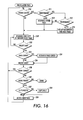
- FIG. 14 is a generalized flow diagram for programming a pad printing job according to concepts of the present application.
- FIG. 15 is a flow diagram for programming pad printing job features according to concepts of the present application.
- FIG. 16 is a flow diagram for an uncollated pad printing job generation according to concepts of the present application.
- FIG. 17 is a flow diagram for a collated pad printing job generation according to concepts of the present application.
- Job ticket Programming a print job is often achieved with a “job ticket”.
- the job ticket is provided in the form of one or more programmable dialogs, each programmable dialog including values which are selected with a user interface, such as, e.g., the user interface found in a DocuTechTM printing system manufactured by Xerox Corporation.
- Job tickets can vary dramatically in both structure and functionality.
- the job ticket may assume the form of a relatively simple dialog displayed on a liquid crystal display (“LCD”). Attributes of a corresponding job, such as desired image processing, designated stock and finishing characteristics may be displayed for setting of suitable output values, e.g., stock size. Background information for job tickets, and an approach for setting attribute values therein, can be found in U.S. Pat. No.
- a pad including uncollated copies of three unique printed pages 10 - 14 is shown for exemplary purposes.
- the exemplary pad shown it is noted that no special programming is required because each of the three pages 10 - 14 is printed without any demarcation sheets produced between pages. Consequently, production of the final printed pad product requires a separate process to insert any demarcation sheets or backing sheets to the pads.
- the same printed pad including the uncollated copies of printed pages 10 - 14 is shown with slip sheets 16 inserted following the first two sets of pages 10 , 12 .
- the printing system or reprographic system can be programmed by means of job ticketing or other known means to insert the slip sheet 16 between each set copies, and such programming is known in the art.
- the figure illustrates several problems related to pad printing. For example, although existing programming techniques enable the insertion of the slip sheets 16 between page sets, there is currently no provision to insert a slip sheet following the last page set 14 . Further, no mechanism is provided to demarcate pads except for the unique case where exactly one pad per printed page set is desired.
- FIGS. 1 and 2 illustrate printed pads made up of uncollated stacks of printed document pages.
- a printed pad is shown, including ten copies 20 - 38 of three different preprinted pages 40 - 44 which are collated into each of the ten copies.
- no special programming is required to produce the collated pad except for programming the collating of each of the preprinted pages 40 - 44 .
- FIG. 4 the same printed pad as shown in FIG. 3 is shown again, but with slip sheets 46 inserted as backing sheets between each set of collated pages 40 - 44 .
- current programming methods as known in the art can be used to produce the printed pads shown.
- the set of pads shown includes pads made up of uncollated sets of printed pages 50 - 54 , each pad being demarcated by an insert sheet 56 .
- the system is programmed to include an insert sheet 56 after every fifth printed output page. Because, in the example shown, the system is programmed to print ten copies of each preprinted page, this results in sheets inserted not only between each set of document pages 50 - 54 , but also midway through each set of pages.
- the arrangement shown is for exemplary purposes only, and the uncollated printing can include any number of copies of any number of document pages with inserts programmed at any predetermined frequency.
- FIG. 6 a variation of the example shown in FIG. 5 is illustrated.
- the printed pad set shown in FIG. 6 is similar
- the example shown is also programmed to have slip sheets inserted between each set of copies. It is to be noted that, while programming insertion of the slip sheets 58 is known in the art, programming insertion of the insert sheets 56 at a specified frequency is novel behavior.
- a stack of printed pads is shown having a non-uniform number of pages per pad.
- multiple insert sheet frequencies may be specified to accommodate such instances having a non-uniform number of pages per pad.
- the stack includes three different pages 50 - 54 , however, the first insert sheet 60 and the second insert sheet 62 have been programmed at different frequencies.
- the first insert sheet 60 has been programmed to be inserted after the first four copies of each page, while the second insert sheet 62 has been programmed to be inserted every six copies thereafter within each set of copies of a printed page.
- the printed stack shown is exemplary only, and the number of pages and number of insert page frequencies is not limited.
- a printed stack of pads includes multiple sets of copies 70 - 88 , with each set of copies including three unique pages 90 - 94 .
- the system when programming insert sheets into printed pads having collated sheets, the system enables programming of the insert sheets at specified set frequencies. For example, as shown, insert sheet 96 is programmed for insertion after every second set of collated copies.
- the present application is not so limited however, and multiple set frequencies are provided in some embodiments.
- embodiments of the present application permit programming of a pad front cover to be printed on top of each pad.
- This is represented by dashed line 98 in FIG. 8 representing a front cover for the first set of copies 70 , 72 .
- the front cover for the remaining pads is not shown in the figure in order not to unnecessarily complicate the figure.
- This front cover page may resemble nominal print document cover pages, but may also include information unique to each specific pad such as, e.g., sheet quantity or, in the case of collated printing, multi-part form quantity.
- Available system supplied data may be combined with the input document PDL data for generation of a cover sheet. Further the cover sheet may be printed on a blank sheet or it may be printed as a watermark on either an additional pad page as shown or on the first page of the printed pad.
- the properties menu includes, e.g., a number-of-copies box 102 for specifying either a number of copies of each page in an uncollated printing or, in the case of a collated printing, a number of sets of collated pages.
- a number-of-copies box 102 for specifying either a number of copies of each page in an uncollated printing or, in the case of a collated printing, a number of sets of collated pages.
- finishing selection area 104 including a collation selection box 105 for selecting either collated printing or uncollated printing.
- cover sheet programming area 106 for programming cover sheet options and selecting system data to be combined with the PDL document data for inclusion on the cover sheet.
- paper stock selection area 108 and an image description programming area 110 for programming other aspects of the printed pads.
- FIG. 10 shows a slip sheet and insert sheet programming screen 112 for programming uncollated pads used in conjunction with the previously shown properties programming screen.
- the programming screen shown includes a slip sheet selection box 114 for programming a slip sheet option.
- an insert programming area 116 providing, e.g., an after page box 118 and a repetition factor box 120 for programming the initial insert point and frequency of an insert sheet.
- multiple insertion points and variable repetition factors can be programmed in either box, or by alternate programming means, so that the insertion points and repetitions can be essentially independent of each other, and variable repetitions and/or insertion points can be programmed throughout the document for both collated and uncollated printing.
- an inserts list programming area 122 which provides an add button 124 for adding an insert selection programmed in insert programming area 116 , a change button 126 for editing a previously programmed insert sheet option, and a delete button 128 for deleting a previously programmed insert sheet.
- An insert list box 130 is also provided for showing the currently programmed insert sheets.
- FIG. 11 shows an alternate slip sheet and insert programming screen 132 for programming collated pads.
- the features included are similar to the previously shown programming screen for uncollated pads including a slip sheet selection box 134 and an insert programming area 136 .
- the insert programming area 136 includes an after page box 138 for programming the initial insert point for an insert sheet and a frequency box 140 for specifying the frequency of the insert sheet in terms of number of sets between inserted sheets.
- An inserts list area 142 is also provided with function buttons for adding 144 , changing 146 , and deleting 148 previously programmed inserts shown in the inserts list box 150 .
- an exemplary reprographic system 152 is shown, including a computer system 154 suitable for programming pad printing via the exemplary programming screens previously shown.
- the computer system 154 may be an integral part of the reprographic system 152 as shown, or maybe a separate computer system in operative communication with the reprographic system 152 by means of, e.g., a network connection or by transfer of storage media, such as, for example, optical storage discs, magnetic tapes, and other media known in the art.
- FIG. 13 shows a more detailed block diagram of the computer system 154 .
- the computer system 154 includes a user interface display 156 for display of messages and programming screens to a user of the system and also includes means for input from the user such as, e.g., a pointing device 158 and a keyboard 160 .
- a storage device 162 e.g., a hard disk drive, random access memory 164 , a graphical interface 166 for communicating via the display 156 , a processor 168 for controlling all operations of the computer system 154 , and a network interface 170 for communicating with other systems such as, e.g., reprographic systems.
- the storage device 162 in the embodiment shown, stores an operating system 172 , data 174 , and computer instructions 176 that are executed by the processor 168 out of the memory 164 for performing pad printing programming processes described herein.
- a user edits slip sheet, insert sheet and cover sheet options for the printed pad being programmed.
- the editing step is preferably performed on the computer system 154 which, as previously described, may be an integral part of the reprographic system 152 or may be a standalone computer system.
- the user may invoke an option at step 182 to preview a likeness of the pad to be printed.
- the user can assemble the print job at step 184 in preparation for the final printing of the pads.
- the user may, optionally, also prepare a job ticket according to methods known in the art describing the various options prepared in the editing step 180 .
- the edited options may be included as metadata within the assembled print job itself such as, e.g., metadata commands embedded in a Postscript file.
- the assembled job is then submitted at step 186 for printing.
- the job may be submitted by any of the means previously described herein such as, e.g., by means of a network connection, various storage media, or directly from the storage system of the computer 154 when the computer is an integral part of the reprographic system 152 .
- FIGS. 9-11 an exemplary flow diagram for programming pad printing job features is provided. While the screens shown in FIGS. 9-11 were exemplary screens for programming a pad printing job via an application such as, e.g., a word processor and then submitting the programmed job to a reprographic system or printer, it is to be appreciated that such programming can take place on the reprographic system itself or other computer system in communication with the reprographic system. Regardless of where the programming is performed, however, the essential steps and features of the programming are similar. For example, the user performing the programming selects either collated pad printing or uncollated pad printing ( 190 ).
- the number of copies is programmed ( 192 ), and the various previously-described insert sheet parameters are programmed as required ( 194 , 196 ). Parameters are also preferably programmed for slip sheet options ( 198 ), cover sheets ( 200 ), and watermarks ( 202 ). It is also to be appreciated that the above-described programming not necessarily performed in any particular order, and can be adapted to suit the needs of any particular embodiment.
- a flow diagram is shown presenting an exemplary method for assembling an uncollated pad print job and/or job ticket. It is to be understood that the flow diagram shown is for illustrative purposes only to aid in the understanding of the present application and the above-described programming steps. The present application is not limited to the particular steps shown, or to the order of the steps shown. It is first determined at step 210 whether a front cover is to be printed. If a front cover is specified, it is then determined at step 211 if the cover sheet is to be printed on a blank sheet or as a watermark.
- the cover sheet is to print as a watermark, it is determined at step 212 if the watermark should be printed on the first input document page, or if it should be printed on an additional first page. If the cover sheet is to print on a blank page or as a watermark on an additional page, the cover sheet is assembled at step 214 and, if the cover sheet is to print as a watermark on the first document page, a watermark is prepared for inclusion on the first sheet of the pad. In all cases, processing continues at step 218 where one copy of the current/first page is assembled. Following assembly of each page, it is determined at step 220 whether an insert sheet is due for insertion into the stack and, if not, another copy of the page is assembled at step 218 .
- step 222 it is determined whether or not a back cover has been specified and, if so, a back cover is assembled in the output document at step 224 . Subsequently, an insert sheet is assembled for insertion at step 226 . It is then determined if more copies of the current page are specified at step 228 and, if so, processing returns to the previously described front cover determination step 210 . When all copies of the current page have been assembled, it is determined at step 230 if there are any remaining pages to be assembled into the pad and, if not, processing is completed. Otherwise, processing continues at step 232 where it is determined whether or not slip sheets have been coded for insertion into the pad. If slip sheets have been programmed, a slip sheet is assembled into the output job at step 234 . The next page to be processed is accessed at step 216 and processing returns to the previously described front cover determination step 210 .
- FIG. 17 a flow diagram is shown presenting an exemplary method for assembling a collated pad print job and/or job ticket. It is again to be understood that the flow diagram shown is for illustrative purposes only to aid in the understanding of the present application.
- Numerals identical to those shown in FIG. 15 represent steps that are identical to the processing steps for uncollated pads.
- front cover and watermark processing steps 210 - 216 are identical to the previously described process for uncollated pads.
- one complete set of collated pages is assembled at step 238 . It is then determined at step 240 whether an insert sheet is due for insertion into the stack and, if not, another set of collated pages is assembled at step 238 .
- step 222 it is determined whether or not a back cover has been specified and, if so, a back cover is assembled in the output document at step 224 . Subsequently, an insert sheet is assembled for insertion at step 226 . It is then determined if more copies of the current page are specified at step 220 and, if not, processing is completed. Otherwise, slip sheet processing occurs as previously described at steps 232 - 234 , and processing returns to the previously described front cover determination step 210 .
Landscapes
- Engineering & Computer Science (AREA)
- Theoretical Computer Science (AREA)
- Human Computer Interaction (AREA)
- Physics & Mathematics (AREA)
- General Engineering & Computer Science (AREA)
- General Physics & Mathematics (AREA)
- Record Information Processing For Printing (AREA)
Abstract
Description
Claims (20)
Priority Applications (1)
| Application Number | Priority Date | Filing Date | Title |
|---|---|---|---|
| US11/643,474 US8243304B2 (en) | 2006-12-21 | 2006-12-21 | Enhanced job programming for pad printing |
Applications Claiming Priority (1)
| Application Number | Priority Date | Filing Date | Title |
|---|---|---|---|
| US11/643,474 US8243304B2 (en) | 2006-12-21 | 2006-12-21 | Enhanced job programming for pad printing |
Publications (2)
| Publication Number | Publication Date |
|---|---|
| US20080151285A1 US20080151285A1 (en) | 2008-06-26 |
| US8243304B2 true US8243304B2 (en) | 2012-08-14 |
Family
ID=39542327
Family Applications (1)
| Application Number | Title | Priority Date | Filing Date |
|---|---|---|---|
| US11/643,474 Expired - Fee Related US8243304B2 (en) | 2006-12-21 | 2006-12-21 | Enhanced job programming for pad printing |
Country Status (1)
| Country | Link |
|---|---|
| US (1) | US8243304B2 (en) |
Cited By (1)
| Publication number | Priority date | Publication date | Assignee | Title |
|---|---|---|---|---|
| US20230274115A1 (en) * | 2022-02-25 | 2023-08-31 | Canon Kabushiki Kaisha | Printing apparatus, control method of printing apparatus, and storage medium |
Families Citing this family (6)
| Publication number | Priority date | Publication date | Assignee | Title |
|---|---|---|---|---|
| US8237979B2 (en) * | 2009-01-29 | 2012-08-07 | Xerox Corporation | System and method of utilizing tab attributes as job ticket attributes for printing |
| JP5828665B2 (en) * | 2010-05-18 | 2015-12-09 | キヤノン株式会社 | Sheet processing apparatus and image forming apparatus |
| US8665476B2 (en) | 2011-11-30 | 2014-03-04 | Ricoh Production Print Solutions LLC | Integration of pre-printed insert page images with print previews |
| JP5390658B2 (en) * | 2012-05-15 | 2014-01-15 | シャープ株式会社 | Image forming apparatus |
| JP6477156B2 (en) * | 2015-03-31 | 2019-03-06 | コニカミノルタ株式会社 | Image forming system, image forming apparatus, image forming method and program |
| EP3465411A1 (en) | 2016-05-27 | 2019-04-10 | OCE Holding B.V. | Job programming |
Citations (2)
| Publication number | Priority date | Publication date | Assignee | Title |
|---|---|---|---|---|
| US20040187073A1 (en) * | 2003-01-17 | 2004-09-23 | Chris Tuijn | Method for making a digital representation of a printed product |
| US20080079963A1 (en) * | 2006-09-28 | 2008-04-03 | Konica Minolta Systems Laboratory, Inc. | Print shop management method and apparatus for printing mixed color and black and white documents |
-
2006
- 2006-12-21 US US11/643,474 patent/US8243304B2/en not_active Expired - Fee Related
Patent Citations (2)
| Publication number | Priority date | Publication date | Assignee | Title |
|---|---|---|---|---|
| US20040187073A1 (en) * | 2003-01-17 | 2004-09-23 | Chris Tuijn | Method for making a digital representation of a printed product |
| US20080079963A1 (en) * | 2006-09-28 | 2008-04-03 | Konica Minolta Systems Laboratory, Inc. | Print shop management method and apparatus for printing mixed color and black and white documents |
Cited By (2)
| Publication number | Priority date | Publication date | Assignee | Title |
|---|---|---|---|---|
| US20230274115A1 (en) * | 2022-02-25 | 2023-08-31 | Canon Kabushiki Kaisha | Printing apparatus, control method of printing apparatus, and storage medium |
| US12248827B2 (en) * | 2022-02-25 | 2025-03-11 | Canon Kabushiki Kaisha | Printing apparatus printing one or more image sets, control method of printing apparatus, and storage medium |
Also Published As
| Publication number | Publication date |
|---|---|
| US20080151285A1 (en) | 2008-06-26 |
Similar Documents
| Publication | Publication Date | Title |
|---|---|---|
| US7688459B2 (en) | Document processing method | |
| US8223377B2 (en) | Print workflow automation | |
| CN100514274C (en) | Printing control method and apparatus | |
| US8520251B2 (en) | Information processing apparatus, information processing method, and computer program | |
| US20050105116A1 (en) | Document processing apparatus and document processing method | |
| US8395806B2 (en) | Information processing apparatus, method, and program for bookbinding with selected cover layout type | |
| JP5901324B2 (en) | Information processing apparatus, information processing method, and program | |
| US8305594B2 (en) | Print control apparatus and method for managing print settings | |
| KR101030139B1 (en) | Information-processing apparatus and method | |
| US8339654B2 (en) | Document processing system, document processing method, and computer-readable storage medium | |
| US20030056178A1 (en) | Information processing system and display method | |
| US20080316517A1 (en) | Information processing apparatus and control method, and control program | |
| JP4095512B2 (en) | Document conversion method and apparatus | |
| US8363234B2 (en) | Information processing apparatus, method, and program product with operation for editing template designating printer functions | |
| US20100131566A1 (en) | Information processing method, information processing apparatus, and storage medium | |
| US20080313537A1 (en) | Document management apparatus, document management method, and program | |
| US7710590B2 (en) | Automatic maintenance of page attribute information in a workflow system | |
| JP2011146032A (en) | Information processing apparatus, information processing method, and program | |
| US20080151285A1 (en) | Enhanced job programming for pad printing | |
| US8237979B2 (en) | System and method of utilizing tab attributes as job ticket attributes for printing | |
| CN105373356A (en) | Information processing apparatus and method for controlling the same | |
| JP4612911B2 (en) | Print control apparatus and print control method | |
| JP4739396B2 (en) | Information processing apparatus and print data generation method and program | |
| JP3793187B2 (en) | Information processing apparatus, information processing method, and program | |
| JP4298412B2 (en) | Document processing apparatus, print control method, and program |
Legal Events
| Date | Code | Title | Description |
|---|---|---|---|
| AS | Assignment |
Owner name: XEROX CORPORATION, CONNECTICUT Free format text: ASSIGNMENT OF ASSIGNORS INTEREST;ASSIGNORS:MORALES, JAVIER A.;FARRELL, MICHAEL E.;JACOBS, WILLIAM S.;REEL/FRAME:018737/0727;SIGNING DATES FROM 20061204 TO 20061212 Owner name: XEROX CORPORATION, CONNECTICUT Free format text: ASSIGNMENT OF ASSIGNORS INTEREST;ASSIGNORS:MORALES, JAVIER A.;FARRELL, MICHAEL E.;JACOBS, WILLIAM S.;SIGNING DATES FROM 20061204 TO 20061212;REEL/FRAME:018737/0727 |
|
| FEPP | Fee payment procedure |
Free format text: PAYOR NUMBER ASSIGNED (ORIGINAL EVENT CODE: ASPN); ENTITY STATUS OF PATENT OWNER: LARGE ENTITY |
|
| ZAAA | Notice of allowance and fees due |
Free format text: ORIGINAL CODE: NOA |
|
| ZAAB | Notice of allowance mailed |
Free format text: ORIGINAL CODE: MN/=. |
|
| STCF | Information on status: patent grant |
Free format text: PATENTED CASE |
|
| FPAY | Fee payment |
Year of fee payment: 4 |
|
| MAFP | Maintenance fee payment |
Free format text: PAYMENT OF MAINTENANCE FEE, 8TH YEAR, LARGE ENTITY (ORIGINAL EVENT CODE: M1552); ENTITY STATUS OF PATENT OWNER: LARGE ENTITY Year of fee payment: 8 |
|
| AS | Assignment |
Owner name: CITIBANK, N.A., AS AGENT, DELAWARE Free format text: SECURITY INTEREST;ASSIGNOR:XEROX CORPORATION;REEL/FRAME:062740/0214 Effective date: 20221107 |
|
| AS | Assignment |
Owner name: XEROX CORPORATION, CONNECTICUT Free format text: RELEASE OF SECURITY INTEREST IN PATENTS AT R/F 062740/0214;ASSIGNOR:CITIBANK, N.A., AS AGENT;REEL/FRAME:063694/0122 Effective date: 20230517 |
|
| AS | Assignment |
Owner name: CITIBANK, N.A., AS COLLATERAL AGENT, NEW YORK Free format text: SECURITY INTEREST;ASSIGNOR:XEROX CORPORATION;REEL/FRAME:064760/0389 Effective date: 20230621 |
|
| AS | Assignment |
Owner name: JEFFERIES FINANCE LLC, AS COLLATERAL AGENT, NEW YORK Free format text: SECURITY INTEREST;ASSIGNOR:XEROX CORPORATION;REEL/FRAME:065628/0019 Effective date: 20231117 |
|
| AS | Assignment |
Owner name: XEROX CORPORATION, CONNECTICUT Free format text: TERMINATION AND RELEASE OF SECURITY INTEREST IN PATENTS RECORDED AT RF 064760/0389;ASSIGNOR:CITIBANK, N.A., AS COLLATERAL AGENT;REEL/FRAME:068261/0001 Effective date: 20240206 Owner name: CITIBANK, N.A., AS COLLATERAL AGENT, NEW YORK Free format text: SECURITY INTEREST;ASSIGNOR:XEROX CORPORATION;REEL/FRAME:066741/0001 Effective date: 20240206 |
|
| FEPP | Fee payment procedure |
Free format text: MAINTENANCE FEE REMINDER MAILED (ORIGINAL EVENT CODE: REM.); ENTITY STATUS OF PATENT OWNER: LARGE ENTITY |
|
| LAPS | Lapse for failure to pay maintenance fees |
Free format text: PATENT EXPIRED FOR FAILURE TO PAY MAINTENANCE FEES (ORIGINAL EVENT CODE: EXP.); ENTITY STATUS OF PATENT OWNER: LARGE ENTITY |
|
| STCH | Information on status: patent discontinuation |
Free format text: PATENT EXPIRED DUE TO NONPAYMENT OF MAINTENANCE FEES UNDER 37 CFR 1.362 |
|
| FP | Lapsed due to failure to pay maintenance fee |
Effective date: 20240814 |